Here is the mistake almost everyone makes with balcony privacy: they wrap the whole balcony in the first screen they find, and end up with a dark box they never sit in. Real privacy is not about coverage. It is about one specific sightline. Sit in your chair, notice exactly where the eyes come from, and block that line and only that line. This article is organized by where people are actually looking from, because the fix for a nosy side neighbor is completely different from the fix for the street below. Find your sightline, pick your fix, and keep your light.
The Side Neighbors
Side angles cause most balcony privacy complaints. The neighbor’s balcony sits ten feet away and slightly to the side, with a direct view of your coffee. A slim vertical fix on one side solves it without touching the front view.
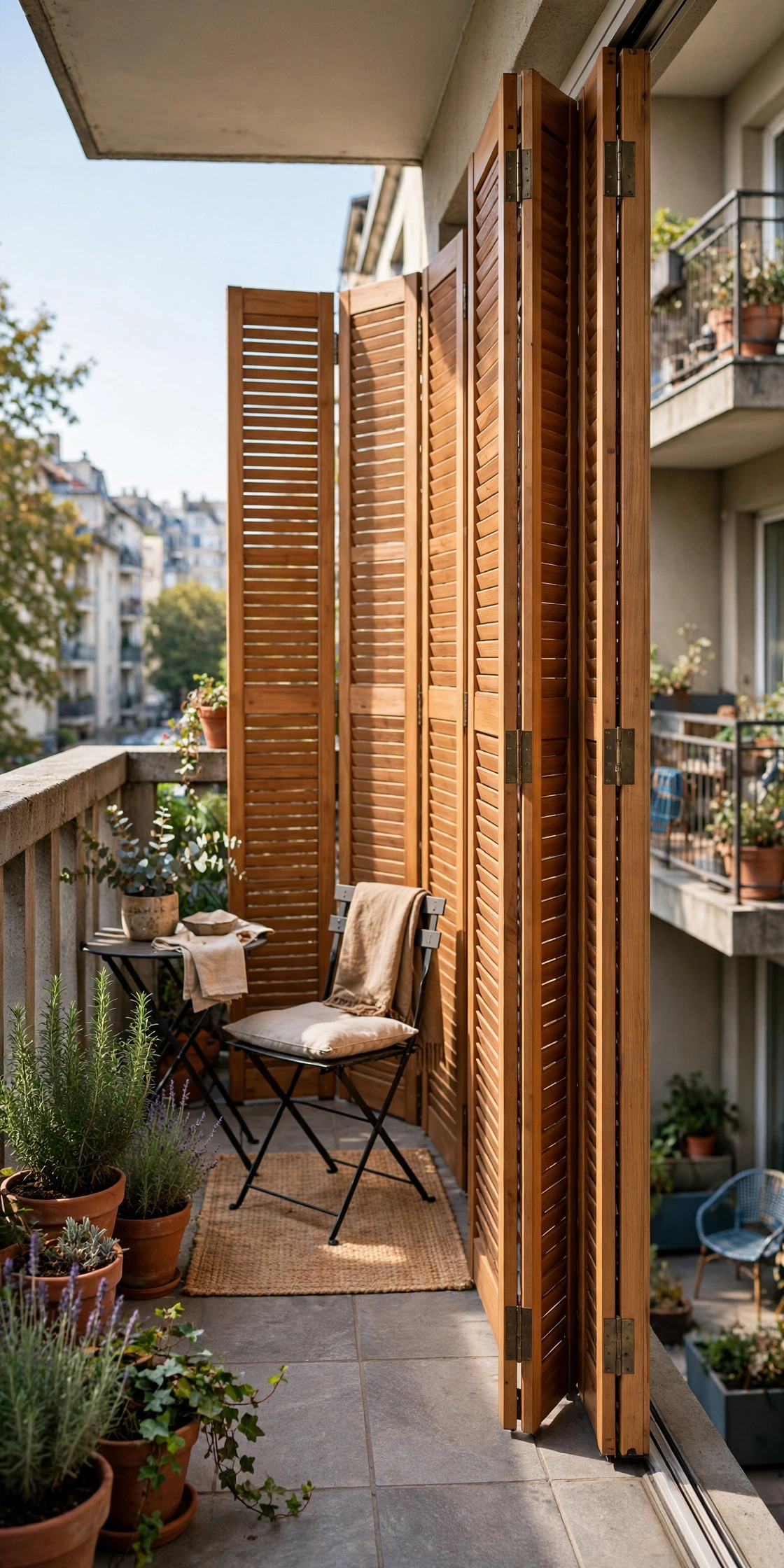
A hinged folding screen is the fastest side-neighbor fix that exists. Unfold it on the exposed side, angle it to block the exact sightline, and fold it flat when you want the breeze. Wood-tone, woven, or black metal all look intentional; skip shiny plastic and neon fake hedges unless they genuinely match your building. Because it is freestanding, no landlord can object and you take it when you move. This is the first thing to try before spending real money.
Quick Tip: Sit in your chair and have a friend walk the neighbor’s side. Adjust the screen angle until you disappear.
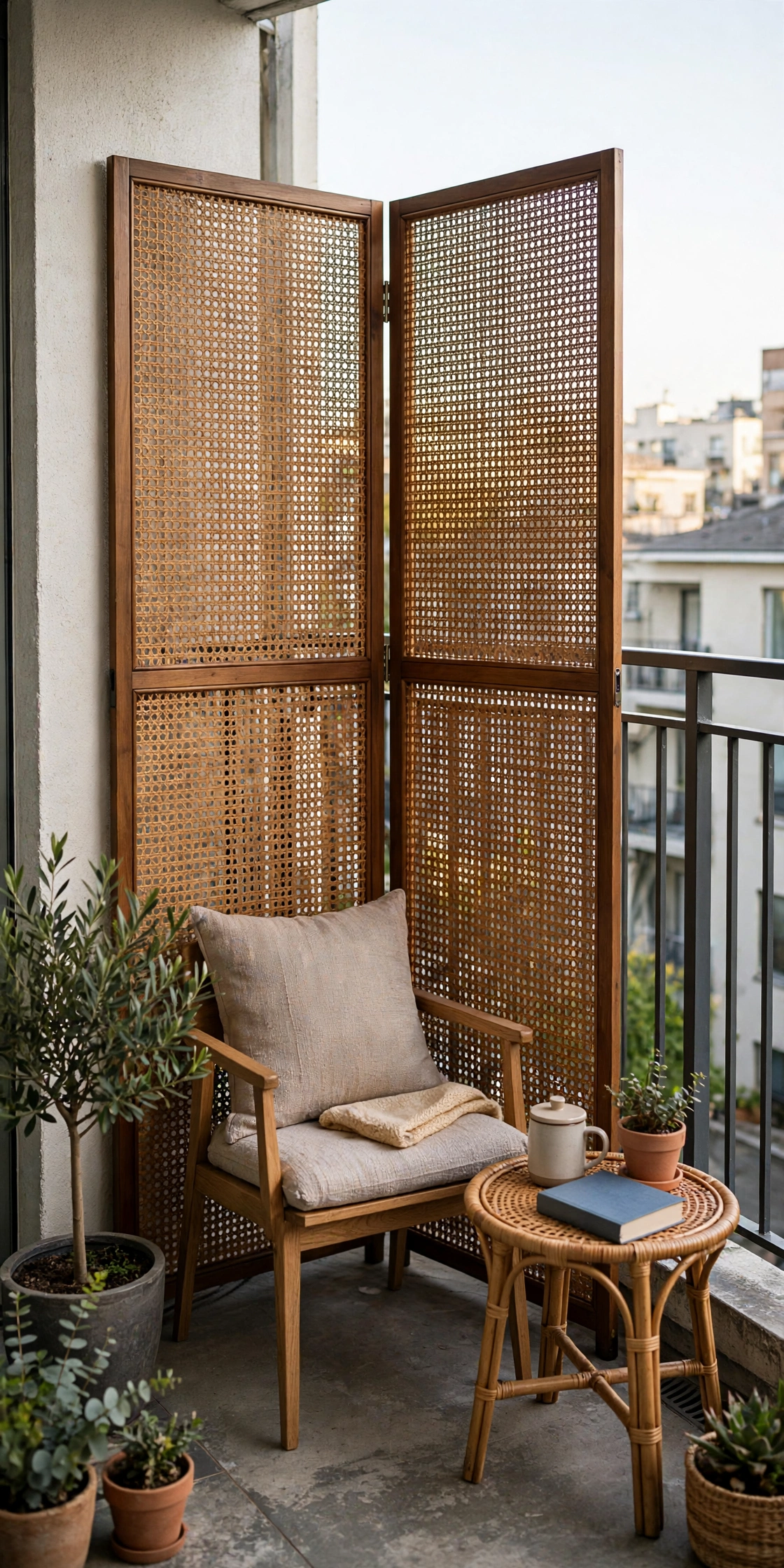
Most balconies have a dead corner nobody uses. Two panels hinged in an L turn that corner into the most private seat in the house. The L shape blocks two angles at once, which a flat screen cannot do. No tools beyond a screwdriver for most freestanding versions. Suddenly the awkward corner becomes the reading nook, which is a better use than dead space. This is small-space thinking at its best.
Designer Advice: Put your chair inside the L, not in front of it. The panels should wrap you, not face you.
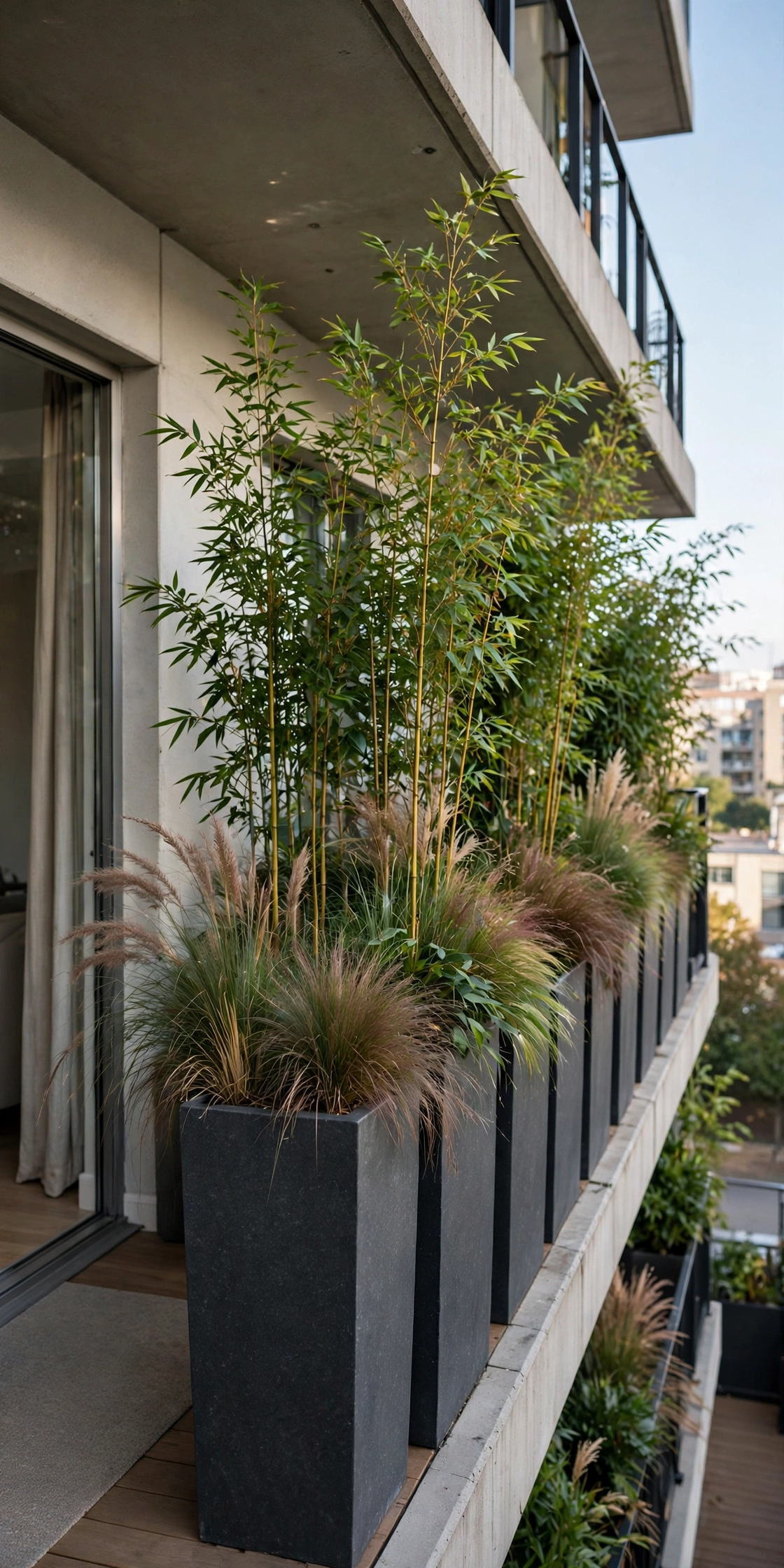
A row of tall planters with bamboo, grasses, or arborvitae makes a living wall on exactly the side you need it. Plants soften the boundary in a way no panel can, and they keep growing denser every season. Stagger two depths of planters rather than one straight line; the layered arrangement blocks diagonal sightlines that a single row misses. Check your balcony load limits before going big with soil and ceramic. This is privacy that gets better every year instead of wearing out.
Good to Know: Clumping bamboo stays contained in pots. Running bamboo will try to escape and annoy everyone.
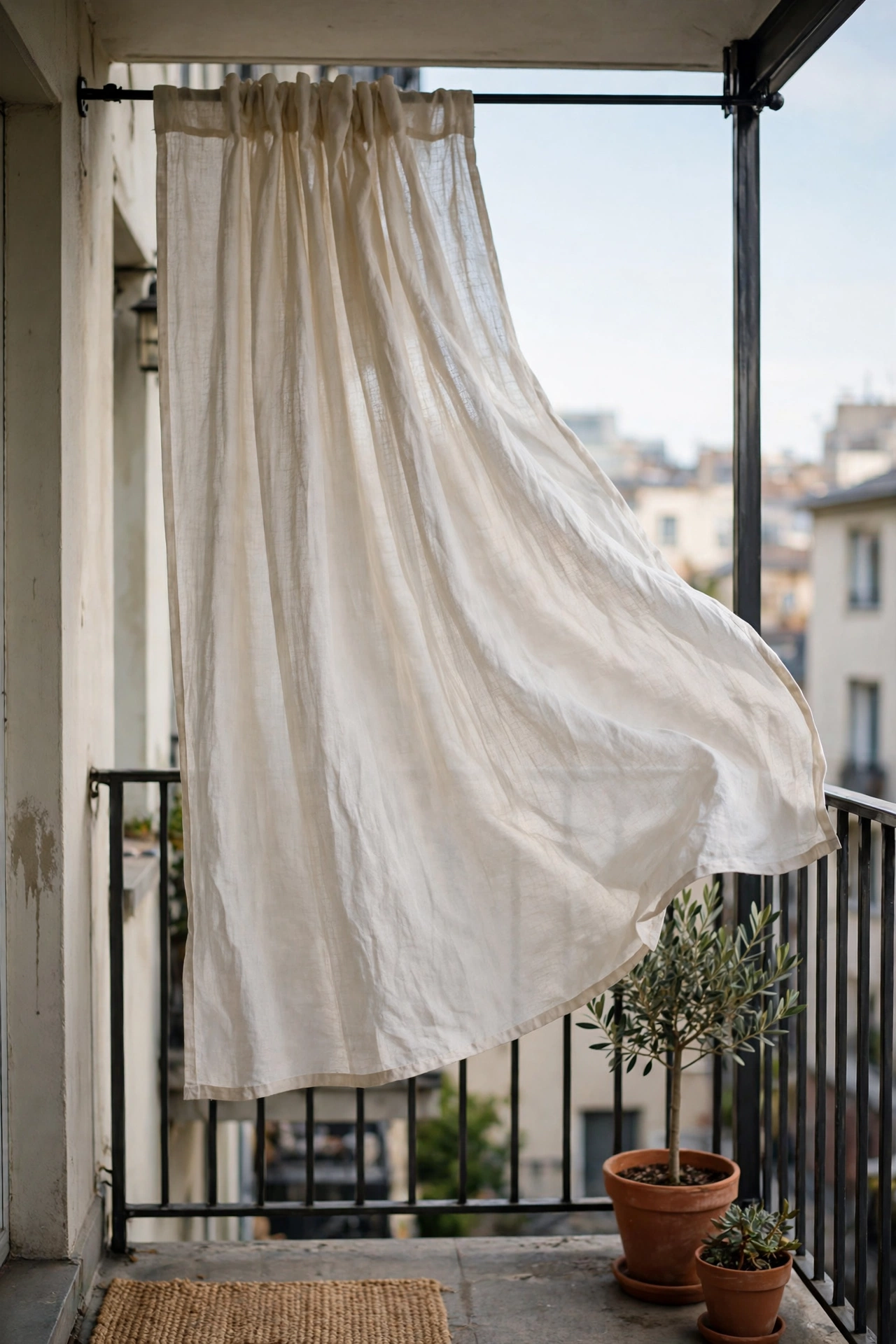
One outdoor curtain on a tension rod or ceiling track gives you adjustable side privacy in minutes. Draw it when the neighbors are out, pull it back when they are not. The fabric softens the whole balcony and doubles as sun control, which is two problems solved with one rod. Weighted hems keep it from billowing into your coffee. This is the renter’s best friend: total flexibility, zero holes.
Reality Check: One curtain panel looks skimpy. Use two for a proper gathered look even on a narrow side.
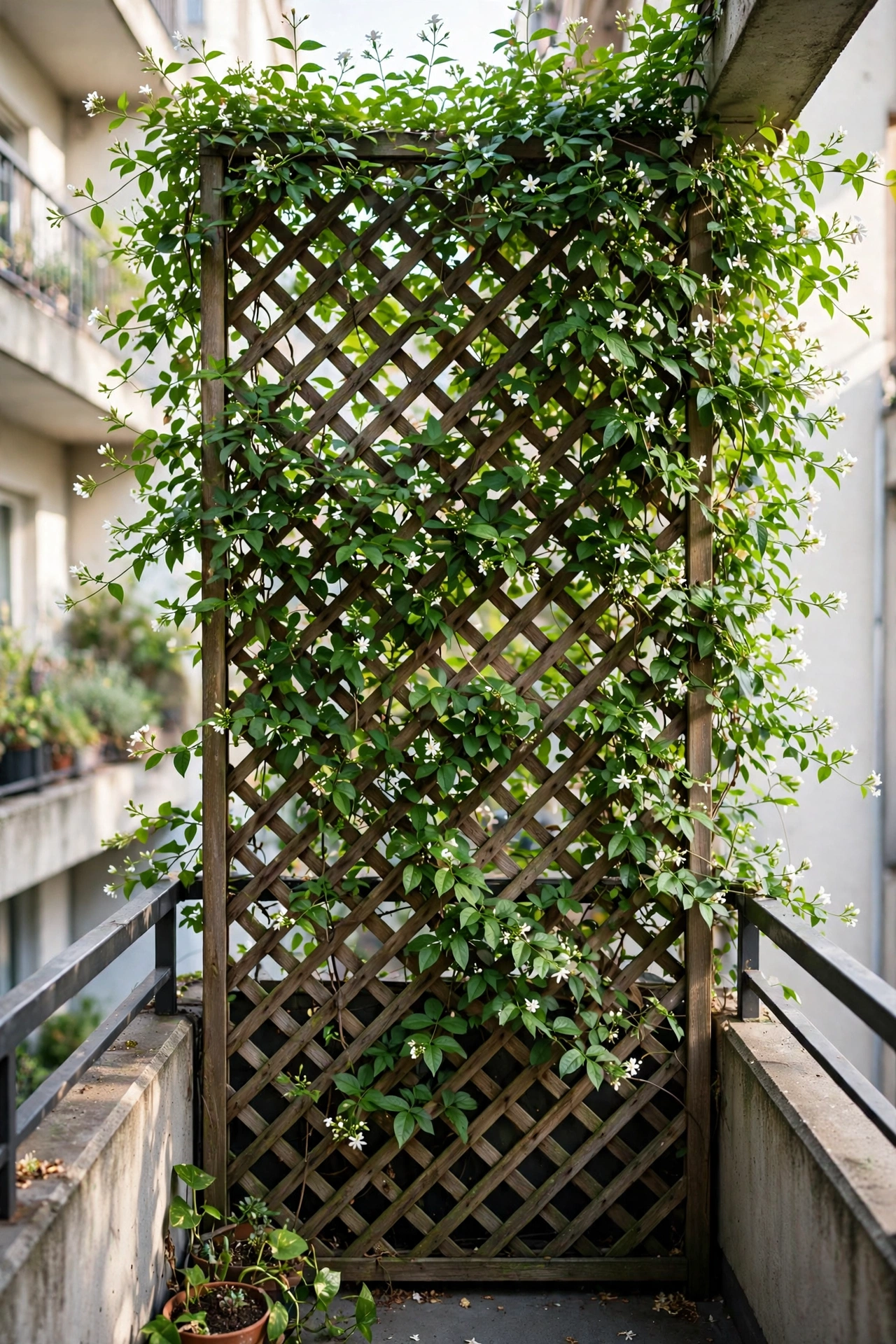
A narrow lattice panel with climbing jasmine or ivy gives you a green wall on the neighbor side within one or two seasons. The lattice itself provides immediate partial screening while the vines fill in. It reads as garden, not fortress, which neighbors tend to appreciate more than a solid wall. Keep the lattice freestanding in a planter base if drilling is off the table. Feed monthly in growing season and it will reward you fast.
Heads Up: Check which vines are well-behaved in pots in your climate. Some thugs will eat the railing.
Upper-floor neighbors and overlooking windows look straight down at you. Side screens do nothing here. You need overhead cover or height at the balcony edges.
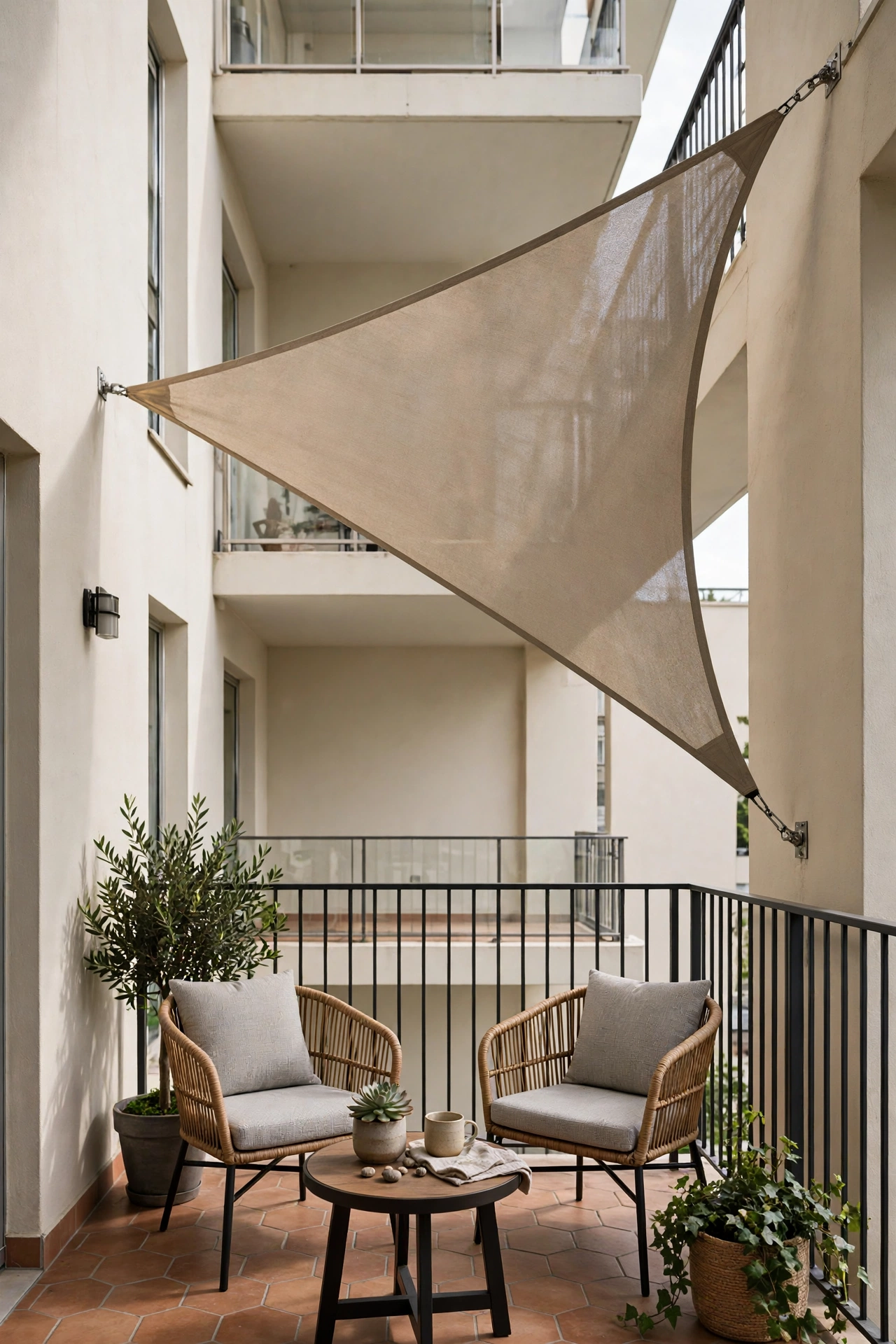
A shade sail stretched above the seating zone blocks downward sightlines while doubling as sun protection. The angled fabric reads as design, not paranoia. Clip-on versions need no drilling and come down in minutes. From above, all anyone sees is an attractive canopy instead of you. This is the rare fix that solves privacy, shade, and style in one purchase. Choose a color that flatters the building, not a neon that starts a war.
Pro Move: Position the sail’s low edge toward the overlooking side for maximum sightline blocking.
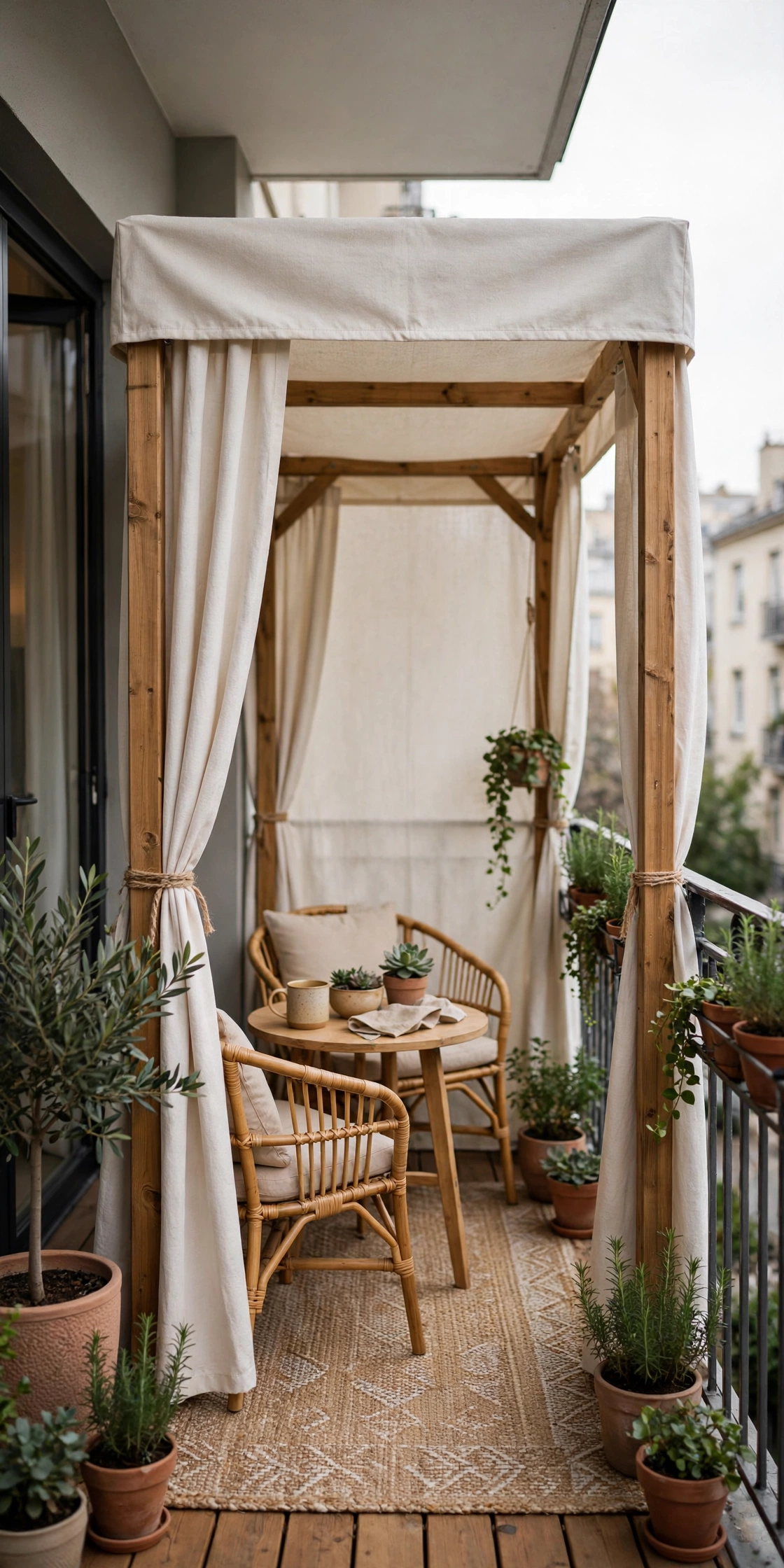
A freestanding pergola with a fabric or polycarbonate top creates a roof over your seating that cuts the from-above view completely. The frame also gives you somewhere to hang lights and curtains, so it becomes the backbone of the whole balcony design. No wall attachment needed, which keeps it renter-friendly. It is the bulkiest fix in this section, so reserve it for balconies with room to spare. The result feels like a real outdoor room.
Try This: A retractable fabric top lets you open the sky on clear nights. Fixed tops cannot.
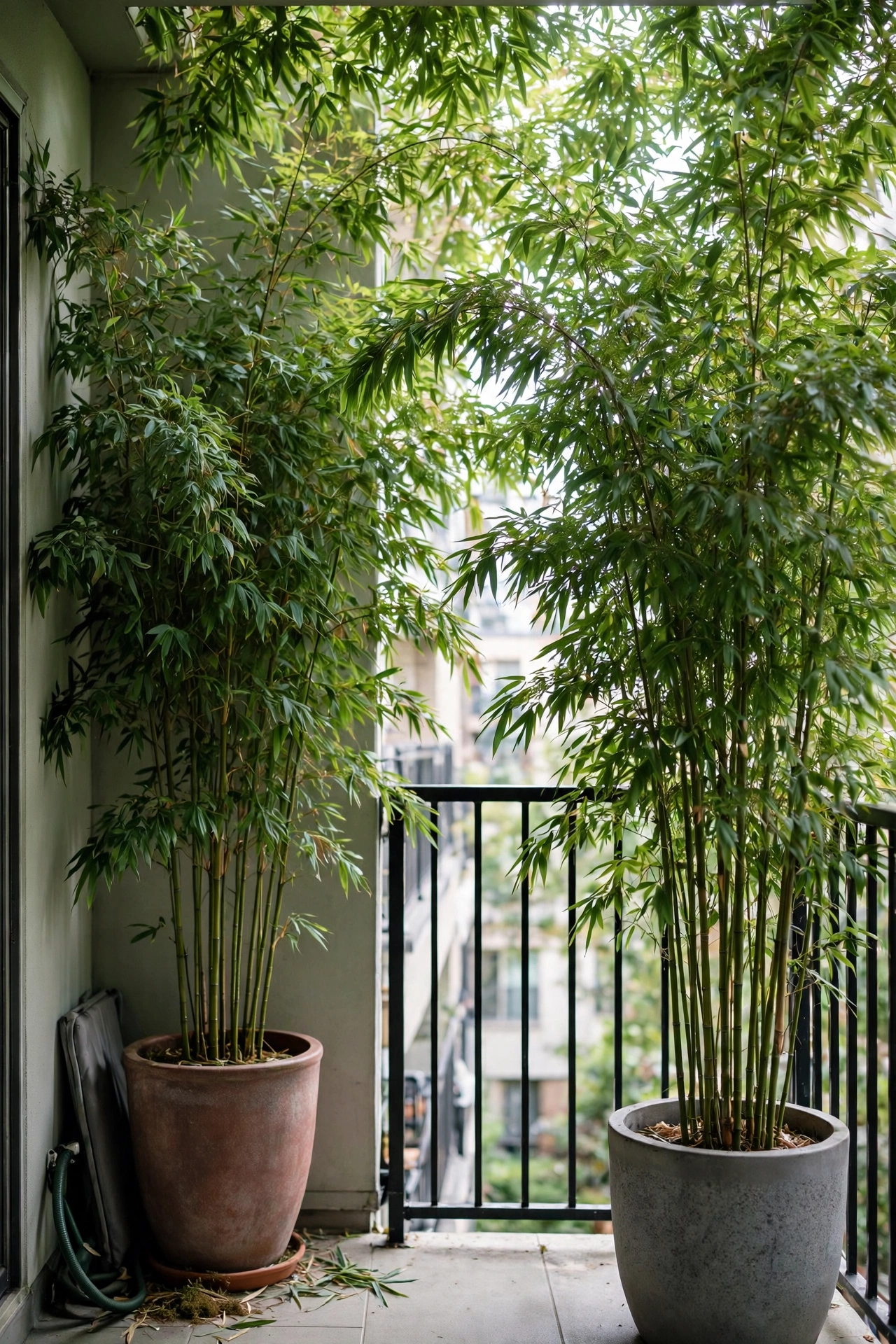
Two tall bamboo plants in the back corners break up the downward view surprisingly well. From above, the eye catches the foliage first and your seating area second, which is often enough. Clumping varieties reach ten feet in pots and sway gently, which feels alive rather than defensive. This is the softest overhead-ish fix and the easiest to install: two big pots, done. Water deeply; tall plants in pots dry out fast.
Worth Knowing: Put the pots on wheeled saucers. You will want to move twelve-foot bamboo eventually.
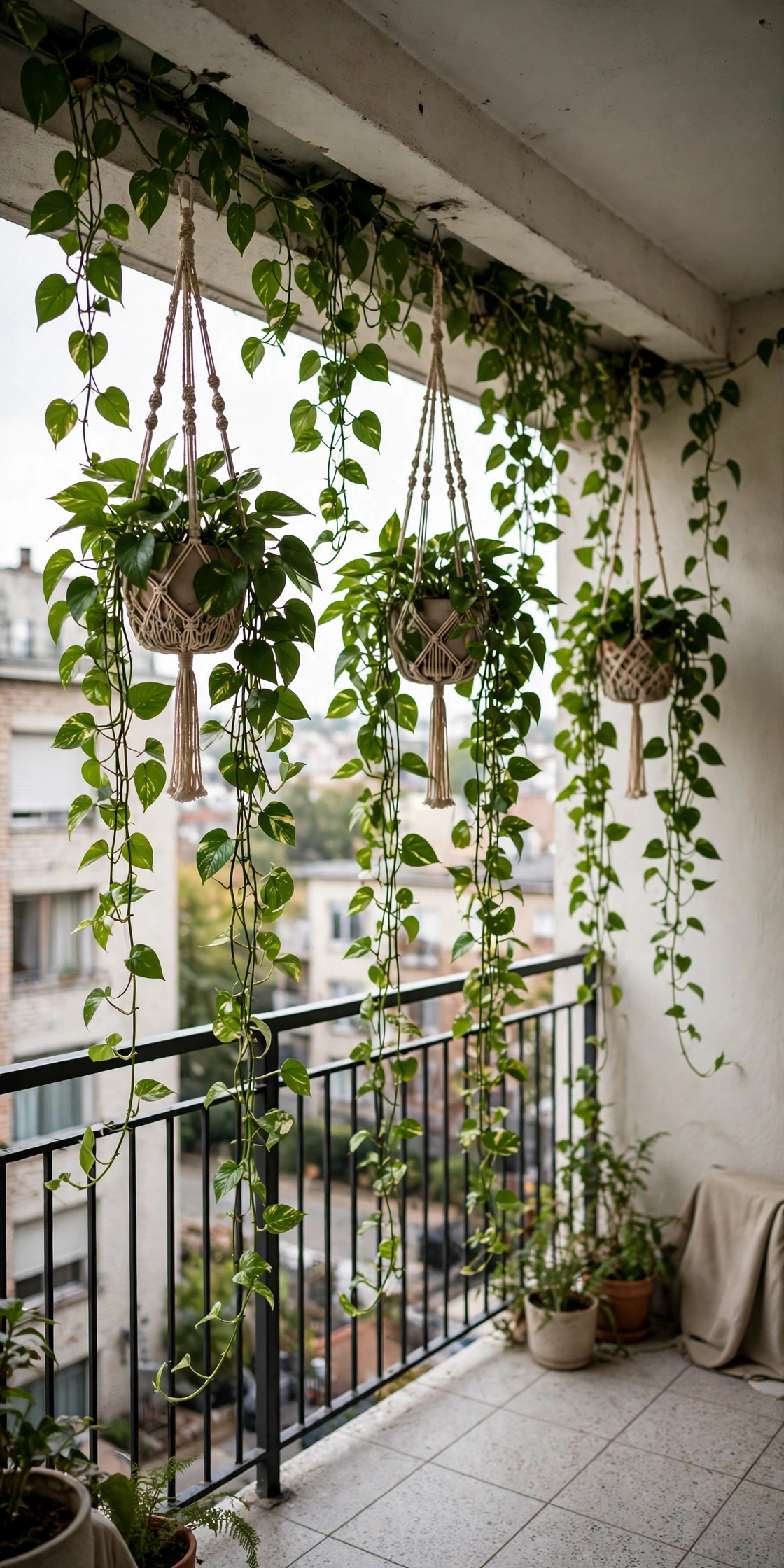
Hanging planters with trailing pothos or ferns along the balcony ceiling edge create a green fringe that softens every downward angle. The plants do not need to block the whole view; breaking the sightline is enough to feel private. Use lightweight coco liners and secure hooks rated well above the wet weight. This works best combined with one other fix, since fringe alone is more filter than wall. It is also the prettiest option in this section by a mile.
Small Detail: Hang at varied heights, not in a straight line. Staggering looks natural; a row looks like a uniform.
A retractable awning extended over the seating area puts a solid lid between you and upstairs windows. Unlike a sail, it retracts fully when you want open sky, so the balcony never feels permanently roofed. The cassette models look neat when closed. This is the most polished overhead privacy fix and the most expensive, but it also adds the most resale-style value to how the balcony lives. Get the projection deep enough to actually cover the chairs.
Budget Note: Measure the projection, not just the width. A shallow awning shades the railing and nobody else.
Find Your Sightline First
Sit in your usual chair at the usual hour and look slowly around
Note every window, balcony, and walkway with a direct view of you
Rank them: which one actually bothers you, not theoretically
Block only that sightline first and live with it for a week
Add a second fix only if the first was not enough
Resist the urge to wrap everything; light and air are the point of a balcony
The Street Below
Ground and low-floor balconies face upward gazes from the sidewalk. The fix here lives at the railing itself: low, neat, and aimed at pedestrian eye level.
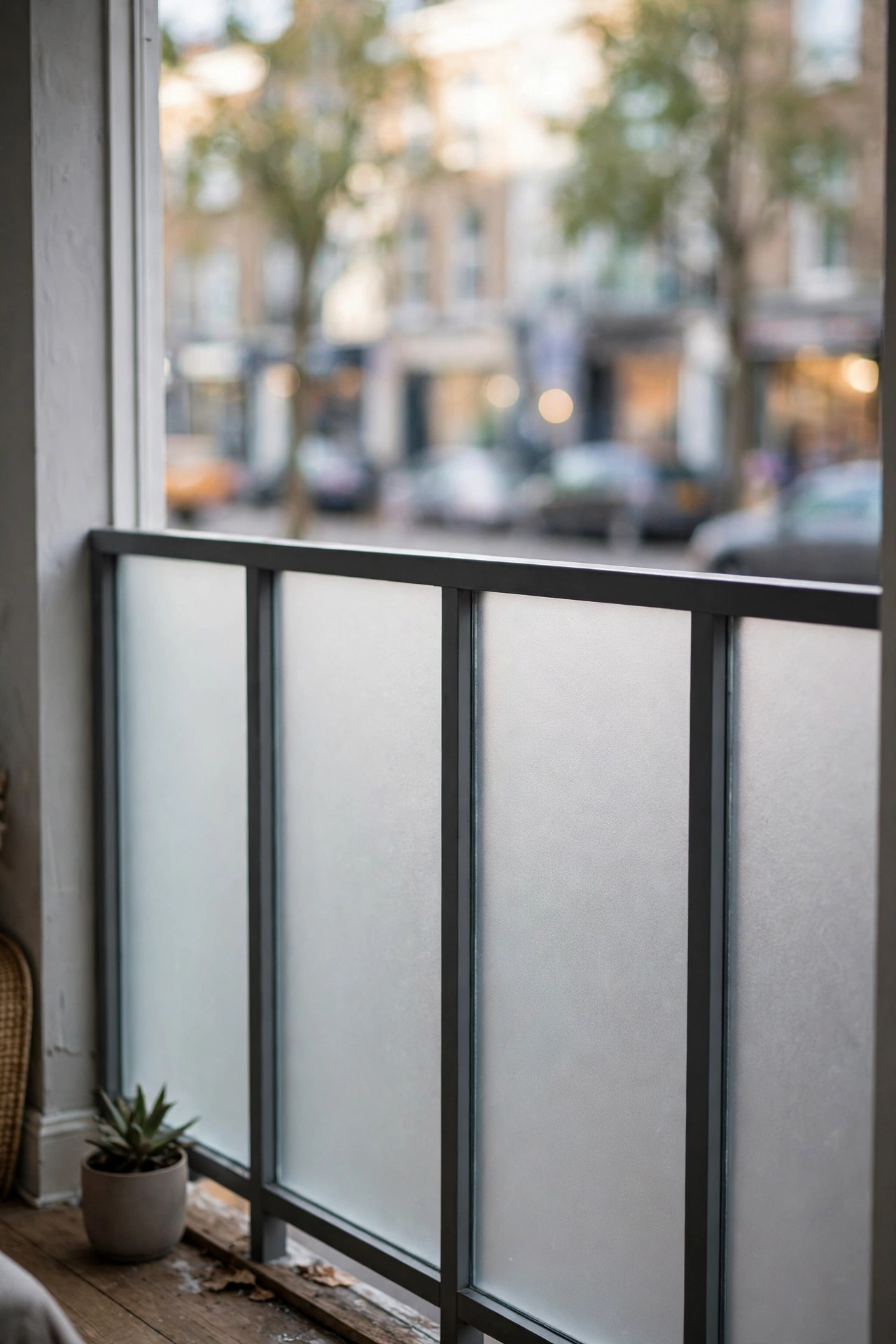
Frosted privacy film on a glass railing turns see-through into see-nothing in one afternoon. From the street, your legs and low seating disappear; from your chair, light still floods in. It peels off cleanly, so landlords and deposits stay happy. Apply with soapy water and a squeegee, working out bubbles as you go. This is the highest impact-per-dollar fix for glass-railing balconies. No neighbors staring at your feet while you read, ever again.
Quick Tip: Buy 10 percent more film than you measure. First-timers always miscut one panel.
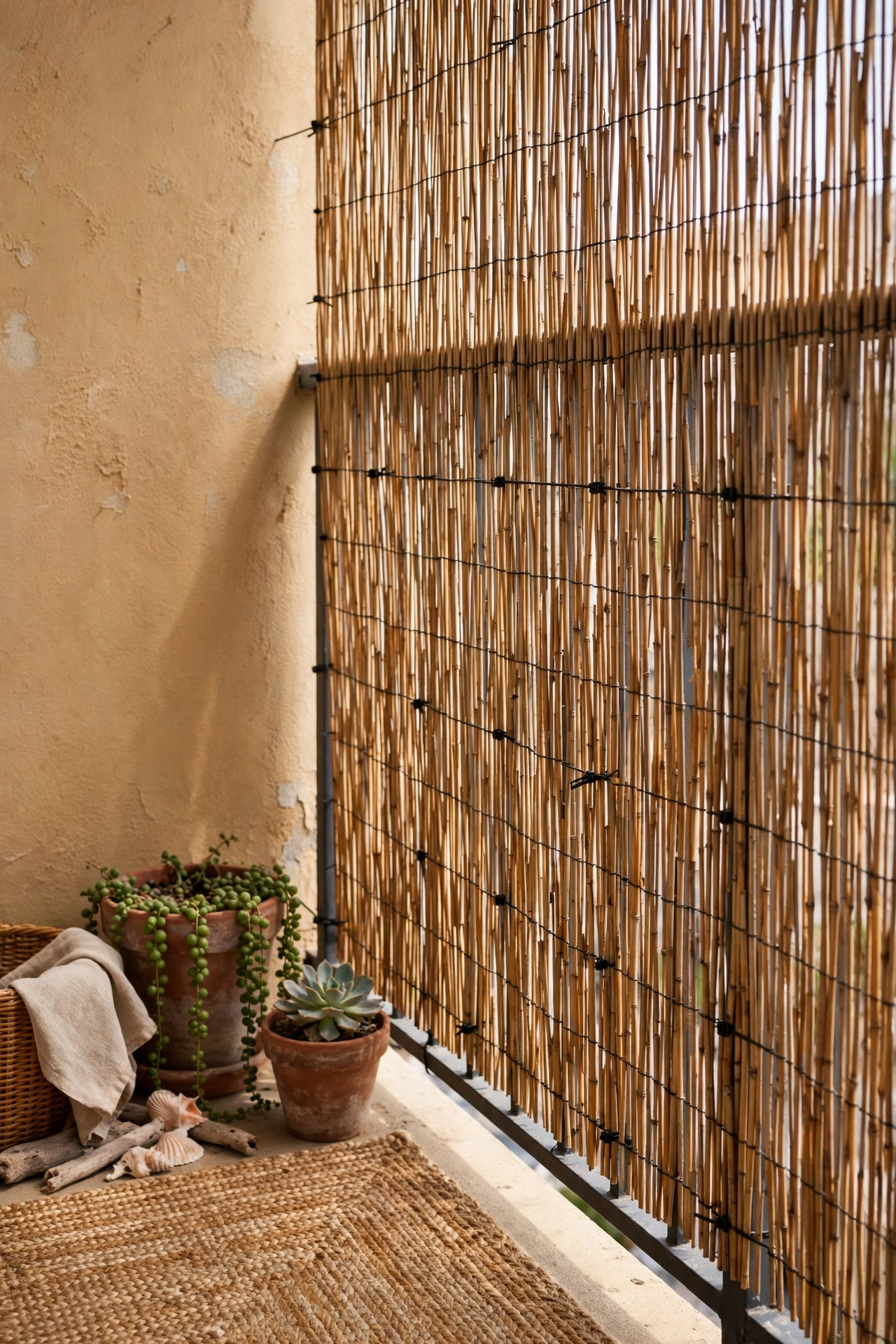
Bamboo reed rolls zip-tied to the railing give a warm, beachy screen that blocks the upward view completely. They roll up for winter storage, which rigid panels cannot do. The natural texture looks far more expensive than it is. Secure every few feet with UV-rated zip ties, not string, which rots. This is the classic fix for a reason: cheap, fast, effective, and easy to remove.
Good to Know: Double-layer the roll on the street side if the weave looks gappy from below.
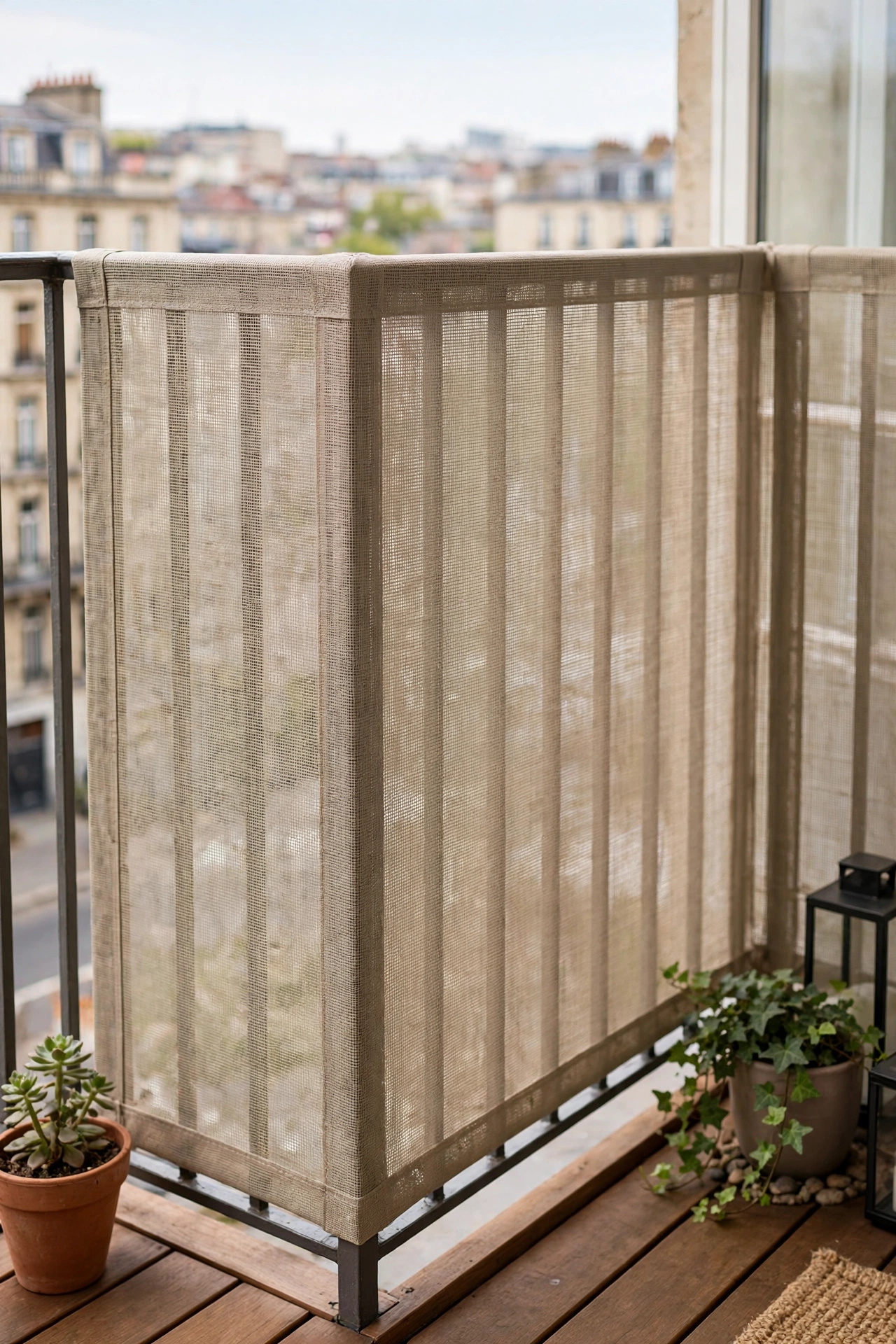
Purpose-made mesh railing screens in neutral tones wrap the railing like a tailored slipcover. They block the view while letting air through, which solid panels do not. The tailored look avoids the patchwork vibe of improvised screens. Grommets and zip ties make installation a one-person job. Choose a color close to your railing so the whole thing reads as one designed piece.
Heads Up: Cheap mesh fades to sad gray in one season. Look for UV-stabilized fabric with a warranty.
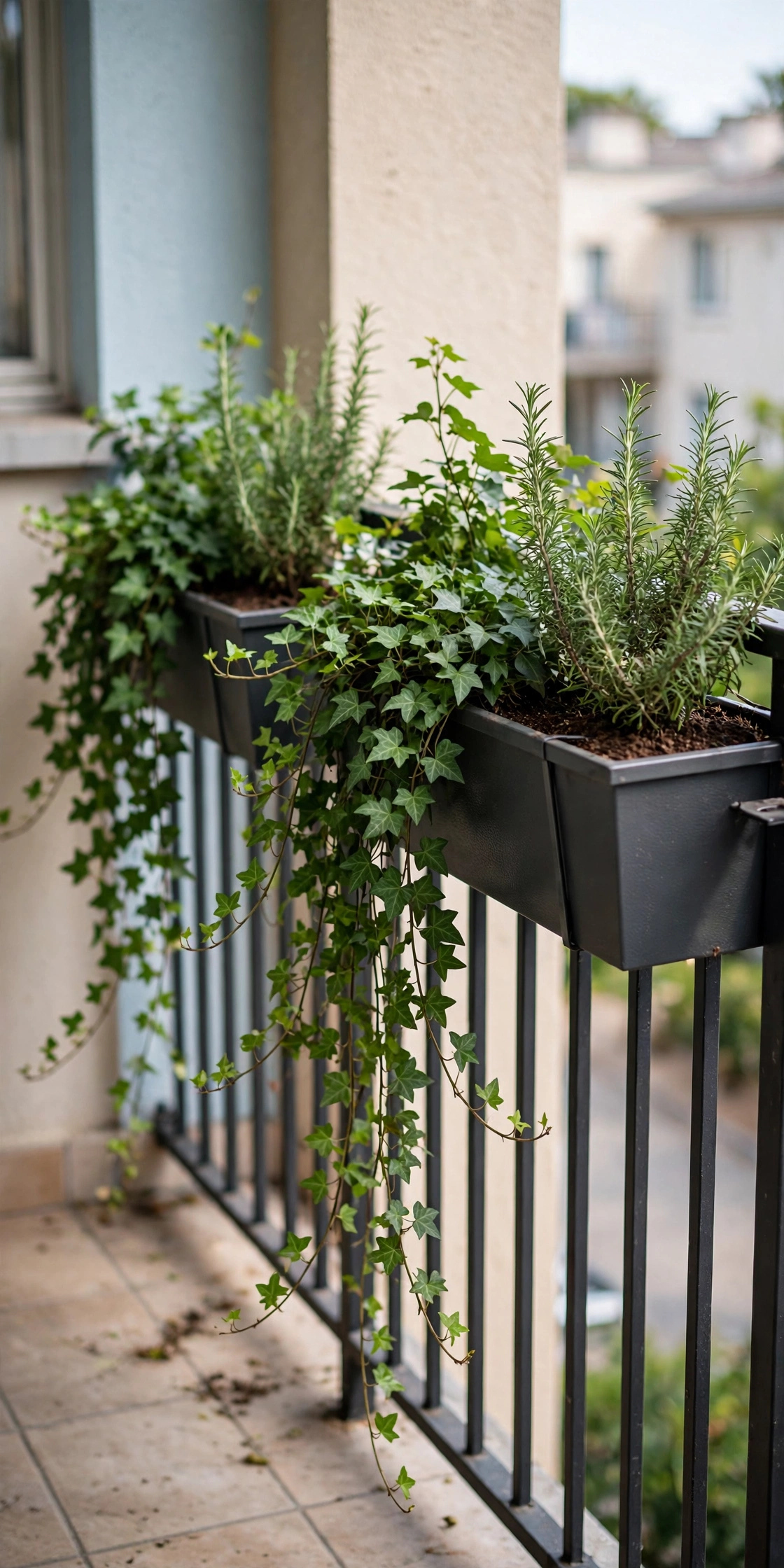
Railing-top planter boxes with trailing plants raise the visual barrier right where pedestrians look. The greenery softens the railing line and adds the garden feel that bare rails lack. Trailing rosemary, ivy, or sweet potato vine spill over and block the upward angle beautifully. Make sure the boxes are rated for your railing width and secured against wind. This is privacy that also happens to be the prettiest part of the balcony.
Reality Check: Watered soil is heavy. Confirm your railing can take the load before loading all four sides.
Privacy Options at a Glance
Option
Blocks which sightline
No-drill?
Cost band
Folding screen
Side neighbor
Yes
Low to medium
Outdoor curtains
Side, across
Yes, tension rod
Low
Tall planters
Side, across
Yes
Medium
Railing screen
Street below
Yes, ties
Low
Frosted film
Street below
Yes, peels off
Low
Shade sail
From above
Yes, clip-on
Low
Directly Across
The building opposite has a straight-on view of your balcony. This is the one case where broader coverage makes sense, but even here, layering beats walling off.
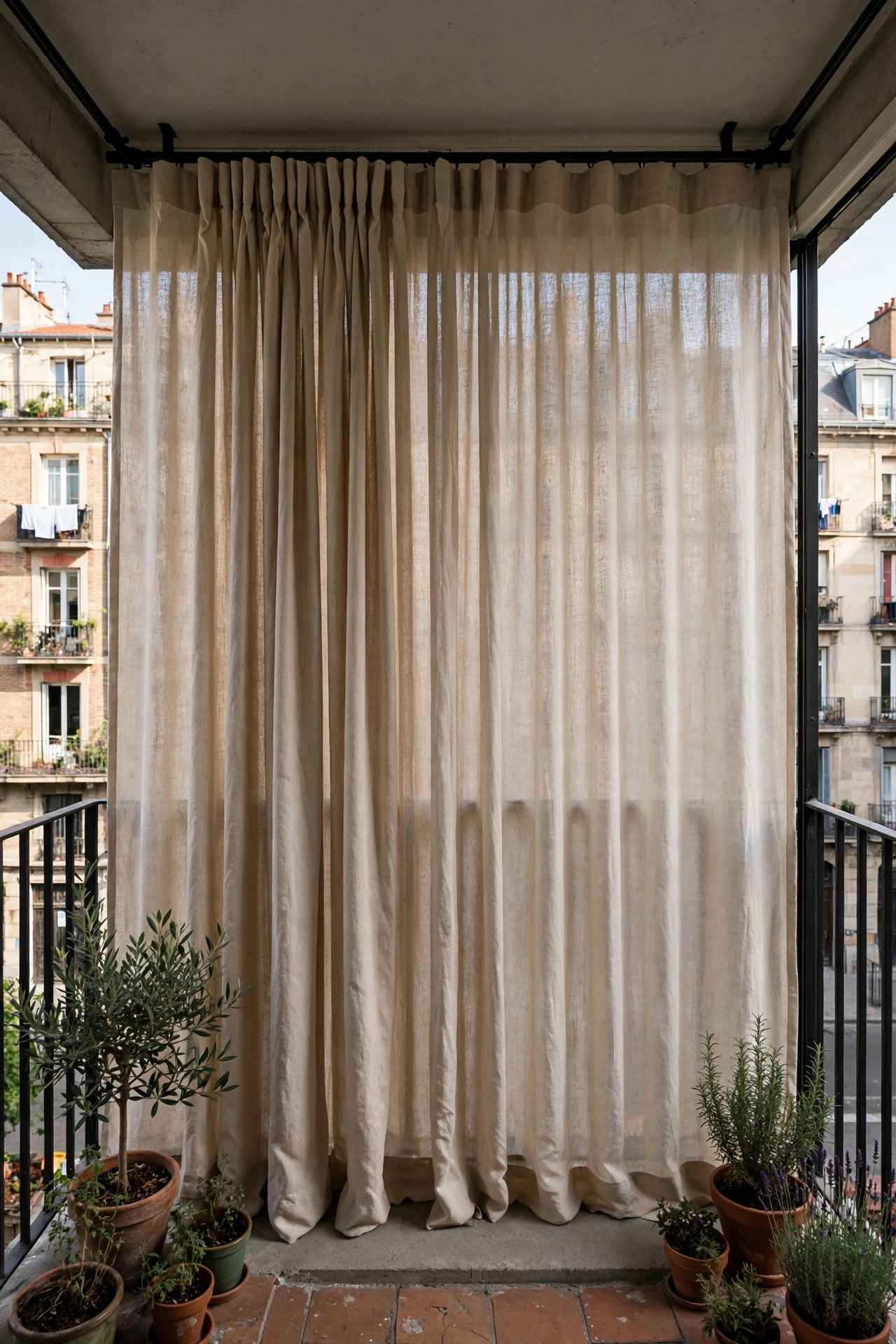
For a direct across-the-courtyard view, full-length outdoor curtains on a ceiling track give you a soft wall you can open and close. Drawn, they block the view completely; open, they frame it like drapery. The fabric movement keeps the balcony feeling alive rather than sealed. This is the most living-room-like of all privacy fixes, and it makes the balcony feel like an extension of the apartment. Outdoor-rated fabric only; indoor curtains will not survive a month.
Designer Advice: Ceiling tracks beat rods here. Panels glide instead of bunching, and the look is cleaner.
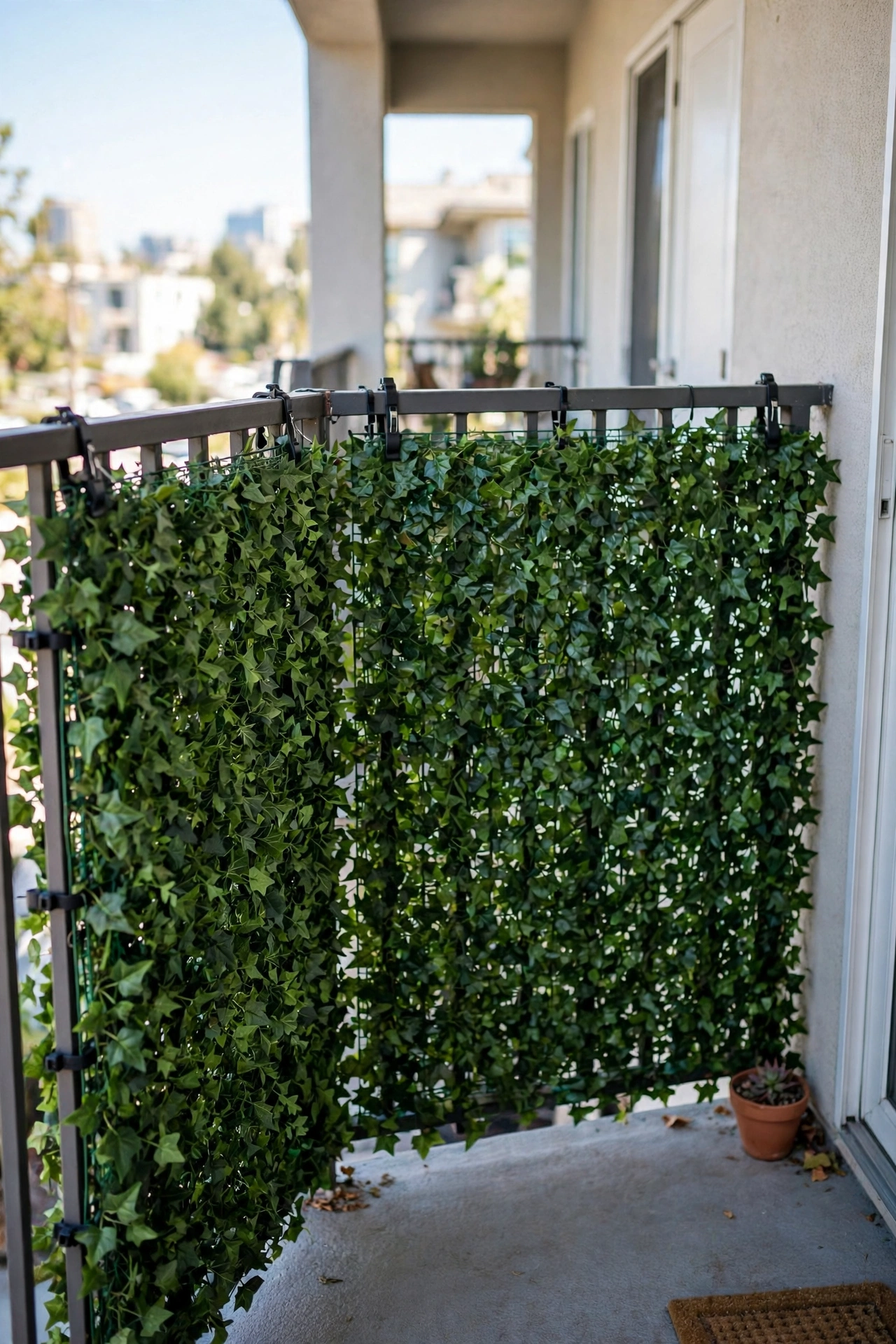
Faux ivy panels zip-tied to the railing give an instant green wall with zero watering and zero dead leaves. Modern versions look surprisingly convincing from more than a few feet away, which is exactly the distance that matters. They are perfect for black thumbs and dark balconies where real plants sulk. No shame in it; the goal is privacy, not horticulture awards. Replace every couple of years as UV dulls them.
Honest Take: Buy the denser panels. Sparse ones look like what they are from across the courtyard.
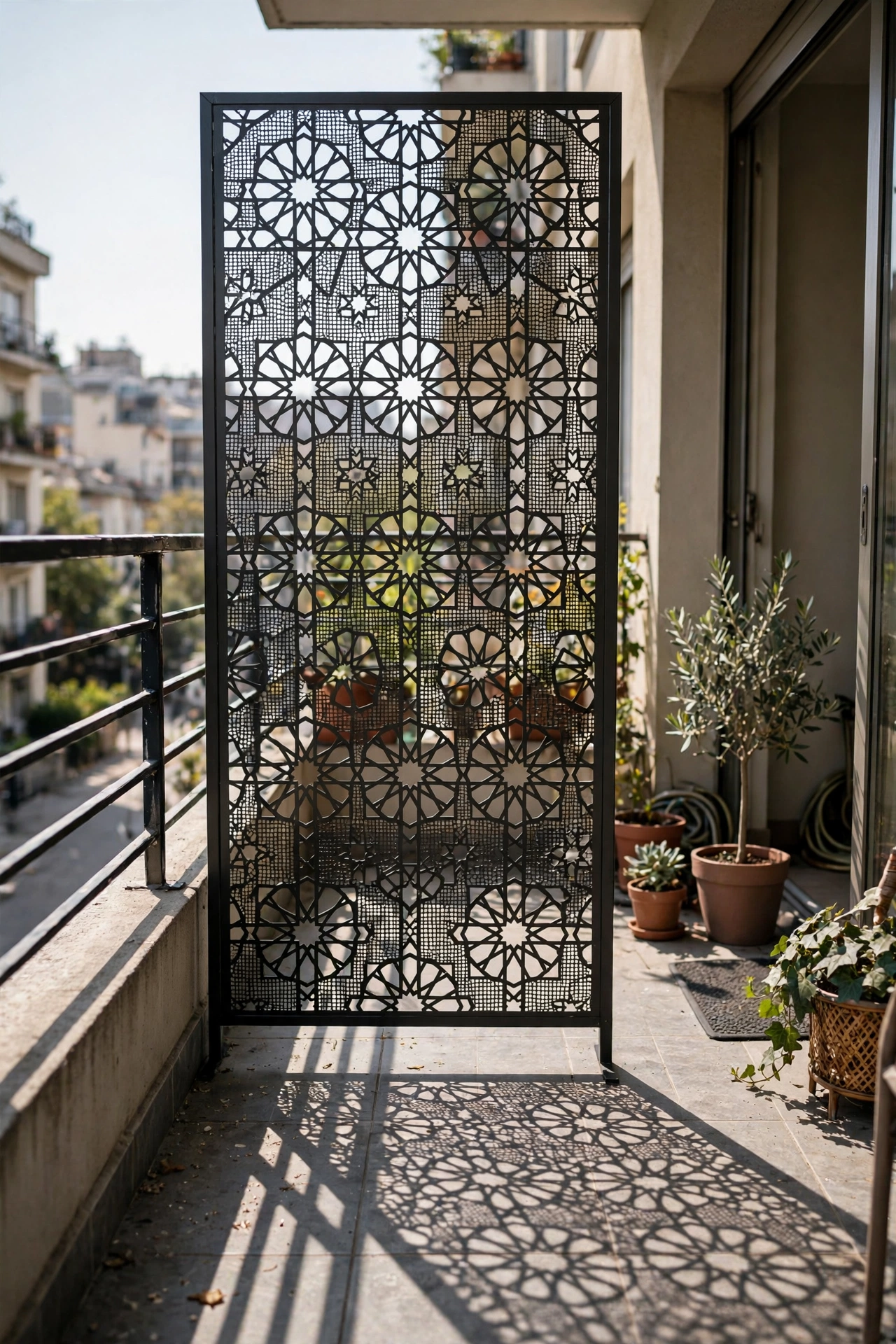
A laser-cut metal screen with a geometric or botanical pattern blocks the direct view while casting gorgeous patterned shadows. It reads as art, not defense, which is the whole trick. Corten steel develops a rich rust patina; powder-coated aluminum stays crisp in any color. Freestanding versions need no mounting. This is the design-magazine answer to the across-the-way problem, and it photographs beautifully.
Worth Knowing: The denser the pattern, the more privacy. Hold it up at arm’s length; if you can read through it, so can they.
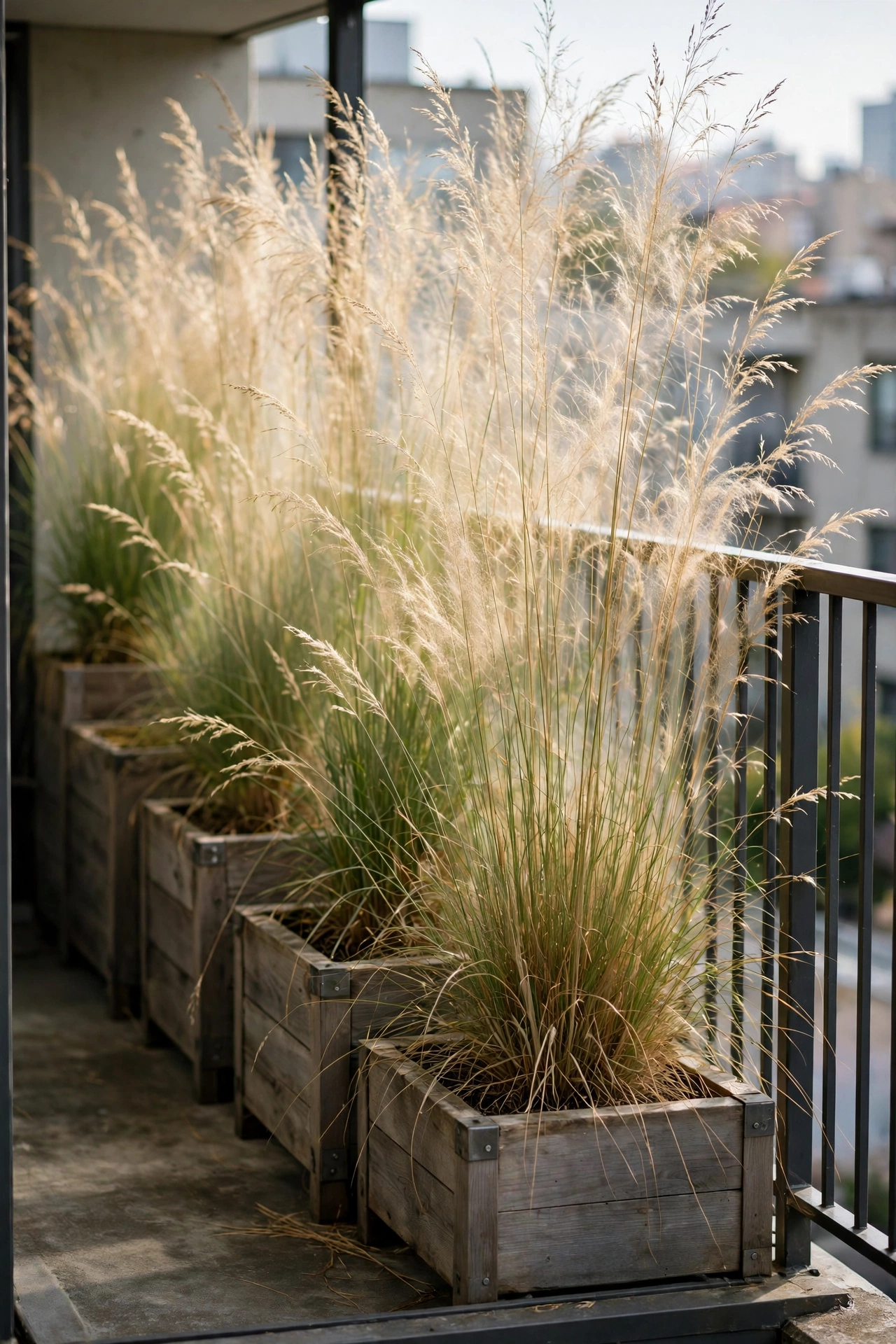
Ornamental grasses in staggered planters make a swaying, translucent screen that no solid panel can match for beauty. The movement catches the eye before the view behind it does. Miscanthus, pampas, and fountain grass all thrive in pots with enough sun. Layer two depths so diagonal views get caught too. In autumn the seed heads turn golden and the whole screen glows. This is privacy as landscaping, and it is lovely.
Small Detail: Cut grasses back hard in late winter. They return stronger every spring.
Partial Coverage Beats Full Wrap
The instinct is to screen every side, but a fully wrapped balcony loses the light and breeze that made it appealing in the first place. Designers consistently recommend blocking only the sightlines that bother you and leaving the rest open. A balcony with one good screen feels private; a balcony with four feels like a box. Start with the worst angle, live with it for a week, and add more only if you still feel watched. Restraint is the privacy strategy.
Instant No-Build Wins
No shopping, no installation, no landlord conversations. These four moves use what you already have and take under an hour.
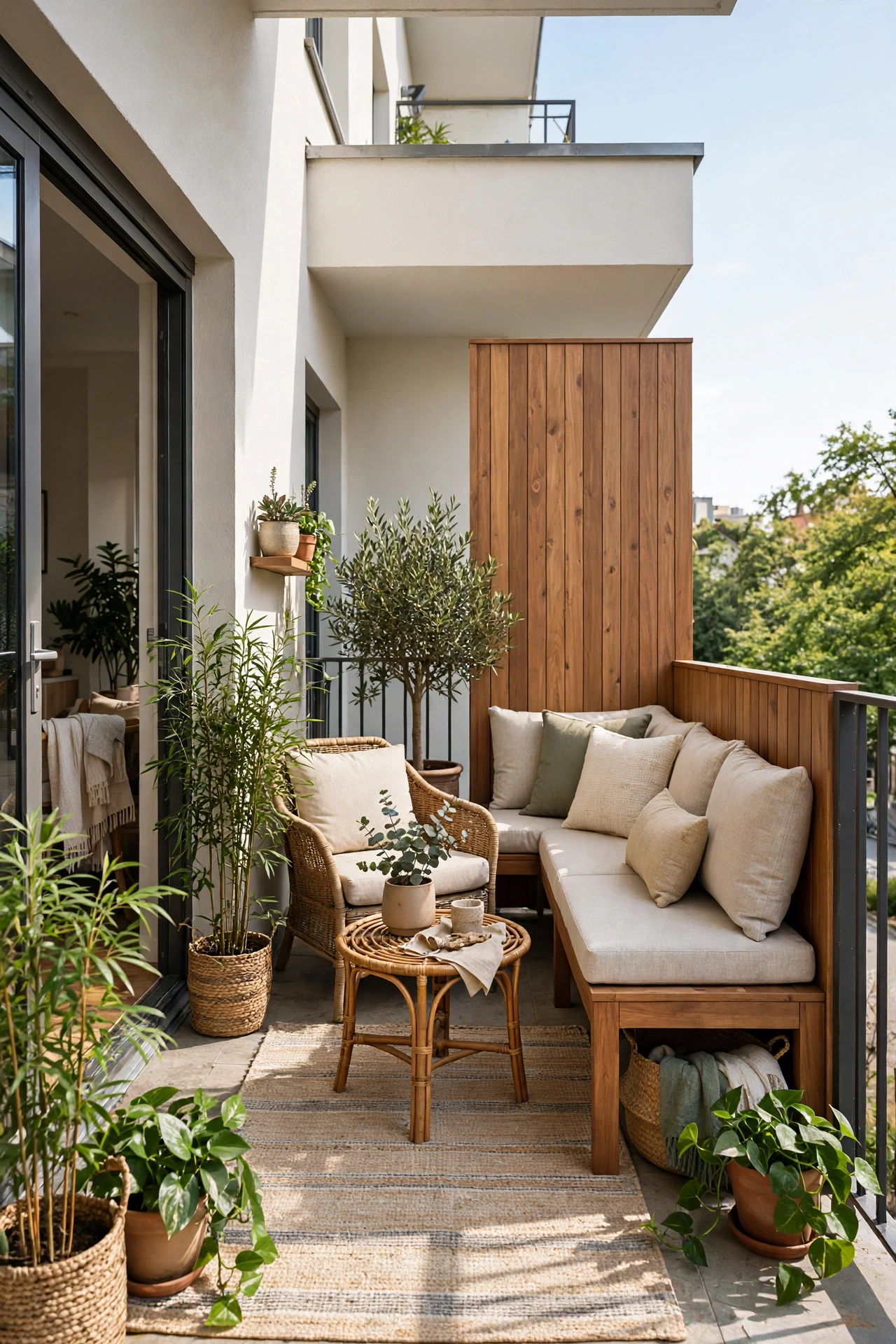
Before buying anything, try turning your seating inward and putting the tallest piece, a high-back bench or storage box, on the exposed side. Simply rotating the layout away from the neighbor’s angle can eliminate the exposed feeling immediately. This costs nothing and takes twenty minutes. Most people skip this step and go straight to shopping, which is why most people overspend on privacy. Layout is the cheapest privacy product there is.
Quick Tip: Photograph the balcony from the neighbor’s angle if you can. You will see exactly what they see.
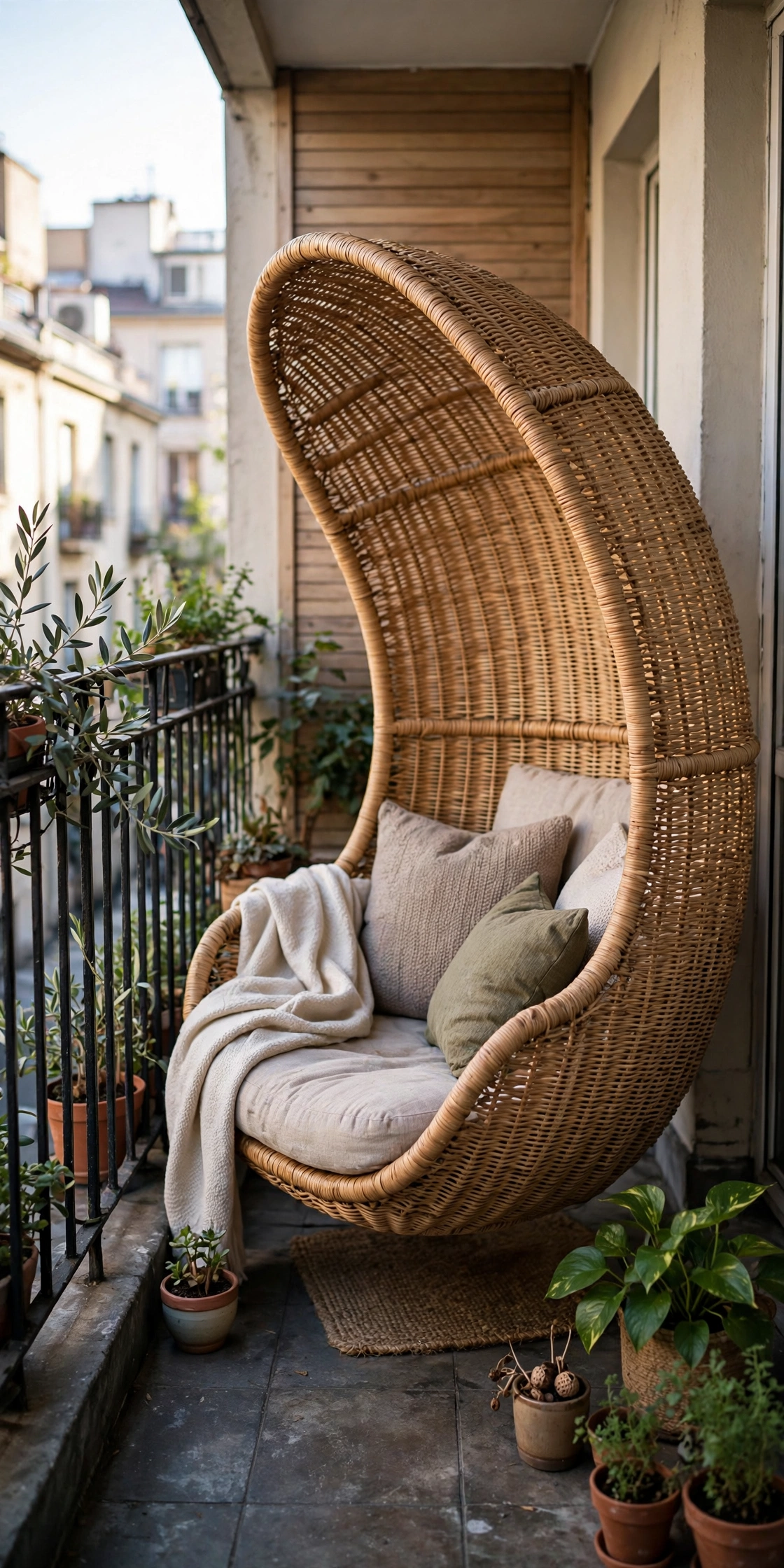
A deep curved chair wraps around you like a shell, and the high back blocks the sightline behind your head, which is where exposure feels worst. The sloped shape reads as cozy rather than defensive. It is furniture doing double duty as architecture. One good cocoon chair can replace an entire screen on a small balcony. This is the most comfortable privacy fix in the article, and it is not close.
Good to Know: Look for outdoor-rated wicker or rope. Indoor cocoon chairs will not survive the weather.
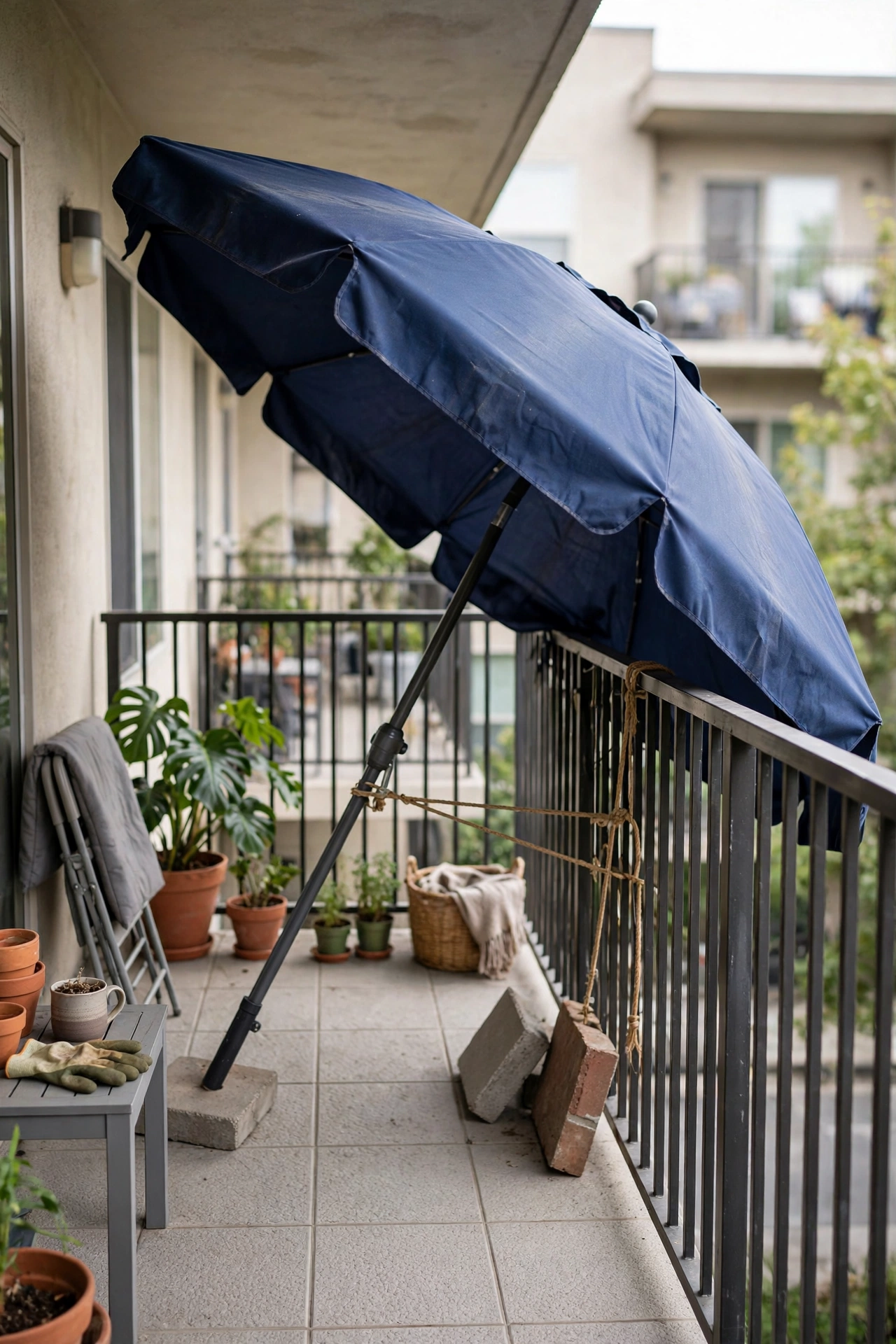
A large patio umbrella tilted toward the exposed side blocks a surprising amount of view for zero installation. It is not elegant, but it is instant, and it doubles as sun control. This is the emergency fix: guests coming over, neighbors on their balcony, umbrella up, problem paused. Every balcony should own one anyway for the sun alone. Think of the privacy as a bonus feature.
Reality Check: This is a tactical fix, not a design solution. Use it while you plan the real one.
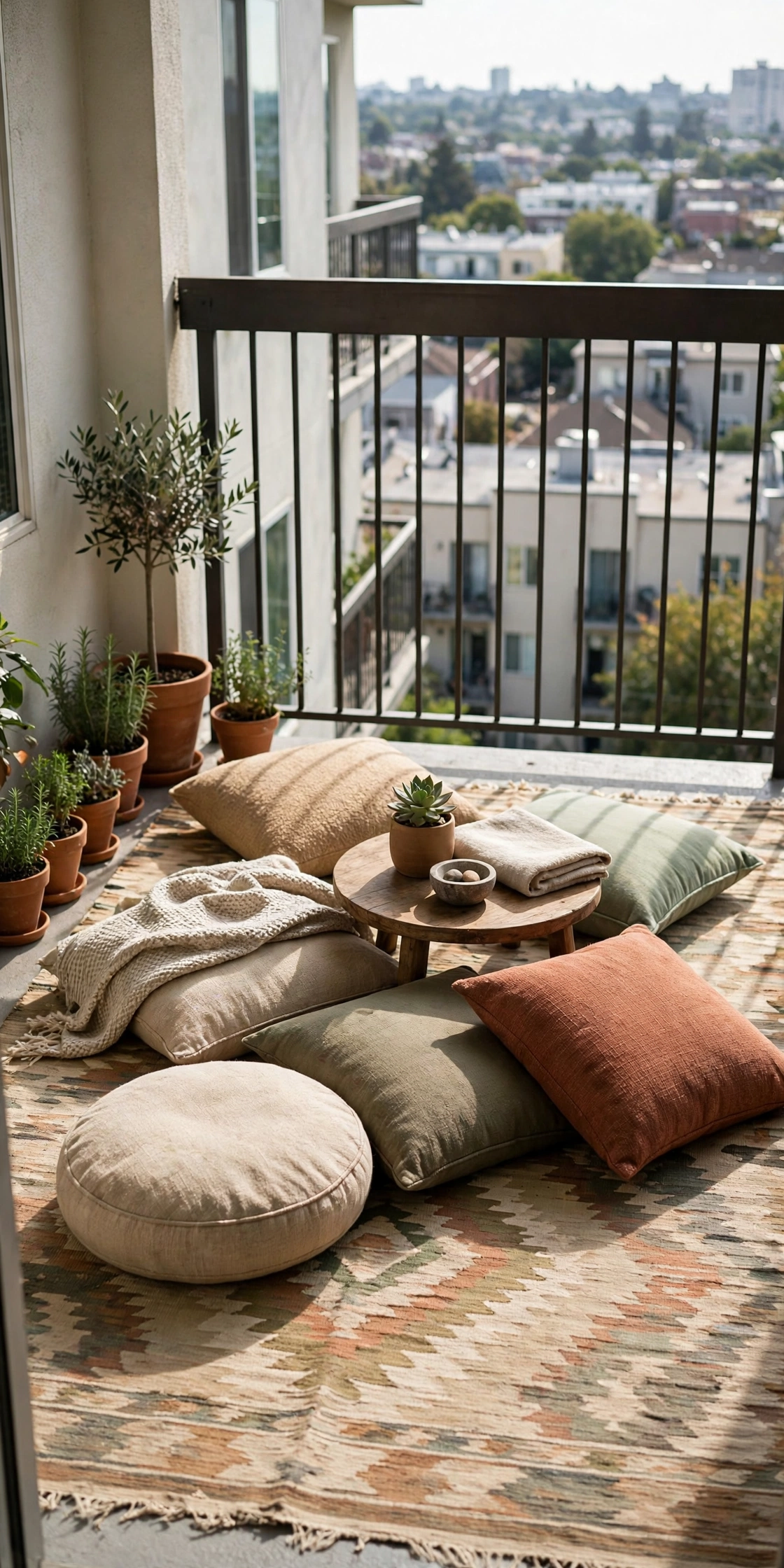
Floor cushions and low lounge seating drop your sightline below the railing cap, which instantly removes you from most sightlines. What they cannot see does not need screening. A low setup with an outdoor rug feels like a Moroccan lounge and costs very little. This works best on balconies with solid or semi-solid railings; glass rails still show everything. Pair with a low table and the whole arrangement feels deliberate, not improvised.
Pro Move: Store the cushions in a deck box when not in use. Floor seating only works if it is easy to deploy.
Privacy Is a Sightline, Not a Wall
The balconies that feel most private are rarely the most screened. They are the ones where someone identified the one angle that bothered them and fixed exactly that. A single well-placed screen beats four walls of bamboo every time, because it leaves the light, the air, and the view you actually wanted. Start by sitting in your chair and finding your sightline. Block that, live with it for a week, and notice how the whole balcony changes. Privacy is not about hiding. It is about choosing what to share, and with whom.