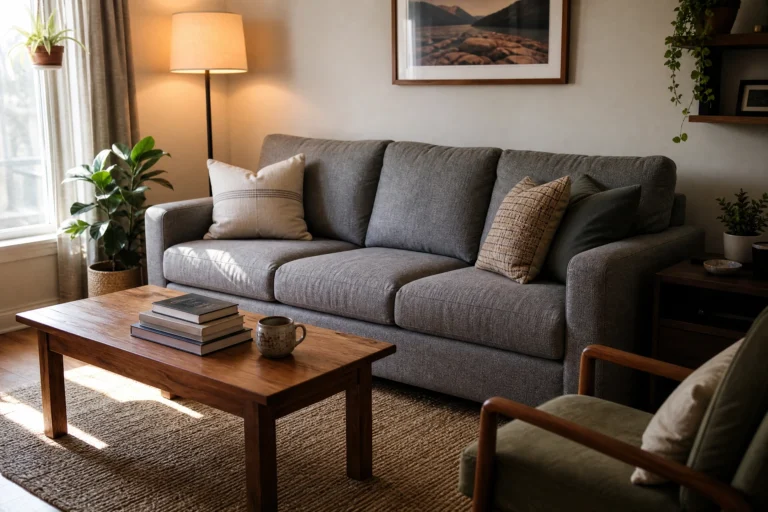
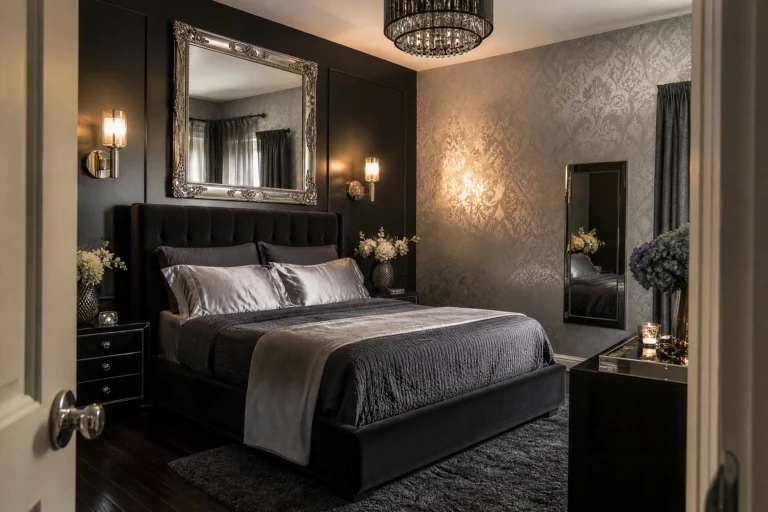
Doilies are officially back, and searches for them are up 105% on Pinterest heading into 2026. But the version worth recreating is not a lace cloth sitting under a lamp collecting dust. It is doily decor used with intention, placed against the right materials, in the right scale, with enough contrast to make the lace read as a design choice rather than an afterthought. Every idea here tells you exactly what to pair it with so it lands the right way.
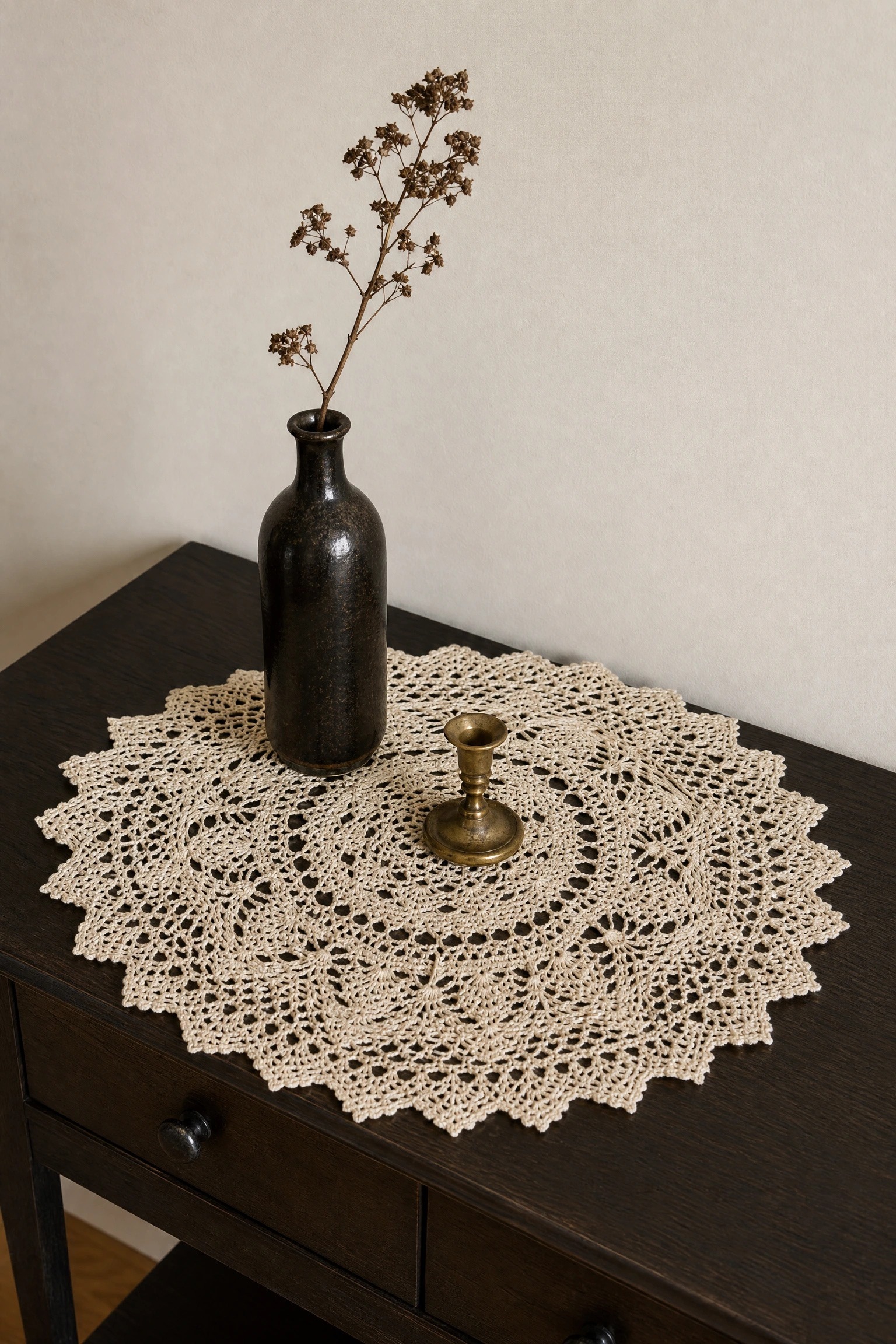
1. Lay a Large Doily on a Dark Wood Console Against Bare Wall
A single large cream or white doily draped across the surface of a dark walnut or espresso console table reads as intentional rather than fussy because the dark wood provides maximum contrast for the open lace pattern. The intricate negative space of the crochet work shows up clearly against the rich wood grain in a way it never would on a light-colored surface. Keep the objects on top minimal: one ceramic vessel and one candle holder at most.
Pro Move: White and cream doilies show up most strongly on surfaces in dark oak, walnut, or ebonized wood. On light pine or white-painted furniture the lace almost disappears. Match the contrast to the material.
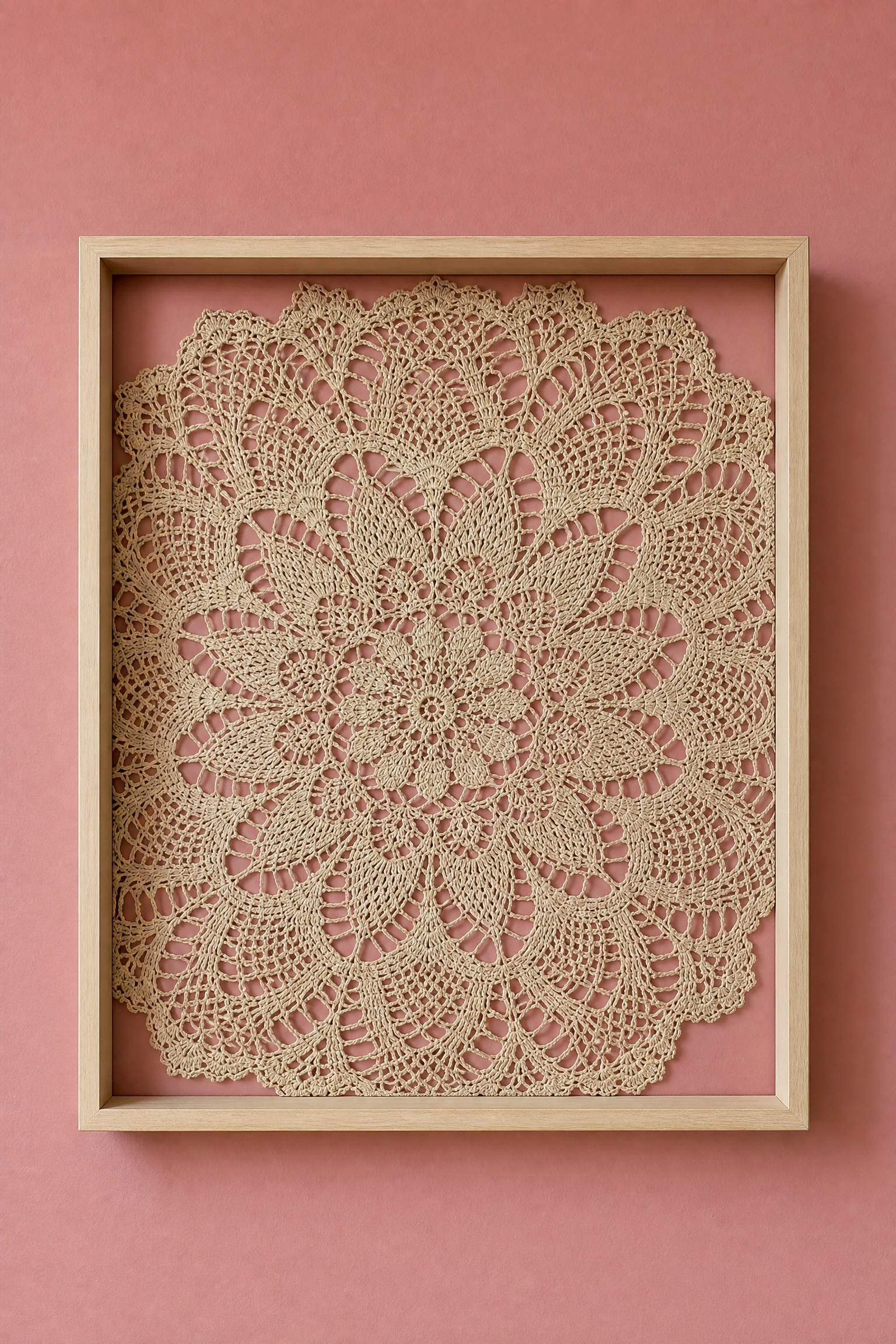
2. Frame a Single Large Doily as Wall Art Against a Painted Backdrop
Mounting a large heirloom or thrifted doily in a deep shadow box frame and hanging it against a saturated wall color, sage green, dusty rose, or deep navy, turns a textile into genuine wall art that commands the same attention as a print or painting. The colored wall visible through the open lace pattern creates a layered, dimensional effect that a flat frame against a white wall cannot produce. Use a frame with at least 3 centimeters of depth so the doily has room to sit away from the glass.
Designer Advice: Choose a wall color that sits in the same warm or cool family as the doily itself. A cream doily against dusty rose reads as intentionally tonal. The same doily against a cool blue-grey reads as a deliberate contrast. Both work; mixing warm and cool tones in the same pairing usually does not.
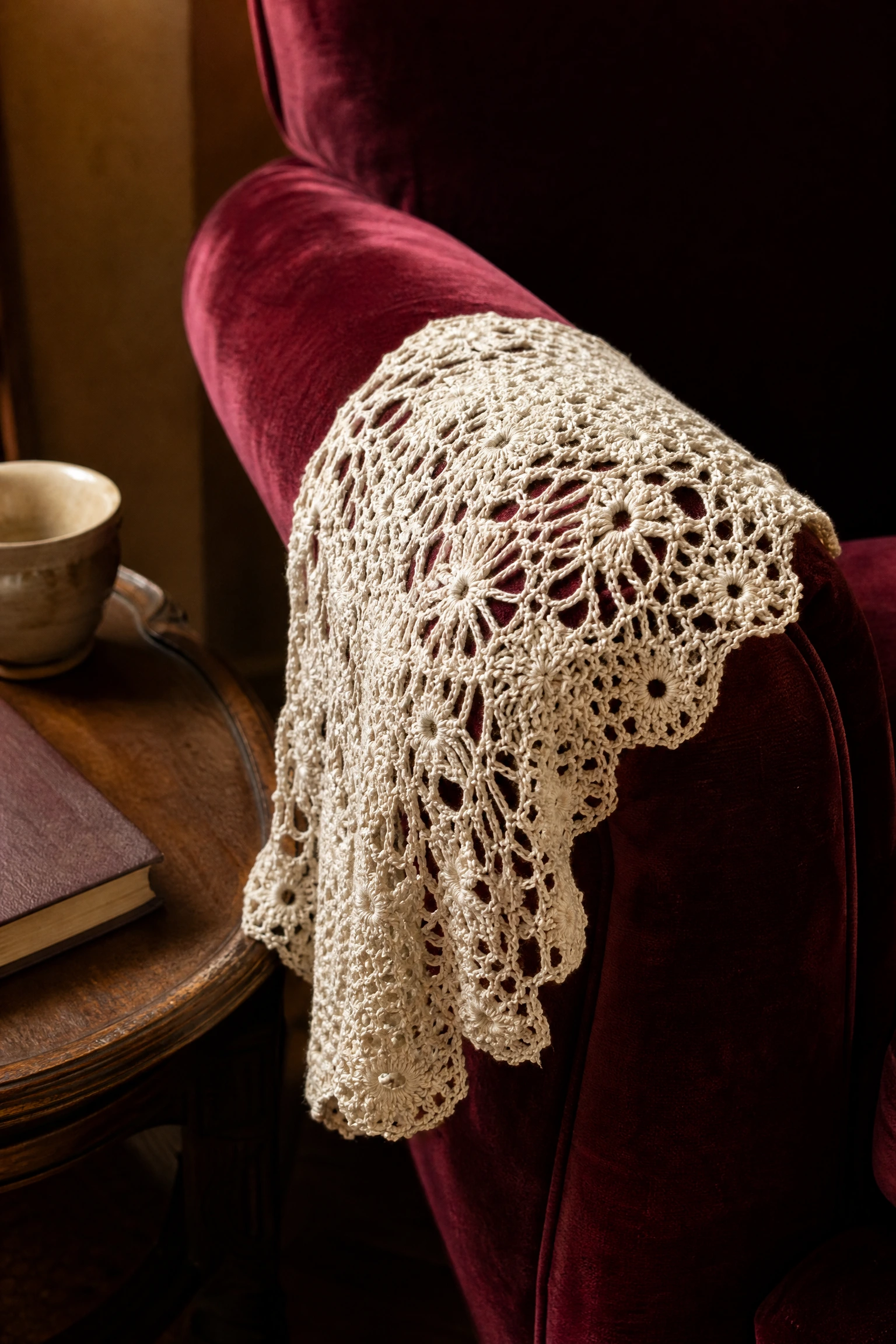
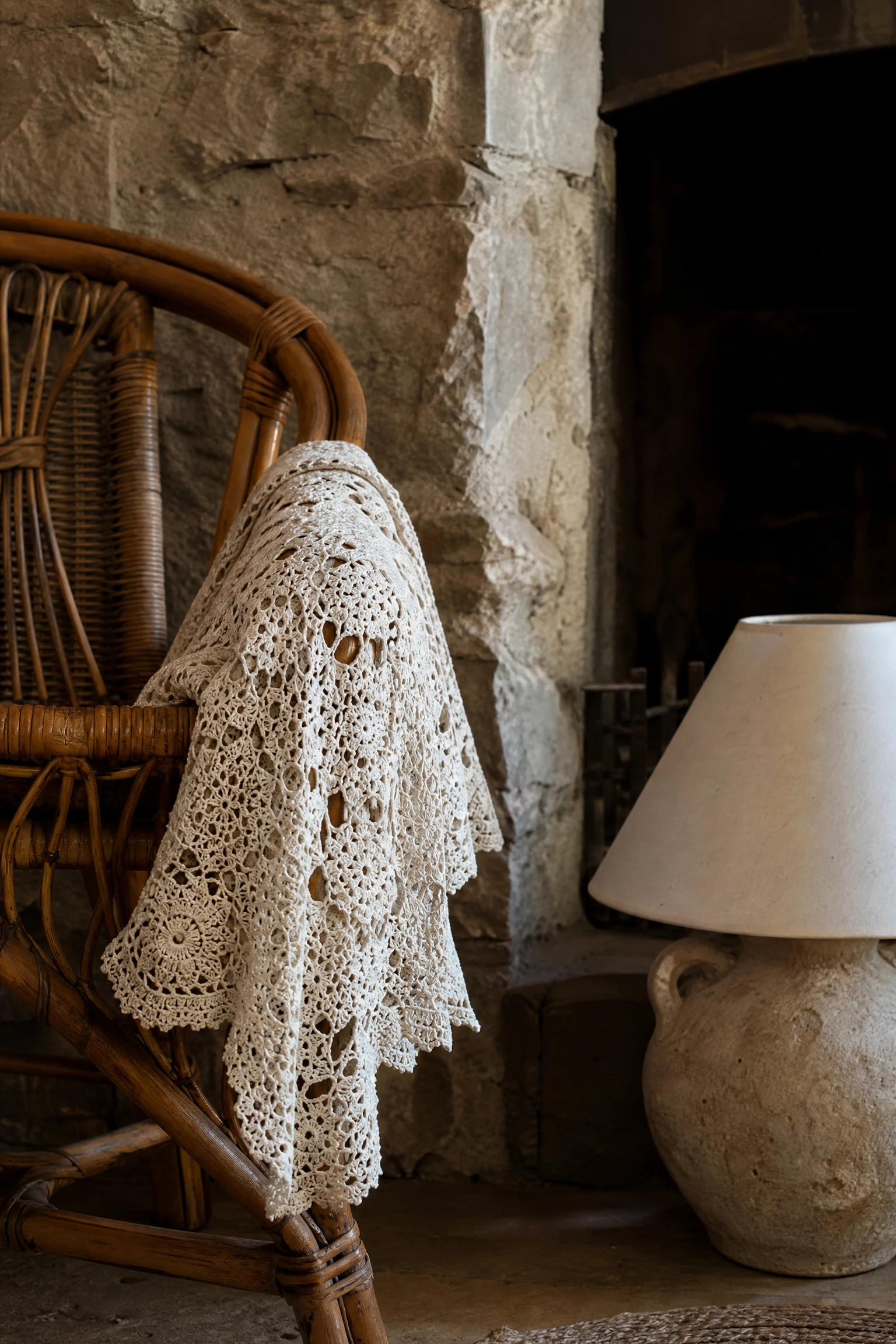
One of the most quietly sophisticated doily applications is draping a medium-sized crochet doily over the arm or headrest of a velvet or bouclé armchair, in the tradition of Victorian antimacassars. Against a tactile upholstered surface the open lace pattern reads as an intentional textile layering choice rather than a protective covering. It works best when the doily color is either the same family as the upholstery or a deliberate contrast, cream on forest green, white on burgundy, blush on charcoal.
Quick Tip: An antimacassar does not need to be pinned or sewn in place to stay put on a velvet chair. The natural texture of velvet grips crochet cotton lightly. On leather or smooth fabric you will need two small safety pins through the lace holes on the underside to keep it from sliding.
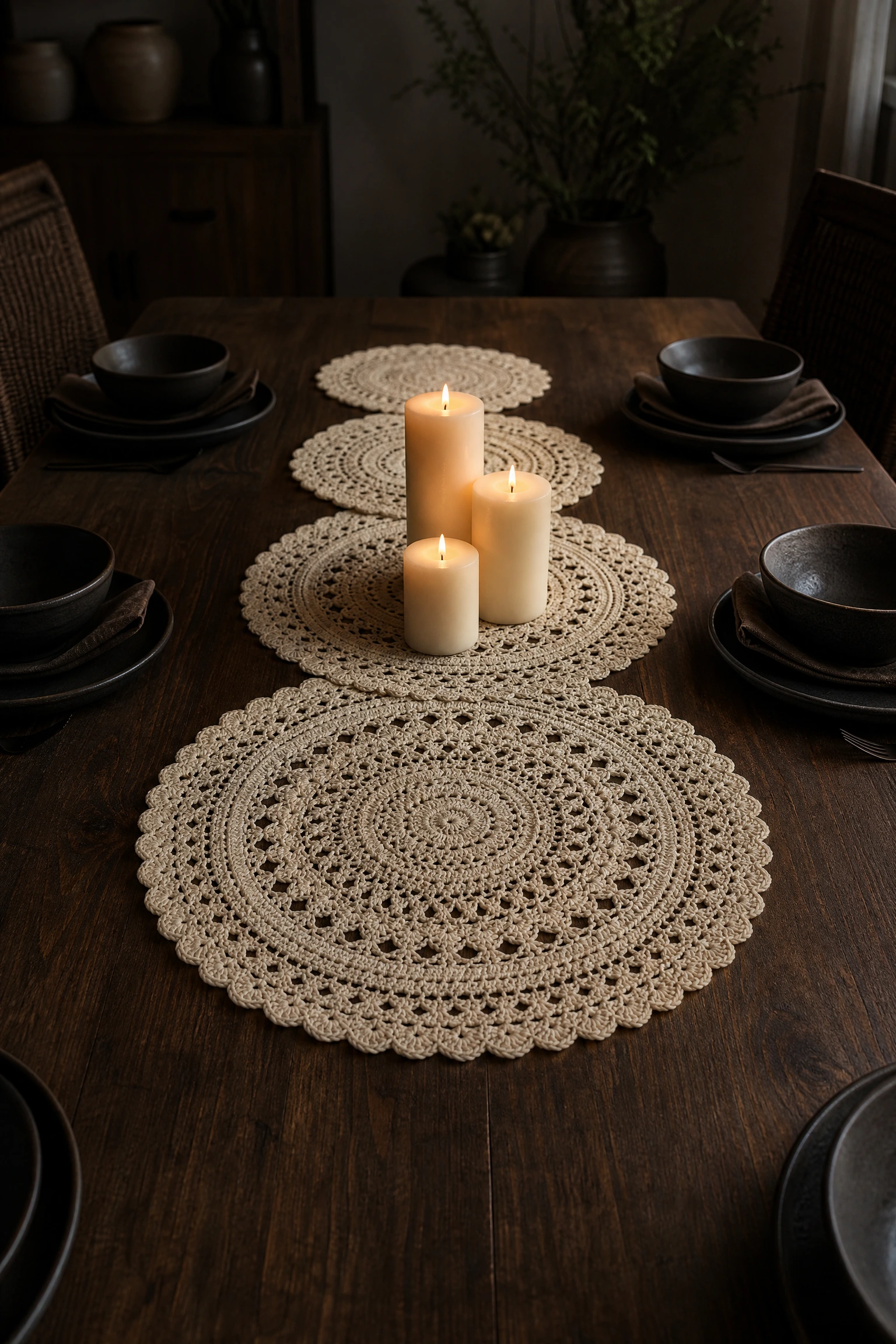
4. Use Doilies as a Layered Table Runner Down the Center of a Dining Table
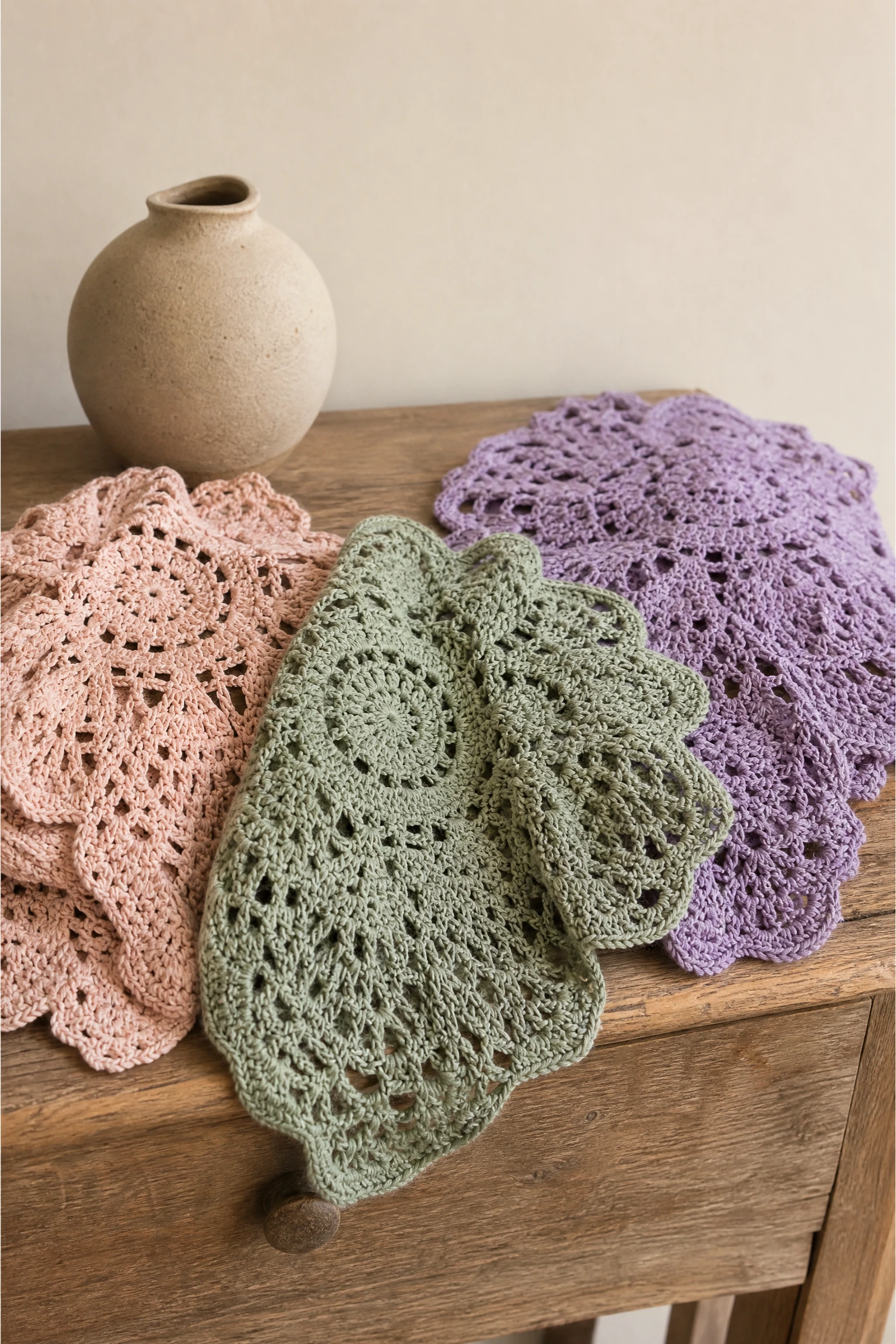
Lining up three to five doilies in graduating sizes down the center of a long dining table, slightly overlapping each one, creates a layered lace table runner that reads as bohemian and collected rather than traditional. White and cream doilies pop most strongly on dark stained wood; on a pale table, try doilies dyed in soft pastel tones with fabric dye. Anchor the arrangement with a cluster of candles or a small vase at the center so the doilies have a visual anchor rather than floating freely on the table.
Reality Check: Doily table runners look best in natural or warm candlelight rather than overhead artificial light, which can flatten the texture of the lace and make it look more dated than romantic. This is a dinner-table arrangement rather than an everyday tablecloth treatment.
5. Wrap a Plain Glass Vase in a Doily Using Spray Adhesive
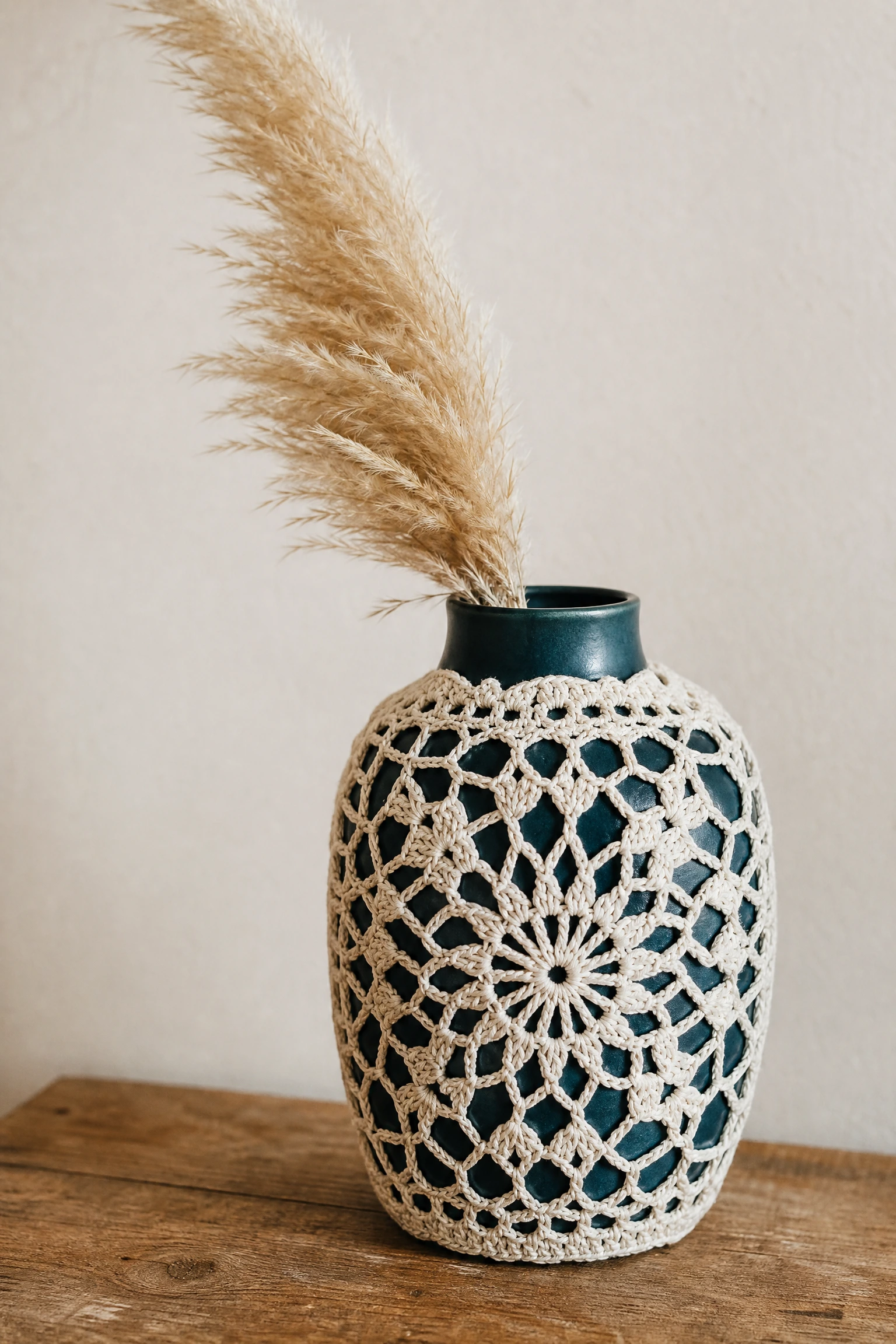
Spray a clean glass bottle or simple ceramic vase lightly with repositionable adhesive, press a doily around the outside surface, and the open lace pattern becomes a textural skin over the vessel. The effect reads as artisan and handcrafted in the best possible way, particularly when the vase is a dark or jewel-toned color so the cream lace creates a strong surface contrast. Fill with dried pampas stems, eucalyptus, or a single large branch rather than fresh flowers, which compete with the textural surface of the vase.
Pro Move: Use a repositionable spray adhesive rather than permanent glue so the doily can be removed and swapped out for a different size or pattern without damaging the vase surface. This also allows washing the vase separately.
6. Hang a Cluster of Doilies on a Wall With Small Pins as a Lace Gallery
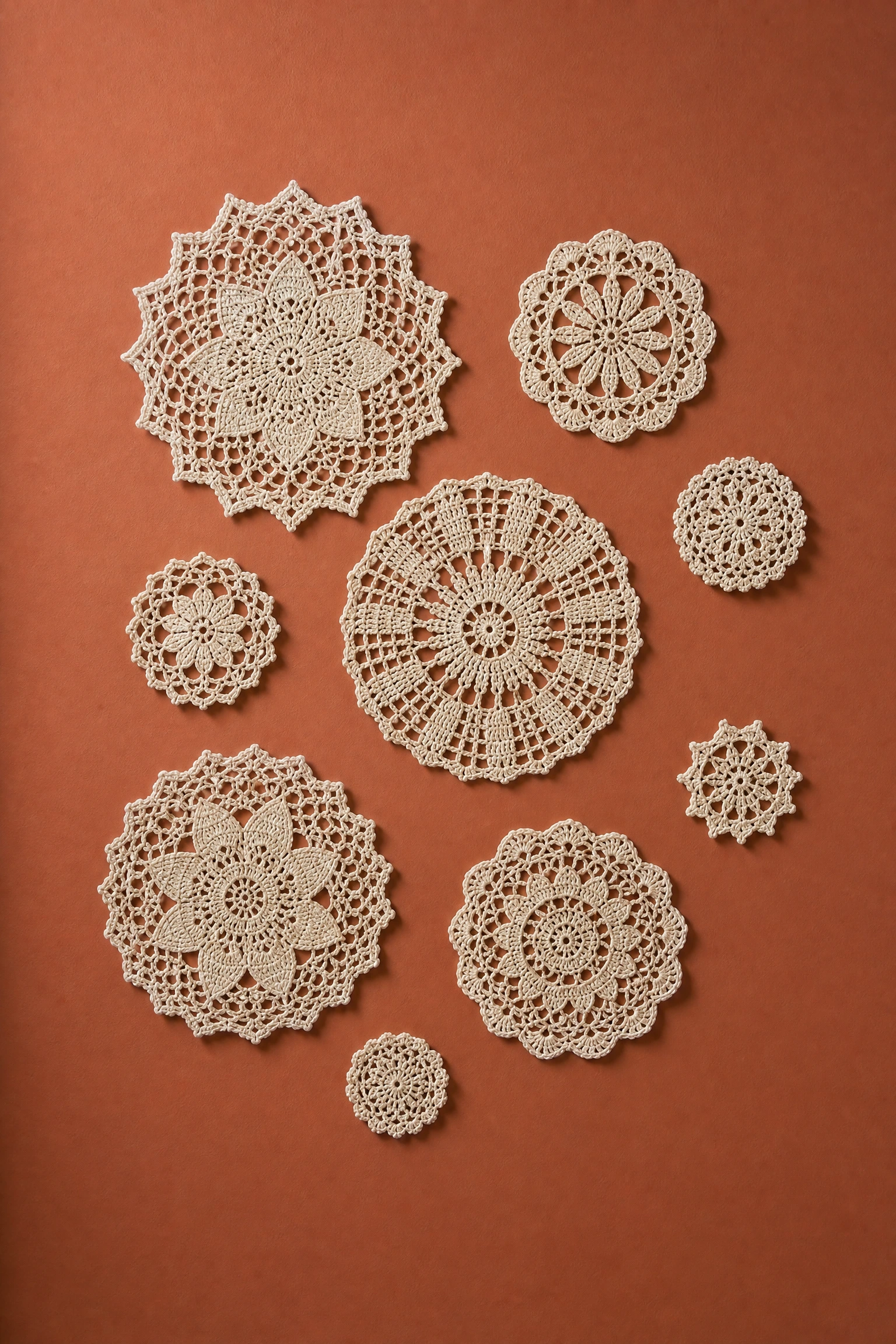
Pinning an assortment of doilies in different sizes and patterns directly to the wall using small tacks pushed through the lace holes creates a textile wall gallery that works particularly well in a bedroom, a reading nook, or a hallway. Vary the sizes from palm-sized to dinner-plate-large and cluster them in an asymmetric arrangement rather than a grid. A matte painted wall in a warm tone, soft terracotta, sage, or blush, is the best backdrop because it shows the open lace pattern clearly and adds warmth.
Heads Up: Avoid hanging doilies near air vents, humidifiers, or in direct sunlight. Consistent moisture causes mildew in natural cotton lace and extended direct sun exposure causes yellowing and brittleness, particularly in older vintage pieces.
7. Apply a Doily as a Stencil on a Painted Accent Wall
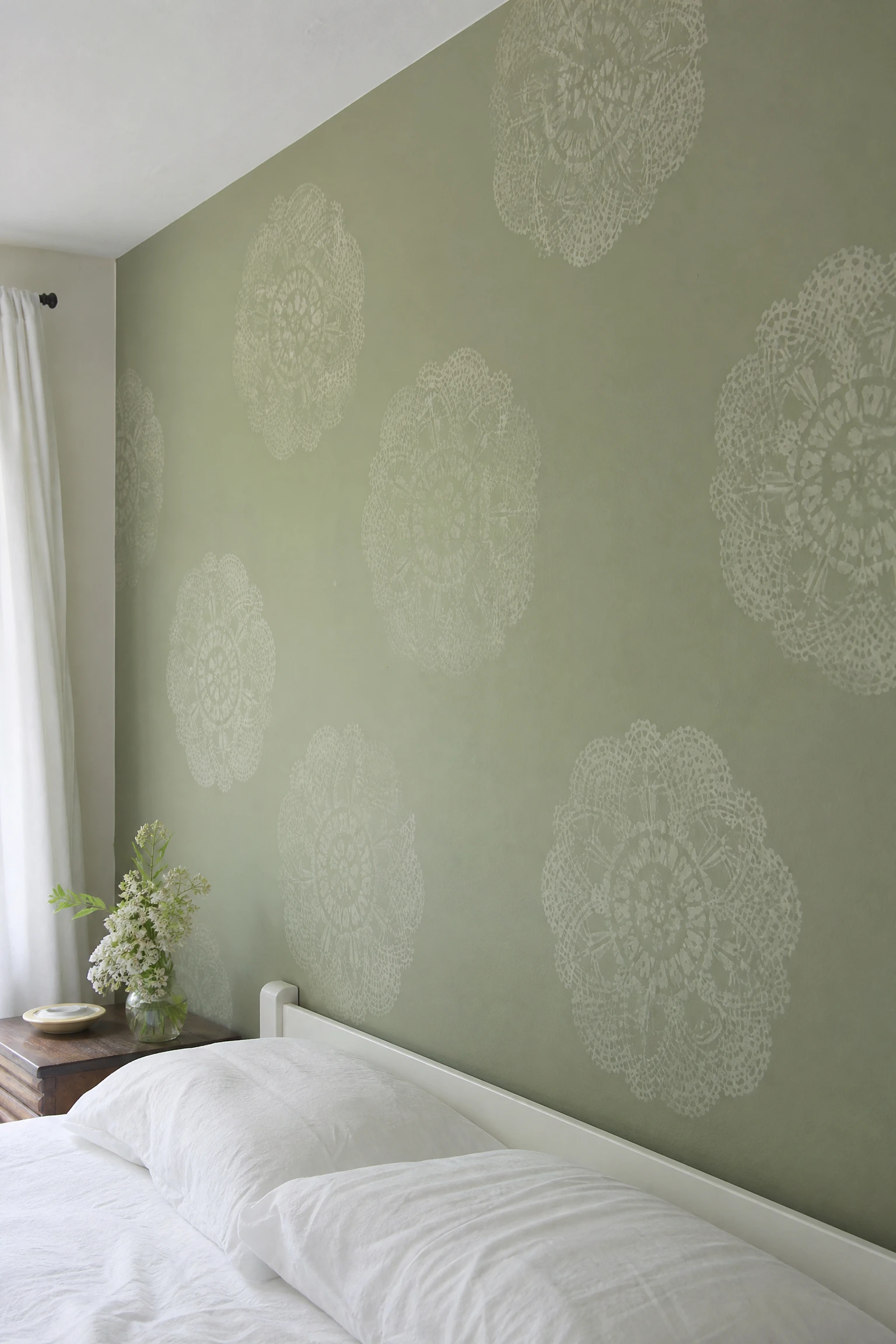
Place a doily flat against a painted wall, hold or tape it in position, and sponge or brush a contrasting paint color through the open lace holes to transfer the circular pattern directly onto the wall surface. Remove the doily to reveal a ghost impression of the lace pattern in paint, which reads as a deliberately hand-crafted surface treatment rather than wallpaper or a printed stencil. Repeat the pattern in a regular or scattered arrangement across the wall for a full wallpaper effect at minimal cost.
Designer Advice: Use a paint color only one or two shades different from the wall base for the most sophisticated result. High contrast between the stencil paint and the wall color reads as bold and graphic; a tonal difference reads as textured and subtle. The tonal version ages better in most rooms.
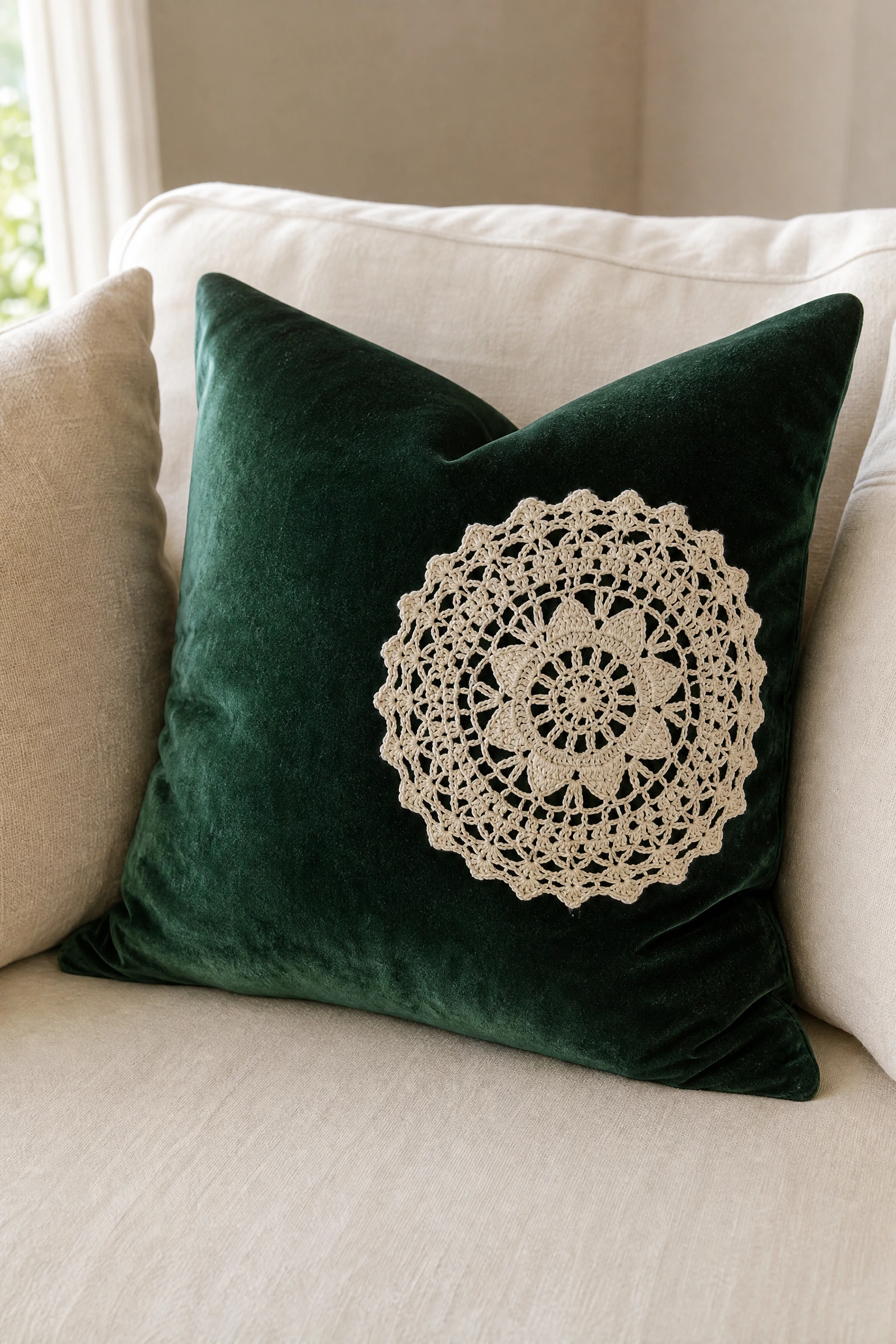
8. Attach Doilies to Plain Throw Pillows as Applique Panels
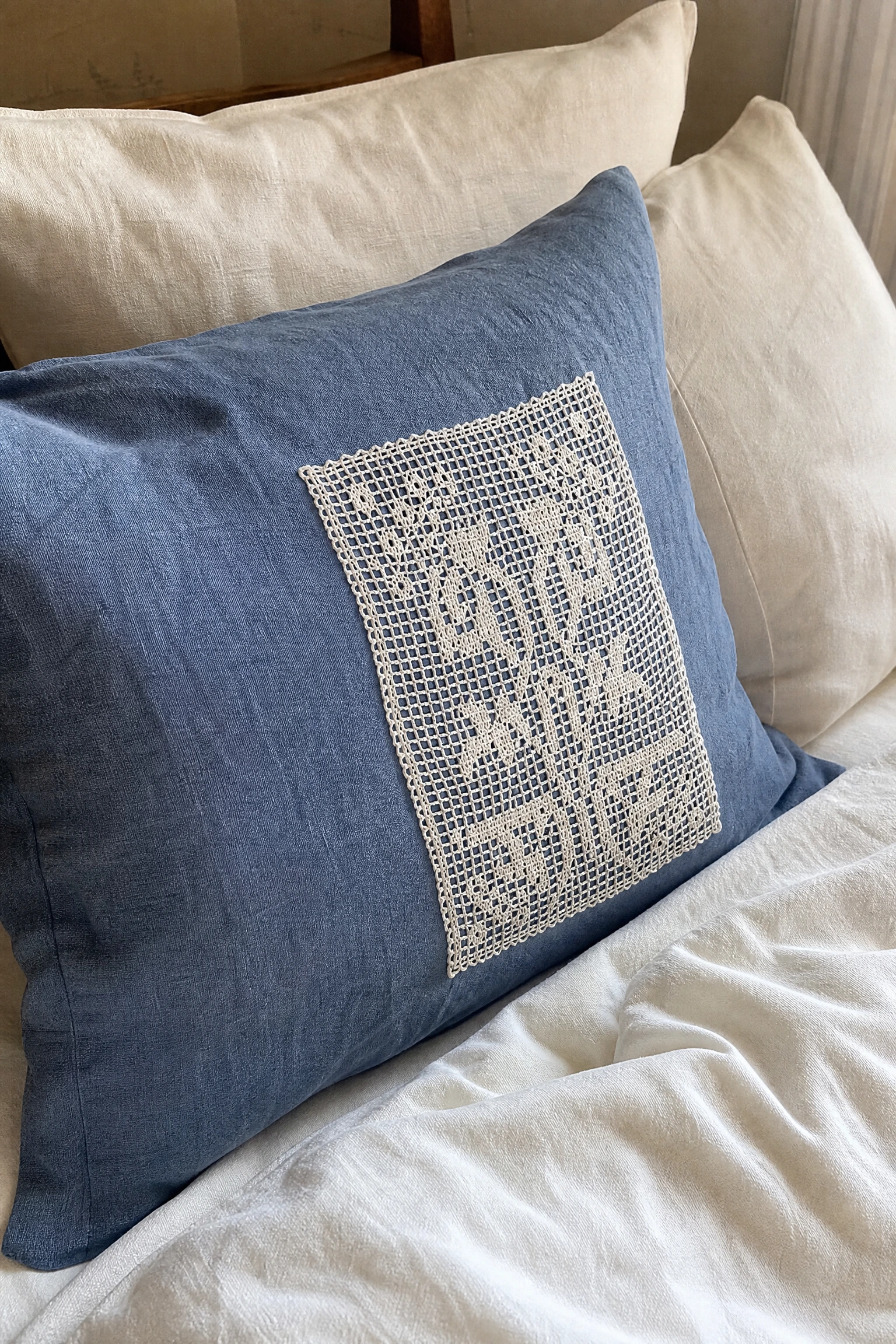
Stitching or fabric-gluing a doily onto the center of a plain linen, velvet, or cotton throw pillow adds a lace panel that reads as a deliberate embellishment rather than a decorative novelty. This works best when the pillow base color is a rich or saturated tone and the doily is cream or white so the lace pattern shows clearly against the fabric. On a sage green velvet pillow, a round cream doily reads as a considered detail; on a white pillow it almost disappears into the ground fabric.
Quick Tip: Use fabric glue rather than hand-sewing for a first attempt so the position and look can be assessed before permanently attaching the doily. If the placement works visually, add a few tacking stitches at the edges for security.
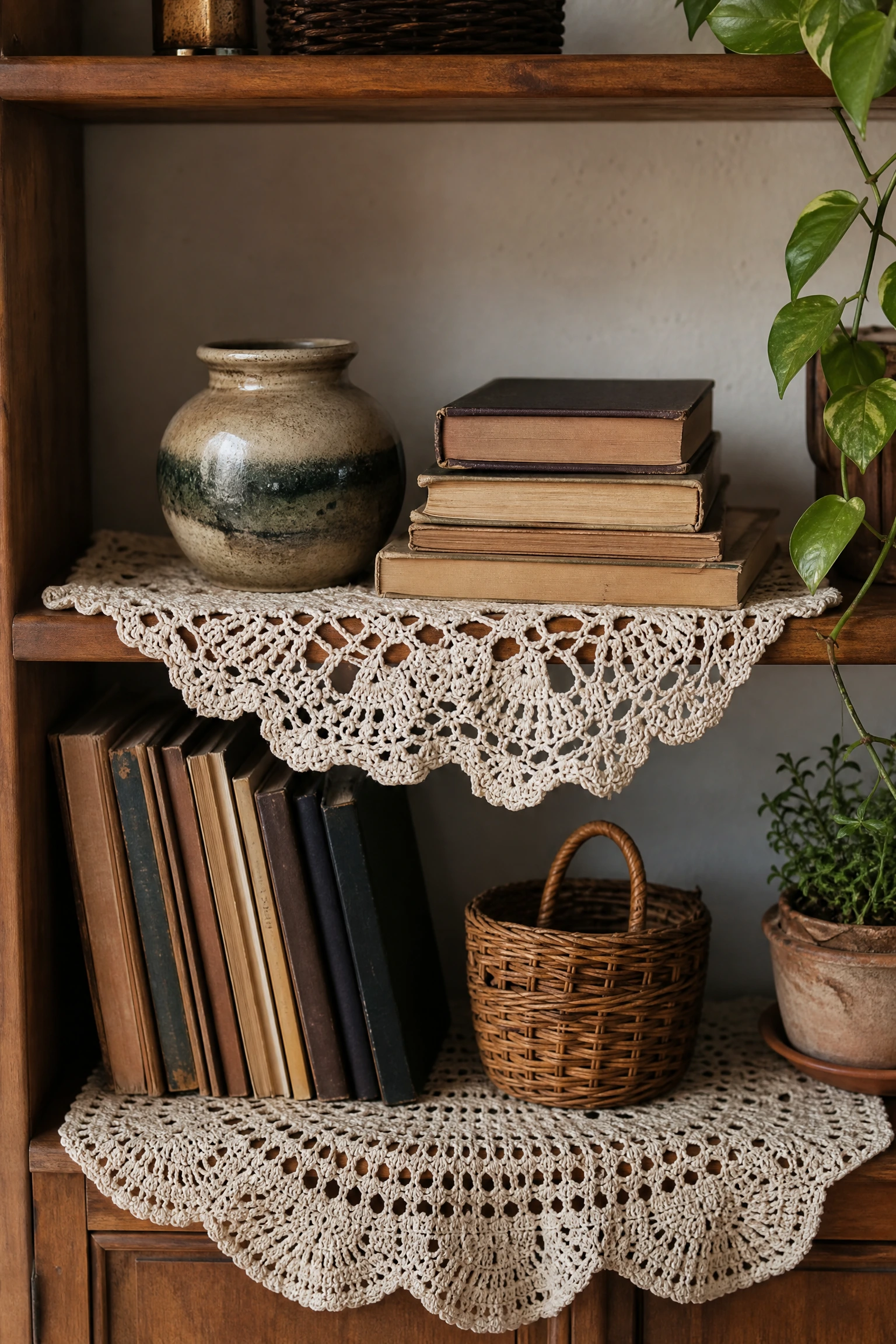
9. Line Open Shelves With Doilies Slouched Over the Front Edge
Laying doilies across open shelves and letting them slouch slightly over the front edge gives wooden or painted shelves a Victorian layered quality that works particularly well in a reading corner, a kitchen display shelf, or a bathroom cabinet. The key is pairing the lace with objects that have visual weight, stacked books, ceramic vessels, woven baskets, so the doily reads as a soft textural layer underneath heavier objects rather than as the main decorative event.
Reality Check: One doily per shelf reads as collected and charming. Multiple doilies on every shelf in the same room reads as maximalist lace, which is a different and more demanding look. Start with one or two shelves and build from there rather than covering every surface at once.
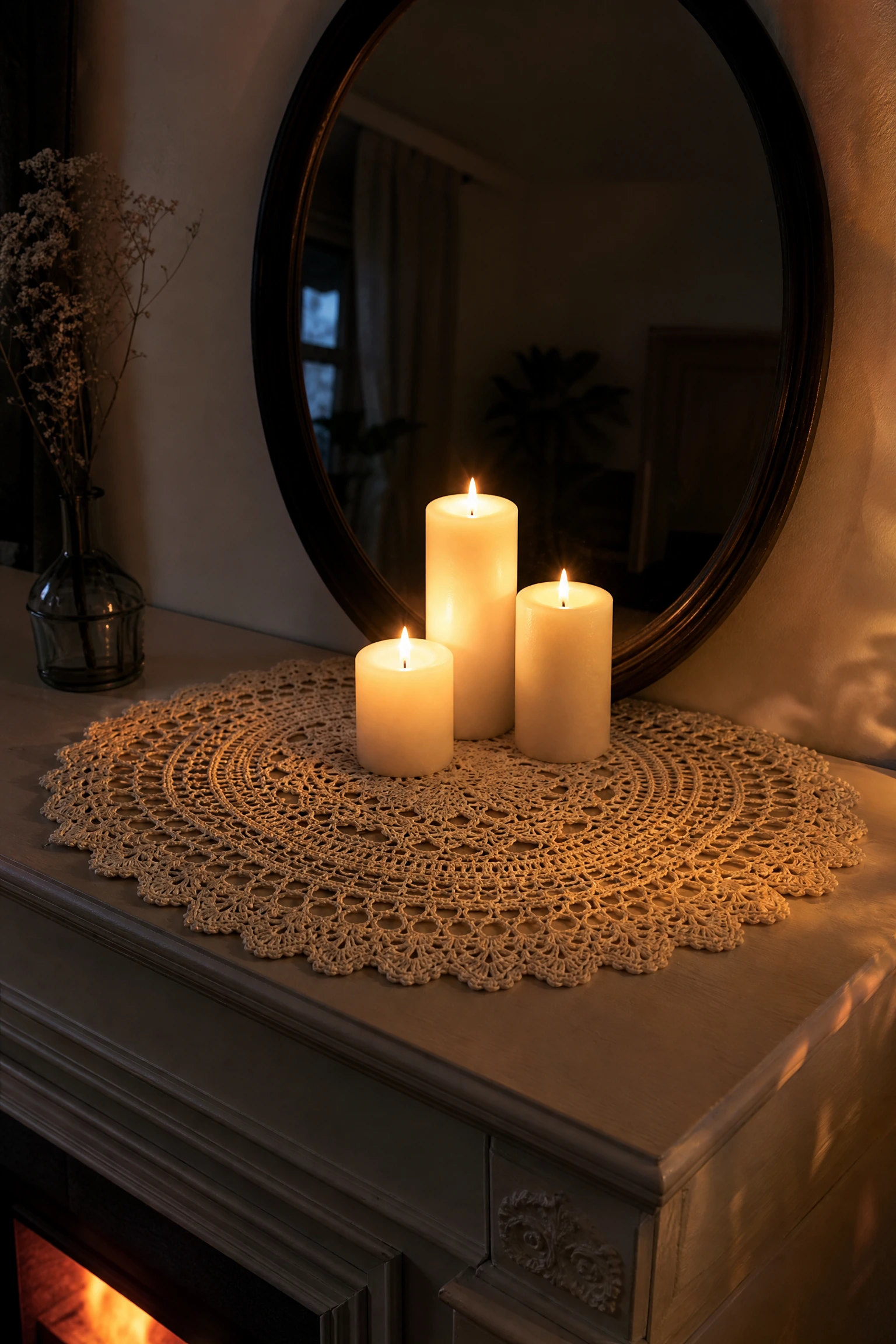
10. Layer Doilies Under Candle Clusters on a Mantelpiece
A cluster of pillar candles in varying heights placed on top of a large cream doily on a mantelpiece creates a romantic, layered centerpiece that pulls the lace into the warmth of the candlelight. In the evening, the soft light catches the open pattern of the crochet and throws a delicate shadow onto the mantel surface beneath. Use beeswax or ivory-colored candles rather than white ones so the tonal warmth of the lace, candles, and light read as one cohesive palette.
Designer Advice: Never place a lit candle directly on a cotton or linen doily. Keep candles in holders with a solid base, and position the doily around rather than directly under any open flame. For a fully safe version of this look, use battery-operated pillar candles.
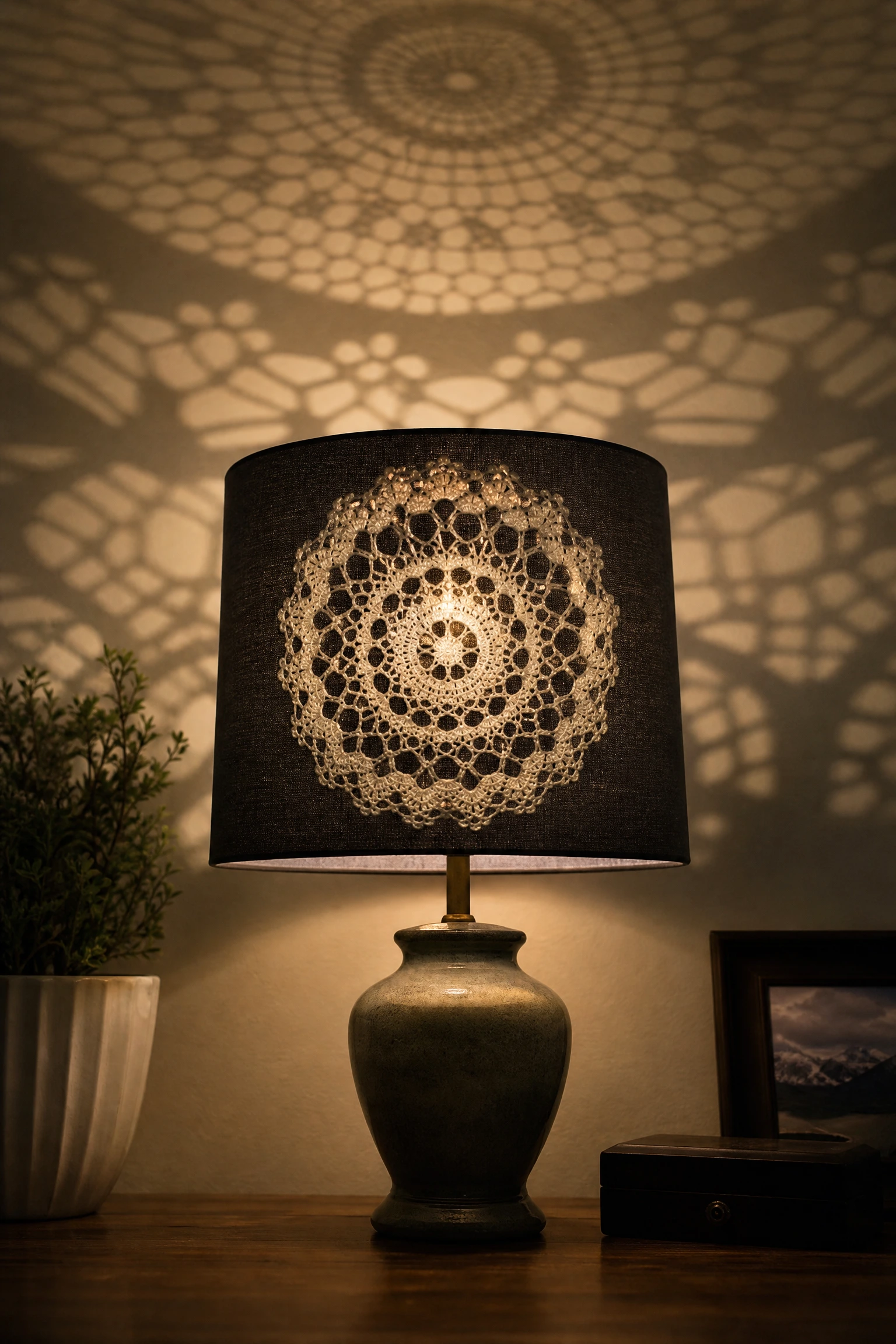
11. Glue a Doily to a Plain Lampshade for a Layered Lace Effect
Hot-gluing a vintage doily onto the outside of a drum or conical lampshade creates a layered textile shade that throws delicate shadow patterns across the surrounding wall when the lamp is switched on. The open holes in the lace project small circles and geometric forms as light passes through them, turning an ordinary lamp into an atmospheric light source. White or cream doilies on a white shade give a subtle tonal effect; on a dark shade the contrast produces much more dramatic light patterns.
Pro Move: Apply the doily with heat-resistant craft glue rather than standard hot glue if possible, as the heat from a light bulb can soften standard hot glue over time and cause the doily to detach. Use LED bulbs which produce significantly less heat than incandescent alternatives.
12. Dye Doilies in Soft Pastels and Display Them as Color Accents
White and cream doilies can be transformed entirely by dyeing them in soft pastel shades using cold-water fabric dye or even strong tea for a warm vintage tone. Pale blush, dusty lavender, sage green, and buttery yellow all read as contemporary and fresh rather than traditional, particularly when the dyed doilies are used as table runners, wall pieces, or cushion panels in a room that uses those tones in its palette. Tea-stained doilies in particular develop a warmth and vintage character that new fabric cannot replicate.
Quick Tip: Soak doilies in a bath of boiling water with four to five teabags for 30 to 45 minutes for a consistent warm honey tone. Rinse in cold water and lay flat to dry. The longer the soak, the deeper the resulting color, from pale champagne to rich antique gold.
13. Use a Large Round Doily as a Placemat for a Single Table Setting
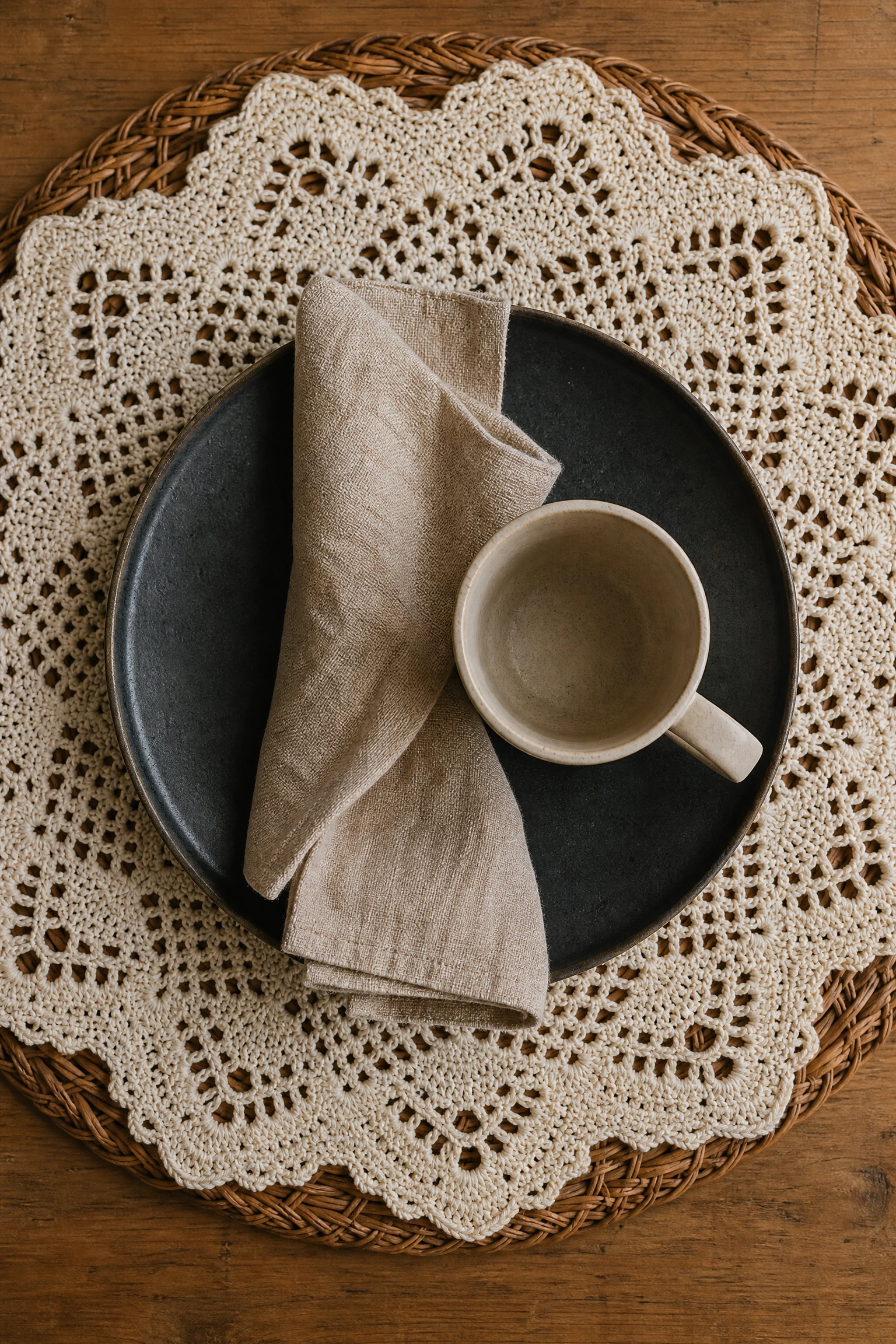
A large round crochet doily used as a placemat for a single table setting at a breakfast table or bedside tray brings the doily decor aesthetic into a functional daily context rather than a purely decorative one. Layer the doily over a woven rattan or solid linen placemat so the lace pattern is visible but the table surface beneath is protected. Dark ceramic plates, matte stoneware mugs, and simple linen napkins all pair well with the delicate texture of the lace beneath them.
Reality Check: Cotton crochet doilies used as placemats absorb liquid if a glass sweats or a spill occurs, so they require regular hand-washing to keep them from yellowing or developing mildew. They are best suited to a styled photograph or a special occasion rather than a daily use setting.
14. Create a Hanging Planter by Stretching a Doily Over a Wire Frame
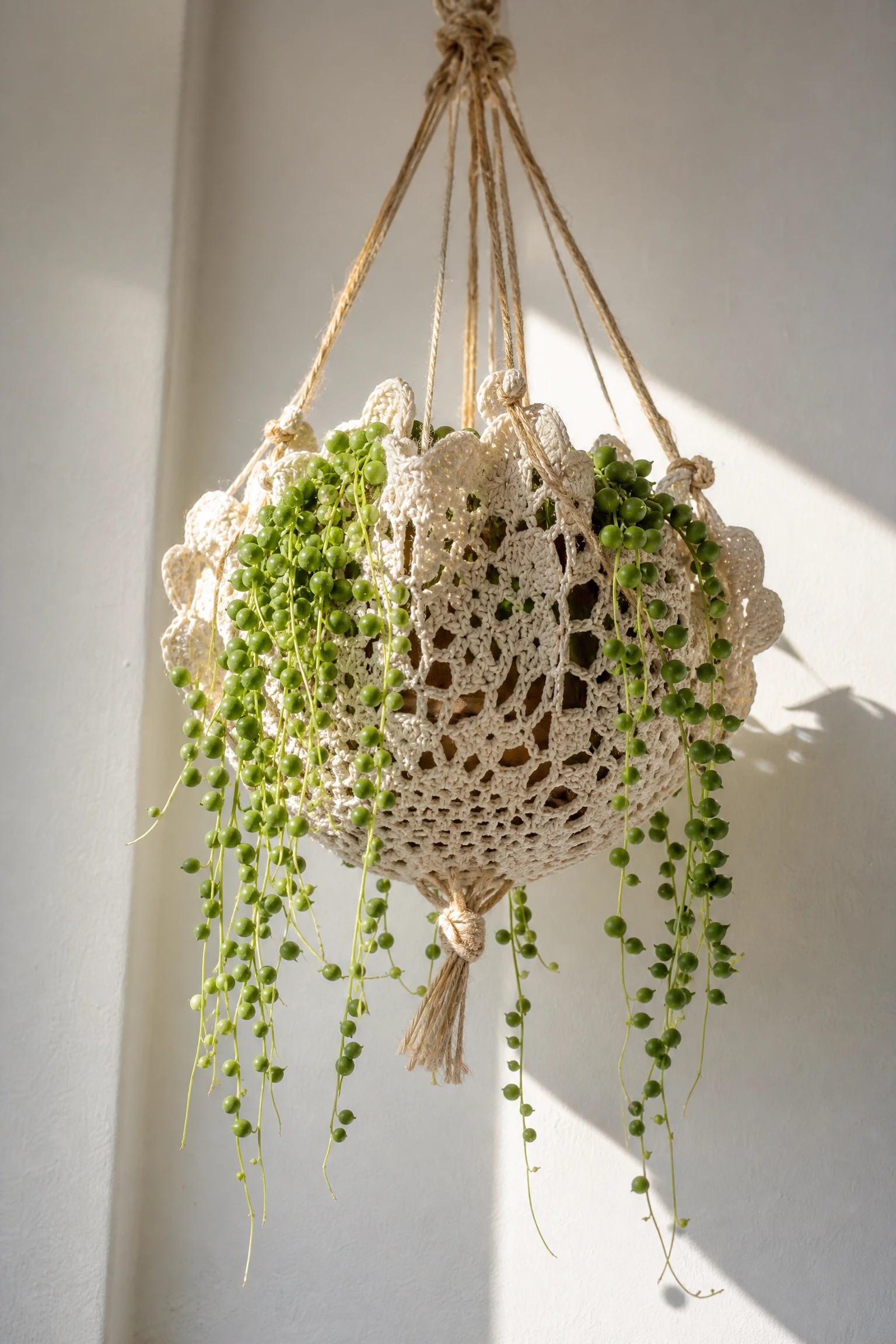
A large doily can be stretched and secured over a small circular wire frame to create a hanging planter pocket for a small trailing plant or a wrapped pot. The plant sits in the center of the doily which is gathered and knotted below with jute twine and hung from a ceiling hook. The combination of natural fiber lace with a living plant bridges the doily decor aesthetic and the biophilic design movement in a way that reads as genuinely current rather than crafty.
Designer Advice: Choose a trailing or hanging plant species for this treatment rather than an upright one, as the plant should cascade naturally through and around the lace rather than sitting above it. String of pearls, ivy, or a small pothos all work well at this scale.
15. Pin a Doily to the Back of a Vintage Cabinet as a Decorative Liner
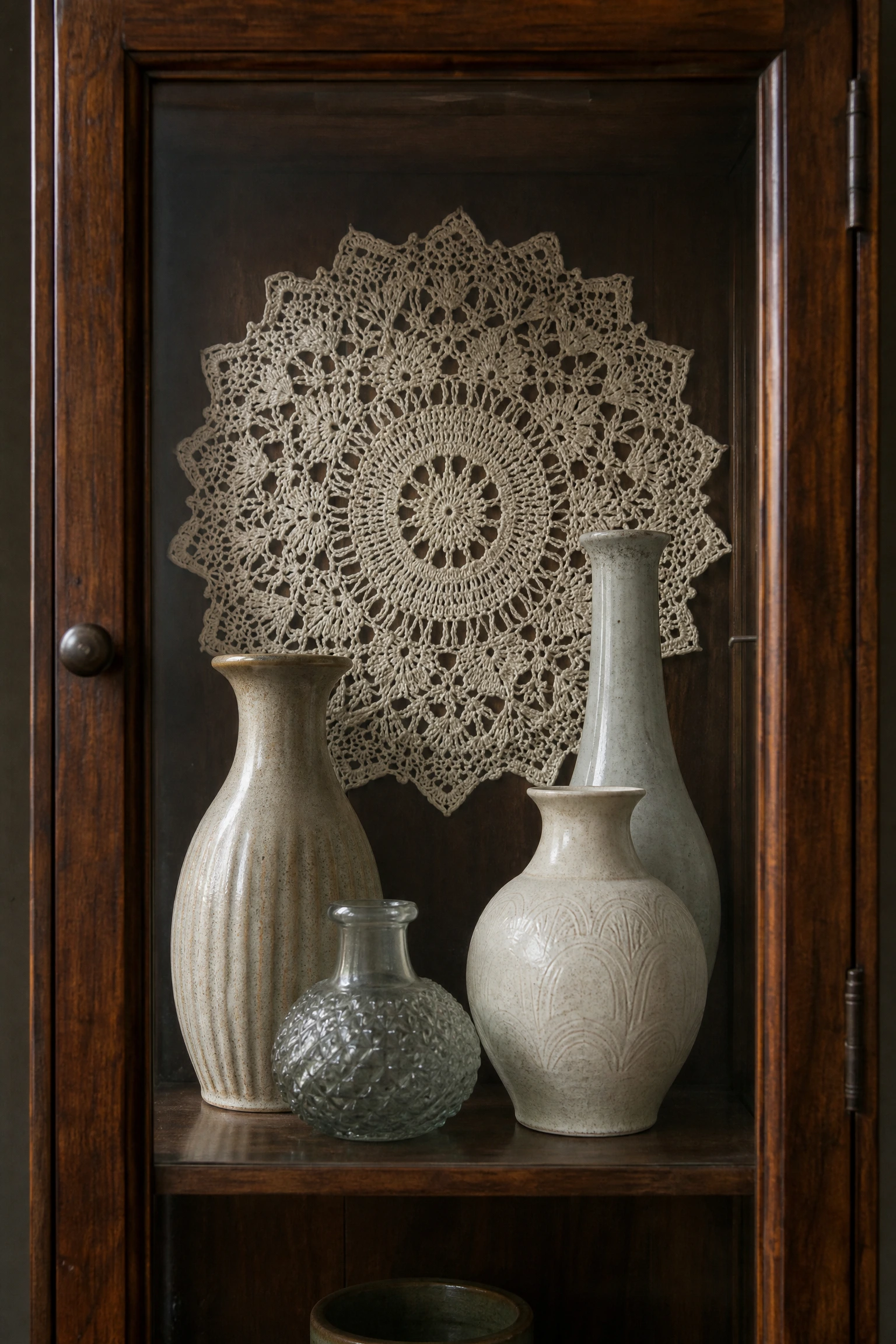
Pinning or loosely adhering a large flat doily to the interior back panel of a glass-fronted cabinet or bookshelf turns the inside of the furniture into a textured backdrop for the objects displayed in front of it. Seen through the glass door, the lace pattern reads as a decorative liner, similar to the patterned paper that lines traditional china cabinets, but with significantly more visual texture. Works particularly well in a sideboard displaying glassware, ceramics, or collected vintage objects.
Quick Tip: Use removable adhesive strips to attach the doily flat to the cabinet back panel rather than pinning, which can leave small holes in heirloom pieces. The adhesive strips hold the lace flat and allow removal without damage if the look needs to change.
16. Pair Doily Curtain Panels With Heavy Linen Over-Curtains
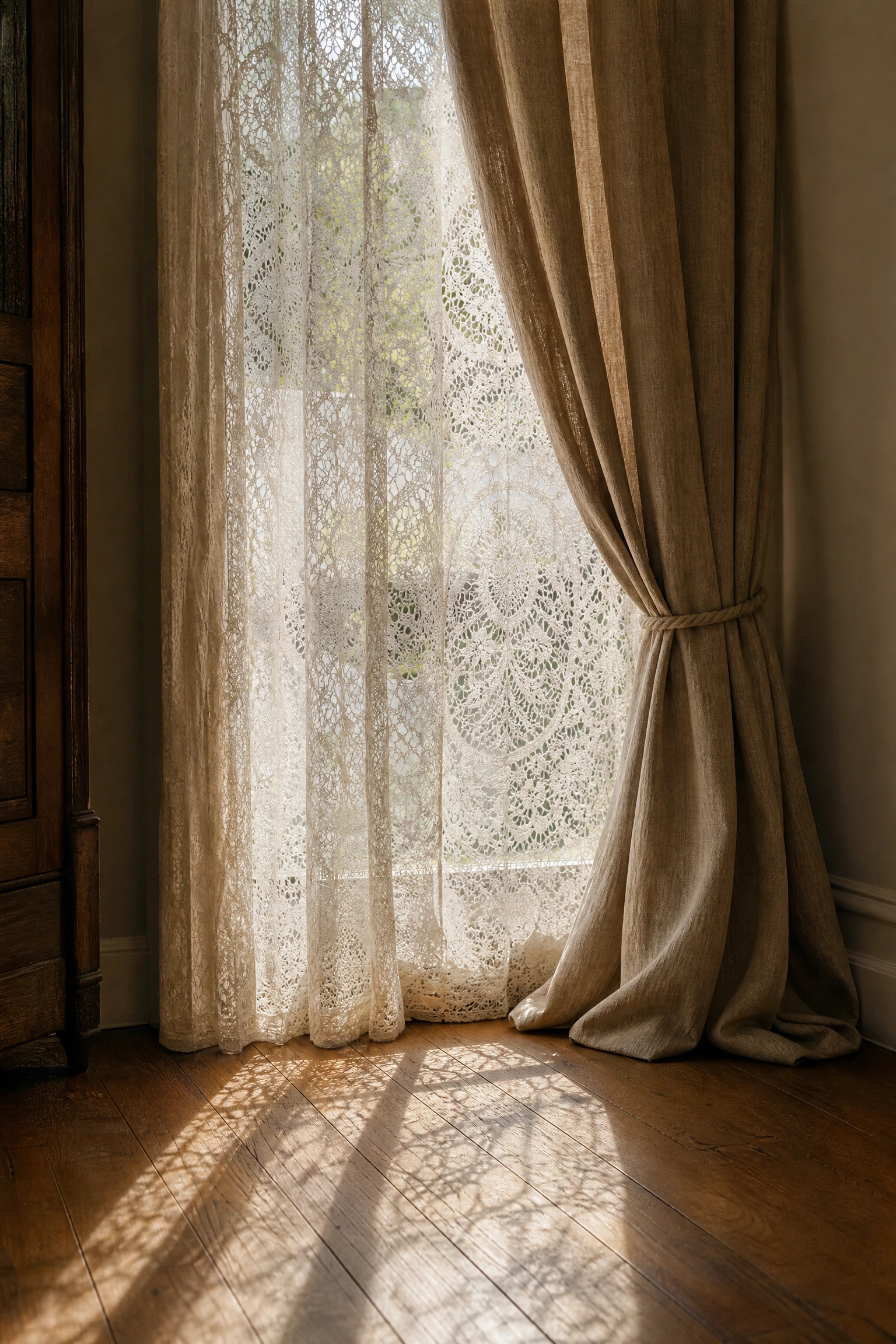
A sheer lace or doily-fabric curtain panel hung behind a heavier linen or velvet over-curtain is one of the most elegant applications of the doily decor aesthetic in a window treatment. The lace layer filters light during the day, throwing delicate pattern across the floor, while the heavier outer curtain provides privacy and weight when drawn. The contrast between the two fabric weights, delicate and substantial, is precisely what prevents the lace from reading as fussy or old-fashioned.
Heads Up: Ready-made lace curtain panels are widely available at affordable price points, but the quality of the lace varies enormously. Avoid stiff polyester lace which holds its shape unnaturally. Soft cotton or linen lace drapes more naturally and reads as genuinely beautiful rather than synthetic.
17. Stiffen a Doily With Starch and Display It as a Sculptural Bowl
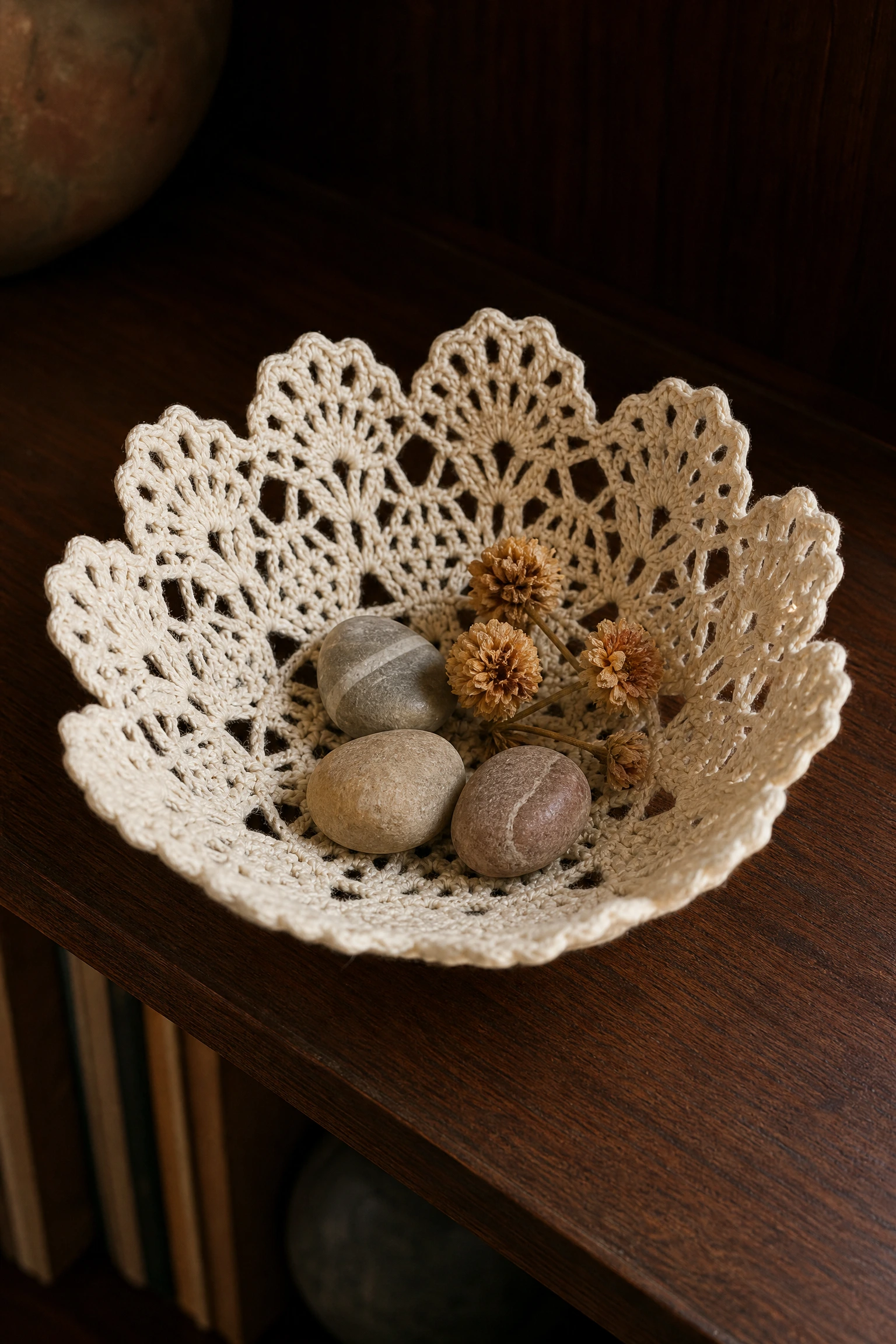
Saturating a crochet doily in liquid fabric starch, draping it over an inverted bowl, and allowing it to dry completely produces a rigid three-dimensional bowl form that holds its shape without any support. The resulting sculptural vessel can be used to hold keys, jewelry, small plants in a liner, or displayed on a shelf purely as a sculptural object. A large doily produces a shallow wide bowl; a smaller tighter-woven piece produces a deeper more contained form.
Pro Move: Mix fabric starch with a small amount of white craft glue for a stiffer, more durable finish that holds its shape even in humid environments. Spray with a light coat of matte sealant spray once fully dry to protect the structure and prevent the cotton fibers from absorbing moisture.
18. Mod Podge Doilies in Layers on a Canvas for Textured Wall Art
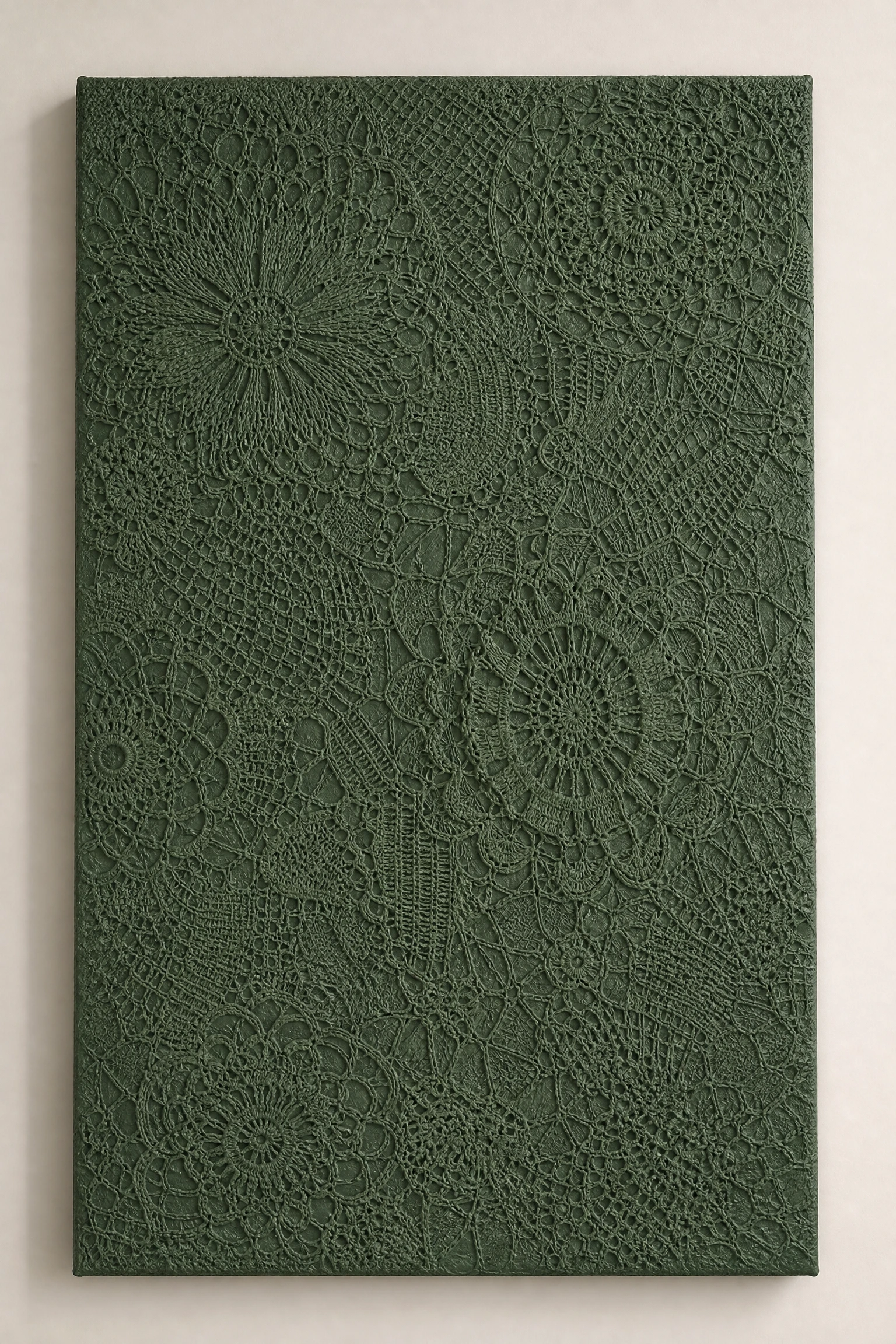
Applying doilies in overlapping layers to a stretched canvas using Mod Podge decoupage medium creates a textured mixed-media artwork that reads as genuinely crafted. Coat the canvas in a base color first, then apply doilies in layers while still wet, overlapping edges and varying sizes, and seal the whole surface with a matte Mod Podge coat when dry. Left natural the result is cream-on-cream with all the texture visible; painted over in a single color the doily relief pattern reads as an embossed surface.
Designer Advice: Paint the finished canvas in a single coat of chalk paint in a deep saturated tone after the Mod Podge is fully dry for the most striking result. The doily relief pattern shows through the paint as a raised geometric texture that looks like expensive textured wallcovering mounted on canvas.
19. Use a Doily as a Gift Wrap Embellishment That Doubles as Decor
A doily wrapped around a gift box and tied with jute twine or satin ribbon sends the recipient home with a piece of decor they can use after the gift is opened. This is particularly suited to the doily aesthetic because it introduces the idea to someone who might not otherwise encounter it, and a beautifully wrapped gift on a table becomes part of the room styling for as long as it sits there. Use a complementary colored ribbon that picks up a tone already present in the room.
Quick Tip: Tea-dyed or pastel-dyed doilies make particularly beautiful gift wrapping because the color ties the textile to the gift rather than reading as generic craft paper decoration. Match the doily color to the recipient rather than the occasion.
20. Frame Doilies in Embroidery Hoops for a Modern Craft Gallery Wall
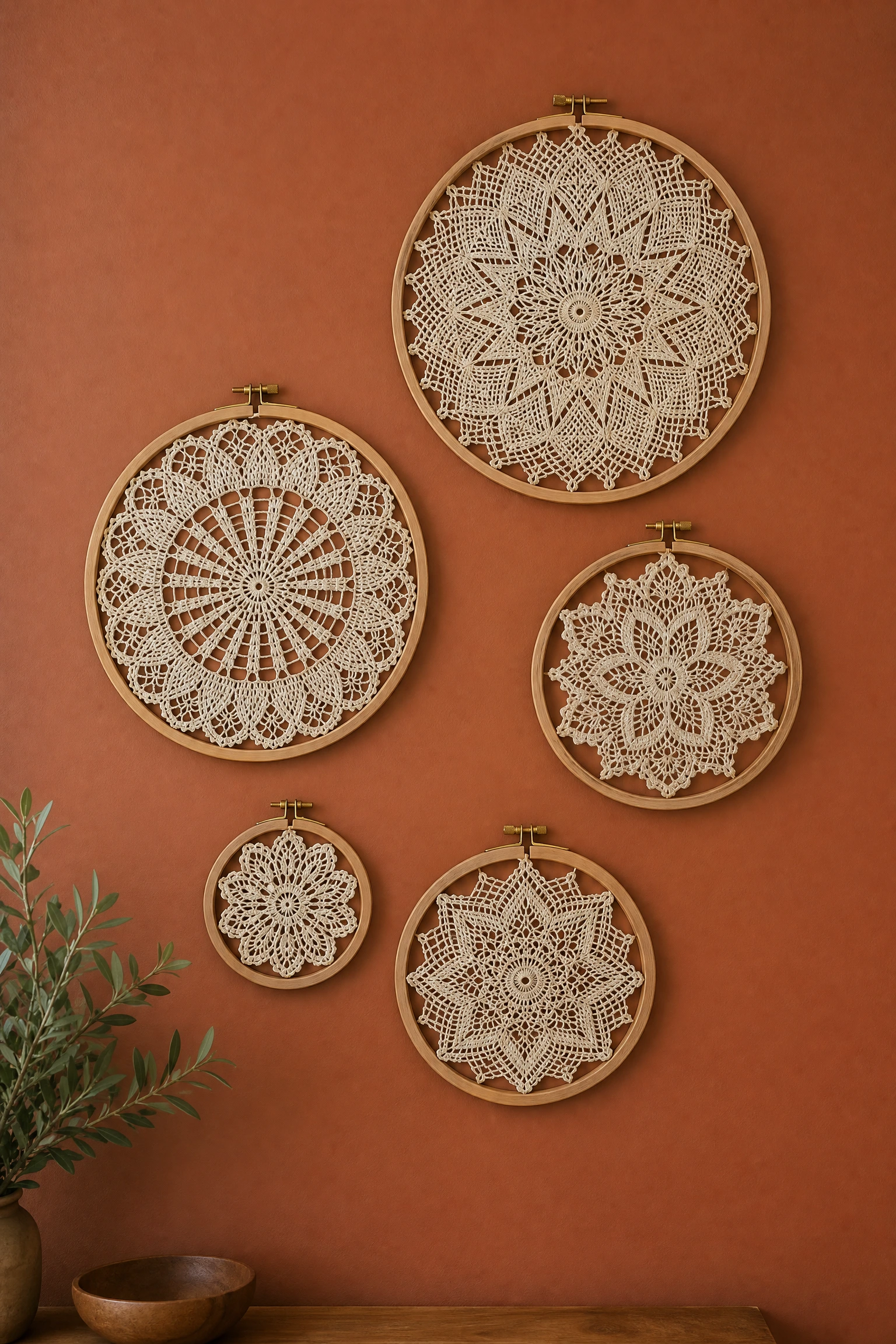
Stretching individual doilies taut inside wooden or painted embroidery hoops and hanging a collection of them in different sizes creates a craft gallery wall that sits at the intersection of the doily decor aesthetic and contemporary fiber art. The circular hoop frames provide structure and a modern display context that lifts the doily out of the traditional setting. Natural wood hoops on a white or pale wall read as Scandi-influenced; painted hoops in terracotta, sage, or dusty rose on a deeper wall color read as more maximalist and personal.
Reality Check: Embroidery hoop displays work best with doilies that have a clear radial pattern, fan shapes, concentric circles, or starburst designs, because the circular frame reinforces the geometry of the lace. Rectangular or irregular lace shapes look awkward forced into a round hoop and are better suited to a rectangular shadow box frame.
21. Attach a Doily Panel to a Pillow Sham or Duvet for Bedroom Texture
Sewing or carefully fabric-gluing a rectangular or round doily panel to the center of a plain pillow sham or at the foot of a duvet cover introduces handcrafted lace texture into the bedding without replacing it entirely. A cream doily on an ivory or warm white duvet reads as tonal and refined; on a sage, dusty blue, or blush bedding color the doily reads as a deliberate contrasting accent. This is one of the most affordable ways to bring the doily aesthetic into a bedroom that already has an established bedding scheme.
Designer Advice: Position the doily panel slightly off-center on the pillow sham rather than perfectly centered. Perfect centering reads as symmetrical and deliberate in a way that flattens the handcrafted quality of the lace. A slightly offset placement reads as more natural and collected.
22. Pair Doily Decor With Heavy, Natural Materials to Keep It Grounded
The single most important principle in the entire doily decor aesthetic is pairing the delicacy of lace with materials that have genuine physical weight and texture: rough wood, stone, heavy ceramic, woven jute, or matte plaster. Lace placed only among other soft, light, or delicate objects reads as precious and fragile, which is the quality that makes grandma’s china cabinet feel dated. The same lace placed against a thick wooden board, a chunky ceramic, or a stone vessel reads as considered and intentional because the contrast gives the doily something to push against.
Pro Move: Before placing any doily in a room, identify the heaviest or most textured material already present, the wooden floor, a stone fireplace surround, a heavy ceramic lamp base, and position the doily in relationship to that surface rather than placing it independently. The contrast is always the point.