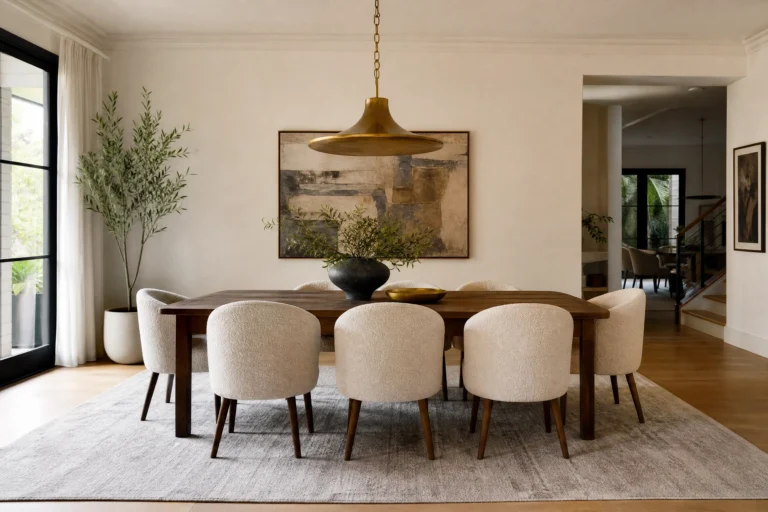
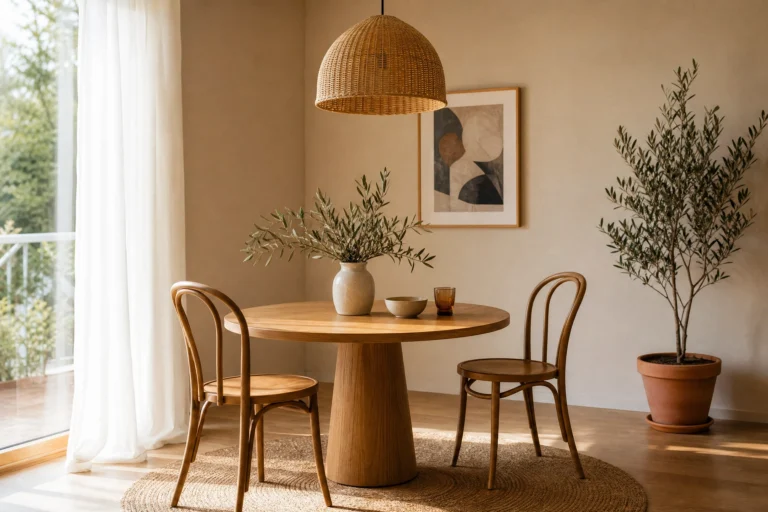
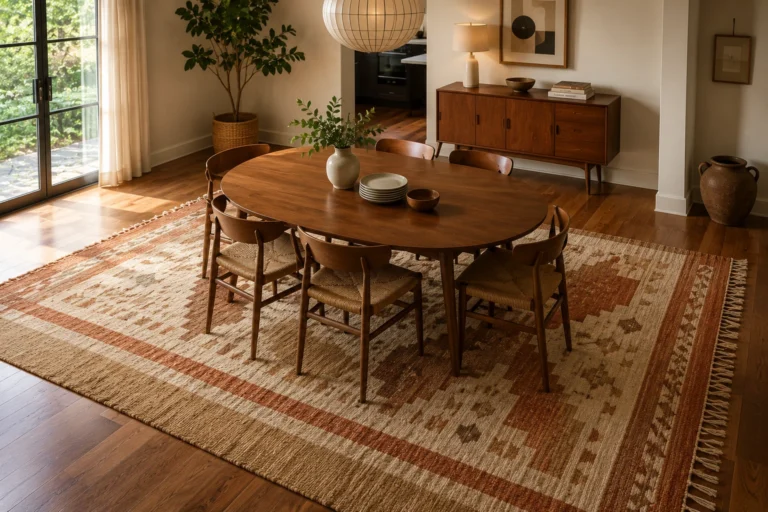
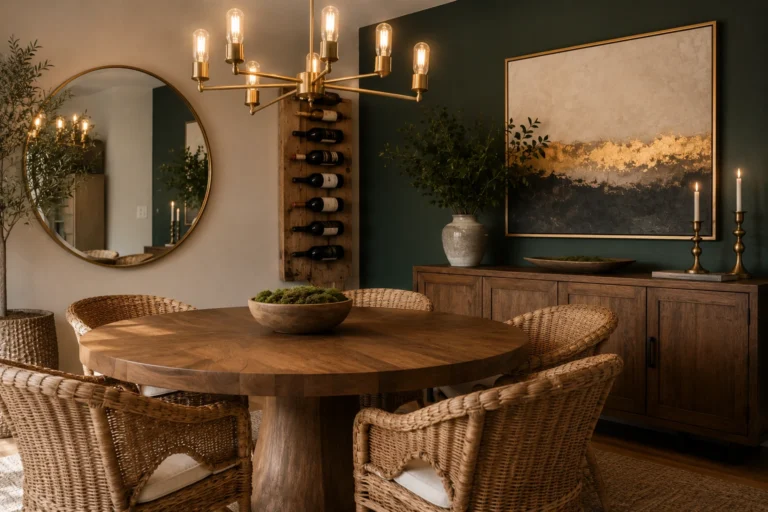
Most people put all their decorating energy into the living room or the kitchen, and the dining room ends up with a plain coat of paint and a chandelier doing all the heavy lifting. But the dining room deserves better than that. But here is the thing: the dining room is where people sit still long enough to actually notice their surroundings. Dinner guests have nothing to do but eat, talk, and look around. That means your walls have a real audience, and wallpaper is one of the best ways to give them something worth looking at.
Choosing wallpaper for a dining room is a little different from choosing it for a bedroom or hallway. This space needs to work with candlelight and bright daylight, with formal dinners and lazy Sunday breakfasts. It needs to hold up under conversation without competing with it. Start with one sample roll before committing to a full room. Most brands will send one for under $15, and seeing the pattern at actual scale changes everything. Each idea comes with specific details you can actually act on, because inspiration without direction is just pretty pictures.
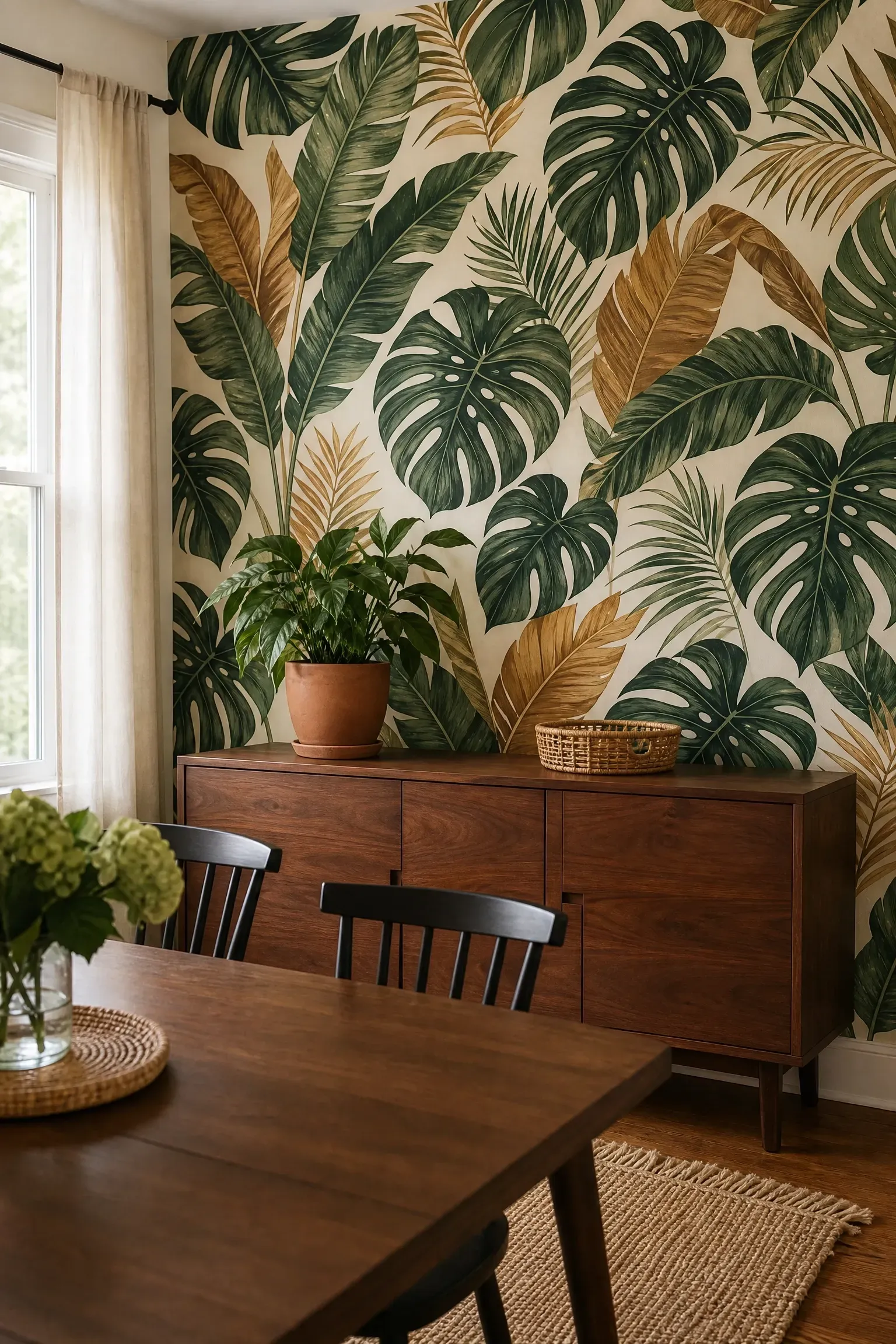
Big, confident botanical prints are having a real moment right now, and the dining room is the perfect place to commit to one. Look for wallpapers featuring large monstera, banana leaf, or palm frond motifs in deep greens, ochre yellows, and warm tans on a cream or off-white base. Pair this with a solid wood dining table in a warm walnut finish and rattan or woven chairs that carry the natural theme forward without making things feel cluttered. Lighting matters a lot here: a woven pendant lamp or a simple brass fixture keeps the natural vibe consistent without fighting the print. Add a linen table runner, some terracotta pots near the window, and you have a space that feels like it was put together by someone who actually knows what they are doing. For a budget-friendly approach, apply the wallpaper to just one accent wall behind a sideboard and paint the remaining walls in a deep sage green that pulls from the print.
Designer Advice: Keep furniture silhouettes clean and unfussy when using a big botanical print. Too many ornate pieces and the room starts to feel chaotic.
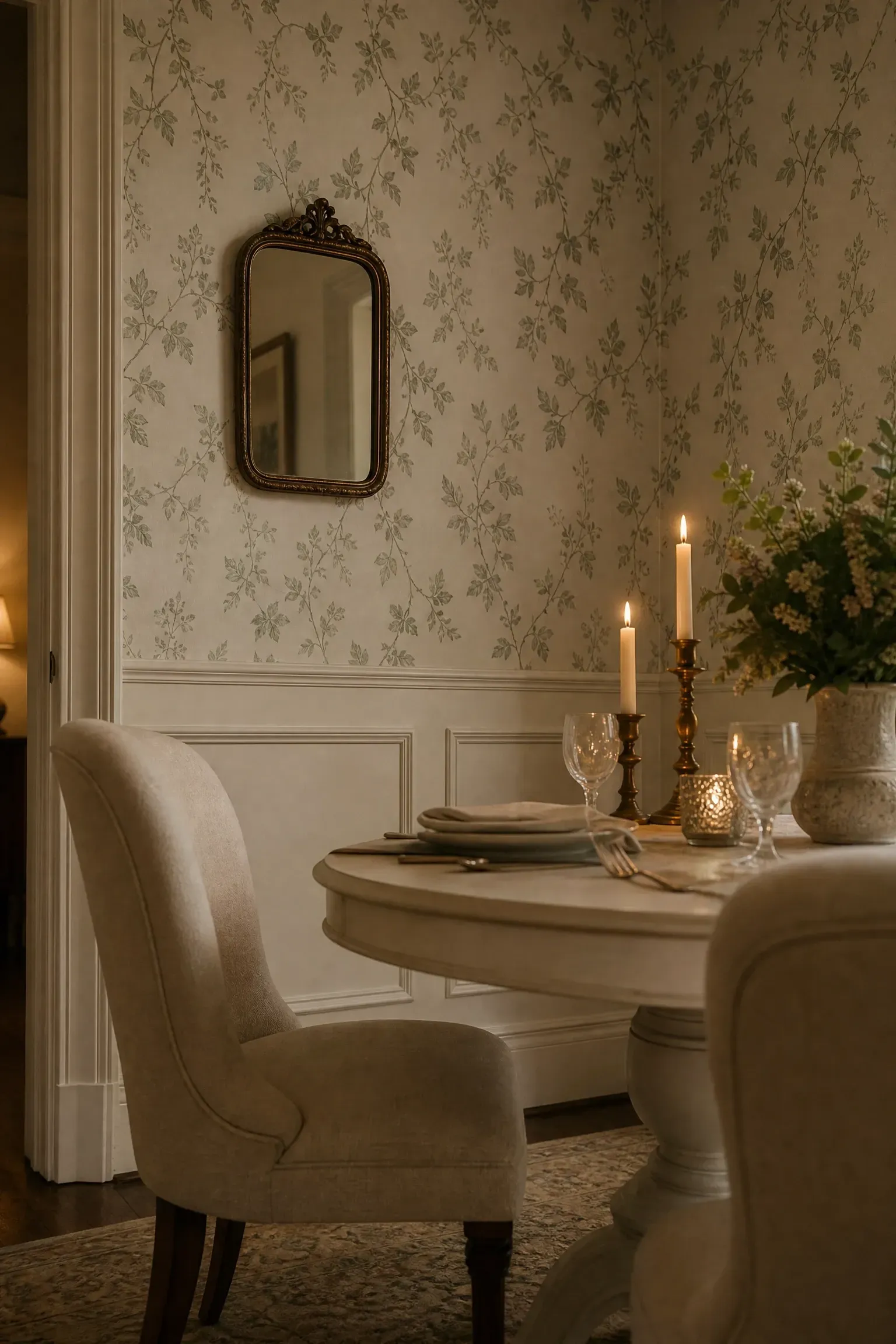
Where tropical leaf prints are bold and graphic, trailing vine wallpaper is soft, intricate, and quietly beautiful. These designs feature winding stems, small leaves, and often tiny blossoms in muted tones like dusty sage, warm ivory, or soft terracotta. The effect is romantic without being overdone. This works especially well in a dining room with white wainscoting on the lower half of the wall, where the wallpaper begins at chair rail height and extends to the ceiling. Choose a round dining table in a painted finish, creamy white or a soft mushroom grey, and pair it with upholstered chairs in a complementary fabric. Candlelight makes trailing vine wallpaper look exceptional in the evening, casting subtle shadows that animate the pattern. Add a antique-style mirror on one wall to reflect the wallpaper and double its visual impact.
Designer Advice: Trailing vine prints look best with warm white lighting. Avoid cool LED bulbs in a room like this because they flatten the warmth the paper is working to create.
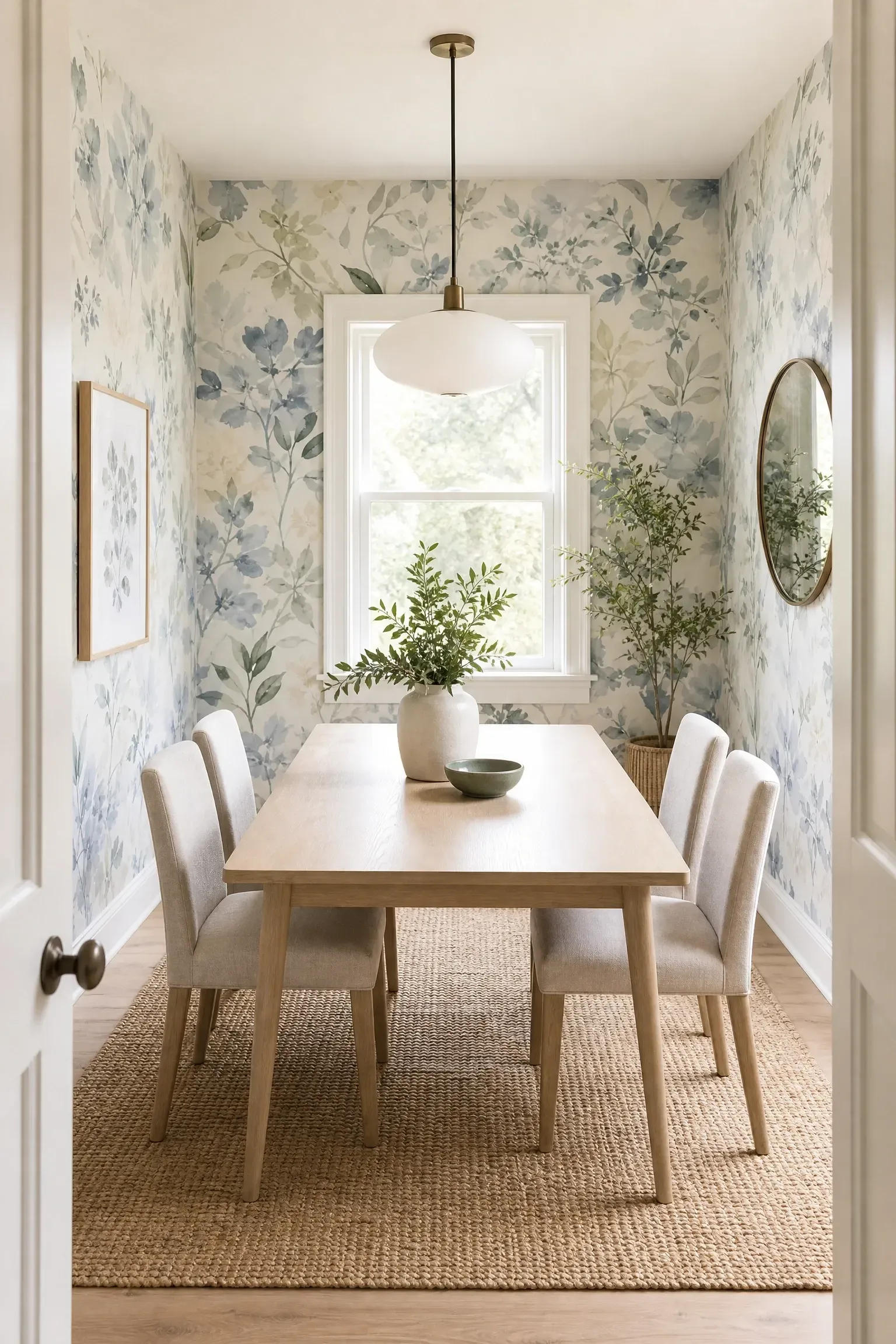
If you love the idea of botanicals but want something that feels a little more modern and artistic, an abstract watercolor botanical wallpaper is a great middle ground. These designs look like someone painted loose, expressive leaves and flowers in washes of color rather than crisp, precise patterns. Look for colorways in dusty blue and sage, or burnt sienna and cream, which feel current and fresh. This type of wallpaper works beautifully on all four walls of a smaller dining room because the soft, blurred edges do not feel overwhelming. Pair it with a slim-legged dining table in a light oak or pale ash finish, and choose chairs in a solid fabric that picks up one of the secondary tones in the wallpaper. A simple white or frosted glass pendant light keeps the ceiling from competing with the walls. Layer in a natural jute rug beneath the table to ground everything.
Designer Advice: The looseness of a watercolor botanical means it pairs well with both rustic wood and clean modern furniture. It sits in that flexible space between styles.
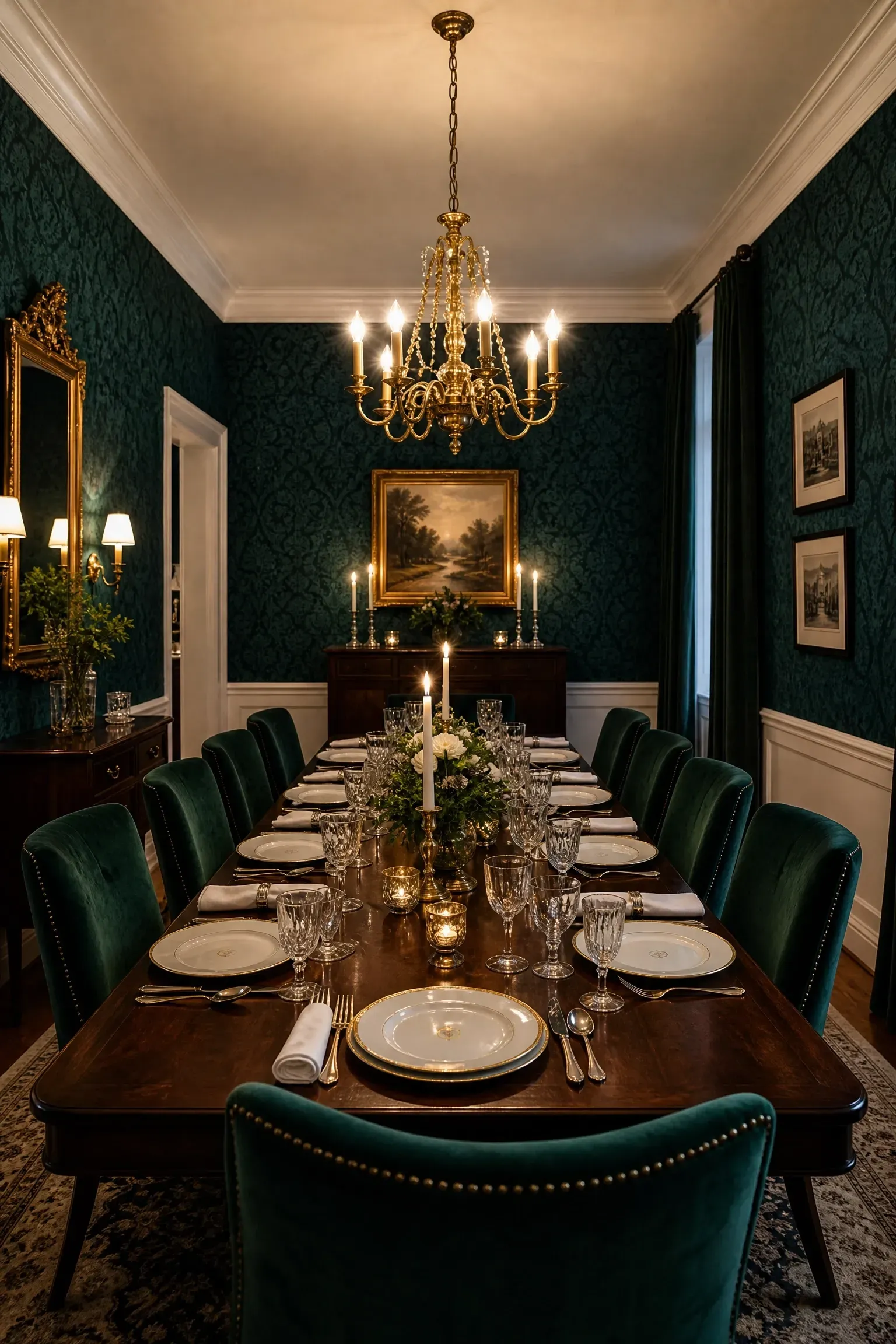
A damask wallpaper in a deep, saturated color is one of the most classic choices for a formal dining room, and it has never gone out of fashion for good reason. The key in 2025 is choosing a damask in a color that feels alive rather than stuffy: think deep teal, plum, forest green, or a rich burgundy rather than the predictable navy. Look for a tone-on-tone damask where the pattern and background are close in color but different in sheen, which gives the wall depth without being too loud. Pair it with a dark wood dining table, upholstered chairs in a velvet or boucle fabric, and a brass or aged gold chandelier overhead. Sconces on either side of a mirror add warmth and make the room feel like a proper event space. Keep the ceiling and trim white or very pale to prevent the room from feeling heavy.
Designer Advice: Pull the damask’s color into at least two accessories in the room, whether that is a centerpiece bowl, candle holders, or even the seat cushion piping. Repetition makes a bold wallpaper feel intentional.
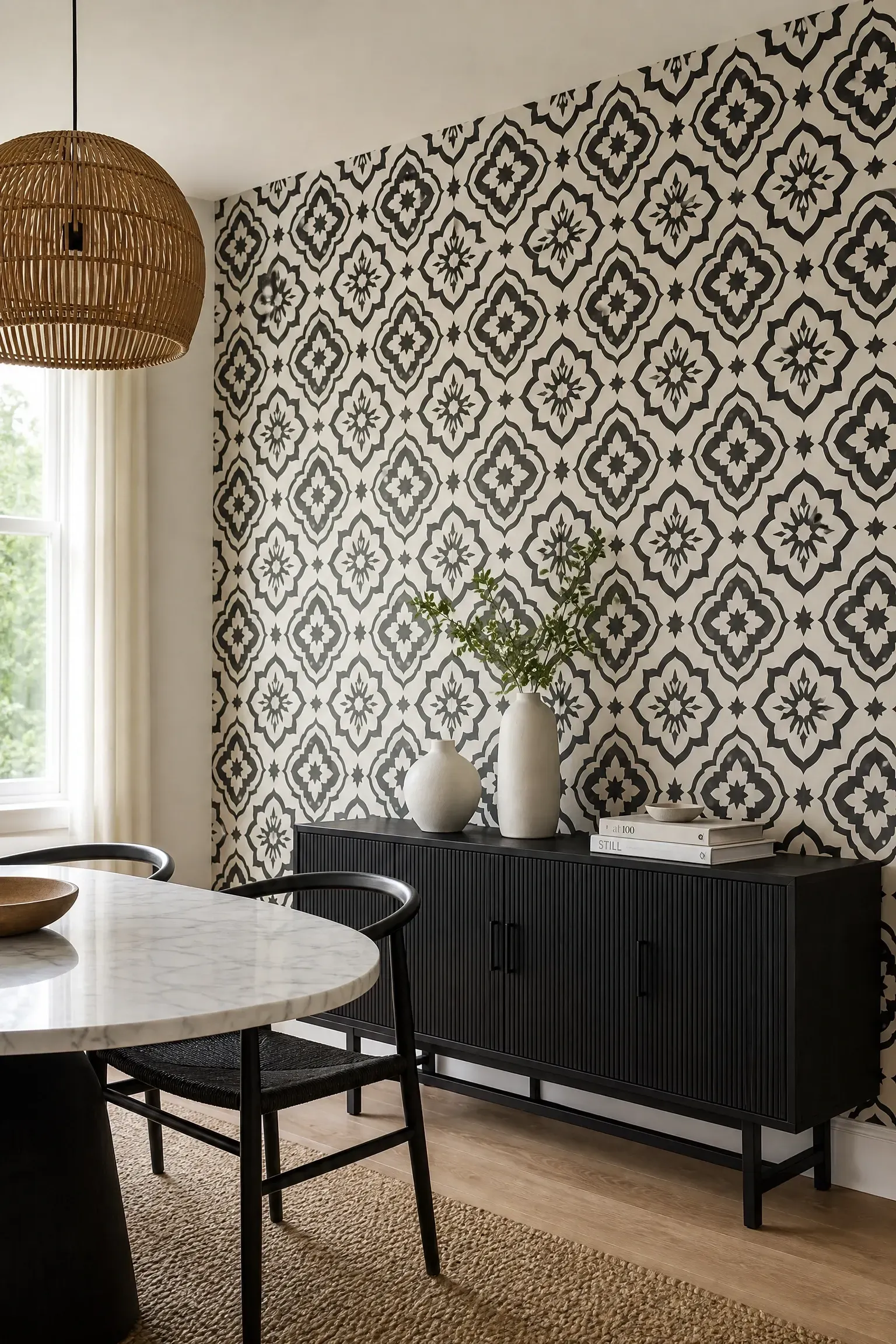
Geometric wallpaper in a tile-like pattern brings a crisp, structured energy to a dining room that works especially well in modern or transitional spaces. Think hexagon grids, overlapping diamond shapes, or Moroccan-influenced star patterns in a two-tone palette. Black and white is the most graphic option and pairs confidently with warm wood tones and brushed metal fixtures. For a softer take, try a pale blue and white geometric or a terracotta and cream version that reads as more relaxed. This type of wallpaper works brilliantly on a single feature wall behind a sideboard, where you can hang artwork on top or let the pattern breathe on its own. Choose a dining table with a solid, unfussy base, a rectangular or oval slab top in marble or a marble-effect finish, and keep the chairs light and simple in a solid linen or leather.
Designer Advice: With a geometric wallpaper, make sure your light fixture has some softness to it, a curved shade, a woven texture, or a frosted glass globe. Sharp geometry plus a spiky chandelier can make a room feel cold.
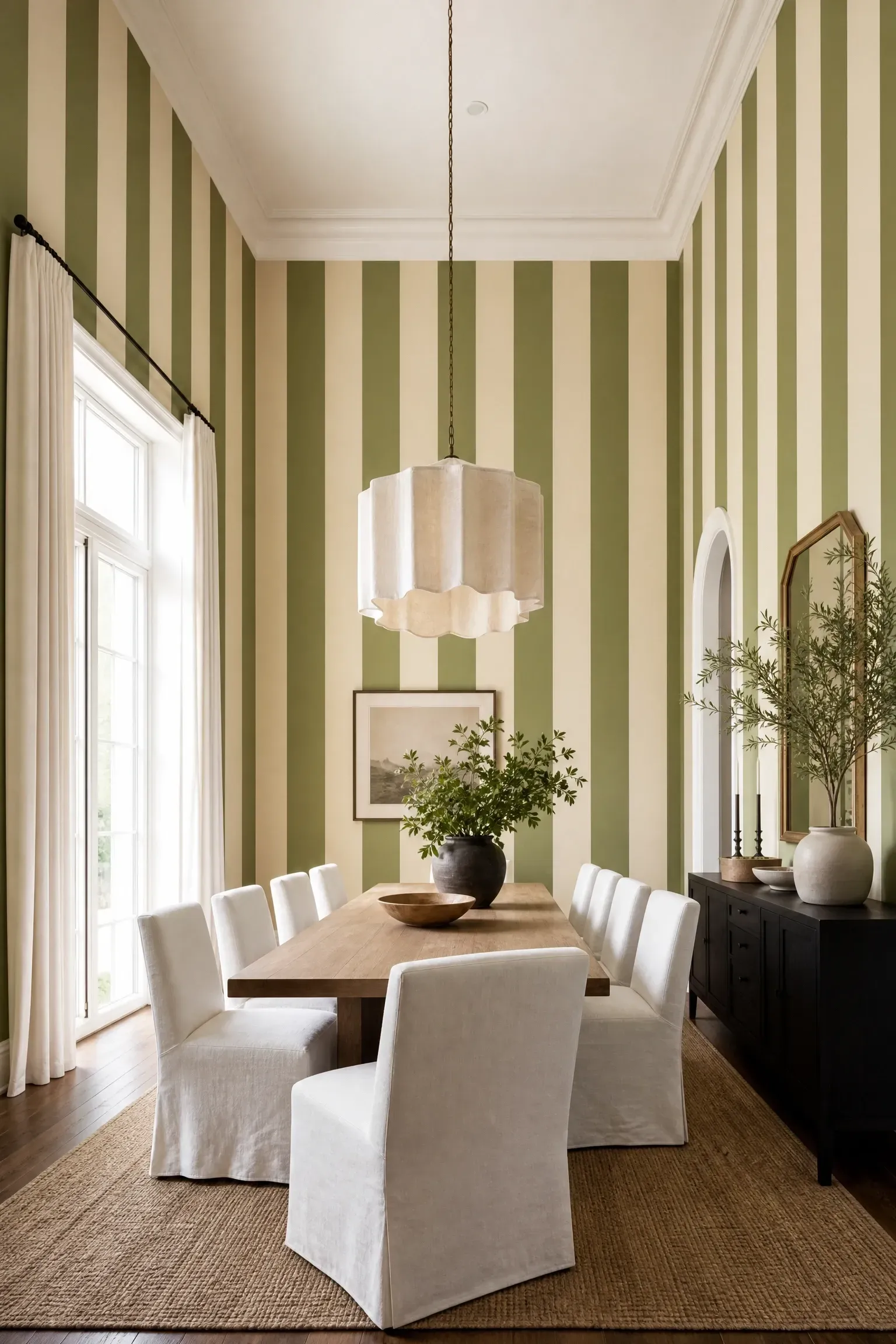
Vertical stripes are one of the oldest tricks in interior design for a reason: they pull the eye upward and make ceilings feel higher. In a dining room, a wide stripe wallpaper in two contrasting tones does this while also creating a clean, confident backdrop that suits almost any style of furniture. Go for stripes that are at least four to six inches wide, which read as contemporary rather than traditional. Warm cream and olive green, soft white and navy, or warm grey and terracotta all work well. This pairs particularly nicely with a statement light fixture: a long linear pendant over a rectangular dining table, or a sculptural chandelier that becomes the visual anchor while the stripe guides the eye up and around it. Keep the rest of the decor minimal; this type of wallpaper has enough personality to carry the room on its own.
Designer Advice: Hang the stripe from ceiling to floor without any wainscoting to interrupt it. Cutting it at chair rail height breaks the vertical line and defeats the purpose.
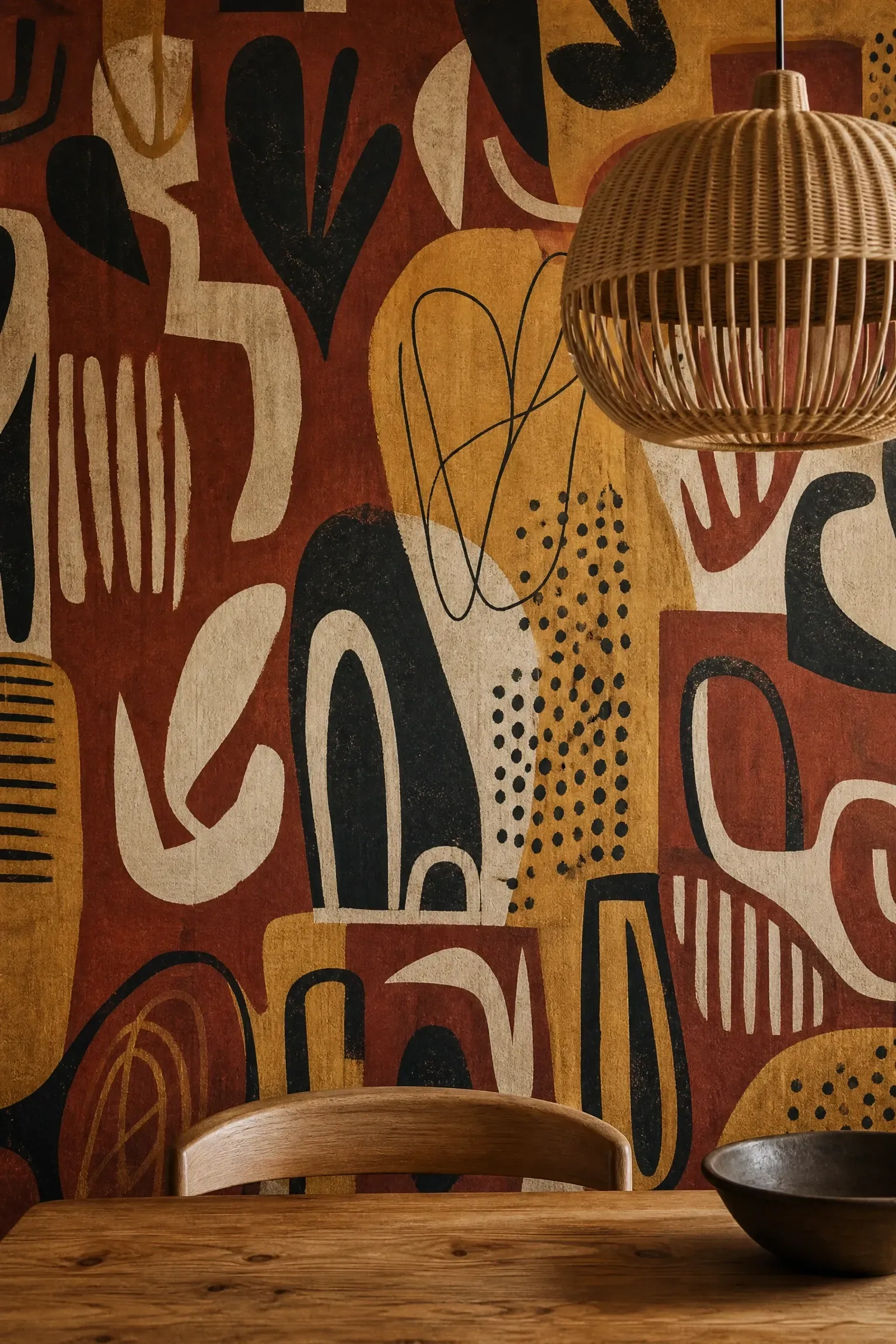
For the dining room that wants to be a genuine conversation piece, a maximalist abstract wallpaper is the answer. These are the bold, slightly chaotic patterns that mix gestural shapes, overlapping motifs, and unexpected color combinations in ways that feel artistic rather than random. Look for prints inspired by 1970s graphic design, painterly abstract art, or hand-printed textile patterns. Deep rust, mustard yellow, off-white, and black make a combination that is striking without being aggressively loud. The furniture in a room like this needs to be restrained: a solid wood table with simple joinery, chairs in a single solid fabric, and very little on the walls aside from the wallpaper itself. One well-chosen pendant light, ideally in a sculptural ceramic or woven form, and the room is complete.
Designer Advice: In a maximalist wallpaper room, let one piece of furniture be special, whether that is a vintage sideboard or a beautifully crafted table, and keep everything else supporting rather than competing.
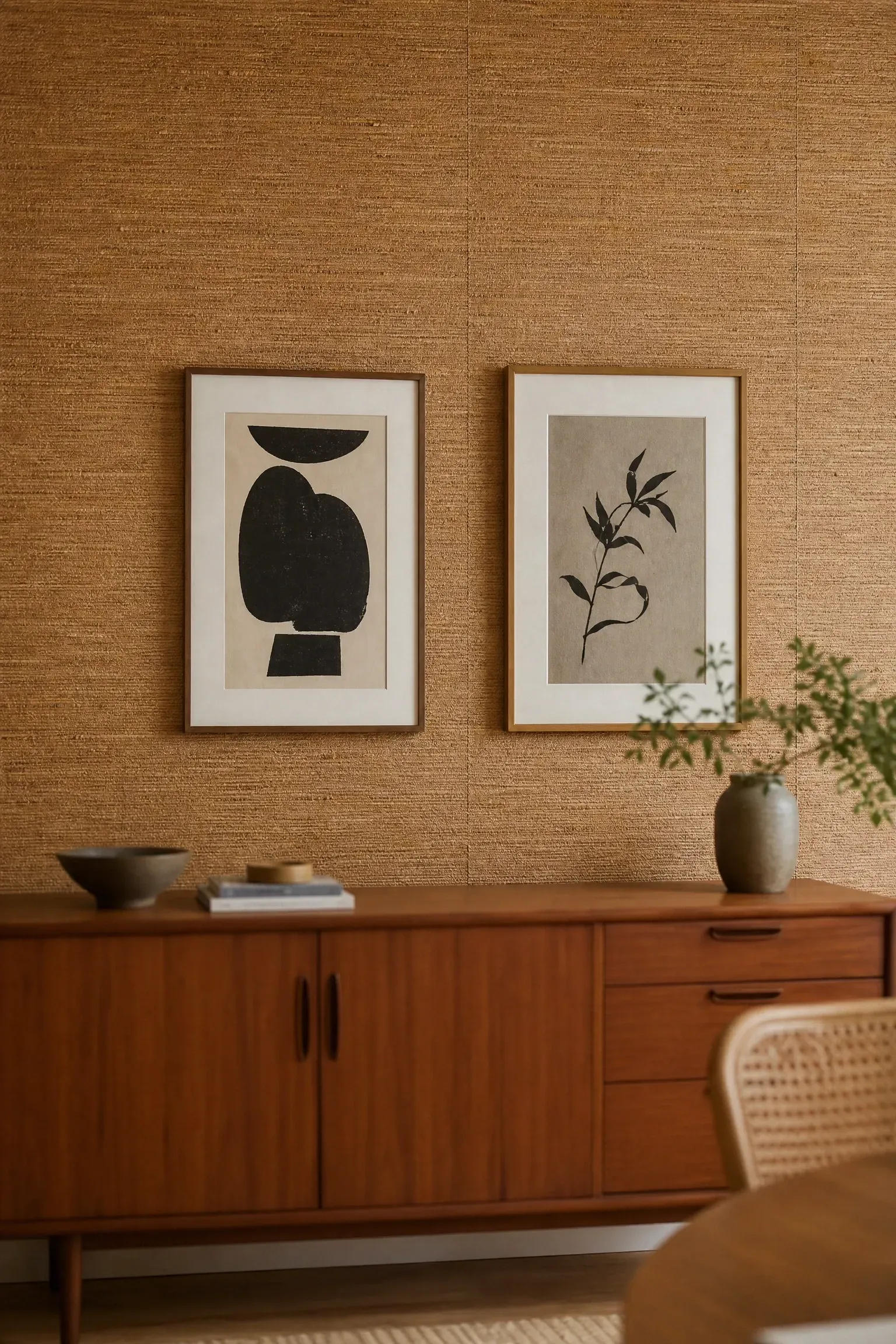
Grasscloth is woven from natural plant fibers and has a texture that photographs beautifully but looks even better in person. In a dining room, it adds warmth, depth, and a tactile quality that paint simply cannot replicate. The natural color variations and visible seams that come with grasscloth are part of its appeal; they give the walls a handcrafted feel that suits both casual and more refined dining spaces. Choose a warm caramel, sandy beige, or soft sage green colorway for a room that gets good natural light. Pair it with a teak or walnut dining table, linen or wool upholstered chairs, and lighting in a natural material like rattan or aged brass. Grasscloth also pairs extremely well with simple framed art because the textured background gives prints and paintings a gallery-like quality.
Designer Advice: Grasscloth is not water-resistant, so position the table far enough from the walls that chair backs do not rub against it regularly. It ages beautifully but does not like constant friction.
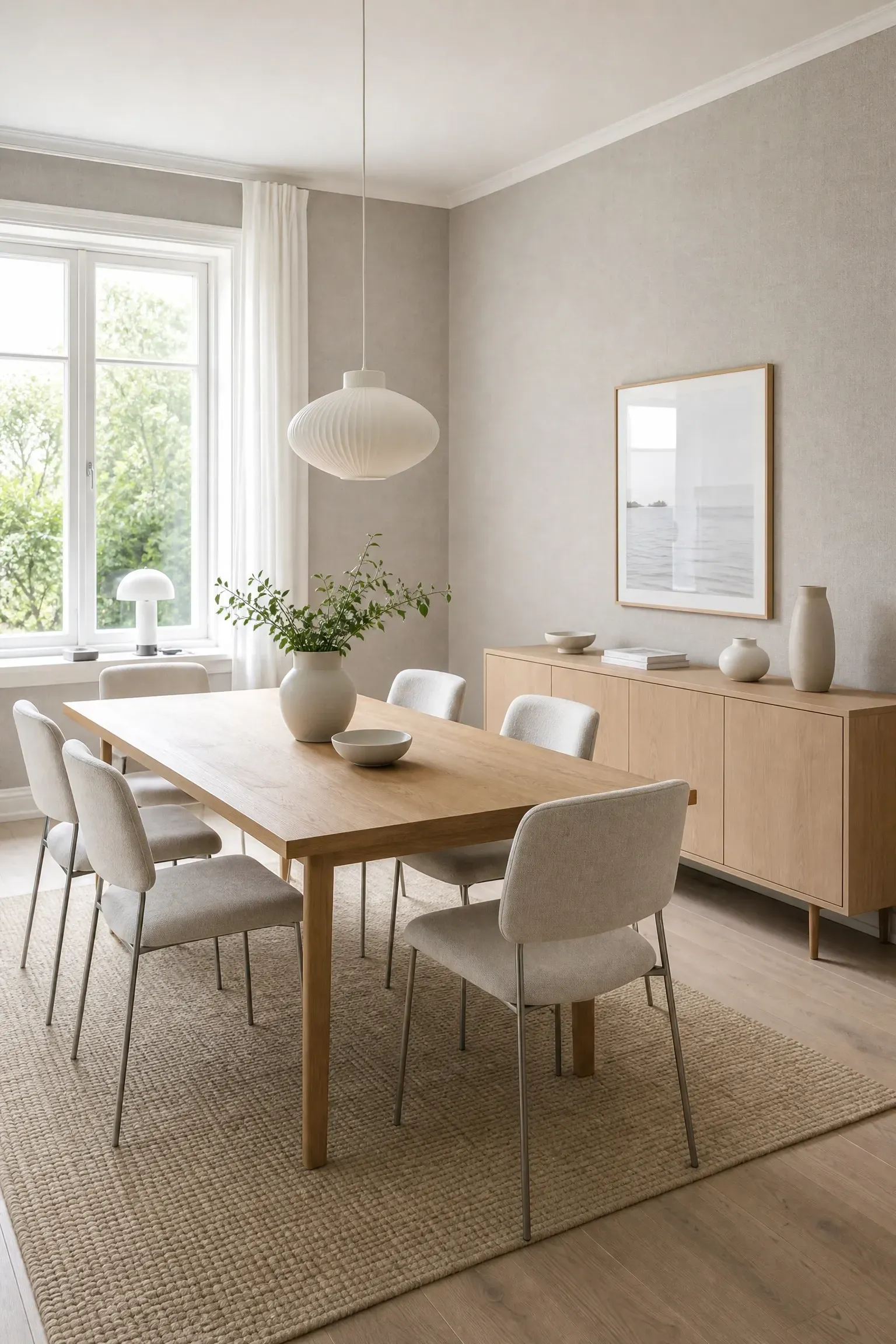
If you want the feel of a natural textile wallpaper without the delicacy of real grasscloth, a linen-effect vinyl or non-woven wallpaper gives you a very similar result with better durability. These papers mimic the grid-like weave of linen fabric in soft off-white, warm grey, dusty rose, or pale blue tones. The effect in a dining room is sophisticated and quiet, a backdrop that makes everything in front of it look more considered. This type of wallpaper suits minimalist and Scandinavian-influenced dining rooms particularly well. Pair it with a light oak table, chairs with thin metal legs and upholstered seats, and a simple pendant in white ceramic or frosted glass. Add a long low sideboard in a similar pale wood and a few well-chosen ceramic vases to finish the look without cluttering it.
Designer Advice: Linen-texture wallpaper is a great option if you are renting because it tends to be easier to remove than heavily patterned papers. It also photographs beautifully, which matters if you ever want to list your space.
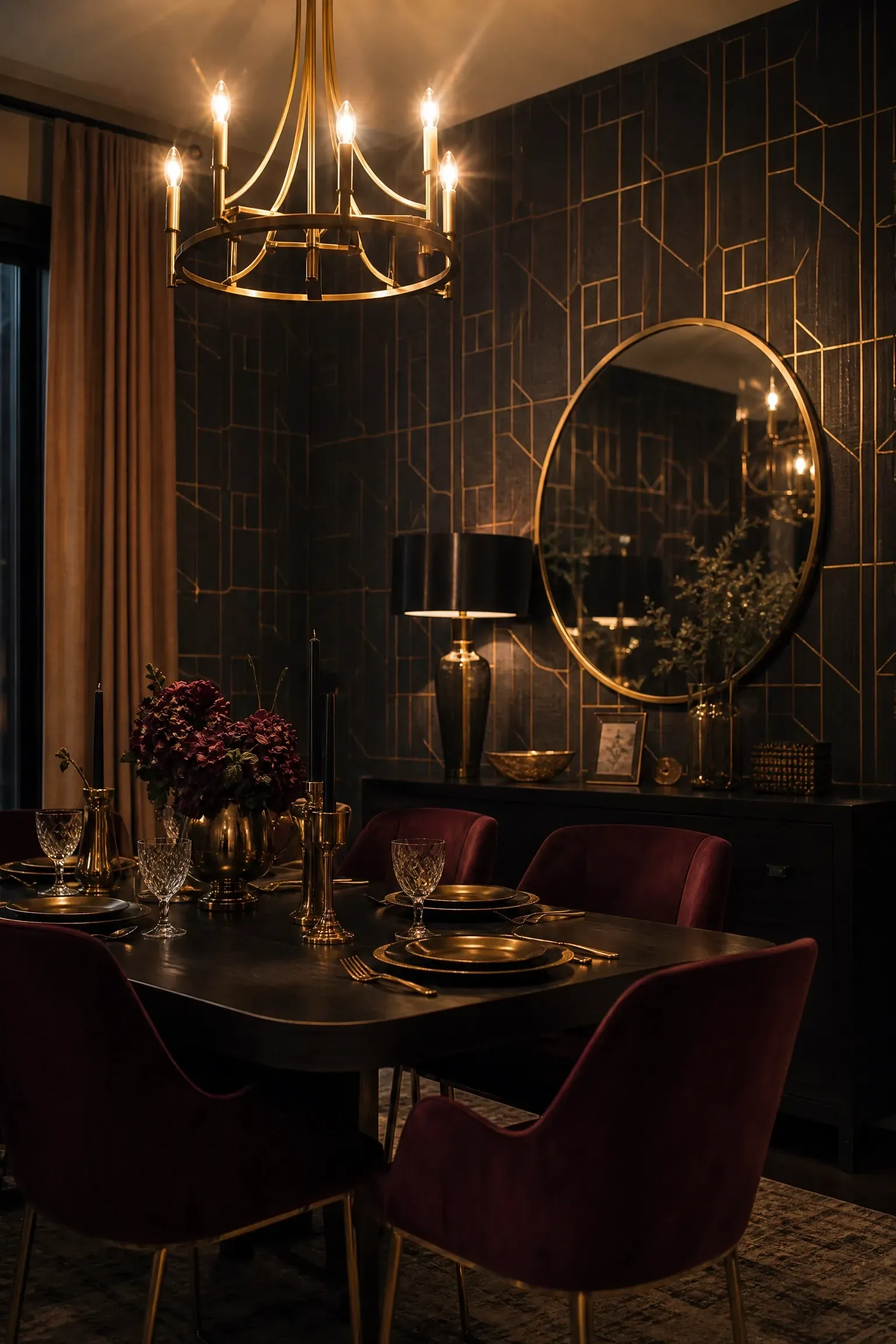
Metallic wallpaper catches light in a way that changes the energy of a room throughout the day and evening, which makes it a particularly clever choice for a dining room that functions under both natural and artificial light. Look for a metallic geometric design in gold, copper, or soft silver on a matte background in charcoal, deep navy, or warm taupe. The contrast between the matte base and the shimmering pattern gives the wall a richness that is hard to achieve any other way. In the evening with a warm chandelier overhead, it is genuinely striking. Keep the rest of the room grounded: a dark dining table, velvet or leather seating, and table accessories in matching metal tones, brushed gold napkin rings, a brass candleholder, a simple vase in the same warm metal family.
Designer Advice: Avoid too many competing metallics in the room. If the wallpaper has gold tones, make sure your light fixture, cabinet handles, and accessories are also gold rather than mixing gold, silver, and chrome.
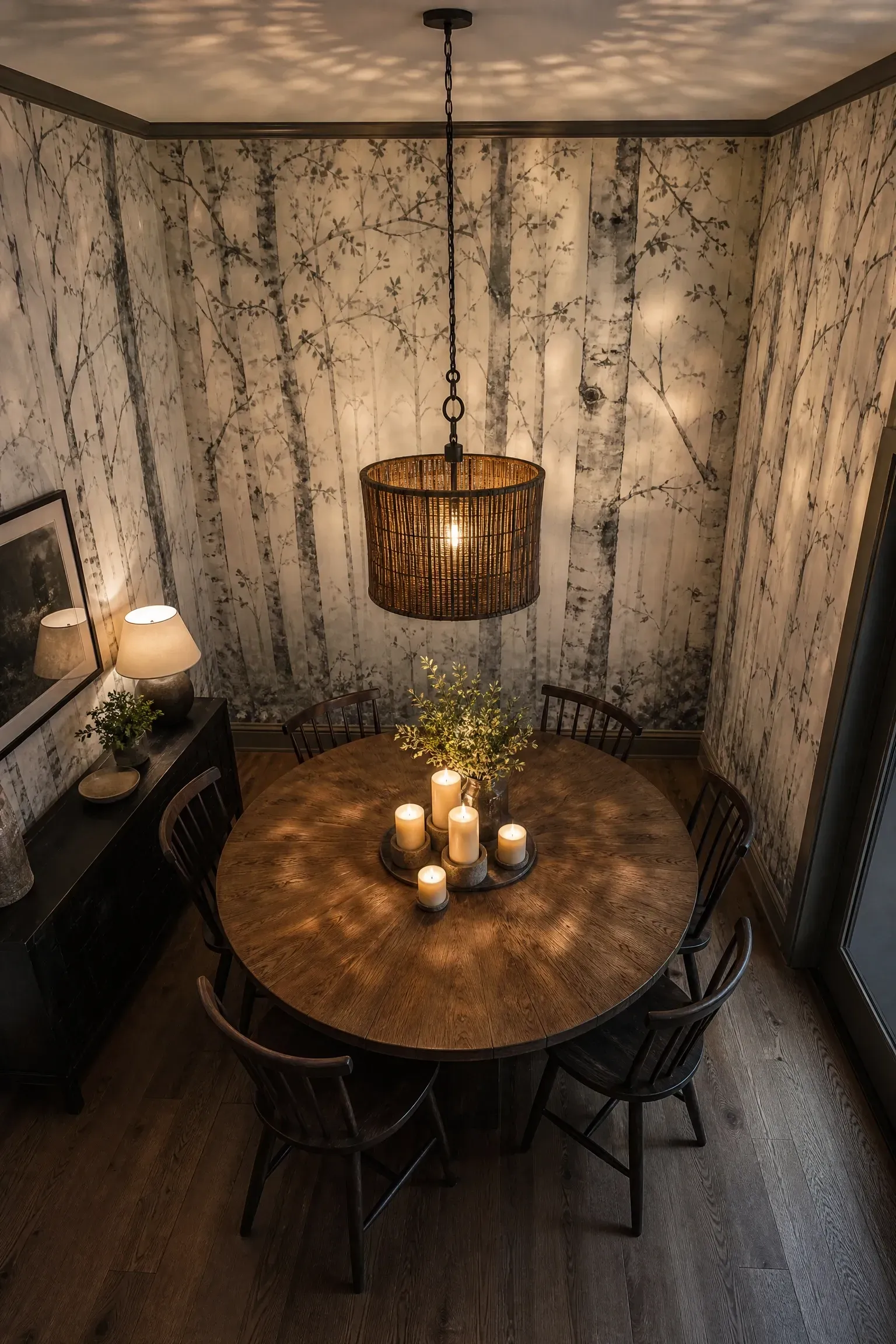
A full-room forest mural wraps your dining table in the feeling of eating outdoors under a canopy of trees, which is an experience that is hard to replicate any other way. Look for mural designs featuring birch trees, oak branches, or pine forests in natural green and brown tones, or in more artistic interpretations with ink-wash style or a muted grey-toned palette for a cooler, more contemporary feel. These murals typically come in panels that cover all four walls or a single feature wall, and the single-wall version works well in a compact dining room where you want drama without claustrophobia. A simple round dining table feels right in the center of a forest mural because it echoes the organic, gathering quality of eating in nature. Choose chairs in a warm wood or a dark stained finish, and use candlelight for evening dining to make the mural come alive.
Designer Advice: When using a mural on all four walls, leave the ceiling white. Extending the mural upward can feel oppressive, but keeping the ceiling open gives the room breathing room.
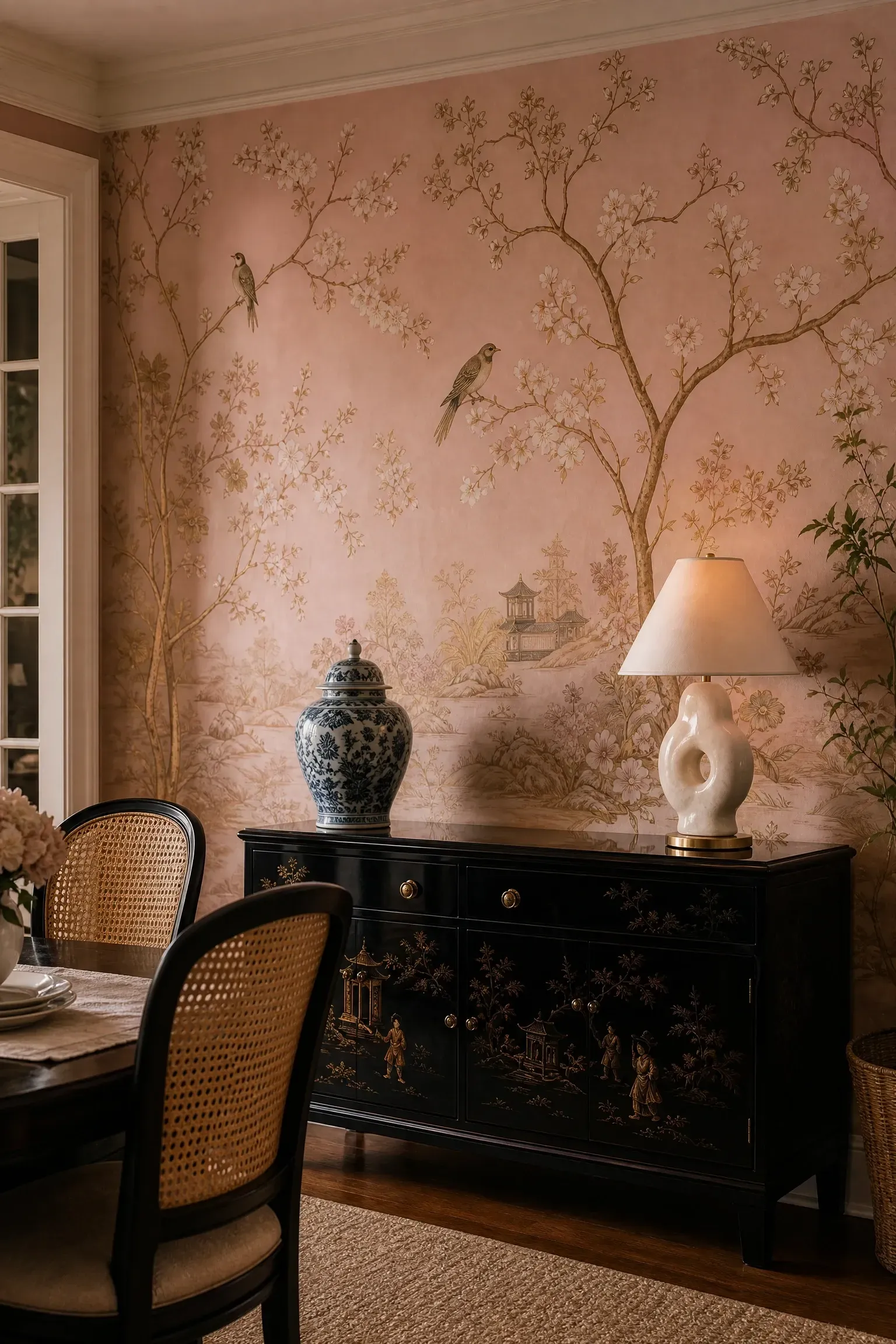
Chinoiserie is a design tradition with deep roots, and it looks as good in a modern dining room as it ever has. These hand-painted style murals typically feature birds, blossoming branches, pagodas, and landscapes in a flat, decorative style that feels both historical and fresh. The classic colorways are blue and white on a pale background, but contemporary versions come in blush and gold, forest green and cream, or a warm terracotta palette. Chinoiserie mural wallpaper works best on a single feature wall, ideally behind a sideboard or console table where you can display complementary objects: blue and white porcelain, small plants in ceramic pots, a sculptural lamp. Pair it with a dining table in a dark lacquered finish or a rich walnut, and use cane-backed or upholstered chairs that feel collected rather than matchy.
Designer Advice: You do not need to buy an expensive hand-painted original for a great chinoiserie effect. Many wallpaper brands produce excellent printed versions that look authentic and cost far less.
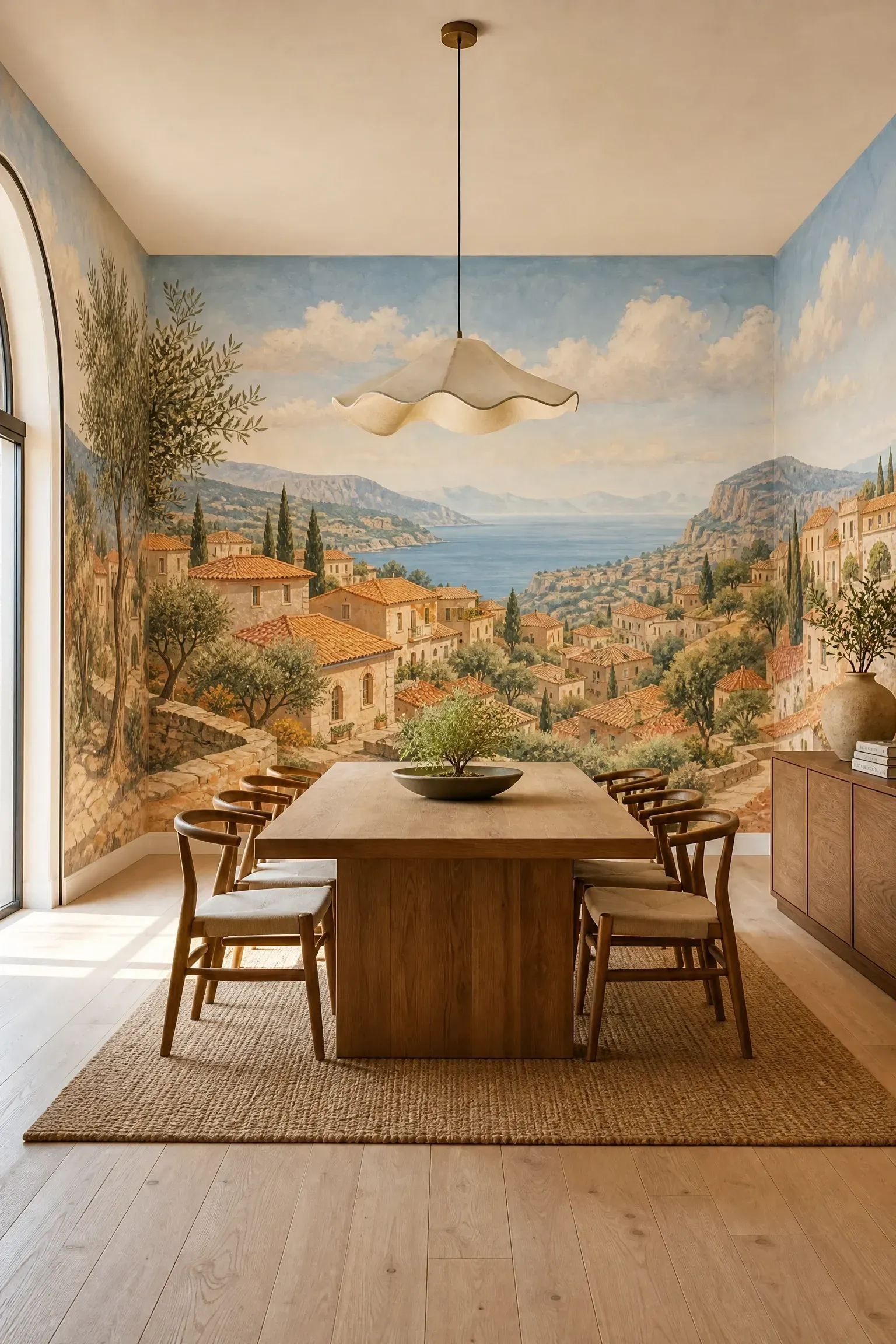
A panoramic landscape mural, whether it depicts rolling hills, a coastal scene, a Mediterranean terrace, or a romanticized cityscape, turns your dining room walls into a window onto somewhere else entirely. This is a bold commitment, but when it is done well, it is genuinely extraordinary. The key is choosing a mural with a horizon line that sits at roughly the same height as a standing adult, which makes the scene feel proportionally correct when you are seated at the table. Stick to furniture that does not compete with the mural: a simple rectangular table, chairs in a neutral solid fabric, and a pendant light that is interesting in form but not fussy in detail. Let the mural be the star and keep everything else playing a supporting role. These murals work especially well in dining rooms with good natural light, where the mural is lit differently at different times of day.
Designer Advice: Order a sample panel before committing to a panoramic mural. The colors can look very different printed at full scale compared to a small chip or screen image.
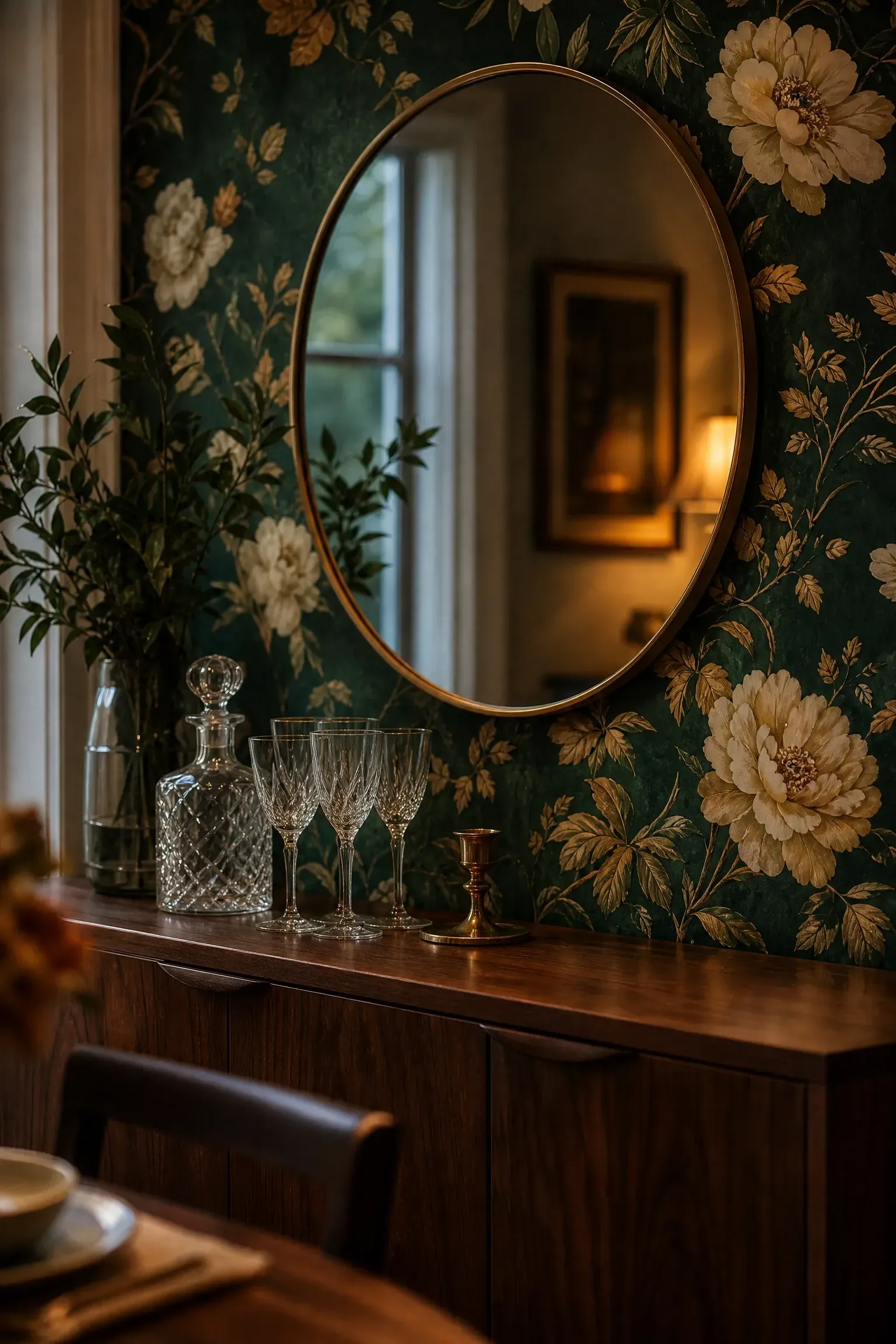
Emerald green is one of those colors that looks confident, luxurious, and incredibly livable all at once, which is why it has been a top choice for dining room wallpaper for several years running. A floral print in deep emerald with darker green leaves and accents in cream, blush, or gold creates a dining room backdrop that feels genuinely special. This works on all four walls in a dining room with good lighting, or as a single feature wall in a smaller space where you want the impact without the commitment. Pair it with a dark dining table in walnut or ebony, upholstered chairs in a warm cream or dusty rose velvet, and lighting in aged brass. A round mirror with a brass frame on one of the plain walls reflects the green and doubles the sense of depth. Keep tabletop accessories simple: clear glassware, white china, and a low floral centerpiece that echoes the wallpaper.
Designer Advice: Emerald green wallpaper pairs better with warm-toned accessories than cool ones. Silver and chrome feel stark against it; brass, gold, and copper feel right.
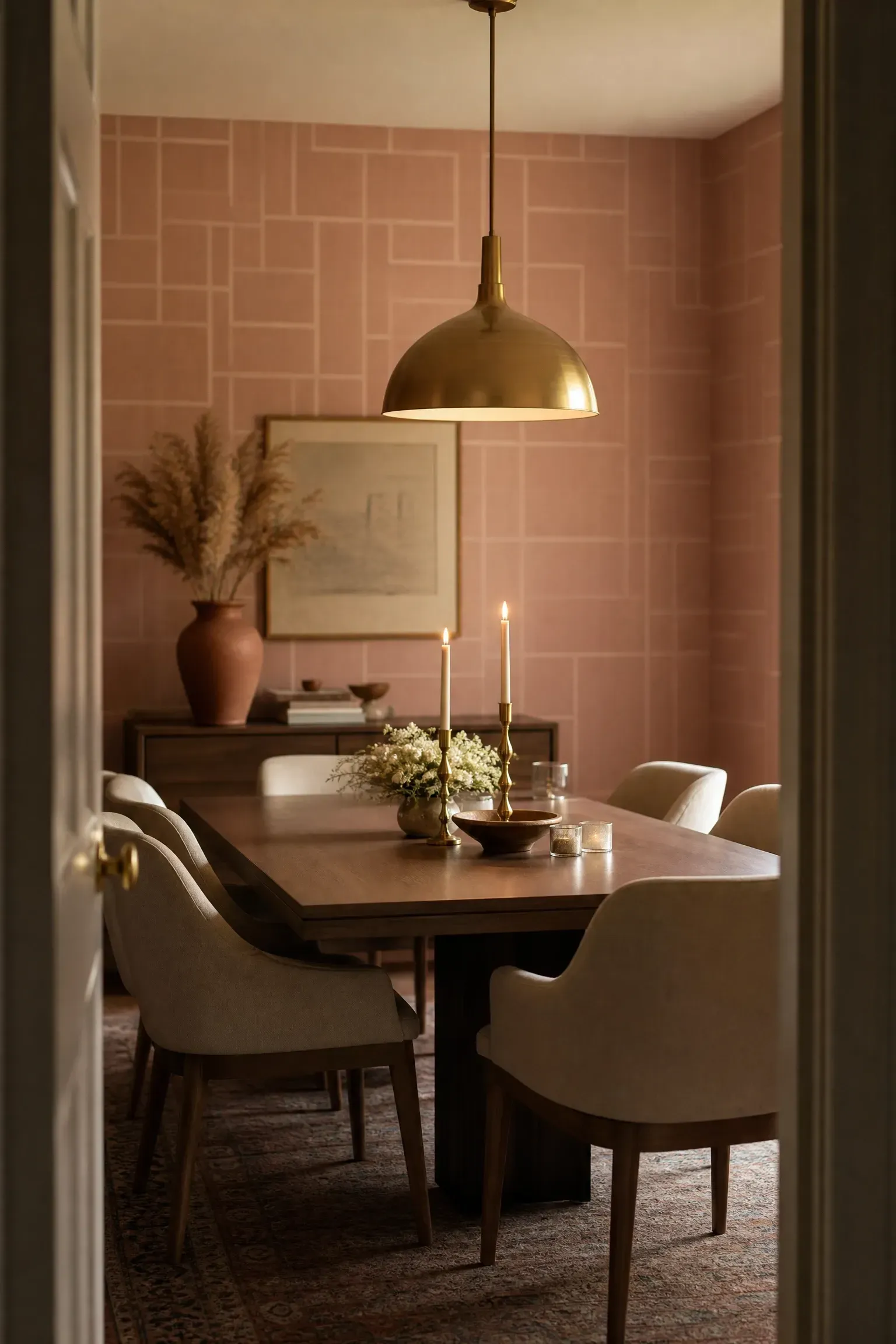
Blush pink in a dining room is not about being sweet or feminine; when done right, it is one of the most flattering and warm tones a room can have. The key is choosing a blush wallpaper with a pattern that gives it character, whether that is a small geometric grid, an all-over floral in slightly deeper rose tones, or a woven-texture effect in a warm peachy pink. Blush pairs beautifully with warm grey, soft white, aged brass, and natural linen, and it makes candlelight look spectacular. Pair it with a dining table in a warm grey or pale stone finish, chairs in a warm linen or cotton fabric, and lighting in brass or a matte white. Add a terracotta or dusty mauve ceramic vase on the table or sideboard for an accessory that ties into the pink tones without being too literal about it.
Designer Advice: Blush pink dining rooms photograph beautifully, but they need warmth in the lighting to avoid looking washed out. Always use warm-white bulbs rather than cool daylight ones.
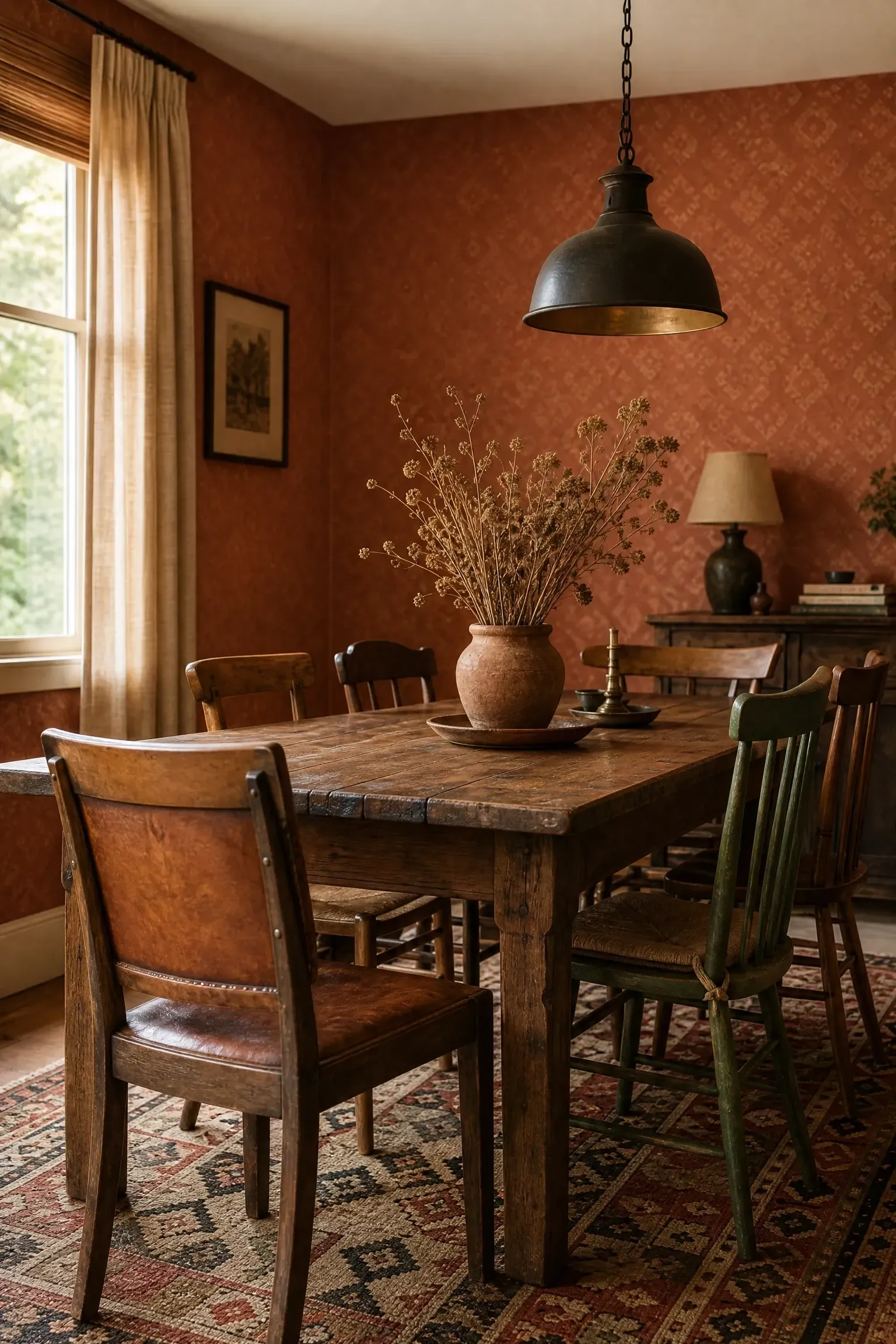
Terracotta has the warmth of a sunlit afternoon and a depth that makes a room feel genuinely cozy. In a dining room, a terracotta wallpaper with a subtle pattern, a faint damask, a small repeating geometric, or a lightly distressed plaster effect, reads as sophisticated and grounded. This is a great choice for dining rooms that are used for casual everyday meals as much as formal entertaining because the color is warm and welcoming without being formal. Pair it with a solid wood farmhouse-style table, mix-and-match chairs in earthy tones (think cognac leather, dark olive, or warm caramel), and a simple iron or raw brass light fixture. Layer in a flat-woven cotton or kilim rug under the table and add some dried botanicals or simple clay pottery on the sideboard to lean into the earthy, organic palette.
Designer Advice: Terracotta looks very different depending on undertone. Some read orange, some read more pink, and some read almost brown. Always order a large sample and hold it against your floor and furniture before committing.
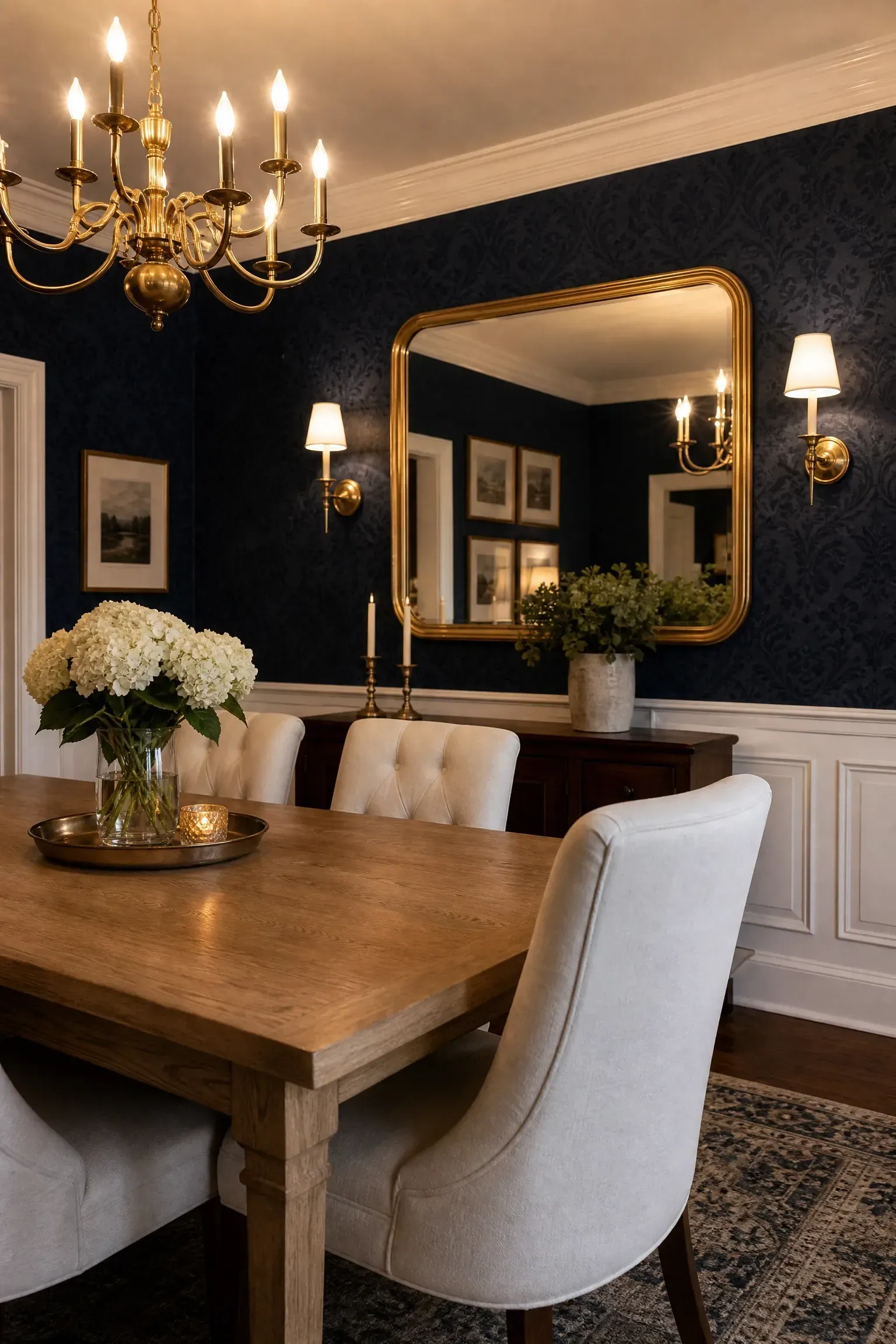
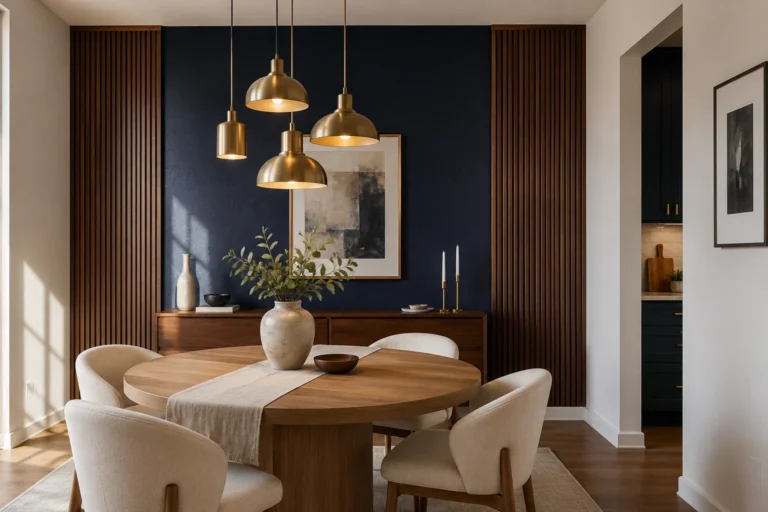
Navy blue dining rooms feel cozy and enveloping in a way that lighter rooms simply do not, and a tonal navy wallpaper with a subtle pattern, something like a fine geometric grid, a barely-there damask, or a woven linen texture in the same deep blue, is one of the most elegant choices you can make for this space. The trick with a very dark wallpaper is to use plenty of lighting to prevent the room from feeling like a cave. Install a proper chandelier overhead, add sconces or a floor lamp in the corner, and use reflective surfaces like mirrors and metallic accessories to bounce light around the room. A crisp white wainscoting on the lower third of the wall gives the navy somewhere to land and prevents it from feeling overwhelming. Pair with a light or medium-toned wood dining table for contrast, white or cream upholstered chairs, and warm brass fixtures throughout.
Designer Advice: Dark wallpaper will make your dining room feel smaller. If that is your goal, wonderful. If not, keep at least one wall free of the paper and paint it in a pale coordinating tone.
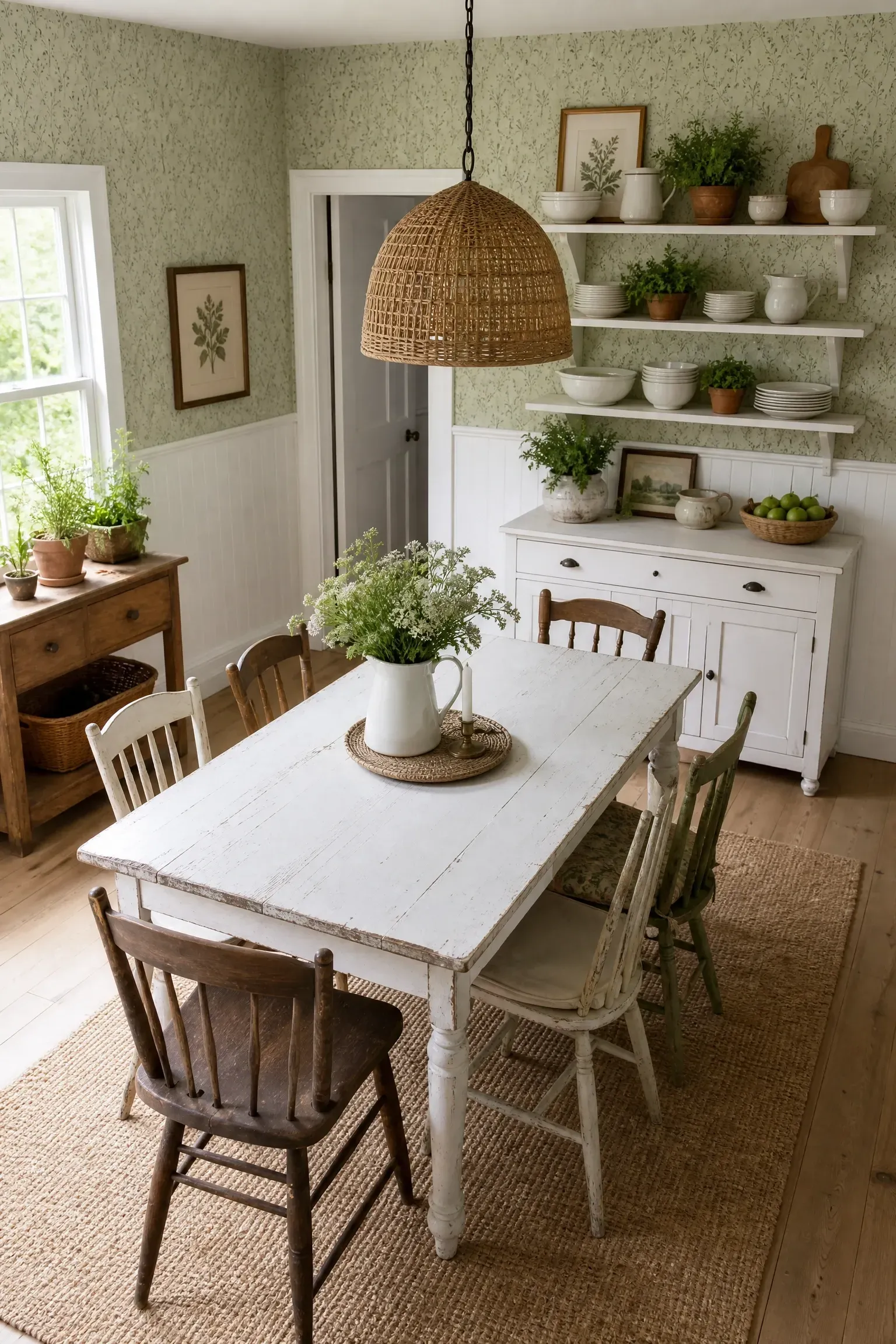
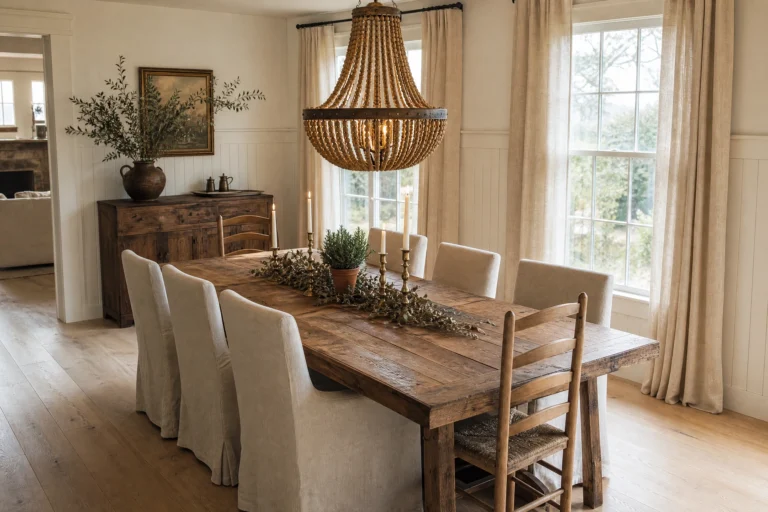
A small, repeating print in a soft palette is the wallpaper equivalent of a gentle hum in the background: present, pleasant, and completely non-threatening. For a farmhouse or country-style dining room, look for patterns with small botanical motifs, simple check or grid patterns, or a classic toile in a muted blue, sage green, or warm cream. This type of wallpaper works beautifully with shiplap or beadboard wainscoting below, with the wallpaper beginning at chair rail height. Pair it with a painted farmhouse table in a soft white or pale grey, mix-and-match vintage chairs, and a simple pendant or rattan chandelier. Layer in some open shelving with white ceramic dishes, a few potted herbs, and a stack of linen napkins for a room that feels like it has been lived in for years in the best possible way.
Designer Advice: Small print wallpapers are very forgiving on imperfect walls because the pattern draws the eye rather than highlighting bumps or unevenness.
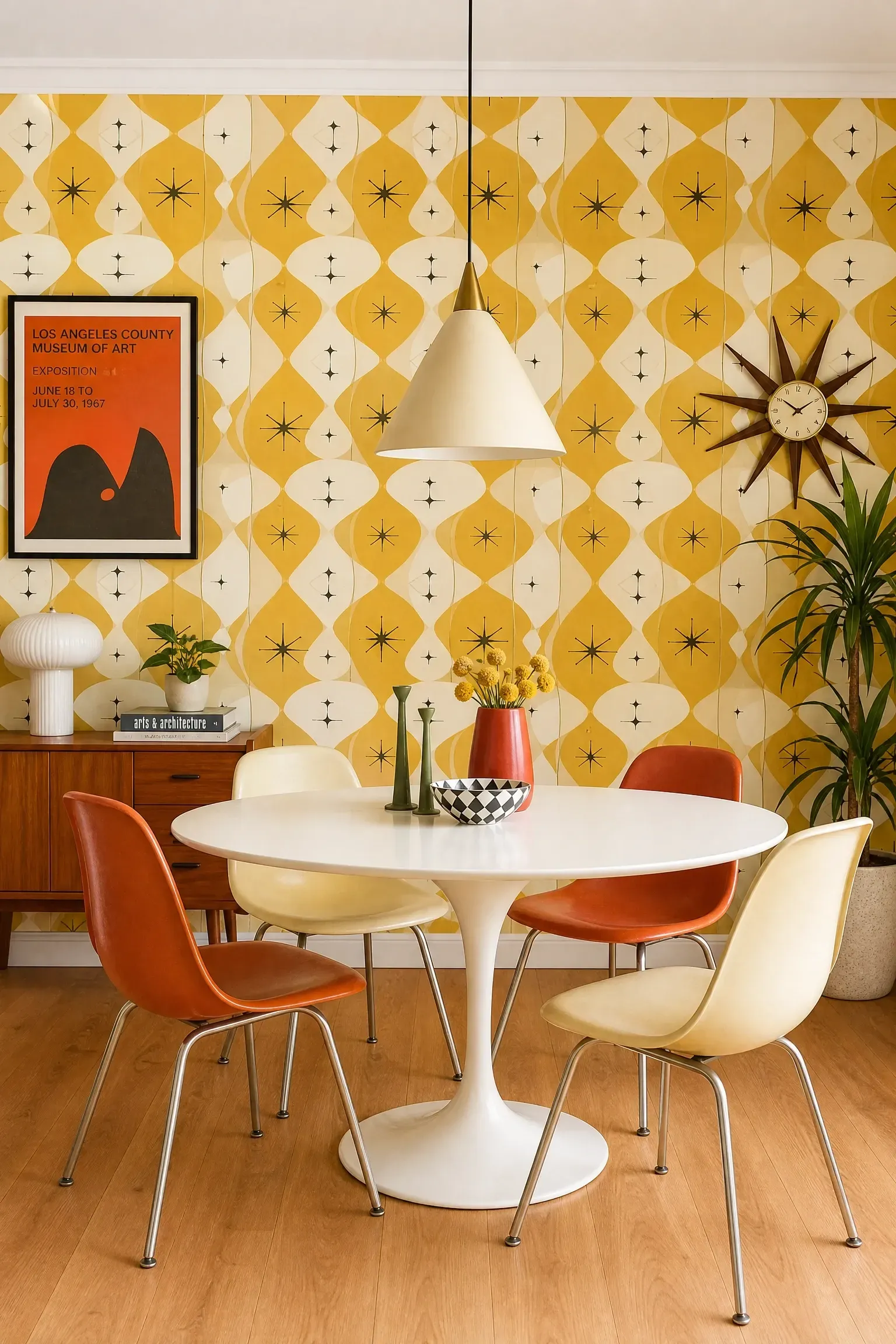
Mid-century inspired wallpaper, think atomic age sunbursts, leaf and pod shapes, or graphic two-tone geometric prints from the 1950s and 60s, adds a playful, retro warmth to a dining room that modern or neutral spaces often lack. The color combinations that work best right now are mustard yellow and warm white, terracotta and cream, or olive green and black. Pair this kind of wallpaper with a tulip-style dining table or a solid round table on a pedestal base, and Eames-style or similar molded plastic chairs in a coordinating color. A simple cone pendant light or a Sputnik-style chandelier overhead reinforces the era without tipping into costume. Keep the rest of the room clean and uncluttered; this type of wallpaper rewards restraint.
Designer Advice: You can find great mid-century print wallpaper from independent designers on sites like Spoonflower or Society6 at much lower prices than design house versions, and often with more originality.
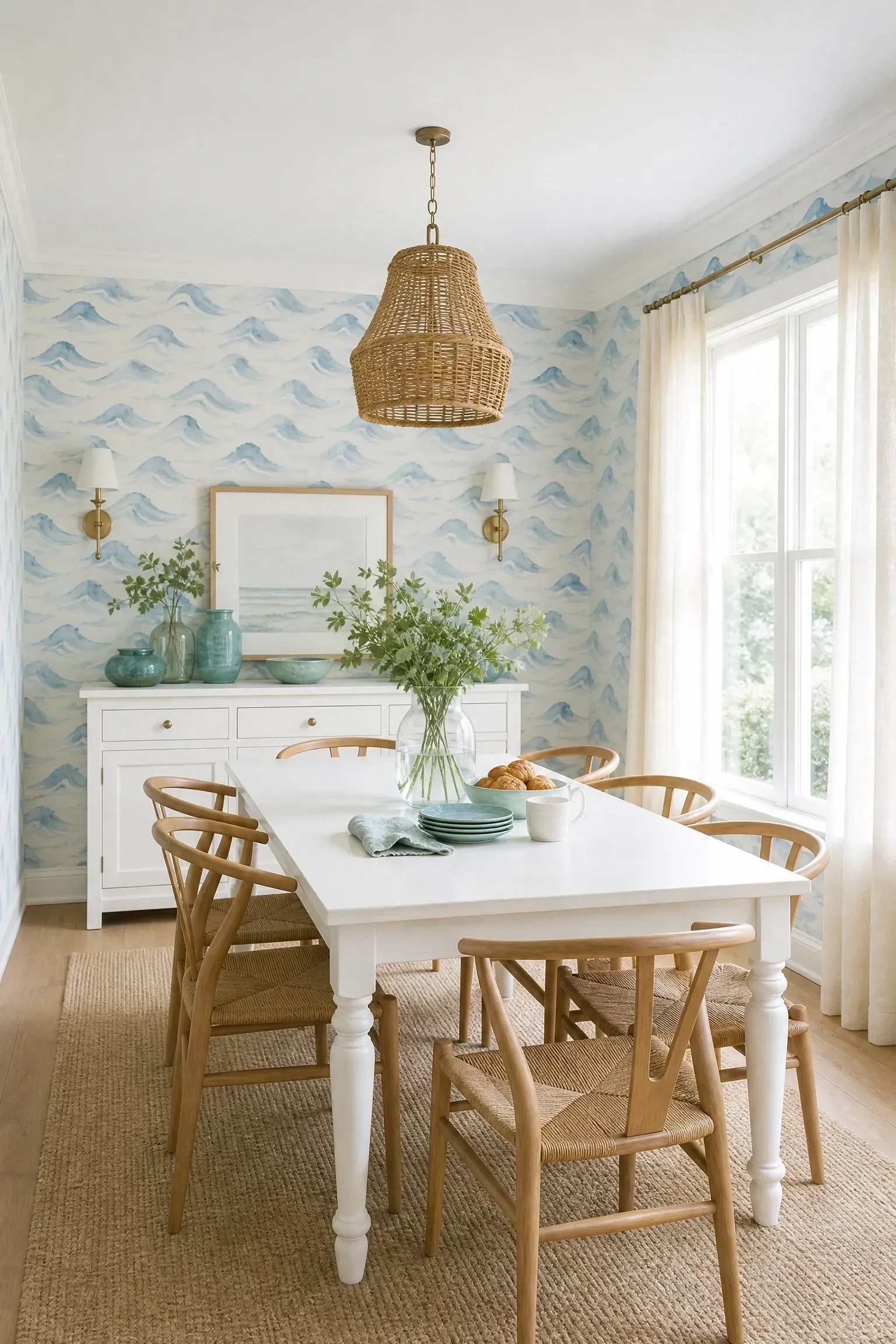
A soft coastal wallpaper in a dining room does not have to mean seashells and anchors. The best versions of this look use a muted, almost chalky blue or sea-glass green in a print that suggests the seaside through texture and tone rather than literal imagery: a watercolor wave repeat, a linen-effect in pale aqua, or a simple stripe in three tones of blue and cream. This is a perfect choice for a dining room that also serves as a breakfast room or that gets strong morning light, because the cool blue tones feel fresh and energizing in daylight. Pair it with a white painted dining table, natural wood or white-painted chairs, wicker or rattan accents, and simple linen curtains. A collection of simple coastal pottery or glassware in complementary blue and green tones on the sideboard ties the color story together without being heavy-handed.
Designer Advice: Resist the urge to add literal coastal accessories like fishing net wall decor or ceramic lobsters. The wallpaper sets the mood; let the furniture and textiles carry it rather than doubling down with themed objects.
Finding the Right Wallpaper for Your Dining Room
The dining room is not a space where you need to play it safe. Unlike the bedroom where you need calm for sleep, or the home office where you need focus, the dining room exists for gathering, eating, and enjoying good company. Wallpaper in this space works hard, setting the mood for every meal, making guests feel something when they walk in, and giving the room a personality that paint alone rarely achieves.
The ideas in this article span a wide range of styles, budgets, and commitment levels. Some of them, like a full panoramic mural or a deep moody damask, are genuinely bold choices that will define the room completely. Others, like a soft linen-texture paper or a delicate vine print, are quieter and more flexible, happy to work with different furniture and accessories over time. Neither approach is better than the other; it comes down to how you use the room and what makes you feel good when you sit down at the table.
Before you start shopping, pull together a few images of dining rooms that genuinely appeal to you and look for the common thread. Is it the color? The pattern scale? The overall mood? That thread is your starting point. Order samples, hold them up in your actual room under different lighting conditions, and live with them for a few days before you decide. Wallpaper is a commitment, but it is also one of the most rewarding design decisions you can make for a space that deserves to look as good as it feels.
Frequently Asked Questions
Is wallpaper a good idea for a dining room?
Yes, and arguably the dining room is one of the best rooms in the house to wallpaper. People sit in dining rooms long enough to actually appreciate the walls, which is not always true in a hallway or kitchen. Wallpaper adds warmth, texture, and personality in a way that paint rarely matches, and it holds up well in a dining room where there is no steam or heavy moisture like you might find in a bathroom or kitchen.
Should I wallpaper all four walls or just one?
Both approaches work, but the decision depends on the size of your room, the scale of the pattern, and how bold you want to go. A large-scale mural or a very busy maximalist print usually looks best on a single feature wall so it does not feel overwhelming. A smaller repeat pattern or a tonal texture, like grasscloth or a damask, can work beautifully on all four walls and creates a more enveloping, cocooning effect. If you are not sure, start with one wall and see how you feel about it.
What wallpaper works best in a small dining room?
Small dining rooms can handle bolder wallpaper than you might expect because the pattern does not have too much space to repeat and become monotonous. Lighter colorways in any pattern will make a small room feel bigger, while darker tones can make it feel more intimate and cozy. Vertical stripes are a reliable choice for adding perceived height, and watercolor or soft botanical prints feel spacious without being stark. Whatever you choose, keep the furniture simple and light in both color and visual weight.
How do I choose a dining room wallpaper that will not date quickly?
Avoid wallpapers that rely heavily on a single trend element, like a very specific color that is peaking right now, or a motif that feels tied to a particular cultural moment. Instead, look for designs with a longer history: botanicals, damasks, geometric patterns, and textural effects have all been in use for decades and continue to feel relevant because they are grounded in good design principles rather than passing trends. The most important factor is whether you genuinely love it, because wallpaper you choose deliberately and confidently will always look more considered than something chosen out of fear of making a mistake.
Can I use wallpaper in a dining room that also has a fireplace?
Yes, and this combination is actually quite beautiful. A fireplace wall covered in a bold or textural wallpaper becomes a genuine focal point that works even harder when the fire is not lit. Just make sure the wallpaper is not applied too close to the firebox itself; leave a proper clearance gap as per the manufacturer recommendations and consider using a non-combustible material, like tile or painted plaster, in the immediate area around the fireplace opening. The wallpaper on the surrounding wall will draw the eye to the fireplace rather than away from it.
What is the best way to hang dining room wallpaper if I am a beginner?
Peel-and-stick removable wallpaper is a genuinely good option for first-timers because it can be repositioned during application, which takes a lot of the stress out of the process. For traditional paste-the-wall or paste-the-paper types, start with a simpler pattern that does not require exact pattern matching, like a textured or striped paper. Always prepare your walls properly first by filling any holes and applying a sizing coat or wallpaper primer. Work from the center of the wall outward rather than starting from a corner, and use a plumb line to make sure your first strip is perfectly vertical.