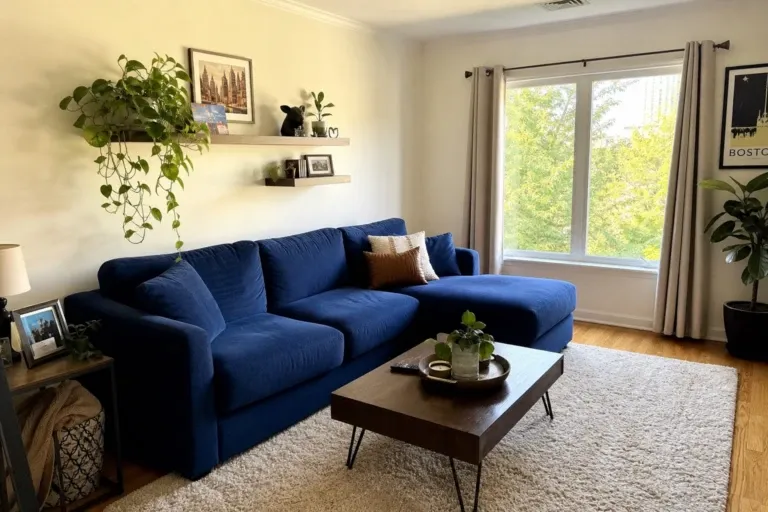
Every year around late August, something shifts. The light gets a little more golden in the afternoons, there’s a crispness starting to settle in the evenings, and suddenly your living room, which looked perfectly fine all summer, starts to feel a bit too bright, a bit too bare. That’s when the urge to pull out the warm throws and swap a few things around kicks in, and honestly, it’s one of the best decorating opportunities of the year. Autumn gives you full permission to layer things up, go darker with your palette, and make your space feel like somewhere you actually want to spend a long evening.
The good news is that decorating your living room for fall doesn’t mean starting from scratch. Most of the ideas here are about working with what you already have and adding the right seasonal pieces in the right spots. Start with the textiles. A new throw and a few seasonal cushion covers can shift the whole mood of a room for under $100. Let’s get into it.
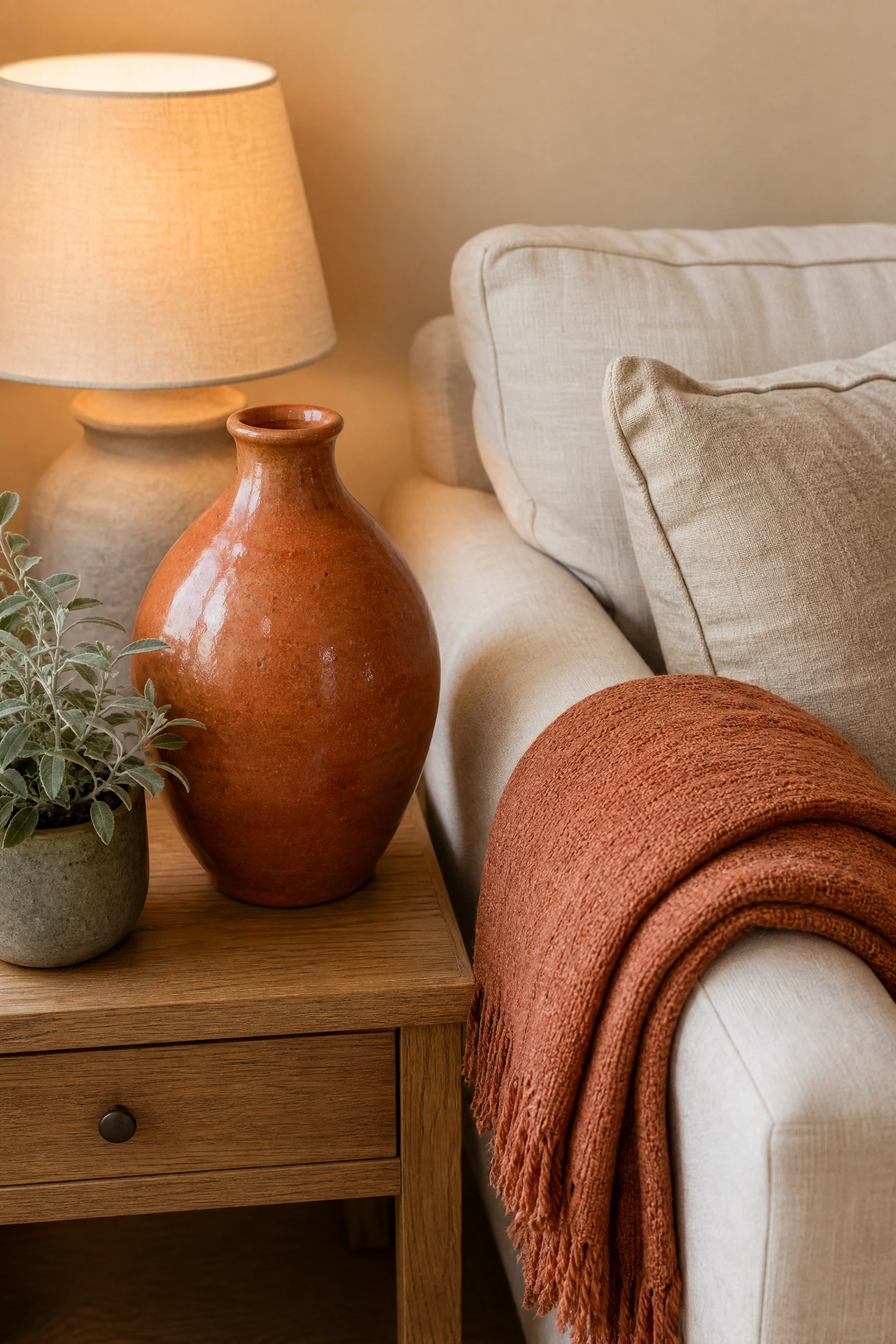
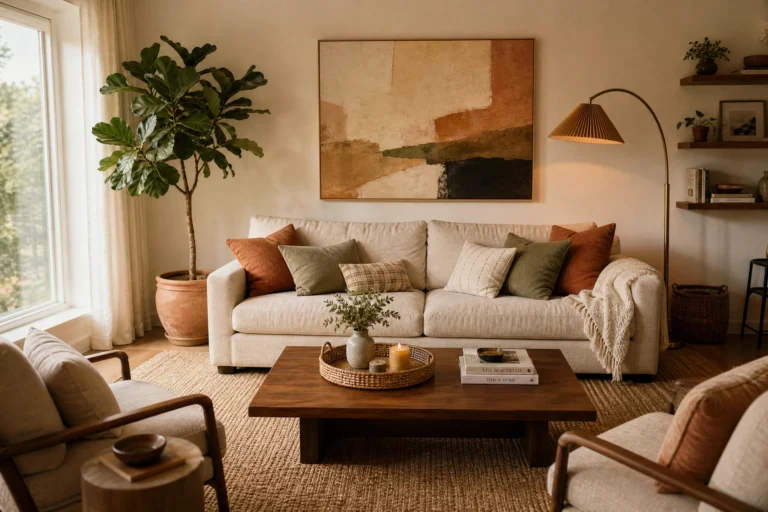
If you’ve been thinking about adding some color to a mostly neutral living room, terracotta is one of the best places to start for fall. In practice, this color works best when it’s treated as an accent rather than a wall-to-wall commitment, so think terracotta throw pillow covers, a small terracotta-glazed ceramic vase on the coffee table, or a terracotta-toned area rug layered over existing flooring. Pair it with warm cream, natural linen, and touches of muted sage green to keep things from feeling too heavy. The earthy undertones in terracotta play beautifully with wooden furniture, especially lighter oak or walnut tones, and in rooms with south-facing light, it almost seems to glow in the afternoons. One thing that works really well here is keeping the surrounding walls neutral so the terracotta pieces do the talking without overwhelming the room. This is a mid-range update depending on how many pieces you bring in, but even a single terracotta cushion cover can shift the whole feel of a sofa.
Quick Tip: Pair terracotta with an aged brass candle holder on the coffee table for a warm, lived-in look that comes together in minutes.
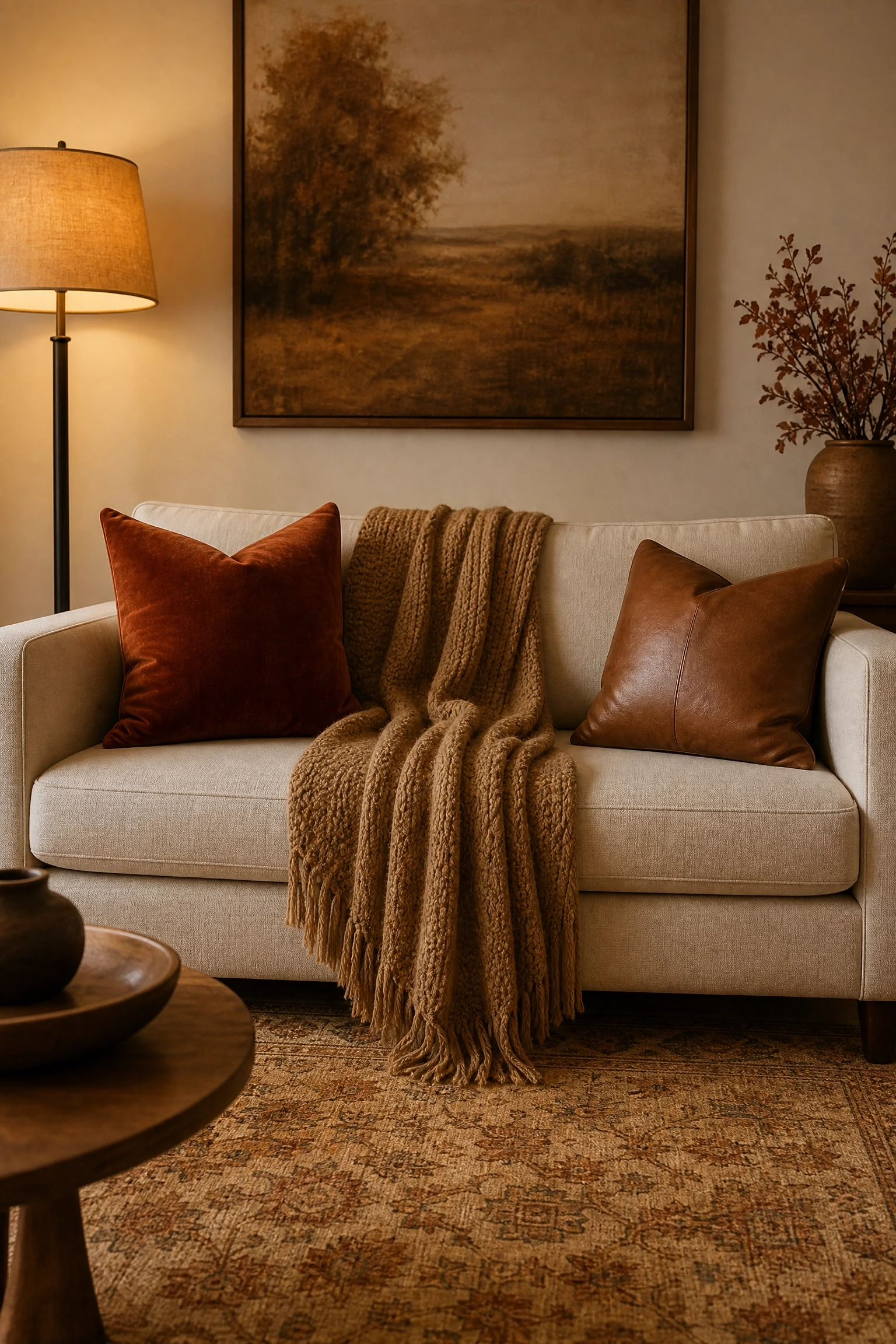
One of the bigger design movements in interiors right now is tonal decorating, where you choose two or three shades from the same color family and layer them throughout a room instead of mixing lots of contrasting colors. For autumn, a rust, caramel, and warm brown palette is genuinely beautiful and surprisingly easy to pull off. The key is varying your textures so the eye has something to move between, think a rust velvet cushion, a caramel-toned knit throw, and a smooth brown leather coffee table tray all working together in the same vignette. In larger living rooms, you can anchor this palette with a tonal patterned rug that pulls together at least two of the three shades. One honest note: this look can feel flat if everything in the room is exactly the same shade, so make sure there’s enough contrast in tone, light versus dark, even within the same color family. It’s an affordable palette to work with since earthy browns and rusts are widely available at every price point right now.
Designer Advice: Keep one piece slightly lighter and one slightly darker than your mid-tone to give the palette depth without breaking the tonal rule.
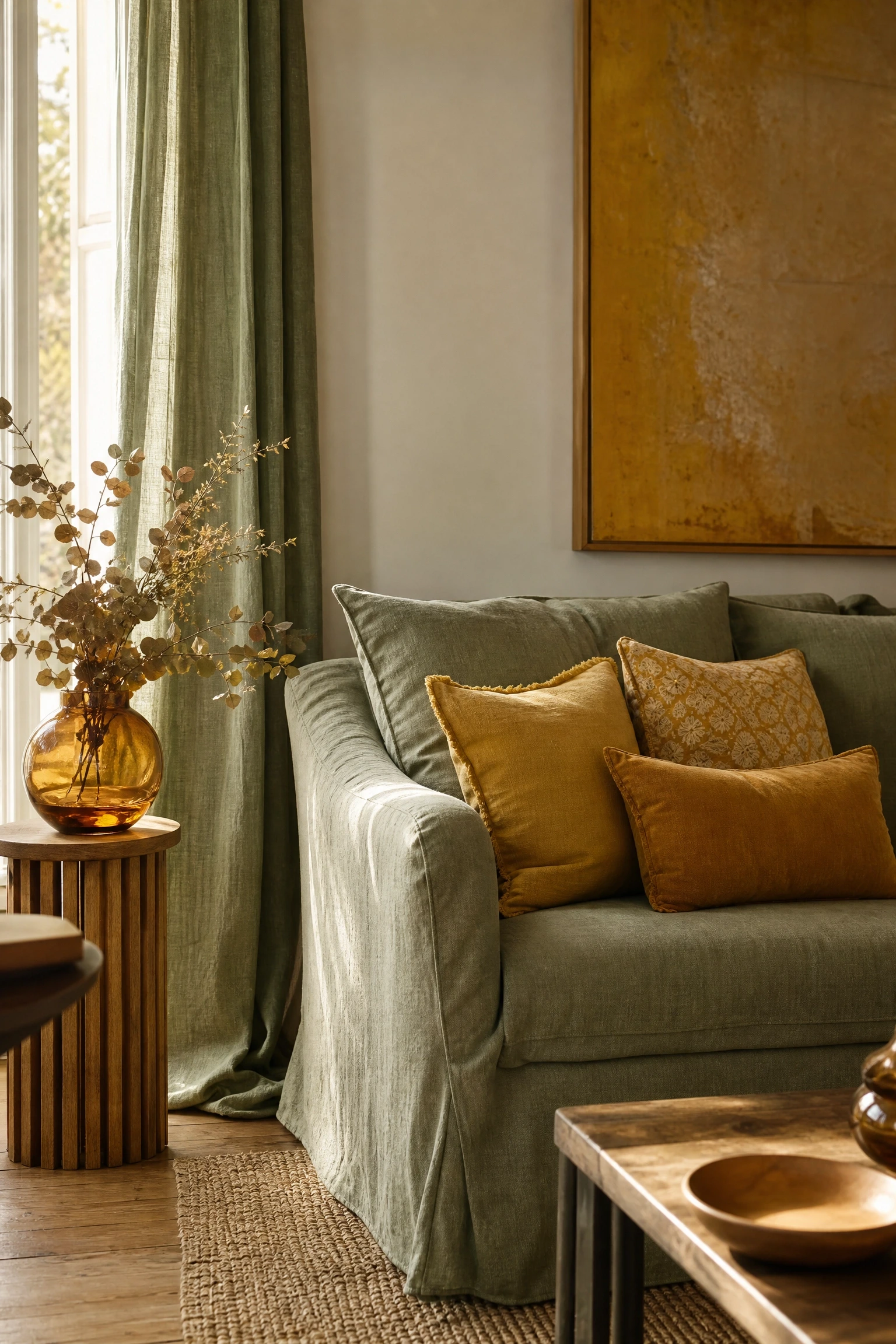
Most people default to orange and red for autumn, but one of the more interesting and fresh takes on the season is building around muted sage green instead. Sage works as an autumn neutral because it pulls in the darker, more olive-adjacent tones of fall foliage without leaning into the cliched harvest palette. In a living room, this might look like sage green slipcovers on the sofa, sage linen curtain panels that pool slightly on the floor, and then warmer gold and amber accents layered in through decorative objects and lighting. Interior designers who work in this palette often point out that it transitions beautifully all the way through winter, since it pairs just as well with deep greens and burgundies as it does with autumn golds. keep in mind that sage reads very differently under different light conditions, so if your living room gets mostly cool north-facing light, opt for a sage with a yellow or grey undertone rather than a blue one, which can feel a little cold on overcast days. This is a medium-investment approach if you’re updating soft furnishings, but very affordable if you’re just working with a few accessories.
Pro Move: Add a single stem of dried eucalyptus in a simple ceramic vase beside your sofa to tie the sage palette together without spending much at all.
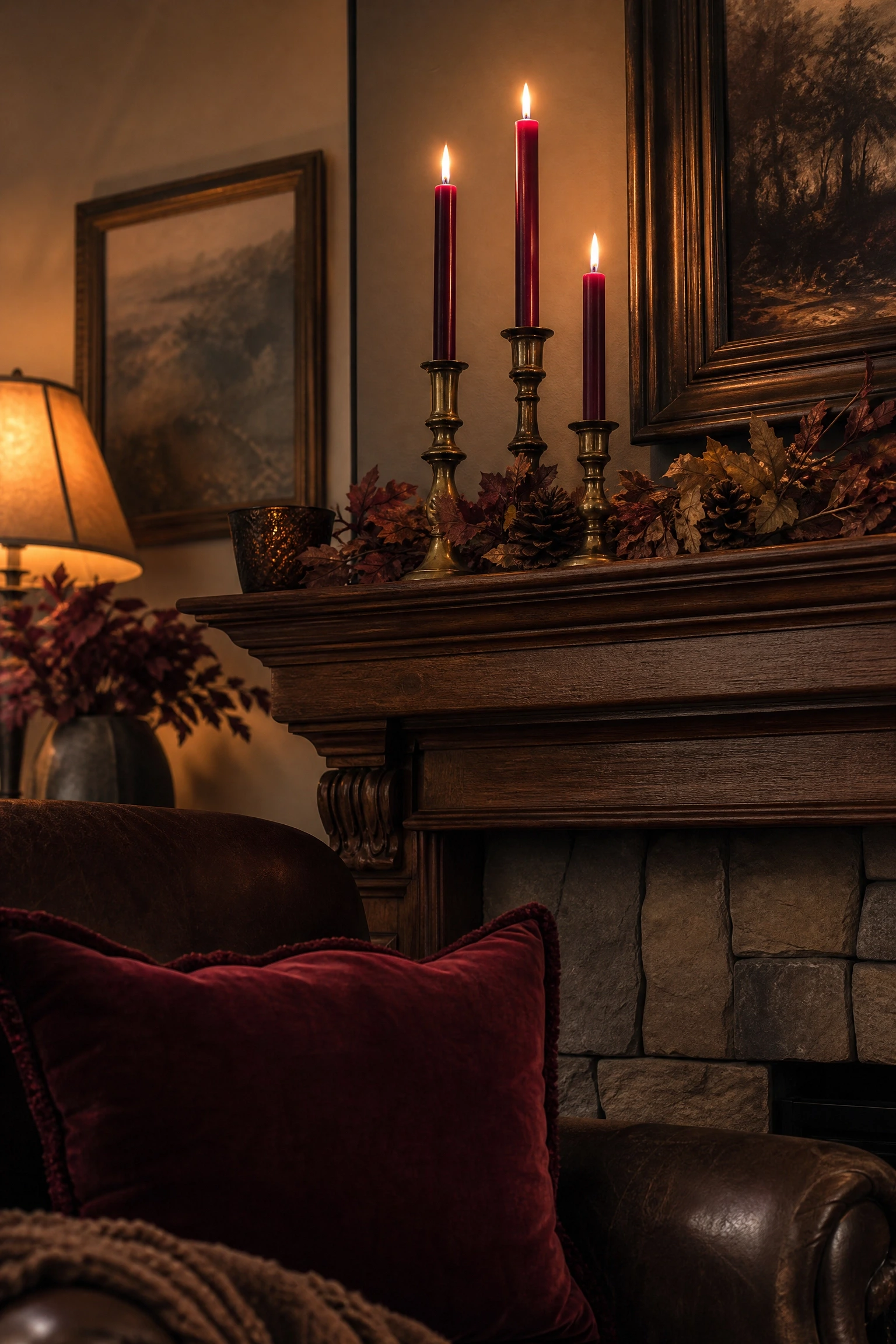
Burgundy is one of those colors that feels intensely autumnal without being expected in the way that orange often is. It’s rich, it’s a little moody, and it adds a sense of sophistication to a living room that brighter fall tones sometimes don’t. The most effective way to bring burgundy into a living room without it feeling heavy is through smaller, deliberate placements: a set of burgundy pillow covers on the sofa, a burgundy throw folded over an armchair, or a cluster of burgundy dinner candles at varying heights on the mantel. If you want to go a step further, a piece of abstract wall art in deep burgundy and ochre tones can anchor the whole palette beautifully. One thing to be mindful of is that burgundy absorbs a lot of light, so if your living room is already on the darker side, balance it with plenty of warm artificial lighting in the evenings. Burgundy works best as an investment-level textile choice, since velvet or quality linen in this shade looks genuinely luxurious.
Heads Up: Burgundy and orange can easily feel too intense together. If you’re mixing fall tones, let burgundy pair with gold or cream instead.
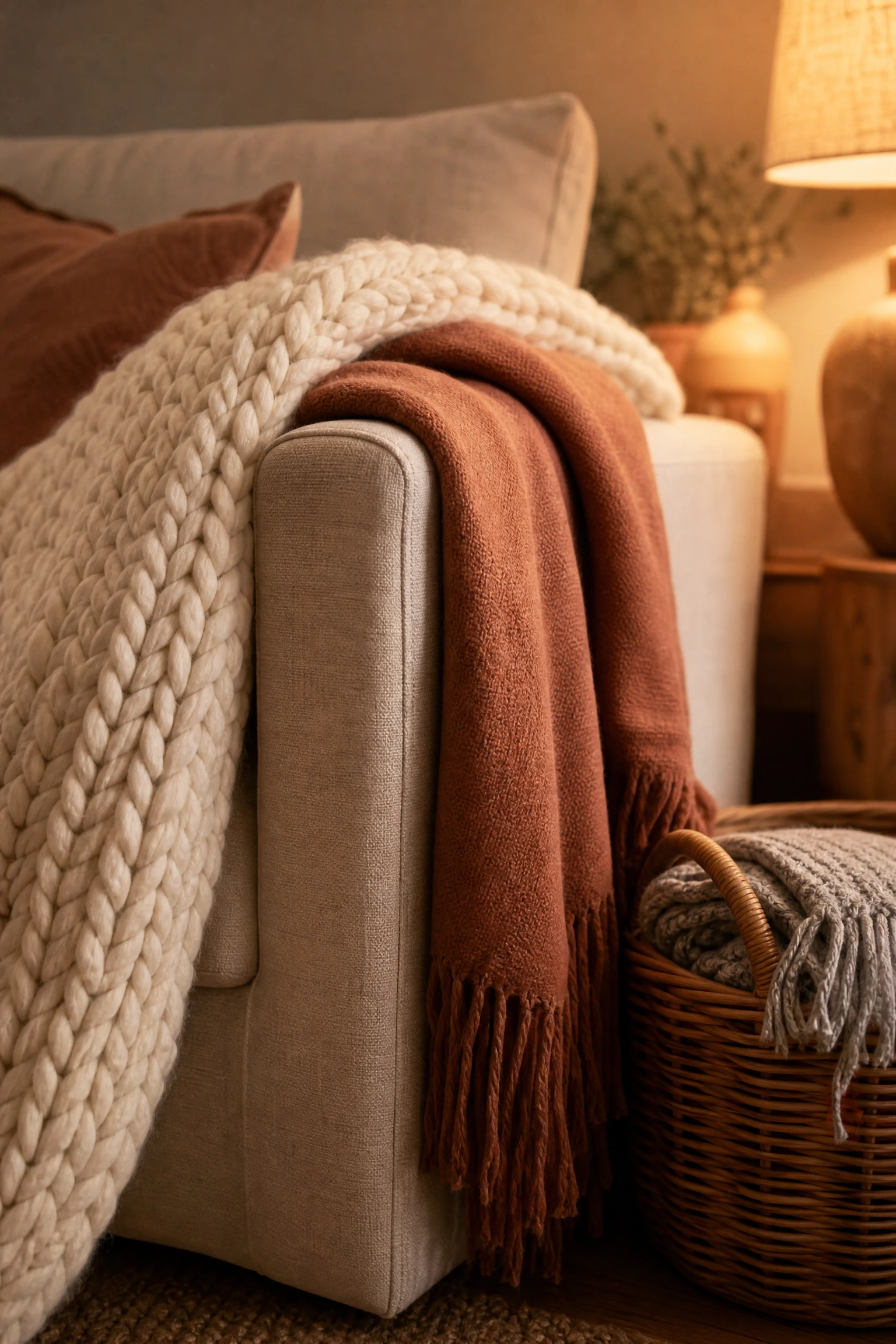
One of the most common mistakes people make with throws in the living room is just draping one over the back of the sofa and calling it done. In practice, layering throws with different textures creates a much more intentional and genuinely cozy result. Think about combining a chunky knit wool throw in a warm oatmeal tone with a smooth cotton blanket in a deeper autumn shade, like mustard or rust, and letting them overlap slightly, one over the armrest, one folded on the seat cushion. The contrast between a rough, nubby knit and a softer woven blanket is what gives the sofa visual warmth and texture, not just color. For autumn, go for natural fibers where you can: wool, cotton, and linen all have a warmth and weight to them that synthetic throws don’t match. A basket or wooden tray beside the sofa to hold extra blankets is also a functional and beautiful addition. Budget-friendly option: Etsy and local markets often have handmade knit throws at more accessible prices than major home retailers.
Quick Tip: Fold your chunkiest throw in thirds and drape it diagonally across one arm of the sofa rather than folding it neatly over the back. It looks more lived-in and intentional that way.
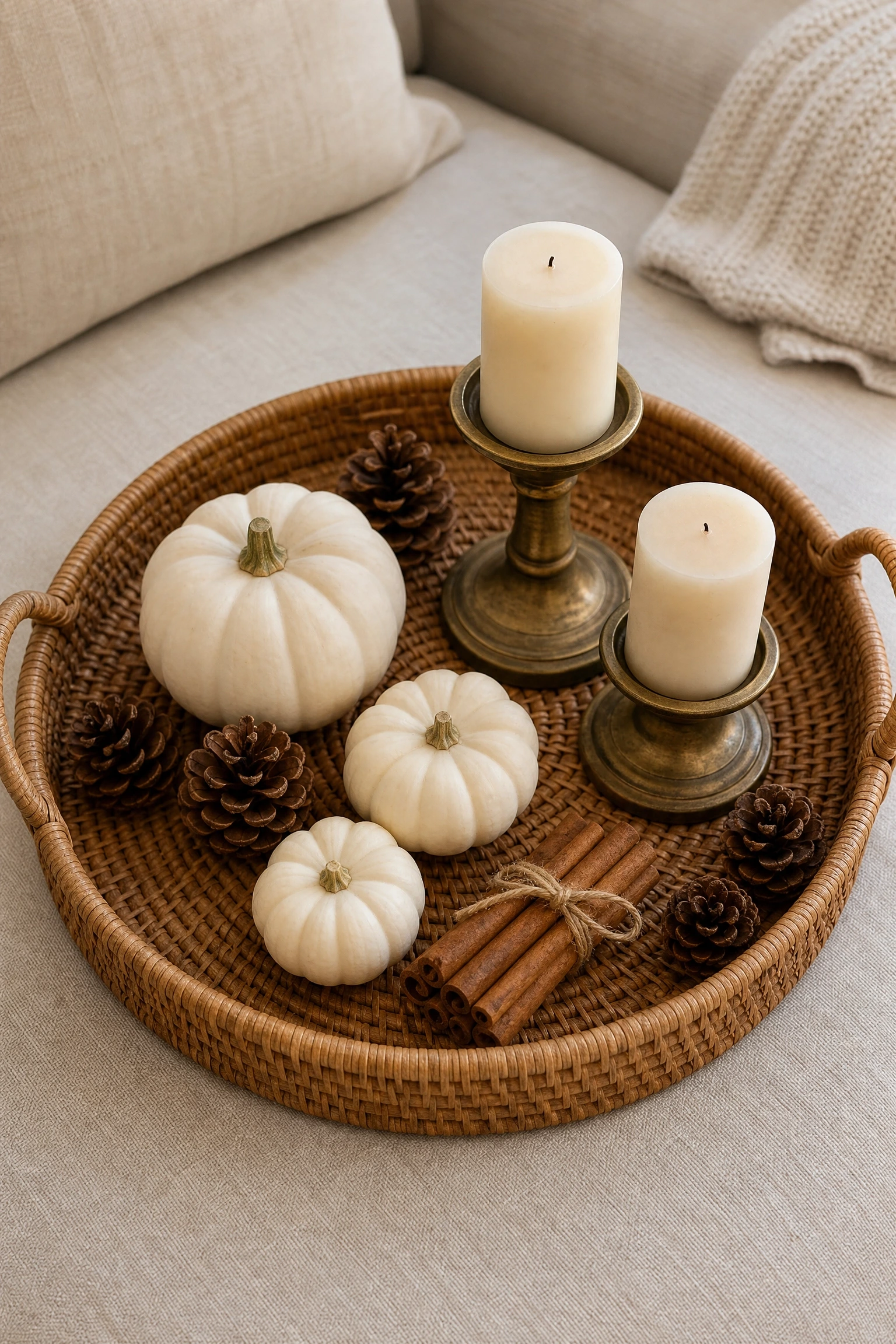
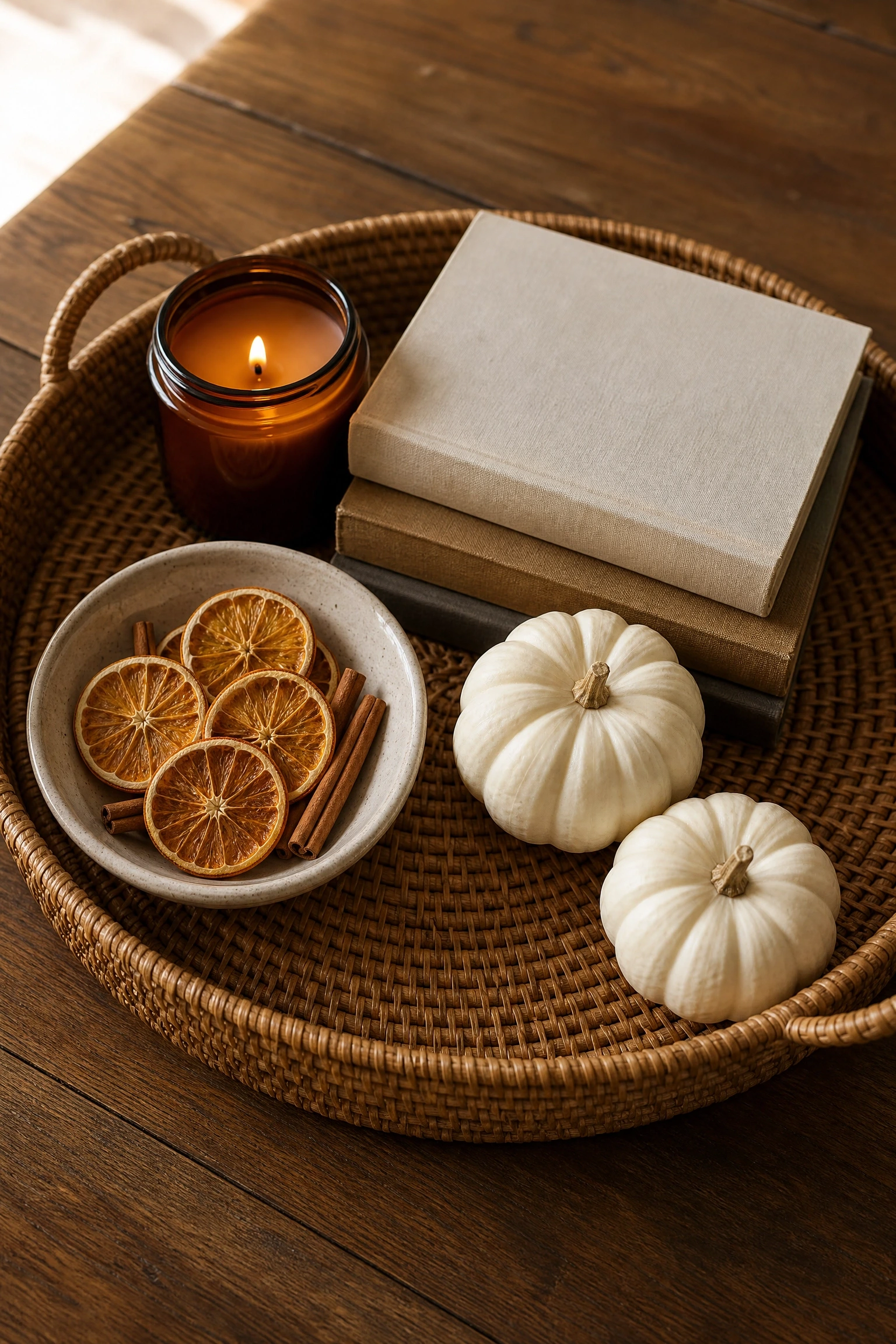
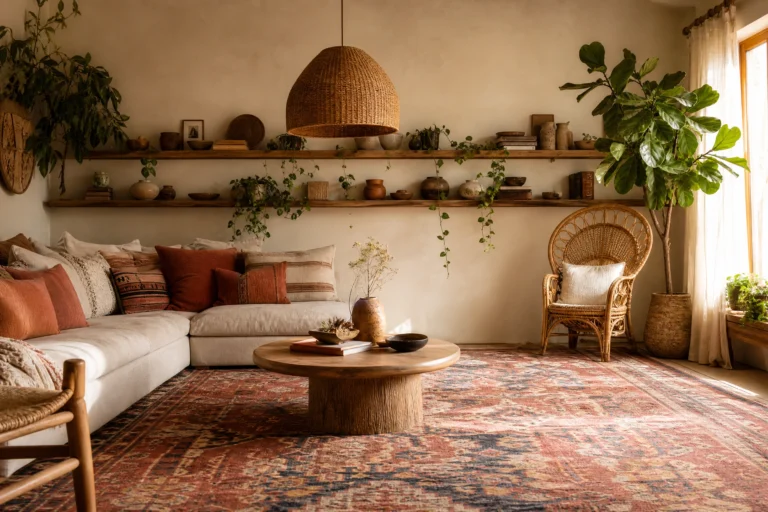
Woven elements have been popular in interiors for a few years now and they show no signs of going anywhere, and for good reason. For autumn specifically, rattan and woven grass textures bring in a natural warmth that feels grounded and earthy without being overly themed. In a living room, this might look like a large rattan tray on the coffee table holding a cluster of small pumpkins, a set of candles, and a few pinecones. It could also be a woven basket on the floor beside the sofa that holds extra throws, or a pair of rattan side tables that replace something more polished for the season. The visual weight of natural woven materials works particularly well against smooth surfaces like painted walls or upholstered sofas, since the contrast in texture makes both elements look better. In practice, rattan doesn’t require much upkeep, but it can fade in direct sunlight over time, so keep your woven pieces away from south-facing windows if possible. This is generally an affordable material to work with, and pieces in this category hold up well over multiple seasons.
Designer Advice: A woven rattan tray is one of the most useful items you can own for seasonal decorating. Everything looks more intentional sitting inside one.
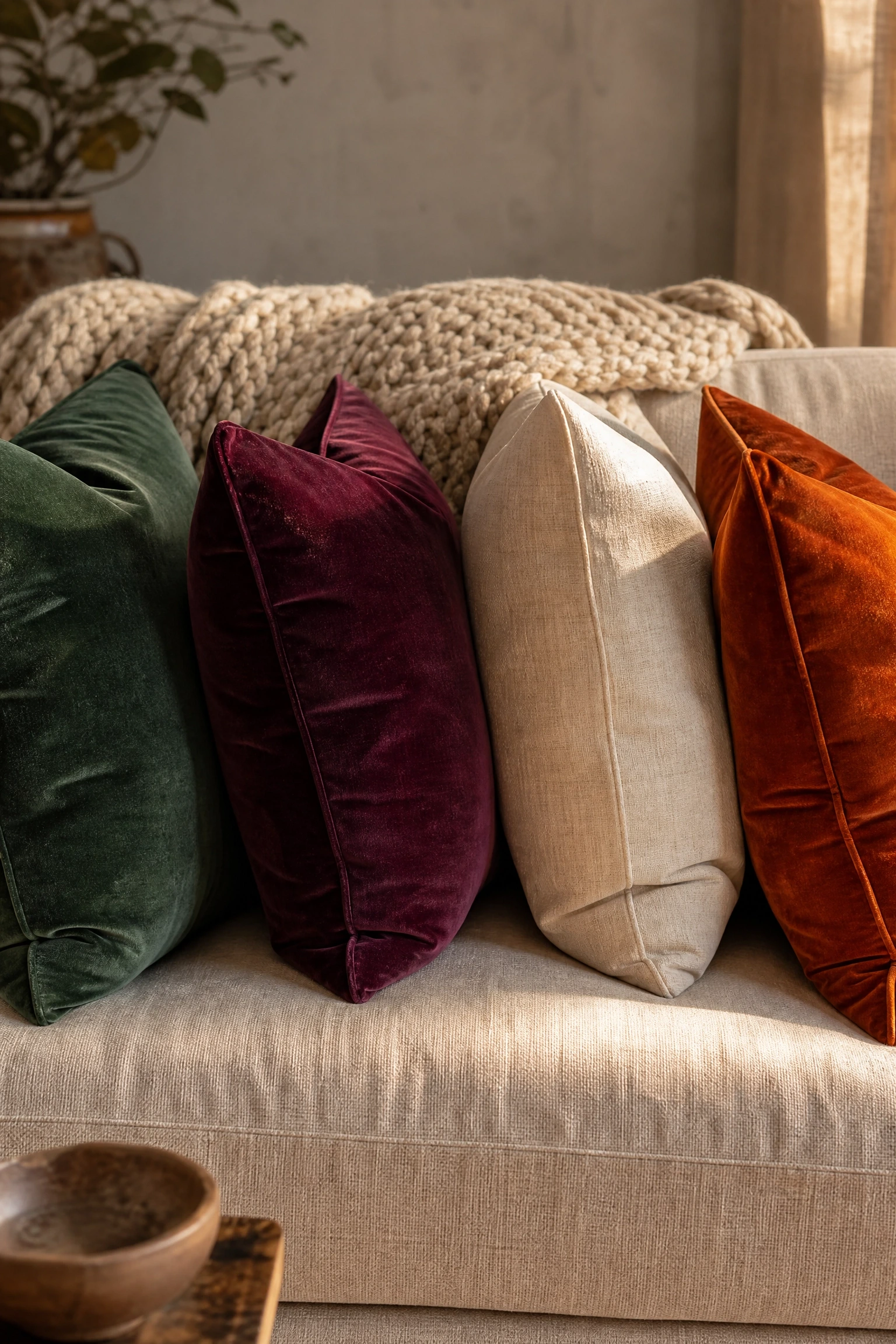
7. Add Velvet Cushion Covers for an Instant Seasonal Shift
If there’s one single swap that delivers the most return for its cost, it’s changing out your cushion covers. And for autumn, velvet is the fabric that feels most right for the season. Velvet has this quality of catching light and changing slightly depending on the angle, which gives sofas and armchairs a depth and richness that flat fabrics simply don’t have. In a neutral living room, two or three velvet cushion covers in a deep jewel tone, like forest green, plum, or burnt orange, can completely shift the mood of the space without touching anything else. The practical reality is that velvet is a slightly higher-maintenance fabric: it picks up pet hair, it can develop crush marks, and it needs a light brush to keep it looking fresh. That said, for a seasonal update that only needs to last a few months before you swap it back, mid-range velvet covers from most home stores are perfectly good. Mix your velvet cushions with a plain linen or knit cushion for a layered look that doesn’t feel too matched.
Reality Check: Velvet cushion covers show pet hair more than most fabrics. If you have animals, keep a lint roller close by and treat them as a ‘company’s coming’ seasonal piece rather than an everyday staple.
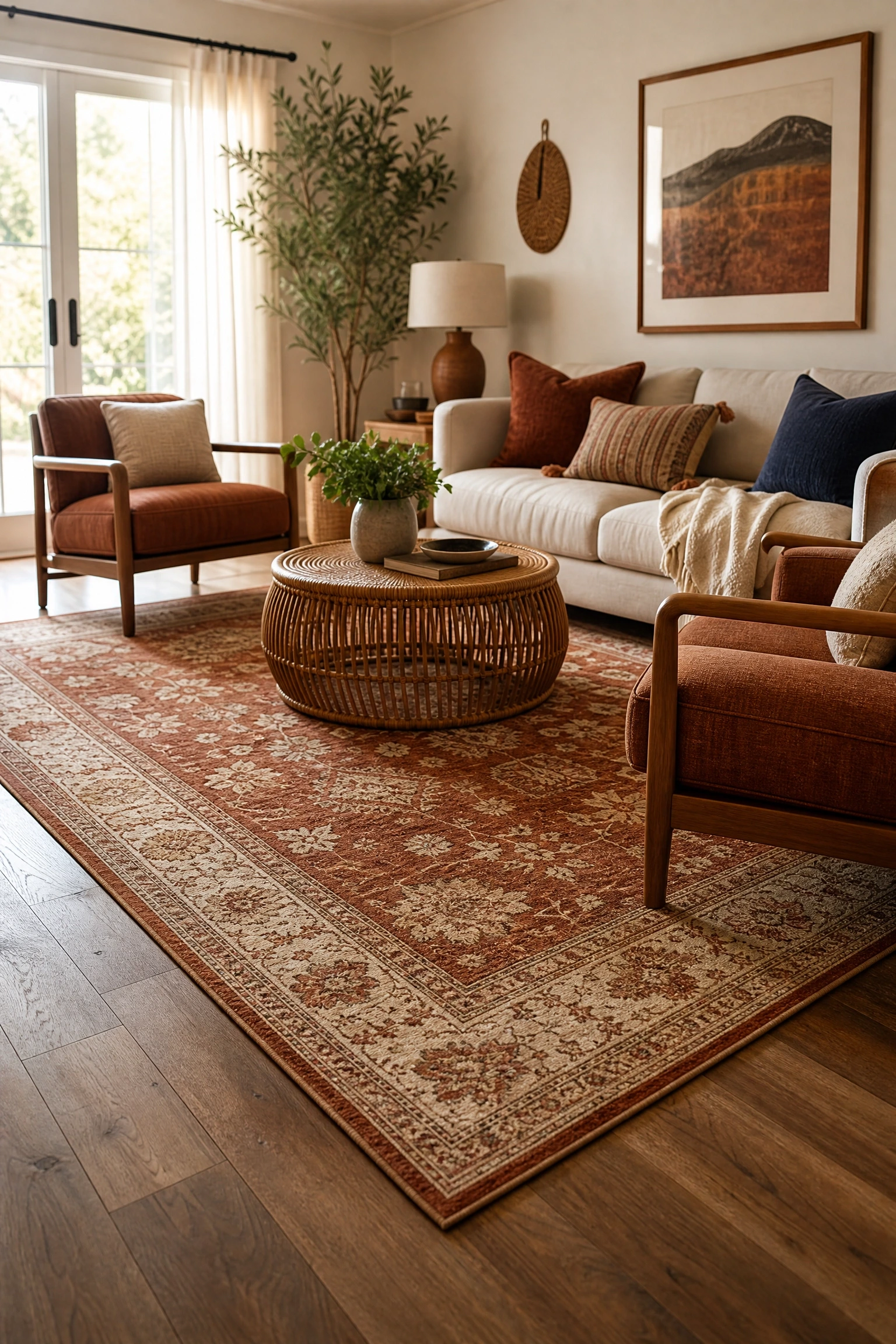
In summer, lighter and more open rugs tend to work well because they reflect light and keep things feeling airy. But as the seasons change, a rug in a deeper, warmer tone can do more for the coziness of a living room than almost any other single piece. A rug in warm rust, deep burgundy, burnt sienna, or even a rich plaid pattern instantly changes the visual temperature of a room and creates a grounded, layered foundation for everything else on top. From a design standpoint, the rug anchors the furniture arrangement and defines the seating zone, which is especially useful in open-plan spaces where the living area needs a visual boundary. One practical tip: if layering a new rug over existing flooring or carpet, a rug pad is worth the small extra investment since it prevents bunching and extends the life of both the rug and the floor underneath. This is one of the higher-investment ideas on this list, but a quality rug bought in autumn colors will serve you just as well next year.
Pro Move: If a full new rug isn’t in the budget, layer a smaller autumn-toned kilim or jute rug over your existing one for a fresh layered look that costs a fraction of the price.
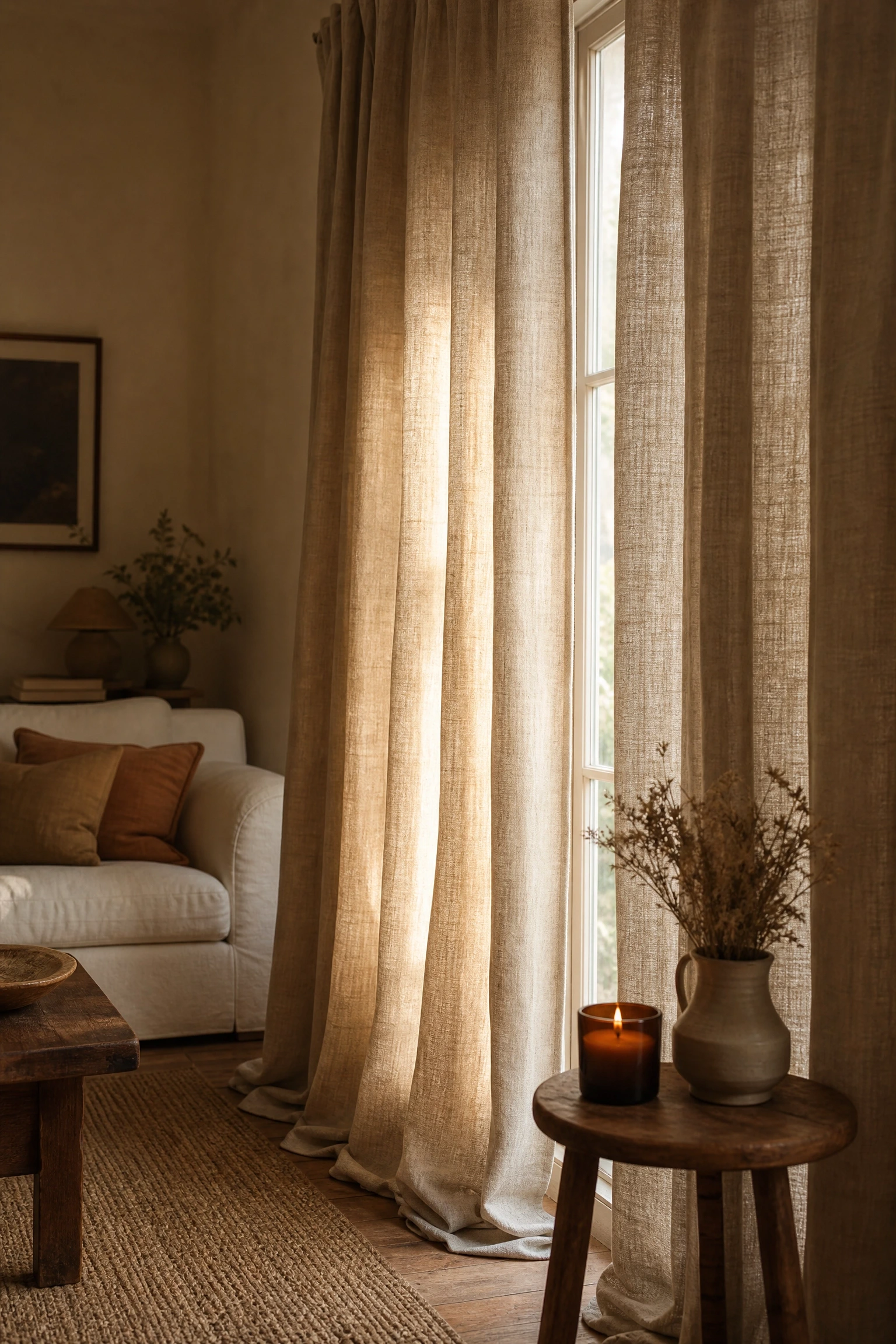
9. Introduce Linen Drapes in Heavier Autumn Weights
Most people swap their pillows and throws for autumn and then completely overlook the curtains, which is a missed opportunity. Swapping out lightweight or sheer summer curtains for heavier linen drapes in warm oatmeal, deep mushroom, or a subtle earthy stripe can dramatically change how a living room feels as the evenings get shorter and darker. Heavier drapes do more than just look seasonal: they add insulation, reduce drafts near older windows, and make rooms feel more enclosed and cozy in a way that thin curtains don’t. In interior design terms, drapes that hang from ceiling height rather than from just above the window frame also make ceilings look higher and rooms feel larger, which is a trick worth knowing regardless of the season. Linen is a particularly good choice because it has that naturally imperfect, slightly rumpled quality that feels relaxed and genuine rather than overly formal. This is a medium-to-high investment depending on the size of your windows, but quality linen curtains will last many years.
Heads Up: Linen drapes wrinkle easily. Steaming them once a week keeps them looking intentionally relaxed rather than just crumpled.
Focal Points and Styling Ideas
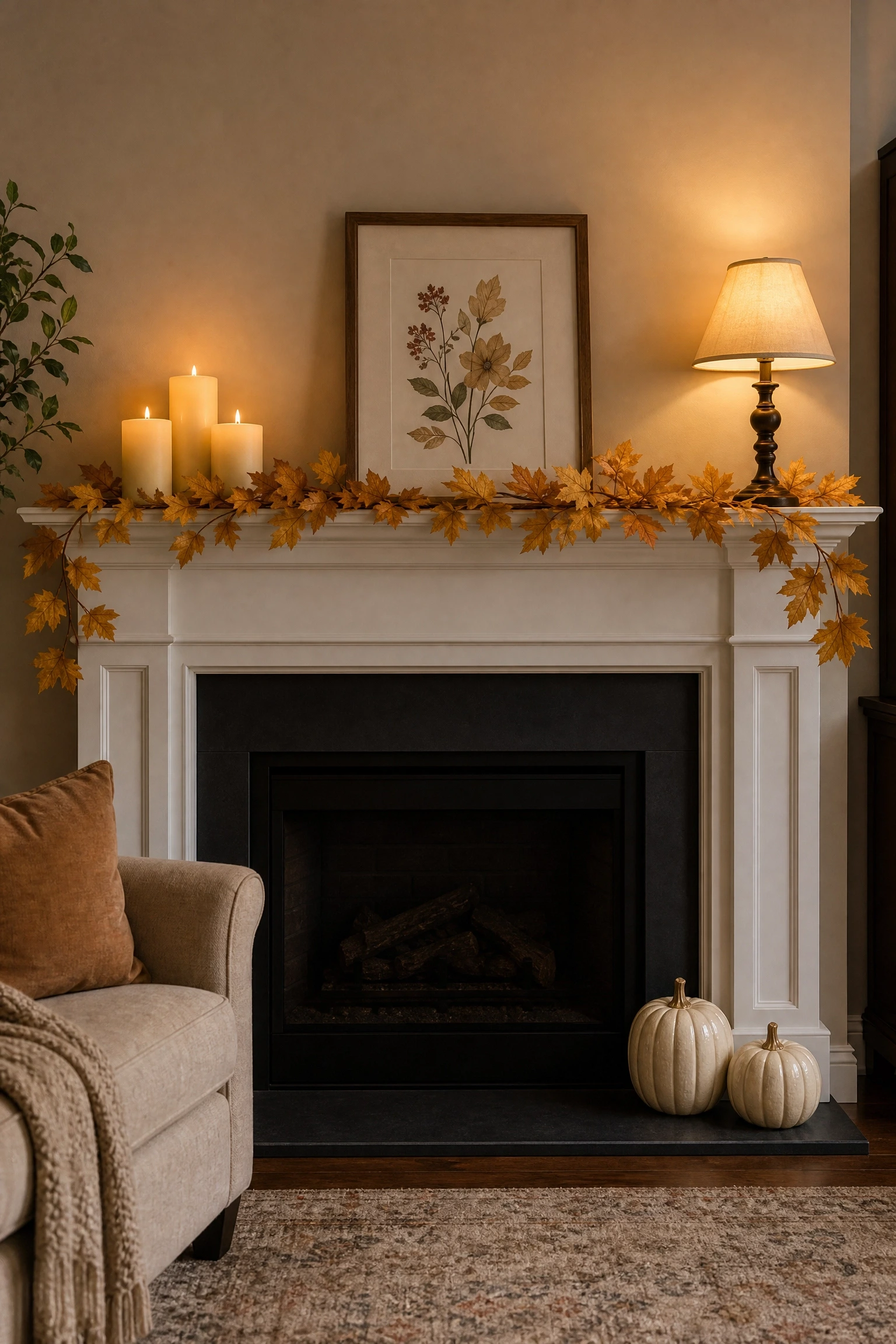
10. Style Your Mantel With Layers and Height Variation
The fireplace mantel is usually the natural focal point of a living room, and in autumn it becomes even more of a gathering spot visually. The key to a mantel arrangement that actually looks good rather than just busy is building it with clear variation in height, so you’re not lining everything up at the same level. A strong autumn mantel might start with a large foliage garland or a few faux golden oak branches laid along the length, then layer in a cluster of pillar candles in varying heights to one side, a small framed print or mirror in the centre, and a few natural objects like pinecones or small ceramic pumpkins at lower points to bring the eye back down. In practice, odd numbers of objects tend to look more natural than even ones, so groups of three or five items work better than pairs on a mantel. One honest caveat: if you’re using real candles near dried or faux foliage, keep a safe distance or use flameless candle alternatives that look just as beautiful without the risk. Budget-friendly tip: faux branches and garlands can be reused year after year, making them a genuinely worthwhile investment.
Designer Advice: Step back and squint at your mantel from across the room to check for balance. If all the visual weight is on one side, redistribute one or two pieces until it feels even.
11. Create a Coffee Table Vignette Using Natural Elements
The coffee table is one of the most-used surfaces in any living room, so it has to stay functional, but that doesn’t mean it can’t look beautiful at the same time. A well-styled autumn coffee table vignette works best when it’s anchored by a tray, ideally rattan, wood, or hammered metal, which corrals the smaller objects and keeps things from looking scattered. Inside or around the tray, layer a mix of textures and heights: a squat ceramic candle, a small stack of hardcover books with their spines facing out, a few dried botanicals like orange slices or cinnamon sticks in a shallow bowl, and perhaps one or two small gourds or mini pumpkins for the seasonal moment. The tray method is genuinely useful in everyday life too, because when someone needs to use the coffee table, you can move the whole vignette in one lift rather than clearing ten individual objects. In practice, the most successful coffee table arrangements include something living or organic, something with height, something flat, and something with a little shine.
Quick Tip: Change one element of your coffee table vignette every few weeks as autumn progresses. Swap fresh gourds for pinecones in November to keep it feeling current without a full reset.
12. Dress Up a Console or Sideboard for the Season
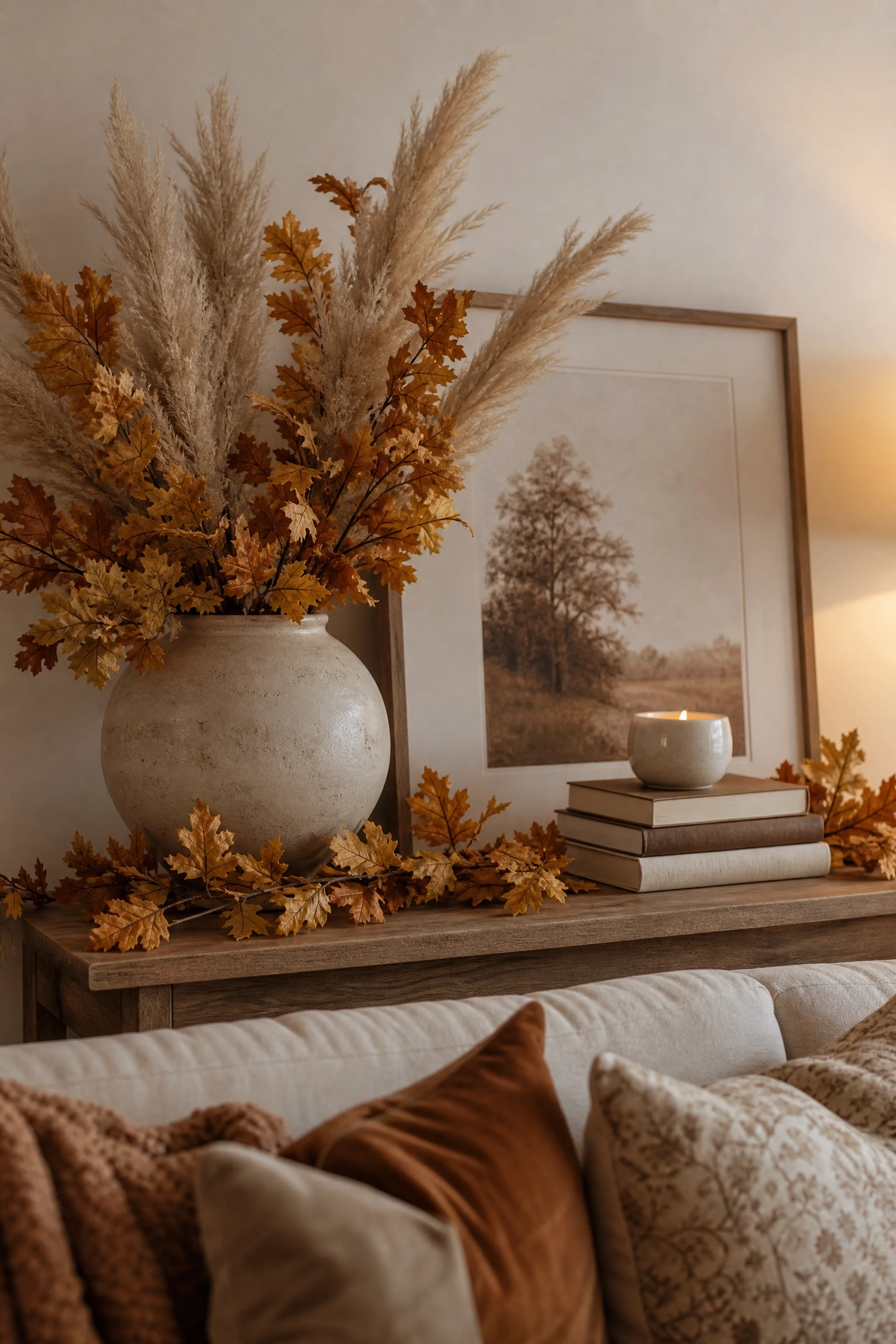
If you have a console table behind the sofa or a sideboard along a wall, this is one of the best surfaces in the house to style for autumn without it feeling cluttered. A strong autumn console arrangement might start with a large vase of dried stems, perhaps dried hydrangeas, faux oak branches, or a mix of pampas and wheat, as the main anchor point. From there, add a stack of books at one side, a small candle cluster, and a simple framed print leaning against the wall to fill the vertical space without needing to hang anything. The key thing that experienced decorators do here is vary the scale of objects: one very large piece, one or two medium pieces, and one or two small pieces creates a composition that feels considered rather than random. A garland draped loosely along the console edge adds softness and a bit of seasonal movement. This approach works across almost any style of console or sideboard, from rustic farmhouse to contemporary, because the materials do the seasonal work rather than the furniture itself.
Reality Check: If your console already has a lot of everyday items on it like keys, mail, and chargers, clear it completely before restyling it. Autumn decor layered on top of clutter just looks messy.
13. Hang a Fall-Inspired Wreath Somewhere Unexpected
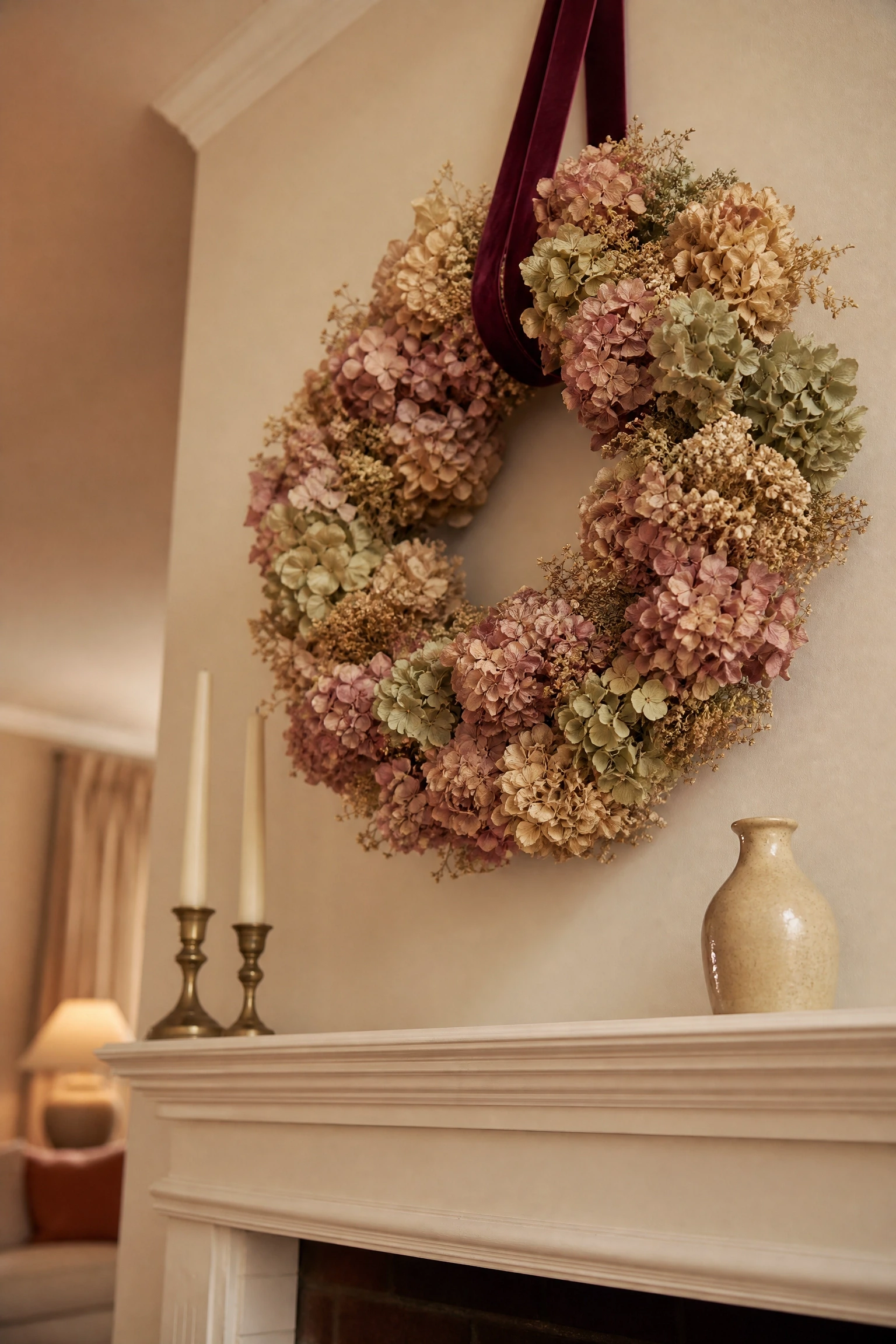
Most people think of wreaths as something that goes on the front door, and they absolutely work there, but inside the living room a wreath adds a layer of texture and interest that’s easy to overlook. Hang one above the mantel instead of or alongside a mirror, lean one against a wall on a shelf, or hang a smaller one from the handle of an interior door that opens into the living room. For autumn 2025 and 2026, dried wreaths are very much the design-forward choice, and dried hydrangea wreaths in particular have a beautiful muted palette of dusty pink, sage, and champagne that works across almost any interior color scheme. Eucalyptus wreaths are another strong option and have the added benefit of a subtle natural scent. One practical note: dried wreaths are more delicate than faux ones and will shed slightly over the course of a season, so place them somewhere they won’t be constantly brushed against. Most good dried wreaths fall in the mid-range price bracket and can easily last one to two seasons if stored carefully.
Pro Move: Hang a wreath inside using a simple piece of velvet ribbon looped over a picture hook. No nails needed, and it looks more intentional than a plain wire hook.
Lighting and Ambience Ideas
14. Layer Your Lighting Across Three Different Heights
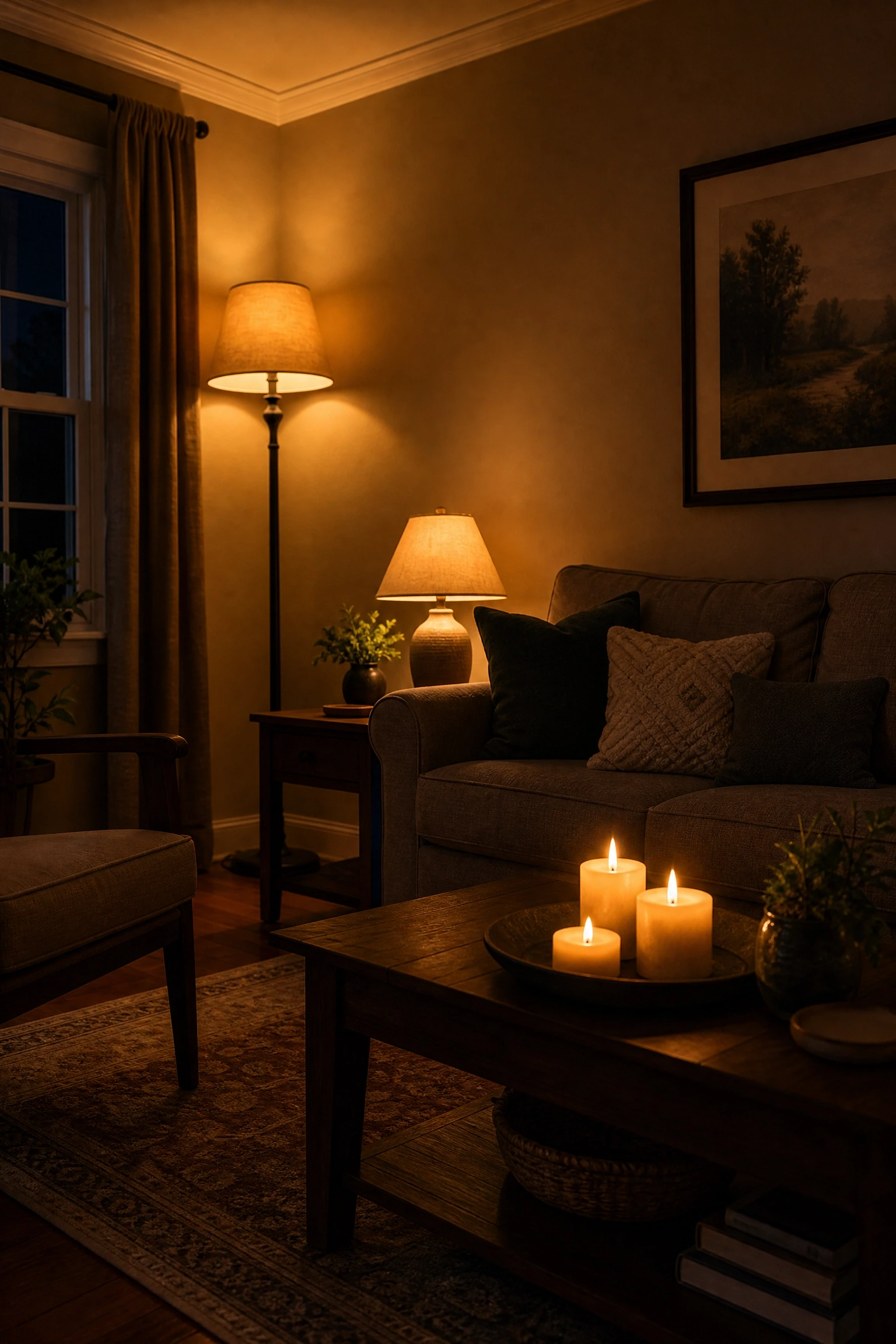
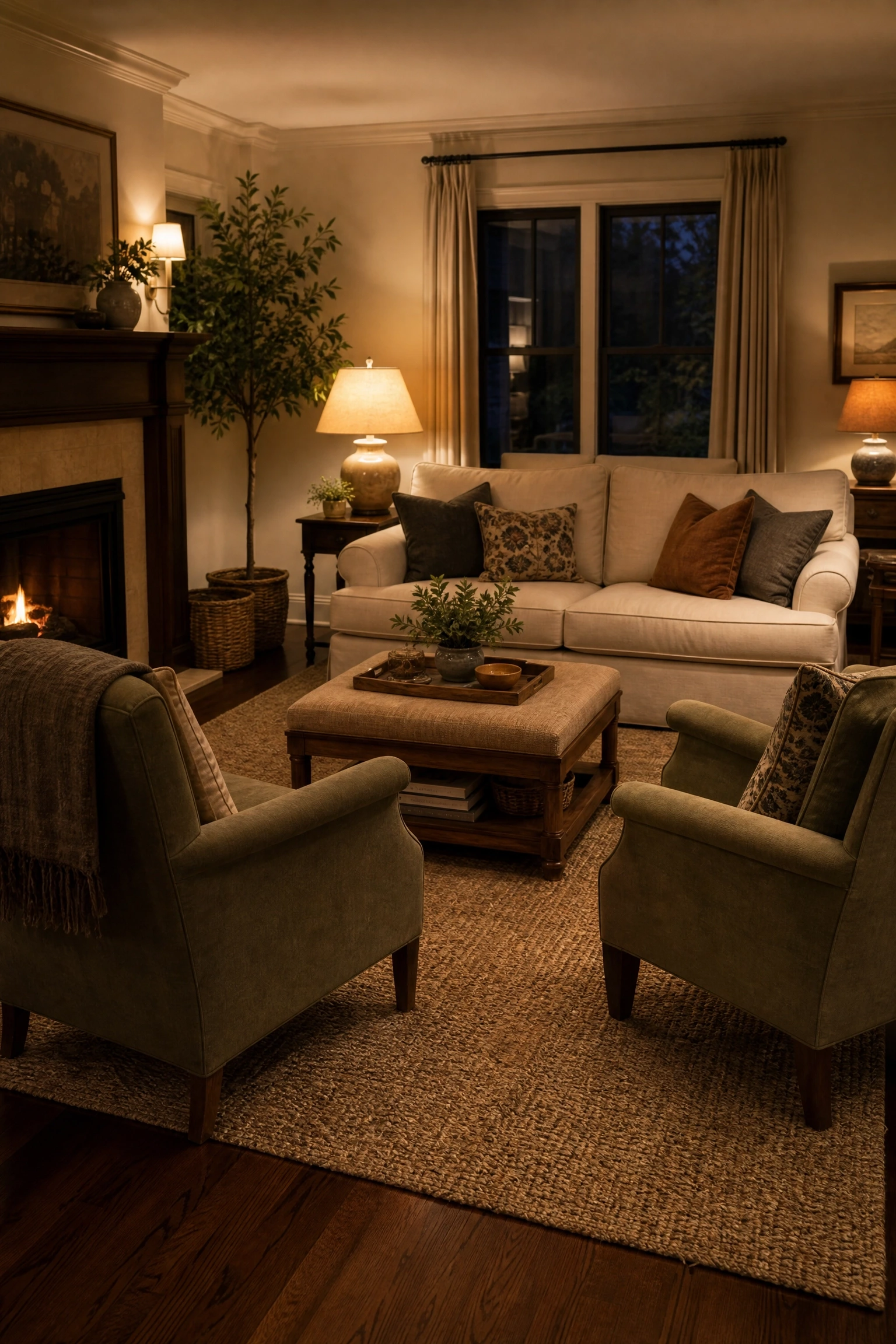
One of the most reliable pieces of advice in interior design is that rooms which feel genuinely warm and inviting almost always have lighting coming from multiple sources at different heights, rather than relying on a single overhead fixture. For autumn, this layered lighting approach becomes especially important as the evenings get longer and the quality of natural light shifts. A well-lit autumn living room might have a floor lamp in a warm amber shade in one corner, a table lamp on each side table beside the sofa, and a cluster of candles or flameless alternatives on the coffee table and mantel. Swapping out cool-toned bulbs for warm white ones, around 2700K to 3000K on the Kelvin scale, makes an enormous difference to how cozy a room feels in the evenings. In practice, dimmable lamps are worth the slightly higher initial cost because being able to lower the light level in the evenings changes the whole atmosphere of a space. This is mostly an affordable upgrade, especially if you already have the lamps and just need to swap bulbs.
Designer Advice: Turn off your overhead light one evening and see how the room looks lit only by lamps and candles. Most people are surprised by how much cozier the space immediately feels.
String lights have moved well beyond Christmas decorating and have become a genuine year-round tool for adding warmth and atmosphere to interior spaces. For autumn specifically, warm white or amber Edison-style string lights draped along a bookshelf, looped around a mantel garland, or gathered loosely inside a large glass vase create a soft, low-level glow that feels genuinely beautiful in the evenings. The acorn-shaped bulb string lights that have become popular recently look particularly right for the season and add a playful, organic touch without looking overly themed. In practice, look for string lights with a remote and a timer function, so you can set them to come on automatically as the sun goes down rather than having to hunt for the plug every evening. LED string lights are the practical choice since they produce very little heat and are much more energy-efficient than older incandescent versions. These are almost universally affordable and are one of the best value purchases for autumn atmosphere.
Quick Tip: Fill a large glass hurricane vase with string lights and a few pinecones or dried orange slices for a centerpiece that looks like it took effort but takes about two minutes to put together.
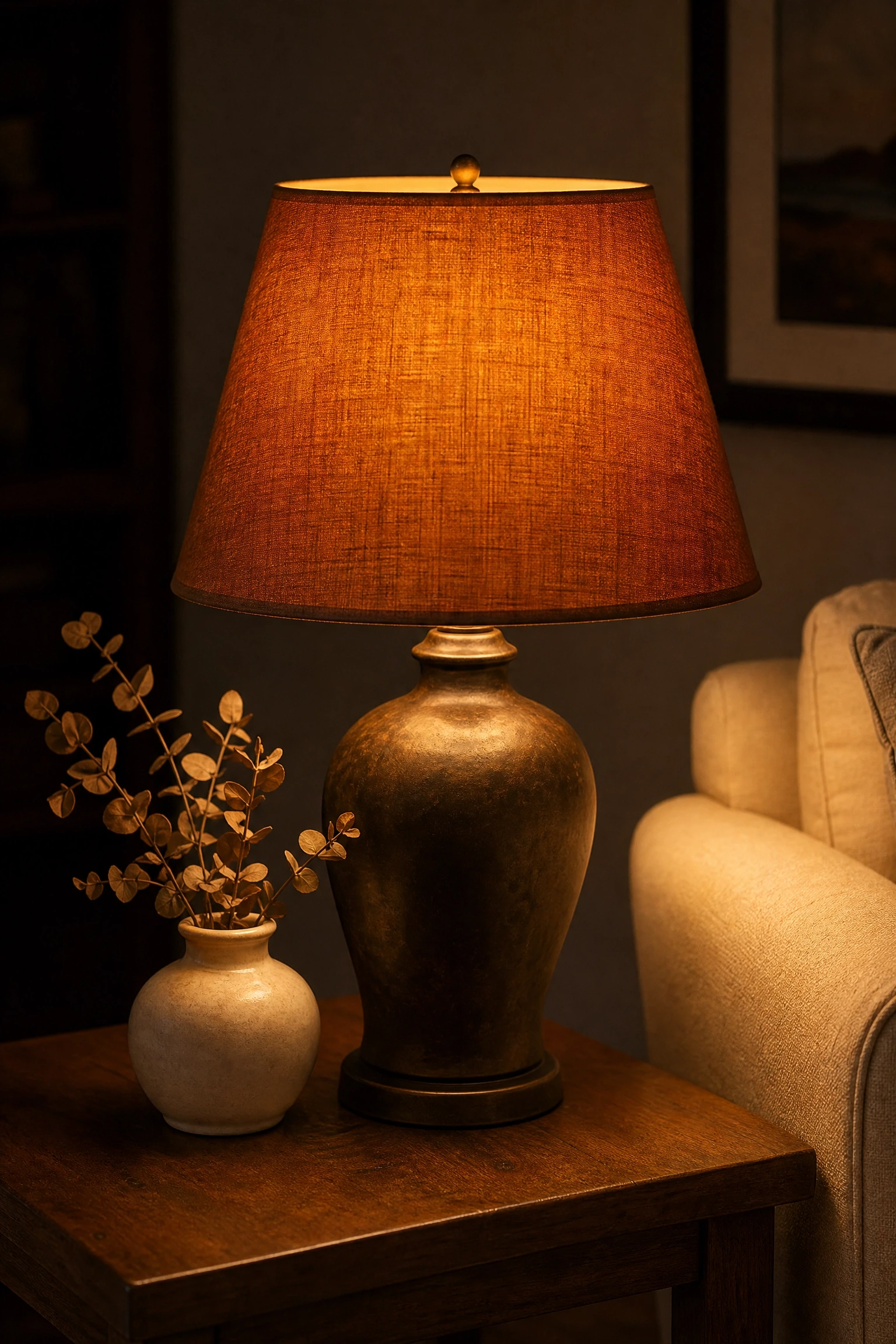
This is a decorating trick that not enough people use, and it makes a remarkable difference. Swapping out a white or off-white lampshade for one in a warm amber, rust, mushroom, or deep ochre tone changes the color of the light cast by the lamp itself, giving the whole room a warmer, more golden quality without changing the bulb at all. In a living room with multiple table lamps or floor lamps, even changing just one shade can shift the mood noticeably. From an interior design standpoint, a darker or warmer-toned shade creates what designers call a pool of light, a contained, intimate glow rather than a broad, flat illumination. In practice, this works especially well in the evenings and is worth noting that it will make the corner of the room around the lamp look slightly dimmer in terms of ambient light, which in autumn is usually exactly what you want. Lampshades are generally affordable and can be changed back easily when spring rolls around.
Heads Up: Make sure any new lampshade fits your existing base correctly before buying. Measure the base width, top ring, and height rather than just eyeballing it.
Modern and Contemporary Twist Ideas
17. Try Minimalist Pumpkin Arrangements in Unexpected Materials
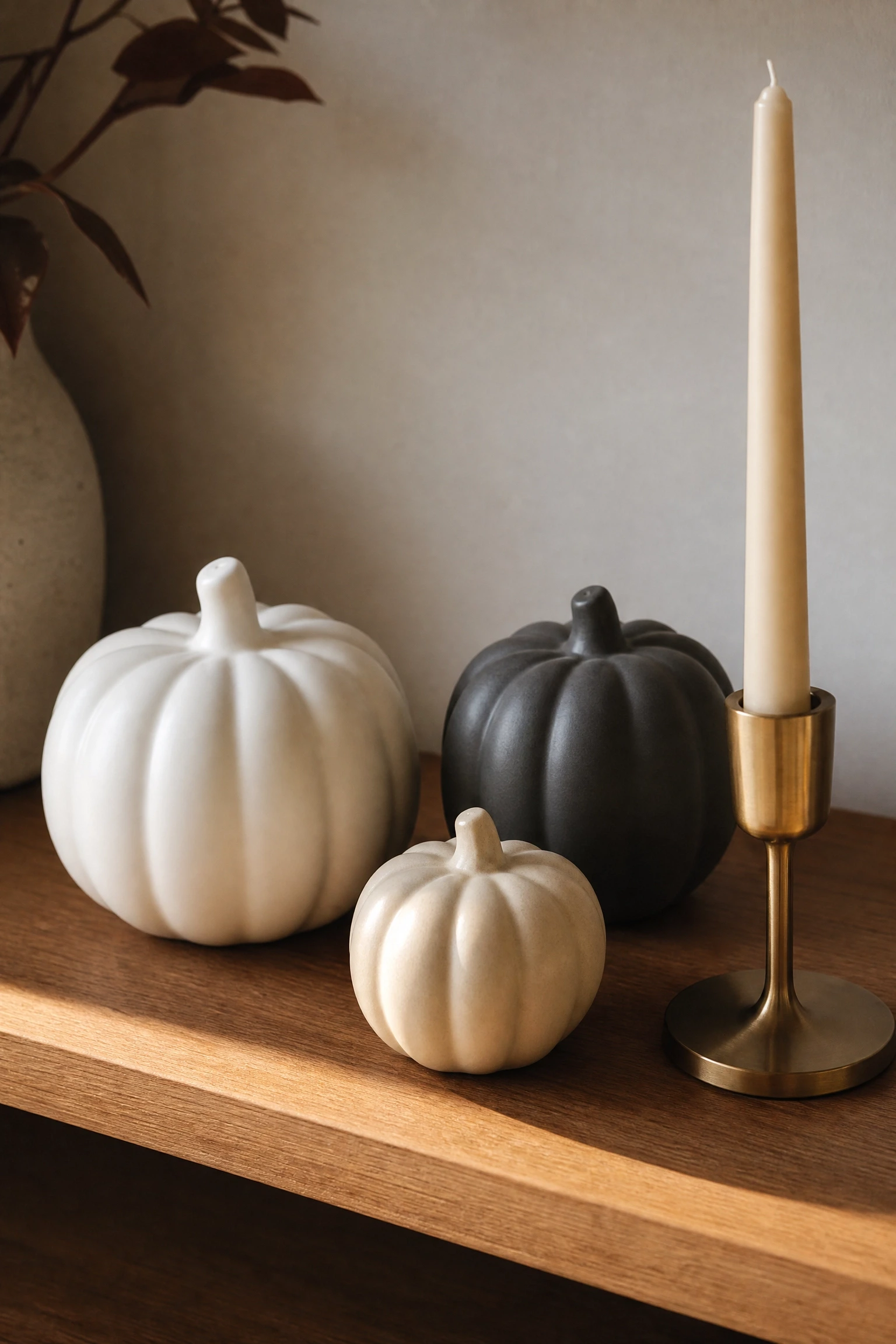
The pumpkin is such a fixture of autumn decorating that it can easily feel predictable, but there are ways to use them that feel genuinely contemporary rather than cliched. One approach that works really well in modern or minimalist living rooms is going for pumpkins in unexpected finishes: smooth white ceramic pumpkins, matte black stone pumpkins, or concrete-effect pumpkins all bring the seasonal shape without the traditional orange harvest feel. Arrange three in varying sizes on a side table or shelf, mixing them with a simple tapered candle and a small plant or dried stem. Another contemporary approach is grouping a cluster of small real white pumpkins, which are widely available in autumn, in a large shallow wooden bowl on the coffee table. The white surface reads as elegant rather than rustic and pairs beautifully with a neutral or sage-toned room. Ceramic pumpkins in particular are worth the investment because they last indefinitely and can be used year after year.
Pro Move: Group pumpkins in odd numbers and vary the height of surrounding objects. Three small pumpkins beside a tall taper candle and a short votive makes the arrangement feel like it was styled rather than just placed.
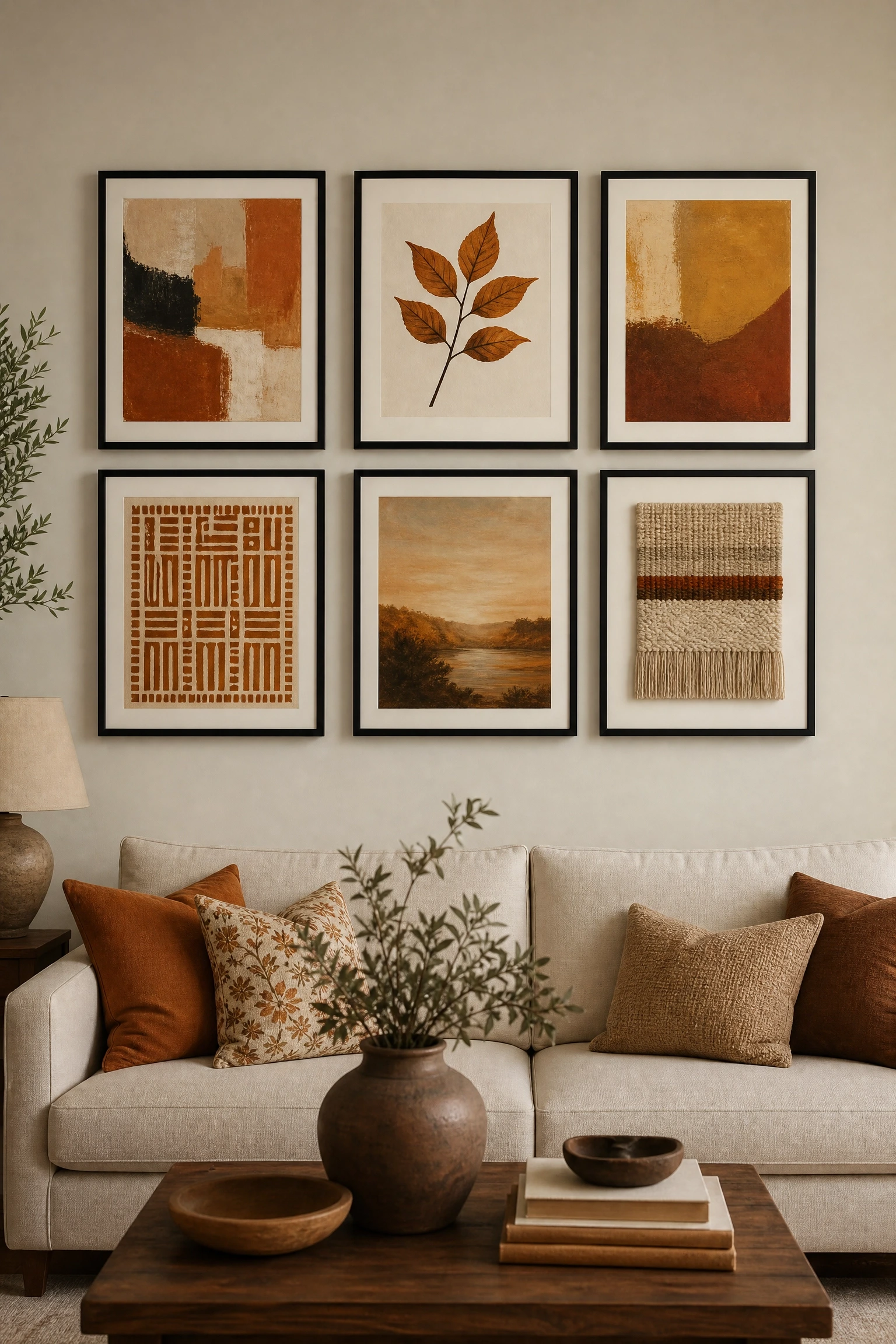
Gallery walls are having a moment in contemporary interiors right now, and for autumn the approach has shifted away from random collections of photos and prints toward more intentional, color-connected groupings. An autumn-toned gallery wall in a living room might bring together abstract art in burnt orange and ochre, a simple botanical print of fall foliage, and perhaps a framed piece of textile or block-printed paper for texture. Keeping the frame style consistent throughout, matte black or walnut wood are both strong choices right now, gives the grouping a cohesive look even when the prints themselves are quite different from each other. The key interior design principle at work here is visual connection: when colors or tones repeat across multiple pieces in the grouping, the eye reads them as a collection rather than a random selection. In practice, laying your gallery wall arrangement out on the floor before hanging anything is strongly recommended, since it’s much easier to adjust spacing and groupings before you start making holes. This ranges from affordable to investment-level depending on the art you choose, but even printed digital art in quality frames looks excellent.
Designer Advice: Use paper templates cut to the size of each frame and tape them to the wall first. Adjust until you’re happy with the arrangement, then nail through the templates. It saves a lot of unnecessary holes.
19. Add Bronze or Walnut Sculptural Decor as a Statement Piece
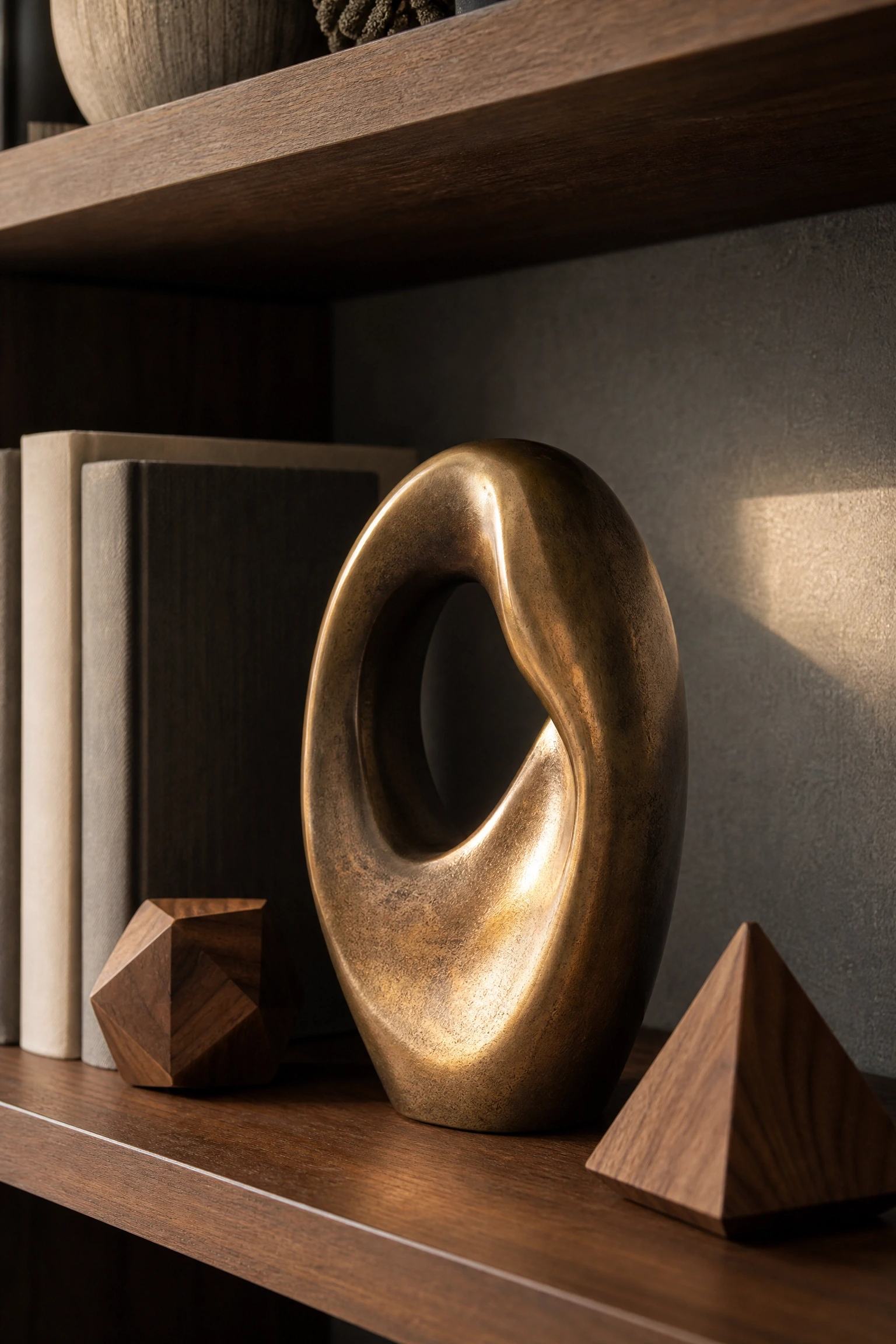
One of the trends that has defined luxury autumn interiors recently is the move toward sculptural decorative objects in warm, natural finishes rather than purely functional or representational pieces. A bronze-toned abstract sculpture on a bookshelf, a walnut-finished geometric object on the coffee table, or a set of hand-thrown stoneware vessels grouped on a sideboard all bring a level of visual interest that printed or painted decor doesn’t quite match. The appeal of sculptural pieces is that they read differently from different angles and under different light conditions, which makes them particularly valuable in autumn when the quality of light in the room shifts throughout the day. From a design standpoint, sculptural objects have what designers call visual weight, and placing a heavier, darker object on one side of a shelf and balancing it with two or three lighter pieces on the other side creates a composition that feels deliberate and refined. This is generally a mid-range to investment-level purchase, but a single well-chosen sculptural piece can anchor a room for years.
Reality Check: One good sculptural piece does more for a room than five mediocre ones. Spend the budget on one item you genuinely love rather than spreading it across several that are just fine.
20. Rearrange Furniture for a Cozier, More Inward-Facing Layout
This is arguably the most impactful thing you can do for an autumn living room, and it costs absolutely nothing. In summer, furniture arrangements often open up toward windows and outdoor views to take advantage of natural light and the connection to outside. But in autumn, that logic flips: the instinct is to turn inward, toward the fireplace if you have one, toward the center of the room, toward each other. Pulling seating slightly closer together, angling chairs to face each other rather than both facing the TV, or adding a low ottoman to the center of the seating group to encourage people to settle and stay all create that sense of cozy containment that autumn evenings call for. Interior designers call this conversation grouping, and in practice it makes rooms feel more intimate and welcoming in a way that no amount of decorative accessories fully replicates. One practical note: if you rent or have a smaller living room, even a small shift in sofa angle can change the feel of a space significantly without creating a cramped layout.
Quick Tip: Move your sofa just six inches closer to the coffee table than usual. It sounds minor but it makes the seating area feel noticeably more enclosed and cozy, especially in the evenings.
21. Use Block Print Textiles for Pattern and Personality
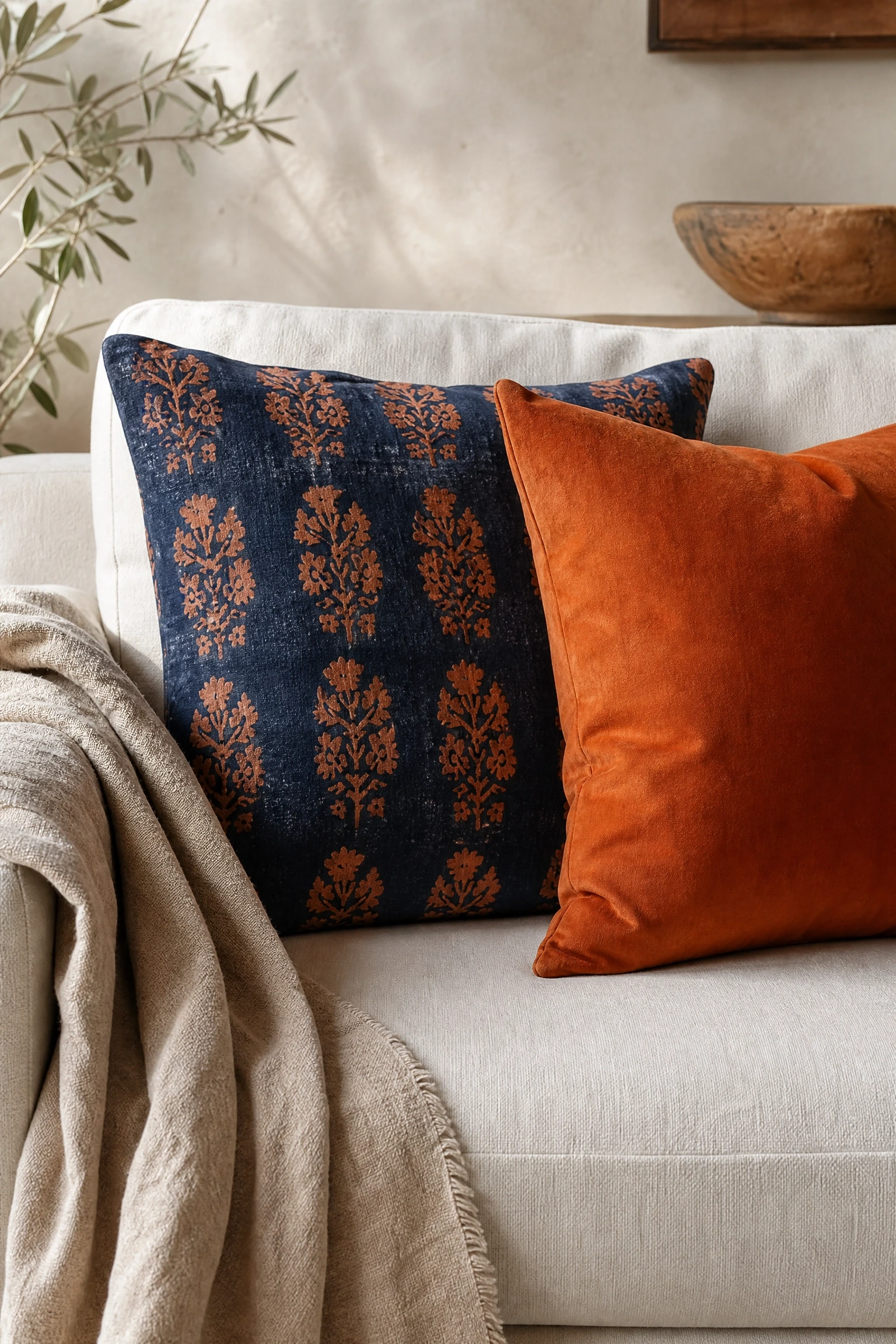
Block prints are having a significant moment in interiors right now, with search interest growing sharply as people look for ways to add handcrafted, artisanal character to spaces that might otherwise feel a bit polished or generic. For autumn, block-printed textiles in earthy tones, think deep indigo with rust, or warm cream with dark brown, feel genuinely seasonal while also being stylistically interesting in a way that plain solid textiles aren’t. In a living room, this might look like a block-printed cotton throw draped over the sofa, block-print cushion covers mixed with plain velvet ones, or a block-printed textile runner across the top of a console. The slightly irregular, handmade quality of block prints is exactly what gives them their appeal, and keep in mind that no two pieces are quite identical, which adds a genuinely unique element to your space. Most block-print textiles are made from natural cotton or linen and are generally in the affordable to mid-range price bracket, particularly when sourced from artisan markets or smaller independent shops.
Pro Move: Mix a block-print cushion with a plain velvet cushion in one of the print’s accent colors. The combination looks both collected and considered.
22. Introduce Dried Botanicals as a Low-Maintenance Natural Element
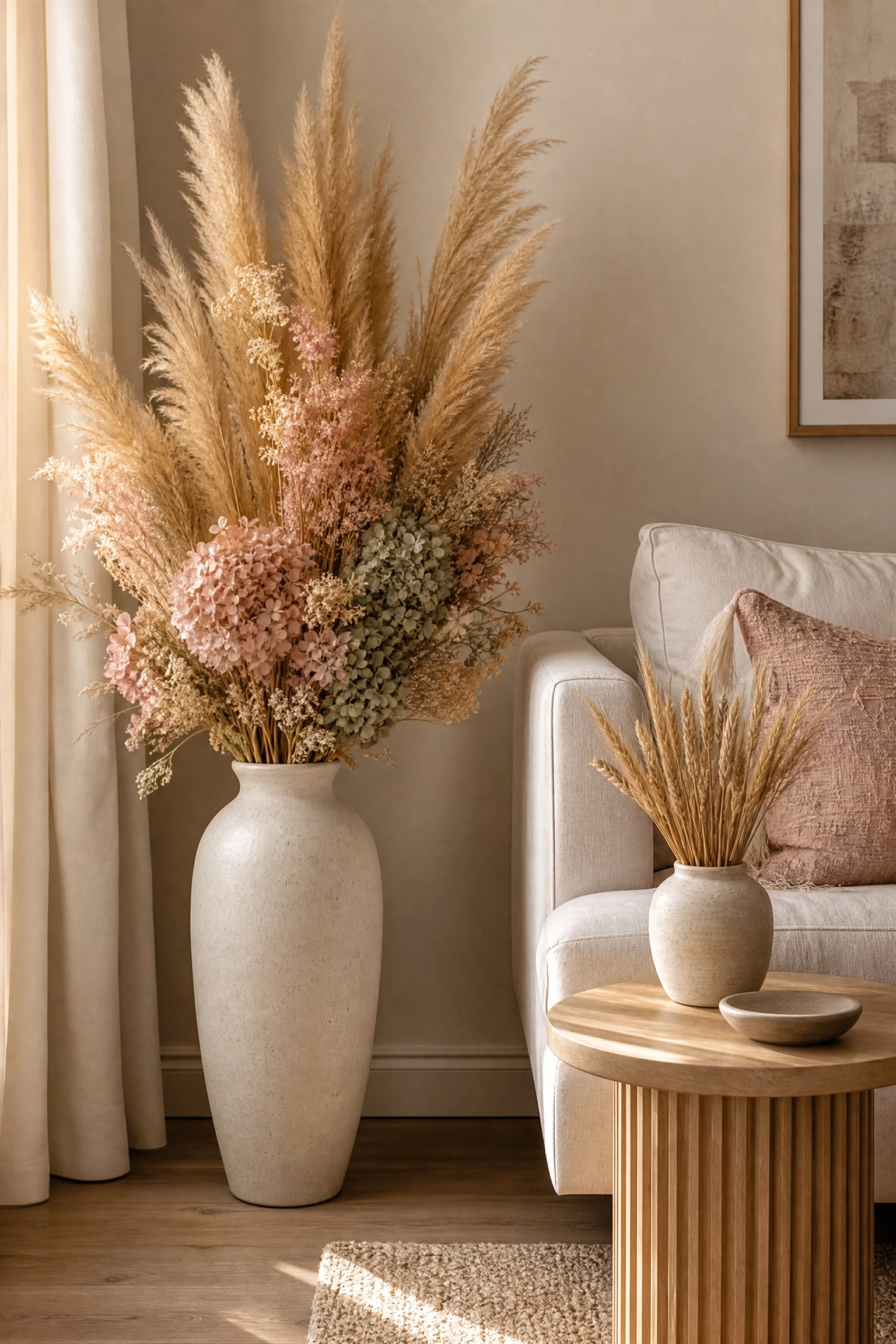
Faux florals have gotten significantly more realistic in recent years, but one thing the faux world still hasn’t quite matched is the particular beauty and character of genuinely dried botanicals. Dried hydrangeas, wheat stalks, pampas grass, lunaria, and dried orange slices all bring color, texture, and an organic quality to a living room that no synthetic version quite replicates. In practice, dried botanicals are incredibly low-maintenance once arranged: they don’t need water, they don’t drop petals, and they last anywhere from a season to a year depending on the variety and where they’re displayed. For an autumn living room, a tall vase of dried pampas near the fireplace, a small arrangement of dried hydrangeas on the coffee table, and a few sprigs of eucalyptus on the bookshelf create a layered botanical presence that reads as genuinely considered rather than just seasonal. One honest caveat: dried botanicals can be brittle and do shed slightly, so keep them away from high-traffic areas where they’ll constantly be brushed against. This is generally an affordable category with a lot of variety available.
Heads Up: Keep dried botanicals out of direct sunlight or they’ll fade more quickly than you’d like. A spot that gets indirect light is ideal and will help them hold their color longer.
23. Layer a Simmer Pot or Seasonal Scent to Complete the Room
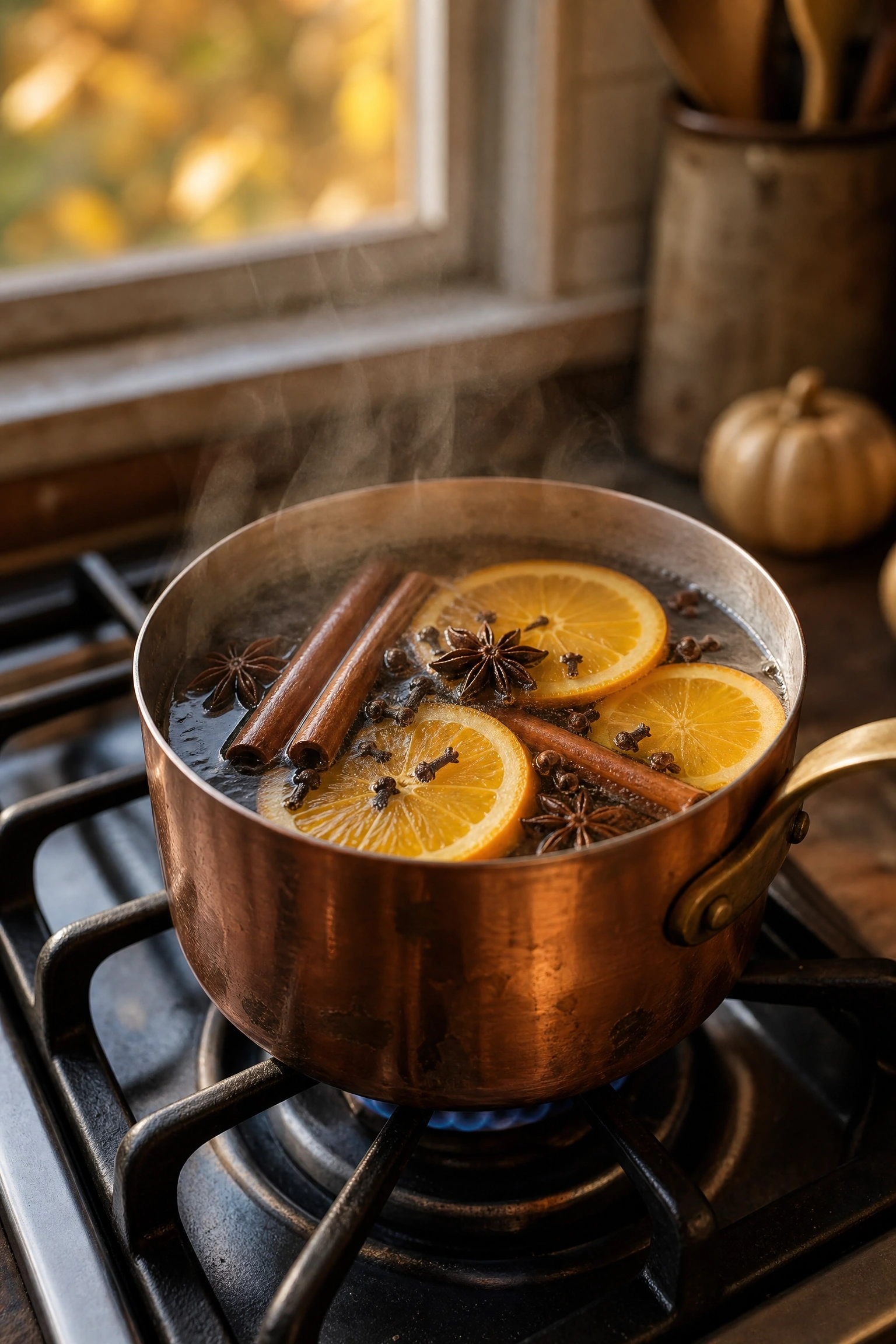
Scent is genuinely one of the most powerful and most overlooked tools in home decorating. A room can look beautifully styled for autumn, but the moment it smells like warm cinnamon, cloves, and orange peel, the whole experience shifts into something that feels real and deeply seasonal. A stovetop simmer pot, which is simply a pot of water simmering on low heat with dried orange slices, cinnamon sticks, cloves, star anise, and a splash of vanilla, is one of the most natural and genuinely impressive ways to scent a living room without synthetic sprays or heavily fragranced candles. The scent circulates gently through the space and lingers for hours after you turn off the heat. For a more passive approach, a candle in a fall scent like smoked wood, amber, or fig, or a reed diffuser with a spiced or woody profile, will do much of the same work without any prep. It’s worth mentioning that heavily fragranced synthetic options can be overwhelming in smaller living rooms, so a more natural approach is usually the better choice for a subtler result. This is one of the most affordable ideas on the list and one that delivers an outsized return.
Designer Advice: Make your simmer pot on the stovetop about an hour before guests arrive. The scent will settle into the room naturally rather than hitting people at the door.
Conclusion
Decorating your living room for autumn doesn’t have to be complicated or expensive, and it certainly doesn’t have to mean covering every surface in orange pumpkins and leaf garlands. The ideas here are about creating a space that actually feels like autumn: warm, layered, a little darker, a little cozier, and genuinely inviting. Some of the biggest shifts, like rearranging your furniture, swapping a lampshade, or starting a simmer pot on the stove, cost very little and make an outsized difference to how the room feels from the moment you walk in.
The most important thing is to start with what you have. Look at your existing space and figure out where you can add warmth through texture, where you can deepen the palette through accessories, and where a single well-chosen statement piece might anchor the whole seasonal look. You don’t need all 23 ideas. Pick the three or four that resonate most with your style and your space, and let those do the work. Done well, a few intentional autumn changes will make your living room one of your favorite places to be all season long.
Frequently Asked Questions
When is the best time to start decorating for autumn?
Most decorators start transitioning to fall decor somewhere between late August and mid-September, though it really comes down to personal preference. If you’re someone who loves the season, there’s no reason to wait for the calendar to officially hit autumn. The general rule of thumb is to start when you feel ready and to update pieces gradually through October and into November so the space feels current through the whole season rather than peaked too early.
What are the key autumn colors for living rooms right now?
The palette that’s most on-trend right now leans toward earthy neutrals rather than the traditional bright orange and red harvest colors. Terracotta, warm rust, muted sage green, caramel, burgundy, and deep ochre are all strong choices. That said, the best autumn palette is always the one that actually works with your existing furniture and walls, so treat trends as inspiration rather than rules.
How do I decorate for autumn on a tight budget?
Focus on textiles first since they deliver the most visual impact for the least money. Swapping cushion covers and adding a throw costs very little and changes the feel of a room immediately. Beyond that, natural elements like dried branches, pinecones, and real pumpkins from a farm market are often inexpensive or even free. Rearranging your furniture and swapping to warmer-toned bulbs are both completely free and surprisingly effective.
How do I keep autumn decor looking fresh through the whole season rather than peaking in early October?
The key is to decorate in layers and rotate pieces gradually. Start with softer, more general autumn touches in September, like throws and candles. Add more specific seasonal elements in October, like pumpkins and foliage accents. Then as November approaches, swap the pumpkins for pinecones and swap orange tones for deeper burgundy and plum to carry the palette through to the start of the holiday season without a complete reset.
Are faux botanicals worth buying or should I stick to real seasonal elements?
Both have a genuine place in autumn decorating. Real elements, like fresh pumpkins, real branches, and actual dried florals, have a quality and authenticity that faux pieces still struggle to match. But high-quality faux botanicals are a genuinely worthwhile investment for pieces you want to reuse year after year, like garlands, wreaths, and leafy stems, because they hold their color and shape indefinitely if stored correctly. A mix of both real and faux is usually the most practical approach.
What’s the easiest single change I can make to my living room for autumn?
Honestly, swapping to warm-toned bulbs and turning off the overhead light in the evenings. It costs almost nothing, takes five minutes, and makes a bigger difference to how cozy a room feels than most decorative changes. If you want a slightly bigger impact, add a single chunky knit throw in an autumn tone over your sofa armrest. Between those two things, your living room will feel noticeably more seasonal without any major effort or expense.