Summer bedroom decor is one of those things that sounds simple until you realize that most articles about it address only half the problem. They tell you what looks like summer, which is mostly a coastal-inspired mood board of navy stripes and seashells, but they do not tell you what makes a bedroom genuinely feel like summer. And for most people sleeping through a warm night with a duvet that belongs to a different season, the feeling is the part that actually matters.
Every idea in this article addresses both dimensions at once: how the change makes the bedroom feel physically different during the warmer months and what it looks like when you have done it. The two things are more connected than most decor articles acknowledge. A bedroom that feels stuffy and heavy at night looks heavy during the day, and a bedroom that looks airy and light in the afternoon is almost always a bedroom that feels easier to sleep in when the temperature rises. Work on both together and the summer bedroom you end up with will be one you genuinely want to be in, not just one that photographs well.
1. Switch to Linen Bedding: Feels Cooler, Looks Effortlessly Undone
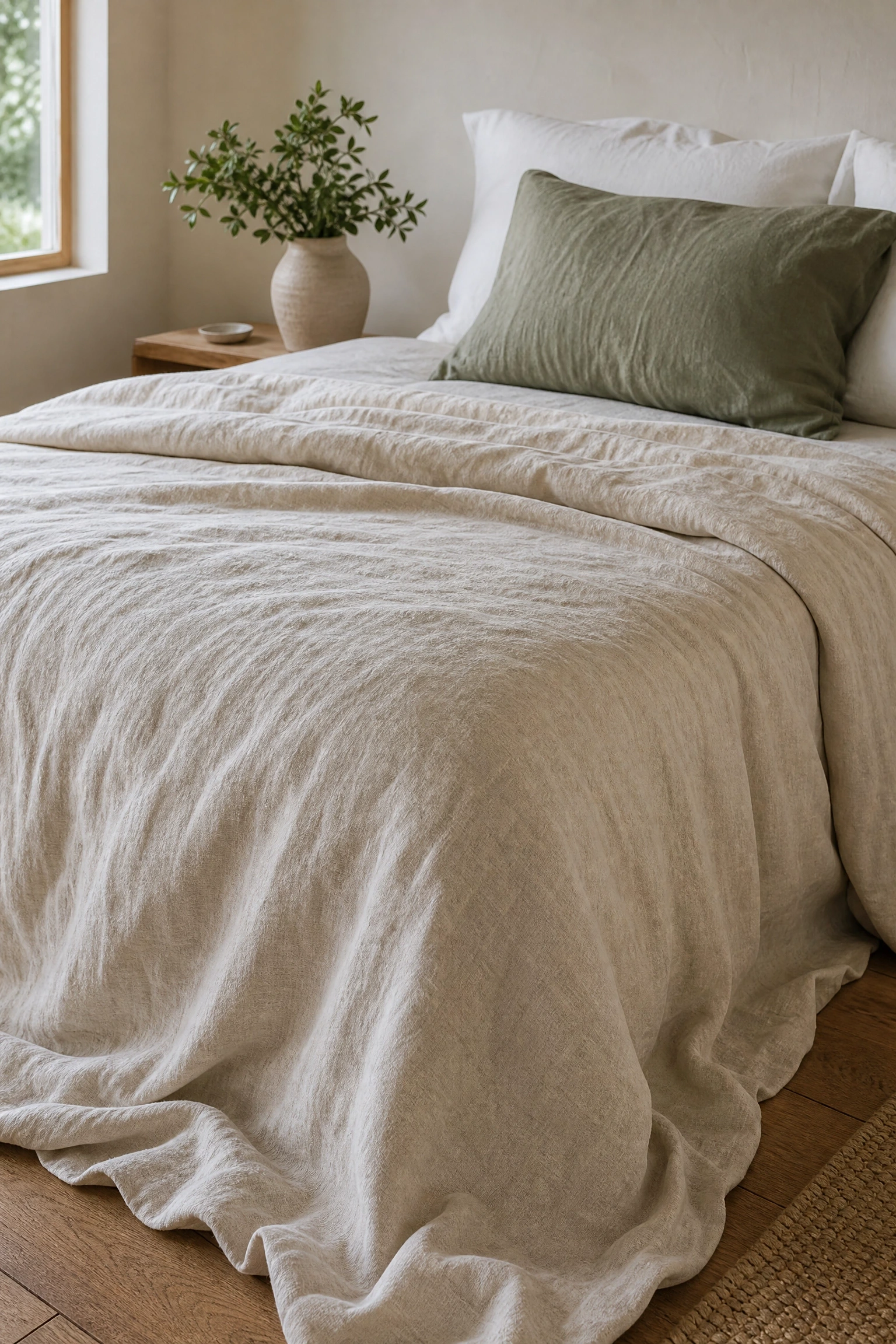
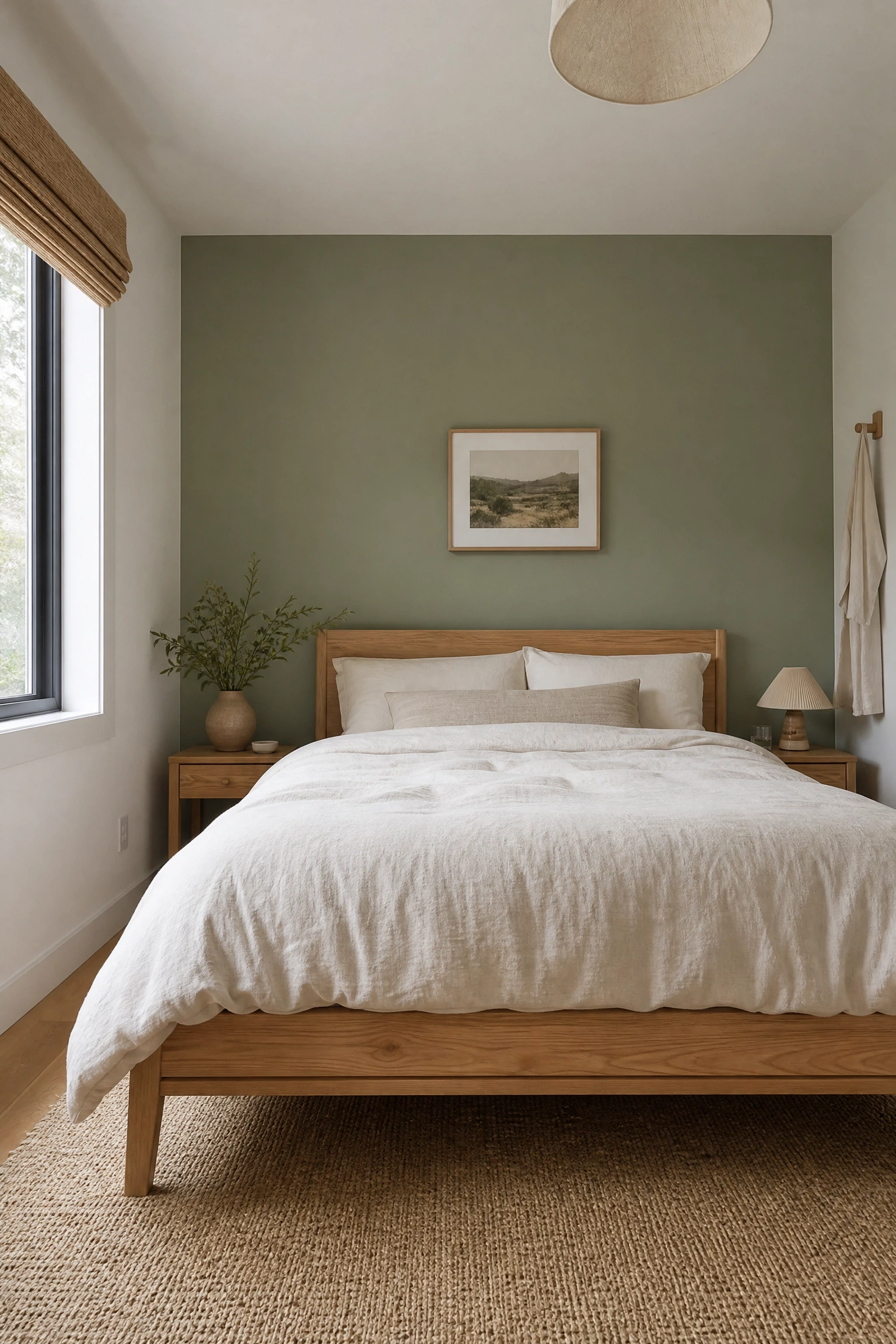
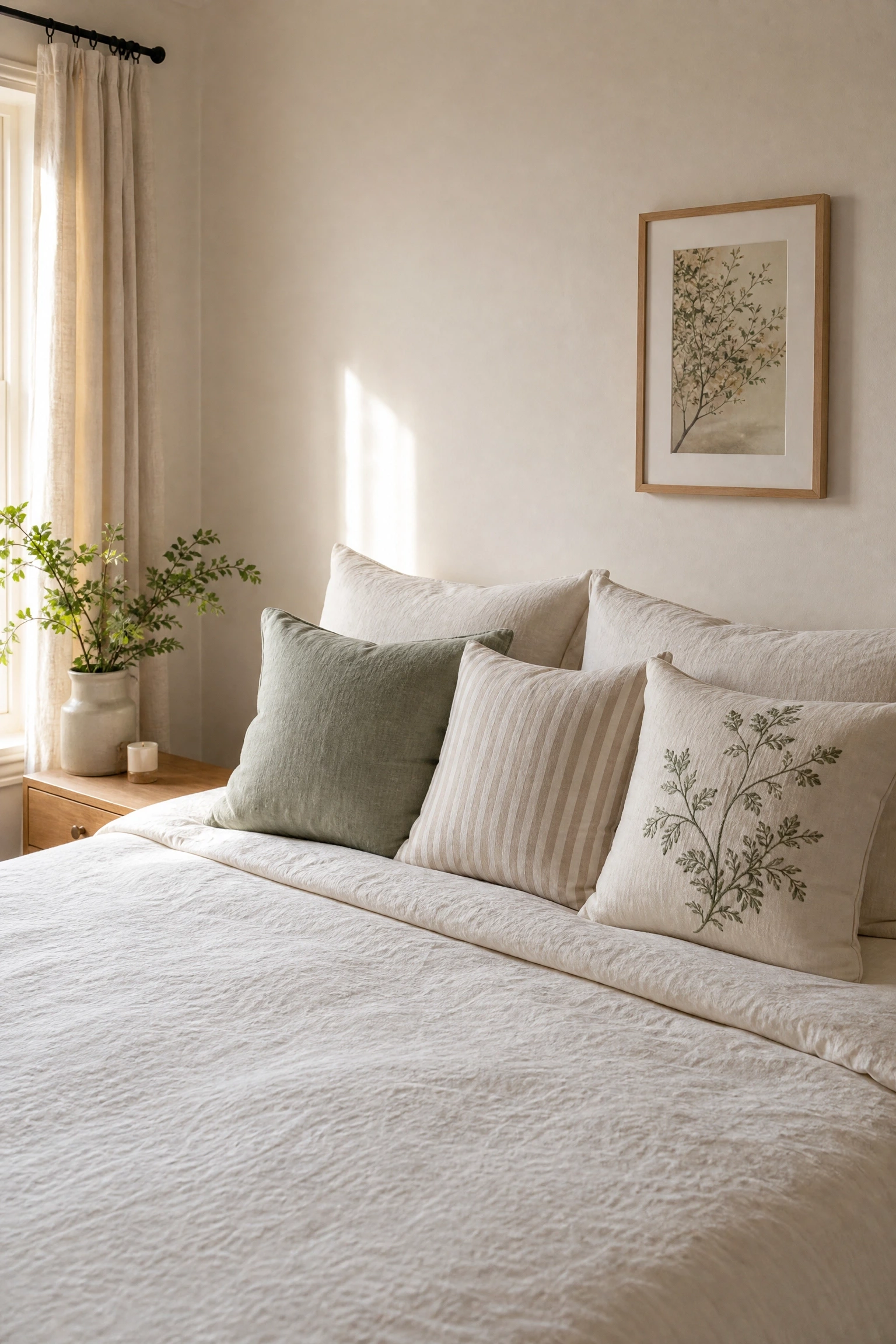
Linen is the single most impactful material swap available for a summer bedroom because it addresses the physical discomfort of sleeping hot at the same time that it introduces the most characteristic visual quality of a well-styled summer room. The natural flax fibre of linen is highly breathable, wicking moisture away from the body and releasing heat rather than trapping it the way synthetic and blended fabrics do. It also has a lower thread count than cotton, which means air moves through the weave more freely during the night. The look of linen bedding is equally distinctive: the slight natural crumple of the fabric, which increases with washing rather than diminishing, creates a lived-in, relaxed aesthetic that no pressed duvet cover can replicate. Linen bedding in warm white, natural oatmeal, dusty sage, or washed clay makes a bed look as though it has been slept in by someone who has nowhere urgent to be, which is exactly the atmosphere a summer bedroom should create. The honest note on linen is that it is more expensive than cotton at the same quality level, and it requires either air drying or low-heat tumble drying to maintain the fibre quality over time.
Pro Move: Buy linen bedding in a size larger than your mattress needs. The extra fabric creates the draped, pooling effect at the foot of the bed that makes linen look genuinely luxurious rather than just crumpled.
2. Ditch the Heavy Duvet: Feels Lighter, Looks More Deliberate
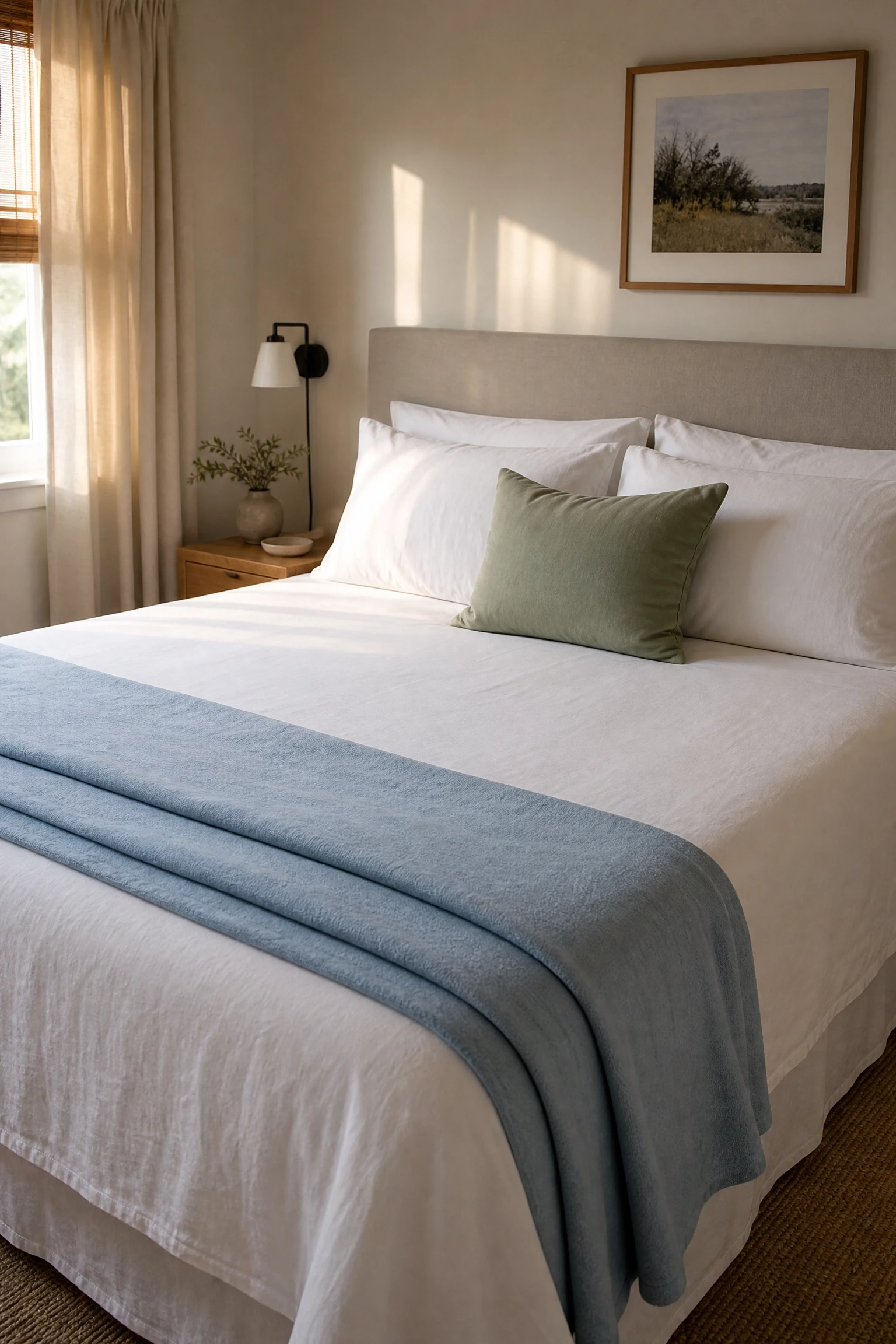
The heavy winter duvet is the single biggest physical obstacle to sleeping comfortably in a warm bedroom, and it is also the element most likely to make the bed look visually dense and heavy regardless of what is around it. Replacing it for summer with a lightweight summer duvet rated at 3 to 4.5 tog, or simply using a flat top sheet layered with a light cotton or linen throw at the foot of the bed, immediately changes how the room feels and how the bed looks. A bed made with a flat sheet and a light folded throw at the foot has a hotel-like quality that a bed with a puffy duvet rarely achieves regardless of the duvet cover. It also means the bed looks lower and more horizontal, which is a visual quality that makes a room feel calmer and more spacious. The standard winter duvet, once packed away, also frees up significant storage space under the bed or in the wardrobe, which is an indirect benefit that makes the whole bedroom feel less cluttered.
Quick Tip: Store the winter duvet in a vacuum storage bag under the bed rather than in the wardrobe. The vacuum bag compresses it to a fraction of its usual size, keeps it dust-free over the summer months, and keeps the wardrobe accessible for the lighter summer clothes that need more space during this season.
3. Bring in a Woven Natural Fibre Rug: Feels Grounded, Looks Summery
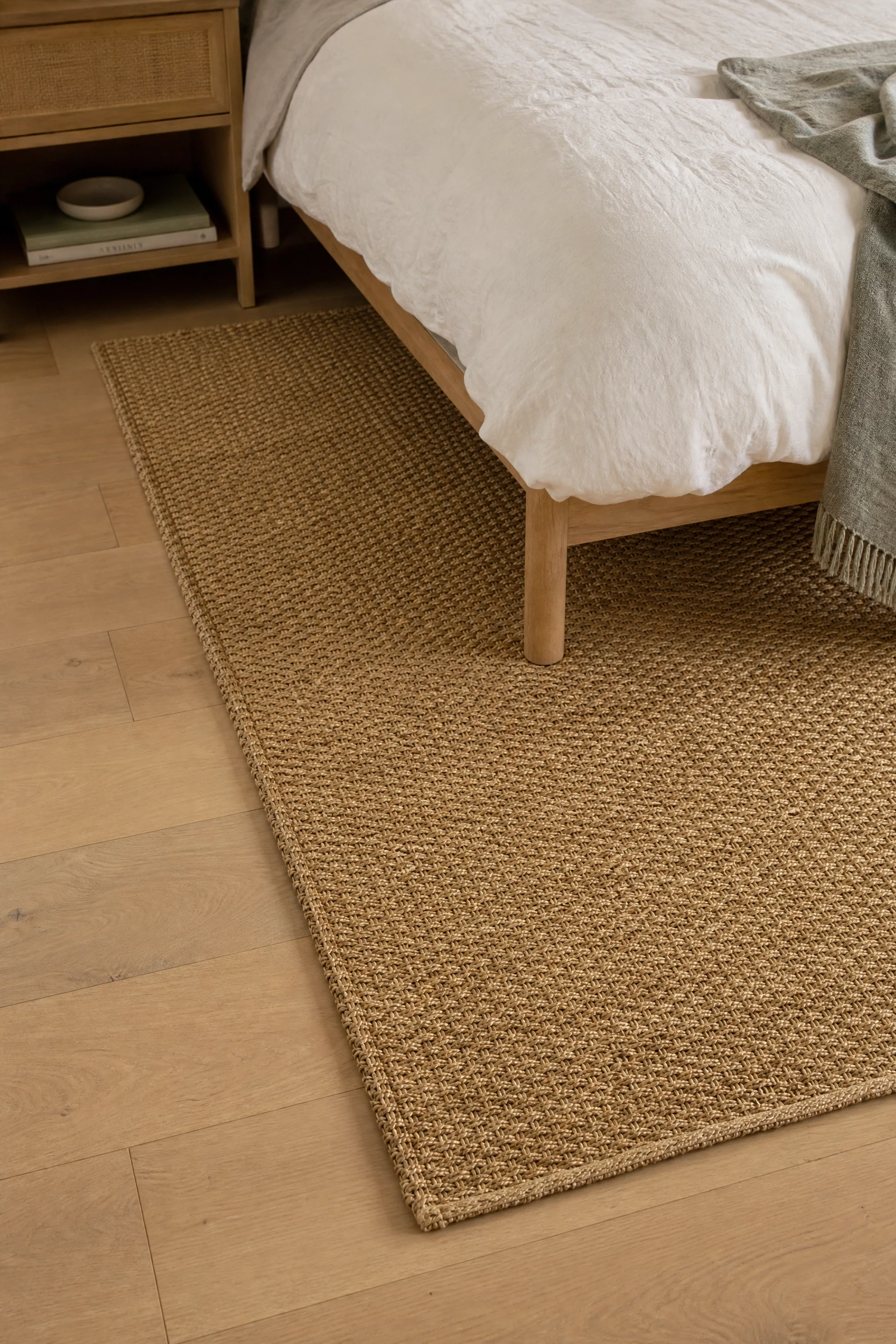
A thick shaggy or plush wool rug in a bedroom is a significant heat trap: the dense pile holds warmth in the room and underfoot, which is a quality that feels wonderful in November and considerably less wonderful in July. Replacing it for summer with a flat weave in jute, sisal, seagrass, or cotton creates a floor surface that feels cooler underfoot, allows air to move more freely at floor level, and introduces the natural material texture that is one of the most consistent visual signatures of well-executed summer interior design. A flat-weave jute rug in a natural honey tone makes a bedroom floor feel immediately more like a beach house and less like a living room in any season. A woven cotton kilim in soft stripes of sage, cream, and terracotta introduces colour and pattern at floor level without the visual weight of a thick pile. The practical note is that natural fibre rugs like jute and sisal are less forgiving underfoot than wool and not suitable for homes where very soft floor surfaces are needed for comfort or for households with young children who spend time on the floor.
Designer Advice: Roll the winter rug, store it wrapped in brown paper or a rug storage bag, and bring out the summer rug as a deliberate seasonal swap rather than layering one rug over another. Two rugs in the same space create visual noise and trap more heat than a single flat-weave option on its own.
4. Swap Heavy Curtains for Sheer Linen Panels: Feels Airier, Looks Luminous
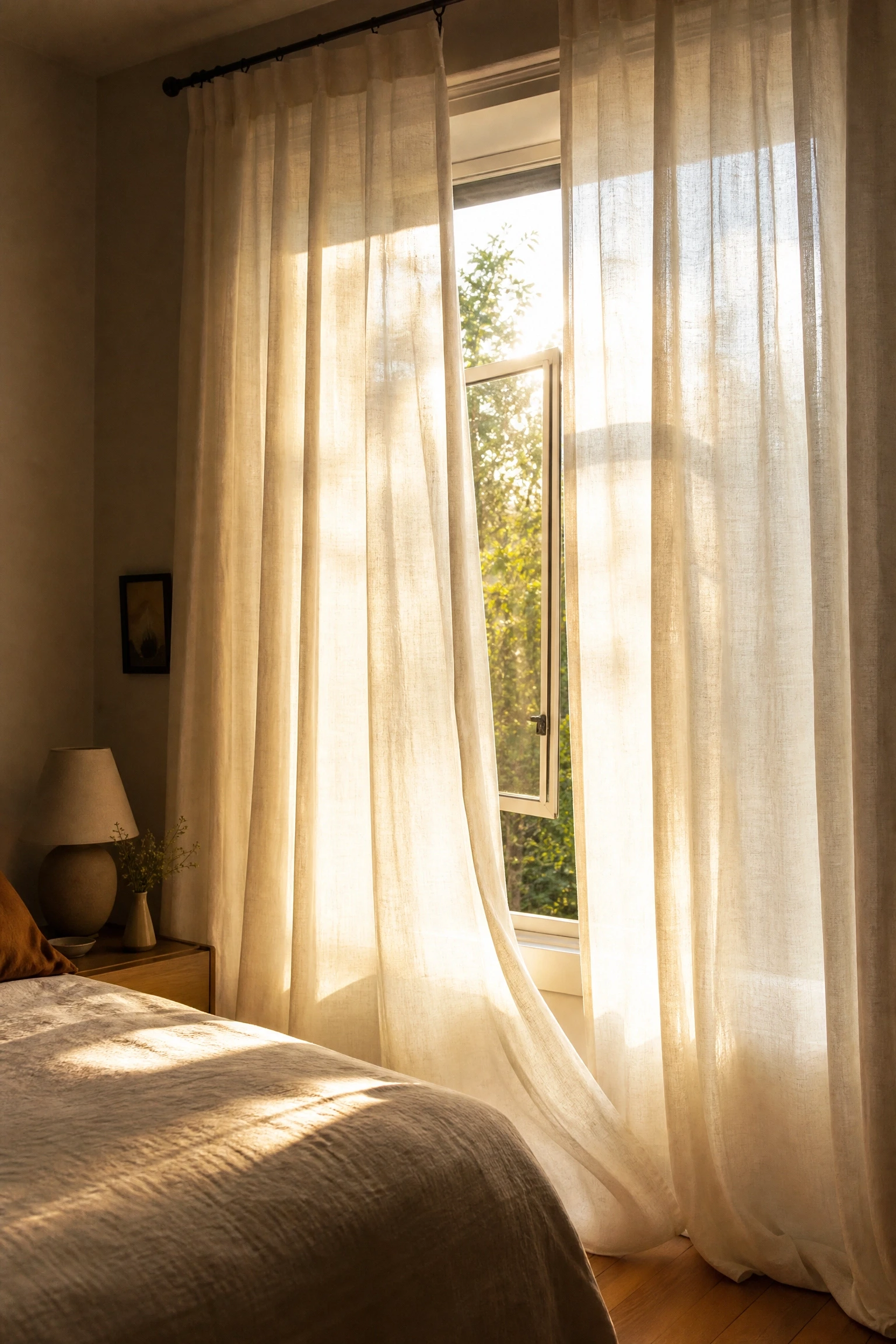
Heavy lined curtains that block all light and air movement are the right choice for winter privacy and insulation but actively work against a summer bedroom by preventing air circulation and creating a dark, enclosed atmosphere when the temperature outside rises. Replacing them with unlined linen or cotton voile panels that allow light to filter through while still providing privacy changes the visual quality of the room fundamentally: the light that comes through a sheer panel in the morning has a diffused, golden quality that is immediately evocative of summer, and the gentle movement of the fabric in any passing breeze introduces a living, atmospheric quality that heavy lined curtains never have. Sheer linen panels in natural white or warm cream hung from ceiling height to the floor, gathered slightly more than the window width for fullness, create a bedroom that feels connected to the outside world even when the windows are closed, and genuinely breezy when they are open.
Heads Up: If blackout conditions are needed for sleeping, layer sheer linen panels over an existing roller blind or a set of clip-in blackout lining panels rather than replacing the lined curtains entirely. The sheer panels give the daytime summer look and feel, and the blackout layer provides the darkness needed for sleeping without removing the summer atmosphere.
5. Paint One Wall in a Cool Colour: Feels Calmer, Looks More Considered
Colour has a psychological effect on perceived temperature that is well-documented in environmental psychology: rooms decorated in cool blues, greens, and soft whites are consistently rated as feeling cooler than rooms in warm reds, oranges, and deep yellows even at identical actual temperatures. Painting one bedroom wall, most naturally the headboard wall, in a cool tone that reads as summery without being aggressive, changes the entire temperature register of the room visually. Dusty sage, muted seafoam, pale sky blue, cool stone grey, or a soft powder lavender all work well depending on the existing palette of the bedroom. The single accent wall approach, rather than painting the whole room, is the more manageable commitment and can be done in a weekend without professional help. It also has the design advantage of creating a focal point behind the bed that gives the room more structure and makes the headboard and bedding arrangement read as more considered.
Reality Check: Order sample pots in your shortlisted cool tones and live with them on the actual headboard wall for at least two days in the natural light of your specific room before buying full tins. A colour that reads as cool and fresh in a test card or on a screen can shift significantly toward grey or green when applied to a large wall in a north-facing bedroom with limited natural light.
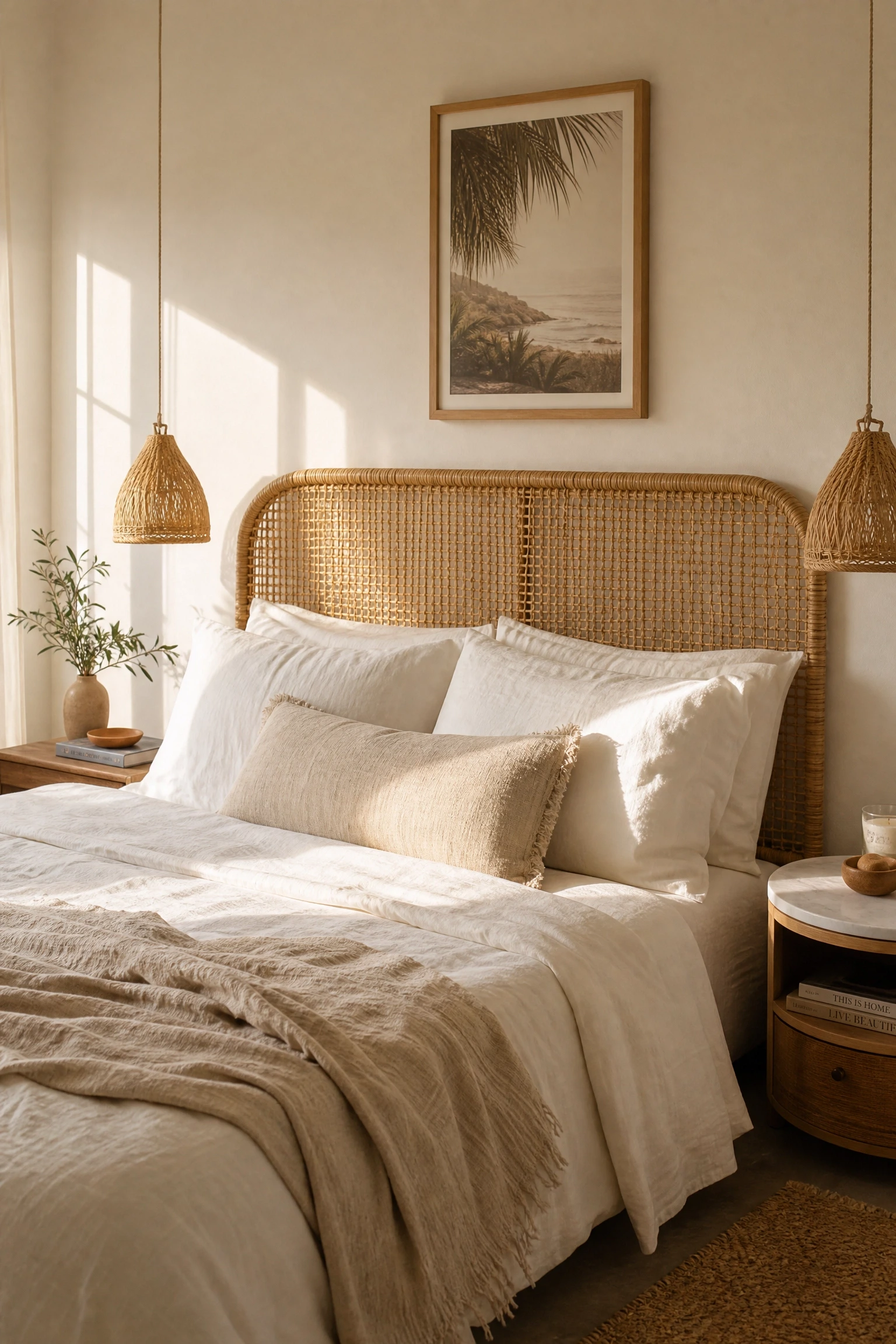
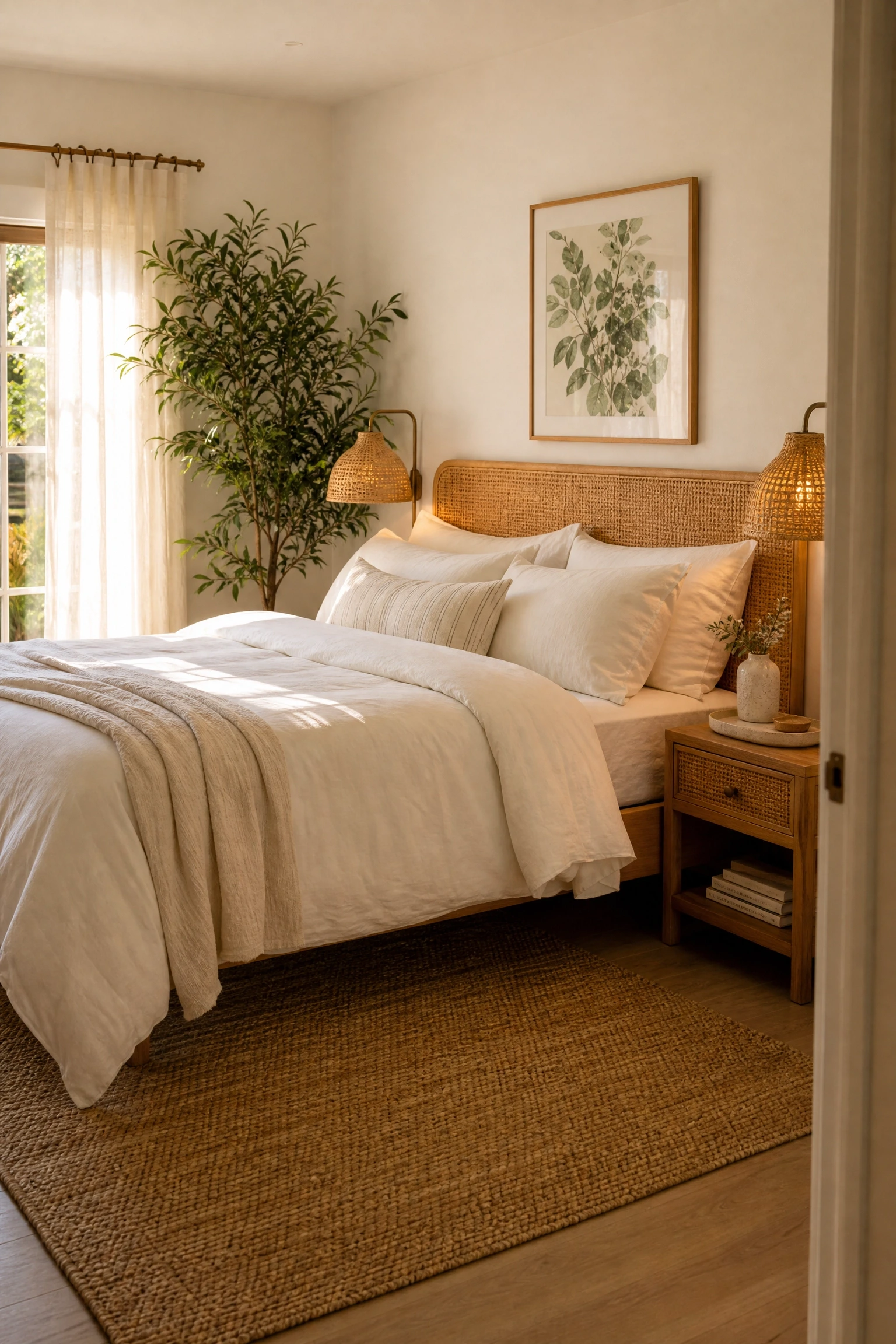
The headboard is the single most visible element of a bedroom from the doorway, and the material and style of the headboard sets the aesthetic tone of the whole room more directly than almost any other piece of furniture. A rattan or woven cane headboard introduces the natural material texture that is one of the most reliable visual signatures of a summer-ready bedroom without requiring any other changes to the room: a rattan headboard against a white wall with neutral linen bedding already looks like a beach house editorial photograph. The open weave of rattan and cane also does not trap heat the way an upholstered headboard does, so it is a genuinely cooler material in a bedroom where temperature management matters. If replacing the headboard is not feasible, a rattan screen or woven wall hanging positioned behind the existing headboard achieves a similar visual effect without the commitment or the cost of a full headboard replacement.
Pro Move: A natural rattan headboard with linen bedding in warm white and a pair of woven rattan pendant bedside lights creates the summer bedroom aesthetic that most people are picturing when they search for summer bedroom ideas. Three elements, all from the same natural material family, that together achieve a complete look.
7. Refresh the Pillow Arrangement for Summer: Feels Easier, Looks More Relaxed
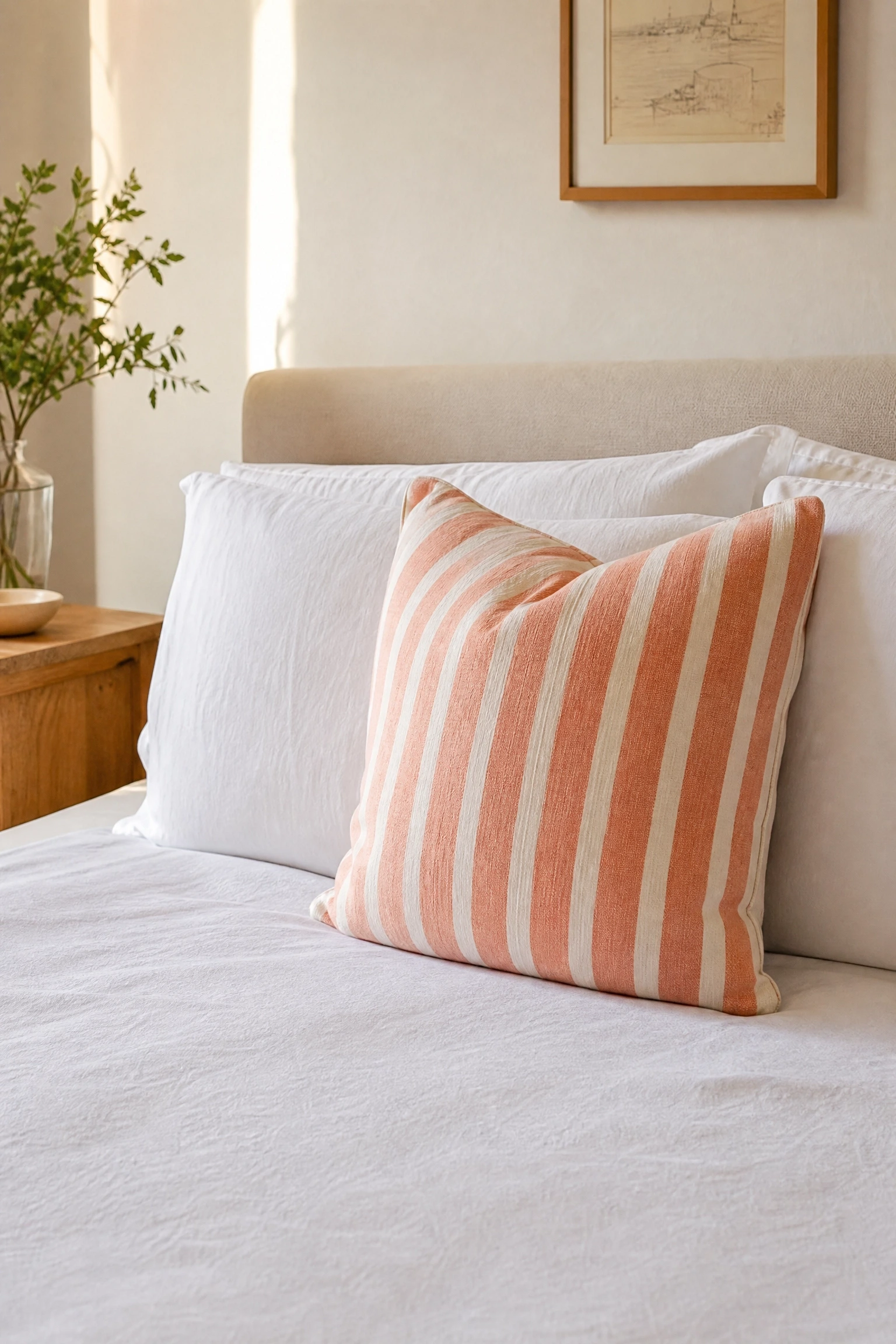
The winter pillow arrangement in most bedrooms involves multiple decorative cushions stacked in front of the sleeping pillows, which creates a formal, layered look that suits a heavily dressed bed but feels unnecessary and even slightly suffocating in the warmer months. A summer pillow refresh involves stripping back the decorative cushion arrangement to two or three pillows maximum, keeping only the sleeping pillows in fresh, clean linen cases and adding a single large square or bolster pillow in a summer colour or pattern as the one decorative element. The resulting arrangement looks lighter and more intentional than the full winter stack, the bed takes thirty seconds to make rather than two minutes, and the room feels immediately calmer and less visually cluttered. The cushions removed from the stack can be stored in a basket under the bed or on a chair, ready to return when the season shifts.
Designer Advice: Choose the single decorative summer pillow in a colour or print that connects to another element in the bedroom, whether that is a plant, a piece of artwork, or the wall colour. A pillow that feels like it arrived from a different room makes the arrangement look unresolved. A pillow that visually echoes something else in the room makes it look completely considered.
8. Add a Ceiling Fan or Decorative Fan: Feels Noticeably Cooler, Looks Architectural
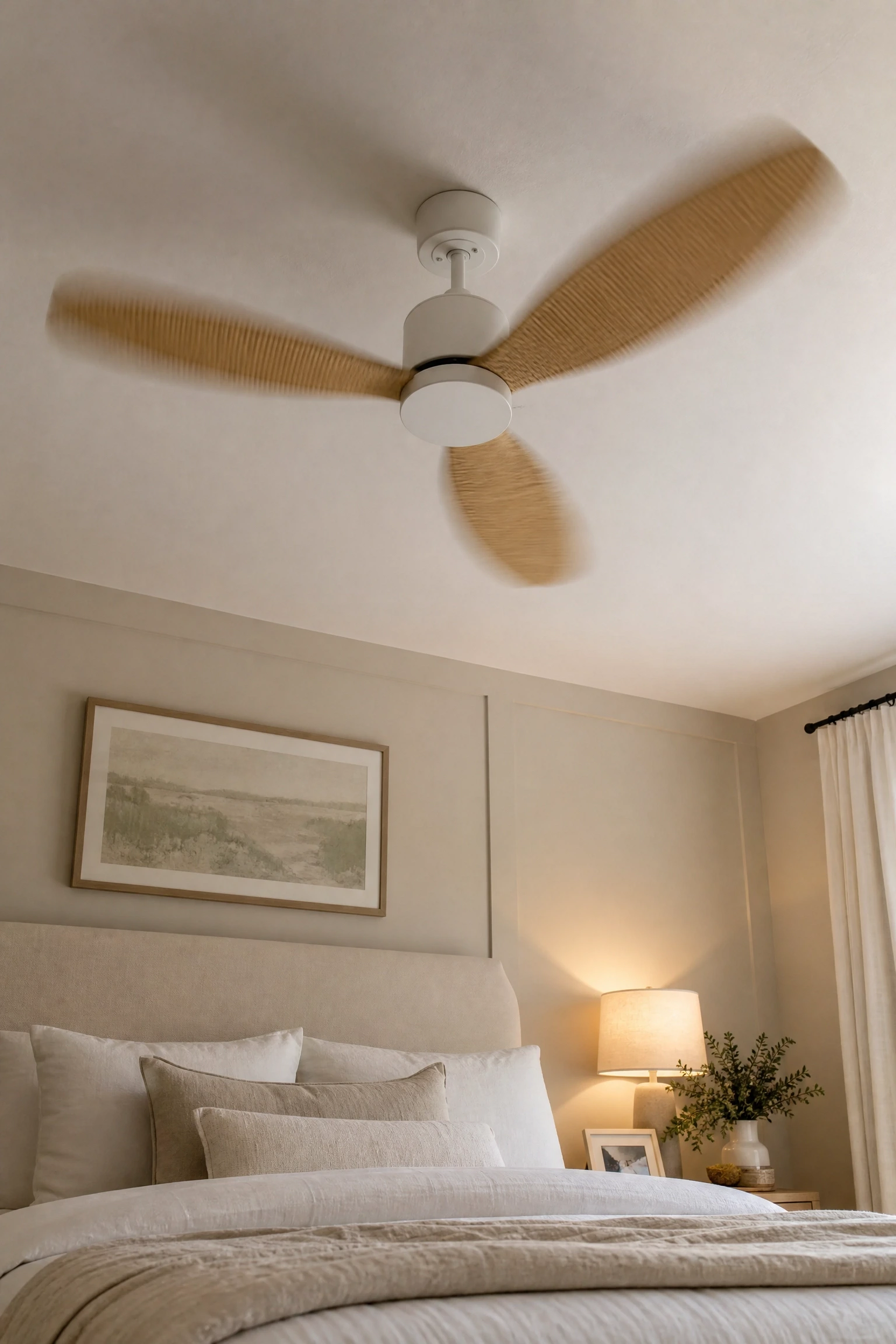
A ceiling fan is the single most effective decor-adjacent change available for a summer bedroom because it addresses the physical problem of sleeping hot more directly than any textile or colour change can. A ceiling fan running counterclockwise during summer creates a wind-chill effect that makes a room feel up to 4 degrees Celsius cooler without changing the actual air temperature. Modern ceiling fans bear little resemblance to the dated fixtures of previous decades: contemporary designs in matte black, brushed brass, or natural rattan-bladed versions add an architectural element to the ceiling that is both visually interesting and genuinely useful. Even a well-positioned oscillating fan on a sleek stand in the corner, paired with a decorative handheld or folding fan displayed on the nightstand, introduces the visual language of summer cooling in a way that is both functional and styled. The decorative element of visible fans in a bedroom, whether ceiling-mounted, floor-standing, or hand-held as objects displayed on a surface, signals the season as directly as any colour or textile change.
Heads Up: Ceiling fans must be set to run counterclockwise during summer to push air downward and create the cooling effect. Running a ceiling fan clockwise in summer circulates warm air that has risen to the ceiling back down into the room, which is the opposite of what is needed and is a common error that makes the fan feel ineffective.
9. Bring in Fresh Flowers or Seasonal Stems: Feels Alive, Looks Instantly Summer
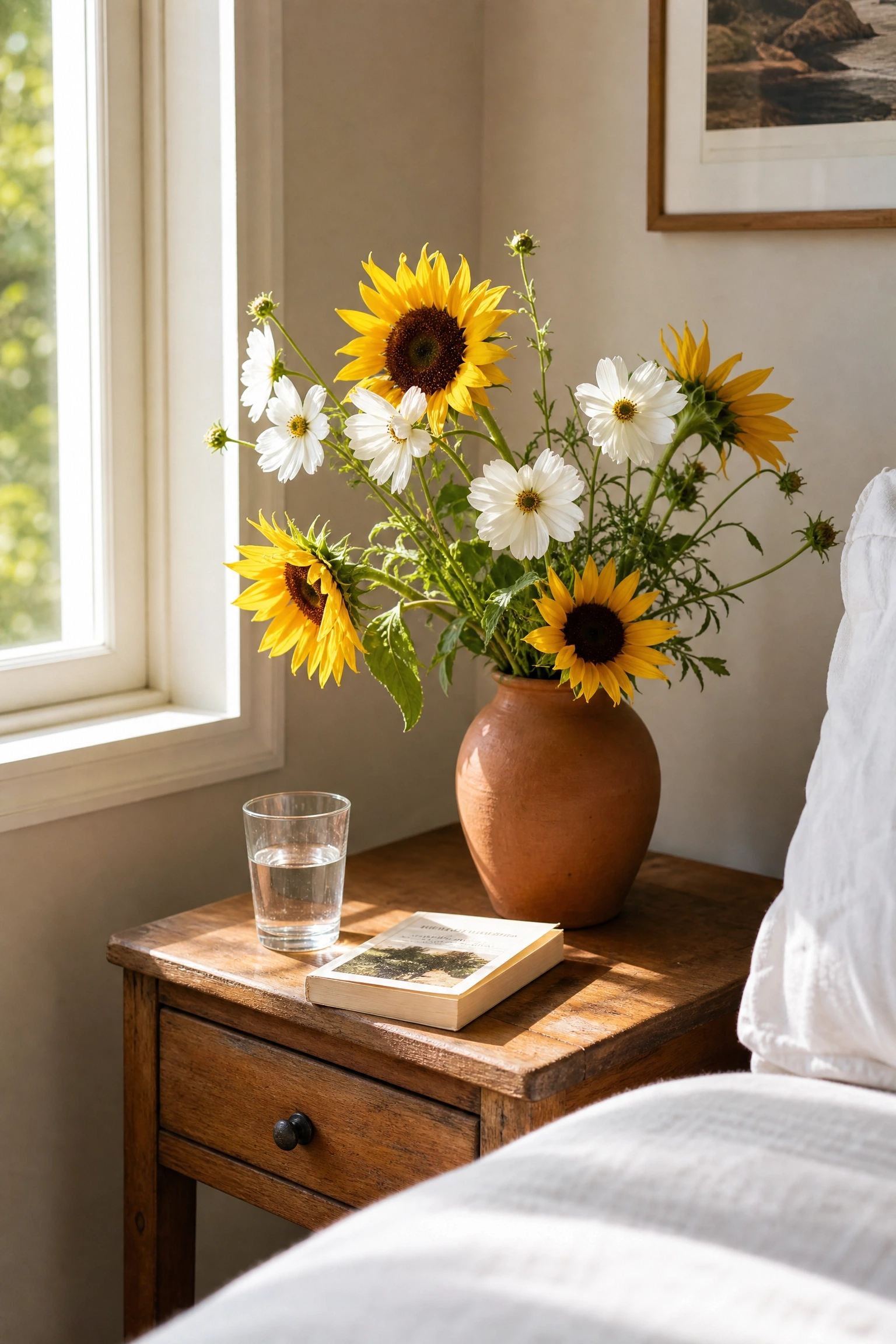
Fresh flowers in a bedroom are one of the most immediate and affordable ways to signal the season because they introduce living, changing, scented material that no accessory can replicate. A bunch of sunflowers in a terracotta pot, white peonies in a ceramic vase, garden roses loosely arranged in a vintage jug, or a handful of wildflowers from a farmers market in a simple glass jar all do more for the summer atmosphere of a bedroom than a carefully chosen collection of inanimate objects. The practical consideration is the scent: strongly scented flowers like lilies, hyacinths, and gardenias can be overpowering in a bedroom, particularly in a warm room where scent diffuses more actively than in a cooler space. Fresh-cut flowers with a light or neutral scent, such as sunflowers, cornflowers, cosmos, dahlias, and most garden roses, are better suited to bedroom positions. Replace the stems weekly to prevent the water becoming stagnant and the flowers deteriorating in the warmth.
Quick Tip: If fresh flowers are too high-maintenance for a regular bedroom, dried botanicals in a tall narrow vase or a bunch of dried pampas grass in the corner of the room provide a lasting seasonal element that suits a summer bedroom palette without requiring weekly replacement or watering.
10. Introduce Indoor Plants Suited to Warmth: Feels Fresher, Looks Like a Living Space
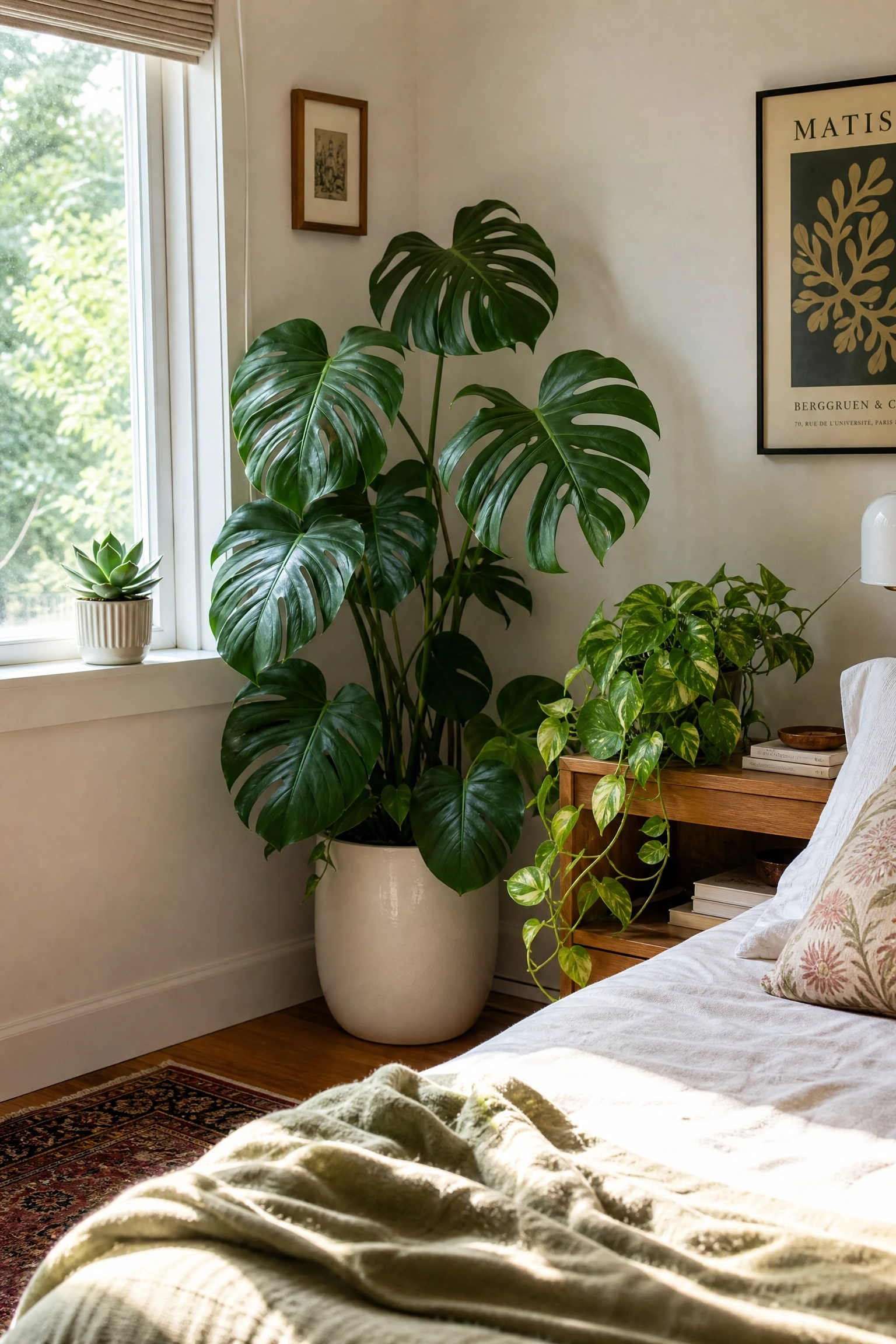
Bedroom plants in summer serve a different purpose than bedroom plants in winter. In the warmer months, plants that thrive in warmth and benefit from the increased humidity and temperature of a summer bedroom are the ones to choose, and their presence does two things simultaneously: they improve air quality in a closed bedroom on a hot night by processing carbon dioxide and releasing oxygen, and they introduce the organic, living quality that makes a bedroom feel genuinely connected to the summer world outside rather than sealed off from it. Peace lilies, Boston ferns, pothos, and spider plants all perform well in warm summer bedrooms and add a lush, tropical quality to the room that suits the season. A large leafy plant on the floor in the corner behind a bedside table, a trailing pothos on the bedside shelf, and a small succulent on the windowsill across three different scales creates a layered plant moment that makes the bedroom feel genuinely designed around the season rather than just decorated for it.
Reality Check: Snake plants and succulents, while beautiful and low-maintenance, actually release oxygen primarily during the day and process carbon dioxide during the night (a process called CAM photosynthesis), which makes them slightly less ideal for a closed bedroom on a warm night than plants that maintain oxygen release through the dark hours. For bedroom air quality specifically, peace lilies and pothos are the better choice.
11. Swap Velvet and Wool Cushions for Cotton or Linen: Feels Less Stuffy, Looks Crisper
Velvet cushion covers, bouclé textures, and wool knit throws have an immediate visual association with warmth and cosiness that works perfectly in autumn and winter but actively fights the summer mood in a bedroom that is trying to feel lighter and fresher. Swapping them out for cotton canvas, washed linen, embroidered cotton, or lightweight jacquard covers in a summer palette, without changing the cushion insert itself, is a fast and affordable seasonal update that changes the visual weight of the bed arrangement significantly. A bed that was heavy and cosy in January with dark velvet cushions becomes calm and airy in June with the same inserts in washed sage linen covers. The covers can be laundered, folded, and stored until autumn, and the winter covers can be stored in the same fashion during summer. The physical benefit is real too: velvet and thick wool cushions trap body heat and make a sleeping environment warmer, while cotton and linen cushion covers dissipate it.
Pro Move: Store winter cushion covers and summer cushion covers in separate labelled fabric bags or boxes with the seasonal changeover date written on a small card inside. The label eliminates the annual search through stored textiles and makes the swap a ten-minute job rather than a full afternoon.
“The summer bedroom that feels genuinely good to be in is always the one that went lighter, not the one that added more.”
12. Use a Canopy or Draped Fabric Above the Bed: Feels Romantic, Looks Like a Destination
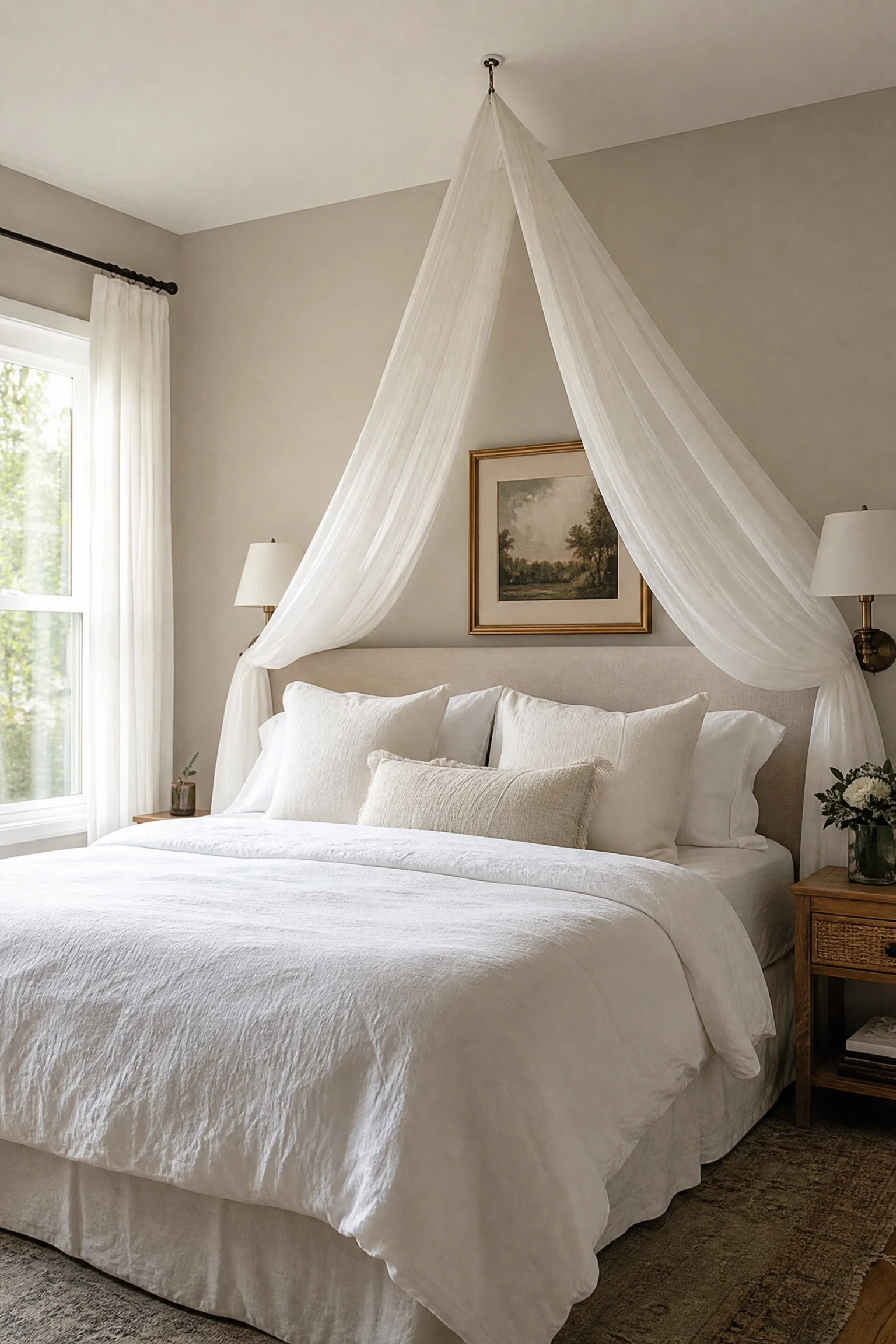
A canopy or draped fabric above the bed is the single most dramatic visual change available in a bedroom without touching a paintbrush or moving furniture, and it creates the kind of hotel-in-a-warm-country atmosphere that summer bedroom decor is often trying to achieve. A simple wooden or metal canopy frame mounted above the bed with sheer white or natural linen fabric draped from it creates an enclosed, private feeling within the larger room that is simultaneously intimate and airy because the fabric is light enough to move with any breeze and transparent enough to not block the light. An even simpler version is achieved with a single ceiling hook and a length of sheer fabric draped in a soft arch above the headboard wall, which requires no frame at all. The canopy approach works particularly well in bedrooms with higher ceilings where the fabric has room to drape without touching the bedding surface.
Designer Advice: Use at least three metres of fabric for a ceiling-mounted drape, even over a double bed. The common mistake is using too little fabric, which makes the drape look tacked on rather than generous. The excess fabric can be tied back to the side wall for a romantic gathered effect on evenings when airflow through the window is preferred.
13. Clear Out Winter Clutter for an Airy Feel: Feels Spacious, Looks Intentional
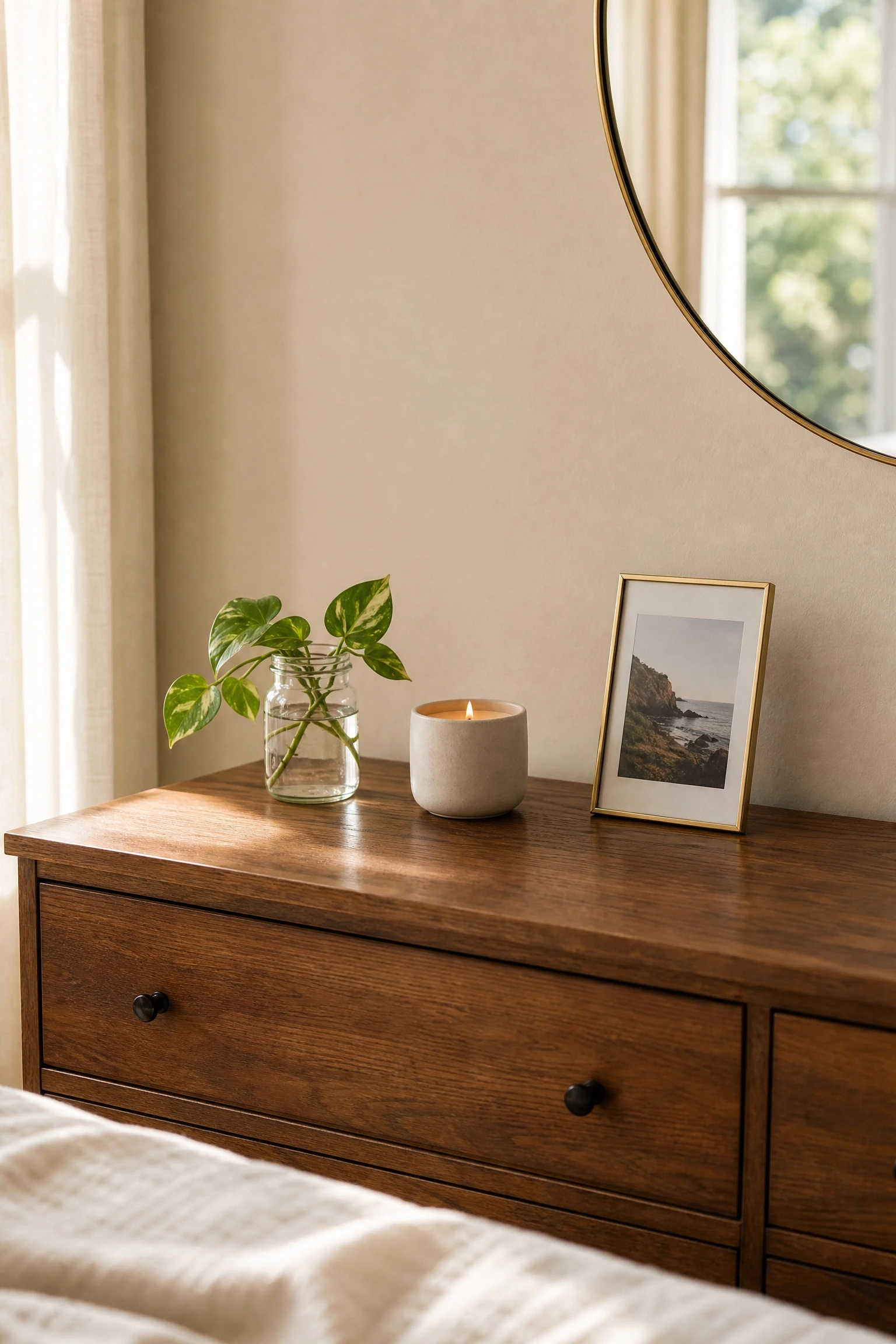
One of the most consistently underestimated summer bedroom changes is the one that involves removing things rather than adding them. The accumulated items of the colder months, books stacked on both bedside tables, an extra blanket draped over the chair, a scented candle collection on the dresser, a tray of winter skincare products on the windowsill, all of these things create visual density that makes a room feel heavier and more enclosed than it needs to be. A summer bedroom clear-out, removing everything from surfaces and returning only the items that are used daily, creates the kind of visual space that photographs beautifully and genuinely makes the room easier to relax in. The cleared surfaces can be restyled with one or two carefully chosen summer elements, a small plant, a single candle in a summer scent, a framed print, rather than the winter accumulation they replaced. In a bedroom where the physical temperature is difficult to control, the visual temperature of an uncluttered room makes the experience of being in it considerably cooler and calmer.
Reality Check: Be honest about what is actually used daily when doing a summer bedroom clear-out. Items that have been on the bedside table for three weeks without being touched are storage items masquerading as decor. They should be in a drawer, a cabinet, or a basket, not on the surface where they take up visual space and collect dust.
14. Use Bamboo or Wicker Baskets for Storage: Feels Organized, Looks Natural
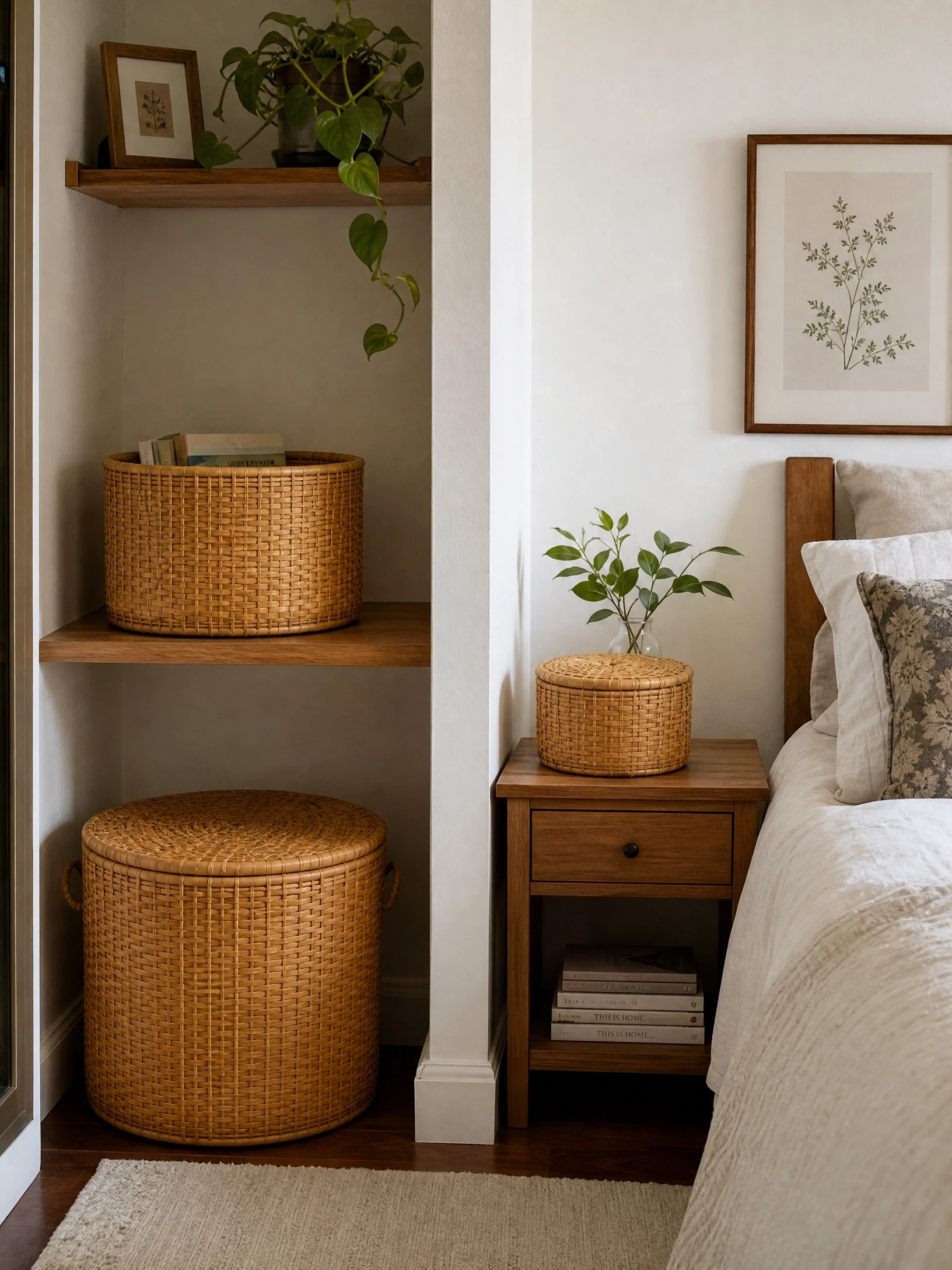
Replacing plastic storage boxes, fabric bins, or wire baskets in the bedroom with woven bamboo or wicker baskets introduces a natural material that immediately reads as warmer weather while simultaneously organizing the room. Bamboo and wicker baskets at the foot of the bed hold spare linens, at the side of the wardrobe hold shoes or bags, on a shelf hold books and accessories, or on the bedside table hold the small items that tend to create surface clutter. The visual effect of natural woven baskets throughout the bedroom is cohesive and organic: the warm honey and natural tones of the weave read as connected to the same natural material palette as rattan furniture and linen textiles. They are also genuinely good at what storage containers are supposed to do, with the open weave allowing air circulation that reduces the musty quality that sealed plastic containers can develop in a warm summer bedroom.
Quick Tip: Choose baskets in consistent materials and tones throughout the bedroom rather than mixing different weave styles and colours. A set of three matching bamboo baskets in different sizes reads as a considered design decision. Three baskets in different materials and finishes reads as a collection of things that happened to end up in the same room.
15. Add a Vintage or Rattan Mirror: Feels Larger, Looks Sun-Kissed
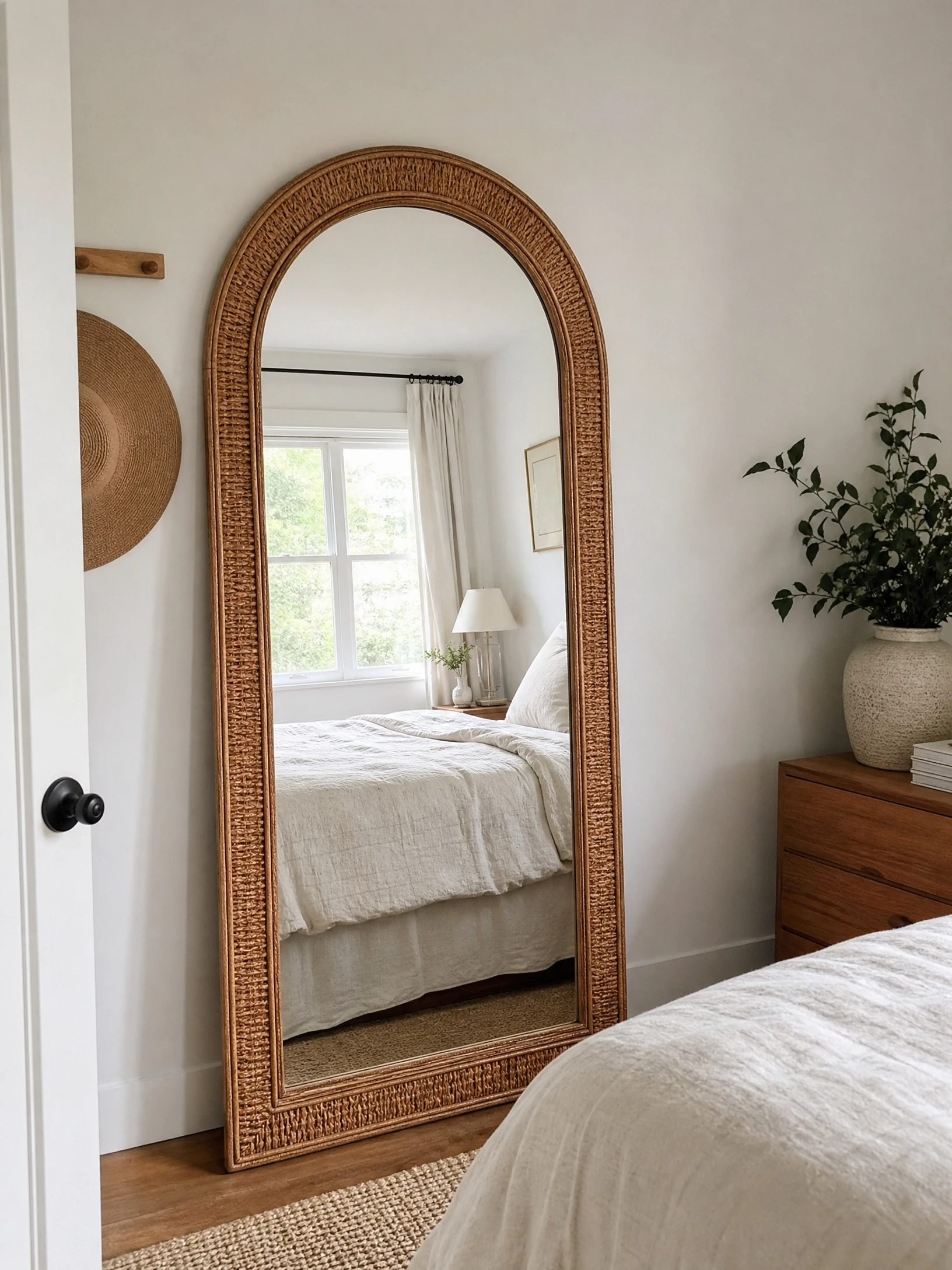
A large mirror in a summer bedroom does three things: it reflects natural daylight back into the room and makes the space feel brighter without adding artificial light, it creates the illusion of additional depth and space in a room that might feel smaller during the heat of summer when windows are kept closed, and a well-chosen frame in rattan, aged timber, or a sun-bleached white finish contributes to the visual palette of the summer bedroom without requiring any wall colour changes. A rattan-framed full-length mirror leaning against the bedroom wall beside the wardrobe reflects the window across the room and creates a brightness that feels immediately connected to summer. An antique or distressed gold-toned ornate mirror above the dresser adds a warmth and character that suits the season in a different way, more European summer villa than beach house. Position any new mirror to catch and reflect the main source of natural light in the room for the most dramatic brightening effect.
Heads Up: A mirror placed directly opposite a window in a bedroom can create uncomfortable glare on bright summer mornings, particularly in east-facing bedrooms that receive direct morning sun. Position the mirror at an angle to the window rather than directly opposite it so it reflects the ambient light rather than the direct sunbeam.
16. Style the Bedside Table for Summer: Feels intentional, Looks Seasonal
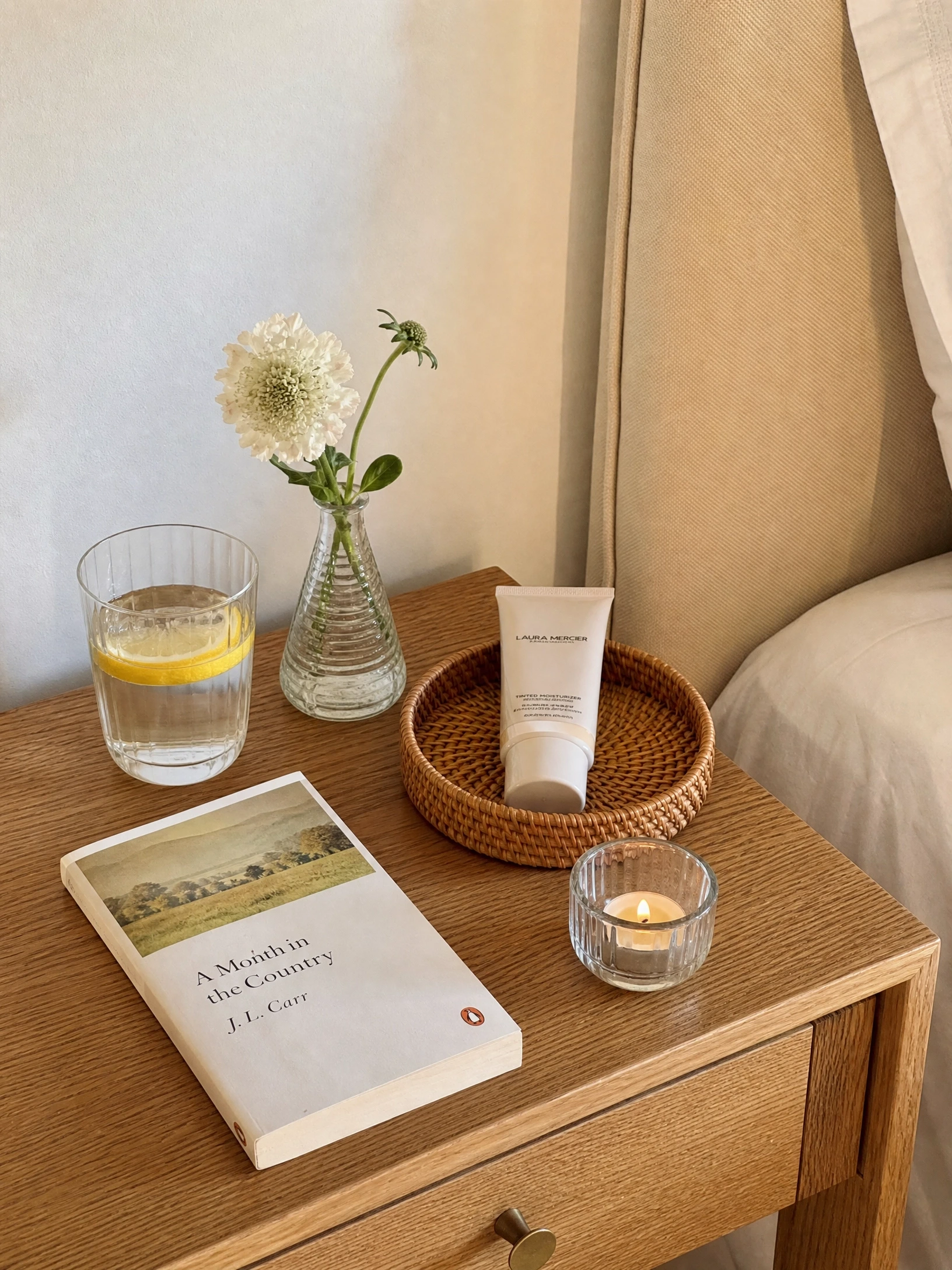
The bedside table is the most intimate styling surface in the bedroom and one of the most likely to be left in its winter configuration long after everything else has been updated for the season. A summer bedside table styling involves removing the heavy winter reading pile, the thick hand cream, and the chunky woven coaster, and replacing them with three to five summer-appropriate elements: a glass of water with a wedge of lemon visible inside it, a single stem from the bedroom vase in a small narrow-neck bottle, a tube of after-sun or lighter summer-formula hand lotion, a lightweight paperback or a small journal, and a tea light in a glass holder rather than a heavy ceramic candle jar. The result is a bedside arrangement that looks fresh, seasonal, and genuinely lived in without looking cluttered, and the smaller-scale items make the bedside table feel more accessible and less imposing than the layered winter arrangement it replaced.
Designer Advice: Put the bedside lamp on a timer or use a smart bulb set to a warm 2700K tone for summer evenings. The combination of warm-toned low light from the bedside lamp and cooler tones from any natural light still coming in through sheer curtains creates a genuinely beautiful evening atmosphere in a summer bedroom that overhead lighting cannot replicate.
17. Introduce Coastal or Botanical Artwork: Feels Escapist, Looks Considered
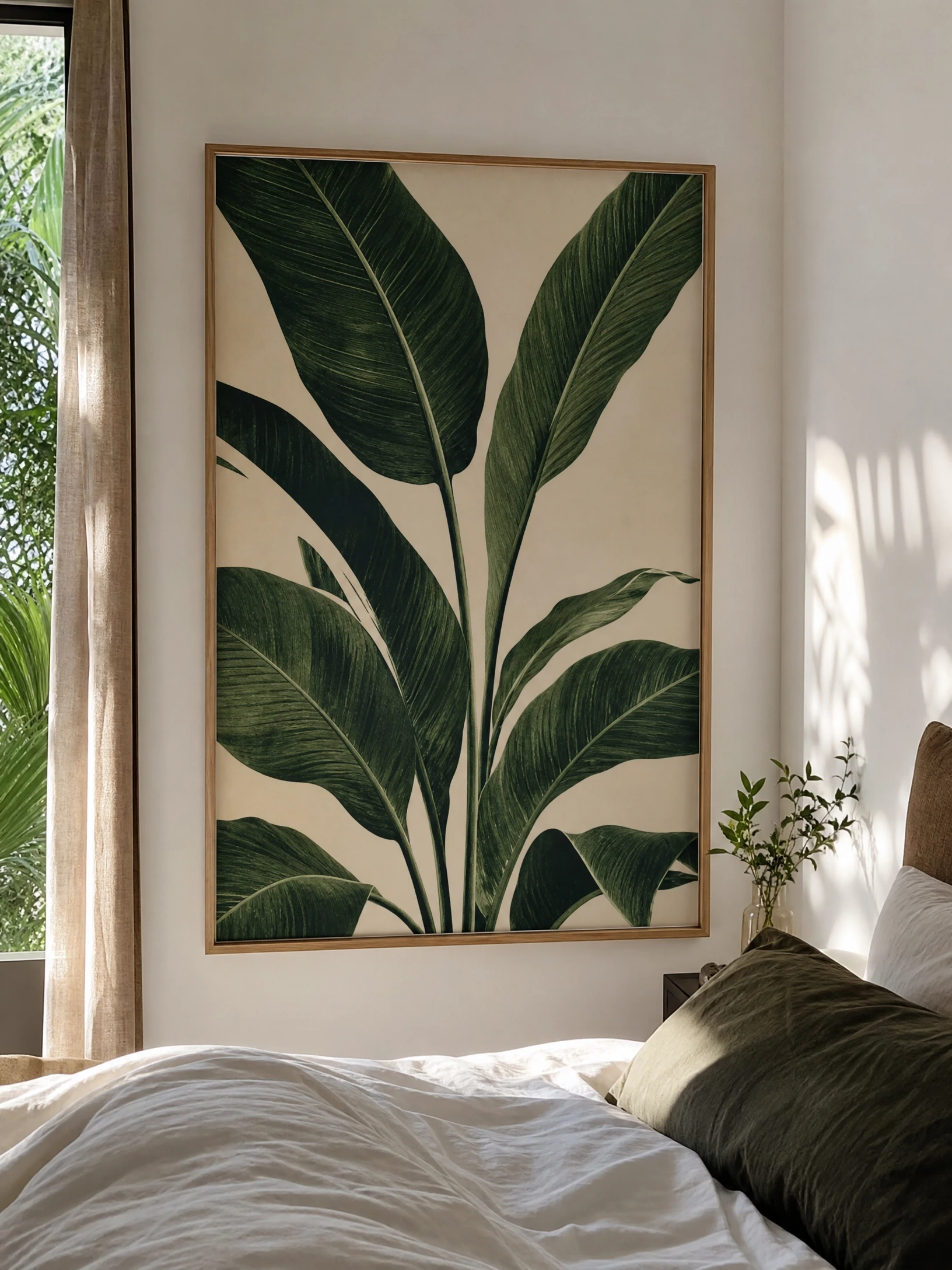
Changing the artwork in a bedroom for summer is one of the most overlooked seasonal updates because most people think of art as a permanent element rather than a rotatable one. But a summer print swap, even if it involves only one piece in the primary sightline from the bed, changes the visual story of the room in a way that no amount of linen bedding or rattan accessories quite achieves. A large botanical print with generous green leaves and cream background, a watercolour coastal landscape, a sun-faded architectural photograph of a Mediterranean street, or a simple graphic of a single coral or shell in a clean frame all introduce a visual reference to the natural summer world that makes the bedroom feel more connected to the season. The original winter artwork can be stored flat behind a wardrobe or under the bed, wrapped in paper, and returned in autumn.
Pro Move: Choose summer bedroom artwork in a size slightly larger than you think the wall can take. Artwork that is too small for its wall position looks tentative and lost. A single generously sized print on the bedroom wall makes a stronger statement and requires less surrounding styling to feel complete than a smaller print in the same position.
18. Use Lighter Window Treatments for Morning Light: Feels Brighter, Looks Fresher
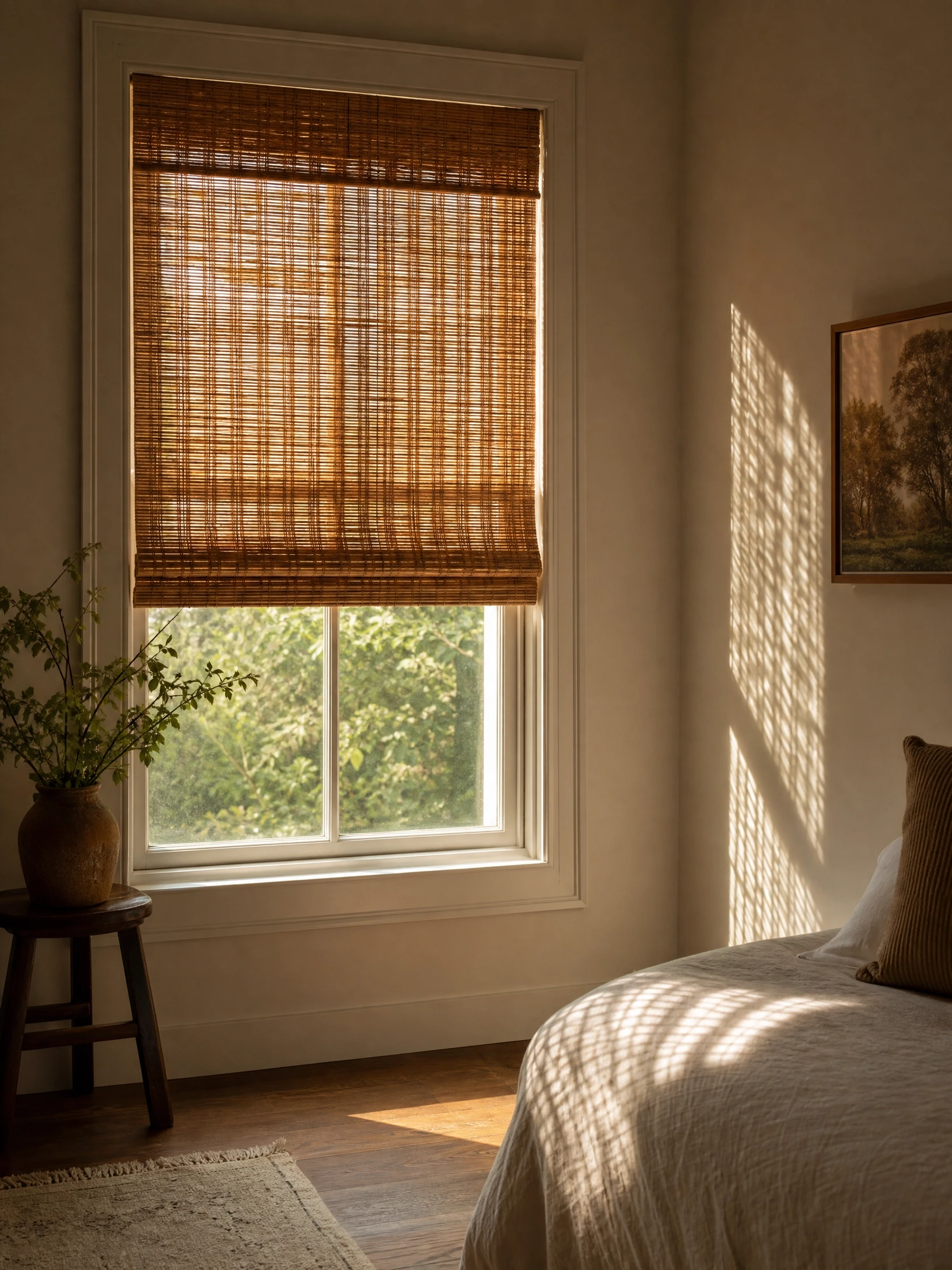
The quality of morning light in a bedroom has a significant effect on how the room feels and how the day begins, and summer is the season when morning light is at its most abundant, most golden, and most worth letting into the room. Replacing heavy blackout or lined roller blinds with a translucent roman blind in natural linen, a woven wood blind, or a simple white cotton roller creates a summer morning ritual where the light filters into the room in a diffused, warm way rather than being either completely blocked or arriving as harsh direct sunlight through bare glass. A woven wood or bamboo blind in a warm honey tone is one of the best single window treatment choices for a summer bedroom because it filters light to a beautiful dappled quality, introduces natural material texture, allows air movement when raised to any height, and suits a wide range of bedroom aesthetic directions from coastal to Japandi to boho.
Quick Tip: If complete blackout is needed for sleeping, combine a woven wood blind during the day with a simple clip-in blackout panel behind it for night use. The woven blind provides the beautiful summer daytime light quality and the blackout panel provides the sleeping conditions needed without compromising either function.
19. Bring in Summer Scent: Feels Like the Season, Looks Styled
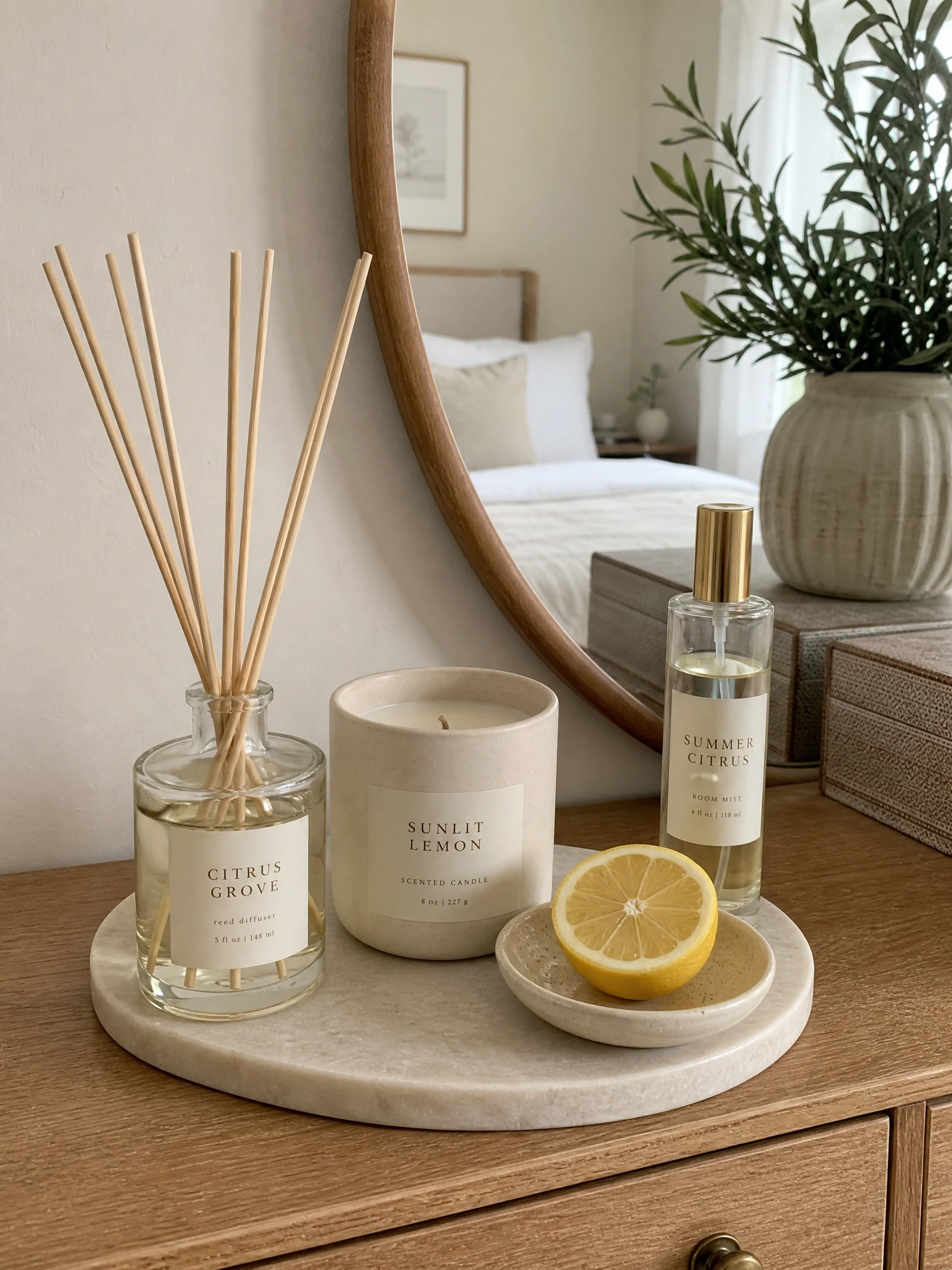
Scent is the most immediate sensory signal of a season change, and swapping the heavy, woody, or spiced scents of winter for lighter, fresher summer alternatives changes the atmosphere of the bedroom in a way that no visual change quite replicates. Citrus notes, particularly bergamot, lemon, and grapefruit, read as immediately fresh and summery. White florals like jasmine, tuberose, and neroli are the scents most associated with warm summer evenings. Fig, green tea, and light aquatic notes create a cool, clean summer atmosphere that suits a bedroom well. The delivery method matters as much as the scent: a room spray used after making the bed in the morning provides an immediate fresh burst. A reed diffuser on the dresser provides a sustained background note. A soy wax candle on the bedside table in the evening creates a ritual that connects scent to the wind-down routine that makes the bedroom feel genuinely spa-like during summer rather than just visually appropriate for the season.
Heads Up: Very strongly scented candles or diffusers in a bedroom with limited ventilation during a warm night can become headache-inducing rather than relaxing. Choose bedroom scents that are present at a light background level rather than filling the room from across the corridor. The scent of a summer bedroom should be noticed on entering, not before reaching the door.
20. Update the Bedside Lighting for Summer Evenings: Feels Atmospheric, Looks Warmer
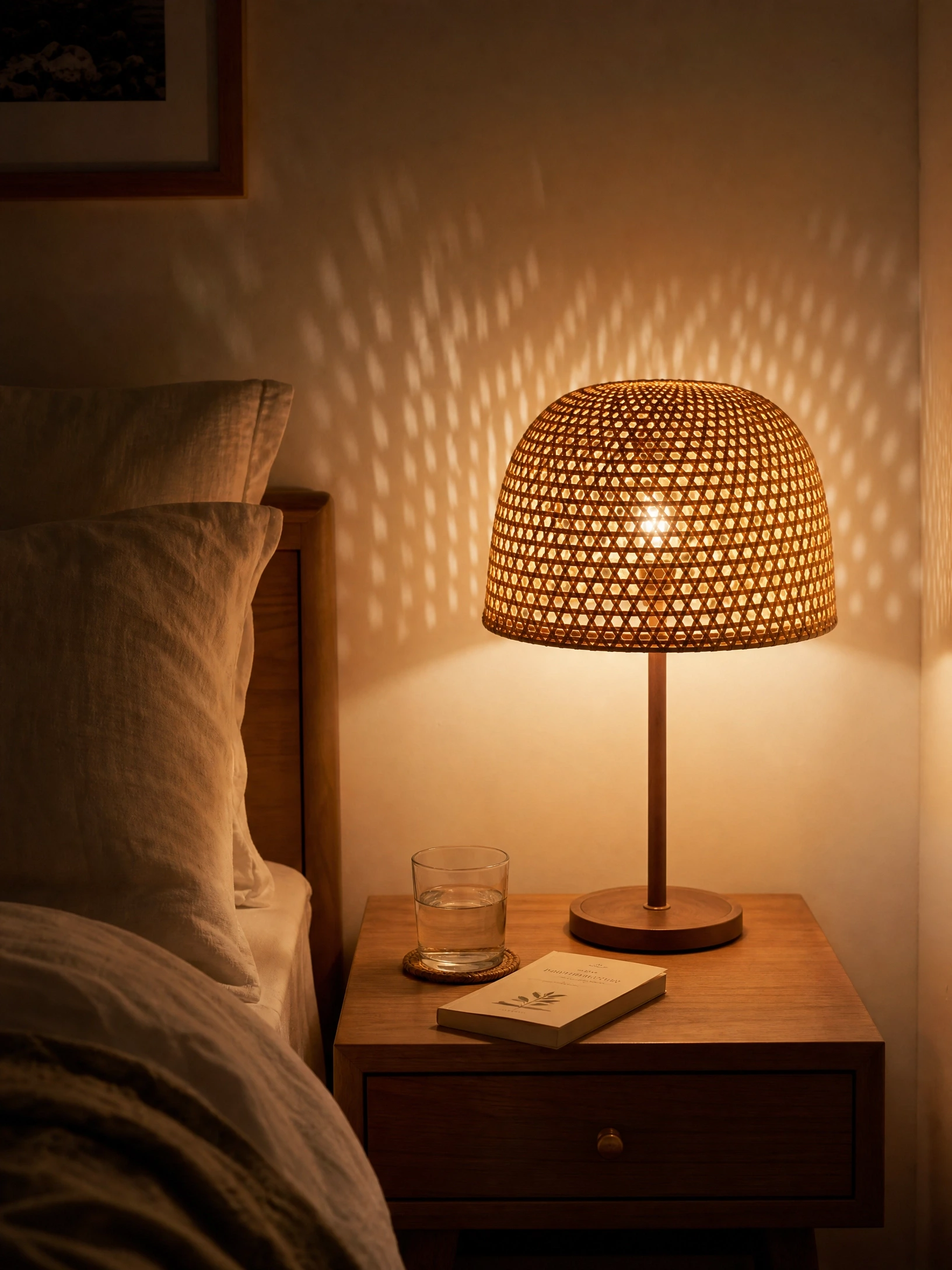
Bedside lighting that was appropriate for long winter evenings, a bright reading lamp that illuminates a book at arm reach, is often more intense than a summer bedroom needs during the shorter evenings of the warmer months. A summer lighting update for the bedroom might involve replacing one bedside lamp with a low wattage candle lamp or a rechargeable LED lantern that creates a softer ambient glow rather than a focused reading light, or simply swapping the existing bulb for a warm-toned filament bulb at a lower wattage. Rattan-shaded bedside lamps are one of the most effective lighting choices for a summer bedroom because the weave of the shade casts a pattern of warm dappled light on the surrounding walls that changes as the light angle shifts through the evening, creating a living, atmospheric quality that a standard solid shade lamp never achieves.
Designer Advice: A pair of matching rattan-shaded wall sconces on either side of the bed, replacing standard bedside lamps, frees up the entire bedside table surface and creates the kind of symmetrical, editorial bedroom look that most people associate with hotel rooms and holiday accommodation. The summer bedroom that feels like a break does not happen by accident.
21. Introduce Stripes Through Textiles: Feels Classic, Looks Effortlessly Summer
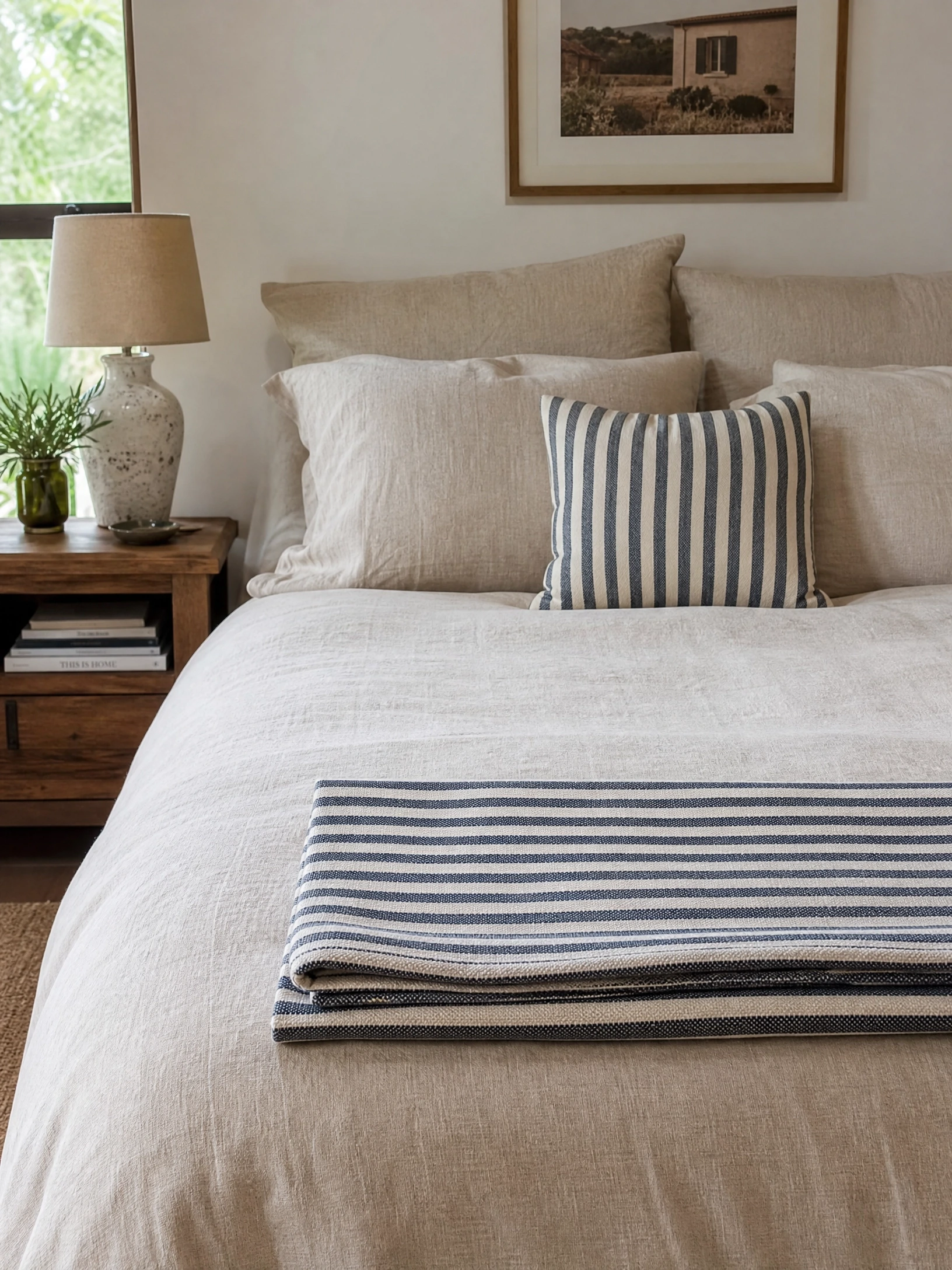
Stripes are the most persistently summery pattern in textile design, rooted in the visual language of beach huts, deck chairs, Breton fishermen, and French coastal markets, and they work in a bedroom through exactly the right amount of understatement: enough visual structure to feel intentional, light enough to avoid the heaviness of more complex patterns. A striped cotton duvet cover in navy and white or sage and cream introduces summer without the commitment of a full seasonal print. A striped cushion in muted warm tones alongside neutral linen bedding provides the one pattern element that a summer bed arrangement can usually carry. Vertical stripes on curtain panels elongate the room visually and suit a bedroom that wants to feel taller. Horizontal stripes on a flatweave rug at the foot of the bed create a connection to the bed zone that frames the floor area. The key to using stripes in a bedroom without the room feeling like a pier is keeping the colourway restrained: two tones in a stripe pattern that connects to the existing palette rather than three or four colours that introduce competing notes.
Quick Tip: Use stripes in one element only in the bedroom rather than combining striped bedding with striped cushions and striped curtains simultaneously. One striped element against a backdrop of plains and naturals reads as a design decision. Multiple competing striped elements read as a nautical theme park.
22. Add a Portable Outdoor Fan as a Design Element: Feels Genuinely Cooler, Looks Considered
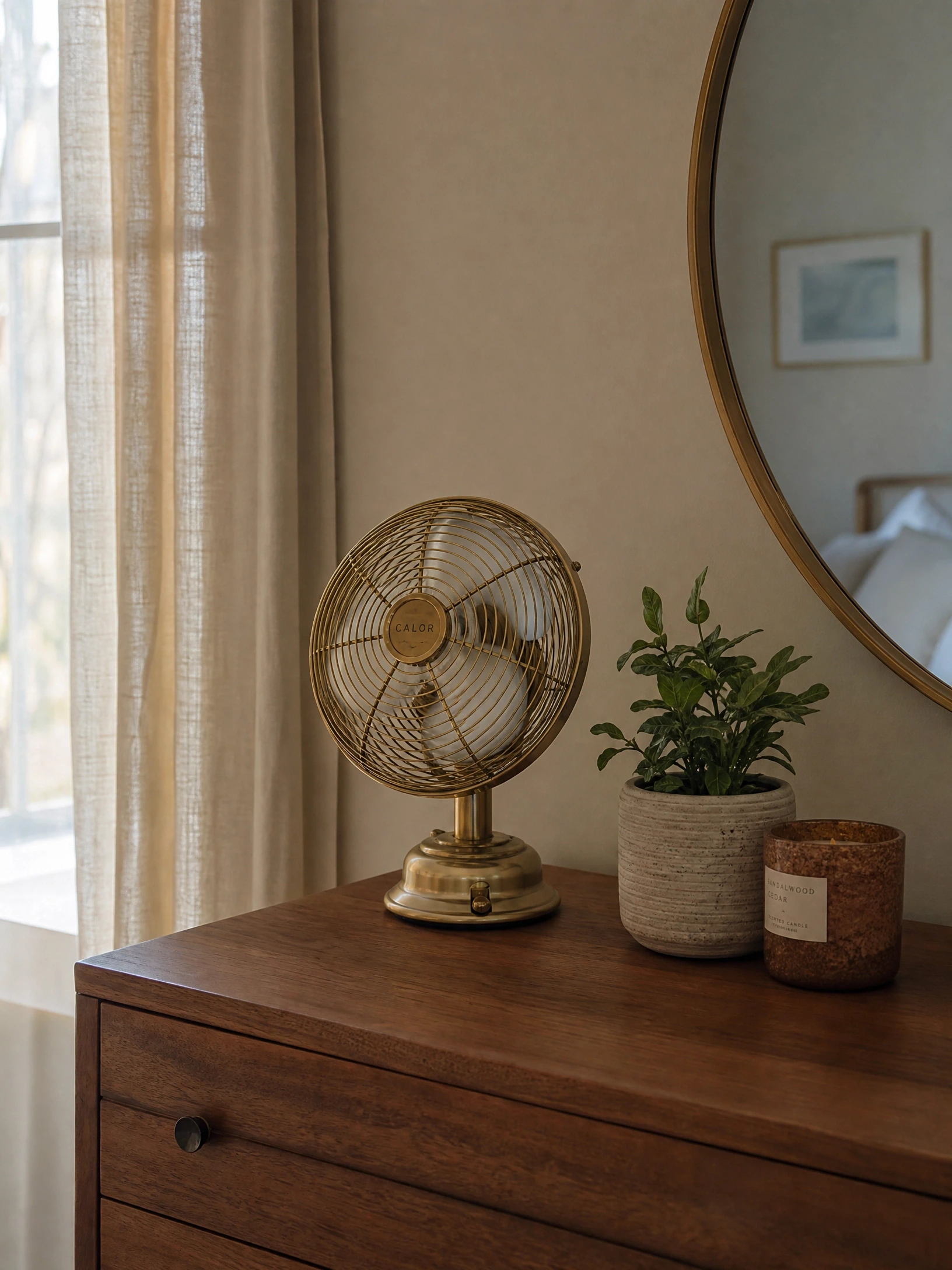
A well-designed portable fan in a summer bedroom is simultaneously a practical necessity and a decor opportunity that most people miss because they choose fans based on cooling performance alone rather than on how they look in the bedroom. A bladeless fan in matte white or soft grey has a clean, architectural quality that suits a contemporary bedroom. A rattan-wrapped or bamboo-finished desk fan adds a natural material element to the bedside table arrangement. A brass-and-timber retro-styled oscillating fan on the dresser provides nostalgia and warmth alongside the cooling function. The position of the fan in the bedroom matters for both performance and aesthetics: a fan positioned at floor level pushes cool air upward. A fan at mattress height in the corner creates the best cross-breeze when positioned to draw air in through the window and across the bed. A fan styled alongside a small plant and a candle on the dresser looks like it was always meant to be there rather than placed in desperation.
Reality Check: A fan does not actually cool the air in a bedroom. It creates a wind-chill effect on skin, which makes the body feel cooler, but the ambient temperature of the room stays the same. In a bedroom above 35 degrees Celsius, a fan alone is insufficient. In a bedroom between 22 and 30 degrees, a well-positioned fan can make sleeping considerably more comfortable without any air conditioning.
23. Use a Cotton Waffle or Matelasse Blanket as a Summer Layer: Feels Textured, Looks polished
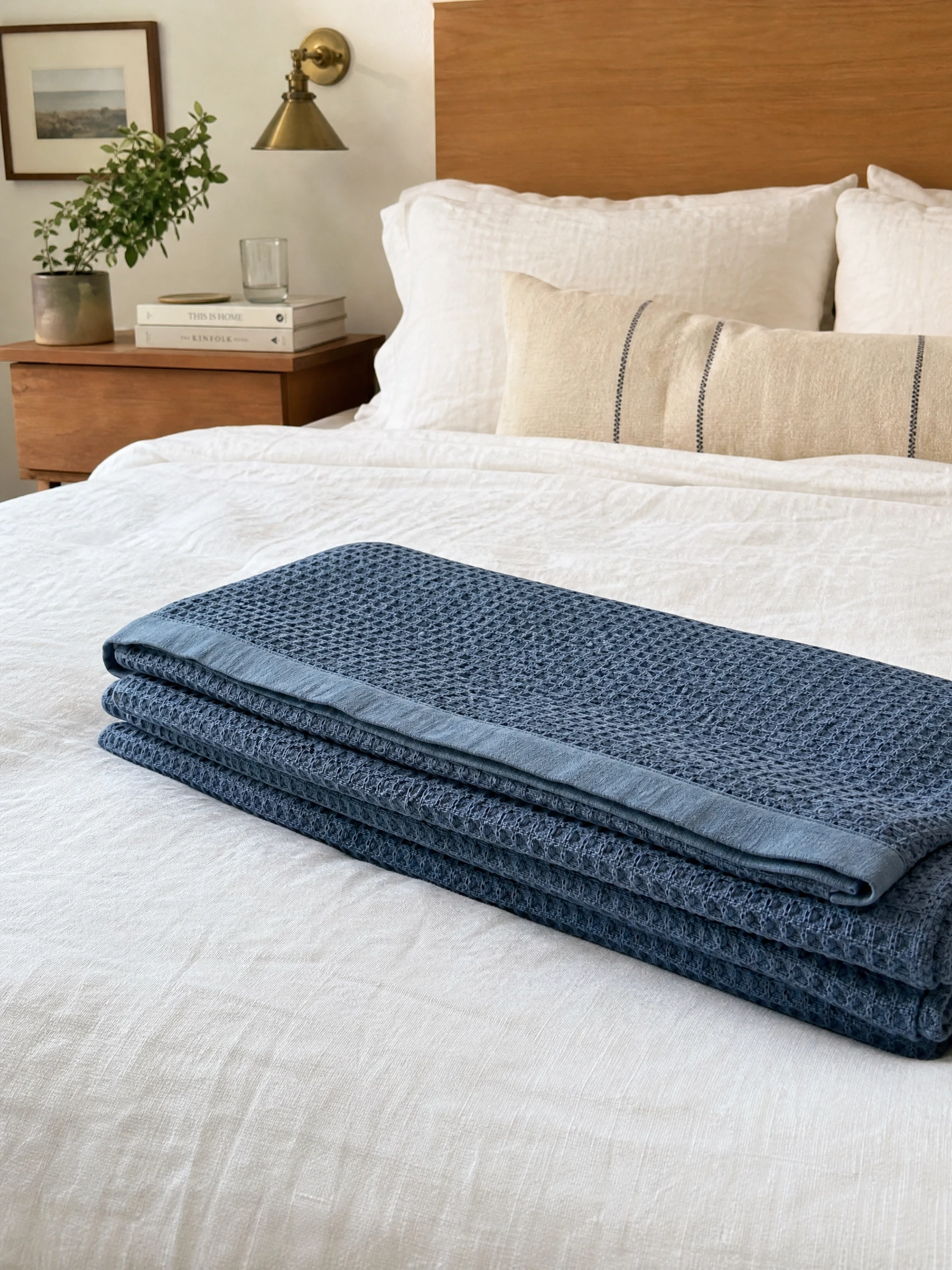
A cotton waffle-weave or matelasse blanket at the foot of the bed, folded in thirds and laid across the lower section, is one of the most visually satisfying summer bed styling choices because it introduces texture, colour, and a structured element at the foot of the bed without the bulk or the warmth of a folded duvet. Waffle-weave cotton is both highly breathable and visually interesting at close range, with the grid pattern catching light and shadow across the surface in a way that plain cotton does not. A matelasse blanket, with its subtle jacquard-woven pattern, has a quietly luxurious quality that reads as considered and unhurried, which is exactly the tone that the best summer bedroom decor aims for. In warm cream, dusty blue, sage green, or soft terracotta, either blanket style works as the one warm-toned textile element in an otherwise light and airy summer bed arrangement.
Pro Move: Fold the summer blanket so the hem or selvage edge is visible at the foot of the bed. A neatly hemmed or fringed edge on a folded blanket reads as intentional and polished. A blanket that has been folded without considering which edge is showing looks as though it was placed in a hurry.
24. Decant Summer Skincare and Fragrance as Bedside Decor: Feels Personal, Looks intentional
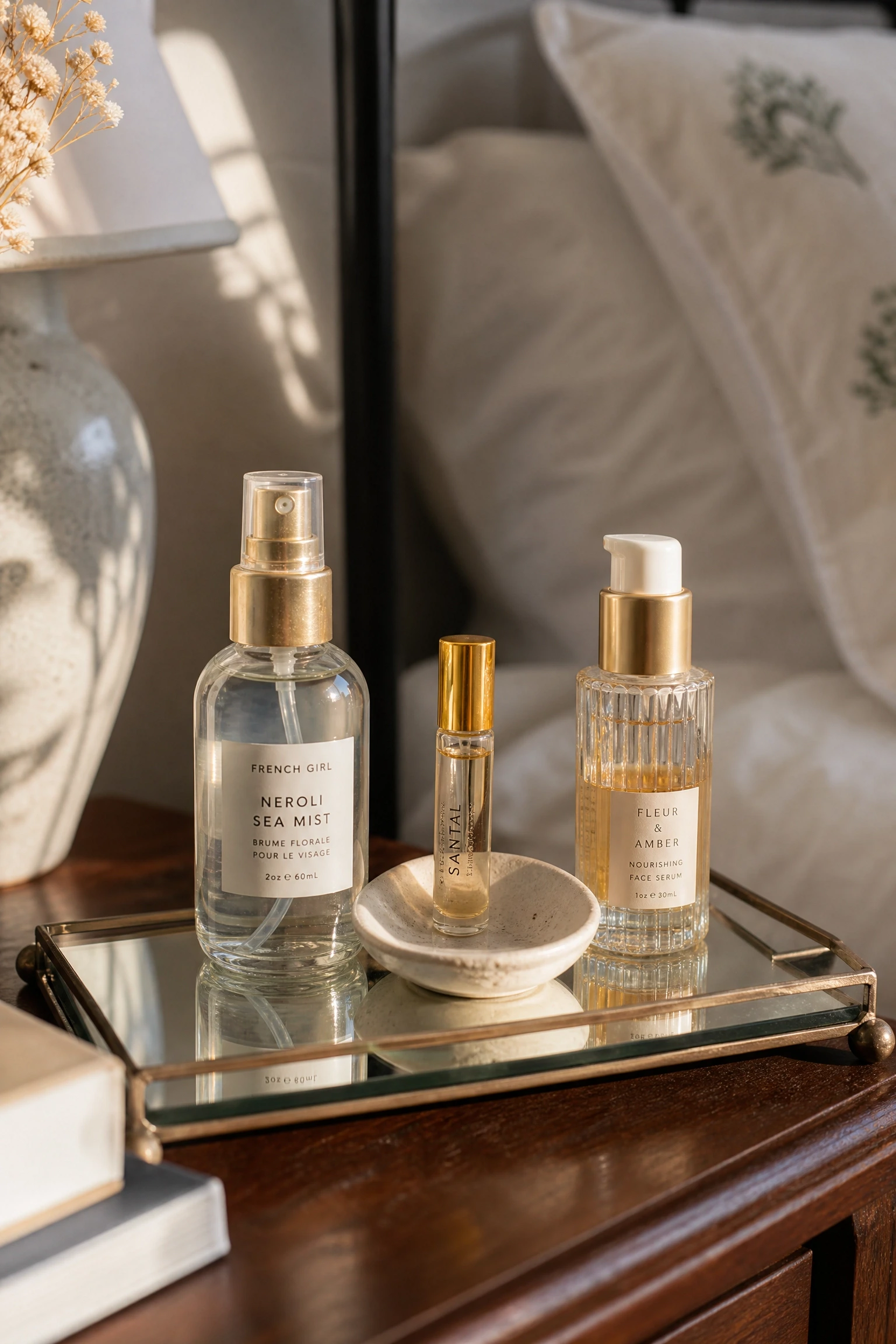
Summer skincare is different from winter skincare: lighter textures, higher SPF, after-sun products, facial mists, lighter-toned fragrance, and more frequent hydration. Displaying these products on the bedside table or the dresser in a way that is visually organized makes the room feel like a summer environment rather than a general bedroom that happens to be too warm. A small ceramic tray on the bedside table holding a facial mist in a glass bottle, a simple tube of light summer moisturiser, and a small rollerball of summer fragrance creates a vignette that is both genuinely useful for the morning routine and visually appropriate to the season. The decanting habit, moving products from their commercial packaging into attractive bottles and containers, lifts the arrangement considerably: a pump bottle of SPF in a glass bottle looks like an intentional part of the bedroom styling. The same product in its standard white plastic tube looks like something that forgot to go back in the cabinet.
Quick Tip: A small mirrored tray on the dresser for summer fragrance bottles and a few select skincare items creates the look of a perfumery counter that suits summer bedroom decor particularly well. The reflective surface of the mirrored tray catches the morning light and adds a sparkle that warm-season rooms benefit from.
25. Place a Tray of Citrus or Seasonal Fruit as a Still Life: Feels Joyful, Looks Abundant
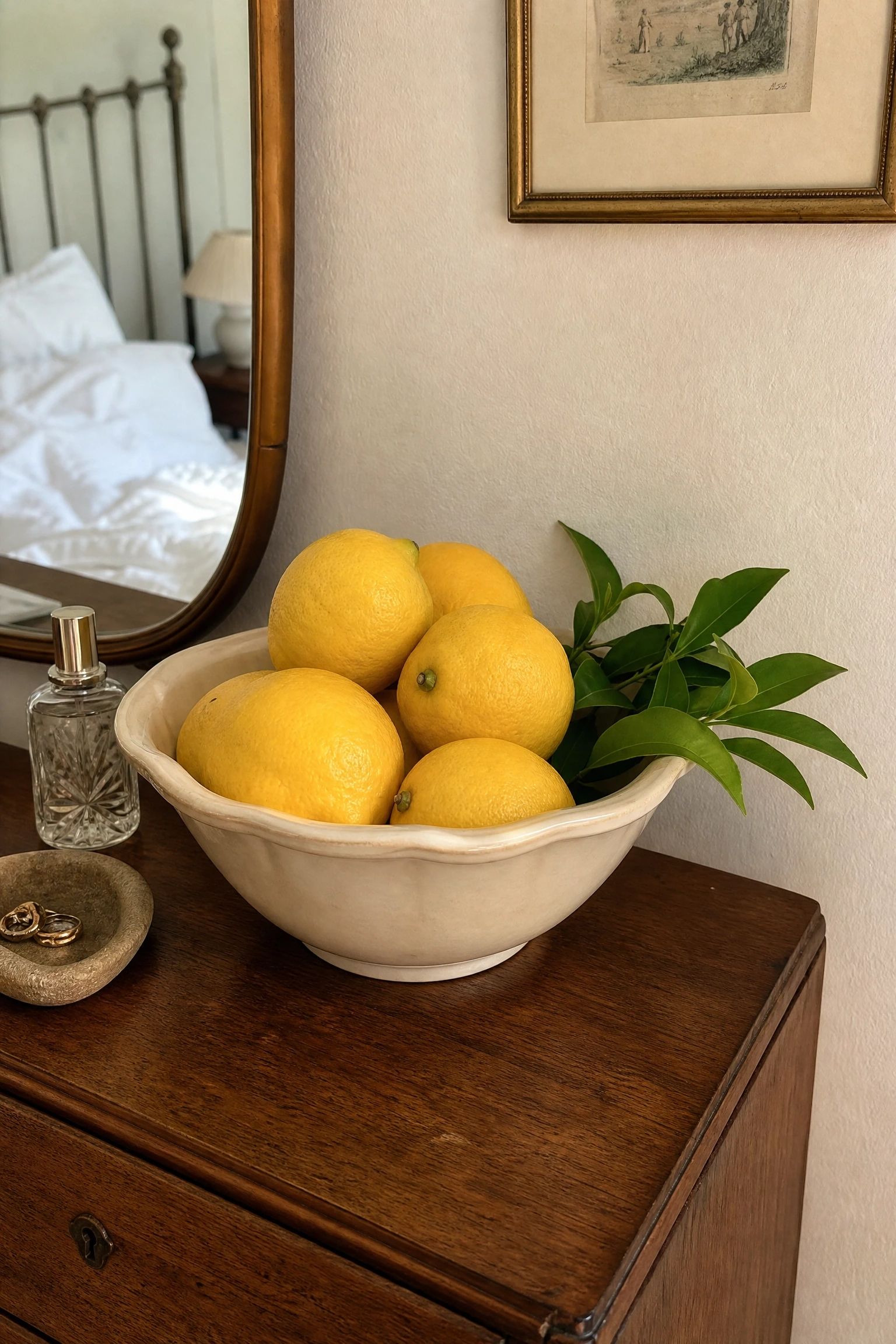
A bowl of lemons on a bedside table, a small ceramic dish of figs on the dresser, or a jug of water with sliced cucumber and mint on the windowsill are summer bedroom details borrowed from the visual language of Mediterranean interiors where food and beauty sit comfortably alongside each other. These details introduce colour, scent, and a genuine connection to the season in a way that manufactured accessories rarely achieve. A bowl of loose lemons in a cream ceramic bowl on the bedroom dresser costs almost nothing, lasts a week or two before needing replacement, and reads as both a still life arrangement and a sensory connection to summer in the same way that a vase of fresh flowers does but with a different, more citrus-forward quality. The practical note is that fresh fruit in a warm bedroom will ripen and soften more quickly than in a cooler room and needs to be checked and replaced regularly.
Designer Advice: Use odd numbers when arranging fruit as a still life: three lemons in a bowl, five figs on a plate, seven stems in a vase. Odd numbers create a natural, gathered-over-time quality that even numbers do not. A bowl of four identical lemons placed symmetrically looks like a product display. The same bowl with five lemons arranged loosely looks like someone brought them in from the garden.
26. Layer Natural Wood Tones into the Bedroom: Feels Warm, Looks Grounded
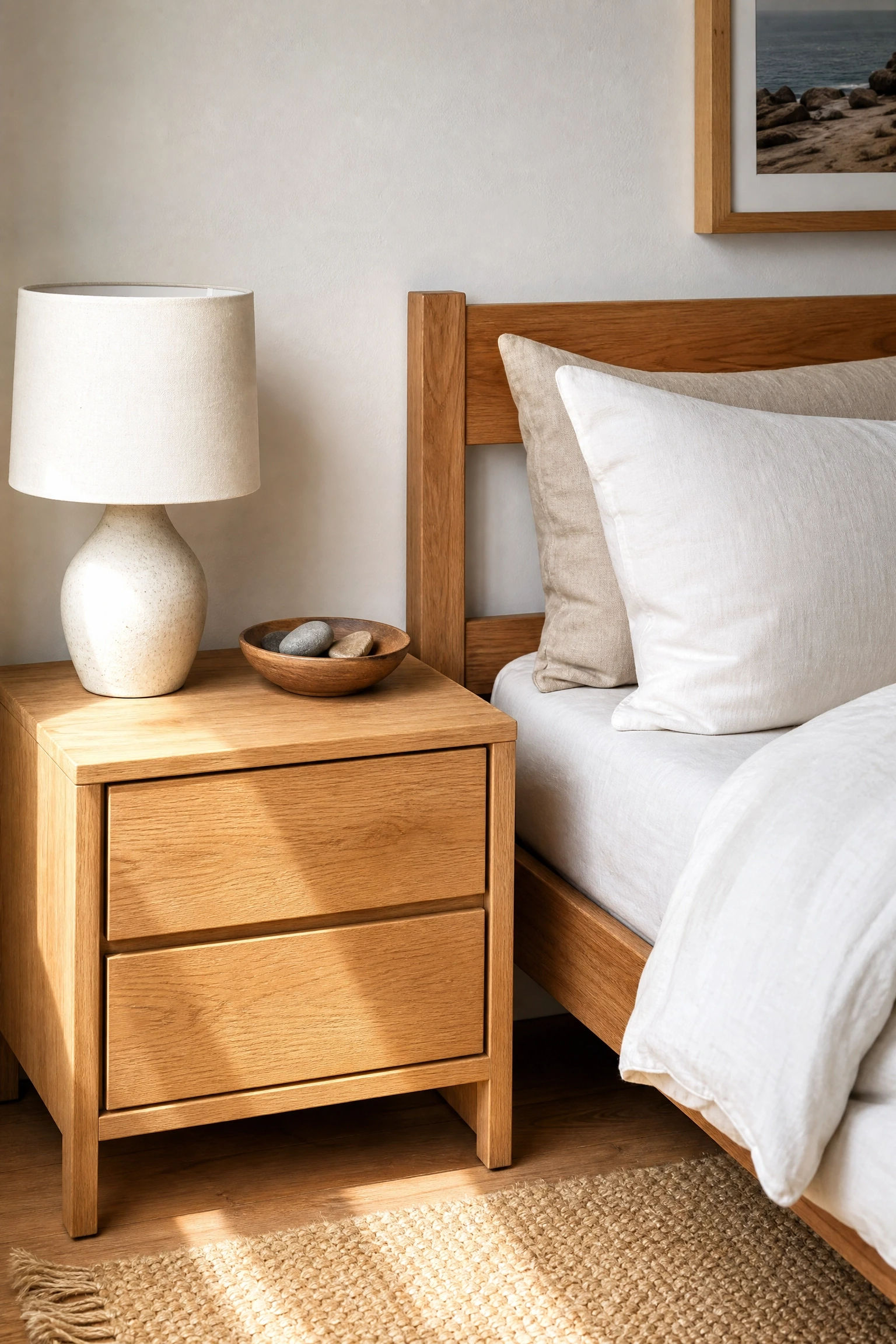
Summer bedroom decor that goes entirely toward cool tones, white, blue, sheer, pale, can sometimes end up feeling cold rather than cool: too austere, too empty, too much like a rented holiday accommodation where the personality has been deliberately removed. Layering in natural wood tones, whether through a timber bedside table, a wood-framed mirror, an oak ladder shelf in the corner, or simply a small wooden bowl on the dresser, provides the grounding warmth that stops a summer bedroom from tipping from airy into sterile. The right wood tone for a summer bedroom is light to medium: pale oak, honey-toned ash, or warm blonde timber suits the season better than very dark walnut or ebony, which reintroduce the visual heaviness that the summer decor is trying to remove. In a bedroom that is predominantly white and linen with rattan accessories, a pair of matching timber bedside tables introduces a material depth that makes the room look designed and lived in at the same time.
Reality Check: Natural timber furniture does not need to match perfectly across a summer bedroom. A light oak bedside table alongside a slightly warmer-toned timber bed frame reads as collected and personal rather than mismatched, provided both pieces fall within the same warm natural wood family. What looks mismatched is very light blonde timber alongside very dark espresso stained wood in the same room.
27. Style a Morning Ritual Corner: Feels Intentional, Looks Like a Retreat
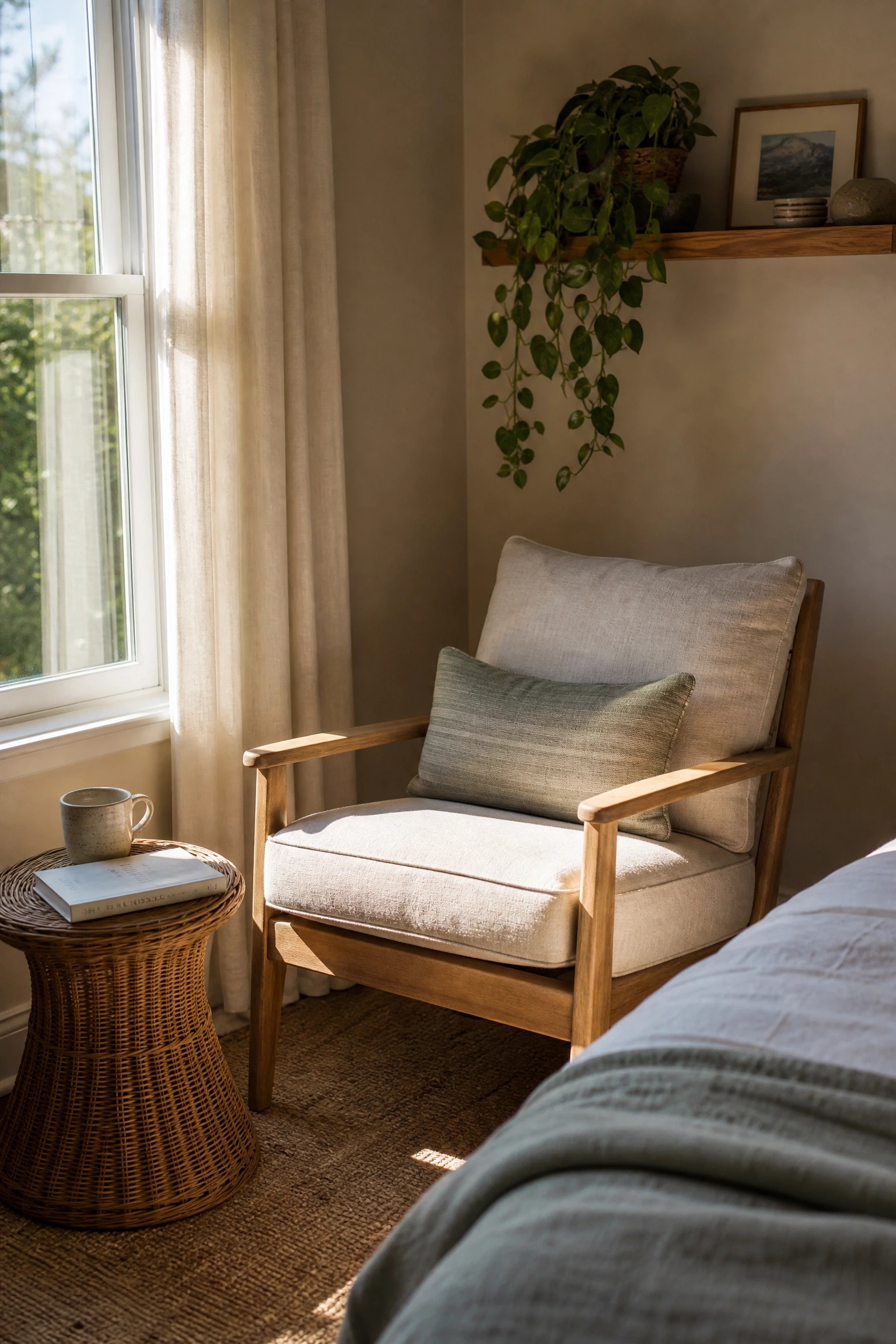
A dedicated morning corner in the summer bedroom, even if it is just a small chair or a folded stool with a side table beside it, creates a spatial ritual that makes the bedroom feel more like a personal retreat and less like a place for sleeping alone. A rattan or linen-upholstered chair in the corner nearest the window with a small side table holding a ceramic cup, a book, and a stem or two in a glass jar creates a morning zone that the summer bedroom genuinely benefits from: it is where you sit with the first drink of the day before the room heats up, where you read for the last twenty minutes before sleep while the fan is on across the bed, and where the bedroom earns its identity as a room that does more than hold a mattress. The summer morning corner is the one area of the bedroom where slightly more decorative styling is appropriate because it exists as a deliberately designed space rather than a functional necessity, and it is the detail that guests notice and that makes the bedroom feel like a place someone genuinely inhabits with care.
Designer Advice: Position the morning corner chair so that it faces both the window and a view of the bed. A chair that faces only the wall is less likely to be used than one with a view into the room and access to natural light. The functional success of a morning corner depends on it being positioned so that sitting in it feels genuinely preferable to staying in bed.
28. Do the Full Seasonal Swap in One Afternoon: Feels Completely Different, Looks Entirely New
The most impactful summer bedroom change is not any individual idea from this list. It is doing the full seasonal swap in a single committed afternoon: replacing the heavy duvet with the summer version, swapping the winter cushion covers for the summer ones, bringing in the flat-weave summer rug to replace the pile rug, switching the heavy curtains for the sheer panels, clearing every surface and restyling it with only summer-appropriate items, moving the winter artwork and hanging the summer print, placing the new bedroom plant in its corner, and putting the winter fragrance away in favour of the summer scent. Each of these changes is modest on its own. Done together in a single afternoon, they produce a bedroom that feels genuinely like a different room: lighter, airier, more personal to the season, and significantly more comfortable for the months ahead. The storage of the winter items should happen at the same time, not be left for later, because a bedroom in transition between seasons, with winter items piled in corners waiting to be put away, does not feel like either season and benefits from neither.
Pro Move: Label all stored seasonal items clearly with the season they belong to and the room they came from. A box labelled simply “bedroom winter” that goes under the bed in June can be unpacked in October without the annual searching through unlabelled boxes that makes the seasonal swap feel like a project rather than a pleasure.
A summer bedroom is not a Pinterest mood board. It is a room where you sleep through warm nights, start summer mornings, and spend the slow hours of hot afternoons, and the decor decisions you make for it should serve all three of those experiences. The best summer bedroom ideas in this list are not the ones that look the most like a magazine feature. They are the ones that make your specific room feel physically cooler, visually lighter, and more genuinely connected to the season you are actually living in. The linen duvet that helps you sleep through a warm night matters more than the decorative canopy above the bed that photographs beautifully. The ceiling fan positioned to create a cross-breeze from the window matters more than the rattan headboard behind it. Do the functional changes first, layer the visual ones on top, and the result will be a summer bedroom that works rather than one that only looks like it should.
Start with whichever change on this list creates the biggest gap between your bedroom now and the summer bedroom you want. Most of these ideas are a morning or an afternoon of work. A few are a weekend. None of them require a renovation. And the difference between a bedroom that carries its winter character straight through July and a bedroom that genuinely feels like summer is almost always smaller than people expect, starting with a single change that shifts the whole room in the right direction.
“Which of these summer bedroom ideas are you trying first? Drop it in the comments below.”
Frequently Asked Questions
How do I make my bedroom feel cooler in summer without air conditioning?
The most effective non-air conditioning cooling approaches for a bedroom are: switching to linen or cotton bedding, which breathes and wicks heat better than synthetics; using a ceiling fan set to counterclockwise to push air downward; replacing heavy curtains with sheer panels that allow air movement; clearing excess soft furnishings that trap heat; positioning a fan to create a cross-breeze between the window and the door; and keeping blackout blinds closed during the hottest part of the day to prevent solar heat gain through the glass.
What colours make a bedroom feel cooler in summer?
Cool blues, soft greens, muted seafoam, pale lavender, and warm white all create a visual impression of coolness through their psychological associations with water, sky, nature, and open space. These colours reflect light rather than absorbing it, which also means the room stays physically slightly cooler than a room with dark walls. The most versatile summer bedroom colour is warm white, which suits every summer palette and reads as cooler than cream or beige without the commitment of a specific colour choice.
What bedding material is best for summer?
Linen is the most recommended summer bedding material for both comfort and aesthetics because it is breathable, moisture-wicking, and gets softer with every wash. Percale cotton (a plain weave with a thread count between 200 and 400) is the most practical summer sheet option because it is widely available, affordable, and genuinely cool to the touch. Bamboo fabric is increasingly popular for summer bedding because it is even more moisture-wicking than cotton and has a silky feel that suits warm nights. Avoid sateen cotton, polyester blends, and flannel in summer bedrooms, as all three trap heat rather than dissipating it.
How do I refresh my bedroom for summer on a budget?
The highest-return, lowest-cost summer bedroom changes are: clearing and restyling surfaces with only five items each (free), buying a set of linen-look cotton duvet covers (affordable), swapping cushion covers for summer versions (can be under ten dollars per cover), bringing in fresh flowers or a supermarket bunch of eucalyptus (under five dollars), and placing a plant from another room in the bedroom corner for the season (free). The complete seasonal swap of bedding, cushion covers, and surface styling can usually be achieved for under fifty dollars and makes a room feel completely different.
What plants work best in a summer bedroom?
Peace lilies, Boston ferns, pothos, and spider plants are the best choices for summer bedroom positions because they process oxygen throughout the night rather than during the day only, tolerate the warmth and humidity of a summer bedroom, and introduce the lush, tropical quality that suits the season visually. Snake plants and succulents are excellent low-maintenance choices for surfaces but perform differently from a sleep environment perspective because their nocturnal photosynthesis cycle releases carbon dioxide at night. For a closed summer bedroom, peace lilies and pothos are the better air quality choices.
What is the easiest summer bedroom update?
Swapping the duvet cover for a linen or cotton-feel cover in a summer tone takes under ten minutes and changes the visual temperature of the bedroom immediately. Clearing both bedside tables down to three items each takes five minutes and makes the room feel lighter without any purchases. Bringing in a bunch of fresh flowers from a supermarket or farmers market takes a trip and five minutes of arranging and changes the atmosphere of the room for a week or more. The fastest visible impact for the least effort is usually the bedding change, which is why it appears at the top of almost every summer bedroom list including this one.