A bedroom rug makes the difference between cold feet hitting a hard floor every morning and a warm, soft landing. I went years without a rug under my bed and did not realize what I was missing until I finally put one down. The right rug changes how the whole bedroom feels. Here are the bedroom rug ideas that work for comfort, style, and practicality.
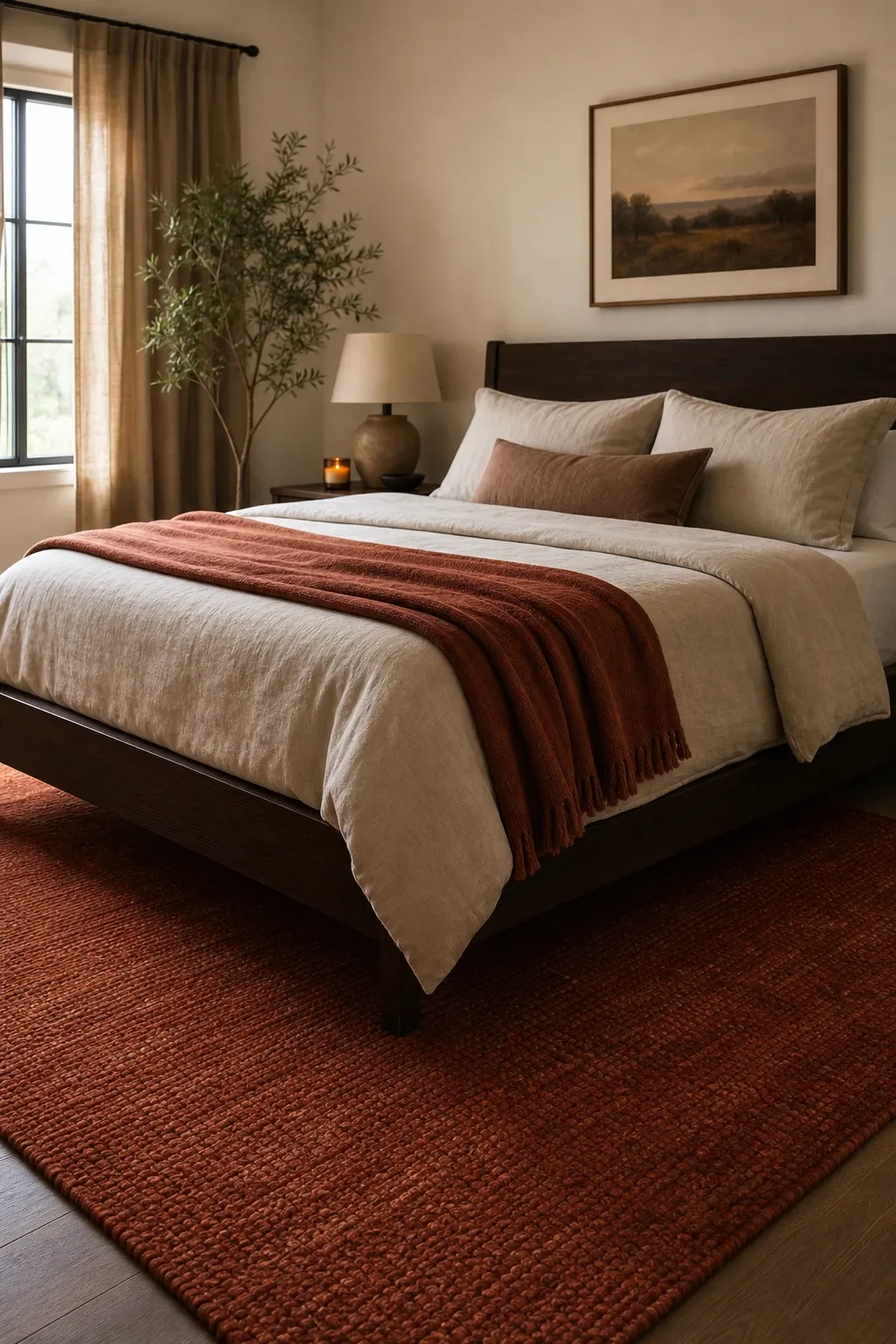
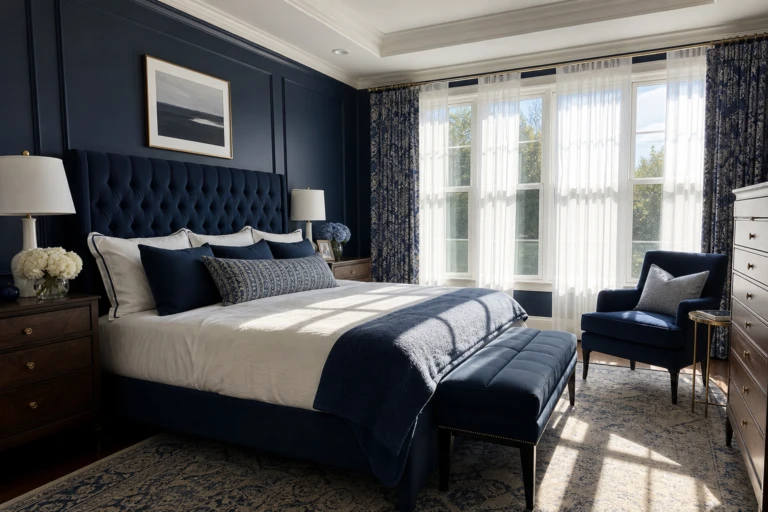
A large rug that extends at least 18 to 24 inches beyond the sides and foot of the bed is the most classic bedroom rug placement. You step onto soft rug when you get out of bed on either side and the rug frames the bed area, anchoring it to the room. For a king bed, you need at least an 8-by-10-foot rug. For a queen, a 6-by-9 can work but 8-by-10 is better. The rug should feel substantial, not like an afterthought floating in the middle of the floor.
Designer Tip: Center the rug under the bed so equal amounts show on each side. An off-center rug under the bed looks crooked and unbalanced. Measure from each side of the bed to the rug edge and adjust until both sides match.
Two identical runners, one on each side of the bed, provide a soft landing for your feet without the cost of a large area rug. This option works well in bedrooms where the bed is against a wall on one side or where the room shape makes a large rug awkward. The matching runners create symmetry and look intentional. Choose runners that are at least as long as the bed so they extend from the headboard to the foot.
Designer Tip: Position each runner so it starts even with the headboard and extends to at least the foot of the bed. Runners that are too short for the bed length look skimpy and out of proportion. Longer runners that extend past the foot of the bed look even better.
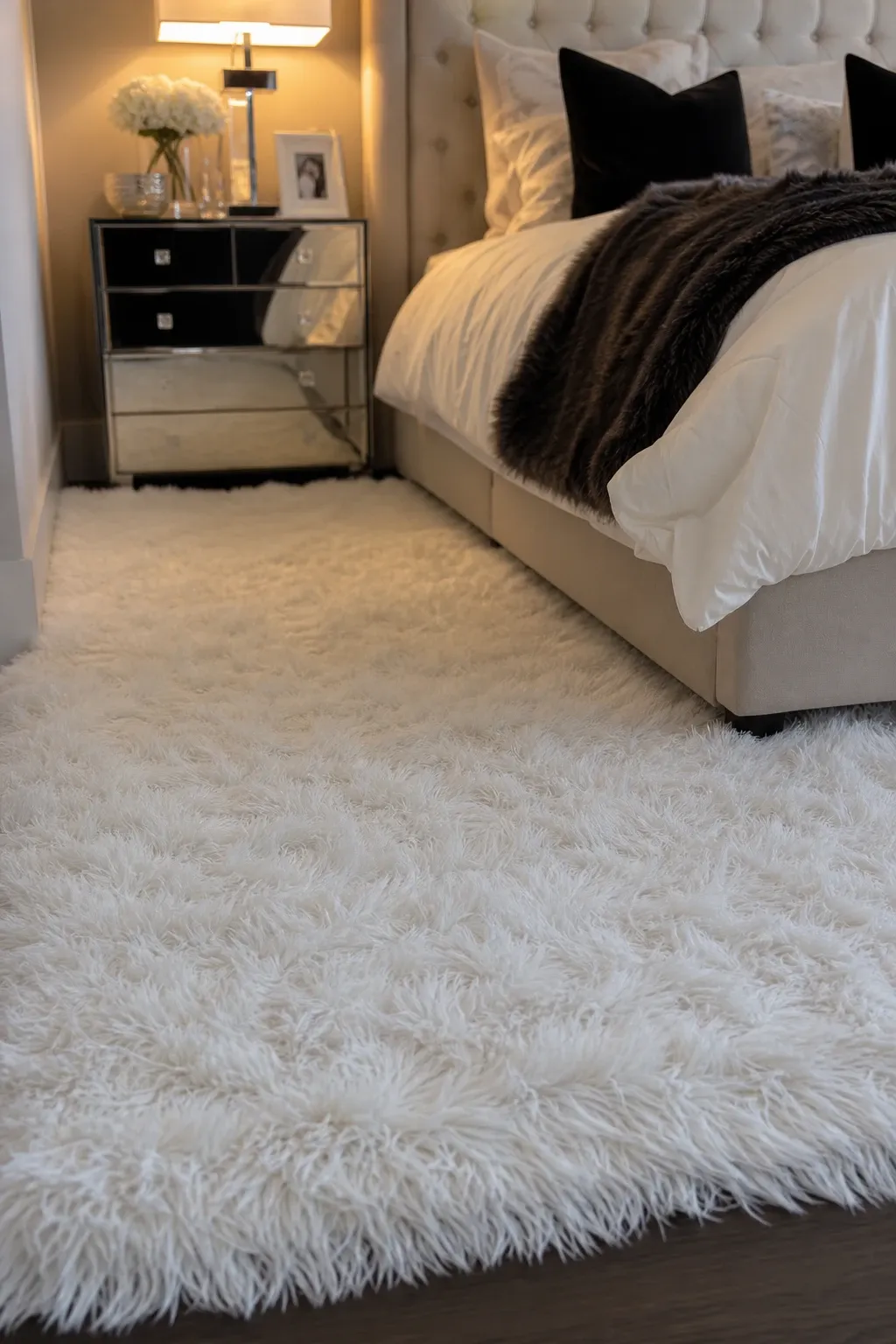
A thick shag rug turns the bedroom floor into something you actually enjoy stepping on. The deep pile feels like walking on a cloud and adds luxury to the room. Shag rugs work best in bedrooms because the room has less foot traffic than a living room, so the deep pile stays fluffy longer. Neutral colors like ivory, gray, or taupe keep the plush texture from looking too busy.
Designer Tip: Vacuum shag rugs with a suction-only setting, not a beater bar. The rotating brush on a standard vacuum pulls the long fibers and damages the pile over time. A canister vacuum or a vacuum with the beater bar turned off is much gentler on shag.
A smaller patterned rug layered on top of a larger neutral rug creates depth and visual interest. The large rug covers the floor and the smaller rug adds personality. This layered approach lets you change the top rug without replacing the larger, more expensive base rug. A colorful kilim on top of a natural jute rug is a popular combination that works in boho, eclectic, and modern bedrooms.
Designer Tip: Place a rug pad between the two layers to prevent the top rug from sliding. Layered rugs without a grip pad bunch up and shift every time you walk across them. A thin non-slip pad between the layers keeps everything flat and in place.
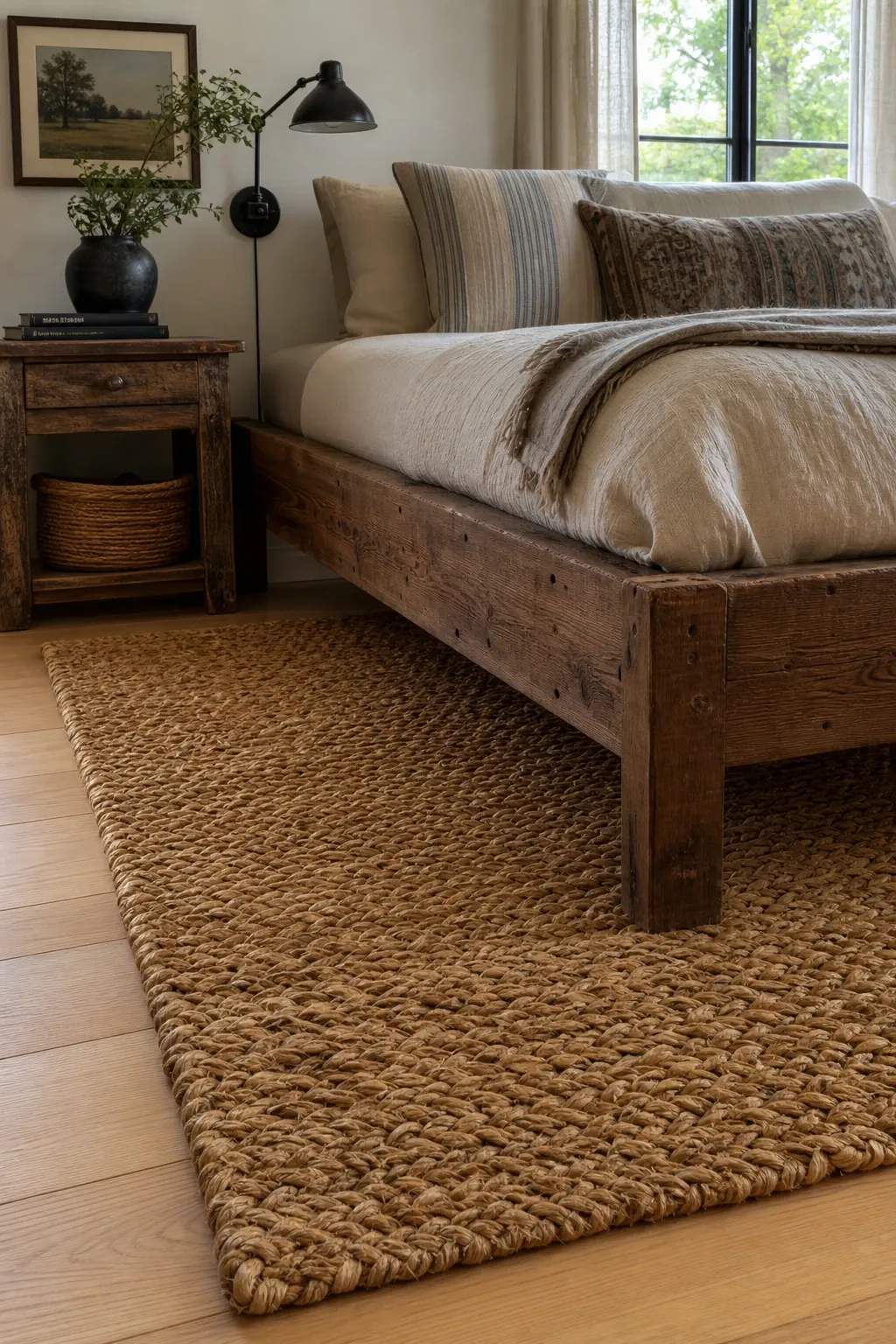
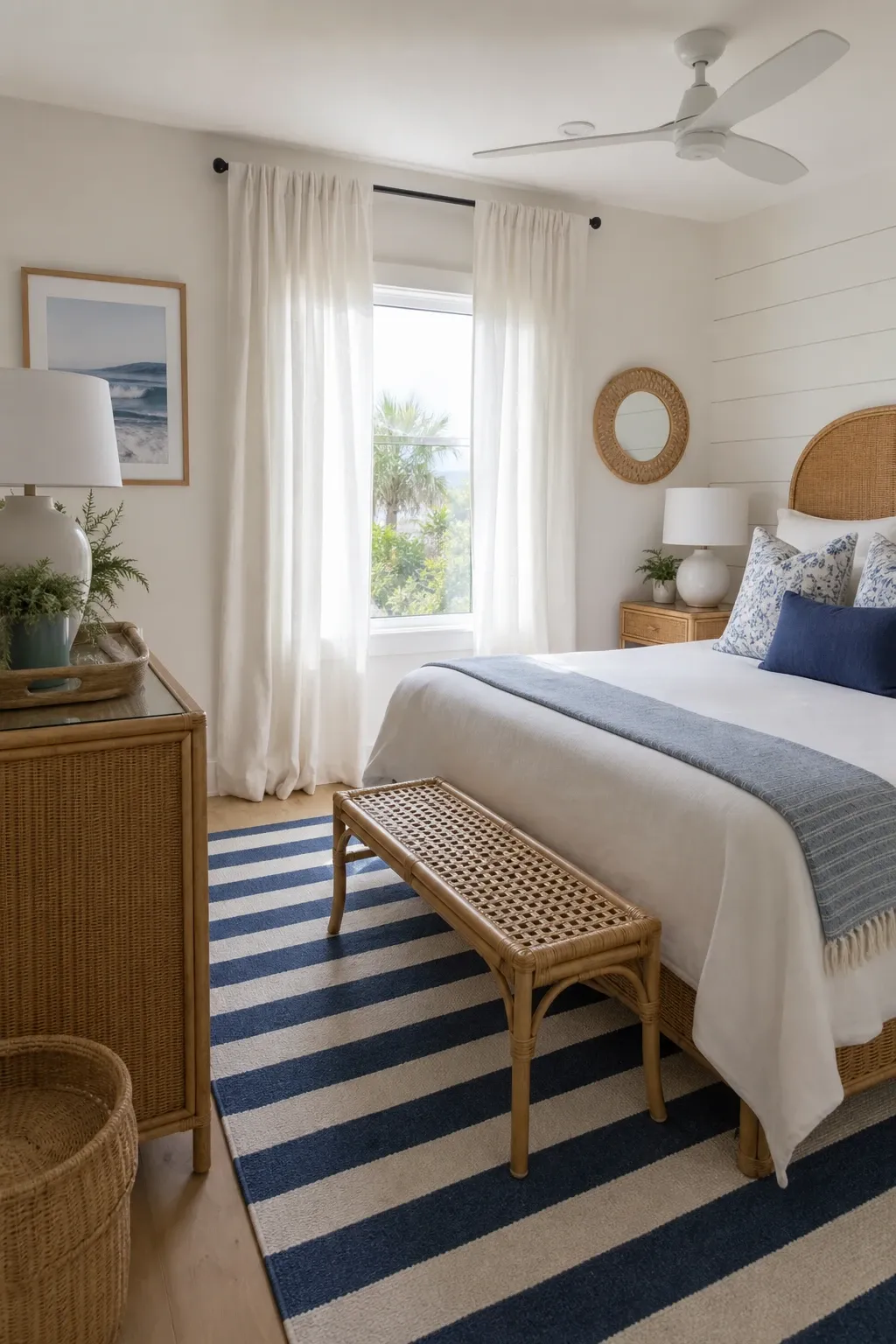
A jute or sisal rug under the bed adds natural texture and a warm, earthy tone. These rugs are affordable in large sizes, which makes them a good option if you need a big rug on a budget. The woven texture is visually interesting without a pattern, so it works as a neutral base that complements any bedding and furniture style. Natural fiber rugs suit farmhouse, coastal, boho, and Scandinavian bedrooms.
Designer Tip: If the roughness of jute or sisal bothers your bare feet, place a softer rug or sheepskin on top on your side of the bed. You get the visual coverage of the large natural rug with the comfort of a softer surface where your feet land each morning.
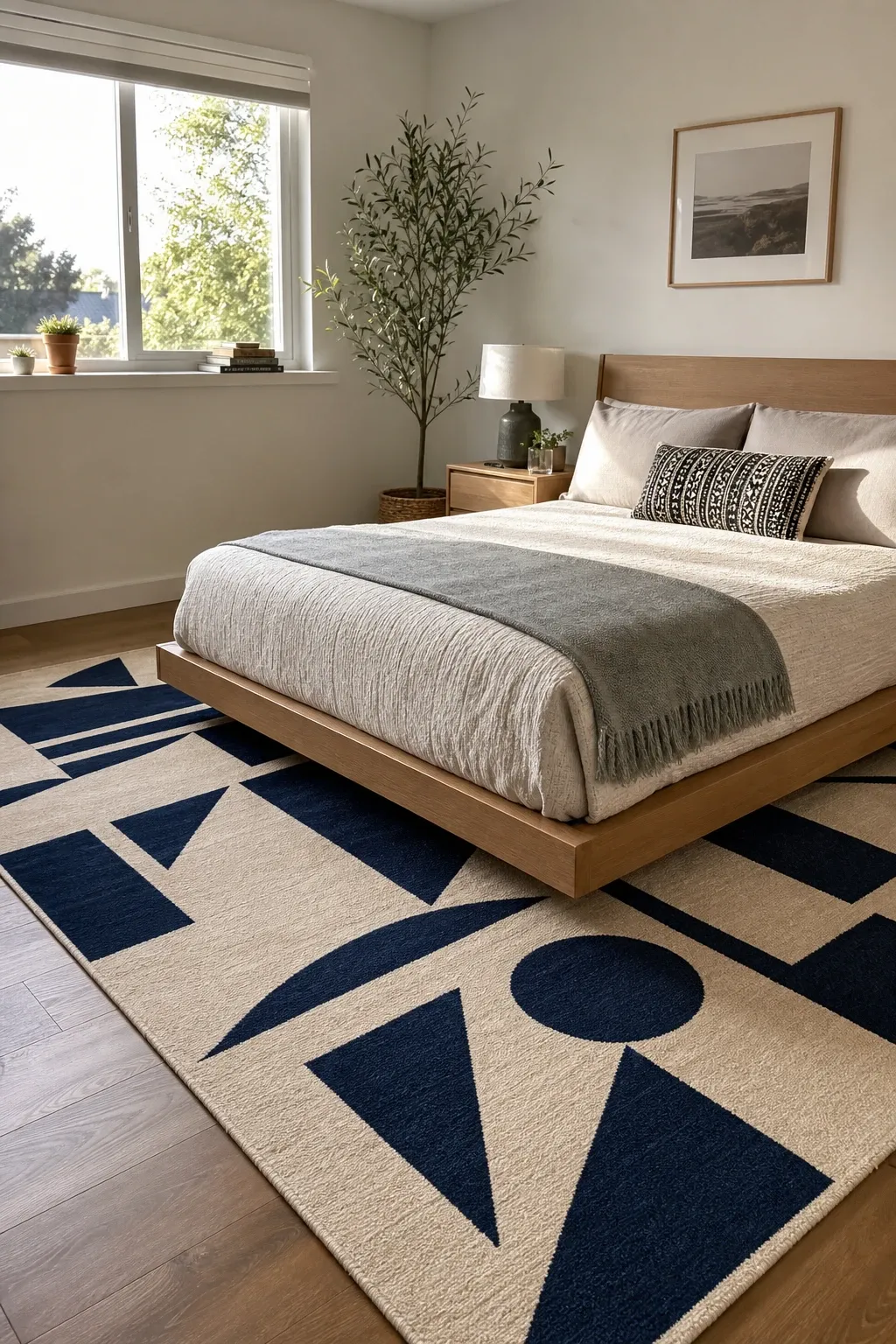
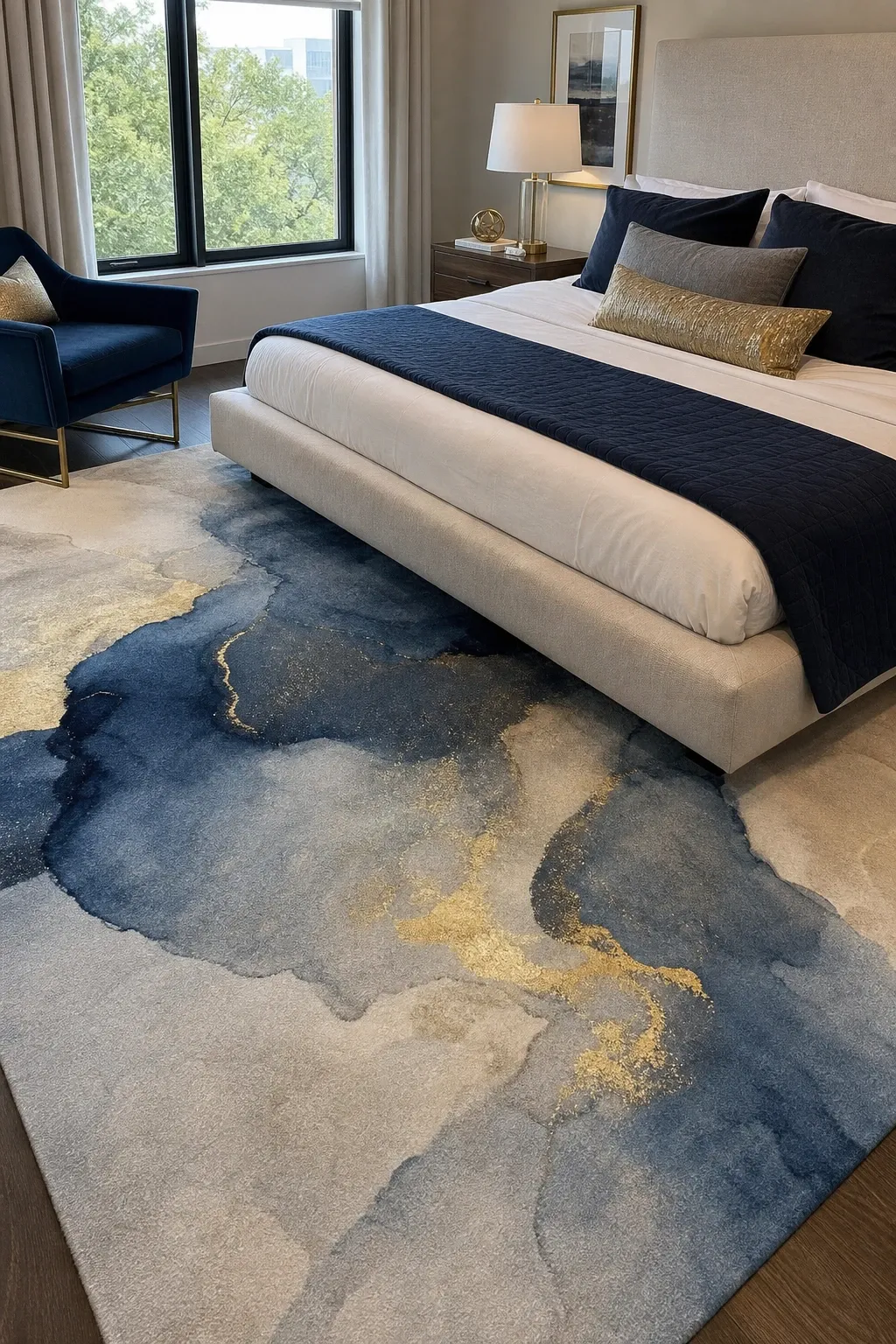
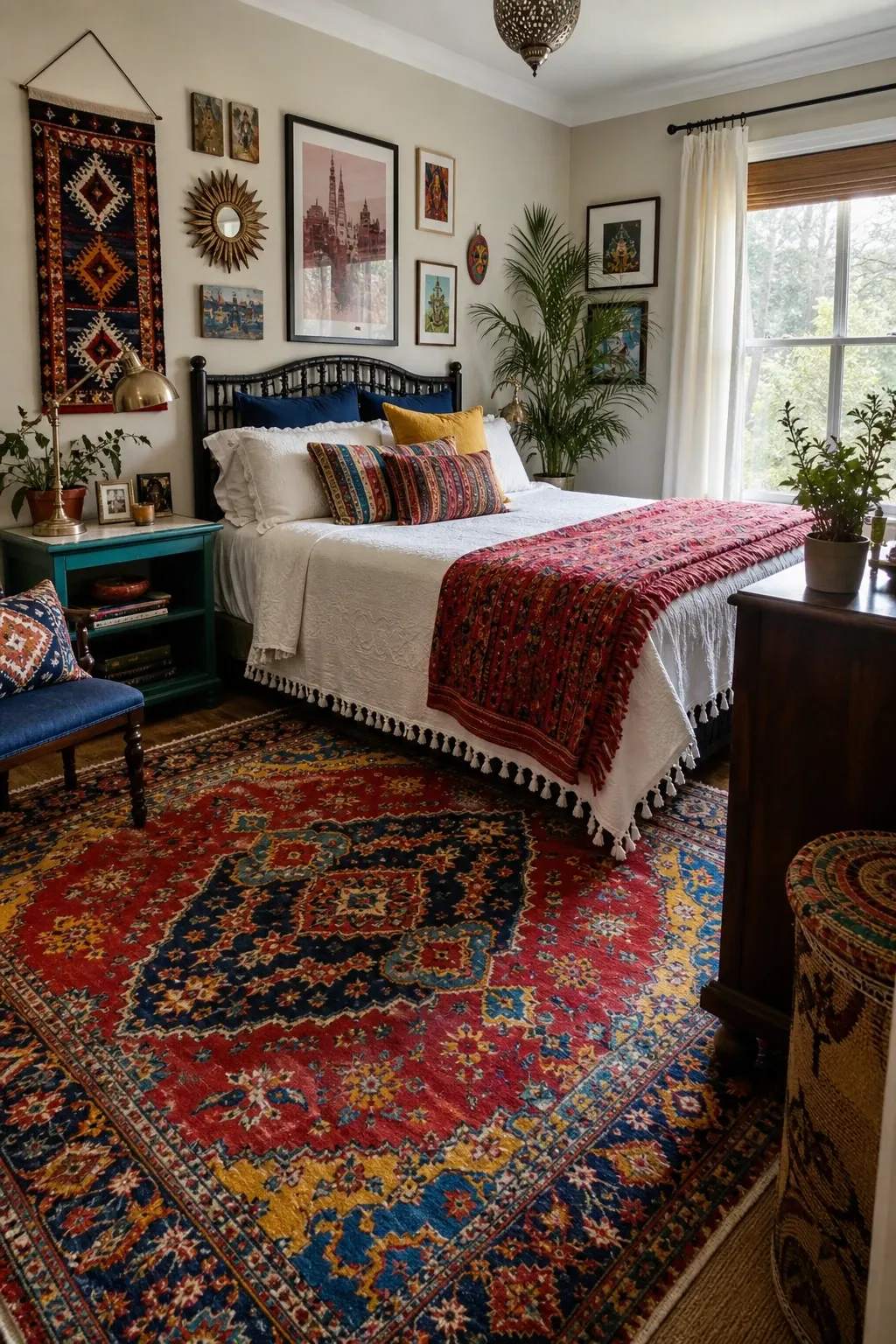
A rug with a bold pattern in the bedroom adds visual interest that the bed and furniture alone cannot provide. The rug becomes the design element that pulls the room together. Persian, Moroccan, geometric, or abstract patterns all work well in bedrooms. Choose a pattern that includes at least one color from your bedding to connect the rug to the rest of the room.
Designer Tip: If the rug pattern is bold, keep the bedding simple. A busy rug with busy bedding creates visual competition that makes the room feel restless. One bold element and one calm element balance each other and let both shine.
A faux sheepskin or wool rug placed right beside the bed gives your feet the softest possible landing every morning. Sheepskin rugs are small and affordable, making them an easy addition to any bedroom. The fluffy texture adds a cozy, inviting quality that hard floors lack. Place one on each side of the bed or use a single large one on your side. They are machine washable, which makes maintenance simple.
Designer Tip: Shake faux sheepskin rugs outdoors weekly to keep the fibers fluffy. Without regular shaking, the pile mats down from foot traffic and loses the plush quality that makes it special. A quick shake restores the loft and keeps it looking new.
A round rug placed at the foot of the bed breaks up the rectangular geometry of the room. The circular shape softens the straight lines of the bed, nightstands, and dresser. A round rug works especially well in square bedrooms where a rectangular rug would just echo the room shape. Choose a round rug that is at least 5 feet in diameter so it has enough presence to look intentional.
Designer Tip: Center the round rug with the bed, not the room. The rug should sit visually connected to the foot of the bed, slightly overlapping or just touching the bed frame edge. A round rug floating in the middle of the room unconnected to any furniture looks random.
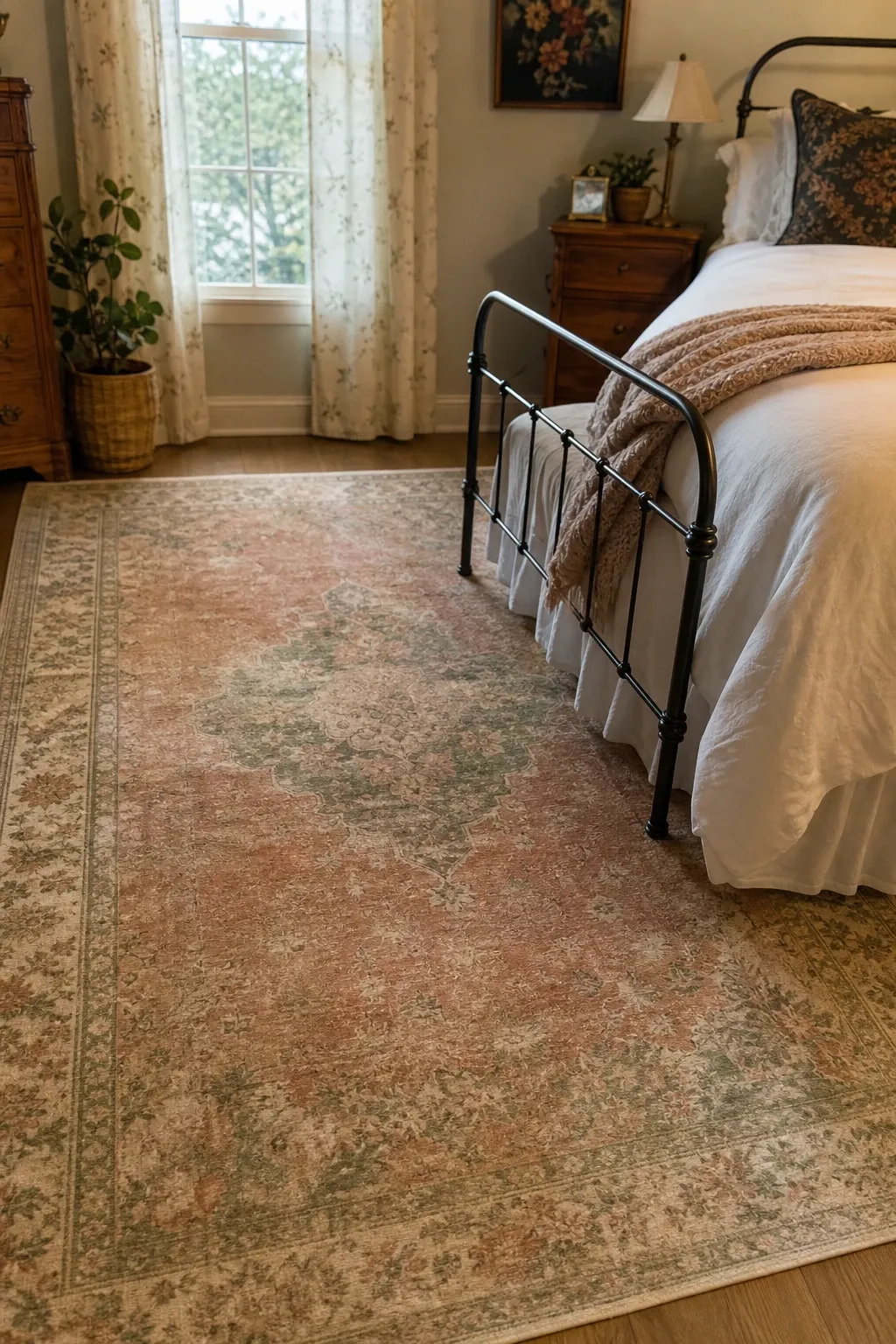
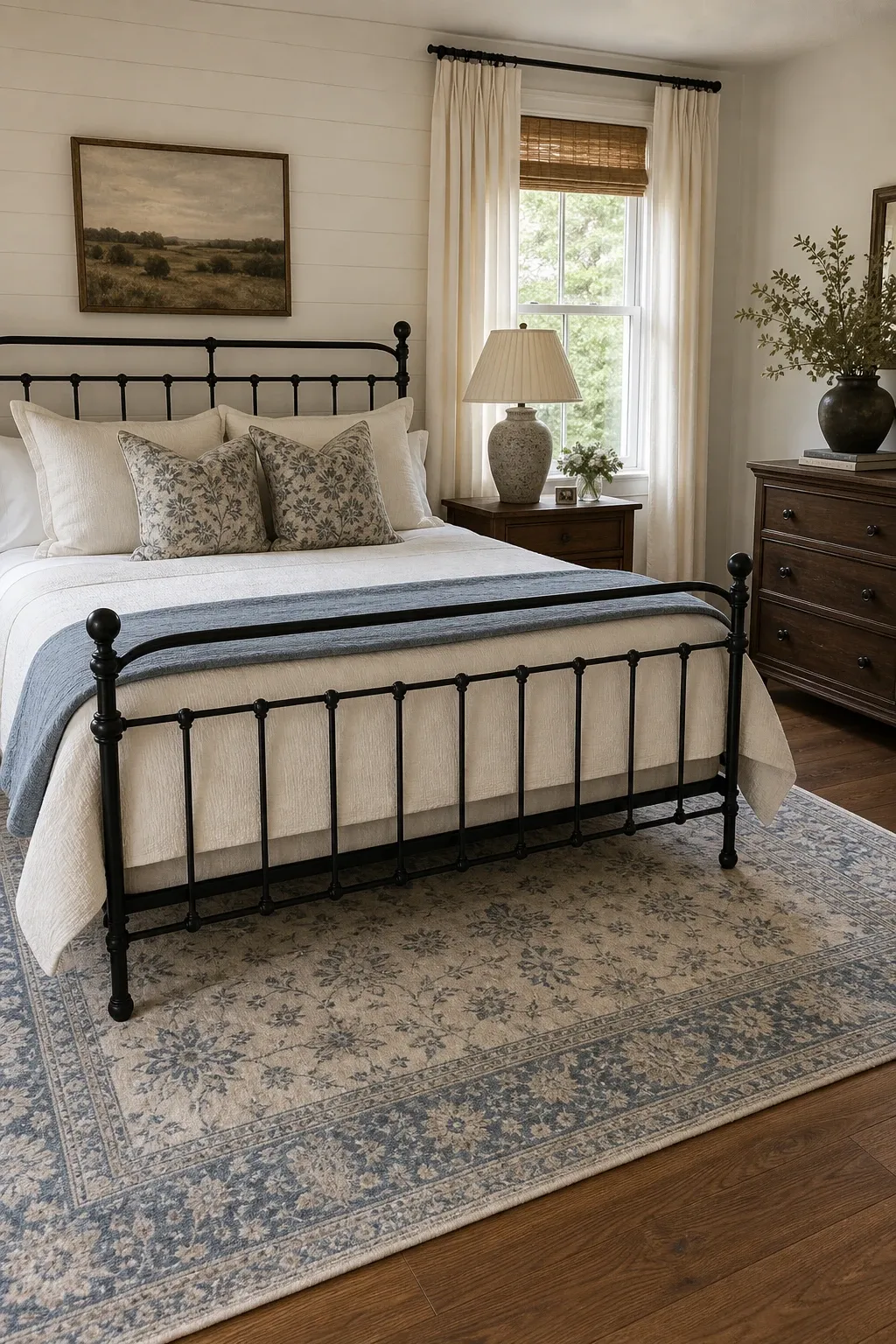
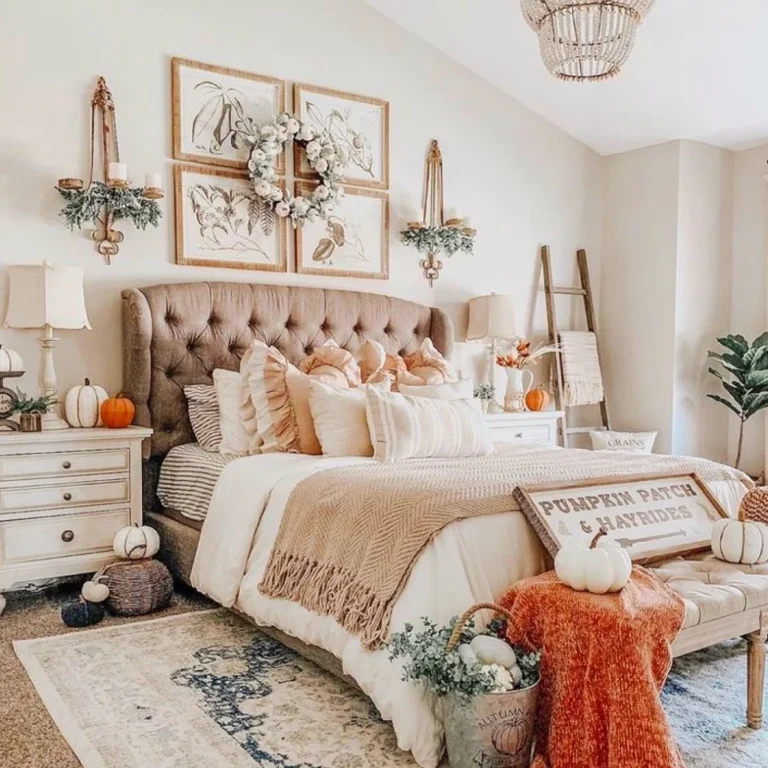
A rug with a vintage look or deliberate distressing adds character and warmth to the bedroom. The faded colors and worn appearance make the rug feel like a collected piece rather than a recent purchase. Vintage-style rugs hide actual wear and stains well because the imperfections blend with the intentional distressing. Muted blues, faded reds, and washed golds are the most common colors in this style.
Designer Tip: A vintage rug looks best on hardwood floors where the contrast between the soft, faded rug and the clean wood surface is visible. On carpet, vintage rugs lose some of their visual impact because the softness of the rug blends with the softness of the carpet.
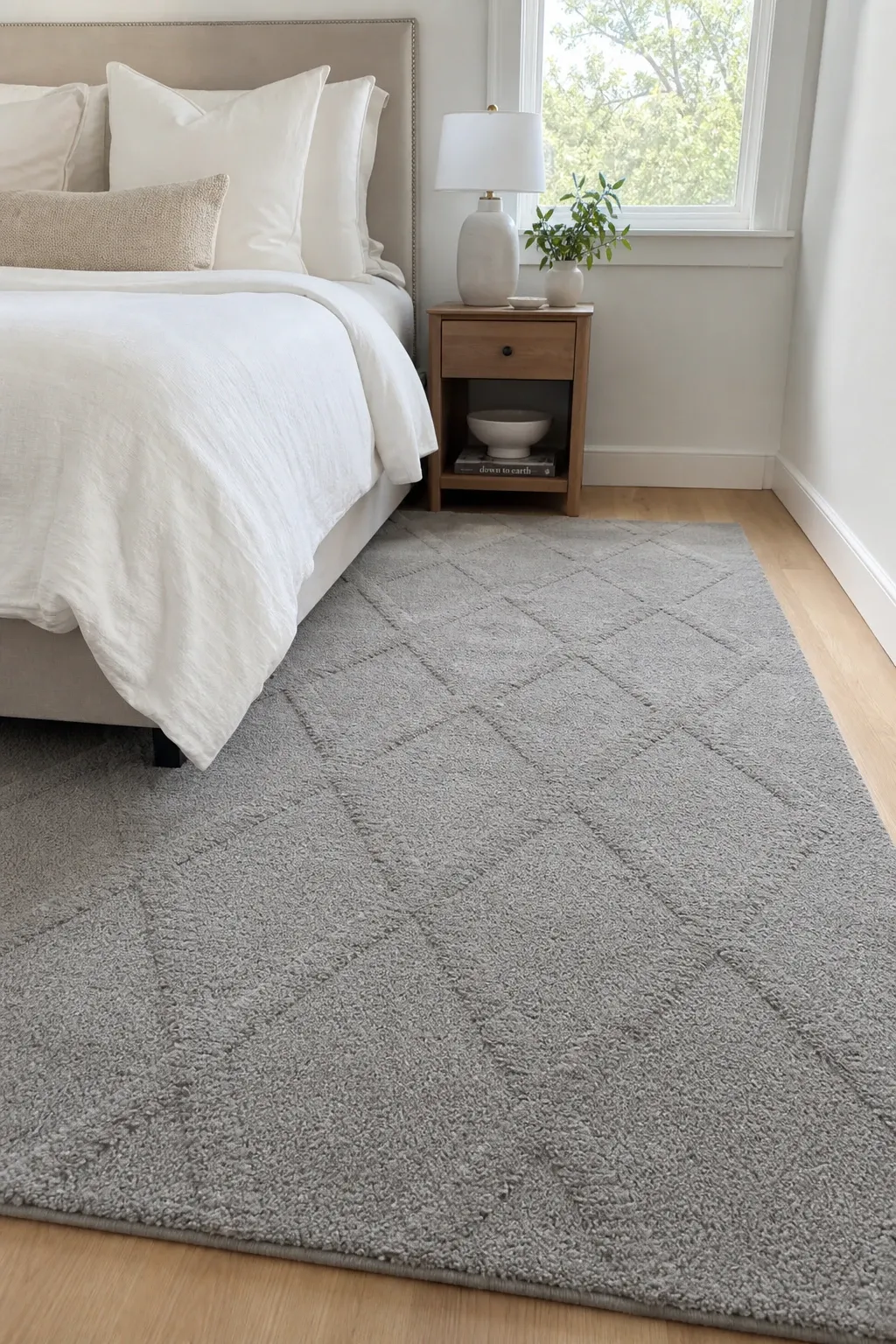
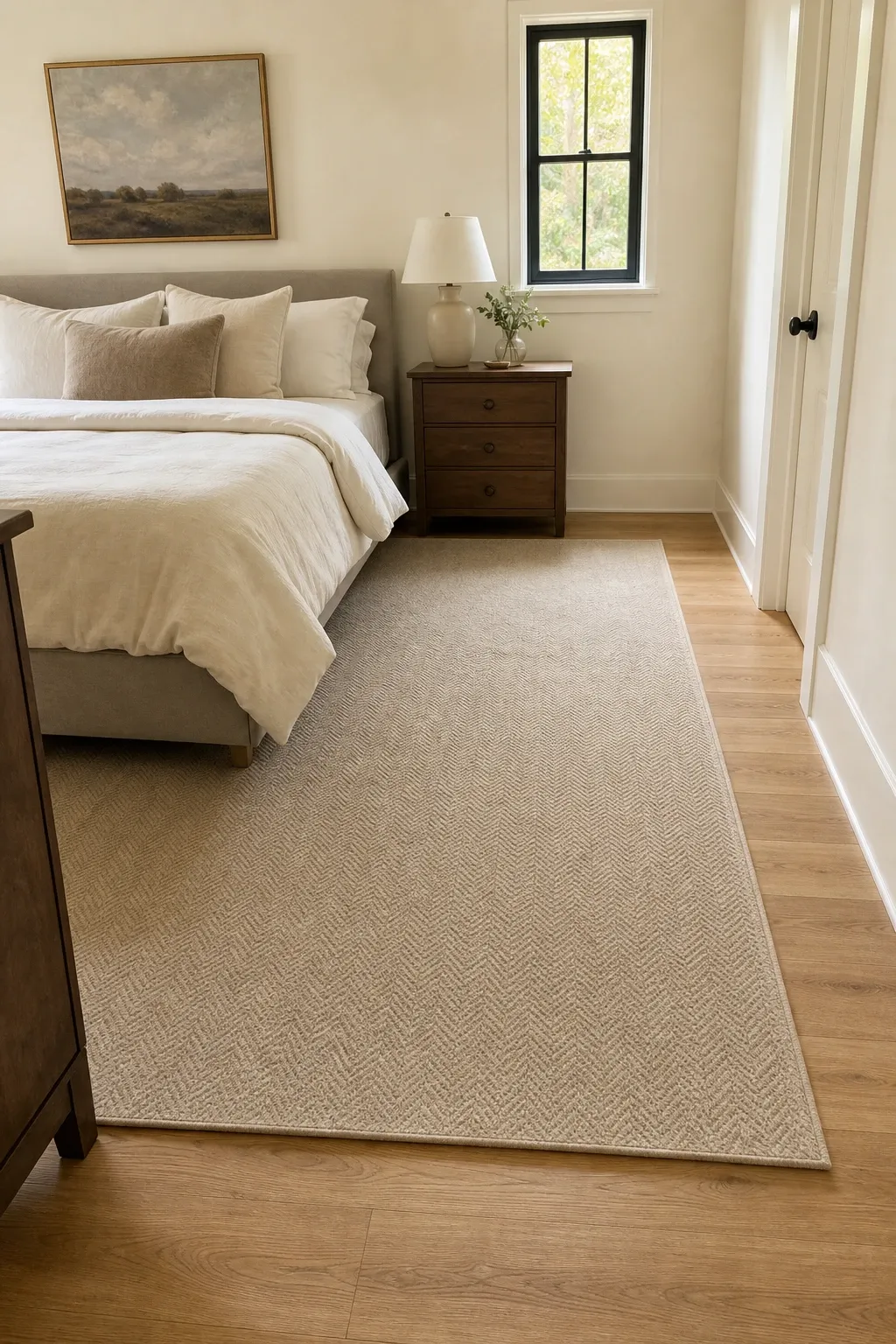
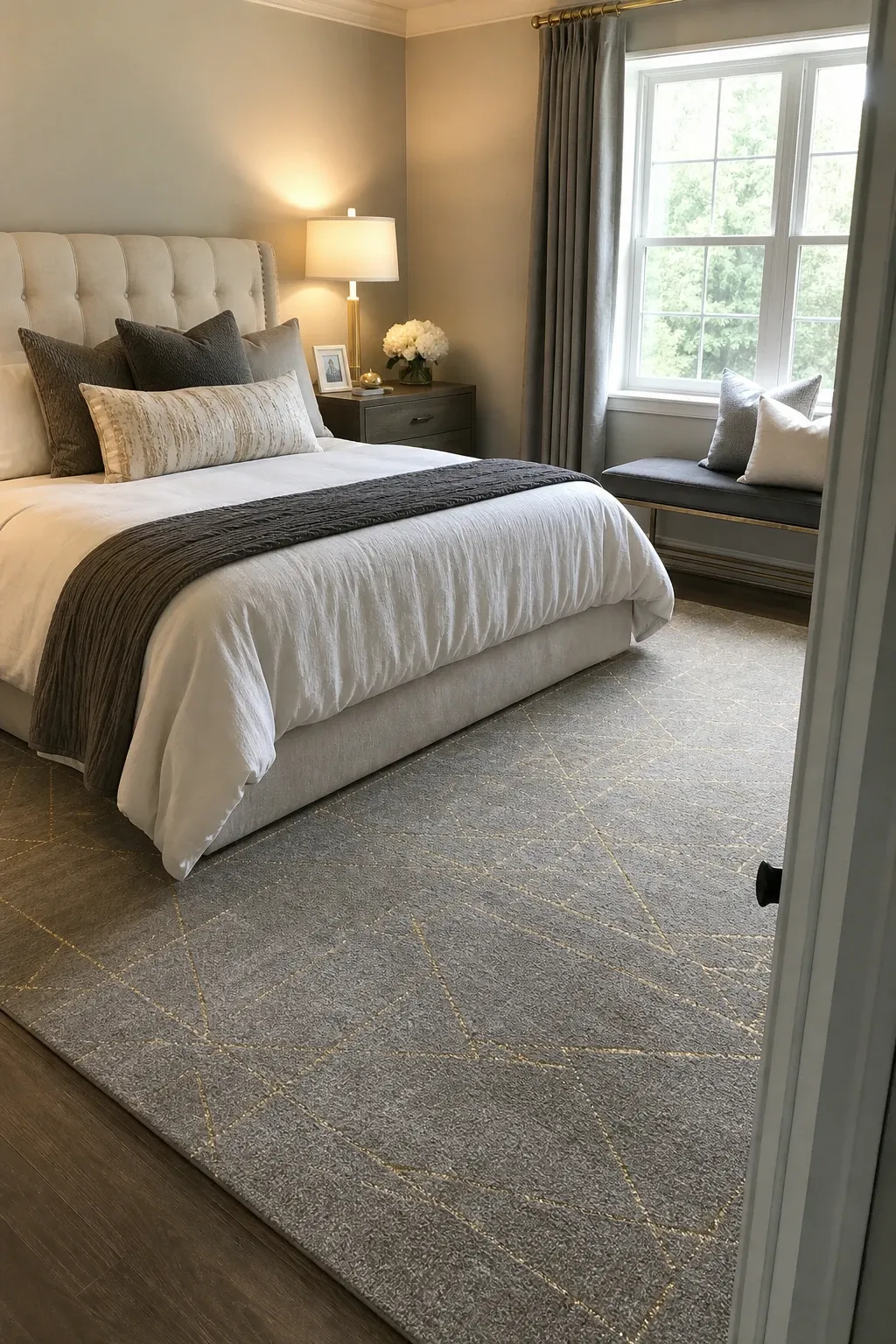
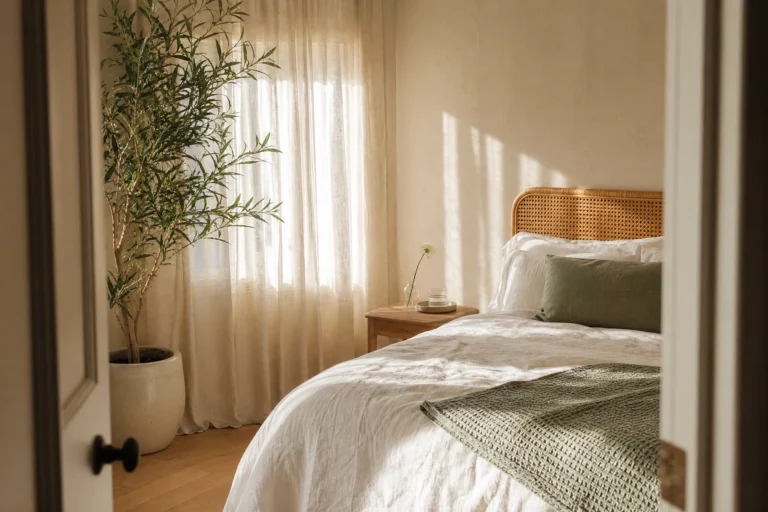
A neutral rug in cream, ivory, or soft gray with a subtle tone-on-tone pattern adds texture without adding color. The pattern is visible up close but reads as a solid from across the room. This quiet approach works in bedrooms where you want the rug to complement the room without standing out. Tone-on-tone rugs pair with any bedding color and any furniture style because they stay in the background.
Designer Tip: Light neutral rugs show every speck of dirt in a bedroom. Choose a neutral rug with a low pile or a tight weave that is easy to vacuum. High-pile white rugs look amazing for about a week and then require constant maintenance to stay clean.
A Moroccan rug with its characteristic diamond patterns and vivid colors adds warmth and global character to the bedroom. The handmade quality of Moroccan rugs gives the room an artisanal touch that machine-made rugs cannot replicate. The thick pile is comfortable underfoot and the bold colors add personality to an otherwise neutral bedroom. One Moroccan rug can define the entire design direction of the room.
Designer Tip: Let the Moroccan rug set the color palette for the room. Pull two or three colors from the rug and use them in bedding, pillows, and accessories. Building the room around the rug ensures everything feels connected.
A rug large enough to cover most of the bedroom floor creates a wall-to-wall carpet feel without the permanent installation. Leave 6 to 12 inches of exposed floor around the edges. This approach works in bedrooms with cold tile or concrete floors where maximum coverage is the goal. A large plush rug covering the bedroom floor makes the entire room feel warm, soft, and insulated from cold underneath.
Designer Tip: Use a rug pad that covers the entire underside of a large rug. Without a pad, a large rug on a hard floor bunches, slips, and creates bumps that are tripping hazards. A full-coverage pad also adds cushion and extends the life of the rug.
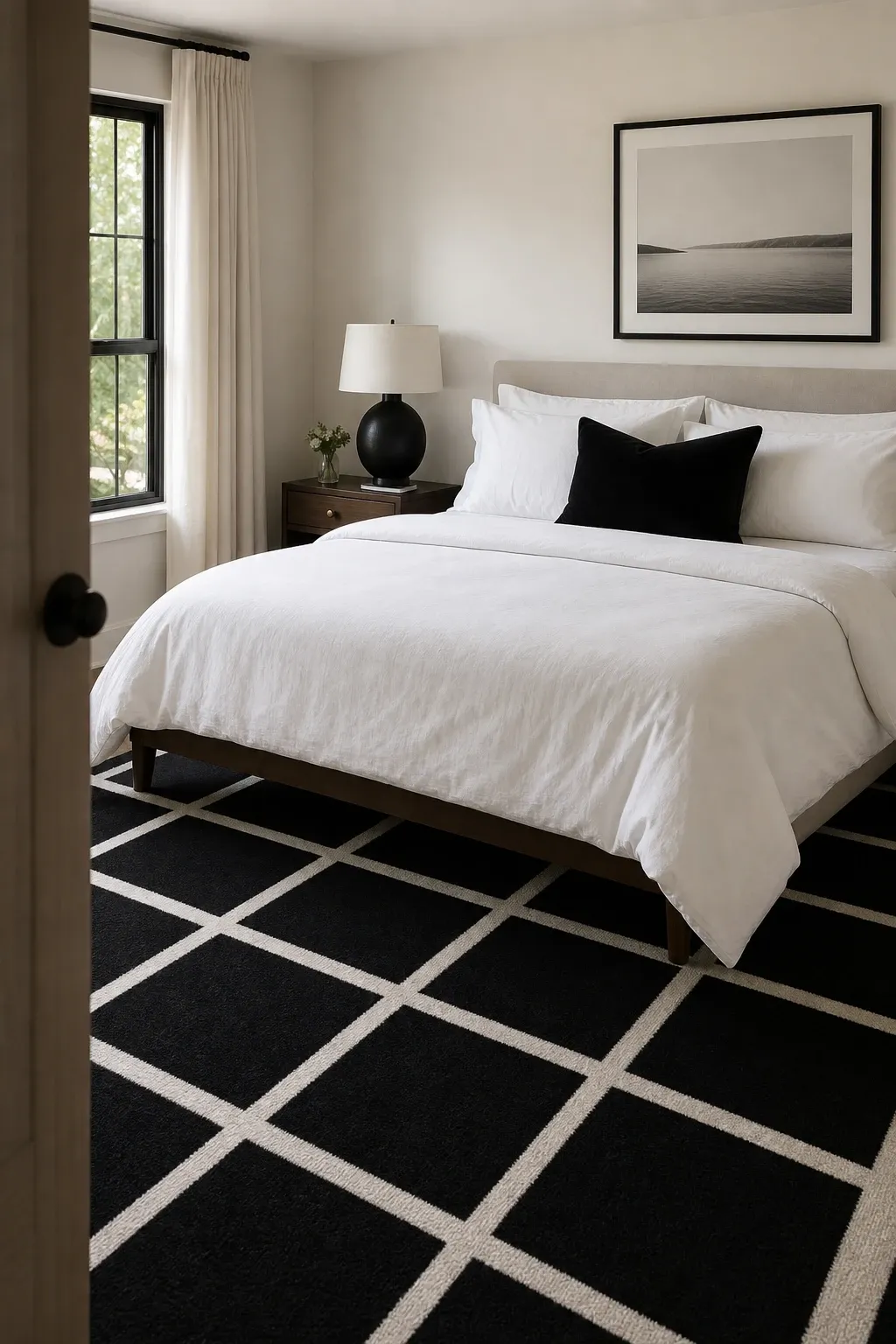
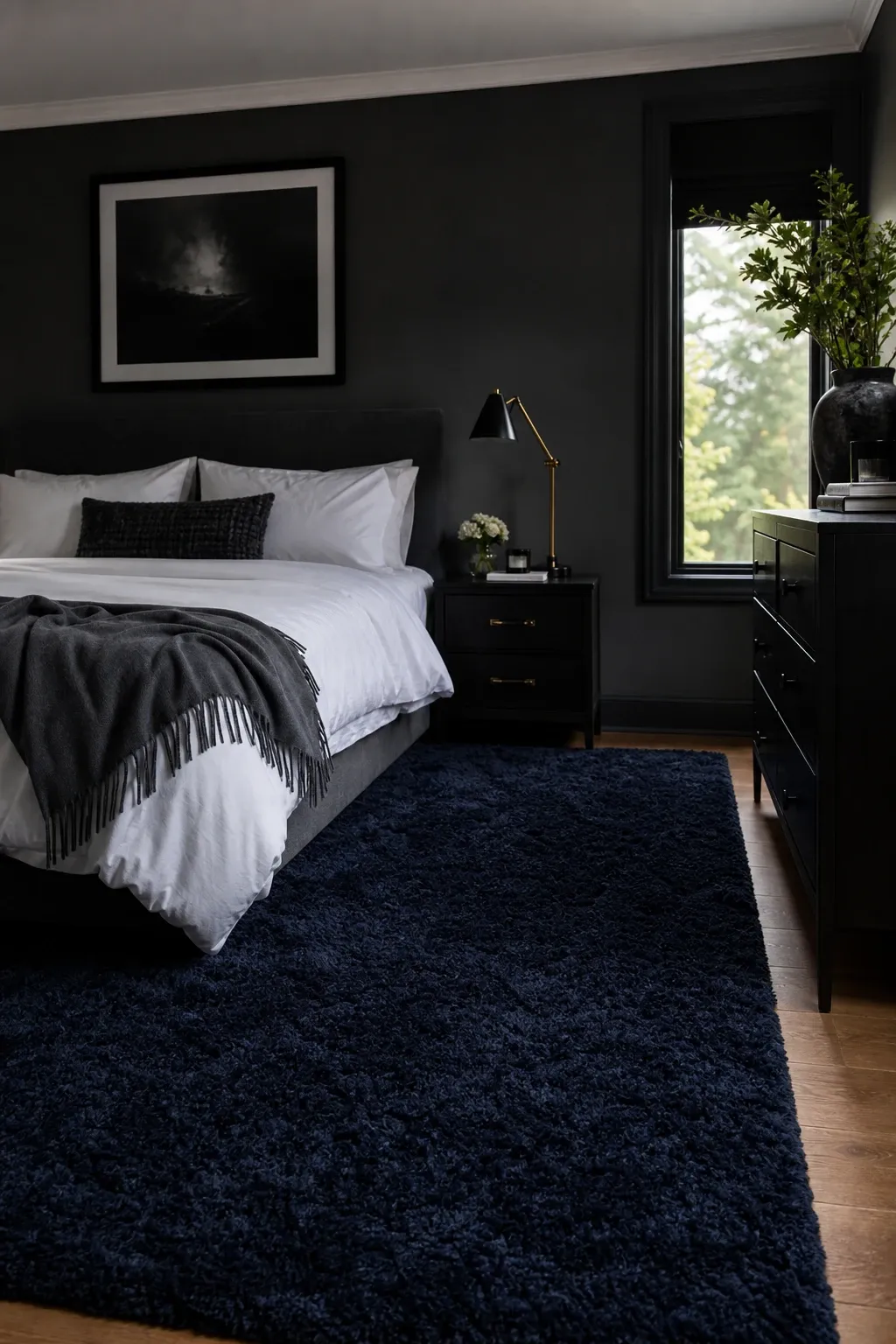
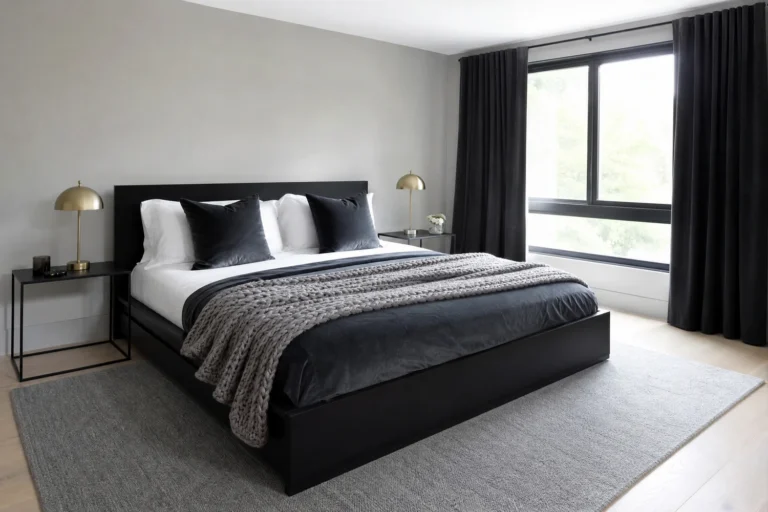
A dark rug in charcoal, navy, or black in a light bedroom creates grounding contrast that makes the bed and furniture feel anchored. Light-colored rooms can feel floaty and ungrounded without a darker element to weigh them down visually. The dark rug provides that anchor. It also hides dirt and wear much better than light rugs, which is a practical bonus in a room where you walk barefoot daily.
Designer Tip: Balance a dark rug with dark accents elsewhere in the room so the rug does not feel like an isolated dark spot. A dark lamp shade, dark picture frames, or a dark headboard echo the rug color and create visual cohesion between the floor and the rest of the room.
A machine-washable rug is the most practical bedroom rug option, especially in homes with allergies, pets, or kids. Throw it in the washing machine every month and it comes out fresh. Modern washable rugs come in patterns and textures that look just as good as traditional rugs. The convenience of being able to wash the rug where you sleep and breathe for eight hours a night makes this option worth considering for any bedroom.
Designer Tip: Check the weight and size specifications of your washing machine before buying a large washable rug. Some 8-by-10 washable rugs are too heavy or too bulky for standard home washers when wet. A 5-by-7 or smaller usually fits most machines. Larger rugs may need a commercial washer at a laundromat.
The right bedroom rug depends on your floor type, your comfort preferences, and how much maintenance you are willing to do. Start with the basics: measure the bed and the room, decide how much floor coverage you want, and pick a texture that feels good on bare feet. Everything else is personal preference. A good rug makes the bedroom feel finished in a way that no amount of wall art or throw pillows can match.
Frequently Asked Questions
What size rug do I need for a queen bed?
An 8-by-10-foot rug is the ideal size for a queen bed. It extends about 2 feet beyond each side and the foot of the bed. A 6-by-9 works in smaller rooms but leaves less rug showing on each side. The rug should extend far enough that your feet land on it when you get out of bed.
Should the rug go under the bed or just around it?
Under the bed is the most common and best-looking placement. The rug should extend under the bed about two-thirds of the way, with the top edge hidden under the bed and the sides and foot exposed. This anchors the bed to the rug visually and keeps the rug from shifting out of position.
Do I need a rug pad in the bedroom?
Yes. A rug pad prevents slipping on hard floors, adds cushion underfoot, protects the floor finish, and extends the life of the rug by reducing wear. On carpet, a pad keeps the rug from bunching and sliding. The pad is a small investment that makes a big difference in how the rug feels and performs.
What is the best rug material for a bedroom?
Wool is the gold standard for comfort, durability, and appearance. Cotton is soft, affordable, and washable. Synthetic materials like polypropylene are budget-friendly and stain-resistant. For bare feet, choose a material with a soft texture like wool, cotton, or a plush synthetic. Avoid rough sisal or coir in areas where you walk barefoot regularly.