The entryway runner rug is one of those things that seems purely decorative until you realize how much work it does. It catches dirt and water from shoes, protects your floors from daily foot traffic, and sets the visual tone for the rest of the house. A good runner rug makes a narrow hallway feel finished. A bad one, or no rug at all, makes the same hallway feel like a corridor in an office building. Here are 16 runner rug ideas that look good and actually hold up to daily use.
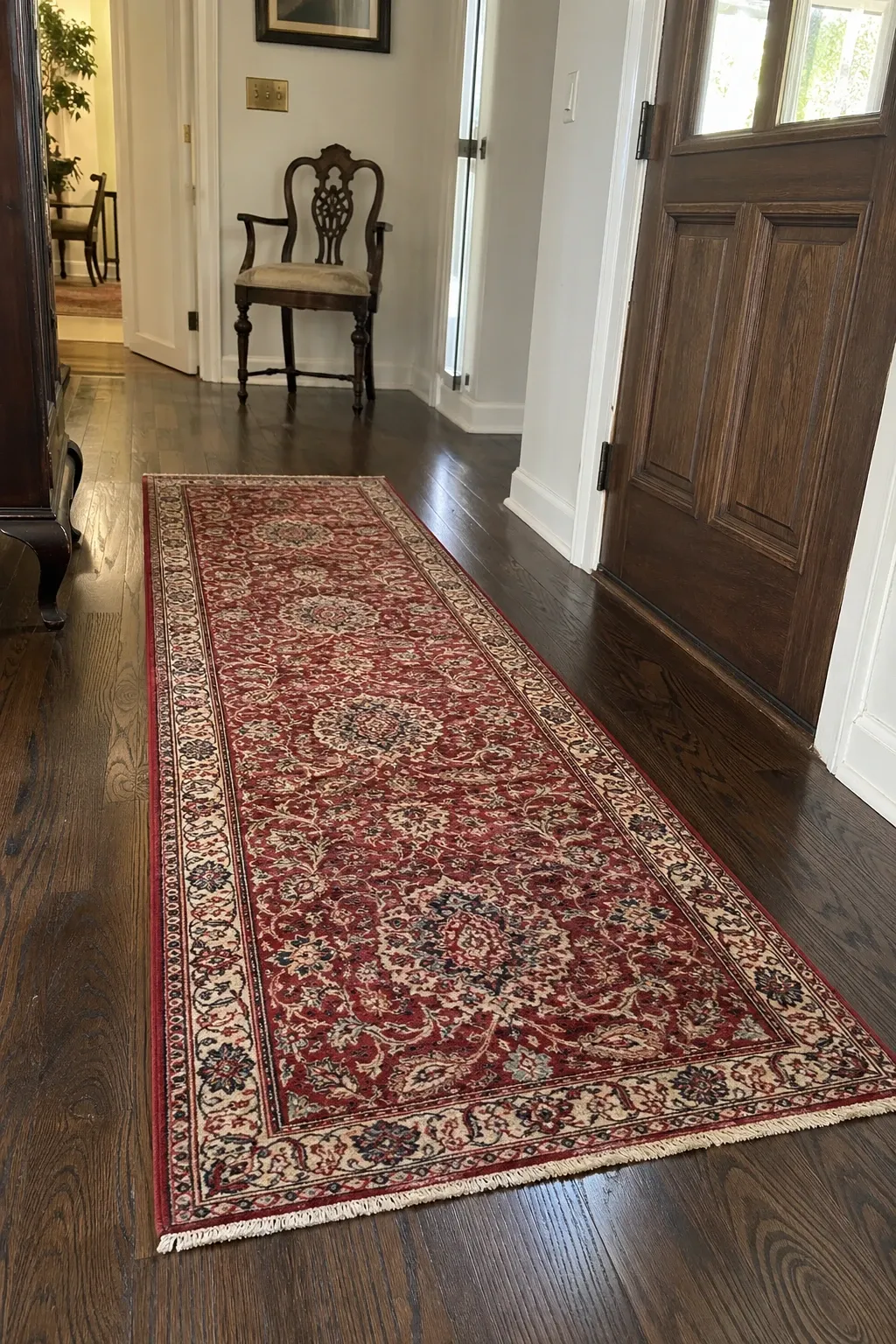
A Persian-style runner with deep reds, blues, and golds brings instant warmth and richness to an entryway. The intricate patterns are forgiving when it comes to hiding dirt and scuffs, which is exactly what you want in a high-traffic area. These rugs work especially well in homes with traditional or transitional decor, but they can also add a surprising layer of warmth to a more modern space. A good quality Persian runner will actually look better with age as the colors soften.
Designer Tip: Look for hand-knotted or hand-tufted versions rather than machine-printed. Hand-knotted rugs have texture and depth that printed ones cannot replicate. You can find affordable vintage Persian runners at estate sales and online auctions that are often better quality than new mass-produced ones.
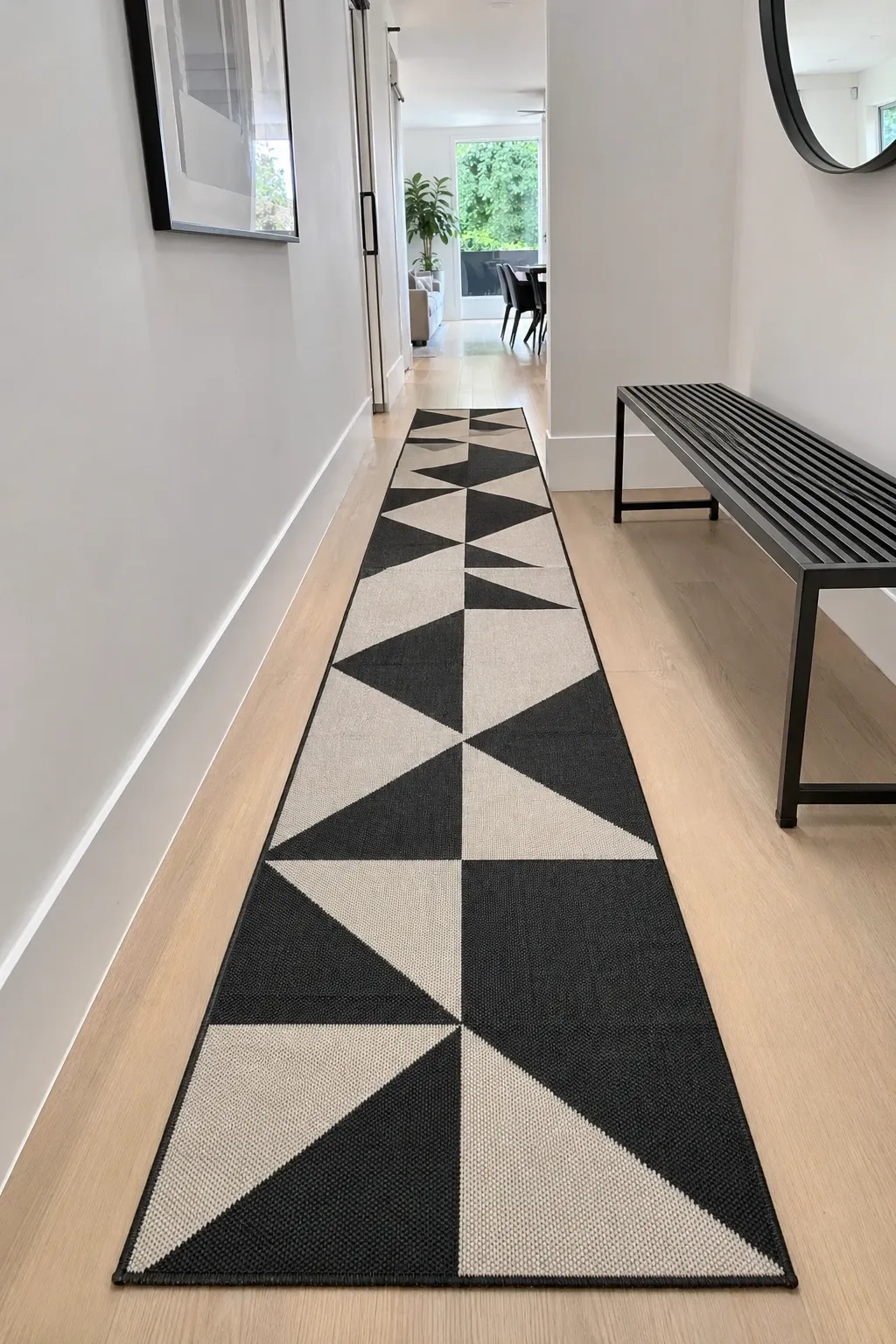
A geometric runner with clean lines, triangles, hexagons, or diamonds in a limited color palette gives the entryway a sharp, contemporary look. Black and white geometric patterns are the most popular because they go with everything, but muted colors like grey, navy, and blush work well too. The geometric pattern adds visual interest without making the narrow space feel busy, as long as you keep the rest of the entryway simple.
Designer Tip: Match the scale of the geometric pattern to the size of the runner. Large bold patterns on a narrow runner can look cut off and awkward. Smaller, repeating patterns work better on runners because the full pattern is visible across the width.
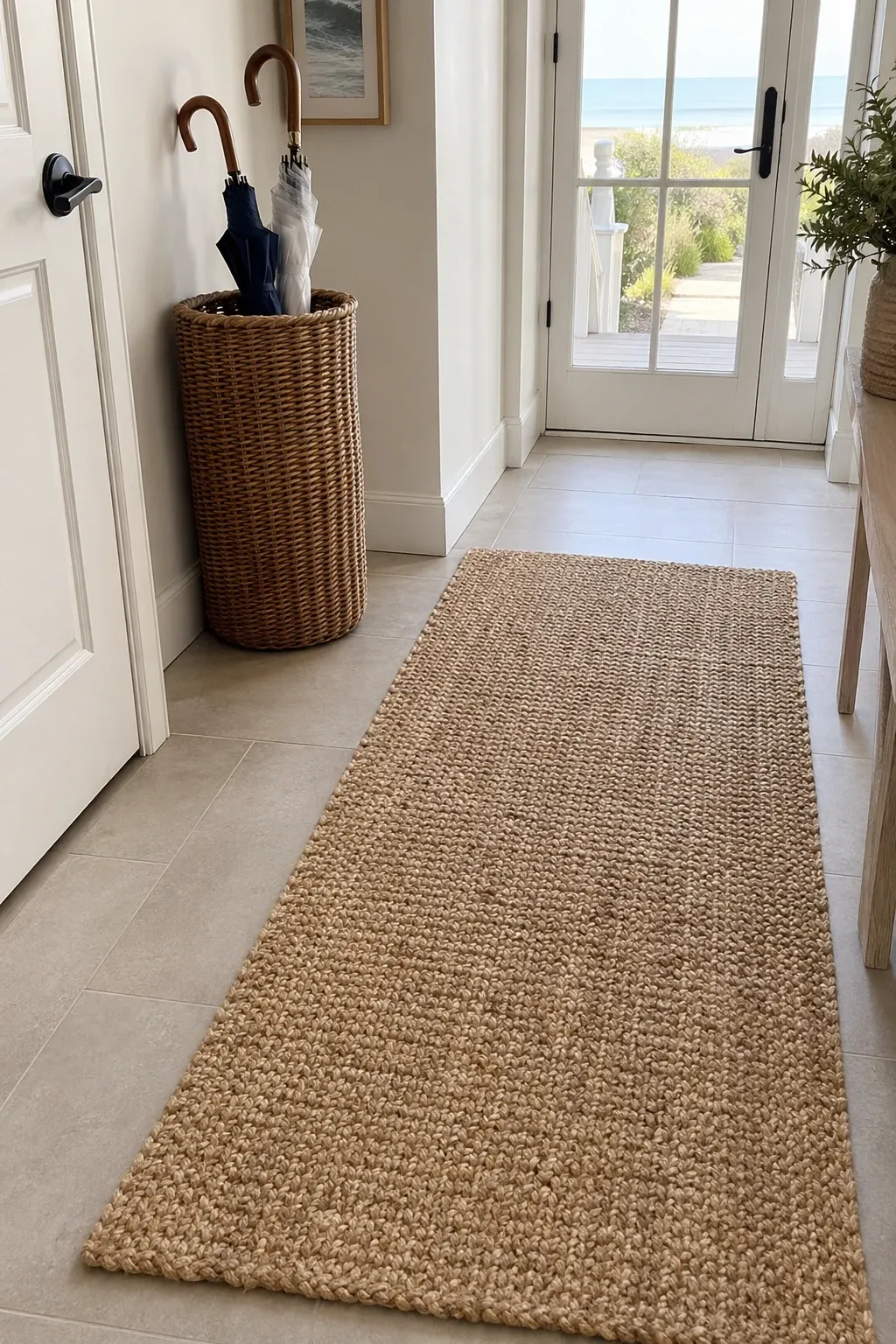
Jute and sisal runners bring an earthy, organic texture to the entryway that works with coastal, farmhouse, and minimalist styles. The natural fibers have a rough, woven texture that feels grounded and honest. They are also very durable and handle heavy foot traffic well. The natural color goes with any wall color or flooring. The downside is they do not feel soft underfoot, so they are better for entryways where shoes stay on.
Designer Tip: Avoid jute runners in entryways that get wet regularly. Jute absorbs water and can develop mold if it stays damp. If your front door lets in rain, go with sisal instead because it handles moisture better, or use a jute runner only in covered entryways.
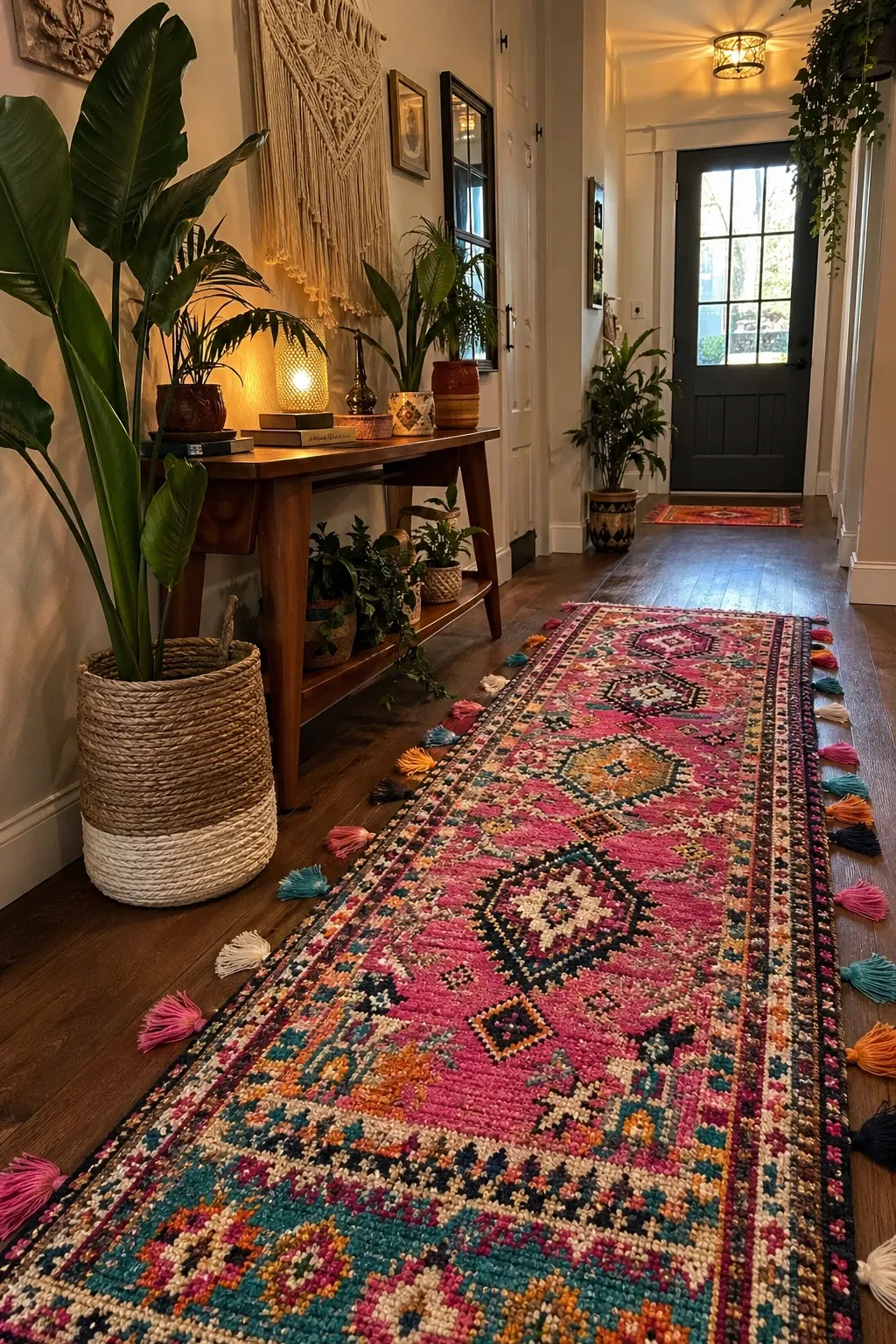
A bohemian runner with bright colors, mixed patterns, and maybe a fringe or tassel detail brings personality and energy to a plain entryway. Boho rugs are forgiving of imperfection, which makes them great for busy households. A few scuffs and some wear actually add to the lived-in charm rather than ruining the look. They pair especially well with white walls because the rug provides all the color the space needs.
Designer Tip: If the boho runner has fringe, make sure it lies flat and does not create a tripping hazard. Iron stubborn fringe flat with a cool iron or tuck it under the rug if it curls up. Fringe in a high-traffic zone needs to cooperate or it becomes a safety issue.
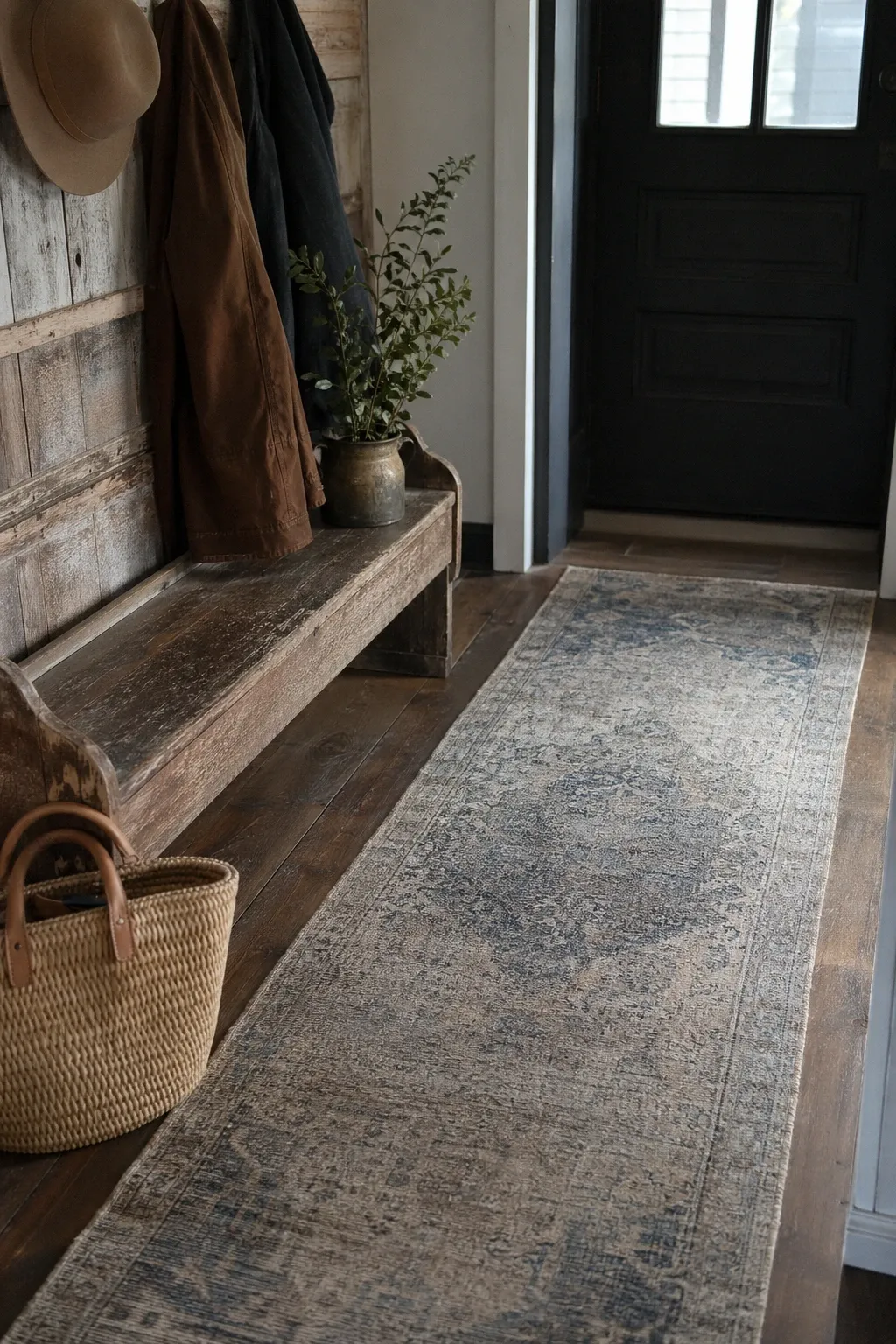
A distressed or faded runner looks like it has been in your home for decades, which gives the entryway a collected, lived-in feel. The muted, washed-out colors work with almost any decor style. Distressed rugs also hide daily wear extremely well because the worn look is part of the design. You will never stress about a stain or a scuff mark on a rug that is meant to look imperfect.
Designer Tip: Pair a distressed runner with one or two crisp, new elements nearby, like a clean white console table or a new mirror. The contrast between the old-looking rug and the sharp new pieces creates visual tension that makes the whole entryway more interesting.
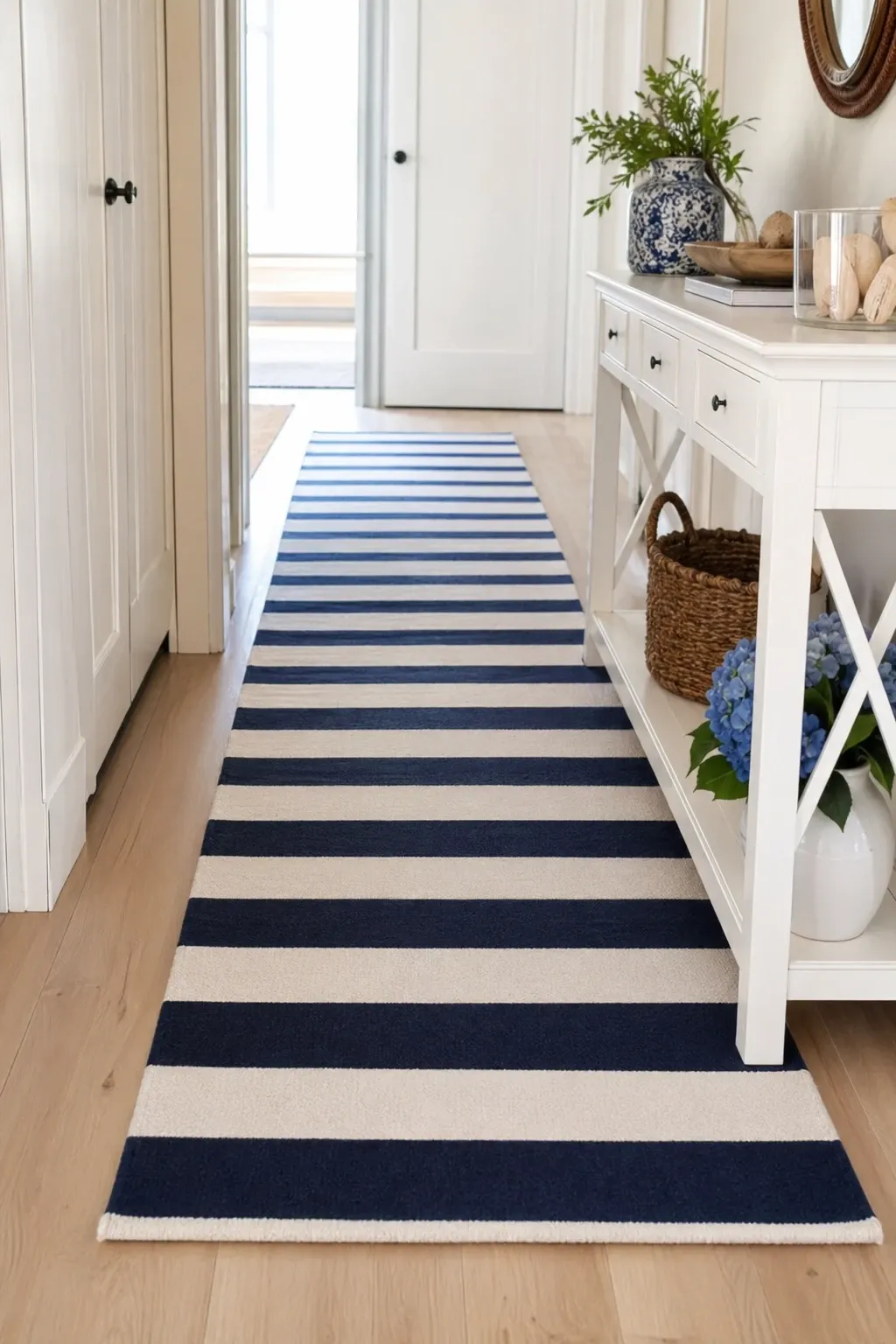
Horizontal or vertical stripes in navy and white, or blue and cream, give the entryway a classic coastal look that never goes out of style. Stripes running the length of the runner make the hallway appear longer. Stripes running across it make the space feel wider. Either direction works depending on what your entryway needs. The simplicity of stripes also keeps the narrow space from feeling cluttered.
Designer Tip: Choose a flatweave striped runner for the entryway rather than a thick pile. Flatweave runners lie flat, do not create a bump at the door, and are easy to clean. A thick, fluffy striped rug in a high-traffic entryway will flatten unevenly and look worn quickly.
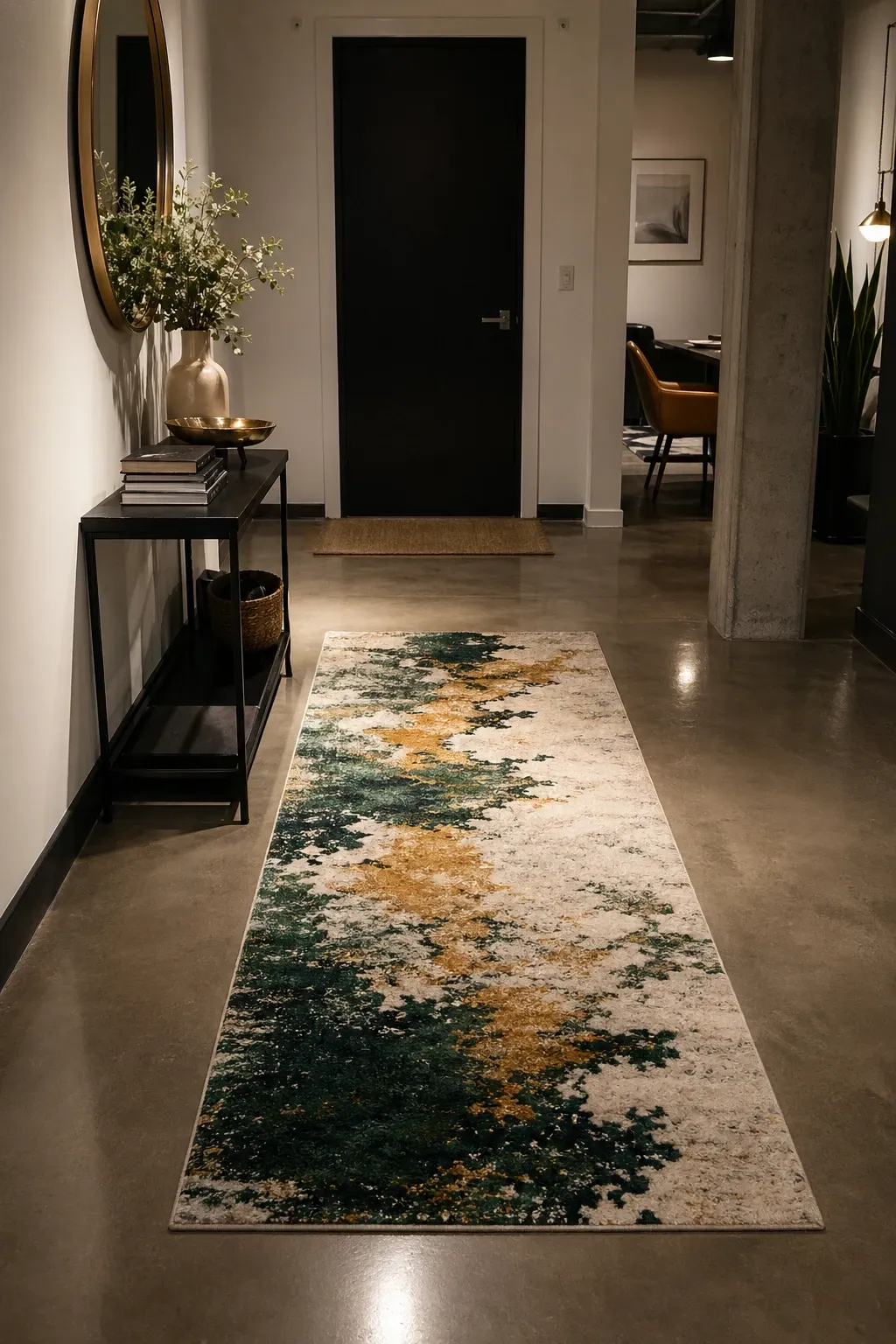
An abstract runner with brushstroke patterns, paint-splash designs, or watercolor effects turns the entryway floor into a piece of art. These rugs work well in modern and eclectic homes where the decor is not too traditional or formal. The abstract pattern draws the eye and makes the entryway memorable, which is a nice quality for the first thing guests see when they walk in. Keep the surrounding decor simple so the rug can be the star.
Designer Tip: Pull one accent color from the abstract rug and repeat it somewhere nearby, like a vase on the console table or a coat hook. This small repetition makes the rug look connected to the rest of the space rather than floating by itself.
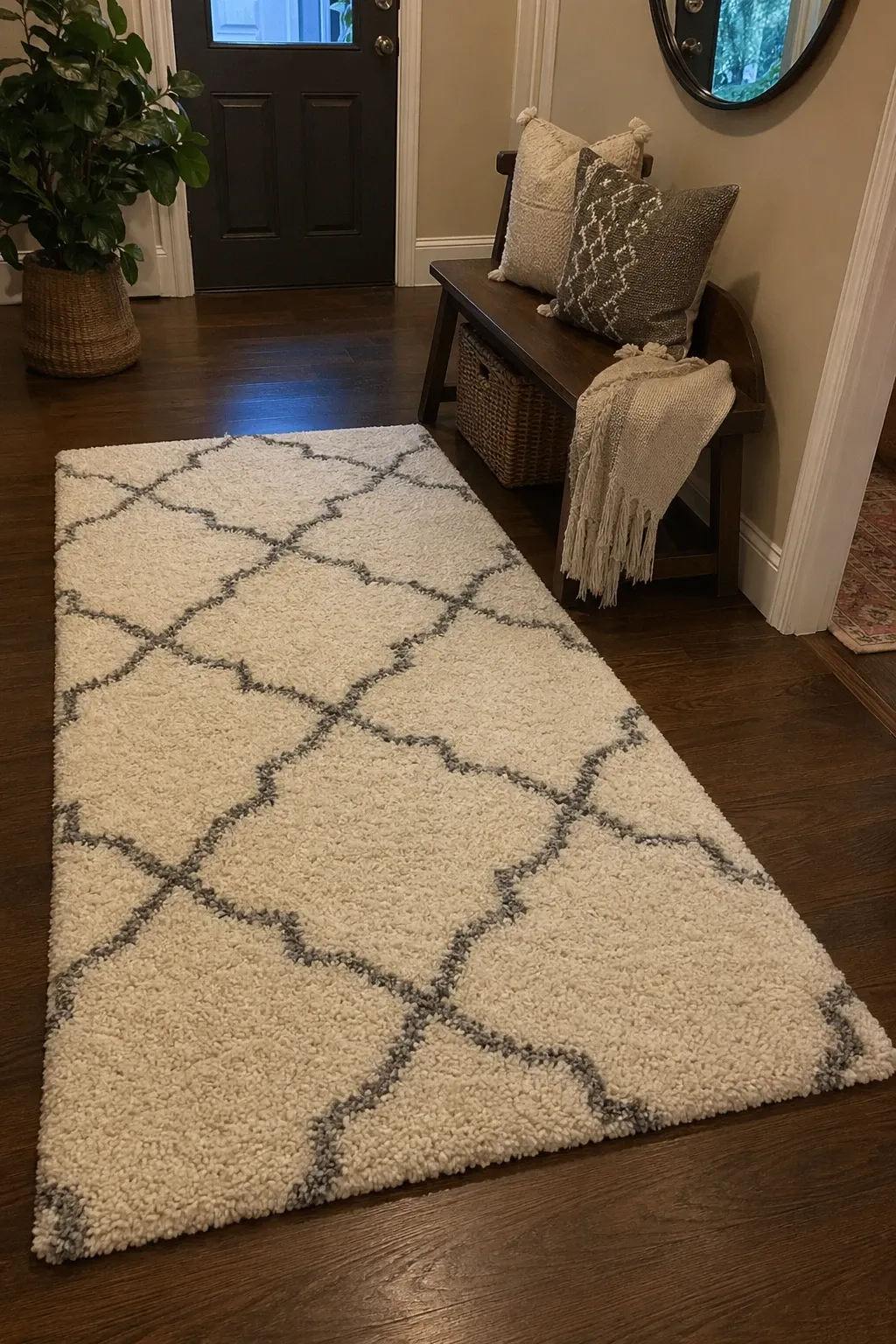
The Moroccan trellis pattern, that repeating diamond or lattice grid, is one of the most popular runner designs for a reason. It is structured enough to look clean and intentional but loose enough to feel relaxed. A white and grey trellis is the most common color combination and works with practically any entryway. The pattern also scales well, looking just as good on a narrow 2×8 runner as it does on a wider one.
Designer Tip: A Moroccan trellis runner with a high pile feels soft and luxurious, but in a high-traffic entryway, a low pile or flatweave version will hold its shape longer. Save the thick, shaggy trellis rug for the bedroom and use the flat version by the door.
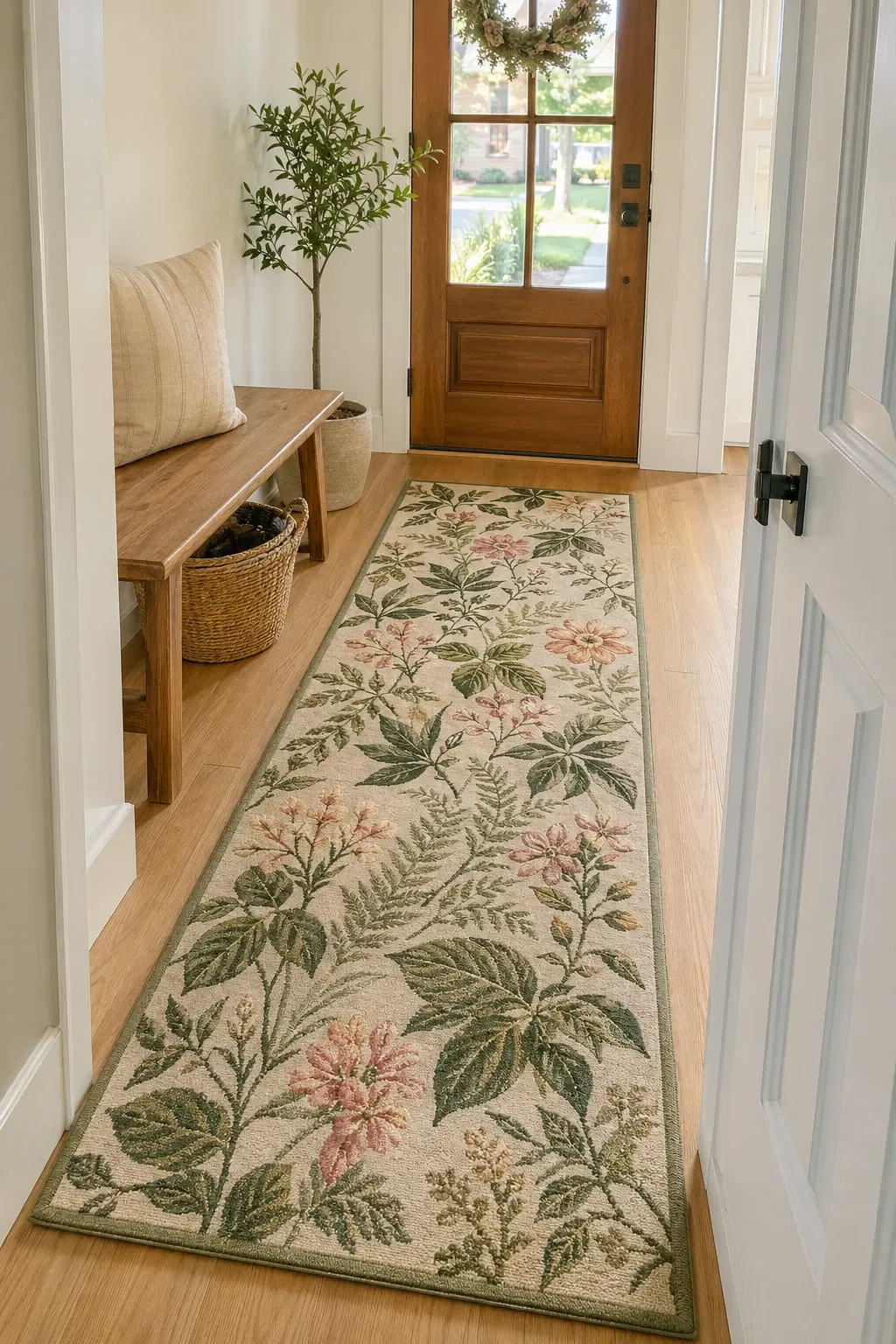
A floral or botanical runner adds freshness and color to the entryway, especially in spring and summer. Modern floral runners have moved past the old-fashioned rose patterns and now feature stylized leaves, abstract petals, and tropical prints that feel current. A floral runner on a dark hardwood floor makes the floor pop. On a light floor, it adds the color and pattern that the space otherwise lacks.
Designer Tip: Choose florals on a neutral background for a more modern look. Florals on a white, cream, or grey background read as contemporary. Florals on a dark red or green background read as traditional or Victorian, which may or may not be what you want.
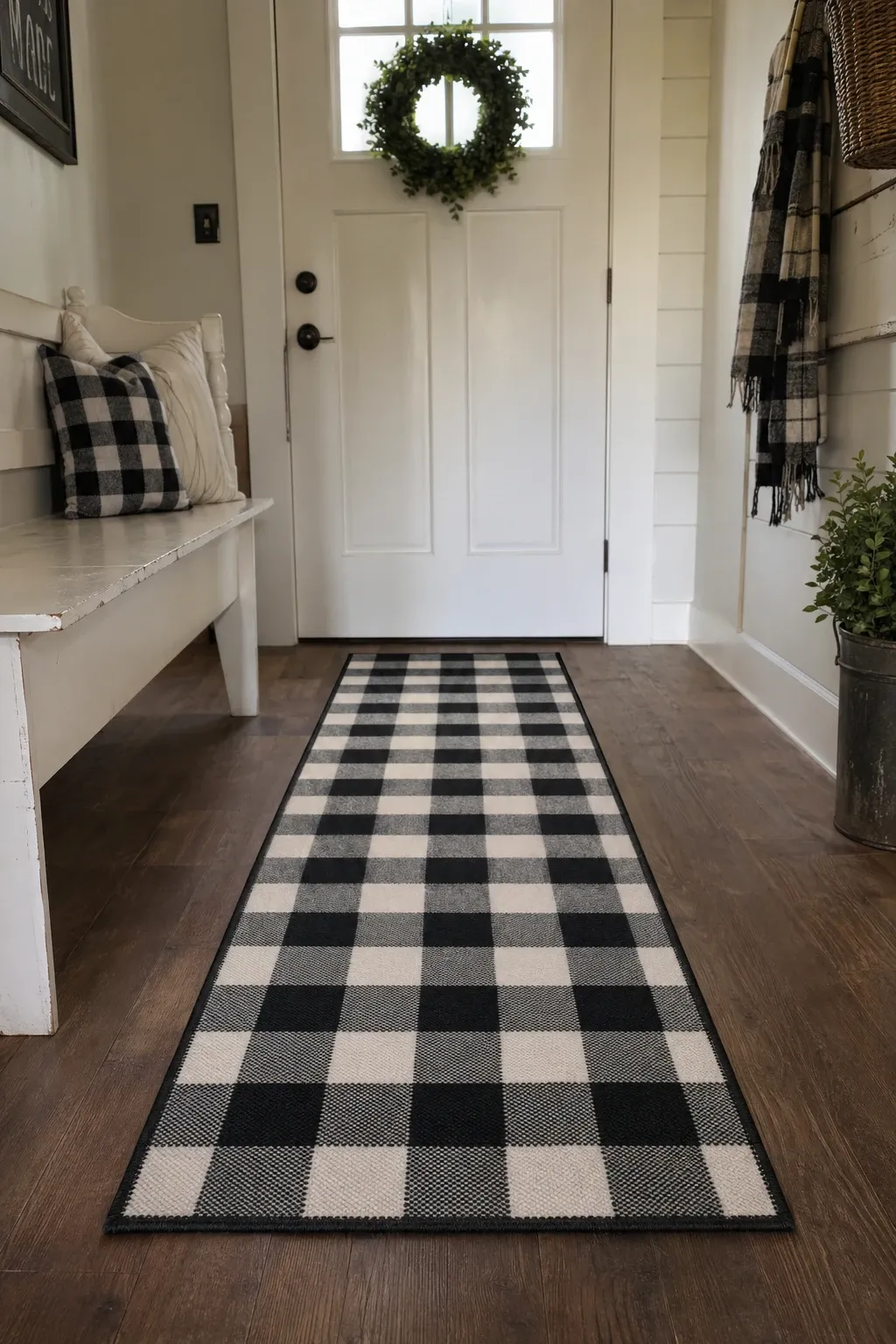
A plaid or buffalo check runner brings a cozy, farmhouse feel to the entryway. Black and white buffalo check is the most common and looks clean with white walls and natural wood furniture. Red and black plaid has a more rustic, cabin feel. Plaid is a simple pattern that works in narrow spaces without overwhelming them, and the regular grid creates a sense of order that makes a small entryway feel tidy.
Designer Tip: Plaid runners work best in entryways where the walls and flooring are solid colors. Plaid on a patterned tile floor creates a clash of competing patterns that makes the space feel chaotic. Keep the background simple and let the plaid do the talking.
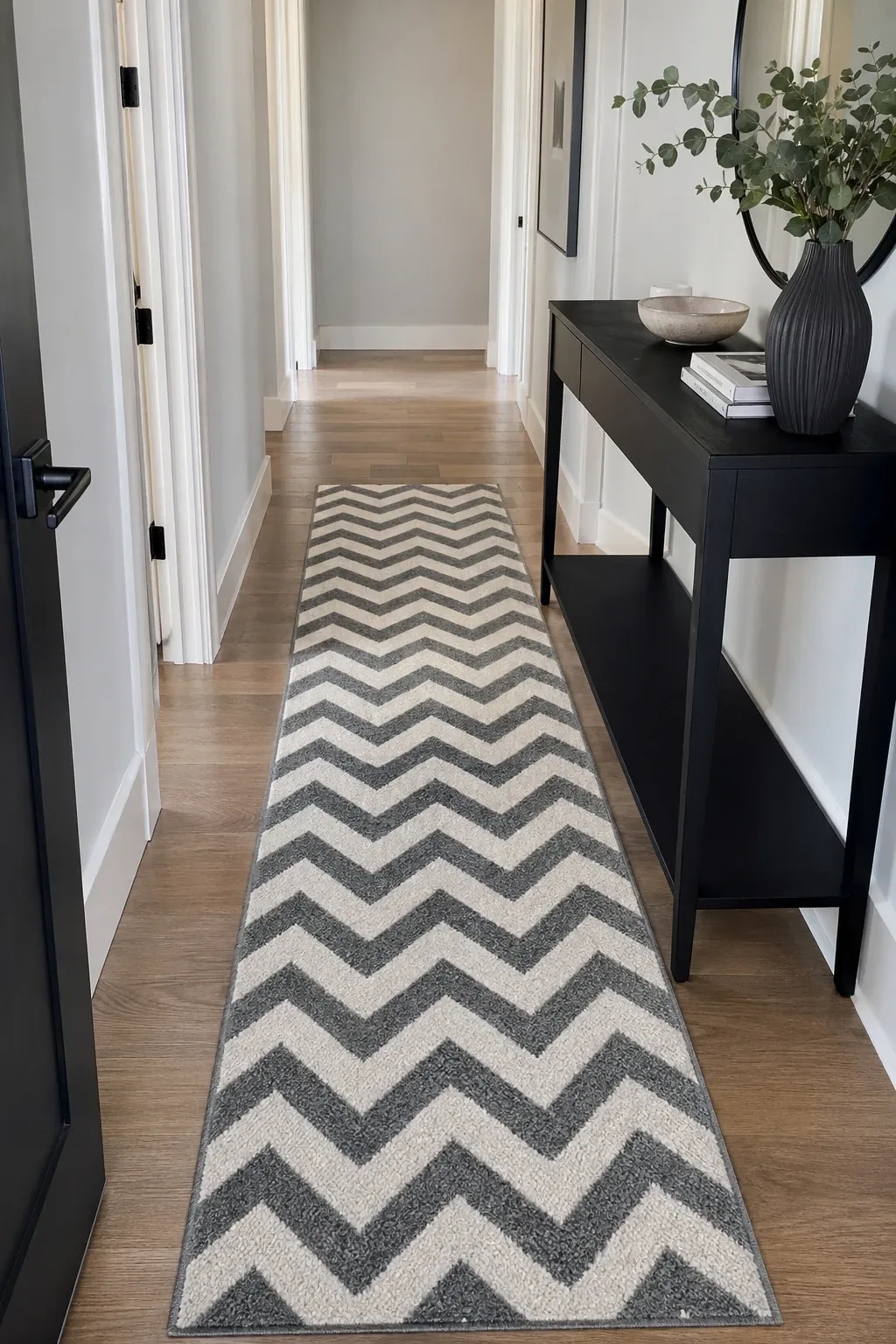
A chevron or zigzag pattern adds movement and energy to the entryway floor. The V-shaped pattern draws the eye forward along the runner, which creates a natural sense of direction, perfect for guiding people from the front door into the house. Chevron runners in two tones, like navy and white or grey and cream, are dynamic without being overwhelming. The pattern reads as modern and graphic.
Designer Tip: Orient the chevron so the V points in the direction you want people to walk. Pointing toward the living room or kitchen creates a visual pathway that subconsciously guides traffic flow. It sounds subtle but it works.
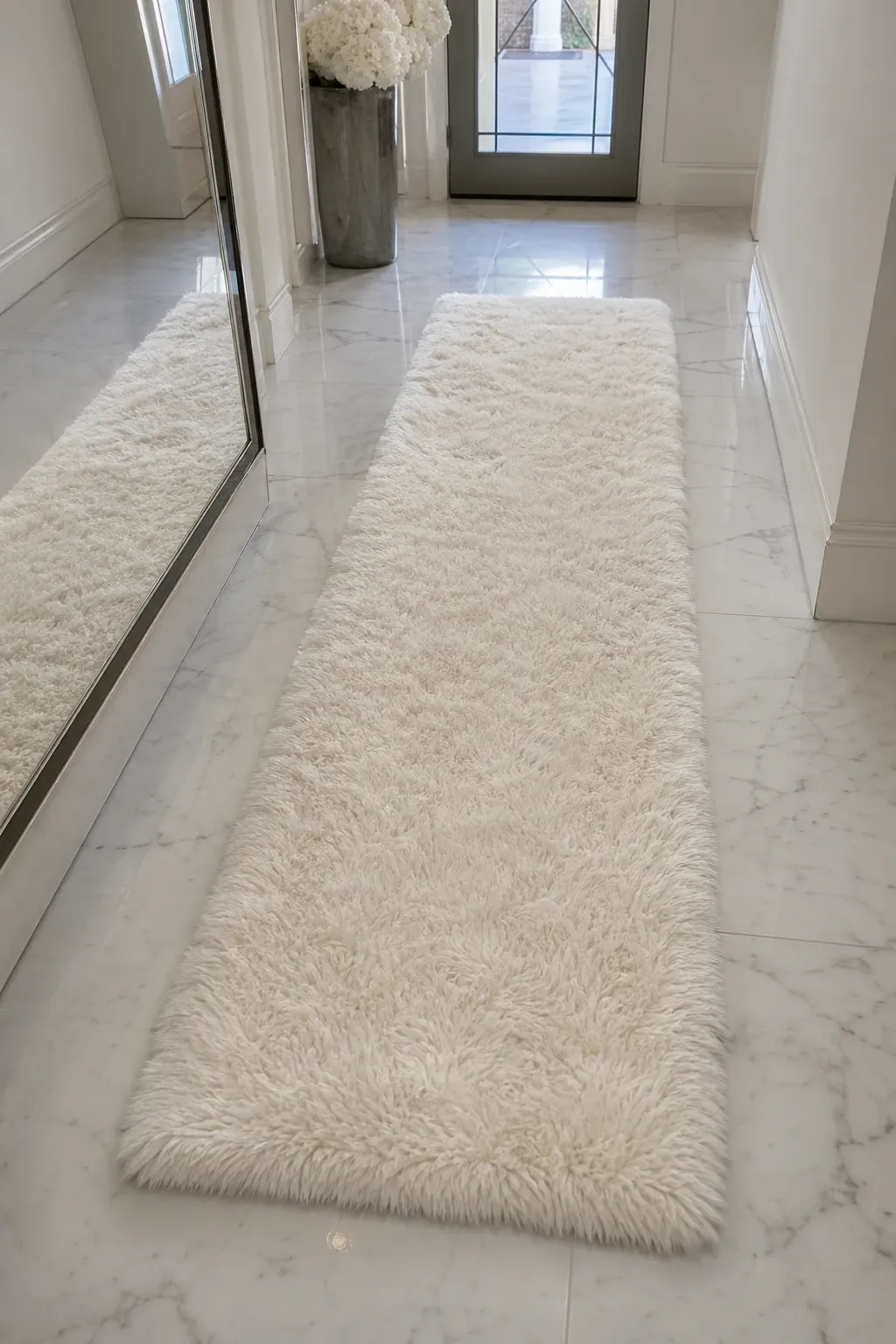
A faux fur runner adds a unexpected soft texture to the entryway that makes the space feel luxurious and inviting. It works best in entryways that are more of a foyer, where guests take off shoes and the traffic is moderate. A white or cream faux fur runner on dark flooring is striking and glamorous. This is not the most practical choice for a muddy front door, but for a clean, covered entryway it looks incredible.
Designer Tip: Faux fur runners need a non-slip pad underneath because they slide easily on hard floors. The soft backing on most faux fur rugs has zero grip. A good rug pad is not optional here, it is a safety requirement.
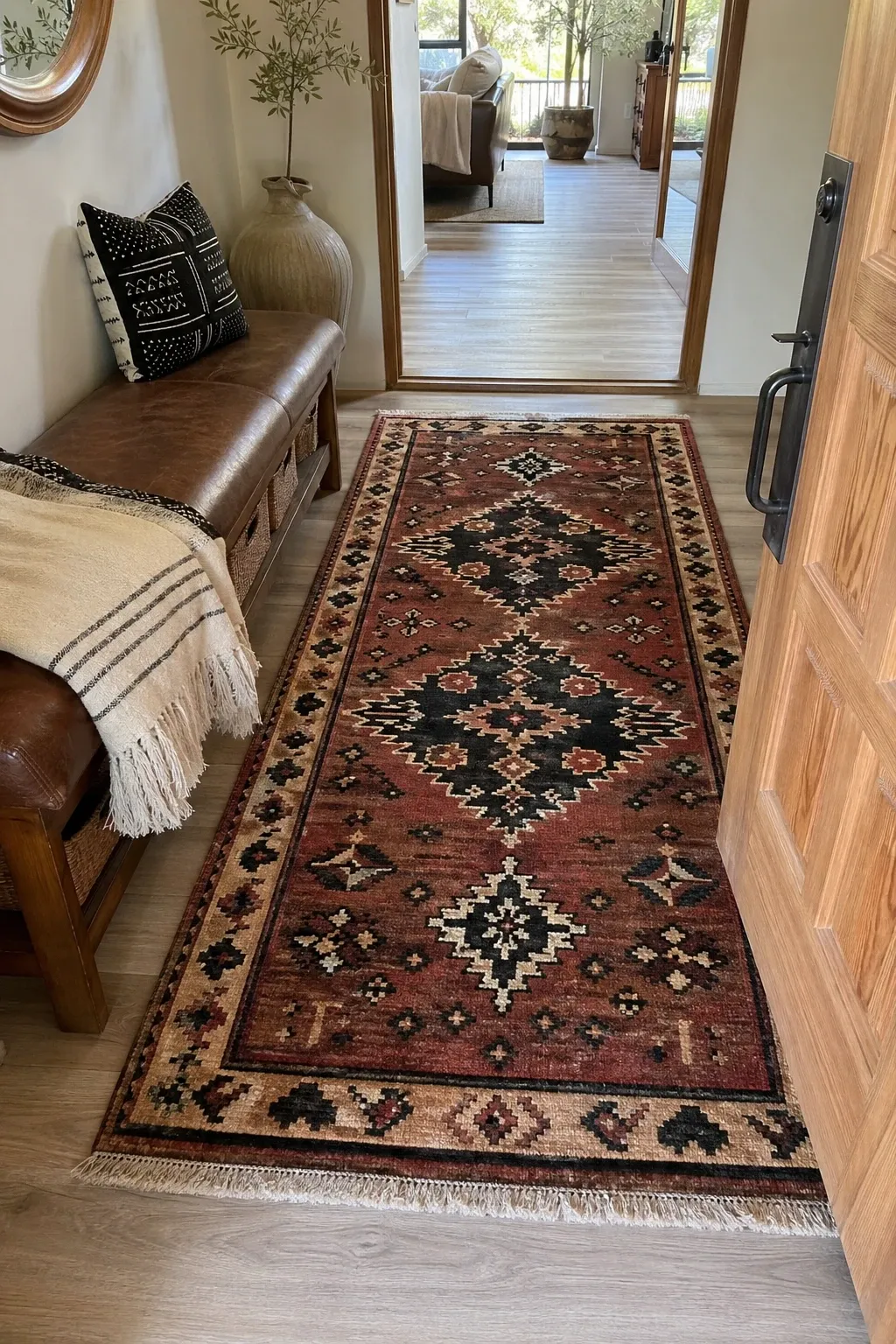
A tribal-inspired runner with bold graphic patterns and earthy colors, think terracotta, black, cream, and ochre, brings depth and character to the entryway. These designs draw from traditional weaving traditions and have a handmade quality that mass-produced rugs lack. The bold patterns make a statement without needing any other decor nearby. A tribal runner on a simple wood or tile floor is often all the entryway needs.
Designer Tip: Let the tribal runner be the dominant design element in the entryway. Do not compete with it by adding busy wall art or patterned wallpaper right next to it. Solid walls and simple furniture let the rug take center stage.
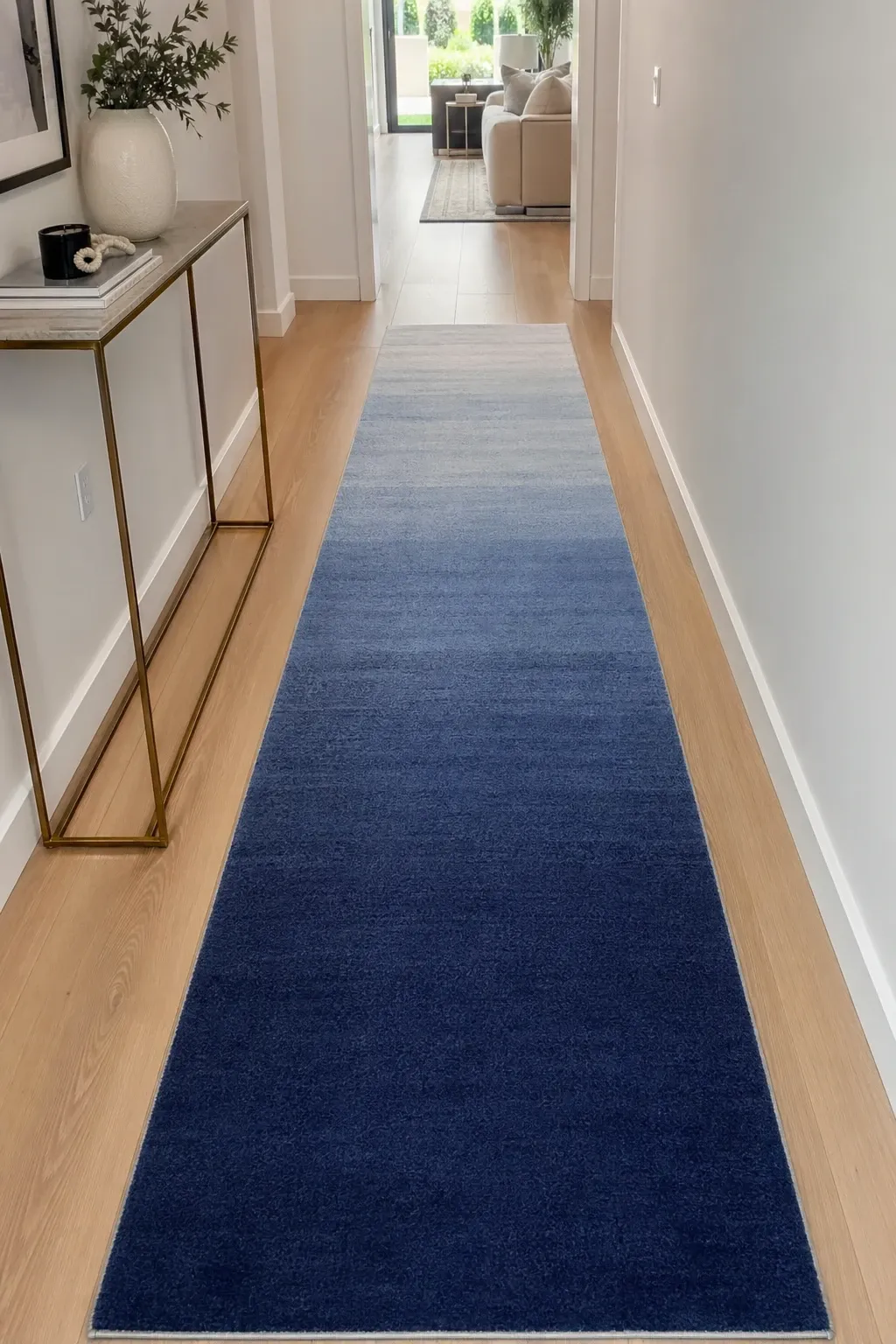
An ombre runner that fades from one color to another, like dark blue to light blue, or charcoal to silver, adds a modern, artistic quality to the entryway. The gradual color shift creates a sense of movement and depth that flat, solid-color rugs do not have. Ombre runners look particularly good in long, narrow entryways because the color transition emphasizes the length of the space.
Designer Tip: Place the darker end of the ombre at the front door and the lighter end toward the interior of the house. This creates a visual transition from the outside to the inside, moving from dramatic to light, which feels welcoming and natural.
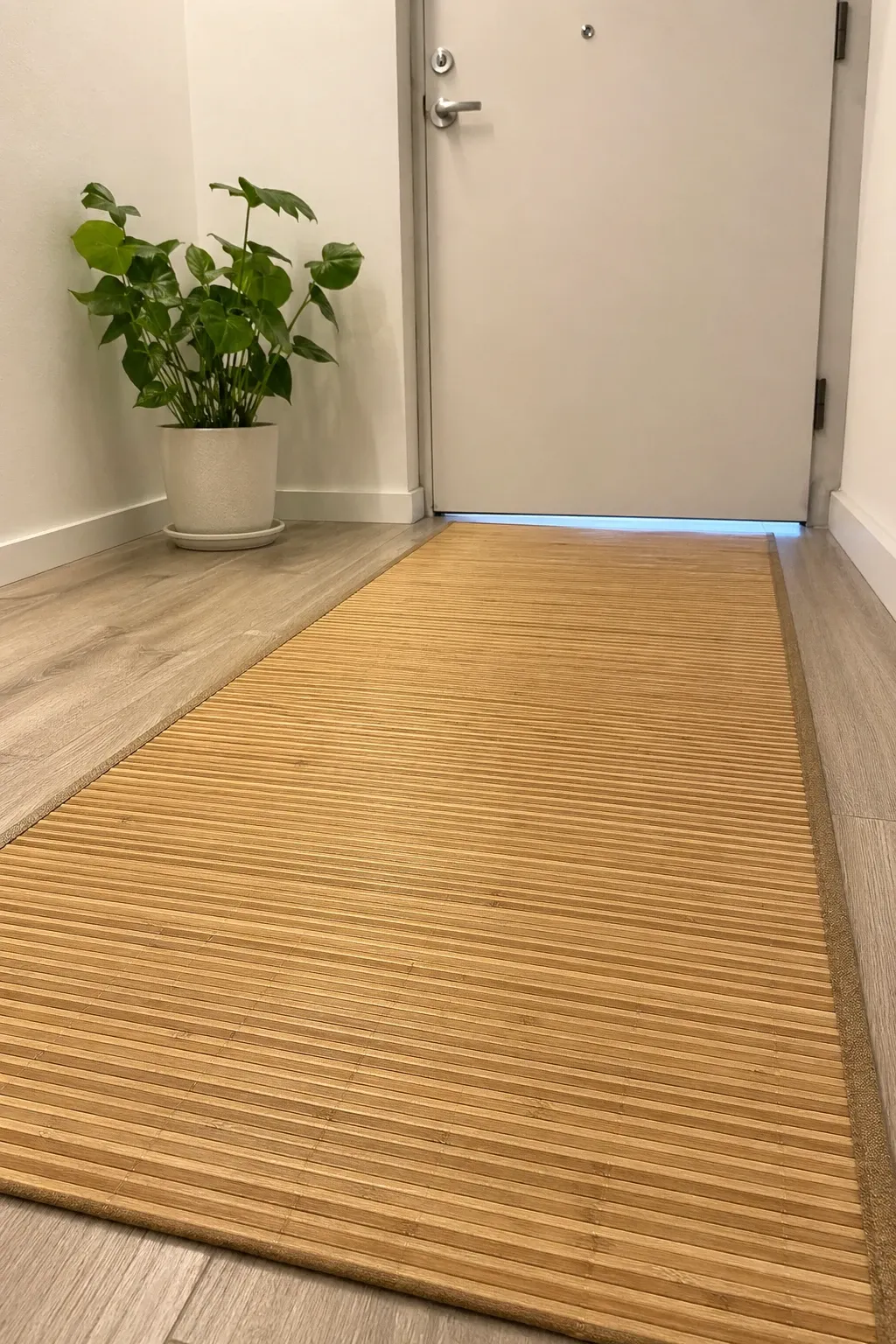
A bamboo slat runner is not technically a rug, but it serves the same purpose and brings a clean, natural look to the entryway. The bamboo is hard-wearing, easy to sweep clean, and has a smooth surface that feels pleasant underfoot. It works especially well in Asian-inspired, minimalist, or tropical-style homes. The natural bamboo color complements stone, wood, and tile floors without competing visually.
Designer Tip: Make sure the bamboo runner has rubber backing or a pad underneath. Bamboo on tile or hardwood can be slippery, especially in socks. The rubber backing also protects your floor from scratches caused by the bamboo edges.
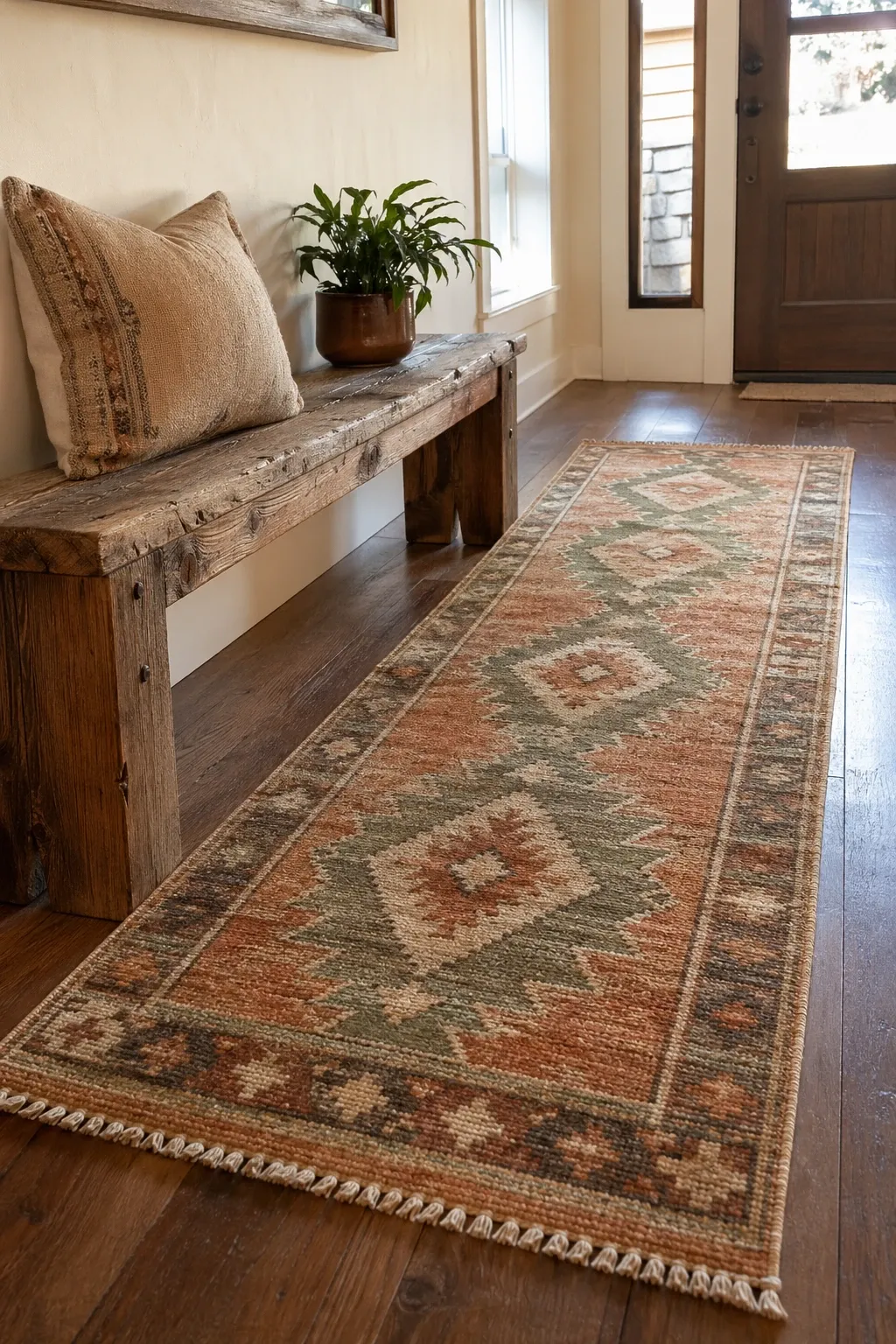
A southwestern runner in warm desert tones, terracotta, sand, burnt orange, and turquoise, brings a specific sense of place to the entryway. The patterns, often featuring diamonds, arrows, and stepped geometric shapes, are bold and graphic. These rugs pair naturally with adobe, stucco, or earth-toned walls. Even in a non-southwestern home, the warm colors and strong patterns can add welcome warmth to a neutral entryway.
Designer Tip: Add a few supporting elements from the same color palette, like a terracotta pot with a plant or a woven basket near the door. Two or three pieces that echo the rug is colors turn the entryway from having a random colorful rug to having a cohesive design story.
Your entryway runner is doing more work than almost any other rug in the house. It catches dirt, protects floors, and sets the first impression of your home. Pick one that can handle the traffic, matches your style, and makes you happy to walk through the door. And get a rug pad. Every runner needs one.
Frequently Asked Questions
What size runner rug do I need for my entryway?
Measure your entryway length and subtract about 12 to 18 inches from each end. The runner should not touch the walls or the door. A 2×8 runner works for most standard hallways. For shorter entryways, a 2×6 is usually right. The runner should be wide enough that both feet land on it when you walk normally.
Do I need a rug pad under an entryway runner?
Yes, always. A rug pad prevents the runner from sliding on hard floors, which is a real safety concern in a high-traffic area where people are coming in with wet shoes. The pad also adds cushion, reduces noise, and protects the floor underneath from scratches.
What material is best for a high-traffic entryway runner?
Wool, polypropylene, and flatweave cotton are the most durable options. Wool is naturally stain-resistant and ages well. Polypropylene is budget-friendly and easy to hose off. Flatweave cotton runners can go in the washing machine. Avoid silk, high-pile shag, or delicate fibers in entryways because they will not hold up.
How do I clean an entryway runner rug?
Vacuum it weekly and shake it out outside every couple of weeks. For spots and spills, blot immediately with a damp cloth and mild soap. Most flatweave and synthetic runners can be deep cleaned with a carpet cleaner or professional service once or twice a year. Check the care label because some runners are machine washable.