Upstairs Hallway Ideas That Make the Space Count
The upstairs hallway is the most overlooked space in most homes. People decorate the living room, spend money on the kitchen, and then walk past a bare hallway every day without thinking about it. But the hallway connects every room upstairs, and you see it dozens of times a day. A few smart changes turn it from a boring pass-through into a space that actually adds something to the house. Here are 15 upstairs hallway ideas that make the space count.
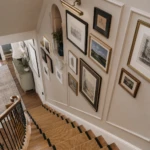
1. Gallery Wall of Family Photos
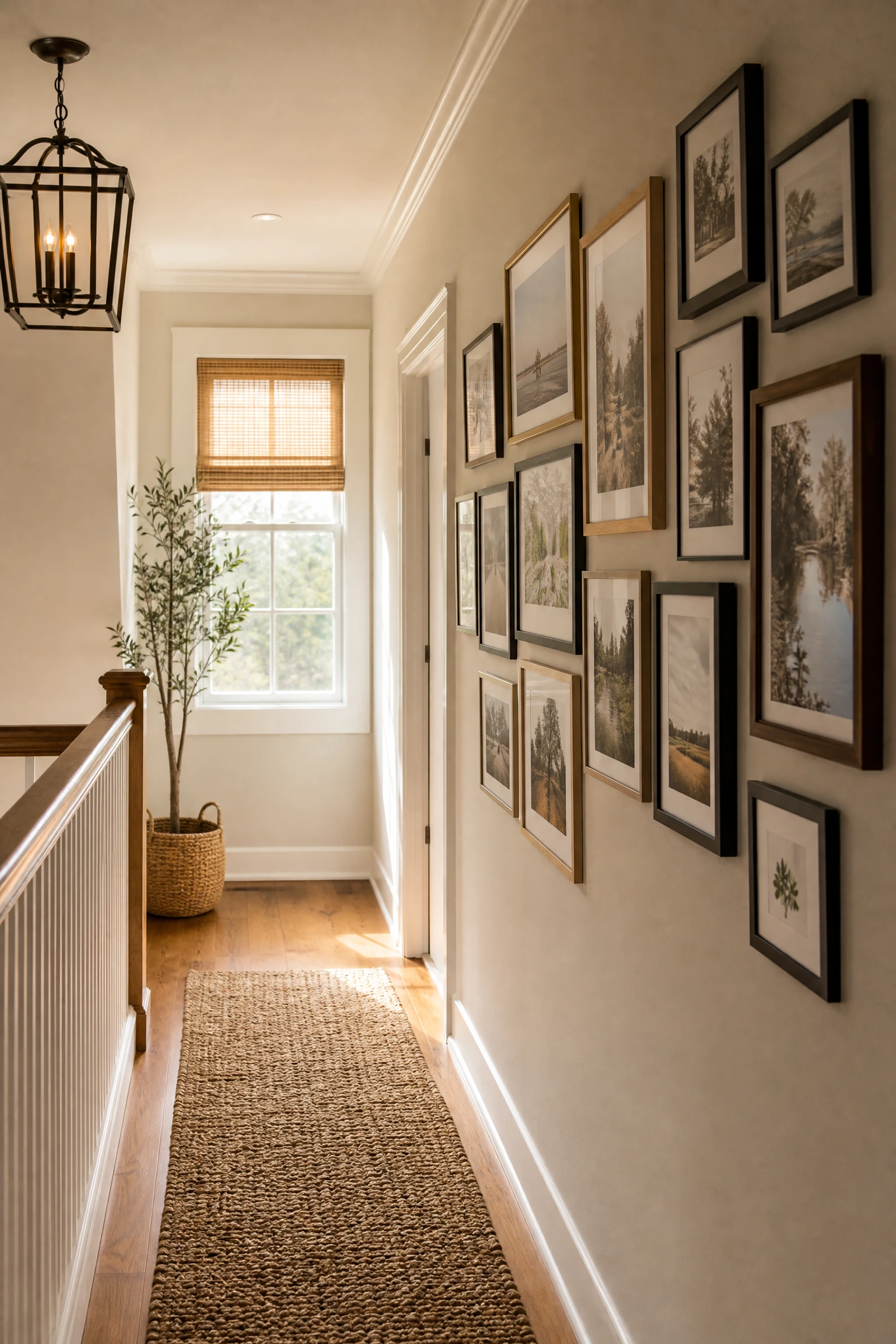
A gallery wall of family photos running the length of the hallway turns dead wall space into a personal timeline. Mix frame sizes and styles for a collected look, or use matching frames for a more uniform feel. The hallway is actually the perfect spot for a gallery wall because you pass it slowly and have time to look at each photo. Unlike a living room gallery wall, the hallway version does not compete with other design elements.
Designer Tip: Hang the center of each photo at about 57 inches from the floor, which is standard gallery height. In a hallway you walk through, this puts the photos at natural eye level. Start from the center of the wall and work outward for balanced placement.
2. Runner Rug for Warmth
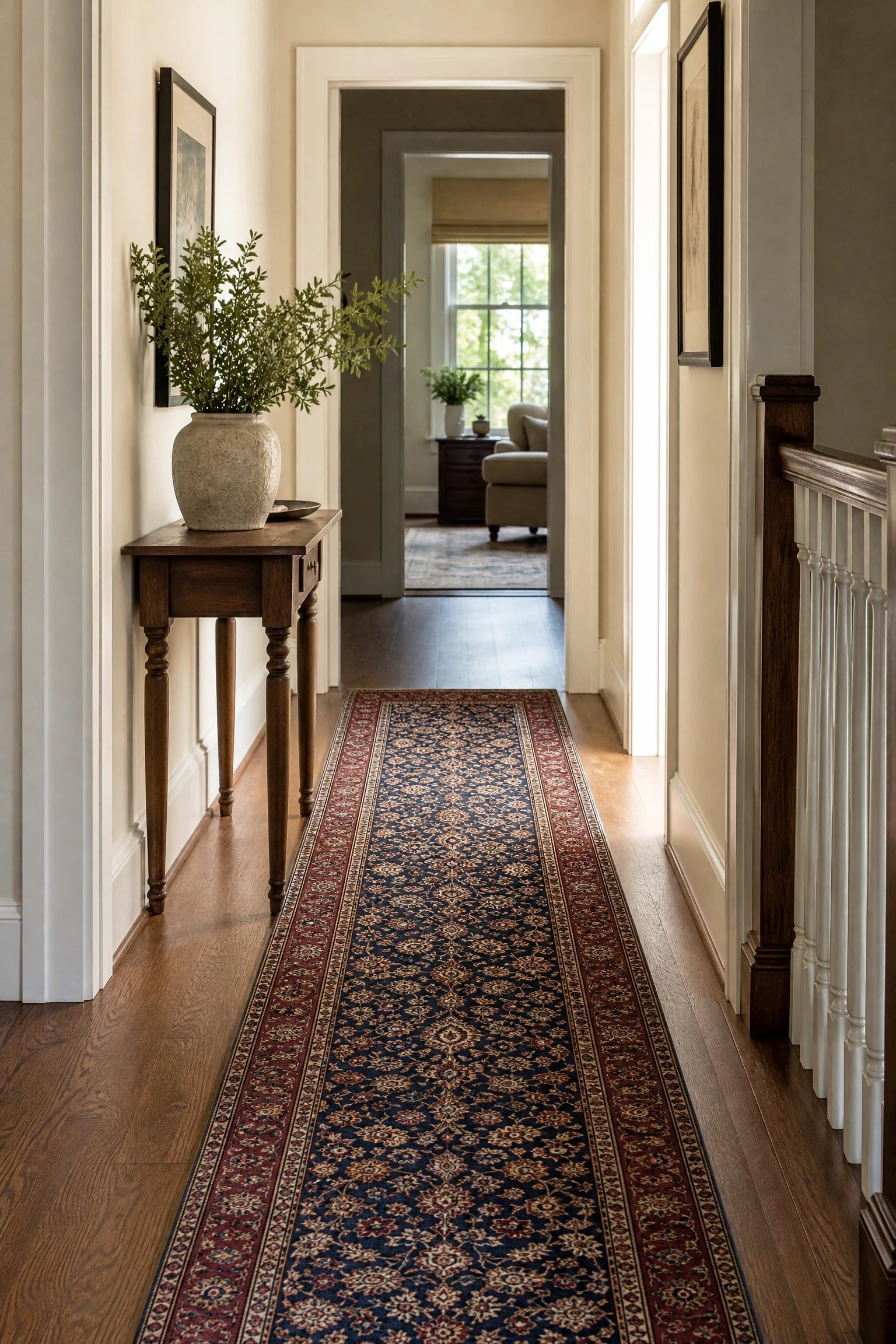
A long runner rug down the hallway adds color, pattern, and warmth underfoot. The runner softens hard floors, reduces noise from footsteps, and gives the narrow space a furnished, intentional look. Persian, Moroccan, and striped runners are all popular choices depending on the style of the house. The runner transforms the hallway from a cold corridor into a space that feels like part of the home.
Designer Tip: Choose a runner that is about 6 to 8 inches narrower than the hallway on each side. This exposed floor border frames the runner and prevents it from looking like wall-to-wall carpet. Secure the runner with rug tape or a non-slip pad to prevent bunching and sliding.
3. Built-In Bookshelves
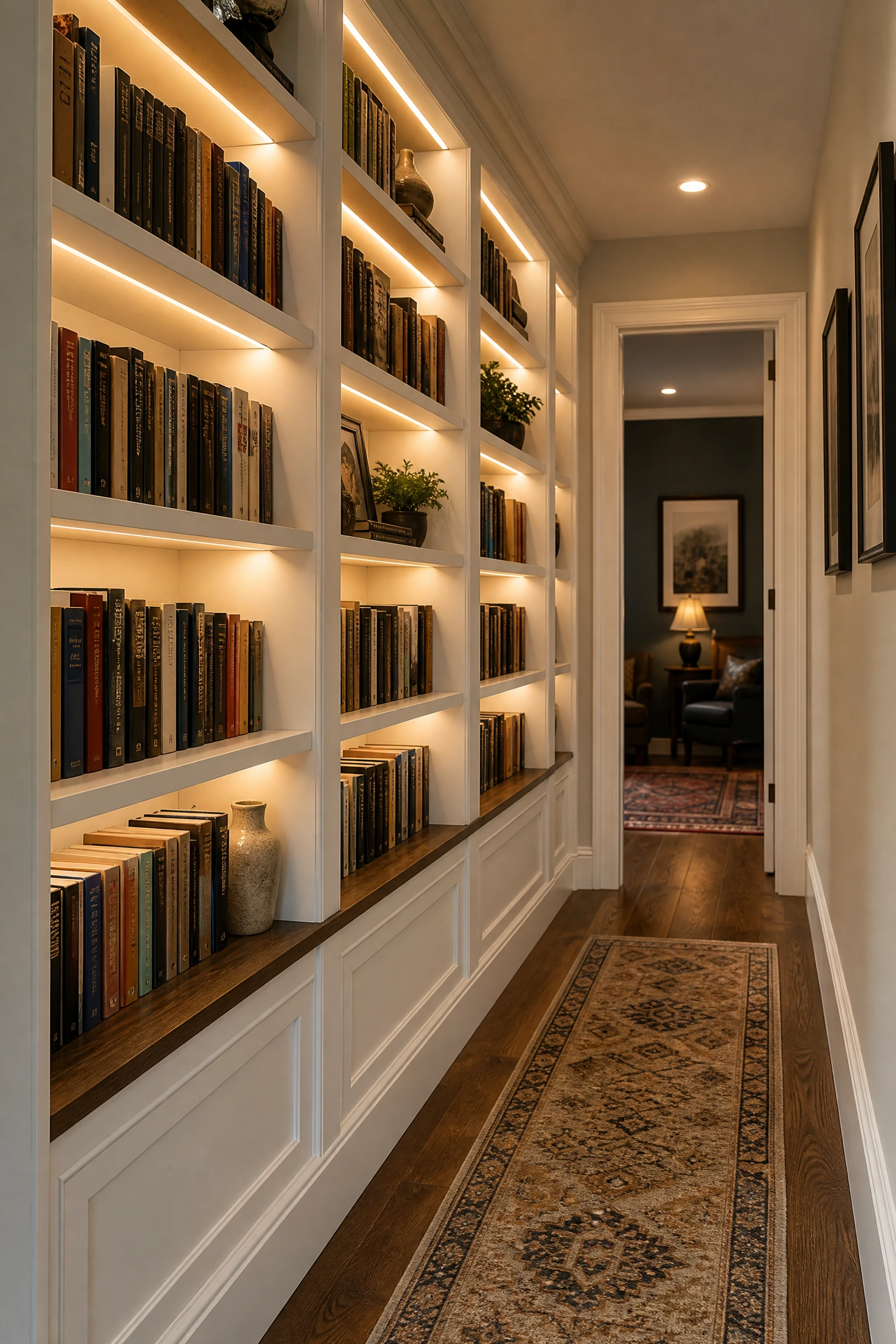
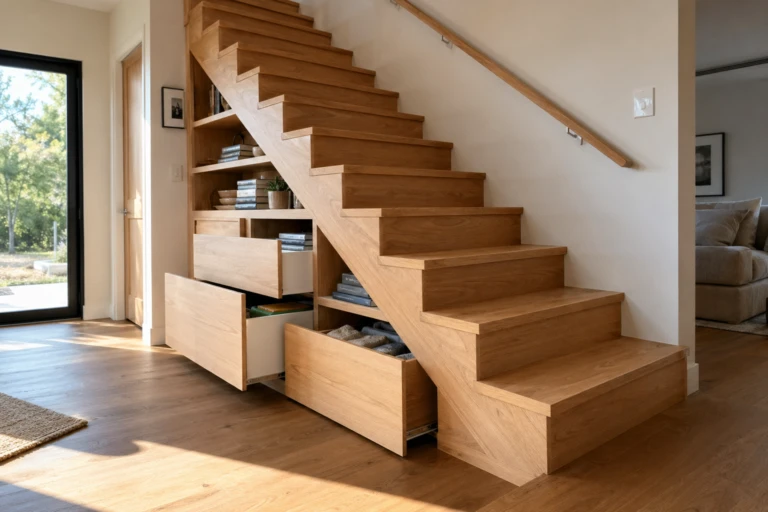
Shallow built-in bookshelves along one wall of the hallway create a library effect without narrowing the walking space. Shelves that are only 8 to 10 inches deep hold books standing upright and do not protrude enough to block the path. A hallway library adds intellectual character to the home and puts books where everyone sees them rather than hidden in a bedroom or office. Guests always stop and browse.
Designer Tip: Install a picture rail light or small LED strip above the shelves to create a warm, library-like glow. Lit bookshelves look ten times better than unlit ones, and the light draws attention to the books and makes the hallway feel welcoming at night.
4. Statement Light Fixture
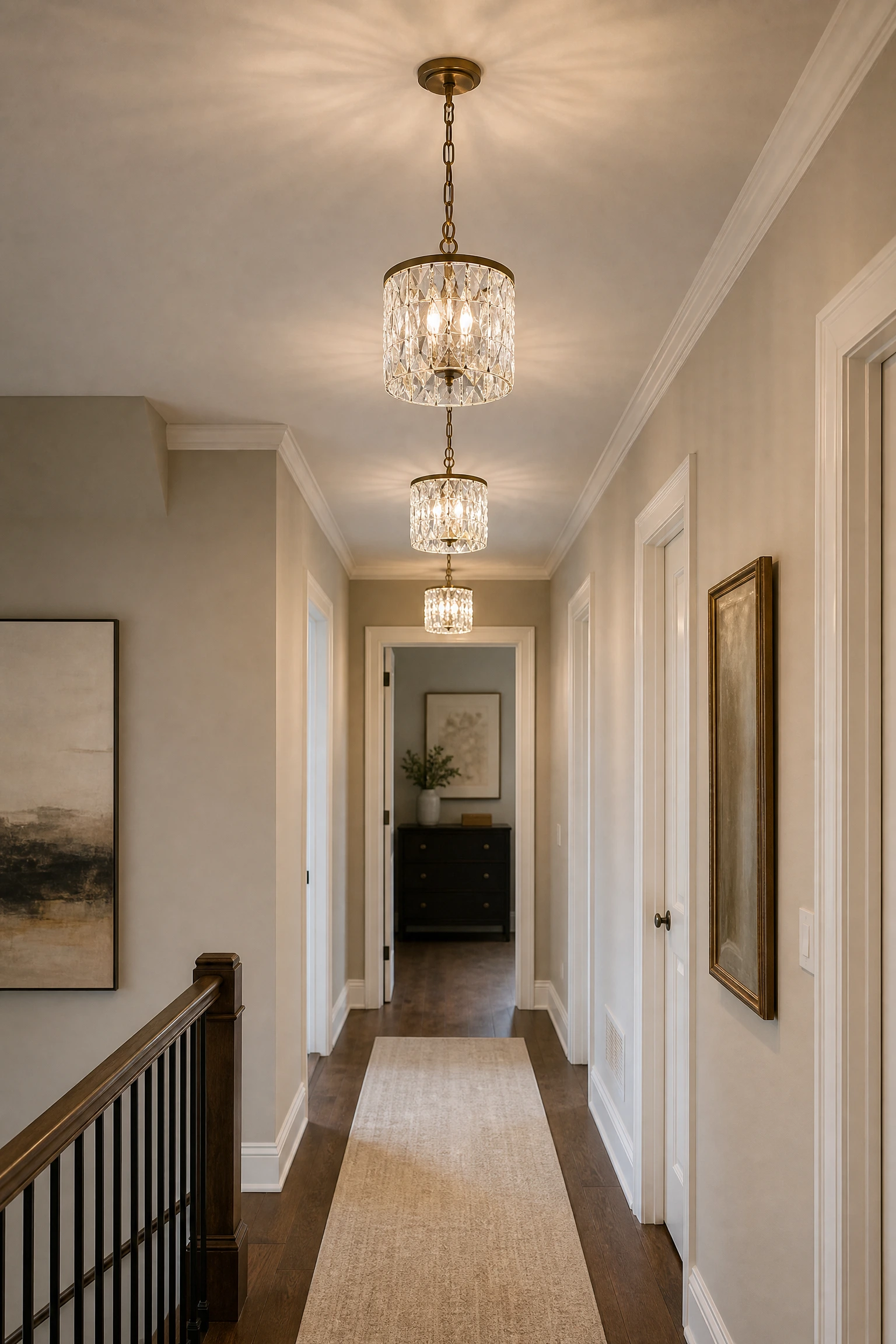
Replacing builder-grade flush-mount lights with one or two statement fixtures changes the hallway from basic to beautiful. A mini chandelier, a drum shade pendant, or a pair of decorative flush mounts add style and better light. The hallway ceiling is usually blank, so a good light fixture is one of the most noticeable upgrades you can make with minimal effort and no construction.
Designer Tip: Space multiple hallway fixtures evenly down the length of the hall. Two fixtures in a long hallway provide better, more even light than one centered fixture that leaves the ends dim. Match the fixture style to the adjacent rooms for a cohesive feel.
5. Accent Wall With Bold Paint
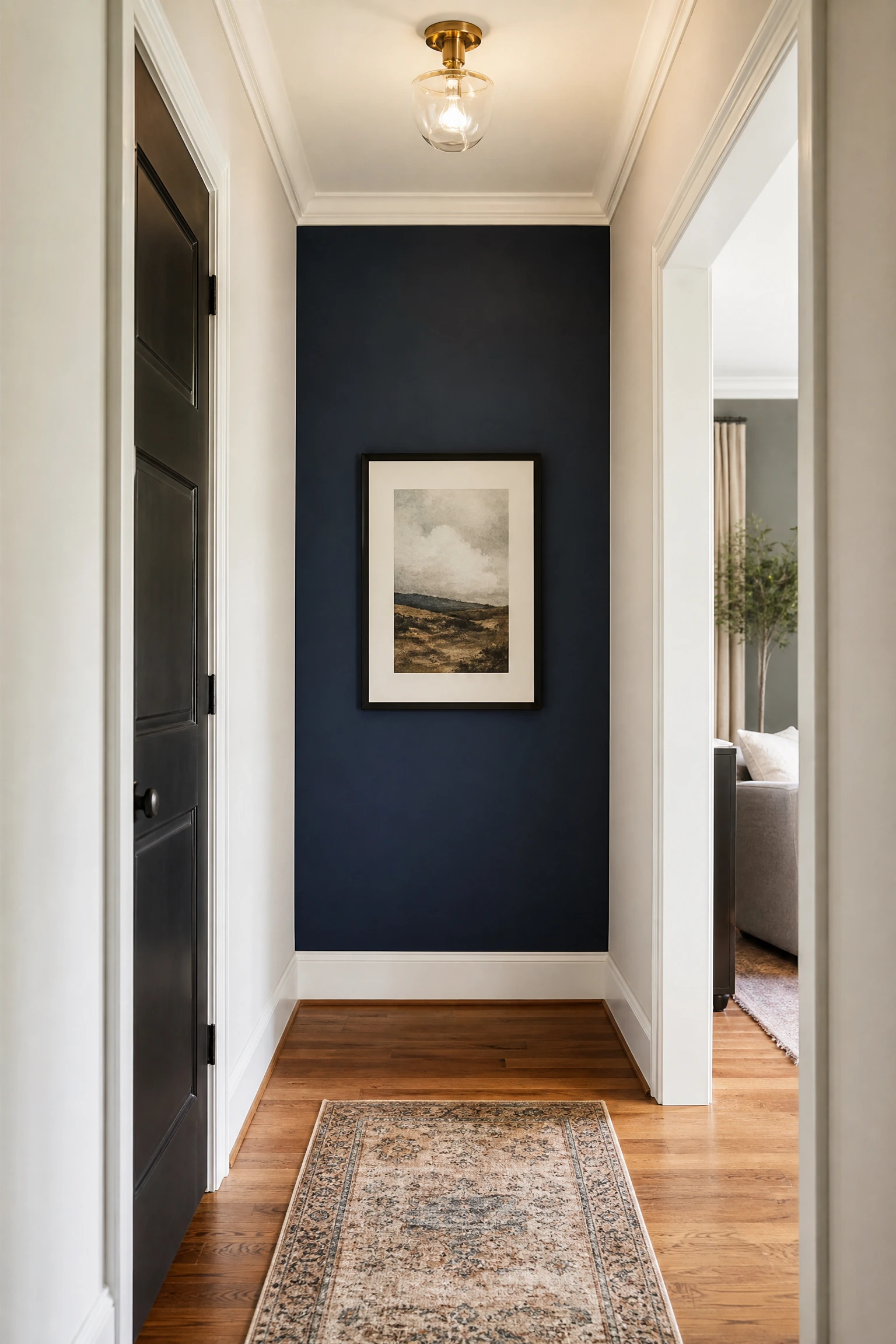
Painting the end wall of the hallway a bold or dark color creates a focal point that draws you down the corridor. The eye is naturally attracted to the colored wall, which gives the hallway direction and purpose. Deep navy, forest green, terracotta, or black all work as hallway accent colors. The short end wall is a small area, so even expensive paint is affordable for this project.
Designer Tip: Hang a piece of art or a mirror on the accent wall to give it a destination feel. A bold wall color with nothing on it can look unfinished. A framed piece of art centered on the colored wall completes the look and gives the hallway a clear visual endpoint.
6. Window Seat at the End
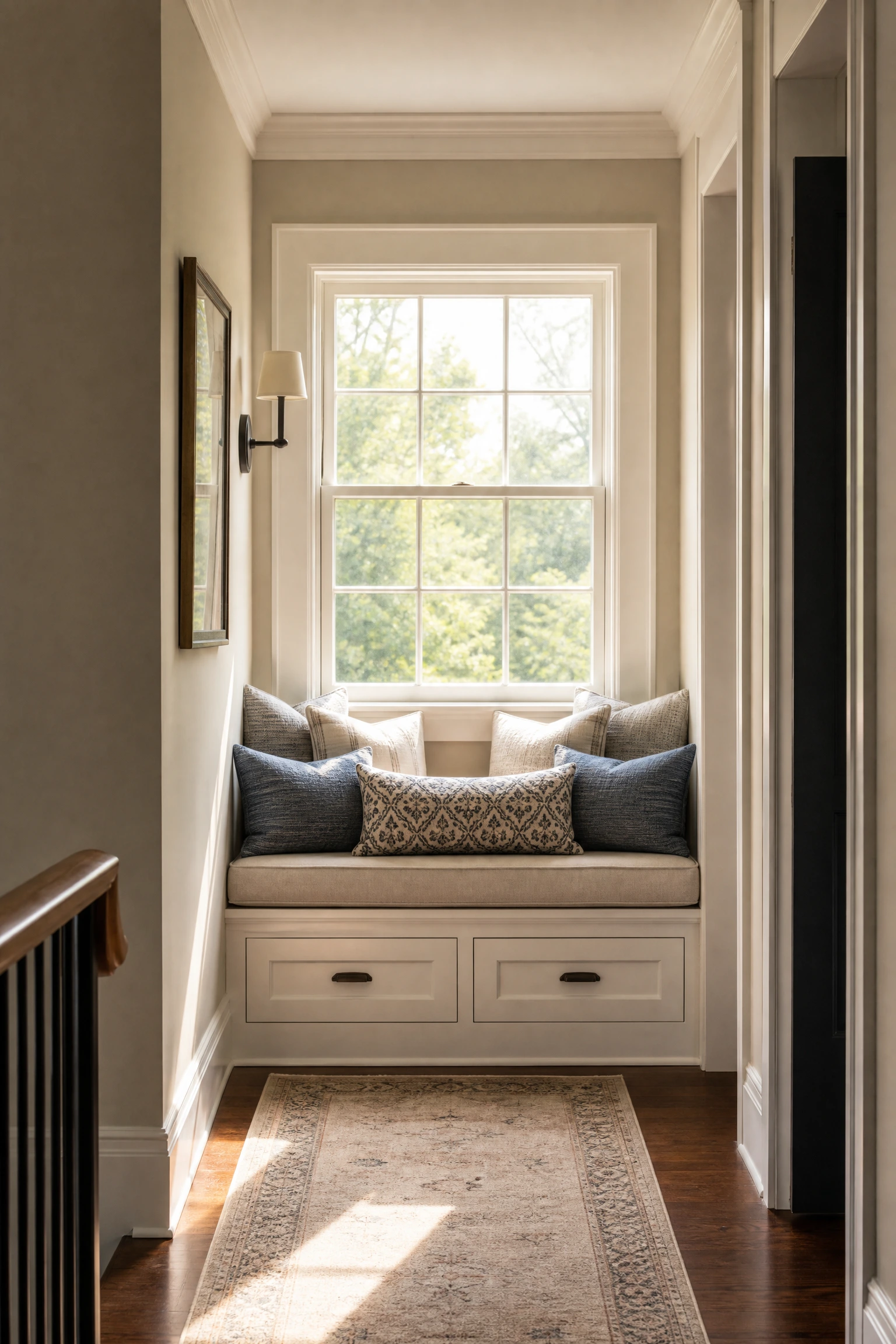
If the hallway ends at a window, a built-in window seat with cushions and storage underneath turns wasted space into a cozy reading nook. The window seat gives the hallway a purpose beyond just walking through it. Kids love a hallway window seat as their own little spot, and adults use it as a quiet place to read or sit with a cup of coffee in the morning light.
More Looks You'll Want to Steal:
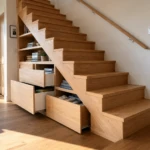
Designer Tip: Add throw pillows and a cushion in a fabric that coordinates with the hallway runner or wall color. The soft textiles make the window seat inviting and encourage people to actually sit down and use it rather than just walk past.
7. Wainscoting or Board and Batten
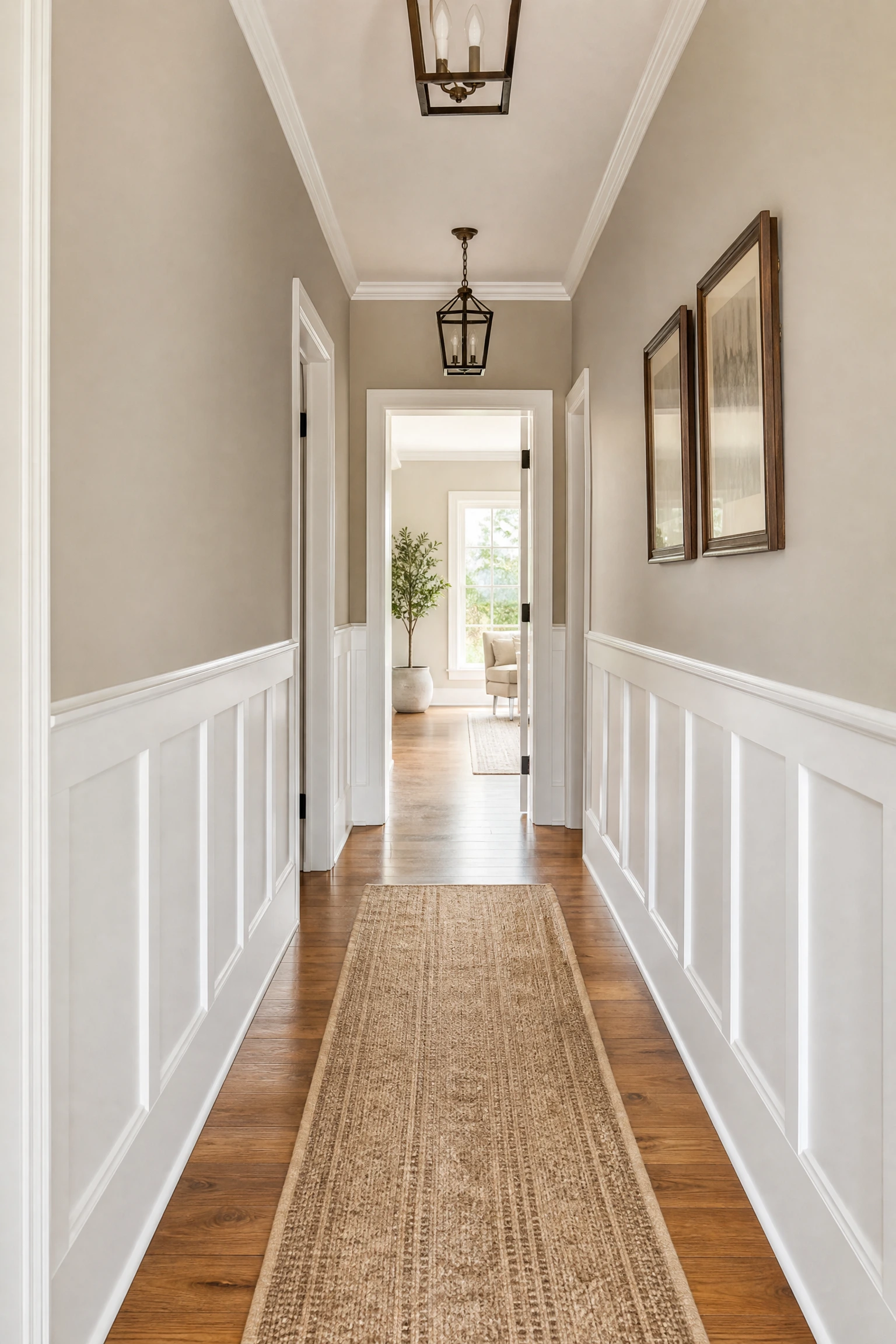
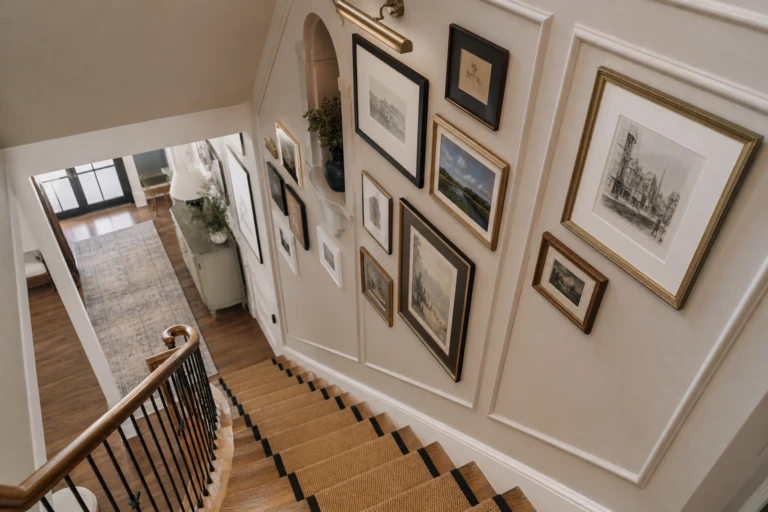
Wainscoting, board and batten, or beadboard on the lower half of the hallway walls adds architectural detail and protects the walls from scuffs. The hallway gets more daily traffic and wall contact than any other room, so the added trim is both decorative and practical. Paint the trim white with a colored wall above for a classic look, or paint everything the same color for a more modern, uniform feel.
Designer Tip: Install the wainscoting at one-third the wall height for the most balanced proportions. Too tall and it overwhelms the hallway. Too short and it looks like a chair rail afterthought. One-third height is the classic ratio that looks right in most hallways.
8. Console Table With Decor
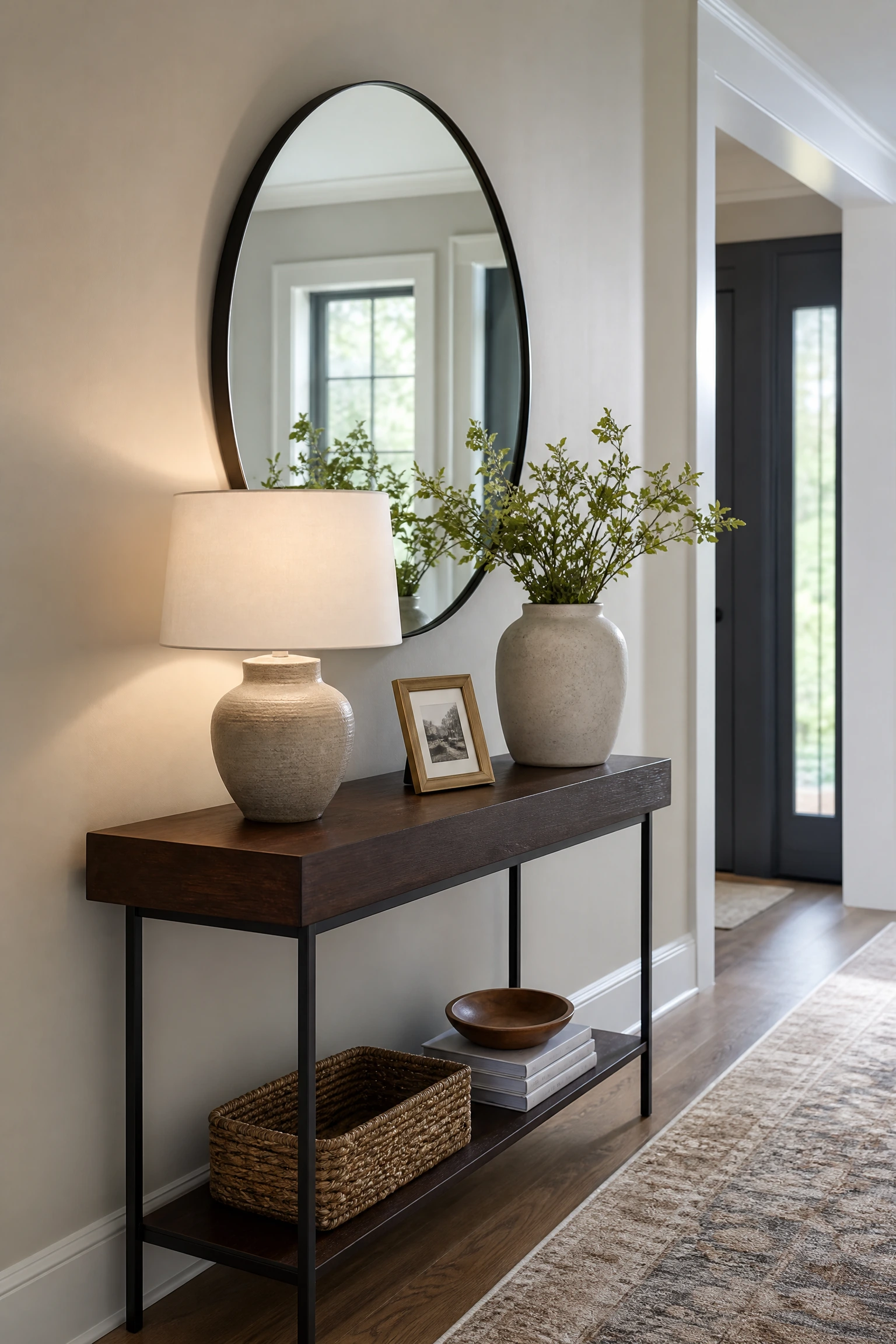
A narrow console table against the wall with a lamp, a vase, and a framed photo gives the hallway a furnished, lived-in quality. The console table provides a surface for items that need a home, like keys, mail, or a phone charger. It also anchors the wall and gives the hallway a focal point. Choose a table no deeper than 12 inches so it does not narrow the walkway.
Designer Tip: Hang a mirror above the console table to reflect light and make the hallway feel wider. The mirror and table combination is a classic pairing that works in any style. It adds both function and design to what was previously a blank wall.
9. Wallpaper Feature
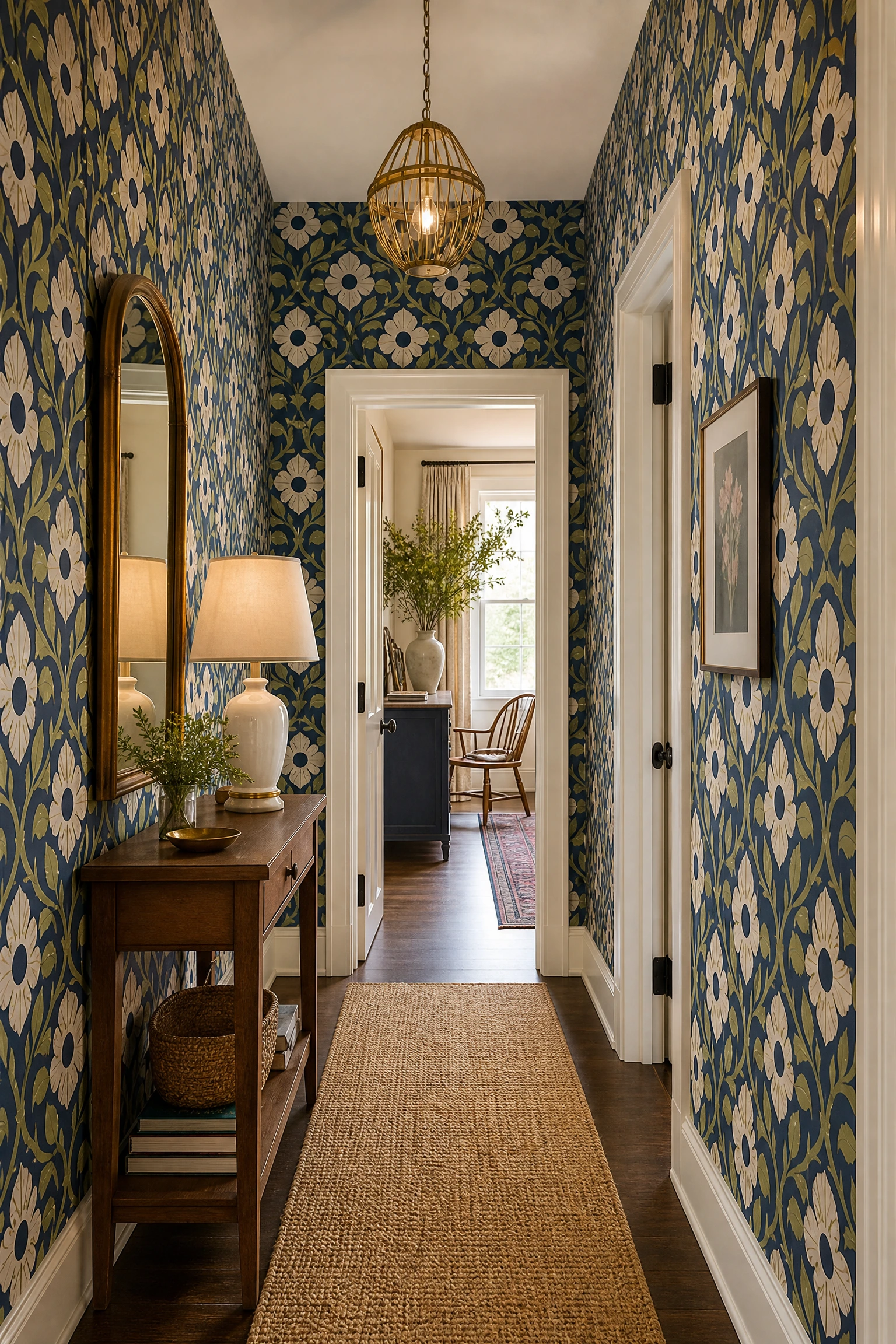
Bold wallpaper in the hallway makes a strong design statement in a small area. The hallway is a great place to try a pattern you love but are afraid to use in a larger room. Floral, geometric, or mural wallpaper all work well. The narrow walls concentrate the pattern and create an immersive experience as you walk through. Wallpaper in the hallway is one of the biggest design impacts per square foot in the house.
Designer Tip: Use peel-and-stick wallpaper if you want the option to change it later. Hallway wallpaper gets more daily visual exposure than any other room, so you may tire of a bold pattern sooner than expected. Peel-and-stick lets you update without damaging walls.
10. Narrow Floating Shelves
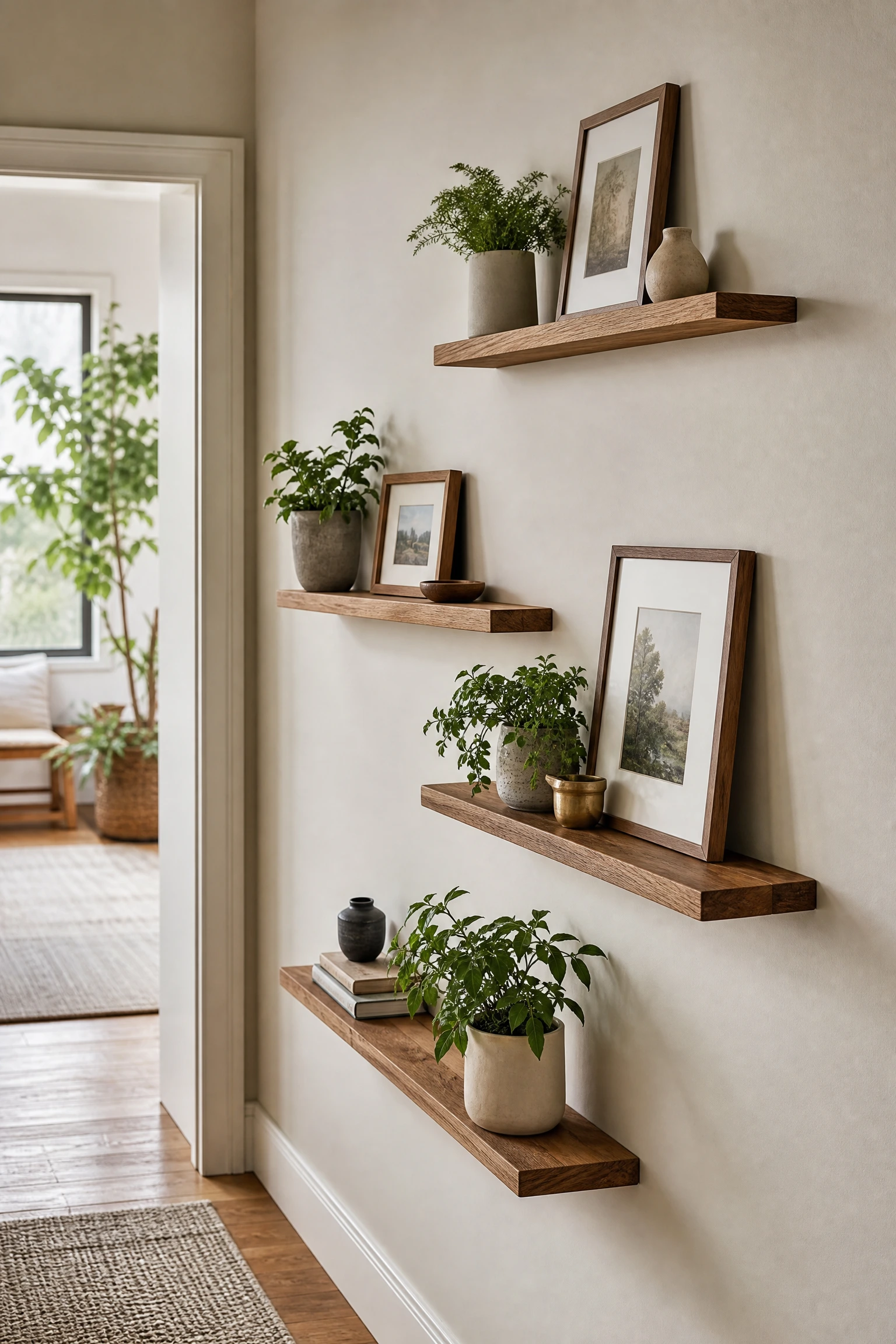
A row of narrow floating shelves at different heights displays small art, photos, plants, and decorative objects. The shelves are only 4 to 6 inches deep, so they do not intrude into the walkway. They add visual interest and personality to the wall without the weight of a gallery wall arrangement. Rearranging items on the shelves is easy, so the display can change with seasons or moods.
Designer Tip: Stagger the shelf heights rather than lining them up in a straight row. Staggered shelves create more visual movement and allow for taller items on some shelves and shorter items on others. A straight row of identical shelves looks rigid in a casual home.
11. Laundry Nook in a Closet
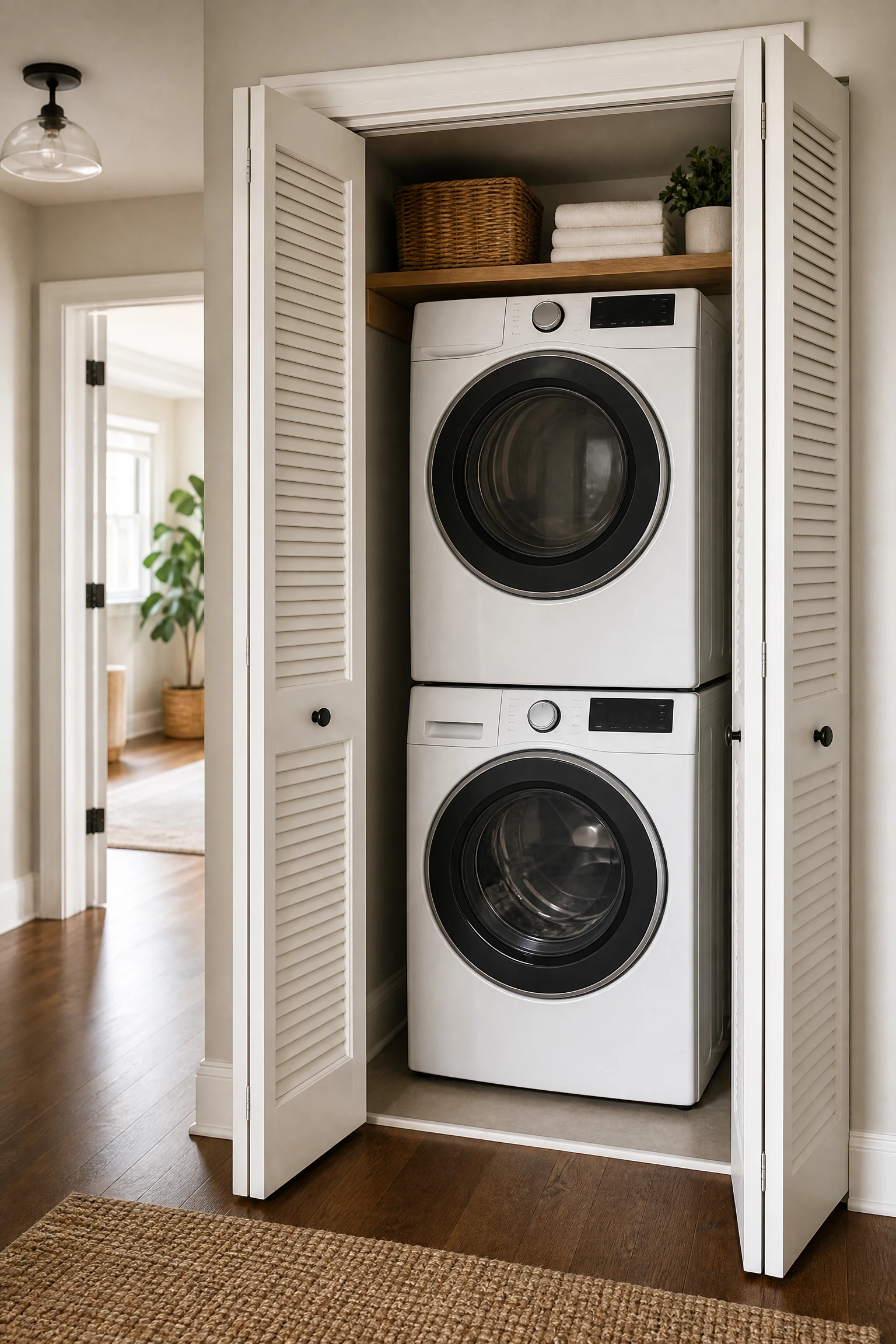
Converting a hallway closet into a laundry nook with a stacked washer and dryer saves trips up and down stairs. If the plumbing and electrical can be routed to the hallway closet, this is one of the most practical upgrades for a two-story home. Bifold doors hide the machines when not in use. Having the laundry right in the hallway near the bedrooms means dirty clothes travel a shorter distance.
Designer Tip: Add a small folding shelf or counter above the machines for sorting and folding. The closet space above a stacked unit is often wasted. A shelf at chest height creates a folding surface that makes the closet laundry nook much more functional.
12. Mirror at the End of the Hall
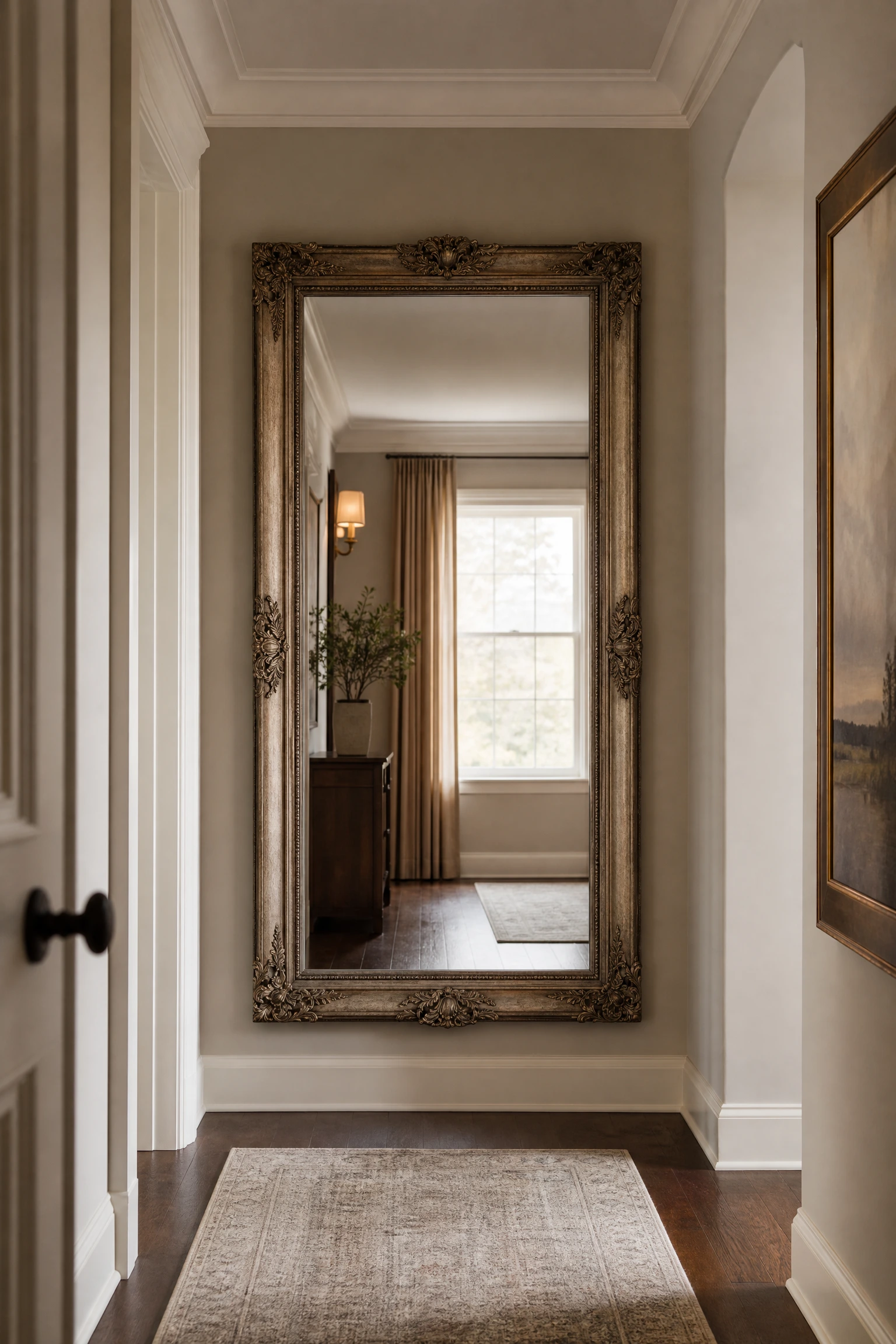
A large mirror on the wall at the end of the hallway reflects light back down the corridor and makes the space feel twice as long and much brighter. The mirror also gives you a last-minute outfit check on the way to the stairs. A statement mirror with an interesting frame serves as both a functional piece and a piece of art. This is one of the simplest and most effective hallway improvements.
Designer Tip: Position the mirror so it reflects something worth seeing, like a window, a light fixture, or the gallery wall on the opposite end. A mirror that reflects a blank wall doubles the blankness. Angle it to reflect the best view available in the hallway.
13. Sconce Lighting Along the Wall
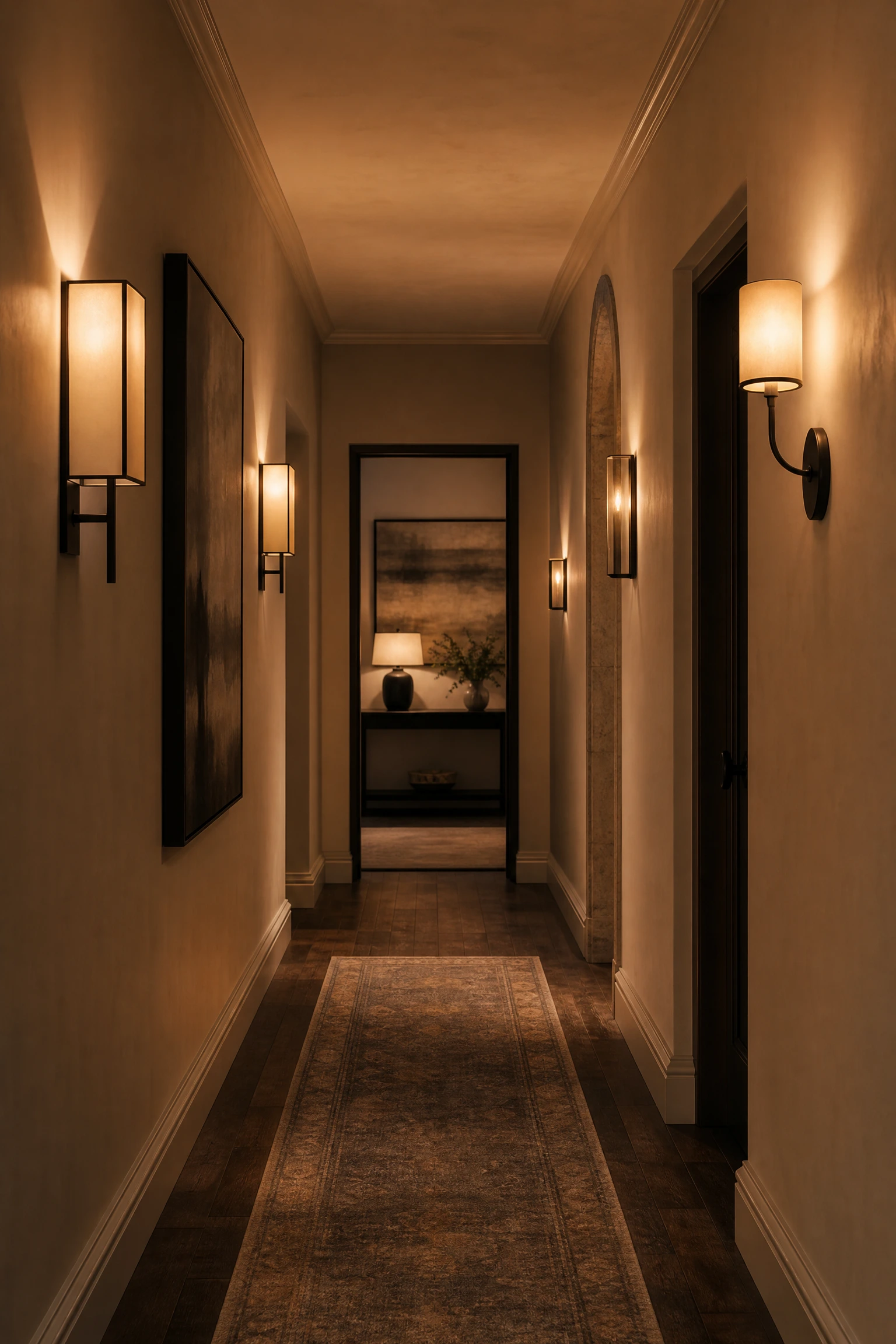
Wall sconces spaced evenly down the hallway provide warm, ambient light that ceiling fixtures cannot match. Sconces cast light up and down the wall, highlighting any art or architectural details nearby. They also free up the ceiling for a cleaner look. Sconces at night create a warm pathway of light that makes the upstairs hallway feel like a boutique hotel corridor.
Designer Tip: Install sconces at 60 to 66 inches from the floor and space them 6 to 8 feet apart. Use warm dimmable bulbs so the hallway can be bright during the day and softly lit at night. A dimmer switch for hallway sconces is a small luxury that makes a big difference.
14. Reading Nook With a Chair
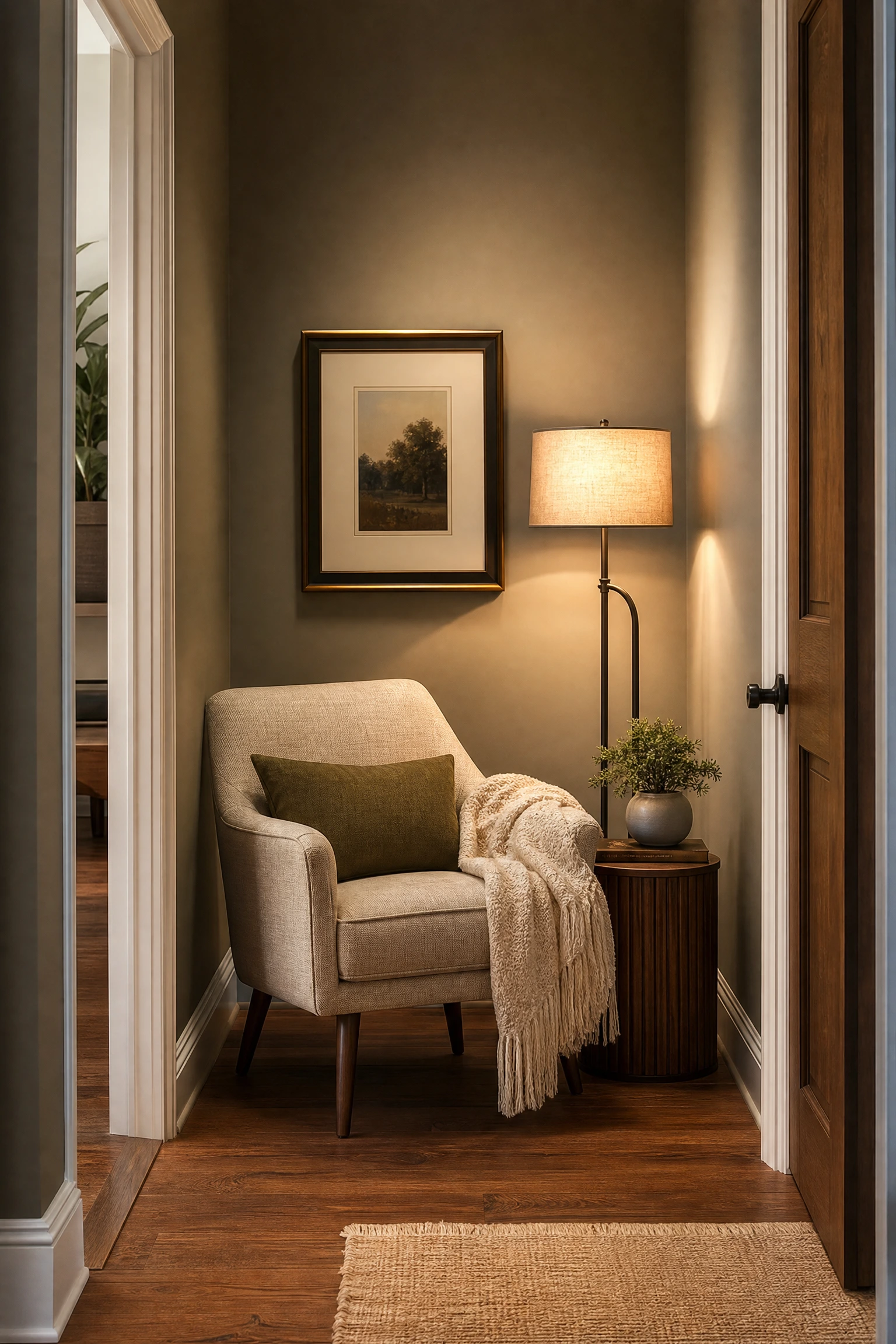
If the hallway has a wide spot or an alcove, a small accent chair with a floor lamp and a side table creates a reading nook. The chair gives the hallway a destination and a purpose beyond walking through it. A comfortable chair in the hallway becomes a favorite spot for morning coffee, afternoon reading, or a quiet moment away from the busy rooms of the house.
Designer Tip: Choose a chair with a small footprint that does not block the walking path. A narrow armchair or a slipper chair without arms fits in tight hallway spaces. Make sure you can walk comfortably past the chair without turning sideways.
15. Coordinated Door Hardware
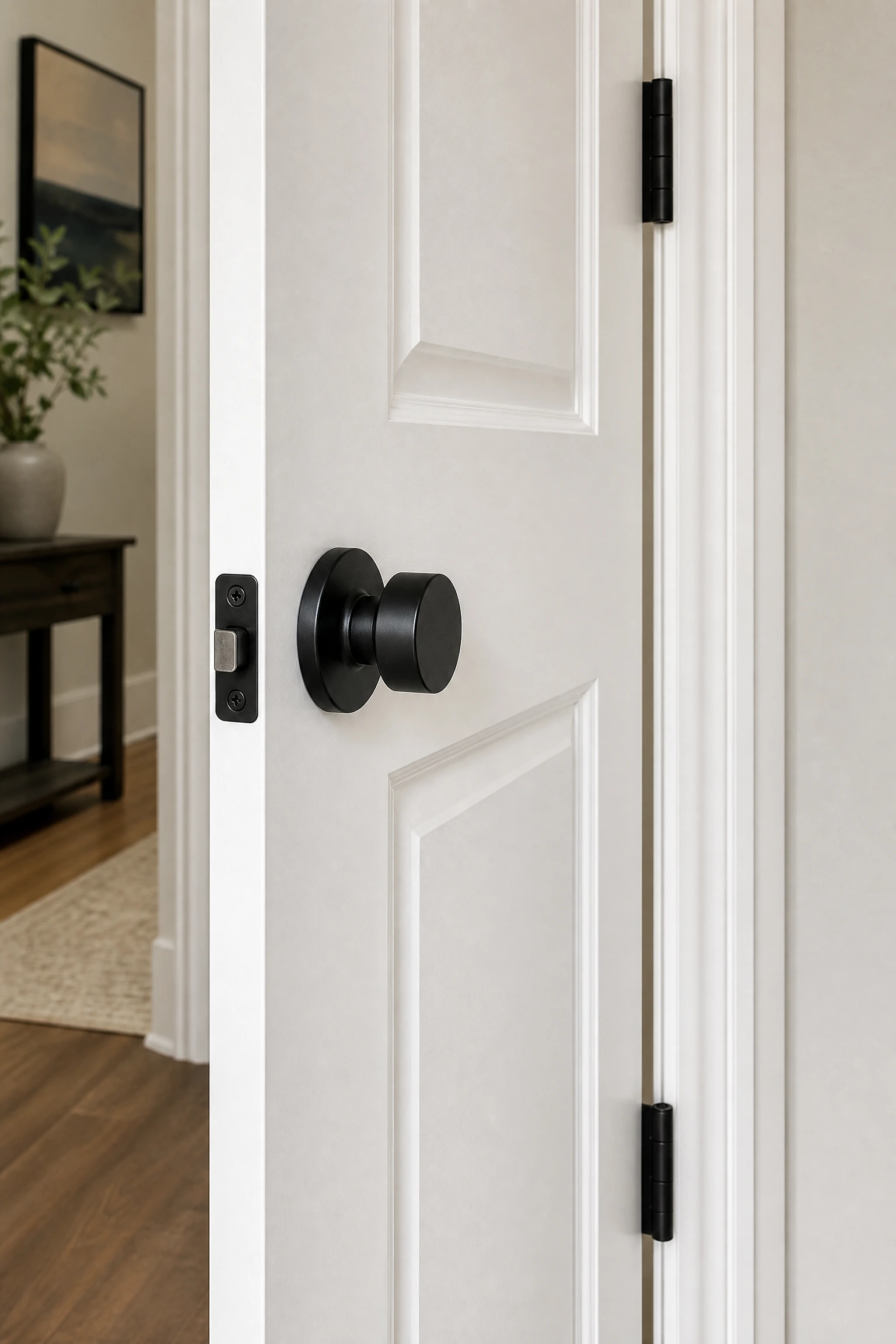
Replacing all the mismatched door knobs and hinges in the hallway with coordinated hardware in a single finish instantly upgrades the space. When every door has the same knob, the same hinge color, and the same strike plate, the hallway looks unified and intentional. This is a detail that most people do not notice consciously but feel subconsciously. Matte black, brushed nickel, and brass are all popular finishes that look great in a hallway.
Designer Tip: Match the door hardware finish to the hallway light fixtures and any other visible metal in the space. Consistency in metal finishes throughout the hallway creates a polished, designed look that makes the whole space feel more expensive than it cost.
The upstairs hallway deserves as much attention as any room in the house because you see it more often than most rooms. Pick one or two ideas from this list that would make the biggest difference in your hallway and start there. Small changes add up in a narrow space, and even a runner rug and better lighting can completely change how the hallway feels.
Frequently Asked Questions
How do I make a narrow hallway feel wider?
Use light paint colors, hang a mirror at the end, keep the floor clear of furniture, and use horizontal elements like a striped runner or horizontal art. Good lighting also makes a narrow hallway feel more open. Avoid placing bulky furniture or deep shelves in a narrow hallway.
What color should I paint an upstairs hallway?
Light neutrals like white, cream, or light gray are the safest choices because they reflect light and connect smoothly to the rooms that open off the hallway. If you want color, choose a shade that complements the bedroom and bathroom colors visible from the hallway for a cohesive flow between spaces.
Is it worth decorating a hallway?
Yes. You walk through the hallway multiple times a day, making it one of the most-seen spaces in the house. A decorated hallway makes the entire upstairs feel more finished and intentional. The cost is usually low because the space is small, and the impact is high because you see the changes constantly.
How do I light a dark hallway?
Add wall sconces or replace dim ceiling fixtures with brighter LED options. Use warm white bulbs rated at 3000K for a welcoming glow. A mirror at the end reflects light back into the space. Light-colored walls and a light runner also help by reflecting rather than absorbing light. If there is no ceiling electrical, battery-powered wall sconces are a good alternative.