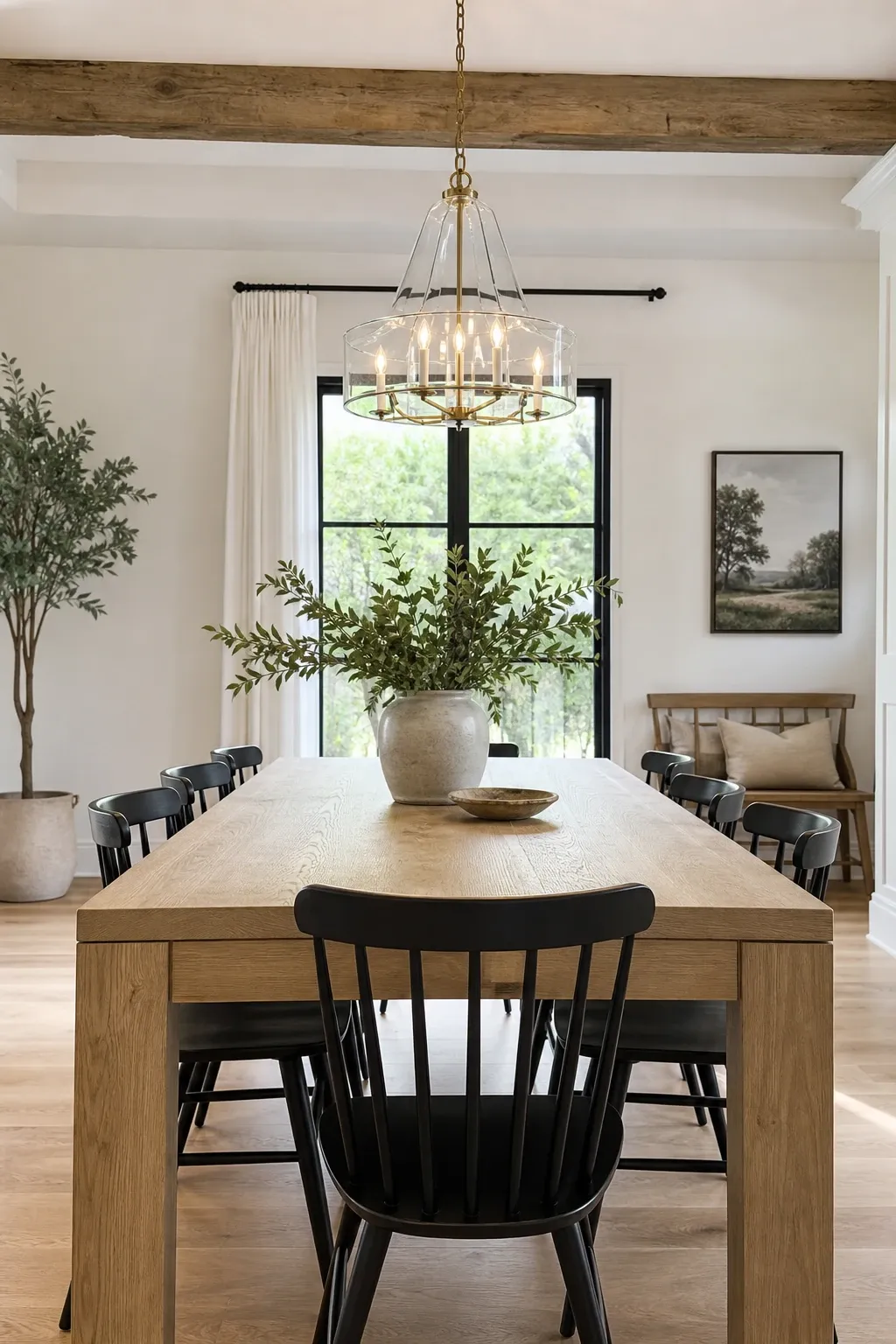
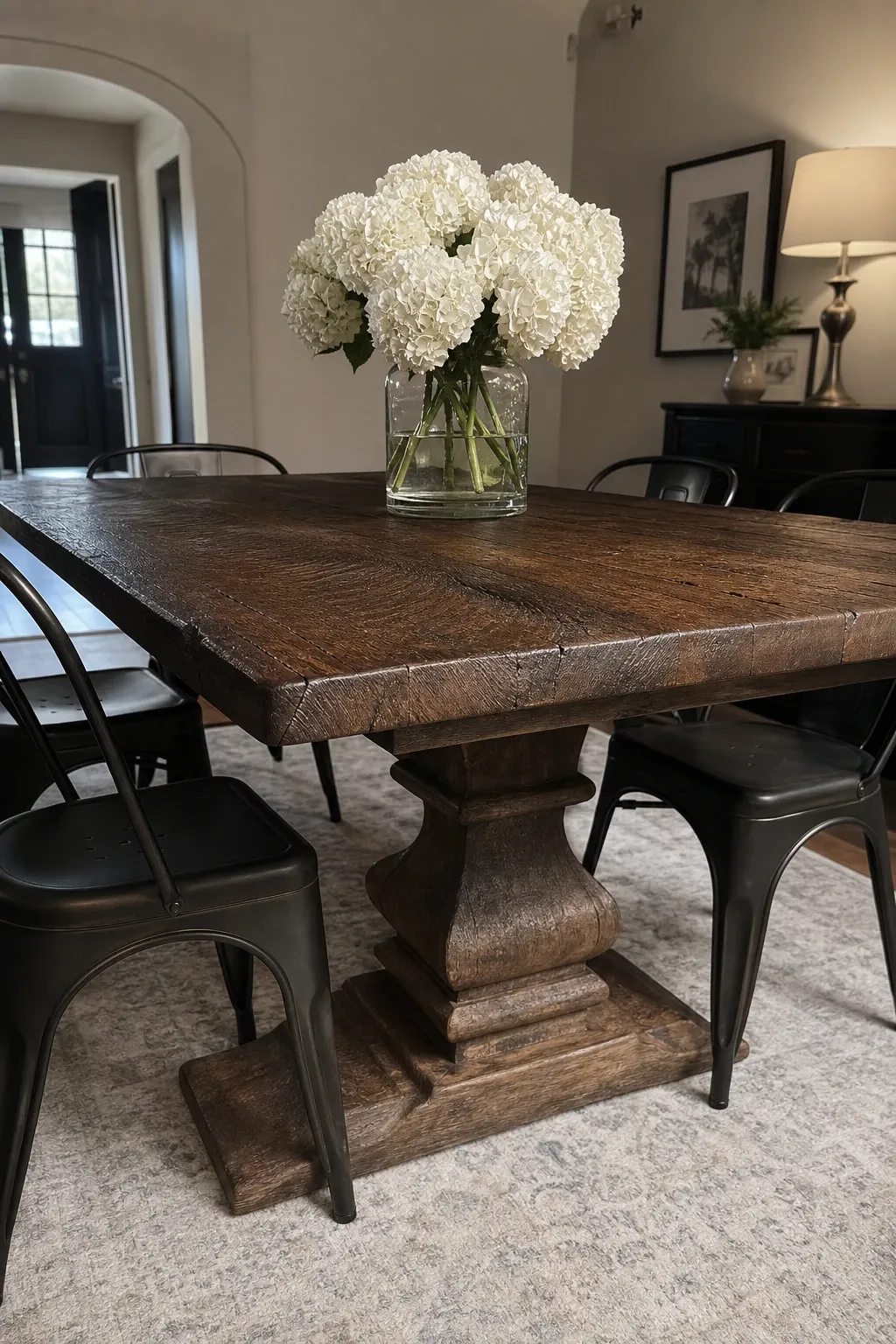
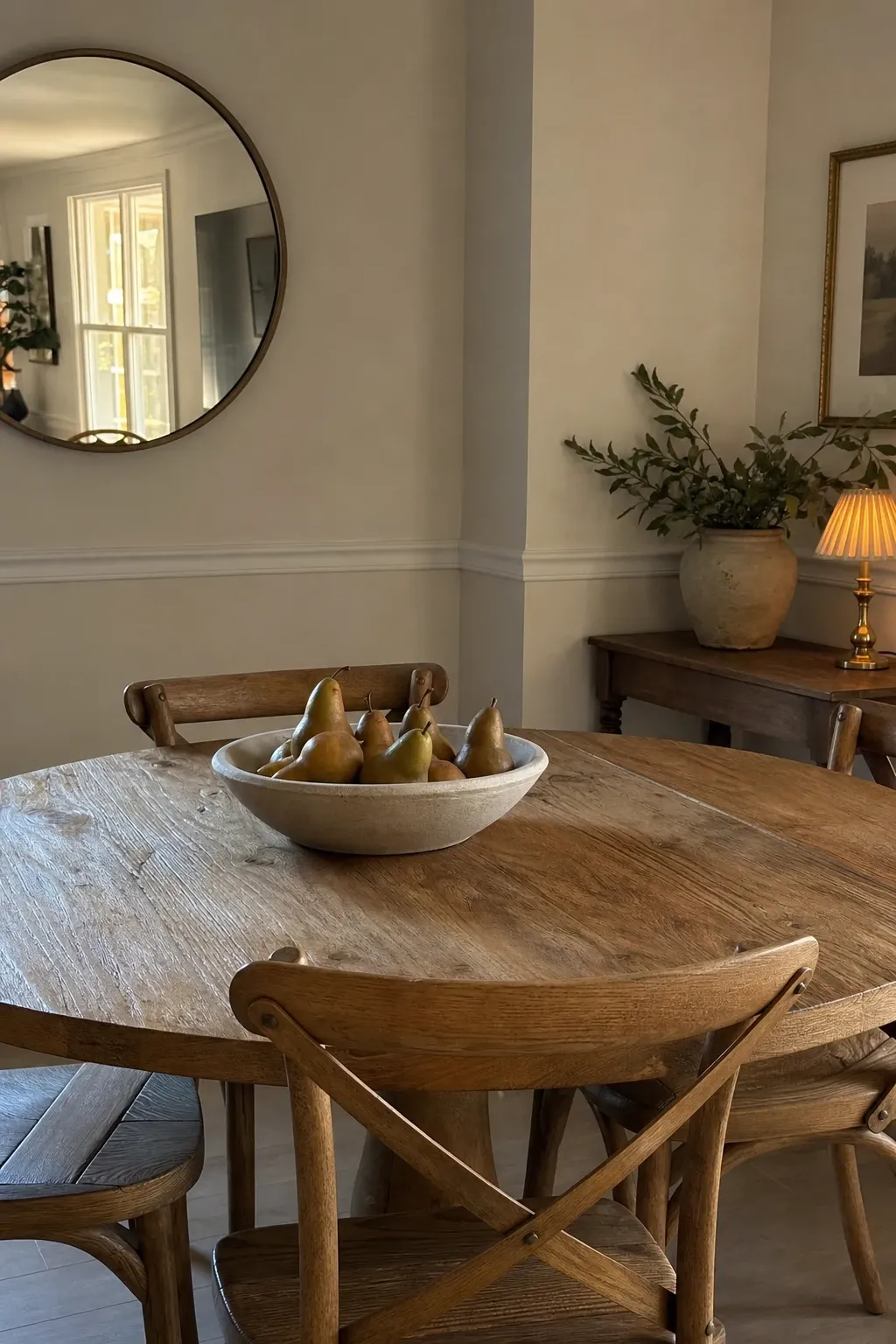
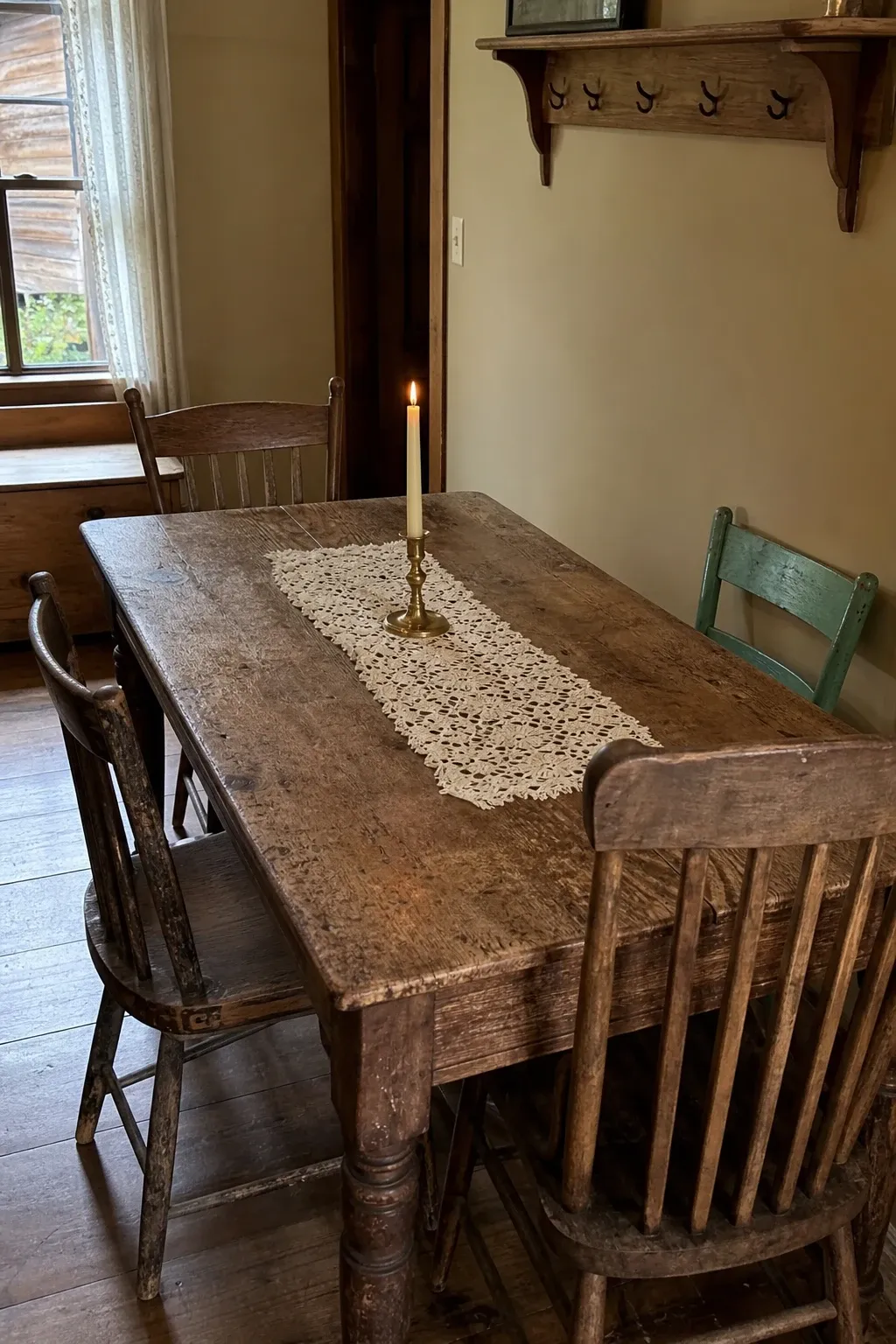
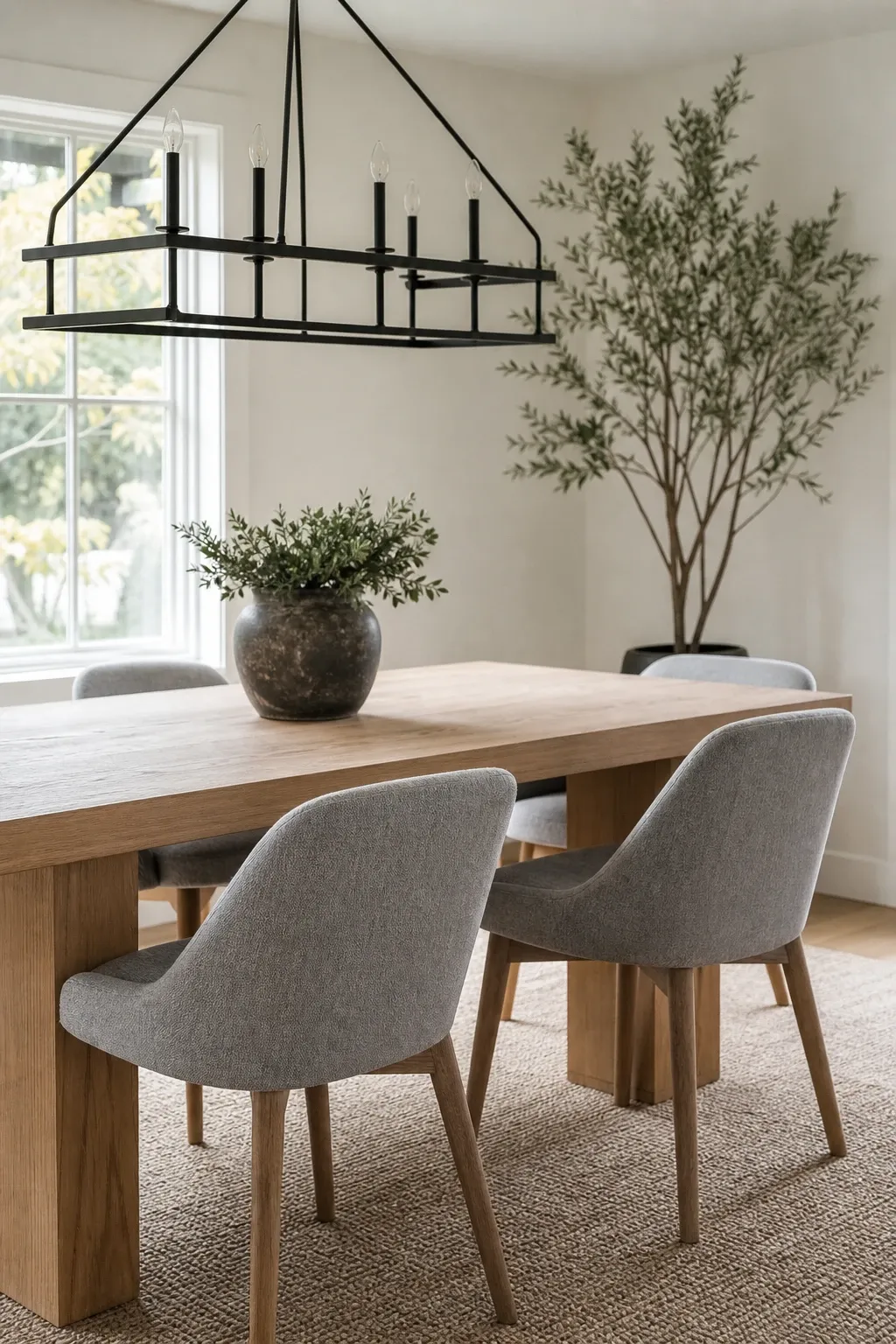
Picking a dining table for a farmhouse style room should not be this stressful, but here we are. I spent weeks going back and forth between trestle legs and turned legs before I finally just went to a local furniture maker and told him what I wanted. The table you choose sets the tone for the whole room, so it is worth thinking through. Here are 15 farmhouse table styles that actually work in real homes.
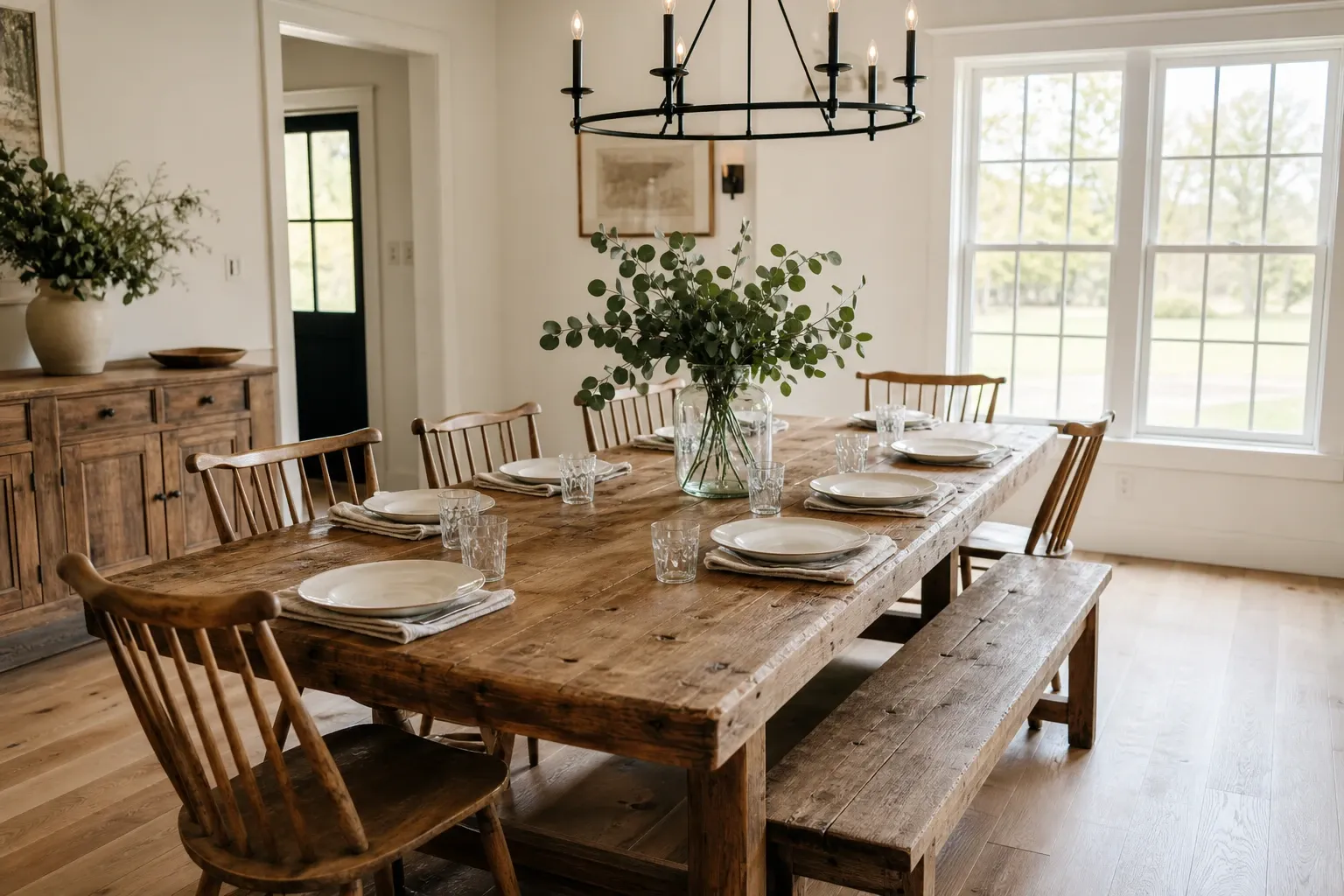
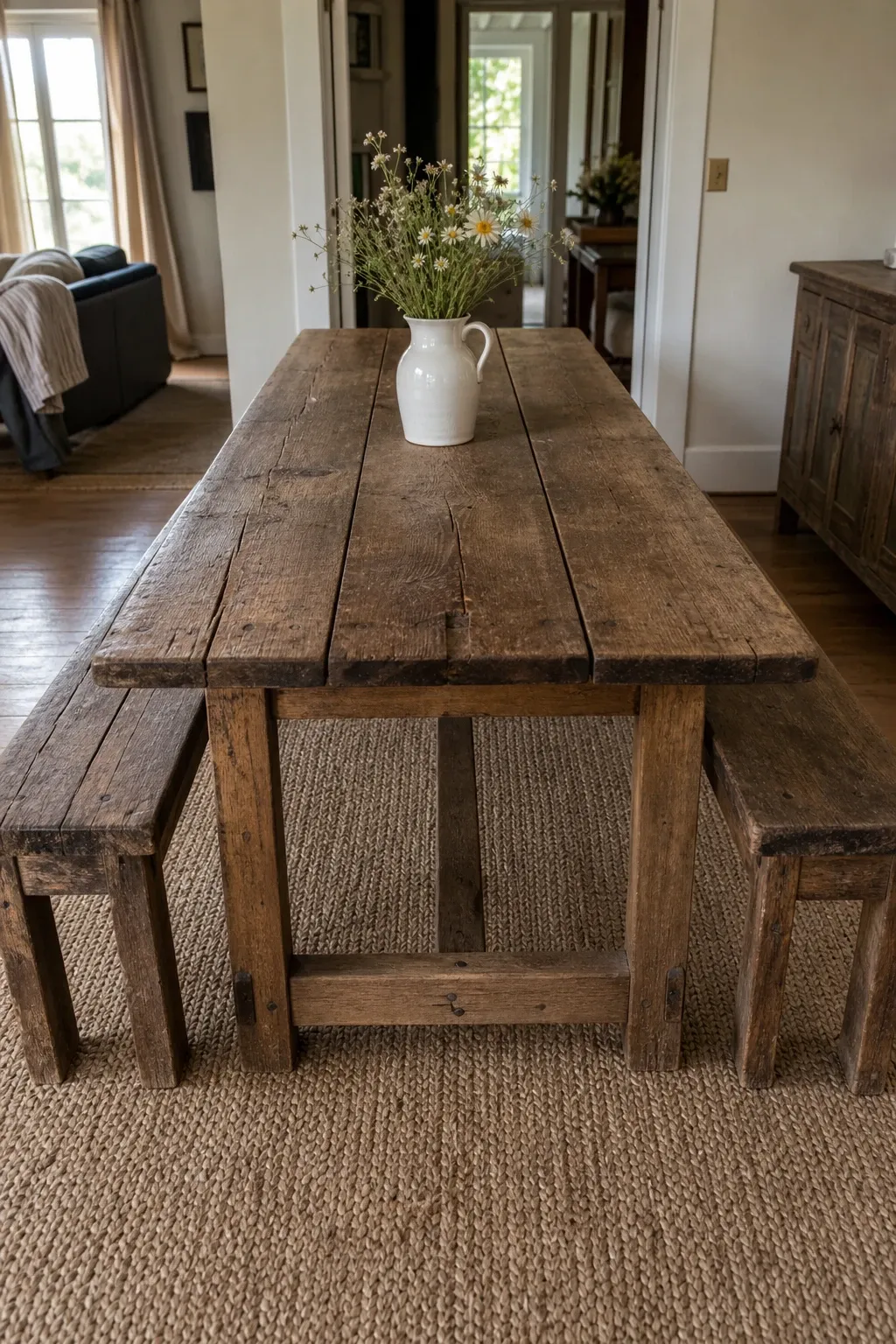
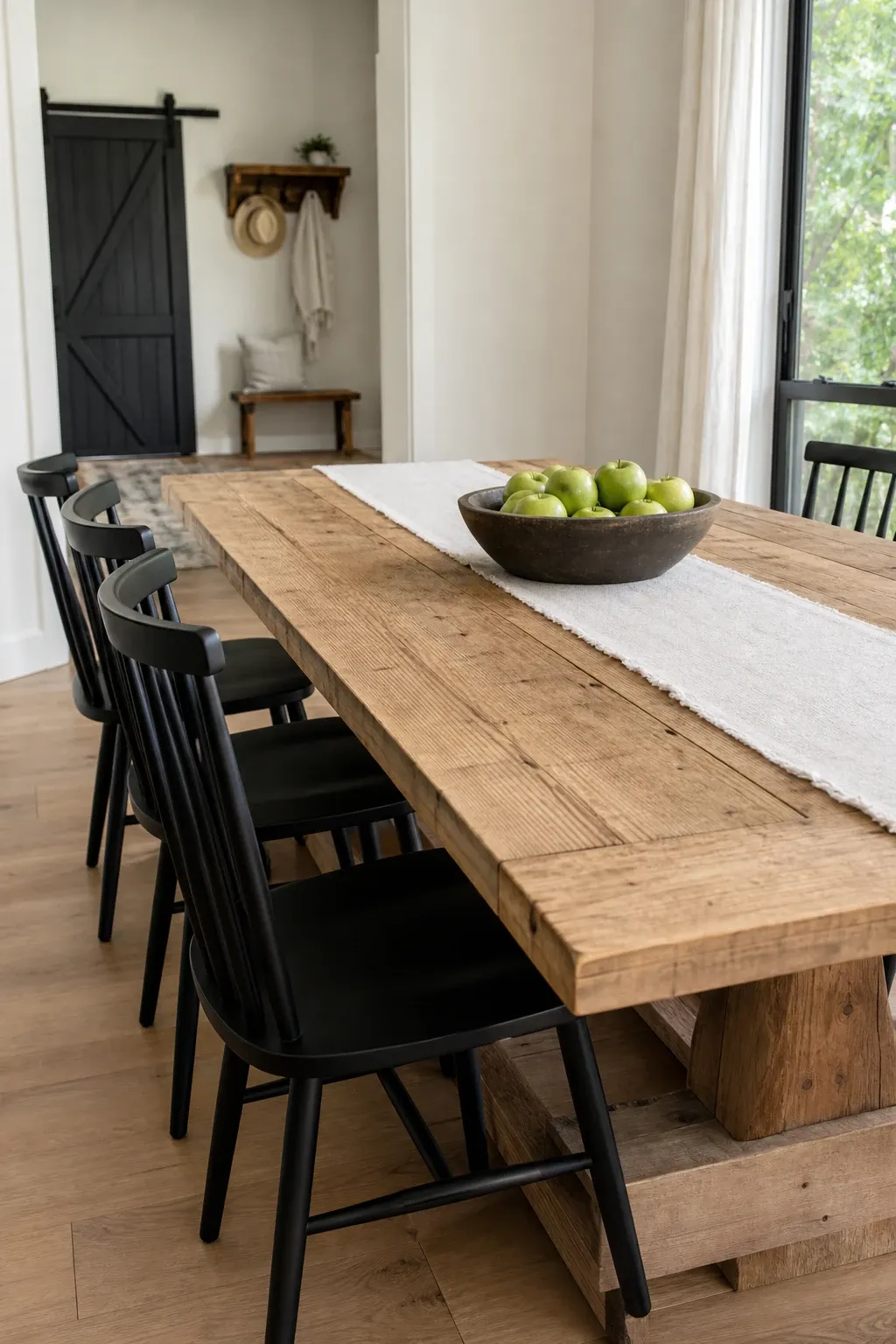
The trestle table is the original farmhouse table and for good reason. Two sturdy end supports connected by a long beam give you maximum legroom because there are no corner legs getting in the way. This design has been around for centuries and still looks right at home in both rustic and modern farmhouse dining rooms. A trestle table in solid pine or oak with a natural finish is about as farmhouse as it gets.
Designer Tip: Choose a trestle base that is wide enough to keep the table stable. A base that is at least two-thirds the length of the top prevents wobbling when someone leans on the end.
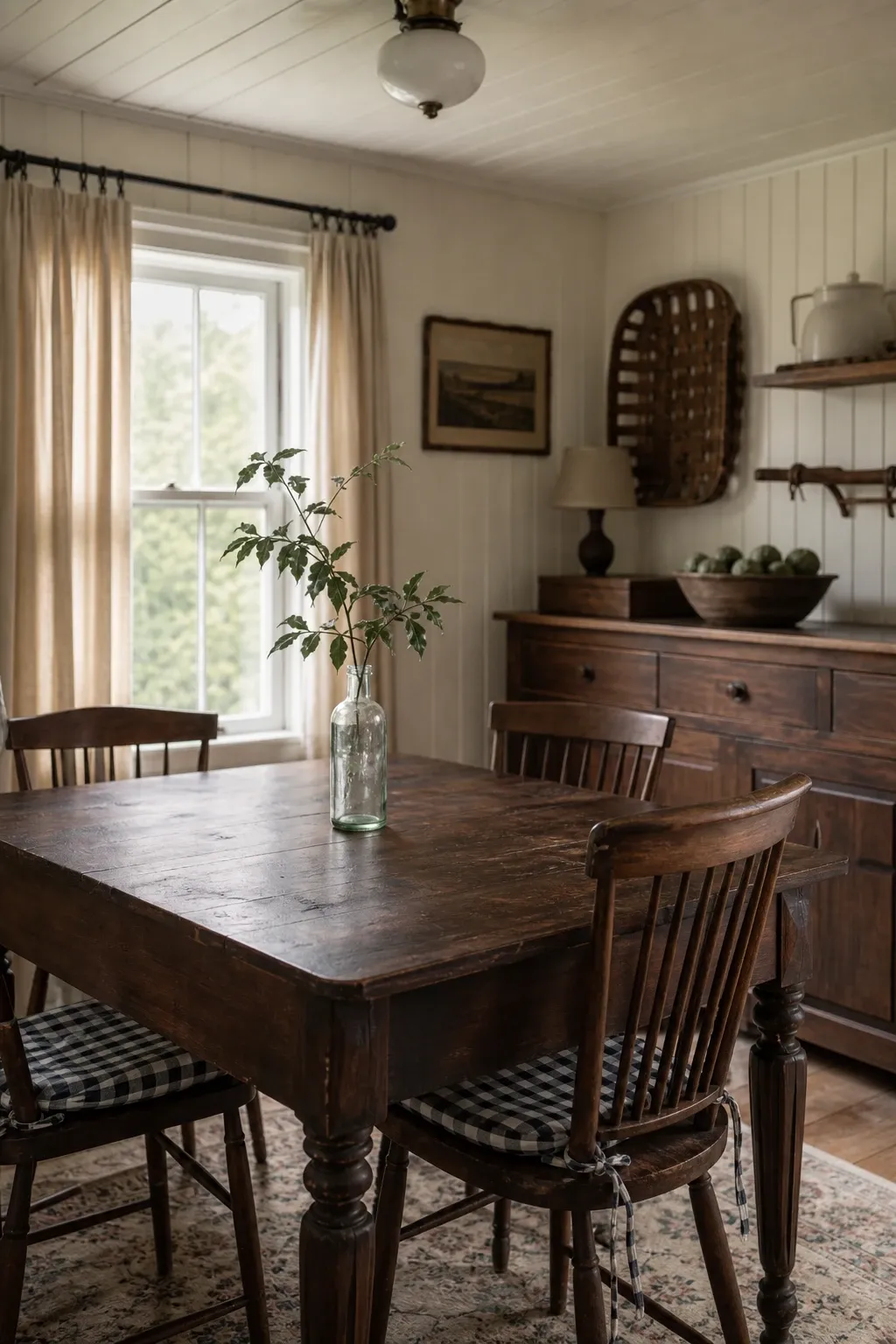
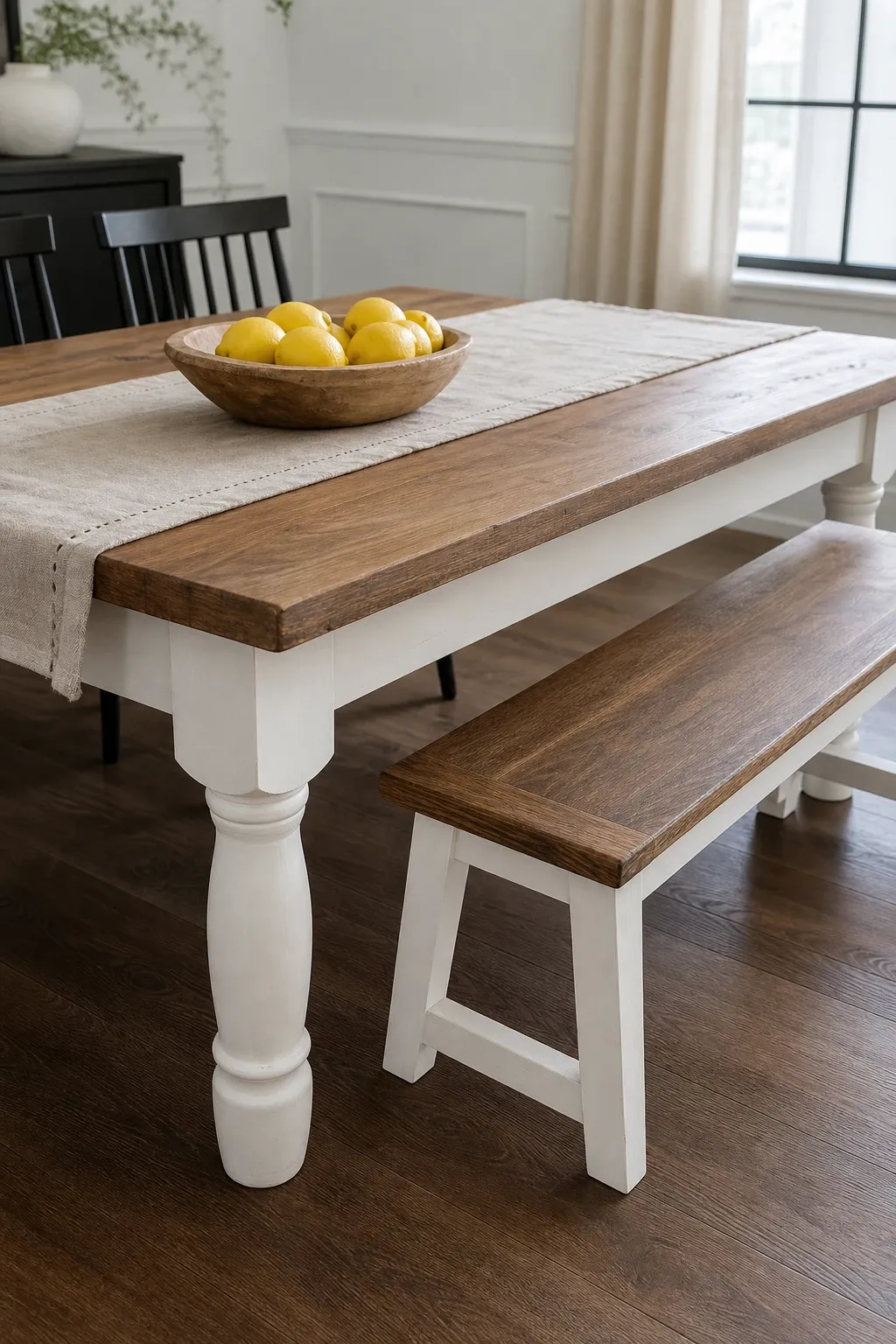
Chunky turned legs give a farmhouse table a traditional, almost antique feel. The thick, rounded legs with detailed turnings add visual weight and craftsmanship to the piece. This style pairs well with cross-back chairs or upholstered seating. Turned leg tables in white or distressed paint with a contrasting natural wood top are one of the most popular farmhouse table designs right now, and they photograph incredibly well too.
Designer Tip: If you paint the legs white, lightly sand the edges and turnings after the paint dries to expose some of the wood underneath. This gives a believable worn look without overdoing the distressing.
An X-shaped base on each end of the table gives a farmhouse table a more architectural, structured look. It is a step up from plain straight legs without being fussy. The crossed legs create an interesting visual underneath the table that makes the whole piece feel more designed. This style works particularly well in dining rooms where the table is visible from multiple angles, like an open floor plan kitchen and dining area.
Designer Tip: Metal X-bases in black iron paired with a thick wood top give a modern farmhouse industrial look. Wood X-bases keep things purely rustic.
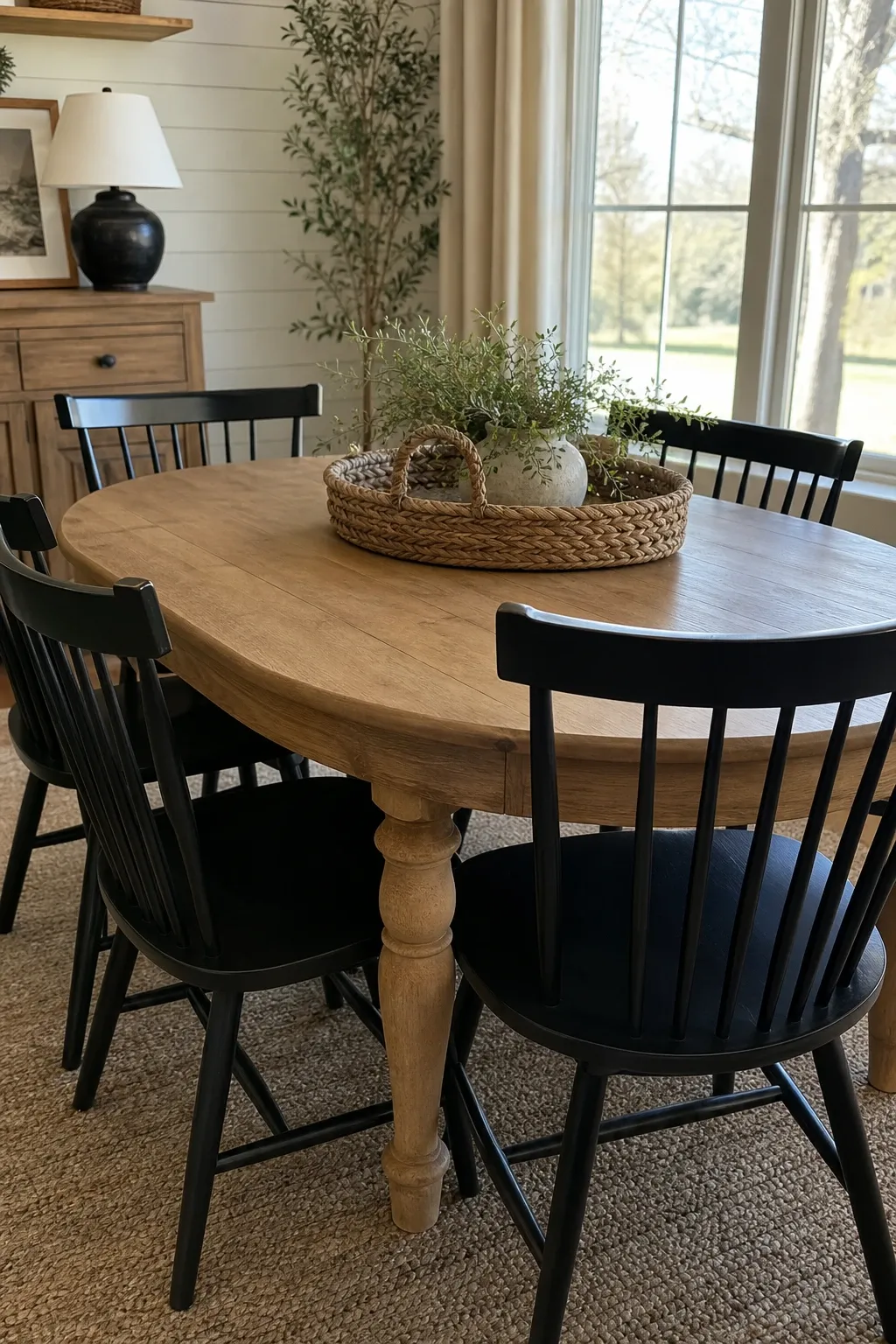
A single center pedestal base is perfect for round or oval farmhouse tables. Without corner legs, everyone has plenty of room to pull their chair in and out, which makes a pedestal table great for smaller dining rooms. The base itself can be a turned column, a chunky square post, or a wide tripod foot. Round pedestal tables seat more people comfortably than you might expect because there is no corner seating to waste.
Designer Tip: A 48-inch round pedestal table comfortably seats four to six people and fits well in most dining rooms. Go to 54 inches if you regularly host six to eight.
An extendable table with a built-in leaf is the practical choice if your dining room needs to serve double duty. Keep it compact for everyday meals and pull out the leaf when company comes over. Farmhouse style extension tables usually have a butterfly leaf that stores inside the table or drop leaves on each end. This way you get a six-seater that expands to eight or ten without needing to drag a folding table out of the garage.
Designer Tip: When shopping for an extendable table, test the leaf mechanism in the store. Cheap hardware makes extending the table a two-person wrestling match, and you will avoid using it.
A live edge table brings the raw beauty of a tree right into your dining room. The natural, uncut edge of the wood slab makes each table one of a kind. Walnut, maple, and ash are popular choices for live edge tops. Pair it with simple metal hairpin legs or a wood trestle base. This style leans more modern farmhouse but still fits because the emphasis is on natural materials and craftsmanship over polish.
Designer Tip: Fill any cracks or voids in a live edge slab with clear epoxy resin before finishing. It strengthens the wood and creates a smooth surface for plates and glasses.
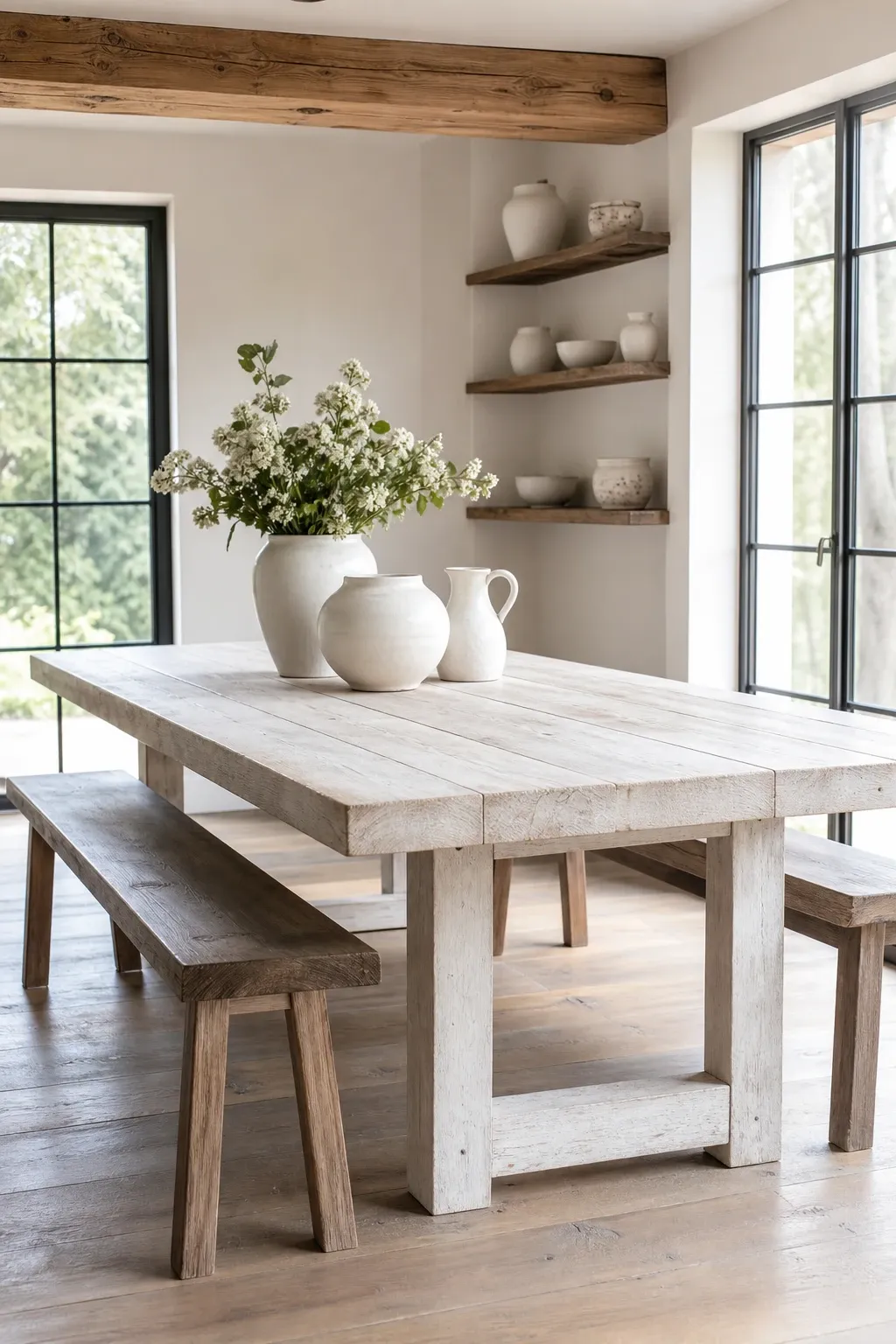
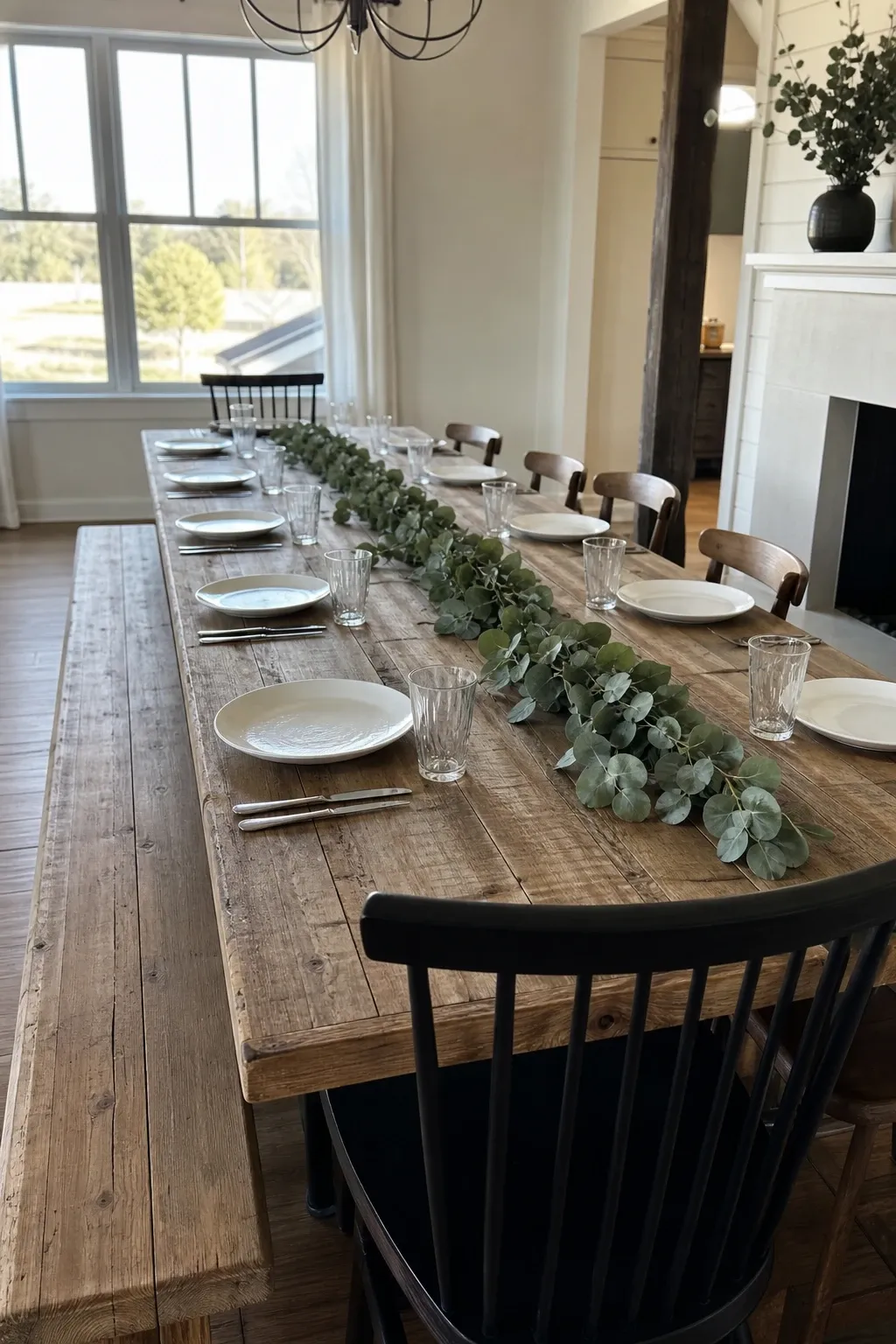
A plank top table made from several wide boards joined together with breadboard ends is a farmhouse staple. The breadboard ends, which are perpendicular pieces at each short end of the table, keep the planks from warping over time and add a finished detail. You can see the individual planks and the slight gaps between them, which gives the table that hand-built character. This is the table you picture in a country kitchen with a jar of wildflowers on it.
Designer Tip: Make sure the breadboard ends are attached with proper mortise and tenon joinery or tongue and groove with slotted screw holes. Gluing them straight on will cause the top to crack as the wood moves with seasonal humidity changes.
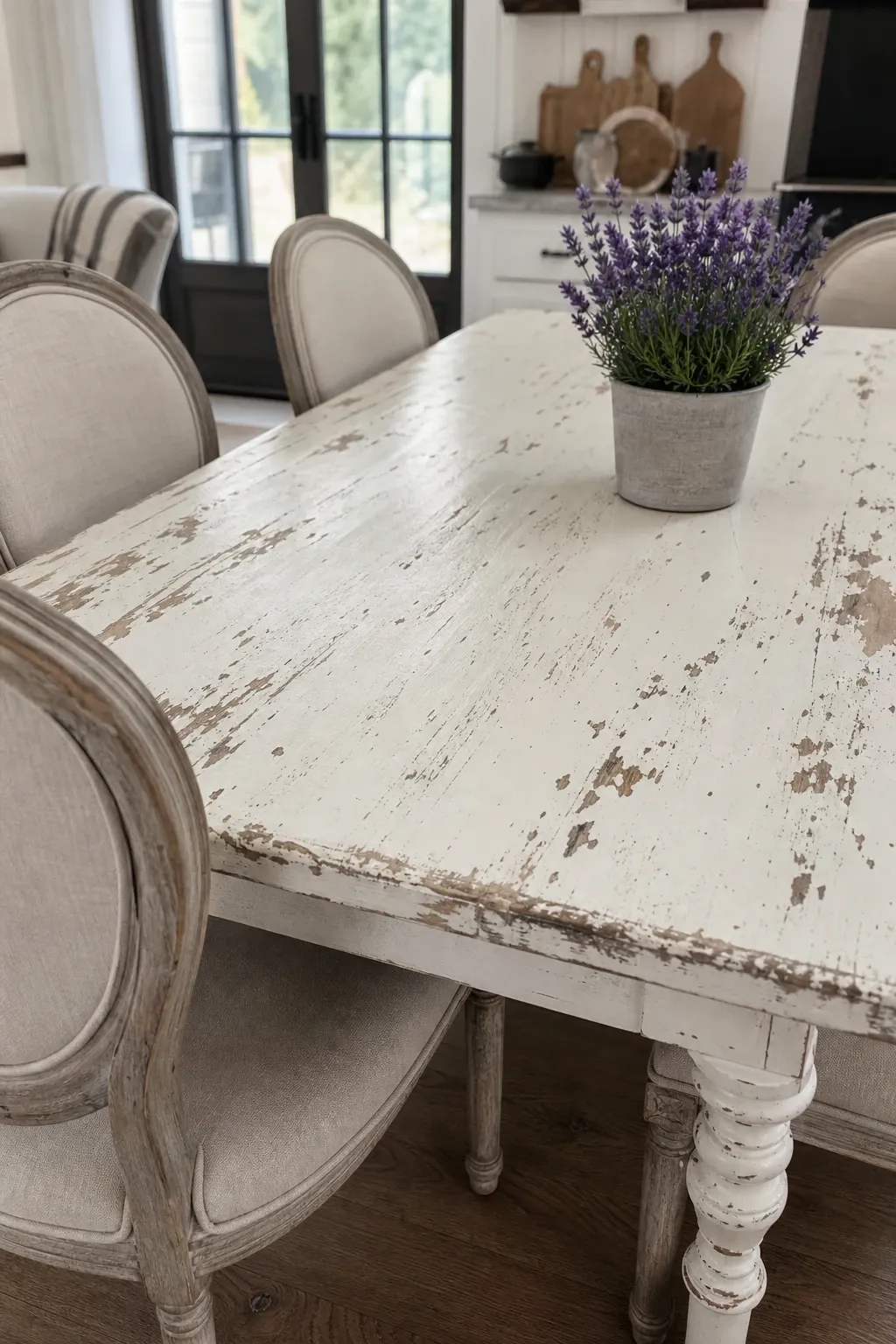
Not every farmhouse table needs to show bare wood. A fully painted table in white, black, sage green, or slate blue can anchor a dining room beautifully. Paint hides less-than-perfect wood, which means a painted table is a great option if you are building one yourself from affordable lumber. Chalk paint gives a soft, matte finish that looks authentically old. Milk paint is another option that creates a slightly uneven, aged texture.
Designer Tip: Always apply a clear wax or matte topcoat over chalk paint on a dining table. Without it, the paint will absorb stains from food and drinks within the first week.
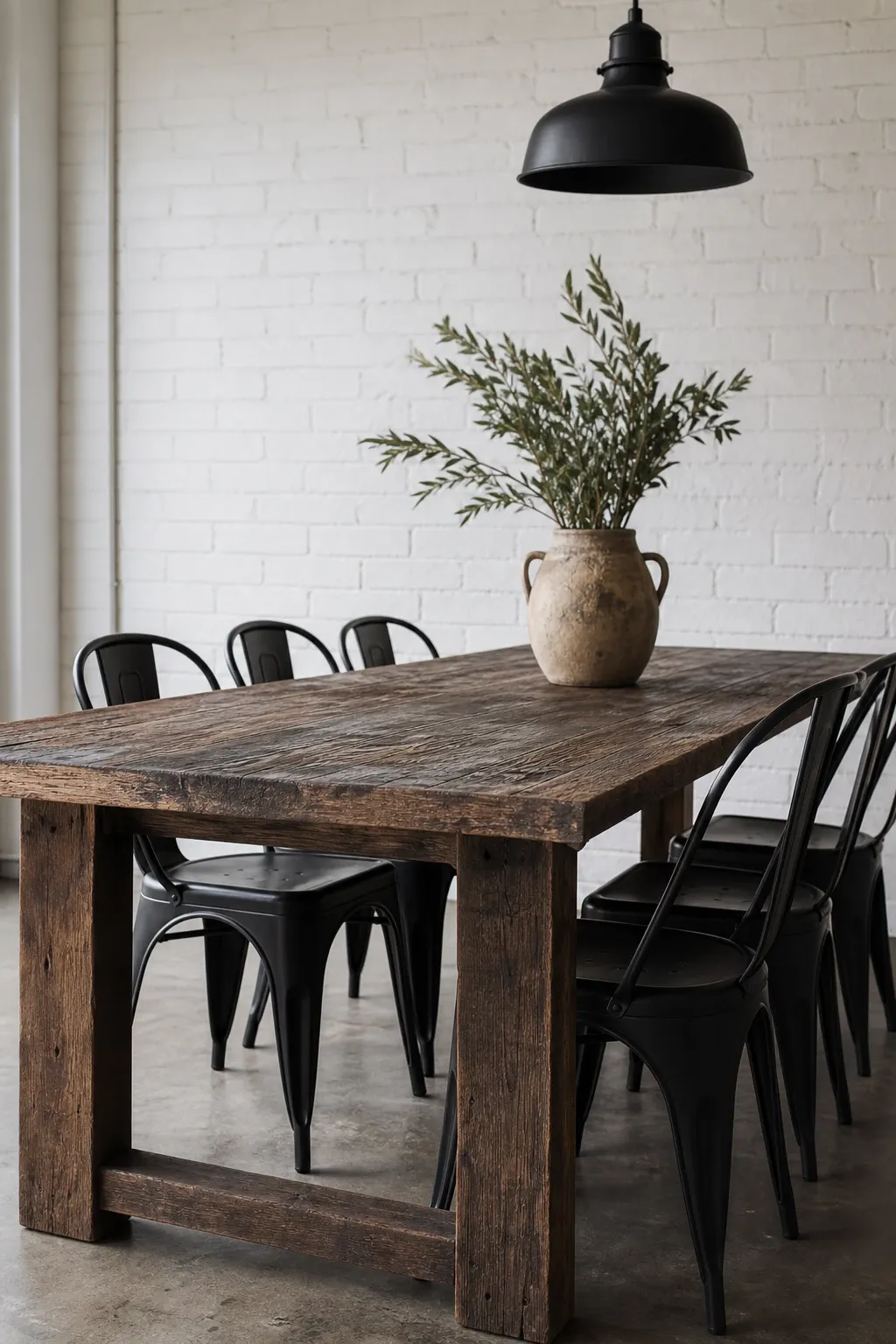
Combining a thick wood top with metal legs or a metal frame gives you a farmhouse table with an industrial edge. Think black iron pipe legs, welded steel frames, or riveted metal brackets. The contrast between warm wood and cool metal creates a balanced look that fits modern lofts and traditional dining rooms equally well. This style tends to feel a bit more masculine and works especially well in spaces with exposed brick or concrete floors.
Designer Tip: If using a metal base, make sure there are adjustable feet or leveling pads on the bottom. Metal legs on uneven floors will wobble and scratch the floor surface.
A round table changes the entire dynamic of a farmhouse dining room. Everyone faces each other, conversation flows more easily, and there is no head of the table. A round farmhouse table with a thick wood top and a sturdy pedestal or four-leg base seats families comfortably in smaller spaces. It also softens a room full of straight lines and rectangular furniture, which gives the whole space a more relaxed feel.
Designer Tip: Leave at least 36 inches between the edge of a round table and the nearest wall or furniture. You need that clearance for chairs to push back comfortably.
A refectory table is a long, narrow table inspired by the communal dining tables used in monasteries and great halls. The proportions are distinctive: usually longer and narrower than a standard dining table, with heavy stretchers connecting the legs near the floor. This shape works really well in narrow dining rooms or as a dramatic piece in a larger space. The historical roots make it a natural fit for farmhouse interiors that lean toward old-world character.
Designer Tip: A refectory table should be no narrower than 30 inches to comfortably fit place settings on both sides. Anything thinner and plates start crowding each other.
Some farmhouse tables come with a built-in shelf or drawer under the top, which is extremely handy for storing placemats, napkins, candles, or table linens. This feature was common in antique farmhouse tables because storage was limited in old kitchens. Modern versions keep the look simple with a single lower shelf or a small apron drawer at each end. It is a practical addition that does not change the overall appearance of the table.
Designer Tip: If your table has a lower shelf, keep it styled with just a few items like a stack of linen napkins, a wooden tray, or a couple of books. An overstuffed storage shelf under a table looks cluttered from every angle.
A two-tone table with a stained wood top and painted base is one of the most popular farmhouse table looks going. The contrast between the warm wood grain on top and the painted legs below creates visual interest without being busy. White, gray, and black are the most common base colors, but navy and dark green work well too. This approach also makes DIY builds easier because you can use a nicer wood for the top and more affordable lumber for the painted base.
Designer Tip: Use the same paint color on your table base and chairs to tie the set together visually even if the chairs are a completely different style from the table.
A sawbuck base is an angled X-shape on each end of the table, named after the traditional sawhorse used for cutting firewood. It gives the table a rugged, utilitarian look that is full of character. This base style is incredibly sturdy and handles heavy loads well, which is why it was common on old farm tables built for daily use. A sawbuck table in rough-hewn pine or reclaimed lumber with visible saw marks is about as authentic as farmhouse furniture gets.
Designer Tip: The angle of the sawbuck legs determines the overall width of the base. A wider angle means more stability but also more leg room taken up, so test the footprint before committing.
Building your own farmhouse table is one of the most popular beginner woodworking projects out there, and the results can look just as good as a store-bought table. You can find free plans online for everything from simple plank tables to more complex trestle and turned leg designs. Standard construction lumber from the hardware store works fine for a painted table. For a stained top, step up to poplar or select grade pine for a cleaner look. A basic build with pocket screws, wood glue, and a few weekends in the garage can save you hundreds compared to retail.
Designer Tip: Let your wood acclimate inside your house for at least a week before building. Lumber from the store has a different moisture content than your home, and building too soon leads to warping and gaps as the wood adjusts.
The right farmhouse table makes your dining room a place people actually want to spend time. Focus on solid construction and a style that fits how you really use the room. You do not need to spend a fortune. Some of the best farmhouse tables are the ones that were built by hand, found at an estate sale, or put together from a free plan and some lumber on a Saturday afternoon.
Frequently Asked Questions
What size farmhouse table do I need for my dining room?
Allow at least 24 inches of table width per person for comfortable seating. A standard 72-inch table seats six, and a 96-inch table seats eight. Leave 36 inches of clearance on all sides between the table and walls or furniture so chairs can be pulled out easily.
What is the best wood for a farmhouse dining table?
Oak and pine are the most traditional choices. Oak is harder and more durable, while pine is softer and develops a worn patina faster. Maple and walnut are premium options that look stunning but cost more. For a budget build, poplar takes stain well and is easy to work with.
How do I protect a farmhouse table from scratches and stains?
Apply a durable topcoat like polyurethane in a matte or satin finish for daily protection. Wipe up spills quickly and use coasters under glasses. For a more natural approach, a hardwax oil finish soaks into the wood and is easy to touch up by rubbing more oil into scratched areas.
Can I mix chair styles with a farmhouse table?
Mixing chairs is encouraged in farmhouse dining rooms. A common approach is matching chairs on the sides with different accent chairs at the head and foot. You can also use a bench on one side and chairs on the other. Keeping the chairs within the same color family or material ties the mixed look together.