Working from home sounds great until you realise you have no actual space to do it. The kitchen table is noisy, the bedroom feels too relaxed, and the living room is constantly getting taken over by everyone else in the house. If you have a basement sitting mostly empty or half-used as storage, that space has a lot more potential than you might think. A basement office can be genuinely private, quiet, and surprisingly stylish with the right approach.
The ideas below cover all kinds of setups, from small single-desk nooks to full dual-workstation layouts, and they span a wide range of styles and budgets. Each one opens with a situation you might recognise, then walks you through the solution in practical detail. Start with lighting and a decent desk setup, then build out from there as the budget allows.
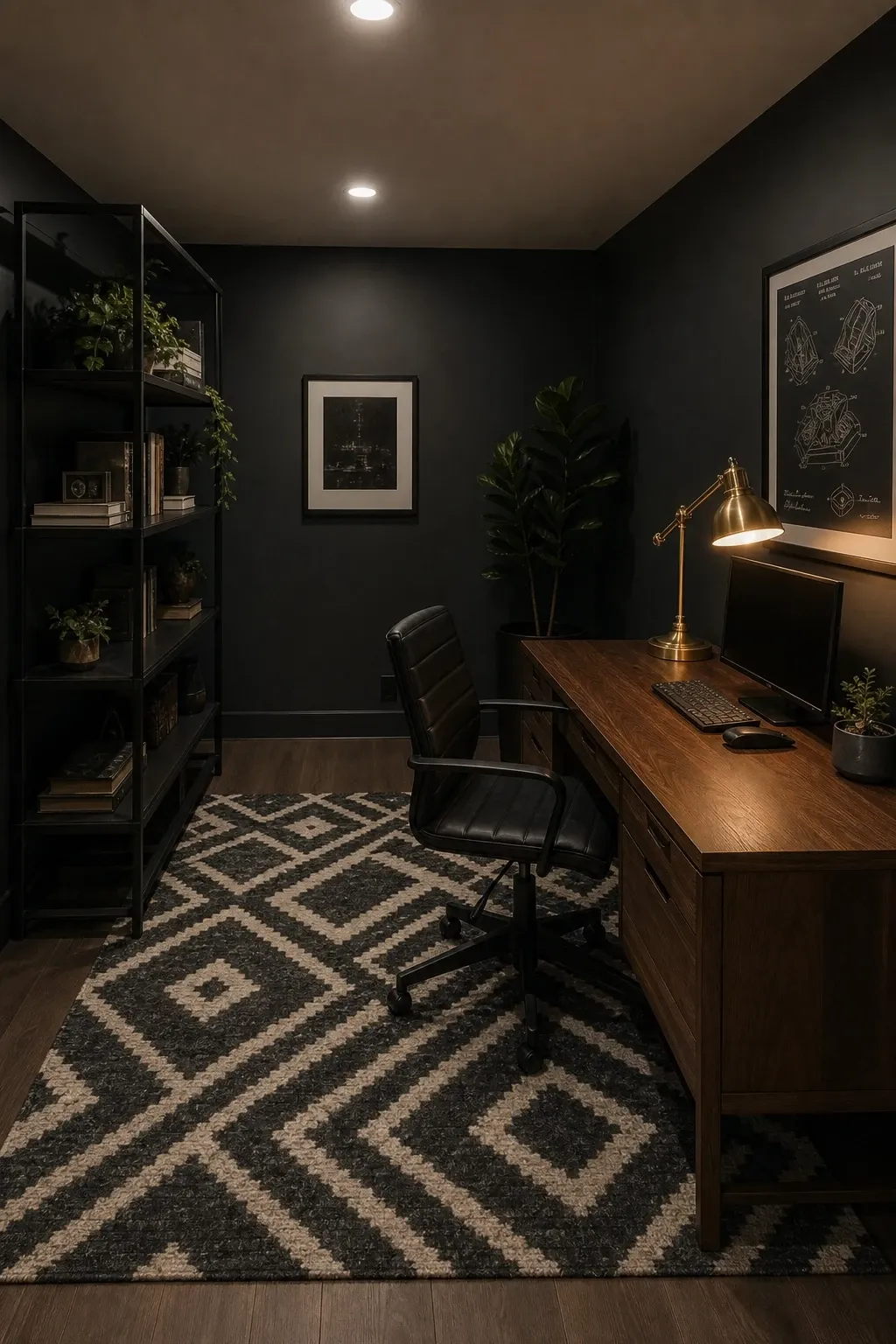
You need a space that tells your brain it is time to work, not relax. A deep charcoal or navy blue wall colour does exactly that. Paint all four walls in the same dark shade to create a sense of enclosure and focus. Pair this with a solid walnut or oak desk, a black leather task chair, and open metal shelving along one wall for books and equipment. Task lighting matters a lot here, so use a warm-toned desk lamp alongside a couple of recessed ceiling lights to keep things bright without feeling clinical. Add a geometric wool rug in charcoal and ivory to anchor the space, and a few potted plants for contrast against the dark walls. One simple thing that makes a big difference is choosing matte finishes throughout, which cuts down on any harsh glare from your monitor.
Designer Advice: Keep your desk clear of everything except your monitor and one or two items. A dark room with clutter feels oppressive. A dark room that is tidy feels intentional.
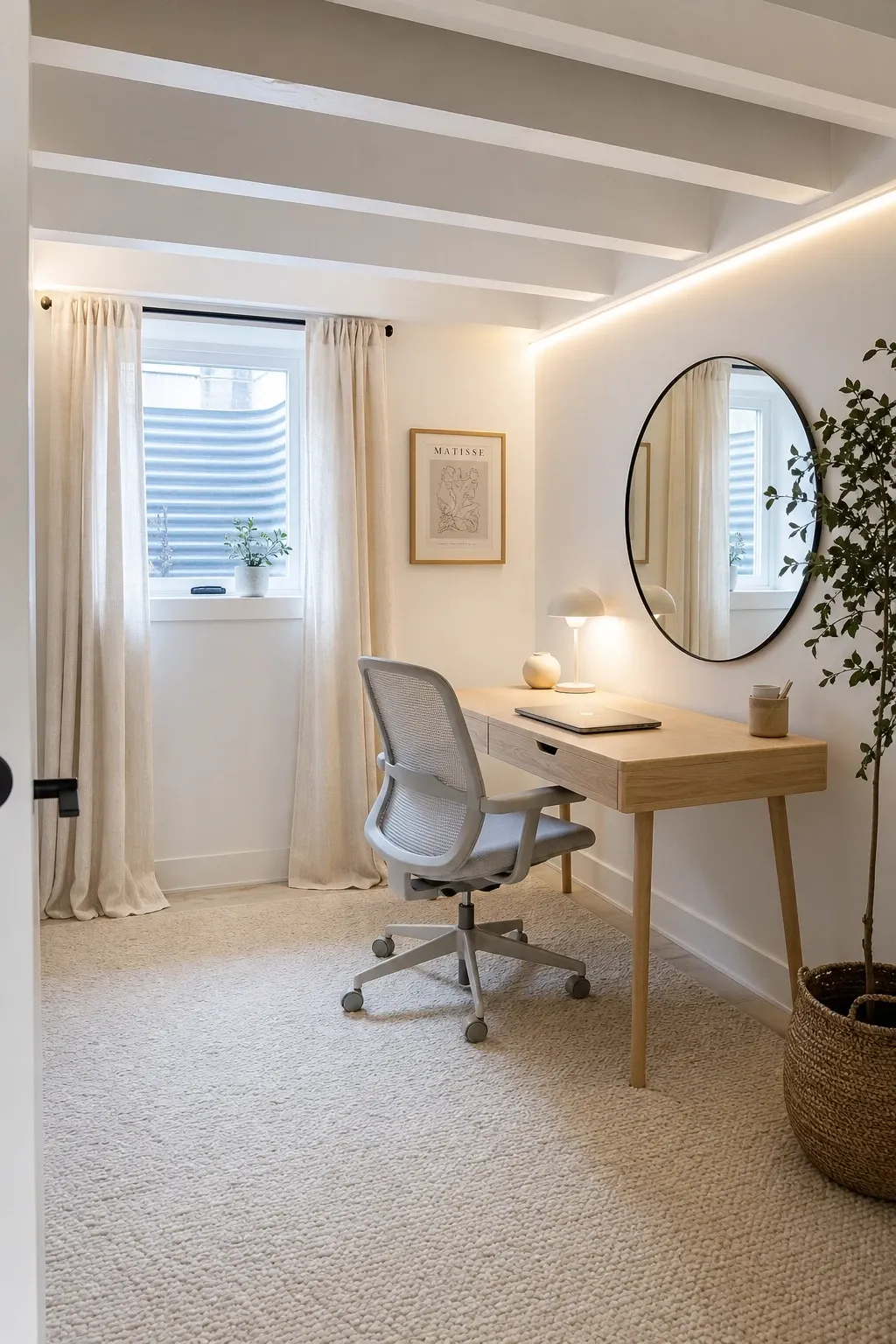
A lot of basements have ceilings that feel just a bit too close for comfort. Painting everything white, including the ceiling, walls, and even exposed beams, is one of the most effective ways to push that feeling away. Use a bright warm white rather than a stark cool white, which can feel too harsh under artificial light. Bring in a slim Scandinavian-style desk in light birch or pale oak, and choose a simple mesh task chair that does not add visual bulk. Install long horizontal LED strip lights under shelves or along the ceiling perimeter to create an indirect glow that raises the perceived ceiling height. Layer in a cream boucle area rug, linen curtains if you have any window wells, and a couple of round decorative mirrors to bounce light around. The whole look stays airy and open without needing a renovation.
Designer Advice: Mirrors are your best friend in a low-ceiling basement. One large round mirror on the main wall can make the room feel almost double its actual height.
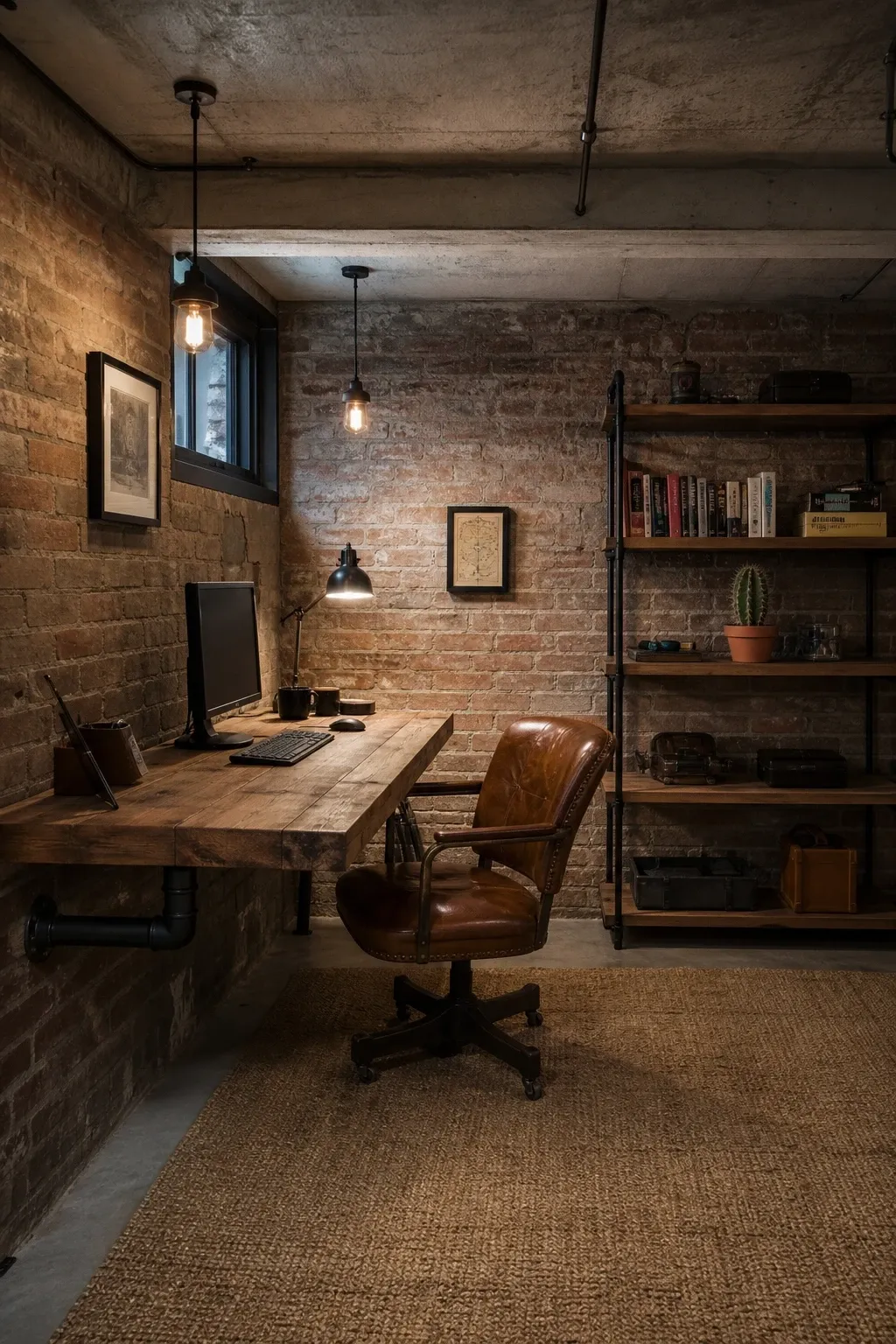
You moved into the house with the idea of eventually finishing the basement, but honestly the exposed pipes and brick look kind of cool. Lean into it. Leave the concrete ceiling and brick walls as they are, and build a floating desk from reclaimed wood planks mounted on industrial pipe brackets. Add open metal shelving in the same vein for storage. Keep the colour palette honest to the materials, so raw wood tones, gunmetal grey, and exposed brick. Use Edison bulb pendant lights or cage-style fixtures to keep the industrial feel consistent. A dark woven jute rug works well on a concrete floor, and a second-hand leather chair adds warmth without looking too precious for the space. The beauty of this setup is that very little finishing work is required, which keeps the budget low.
Designer Advice: Spray-paint your pipe brackets the same colour as any existing pipes in the room. When everything matches, the exposed mechanical details look like a design decision, not an afterthought.
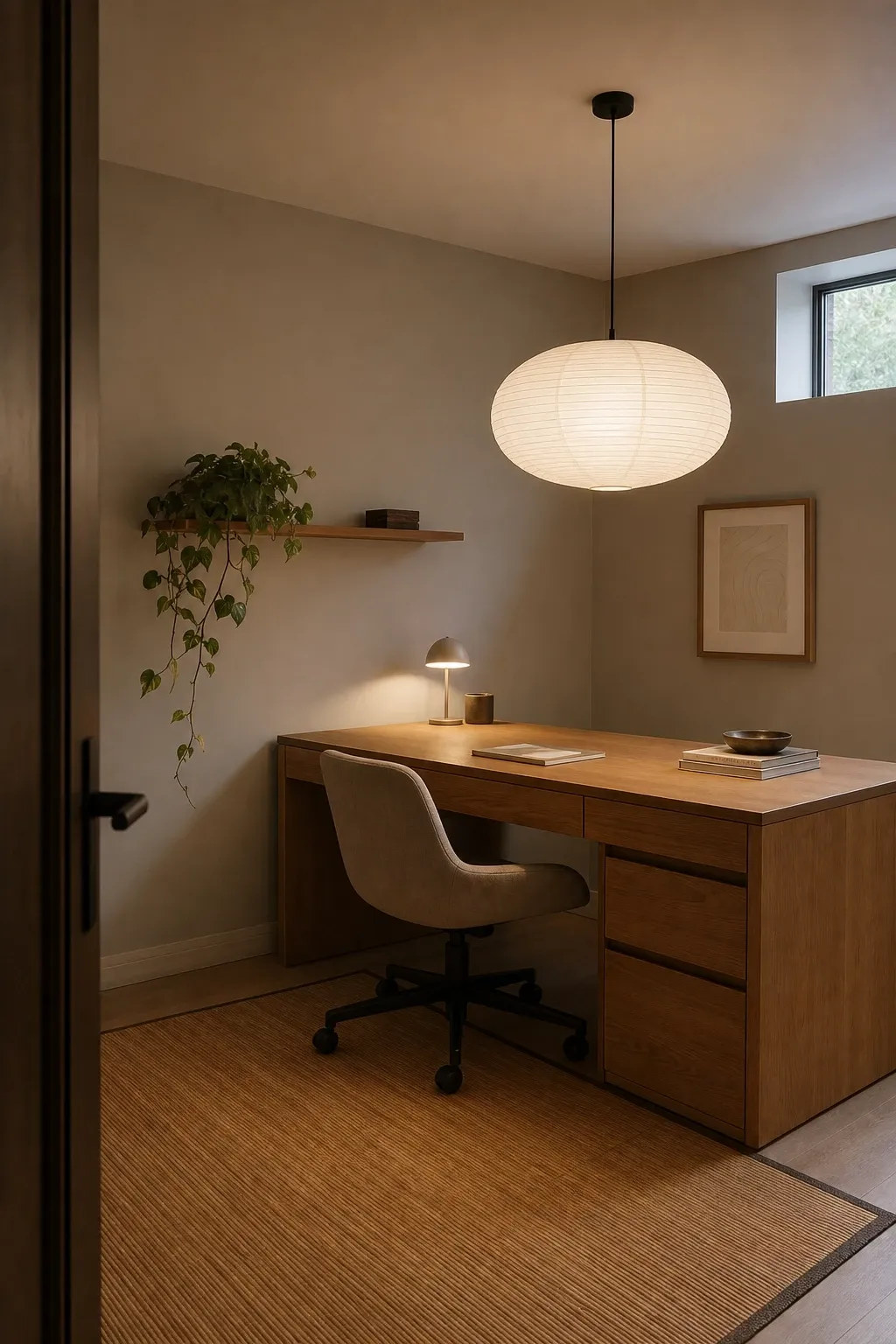
You want a basement office that feels calm rather than corporate. The Japandi approach, which blends Japanese minimalism with Scandinavian warmth, is almost perfect for basement spaces. Choose a low-profile desk in natural oak with clean lines and no visible hardware. A beige or warm grey linen task chair keeps the palette quiet. Paint the walls in a warm greige or pale sage and leave them mostly bare, with just one or two pieces of simple artwork or a single trailing plant on a shelf. Lighting should be layered: a paper pendant above the desk, a small table lamp on a side shelf, and maybe a floor lamp in one corner. Use a thin bamboo mat or a natural linen rug to soften the floor. The whole point is that when you walk in, you feel your shoulders drop. It is a space designed to help you think clearly.
Designer Advice: Limit yourself to three materials maximum: wood, linen, and one natural texture like rattan or stone. More than that and the calm starts to disappear.
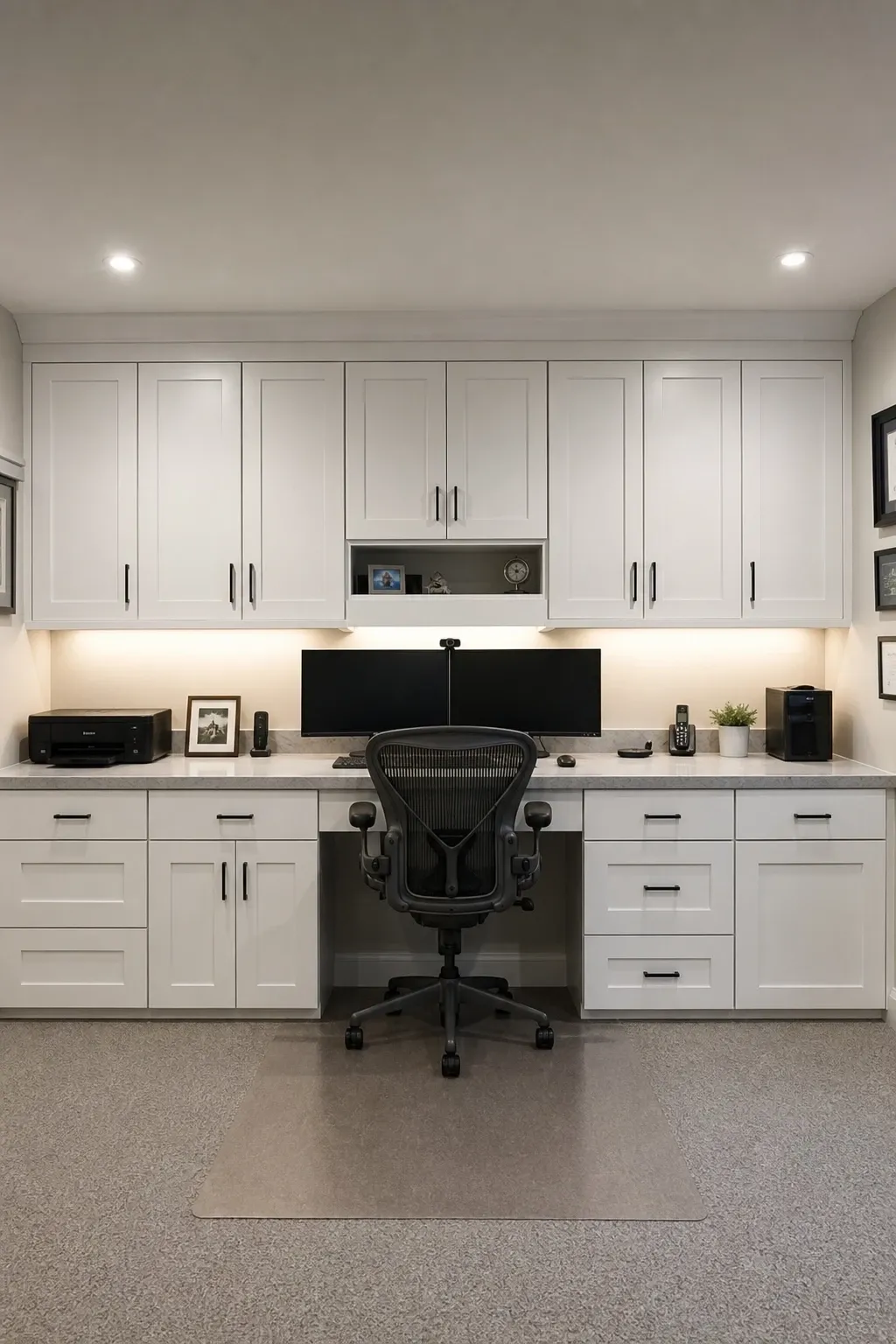
You are someone who works on multiple projects at once, and a regular desk just does not cut it. A full wall of built-in cabinetry gives you everything in one continuous surface. Run upper cabinets from wall to wall with a long countertop below at desk height, and leave a section in the middle open for your monitor setup. Use base cabinets with drawers for printer storage, filing, and office supplies. Paint the cabinets in a soft white or sage green for a finished look, and install under-cabinet LED lighting to keep the work surface well lit. A single ergonomic chair on a mat lets you move easily between sections. Add a closed-off section at one end for a mini storage closet or even a printer alcove. This setup is especially good for anyone who works from home full time and needs a real office, not just a desk in a spare room.
Designer Advice: If custom built-ins are out of budget, IKEA kitchen cabinets installed at desk height with a butcher block countertop on top give almost the same result for a fraction of the cost.
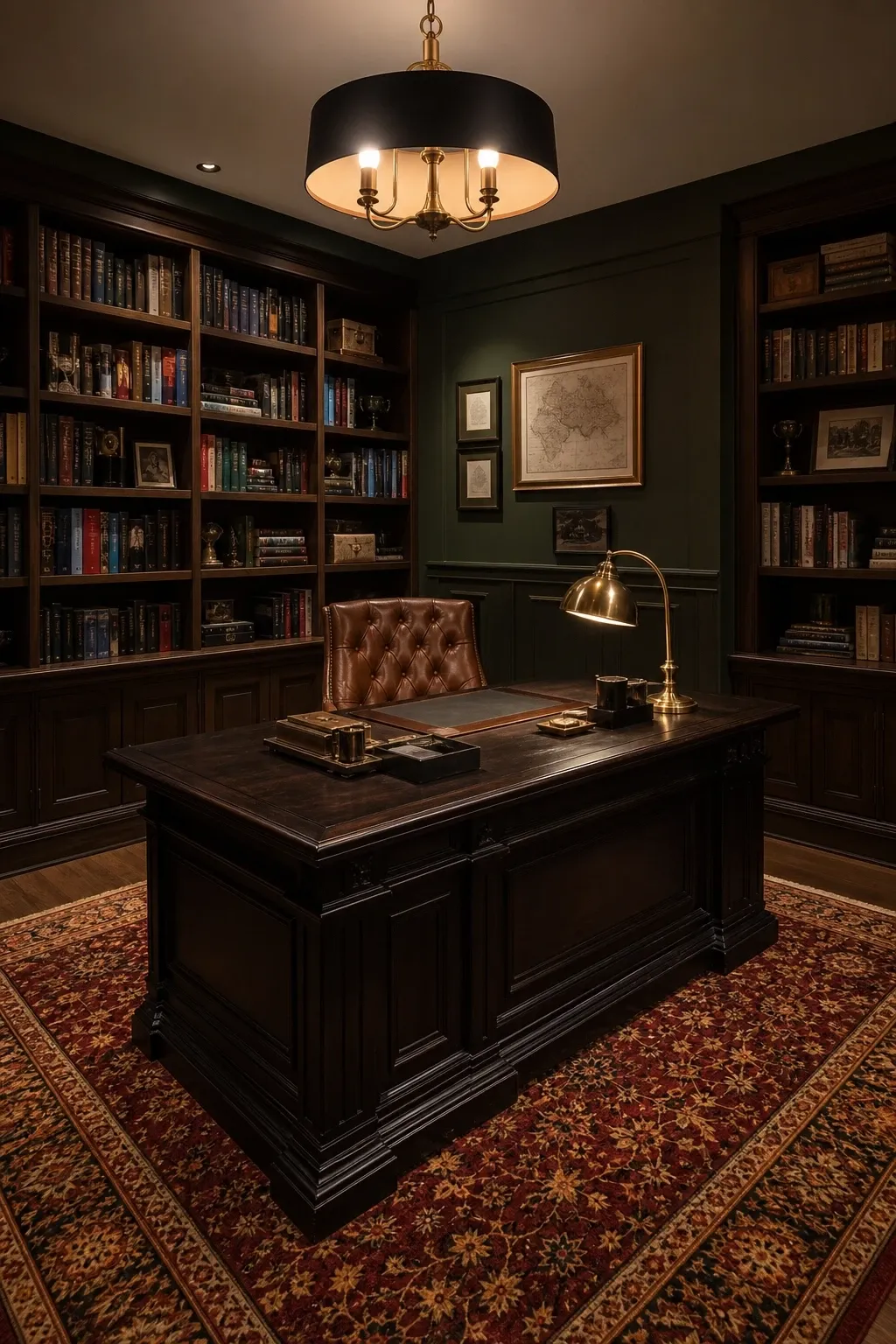
You have always wanted a room that feels like the inside of an old London club, but you live in a suburban house with a standard basement. Dark forest green walls with ceiling-height bookshelves is the answer. Paint the walls in a deep bottle green or hunter green, and line two walls with open wooden shelves filled with books, binders, and a few meaningful objects. Choose a large executive desk in dark stained wood, a leather or velvet chair in cognac or deep teal, and a classic brass desk lamp. A vintage-style pendant or a chandelier-style fixture overhead adds a sense of occasion. A Persian-style rug in deep reds and golds grounds the space beautifully. This is a basement office that feels like a destination, not just a place to deal with emails.
Designer Advice: Real books are the best decor in a library office. Do not use fake or purely decorative books. Fill those shelves with things you actually read, and the room will feel genuinely personal.
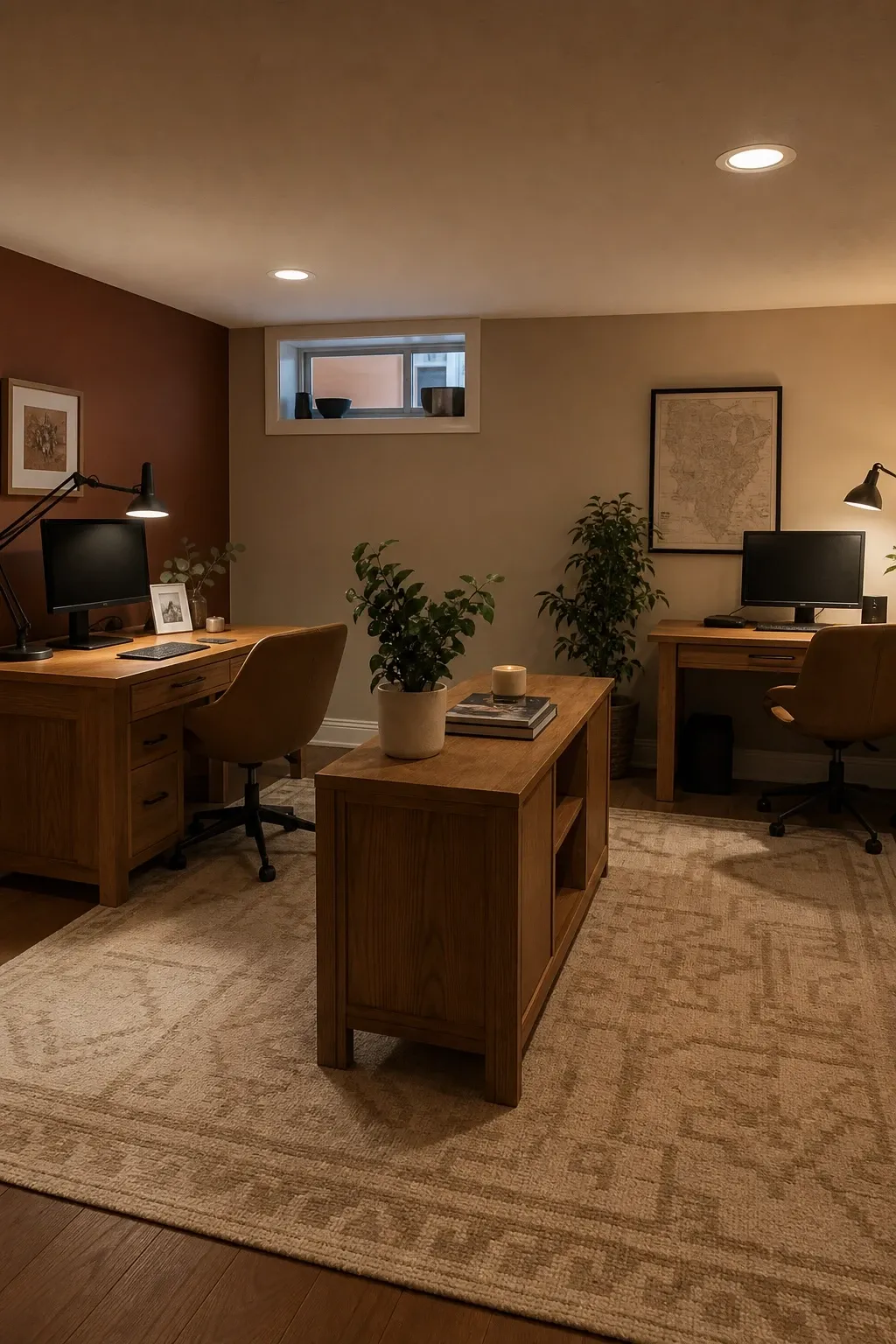
You and your partner both work from home and have been getting in each other’s way in shared spaces upstairs. A basement can hold two separate workstations easily with the right layout. Place two desks facing opposite walls so you are not staring at each other all day. Use matching desks in a medium oak or white finish so the room feels cohesive. Each person gets their own task light, monitor setup, and a small set of shelves. A dividing bookshelf or a low credenza placed in the middle of the room creates a subtle boundary without closing the space off. Choose one consistent colour palette for both sides, such as white and natural wood with pops of terracotta, so it looks intentional rather than mismatched. A large area rug in a neutral pattern ties both zones together.
Designer Advice: Invest in good noise-cancelling headphones rather than trying to sound-proof the room. That one purchase does more for your focus than almost any design change.
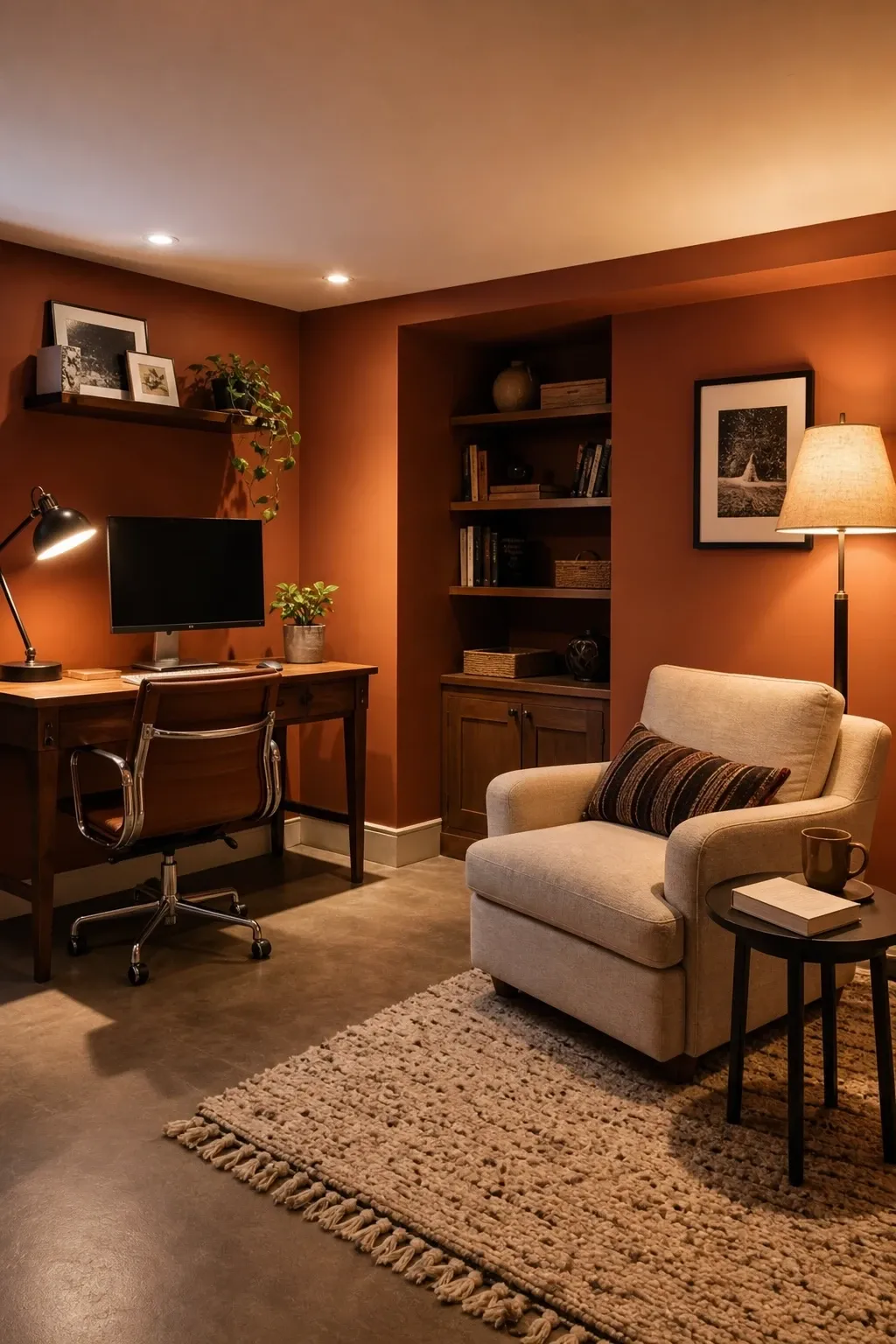
You do not just need an office, you need a place to think, read, and work. A basement can handle both functions well if you zone it clearly. Place your desk and computer setup on one side of the room, and on the other side add a comfortable reading chair or small sofa with a floor lamp and side table. Use a consistent colour palette across both zones so it reads as one room, not two different spaces. A warm terracotta or dusty rose on the walls makes the whole room feel soft and inviting rather than utilitarian. Layer a plush wool rug under the seating area and a flat-weave rug under the desk. Shelves can bridge both zones, holding work files on one end and books on the other. This setup works especially well for writers, researchers, or anyone whose work involves a lot of thinking time.
Designer Advice: Keep the reading zone screen-free. No laptop on the reading chair. That physical separation helps your brain actually switch between work modes.
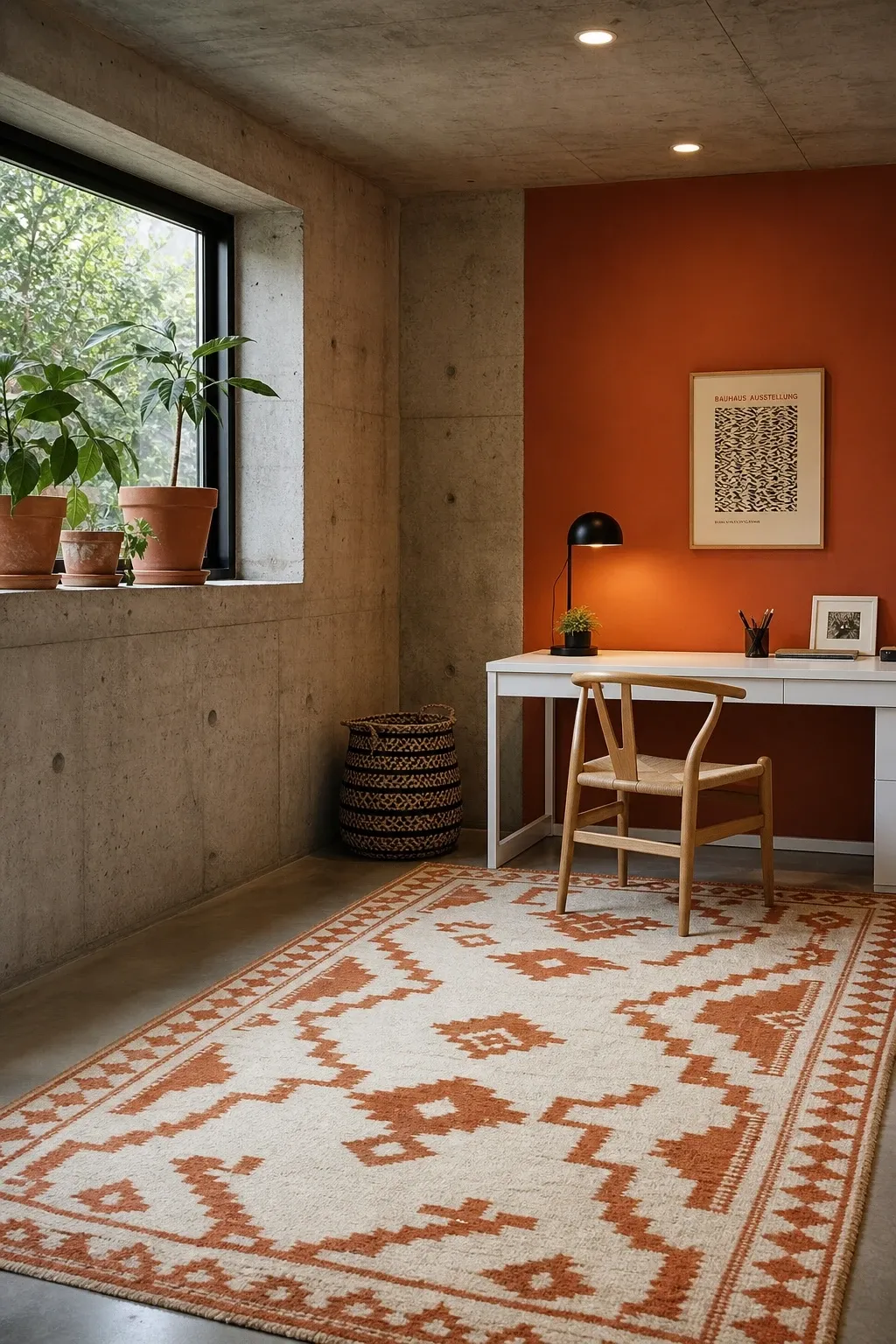
Your basement has polished concrete floors and bare concrete walls, and instead of covering them up you want to work with them. The trick is to introduce one or two bold colour accents that pop against the grey. Try a terracotta or burnt orange accent wall behind the desk, or use a set of cobalt blue shelves against a raw concrete wall. The desk itself should be simple in white or natural wood to let the colour and texture do the work. Industrial-style metal task lighting in black or brass sits well against concrete. A large colourful area rug in a graphic pattern adds warmth underfoot. Keep most decorative items minimal because the concrete itself is already a strong visual statement. Plants in clay pots look particularly good in this environment.
Designer Advice: One bold colour accent is enough. Two strong colours fighting against concrete starts to feel chaotic. Pick one and commit to it.
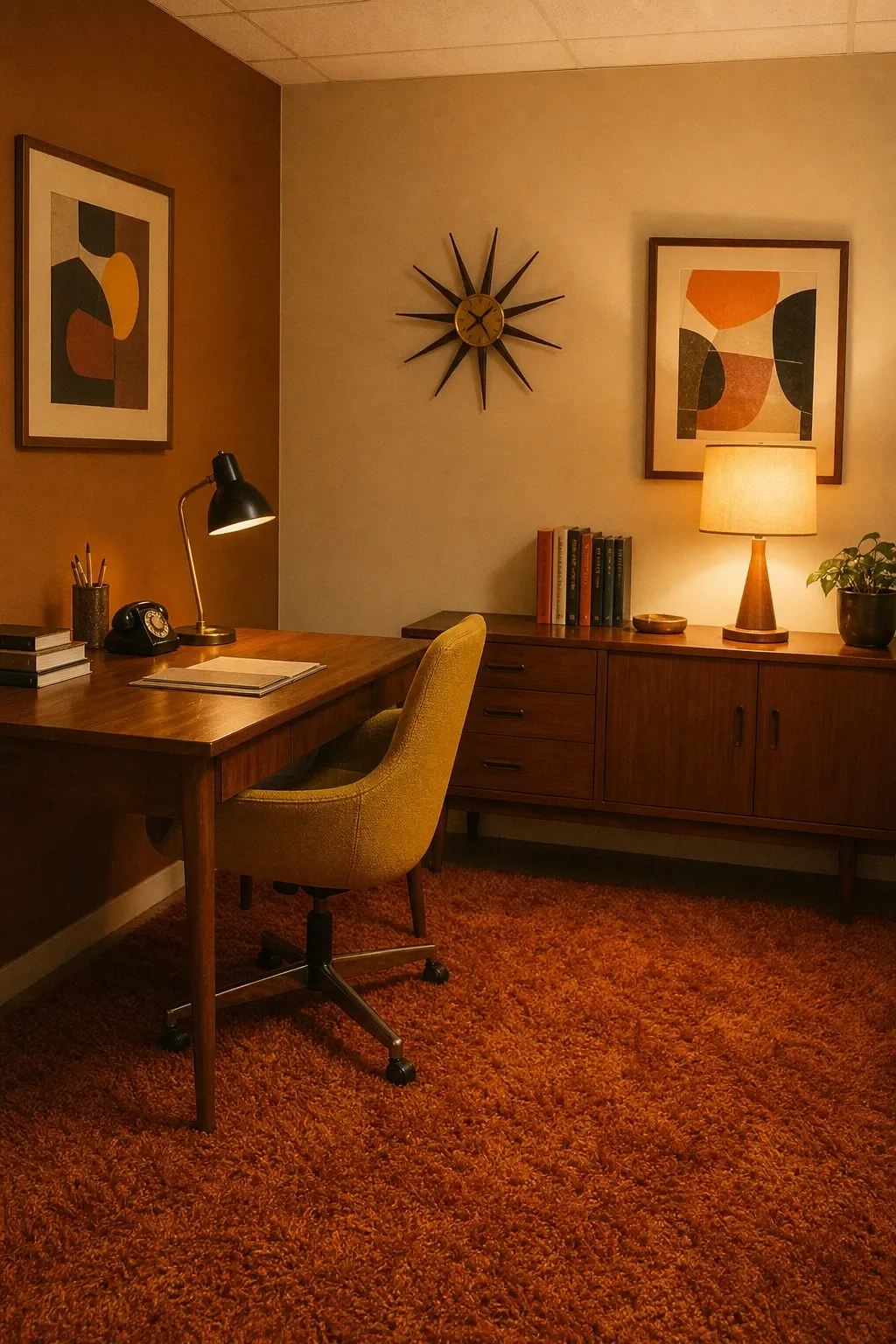
You love the warmth and character of mid-century modern furniture but most of your house is already quite contemporary. The basement is the perfect place to let this style run. Choose a walnut or teak desk with tapered legs, a matching credenza for storage, and an Eames-style shell chair or a cushioned swivel chair in mustard or olive fabric. The walls can go in a warm amber, burnt sienna, or even a classic avocado green if you are feeling brave. Hang abstract art prints in wood frames and add a sunburst clock or a sculptural floor lamp for personality. A shag rug in rust or gold ties the whole palette together. The basement location actually helps this style because the lower ceilings and contained space feel more like the cosy, intimate rooms this style was originally designed for.
Designer Advice: Check Facebook Marketplace and local thrift stores for authentic mid-century pieces. Real vintage walnut furniture is often cheaper than new flat-pack and looks ten times better.
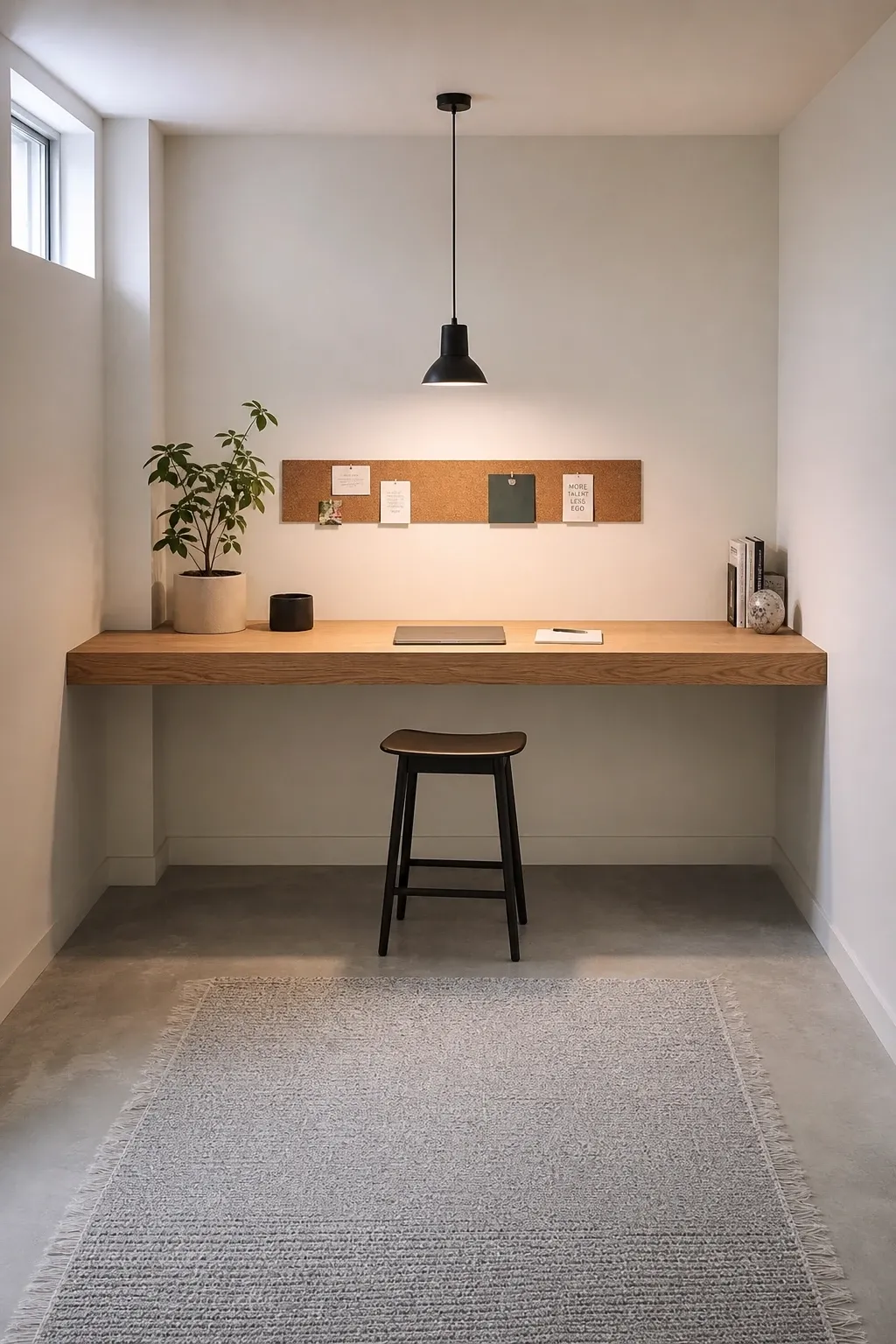
You do not have much stuff and you do not want much stuff. A minimalist basement office built around a single floating wall-mounted desk is refreshingly simple to pull off. Mount a long wooden shelf at desk height along one wall, leaving the legs completely clear, which makes the room feel larger and the floor easier to clean. Use a slim task chair or even a stool that can slide underneath. The walls should be plain in a soft white or very pale warm grey. A single pendant light above the desk is enough. Open pin-board or a single corkboard strip above the desk keeps notes and references accessible without cluttering the space. Everything else is stored away in a single low cabinet or two drawers. The result is a basement office that is incredibly easy to keep tidy.
Designer Advice: A floating desk with nothing underneath it is the quickest way to make a small basement room feel twice as large. The floor space you see matters as much as the desk space you use.
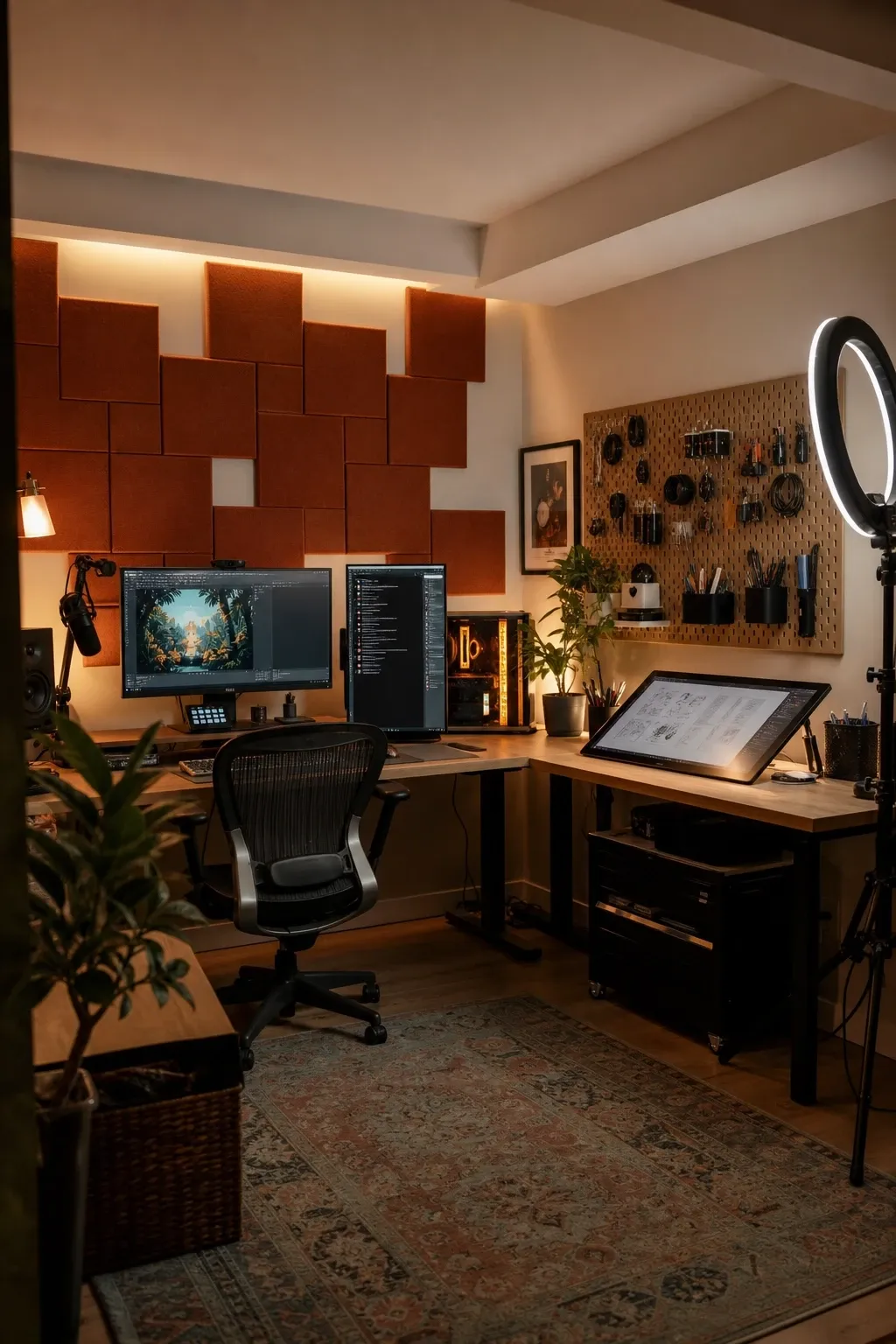
You work in a creative field and your office needs to double as a studio or content creation space. Start with excellent lighting: a ring light or softbox on one side for video calls, and warm ambient lighting for the rest of the time. Use a large L-shaped desk to give yourself space for both a computer setup and a drawing board, camera equipment, or whatever physical materials your work involves. Acoustic foam panels on the walls are both practical for sound dampening and visually interesting if you choose a fun colour or arrange them in a pattern. A pegboard wall is perfect for storing tools, supplies, or props in an organised but accessible way. Keep the colour palette energetic, maybe a warm cream with terracotta and forest green accents, so the room feels creative and alive during long working hours.
Designer Advice: Acoustic panels do not have to be boring. Order them in a colour that works with your palette and arrange them in a staggered pattern. They will look like a deliberate design feature rather than soundproofing.
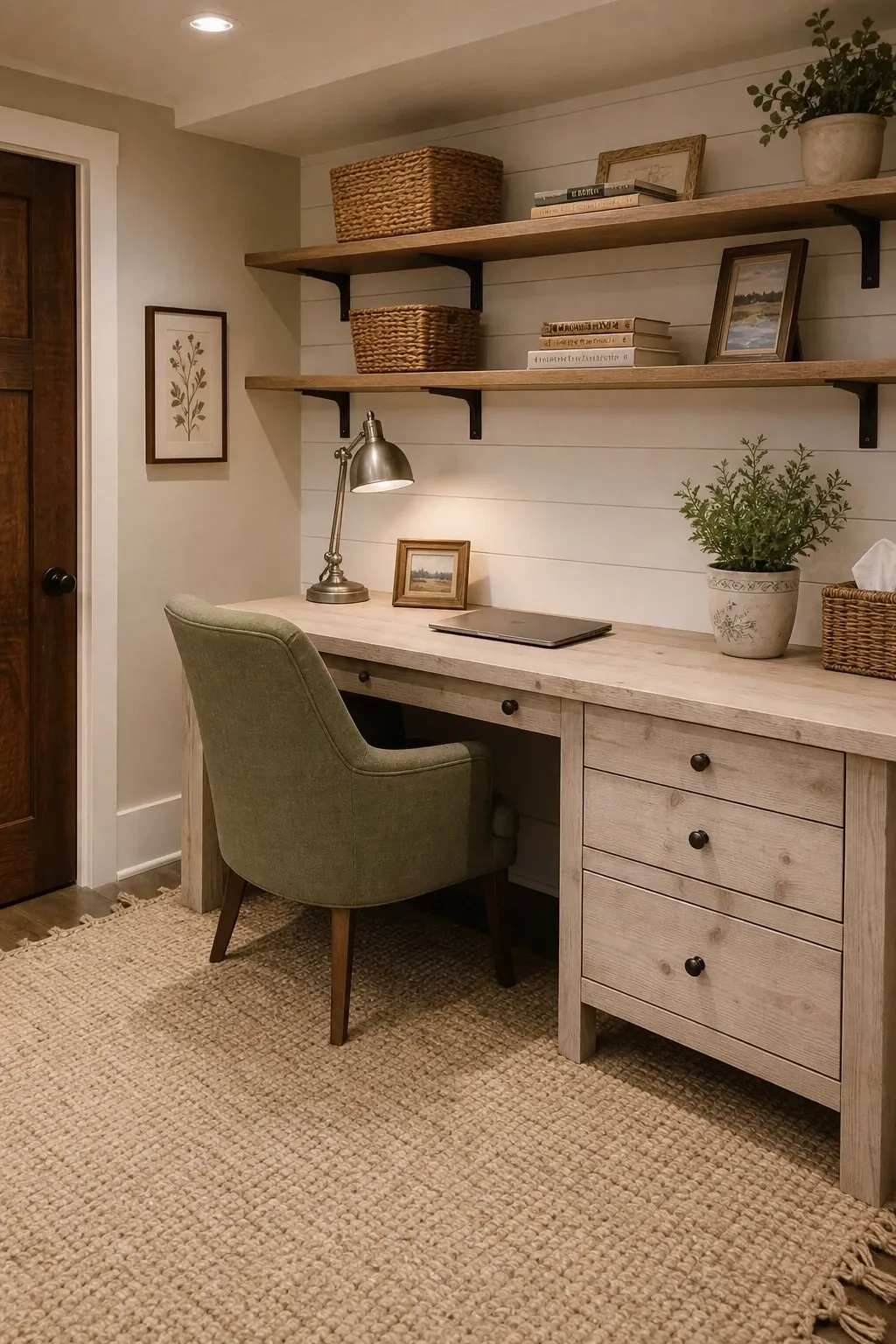
You want your basement office to feel warm and lived-in rather than sleek and polished. A farmhouse style achieves exactly that. Use a wide plank desk in whitewashed or natural pine, paired with a simple wooden or upholstered chair in a cream or sage fabric. Shiplap on the accent wall behind the desk adds instant texture and character without a big renovation. Wrought iron or matte black hardware on any drawers or cabinets keeps the palette grounded. Open wooden shelves with woven baskets for storage look great and keep things practical. A galvanised metal desk lamp and a small potted herb or trailing plant finish the look beautifully. Stick to a palette of white, cream, warm wood, and occasional sage or dusty blue to keep it cohesive.
Designer Advice: Woven baskets are the farmhouse office’s best organiser. Use them for cables, paper, notebooks, anything that would otherwise create visual noise on open shelving.
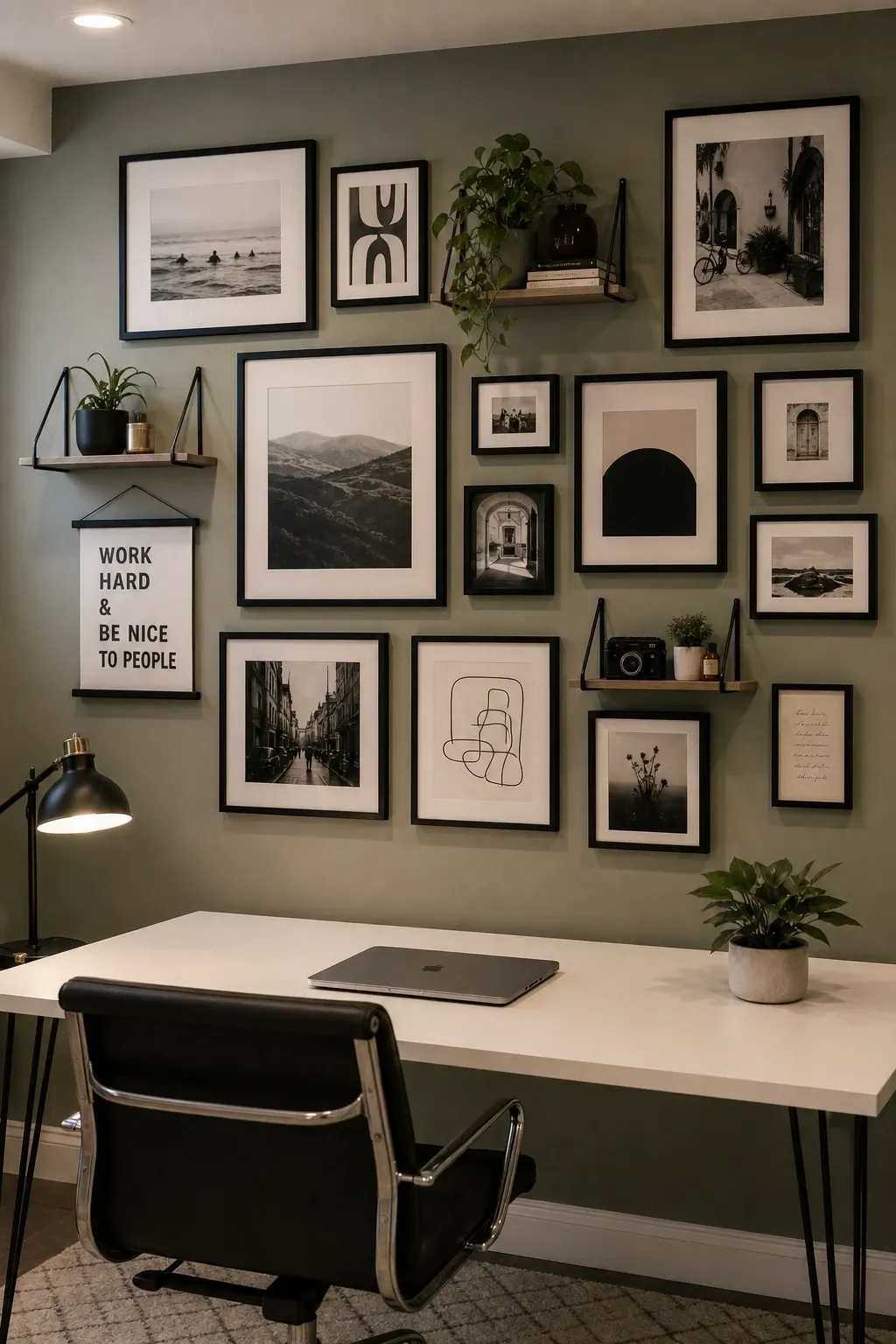
Your walls are the most underused part of your basement and you want to change that. A gallery wall office turns the space around the desk into the centrepiece of the room. Choose a large flat-colour wall, ideally in a warm off-white or dusty sage, and hang a mix of framed art prints, photographs, and one or two three-dimensional objects like a small shelf or a mounted plant. Keep the frames in one or two coordinating finishes, such as all black or all natural wood. The desk below should be simple so it does not compete with the wall above. This works especially well for anyone in a creative field who wants their workspace to feel visually inspiring. The key is planning the arrangement on the floor before putting anything on the wall.
Designer Advice: Print and cut paper templates of your frames and tape them to the wall before hanging anything. It takes ten minutes and saves you from a wall full of unnecessary holes.
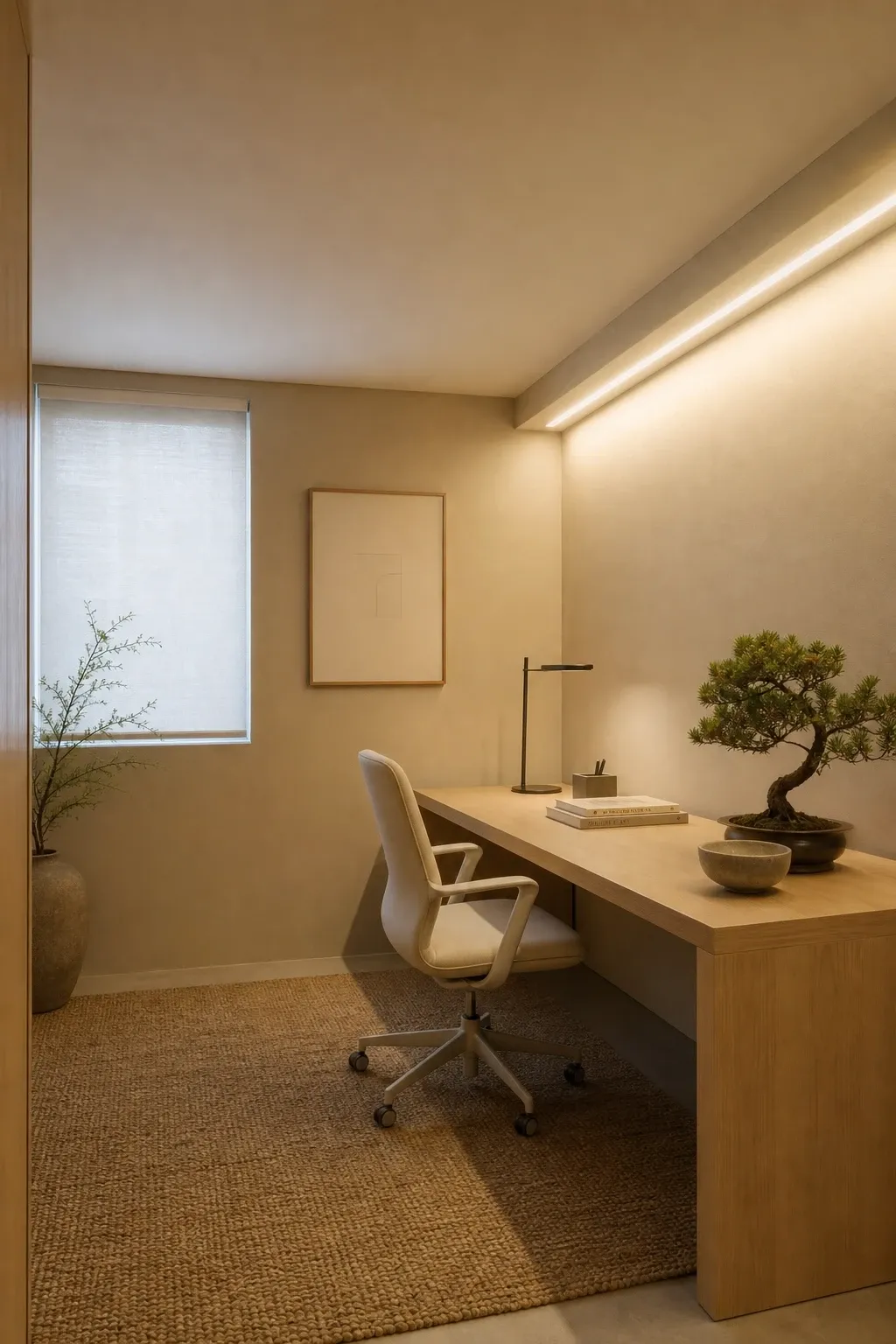
You want the basement to feel like the calmest room in the house, a place you actually look forward to going into. A palette of warm sand, pale stone, and natural wood gets you there fast. Paint the walls in a warm sand or linen tone and keep them completely clear of clutter. A simple low-profile desk in pale oak or bamboo sits against one wall. Use a comfortable ergonomic chair in cream or warm beige fabric. A small desktop Zen garden, a smooth stone bowl, or a single bonsai on the desk adds a tactile and visual focal point without cluttering the space. Soft-glow LED lighting on a dimmer switch lets you adjust the mood throughout the day. A flat-weave jute rug and linen roller blinds on any window wells complete the look.
Designer Advice: A dimmer switch costs almost nothing to install and makes an enormous difference to how a room feels. Being able to lower the light at the end of the day signals to your brain that the workday is over.
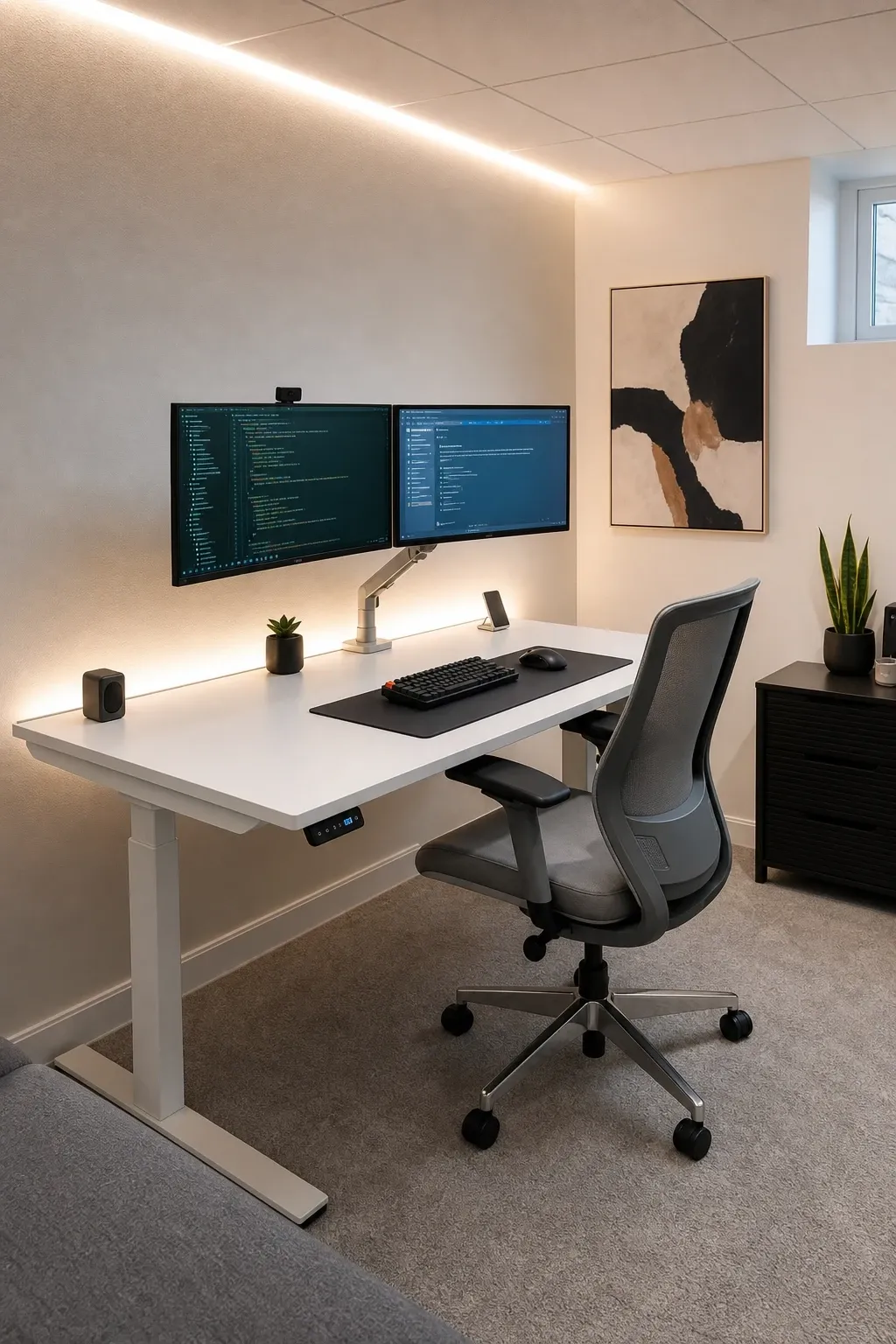
You work in tech and you want your home office to reflect that, without looking like a server room. A clean, streamlined setup is key. Choose a wide white or grey standing desk with a motorised height adjustment so you can alternate between sitting and standing throughout the day. Cable management is everything here, so use cable trays under the desk, a cable box for the power strip, and cord clips along the back of the desk. Monitor arms free up surface space and allow precise positioning. Smart LED light strips behind the monitor and along the ceiling perimeter add a subtle ambient glow that reduces eye strain. Choose a matte grey or white wall colour and keep decor to a minimum. One piece of abstract wall art or a single plant adds just enough personality without distracting from the clean lines.
Designer Advice: Spend money on cable management before anything else in a tech setup. A desk full of visible cables undermines even the most expensive equipment. A few well-placed cable channels cost almost nothing.
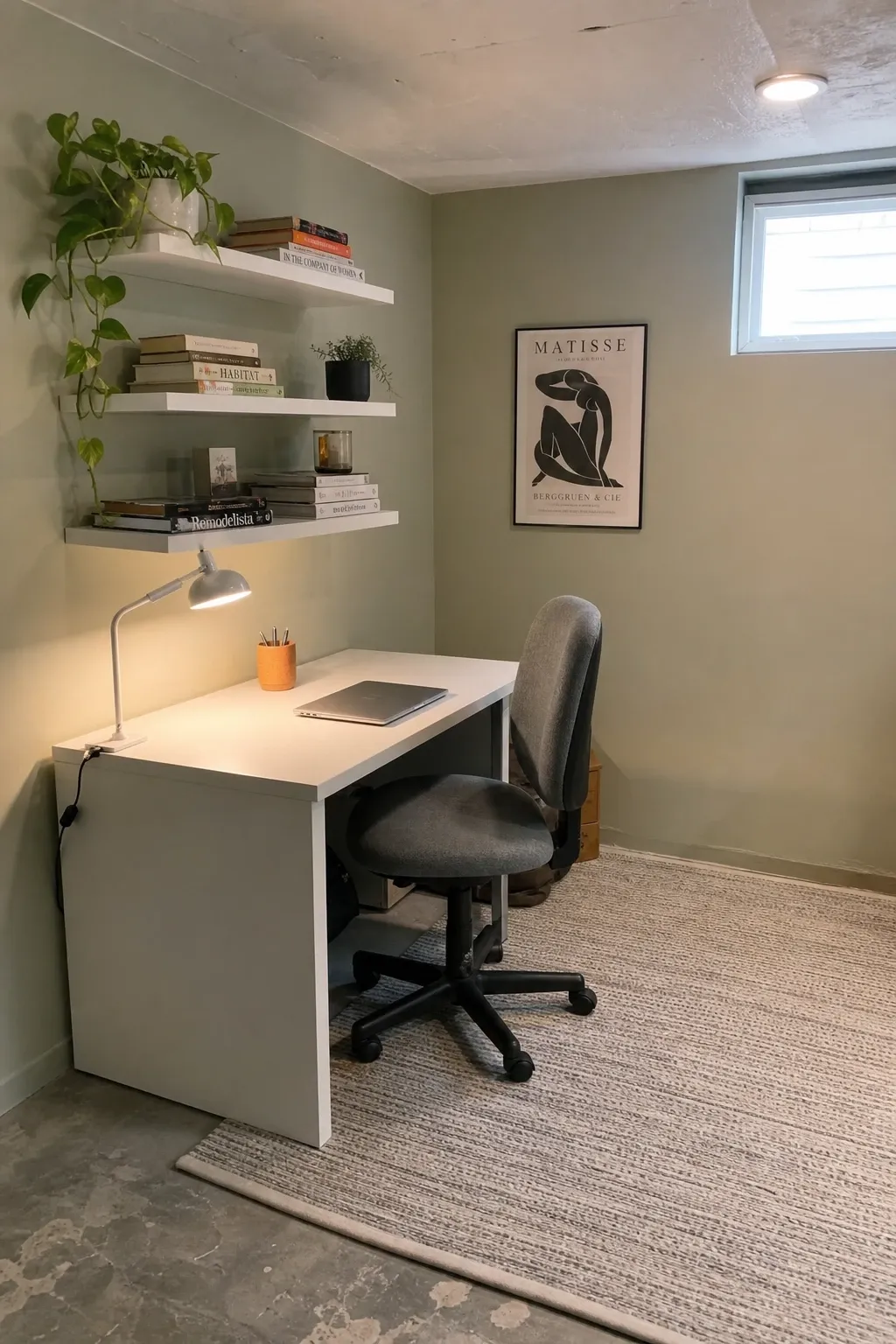
You need a real working office but you do not have a big budget. Good news: a basement office can come together well without spending much. Start with paint, which is almost always the highest-impact, lowest-cost change you can make. Choose a warm white or pale sage and do the walls yourself. Pick up a solid desk from IKEA or a second-hand office desk for under $100. A used task chair in good condition is easy to find on Marketplace for $20 to $40. Mount a few basic floating shelves from a hardware store for storage. A clip-on LED desk lamp gives you good task lighting for under $25. Lay down a flat-weave rug from a discount home store to warm the floor. At $500 or less, you can have a room that looks intentional, organised, and genuinely comfortable to work in.
Designer Advice: Paint first, buy furniture second. The colour on the walls sets the mood for the entire room, and once you have that right, it is much easier to choose furniture that complements it.
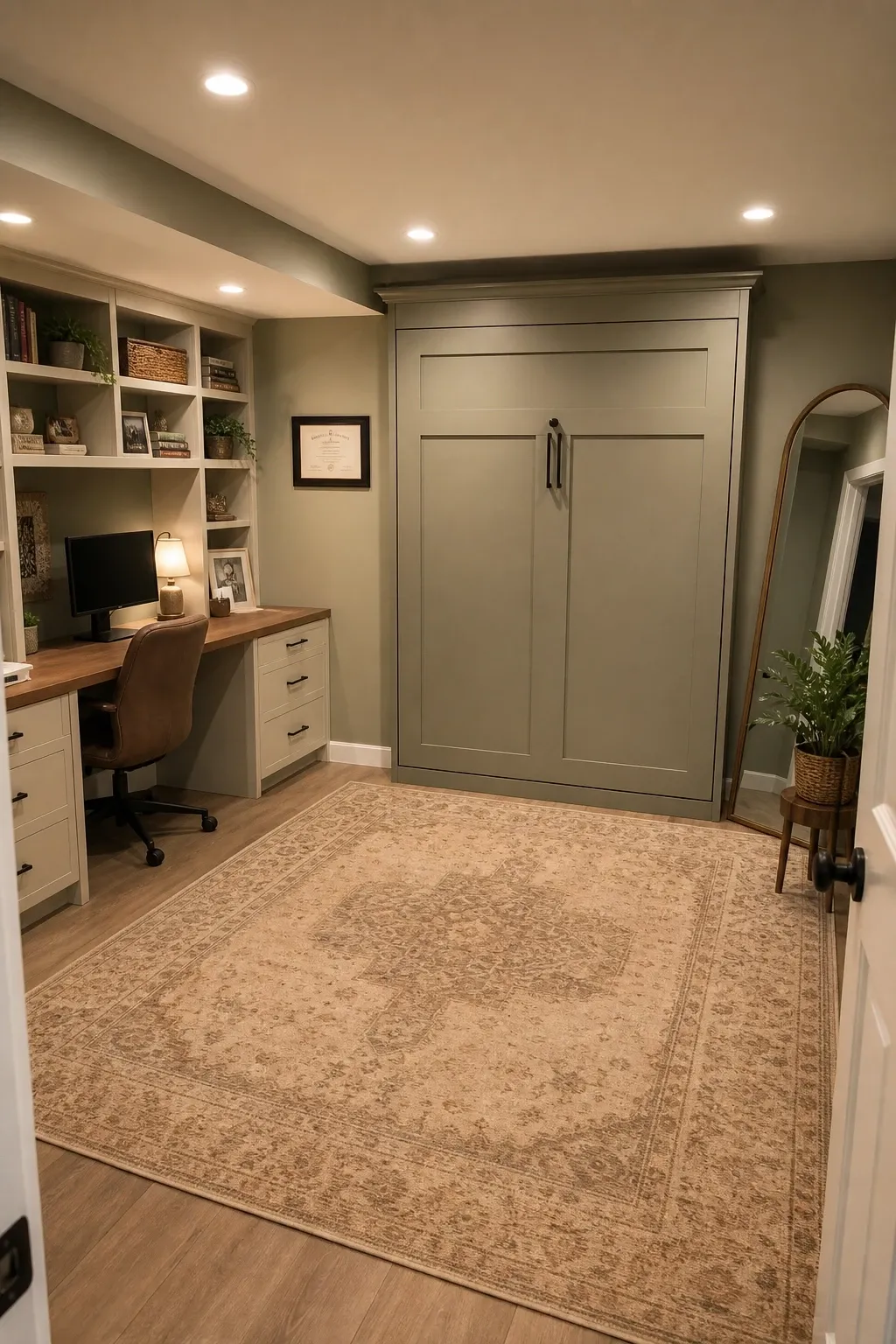
You want a basement that works as a guest room when family visits but functions as an office the rest of the year. A Murphy bed or a high-quality sofa bed handles the sleeping function without taking over the room. When the bed is closed or folded away, the desk and shelving system takes centre stage. Choose a colour palette that works for both functions, something like a warm sage with natural wood accents feels equally appropriate for a bedroom or an office. Use multi-functional furniture wherever possible: a storage ottoman that doubles as a side table, a bedside shelf that doubles as a desk-side surface. Keep the overall style calm and cohesive so the room never feels like it is caught between two identities. A full-length mirror near the wardrobe area helps guests feel at home.
Designer Advice: A fold-down wall desk is the perfect solution for a dual-purpose room. When guests arrive, fold it up. When they leave, fold it down. The whole transition takes ten seconds.
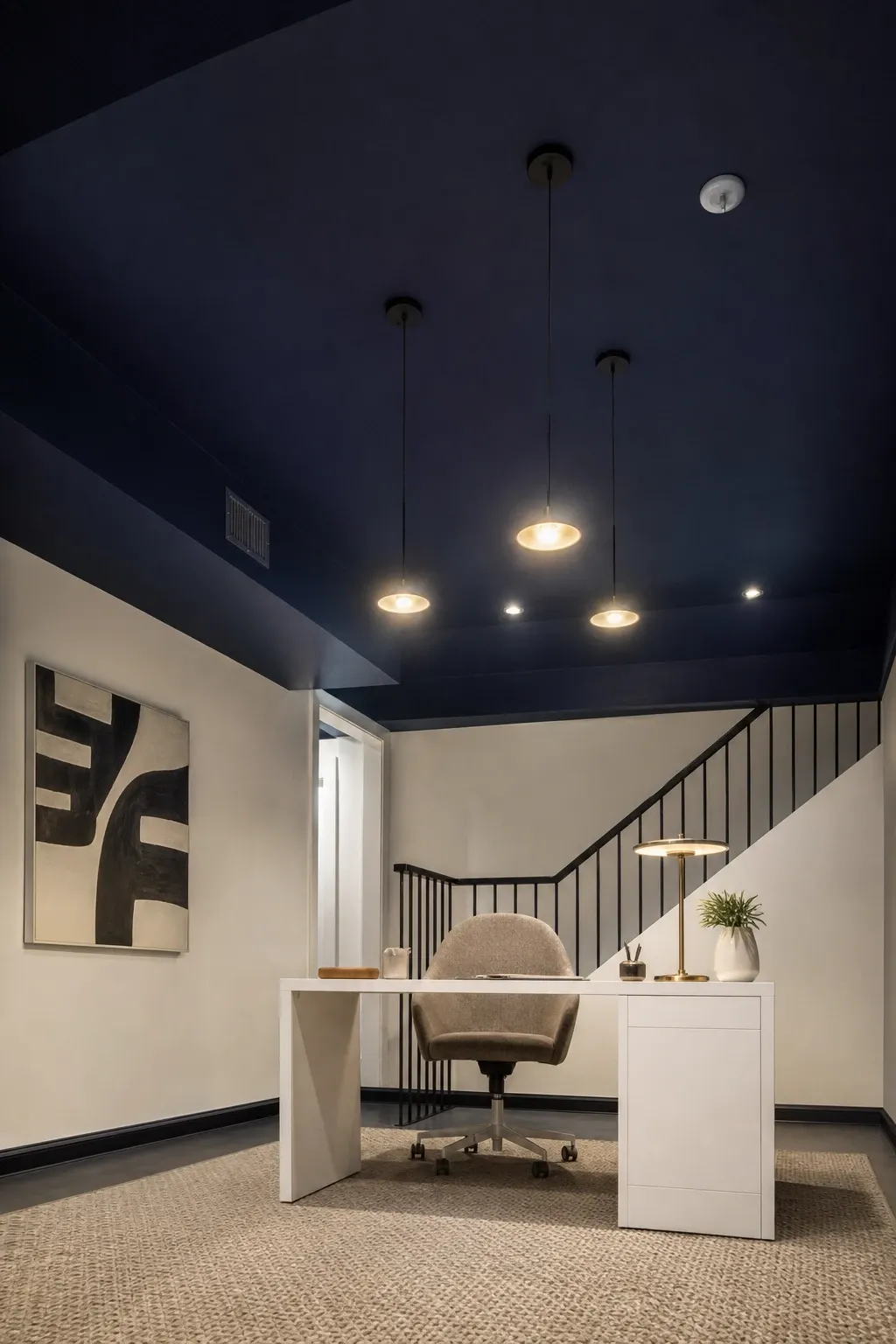
Every basement office article talks about the walls and the desk, but almost nobody talks about the ceiling. If your basement has average walls and average floors, the ceiling is where you can do something genuinely different. Paint it in a deep colour like midnight navy, forest green, or warm terracotta, contrasted with white walls below. This draws the eye up and makes the room feel more dynamic. Alternatively, add wood planks across the ceiling in a warm stained finish for a cosy, cabin-like atmosphere. Pendant lights hung at varying heights from a painted or planked ceiling become real focal points. Keep the rest of the room relatively simple so the ceiling gets the attention. A single statement ceiling can make an otherwise ordinary basement office feel like a room you actually want to show people.
Designer Advice: Use a semi-gloss finish on a painted statement ceiling. It reflects light slightly and gives the colour more depth than flat paint. The difference is subtle but noticeable.
Bringing It All Together
A basement office is one of those home projects that tends to get put off because the space does not feel exciting enough to invest in. But the basement actually has a real advantage: it is separate from the rest of the house. That natural distance from noise, foot traffic, and distraction is exactly what a lot of people are paying a premium to rent in co-working spaces. You already have it.
The nineteen ideas above are meant to show you the range of what is possible, from a $500 budget refresh to a fully built-in command centre, and from a calm Japandi nook to a moody library that feels like a proper room. The best basement office is not the most expensive one. It is the one that makes you want to go in, close the door, and actually get some work done.
Start with the one element that bothers you most about the space right now, whether that is the lighting, the lack of storage, or the bare walls, and fix that first. Small, focused changes build momentum, and before long you will have a basement office that feels less like a converted storage room and more like the best room in the house.
Frequently Asked Questions
How do I make a basement office feel less dark and cave-like?
Lighting is the single biggest factor. Layer it with overhead ambient light, a task lamp on the desk, and either LED strips or a floor lamp for fill light. Mirrors help too, especially large round ones that reflect light back into the room. Painting the ceiling white lifts the perceived height. And if you have window wells, keep them clean and unobstructed so every bit of natural light can get in.
What flooring works best in a basement office?
Luxury vinyl plank (LVP) is one of the most practical options because it handles moisture better than hardwood and looks great. Polished concrete is excellent if it is already there. Laminate works well too but make sure the subfloor is properly sealed first. Whatever hard flooring you choose, layer a rug underneath your desk area to add warmth and reduce the echo that hard floors create in smaller rooms.
Do I need to worry about moisture in a basement office?
Yes, and it is worth addressing before you invest in furniture or decor. A dehumidifier running in the background handles most moisture issues in finished basements. If you notice any water seeping in along the walls or floor after rain, that needs to be fixed properly before you treat it as a finished room. Moisture-resistant paint on the walls adds an extra layer of protection as well.
How can I add natural light to a basement office?
Window wells are the obvious answer if you are doing any renovation work. Enlarging existing windows or adding an egress window brings in real daylight. If that is not an option, daylight-spectrum LED bulbs (around 5000K to 6500K colour temperature) are the next best thing. They are not actual sunlight but they help your brain feel more alert. A light therapy lamp on your desk is another option worth considering if you work long hours underground.
What is a good colour for a basement office?
Warm whites, soft greiges, and pale sage greens all work well because they feel light without being stark. If you want something more dramatic, deep navy, forest green, or charcoal can look incredible in a basement because the lower natural light makes dark colours feel moody and intentional rather than gloomy. The key is to layer your artificial lighting well regardless of which colour direction you choose.
How do I soundproof a basement office on a budget?
You do not need full acoustic treatment for most home offices. A large area rug absorbs a lot of sound from below. Bookshelves filled with books act as excellent sound buffers on shared walls. Heavy curtains on window wells reduce exterior noise. Acoustic foam panels are inexpensive and available online. And a solid-core door, if you are replacing the basement door anyway, makes a noticeable difference compared to a hollow-core one.