There is something really satisfying about walking downstairs and stepping into a gym that feels like yours. No waiting for equipment, no background noise from strangers, no commute at 6 a.m. Just you, your space, and whatever playlist you choose. But building a basement gym that you will actually use consistently comes down to more than buying a treadmill and calling it done. The design matters more than most people realize. Lighting, color, layout, and even the textures on the wall can make a genuine difference in how motivated you feel the moment you step inside.
This article covers 23 real, well-designed basement gym ideas organized by style and theme, so you can find something that fits your setup and budget no matter the size of your space. Each idea goes beyond equipment lists and gets into the actual design details, because a gym that looks good is a gym you will keep going back to.
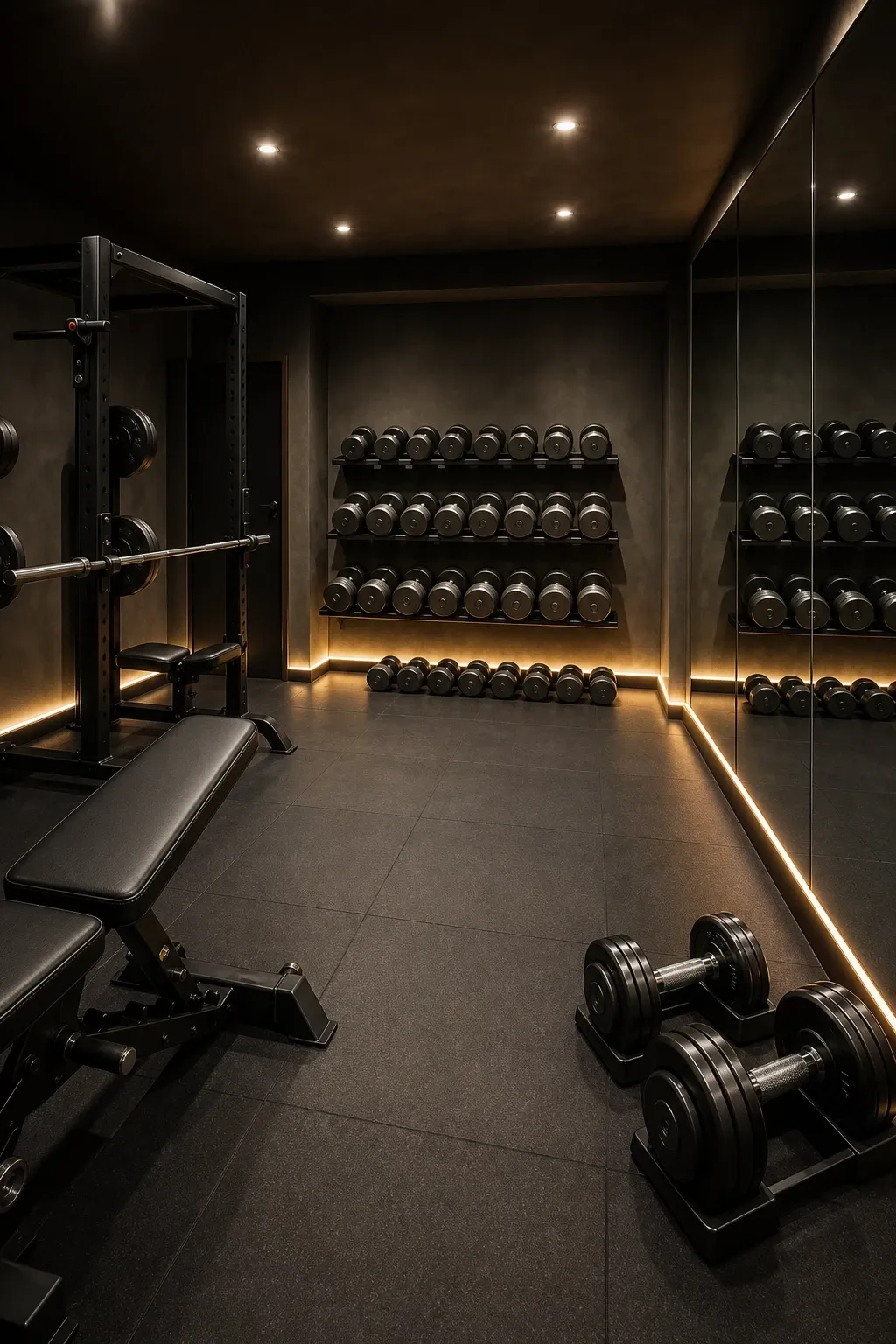
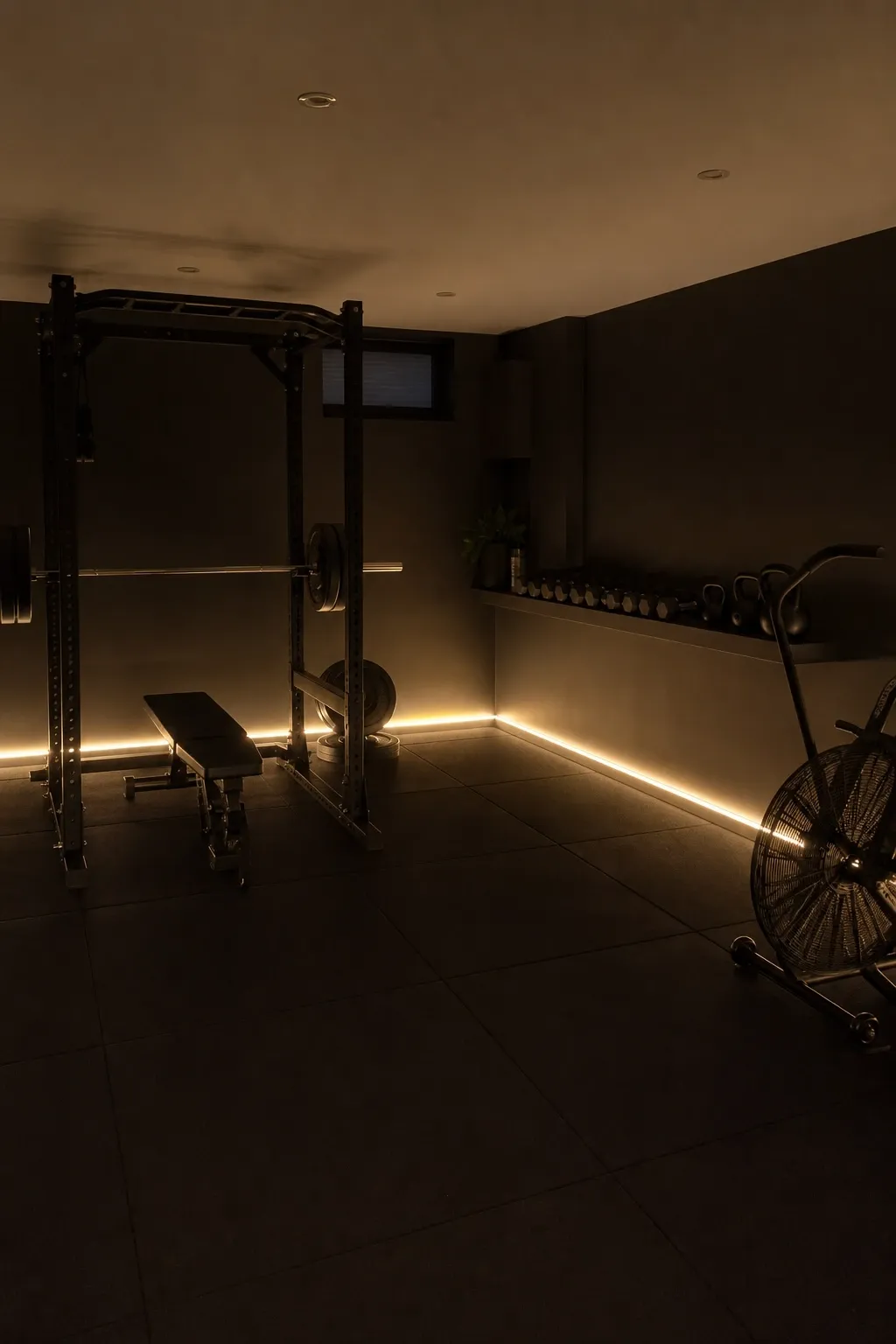
If you love a space that feels serious and focused, a charcoal and black palette gives your basement gym a low-lit, professional atmosphere that stays out of your head and lets you concentrate on the work. Paint the walls in a deep charcoal like Benjamin Moore’s Kendall Charcoal or Sherwin-Williams Caviar, use matte black rubber flooring tiles, and install LED strip lighting along the base of the walls or underneath floating shelving to create a warm amber or cool blue glow depending on your preference. A full-length mirror along one wall bounces the accent light back into the room, making the space feel twice as large without spending anything extra. Keep equipment sleek, either matte black or brushed steel, and add a wall-mounted rack for dumbbells to keep the floor visually clean. This setup works especially well for powerlifting or strength-focused training because the energy of the room already feels intentional.
Designer Tip: Use smart LED bulbs on a Govee or Philips Hue strip and program different color temperatures for warm-up, peak training, and cool-down. The shift in light actually affects your energy level more than you might expect.
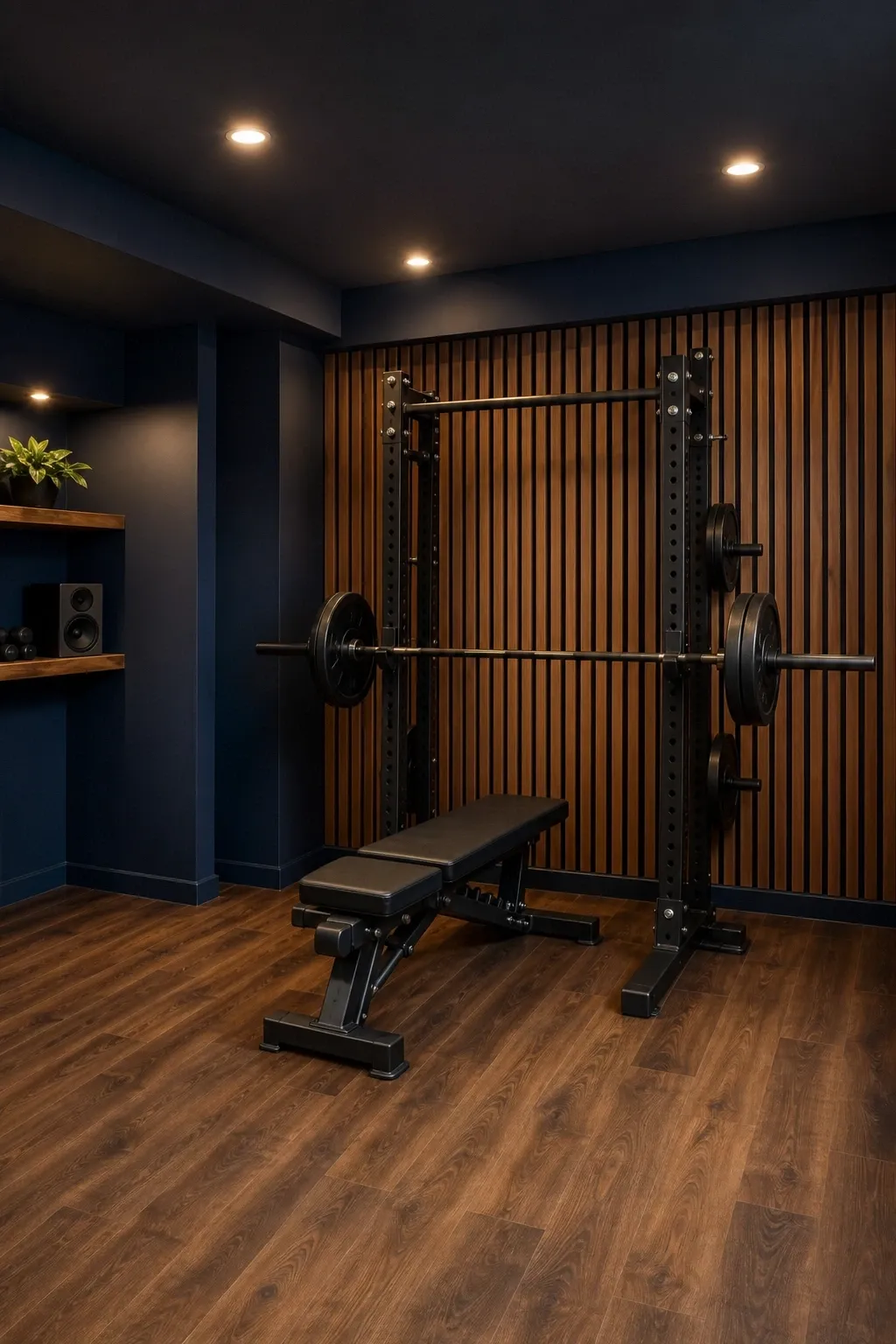
Navy and warm wood is one of those combinations that looks sharp in a gym without feeling cold or industrial. Paint the walls in a deep navy like Farrow and Ball’s Hague Blue, then bring in warmth through a wood-slat accent wall behind your weight rack or bench press setup. The slat wall serves double duty as a design feature and a functional organizer since you can mount hooks, bands, and brackets directly into the slats. Use a dark rubber or vinyl plank flooring in a medium walnut tone to connect the two materials. Lighting should be warm but bright enough for safety, so recessed ceiling lights paired with a warm-toned pendant above a stretching mat will work well. Black steel equipment fits naturally, and a small open shelf in matching wood with a Bluetooth speaker, a water bottle holder, and a small plant finishes the room without cluttering it.
Designer Tip: Vertical wood slat walls are available as pre-made panels on Amazon for around 60 to 80 dollars per panel and they install easily with just a drill and wall anchors.
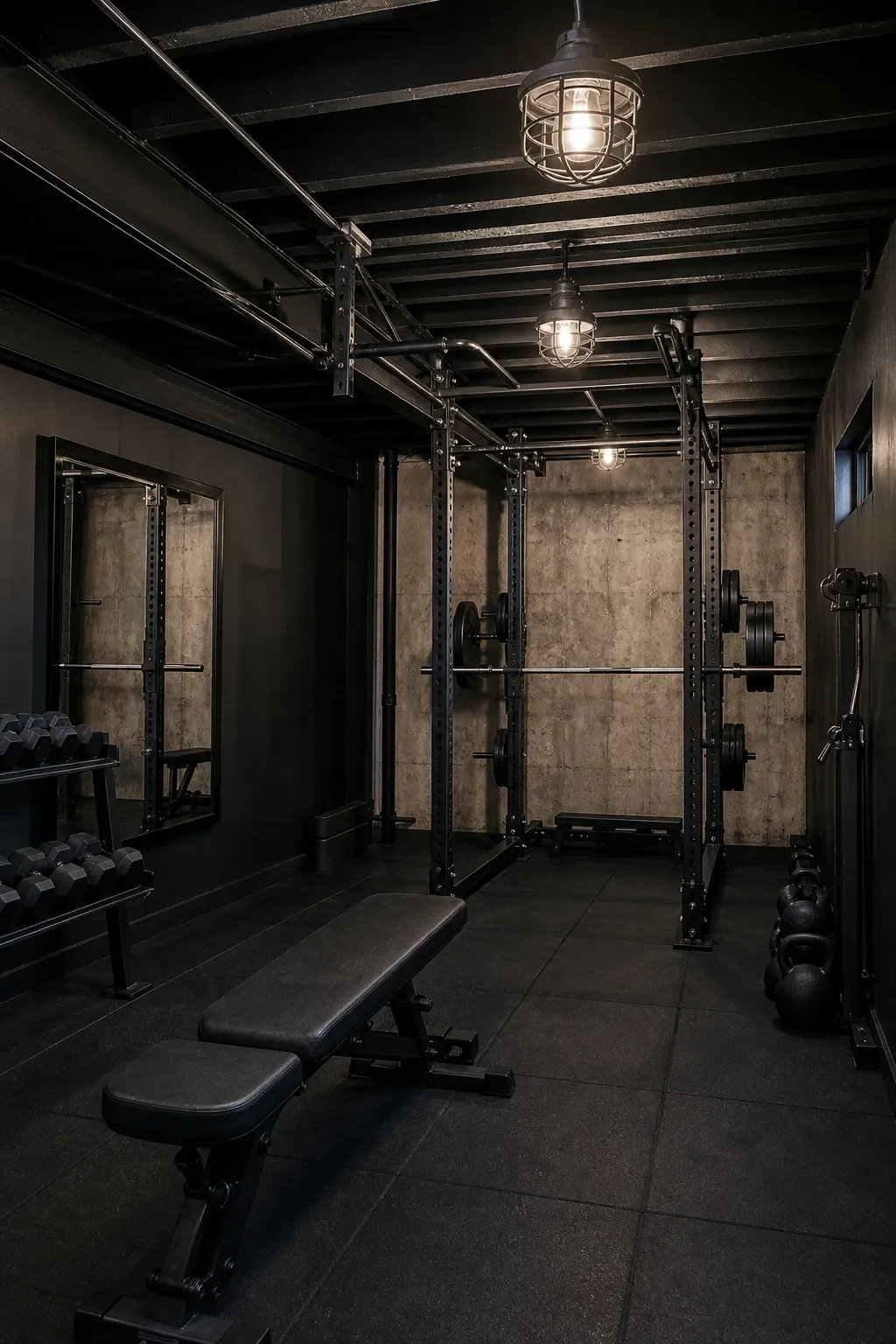
This is the gym for people who want zero distractions. Go completely black on the walls using a flat or eggshell finish, lay down thick black rubber flooring, and choose equipment with matte black frames wherever possible. The ceiling gets stripped back to expose the joists, which you can paint black as well for a raw, warehouse feel. Industrial cage-style pendants or adjustable track lighting in black or gunmetal work well overhead, and you can mount a large pull-up rig directly to the ceiling joists for structural strength. The key to making an all-black gym feel considered rather than just dark is texture: rubber on the floor, exposed concrete or painted brick on one wall, a metal mesh equipment rack, and matte versus gloss finishes used deliberately. A single large mirror with a black metal frame keeps the room from feeling like a cave without breaking the palette.
Designer Tip: To prevent the room from feeling oppressive, keep one wall slightly lighter, either exposed brick, concrete, or a very dark grey instead of full black, to give the eye a place to rest.
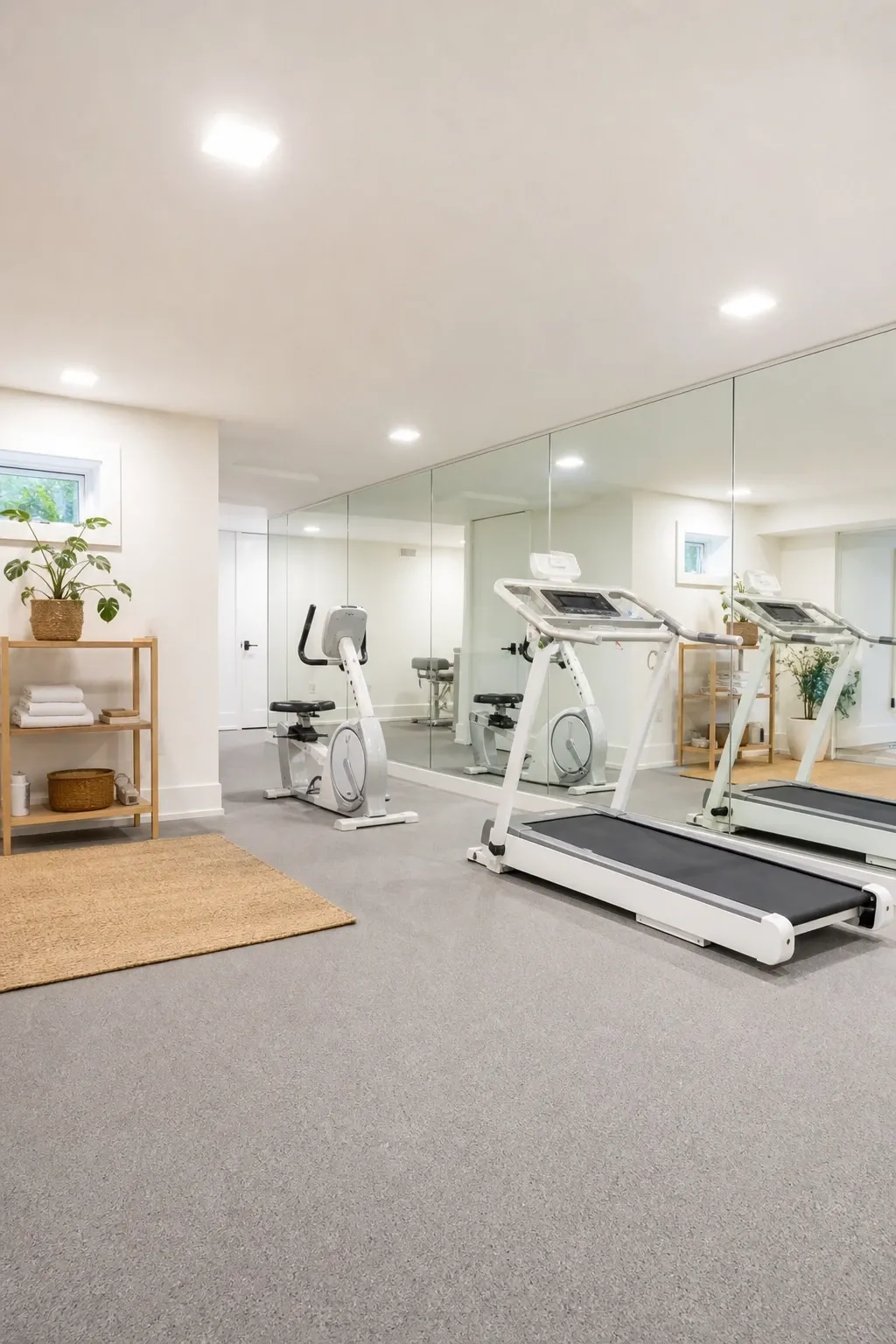
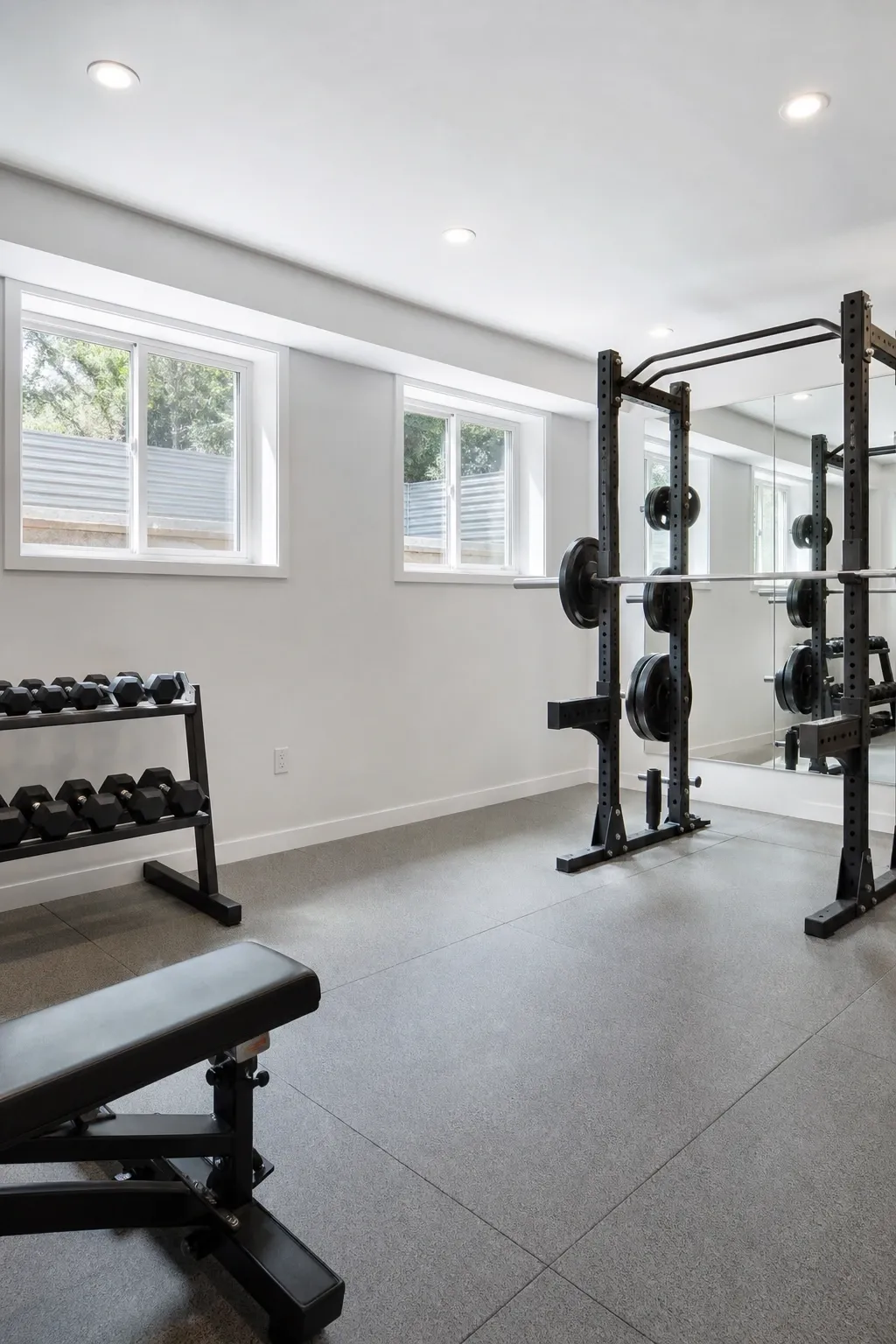
A fully white basement gym might sound clinical, but done right it feels clean, expansive, and full of energy. Use a bright white like Chantilly Lace by Benjamin Moore on all walls and ceiling, choose white or light grey rubber flooring tiles, and cover one full wall with floor-to-ceiling mirrors. The mirrors do more work here than anywhere else since they reflect every bit of light and make even a low-ceiling basement feel open. Choose LED panel lights or linear LED fixtures flush to the ceiling for maximum brightness without glare. The trick to keeping this look warm rather than sterile is introducing texture: a jute mat in the stretching corner, a wood shelf with folded towels and a plant, or a linen basket for resistance bands. Equipment in white, silver, or chrome ties the whole room together.
Designer Tip: Big frameless mirrors from IKEA’s Hovet range are a budget-friendly option and can be placed edge to edge for a continuous mirror wall effect for a fraction of what custom mirror installation costs.
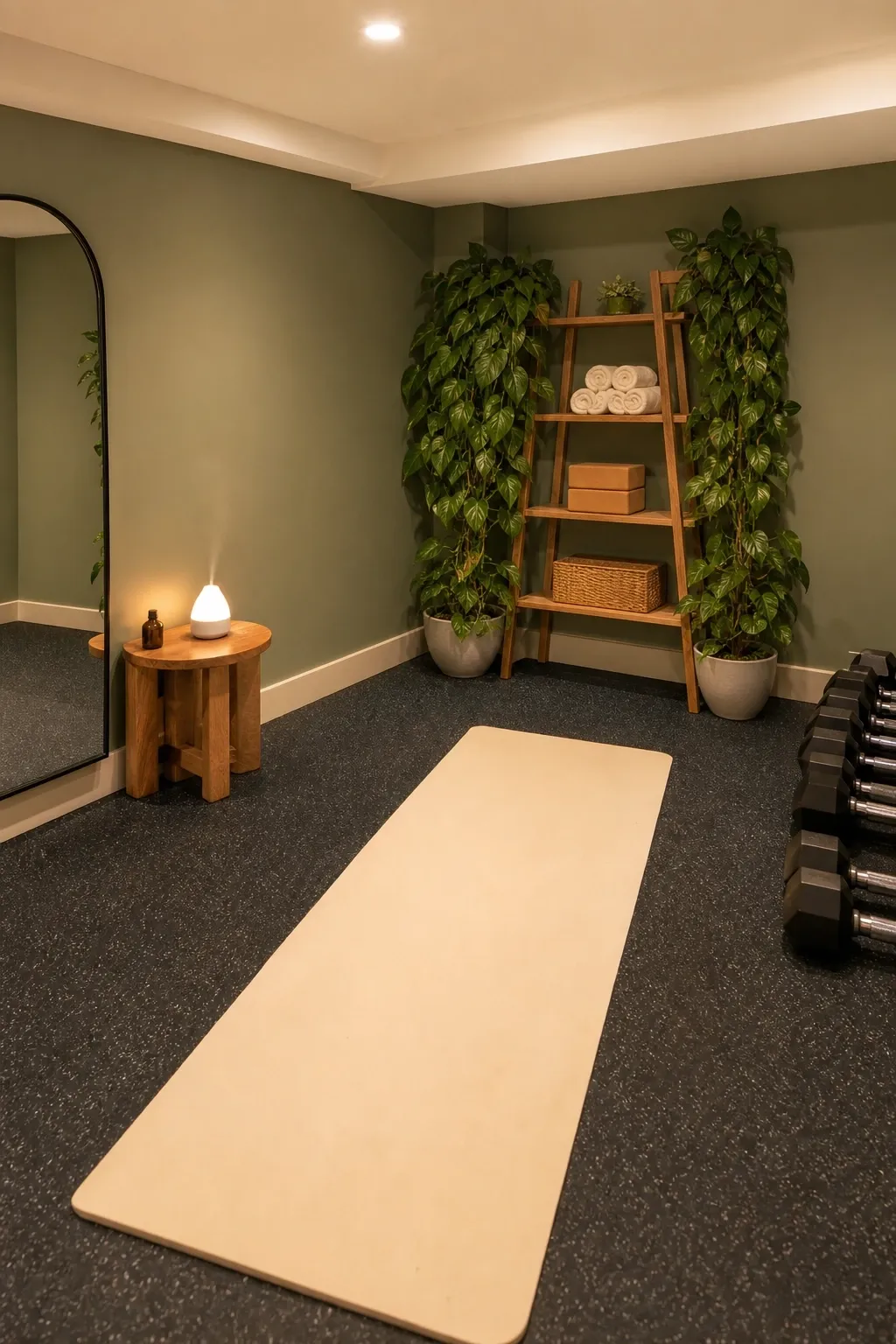
Sage green has moved from bedrooms and kitchens into home gyms for very good reason: it is calming without being sleepy, and it works beautifully under artificial light. Choose a warm sage like Sherwin-Williams’s Sage or Behr’s Aged Sage and pair it with natural linen or cream accents. This setup suits a yoga and stretching focused gym more than a heavy powerlifting setup, though it works for light cardio and bodyweight training too. Lay down a large, thick yoga mat in a neutral cream or terracotta tone, use recessed warm lighting rather than harsh overhead fluorescents, and add a diffuser or two in the corner since scent genuinely affects mood during slower, more mindful sessions. A simple wooden ladder shelf holds rolled towels, blocks, and bands neatly, and a few trailing pothos or monstera plants bring the room alive without maintenance stress.
Designer Tip: If the ceiling in your basement is low, paint it the same sage tone rather than white. It blurs the boundary between wall and ceiling and can actually make the room feel taller.
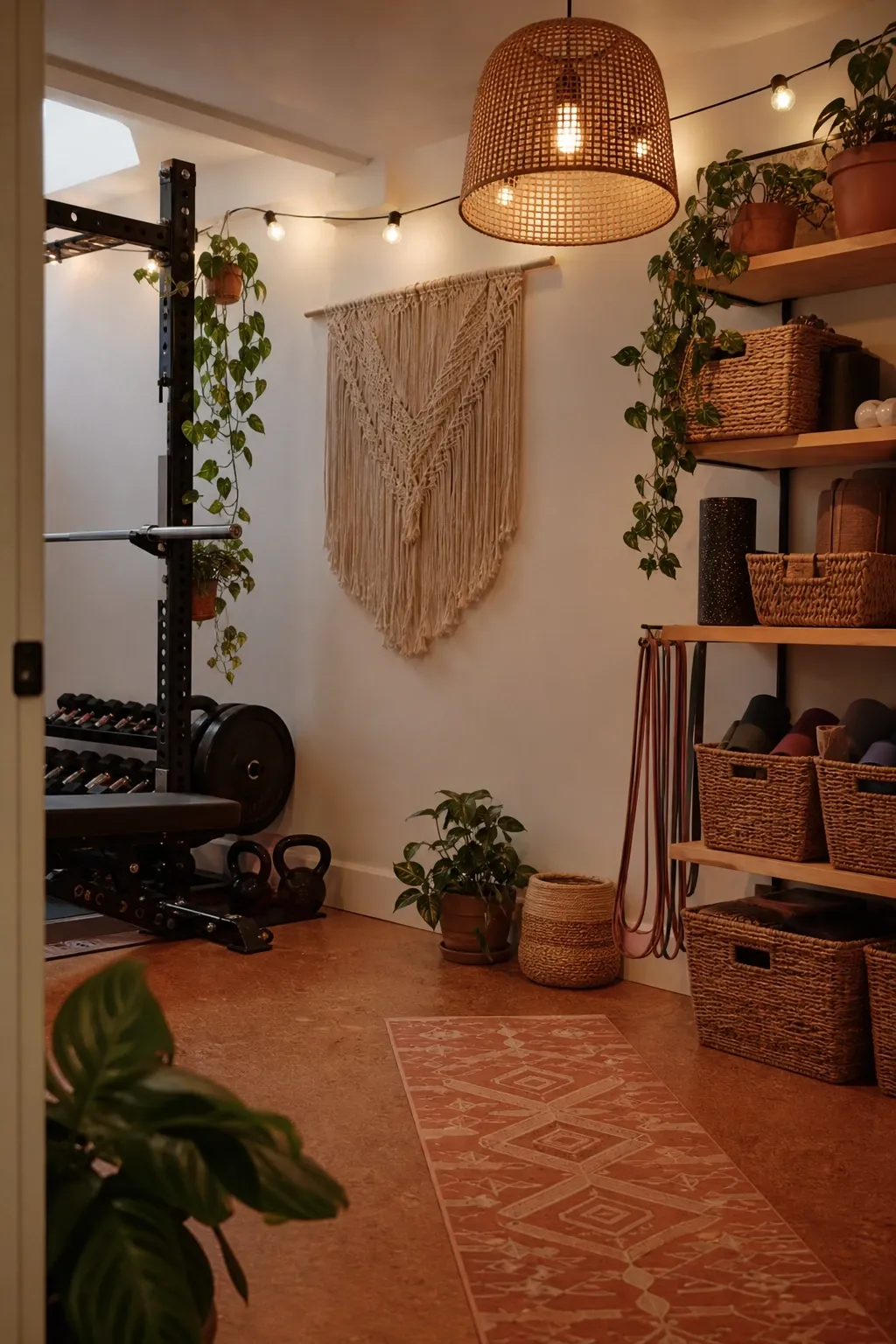
A boho-inspired gym sounds like an unlikely choice but it works surprisingly well for people who want a space that feels cozy and personal rather than corporate and sterile. Use a warm cream or off-white on the walls, lay down a terracotta-toned rubber or cork flooring, and layer in texture through a chunky knit wall hanging, a patterned yoga mat, and a rattan shelf or two. Lighting should be warm and layered: a string of Edison bulbs along one wall, a rattan pendant above the stretching area, and adjustable floor lamps for targeted light. This setup is genuinely budget-friendly since boho styling rewards mixing thrifted finds with basic gym equipment. A macrame wall piece, a few woven baskets for equipment storage, and some terracotta pots with trailing plants pull the whole look together.
Designer Tip: Cork flooring is a seriously underrated gym floor option. It is naturally antimicrobial, softer on joints than rubber, warmer underfoot, and comes in attractive natural tones that suit earthy palettes beautifully.
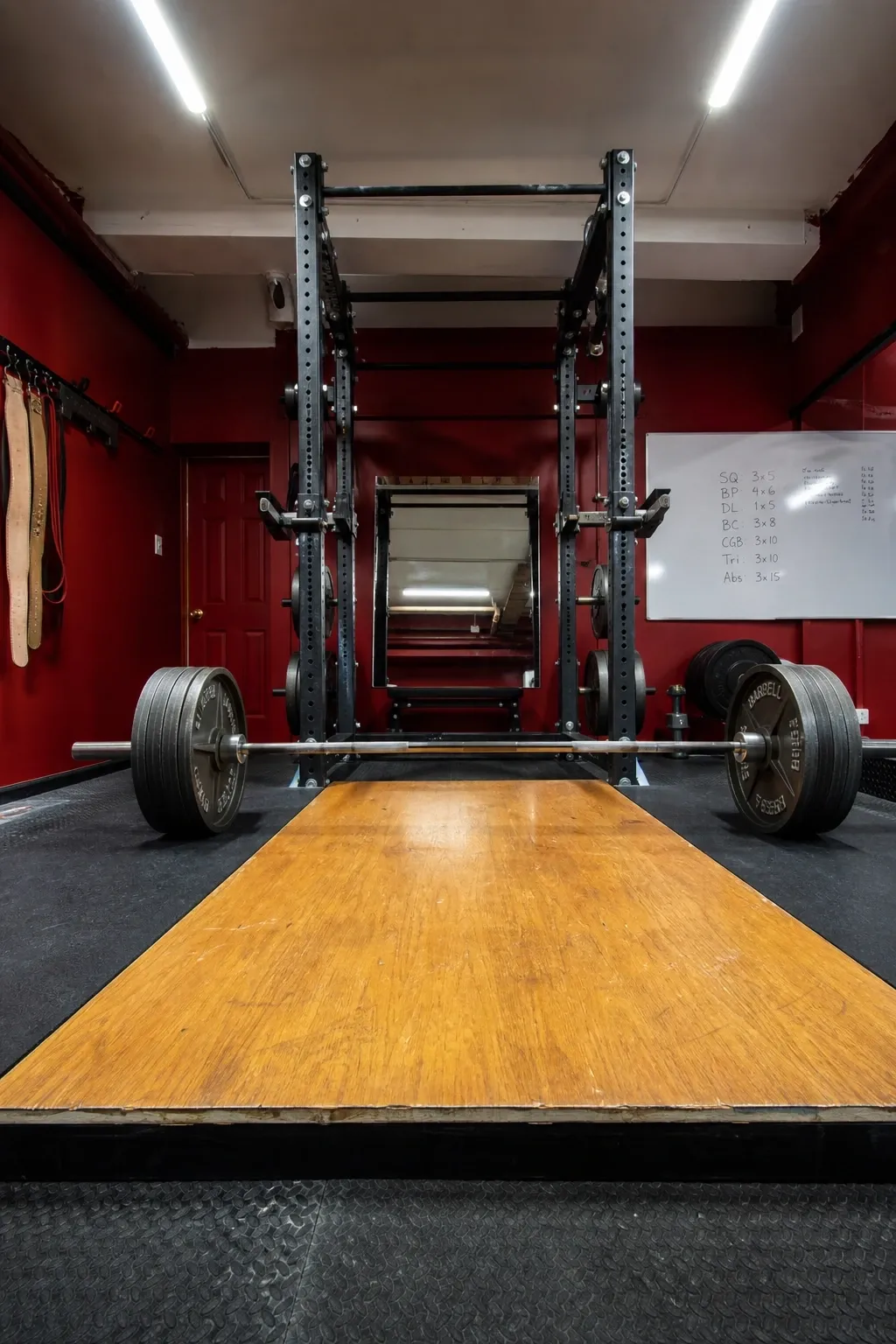
A powerlifting basement gym is built around one thing: function. You need enough ceiling clearance for a power rack with a safety bar setup, a deadlift platform made of plywood and rubber, and a competition-style barbell. The walls can be painted in a bold, energizing color like crimson red or forest green since color has a documented effect on strength output in training environments. Use horse stall mats from Tractor Supply or similar agricultural suppliers as your flooring since they are thick, extremely durable, and cost about half as much as purpose-branded gym flooring. A chalkboard or whiteboard on one wall for tracking sets and PRs adds a tactile element that most gym apps cannot replace. Overhead lighting should be very bright and positioned so there are no shadows falling across the rack or the platform.
Designer Tip: Horse stall mats from agricultural suppliers are 3/4 inch thick, incredibly durable, and cost about 40 to 50 dollars each, making them one of the best value flooring solutions for a serious lifting setup.
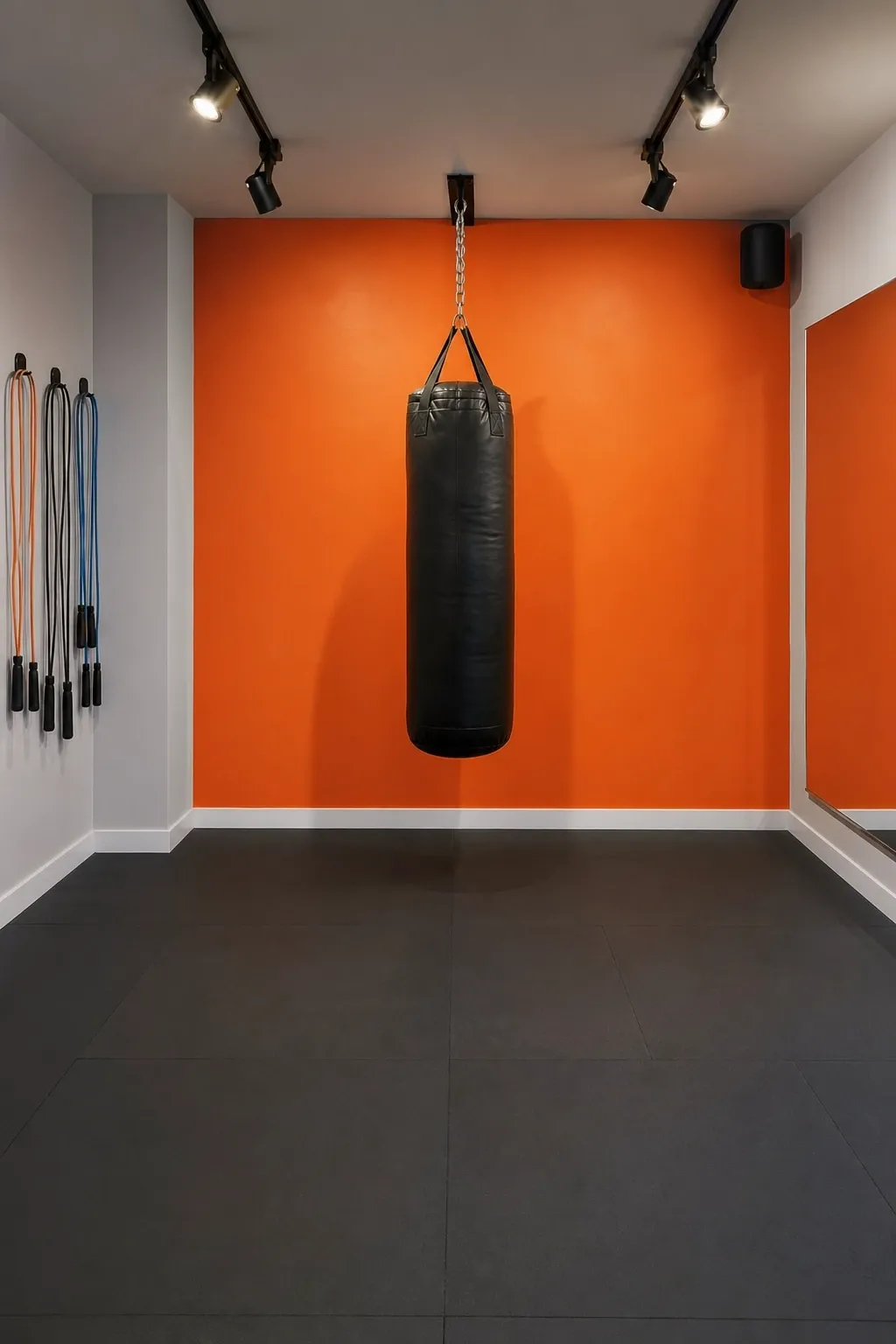
A boxing setup needs open floor space more than anything else, so the design decisions here start with removing clutter from the center of the room. Mount a heavy bag from a ceiling joist using a proper structural anchor, add a freestanding double-end bag on the other side of the room, and keep the perimeter walls for storage and mirrors. Use a bright red or orange accent wall behind the heavy bag since these colors increase energy and intensity during cardio-heavy sessions. The flooring should be a continuous rubber mat, ideally a single roll to avoid tripping over seams during footwork drills. Hang speed rope hooks on the wall, mount a small open shelf for wraps, gloves, and a fan, and use track lighting overhead so you can angle it toward the heavy bag for good visibility. A Bluetooth speaker mounted high on the wall keeps the floor clear.
Designer Tip: Ceiling heights below 8 feet can still work for a heavy bag if you use a shorter bag, around 4 feet, and mount it at the right height. Measure before you buy.
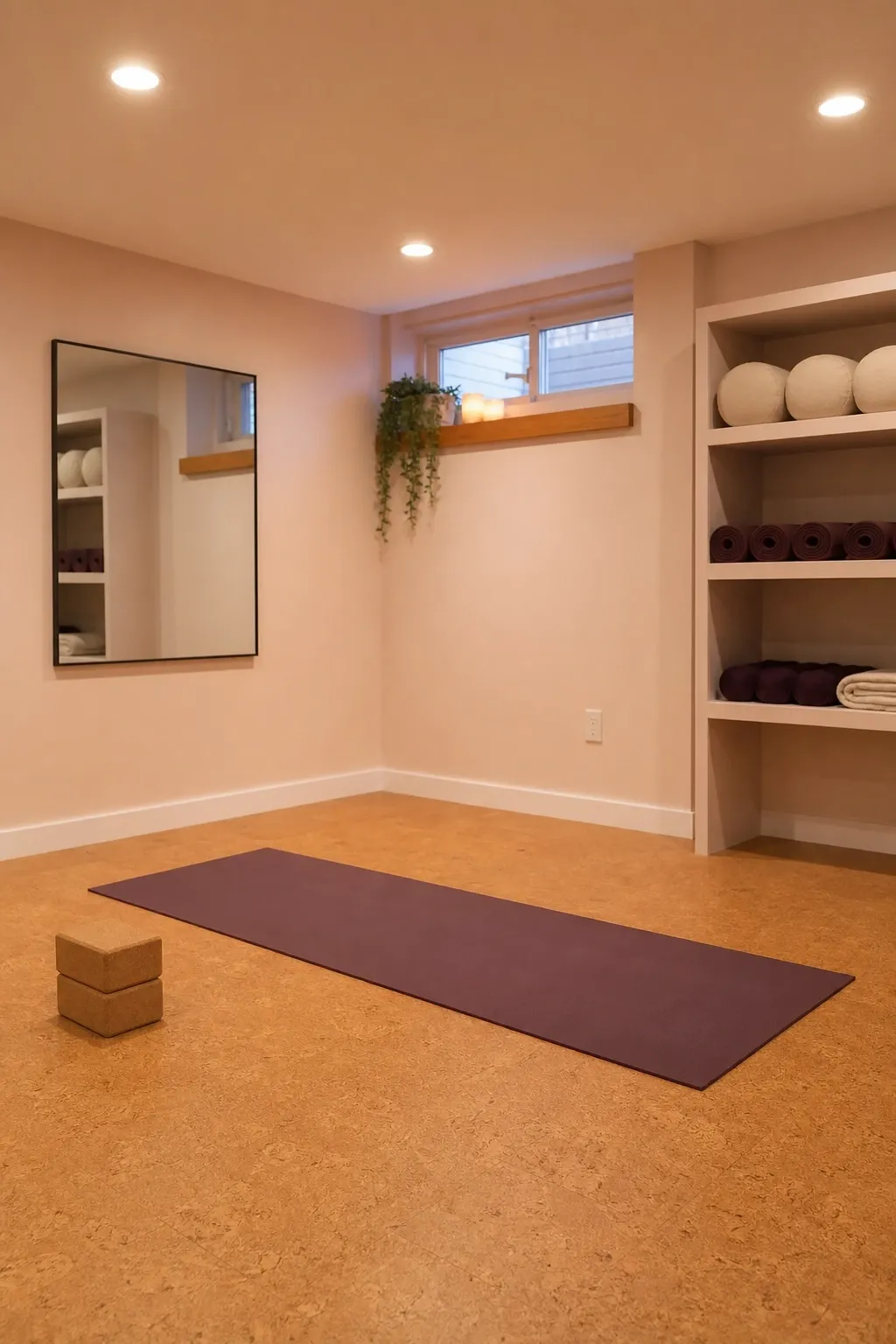
This kind of gym calls for softness, warmth, and calm from the moment you walk in. Choose a warm white or pale blush for the walls, a smooth cork or foam tile floor for grip and cushion, and keep the room completely free of visible equipment except for what is in active use. An open shelving unit painted in the same tone as the walls holds rolled mats, blocks, bolsters, and straps in an organized but relaxed way. Lighting should be warm and dimmable since you will want different levels for energetic flows versus restorative sessions. A simple wooden window shelf with a few small candles, a diffuser, and a trailing succulent creates a focused entry point in the room. Add a small Bluetooth speaker in the corner and a simple framed mirror, not for checking form but for alignment reference during standing poses.
Designer Tip: Install a simple dimmer switch for around 15 to 20 dollars and you can drop the lighting low enough for savasana without buying any new fixtures.
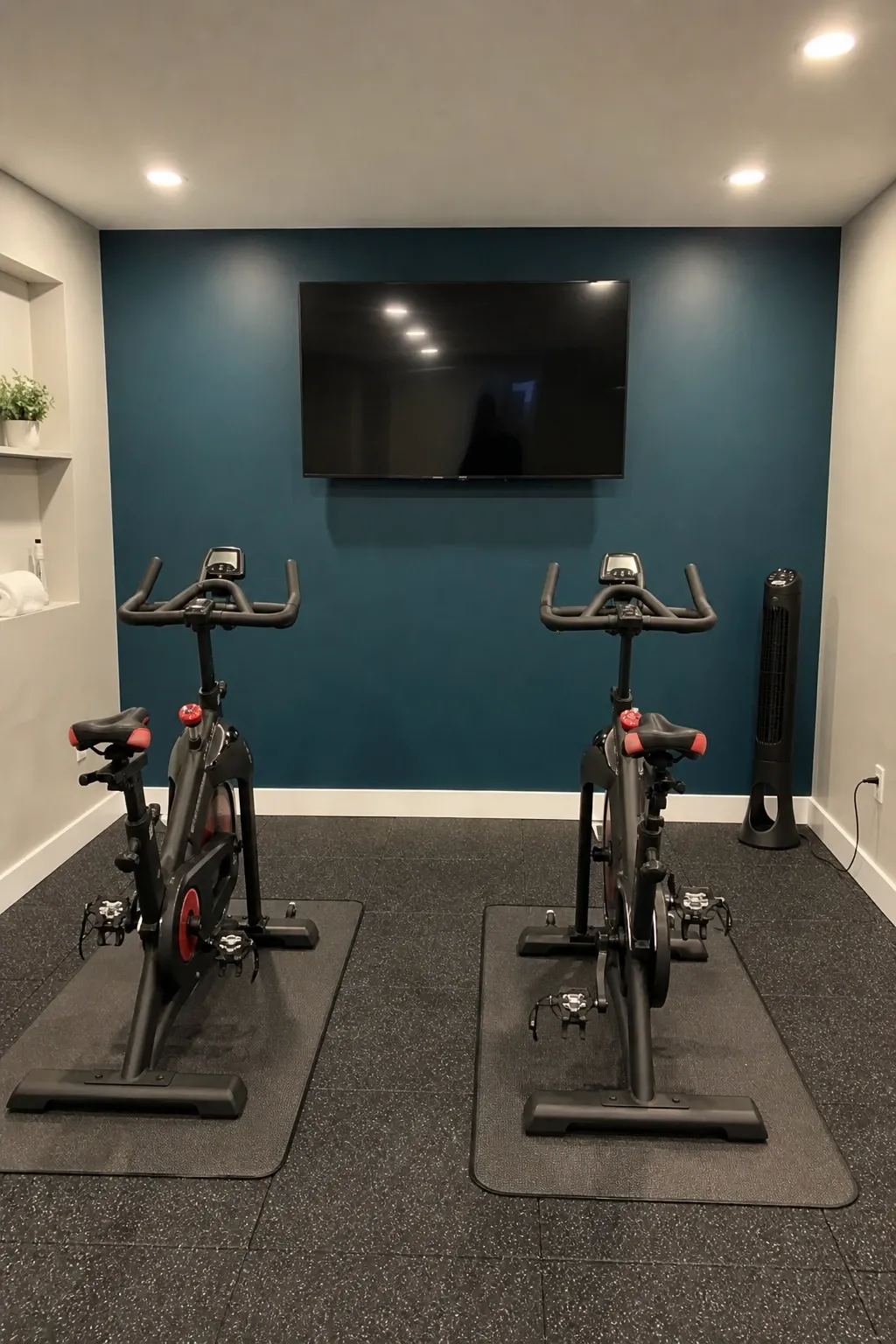
Spin bikes and cardio machines work best when they are positioned facing something engaging, so design this gym around what you will be looking at when you are grinding through a tough interval session. A large television or projector screen on one wall, positioned at eye level from the bike seat, changes the experience completely. Use a bold, saturated color behind the screen wall, something like deep teal or mustard, and keep the side walls more neutral. The floor under cardio equipment takes a lot of vibration, so lay down a thick anti-vibration mat beneath each machine before your rubber floor tiles go down. Overhead lighting should be bright enough for safety but not harsh since you will be in this room for 30 to 60 minutes at a stretch. A small fan shelf or tower fan placement should be planned into the layout from the beginning.
Designer Tip: If you are using a projector instead of a TV, paint a specific section of the wall with projector paint rather than hanging a screen. It gives you a much larger display area for a lower cost.
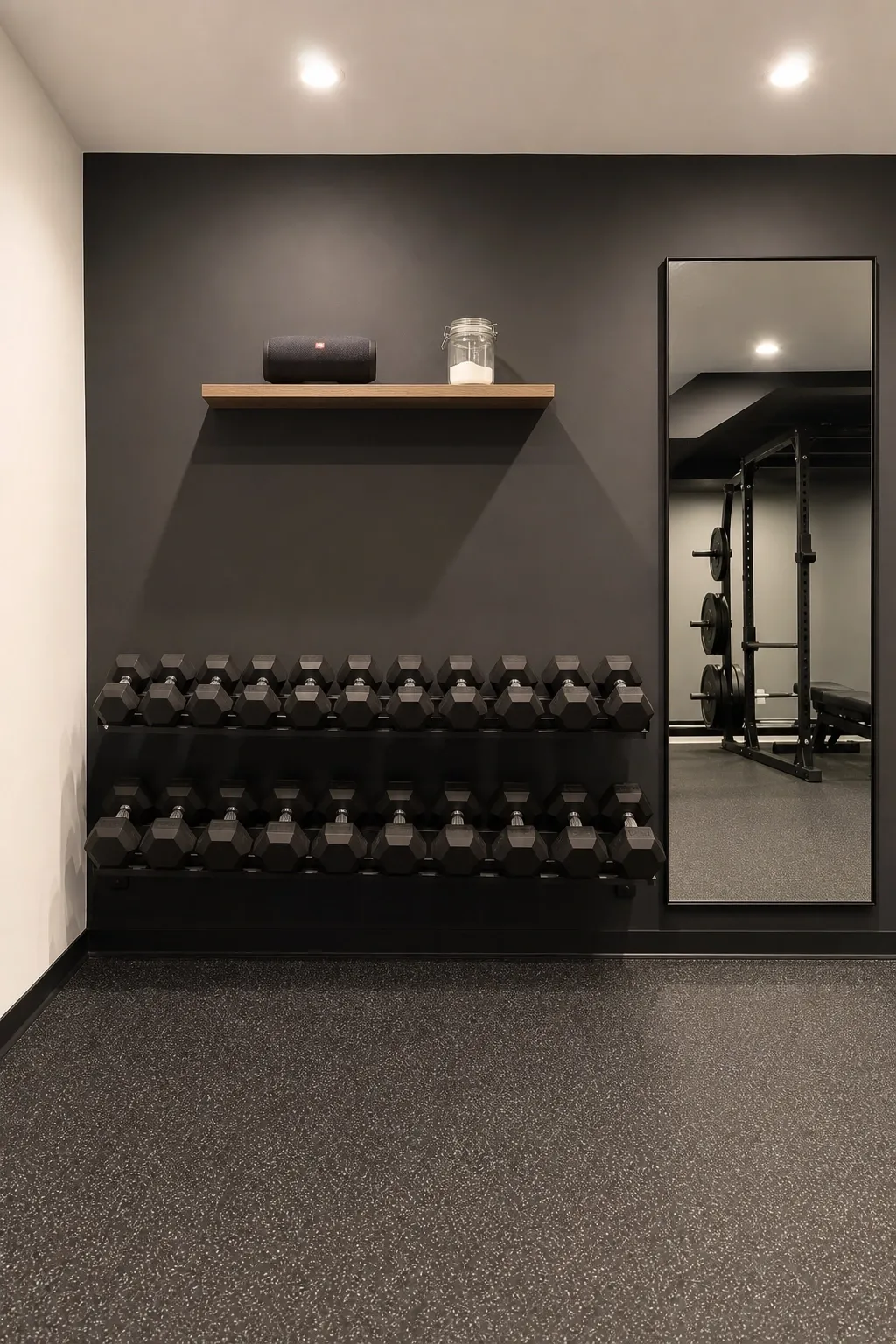
A wall-mounted dumbbell rack is one of the best investments you can make in a home gym, both functionally and visually. Instead of a floor-standing rack that eats up square footage, a horizontal wall-mounted system keeps your weights organized, accessible, and actually looks attractive. Pair it with a full-length mirror directly beside it so you can check form during curls or presses without moving. Paint the wall behind the rack in a contrasting accent color, darker than your main walls, to frame the equipment like a feature wall. A thin shelf above the rack holds a speaker, chalk, a towel hook, and a resistance band hanger. The key is keeping this wall completely free of clutter below waist height so the floor reads as open even in a smaller basement room.
Designer Tip: Mount your dumbbell rack into wall studs, not just drywall, and use a stud finder before you drill. A rack loaded with 200 pounds of dumbbells needs proper structural support.
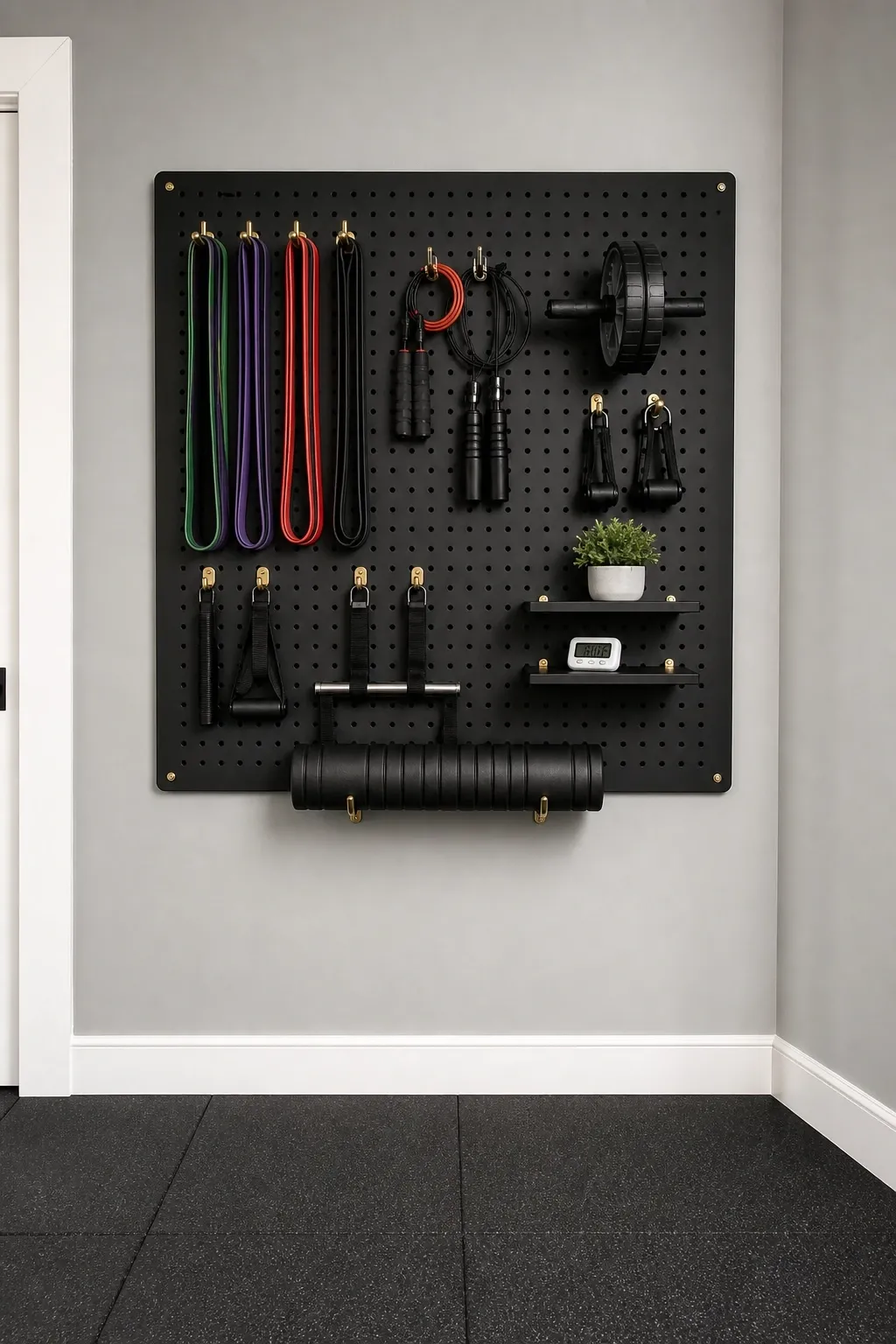
A pegboard wall is an incredibly practical and surprisingly attractive way to organize a small basement gym. Mount a full sheet of pegboard painted in a color that contrasts with or complements your wall color, and use it to hang resistance bands, jump ropes, ab wheels, foam rollers, and anything else that tends to pile up on the floor. A painted pegboard in matte black with copper or brass hooks has a nice industrial warmth to it, while a white pegboard with white hooks looks cleaner and more minimal. Position it near your main workout area so you can grab and return equipment without breaking your rhythm. Add a few small shelves to the pegboard itself for smaller items like chalk, a timer, and a small plant, which adds a bit of life to what is otherwise a utility wall.
Designer Tip: Painting the pegboard before mounting it is easier than painting around the holes after. Use a spray primer and two coats of a durable eggshell or satin finish for best results.
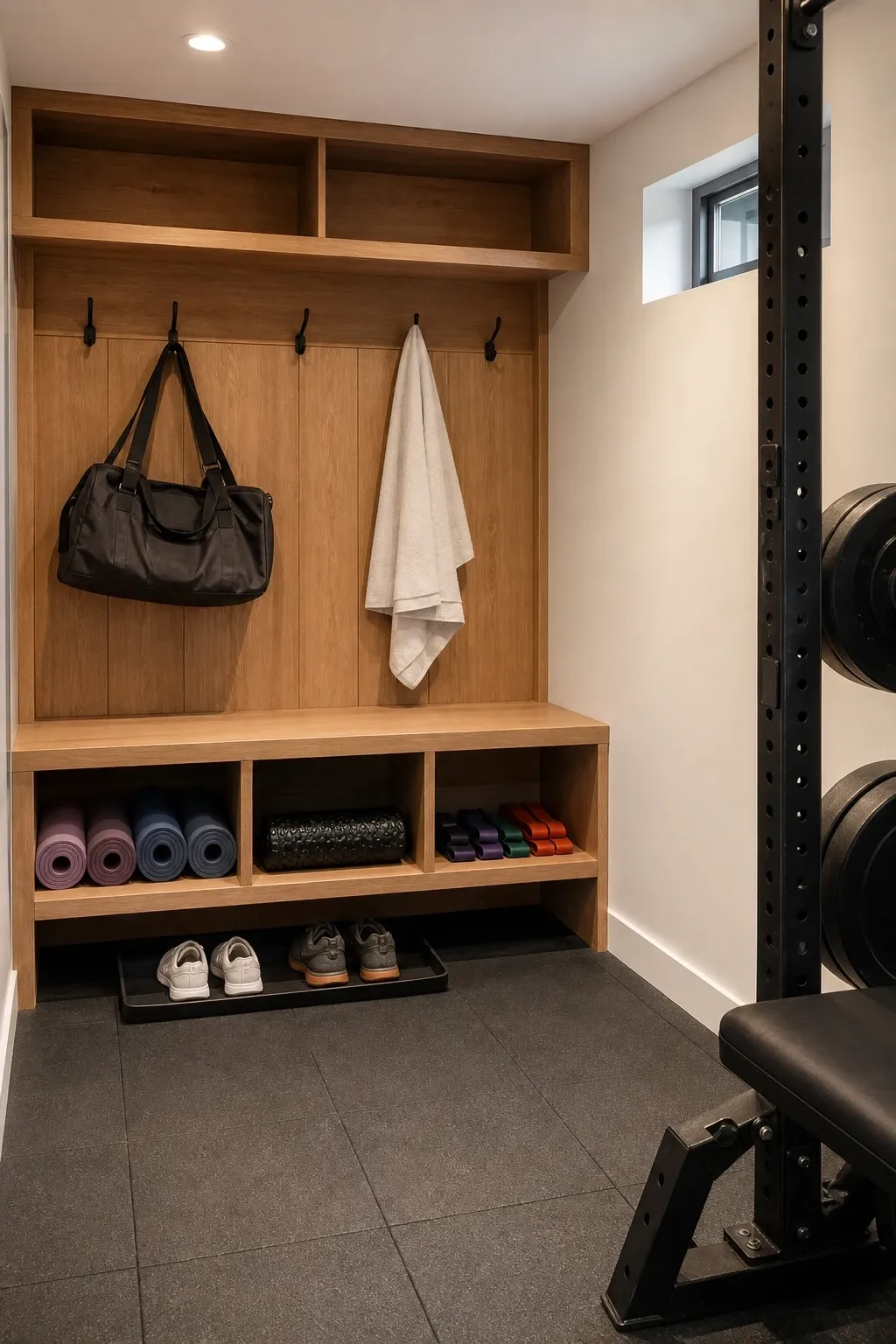
A built-in storage bench along one wall of the basement gym solves three problems at once: it gives you a place to sit while changing shoes, a surface to lay out gear before a session, and storage for bulkier items like foam rollers, yoga mats, and resistance band sets. Build or buy a simple bench at seat height, around 18 inches, with open cubbies below in two or three sections separated by a small divider. Paint or stain it to match your wall color or go with a natural wood finish for warmth. Above the bench, mount a row of hooks for bags, towels, and resistance bands. A shoe tray underneath keeps the floor tidy. This kind of built-in creates a clear entry ritual for the gym, you sit, you change, you are mentally in workout mode.
Designer Tip: Ready-made cube shelving units from IKEA like the Kallax can be repurposed as a storage bench base by adding a custom plywood top with foam padding and a fabric cover for under 100 dollars total.
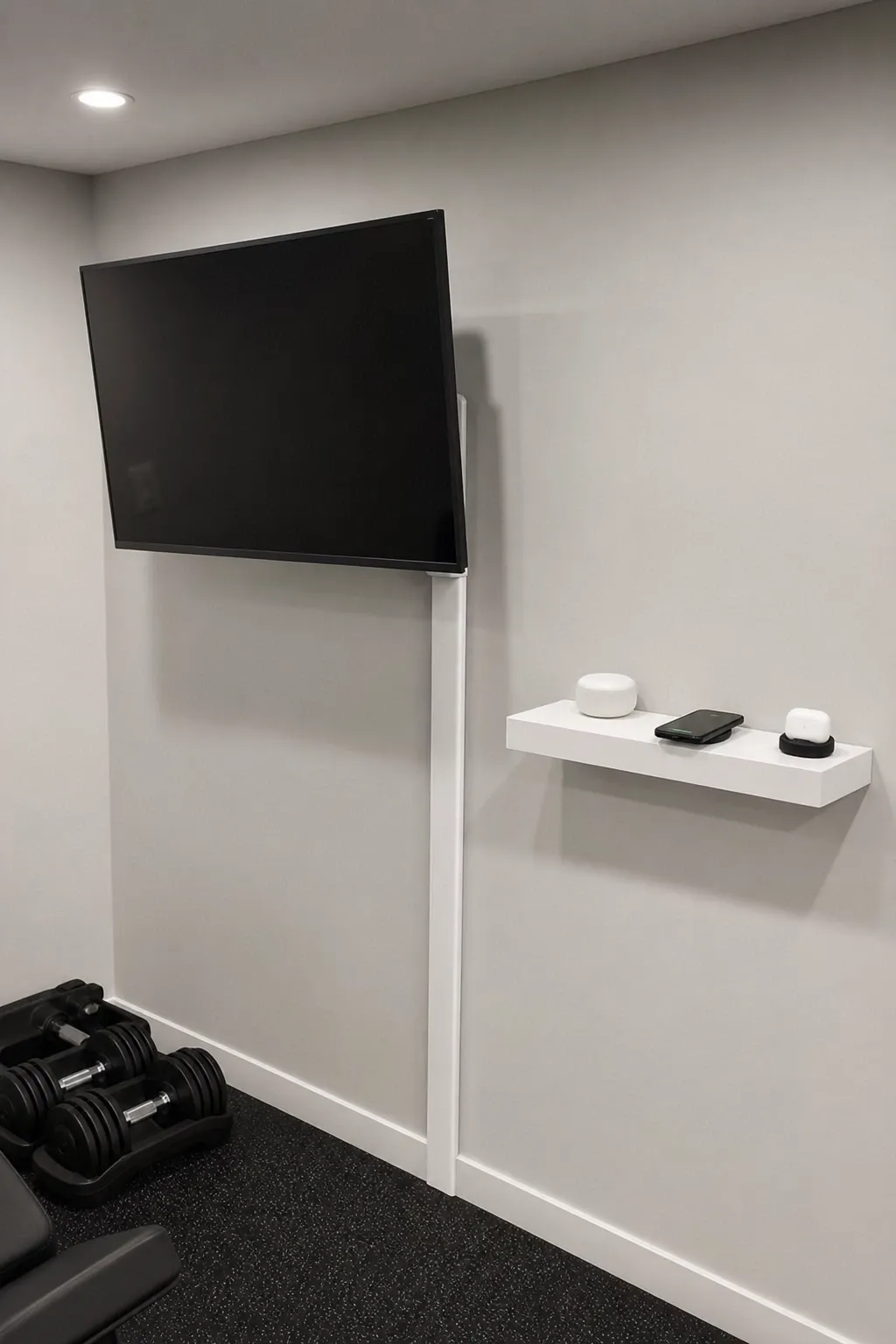
A basement gym with a television, speakers, a fan, a dehumidifier, and chargers for devices can quickly turn into a mess of visible cords, and visible mess genuinely affects how energized a space feels. Run cables through the wall or along the baseboard using white or black cable raceways that match your trim color, and place your router or any smart home hub on a small shelf inside a cabinet rather than on the floor. Mount your TV directly to the wall using a full-motion arm so it can tilt for different areas of the room. Install a power strip with individual switches directly behind the wall panel so you can control everything from one spot. A small basket or drawer unit near the door for your phone, charger, and earbuds keeps the equipment area clean and focused.
Designer Tip: Wireless charging pads mounted to a small shelf near the gym entry point mean you can drop your phone there during workouts and it is ready to go when you leave. It is a small detail but it removes friction.
Floor-level LED strip lighting is one of the easiest and most effective ways to make a basement gym feel designed rather than improvised. Run warm white or cool white LED strips along the base of the walls, or under a floating dumbbell rack or equipment shelf, and the effect is an even, soft glow that eliminates the harsh contrast between overhead lights and dark corners. This works especially well in dark-palette gyms where you want drama without sacrificing visibility. The strips themselves are inexpensive, often 20 to 30 dollars for a reel, and they stick to most surfaces easily. Pair them with a bright overhead light on a separate switch so you can use the strips alone for warm-up or cool-down and flip on the overheads for high-intensity work.
Designer Tip: Go for strips with a color temperature of 4000K for neutral white light that is bright without feeling blue or clinical. Pure cool white at 6000K can look harsh in a small enclosed space.
16. Industrial Pendant Lighting Over a Stretching Zone
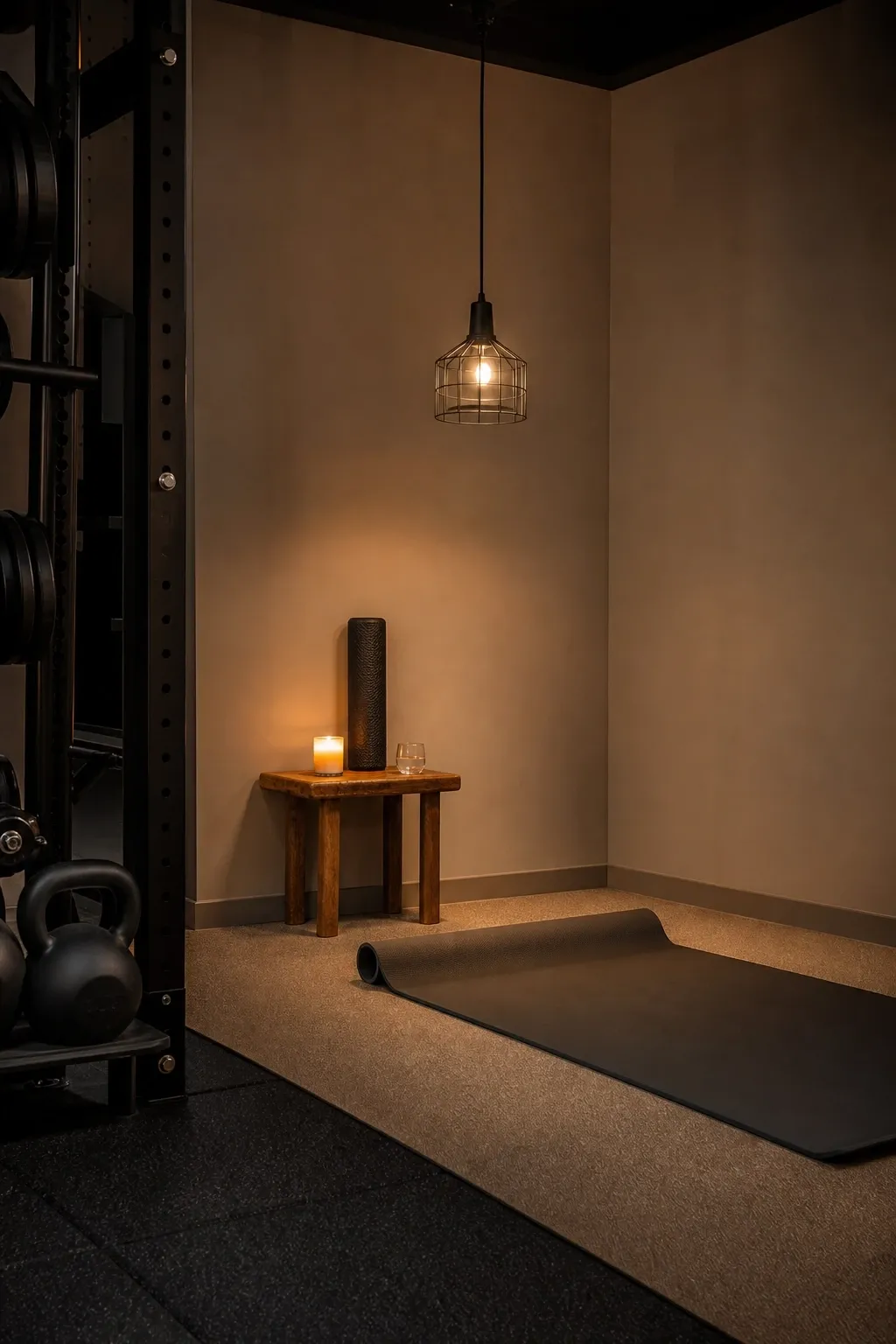
One of the nicest things you can do for a multi-zone basement gym is give each area its own defined lighting. The stretching and recovery zone, in particular, benefits from a warmer, lower-hanging light source like an industrial cage pendant in matte black or brushed brass. This separates the stretching area visually from the main workout floor and signals to your brain that this part of the room has a different pace. Position the pendant at around 6 to 7 feet from the floor above a thick mat or rug, and make sure it is on its own switch or dimmer. A small side table with a candle, a foam roller, and a water bottle rounds out this corner and makes recovery feel as intentional as the workout itself.
Designer Tip: Always run pendant lighting to a dimmer rather than a standard on/off switch. The ability to drop the light level for stretching and cool-down is genuinely worth the extra 15 dollars a dimmer costs.
17. Natural Light Optimization with Egress Windows
If your basement has or can have egress windows, making the most of that natural light should be a top priority because natural light in a basement gym makes a measurable difference to motivation and energy. Position your primary workout area, whether that is a squat rack, a mat, or a bike, closest to the window wall. Keep window sills completely clear and use white or light-colored window frames to maximize how much light bounces into the room. A large mirror on the wall opposite the window doubles the light. If your windows are high on the wall as most basement windows are, a frosted film or no window treatment at all keeps the light coming in while maintaining privacy. Even one egress window well, lined with a reflective white or silver material, can bring in noticeably more light than a standard window.
Designer Tip: Solar tubes, also called tubular skylights, can be drilled through the floor above to bring natural light into a windowless basement gym. They start at around 200 to 300 dollars and are a surprisingly effective solution.
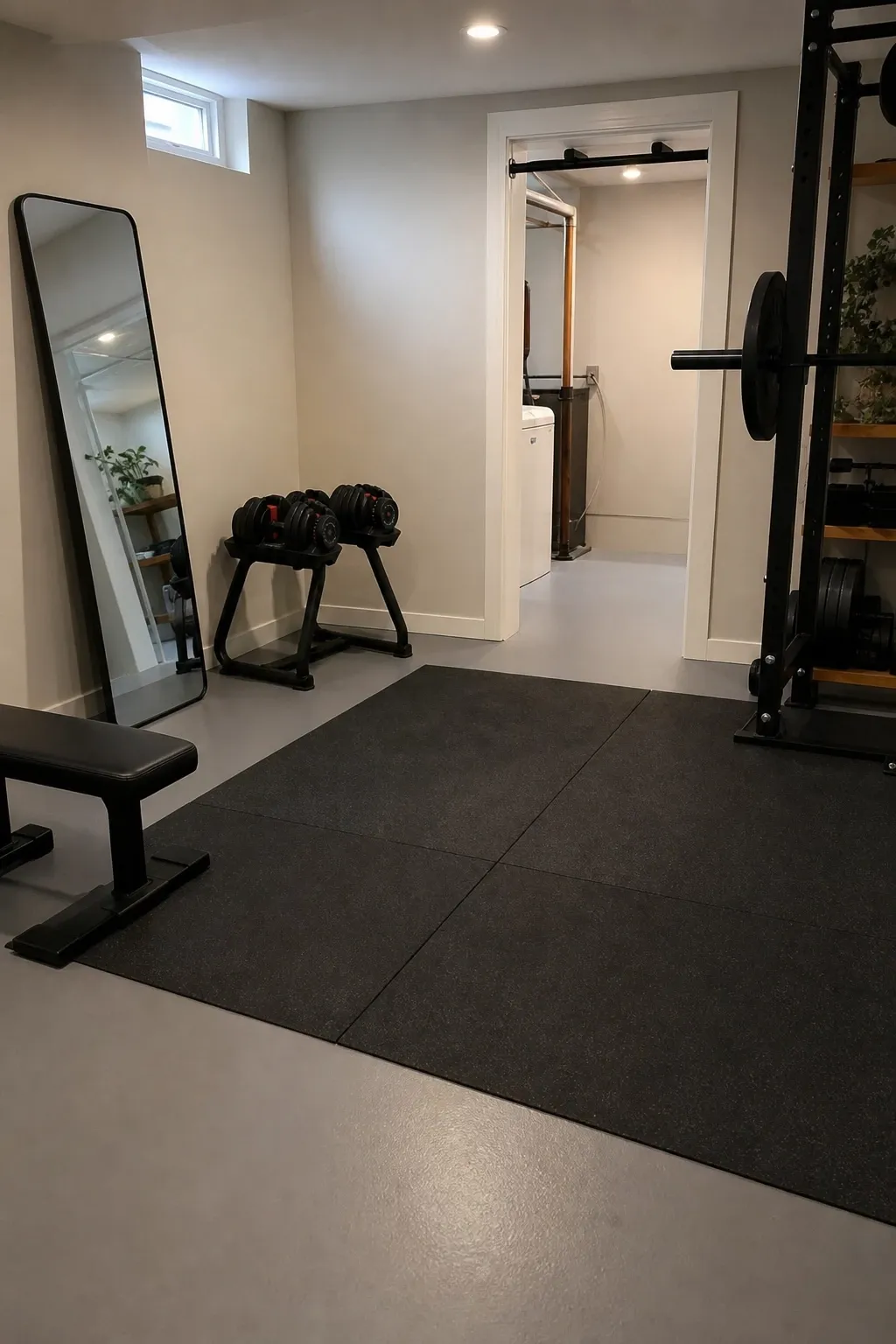
If your basement has a bare concrete floor and flooring is a budget concern, a coat of concrete floor paint is one of the most underrated upgrades available. Choose an epoxy-based floor paint in a medium grey, warm tan, or bold color like deep green or slate blue, and the floor immediately reads as finished rather than unfinished. Add rubber anti-fatigue mats in the main workout zones for comfort and grip, and leave the painted concrete visible in the perimeter areas. The combination of painted concrete and rubber mats gives you the visual cleanliness of a finished floor without the cost of full coverage rubber or vinyl. A painted floor also makes mopping simple, which matters in a gym.
Designer Tip: Rust-Oleum EpoxyShield is a well-regarded and widely available product that holds up well under gym use. It comes in kits designed for one car garage bays, which is approximately the right size for most basement gyms.
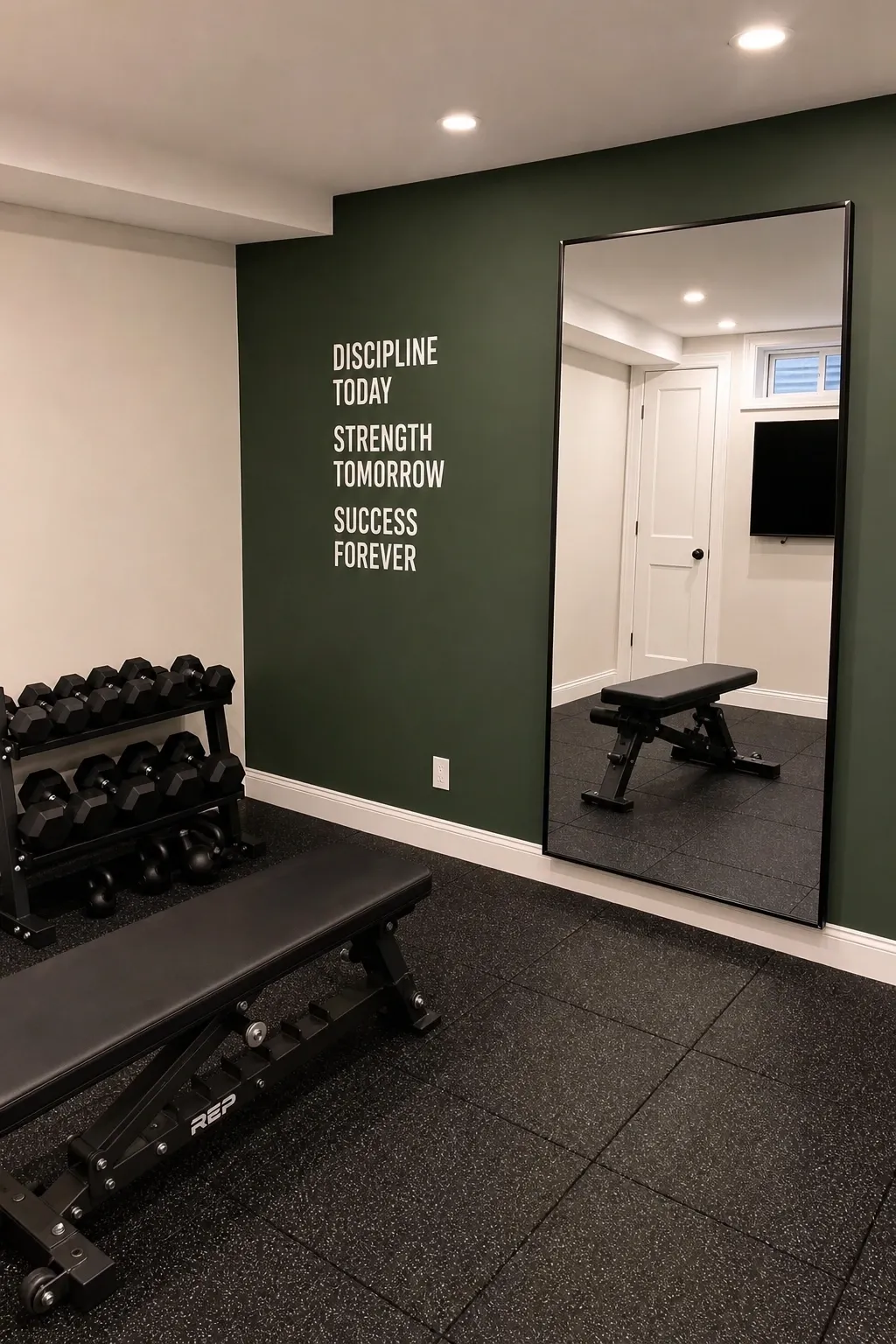
A single, bold accent wall can completely change how a basement gym feels without any renovation or significant expense. Choose the wall behind your primary equipment, whether that is your rack, your cardio machine, or your mirror, and paint it in a color that contrasts strongly with the rest of the room. Deep forest green, terracotta, dusty blue, or even a charcoal black works well. Use painter’s tape to create a clean border and use a roller for speed. The rest of the walls stay a light neutral so the accent wall does all the visual work. Add a motivational quote in a clean vinyl wall decal, which costs around 10 to 20 dollars, or simply mount a mirror directly onto the accent wall for maximum impact.
Designer Tip: If you want a two-tone effect without a dramatic accent wall, paint the lower third of all walls in a darker shade and the upper two-thirds in a lighter tone. It grounds the room and adds sophistication with minimal effort.
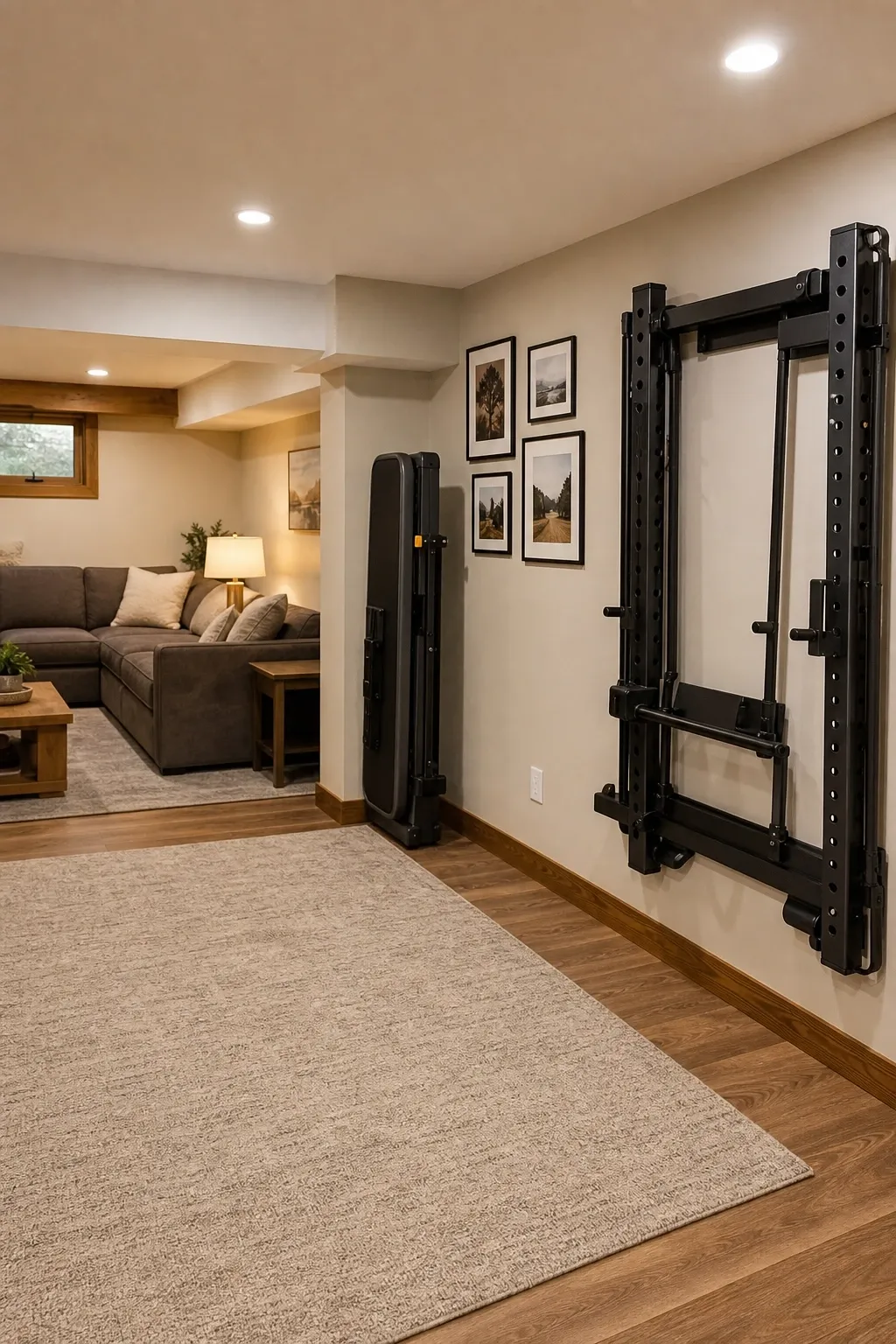
For basements that double as a rec room, a guest room, or a laundry space, folding and wall-mounted equipment is the answer. A wall-mounted folding squat rack takes up almost no space when folded, and folding benches can be stored flat against the wall or in a utility closet. Use a large area rug in the center of the room rather than dedicated flooring so the space reads as a living area when the equipment is stored and a workout space when it comes out. A gallery wall of framed prints or photographs makes the gym feel like part of the home rather than an afterthought. The trick is having a dedicated storage spot for everything so you can shift from one mode to the other in under two minutes.
Designer Tip: Rogue Fitness and REP Fitness both make excellent wall-mounted folding racks that are rock solid but fold flat to around 10 inches off the wall. They are not cheap, but they are genuinely the best space-saving option for a dual-purpose room.
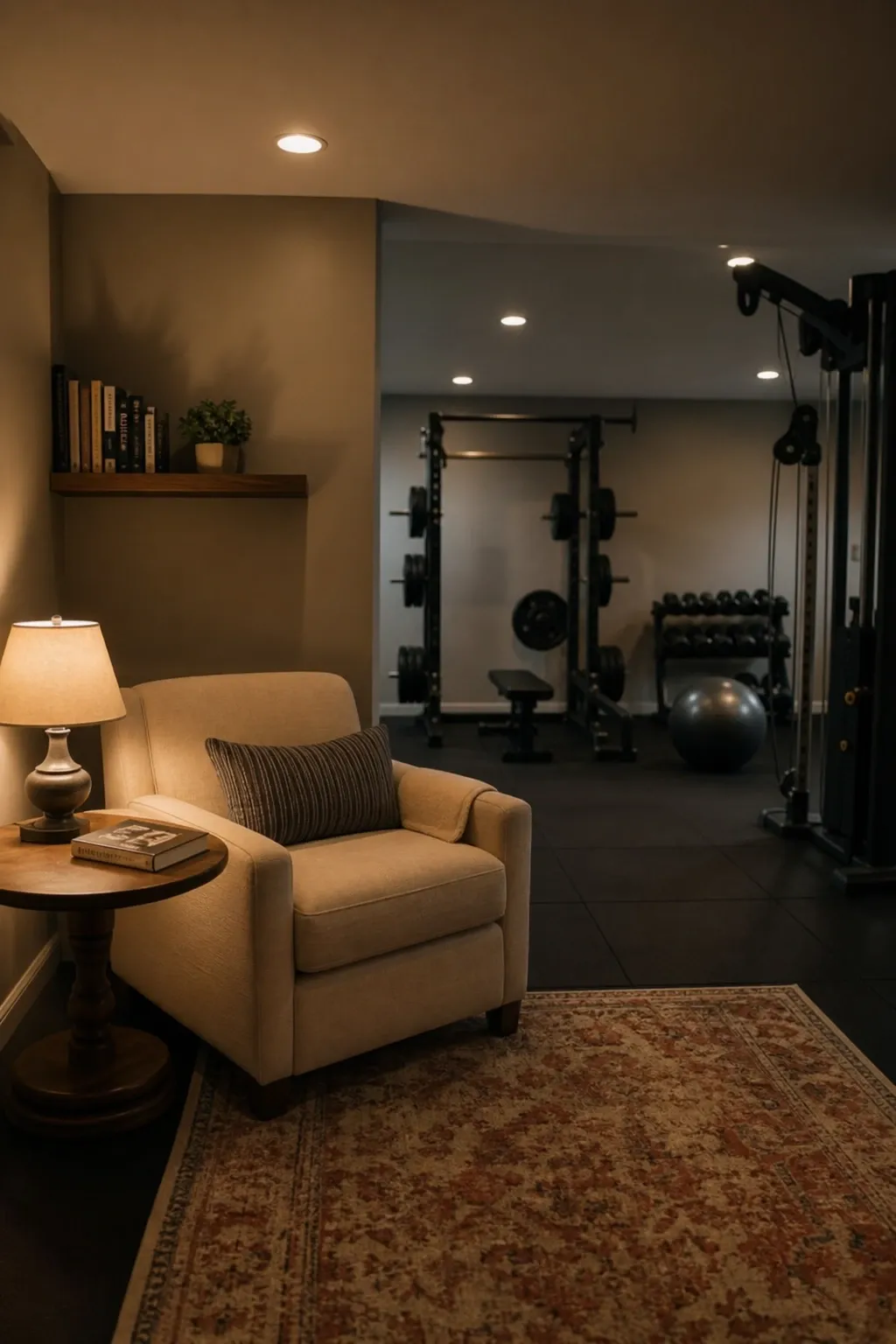
Not everyone does back-to-back intense training sessions. If your gym includes recovery days, foam rolling, stretching, or meditation, a small reading nook built into one corner of the basement gym adds a dimension that makes the space feel genuinely liveable rather than purely functional. Use a small armchair or a floor cushion set in the corner, add a small side table with a lamp, and carve out a narrow floating shelf for books, a journal, and a water glass. Keep the rug under this corner area different from the rest of the gym floor, something softer and more inviting, and separate it visually with a small bookshelf or a curtain hung from the ceiling. The contrast between the nook and the main workout area actually reinforces how different the two modes of using the space feel.
Designer Tip: A reading nook in a gym is also a great place for keeping a workout journal. Physical logging of sessions has been shown to improve consistency more reliably than app tracking for many people.
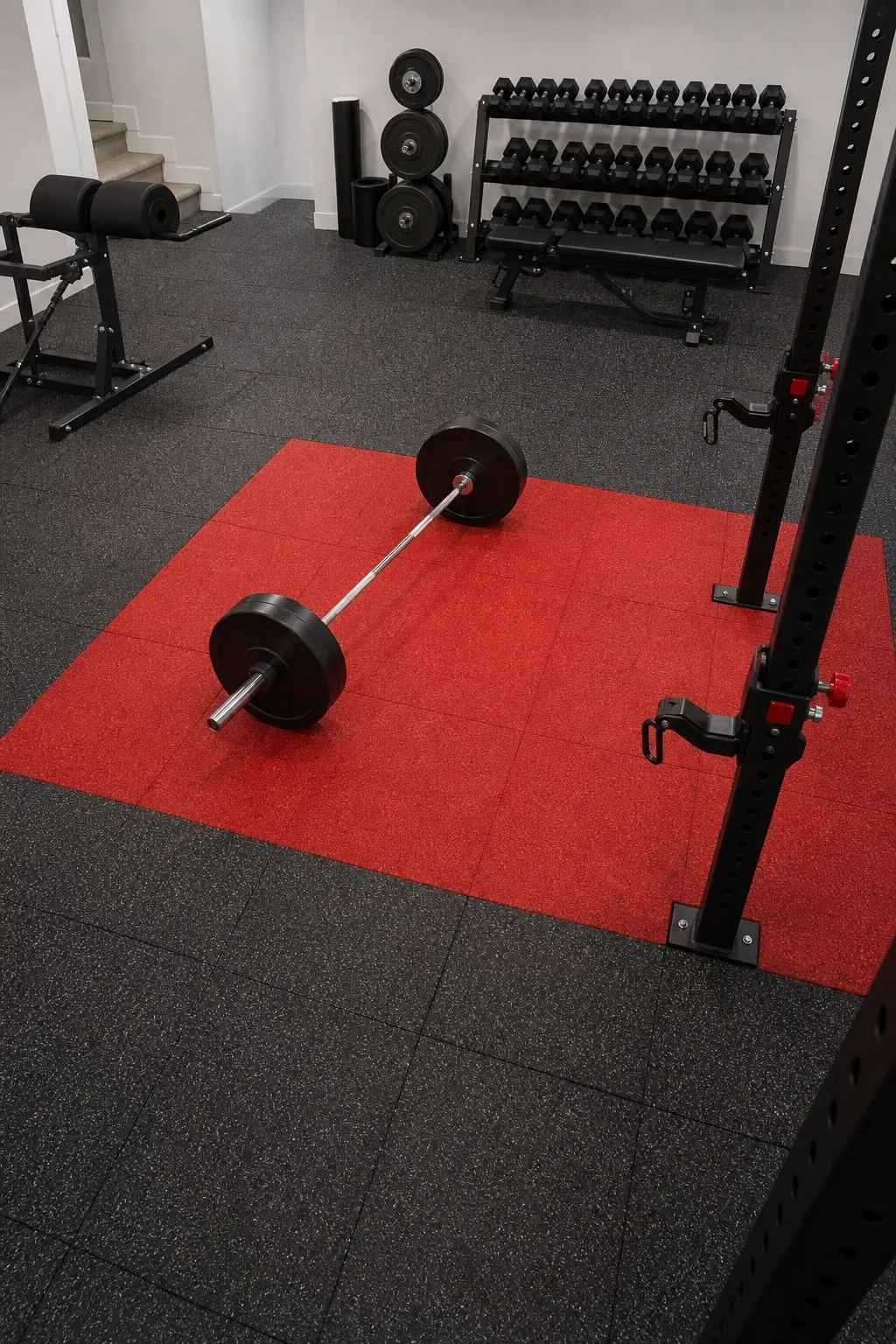
Commercial-grade rubber flooring installed across the entire basement floor is the gold standard for home gyms, and using color variation within the flooring itself is a smart design move that also helps you organize the space. A charcoal grey base floor with a bright colored rubber insert in the deadlift or squat zone, for example, gives you a visual cue for where the heavy equipment lives and where the open training floor is. Rubber tiles in two or three complementary tones can also be laid in a pattern, a simple grid or diagonal design, that makes the floor itself a design feature. Use 3/4 inch thick tiles for heavy lifting areas and 1/2 inch for cardio zones. The floor should be the first thing you invest in for a basement gym because everything else goes on top of it.
Designer Tip: Always buy 10 to 15 percent more flooring than your square footage calculation because cuts and edge pieces waste more material than most people plan for.
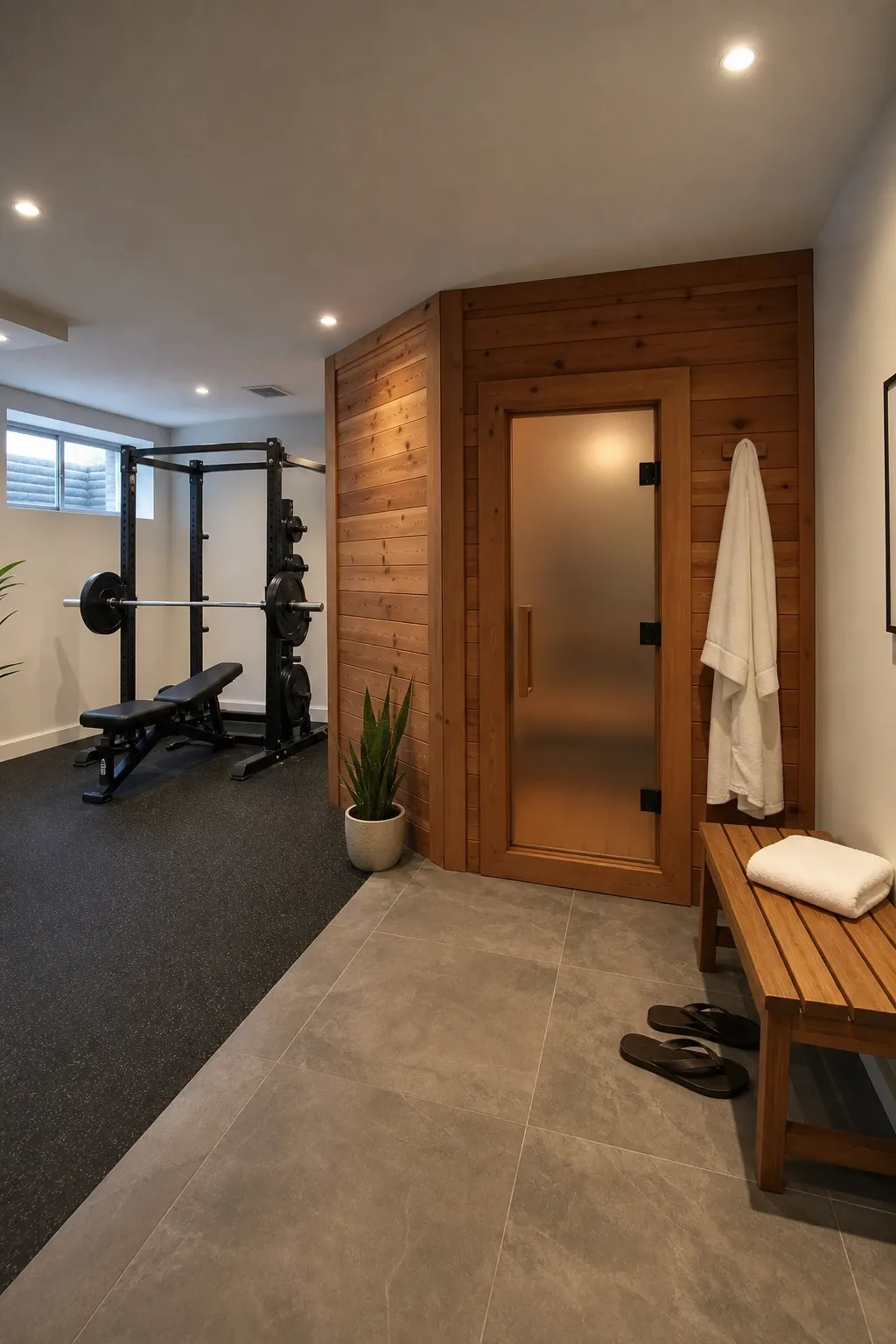
If budget allows and your basement has reasonable ceiling height, a corner sauna adds a recovery and wellness dimension to a basement gym that lifts the entire experience. Prefabricated barrel saunas or corner saunas are available from brands like Almost Heaven and Finnleo starting at around 2,000 to 3,000 dollars and can be set up in a basement corner in a day. They require a standard 240V outlet for an electric heater and proper ventilation. The wall and floor area around the sauna should use water-resistant materials, a stone or tile floor section, cedar cladding on the surrounding wall, and a small wooden bench outside the sauna for cooling down. A small hook for a towel, a basket for a water bottle and sandals, and a frosted glass or wooden door on the sauna itself makes this corner feel like a genuine spa addition rather than a box in the corner.
Designer Tip: A 2-person corner sauna requires as little as 4 by 4 feet of floor space, which is genuinely achievable in most basements. Measure your ceiling height first since most prefab saunas need at least 6 feet 9 inches of clearance.
A basement gym does not need to be expensive or elaborate to be a space that genuinely works for you. What makes the difference is the same thing that makes any room in your home worth spending time in: intention. Choosing colors that match how you want to feel, organizing equipment so the room invites you in rather than overwhelms you, and getting the lighting right so the space feels energized rather than gloomy are all small decisions that compound into a room you will actually use every day.
Start with what matters most for your specific training, whether that is flooring, lighting, or storage, and build from there. Plenty of the ideas in this article cost very little and can be done over a weekend. Others are longer-term investments worth saving for. Either way, every dollar and hour you put into your basement gym pays back in gym memberships you are not spending and commute time you are not wasting. The best gym is the one you actually show up to.
Frequently Asked Questions
What is the best flooring for a basement gym?
Thick rubber tiles or rubber rolls are the most popular choice because they absorb impact, protect the concrete floor underneath, and are easy to clean. For heavy lifting, go with 3/4 inch thickness. For yoga or cardio, 1/2 inch works fine. Cork is a good alternative for quieter, lower-impact setups and is gentler on joints.
How do I deal with low ceilings in a basement gym?
Paint the ceiling the same color as the walls to blur the transition and make the room feel taller. Avoid overhead pendant lights that hang down more than a few inches. Skip overhead pressing with a barbell if ceiling height is under 9 feet, and focus equipment placement on exercises that do not require vertical clearance.
How do I control moisture and humidity in a basement gym?
A standalone dehumidifier is the most direct solution. Keep the unit running during and after workouts, especially in summer months. Set it to maintain a humidity level between 40 and 55 percent. Also check for any active water intrusion from walls or floor before you invest in finishing the space.
What lighting is best for a basement gym?
LED panel lights or linear LED fixtures with a color temperature between 4000K and 5000K give you bright, clear light that is energizing without being harsh. Put them on a dimmer and add LED strips at floor level for accent lighting. Avoid fluorescent tubes since they flicker subtly and can cause eye fatigue over long sessions.
Can I build a basement gym on a tight budget?
Absolutely. Start with a painted concrete floor or horse stall mats, a set of adjustable dumbbells, and a pull-up bar. Add a full-length mirror, a Bluetooth speaker, and a fresh coat of paint on the walls and you have a functional and reasonably attractive gym for well under 1,000 dollars. You can upgrade piece by piece from there.
Do I need a permit to build a basement gym?
In most cases, no. If you are simply adding flooring, painting, and installing equipment, permits are generally not required. If you plan to run new electrical for outlets, lighting, or a sauna, or if you are framing new walls, check with your local municipality since those changes typically do require a permit.