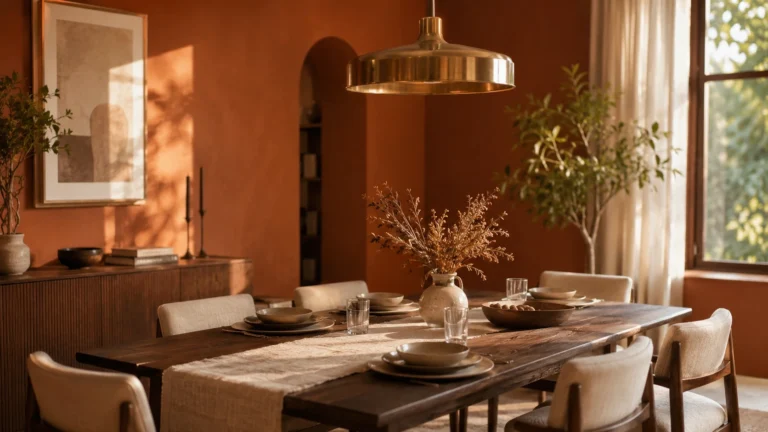
A dining room rug does more than sit under a table. It grounds the whole setup, softens the room, and gives the space a finished quality that bare floors never quite manage. A well-chosen rug does a lot of quiet work: it grounds the table and chairs, softens the acoustics, protects your floors from scratches, and adds a layer of warmth that hard surfaces simply cannot deliver. The right rug exists for every table shape and room size. Get the scale right first and the pattern second.
The tricky part is that dining rooms have real practical demands. Chairs get pulled in and out constantly, food and drinks get spilled, and the rug needs to be large enough that chairs stay on it even when pulled back. This guide walks you through 21 distinct ideas, organized by style theme, so you can quickly find the direction that suits your home. Each idea covers color, texture, furniture pairing, and at least one practical tip you can act on right away. Start with the rug under your dining table and let that set the direction for the rest of the room.
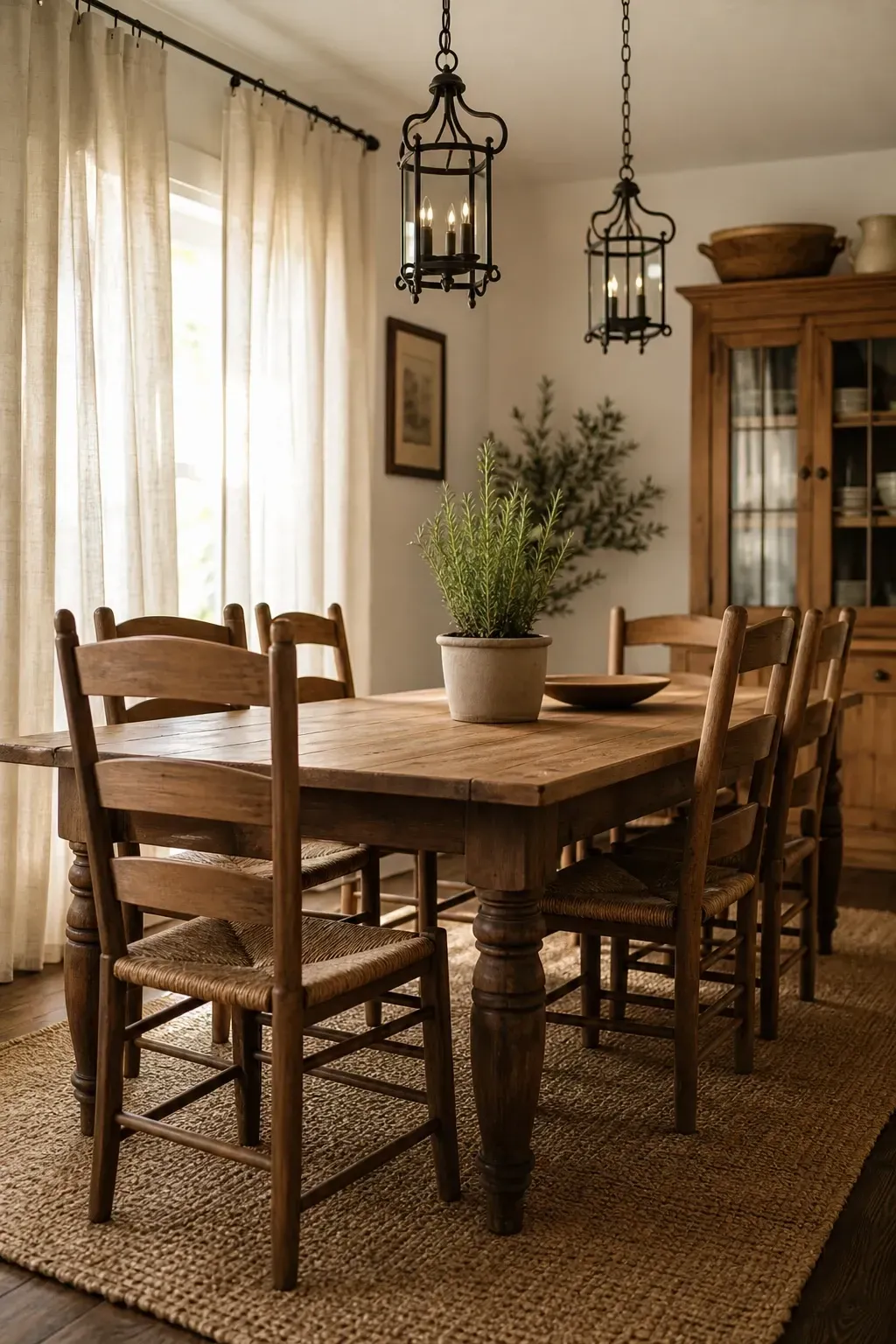
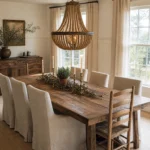
A natural jute flatweave rug is one of the most reliable choices for a farmhouse or rustic dining room. The warm, wheaten tones of jute sit beautifully alongside dark-stained oak or pine tables, and the low-pile flatweave makes it easy for chairs to slide without catching. Pair it with linen curtains, wrought-iron pendant lights, and ladder-back chairs in white or natural wood for a cohesive look that feels genuinely collected rather than decorated. Stick to a 9×12 size if your table seats six or more, and go with a rug pad underneath to prevent shifting on hardwood or tile floors. Because jute can be vulnerable to moisture, keep a small spray bottle of diluted white vinegar nearby for quick spot cleaning.
Designer Tip: Add a second, smaller woven tray or trivet on your table that echoes the jute texture to create a considered, layered feel without buying anything expensive.
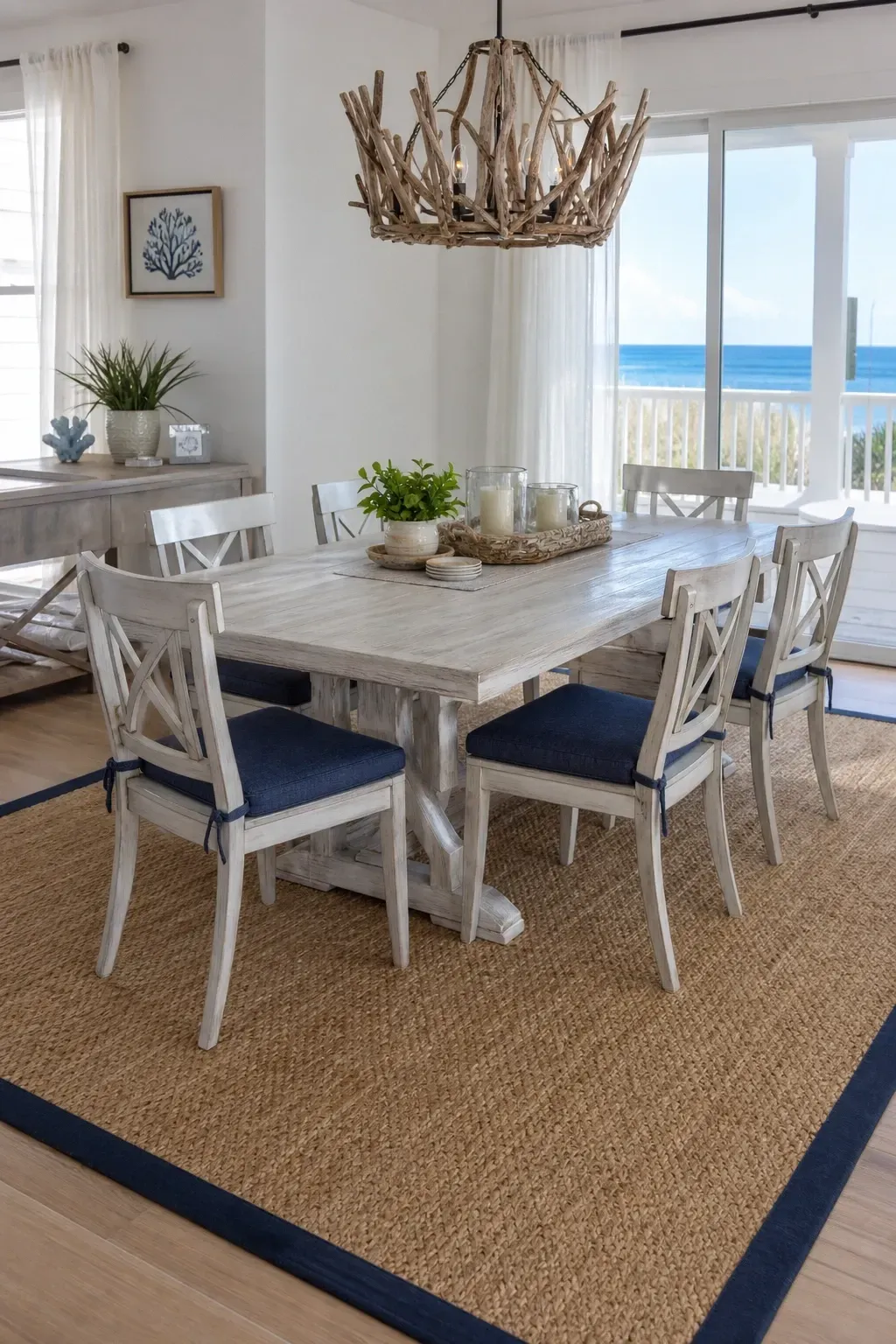
Sisal brings a clean, slightly coarse texture that works wonderfully in coastal and beach-inspired dining rooms. It pairs well with whitewashed furniture, navy or seafoam chair cushions, and driftwood-style light fixtures. The neutral sandy color acts as a non-negotiable base that lets your chairs and tableware do the visual talking. Sisal is more durable than jute in most conditions, though it still benefits from formal dining setups where spills are less frequent. Choose a bordered sisal rug with a simple cotton binding in navy or off-white to add a finishing detail without overwhelming the room. A 8×10 is often the sweet spot for a table that seats four to six.
Designer Tip: Layer a small, round woven accent rug under a serving console or buffet nearby to extend the natural fiber theme without crowding the dining area.
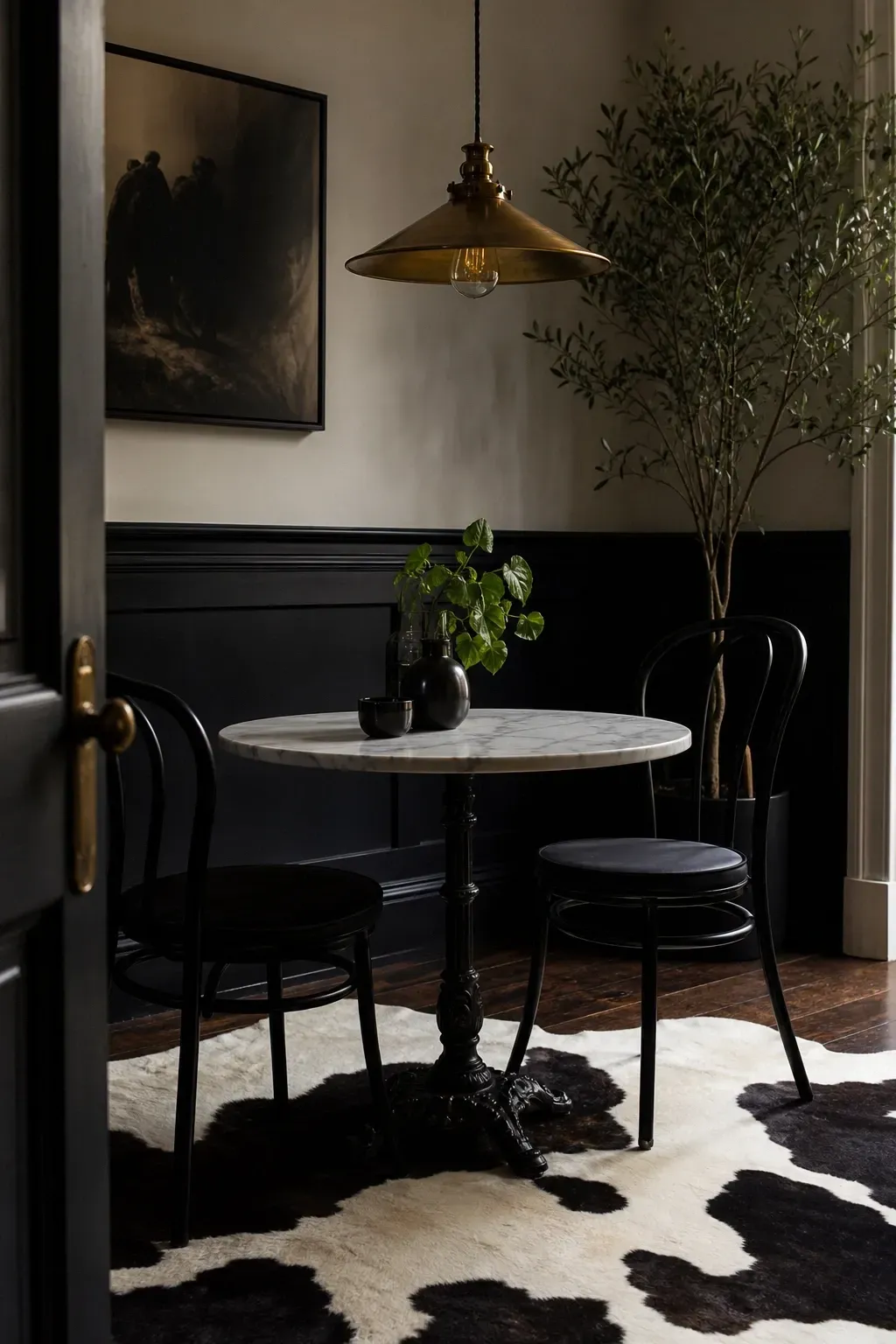
A cowhide rug brings instant organic character to a compact dining nook or bistro-style setup. The natural variation in pattern and color means no two are alike, which gives a room a genuinely one-of-a-kind quality. Pair it with a round marble-topped table, black metal bistro chairs, and a pendant light in aged brass for an eclectic look that sits somewhere between Parisian cafe and rustic ranch. Cowhide is surprisingly durable and easy to clean since spills tend to sit on the surface rather than soak in. It works best on a hardwood floor where the contrast between the hide and the wood grain creates a strong visual moment. Keep the rest of the room relatively neutral so the rug gets the attention it deserves.
Designer Tip: Because cowhide rugs are irregular in shape, center them under the table and let the natural edges fall where they will rather than trying to force a symmetrical placement.
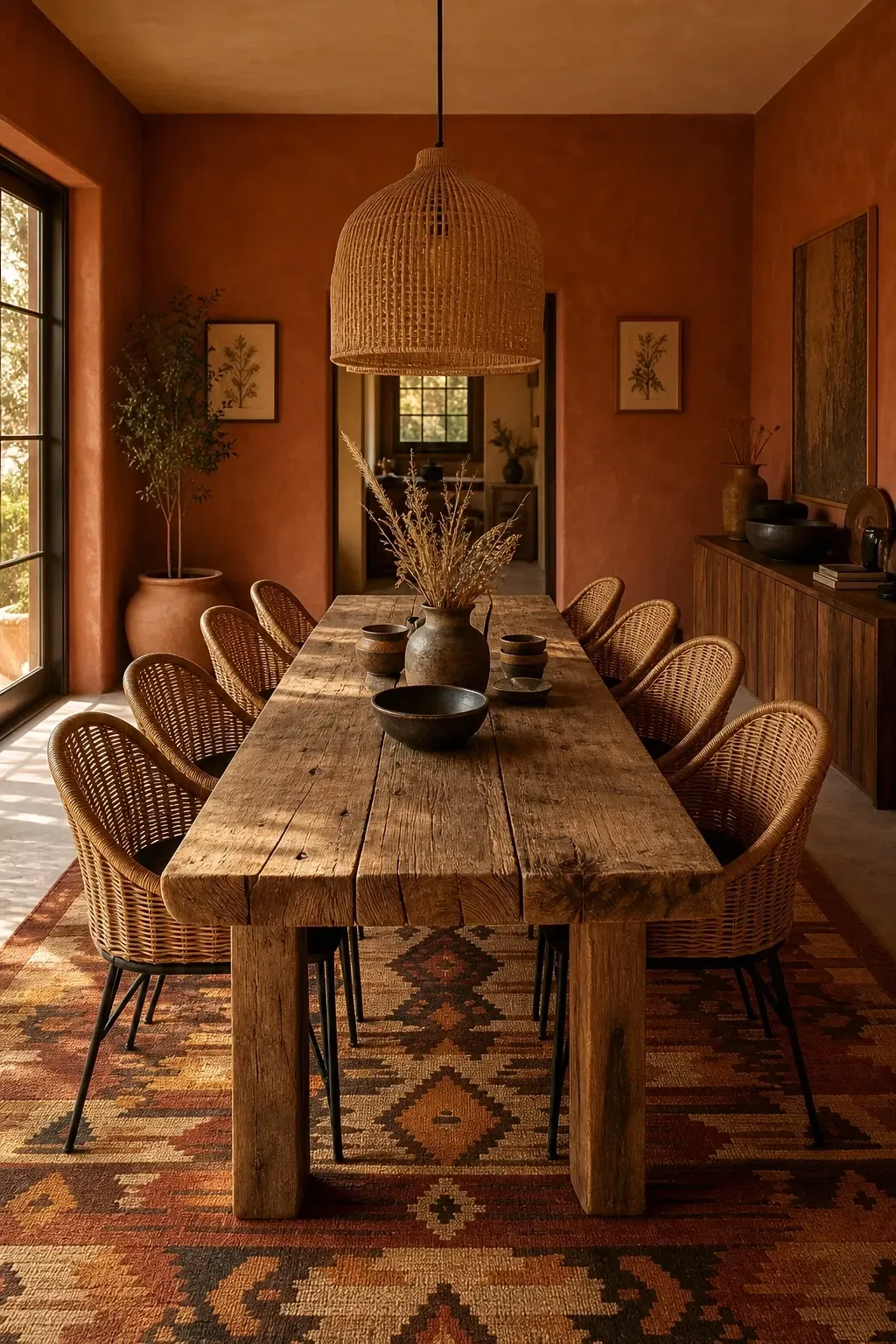
A wool kilim rug in terracotta, rust, ochre, and deep brown tones brings warmth and artisan quality to a dining room without the formality of a traditional Persian rug. Kilims are flatwoven, which means chair legs glide over them well, and wool is naturally stain-resistant and long-lasting. This style works especially well in rooms with warm plaster walls, rattan dining chairs, exposed wood beams, and pendant lights in woven natural materials. The geometric patterns in a kilim add visual interest at floor level while leaving the rest of the room free to breathe. A 9×12 gives you generous coverage, but kilims also layer beautifully over a larger jute base rug if you want extra visual depth.
Designer Tip: Pull one accent color from your kilim and use it in a small detail like napkins, candle holders, or a ceramic centerpiece bowl to tie the room together organically.
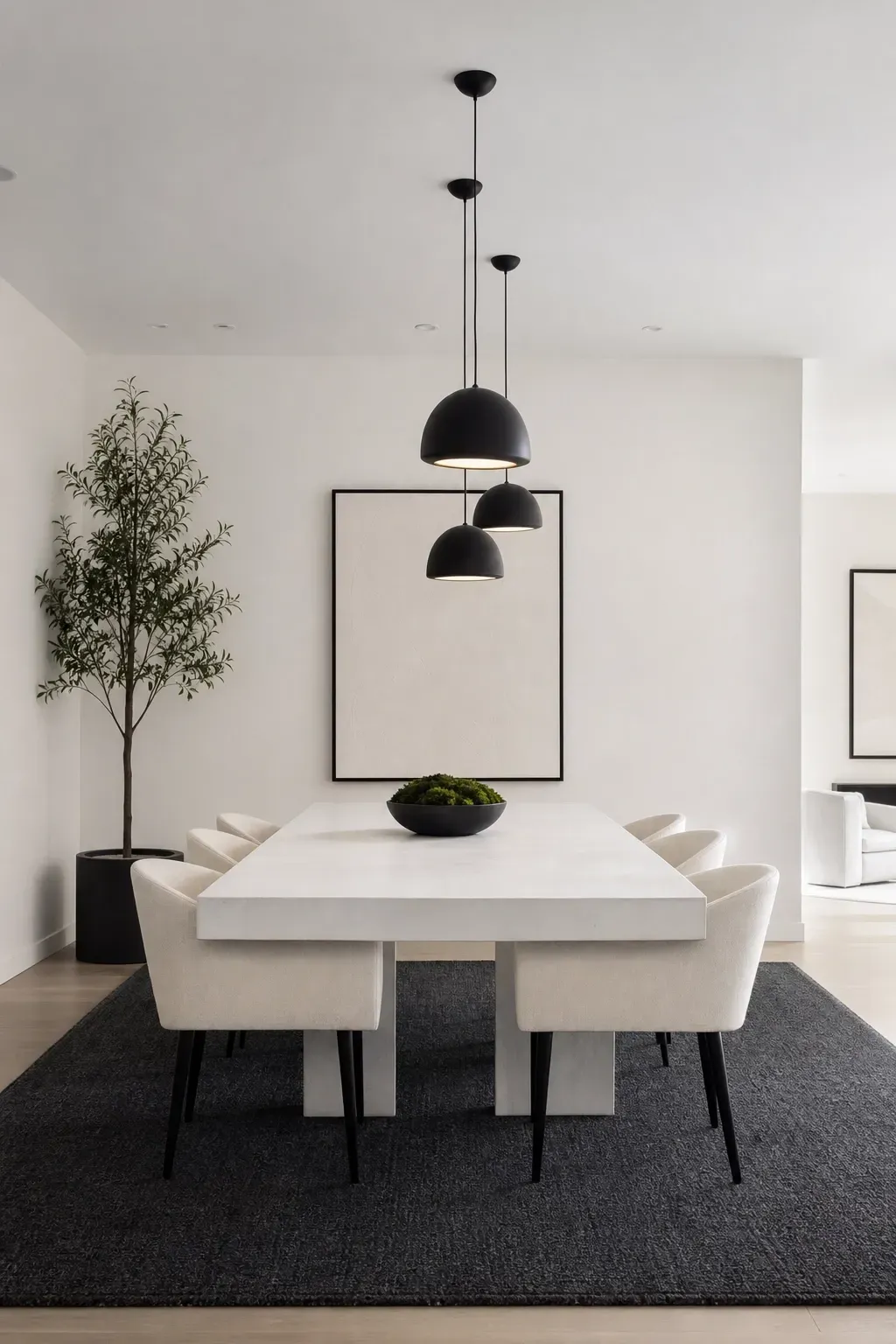
A solid deep charcoal or slate-grey low-pile rug is one of the most versatile choices for a modern or contemporary dining room. It grounds the space without competing with your furniture, and the dark tone is forgiving of crumbs and shadows between chair legs. Pair it with a white or light grey concrete-look table, upholstered dining chairs in cream or camel, and matte black pendant lights for a room that feels clean but warm. Look for a polypropylene or short wool pile for easy maintenance. The key with solid rugs is getting the size exactly right since they read as simple geometric shapes on the floor, so measure carefully and size up if you are on the fence.
Designer Tip: Add a woven table runner in a contrasting natural texture like jute or linen to bring tactile interest at table height that balances the smooth, minimal rug below.
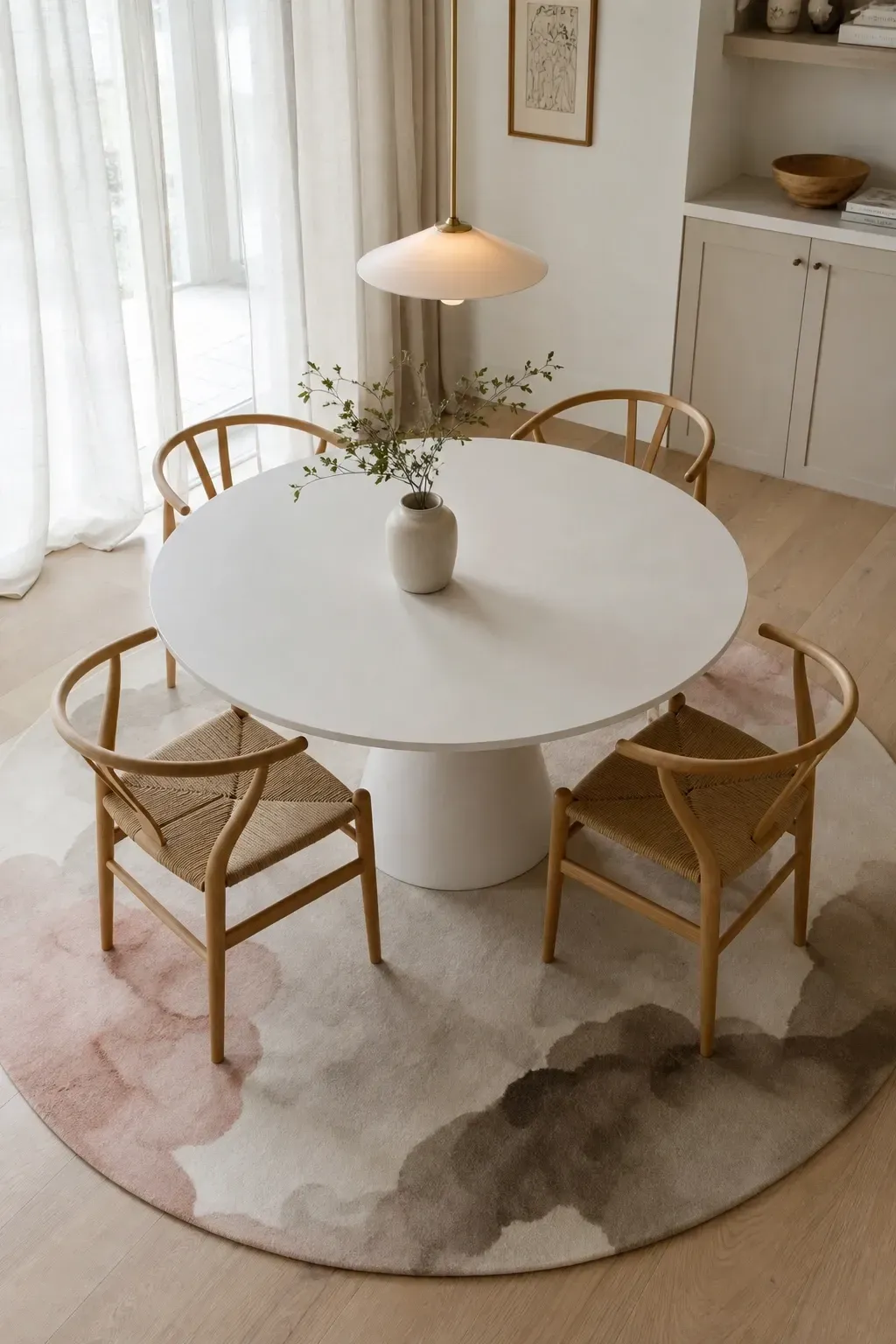
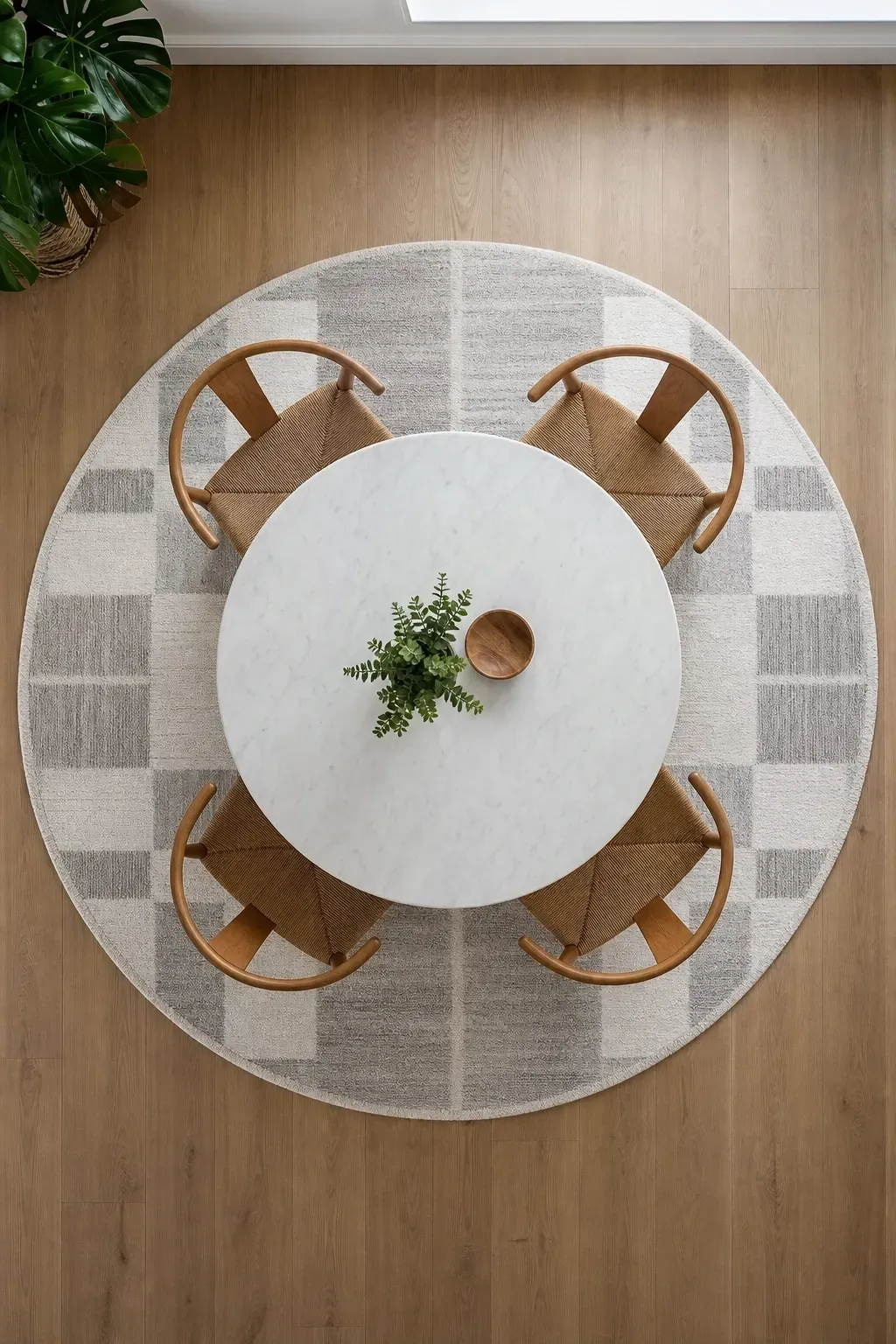
Abstract rugs with soft watercolor-style patterns in ivory, taupe, warm grey, and blush are having a real moment right now and work brilliantly in dining rooms that want pattern without the formality of a traditional design. These rugs pair well with Scandinavian or transitional furniture, including round pedestal tables, wishbone chairs in natural wood, and linen window treatments. The softness of the pattern means it reads as texture from a distance rather than a bold design statement, keeping the room feeling calm. Look for a hand-loomed or machine-made option in viscose or wool blend for that slightly luminous quality that makes abstract rugs so appealing in person. These work particularly well in rooms with white or warm ivory walls where the rug’s subtle pattern becomes a quiet focal point.
Designer Tip: Avoid very bright lighting directly over this type of rug since the sheen can wash out the pattern. A warm-toned pendant at medium brightness brings out the depth beautifully.
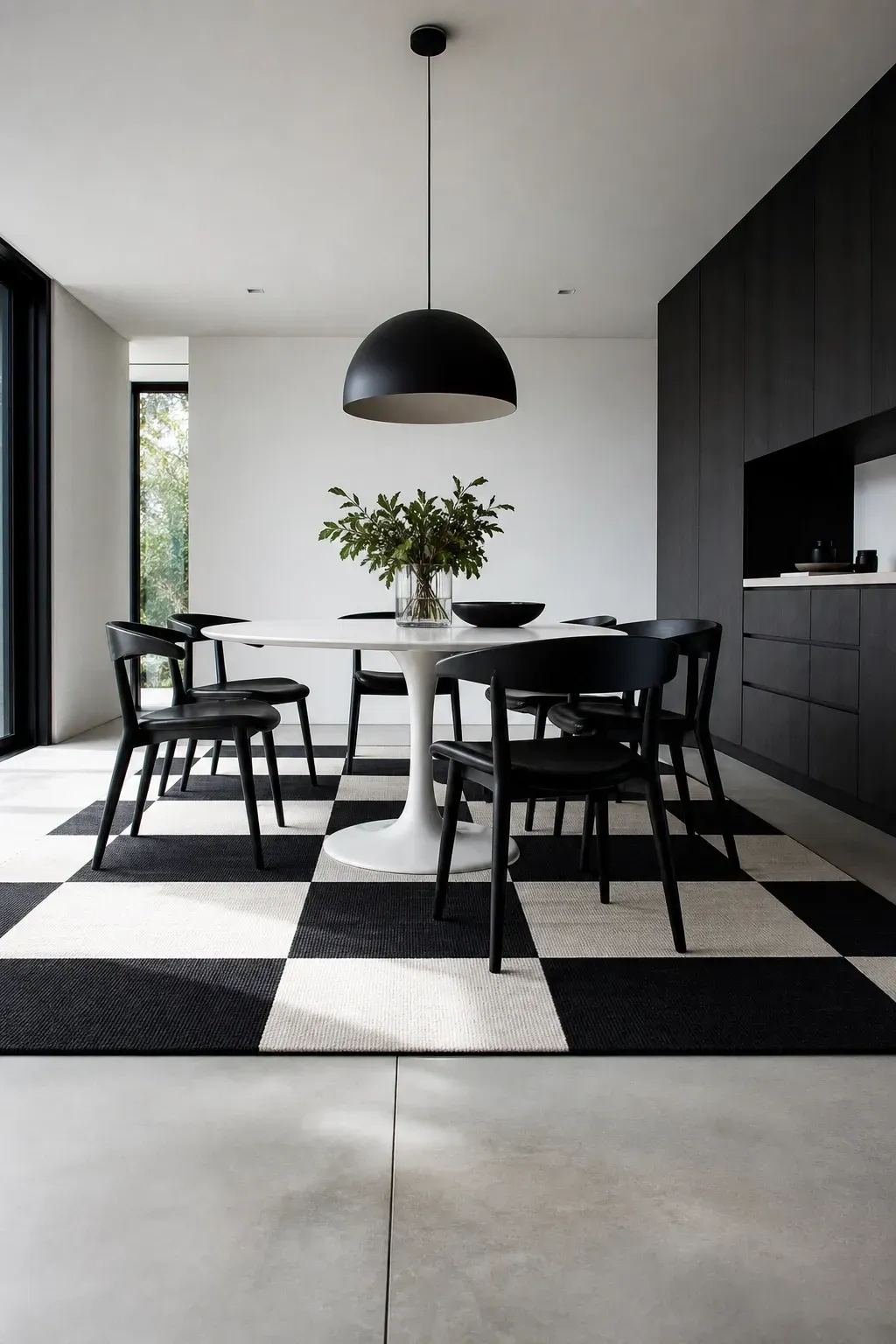
A bold black and white geometric rug brings graphic energy to a dining room and works best when the rest of the space is kept deliberately simple. Think a white tulip table, all-white or all-black dining chairs, and a single dramatic pendant light in matte black or brushed nickel. The contrast of the rug creates its own visual statement so you do not need much else on the walls or table to make the room feel designed. Flat or low-pile construction is important here since the pattern reads more cleanly without texture interrupting the lines. A checkerboard, diamond grid, or large-scale stripe all work well depending on the room size. This approach is bold but surprisingly budget-friendly since simple geometric patterns are widely available at accessible price points.
Designer Tip: In a smaller dining room, a large-scale geometric pattern actually works better than a small one because it reads more confidently and avoids the busyness of a tight repeat.
8. Cream Shag or High-Pile for a Luxe Minimal Look
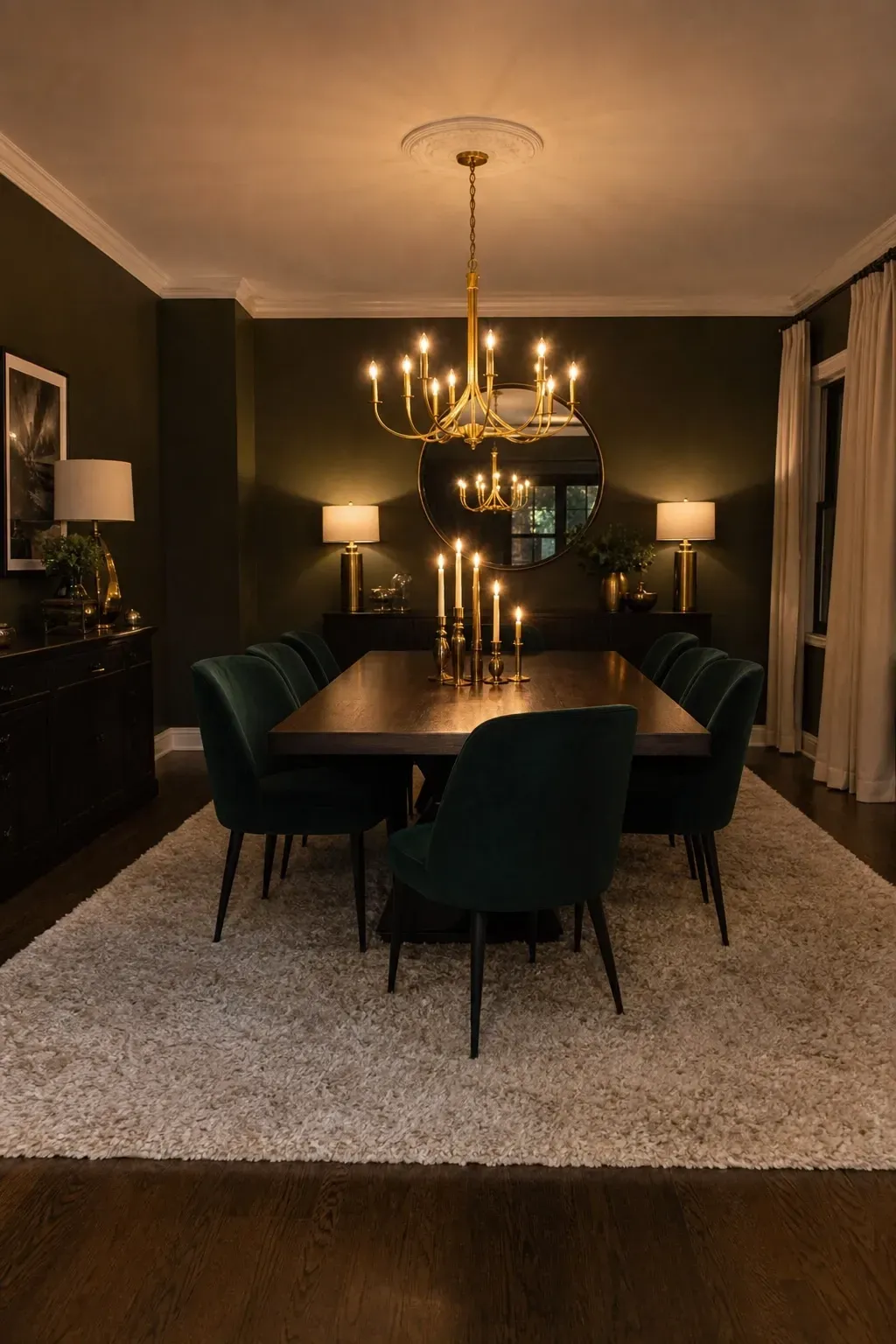
A thick cream or off-white high-pile rug brings an unexpected softness to a modern dining room and creates a luxe, almost hotel-suite quality when done right. This works best in a formal dining setup where the table and chairs are heavy enough visually to anchor the softness of the rug, think a dark walnut table with upholstered velvet chairs in deep green or navy. Lighting is key: a statement chandelier in gold or aged brass amplifies the plush, refined feel. The main practical consideration is maintenance since a high-pile rug in a dining room requires regular vacuuming and occasional professional cleaning. For this reason, it works best in dining rooms used primarily for entertaining rather than daily family meals. A washable version in a slightly flatter pile is a practical alternative that keeps the aesthetic with less upkeep.
Designer Tip: Use a quality rug pad with a non-slip grip layer since high-pile rugs tend to creep more than low-pile ones, especially under heavy dining chairs.
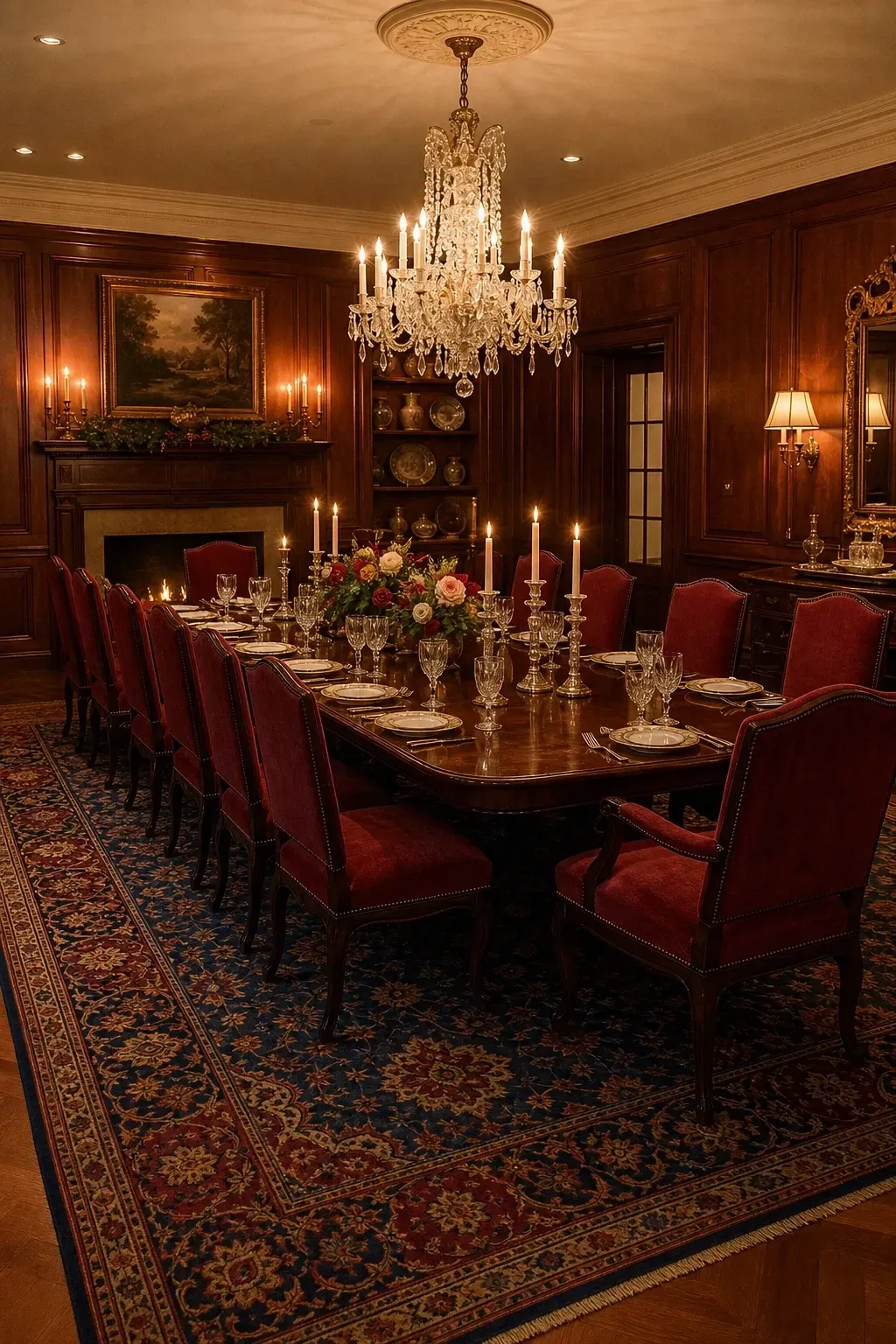
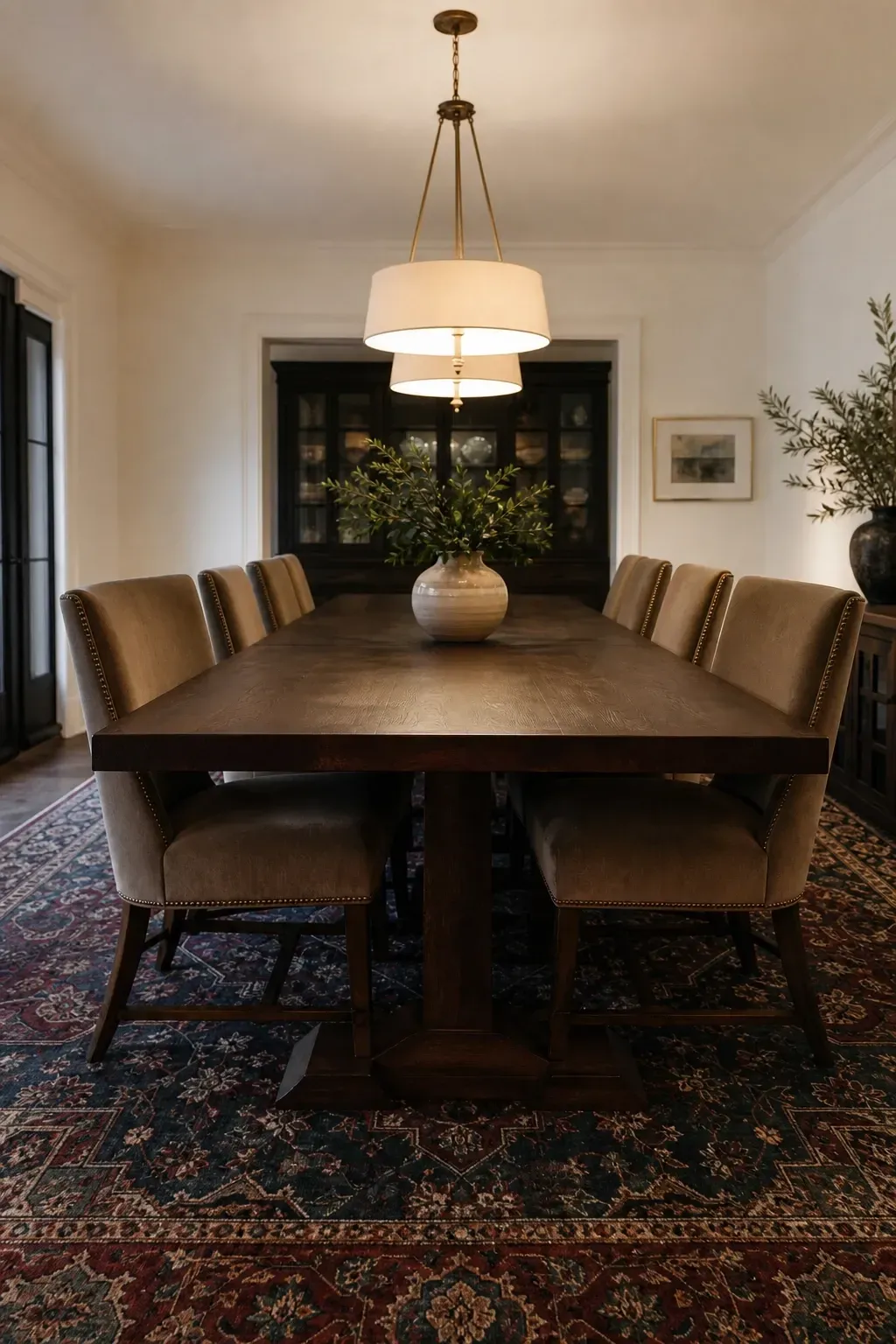
A traditional Persian or Oriental-style rug in deep ruby, sapphire, emerald, and gold is one of the most elegant choices for a formal dining room and brings layers of pattern and color that take years to build with furniture alone. These rugs work well under dark mahogany or cherry wood tables with upholstered chairs in a solid velvet or damask fabric that pulls a color from the rug. Hang a crystal or bronze chandelier overhead to complete the formal, candlelit atmosphere. The beauty of a traditional rug is that it only gets better with age since slight fading and wear adds to its character rather than diminishing it. Look for hand-knotted wool versions at antique markets or estate sales for genuine quality at a fraction of retail price. A 9×12 or 10×14 is standard for a formal dining table that seats eight.
Designer Tip: If your chairs have casters or very wide legs, place a thin clear felt pad under each chair foot to protect the rug pile without adding visible bulk.
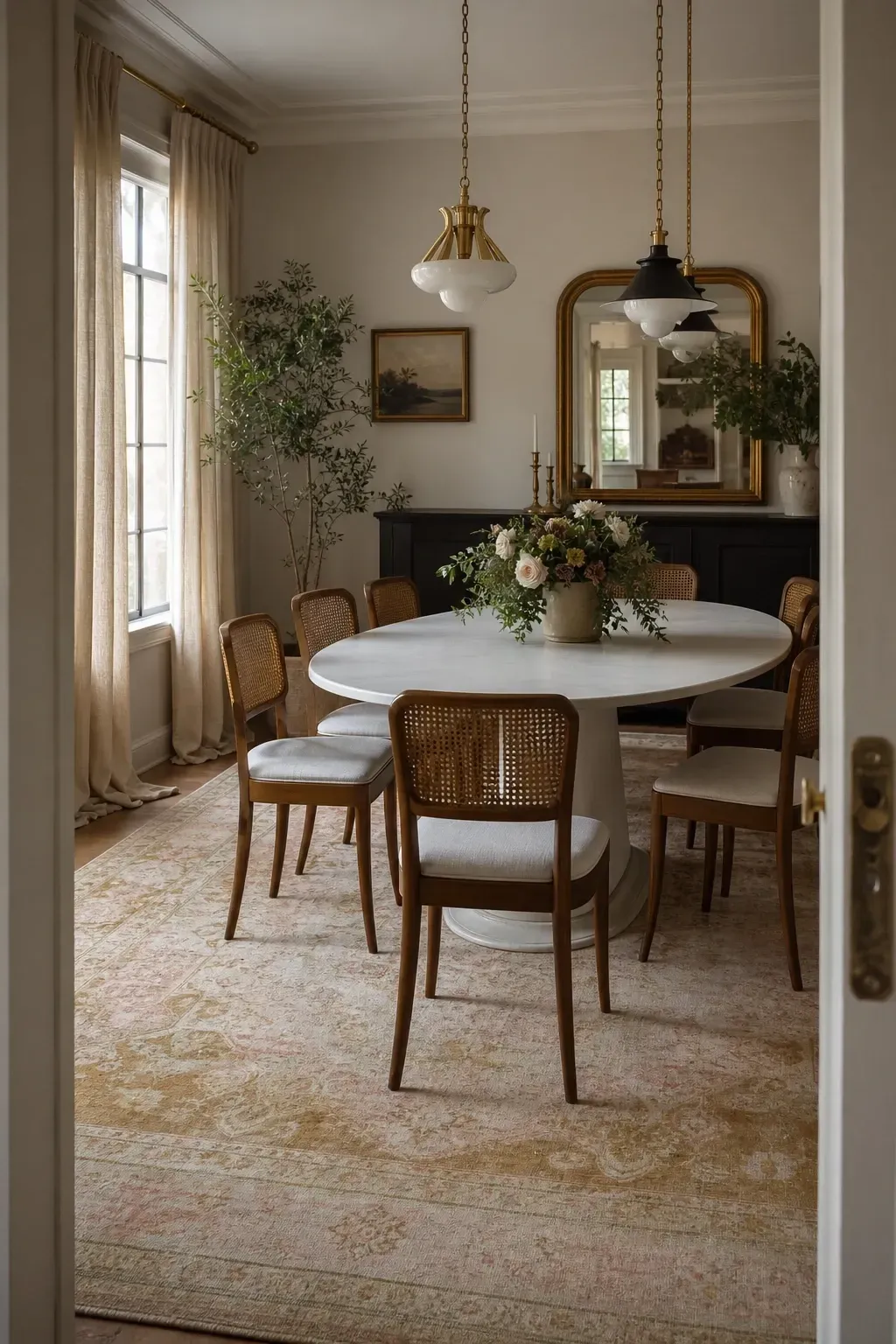
An Oushak-style rug, whether antique or a quality reproduction, brings soft, faded tones of gold, blush, dusty blue, and ivory that feel genuinely aged and collected. This style works beautifully in transitional dining rooms where you are mixing old and new, think a contemporary oval table with vintage-style cane chairs, mixed metals in lighting, and linen drapery that pools lightly on the floor. The large, open field of most Oushak designs means they read as softer and more restful than tighter medallion patterns, making them perfect for dining rooms where you want warmth without visual noise. Hand-knotted versions are worth investing in since the pile holds its beauty much longer than machine-made alternatives. Look for a rug that is at least a few inches larger than your standard size recommendation so the soft, irregular edges create that generous, relaxed feel Oushaks are known for.
Designer Tip: A slightly distressed Oushak actually hides chair wear patterns better over time than a brand-new, crisp version since the aging is already built into the aesthetic.
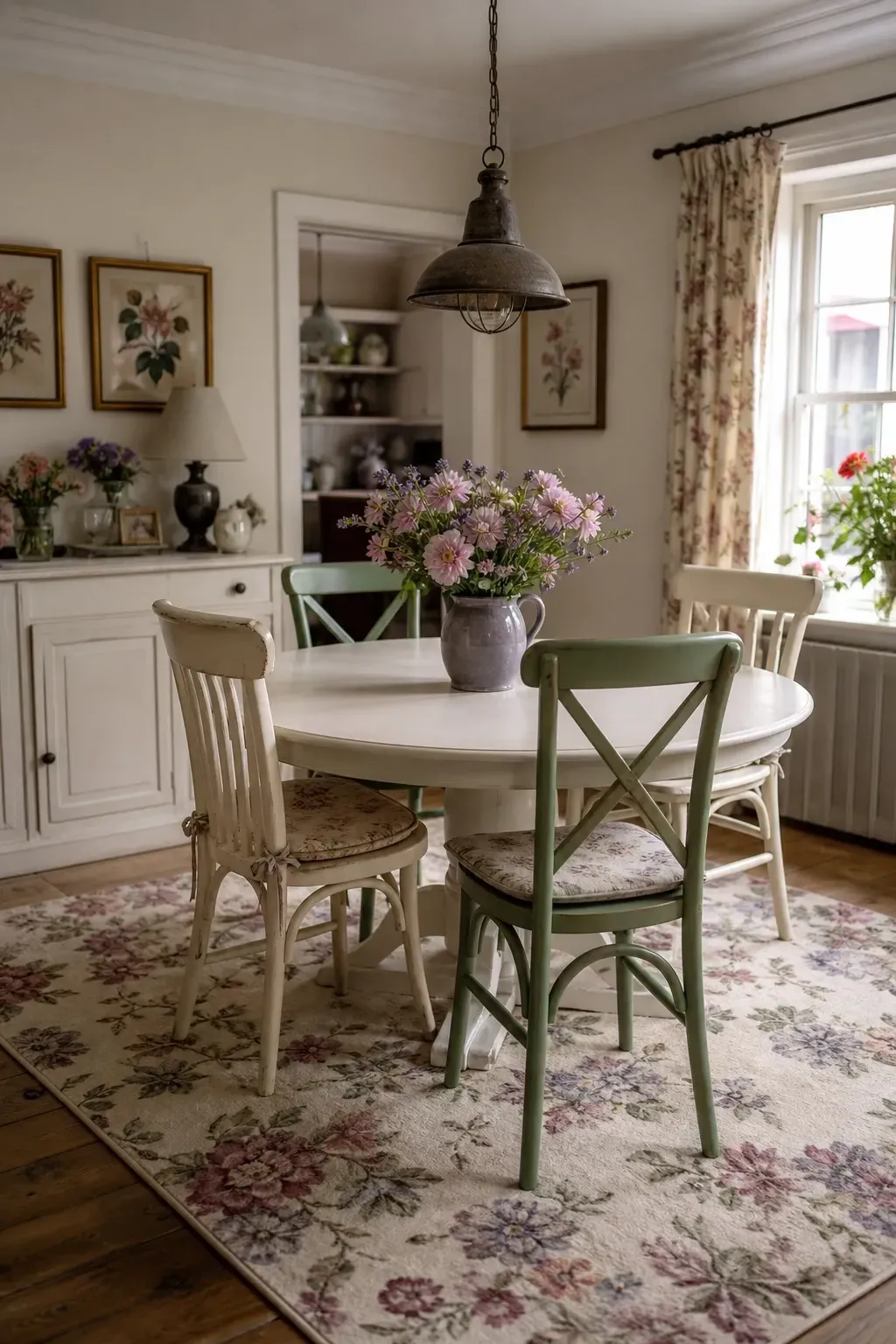
A floral wool rug in soft garden tones, think sage green, dusty rose, lavender, and cream, brings a cottage or English country house feel to a dining room that is all about comfort and charm. Pair it with a round or oval table in painted white or green, mismatched dining chairs in complementary soft tones, and a pendant light in aged iron or rattan. The floral motif connects naturally to botanical wall art, fresh or dried flowers on the table, and ceramic tableware in earthy glazed tones. Wool construction means the rug will wear beautifully over years and resist the inevitable food and drink incidents that dining rooms bring. This style works especially well in smaller dining spaces where the richness of the pattern fills the visual space that a larger room would fill with more furniture.
Designer Tip: Match at least one color from the floral rug’s palette to your chair cushion fabric to create a deliberate design connection that makes the room feel intentional.
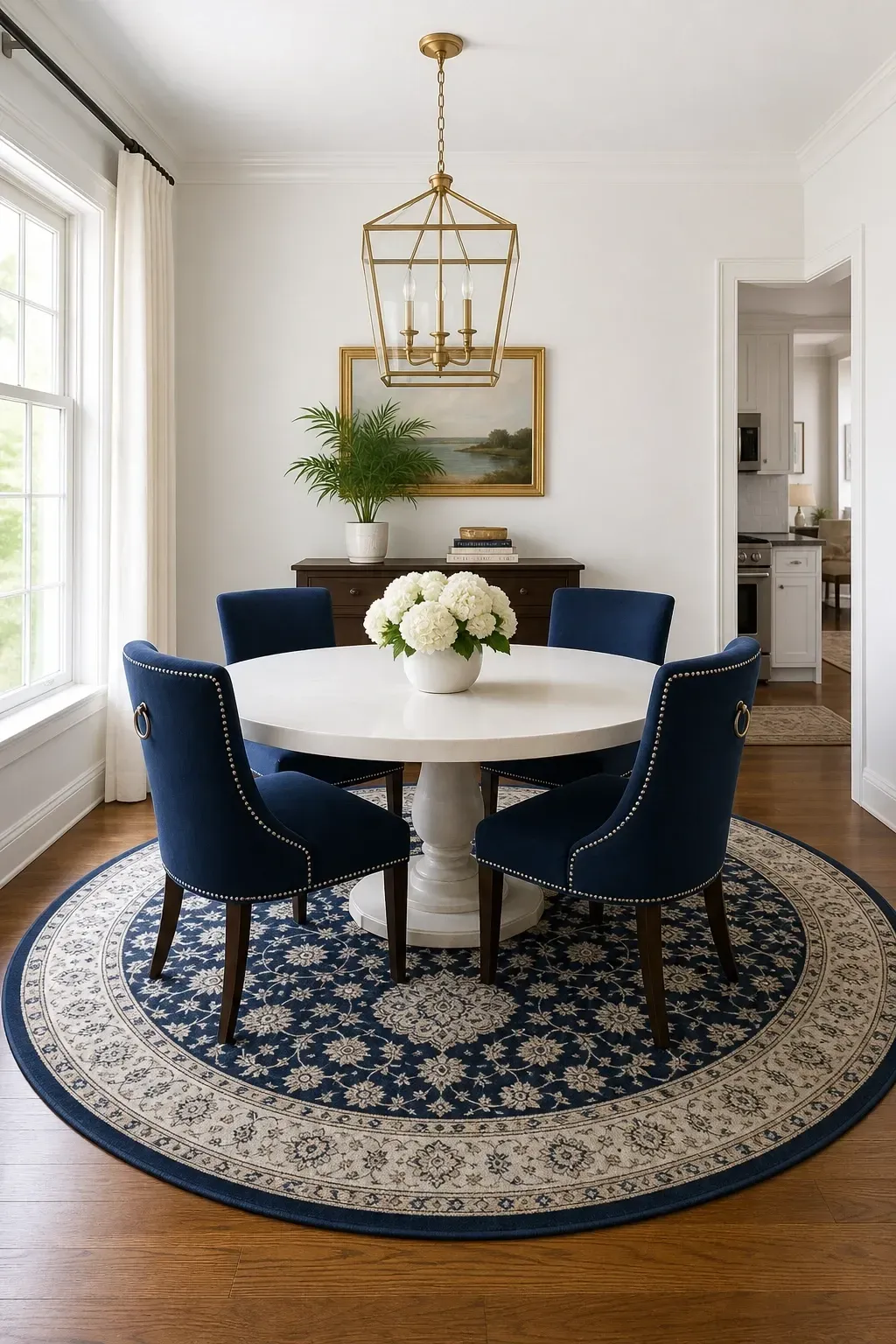
A navy and ivory medallion rug brings a crisp, classic quality to a dining room that works in both formal and casual settings. The high contrast of deep navy against ivory is sharp and confident, and the medallion motif gives the floor a centered, anchoring quality that works particularly well under a round dining table. Pair it with upholstered chairs in a complementary navy or neutral linen, a white or light grey table, and a brass or gold pendant for warmth. This color combination is one of those perennial choices that looks fresh across decades rather than feeling dated. A machine-made version in polypropylene keeps the cost accessible and makes it far more practical for a dining room than a hand-knotted version at ten times the price.
Designer Tip: Pull navy into one additional element, like a table runner, a set of napkins, or a single blue ceramic piece on a console, to keep the navy from feeling isolated at floor level.
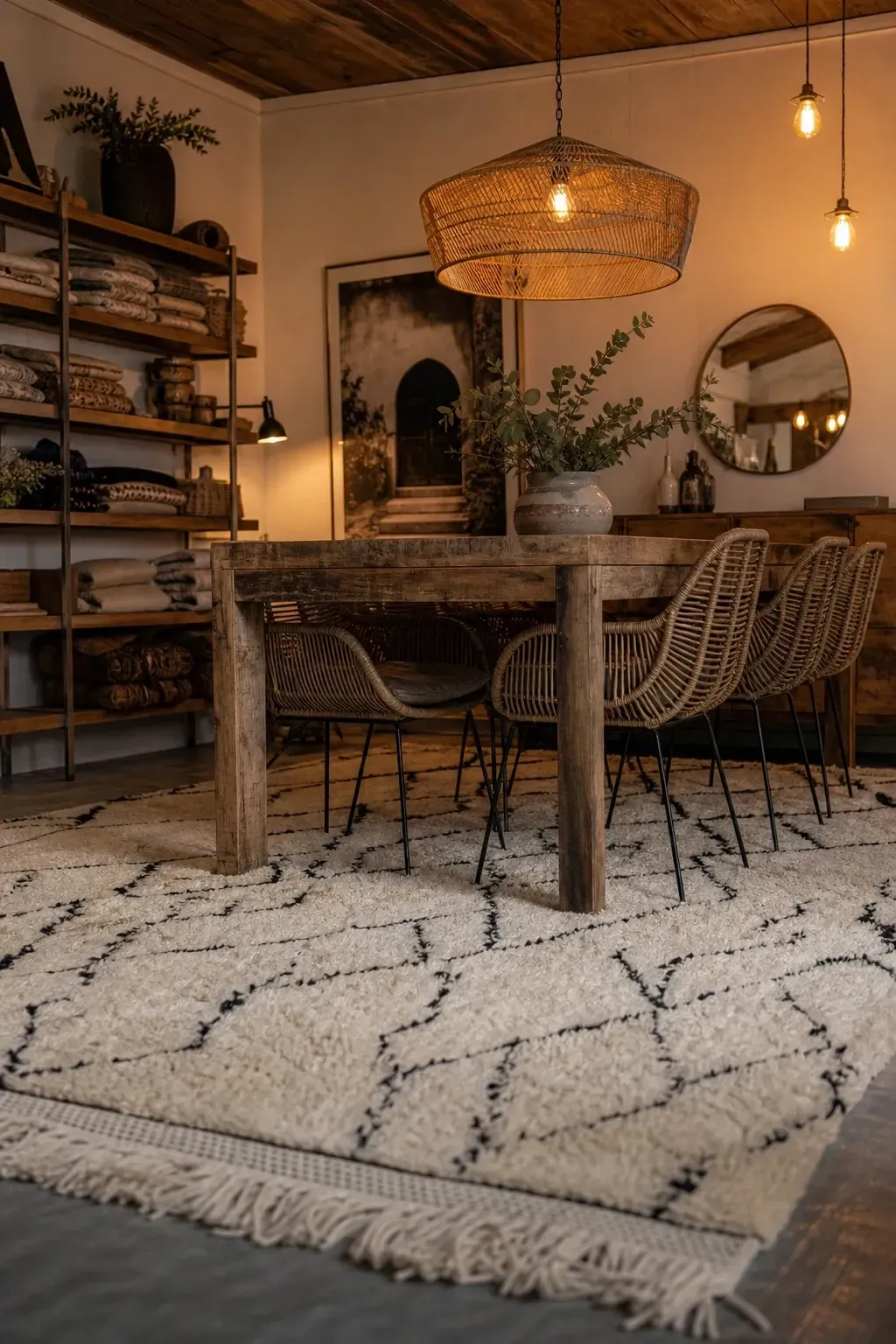
A Beni Ourain-style rug, with its ivory or cream wool pile and simple black diamond or geometric motif, is one of the most popular choices in eclectic and bohemian dining rooms right now. The high, plush pile has a luxurious feel underfoot and the simple pattern works well with a wide range of furniture styles, from a rough-hewn reclaimed wood table to a sleek Scandinavian design. Pair it with rattan or cane chairs, a pendant light in woven natural material, and plenty of layered textiles on nearby shelving for a warm, personal atmosphere. The off-white tone can be a concern in a dining room, but modern versions of this rug style are often made in washable fibers that handle real-life use without the anxiety. Size up generously since the plush pile makes chairs feel slightly harder to pull back, so extra room around the table is especially important here.
Designer Tip: A Beni Ourain-style rug pairs particularly well with low, moody pendant lighting since the plush pile catches warm light in a way that looks genuinely beautiful in the evening.
14. Layered Rugs: Jute Base with a Vintage Rug on Top
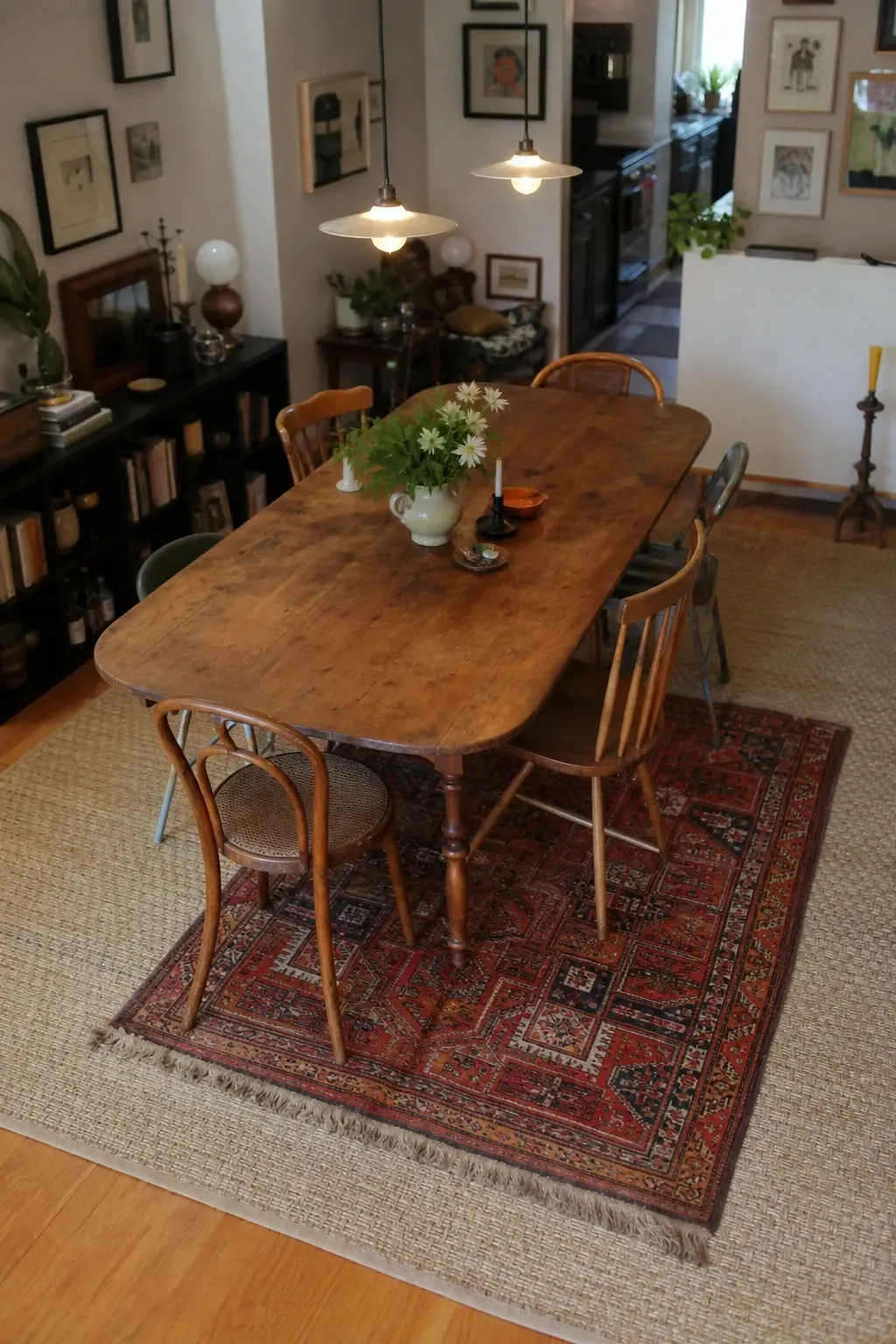
Layering rugs in a dining room is a trend that started in living rooms but has moved firmly into the dining space, and it works remarkably well. The approach is simple: place a large, neutral jute or sisal rug as the base, then layer a smaller vintage or Kilim-style rug on top, slightly off-center toward one end of the table. The effect is rich, textured, and collected without being overly deliberate. This also solves the practical problem of finding a single rug large enough for your dining table since the base rug handles the functional sizing while the top rug delivers the character. Keep both rugs low-pile to avoid the awkward height difference that can trip up chairs. This works best with a casual, eclectic dining setup rather than a formal one.
Designer Tip: Choose a base jute that is at least 2 feet larger in both dimensions than your vintage overlay rug so the layering reads as intentional rather than mismatched.
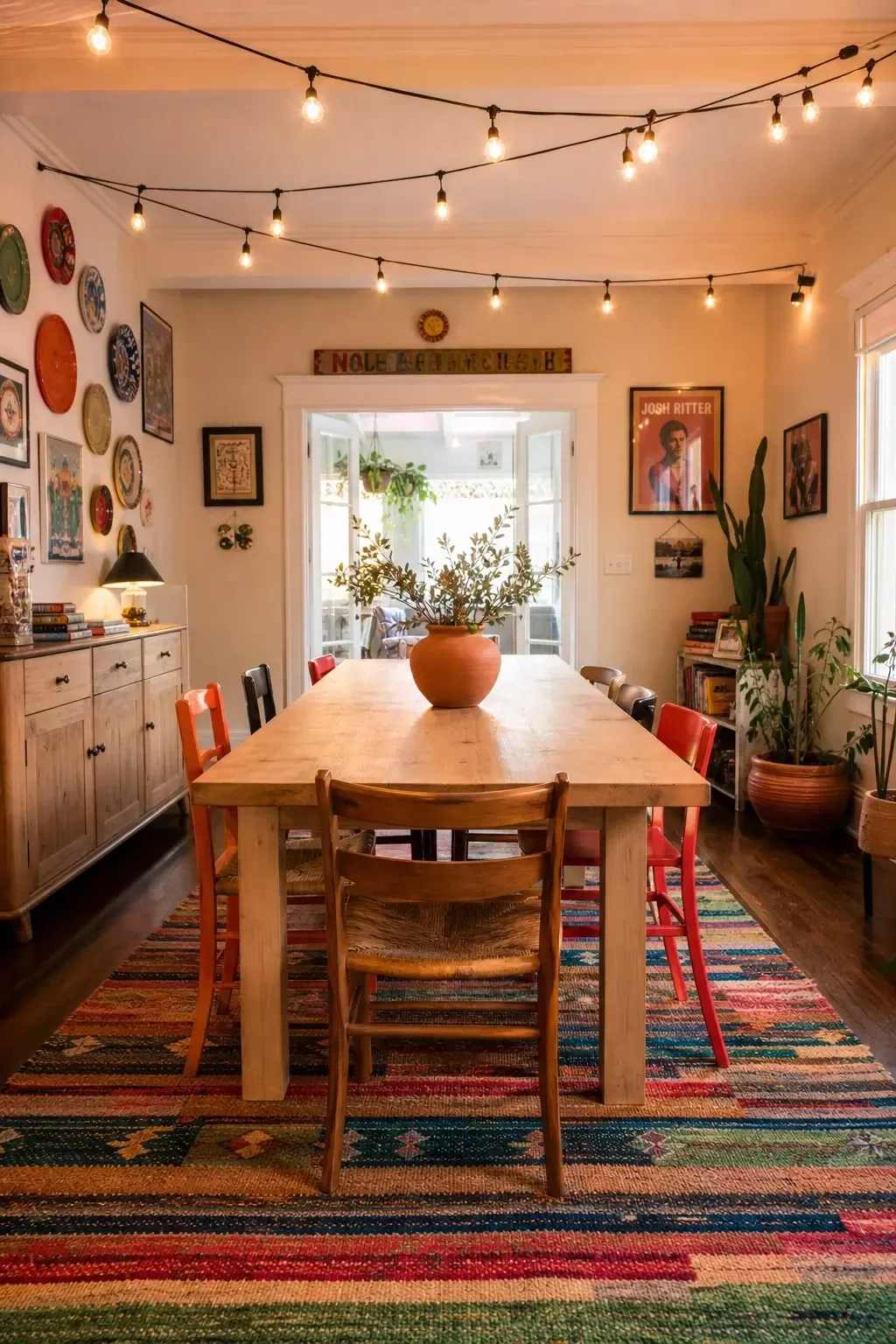
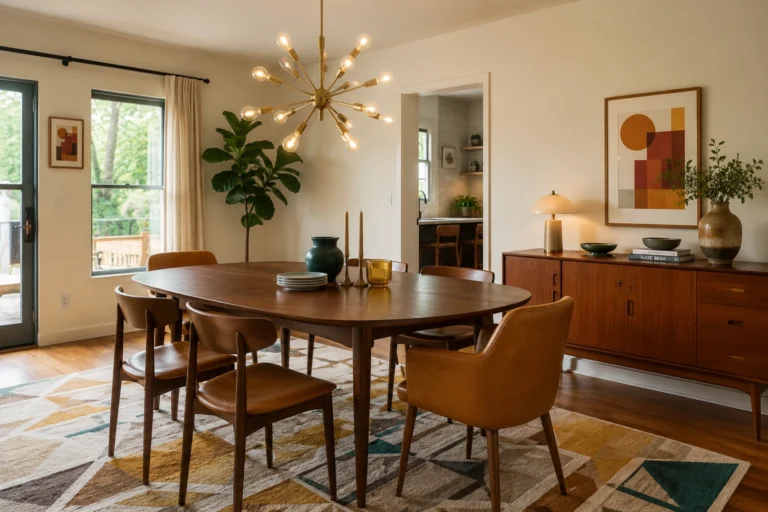
A multi-colored flatweave rug in a global-inspired pattern, think Turkish, Guatemalan, or South American textiles, brings energy and personality to a casual dining room in a way that feels well-traveled and personal. These rugs typically combine warm and cool tones in stripes, diamonds, or small repeating motifs, and they work naturally with mismatched chairs, eclectic ceramics on the table, and collected artwork on the walls. The flatweave construction makes them highly practical for dining areas since crumbs and debris sit on the surface rather than getting trapped in pile. They are also among the most affordable rug options available, so this is a great choice if you want maximum visual impact on a budget. Pair with light wood or painted furniture and warm-toned Edison or filament bulbs overhead for a relaxed, welcoming atmosphere.
Designer Tip: If the rug feels very busy, keep your furniture, walls, and tableware as neutral as possible and let the rug be the single bold statement in the room.
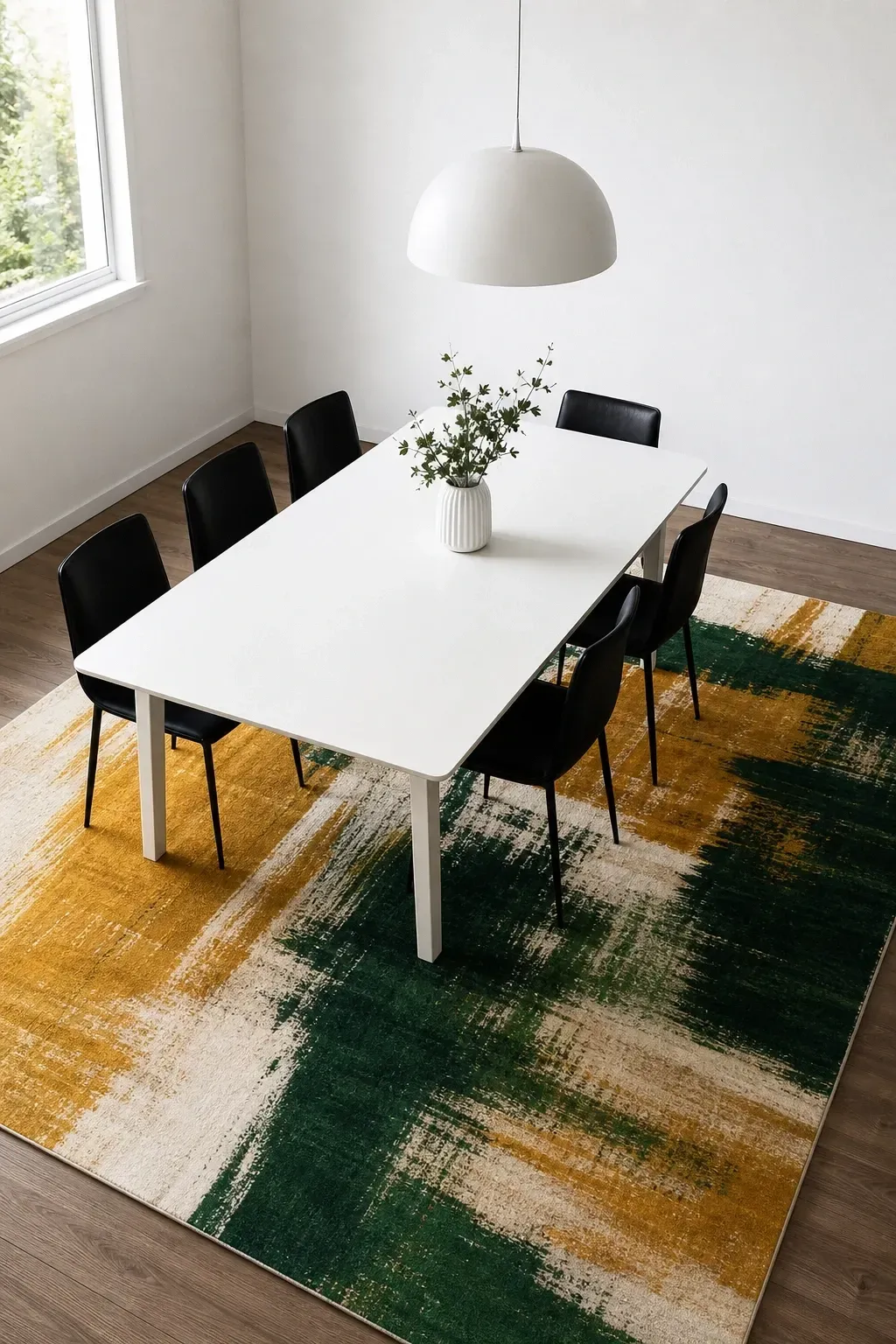
An abstract rug that reads like a piece of art, featuring bold brushstroke patterns in deep emerald, saffron, burnt orange, or cobalt on a cream or ivory background, turns the floor into a genuine focal point. This style works best in dining rooms where the furniture is kept relatively simple and restrained so the rug does not compete with anything else for attention. Think a clean white table, simple black or natural wood chairs, and a bare bulb or dome pendant light. The abstract pattern brings the kind of visual richness that would otherwise require expensive art or elaborate wallpaper. Look for hand-tufted versions for the best texture and depth. This is also a wonderful choice for a dining room that connects to an open-plan living space since the bold rug creates a visual boundary that defines where one zone ends and the other begins.
Designer Tip: Choose one color from the abstract rug’s palette and use it in a vase or a single piece of art above the table to make the floor design feel connected to the rest of the room.
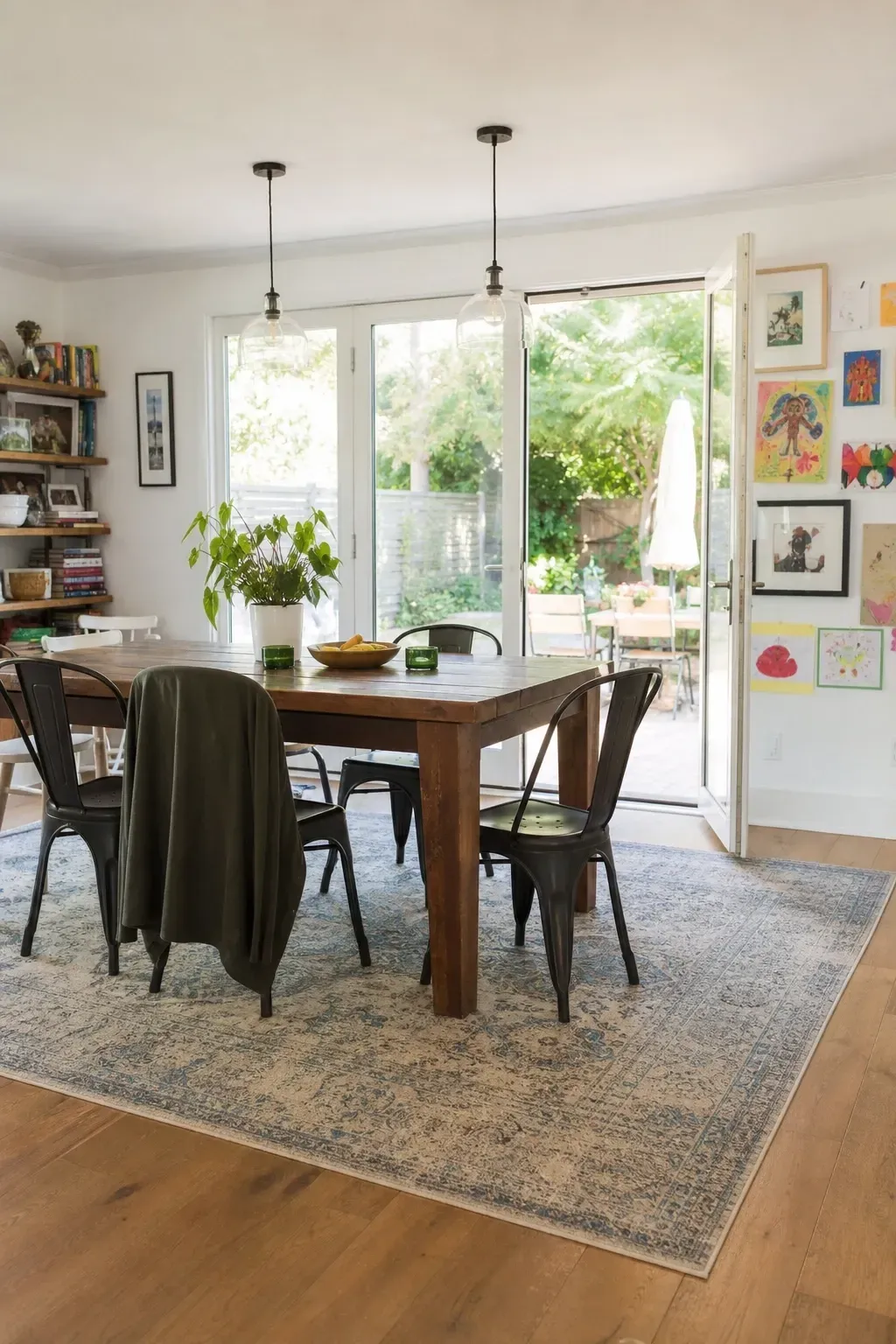
An indoor-outdoor polypropylene rug is by far the most practical choice for a family dining room, and the good news is that quality has improved dramatically in recent years. These rugs now come in genuinely beautiful patterns, from faded Persian-inspired prints to modern geometric designs, and they can be hosed down, scrubbed, and dried without any damage. The flatwoven construction means chairs move over them freely, and the material is almost impervious to spills, stains, and fading. They work particularly well in dining rooms that open to a patio or sunroom since the rug can live in both environments. Pair with simple, durable furniture in wood or metal and keep the rest of the room easy to clean and maintain. This is a genuinely smart choice for households with young children or frequent entertaining.
Designer Tip: If you want the look of a more traditional rug without the fragility, choose an indoor-outdoor design in a Persian or vintage-inspired print since the pattern disguises the synthetic material convincingly.
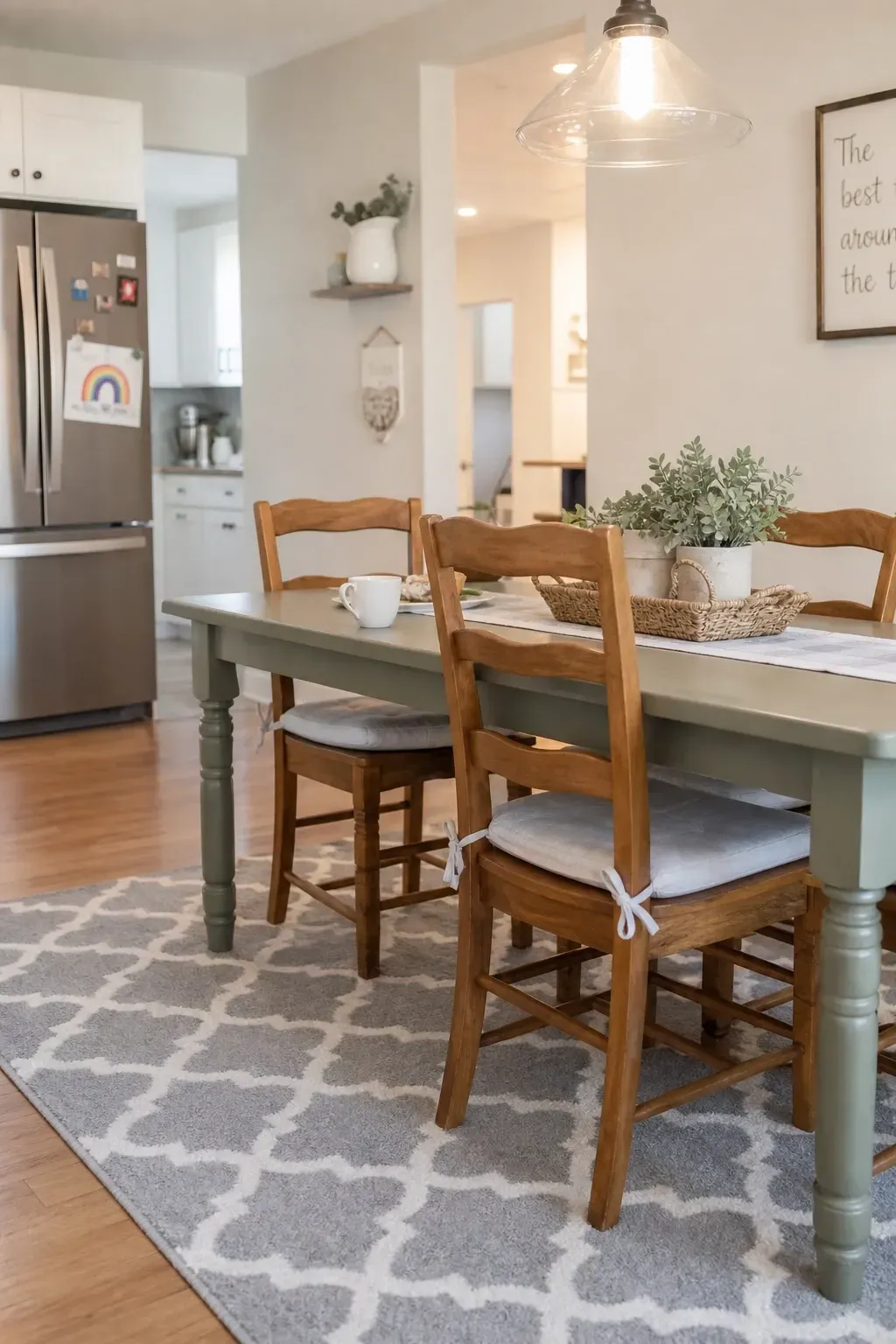
A machine-washable cotton rug in a soft stripe, simple trellis, or small geometric print is the practical workhorse of the dining room rug world. Cotton rugs are lightweight, often reversible, and easy to throw in the washing machine when things go wrong at the dinner table. They tend to be lower pile, which makes chair movement easy, and the slightly casual, lived-in quality of cotton suits relaxed family dining spaces well. Pair with painted furniture in a soft colour like sage green or warm white, simple pendant lighting, and everyday tableware in stoneware or ceramic for a space that feels properly relaxed and real. Budget-friendly options from home stores are genuinely decent quality in cotton and can be replaced without stress when they reach the end of their life.
Designer Tip: Rotate the rug 180 degrees every few months to distribute wear evenly since the area under the main chair positions will wear faster than the rest.
A deep, richly patterned rug in dark tones, think navy, forest green, burgundy, or charcoal with a detailed repeating motif, is one of the most forgiving choices for a dining room that sees heavy daily use. The combination of dark ground color and busy pattern is remarkably effective at hiding crumbs, dust, and minor stains between cleanings, and it still reads as deliberately designed rather than purely functional. Pair it with a sturdy wood or metal table, upholstered or wooden dining chairs, and a pendant light in a complementary metal tone. This approach works in both traditional and transitional dining rooms and gives you genuine flexibility to change your furniture and wall colours over time since dark patterned rugs tend to anchor rather than dictate the room’s direction.
Designer Tip: Vacuum this type of rug in two directions, once along the pile and once against it, to lift embedded crumbs from between the pattern weave without damaging the fiber.
Matching a round rug to a round dining table is one of the most satisfying design decisions you can make in a dining room, and yet it is surprisingly underused. The circular shapes echo each other in a way that feels balanced and purposeful, and it eliminates the awkward visual tension of a rectangular rug trying to sit correctly under a round table. Choose a rug that is at least 24 inches larger in diameter than your table on all sides so chairs stay on the rug when pulled back. A large round rug in a solid color, a simple pattern, or even a bold geometric creates an almost room-within-a-room quality that makes the dining space feel like its own defined destination. This works especially well in open-plan layouts where a visual boundary helps the dining area feel distinct from the living zone.
Designer Tip: For a round table with a pedestal base, a solid-color round rug works better than a busy pattern since it emphasizes the clean circular geometry of the setup.
21. Vintage-Inspired Distressed Rug in Muted Tones
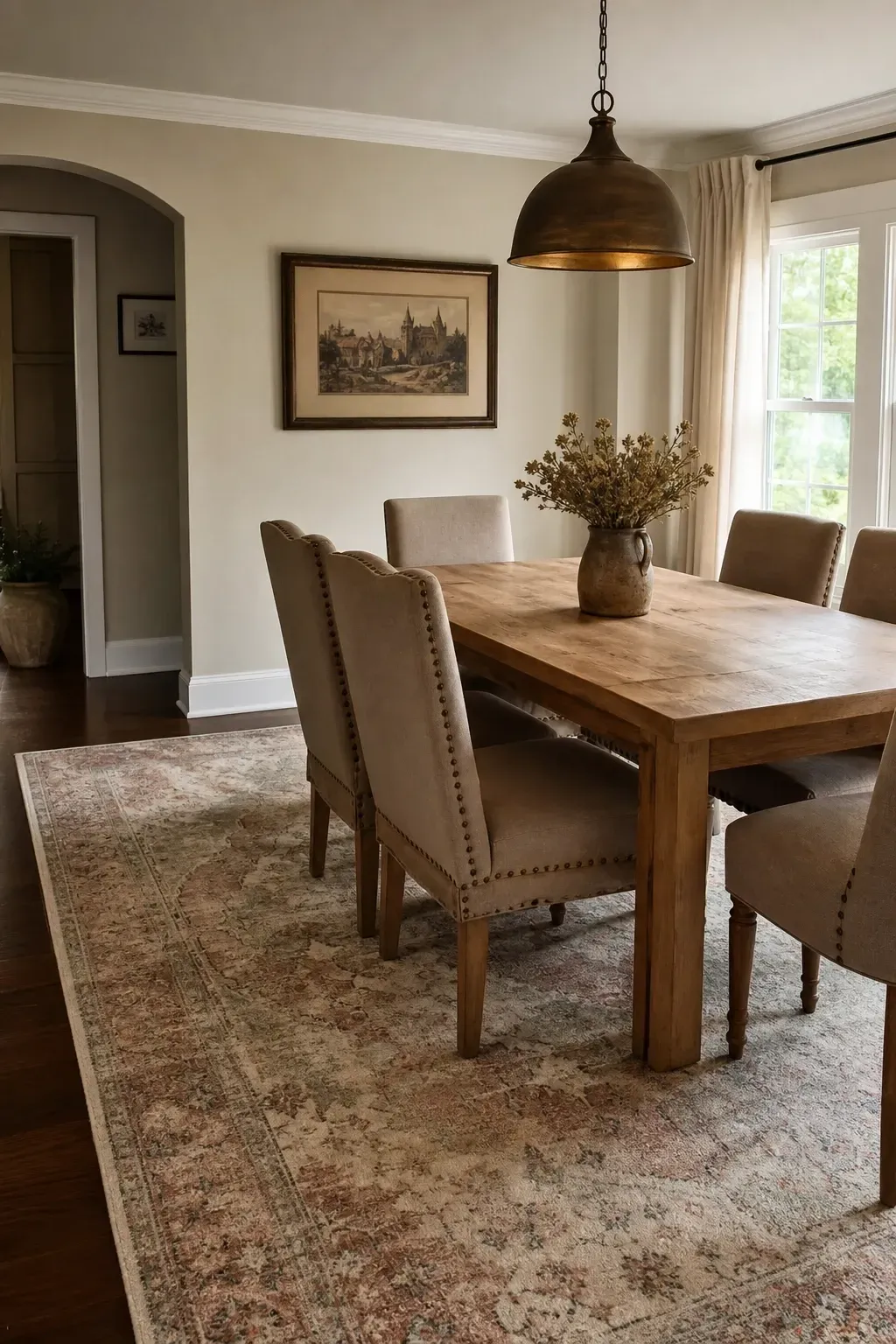
A vintage-inspired distressed rug in muted rose, sage, grey, and ivory brings an easy, unfussy elegance to a dining room that works across almost any furniture style. The beauty of the distressed finish is that it makes the rug look like it has been part of the home for decades, giving the space instant character without requiring years of decorating effort. These rugs hide wear patterns beautifully since the distressed look means any new scuffing simply adds to the narrative. Pair with a solid wood table in a natural or dark finish, upholstered chairs in a subtle print or solid neutral, and warm-toned pendant lighting. Distressed rugs in polypropylene are especially practical since they mimic the look of a vintage wool rug at a fraction of the cost and with far less maintenance. This is perhaps the single most versatile dining room rug style available right now since it complements farmhouse, transitional, eclectic, and even slightly contemporary dining rooms with equal ease.
Designer Tip: Pair a distressed rug with one genuinely vintage item in the room, such as an antique side table or a set of old dining chairs with a fresh coat of paint, to make the room feel personally collected rather than store-staged.
Finding the Right Rug for Your Dining Room
Choosing a dining room rug does not have to be an anxious decision. The most important things to get right are size, so chairs stay on the rug even when pulled back, and construction, so the rug can handle the demands of regular meals without falling apart after a season. Beyond that, the style is entirely yours to decide. Pick the rug that matches how you actually use the room first, then narrow by style second.
If you are still uncertain, start with a neutral or natural fiber option since these are the most forgiving and the easiest to build around as you continue developing the rest of the room. Lay down painter’s tape in the size you are considering before you buy anything, live with it for a day or two, and see how the proportions feel. A rug that looks right on the floor before you order it will almost certainly look right when the real one arrives. Take the time to get it right, and the rug will quietly do its job for years.
Frequently Asked Questions
What size rug should I get for my dining room?
As a general rule, your rug should extend at least 24 inches beyond the edges of your dining table on all sides. This ensures that chairs remain on the rug even when pulled back for seating. For a standard six-person rectangular table, a 8×10 or 9×12 rug is usually appropriate. For a four-person table, a 6×9 often works well. When in doubt, size up rather than down since a rug that is too small is one of the most common and most visually disruptive dining room mistakes.
What is the best rug material for a dining room?
It depends on how the dining room is used. For family dining rooms with children, indoor-outdoor polypropylene or machine-washable cotton are the most practical choices. For formal dining rooms used mainly for entertaining, wool, hand-knotted, or natural fiber rugs are worth the investment. Avoid high-pile rugs in high-traffic dining rooms since they trap crumbs and debris and are harder to clean. Flatweave and low-pile constructions are generally the most forgiving in dining rooms.
Should a dining room rug match the living room rug?
They do not need to match exactly, but they should feel like they belong to the same home. If your living room has a bold patterned rug, a simpler dining room rug in a complementary color often works better than trying to match the pattern exactly. If your living room rug is a neutral solid, your dining room rug can take on more pattern or color without the spaces feeling disconnected. The key is to maintain a consistent color palette or material story between the two spaces, especially in open-plan layouts where both rugs are visible at the same time.
How do I keep my dining room rug clean?
Regular vacuuming is the most important maintenance habit, ideally two to three times a week in a busy household. For spills, blot immediately rather than rubbing since rubbing pushes the liquid deeper into the fibers. A mixture of mild dish soap and warm water handles most food and drink spills on wool or synthetic rugs. For natural fiber rugs like jute and sisal, avoid water-based cleaning since these fibers can be damaged by excess moisture. Machine-washable cotton and polypropylene rugs are the easiest to maintain since they can be washed or hosed down as needed.
Is a round or rectangular rug better for a dining room?
The shape of your rug should ideally follow the shape of your table. A rectangular table works best with a rectangular rug, and a round table benefits significantly from a round rug. The circular combination looks especially considered and balanced. That said, a rectangular rug under a round table is completely acceptable and often more practical since it is easier to find in larger sizes. The key is that the rug shape should feel deliberate rather than accidental, so match them when you can.
Can I put a rug on top of carpet in a dining room?
Yes, though it requires more care with sizing and anchoring. Choose a flatweave rug since high-pile versions tend to slide more on carpet and create an unstable surface for chairs. Use a rug pad designed specifically for carpet-on-carpet applications to keep things in place. The visual effect can actually work very well since the layered rug defines the dining area distinctly from the surrounding carpeted space, creating a zone within a zone.