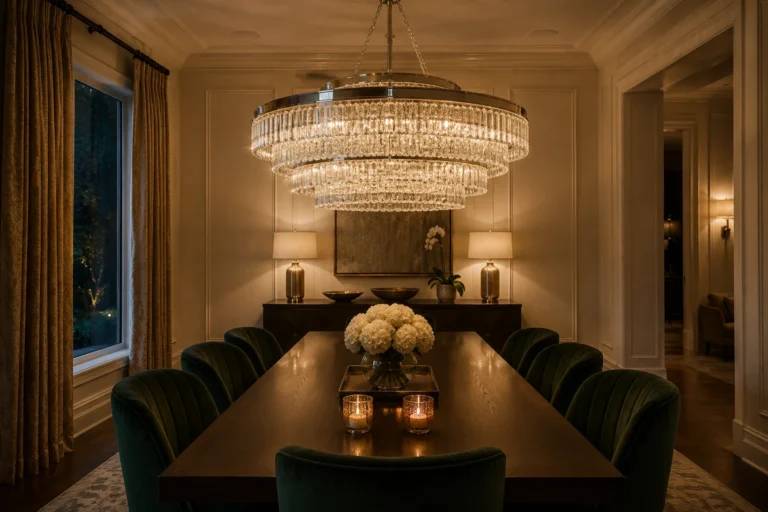
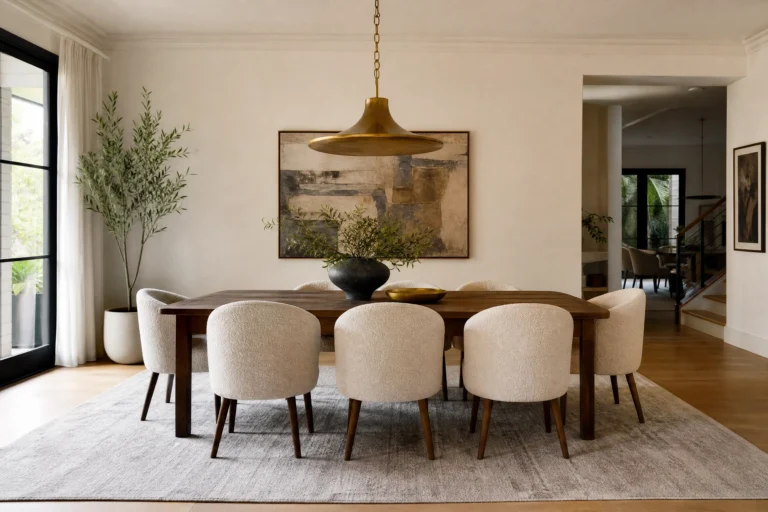
There is one wall in your dining room that does most of the heavy lifting. It is the wall your guests look at while they eat, the backdrop for every dinner party photo, and the first thing you notice when you walk in. Yet so many dining rooms leave that wall completely bare or settle for a paint color that blends into the background. An accent wall changes all of that, and it does not have to cost a fortune or require a full renovation to pull off.
What makes a dining room accent wall work is not just picking something bold. It is about choosing the right treatment for your specific space, pairing it with the right lighting and furniture, and making sure it feels intentional rather than accidental. The ideas in this guide cover everything from budget-friendly paint techniques to textured panel installations, grouped by style so you can find exactly what fits your home. Pick the wall your guests face when they sit down, commit to one bold move on it, and leave the rest of the room alone.
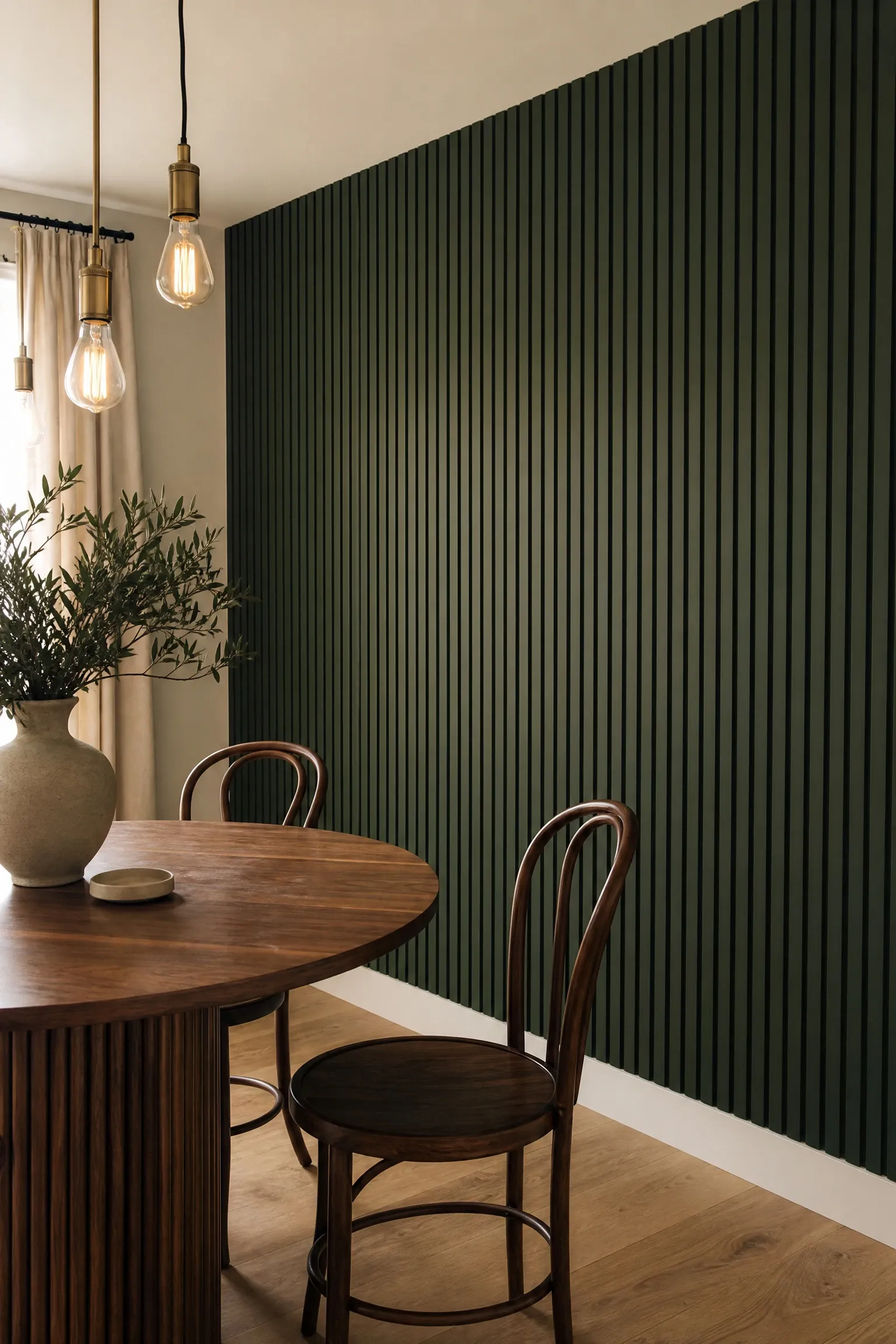
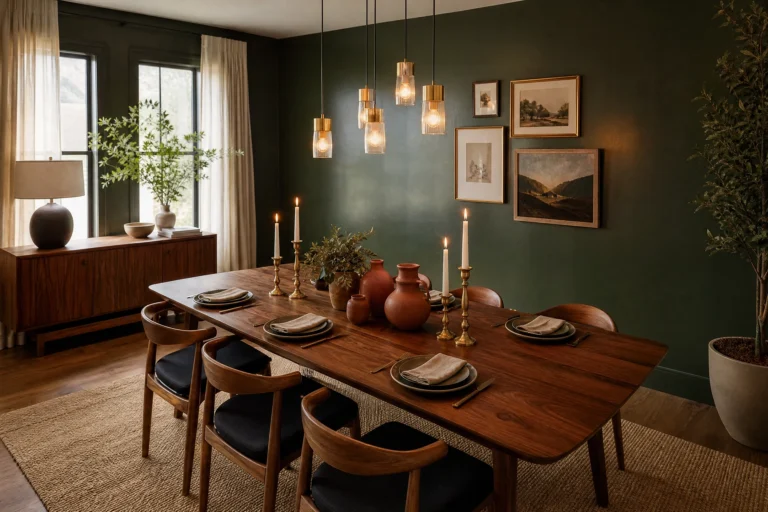
Fluted wood panels are one of those accent wall treatments that look like they cost far more than they actually do. The vertical grooves create shadow lines that give the wall a sense of depth and movement, and they work equally well in a modern dining room or a space with warmer, more organic styling. Paint them in a deep forest green or a warm walnut stain and pair them with a round dining table in solid oak or walnut, using pendant lights with exposed bulbs hung low over the table to cast light that plays off the ridges. The visual weight of fluted panels works best on a single wall behind the main seating area, usually the one facing the entrance. In practice, this look comes together best when you keep the rest of the walls light and clean so the texture can carry the room. Fluted MDF panels available at most home improvement stores are a mid-range investment and are easy enough for a confident DIY weekend installation.
Designer Tip: Stain or paint the panels before installation so you get clean, even coverage in the grooves without drips.
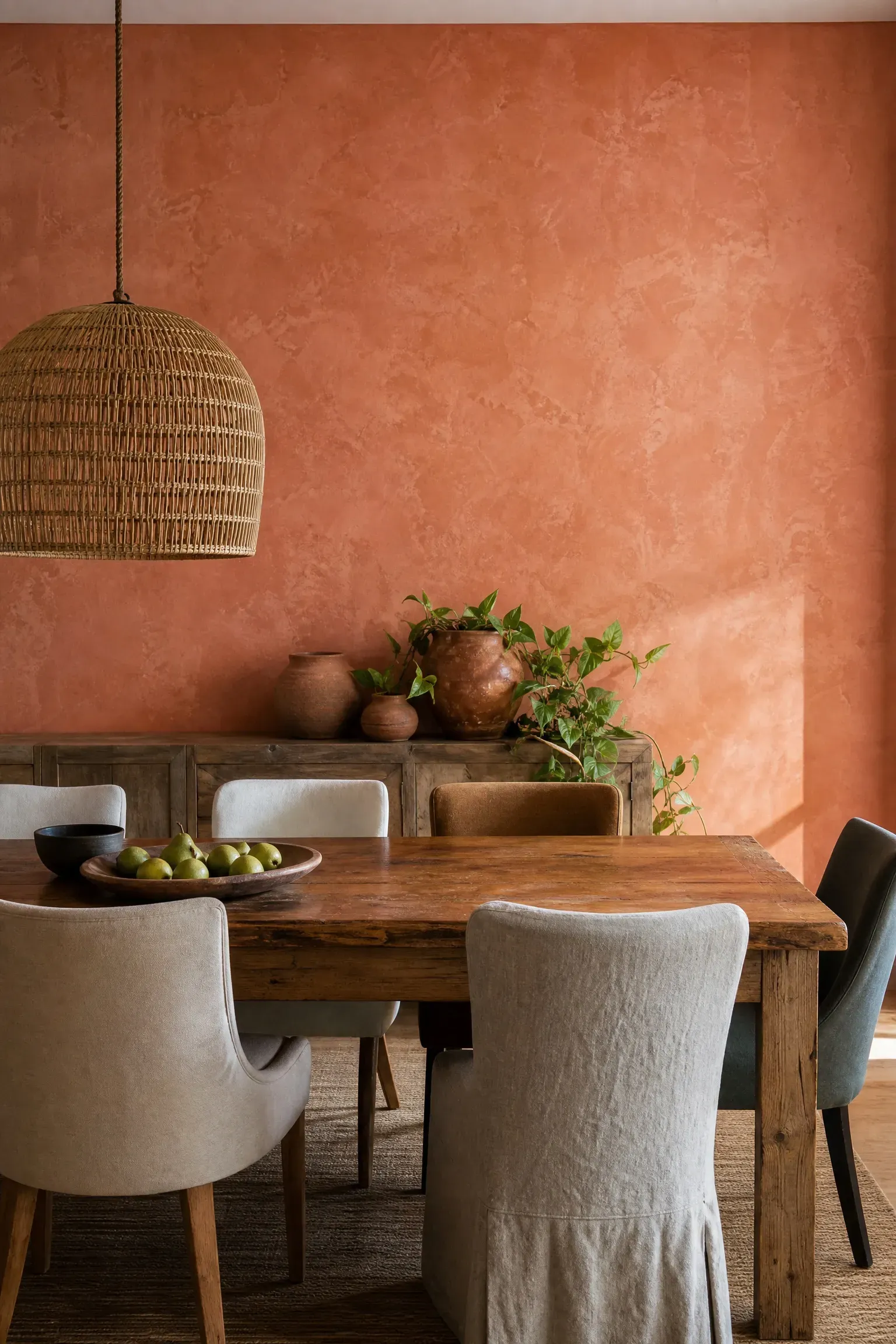
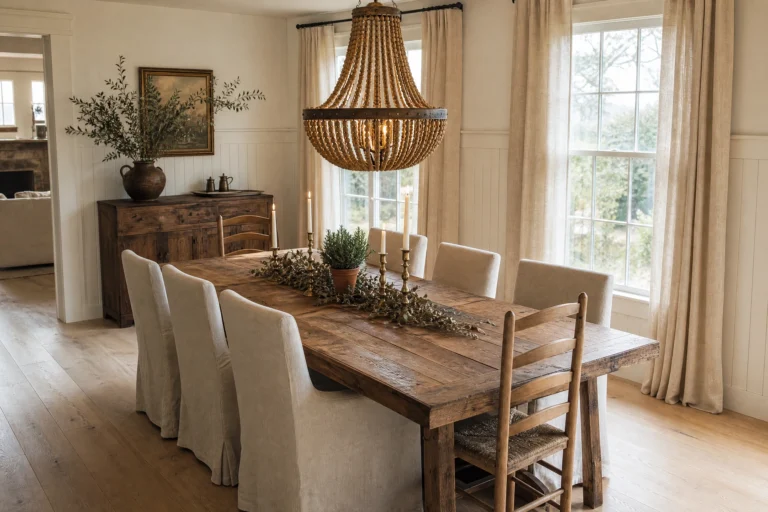
Limewash paint has been used on walls for centuries and there is a reason it keeps coming back. The finish creates a soft, mottled effect with variation in tone and light absorption that looks hand-applied and genuinely aged, which no regular paint can replicate. In a dining room, limewash in dusty terracotta, aged ochre, or faded sage adds an old-world warmth that makes the space feel like it has always been there. Pair it with a rustic wood dining table, linen upholstered chairs, and wrought iron or brass candle-style pendant lighting. The texture absorbs and scatters light beautifully, which makes it especially flattering in the evening when you are entertaining. Honest note: limewash requires proper prep and a bit of technique, so if you have never used it before, buying a small test pot and practicing on a piece of board before committing to the wall is worth your time.
Designer Tip: Apply limewash in two opposing directions with a wide flat brush for the most realistic depth and variation.
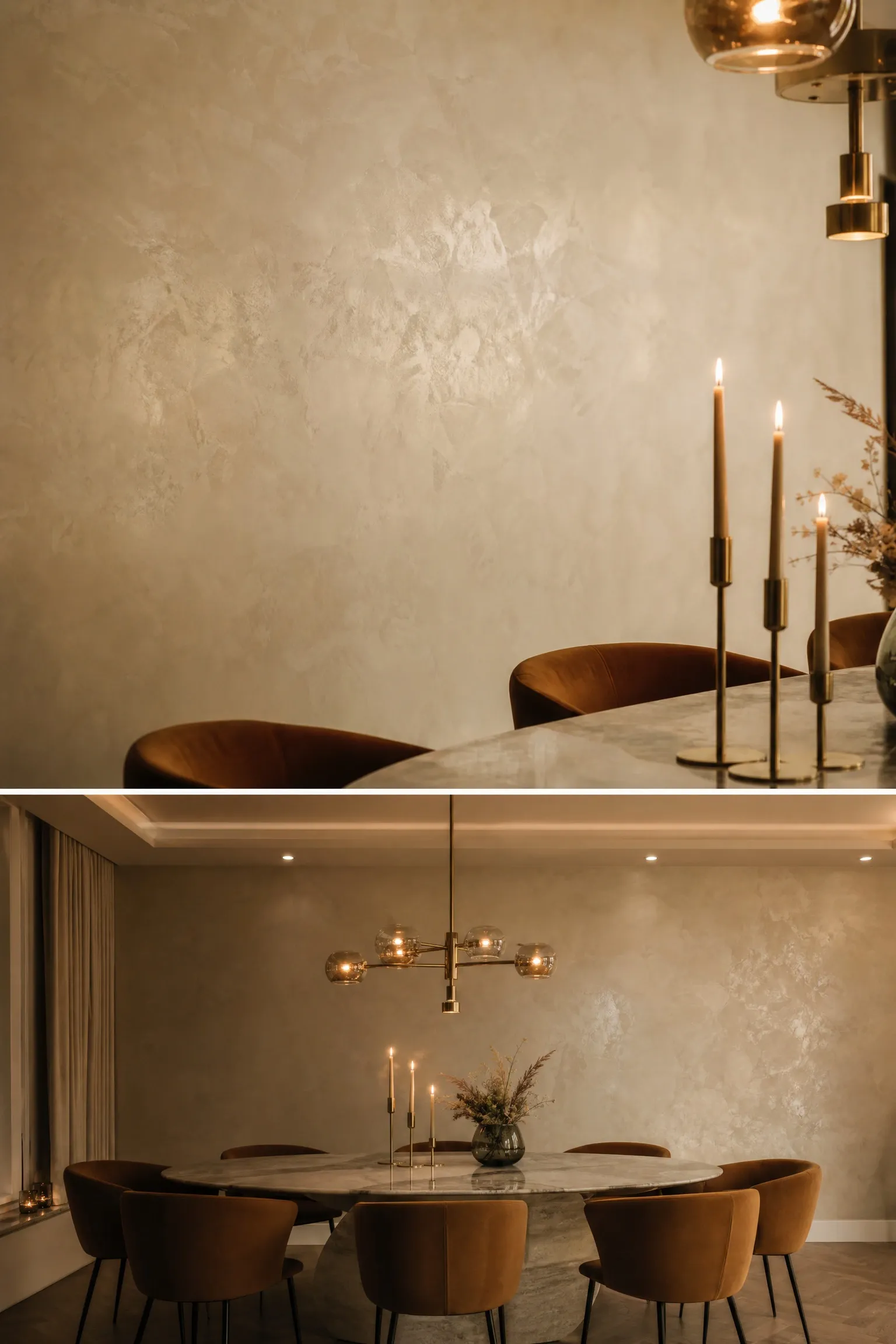
A plaster relief accent wall sits at the higher end of the investment scale, but the result is genuinely unlike anything else. Venetian plaster, Roman clay finish, or even pre-mixed plaster applied in overlapping passes creates a wall surface with actual three-dimensional texture that changes appearance depending on the light source and time of day. In a dining room with dark or moody tones, this is particularly striking because the texture catches candlelight or pendant glow in a way that flat paint never can. Style it with a marble-topped dining table, upholstered chairs in deep jewel tones like cognac leather or teal velvet, and a sculptural statement chandelier. One limitation to be aware of: plaster walls can be tricky to repair if damaged, so this treatment is better suited to a room that does not see heavy foot traffic near the walls.
Designer Tip: Polish the final coat with a soft cloth to bring up a subtle sheen that makes the plaster glow under warm lighting.
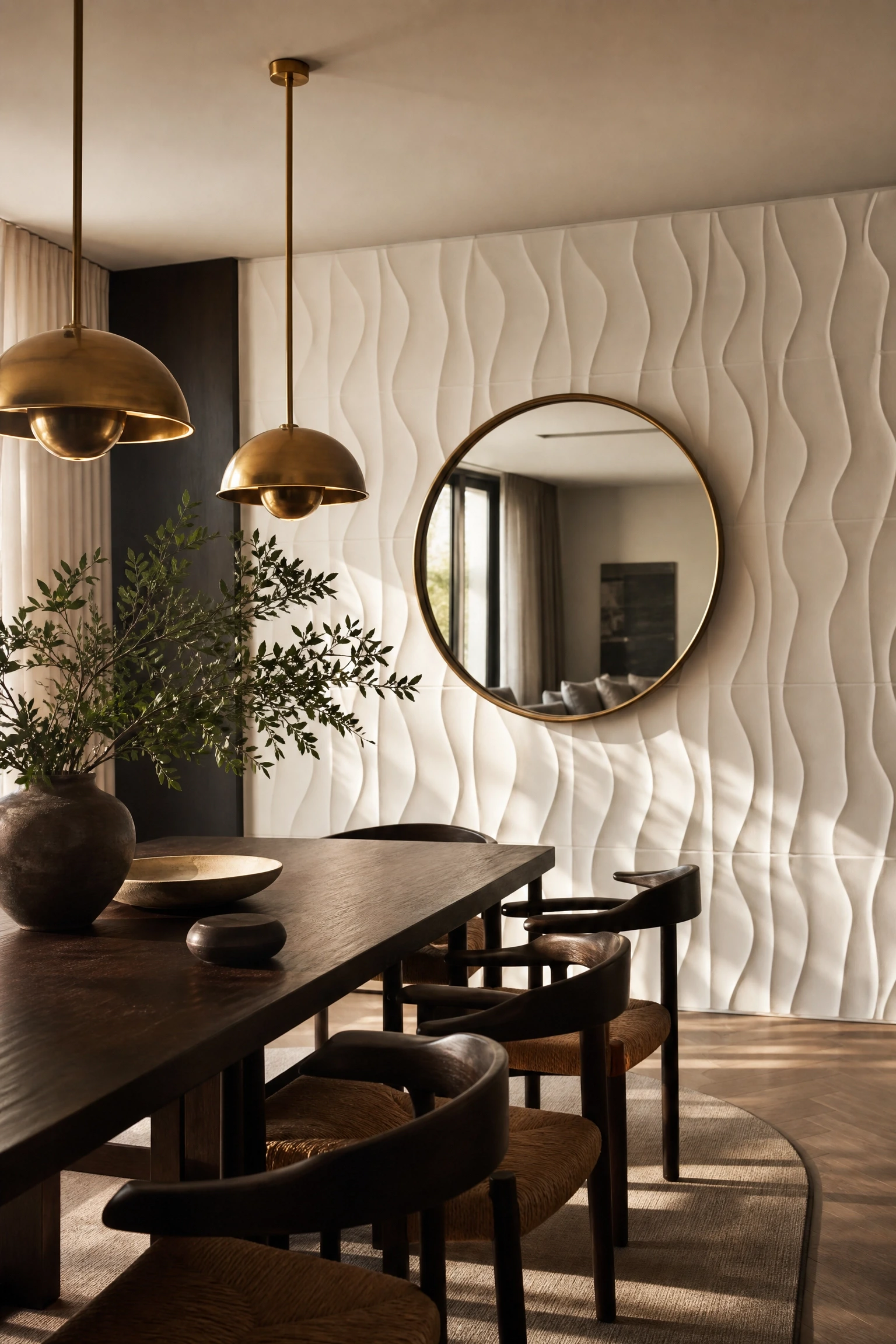
Three-dimensional wall panels made from MDF, PVC, or gypsum are having a real moment right now, and they make particular sense in dining rooms where you want architectural interest without committing to wallpaper or paint. The panels come in wavy, diamond, hexagonal, and abstract sculptural patterns that create depth and shadow play across the wall surface. For a dining room, a warm white or off-white finish on 3D panels works beautifully with brass or gold fixtures and a dark stained wood dining table, creating contrast without chaos. Hang a statement mirror or a single piece of large-format art over the panels to add another layer of visual interest. One practical note: PVC panels are easy to clean, which makes them a smarter choice in a dining room where splatter from cooking can occasionally reach the walls.
Designer Tip: Add a picture rail light or up-lighting strip along the base of the panel wall to create dramatic downward or upward shadows at night.
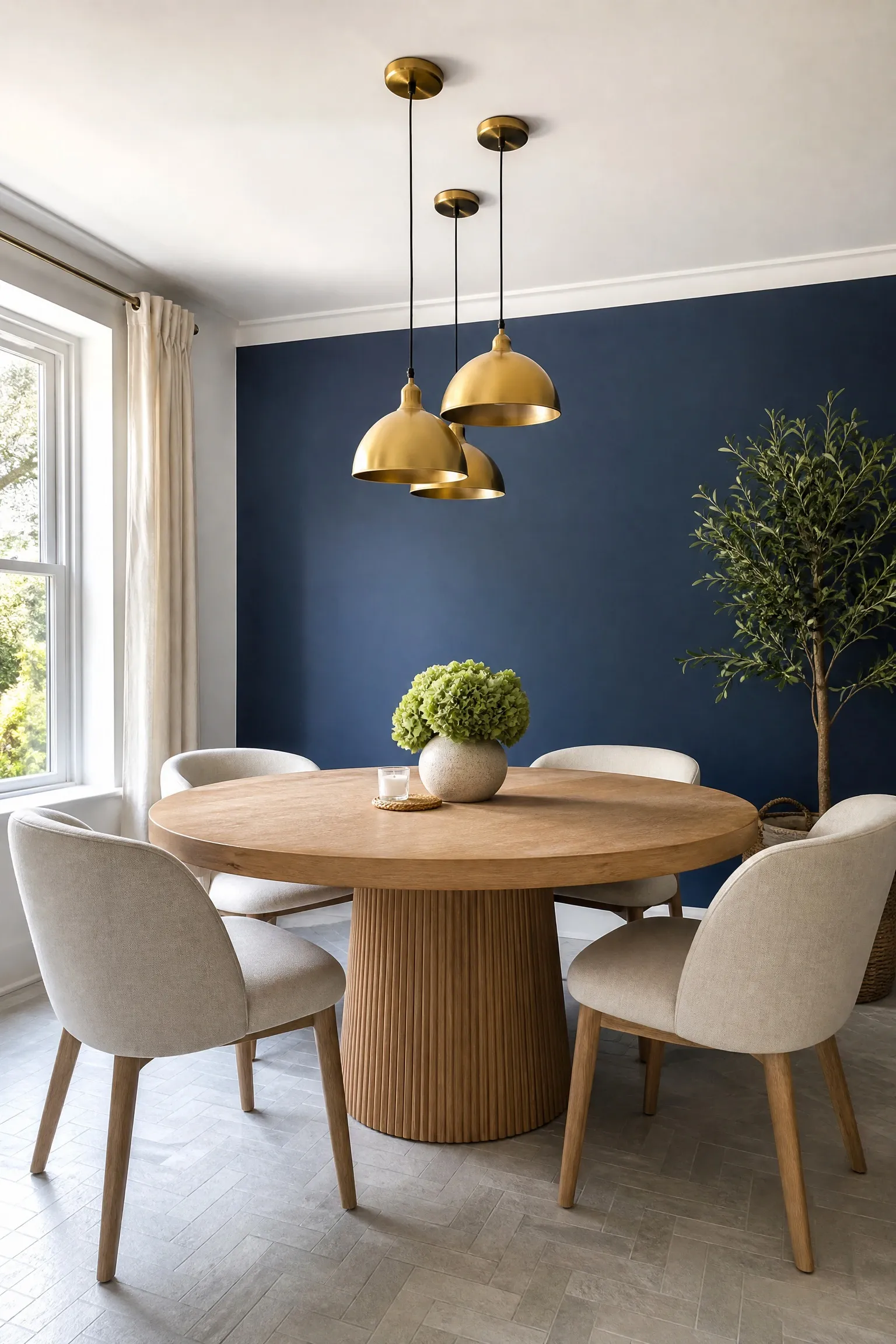
Deep navy is one of the most universally successful accent wall colors for a dining room because it sits right in that sweet spot between dramatic and sophisticated without tipping into oppressive. Navy walls make adjacent natural wood tones glow, they work with brass and gold hardware, and they read equally well in natural daylight and warm evening lighting. For furniture, choose a lighter oak or walnut dining table to create contrast, and bring in cream or soft white upholstered dining chairs to keep the space from feeling too dark. A cluster of brass pendant lights or a single brass chandelier is the finishing detail that makes this combination feel complete. In rooms with lower ceilings, consider painting the navy all the way to the ceiling on that one wall to create the illusion of height rather than cutting it off at a chair rail.
Designer Tip: Use an eggshell or satin finish rather than matte for navy dining rooms so the wall reflects a little light and does not absorb all the warmth in the space.
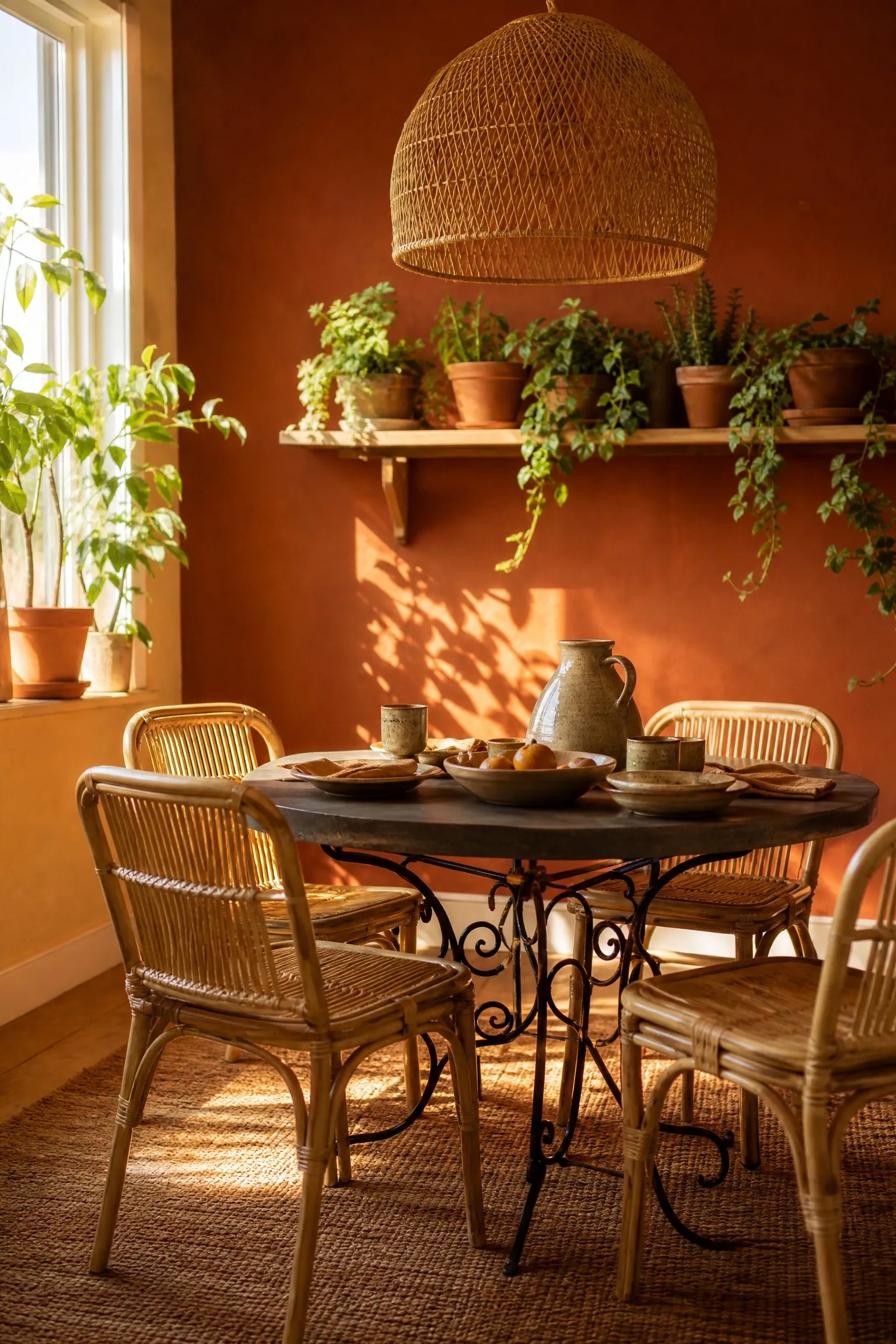
Terracotta and ochre are the colors that interior designers keep reaching for right now, and in a dining room they create a warmth that you genuinely feel as soon as you walk in. These earthy tones connect naturally with rattan furniture, raw linen textiles, handmade ceramic tableware, and woven pendant lighting, making them the go-to for anyone building a biophilic or Mediterranean-inspired dining room. The key is to choose a tone that leans warm but not too orange. Sherwin-Williams Fired Brick or Farrow and Ball’s Dead Salmon are good reference points. Pair a terracotta accent wall with a dark wood or iron-base dining table and bring in plenty of greenery on side tables or a wall-mounted shelf nearby. One honest note: very saturated terracotta can read as quite intense in rooms that get strong afternoon sun, so test the color at different times of day before committing.
Designer Tip: Ground a terracotta wall with white or off-white on the remaining three walls and natural fiber rugs to keep the scheme balanced rather than overpowering.
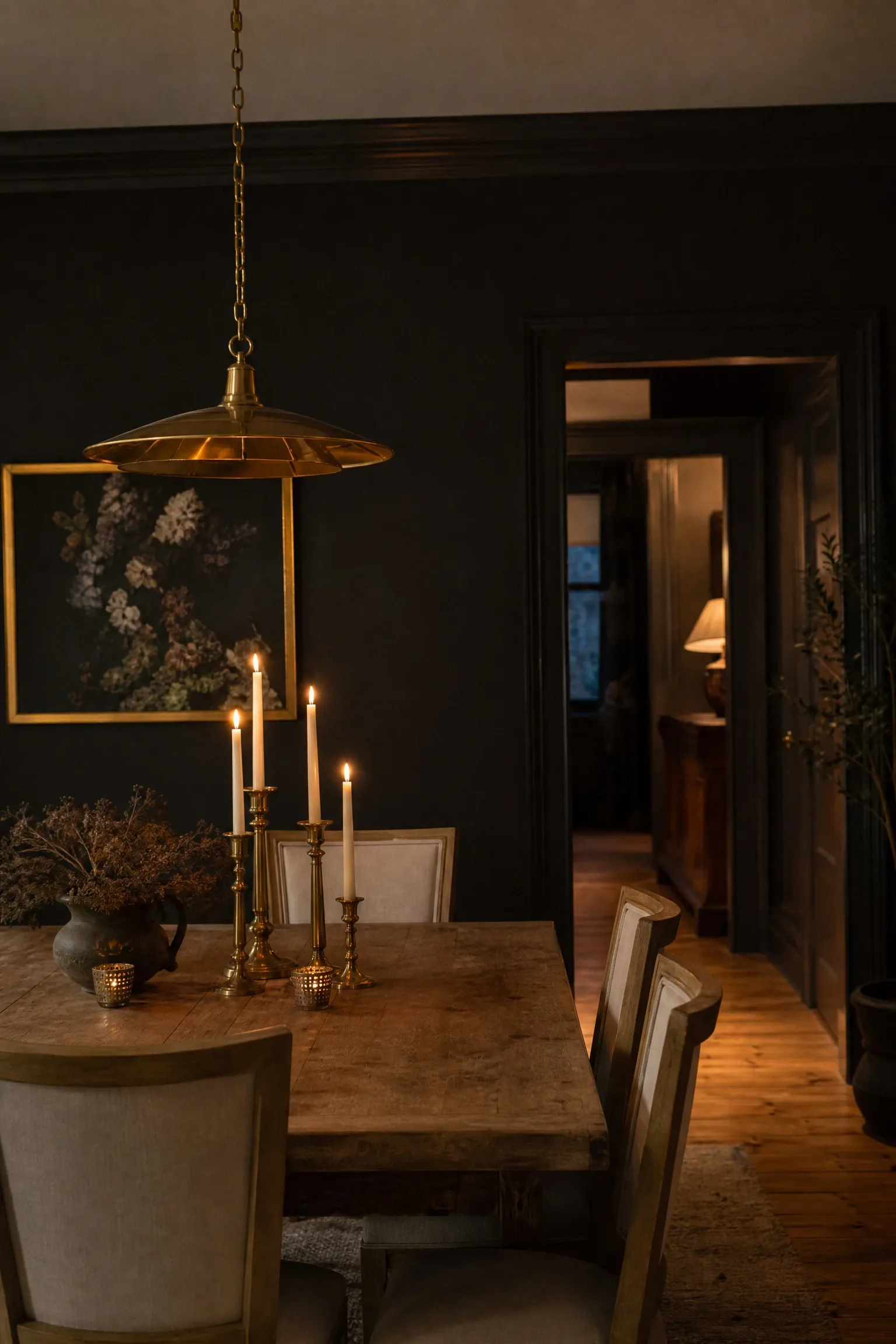
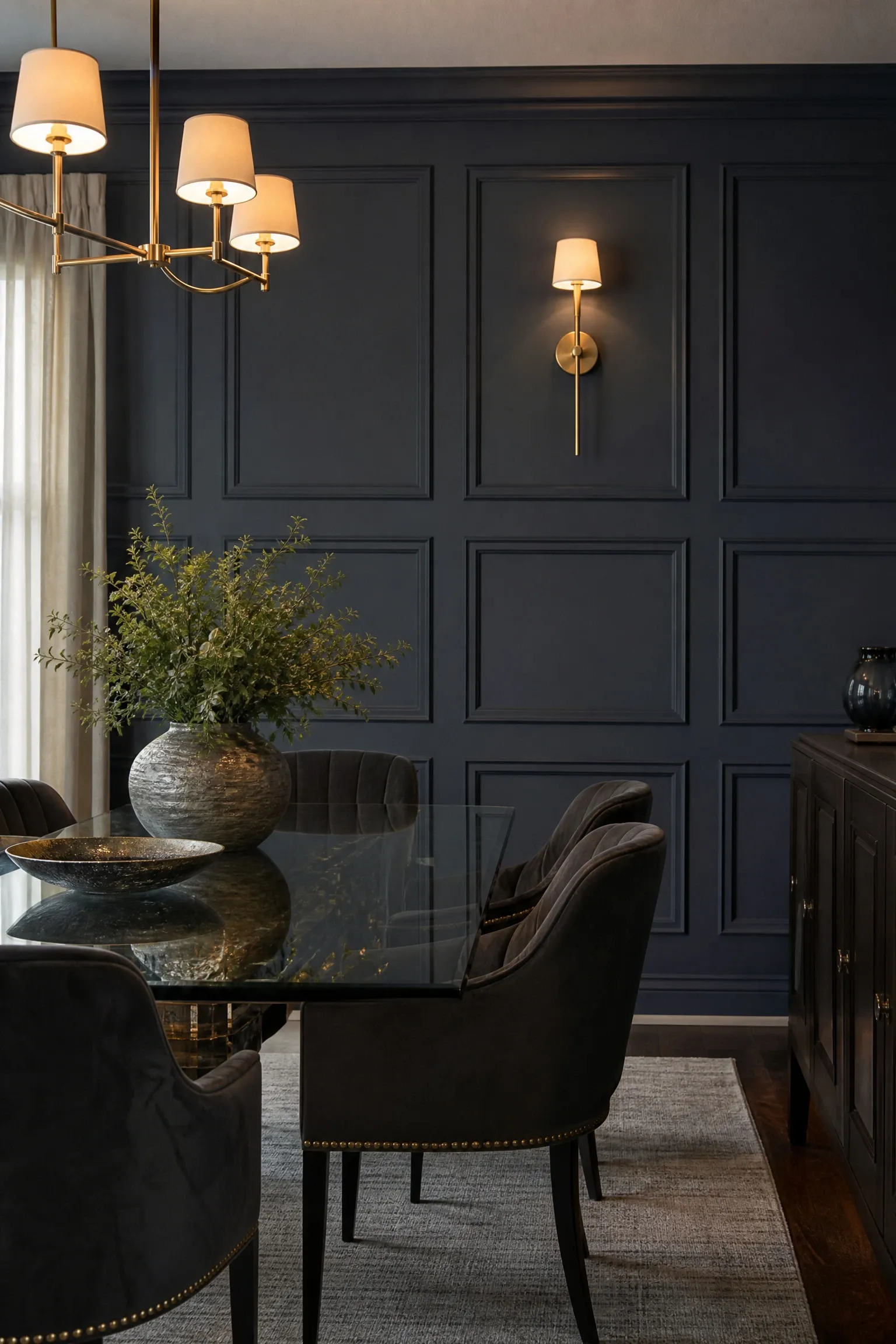
Painting a dining room accent wall in charcoal grey or near-black is a designer move that has real staying power. Unlike popular right now colors, deep charcoal reads as a neutral in the right context and works with almost any furniture style, from a sleek modern glass dining table to a heavy farmhouse piece in reclaimed wood. The key to making charcoal work is layering enough warm light sources to counteract the darkness. Use warm-toned pendant lights over the table, wall sconces on adjacent walls, and candles on the table itself to create a moody, inviting glow. This treatment works best in dining rooms with some natural light, as a very dark wall in an already dim room can feel like eating inside a cave. For furniture, brass, warm copper, and natural linen are the materials that look best against charcoal, adding richness without the room feeling cold.
Designer Tip: Paint the trim and any architectural details on the accent wall in the same charcoal color for a smooth, enveloping effect that reads as intentional rather than unfinished.
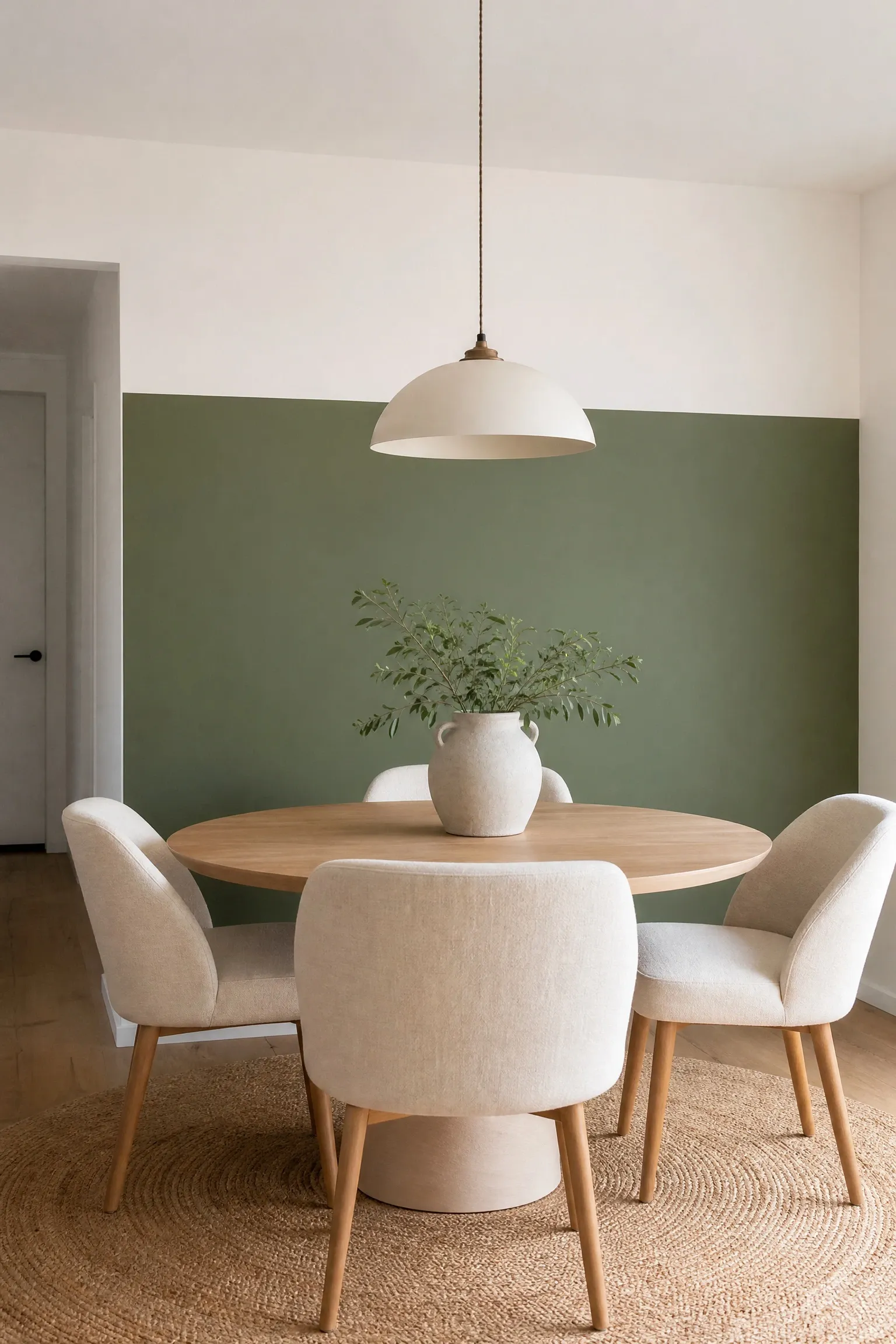
Color blocking an accent wall means dividing it into two or more distinct color sections, usually using a horizontal line at chair rail height or a bold geometric division. This is a great approach for anyone who wants something more original than a single-color accent wall but does not want the commitment of wallpaper or paneling. A classic combination is deep sage green on the lower two-thirds with warm cream or white above, creating a grounded, earthy feel. For a more contemporary version, try warm terracotta on the lower section and pale blush or dusty rose above. This treatment works especially well in dining rooms with an existing chair rail or wainscoting line, as it gives the color blocking a natural stopping point. Budget note: this is one of the most affordable accent wall ideas on this list since it requires nothing more than paint and a steady hand with painter’s tape.
Designer Tip: Use a level to mark a perfectly horizontal dividing line before taping. Even a slight slope is noticeable once the paint is dry.
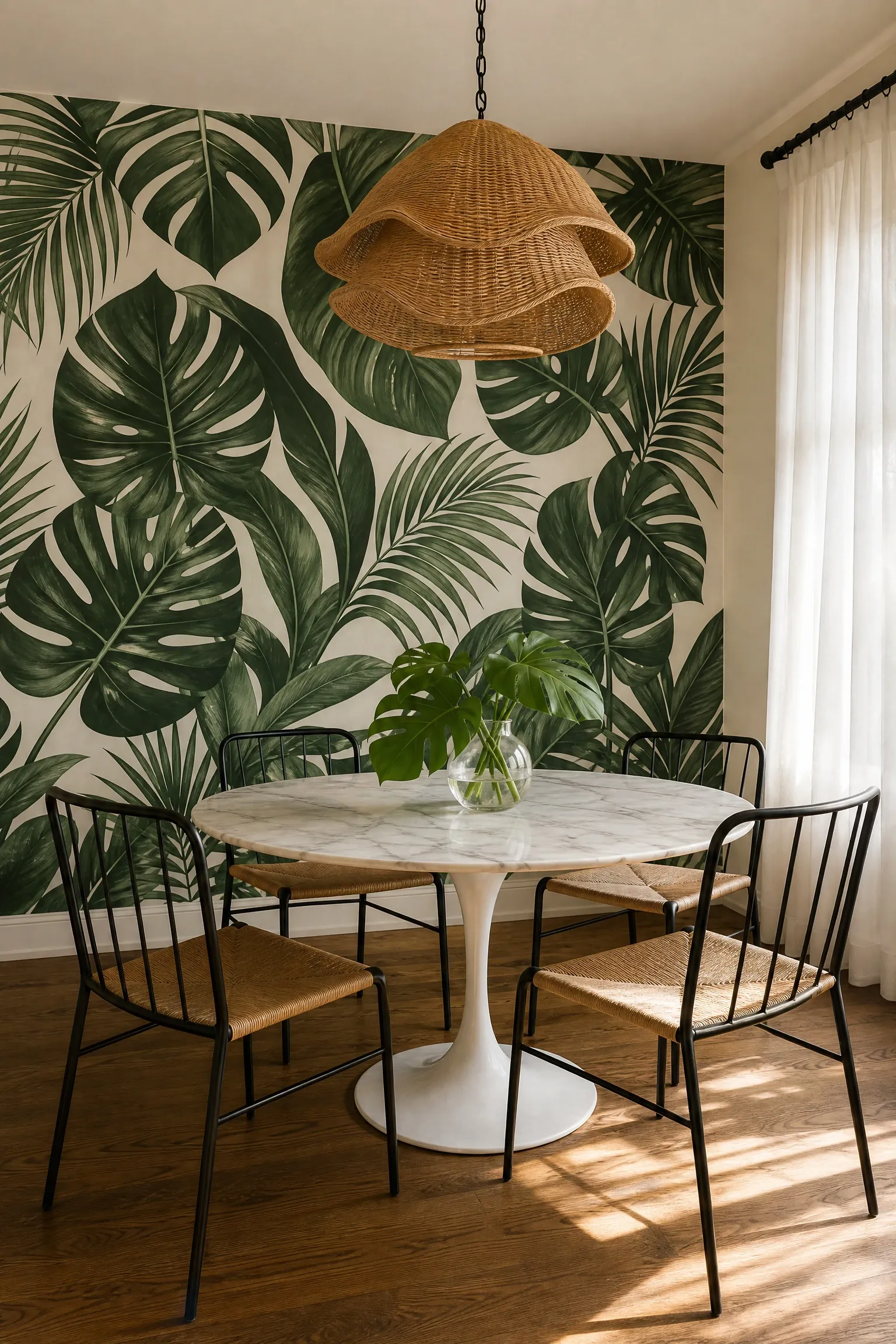
A botanical or large-scale tropical print wallpaper on one dining room wall creates the impression of dining inside a lush garden, and it is the kind of feature that guests genuinely comment on. Brands like Graham and Brown, Rifle Paper Co., and Hygge and West offer patterns that range from subtle watercolor botanicals to full-scale jungle prints. For furniture, keep it simple so the wallpaper does the talking: a round white marble or pale wood dining table, slender chairs in black metal or rattan, and minimal overhead lighting with a sculptural shade that does not compete with the wall. A key practical consideration here is the scale of the pattern versus the size of the wall. A very large repeat pattern needs a wall of at least eight feet wide to show the design properly, otherwise you end up seeing only a fragment that looks unintentional.
Designer Tip: Remove the wallpaper panels before hanging and let them dry flat for 24 hours to prevent the seams from puckering as the paste dries.
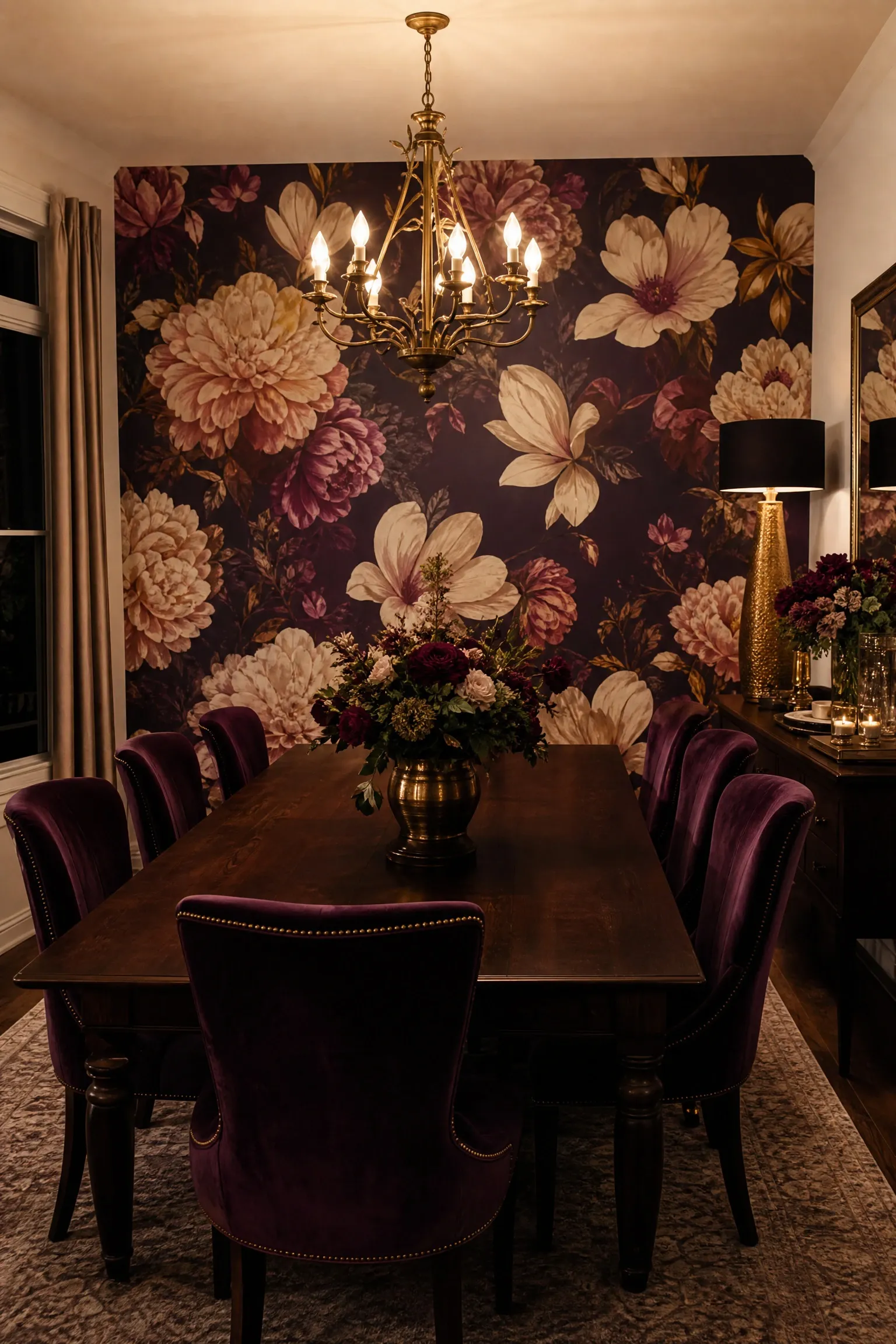
Maximalist floral wallpaper in the dining room is bold, unapologetic, and genuinely beautiful when it is executed well. The key word is scale: choose a large-scale bloom pattern rather than a small ditsy floral, as bigger patterns read as intentional design choices while smaller patterns can look busy and dated. Deep jewel-tone backgrounds like plum, emerald, or midnight blue with oversized peonies, magnolias, or palm leaves work particularly well. Pair this with a dark wood dining table, velvet dining chairs in a solid color pulled from the wallpaper, and antique brass or aged bronze hardware throughout. This is a treatment that works best in a formal dining room used primarily for evening entertaining, where the dramatic mood of the wallpaper can be fully appreciated under warm lighting. Budget-conscious alternative: peel-and-stick versions of popular floral patterns are now widely available and significantly easier to install and remove.
Designer Tip: Choose one color from the wallpaper pattern and repeat it in the dining chairs, tableware, or a candle centerpiece to tie the room together visually.
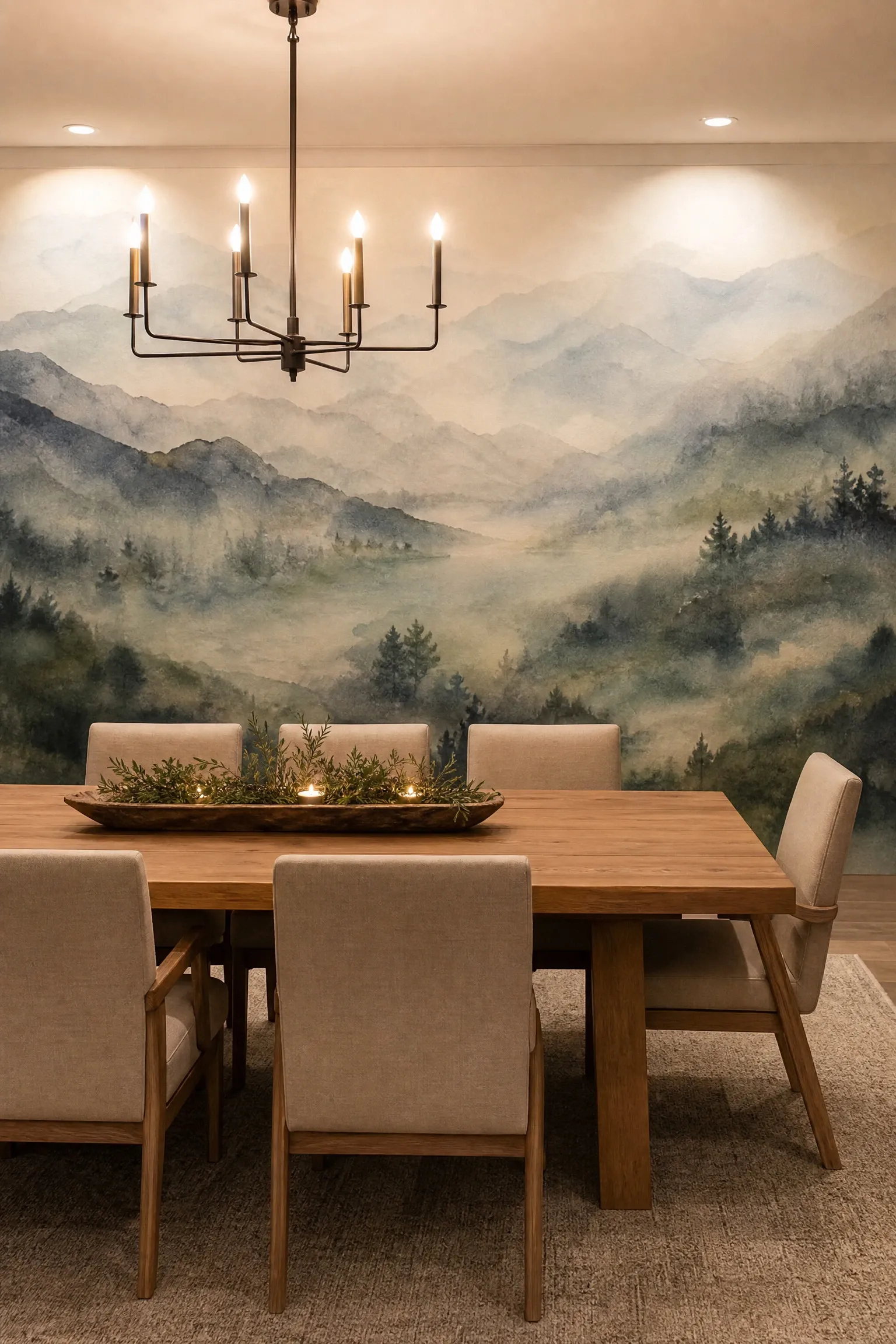
Landscape murals are one of the most talked-about dining room trends right now, and for good reason. A well-chosen mural turns the wall into a destination, creating the sense that you are dining in front of a sweeping countryside view, a misty mountain range, or an abstract painted horizon. Peel-and-stick murals from companies like Photowall, Rebel Walls, and Murals Wallpaper allow you to apply a custom image to your exact wall dimensions without permanent commitment. For dining rooms, panoramic landscapes in muted, painterly tones tend to age better than photographic prints, and they pair naturally with a simple wooden table and neutral seating that does not compete with the imagery. One honest consideration: very detailed or photographic murals can look overwhelming in smaller dining rooms under bright overhead lighting. They tend to look best in rooms where you can control the light level with dimmer switches.
Designer Tip: Install the mural before the dining furniture is in place so you can step back from the full width of the room and check alignment at eye level.
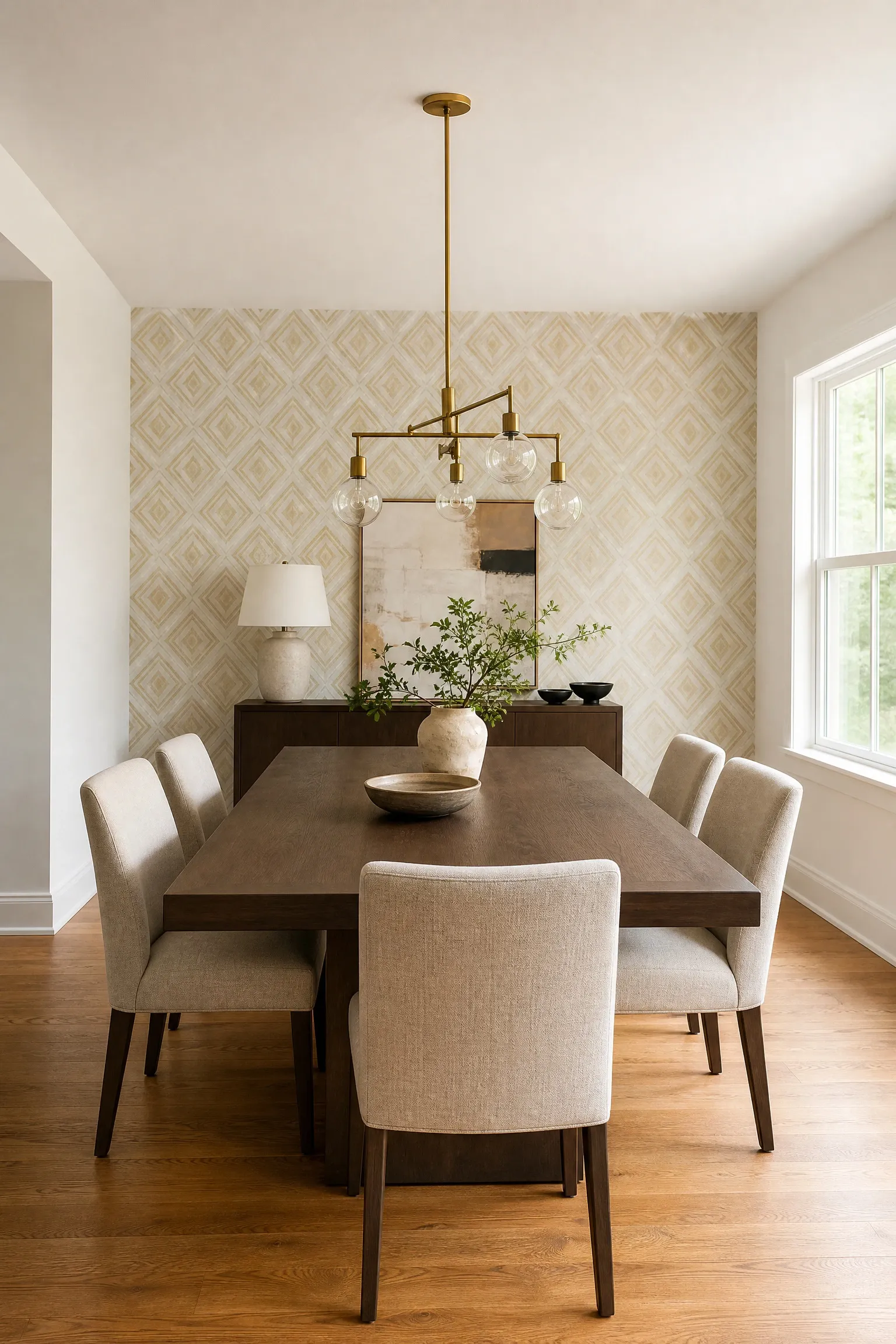
Not every wallpaper accent wall needs to be a show-stopper. A geometric pattern in warm neutrals such as ivory, sand, taupe, and soft gold can add texture and visual rhythm to a dining room without overwhelming the space. Herringbone, diamond grid, and subtle ogee patterns in warm tones work particularly well in transitional and modern classic dining rooms. This is the accent wall approach to choose if you want something that adds more than plain paint but still lets your furniture, artwork, and table styling take the lead. Pair it with a rich wood dining table in a warm stain, upholstered chairs in a coordinating natural linen, and simple pendant lighting in brass or matte black. Geometric wallpaper in neutrals is also one of the most forgiving accent wall treatments in terms of resale value and long-term livability.
Designer Tip: For geometric patterns, always start hanging from the center of the wall outward so the pattern is symmetrical and centered behind the dining table.
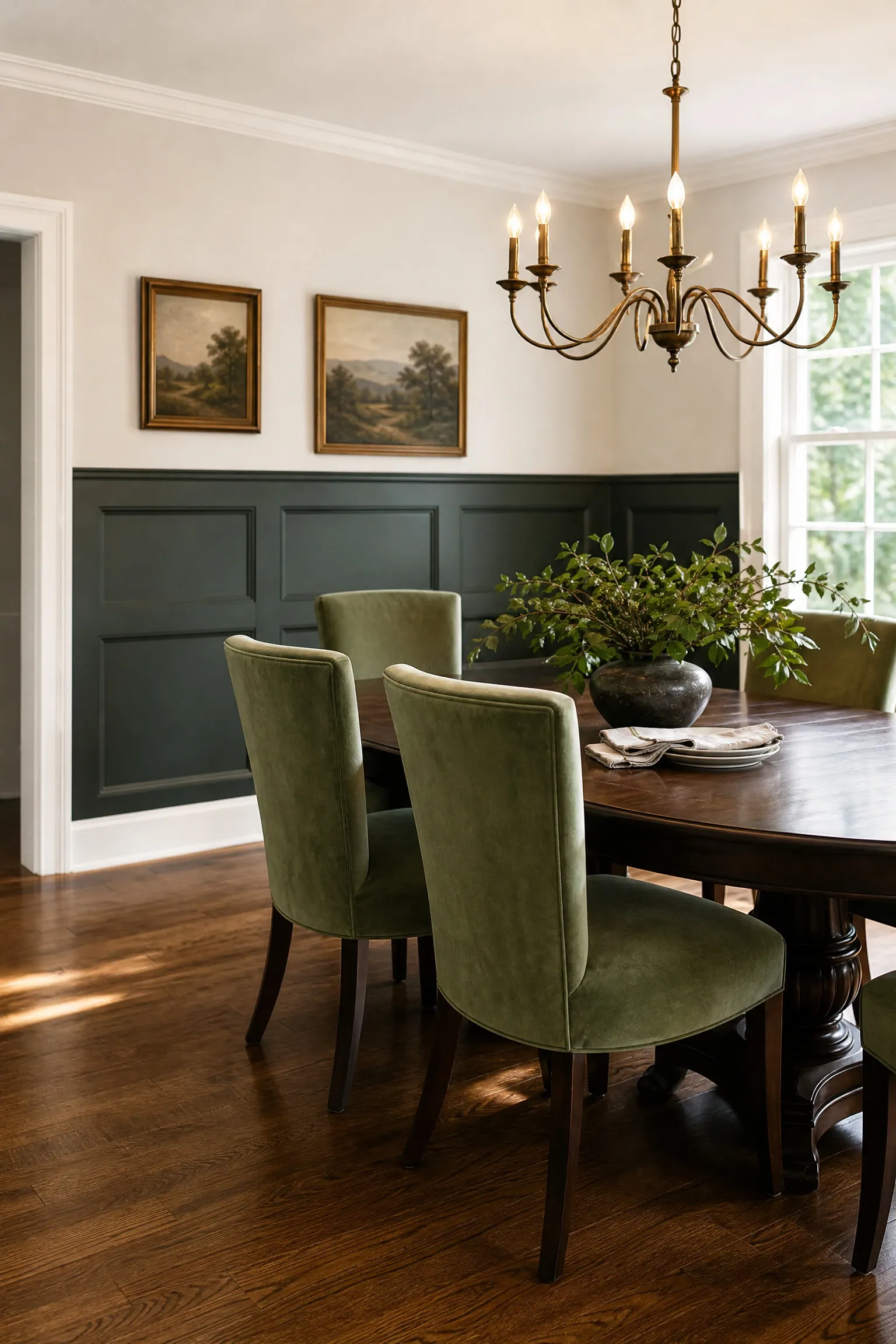
Wainscoting is one of those traditional architectural treatments that designers keep returning to because it genuinely adds character and a sense of permanence to a dining room. The raised panel version in white or soft cream reads as formal and elegant, while a flatter board-and-batten version in a darker color has a more relaxed, contemporary feel. For a modern take, install the wainscoting panels to around two-thirds of the wall height rather than the traditional half, and paint the paneling in a deep shade like forest green, navy, or slate while keeping the wall above it white or a warm neutral. This creates a two-tone effect with built-in texture. Pair with a round or oval dining table in solid wood, upholstered chairs, and a traditional chandelier for a look that feels considered and classic. Wainscoting is a moderate-to-high investment but it is permanent and adds genuine architectural value to the home.
Designer Tip: Paint the wainscoting panels and the wall above in different finishes as well as different tones. A satin finish below and a matte finish above subtly differentiates the two zones.
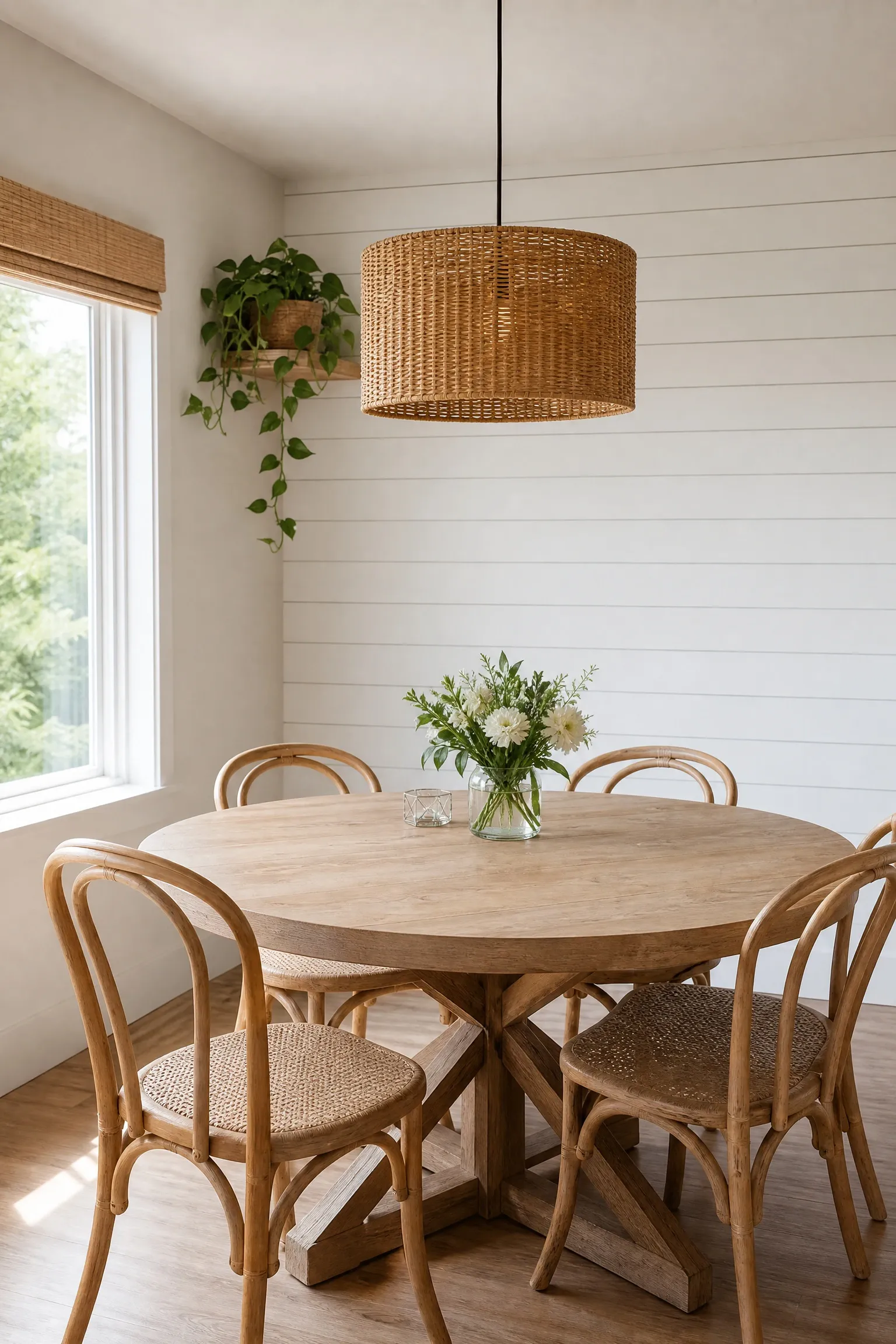
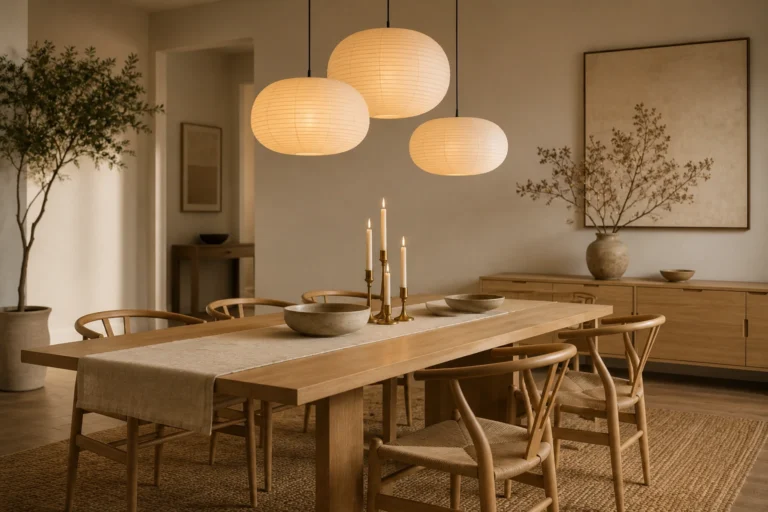
Shiplap is the horizontal wood plank treatment that became a design staple for good reason. It brings warmth, texture, and a sense of craftsmanship to a dining room that plain drywall simply cannot replicate. While shiplap is most associated with farmhouse or coastal interiors, it works in a much wider range of dining room styles depending on how it is finished. Painted in crisp white it reads as coastal and bright; stained in a dark walnut it feels moody and sophisticated; left in a natural, lightly oiled finish it leans Scandinavian and organic. Pair white shiplap with a round wood table, rattan or bentwood chairs, and woven pendant shades for a relaxed, sun-filled look. For dark-stained shiplap, go with a lighter table surface and metal chair frames to balance the weight. Shiplap is a realistic DIY project for a weekend and one of the more affordable textured accent wall options.
Designer Tip: Leave a small consistent gap between each shiplap plank rather than butting them tight together. The shadow line between planks is what gives the wall its signature visual depth.
Picture frame molding, sometimes called panel molding or chair rail box molding, is a technique borrowed directly from Georgian and Victorian interior design. It involves applying rectangular frames of MDF molding directly onto the wall surface in a grid or staggered pattern, then painting the entire wall and molding in the same color. The result is a wall that looks like it was always meant to be there. In a dining room, picture frame molding in a deep, saturated color like sage green, slate blue, or burgundy adds drama and formality without requiring any significant structural work. The boxes created by the molding are also natural homes for small framed artworks, sconces, or even mounted decorative plates. This is a mid-range DIY project that can be completed in a day with standard MDF trim pieces and a nail gun. It looks far more expensive than it actually is.
Designer Tip: Paint the wall first in your chosen color, then attach the molding and apply a second coat of paint over everything so the molding reads as part of the wall rather than an addition to it.
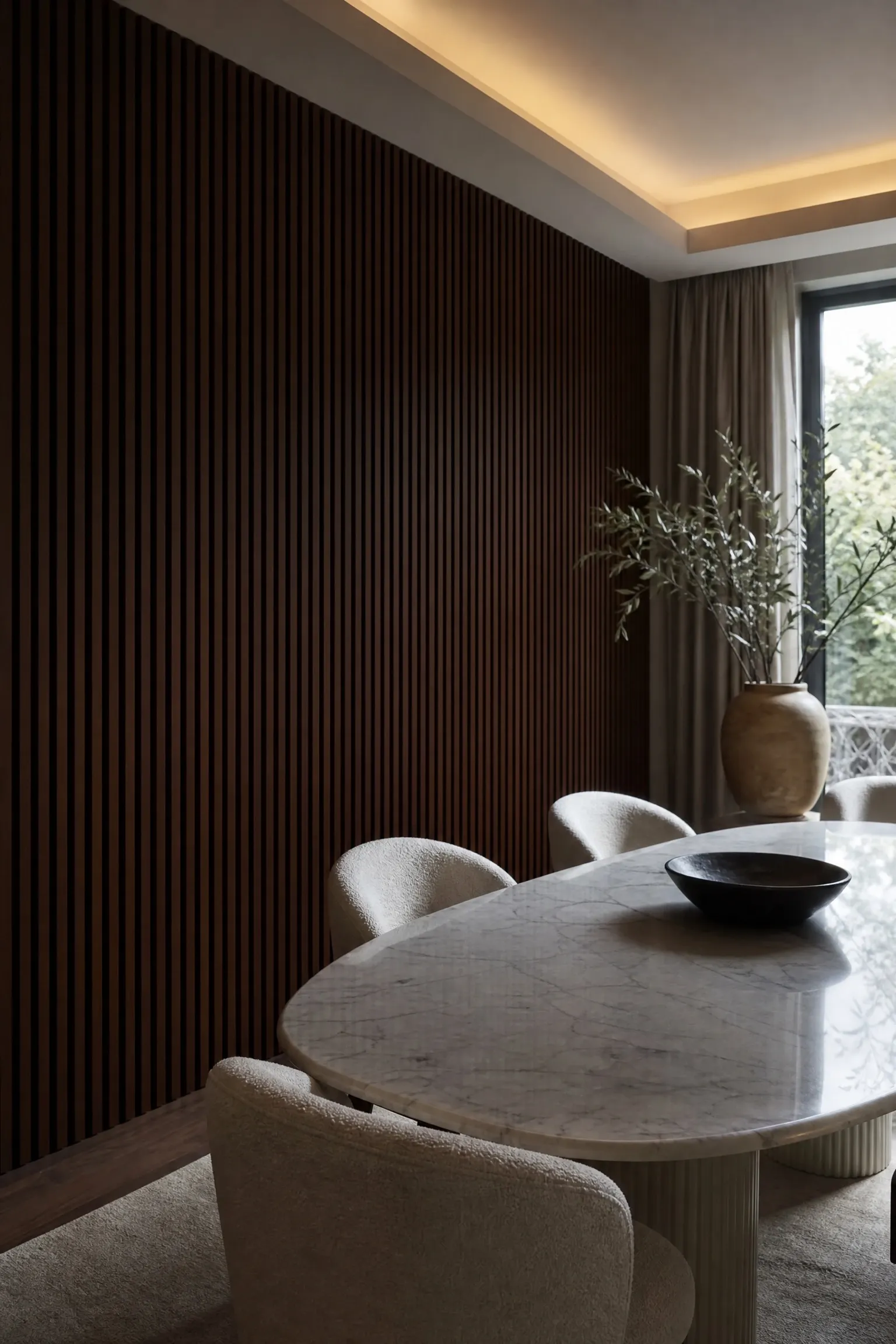
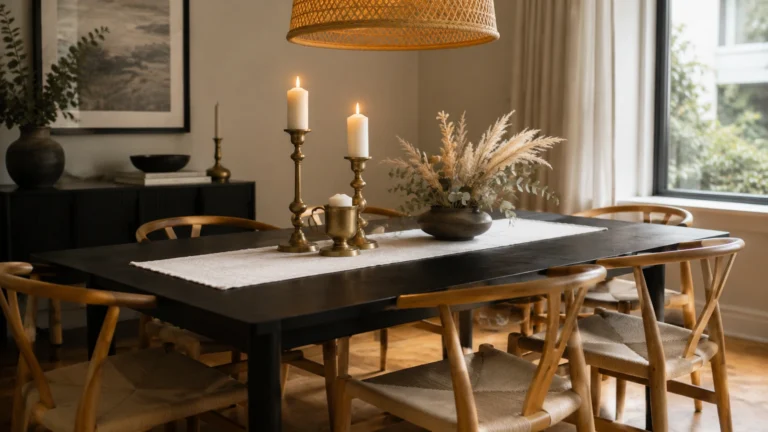
A wood slat accent wall uses thin timber strips mounted vertically or horizontally on a backing panel to create a clean, textured surface that sits somewhere between architecture and furniture. Dark-stained slats in ebony, dark walnut, or smoked oak create a dining room accent wall with real visual gravity, and in practice they work best in rooms with enough natural light to prevent the dark tones from making the space feel smaller. The material naturally absorbs sound, which is a genuine practical benefit in a dining room where conversation and ambient noise can bounce off hard surfaces. Pair with a light-colored marble or pale stone dining table to contrast the dark wood, and choose dining chairs in cream boucle or natural linen to keep the seating from disappearing against the wall. Mid-range investment with readily available materials, and a manageable DIY project for someone comfortable with basic carpentry tools.
Designer Tip: Leave a small gap between the back panel and the wall before mounting so that any moisture or temperature changes do not cause the wood to warp over time.
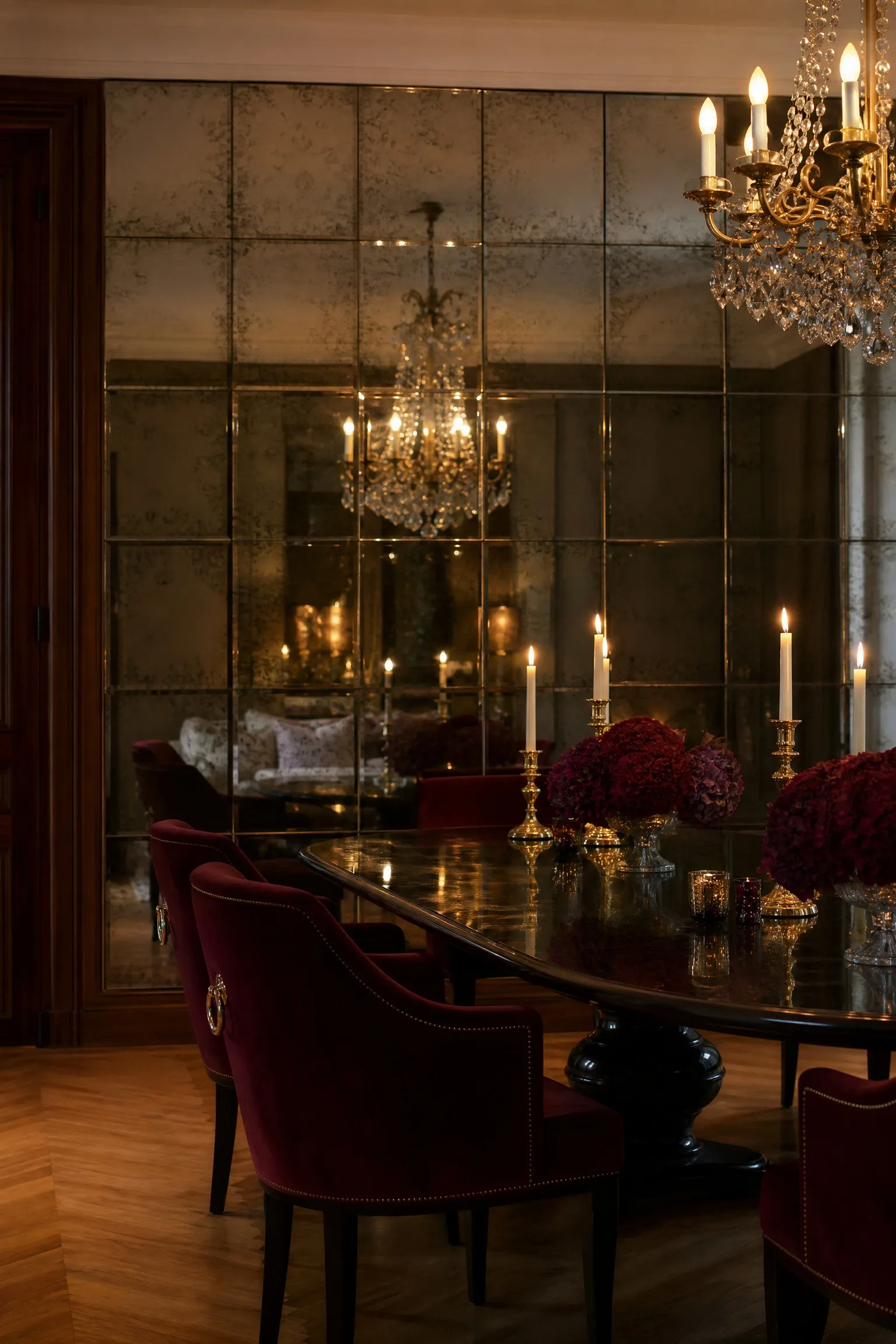
Antique mirror tiles create a dining room accent wall that is simultaneously glamorous and atmospheric. Unlike plain mirror, antique mirror has a slightly foxed or smoked finish that diffuses reflections rather than showing them with crystal clarity, which means it adds depth and sparkle to a room without making you feel like you are dining in a gym. Apply antique mirror tiles in a grid pattern across the full wall behind the dining table, or use a herringbone or staggered brick layout for a more eclectic look. Pair with a rich velvet upholstered dining bench, a dark wood or lacquered table, and a chandelier that will reflect beautifully in the mirror surface. This treatment works particularly well in dining rooms with limited natural light because the reflective surface bounces whatever light is present around the space more effectively than any paint color could. A professional installation is recommended since mirror tiles require precise leveling and proper adhesive.
Designer Tip: Mix antique mirror tiles with a small number of plain mirror tiles to add variation in the reflective quality and prevent the wall from looking too uniform.
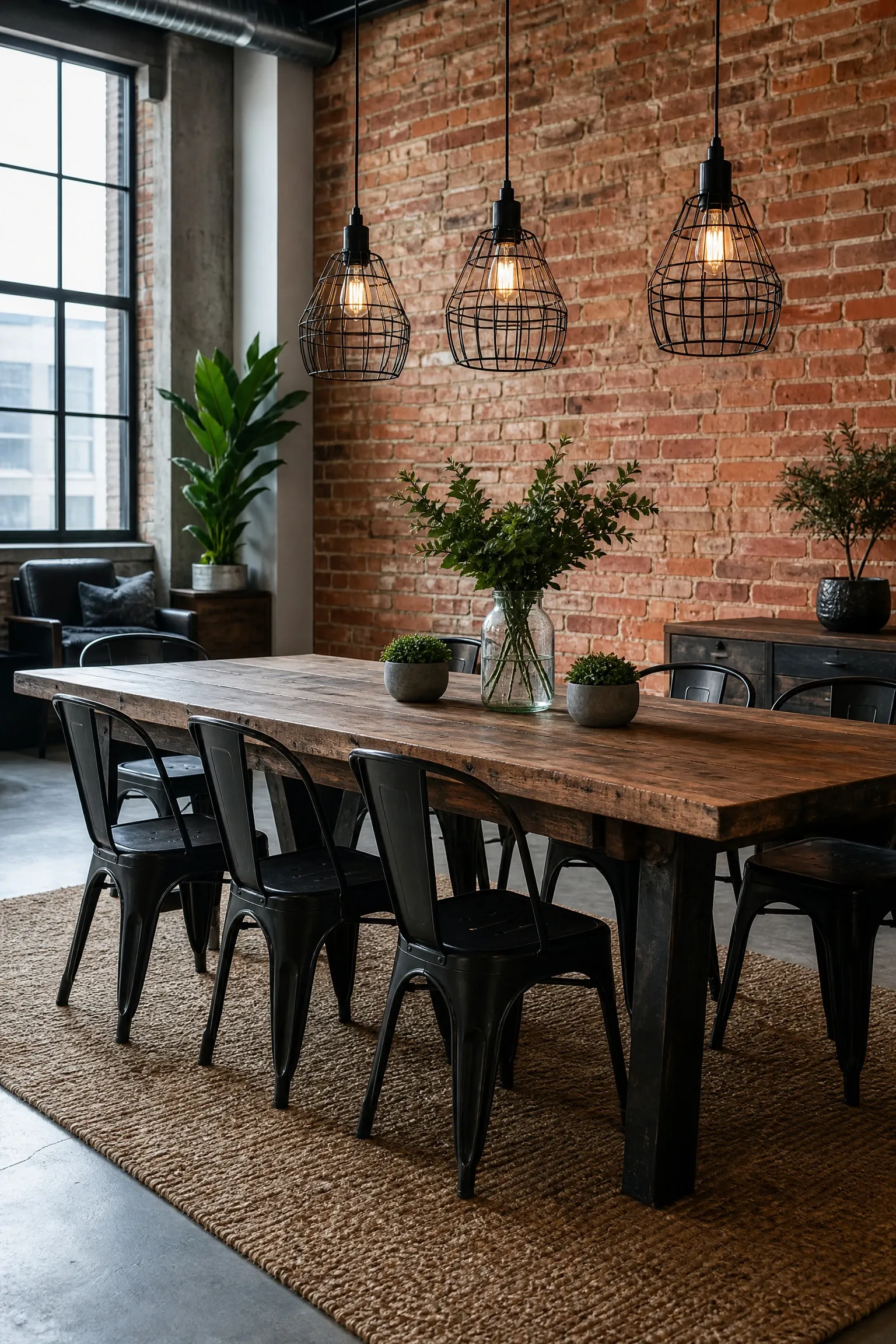
Exposed brick in a dining room brings a raw, honest material quality that no other treatment quite matches. The irregular texture of brick absorbs sound, adds warmth, and works across a surprisingly wide range of dining room styles, from urban industrial to relaxed Mediterranean. If your home does not have exposed brick behind the drywall, brick veneer panels are a realistic and increasingly convincing alternative that can be applied over any flat wall surface. For an industrial dining room, pair brick with a reclaimed wood dining table, black metal pendant cages, and leather or canvas dining chairs. For a warmer, more rustic feel, choose a lighter brick tone and pair it with a round farmhouse table, mismatched wooden chairs, and woven linen seat cushions. One thing to be aware of with real exposed brick: the surface is porous and will need sealing to prevent dust and moisture from affecting the room over time.
Designer Tip: Seal real exposed brick with a matte brick sealer rather than a gloss product so the wall keeps its natural, textured look without developing an artificial sheen.
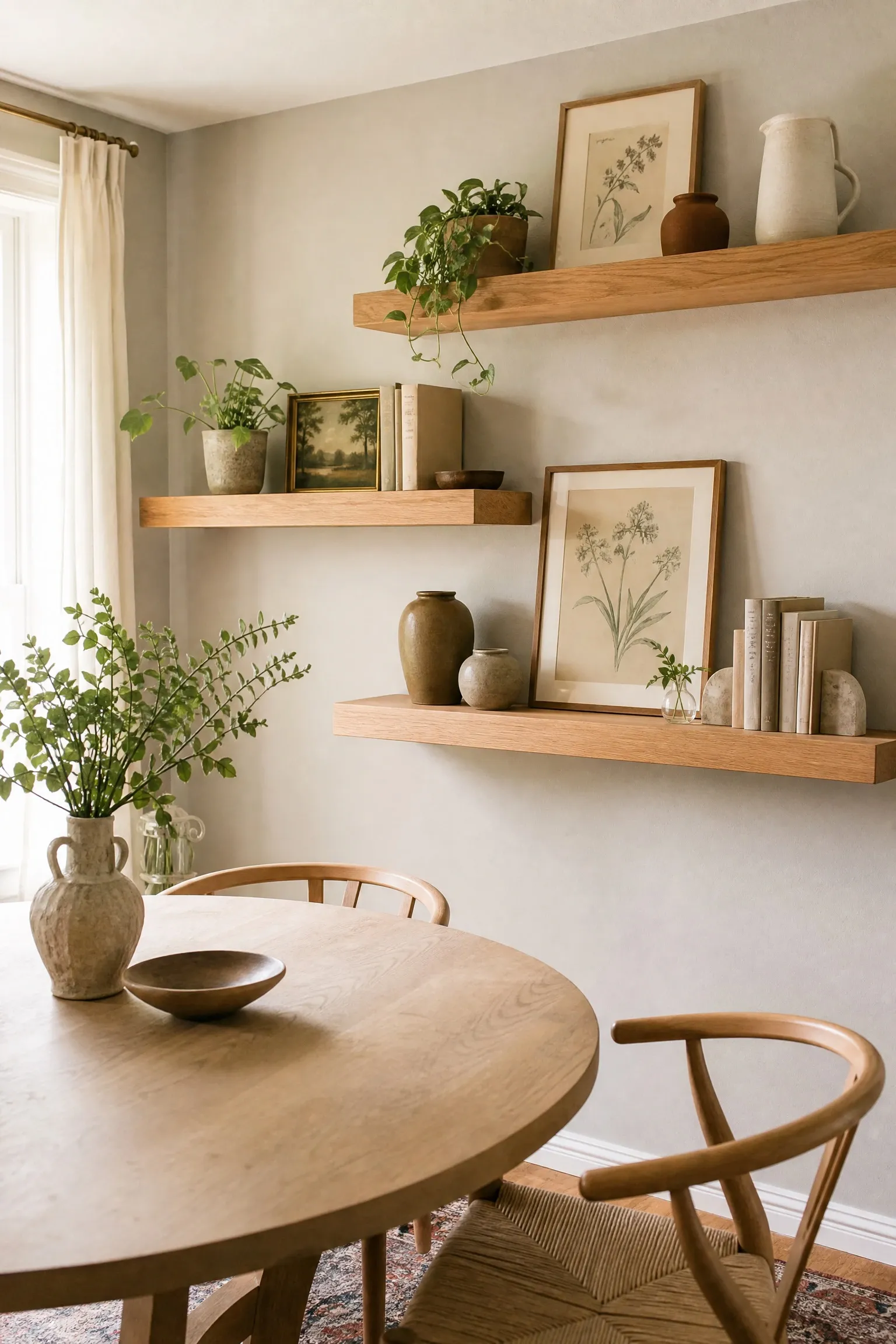
A gallery wall built around floating shelves is a step beyond the typical framed art arrangement because it adds dimension, function, and the ability to change the display over time. Mount two or three long floating shelves at varying heights on the accent wall and use them to hold a mix of framed art, ceramic vessels, trailing plants, sculptural objects, and books with attractive spines. Frame a few pieces and lean them casually against the shelves rather than hanging everything flat against the wall, as this layered approach looks more considered and less like a school art display. For a dining room, choose objects that connect to the experience of eating and gathering, such as a collection of vintage wine bottles, handmade pottery, or botanical art prints. Keep the overall color palette cohesive across the objects to prevent the wall from feeling cluttered. This is one of the most budget-friendly ideas on this list and the easiest to update seasonally.
Designer Tip: Use shelves at three different depths if possible. A deeper base shelf, a medium middle shelf, and a narrow top shelf creates a visual hierarchy that feels intentional rather than random.
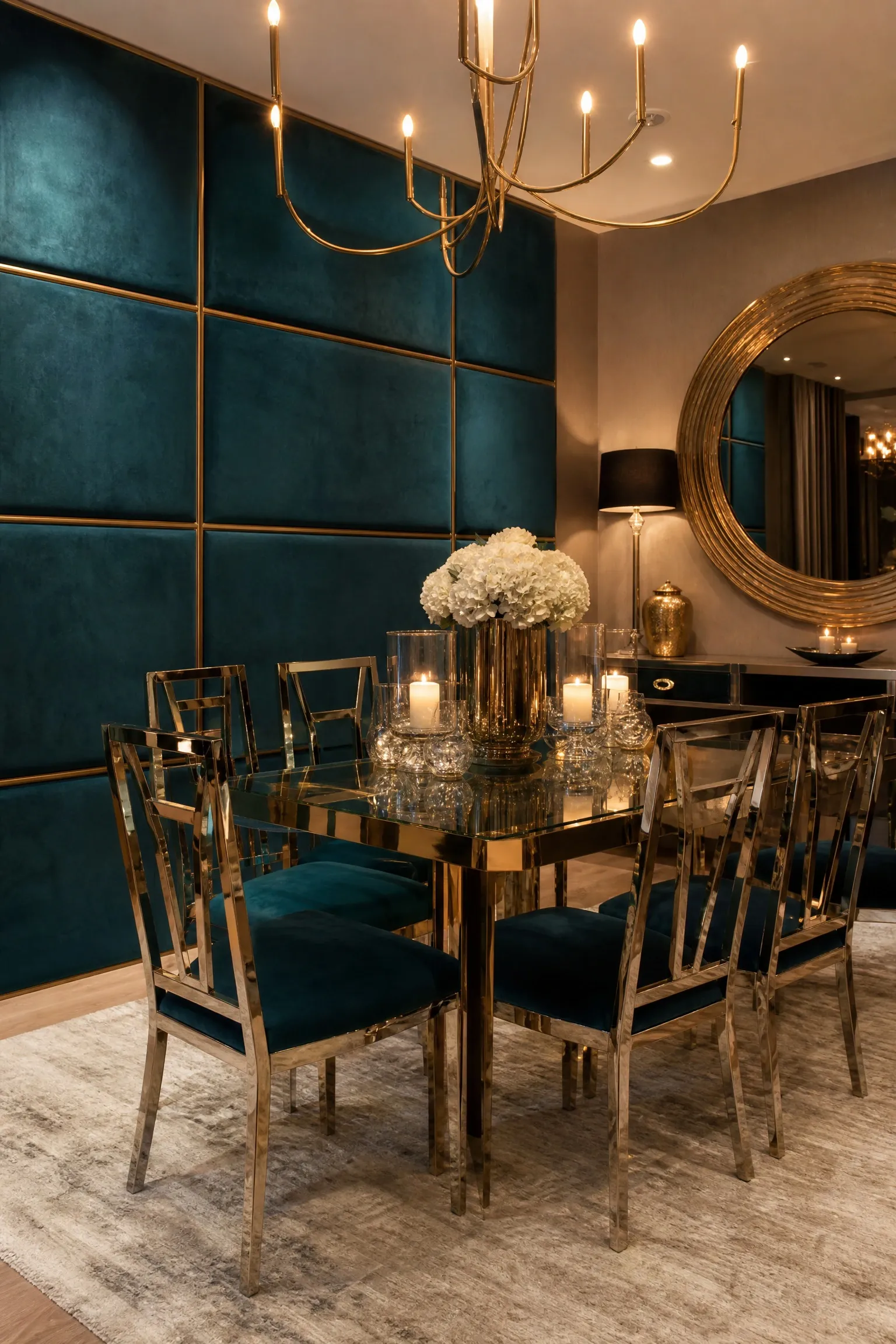
A fabric-upholstered accent wall is one of those ideas that sounds unusual until you see it done well, and then it makes complete sense. Stretched fabric panels mounted directly to the dining room wall add softness, acoustic warmth, and a level of texture that no paint or tile can replicate. For dining rooms, choose fabrics that are durable and easy to spot-clean, such as tight-weave linen, performance velvet, or a woven jacquard. Deep jewel tones work particularly well since they create a cozy, intimate atmosphere suited to evening dining. Mount the panels in a grid of equal-sized rectangles with small trim strips between them to give the wall a structured, tailored look rather than a loosely draped appearance. Pair with a glass or lucite dining table to keep the visual weight balanced, and use metallic or mirrored hardware throughout the room to add contrast against the soft fabric surface. This is a higher-effort DIY project but the acoustic benefits are a genuine bonus in a room designed for conversation.
Designer Tip: Apply the fabric over a thin layer of foam batting before stretching it over the frame to create a subtly padded surface that adds both texture and a hint of softness.
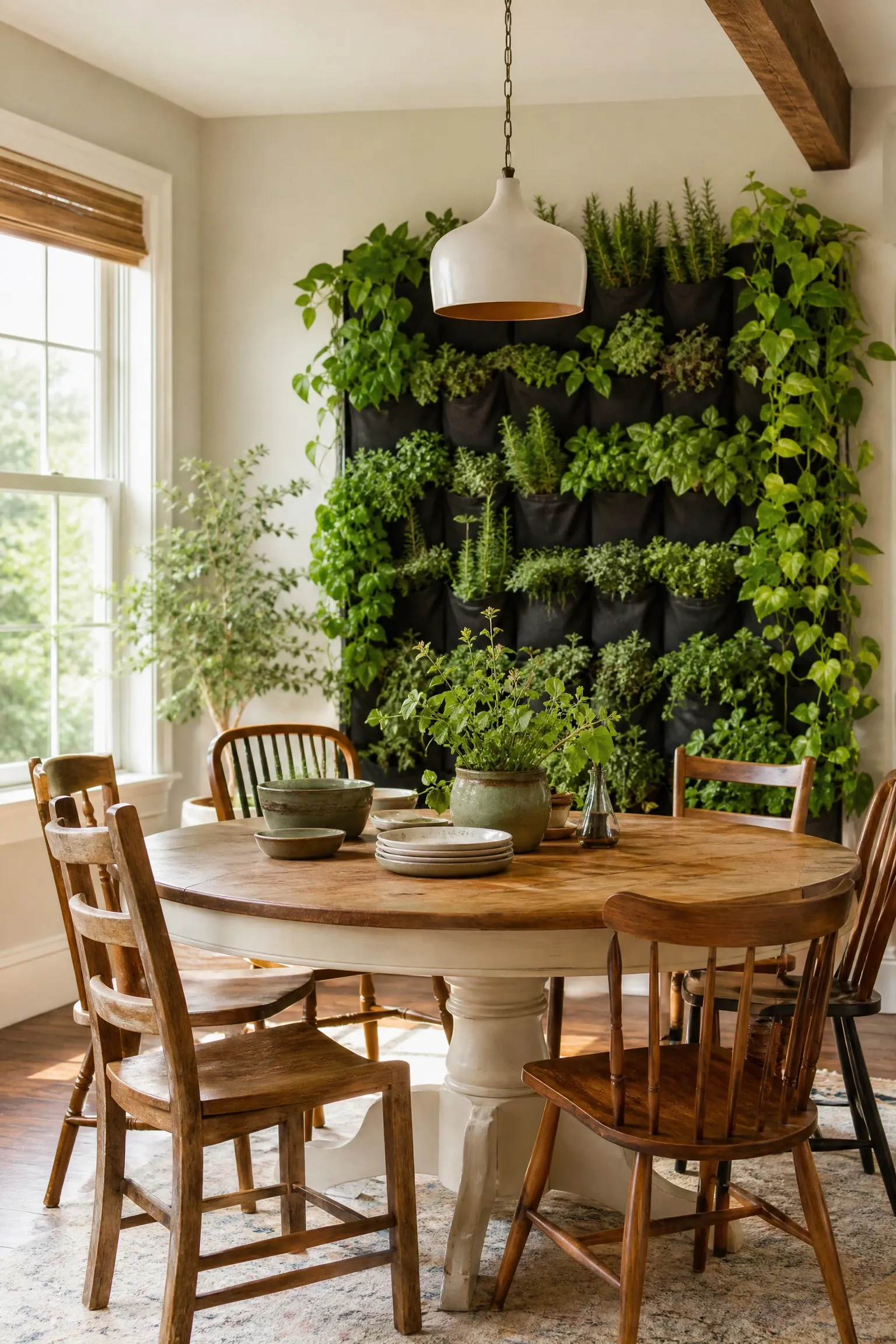
A living wall of plants or herbs in the dining room is ambitious, but when it is executed well it is genuinely one of the most memorable accent wall ideas available. The concept involves mounting a modular planting system directly onto the accent wall, populated with trailing plants, herbs, small ferns, or moss panels. For a dining room, a mix of culinary herbs like rosemary, thyme, and basil brings both visual and practical value. Pair with a farmhouse or Shaker-style dining table, ceramic pendant lights, and earthy tableware to lean into the organic, biophilic aesthetic. A key practical consideration: living walls require proper lighting (natural or supplemental grow lights), a reliable watering system, and a waterproofed wall surface behind the planting modules. Faux moss panels or preserved plant walls are a lower-maintenance alternative that still create the visual impact without the ongoing care requirements.
Designer Tip: Position the herb wall near a window where possible, or supplement with a simple grow light bar mounted discreetly above the planting area to keep the plants healthy long-term.
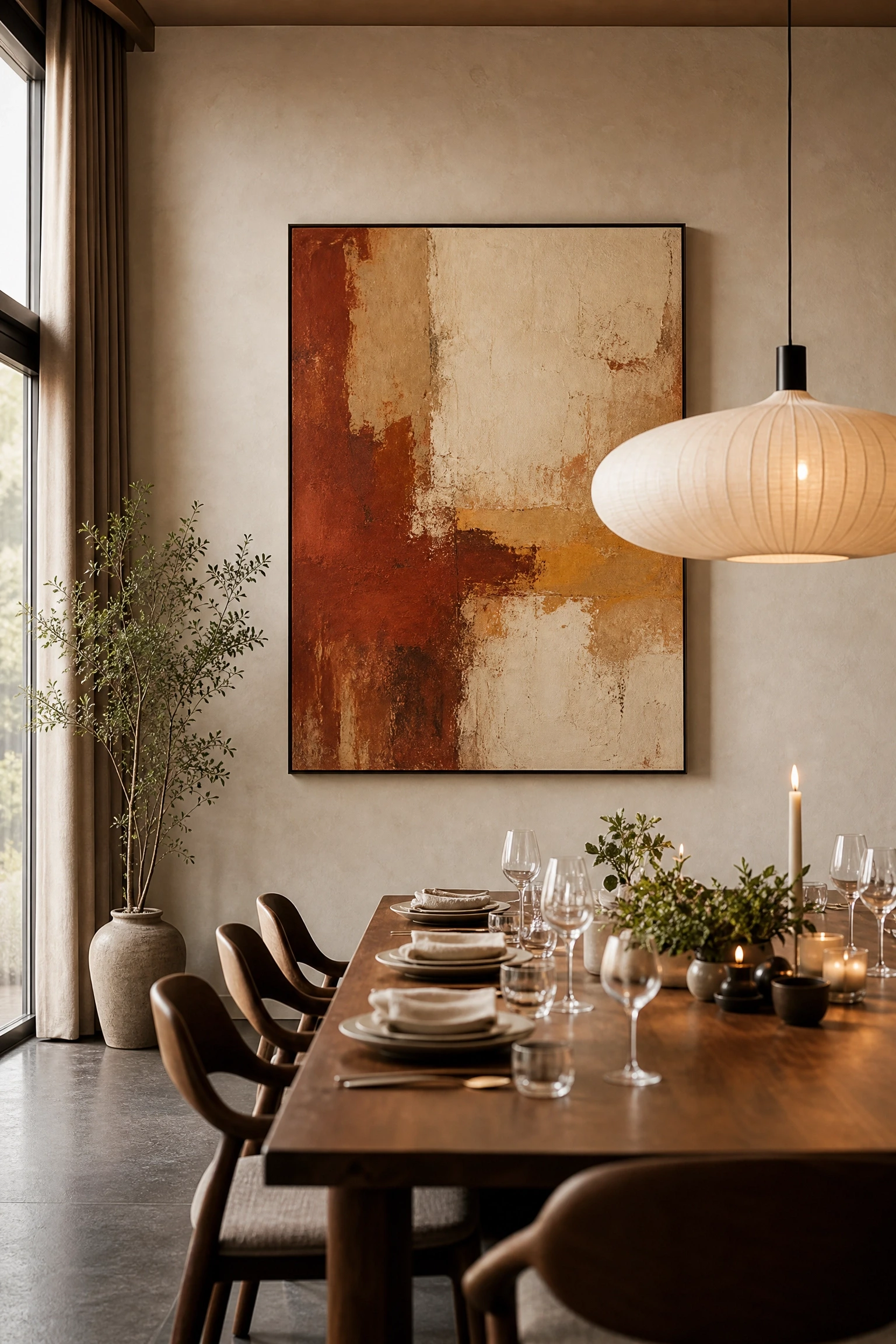
Sometimes the best accent wall treatment is not a material or a paint technique but a single oversized piece of art that commands the entire wall. One large-format painting, photograph, or print at a scale of three feet by four feet or larger does something that a gallery of smaller pieces cannot: it creates instant visual focus and makes the dining room feel like a collected, considered space rather than a collection of individual purchases. For the dining room, abstract art in warm earth tones or cool blues and greens tends to work across the widest range of furniture styles and table settings. Hang the piece so its center sits at approximately eye level when guests are seated rather than standing, which is usually lower than most people instinctively hang art. Budget note: original art at this scale can be expensive, but high-quality print-on-demand services and canvas printing companies allow you to source images from independent artists at a fraction of the cost of an original.
Designer Tip: Use a picture rail or French cleat system for very large, heavy pieces rather than standard wall anchors. They distribute the weight more evenly and allow for easy repositioning.
Wrapping It All Up
Your dining room accent wall is one of the highest-impact changes you can make to the space without touching the furniture, flooring, or ceiling. What this guide should have shown you is that there is no single right answer. The right accent wall is the one that fits your style, suits the proportions of your room, and works within your budget without cutting corners on the details that matter.
Start by deciding how permanent you want the treatment to be. Limewash paint and wallpaper are easier to undo than plaster or wainscoting. Then think about your lighting, because every treatment on this list looks different under warm candlelight than it does under cool overhead fluorescents. The final step is to think about the wall from the perspective of someone seated at the table, since that is the viewpoint your guests will have for most of the meal.
Whether you go with the depth and drama of fluted wood panels, the organic warmth of a terracotta finish, or the simple confidence of one enormous piece of art, the most important thing is that the wall feels like it belongs there. Take your time choosing, commit once you have decided, and do not be afraid to go a little bolder than feels comfortable. The dining room is a space built around gathering and conversation, and a wall that gives people something to talk about is never a bad idea.
Frequently Asked Questions
Which wall in the dining room should be the accent wall?
The best wall to accent is typically the one you see first when entering the room, or the wall directly behind the main dining table. These are the walls that get the most visual attention during a meal. Avoid walls with multiple doors, windows, or heavy foot traffic, as these break up the surface and reduce the impact of the treatment.
Do accent walls still look current in 2025?
Yes, accent walls are still very much a current and relevant design choice when they are executed with intention. The key shift from the early 2000s trend is that modern accent walls rely on texture, material, and architectural detail rather than just a single contrasting paint color. Limewash finishes, fluted panels, landscape murals, and fabric walls are all gaining ground as alternatives to basic painted accent walls.
What is the best accent wall treatment for a small dining room?
For smaller dining rooms, opt for treatments that add depth without bulk. Limewash paint, geometric wallpaper in warm neutrals, antique mirror tiles, and picture frame molding all work well in compact spaces because they add visual interest without making the room feel heavier. Avoid very dark paint combined with thick 3D panels in a small room as the combination can make the space feel closed in.
Can I do a dining room accent wall myself, or do I need a professional?
Many of the ideas in this article are genuinely achievable as DIY projects over a weekend. Paint treatments including limewash, color blocking, and standard wallpaper are all manageable for a careful homeowner with proper prep. Shiplap, floating shelves, picture frame molding, and peel-and-stick murals are also good DIY candidates. Venetian plaster, antique mirror tile installation, and living plant walls are better handled by professionals due to the precision and technical knowledge involved.
How do I choose a color for my dining room accent wall?
Start with the furniture and flooring you already have and identify the undertones in those pieces. Warm brown and honey-toned wood pairs well with terracotta, sage, or deep navy. Cool-toned grey or white furniture opens up more options including slate, charcoal, and deep teal. Always test paint colors as large swatches on the actual wall and observe them at different times of day before committing, as dining room lighting at night is often very different from the natural light during the day.
How much does a dining room accent wall typically cost?
The cost range is wide. A simple paint treatment using limewash or color blocking can cost as little as 50 to 100 dollars in materials. Peel-and-stick wallpaper or a mural print typically falls in the 150 to 400 dollar range depending on the size of the wall. Shiplap, board-and-batten, and picture frame molding materials run 200 to 600 dollars for an average dining room wall. Higher-end treatments like Venetian plaster, antique mirror tile, fluted wood panels, or a living wall can range from 800 to several thousand dollars, especially with professional installation included.