Most bedrooms do not fail because of a bad paint color or a cheap headboard. They fail because everything in the room was chosen one piece at a time, with no plan for how it would all sit together. A lamp here, a rug there, a bedspread bought on sale two years ago, and the room feels like a collection of separate decisions rather than one calm space. Fixing this rarely means starting over. It usually means adjusting how light falls, how furniture is scaled to the space, and how textures and colors talk to each other.
The twenty four ideas below come from real styling work, not just trend lists. Some are quick weekend fixes, others are worth planning around a slightly bigger budget, but every one is something you can act on today. Read through them, pick the two or three that speak to your space, and resist the urge to do all of them at once. A bedroom that changes slowly, with intention, almost always ends up looking better than one that changes all at once.
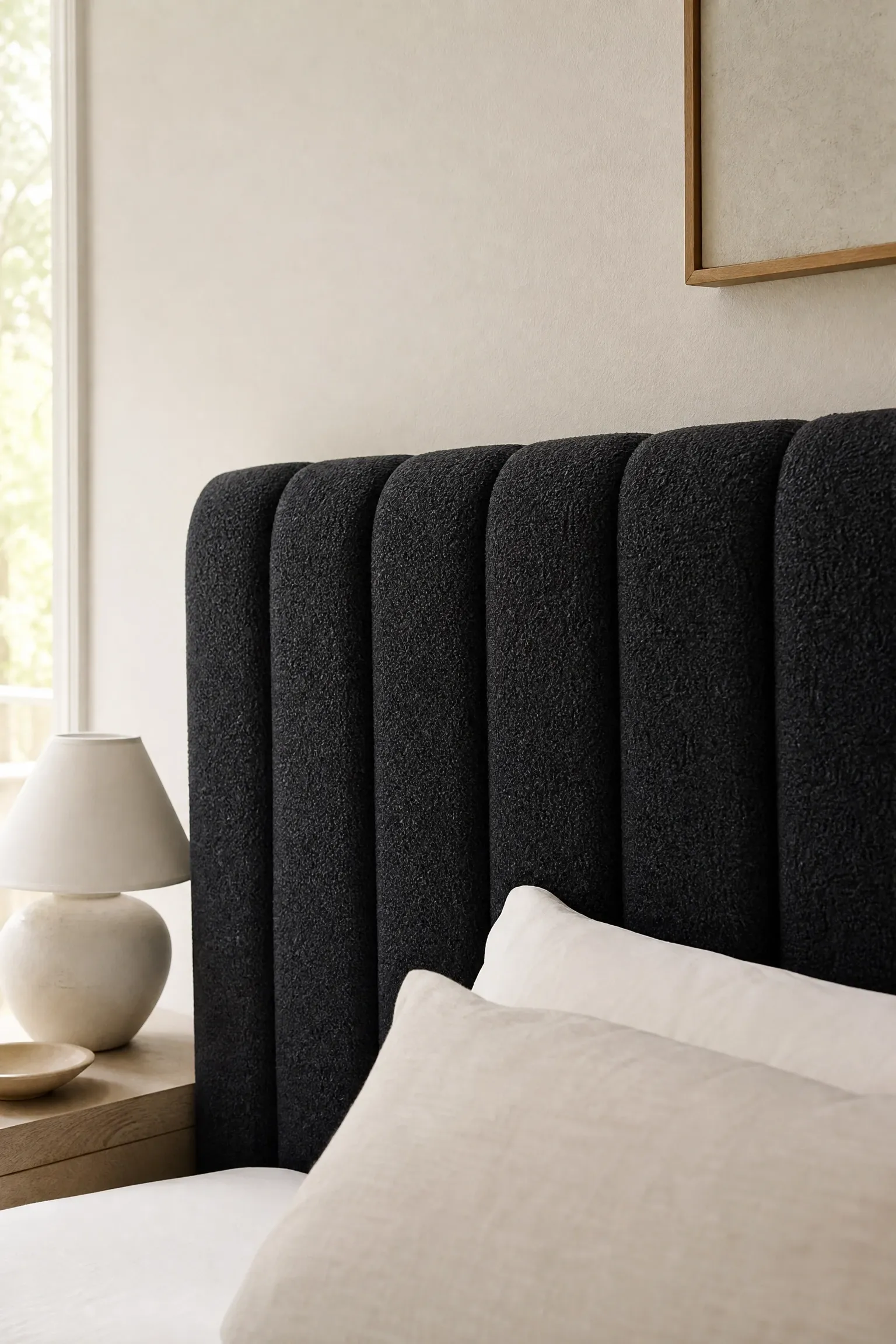
A friend of mine lived with a bare mattress against the wall for three years because she could not decide on a headboard, and the room never felt finished. The headboard is the largest visual anchor in a bedroom, so an upholstered option in boucle, linen, or channel-tufted velvet does more to set the tone than almost anything else you can buy. Keep the frame proportional to your bed; an oversized headboard visually swallows the room, while an undersized one leaves awkward negative space above the pillows.
Designer Tip: If a full upholstered headboard is out of budget, a wood-frame version with a woven cane panel gives a similar grounding effect for a fraction of the price.
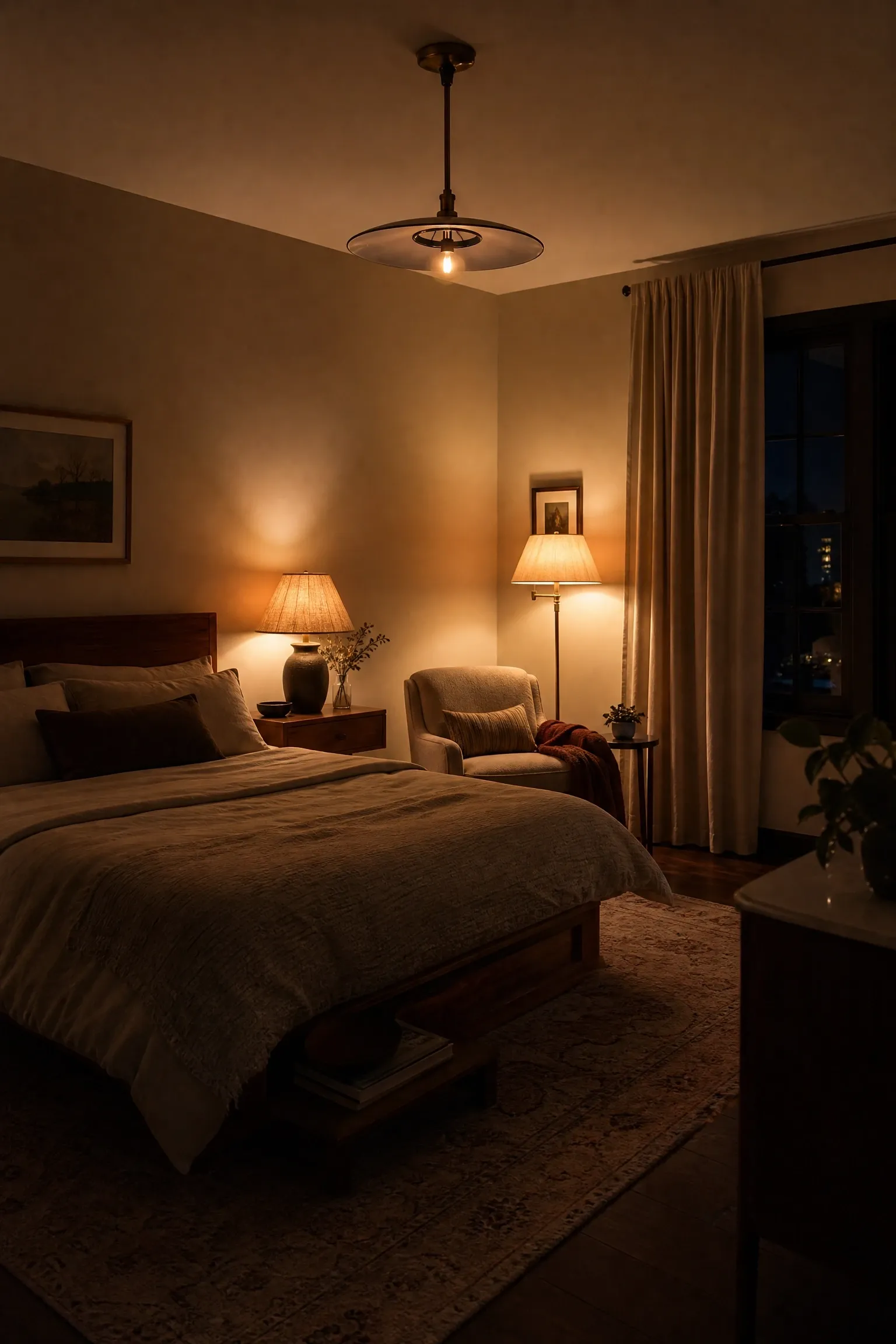
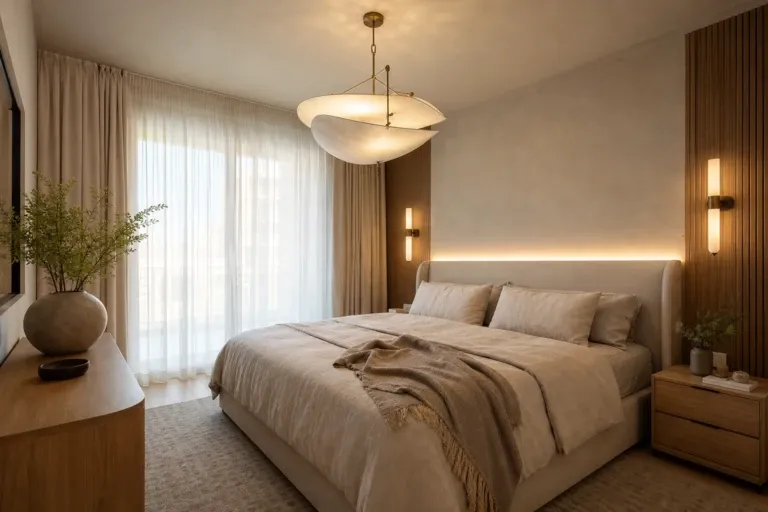
Walk into most bedrooms at night and you will find one overhead fixture doing all the work, which is why so many rooms feel flat after dark. Layered lighting means combining at least three sources: ambient light from the ceiling, task light from bedside lamps, and accent light from a floor lamp or LED strip behind the headboard. In practice, this works best when each source is on its own switch or dimmer, so you can shift the mood from bright and functional to warm and low. This is one of the more affordable upgrades here, since dimmer switches and two secondhand lamps can change the room for under a hundred dollars.
Designer Tip: Position bedside lamps at shoulder height when sitting up in bed, not on a low nightstand where light shines into your eyes.
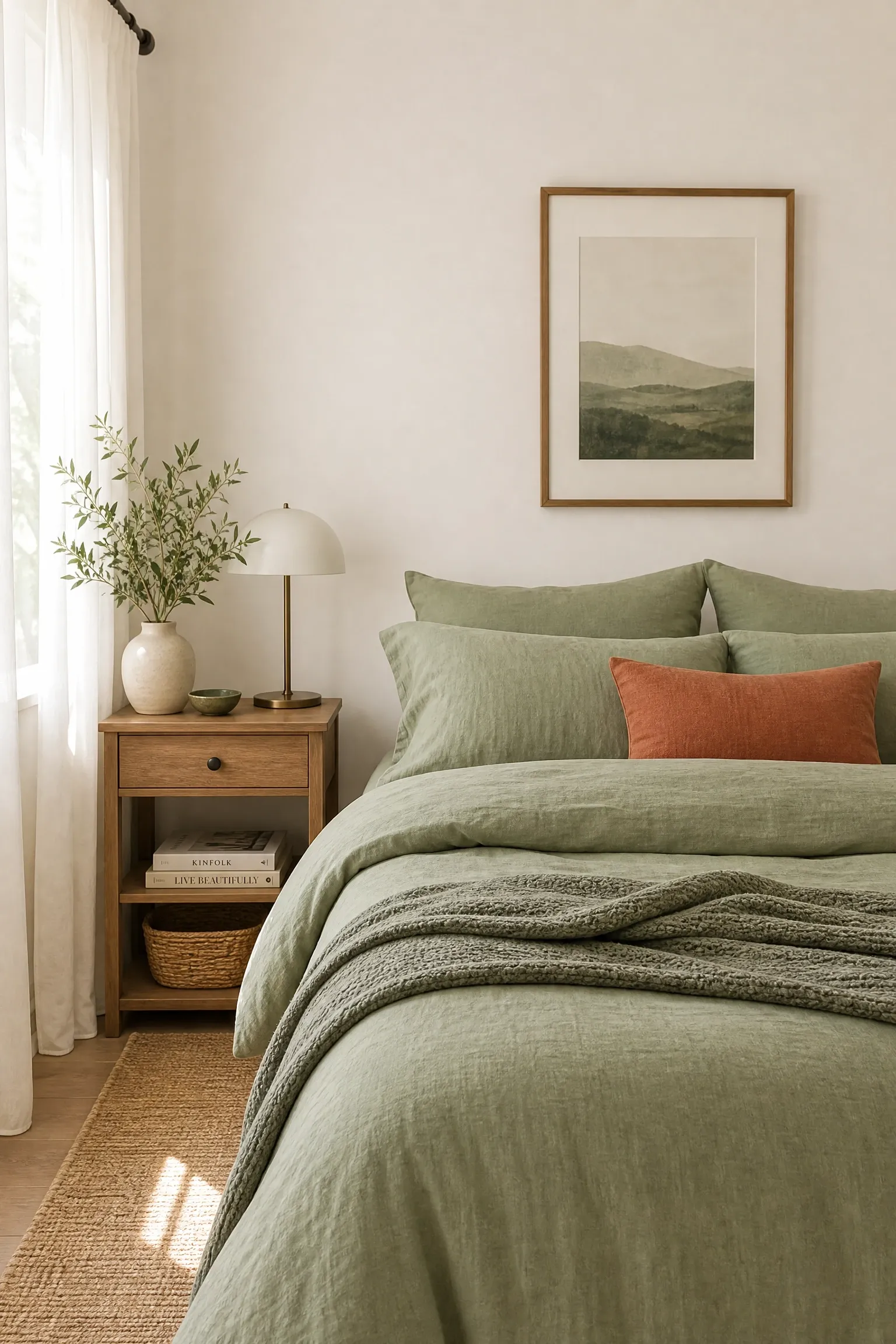
I once helped repaint a bedroom that had a beige wall, a navy accent wall, gold curtains, a burgundy rug, and green pillows, and the room felt exhausting before you even noticed the furniture. A restrained palette built around one dominant neutral and two supporting colors gives the eye somewhere to rest, which matters more in a bedroom than almost anywhere else. Try a warm white or soft greige on the walls, let bedding introduce a muted color like sage or dusty blue, then use a third accent sparingly through a chair or artwork. An all-neutral room can occasionally feel flat, so include one saturated element for contrast.
Designer Tip: Test paint swatches on the wall for two full days, since bedroom light shifts between morning and evening and a color that looks right at noon can turn muddy by lamplight.
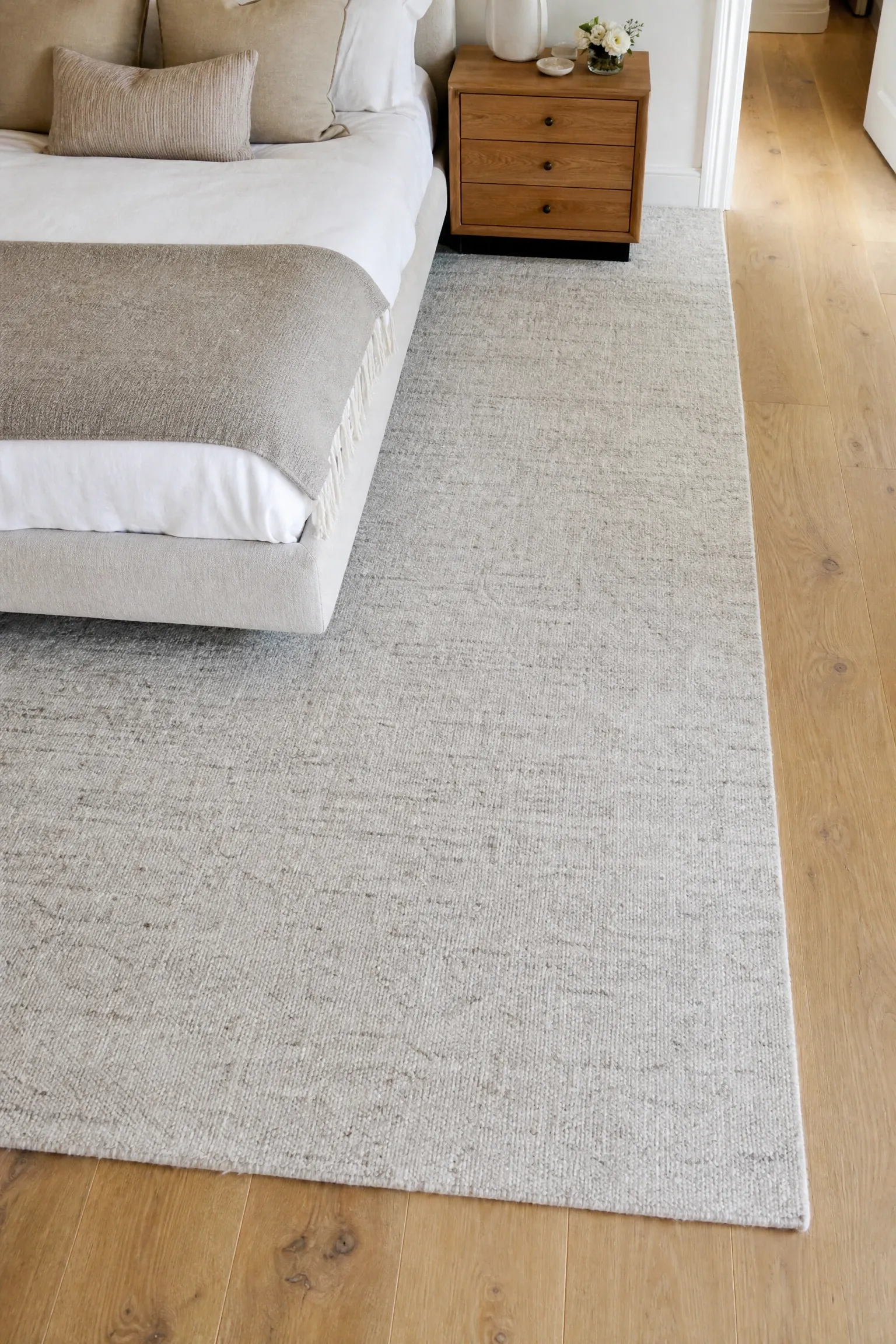
A common mistake is placing a small rug under just the nightstands, leaving the bed floating on bare floor, and the layout ends up looking unplanned. Size the rug so it extends eighteen to twenty four inches beyond each side of the bed, which grounds the furniture grouping. A low-pile wool or jute rug works well as a base layer and holds up to daily traffic, while a plush high-pile rug feels wonderful underfoot but shows wear faster in busy households. This is one idea where spending a little more pays off, since a poorly sized cheap rug often looks worse than no rug at all.
Designer Tip: If budget only stretches to a smaller rug, place two matching runners along each side of the bed instead of one central rug that falls short.
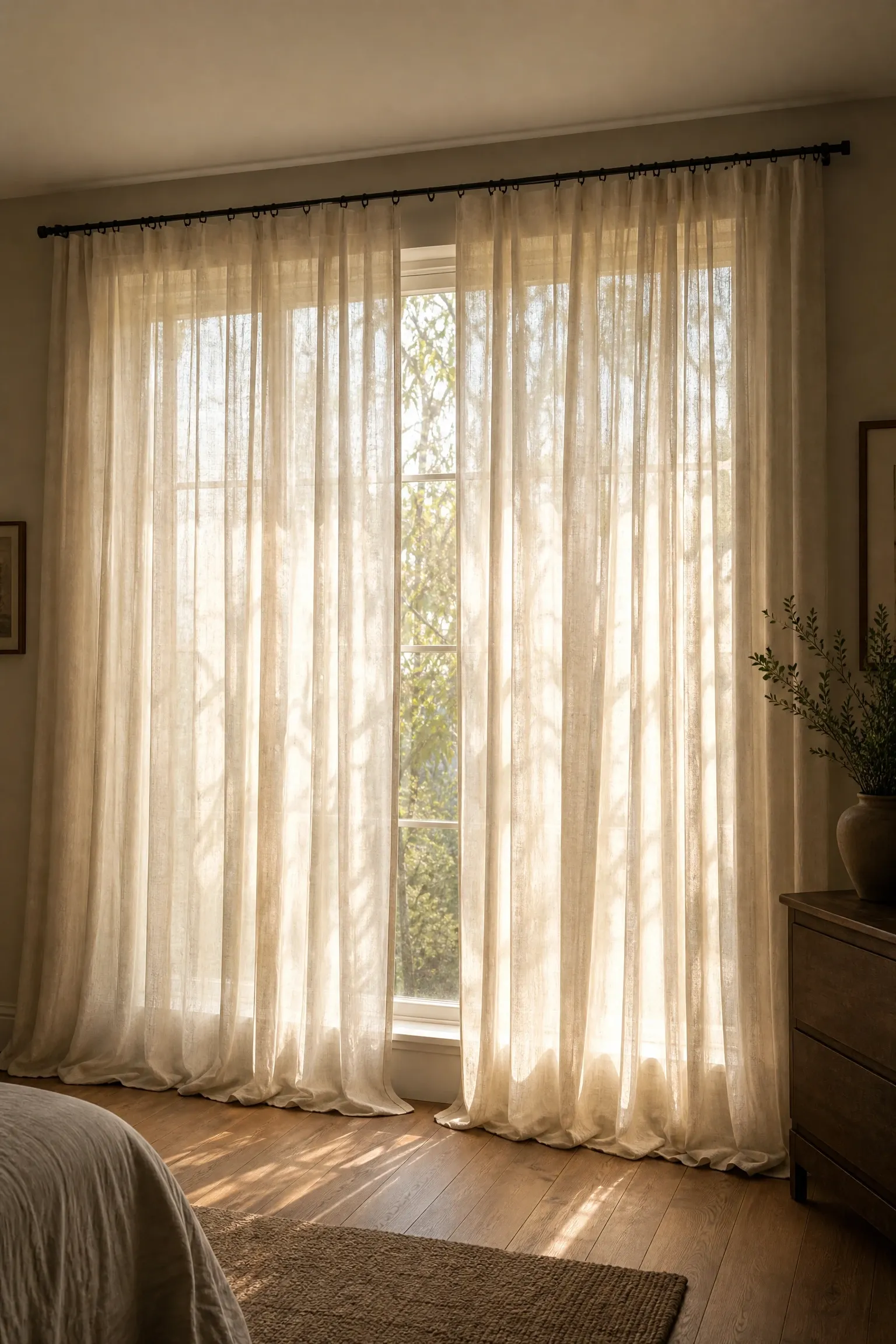
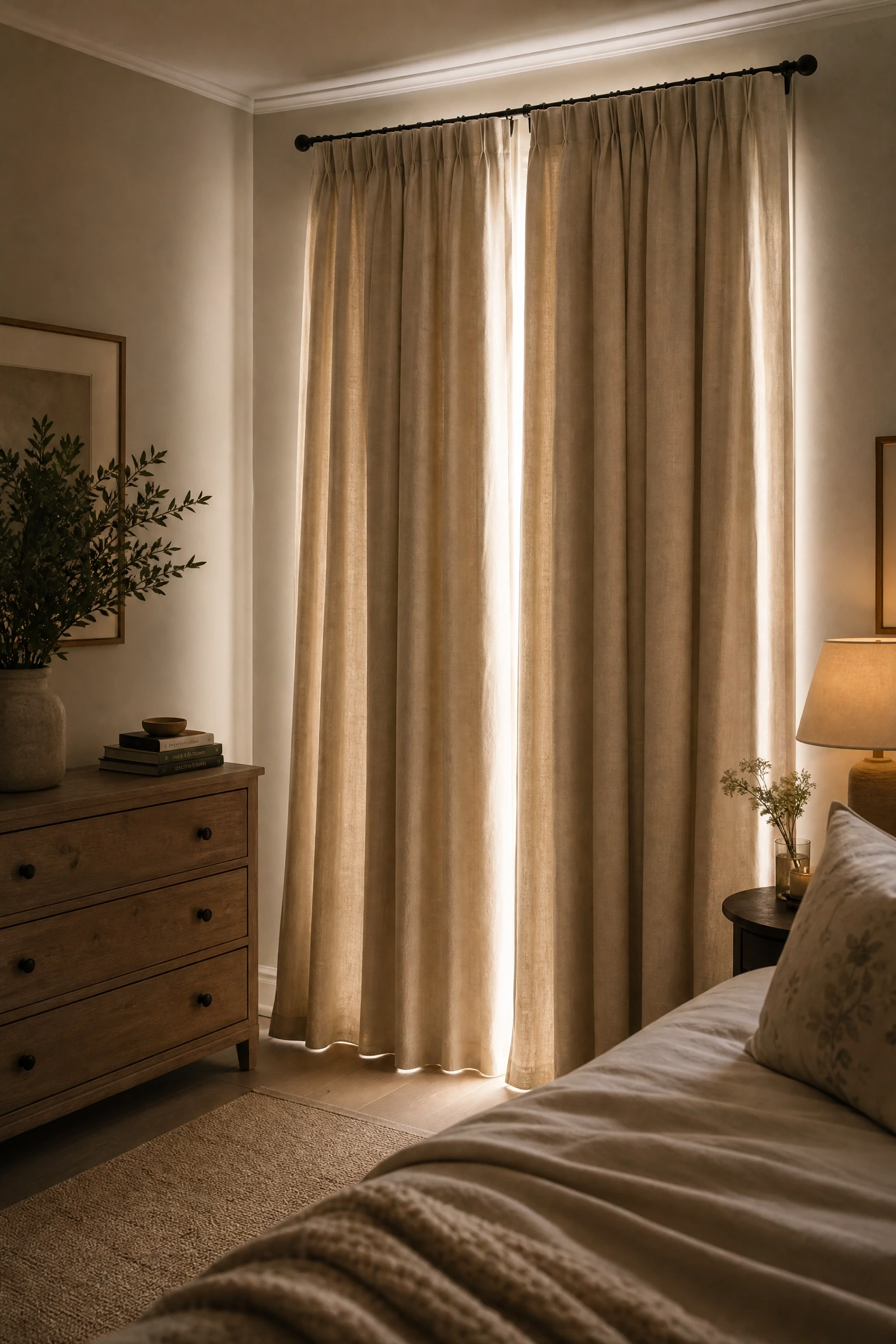
Short curtains that stop above the windowsill are one of the fastest ways to make a bedroom feel cramped, even in a decent sized room. Hanging rods four to six inches above the window frame and letting panels just kiss the floor gives the illusion of taller ceilings and a more finished window. Linen or a linen-cotton blend drapes softly and filters light in a way that feels more expensive than it usually is, while heavier velvet adds warmth to a room with wood or stone flooring. This is a genuinely low-cost fix, since rods and ready-made panels can update an entire window for under two hundred dollars.
Designer Tip: Mount the rod wider than the window frame so curtains can stack fully open during the day.
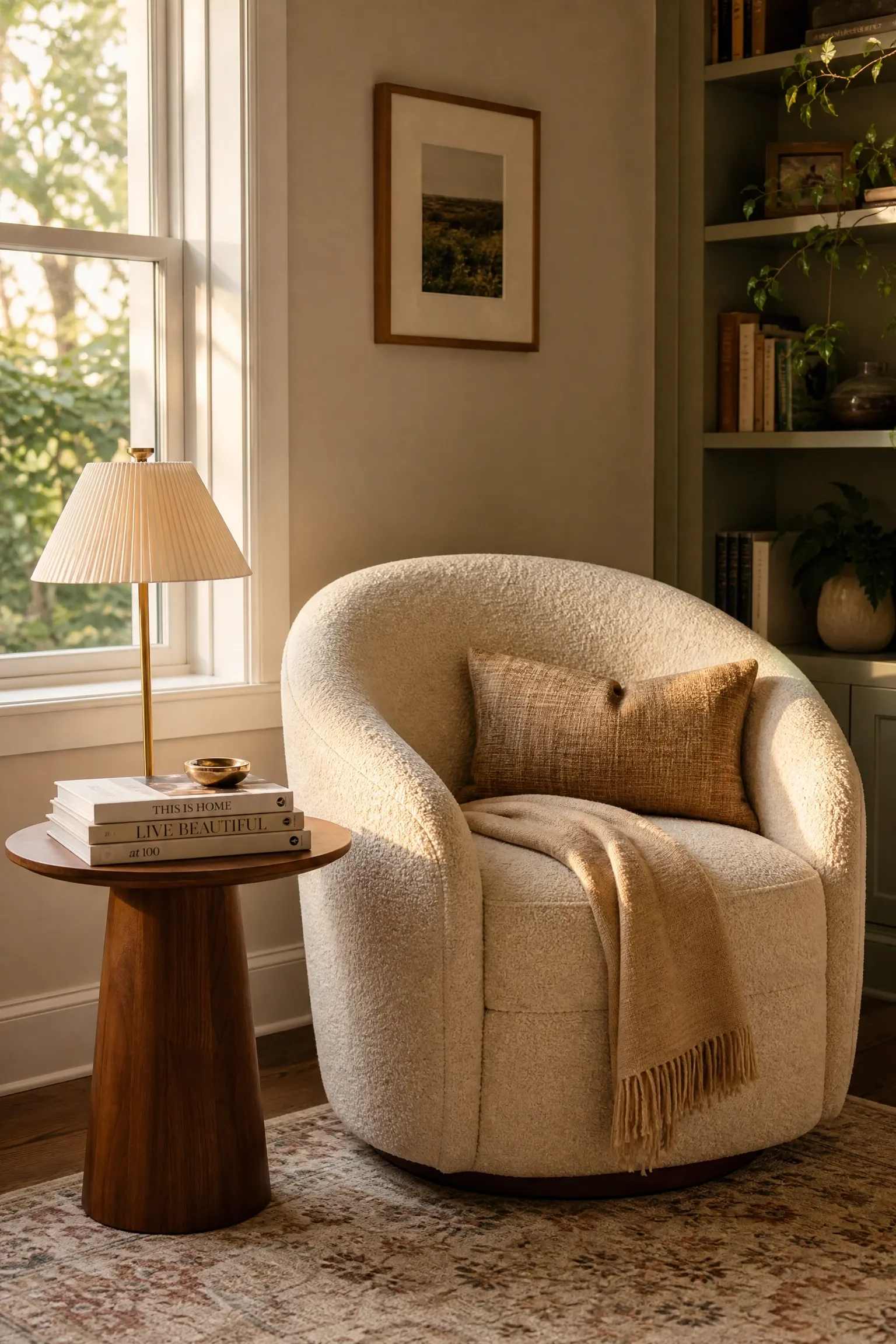
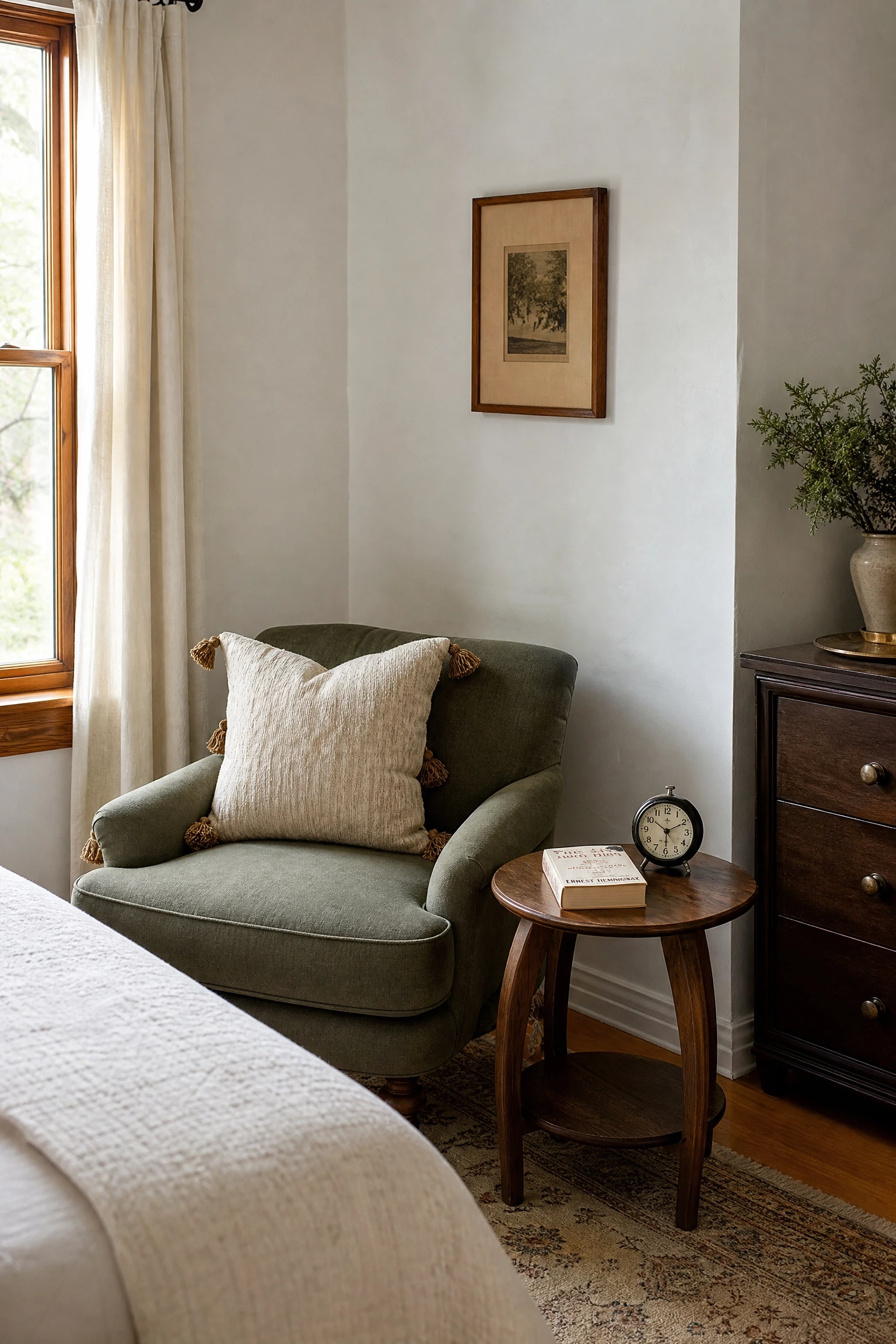
A client kept saying she wanted to read more but never did, and it turned out there was nowhere comfortable to sit except the bed, which just made her sleepy. A single accent chair, even a small slipper chair or curved bouclé armchair, paired with a slim side table and floor lamp creates a secondary zone that gives the bedroom more than one function. Position it near a window if possible, since daylight makes the corner more inviting than one pushed into a dim spot. A secondhand chair reupholstered in a durable fabric makes this achievable on a tight budget.
Designer Tip: Angle the chair slightly toward the window or room rather than facing it flush against the wall, which makes the corner feel intentional rather than accidental.
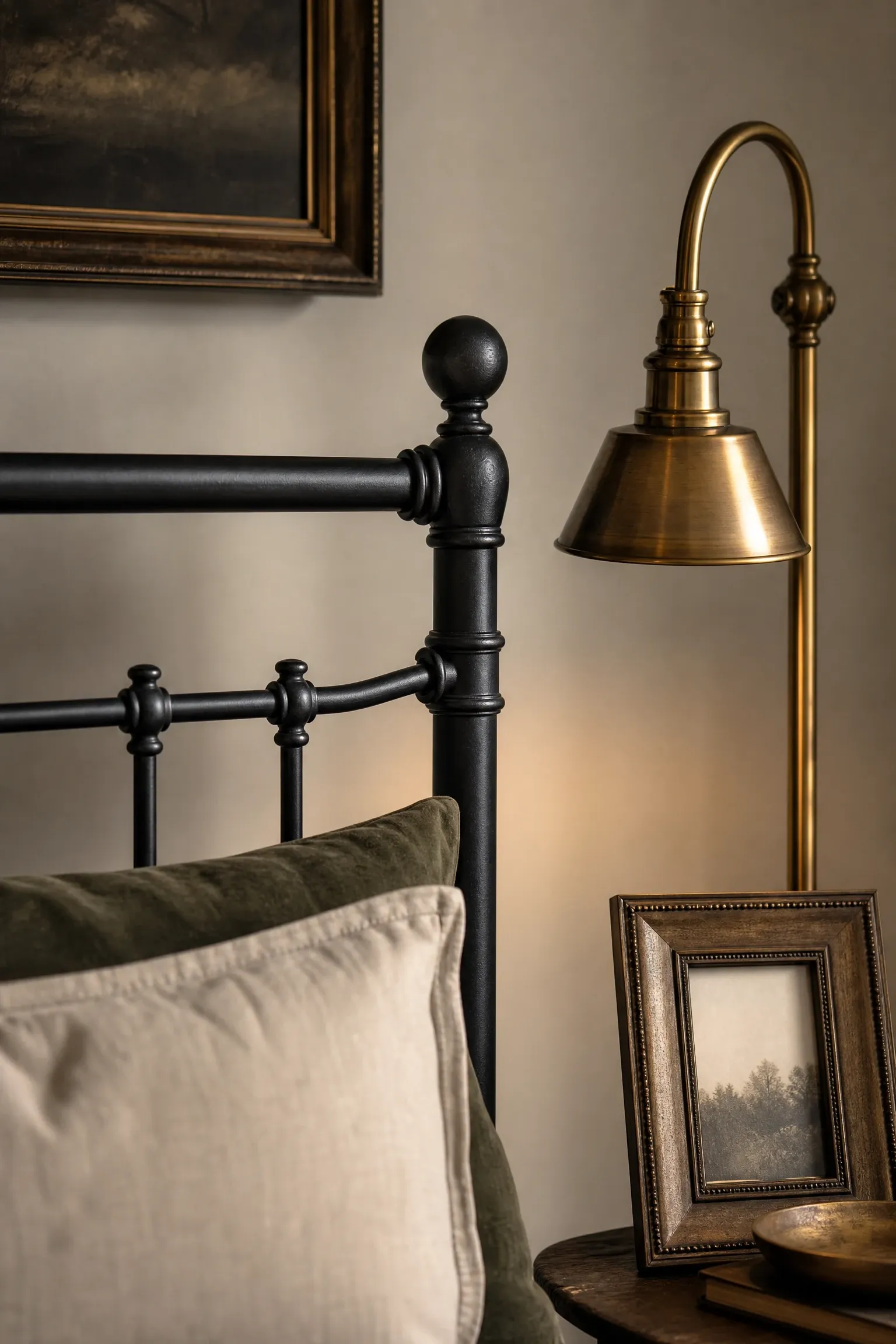
For years the advice was to match every metal finish in a room, which is why so many bedrooms have identical brushed nickel on every lamp, handle, and frame. Mixing two warm-toned metals, like brass and bronze, or two cool-toned metals, like chrome and black steel, gives a room more depth without looking chaotic, as long as you stay within one color temperature family. A brass floor lamp next to a black metal bed frame reads as intentional, while brass next to chrome can feel like leftover pieces from different eras. Keep it to two finishes maximum, since three or more starts to look unplanned rather than considered.
Designer Tip: Start with whatever metal is already fixed in the room, like door hinges, and choose a second metal to complement it rather than fight it.
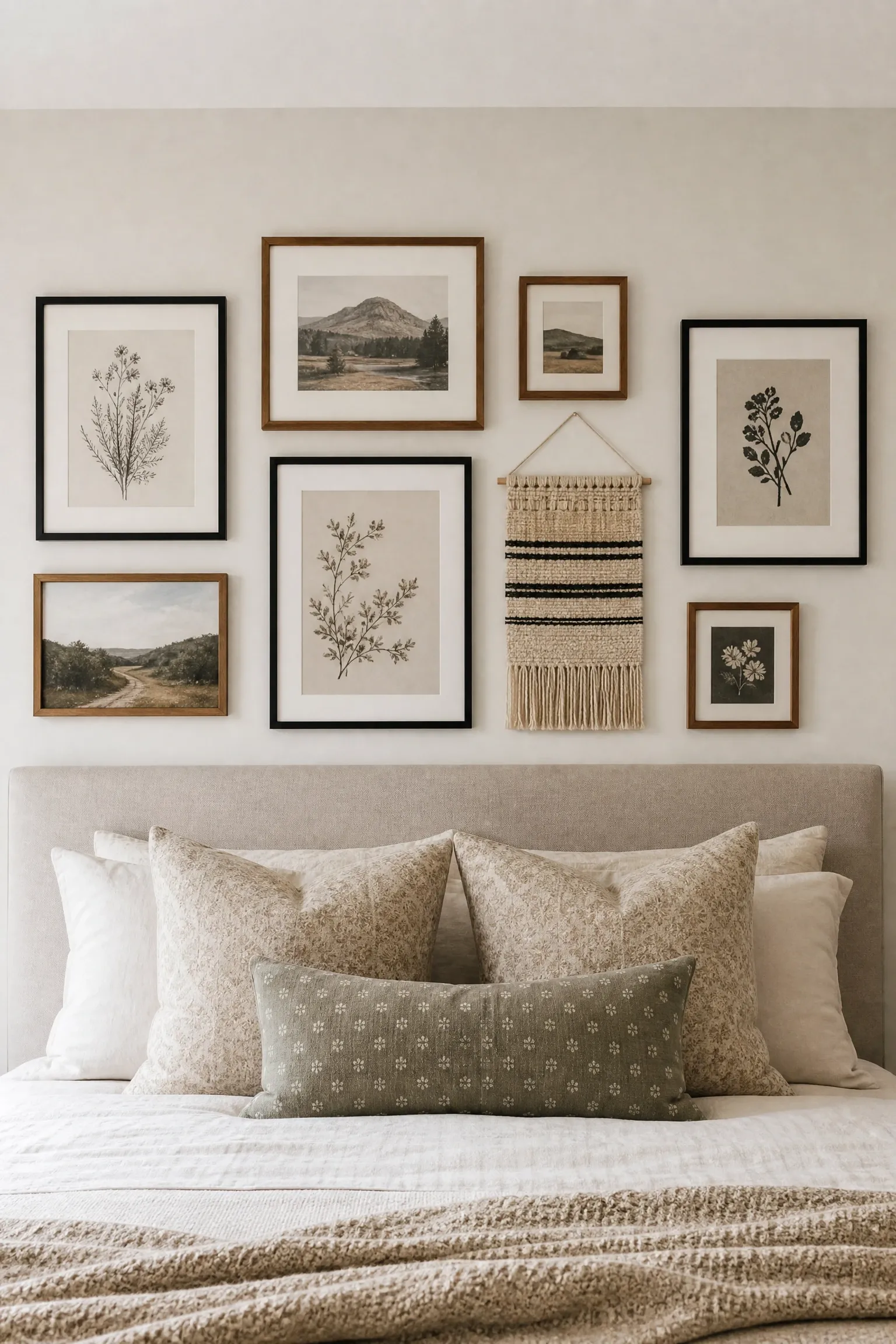
An empty wall above the headboard is one of the most common gaps I see, usually because people are intimidated by hanging multiple frames and worried about getting it wrong. A gallery wall of five to seven pieces in varied sizes but a consistent frame color creates a strong focal point and adds personality a single piece of art often cannot. Lay the arrangement out on the floor first, or cut paper templates and tape them to the wall, before committing to nail holes. This can be done on a low budget with thrifted frames, or scaled up with original art if the budget allows.
Designer Tip: Keep the bottom of the arrangement roughly eight to ten inches above the headboard so the grouping feels connected to the bed rather than floating separately.
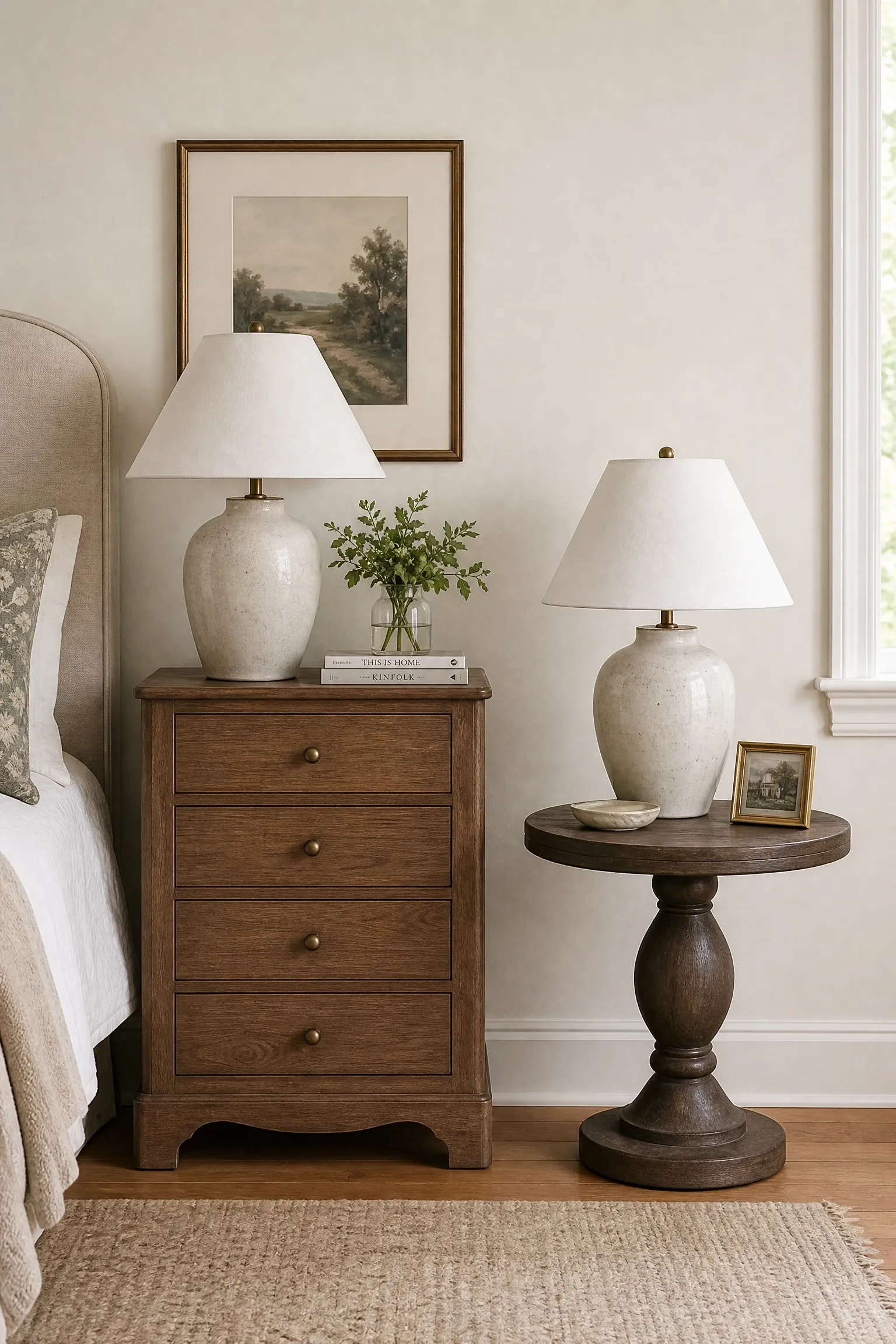
Matching nightstand pairs are the safe choice, but an experienced eye often breaks that rule on purpose, pairing a taller wood nightstand on one side with a smaller round pedestal table on the other. This works well in an eclectic or transitional bedroom where the goal is a collected-over-time feeling rather than a showroom set. Keep the two pieces within a similar tone or material family so they read as a considered pairing, and make sure both surfaces are large enough for a lamp, water, and a book. This look takes a slightly more confident eye than a matched set, so start with two pieces in the same wood tone if you are unsure.
Designer Tip: Anchor the two different nightstands with matching lamps, which ties the pairing together even when the tables look nothing alike.
A bed made only with a flat sheet set, no matter how nice the color, tends to feel one-dimensional next to a bed layered with texture. Start with a fitted and flat sheet in breathable cotton or linen, add a duvet in a subtly textured weave like waffle or matelasse, and finish with two or three pillows in complementary textures such as boucle, velvet, and a woven jute-look fabric. A folded throw at the foot of the bed adds one more layer and a place for color if your palette is neutral.
Designer Tip: Stick to two or three pillow textures maximum on the bed itself; beyond that the layering starts to look cluttered rather than intentional.
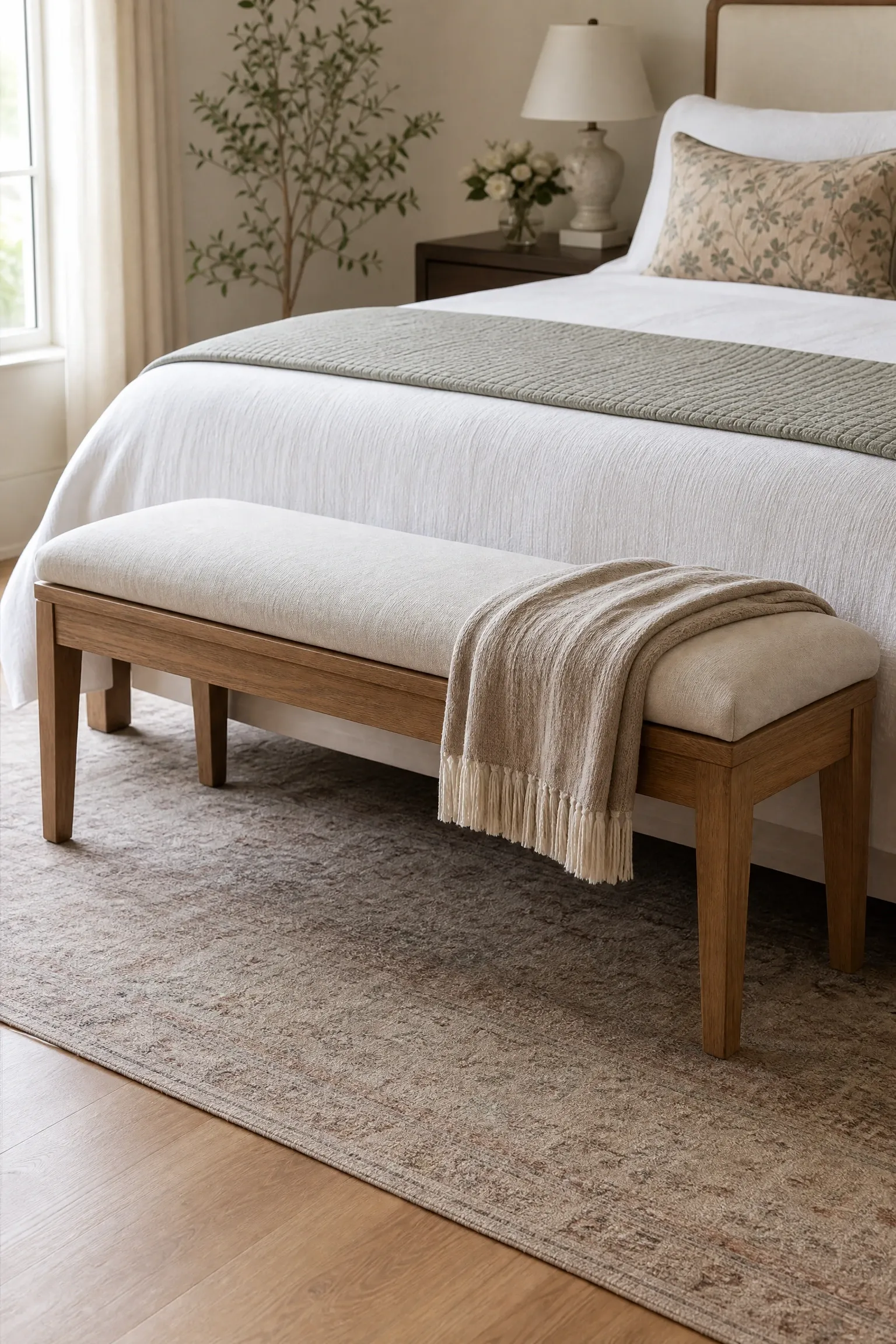
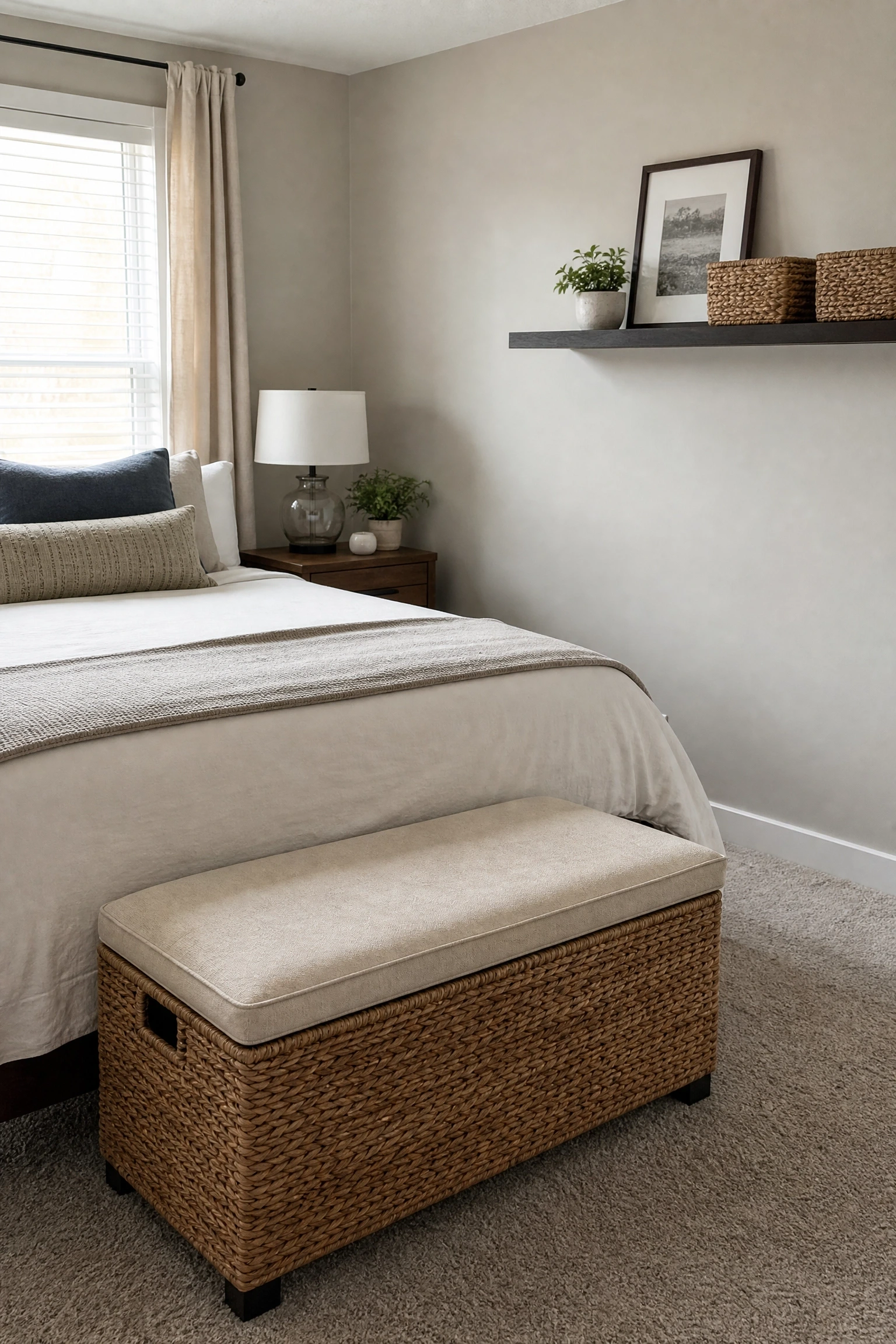
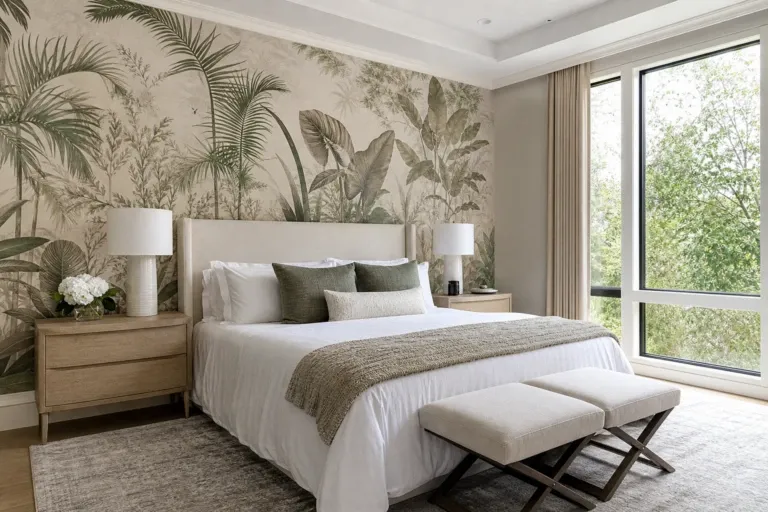
Bedrooms without a bench at the foot of the bed often end up with clothes draped over a chair in the corner instead, which undoes other styling work in the room. A simple upholstered or wood bench with a cushion gives you somewhere to sit while putting on shoes, somewhere to set a bag temporarily, and a strong horizontal line that grounds the foot of the bed. Choose a bench roughly two thirds the width of the bed frame so it does not overwhelm the footboard, in an upholstery that can handle wear, like performance velvet or boucle. In smaller bedrooms, a slim armless bench or low ottoman fits better than a bulky upholstered piece.
Designer Tip: If the room cannot fit a bench, a folded quilt or blanket ladder at the foot of the bed gives a similar effect for almost no cost.
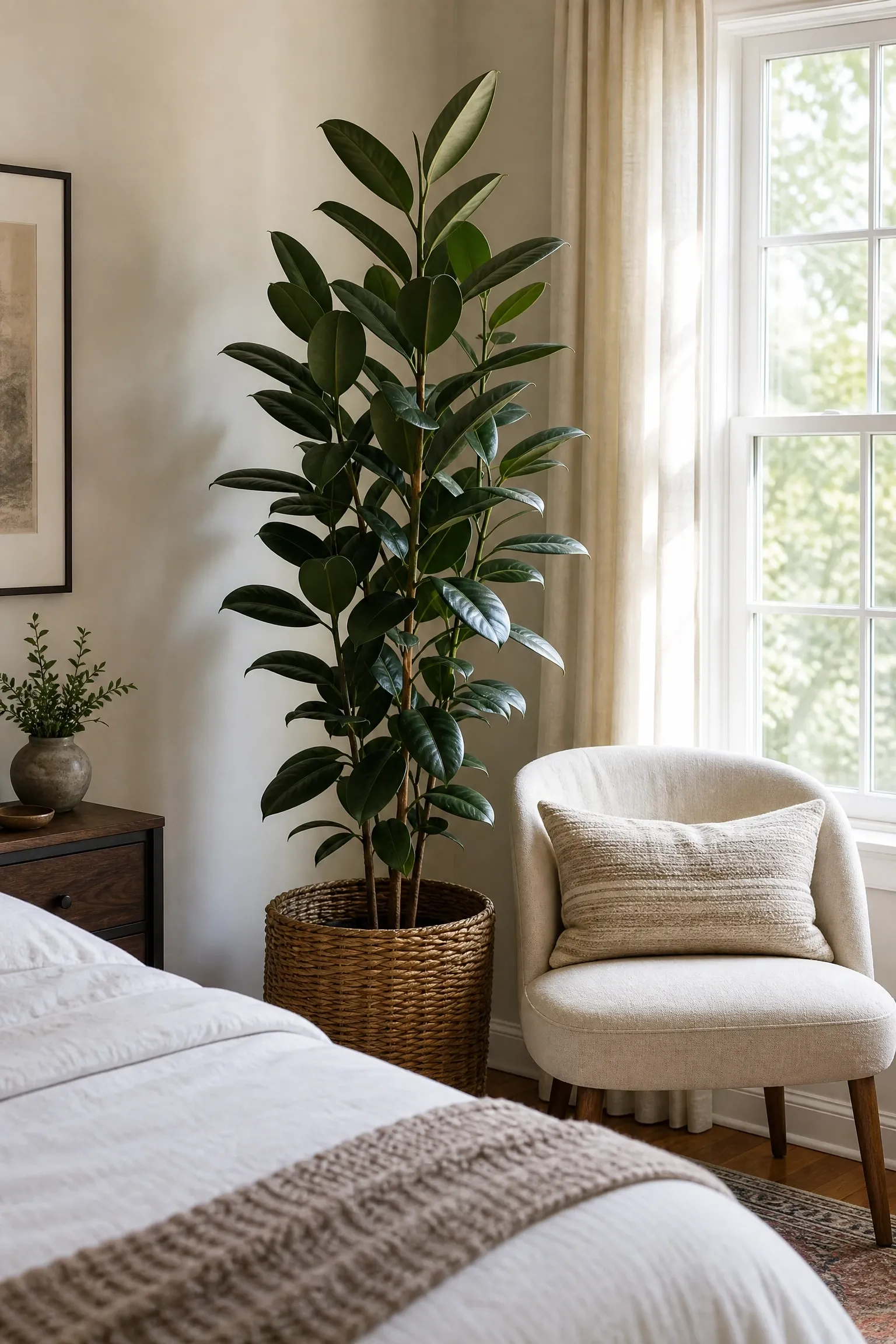
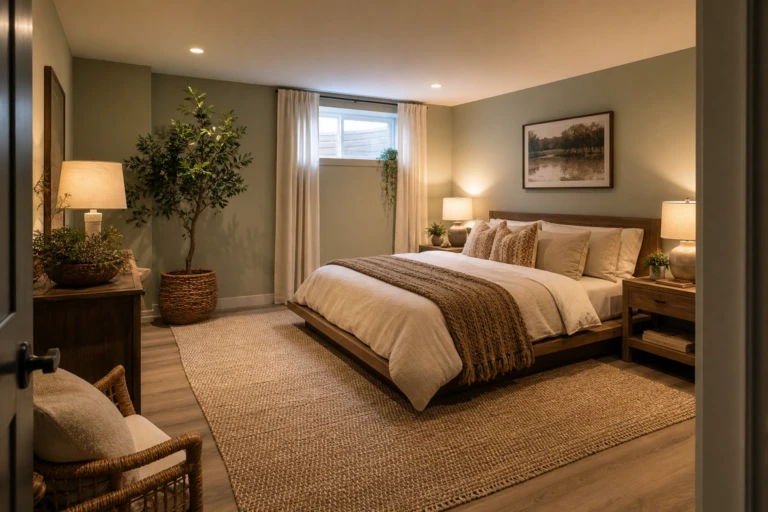
A single small succulent on a nightstand rarely changes how a room feels, but one or two larger plants placed intentionally can soften hard lines and bring real life into a bedroom. A snake plant or ZZ plant works well in lower-light rooms and tolerates neglect, while a fiddle leaf fig needs a brighter spot near a window but makes a bigger statement. If you know you will not keep a real plant alive, a high-quality faux version in a woven basket planter achieves nearly the same softening effect. Keep the plant scale proportional to the room; a small pot in a large bedroom reads as an afterthought no matter how nice it is.
Designer Tip: Group plants in odd numbers, like one large floor plant and one small tabletop plant, rather than spacing identical pots evenly around the room.
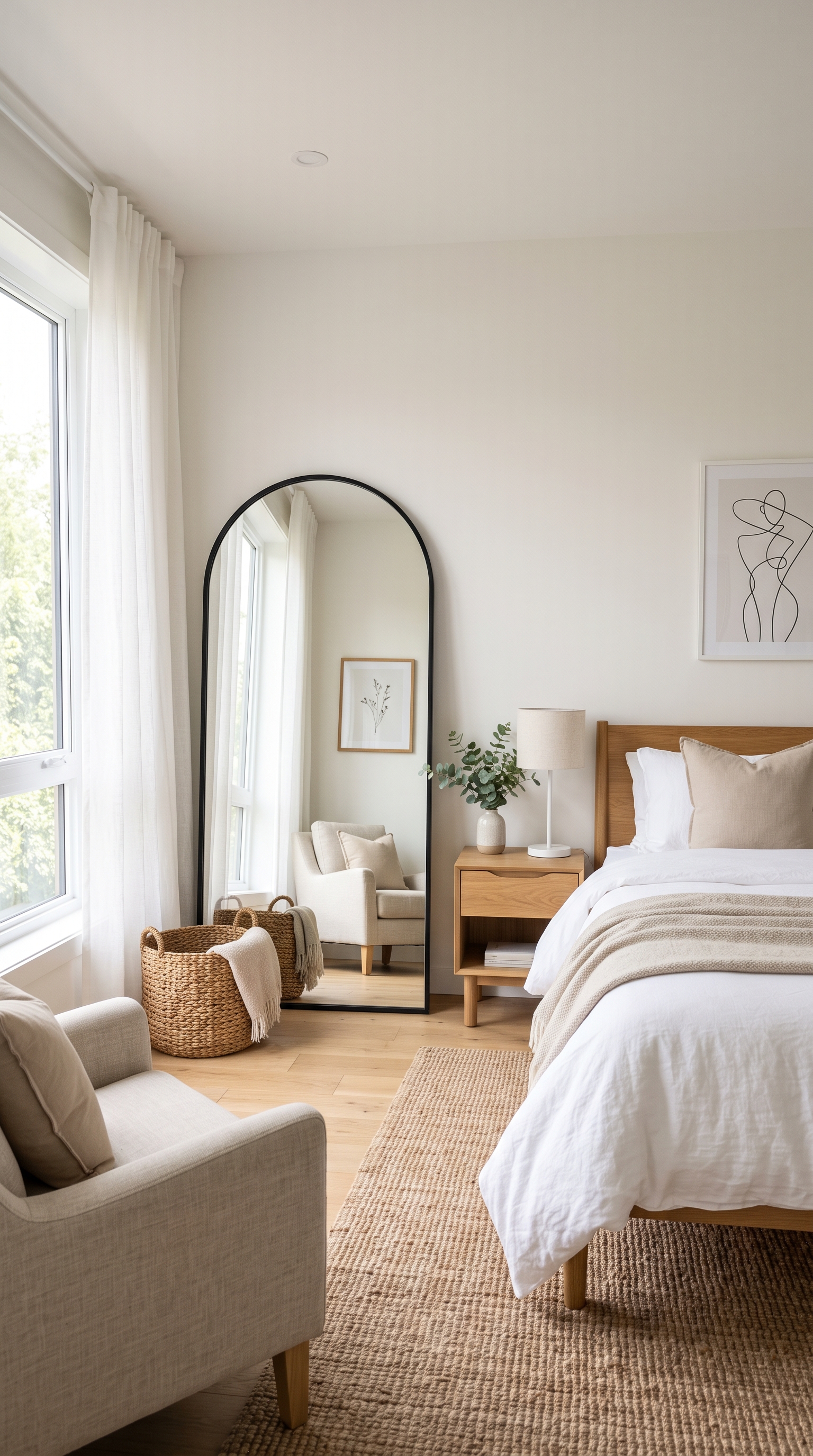
Mirrors get recommended for making rooms feel bigger, but one hung facing a cluttered closet can end up doubling the mess rather than doubling the light. Position a floor or wall mirror so it reflects a window, art, or an open section of the room, which genuinely bounces light around and creates a sense of more space. A leaning arched floor mirror has become a popular alternative to the traditional framed wall mirror, adding a soft curved line to a room otherwise full of straight edges. This is a relatively affordable upgrade, especially secondhand, since large mirrors are commonly resold.
Designer Tip: Avoid placing a mirror directly across from the bed if you find that unsettling at night; angle it toward a wall or window instead.
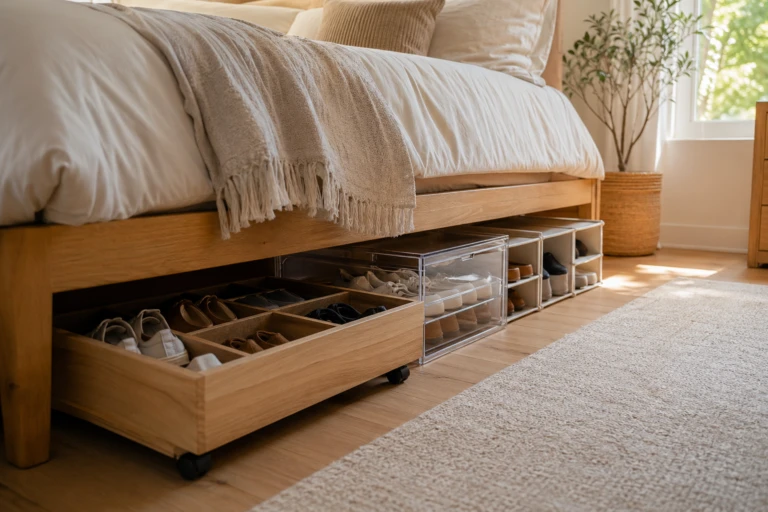
A bedroom can look styled and still feel stressful if every surface is covered with things that have no home, usually a sign the room needs more hidden storage rather than more decor. Under-bed boxes, a bed frame with built-in drawers, or a storage ottoman at the foot of the bed can absorb extra linens or out-of-season clothing that does not need to be visible daily. Floating shelves near the closet give you a spot for baskets that hide smaller clutter while still looking intentional. Built-in storage beds cost more upfront but save money over time compared to separate dressers.
Designer Tip: Assign every storage container a specific category before you fill it, since mixed bins without a clear purpose become junk drawers within months.
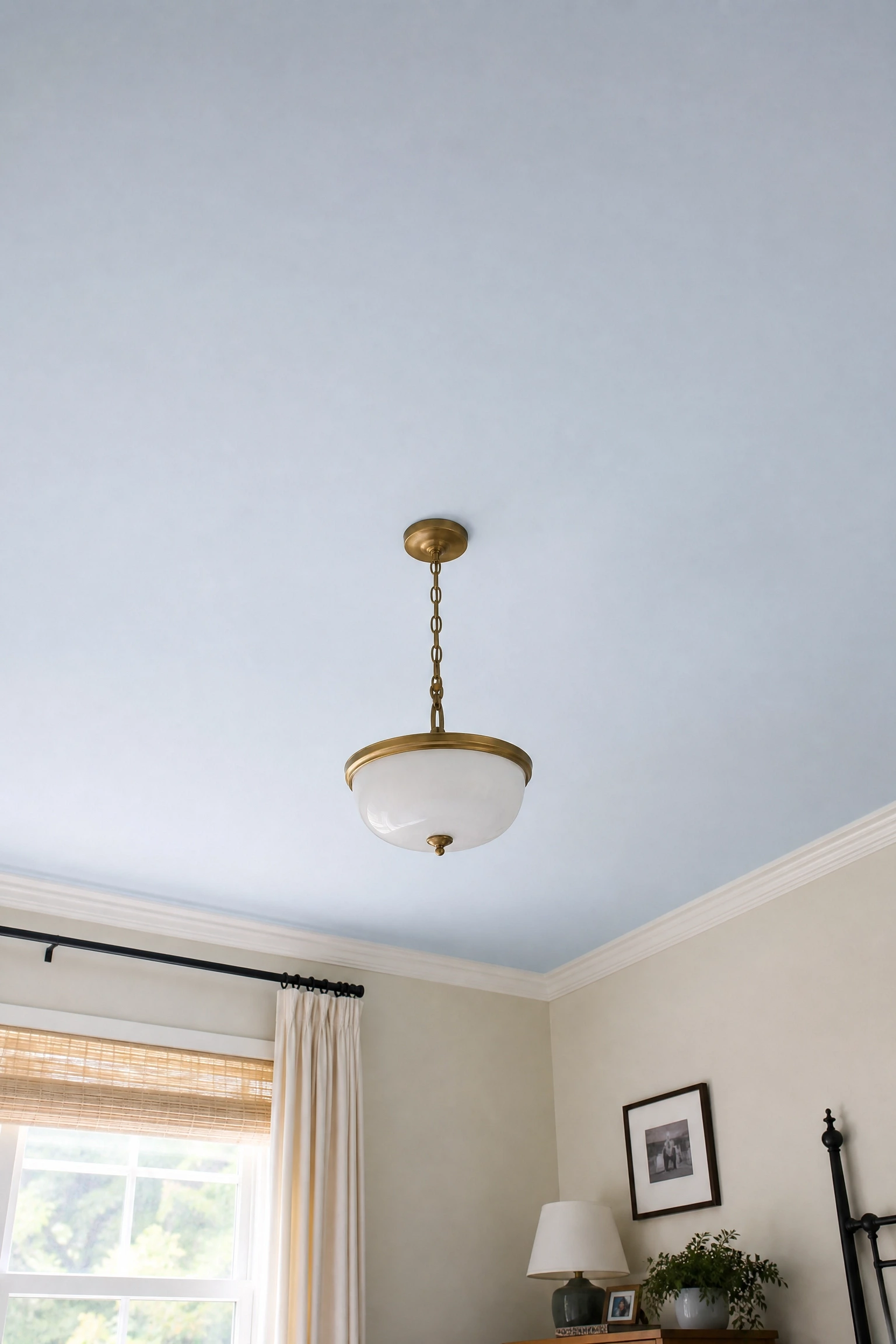
Designers often call the ceiling the fifth wall, yet it is the one surface almost nobody decorates, even though it sits directly in your line of sight every time you lie down. A soft paint color, like a pale blue one or two shades lighter than the walls, makes the ceiling feel intentional rather than an afterthought. In bedrooms with higher ceilings, a patterned wallpaper overhead creates a dramatic, tented effect, though this does not suit lower-ceilinged rooms where it can feel heavy. This works best as a finishing touch after the rest of the room is styled, since a bold ceiling on top of a chaotic room just adds noise.
Designer Tip: If nervous about a full painted ceiling, test the idea with a single statement pendant light first for similar drama with far less commitment.
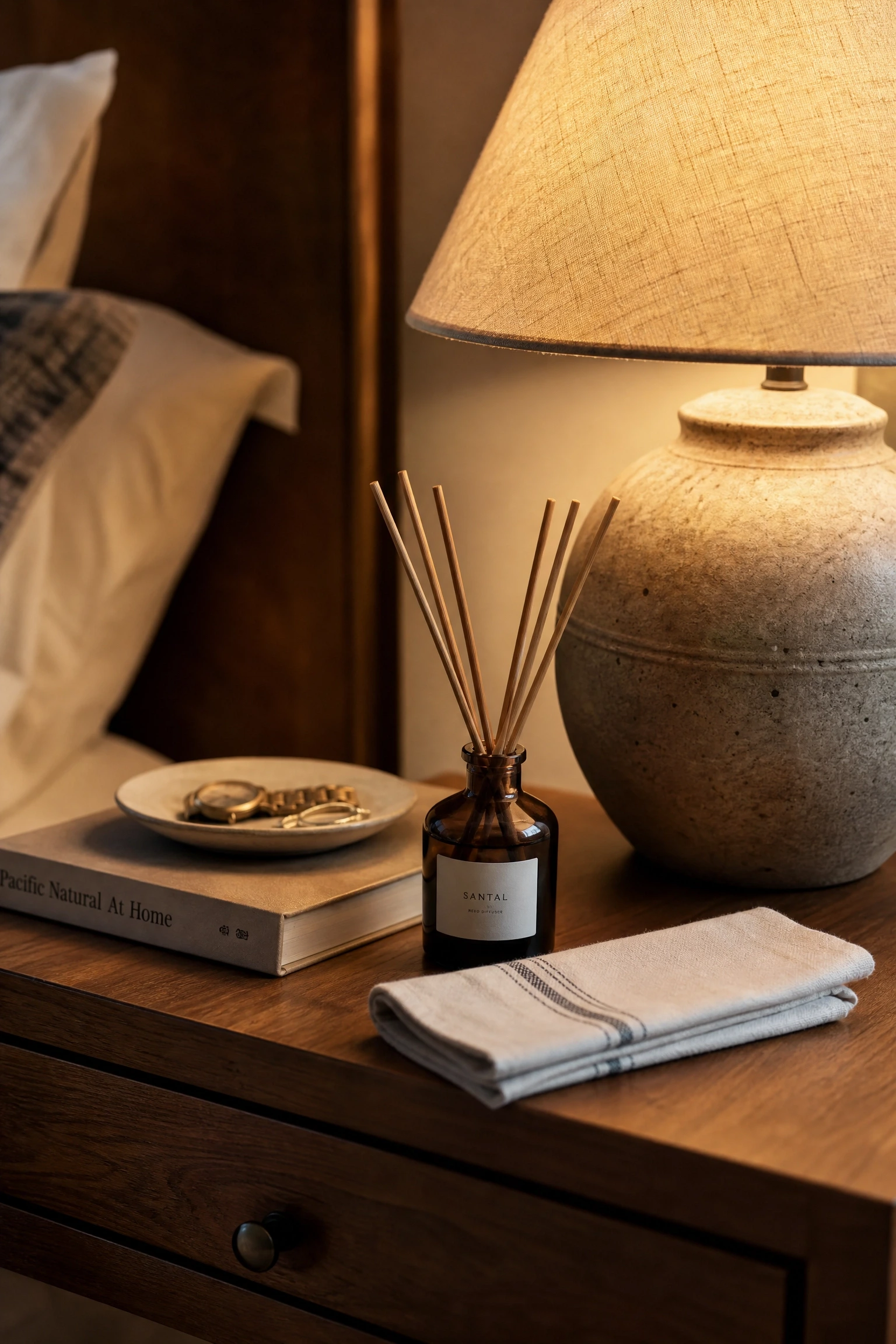
Walking into a bedroom with its own consistent, pleasant scent genuinely changes how the space feels compared to one with competing scents from laundry, candles, and cleaning products. A single reed diffuser or a candle burned occasionally, in a family like warm woods or clean linen, gives the room a subtle signature without becoming overpowering. Avoid stacking several different scented products in one small room, since layered fragrances often clash and can trigger headaches rather than feeling relaxing. If you are sensitive to fragrance, a simple bowl of dried lavender offers a gentler alternative to synthetic diffusers.
Designer Tip: Choose a scent that pairs logically with your bedding, since a heavy vanilla candle next to crisp linen sheets can feel oddly mismatched.
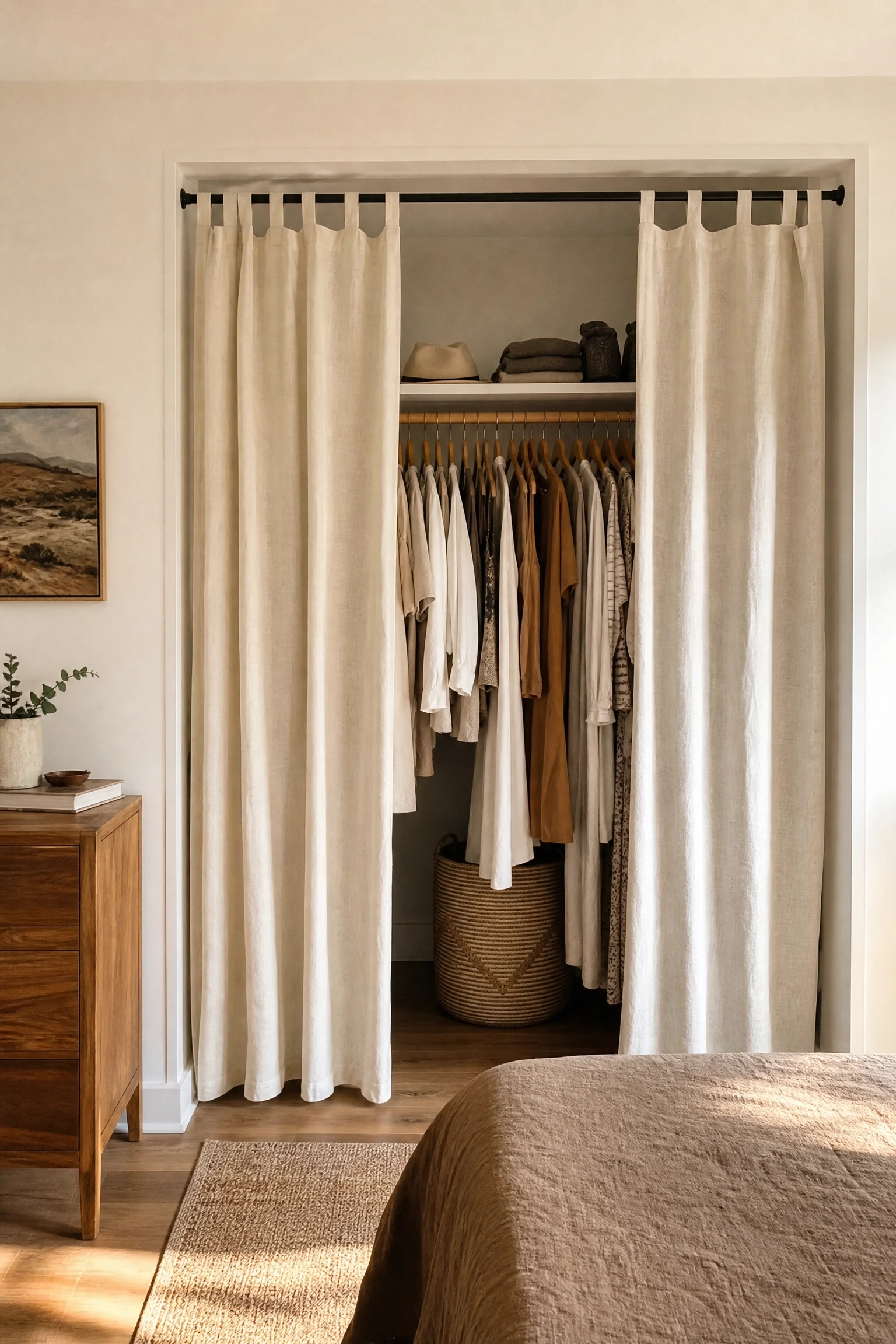
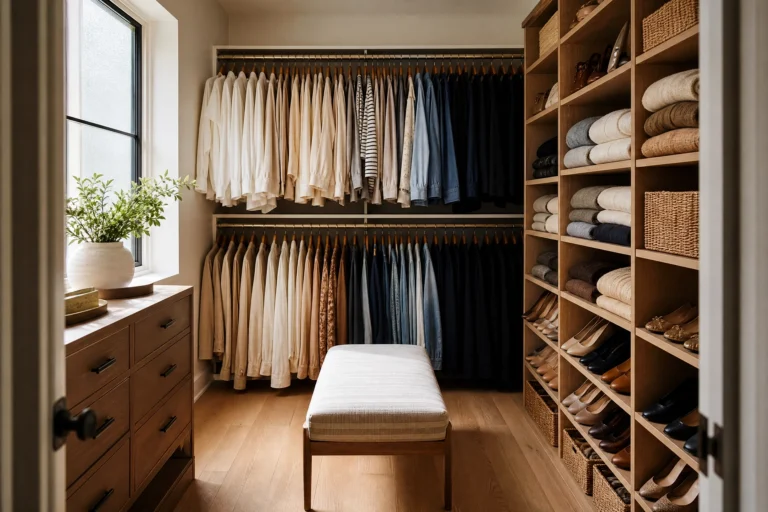
An open closet bursting with visible clutter can undo an otherwise well-styled bedroom the moment you glance toward it. If your closet has no doors, curtain panels on a tension rod are a low-cost way to close it off visually, and can be color matched to your window treatments. Where doors exist, swapping dated brass or plastic pulls for updated hardware is a detail professional stagers rely on because it reads as finished rather than a builder-grade afterthought. This has real limits if your closet is genuinely too small for your wardrobe, which is a storage capacity problem no styling can fix.
Designer Tip: Group clothing by color within the closet, a simple trick that makes even a fairly full closet look organized rather than chaotic.
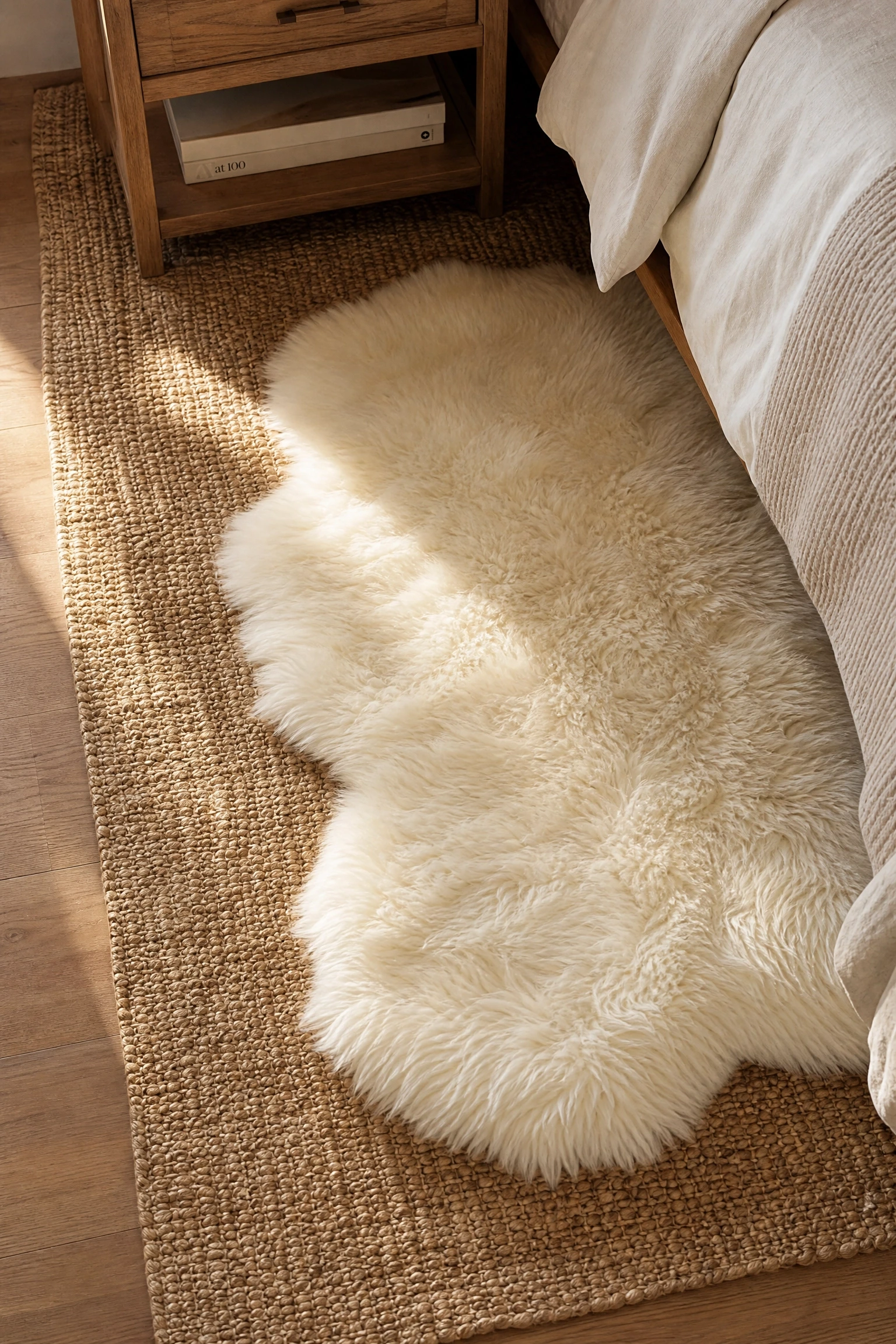
A single rug under the bed works fine, but layering a smaller textured rug, like a sheepskin, on top of a larger flat-weave base rug adds a coziness one rug alone cannot achieve. This works especially well on the side of the bed you step out on first, giving your feet something soft before you reach the cooler flat-weave underneath. Choose a base rug in jute or low-pile wool for durability, since this layer takes the most daily wear. This is not necessary in every bedroom, and in a very small room two overlapping rugs can feel busy rather than cozy.
Designer Tip: Keep both rugs in the same general color family so the layering reads as intentional texture rather than two unrelated pieces competing for attention.
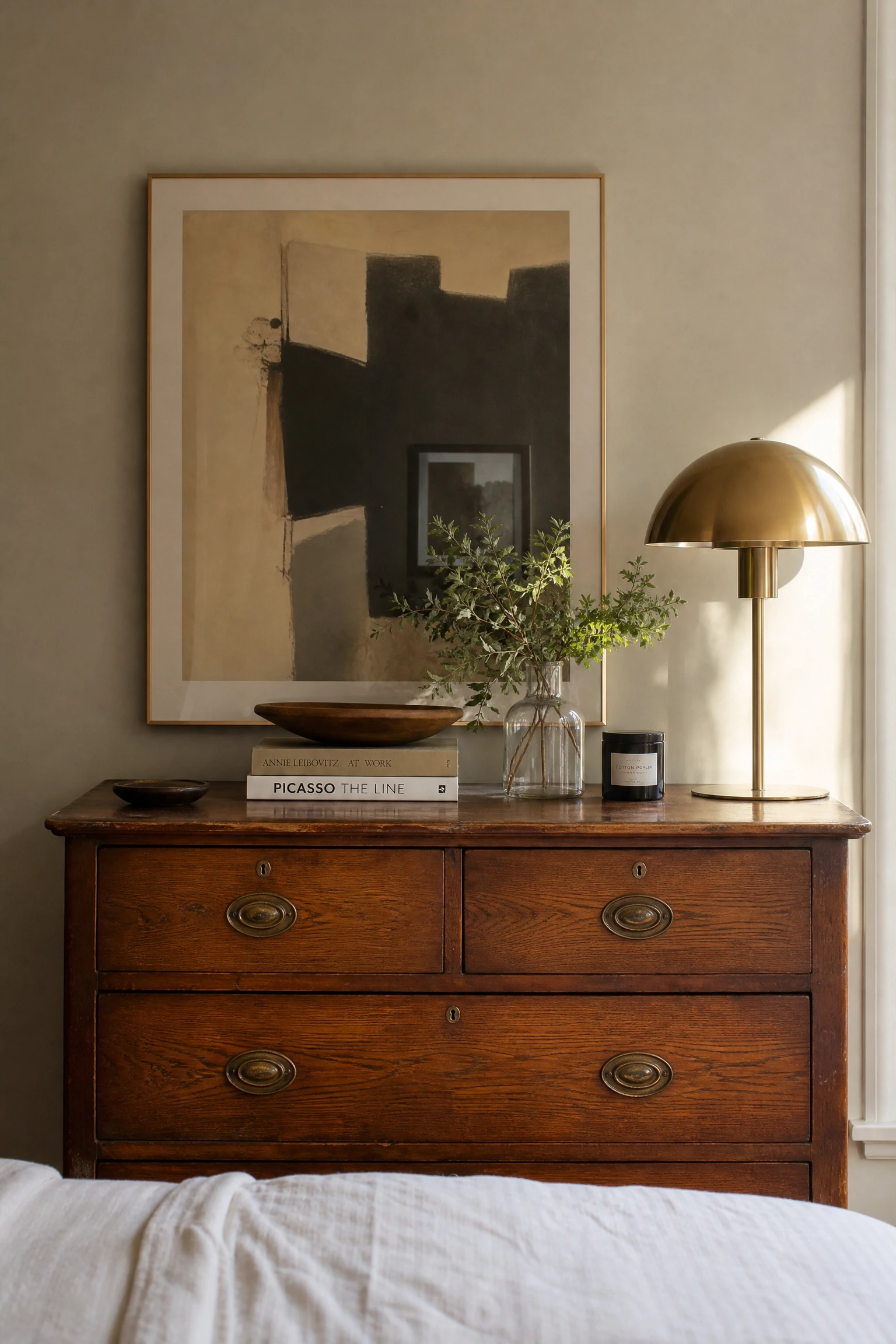
A bedroom furnished entirely with new pieces from one store, no matter how nice, often ends up looking like a catalog rather than a home someone actually lives in. Introducing one vintage piece, whether an inherited dresser, a thrifted mid-century nightstand, or an antique mirror from an estate sale, gives the room a sense of history and prevents it from feeling too uniform. This does not require expertise in antiques; even one well-chosen secondhand piece with visible age can anchor an otherwise contemporary room. Vintage furniture sometimes needs minor repair or reupholstering, so factor that into the budget if the piece needs work.
Designer Tip: Place the vintage piece somewhere it will actually be noticed, like a dresser against a clear wall, rather than tucking it into a corner where its detail gets lost.
Blackout Curtains That Do Not Look Like Blackout Curtains
Traditional blackout curtains have a reputation for looking stiff and hotel-like, which is why many people skip them entirely and end up with a bedroom too bright for good sleep, especially for night shift workers or in summer. Modern blackout linings can be sewn into almost any decorative fabric, so you get a linen or velvet curtain on the outside with full light-blocking performance built in, rather than choosing between style and darkness. This matters because sleep quality is directly affected by light exposure, and a genuinely dark room supports better rest than one with streetlight leaking around thin curtains. This upgrade is worth prioritizing in bright urban areas or east-facing bedrooms that catch early morning sun.
Designer Tip: Choose curtains a shade darker than you think you want, since blackout linings can make a light fabric look slightly washed out once installed.
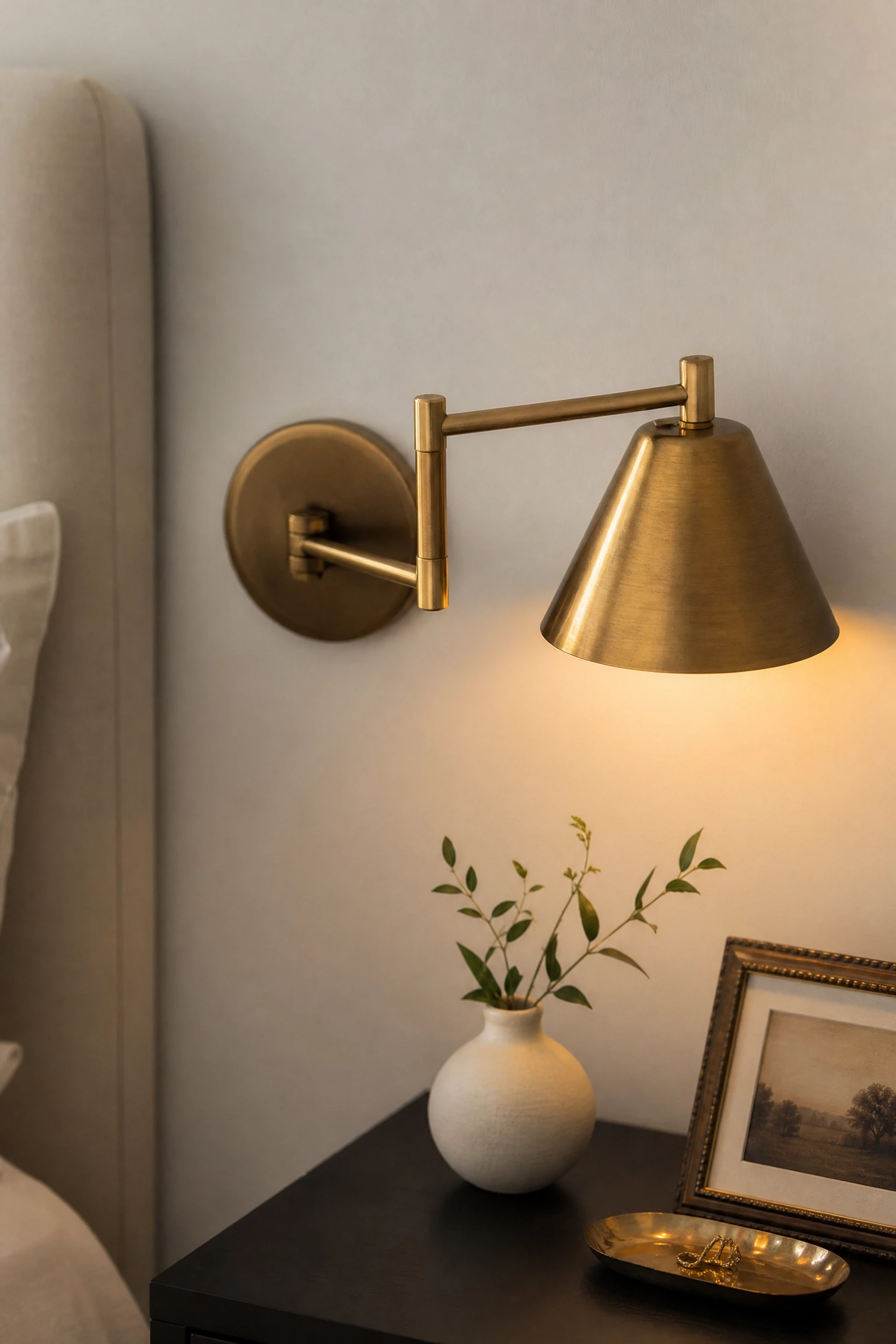
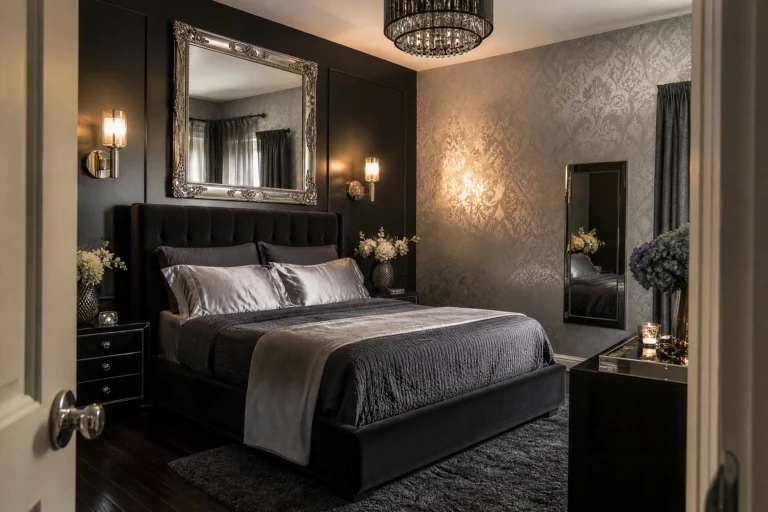
Bedside lamps are lovely until you need surface space for a book, water, and glasses, and the lamp base is taking up half the nightstand on its own. Swinging-arm or fixed wall sconces mounted above each nightstand free up that surface entirely while still giving you the same warm, layered light at bedtime. This is a favorite trick among designers working with smaller bedrooms, since it solves a genuine functional problem rather than just adding decoration. Hardwired sconces look more polished with no visible cord, but need an electrician or comfort with basic wiring, so factor that into budget and timeline.
Designer Tip: Mount sconces at a height where the bottom of the shade sits level with your eyes when sitting up in bed, so the light illuminates a book without glaring at you.
A client once told me her bedroom never felt restful no matter how it was decorated, and it turned out the real issue was a television across from the bed and a phone charger built into the nightstand lamp. Designating one corner, even just a chair and small table, as a deliberately screen-free zone can shift how the whole room feels, since it gives your mind a cue that this space is for rest rather than scrolling. This does not mean removing every device from the bedroom, but rather creating one small area without a charging cable in sight. This costs nothing to implement, though it requires a bit of habit change, which is honestly harder than any amount of furniture shopping.
Designer Tip: Keep a paperback or physical notebook in this corner specifically, since something tangible nearby makes the phone-free habit easier to stick to.
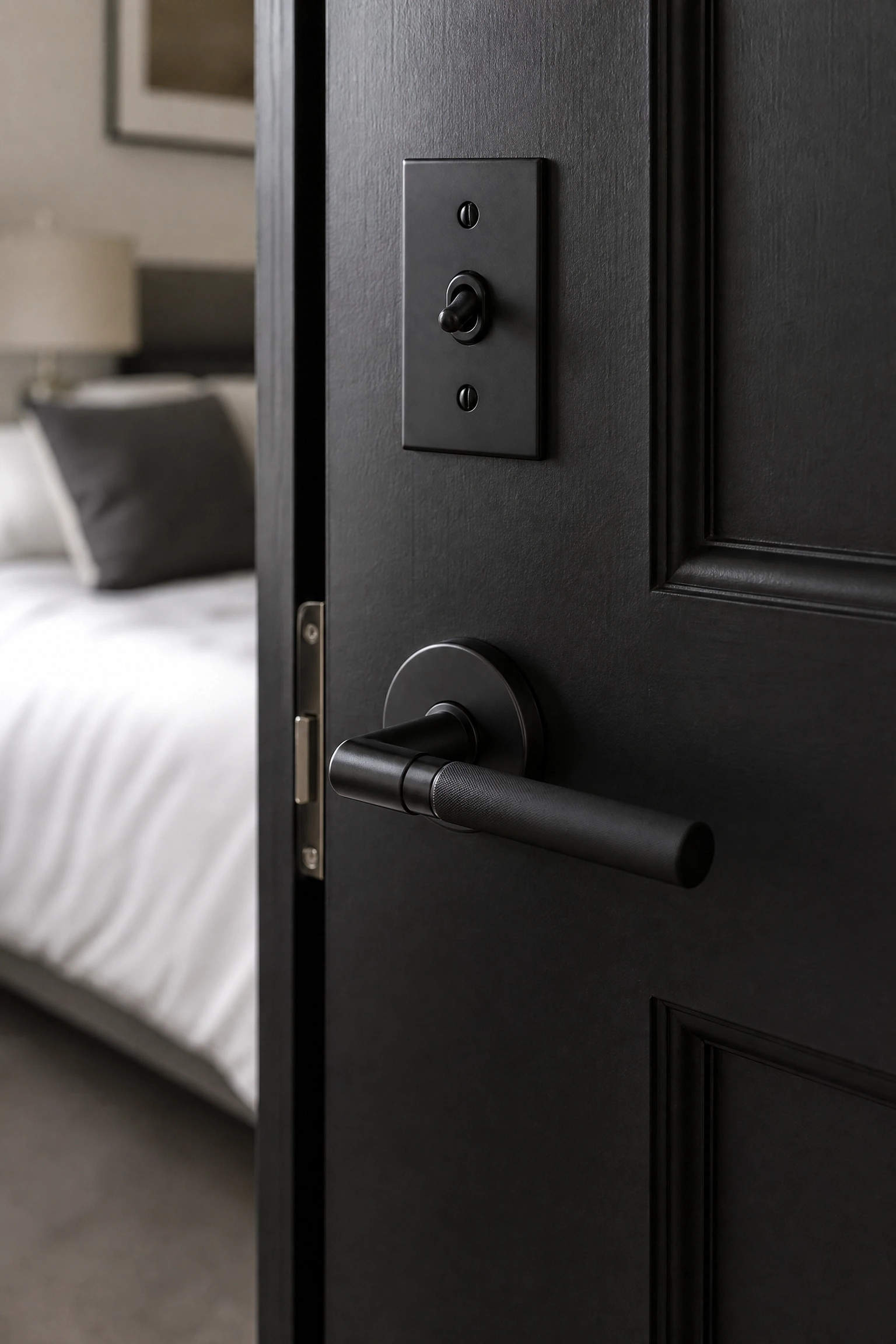
Hardware and Switch Plates Nobody Notices Until They Are Wrong
Builder-grade white switch plates and dated brass door handles are easy to overlook because you touch them daily without really looking at them, yet they quietly clash with an otherwise updated bedroom. Swapping these details for finishes that match your other metals, whether matte black, brushed brass, or aged bronze, is one of the least expensive updates here and takes less than an afternoon. This kind of detail work is exactly what separates a professionally styled space from a room that just has nice furniture, since the small connective tissue between bigger pieces often makes a room feel finished. This is a genuinely low-risk project, since hardware is inexpensive and easy to swap back.
Designer Tip: Buy one extra switch plate or handle beyond what you need, since matching a discontinued finish later is far more difficult than buying a spare now.
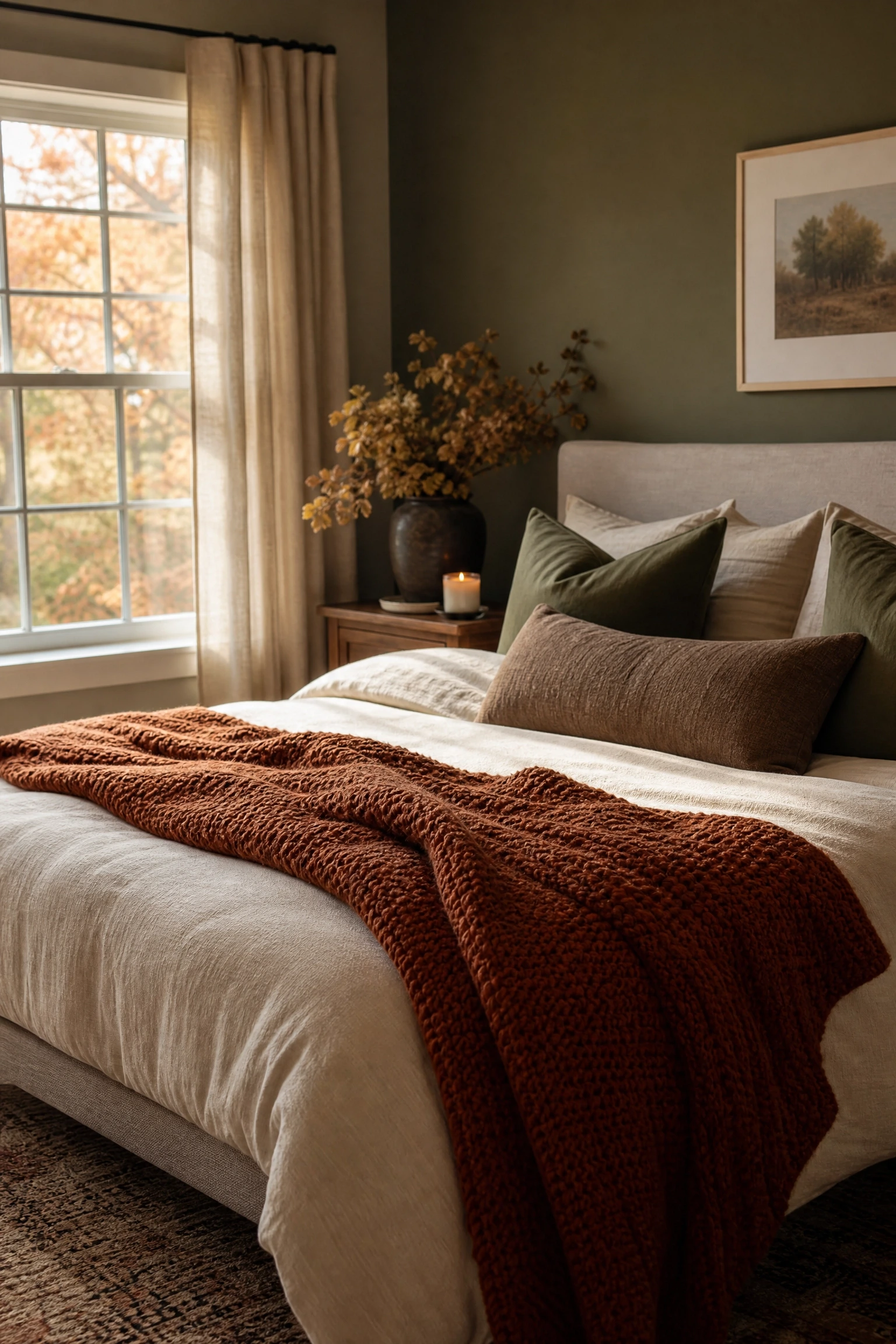
A bedroom that looks the same in July as it does in January can start to feel stale after a few years, even if nothing about it is objectively wrong. Swapping a lightweight linen quilt for a heavier knit or velvet throw as weather turns is a low-cost way to keep the room feeling current, without buying new furniture or repainting. Storage becomes the practical consideration, since you need somewhere to keep off-season textiles, which loops back to why under-bed boxes are worth having regardless of climate. This works best if you buy one or two new pieces per season rather than replacing everything at once, spreading cost naturally over the year.
Designer Tip: Keep one neutral base layer, like a plain white duvet cover, constant year round, and rotate only the throws and pillows so the room never needs a full reset.
Bringing It All Together
Styling a bedroom well rarely comes down to one dramatic change. It comes from a series of smaller, considered decisions about light, texture, scale, and function that add up over time. Some ideas here, like layering your lighting or fixing the size of your rug, cost very little and can be done this weekend. Others, like a new headboard or custom lined curtains, are worth planning around a real budget and doing once, properly. The point is not to check every box on this list. A bedroom that tries to do all twenty four ideas at once usually ends up feeling overdesigned rather than calm, which defeats the purpose of a room meant for rest. Pick the two or three ideas that address what actually bothers you right now, whether that is bad lighting or a bed that never felt finished, and start there. The rest of the room tends to fall into place once those core issues are solved, and a bedroom styled gradually, with intention, tends to hold up far longer than one decorated all at once.
Frequently Asked Questions
What is the single most impactful bedroom styling change on a limited budget?
Layered lighting is usually the best return for the money. Two secondhand lamps and a set of plug-in dimmers can change the mood of a room after dark for under a hundred dollars.
How do I choose a color palette if I keep second-guessing myself?
Limit yourself to one dominant neutral and two supporting colors, then test paint swatches on the wall for at least two days before committing, since lighting shifts between morning and evening.
Is it worth buying a new rug if my current one is just slightly too small?
In most cases yes. An undersized rug is one of the more noticeable sizing mistakes in a bedroom, and extending it eighteen to twenty four inches beyond each side of the bed makes a real difference.
Can I mix furniture styles without it looking wrong?
Yes, and professional designers do this intentionally. The key is keeping a consistent thread, whether wood tone, metal finish, or palette, running through the mismatched pieces so the room reads as collected rather than accidental.
How many throw pillows are actually too many?
For most beds, three to five pillows including the sleeping pillows is a comfortable range. Beyond that, a made bed starts to require real effort to use every night.
Do I need a professional, or can I do this myself?
Nearly everything on this list is doable without help, from painting a ceiling to hanging a gallery wall. The one exception is hardwired wall sconces, which need an electrician unless you use a plug-in version with a cord cover kit.