Most guest rooms start out as the place where things go to be forgotten. A treadmill nobody uses, a stack of holiday decorations, an old desk from college. Then a text comes in saying your sister is visiting next weekend, and suddenly you’re standing in the doorway wondering how a bed, a lamp, and good intentions turned into this. It happens to almost everyone, and it’s fixable in a weekend without hiring anyone or spending a fortune.
This list covers seventeen distinct guest room looks, from a proper hotel-style bed to a small room that quietly works as an office the other three hundred days of the year. Each one comes with real furniture, color, and lighting choices, plus an honest note on where it works best and where it might not. No vague suggestions to just add some pillows and call it done. By the end you should be able to point at one idea and know exactly what to buy and where to put it.
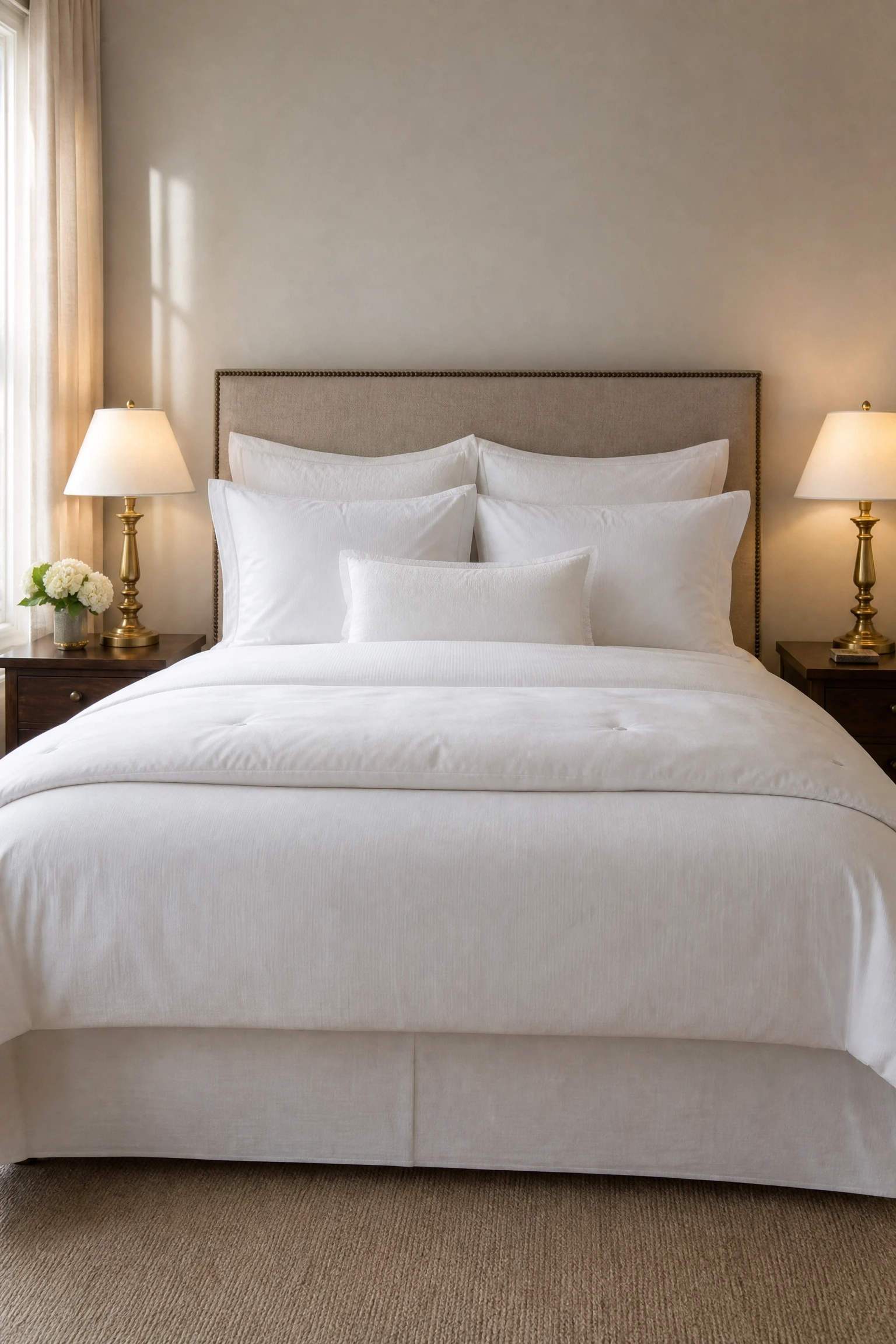
You know the feeling of walking into a hotel room and immediately wanting to flop onto the bed before you’ve even set your bag down. That’s the entire goal here, and it comes down to layering, not luxury pricing. Start with crisp white or ivory percale sheets, a plump duvet folded back at the foot, and four pillows in mixed sizes so guests can adjust firmness themselves. Swap the single overhead light for two matching table lamps on the nightstands with warm 2700K bulbs, since layered lighting reads as calm while one harsh ceiling fixture reads as a waiting room. A waffle weave throw at the foot of the bed adds texture without adding color, which keeps the whole look easy to maintain. One thing that trips people up is skipping the top sheet and going straight to a duvet cover, but a flat sheet underneath actually keeps the duvet insert cleaner between washes. Budget-wise, good percale sheets are one of the cheapest upgrades in this entire list, while a real down alternative insert is worth treating as a small investment.
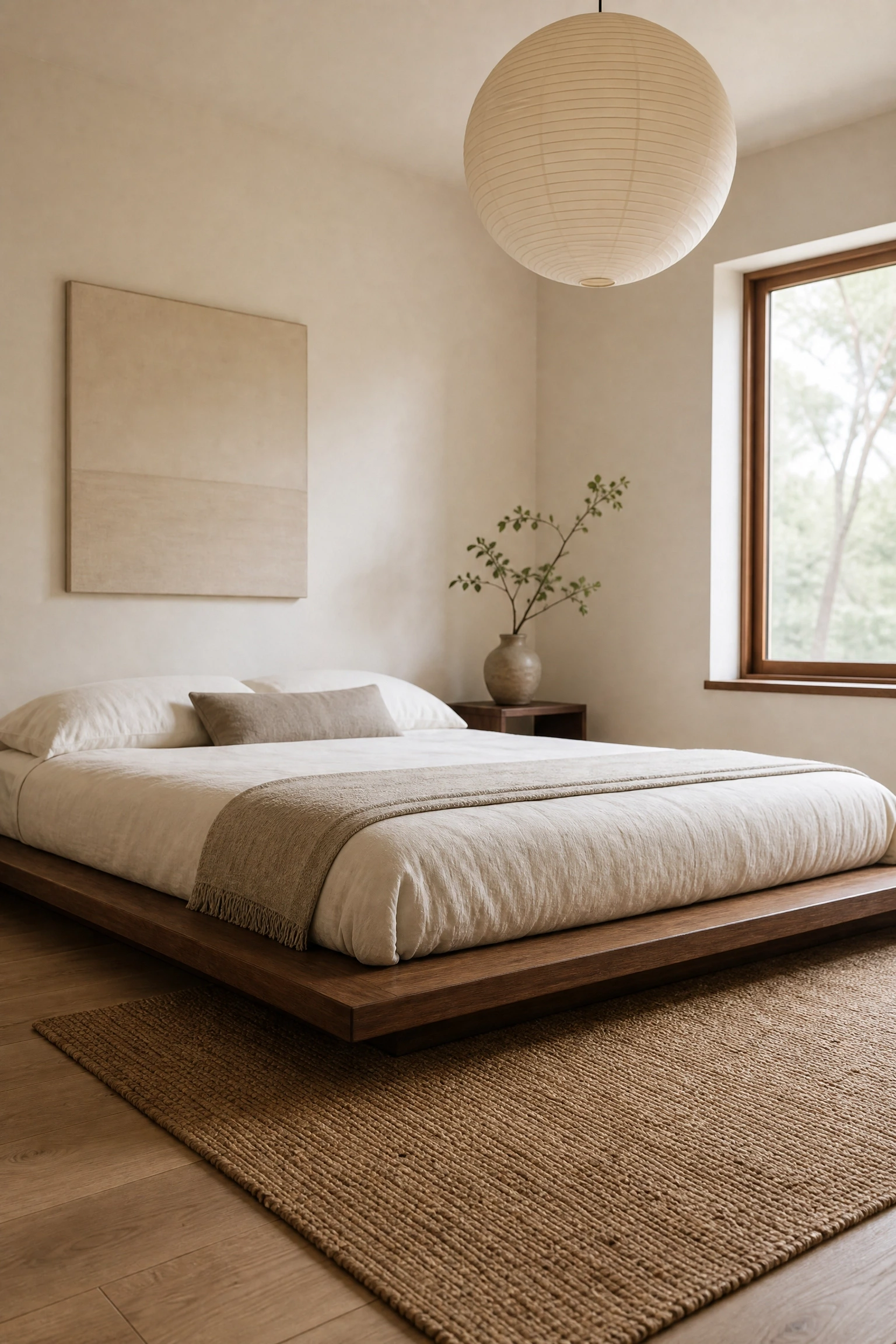
A friend once told me her guest room felt like a furniture showroom, everything matched but nothing felt calm, and that’s usually a sign the room needs less rather than more. Japandi solves this by pairing Japanese restraint with Scandinavian warmth. Use a low platform bed frame in light oak, keep the palette to warm white walls with maybe one clay-colored accent, and skip the headboard entirely if the frame already has clean lines. Lighting should be a single paper or linen pendant with a dimmer, since Japandi depends on soft, diffused light rather than bright spots. Add a woven jute rug and one ceramic vase with a single branch instead of a full floral arrangement, because negative space is doing real work in this style. The honest limitation here is that Japandi needs storage handled elsewhere in the house, since the whole point is an uncluttered surface, so it’s not the easiest choice if this room also has to double as storage.
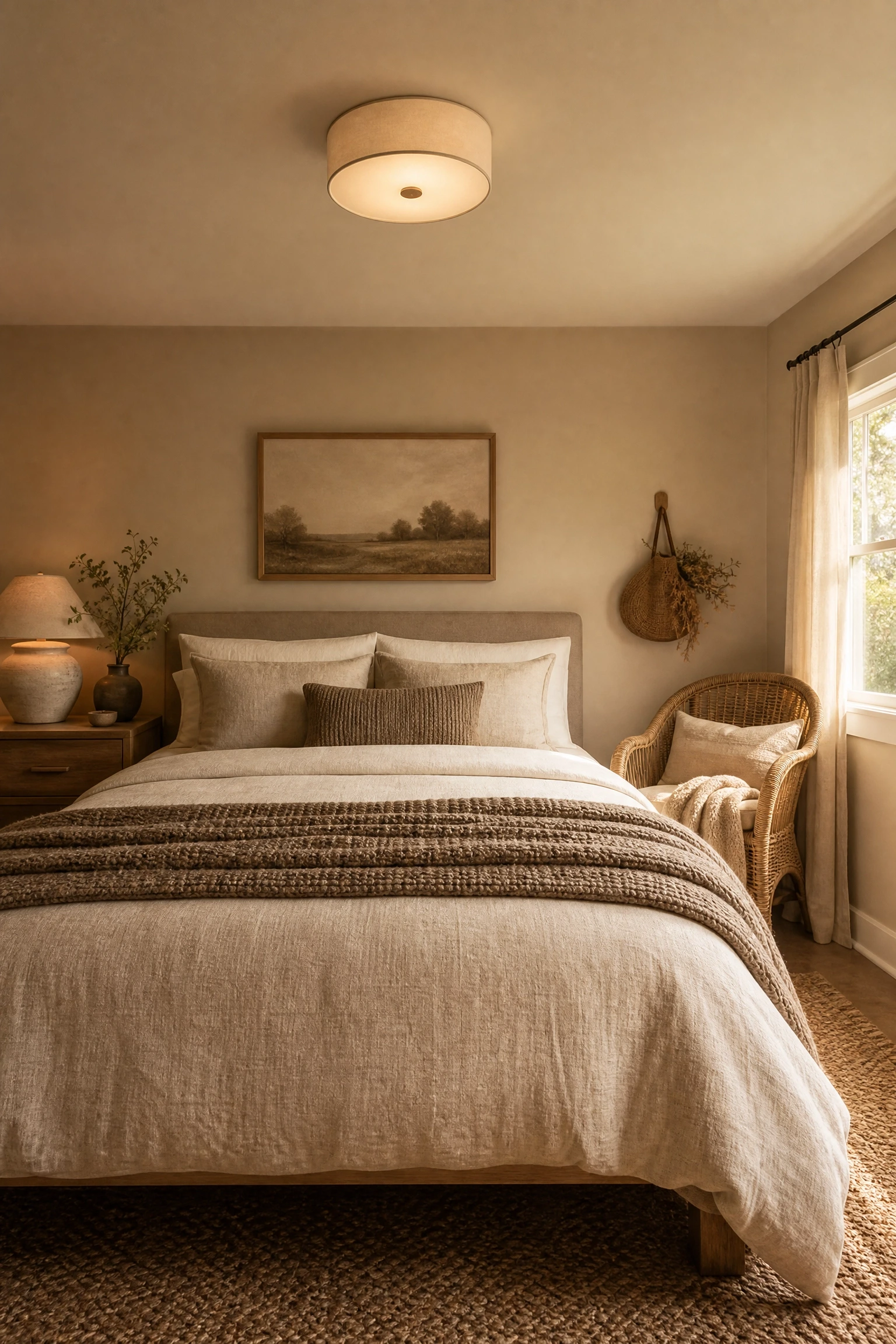
This is the look for people who want their guest room to feel like a hug without committing to a bold color choice they might regret in two years. Layer three to four shades of the same warm neutral family, think warm white walls, a beige linen duvet, and a taupe knit throw, so the room has depth even though nothing is technically a different color scheme. Furniture in light wood or rattan keeps the room from feeling flat, and a woven pendant or two flush-mount sconces with warm bulbs finish the lighting without adding visual clutter. Add texture through a bouclé accent chair in the corner if space allows, since texture is what keeps an all-neutral room from reading as boring. In practice, this look comes together best when at least one element, usually the throw or the rug, has visible weave or nap you can actually feel. It’s genuinely one of the most budget-friendly options on this list since neutral bedding and paint are widely available at almost every price point.
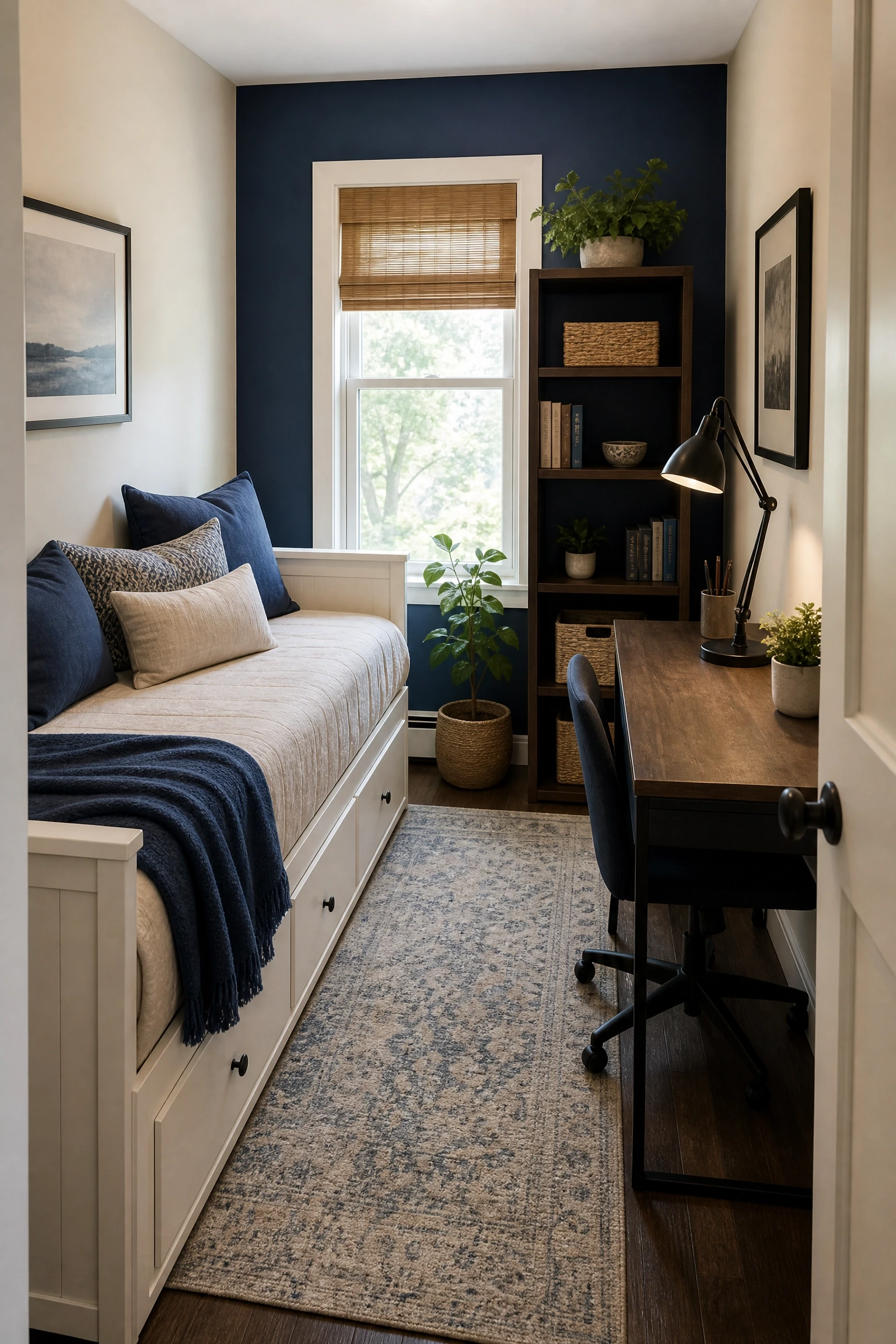
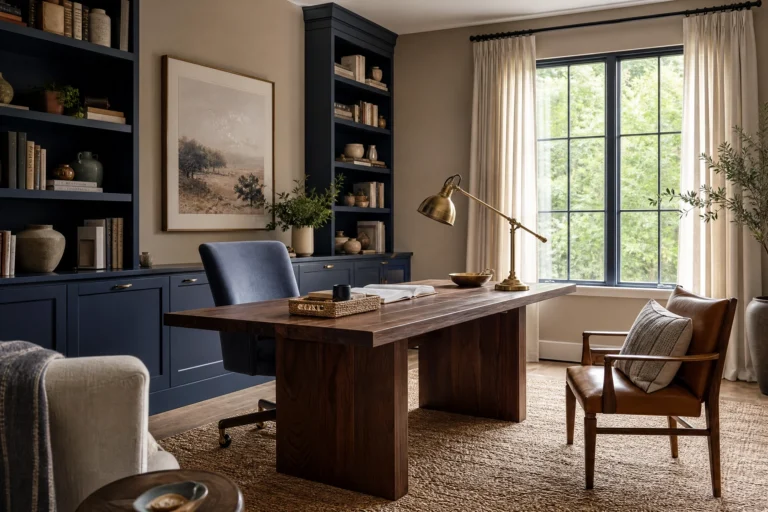
If you only have one spare room and a full-time need for a home office, you don’t actually have to choose between the two. A daybed or a well-made sofa bed against one wall frees up the rest of the room for a proper desk setup, and choosing a frame with a trundle or pull-out mechanism means you’re not sacrificing sleep quality for square footage. Keep the desk area visually separate with a narrow bookshelf or a slim room divider, and use a task lamp with adjustable brightness at the desk plus a separate lamp near the bed so the two functions don’t fight for the same light source. Stick to one calm color story throughout, like warm white with navy accents, so the room reads as one cohesive space rather than two rooms awkwardly sharing a floor. The honest tradeoff is that a daybed is rarely as comfortable as a real mattress for multi-night stays, so this setup works best for weekend guests rather than a two-week visit from out-of-town family.
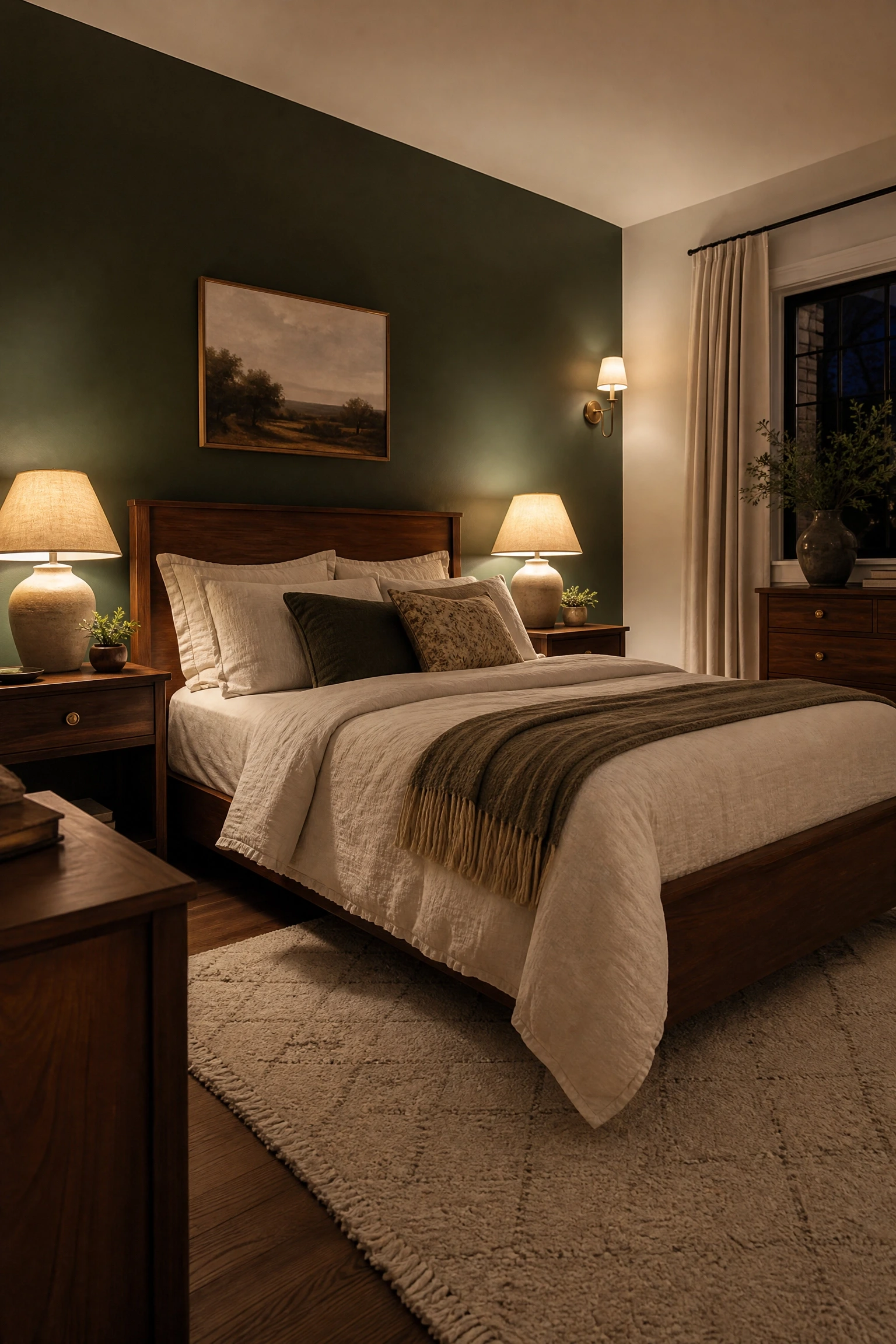
Not every guest room has to whisper. A deep charcoal, forest green, or ink blue accent wall behind the headboard gives the room a real focal point and photographs beautifully, which is part of why designers keep bringing dark colors back for smaller rooms specifically. Balance the drama with warm wood furniture, brass hardware, and bedding in cream or oatmeal so the dark wall doesn’t swallow the whole room. Lighting matters more here than almost anywhere else on this list, since dark walls absorb light, so plan on two bedside lamps plus one additional wall sconce to keep the space from feeling like a cave at night. A woven wool rug in a warm tone grounds the look, and one piece of framed art with gold or brass framing ties the metals together. Worth knowing before you commit is that dark colors do make a small room feel cozier but can also make a truly tiny room feel cramped, so this works best in a guest room with at least one decent-sized window.
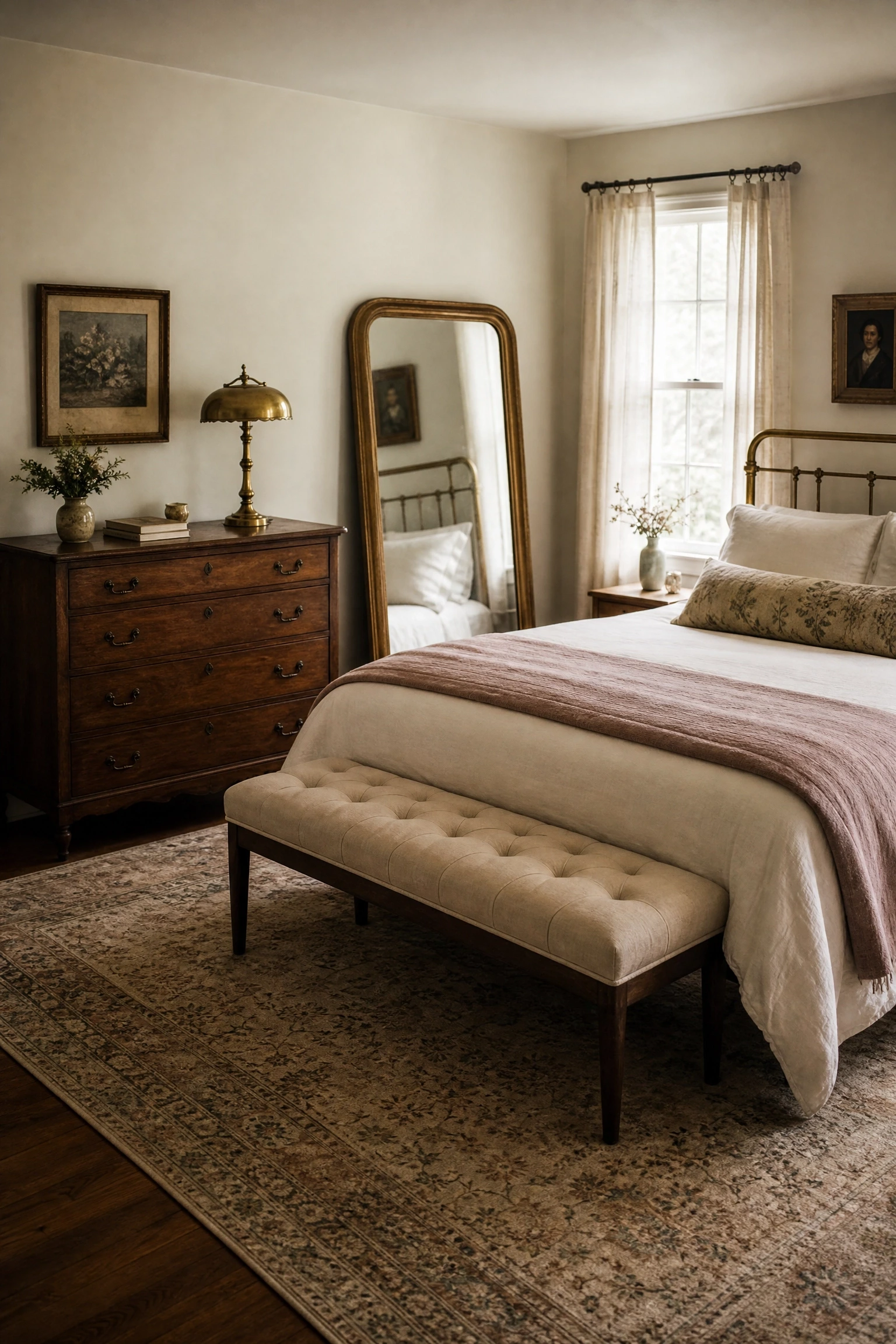
Some of the best guest rooms I’ve seen were furnished almost entirely from estate sales and a grandmother’s old bedroom set, refinished rather than replaced. An antique dresser with a fresh coat of paint or just cleaned-up original wood gives guests somewhere to unpack instead of living out of a suitcase on the floor, which is a small detail that gets noticed more than people expect. Mix in one or two newer pieces, like a simple upholstered bench at the foot of the bed, so the room doesn’t feel like a period piece. Keep walls neutral so the vintage furniture can be the focal point, and use a mix of an original mirror and a newer framed print for visual balance. Lighting from a vintage-style glass or brass lamp adds character without needing to hunt down anything rare or expensive. This is one of the most budget-friendly directions on the list if you already own inherited furniture, though refinishing takes real time, so it’s not the fastest option if your guest arrives in a week.
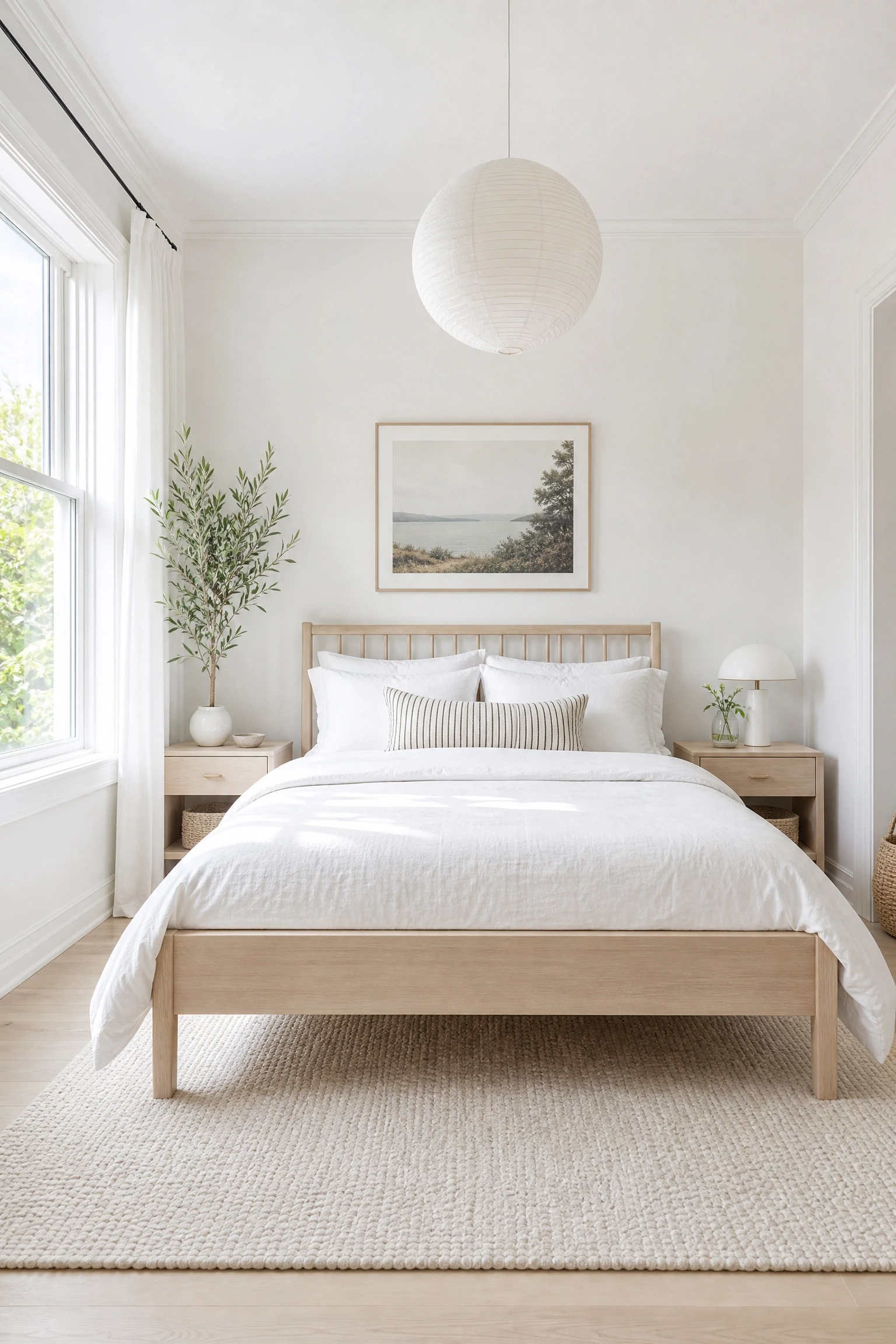
Scandinavian design keeps earning its popularity because it solves a real problem, which is making a small room feel bigger without spending on square footage you don’t have. Light ash or birch furniture, white or pale gray walls, and bedding in crisp white with maybe one striped or gingham accent pillow keep the whole room bright even with limited natural light. A single pendant light with a simple paper or metal shade replaces the need for multiple fixtures, and a light wool rug adds warmth underfoot without darkening the floor visually. Keep decor to two or three objects total, one plant, one piece of art, one small ceramic tray for guest essentials like a phone charger, since restraint is the actual design principle here, not an afterthought. This style genuinely does make small rooms feel larger and reads as calm to almost every kind of guest, though people who want a guest room to feel plush and layered may find it a little sparse for their taste.
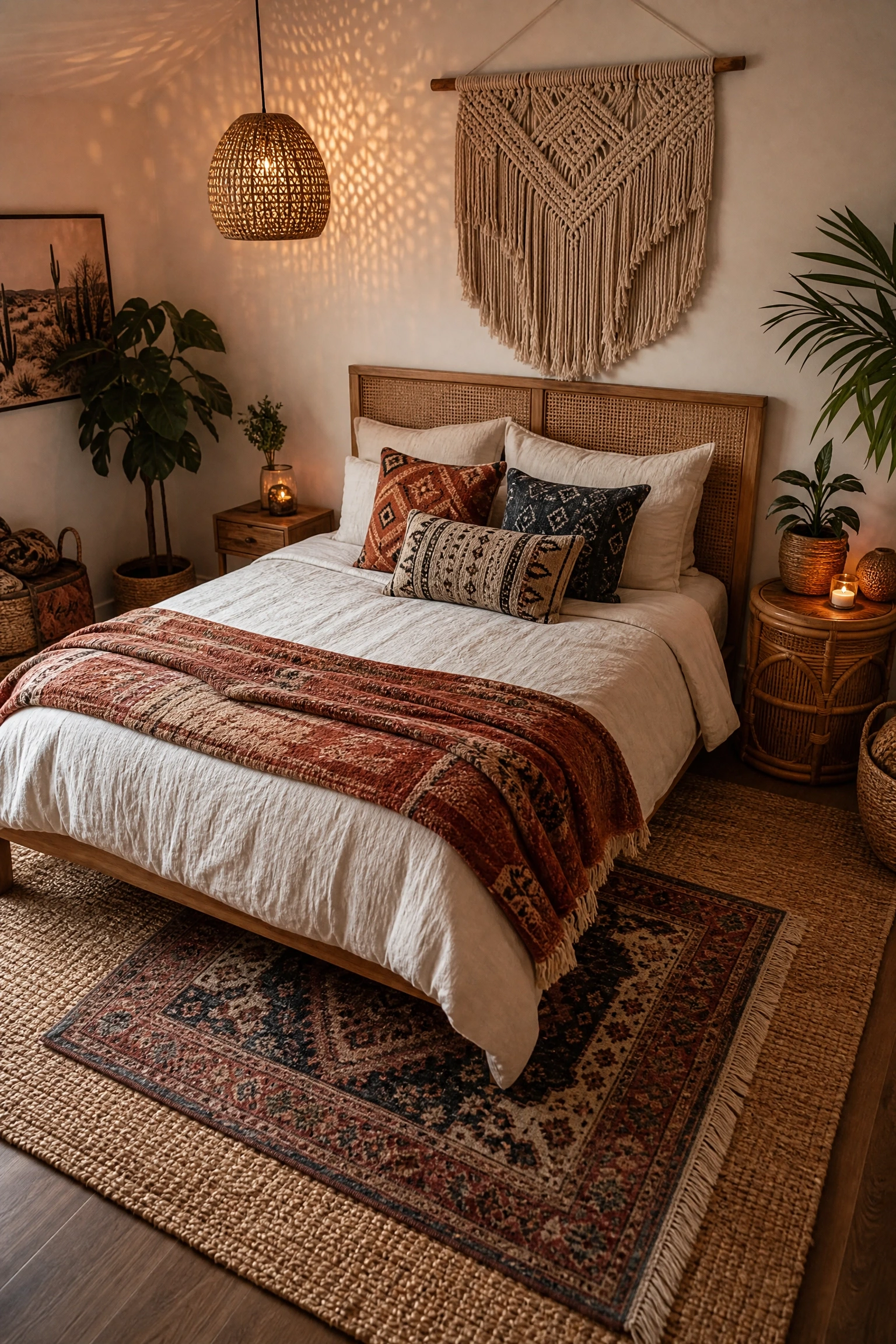
A boho guest room done well is really about texture more than color, even though color usually gets the credit. Start with a jute or wool rug as the base layer, add a woven wall hanging or macrame piece above the headboard as the focal point, and mix two or three throw pillow patterns that share at least one common color so the mix reads as intentional rather than random. Rattan or cane furniture, like a woven headboard or a bedside table, brings in natural material without adding visual weight. Warm terracotta, mustard, or sage green work well as accent colors against a neutral wall, and a woven pendant light casts warm, dappled shadows that suit the style better than a plain fixture would. The one honest warning here is that boho can tip into cluttered fast if you don’t stop at three patterns maximum, so pick your favorites and resist the urge to add a fourth.
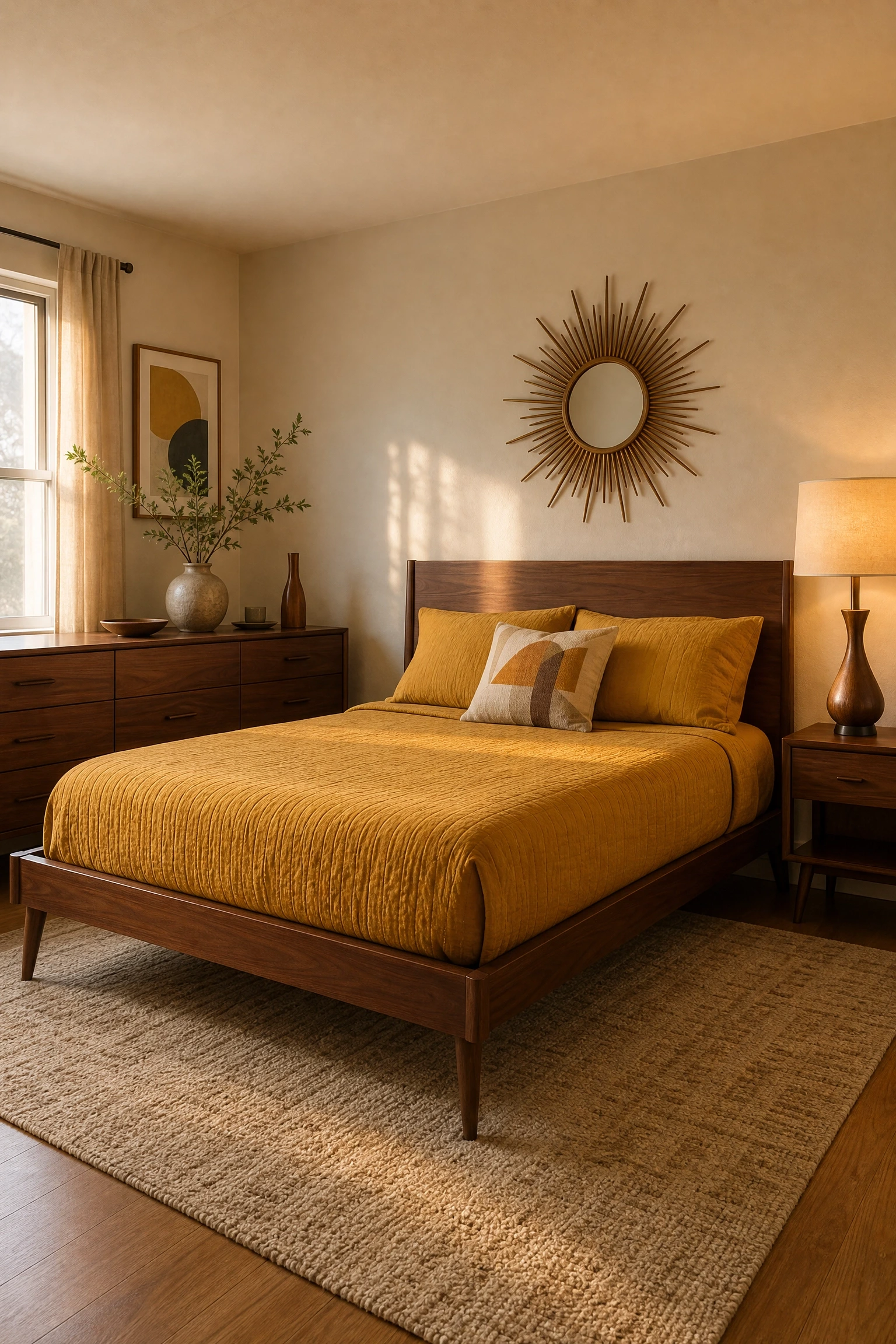
Mid-century modern works particularly well in a guest room because the furniture tends to be low-profile and light, which suits a smaller space better than bulkier traditional pieces. Look for a walnut or teak bed frame with tapered legs, paired with bedding in mustard, burnt orange, or olive against otherwise neutral walls. A sunburst mirror or a piece of abstract art gives the room a focal point without needing to fill every wall. Lighting should lean toward a sculptural table lamp with a brass or wood base, since mid-century design treats lighting as furniture rather than an afterthought. A low dresser doubles as both storage and a nightstand-height surface if the room is tight on space. This look tends to read as more expensive than it costs, since a lot of the effect comes from proportion and shape rather than pricey materials, though genuine vintage teak pieces can run higher than reproductions if that authenticity matters to you.
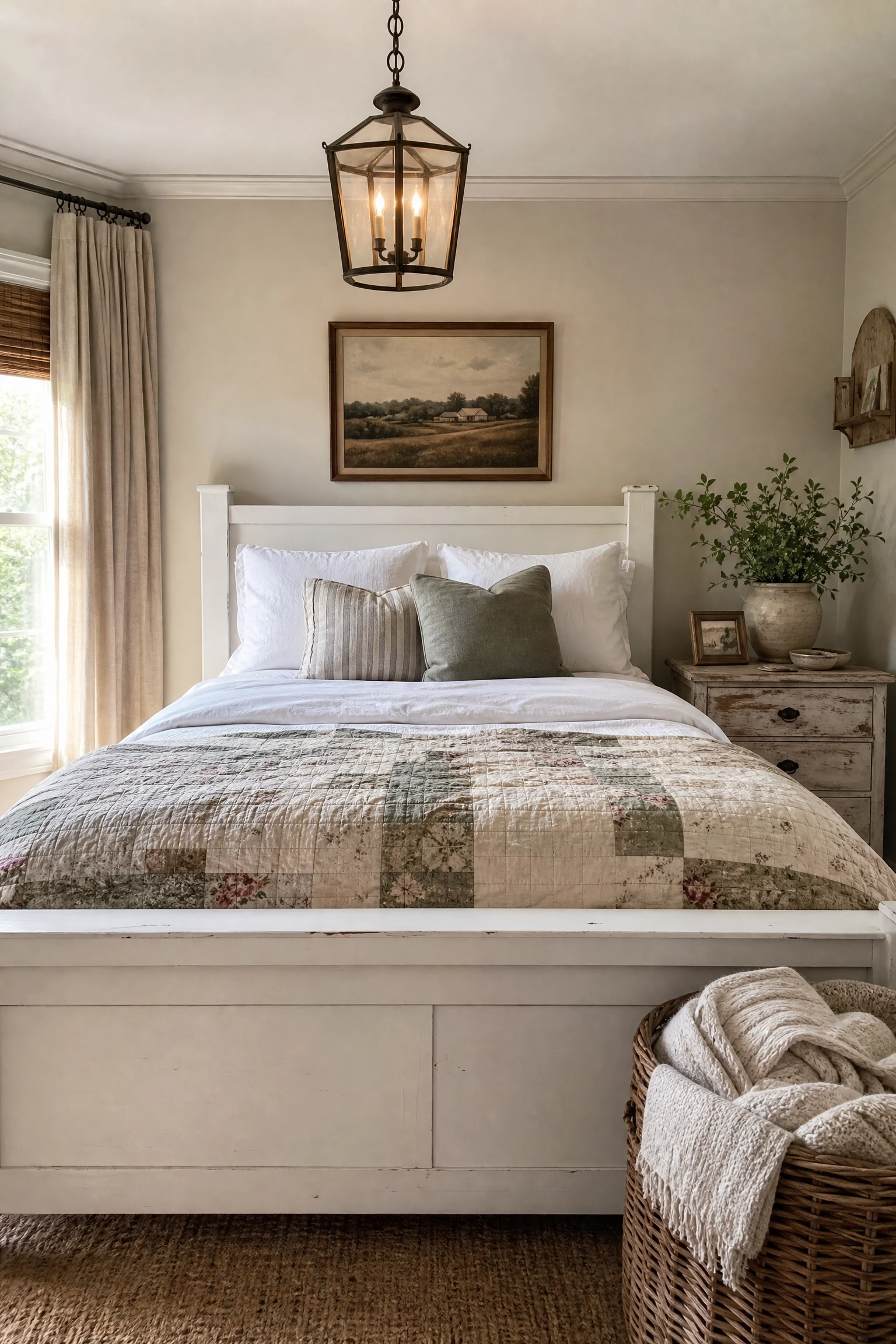
There’s a reason farmhouse guest rooms show up so often in real homes rather than just in photos, and it’s because the style is genuinely forgiving of mismatched furniture and everyday wear. A white or cream painted bed frame, a quilt in a simple pattern layered over plain white sheets, and a distressed wood nightstand give the room an easy, lived-in warmth. Add a woven basket at the foot of the bed for extra blankets, which is both decorative and useful for guests who run cold at night. Lighting from a simple glass or metal lantern-style fixture keeps the country feel without going overly rustic. A gingham or ticking stripe accent pillow adds pattern without overwhelming the room. This style is one of the easiest to build gradually over time since pieces can be added a few at a time from secondhand shops, though it can start to look mismatched rather than pulled together if you don’t keep the color palette consistent throughout.
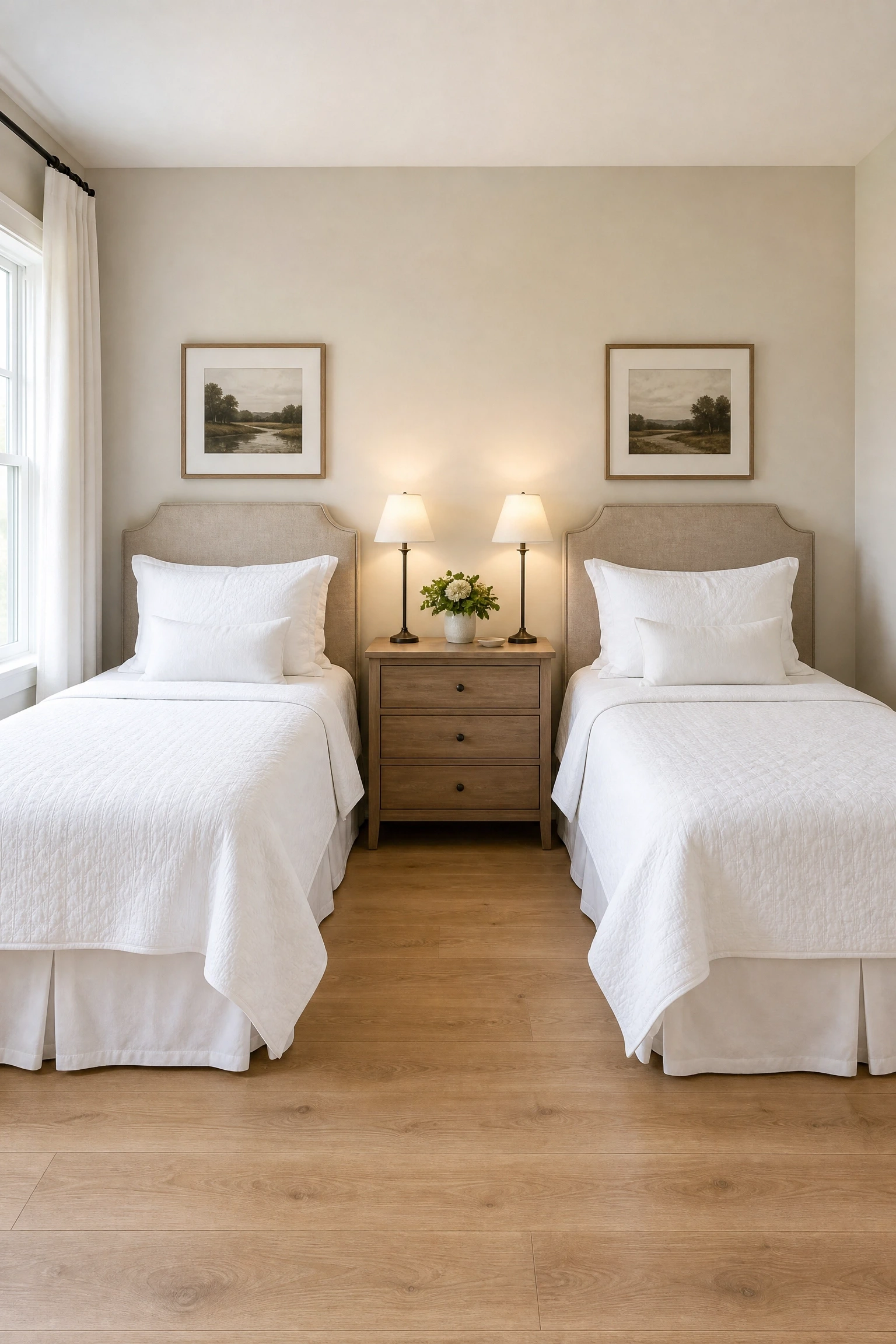
If you regularly host different combinations of guests, a couple one visit and two friends traveling together the next, a queen bed actually limits you more than it helps. Two twin beds with matching frames and bedding solve this instantly and can be pushed together with a bed bridge connector to function as one larger bed when needed. Keep the bedding identical or nearly so for a clean, intentional look rather than mismatched sets that read as leftovers. A shared nightstand or two small individual ones between the beds gives each guest their own space for a phone or glasses. Lighting works best as one lamp per bed rather than a single shared fixture, since it lets each guest control their own light before sleep. The tradeoff is that two twin frames take up more floor space than one queen frame in most rooms, so this works best in a guest room that’s at least ten by eleven feet.
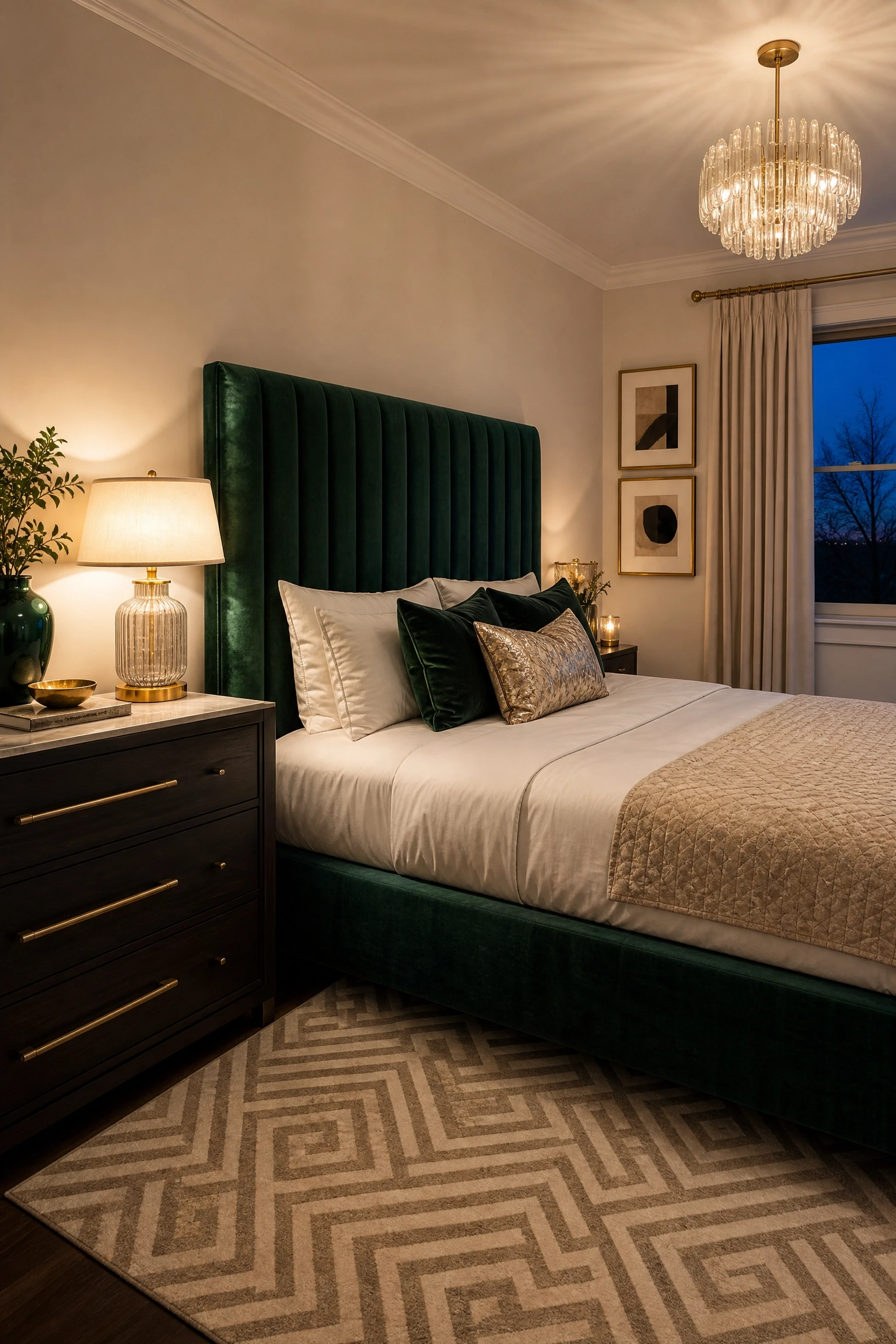
Art Deco doesn’t get used in guest rooms as often as it should, probably because people assume it requires a full gold-and-black ballroom look, but a light touch works just as well. A velvet headboard in emerald, navy, or blush gives the room an immediate focal point, and brass or gold hardware on a simple dresser ties the metal tones together without needing matching everything. Keep walls a warm white or soft gray so the jewel tones and metallics do the talking. A fluted glass table lamp or a small brass sconce adds the right kind of sparkle without turning the room into a stage set. One geometric patterned rug, kept to two or three colors, grounds the look. This style photographs extremely well and tends to impress guests immediately, though velvet upholstery does show water rings and needs a bit more care than a washable cotton blend, so it’s worth knowing that going in if low maintenance matters to you.
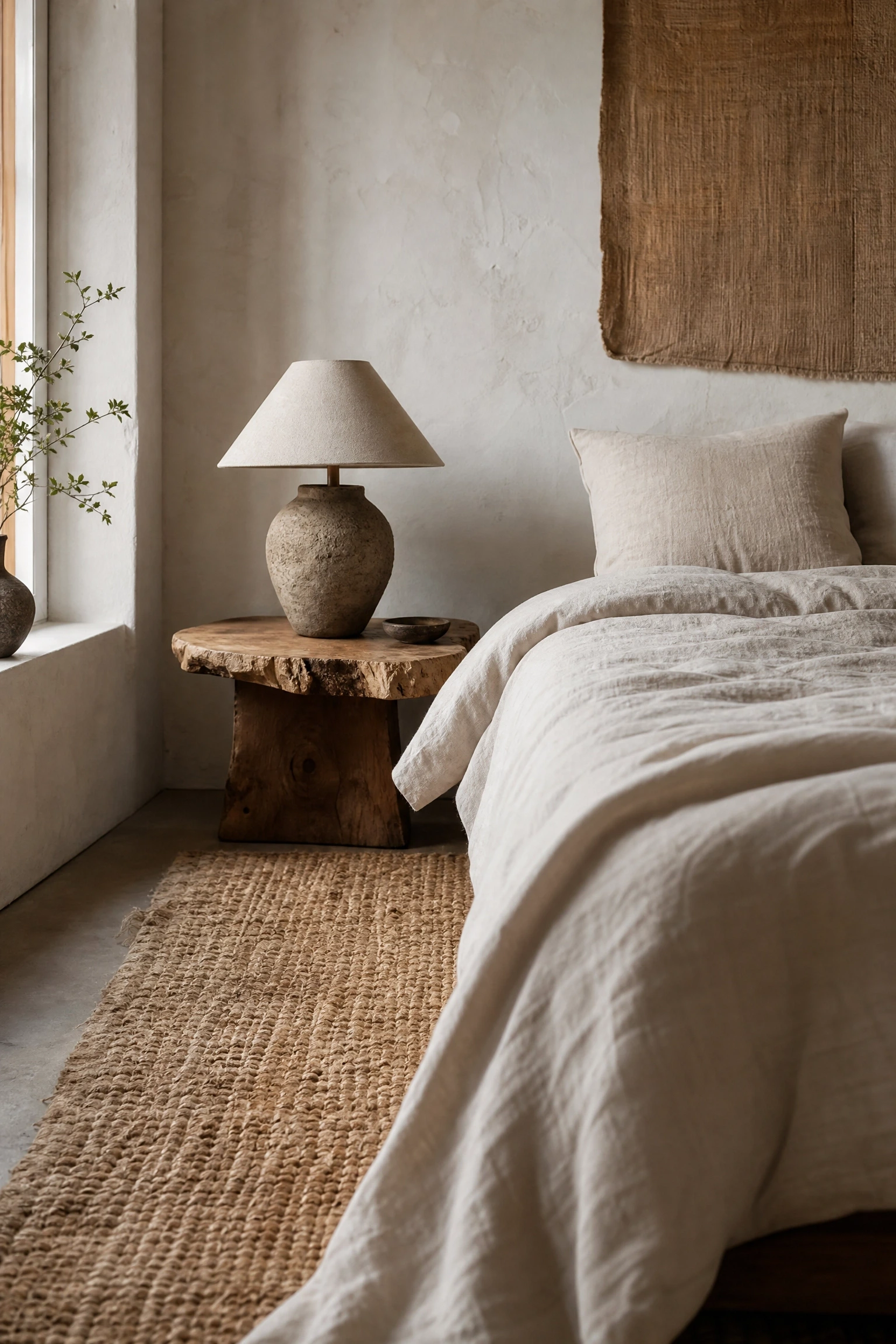
Wabi-sabi is having a real moment in interior design circles right now, and it’s less about a specific look than a mindset, finding beauty in natural, slightly imperfect materials instead of polished perfection. A live-edge wood nightstand, raw linen bedding in an undyed oatmeal tone, and a hand-thrown ceramic lamp with visible texture all fit this approach. Walls work best in a warm plaster-like white, and a simple woven rug with visible irregularities in the weave actually adds to the effect rather than detracting from it. Skip anything glossy or perfectly symmetrical, since the whole point is embracing natural variation in wood grain, linen wrinkles, and handmade ceramics. This is a genuinely restful style for guests who find overly polished rooms a little sterile, though it can read as unfinished to anyone expecting a more traditionally styled space, so it helps to know your typical guest before committing to it fully.
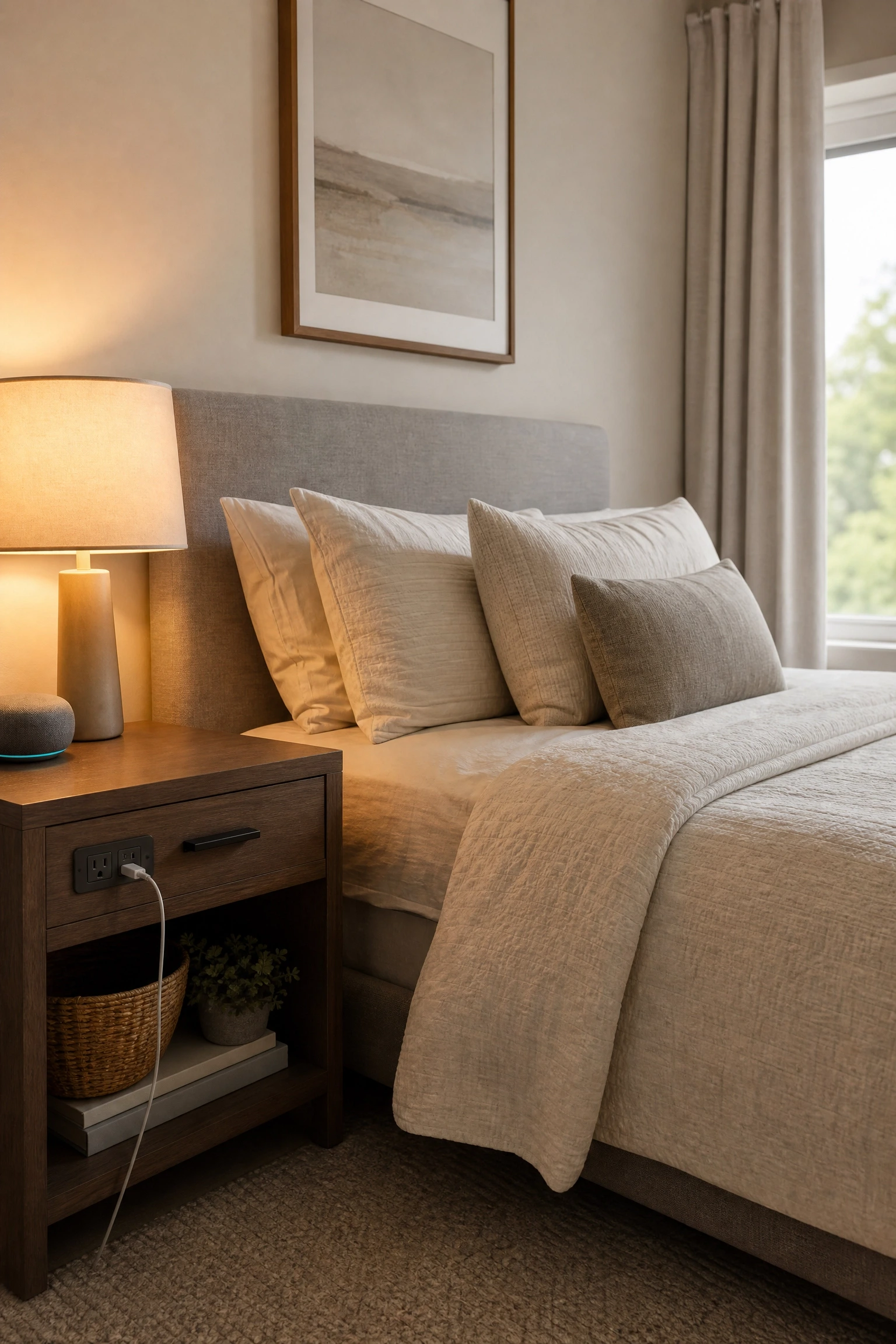
Some guests, especially ones traveling for work, care less about the color palette and more about whether they can charge three devices at once without crawling under the bed. A nightstand with a built-in USB port or a simple charging station with multiple ports solves this immediately and costs very little. Smart bulbs with a dimmer app or a simple remote let guests set their own lighting without hunting for switches in an unfamiliar room, and a small speaker for music is a nice touch if you already own one you’re not using elsewhere. Keep the actual decor simple and neutral so the tech additions don’t compete visually with cables and chargers. A printed card with the wifi password taped inside a drawer or propped on the nightstand is a small, low-cost gesture that guests mention more often than almost anything else on this list. The one thing to watch for is over-automating the room to the point where guests can’t figure out how to turn off a light manually if the app isn’t working, so always keep a simple physical switch as backup.
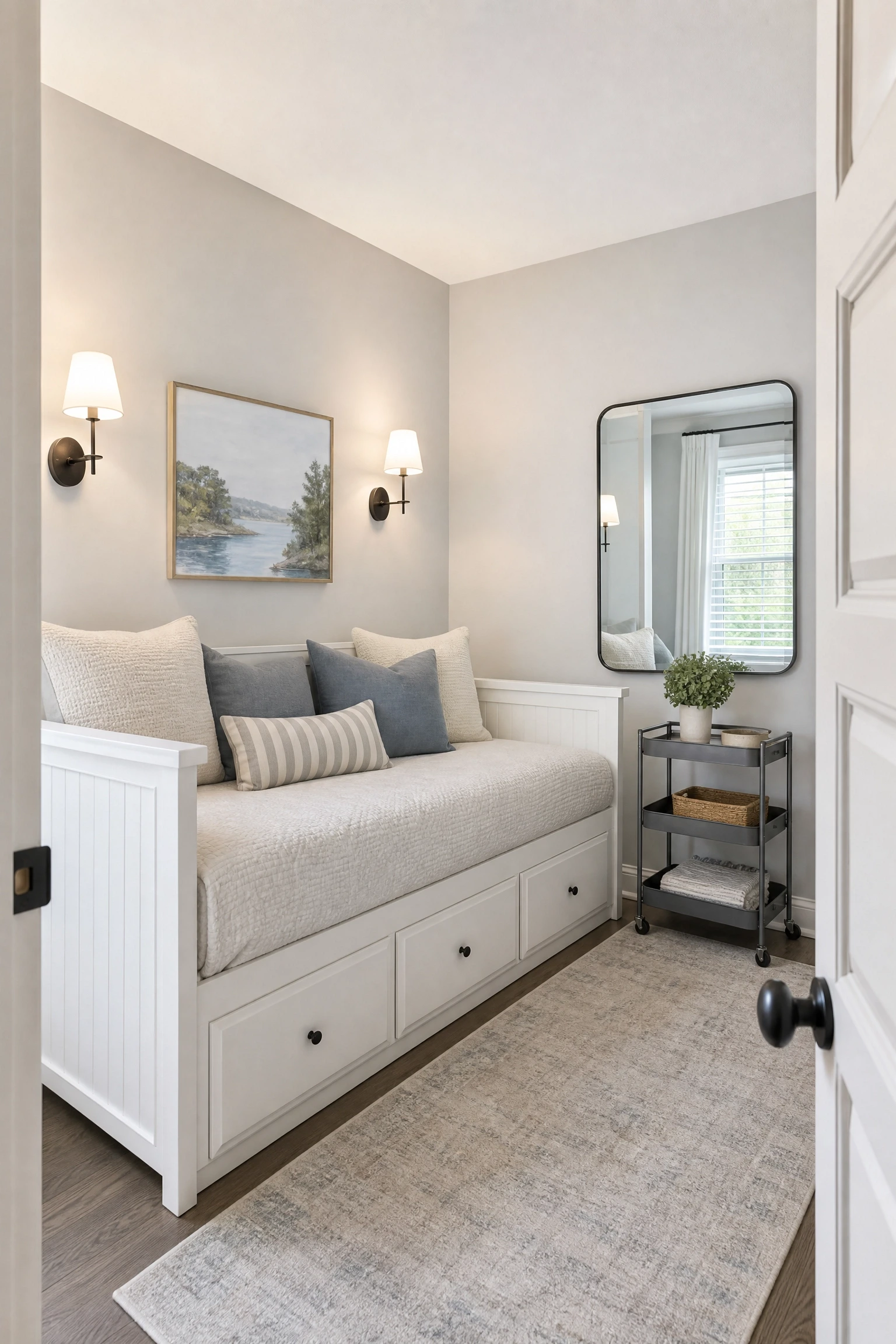
A guest room that’s really more of a large closet still deserves real design thought, maybe even more than a spacious one. A daybed or a compact frame with built-in storage drawers underneath solves the mattress-versus-storage problem in one piece of furniture. Wall-mounted sconces instead of table lamps free up nightstand space for a slim shelf instead, and a mirror opposite the window bounces natural light around the room to make it feel less boxed in. Keep the color palette light, whites and soft grays reflect light while dark colors will make an already small room feel smaller, which is the opposite of what you want here. A slim rolling cart or a fold-down wall shelf can serve as a nightstand without eating floor space permanently. This approach genuinely does make tiny rooms function well, though it does mean prioritizing multi-purpose furniture over anything purely decorative, so a few aesthetic compromises are part of the deal.
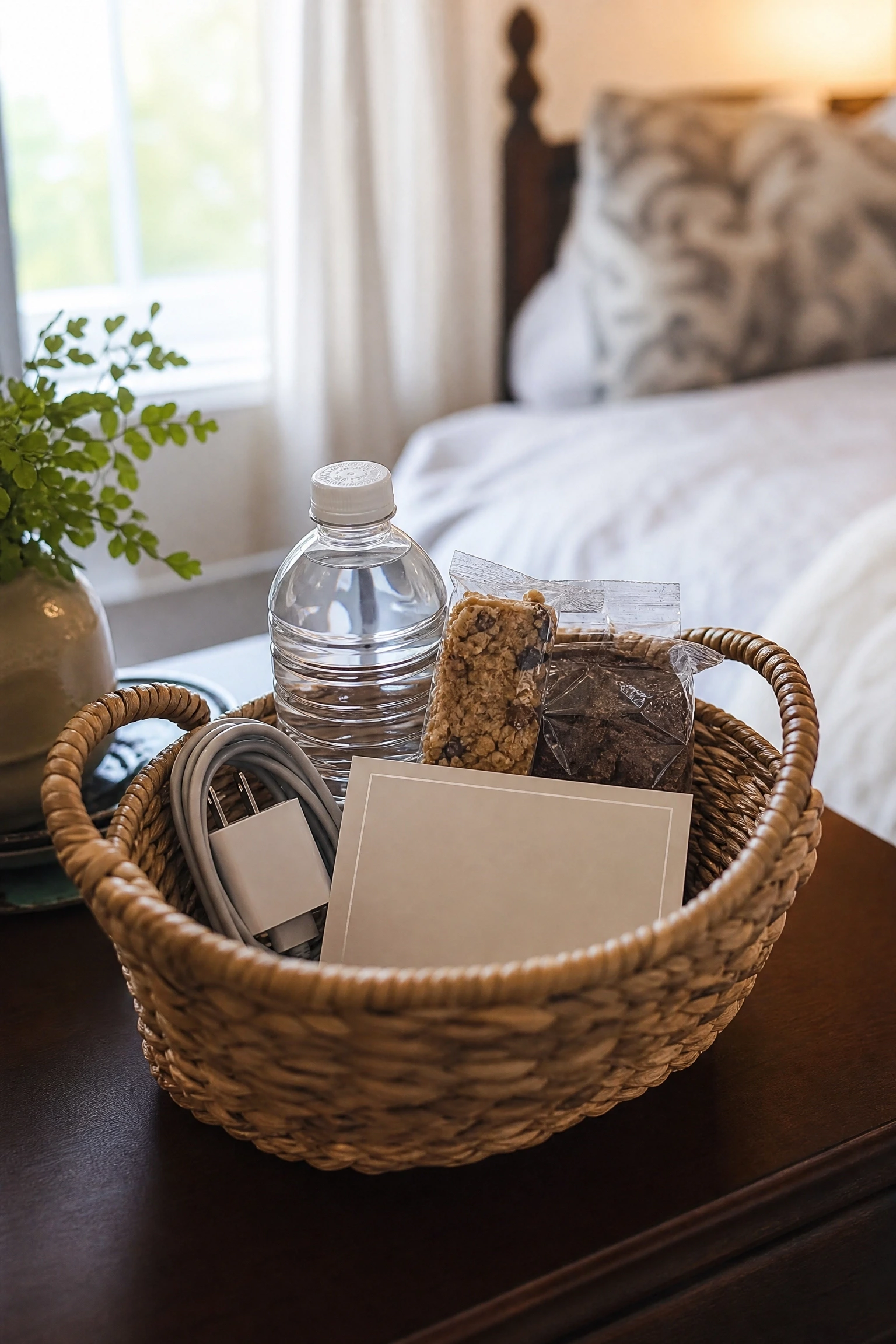
This one isn’t furniture or color, it’s the detail that makes guests feel like you actually thought about their stay rather than just cleared a room. A small basket or tray on the dresser with a phone charger, a couple of snacks, a bottle of water, and a printed wifi card takes ten minutes to put together and gets mentioned by guests more than almost any styling choice on this list. Add a couple of books or magazines that match general interests if you know your guest, or a local guidebook if they’re visiting from out of town. A scented candle or a small diffuser adds a nice touch, but keep the scent mild since strong fragrances can bother people with sensitivities or allergies. A folded extra blanket at the foot of the bed covers guests who run cold without you having to guess their preference in advance. This is genuinely the lowest-cost idea on the entire list and arguably has the highest impact per dollar spent.
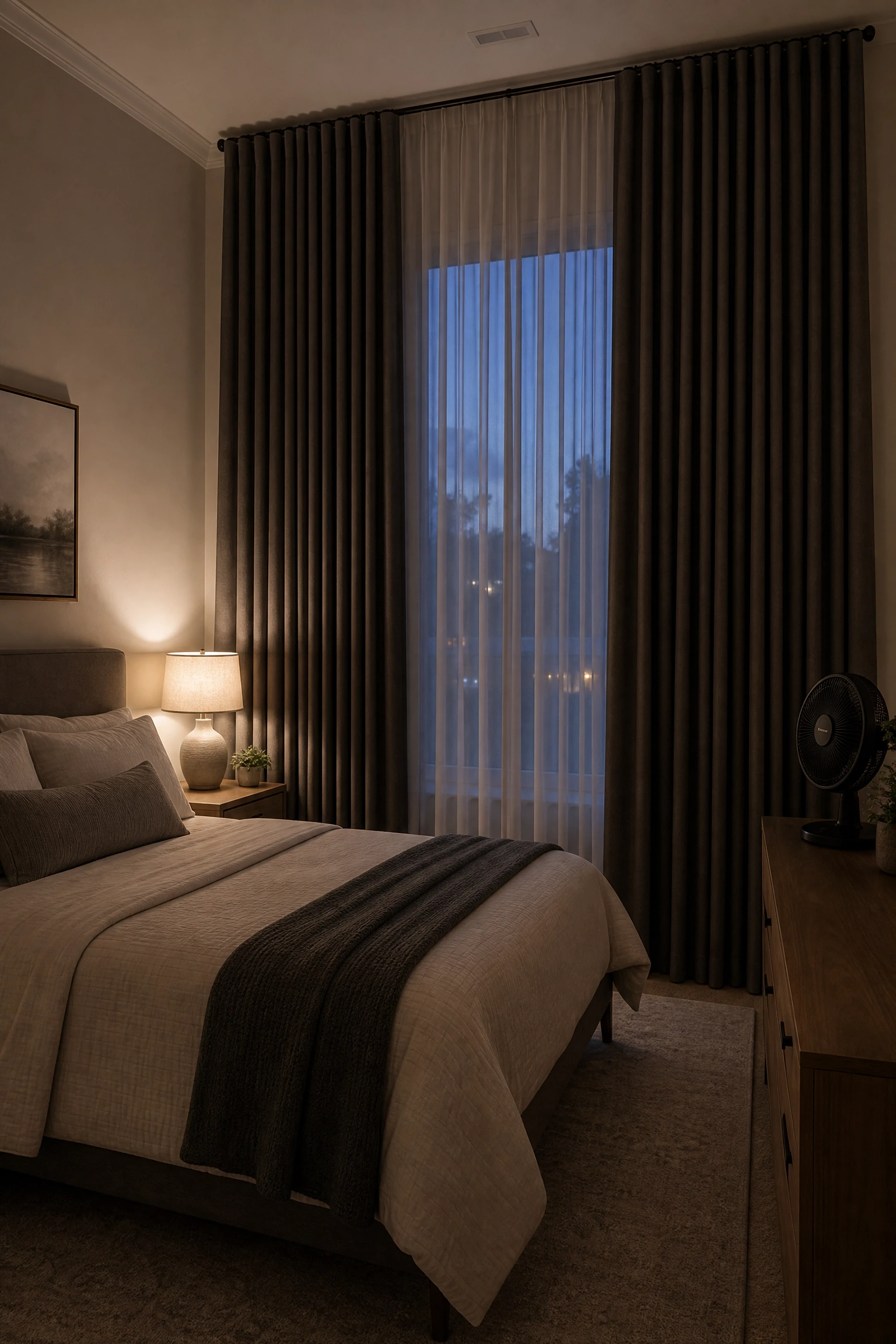
Every idea on this list matters less if your guest can’t actually fall asleep, and light control is the piece people skip most often when decorating a guest room. Proper blackout curtains, hung wide and high above the window frame rather than tight against it, block outside light without making the window look small, and they double as a design element if you pick a color that complements the bedding. Add a sheer curtain layer behind them for daytime privacy without total darkness, since guests will want natural light during the day and full darkness at night. A white noise machine or a small fan on the dresser helps guests who aren’t used to unfamiliar house sounds, like creaky floors or a furnace kicking on. Pair this with a dimmable lamp for the transition from bright to dark rather than one bright switch, since going from full brightness to total darkness in one step isn’t restful. This is a genuinely underrated upgrade, and it’s one that costs relatively little compared to the difference it makes in how guests actually sleep.
Seventeen ideas is a lot to take in at once, so the real trick is picking one or two that fit your actual room and your actual guests rather than trying to combine all of them. A small guest room benefits more from smart storage and light colors than from a moody accent wall, while a guest room that mostly hosts family for a week at a time benefits more from real light control and a comfortable, hotel-style bed than from a popular right now color scheme. None of these looks require a full renovation. Most come down to bedding, one or two furniture pieces, and lighting that actually works instead of one bare overhead bulb. Start with whichever idea solves your biggest current problem, whether that’s comfort, storage, or just making the room look like it belongs in the rest of your house, and build from there. A guest room doesn’t need to be perfect to feel thoughtful, it just needs to show that you considered the person staying in it.
Frequently Asked Questions
How much does it cost to redo a guest bedroom on a normal budget?
A full refresh using mostly new bedding, paint, and a couple of secondhand furniture pieces typically runs a few hundred dollars, while a room built around new furniture and investment pieces like a real down duvet or a designer light fixture can run into the low thousands. Bedding, paint, and lighting swaps give the most visual change for the least money.
What is the single most important thing to get right in a guest room?
Comfort of the actual mattress and bedding matters more than any styling choice, since a guest who sleeps badly won’t remember how nice the room looked. After that, lighting that can be dimmed or adjusted makes the biggest difference in how restful the room feels.
Is it better to use a queen bed or two twin beds in a guest room?
It depends on who typically stays. A queen suits couples and works well if space is limited, while two twins give more flexibility for varying group sizes and can usually be pushed together with a bed bridge when a couple visits.
How do I make a small guest room not feel cramped?
Stick to light, warm neutral colors on the walls and bedding, use wall-mounted lighting instead of table lamps to free up surface space, and choose furniture that serves more than one purpose, like a storage bed or a slim rolling cart that doubles as a nightstand.
Should a guest room double as a home office?
It can work well if you choose a daybed or quality sofa bed and keep the two functions visually separated with a bookshelf or divider, though a dedicated guest room with a real mattress will always be more comfortable for guests staying more than a couple of nights.
What small details do guests actually notice and appreciate?
Blackout curtains, a printed wifi password, a charging station, and a basket with water and snacks come up again and again as the details guests mention after a stay, often more than the color scheme or furniture style.