There is a quality that old fireplace mantels bring to a room that no new piece can convincingly replicate. It is the weight of real materials, the wear of genuine use, and proportions drawn by hand rather than set by a manufacturing template. Victorian cast iron, Georgian carved wood, French limestone, and salvaged barn beam all carry that quality differently, and the right choice for a room depends far less on square footage than most people assume. A single well-chosen antique surround can anchor a space that previously had no clear focal point at all.
This article covers both sides of the antique fireplace mantel conversation: the different styles and materials worth knowing, from ornate overmantels to stripped-back Craftsman surrounds, and the decorating approaches that hold up in actual rooms rather than just in styled editorial photographs. Every idea here is grounded in what works in practice, from salvage yard finds to restoring what is already in your walls.
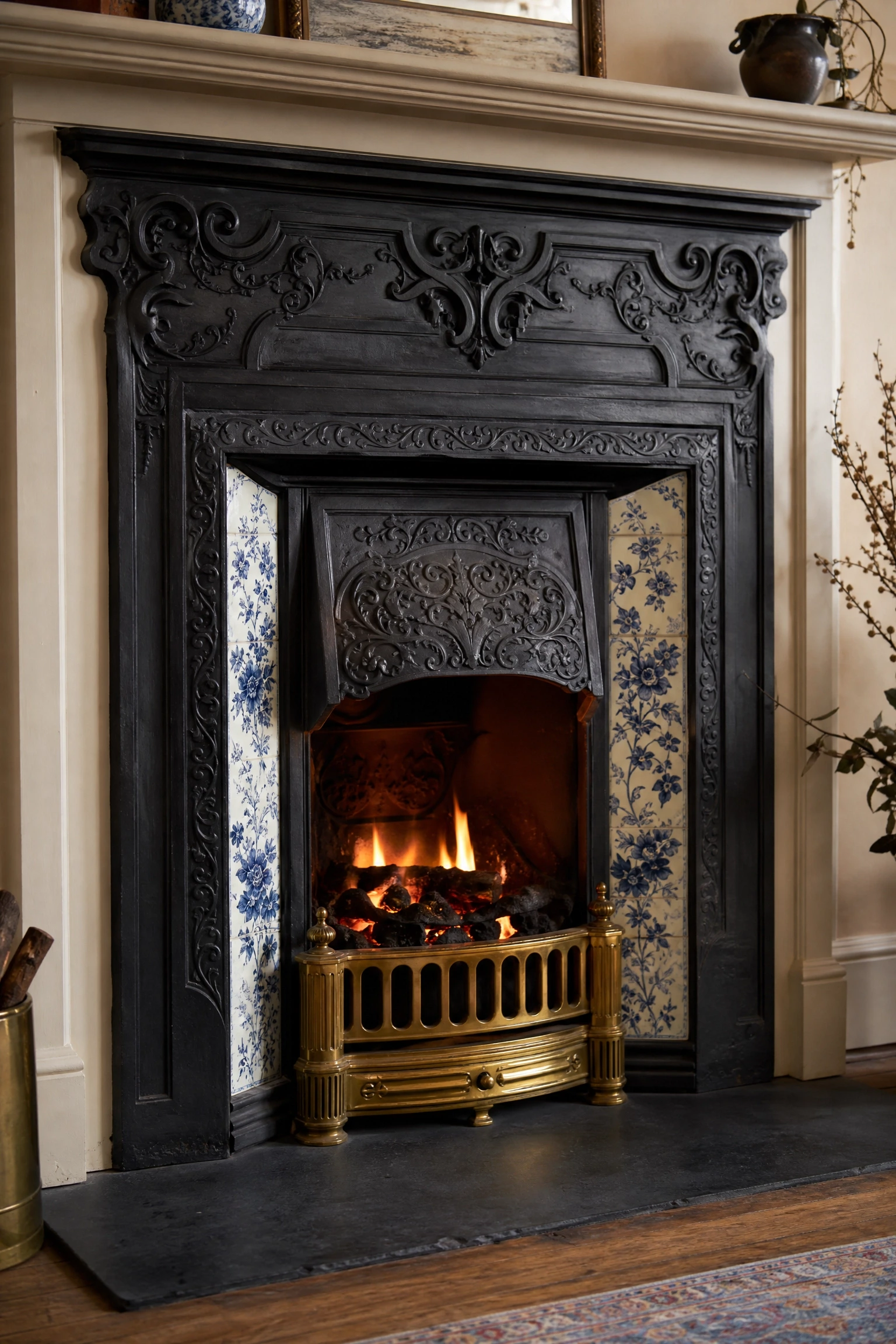
Cast iron Victorian surrounds, made between roughly 1840 and 1910, feature moulded foliate scrolls, decorative cheek tiles, and complex register grates. They work best in rooms with high ceilings and original period architecture, because heavily decorated ironwork in a low-ceilinged modern space feels oppressive rather than characterful. Budget between £300 and £1,200 at architectural salvage yards depending on condition, size, and whether the original tile insert survives intact. Note that the register grate, which controls airflow and holds fuel, is often sold separately and can be difficult to source in the correct size.
Heads Up: Always confirm that the firebox opening dimensions match your intended grate before purchasing. Antique grates are rarely interchangeable between Victorian manufacturers.
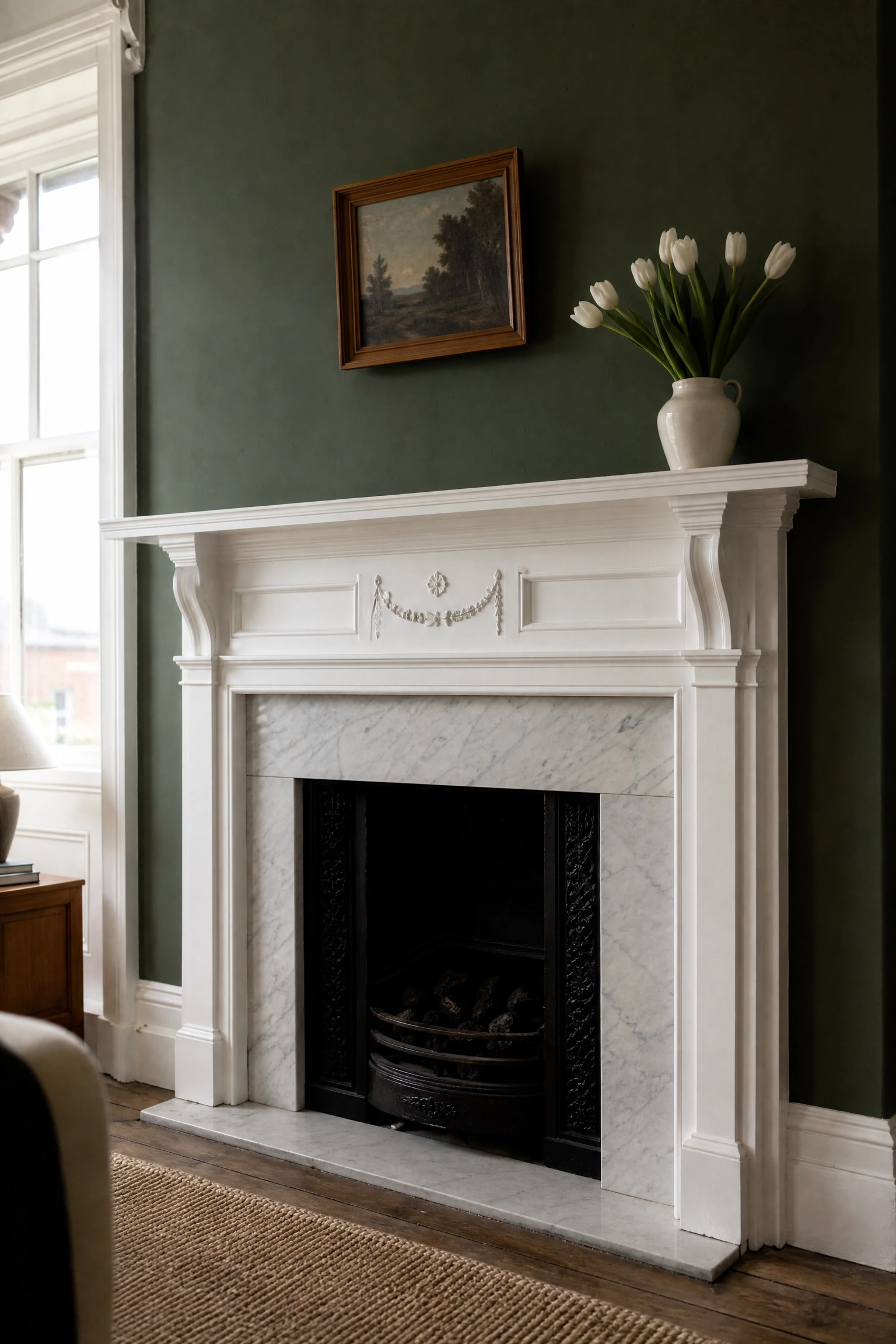
Edwardian mantels from the 1901 to 1915 period tend toward cleaner lines than their Victorian predecessors, and their defining detail is the marble or slate slip framing the firebox opening. Statuary white marble reads soft and domestic; Belgian black slate reads dramatic and formal. In practice, Edwardian proportions suit mid-century influenced rooms and contemporary interiors surprisingly well. Good condition examples run £400 to £900 at specialist salvage dealers, and restoration is usually straightforward since the wood surround accepts new paint and the marble responds well to a pH-neutral stone cleaner.
Designer Advice: Pair a white marble slip with a deep wall colour like slate blue or forest green. The contrast makes both materials read more intensely without any additional decoration.
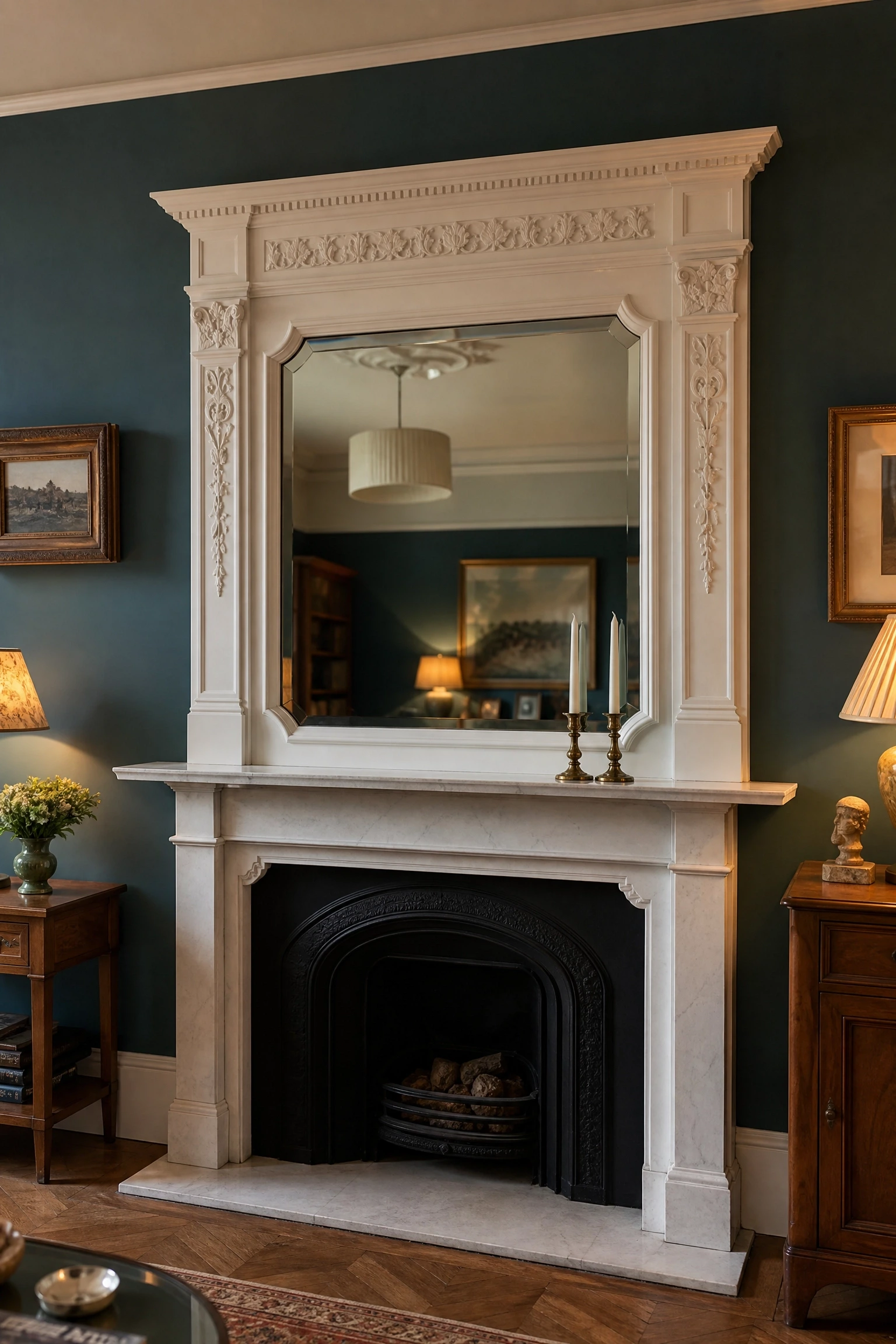
The overmantel sits directly above the mantel shelf and extends toward the ceiling, and in Victorian houses it was almost always built as part of the original chimneybreast design. A built-in bevelled mirror reflects light and deepens the sense of space, which is genuinely useful in north-facing or narrow rooms. Finding a complete original with intact glass is increasingly rare, but reproduction versions made to match salvaged bases are available through specialist joinery workshops. The critical proportion to get right is height: the overmantel should reach at least two-thirds of the way to the cornice, or it reads as undersized.
Pro Move: Commission a joiner to frame a large antique mirror in painted wood. The result is cheaper than sourcing a complete original and visually indistinguishable at normal room distance.
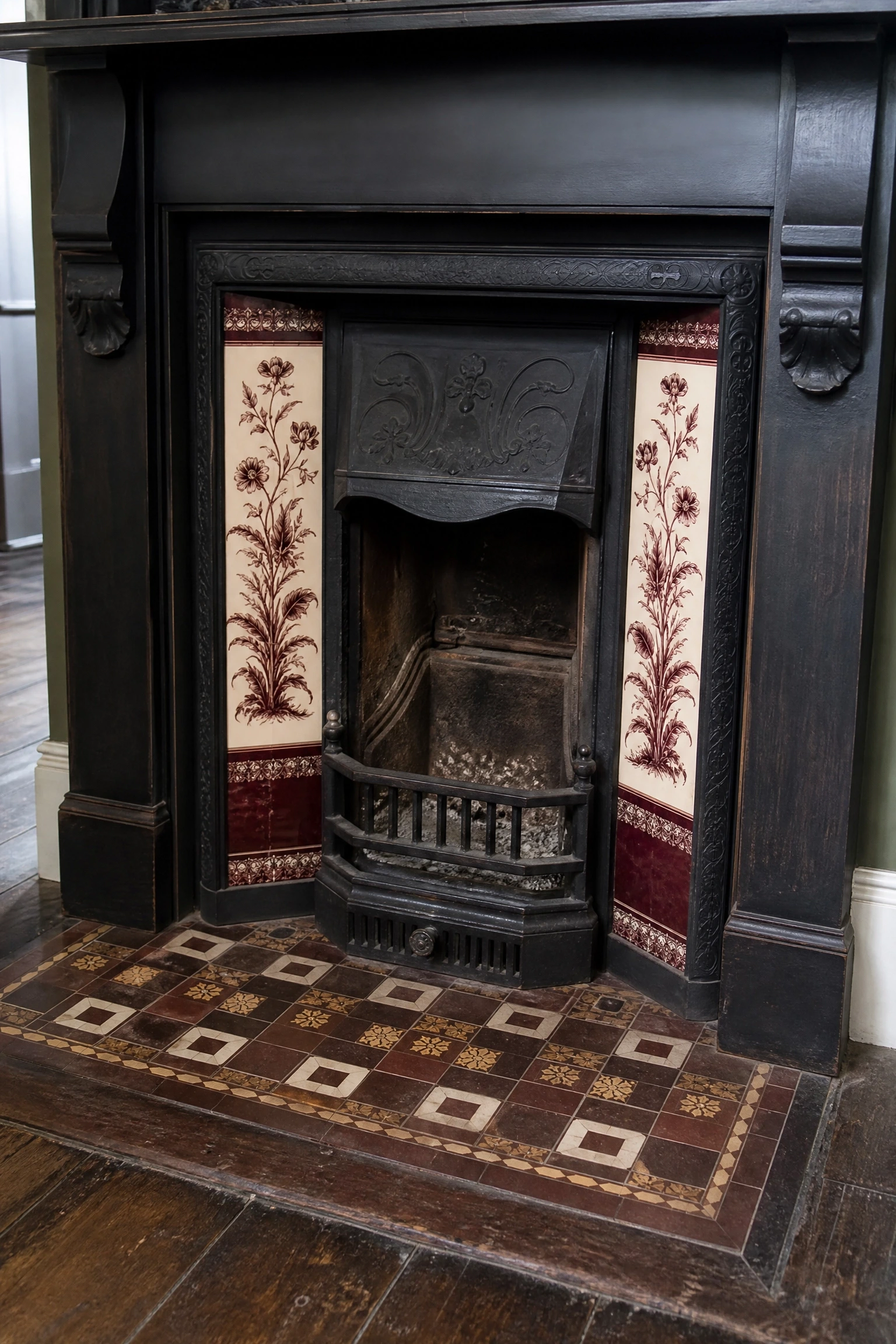
The cheek tiles flanking a Victorian firebox were produced by manufacturers including Minton, Wedgwood, and Maw & Co., featuring hand-painted botanical motifs, aesthetic movement patterns, and geometric repeats. Original tile sets in good condition are actively collected and can be worth more than the iron surround itself. For restoration work, several British manufacturers produce faithful period reproductions at considerably lower cost. If tiles are cracked or panels are missing, source reproductions from a matched design rather than combining unrelated patterns, which reads as incomplete rather than eclectic regardless of how individually attractive each tile is.
Reality Check: Missing even two tiles from a six-panel run significantly disrupts the visual cohesion of the hearth. Complete the set with reproductions, or remove the originals and store them safely.
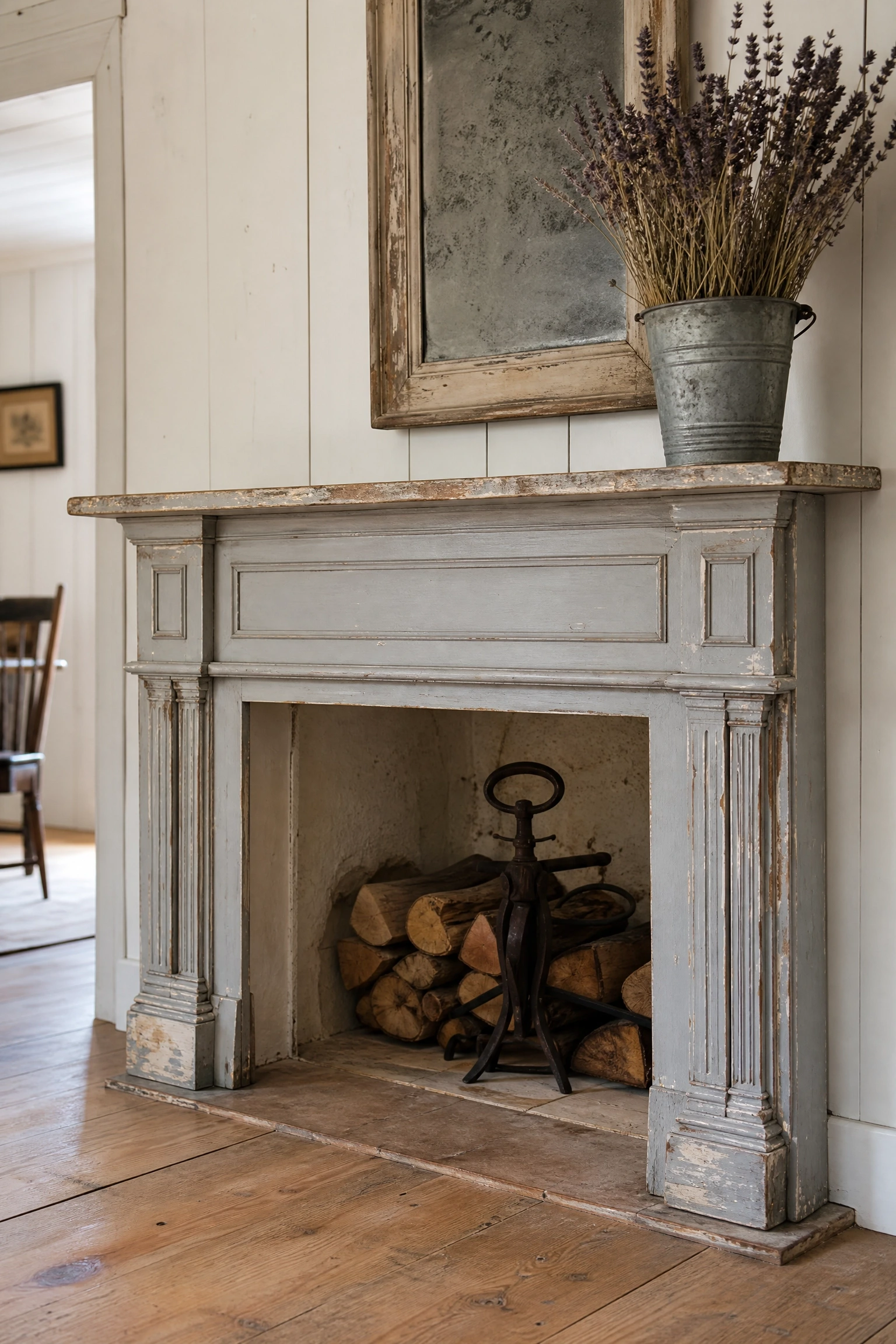
A painted wood mantel with genuine wear reads equally well in a French farmhouse kitchen, a New England colonial bedroom, and a Scandinavian-influenced sitting room, making it one of the most versatile antique mantel categories. The important distinction is between genuine and factory distress: authentic wear concentrates at high-contact points like shelf edges and pilaster bases, while factory-applied wear is distributed arbitrarily and reads as artificial at close range. Mid-range salvaged examples run from £150 to £400, and milk paint applied in two layers and sanded back produces a convincing aged result if you are finishing a piece yourself.
Quick Tip: Apply dark wax after painting and distressing. It settles into moulding profiles exactly as aged paint does, far more convincingly than dry-brushed contrast colour.
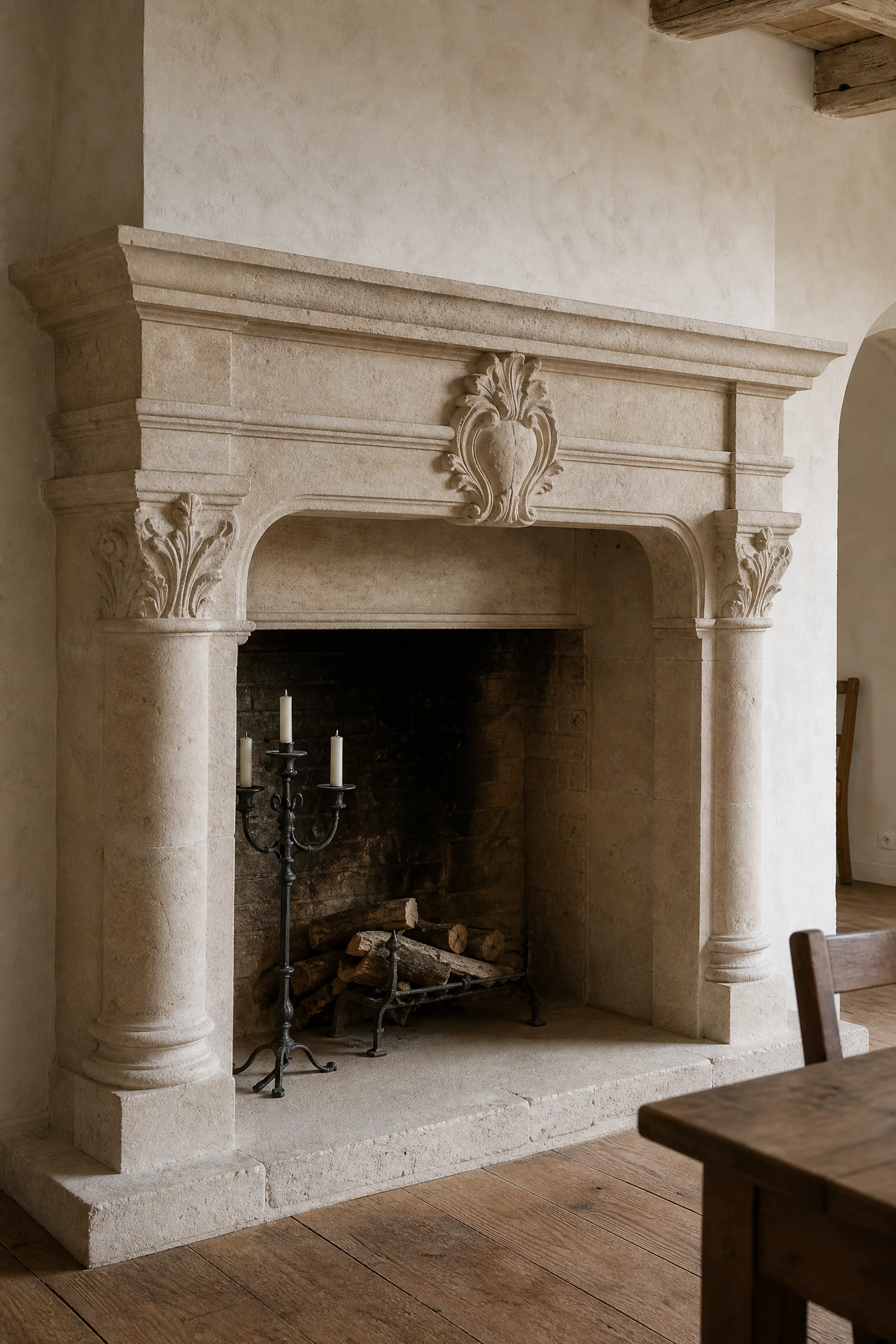
Authentic carved limestone mantels from French farmhouses, sold through dealers who import from Normandy and the Loire Valley, are investment-level pieces starting at around £1,500 and rising quickly to £6,000 or more for examples with intricate carving. They suit large rooms with stone or wide-plank wood floors because the density of the material demands an equally grounded setting. Limestone is porous and will absorb staining from damp botanicals or candle wax, so apply a penetrating stone sealer every two to three years. Look for acanthus leaf capitals and a carved keystone cartouche above the firebox opening as markers of authentic French craftsmanship.
Designer Advice: Keep surrounding walls very plain, either unpainted plaster or a single flat colour. The limestone provides all the visual complexity the room needs.
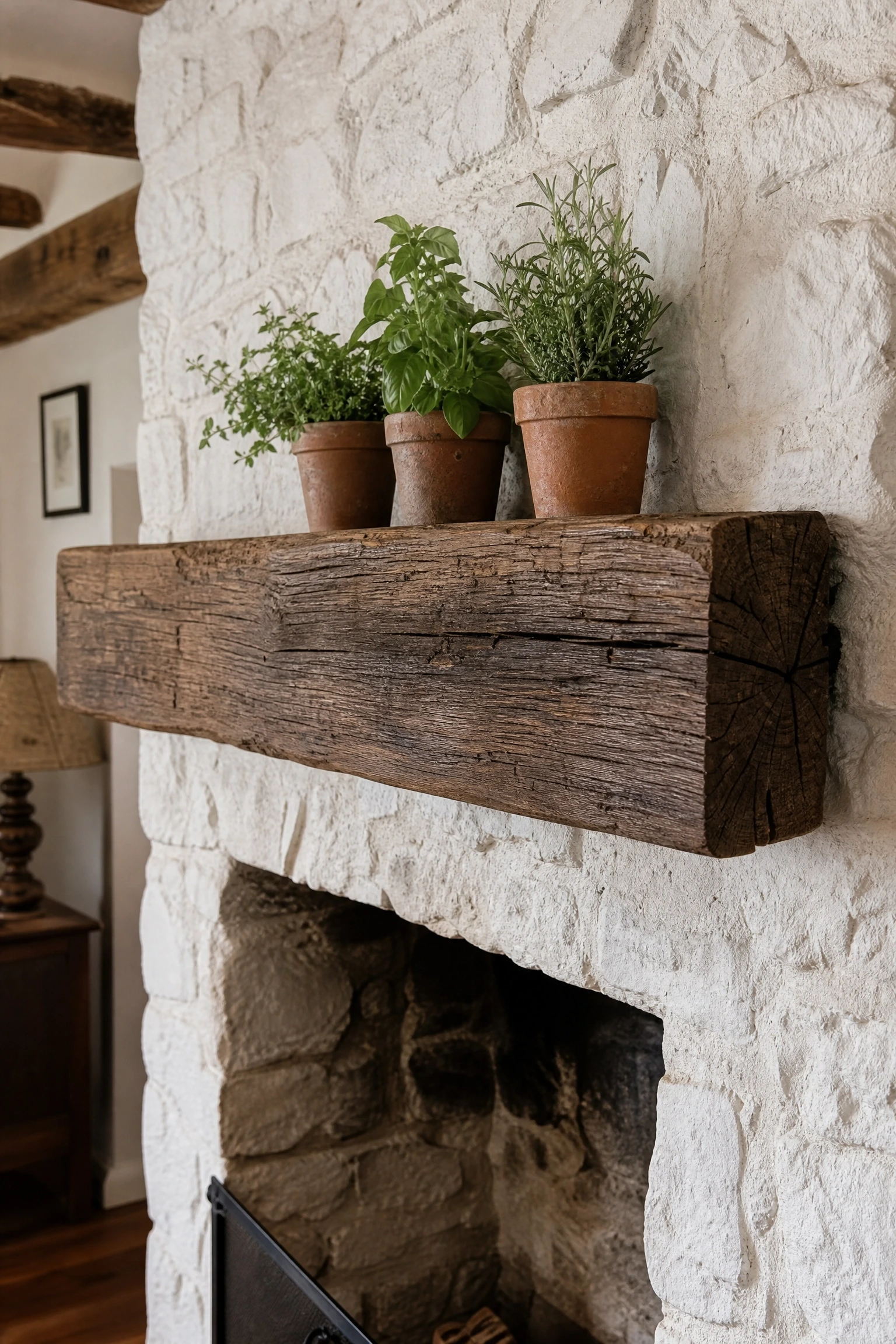
A single heavy barn beam used as a mantel shelf is one of the most straightforward and honest approaches in this article, and worth considering for exactly that reason. The beam should be genuinely old rather than artificially aged, and the best sources are barn conversions and specialist reclaimed timber dealers. Aim for six to twelve inches of depth and four to eight inches of thickness, which gives the visual weight needed to read as a mantel rather than a floating shelf. Fix using concealed steel pins or heavy wall anchors, leave the surface unfinished, and apply beeswax once annually.
Heads Up: Ensure any beam has been properly dried and treated before installation. Green timber will move and crack as it adjusts to indoor temperature and humidity over the first year indoors.
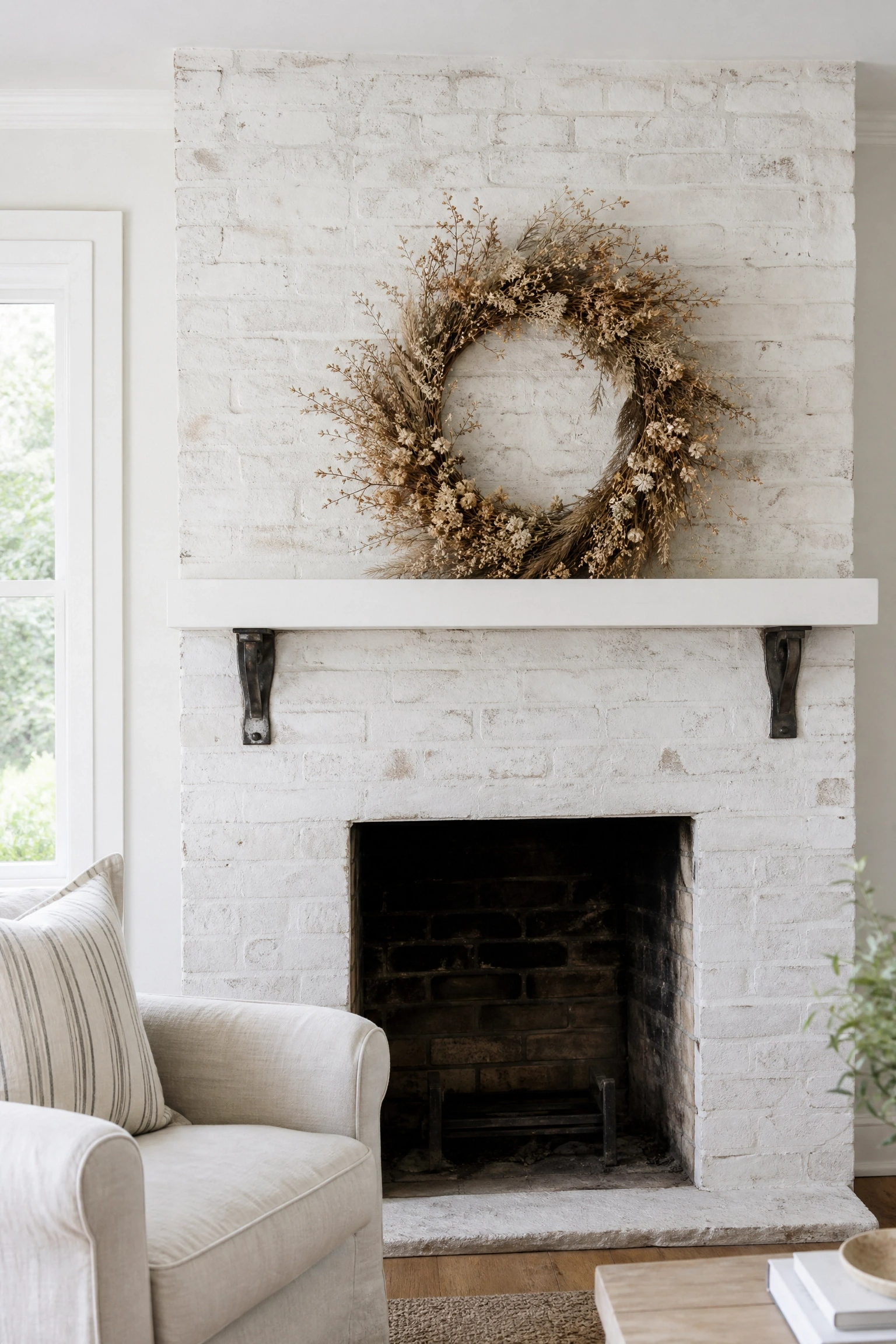
Rather than a full surround, some rooms benefit most from the firebox opening itself being the decorative statement, with a thick wood shelf sitting above exposed whitewashed brick. This suits cottages, barn conversions, and informal sitting rooms where a formal carved surround would feel disproportionate. Whitewashing requires diluting white emulsion paint to roughly 50% water, applying with a wide brush, and wiping back before it dries to control the final opacity. The shelf should be at least three inches thick and finished to match the room’s joinery rather than contrasting sharply with it.
Pro Move: Add a single iron bracket at each end of the shelf rather than fixing it flush. The brackets read as deliberately rustic rather than structurally unresolved.
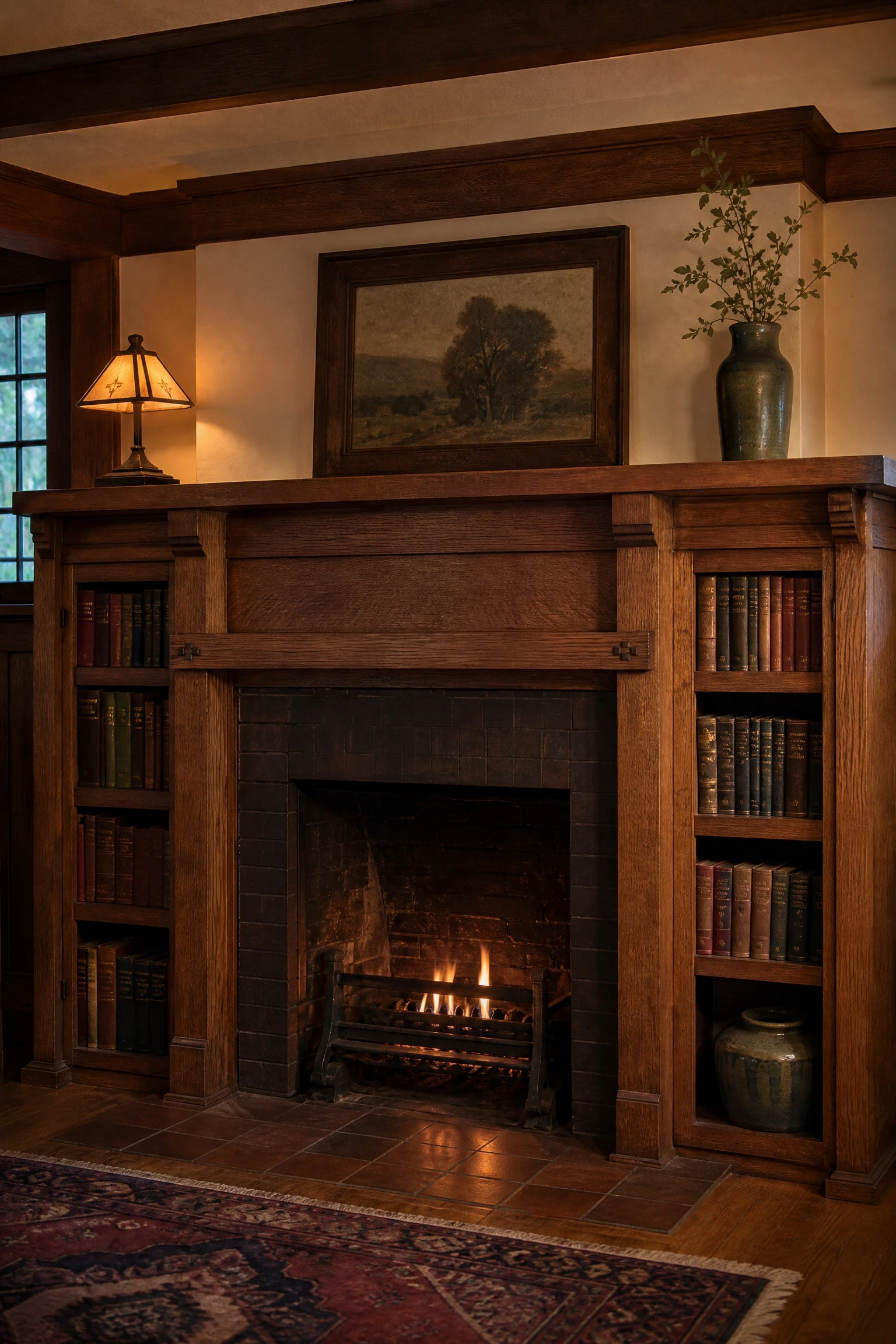
The Craftsman fireplace surround is unique among antique mantel styles because it was almost always designed as part of a larger built-in system: low bookshelves flanking the firebox, a wide flat shelf, and sometimes transom windows above the opening. Original examples in quartersawn oak appear in American bungalows built between 1905 and 1930 and are more often restored in situ than sourced from salvage yards. Strip to natural oak where possible and finish with a Fumed Oak stain or Danish oil, which brings out the medullary ray figure that makes quartersawn oak visually distinctive from other cuts.
Reality Check: Craftsman surrounds look correct in low-ceilinged bungalows and deeply wrong in Victorian terraces with high ceilings. Do not attempt to transplant the style across incompatible architectural periods.
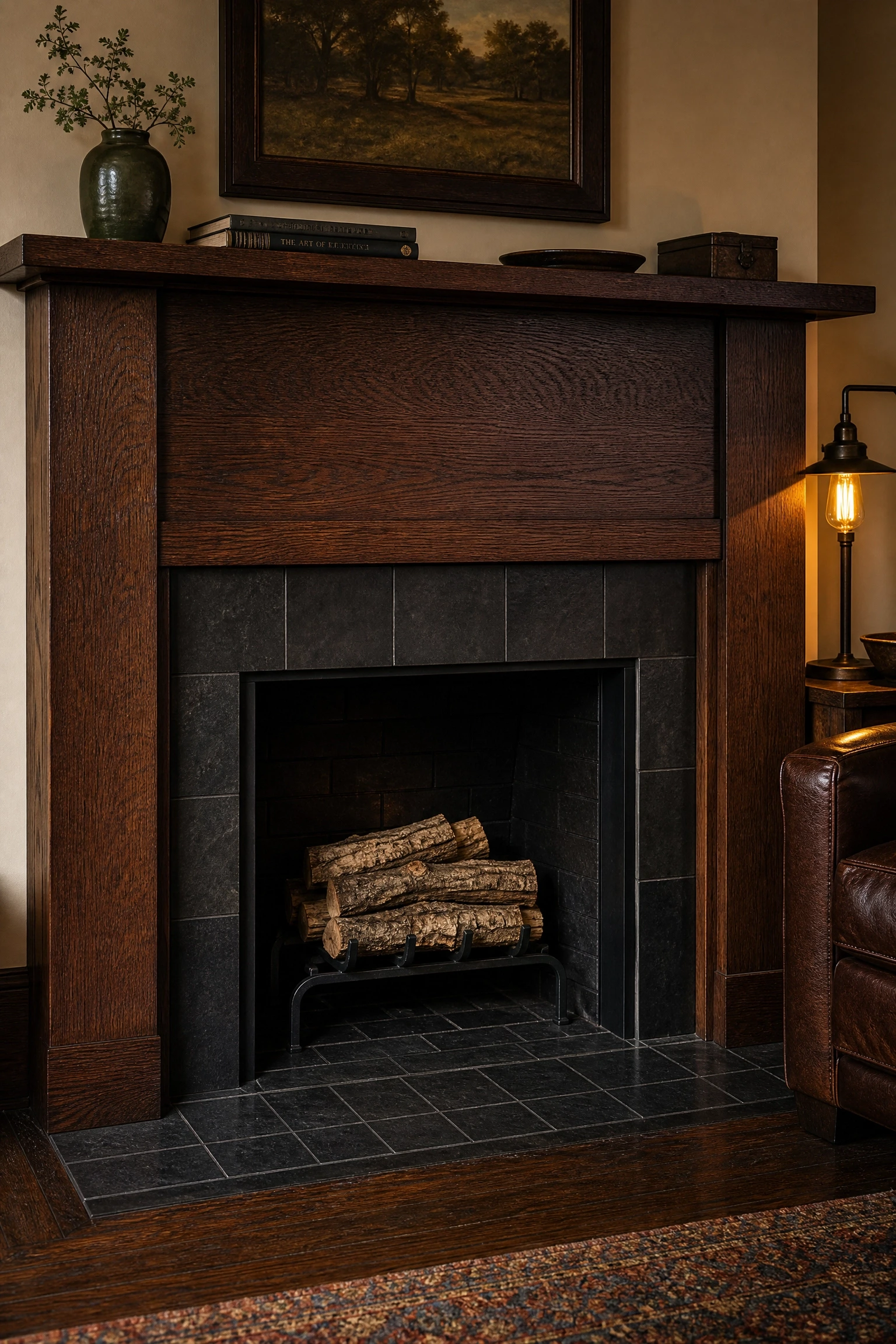
Mission style, associated with Gustav Stickley, applies straight lines and honest construction to fireplace surrounds: flat pilasters rather than turned columns, a wide flat frieze, and a shelf that sits low and horizontal. Mission surrounds read cold under bright white lighting but excellent under warm incandescent or Edison bulb sources. Authentic antique examples now attract collector interest, with good pieces typically running £800 to £2,000 at specialist dealers. Alternatively, commission a reproduction from white oak using original Stickley catalogues as reference, which most quality woodworkers can work from directly.
Designer Advice: Hang a horizontal landscape or textile above a Mission surround rather than a mirror. The horizontal emphasis reinforces the intentional flatness that defines the style.
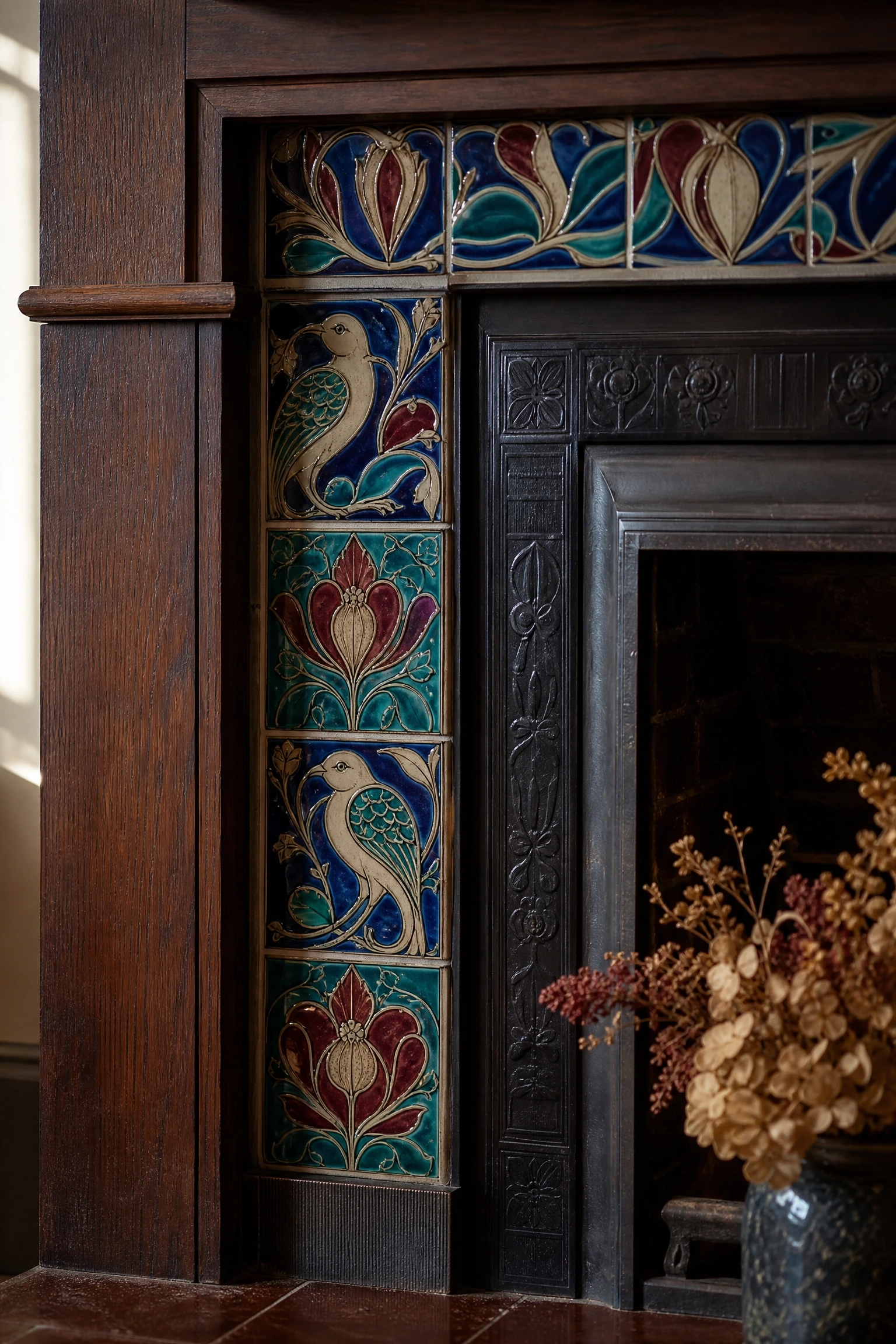
The Arts and Crafts movement produced some of the most distinctive fireplace tile work in British and American interior history. De Morgan tiles with cobalt, turquoise, and ruby lustre glazes, and Rookwood pottery tiles from Cincinnati, are among the most prized examples. Original De Morgan panels in good condition sell for significant sums at auction, but high-quality reproduction Arts and Crafts tiles are produced by several specialist manufacturers. The critical installation detail is the grout colour: use ivory or warm grey rather than bright white, which reads as too contemporary against hand-pressed period tile surfaces.
Quick Tip: A single row of Arts and Crafts tiles used as a hearth border on an otherwise plain fireplace introduces the style affordably without requiring a complete tile replacement.
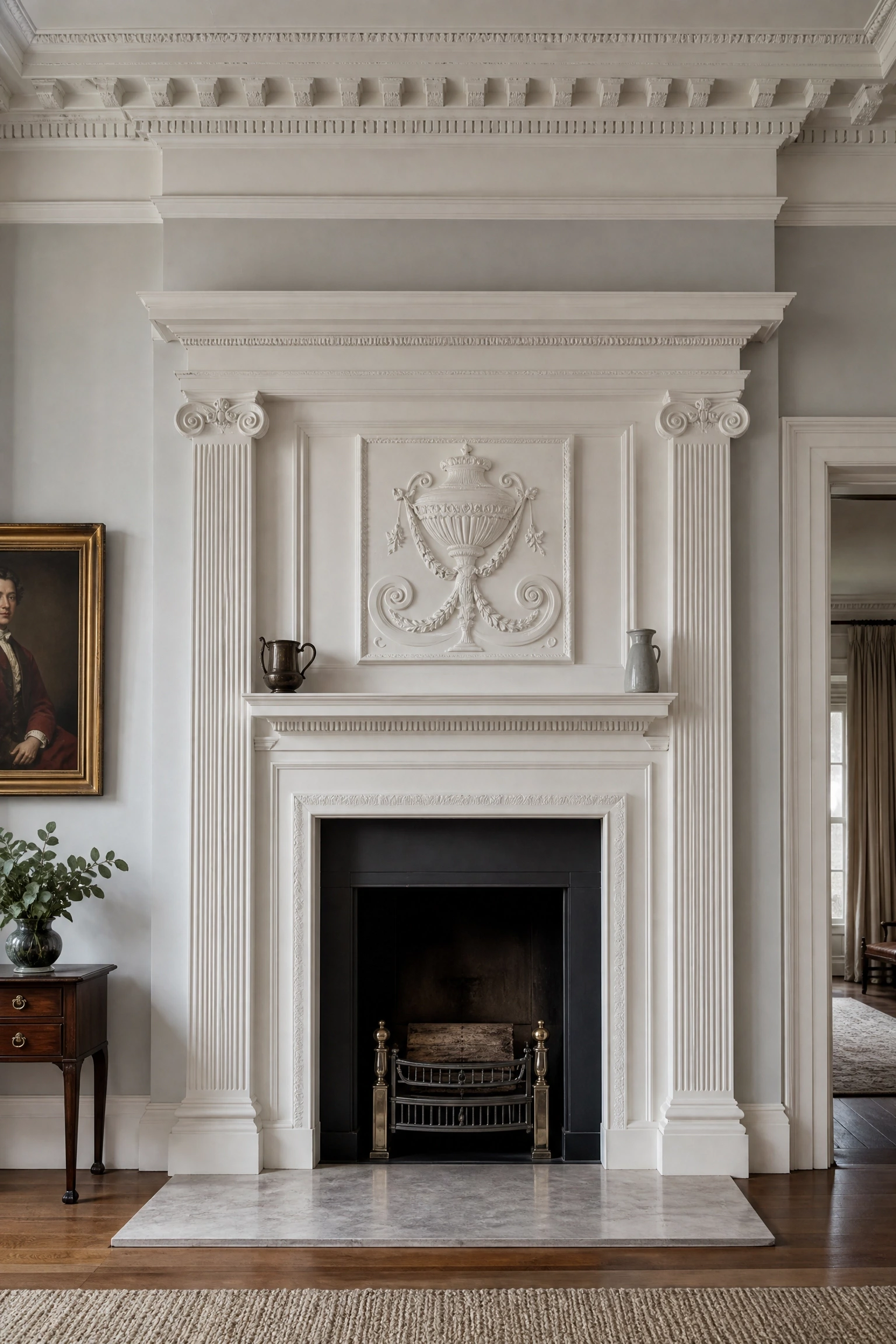
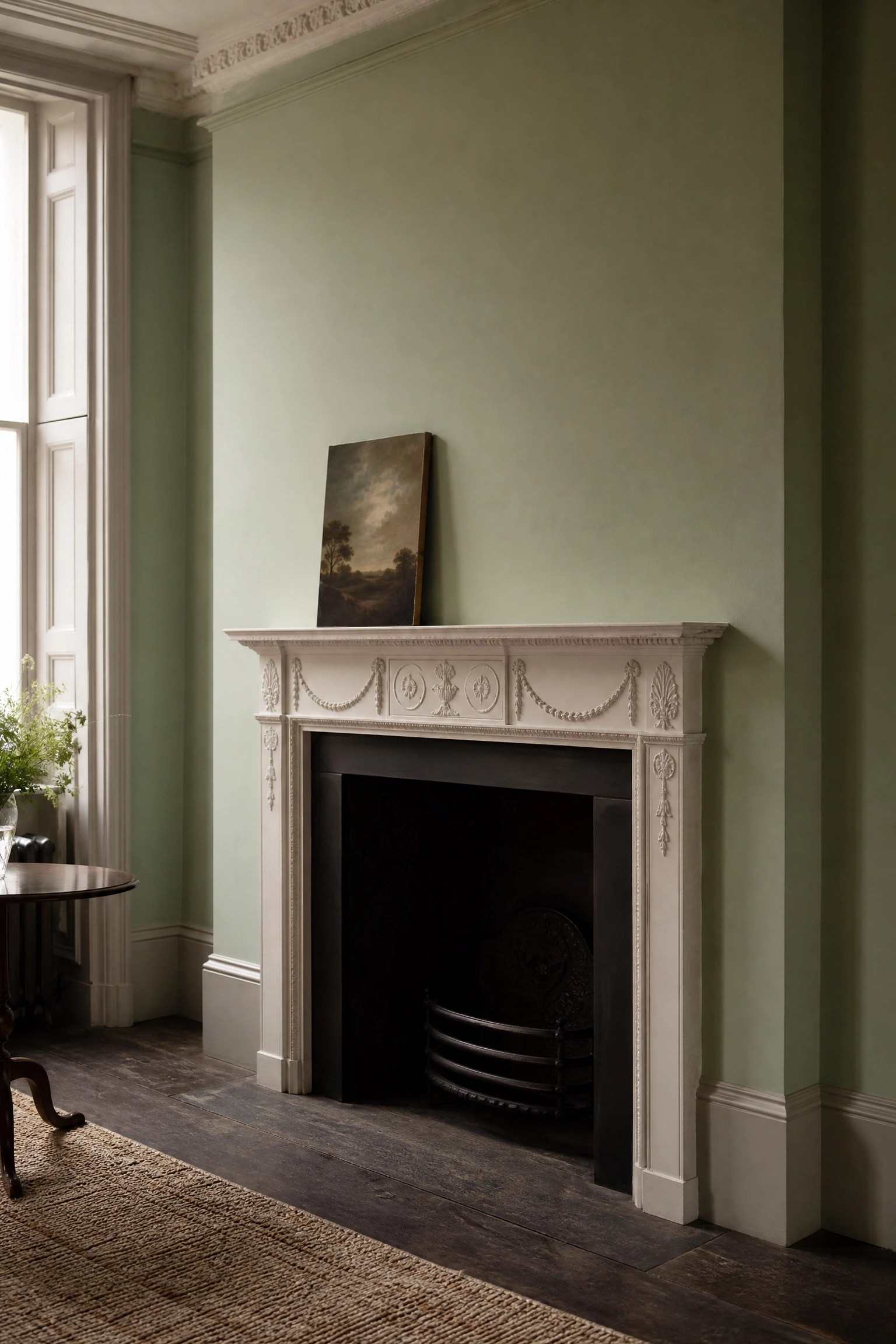
Georgian mantels from roughly 1714 to 1830 feature symmetrical pilasters with carved capitals, deep projecting shelves, and central carved tablets above the firebox opening showing classical urns, swag motifs, or paterae. Authentic examples in painted pine or limewood appear through specialist architectural antique dealers and major auction houses. Budget from £1,200 for simpler examples to £8,000 or more for fine pieces with intact original carving and minimal later restoration. Georgian proportions were drawn for rooms with ten-foot or higher ceilings, so check ceiling height carefully before committing to purchase.
Heads Up: A full Georgian surround in a room with eight-foot ceilings looks oversized and the shelf will sit too high for practical use. Scale matters significantly with formal period pieces.
Robert Adam’s late 18th-century fireplace aesthetic is immediately recognisable: very slender proportions, inlaid composition ornament, and decorative motifs drawn from Greco-Roman sources including rams’ heads, husks, paterae, and pendant swags. Adam-style mantels were typically made from pine with applied gesso ornament rather than solid carved marble, making them more accessible to restore than they first appear. Original examples appear in Georgian townhouses across Edinburgh, Dublin, and London. Reproduction versions are produced by specialists including Chesney’s. This style suits formal reception rooms and looks out of place in relaxed contemporary domestic settings.
Pro Move: Finish an Adam-style mantel in off-white eggshell rather than white gloss. The reduced sheen emphasises delicate surface relief in ways that high-gloss paint simply cannot.
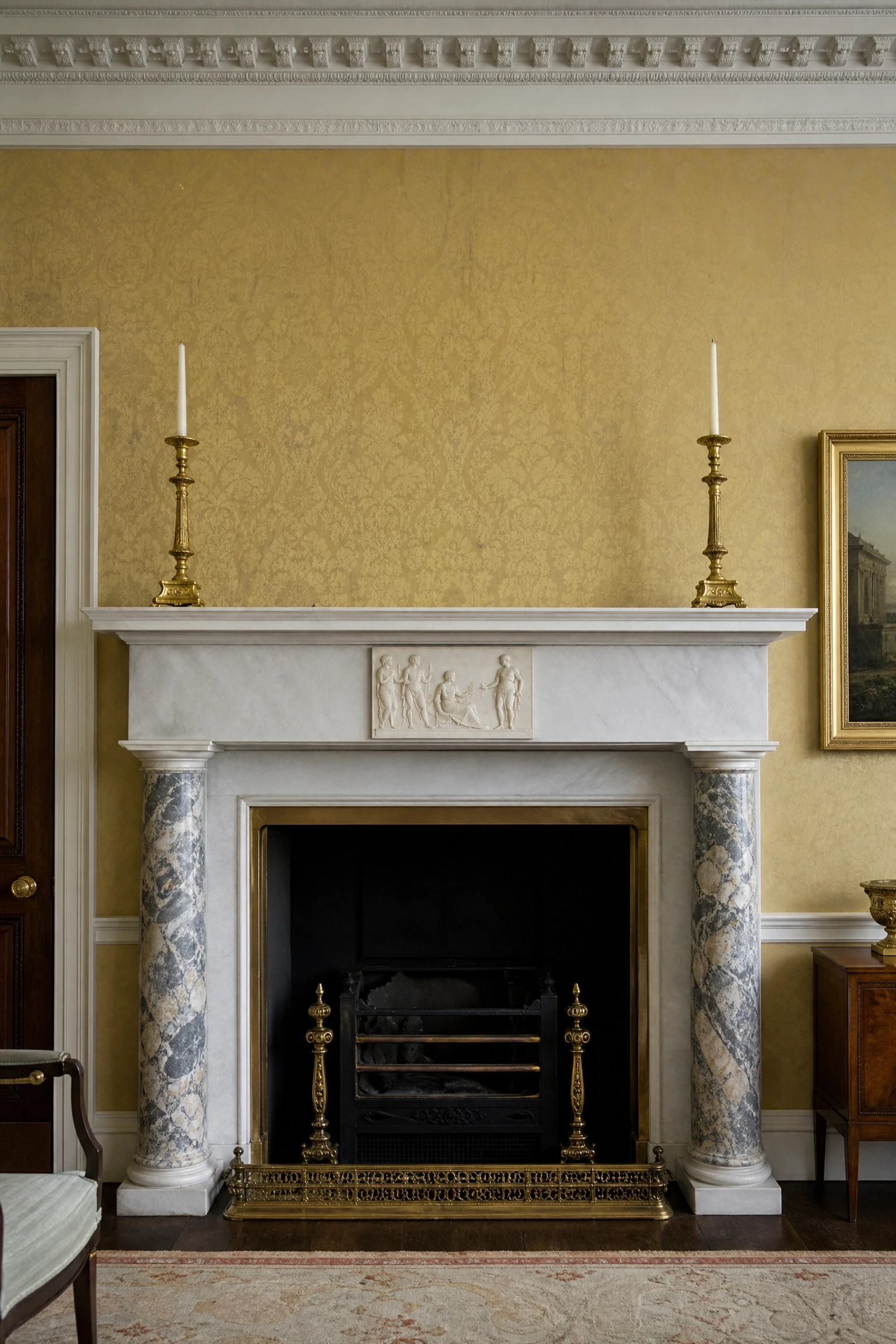
Regency mantels from the early 19th century often feature actual marble columns, or scagliola, which is a plaster compound mixed with stone dust and pigment that mimics coloured marble convincingly. The columns support a wide projecting shelf in white or Siena marble, and the frieze is typically plain or decorated with a central classical tablet. Genuine Regency marble mantels from reputable dealers start at £2,500 and frequently exceed £10,000 for paired columns in an unusual marble variety. A good scagliola example is virtually indistinguishable from solid marble at normal viewing distance and significantly more accessible in price.
Reality Check: Marble surrounds can exceed 200 kilograms combined. Have the wall structure assessed by a structural engineer before installation, not after.
Professional designers working with antique mantels consistently lean toward asymmetric arrangements rather than the mirrored symmetry most people instinctively reach for. The reason is practical: strict symmetry reads as formal and deliberate, which suits Georgian rooms but feels contrived in relaxed domestic settings. An asymmetric vignette distributes objects across three loosely defined height zones, with the tallest item placed about two-thirds from one end rather than centred. Deliberate negative space between object groups is as important as the objects themselves. In practice, this reads as more settled and less arranged than a perfectly mirrored composition.
Designer Advice: Place your visually heaviest object one-third from the left and build outward from there. The eye follows composition from left to right naturally, and this placement feels more balanced than centring.
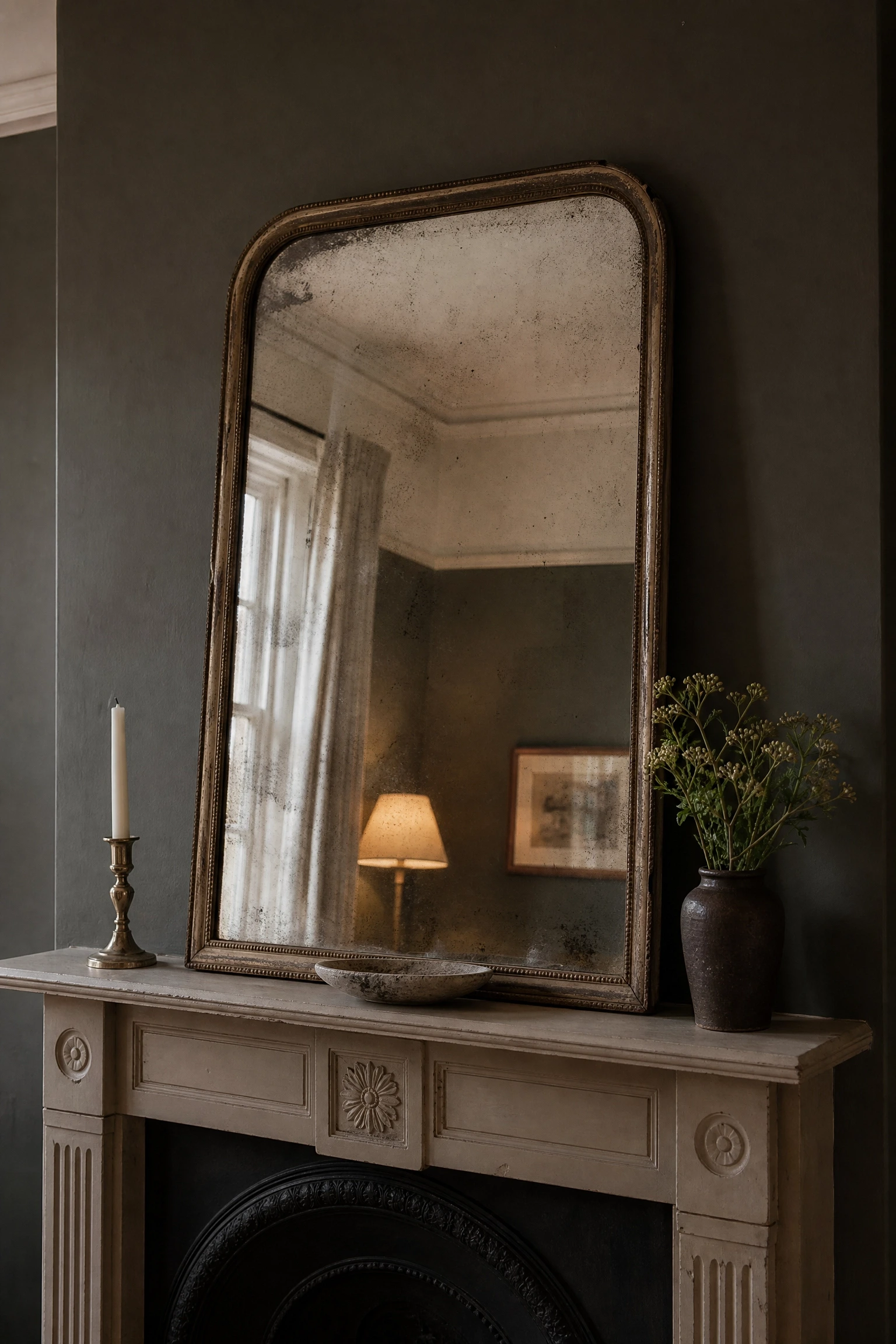
Leaning a large antique mirror against the chimney breast above the mantel shelf is one of the most practically useful decorating decisions in a dark or north-facing room, because it reflects both natural and artificial light simultaneously. Scale is the critical variable: the mirror should be at minimum two-thirds the width of the shelf to read as intentional. Antique mirrors with foxed or gently distressed silver backing are preferable to clear modern glass because the imperfections in old mirror glass diffuse reflected light softly rather than reproducing the room in hard definition. Good sources include auction houses, antique fairs, and architectural salvage yards.
Quick Tip: Do not centre a round mirror above a rectangular mantel. The geometric contrast is jarring. Match a rectangular mirror to the shelf proportions, or use an oval with an ornate frame that softens the transition.
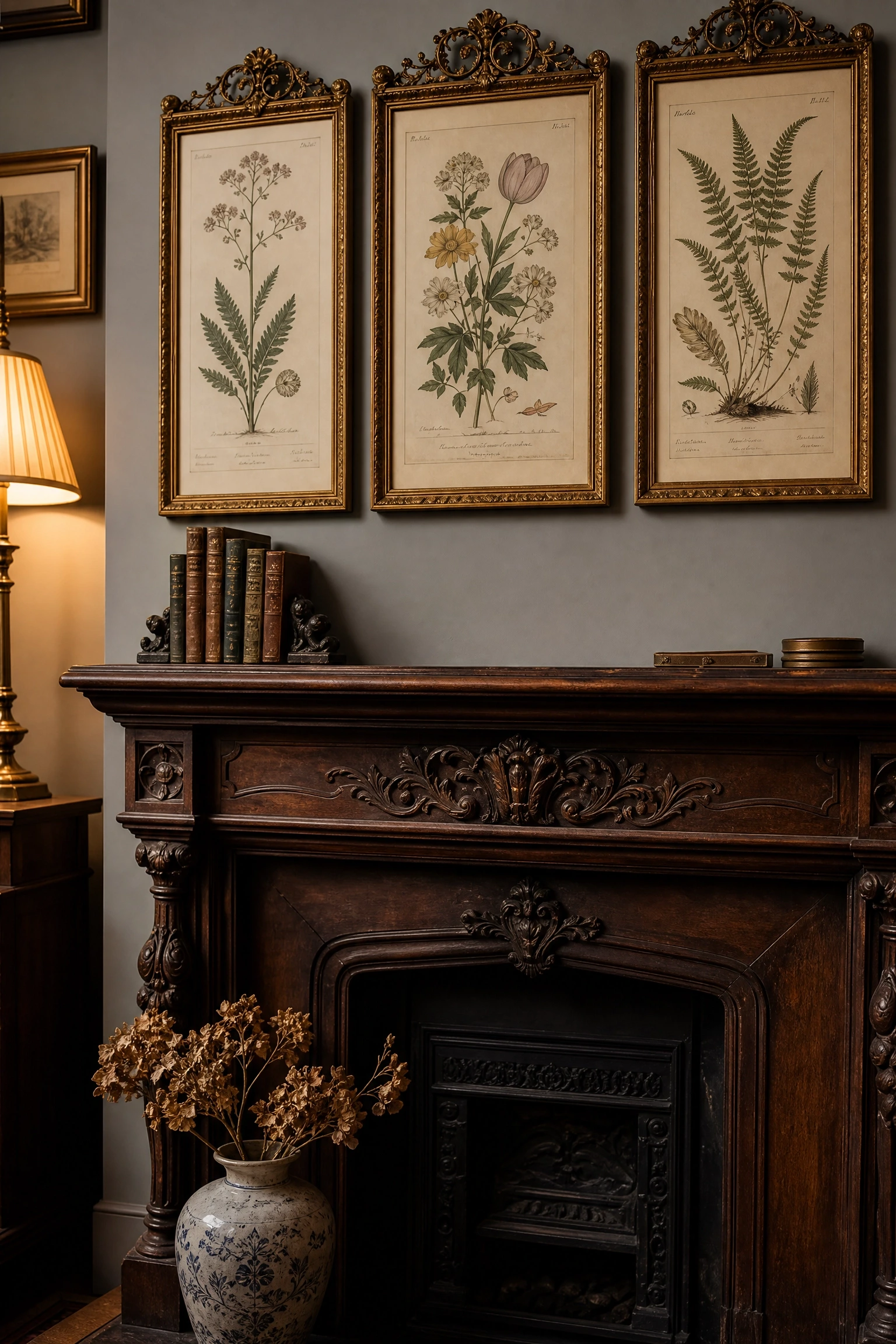
A gallery of framed botanical prints above an antique mantel works because the organic subject matter relates to the foliate motifs carved into most period surrounds, creating a coherent decorative language across the whole chimneybreast. Original antique botanical prints are available at surprisingly reasonable prices, often £20 to £80 per framed print at auction, because the market for them is broad but not particularly deep. Gilt frames work better than dark wood or plain metal against most antique mantels because the warmth of gold reads as continuous with the materials and decorative vocabulary of the period.
Heads Up: Keep framed prints at least four to six inches above the shelf surface above a functioning fire. Heat and moisture will damage paper over time even through UV-protective glass.
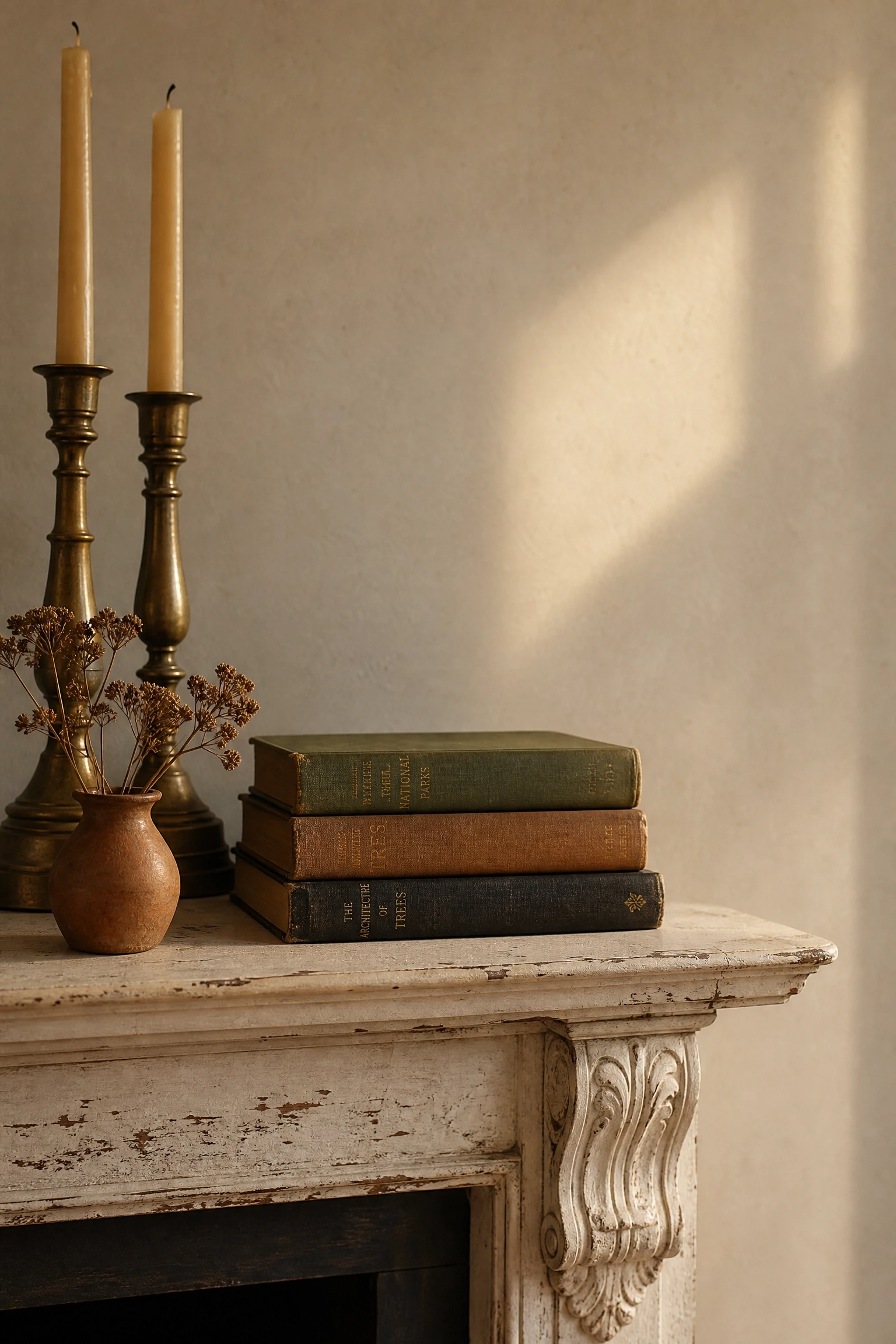
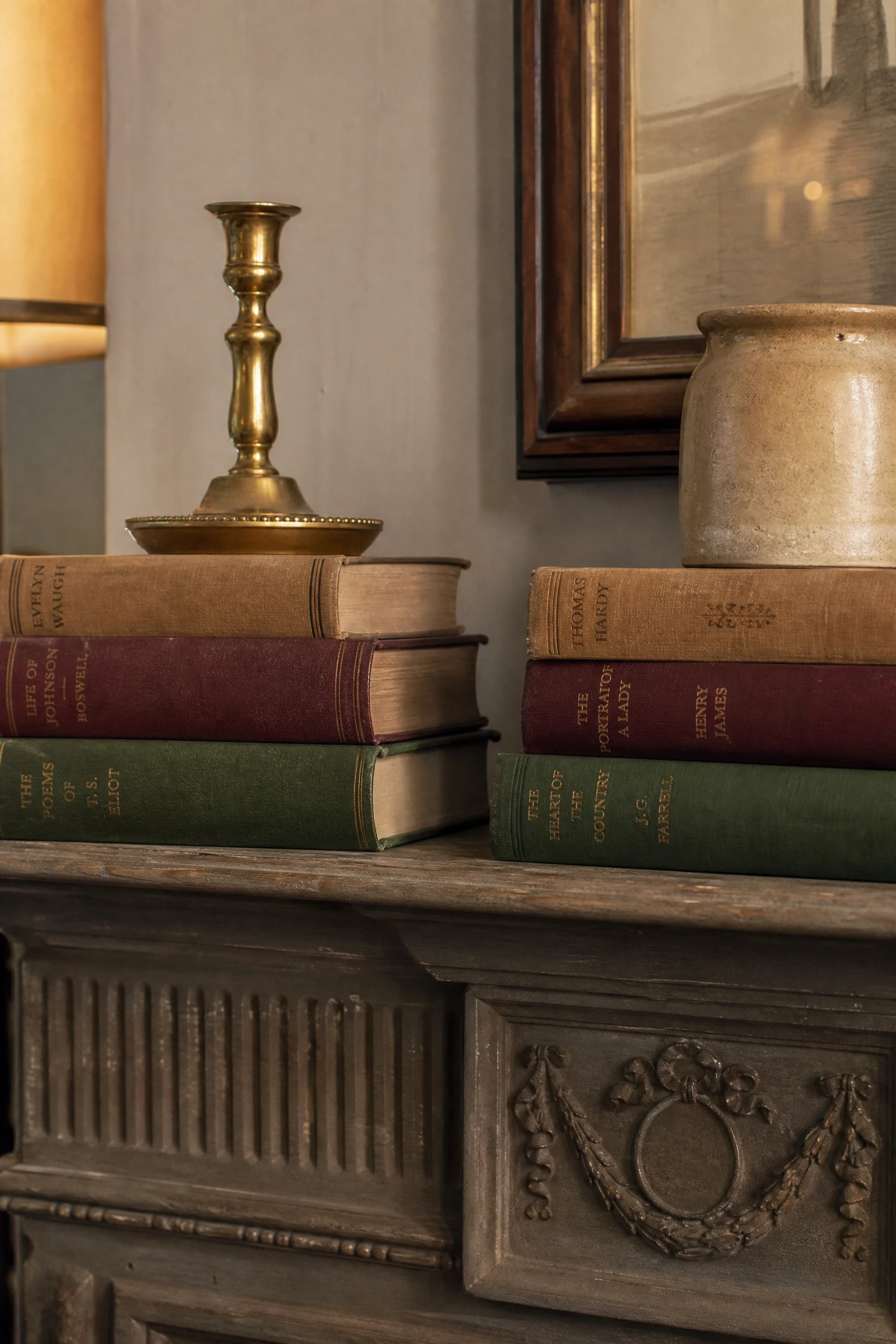
Using stacked vintage books as a base layer on which to rest other objects adds height variation without visual clutter, and is particularly useful on deep antique shelves where displayed items tend to look stranded without a visual anchor beneath them. Books in cloth bindings, specifically tan, burgundy, navy, and forest green, read as period-appropriate beside most antique surrounds. Second-hand bookshops, estate sales, and charity shops regularly produce interesting hardback bindings at very low cost. Three to four stacked volumes at different heights at each end of the shelf create a layered composition that accommodates candlesticks and small vases without crowding.
Pro Move: Remove dust jackets before placing hardbacks on the shelf. The cloth or paper boards in neutral tones are far more cohesive than a mix of commercial jacket designs.
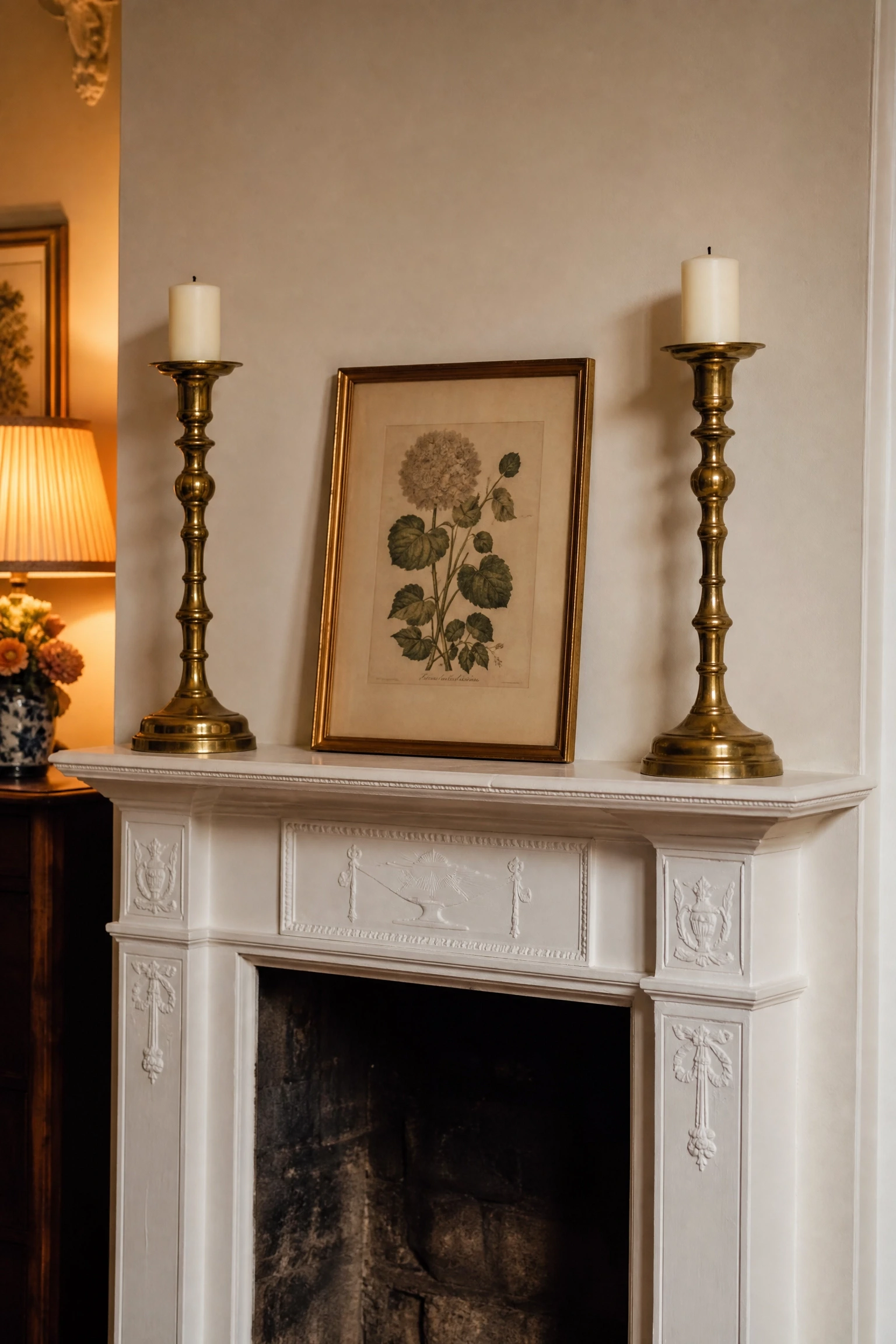
A matched pair of antique candlesticks is among the most reliable tools for a finished-looking mantel arrangement because the vertical line draws the eye upward from the shelf surface and creates structured boundaries on either side of the composition. Brass, pewter, and silver plate are the most appropriate materials for period mantels, and a genuinely antique pair reads better than a new reproduction because the patina distributes light differently. Good sources include antique fairs, estate auctions, and eBay, where Georgian and Victorian brass candlesticks appear regularly for £30 to £120 a pair.
Reality Check: Two mismatched single candlesticks read like you ran out of budget, not like a considered eclectic choice. A pair should share at least the same material, height, or basic silhouette.
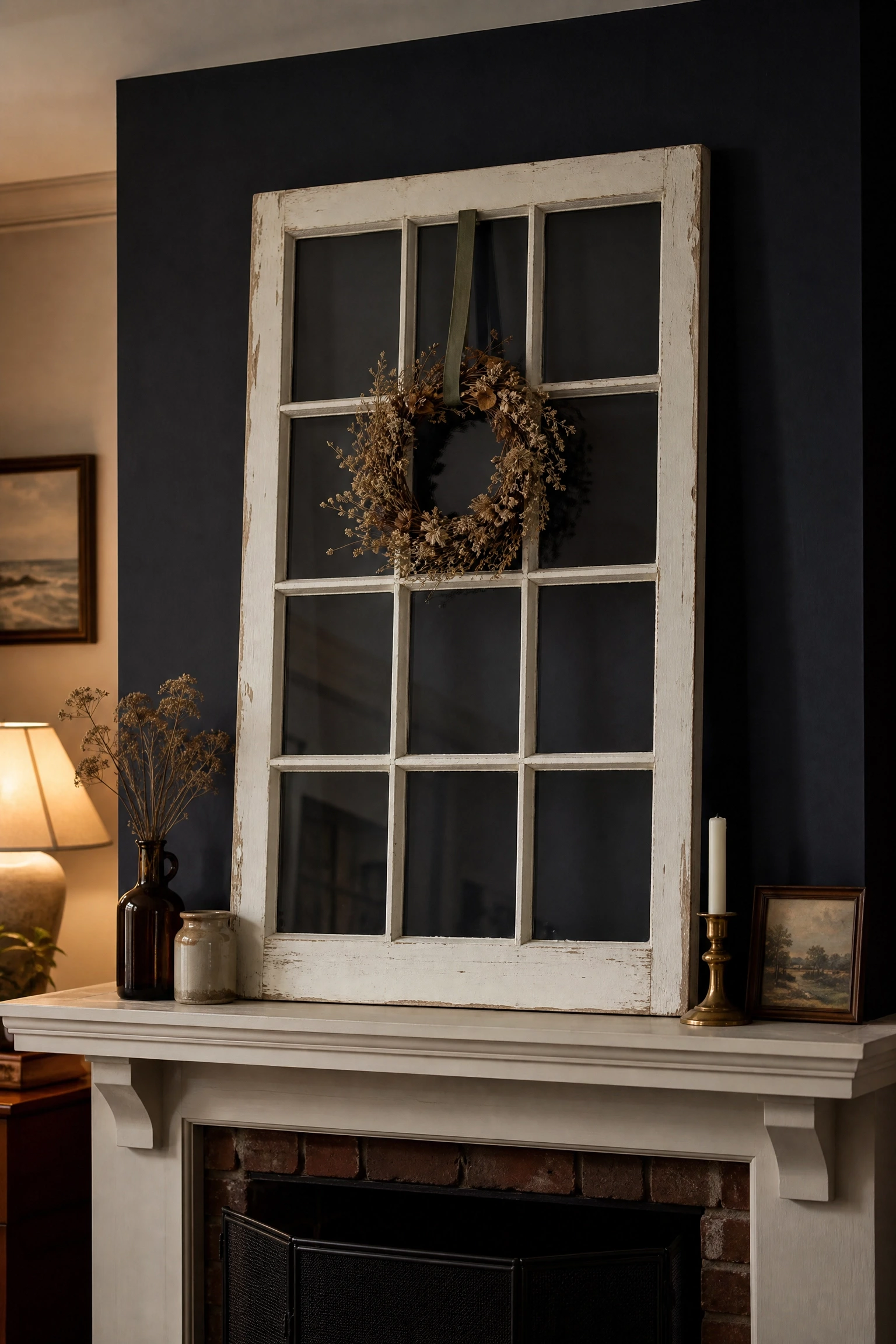
Leaning a salvaged window frame against the chimney breast behind the mantel shelf reads as personal and unusual in person, which is exactly why it works as a decorating approach. Choose a frame with original glazing bars and intact glass, because a bare frame without glass looks unfinished rather than rustic. Painted white sash window frames with six-over-six or four-over-four divided pane patterns work particularly well against dark painted walls. Architectural salvage yards are the best source, where Victorian and Edwardian sash frames appear regularly for £40 to £150. Fix a small bracket to the chimney breast so the frame leans at a slight angle rather than sitting flush and vertical.
Designer Advice: Hang a small botanical print or simple wreath inside the salvaged frame itself. The picture-within-a-picture effect reads as genuinely styled rather than an item resting temporarily against a wall.
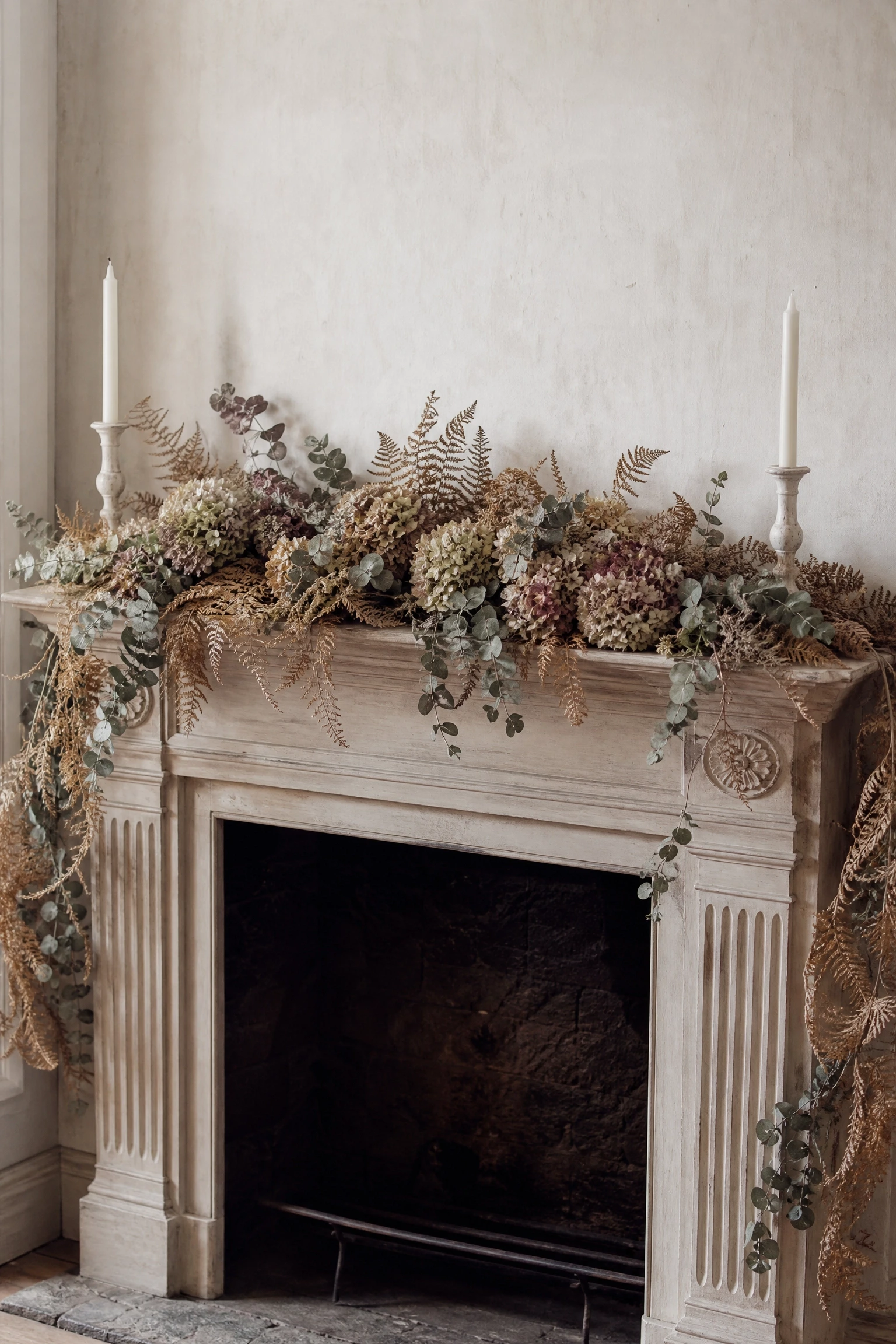
Swapping the mantel decoration with the seasons is one of the easiest ways to keep an antique surround feeling current, and a dried botanical garland is the most versatile base element because it does not wilt, drop petals, or need water. In spring and summer, dried hydrangeas, eucalyptus, and preserved fern drape naturally across the shelf. In autumn, dried wheat, honesty pods, and preserved oak leaves give a heavier seasonal character. In winter, dried orange slices, cinnamon sticks, and rosehips add fragrance alongside colour. One important safety point: dried botanicals are flammable and should be kept at least three inches from any open flame or candle.
Heads Up: Dried botanicals fade quickly in direct sunlight. On a south-facing chimneybreast, choose materials that fade gracefully or plan to replace the garland more frequently than you would in a shaded room.
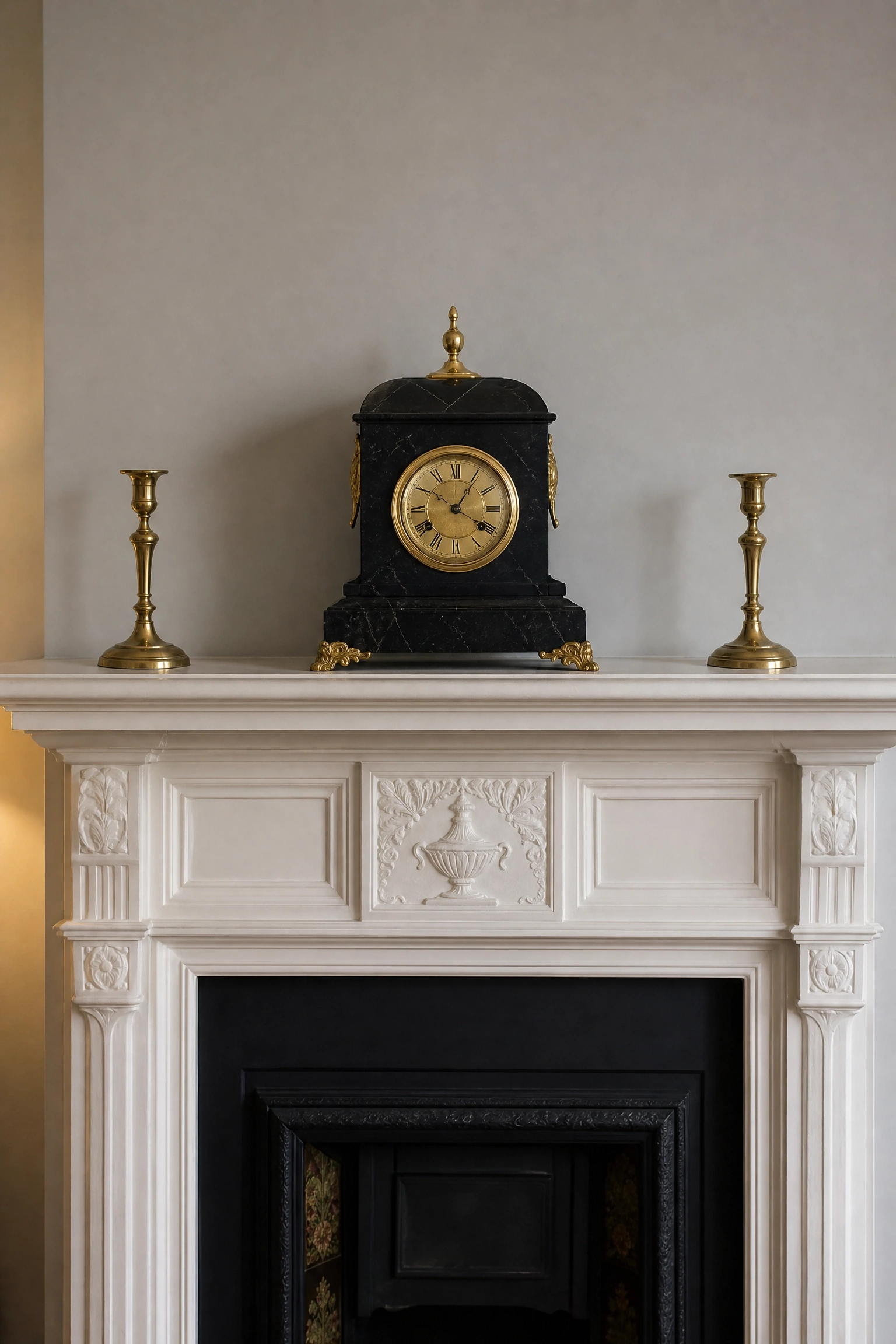
A mantel clock positioned at the centre of an antique fireplace shelf is among the most classically correct approaches to period interior decorating, and it works because the clock’s regular movement and audible presence give the composition a living quality that static objects cannot provide. Antique mantel clocks in black marble, gilded ormolu, or painted porcelain cases are widely available through specialist clock dealers and general auction houses. Good working examples start at £150 and rise to £800 depending on mechanism complexity and case condition. Keep the objects flanking the clock deliberately simple: a pair of candlesticks on either side and nothing else.
Quick Tip: Have any antique clock serviced before displaying it. A clock that runs but keeps poor time is more distracting than one deliberately stopped and displayed as a static decorative object.
Finding the Right Antique Mantel Takes a Little Patience
The best antique fireplace mantels are rarely found on the first search. Architectural salvage yards worth returning to, unexpected Facebook Marketplace listings with poor photographs, and estate sales in smaller towns are where the most interesting pieces actually appear. The decorating approaches that work are the ones that respond to what you have rather than attempting to copy a styled image exactly. Old materials have clear opinions about what sits beside them and on top of them. Start with the mantel itself, observe how light falls across the shelf and how the room proportions relate to the surround, and let those observations guide the decisions that follow.
Frequently Asked Questions
Where is the best place to find authentic antique fireplace mantels?
Architectural salvage yards are the most reliable source, particularly those attached to period properties undergoing full renovation. Online marketplaces including eBay, Chairish, and 1stDibs list mantels from global dealers, though photographs can be misleading about scale and condition. Specialist antique dealers focused on architectural pieces are the safest option for authenticated examples with accurate period dating.
Can an antique fireplace mantel be fitted around a modern gas or electric fire?
Yes, and this is one of the most common uses for salvaged antique surrounds. The firebox opening can accommodate modern gas or electric inserts provided clearances meet current building regulations. A gas-safe registered engineer should assess the installation before the surround is fitted.
How do you clean an antique marble fireplace mantel?
Use warm water and a small amount of pH-neutral soap applied with a soft cloth. Avoid acidic cleaners including vinegar, lemon-based products, and household bleach, all of which will permanently etch the marble surface. For stubborn staining, a marble-specific poultice product applied overnight draws out most stains without surface damage.
What is the difference between a mantel and a mantelpiece?
Technically, the mantel refers to the shelf itself, while the mantelpiece refers to the entire decorative structure surrounding the fireplace opening, including pilasters, frieze, and shelf. In everyday design and renovation conversations, both terms are used interchangeably to mean the complete surround assembly.
Is it worth restoring an antique mantel with damaged mouldings?
Yes, in most cases. Missing composition ornament can be reproduced using silicone moulds taken from intact sections, then cast in new composition or gesso. For carved wood mantels, specialist carvers can reproduce missing sections from photographs of comparable period examples. Restoration almost always adds more value than the cost of the work.