Black Kitchens Warmed by Natural Wood
Black kitchens have a cold problem. Without warmth, all that beautiful darkness turns severe, more showroom than home. Natural wood is the fix designers reach for first: it brings organic texture, honeyed tones, and the feeling that someone actually cooks here. But the interesting part is that the wood does not have to be cabinets. Some of the best black-and-wood kitchens keep the cabinets black and put the wood everywhere else. These 24 ideas follow the wood around the room: overhead, underfoot, at hand, and in the details.
Wood Overhead
Wood above eye level draws the gaze up and wraps the kitchen in warmth. In a black kitchen, the ceiling is the most underused surface.
Exposed Wood Beams
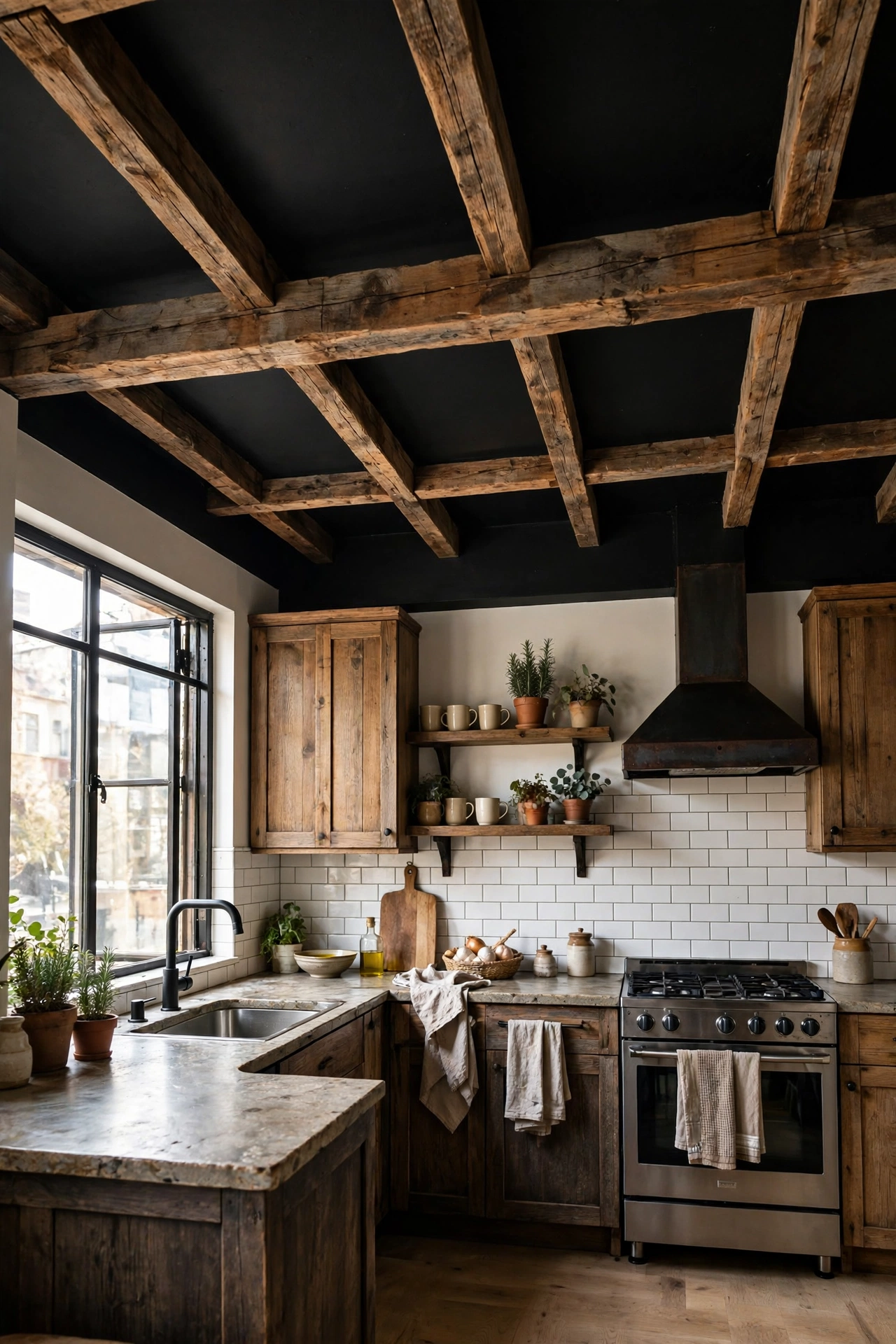
Exposed wood beams across a black kitchen ceiling add rustic architecture that softens every dark surface below. The beams’ natural variation breaks up the black’s uniformity. In modern kitchens they add craft; in traditional ones they add history. Real beams are structural; faux beams are convincing at ceiling height. Either way, look up: the warmth was waiting overhead.
Quick Tip: Stain beams to match your floor for a continuous warm line from ground to ceiling.
Wood-Clad Ceiling
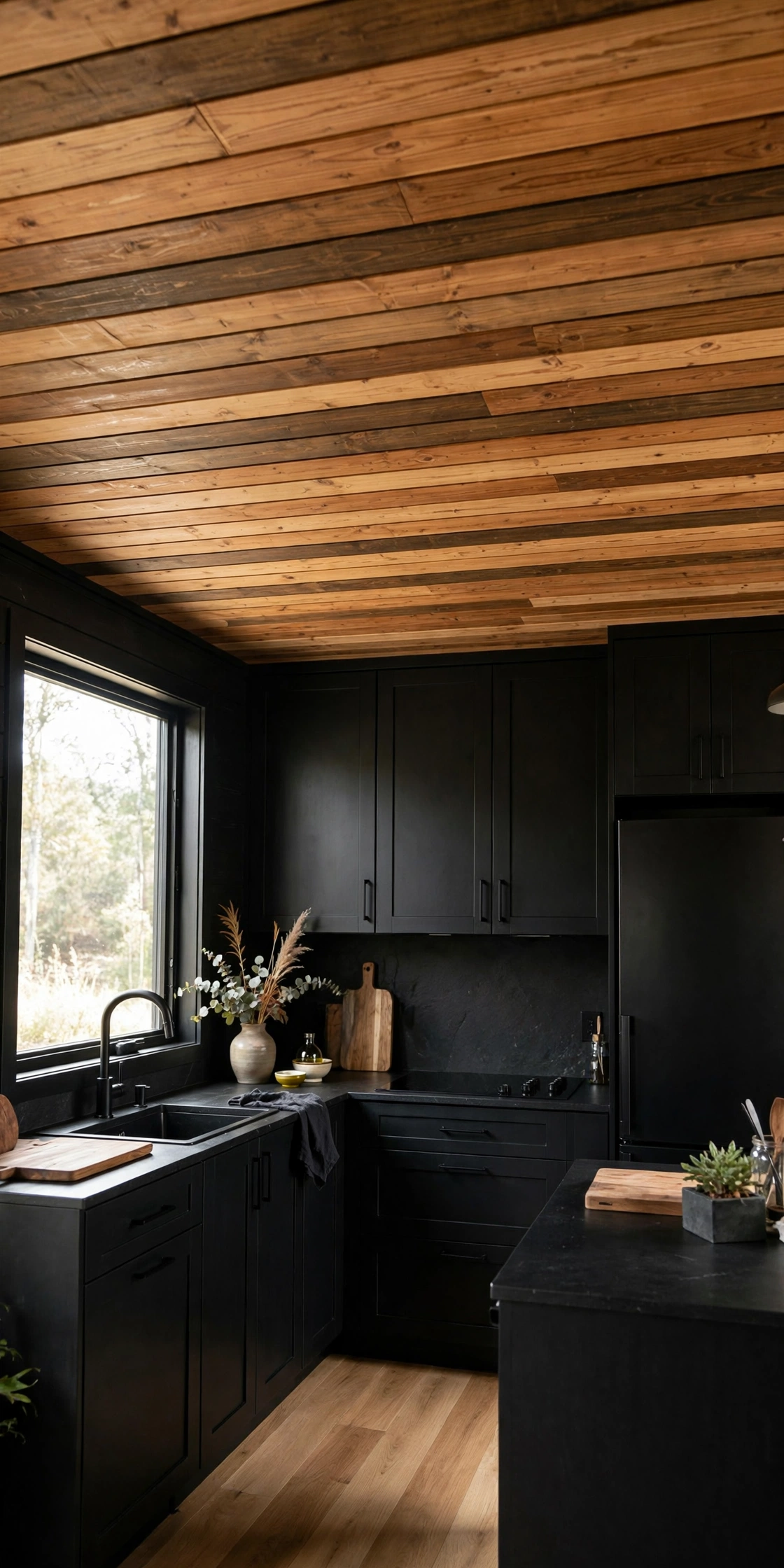
A full wood-clad ceiling, tongue-and-groove planks or panels, turns the black kitchen into a cabin-modern hideaway. The wood overhead glows with reflected light, especially with warm recessed lighting. This is a bigger commitment than beams but the payoff is a kitchen that feels enveloping rather than stark. The fifth wall, finally pulling its weight.
Worth Knowing: Wood ceilings darken the room slightly. Compensate with generous recessed lighting on dimmers.
Wood Range Hood
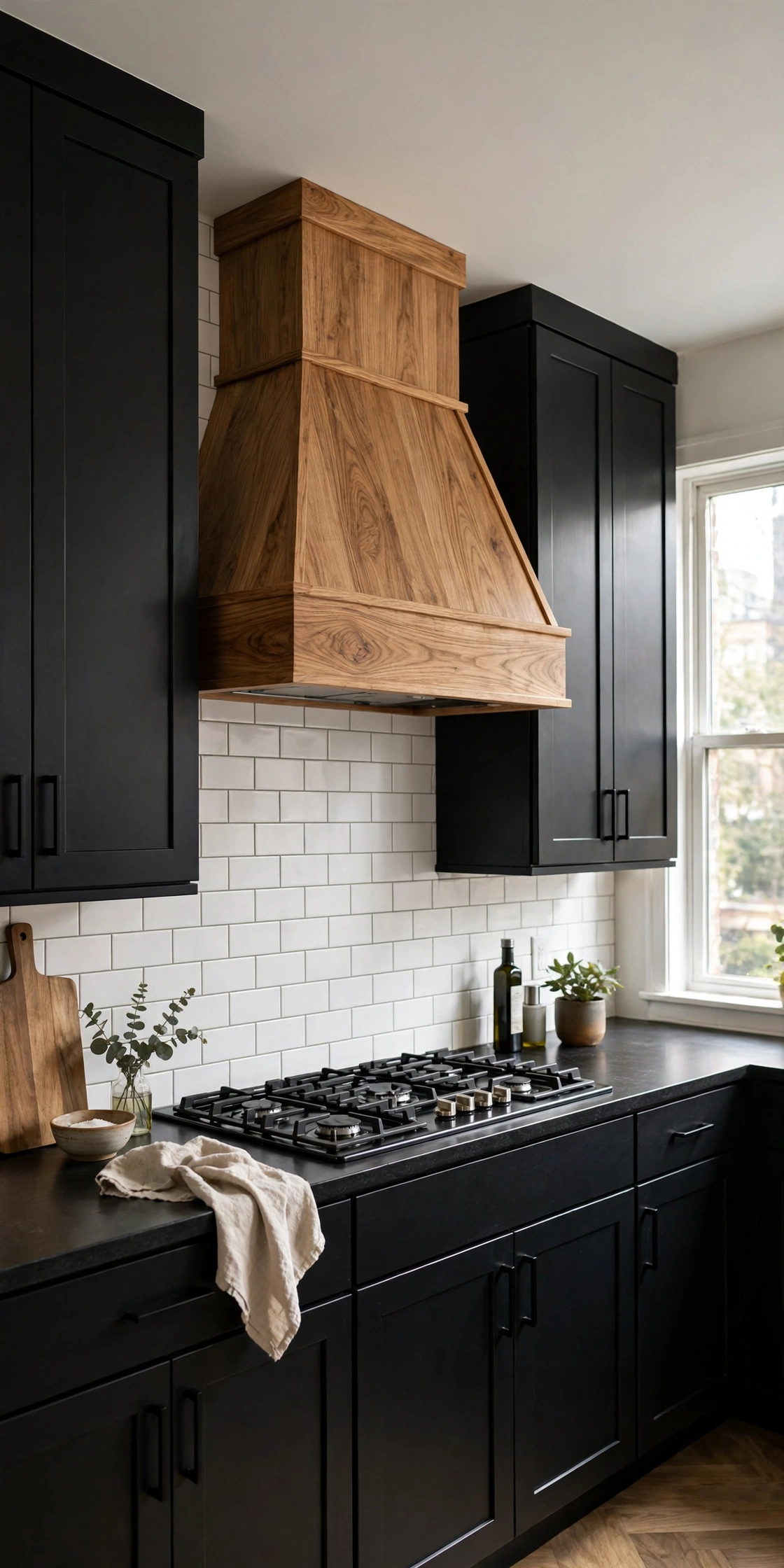
A natural wood range hood against black cabinetry is the warm focal point the cooking wall needs. The hood’s grain becomes the kitchen’s artwork, framed by darkness. Oak, walnut, or reclaimed boards all work; the key is visible grain. This single element can carry the entire wood note of the kitchen. Where you look most is where the wood should be.
Style Note: Keep the hood wood natural, not painted. Painted wood loses the organic texture that justifies it.
Wood Pendant Lights
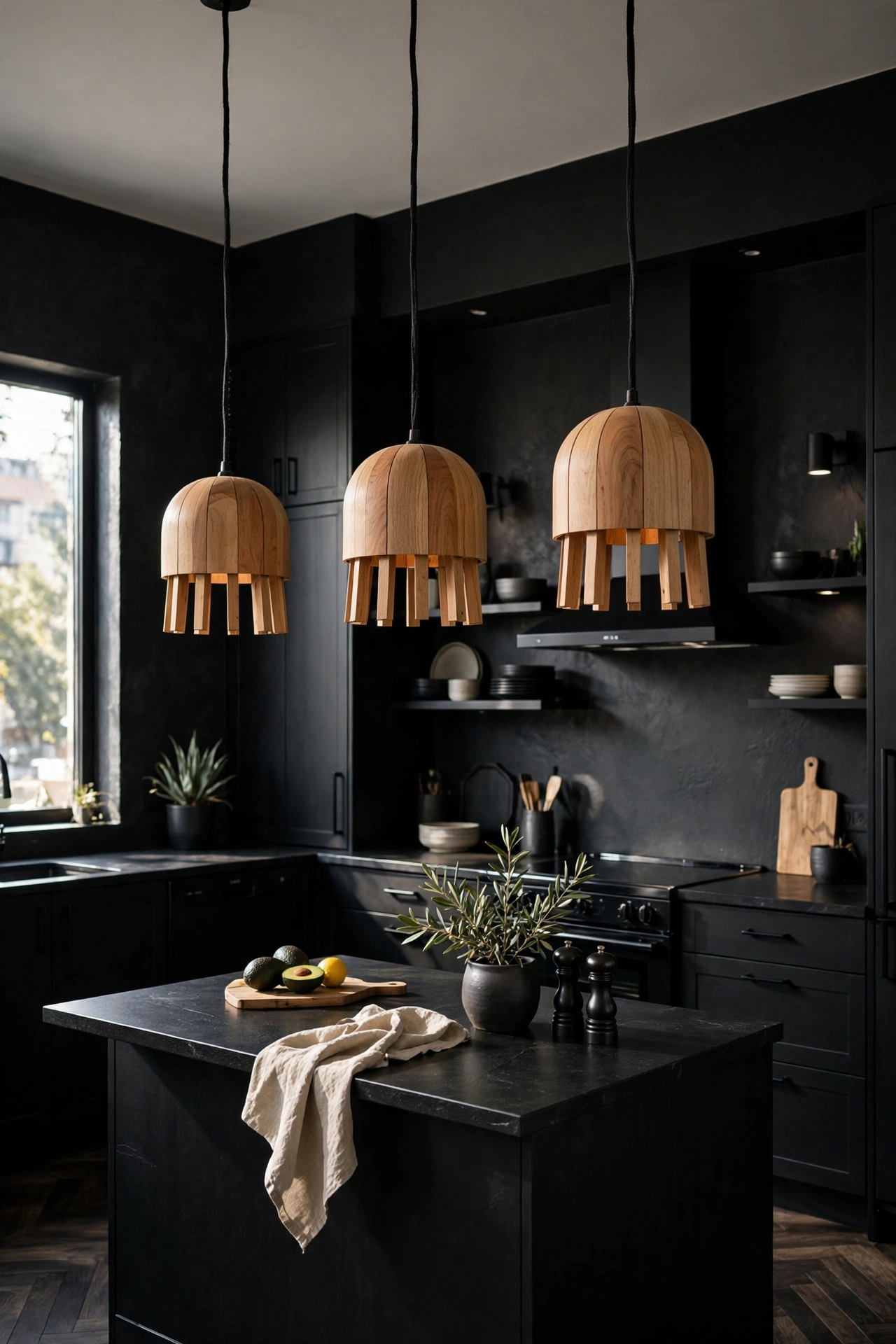
Pendant lights with wood shades or wood-and-black mixed materials hang warmth right over the island. The wood glows when lit, casting honeyed light downward. Black cords or black metal details tie them to the cabinetry. These fixtures do double duty: they light the work zone and decorate the airspace. Lighting as furniture.
Good to Know: Wood shades direct light downward. Add ambient lighting elsewhere so the room does not go cave-dark.
Wood Shelf Above the Range
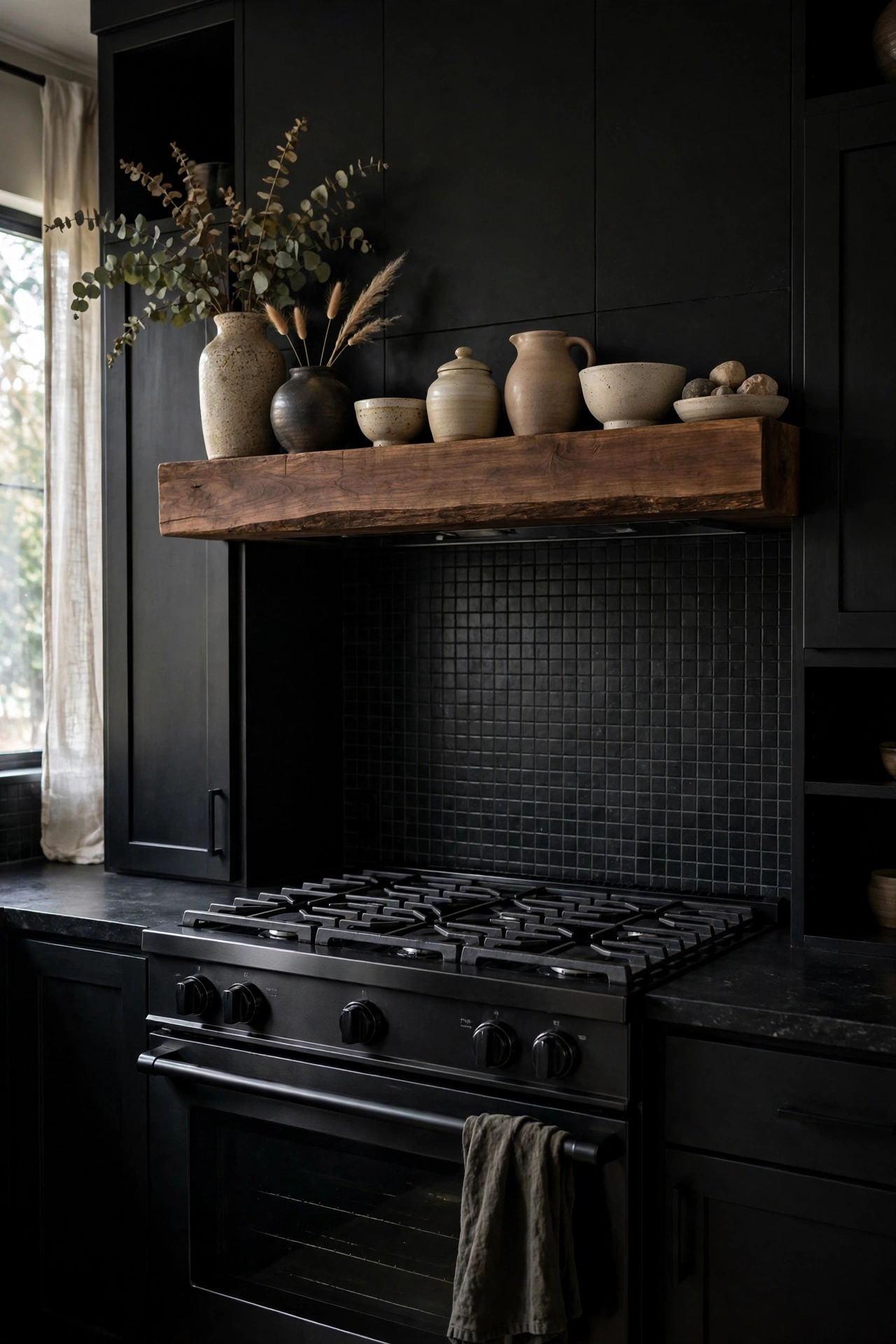
A thick wood mantel shelf above the range, styled with ceramics or copper, adds a warm horizontal line to the black cooking wall. It breaks the verticality of tall dark cabinets and gives you a styling moment. Keep it high enough to clear the heat. This is the farmhouse note in a modern black kitchen, and the two styles get along beautifully.
Reality Check: Check heat clearance for your range type. Gas ranges need more space above than induction.
More Looks You'll Want to Steal:
Skylight With Wood Frame
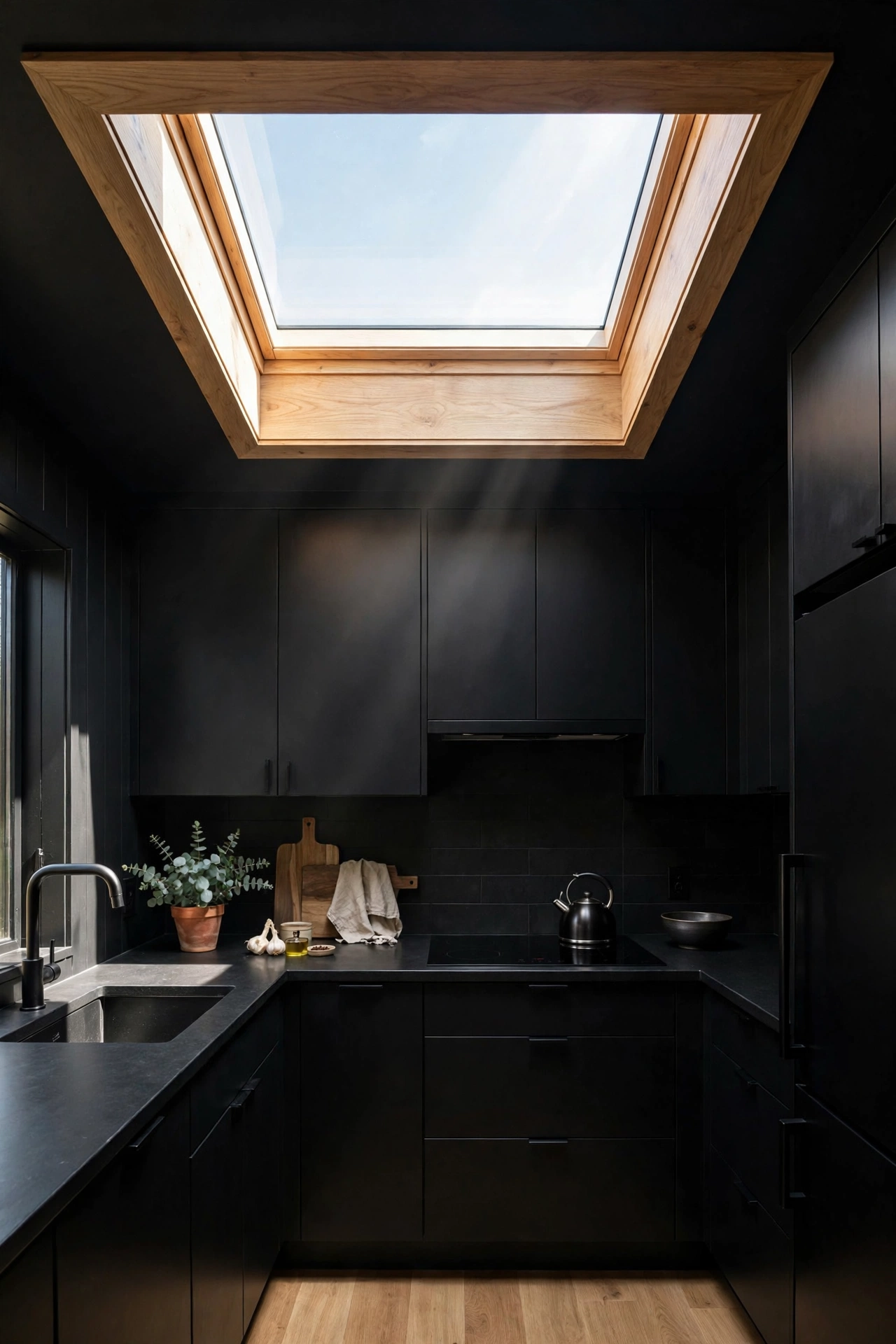
A skylight framed in natural wood pours daylight into the black kitchen through a warm border. The wood frame softens the skylight’s modern edge and connects it to the room’s palette. In dark kitchens, a skylight is transformative; the wood frame makes it beautiful too. Light from above, warmth around it. The best of both.
Honest Take: Skylights are a renovation, not a refresh. But in a dark black kitchen, few upgrades matter more.
Choosing Wood Tones for Black Kitchens
| Wood tone | Effect with black | Best use |
|---|---|---|
| Pale oak, ash | High contrast, fresh | Floors, shelves |
| Honey oak | Warm, classic | Beams, hoods |
| Walnut | Rich, low contrast | Island tops, furniture |
| Reclaimed | Textured, storied | Accent walls, shelves |
| Dark stained | Moody, tonal | Floors in large kitchens |
Wood Underfoot
Floors are the largest wood surface in most kitchens. In a black kitchen, the floor’s warmth rises to meet the dark cabinets.
Wide-Plank Oak Floors
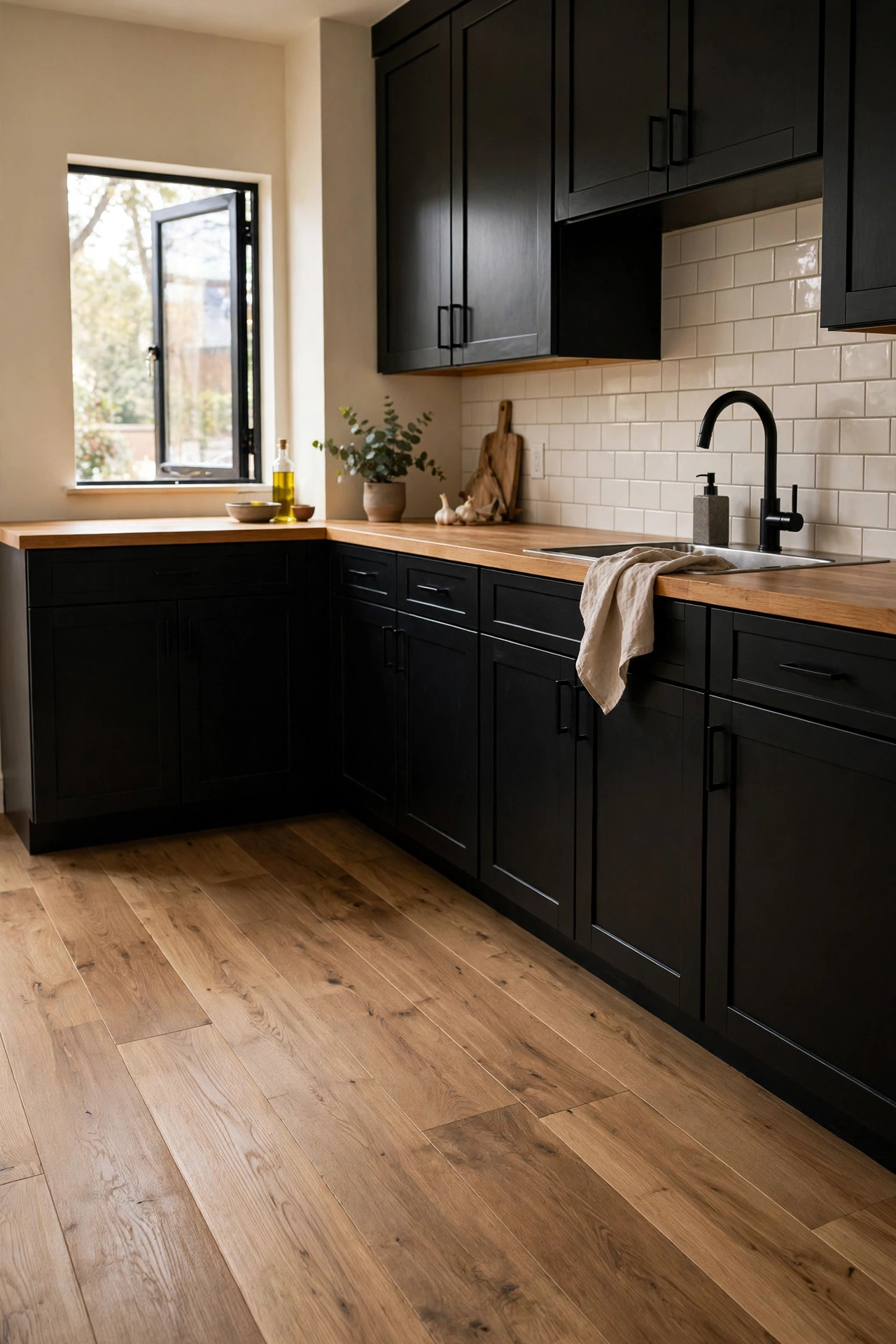
Wide-plank oak floors under black cabinets are the foundation of the entire look. The pale, generous boards keep the kitchen feeling open while their warmth balances the dark cabinetry. Wide planks read modern; narrow strips read traditional. Either way, the floor does half the warming work before you add a single accessory. If you have these floors, you are already winning.
Quick Tip: A matte floor finish looks more modern and hides wear better than glossy.
Herringbone Wood Floor
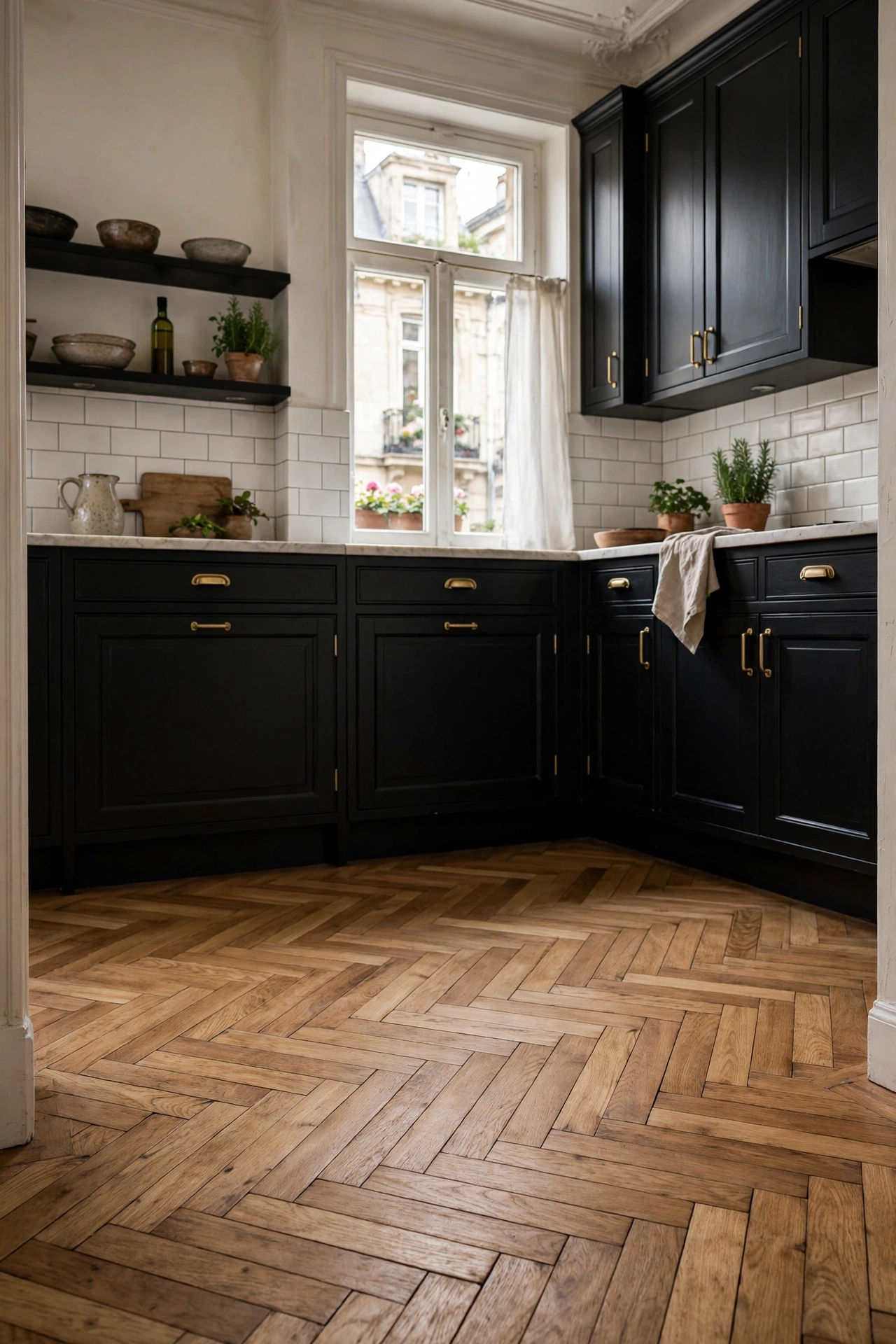
Herringbone wood flooring adds pattern and movement under black cabinets. The zigzag catches light differently across the room, giving the floor a dynamic quality that plain planks lack. It elevates the whole kitchen: the floor becomes a design feature, not just a surface. Classic in European apartments, striking everywhere. The pattern that makes people look down.
The Cost: Herringbone costs more in both material and labor. Budget 30 to 50 percent over straight plank.
Wood-Look Tile for Practicality
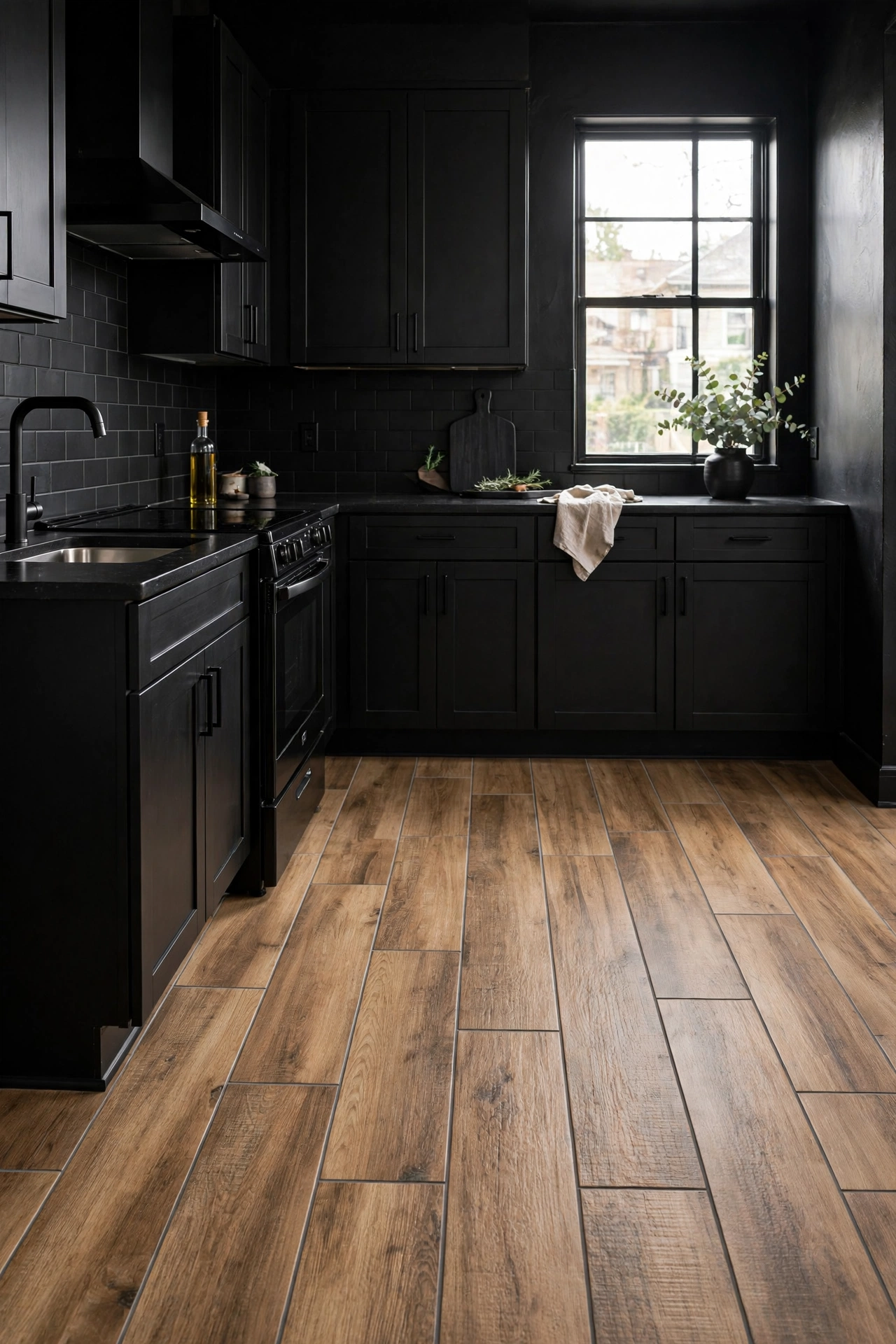
Wood-look porcelain tile gives you the warmth of wood with the practicality of tile: waterproof, indestructible, zero maintenance. Modern printing is convincingly woody. In kitchens where real wood floors would suffer, near sinks or in rentals, this is the smart substitute. Guests will not know unless they touch it. Warm look, cold practicality.
Good to Know: Large-format wood-look tiles with minimal grout lines read most convincingly as wood.
Layered Rugs on Wood
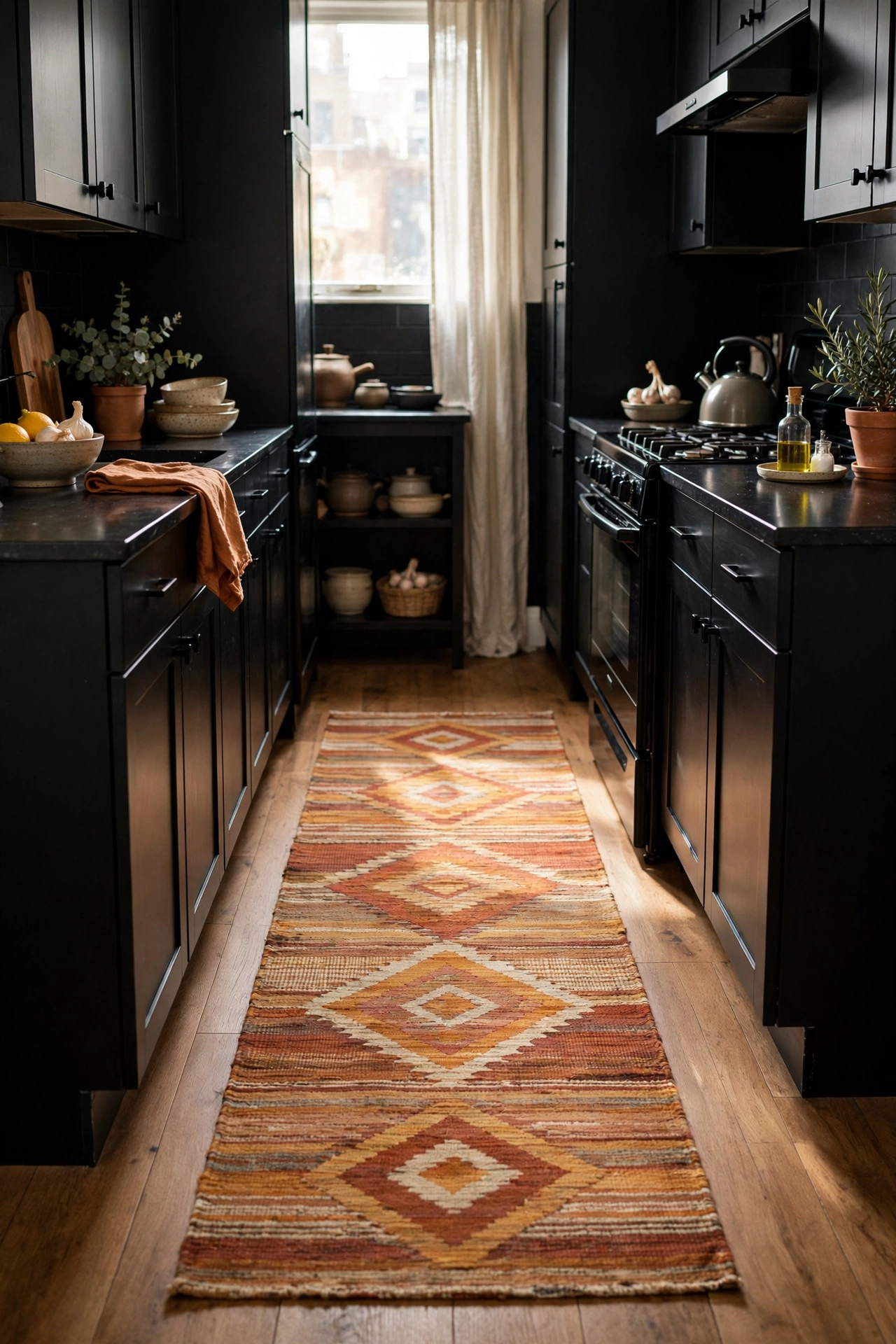
A flatweave runner or vintage rug over the wood floor adds a second layer of warmth and pattern. In a black kitchen, a rug with warm tones, rust, ochre, terracotta, ties the floor to the room’s accent colors. Rugs also soften the acoustics of hard-surface kitchens. The layered look feels collected and lived-in. Cold floors are a choice; rugs unchoose it.
Quick Tip: Use a rug pad. It keeps the runner in place and adds cushioning where you stand to cook.
Dark Wood Floors, Done Right
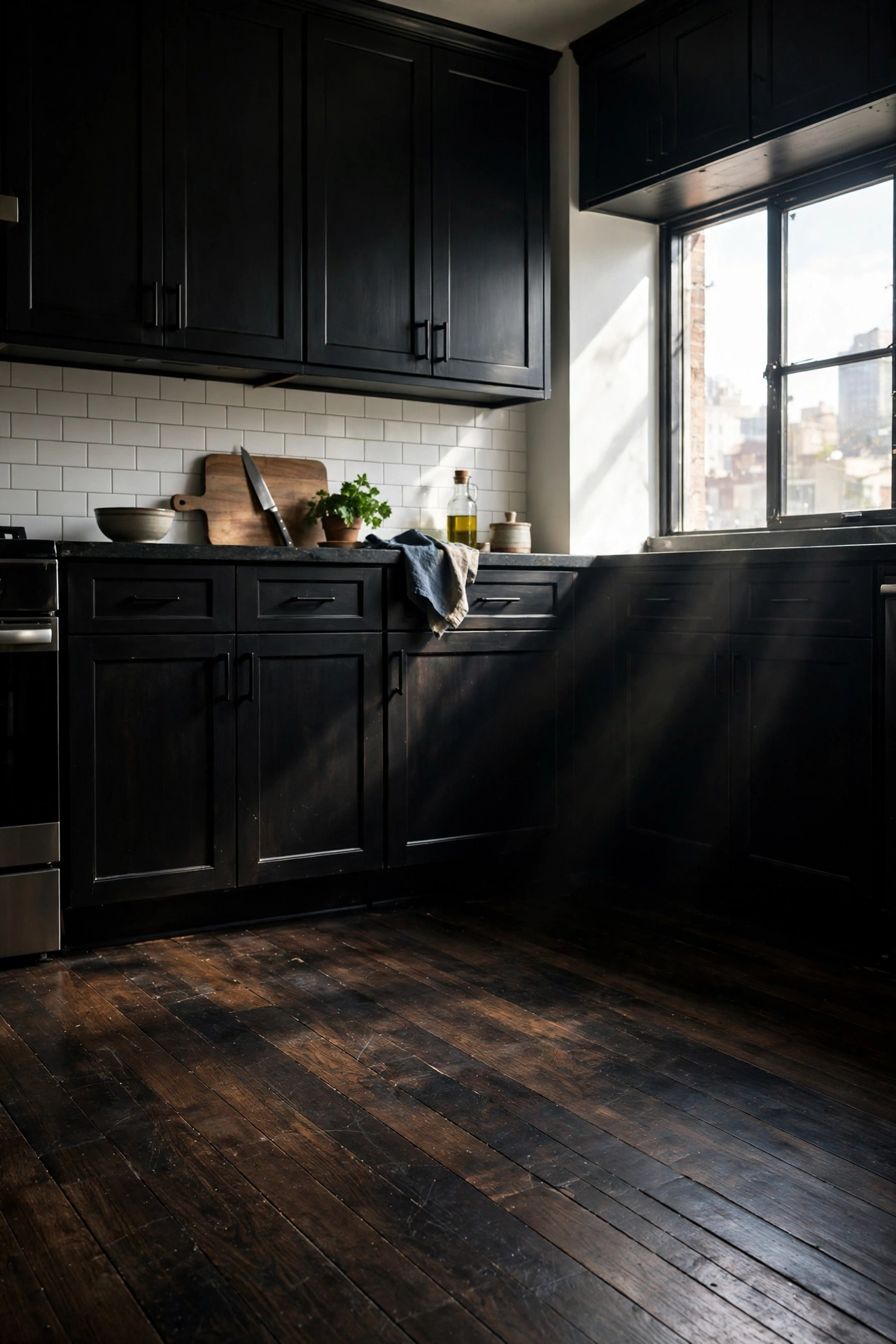
Dark wood floors with black cabinets can work if the kitchen has abundant light and the wood has visible grain. The tonal look is moody and sophisticated, but it needs contrast elsewhere: light counters, light backsplash, strong lighting. This is the advanced version, beautiful in the right space, oppressive in the wrong one. Only for bright kitchens with confident owners.
Reality Check: Dark floors show every crumb and dust bunny. If that bothers you, go lighter.
The Warmth Checklist for Black Kitchens
- One large wood surface, floor or ceiling, does more than ten small accessories.
- Warm white lighting, 2700 to 3000K, is non-negotiable. Cool light on black plus wood looks gray.
- Mix wood tones freely, but keep them all warm or all cool, not both.
- Add one living thing: wood plus plants is the unbeatable warmth combination.
- Texture counts as warmth: woven, nubby, and grained surfaces all soften black.
Wood at Hand
The wood you touch: counters, shelves, and island tops. This is where the pairing becomes tactile.
Butcher Block Counters
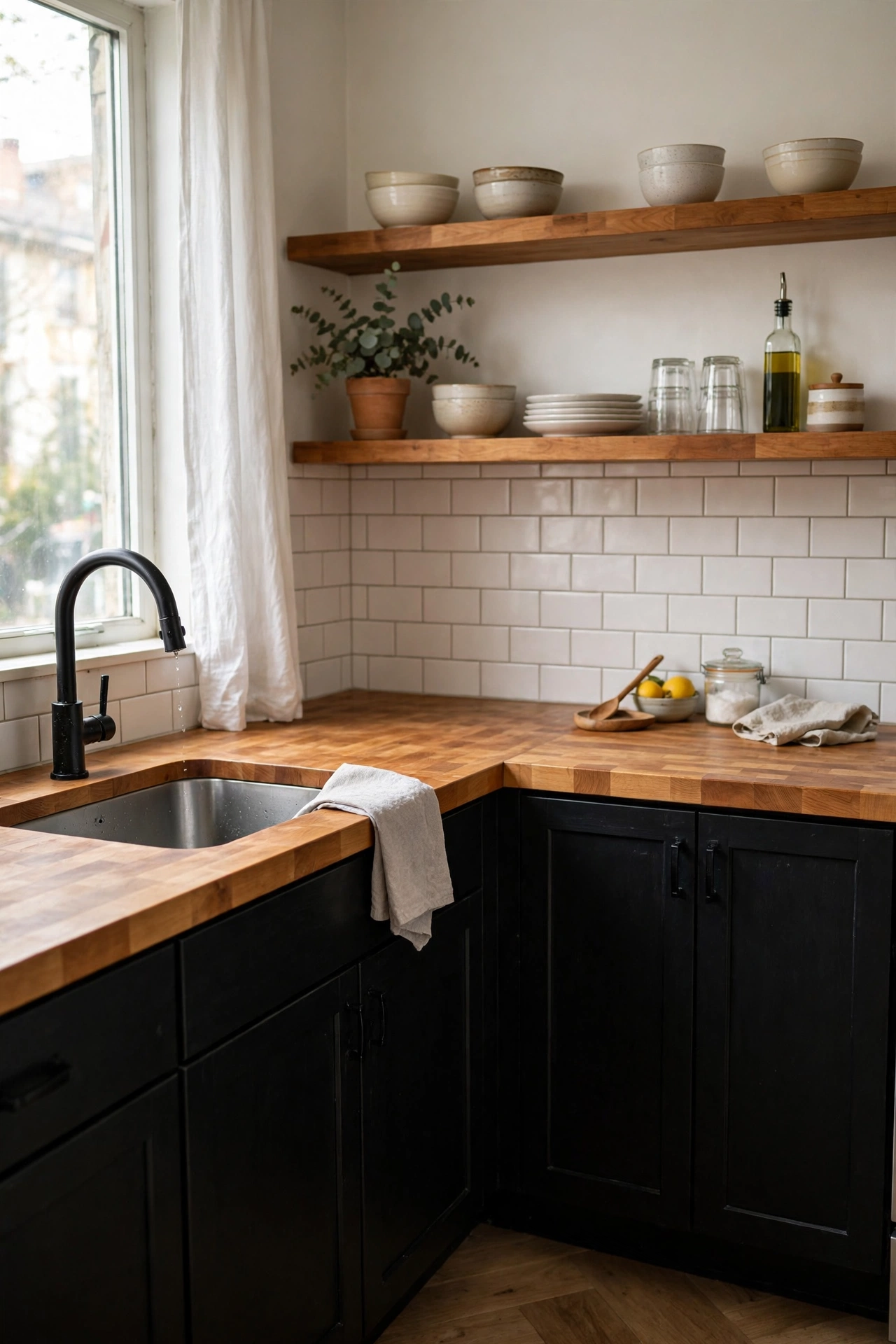
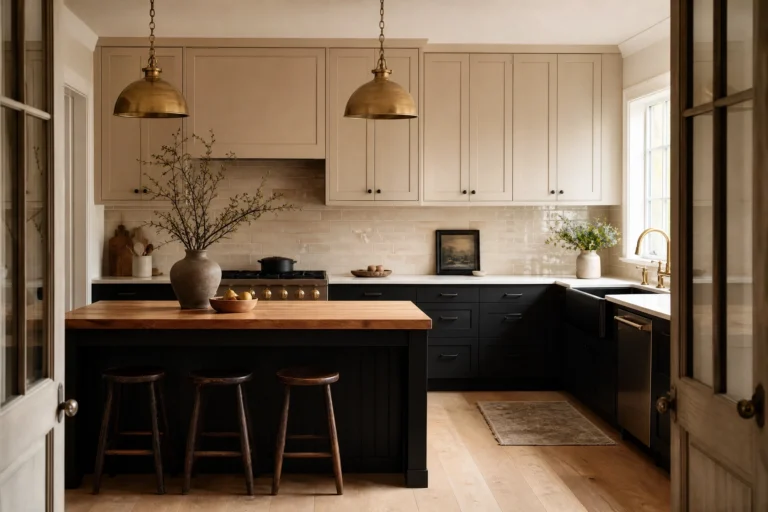
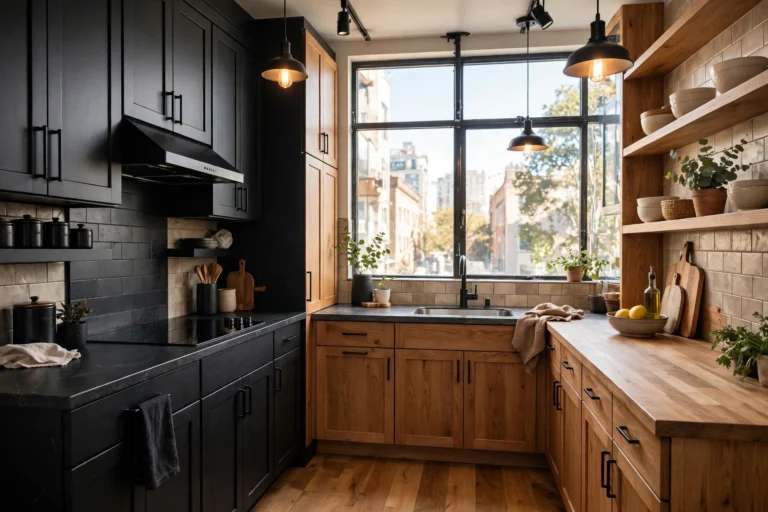
Butcher block countertops on black cabinets put warmth exactly where your hands work. Every meal prep happens on wood. The pale wood against dark cabinets is the crispest contrast in the kitchen. Oil the block regularly and it develops a rich patina. This is the most loved combination in black kitchens for a reason: you feel the warmth dozens of times a day.
Reality Check: Butcher block needs oiling every few months and extra care near water. Commit or choose otherwise.
Live-Edge Island Top
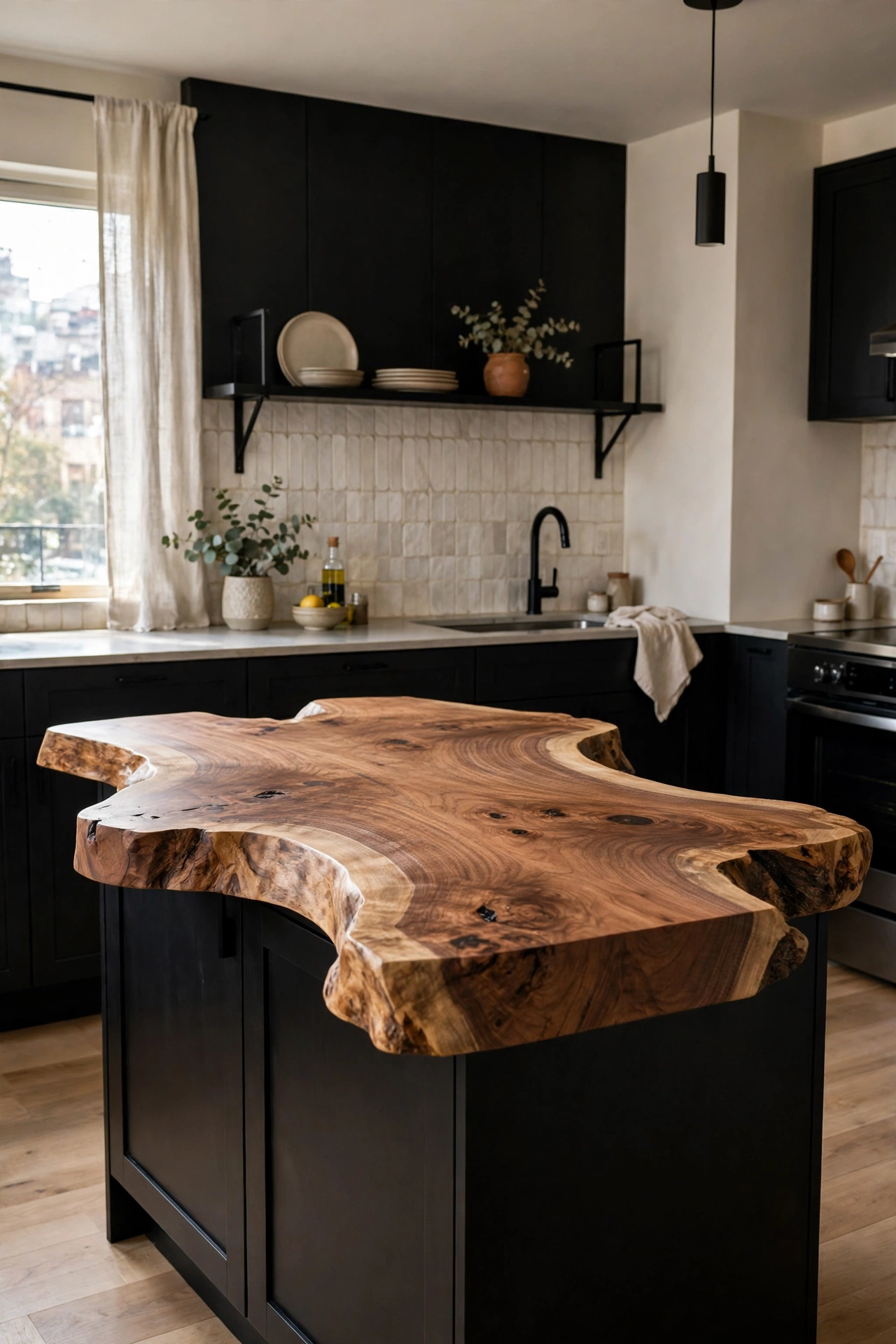
A live-edge wood slab on the kitchen island turns the island into a natural sculpture. The organic edge contrasts beautifully with the black cabinetry’s straight lines. No two slabs are alike, so the island becomes genuinely one of a kind. Seal it well for kitchen use. This is the statement piece that makes the kitchen unforgettable.
The Cost: Live-edge slabs are priced by size and species. Walnut and oak are the classic choices.
Open Wood Shelving
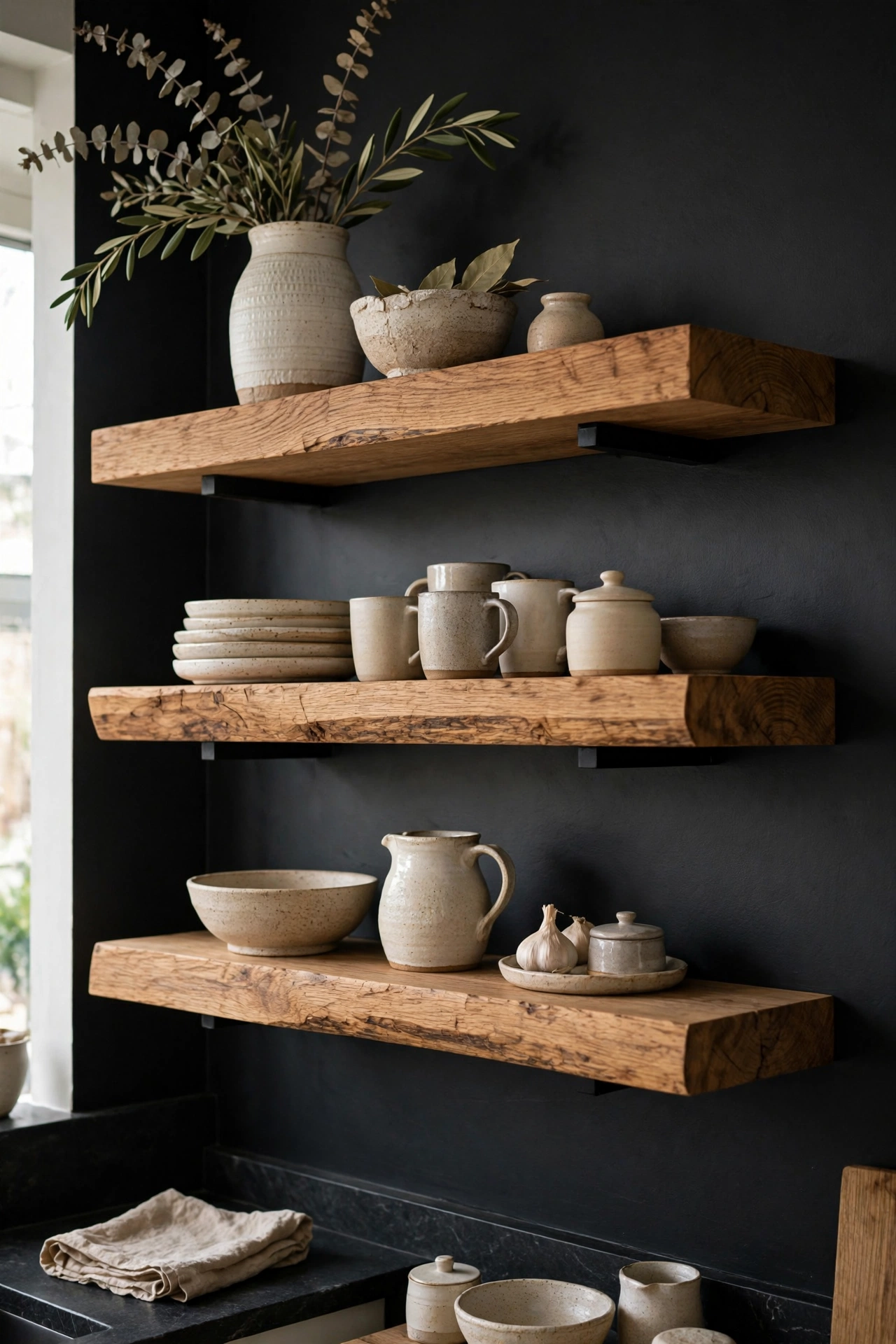
Thick open wood shelves on the black kitchen wall add warmth, storage, and display in one move. The wood breaks the dark expanse; the styled objects add life. This is the most popular black-kitchen idea for good reason: it is cheap, effective, and endlessly restyleable. One wall of wood shelves can rescue a kitchen that feels too severe.
Style Note: Style shelves with items you use. Decorative-only kitchen shelves feel like a stage set.
Wood Breakfast Bar Top
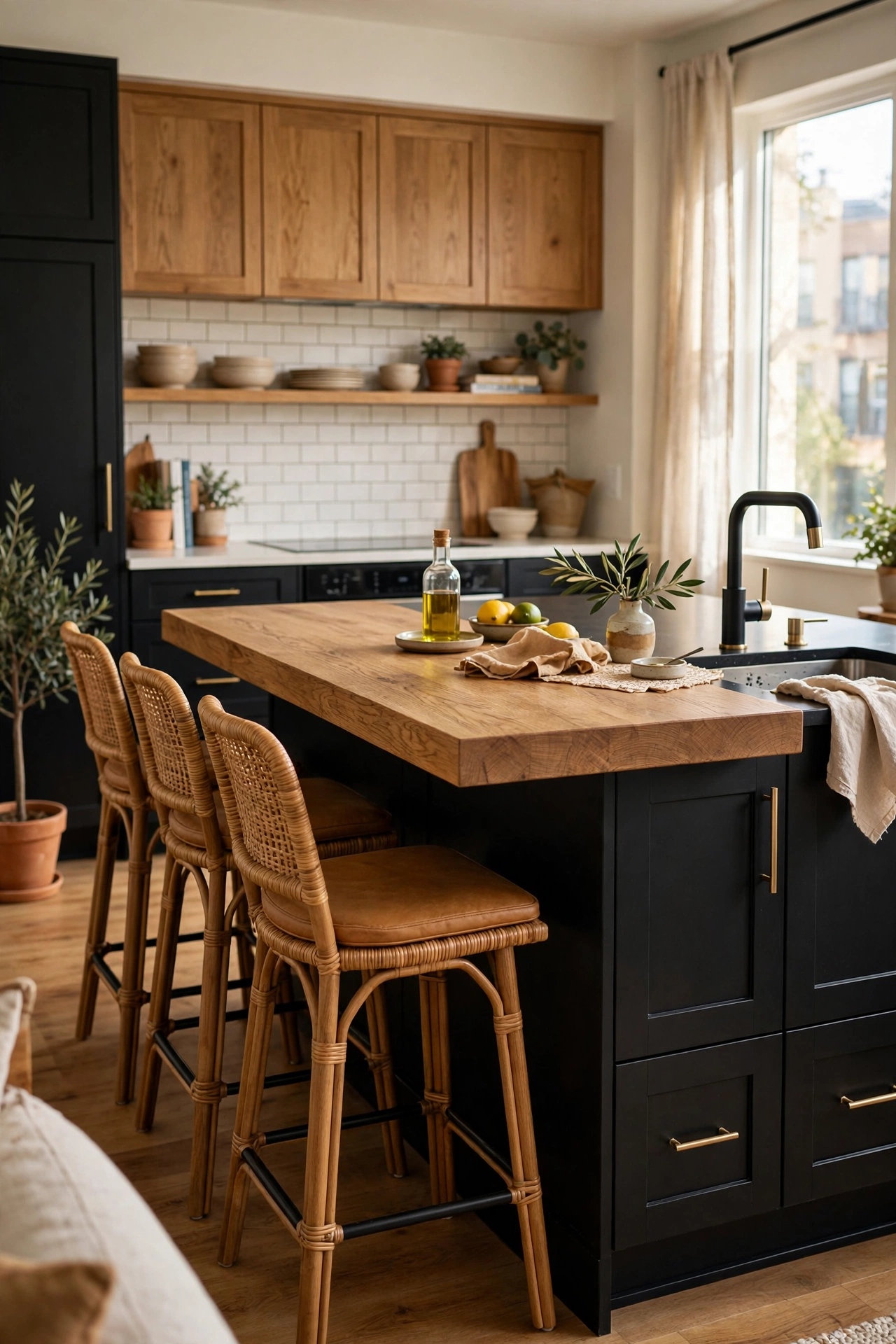
A wood breakfast bar top on the black island gives the seating side a warm, touchable surface. Elbows land on wood, not stone. The wood top can overhang the black base, creating a clear visual division. This is where the family gathers, so make it inviting. The bar top is the handshake of the kitchen; make it warm.
Good to Know: A 12-inch overhang fits knees comfortably. Less than 10 inches and seating feels cramped.
Wood Cutting Board Display
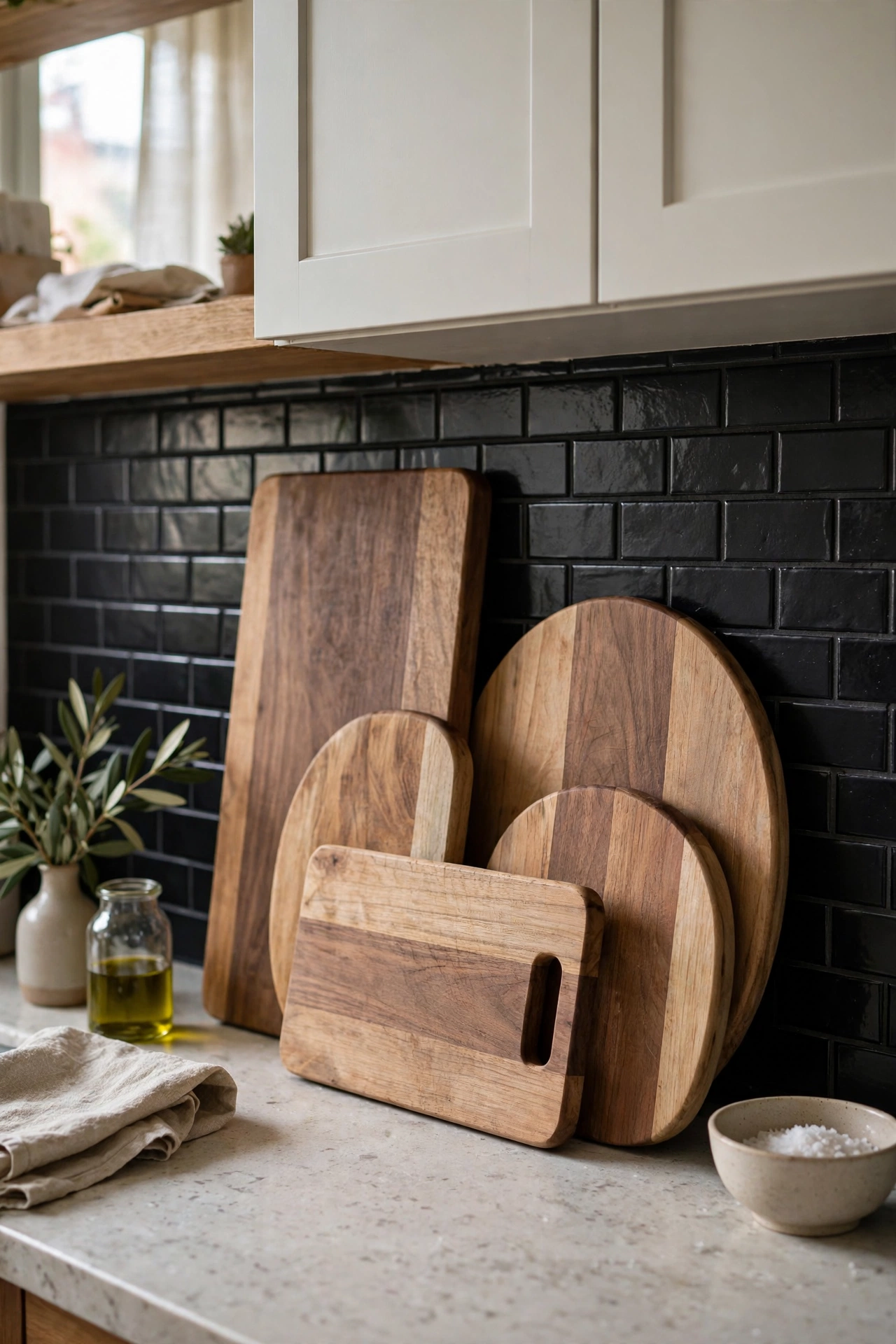
A collection of beautiful wood cutting boards leaned against the black backsplash is the easiest wood accent that exists. The varied grains and tones create a casual display that is also completely functional. Lean, do not hang, for the effortless look. This is styling, not renovation: ten minutes and the kitchen feels warmer. Every black kitchen should have this.
Quick Tip: Vary the board shapes and wood tones. Uniform boards look like a store display.
Wood Knife Block and Utensils
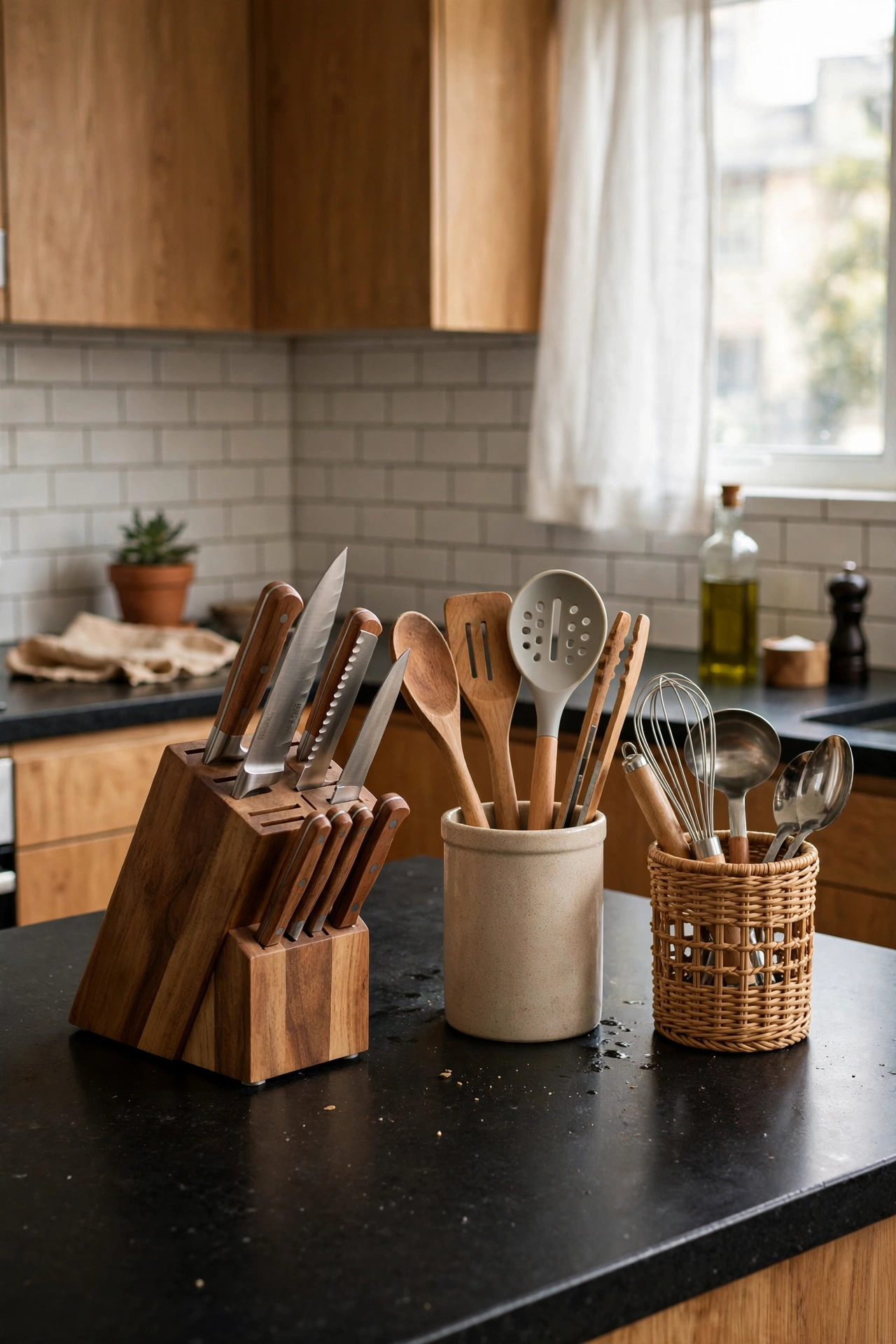
Wood knife blocks, utensil holders, and bowls on black counters add small warm notes exactly where you work. These are the details you touch every day, and wood feels better than plastic or metal. Acacia and olive wood are beautiful and durable. Small objects, daily contact, constant warmth. The little things are not little.
Honest Take: Wood utensils and boards need hand washing. If everything must go in the dishwasher, choose bamboo.
Wood-Framed Windows
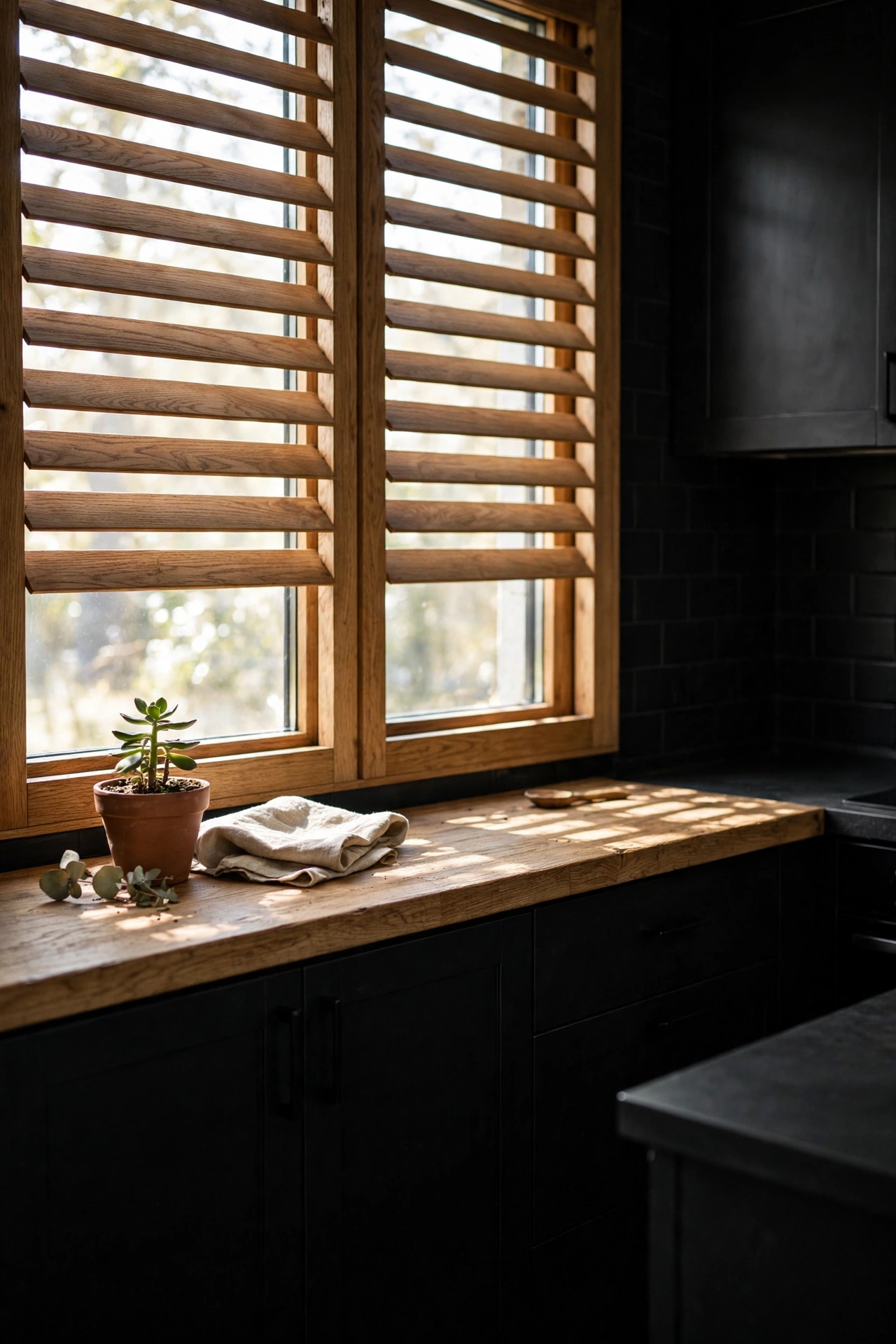
Natural wood window frames or a wood windowsill in the black kitchen outline the light source in warmth. The frame draws the eye to the view and softens the window’s edge. Even a simple oak sill among black cabinets changes the room’s feeling. Light enters through wood: the metaphor writes itself.
Style Note: Match the sill wood to the floor for a continuous warm thread through the room.
Wood in the Details
The finishing touches: furniture, lighting details, and accessories that complete the warmth.
Wood Bar Stools
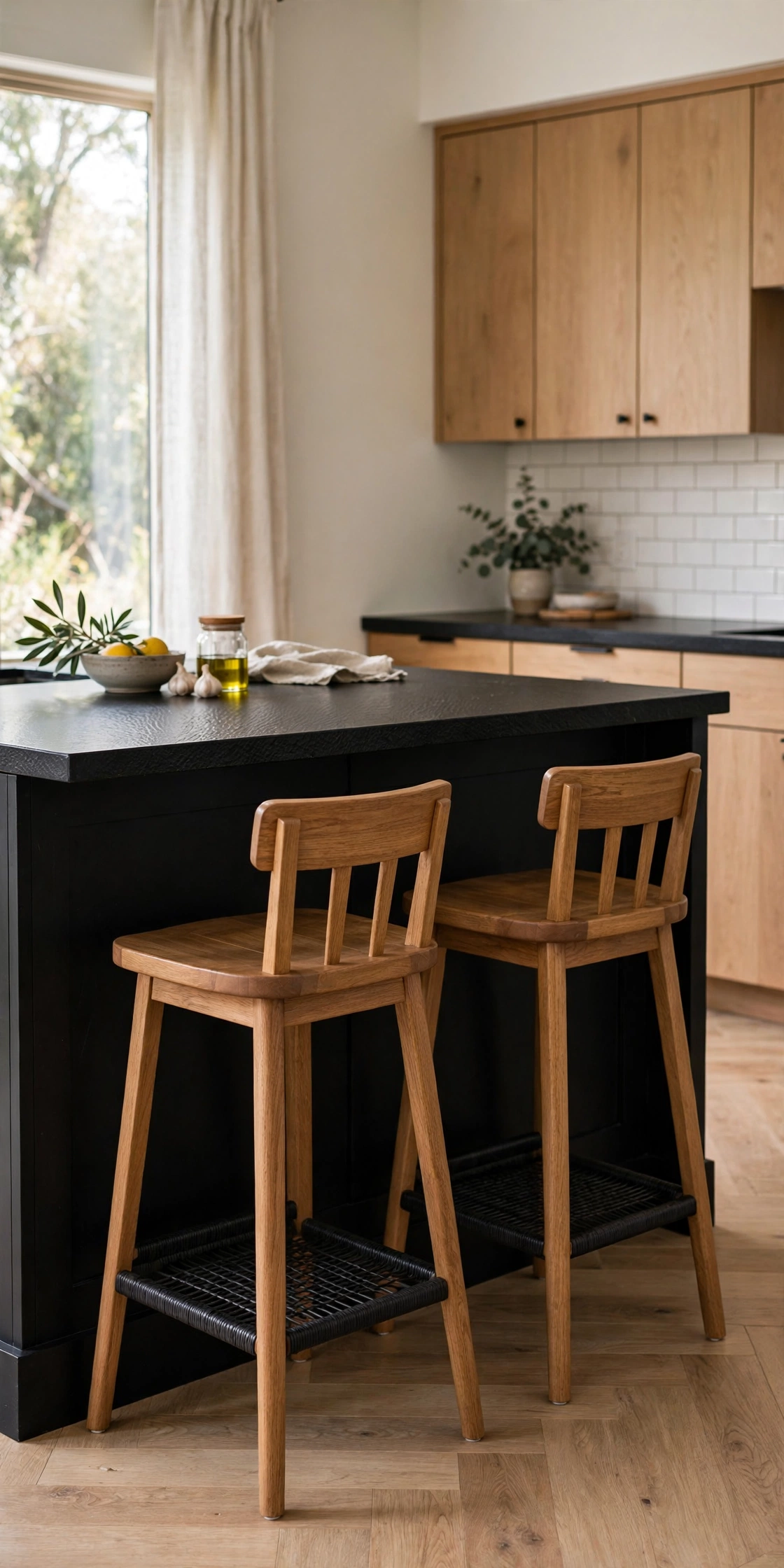
Wood bar stools at the black island are the seating that completes the pairing. Oak, walnut, or bentwood stools soften the island’s dark mass and invite sitting. The stools are at eye level from across the room, so their wood tone matters more than you think. Choose the stool wood deliberately. Seating is design.
Quick Tip: Backless stools tuck away; low backs add comfort. Pick based on how long people actually sit.
Wood and Black Pendant Mix
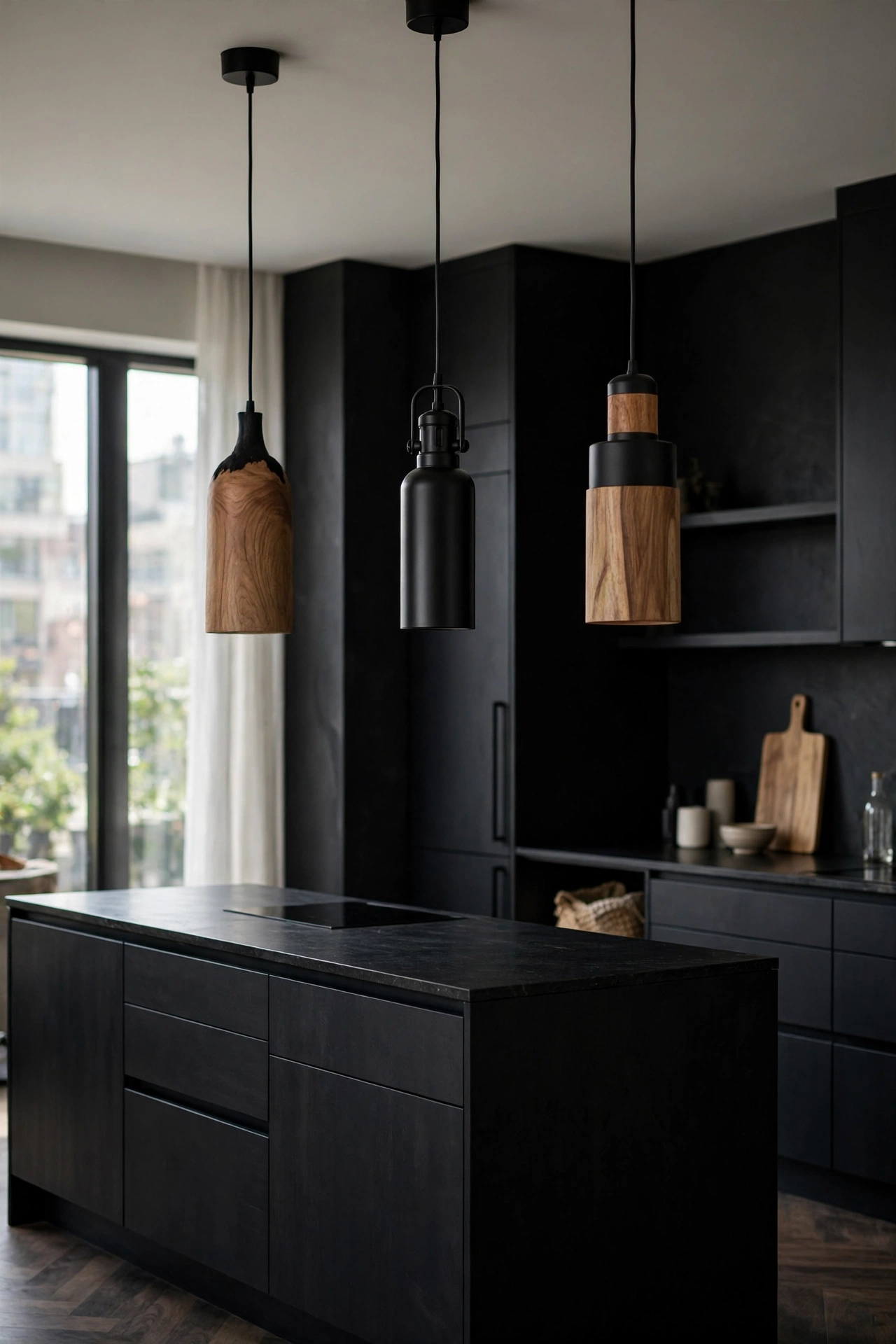
Pendants that mix wood and black in one fixture, wood shade with black cord, black shade with wood detail, embody the whole palette in a single object. Hung in a row over the island, they are the kitchen’s jewelry. The mixed material keeps either one from dominating. Small objects, big palette statement.
Good to Know: Odd numbers of pendants look better than even. Three over an island is the classic count.
Woven Wood Shades
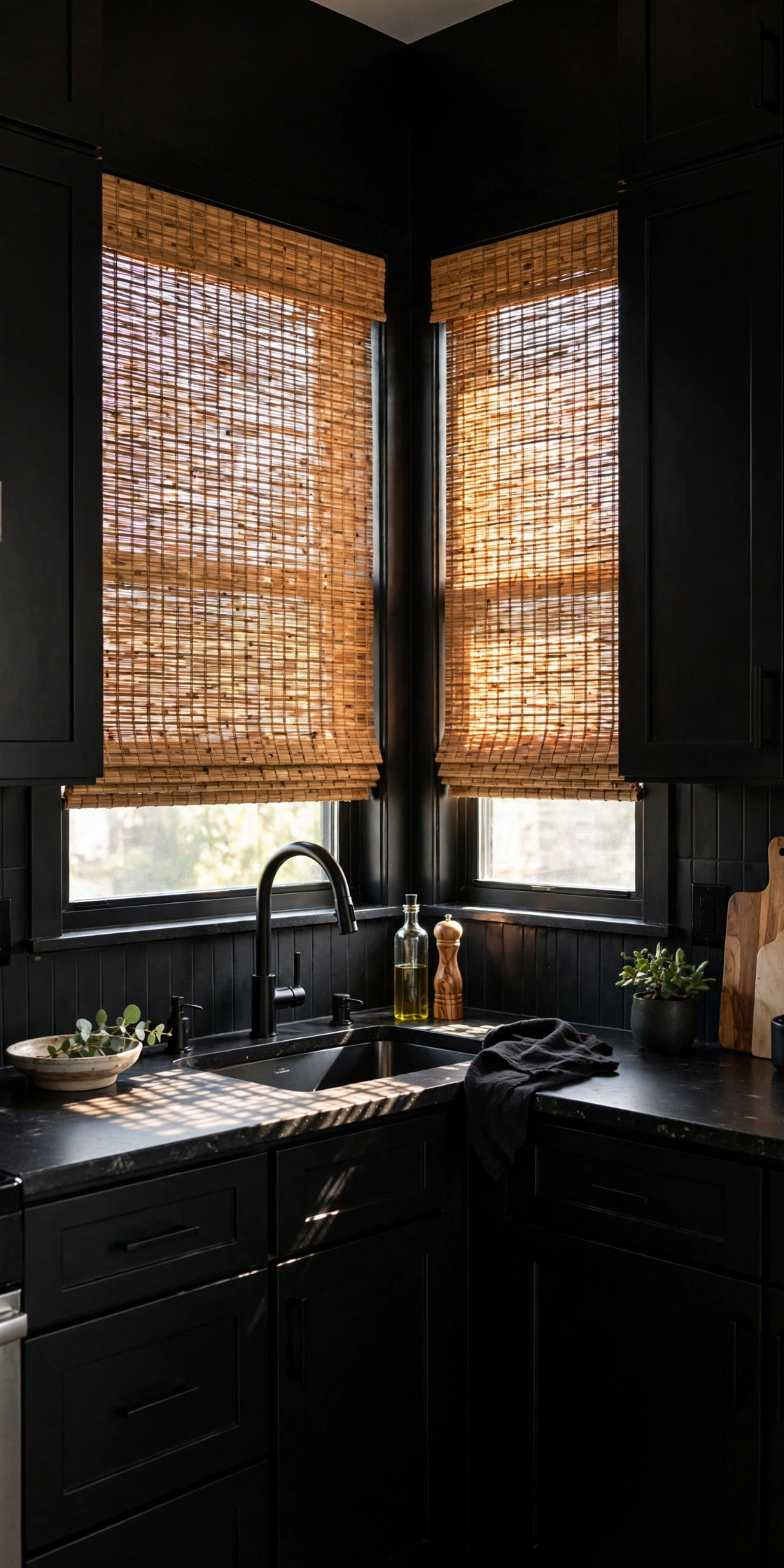
Woven wood or rattan shades on the kitchen windows filter light through natural texture. The woven material glows when backlit and adds a craft note to the modern black kitchen. They soften the window wall without blocking light. Natural texture against sleek black: the contrast of materials is as important as the contrast of colors.
Reality Check: Woven shades and kitchen grease are not friends. Choose wipeable weaves or place them away from the range.
Wood Bowl of Fruit
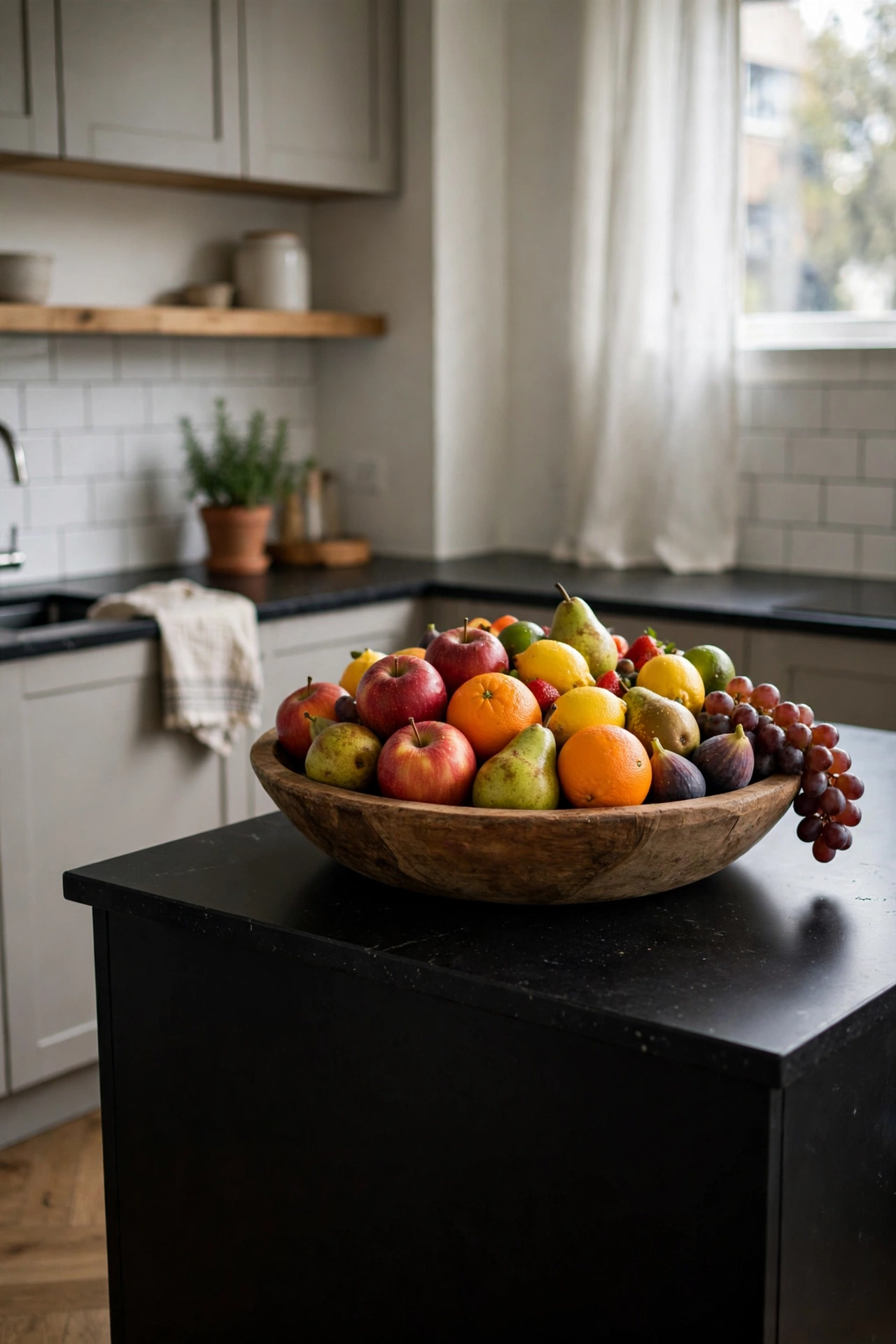
A large wood bowl piled with fruit on the black island is the oldest styling trick and still the best. The organic shapes and colors pop against the dark surface; the wood bowl adds another warm note. It is alive, edible, and changes with the seasons. Styling does not get more functional than this. Eat the decor.
Style Note: One abundant bowl beats three sparse ones. Commit to the pile.
Leather and Wood Bar Details
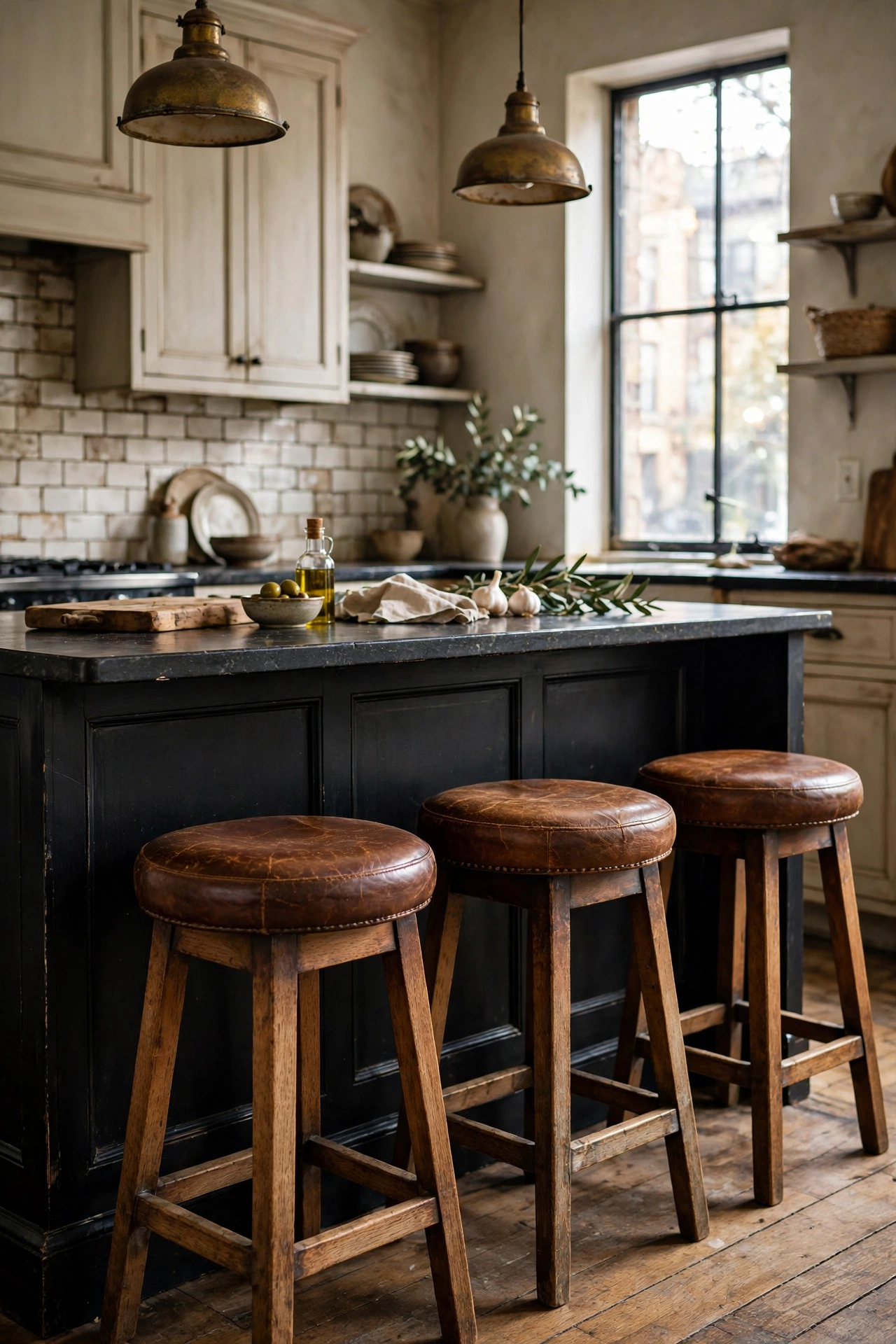
Leather stool seats or leather pulls combined with wood details add a third warm material to the black kitchen. Leather’s patina and wood’s grain are both materials that age beautifully, unlike the black’s perfection. The combination feels collected over time. New kitchens need old-soul details. Leather and wood provide them.
Honest Take: Real leather patinas; faux leather peels. On high-touch items, buy real or skip it.
Wood Tray on the Island
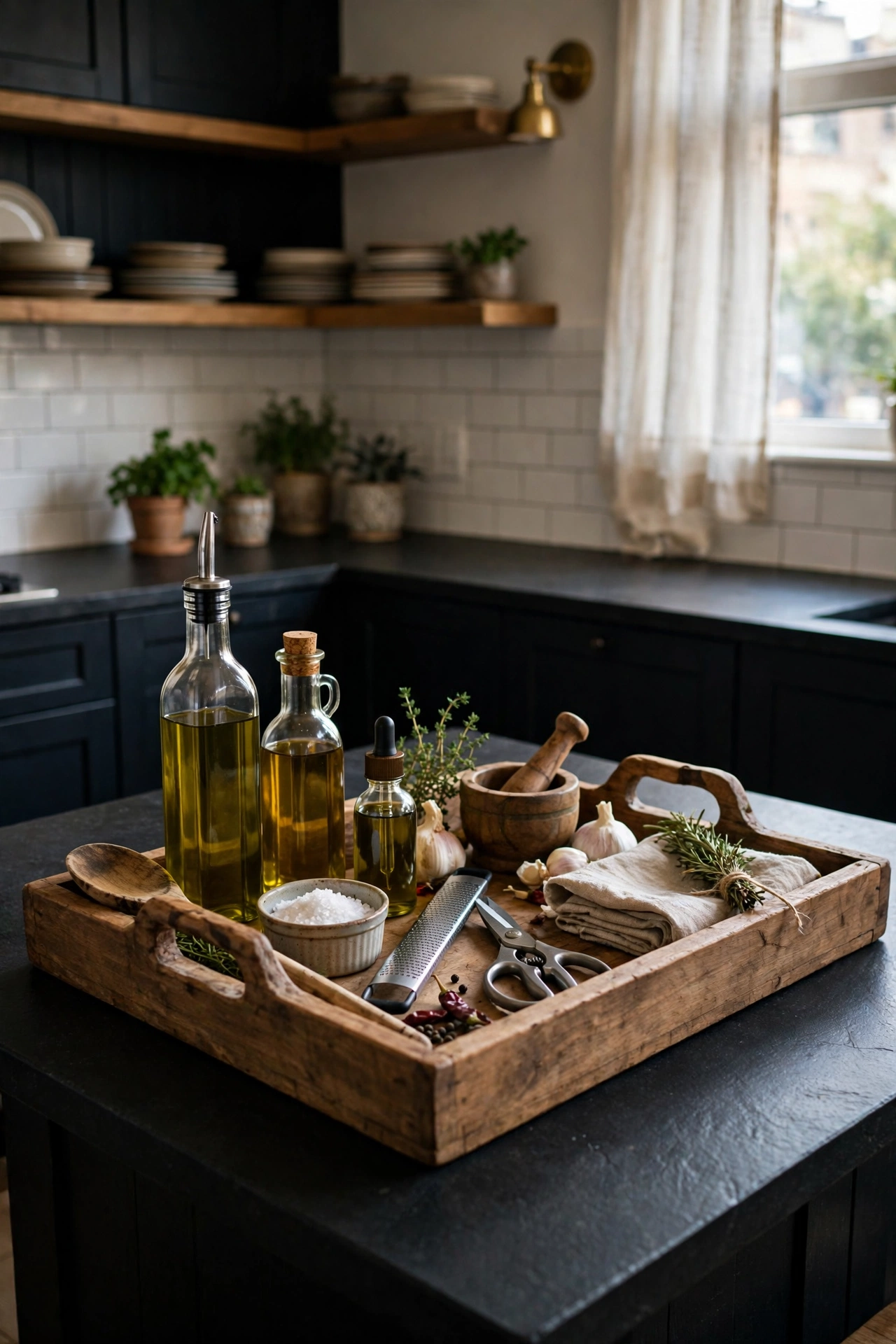
A large wood tray corralling oils, salt, and daily tools on the black island keeps the surface organized and warm. The tray defines a zone on the big dark expanse and adds a wood note at the room’s center. Corralled clutter reads as styling; scattered clutter reads as mess. The tray is the difference.
Quick Tip: Choose a tray with handles. It moves for cleaning and serving, which is the point.
Why Wood Fixes Black Kitchens
Black is visually cool and recessive; it absorbs light and can feel flat. Wood is visually warm and advancing; it reflects warm light and its grain gives the eye texture to explore. Together they balance each other physically, not just aesthetically. Designers call this material contrast, and it matters more than color contrast: a black-and-white kitchen can still feel cold, but a black-and-wood kitchen almost never does. The materials do the emotional work.
Warmth Is a Material
You cannot paint warmth into a black kitchen. Warmth comes from materials: wood underfoot, wood overhead, wood at hand. The black provides the drama and the edge; the wood provides the welcome. Put the wood where it counts, in big surfaces first and details second, light it warm, and let the two materials do what they do best. A black kitchen with natural wood is not a compromise between dark and cozy. It is both, fully.