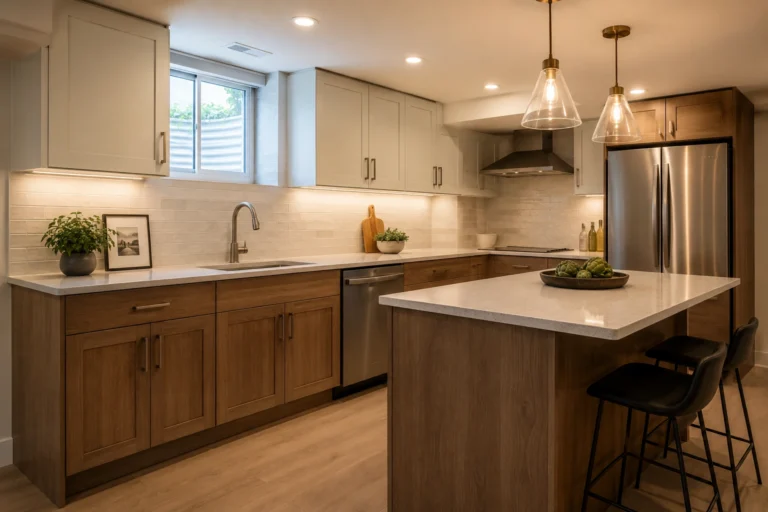
Black and wood is the kitchen pairing that looks effortless and is secretly fussy. Get the placement wrong and the kitchen feels chopped up or cave-dark. Get it right and you have warmth with edge, the most requested kitchen look of the last five years. The entire game is placement: which material goes up, which goes down, and where each one stops. These 22 ideas are organized by exactly that decision, so you can see every version of the split and pick yours.
Black Up, Wood Down
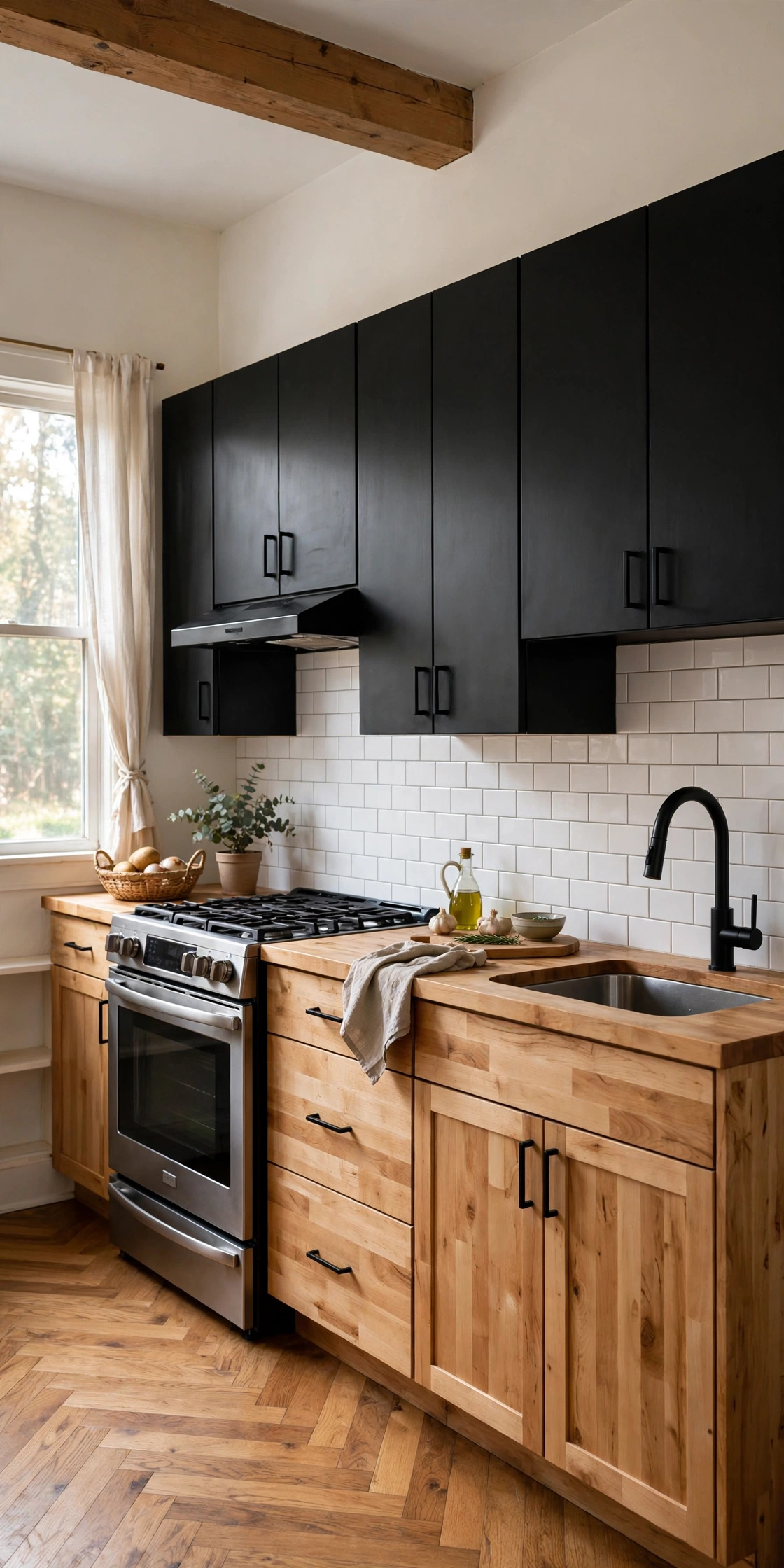
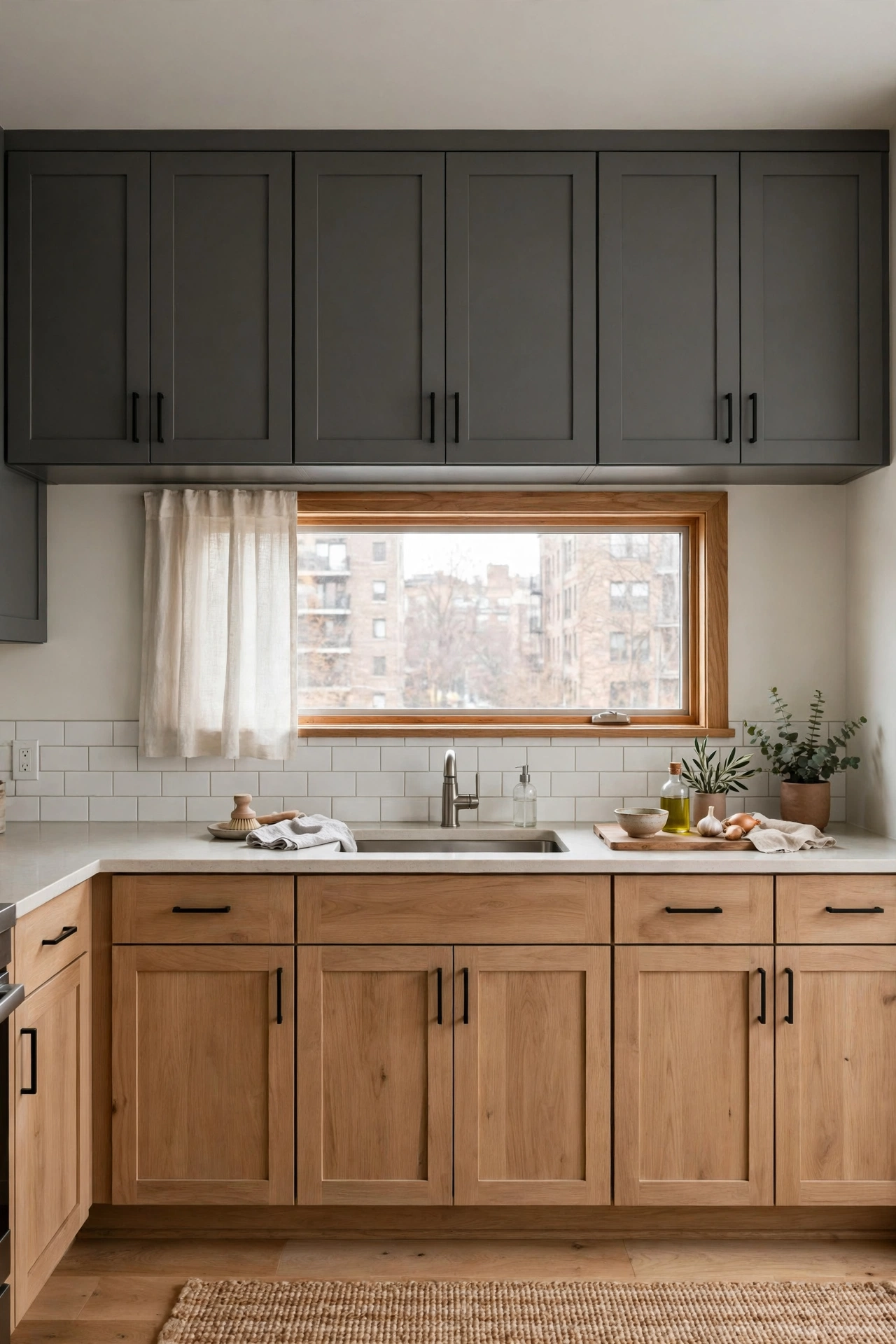
Black uppers with wood lowers is the bolder split. The dark top recedes, the warm bottom grounds. It works best in kitchens with good natural light and high ceilings.
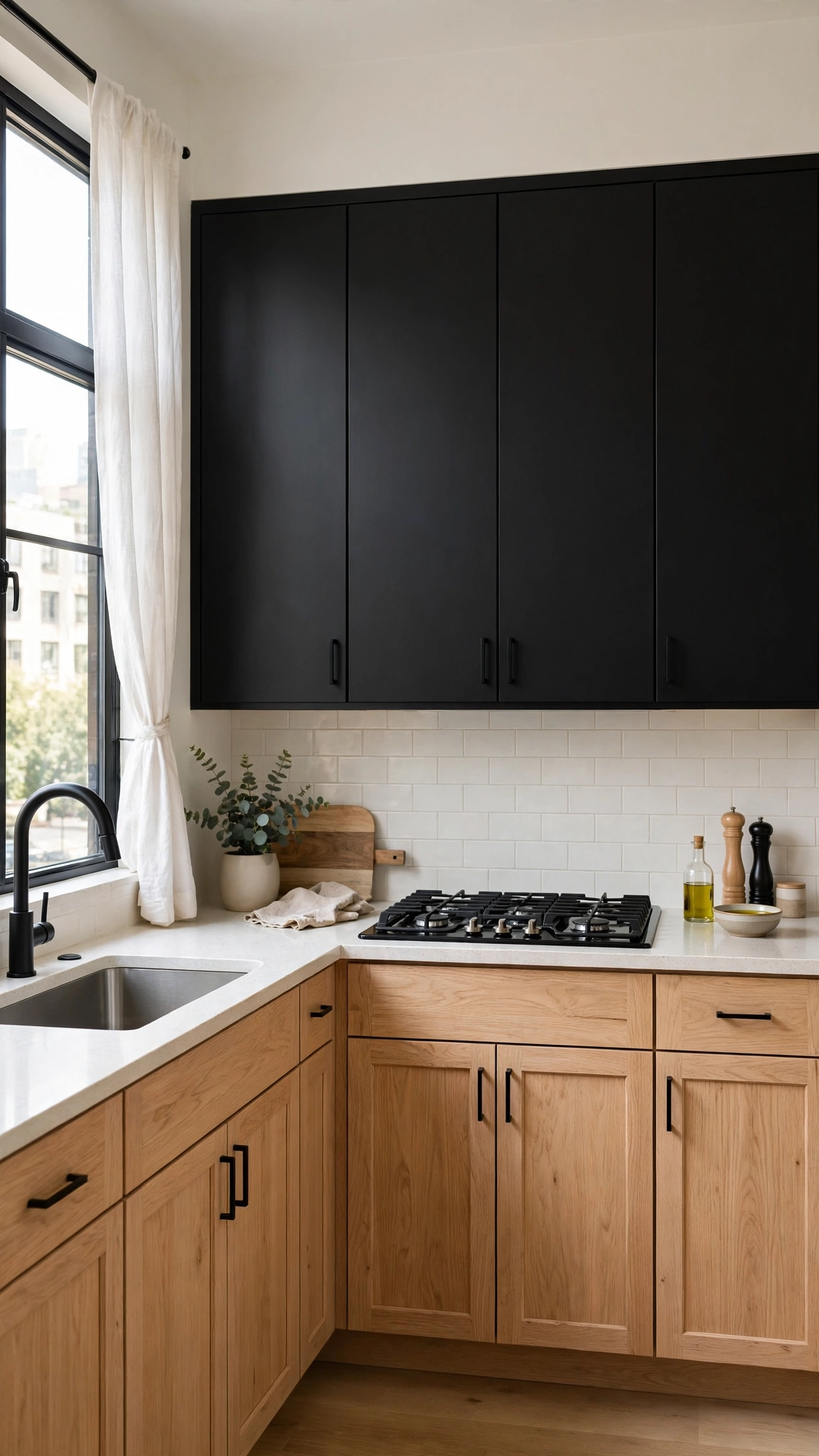
Matte black upper cabinets over white oak lowers is the signature version of this split. The black uppers almost disappear against the wall, making the kitchen feel taller, while the oak lowers bring warmth to hand level where you actually touch things. Matte black hides fingerprints far better than gloss. White oak’s pale tone keeps the lower half light. This is the combination that launched a thousand pins.
Quick Tip: Run the black uppers to the ceiling. A gap above dark uppers collects dust and breaks the line.
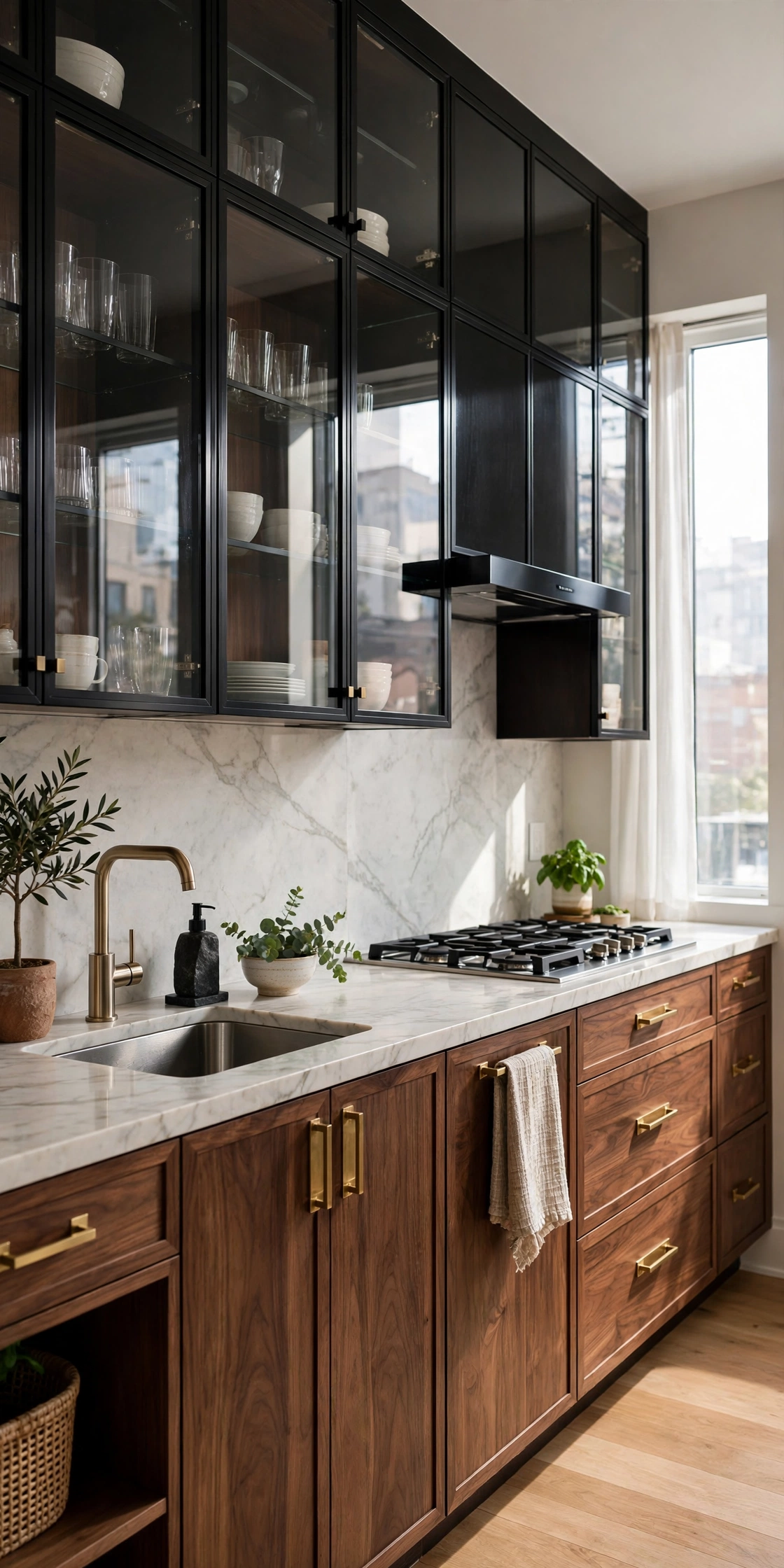
Black glass-front uppers over walnut lowers add reflection and depth. The glass breaks up the black mass so it never feels heavy, and walnut’s rich brown grain gives the lower half a furniture feel. This is the more luxurious version of the split, suited to larger kitchens. Interior cabinet lighting makes the glass fronts glow at night. Drama with a dimmer switch.
Good to Know: Glass-front uppers demand tidy shelves. If your dishes are mismatched, stick with solid fronts.
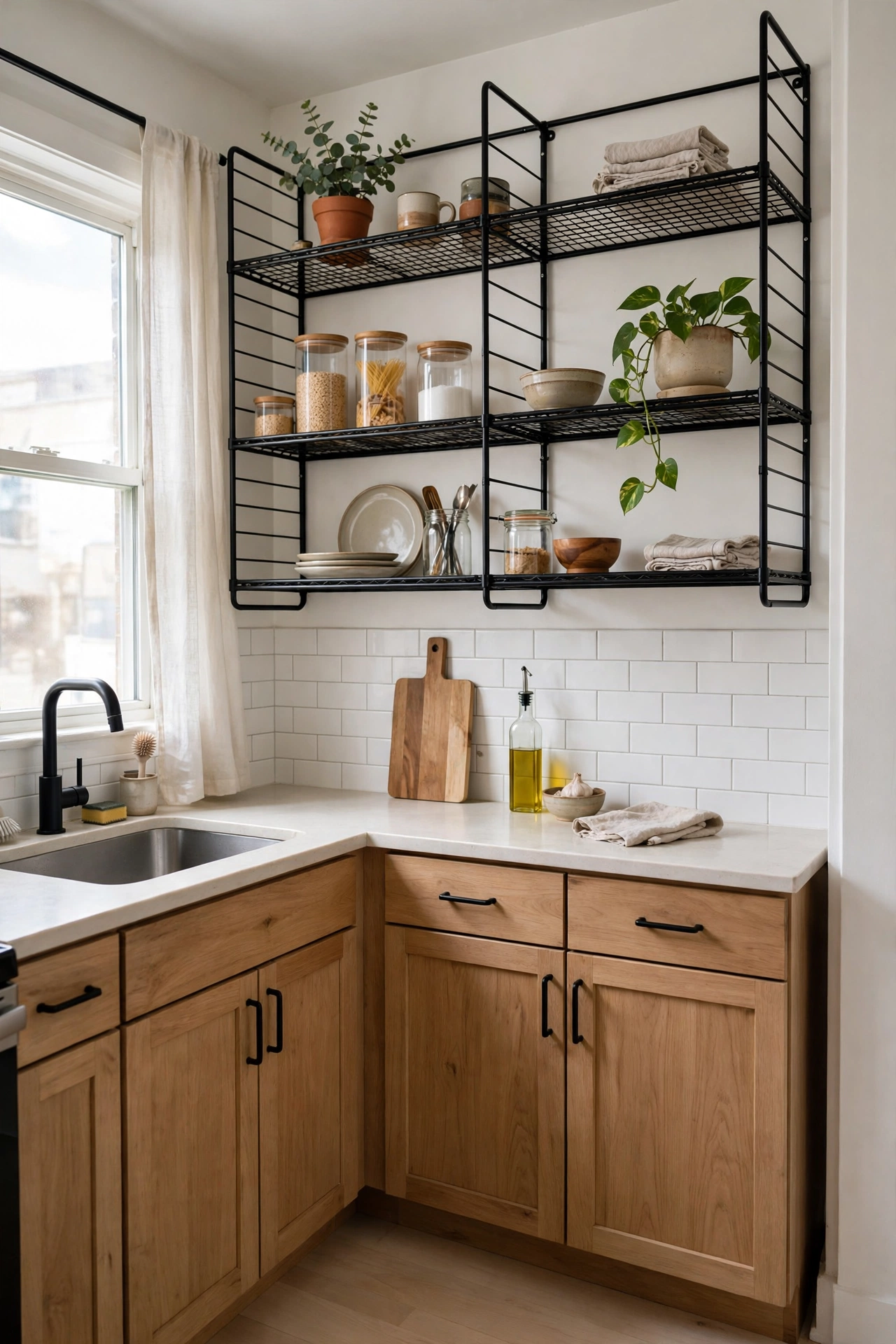
Black metal open shelves instead of upper cabinets, over wood lower cabinets, is the airy take. The shelves hold the black note without the visual weight of full uppers. Wood base cabinets keep the warmth. This suits small kitchens where solid black uppers would press down. Style the shelves with intention: everyday dishes, a few plants, nothing cluttered. Open storage is a lifestyle choice.
Honest Take: Open shelves need weekly dusting in kitchens. Grease plus dust is the real maintenance cost.
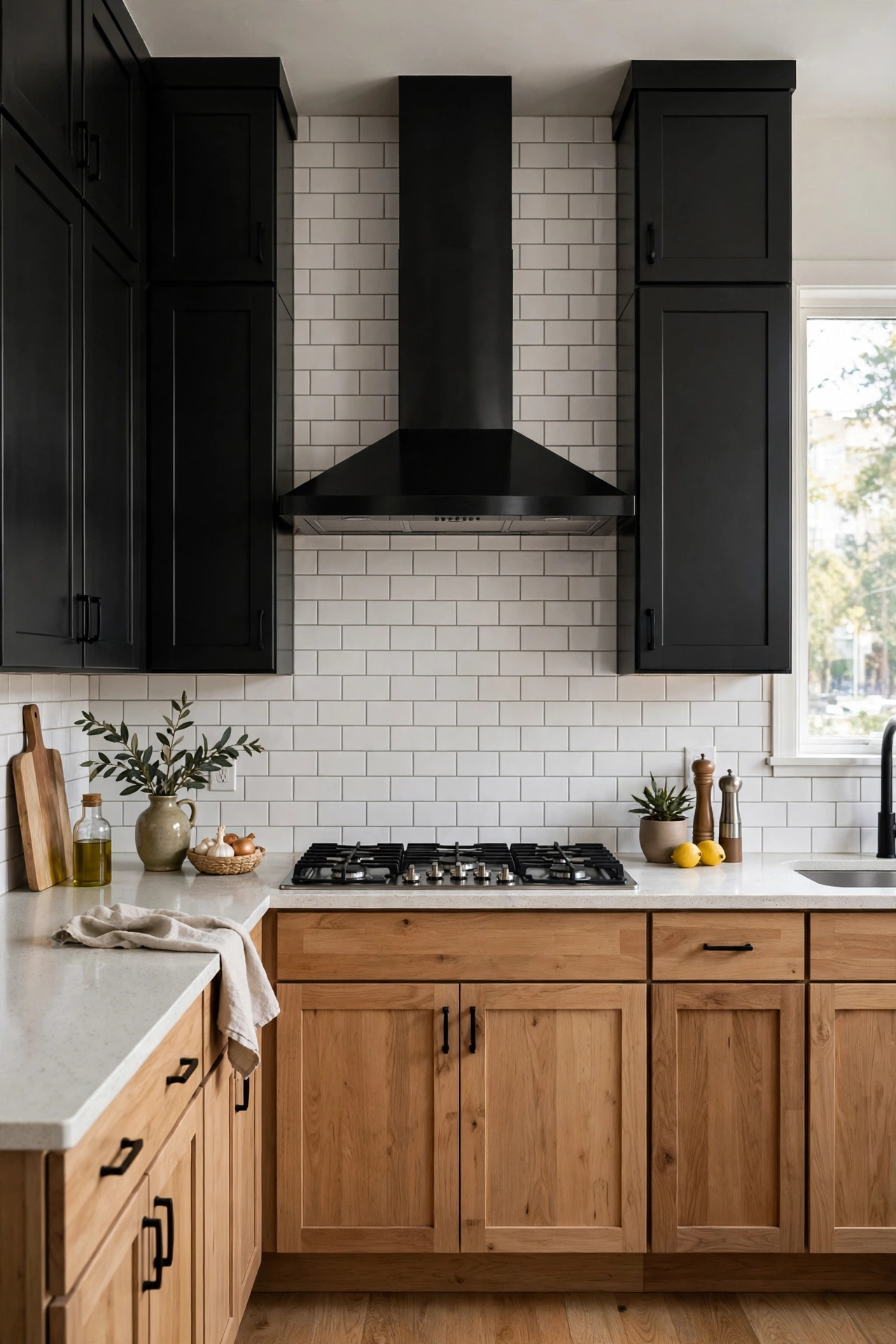
A black range hood between the uppers ties black and wood together at the cooking zone. The hood becomes the visual anchor of the wall, and its black finish connects to the uppers while the wood lowers wrap around it. This works even when the split is subtle elsewhere. The hood is the exclamation point. Size it to the range, not the wall, for proper proportions.
Style Note: A wood trim detail on a black hood marries the two materials in one object. Look for it or add it.
Butcher block lower cabinets under black uppers bring a workhorse warmth. The thick wood reads craftsman, the black reads modern, and together they hit the modern-rustic sweet spot. Butcher block needs oiling a few times a year, which is the maintenance trade for its beauty. This kitchen feels like it cooks. Because it does.
Reality Check: Butcher block near the sink needs extra sealing. Water is the enemy; oil is the defense.
Charcoal or soft black uppers over wood lowers give you the look with less severity. Pure black can feel stark; charcoal has warmth that plays nicer with wood grain. In north-facing kitchens this small shift matters enormously. You still get the contrast, but the kitchen feels approachable. When in doubt, go one shade softer than your instinct. Restraint reads as confidence.
Designer Trick: Hold the paint swatch against your wood sample in the actual kitchen light. Undertones reveal themselves there.
Wood Species and Their Black Partners
Wood
Tone
Best black pairing
White oak
Pale, neutral
Pure matte black
Walnut
Rich, dark brown
Soft black or charcoal
Butcher block
Warm, varied
Matte black
Reclaimed wood
Rustic, textured
Flat black shaker
Ash
Light, grainy
Pure black, high contrast
Wood Up, Black Down
The more common split, and the more forgiving one. Wood uppers keep the eye-level bright; black lowers ground the room and hide the wear. If you are nervous, start here.
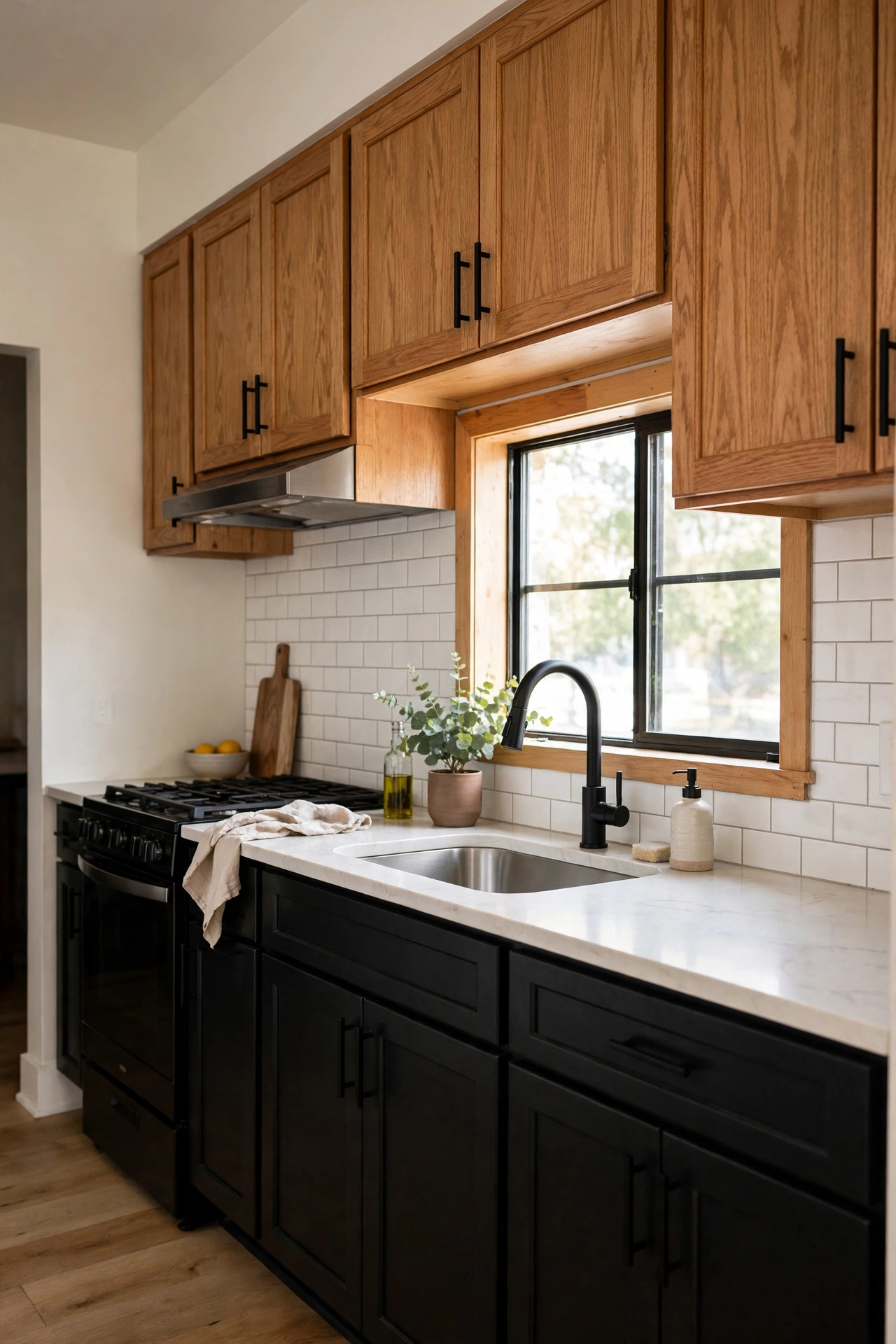
Oak upper cabinets with black shaker lower cabinets is the crowd favorite. The wood at eye level keeps the kitchen feeling open and warm; the black below hides every scuff, splash, and pet nose-print. Shaker fronts add a classic note that keeps the modern contrast from feeling cold. This is the safe choice that does not look safe. It just looks right.
Quick Tip: This split photographs best with light countertops. The white line between wood and black defines the split crisply.
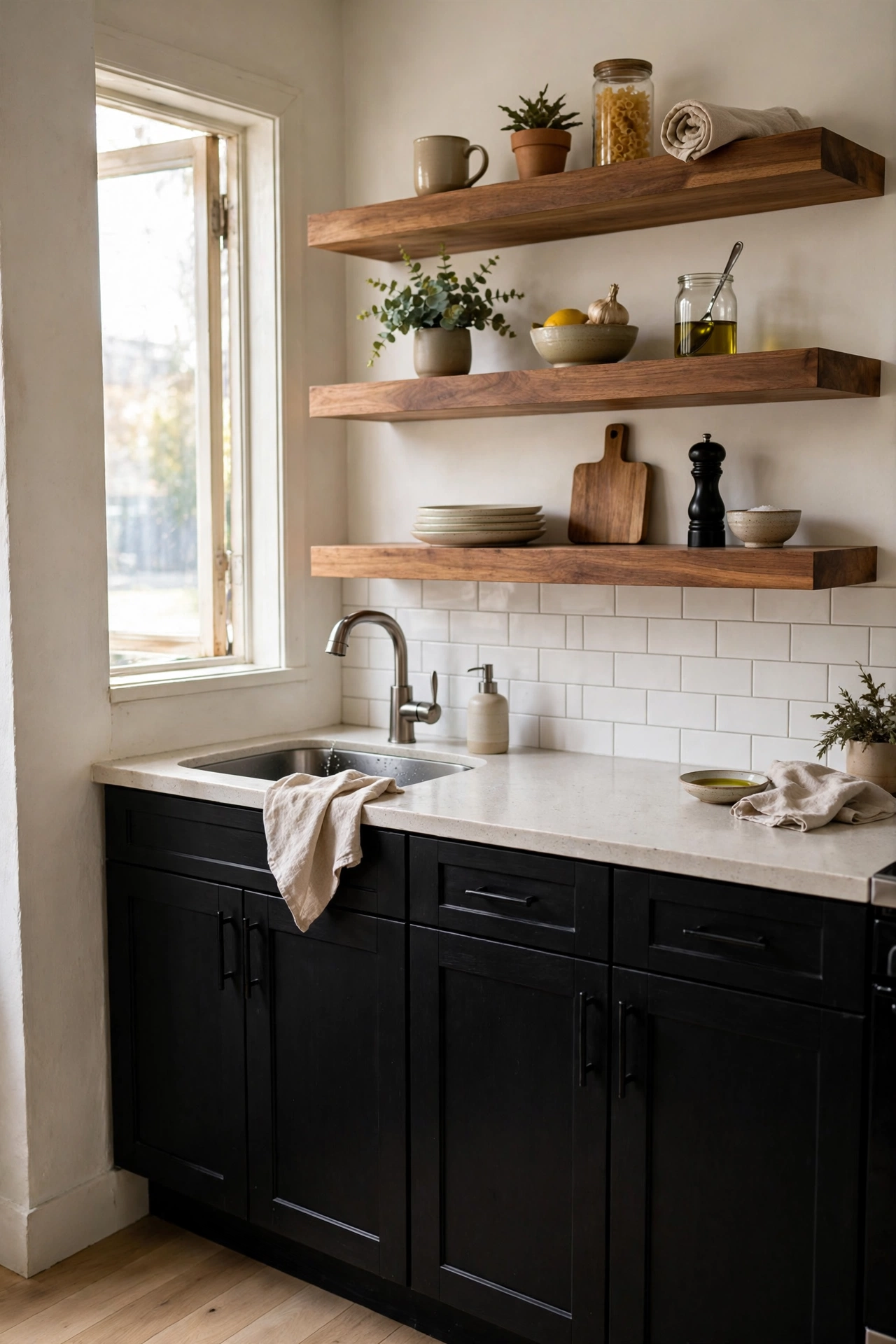
Thick floating wood shelves over black lower cabinets give you display space without upper cabinets. The wood shelves warm the wall; the black base anchors it. This is ideal for small kitchens where uppers would crowd. Keep the shelves styled but usable. The combination of open wood and closed black is the whole design in one wall.
Good to Know: Floating shelves need solid wall anchors. Kitchens hold heavy things; mount like it.
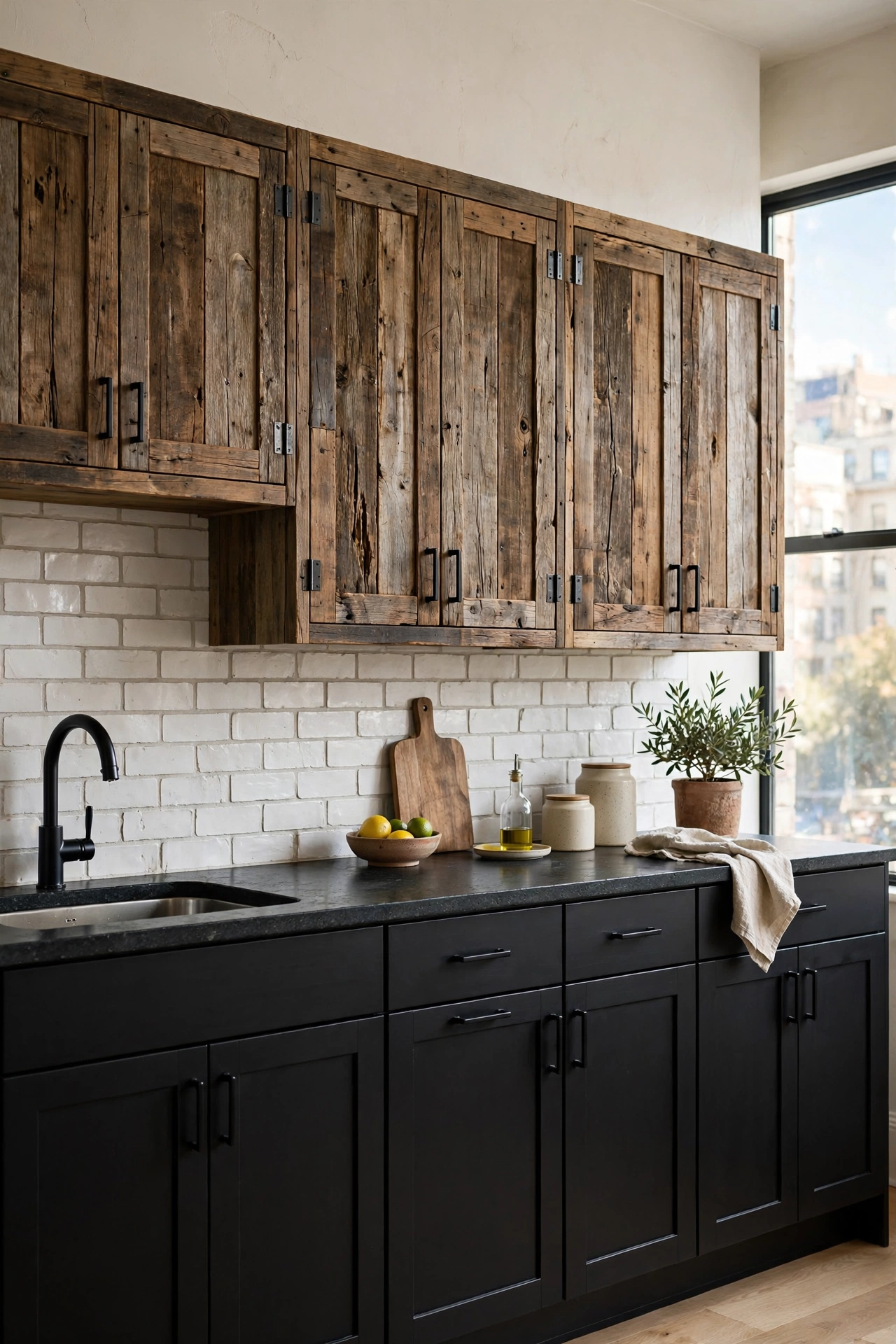
Reclaimed wood upper cabinets over black lowers bring texture you cannot buy new. Every board has history, and the variation keeps the kitchen from feeling flat. The black below is the quiet partner that lets the wood star. Seal reclaimed wood properly for kitchen use. This kitchen tells a story. Make sure it is one you like hearing daily.
Honest Take: Reclaimed wood varies wildly. Approve the actual boards, not a sample photo.
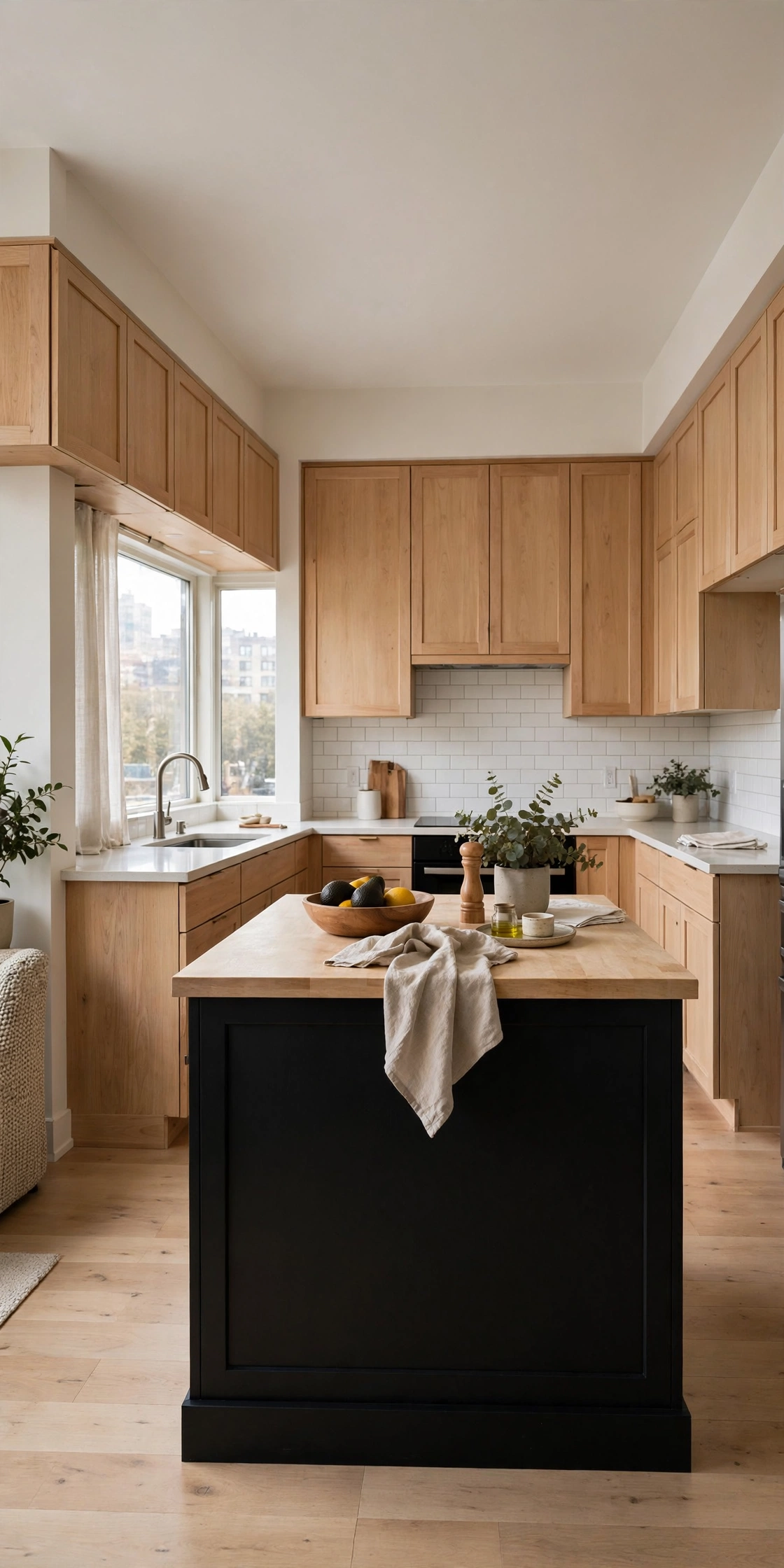
Light wood uppers around the perimeter with a black island base concentrate the black in one furniture-like piece. The island becomes the room’s anchor while the wood keeps everything else warm. This is the lowest-commitment way to try the pairing: the island could be repainted in a weekend. Big impact, small risk. Start here if you are unsure.
Style Note: Make the island black work harder with contrasting stools, wood or cane, not more black.
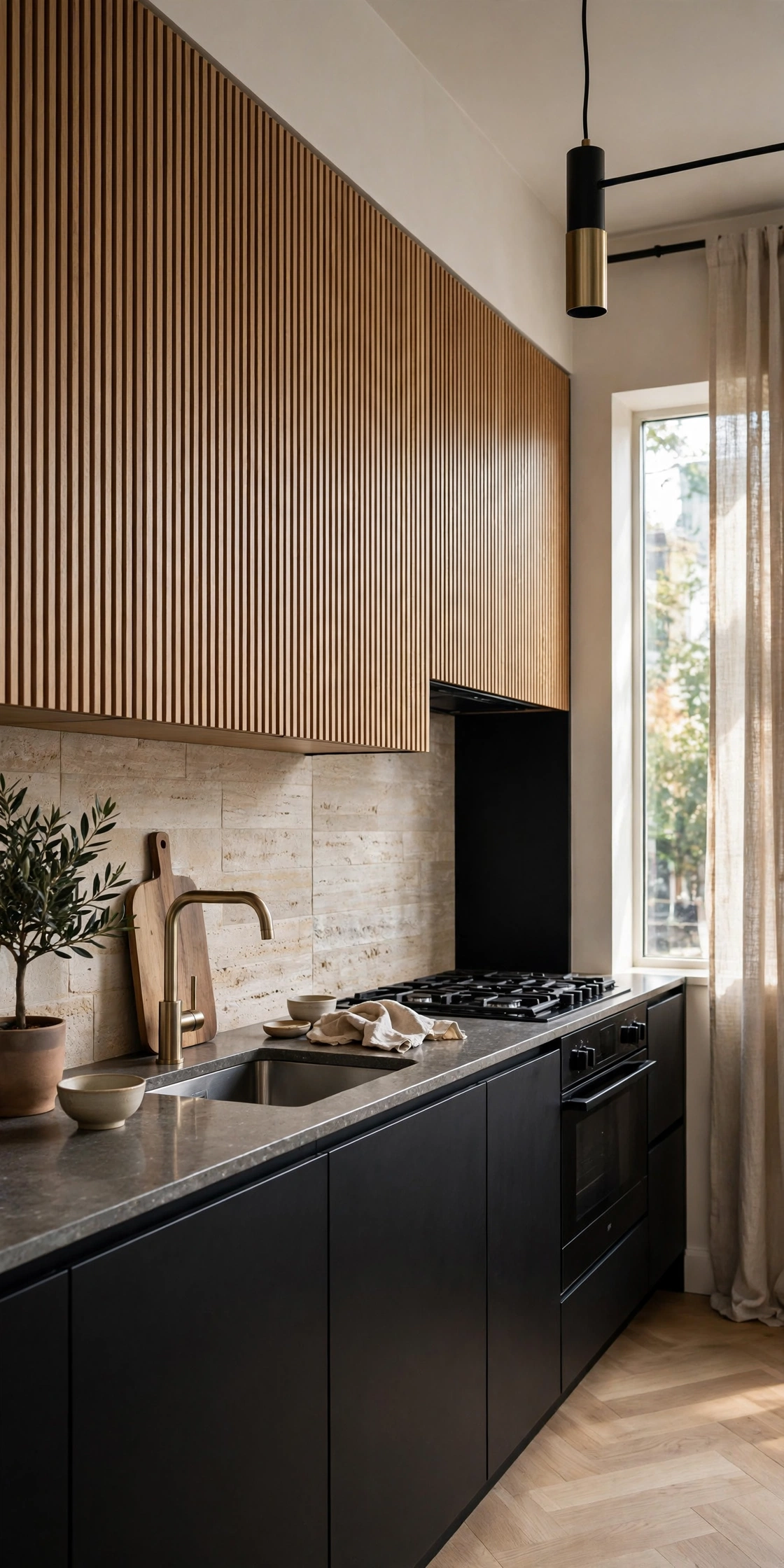
Vertical wood slat fronts on the uppers over black lowers add rhythm and texture. The slats catch light differently through the day, so the kitchen subtly changes with the hours. The black below stays calm and constant. This is the most design-forward version of the split. It reads custom because it nearly always is. Budget accordingly.
Worth Knowing: Slatted fronts collect dust in the grooves. A quick vacuum with a brush attachment handles it.
Keeping a Dark Kitchen Bright
Light countertops are almost mandatory. White or pale stone lifts the whole room.
Under-cabinet lighting is not optional with dark uppers or dark lowers near the worktop.
A light backsplash between the split reflects light back into the room.
Keep floors mid-tone or light. Dark floors plus dark cabinets close the room in.
Maximize natural light: no heavy window treatments in a black-and-wood kitchen.
The Island Does the Talking
Sometimes the split lives on the island alone. The perimeter stays one material; the island carries the contrast. This is the easiest version to retrofit.
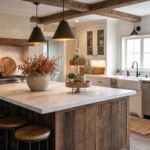
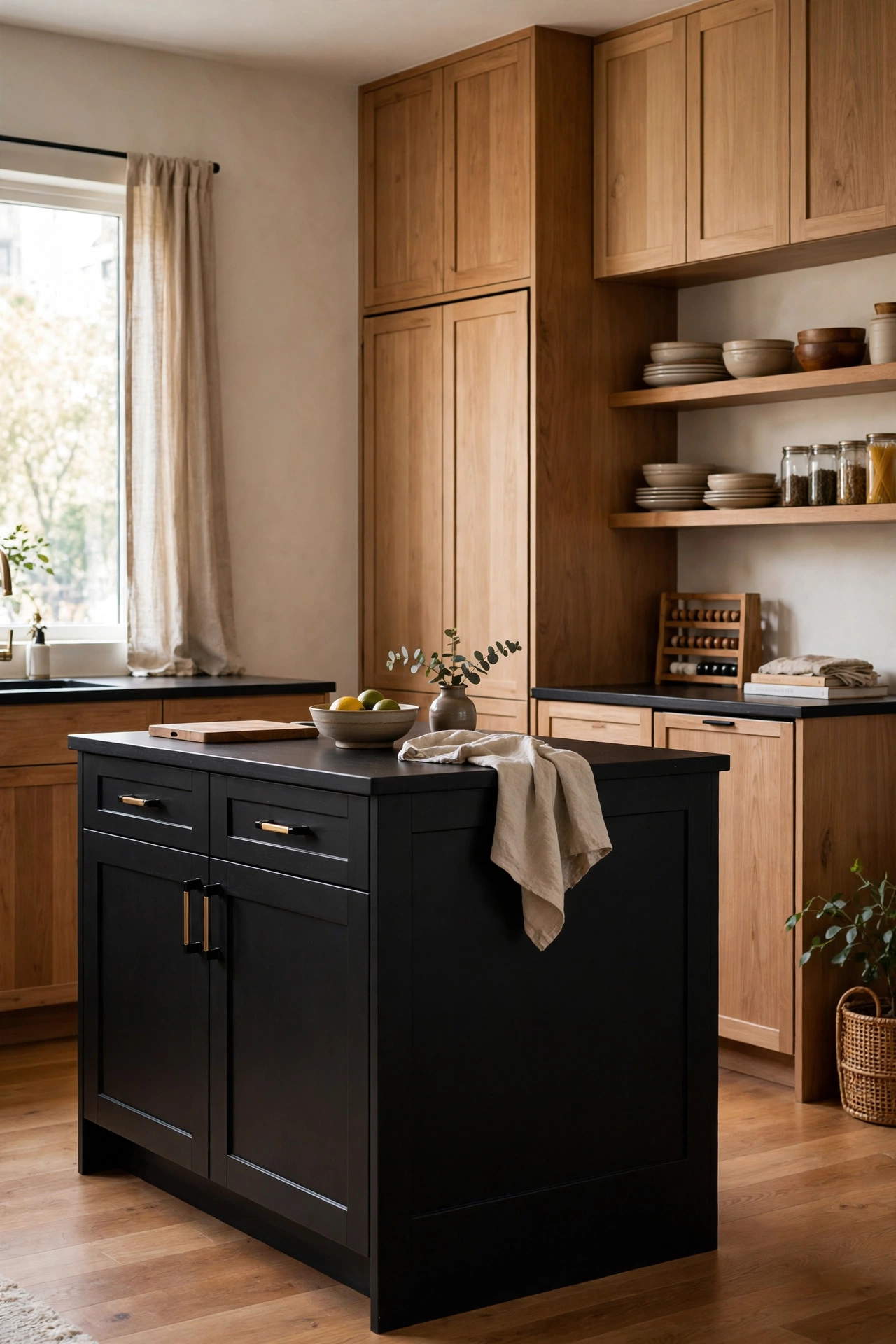
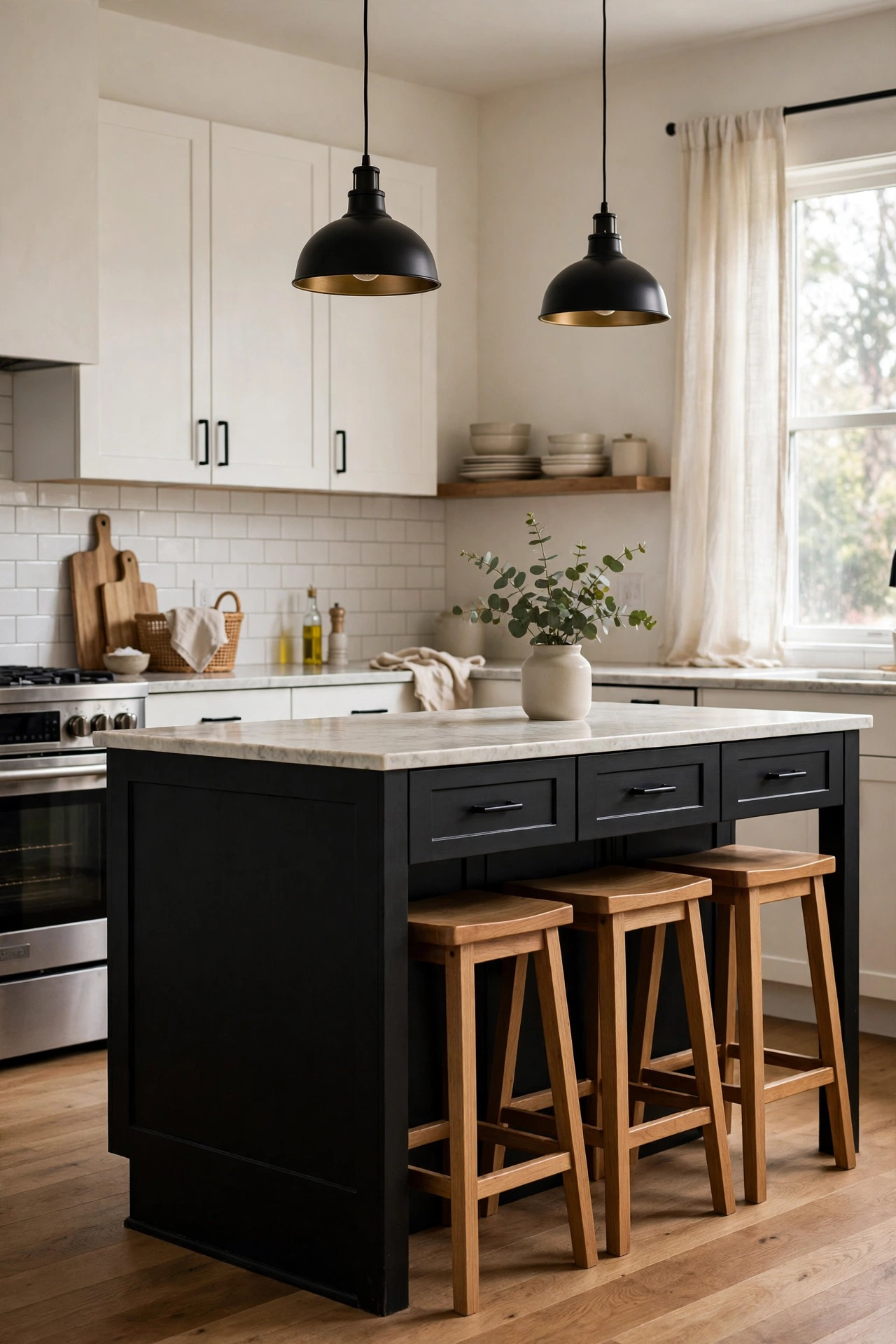
A black island in an otherwise wood kitchen is the classic contrast move. The island reads as a furniture piece, almost like a big farmhouse table, dropped into the room. It grounds the space and gives the eye a focal point. Everything else stays warm and calm. This works in any kitchen style from modern to farmhouse. The island is the period at the end of the sentence.
Quick Tip: Paint your existing island black before committing to full black cabinetry. It is the cheapest trial run.
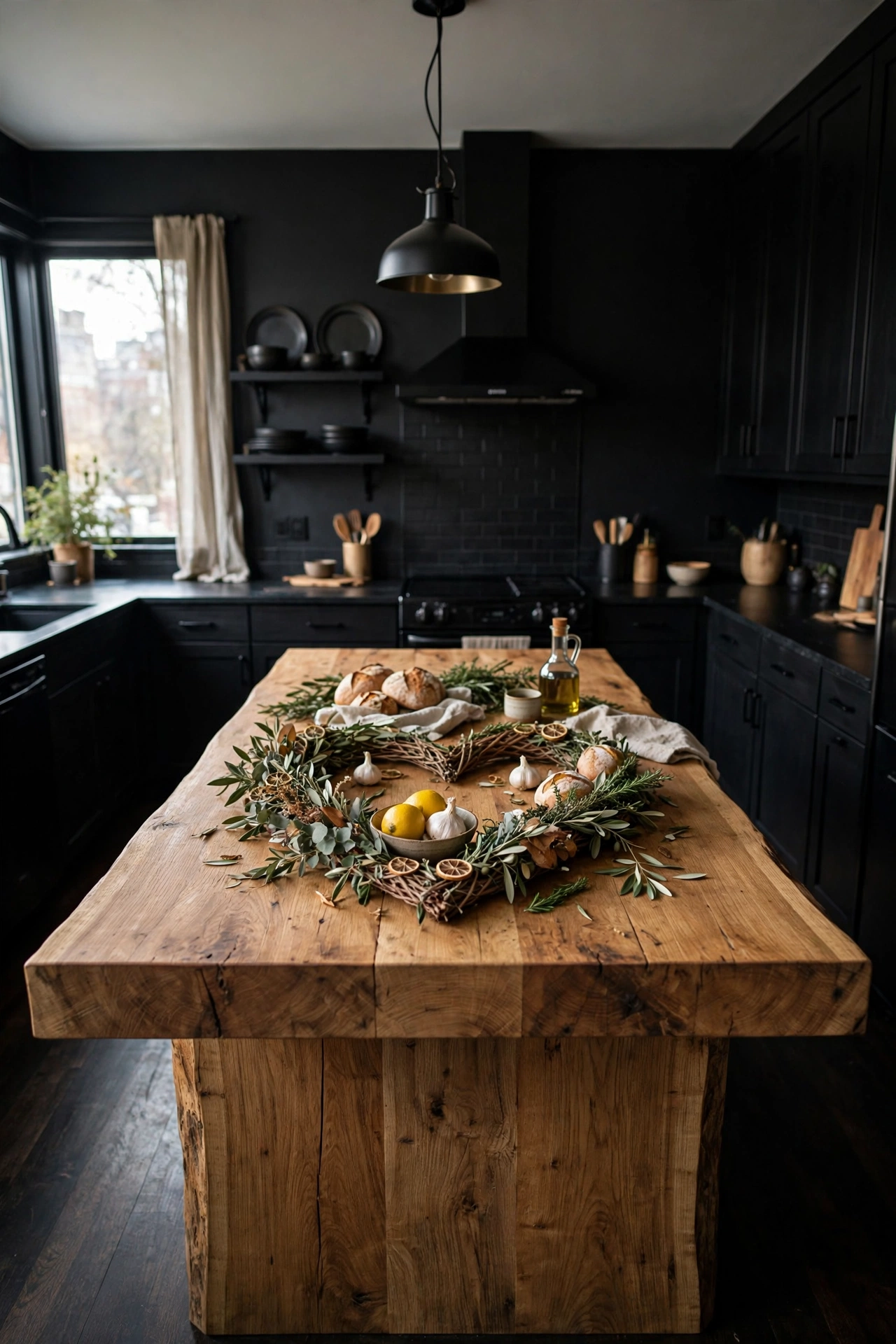
Flip it: a thick wood island in an otherwise black kitchen. The wood becomes the warm heart of a dramatic room, the place everyone gathers around. Butcher block or live-edge tops amplify the effect. The black perimeter recedes; the wood island glows. This is the entertainer’s kitchen: dark, moody, with one warm gathering spot. Everyone ends up at the island anyway.
Good to Know: A wood island top needs the same care as butcher block counters. Oil it, love it.
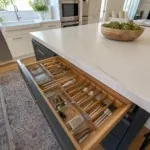
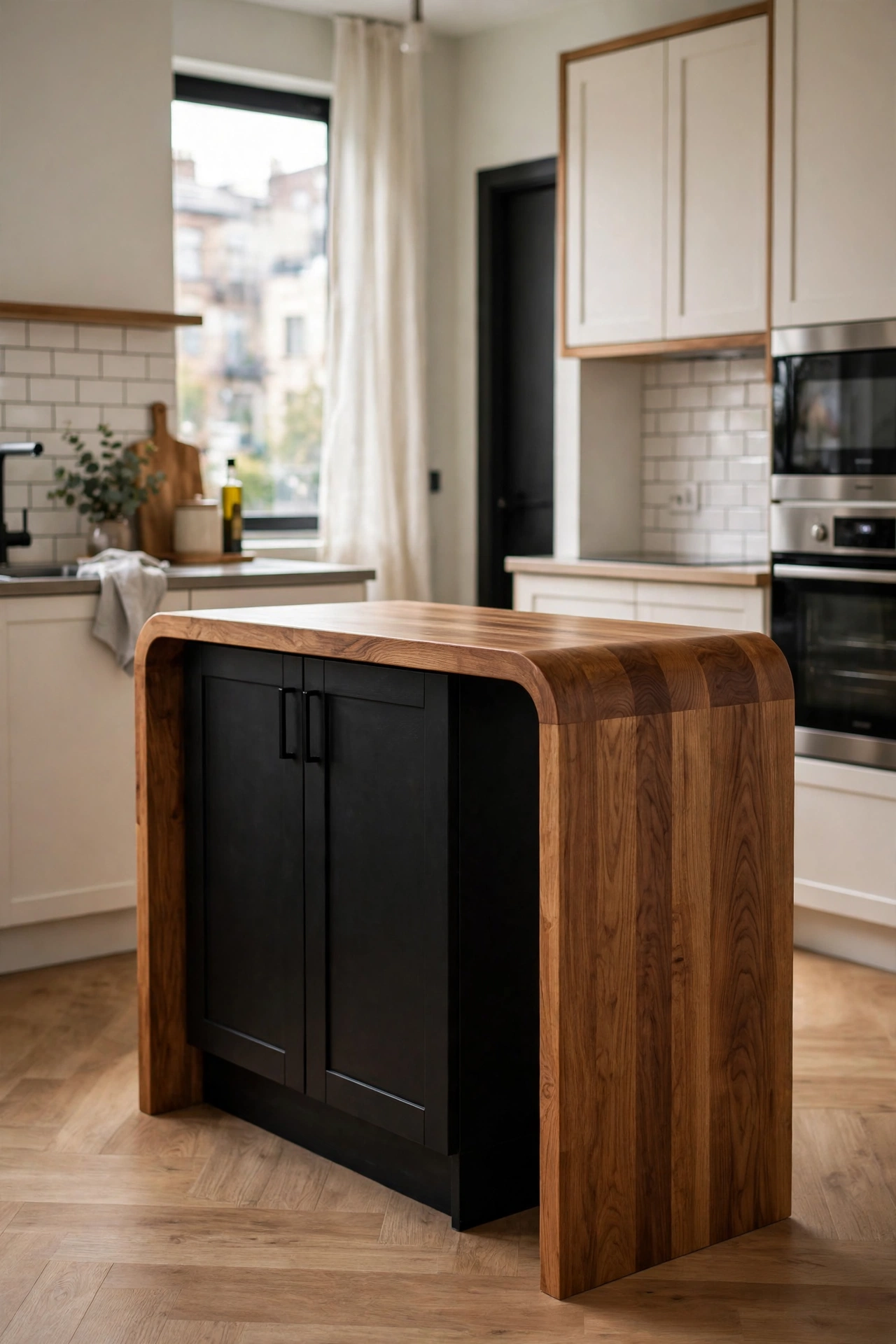
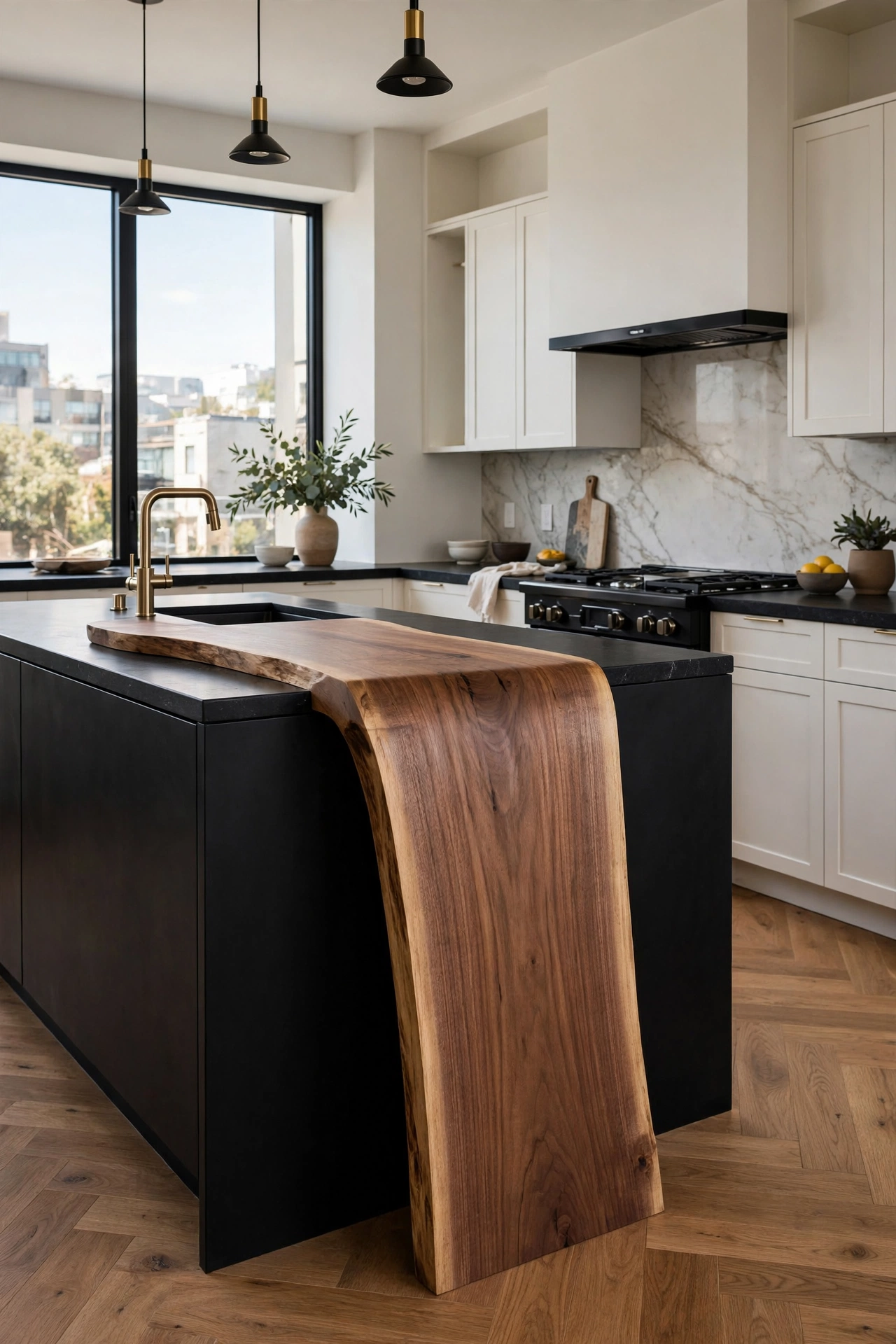
Split the island itself: black base with a wood waterfall top, or wood panels on a black frame. The island becomes a microcosm of the whole kitchen’s palette. This is for people who want the pairing but cannot change the perimeter cabinets, renters especially. A freestanding island or cart in two tones delivers the look with zero renovation. Small kitchen, full style.
Style Note: Keep the island’s two tones in the same ratio as the room would use. Mini versions of the same rules.
A black island with wood bar stools is the pairing at its simplest: one black object, wooden seats, done. The stools soften the island’s severity and add the wood note without touching the cabinets. This is styling, not renovation. Four stools and the kitchen’s whole color story changes. Never underestimate seating as a design tool.
Quick Tip: Backless stools tuck fully under the island. Backs add comfort but eat floor space.
A wood waterfall edge flowing down the sides of a black island base is the high-end detail. The continuous grain wrapping the island looks sculptural and expensive. The black base makes the wood’s grain pop harder. This is a splurge detail, but it transforms the island from cabinetry into furniture art. Touch it every time you pass. You will.
The Cost: Waterfall edges use significantly more material. Budget for the stone or wood accordingly.
Wood Details That Soften Black
When black dominates, wood details keep it human. These are the small moves that warm up an all-black kitchen.
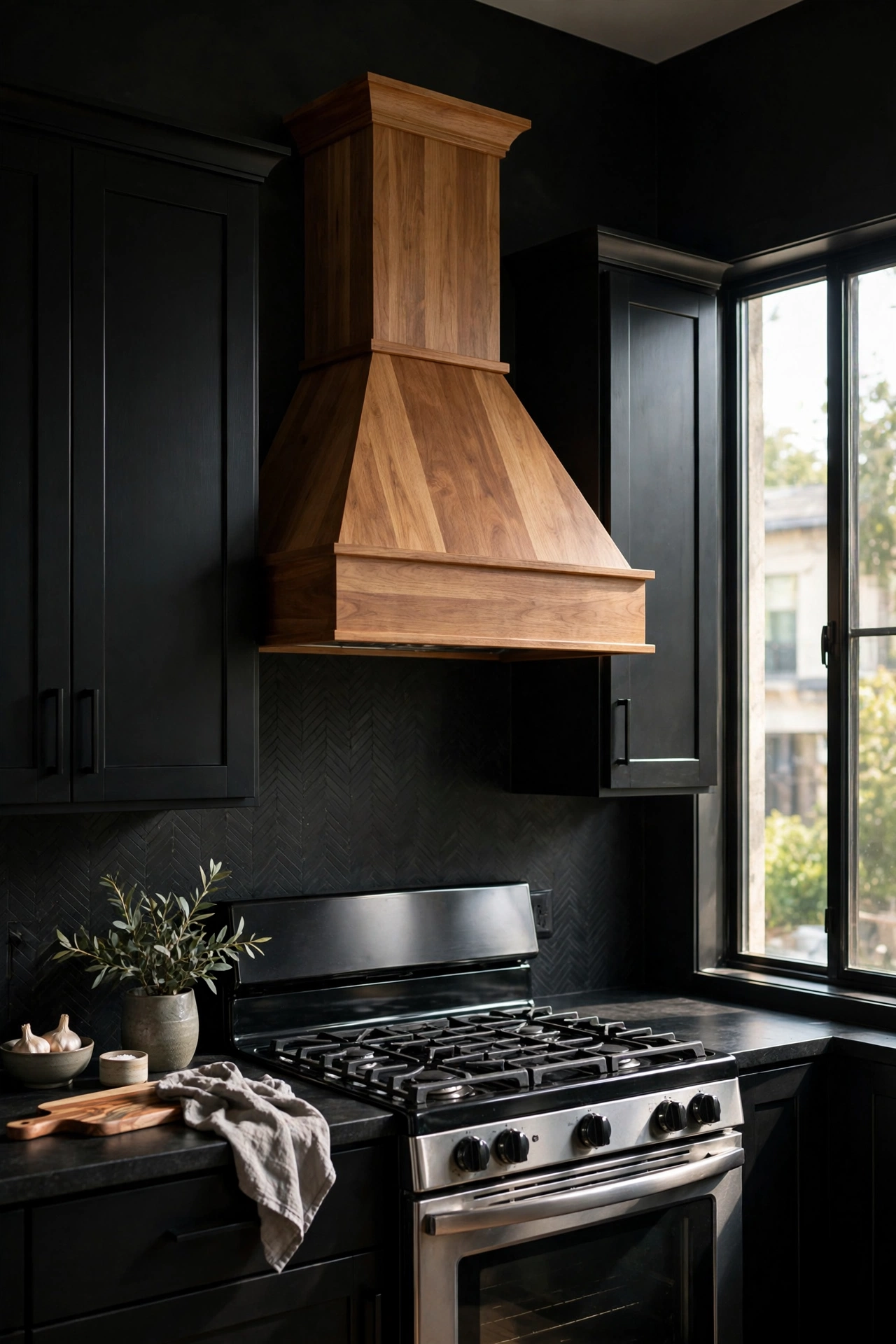
A wood range hood against black cabinets is the warm focal point a dark kitchen needs. The hood’s natural grain breaks the black expanse right where the eye lands. It says craftsman in a modern room. This single element can rescue an all-black kitchen from feeling severe. Wood where you look most: that is the principle.
Designer Trick: Match the hood wood to the floor for a continuous warm line through the room.
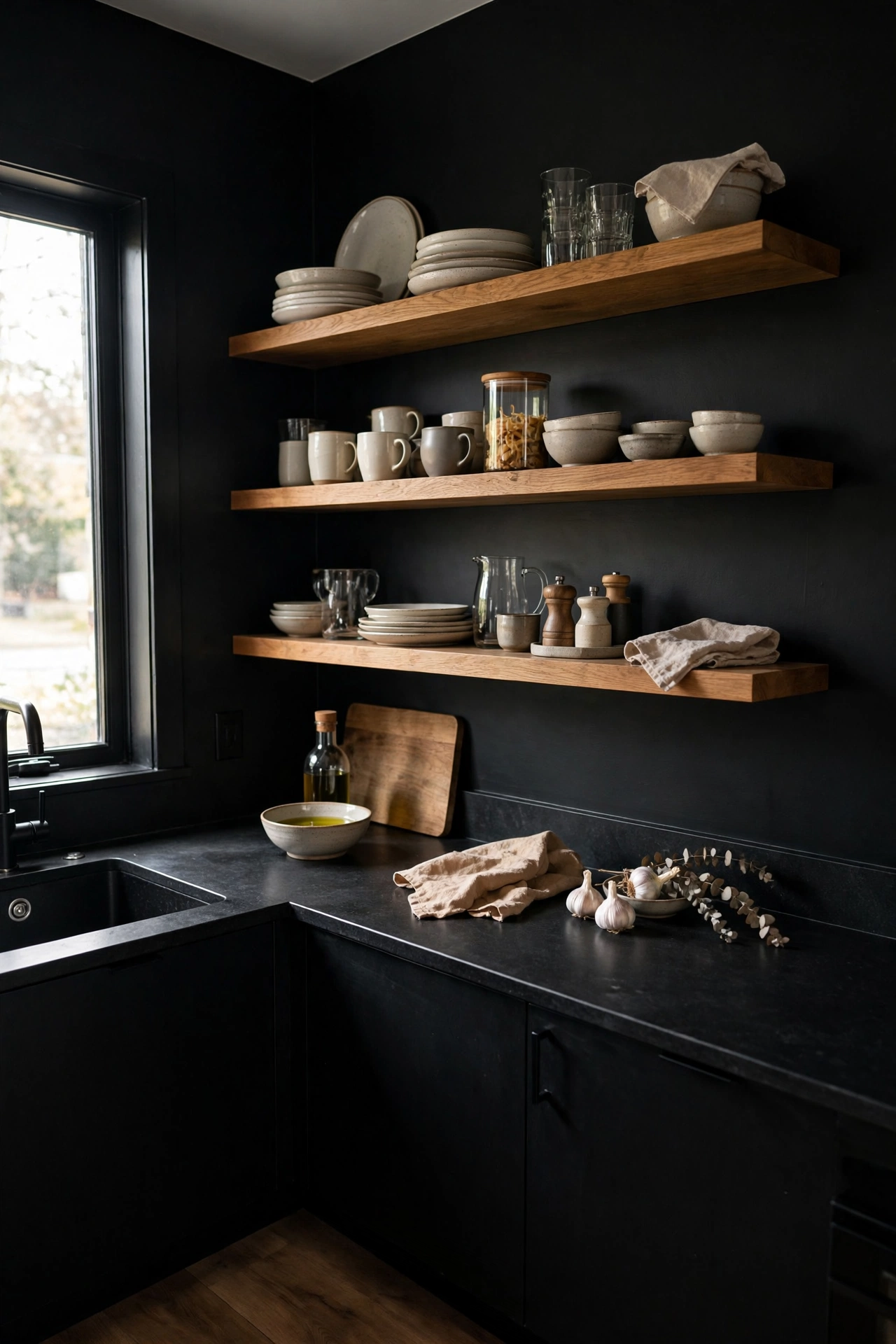
A run of open wood shelves in an all-black kitchen adds warmth and display space at once. The wood breaks the dark wall; the displayed objects add life. This is the easiest retrofit for an existing black kitchen that feels too cold. One wall of wood shelves, styled simply. The kitchen exhales.
Good to Know: Style with everyday items you actually use. Decorative-only shelves in kitchens feel staged.
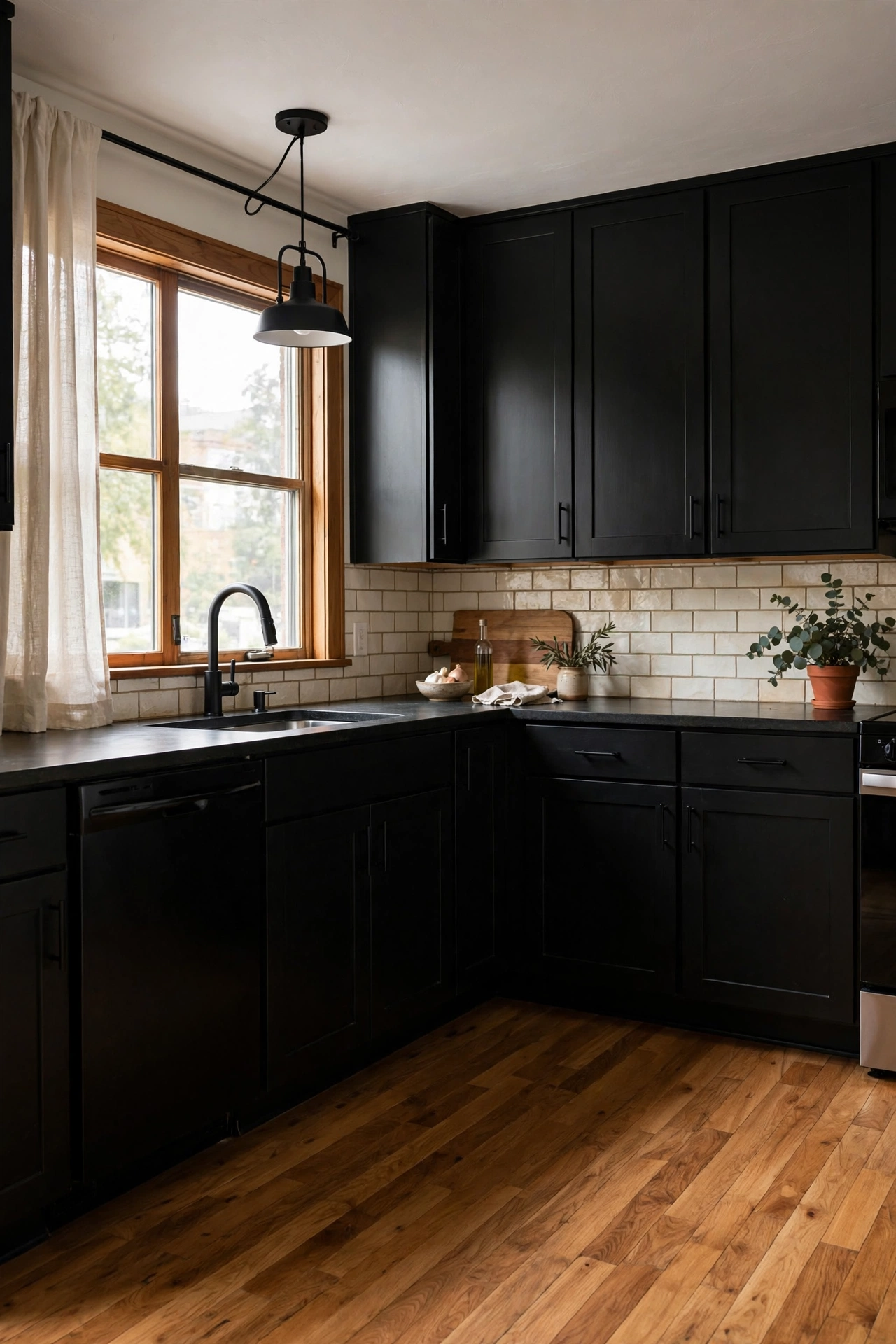
Warm wood floors under black cabinets are the foundation of the whole look. The floor’s warmth rises to meet the cabinets’ coolness. This is why the pairing works in so many real kitchens: the floor was already doing half the job. If you have wood floors and want black cabinets, you are already most of the way there. The floor is the wood; the cabinets are the black.
Honest Take: This is the lowest-effort version of the trend. Floors plus black paint, done.
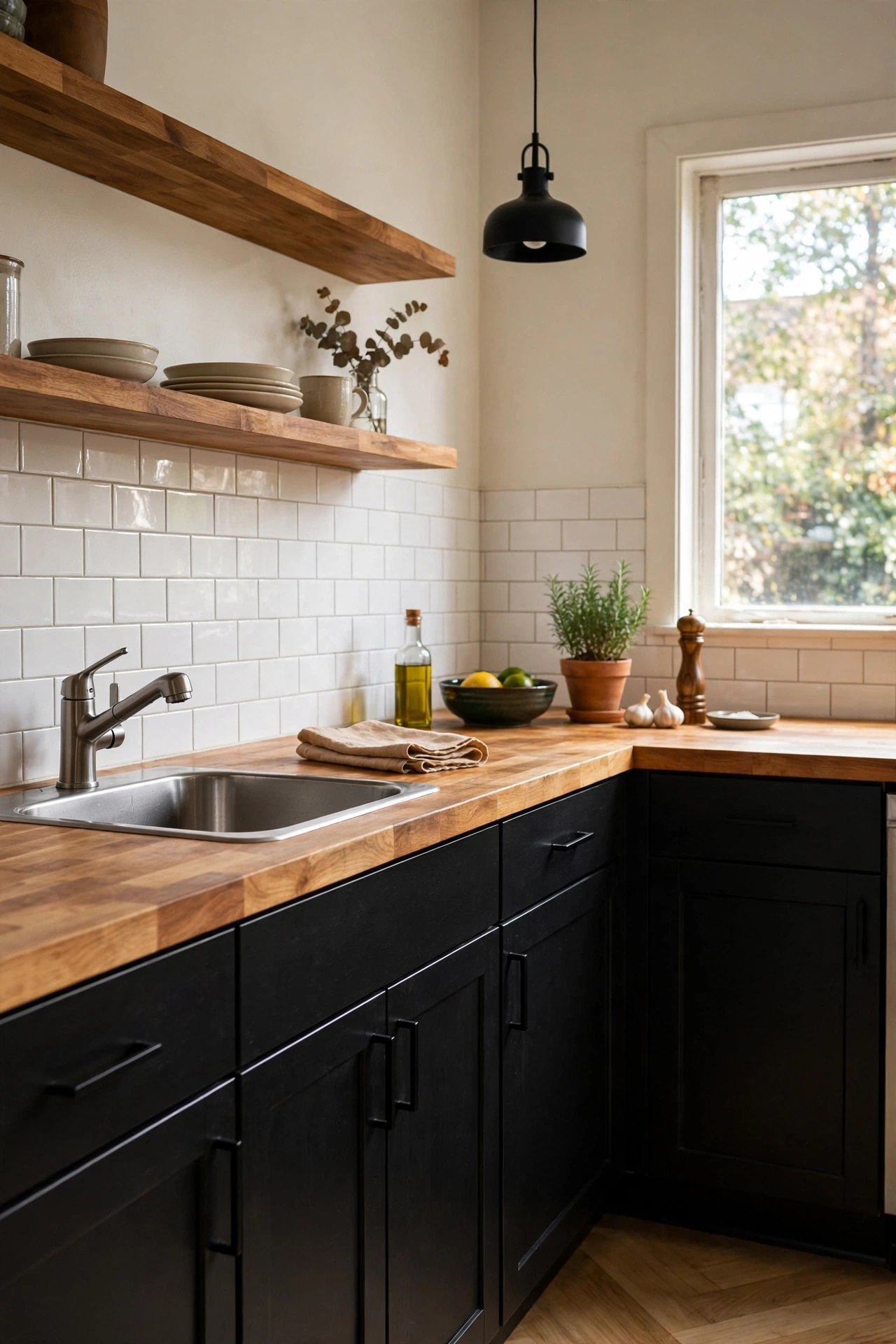
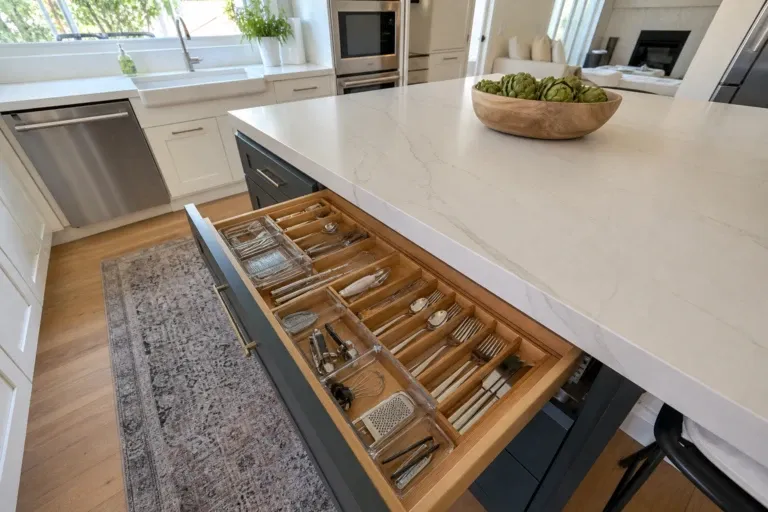
Butcher block countertops on black lower cabinets put the wood exactly where your hands work. Every meal prep happens on warmth. The contrast at the counter line is the crispest in the kitchen. This is the most tactile version of the pairing: you feel the wood dozens of times a day. Kitchens are for touching. Make the touch warm.
Reality Check: Wood counters plus black cabinets plus poor lighting equals a dark work surface. Light it well.
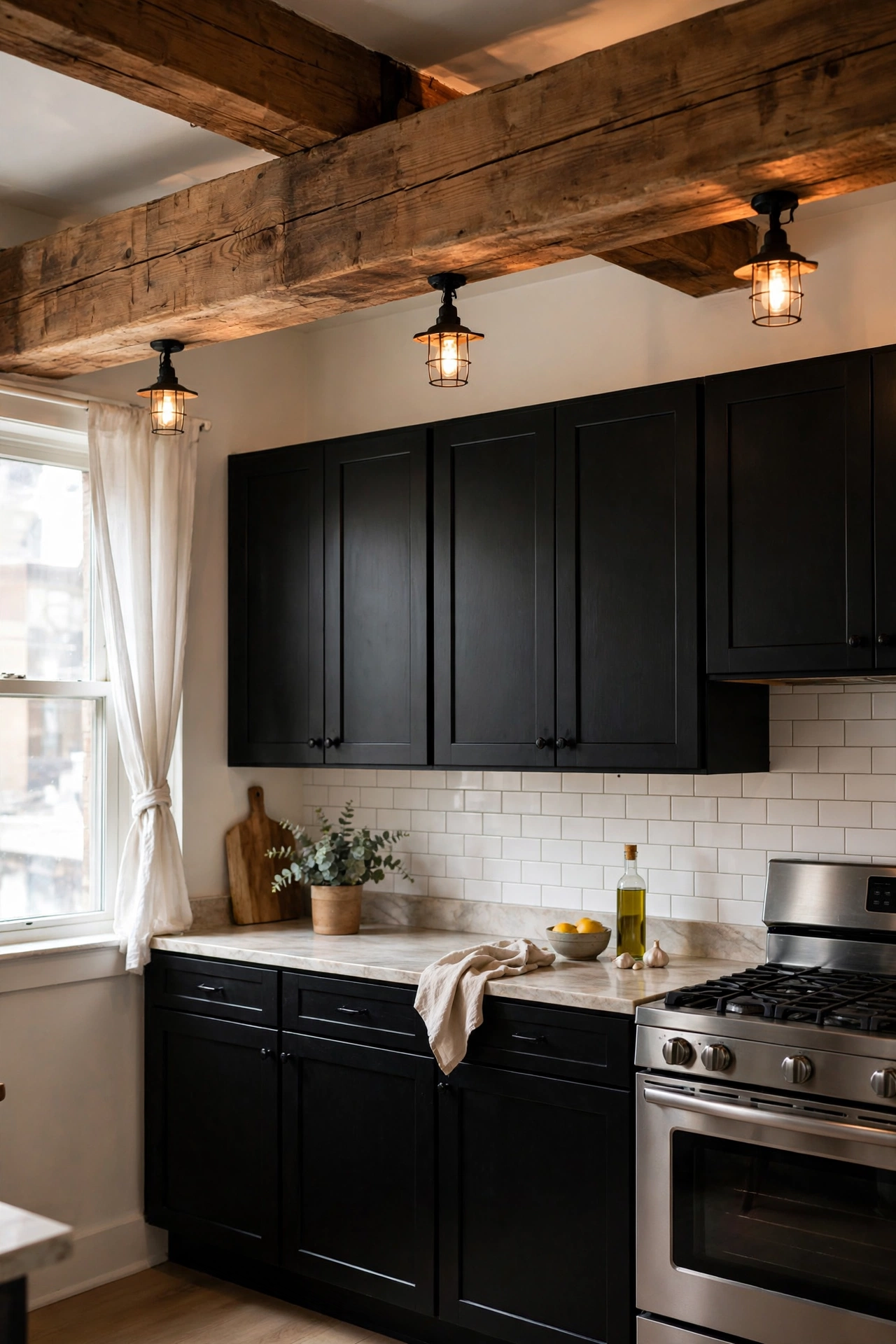
An exposed wood beam or wood-clad ceiling detail over black cabinets draws the eye up and adds rustic warmth overhead. The black stays grounded below; the wood floats above. The vertical contrast makes the kitchen feel taller and more layered. In open-plan spaces, the beam also defines the kitchen zone. Architecture doing the decorating.
Worth Knowing: Faux beams look convincing at ceiling height. Real beams are heavy; check structure first.
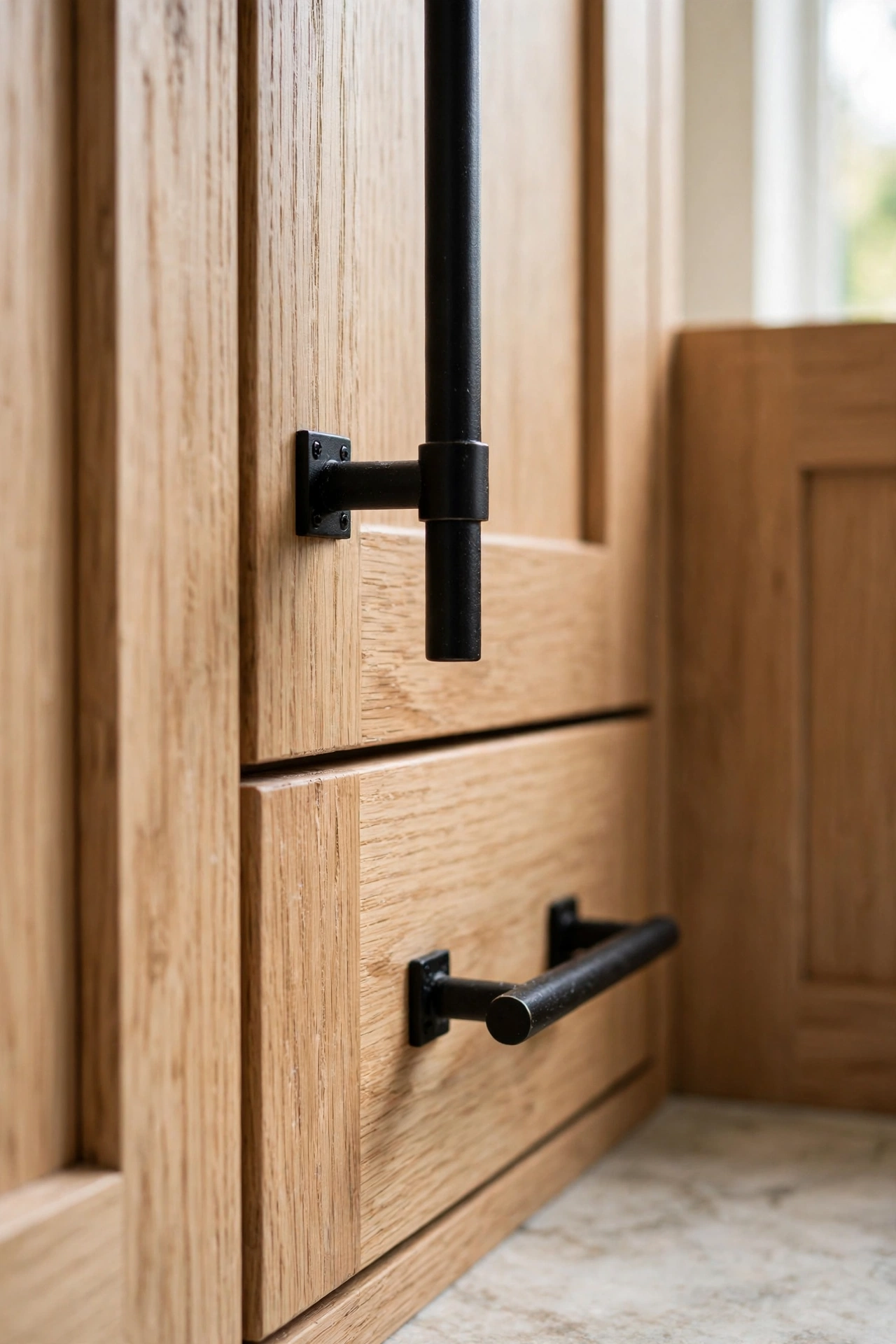
The inverse detail: black handles, knobs, and pulls on wood cabinets. It is the smallest possible dose of the pairing, and it sharpens wood cabinetry enormously. The black hardware reads as jewelry on the wood. This is a one-afternoon, rental-friendly upgrade. If you do nothing else from this article, do this. Twenty dollars of hardware, transformative result.
Quick Tip: Replace all the hardware at once. Mixed old and new pulls look like a repair, not a design.
Matte vs Gloss Black: The Fingerprint Question
Every black kitchen owner learns this: gloss black shows every fingerprint, smudge, and dust particle, while matte black hides them remarkably well. The trade-off is that matte can look flat in poor light and is slightly harder to wipe clean. For cabinet fronts you touch daily, matte or satin wins. Save gloss for the range hood or island panels you admire but rarely grab. Your cleaning routine will thank you.
Placement Is the Whole Design
Black and wood never fails as a combination; it only fails as a placement. Up or down, island or perimeter, big split or small detail, the decision matters more than the materials. Look at your kitchen’s light, its size, and your tolerance for maintenance, then pick the split that fits. The wood brings the warmth, the black brings the edge, and the placement makes them a kitchen instead of a compromise.