Black Coffee Tables: Shape First, Then Style
A black coffee table is the easiest anchor a living room can buy, and the hardest to choose, because black hides nothing about shape. A pale table can coast on colour; a black one is read as pure silhouette, so its outline has to earn its place in the middle of the room. Too heavy and it swallows the rug, too slight and it looks like a shadow with legs.
These 27 tables are grouped by shape, round and oval first, then rectangular, then square and blocky, then the sculptural pieces that treat the table as art. Pick the shape your seating layout needs, then worry about marble, wood or glass, in that order, every time.
Round and Oval
1. The Round Two Tier in Dark Glass
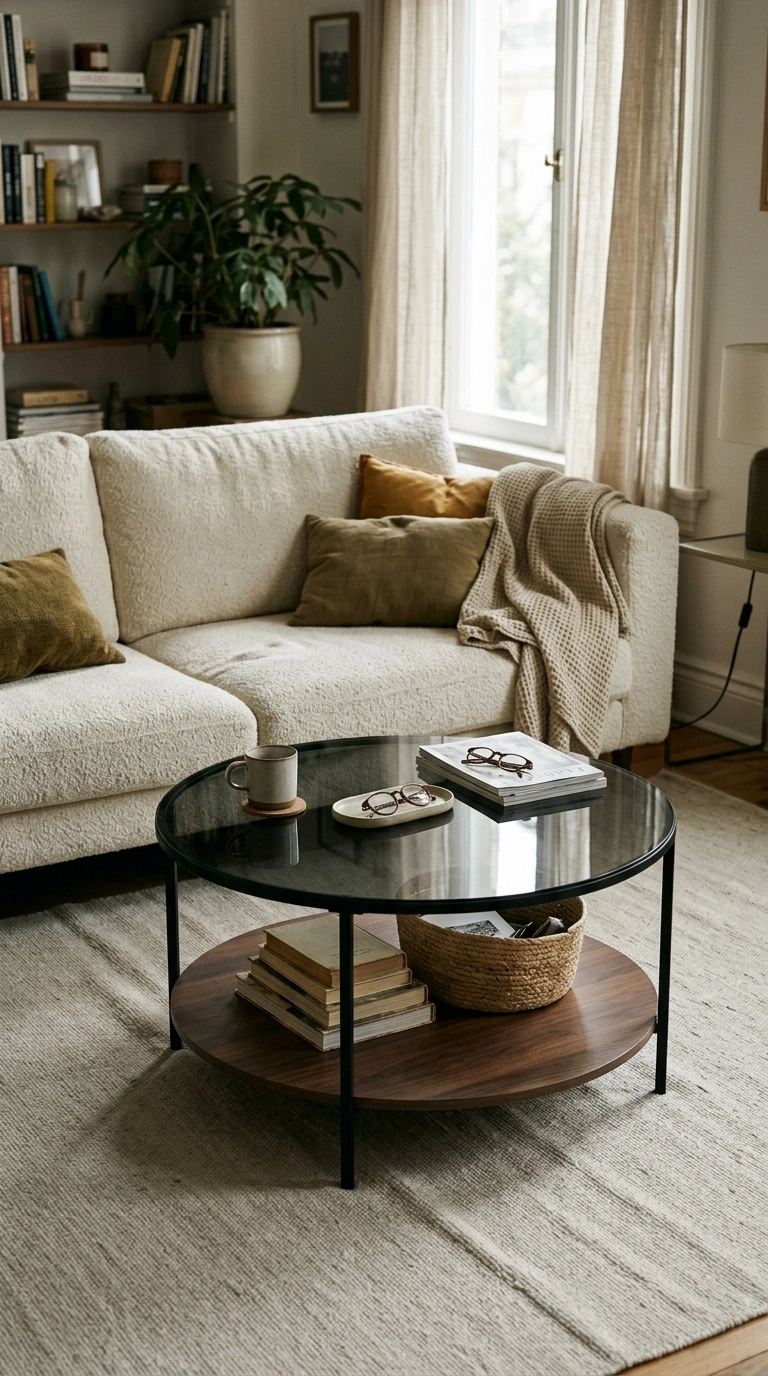
A round two tier table with a dark glass top and a lower wood shelf on a black metal frame, sitting in front of a cream boucle sofa. Round is the diplomat of shapes: no corners to bark shins on, and conversation flows around it. The lower shelf is where the table earns its keep, books and a basket below, styling on top. Dark glass gives black a reflection, so the table reads lighter than a solid top would in the same size.
Shelf sense: Style the top in thirds, one stack, one object, one empty third. A two tier table looks cluttered twice as fast as a single top.
2. The Fluted Drum Pair
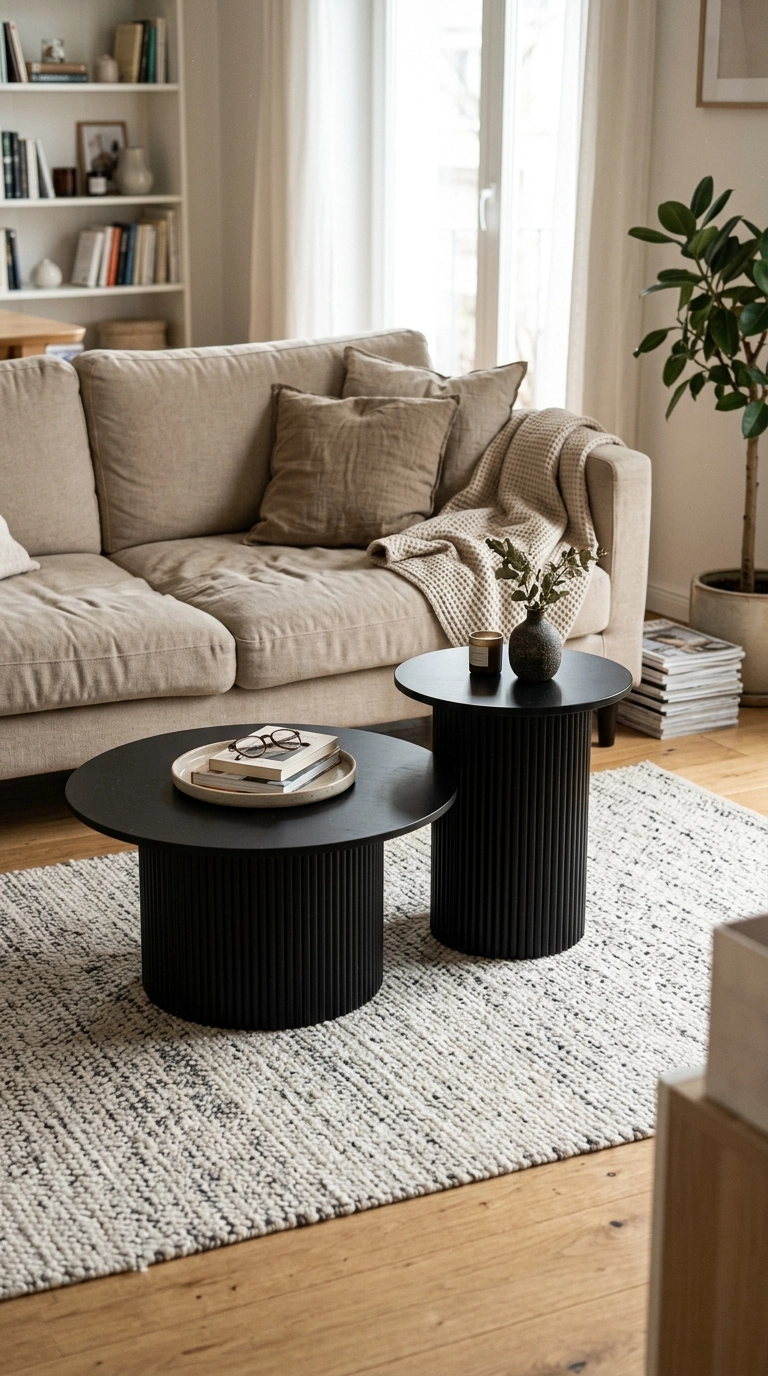
Two round black tables, one low and wide, one tall and narrow, both with fluted drum bases, in front of a beige sofa. Pairs of rounds beat one big round in most rooms because they can split, merge and migrate to sofa ends as the evening changes. Fluting is the detail that stops a drum base looking like a bin: the vertical grooves catch light in stripes. Buy the pair in one finish so they read as family, not coincidence.
Pair spacing: Keep paired rounds a hand’s width apart at their closest. Touching drums look like one odd table; a gap makes them a set.
3. Round Black Marble on Cone Pedestals
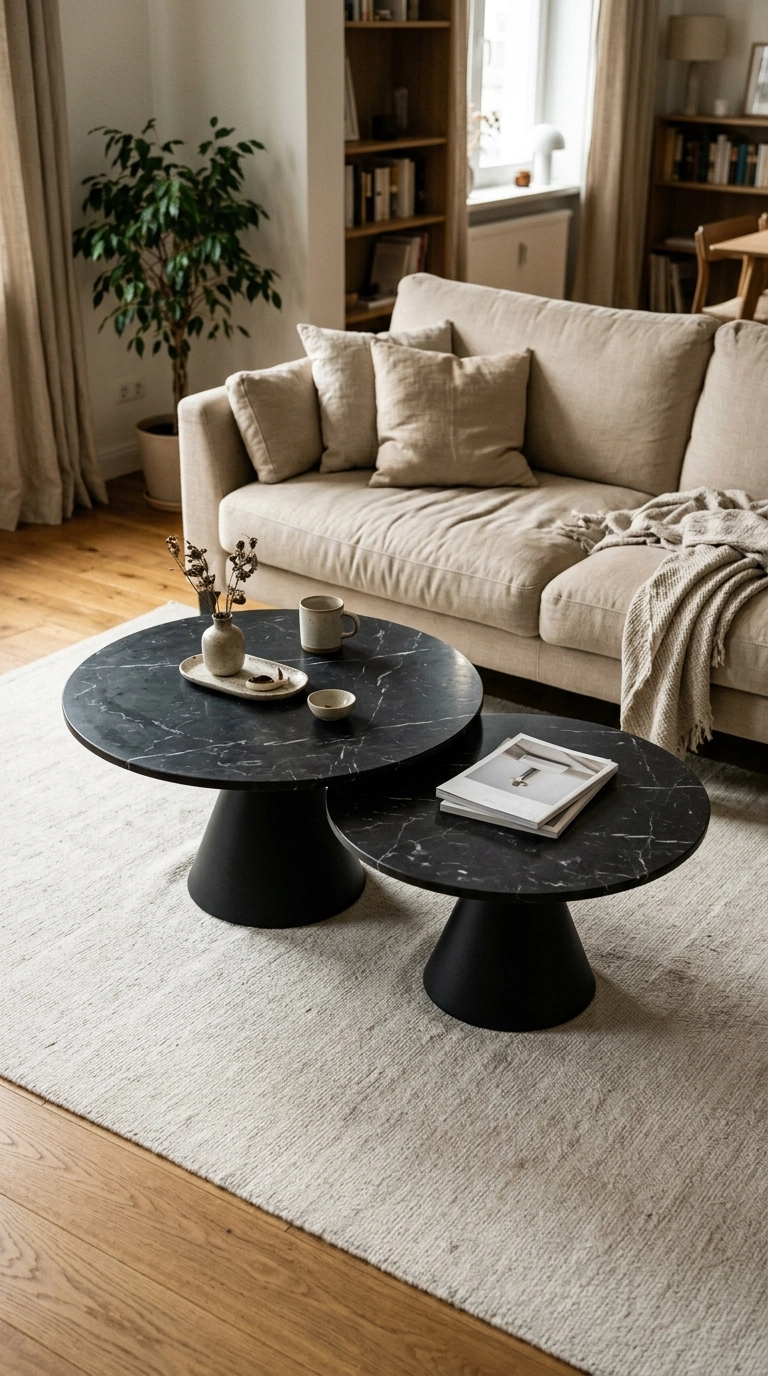
Two overlapping round tables with black marble tops on black cone shaped pedestal bases, in front of a beige sofa. Marble and black are natural partners because the stone’s white veining does the decorating for both pieces. A pedestal base frees the floor around the table, which matters on a good rug you actually want to see. Overlap the pair by a third of the smaller top; that ratio looks designed at any distance.
Vein direction: Turn marble tops so their strongest veins run in different directions. Matched veins look fake; random veins look quarried.
4. The Slatted Two Tier Round
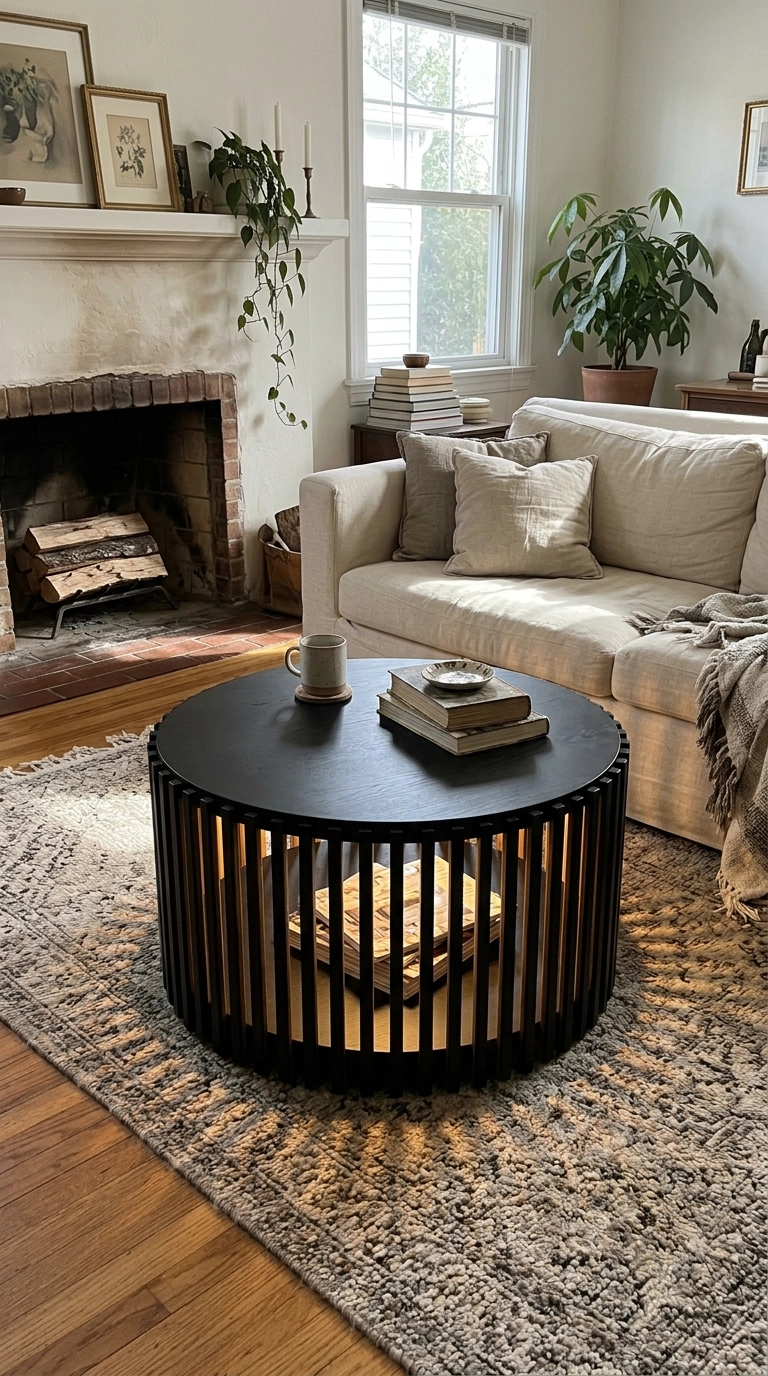
A round black table with slatted sides and a lower shelf, in front of a cream sofa with a fireplace behind. Slats give a black table texture, and texture is what stops black furniture reading as a hole in the room. The open slatted drum lets light pass through its sides, so the table casts patterned shadows instead of a solid block of dark. Fireplace rooms suit this one; the vertical slats echo firelight the way fluting does, only warmer.
Light test: Put a lamp behind a slatted table before you buy it. The shadow pattern on the floor is half the design.
5. The Round Pair With a Secret
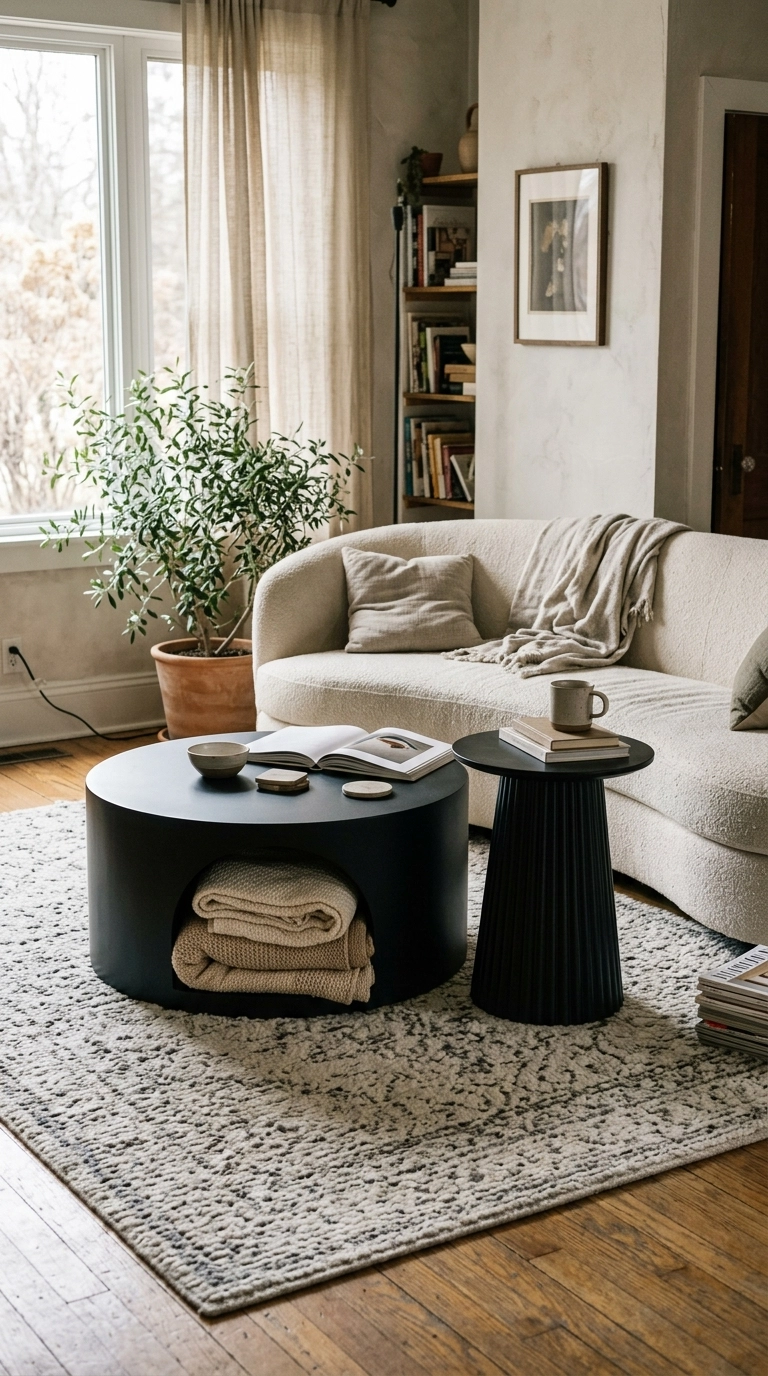
A low wide round black table with an open niche built into its side, a taller fluted pedestal table beside it, in front of a cream curved sofa. The niche, sold as a pet bed, works just as well for blankets, magazines or a toddler’s toy rotation. Furniture with a hidden job is how small rooms survive strong pieces: the table is big, black and central, yet it stores. If a table takes the middle of the room, it should pay rent in storage.
Rent rule: A coffee table over a metre wide should store something. If it cannot, choose the 80 centimetre version.
More Looks You'll Want to Steal:
6. Glass Top, Black Rim, Tripod Legs
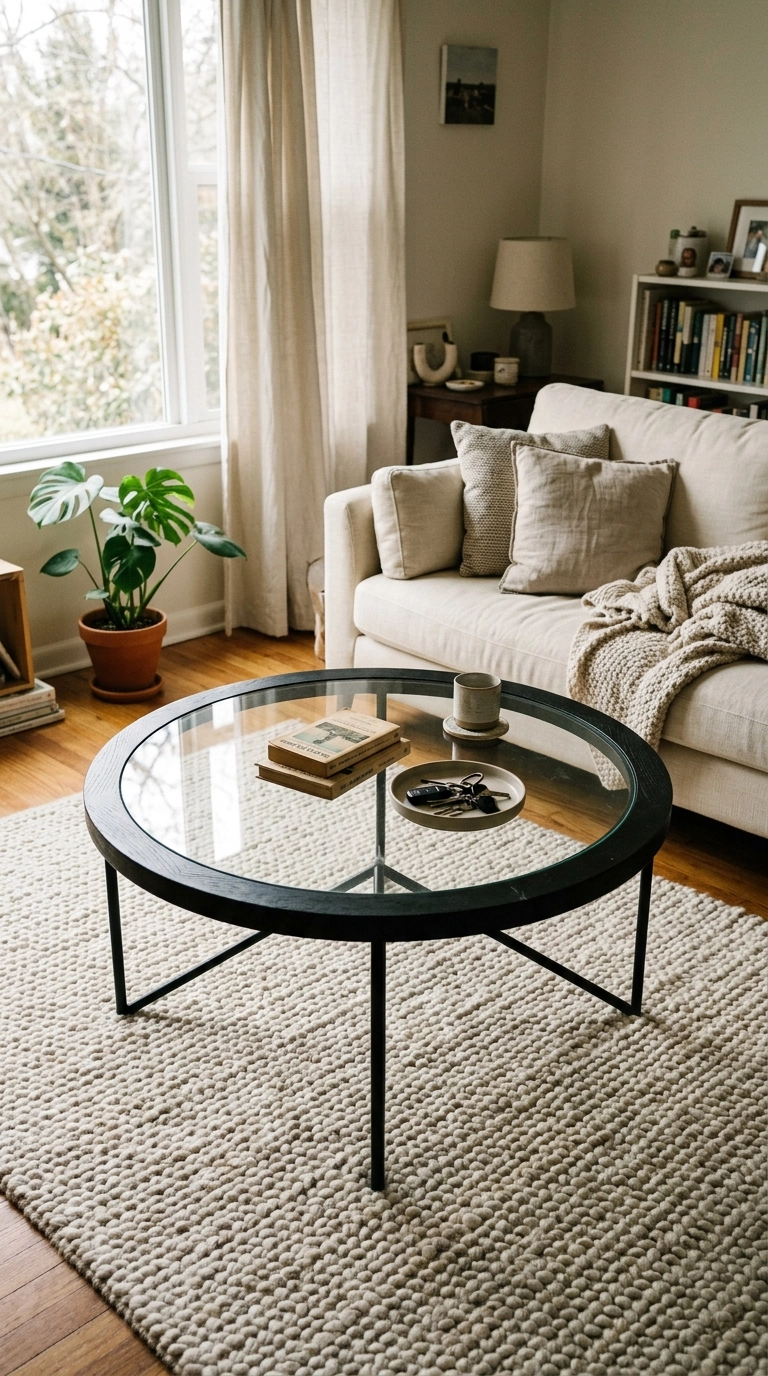
A round table with a clear glass top, a thick black wooden rim and black metal tripod legs, on a textured rug before a cream sofa. This is the lightest black table in the list: the glass keeps sight lines open, the rim gives the black its say in one strong circle. Tripod legs never wobble on uneven floors, an underrated virtue in old houses. Glass tops show dust and fingerprints honestly, so this table belongs to tidy households and child free zones.
Glass honesty: Dark glass hides smudges better than clear; clear glass shows the rug better. Choose which you love more, the table or the rug.
7. Nesting Rounds in Black Marble
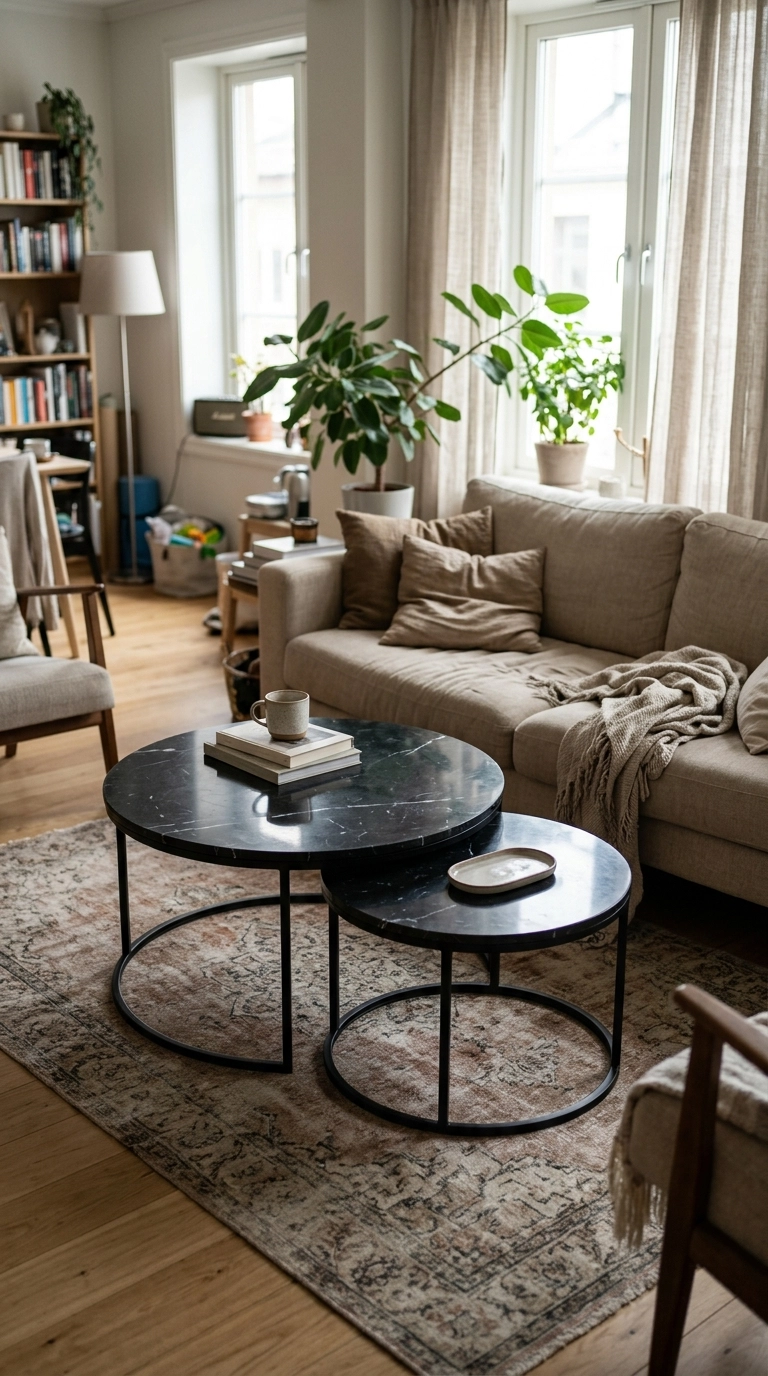
A pair of nesting round tables, black marble tops on thin black metal frames, tucked in front of a beige sofa. Nesting tables are the small room’s best trick: one footprint on quiet days, two tables when guests land. Black marble keeps them feeling like furniture rather than camping gear. Pull the small one out at an angle, never straight; nested tables fanned slightly look styled, while a straight pull looks like an accident.
Fan angle: Angle the pulled out table about thirty degrees from its partner. It is the difference between arranged and abandoned.
Black coffee tables: the honest pros and cons
- Pro: black anchors a pale room instantly and hides the visual noise of remotes, books and chargers better than pale wood does.
- Pro: every material wears black well, marble, wood, metal, glass, so the shape menu is wider than any other colour offers.
- Pro: black tables pair with both warm and cool schemes; change the cushions and the table stays.
- Con: dust shows on black within a day, and gloss black shows fingerprints within the hour.
- Con: a black table eats light in a dark room; below a certain window size it reads as a hole in the floor plan.
- Con: black marble and lacquer mark easily, rings, etches and scratches all print in white on a black ground.
Rectangular
8. The Black Lacquer Rectangle
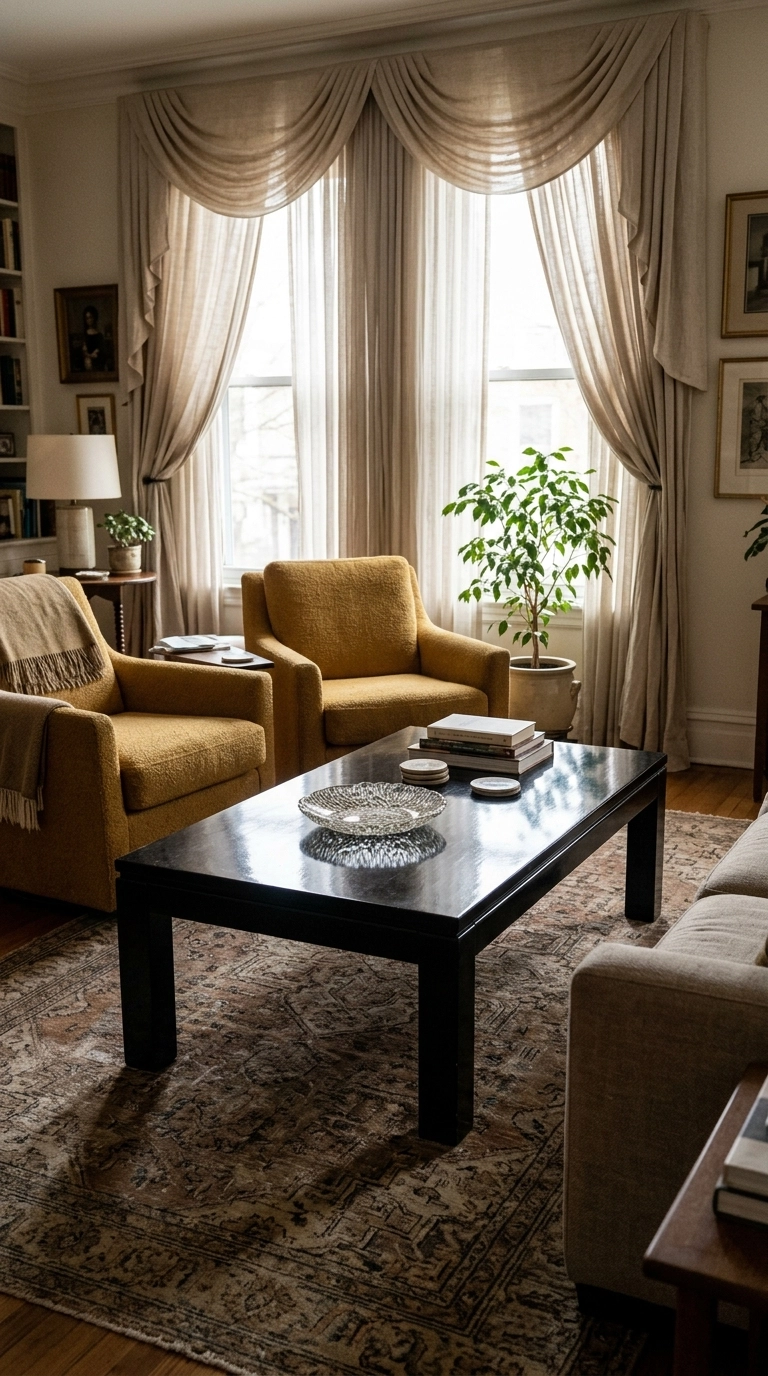
A rectangular black lacquered table with thick legs in an elegant curtained room, mustard lounge chairs around it and a glass dish on top. Lacquer is black at its most formal: glossy, reflective, and it shows every ring and crumb, which is exactly why it suits grown up rooms. A rectangle this confident wants symmetry, a dish centred, chairs balanced. If your room leans dressy, lacquer is the finish that matches its manners.
Coaster law: Lacquer and water rings are enemies for life. Buy the coasters the same day as the table, in brass or leather, never cork.
9. The Dark Wood Block Rectangle
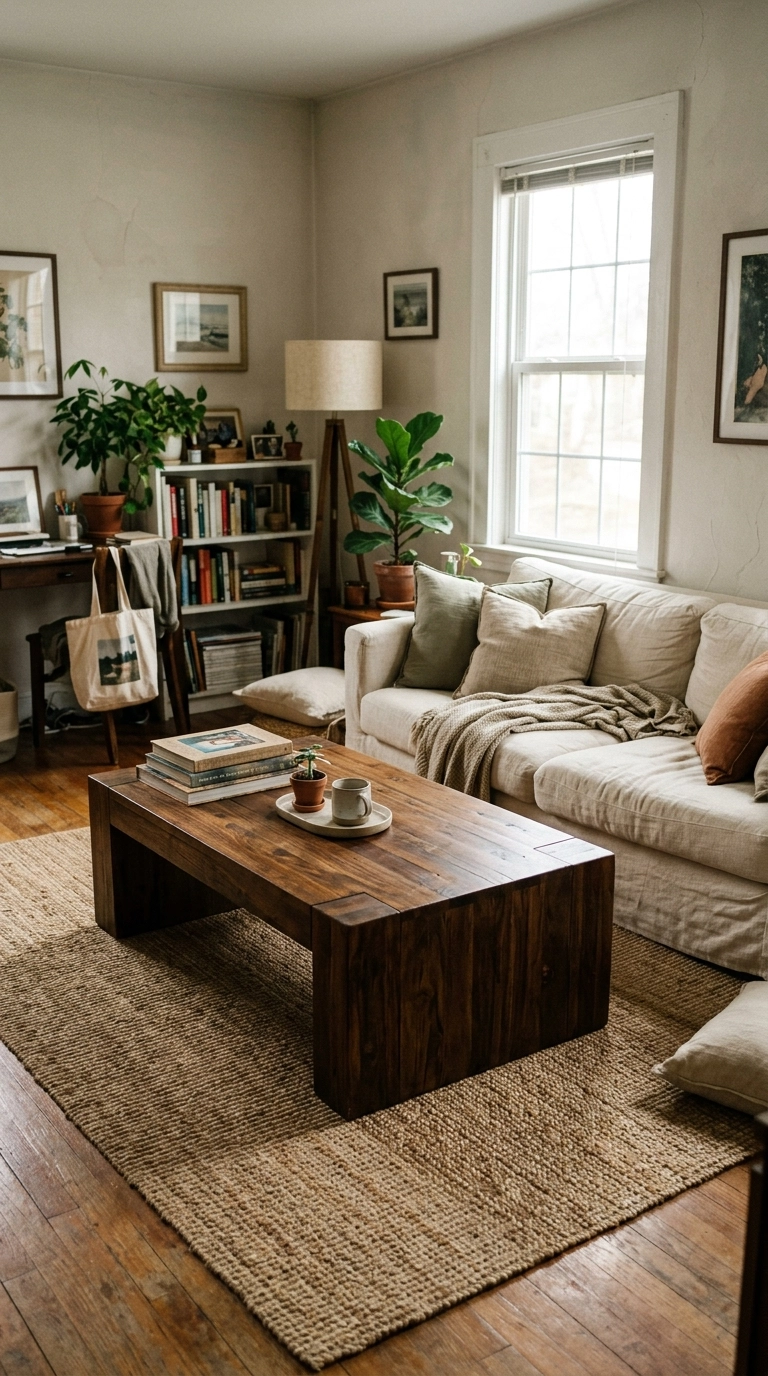
A chunky rectangular coffee table in dark stained wood with blocky proportions, close in front of a cream linen sofa. Wood softens black’s edges: the grain gives the eye something to read, so a big block of table feels crafted rather than heavy. This is the farmhouse and organic modern end of black, and it pairs with linen, jute and cream better than any gloss finish. Chunky proportions need low seating to match; pair it with deep sofas, not spindly chairs.
Grain check: In daylight, dark stained wood should still show grain at arm’s length. If it reads flat black, the stain is too heavy.
10. Black Marble With Gold Veining
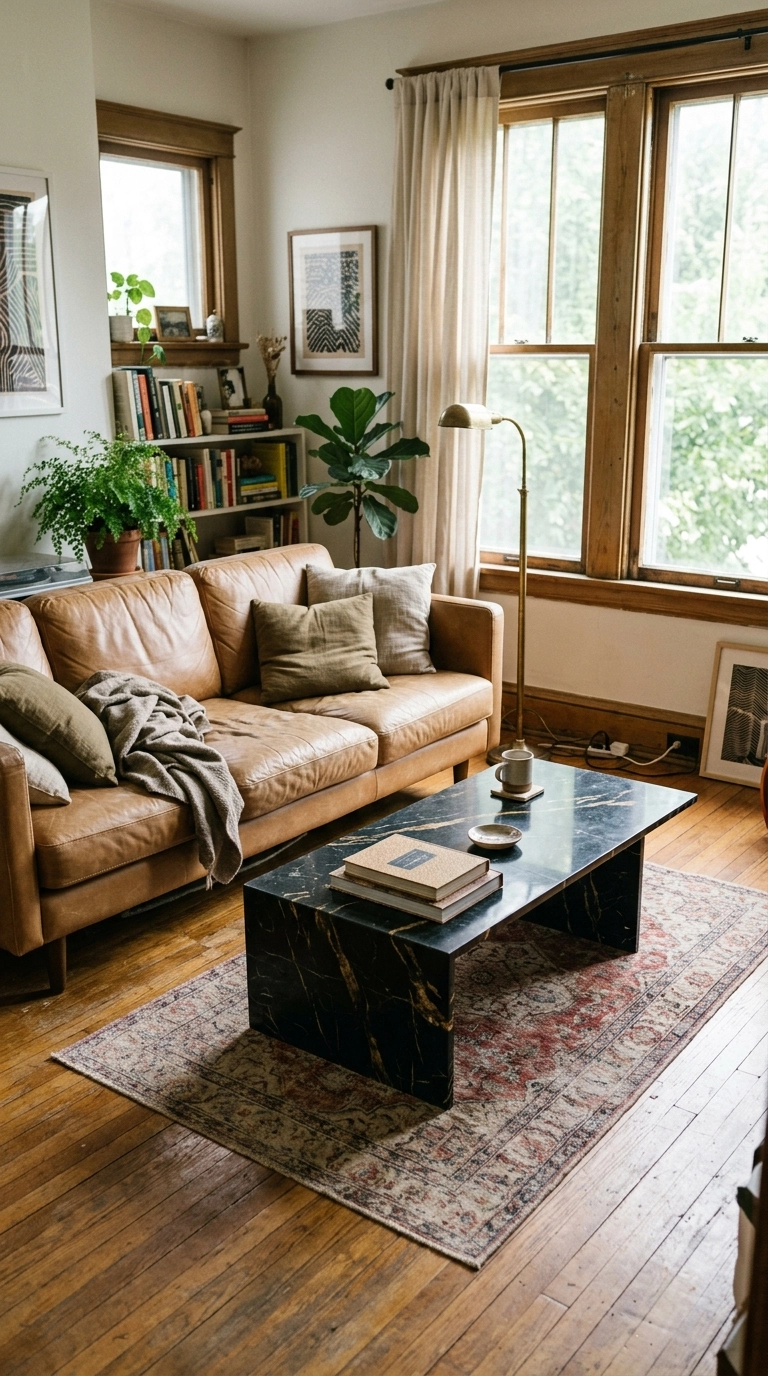
A rectangular black marble table with gold veining, in front of a tan sofa by tall windows. Gold veined black marble is the dressiest stone there is, and a coffee table is the safest place to use it because the dose stays small and horizontal. The veins warm the black, so the table suits brass lamps and tan leather in a way plain black marble never will. Seal it before the first coffee cup lands; marble etches, and black marble shows every etch in white.
Seal first: Black marble etches from lemon, wine and even water spots. Two coats of sealer before use, one every year after.
11. The Bent End Lacquer Table
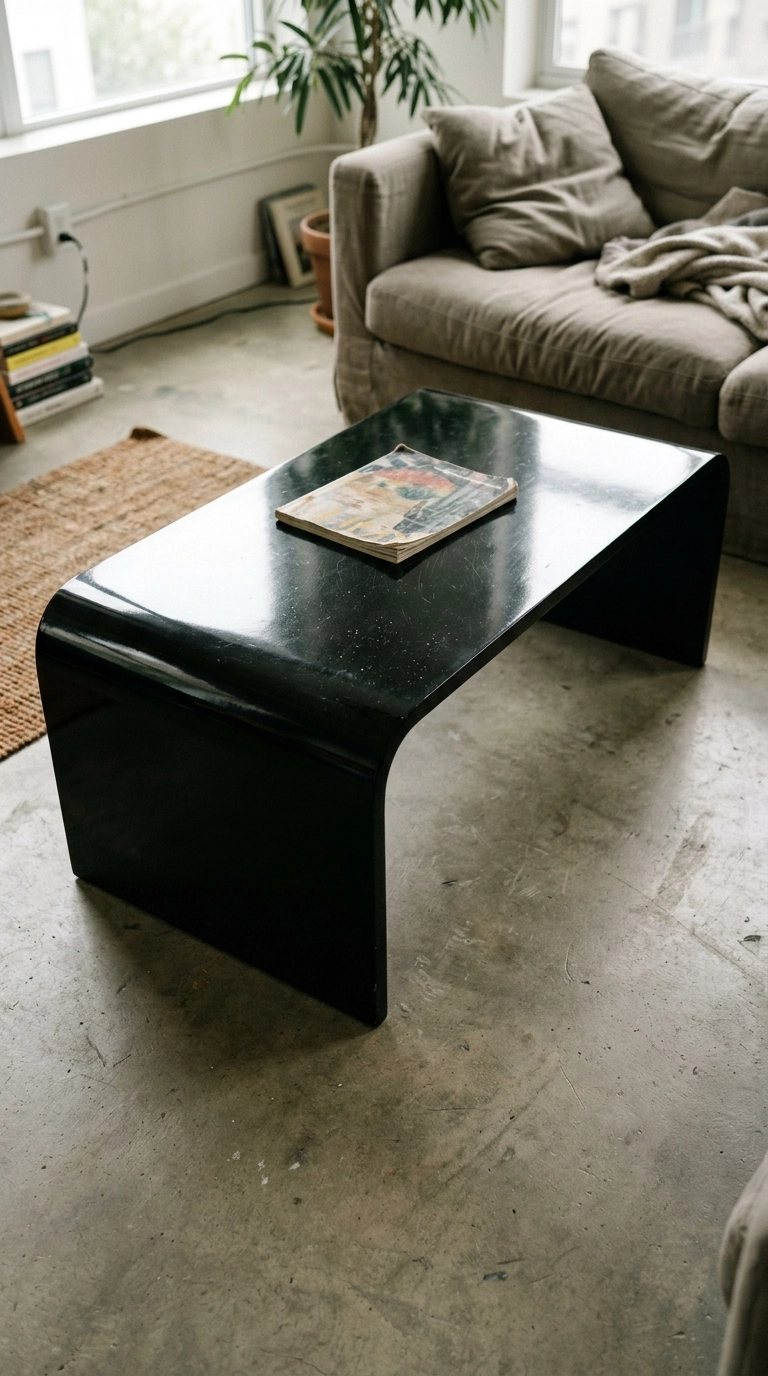
A sculptural rectangular table in glossy black lacquer whose top curves down at both ends to form its own legs, photographed close on a concrete floor. One piece of material, bent twice, becomes the whole table; there are no joints to loosen and no legs to clash with chair legs. The curve softens the rectangle’s formality while the gloss keeps it sharp. Pieces like this are the room’s signature, so keep its top nearly empty: a magazine, nothing more.
Signature styling: A sculptural table gets one object maximum. Its shape is the styling; everything else is noise.
12. The Low Rectangle in a Minimal Room
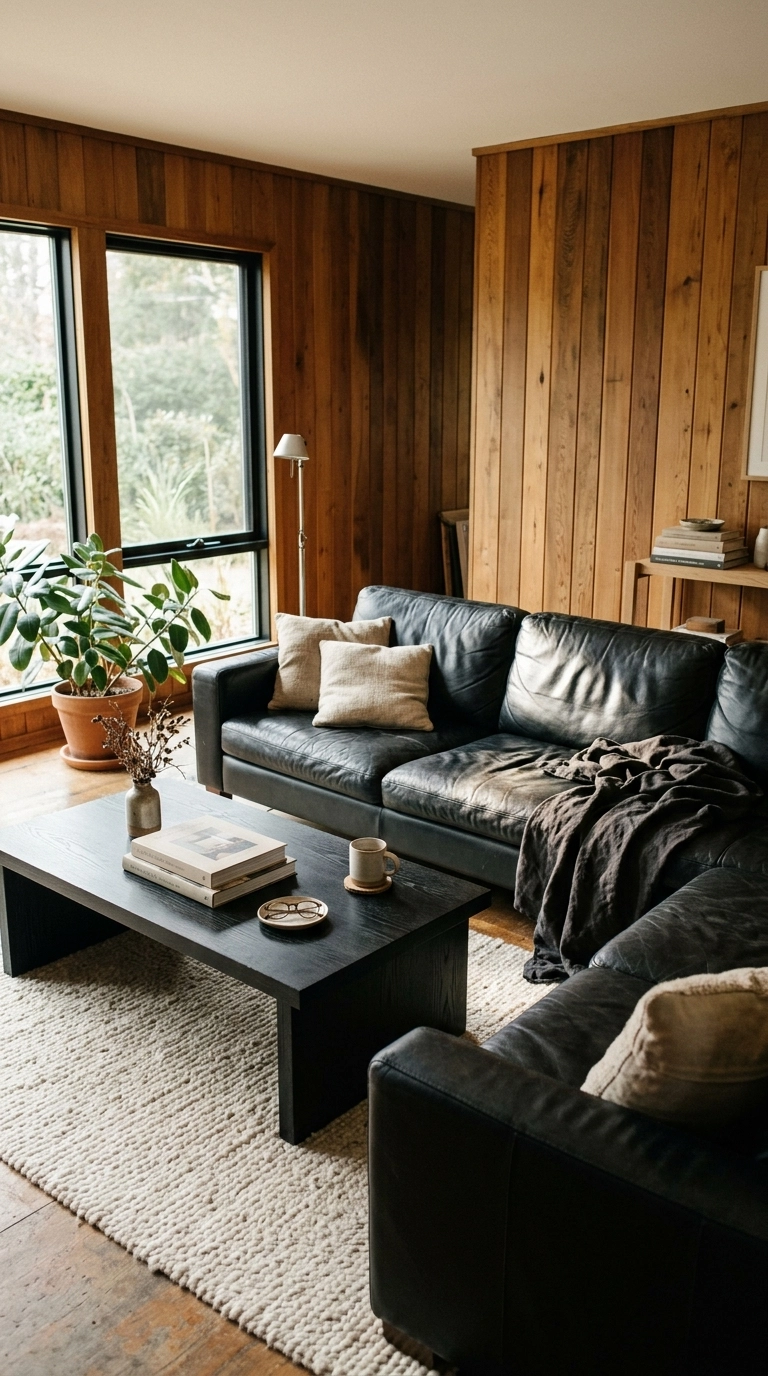
A long low rectangular coffee table in black stained wood in a spare room with a black leather sectional and wood panelled walls. Low tables, around 30 centimetres, suit low seating and make ceilings feel higher, which is why minimal rooms love them. In a dark on dark scheme like this the table disappears into the sectional’s shadow and the room reads as texture, not objects. If you want calm, match the table’s height to the sofa seat minus a hand’s width.
Height maths: Coffee table height should sit level with the sofa seat cushions, or a touch below. Never above; tall tables bully sofas.
13. The Rustic Wood Rectangle
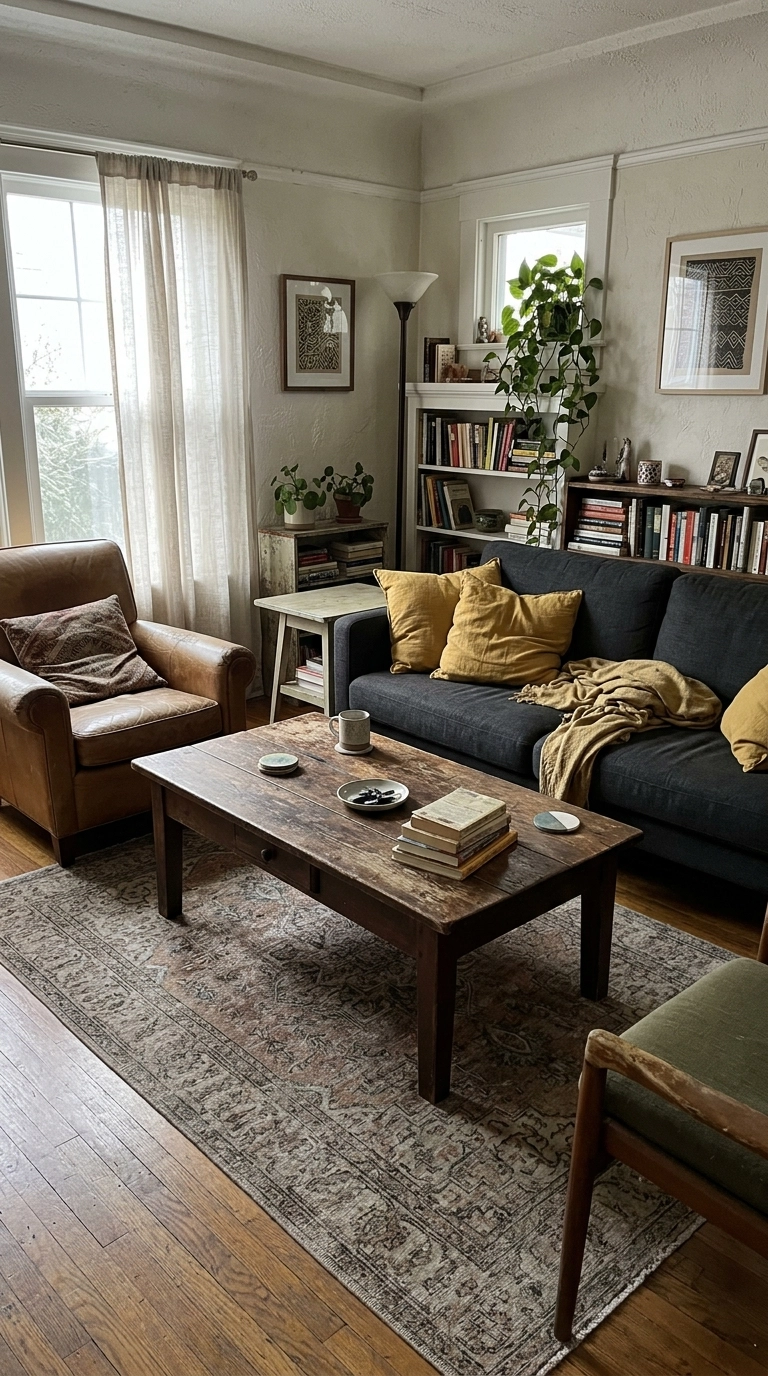
A rectangular rustic wood coffee table, its top worn and grainy, in front of a dark sofa with mustard cushions, a tan leather armchair beside it. Rustic black is really dark brown wearing black’s authority, and it is the friendliest version for family rooms because scratches join the pattern instead of ruining it. The mustard cushions are doing quiet work here: warm colour near a dark table stops it reading cold. Rustic tables want matte everything around them.
Scratch policy: Rustic finishes are the only black tables that improve with family life. Gloss records it; rustic absorbs it.
14. The Metal Frame Rectangle With Shelf
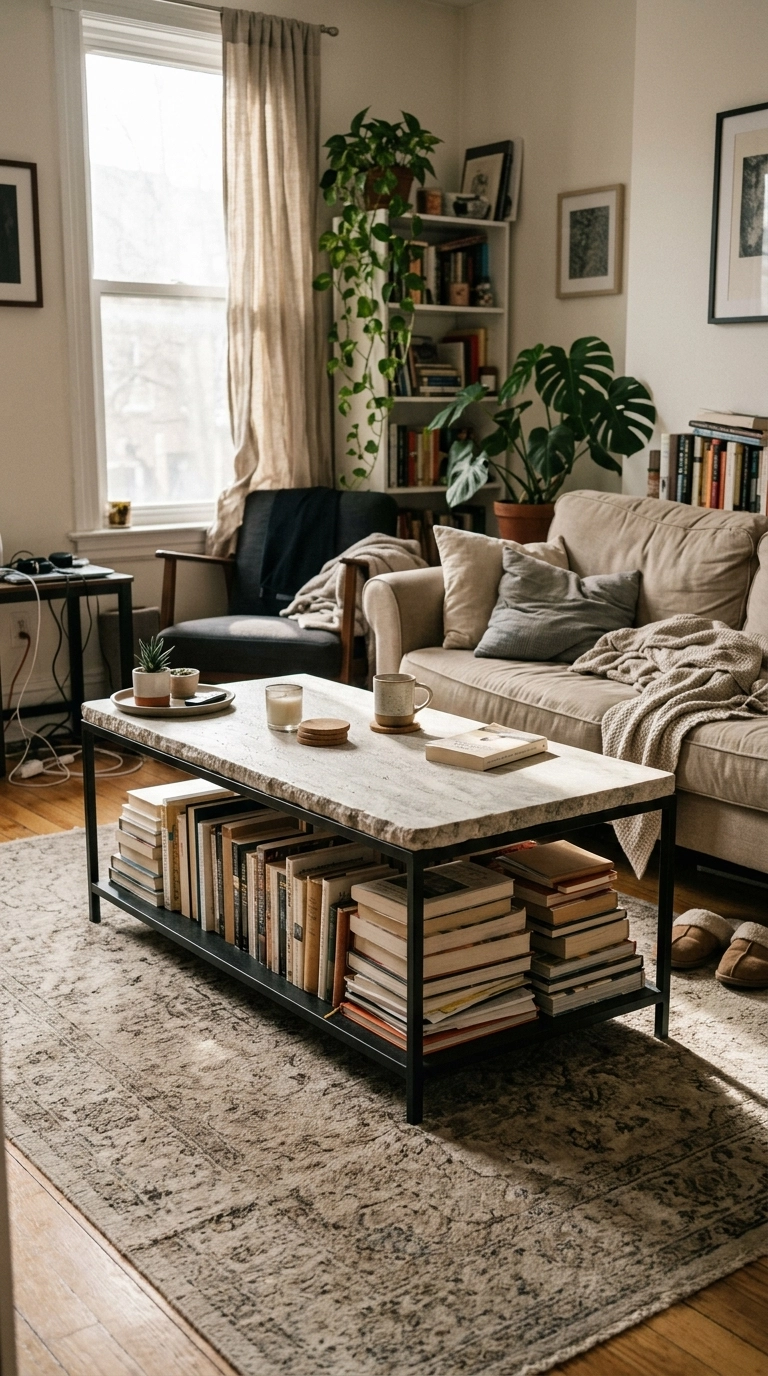
A rectangular black metal frame table with a stone top and a full lower shelf, in a bright modern living room. The frame design keeps a big rectangle light on its feet, and the shelf doubles its surface for the price of one footprint. Metal frames suit rooms with other black metal in them, window frames, lamp stems, fireplace tools, because the table joins an existing family. Measure the shelf height against your tallest book or basket before buying; shelves are sized by optimism, not objects.
Shelf measure: Take your largest coffee table book to the shop, physically or in measurements. Shelf gaps under 25 centimetres fit almost nothing.
| Shape | Ideal size | Leave around it | Best seating |
|---|---|---|---|
| Round | 80 to 100 cm across | 45 cm walk space | Curved or corner sofas |
| Rectangular | Two thirds of the sofa length | 40 cm to each seat | Long straight sofas |
| Square | 90 to 110 cm | Equal reach on all sides | Sectionals and L shapes |
| Pair or nest | 50 to 70 cm each | A hand’s width between | Small rooms, flexible layouts |
Square and Blocky
15. The Square With a Lower Shelf
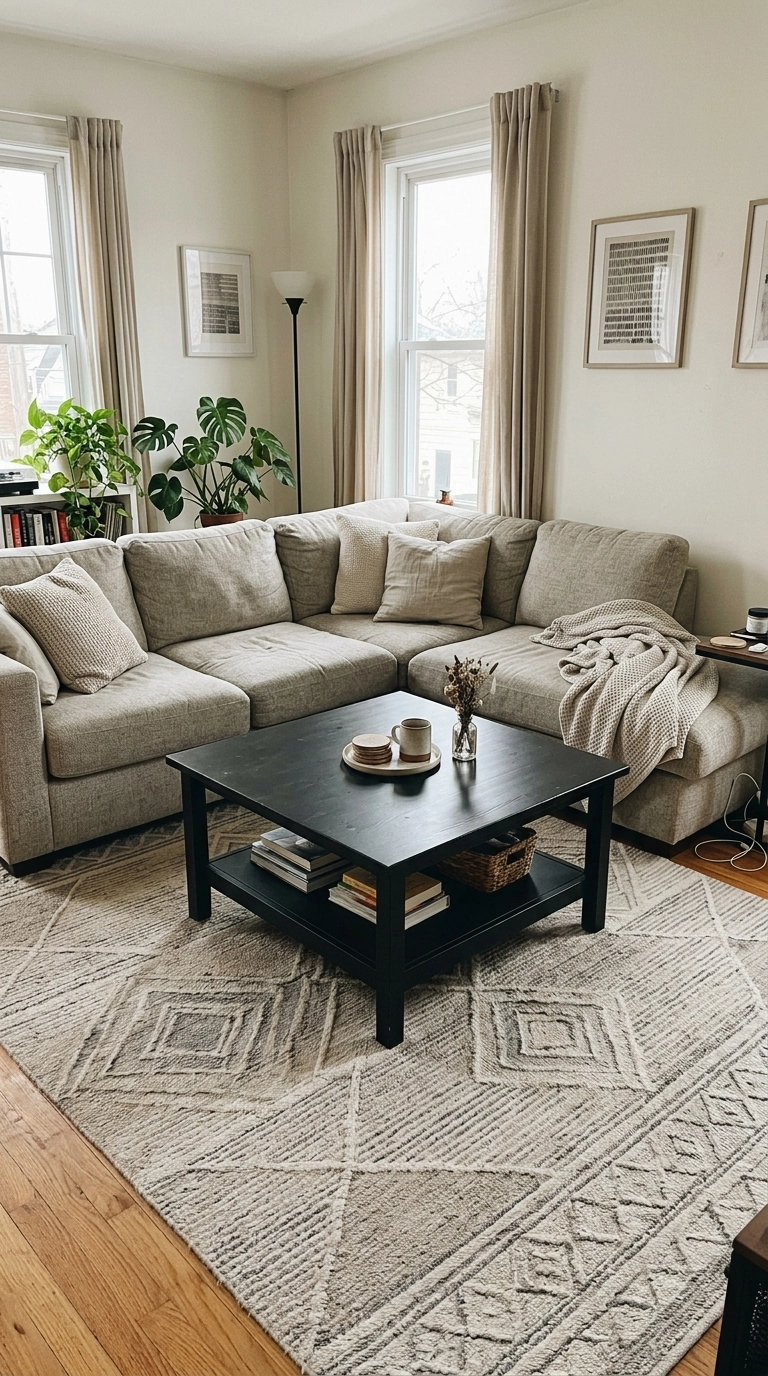
A square black wood coffee table with a lower shelf, on a geometric beige rug in front of a sectional. Squares belong to sectionals and corner sofas, where a rectangle leaves one seat too far from the table. The square’s equal reach is its whole argument: every seat gets a corner. On a patterned rug, a plain square table is the calm centre the pattern needs. Keep its styling in a grid too, four quadrants, one object each at most.
Reach rule: Every seat should reach the table without leaning more than a forearm’s length. Squares win this test in L shaped layouts.
16. The Block Leg Square
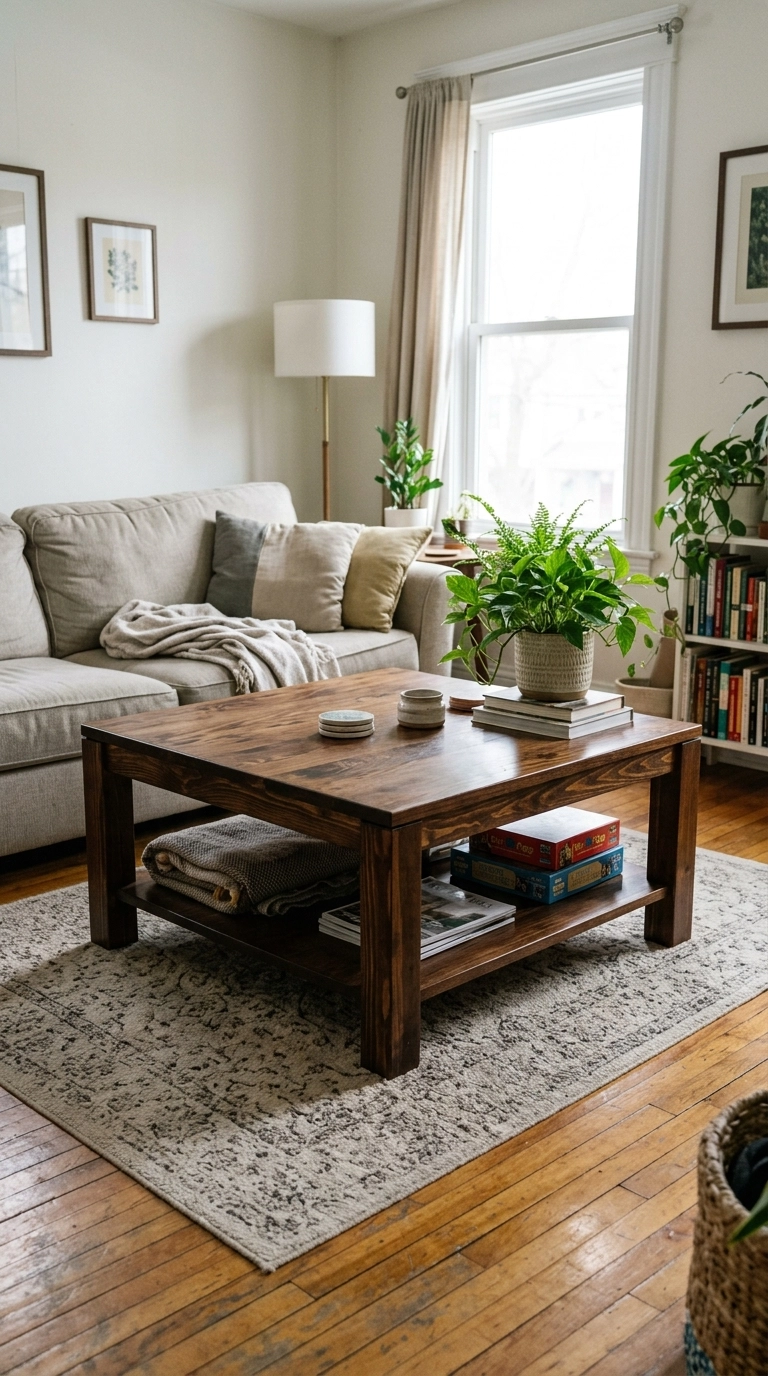
A square dark stained wooden table with thick block legs and a lower shelf, standing in a simple bright room. Block legs make a table feel planted, and planted is what you want in a room where children climb and dogs patrol. The design is nearly indestructible and nearly free of fashion, which is a compliment: this table will outlast three sofa trends. Its plainness is a styling stage; change the objects, keep the table.
Trend proofing: The squarer and plainer the table, the longer it lives. Spend the fashion budget on what sits on it instead.
17. The Solid Plinth Cube
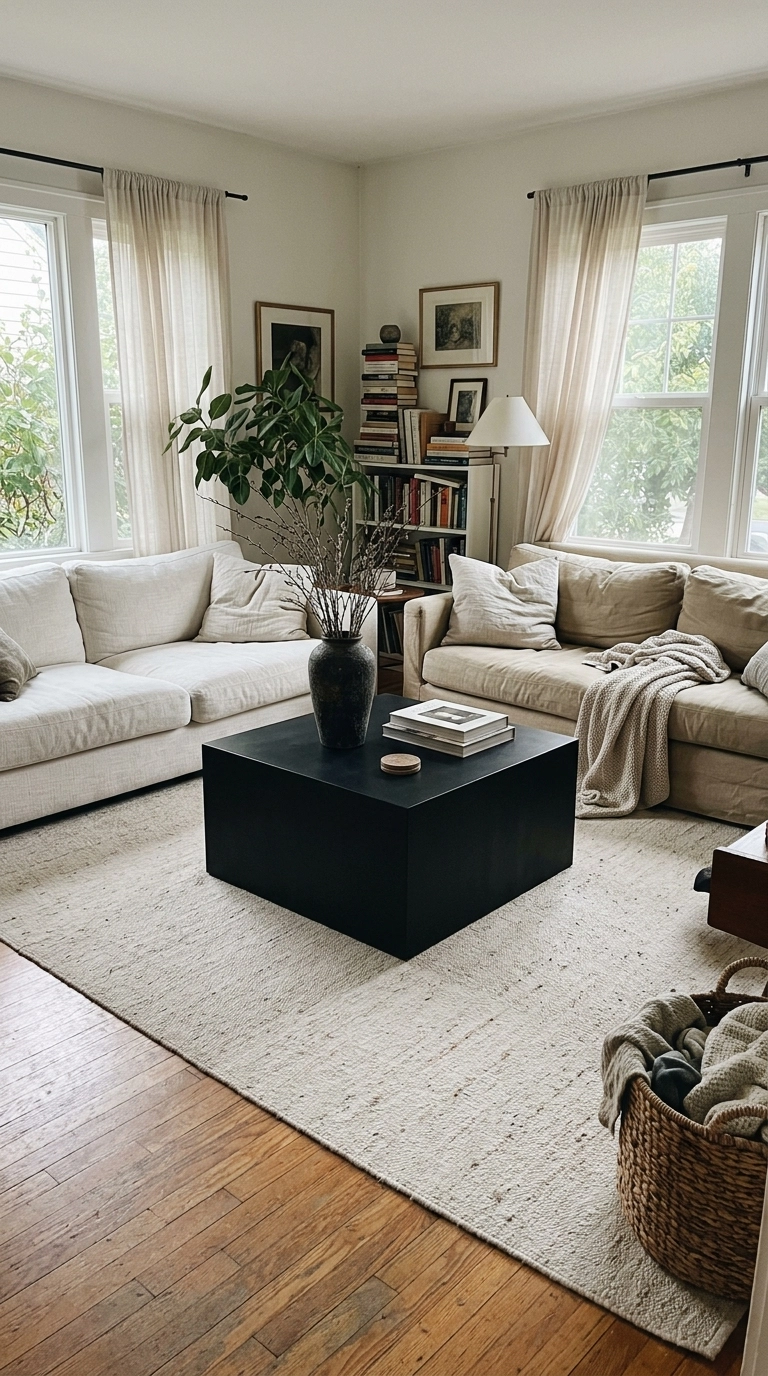
A solid cube coffee table in matte black, centred on a pale rug between two sofas. A plinth table is a pedestal waiting for its sculpture, and its styling should behave that way: one tall object, one flat stack, air around both. Solid cubes ground a room like nothing else, and they double as extra seating in a crowd. They are also the heaviest things on this list, so decide its spot before delivery day and measure the doorways.
Doorway maths: Measure the narrowest doorway and stair turn before ordering solid tables. Plinths do not fold, tilt well, or forgive optimism.
18. The Square Tray Top
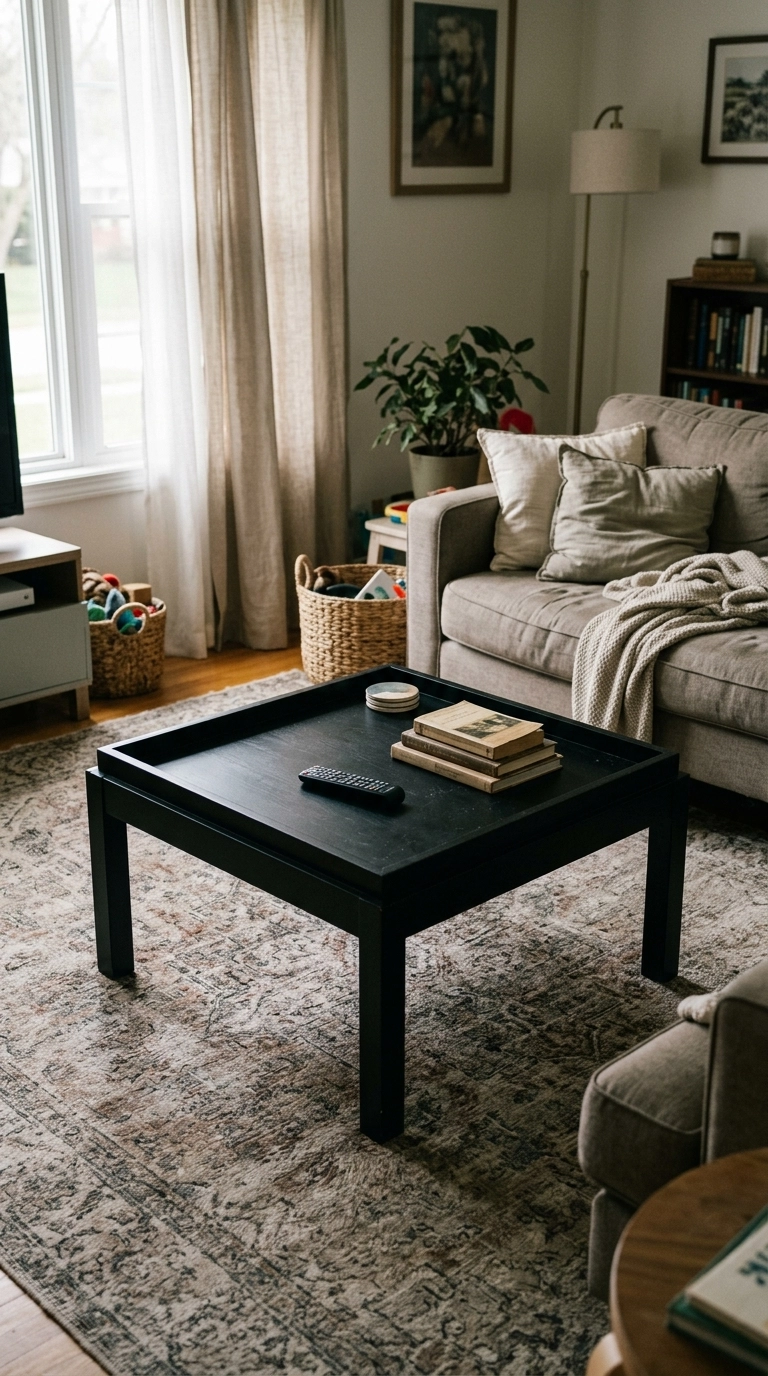
A square black coffee table with a raised tray edge around its top, in a relaxed family living room. The tray lip is a small genius: it keeps remotes, cups and game pieces from migrating off the edges, and it frames whatever is styled inside it like a picture. Tray tops suit busy households because the table tidies itself visually even when it is full. Choose a lip of two or three centimetres; higher turns the table into a box.
Lip height: Two centimetres contains a coffee cup’s slide; five centimetres hides the styling. The sweet spot is a finger’s depth.
19. Twin Square Cubes
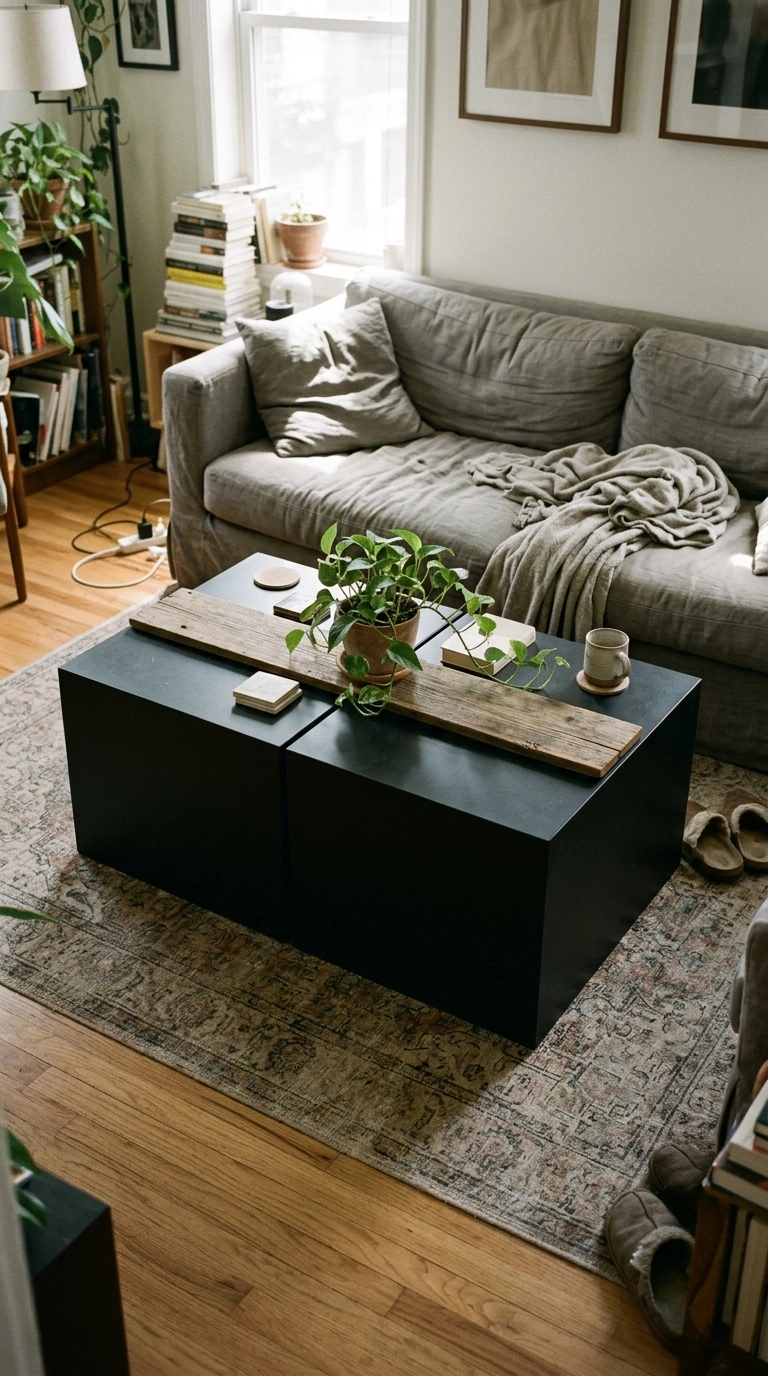
Two square black cube tables pushed together as one coffee table in front of a sofa, a plant and books split across them. Twin cubes are the modular answer: together they are a table, apart they are side tables, footstools and a drinks station by the armchair. The seam between them is a feature, not a flaw; style across it with a runner or a long board to knit them together when they are paired. Buy cubes with level tops, checked with a marble in the shop.
Marble test: Roll a marble across paired cubes in the shop. If it wanders, the tops are uneven and cups will tilt at the seam forever.
20. The Square in Black Marble
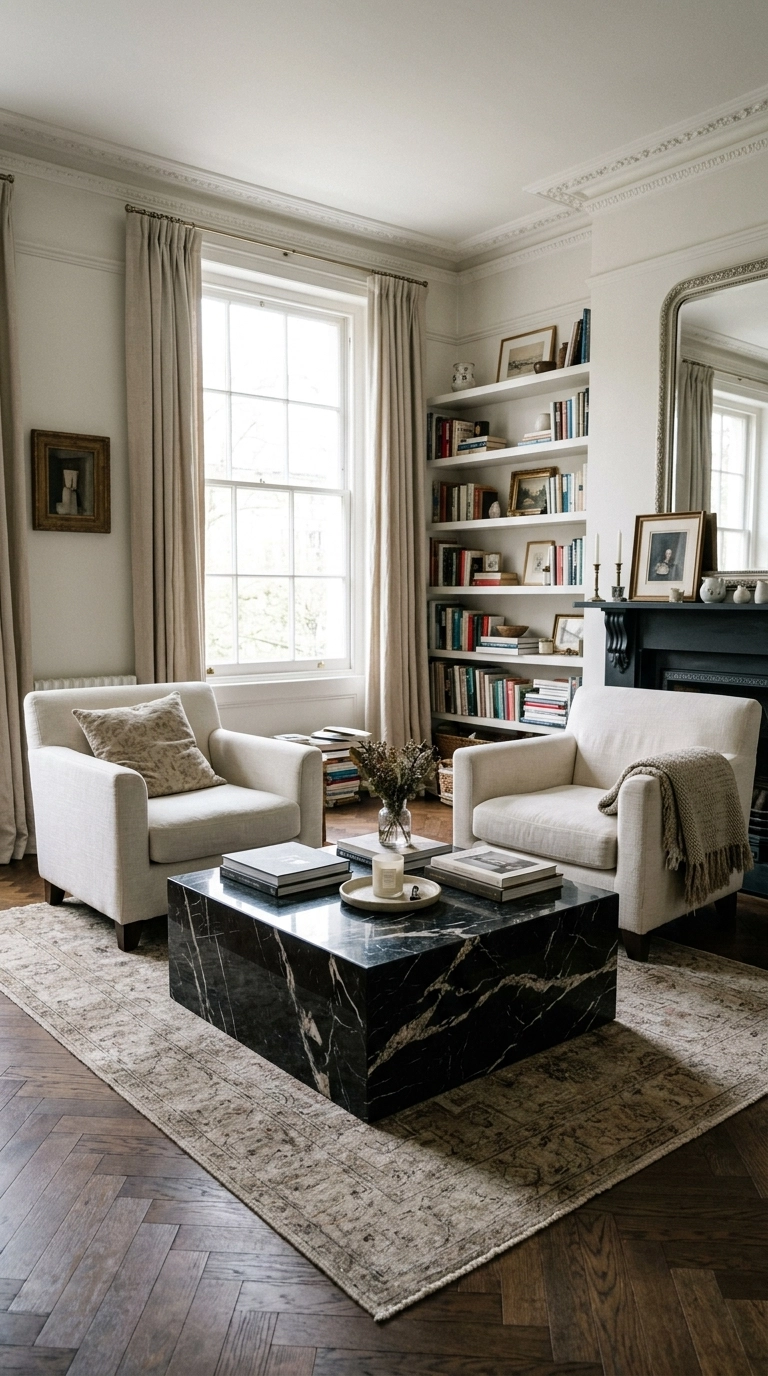
A square coffee table in polished black marble with white veining, in a formal sitting room. Square plus marble plus polish is the most formal combination on this list, the black tie version of a coffee table. It wants symmetry around it and very little on it: the veining is the pattern, the styling is a frame, not a picture. Formal rooms are rare now, which is why this table stops people in the doorway when it appears.
Formal dose: Polished black marble should be the only high shine surface in the room. Two gloss pieces compete; one commands.
Sculptural and Unusual
21. The Wavy Table on Ball Legs
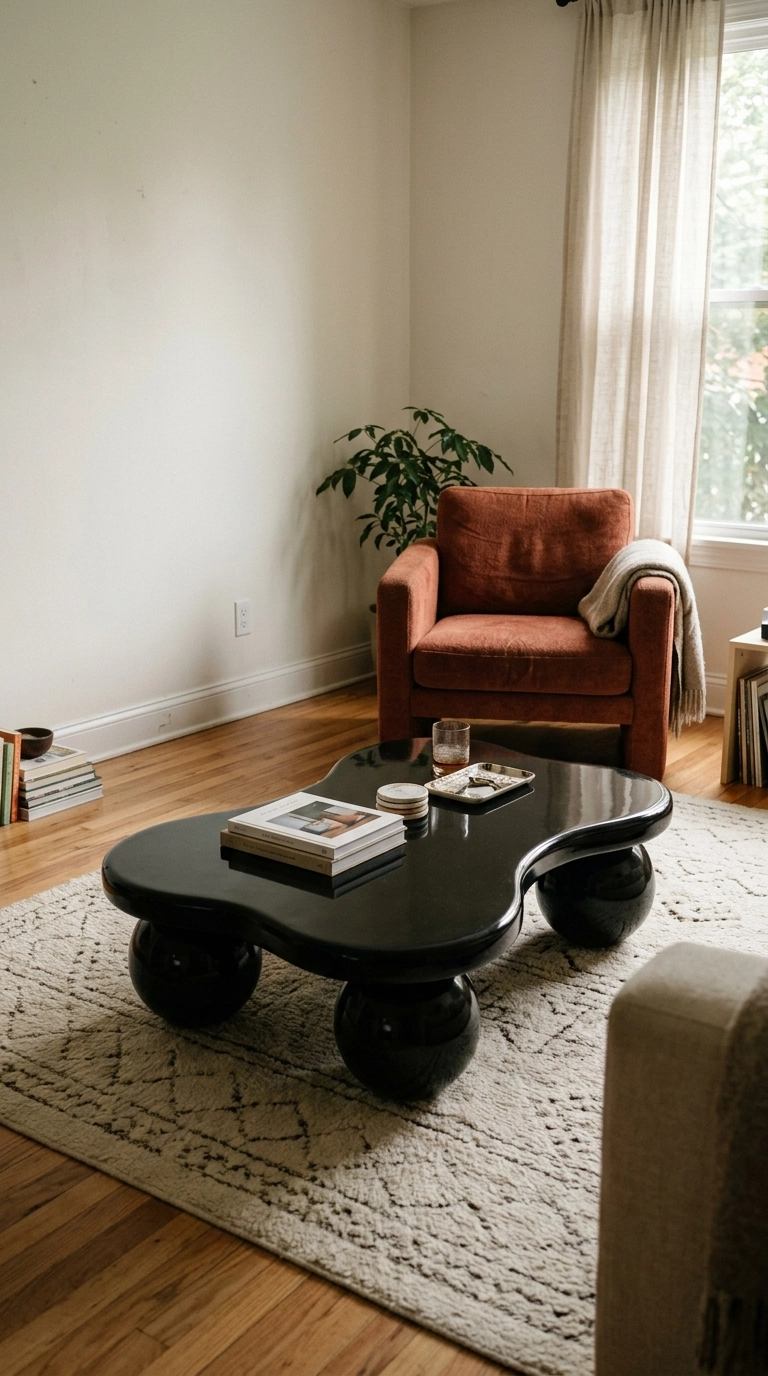
A glossy black coffee table with a wavy kidney shaped top carried on three huge spherical legs, in a room with a rust coloured armchair. This is furniture as cartoon, in the best way: the ball legs make people smile, and a coffee table that makes guests smile has done half of hosting already. Three legs mean it never wobbles, and the freeform top has no corners to aim at shins. Keep the rest of the room plain; sculpture needs a quiet gallery.
Smile budget: One playful piece per room. A second turns the room into a joke shop; one turns it into a conversation.
22. Twin Marble Drums With Flowers
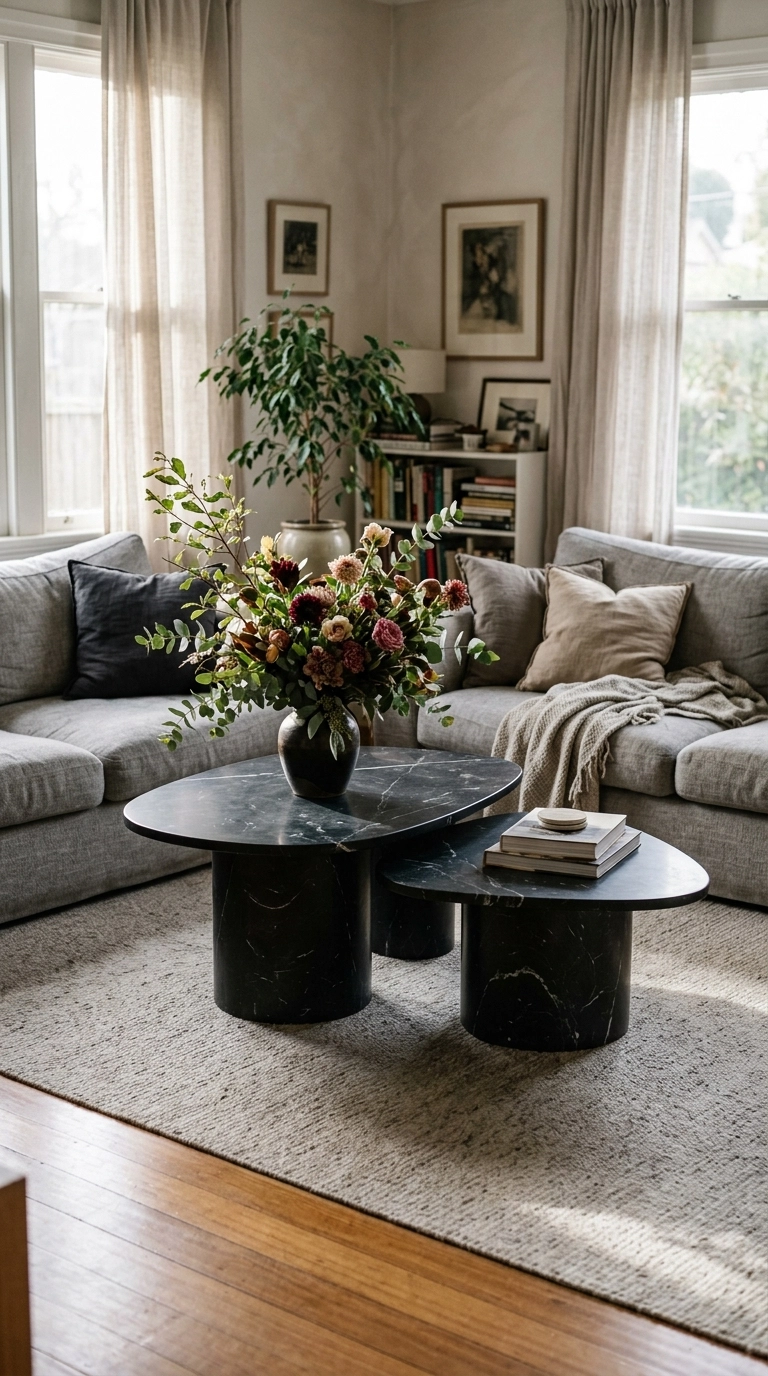
Two sculptural black marble tables with rounded triangular tops on drum bases, styled with large floral arrangements, grey sofas behind them. In event styling, black marble drums are used as flower pedestals because the dark stone makes colours blaze, and the trick works at home at half the scale. A single dramatic arrangement on black marble is worth a shelf of ornaments. When the flowers fade, the tables still hold the room; that is the test of a styling idea.
Blaze effect: Bright flowers on black marble photograph and read twice as colourful. It is the cheapest drama in decorating.
23. The Dual Oval Overlap
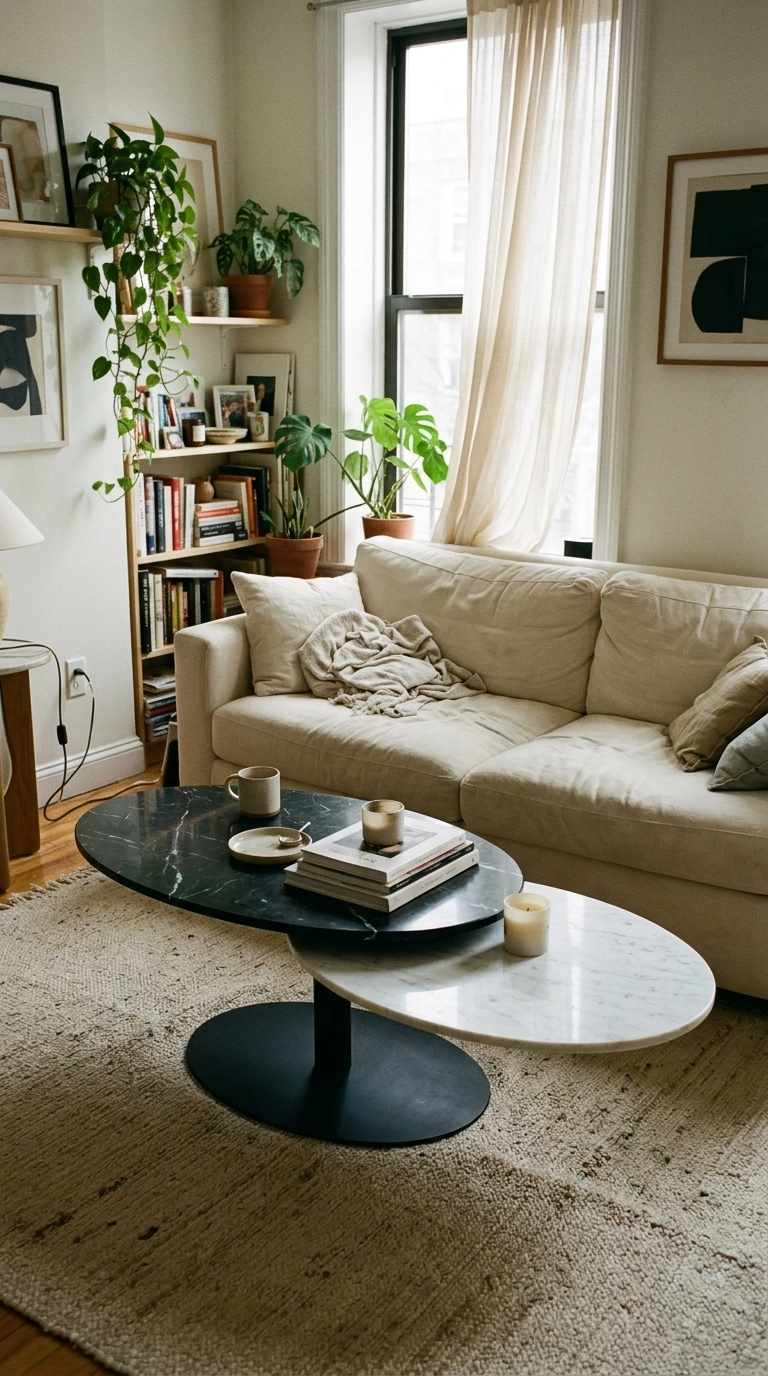
Two overlapping oval tables, one black marble and one white marble, on a shared black pedestal, in front of a cream sofa. The black and white pairing inside one piece of furniture is the boldest idea in this list, and it works because the ovals soften the contrast into something geological, like strata. Overlap designs give two heights in one footprint, tall for drinks, low for books. Commit to the arrangement; these tables are one object and should be styled as one.
Two tone rule: A black and white table needs a room that is neither. Cream, beige and grey rooms host it; black or white rooms make it vanish or shout.
24. The Organic Kidney in Matte Black
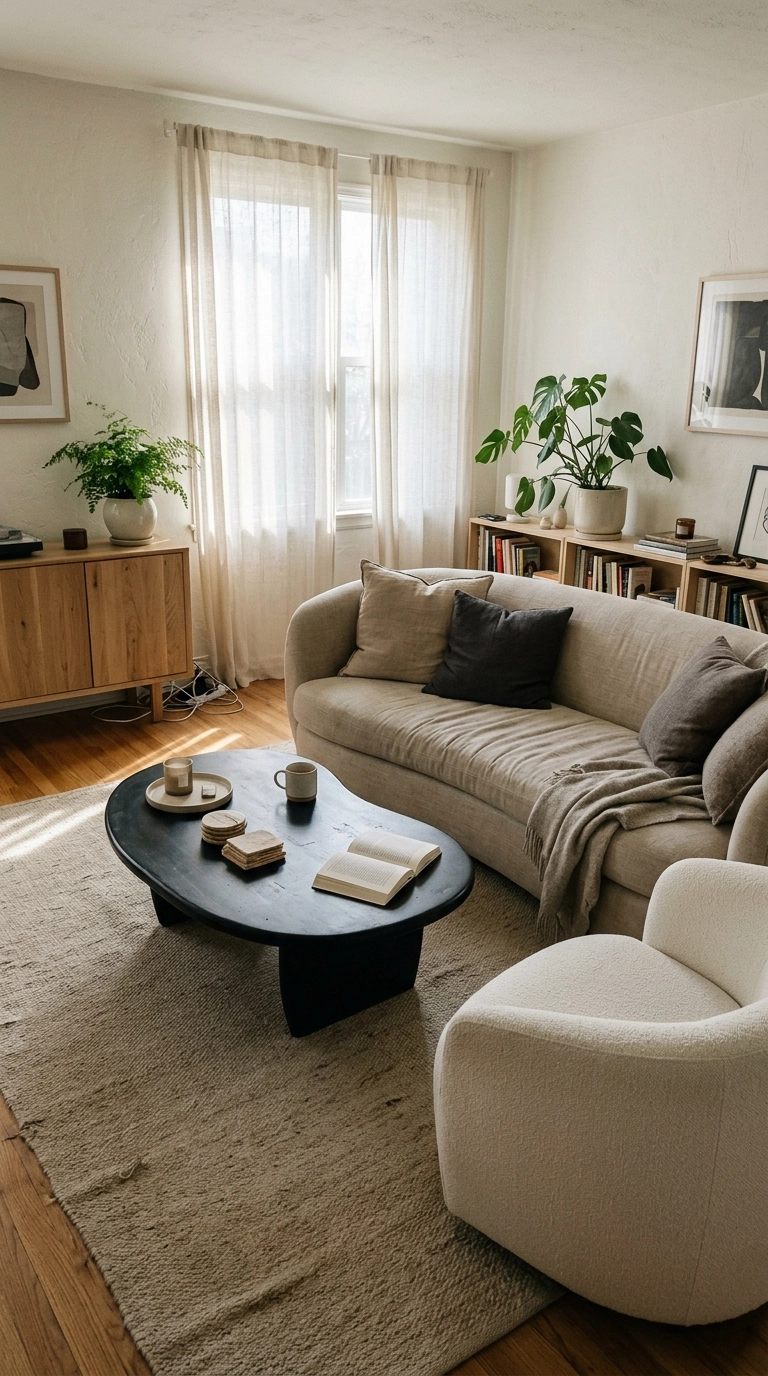
An irregular kidney shaped coffee table in matte black with soft edges all round, in a calm curved furniture room. Matte black absorbs light, so an organic shape in it reads as a shadow pool on the floor, grounding curved sofas that might otherwise float. Freeform tops suit rooms without straight lines to answer to. They are also the kindest shape for toddlers learning to walk around furniture, no corner at head height anywhere.
Shadow pool: Matte black freeform tables ground a room without adding visual objects. Use one when the room already has plenty to look at.
25. The Green Black Stone Drum
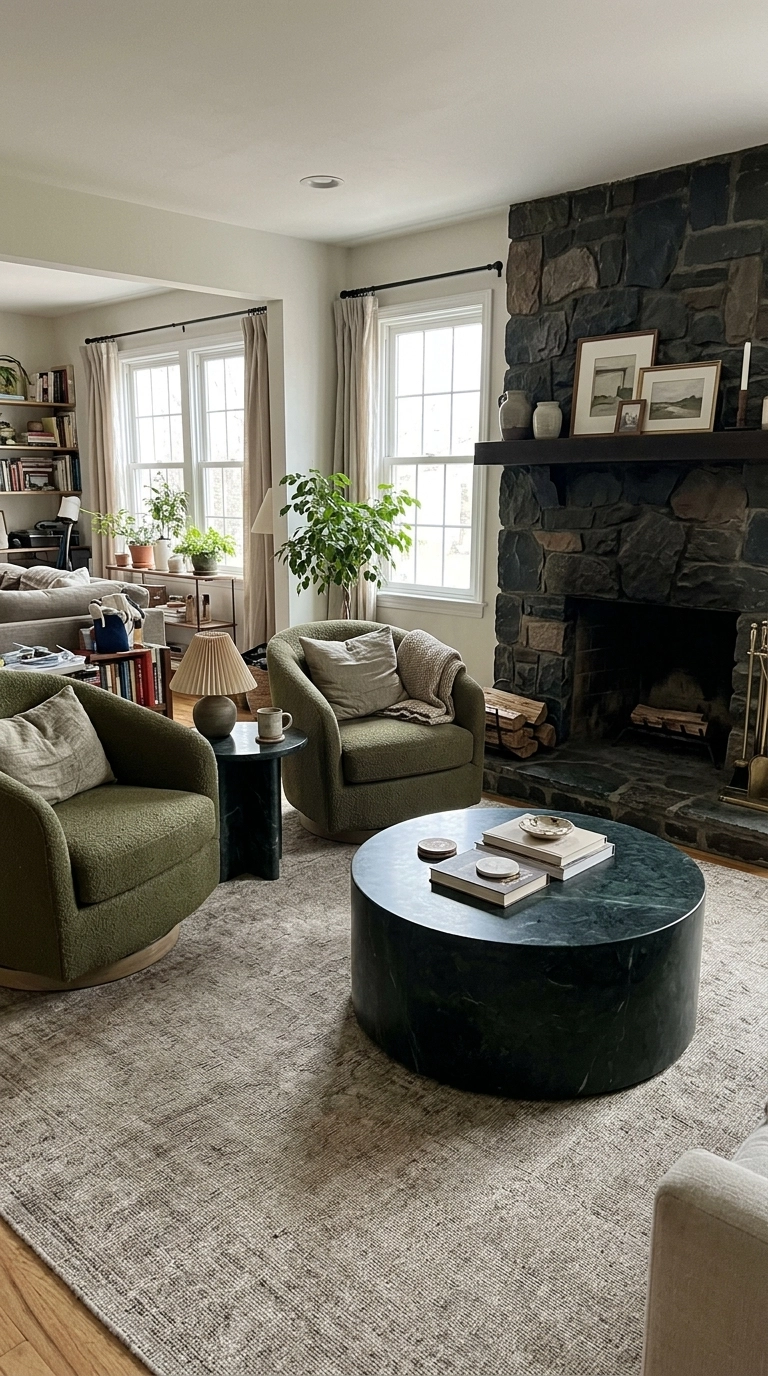
A low round drum coffee table in deep green black stone with a smaller matching side table, between olive swivel armchairs in front of a dark stone fireplace. Stone drums are the heaviest, calmest tables there are, and a green black stone softens black’s severity with a hint of moss. The swivel chairs around it are the social choice: everyone can turn toward the fire or the conversation. Stone this thick holds temperature, pleasantly cool under a wrist in summer.
Stone feel: Run your palm over a stone table before buying. The finish you feel is the finish you will live with; polish and honed stone age very differently.
26. The Ribbon Form Table
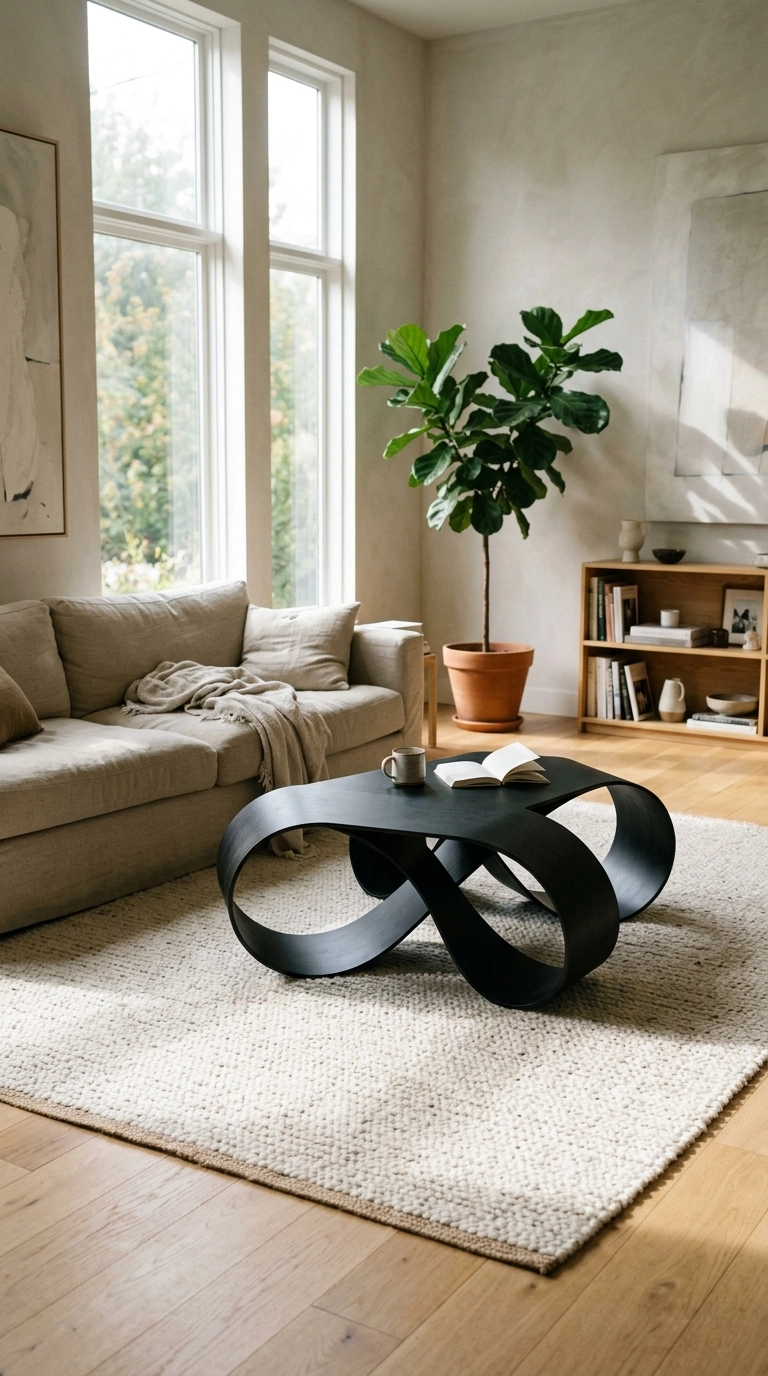
A black coffee table formed from one continuous ribbon of material that loops to make top and supports in a single gesture, in a gallery like room. Ribbon tables are pure sculpture that happen to hold a cup, and they belong in rooms with space to walk around them, because every side is a different view. Their weakness is storage and stability for tall objects, so style them with low, heavy pieces only. This is the table for the person who buys furniture the way others buy art.
Walk around test: Sculptural tables need a metre of walking space on all sides. If the room cannot give it, the sculpture becomes an obstacle.
27. The Hexagonal Prism
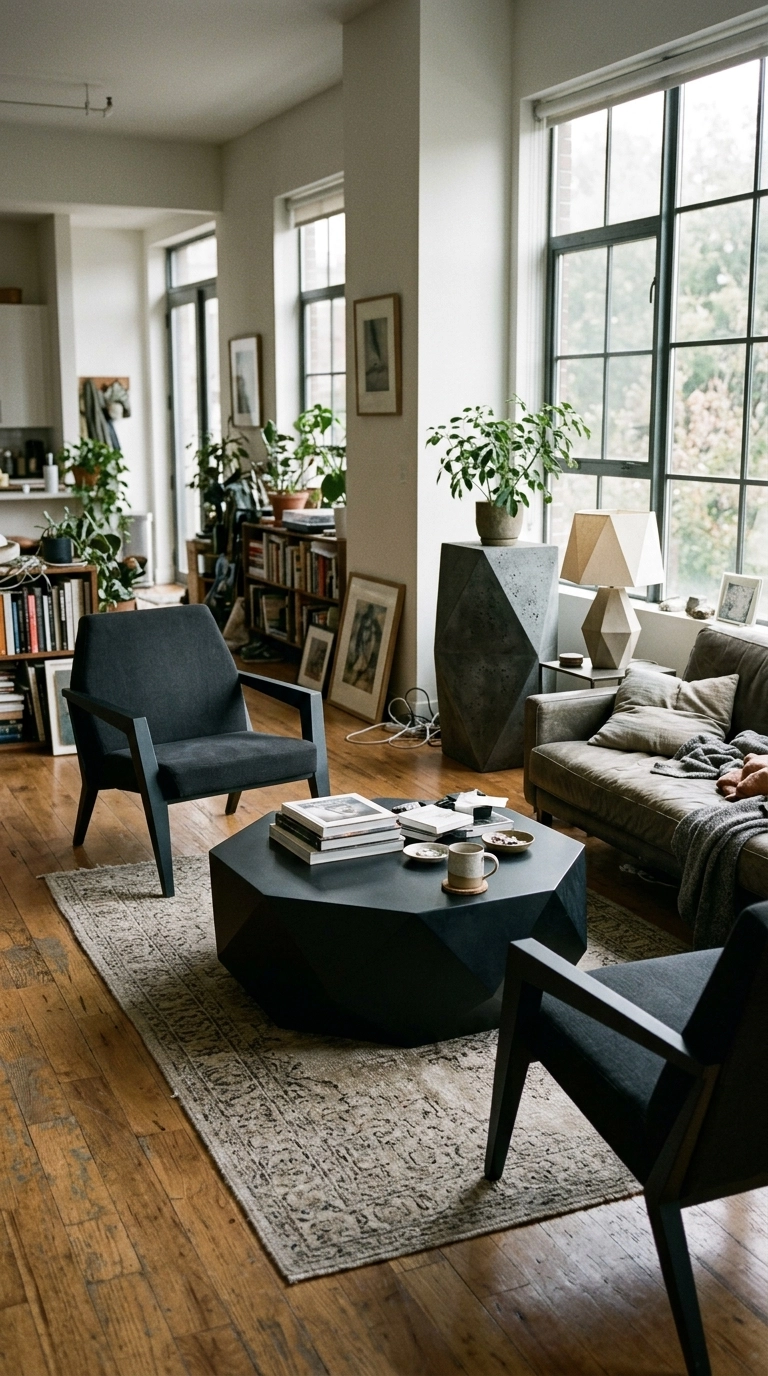
A hexagonal black coffee table, part table, part geometric plinth, in a modern room with angular furniture. Six sides give a hexagon more presence than a square and more order than a freeform shape, and its angles pair naturally with angled chair legs and faceted lamps. A prism table can also turn a few degrees to change the room’s geometry, a refresh that costs nothing. Geometry this strong wants plain textiles; let the facets be the pattern.
Quarter turn refresh: Rotate a faceted table fifteen degrees when the room feels stale. Angles change the light play for free.
Before you buy: the five checks
- Measure the walk space: 40 to 45 centimetres between table edge and sofa, on every side people pass.
- Check the height against the seat cushions: level or a touch below, never above.
- Roll a marble or a cup across the top in the shop; wobbles and uneven seams only get worse at home.
- Carry the finish sample to a window: gloss shows every flaw in daylight, matte hides them and shows dust instead.
- Measure the doorways and the stair turn for solid plinths and stone drums; they do not tilt, fold or forgive.
Shape first, then style. Round for flow and safety, rectangular for formality and reach, square for sectionals, and sculptural when the room needs a signature. Black will show the silhouette honestly, so choose the outline your seating, your rug and your daily life actually need, then pick the finish that suits your tolerance for fingerprints and coasters. The right black coffee table disappears into use and reappears every time a guest walks in. That is the whole job.