I put off wallpapering my bedroom for two years because I was afraid of committing to a pattern. When I finally did it, I wished I had done it sooner. The right wallpaper changes the entire personality of a bedroom in a way that paint alone cannot. Here are the bedroom wallpaper ideas that I keep coming back to, from bold statements to quiet backdrops.
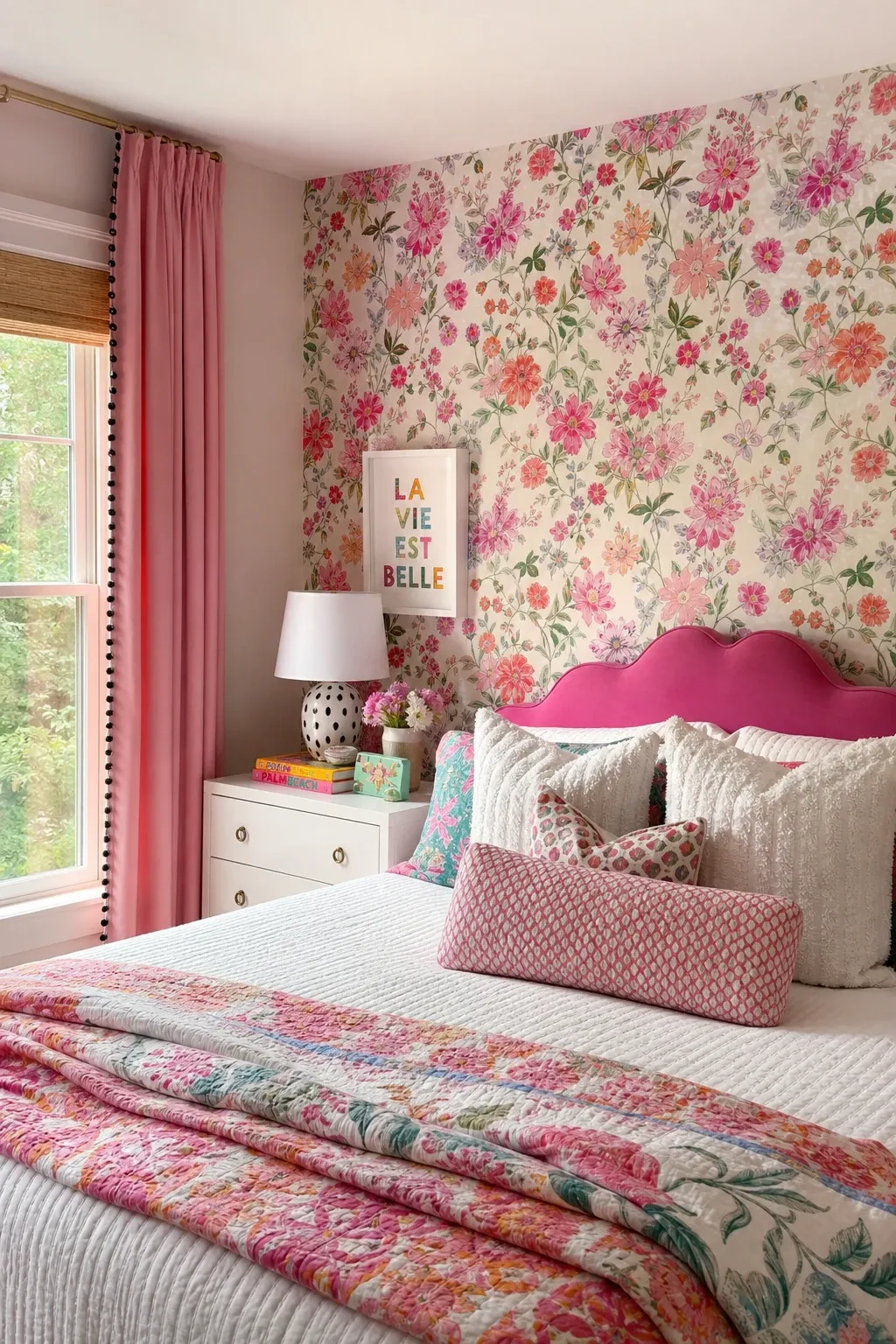
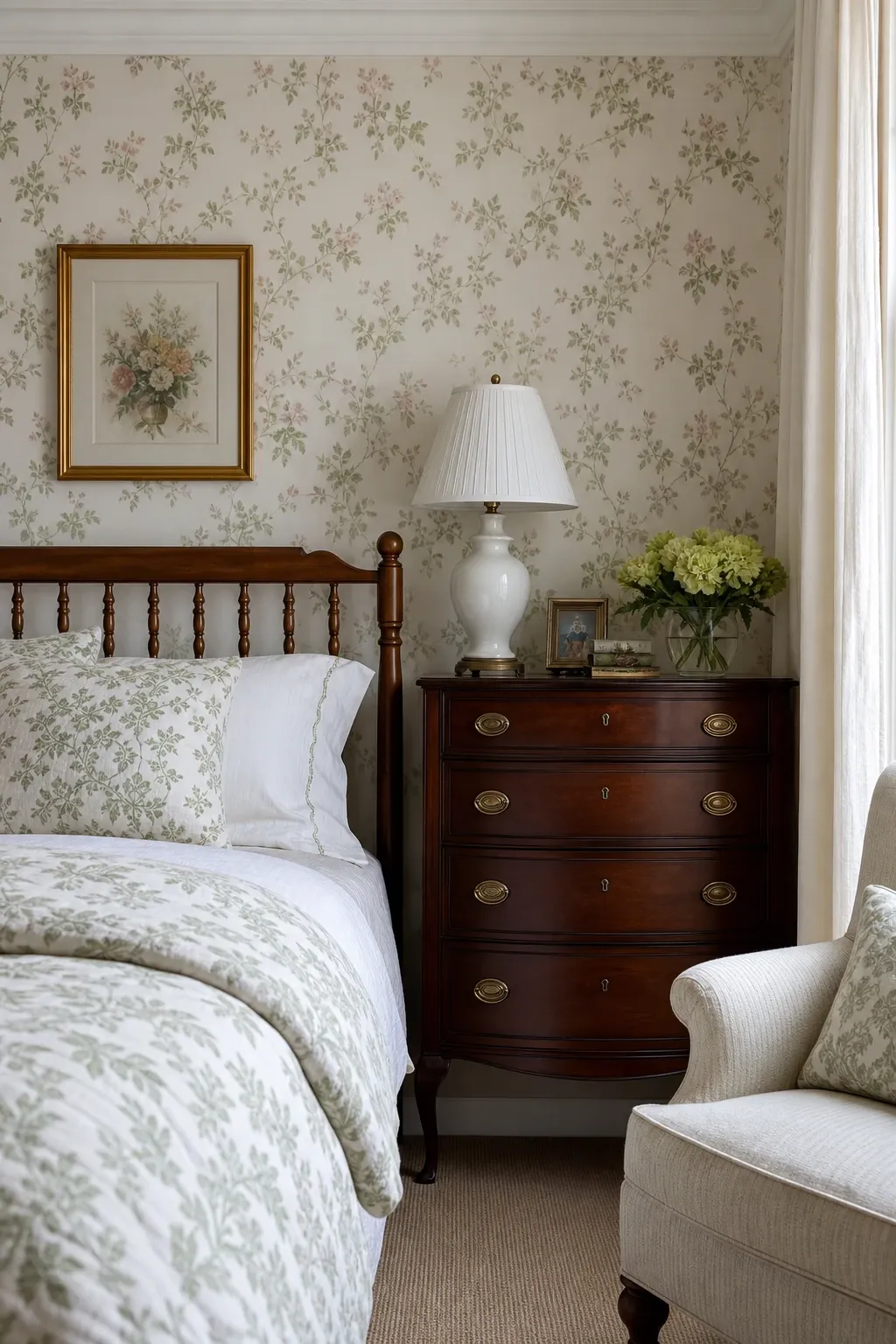
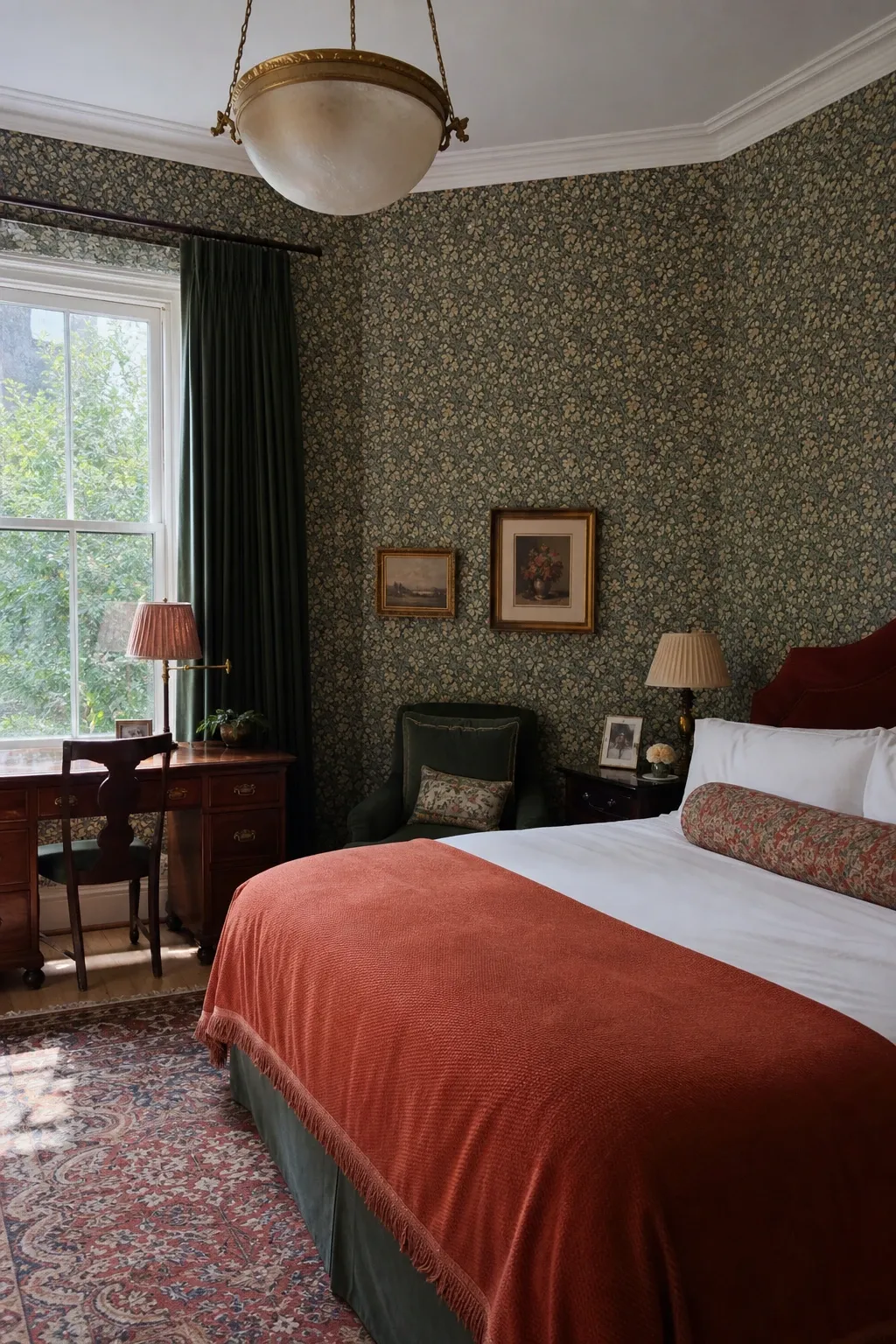
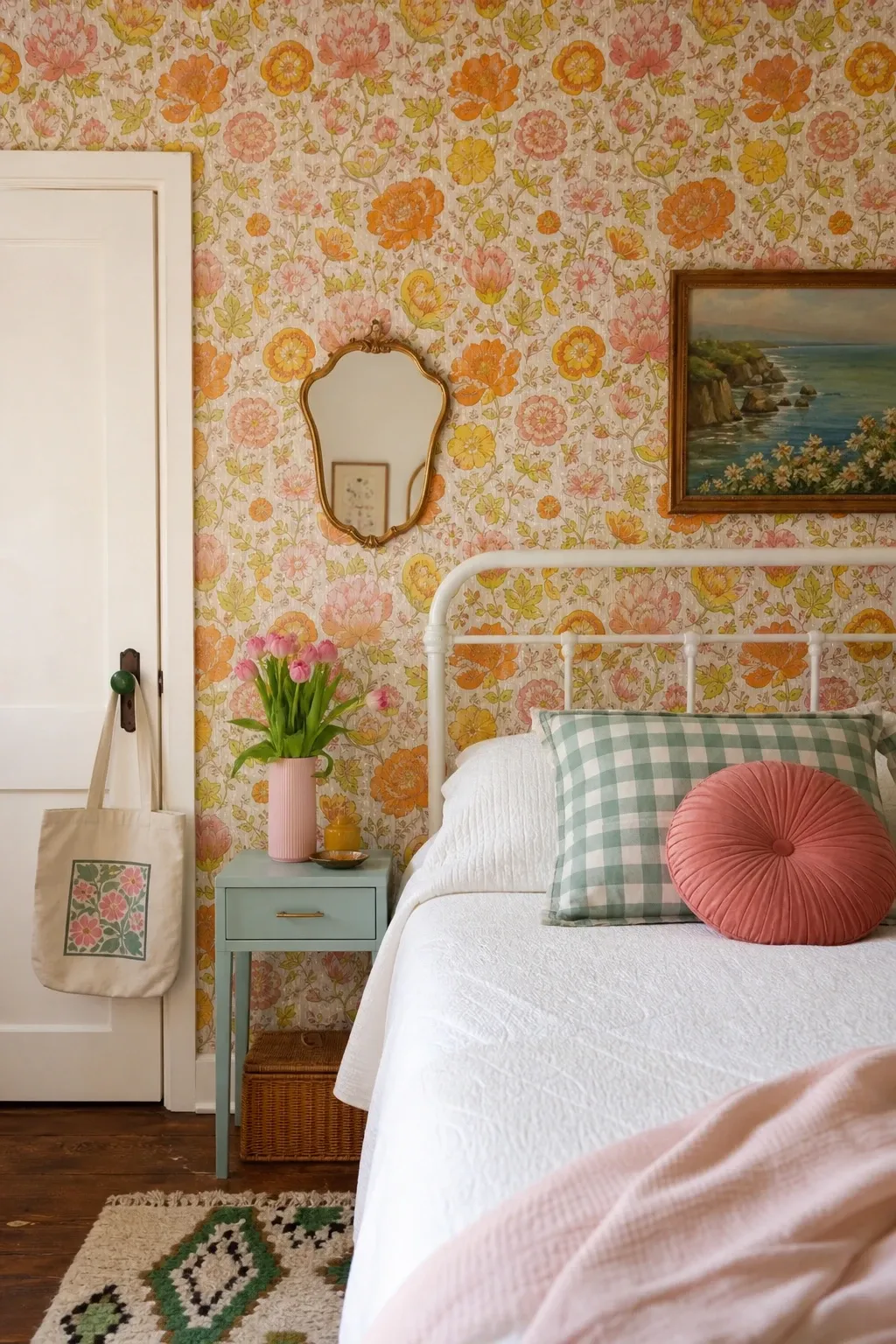
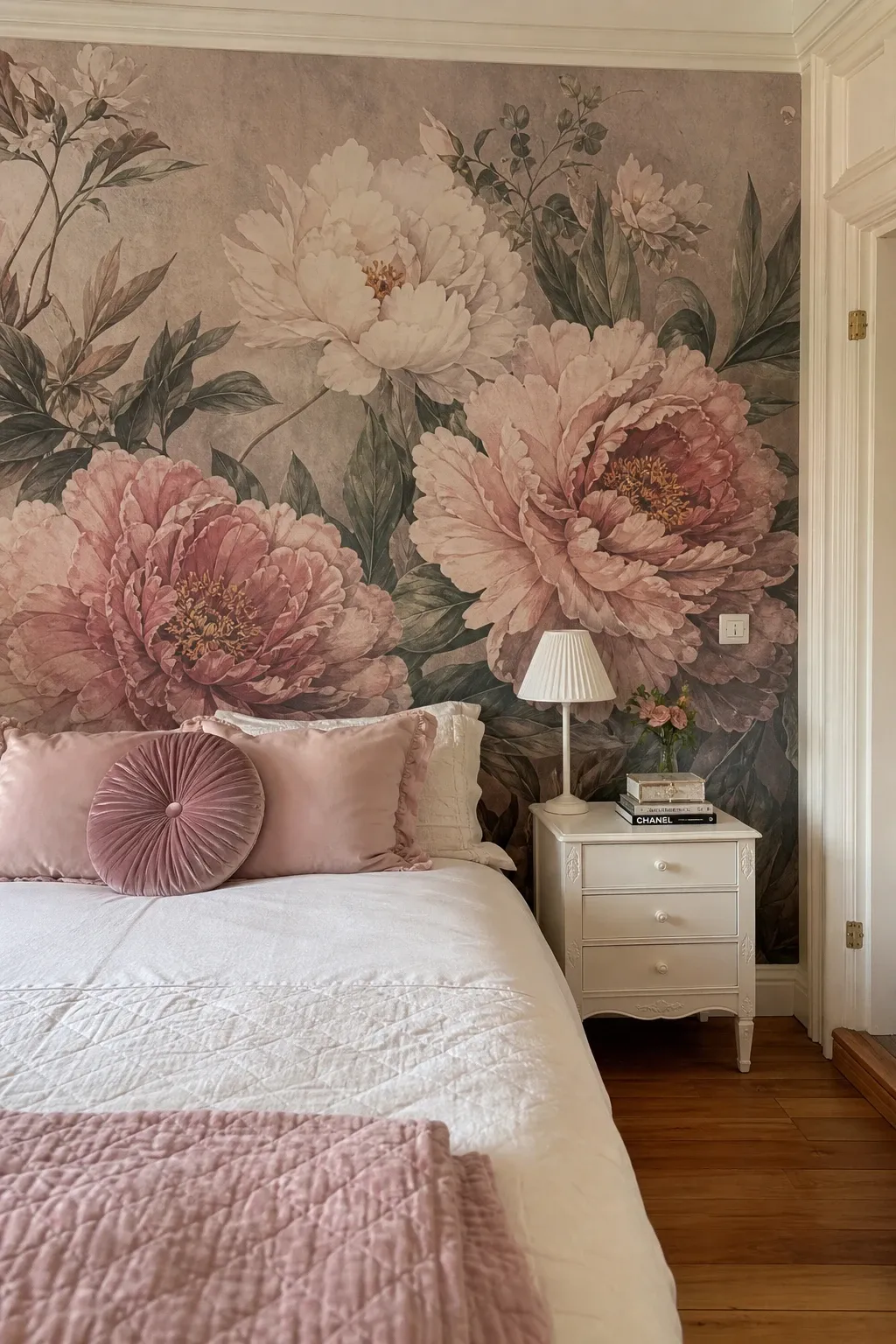
Oversized florals on a dark background make a bedroom feel dramatic and moody. The large-scale pattern reads as bold rather than busy because the individual motifs are big enough to take in without your eyes darting around. This style works best on the wall behind the headboard where it becomes a focal point. Keep bedding and furniture simple so the wallpaper does the talking.
Designer Tip: Start hanging the wallpaper from the center of the accent wall and work outward. This centers the largest motifs behind the bed and avoids awkward cuts through the middle of a flower at the edges where they are most visible.
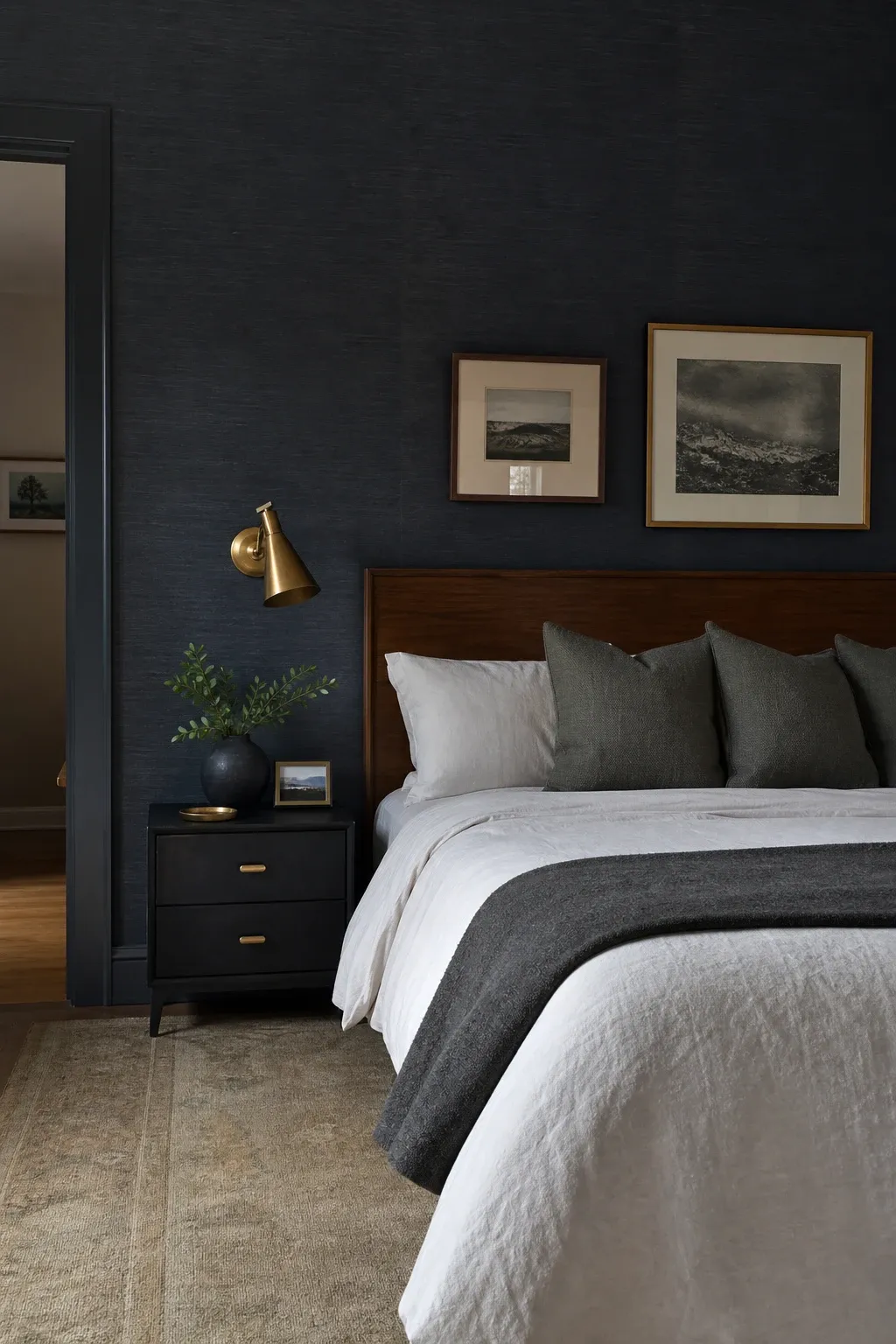
A linen-textured wallpaper in a neutral tone adds warmth and depth without a visible pattern. From a distance it looks like paint, but up close the woven texture gives the walls dimension. This is a good option if you want the benefits of wallpaper but do not want a bold pattern. It works on all four walls and makes the room feel wrapped in soft fabric.
Designer Tip: Textured wallpapers show seams less than smooth or glossy papers. If you are a first-time wallpaper hanger, a linen texture is forgiving and hides minor alignment issues at the seams.
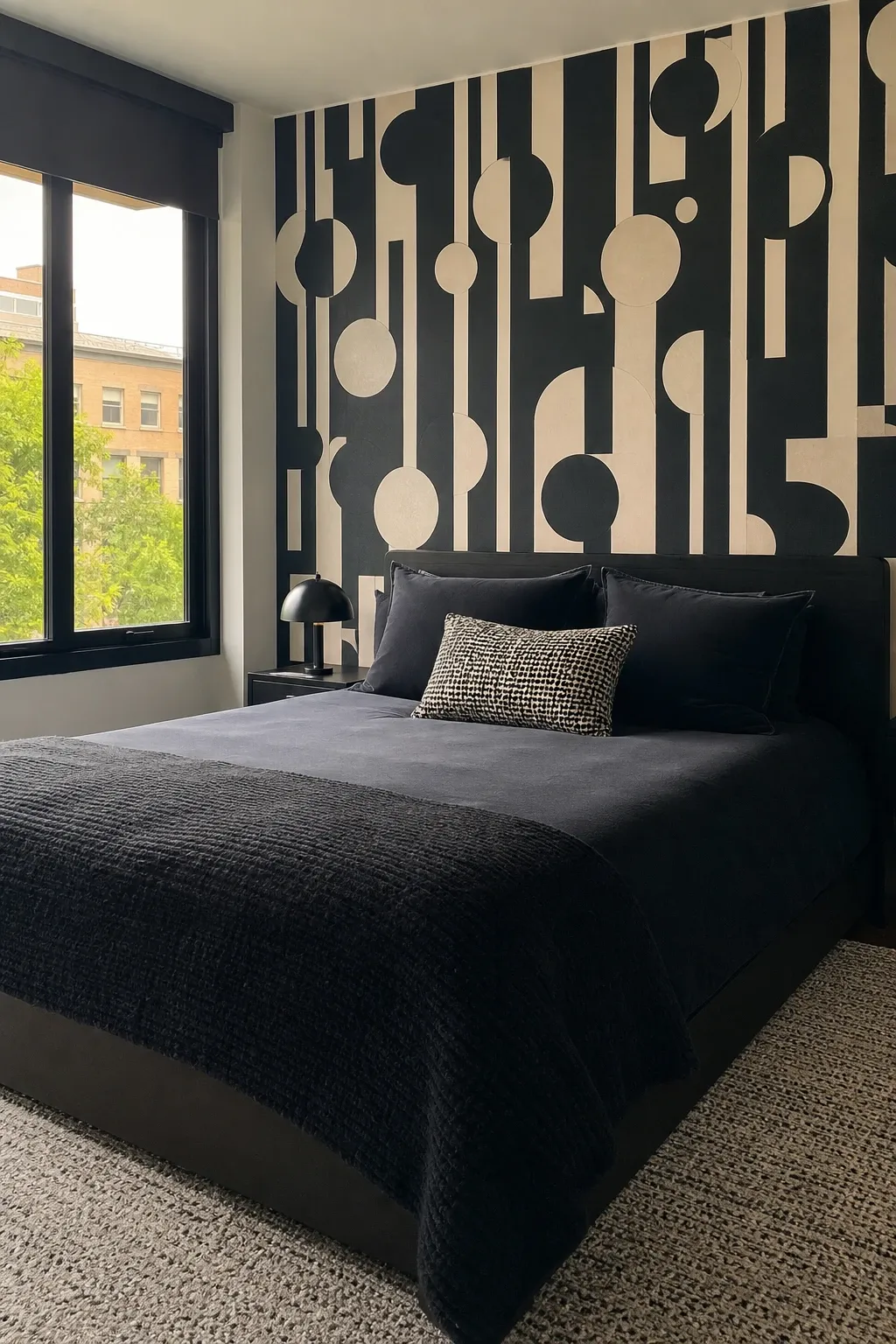
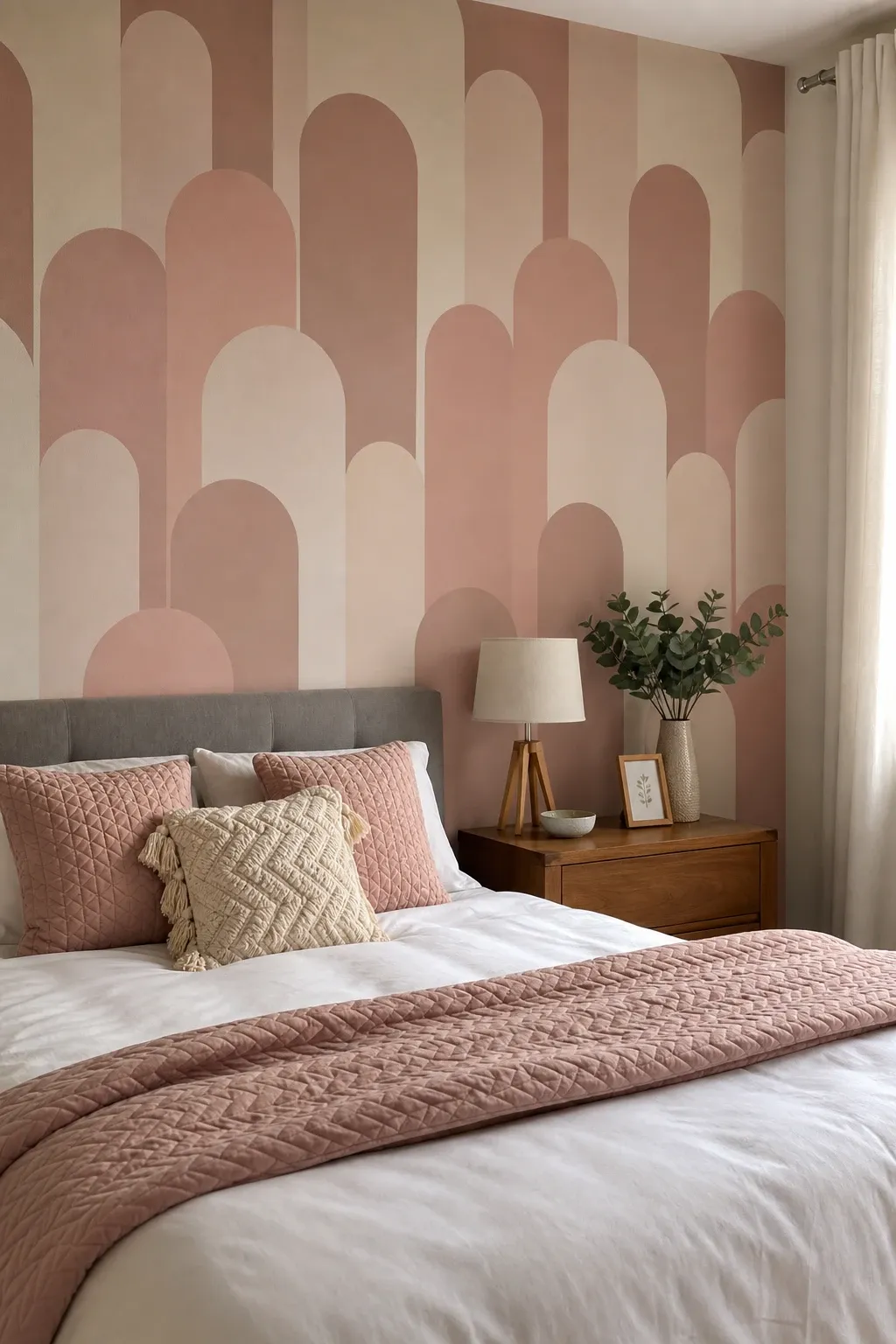
Geometric wallpaper in muted tones gives the bedroom structure and modern energy. Hexagons, chevrons, or art deco arches in soft gray, blush, or navy keep the room feeling adult and refined. Geometric patterns repeat predictably which makes them easier to hang than organic patterns. The consistent repeat also creates a calm, rhythmic backdrop for sleeping.
Designer Tip: Use a level for the first strip and every strip after. Geometric patterns expose crooked alignment immediately because the eye follows straight lines. A half-degree tilt that would be invisible on a floral paper is obvious on a geometric one.
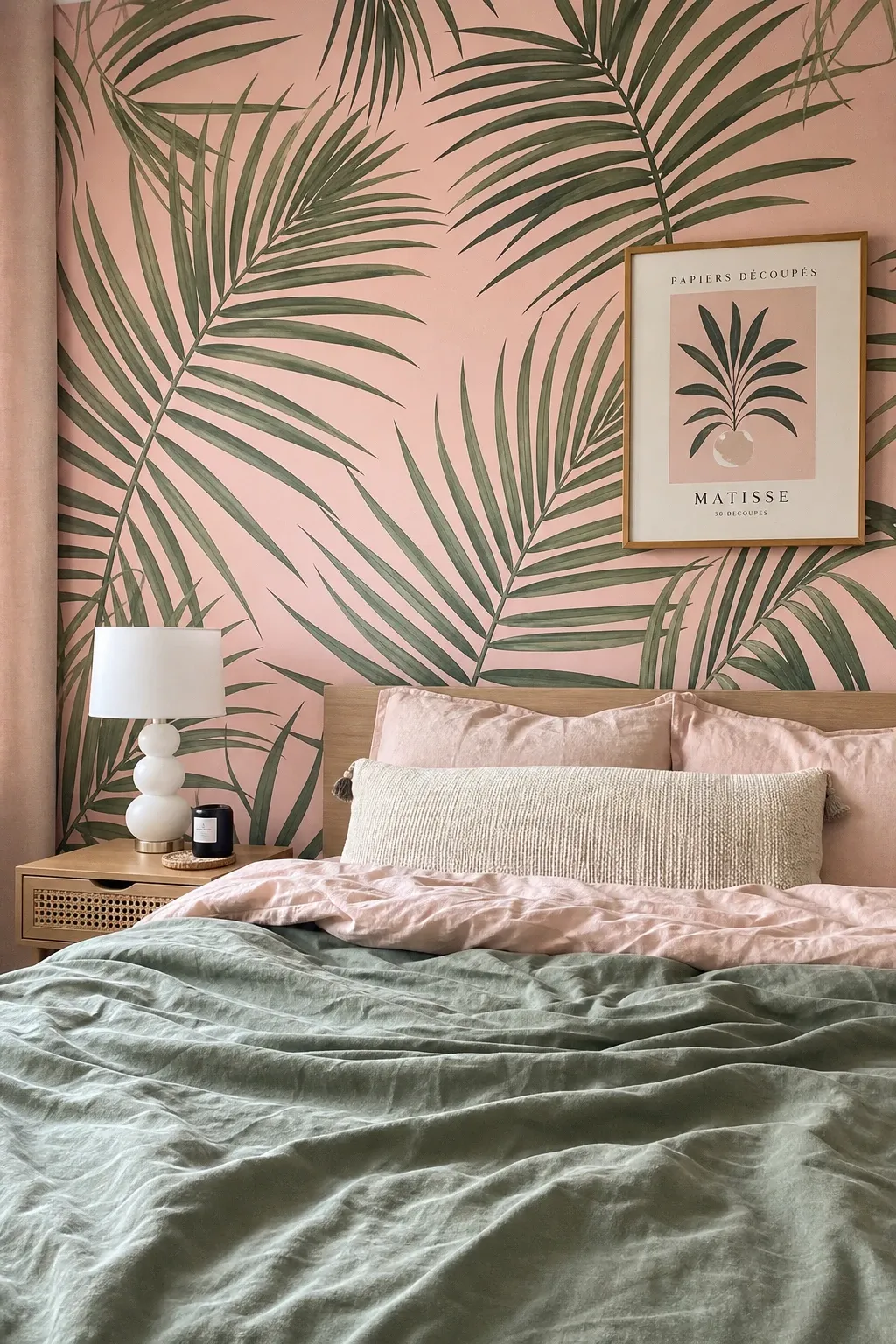
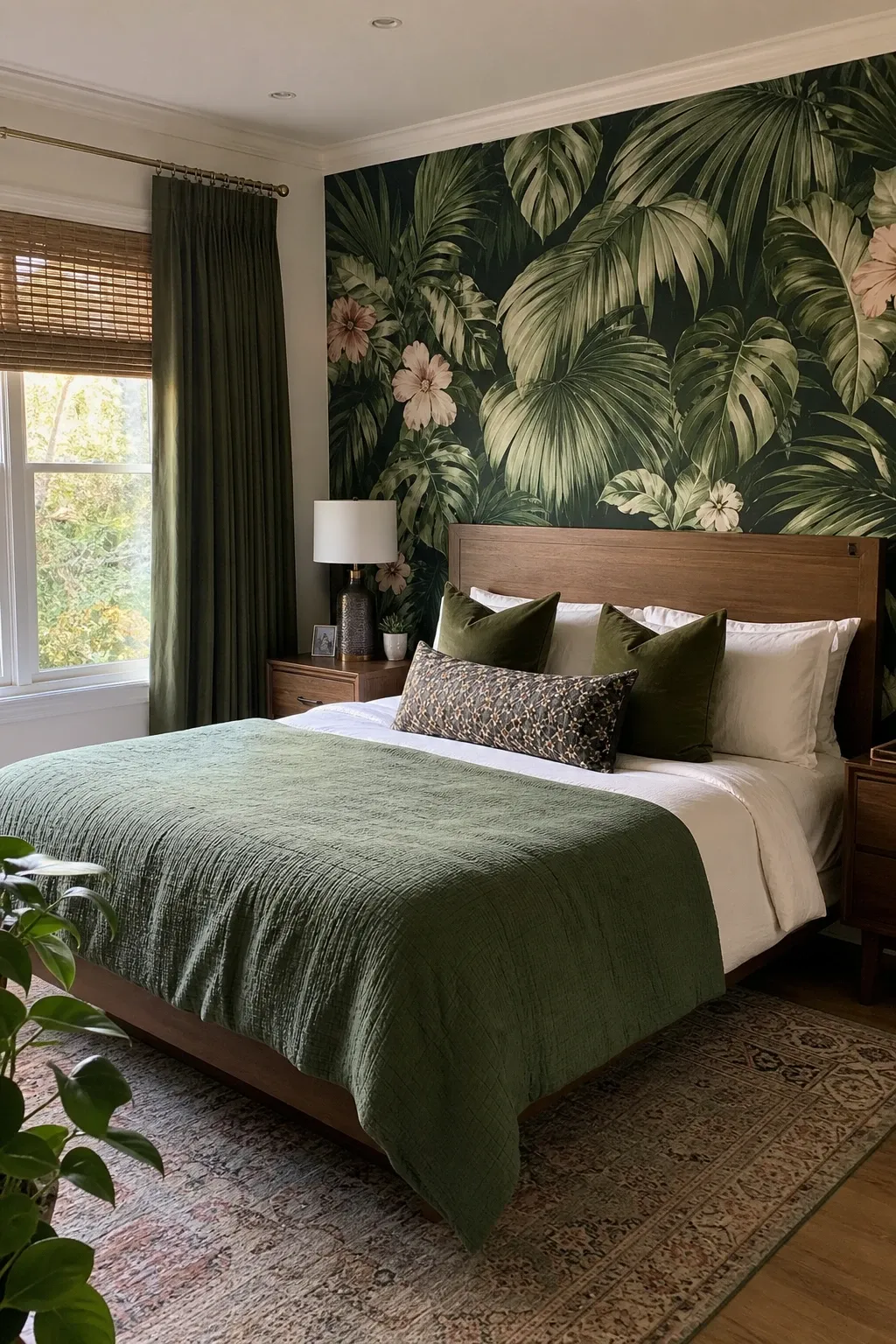
Palm fronds, monstera leaves, or banana leaf patterns in green tones bring a lush, relaxed feel to the bedroom. Tropical wallpaper works surprisingly well in bedrooms because the green tones are calming and the organic shapes are restful to look at. Use it on one accent wall if the pattern is dense, or wrap the room if the pattern has a lot of white space between the leaves.
Designer Tip: Tropical wallpapers pair best with white or natural wood furniture. Dark furniture competes with the busy pattern and makes the room feel heavy. Light furniture lets the wallpaper stay the star of the room.
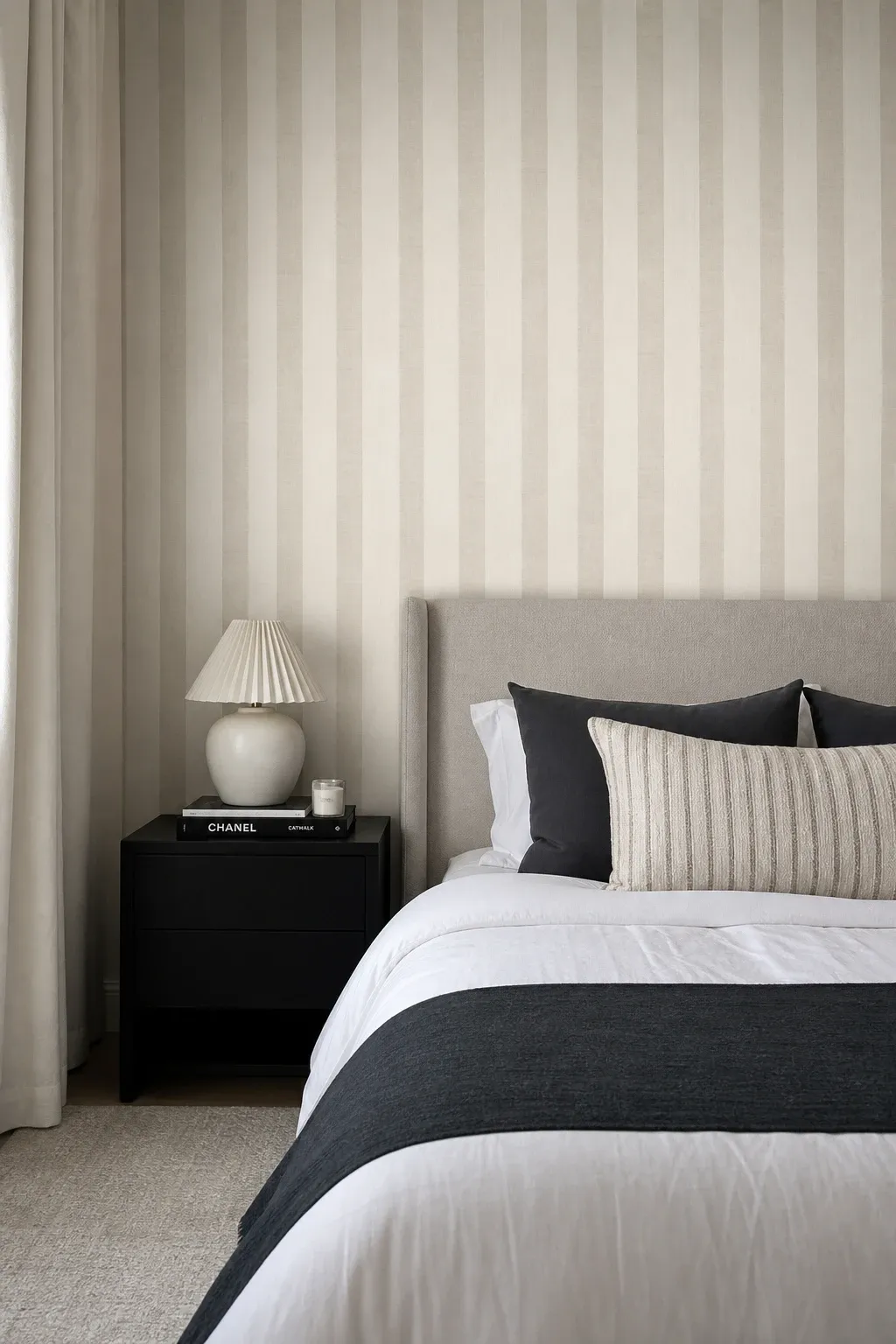
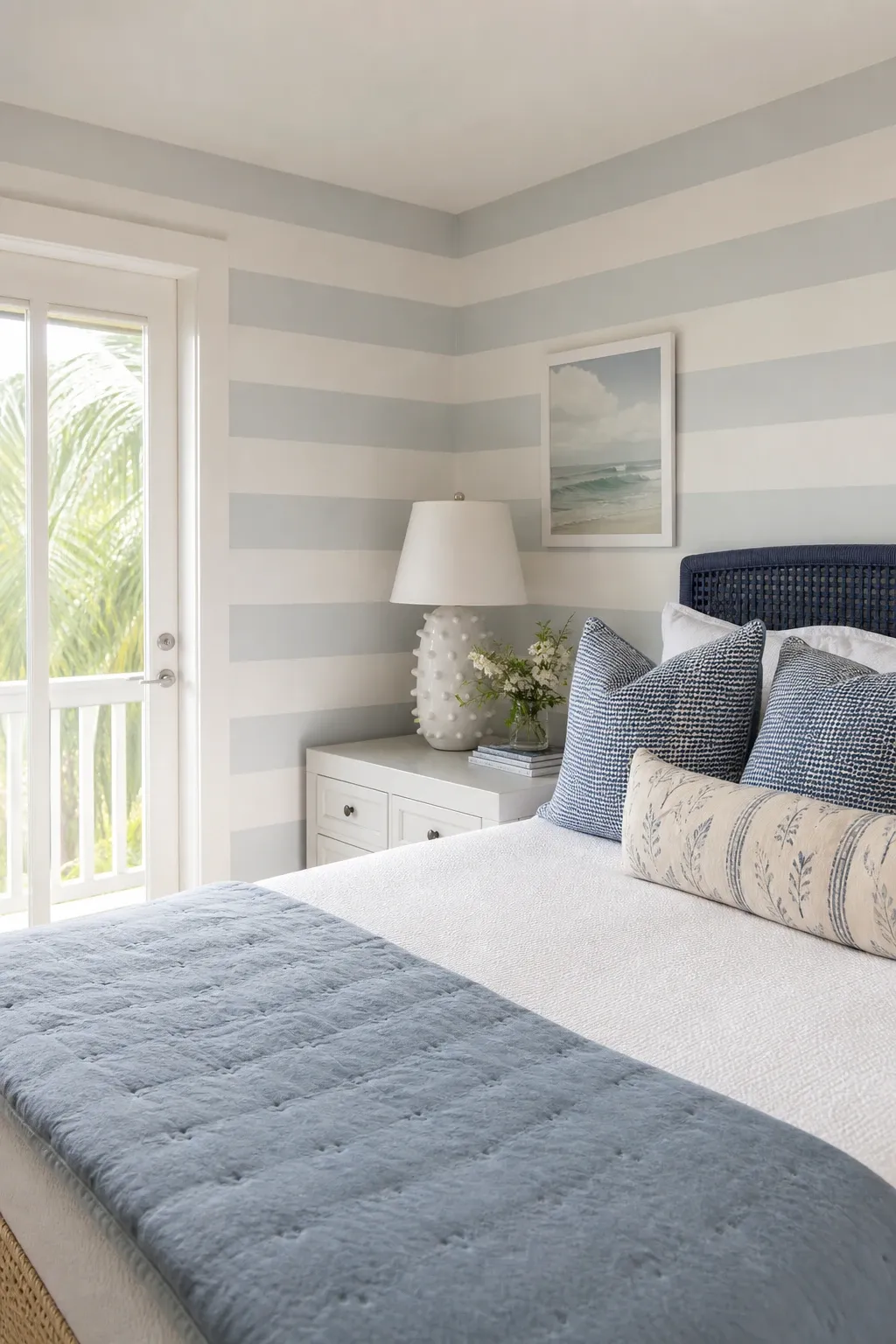
Vertical stripes make a bedroom ceiling feel taller. This is an old trick that still works. Wide stripes in two similar tones create a subtle, classic effect. Narrow stripes in contrasting colors are more energetic and modern. Stripes work on all four walls or as a single accent wall. The pattern is simple enough that it does not compete with other design elements in the room.
Designer Tip: Wider stripes are better for small bedrooms. Narrow stripes in a small room can create a visual vibration that feels dizzying. Stripes at least two inches wide look calm and spacious. Stripes under an inch wide start to feel busy.
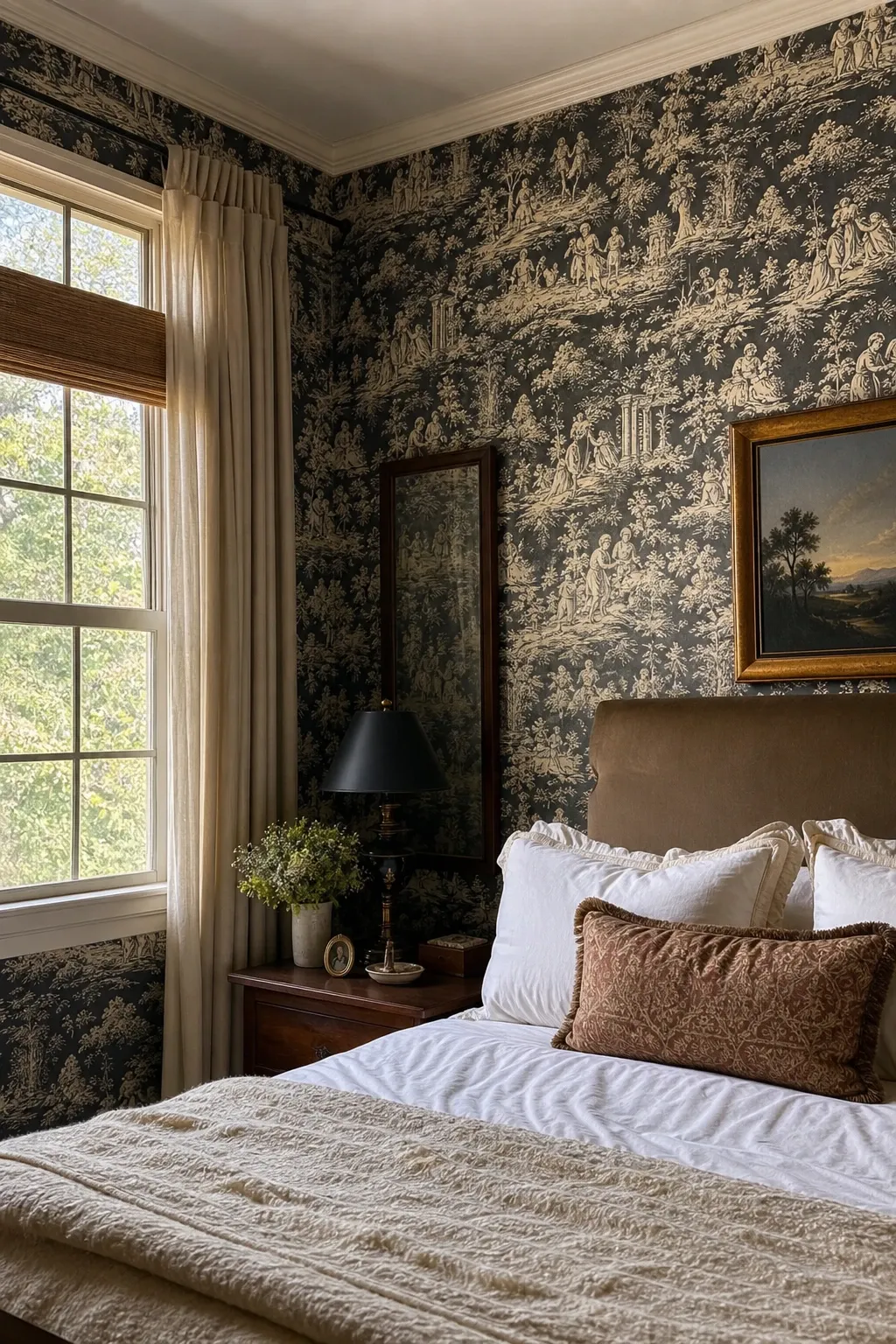
Toile wallpaper in blue and white or red and white gives the bedroom a classic, storied feel. The scenic illustrations on toile patterns create visual interest without the boldness of modern large-scale prints. Toile has a traditional personality that suits bedrooms in older homes especially well. Pair it with white trim, simple curtains, and classic furniture shapes for a room that feels timeless.
Designer Tip: Choose a toile where the scenic motifs are spaced apart with plenty of background showing. Dense toile patterns where the scenes overlap or crowd together read as cluttered rather than charming, especially in a small bedroom.
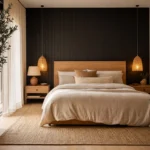
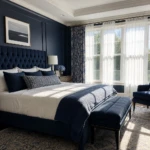
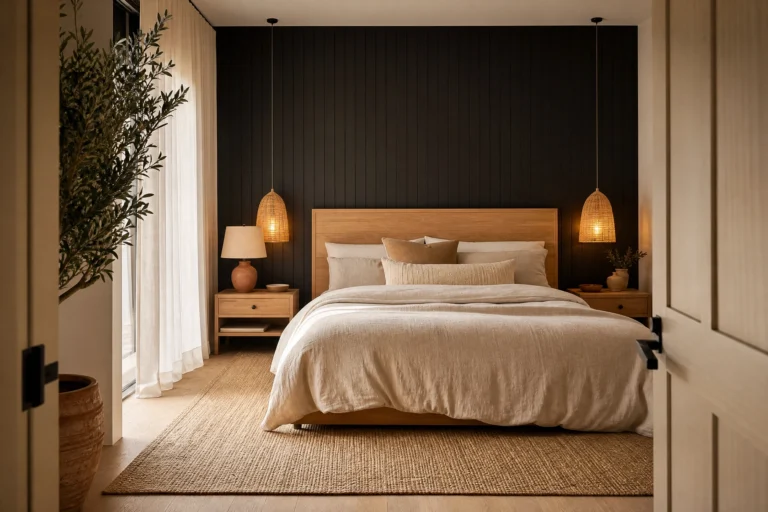
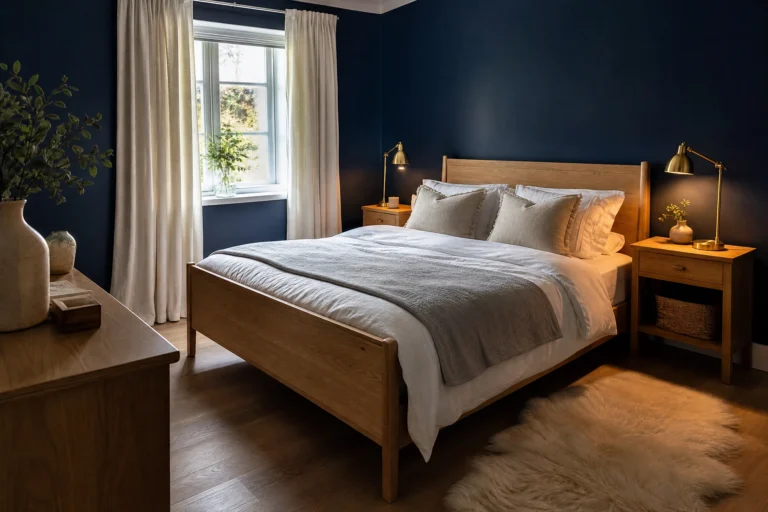
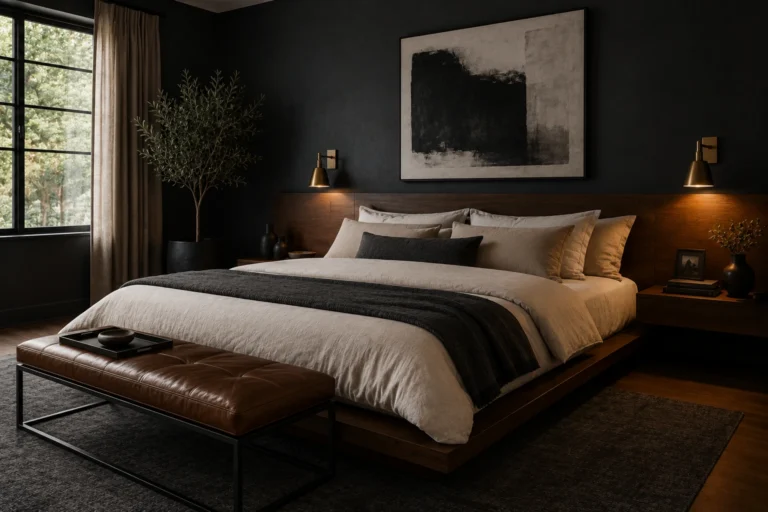
A dark wallpaper in charcoal, deep navy, or black with a subtle pattern behind the headboard creates a cocoon-like sleeping space. Dark walls make the bed area feel enclosed and protected, which many people find relaxing for sleep. The key is keeping the other three walls lighter so the room does not feel like a box. The contrast between the dark accent wall and the lighter surrounding walls adds depth to the room.
Designer Tip: Use warm-toned dark colors rather than cool ones for the bedroom. Warm charcoal, chocolate brown, or deep forest green feel inviting. Cool black or steel gray can feel cold and institutional, which is the opposite of what you want in a sleeping space.
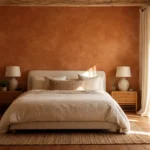
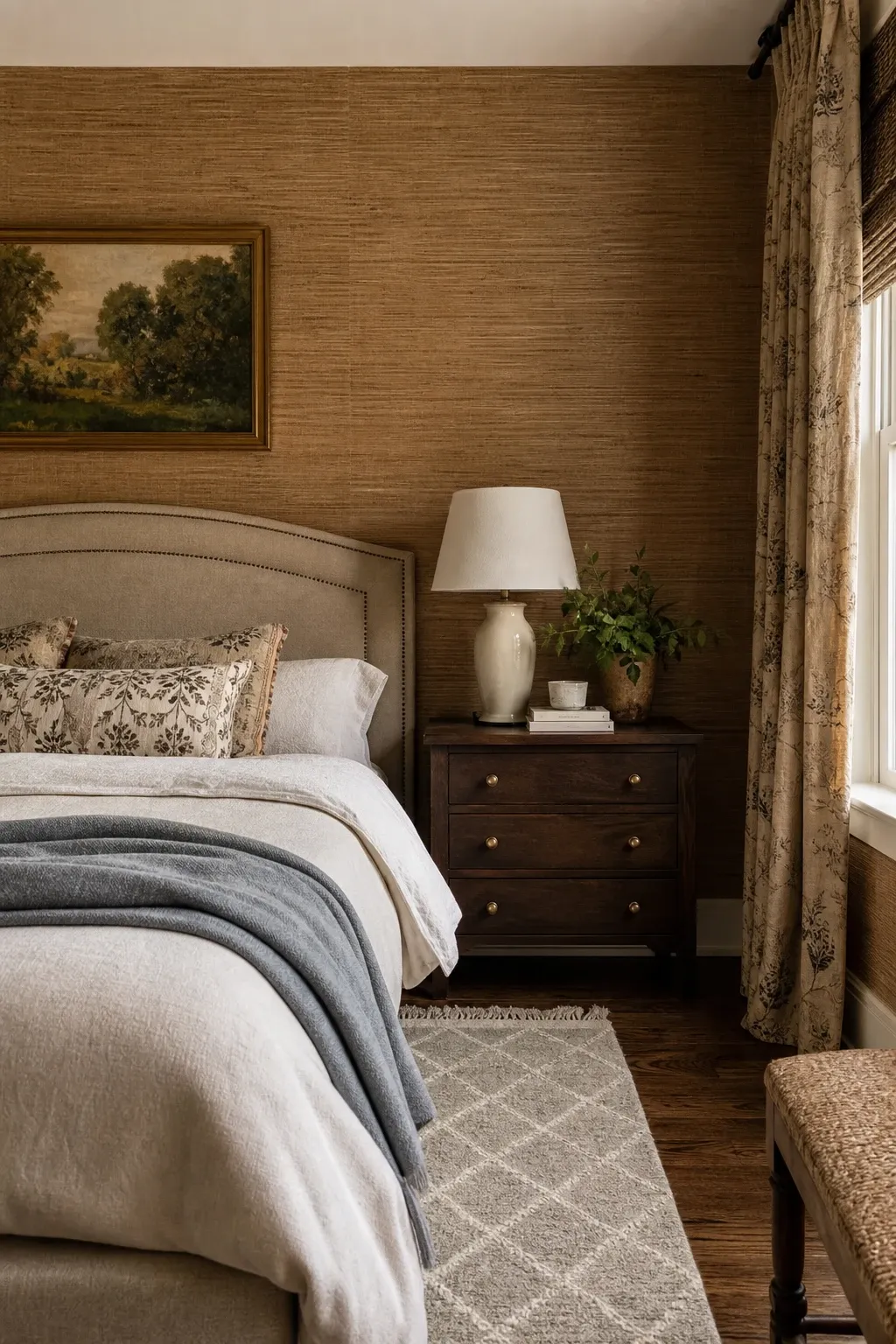
Real grasscloth wallpaper made from natural fibers like jute, sisal, or seagrass adds organic texture that no printed wallpaper can replicate. Each panel is slightly different because the natural fibers vary, which gives the walls a handmade quality. Grasscloth has a warm, earthy look that complements wood furniture, linen bedding, and neutral color schemes. It feels expensive and looks it.
Designer Tip: Real grasscloth stains easily and cannot be wiped clean. Keep it away from areas where it might get touched with dirty hands or splashed with water. The wall behind the bed is ideal because it is visible but not in a high-touch zone.
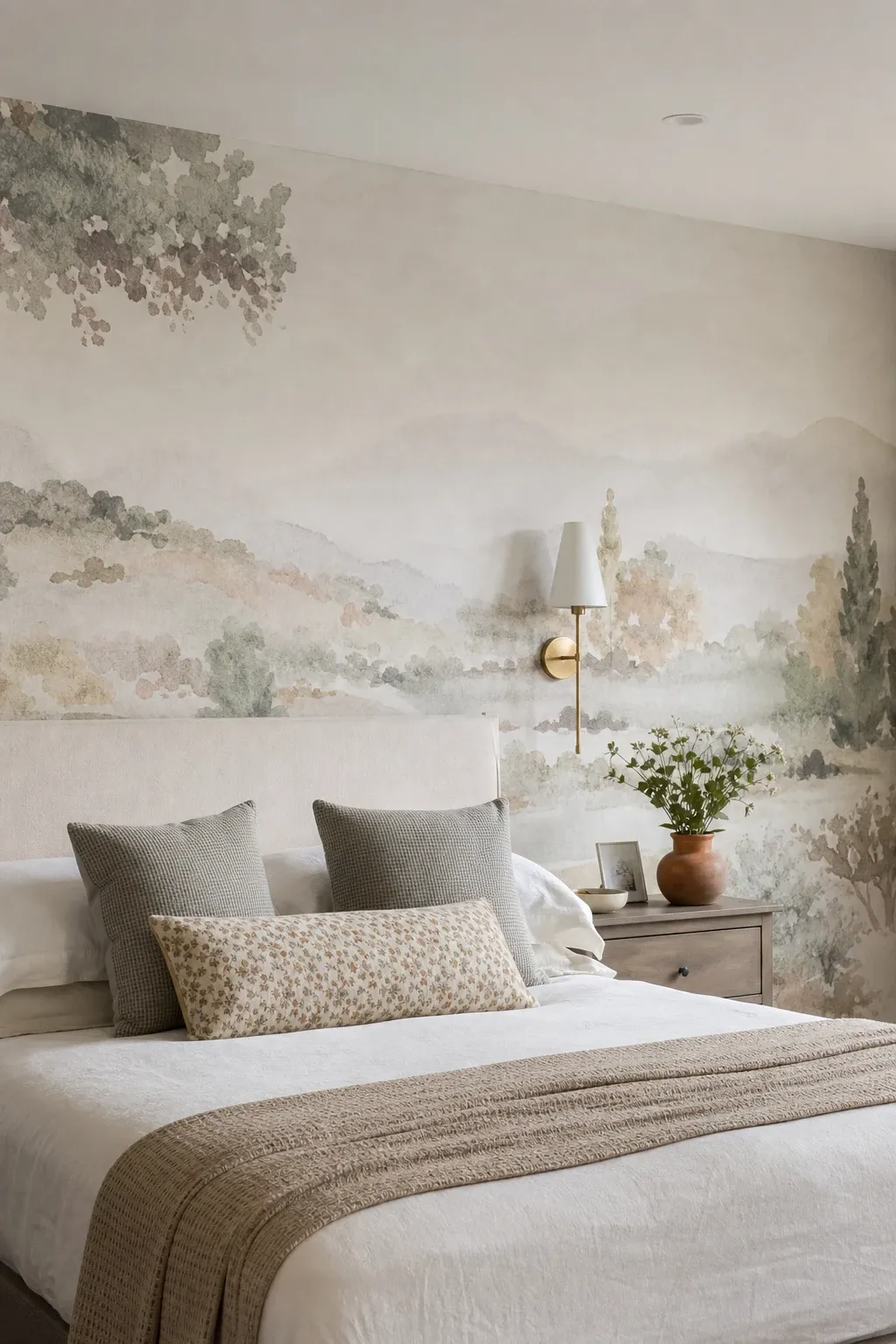
A mural-style wallpaper that covers one wall with a single large image turns the bedroom into something that feels custom designed. Mountain landscapes, abstract watercolors, forest scenes, or skylines printed across the full wall create an immersive backdrop. The mural replaces the need for art on that wall because it is the art. Best used behind the bed where you see it when you walk in but it is not in your direct line of sight while lying down.
Designer Tip: Measure the wall precisely and order the mural sized to fit. Murals that are trimmed too much lose the edges of the image and look cropped rather than intentional. Most mural wallpaper companies will custom size the panels to your wall dimensions.
Peel-and-stick wallpaper removes cleanly without damaging the wall, making it the only real option for renters who want the look of wallpaper without losing their deposit. The quality of peel-and-stick has improved a lot in recent years. Many patterns are now indistinguishable from traditional paste wallpaper once they are on the wall. Apply it in the cooler months when adhesive performs best.
Designer Tip: Clean the wall thoroughly before applying peel-and-stick paper. Dust, oils, and texture from old paint prevent the adhesive from sticking properly. Wipe the wall with rubbing alcohol and let it dry completely before you start.
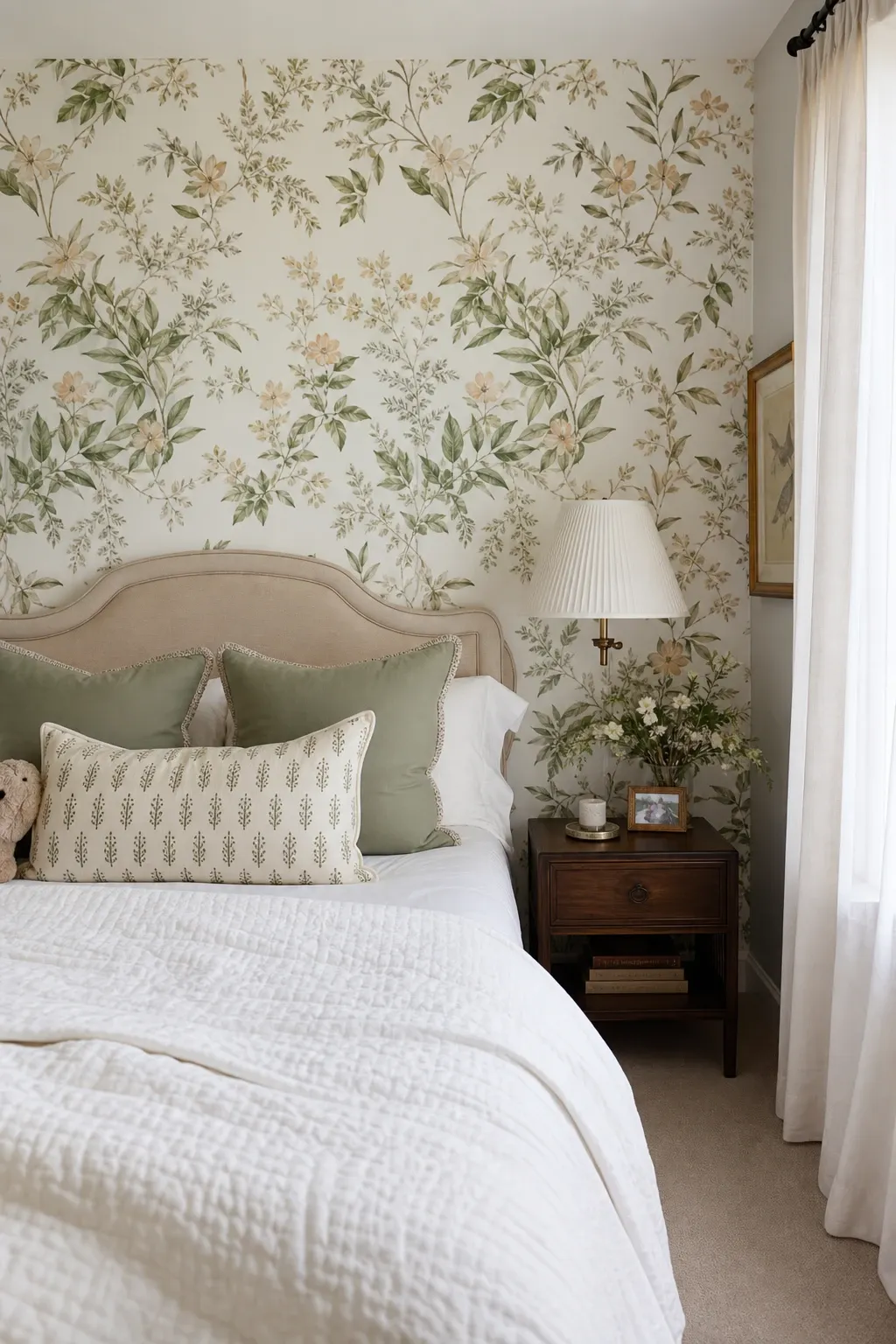
Chinoiserie wallpaper with birds, branches, and blossoms on a soft background creates a serene, elegant bedroom. The hand-painted look of chinoiserie patterns feels like artwork covering the wall. Traditional versions are expensive, but printed reproductions capture the same effect at a fraction of the cost. Blues, greens, and pinks on a white or cream background are the most popular color combinations.
Designer Tip: Let the wallpaper be the only pattern in the room. Chinoiserie is detailed enough that adding patterned bedding or curtains creates visual noise. Solid-colored textiles in a shade pulled from the wallpaper keep the room feeling calm and connected.
Wallpaper with a watercolor wash or abstract brushstroke pattern adds color and movement without the structure of a repeating motif. The soft, blended edges of watercolor patterns are calming and feel artistic. This style works on one wall or all four depending on the intensity of the color. Soft pastels wrap a room gently while saturated colors make a stronger single-wall statement.
Designer Tip: Abstract wallpapers are the most forgiving for installation because there is no precise pattern match between panels. The organic, irregular design hides seams and alignment variations better than any structured pattern.
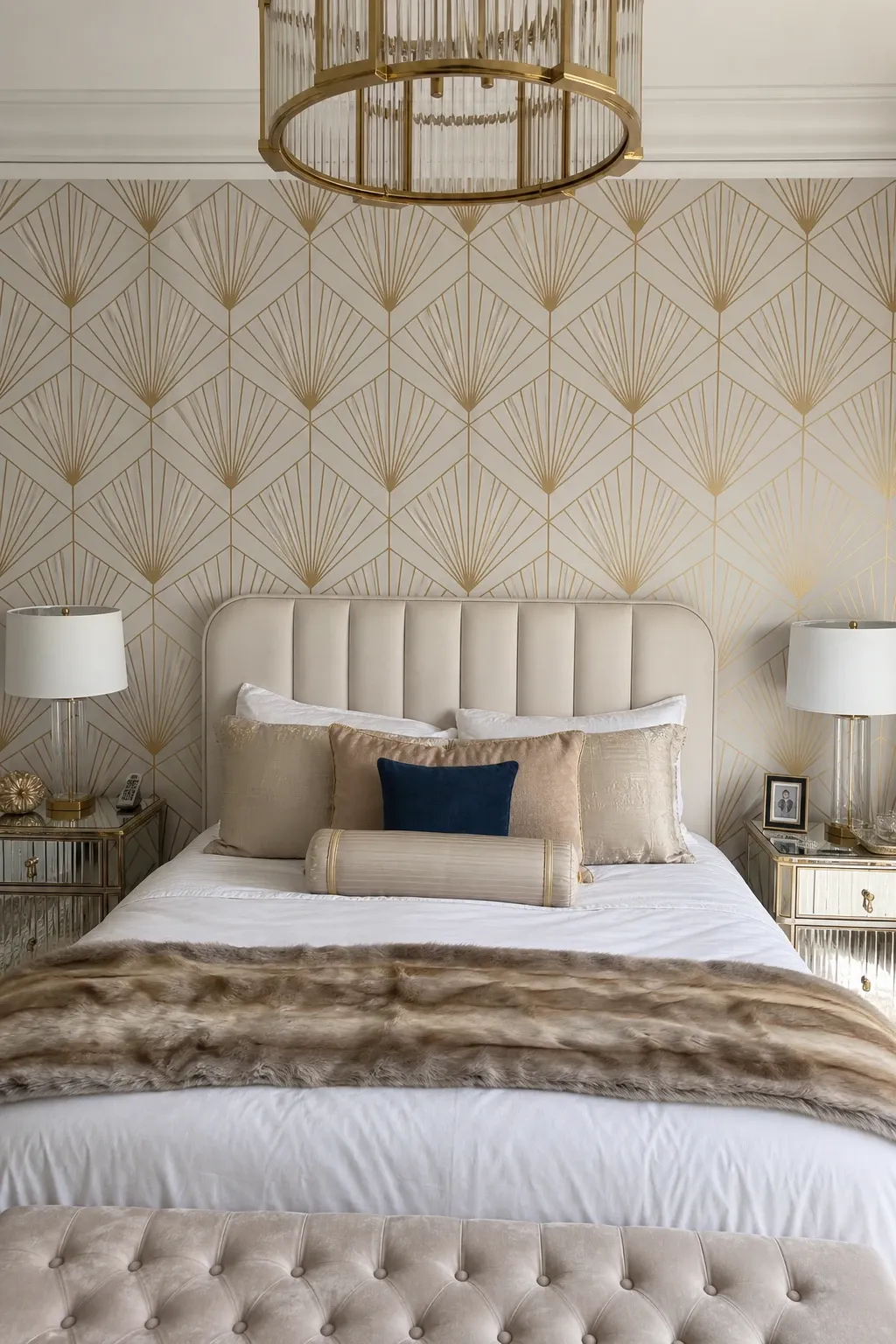
Art deco wallpaper with fan shapes, arches, or geometric gold accents gives the bedroom a glamorous, vintage feel. The bold symmetry of art deco patterns is striking without being fussy. Gold on navy, gold on emerald, or gold on blush are classic art deco color combinations that look rich and intentional. This style pairs well with velvet bedding, brass lamps, and mirrored furniture.
Designer Tip: Metallic elements in wallpaper reflect light differently depending on the angle, so the pattern shifts subtly as you move around the room. Take advantage of this by placing a lamp near the wallpaper wall to highlight the metallic detail at night.
Wallpapering the ceiling instead of the walls is unexpected and creates a canopy effect when you are lying in bed looking up. Stars, clouds, soft florals, or a simple pattern on the ceiling makes the room feel finished in a way that plain white ceilings never do. This approach works especially well in rooms with plain white walls because the ceiling becomes the feature rather than the walls.
Designer Tip: Ceiling wallpaper installation is harder than walls because you are working against gravity. Use a peel-and-stick product for the ceiling if possible, as it is lighter and repositionable. Have a second person help hold the paper in place while you smooth it.
Wallpaper that mimics exposed brick, stone, or concrete gives the bedroom an industrial or rustic loft look without the structural work. Modern versions have realistic texture and depth that photographs well and fools most people at first glance. White-washed brick, natural red brick, and gray stone are the most popular options. Use on one accent wall for the most believable effect.
Designer Tip: Stick to one textured wall. Wrapping an entire room in faux brick wallpaper breaks the illusion because real exposed brick rarely covers every wall in a residential space. One wall looks intentional. Four walls looks like a restaurant.
Wallpapering just the back panels of built-in shelving or a bookcase alcove adds pattern and color in a controlled way. The shelves frame the wallpaper and the items on the shelves partially cover it, so the effect is peeking through rather than overwhelming. This is a good option for people who love the idea of wallpaper but are nervous about committing to an entire wall. It uses very little paper so the cost is low.
Designer Tip: Choose a bold pattern for behind shelving because the small visible sections need to make an impact. A subtle pattern that works on a full wall gets lost behind shelves. Go brighter and bolder than you think you should, and the partially hidden glimpses will look just right.
Ombre wallpaper that fades from a deep color at the bottom to a lighter shade at the top creates a dreamy, atmospheric look. The gradient draws the eye upward and makes the ceiling feel higher. Blue-to-white and blush-to-cream are two popular fades that work in bedrooms. The gradual shift in color is calming and gives the room a sunrise or sunset quality depending on the colors you choose.
Designer Tip: Install ombre panels carefully so the gradient is consistent across the wall. Panels that are misaligned even slightly create visible bands where one panel is darker or lighter than the next. Mark the panels with numbers during unpacking so they go up in the correct order.
The best bedroom wallpaper is the one that makes you happy every time you walk into the room. Do not overthink it. Pick the pattern or texture that draws you in, put it on the wall behind your bed, and live with it. The bedroom is a private space where your personal taste matters more than any trend. Start with one accent wall and see how it feels before committing to more.
Frequently Asked Questions
Should I wallpaper all four walls or just one accent wall?
For bold or busy patterns, one accent wall behind the bed is usually enough. For subtle textures like linen or grasscloth, all four walls work well because the pattern does not compete for attention. The safe move is starting with one wall and adding more later if you want.
Is wallpaper hard to remove?
Peel-and-stick wallpaper removes easily with no damage. Traditional pasted wallpaper requires more effort and sometimes a steamer, but modern paste formulas are designed to release cleanly. Avoid wallpapering over surfaces that were not properly primed, as removal from unprimed drywall can pull the paper face off the wall.
Can wallpaper work in a small bedroom?
Yes. Light-colored wallpaper with a small or medium pattern can actually make a small bedroom feel larger by adding depth and visual interest. Avoid very dark papers on all four walls in a small room, but a single dark accent wall behind the bed adds drama without shrinking the space.
How much wallpaper do I need for one accent wall?
Measure the wall width and height, then add 10 percent for pattern matching and trimming. Most wallpaper rolls cover about 28 square feet. Divide your wall area by 28 to get the number of rolls, then round up. For murals, order the exact wall size from the manufacturer and they will send panels cut to fit.