The cabinet under the sink is where organization goes to die. Pipes take up half the space, cleaning supplies get shoved in randomly, and everything falls over every time you open the door. I finally got fed up with mine and spent an afternoon fixing it with a few cheap organizers. The difference was immediate. Here are 15 under-sink organization ideas that turn that messy cabinet into a space that actually works.
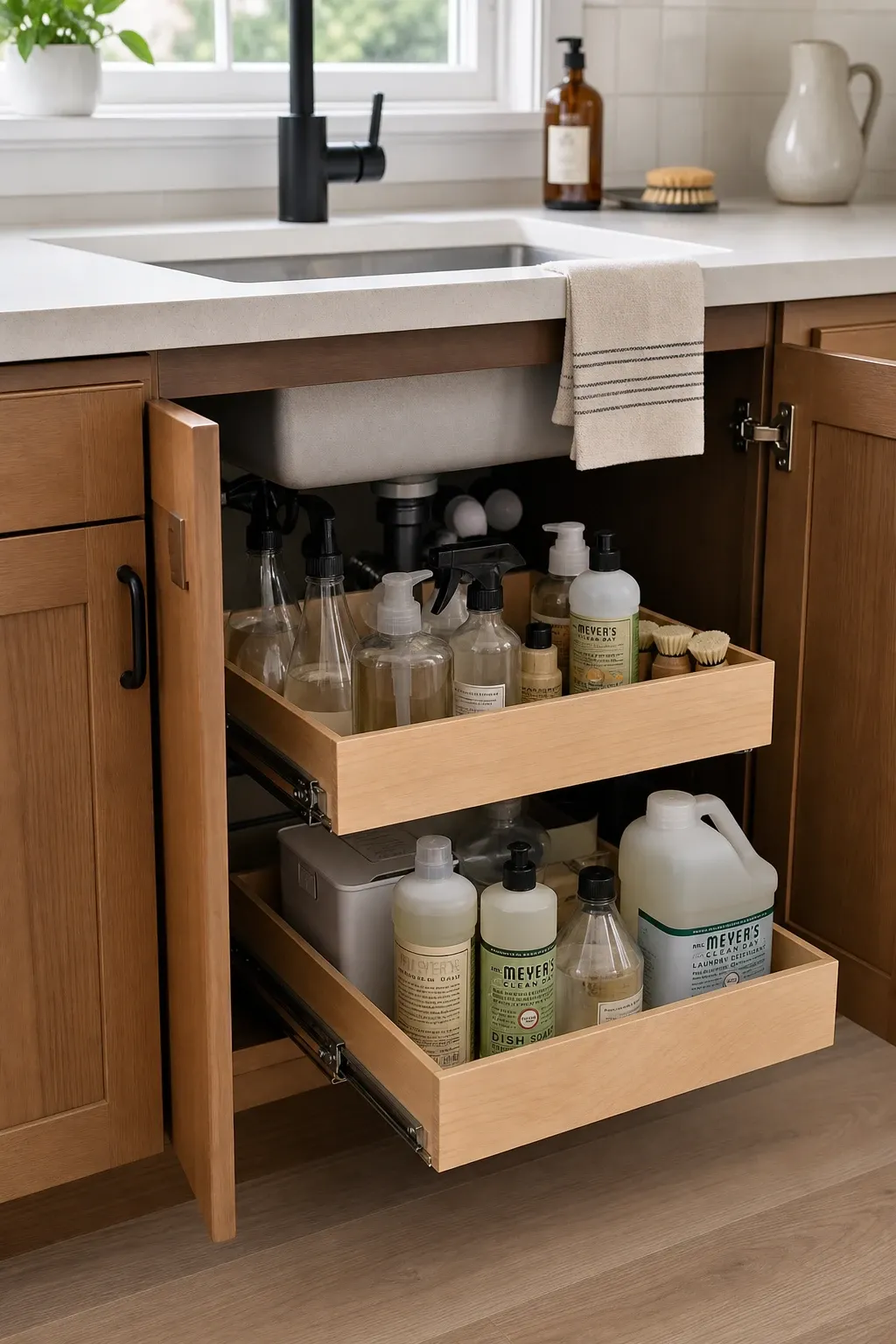
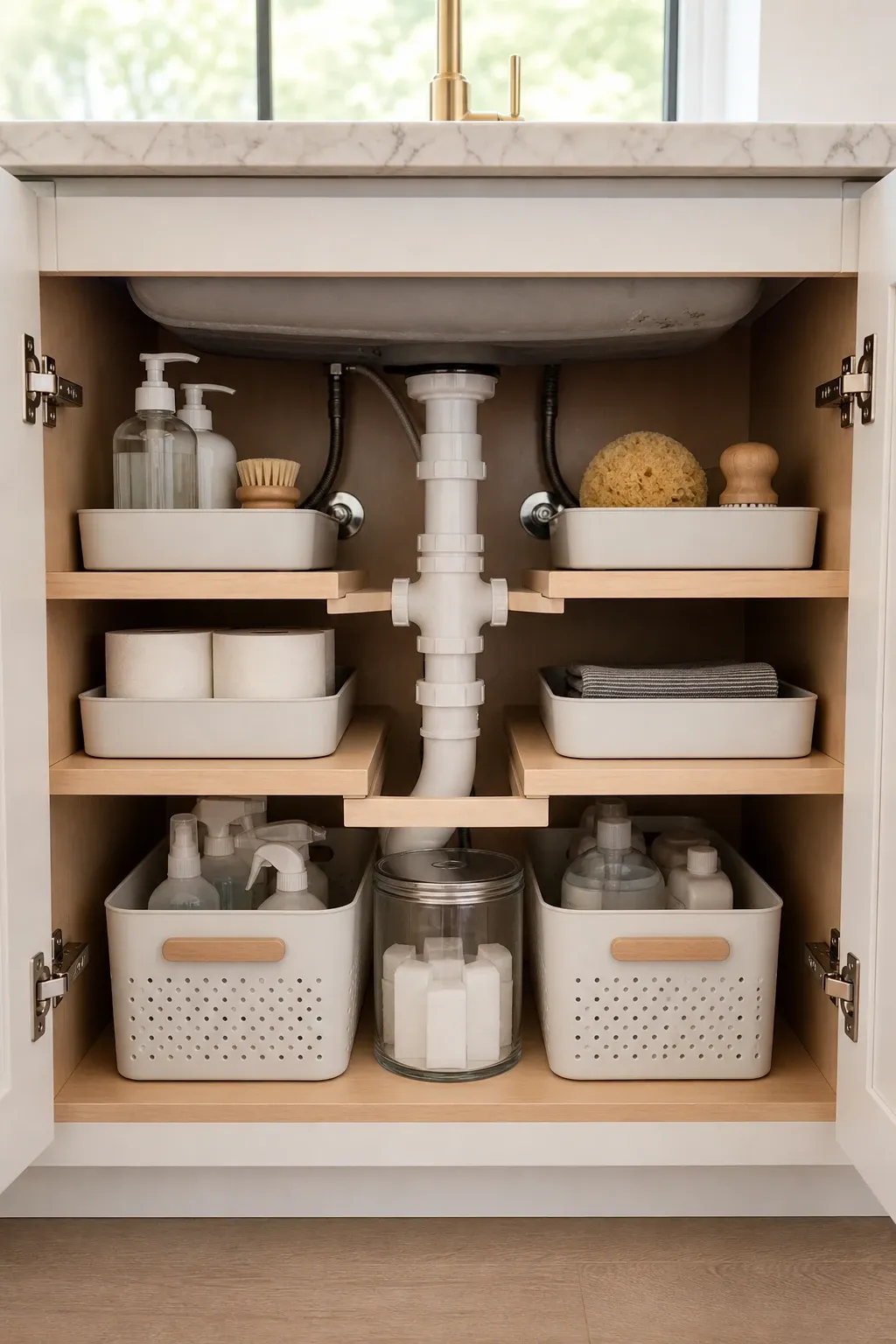
Slide-out shelves on rails let you pull everything out to see what is back there without reaching into the dark. Items in the back of the cabinet finally become accessible. The shelves glide on tracks that mount to the cabinet floor, and most kits fit standard cabinet widths. This is the single most useful under-sink upgrade because it eliminates the black hole at the back of the cabinet.
Designer Tip: Measure around the pipes before buying slide-out shelves. Not all under-sink cabinets have the same pipe layout. Look for shelves with a U-shaped cutout or adjustable width that accommodates the drain pipe in the center.
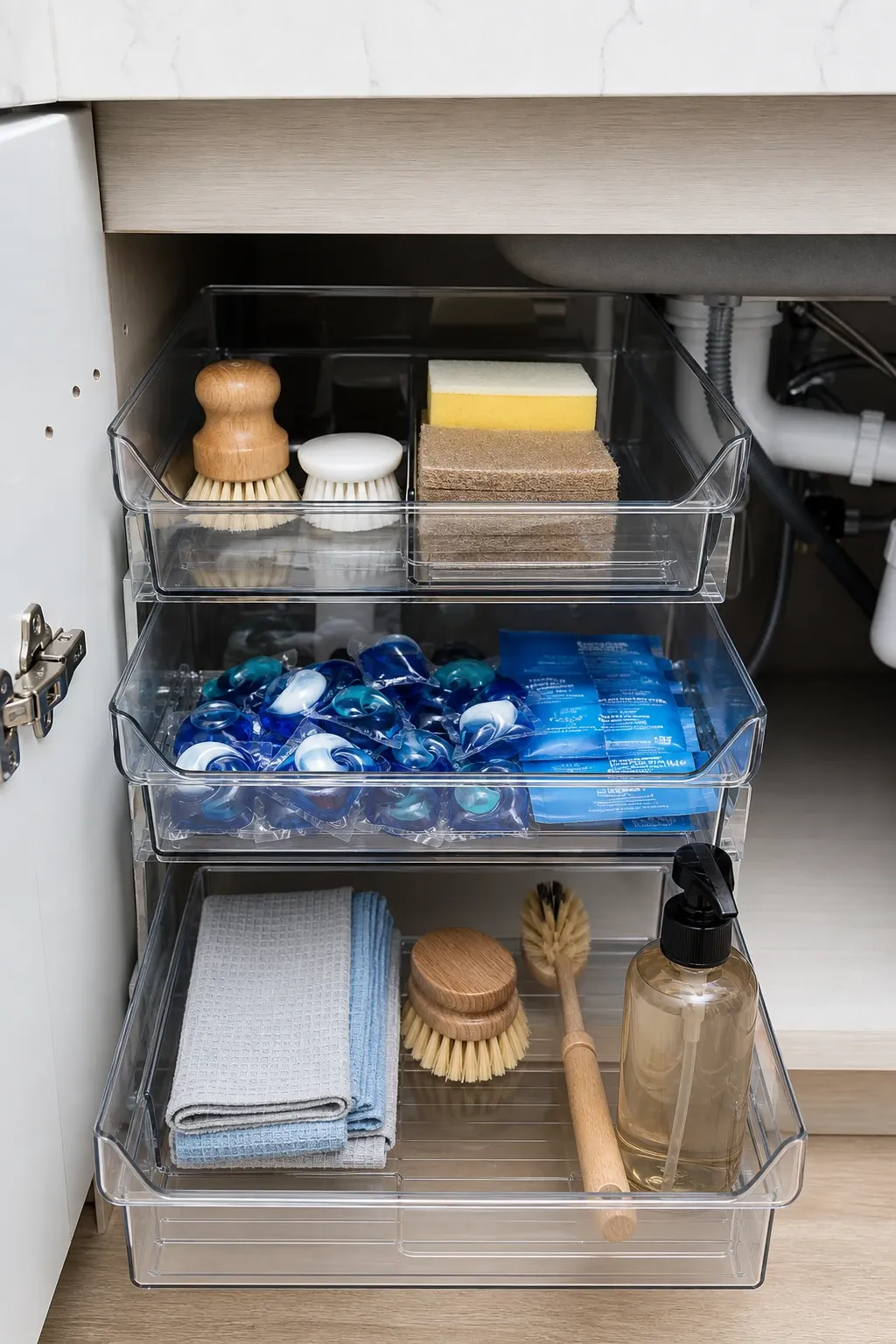
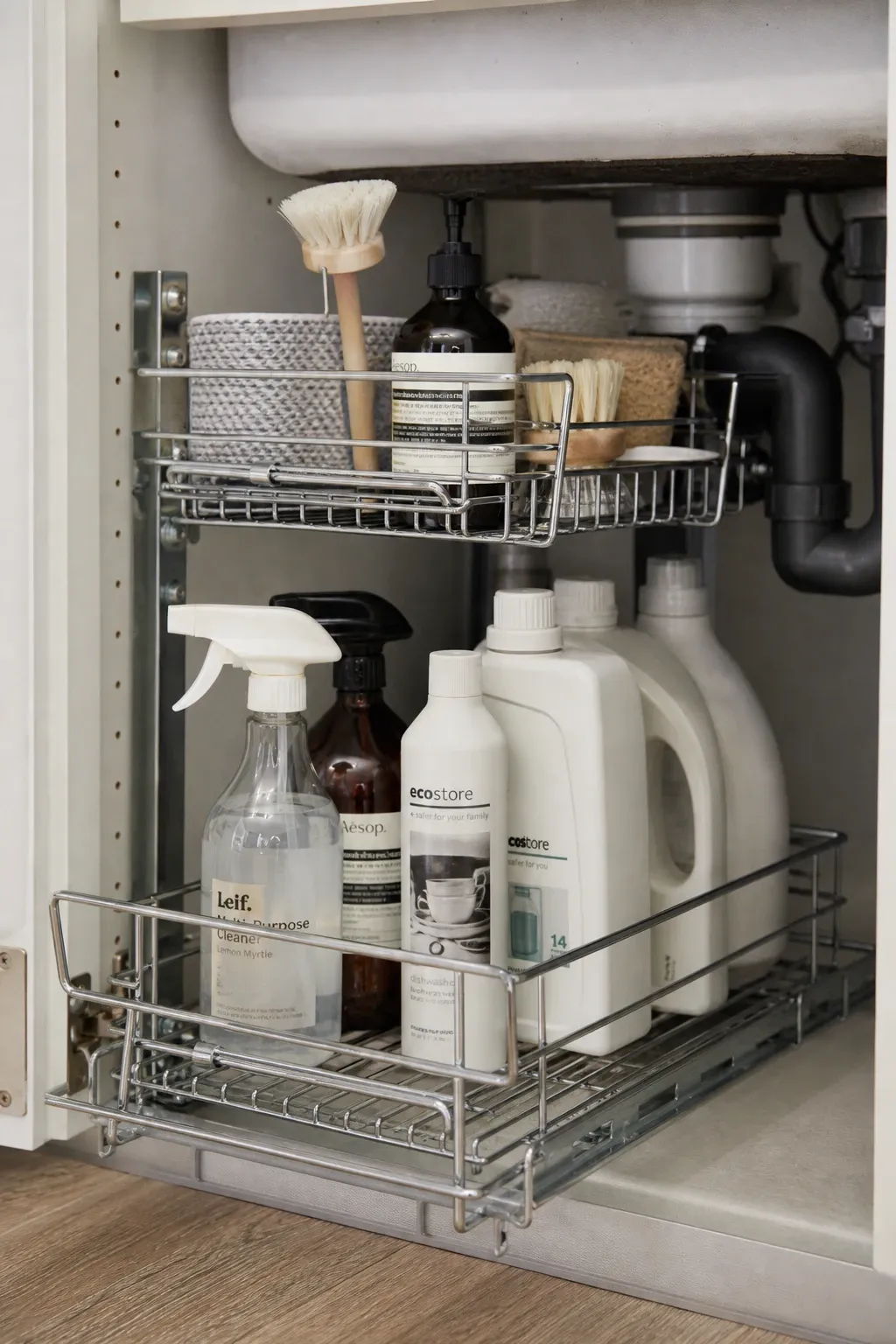
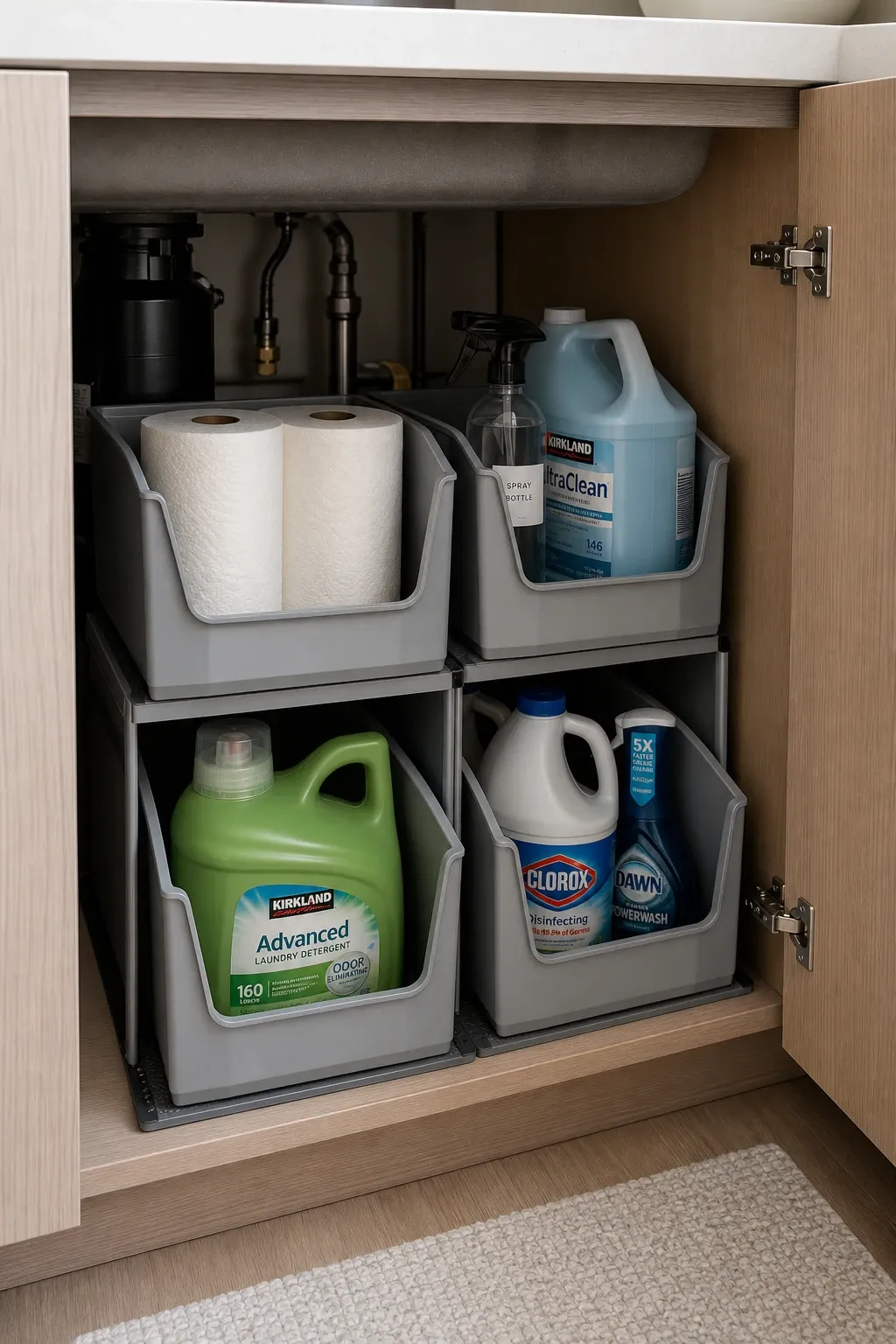
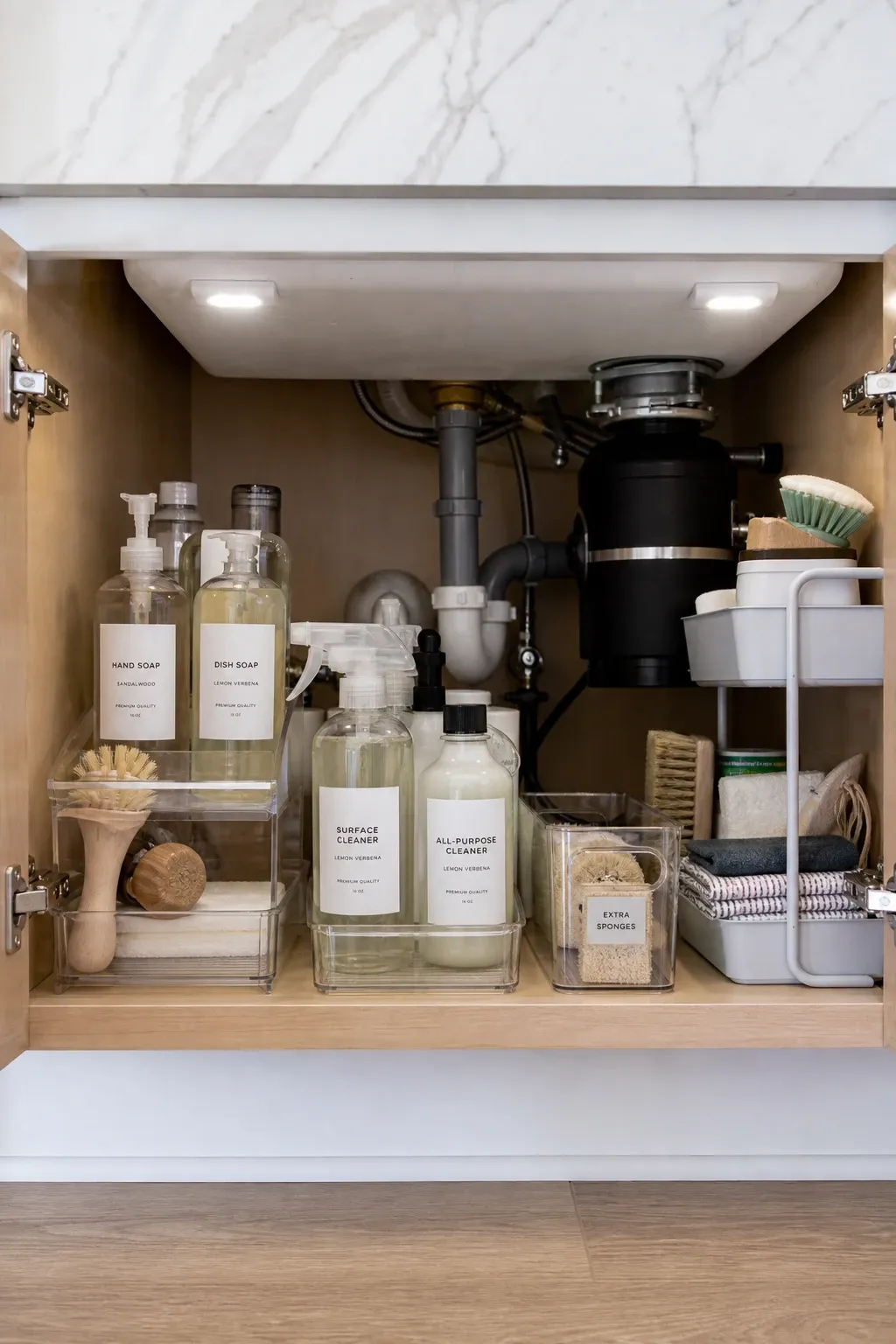
A tiered drawer organizer stacks two levels inside the cabinet, doubling your usable space. The upper tier holds smaller items like sponges, dish soap, and scrub brushes. The lower tier holds taller items like spray bottles and dish detergent. Tiered systems make the most of vertical space that is usually wasted in a single-level cabinet.
Designer Tip: Choose a tiered system where the upper shelf is removable or adjustable in height. Different products have different heights, and a fixed shelf that is too low cuts off tall bottles. Adjustable tiers let you customize the spacing.
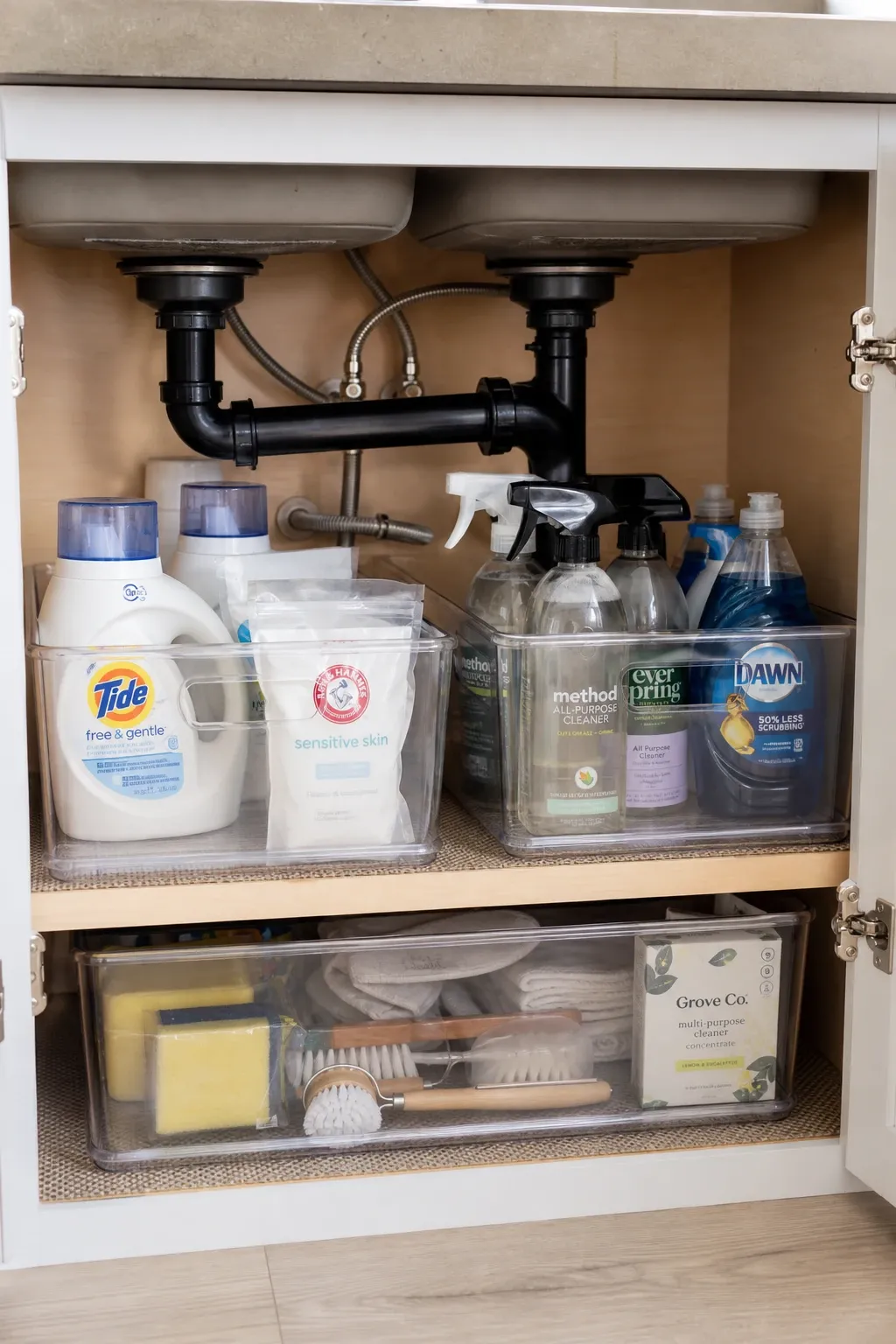
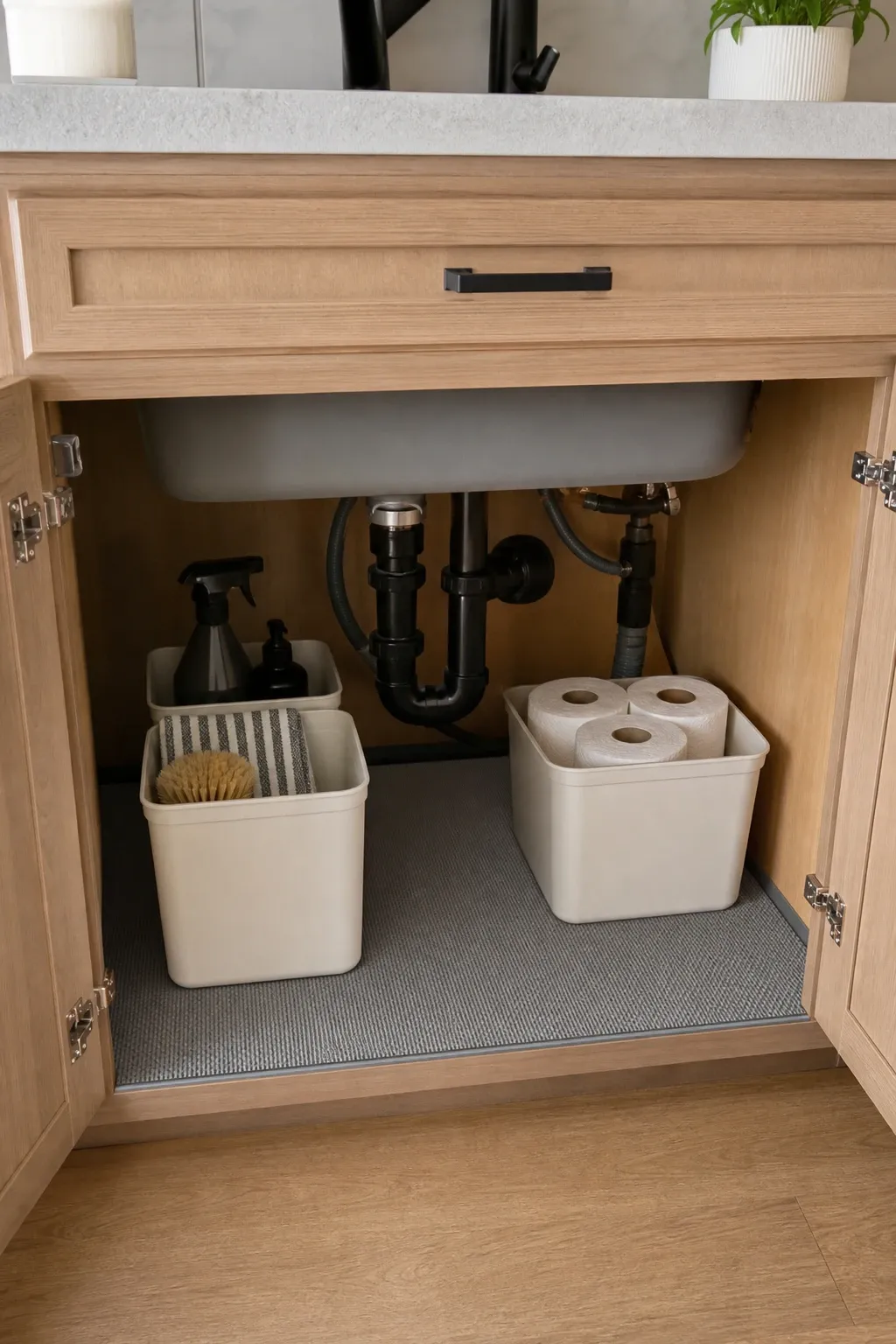
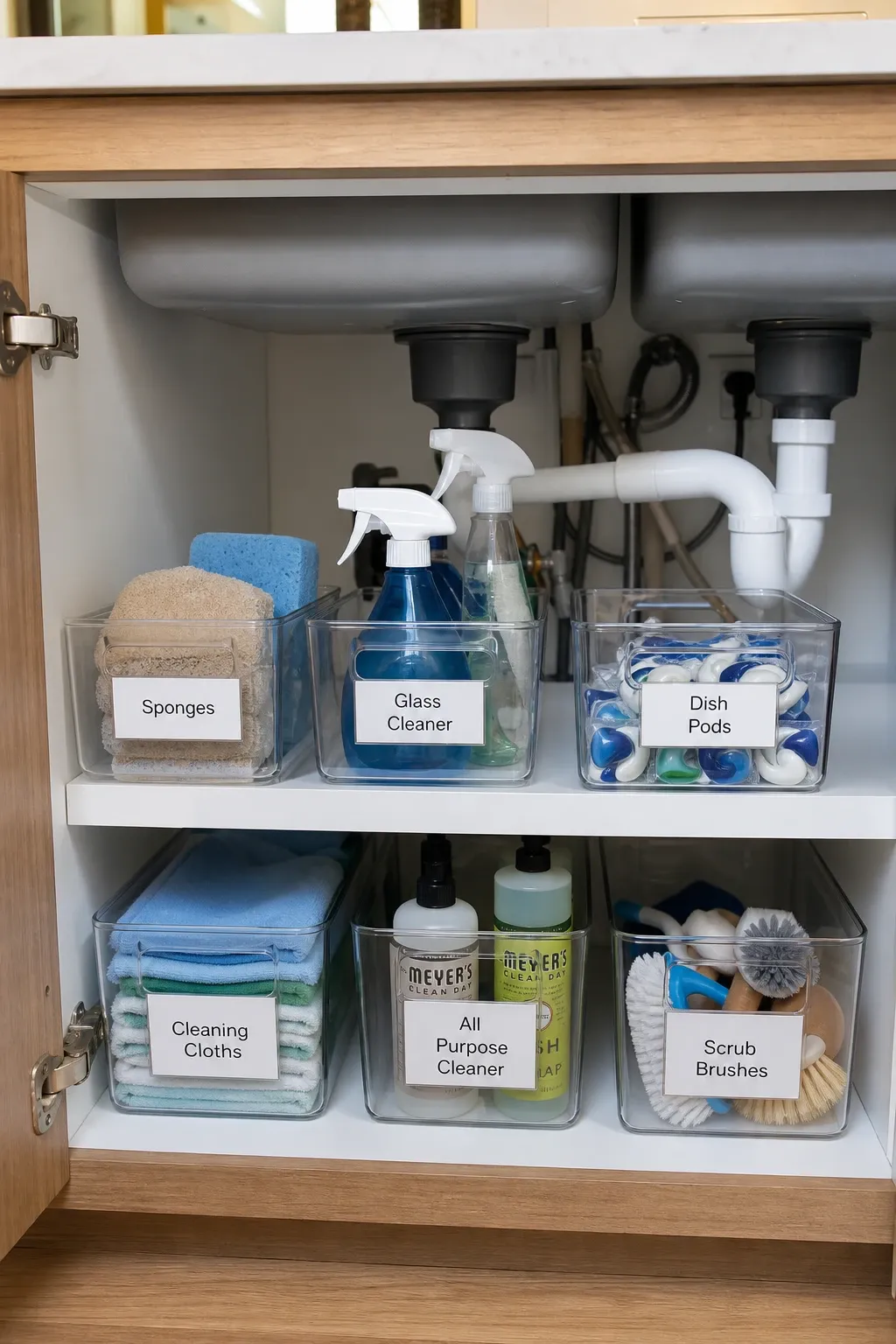
Clear acrylic or plastic bins group similar items together and let you see the contents without opening the bin. One bin for cleaning sprays, one for sponges and brushes, one for trash bags. The bins slide in and out of the cabinet easily, and you can pull the whole bin out to the counter when you need multiple items. Clear bins are cheap, available everywhere, and make any cabinet look organized instantly.
Designer Tip: Buy bins that are the same brand and style so they stack and nest neatly. Mixed bins from different brands in different sizes look messy and waste space because they do not fit together efficiently.
Wire baskets stacked on a small shelf frame create two levels of open storage that is easy to see into and access. The open wire lets air circulate, which helps damp items like sponges dry out between uses. Wire baskets are also rust-resistant when coated and hold up well in the humid under-sink environment. They are a sturdy, no-fuss option that looks clean and organized.
Designer Tip: Line wire baskets with a removable plastic liner if you store small items like packets or loose sponges that would fall through the wire grid. The liner catches small items while still allowing airflow around the basket edges.
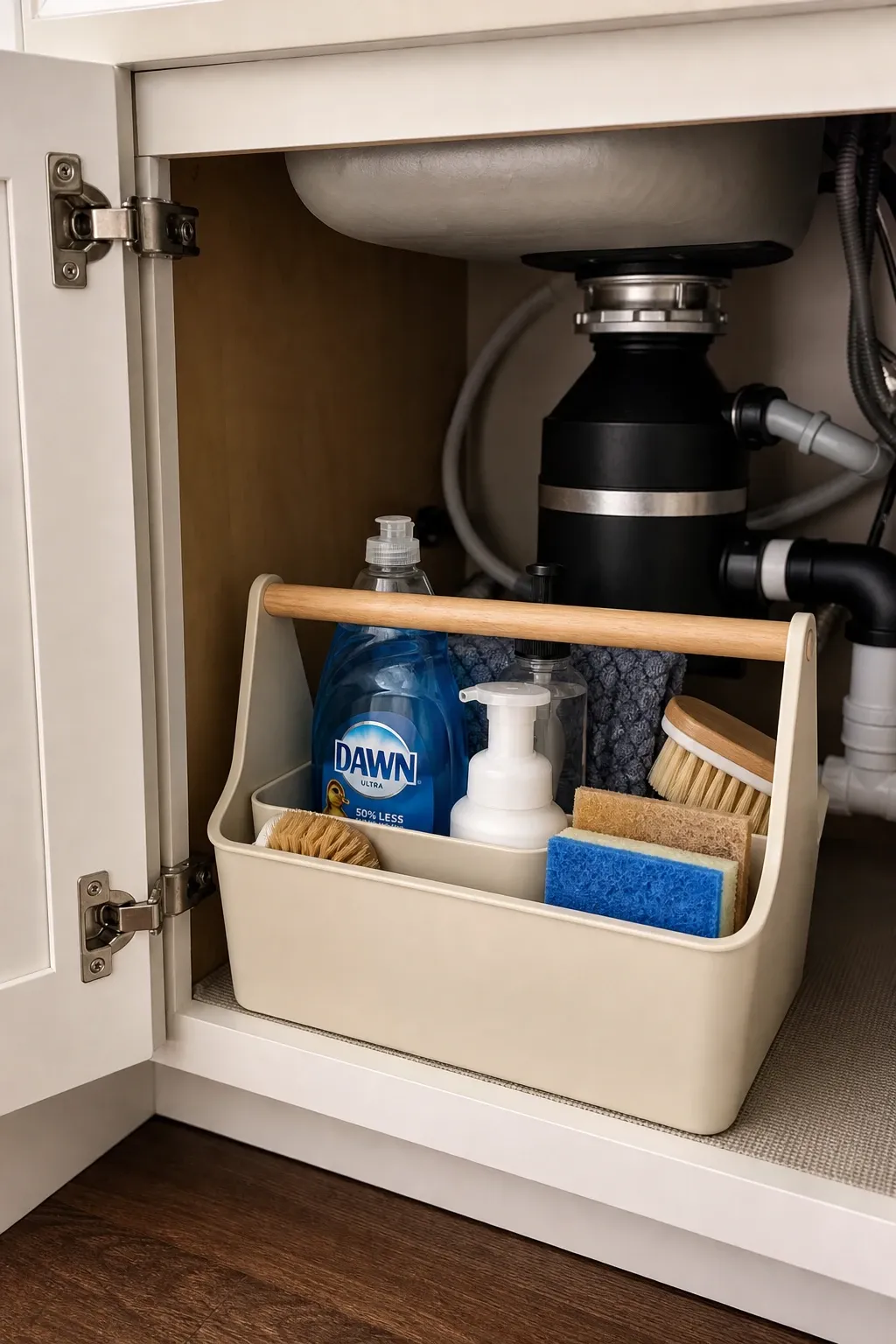
A caddy with a handle that holds your most-used cleaning supplies lets you grab everything at once and carry it to wherever you are cleaning. The caddy lives under the sink when not in use and comes out as a complete cleaning kit. This prevents the constant back-and-forth to the sink cabinet during cleaning sessions. Load it with your spray bottle, rags, scrub brush, and gloves for a grab-and-go setup.
Designer Tip: Keep only your most-used items in the caddy and store seasonal or specialty cleaners separately. A caddy overloaded with fifteen products is heavy and defeats the grab-and-go purpose. Five or six essential items is the right number.
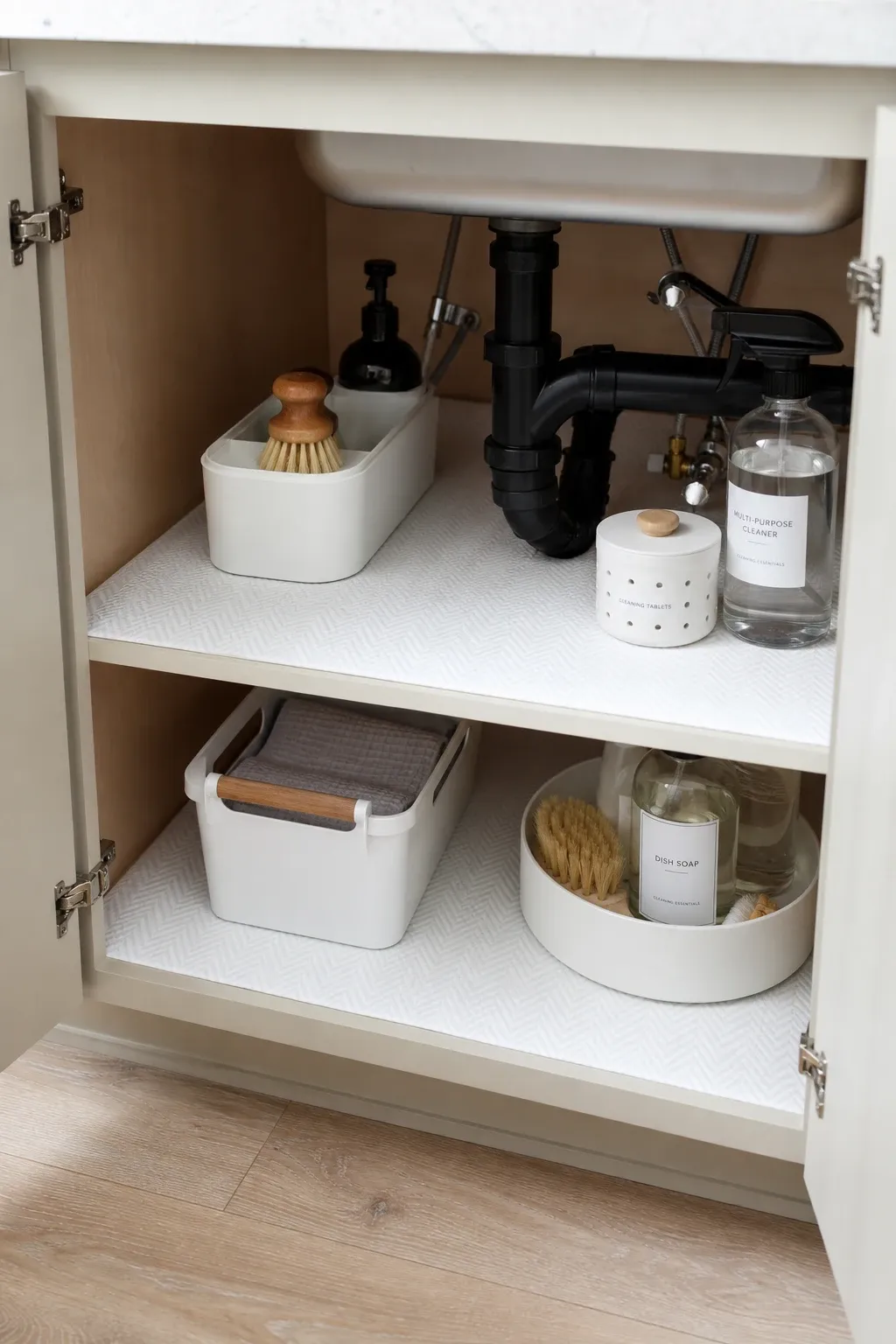
A waterproof mat or tray on the cabinet floor catches drips and spills before they damage the wood. Under-sink leaks are common and often go unnoticed until the cabinet floor is warped or stained. A silicone or rubber mat with raised edges contains small leaks and makes cleanup easy. This is less about organization and more about protecting the cabinet so your organizers have a solid foundation to sit on.
Designer Tip: Choose a mat with a slightly different color than the cabinet interior so you can spot water or drips quickly. A dark mat in a dark cabinet hides leaks. A light gray or white mat makes any moisture immediately visible so you can address it before it causes damage.
Stackable bins with lids use vertical space efficiently for bulkier items like extra sponges, garbage bags, and refill pouches. The lids let you stack bins without items spilling into each other. Label the outside of each bin so you know what is inside without opening. Stacking is the most space-efficient storage method for under-sink cabinets where floor area is limited by pipes.
Designer Tip: Use square or rectangular bins rather than round ones. Round containers waste corner space in a rectangular cabinet. Square bins nest against the cabinet walls and against each other with no wasted gaps between them.
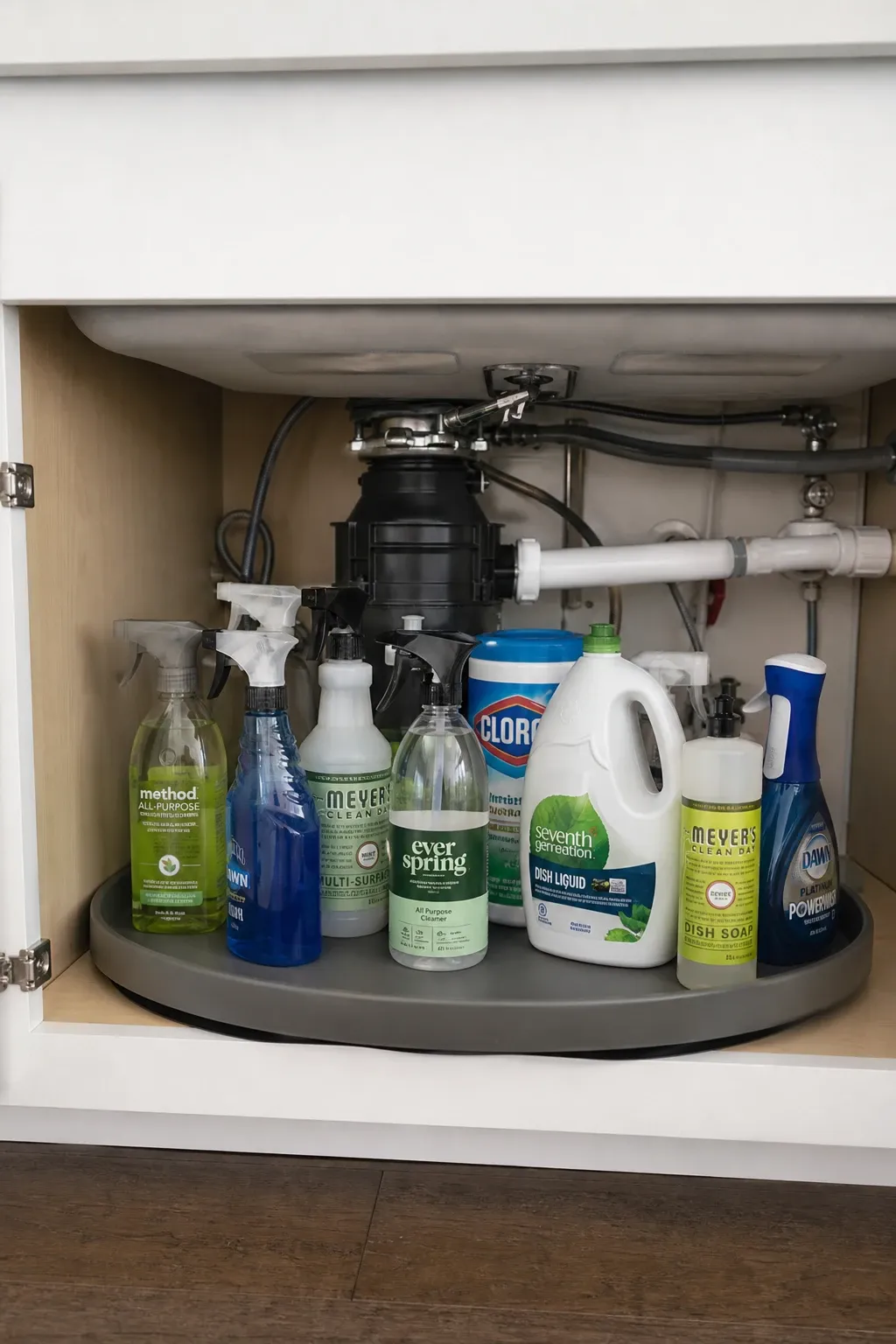
A lazy Susan turntable under the sink lets you spin products to the front instead of reaching around pipes. Place bottles and containers on the turntable and spin to find what you need. This is especially useful in deep cabinets where items at the back are hard to reach. The rotating platform means nothing gets lost behind the pipes because everything comes to you with a spin.
Designer Tip: Get a lazy Susan with a raised lip around the edge to prevent items from sliding off when you spin it. A flat turntable sends bottles flying off the edge every time you give it a good spin. The lip keeps everything contained.
An expandable shelf that adjusts in width and height fits around pipes and customizes to your specific cabinet layout. These shelves extend from about 15 to 25 inches wide and have removable panels to accommodate pipe locations. The adjustable design means one product fits almost any under-sink cabinet regardless of pipe configuration. It adds a second level of storage in the space above your existing items.
Designer Tip: Place heavier items on the shelf legs, not in the center span. The center of an expandable shelf can bow under heavy bottles if the span is wide. Keep the heaviest items near the support legs and lighter items in the center.
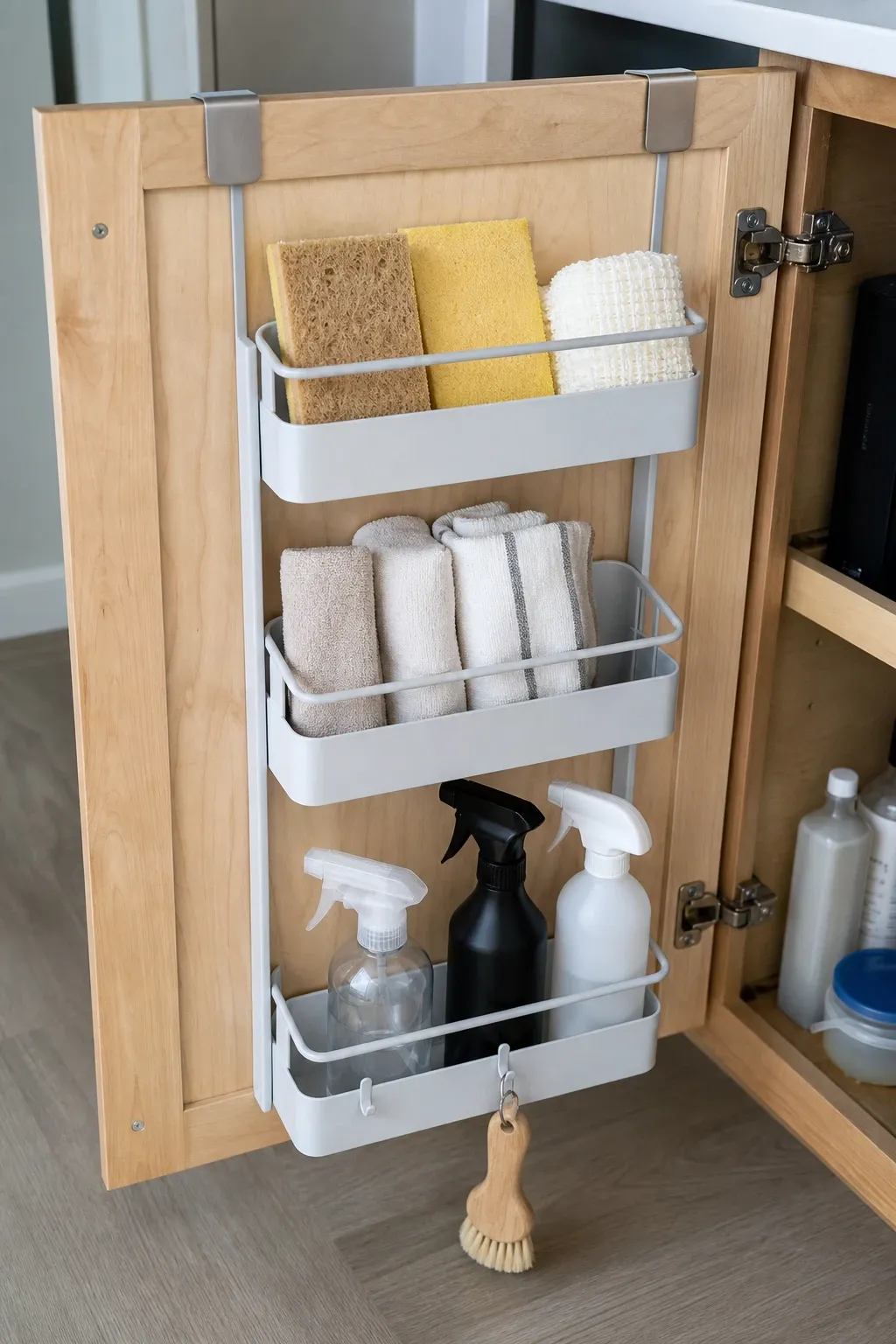
An organizer that hooks over the inside of the cabinet door adds storage without using any floor space inside the cabinet. Use it for flat items like sponges, rubber gloves, trash bag rolls, and small bottles. The door-mounted storage keeps frequently used items visible and accessible the moment you open the cabinet. It is essentially free storage space that most people forget about.
Designer Tip: Check that the door closes completely with the organizer installed. Some over-the-door organizers are too deep and prevent the cabinet door from closing flush. Measure the clearance between the door and the nearest pipe or shelf before buying.
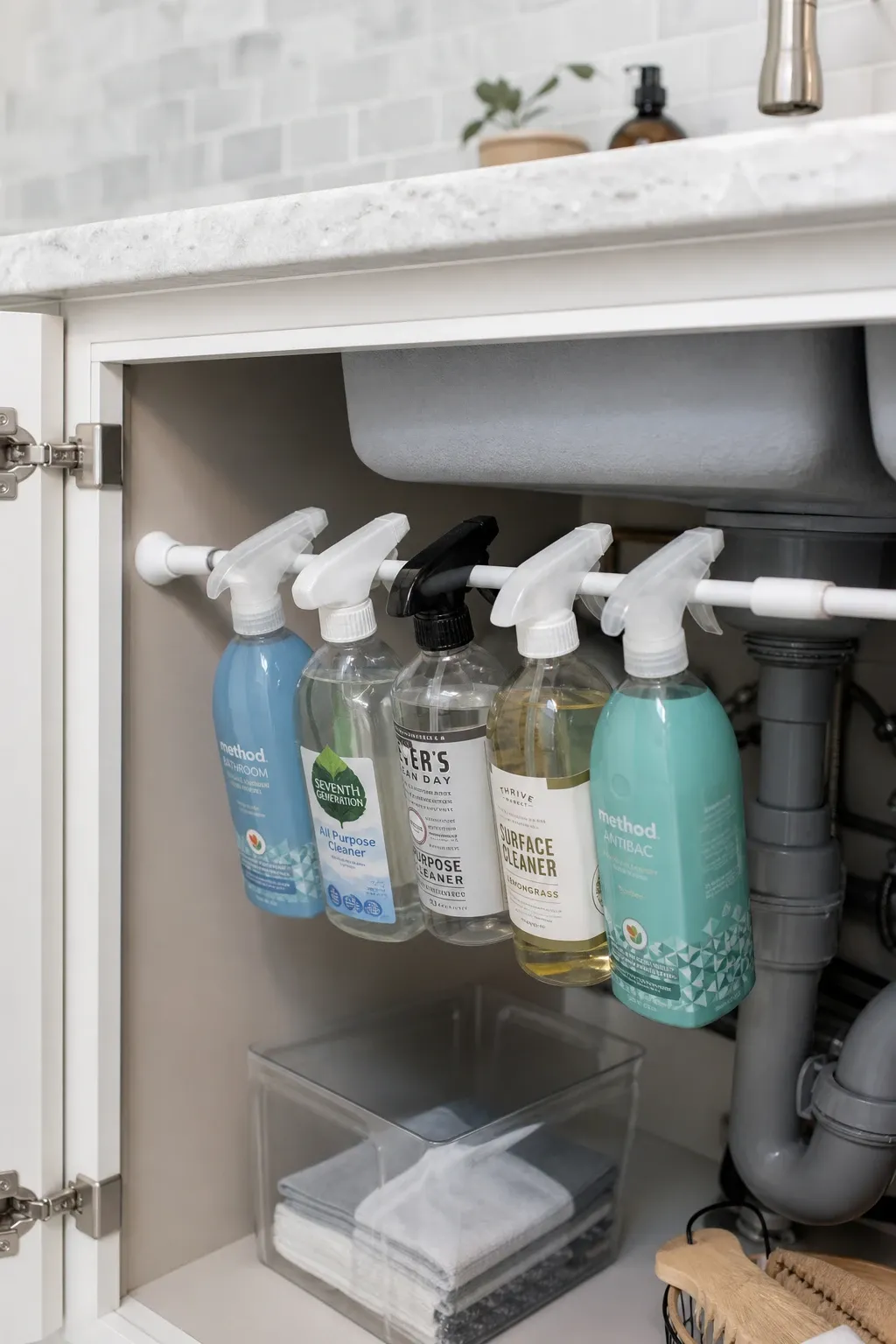
A small tension rod mounted horizontally across the cabinet interior lets you hang spray bottles by their triggers. The bottles hang from the rod with the nozzles down, freeing up the entire cabinet floor. This simple trick is one of the most popular under-sink hacks because it costs a few dollars and creates a surprising amount of space. The spray bottles are also easy to grab when they hang at eye level inside the cabinet.
Designer Tip: Install the tension rod near the top of the cabinet for maximum hanging room. Test the rod tension before loading it with bottles because a rod that pops loose drops everything. Twist the rod tighter than you think is necessary for a secure hold.
Labels on bins, bottles, and containers make the under-sink area organized for everyone in the house, not just the person who set it up. Clear labels mean anyone can find what they need and put things back in the right spot. A label maker or printed adhesive labels look clean and professional. Handwritten labels on painter tape work fine too. The point is that every item has a labeled home.
Designer Tip: Use waterproof labels or coat regular labels with clear packing tape. The under-sink area is damp, and paper labels peel off and smear within weeks. Waterproof labels stay readable and attached in the humid environment.
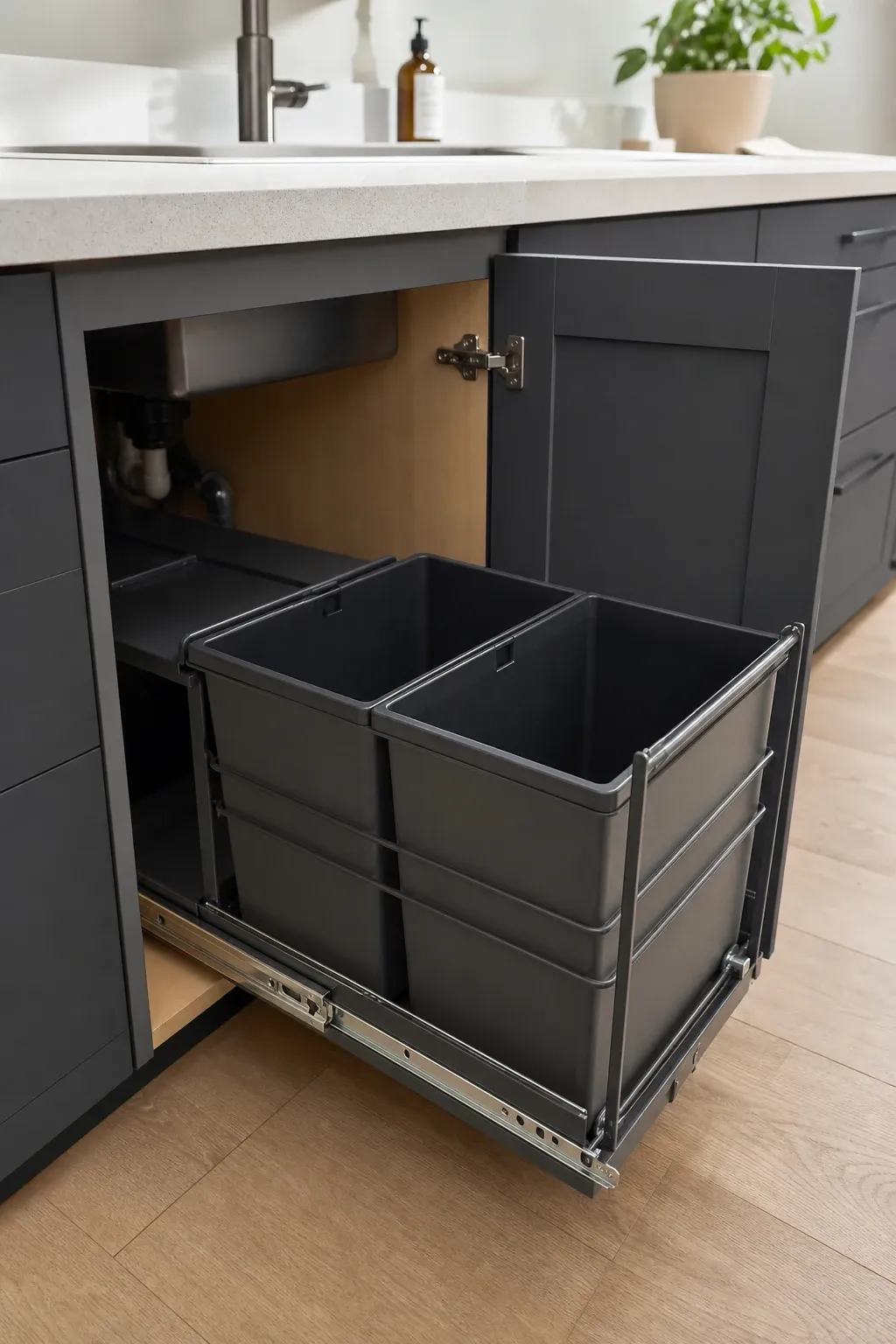
A pull-out trash can mounted to the cabinet door or on a sliding track keeps the trash hidden and accessible. Open the door and the trash can slides out toward you. Close the door and it disappears. This eliminates the freestanding kitchen trash can that takes up floor space and is always in the way. Some pull-out systems include a second smaller bin for recycling.
Designer Tip: Choose a pull-out trash can with a capacity of at least 10 gallons. Smaller bins fill up too fast and need emptying constantly. The under-sink space can usually accommodate a 10 to 13 gallon bin if you plan the rest of the storage around it.
A small battery-powered LED light stuck to the inside top of the cabinet makes it easy to see everything inside. Under-sink cabinets are notoriously dark, and a small light changes everything. Motion-activated models turn on when you open the door and off when you close it. The light makes the cabinet look better and helps you find things without digging around in the dark.
Designer Tip: Place the light near the front of the cabinet, not the back. A front-mounted light illuminates the interior without casting shadows from items in the front blocking the light. Stick-on LED puck lights or strip lights both work well.
A waterproof shelf liner on the cabinet floor protects the wood from drips, spills, and product residue. The liner is easy to remove and clean when it gets dirty. It also prevents items from sliding around inside the cabinet every time you pull something out. Shelf liner is a cheap first step that makes the cabinet easier to maintain and protects your investment in organizers by keeping the surface underneath clean and dry.
Designer Tip: Cut the liner to fit precisely around the pipes and cabinet walls. Liner that is roughly trimmed and bunched up in corners looks messy and defeats the purpose of organizing. Take the extra five minutes to cut it neatly for a professional-looking result.
Under-sink organization is one of those projects that takes an hour and pays off every day. Pick two or three ideas from this list that solve your biggest annoyances, order the supplies, and set aside a Saturday morning. The cabinet will go from a mess you avoid looking at to a space that works smoothly every time you open it.
Frequently Asked Questions
How do I organize around the pipes under the sink?
Use organizers designed for under-sink use that have cutouts, adjustable widths, or U-shaped openings for pipes. Expandable shelves and lazy Susans with removable sections both work around pipe obstacles. Measure your pipe layout before buying and look for products specifically marketed for under-sink use.
What should I store under the kitchen sink?
Dish soap, cleaning sprays, sponges, scrub brushes, rubber gloves, trash bags, and a small trash or recycling bin. Keep items you use daily at the front and items you use less often at the back. Avoid storing food items under the sink because the humidity and proximity to cleaning chemicals is not ideal.
How do I prevent mold under the sink?
Fix any leaks immediately. Use a waterproof mat or liner on the cabinet floor. Allow air circulation by not packing the cabinet too tightly. Wipe up any moisture you notice right away. Check the pipes and connections monthly for slow drips that might go unnoticed.
What is the best under-sink organizer for a small cabinet?
A tension rod for spray bottles combined with an over-the-door organizer gives you the most storage in the smallest footprint. Both use space that is otherwise wasted, the upper interior and the door back, without taking any floor space inside the cabinet. Add one small bin on the floor for remaining items and the small cabinet is fully organized.