Lighting is one of those things that can make or break a farmhouse dining room. I learned this the hard way after installing a fixture that was way too small for our table. It looked lost up there, and dinner felt like eating under a flashlight. The right light changes everything about how a room feels, especially a room where people gather to eat. Here are the farmhouse lighting ideas that actually deliver the warm, inviting mood you are going for.
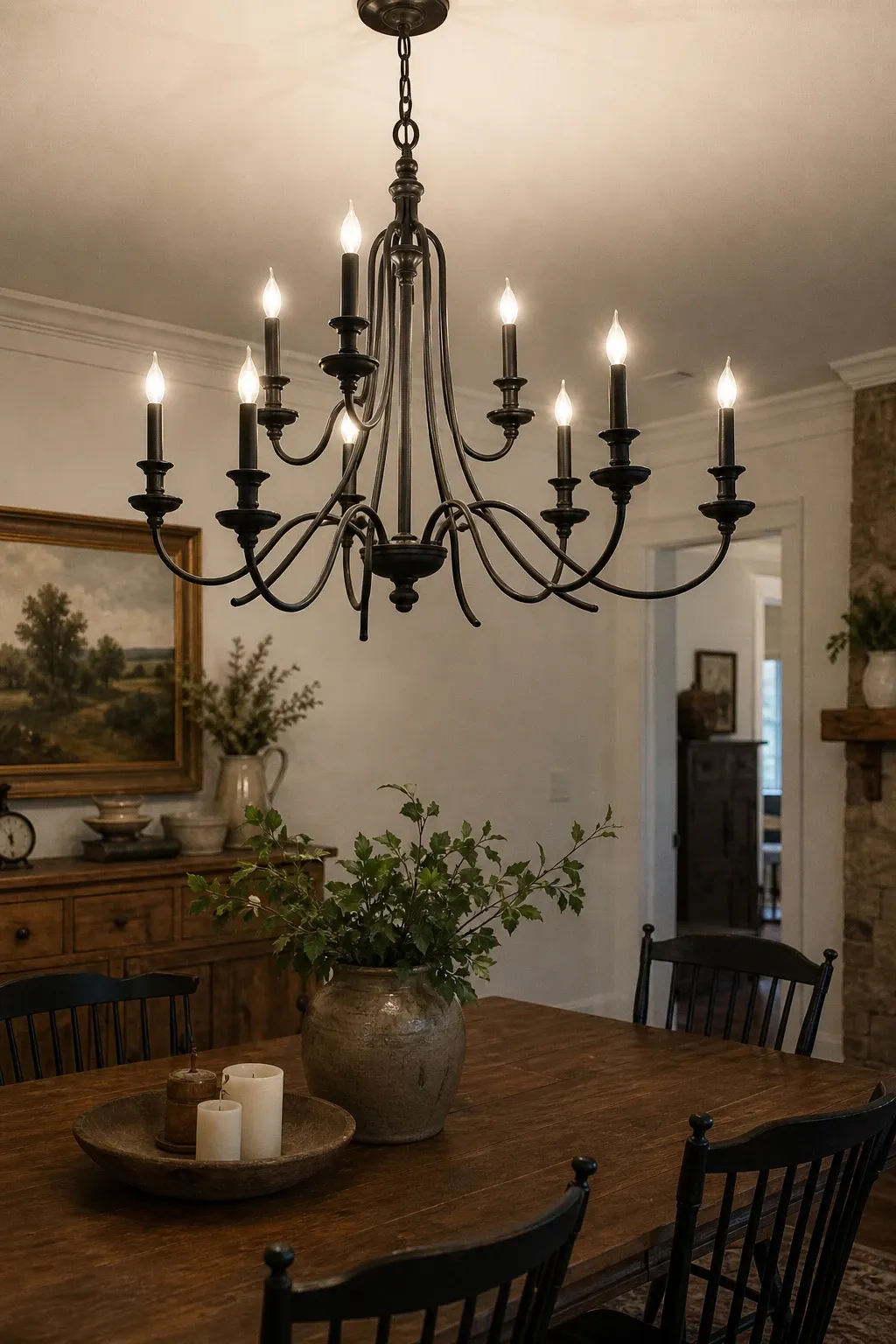
A wrought iron chandelier is the classic farmhouse dining room fixture. The dark metal, simple lines, and candle-style lights give off a timeless feel that suits both rustic and modern farmhouse rooms. Look for one with a ring or wagon wheel shape for maximum impact. These fixtures are heavy and substantial, which makes them a natural anchor point over a big dining table.
Designer Tip: Choose a chandelier that is about half to two-thirds the width of your table. Anything smaller looks like it is floating without purpose.
2. Woven Rattan Pendant
A rattan or wicker pendant adds warm texture and a relaxed coastal farmhouse vibe. The woven material filters light beautifully and casts interesting shadow patterns on the walls and ceiling. One large rattan pendant centered over the table works well, or you can hang two smaller ones side by side over a longer table. These pendants are lightweight and affordable, making them an easy swap if you want a quick room refresh.
Designer Tip: Pair a rattan pendant with warm LED bulbs in the 2700K range. Cool white light kills the cozy effect that woven fixtures are meant to create.
3. Linear Chandelier
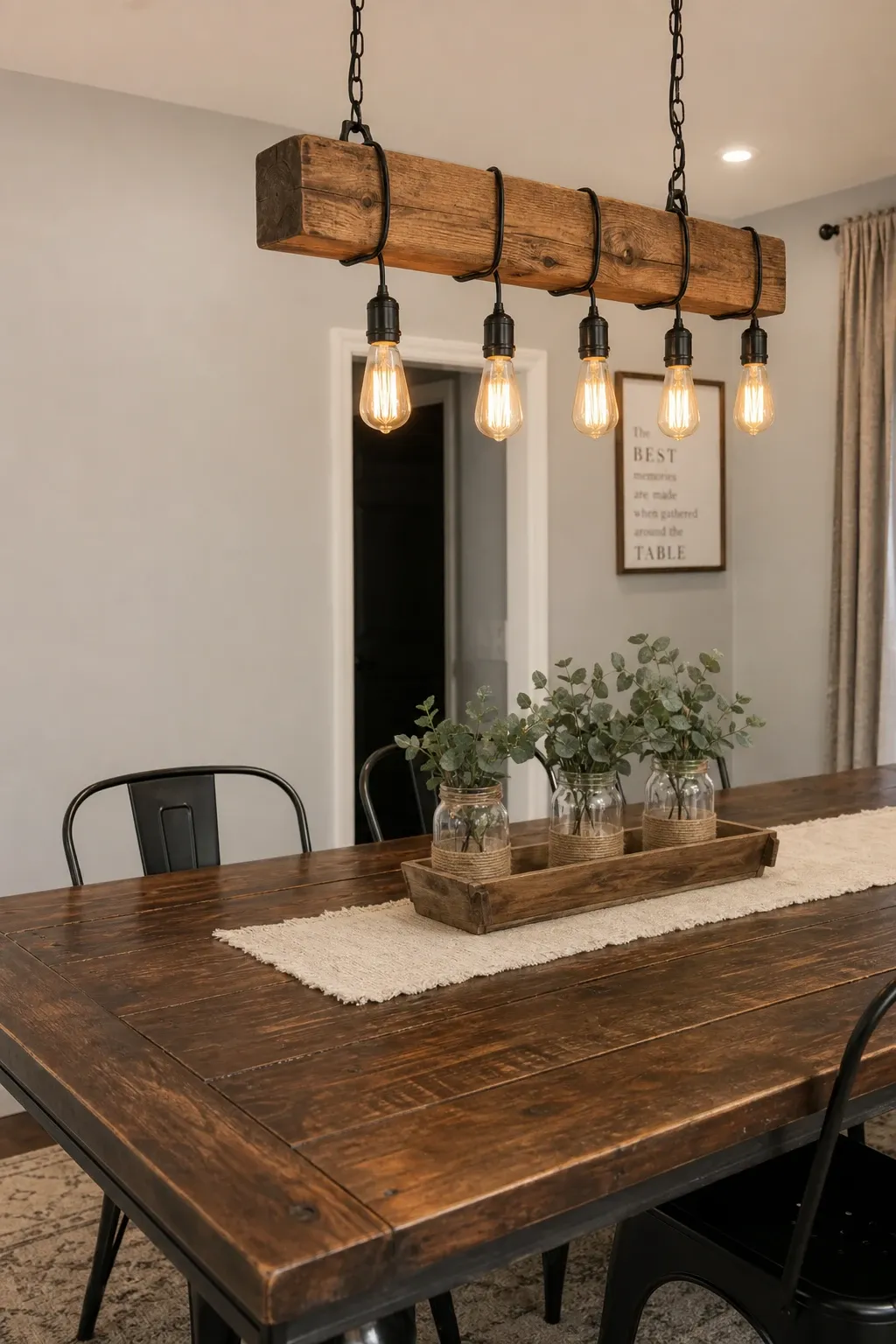
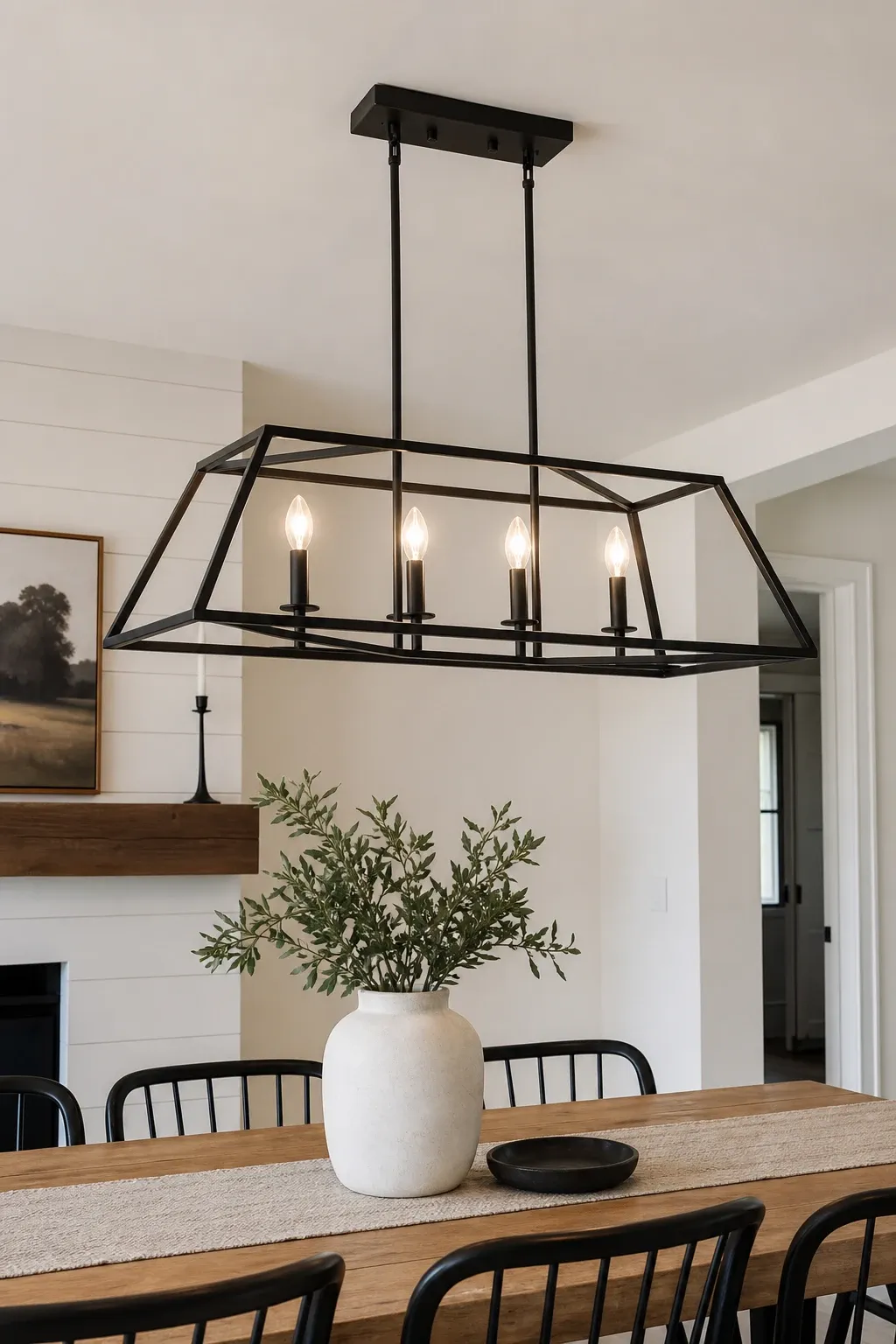
A linear chandelier is basically a long, rectangular fixture designed to run along the length of your dining table. It provides even light across the whole table rather than concentrating it in one spot. Farmhouse versions often feature a wood beam or distressed metal frame with exposed bulbs or small shades. This style works exceptionally well over rectangular tables that are six feet or longer.
Designer Tip: The fixture should be about two-thirds the length of your table and hang 30 to 36 inches above the surface for the best proportions.
Mason jar lights are a fun, budget-friendly option that screams farmhouse. You can buy pre-made mason jar chandeliers or make your own with jar pendant kits. A cluster of three to five jars at staggered heights creates a charming focal point. Clear jars show off the bulb filament while frosted or tinted jars soften the light. This is a great project if you like DIY and want a fixture nobody else has.
Designer Tip: Use Edison-style filament bulbs in clear mason jars. The decorative filament becomes part of the design and adds to the vintage farmhouse feel.
5. Drum Shade Pendant
A drum shade in linen, burlap, or cotton gives a softer, more polished farmhouse look. The fabric shade diffuses light evenly and adds warmth without the brightness feeling harsh. A natural linen drum shade in cream or oatmeal works with almost any farmhouse color scheme. This is a good choice if wrought iron or rustic metal feels too heavy for your dining room.
Designer Tip: Get a drum shade with a diffuser on the bottom if the bulb is visible from your seated eye level. Nobody wants to stare into a bare bulb during dinner.
6. Lantern Style Pendant
Lantern pendants bring an old-fashioned charm that fits right into farmhouse style. Shaped like traditional carriage lanterns or oil lanterns, these fixtures enclose the bulb in a glass and metal cage. They look especially good in entryways and dining rooms with higher ceilings. A pair of matching lantern pendants over a long table creates a balanced, stately look that feels collected and intentional.
Designer Tip: Clear glass panels in a lantern pendant show off the bulb and maximize light output. Seeded glass diffuses the light slightly and adds more texture and visual interest.
7. Beaded Chandelier
Wood bead chandeliers have become a staple in farmhouse and boho-farmhouse dining rooms. The natural wood beads draped in loops or tiers add organic texture and a casual elegance. White-washed beads keep things light and airy, while natural or gray-washed beads feel more grounded. These chandeliers work best in rooms with neutral walls where the beaded texture can really stand out.
Designer Tip: Dust bead chandeliers regularly with a soft cloth or duster. The beads collect dust quickly and dusty wood beads lose their visual appeal fast.
8. Pulley System Pendant
A pulley pendant light is a nod to old barn and industrial mechanics. The exposed pulley wheel at the top with a rope or chain running through it adds a functional, vintage detail. Some pulley lights are actually adjustable in height, which is a nice practical feature. This fixture is a conversation starter and fits perfectly in dining rooms with other industrial farmhouse elements like metal chairs or reclaimed wood shelving.
Designer Tip: If the pulley mechanism is just decorative, make sure the cord is securely anchored at the ceiling mount. A pulley that swings freely looks unsafe even if it is not.
A traditional candle-style chandelier with taper candles, either real or electric, creates the most romantic farmhouse dining atmosphere. Real candles at dinner are unmatched for ambiance, but battery-operated taper candles with timers are the practical option for everyday use. An iron or wood candle chandelier with six to eight arms is the sweet spot for most dining tables.
Designer Tip: If using real candles, place a drip tray or clear disc under each candle to catch wax. Cleaning hardened wax off a dining table or the chandelier itself is not fun.
10. Layered Lighting With Sconces and Overhead
The best farmhouse dining rooms do not rely on a single fixture. Layering your lighting with a main chandelier or pendant over the table plus wall sconces on one or both sides of the room creates depth and warmth. The overhead light handles task lighting for eating, while the sconces provide ambient glow. Add a dimmer switch to both and you can set the mood from bright family dinner to soft evening drinks without moving from the table.
Designer Tip: Install dimmers on separate switches for overhead and sconce lights so you can control each layer independently. That flexibility is what makes layered lighting actually useful.
Good lighting does more for a farmhouse dining room than almost any other single change. Pick a fixture that fits the scale of your table, use warm bulbs, and add a dimmer. Those three things alone will make your dining room feel like the kind of place where people want to sit and stay a while.
Frequently Asked Questions
How big should a dining room chandelier be?
A good rule is to add the length and width of your dining room in feet and convert that number to inches. That gives you the approximate diameter for your fixture. For example, a 12 by 14 foot room calls for a chandelier about 26 inches wide. Over a table specifically, aim for half to two-thirds the table width.
What color temperature is best for farmhouse dining lighting?
Warm white bulbs in the 2700K to 3000K range are ideal. This temperature gives off a soft, golden glow that complements natural wood tones and warm wall colors. Avoid anything above 4000K in a dining room because it creates a cold, clinical feel that is the opposite of farmhouse cozy.
Can I use a ceiling fan with a light in a farmhouse dining room?
You can, but choose carefully. A ceiling fan over a dining table works in warm climates where air circulation matters. Look for a farmhouse-style fan with wood blades and a simple light kit. Make sure the fan is sized appropriately for the room and that the blades clear any tall centerpieces or candles on the table.
How many light sources should a farmhouse dining room have?
Three is a solid number to aim for: one main overhead fixture, one or two wall sconces or a buffet lamp on a sideboard, and candles on the table. This gives you bright light for meals, ambient light for evenings, and accent light for atmosphere. Each source should be on a separate switch or dimmer for maximum control.