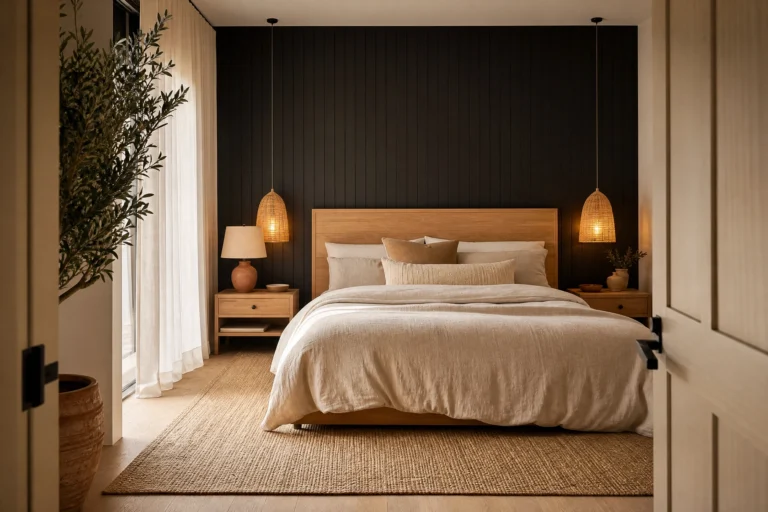
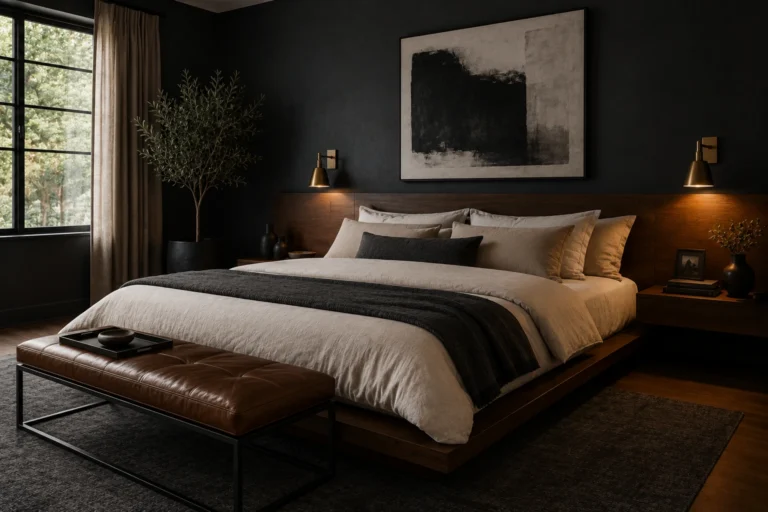
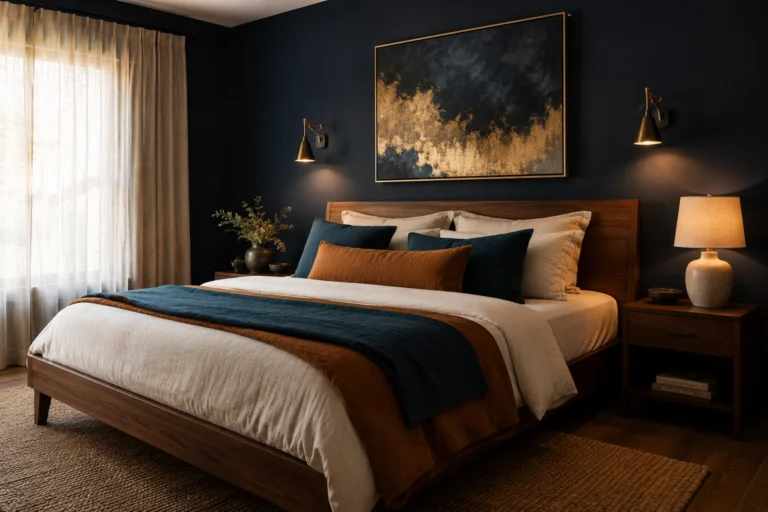
There is something about a bohemian bedroom that feels impossible to fake. You can buy all the right pieces, follow every guide, and still end up with a room that looks assembled rather than lived in. That is because boho style is not really about buying things. It is about layering things, letting them breathe, and trusting your instincts even when nothing perfectly matches. It is a style built for people who own things they love, collect things that tell a story, and do not feel any pressure to make it all coordinate.
The good news is that getting there is actually not as complicated as it sounds. You do not need a huge budget or a complete overhaul. Most bohemian bedrooms come together piece by piece, starting with a rug here, a throw there, a plant in a corner you had not thought about before. The ideas in this article cover everything from how you layer textiles to how you use light, color, plants, and furniture to build a room with real warmth and personality.
These 23 bohemian bedroom decor ideas will give you plenty of places to begin, no matter where you are in the process. Some are simple afternoon changes. Others are bigger moves worth planning around. All of them are rooted in the same idea: your bedroom should feel like yours, not like a showroom, not like a trend, and definitely not like anyone else’s.
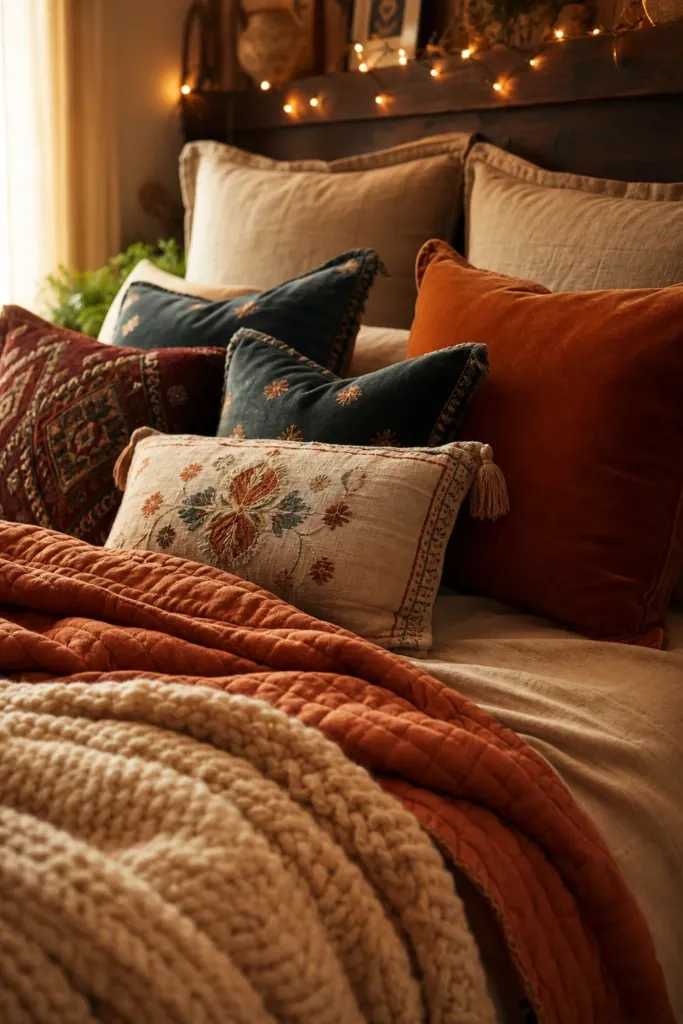
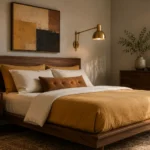
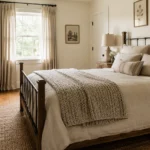
The bed is the first thing anyone sees in a bohemian bedroom, so it deserves more than a coordinated set of sheets. Start with a neutral linen base, something in oatmeal, dusty white, or soft grey, and layer from there. Add a quilt in a warm earth tone over the duvet, then a loosely folded chunky knit throw at the foot of the bed. The point is not to make it look perfect. The point is to make it look generous.
Pillows are where you can have the most fun. Mix sizes, fabrics, and patterns freely. A pair of embroidered Euro shams behind two standard sleeping pillows, with a cluster of smaller decorative pillows in front, creates that layered look that feels both intentional and relaxed. Look for fabrics like velvet, cotton slub, suzani embroidery, and hand-block prints. Warm tones like rust, terracotta, mustard, and deep burgundy work especially well together without looking forced.
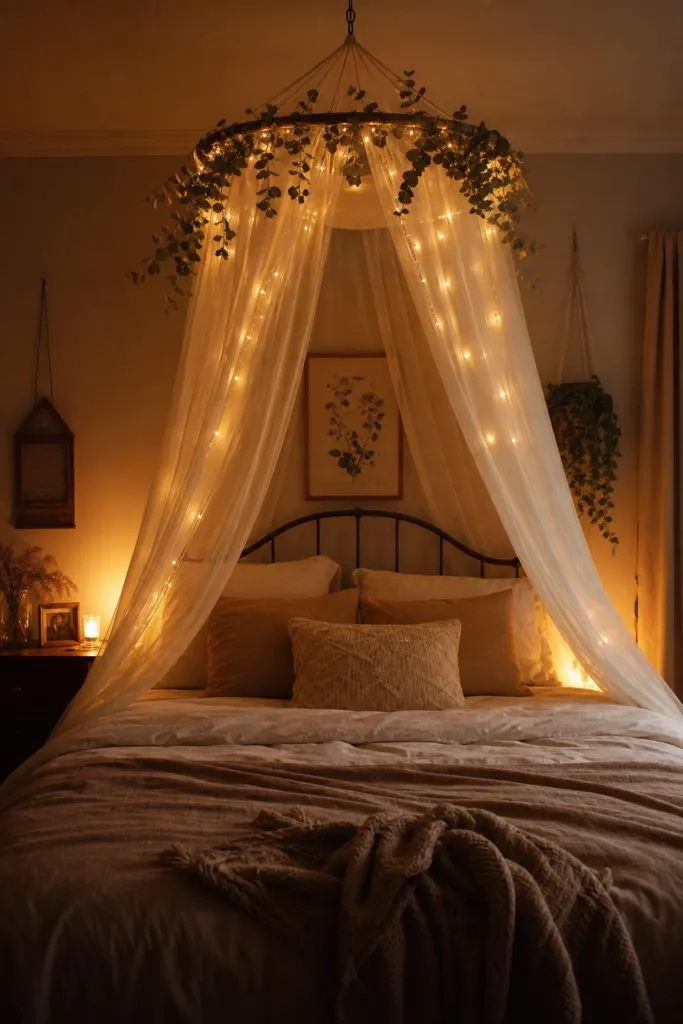
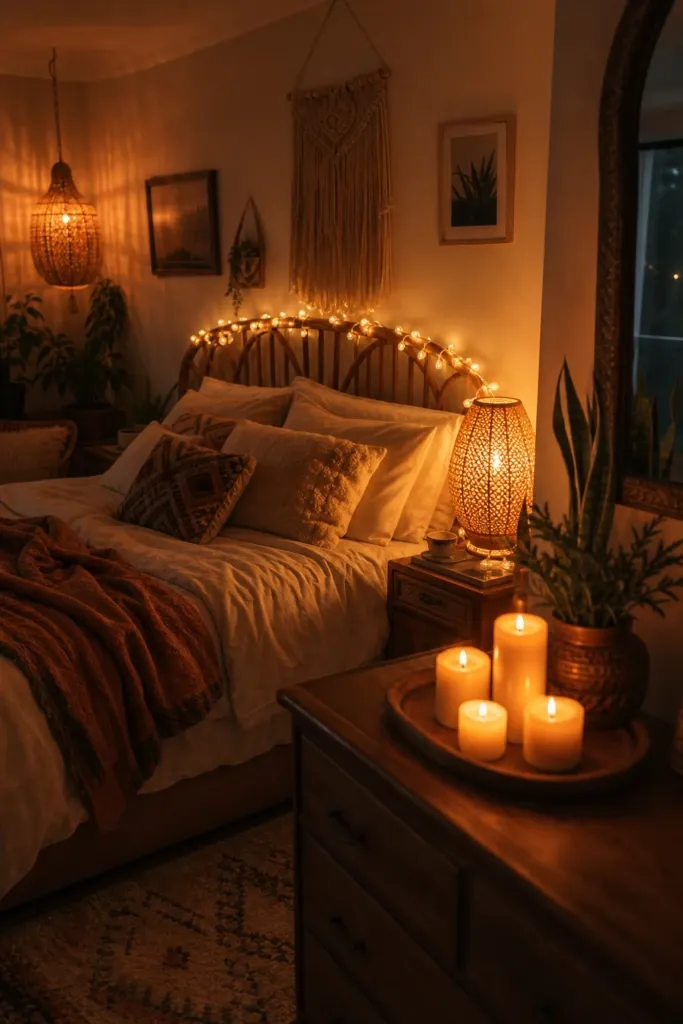
For lighting directly around the bed, a string of warm Edison bulbs draped along the headboard or woven through a sheer canopy adds a glow that no overhead fixture can replicate. Keep a low bedside table on at least one side with a woven lamp or a candle cluster to soften the overall feel.
Designer Tip: Layer at least four different fabric textures on the bed. Smooth linen, rough-woven cotton, soft velvet, and a knotted throw will give you that effortlessly full look without feeling overdone.
2. Stack and Layer Rugs for a Floor That Has Depth
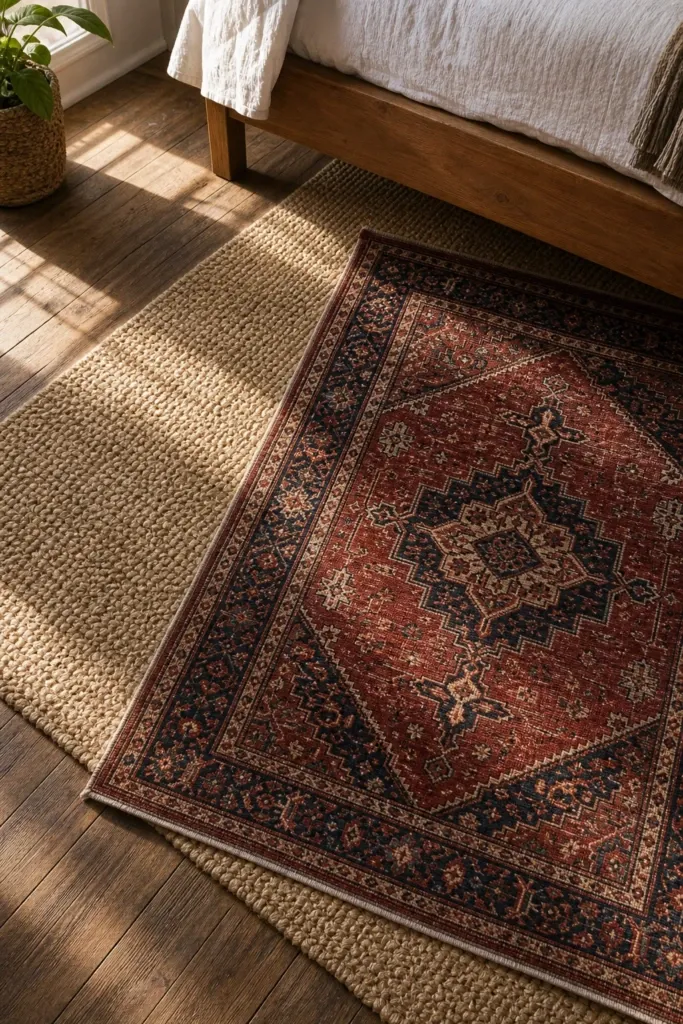
One rug lying flat and centered under the bed is perfectly fine. Two rugs layered on top of each other is far more interesting. This is one of the most reliable tricks in bohemian decorating, and it works because it adds pattern, texture, and warmth all at once. The base rug should be larger and simpler, a jute, sisal, or flatweave option in a neutral color. On top of it, place a smaller Persian, kilim, or Moroccan-style rug at an angle or slightly off-center.
The layered look also works well in front of a reading nook or a vanity area. You do not have to limit it to the main floor plan under the bed. A small vintage-style rug placed over a larger neutral base near a sitting chair creates a defined zone within the room that feels pulled together without being rigid. Look for rugs with fringe edges, worn vintage finishes, or hand-knotted textures that already have some character built in.
When it comes to color, let the pattern in the top rug do the heavy lifting. The base rug can be as simple as a natural fiber in off-white or warm sand. As long as the top rug has some warmth, whether through a terracotta red, faded blue, or golden amber, the combination will feel cohesive.
Designer Tip: The top rug does not need to be expensive. Vintage kilims from thrift stores or online resale sites often have the best patina and can cost a fraction of what a new rug would.
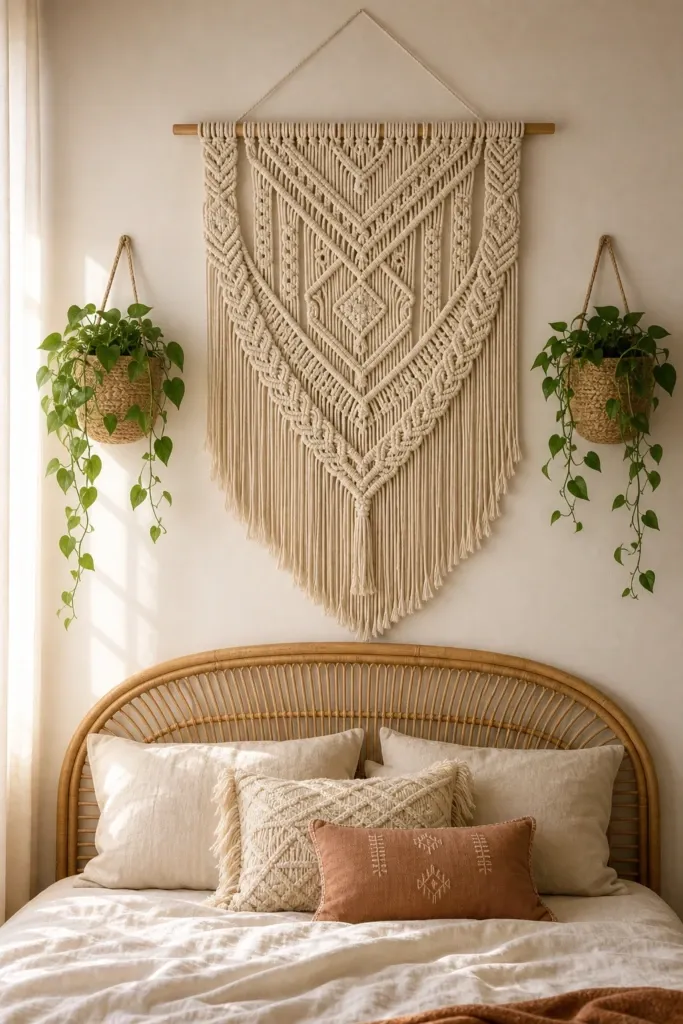
Macrame has been part of bohemian interiors for decades, and it keeps coming back because it genuinely works. A large hand-knotted wall hanging above the bed acts as a soft, textural alternative to a traditional headboard, especially in rooms where the wall space is wide. Look for pieces with long fringe ends, mixed knotting patterns, and natural cotton or jute cord in an undyed or slightly off-white finish.
If you want to try something beyond the standard rectangular piece, look for macrame that incorporates driftwood, shells, dried botanicals, or colored thread. These details give the piece a more handcrafted and personal feel. You can also mix a large macrame hanging with smaller woven pieces on either side, framed prints, or small hanging planters to create a full gallery arrangement around the headboard.
Macrame also works well in other parts of the room: a hanging plant holder in a corner, a woven wall piece above a dresser, or a small knotted mobile near a window. The material catches light in a way that fabric and paint simply cannot, adding a soft depth to the walls that makes the room feel warmer.
Designer Tip: Mount macrame slightly lower than you think, right at or just above headboard height. Pieces hung too high lose the connection with the rest of the bed styling and the room.
A canopy over the bed does not require a four-poster frame. You can create the same effect with two ceiling hooks, a length of sheer fabric, and a little patience. Sheer white or ivory muslin, linen gauze, or even a lightweight cotton sari fabric works beautifully when draped from a central ceiling point and allowed to fall on either side of the headboard. The effect is soft, romantic, and very boho.
For something even simpler, a circular hoop canopy, the kind often sold as a mosquito net frame, can be hung from a single ceiling hook and draped with fabric or fairy lights. Position it so the center of the hoop is roughly at the height of a ceiling fan would be, and let the fabric pool slightly at the edges. You can also weave dried flowers, eucalyptus branches, or trailing vines into the hoop frame for a more nature-forward look.
Color matters here. Stick with natural, undyed fabrics or very muted tones like dusty pink, pale sage, or warm cream. Bright whites can feel clinical, and heavy fabrics defeat the airy feel that makes canopies work. The goal is something that filters light slightly and creates a soft visual boundary around the bed without closing the room in.
Designer Tip: If you rent your space and cannot put holes in the ceiling, use a tension rod mounted inside a window frame and drape the canopy fabric from there, framing the bed from behind.
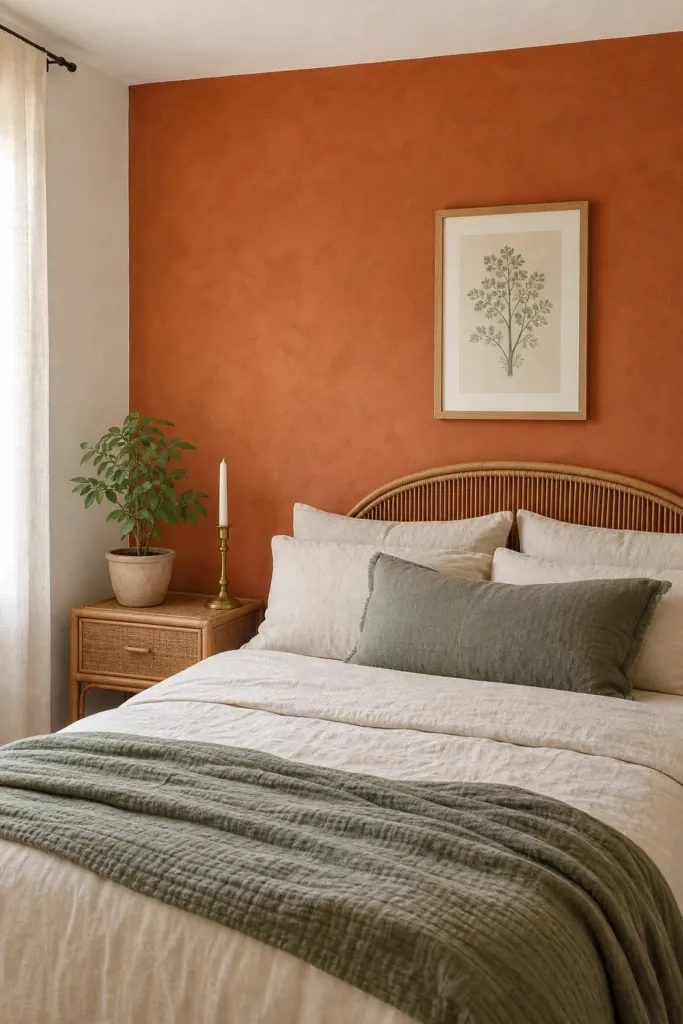
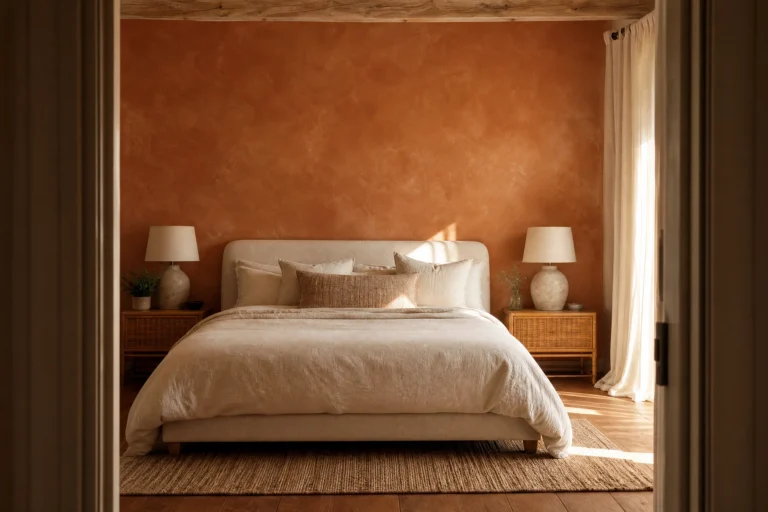
Bohemian spaces are not afraid of color on the walls, and one of the most effective choices is a deep, warm, saturated tone. Think terracotta orange, ochre yellow, warm burgundy, or deep olive green. These colors work well in bedrooms because they wrap the room in warmth and make every textile and accessory inside it look richer by contrast. A terracotta wall, for instance, makes earthy linens glow and makes plants look lush against it.
You do not need to paint all four walls. A single feature wall behind the bed, painted in a bold saturated color, can shift the entire personality of the room without making it feel heavy. Pair it with off-white or cream on the other three walls and let the color breathe. The furniture you bring into this kind of space should be kept in natural materials, rattan, reclaimed wood, cane, so that the wall becomes the main statement.
If you are hesitant about deep color, terracotta and warm ochre are the most forgiving starting points. They work in both bright and low-light rooms and tend to complement a wide range of furniture colors without much effort. Warm grey is also worth considering if you want something more subdued but still richer than standard white.
Designer Tip: Test your paint color on a large piece of cardboard or foam board first, and move it around the room at different times of day. Bohemian warm tones can shift significantly from morning light to evening.
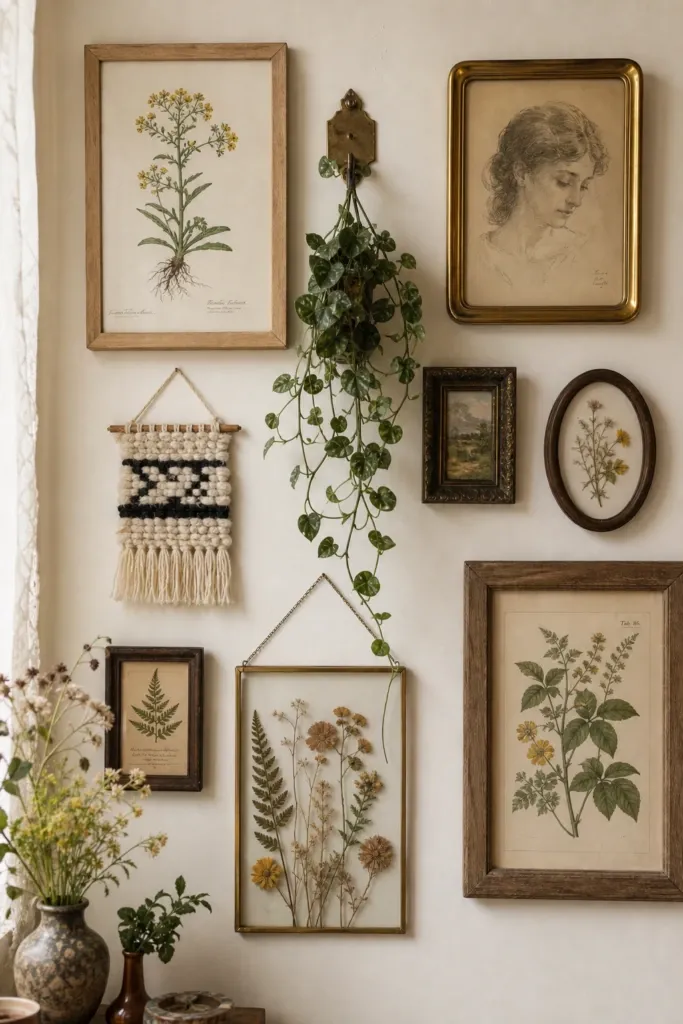
A bohemian gallery wall is one of the best ways to use art without it feeling formal or static. The key difference from a traditional gallery wall is that nothing needs to match. Combine framed vintage botanical prints with a small woven textile, a pressed flower arrangement in a simple frame, a hand-drawn portrait, and a postcard from somewhere meaningful. The variety in content is what gives it life.
Frames do not need to coordinate. Mixing raw wood, painted white, brushed brass, and even frameless canvas adds to the layered effect. In terms of layout, a loose cluster works better than a rigid grid for bohemian styling. Let some frames overlap slightly, vary the heights intentionally, and allow gaps where you can tuck in a trailing plant or a small wall hook. The arrangement should look like it grew over time, because in the best bohemian homes, it genuinely does.
Keep the color palette across the artwork loosely connected. If most of your pieces have warm tones, botanical greens, and dusty earth colors, they will hang together visually even if the subjects and styles vary widely. Avoid pieces with bright, cool-toned colors unless they are used very sparingly as an accent.
Designer Tip: Start by arranging everything on the floor first and taking a photo from directly above. That view makes it easy to adjust spacing and balance before a single nail goes into the wall.
7. Try Limewash or Textured Paint for Walls With Character
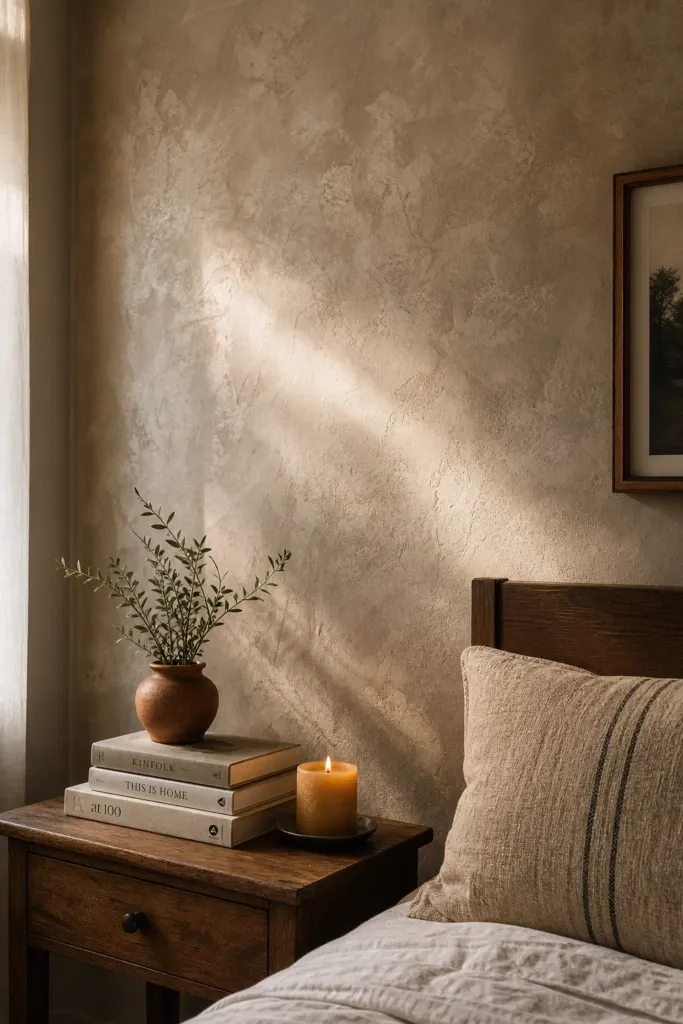
Standard flat paint gives you a clean wall. Limewash paint gives you a wall that looks like it has been part of the room for a hundred years, in the best possible way. Limewash creates a soft, mottled effect with natural depth and variation, and it works particularly well with bohemian and earthy aesthetics. It comes in chalky whites, warm taupe, dusty sage, and terracotta tones, all of which feel right at home in a boho bedroom.
Application is easier than it looks. Most limewash paints can be applied with a wide brush in loose, irregular strokes, and the variation in coverage is intentional. The result is a wall that reflects light differently at different angles, which adds warmth and dimension without any additional decor. It pairs well with natural wood furniture, rattan headboards, and linen bedding.
If limewash feels like too big a commitment, textured plaster paint in warm tones achieves a similar effect with a bit more control. Either option gives the walls a handcrafted quality that standard paint simply cannot. For renters, some of these effects can also be created with removable wallpaper that mimics the texture.
Designer Tip: Apply limewash in the direction of natural light coming into the room. This makes the textural variation feel organic rather than patchy.
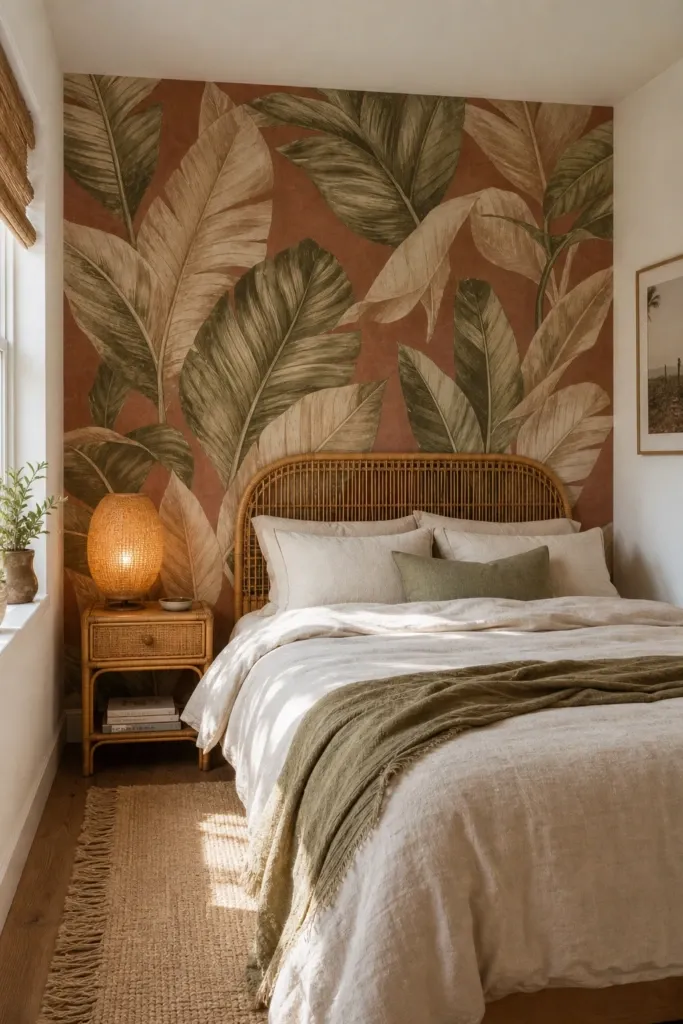
Wallpaper is back in a serious way, and the patterns that work best in bohemian bedrooms tend toward botanical prints, vintage block prints, abstract watercolor textures, and globally influenced geometric designs. A single wall behind the bed in a richly patterned wallpaper can completely define the room’s personality without needing much else to anchor it.
Look for patterns with warm backgrounds, dusty clay, aged gold, deep forest green, or muted indigo, rather than stark white grounds. These tones feel more settled and intimate, which suits a bedroom far better than a high-contrast pattern would. Botanical wallpapers with large-leaf prints in olive and sage work well with rattan furniture and warm linens. Moroccan-style geometric patterns in terracotta and sand pair beautifully with hand-embroidered textiles and brass accessories.
If you are hesitant about committing to a full wall, removable peel-and-stick wallpaper has improved significantly in quality and now comes in a wide range of bohemian-appropriate patterns. It is a particularly good option for renters who want to add impact without permanence.
Designer Tip: Keep the three adjacent walls simple when using patterned wallpaper. A warm white or tinted neutral on the surrounding walls lets the feature wall breathe and prevents the room from feeling crowded.
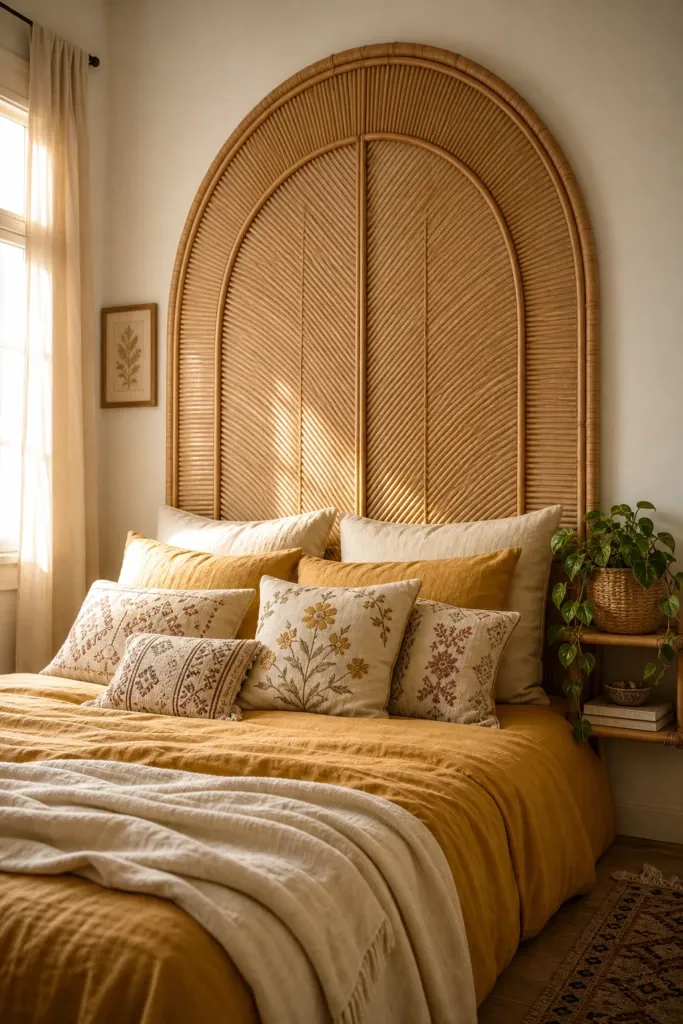
If you are going to make one furniture change in a bohemian bedroom, let it be the headboard. Rattan and cane headboards are the single fastest way to shift a room’s personality toward a relaxed, globally inspired aesthetic. They come in arch shapes, rectangular frames, diamond-woven panels, and sunburst designs, giving you plenty of options depending on the scale and shape of your room.
Natural rattan in its undyed form works well against most wall colors and pairs effortlessly with linen, cotton, and woven textiles. If you want something with a bit more depth, look for rattan headboards that have been painted in warm black, aged white, or even a muted sage green. These painted versions can anchor a more layered, colorful bed styling without competing with the textiles around them.
In terms of scale, go larger than you think. A headboard that extends well above the top of the mattress and nearly reaches the ceiling creates a strong vertical element that makes the room feel taller and more intentional. Pair it with low bedside tables and a floor-level reading nook on one side to balance the height.
Designer Tip: Place a simple woven wall shelf or small hanging plant just above the headboard’s top edge to continue the vertical line upward without adding another piece of furniture.
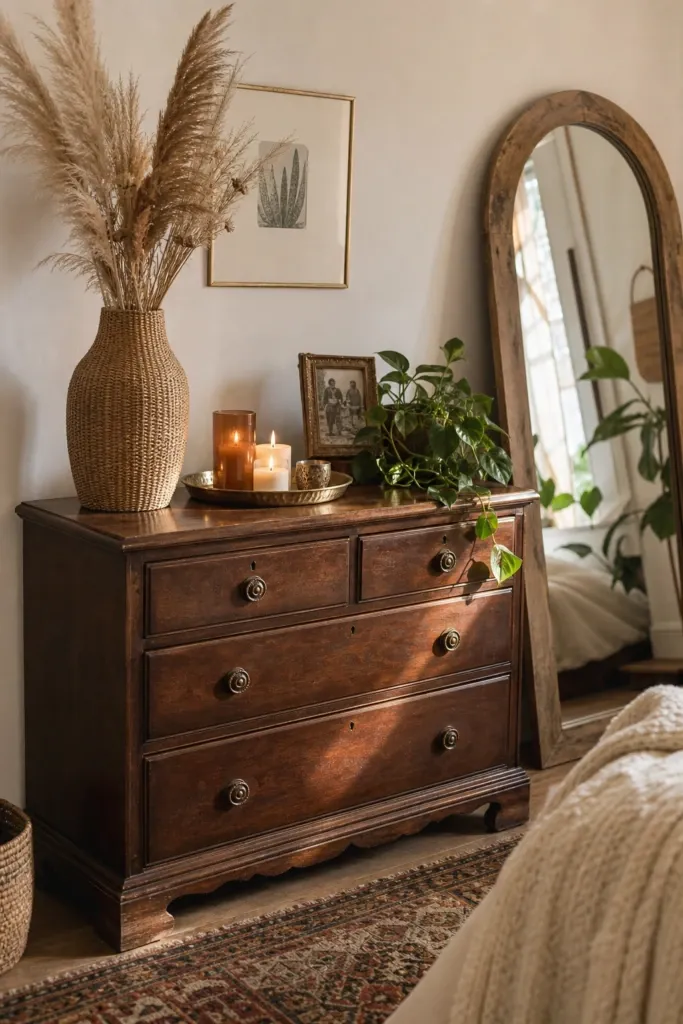
In bohemian decorating, new furniture is rarely the most interesting choice. A vintage dresser with original hardware, a slightly worn finish, or an interesting shape adds the kind of character that no flatpack piece can replicate. Look for pieces at estate sales, antique markets, or online vintage furniture platforms. A dark walnut mid-century dresser, a painted French provincial chest, or a carved Indian hardwood piece all fit naturally into a bohemian bedroom with the right styling on top.
The surface of the dresser is just as important as the dresser itself. Style it with a mix of objects at varying heights: a tall woven vase, a cluster of candles on a small tray, a trailing plant, a small framed photo, and perhaps a vintage perfume bottle or small dish for jewelry. The goal is an arrangement that looks collected over time rather than arranged all at once.
If your dresser does not have great hardware, swap it out. Replacing drawer pulls with hammered brass, ceramic knobs, or leather pulls is an inexpensive update that makes a significant difference in how the piece reads in the room. Warm-toned metals like aged brass and brushed bronze work especially well in bohemian spaces.
Designer Tip: Lean a large unframed mirror against the wall above the dresser instead of hanging it. The relaxed angle feels more bohemian and less formal than a centered, wall-mounted mirror.
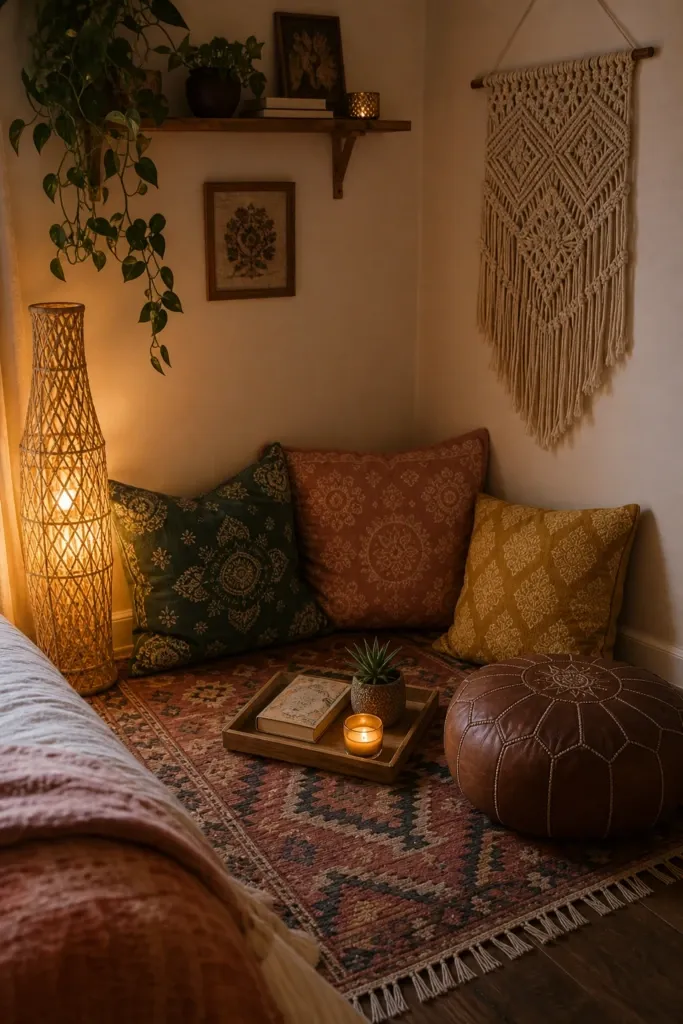
Not every seating area in a bedroom needs a chair. A floor-level reading nook made from large cushions, a bolster pillow, and a low tray table is one of the most characteristically bohemian additions you can make to a bedroom. It works well in a corner, beside a window, or tucked next to a bookshelf. The low height makes the ceiling feel taller by contrast and creates a distinct zone within the room without dividing it architecturally.
For the cushions, look for floor poufs in leather or woven jute, large flat floor cushions in block-printed cotton, and a long bolster or body pillow for back support. Layer a small rug underneath to define the space, and add a low wooden tray or a simple wooden stool to hold a book, a candle, and a small plant. A macrame hanging or a trailing pothos plant above the nook ties it into the rest of the room’s aesthetic.
Lighting is particularly important here. A low-slung pendant hung at reading height, a plug-in sconce on the adjacent wall, or a tall woven floor lamp positioned beside the nook gives you the functional light you need without overhead harshness. Keep everything within reach of the cushions so the nook actually gets used.
Designer Tip: Use a kilim or a small vintage rug, not a large area rug, to define the floor nook. The smaller footprint keeps the nook feeling intimate rather than like an extension of the main room.
12. Mix Wood Tones Without Worrying About Matching
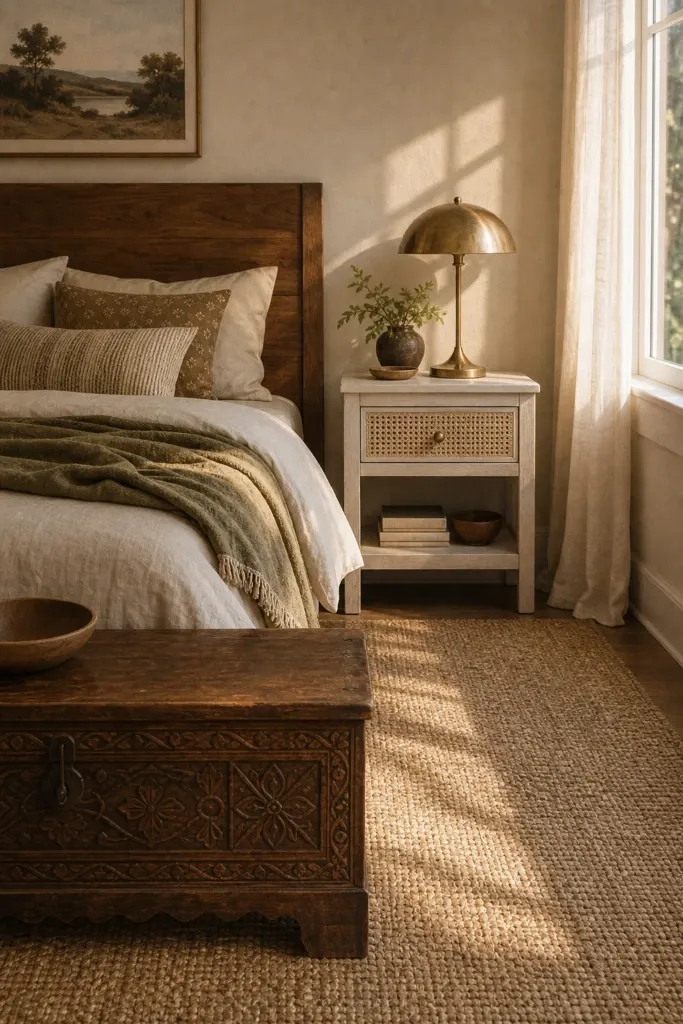
One of the clearest signs that someone is new to bohemian decorating is furniture that all matches in exactly the same wood tone and finish. In a boho bedroom, mixing wood tones is not just acceptable, it is preferred. A warm walnut bed frame paired with a whitewashed bedside table and a dark mango wood dresser creates the kind of layered, collected look that defines the style. The key is variety with a shared warmth, so avoid mixing very dark and very cool-toned woods in the same room.
If you are working with furniture you already own, you can introduce contrast through accessories. A reclaimed wood shelf on a wall, a carved wooden bowl on the dresser, or a wooden side table with visible grain and imperfections adds to the mix without requiring you to replace anything. Cane, bamboo, and wicker are also part of the wood-material family in bohemian rooms and can be layered in freely.
When bringing in a new piece, do not try to find something that matches what you have. Instead, look for a piece with interesting grain, a slightly unusual silhouette, or a finish that brings something new to the mix. The contrast between pieces, when they share similar warmth in tone, reads as intentional rather than accidental.
Designer Tip: Use metal accents, specifically aged brass or matte black, as a unifying thread between mismatched wood pieces. A brass lamp, a black picture frame, and a brass drawer pull spread across different furniture pieces tie them together visually.
Bohemian bedrooms rely heavily on layered, warm lighting rather than a single overhead fixture. If your room has a central ceiling light, consider putting it on a dimmer and supplementing it with several other light sources at different heights and positions. A woven pendant light hanging low over a reading chair, a pair of rattan table lamps on the bedside tables, string lights draped along the headboard or along a ceiling beam, and a candle cluster on the dresser all working together create an evening atmosphere that is hard to achieve any other way.
Warm white bulbs, in the 2700K to 3000K range, are essential. Cool or daylight bulbs flatten the warmth out of earth-toned rooms and make textiles look less rich. Edison-style filament bulbs work well in exposed fixtures and pendant lights because the visible filament adds its own decorative element. For string lights, choose warm white LED strings rather than standard fairy lights for longer life and better color.
Candles are another important layer. A mix of pillar candles, tea lights, and taper candles grouped on a tray on the dresser or the nightstand gives you warm, flickering light that no electric source can fully replicate. If open flames feel impractical, high-quality flameless candles in warm amber tones are a solid alternative.
Designer Tip: Think about your room in three vertical zones: floor level (candles, low lamps), table level (bedside lamps, small lanterns), and ceiling level (pendant, string lights). Hitting all three creates true depth.
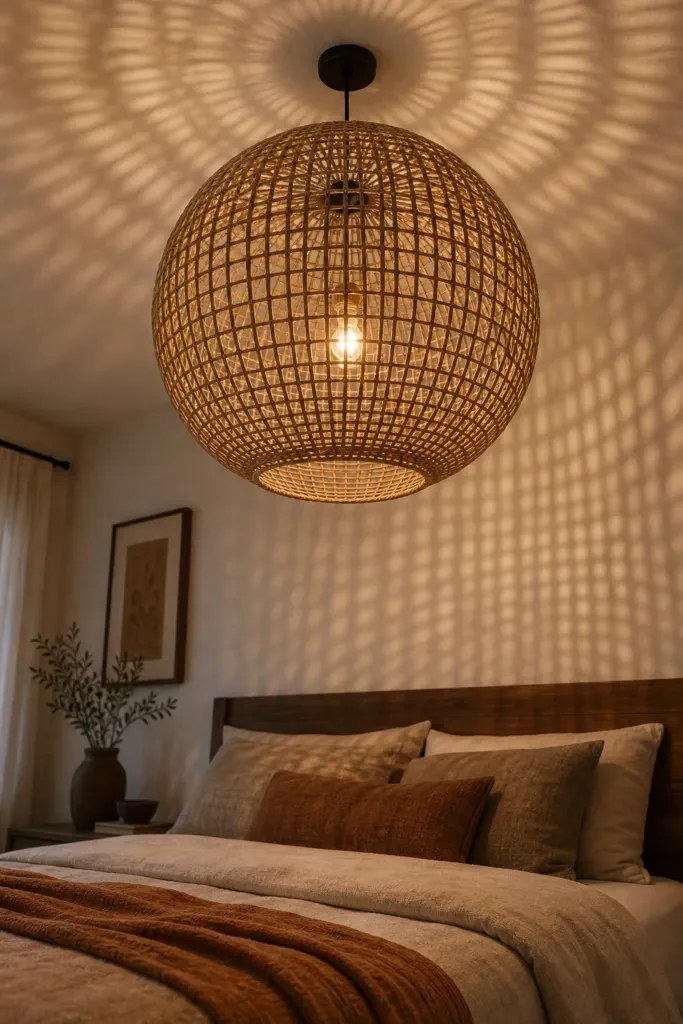
A woven pendant light is one of the most effective single-piece additions to a bohemian bedroom. Whether hung above the bed in place of a ceiling fixture, over a reading nook, or even in a corner at low height, it immediately adds texture and warmth that a standard fixture cannot. Look for pendants made from rattan, jute, seagrass, or bamboo in a wide, open weave that allows light to spill through in interesting patterns across the ceiling and walls.
Globe-shaped rattan pendants, pendant lanterns in hammered metal with cut-out patterns, and beaded pendant lights are all excellent choices. The size matters more than most people expect. In a bedroom, a pendant that is too small looks hesitant and lost. Go with something generous enough to read as a design element from across the room. For a standard ceiling height, a pendant with a shade diameter of 20 to 30 inches works well over a queen or king bed.
If wiring a new ceiling fixture is not feasible, swag-style pendants that plug into a wall outlet and hang from a ceiling hook are widely available and look just as intentional when styled correctly. Hide the cord by running it along the ceiling molding or wrapping it in rope or jute twine for a finished look.
Designer Tip: Let the pendant hang lower than you would traditionally. A fixture that drops to within 18 to 24 inches above the nightstand level creates a more intimate, cozy atmosphere than one hung tight to the ceiling.
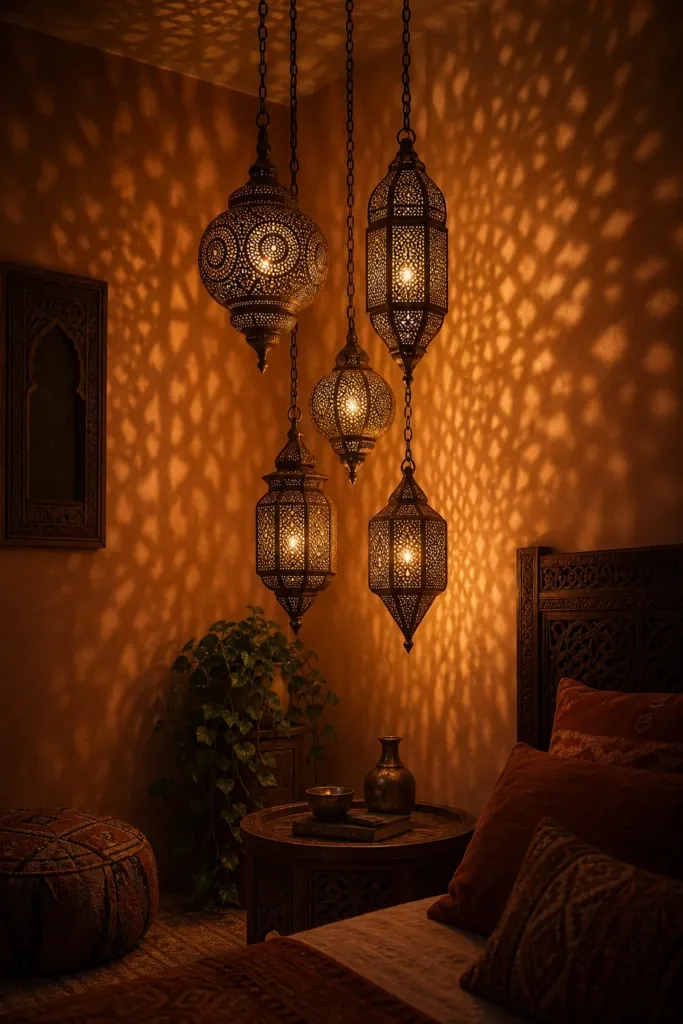
Moroccan lanterns are one of the most recognizable elements of bohemian and globally inspired interior styling, and for good reason. When lit from within, the pierced metal or colored glass patterns throw intricate light shapes across walls and ceilings that completely shift the atmosphere of a room. A cluster of three to five lanterns at varying heights, hung in a corner or grouped on a low surface, creates an effect that is both decorative and genuinely functional as ambient light.
Metal lanterns with geometric cut-out patterns in aged brass or antique silver are the most versatile option. They work in rooms with any wall color and complement both warm and cool textile tones. Colored glass lanterns in deep red, amber, cobalt, or emerald look especially striking when the light shifts through the glass and onto a white or light-toned wall. Look for hanging lanterns for corners and tabletop lanterns for dressers and nightstands.
You can also use Moroccan lanterns outside of the bedroom to create a consistent theme: hallways, window ledges, and bathroom shelves all work. For the bedroom specifically, grouping them on a low wooden tray beside the bed is an easy way to create a bedside vignette that doubles as a light source for nighttime reading.
Designer Tip: Use battery-operated LED tea lights inside decorative lanterns rather than real candles. They last longer, are safe to leave on overnight, and are easier to manage in a bedroom setting.
Plants and Nature Elements
16. Make Plants a Design Element, Not an Afterthought
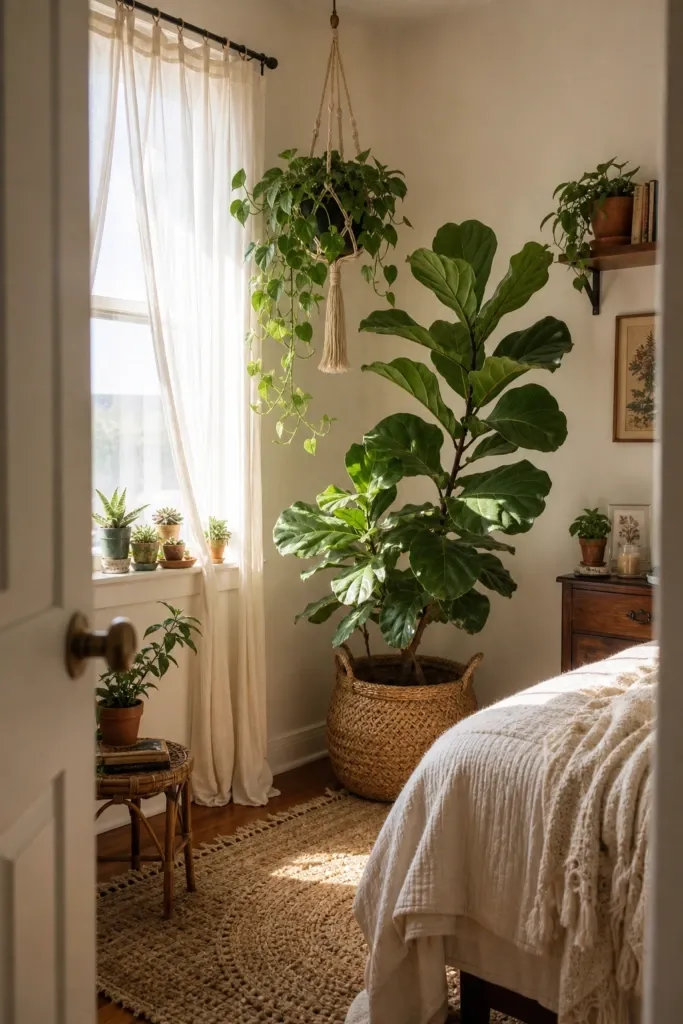
Plants in a bohemian bedroom are not decoration in the traditional sense. They are a structural part of the room’s aesthetic. A trailing pothos hanging from a ceiling hook in one corner, a large fiddle-leaf fig in a woven basket planter beside the window, and a small cluster of succulents on the windowsill together create a layered, living quality that no object can replicate. The key is to think about plants as you would furniture: consider their scale, placement, and how they interact with the light.
Hanging plants work particularly well in bohemian rooms because they use vertical space that might otherwise go empty. Macrame plant hangers in natural cotton cord are an obvious and reliable choice. Woven seagrass hanging baskets, ceramic wall-mounted planters, and simple iron hooks with terracotta pots also work beautifully. Position hanging plants near a window where possible, or choose low-light varieties like pothos, heartleaf philodendron, or string of pearls for spots farther from natural light.
Floor-level plants in large woven or ceramic planters make a strong statement beside a dresser, in a corner, or flanking the bed. Choose plants with interesting leaf shapes: fiddle-leaf figs, monsteras, tall snake plants, or arching birds of paradise all have the scale and visual presence that a large bohemian bedroom needs.
Designer Tip: Group small plants in odd numbers of three or five rather than pairing them symmetrically. Odd groupings feel more natural and less formal, which suits the boho aesthetic perfectly.
17. Bring In Dried Botanicals and Natural Elements
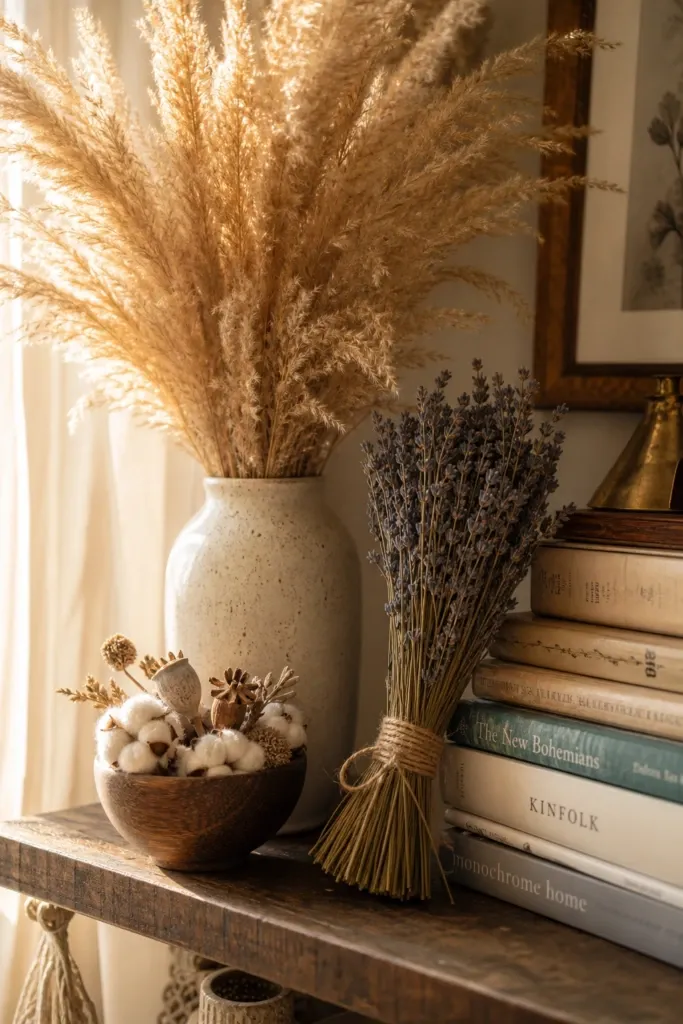
Fresh plants are wonderful, but dried botanicals offer something different: a sculptural, earthy quality that photographs beautifully and lasts for months or even years. Pampas grass in a tall ceramic or rattan vase, dried eucalyptus bundled together and hung from a curtain rod, dried cotton stems in a low wooden bowl, and pressed wildflowers in thin frames all add a natural layer to the room without requiring any maintenance.
Dried botanicals also pair well with macrame and woven wall hangings. Weaving dried lavender, small dried ferns, or preserved moss into a macrame piece adds an unexpected organic element to a handcrafted piece. You can also display dried seed pods, pinecones, driftwood pieces, and smooth river stones grouped on a tray or shelf as a nature-inspired vignette that feels grounded and intentional.
One of the best places for dried botanicals is directly above the bed. A bundle of dried pampas grass or eucalyptus tied with natural twine and hung from a ceiling hook above the headboard creates a dramatic overhead element without the weight or permanence of a canopy. The airy, feathery quality of pampas grass in particular softens a room in a way that feels very characteristically bohemian.
Designer Tip: Dried pampas grass lasts much longer if you spray it lightly with hairspray when it first starts to shed. It also helps to keep it away from direct airflow from fans and air vents.
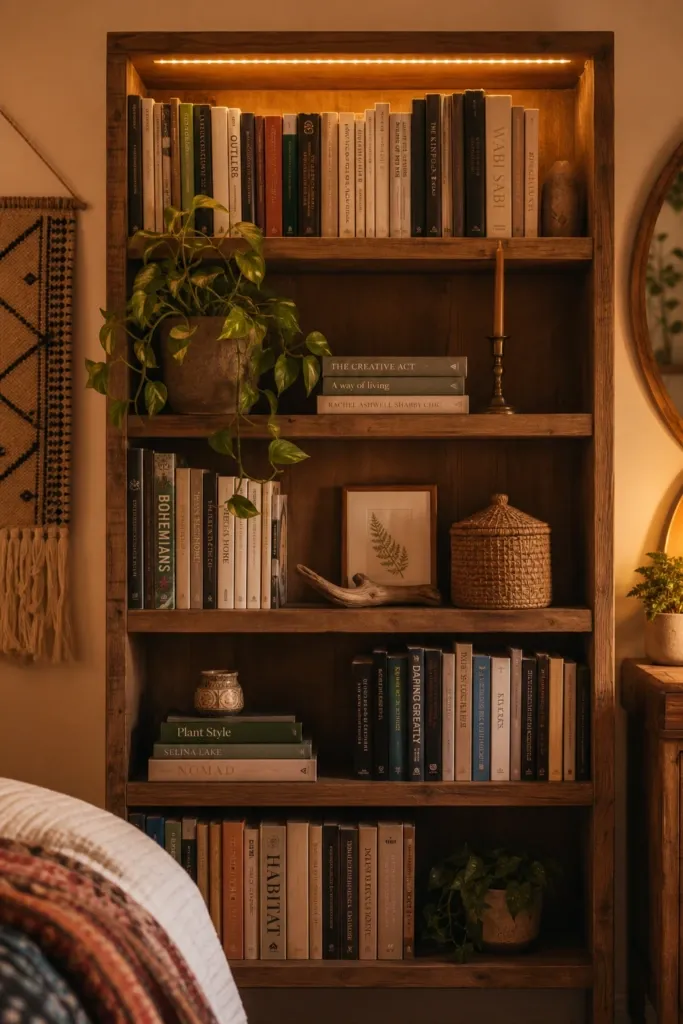
A bookshelf in a bohemian bedroom should look like it holds a real life, not a collected display. Mix books of different heights, some standing upright and some stacked horizontally, with objects tucked between and on top of them. Small potted plants, a tall candlestick, a woven basket holding extra throws, a small framed print propped against the back panel, and a piece of driftwood or a smooth stone all belong on a well-styled boho bookshelf.
Color plays a role in how the shelf reads as a whole. If your books are varied in color, group the ones with warm-toned spines, reds, oranges, browns, together and allow the others to be placed more freely. This loose organizing principle keeps the shelf from looking chaotic while still maintaining the effortless, layered feel that bohemian style calls for. A few books turned spine-in, showing just the cream or white page edges, can break up a particularly busy stretch.
Lighting the bookshelf is often overlooked and makes a disproportionately large difference. A small LED strip along the inside top edge, a clip-on book light aimed at the shelf, or a small woven lantern sitting on one of the shelves adds warmth and draws the eye toward the shelf as a design element rather than a storage area.
Designer Tip: Leave some intentional empty space on the shelf. A fully packed shelf reads as storage. Space between groupings reads as display. Aim for roughly 30 percent of the shelf to be open at any given time.
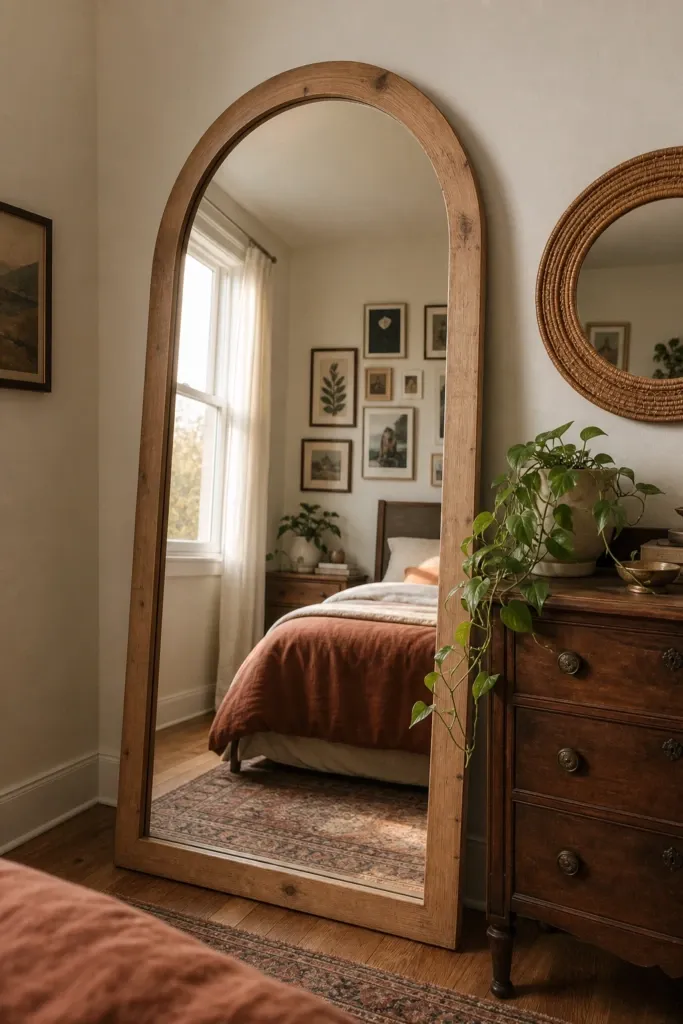
Mirrors in bohemian bedrooms tend to have interesting shapes and frames rather than standard rectangular profiles. Arched mirrors, sunburst mirrors, circular rattan-framed mirrors, and irregularly shaped vintage mirrors all bring a sculptural element to the walls while doing the practical work of reflecting light and making the room feel more open. A large arched mirror leaning against the wall beside the dresser or in a corner has a relaxed, unstudied quality that a wall-hung mirror does not.
Grouping several smaller mirrors together is another option worth considering. A cluster of three to five mirrors in different shapes and frame styles, arranged loosely on one wall, creates the visual interest of a gallery wall with the added benefit of reflected light. Mix a vintage ornate frame with a simple round brass one and a small hand-mirror shape for the most interesting combination.
Moroccan-style mirrors with carved wood or metal frames are particularly well-suited to bohemian rooms. Many of these pieces are double-purpose as both a functional mirror and a decorative object, making them an especially efficient addition to a smaller bedroom where every piece needs to pull its weight.
Designer Tip: Position a large floor mirror so that it reflects your best window. This doubles the natural light in the room and makes the space feel significantly larger without moving a single wall.
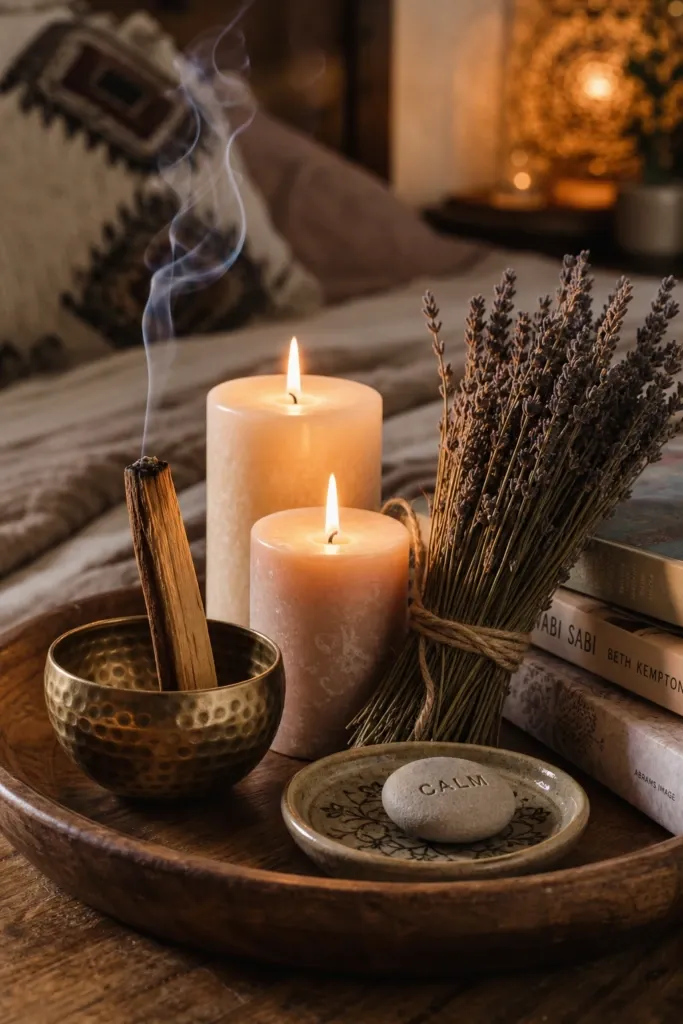
Smell is often the most overlooked element of a bedroom’s atmosphere, and in a bohemian bedroom, scent can reinforce the whole aesthetic in ways that go beyond decoration. Palo santo, sandalwood, and cedar incense have warm, grounding notes that complement earthy color palettes. Beeswax candles with a light honey scent pair naturally with raw linen and wood. A wicker tray holding a diffuser with bergamot and patchouli essential oils adds fragrance without any visual clutter.
Dried botanicals naturally contribute to the scent of the room as well. Fresh or recently dried lavender, eucalyptus, and rosemary all release gentle fragrance simply from being present in the space. Tuck a small bunch of dried lavender into a drawer lining or behind a pillow to keep linens smelling fresh without any synthetic fragrance.
For a more decorative approach, an incense holder made from carved soapstone or a small hammered brass dish placed on a wooden tray adds a functional and visually interesting element to the dresser or bedside table. The ritual of lighting incense or a candle before bed also contributes to the atmosphere of the room in a way that goes beyond simple decor.
Designer Tip: Rotate your scents seasonally. Warmer, smokier notes like oud and cedar in the cooler months, and lighter floral or citrus blends in warmer months, keep the room feeling fresh and intentional year-round.
21. Hang Curtains High and Wide for Maximum Softness
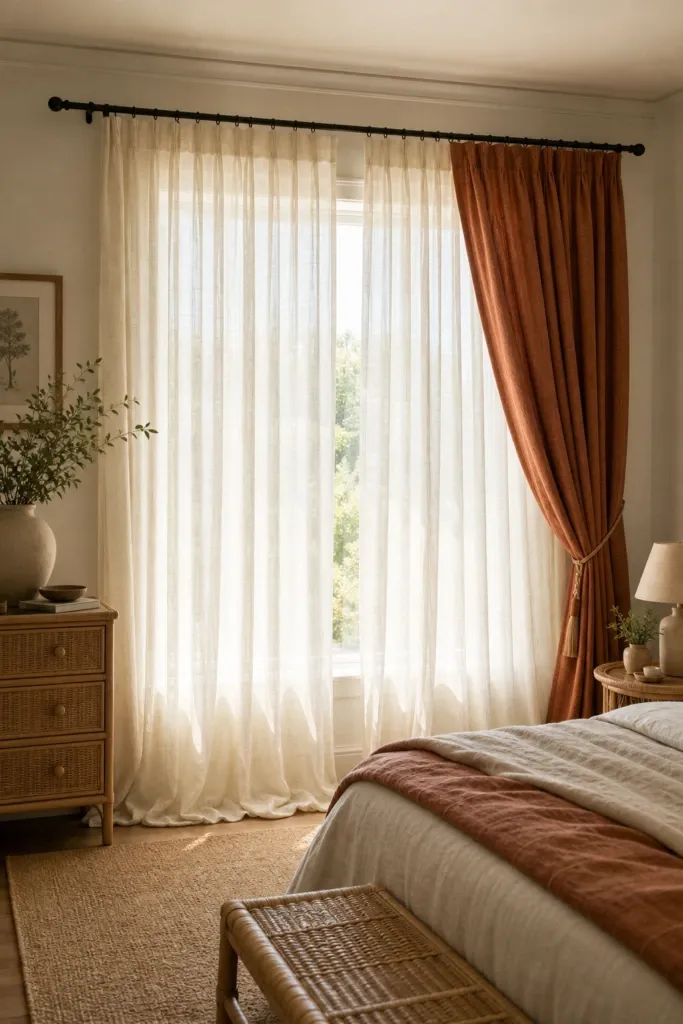
Curtains in a bohemian bedroom should feel abundant rather than fitted. Hang the rod as close to the ceiling as possible and extend it well beyond the edges of the window on both sides so that when the curtains are open, the entire window is framed in fabric. This approach makes windows look larger, ceilings feel higher, and the overall room feel softer and more finished.
For fabric choices, linen and cotton voile are the most naturally bohemian options. Both filter light beautifully while allowing the room to stay bright during the day. Sheer white or ivory curtains work as a base layer, and you can add a second, heavier panel in a warm earth tone, terracotta, mustard, or dusty sage, for evenings. This layered curtain approach is both practical and visually interesting.
Patterned curtains in block prints, ikat, or simple stripe designs add another layer of texture and can replace a gallery wall as the room’s main textile statement. If you go with a pattern, keep the bedding and the rest of the room’s soft furnishings relatively simple in comparison. The curtains should complement the room, not compete with it.
Designer Tip: Use ring clips rather than sewing rod pockets into the curtain panels. Ring clips allow you to use any fabric, including vintage textiles, sari fabric, or even large linen tablecloths, as curtains without any sewing involved.
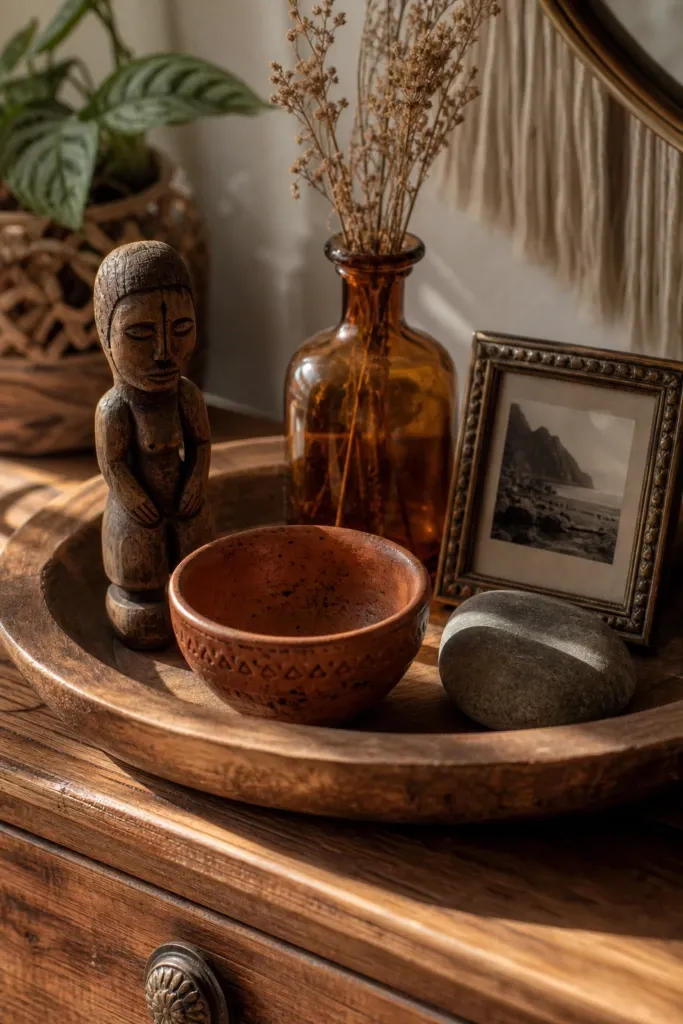
A truly bohemian bedroom contains objects that have histories. Travel souvenirs, inherited pieces, handmade ceramics from a local market, a vintage clock found at an estate sale, a small sculpture brought back from a trip, a piece of woven textile picked up at a street fair. These objects are the ones that make a room feel genuinely inhabited rather than styled.
The arrangement of these objects matters as much as the objects themselves. a collected collection placed on a small wooden tray or a shallow dish feels intentional. A group of objects scattered across a dresser without any visual organization feels like clutter. Use trays, small dishes, woven baskets, and wooden boards to organize collections into clusters that read as displays rather than accumulations.
If you are building a collection from scratch, focus on finding objects with interesting textures, natural materials, and warm tones. Terracotta pots, carved wooden figures, hand-thrown ceramic bowls, glass bottles in warm amber or green, and woven baskets all fit into a wide range of bohemian bedroom styles without requiring any particular theme or cultural specificity.
Designer Tip: Start a small collection of objects from a single material, such as terracotta ceramics, and build from there. A cohesive material palette across diverse objects ties a collection together without forcing it into a theme.
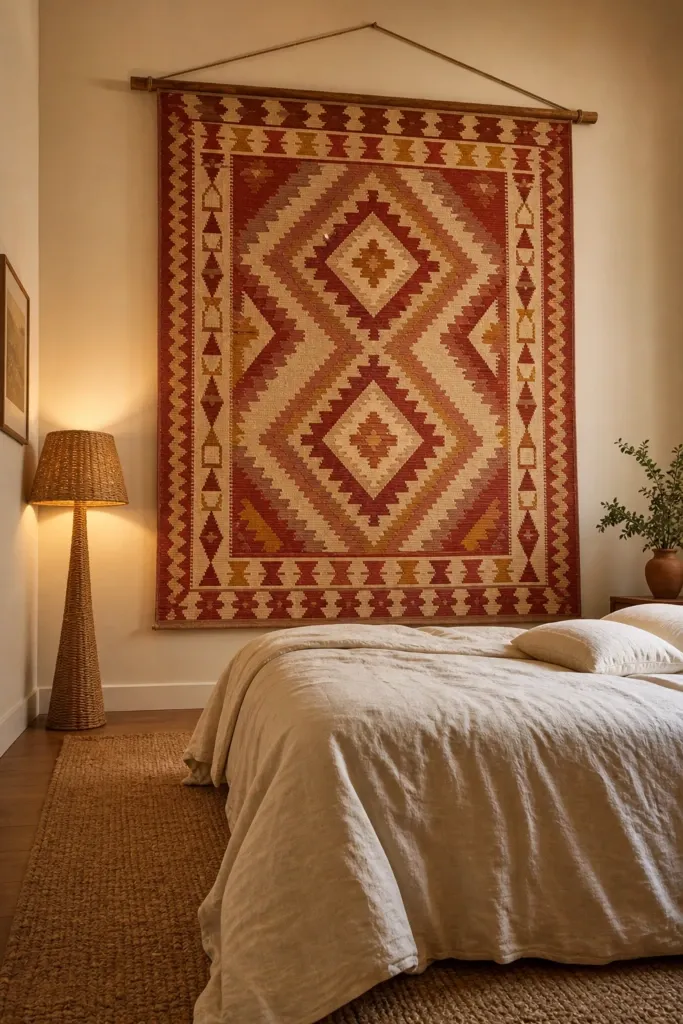
A large textile mix hung on the wall is one of the oldest and most versatile bohemian decorating moves. Unlike framed art, a mix adds both visual interest and actual texture to a wall, softening the acoustics of the room while also creating a focal point. Look for hand-woven pieces from artisan markets, globally sourced textiles in kilim or dhurrie patterns, vintage suzani panels with bold embroidery, or simple woven wall pieces in earthy tones.
The best placement for a large mix is typically the wall opposite the bed or the wall that gets the most attention when you first walk in. At this location, it acts as the room’s main visual anchor, which means the furniture and accessories around it can be simpler. A mix-forward room needs less decorative layering on surfaces because the wall itself is doing significant work.
Budget-friendly mixes are widely available online and in global goods stores, and many of them are genuinely beautiful. Look for pieces with natural dye tones, hand-finishing on the edges, and visible variations in the weave that indicate handcrafted quality. Machine-printed mixes made to look woven lack the depth and warmth that the real thing brings to a room, so wherever possible, choose a piece that was actually woven rather than printed.
Designer Tip: Use a simple wooden dowel and a length of natural cord to hang a mix rather than nailing it directly. The dowel rod is visible and becomes part of the display, and it lets you swap mixes out easily as your taste changes.
Wrapping It Up
Bohemian style is one of the few interior aesthetics that genuinely rewards patience. The rooms that look the best are the ones that were built slowly, with pieces gathered over time from markets, travels, thrift shops, and handmade sources. You do not need to do everything on this list at once. Pick two or three ideas that feel immediately right for your space, start there, and see what the room asks for next.
What all of these ideas have in common is texture, warmth, and layering. Wherever you begin, whether with a rug, a mix, a canopy, or a statement wall color, you are building toward a room that feels personal and comfortable rather than put together for show. That is the whole point of bohemian decorating. It is not about achieving a look. It is about building a space that actually feels like the person who lives in it.
Take your time, trust the process, and do not be afraid to rearrange. A great bohemian bedroom is never fully finished. It just keeps getting better.
Frequently Asked Questions
What colors work best in a bohemian bedroom?
Warm, earthy tones are the backbone of bohemian color palettes. Terracotta, ochre yellow, warm burgundy, olive green, dusty rose, and deep teal all work well. These colors complement the natural materials and handcrafted textiles that define the style. Neutral bases in off-white, cream, or warm beige are useful for walls and bedding when you want to let bolder accent colors in accessories and textiles do the heavy lifting.
How do I make a small bedroom feel bohemian without making it cluttered?
Focus on vertical space first. A tall rattan headboard, a hanging plant, and wall-mounted art draw the eye upward and create the layered effect without crowding the floor. Choose two or three statement pieces rather than many small ones. A large mix, a bold rug, and rich bedding layering can carry the entire aesthetic. Keep surfaces mostly clear with one or two well-chosen objects rather than many small items.
What type of lighting is best for a bohemian bedroom?
Warm, layered lighting is essential. Aim for multiple sources at different heights: a woven pendant, bedside lamps with warm-toned bulbs, string lights along the headboard, and candles or lanterns on surfaces. Avoid cool-toned or bright overhead lighting. A dimmer switch on your main ceiling fixture gives you the flexibility to switch between functional and atmospheric lighting at different times of day.
Can I create a bohemian bedroom on a tight budget?
Absolutely. Some of the best bohemian bedrooms come together with secondhand furniture, thrift store finds, and affordable online mixes and rugs. Layering what you already own differently, adding a few plants, switching to warm-toned bulbs, and hanging a simple macrame piece can significantly shift the feel of a room without much spending. Candles, dried botanicals, and gathered natural objects like driftwood and stones are all free or low-cost.
What is the difference between bohemian and Moroccan bedroom style?
Bohemian style is broader and more eclectic, drawing from global influences including Moroccan, Indian, Southwestern, and vintage European aesthetics. Moroccan style is a specific subset that uses particular elements like carved plaster or wood, zellige tile, hanging lanterns, and rich geometric patterns in jewel tones. A bohemian bedroom might incorporate Moroccan lanterns and a kilim rug without committing to a fully Moroccan design language.
How do I start decorating a bohemian bedroom if I have never done it before?
Start with the rug and the bed. A layered rug in a warm pattern and richly textured bedding in earth tones will anchor the entire room and give you something to build around. Add plants next, then lighting, then wall decor. Take it one layer at a time and let the room develop naturally. Bohemian style rewards iteration. The most important thing is to choose pieces you genuinely love rather than ones that look right on paper.