Basement Playroom Ideas That Kids Will Actually Use
The basement is one of those spaces that tends to sit half-finished for years, collecting boxes and old furniture nobody wants upstairs. But if you have kids, that square footage is a goldmine waiting to happen. A well-planned basement playroom gives children a dedicated space to be loud, messy, creative, and physical without taking over the main living areas of the house. More than that, it gives you your living room back. When the playroom is downstairs and properly set up, kids genuinely want to be there, which means fewer toys on the couch and more peace upstairs.
What makes a basement playroom actually work is thoughtful zoning. Kids need different types of spaces: somewhere to move, somewhere to create, somewhere quiet to land when they need a break, and somewhere to play together with friends. The 21 ideas below are organized around exactly those needs. Start with the storage and flooring, since those two things determine how usable the room actually stays. Each idea covers the specific details: colors, materials, lighting, furniture, and one practical tip you can use right away.
For the Active Kid: Movement Zones That Burn Real Energy
1. Indoor Climbing Wall Corner
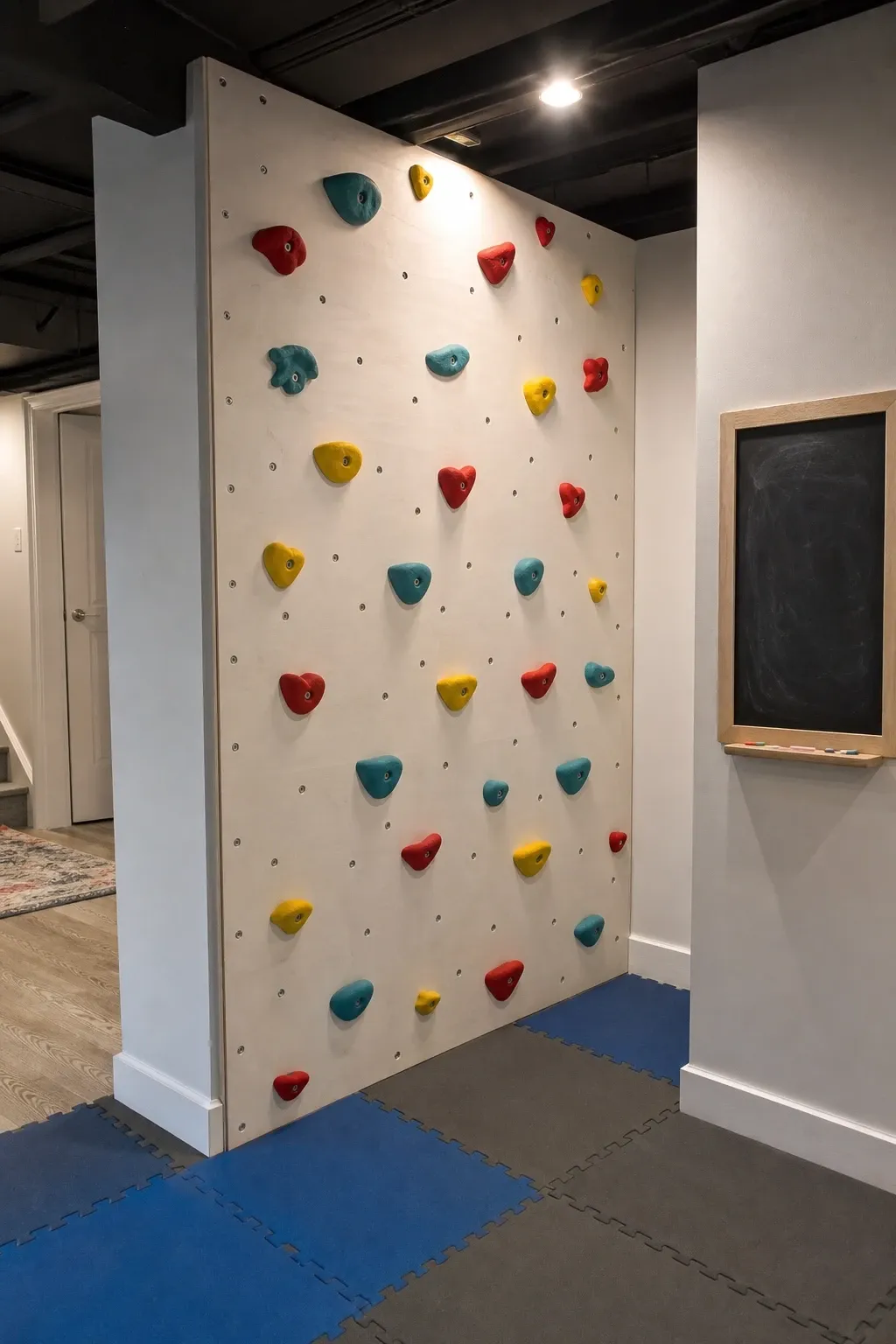
A climbing wall in the basement corner is one of the best investments you can make for kids who cannot seem to sit still. Mount colorful climbing holds onto a 4×8 sheet of 3/4-inch plywood at a slight angle, secured to the wall studs. Keep the color palette bold but contained: bright red, yellow, and teal holds against a white or light gray wall let the climbing feature stand out without making the whole room feel chaotic. Pair the area with thick foam puzzle mats in a contrasting color directly below for safe landings. Overhead lighting here should be bright and directional so there are no dark shadows on the wall. You can buy modular climbing hold kits and adjust difficulty as your child grows, making this a feature that stays useful for years.
Designer Tip: Add a small chalkboard beside the wall where kids can track their personal best routes or challenge each other. It costs almost nothing and turns a physical activity into a game.
2. Soft Tumbling and Gymnastics Strip
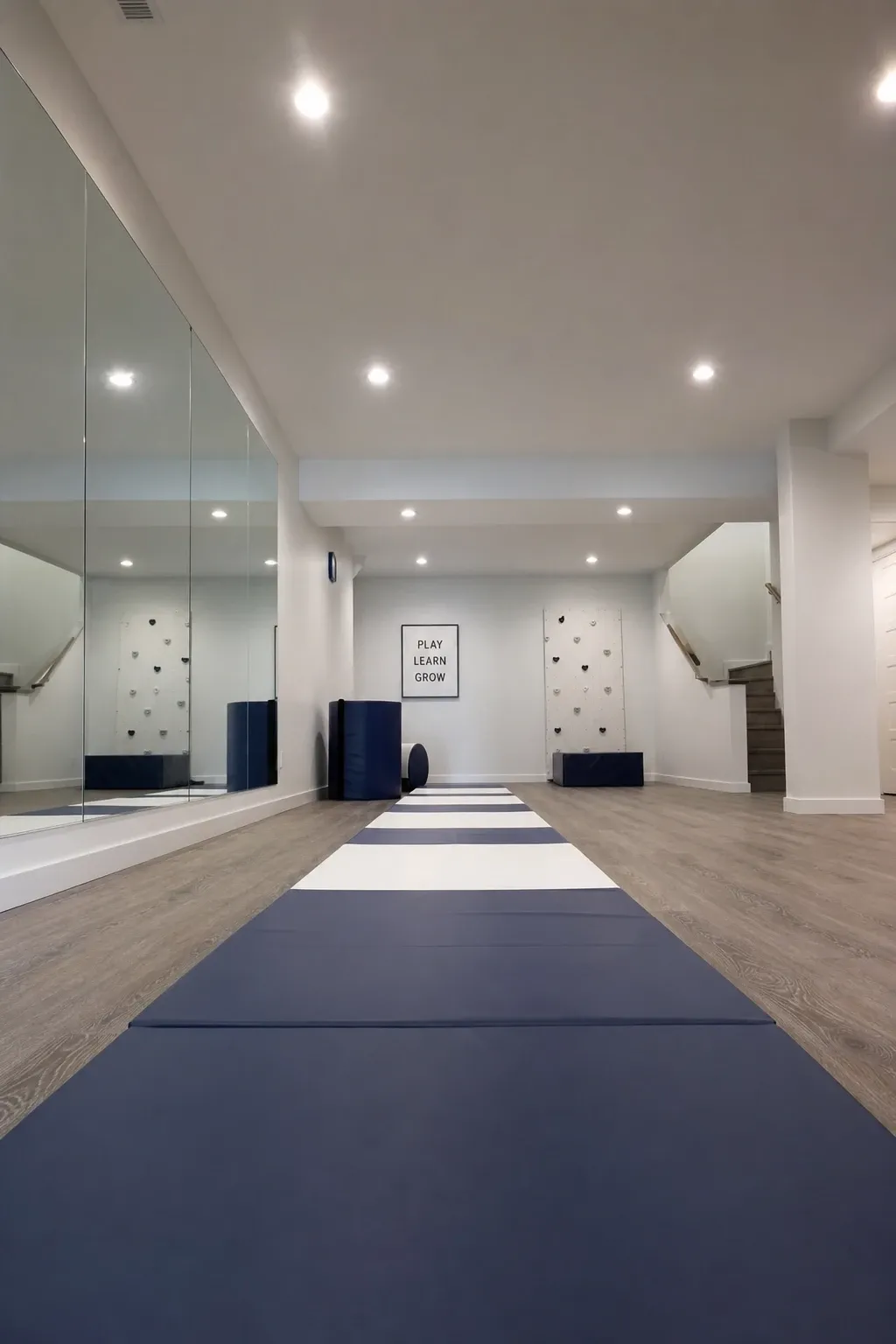
A long gymnastics strip mat running down the center of the basement gives kids a clear, cushioned runway for cartwheels, rolls, and general roughhousing. Look for interlocking foam mats in a 4-inch thickness, which can be arranged in a straight strip or an L-shape depending on your layout. Stick to a two-color pattern, alternating navy and white or forest green and gray, so the mat looks intentional rather than like leftover gym flooring. Keep the surrounding walls clear and paint them a crisp white to make the space feel open and safe. Ceiling height matters here: any pendant lights or hanging fixtures should be at least 7.5 feet off the ground to avoid being in the way. A mirrored panel on one wall, similar to a dance studio setup, makes the space feel larger and lets kids watch themselves practice.
Designer Tip: Store rolled yoga mats and a small gymnastics wedge in a low open cubby at the end of the strip. Everything stays off the floor and kids can grab what they need without any help.
3. Mini Indoor Basketball Setup
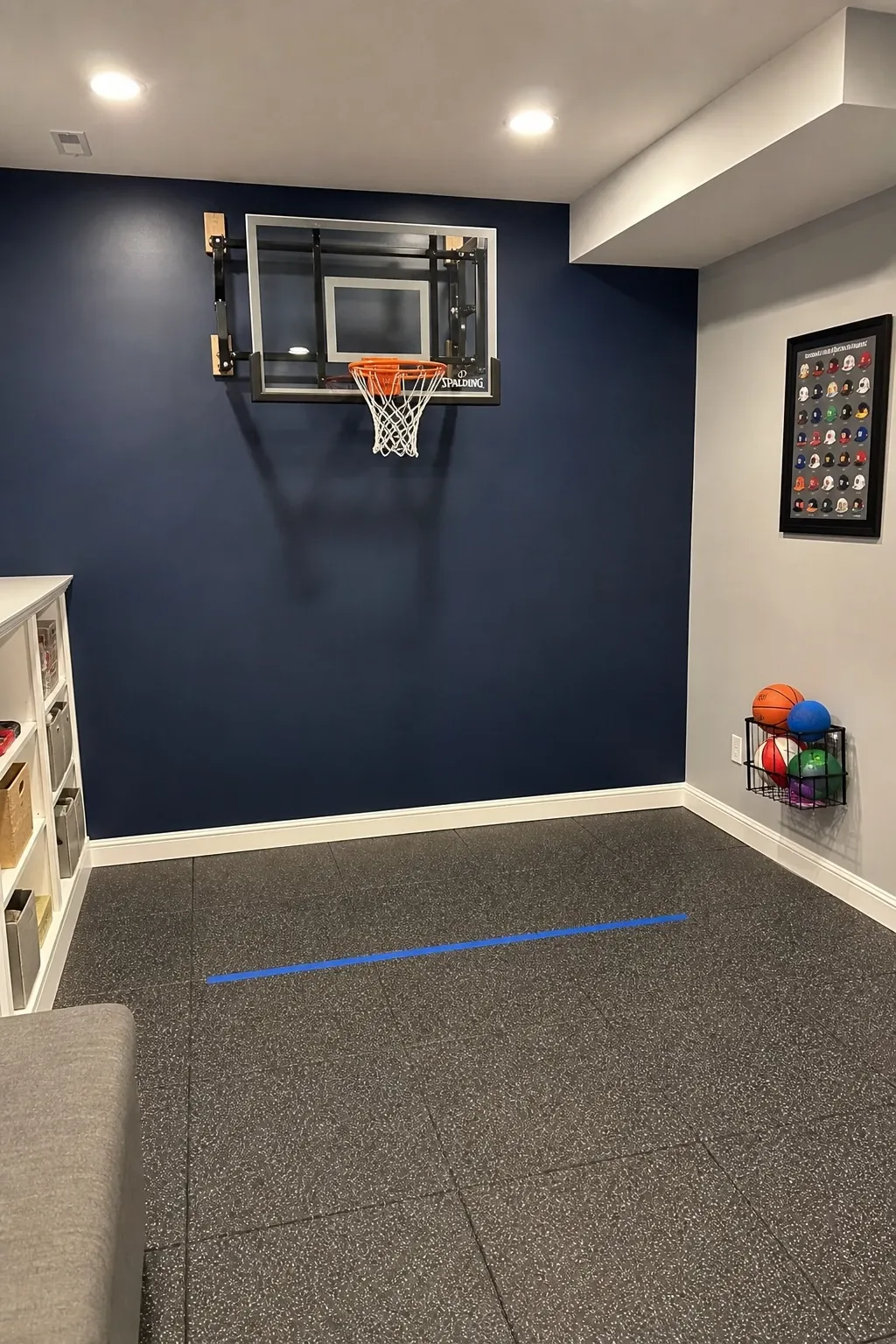
A wall-mounted adjustable basketball hoop changes even a modest basement into a sports zone that kids will use every single day. Choose a hoop with an adjustable height range from about 5.5 to 7 feet so it works for toddlers and tweens alike. Paint the wall behind the hoop in a deep color, charcoal, navy, or hunter green, to create a visual focal point that defines the activity zone without a full room repaint. Use a durable vinyl or rubber flooring tile in this zone rather than carpet, since it is easier to dribble on and far simpler to clean. Recessed can lights or LED strip lighting along the ceiling edge keeps this area bright and energetic. Store a few foam or rubber balls in a simple wire basket mounted low on the wall nearby.
Designer Tip: Use painter’s tape on the floor to mark a free throw line and a three-point arc. Kids love having official-looking boundaries, and the tape comes up clean when you want to change things.
4. Sensory Swing and Hammock Nook
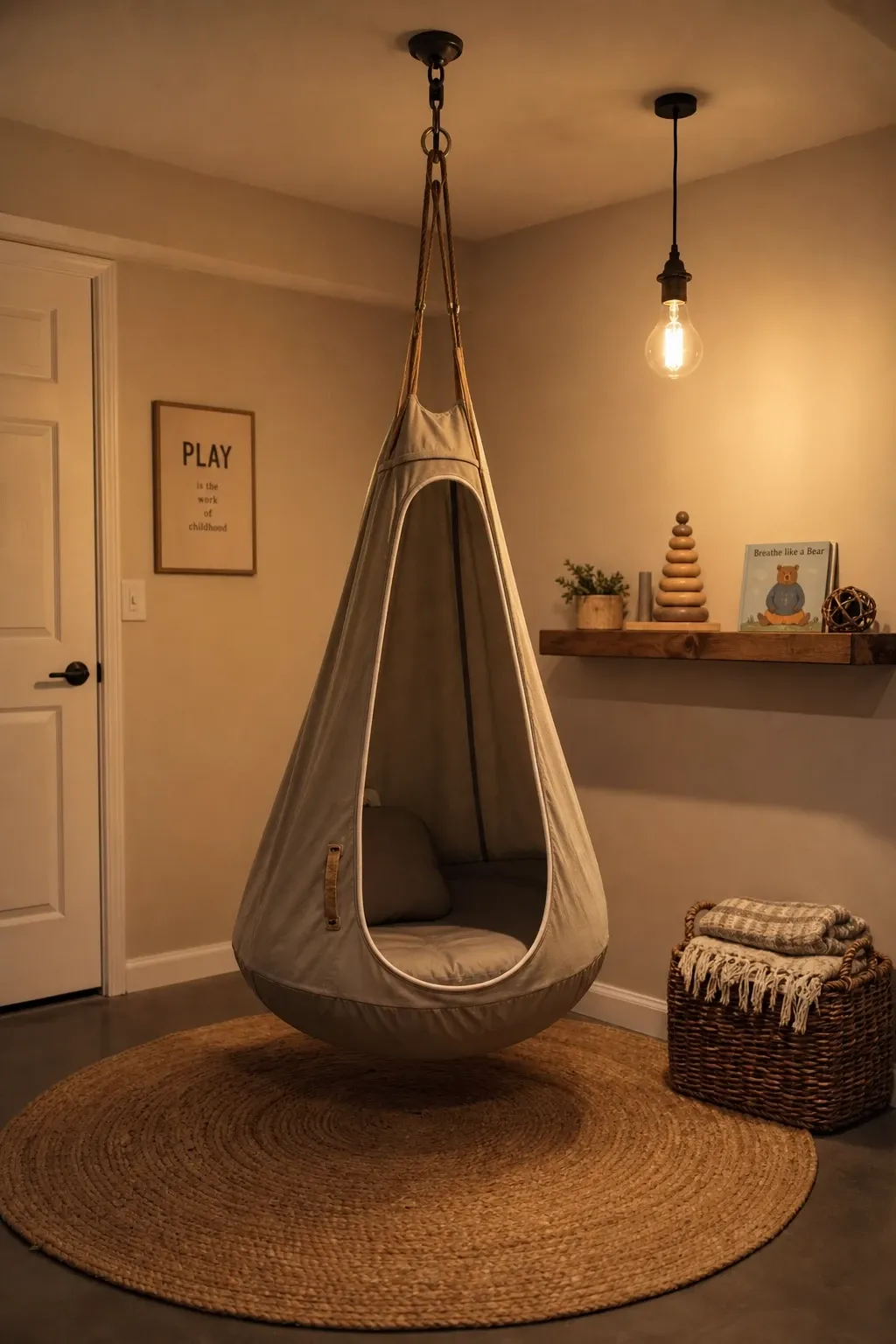
A ceiling-mounted sensory swing is calming for kids who need proprioceptive input and wildly fun for kids who just want to spin. Find a beam or install a proper swing mount rated for at least 200 pounds, and hang a pod swing or hammock swing in a corner. Surround this area with soft, warm tones: cream walls, a woven jute rug underneath, and a small basket of cozy blankets nearby. Use a warm-toned Edison bulb or a dimmable pendant light overhead to make the nook feel cozy rather than clinical. This type of swing is also a great occupational therapy tool for kids with sensory processing differences. Keep the area clear of sharp furniture within the swing’s range of motion so kids can swing freely without any concern.
Designer Tip: Mount a small floating shelf within arm’s reach of the swing with a few fidget tools, a stress ball, and a small stuffed animal. It gives kids something to reach for mid-swing and extends the time they actually spend there.
For the Creative Kid: Art, Imagination, and Building Zones
5. Dedicated Art Studio Wall
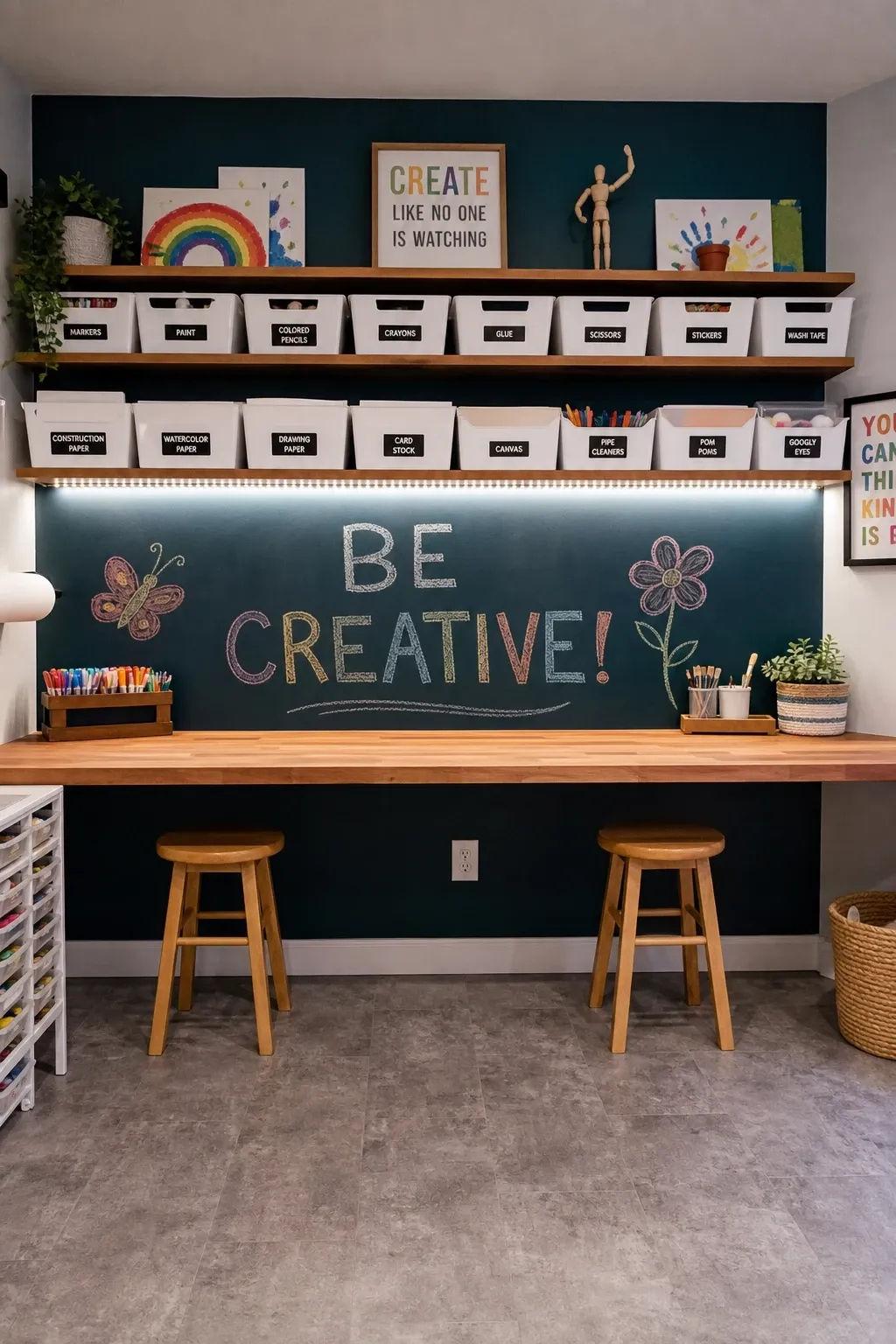
Designating one full wall of the basement as the art wall changes everything for creative kids. Start with a large sheet of tempered glass or a full-wall chalkboard paint treatment so kids can draw directly on the surface without fear of making a mess. Place a long butcher block or laminate table in front of it at a kid-appropriate height, around 24 to 26 inches, with stools rather than chairs so kids can hop on and off easily. Keep the color scheme clean around this zone: white or light gray walls everywhere except the designated art wall, which can be a punchy color like terracotta or deep teal. Open shelving above the table holds labeled bins for markers, paint, clay, and paper. Good lighting is critical here: an LED strip across the top of the shelving or a row of adjustable track lights gives even, shadow-free illumination for detailed work.
More Looks You'll Want to Steal:
Designer Tip: Line the floor directly below the art table with a vinyl sheet in a fun pattern. It protects the floor completely and wipes clean in seconds, so you never have to worry about paint or clay drips.
6. LEGO and Building Station
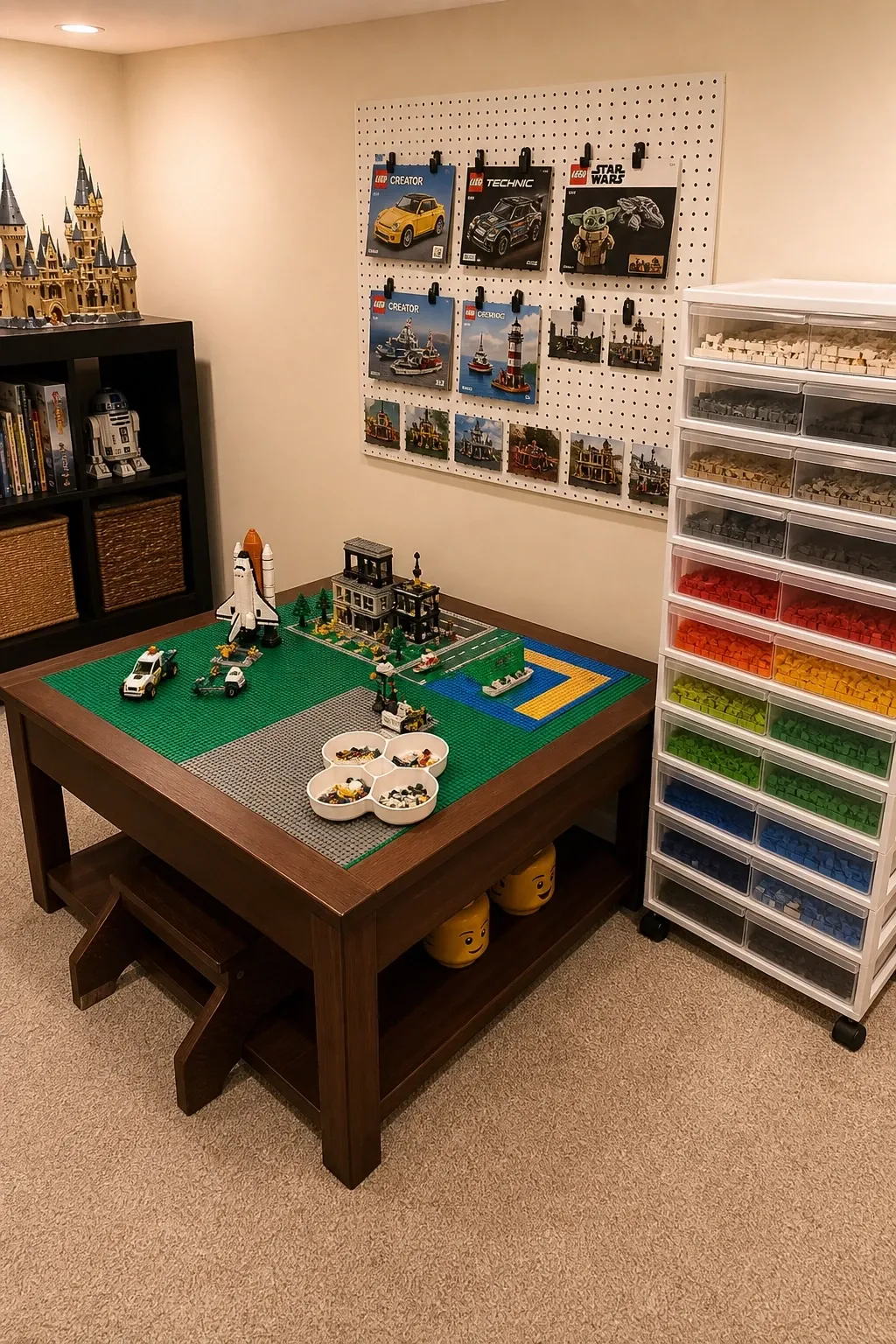
A dedicated building station keeps LEGO bricks, magnetic tiles, and blocks contained in one organized zone that kids actually want to use. The key is low, accessible storage: a set of shallow rolling drawers or labeled clear bins on a low shelf where kids can see and reach every piece without help. Use LEGO baseplates mounted directly to the tabletop with double-sided tape so builds can stay in progress for days without getting knocked over. A large farmhouse table or a solid wood coffee table at floor level works well here, especially if kids prefer building while seated on the floor. Keep the wall color neutral, warm white or soft gray, so colorful builds stand out visually. Add a pegboard above the station to hang specialty tools, instruction booklets in sheet protectors, and inspiration photos.
Designer Tip: Sort bricks by color in clear bins rather than by type. It sounds counterintuitive but kids find it far faster to locate pieces by color, and it makes clean-up much more natural.
7. Dramatic Play Kitchen and Shop Corner
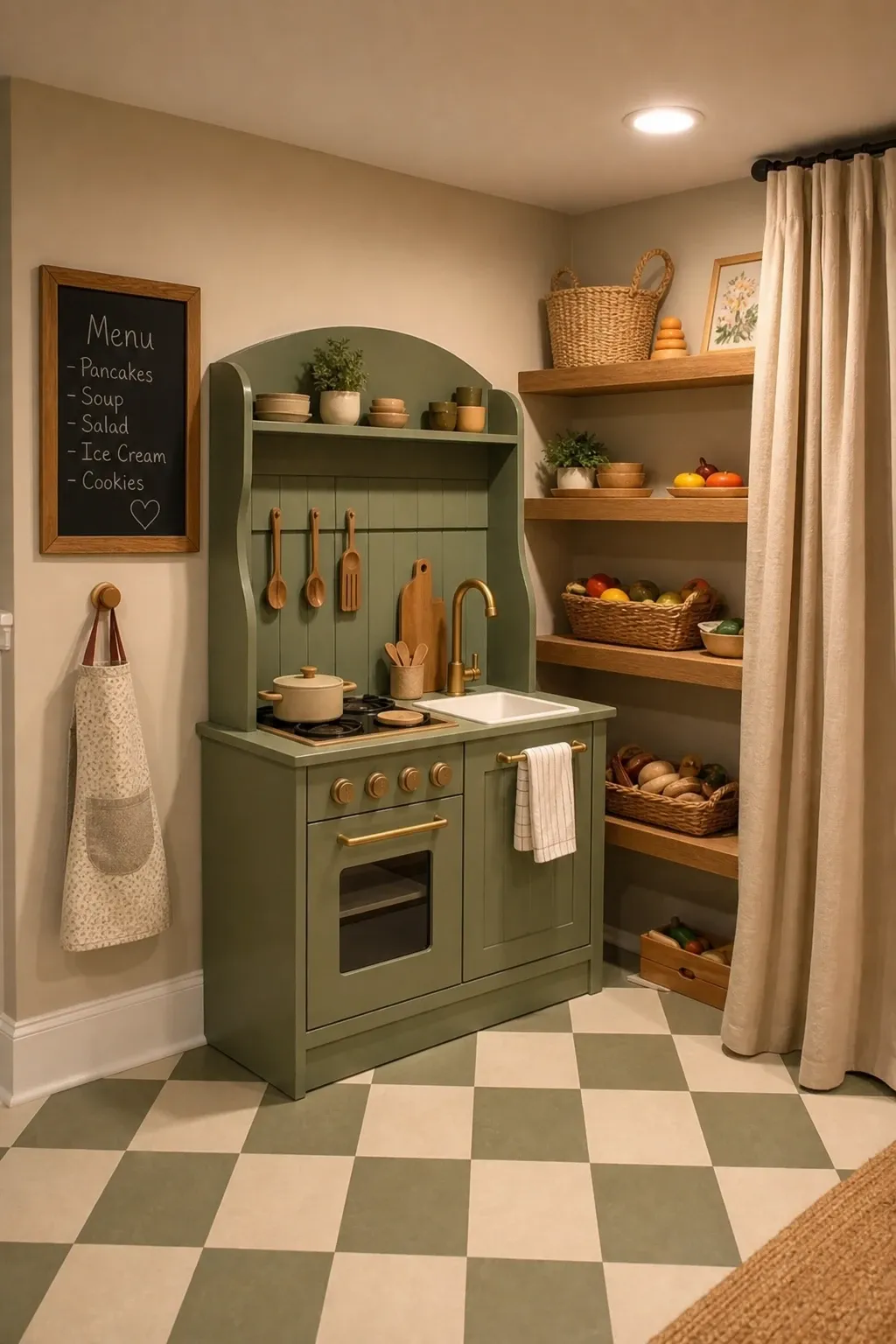
A play kitchen corner is one of the highest-use features you can add to a basement playroom for kids under eight. Look for a wooden play kitchen in a neutral color like white, cream, or sage green, which will not clash with the rest of the room as kids grow. Frame the corner with open floating shelves at kid height holding play food, small baskets of pretend groceries, and a few wooden utensils in a cup. Add a small chalkboard or magnetic menu board on the wall beside it so kids can write their specials of the day, which turns the space into a pretend restaurant or market without any extra furniture. The flooring here can be a small checkerboard vinyl tile to signal that this is a different zone. Keep overhead lighting warm in this corner to make it feel cozy and inviting for imaginative play.
Designer Tip: Frame the corner with a simple curtain rod and a light linen curtain on one side. Kids can close the curtain for privacy when they are deep in imaginative play, and it makes the space feel more like a real little room.
8. Puppet Theater and Stage Area
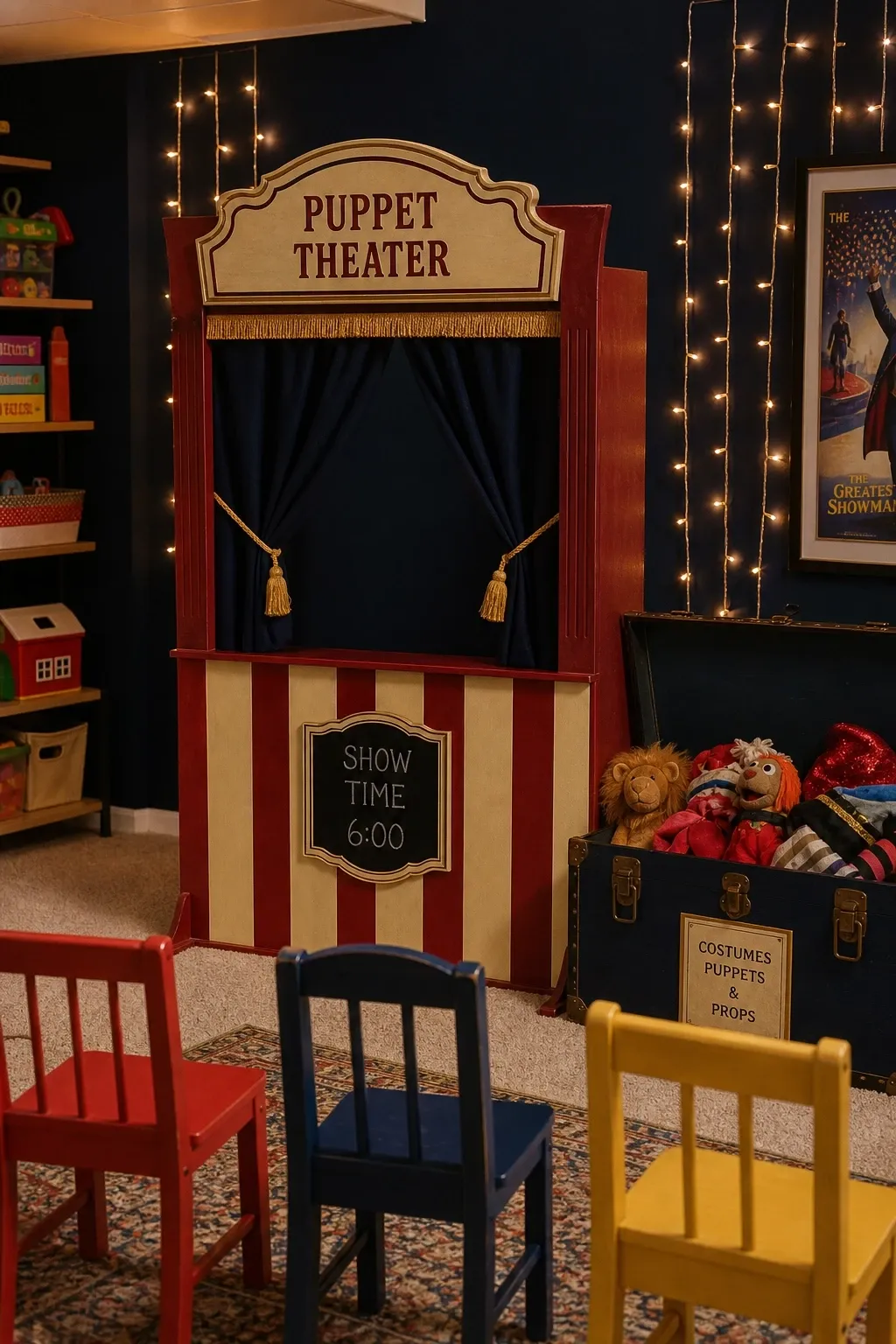
A small stage or puppet theater area encourages storytelling, performance, and social play in a way most playroom setups overlook. Build or buy a simple wooden puppet theater frame that can be freestanding against a wall, painted in a cheerful primary color or a classic red-and-white stripe. Leave a few feet of open floor space in front of it so kids can set up chairs for an audience. The wall behind the theater can be painted in a deep navy or forest green to feel like a real stage backdrop. Hang a small string light curtain on either side of the theater frame to add a little theatrical flair. Store puppets, costumes, and props in a trunk or large basket right beside the theater so everything is ready to go without a hunt.
Designer Tip: Add a small dress-up rack nearby with a few hooks at different heights. Keep the most-used costumes hanging and store the rest in labeled bins below. Kids are far more likely to use costumes when they can see them.
For the Reader and Thinker: Quiet Corners and Learning Zones
9. Cozy Book Nook with Built-In Bench
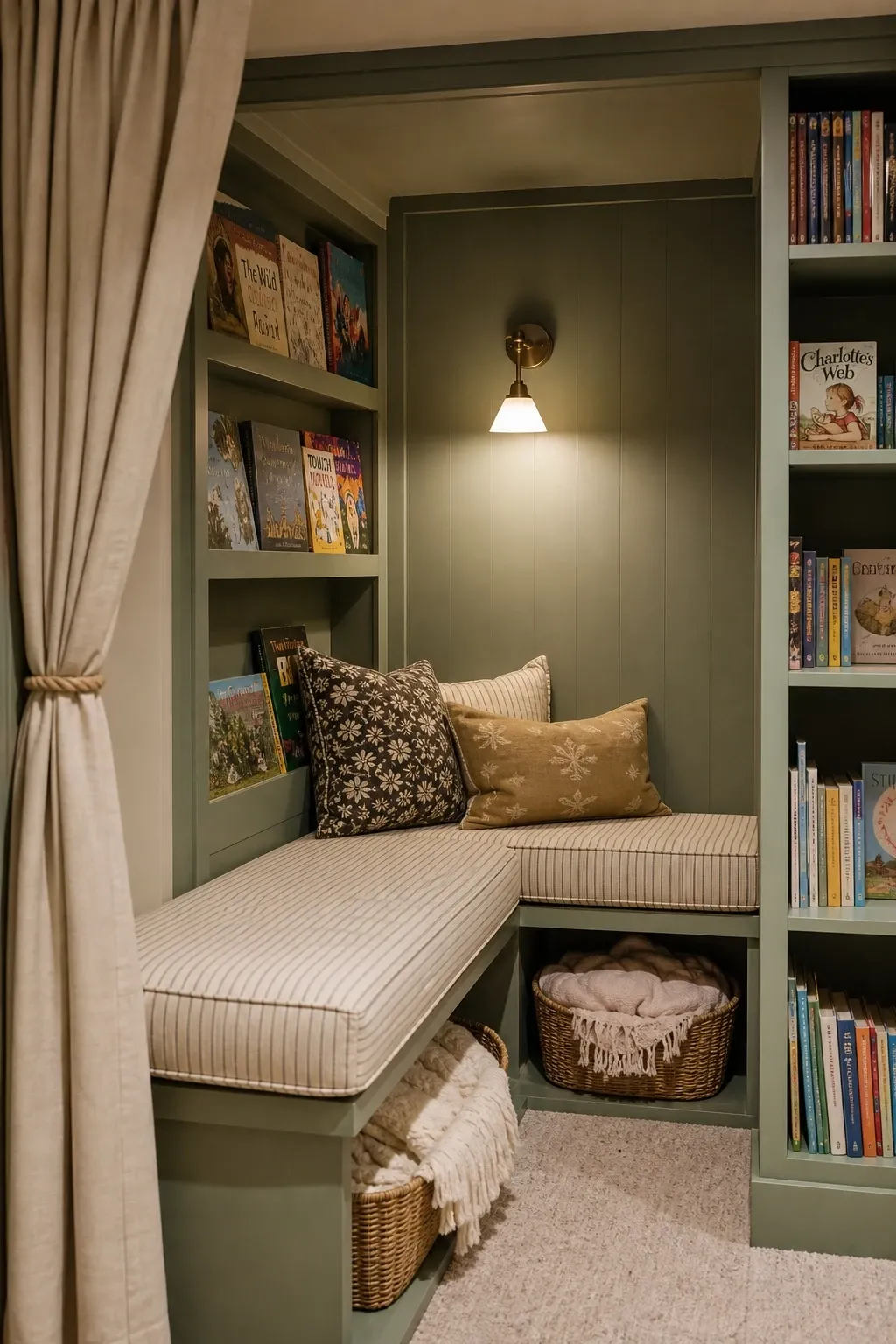
A proper reading nook in a basement playroom is the kind of feature kids return to again and again, especially as they get older and the novelty of active play starts to compete with the appeal of a good book. Build a simple L-shaped bench into a corner using plywood and a thick foam cushion covered in a durable indoor-outdoor fabric in a warm stripe or solid. Add built-in bookshelves on both sides of the nook at varying heights so picture books and chapter books can be displayed face-out for easier browsing. Paint the nook interior in a color slightly different from the rest of the room, a dusty sage or soft terracotta, to make it feel like a defined little retreat. Install a small wall sconce or a clip-on reading lamp above the bench at a comfortable reading height. Tuck a basket of throw blankets underneath and add a few firm pillows in coordinating fabrics.
Designer Tip: Install a simple curtain rod across the front of the nook opening. A canvas or linen curtain the kids can pull closed gives them ownership of the space and makes reading feel like a special, chosen activity rather than a quiet-time obligation.
10. STEM Exploration Table
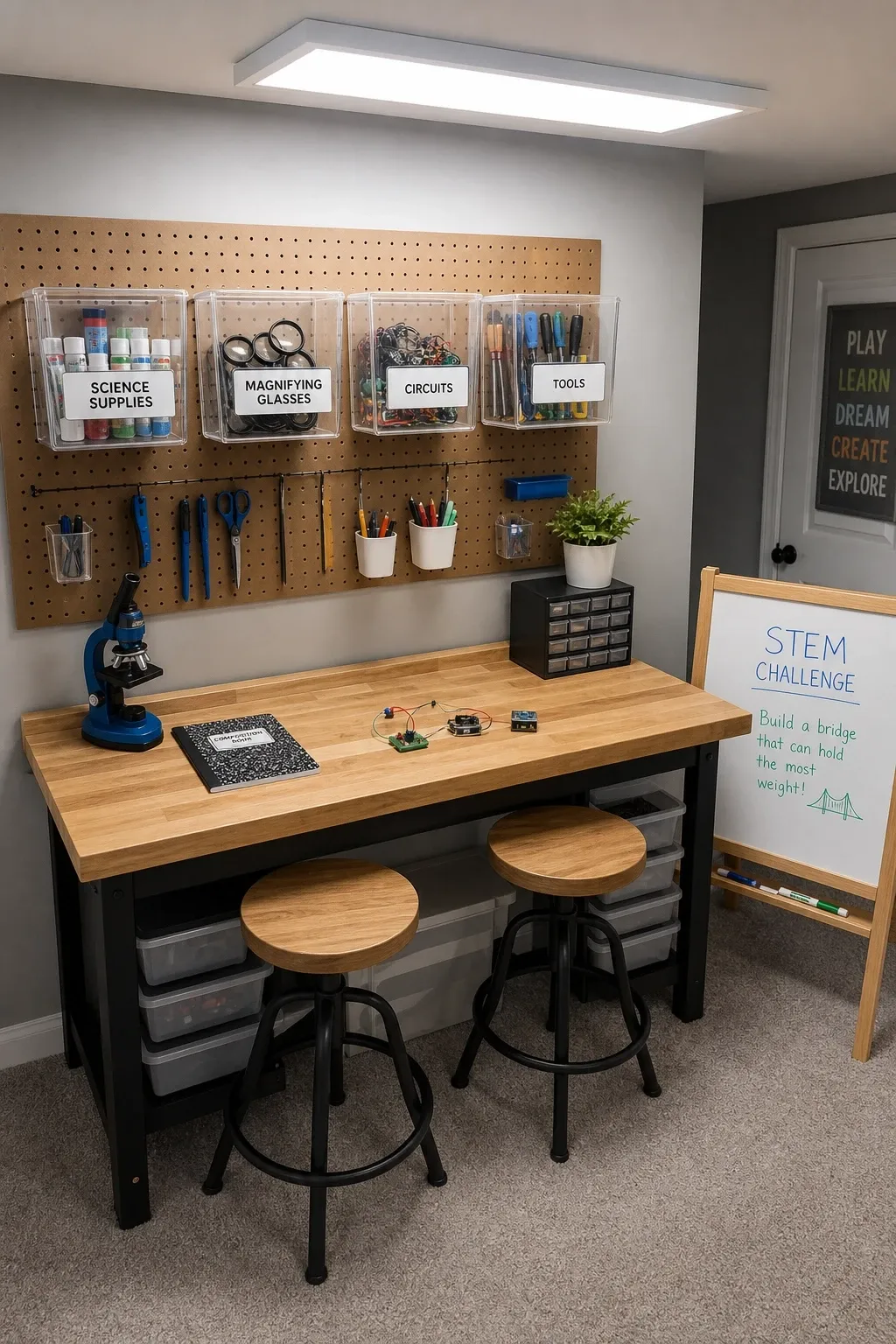
A science and exploration table gives curious kids a place to do experiments, build circuits, and investigate the world in a way that feels purposeful. Use a solid, easy-clean surface like a butcher block or a laminate table in a neutral tone, and pair it with adjustable stools so it can grow with your child. Organize supplies in a pegboard system above the table: clear acrylic bins hold magnifying glasses, measurement tools, small motors, batteries, and science kits. Keep the surrounding wall color clean and neutral so there is no visual competition with whatever project is underway on the table. A good overhead light is essential here: look for a bright, cool-toned LED panel that mimics daylight and reduces eye strain during detailed work. Label every bin clearly with pictures and words so younger kids can participate independently.
Designer Tip: Keep a small whiteboard on a stand beside the STEM table. Kids can write hypotheses, draw diagrams, and record results, turning casual tinkering into genuine scientific thinking without any extra effort from you.
11. Writing and Journaling Desk Nook
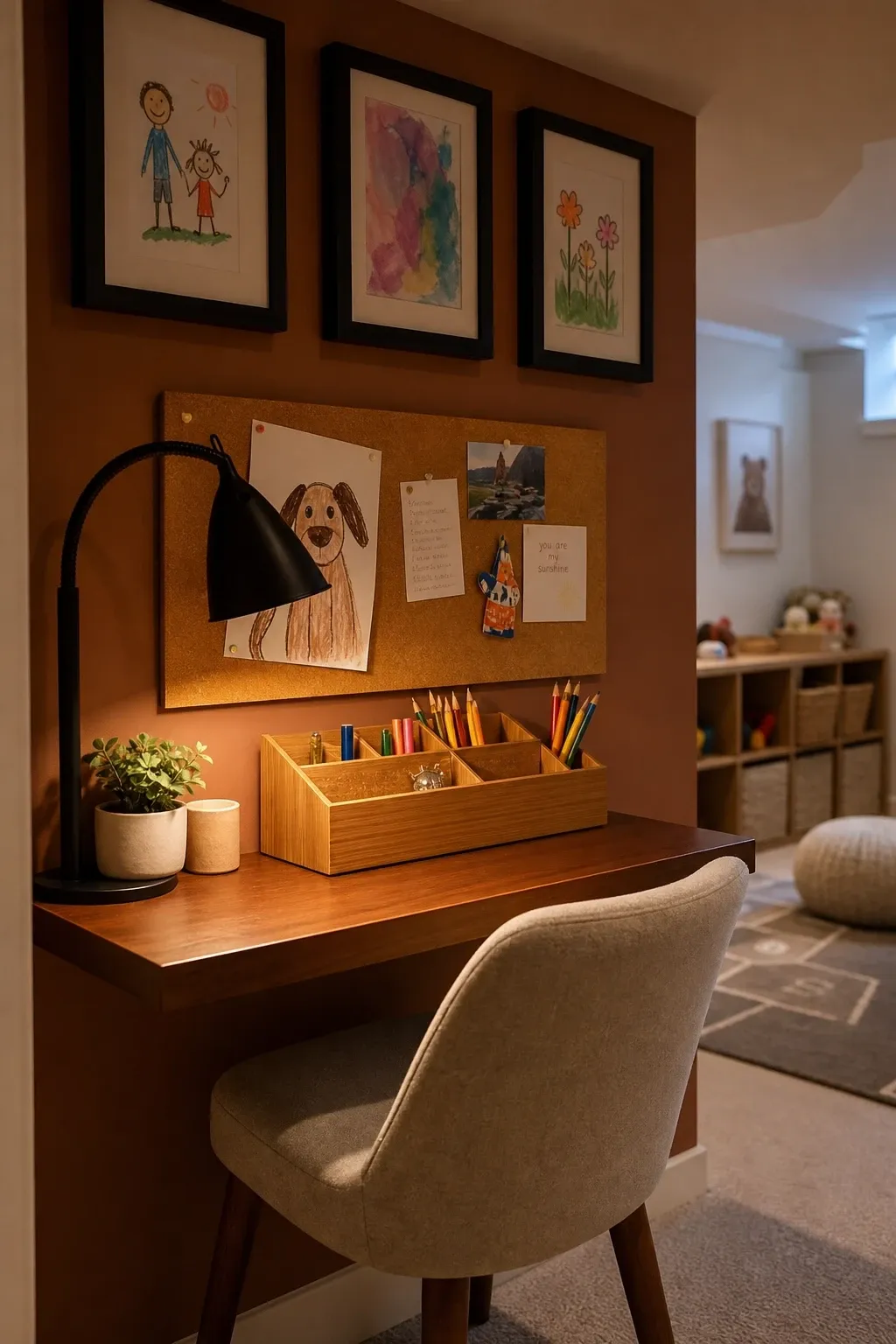
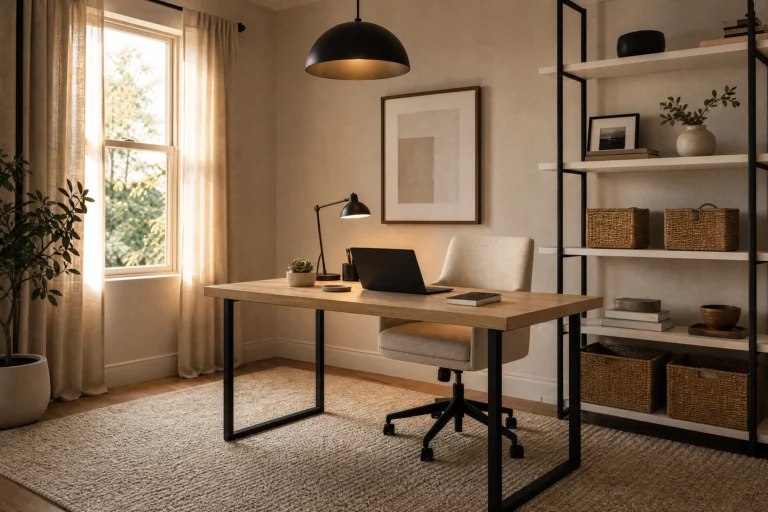
For kids who love to write, draw comics, or keep journals, a dedicated desk nook in the basement playroom is a place they will genuinely claim as their own. A simple floating desk mounted to the wall at kid height takes up minimal floor space and looks clean against a painted accent wall in a muted color like warm clay or soft charcoal. Add a small corkboard above the desk so kids can pin their favorite drawings, inspiration clippings, and personal notes. Keep supplies contained in a small desktop organizer in a natural material like bamboo or wood to avoid visual clutter. A single adjustable gooseneck lamp in a matte black or brass finish gives good task lighting without overwhelming the nook. A low, comfortable chair in a fabric that is easy to spot-clean completes the setup.
Designer Tip: Frame a few of your child’s finished drawings or comic pages and hang them above the desk. It signals that their work is valued and gives them something to aspire to every time they sit down.
For the Social Kid: Group Play, Games, and Hangout Spaces
12. Game Table Zone for Board Games and Puzzles
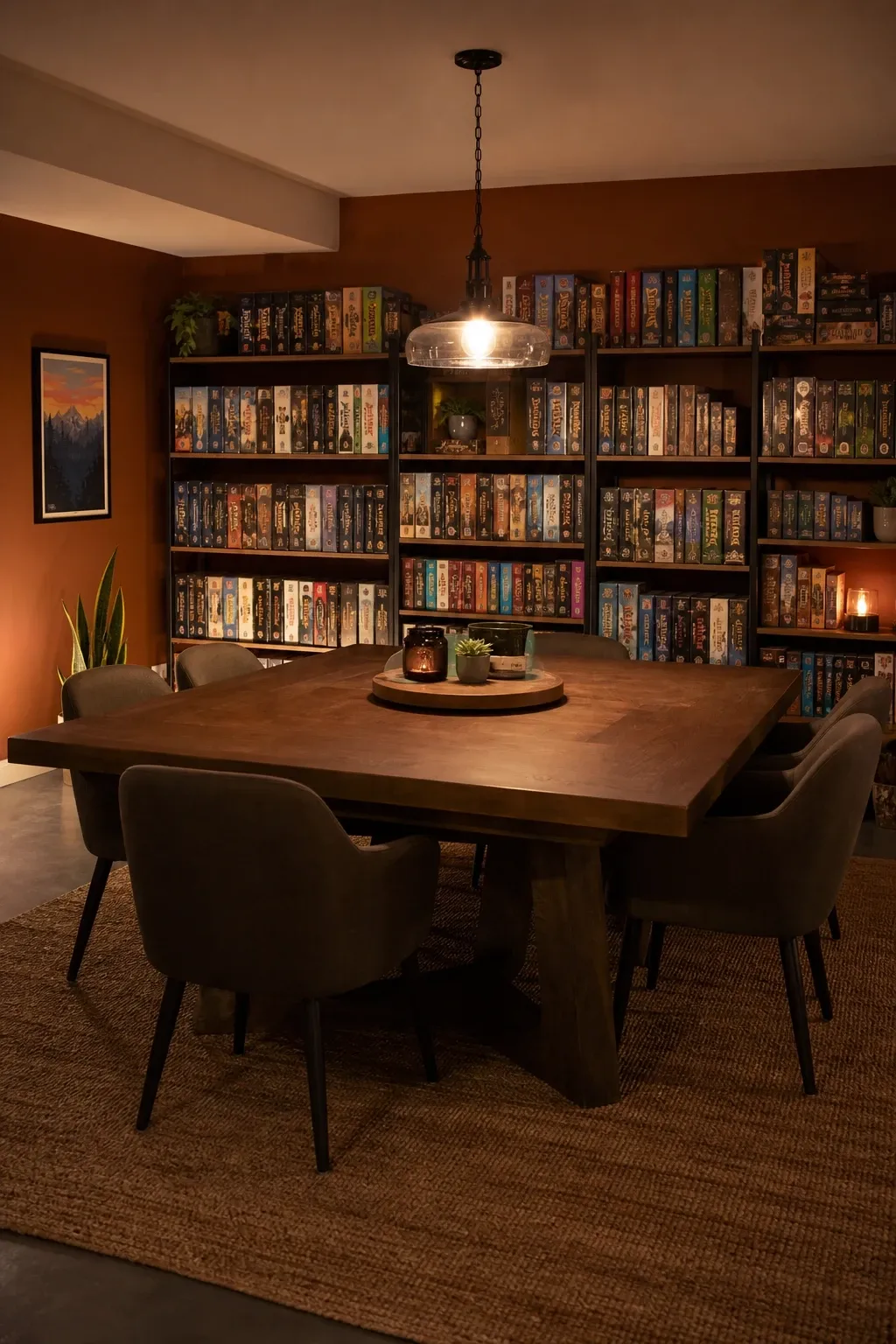
A proper game table zone is one of those features that makes a basement playroom genuinely useful for the whole family, not just young children. Choose a large, round or square table in a durable material like solid wood or MDF with a rubberized edge, and surround it with comfortable chairs that can be pulled up or tucked away easily. Dedicate a full section of wall shelving to board games organized by box size: oversized games on the bottom, medium boxes in the middle, and small card games in labeled bins on top. Keep the color palette in this zone warmer and more inviting than the active play areas: a warm cream or cognac brown on the walls, a woven rug under the table, and a warm-toned pendant overhead. A set of good overhead lights on a dimmer lets you shift from bright game night mode to a quieter atmosphere when needed.
Designer Tip: Attach a small lazy Susan to the center of the game table. It makes passing dice, cards, and game pieces around the table so much easier during long sessions, and kids find it genuinely exciting to use.
13. Projector and Movie Corner
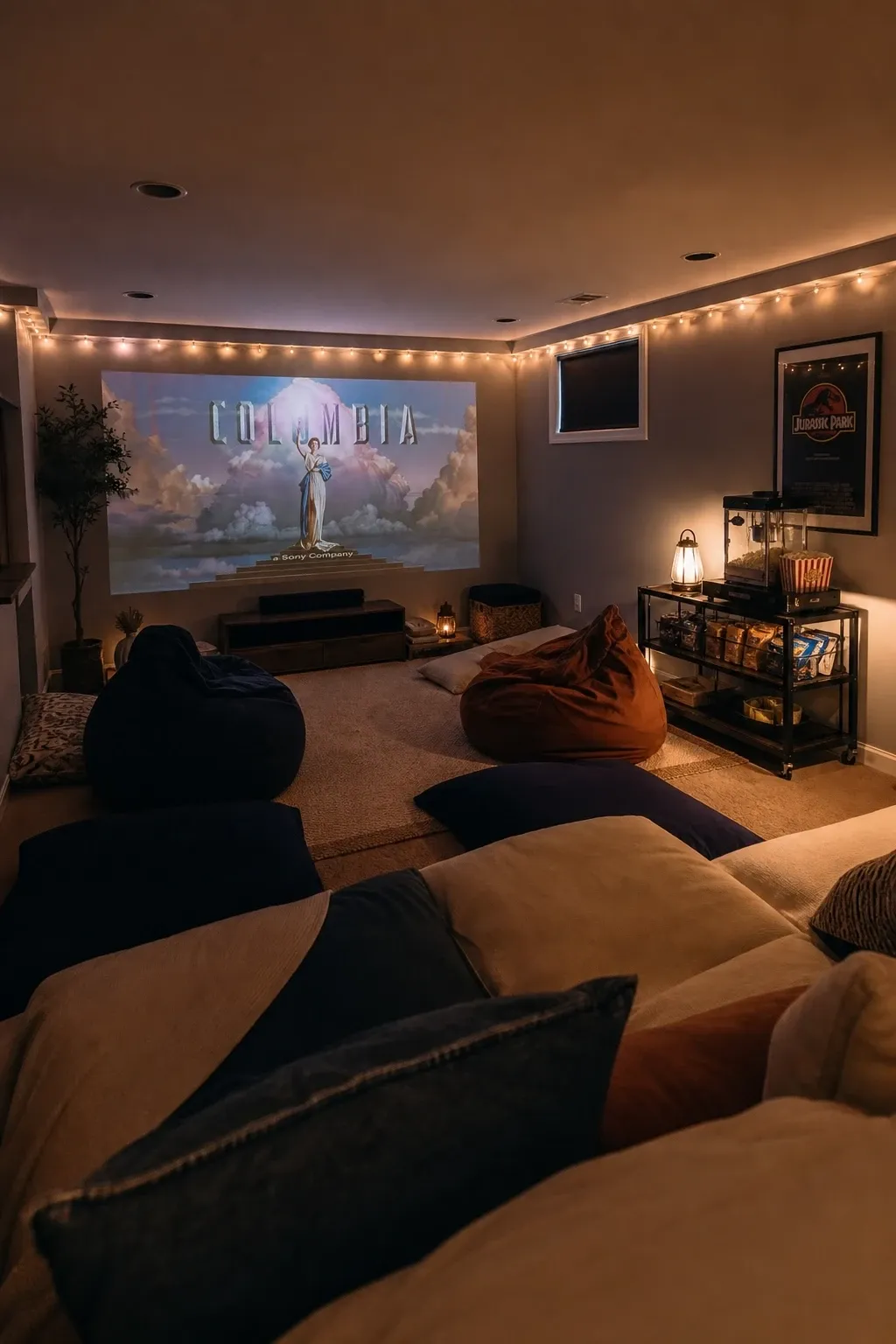
A basement is actually the ideal spot for a projector movie setup because the naturally lower light levels work in your favor. Mount a short-throw projector on the ceiling and paint one wall with projector screen paint in bright white for a crisp image without buying a separate screen. For seating, skip the formal sofa and go for oversized floor cushions, bean bags, and a few low foam wedges in a mix of complementary colors like navy, rust, and cream. Add blackout curtains or a simple roller blind on any small basement windows to control light fully. String lights or LED tape along the ceiling perimeter give the space a cinema feel when the movie is running without adding glare. Keep a rolling cart nearby with a blanket basket and a small snack bowl station so movie nights feel fully set up and special.
Designer Tip: Put the projector on a smart plug connected to a simple voice assistant. Kids can turn the setup on and off themselves, which makes the whole experience feel more independent and exciting for them.
14. Foosball or Air Hockey Station
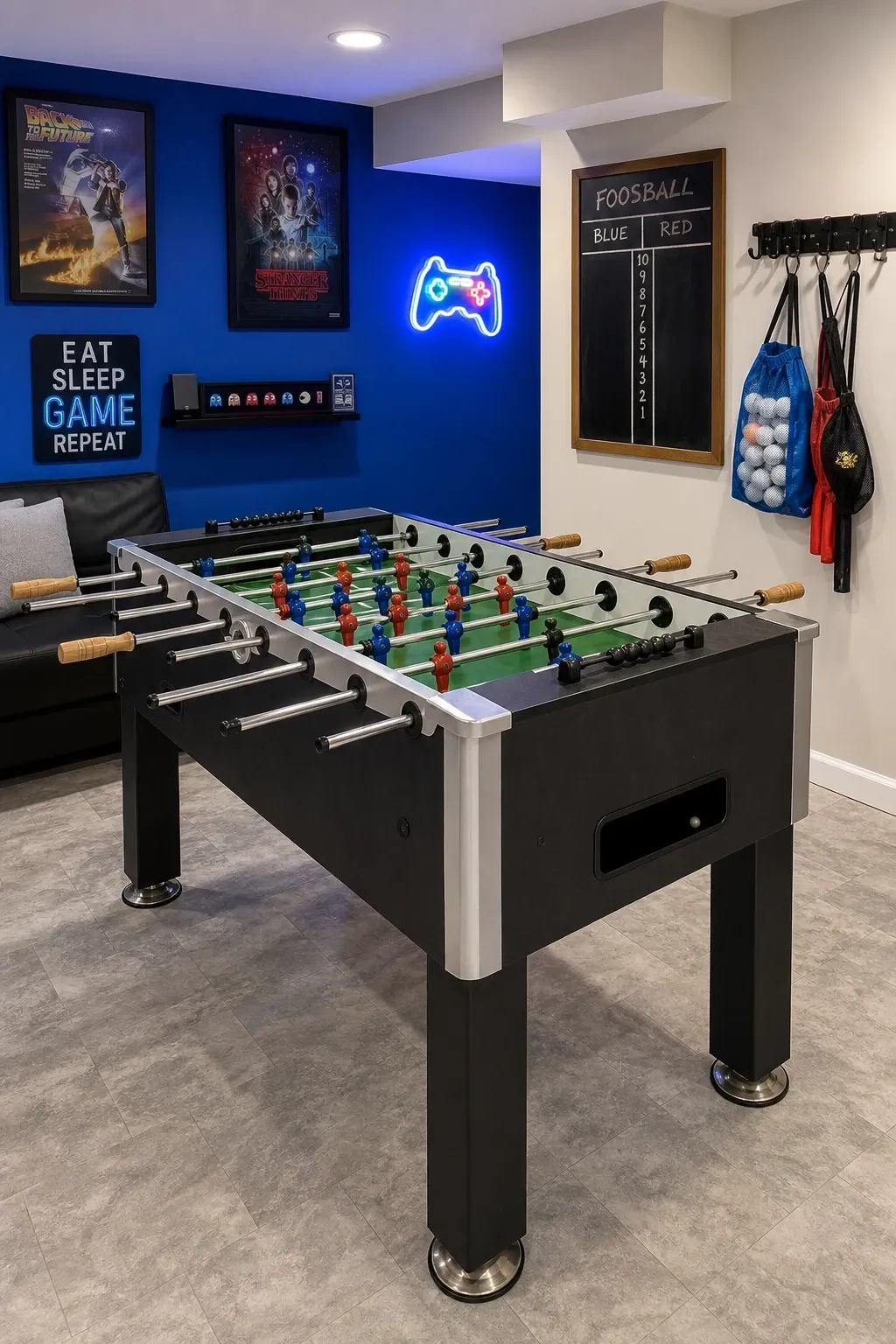
A foosball table or air hockey table turns a basement playroom into the place every kid in the neighborhood wants to be, and it stays popular from age five through teenage years. Position it in the most open area of the basement with at least two feet of clearance on all sides so players can move freely. The wall behind or beside the table is a great spot for a bold paint color or a graphic wall mural, something with energy like a deep cobalt or a graffiti-style design, which sets the competitive tone of the zone. Use a smooth, hard floor surface under the table rather than carpet for better acoustics and easier movement around the game. Keep the overhead lighting bright and direct in this area so there are no shadows across the playing surface. A scorecard chalkboard or whiteboard mounted on the nearby wall adds to the competitive atmosphere at almost no cost.
Designer Tip: Mount a simple wall hook nearby for keeping score tokens and extra balls organized. When everything has a home right beside the table, the game is always ready to go without hunting for pieces.
15. Couch and Hangout Lounge for Tweens
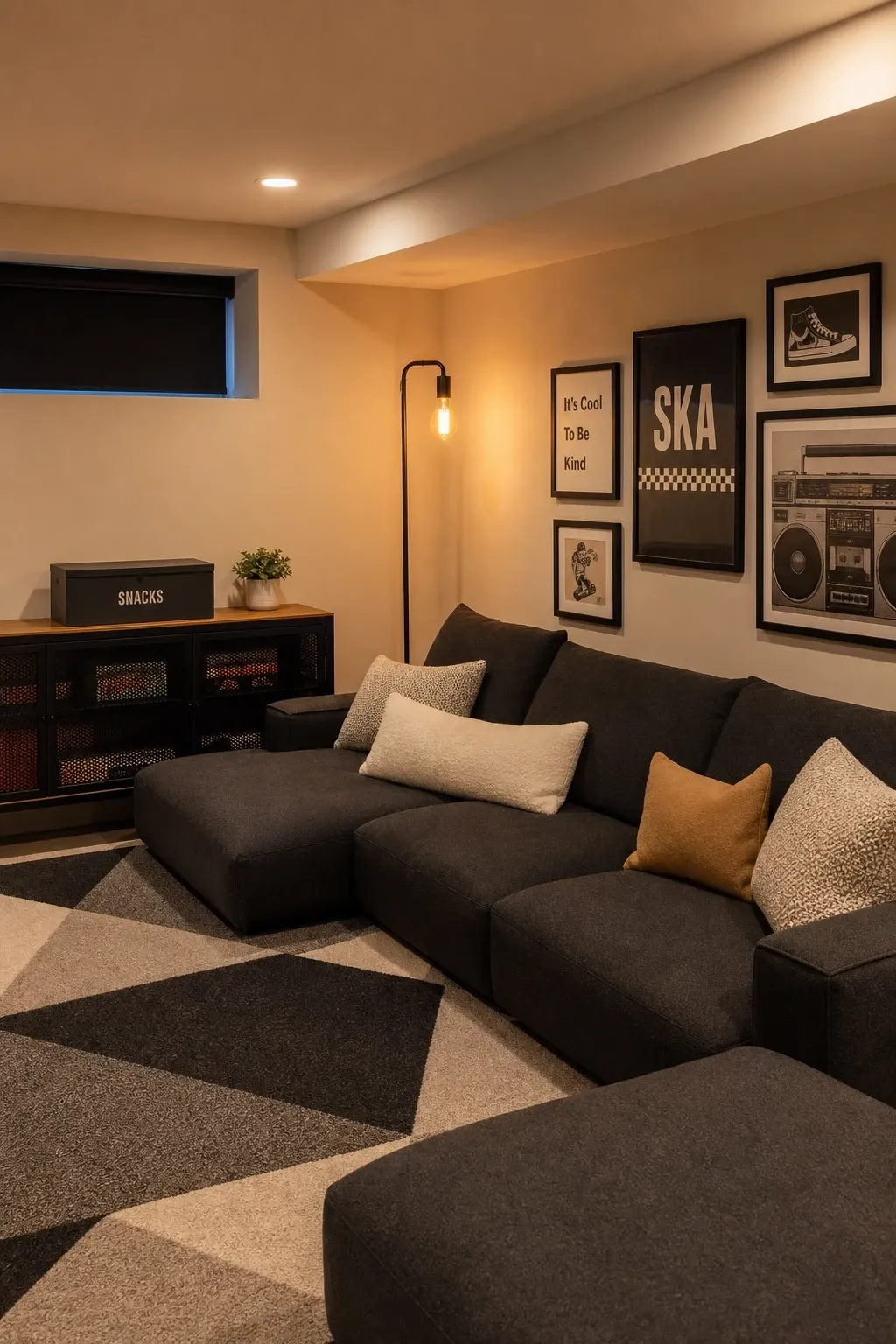
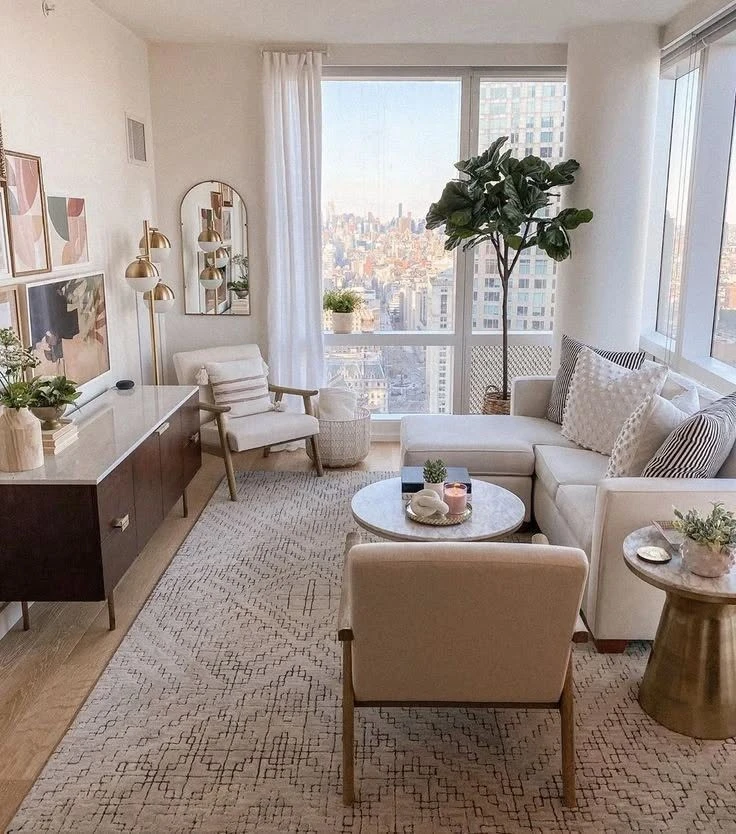
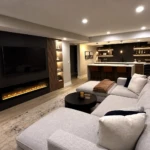
As kids get older, the basement playroom needs to shift from primary colors and foam mats to something that actually feels cool to a ten or twelve year old. A proper hangout lounge with a low sectional sofa or a modular L-shaped couch in a durable performance fabric, something in charcoal, warm gray, or a muted olive, gives older kids a place to gather that feels more like a real room. Layer in a large area rug in a bold geometric or abstract pattern, a floor lamp with a warm Edison bulb, and a few throw pillows in complementary textures like boucle and cotton canvas. Keep a small console or sideboard nearby for storing remotes, chargers, and a few snack essentials in a covered bin. Wall art in this zone can lean more grown-up: framed prints, a large canvas, or a gallery wall of the kids’ own photography or artwork.
Designer Tip: Let the kids choose one or two decor items for this zone themselves, a pillow, a poster, or a small lamp. When they have ownership over the space, they take better care of it and actually want to spend time there.
Smart Storage and Layout Ideas: The Details That Make It Work
16. Color-Coded Toy Storage Wall
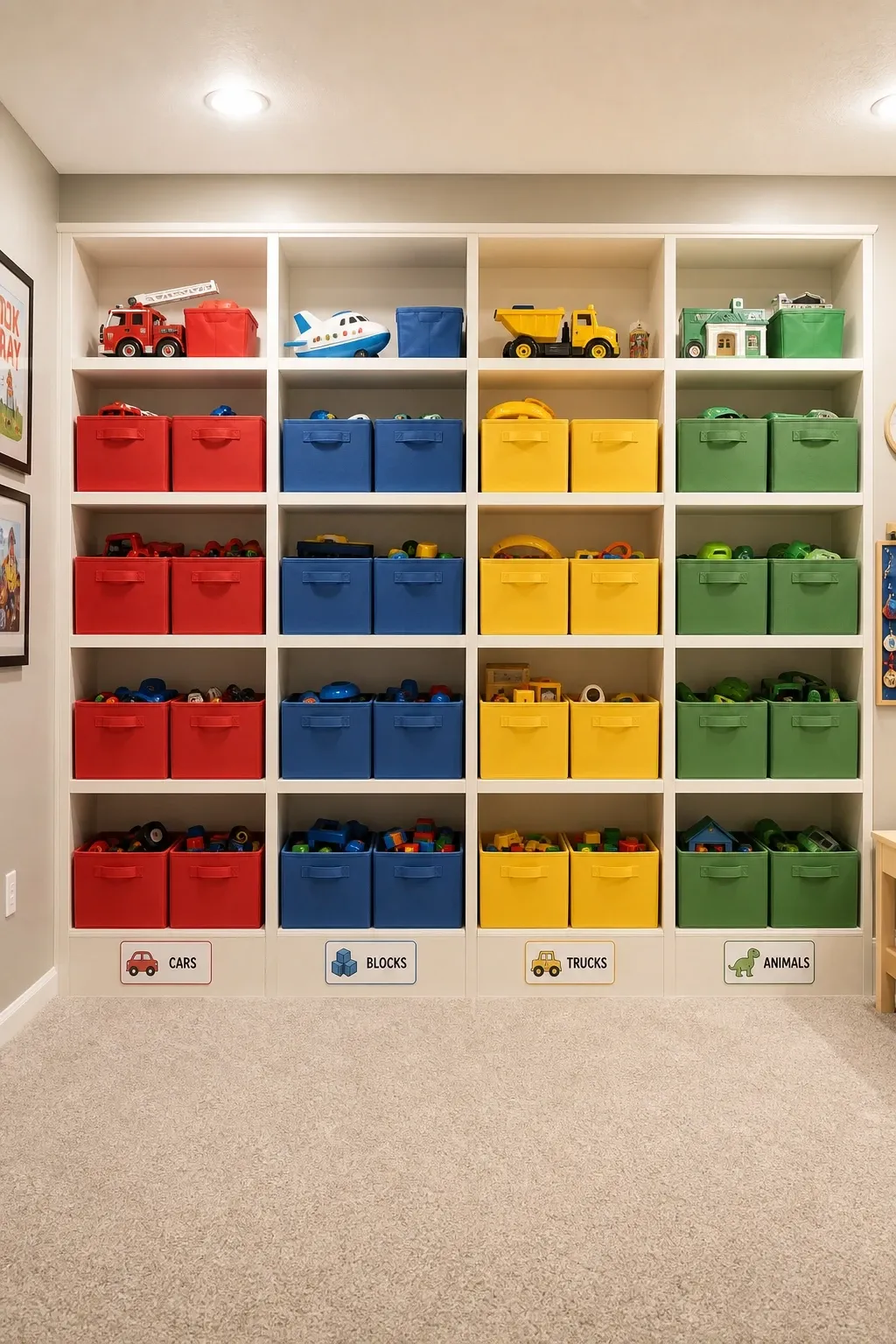
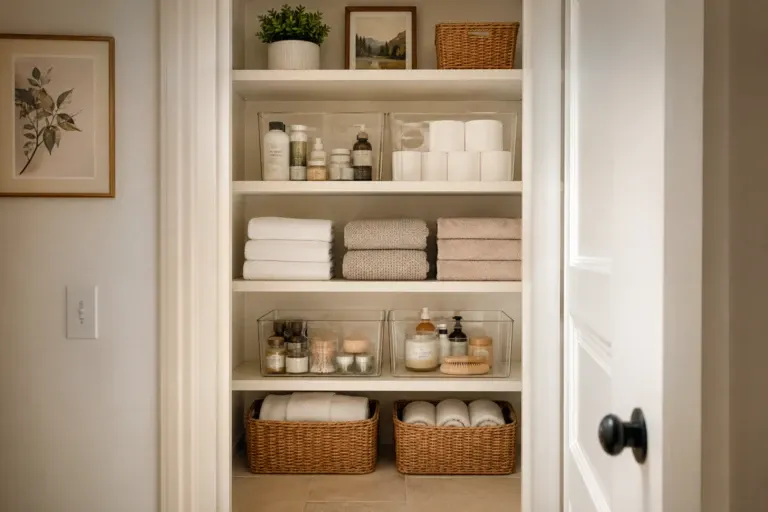
A full storage wall with open bins, cubbies, and shelves is the foundation that keeps a basement playroom functional over the long term. The secret to making it look good rather than chaotic is color coding: assign each type of toy a specific bin color, red for cars, blue for blocks, yellow for art supplies, and so on. Use open-front fabric bins or simple wicker baskets in a consistent size for a cohesive look on the shelves. Paint the storage wall itself in a warm white or a very light gray so it reads as a clean backdrop rather than competing with the bin colors. Add small printed labels with pictures at the bottom of each shelf so even pre-readers can find and return things independently. The goal is a system that the kids can maintain themselves with minimal reminders.
Designer Tip: Do a toy edit every few months and rotate items in and out of storage. When familiar toys come back out after a few months away, kids treat them like new ones, which keeps the room feeling fresh without spending anything.
17. Chalkboard Accent Wall for Open-Ended Play
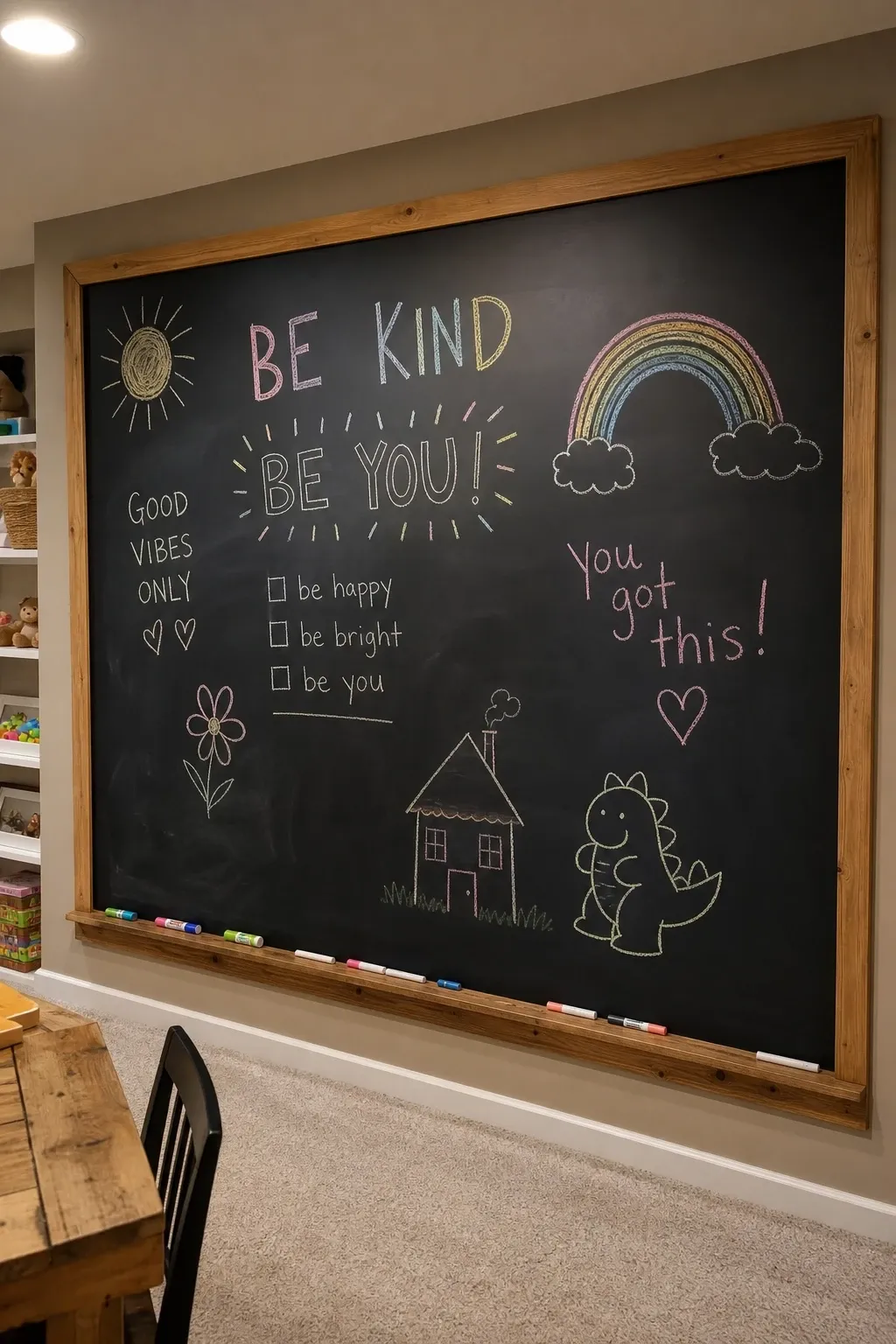
A full chalkboard wall is one of the most versatile additions you can make to a basement playroom because it serves a completely different purpose for every child. Younger kids use it for drawing and writing practice. Older kids use it for scorekeeping, brainstorming, and planning games. Apply chalkboard paint to one full wall, at least eight feet wide if possible, and frame it with a simple wood trim in a natural or painted finish to make it look intentional and finished rather than half-done. Keep a wooden ledge below the painted area for chalk storage so pieces are always within reach. Surround the rest of the room with a warm neutral like greige or soft tan to let the dark chalkboard wall anchor the space without making it feel heavy. Seasonal drawings or family messages on the wall become a fun rotating display.
Designer Tip: Mix chalk markers in with regular chalk. They come in vivid colors, wipe off cleanly, and encourage kids to create more detailed, longer-lasting artwork that they are genuinely proud of.
18. Themed Accent Wall Without a Full Room Theme
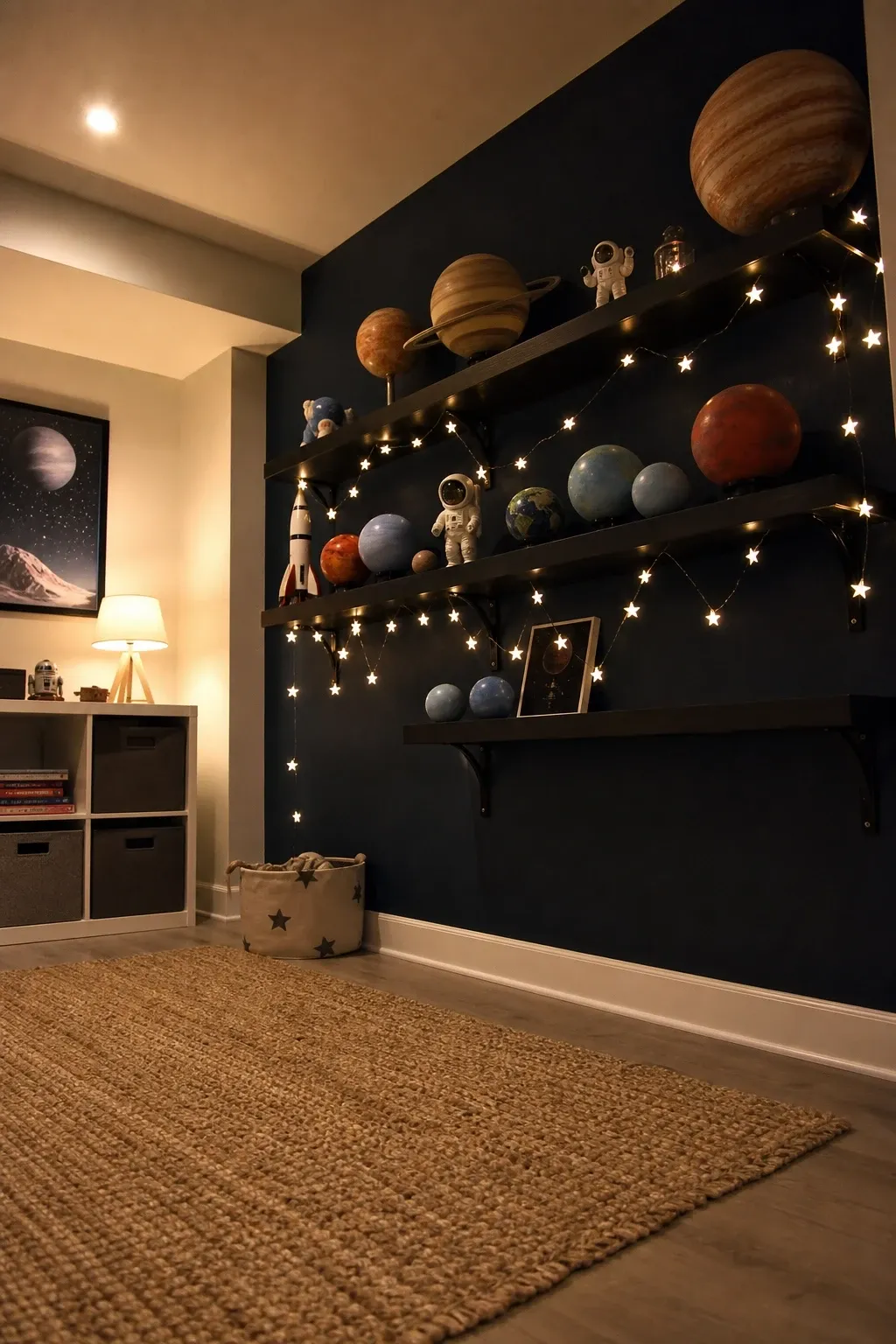
Full themed rooms, the ones with matching bedding, wallpaper, and accessories all from the same collection, tend to feel dated within two years and overwhelm kids who grow out of their interests quickly. A much smarter approach is to create a single themed accent wall that hints at a world without committing the whole room to it. For a space-loving child, paint one wall in a deep navy and add a few floating shelves with planet models and star-shaped fairy lights. For an ocean enthusiast, a wave mural in soft blues and greens on one wall with a jute rug and rope accessories elsewhere does the job beautifully. The rest of the room stays in a neutral palette that can carry any theme without repainting. This approach costs less, lasts longer, and can be updated with a single weekend of painting when interests change.
Designer Tip: Use removable peel-and-stick wallpaper panels for the themed accent wall instead of paint. They look just as good, require no painting skill, and can be swapped out in an afternoon when your child’s interests shift.
19. Lighting Layers for a Playroom That Works Day and Night
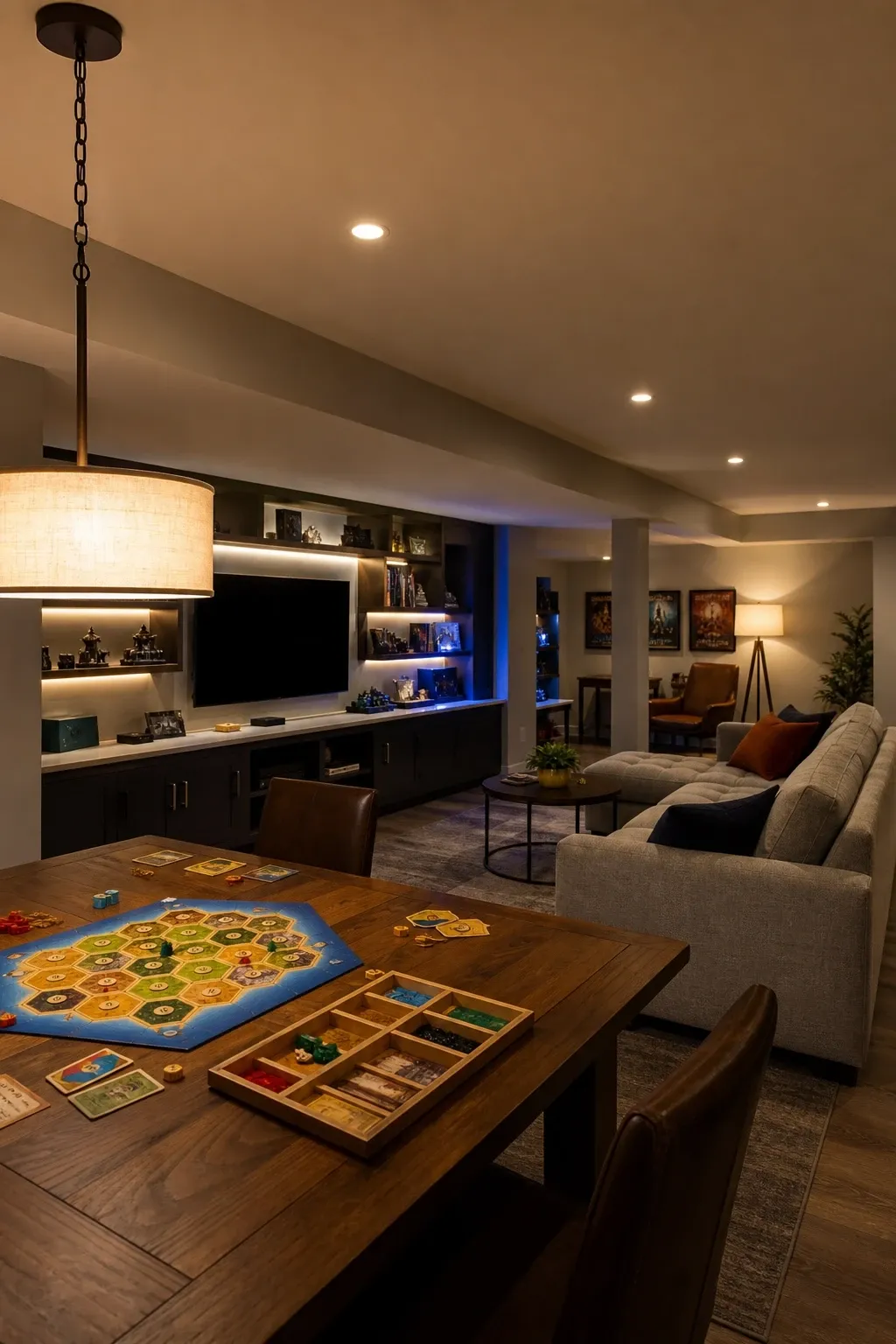
Basements almost always rely entirely on artificial light, which means your lighting plan needs to work harder than in any other room of the house. The answer is layered lighting that can shift depending on the activity. Start with a base of recessed can lights or flush-mount LED panels evenly spaced across the ceiling for general brightness. Add adjustable track lighting on a separate circuit for the art and STEM zones where good task lighting is essential. Use warm, dimmable pendant lights or wall sconces in the reading and hangout areas to create a cozier atmosphere. LED strip lighting along the bottom of shelving or along a ceiling border adds a playful element that kids love and can often be color-adjusted through a simple app. Put each lighting circuit on its own dimmer switch so you can tune the mood of the room without any single light source taking over.
Designer Tip: Install at least one motion-sensor night light near the staircase and bathroom. Kids who want to use the basement at night should be able to navigate safely without having to find a light switch in the dark.
20. Flooring Zones That Define Each Area
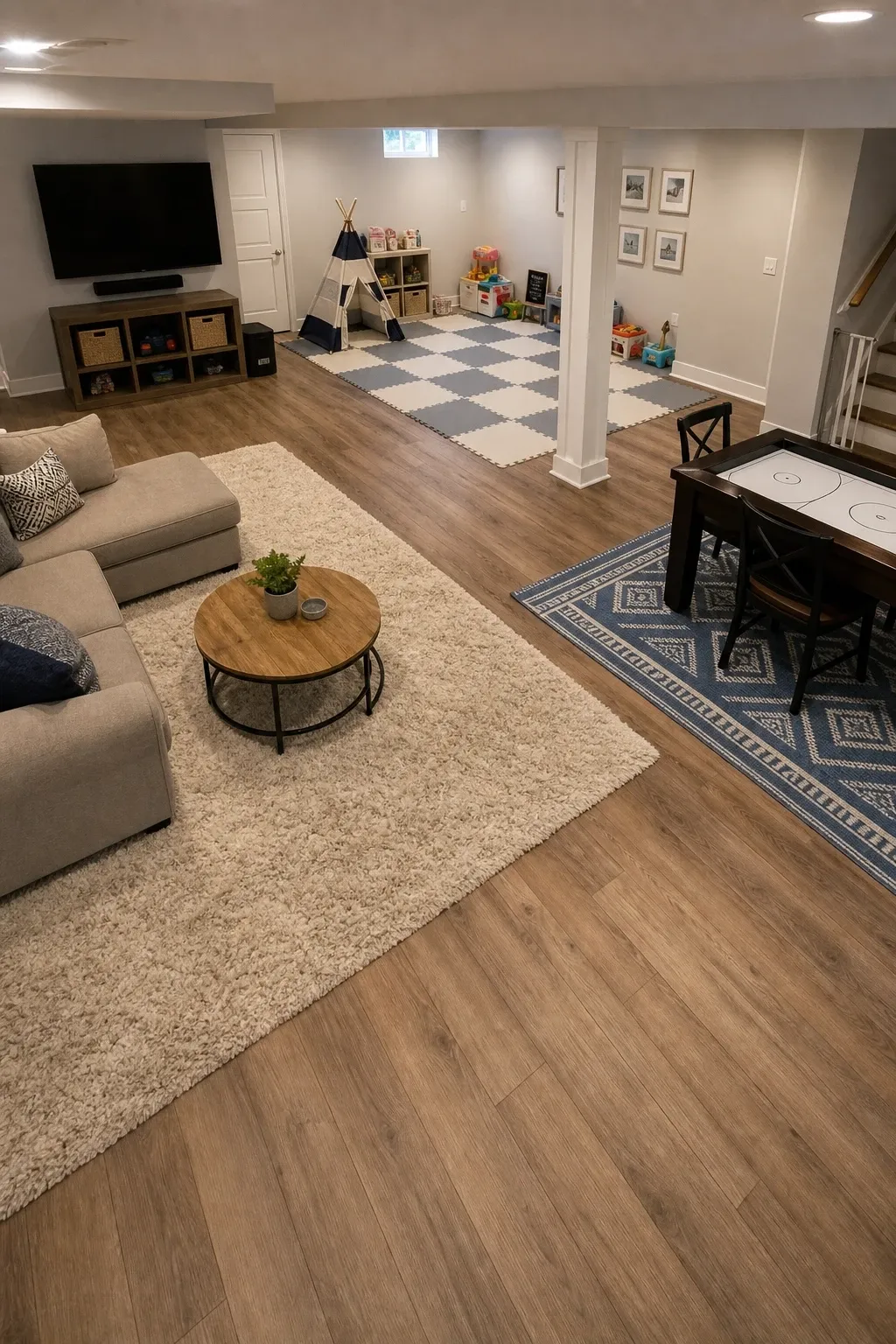
Using different flooring materials or area rugs to zone a basement playroom is one of the most effective design tools available, and it costs far less than building physical walls or dividers. Start with a base layer of luxury vinyl plank in a warm wood tone across the whole basement: it is durable, water-resistant, and comfortable underfoot. Then layer area rugs on top to define each zone. A large, soft shag rug in a neutral color anchors the movie and hangout area. A flat-weave cotton rug in a bold pattern defines the game table. Thick foam puzzle mats in the active zone provide cushioning where it is needed most. The visual contrast between the bare vinyl floor in transition zones and the defined rug zones gives the basement a sense of organization and purpose without any extra furniture.
Designer Tip: Use a rug pad under every area rug in the basement. It keeps rugs from sliding on the vinyl floor, adds a small amount of extra cushioning, and extends the life of the rug itself significantly.
21. Half Bath Addition for True Independence
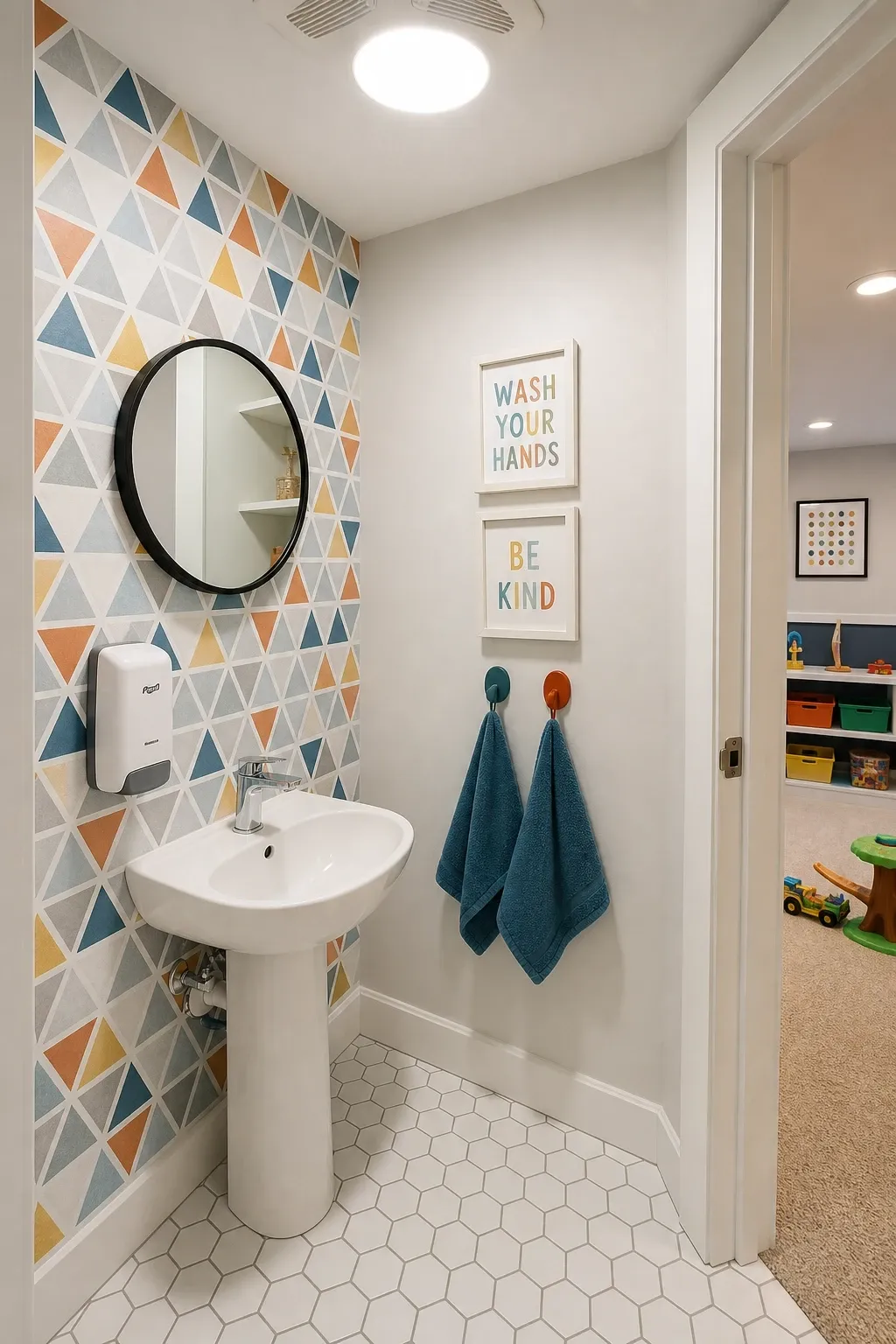
If your budget allows for one structural addition to the basement playroom, a small half bath is the one that will change how the space gets used more than any design idea on this list. Without a bathroom nearby, kids constantly have to run upstairs, which disrupts play, leads to accidents with younger children, and makes the basement feel less like a self-contained space. A half bath with a toilet and a small sink can be tucked into a corner in as little as 15 square feet. Keep the design simple and kid-friendly: a low sink, easy-to-reach towel hooks, a fun peel-and-stick wallpaper on one wall, and a durable tile floor that wipes clean without fuss. A bright overhead light and a small mirror complete the space without over-designing something that needs to be functional above everything else.
Designer Tip: Install a touch-free soap dispenser and a paper towel holder instead of a hand towel in a kids’ bathroom. It keeps things genuinely cleaner and means one less thing to launder every week.
Bringing It All Together
A great basement playroom does not happen all at once, and it does not need to. The most important thing is to start with a clear sense of how your kids actually play, what they reach for on a boring afternoon, and what kind of space would genuinely pull them downstairs. If you have a physically active child, prioritize the movement zones first and build the quieter areas around them. If you have a child who loves to create, the art wall and building station will get the most use. Design around your actual children, not a version of what a playroom is supposed to look like.
From there, the details fall into place. Good lighting matters more in a basement than almost anywhere else in the house. A solid storage plan keeps the room usable rather than overwhelming. A flooring strategy that zones different activities makes the space feel organized even when it is fully lived in. And a color palette that can grow with your kids, neutral as a base with pops of color in the accessories and storage, means you will not be repainting every two years as interests change.
The basement playroom ideas in this guide are designed to be mixed, matched, and adapted to whatever space and budget you are working with. Start with the one or two ideas that feel most urgent, build from there, and let the kids help shape what the space becomes over time. That kind of ownership is what turns a designed room into a place they actually love.
Frequently Asked Questions
What is the best flooring for a basement playroom?
Luxury vinyl plank is the most practical choice for a basement playroom. It is waterproof, durable, comfortable to walk and play on, and looks significantly better than basic concrete or old carpet. It also works well with radiant floor heating if your basement tends to run cold. Layer area rugs on top to add softness in specific zones and to define different activity areas visually.
How do I make a basement playroom feel less dark and underground?
The most effective strategies are lighting layers, light wall colors, and strategic use of mirrors. Start with bright, evenly spaced ceiling lighting as a base, then add warm task and accent lighting in different zones. Paint walls in warm whites or very light neutrals rather than cool grays, which tend to feel colder in spaces without natural light. A large mirror on one wall can create the impression of more space and reflect light around the room.
How can I design a basement playroom that grows with my kids?
The key is to keep the base of the room neutral and flexible. Use adjustable furniture where possible, like height-adjustable tables and stools rather than fixed kid-sized furniture. Avoid committing the whole room to a single theme, since interests change quickly. Invest in quality, versatile storage that can hold different things over time, and plan zones loosely so they can be repurposed as the children grow from toddlers into tweens.
What is a realistic budget for finishing a basement playroom?
The range is very wide depending on what your basement already has and how much structural work is needed. A basic playroom with new flooring, fresh paint, good lighting, and furniture can come together for $2,000 to $5,000 if you shop thoughtfully. If you are adding a bathroom, built-in storage, or structural improvements, costs can run $10,000 to $20,000 or more. The smartest approach is to do the structural elements first, since those are the hardest to change later, and add furniture and decor gradually.
Is carpet or hard flooring better in a kids’ playroom basement?
Hard flooring with area rugs is generally a better choice than wall-to-wall carpet in a basement playroom. Carpet holds moisture, is harder to clean thoroughly after spills, and tends to trap allergens over time. A hard floor like luxury vinyl plank is far more practical for a high-use kids’ space, and you can add as much softness as you want underfoot through layered rugs that can be washed or replaced as needed.
How do I handle soundproofing in a basement playroom?
If noise from the basement travels to the main living areas, there are a few practical steps that help considerably. Adding a second layer of drywall to the basement ceiling with resilient channels between the layers is the most effective structural solution. For a lower-cost approach, thick area rugs, upholstered furniture, and fabric wall panels absorb a surprising amount of sound. Acoustic ceiling tiles in drop ceiling systems are another option that is relatively affordable and does not require a full renovation.