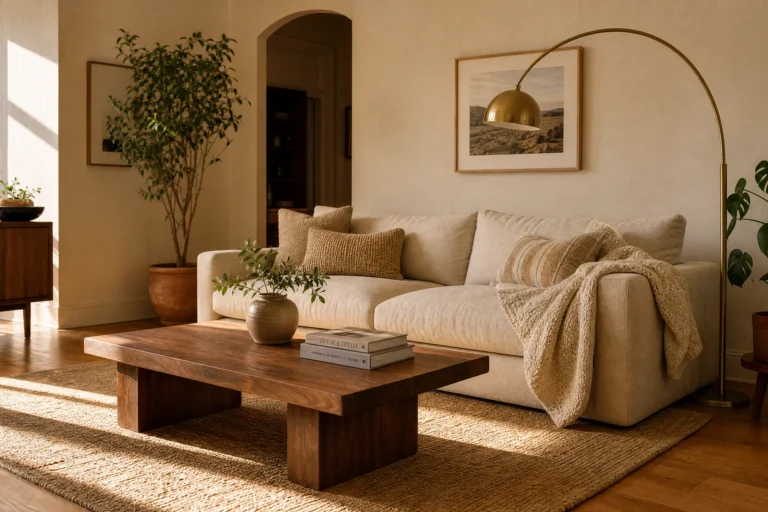
Living Room Ideas That Actually Work in Real Homes
A living room gets used more than almost any other room in the house, which is exactly why so many of them stop working after a year or two. The sofa looked great in the showroom, the coffee table seemed like the right size, and the paint color felt right on the swatch, but somehow the room still feels off. Most of the time it isn’t a taste problem, it’s a function problem. Furniture gets placed for looks instead of how people actually move and sit, lighting is an afterthought, and storage gets added in only after clutter has already taken over.
This guide is built around real fixes, not just pretty pictures. The tips below are grouped into six areas that matter most in a living room: layout and furniture placement, color and light, storage and organization, textures and layering, lighting design, and personal touches. Some ideas cost nothing and take an afternoon, others are worth saving up for, but every tip here is something you can actually go do this weekend, not just admire on a mood board.
Layout and Furniture Placement
Float Your Sofa Away From the Wall
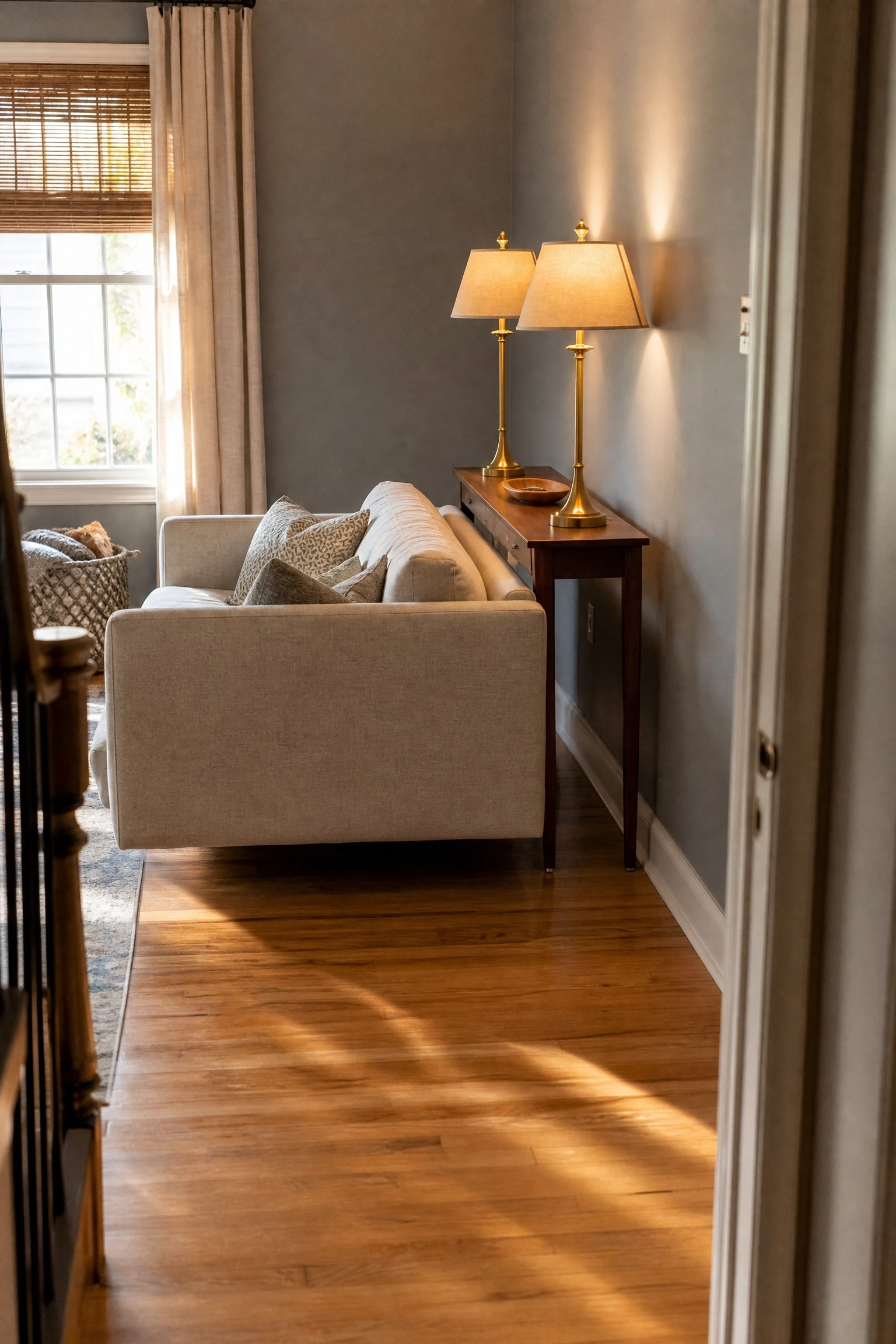
Pushing every piece of furniture against the wall is a common habit, and it almost always makes a room feel smaller and less inviting. Pulling the sofa even six to twelve inches off the wall creates breathing room and lets you add a slim console table behind it for lamps or books. This works especially well in rooms with some depth to spare, and it gives the seating area a sense of purpose instead of leaving it stranded at the edge. In practice, this look comes together best when you add a rug underneath so the sofa doesn’t feel like it’s floating for no reason.
Quick Tip: If your room is under 150 square feet, float the sofa just enough to fit a table behind it, or you’ll eat into your walking space.
Create a Conversation Circle Instead of a TV-Facing Row
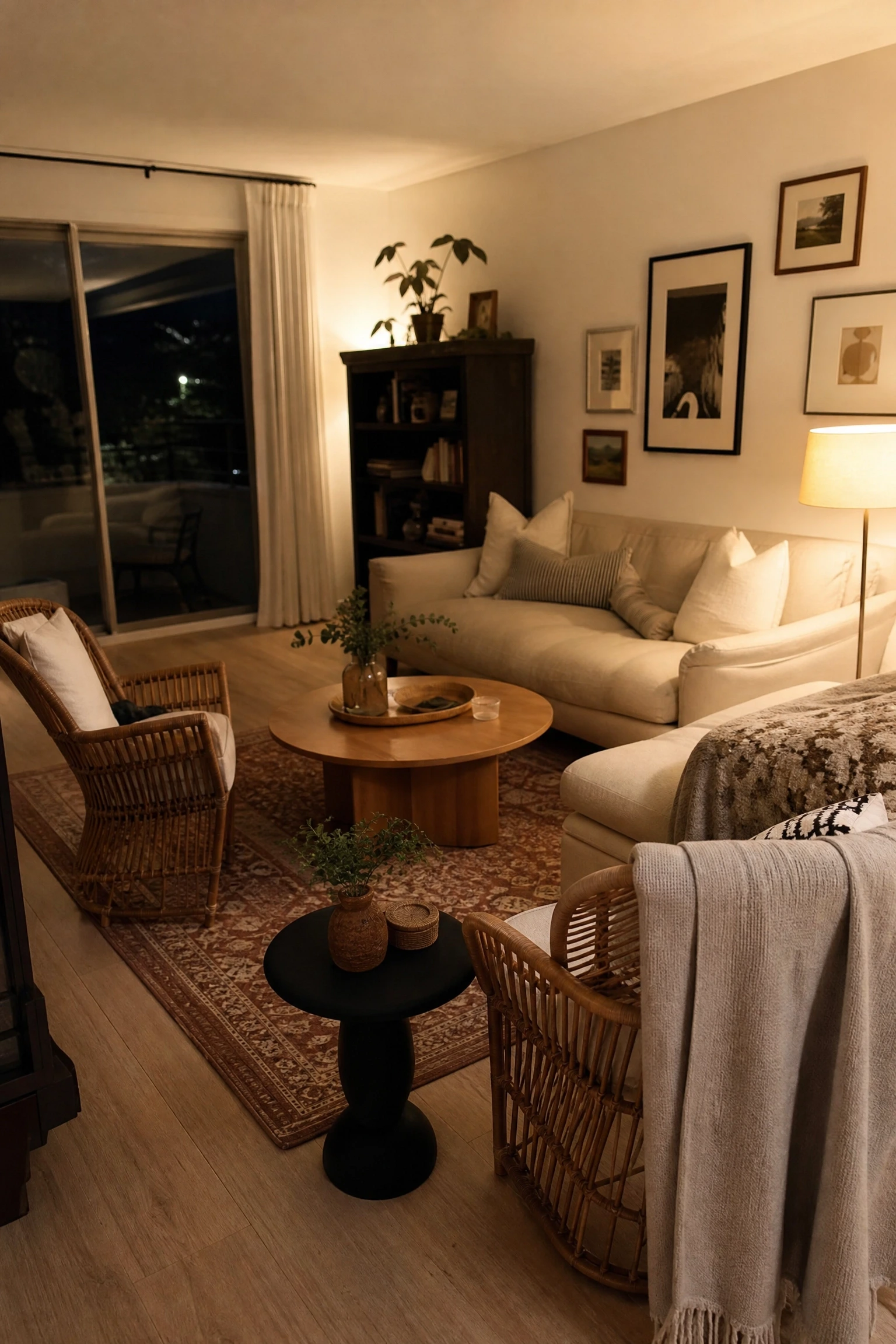
Lining every seat up to face the television is practical for movie nights but not great for actually talking to people. Angling two chairs toward the sofa, even slightly, creates a conversation circle that makes the room feel social rather than like a waiting area. Designers call this arranging around a focal point other than the screen, and it works whether that focal point is a fireplace, a window, or the center of the rug. A round or oval coffee table in the middle tends to support this layout better than a long rectangular one, since every seat can reach it easily.
Quick Tip: If you still want to watch TV comfortably, mount it on a swivel bracket so the room can shift from social mode to movie mode.
Leave Walking Paths at Least 30 Inches Wide
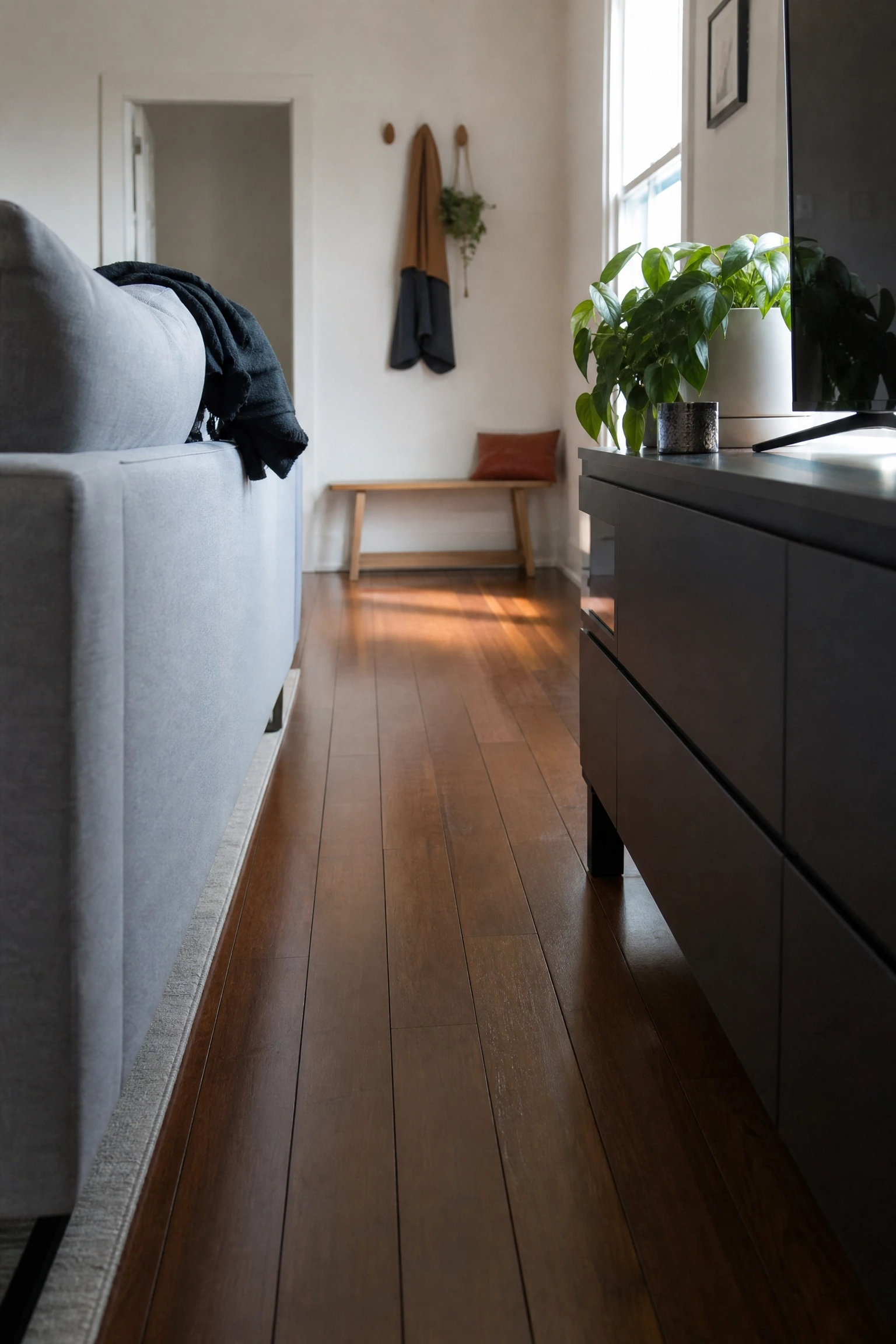
This rule sounds boring but changes how a room actually feels to live in. A path narrower than about 30 inches forces people to turn sideways or bump into furniture, and that friction adds up even if you can’t name why the room feels cramped. Measuring your main walking routes before buying anything new is one of the most useful five minutes you can spend on a living room. Wider paths near doorways and between the sofa and TV console matter most, since those are the routes used daily.
Quick Tip: Use painter’s tape on the floor to mark furniture footprints before you buy, it takes ten minutes and saves a lot of regret.
Use a Rug to Anchor the Seating Area
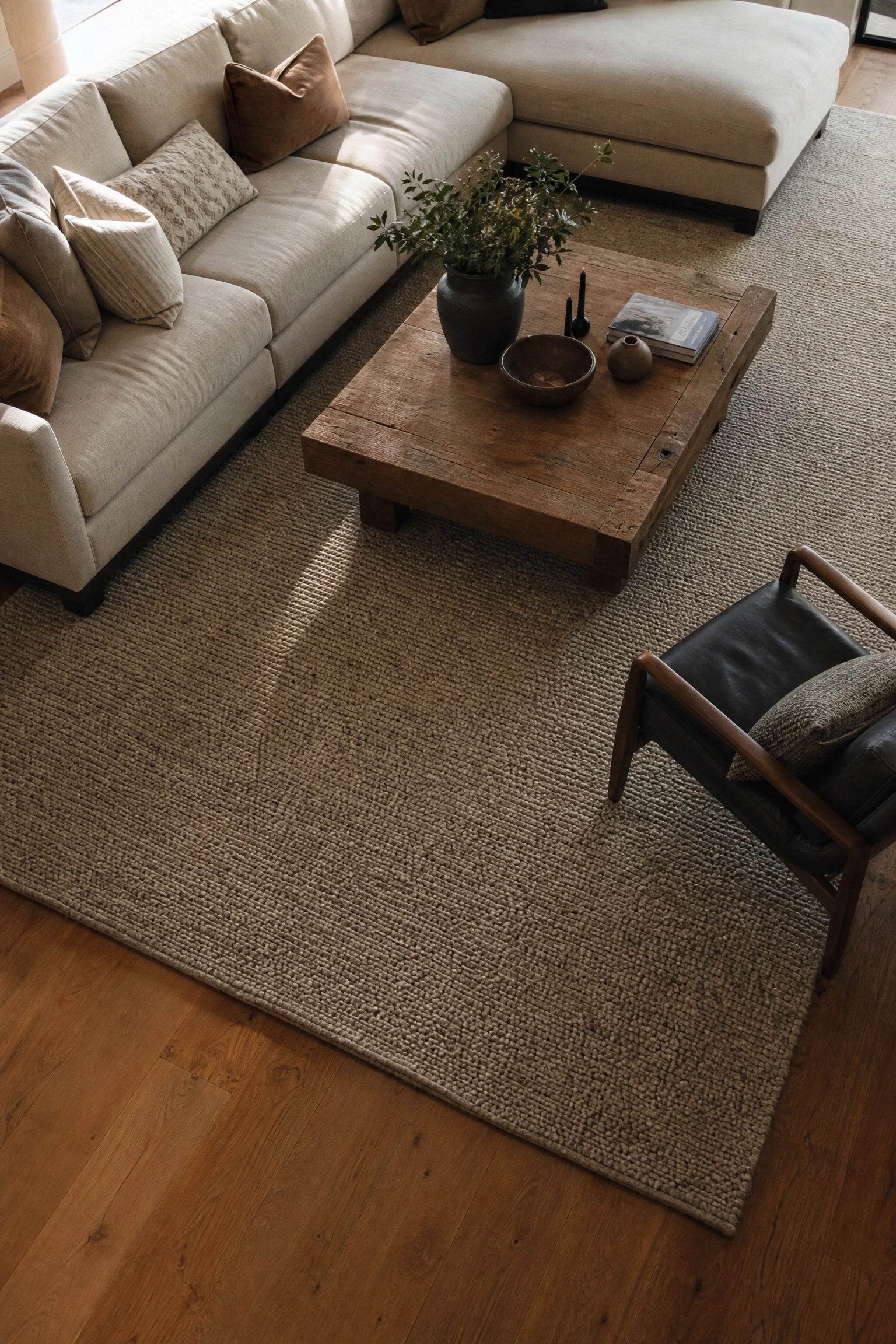
A rug that’s too small is one of the fastest ways to make a well-planned room look unfinished, since floating furniture around a postage-stamp rug breaks up the room’s visual weight. The general guideline is to get the front legs of every major seating piece onto the rug, or all four legs if the room allows it. This single change does more to pull a room together than almost any other purchase, worth budgeting for even if it means waiting a month for the right size. A wool blend in a neutral tone is a safe starting point if you’re not ready to commit to a pattern.
Quick Tip: Budget route: layer a smaller patterned rug over a large plain jute rug to get the anchoring size without paying for a huge patterned one.
Color and Light
Test Paint Colors in the Room at Different Times of Day
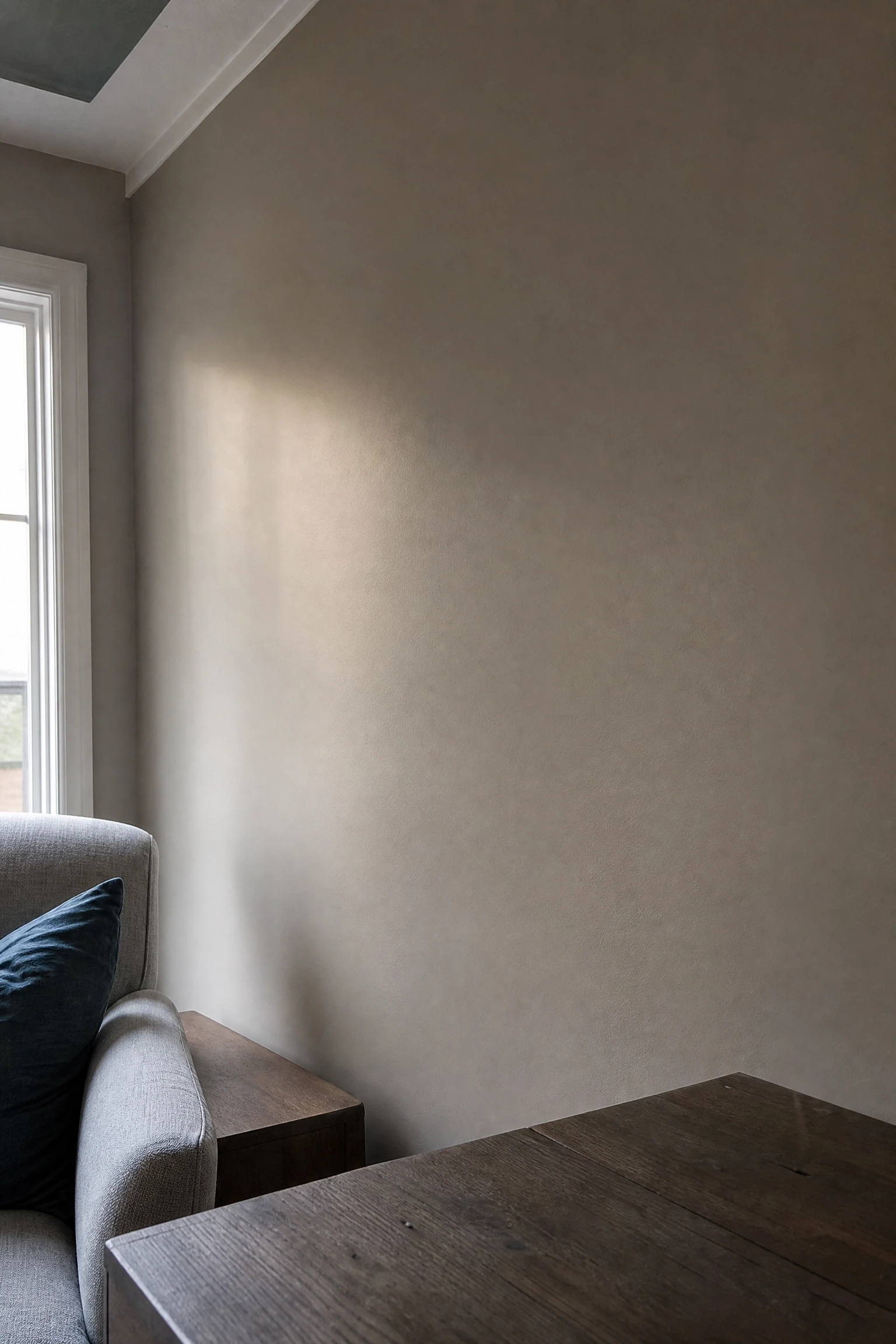
Paint color temperature shifts depending on the direction your windows face and the time of day light hits the wall, which is why a color that looked perfect on the sample card can turn muddy once it’s actually up. Painting a large swatch, at least two feet by two feet, and watching it through morning, afternoon, and evening light is the only reliable way to know what you’re getting. North-facing rooms tend to pull cooler and can wash out warm colors, while south-facing rooms run warmer and can make cool colors feel flat. It’s extra work, but it prevents a repaint six months later.
Quick Tip: Photograph the swatch at 9am, 1pm, and 7pm, comparing the photos side by side makes the shift easier to see than memory alone.
More Looks You'll Want to Steal:

Pick One Warm Neutral as Your Base
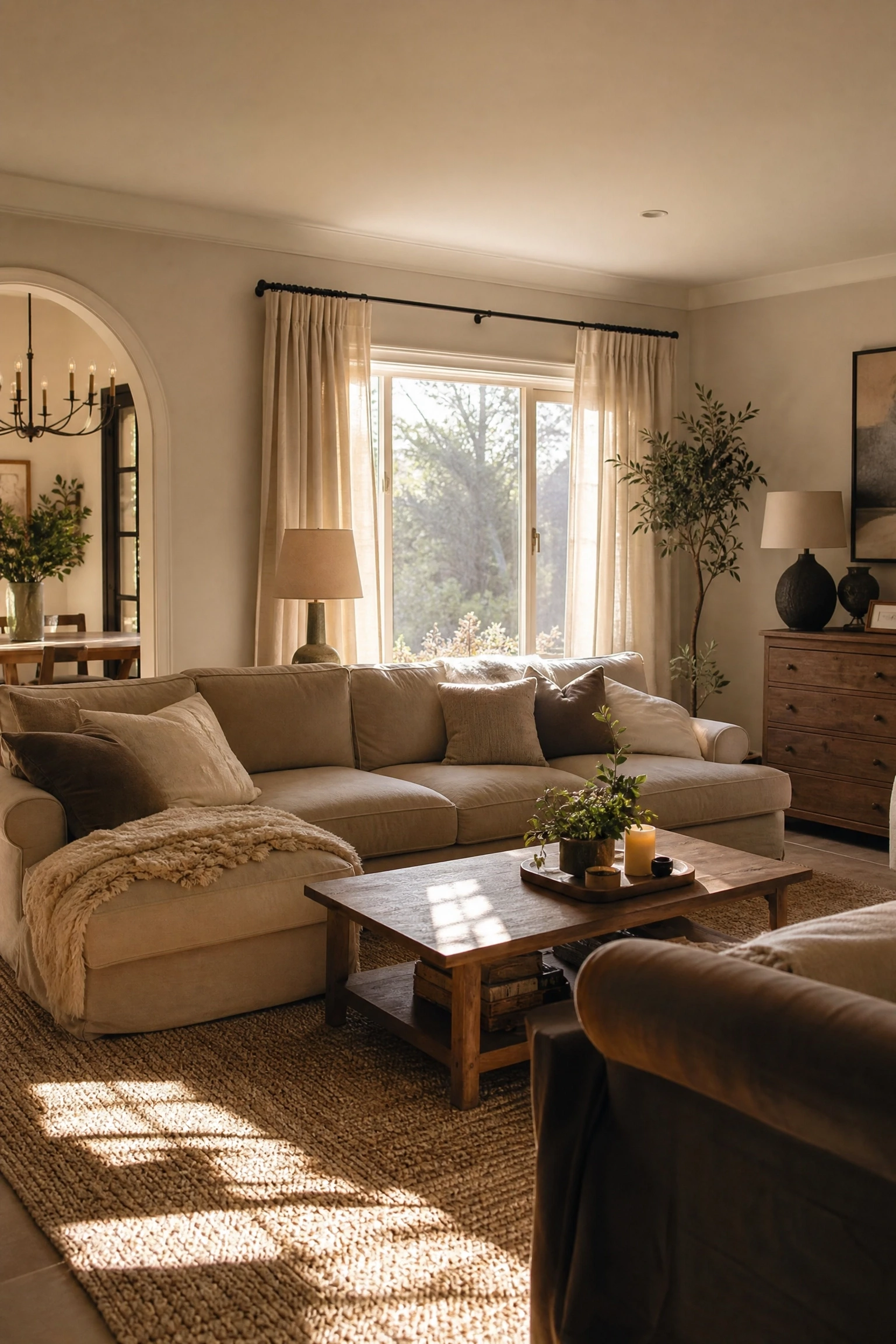
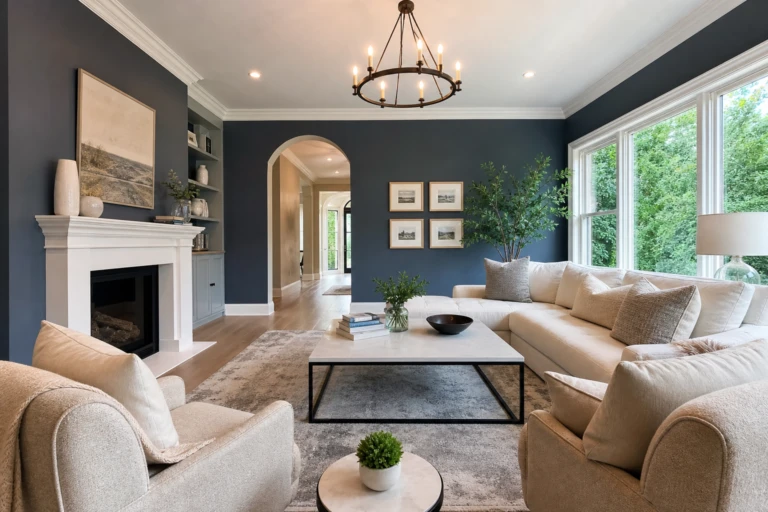
Warm neutrals like greige, soft taupe, and warm white have stayed popular with designers for a reason: they read as calm without feeling cold the way some stark whites and grays can. Building your walls, large furniture, and rug around one consistent warm neutral gives you a flexible base that almost any accent color or texture can sit on top of later. It’s also the most forgiving option if your taste changes, since you’re not locked into an expensive bold scheme. The honest tradeoff is that an all-neutral room can feel a little flat without enough texture or a strong accent layered in.
Quick Tip: If you’re unsure where to start, look at your flooring tone first, warm neutrals on walls almost always pair well with both light and dark wood floors.
Add a Deep Accent Color Through One Statement Piece
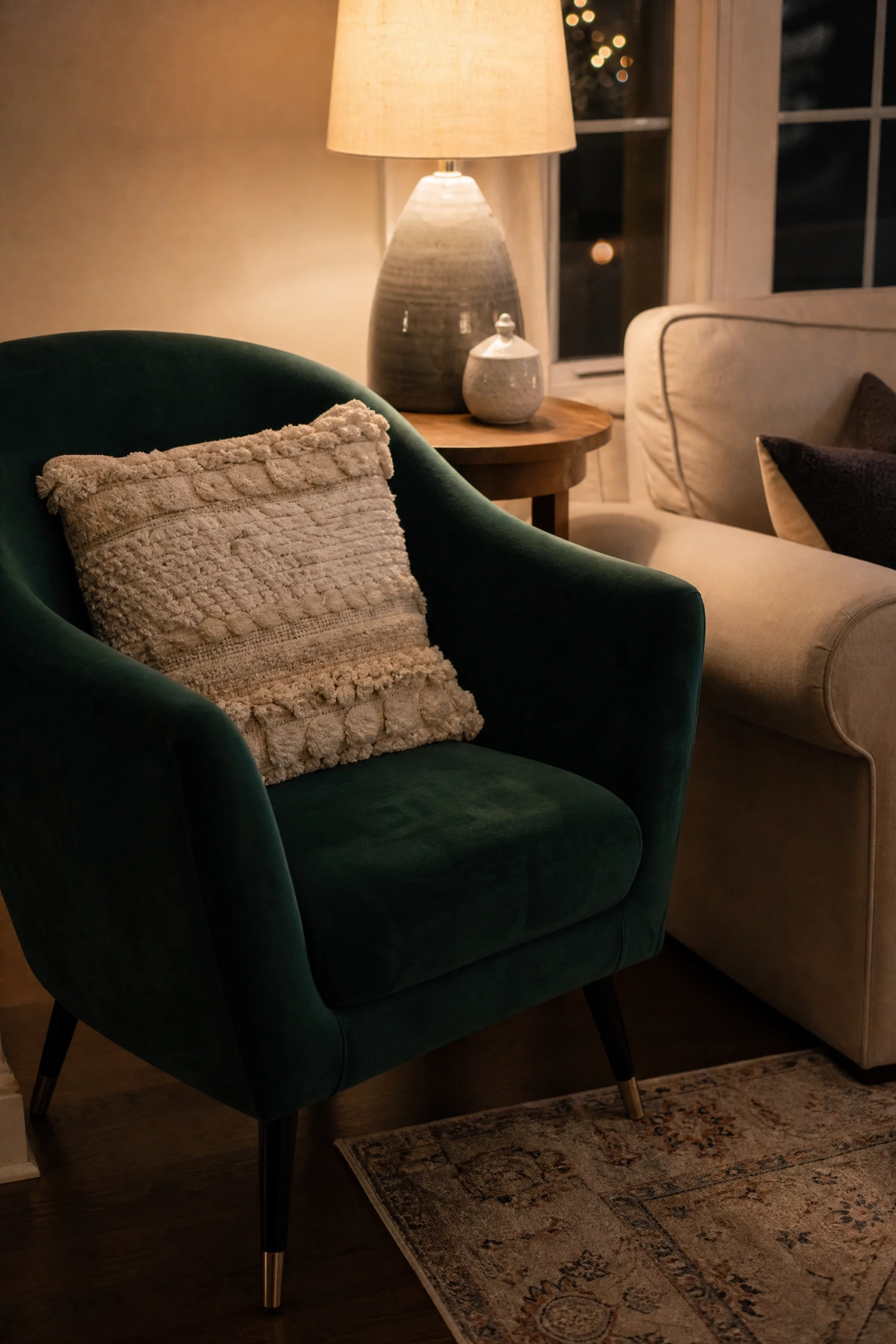
Deep, moody colors like forest green, navy, and burgundy have stayed genuinely popular with designers over the past few years, but committing an entire wall to them can feel risky in a room you use daily. A safer entry point is a single statement piece, like a velvet accent chair or a large piece of art with that color running through it. This gives you the visual depth of a bold color without the long-term commitment of paint, and it tends to give the room a focal point that catches the eye first.
Quick Tip: If you’re renting, a deep-colored chair or a large framed print is the lowest-commitment way to test whether you actually like living with a bold color.
Match Undertones Across Wood Finishes
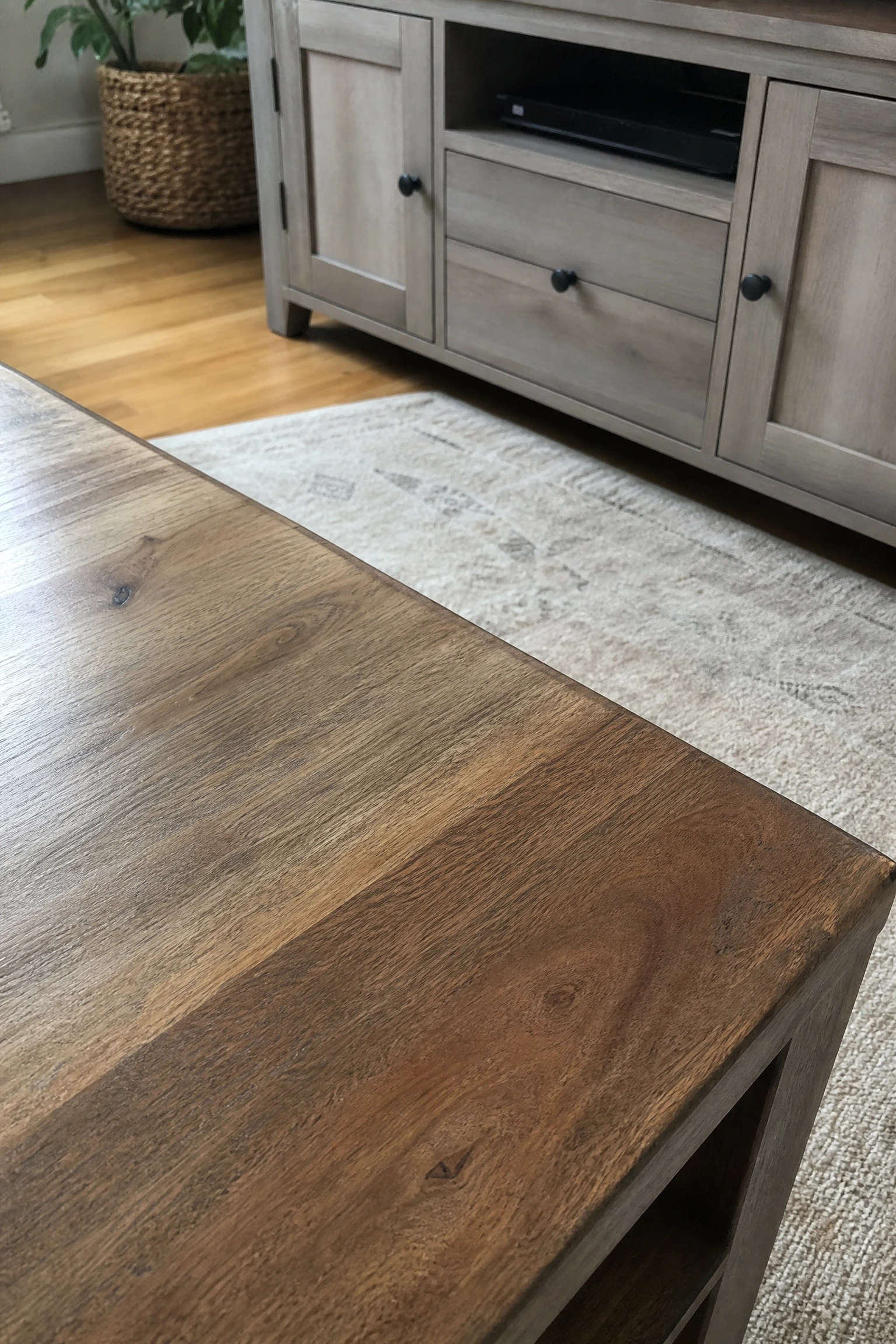
Mixing wood tones is fine and even encouraged by most designers now, but a room can start to feel chaotic if the undertones clash, meaning a warm honey-toned coffee table next to a cool gray-toned TV console. The fix isn’t to match every wood exactly, it’s to make sure everything shares a warm or cool undertone so the pieces feel like they belong to the same family. This is a detail most people don’t consciously notice when it’s wrong, they just sense the room feels slightly off.
Quick Tip: When in doubt, hold two wood samples together in natural daylight, undertone clashes are far more visible in daylight than under indoor bulbs.
Storage and Organization
Choose a Coffee Table With Hidden Storage
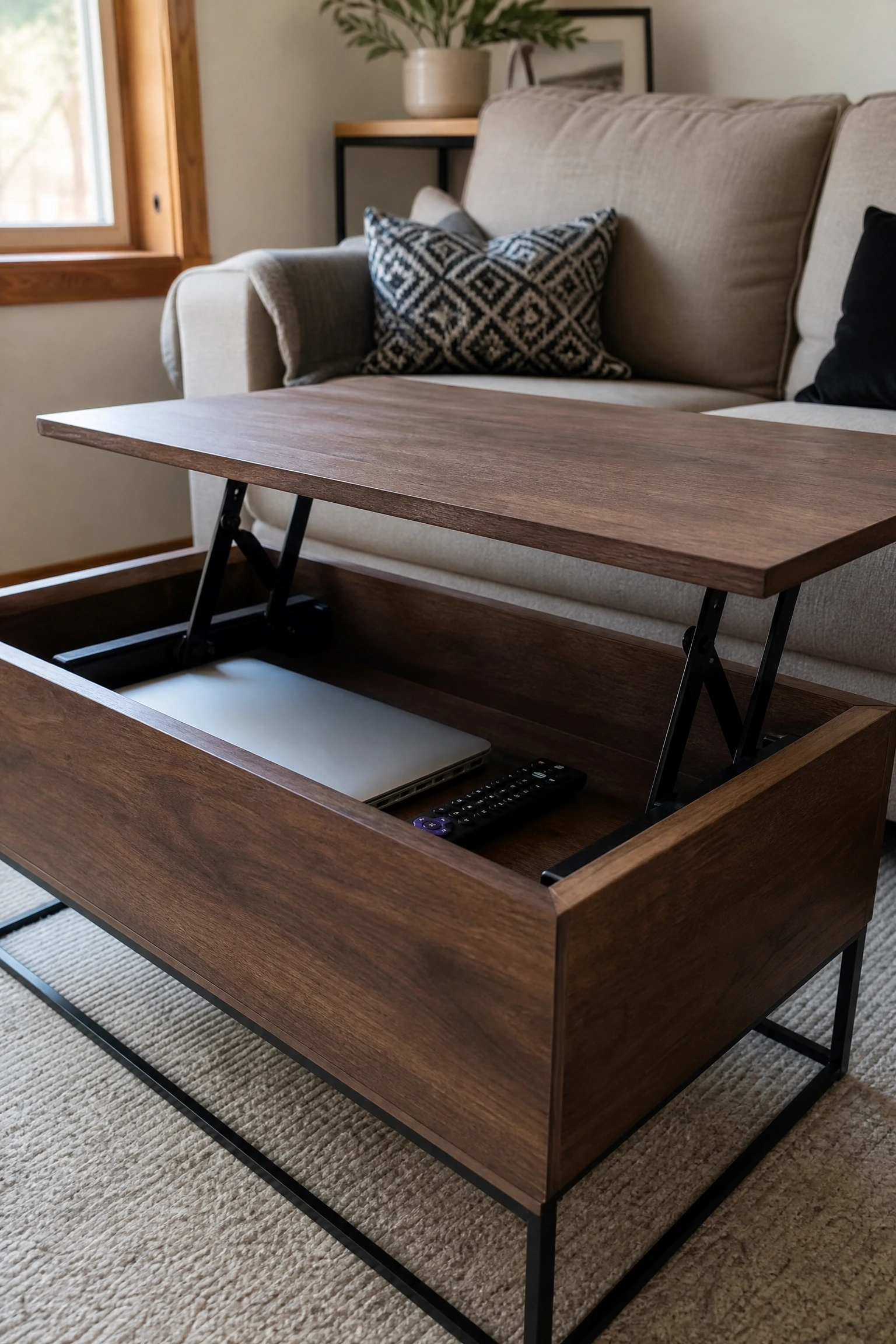
A coffee table with a lift top, drawers, or a lower shelf with baskets solves one of the most common living room problems, which is where remotes, chargers, and coasters actually live day to day. This matters most in smaller living rooms or homes where the living room doubles as a play space, since it gives you somewhere to sweep clutter without leaving the room. Lift-top styles are especially useful if you eat in front of the TV, since the table raises to a comfortable working height. This is one of the few furniture choices where function should genuinely outrank looks.
Quick Tip: Measure your existing remote and charger pile before shopping, it sounds silly but it tells you exactly how much hidden storage you need.
Build in Floor-to-Ceiling Shelving Around the TV
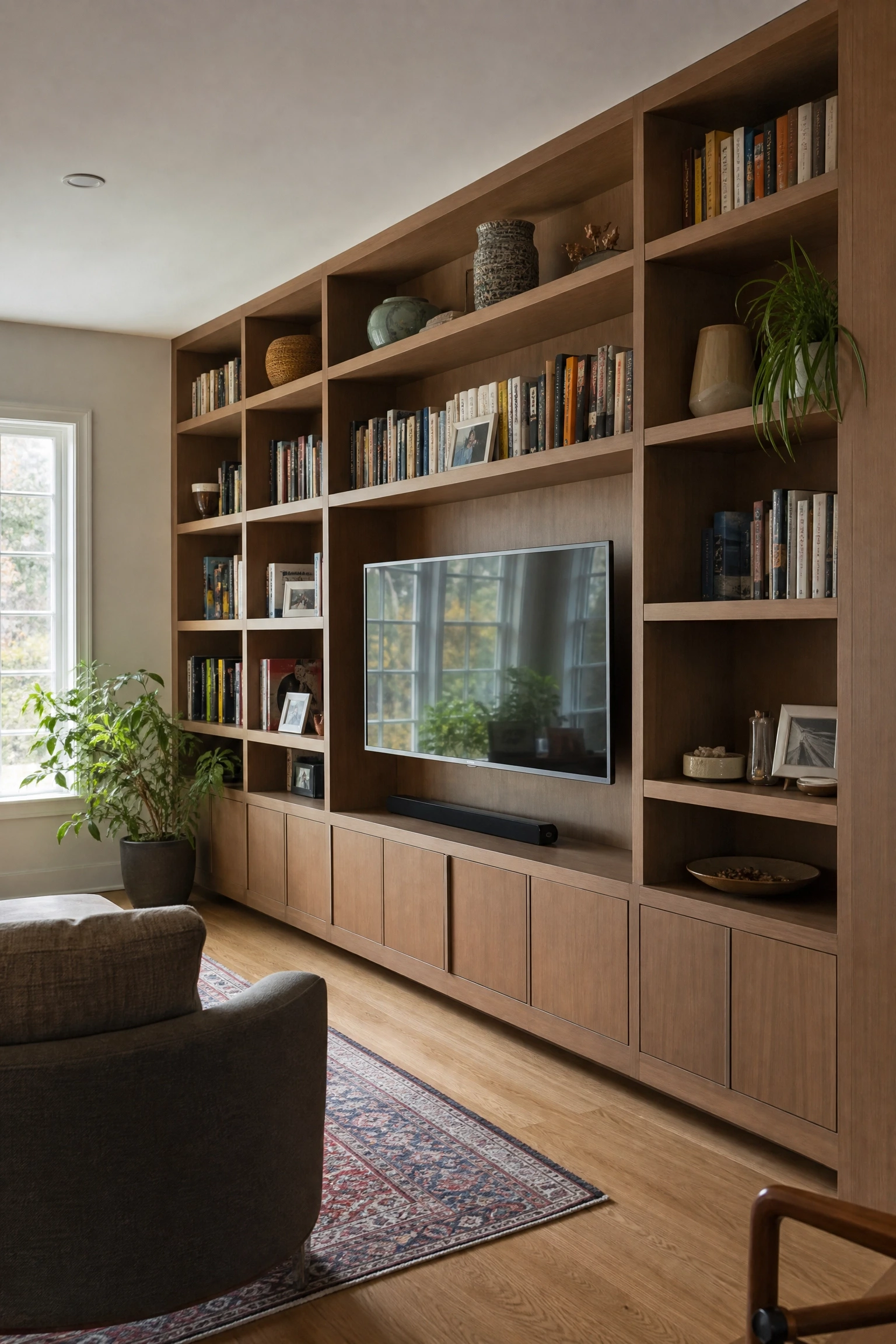
Custom or semi-custom built-ins around the television turn dead wall space into serious storage while giving the TV a more intentional home instead of looking mounted on a blank wall. This works best in rooms with at least eight-foot ceilings so the shelving doesn’t fight the room’s proportions. Mixing closed cabinets on the lower section with open shelving above lets you hide bulkier items like game consoles while still displaying books and decor. This is an investment-level upgrade, not a weekend project, and it’s worth getting quotes from a local carpenter rather than assuming a big box version will fit your exact wall.
Quick Tip: If built-ins are out of budget, two matching bookcases flanking the TV give a similar effect for a fraction of the cost.
Use Baskets for Everyday Clutter
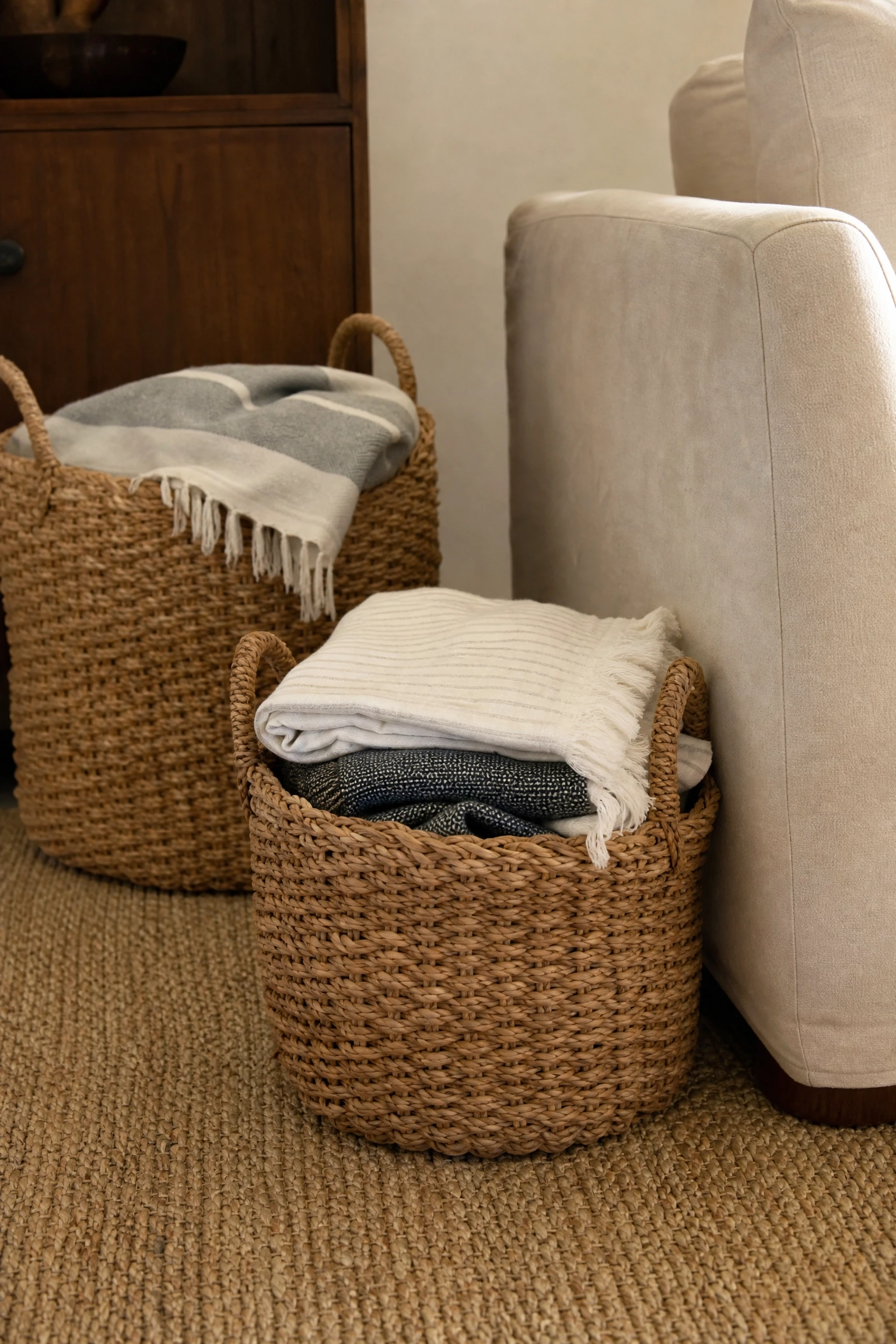
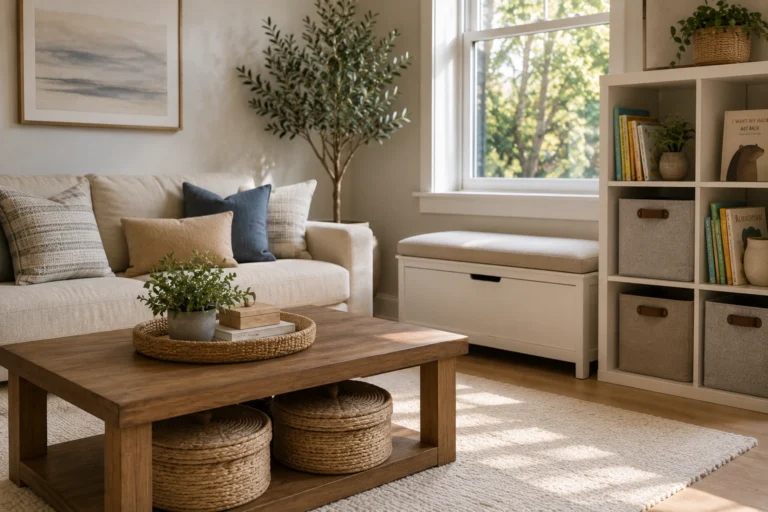
Open woven baskets are one of the most affordable storage upgrades you can make, and they solve the specific problem of blankets, toys, and stray mail that don’t have an obvious home. Placing one or two near the sofa or under a console table gives you a fast, no-guilt place to toss things before guests arrive, and the natural material adds texture at the same time. The honest limitation is that baskets are a stopgap for loose items, not a real organization system, so they work best alongside actual storage furniture, not instead of it.
Quick Tip: Label baskets by category, even just mentally, one for blankets and one for toys, so the system doesn’t collapse into one giant junk basket.
Add a Console Table Behind the Sofa for Extra Surface
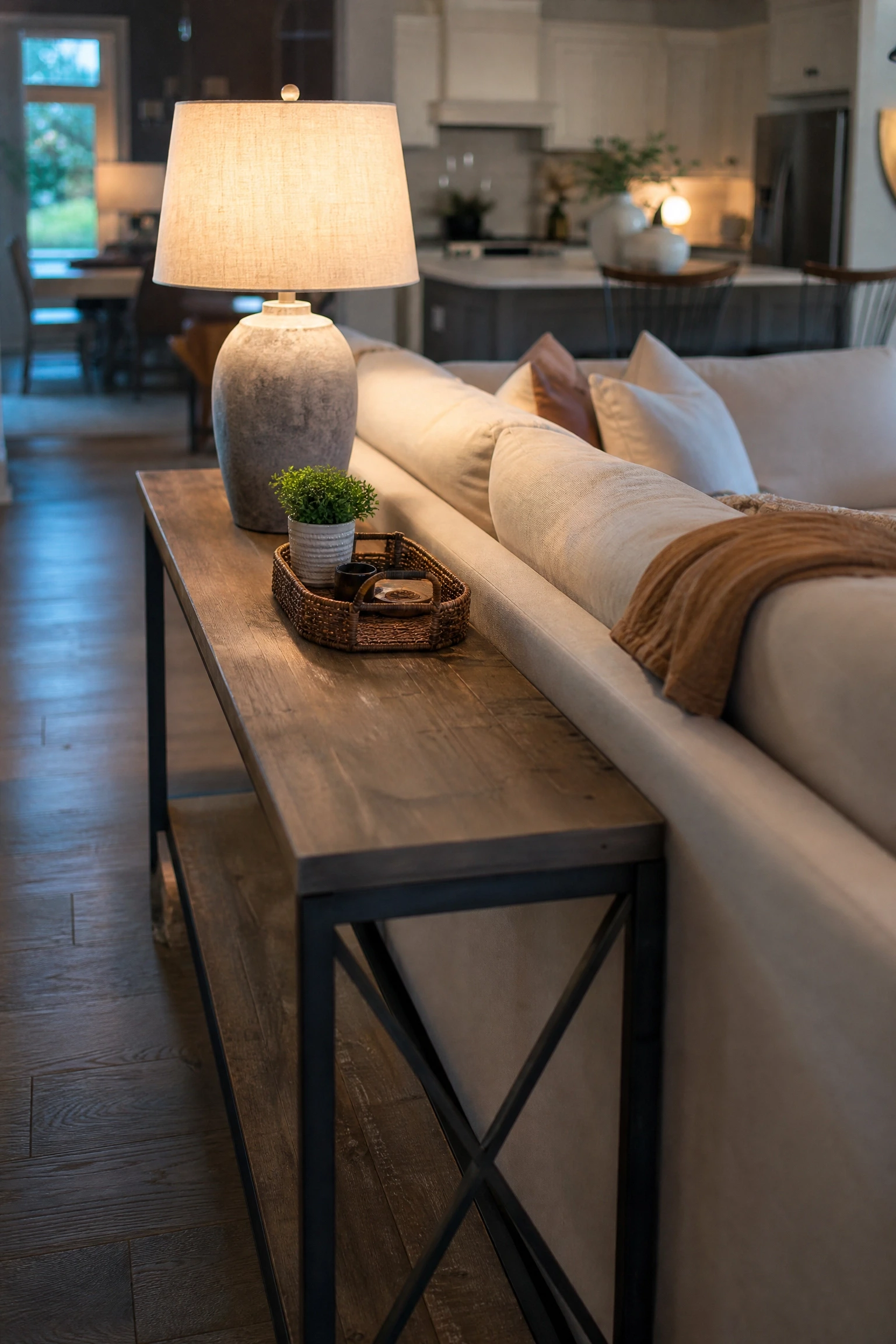
If you floated your sofa away from the wall, a slim console table behind it adds a useful surface for lamps, books, or a small tray for keys, and it fills what would otherwise be an awkward gap. This works well in open-concept homes where the back of the sofa faces a hallway, giving that side a finished look instead of a bare cushion back. Choosing a console with a lower shelf adds a bit of extra storage too. Keep the table narrow, ideally under 14 inches deep, so it doesn’t eat into the walking path behind the sofa.
Quick Tip: A console table lamp on a smart plug lets you turn on ambient lighting from your phone before you even walk into the room.
Textures and Layering
Layer at Least Three Textures in Every Room
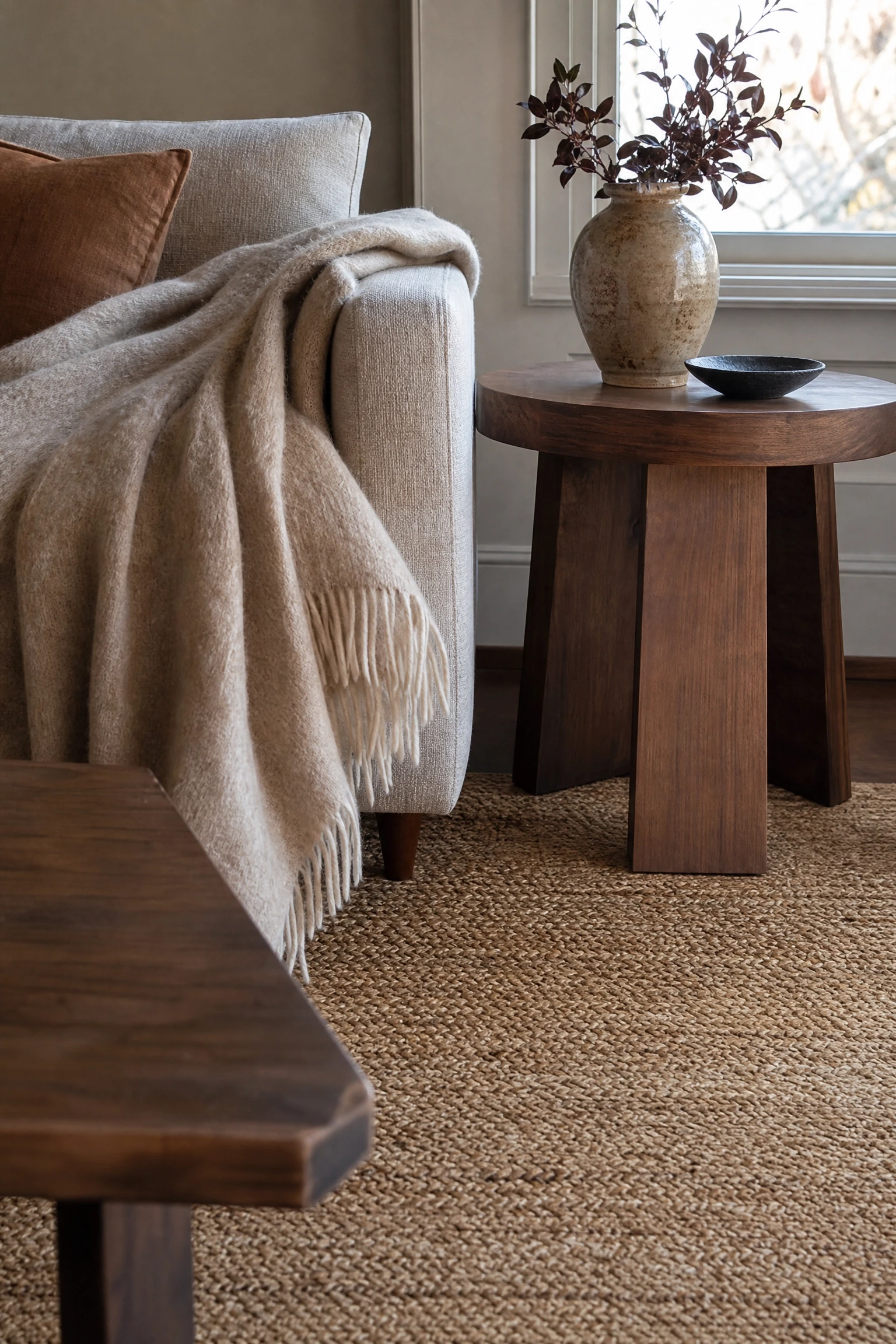
A room built entirely from smooth, similar materials, like a leather sofa, a glass coffee table, and hardwood floors, can look sharp in photos but tends to feel cold to actually sit in. Bringing in at least three distinct textures, something soft like a wool throw, something woven like a jute rug, and something with visible grain like a wood side table, gives the room the layered, lived-in depth designers rely on constantly. This is one of the easiest and cheapest ways to fix a room that feels flat, since texture can be added through small accessories rather than new furniture.
Quick Tip: If your room already has a lot of hard surfaces, start with textiles first, throw pillows and a soft rug go the furthest for the least money.
Mix a Performance Fabric Sofa With Delicate Throw Pillows
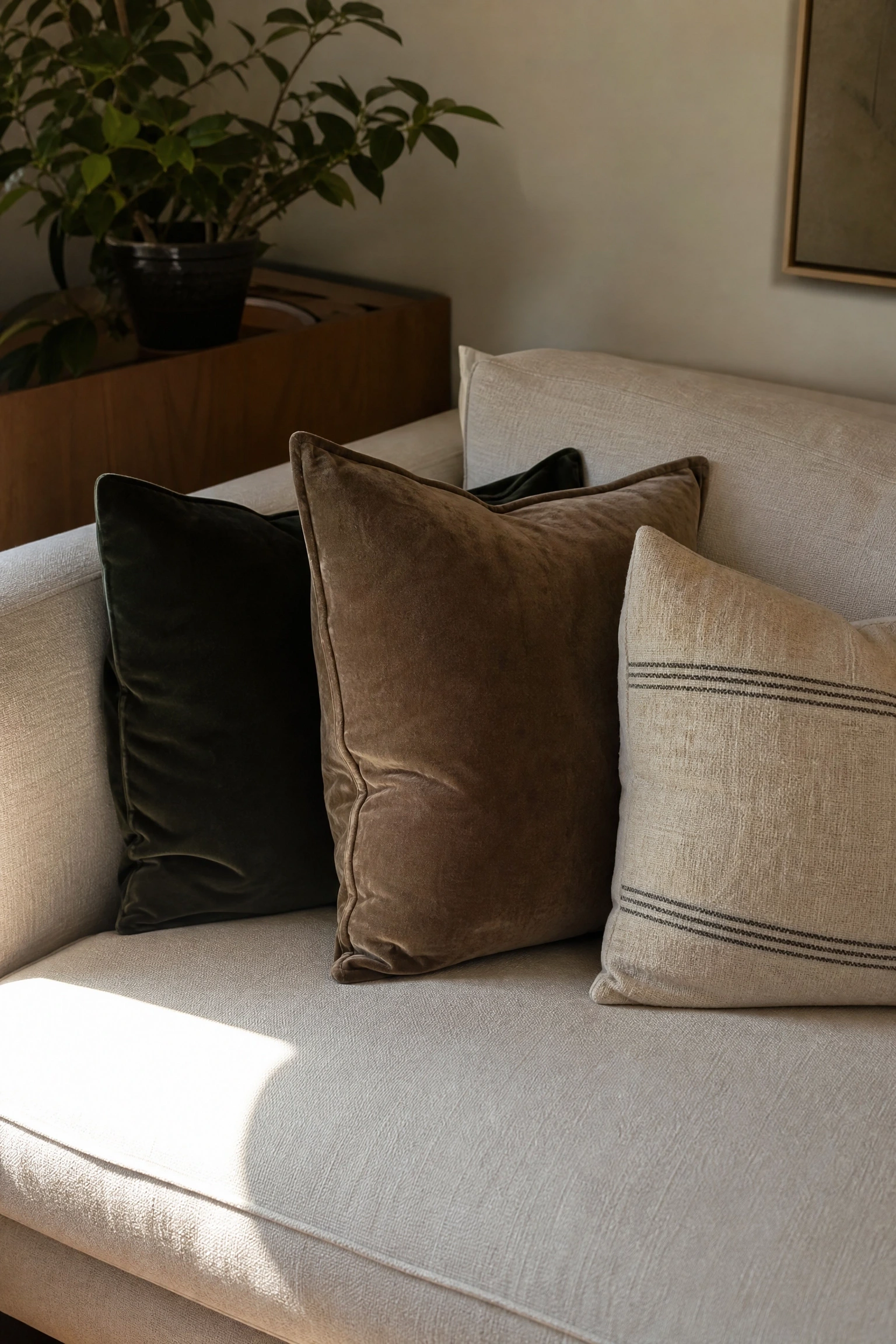
Households with pets or kids often assume a durable sofa means giving up on anything soft or elegant, but the two aren’t actually in conflict. A performance fabric sofa, something stain-resistant like a treated cotton blend, handles daily wear well, and you can still layer velvet or linen throw pillows on top for softness. This mix gives you durability where it matters most, the seat cushions and arms, while keeping the room from feeling purely utilitarian.
Quick Tip: Removable, washable pillow covers let you rotate softer fabrics seasonally without worrying about spills ruining an expensive textile.
Add a Second Rug for Depth
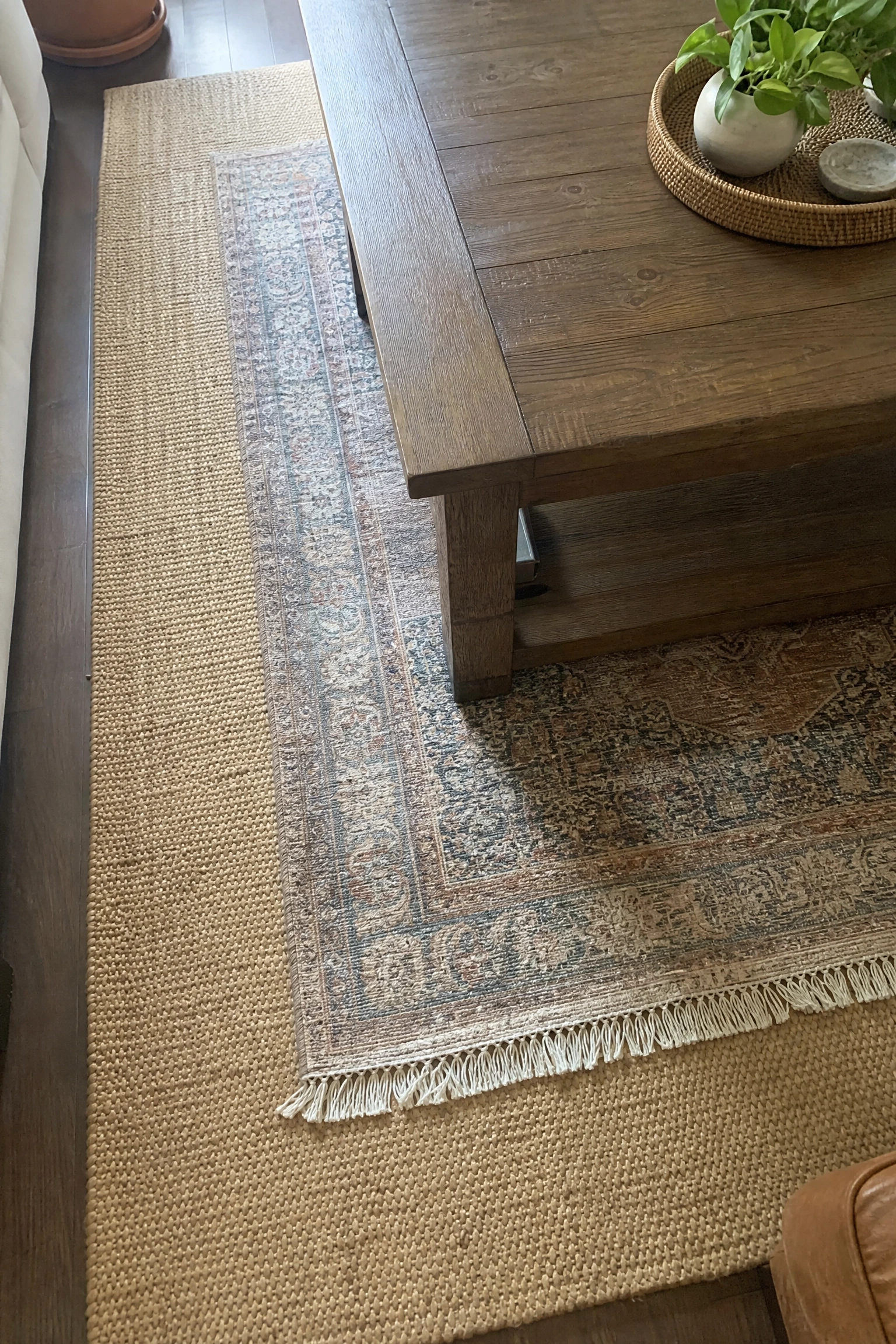
Layering a smaller patterned rug on top of a larger plain one is a trick borrowed from professional staging, and it adds visual depth to a floor that would otherwise be one flat block of color. This works especially well over a large jute or sisal rug, which grounds the room, with a smaller patterned rug placed under the coffee table on top. Just be aware that rug layering can look busy in a room that already has a lot of pattern elsewhere, so it’s best used as one of your few bold moves, not stacked on top of patterned furniture too.
Quick Tip: A rug pad between the two layers keeps the top rug from sliding and protects both rugs from wearing against each other.
Bring in a Woven or Wood Element for Warmth
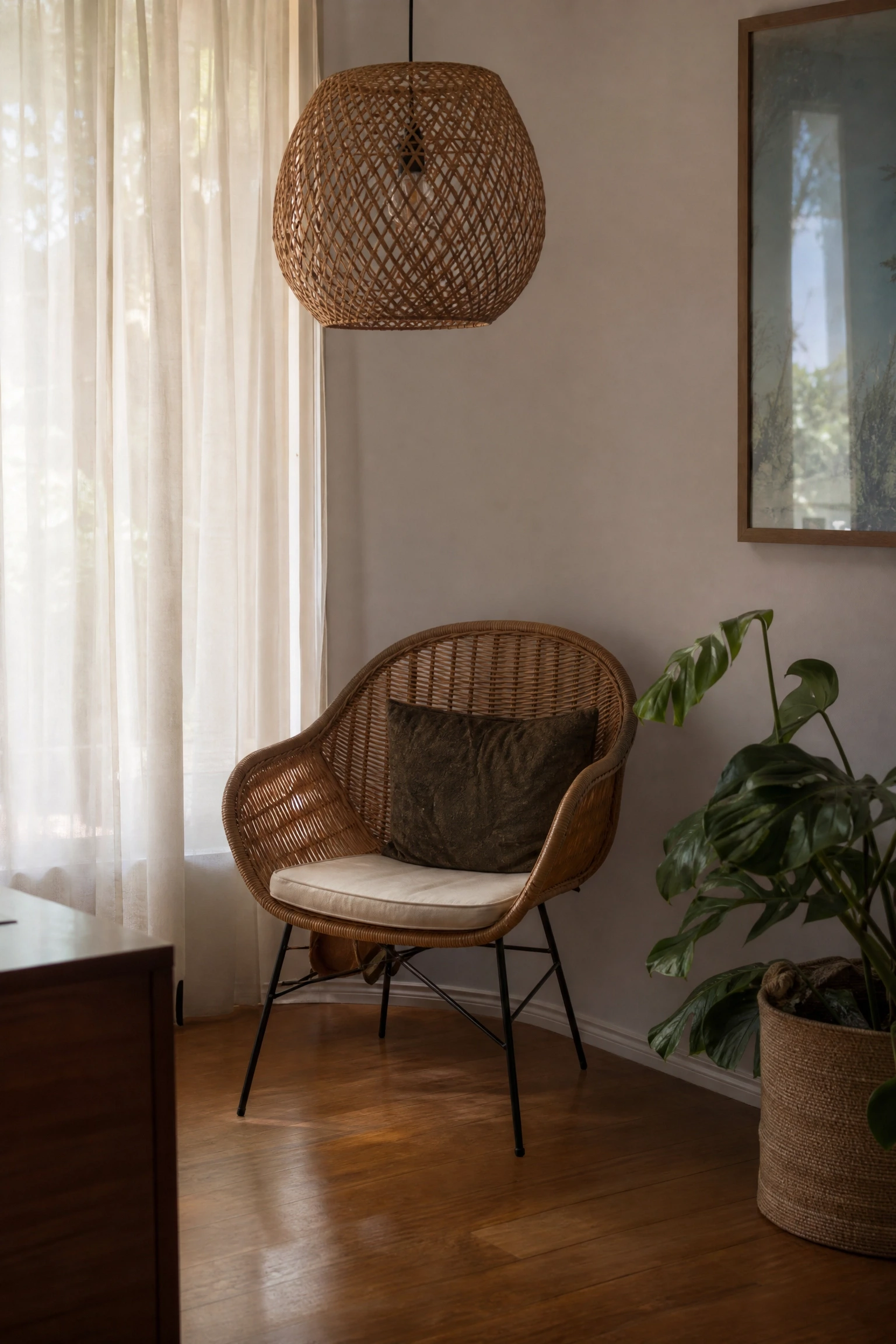
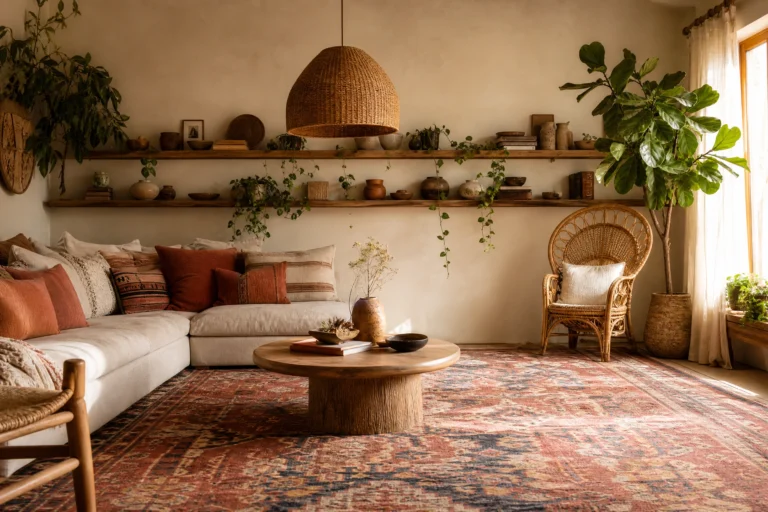
Natural materials like rattan, wicker, and lightly finished wood add an organic warmth that’s hard to fake with anything synthetic, and they ground rooms that lean heavily on cooler materials like metal, glass, or dark upholstery. A rattan accent chair, wood-framed mirrors, or a single woven pendant light can shift a room’s whole feeling without a major renovation. This trend has stayed consistent across design publications for years rather than fading like a novelty, which makes it a safer investment. The one caution is that rattan and unfinished wood can be sensitive to humidity, so they’re not ideal in damp climates without proper sealing.
Quick Tip: Start small with one woven accessory, like a pendant light or mirror frame, before committing to a full rattan furniture piece.
Lighting Design
Layer Three Types of Lighting
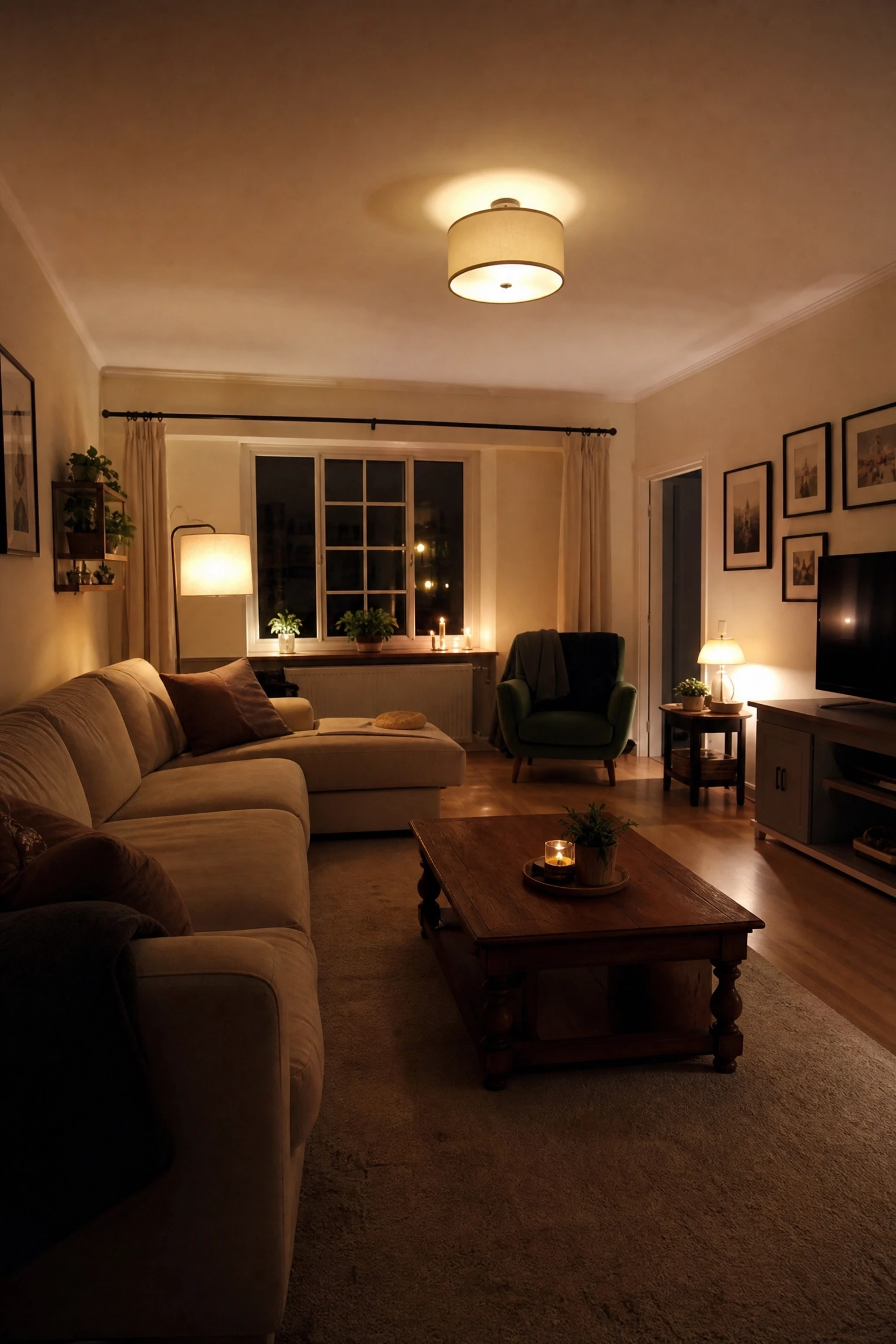
Relying on a single overhead ceiling light is a common mistake, since it creates flat, harsh light with almost no shadow or warmth, which is part of why so many rooms with good furniture still feel sterile at night. Layered lighting means combining ambient light from the ceiling fixture, task light from a reading lamp, and accent light from something like a picture light or a smaller table lamp. Each layer serves a different purpose, and turning on just one or two depending on the mood is what actually makes a room feel considered rather than just lit.
Quick Tip: Aim for at least three separate light sources at three different heights, floor, table, and ceiling, in every living room regardless of size.
Add a Floor Lamp Behind the Reading Chair
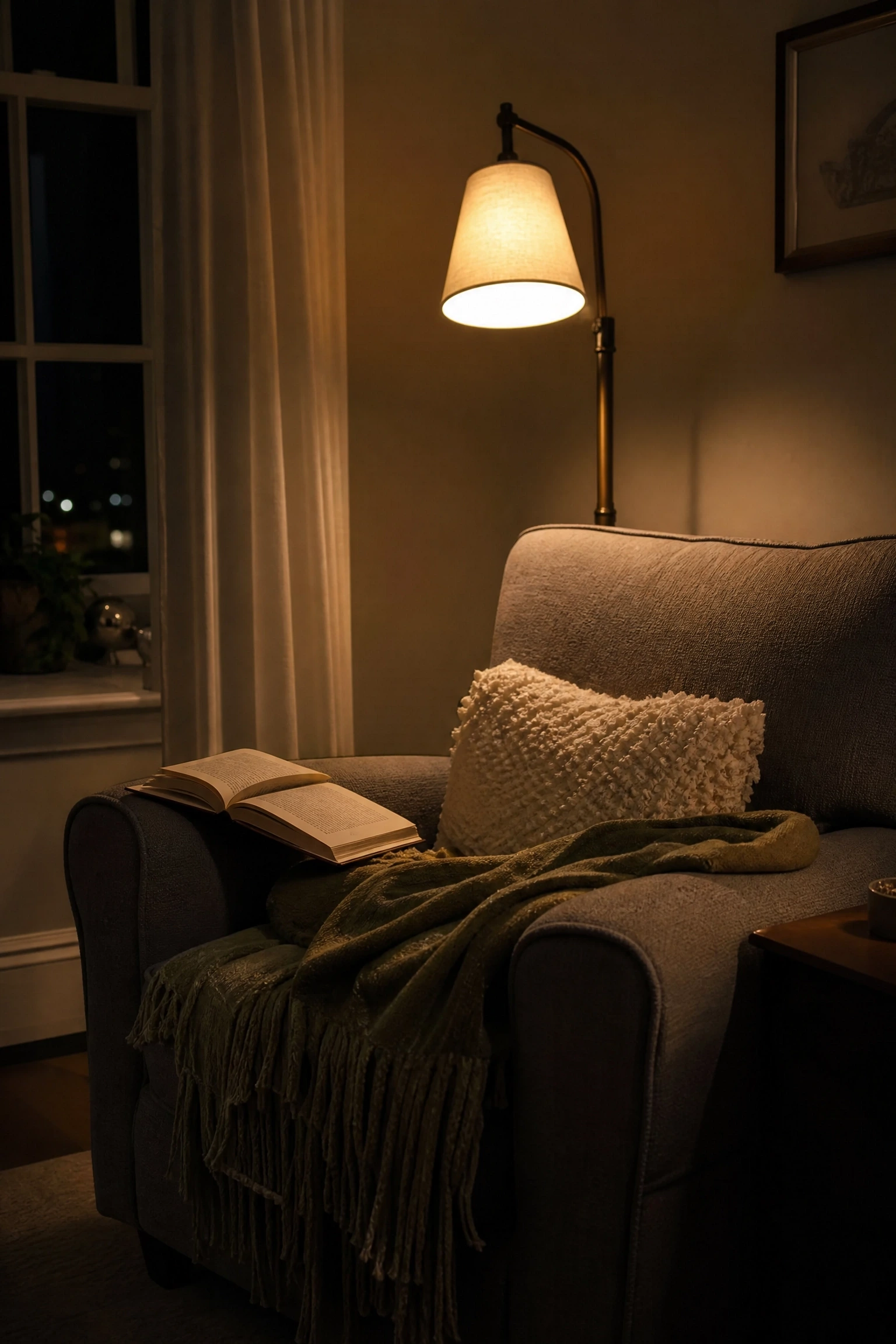
If you have a chair set up for reading, a floor lamp positioned just behind and slightly to the side of the shoulder gives you focused task lighting without the glare of reading directly under an overhead fixture. This is a small, specific fix, but it makes a real difference if that corner of the room currently goes unused because it’s too dark to read there. An arc lamp works well if you don’t want a lamp base taking up floor space directly next to the chair.
Quick Tip: Look for a floor lamp with a dimmer built into the cord, it’s a small feature but it means you’re not stuck with only one brightness option.
Use Dimmers on the Overhead Fixture
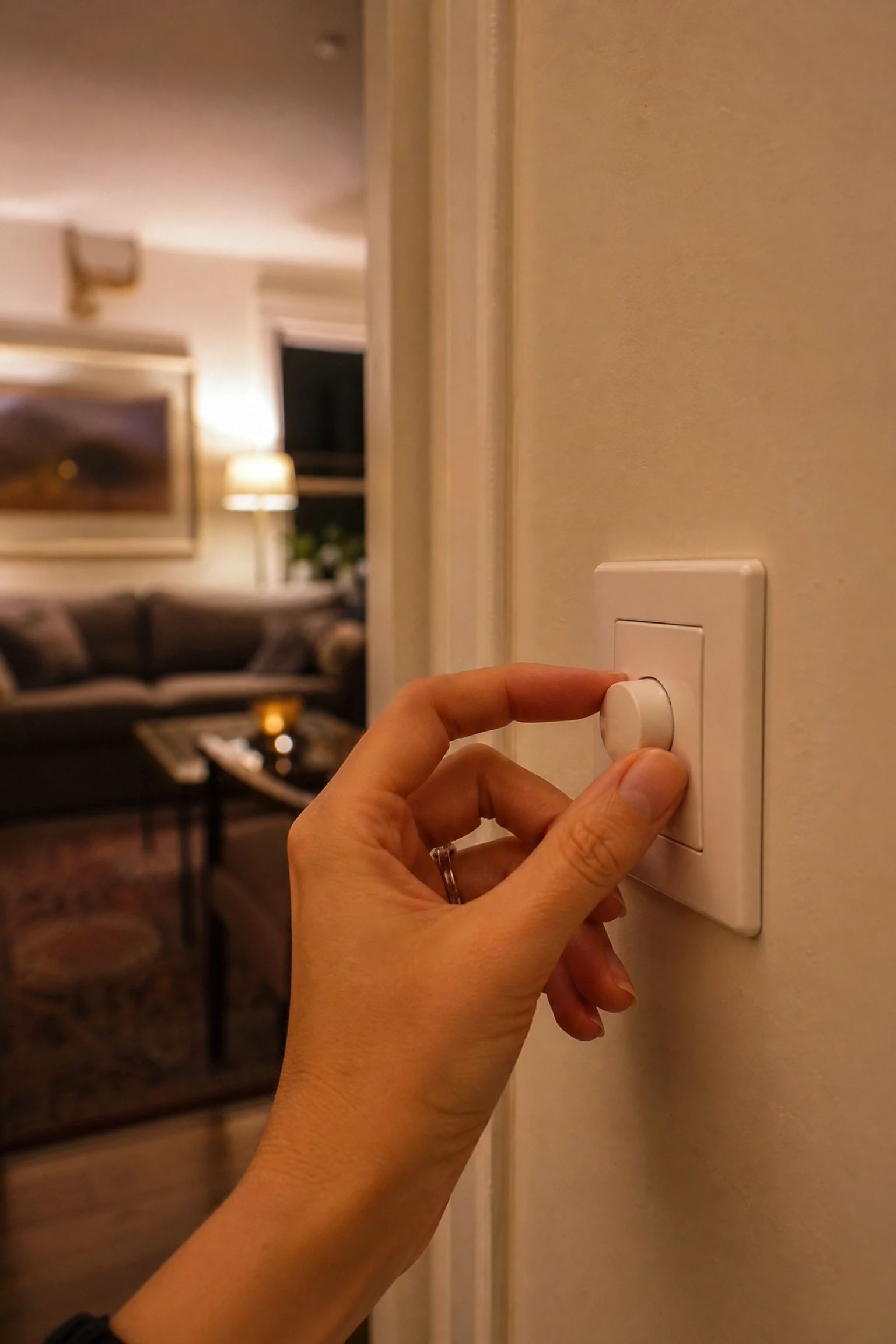
Swapping a standard light switch for a dimmer is one of the cheapest upgrades in this entire list, and it has an outsized effect on how flexible your living room feels throughout the day. Full brightness works for cleaning or hosting a group, while a dimmed setting in the evening makes the same room feel noticeably calmer for winding down. Most dimmer switches are compatible with LED bulbs now, but it’s worth checking the packaging since not every LED bulb dims smoothly.
Quick Tip: If you rent and can’t swap the switch, plug-in lamp dimmers that sit between the lamp and the outlet give you the same control without any wiring.
Choose Warm Bulbs Over Cool White
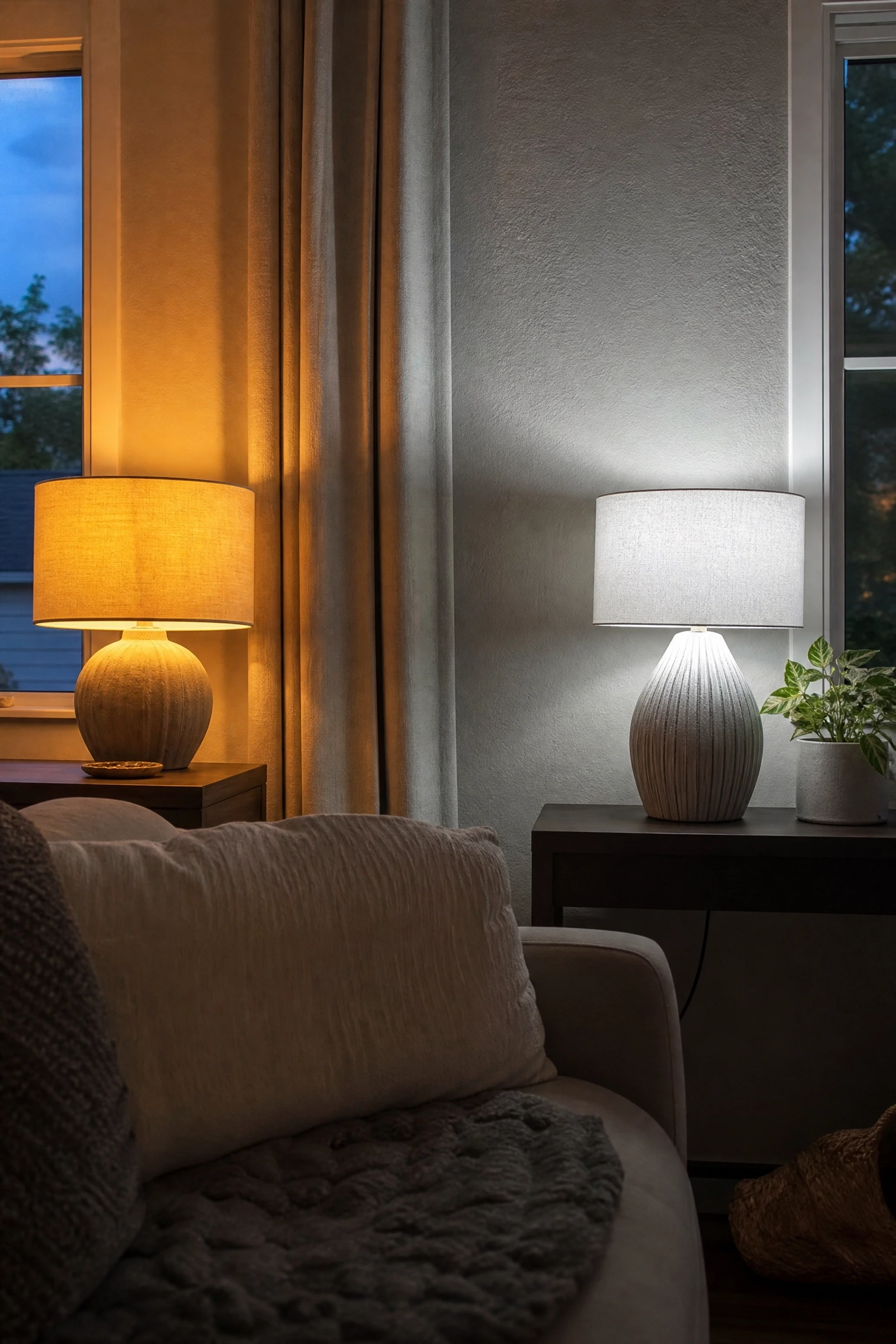
The color temperature of your bulbs matters just as much as the fixtures themselves, and a cool white bulb, anything above about 4000 kelvin, can make even a well-decorated living room feel more like an office than a place to relax. Sticking to warm white bulbs, generally in the 2700 to 3000 kelvin range, gives off the softer, amber-toned light that reads as cozy rather than clinical. Consistency matters too, mixing warm and cool bulbs in the same room creates a mismatched, slightly uneasy feeling even if neither bulb is wrong on its own.
Quick Tip: Check the kelvin rating printed on the bulb box before buying, not just the wattage, since two bulbs of the same brightness can look completely different.
Personal Touches and Decor Accessories
Group Art in an Odd-Numbered Gallery Wall
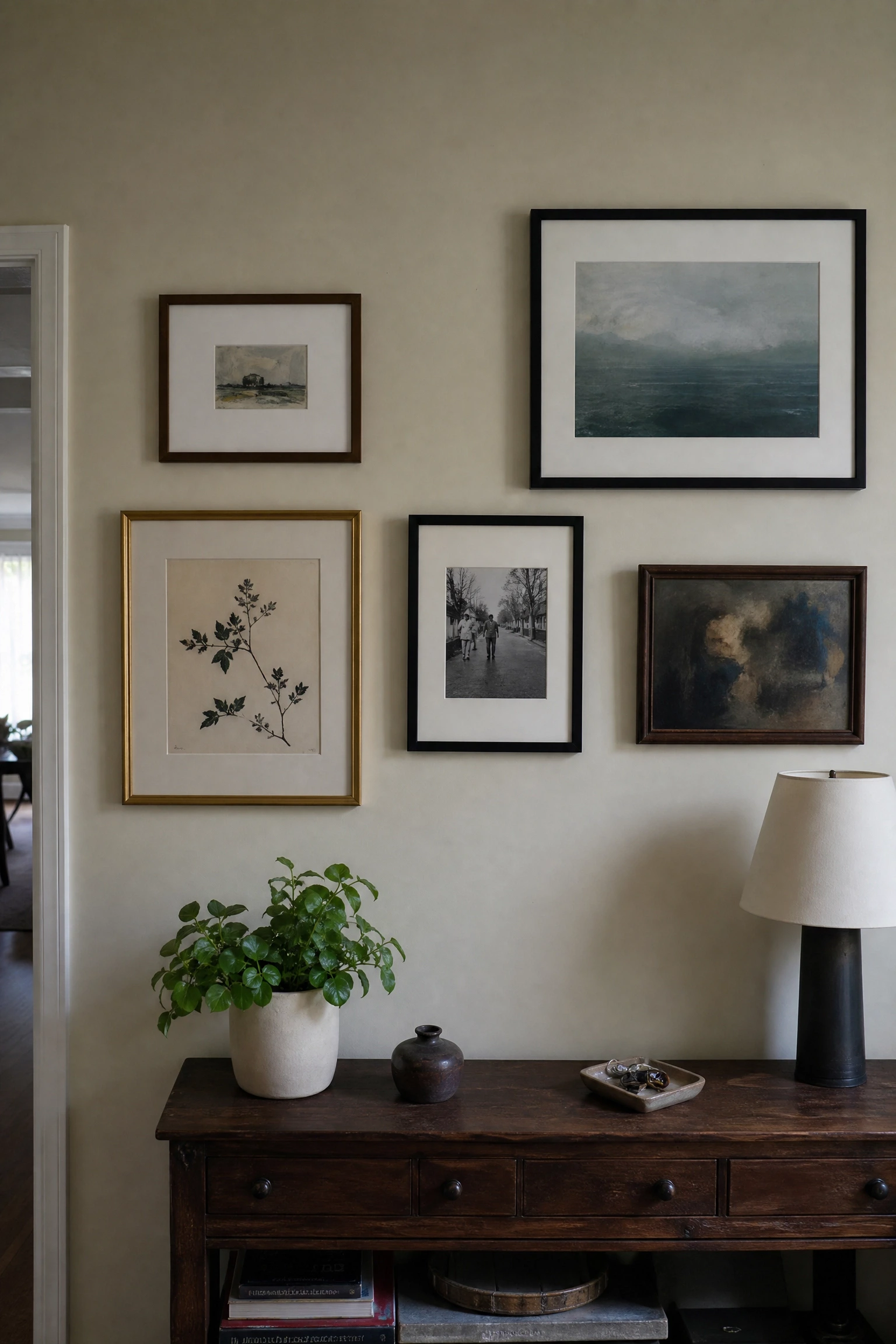
A gallery wall is one of the most personal upgrades you can make, and grouping frames in odd numbers, three, five, or seven pieces, tends to look more balanced to the eye than an even grouping, a small principle borrowed from classical design theory. Mixing frame sizes and a couple of different frame colors within the same warm or cool family keeps the wall from looking too matchy while still feeling intentional. Laying the arrangement out on the floor first, or tracing paper outlines on the wall with painter’s tape, saves you from a wall full of unnecessary nail holes.
Quick Tip: Keep at least two to three inches of spacing between frames, tighter spacing tends to make the wall look cluttered rather than intentional.
Style the Coffee Table With the Rule of Three
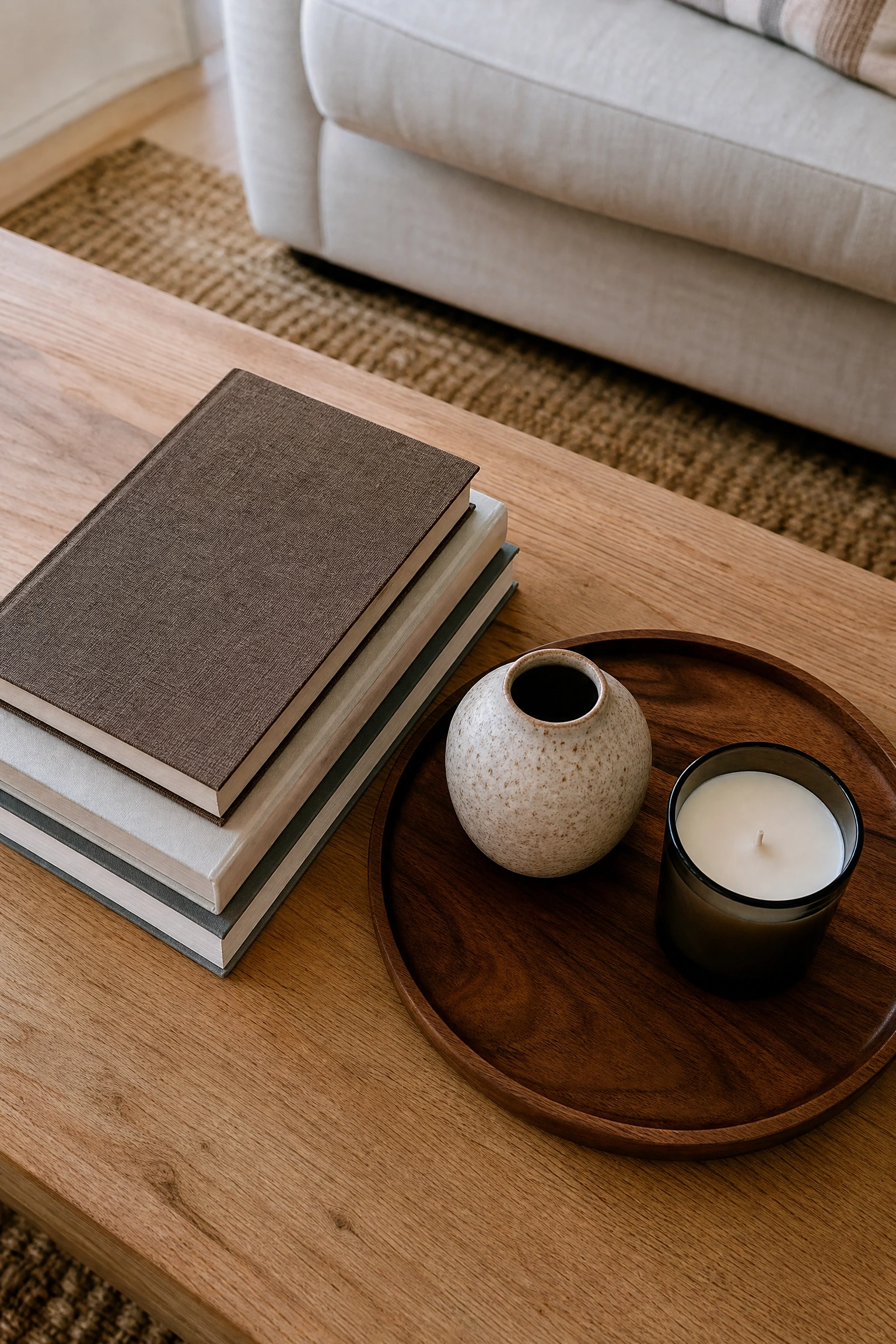
An empty coffee table looks unfinished, but a table piled with too many objects looks cluttered, and the rule of three is the simplest way to land in between. Grouping three items of varying height, for example a stack of books, a small vase, and a candle, creates visual interest without overwhelming the surface. This works because the eye naturally reads groups of three as complete rather than random. Leaving some genuinely empty surface space matters just as much as the objects themselves, since a fully covered table reads as busy no matter how nice the pieces are.
Quick Tip: Use a tray to corral the three objects together, it instantly makes even a mismatched grouping look more deliberate.
Add Live Plants for Real Texture and Air
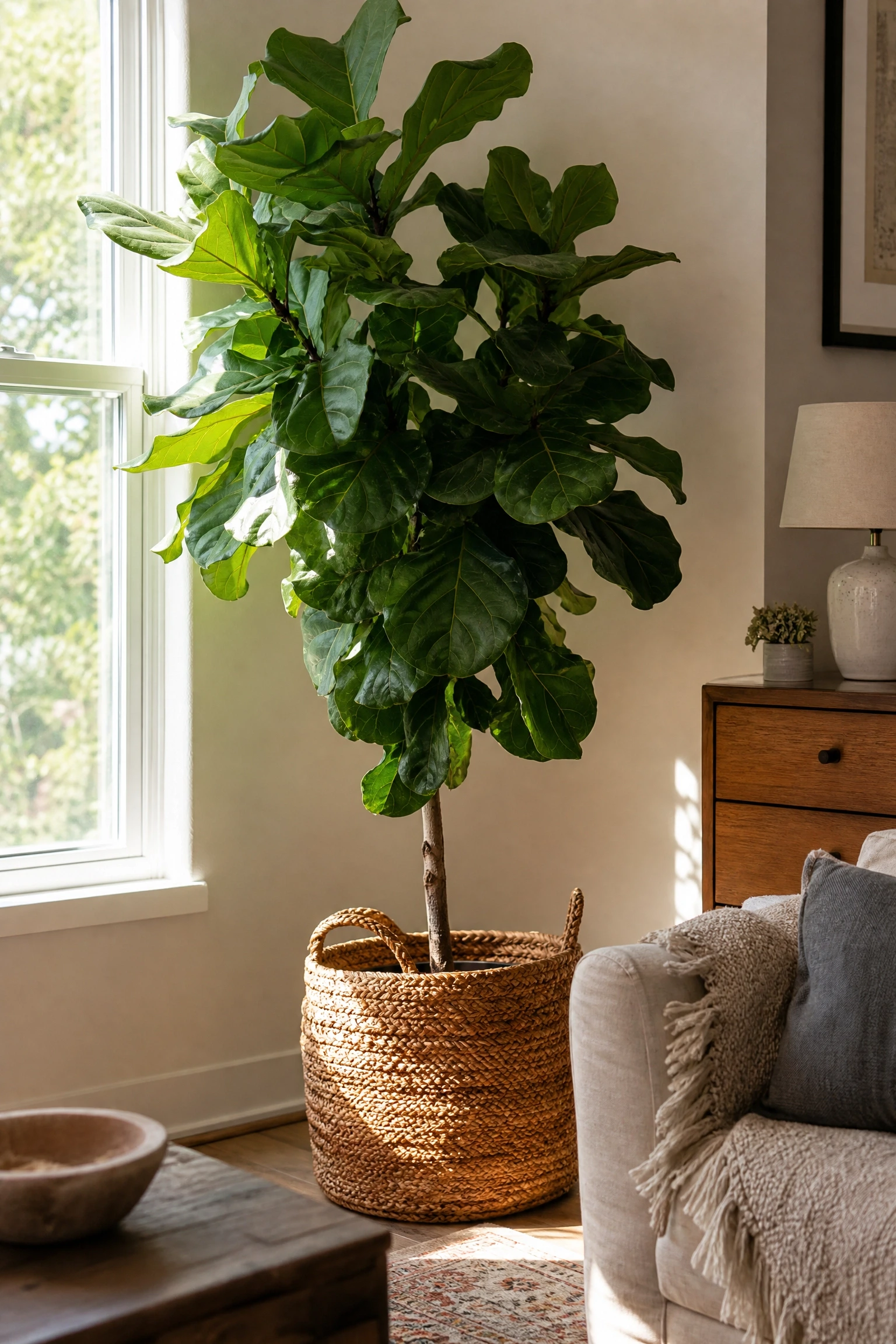
A real plant does something a decor object can’t, it changes slightly over time, catches natural light differently throughout the day, and genuinely improves the air in the room. A large floor plant like a fiddle leaf fig fills an empty corner and adds height that most furniture can’t easily provide, while smaller potted plants on a shelf add softness to hard surfaces. Low-light varieties like pothos or ZZ plants are the honest choice for rooms that don’t get much direct sun. The tradeoff worth knowing upfront is that real plants need actual maintenance, so if you’ll neglect one, a well-made faux plant is the better choice.
Quick Tip: Match the plant to your actual light conditions before falling for one online, a beautiful plant in the wrong light will not thrive no matter how well you water it.
Swap Throw Pillow Covers Seasonally
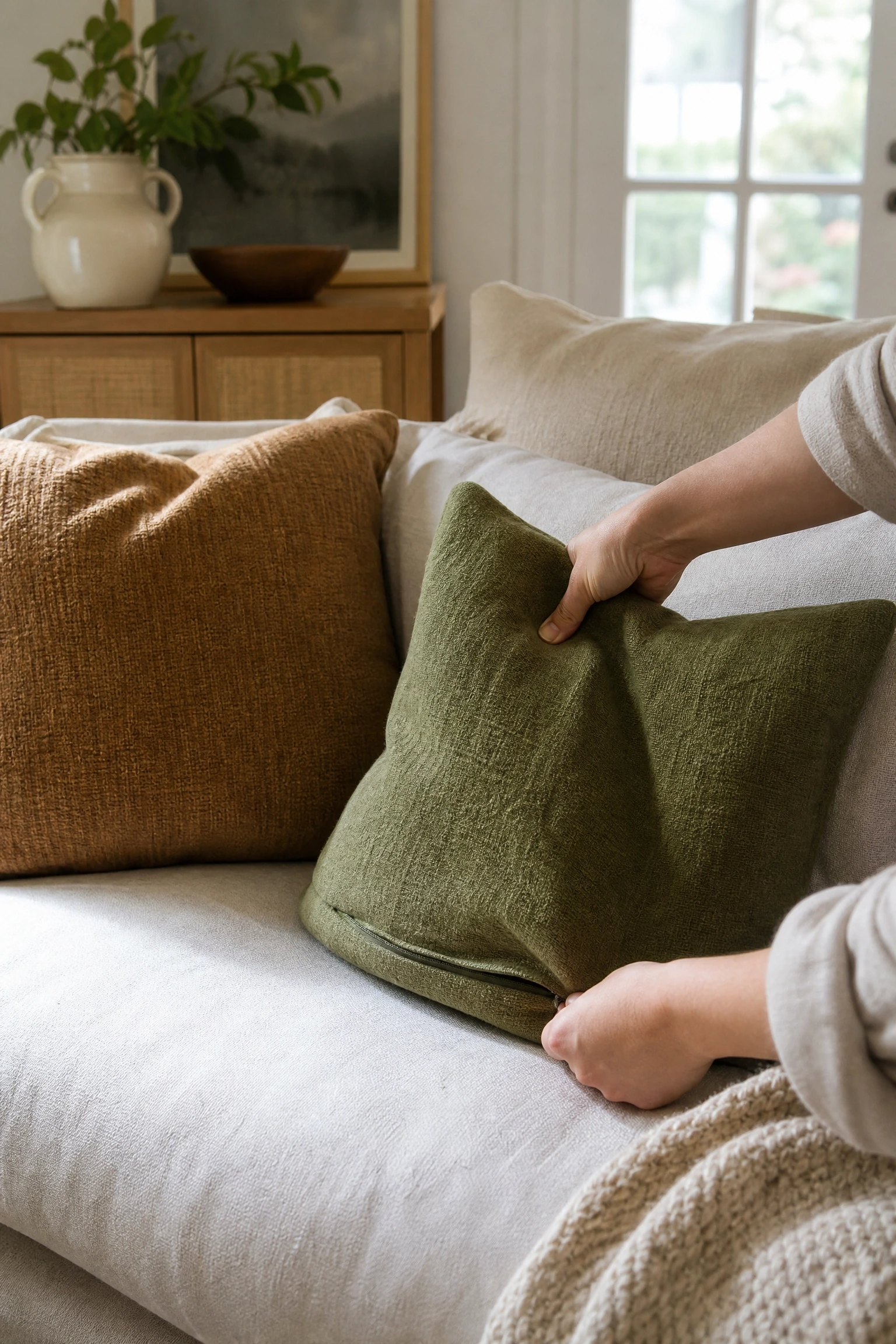
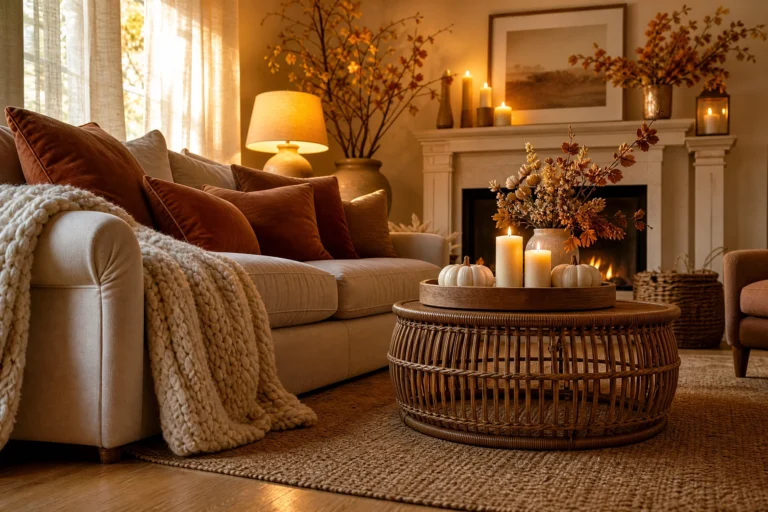
Buying entirely new throw pillows every season adds up fast, but swapping just the covers over the same inserts is a budget-friendly way to shift the room’s feeling without a full redecorate. Warmer tones and heavier textures like corduroy in the colder months, then lighter linen or cotton in warmer months, is a simple seasonal rhythm that keeps the room feeling current without much cost. This also gives you a low-risk way to test a bolder color or pattern before committing to it in a bigger piece of furniture.
Quick Tip: Buy pillow inserts one size larger than the covers, slightly overstuffed pillows hold their shape and look fuller on the sofa.
Leave One Wall Empty for Visual Rest
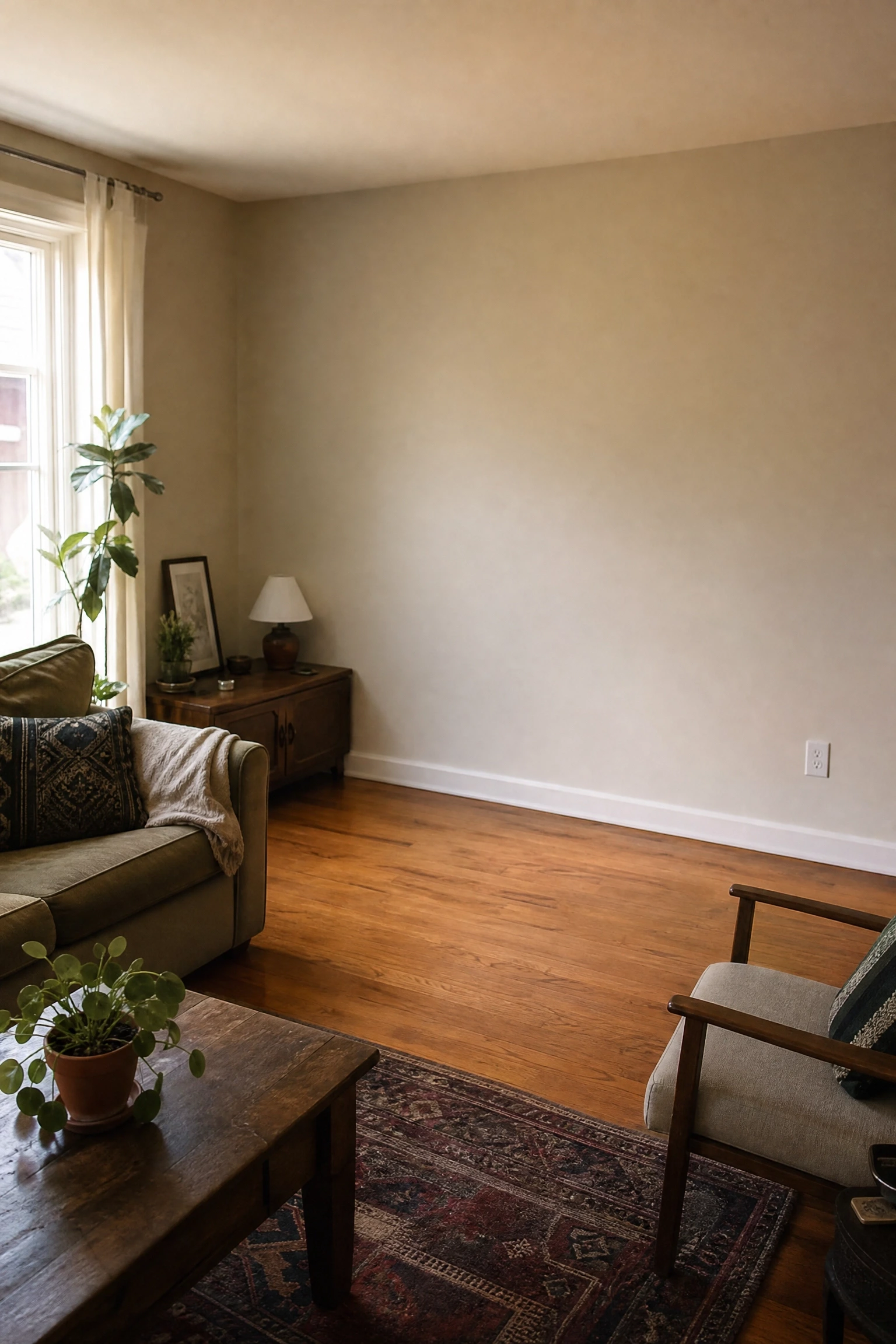
It’s tempting to fill every wall with art or shelving, but a room where every surface is decorated can start to feel visually loud even if each individual piece is tasteful. Leaving one wall genuinely empty, or dressed with just a single simple element like a large mirror, gives the eye a place to rest and makes the decorated walls stand out more by comparison. This is a principle designers call negative space, and it’s often the difference between a room that feels intentional and one that feels like it’s trying too hard.
Quick Tip: If you’re not sure which wall to leave empty, pick the one directly across from your main seating area, since that’s the wall your eye rests on most.
None of these tips require a full renovation, and that’s really the point. A living room comes together through a series of small, practical decisions, floating the sofa a few inches, swapping a cool bulb for a warm one, adding a basket where clutter tends to collect, rather than one big overhaul. Start with whatever bothers you most about the room right now, whether that’s an awkward walking path, flat lighting, or a coffee table that never looks finished, and fix that one thing first. Once that’s handled, move on to the next category. Some of these changes cost nothing but an afternoon, others are worth budgeting for over a few months, and it’s worth being honest about which is which before you start. The goal isn’t a room that looks perfect in a photo, it’s a room that works for the way you and your family use it every day, and holds up under real life, not just a weekend of company.
Frequently Asked Questions
What’s the single most impactful change I can make to a living room on a tight budget?
Swapping your light bulbs to a warm white tone, generally 2700 to 3000 kelvin, and adding a floor lamp for extra layered lighting is one of the cheapest changes with the biggest visible impact. It costs very little and immediately makes the room feel warmer at night.
How big should my living room rug actually be?
As a general guideline, get at least the front legs of every major seating piece onto the rug, and ideally all four legs if your room allows it. A rug that’s too small, with furniture floating around the edges, is one of the most common reasons a room feels unfinished.
Is it okay to mix different wood tones in the same room?
Yes, mixing wood tones is common in current design and can look intentional rather than mismatched, as long as the undertones are consistent. The issue isn’t mixing warm honey wood with darker espresso wood, it’s mixing warm-toned wood with cool gray-toned wood in the same space.
How do I make a small living room feel bigger without knocking down walls?
Floating furniture slightly off the wall, sticking to one warm neutral base color, keeping walking paths clear, and leaving at least one wall visually empty all help a small room feel less cramped. Multi-functional furniture with hidden storage also reduces the clutter competing for space.
Do I need to hire an interior designer to get a room that looks put together?
Not necessarily. Most of what makes a room feel professionally done comes down to consistent principles, like layered lighting, proper rug sizing, and a limited color palette, that you can apply yourself. A designer is useful for larger investments like custom built-ins, but plenty of the tips here are things anyone can do on their own.
How often should I actually update my living room decor?
Big pieces like the sofa and rug can reasonably last five to ten years if they’re good quality and well cared for. Smaller elements like throw pillow covers, art, and accessories are worth refreshing more often, even seasonally, since they’re the most affordable way to keep a room feeling current without replacing anything major.