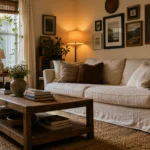
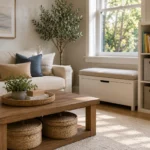
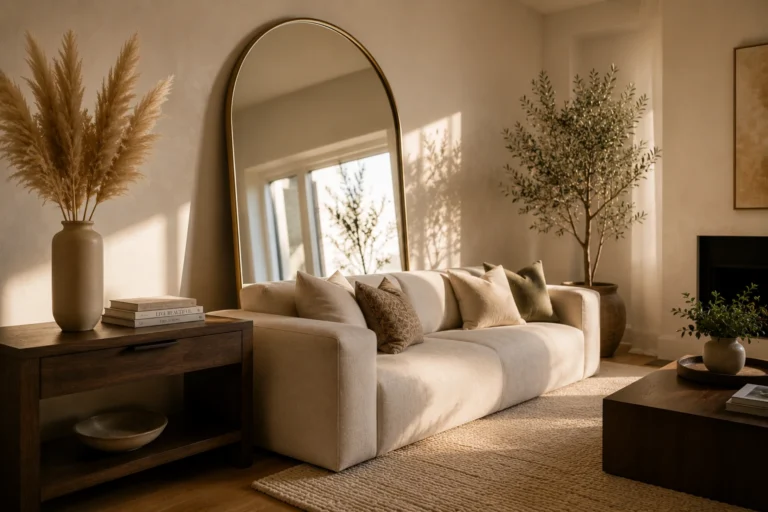
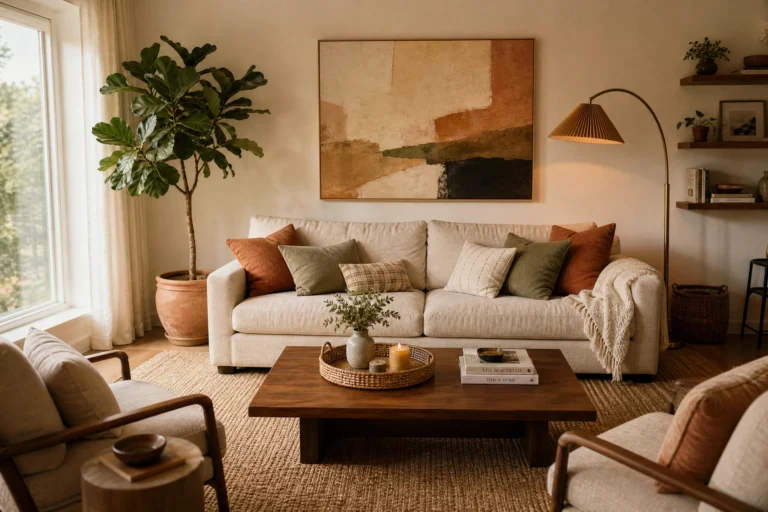
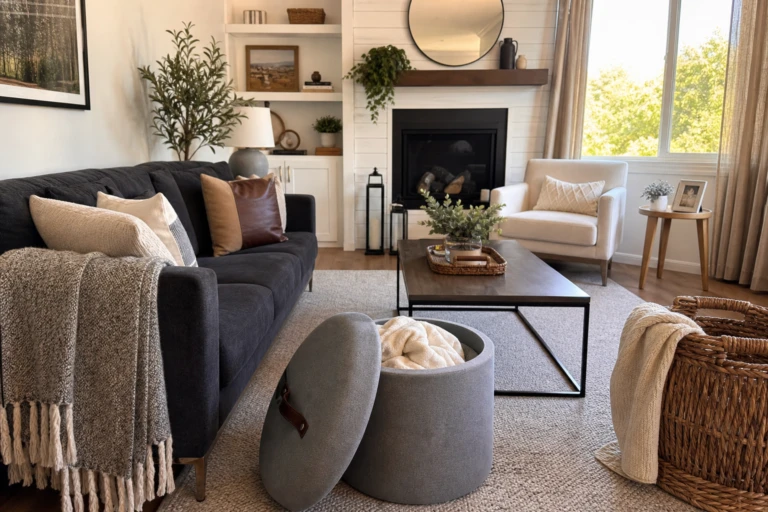
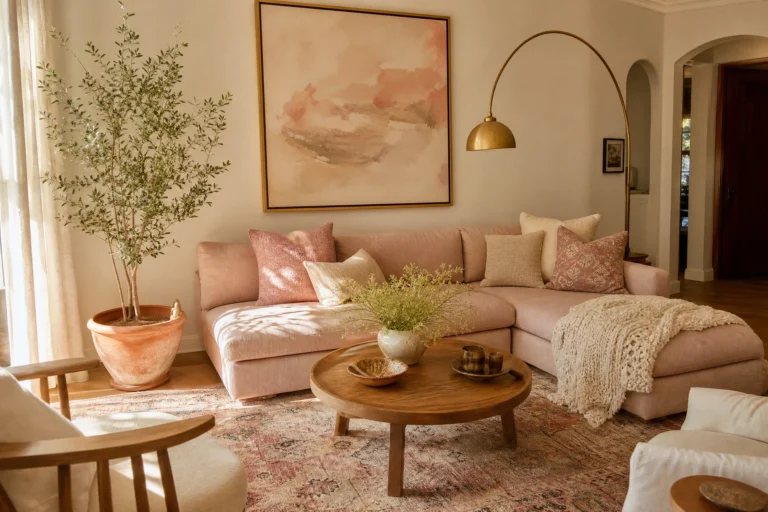
Beige and wood might sound like the safe, boring choice, but anyone who has pulled it off well knows it is anything but. The pairing has this quiet, magnetic quality that makes a room feel warm before you have even sat down. It works equally well in a compact apartment and a sprawling open-plan space, which is rare for any color-material duo. What makes it tricky is the same thing that makes it beautiful: there are so many shades of beige and so many wood tones that choosing poorly can leave a room looking flat, muddy, or dull. Choosing well, and layering the right textures, furniture shapes, and lighting, creates something that feels genuinely considered and deeply livable.
This guide covers nineteen different takes on the beige-and-wood living room so you can find the version that actually fits your space, your budget, and the way you live. Some lean into warmth and coziness, others pull toward clean and airy, and a few sit somewhere in the middle. Rather than just describing what looks good in a photograph, each idea gets into the specifics of how to make it work in a real room: the right wood tone pairing, the lighting that ties it together, the fabric choice that keeps it from feeling sterile, and the honest tradeoffs worth knowing before you commit.
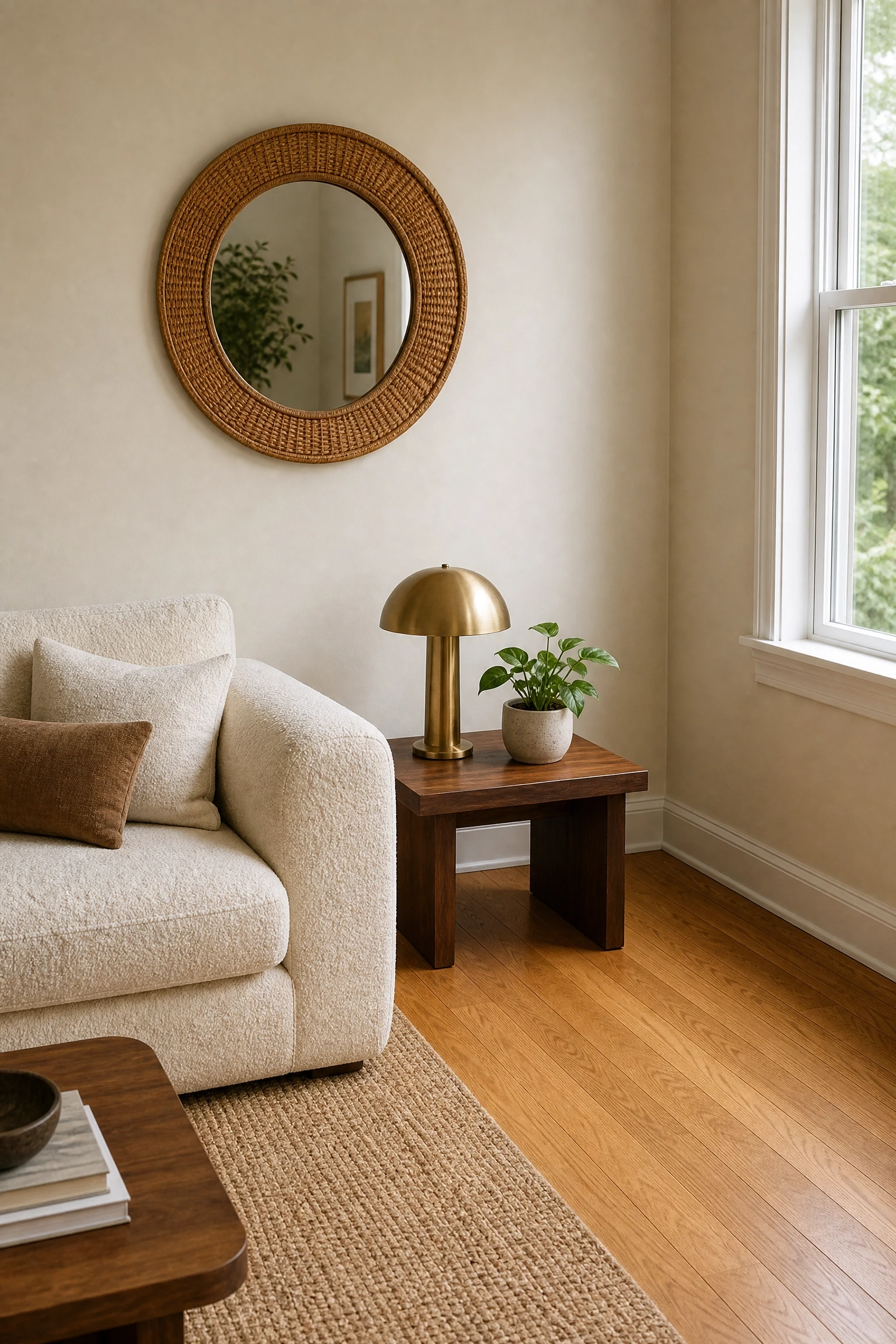
You might be tempted to pair honey oak flooring with a stark white wall to brighten the room, but in practice that contrast often makes the floor look orange rather than golden. Creamy linen-toned walls, something in the Benjamin Moore White Dove or Sherwin-Williams Accessible Beige range, pull out the warm amber undertones in the oak and make the floor look intentional rather than dated. Build on this base with an off-white boucle sofa, a low-profile walnut coffee table, and a jute area rug in a natural, undyed tone, layering warm neutrals to create visual depth without competition between elements. For lighting, a brushed brass arc floor lamp adds warmth without adding color, and a linen drum shade pendant over a reading corner keeps the glow soft and diffused rather than harsh. This approach works best in rooms with good natural daylight, and since the look relies entirely on texture rather than color contrast for interest, investing in quality fabrics makes a real difference.
Pro Move: Test your wall color sample next to the actual floor in your specific room’s lighting before committing, since honey oak shifts dramatically between morning and afternoon light.
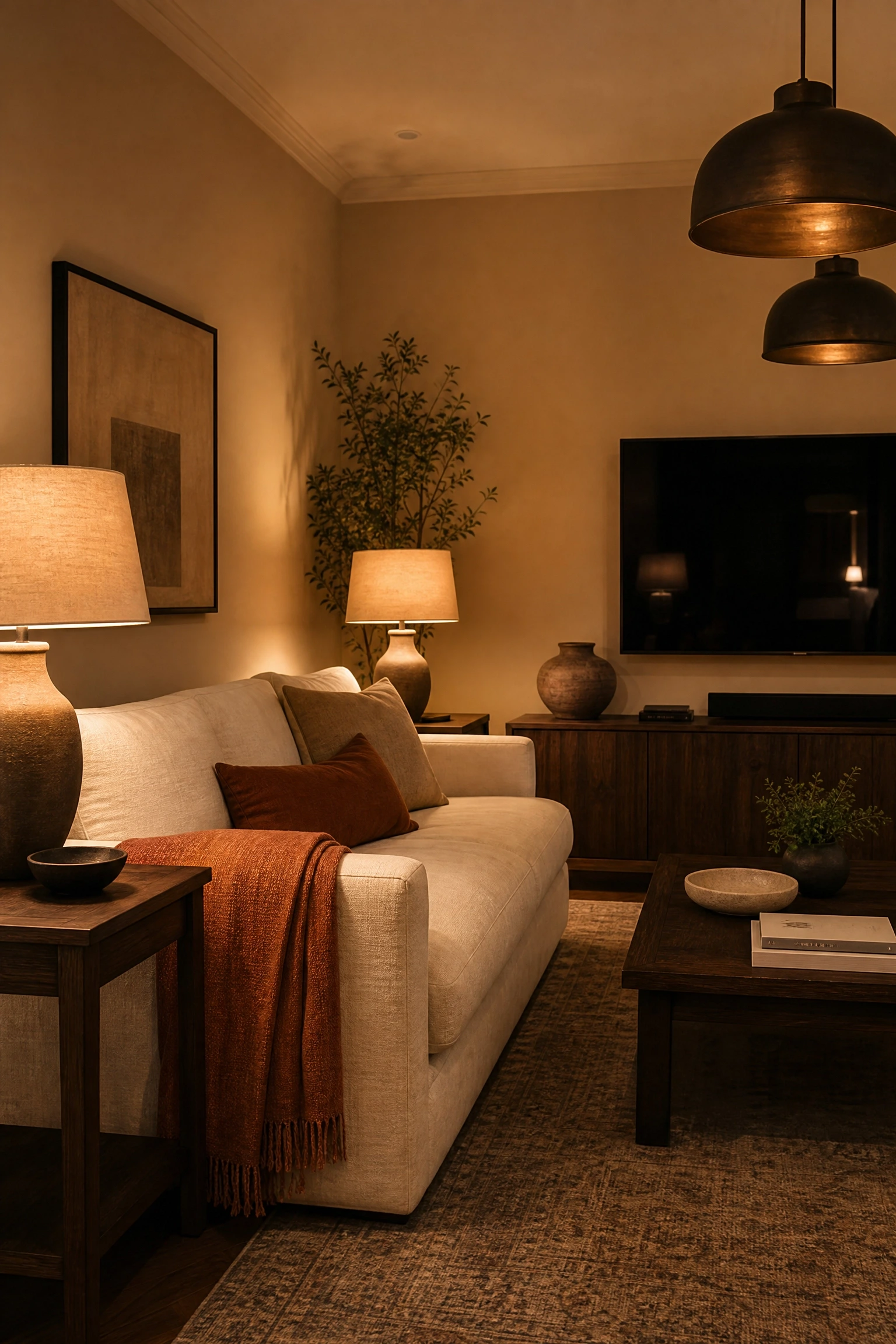
The instinct with dark walnut furniture is to keep everything else light, but a sandy beige wall, something in the Farrow and Ball String or Dulux Natural Calico range, holds its own against walnut better than a very pale white does. The medium depth of sandy beige keeps dark walnut from dominating while still providing enough contrast to let the richness of the wood grain read clearly. A walnut TV console, side tables, and a bookshelf create a cohesive furniture story, while a cream linen sofa in a relaxed silhouette softens the heaviness of the darker wood. Add a terracotta or rust-toned throw and a couple of matte clay ceramic vases to introduce warmth without disrupting the palette. Pendant lighting with a dark bronze finish ties the walnut pieces together visually, and a floor lamp with a fabric shade keeps the overall lighting layer warm. Dark walnut furniture is an investment-level choice, so if budget is a concern, walnut-veneer pieces from mid-range retailers get you the visual effect without the full solid-wood price tag.
Designer Advice: Keep your sofa fabric in smooth linen or soft cotton rather than anything nubby or patterned, since the walnut grain already provides all the visual texture the room needs.
3. Whitewashed Pine and Warm Beige for a Coastal-Casual Feel
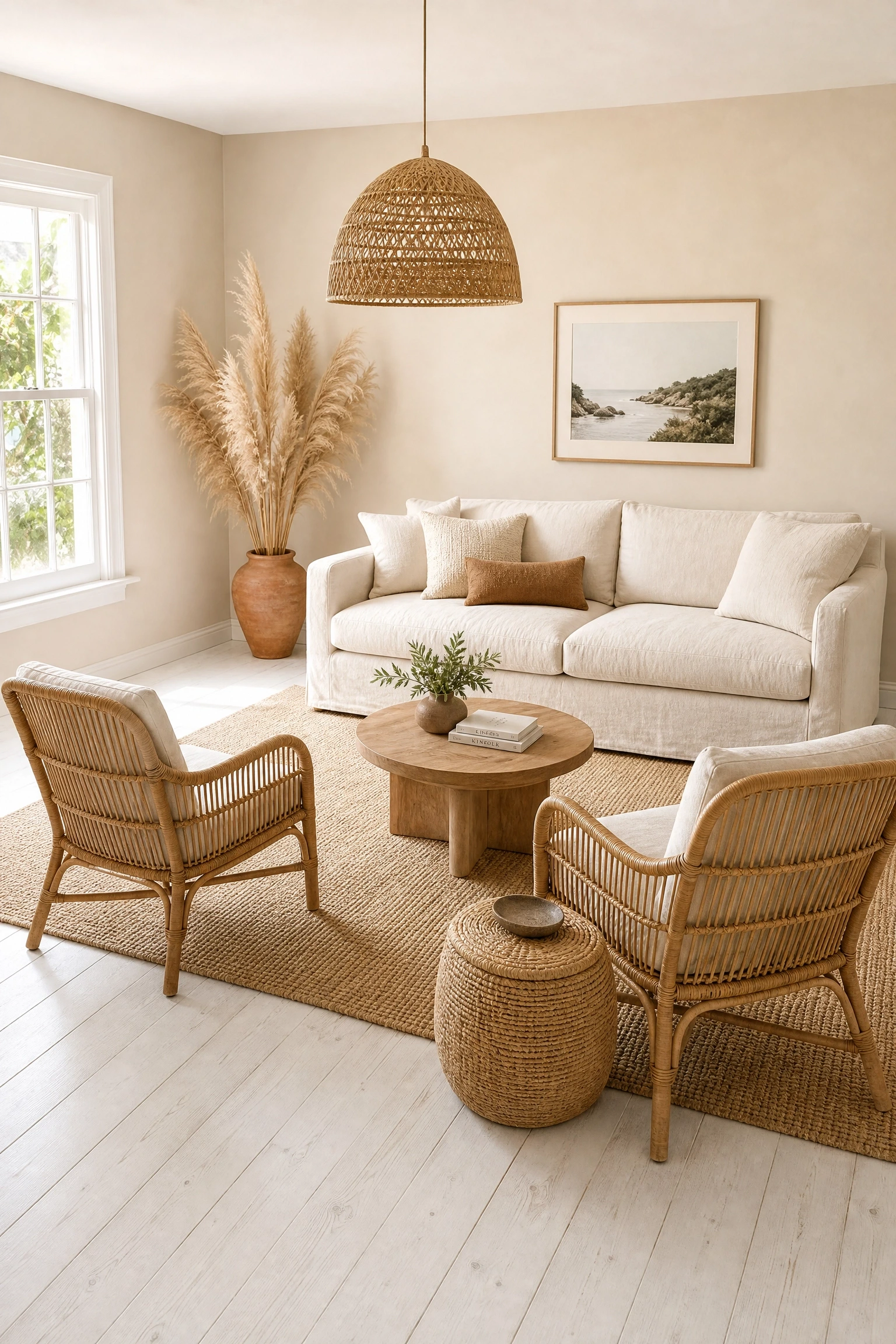
Coastal rooms often make the mistake of going too blue, too white, or too nautical, which makes the space feel like a vacation rental rather than a home. Whitewashed pine floors or wall paneling paired with warm beige walls strike a coastal note without leaning into cliches. The washed-out quality of the pine keeps the room bright and breezy while still carrying the organic warmth of real wood. A pair of low-slung natural rattan armchairs, a cream cotton sofa, and an undyed sisal rug ground the look in natural materials without any forced theming. For accessories, stick to organic shapes: a sculptural driftwood piece, a woven basket used as a side table, and a few stems of dried pampas grass in a simple terracotta pot. A rattan pendant shade or a linen drum light keeps lighting airy. This is genuinely one of the more budget-friendly looks on this list since whitewashed pine is found in affordable laminate flooring options and rattan furniture from mid-range stores keeps costs down without sacrificing the aesthetic.
Quick Tip: Avoid anything with a glossy finish in this scheme, since the whole look depends on matte, natural surfaces that absorb light softly rather than reflecting it.
4. Japandi-Style with Pale Ash Wood and Stone Beige
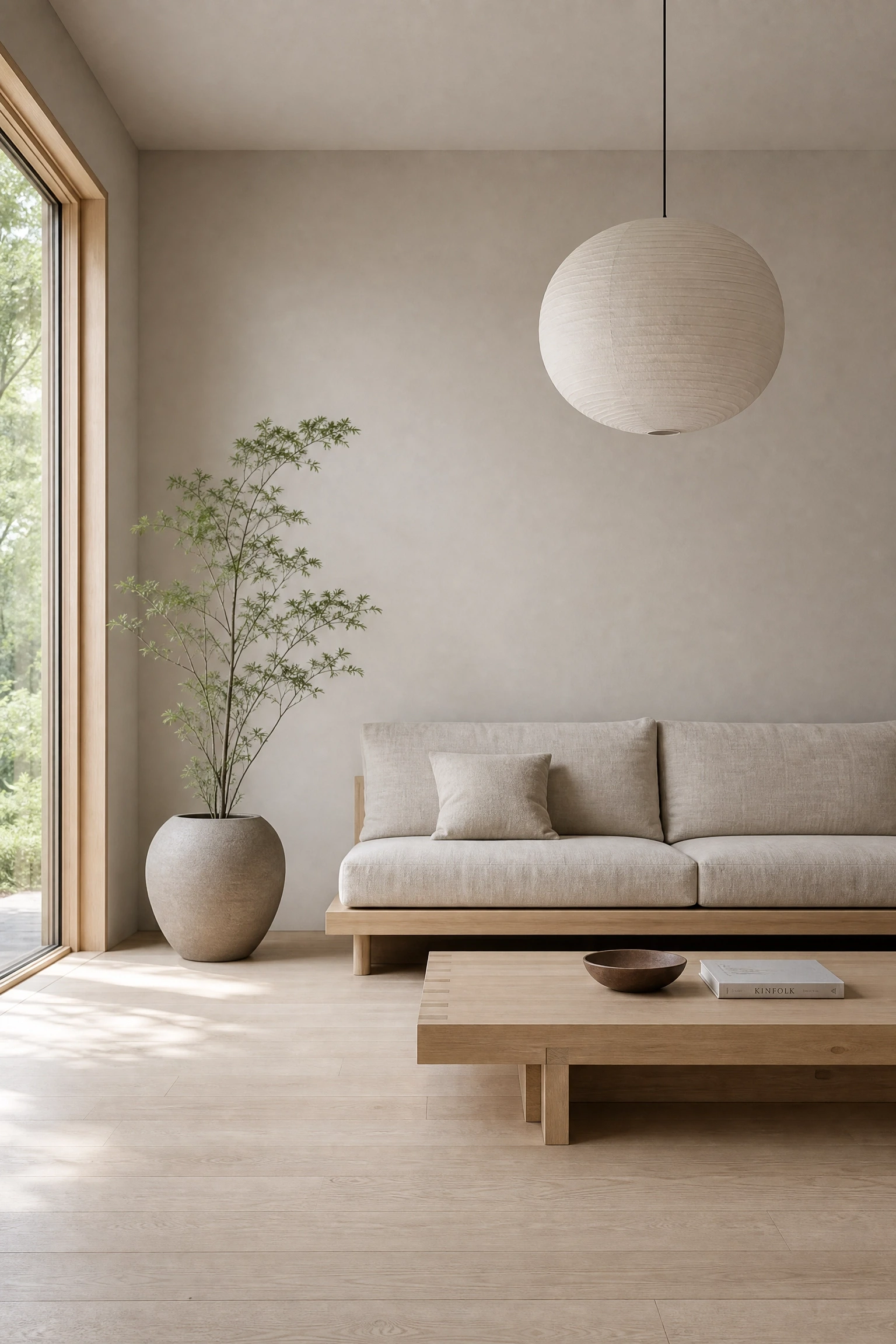
Japandi has been a defining movement in professional interiors for several years, and the beige-and-wood version is particularly well-suited to living rooms because it prioritizes calm and function over decoration. Pale ash or birch wood furniture with clean, low horizontal lines is the structural core, and the walls should sit in a stone or greige tone, something like Farrow and Ball Purbeck Stone or Sherwin-Williams Agreeable Gray. In practice, this look works best when you edit aggressively: one low sofa in natural linen, a single coffee table with visible joinery detail, one or two plants in plain ceramic pots, and nothing else on the floor. The negative space is deliberate and is what makes the room feel restful rather than empty. Lighting should be understated: a simple paper pendant shade and a small warm-toned table lamp are enough. Pale ash furniture is widely available at accessible price points, but this style does require discipline in buying only what you actually need.
Reality Check: Japandi only works if you are genuinely comfortable with very little decoration. If you tend to accumulate objects, this style will require ongoing editing to maintain, which is worth considering before committing.
5. Reclaimed Wood Shelving on Beige Walls for a collected Look
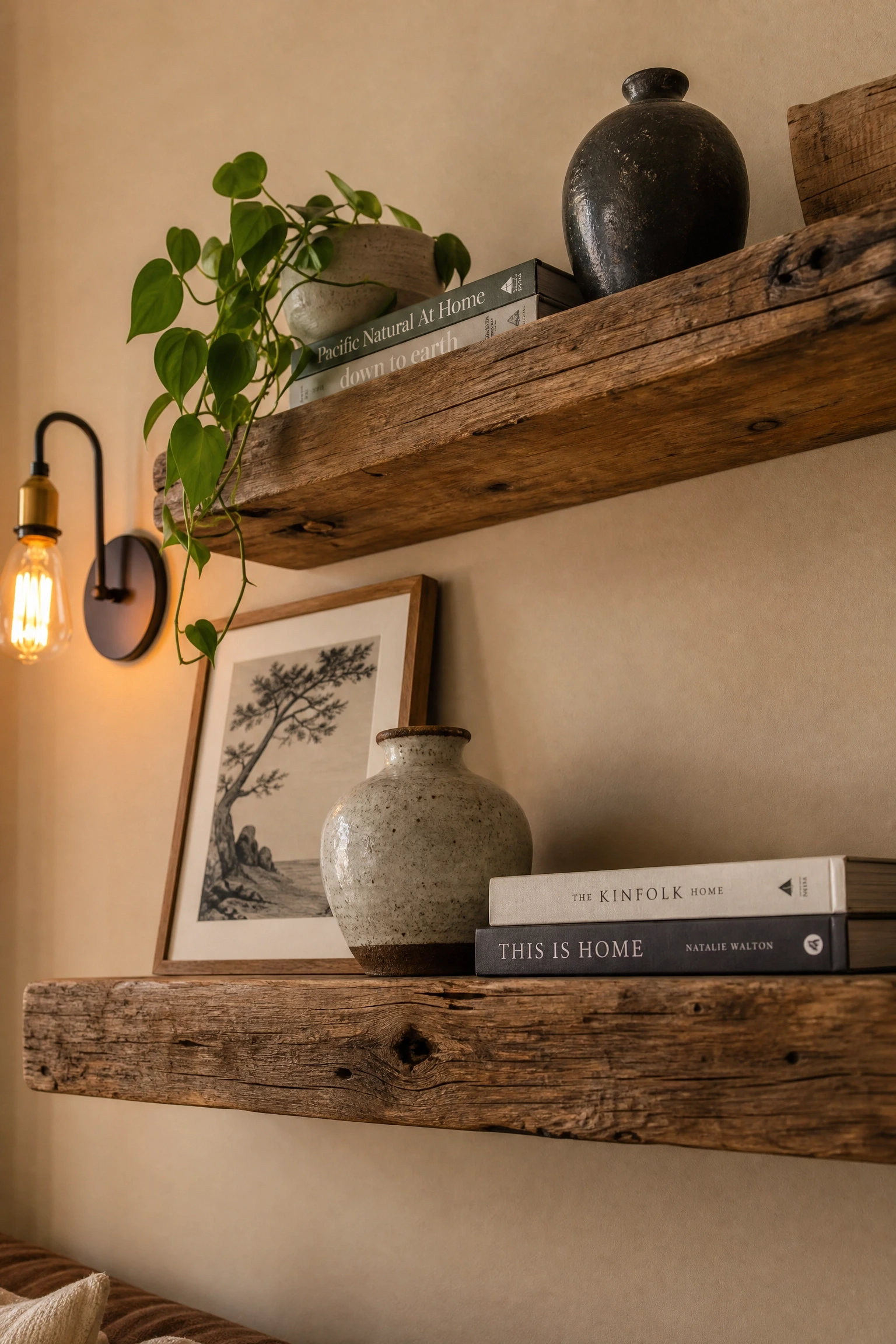
The choice between uniform manufactured floating shelves and genuine reclaimed wood shelving in a beige living room is an easy one: the reclaimed version wins almost every time. Manufactured shelves can look corporate or like an afterthought against a flat beige wall, while reclaimed wood brings material honesty and warmth that a beige base specifically needs to feel lived-in rather than staged. The natural variation in grain, color, and imperfection in reclaimed timber reads as depth. Style the shelves with a mix of heights: books stacked horizontally, one or two ceramic vessels, a small trailing plant, and a framed print leaning rather than hung. Keep the sofa in smooth textures to balance the roughness of the wood, and use a warm amber-toned bulb in any sconces aimed at the shelving to bring out the warmth in the timber at night. Budget-wise, genuine reclaimed wood from architectural salvage yards often costs less than comparable new timber, and the weathered finish means no additional staining is required.
Heads Up: Reclaimed wood shelving is heavier than manufactured alternatives, so ensure your wall fixings are rated for the load, especially if you plan to display books or ceramics.
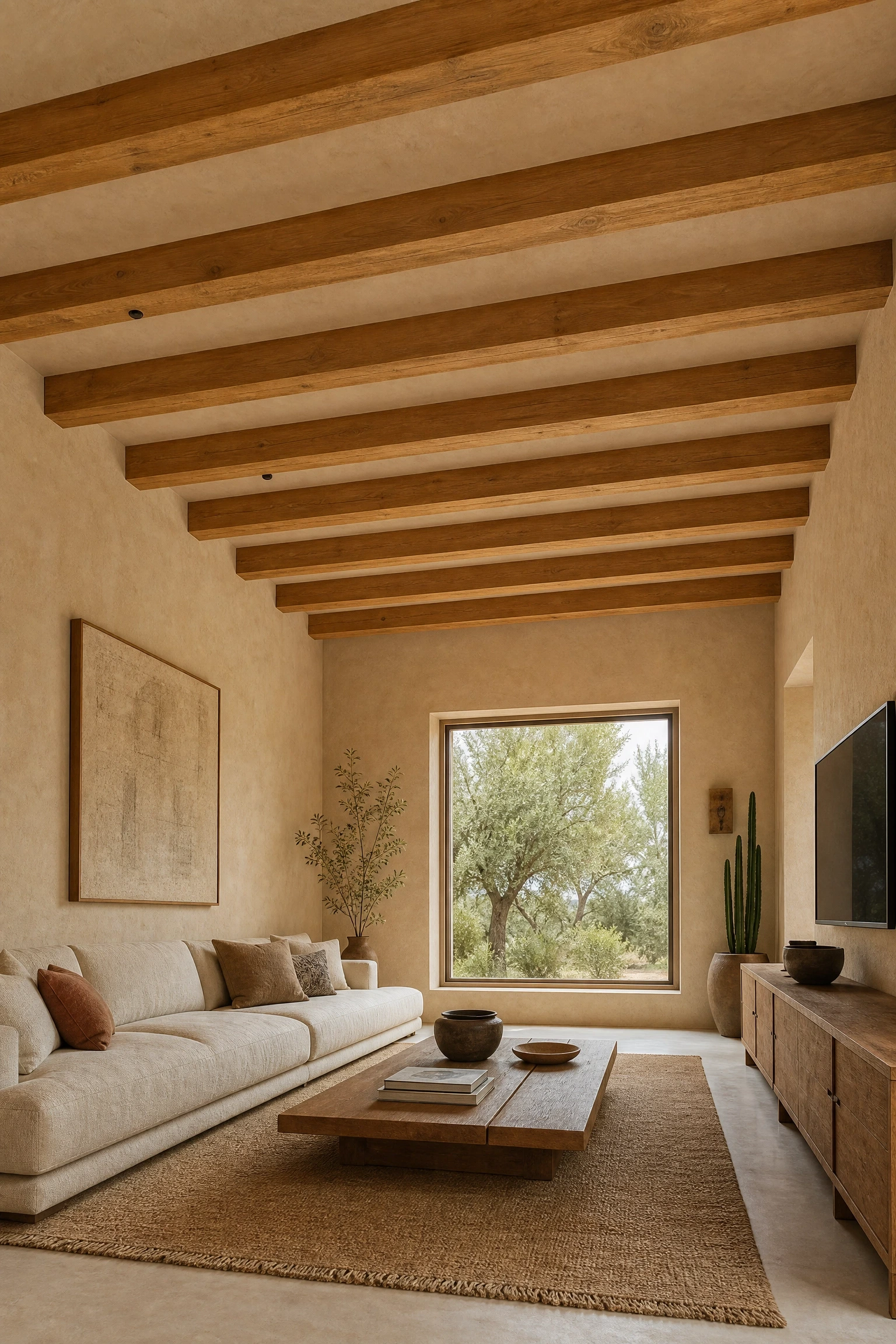
A smooth painted ceiling in a beige room can feel low and slightly oppressive without a strong vertical element to draw the eye up, while exposed wooden beams pull the eye upward and frame the space architecturally. If your home has genuine period beams, a warm beige plaster finish with slight texture, rather than perfectly smooth paint, is the most flattering backdrop since it mirrors the organic quality of the wood. If the beams are decorative, ensure they are finished in a tone that complements your floor: a medium honey oak beam works well with lighter birch flooring, while a darker walnut stain suits medium-tone floors. Furniture should stay relatively low to reinforce the ceiling height: a long sofa, a flat coffee table, and a media console rather than a tall shelving unit. Adding genuine structural beams is an investment-level ceiling intervention, but the long-term architectural impact on the room is substantial.
Designer Advice: Space decorative beams at least 24 inches apart and run them parallel to the room’s longest wall to make the ceiling feel expansive rather than cage-like.
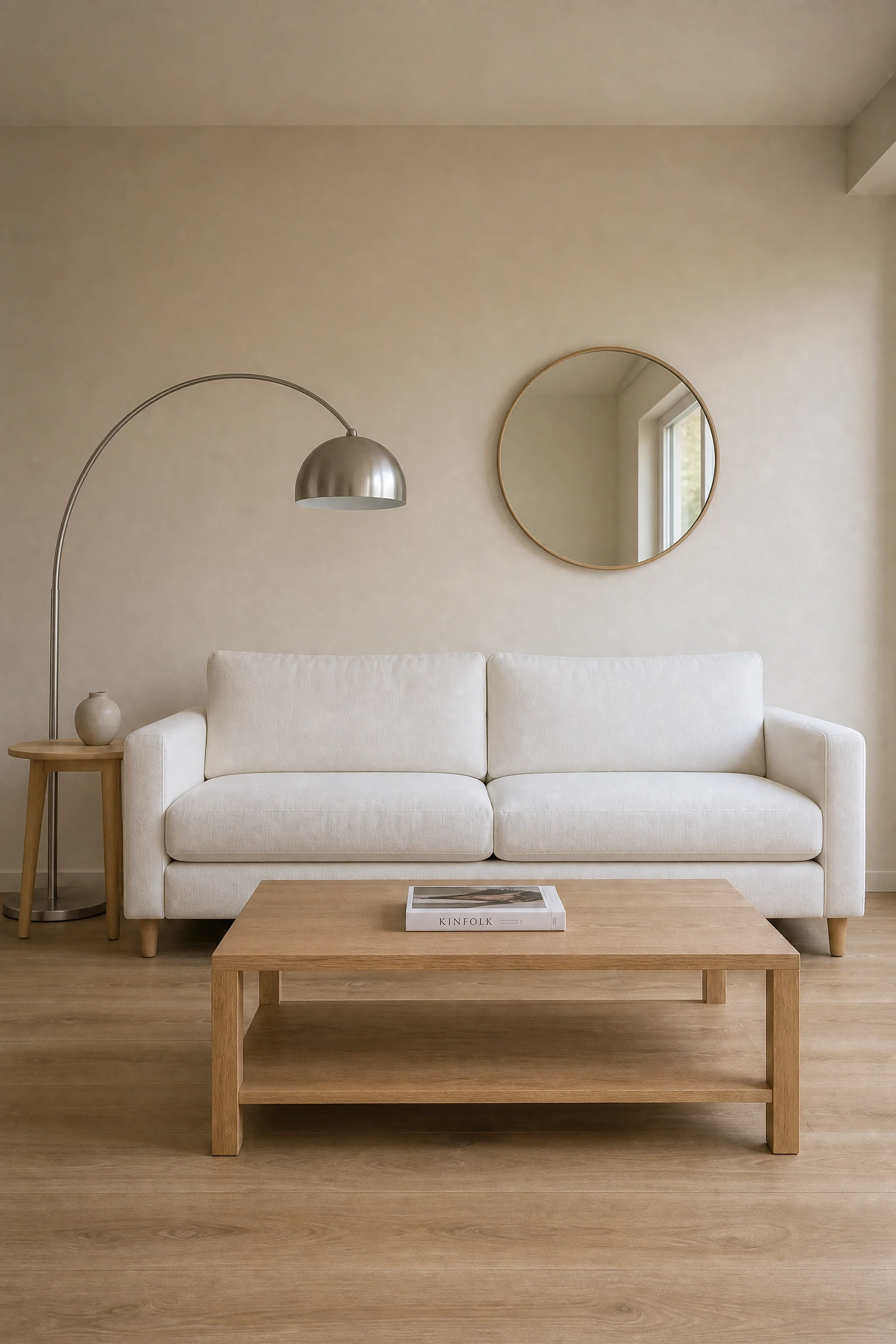
Minimalism in a beige-and-wood room often gets confused with doing very little, when actually it requires doing very specific things carefully. Light oak furniture, particularly pieces with tapered legs and simple joinery, keeps a minimalist living room from feeling sparse because the wood grain provides visual interest at close range. Pair light oak with a warm mid-tone beige, not a very pale cream and not a deep tan, and let the wall stay mostly clear: one large-format artwork or a single round mirror is sufficient for the main wall. A single sofa in a smooth performance fabric, a light oak coffee table with a lower shelf for a coffee table book, and one side table are all the furniture this room needs. A simple arc floor lamp in brushed steel or light wood keeps the warm-neutral palette consistent. This is one of the more affordable looks on this list since light oak furniture is widely available and fewer pieces are required overall.
Quick Tip: In a minimalist beige-and-oak room, the quality of your single sofa matters more than anything else since it carries the most visual weight, so spend here and save on accessories.
8. Deep Tobacco Wood Floors with Oatmeal and Cream Layers
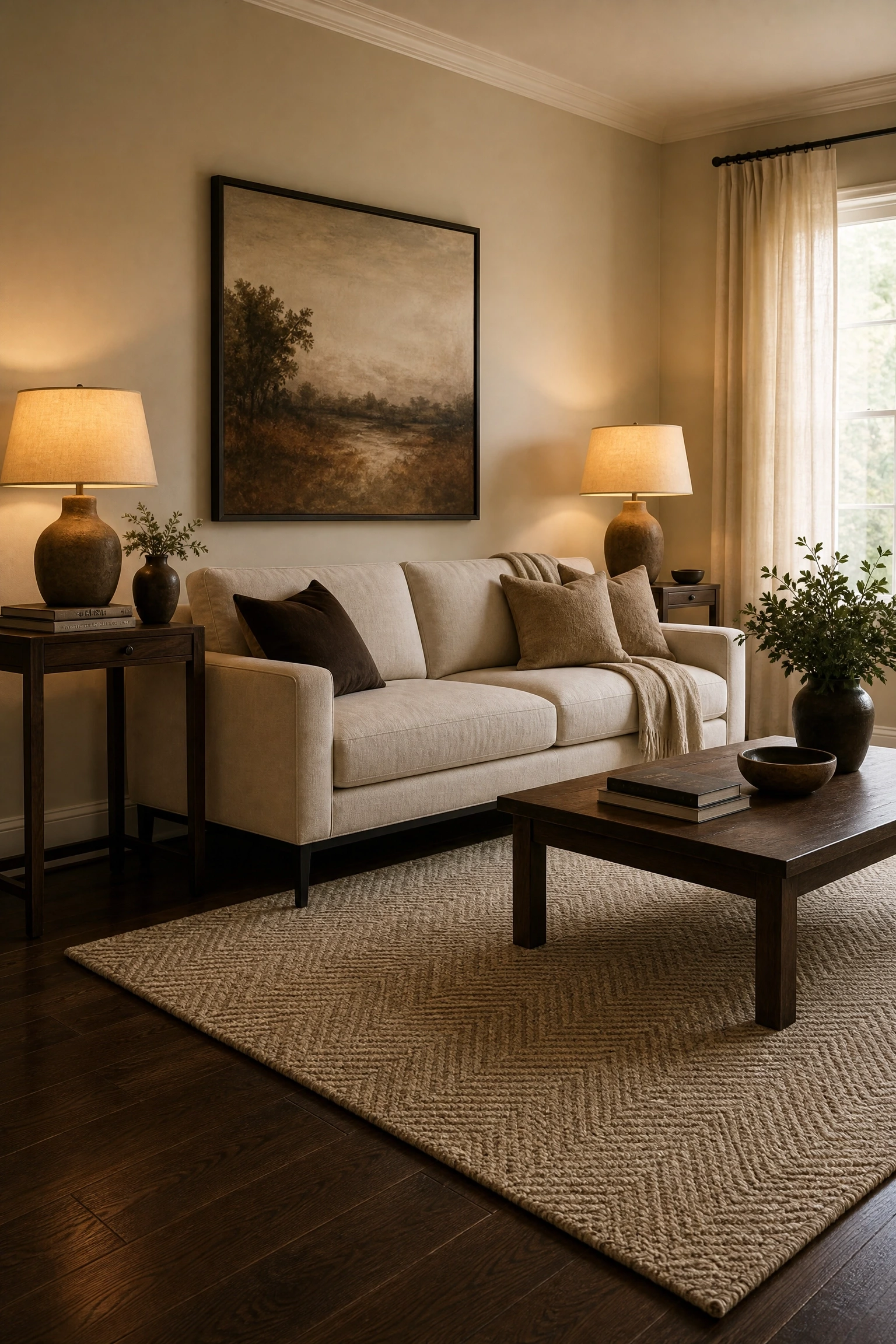
A deep tobacco or espresso wood floor creates a dramatic base that can feel heavy if you are not deliberate about how you layer above it. The solution is not to fight the darkness with very bright walls, but to work with warm, layered neutrals. Oatmeal walls, a greige with warm undertones rather than grey-beige, sit comfortably above a dark floor without jarring contrast. A cream linen sofa with slightly polished legs lets you see a sliver of floor underneath, which reduces the visual mass of the seating. Layer a natural wool rug in an oatmeal-and-cream check or herringbone pattern to create a transition zone between the floor and the furniture. Lighting matters significantly: a warm-toned overhead fixture combined with at least two lower-level lamps keeps the room feeling cozy rather than gloomy after dark. A good wool rug is a meaningful expense at this mid-range budget level, but it does most of the heavy lifting in tying the layers together.
Pro Move: Add a linen curtain panel in a barely-there cream tone to diffuse incoming natural light, which softens the contrast between the dark floor and lighter walls without blocking brightness.
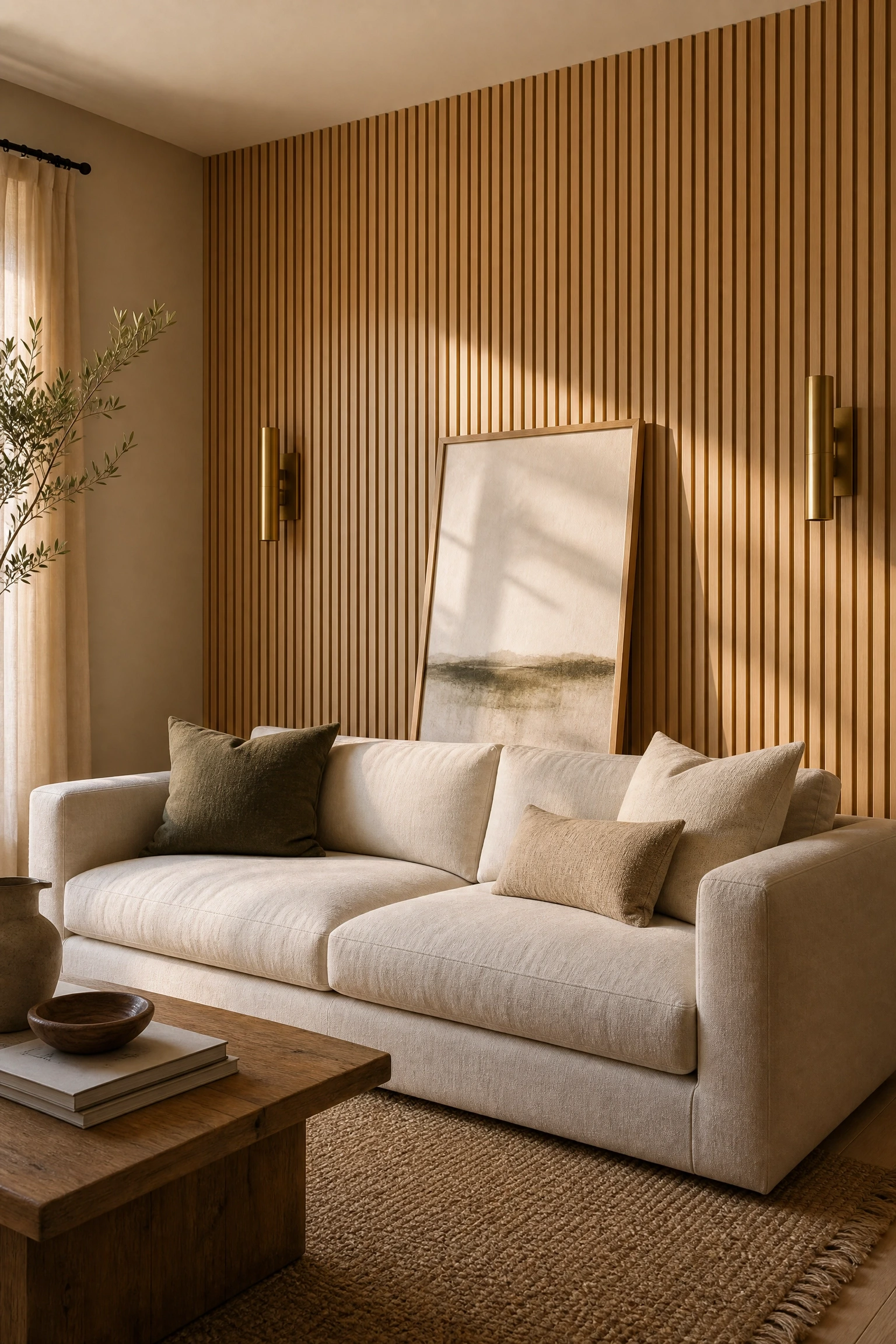
A painted feature wall in a deeper beige adds color but not texture, while a wood accent wall adds both simultaneously. Vertical wood slat panels in natural oak or ash are the current professional-designer preference over horizontal planks, since the vertical orientation makes a room feel taller and the gaps between slats create shadow detail that shifts through the day with changing light. Position this wall behind the sofa rather than the TV wall, so the texture reads as a backdrop to the seating arrangement. Keep the remaining three walls in warm beige to avoid overwhelming the room, and add a wall-mounted sconce on either side of a central artwork to keep evening lighting layered and intimate. DIY wood slat panels using pine battens and a simple stain are a fraction of the cost of pre-made panel systems and can be done in a weekend.
Reality Check: Wood slat walls attract dust in the grooves between slats, so consider how much maintenance you are willing to do before choosing this over a simpler wall treatment.
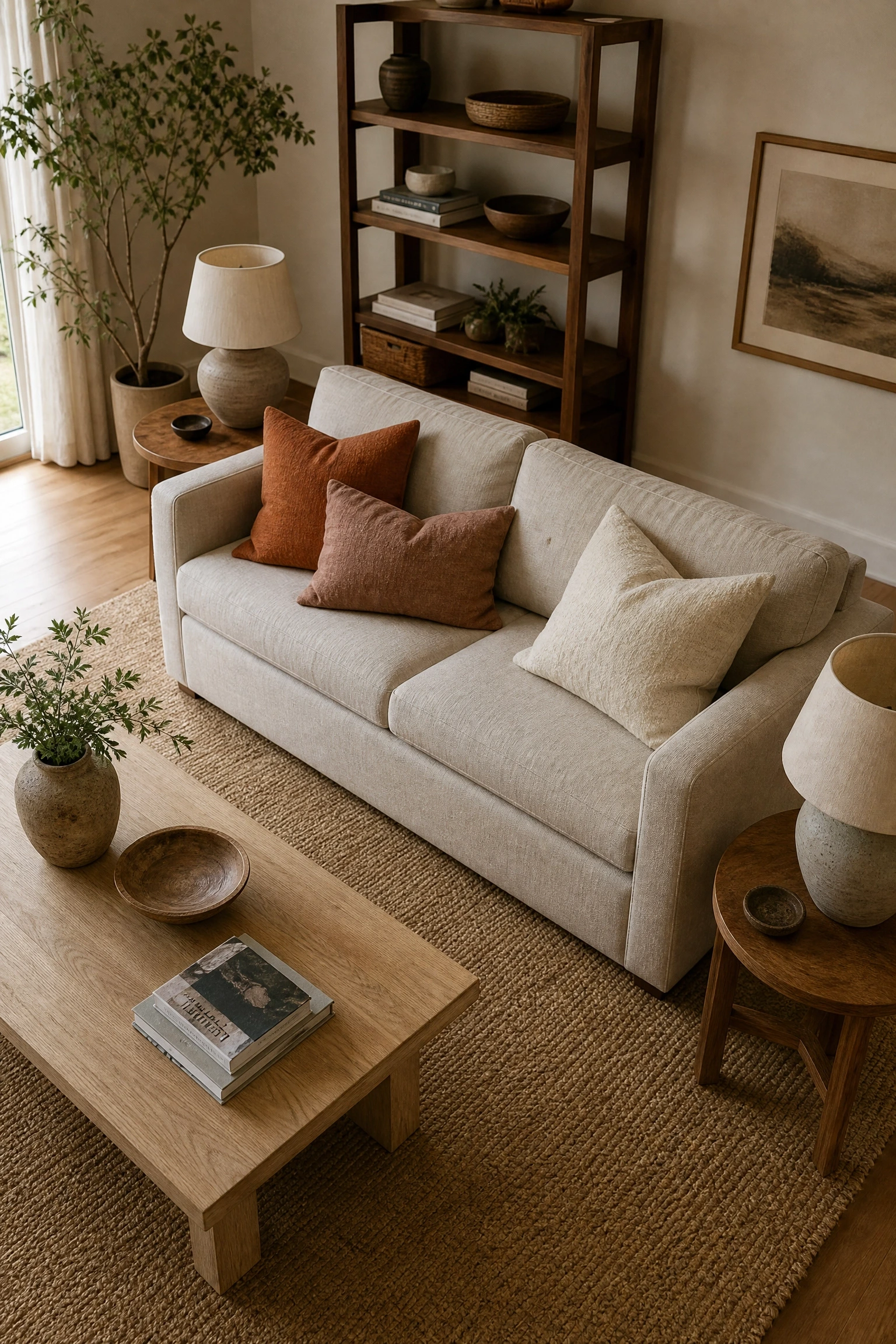
A beige linen sofa gives you permission to mix wood tones deliberately, and the result often feels more interesting and collected than a precisely matched set. The key is to stay within a family of warmth: a light ash coffee table, medium oak side tables, and a slightly darker walnut media console all work together as long as they share warm, rather than grey, undertones. Add a natural fiber rug, ceramic table lamps, and cushions in warm terracotta, dusty clay, and undyed linen to give the seating area a layered, lived-in feel. The mistake most people make with mixed wood tones is going too wide in the range: if your lightest wood is very pale and your darkest is very dark espresso, the room starts to look accidental rather than intentional. Keeping the range within two or three steps on the spectrum is the professional approach.
Designer Advice: When mixing wood tones, vary the shape and scale of each piece rather than just the finish so the differences read as deliberate design choices rather than mismatched hand-me-downs.
11. Biophilic Beige and Wood with Statement Indoor Plants
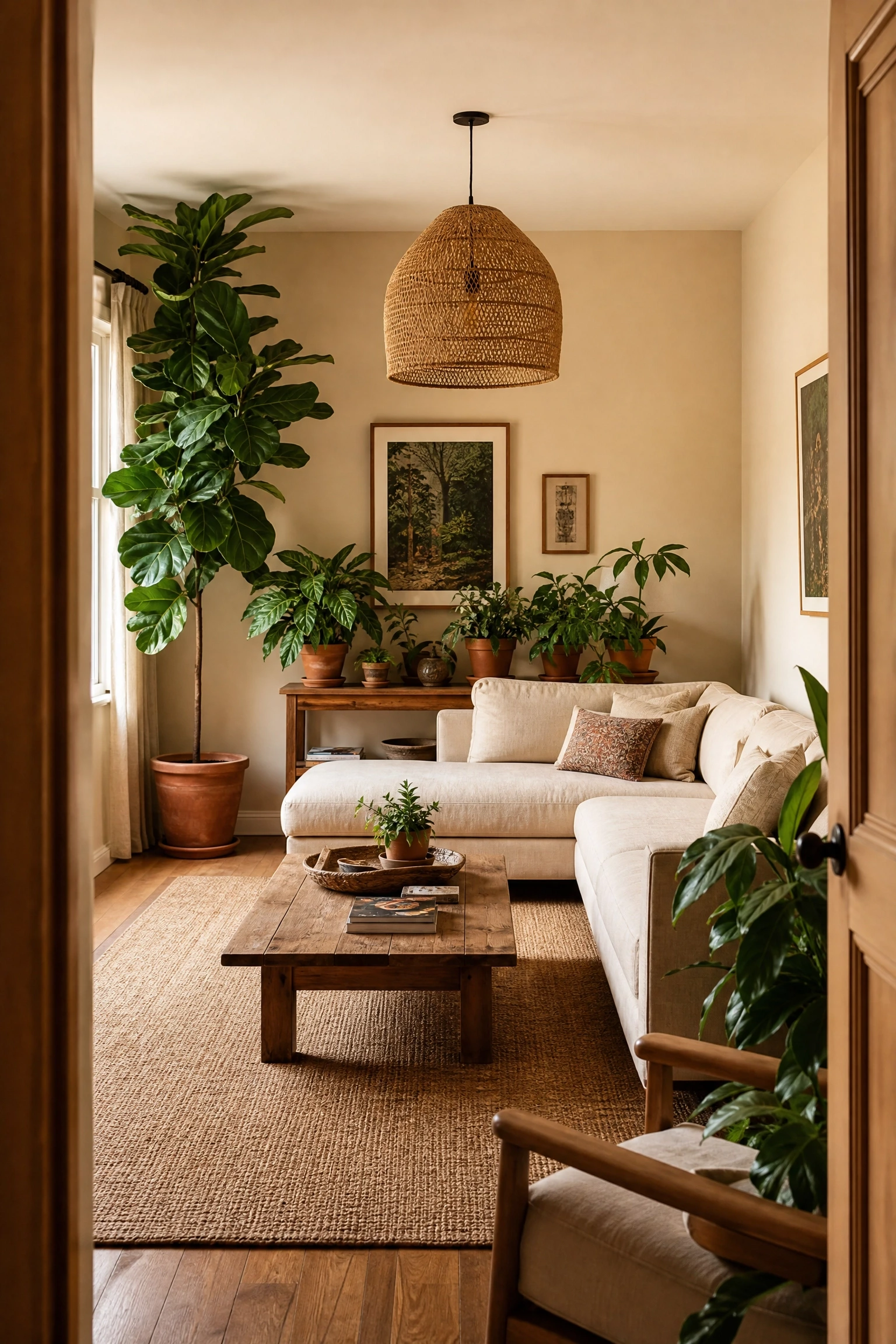
Biophilic design, which emphasizes connecting indoor spaces to nature through materials and living elements, pairs well with beige-and-wood because both are rooted in natural references. Rather than treating plants as secondary accessories, this look makes them structural: a large fiddle-leaf fig or bird-of-paradise in a corner replaces a floor lamp as the vertical element, and a cluster of smaller plants in matching terracotta pots on a wooden side table replaces a conventional lamp-and-vase arrangement. Beige walls act as a gallery backdrop that makes foliage read vividly, while a plain linen sofa and a naturally oiled wood coffee table keep the room from feeling busy. A woven rattan pendant shade reinforces the natural material story overhead. Be honest about light levels before choosing plants: a north-facing room will struggle to keep a fiddle-leaf healthy, and a wilting statement plant undermines the whole effect more than no plant at all.
Heads Up: A single large healthy plant makes a stronger statement than several smaller struggling ones and is easier to maintain. Quality over quantity applies to plants as much as furniture.
12. Scandi-Inspired Beige with Pale Birch and Warm Textiles
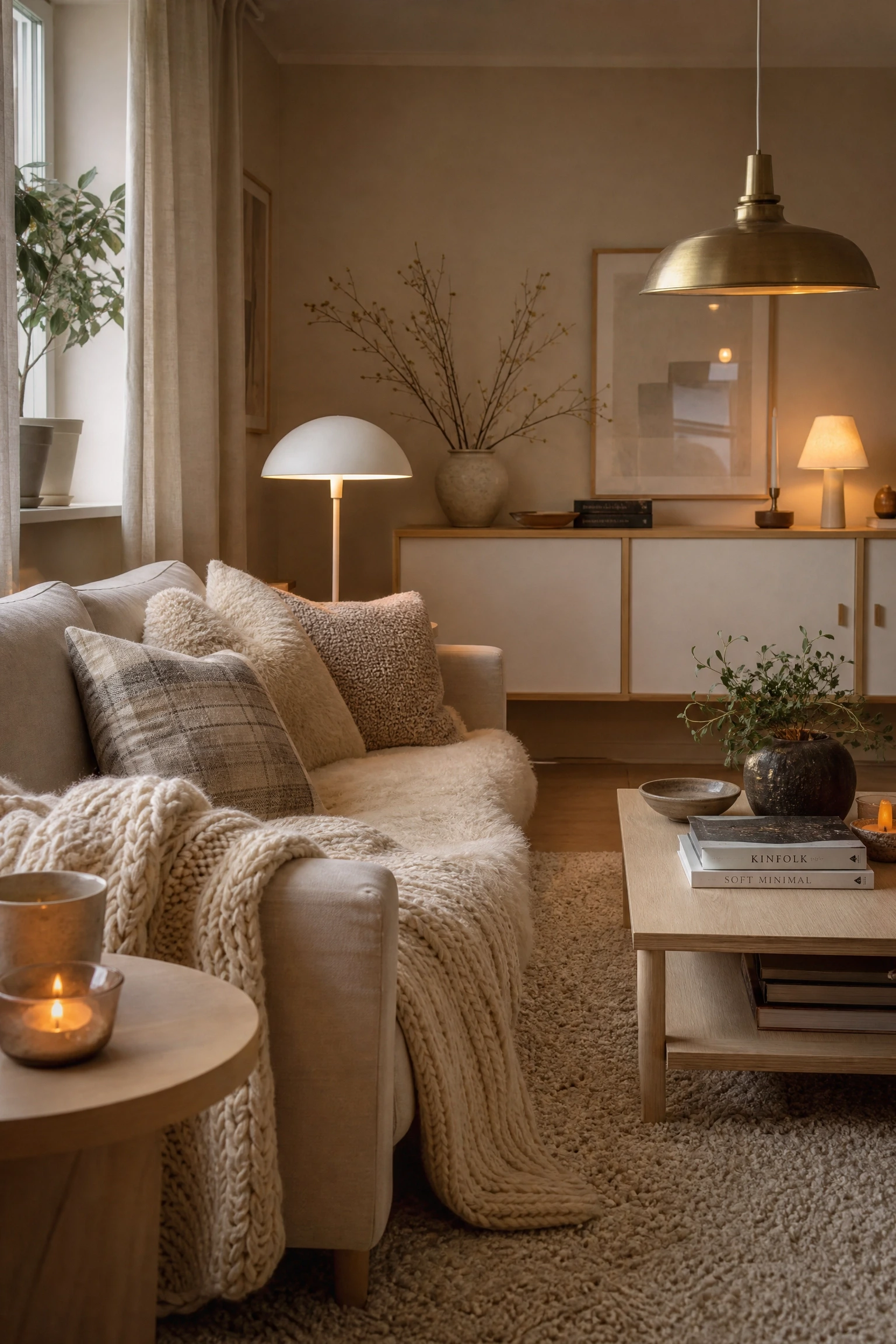
Scandinavian design is sometimes misread as cold or sparse, but in a beige-and-wood living room it is one of the coziest interpretations when done correctly. The secret is in the textiles: a heavy knit throw in natural cream, a sheepskin over one sofa arm, cushions in mixed textures (smooth cotton, nubby boucle, subtle plaid), and a thick wool rug underfoot create the sense of physical warmth the Scandinavians call hygge. Pale birch furniture with simple, clean lines is the structural element: a birch-and-white sideboard, a set of birch nesting tables, and a pale wood TV console with open lower shelving. Walls sit in a soft warm beige, and hardware, curtain rods, and switch plates should be in brushed brass to add warmth without disrupting the palette. This is genuinely budget-friendly since IKEA and similar retailers do pale wood furniture well at accessible prices, making Scandi one of the more achievable looks on this list.
Quick Tip: The textile layering in a Scandi-beige room does most of the visual and physical work, so invest in one genuinely good wool rug before spending on furniture upgrades.
13. Mid-Century Modern with Warm Teak and Caramel Beige
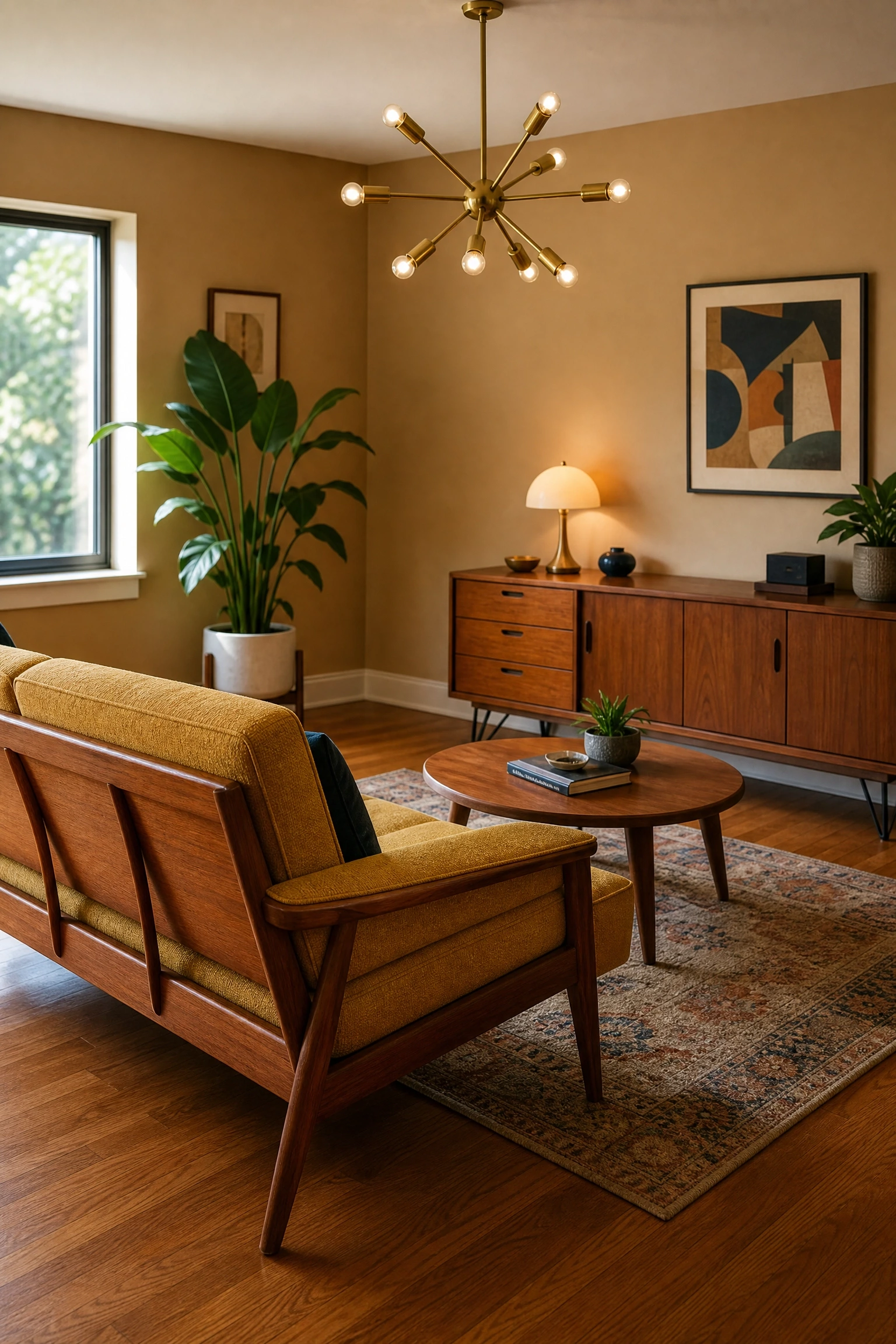
Getting mid-century modern right in a beige-and-wood living room means more than just buying a sofa with tapered legs. Genuine mid-century or well-made inspired furniture uses teak, walnut, or rosewood in warm caramel tones, and the pairing that works best is a caramel or warm honey beige on the walls rather than a cool greige. A proper mid-century sofa sits low with a visible wood frame on the sides and back, and comes in a solid-color fabric: burnt sienna, olive green, or muted mustard all sit beautifully against caramel beige walls. A teak sideboard with hairpin legs, a round teak coffee table, and a pair of sculptural chairs complete the furniture picture. Lighting is critical: a Sputnik-style pendant or a classic globe floor lamp in brushed brass is the defining element that ties the era together. Well-made mid-century furniture holds its quality over decades, making it worth spending on primary pieces even at the investment level.
Pro Move: Source one genuine vintage mid-century piece from a secondhand market, since a single authentic item grounds the look far more effectively than an entirely new matched set.
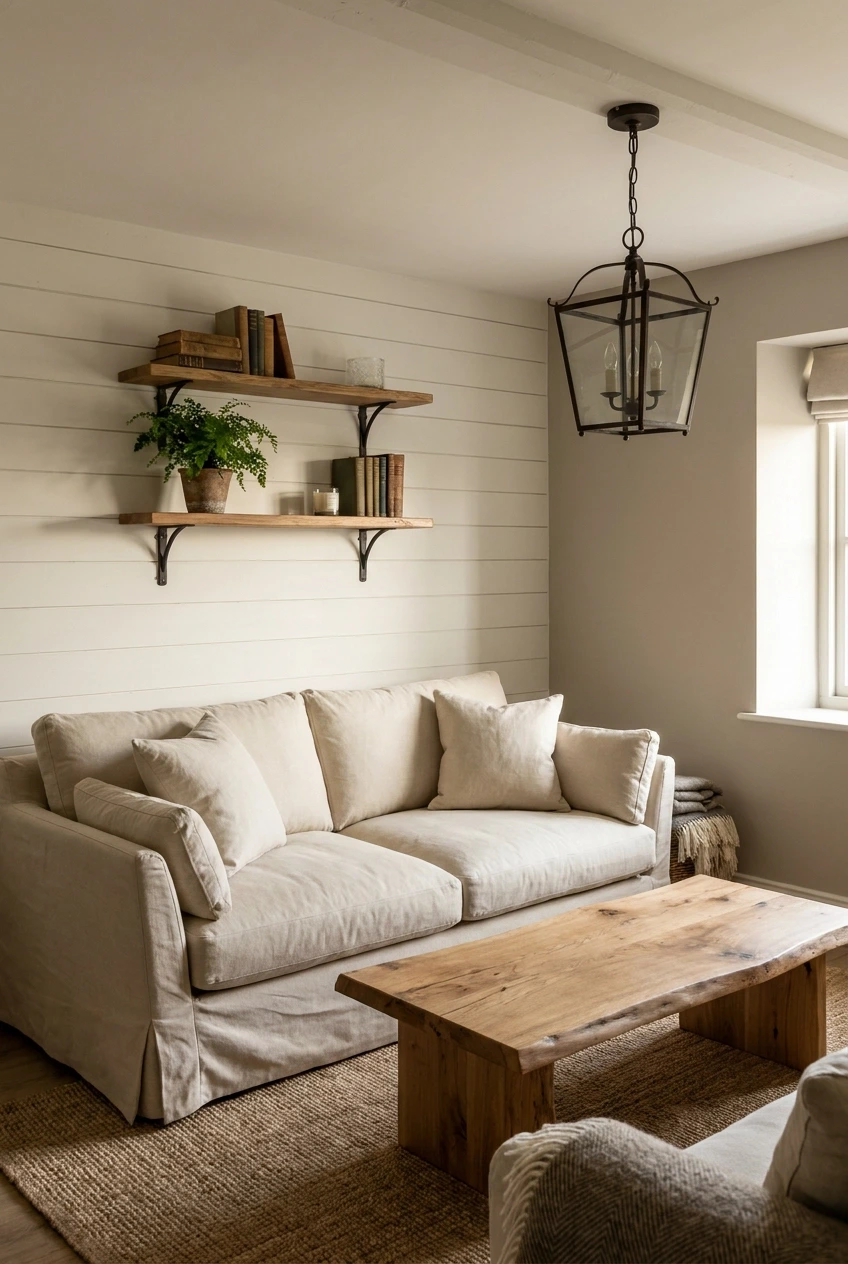
Modern farmhouse can slide into cliche territory fast. The version that actually works in a beige-and-wood living room is restrained: a single shiplap accent wall in a warm white provides the farmhouse texture without overwhelming the room, and the remaining walls sit in a warm greige that bridges the white shiplap and the wood tones in the furniture. A deep-seated sofa in natural cotton canvas, a solid wood coffee table with a chunky profile (a live-edge piece works well here), and open wood shelving with iron bracket hardware are the furniture anchors. A wrought-iron pendant or cluster of Edison bulbs gives the ceiling the industrial-farmhouse note without going overboard. For accessories, keep it genuinely functional: a wooden tray with a candle and books on the coffee table, a woven basket for throw storage, and nothing on the walls that exists purely as decoration. Chunky solid-wood furniture is often found at reasonable prices in farmhouse-style retailers, making this a mid-range achievable look.
Reality Check: Modern farmhouse looks best when it feels accumulated organically over time. If every element is brand new and coordinated, it reads as a showroom rather than a home.
15. Wabi-Sabi Living Room in Beige with Rough-Hewn Wood
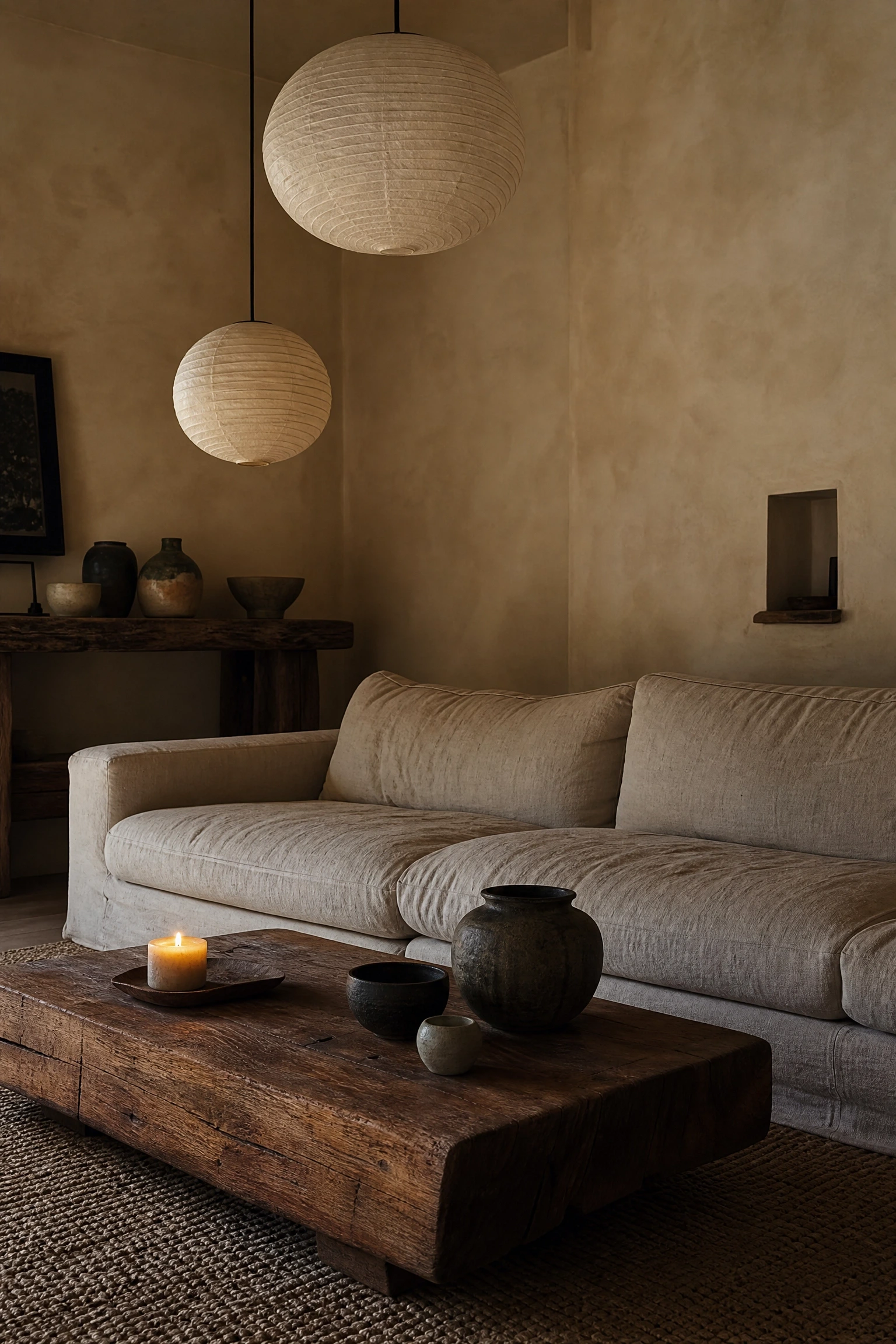
Wabi-sabi is the Japanese aesthetic philosophy that finds beauty in imperfection, and it translates beautifully into a beige-and-wood living room for those who want something deeply authentic. The walls should have some texture: a limewash paint finish in warm beige or a sandy plaster tone is ideal, as the brush strokes and variation in depth give the wall quiet visual interest. Wood in a wabi-sabi room should be rough-hewn or lightly oiled rather than lacquered: a solid wood slab coffee table with visible saw marks, a rustic log side table, or a heavy wooden bench used as a sofa table. The sofa should be oversized in natural undyed linen, worn-in and soft rather than structured and pristine. Ceramics in irregular, hand-thrown shapes with matte earthy glazes replace conventional accessories. Lighting should be gentle: beeswax candles and one or two washi paper pendants create the right quality of glow. This is one of the most achievable on a genuine budget since imperfect, one-of-a-kind pieces from markets and thrift stores are exactly what the aesthetic calls for.
Designer Advice: Resist styling a wabi-sabi room too deliberately. The best versions feel like someone simply lives there comfortably rather than arranged everything for a photograph.
16. Beige and Black Walnut for a Quiet Luxury Feel
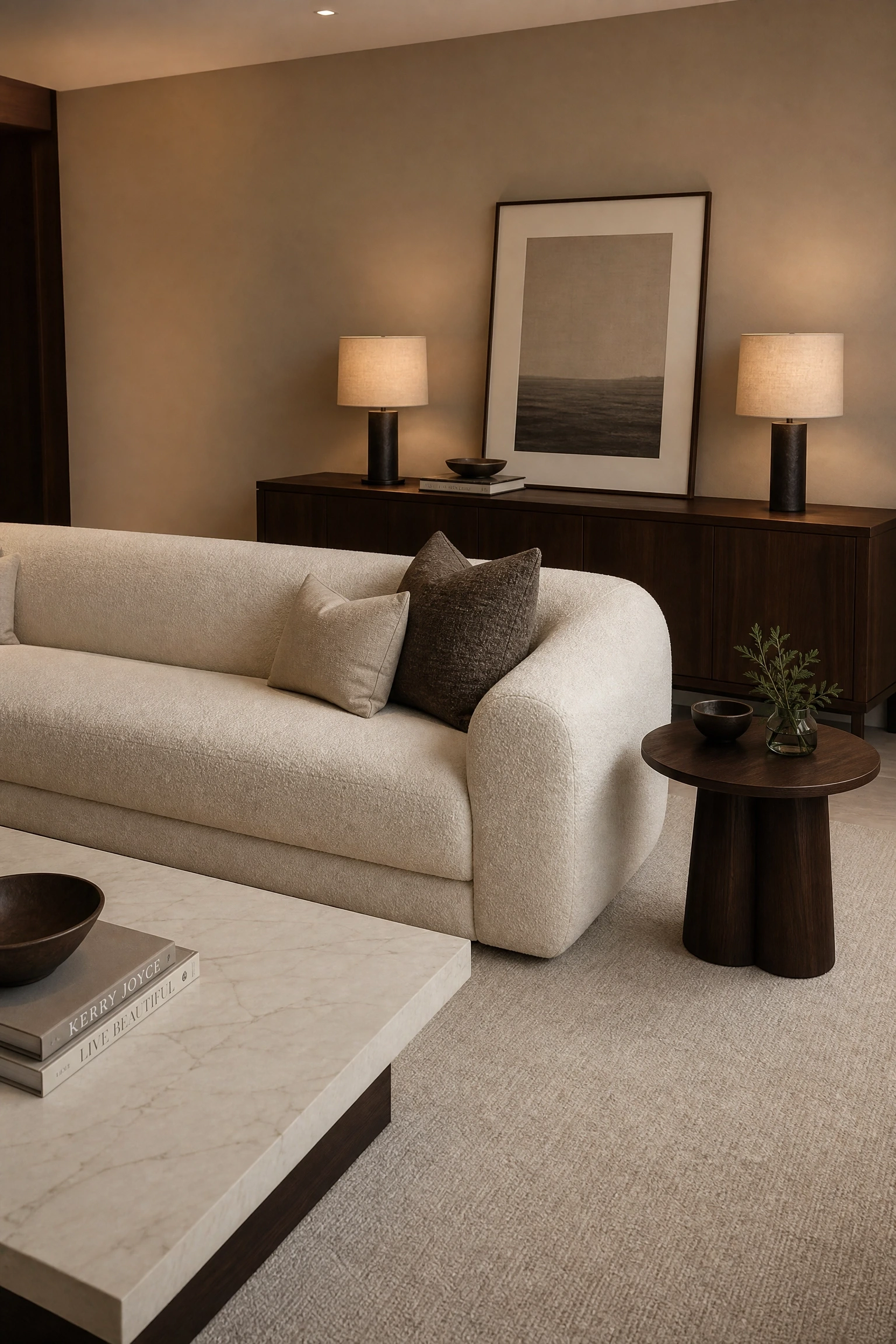
Quiet luxury in a living room translates to restraint, quality, and a palette that does not try too hard. Black walnut has a depth that sits at a different level from standard walnut, with darker streaks through a warm brown base that gives it a natural visual complexity requiring no ornamentation. Pair it with a deep warm beige on the walls, close to the border between beige and warm taupe, and a sofa in high-quality smooth bouclé or a tight woven cream fabric. The fewer pieces in this room the better: one black walnut console behind the sofa, a single round walnut side table, a coffee table in honed marble, and a large area rug in a tone-on-tone abstract pattern in cream and warm beige. Lighting is always indirect and warm: recessed lights on a dimmer, a pair of linen-shaded table lamps, and a low-level floor lamp in matte brass. Genuine black walnut furniture is at the investment end of the market, but the longevity and increasing value of solid pieces make them a reasonable long-term investment.
Pro Move: One piece of genuine stone, a marble tray, a stone vase, or a travertine side table top, lifts a quiet luxury room significantly by adding the cool, refined note that keeps the look from feeling too soft.
17. Bohemian Beige with Layered Wood Tones and Global Textiles
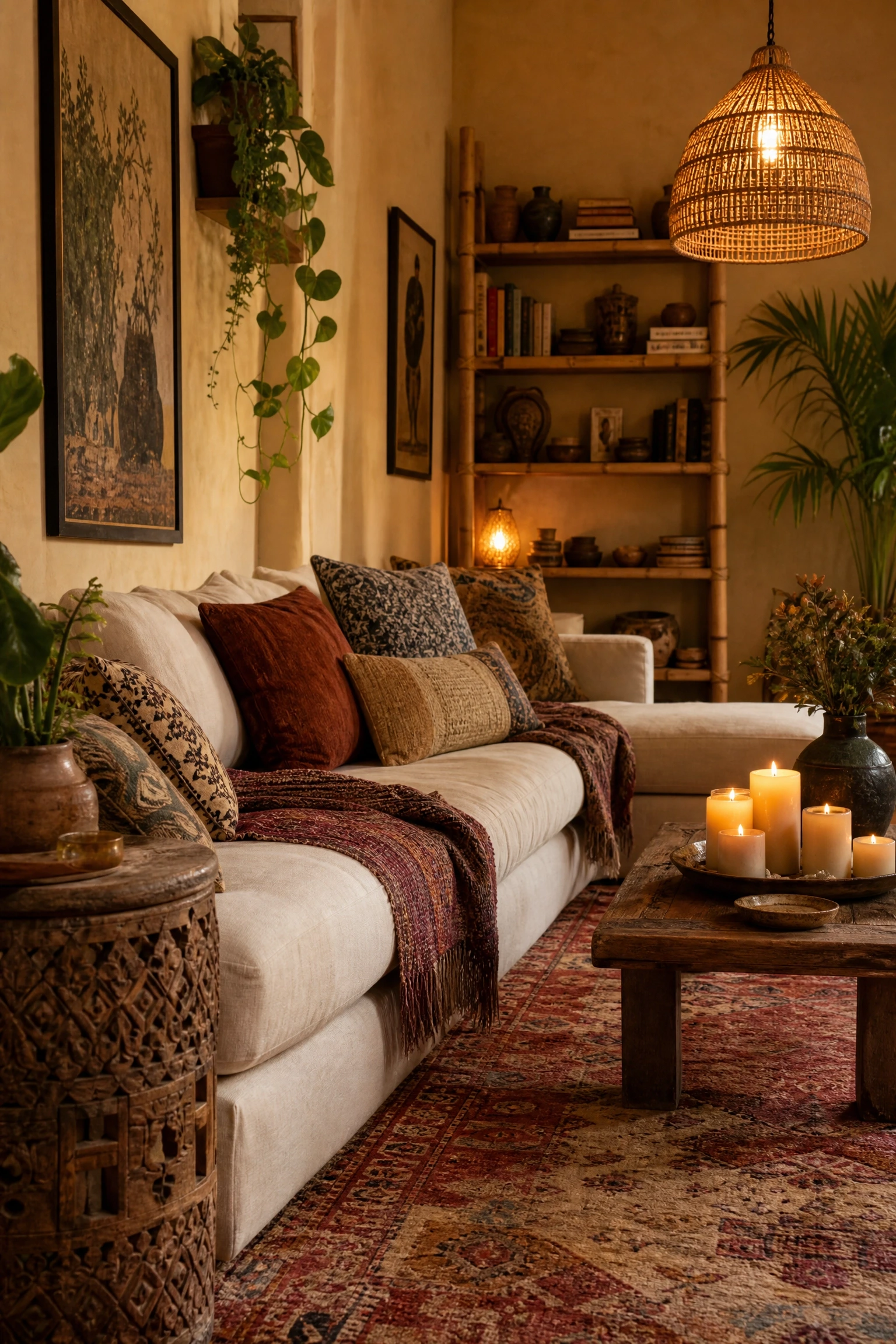
A beige-and-wood base makes it easier to layer the rich global textiles and mixed materials of bohemian style without the room tipping into chaos. The wall color should be a warm amber-beige rather than a cool or pale tone, since it needs to hold its own against patterned textiles. Wood in a boho living room is deliberately varied: a carved wood side table, a bamboo ladder shelf, a rattan chair, and a dark wood floor lamp base all contribute to a collected feel. The sofa should be in solid cream or warm white linen so it functions as a neutral anchor while cushions, throws, and the rug carry the pattern: a Moroccan-style rug in faded red and beige, cushions in block prints and textured weaves, and a chunky macrame wall hanging above the sofa. Layer the lighting with a Himalayan salt lamp for amber glow, a rattan pendant overhead, and pillar candles on a wooden tray. Thrift stores, global import shops, and online marketplaces are full of exactly the pieces this style calls for, making it one of the most budget-accessible approaches on this list.
Heads Up: The difference between a layered-and-collected look and an overcrowded one is usually about twenty percent fewer items than you think you need. Edit regularly.
18. Beige Walls with Wood-Framed Windows and Curtainless Glass
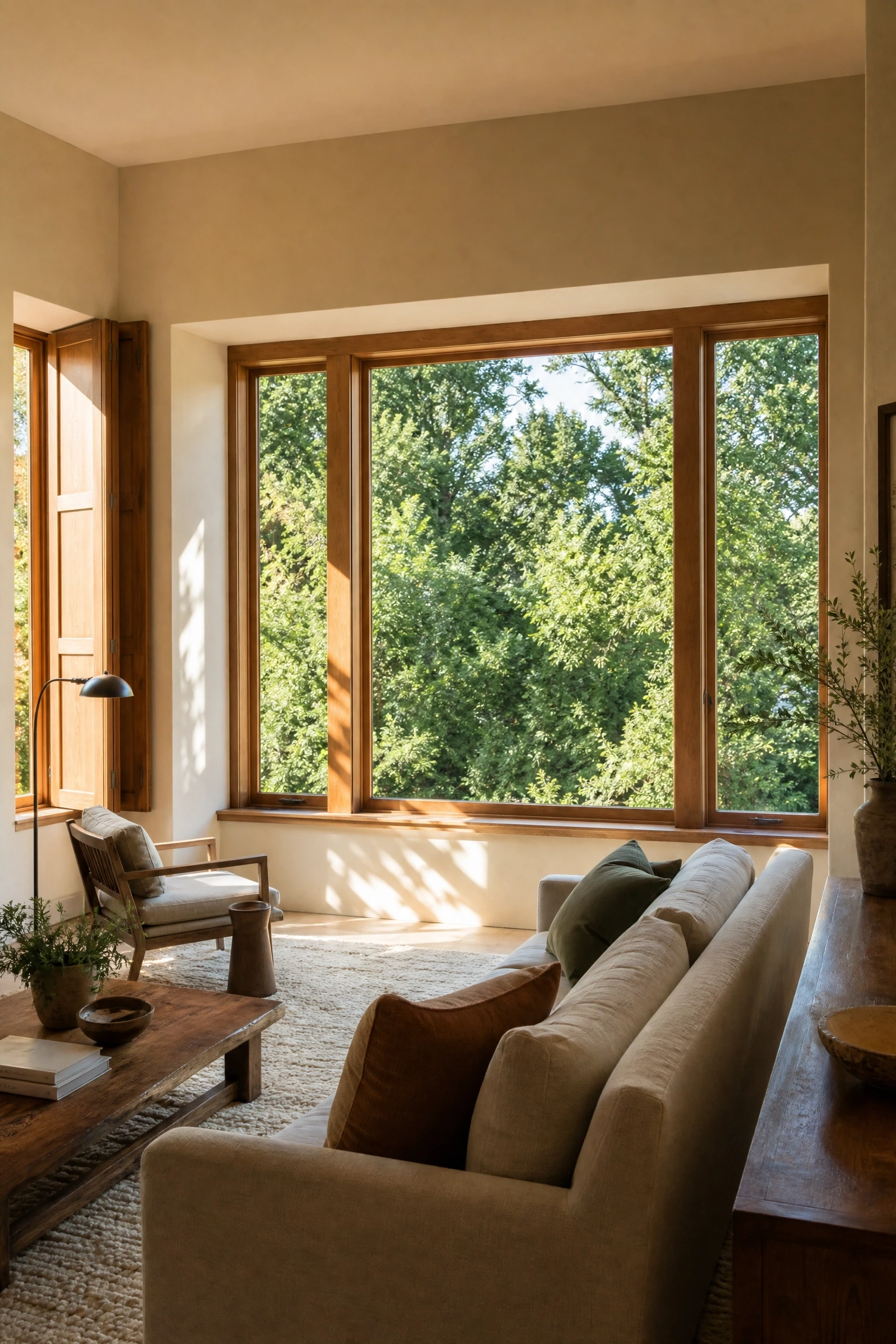
Most rooms default to curtains or blinds, but in a beige-and-wood living room with beautiful window frames, the curtainless look is worth considering. Solid wood window frames in a natural finish become an architectural feature when left bare, framing the view outside almost like a painting. Beige walls surrounding bare wood-framed glass keep the eye moving outward, which makes the room feel significantly larger, especially in a garden-facing setting. The furniture should take advantage of the light: the main sofa angling toward the window and the room arranged to feel in conversation with the outside. Since there are no curtains adding softness, the textiles carry more responsibility: a thick wool rug, deeply cushioned upholstery, and at least one substantial throw prevent the room from feeling hard or exposed. For privacy, interior wooden shutters in a painted white or natural tone are a far better solution than curtains since they reinforce the wood-and-beige narrative rather than interrupting it.
Quick Tip: Roman shades in natural linen, mounted inside the window recess, are the lightest possible window treatment for this look if fully bare windows are not practical for your situation.
19. A Reading Nook Built Around Beige Walls and Warm Wood Shelving
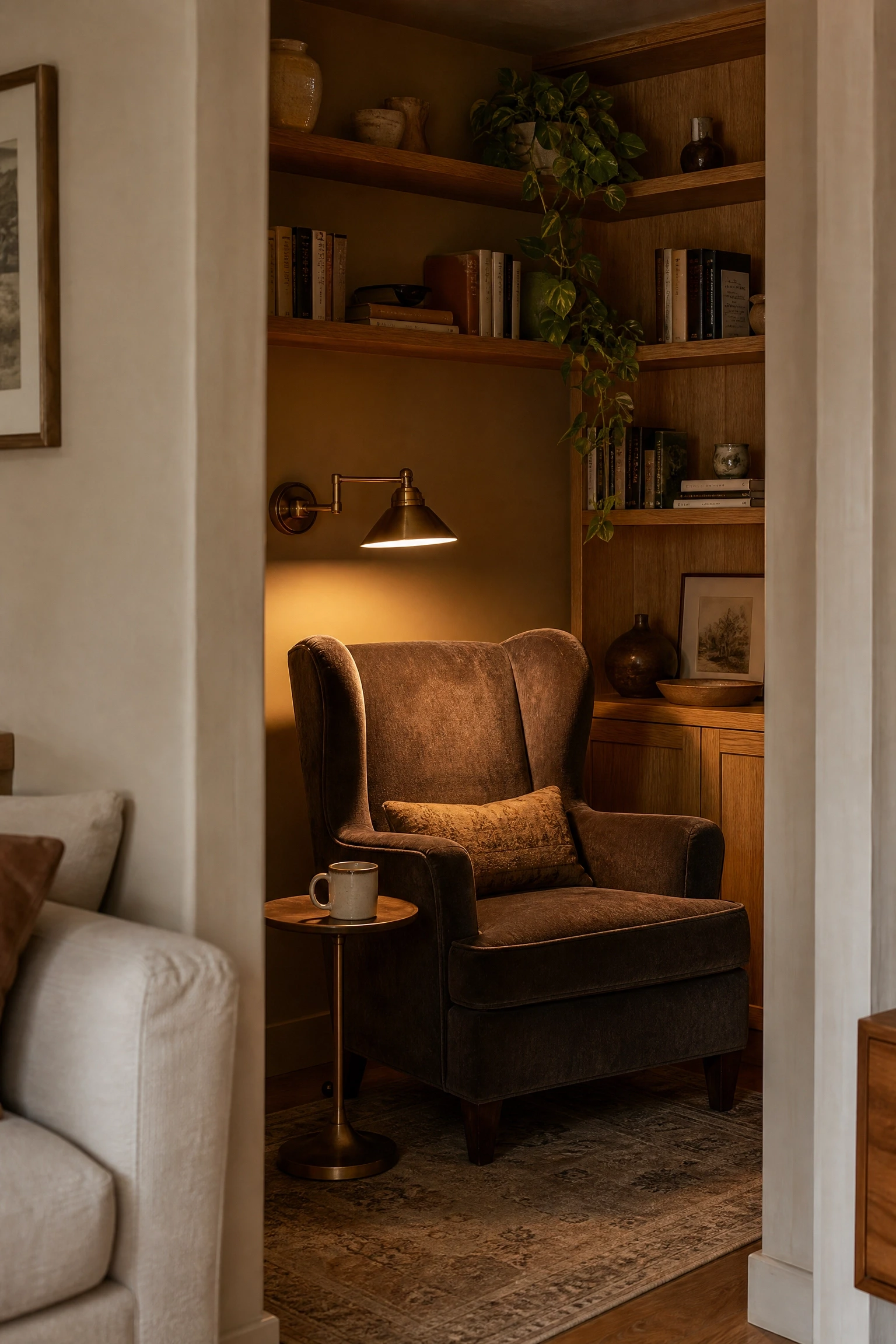
A dedicated reading corner often fails in execution because it ends up feeling like just a chair shoved in a corner. Making it feel purposeful requires three things working together: wood shelving that surrounds the chair, a lighting source positioned specifically for reading, and a wall color that makes the corner feel warm and enclosed. Beige in a reading nook should sit slightly warmer and deeper than the rest of the room since the enclosed three-sided feel naturally makes a color read lighter than it would on an open wall. Warm wood shelving in honey oak or medium walnut creates the sense of being surrounded by books and warmth simultaneously. The chair should be genuinely comfortable: a proper reading chair with a high back and upholstered arms in velvet or deep cream boucle rather than a decorative occasional chair that only looks good from across the room. A swing-arm wall sconce or plug-in picture light mounted at shelf height provides targeted reading light without illuminating the whole room, and a small side table at arm height completes the setup. A freestanding bookshelf positioned in a corner can replicate the built-in look at a fraction of the cost.
Designer Advice: The reading nook only works as a distinct space if its lighting can be switched on independently from the main room lights, so ensure you have a switched outlet or wall sconce that operates separately.
Wrapping It Up
A beige and wood living room has genuine staying power because it is rooted in natural materials and honest proportions rather than trend cycles. The nineteen ideas in this guide cover a wide range of styles and budgets, from the pared-back simplicity of Japandi to the layered warmth of bohemian global textiles, but all share the same starting point: a beige wall color chosen carefully for its undertones, and a wood element chosen for how it works with that specific shade of beige rather than in isolation.
The most important practical takeaway is to start with your floor or largest wood piece and build the beige outward from there, rather than painting first and shopping later. Beige is a genuinely complex color that shifts depending on the wood tones around it, the quality of natural light in your room, and your artificial lighting after dark. Sample before you commit, layer your textures deliberately, and give the room time to settle before adding accessories. The spaces that work best are the ones where every decision was made with some intention behind it, even when the final result looks effortless. Whatever version you choose, commit to it fully rather than hedging with elements from three different styles, and your room will reward you with the warmth and calm that only a well-executed neutral palette can deliver.
FAQ
What shade of beige works best with wood floors?
It depends on the wood tone. Warm honey oak floors pair best with creamy linen-toned beiges that share warm yellow undertones, while dark walnut or espresso floors suit a sandy or warm greige deep enough to hold its own without competing. The key principle is to share undertones rather than contrast them: warm beige with warm wood, cool greige with cooler grey-toned wood.
Can you mix different wood tones in a beige living room?
Yes, and it often looks better than matching everything precisely, as long as you keep all the wood tones within the same warmth family. A light ash coffee table, a medium oak side table, and a slightly darker walnut console can all coexist without looking accidental, provided the color temperatures are all warm rather than a mix of warm and cool. Vary the shapes and scales of the pieces to make the mix feel deliberate.
Is beige and wood too safe or boring for a living room?
Only if you treat it as a single flat color rather than a layered palette. Rooms that feel boring in beige and wood are usually the ones where every element is the same tone. Layering different depths of beige (creamy walls, oatmeal sofa, caramel rug) and different wood textures (smooth lacquered side table, rough-hewn shelf, natural rattan lamp base) creates a space that is far from safe.
What colors work as accents in a beige and wood living room?
Terracotta and rust tones are the most natural accent choices since they share warm undertones with both beige and wood. Dusty sage or muted olive green introduce nature-inspired contrast without disrupting the organic quality of the palette. For a more dramatic accent, deep navy or charcoal adds genuine contrast without introducing a competing color family. Avoid bright, saturated colors since they tend to fight the quietness that makes this palette work.
What type of rug works best in a beige and wood living room?
Natural fiber rugs (jute, sisal, seagrass) are the most versatile since they sit in the same neutral-and-natural family as beige walls and wood furniture. Wool rugs in tone-on-tone neutrals (cream, oatmeal, warm white) add softness and texture without visual noise. If you want pattern, a faded or low-contrast geometric in beige, cream, and warm brown adds interest without competing with the wood elements.
How do you stop a beige and wood living room from looking too plain?
The answer is almost always texture rather than color. A boucle sofa fabric, a chunky knit throw, a rough-hewn wood shelf, a hammered brass lamp base, and a woven rattan pendant shade all create visual interest that holds up under close inspection without disrupting the overall calm of the palette. One or two genuine statement pieces, a sculptural lamp, a large-format artwork, or a distinctive furniture form, also break the monotony without adding color.