One Brass Finish, Thirteen Bathrooms That Prove It Works
Most bathrooms that look expensive did not get that way through renovation. They got there because someone stopped mixing metals by accident and picked one finish, then put it on every fixture in the room. These thirteen bathrooms do exactly that with brass, and the rooms underneath the hardware could not be more different from each other. That is the point: brass is not a style, it is a decision. And once you commit to it, it tends to fix whatever the room was struggling with.
1. When a Dark, Moody Bathroom Needs Something to Breathe
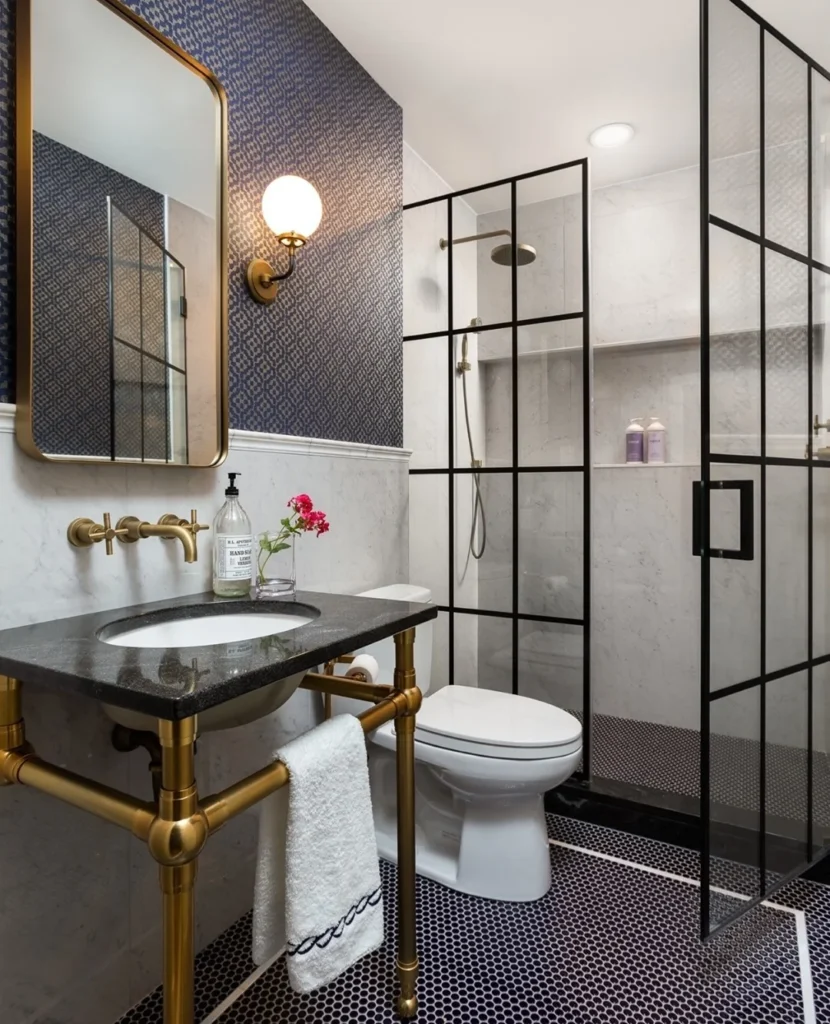
Image Credit: @christykosnic
Black granite counters, dark penny-tile floors, navy wallpaper above a white wainscot, and a steel-framed shower would read as oppressive without a unifying warm note pulling it all together. Every brass element here, from the console sink legs and wall-mount faucet to the rectangular mirror frame and globe sconce arm, sits in the same unlacquered brass tone, and that single decision is what keeps the room feeling rich rather than just dark. In practice, unlacquered brass is worth choosing over brushed or satin brass in moody rooms specifically because it catches the light and adds a little glow that matte finishes cannot.
Designer Advice: Unlacquered brass develops a natural patina over time; seal it with a thin coat of paste wax once a year if you want to slow that process.
2. The Warm Trio That Never Fails: Deep Green, Warm Wood, and Brass
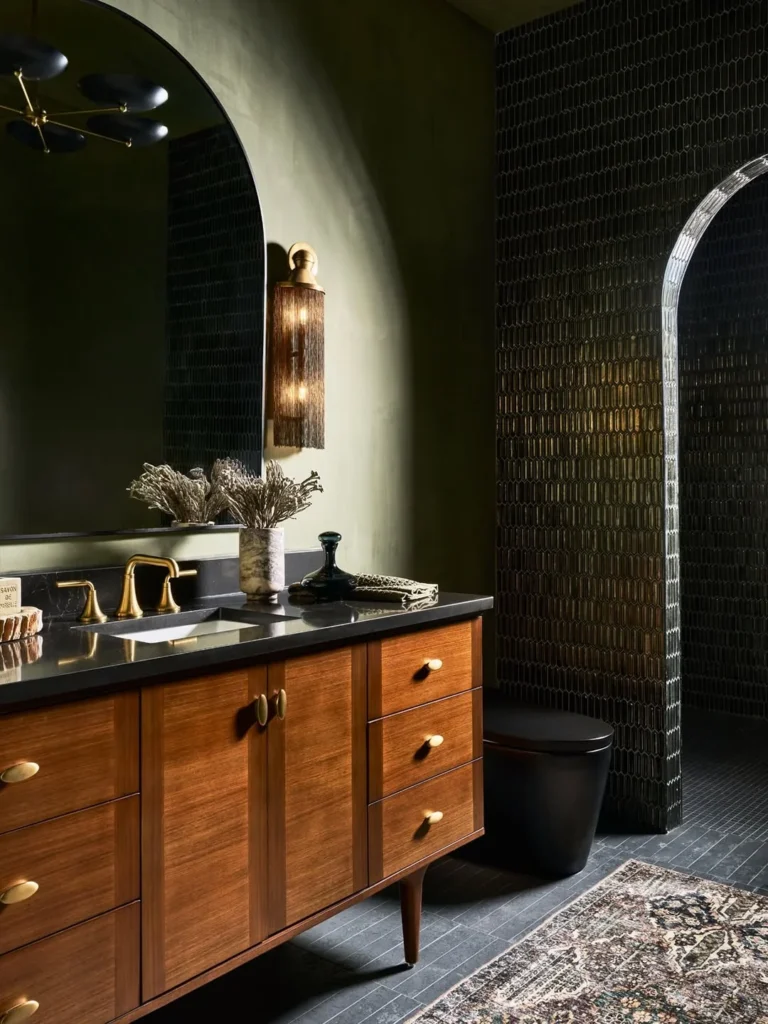
Image Credit: @houseliftdesign
Forest green plaster walls, a mid-century walnut vanity with tapered legs, and a dark honed stone countertop form a palette that sits right at the intersection of moody and organic, and brass is the one thing that stops it from feeling heavy. The faucet, cabinet hardware, and fringe-shade sconce all share the same warm gold tone, which means every surface in the room is talking to the same color temperature. This combination, deep earthy green with warm-toned wood and brass, is one of the most consistently successful combinations in high-end bathroom design because each element reinforces the warmth of the others.
Pro Move: Choose matte or honed stone counters rather than polished when pairing with brass, since polished stone can compete visually with the metal’s sheen.
3. How to Make a Tiny Powder Room Feel Finished, Not Fussy
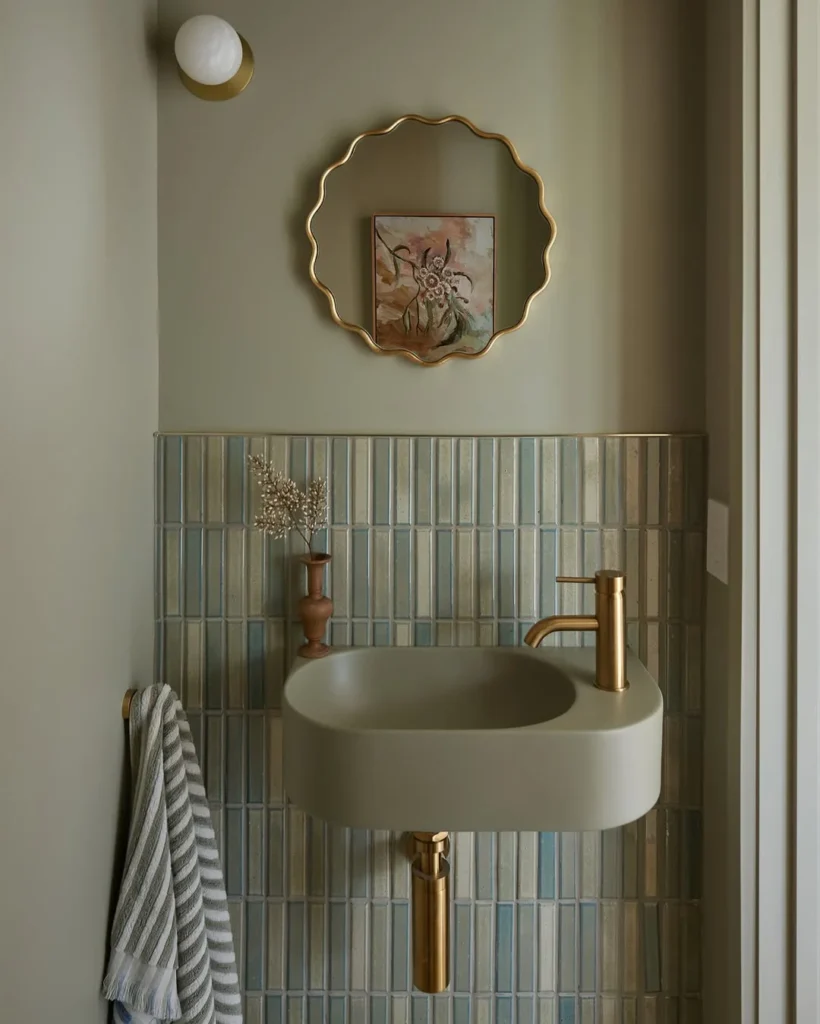
Image Credit: @carpathian_design
Sage walls meeting hand-painted vertical subway tile at wainscot height, a wall-mounted concrete basin sink, a scallop-edge brass mirror, and a brass faucet: this powder room works because every brass element is minimal and deliberate rather than layered on. The exposed brass drain pipe below the sink, which most people would hide, is kept visible and treated as a design detail, and that confidence is what makes the whole room read as intentional. Small bathrooms reward this kind of commitment to a single metal finish more than larger ones do, because there is simply less room for the eye to wander.
Quick Tip: Wall-mount faucets free up counter space and eliminate the visual clutter of a deck-mount setup, which is a real advantage in compact powder rooms.
4. The Powder Room Where Brass Does the Regal Heavy Lifting
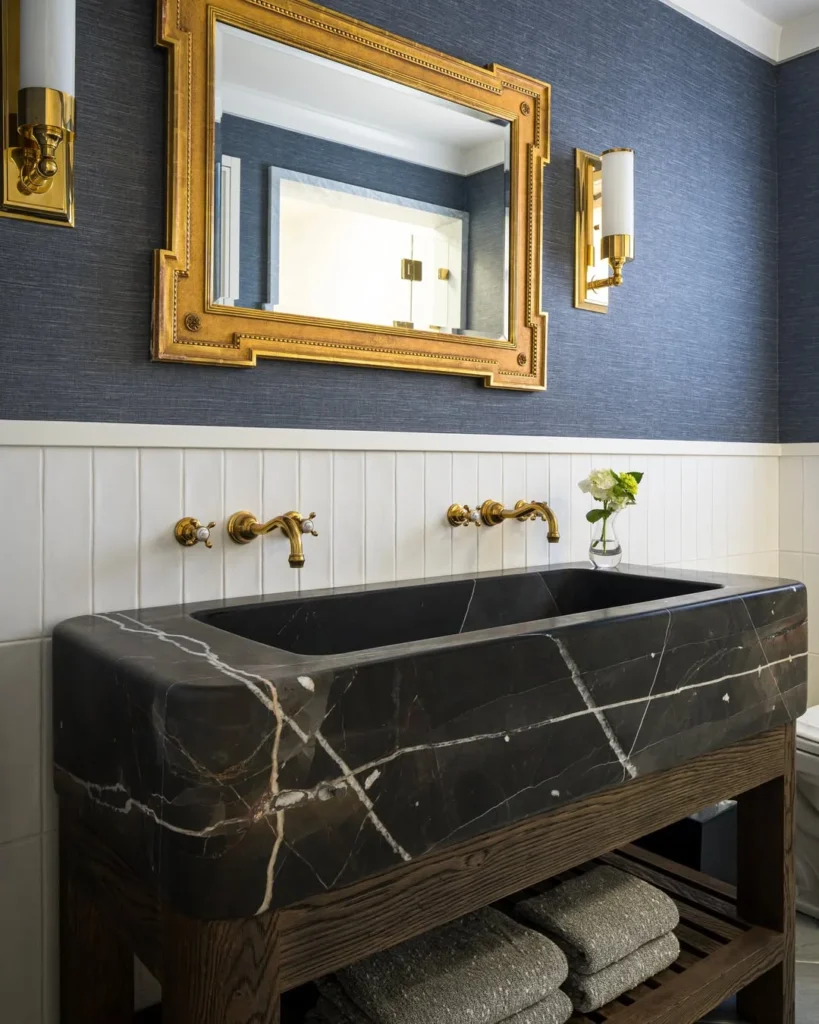
Image Credit: @n_charlesconstruction
Navy grasscloth wallpaper is one of the richest finishes you can put in a small room, and it sets a high standard for everything else. Here a carved gold mirror frame, two-arm brass sconces with white cylinder shades, polished brass wall-mount faucet handles, and a black marble trough sink on a rough-hewn oak shelf all meet that standard by matching the grandeur of the wallpaper rather than fighting it. What makes this work from a design-principle standpoint is that the brass is ornate but consistent: every piece is in the same warm gold family, so the richness feels cohesive rather than cluttered.
More Looks You'll Want to Steal:
Reality Check: Grasscloth wallpaper is not washable and does not handle humidity well; use it only in powder rooms that see minimal steam, not in full bathrooms.
5. How to Add Warmth to a Cool Blue Bathroom
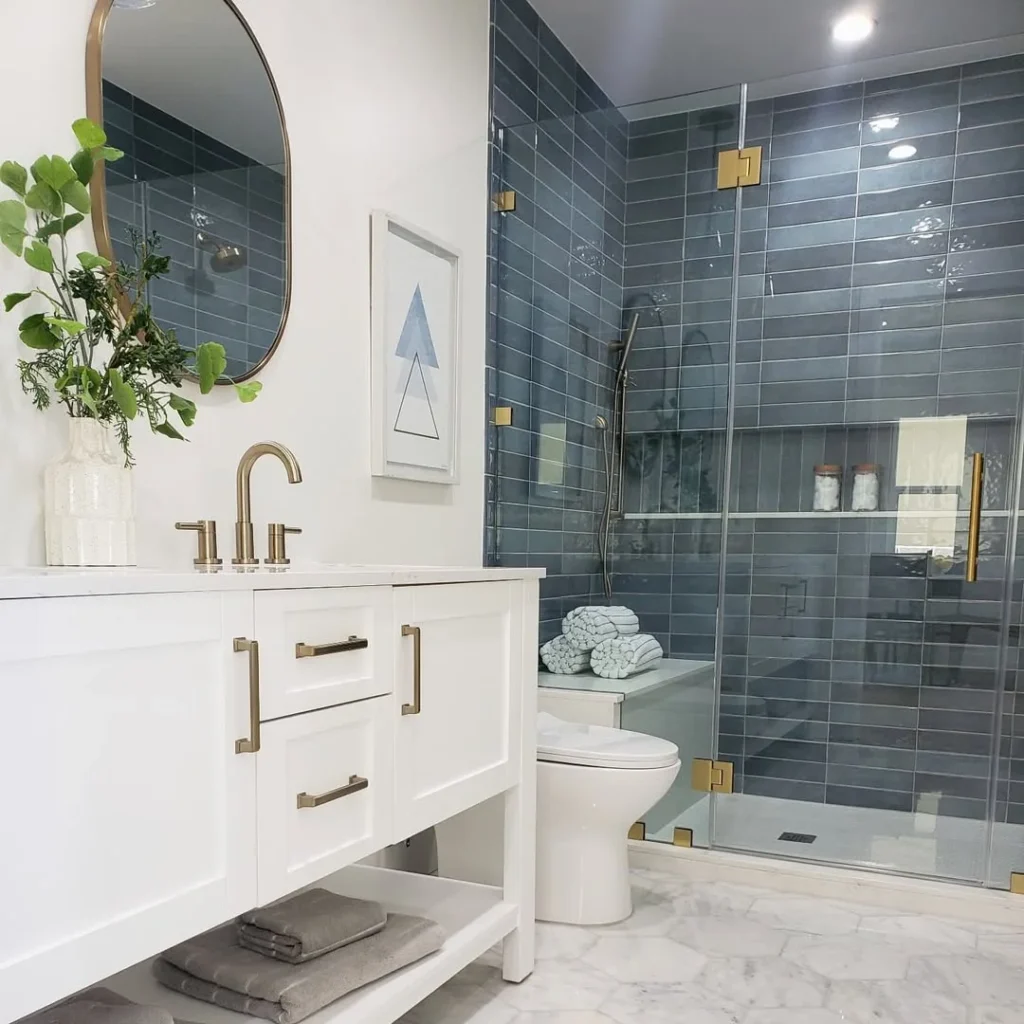
Image Credit: @bridgitta_designs
Blue tile, even beautiful blue tile, can read cold and a little builder-grade when the hardware choices are chrome or brushed nickel. This bathroom solves the problem by committing fully to brushed brass on every hardware touchpoint: the faucet, the vanity drawer and cabinet pulls, the oval mirror frame, and the frameless glass shower door hinges and handle. The white shaker vanity and marble floor keep the palette grounded and light, and the brass sits between the blue and the white as the warmth that connects both. This is exactly the situation where brushed brass earns its reputation: it corrects a cool palette without competing with it.
Heads Up: Brushed brass is more forgiving with water spots and fingerprints than polished brass, which makes it the more practical choice in a heavily used full bathroom.
6. The Open Shower That Looks Finished, Not Bare
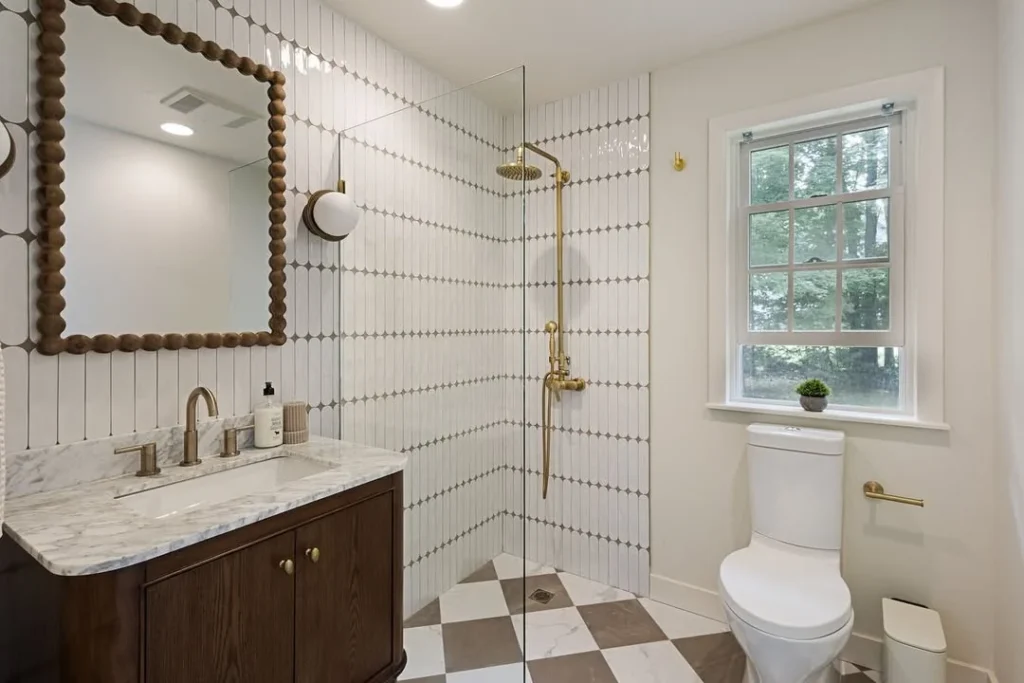
Image Credit: @chapter_renovations
White and grey graphic tile in a diamond-pattern grid covers both the shower wall and the floor, and a frameless glass panel divides the space without a door. What keeps this from looking like a spec home is the brass: a rain head and exposed thermostatic shower system in antique brass, a small brass wall sconce beside the wood-bead mirror, and a cabinet pull on the dark wood vanity all in the same warm, slightly aged tone. The checkerboard floor and patterned tile are bold choices that could easily tip into busy, but the antique brass acts as a unifying warmth that holds the contrasting patterns together.
Designer Advice: Antique or unlacquered brass works especially well with graphic tile because its organic, slightly imperfect tone softens the hard geometry of the pattern.
Not sure which brass finish to choose for your bathroom? Here is a quick reference guide to match the right tone to your palette.
Brass Finish | Best Paired With | Avoid With |
Polished / unlacquered | Dark moody palettes, jewel tones, navy, forest green | Cool greys, stark white modern schemes |
Brushed / satin brass | White, light grey, blue tile, soft neutrals | Very warm or orange-toned woods |
Antique / aged brass | Graphic tile, patterned floors, vintage wood | Sleek contemporary fixtures |
Warm gold (bright) | White marble, all-white rooms, traditional wood | Industrial or heavily matte palettes |
7. When the Room Is Simple, the Brass Has to Be Perfect
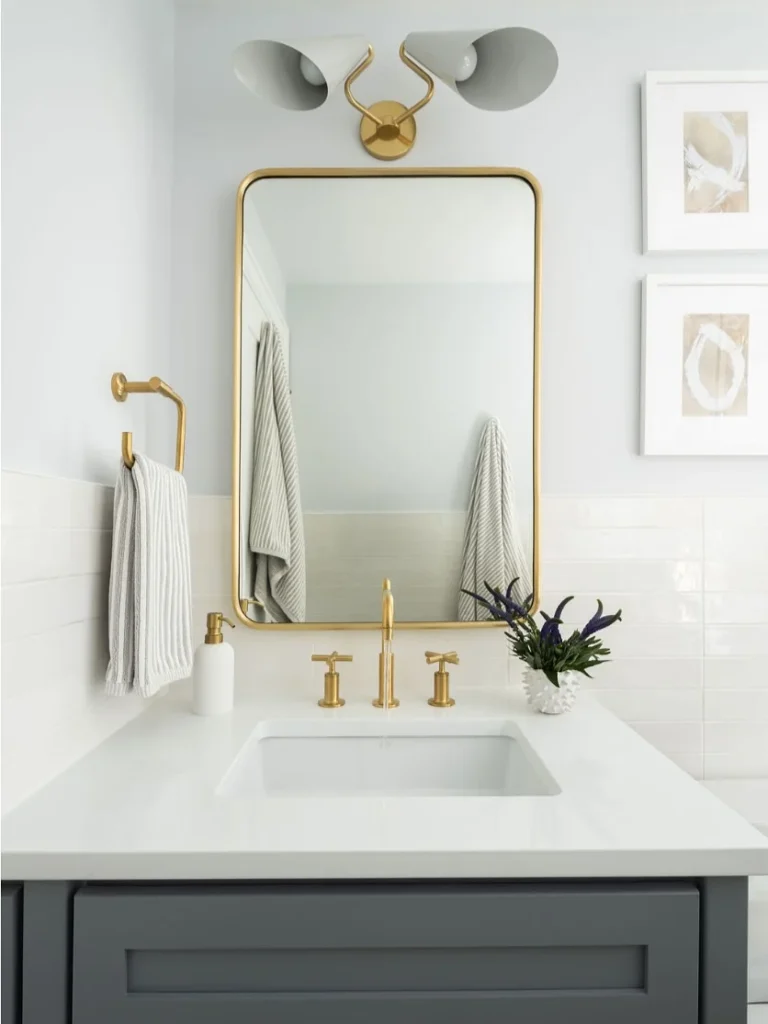
Image Credit: @stephanierapp_interiors
White subway tile, a grey shaker vanity, a white quartz counter, and a rectangular brass-framed mirror with rounded corners: there is very little happening here by design, and that restraint is the point. The cross-handle brass faucet, a small brass towel ring on the left wall, and the sculptural two-shade grey sconce above the mirror with a brass arm make up the entire brass inventory of the room. In a minimal bathroom like this one, each hardware piece functions almost like jewelry, and choosing them all in the same brushed brass finish is what gives a plain room a quiet sense of quality that chrome or black would not achieve.
Reality Check: Buying all your bathroom hardware from one finish family at the same time is smarter than building it up piece by piece, where small tonal differences between suppliers become obvious.
8. Old-World Hardware in a Room With Modern Bones
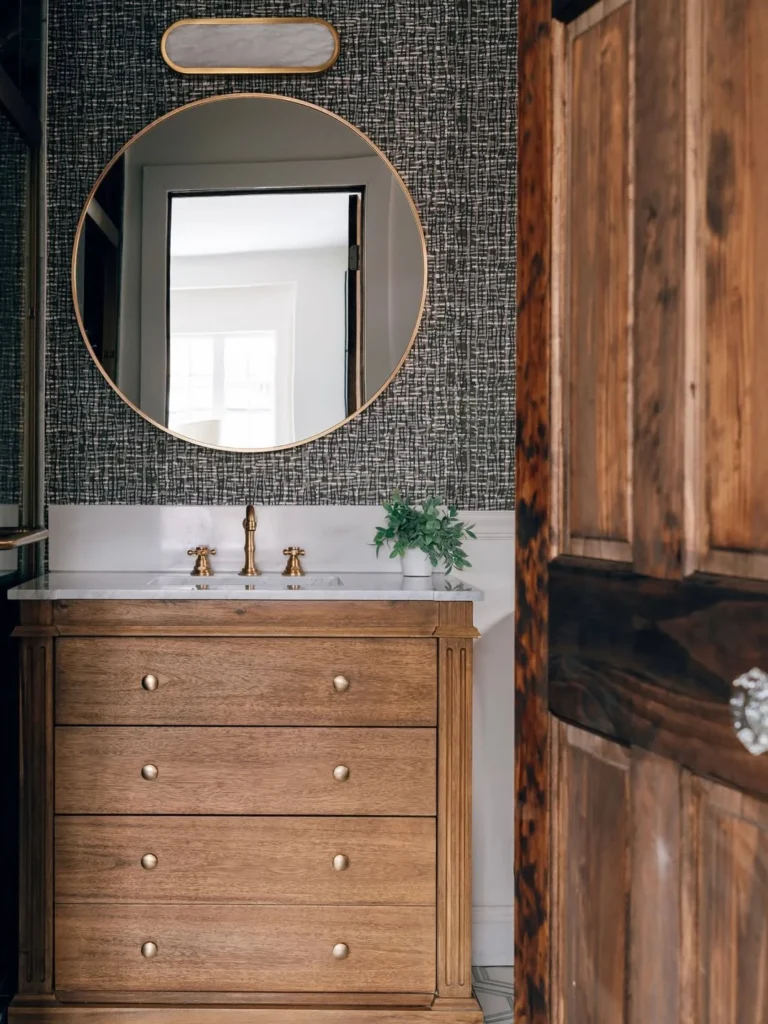
Image Credit: @miajohnsonhome
A dark woven-pattern wallpaper, a round brass mirror, and a substantial wood vanity with reeded columns create a room that feels collected over time rather than purchased all at once. The bridge-style brass faucet with cross handles, the brass knobs on every drawer, and a small pill-shaped brass picture light above the mirror are all in different shapes but exactly the same warm, traditional brass tone, which is what keeps the mixed styles from looking random. Interior designers often describe this quality as having a consistent finish family rather than matching shapes, and this room demonstrates exactly why that distinction matters.
Pro Move: Mixing faucet and hardware shapes within one finish is fine and often looks more considered; mixing finishes even slightly is what actually creates visual conflict.
9. The Warm, Traditional Bathroom That Earns Every Detail
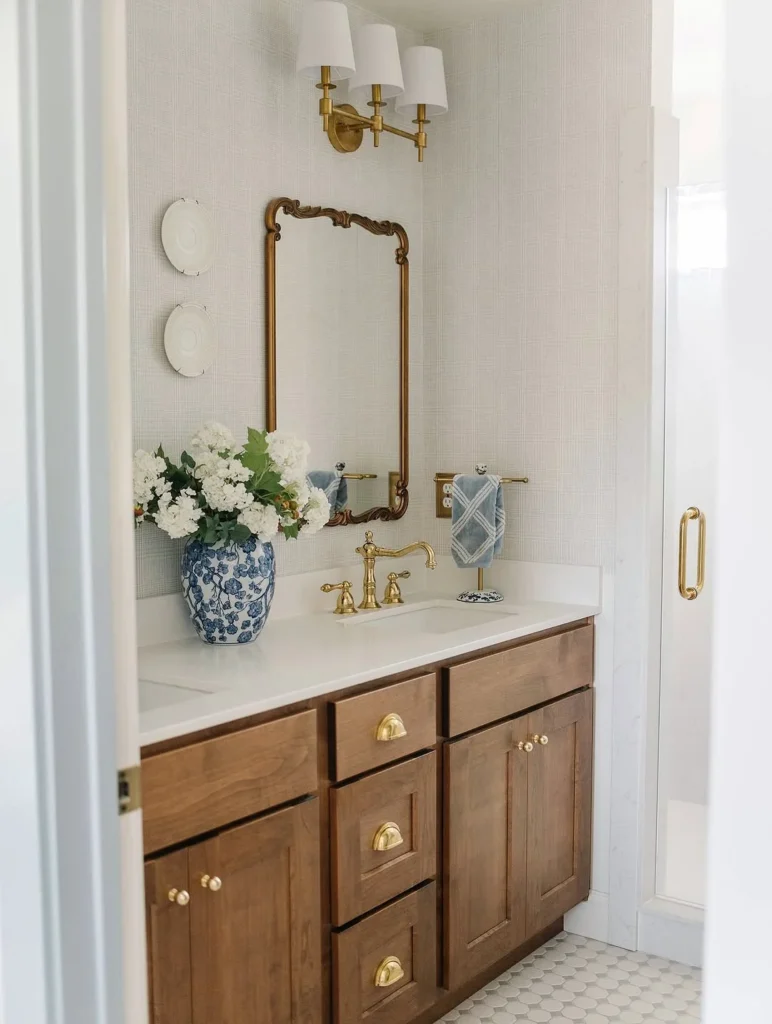
Image Credit: @kingstonbrass
A walnut vanity with cup-pull hardware in polished brass, a carved ornate brass mirror frame, a three-arm brass sconce, a brass towel ring, and a polished brass door pull on the entry: this room counts at least six distinct brass elements and every one is in the same warm, bright polished tone. What keeps it from feeling overdone is the wall behind it, a subtle linen-texture wallpaper in soft white, which provides a completely neutral backdrop so the brass can register without competing with anything else. This is a good lesson in why surface restraint and hardware generosity can coexist: when the walls and counters are calm, you can afford to be generous with the metal.
Quick Tip: Polished brass is the brightest and most formal of the brass finishes; it suits traditional and transitional spaces better than contemporary ones.
10. All White, So the Brass Has to Do Everything
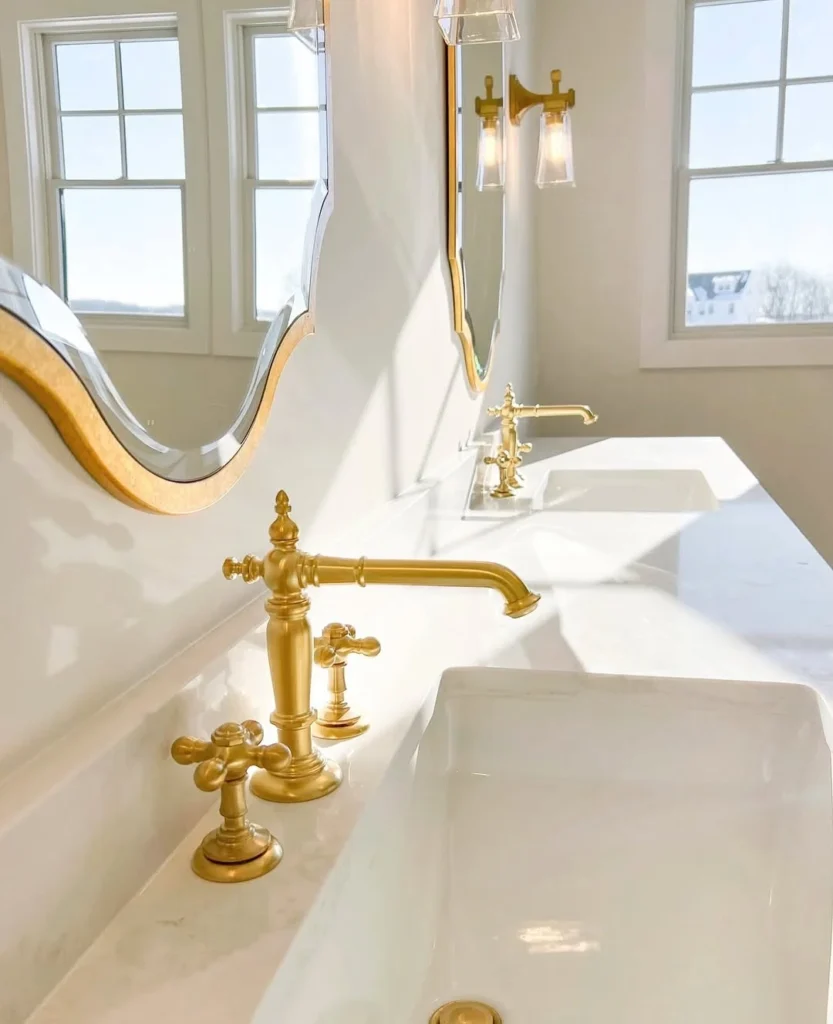
Image Credit: @thewellcollected
Two white rectangular vessel sinks set into a long white quartz counter, flanked by two brass faucets in a classic bridge style with cross handles, a shapely brass picture light above a beveled mirror, and another brass sconce in glass reflected in the distance: the entire design bet is placed on the brass. White marble bathrooms are beautiful but they can look flat and slightly cold when the light is bright, and the brass is what gives the eye something warm to land on. In a double-sink situation, the symmetry of two matching faucets in exactly the same finish is what locks the visual weight of the room in place.
Heads Up: A double vanity with two faucets amplifies any finish inconsistency: if the faucets do not match perfectly in tone, it reads immediately, so buy them from the same manufacturer and collection.
11. How a Bold Vanity Color Gets Reined Back In
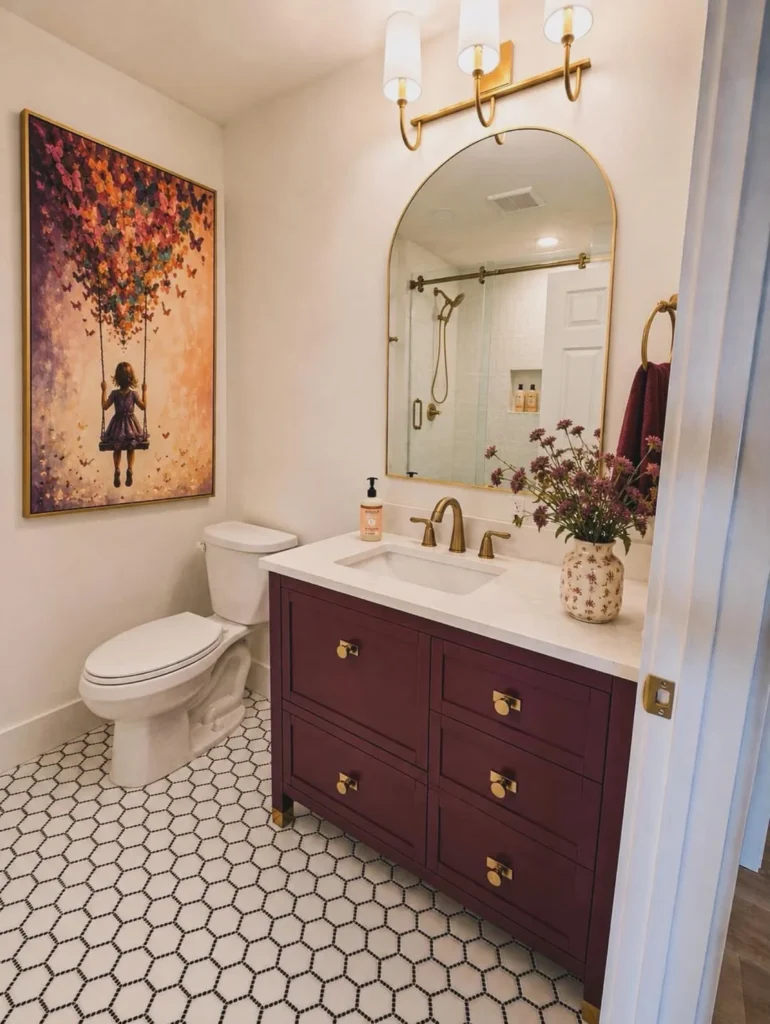
Image Credit: @houseoflifeandlove
A deep burgundy vanity in a small bathroom is a bold call, and it pays off here because everything else is kept in check. White walls, white quartz counter, white hexagon floor tile, and then brass on the arched mirror frame, the three-light bar fixture above it, the towel ring, the door hardware, and the faucet. The brass does two things at once in this room: it keeps the bold vanity color from feeling isolated by surrounding it with warm metal, and it gives the white elements enough visual interest that the room does not feel like a burgundy box. The artwork on the left wall adds a second warm, colorful note that ties the whole palette together.
Designer Advice: When you paint a vanity a bold color, choose hardware in a warm metal like brass rather than a cool one like chrome; warm metals sit beside bold colors rather than competing with them.
12. When Brass Goes on Absolutely Everything and Still Works
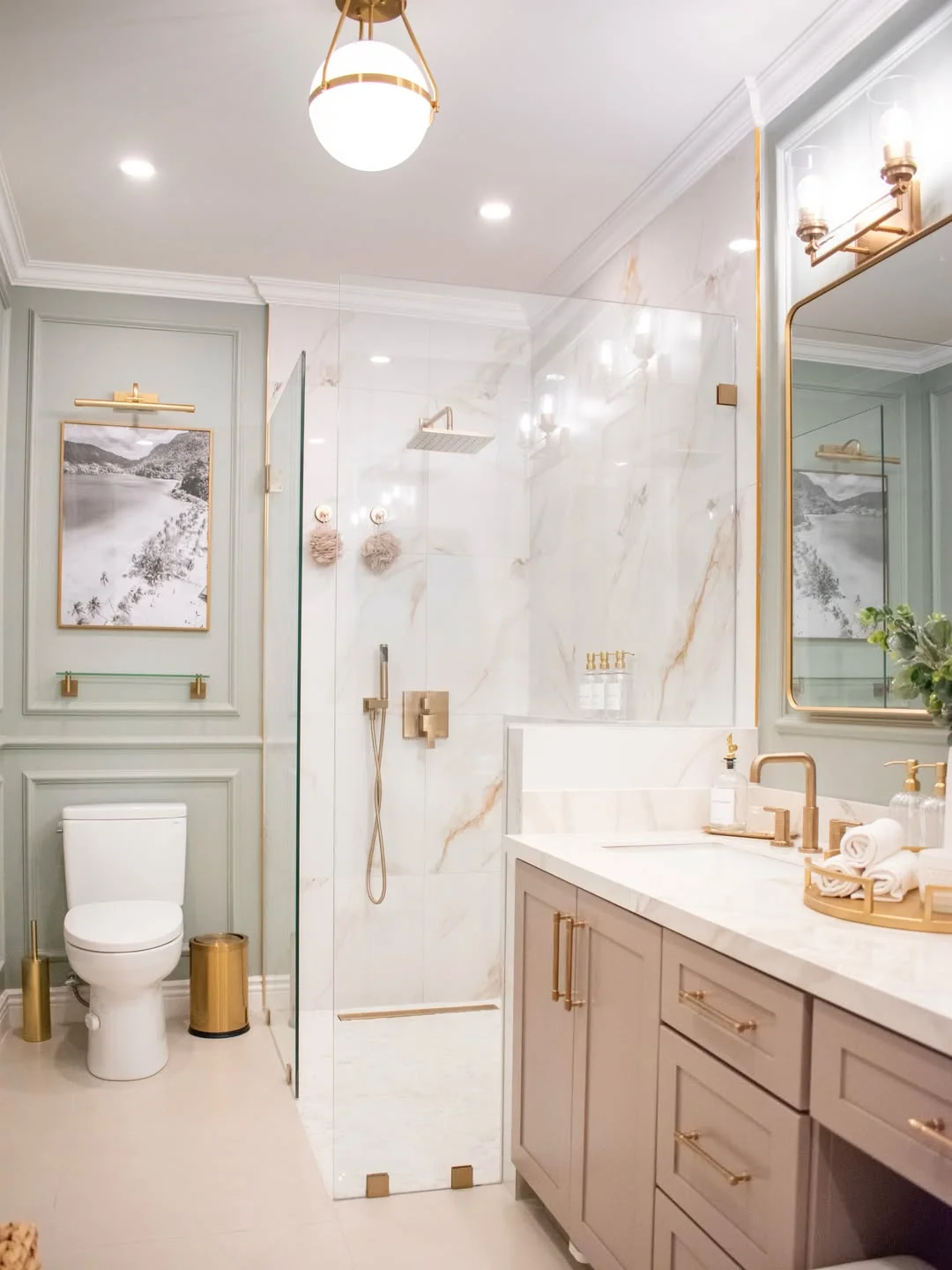
Image Credit: @jedeli_interiors
Sage green panel moulding on the walls, white marble shower tile with warm gold veining, a greige shaker vanity, and then brass on the pendant light, the picture light over the framed art, the shower system controls and head, the mirror frame, the sconce, the faucet, the vanity cabinet pulls, and even the toilet brush holder. This is the most committed version of the single-finish approach, and it works because the room’s underlying palette of sage, warm white, and stone already contains warmth, so the brass reads as an extension of the color story rather than a separate design decision imposed on top of it.
Reality Check: The more surfaces you commit to brass, the more important it is that every piece comes from the same finish family; even a slight variation in tone becomes impossible to ignore when everything else matches.
The One Thing All Thirteen Bathrooms Have in Common
None of these rooms match their hardware shapes across every piece; what they match is the finish. A bridge faucet and a simple towel ring look completely intentional together when they share the same brass tone, even if one is ornate and one is minimal. That is the lesson worth taking from all of this: you do not need to buy a matching set from one collection, you need to buy everything in the same finish family. Pick your brass, commit to it, and let the walls and tile do whatever they want.