Neo Deco is not Art Deco in fancy dress. It takes the geometric confidence and material richness of the 1920s and removes the theatrical excess that makes period Art Deco feel like a hotel lobby rather than a home. What is left is something that feels structured, warm, and genuinely contemporary. Each idea below opens with the design principle that makes it work, so you understand the logic and can apply it with confidence rather than just copying a look.
1. Principle: Restraint Through Repetition. Use Fluted Panels on One Surface Only.
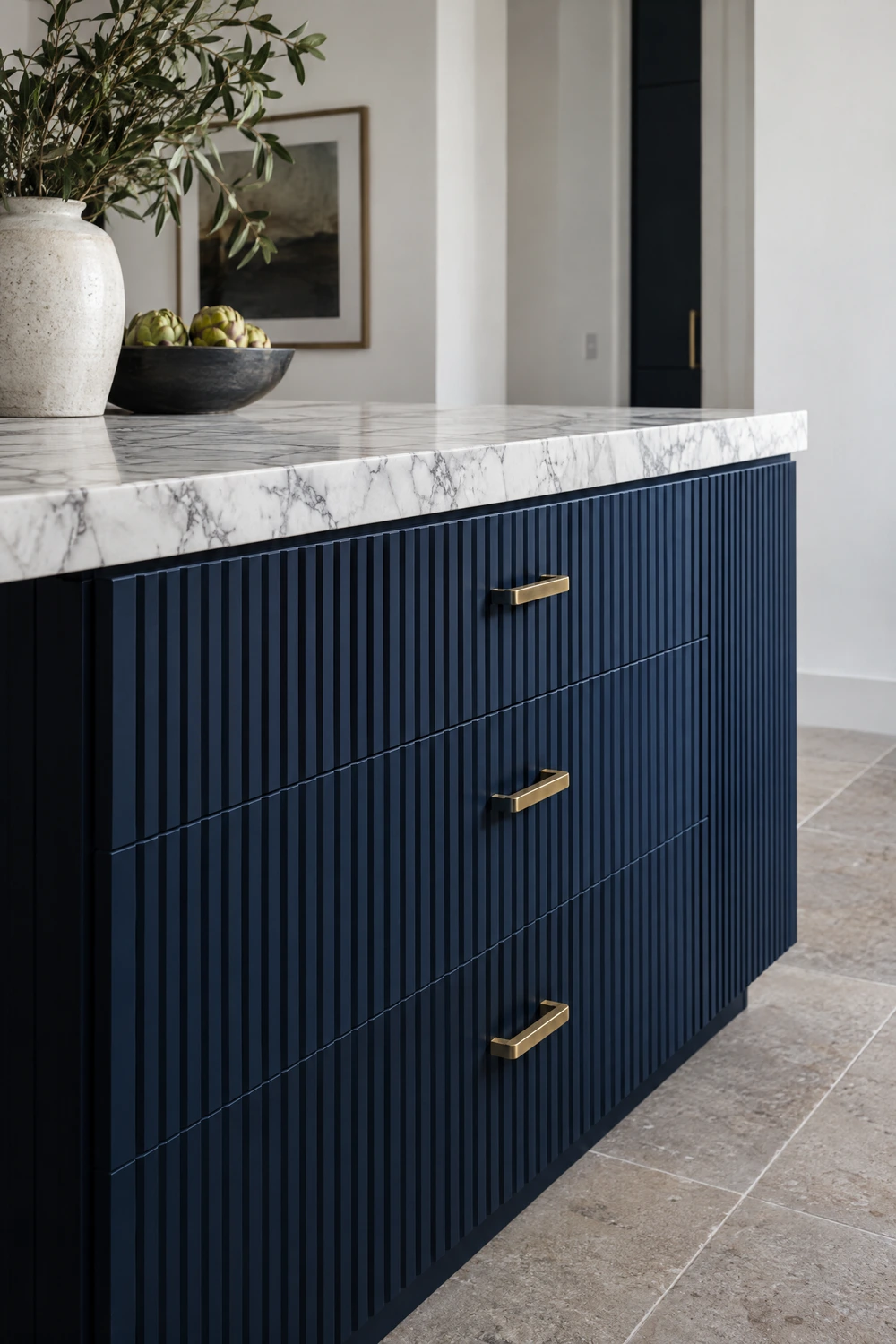
Fluted paneling, vertical grooved channels on a cabinet front, a headboard, a bath surround, or an island, is one of the most widely recognized Neo Deco gestures right now. The principle that makes it work is repetition of a single simple groove. The flute itself is not decorative; the rhythm of many flutes together is what creates visual texture and depth. Apply it to one surface only and let everything adjacent remain flat, which is precisely what separates Neo Deco from full Art Deco maximalism.
Pro Move: Fluted MDF panels are available pre-cut from most large timber merchants and can be painted, primed, or left raw depending on your palette. A fluted kitchen island in deep navy or forest green costs a fraction of bespoke joinery and reads at the same level.
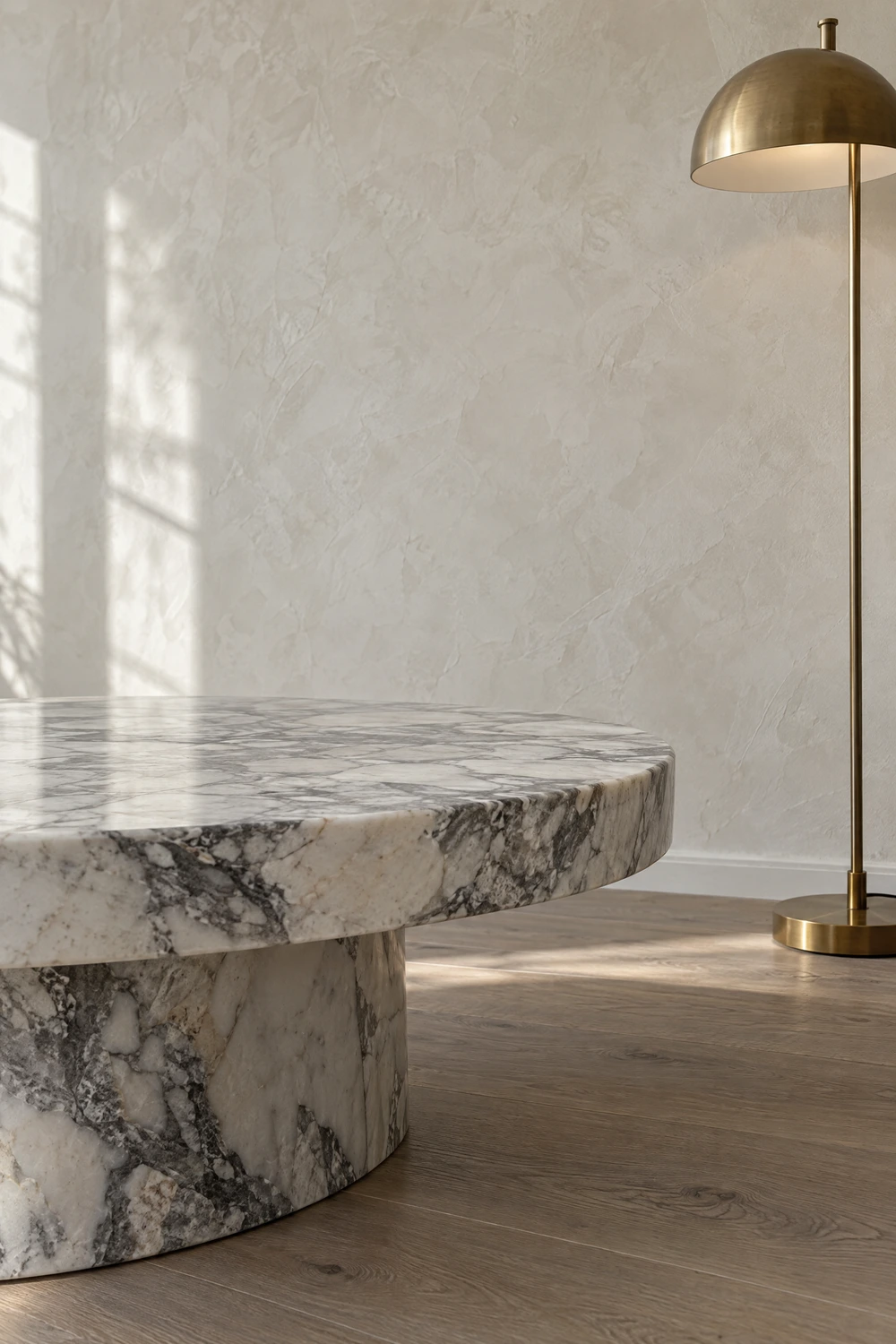
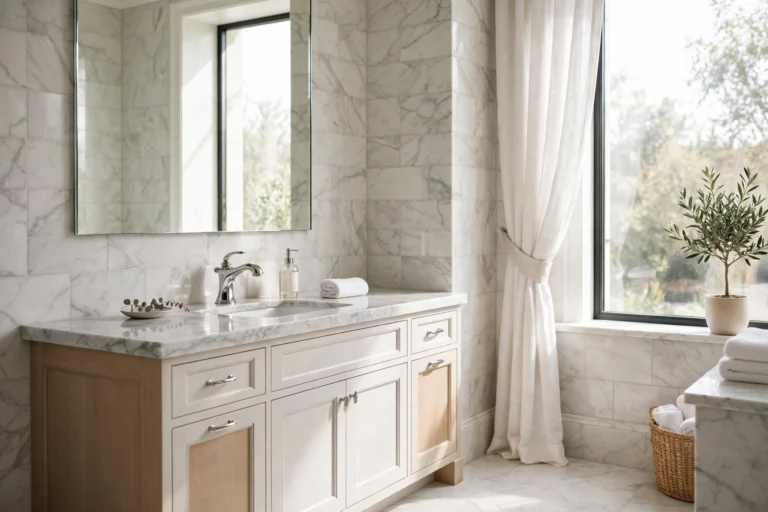
Neo Deco material logic always involves pairing one rich or reflective surface with one quiet, tactile opposite. Veined marble on a coffee table or fireplace surround is amplified, not diminished, when the wall behind it is in matte limewash plaster rather than gloss paint. The contrast between the mineral complexity of the marble and the soft irregularity of the plaster gives both surfaces more presence than either would have against a standard emulsion wall.
Designer Advice: Stick to one marble surface per room rather than using it across multiple elements. A marble coffee table, marble fireplace, and marble console all in the same room tips from curated into showroom, which is the version of Neo Deco worth avoiding.
3. Principle: Geometric Gesture Over Geometric Pattern. Choose a Sunburst Mirror as a Focal Point.
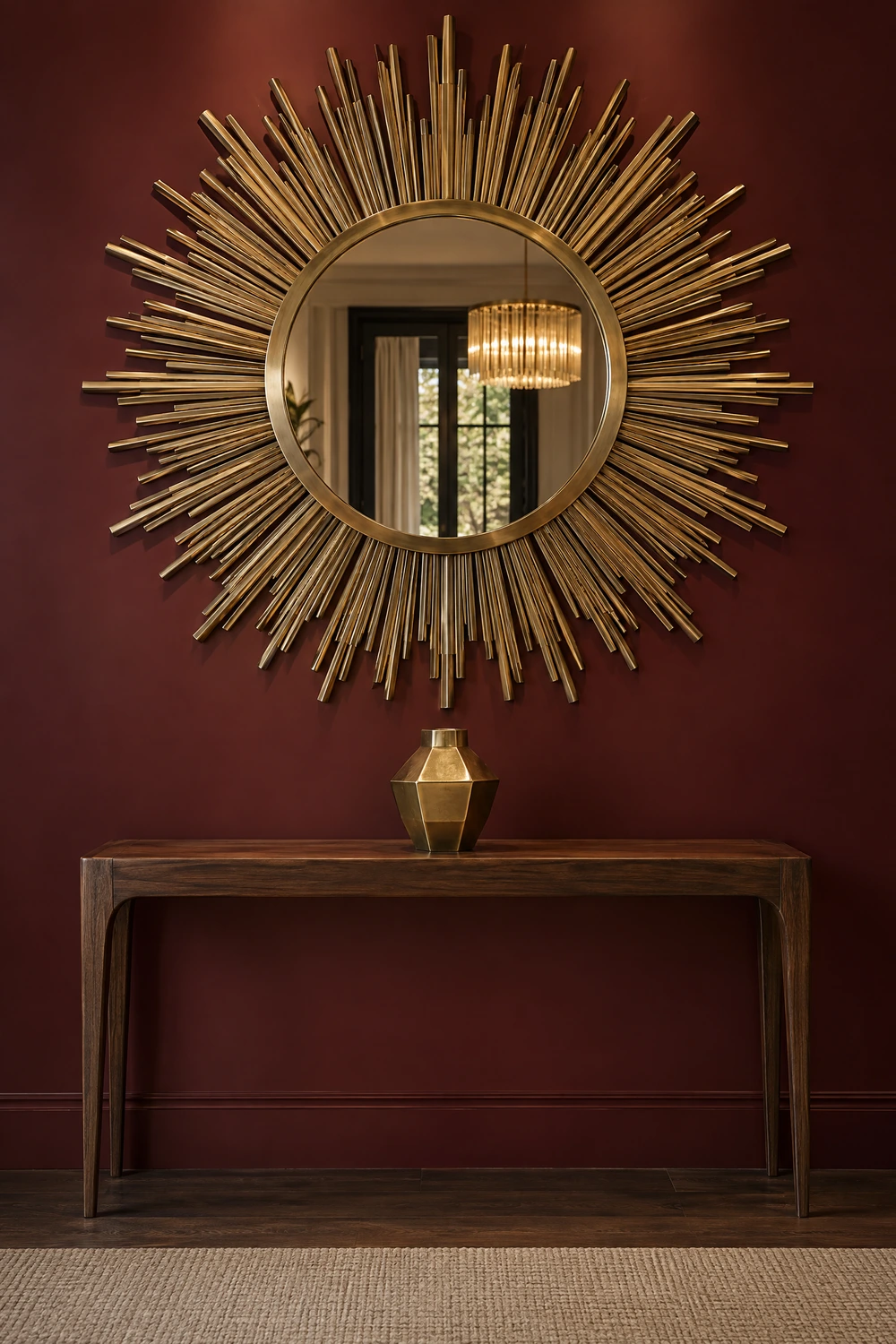
The Neo Deco approach to geometric pattern is to concentrate it in one strong object rather than spreading it across surfaces as wallpaper or tiling. A large sunburst or starburst mirror above a console or fireplace is the single most efficient Neo Deco investment available because it delivers the radiating geometric language of the 1920s at scale, while the wall around it stays clear. Brass or antique gold frames read more warmly than chrome in a residential setting.
Quick Tip: Size matters enormously with a sunburst mirror. A mirror under 80 centimeters across will read as decorative rather than architectural. Go for 100 centimeters or larger if the wall and the budget allow, and hang it lower than instinct suggests so it sits in the eyeline rather than disappearing toward the ceiling.
4. Principle: Jewel Tone as Foundation, Not Accent. Paint a Full Room in Deep Emerald or Burgundy.
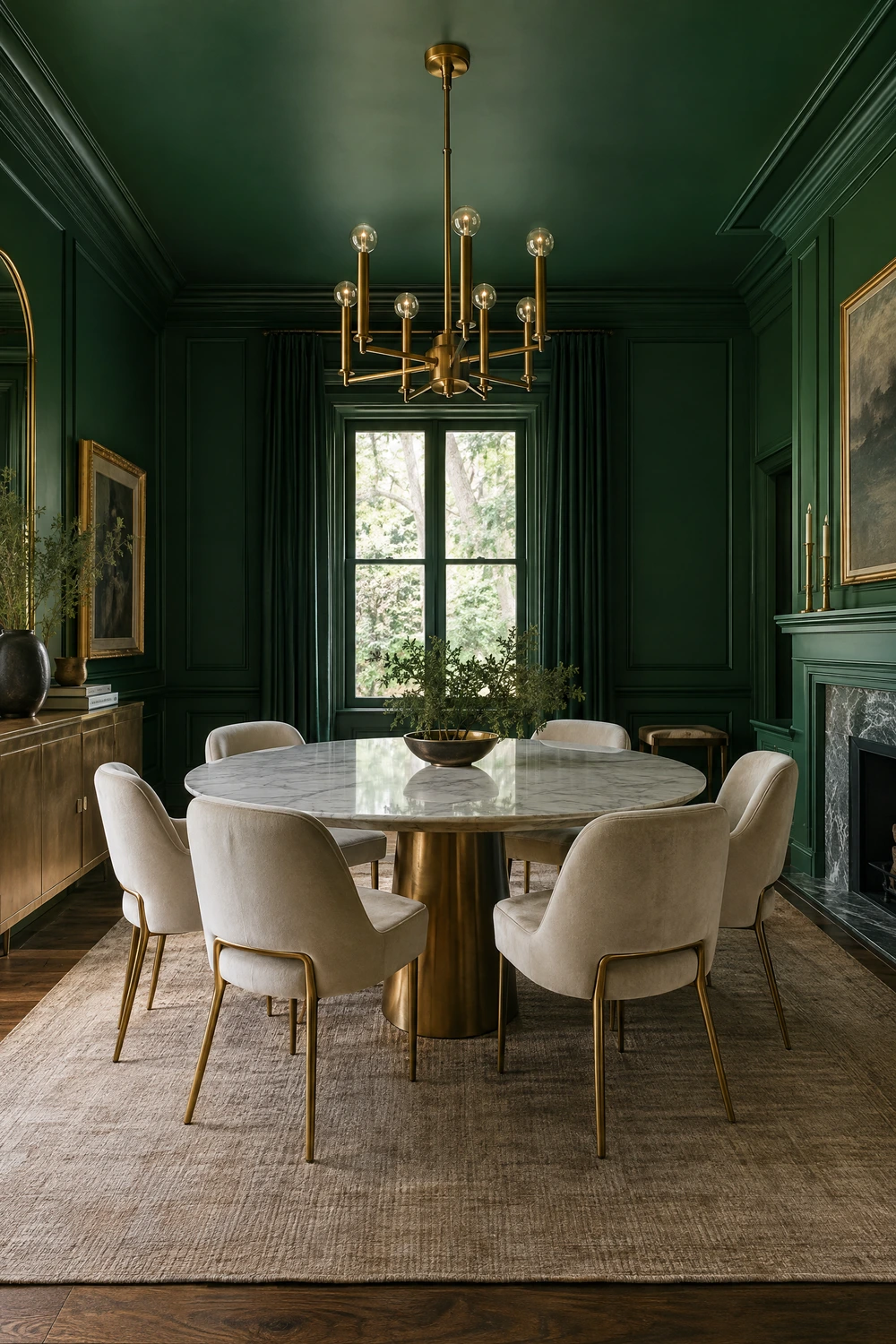
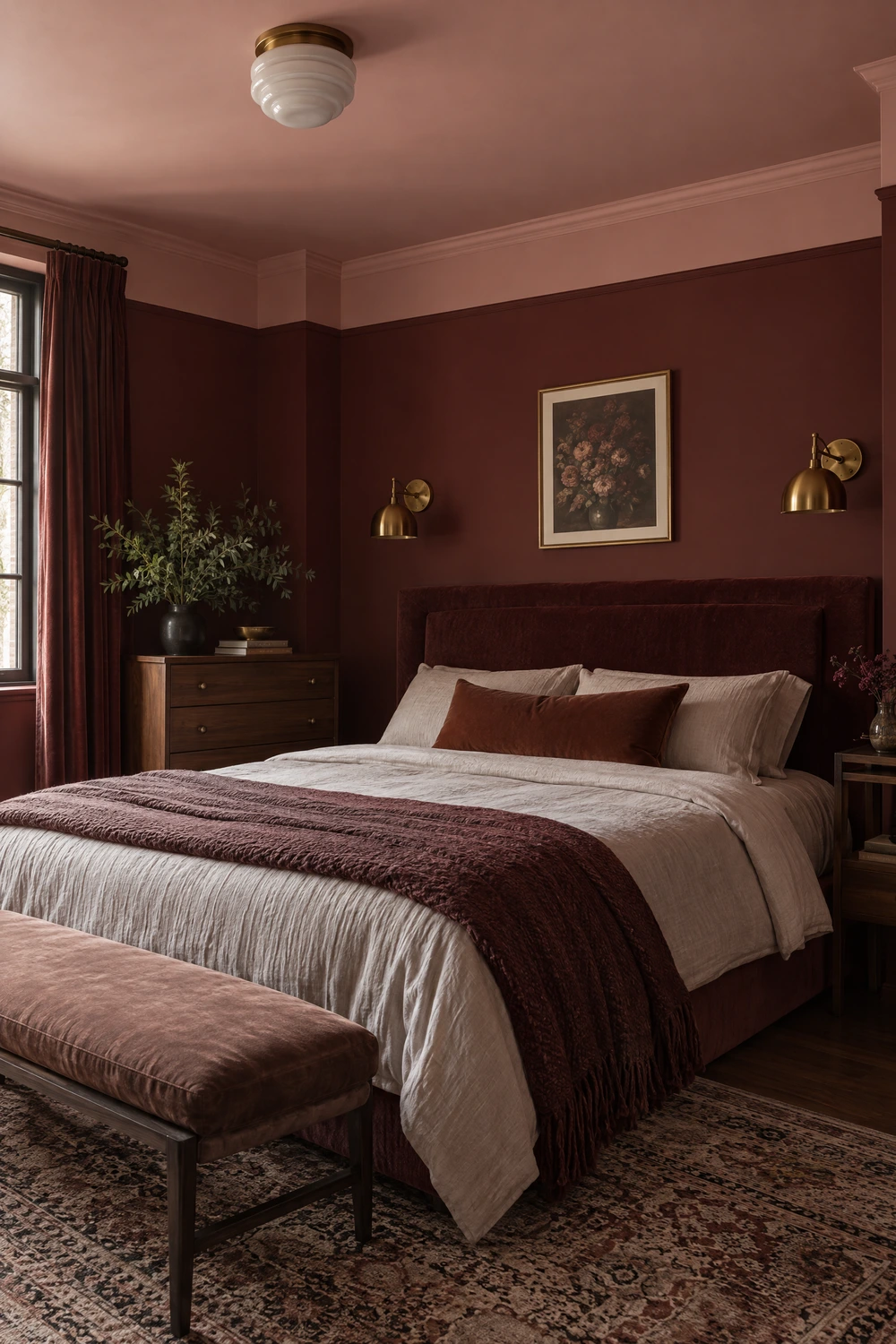
In most interior schemes, saturated color is treated as an accent: a cushion, a vase, one statement wall. Neo Deco inverts this by using deep jewel tones as the foundational color of an entire room. A dining room in deep emerald green, a bedroom in burgundy, or a study in midnight ink blue reads as genuinely designed because the color is committed rather than hedged. The rich wall color then makes the brass hardware, the velvet upholstery, and the marble surfaces glow in a way that a white or greige backdrop simply cannot produce.
Reality Check: Deep jewel tones require more coats to achieve even coverage than lighter paint colors. Budget for three coats on any saturated color application, prime the walls first with a tinted primer in a similar hue, and always test a large swatch in the actual room before buying full quantities.
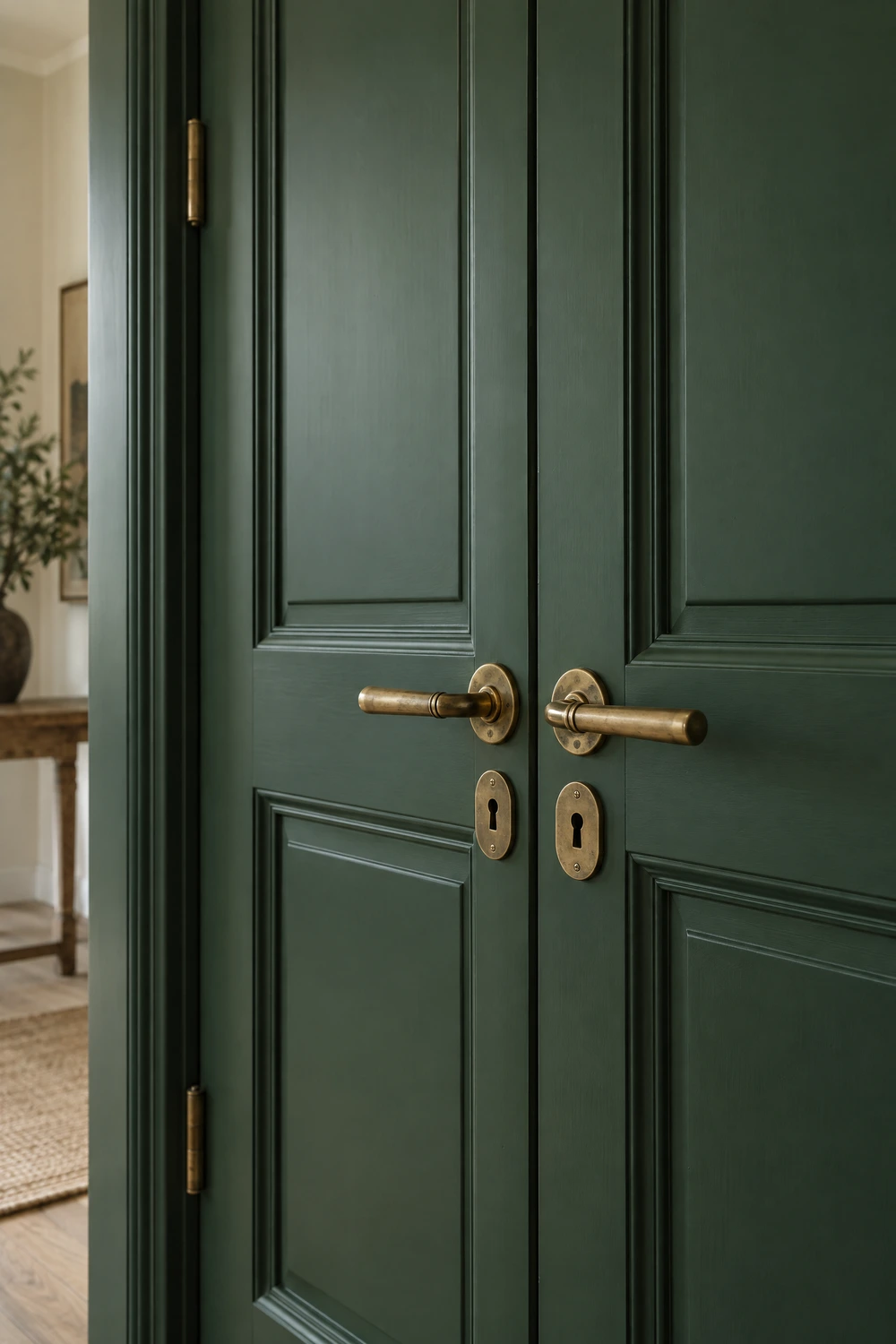
5. Principle: Warm Metal as Architecture, Not Accessory. Install Brass Hardware Throughout a Single Room.
Brass is the defining metallic accent of Neo Deco, but the difference between a room that feels designed and one that feels accessorized is whether the brass is used as an architectural element or scattered as decoration. Replacing all door handles, light switches, cabinet pulls, and tap fittings in a single room with unlacquered brass creates a warm, cohesive material story that reads as intentional. The unlacquered finish develops a natural patina over time, which is exactly the quality that connects Neo Deco to something lived-in rather than staged.
Heads Up: Unlacquered brass will darken and develop patina within months of use. This is a feature of the material rather than a flaw, but it is worth knowing before you choose it. Lacquered brass keeps a consistent finish but feels more static and commercial in a home setting.
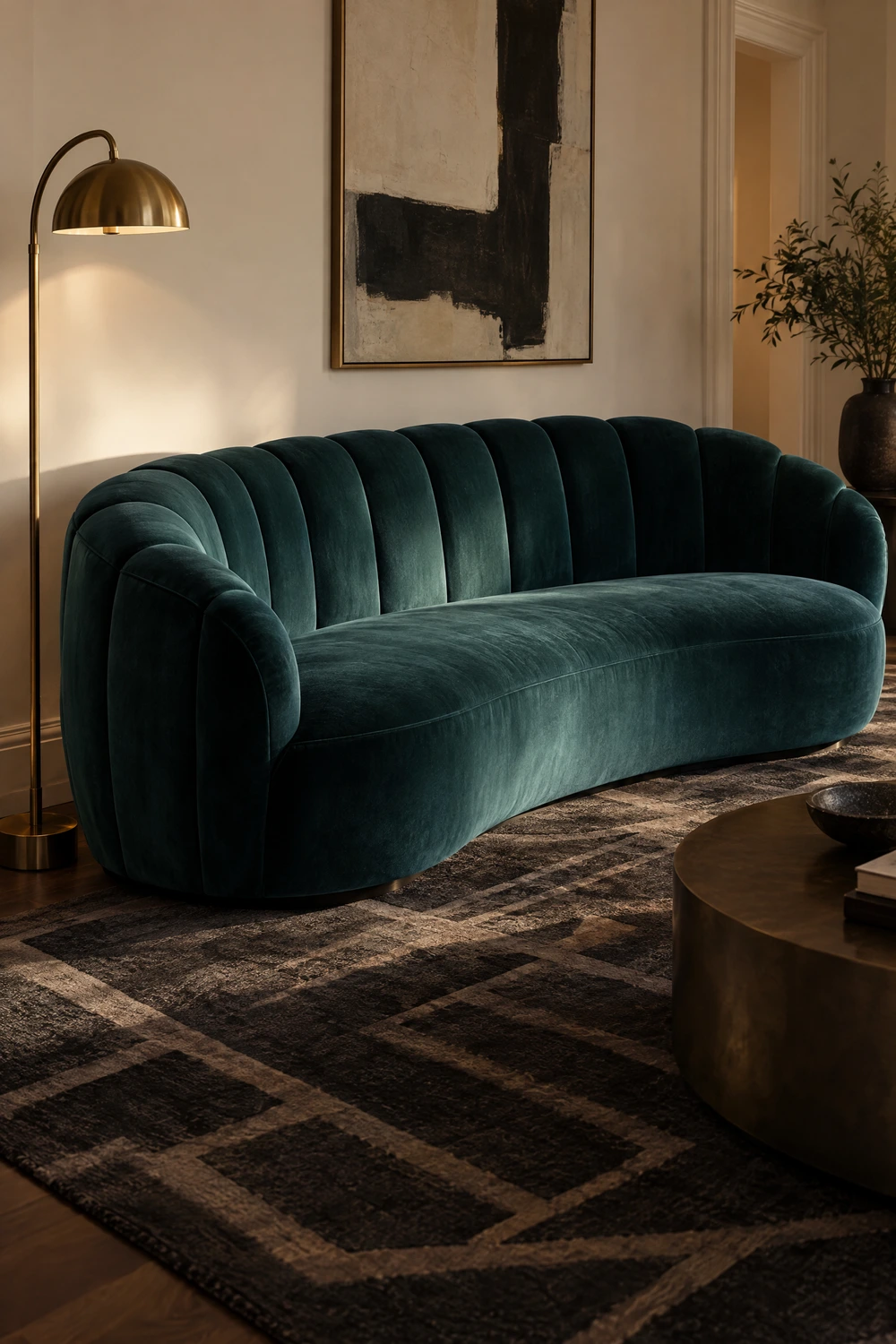
6. Principle: Sculptural Silhouette Over Ornamental Detail. Choose a Curved Velvet Sofa.
Neo Deco furniture favors sculptural form over surface decoration. A curved or scallop-backed velvet sofa in a jewel tone, forest green, deep teal, or ink blue, delivers the glamour of the aesthetic through its silhouette rather than its embellishment. The sweep of the back and the continuous curve of the arms carry the design gesture. In practice, one curved sofa in a room with standard square furniture immediately reads as the Neo Deco anchor piece around which everything else is organized.
Designer Advice: Velvet in a deep jewel tone photographs more richly than it sometimes appears on a screen. Request fabric samples and view them in your actual room light before ordering. Natural light and artificial light read velvet very differently, particularly in darker colors.
7. Principle: Symmetry as a Design Tool. Create a Perfectly Balanced Bedside Setup.
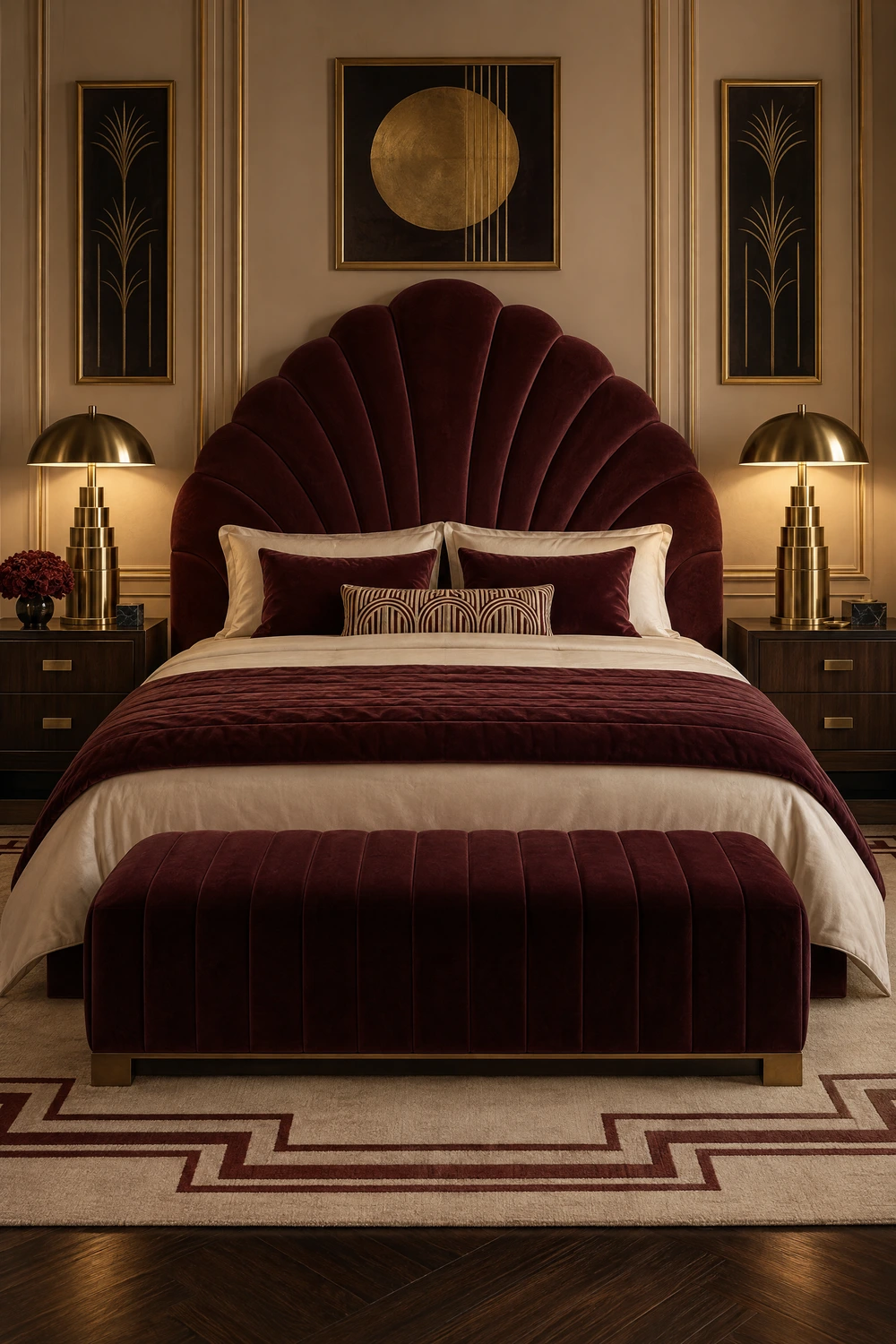
Symmetry is structural to Neo Deco in a way it has not been since the mid-century modern era. Identical bedside tables, matching lamps, and a centered headboard create a visual anchoring that feels deliberate and considered rather than accidental. The key is choosing bedside pieces with some geometric interest, a stepped Art Deco-style lamp base, a table with a hexagonal top, or a pendant light with a faceted shade, so the symmetry reads as a design decision rather than a coordination exercise.
Quick Tip: If identical matching bedside tables feel too formal, use the same material in two slightly different forms: the same marble top in a round and a rectangular base, or the same brass finish in two different lamp silhouettes. The material cohesion reads as a scheme while the shape variation keeps it from feeling rigid.
8. Principle: The Arch as Architectural Punctuation. Frame a Doorway or Alcove With a Painted Arch.
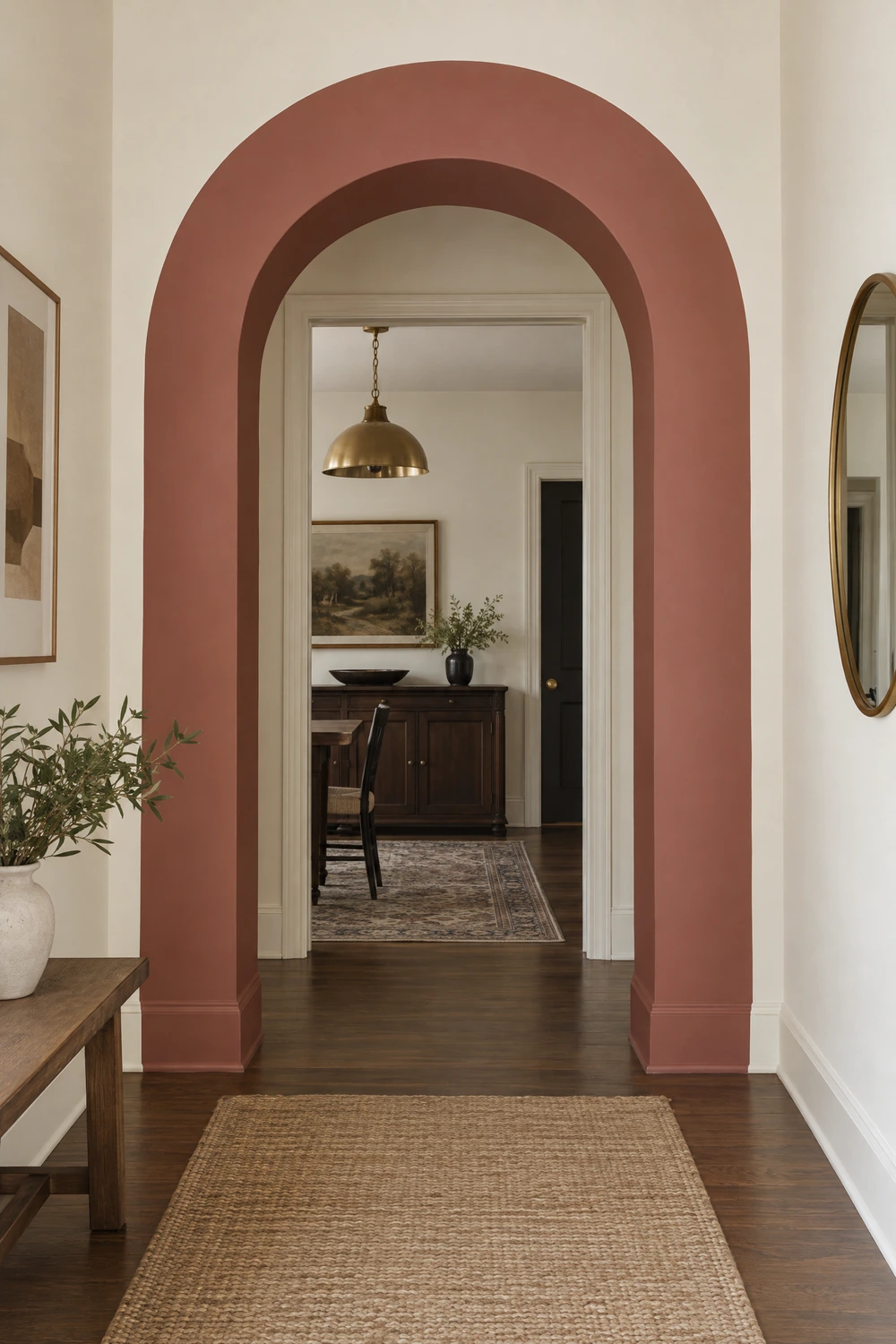
The arch is one of the most powerful Neo Deco architectural gestures available in a standard home because it introduces a curved geometry that contrasts with the right angles of walls and door frames without requiring any structural work. A painted arch in a contrasting or complementary color on a flat wall, framing a doorway, a window alcove, or a reading nook, is a zero-renovation way to introduce architectural presence that reads as considered and original.
Pro Move: Use painter’s tape and a piece of string as a compass to mark a perfect semicircle on the wall before painting. Fix the string to the wall at the arch center point, tie the tape to the other end at the desired radius, and sweep a pencil line in a consistent arc. This gives a cleaner result than freehand or template methods.
9. Principle: Contrast Pairing at the Material Level. Set Dark Walnut Against Brass Hardware.
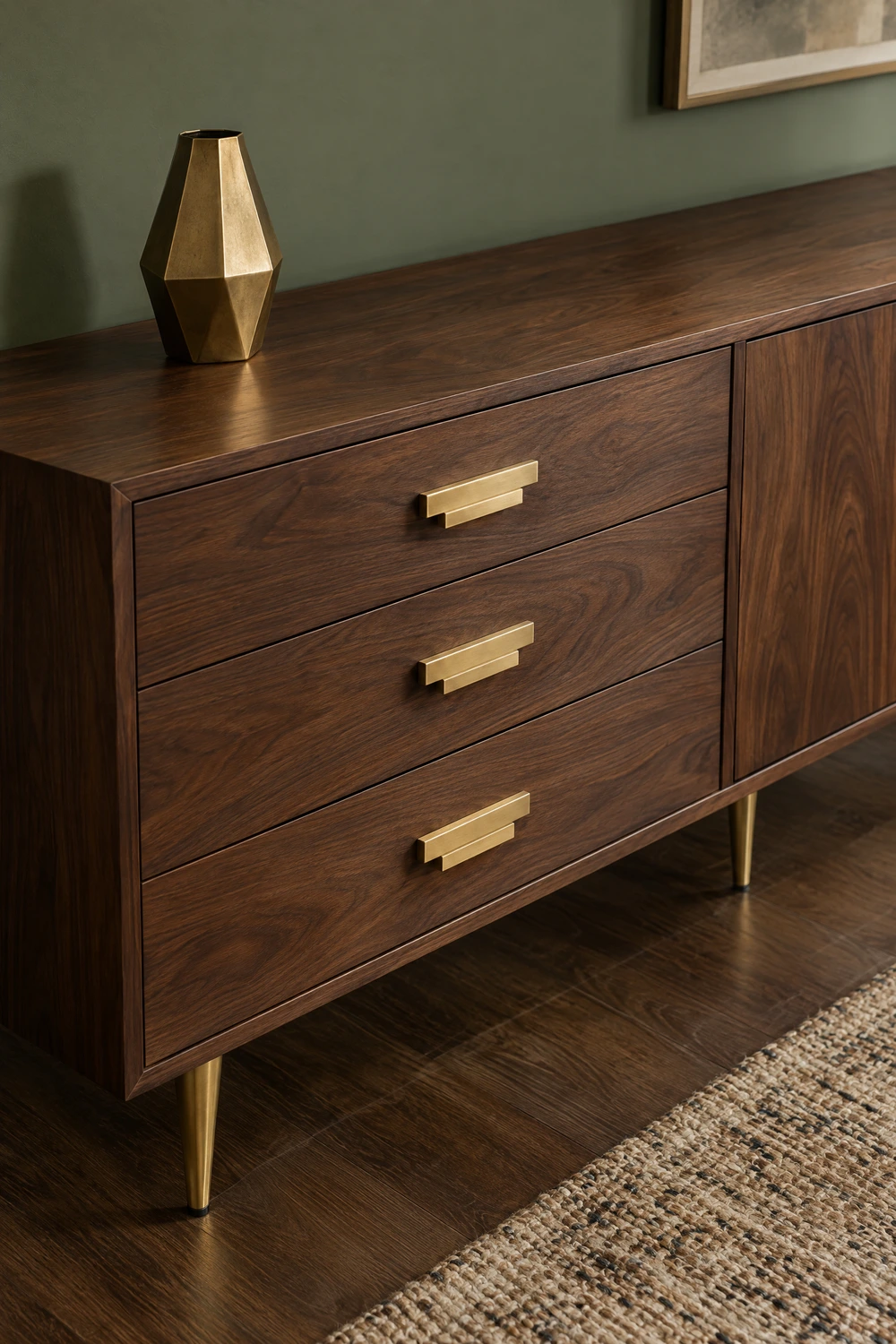
Neo Deco material pairing logic works by setting one dark, warm material against one bright metallic surface so each amplifies the other. Dark walnut or stained oak furniture with brass handles and legs is the most commercially available expression of this principle, and it works in any room because the wood provides warmth and grain while the brass provides precision and reflectivity. The contrast between the two reads as considered without requiring any unusual sourcing.
Reality Check: Mid-range furniture with thin brass-effect metal legs can look convincing in photographs but cheap in person. Feel the weight of metal components before buying. Solid brass is noticeably heavier than brass-plated steel, and the difference is visible in how the piece sits and moves.
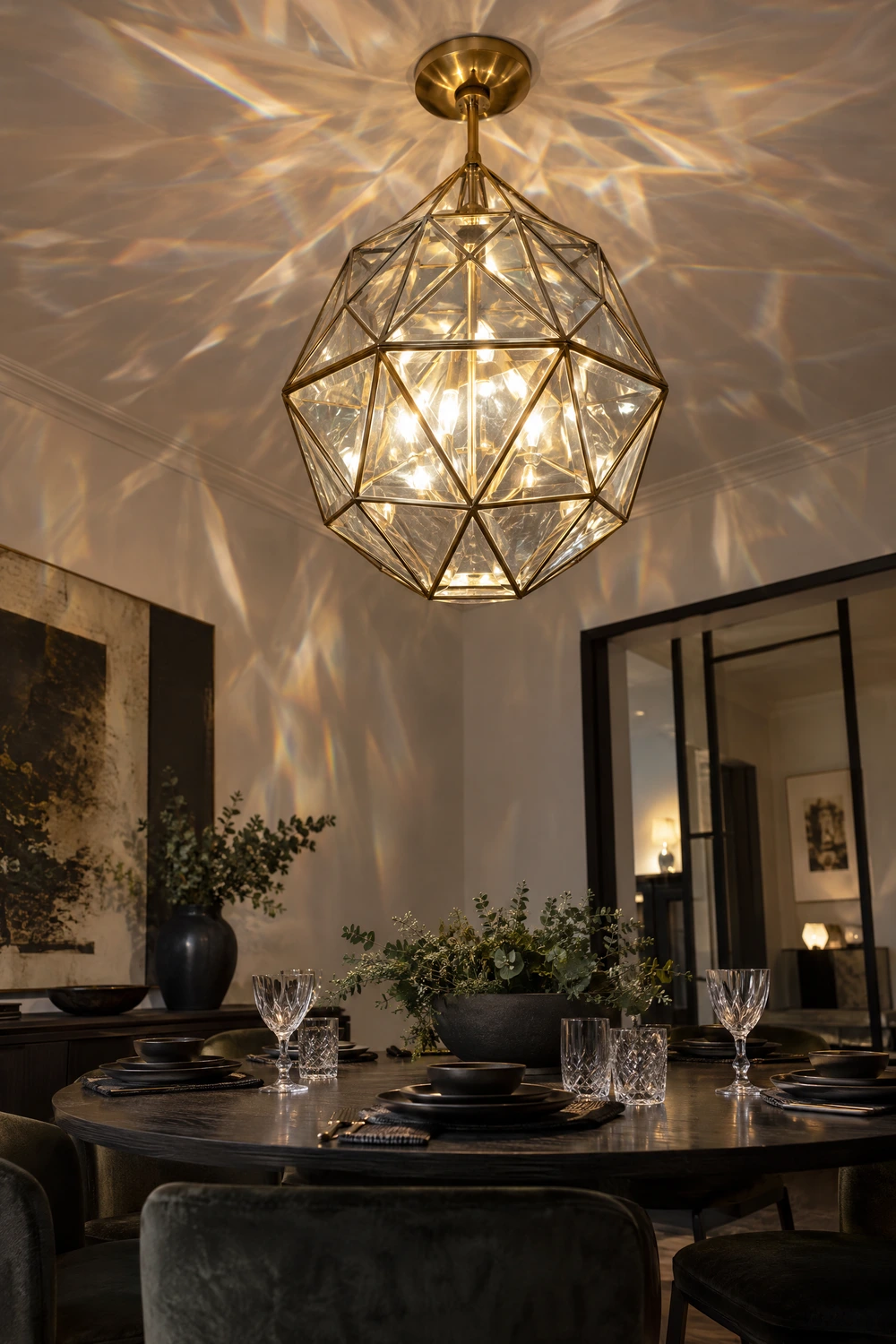
10. Principle: Layered Lighting With Vertical Presence. Hang a Statement Pendant With Geometric Form.
Lighting is the most transformative single investment in a Neo Deco room because it operates at every level simultaneously: as a geometric sculptural object when switched off, as a source of warm reflected light across metallic and velvet surfaces when switched on, and as vertical visual punctuation that grounds the room from above. A pendant with a faceted glass shade, a stepped drum shape, or a brass cage structure earns its place as architecture as much as illumination.
Designer Advice: Pendant lamps in the Neo Deco register are among the most searched home items on Pinterest right now, with searches up 40% heading into 2026. This means the category has many options at many price points. Focus on the silhouette rather than the brand name; the right shape in a mid-range fitting will outperform the wrong shape in an expensive one.
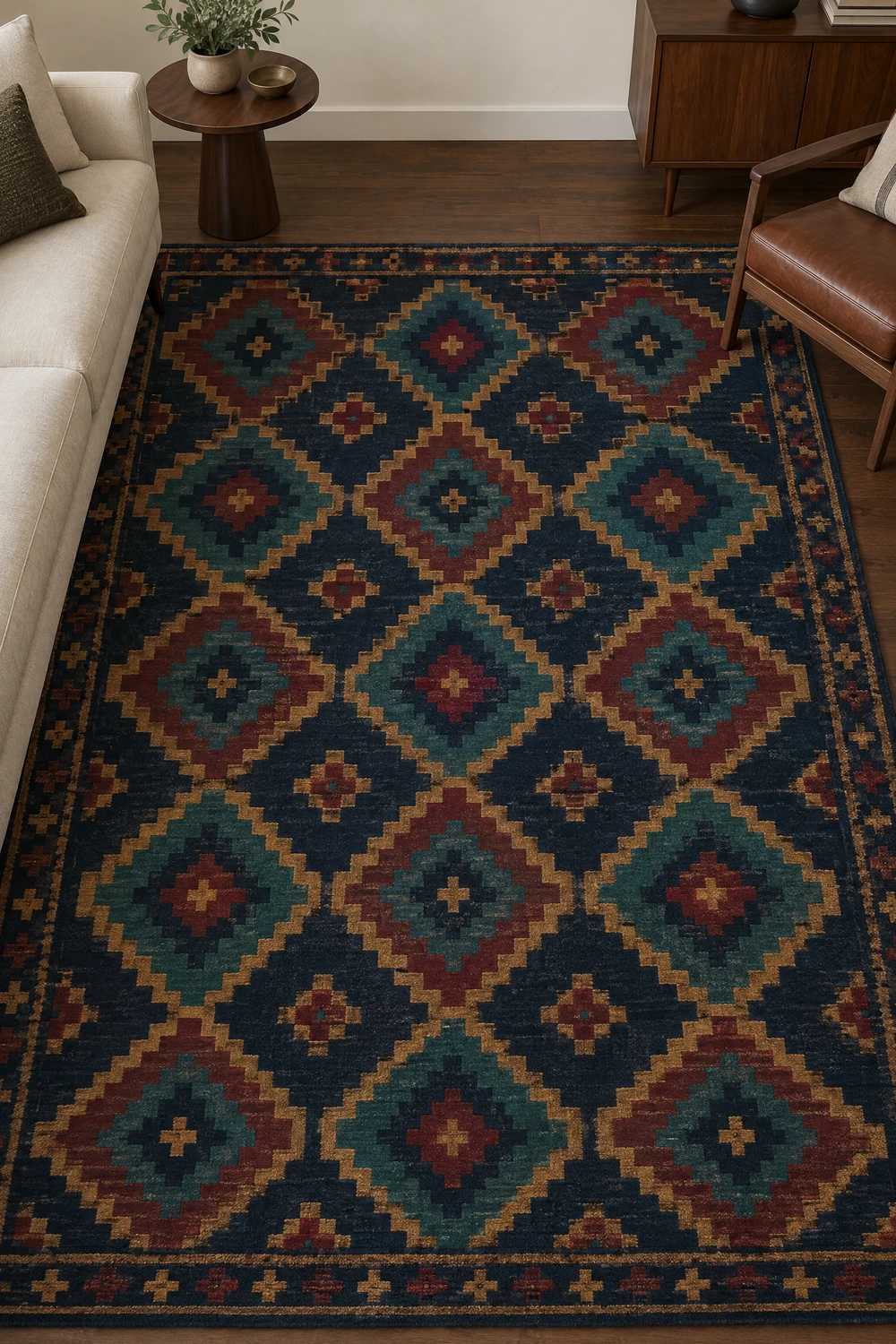
11. Principle: Pattern Concentration Rather Than Pattern Distribution. Use a Geometric Rug as the Room’s Only Pattern.
In a Neo Deco room, pattern is concentrated rather than distributed. One strong geometric rug with a chevron, fan, or stepped diamond pattern anchors the floor and supplies all the decorative complexity the room needs from below. The walls, upholstery, and curtains remain in solid colors or subtle textures so the rug reads clearly rather than competing with other patterned surfaces. A rug in deep jewel tones on a dark ground works best because it reads as warm and grounding rather than decorative.
Heads Up: Geometric Art Deco rug reproductions range enormously in quality. Hand-knotted wool versions in traditional Deco patterns cost more but hold their pile and color over decades. Machine-made polypropylene versions in similar patterns will flatten and fade within a few years of regular use in a high-traffic room.
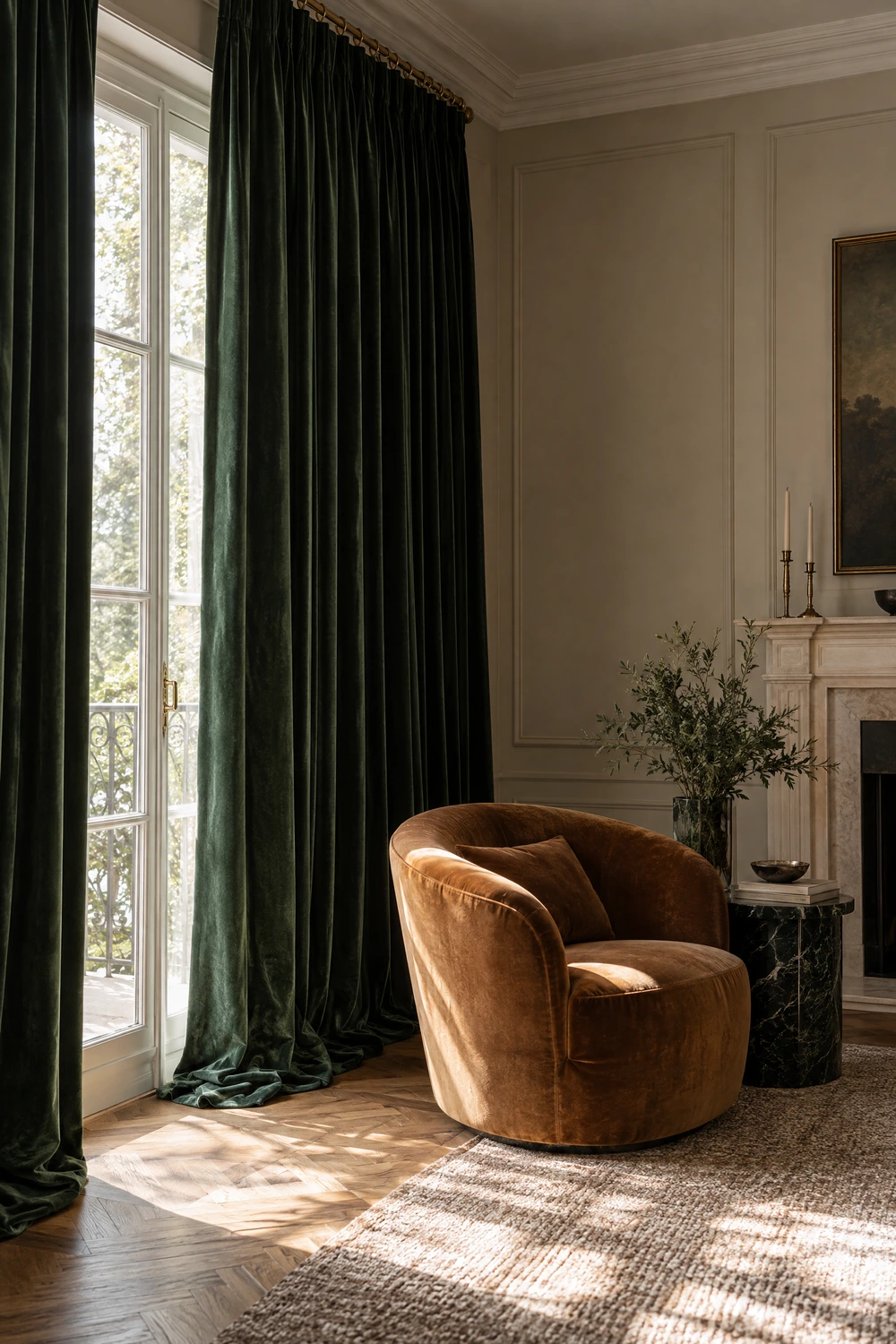
12. Principle: Dramatic Drapery as Vertical Architecture. Hang Floor-to-Ceiling Curtains in Velvet or Silk.
Floor-to-ceiling curtains in velvet, silk, or a heavyweight linen are one of the lowest-cost ways to introduce Neo Deco scale and glamour into a room because the height of the curtain rod does most of the design work. Hanging the rod as close to the ceiling as possible and letting the curtain puddle slightly on the floor creates a vertical sweep that makes any room feel taller and more considered. Deep jewel tones in burgundy, forest green, or ink blue work best; avoid anything with a printed pattern which competes with the geometric discipline of the style.
Quick Tip: The puddle at the base of a floor-length curtain is a deliberate Neo Deco detail rather than a mistake. Around 5 to 8 centimeters of fabric on the floor reads as intentional; more than that starts to look like an error in curtain length. Do not trim floor-length velvet curtains to just above the floor as this removes the effect entirely.
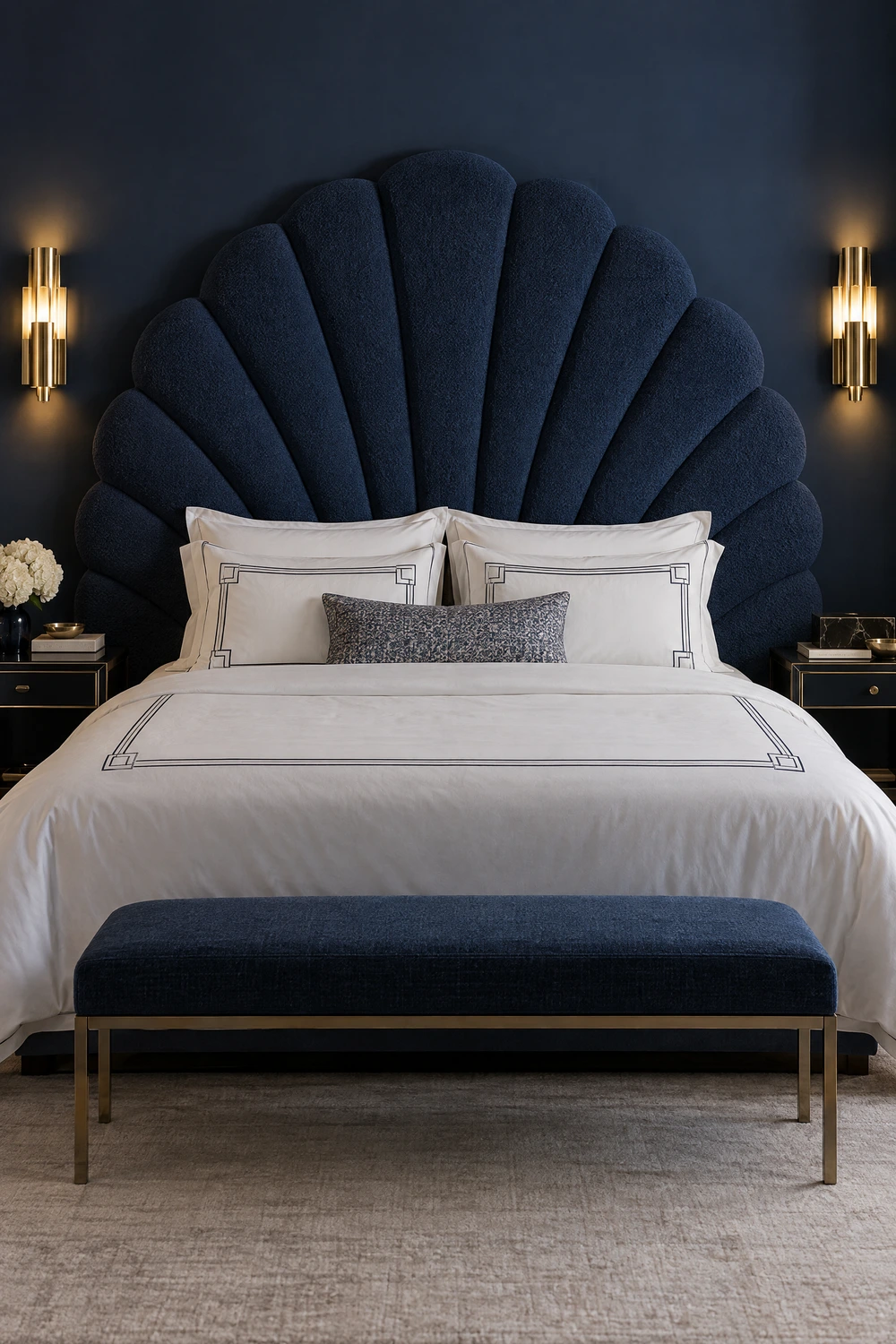
13. Principle: A Single Geometric Gesture in Three Dimensions. Add a Fluted or Fan-Shaped Headboard.
A bedroom headboard is the most efficient single purchase in Neo Deco bedroom design because it occupies the most visible wall in the room and frames the bed as a deliberate focal point. A fan-shaped headboard with a stepped or scalloped silhouette, or a fully upholstered headboard with horizontal channel tufting, delivers the geometric vocabulary of the aesthetic without requiring any other changes to the room. In deep velvet or a textured boucle, it reads as both sculptural and inviting.
Designer Advice: The headboard should be sized generously relative to the bed. A headboard that extends 20 to 30 centimeters beyond the mattress on each side reads as architectural. One that is exactly mattress-width reads as a bed accessory. Scale up rather than match exactly.
14. Principle: Stepped Architectural Moulding as a Decorative System. Add Stepped Coving or a Picture Rail.
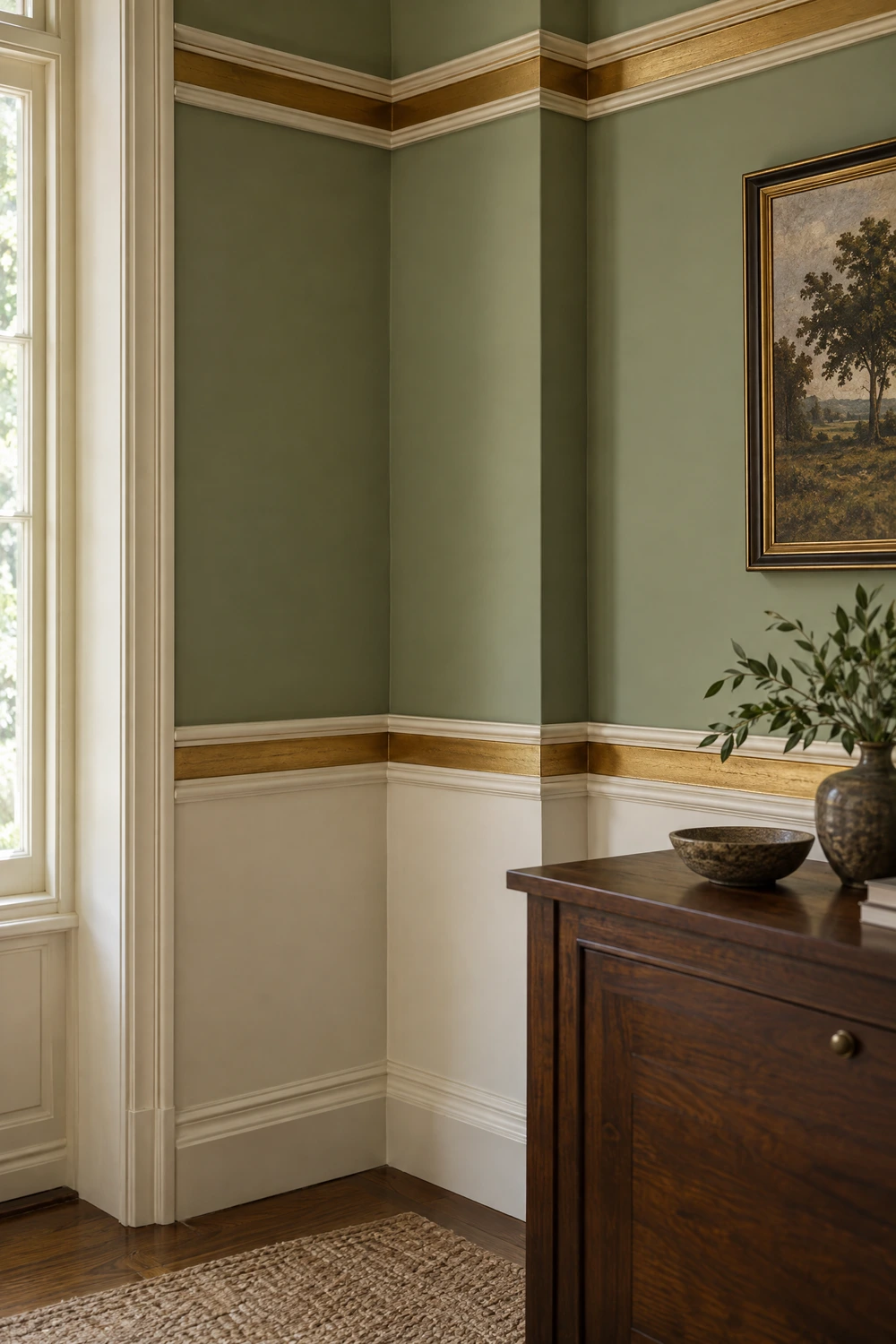
Stepped moulding, the tiered profile that appears on original Art Deco cornices, door frames, and architraves, is one of the most architectural ways to introduce Neo Deco character into a room without changing the furniture. A stepped coving profile, or a picture rail and dado rail painted in a contrasting color to the wall, introduces the geometric layering principle into the bones of the room rather than applying it only through objects. This reads as a genuine design decision that the room was built around rather than decorated over.
Pro Move: Standard MDF dado rails and picture rails can be doubled up by fixing two parallel rails 3 to 4 centimeters apart and painting the channel between them in an accent color. This creates the stepped, layered effect of period moulding at a fraction of the cost and without any specialist joinery.
15. Principle: The Bar Cart as a Designed Object. Style an Antique Bar Cart as a Room Focal Point.
Pinterest data shows antique bar cart searches up 100% heading into 2026, and within a Neo Deco scheme this makes complete sense. A well-chosen bar cart in brass or chrome with a glass or mirrored surface functions as a sculptural object, a display surface, and a genuine piece of useful furniture simultaneously. Style it with cut-crystal glassware, a geometric decanter, and one or two dark ceramic or brass vessels, and it reads as a designed moment rather than a drinks trolley.
Quick Tip: The objects on a Neo Deco bar cart should include at least one element with genuine weight or quality, a heavy crystal decanter, a solid brass ice bucket, a hand-blown glass bottle. The material quality of one anchor piece elevates everything around it on the surface.
16. Principle: Colour Blocking at the Wall-Ceiling Junction. Try Neo Deco Colour Capping.
Colour capping, painting the top section of a wall and the ceiling in a slightly different tone from the main wall, is one of the most current paint techniques in interior design and sits naturally within Neo Deco because it creates a stepped, layered color boundary that echoes the tiered moulding profiles of the original movement. In a deep jewel-tone room, capping the ceiling in a tone two shades lighter than the wall creates architectural depth without requiring any physical moulding to mark the transition.
Designer Advice: The boundary line between the wall color and the ceiling cap color does not need to be perfectly straight for this to work. In a room without strong architectural moulding, a slightly wavering paint line at ceiling height reads as hand-crafted rather than imprecise.
17. Principle: Lacquer and Gloss as Material Statements. Introduce a Lacquered Cabinet or Console.
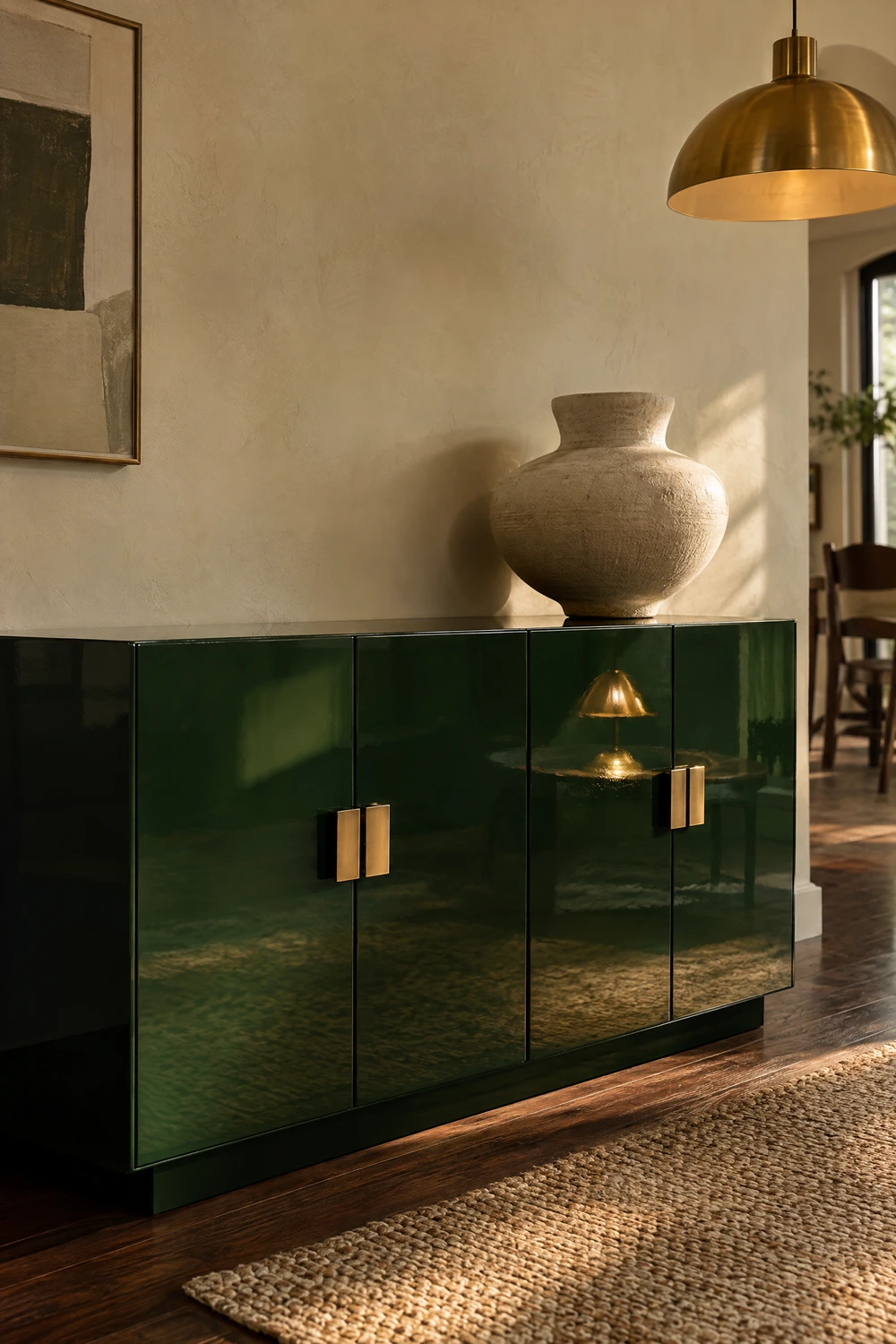
Lacquered wood, high-gloss cabinet fronts in deep jewel tones, and lacquered furniture surfaces are foundational to Art Deco and translate directly into Neo Deco as one of the few highly reflective surfaces the style uses deliberately. A lacquered sideboard or console in deep green, burgundy, or midnight blue introduces the formal glamour of the original movement in a single piece without requiring the rest of the room to follow suit. The high-gloss surface reflects light and catches the brass hardware and pendant lamp in the room around it.
Reality Check: Lacquered furniture shows every fingerprint, dust particle, and scratch. Place it in a low-traffic position where it will be admired rather than handled daily, and use a microfibre cloth rather than a standard duster which leaves streaks across a high-gloss surface.
18. Principle: Natural Forms to Soften Geometric Discipline. Add Sculptural Plants in Geometric Vessels.
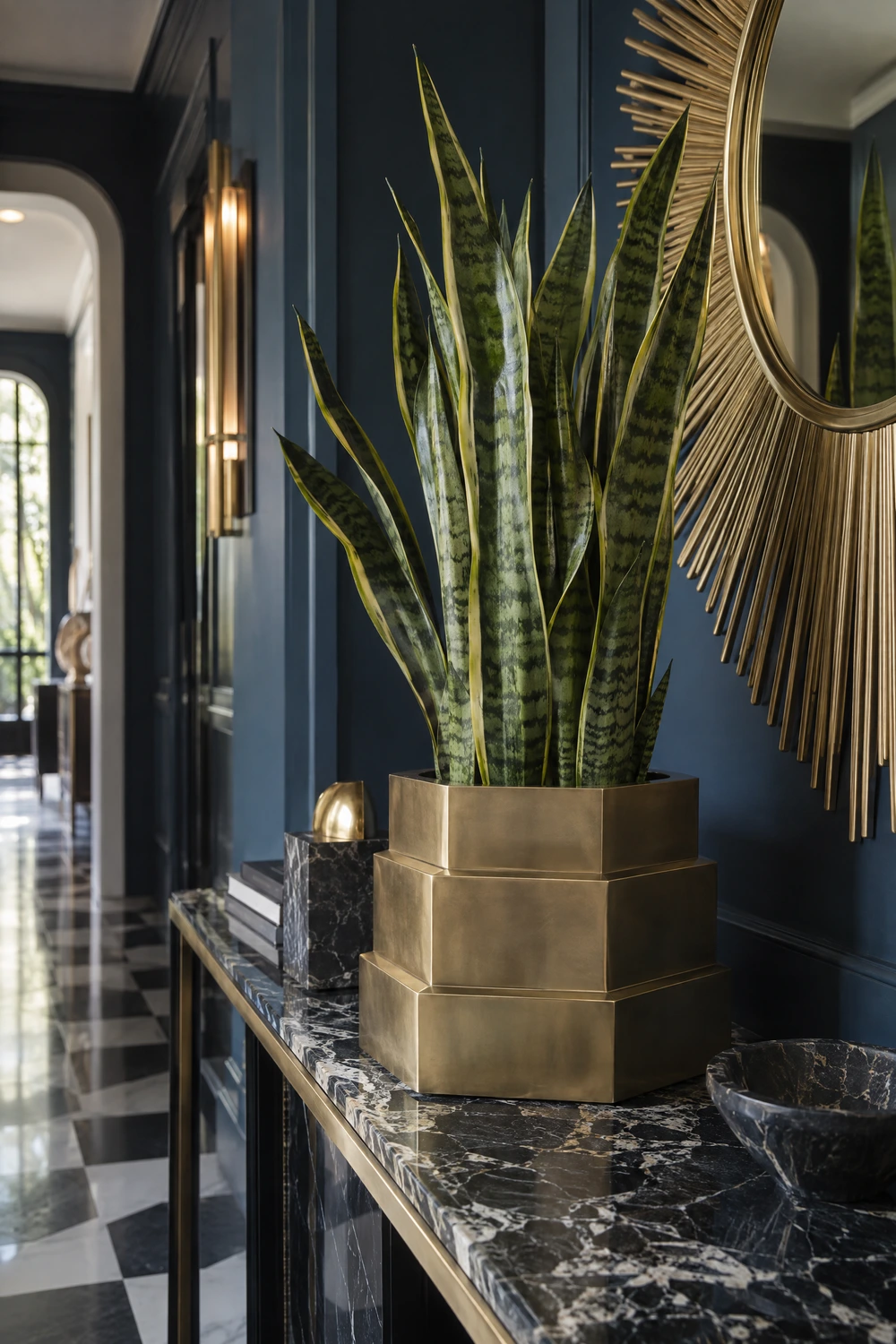
Neo Deco rooms that feel livable rather than museum-like almost always contain organic elements that soften the geometric precision of the surrounding scheme. A large fiddle leaf fig, a bold snake plant, or an olive tree in a geometric planter, hexagonal, stepped, or octagonal, in brass or matte black, introduces the natural world into the architectural scheme in a way that feels deliberate rather than decorative. The geometric vessel connects the plant to the aesthetic language while the plant itself provides warmth and scale.
Quick Tip: Match the planter material to the dominant metallic in the room. A brass planter in a room with brass hardware creates cohesion. A matte black planter in a room with dark walnut furniture and minimal metal reads as a consistent material choice rather than a random vessel selection.
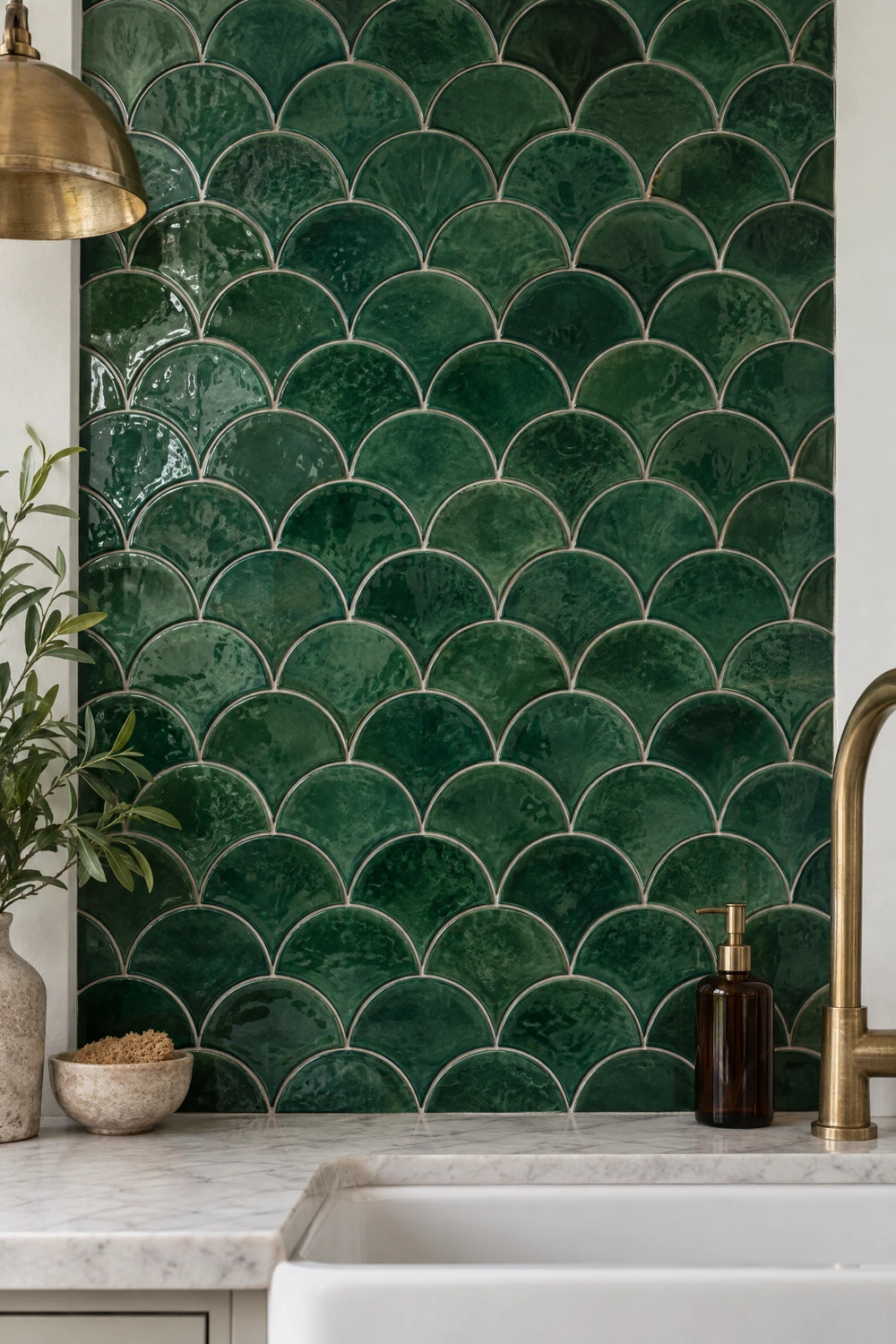
19. Principle: Bold Tile Pattern Concentrated in One Surface. Use Fan or Chevron Tile in a Bathroom or Kitchen Splashback.
The bathroom and kitchen splashback are the two surfaces in a home where geometric tile pattern is both practical and architecturally appropriate, which makes them the natural home for Neo Deco tilework. A fan-pattern, chevron, or stepped hexagonal tile in a jewel tone or in classic black and white concentrated on one splashback or feature wall reads as a designed surface without requiring the entire room to carry the pattern. Pair with unlacquered brass fittings and a plain painted or plastered surface on the remaining walls.
Heads Up: Fan-pattern tiles, often called scallop or fish-scale tiles, are one of the most reproduced Neo Deco tile forms and vary enormously in quality. Handmade ceramic versions have slight surface variation that reads beautifully in raking light. Mass-produced ceramic versions are often flatter and less interesting. The price difference is meaningful but so is the visual result.
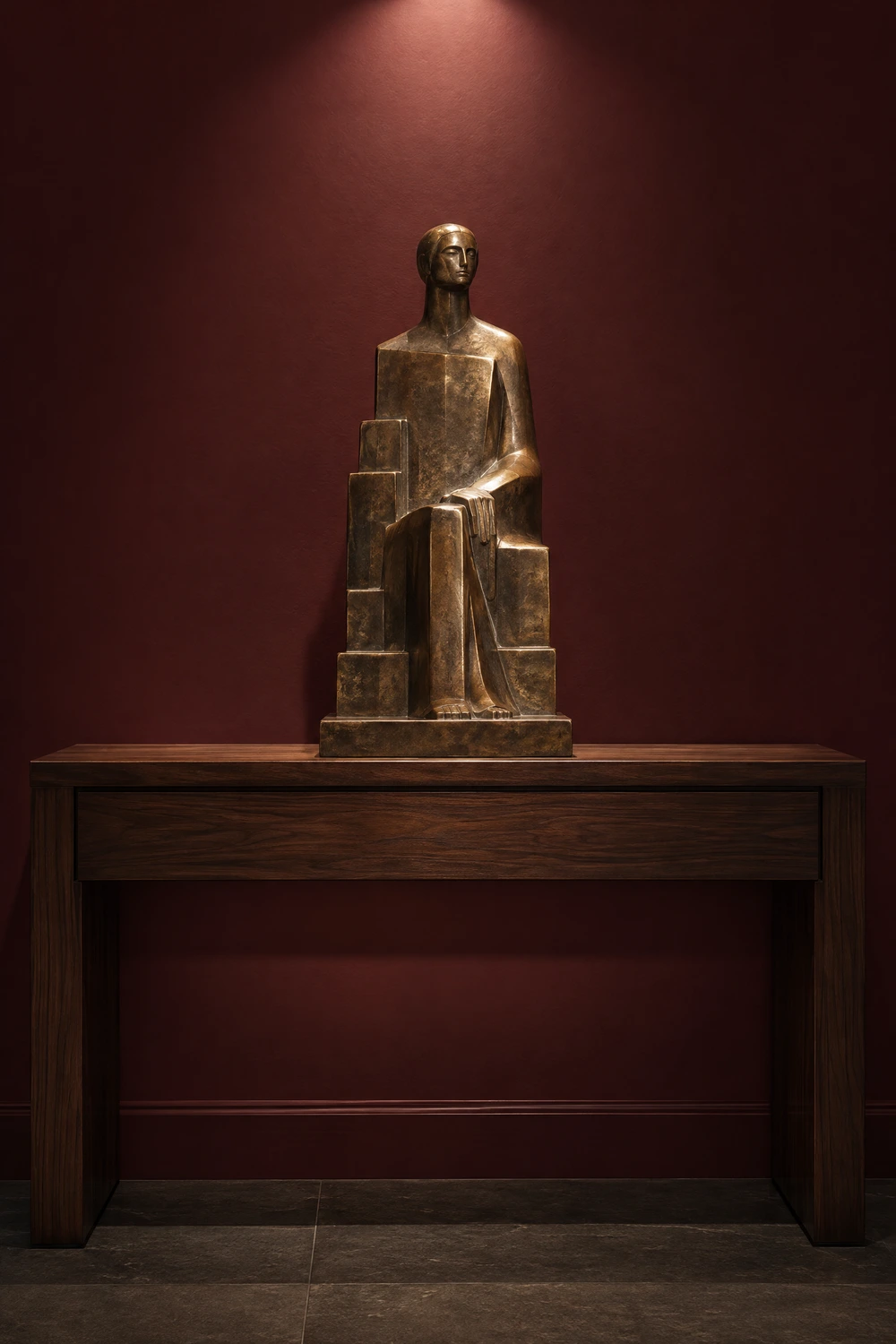
20. Principle: Edit Down to Fewer, Bolder Pieces. Choose One Statement Sculpture Over Many Small Objects.
The most common Neo Deco decorating mistake is over-accessorizing with small Art Deco-influenced objects, geometric trinkets, small brass animals, and faceted vases, none of which individually has the visual weight to hold a room. The principle that actually defines the style is editing down to fewer, bolder pieces where each one earns its place through scale or material quality. One substantial sculpture, a stepped bronze figure, a large geometric ceramic vessel, or an abstract carved stone piece on a console, commands the room in a way that twenty small objects never will.
Designer Advice: Before buying any new object for a Neo Deco room, hold it against the largest piece of furniture in that room and ask whether it reads at a comparable scale. If it disappears visually, it will disappear on the surface too. Neo Deco rewards scale confidence above all else.
Neo Deco: Original Art Deco vs. Neo Deco at a Glance