Most people pin dozens of Afrobohemian rooms and then stand in their own space wondering where to begin. The problem is not taste; it’s knowing which layer to build first. This guide walks you through exactly that, from the wall behind your sofa to the candle burning on your shelf, one intentional layer at a time.
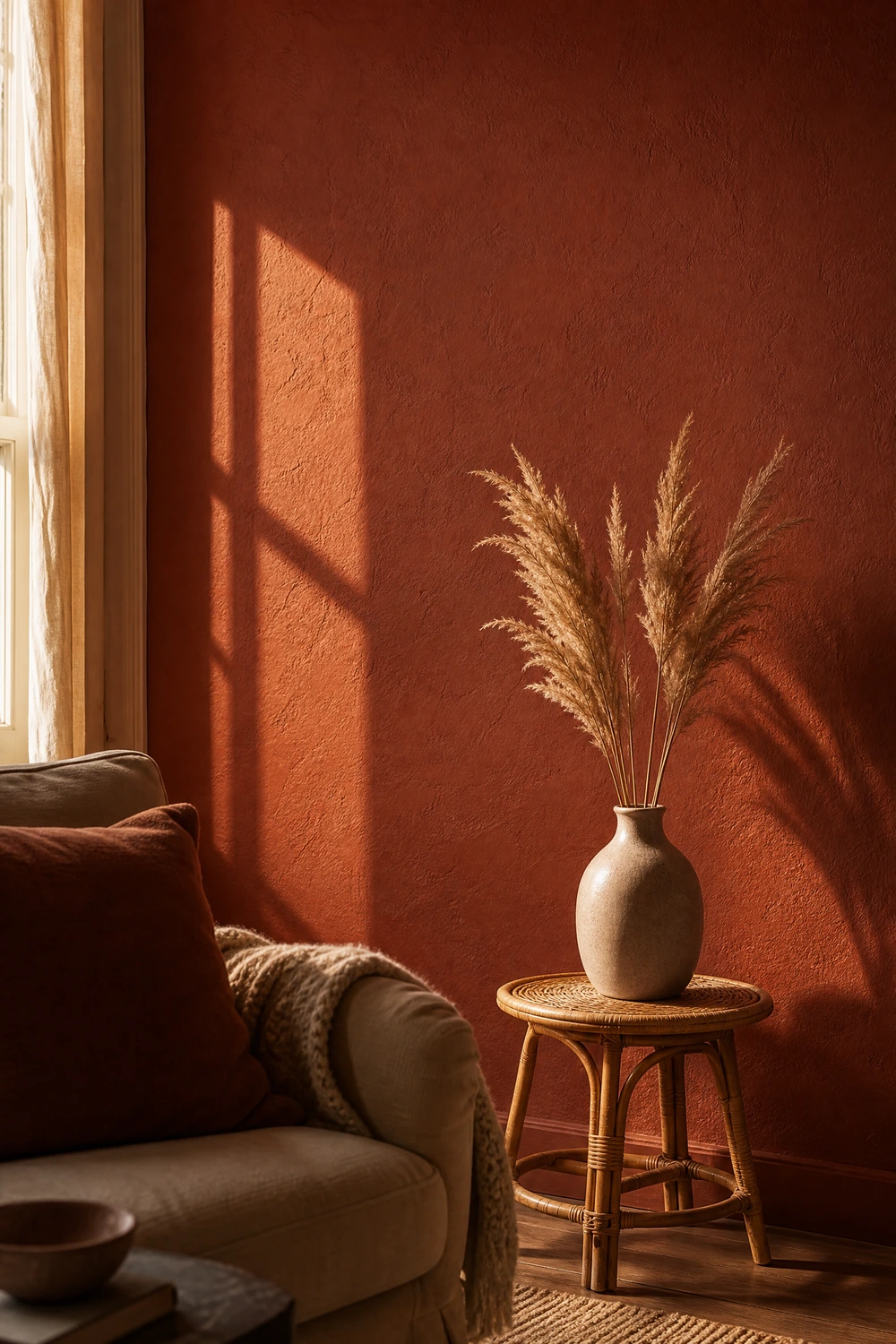
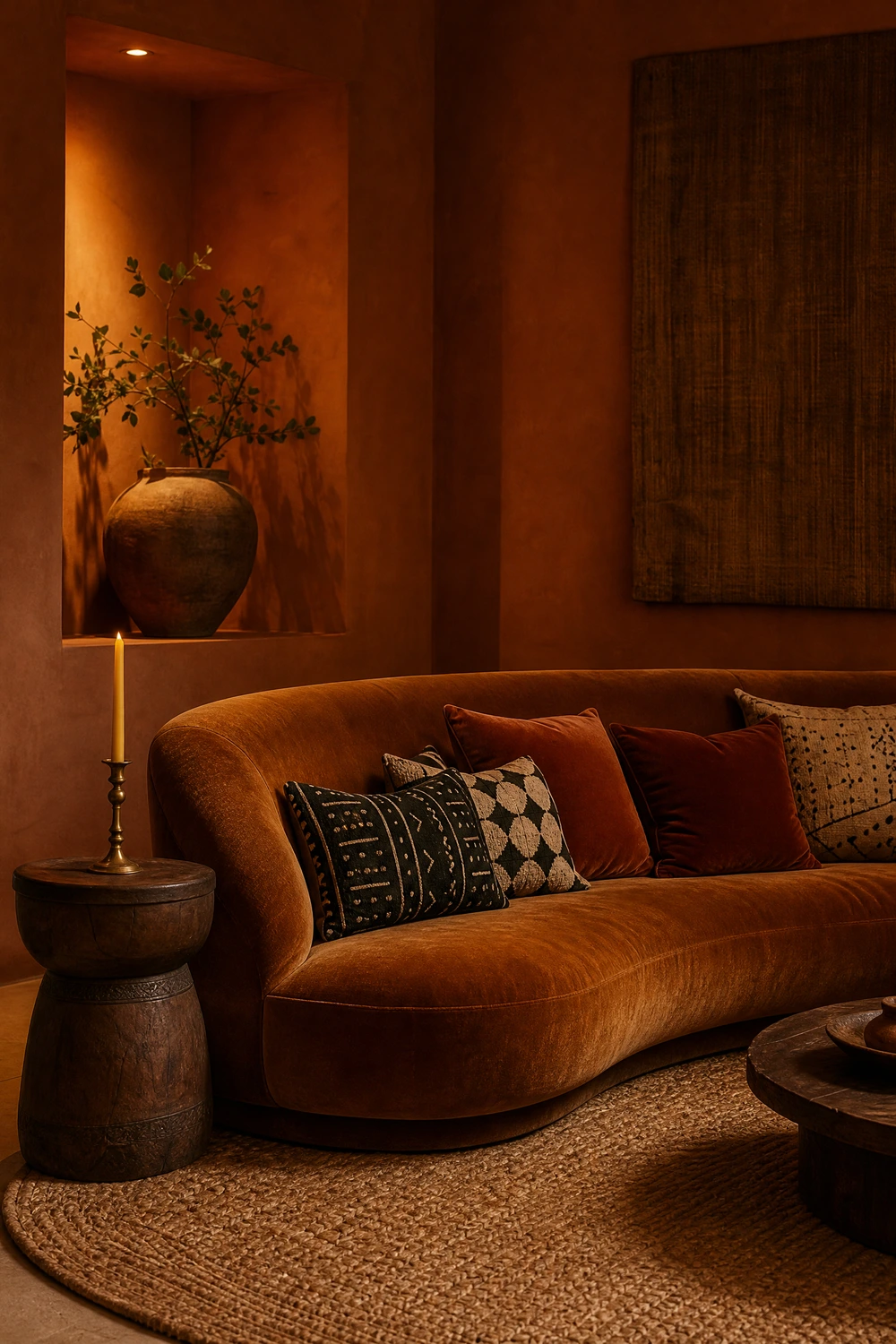
Afrobohemian rooms live and die by color confidence, and the biggest mistake people make is treating terracotta or ochre as an accent rather than a foundation. Pick one wall, go full coverage with a paint like Sherwin-Williams Fired Brick or Benjamin Moore Pueblo, and let your furniture respond to it.
Pro Move: Sample the paint at 12 inches square and live with it for two days in different lighting before committing, as warm earth tones shift dramatically from morning to candlelight.
A flat painted wall is the baseline; a limewash finish is what gives Afrobohemian spaces that ancient, layered quality you cannot quite replicate with standard paint. The uneven absorption creates natural variation across the surface, and it pairs beautifully with woven textiles layered in front of it.
Designer Advice: Romabio Classico Limewash in Arancio or Avorio applies with a damp brush in two coats and costs around $80 for a feature wall, a fraction of what a textured plaster specialist would charge.
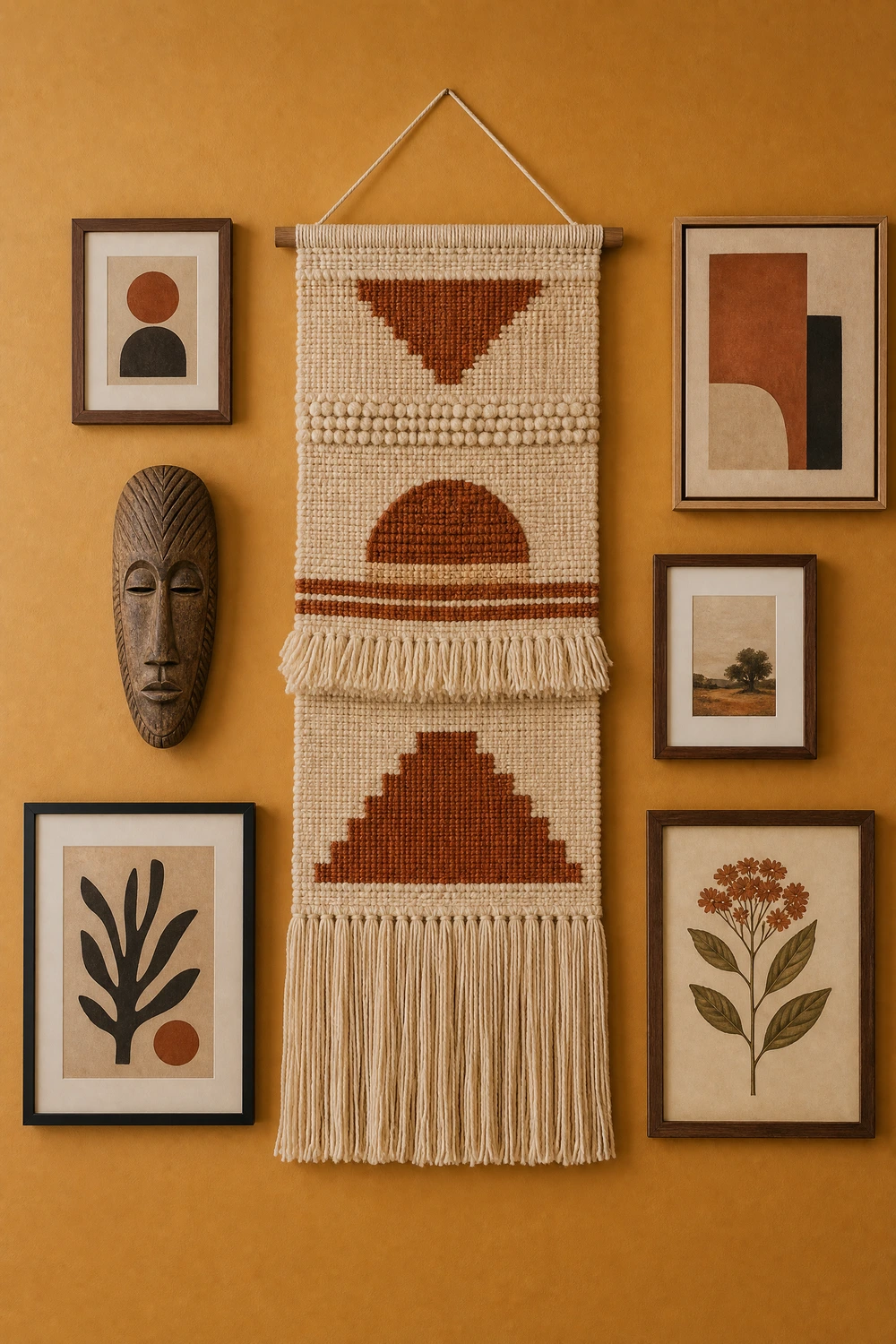
Instead of hanging art in a grid, anchor your gallery wall with one large woven wall hanging or framed mudcloth panel at center, then cluster smaller framed prints, masks, and botanical sketches around it organically. The textile absorbs sound, adds depth, and keeps the wall from feeling flat even when the art is minimal.
Reality Check: Gallery walls only feel curated when there are deliberate gaps between pieces. Aim for 2 to 3 inches of breathing room between frames rather than packing them tightly together.
4. Use Adire Fabric as Wallpaper on a Single Panel
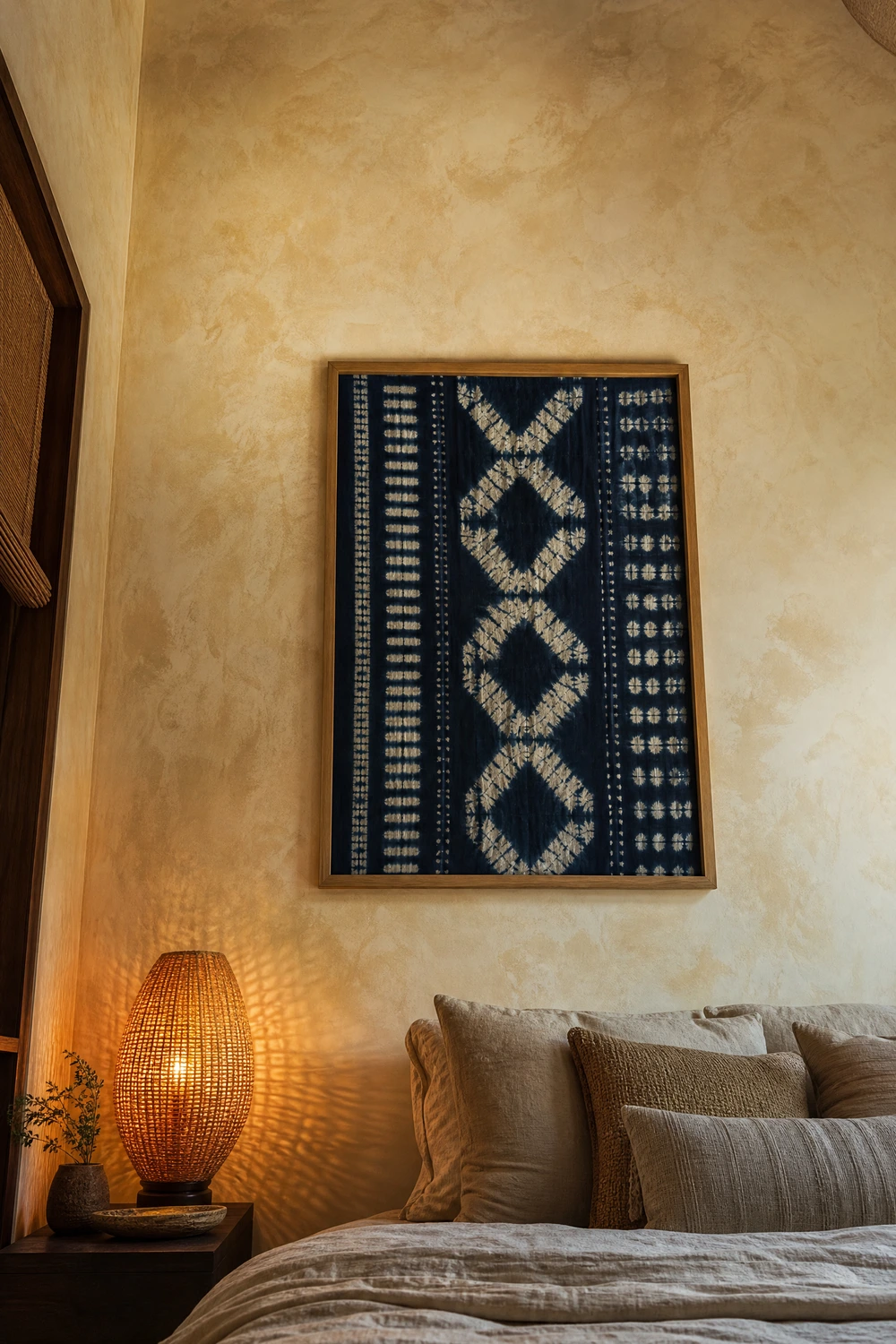
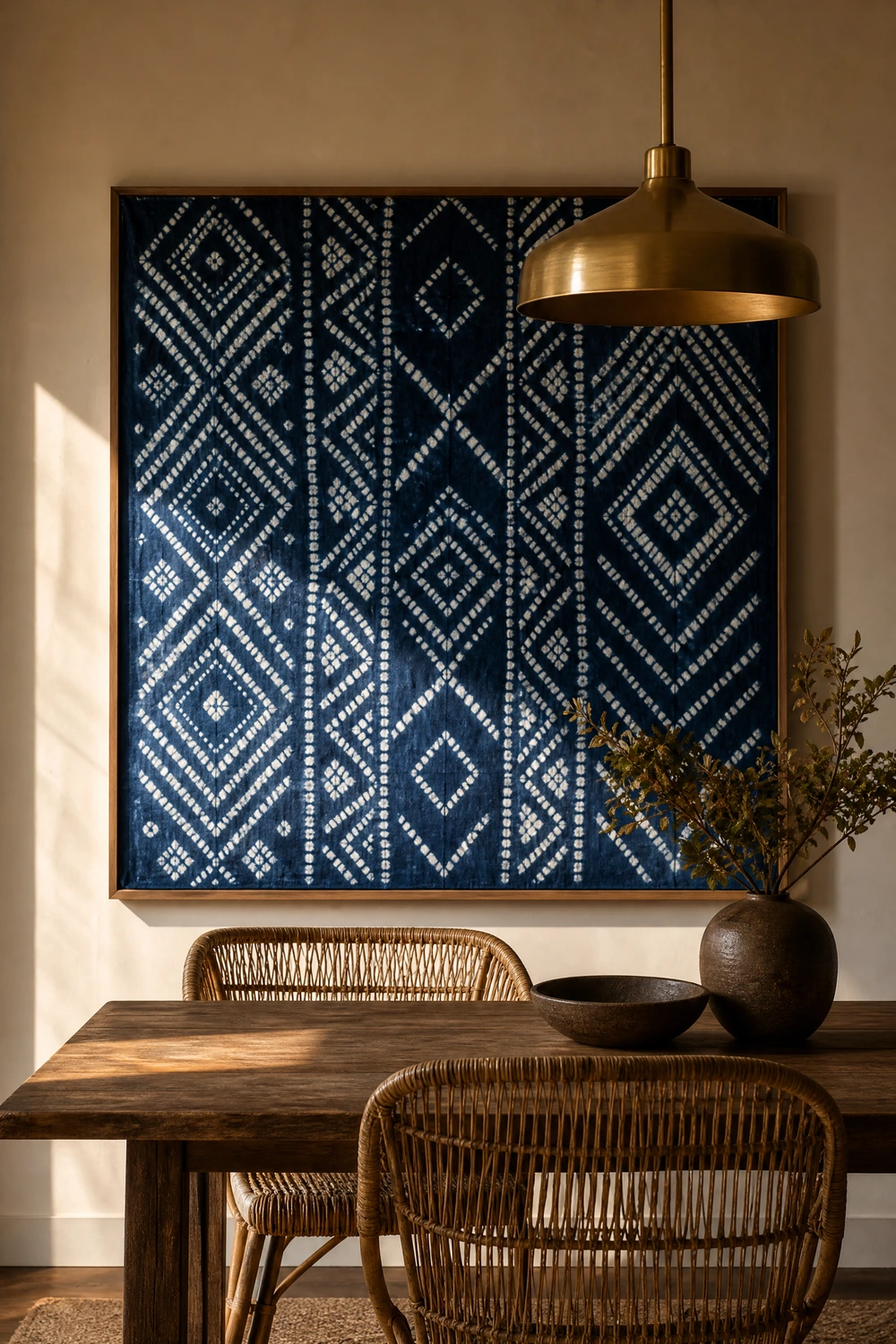
Adire is a West African resist-dye fabric from the Yoruba tradition, and its deep indigo and white patterning is one of the most visually striking elements you can introduce to a room. Stretch a large panel over a thin wooden frame and hang it like a statement piece rather than tacking it to the wall, so the textile keeps its integrity and can be repositioned.
Heads Up: Adire fabric searches are up 130% on Pinterest this year, so sourcing from Nigerian or Ghanaian artisan markets online will get you authentic pieces and support the communities who created this tradition.
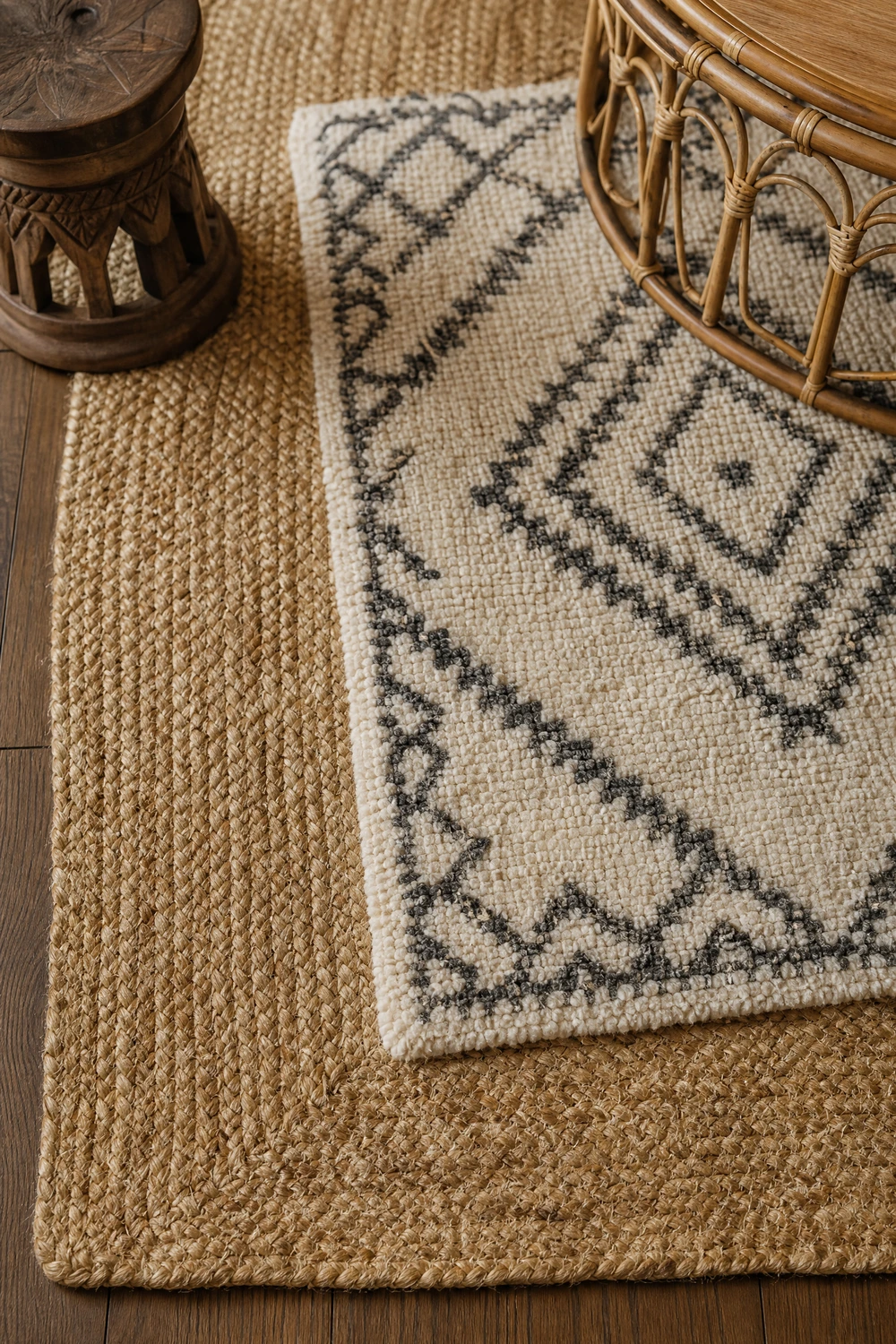
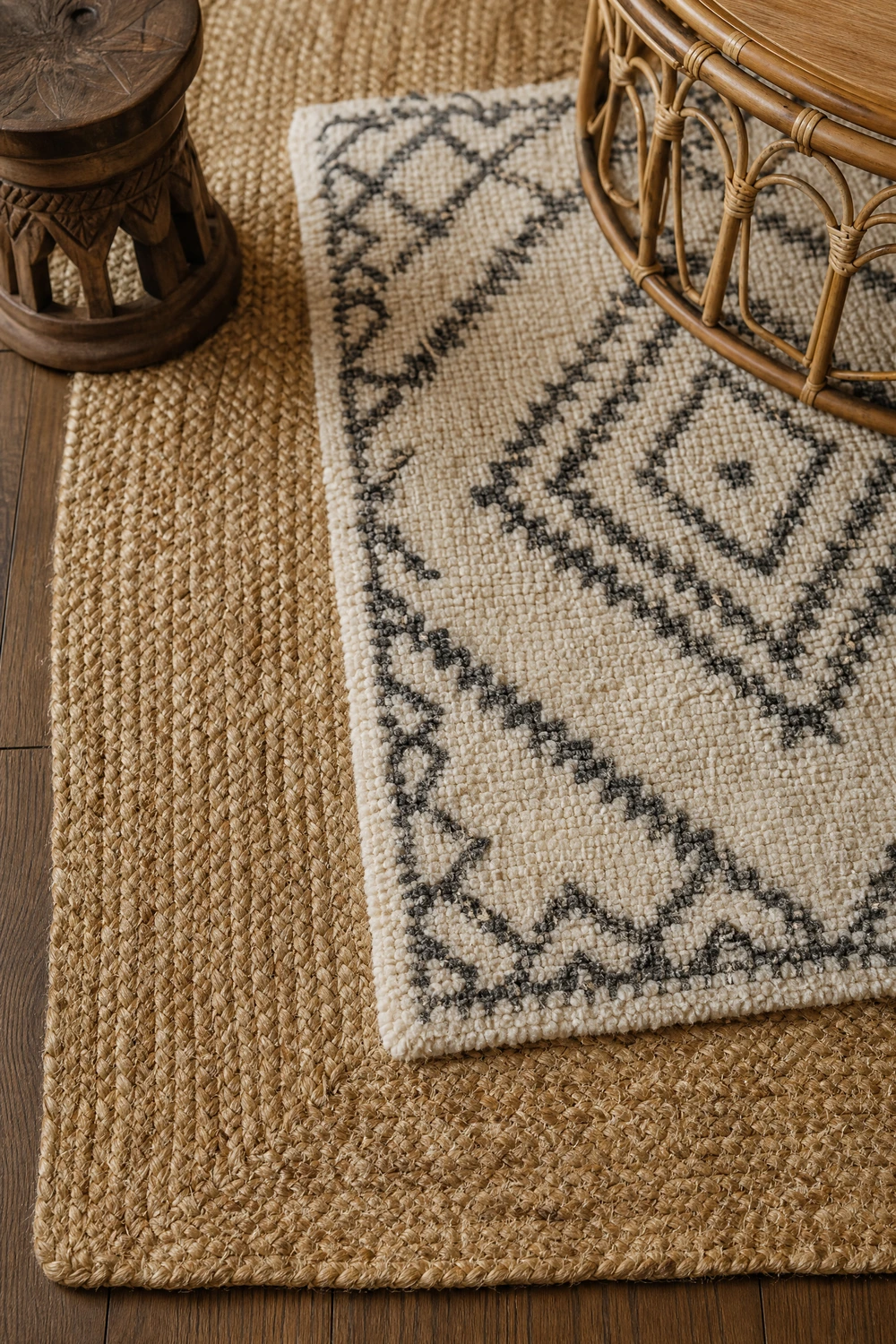
Jute is the quietest, most grounding element you can put on a floor, and in practice it works exactly like a canvas: everything layered on top reads more intentionally because the base is calm. Go large, at least 8×10 in a living room, so the furniture legs sit on it rather than floating around it.
Pro Move: Size is the most common rug mistake in any style. If you are between sizes, always go larger. A 5×7 rug in a living room reads like a bath mat.
A hand-knotted Berber rug placed over the jute base introduces the geometric, diamond-pattern vocabulary of North African textile design and instantly adds the layered warmth that defines the Afrobohemian floor. The contrast between the flat jute and the pile of the Berber creates real visual texture rather than a flat, decorated surface.
Designer Advice: Place the top rug slightly off-center or at a subtle angle rather than perfectly aligned. It reinforces the collected, over-time feel of the space rather than making the floor look styled.
7. Add a Vintage Kilim Runner in a Hallway or Kitchen
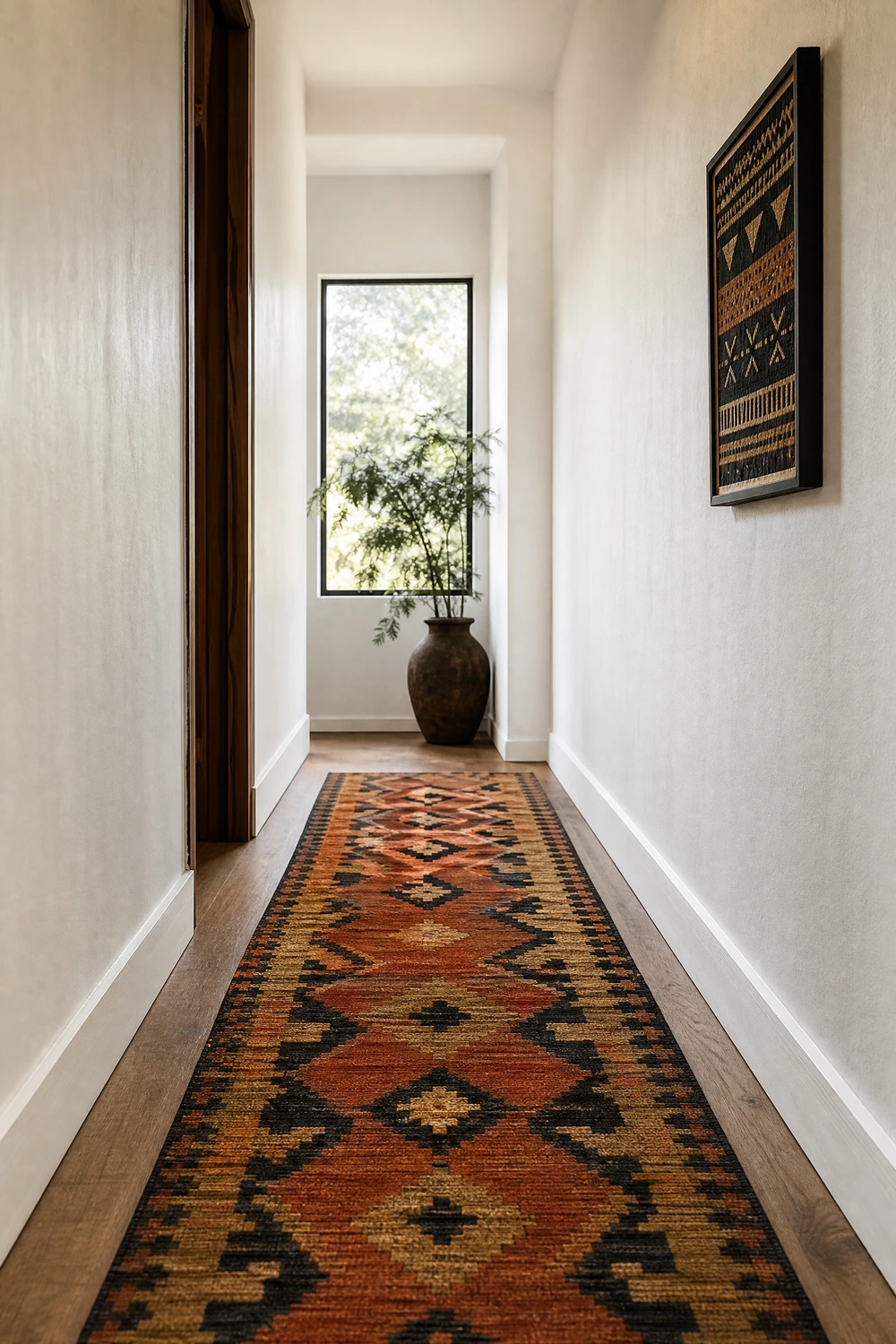
Runners are one of the most underused tools in Afrobohemian decorating, and a flat-weave kilim with its bold tribal geometry introduces pattern to transitional spaces that usually get ignored. Look for vintage kilims in rust, camel, and black colorways, which bridge the warm African earth tones and the looser boho palette without clashing.
Quick Tip: Vintage kilim runners are consistently some of the best-value buys on Etsy and in thrift stores, and a well-worn piece often has more visual character than a brand-new one.
Afrobohemian furniture avoids the rigid, boxy silhouettes of contemporary minimalism. Low seating, whether a floor cushion arrangement, a curved rattan sofa, or a velvet loveseat close to the ground, creates the relaxed, ground-connected feeling central to the aesthetic. The visual weight stays low, which makes rooms feel larger and more welcoming.
Reality Check: Very low seating can be hard on older backs and knees. If it is your main sofa, add firm cushions that raise the seat height by 3 to 4 inches without sacrificing the silhouette.
9. Bring In a Carved Wood Side Table or Drum Stool
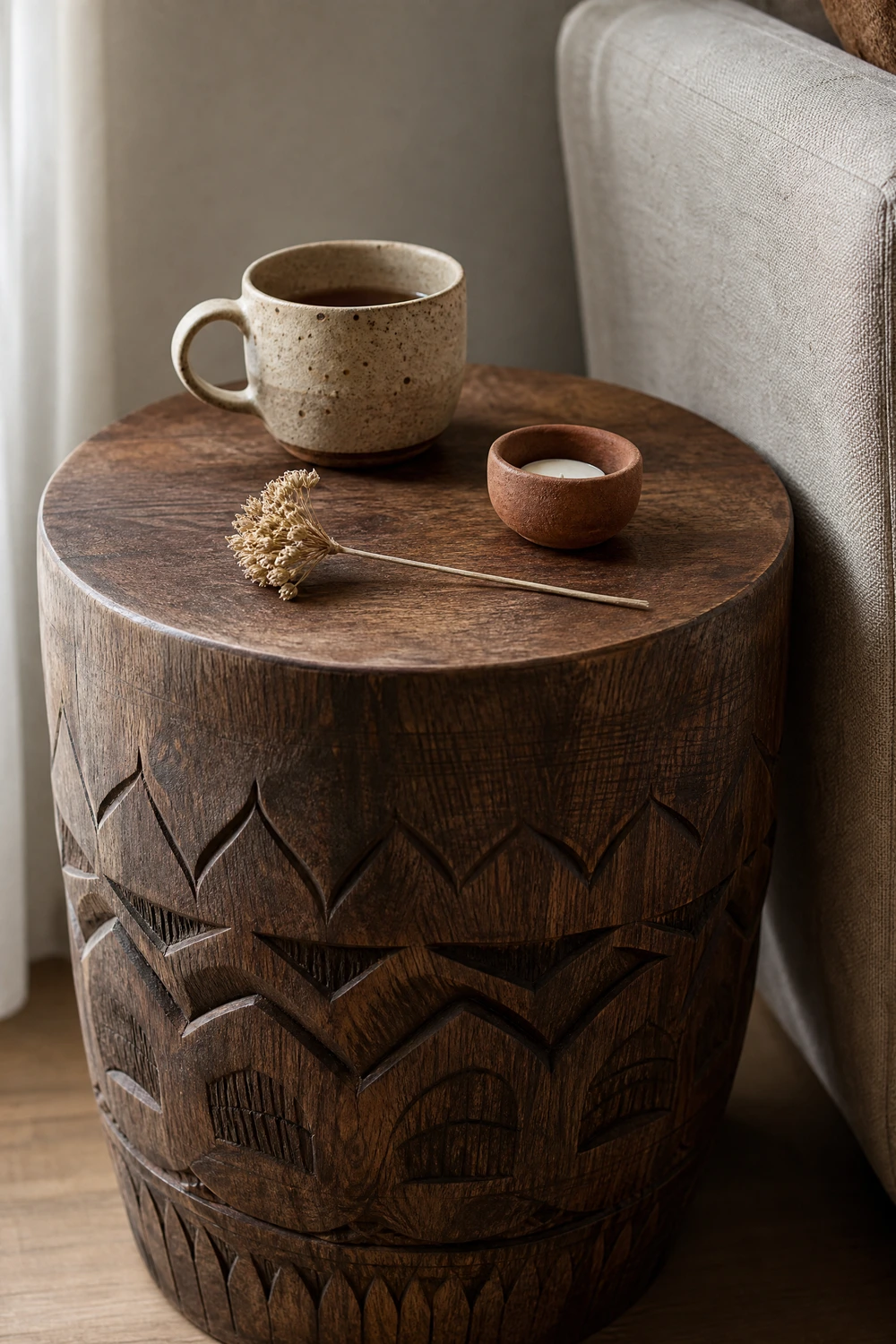
Shapely side tables with hand-carved detailing or drum stools modeled on traditional African percussion instruments serve the dual purpose of being both functional and sculptural, exactly the quality that keeps Afrobohemian rooms from feeling like furniture showrooms. The organic grain variation in dark mango or acacia wood also adds warmth that manufactured pieces cannot replicate.
Designer Advice: A drum stool used as a side table next to a sofa is one of the most versatile Afrobohemian moves, and it can migrate to a bedroom, a bathroom, or a corner reading spot without ever looking out of place.
10. Use a Rattan or Wicker Accent Chair as a Statement Piece
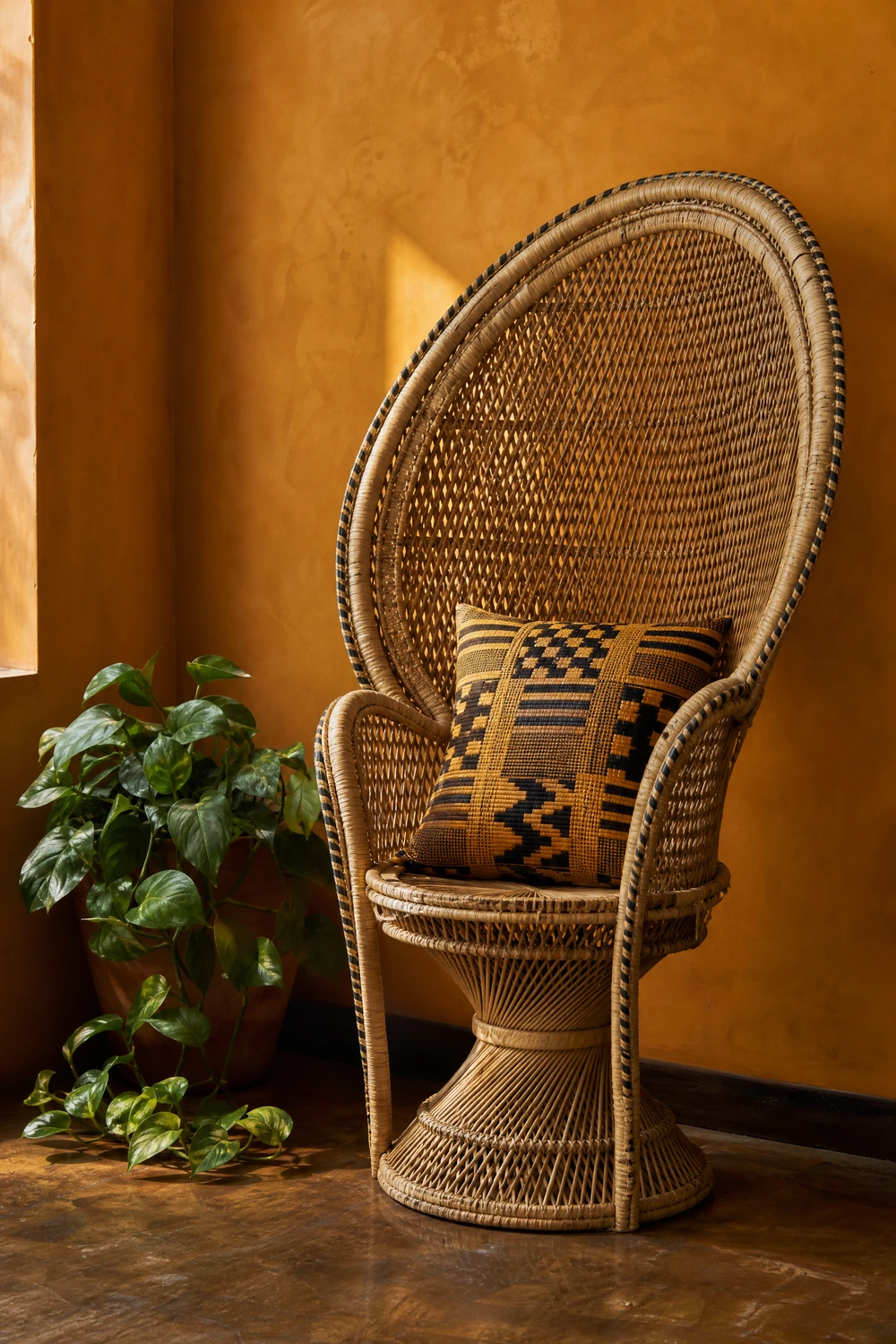
Rattan accent chairs are having a well-deserved resurgence in interior design, and they belong in Afrobohemian spaces because they bring natural material, lightweight visual texture, and an artisan quality that mass-produced chairs cannot match. Pair with a mudcloth or Kente-print cushion to ground the rattan in the broader cultural palette.
Quick Tip: Rattan chairs look best when given enough space to breathe. Position it at least 18 inches from the nearest wall so its sculptural shape reads clearly rather than getting lost.
11. Mix Eras: Pair a Vintage Wooden Credenza With Modern Soft Furnishings
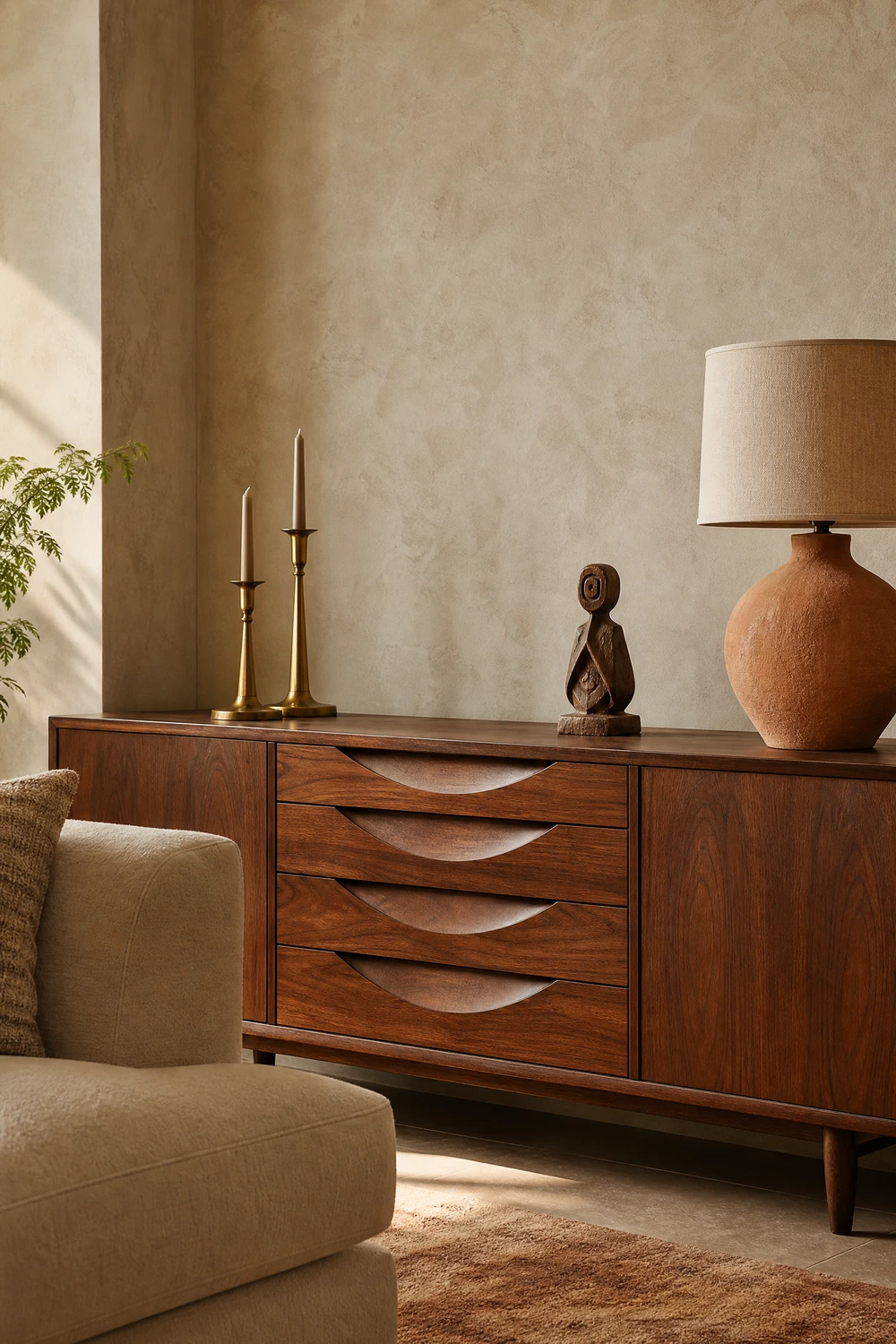
One of the principles that separates a genuinely Afrobohemian room from a decorated one is the presence of furniture that looks collected over time rather than purchased in a set. A 1970s credenza in walnut or teak, sourced from an estate sale or secondhand marketplace, pairs surprisingly well with a contemporary linen sofa when the color palette holds the room together.
Heads Up: Check the structural integrity of secondhand credenzas before buying, as warped drawers and loose joints are common and can be expensive to repair if they are not factored into your budget.
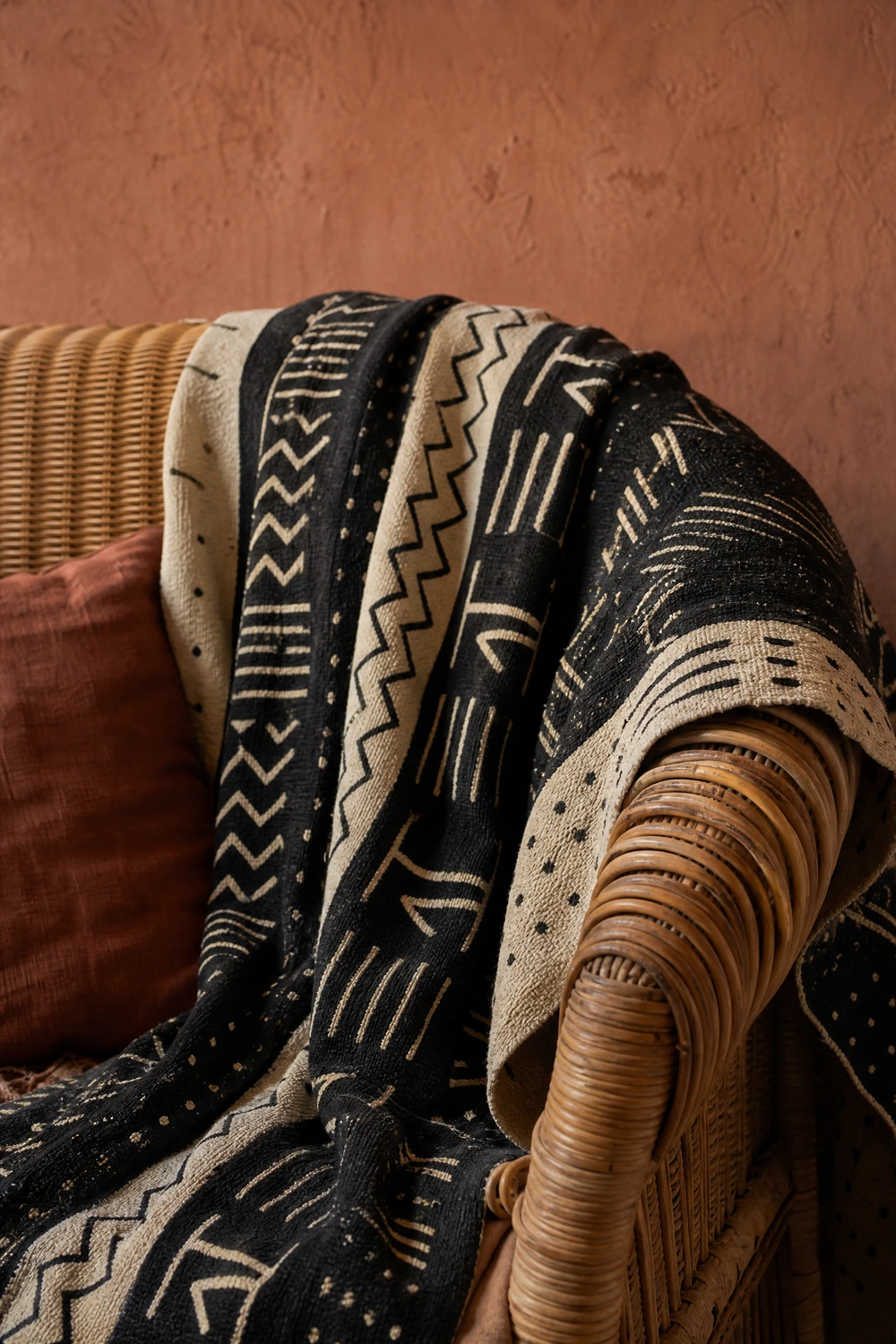
Mudcloth, or bogolanfini, is a hand-dyed cotton fabric from Mali with bold geometric symbols in earthy cream and black, and it is one of the most widely recognized visual signatures of the Afrobohemian aesthetic. A single large throw over the arm of a sofa does more to define the room’s identity than a dozen smaller decorative additions.
Pro Move: Source mudcloth from Mali-based artisan cooperatives or Black-owned home goods shops online. The patterns carry symbolic meaning specific to different Malian communities, and that story is part of what makes the piece worth having.
13. Use Kente Cloth Cushion Covers as Color Anchors
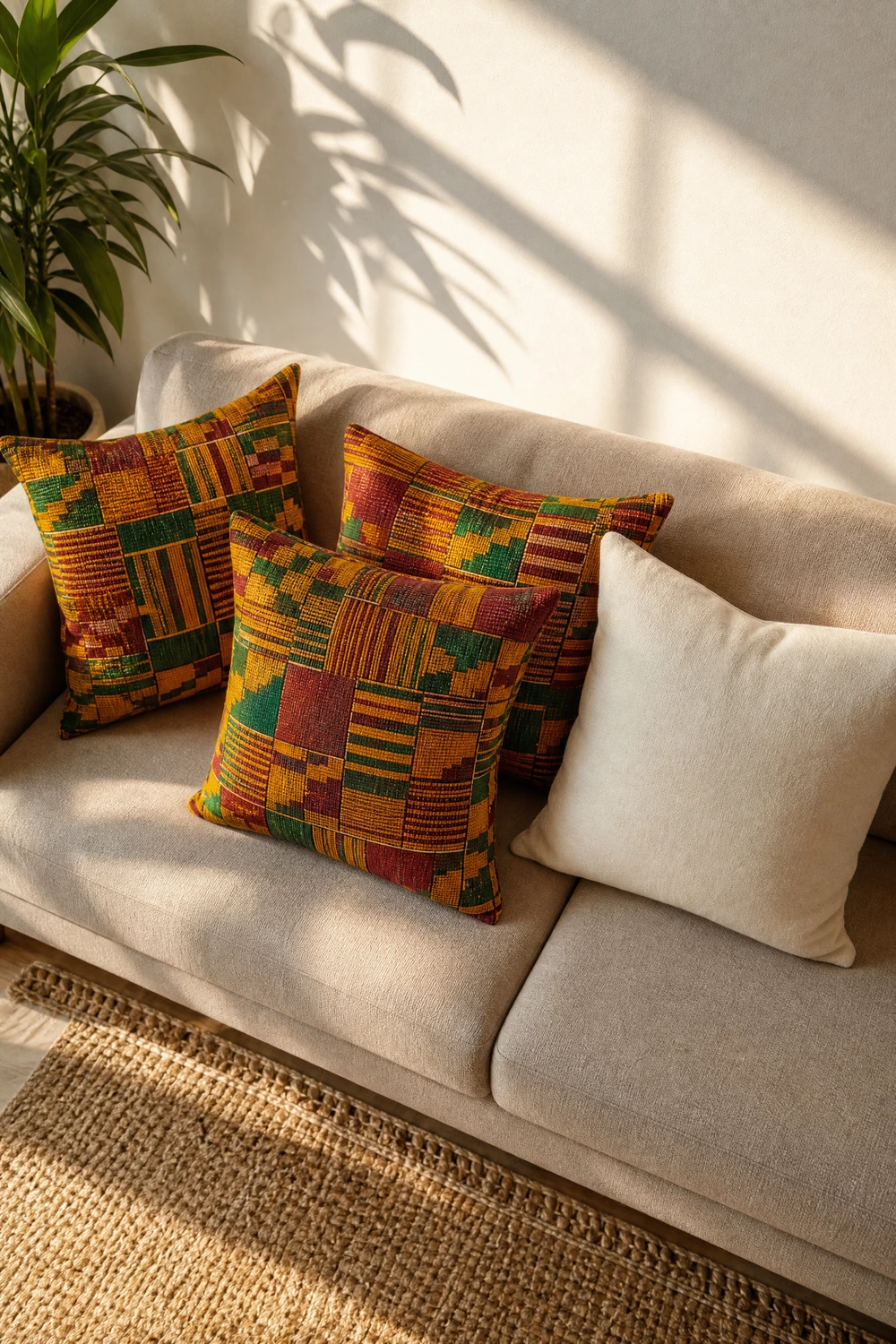
Kente cloth from Ghana carries one of the most recognizable geometric pattern languages in West African design, with its interlocked woven strips in gold, green, red, and black. Two or three Kente cushion covers on a neutral linen sofa will organize the room’s color story without you needing to paint a single wall.
Designer Advice: Limit Kente-print cushions to two or three in a seating arrangement. Beyond that the pattern competes with itself rather than leading the eye.
14. Hang a Macrame Wall Hanging for Organic Texture
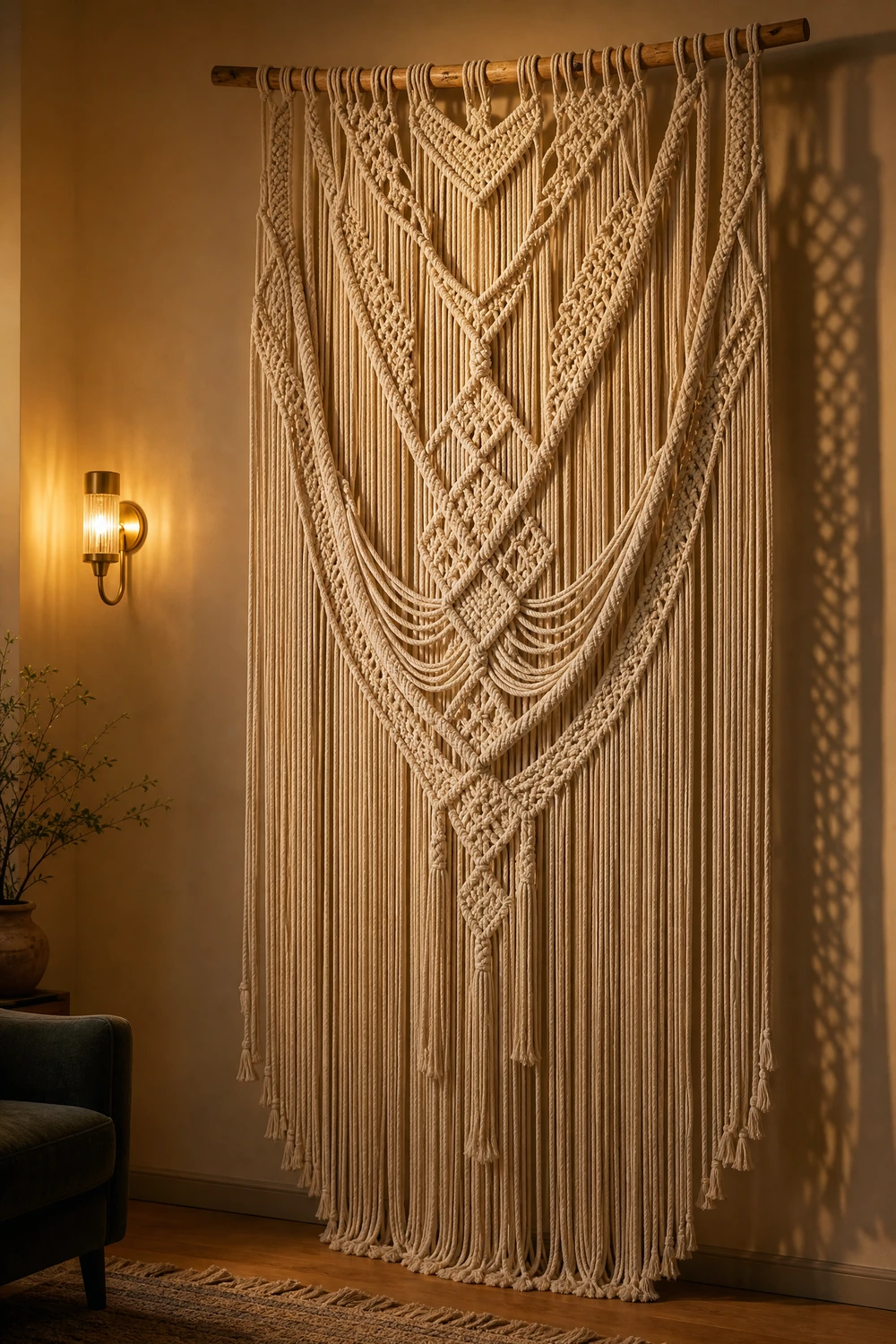
Hand-knotted macrame in natural cotton rope bridges the bohemian side of this aesthetic, bringing organic fiber texture to a wall that paint alone cannot achieve. In an Afrobohemian context it works best when scaled generously, a small macrame piece reads as craft, while a large-scale floor-to-ceiling piece reads as architecture.
Quick Tip: Hang macrame panels slightly away from the wall on small wooden dowels so the piece casts a soft shadow behind it, which adds depth and dimension especially in the evening.
15. Layer Throw Pillows in Complementary Textures, Not Matching Prints
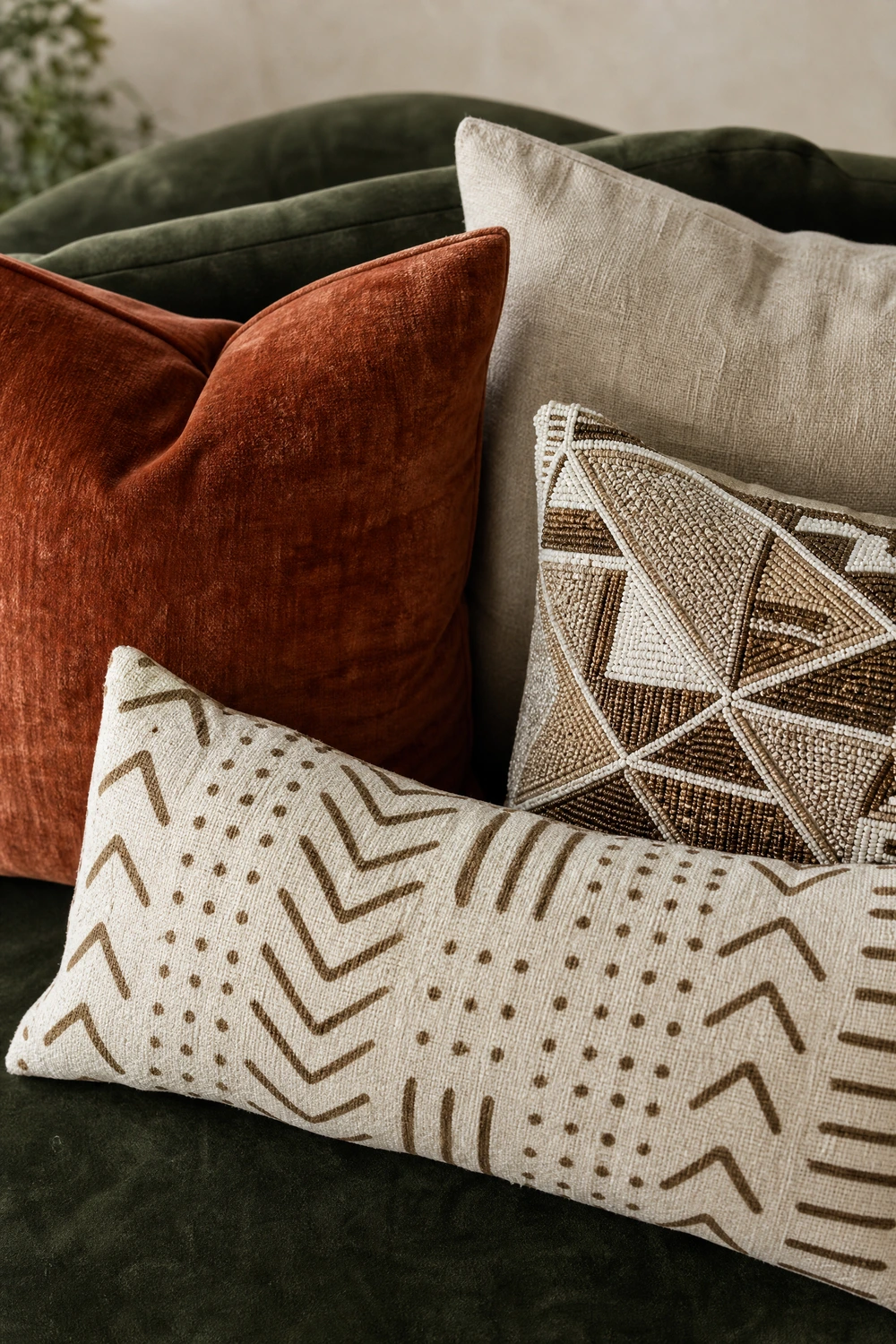
The common pillow mistake in Afrobohemian spaces is buying a matching set, which immediately kills the collected feeling the style depends on. Instead, mix a mudcloth lumbar with a solid rust velvet pillow, a beaded Zulu-inspired cover, and a plain cream linen, letting texture rather than pattern coordinate them.
Reality Check: Odd numbers always work better with pillow arrangements. Three or five feels curated, while two or four tends to look deliberately matched, which is the opposite of the Afrobohemian spirit.
Afrobohemian Textile Cheat Sheet
Textile
Origin
Best Used As
Budget Range
Mudcloth (Bogolanfini)
Mali
Throw, cushion cover, wall panel
$30–$150
Kente cloth
Ghana
Cushion covers, table runner
$25–$100
Adire fabric
Nigeria (Yoruba)
Wall panel, curtain, tablecloth
$20–$80
Kuba cloth
DR Congo
Framed art, small accent pillow
$40–$200
Berber/Beni Ourain
Morocco
Layered floor rug, wall hanging
$150–$800+
Layer 5: Objects and Art: Cultural Storytelling
16. Group Woven Baskets in Odd Numbers at Varying Heights
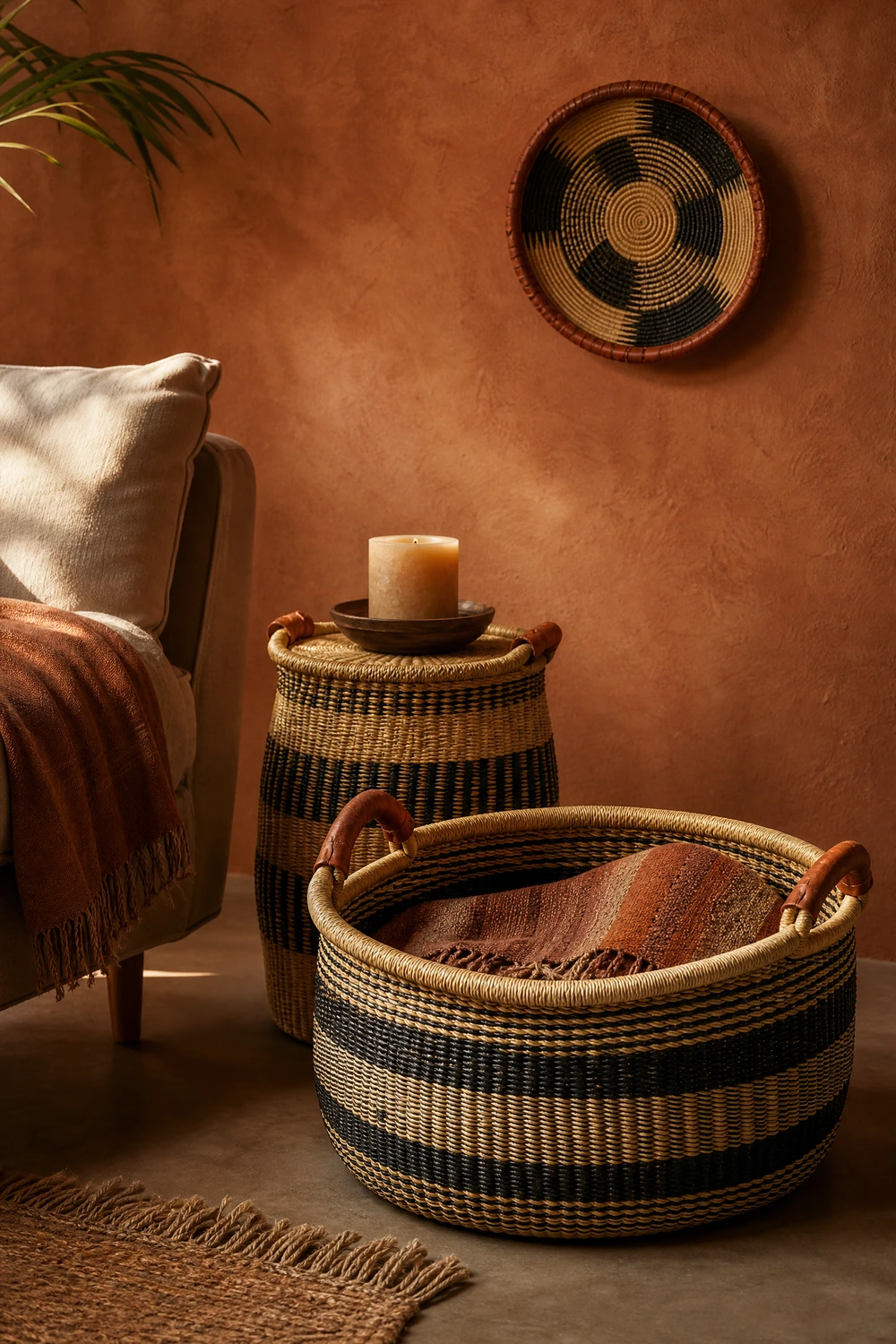
Ghanaian bolga baskets, hand-woven from elephant grass and leather by artisans in the Upper East Region, are one of the most functional and visually rich objects in this aesthetic. Use one large floor basket as a blanket store, a medium one as a side table surface, and a smaller one mounted flat on the wall as a sculptural element.
Pro Move: The organic irregularity of hand-woven baskets is a feature, not a flaw. No two will be identical, and that variety in shape and pattern is exactly what gives the grouping its visual interest.
17. Display African Masks and Sculptures With Breathing Room
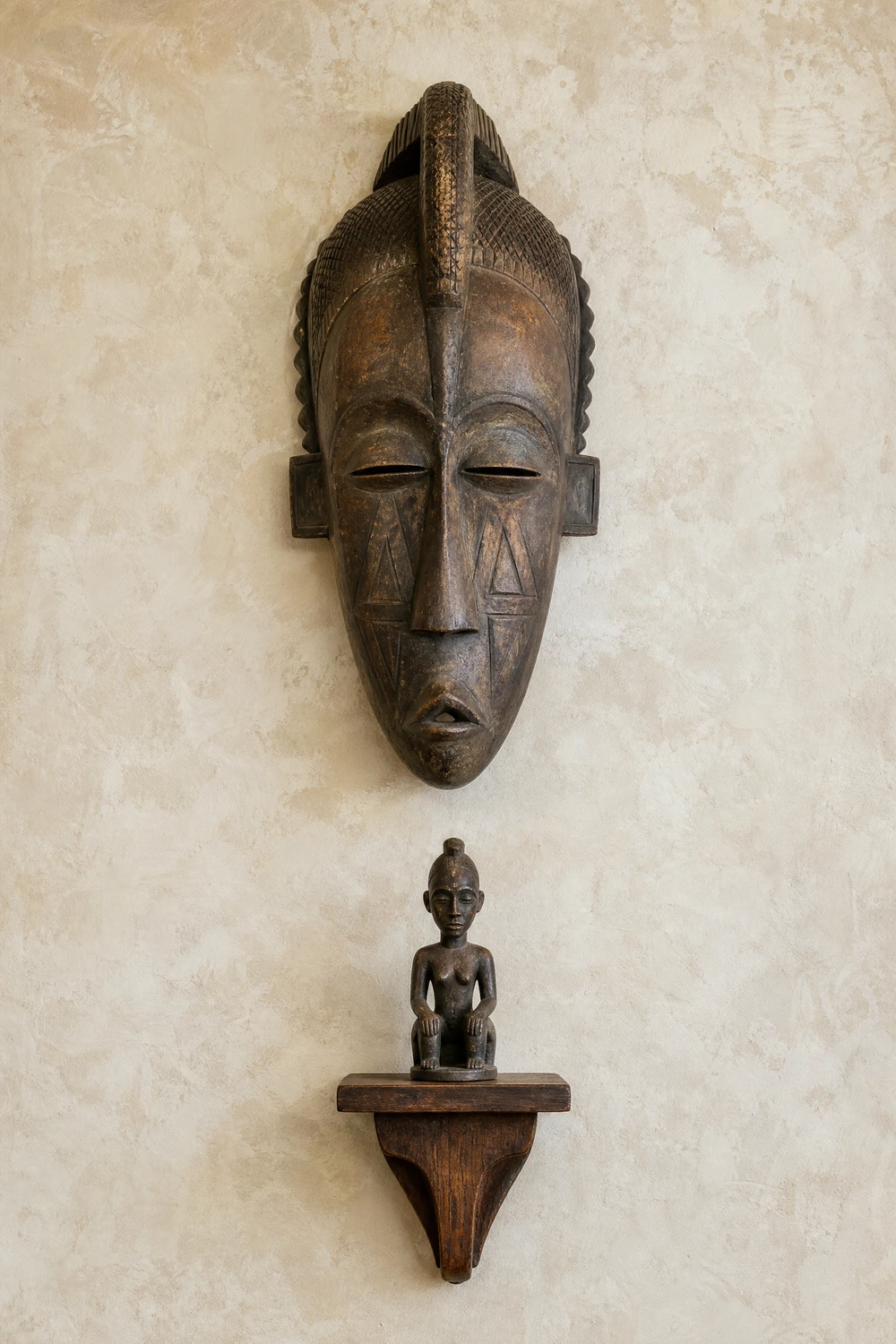
Carved wooden masks, bronze Benin-style heads, or Senufo figural sculptures carry enormous visual weight, and in practice they are most powerful when displayed with deliberate space around them rather than clustered with other objects. One mask on a clean section of wall tells a story; five masks competing for attention tell nothing.
Heads Up: If you are not from the culture that created a particular mask or sculpture, research its original context before displaying it, as some pieces carry ceremonial significance that changes how they should be treated in a home setting.
18. Build a Bookshelf Vignette With Ceramics, Books, and a Plant
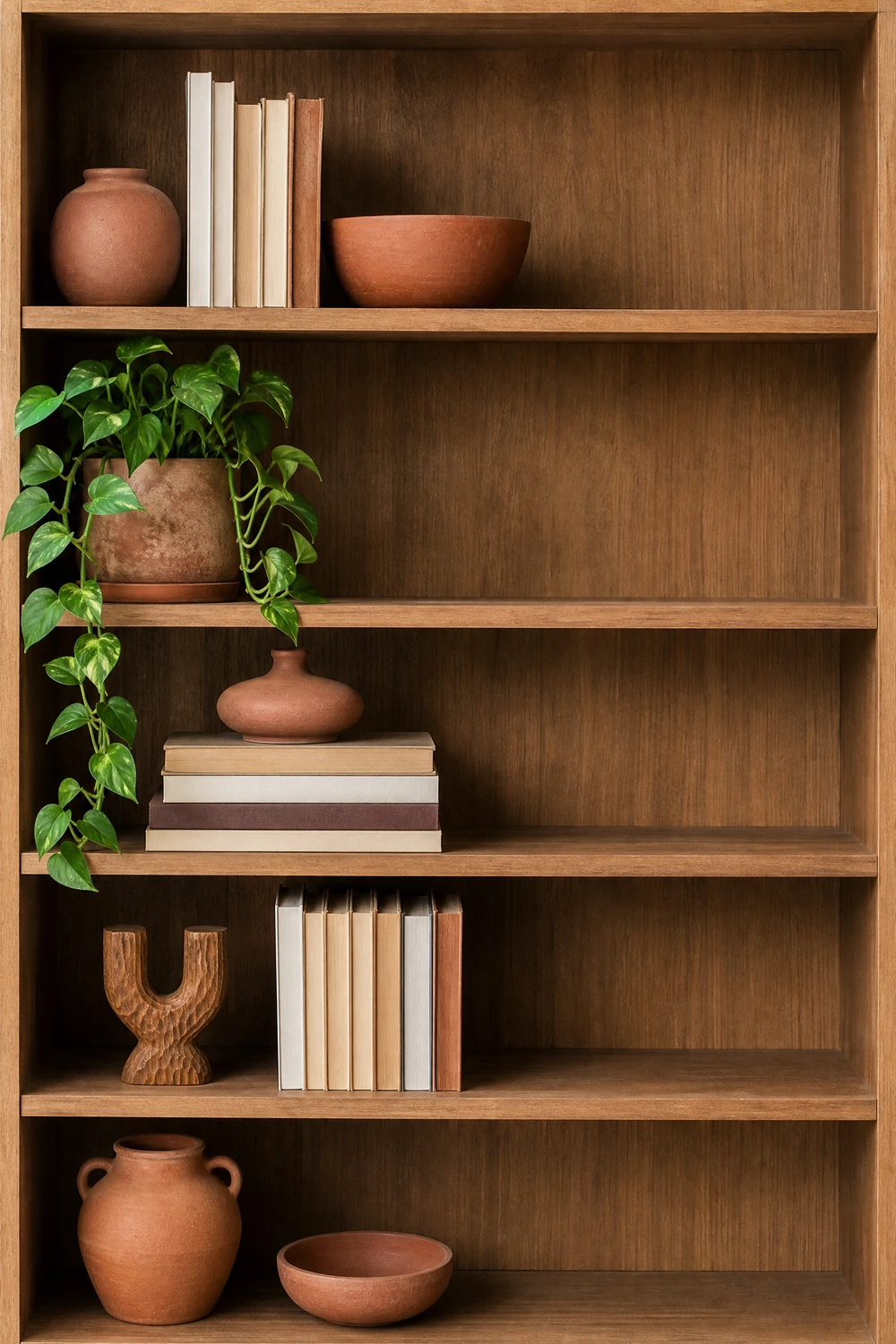
A well-built bookshelf moment in an Afrobohemian room mixes terracotta ceramics, stacked art and design books with their spines facing out, a trailing or sculptural plant, and one or two meaningful small objects at different heights. The key is negative space. Leave at least a third of the shelf breathing room so the vignette reads as curated rather than stored.
Designer Advice: Turn a few books so their pages face out instead of the spine, and the creamy white edge of book pages adds an unexpected neutral texture that grounds the other colors on the shelf.
19. Frame Ethiopian or West African Textile Fragments as Art
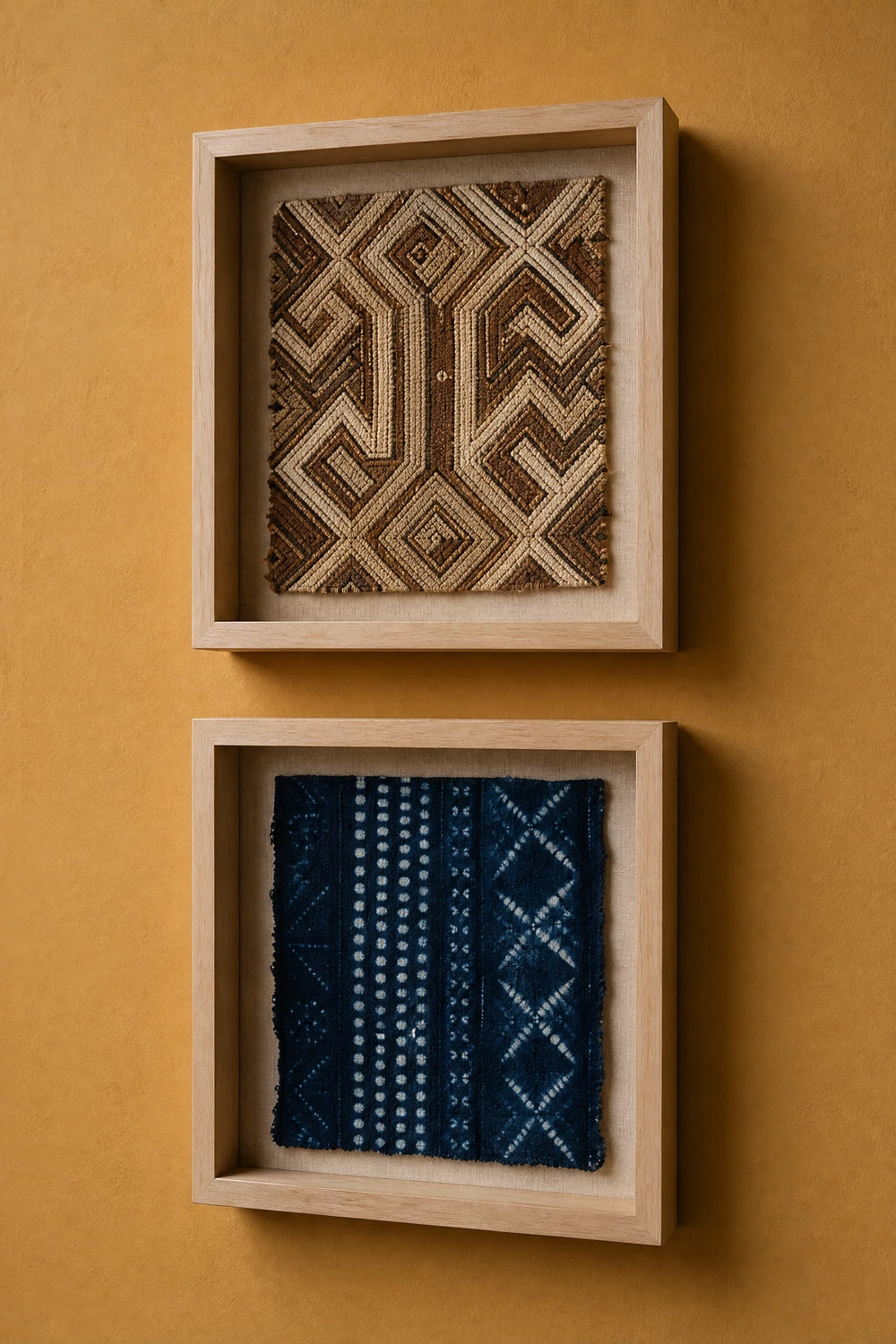
Not every piece of art needs to be a painting. A framed fragment of Ethiopian Habesha kemis fabric, a section of Kuba cloth, or an indigo-dyed Adire panel behind glass makes for striking wall art that carries genuine cultural weight and costs a fraction of what original paintings do.
Quick Tip: Use a deep shadow box frame rather than a flat frame so the textile has room to show its dimensional texture rather than being pressed flat against the glass.
20. Style a Coffee Table Vignette With Intentional Objects
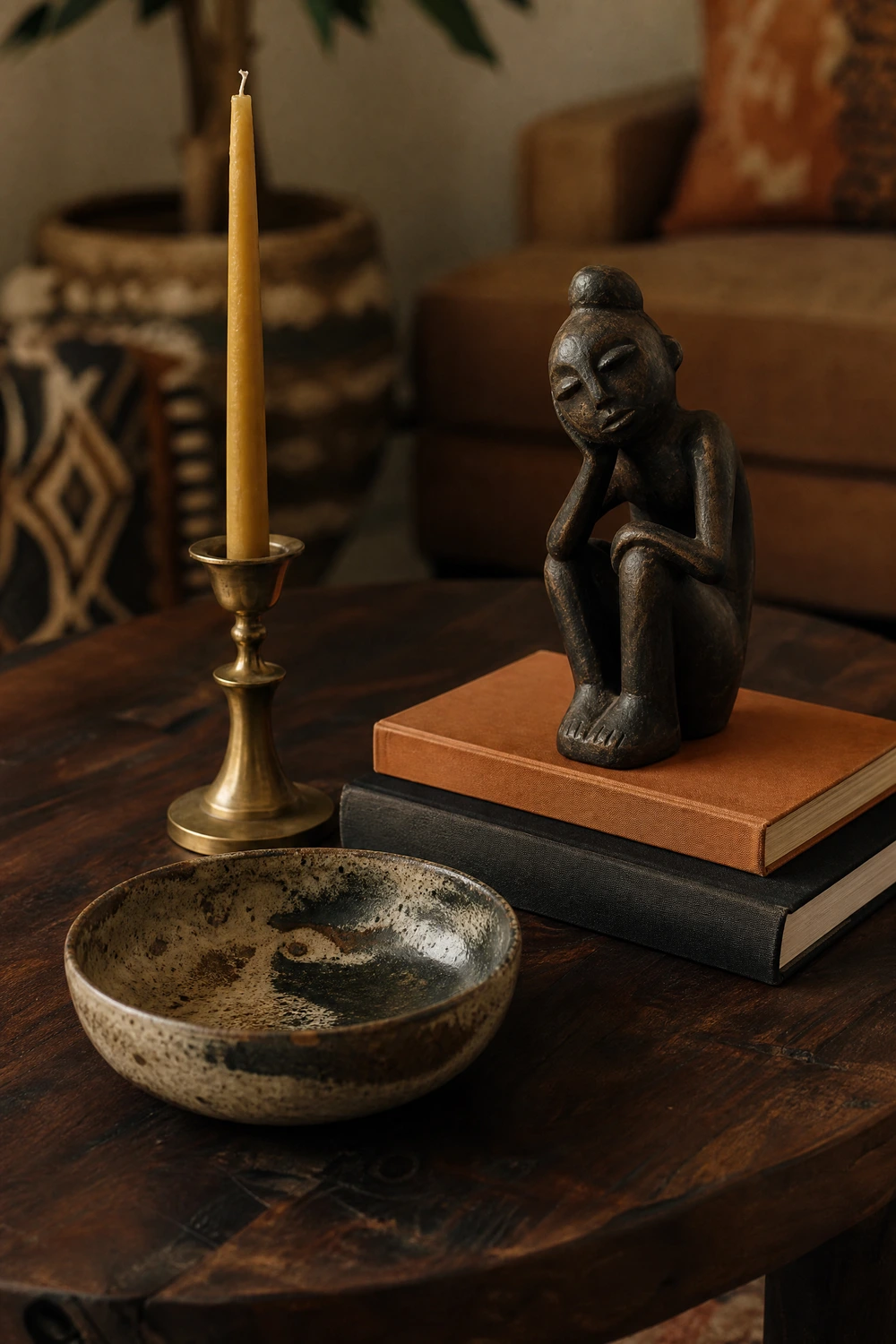
The coffee table is one of the most revealing surfaces in any room, and in an Afrobohemian space it should carry a small collection of meaningful objects: a hand-thrown ceramic bowl, a single statement candle in a wooden holder, a stack of art books, and perhaps a small sculptural piece or beaded object. Nothing fussy, nothing coordinated.
Reality Check: Coffee table vignettes look best when at least one object has a different visual weight from the others. Mix a tall candle holder with a low flat bowl and a medium-height sculpture so the eye moves rather than staying level.
Layer 6: Light and Life: Warmth and the Living World
21. Use Layered Lighting Instead of Overhead Alone
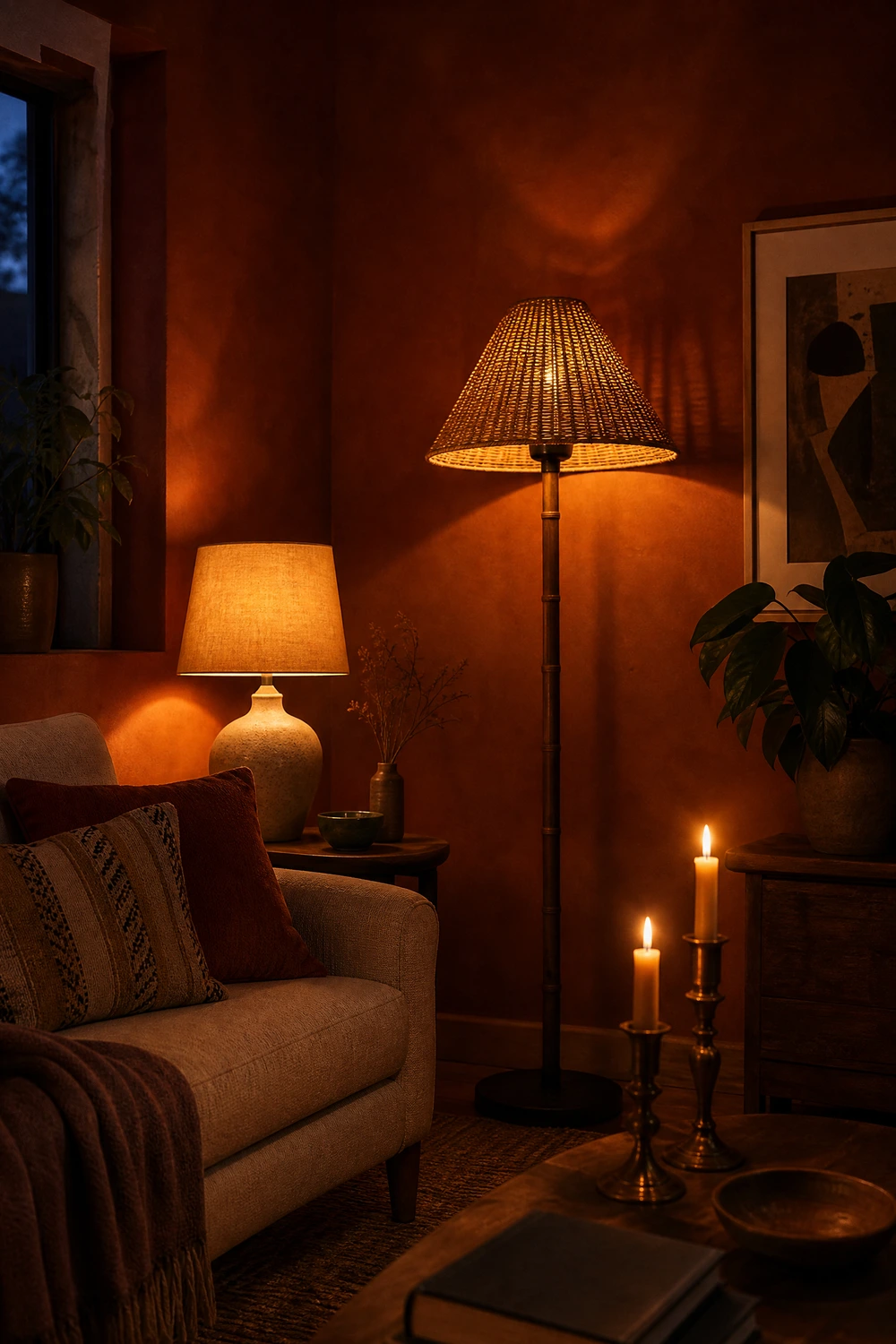
Afrobohemian rooms feel warmest when lit in layers: a floor lamp with a woven rattan shade in one corner, a table lamp with a ceramic base on a side table, and candles at low level for evening. Overhead lighting flattens the textures and handmade quality that make this style so rich, so it should always be dimmable or secondary.
Pro Move: A single Edison-bulb pendant in a woven sisal shade over a dining table is one of the most affordable ways to add Afrobohemian warmth to a space that otherwise reads generic, at around $40 to $80 at most home goods stores.
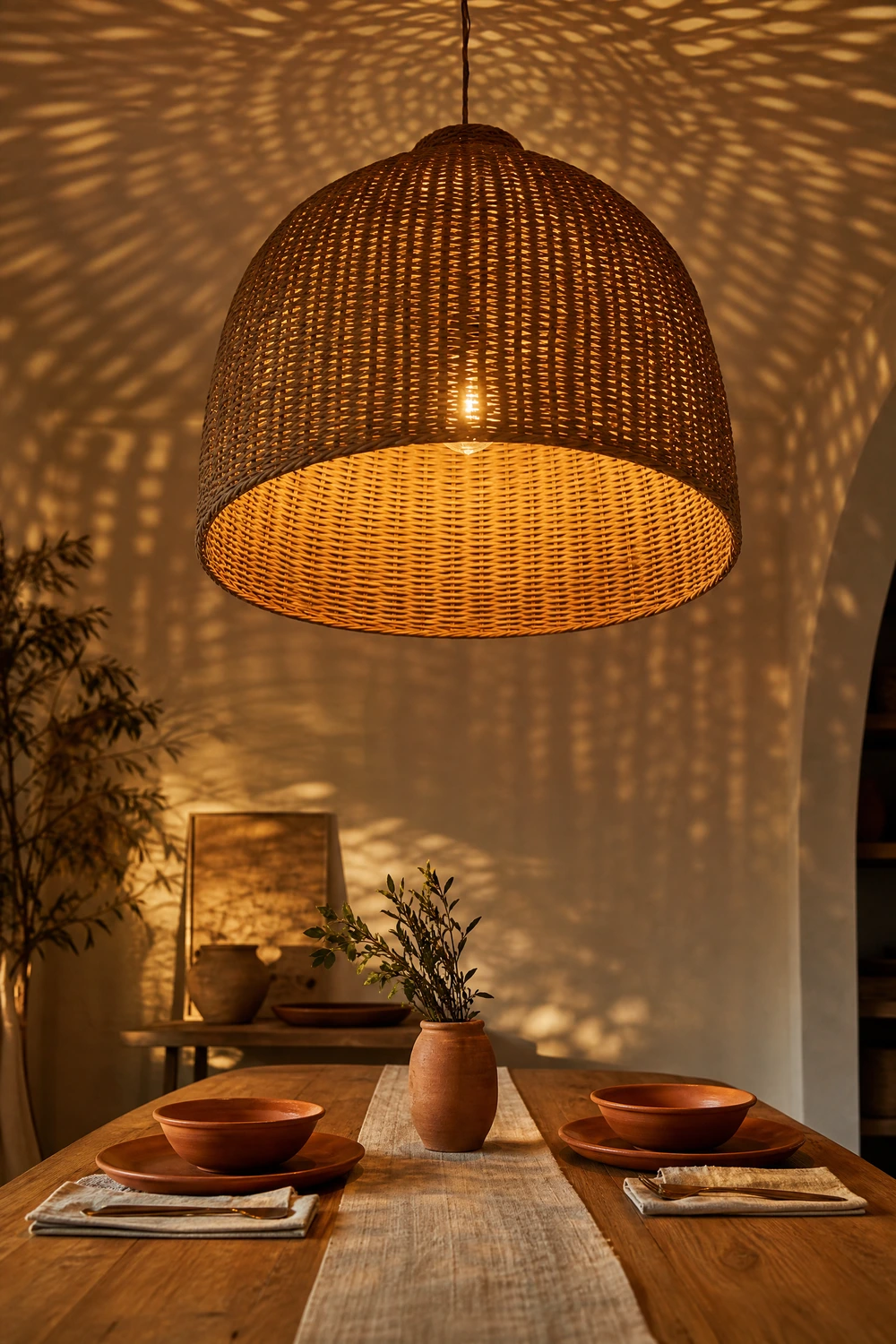
Woven pendant lights cast some of the most beautiful patterned light in any interior, as the gaps in rattan or seagrass weaving project organic dappled light onto surrounding walls that no solid shade can replicate. Choose a pendant with a warm Edison bulb at around 2700K for the amber quality that suits this aesthetic best.
Designer Advice: Hang a rattan pendant lower than you think is comfortable. Aim for around 30 to 36 inches above a dining table rather than the standard 48 inches , and the warmth and intimacy of the light changes completely.
23. Place a Large Structural Plant in a Hand-Thrown Terracotta Pot
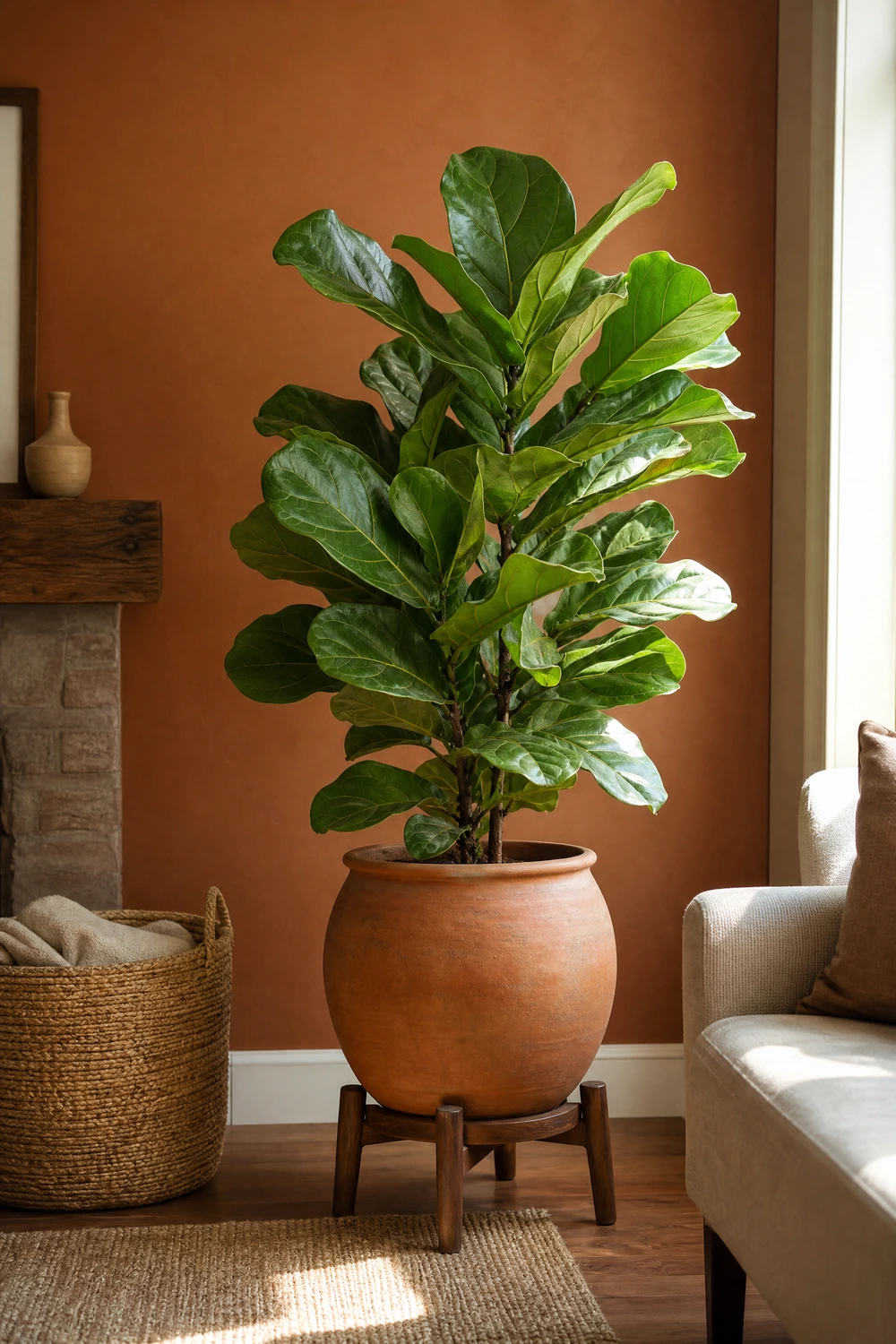
Plants are non-negotiable in Afrobohemian spaces, but it’s worth knowing that one large structural plant in a beautiful vessel contributes more to the room than five small ones scattered across shelves. A fiddle leaf fig, olive tree, or bird of paradise in a hand-thrown terracotta or ceramic pot reads as sculpture and life at the same time.
Quick Tip: Elevate your large plant on a wooden plant stand or stacked books so it reads at mid-height rather than sitting on the floor, as it changes the visual balance of the room significantly.
24. Use Candles and Incense as Sensory Atmosphere Layers
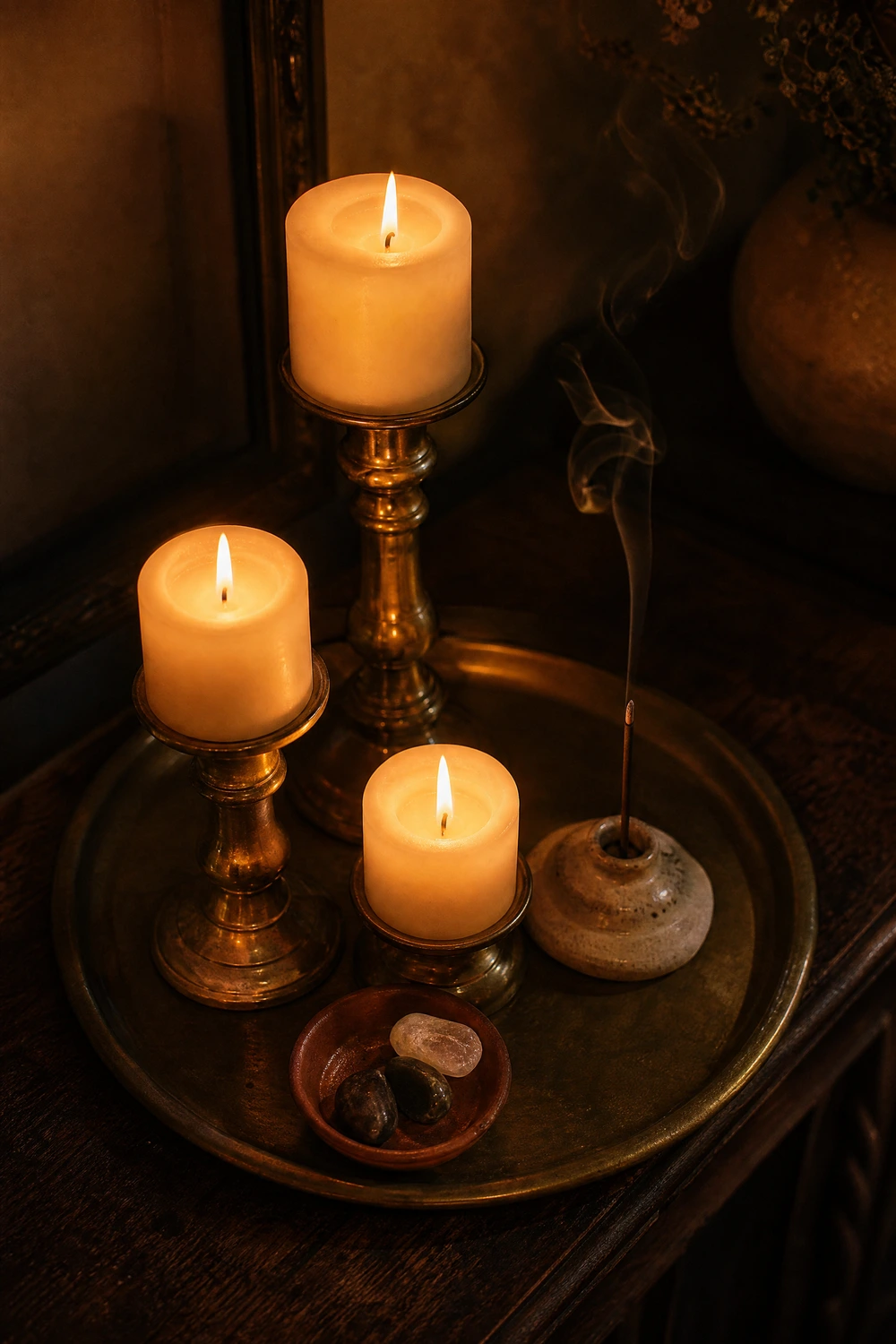
Afrobohemian design engages all the senses, not just vision, and the combination of warm candlelight and a wood-based or earthy incense fragrance like oud, sandalwood, or myrrh deepens the atmospheric quality of the space in a way that no decor object alone can achieve. Place candles in brass or ceramic holders at varying heights across different surfaces.
Heads Up: Real oud incense is one of the most expensive fragrance materials in the world. Look for oud-blended incense sticks from Nile Valley or Arabian fragrance suppliers as a cost-effective and still authentic alternative.
25. Add Bamboo or Beaded Curtains as a Room Divider
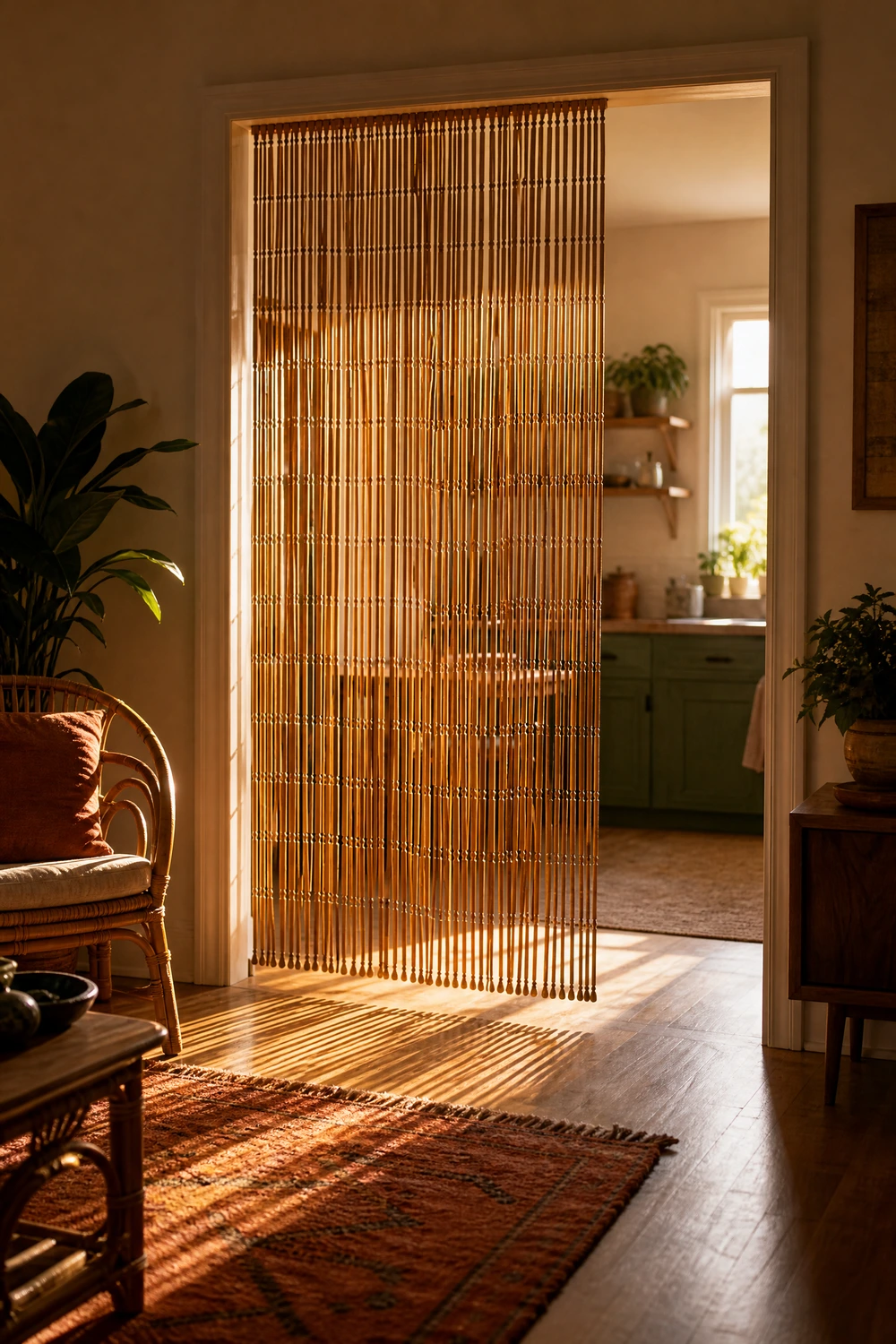
Bamboo beaded curtains are one of the most searched Afrobohemian elements on Pinterest right now, and they work particularly well as casual room dividers between a living area and a kitchen or bedroom alcove. The way they move and catch the light adds kinetic energy to the space without closing it off completely.
Designer Advice: Bamboo beaded curtains can feel cheap if the beads are thin or lightweight. Look for curtains with substantial bamboo tubes rather than plastic beads, which hold their shape and catch the light correctly.
26. Burn a Brass Candle Holder Collection as a Mantel or Shelf Moment
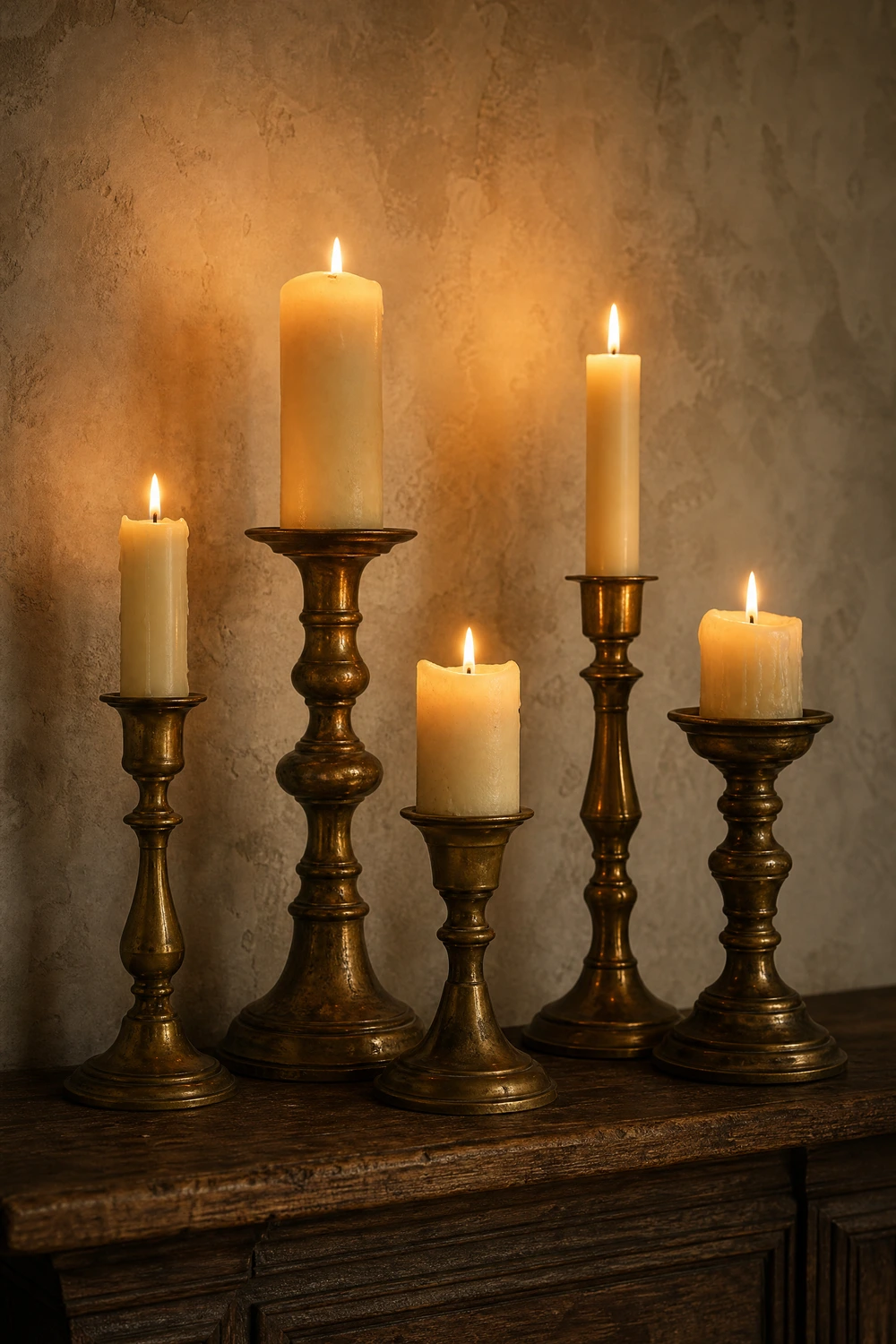
Brass is one of the most important materials in Afrobohemian design, referencing West and Central African metalwork traditions and adding a warm, reflective quality that terracotta and woven materials alone cannot provide. A grouping of three to five brass candlestick holders in different heights on a mantel or console shelf creates one of the richest and most inexpensive moments in the room.
Pro Move: Tarnished or antique brass reads far more authentically in this aesthetic than polished brass. Let the patina develop naturally or source vintage holders from thrift stores and estate sales.