Bathroom closets attract clutter the way kitchen junk drawers do. Half-empty bottles, expired medications, towels stuffed in sideways, and products you bought once and never used again all end up sharing shelf space. The closet is small, everything is visible the moment you open the door, and the mess feels overwhelming. Here are 12 ideas that bring order to a bathroom closet and keep it from sliding back into chaos.
Fixed shelves waste vertical space because the gap above short items is dead air. Adjustable shelving lets you set each shelf height to match what is stored on it. Tall bottles get more clearance, short items like soap bars and washcloths get tighter spacing, and you can often fit an extra shelf in the same closet. This one change increases usable storage by 20 to 30 percent in most bathroom closets.
Designer Tip: Set shelf heights based on your tallest items in each category. Measure the tallest bottle or container in each group and add one inch of clearance. This prevents wasted space above and ensures nothing is too tall to fit.
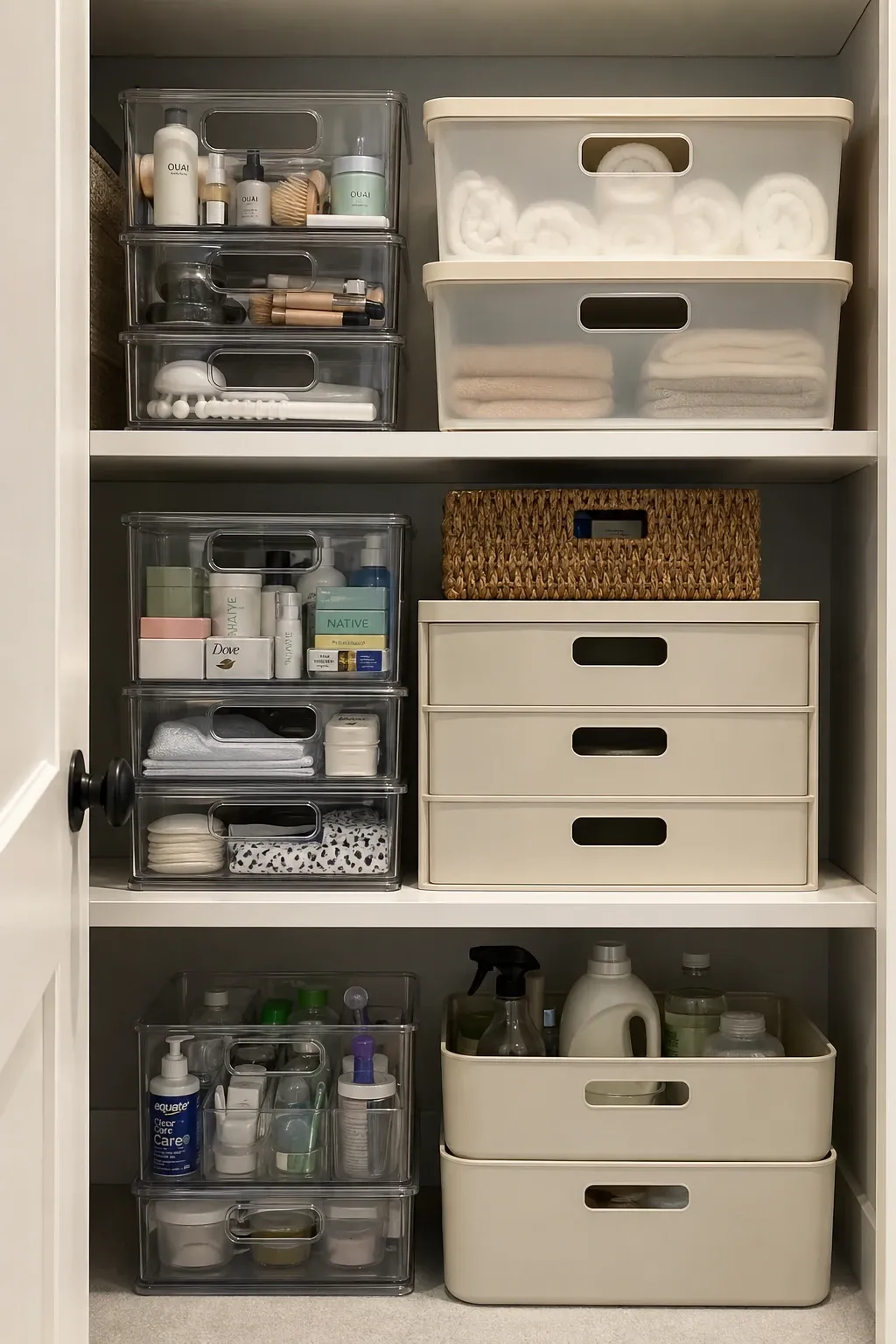
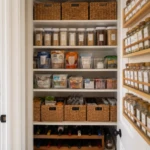
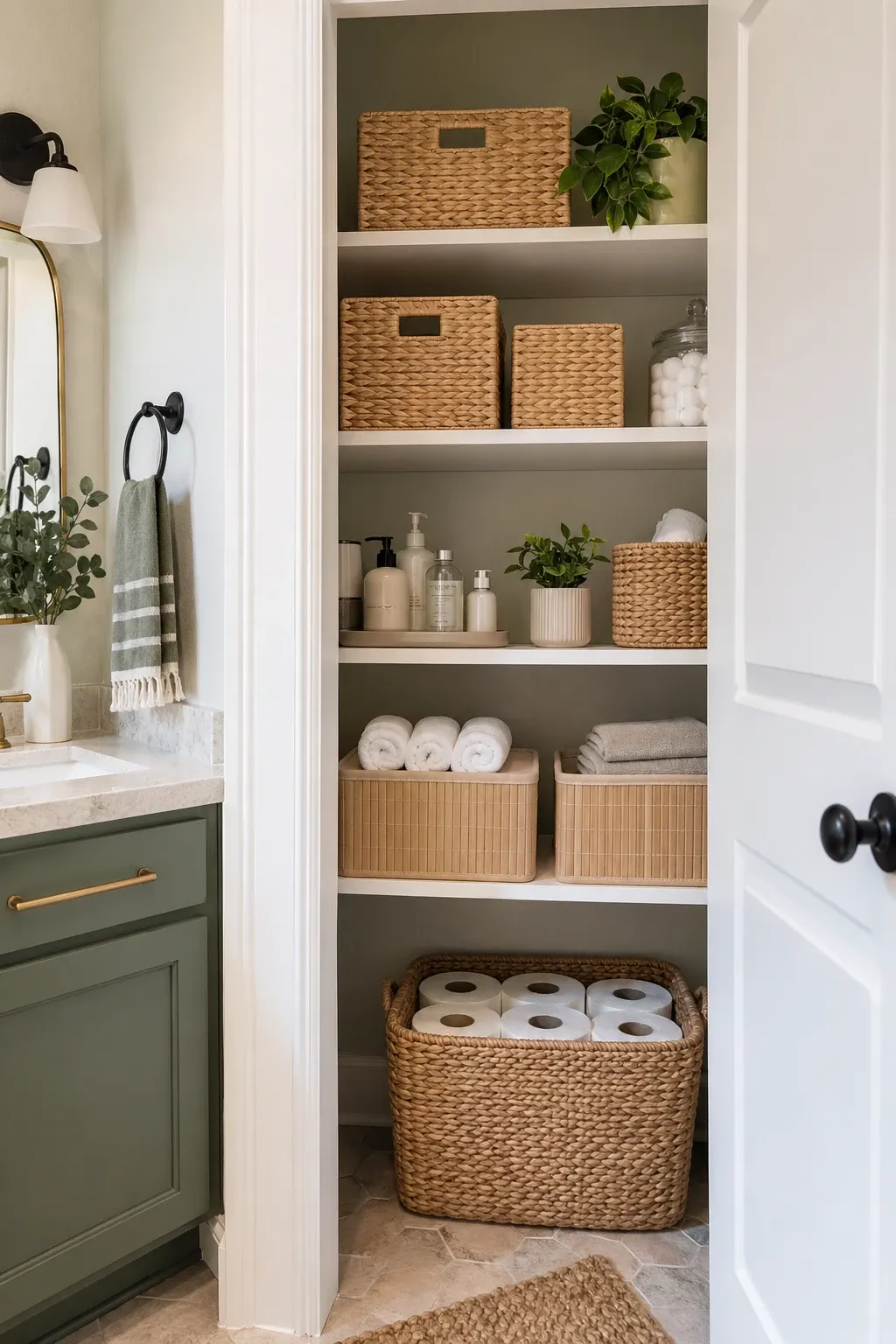
Stackable bins with open fronts or pull-out access let you use vertical space without losing access to what is inside. Each bin holds a category of items and the bins stack two or three high on a shelf. The open front means you can see and reach into each bin without unstacking them. This is a practical system for bathroom closets where you need to grab things quickly during the morning routine.
Designer Tip: Use bins that are all the same size and color. Uniform bins stack evenly and create a clean visual grid. Random bins in different sizes and colors look cluttered even when the contents are organized.
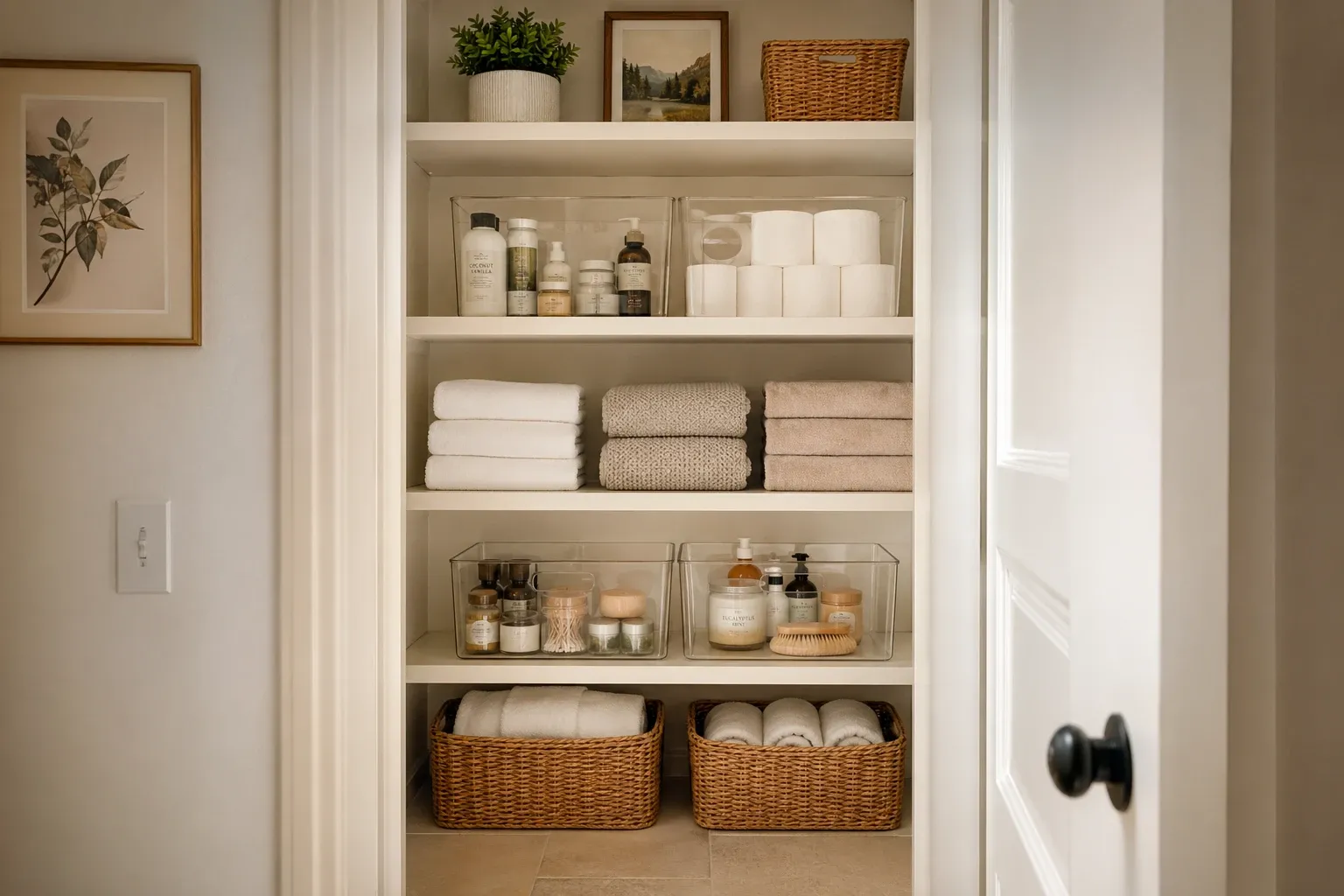
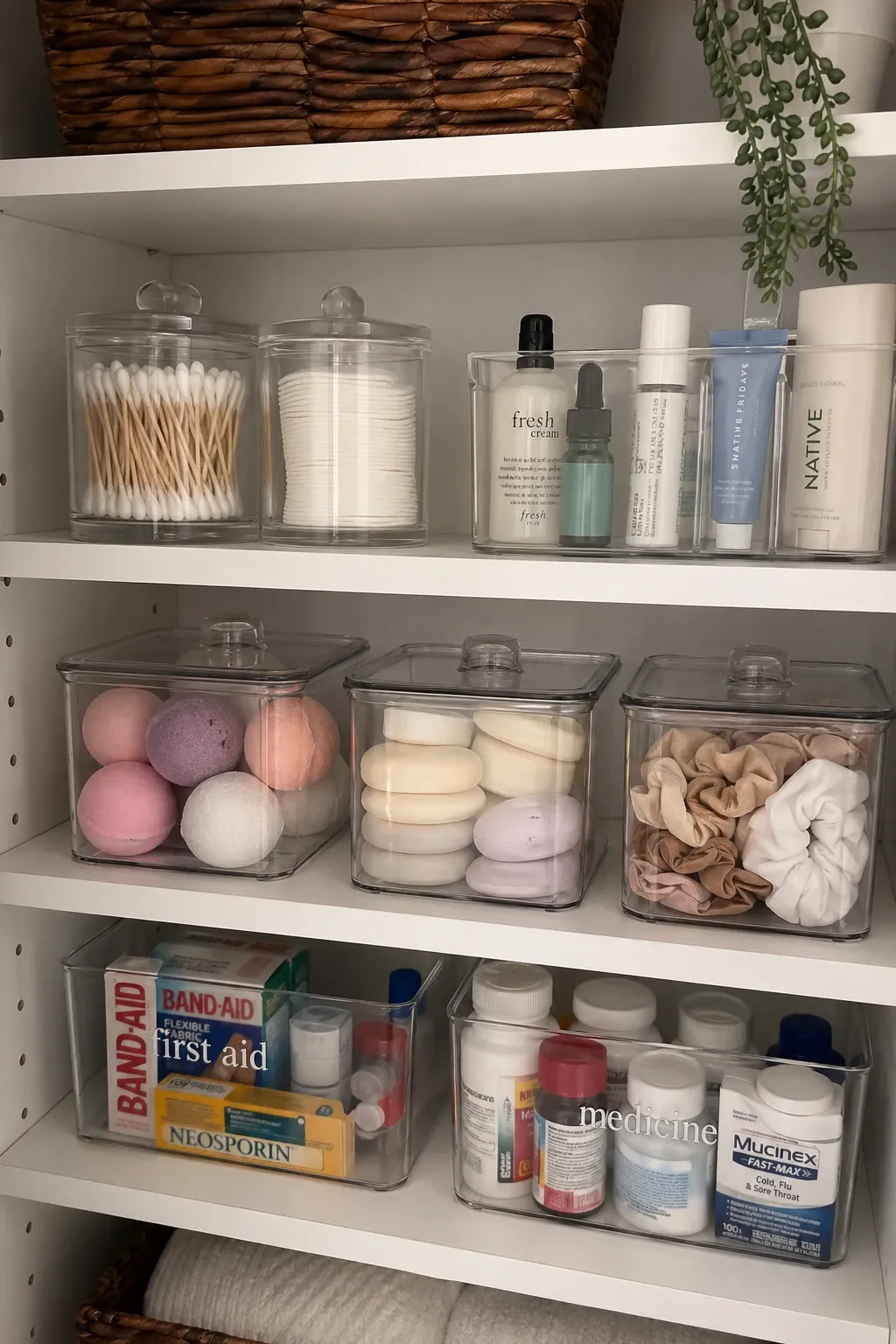
Clear containers let you see exactly what is inside without opening anything. This matters in a bathroom closet where you have multiple similar-looking bottles and tubes. You can identify the right product at a glance and you also see when something is running low and needs restocking. Clear containers work especially well for cotton balls, swabs, hair ties, and other small items that get lost on an open shelf.
Designer Tip: Choose containers with lids if the closet is in a humid bathroom. Humidity causes cotton products and bandages to degrade faster when exposed to moist air. Lidded containers protect contents from bathroom steam.
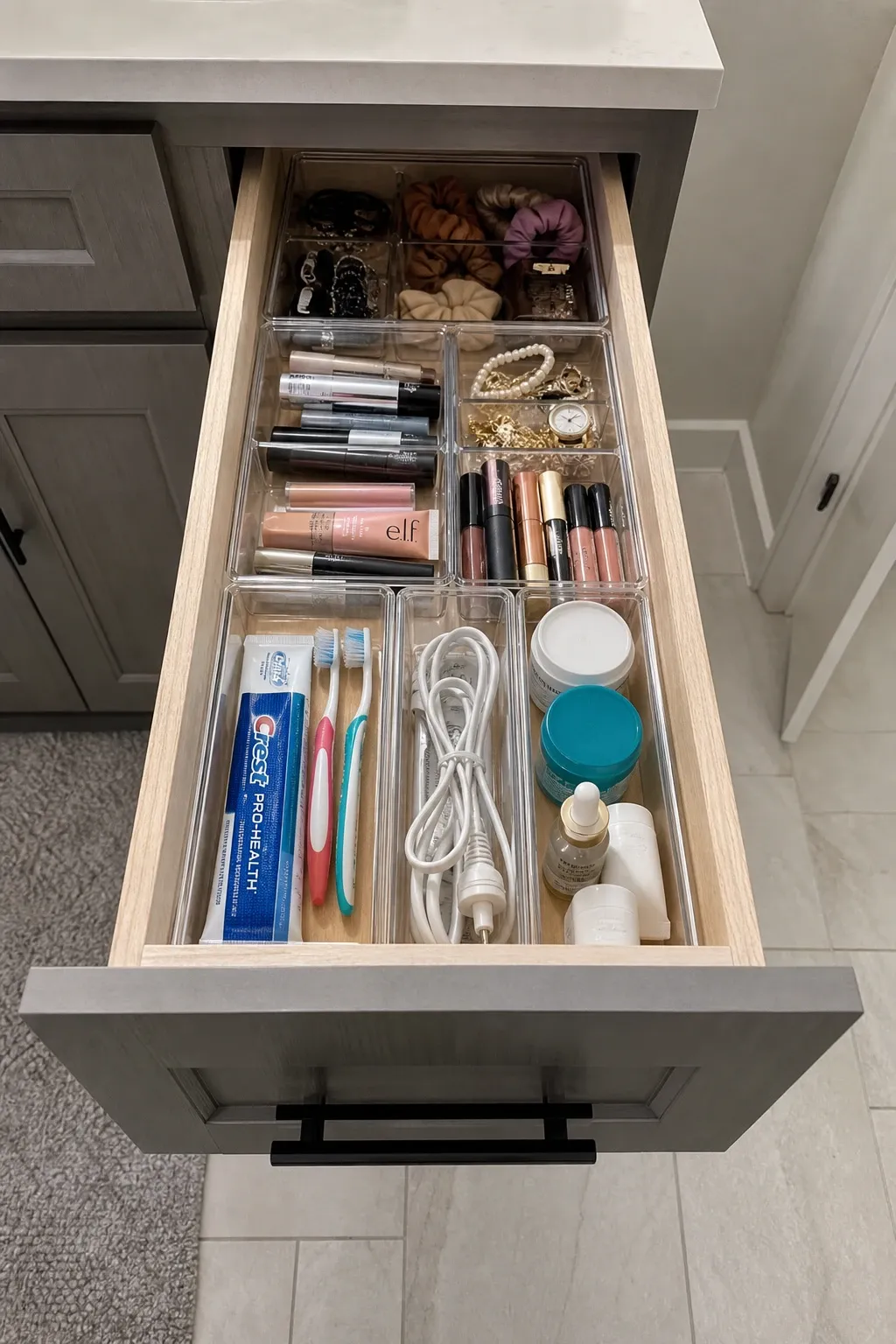
If your bathroom closet has any drawers, dividers turn them from a junk catch-all into organized compartments. Each section holds a specific type of item: makeup in one section, hair products in another, dental supplies in a third. Without dividers, everything migrates to the front of the drawer and the back becomes a forgotten zone where old products go to expire.
Designer Tip: Use adjustable dividers that you can reposition as your product collection changes. Fixed dividers that do not match your current items leave awkward gaps or sections that are too small to use.
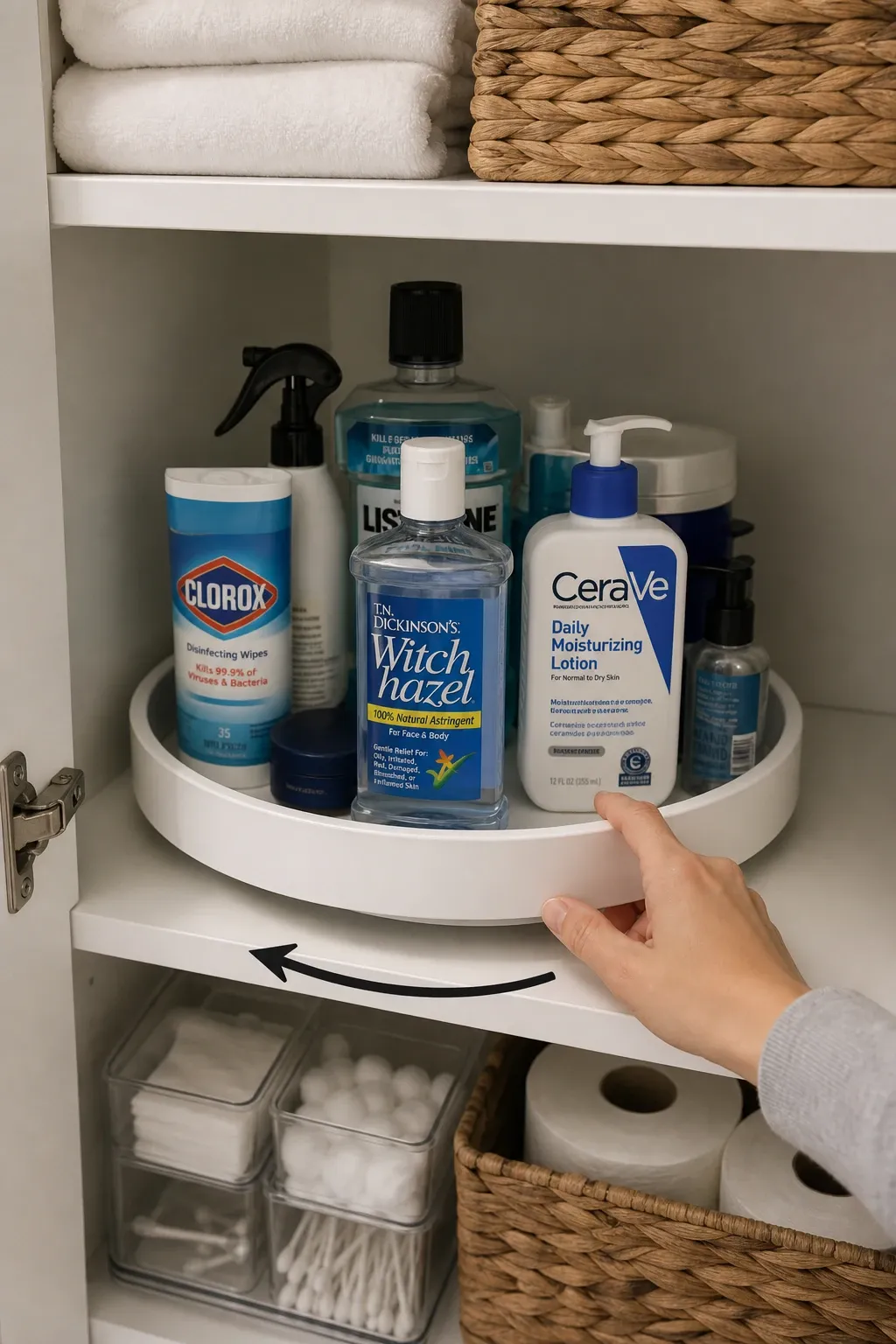
A turntable on a bathroom closet shelf brings back-row products to the front with a spin. Lotions, serums, hair products, and skincare bottles all crowd together on bathroom shelves. A turntable gives every bottle a front-row seat. Spin to find what you need, spin it back when you are done. This is especially useful on deep shelves where products disappear behind each other.
Designer Tip: Use a two-tier turntable if you have a lot of products. The second tier doubles the capacity in the same footprint. Two-tier turntables are especially good for the collection of bottles that every bathroom seems to accumulate.
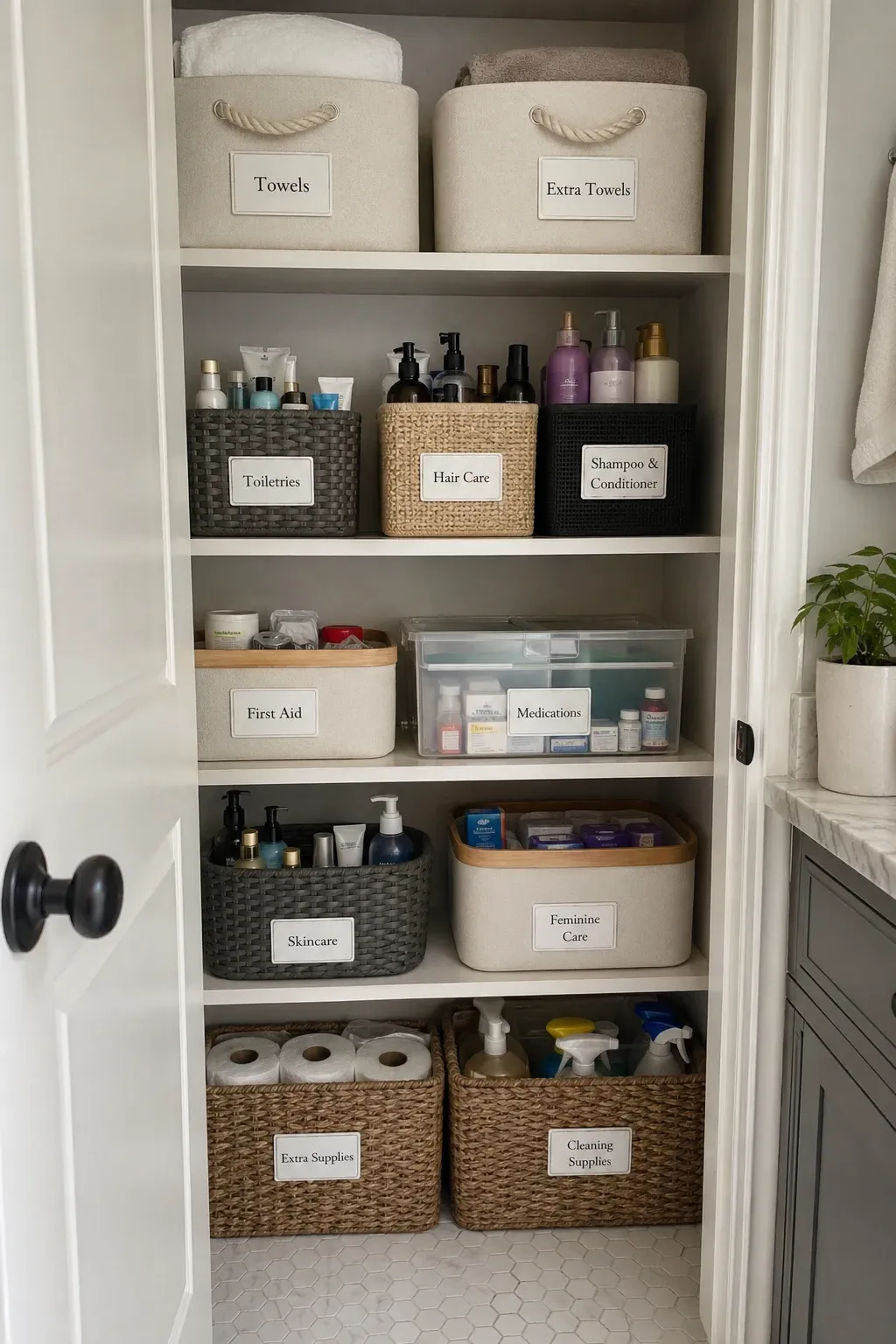
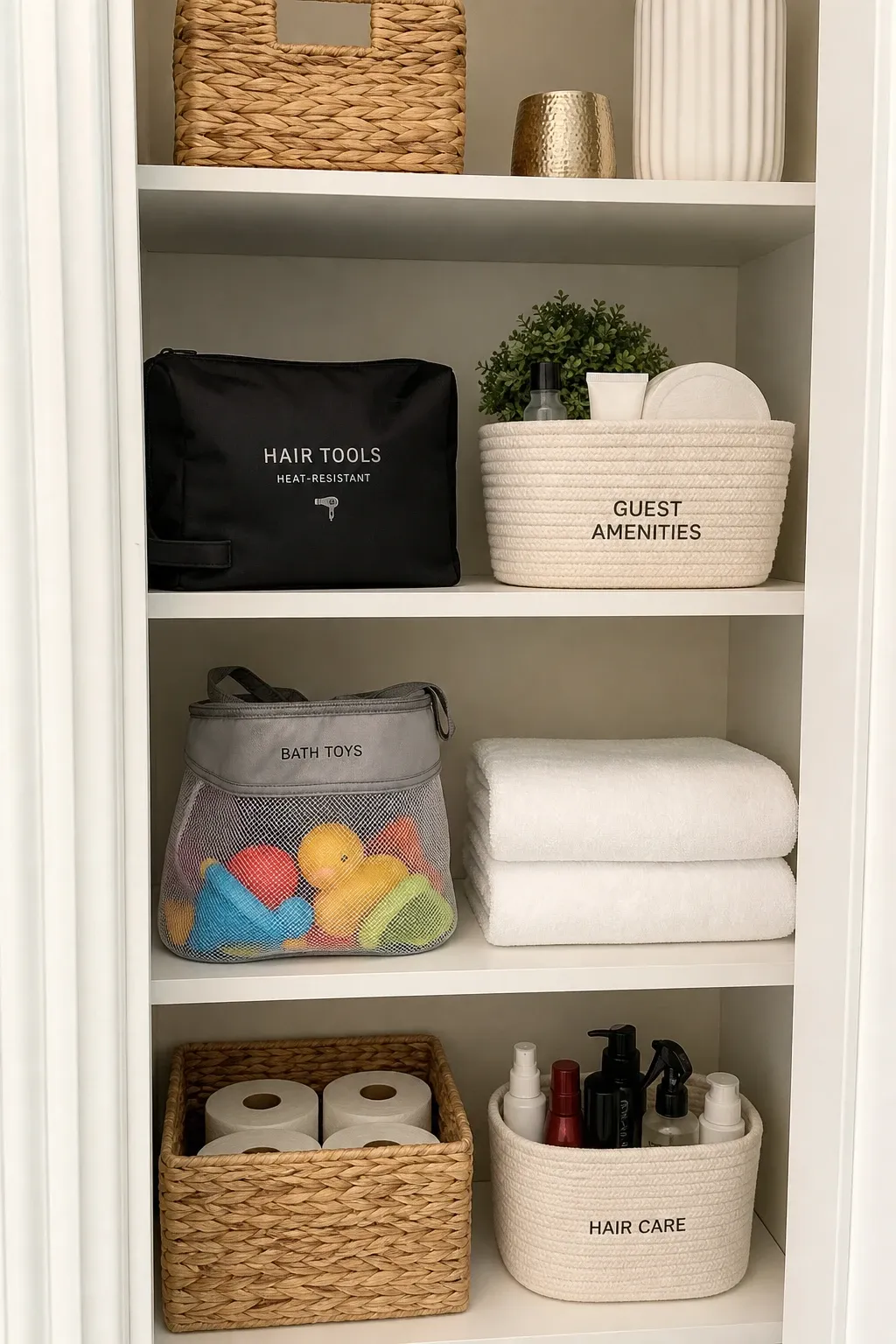
Labels on bins, shelves, and containers make the organization system usable for everyone in the household. Without labels, only the person who set up the system knows where things go. Labels remove the guesswork and make putting things back as easy as reading a word. This is the difference between a system that lasts and one that falls apart within a month.
Designer Tip: Use a consistent label style throughout the closet. All printed, all handwritten in the same pen, or all chalkboard labels. Mixing styles looks messy. Consistency in labeling makes the whole closet look professional.
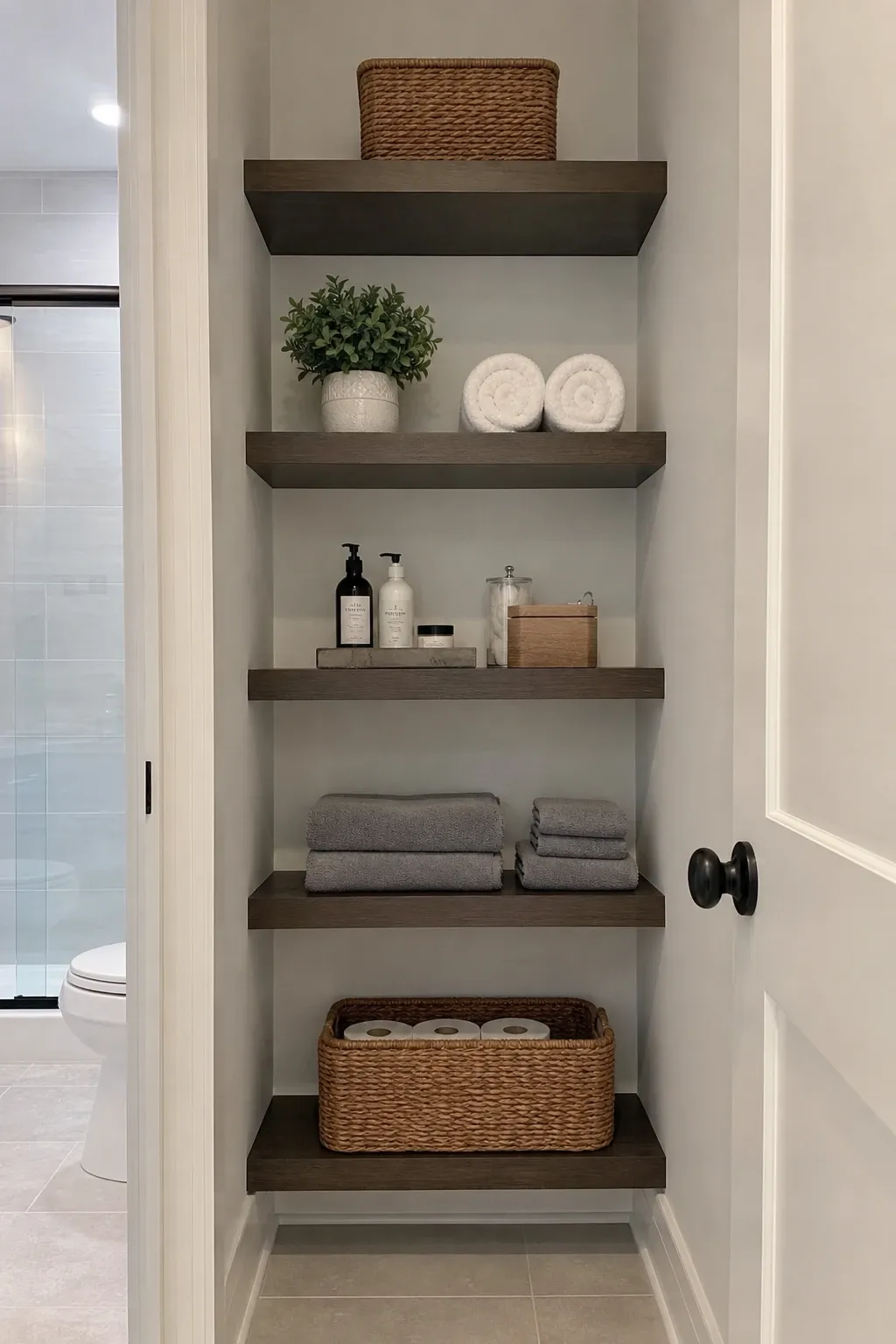
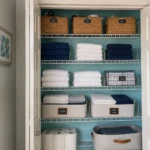
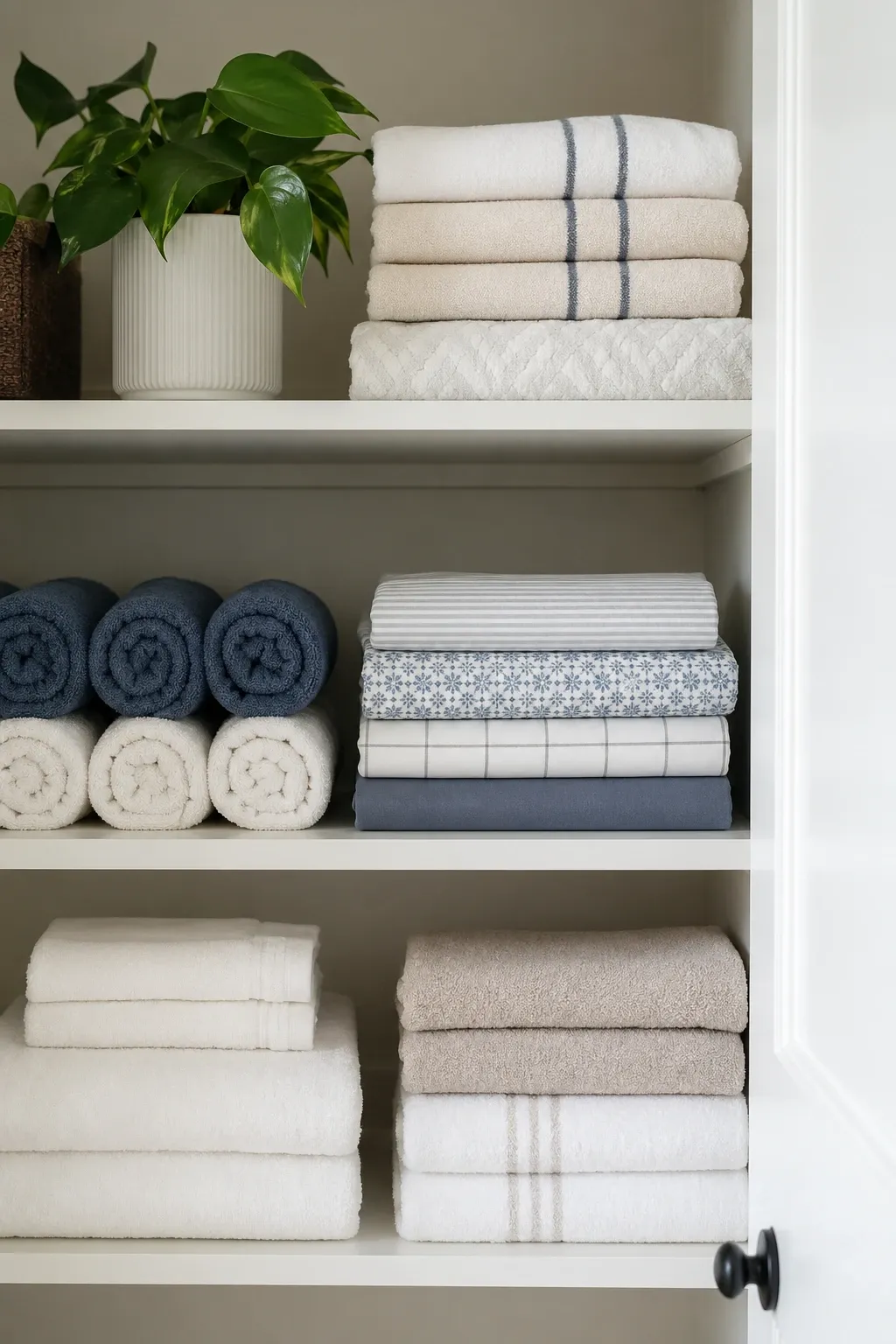
Folding all towels the same way to the same size makes stacks stable and the closet tidy. Mismatched folds create uneven stacks that lean and topple. Folding in thirds, quarters, or rolling all work fine. The key is doing every towel the same way. Rolled towels packed vertically in a basket are the easiest system for daily use because you can pull one out without disturbing the rest.
Designer Tip: Fold towels so the folded edge faces out on the shelf. Showing the smooth folded edge rather than the open edges gives the stack a cleaner, more polished look. Hotels do this for a reason.
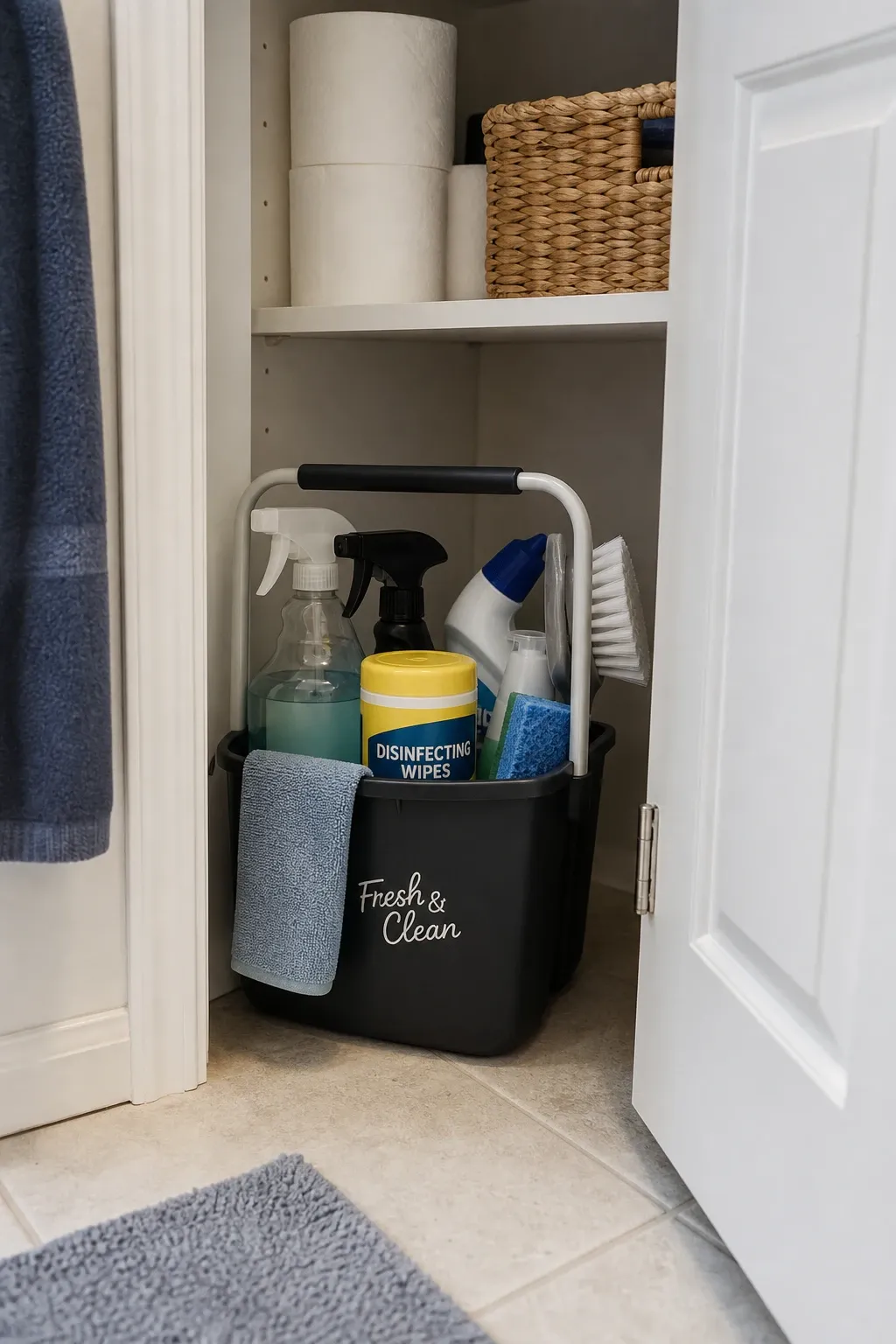
A portable caddy with a handle holds all your bathroom cleaning supplies in one container that you can carry to where you need them. Store it on the bottom shelf of the closet. When it is time to clean, grab the caddy and go. No more collecting supplies from three different spots. When you are done, the caddy goes back on the shelf with everything contained and ready for next time.
Designer Tip: Keep the caddy on the bottom shelf where potential leaks or drips will not damage linens stored below. If a bottle leaks in the caddy, you want it on the lowest shelf where the mess is easy to clean up.
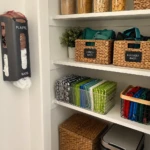
Different basket types serve different purposes in a bathroom closet. Wire baskets for items that need ventilation like loofahs and sponges. Fabric bins for items you want hidden. Clear bins for things you need to find fast. Matching a basket type to the category of items it holds makes the storage both functional and intentional. A mix of purpose-matched baskets looks thoughtful rather than thrown together.
Designer Tip: Keep the basket materials to two or three types maximum. Too many different materials in one closet creates visual noise. Two coordinating types, like woven baskets and clear bins, create enough variety without looking chaotic.
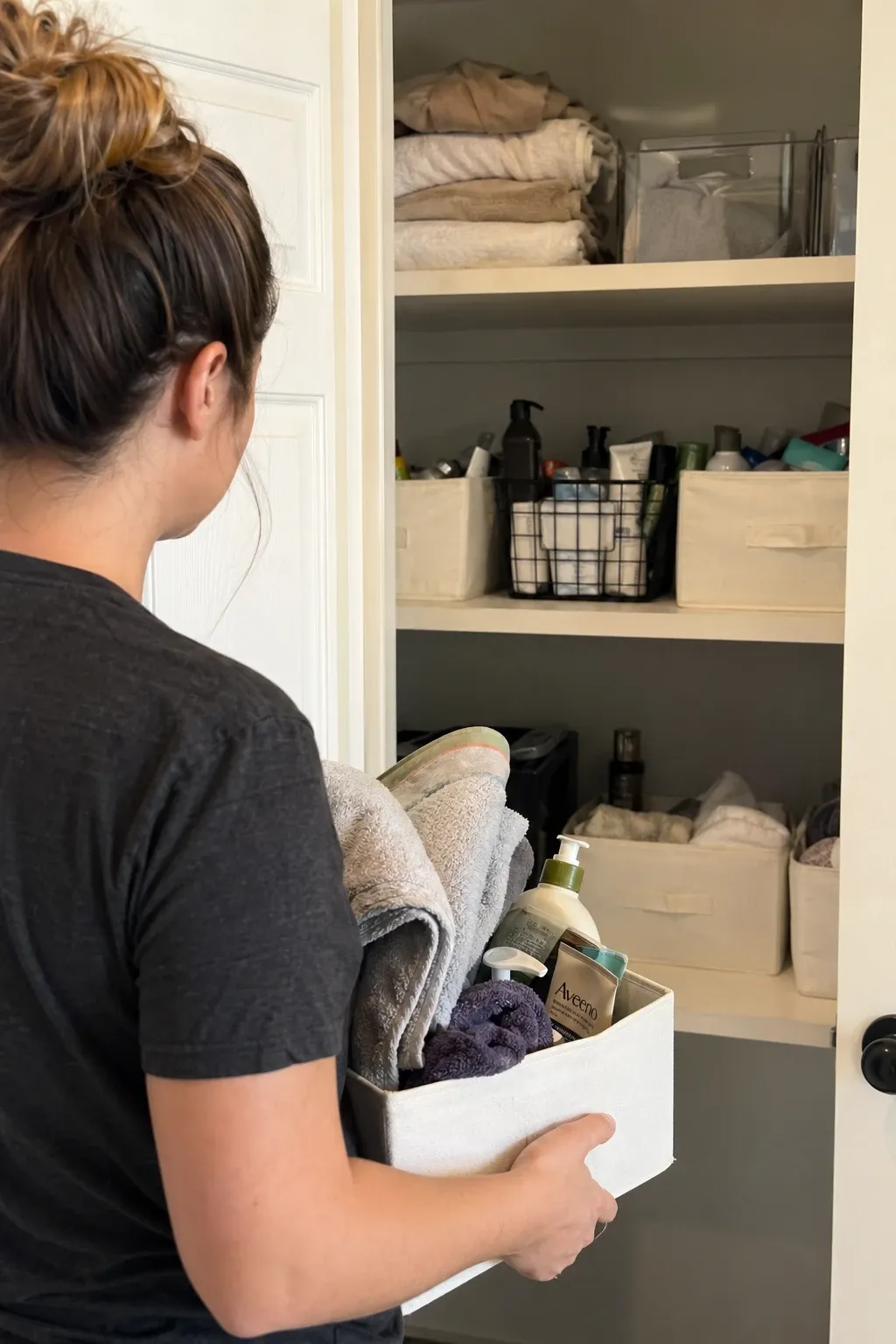
No organization system survives without regular maintenance. Set a reminder every three months to go through the bathroom closet and toss expired products, empty bottles, and items you no longer use. Most bathroom products have expiration dates, and keeping expired products wastes space and can be harmful if used past their date. A quarterly purge takes 15 minutes and keeps the closet from backsliding into chaos.
Designer Tip: Check expiration dates on medications, sunscreen, and skincare first since these are the most commonly expired items in bathroom closets. Makeup and skincare products have a small open-jar icon with a number that tells you how many months the product is good for after opening.
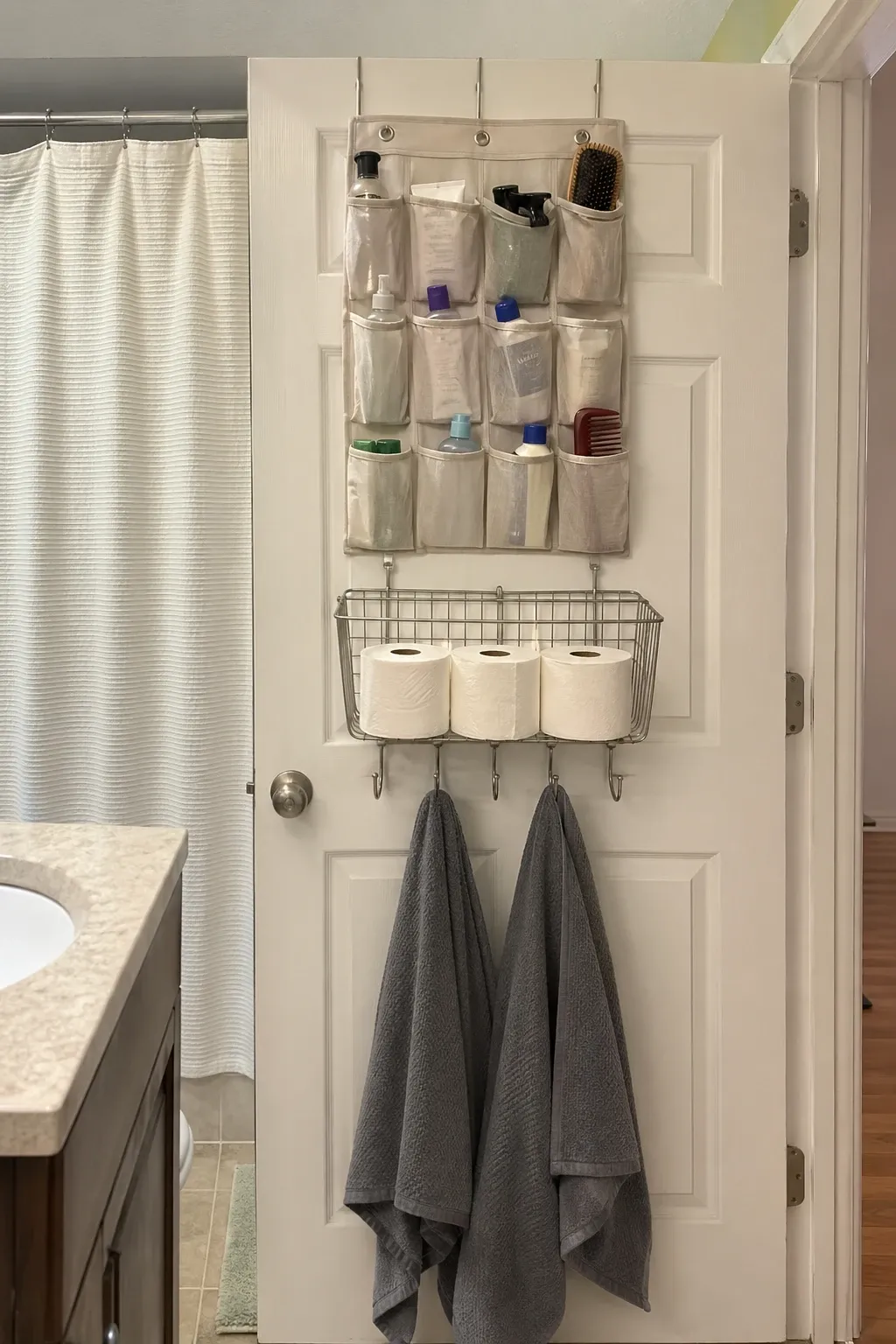
The inside of the closet door is free storage that almost nobody uses. An over-the-door rack with baskets or pockets holds hair tools, small product bottles, and accessories. Everything is visible when the door is open and hidden when it is closed. This is one of the easiest upgrades because it adds storage without reducing shelf space. Most over-the-door organizers install in seconds with no tools.
Designer Tip: Put a heat-resistant pocket or hook on the door for hair dryers and curling irons if you store them in the closet. Tossing hot styling tools on a shelf damages the shelf surface and nearby items. A designated heat-safe spot protects everything.
Using containers in the same material, color, or style throughout the closet creates a cohesive look that makes the whole space feel intentional. Matching containers also stack and line up more efficiently than random containers, which means less wasted space. This is the finishing touch that turns a functional closet into one that looks like a professional organizer set it up. It does not have to be expensive since matching sets from any store work fine.
Designer Tip: Pick a neutral color for the containers so they do not compete with the products and linens inside. White, clear, gray, or natural materials let the contents and the organization be the visual focus rather than the containers themselves.
A bathroom closet stays organized when the system is simple and everyone knows where things go. Labels, categories, and matching containers handle the “where does this go” question. Regular purges handle the “why is this closet so full” question. Start with the idea that fixes your biggest frustration and add more changes over time.
Frequently Asked Questions
What should I keep in a bathroom closet?
Towels, washcloths, extra toilet paper, toiletries, medications, first aid supplies, hair tools, and cleaning products for the bathroom. Anything you use in the bathroom regularly belongs in the bathroom closet. Items you use elsewhere should be stored closer to where you actually use them.
How do I organize a bathroom closet with no shelves?
Add a freestanding shelf unit, tension rod shelves, or stackable bins. Over-the-door organizers give you storage without modifying the closet at all. Even a few Command hooks on the walls inside the closet create hanging storage for small items. You do not need built-in shelves to have an organized closet.
How do I keep bathroom products from cluttering the closet?
Only keep what you are currently using plus one backup of essentials. Products you bought and did not like, samples you will never open, and duplicates you forgot you had are the main culprits. Purge these regularly and your closet stays manageable. The less you keep, the easier it is to stay organized.
Should I store medications in the bathroom closet?
It depends on the bathroom humidity. Many medications degrade in humid environments, and bathrooms get steamy. If your closet is in a well-ventilated bathroom or away from the shower area, it is fine. If the closet gets damp, store medications in a bedroom closet or kitchen cabinet where humidity is lower. Always keep them in a container with a lid.