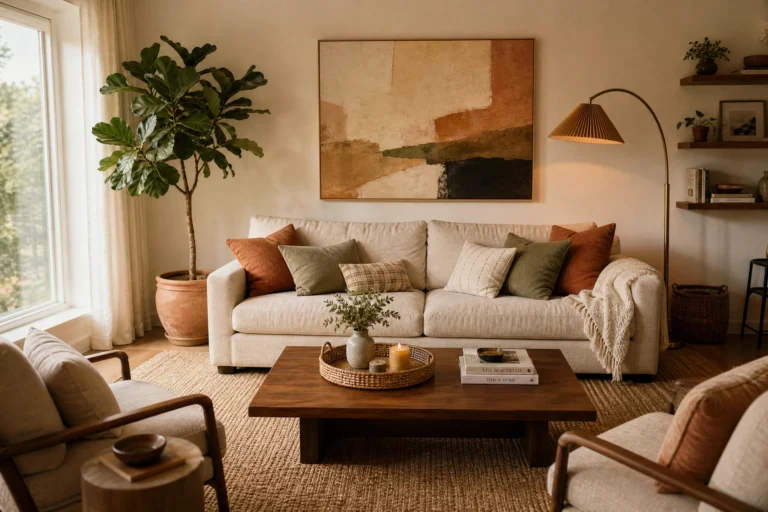
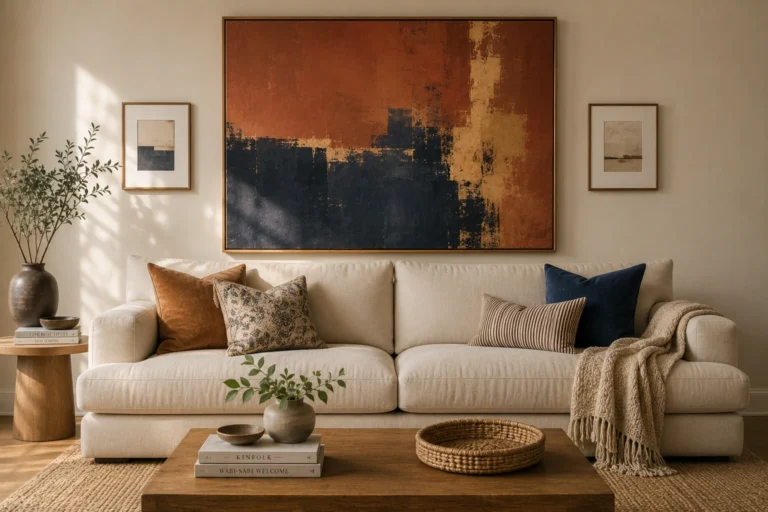
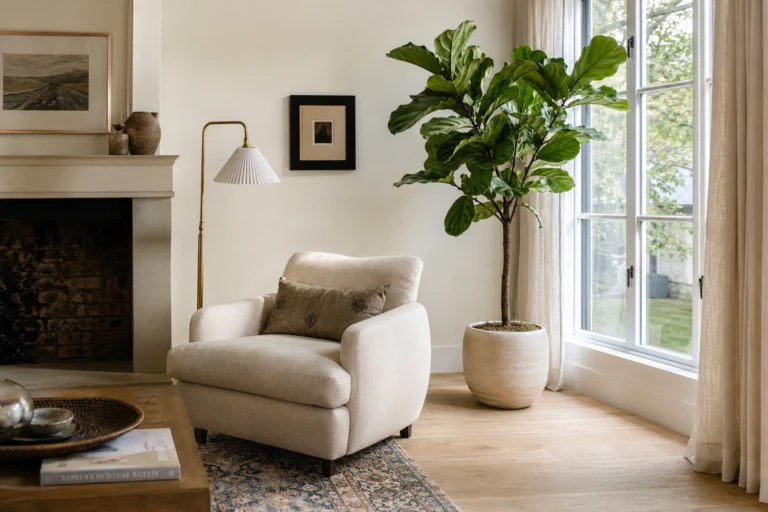
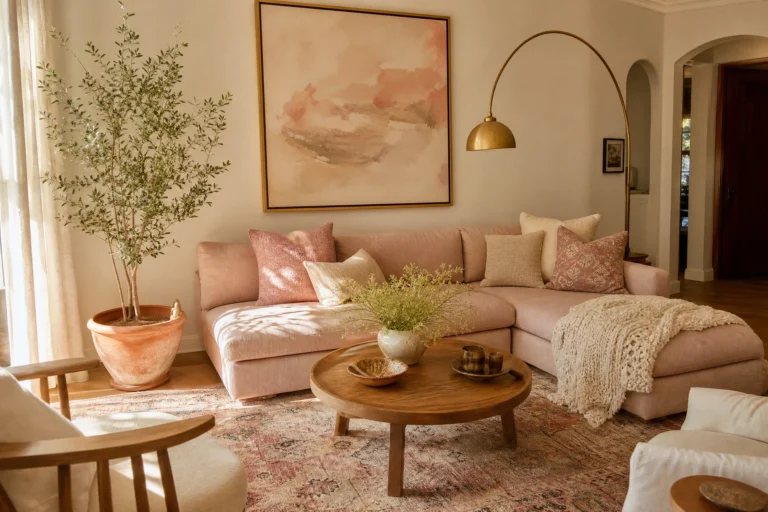
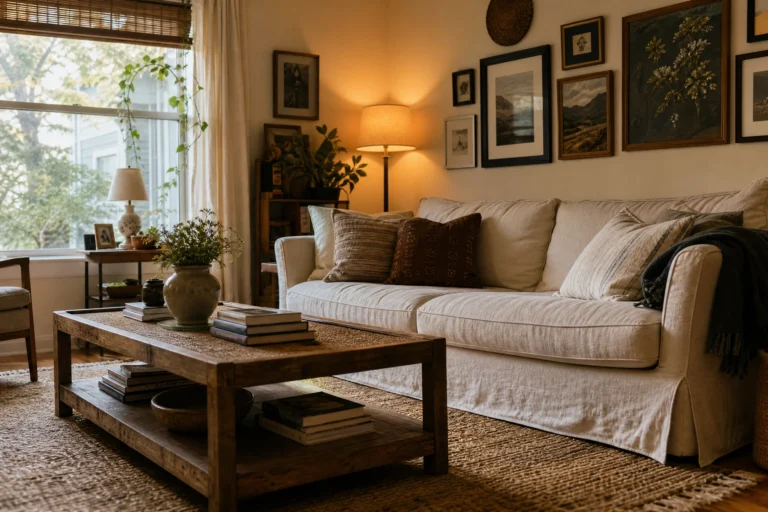
Open floor plans are great until you have to figure out where the living room ends and the dining room begins. I lived in an apartment with a combined living and dining space for four years and tried every arrangement before finding what works. The key is creating two distinct zones that still feel like one room. Here are the combo layout ideas that pull it off.
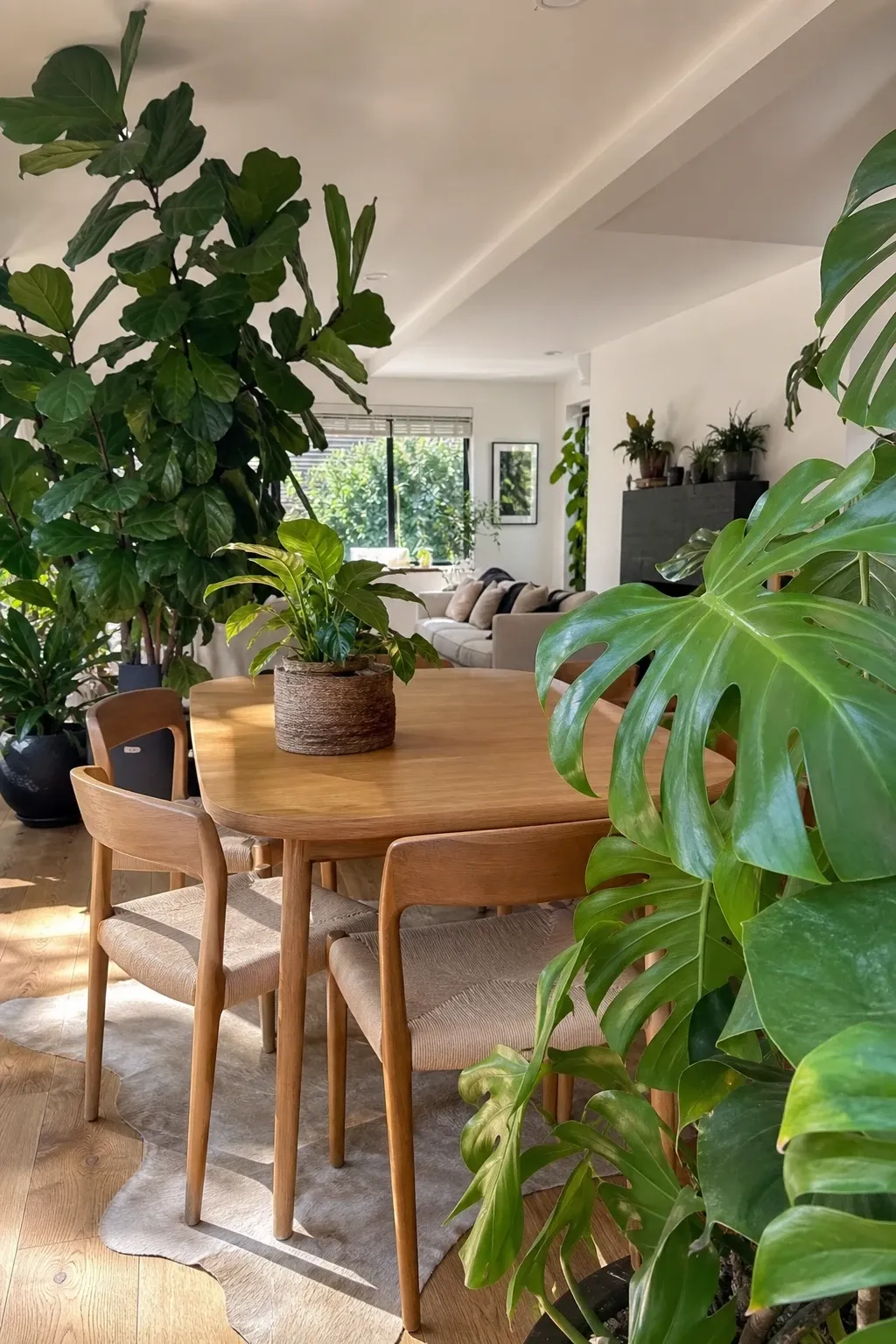
Light wood furniture in both zones creates visual continuity while bold accent colors define each area. An oak dining table with colorful chairs and a matching oak media console with bright pillows on the couch ties the two zones together through wood tone. The bold accents give each zone its own personality without breaking the connection between them.
Designer Tip: Use the same wood finish in both zones but different accent colors. The shared wood creates unity. The different colors define the zones. This approach lets each area feel distinct while clearly belonging to the same room.
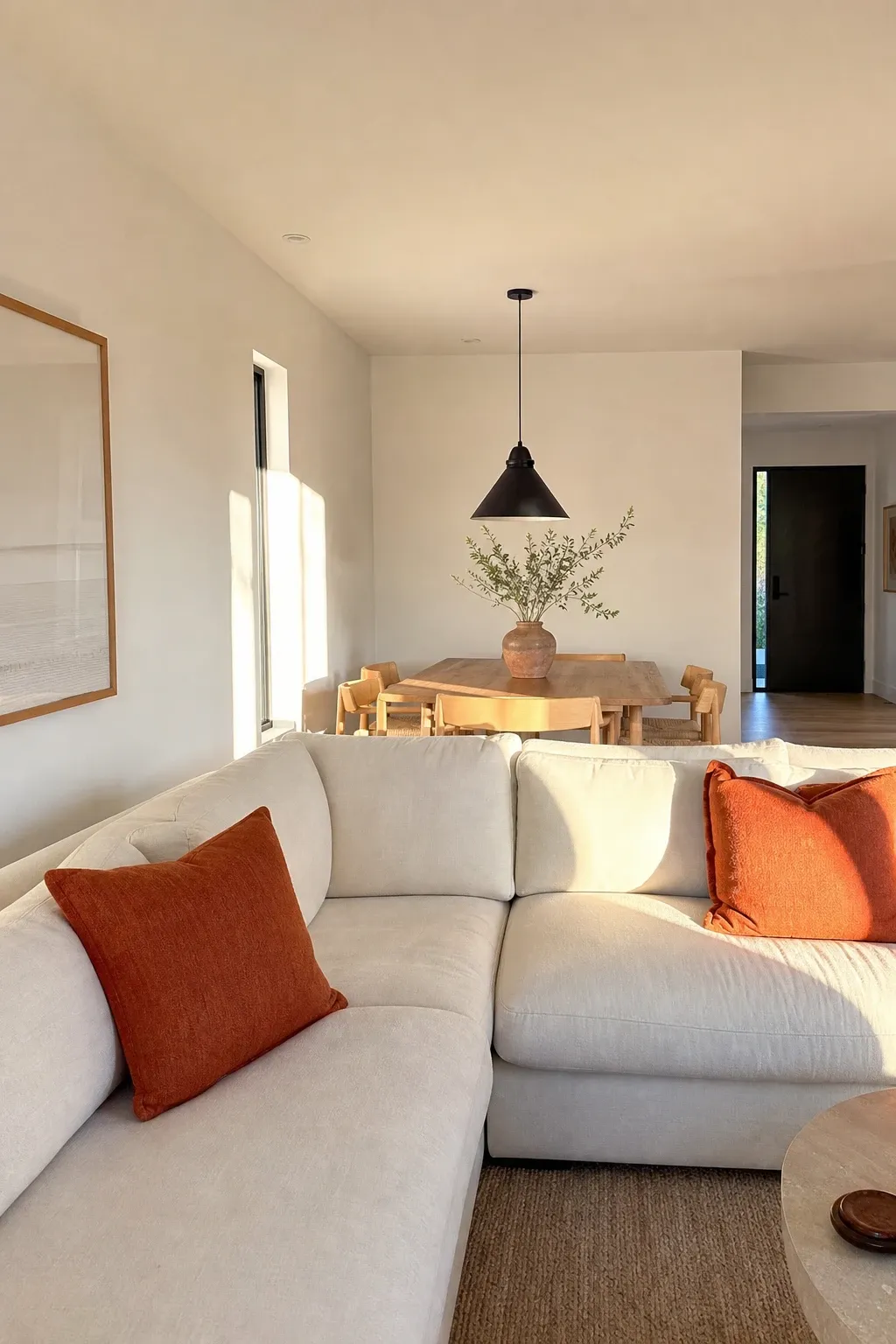
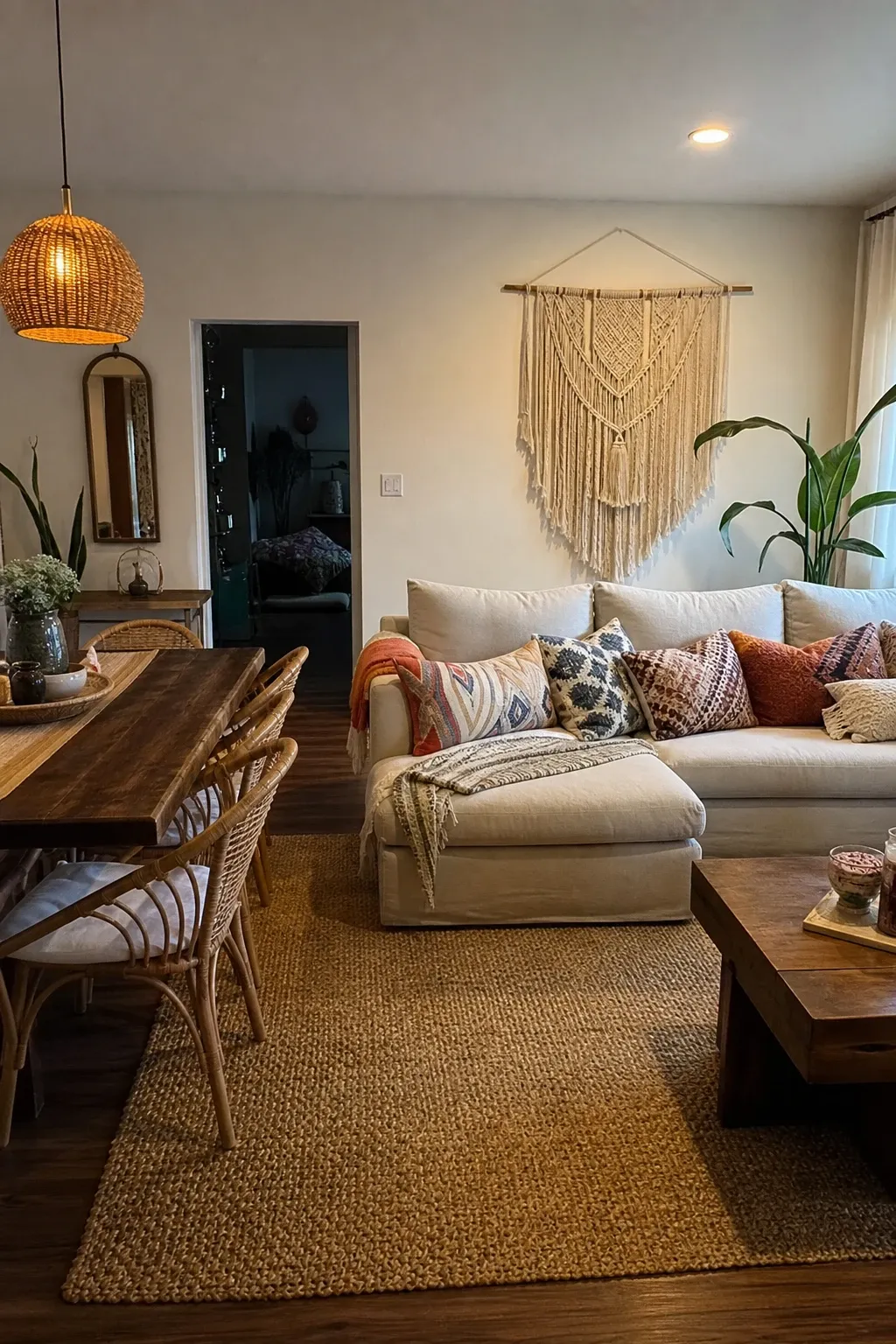
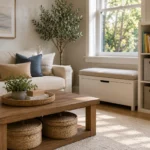
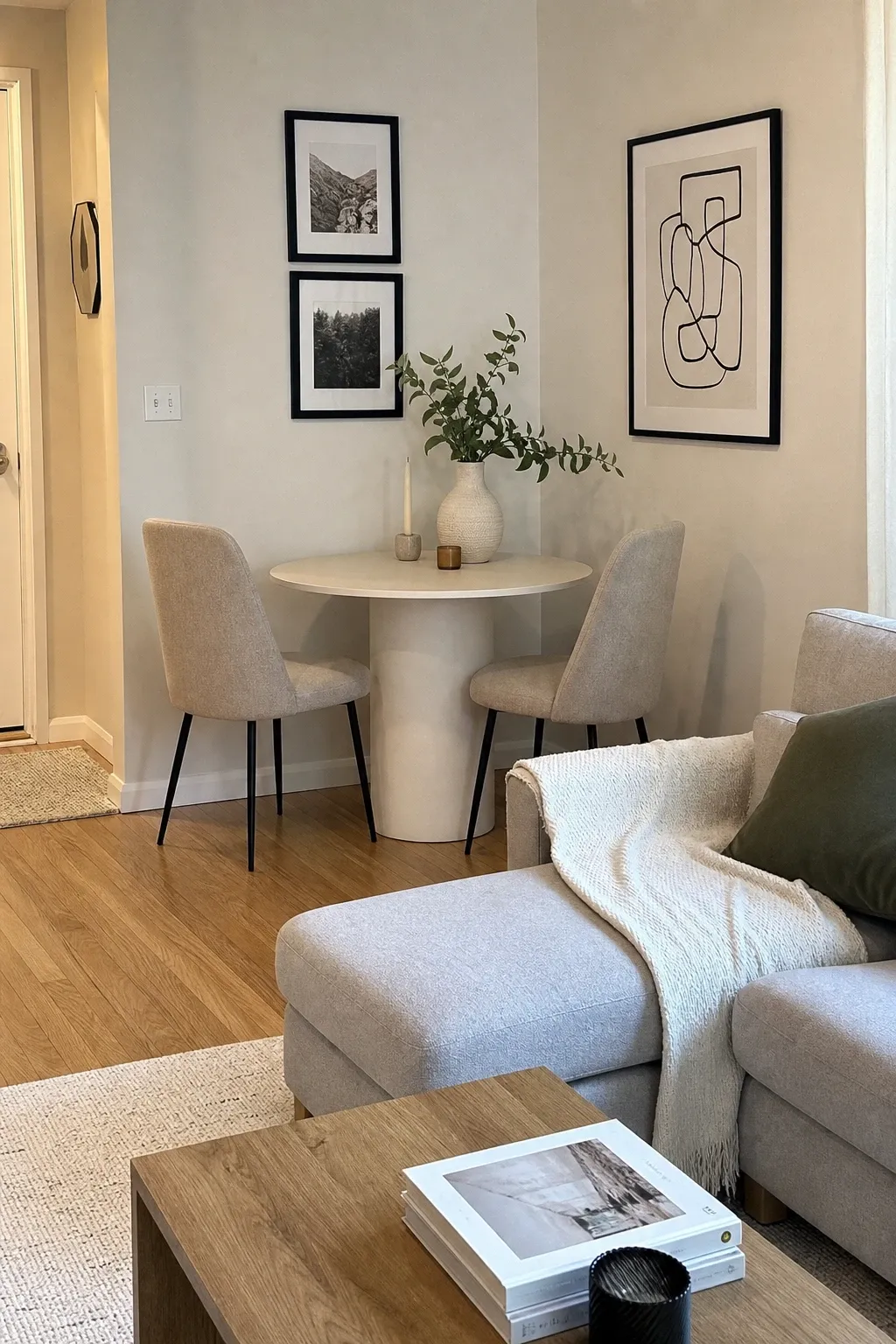
Neutral walls, warm wood, and natural textiles in both areas create a calm, connected space. Keep furniture pieces low and simple. A linen sofa, a raw wood dining table, and woven accents throughout give the combined room a cohesive, spa-like feel. Minimalist combo rooms work best when both zones share the same restrained palette and the furniture does not compete for attention.
Designer Tip: In a minimalist combo room, every piece needs to earn its spot. Remove anything that does not serve a clear function. The open space between the living and dining areas is part of the design, not empty space waiting to be filled.
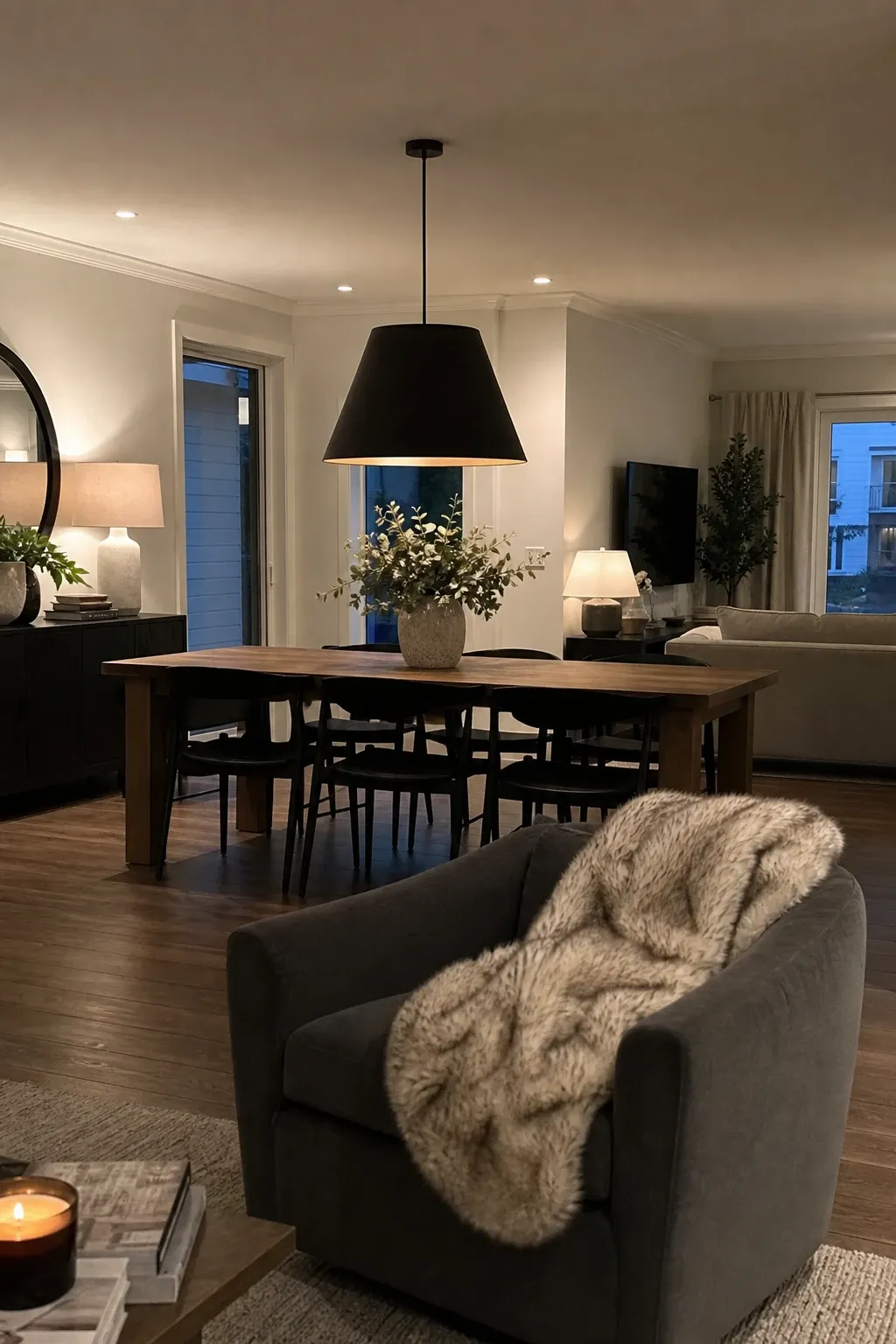
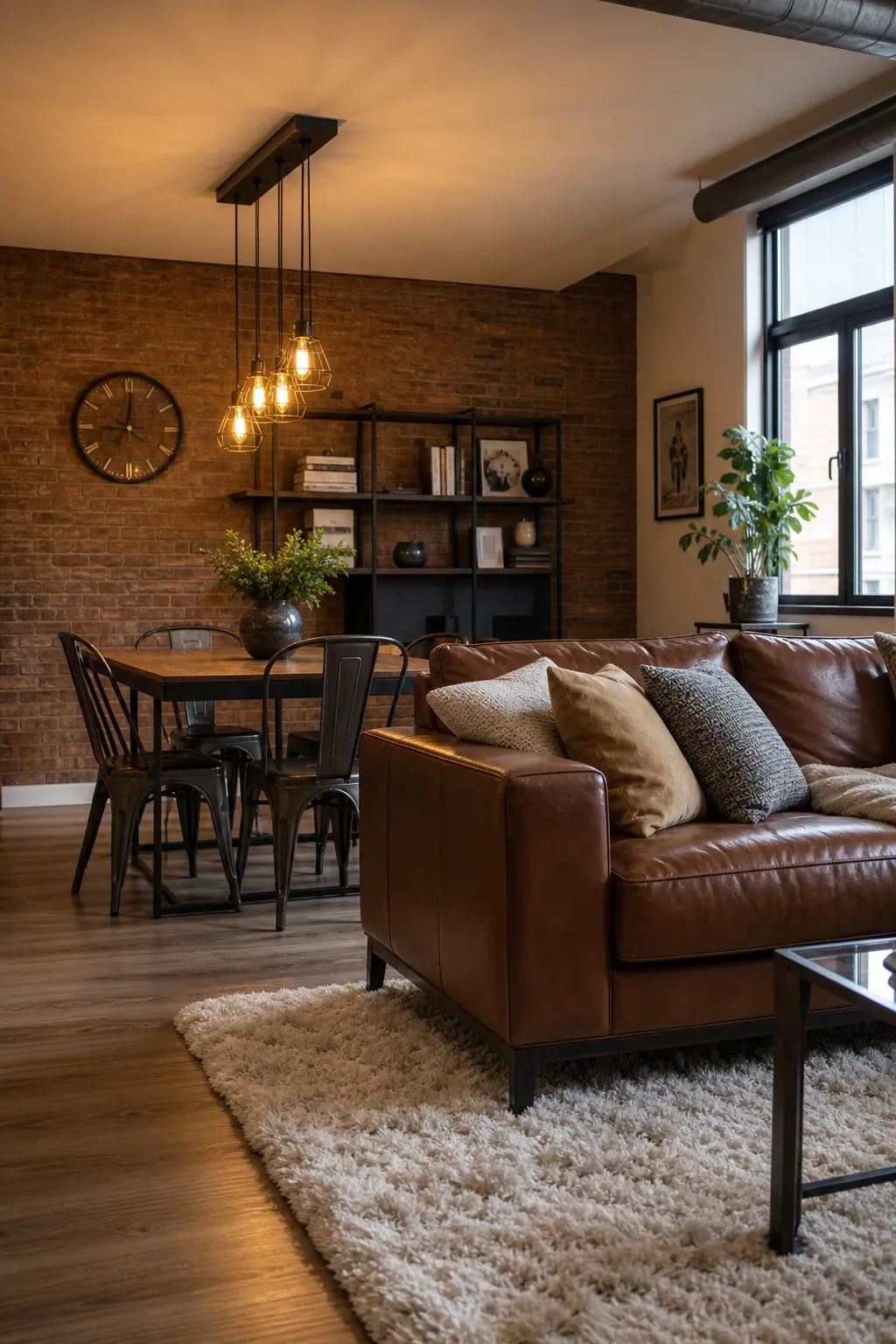
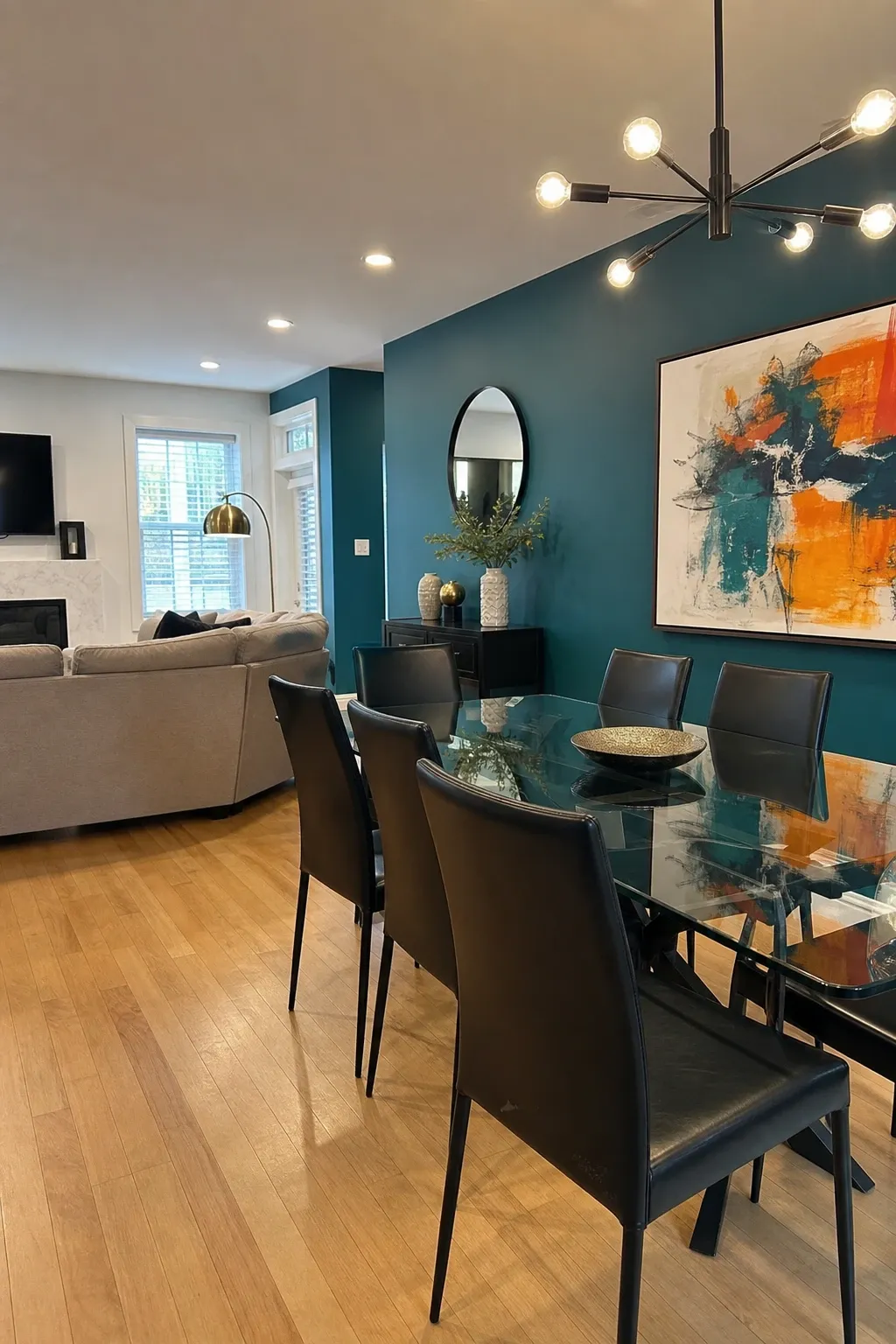
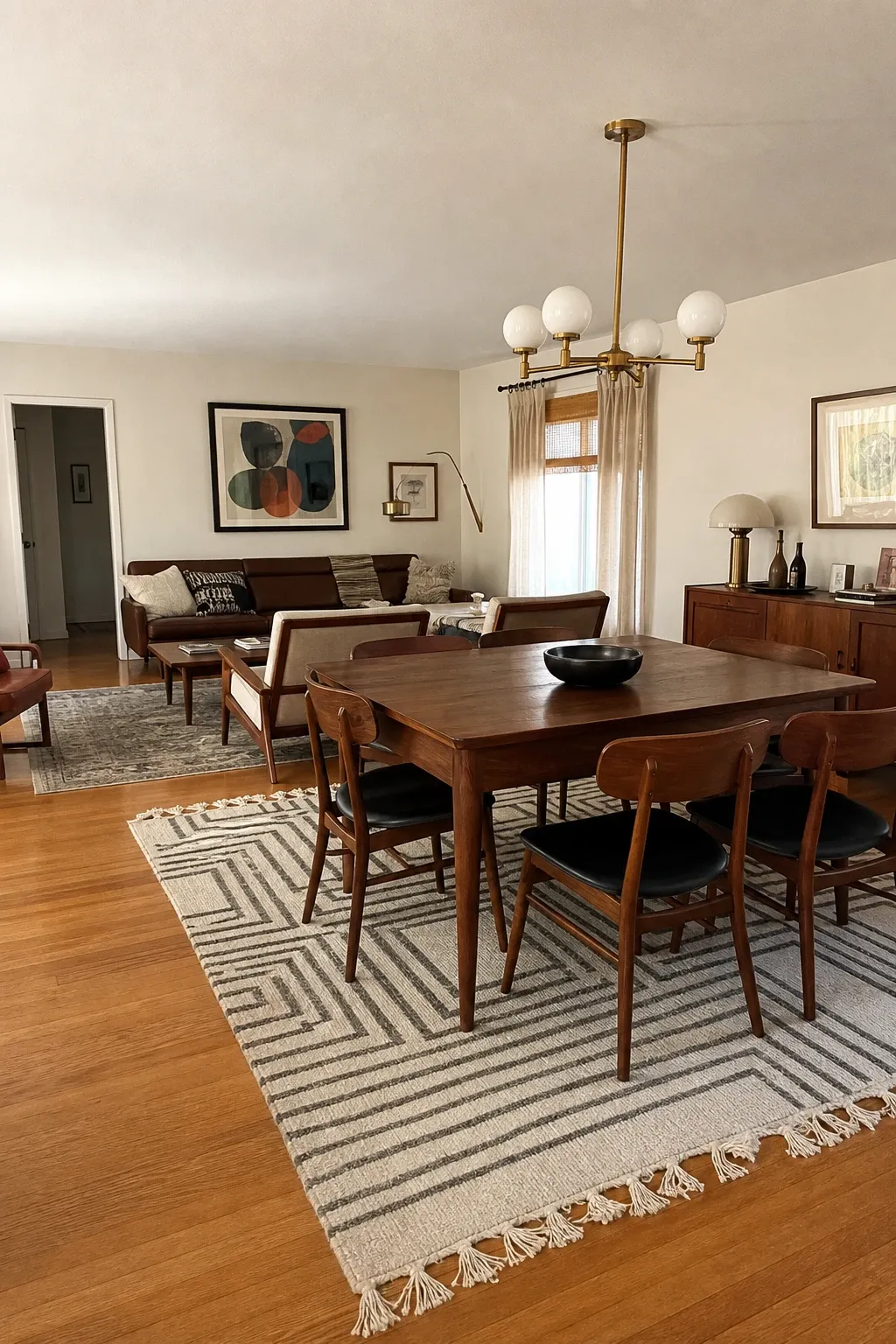
A large pendant light or chandelier hanging over the dining table defines the dining zone visually even without walls. The overhead light draws a vertical line from ceiling to table that signals this is the dining area. The living area can have its own lighting with floor lamps and table lamps. The different lighting types in each zone create two distinct atmospheres within the same open room.
Designer Tip: Hang the dining pendant 30 to 36 inches above the table surface. Too high and it floats disconnected from the table. Too low and people bump their heads. The pendant should light the table surface while clearly marking the dining territory overhead.
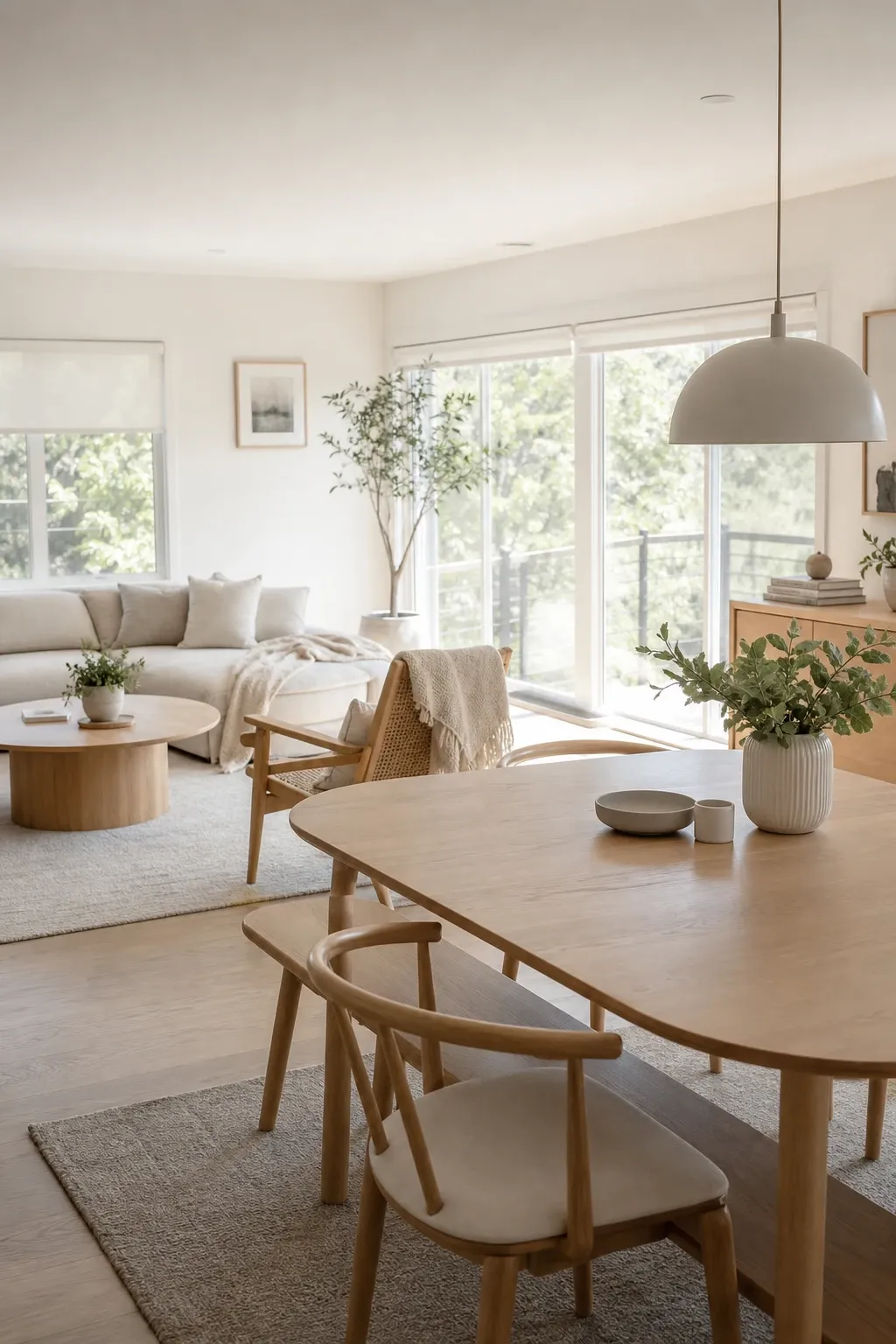
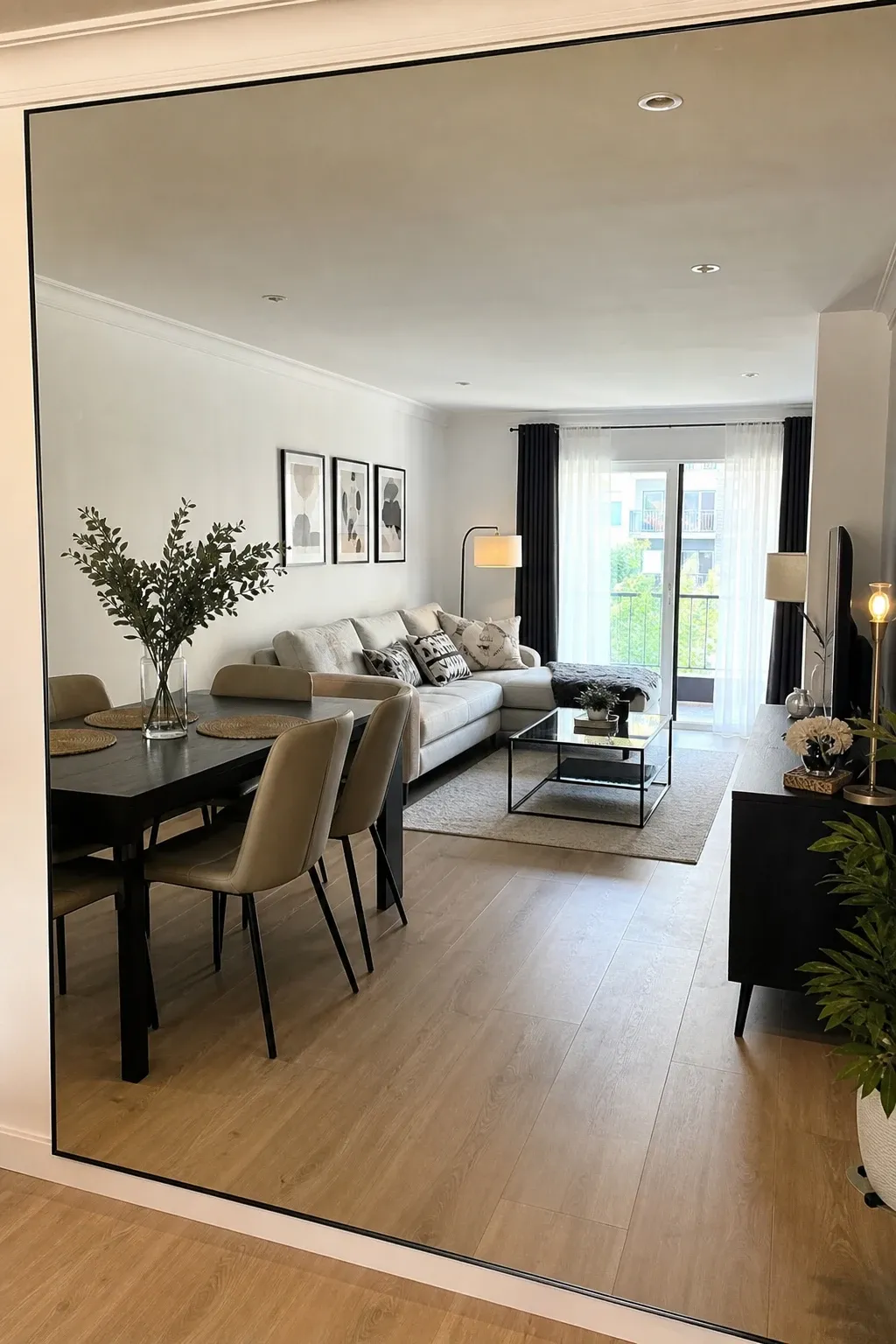
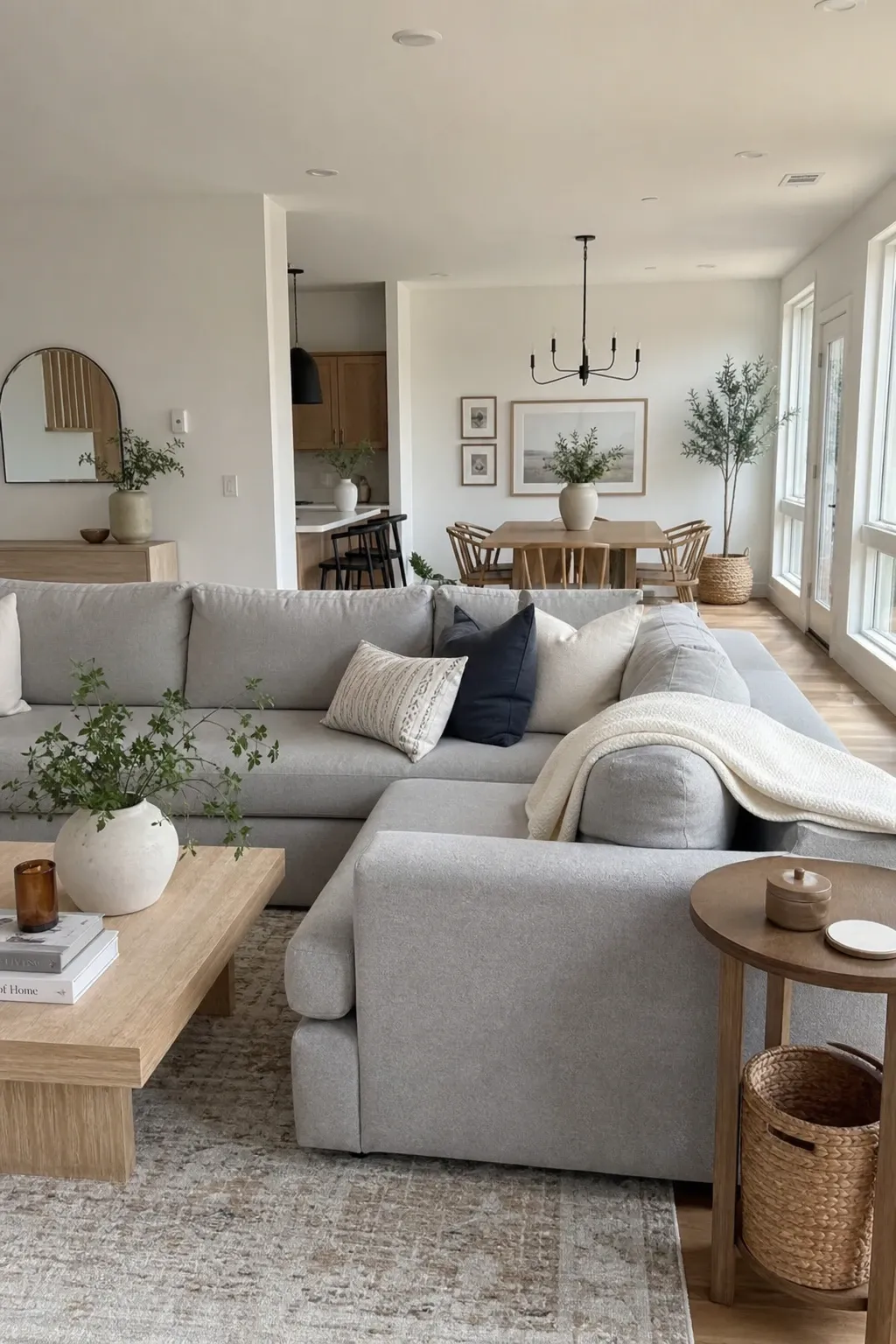
White walls, light wood, simple furniture, and clean lines create a Scandinavian-inspired combo room that feels open and airy. The spare aesthetic works well in small combo spaces because the lack of visual clutter makes the room feel bigger. A pale wood dining set and a light gray sofa with minimal accessories keep both zones feeling spacious and connected.
Designer Tip: Add warmth to a Scandinavian combo room with textiles and plants. Throw blankets on the sofa, a rug under the dining table, and a few green plants prevent the clean look from feeling cold or sterile. The warmth comes from texture, not color.
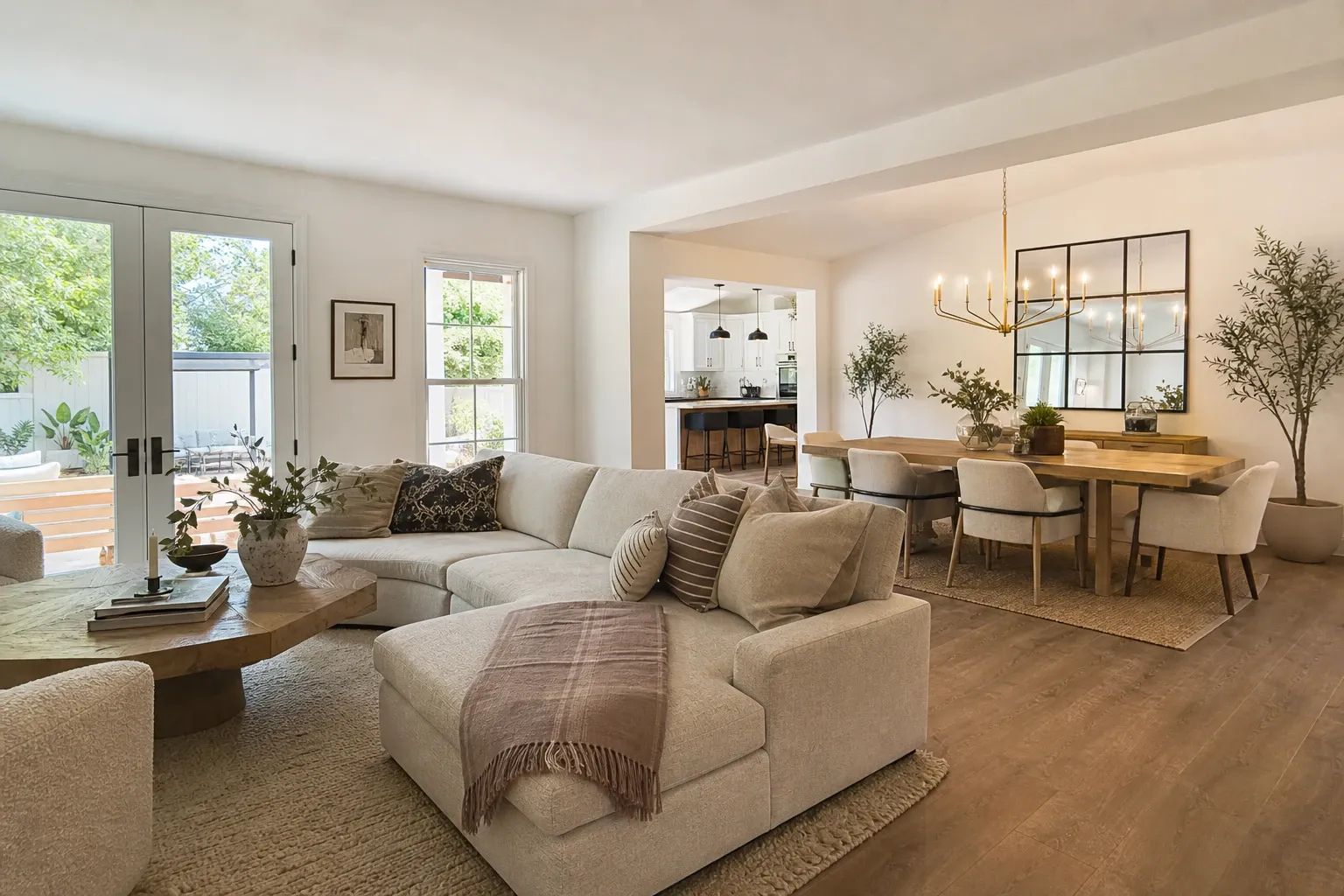
A large rug under the living room furniture and a separate rug or bare floor under the dining table creates a visual boundary between the two zones. The rug defines the living area like invisible walls. The furniture sits on the rug and the dining table sits off it, making the transition between zones clear. This is the simplest way to divide a combo room without any physical barrier.
Designer Tip: Size the living room rug so that the front legs of the sofa and chairs sit on it. A rug that is too small floats in the middle of the furniture grouping. A rug that reaches all the way to the dining table blurs the zone boundary you are trying to create.
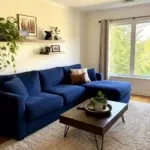
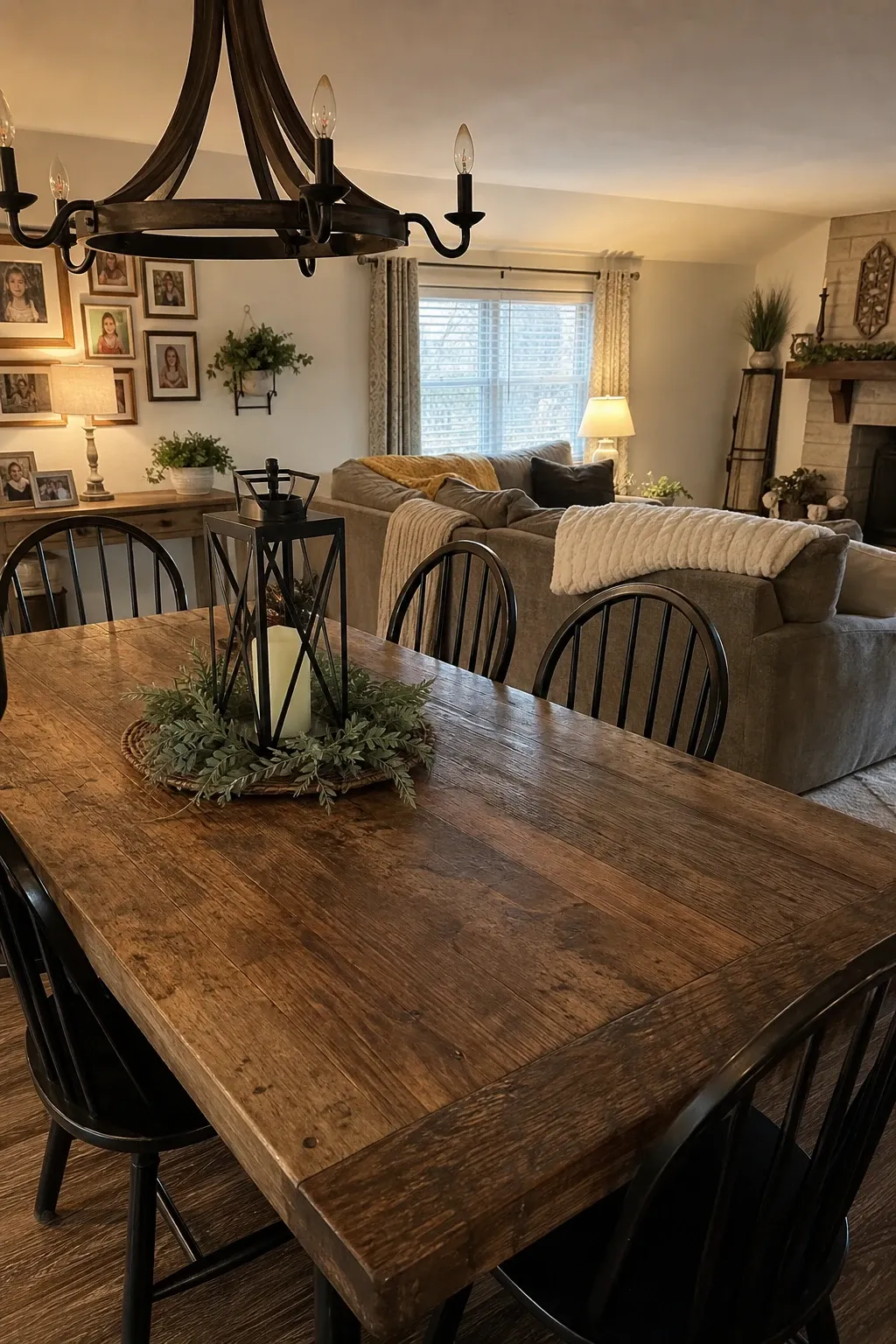
Positioning the sofa with its back facing the dining area creates a natural divider between the two zones. The sofa back forms a visual wall that separates living from dining without blocking light or sightlines. This is the most common solution for combo rooms and it works because it is simple and logical. The sofa does what a wall would do while keeping the space open and connected.
Designer Tip: Choose a sofa with a finished back if it will be visible from the dining area. Many sofas have an unfinished fabric panel on the back that looks fine against a wall but looks cheap when exposed. A console table behind the sofa can also hide an unfinished back and add display space.
An open bookshelf placed between the living and dining areas creates a physical divider that still allows light to pass through. The open-back design lets you see from one zone to the other, keeping the room feeling connected while clearly separating the two spaces. The shelves provide storage and display space for both zones. Books, plants, and decorative objects on the shelves add personality to both sides.
Designer Tip: Do not fill every shelf. Leave some shelves partially empty so light passes through and the divider does not become a visual wall. A fully loaded bookshelf blocks sightlines the same way a solid wall would, which defeats the purpose in an open room.
A round dining table takes up less visual and physical space than a rectangular one, which helps in tight combo rooms. Round tables have no sharp corners to bump into when walking between zones. They also seat more people in a smaller footprint because there are no head-of-table positions wasting space. The circular shape softens the room and creates better traffic flow around the dining area.
Designer Tip: Allow at least 36 inches between the edge of the round table and the nearest wall or furniture piece. This gives enough room to pull chairs out and walk behind seated diners. Less than 36 inches and the dining area feels cramped every time someone sits down or stands up.
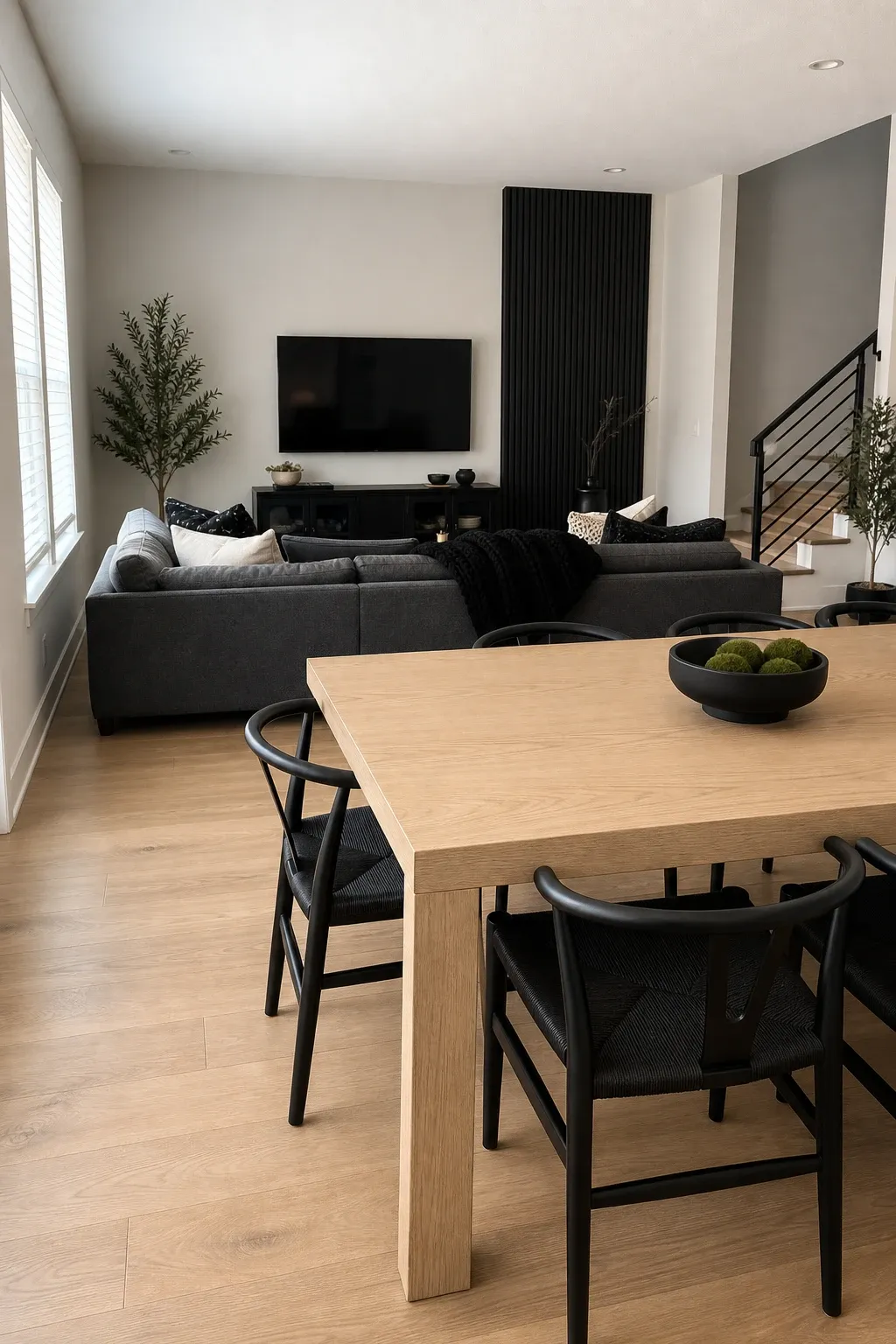
Using the same color palette in both zones makes the combined room feel like one designed space rather than two rooms forced together. Pick three or four colors and repeat them in different proportions across both areas. The dining zone might have navy chairs while the living zone has navy pillows. The shared colors create a thread that connects the two zones visually even when the furniture styles are different.
Designer Tip: Start with a neutral base for both zones and add the same two or three accent colors to each. The base color covers the largest surfaces like walls, rugs, and large furniture. The accent colors appear on smaller items and create the connection between zones.
A narrow console table placed behind the sofa creates a clear transition point between the living and dining areas. The console provides surface space for a lamp, decor, or a place to set drinks. It marks the border between zones without blocking movement or sightlines. The console is tall enough to feel like a boundary but narrow enough not to take up floor space.
Designer Tip: Match the console table height to the sofa back for the cleanest look. A console that is taller than the sofa back looks awkward. One that is the same height or an inch below creates a smooth visual line from the sofa to the console to the dining area beyond.
Using a rug in the living area and leaving the dining area as bare hardwood, or using different rug styles in each zone, marks the transition between spaces through the floor. The change underfoot signals that you are moving from one area to another. This subtle cue works without any physical barrier and is especially effective in open floor plans where the ceiling and walls are continuous.
Designer Tip: Choose rugs or floor treatments in complementary tones so the floor still reads as one connected surface. A bold red rug in the living area and a blue rug in the dining area would clash. A warm neutral in the living area with a slightly different warm neutral in the dining area transitions smoothly.
A bench on one side of the dining table pushed against the wall saves space and opens up the pathway between the living and dining zones. The bench tucks under the table when not in use and takes up less visual space than individual chairs. This setup works well in narrow combo rooms where a full dining set with chairs on all sides would block the walkway between the kitchen and the living area.
Designer Tip: Add a cushion to the bench for comfort and to make it look styled rather than utilitarian. A bench without a cushion reads as temporary seating. A bench with a coordinated cushion and throw pillows feels like an intentional part of the design.
Furniture that serves double duty makes combo rooms work harder. A storage ottoman in the living area holds blankets and board games. A dining table with drawers stores placemats and candles. A bar cart between the two zones serves drinks during parties and holds plants the rest of the time. Every piece in a combo room should do more than one job to keep the space functional without overcrowding it.
Designer Tip: Choose a dining table that can expand for dinner parties and contract for daily use. An extendable table gives you full dining capacity when needed and frees up floor space on regular days. This flexibility is essential in combo rooms where every square foot matters.
The best living room dining room combos work because both zones feel intentional and connected. Pick a consistent color palette, define each zone with rugs or lighting, and use the sofa or a low piece of furniture as the divider. Keep the traffic path clear between the two areas. When both zones are designed with the same care, the combined room feels like a feature rather than a compromise.
Frequently Asked Questions
How do I separate a living room and dining room in one space?
Use the sofa back as a divider, place different rugs in each zone, use distinct lighting for each area, or add a low bookshelf or console table between the two spaces. The goal is visual separation without physical walls so the room stays open and connected.
What size dining table works in a combo room?
A 48-inch round table or a 60-inch rectangular table seats four comfortably without dominating a combo room. Leave at least 36 inches around the table for chair movement. If space is tight, an extendable table that seats two to four daily and six for dinner parties is the most practical choice.
Should the living room and dining room furniture match?
They should coordinate but not match exactly. Sharing the same wood tone, metal finish, or color palette creates connection. Identical matching sets make the room look like a showroom. Coordinated but varied pieces look collected and personal, which is more interesting and more livable.
How do I make a small combo room feel bigger?
Use light colors, keep furniture low-profile, choose glass or open-leg pieces that show the floor, and avoid blocking windows. A large mirror on one wall reflects light and creates the illusion of more space. Reducing the number of furniture pieces and choosing multi-functional items also helps small combo rooms feel more spacious.