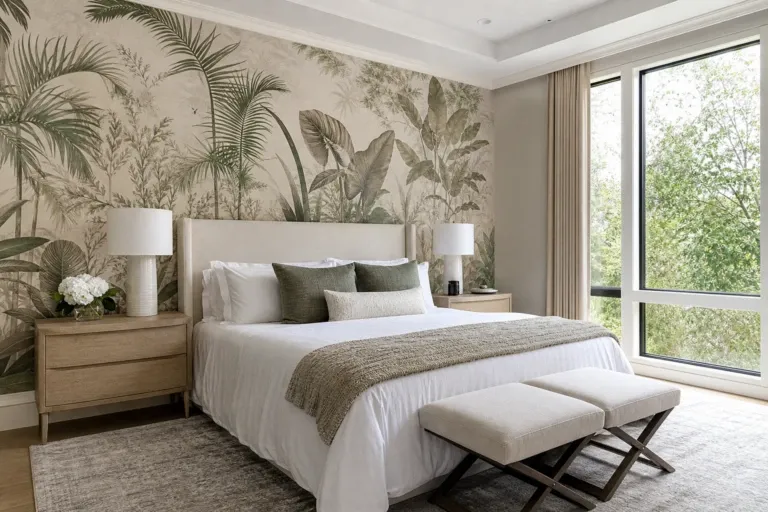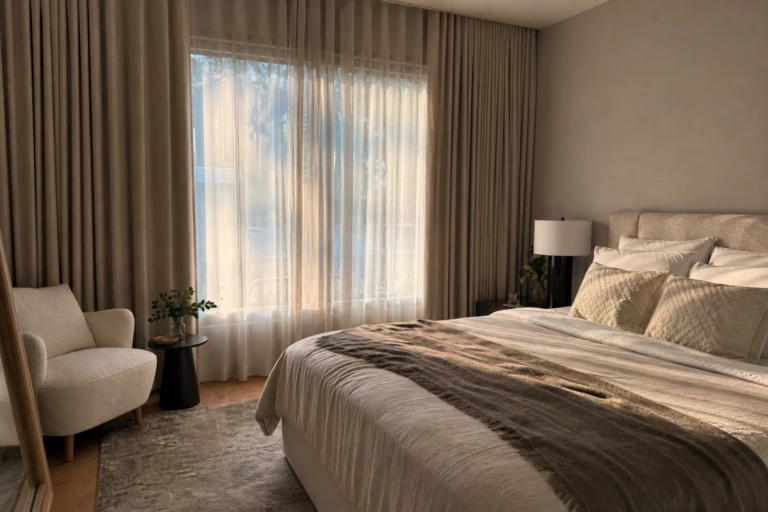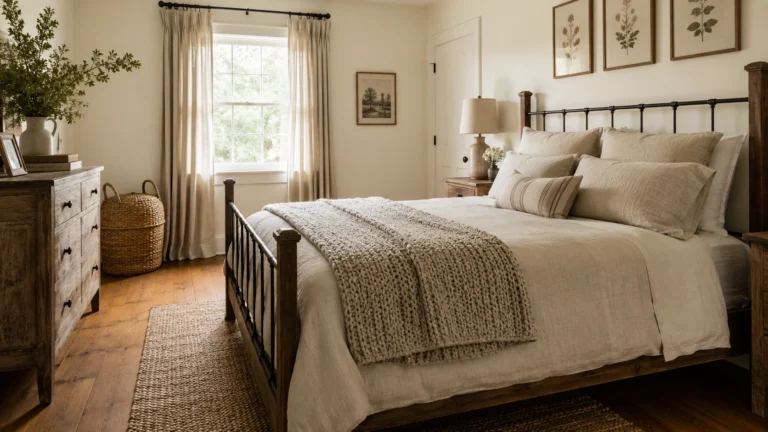
Bedroom Looks for Men That Are Actually Worth Trying
Most men approach bedroom design the same way: throw in a bed, a nightstand, maybe a TV, and call it done. And honestly, that works fine for a while. But at some point, you start to notice that the room feels a little flat, a little temporary, like a hotel room you forgot to check out of. The good news is that pulling together a bedroom that looks and feels genuinely good is not as complicated as it sounds, and it does not require spending a fortune or having any design experience. It just takes knowing which direction to go.
Pick one or two ideas that match your budget and room size, start there, and build out over time. Each one is specific enough to act on, not just vague inspiration. From dark moody setups to warm earthy arrangements, from Japandi-influenced minimalism to bold industrial character, these are real approaches that work in real rooms. Pick the ones that suit your personality and your space, and go from there.
Dark and Moody Bedrooms That Feel Intentional, Not Gloomy
1. Charcoal Walls with Warm Brass Hardware
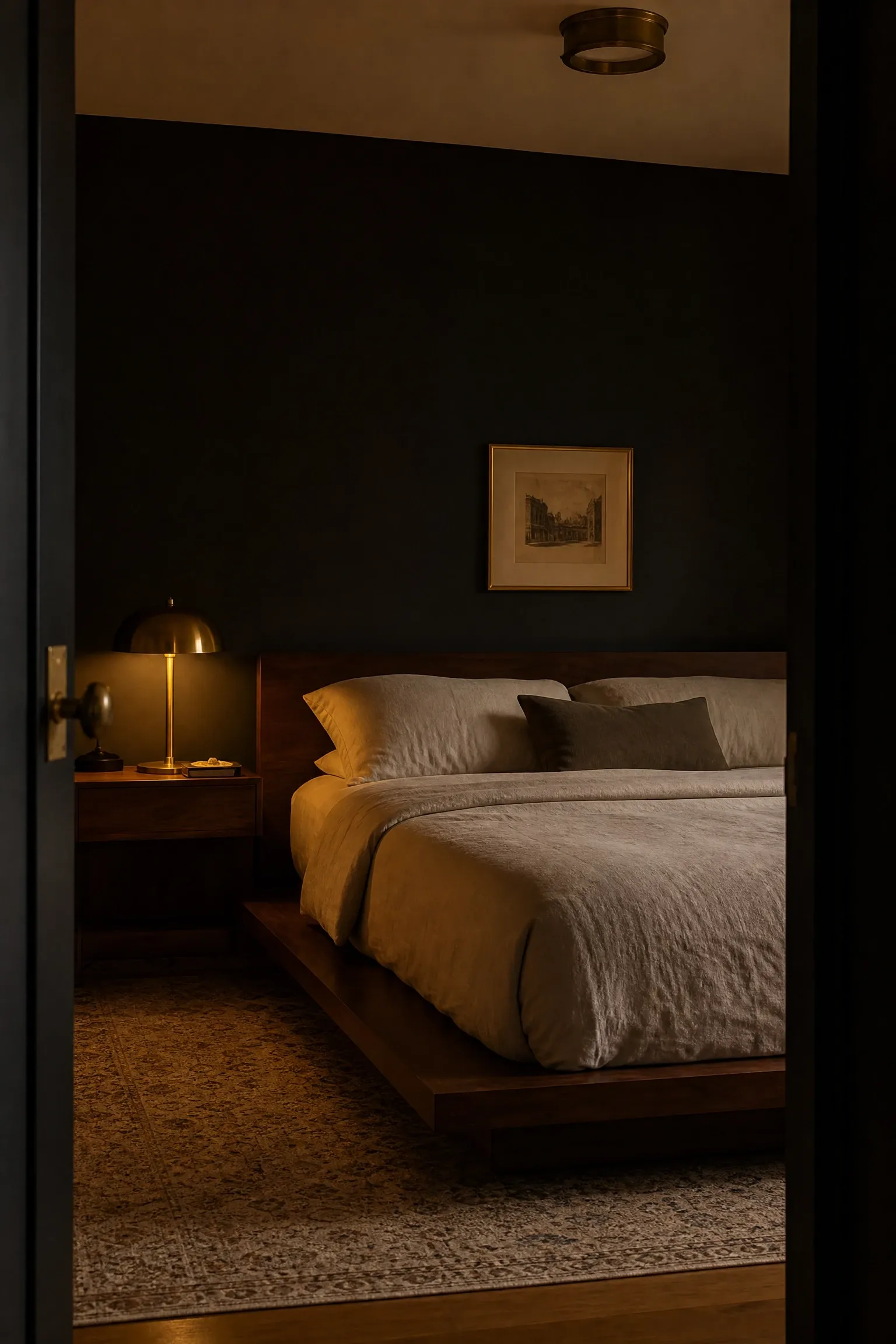
There is a version of a dark bedroom that feels oppressive, and then there is the version that feels like a high-end hotel suite, and the difference almost always comes down to how you handle the warmth. Painting the walls in a deep charcoal, like Benjamin Moore’s Kendall Charcoal or Farrow and Ball’s Railings, creates a strong, grounded atmosphere, but the room only works if you layer in warm metals to stop it from feeling cold. Brushed brass hardware on drawers, a warm-toned bedside lamp with an amber bulb, and linen bedding in off-white or sand will balance the darkness without softening the masculine edge. A low-profile platform bed in walnut or dark oak keeps the visual weight heavy and intentional. One practical note: dark walls in a small room can make the ceiling feel lower, so keeping furniture pieces low-slung and adding a mirror on one wall helps maintain the sense of space. This look tends to land in the mid-to-higher budget range depending on the furniture, but the paint cost alone makes a dramatic difference.
Designer Note: Swap cool-toned white bulbs for warm 2700K bulbs throughout. In a dark room, bulb temperature changes everything.
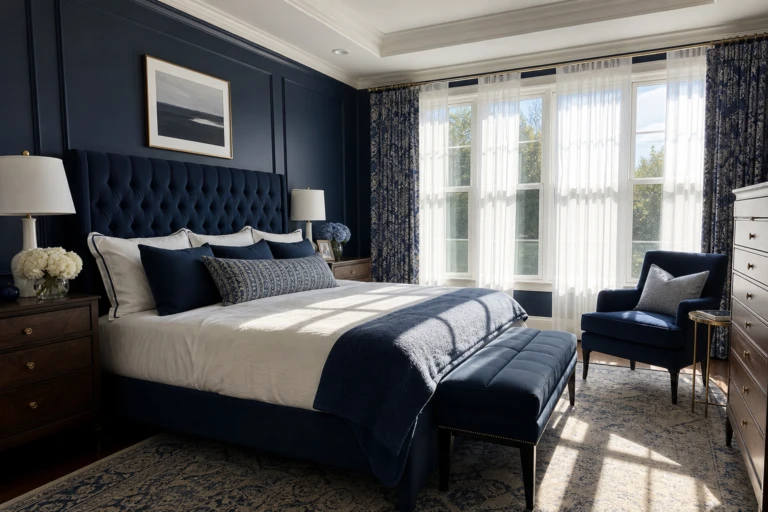
2. Navy Blue Statement Wall with Natural Wood Furniture
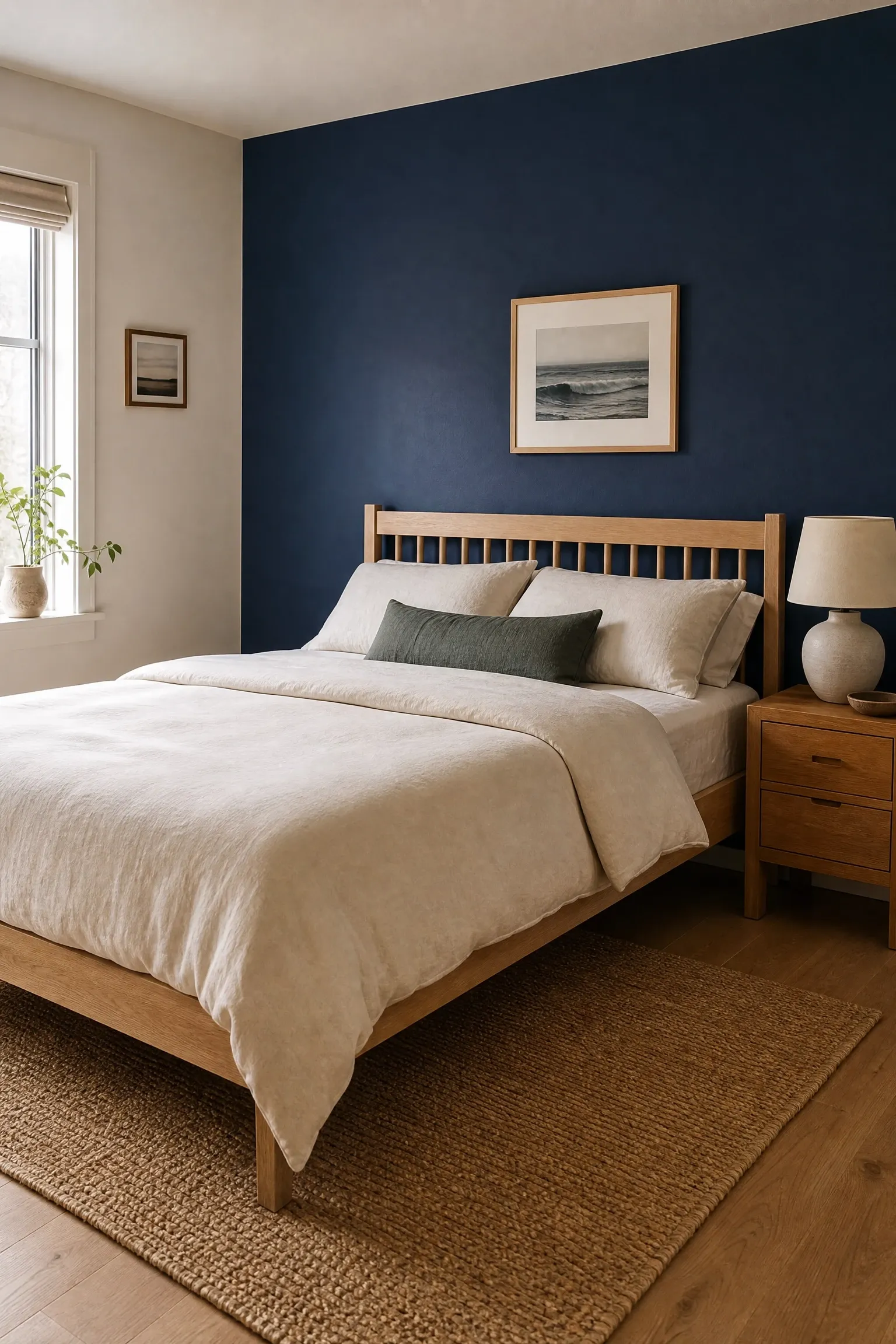
A deep navy accent wall behind the bed is one of those choices that consistently works in a men’s bedroom because it hits the right balance of bold and sophisticated without tipping into dramatic. The key is what you pair it with. Natural wood furniture, particularly pieces in a medium honey tone like white oak or light walnut, creates a warm contrast against the cool navy that feels both intentional and relaxed. Keep the remaining walls a warm off-white rather than bright white, which softens the contrast and makes the room feel like a complete space rather than a feature wall stuck in a plain box. A simple linen duvet in cream or warm grey, a ceramic bedside lamp, and a jute or wool area rug pull the natural materials through the space. For lighting, a recessed reading light or a simple plug-in sconce mounted at headboard height is more polished than a table lamp if you want a cleaner look. This is a great mid-budget approach since you are painting one wall and working with mid-range solid wood furniture.
Designer Note: Navy works best when it is matte or eggshell finish. A shiny finish on a dark wall shows every imperfection.
3. All-Black Color Scheme with Textural Variety
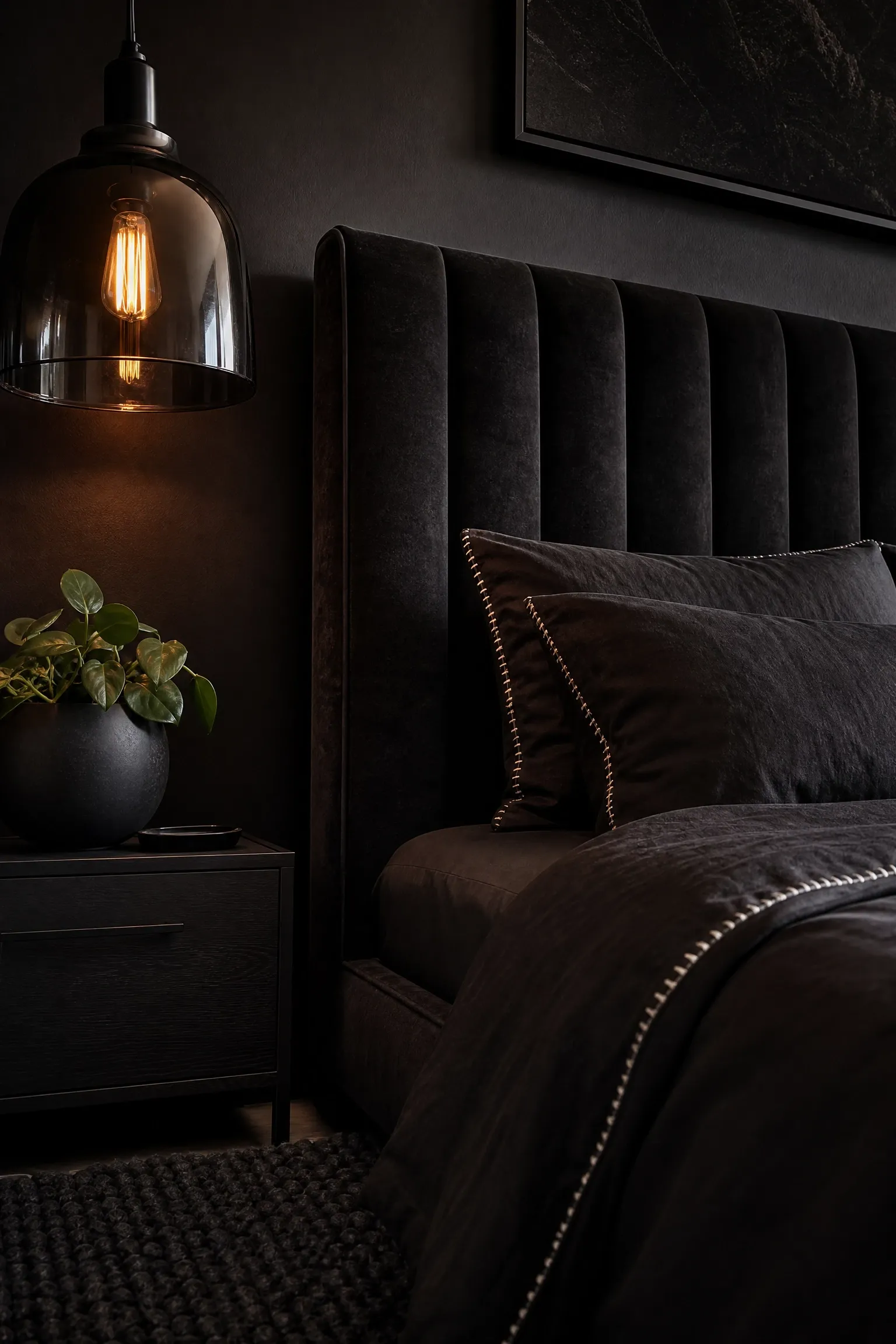
Committing to an all-black bedroom is not for everyone, and it is worth being honest about that upfront: it requires a room with decent natural light or a strong layered lighting plan, otherwise it can feel like sleeping in a cave. But when it works, it really works. The entire concept depends on texture doing the heavy lifting since there is no color contrast to create visual interest. Think matte black walls paired with a velvet headboard in the same tone, black linen bedding with a contrast stitch, a black metal bed frame with visible grain on the wooden slats, and a dark wool rug with a low pile. A single large pendant light in brushed black with a visible filament bulb adds warmth and becomes a focal point. The most common mistake in this look is treating black as flat, which gives the room a cave-like quality. Every surface should be a different finish: matte, satin, woven, brushed.
Designer Note: Add at least one warm-toned element, such as a wooden tray or a plant, to stop the room from feeling like a void.
Industrial Bedrooms with Real Character
4. Exposed Brick Feature Wall with Metal Bed Frame
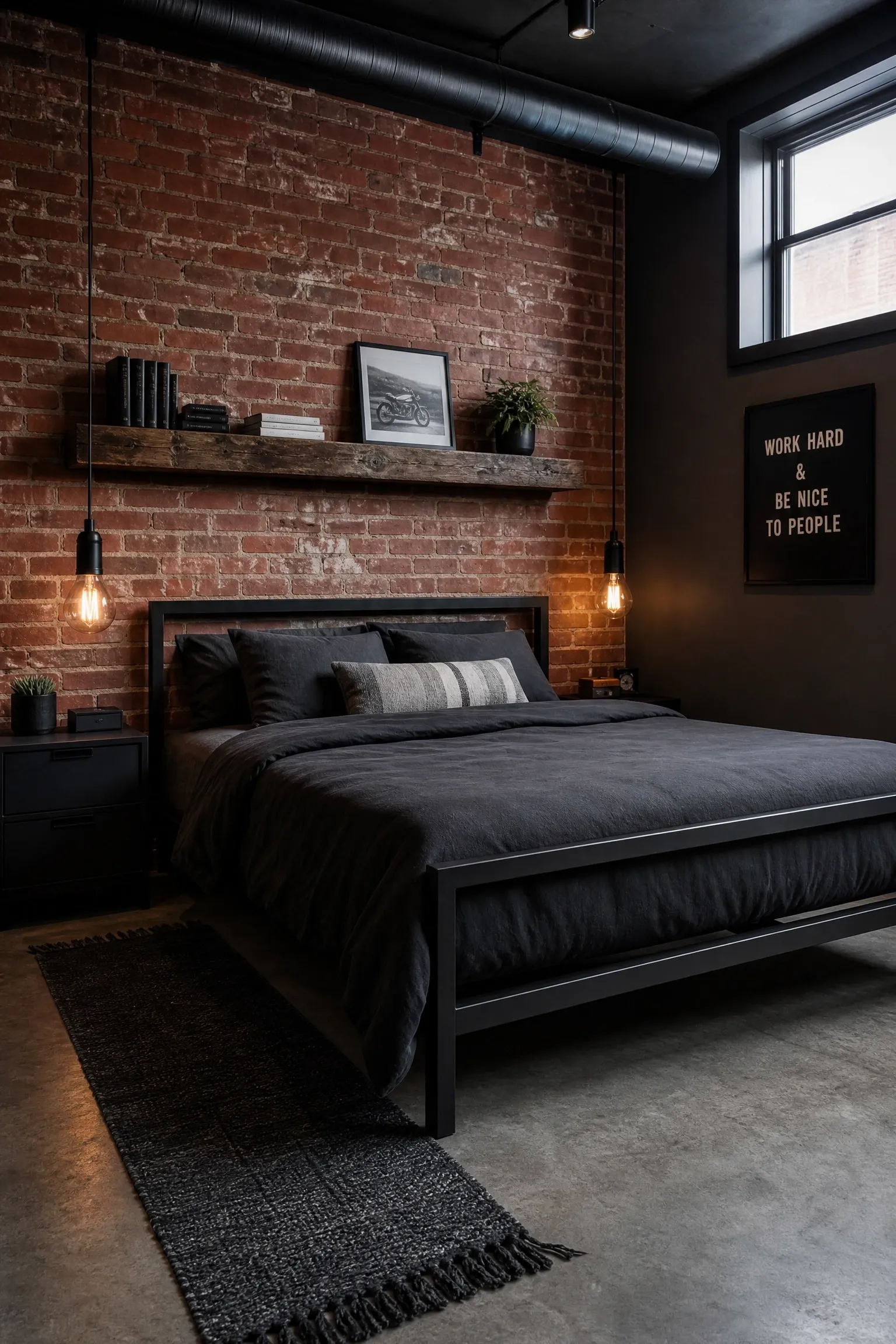
If you have an exposed brick wall, this is one of the best uses of it in a bedroom. The raw, uneven texture of brick provides visual depth that painted walls simply cannot replicate, and it anchors an industrial style without needing to force it. Pair the brick with a matte black metal bed frame, ideally one with clean rectangular lines rather than ornate detailing, and keep the bedding simple in charcoal, white, or deep green. Edison bulb pendants hung on either side of the bed instead of traditional bedside lamps reinforce the industrial character without being heavy-handed. A reclaimed wood floating shelf above a low dresser ties in organic warmth, which is important because industrial rooms can feel cold and impersonal without it. If you do not have actual brick, brick-effect panels or wallpaper can work in a smaller bedroom on a tighter budget, though the texture will not be as convincing up close. This style works especially well in apartments and loft-style spaces.
Designer Note: Seal exposed brick before painting any surrounding walls. Unsealed brick leaves dust and can cause paint adhesion issues nearby.
5. Concrete-Effect Walls with Dark Steel Accents
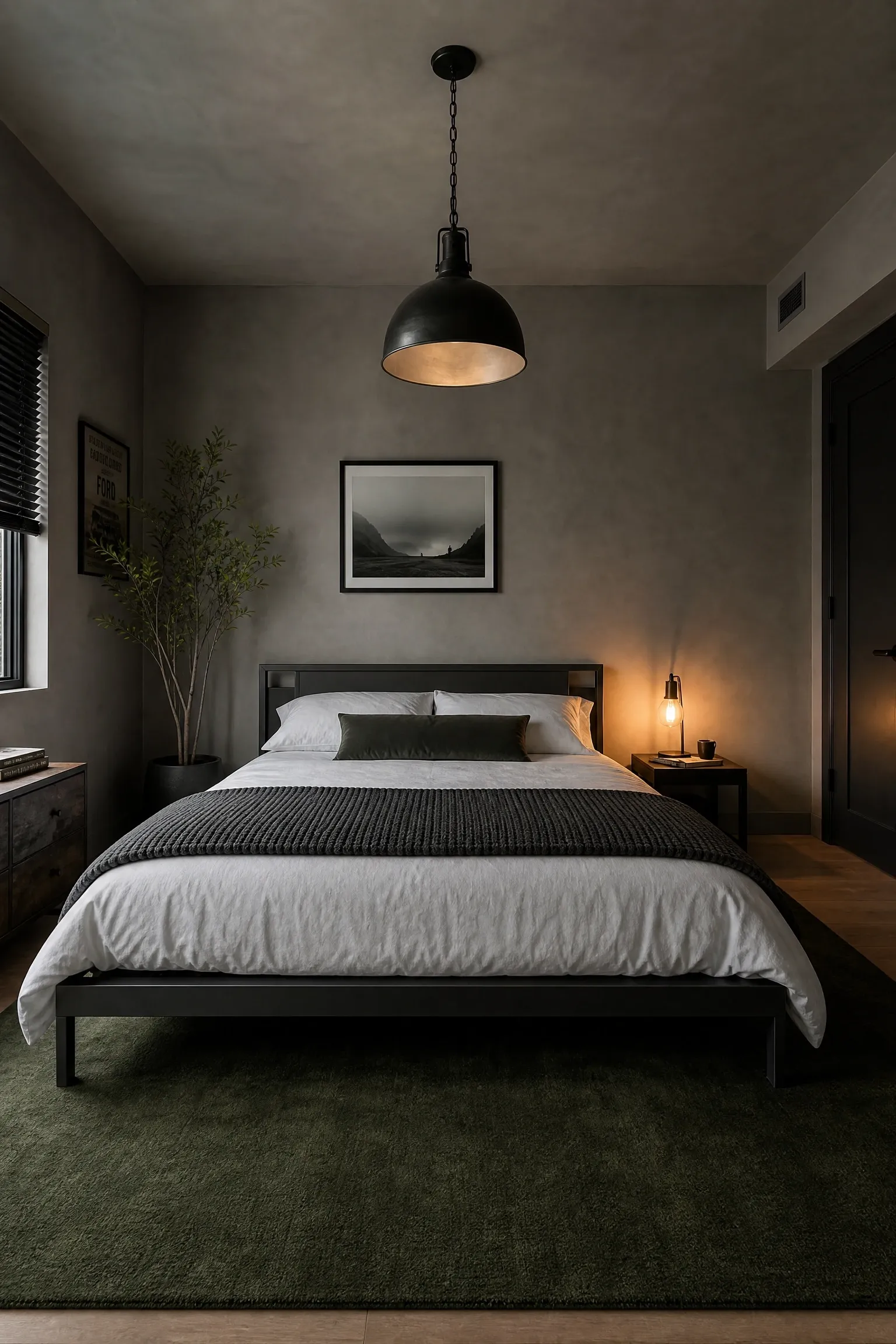
Concrete walls used to mean actual concrete, which is a structural and budget nightmare for most people. Fortunately, micro-cement plaster finishes and concrete-effect paints have become genuinely convincing, and the look has grown significantly in men’s interior design because of how well it pairs with dark steel. Applying a mid-tone grey micro-cement finish to one wall, particularly the one behind the headboard, gives the room an urban, almost architectural quality. Pair it with dark steel furniture: a steel-framed platform bed, a dark metal shelving unit, and slim-profile industrial pendant lights. To prevent the space from feeling like a studio apartment that ran out of budget, layer in a large area rug in dark charcoal or forest green and invest in quality bedding with visible texture, such as a waffle-knit throw or a heavyweight cotton duvet cover. The concrete and steel combination is inherently cold in temperature, so warm lighting is non-negotiable here. This look trends toward mid-budget when using plaster effects, higher when using actual micro-cement contractors.
Designer Note: Micro-cement finishes are high-maintenance and can crack if the substrate moves. On a budget, concrete-effect paint achieves 80% of the look at 10% of the cost.
More Looks You'll Want to Steal:





6. Urban Industrial with Reclaimed Wood and Pipe Shelving
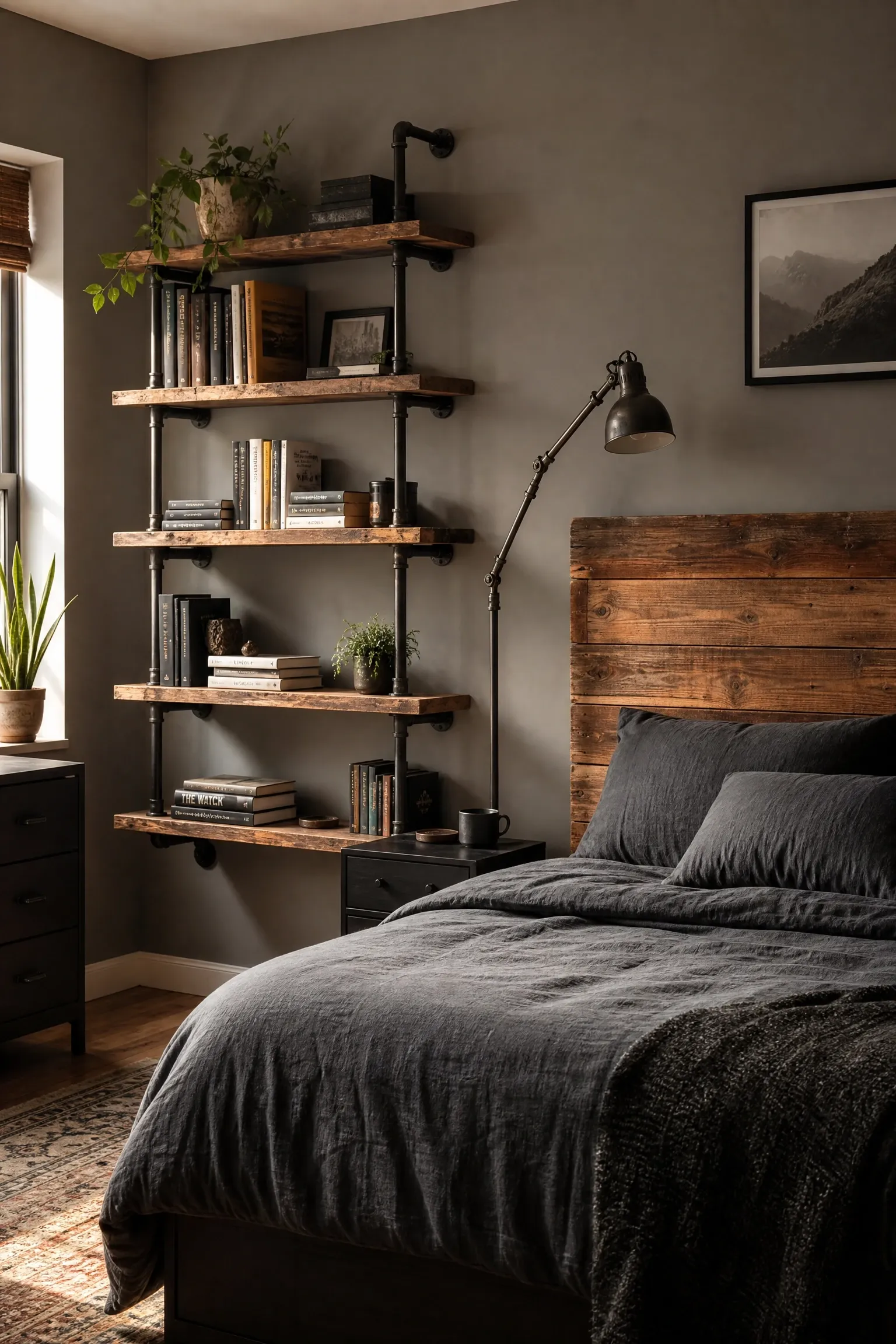
Pipe shelving has been popular in industrial interiors for years, and it continues to hold up as a practical and stylish storage solution for bedrooms where visible storage is preferable to built-in wardrobes. The combination of black iron pipes with reclaimed wood planks creates open shelving that doubles as display space for books, plants, and objects, while keeping the room from feeling overly finished or precious. Against a warm grey or putty-toned wall, pipe shelving adds the structural industrial detail the room needs without requiring expensive furniture. A reclaimed wood headboard, either freestanding or wall-mounted, reinforces the material story. Pair with a charcoal linen duvet, matte black hardware throughout, and a vintage-style floor lamp with an articulated arm. One honest limitation here: open shelving does require regular editing and tidying, since exposed items always collect dust and the look only works when intentional rather than cluttered.
Designer Note: Keep open shelving to one wall maximum in a bedroom. Beyond that, it starts to look like a studio apartment rather than a considered room.
Minimalist and Japandi Bedrooms Built on Calm
7. Japandi Style with Low Furniture and Warm Neutrals
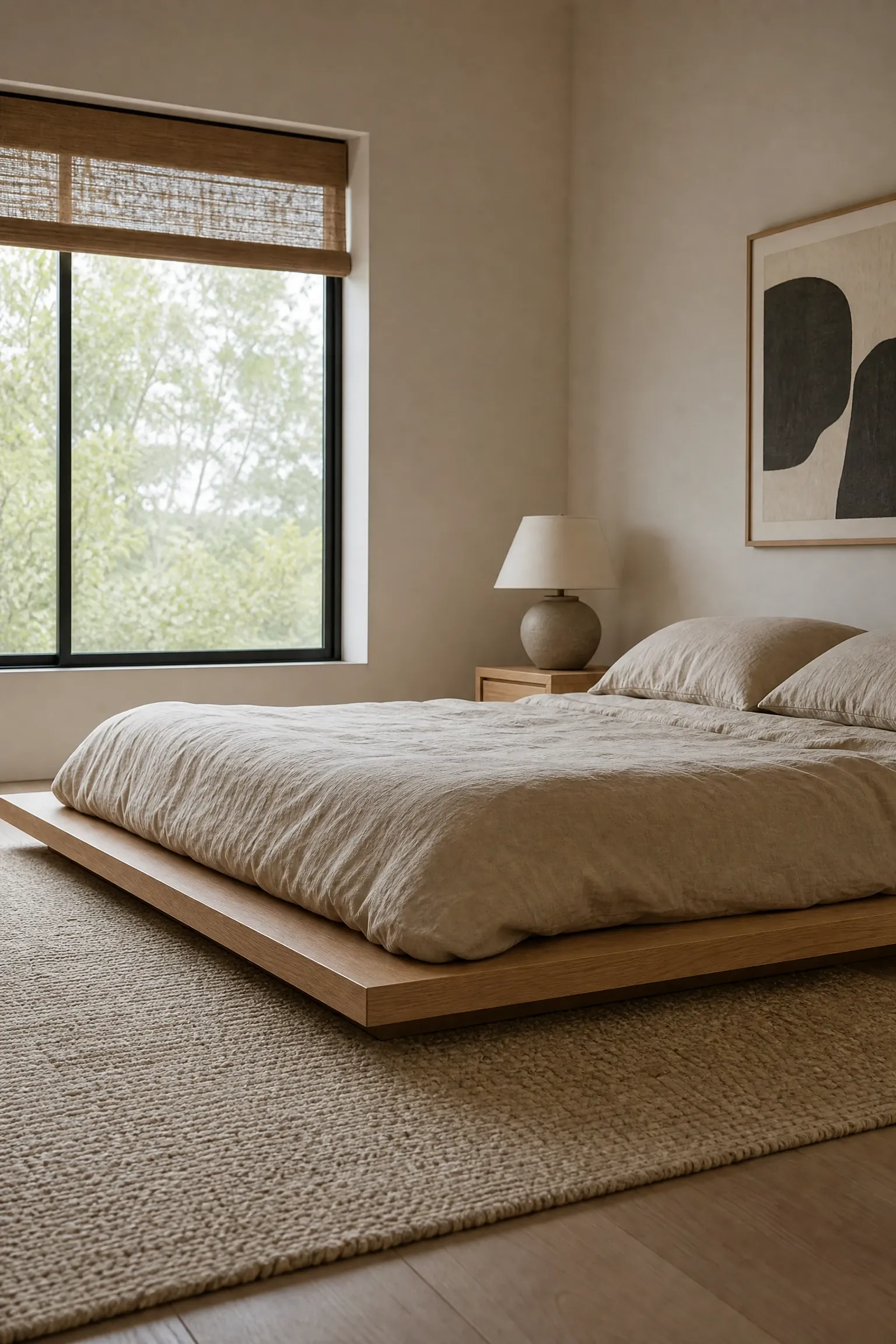
Japandi is the design crossover between Japanese minimalism and Scandinavian warmth, and it has become one of the most refined options for men’s bedrooms because it is clean without feeling cold and simple without feeling bare. In practice, this look comes together best when you commit to low furniture: a floor-level platform bed or a low-profile solid wood frame, a small bedside table that sits close to the ground, and nothing above eye level except a single piece of art or a simple wall light. The colour palette is warm neutrals, specifically warm whites, sand, linen, and the natural tones of the wood itself. White oak furniture is ideal for this look. Wabi-sabi principles apply here, meaning that slight imperfections in materials, such as visible wood grain, a handmade ceramic lamp base, or a slightly uneven linen texture, are a feature rather than a flaw. Keep accessories to an absolute minimum: a stone tray, a single plant, a folded throw. This is an affordable look when you shop secondhand or mid-range Scandinavian brands.
Designer Note: Japandi relies on negative space as much as the objects themselves. Resist the urge to fill every surface.
8. Monochrome Grey Minimalism with Layered Textures
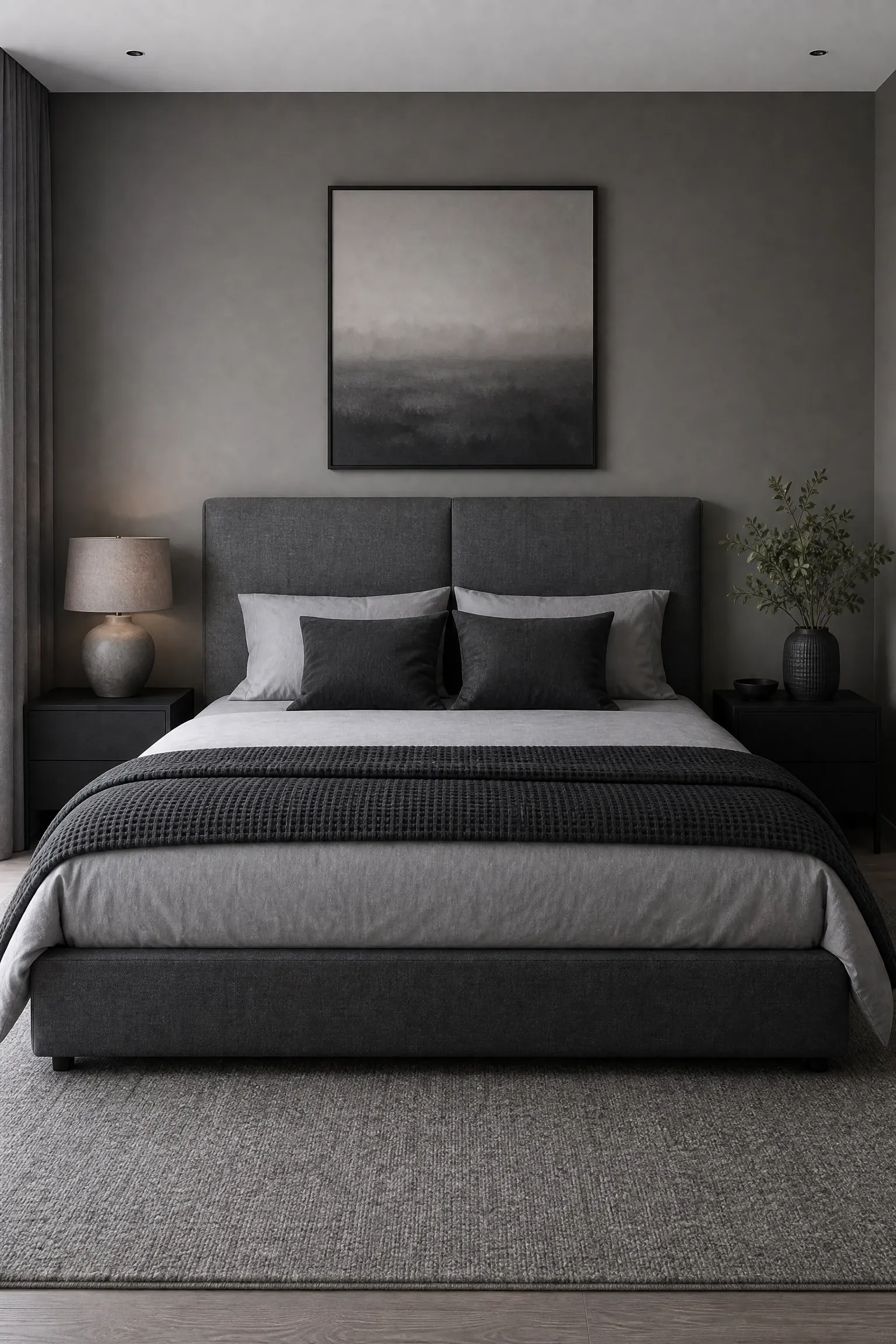
A fully monochrome grey bedroom sounds like it should be boring, but it is one of those concepts that consistently looks more considered in person than it does on paper, particularly in a men’s bedroom where restraint reads as confidence. The approach is straightforward: choose one mid-tone warm grey for the walls, then layer different shades and textures of grey throughout the bedding, furniture, and accessories. A slate grey upholstered headboard, a charcoal waffle-weave throw, a light grey fitted sheet, and a soft stone-coloured wool rug create a tonal layering effect that gives the room visual depth without introducing colour. The key to avoiding a flat or sterile result is ensuring that no two surfaces are the same finish: matte walls, a slightly sheen on the duvet cover, a rough-woven rug, and a smooth ceramic lamp base. This look is well-suited to smaller bedrooms because it reads as cohesive rather than cramped. Budget-wise, you can achieve most of this with mid-range bedding and a quality paint job.
Designer Note: Warm grey (with a brown or yellow undertone) works better than cool grey in bedrooms. Cool grey can look clinical under artificial light.
9. Zen-Inspired Bedroom with Natural Materials and Indoor Plants
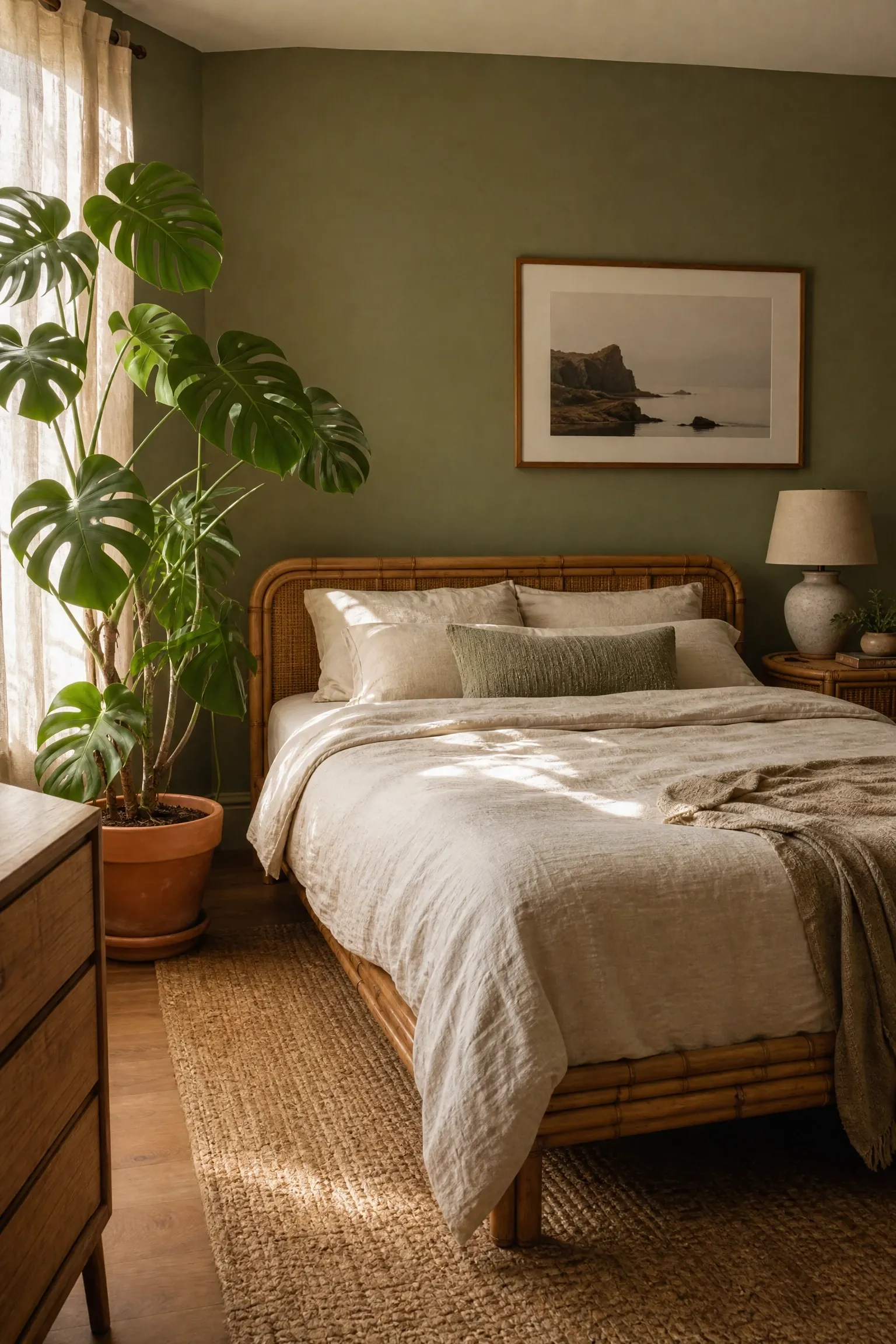
Biophilic design, the practice of bringing natural materials and living elements into interior spaces, has moved well beyond being a trend into becoming a legitimate approach to bedroom design, particularly for men who want a room that actually helps them decompress after a long day. The science behind it is straightforward: rooms with natural materials and greenery are consistently associated with lower cortisol levels and improved sleep quality. In a bedroom context, this translates to bamboo or rattan furniture, a linen headboard in a warm natural tone, stone or ceramic accessories, and a selection of low-maintenance indoor plants such as a snake plant, a ZZ plant, or a monstera. Walls in a warm sage green or pale terracotta reinforce the natural palette without requiring much furniture to make the room feel complete. Lighting should be warm and indirect, with no overhead fluorescent-style light sources. One honest limitation: plants require some maintenance and are not ideal if you travel frequently or are not reliable with watering schedules.
Designer Note: Snake plants and ZZ plants are almost impossible to kill and genuinely improve air quality. Start with one large plant rather than several small ones for a cleaner look.
10. Wabi-Sabi Minimalism with Raw Plaster and Linen
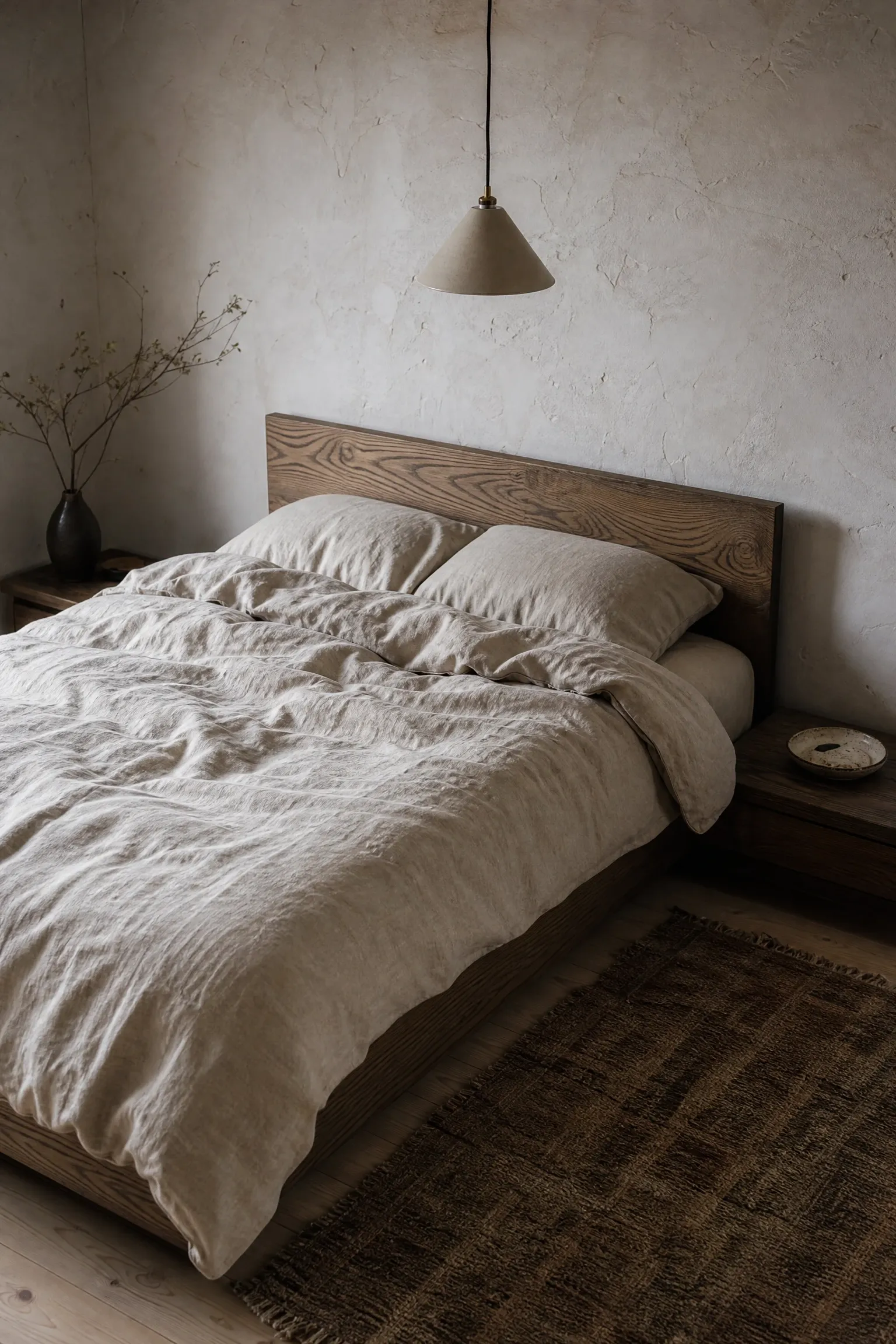
Wabi-sabi as a bedroom aesthetic is built around the idea that beauty exists in imperfection, incompleteness, and the natural ageing of materials. In a practical bedroom sense, this means raw plaster walls in an uneven, slightly textured finish in warm off-white or pale clay, paired with heavy linen bedding that is deliberately relaxed and slightly creased rather than crisp and pressed. Furniture should be solid wood with visible grain, ideally in lighter tones like ash or untreated oak. A simple ceramic pendant light above the bed, a handmade ceramic tray on the bedside table, and a worn wool rug in an earthy tone complete the look. What makes this appealing for men specifically is that the aesthetic gives permission to have a room that does not look like it was styled for a photoshoot. It is deliberately imperfect and that is the point. This is also one of the more budget-conscious approaches on this list, since raw plaster finishes and unfinished wood furniture tend to be on the more affordable end.
Designer Note: True wabi-sabi avoids symmetry. Resist the urge to match your bedside tables or lamps exactly. Slight asymmetry is intentional.
Earthy and Warm Bedrooms That Feel Lived In
11. Terracotta and Warm Ochre Palette with Leather Accents
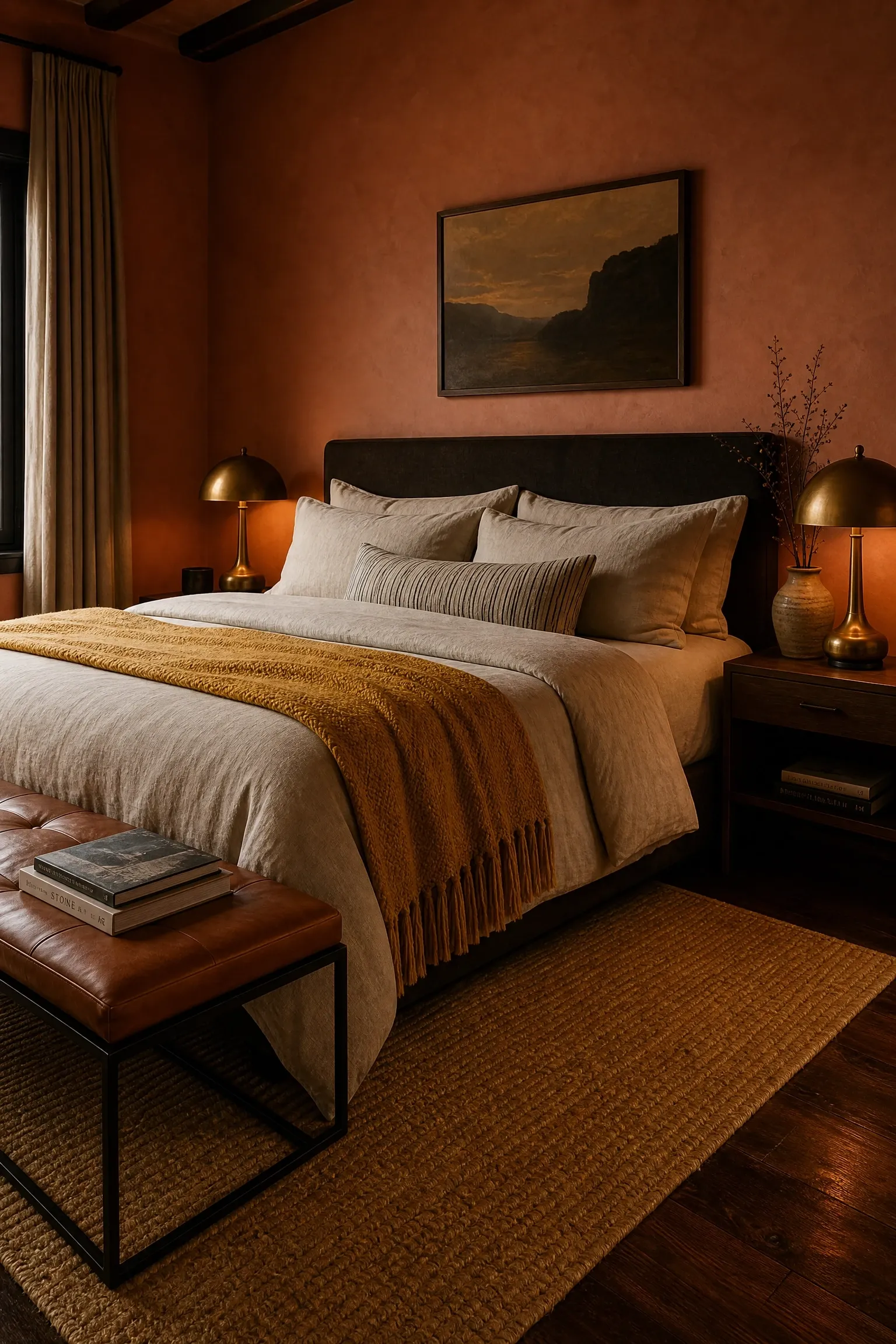
Terracotta has had a strong run in interior design over the past few years, and in a men’s bedroom it works particularly well because it reads as warm and grounded rather than soft or delicate. A terracotta feature wall, or all four walls in a muted, dusty version of the tone such as Farrow and Ball’s Dead Salmon or Sulking Room Pink, creates an immediately warm atmosphere that is unlike any neutral. Pair it with ochre yellow in the bedding or a throw blanket, dark leather accents on a bench at the foot of the bed or a leather-strap wall mirror, and warm brass hardware on furniture. A dark brown hardwood floor or a sisal rug in a natural tan reinforces the earthy palette. Ceramic accessories, particularly handmade bowls or vases, look naturally at home in this colour environment. This palette is one that works particularly well in rooms with warmer natural light, and keep in mind that terracotta in a north-facing room can look quite flat or even slightly pink without adequate warm artificial lighting to supplement.
Designer Note: Layer at least two different earthy tones rather than committing to one. Terracotta walls with ochre bedding and a sand rug is more interesting than all terracotta.
12. Warm Walnut Furniture with Forest Green Walls
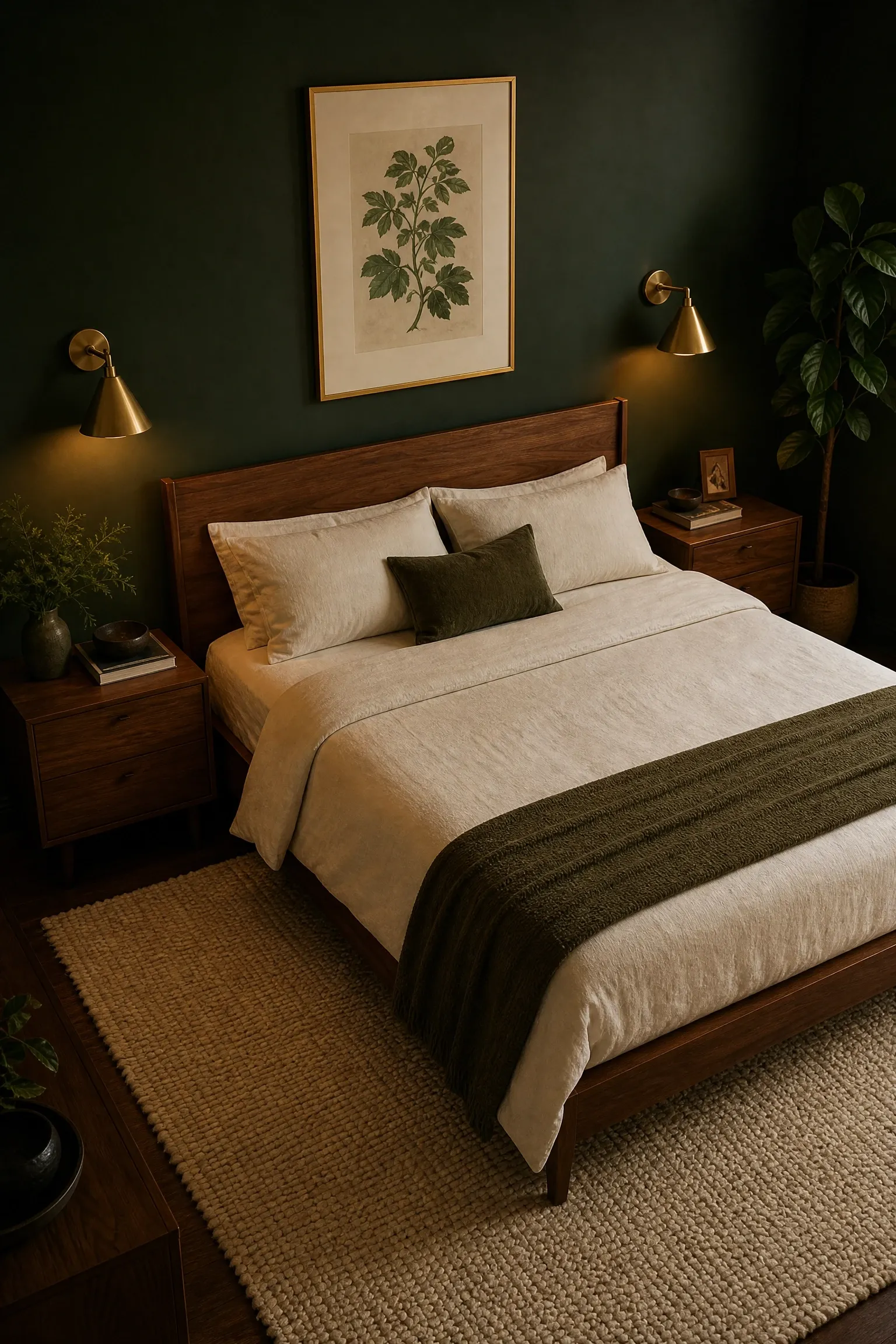
Forest green walls paired with walnut furniture is one of those combinations that professional designers return to again and again, and for good reason: the warm, reddish tones in walnut wood complement the cooler blue-green of a deep forest tone in a way that feels rich and natural rather than overdone. This is a fairly investment-level look when done properly, since genuine walnut furniture tends to sit at a higher price point, but mid-range walnut veneer pieces from retailers like West Elm or Article can achieve a similar effect. A walnut bed frame with a low, clean-lined headboard, a matching bedside chest of drawers, and possibly a walnut desk if you need a workspace in the room create a cohesive furniture story. On the green walls, keep accessories minimal: a single large-scale botanical print, a simple brass wall sconce, and a cream or warm white bedding set. The colour temperature of the lighting matters a great deal here. Warm 2700K lighting makes the green feel rich and inviting, while cool daylight bulbs will make it feel like a paint swatch.
Designer Note: Forest green paint colours vary widely between brands. Always test a large swatch on your actual wall before committing, as the undertones shift significantly between chips and full walls.
13. Desert Southwest Bedroom with Adobe Tones and Woven Textiles
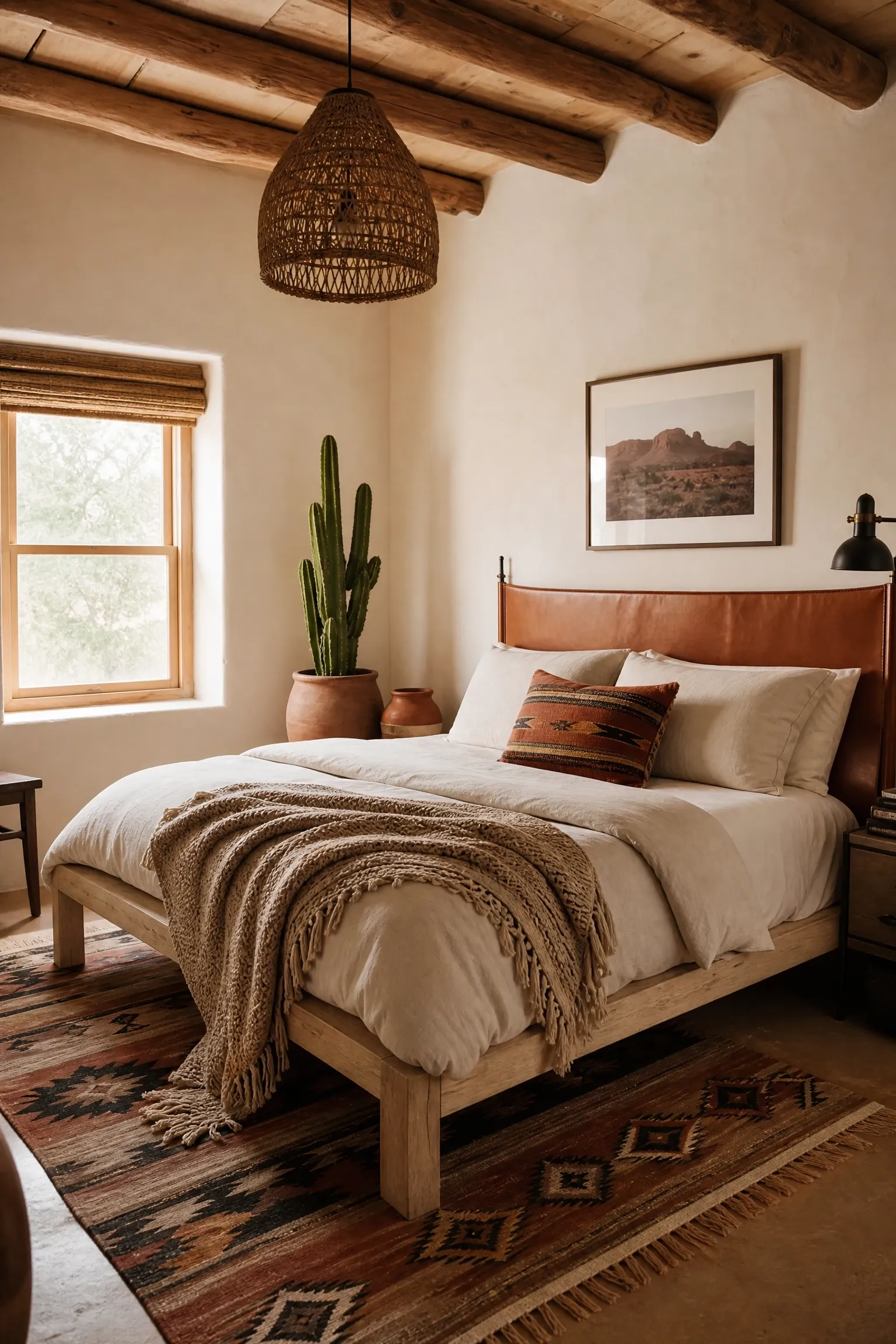
Southwest-inspired interiors have evolved well beyond the clichéd cowboy aesthetic into a genuinely sophisticated design direction that works especially well for men who are drawn to handcrafted, culturally rich interiors. The foundation is an adobe or sand-coloured wall, somewhere between warm white and pale clay, paired with furniture in bleached or natural wood with visible texture. Woven textiles are the key detail here: a Navajo-inspired rug in muted rust, cream, and black at the foot of the bed, woven wall hangings as art, and a chunky knit or woven cotton throw. Terracotta pots with cacti or succulents feel natural rather than forced in this context. Lighting should be warm and low, with a rattan pendant or a ceramic base table lamp. A leather headboard in tan or cognac pulls the look together. This is a genuinely affordable style if you are open to secondhand shopping or artisan markets for the textile components, which are also the most distinctive parts of the design.
Designer Note: Avoid mass-produced Navajo-pattern prints. Genuine woven pieces, even inexpensive ones, have a quality and irregularity that printed textiles cannot replicate.
14. Rich Burgundy and Dark Wood for a Moody Warm Look
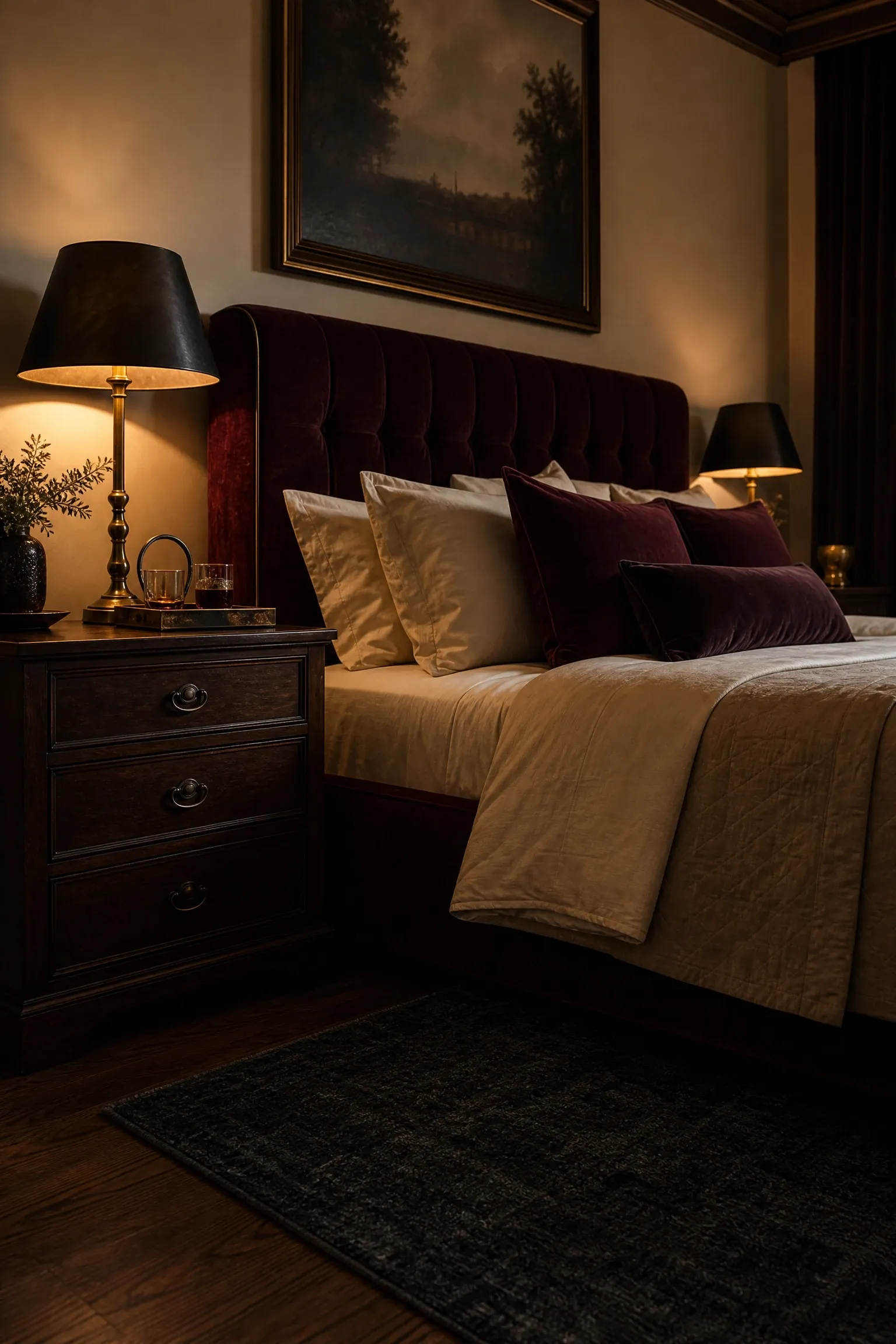
Burgundy is a colour that many men overlook because it feels like it belongs in a traditional or overly formal setting, but used in the right way it creates one of the warmest, most atmospheric bedroom environments possible. The approach that works best is using burgundy as an accent rather than a primary colour: a deep wine-toned upholstered headboard, burgundy velvet cushions against white or cream bedding, or a burgundy accent wall in a matte finish behind the bed. Pair with dark wood furniture in mahogany or ebony-stained oak, and keep the remaining walls in a warm off-white or light mushroom tone. The room will naturally feel rich and enclosed, which works in favour of sleep but can feel a bit heavy if overdone. Black or oil-rubbed bronze hardware on furniture and fixtures keeps the tone consistent. Layered lighting is important here, particularly a warm-toned bedside lamp to create intimacy rather than relying on overhead ceiling lights.
Designer Note: Burgundy and bright white is a jarring combination. Use warm white or cream for bedding and walls to keep the room from feeling like a hotel bistro.
Contemporary Bedrooms with a Clean, Confident Edge
15. Upholstered Headboard Statement with Tailored Bedding
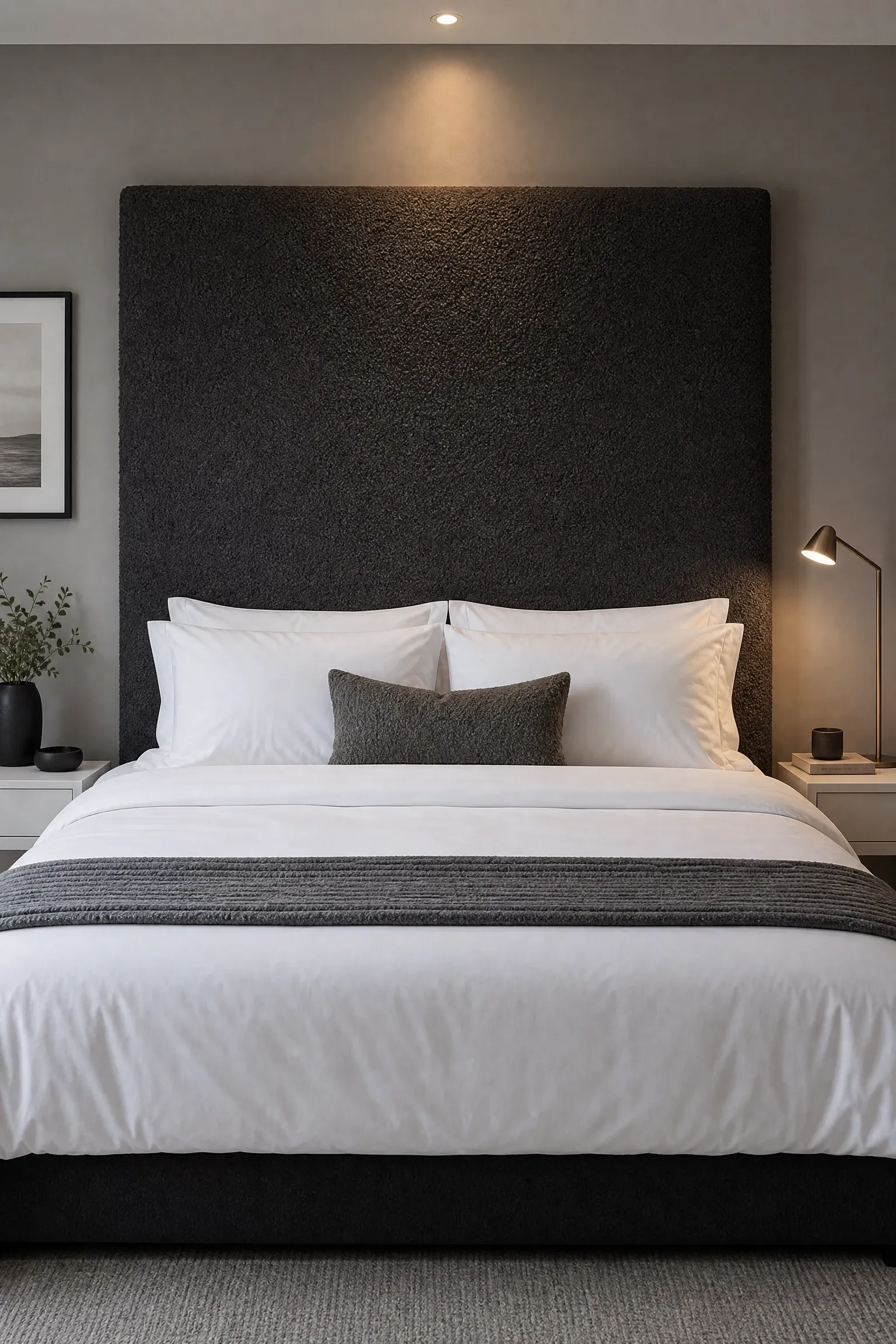
In most men’s bedrooms, the headboard is an afterthought. A large, well-proportioned upholstered headboard is actually one of the highest-impact upgrades you can make to a bedroom because it creates a clear focal point and gives the room a finished, intentional quality that is immediately noticeable. For a masculine bedroom, the most versatile options are upholstered in a deep charcoal boucle, a slate blue velvet, or a dark linen. The headboard should be proportionate to the bed width, meaning it should be roughly the same width or slightly wider, and tall enough to have visual presence. Pair with crisp, high thread-count bedding in white or light grey, layered with a single textured throw folded at the foot of the bed. Keep the rest of the room relatively minimal so the headboard carries its weight as the primary design element. This is a mid-to-investment-level purchase but one that genuinely changes the feel of the room without requiring any other major changes.
Designer Note: A headboard should sit about 24 to 36 inches above the mattress top for proper visual proportion. Too short and it looks like an afterthought.
16. Mid-Century Modern Bedroom with Teak and Mustard Yellow
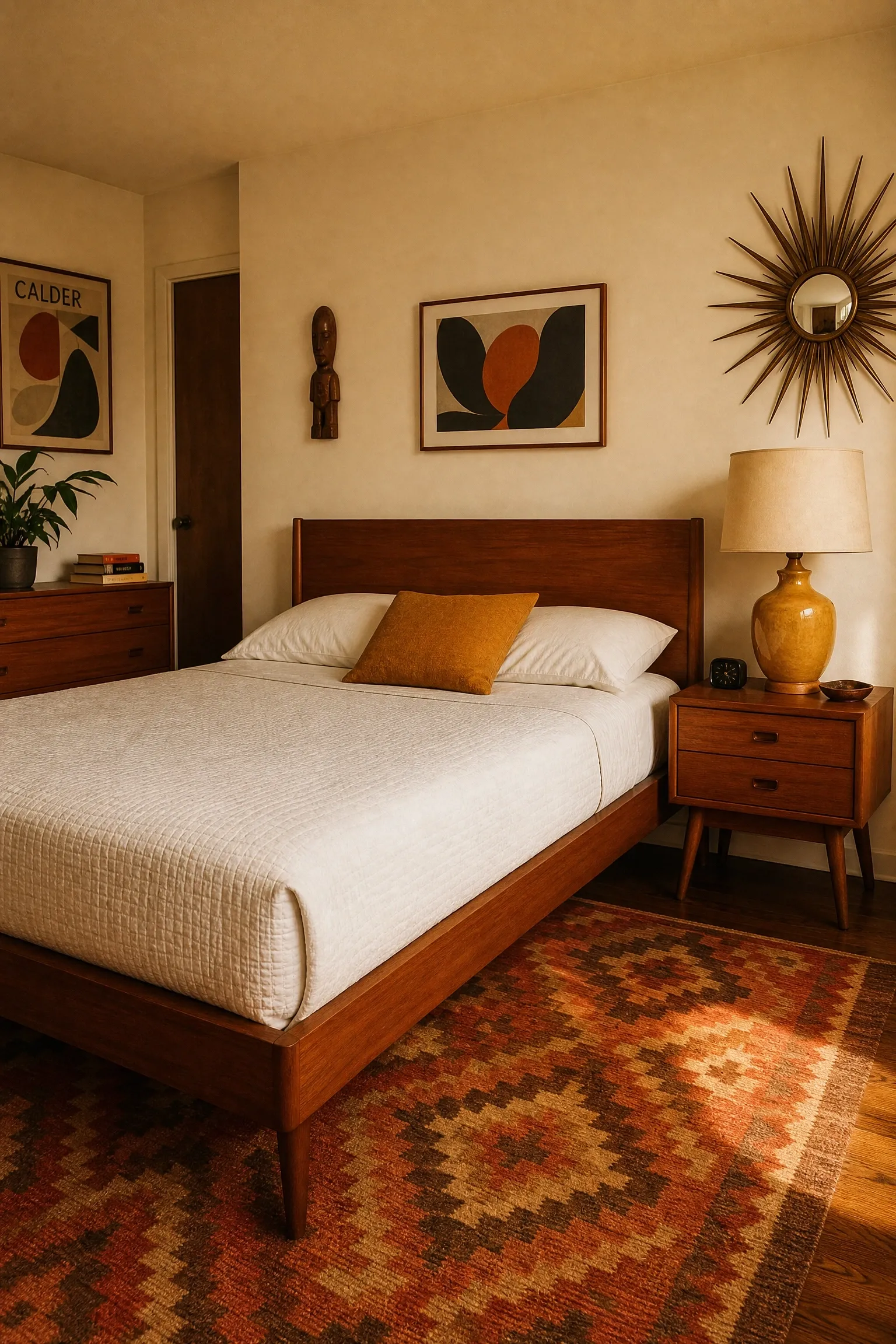
Mid-century modern remains one of the most consistently popular interior styles for men’s bedrooms, and it holds up because the furniture design is genuinely excellent: clean lines, honest materials, and functional forms that do not age. The classic version of this look pairs teak or walnut furniture with a warm cream or soft white wall, then introduces a pop of period-appropriate colour in the accessories. Mustard yellow is the most versatile MCM accent: a mustard cushion on a white bedding set, a mustard-toned ceramic lamp base, or a small mustard throw adds the warmth and character that stops the room from feeling like a furniture catalogue. Tapered wooden legs on the bed frame, bedside tables, and a low dresser are the defining furniture detail of mid-century modern. Look for pieces with drawer pulls in brass or brushed gold. A starburst mirror or a large abstract print in warm tones completes the look. This is an accessible style across all budgets since there is a wide range of MCM-inspired furniture at every price point.
Designer Note: True mid-century modern pieces are relatively affordable secondhand. A genuine 1960s teak dresser from a thrift store often costs less than a new reproduction.
17. Art Deco Bedroom with Geometric Details and Gold Accents
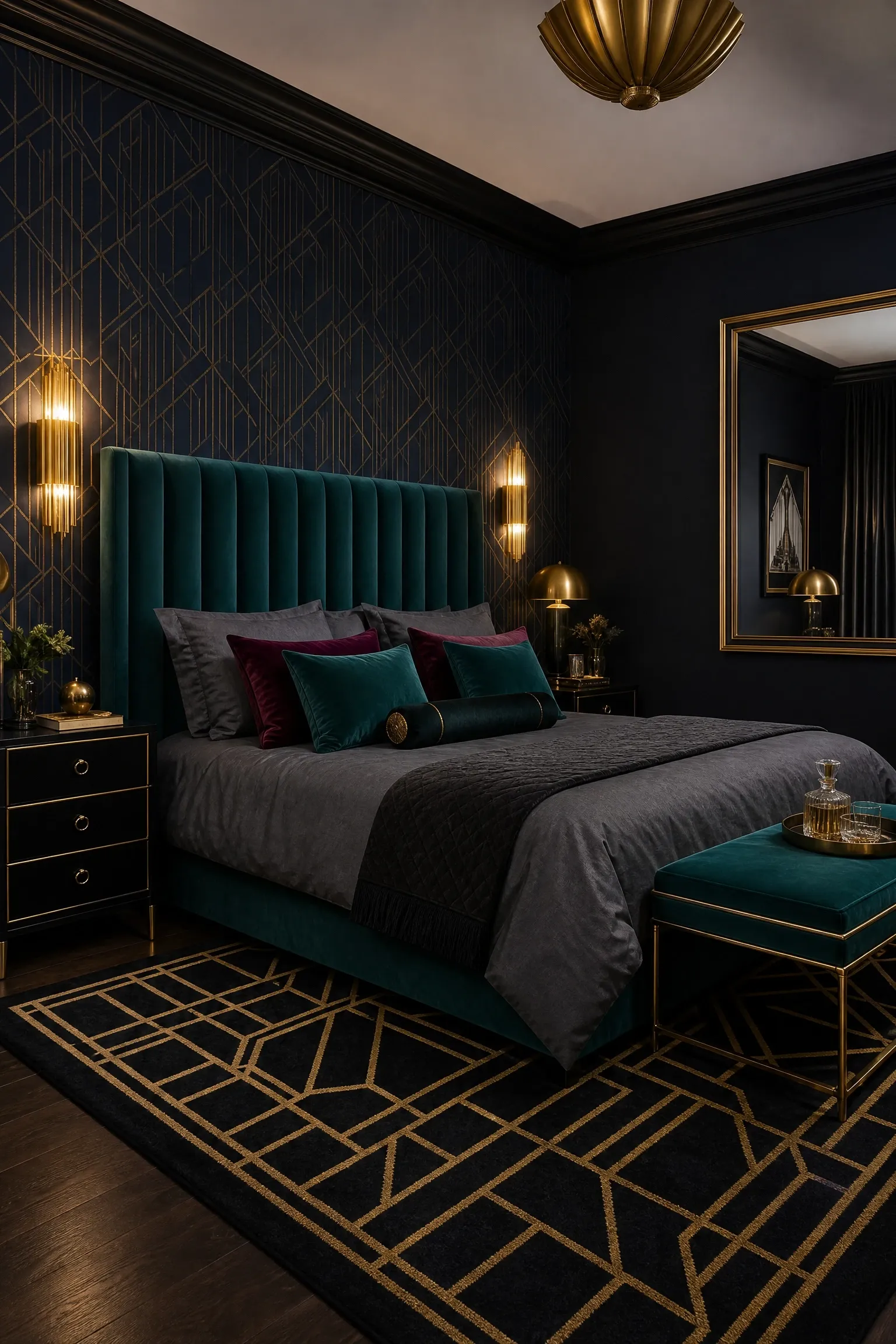
Art Deco as a bedroom style for men works because of its confidence: geometric patterns, rich materials, and deliberate opulence applied with a restrained hand feel sophisticated rather than over-the-top. The key moves are geometric wallpaper or a feature wall with a panelled effect in a deep, saturated tone such as midnight blue, emerald, or deep plum, paired with matte gold or antique brass hardware and lighting. A velvet upholstered headboard in a jewel tone, gold-framed mirrors, and a geometric-patterned rug in black and gold or black and cream complete the foundational elements. This is a style that requires commitment to the aesthetic throughout the room, since mixing Art Deco details with other styles tends to look confused rather than eclectic. One honest consideration: this look is on the higher end of the budget range when done properly, as quality hardware, velvet upholstery, and geometric wallpapers are not cheap. That said, even applying just the wallpaper and swapping out hardware creates a significant shift toward this aesthetic.
Designer Note: Art Deco scales up well. One bold geometric rug in a small bedroom often does more than every other design decision combined.
18. Sleek White and Grey Modern Bedroom with Accent Lighting
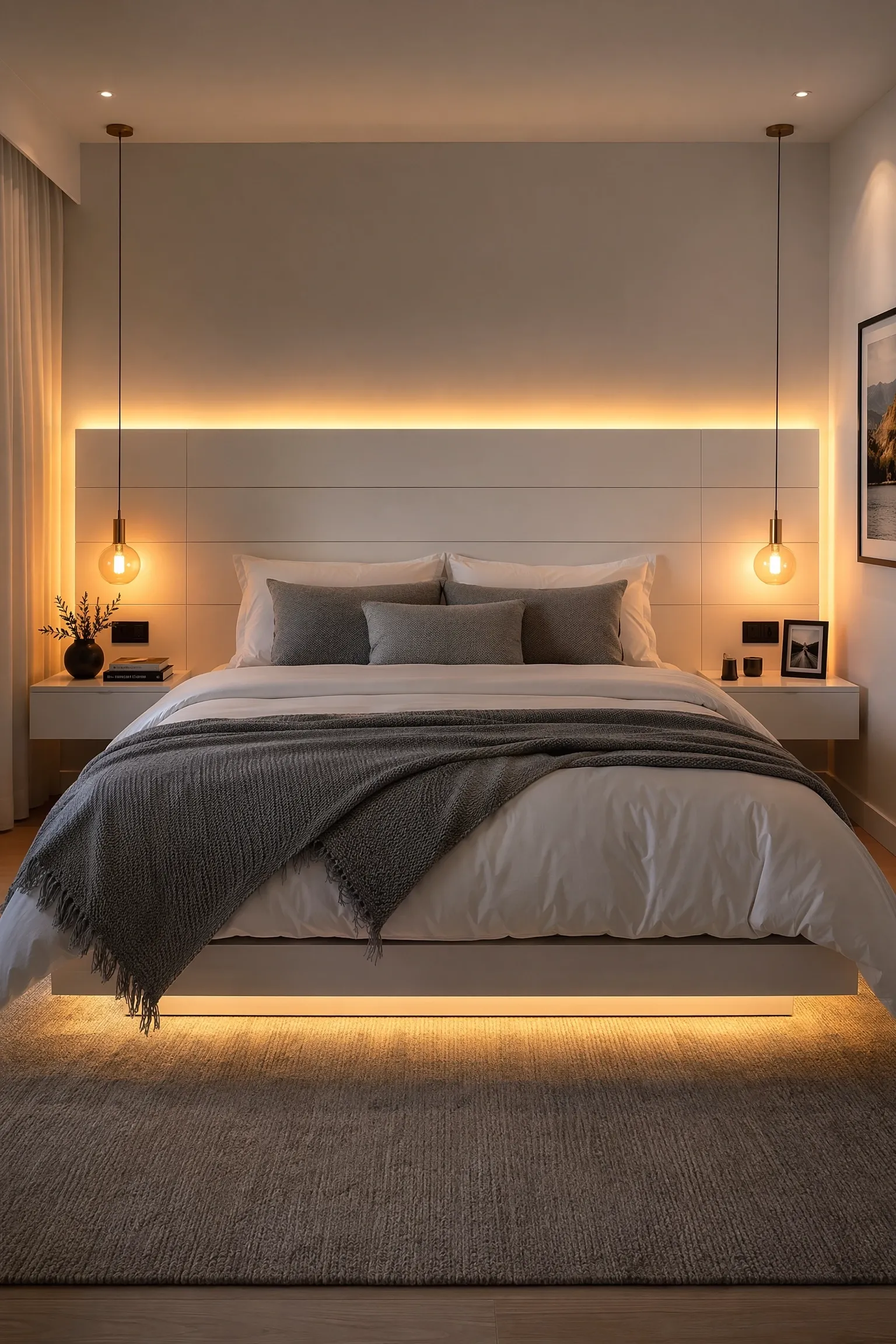
The all-white or white-and-grey modern bedroom gets dismissed as generic, but the reason it appears so often in well-designed spaces is that it actually works: it is bright, it photographs well, and when the lighting design is done properly it feels genuinely luxurious rather than sterile. The approach that separates a good white bedroom from a mediocre one is the layered lighting plan. You need at least three light sources: a warm overhead pendant on a dimmer for general light, bedside lamps with warm bulbs for reading, and some form of indirect accent lighting, whether that is an LED strip behind the headboard, backlit floating bedside tables, or cove lighting around the ceiling perimeter. The furniture in a white and grey room should have clean lines and no ornate detailing: a floating white bedhead with integrated storage, matching wall-mounted bedside tables, and a minimal grey wool rug. The visual interest comes from the lighting and the quality of finishes rather than colour or pattern.
Designer Note: In an all-white room, fingerprints and scuffs show immediately. Use eggshell or satin finish paint rather than matte for walls that are easier to wipe down.
Bedrooms That Work as Hard as They Look
19. Bedroom with Integrated Home Office That Does Not Look Like a Desk Dump
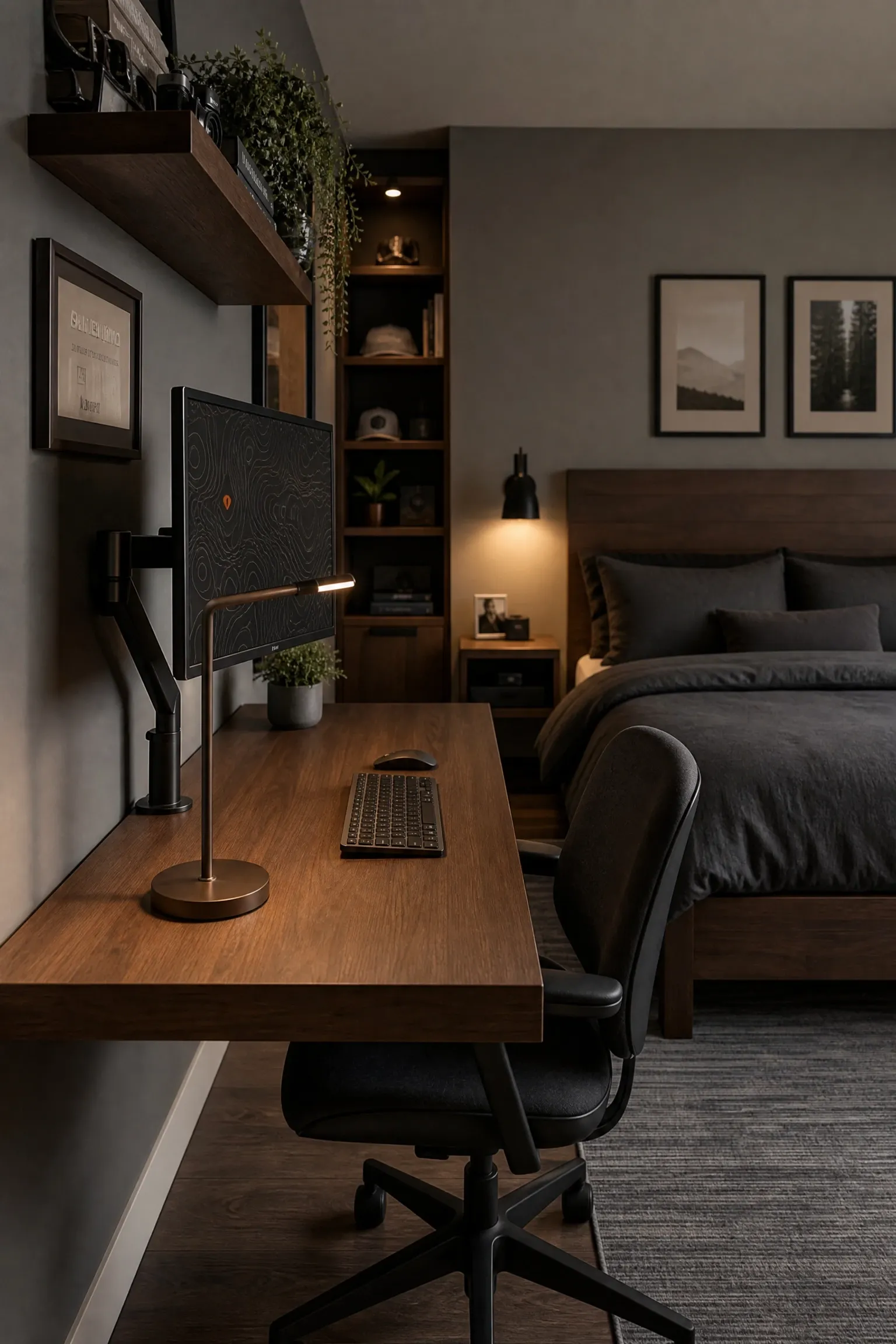
Working from a bedroom desk setup is now the reality for a large number of people, and the main design challenge is stopping the workspace from visually bleeding into the sleep zone. In practice, the most effective solution is creating a designated zone using a floating shelf-style desk rather than a traditional freestanding desk, which takes up less visual space and keeps the area feeling lighter. Position it perpendicular to the bed rather than directly opposite to create a psychological separation. Use the same colour palette for the desk area as the rest of the room so it does not feel like a different room has been bolted on. Cable management is non-negotiable: a cable box under the desk, a single monitor arm, and wireless peripherals make the workspace look considered rather than chaotic. A small task lamp in a style that complements the bedroom lighting, rather than a default office lamp, maintains the aesthetic consistency. This works best in rooms larger than 12 by 12 feet; in smaller rooms, a fold-down wall-mounted desk is a cleaner solution.
Designer Note: A room divider, whether a bookshelf, curtain, or even a tall plant, placed between the bed and desk area measurably improves sleep quality by reducing the visual cue to work.
20. Built-In Wardrobe Alcove with Integrated Lighting
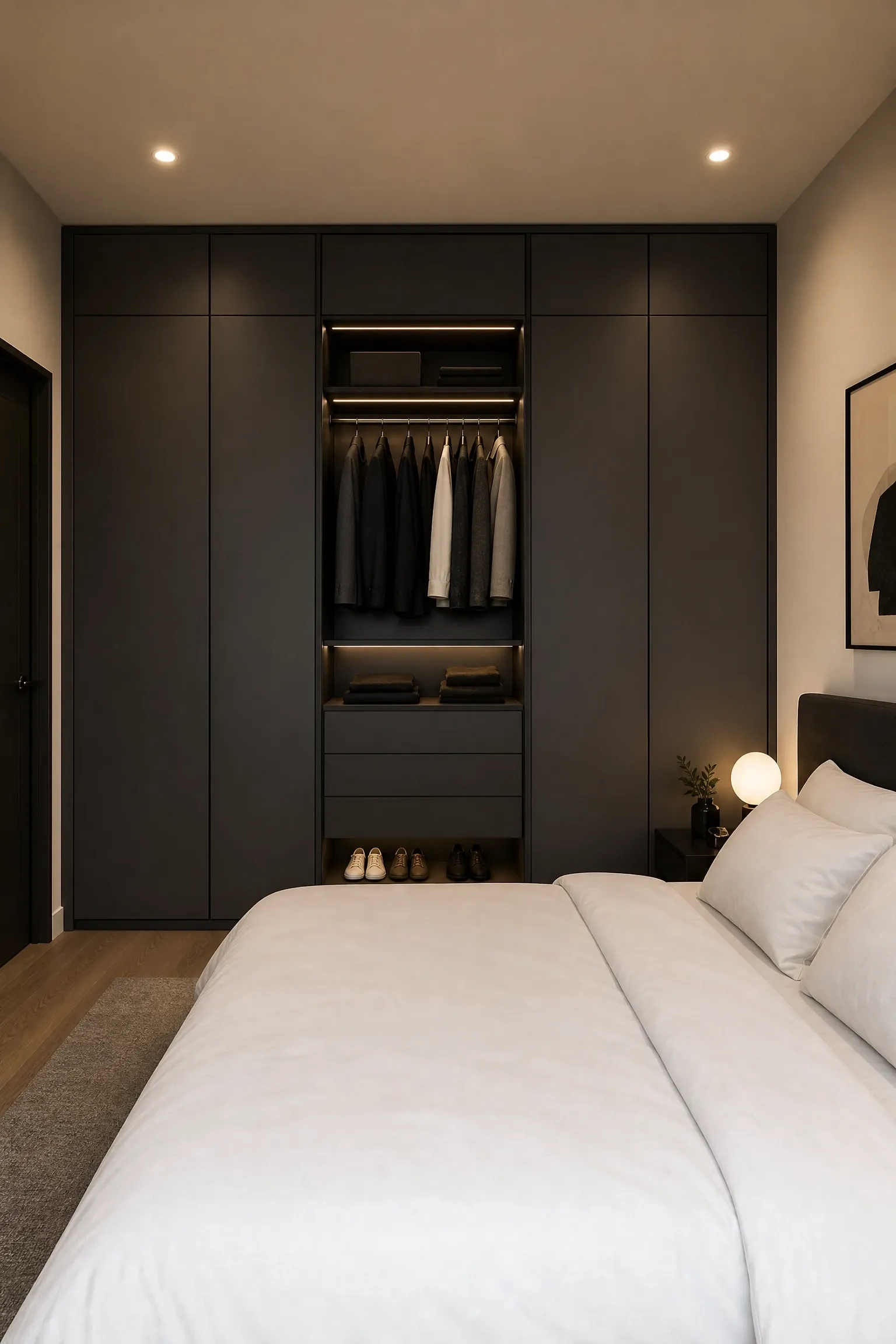
A built-in wardrobe is one of those upgrades that changes the entire feel of a bedroom, not just the functionality. Freestanding wardrobes, no matter how good-looking, rarely integrate into a room as naturally as a built-in solution because they interrupt the wall line and add visual bulk. Built-in wardrobes, particularly floor-to-ceiling versions in a handleless matte finish, make the room feel more like a well-designed apartment than a standard bedroom. For a men’s bedroom, matte charcoal, dark navy, or a warm mid-grey work well as wardrobe colours since they recede into the room rather than competing with the bed as a focal point. Integrated LED lighting inside the wardrobe is a practical upgrade that gets used daily and also prevents the common problem of not being able to see what you own. The cost range here is genuinely wide: IKEA PAX systems with custom fronts can achieve a near-built-in look for a fraction of the custom joinery price, and this is one of the best budget-conscious routes to a professional result.
Designer Note: A handleless wardrobe front in a matte finish is easier to keep looking clean than a handle-front version, since there are no recesses where dust builds up.
21. Smart Lighting System with Scene Control for Different Moods
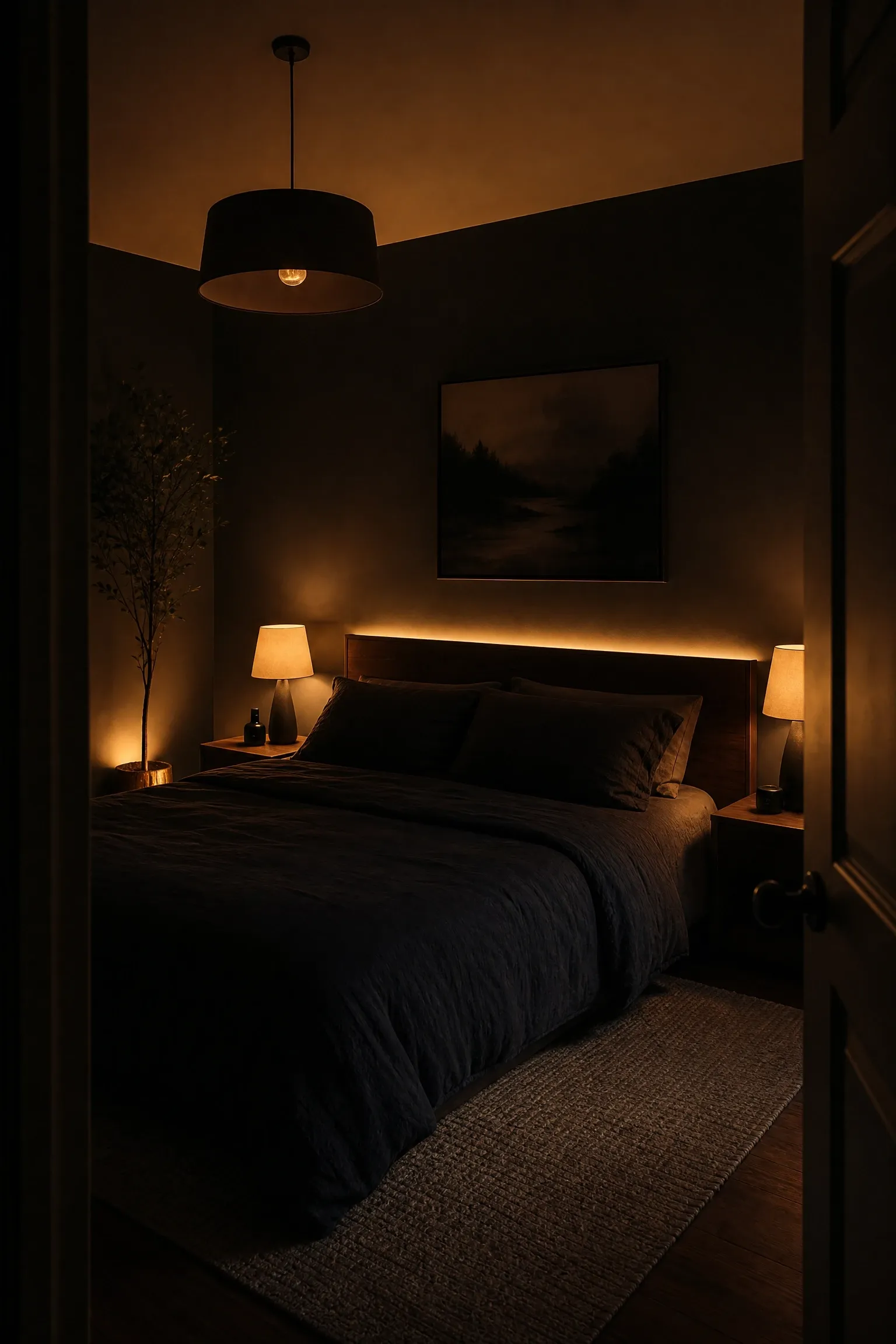
Lighting design is consistently underestimated in men’s bedrooms, which is a shame because it is one of the highest-impact changes you can make per dollar spent. A smart lighting system, whether that is Philips Hue, LIFX, or a similar platform, allows you to set different lighting scenes for different activities: a bright, cooler tone for getting dressed in the morning, a warm dim setting for winding down at night, and a near-off amber-only setting for when you want to watch something on a laptop before sleeping. The key is that you need to plan the light sources first, since a smart bulb in a single overhead light does not achieve the layered effect. At minimum you need ceiling lighting, two bedside lamps, and ideally one indirect source such as an LED strip behind the headboard or a floor lamp. Smart lighting also integrates well with a morning alarm routine, where the lights gradually brighten to simulate a sunrise, which is genuinely effective for waking up feeling less groggy. Budget-wise, a basic Philips Hue starter kit is accessible, though the full system adds up.
Designer Note: Set a bedroom maximum brightness limit of 40% after 9pm. This is the single most practical thing you can do for sleep quality beyond blackout curtains.
22. Under-Bed Storage Bed Frame with Clean Profile
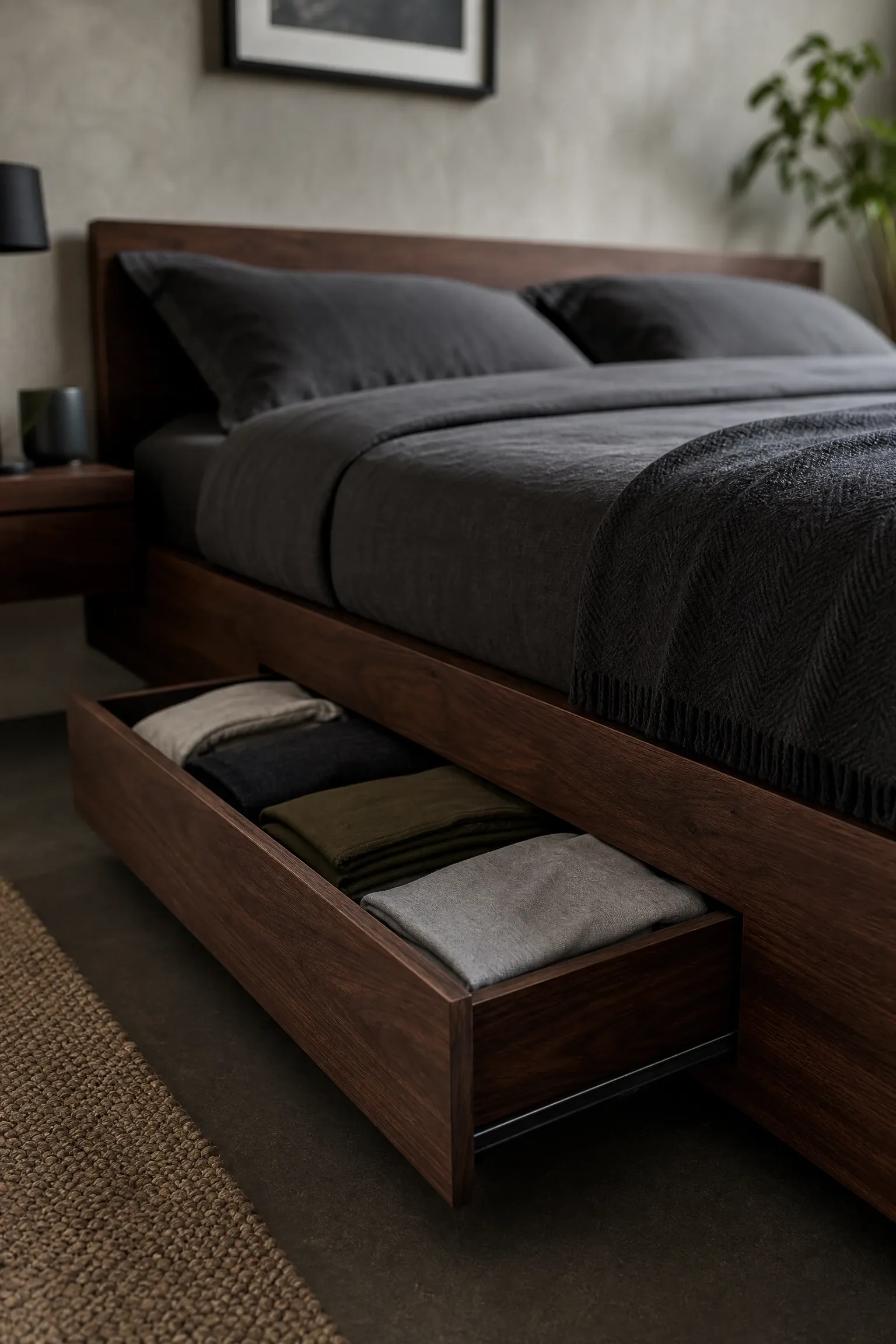
Most bedrooms, regardless of size, have a storage problem, and the space under the bed is the most underused storage in the room by a wide margin. A bed frame with integrated storage, whether drawers on the sides or a lift-up hydraulic base, adds significant practical storage capacity without changing the room’s appearance in any visible way from standing height. For a men’s bedroom, where the tendency toward a cleaner, less-accessorised aesthetic often leaves storage genuinely limited, this is a particularly useful upgrade. Drawer frames typically offer two drawers per side and are ideal for seasonal clothing, spare bedding, or gym kit. Hydraulic bases offer more total volume but are slightly less accessible since you have to lift the entire mattress to access them. The one limitation worth mentioning is that not all bed frames with storage are equal in build quality: cheaper versions have drawers that stick after six months of use. Solid wood or metal guide systems are worth the extra investment.
Designer Note: Avoid storing anything you need frequent access to in a hydraulic base. It is a better fit for seasonal items you only pull out a few times a year.
Bedrooms with Personality That Reflect Who You Actually Are
23. Gallery Wall as the Bedroom Focal Point
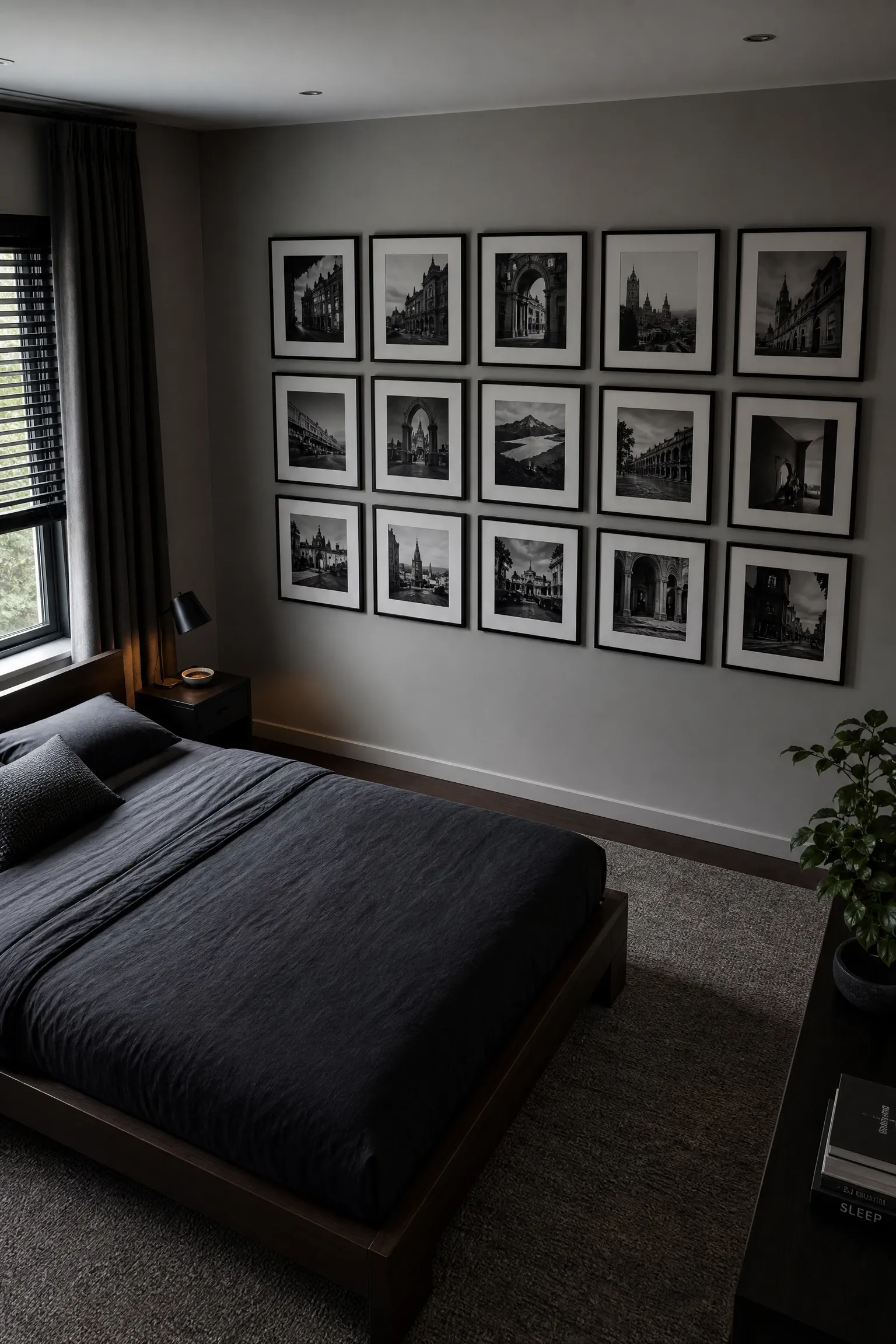
A gallery wall in a men’s bedroom works best when it reflects a genuine interest, whether that is architecture, photography, sport, music, or art, rather than a random assortment of inoffensive prints bought to fill a wall. In practice, the most visually successful gallery walls for bedrooms use a cohesive colour thread through the images, even if the subjects vary: a collection of black and white photography, a series of architectural prints with dark frames, or a mix of concert posters and travel photography in a consistent warm tone and uniform matte black frame. The wall layout matters as much as the content. A grid arrangement reads as precise and deliberate, which suits a more minimal bedroom. An asymmetric salon-style arrangement reads as collected over time. Either works; the one to avoid is something in between, which ends up looking unplanned. Position the gallery wall on the wall opposite the bed so it is the first thing you see when you wake up. Frames should be matte black, natural wood, or a single consistent metal tone for cohesion.
Designer Note: Cut paper templates of each frame size and use painter’s tape to test the layout on the wall before making any holes. This saves a lot of frustration.
24. Collector’s Bedroom with intentional Display Shelving
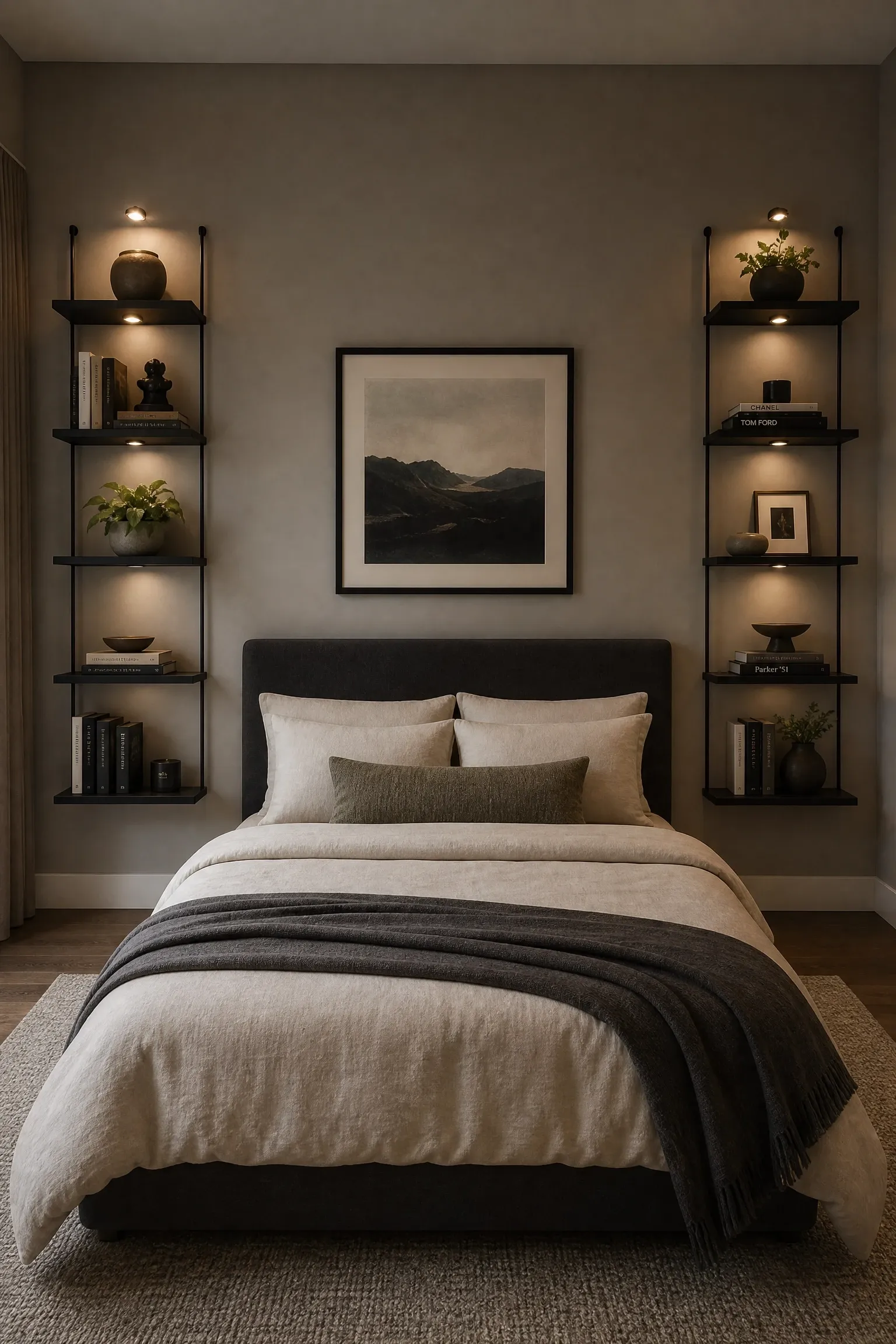
One of the most common failures in men’s bedroom design is treating collections, whether books, records, sneakers, art objects, or sports memorabilia, as something to be hidden away rather than designed around. A collector’s bedroom takes the opposite approach: it treats the collection as the primary decorative element and designs the room to display it well. The key difference between a room that looks intentional and one that looks cluttered is editing. You should display the best 20% of your collection and store the rest. Floating shelves at eye level, positioned symmetrically on either side of the bed or across a full feature wall, provide the best display surface. The shelving material should be consistent with the rest of the room’s palette: matte black metal brackets with raw wood shelves for an industrial room, painted white wood shelves for a more minimal setup. Lighting the shelves from above with a small LED strip or individual spotlights makes the collection feel intentional and also adds ambient light to the room. This is arguably the most personal and affordable bedroom approach on this list since the decor already exists.
Designer Note: Edit ruthlessly. If every item on the shelf is displayed, nothing stands out. Group items and leave deliberate negative space between clusters.
Designing a bedroom that genuinely works for you is less about following a style to the letter and more about identifying what actually matters to you in a room: the feeling you want when you walk in, the way you use the space, and the things that reflect who you are. The 24 ideas in this article are starting points, not rigid prescriptions. Most of the best bedroom designs borrow from two or three of these directions at once, taking the palette from one, the furniture approach from another, and the lighting concept from a third.
Start with the biggest impact changes first: the wall colour, the bed frame, and the lighting plan. These three elements define the character of the room more than anything else, and getting them right makes every subsequent decision easier. Do not try to do everything at once. A well-executed simple room is always better than an overcrowded complex one.
Budget-wise, almost every style on this list has an accessible entry point. The most expensive-looking bedrooms are usually the most restrained ones, where the money has been concentrated in one or two quality pieces rather than spread thin across a lot of average furniture. If you take one thing from this article, let it be this: buy less and buy better, and the room will reflect that decision immediately.
Frequently Asked Questions
What colours work best in a men’s bedroom?
There is no single answer to this since it depends entirely on the atmosphere you want to create. Darker tones like charcoal, navy, and forest green create a moody, grounded feel that many men find appealing. Warm neutrals like sand, clay, and warm grey are more versatile and work in almost any light condition. The most important thing is choosing a colour with a warm undertone rather than a cool one, since warm colours feel more inviting under artificial light, which is when you use your bedroom most.
How do I make a small men’s bedroom look bigger?
Low-profile furniture is the single most effective tool for making a small bedroom feel larger, since it lowers the visual weight in the room and allows the walls to breathe. Keep the colour palette consistent throughout so the eye does not stop at contrasting zones. A large mirror on one wall doubles the perceived depth of the space. Avoid heavy curtains that block light, and opt for simple blinds or sheer curtains instead. Built-in or under-bed storage keeps the floor clear, which makes the room feel less cramped.
What is the best lighting setup for a bedroom?
Layered lighting is the professional standard and it applies to every bedroom style. You need at least three light sources: a main overhead light on a dimmer for general tasks, bedside lamps for reading and winding down, and at least one indirect or accent light source for atmosphere. All bulbs should be warm white at 2700K. Avoid cool daylight bulbs in a bedroom entirely. If you can only make one lighting change, swap to warm bulbs and put the main light on a dimmer switch. The difference is immediate and significant.
How do I add personality to a men’s bedroom without making it look cluttered?
The key is choosing one primary personality element and letting it do the work, rather than spreading several personality touches around the room. A gallery wall, a collection on display shelving, or a statement rug with personal meaning each communicates something specific about you without requiring additional accessories. Edit everything else back and give the main element space to breathe. The rooms that feel the most personal are usually the most edited, not the most accessorised.
What furniture pieces are most worth investing in for a bedroom?
In order of impact, the bed frame and mattress are the most worthwhile investment, followed by the bedside lighting, and then the area rug. These three elements are used daily and are the most visible in the room. A quality mattress improves sleep and daily function in a way that no amount of styling can substitute. A well-made bed frame lasts decades and anchors the room’s visual identity. Good bedside lighting is used every single night and makes a measurable difference to how the room feels at the end of the day.
Can a men’s bedroom look stylish without spending a lot of money?
Absolutely, and some of the best approaches on this list are genuinely budget-friendly. Wabi-sabi, Japandi minimalism, and industrial pipe shelving all achieve strong results at a relatively modest cost. The highest-impact low-cost change in any bedroom is repainting the walls. A quality paint job in a considered colour costs under a hundred dollars in materials and changes the entire atmosphere of the room more than any furniture purchase. Beyond paint, quality secondhand furniture, particularly mid-century modern pieces, is almost always better value than new flat-pack furniture.