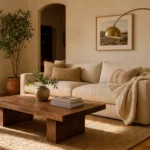
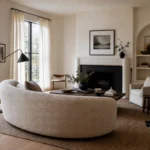
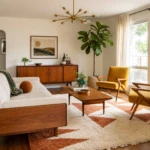
Your apartment living room has to do a lot of heavy lifting. It is your lounge, your reading nook, your guest space, and sometimes your office, all packed into one. The challenge is making it feel personal and put-together without making it feel cluttered or like a showroom floor where no one actually sits. The good news is that small spaces have their own advantages: less floor area means fewer decisions, and a tighter footprint forces you to be intentional about every single piece you bring in.
The ideas below come from real experience working with limited square footage, rental restrictions, and tight budgets. Start with the piece you sit on most and work outward from there. The couch usually sets the tone for everything else. Not every idea will suit every apartment, and that honesty matters, because copying a look that does not fit your space will always feel off. Pick two or three ideas that genuinely match your lifestyle, your lighting, and your budget, and go from there.
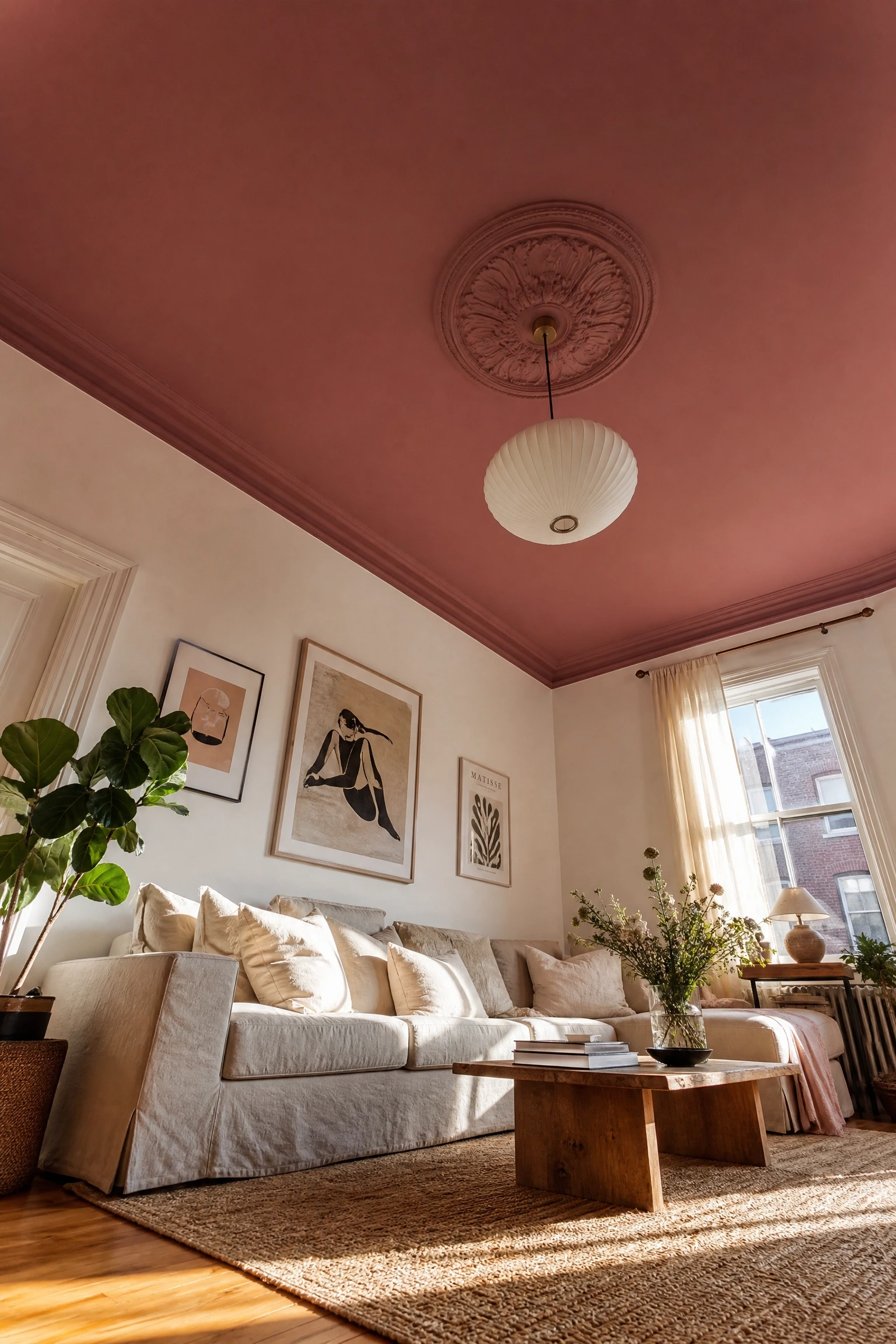
You come home after a long day and the room feels flat, but nothing on the walls is wrong exactly. The ceiling is the problem. Upgrading to a warm terracotta, dusty rose, or deep navy on the ceiling while keeping walls neutral is a designer-level move that completely reframes a room without touching furniture. In practice, this works best in rooms with at least nine-foot ceilings; anything lower will feel compressed. Use a matte finish to absorb light and hide imperfections in older plaster. This is an affordable change, typically under fifty dollars in paint, and the visual weight it adds to a room draws the eye upward and makes the whole space feel intentional and considered.
Quick Tip: ** Apply painter’s tape to the crown molding line and use a small angled brush before rolling to keep the edge crisp.
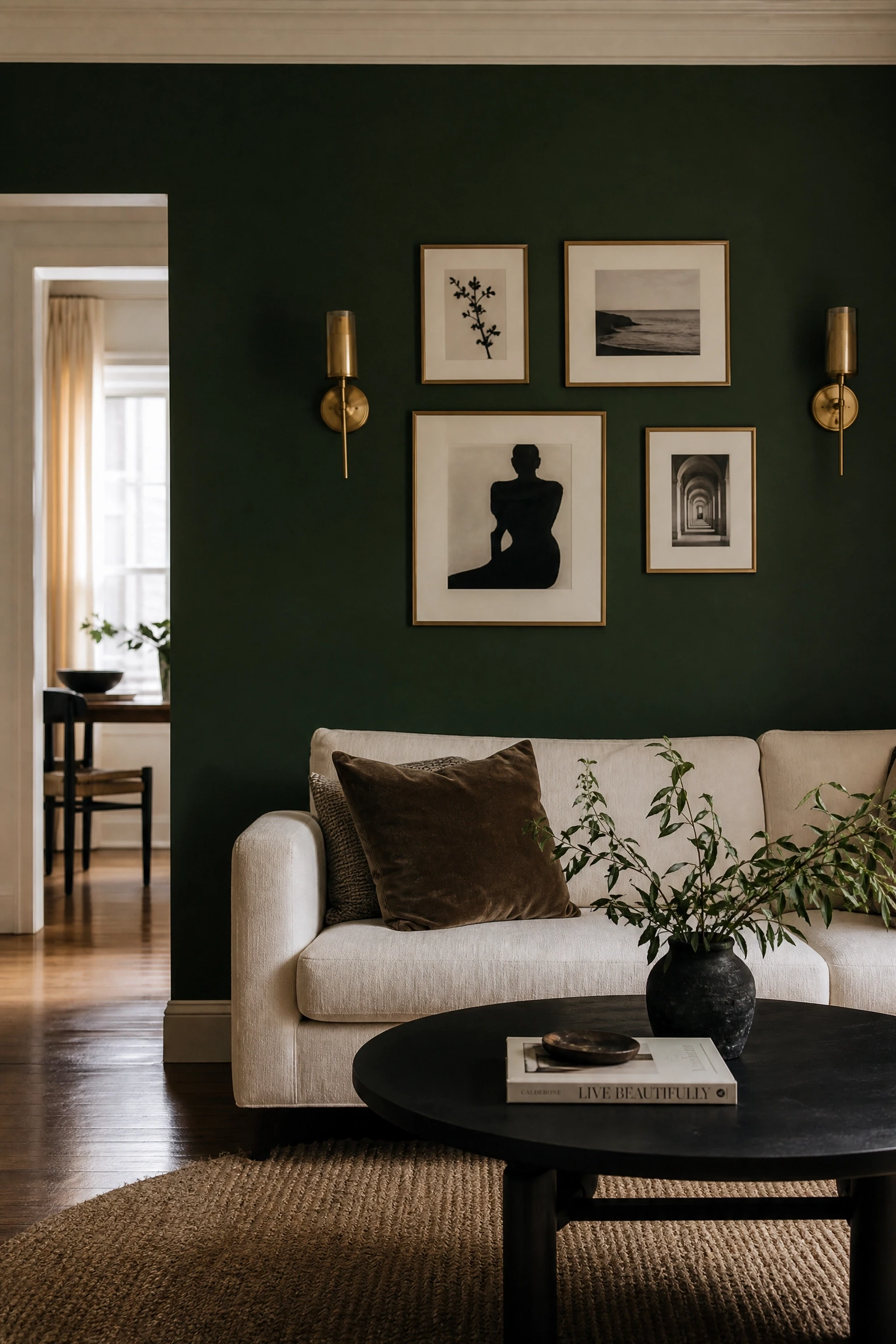
Go Dark on One Wall with Deep Blue or Forest Green
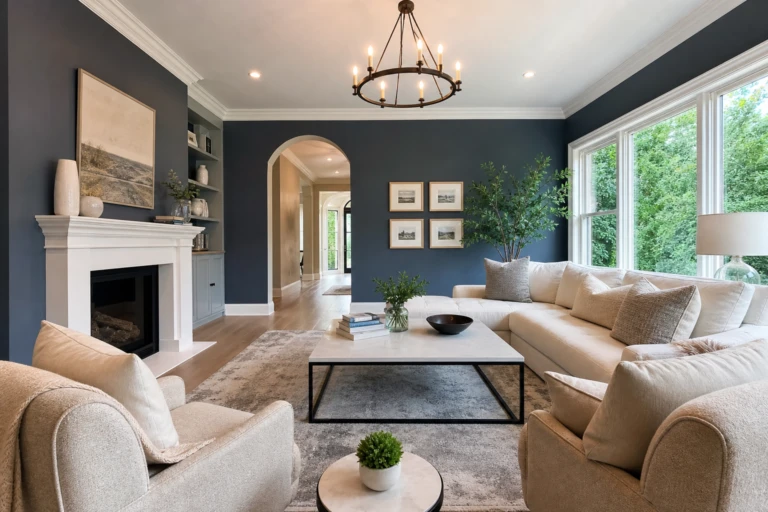
You want the room to feel cozy and layered, but white walls keep things looking like an unfinished dorm room. Painting a single accent wall in a deep, saturated color, something like Farrow and Ball’s Hague Blue or Benjamin Moore’s Salamander, gives you a focal point to build around without committing the whole room to darkness. Deep walls paired with warm brass or antique bronze fixtures create what designers call “visual warmth,” a quality that makes a room feel inhabited rather than staged. This works particularly well behind a sofa or around a fireplace wall. Match your throw pillows and a small vase to a secondary color in the same family to tie the palette together.
Designer Advice: ** Sample the paint on a large piece of foam board and move it around the wall at different times of day before committing.
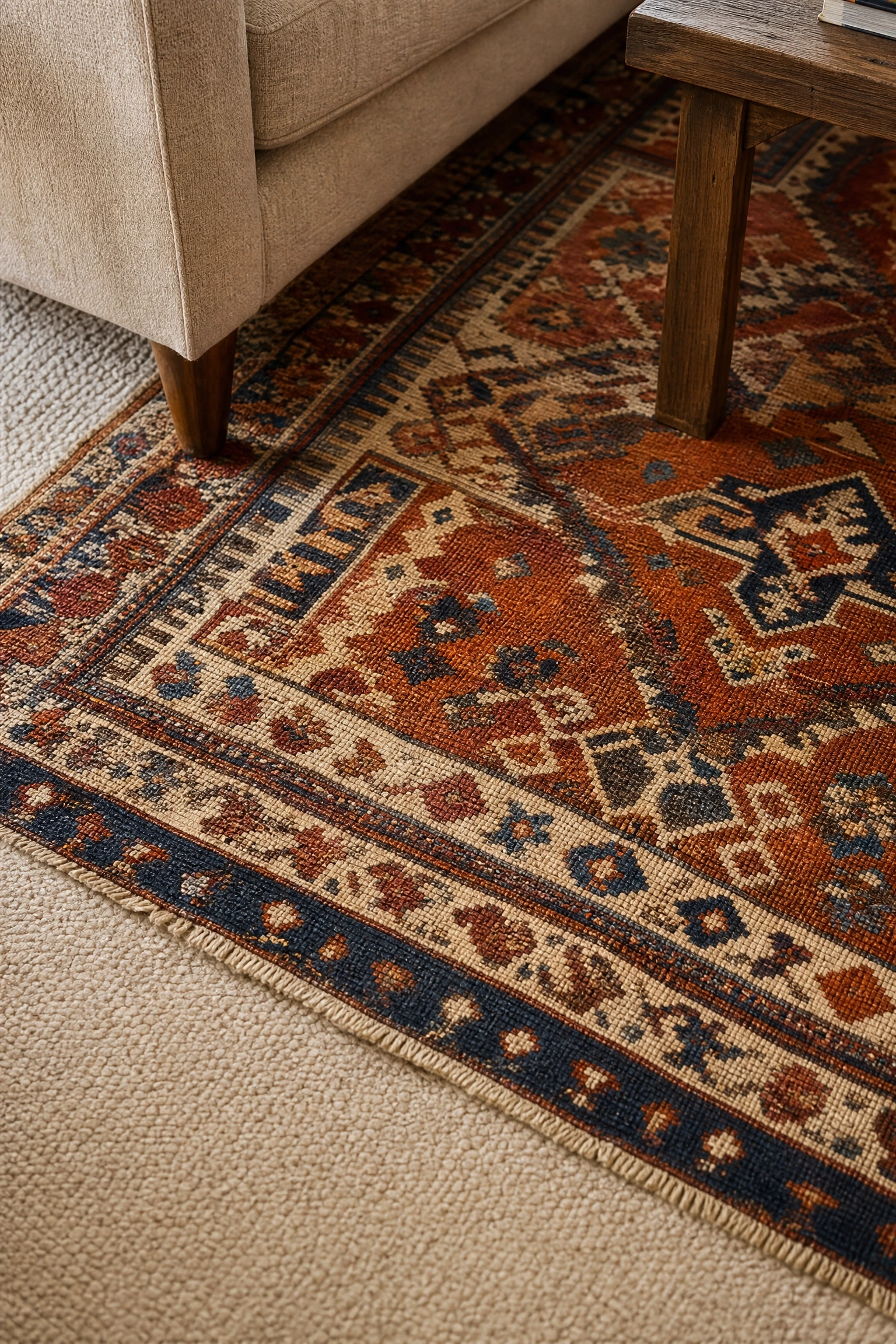
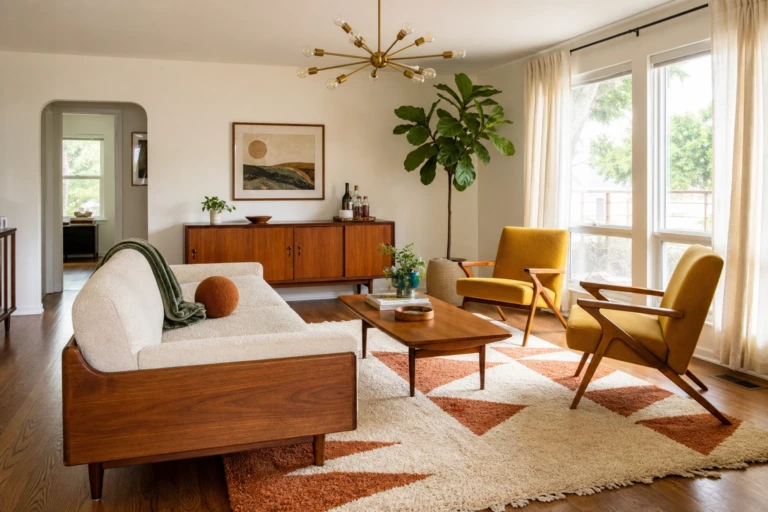
You move in and the beige carpet is fine, but it is also completely joyless. Layering a vintage or overdyed wool rug on top of existing carpet is one of the most effective moves in small apartment decorating. In practice, go about thirty percent smaller than the room’s footprint, so a roughly five-by-eight rug in a twelve-by-fourteen room, and anchor it under the front legs of your sofa. Vintage Turkish kilims and Persian-style flatweaves in muted rust, sage, and cream tend to work with almost any furniture color. Mid-range options from Ruggable or Loloi sit between one hundred and four hundred dollars and hold up well. This is a trustworthy, renter-friendly move that requires no permission and leaves no damage.
Pro Move: ** Use a rug pad with grip underneath to prevent slipping and add cushion underfoot, even over carpet.
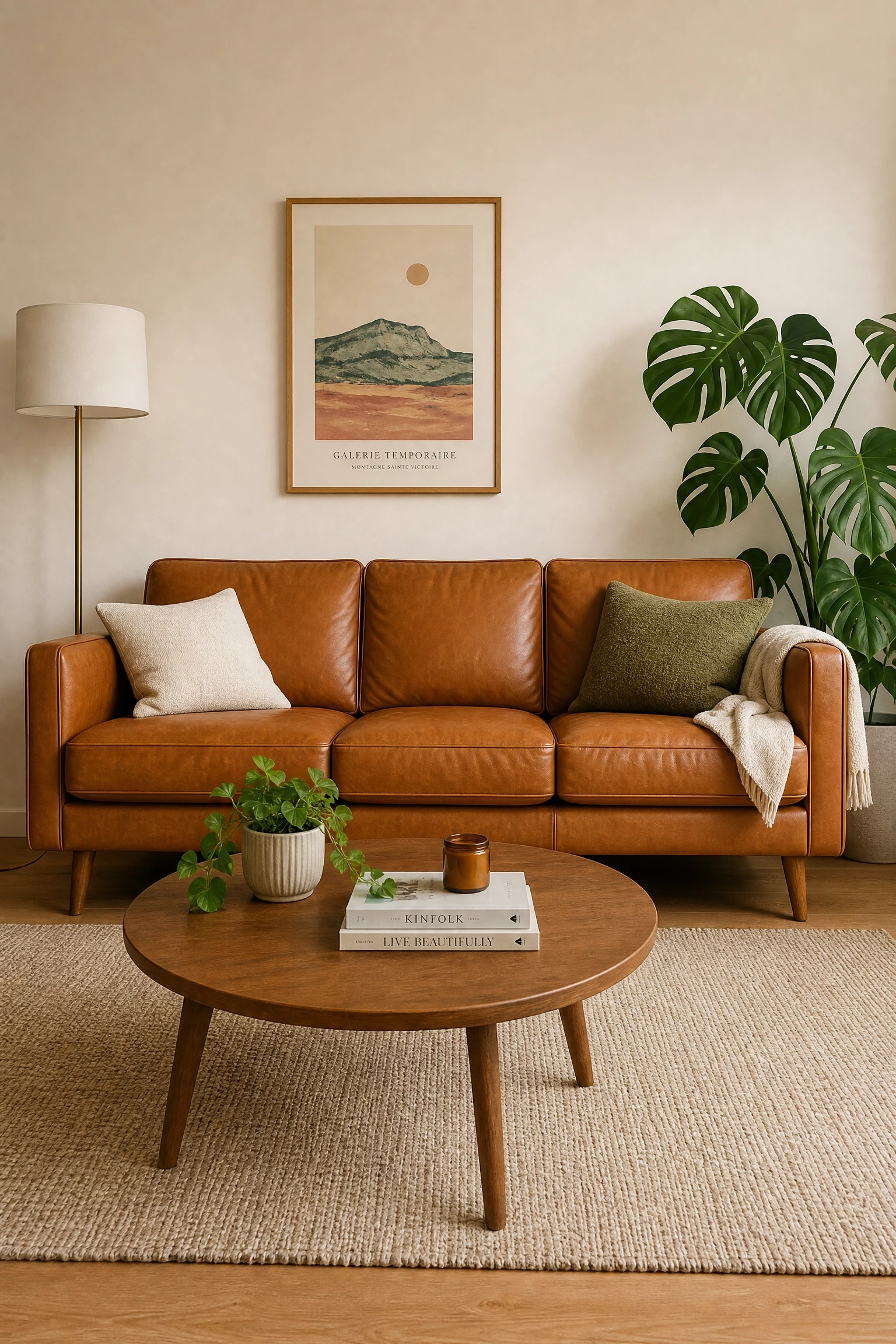
Choose a Sofa in a Color That Is Not Grey or Beige
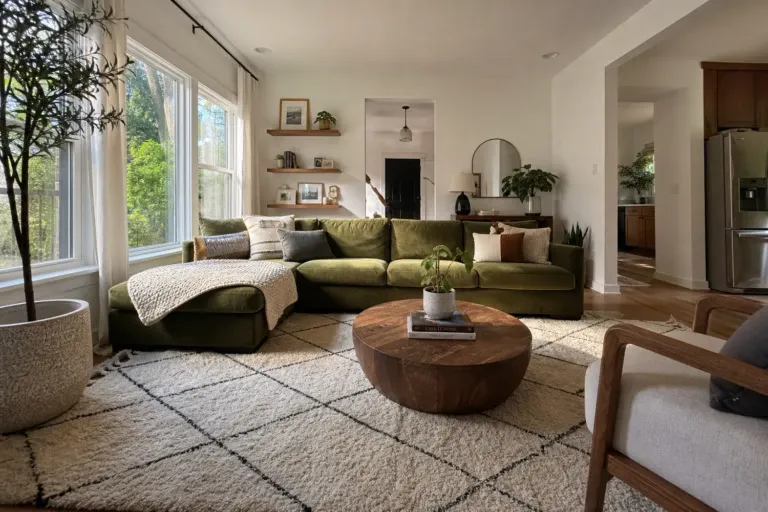
You walk into a living room and everything is grey. The sofa is grey, the curtains are grey, the rug is greige, and somehow it all feels like nothing. A sofa in a genuine color, warm olive, dusty terracotta, cognac leather, or even a buttery yellow, functions as the room’s anchor and gives every other neutral something to respond to. You do not need an expensive designer sofa for this; Article, Burrow, and West Elm all offer well-reviewed options in the five hundred to twelve hundred dollar range that hold their shape reasonably well. In a small room, a low-profile sofa with tapered legs and exposed feet reads as lighter visually, which helps with negative space. A colored sofa is a mid-range commitment, but one that dramatically changes how a room reads from the door.
Reality Check: ** Bouclé and velvet upholstery look beautiful in photos but require more maintenance; performance fabric is the smarter choice if you have pets or kids.
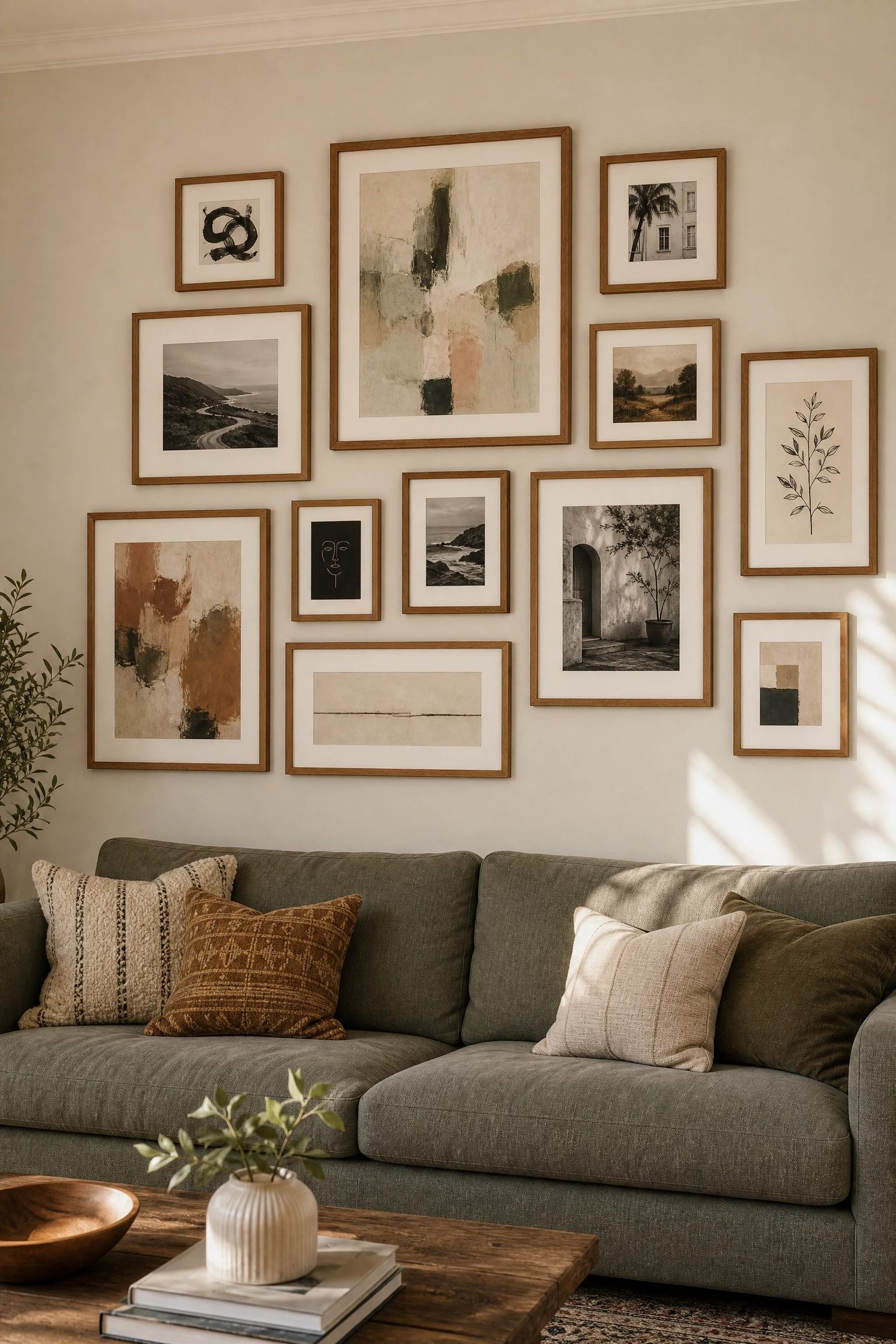
You have blank walls and a stack of art prints you love, but you cannot decide how to arrange them and nothing feels right when it is just one piece. A gallery wall built from mismatched frames in the same metal or wood tone creates visual rhythm without looking rigid or overly intentional. In practice, lay everything out on the floor first and photograph the arrangement before picking up the hammer. Use a laser level for the top row and work down. The key insight that most guides skip is this: the frames should vary in size and orientation, but the mat color should be consistent across all of them, typically white or off-white, to hold the collection together. This is an affordable approach; IKEA Ribba frames cost a few dollars each and work well.
Heads Up: ** Leave at least two to three inches between frames; tighter spacing looks crowded from a normal sitting distance.
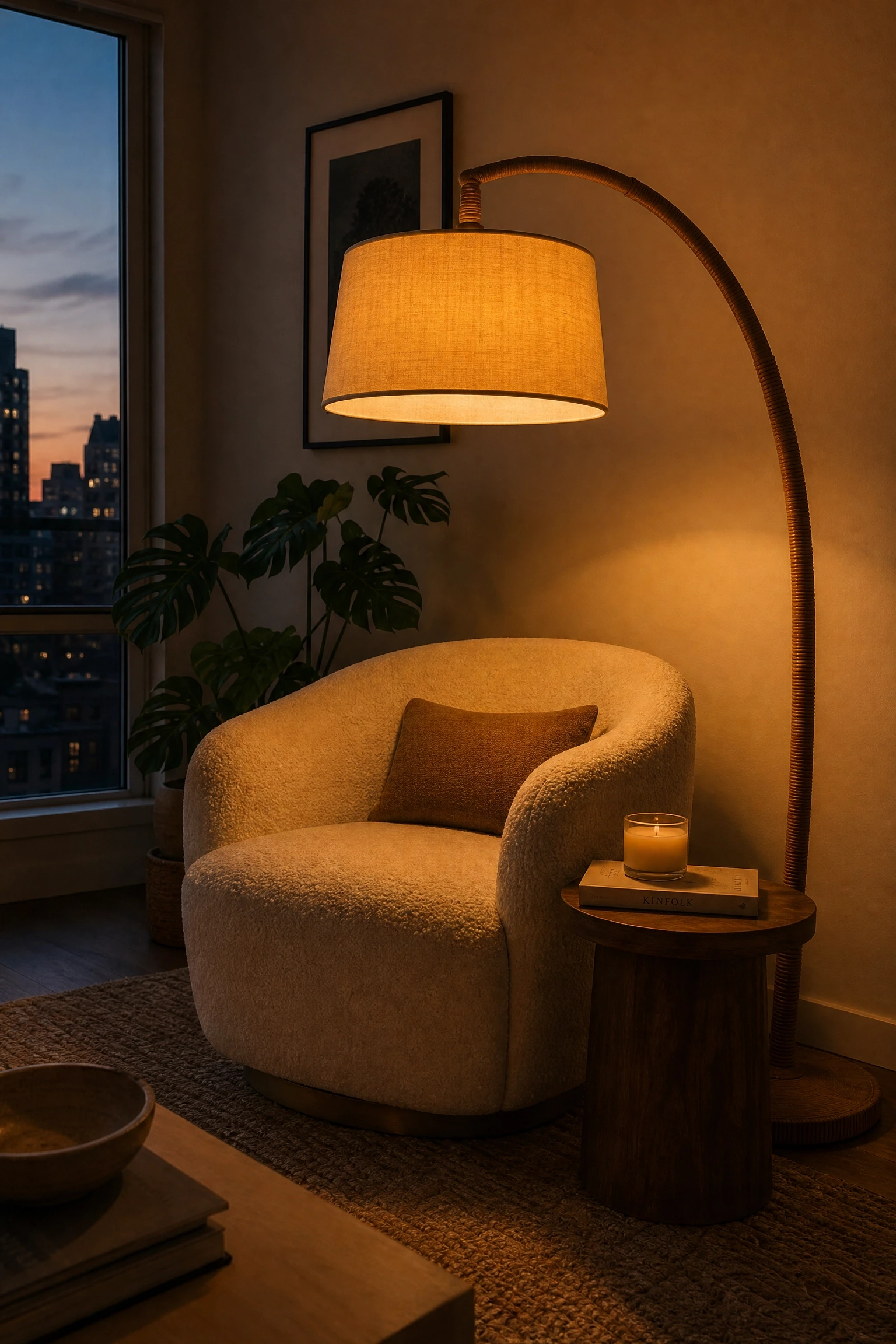
You arrive home in the evening and the overhead light turns the room into a dentist’s waiting area. Replacing overhead light with a combination of floor lamps, table lamps, and LED strip lighting behind the TV is what designers mean by “layered lighting,” and it is the single fastest way to make an apartment living room feel expensive. A sculptural floor lamp, something in a rattan arc style, a warm-toned linen shade, or an oversized dome, becomes a design object in its own right during the day and provides directional light at night. Look for lamps that use standard E26 bulbs so you can dial in the right color temperature; 2700K is the sweet spot for a warm, residential feel. Budget options start around eighty dollars; investment-level pieces from brands like Arteriors or CB2 reach three to five hundred.
Quick Tip: ** Point the lamp toward the ceiling rather than down to get soft, diffused ambient light that fills the room evenly.
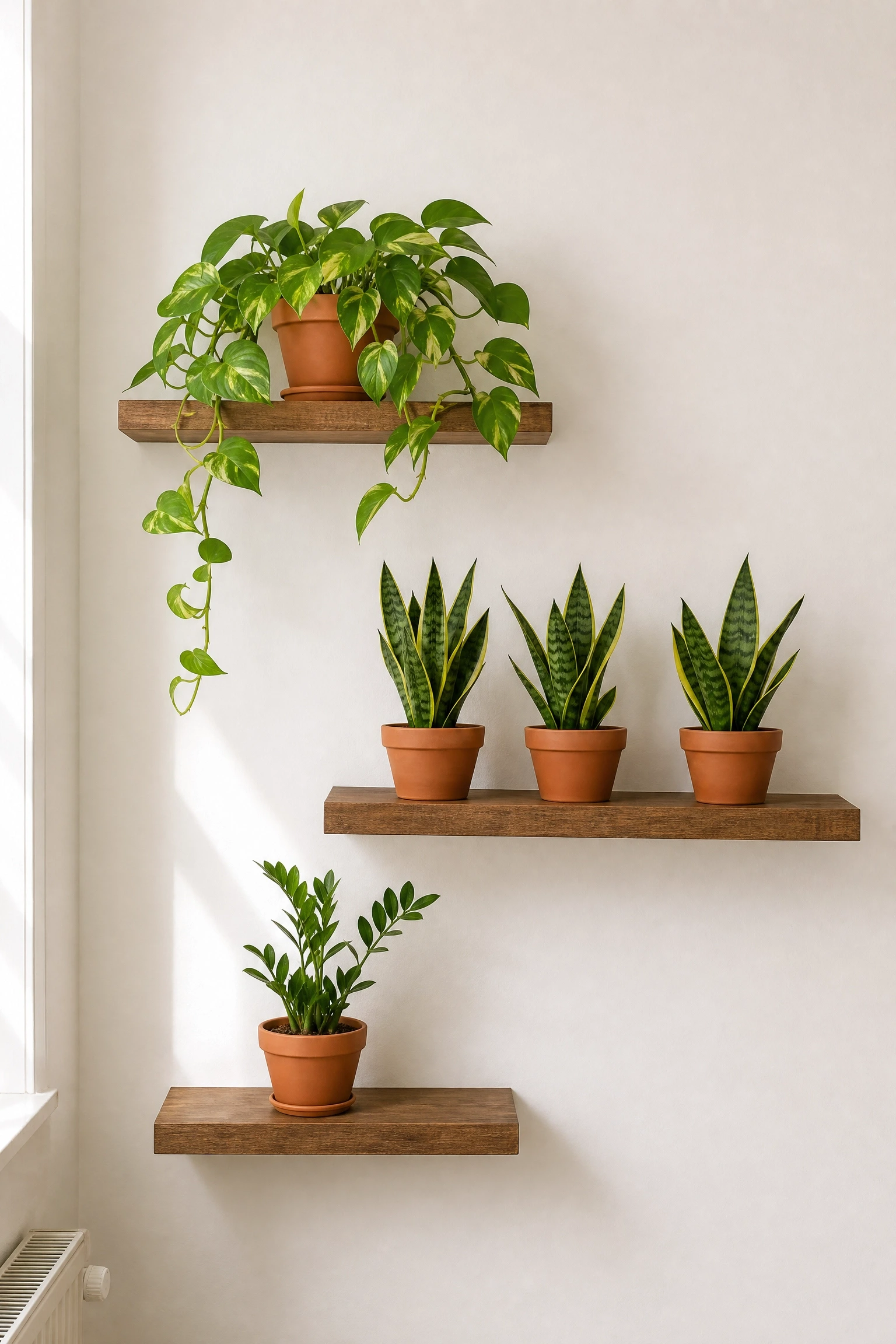
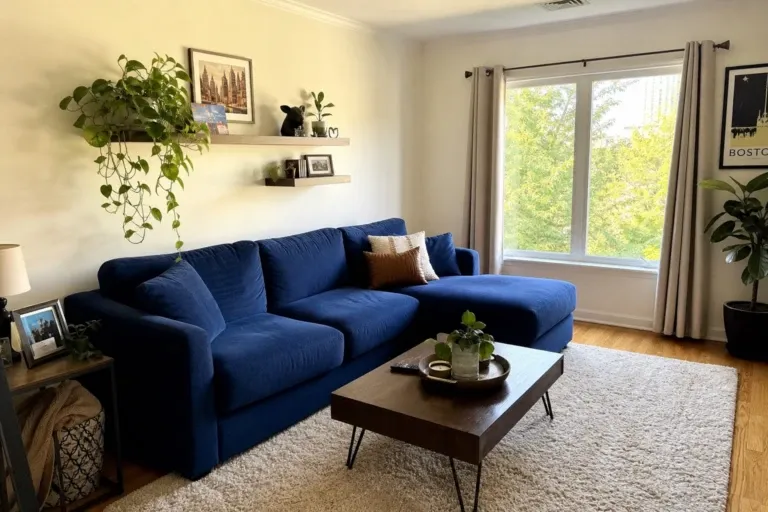
You want greenery but have no floor space to spare. Floating shelves at staggered heights, three to four shelves on one wall in a roughly triangular arrangement, let you build a genuine indoor plant display without surrendering any square footage. The key is variety in pot height and plant form: trailing pothos at the top shelf, compact snake plants or sansevierias in the middle, and a small fiddle-leaf or ZZ plant on the lowest shelf. Use terracotta pots in a consistent size range for cohesion, or mix matte black and cream ceramic for a more modern look. Floating shelves are renter-friendly when installed into studs, and the whole setup, shelves plus pots, typically runs under one hundred fifty dollars. This idea suits most room sizes but looks especially strong in rooms with at least one large, blank wall.
Designer Advice: ** Group plants in odd numbers and vary the texture between smooth-leaved and feathery plants for a more naturalistic display.
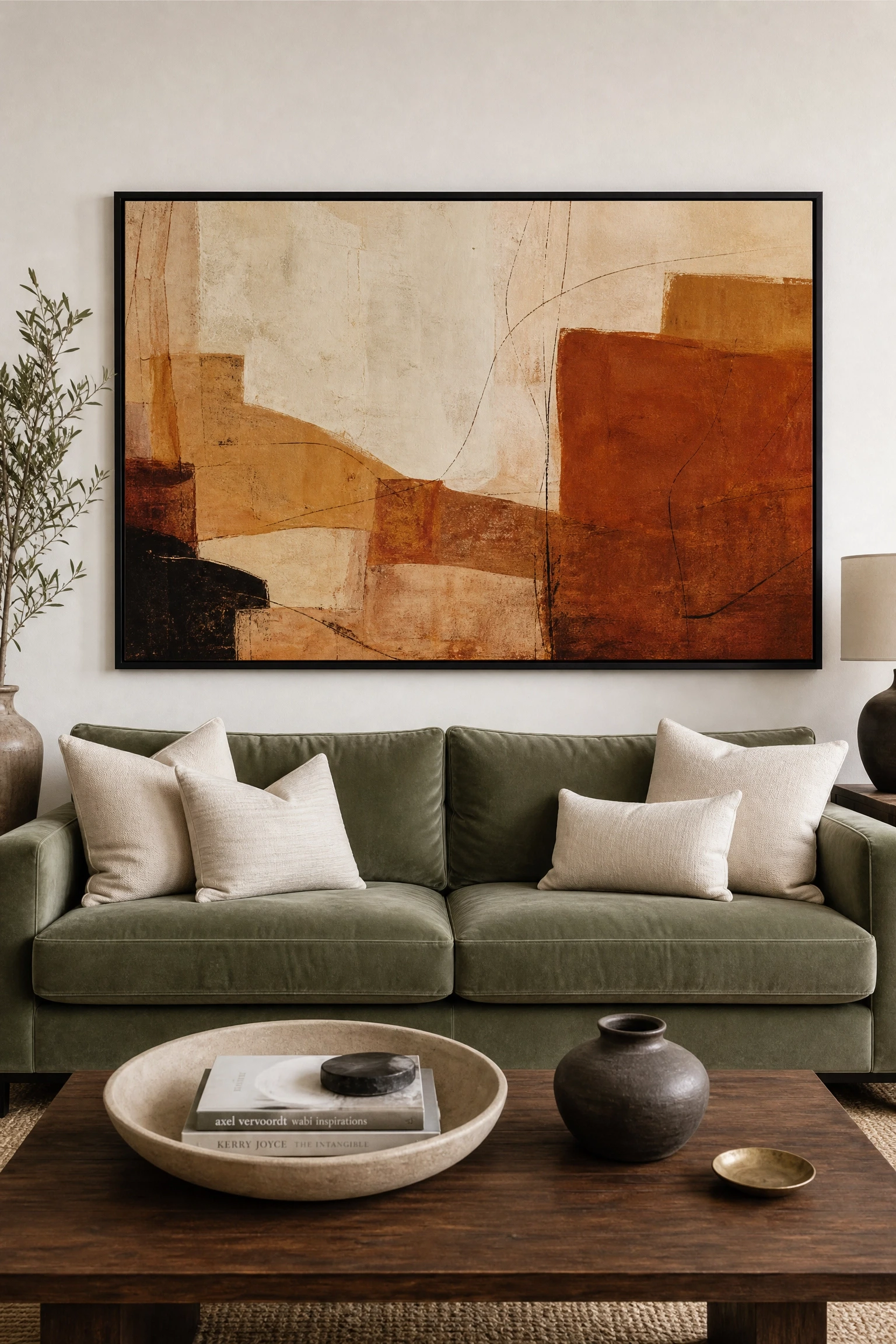
You have decent furniture but the room still feels unfinished, like something important is missing above the sofa. A single oversized art print, at least twenty-four by thirty-six inches, preferably larger, anchors the room in the same way a headboard anchors a bedroom. In practice, the print should span roughly two-thirds the width of your sofa. Abstract works in warm earth tones, or black-and-white photography with strong contrast, tend to work across the widest range of furniture styles. Society6, Desenio, and Minted offer high-quality prints in this size range between thirty and one hundred dollars, which you can frame affordably using IKEA or Amazon basics frames. Hang the center of the print approximately fifty-seven inches from the floor, which is the standard museum hang height and reads naturally from standing and seated positions.
Pro Move: ** Order a physical sample or use your phone’s augmented reality app to preview the print on your wall before buying.
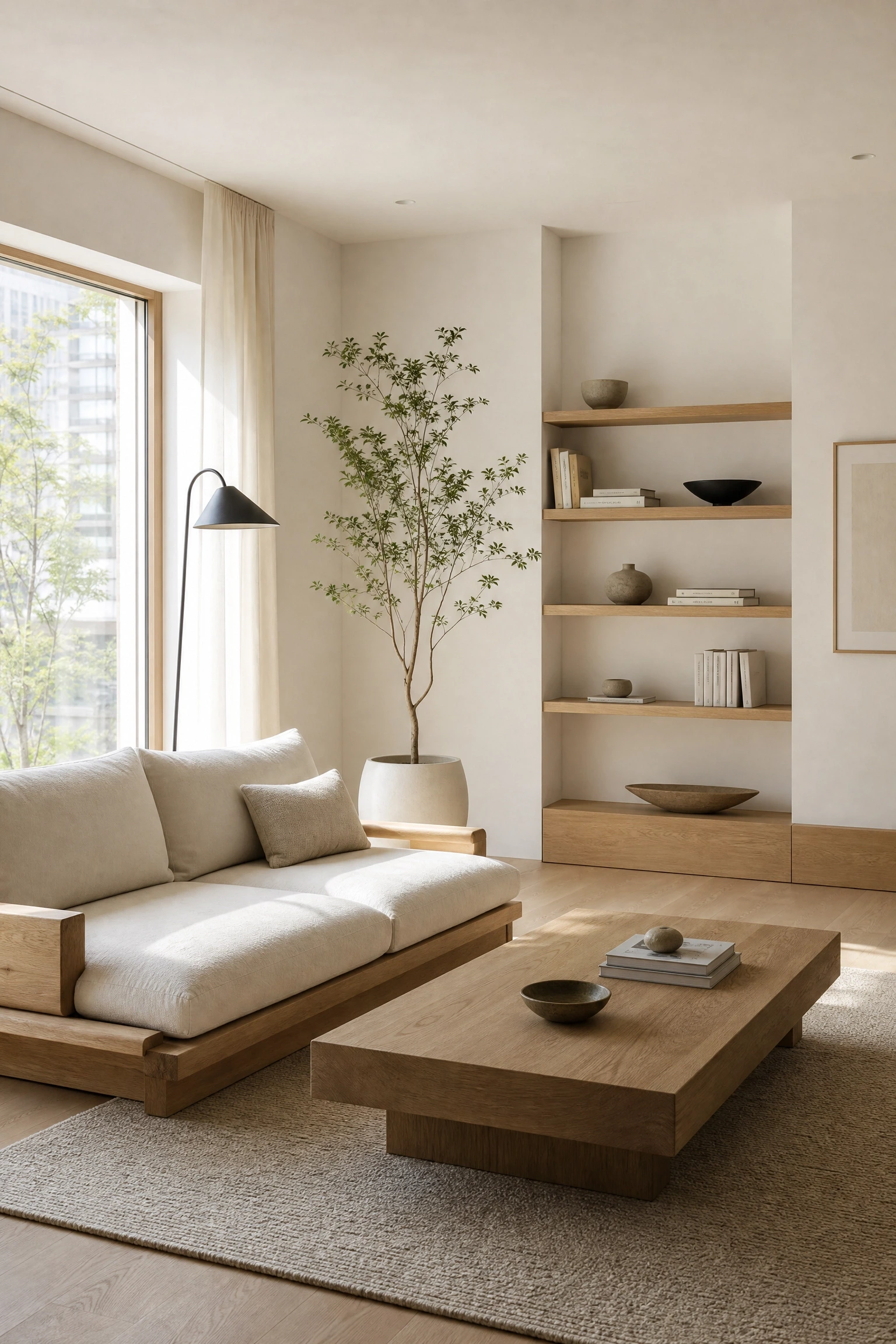
Try a Japandi Palette of Warm White, Natural Wood, and Black Accents
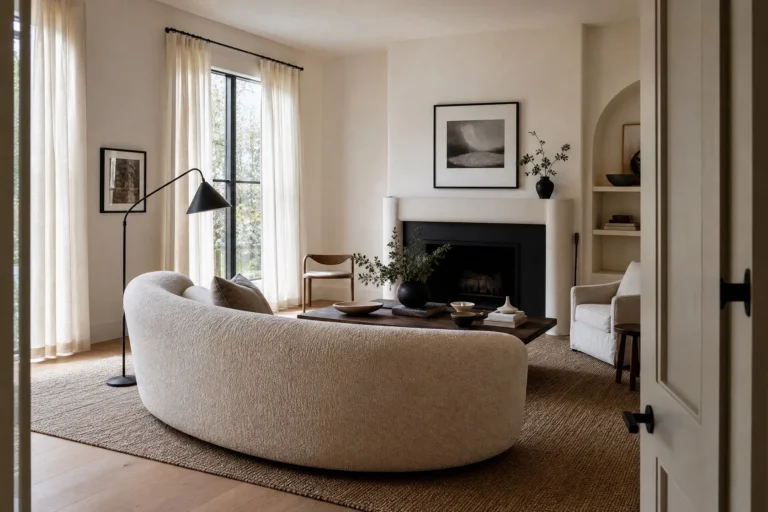
You want a living room that feels calm and organized without looking cold or corporate. The Japandi style, a blend of Japanese minimalism and Scandinavian warmth, is built on a palette of warm white walls, natural light wood tones like oak or ash, and deliberate black accents in frames, legs, or hardware. In practice, choose furniture with clean horizontal lines and low profiles, think solid wood coffee table, linen upholstery, and a simple open-front shelving unit. Black is introduced sparingly: one lamp, one picture frame cluster, one side table. What makes Japandi work in apartments is that it relies on quality of materials and negative space rather than quantity of objects, which means fewer purchases and a quieter room. This style rewards restraint; resist the urge to fill every surface.
Reality Check: ** Japandi looks best in rooms with good natural light. In darker apartments, swap cool whites for warmer cream tones to avoid the style reading as cold.
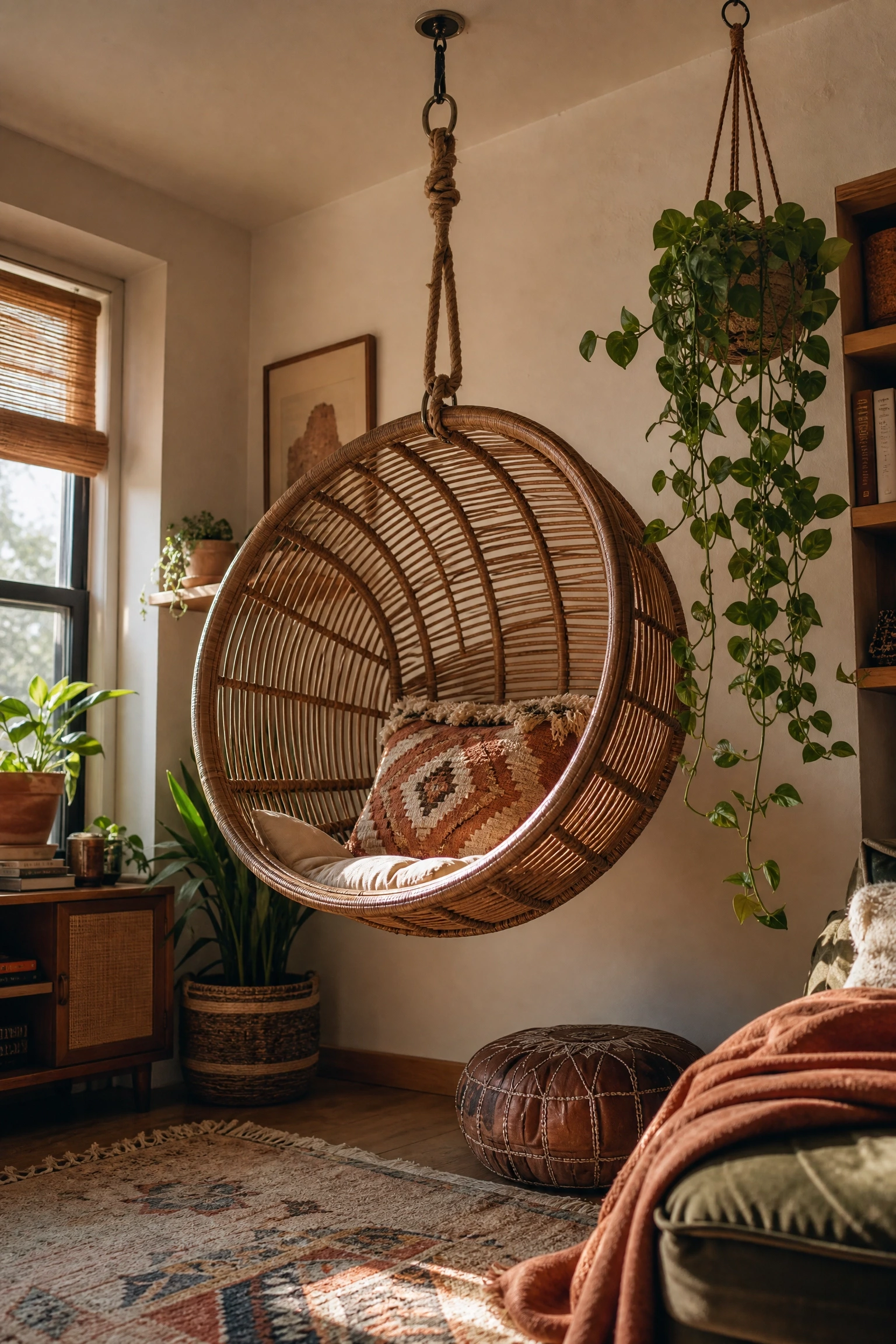
You have a dead corner that you keep meaning to do something with, and a floor lamp is not quite enough. A hanging swing or hammock chair installed from a ceiling hook fills that corner with a functional statement piece that also doubles as extra seating when guests come over. Rattan and macramé styles work naturally in boho-leaning rooms; upholstered pod chairs in velvet or boucle fit more contemporary spaces. You will need to locate a ceiling joist or use a proper toggle anchor rated for at least two hundred fifty pounds for safety. This is a mid-range investment, typically one hundred fifty to four hundred dollars, and is genuinely space-saving because it takes up vertical rather than floor space. One honest caveat: this idea suits apartments with ceilings of at least eight and a half feet.
Heads Up: ** Always use a swivel hook between the ceiling mount and the chair to prevent the chain or rope from twisting over time.
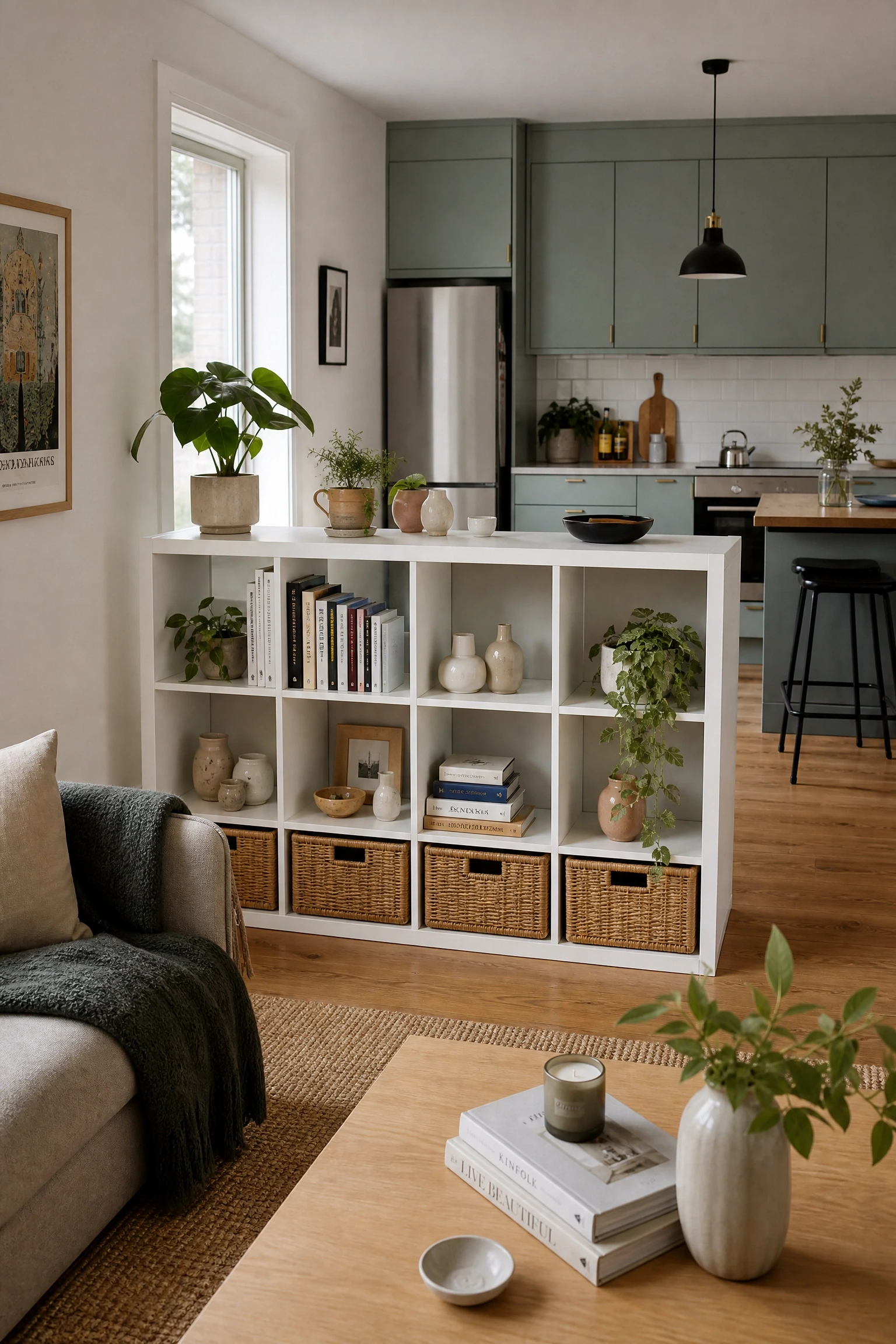
You have an open-plan apartment where the living area bleeds into the kitchen or dining space with no clear boundary. A freestanding bookcase, particularly an open-back unit like the IKEA Kallax or Billy series, placed perpendicular to the wall and styled with books, plants, and objects creates a soft architectural divide without blocking light or making the room feel smaller. In practice, style the bookcase so it reads well from both sides: books facing the living area, baskets or trays facing the kitchen side. Avoid filling it completely; leave a few open squares to maintain the sense of airflow through the room. A taller unit in the six-foot range provides more visual separation, while a lower unit at about four feet keeps sight lines open and works well in studios. This is an affordable solution; the Kallax starts under eighty dollars.
Quick Tip: ** Secure tall bookcases to the wall with an anti-tip bracket, especially if there are children or pets in the home.
Bring In Exposed Brick Textures Through Wallpaper or Panels
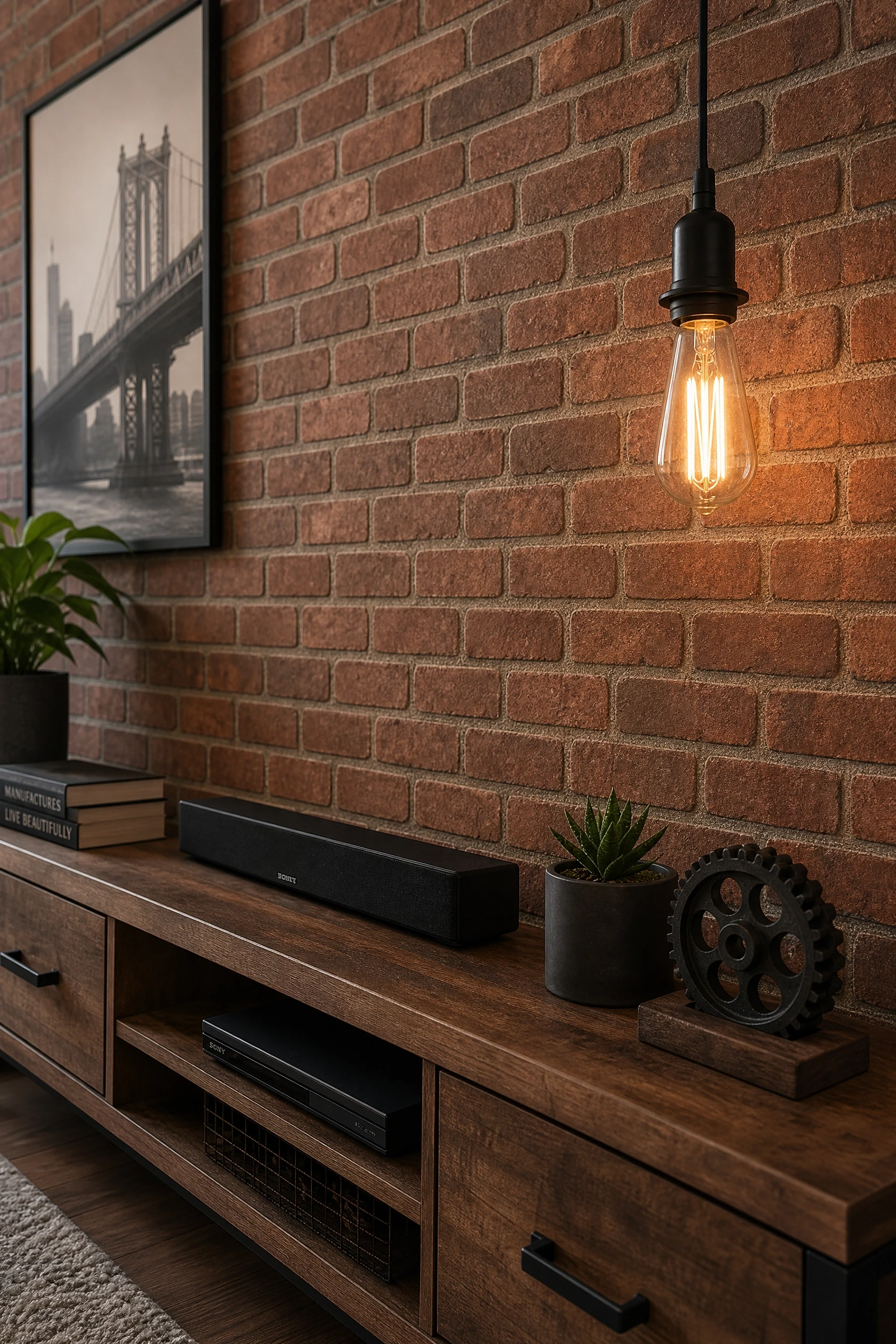
You love the warmth of industrial loft aesthetics, but your apartment walls are smooth drywall. Peel-and-stick brick wallpaper or thin faux-brick panels let you add that texture without any permanent alteration, which matters enormously for renters worried about losing their security deposit. In practice, apply it to a single accent wall, behind the sofa, around a media console, or in a corner nook rather than covering all four walls. The key is choosing a realistic-looking product; avoid the overly shiny or perfectly uniform options and look for textured surfaces with genuine variation in color from brick to brick. Warm red-brown tones read as classic industrial; whitewashed versions feel more relaxed and Scandi-adjacent. Most peel-and-stick brick options cost between thirty and eighty dollars per roll and come down cleanly.
Designer Advice: ** Pair faux brick with warm Edison-style bulbs and a chunky wooden coffee table to commit to the industrial look rather than mixing it timidly.
Style a Media Console Instead of Wall-Mounting the TV
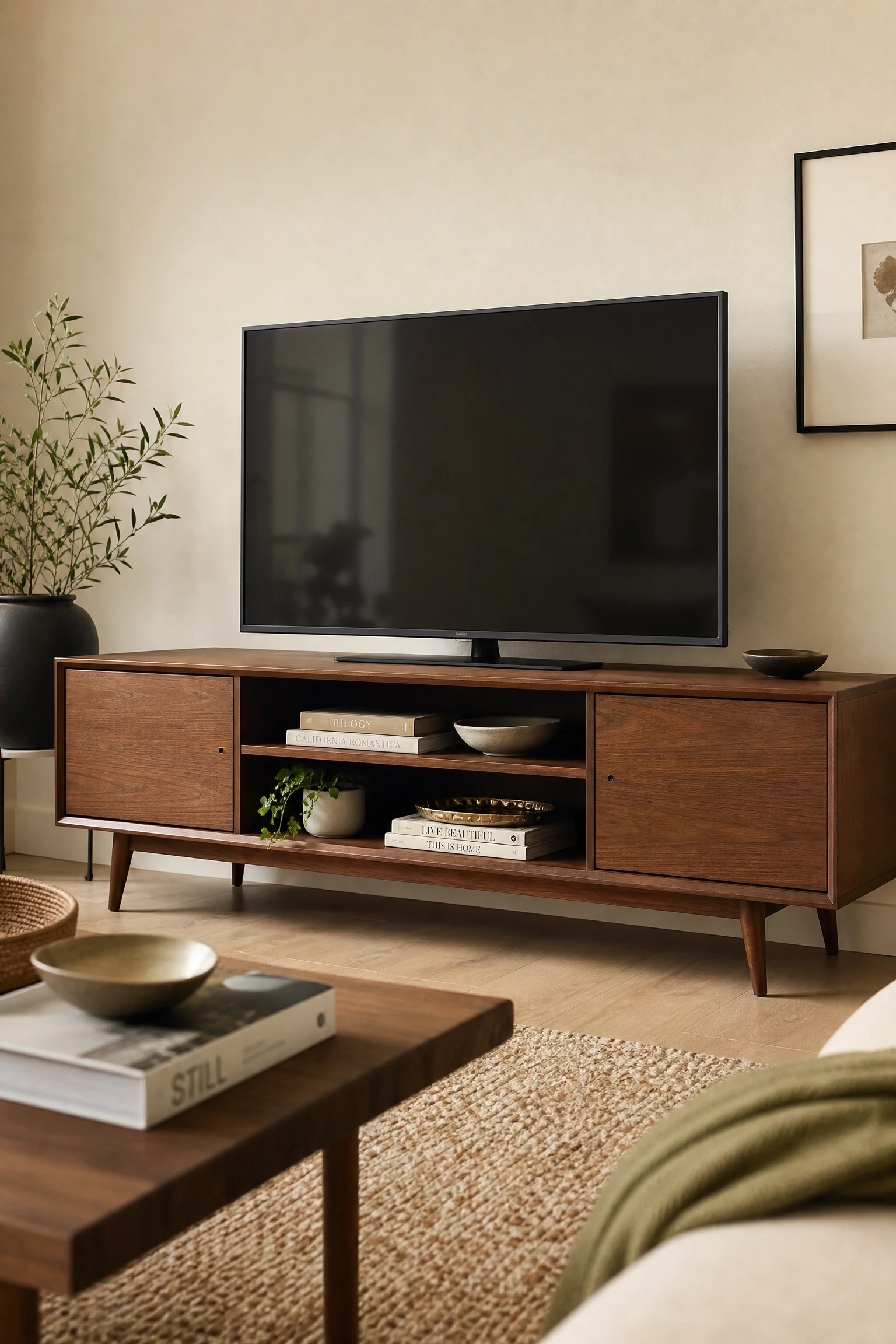
You want to wall-mount the TV but your lease prevents drilling into the wall, or the studs simply are not where you need them. A well-styled media console with the TV placed on top is a completely valid approach, and in some rooms it actually looks more grounded and less “showroom.” Choose a low-profile console in natural wood or a painted finish that contrasts your wall color. Style the shelves below with a combination of books stacked horizontally, a small plant, a decorative tray, and one or two objects with visual weight like a ceramic bowl or candle cluster. Hide cables using adhesive cable raceways in a matching wall color. The console height matters for viewing comfort; the center of the screen should sit at roughly eye level when you are seated, which for most sofas is about forty-two to forty-eight inches from the floor.
Pro Move: ** Use a power strip with a long cord routed through the back of the console to avoid wall outlets becoming the focal point.
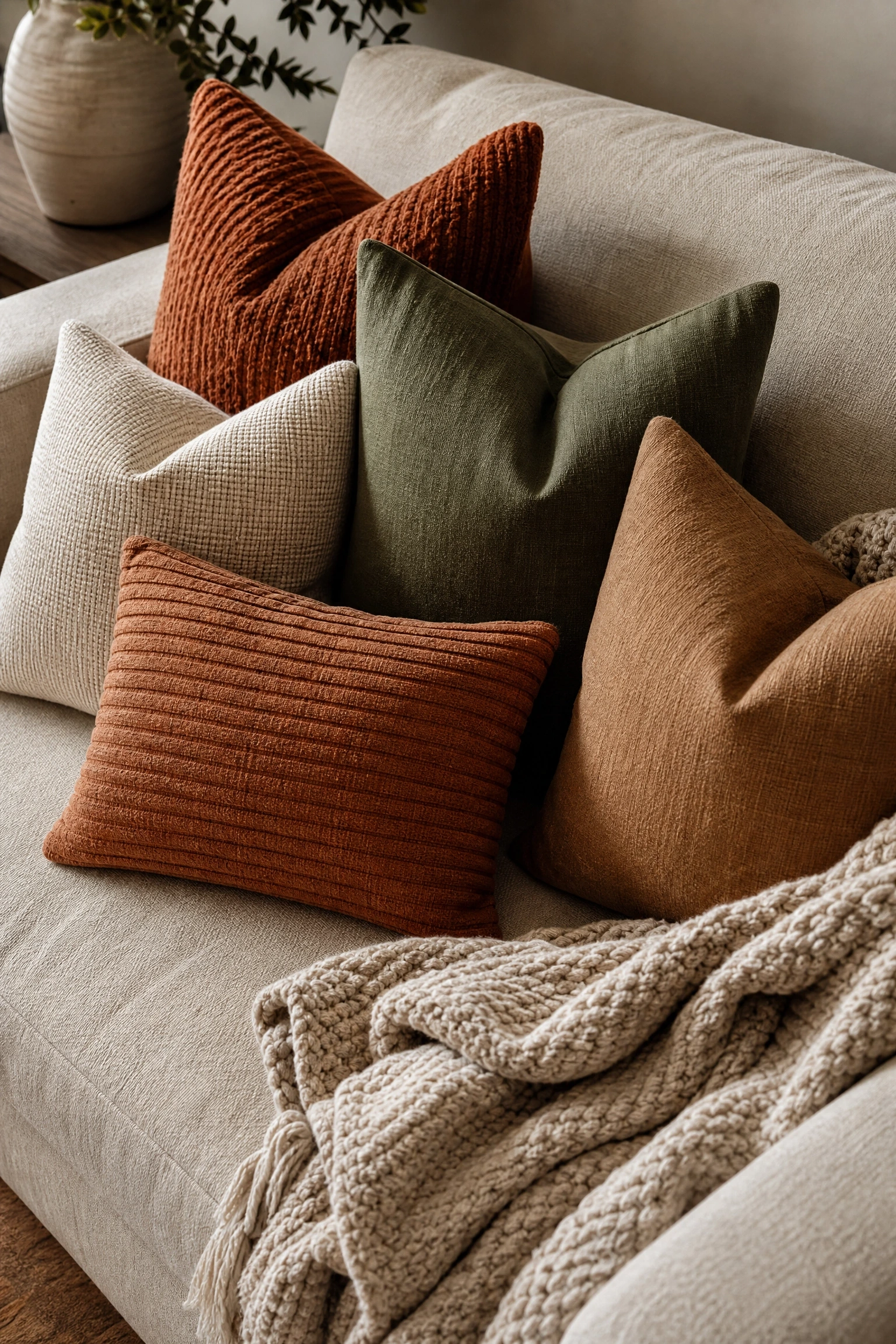
You bought a neutral sofa and now it looks like a display model: perfectly inoffensive, completely lifeless. Throw pillows and textiles are how you make furniture feel lived-in, and the trick is mixing not just colors but textures: a ribbed knit pillow next to a smooth linen, a woven cushion cover next to a velvet lumbar. Earth tones are your best starting point because they layer naturally; think warm rust, cinnamon, moss green, cream, and clay. The rule of thumb is odd numbers: three or five pillows look deliberate, four tends to look stiff. Add one chunky knit throw draped casually over an armrest or the sofa back. You do not need expensive pillows for this; H&M Home, Target’s Threshold line, and TJ Maxx all carry good options in the twenty to forty dollar range per pillow.
Reality Check: ** Avoid more than two or three patterns at once; when everything is patterned, nothing reads clearly and the sofa looks chaotic.
Create a Reading Nook With an Armchair and a Floor Lamp
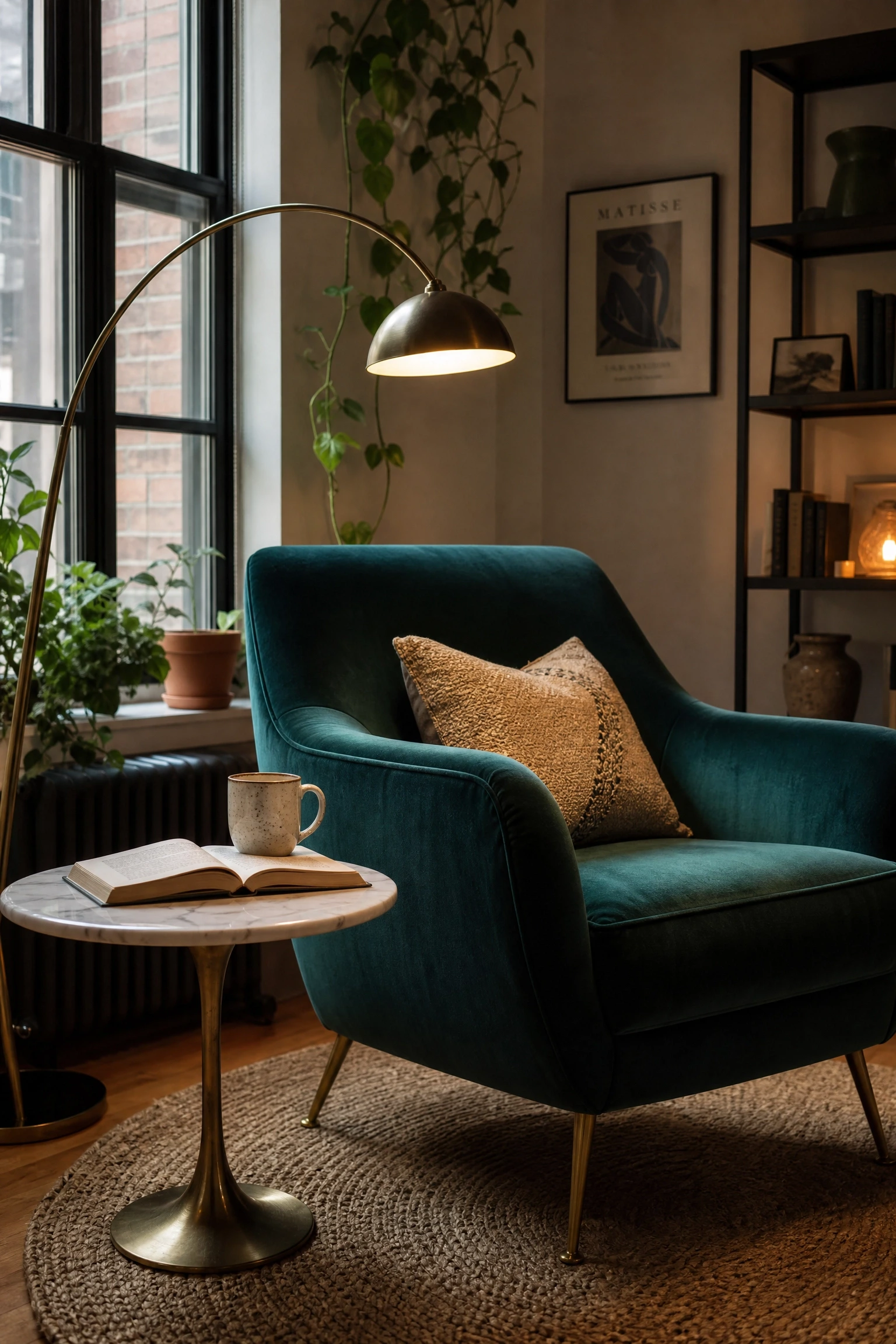
You have one corner of the room doing nothing, usually the spot near a window where you stacked extra boxes. Turning that corner into a dedicated reading nook requires only three things: a comfortable armchair, a floor or arc lamp positioned over the shoulder for task lighting, and a small side table at the right height for a drink or a book. The armchair does not need to match the sofa; in fact, a slightly contrasting style adds visual interest. A boucle or bouclé-adjacent chair in a warm neutral, or a vintage velvet armchair in a deep jewel tone, reads beautifully against most sofa colors. A small round side table in a warm wood or marble finish completes the corner. This is a mid-range addition, typically two hundred fifty to six hundred dollars total, but it makes the room feel like a considered home rather than a furnished apartment.
Quick Tip: ** Face the chair toward the room rather than the wall to keep the corner from feeling like a timeout spot.
Use Curtains That Are Longer and Wider Than the Window
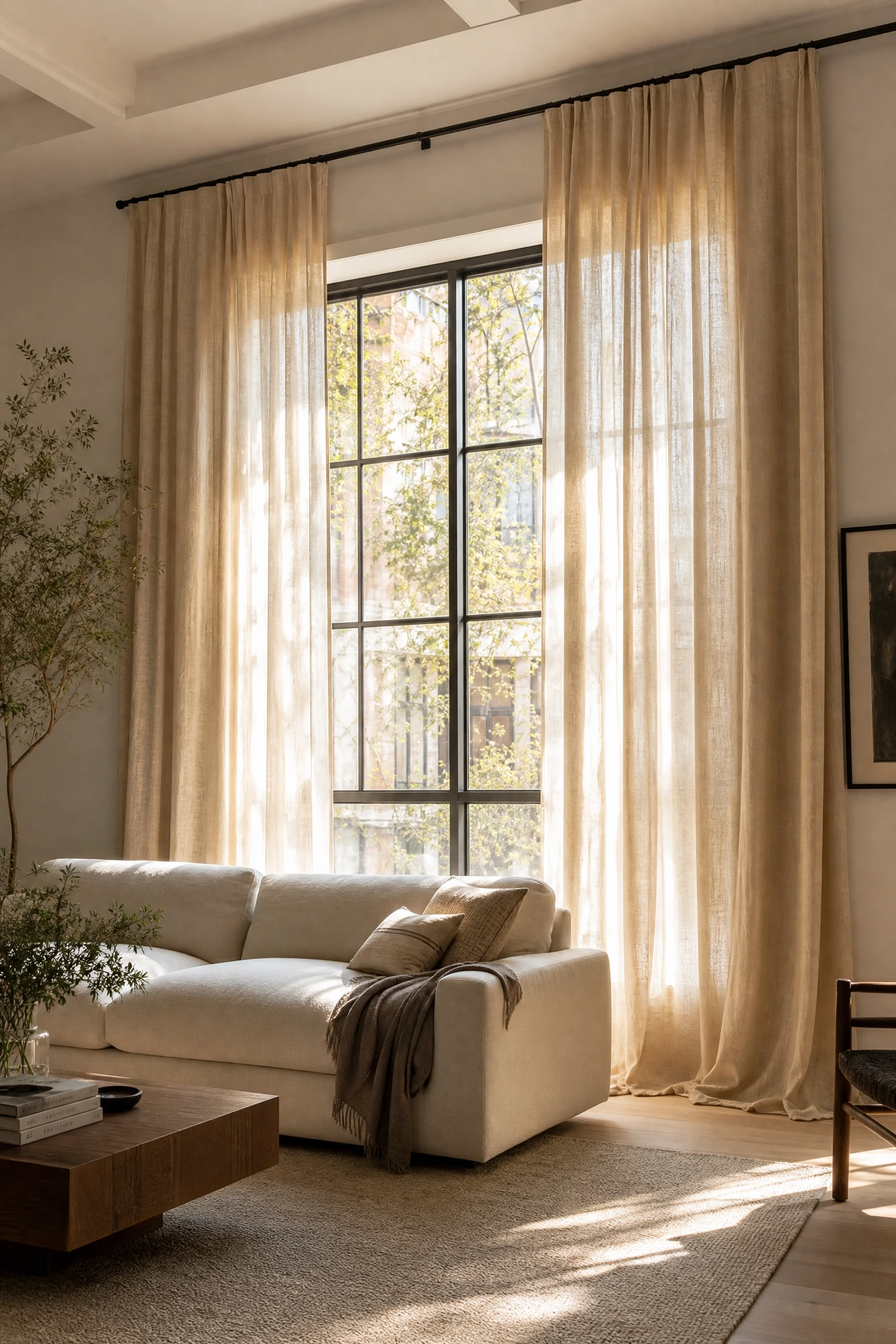
You hung curtains at window height and now the ceiling looks three feet lower than it actually is. Hanging curtains as close to the ceiling as possible, and extending the rod at least six to twelve inches past each side of the window frame, is the single most effective optical trick in apartment decorating. Longer curtains that pool slightly or just graze the floor add height and drama. Linen and cotton in a natural off-white or warm greige diffuse light beautifully and work in almost every style direction. Blackout-lined curtains add the functionality of sleep comfort without sacrificing the look. Budget options from IKEA’s SANELA or MAJGULL lines deliver solid quality; mid-range options from West Elm or Pottery Barn are better for texture and drape if the budget allows.
Designer Advice: ** Use a double rod to layer sheer and blackout curtains so you can control light levels throughout the day without compromising the look.
Incorporate a Large Decorative Mirror to Expand the Space
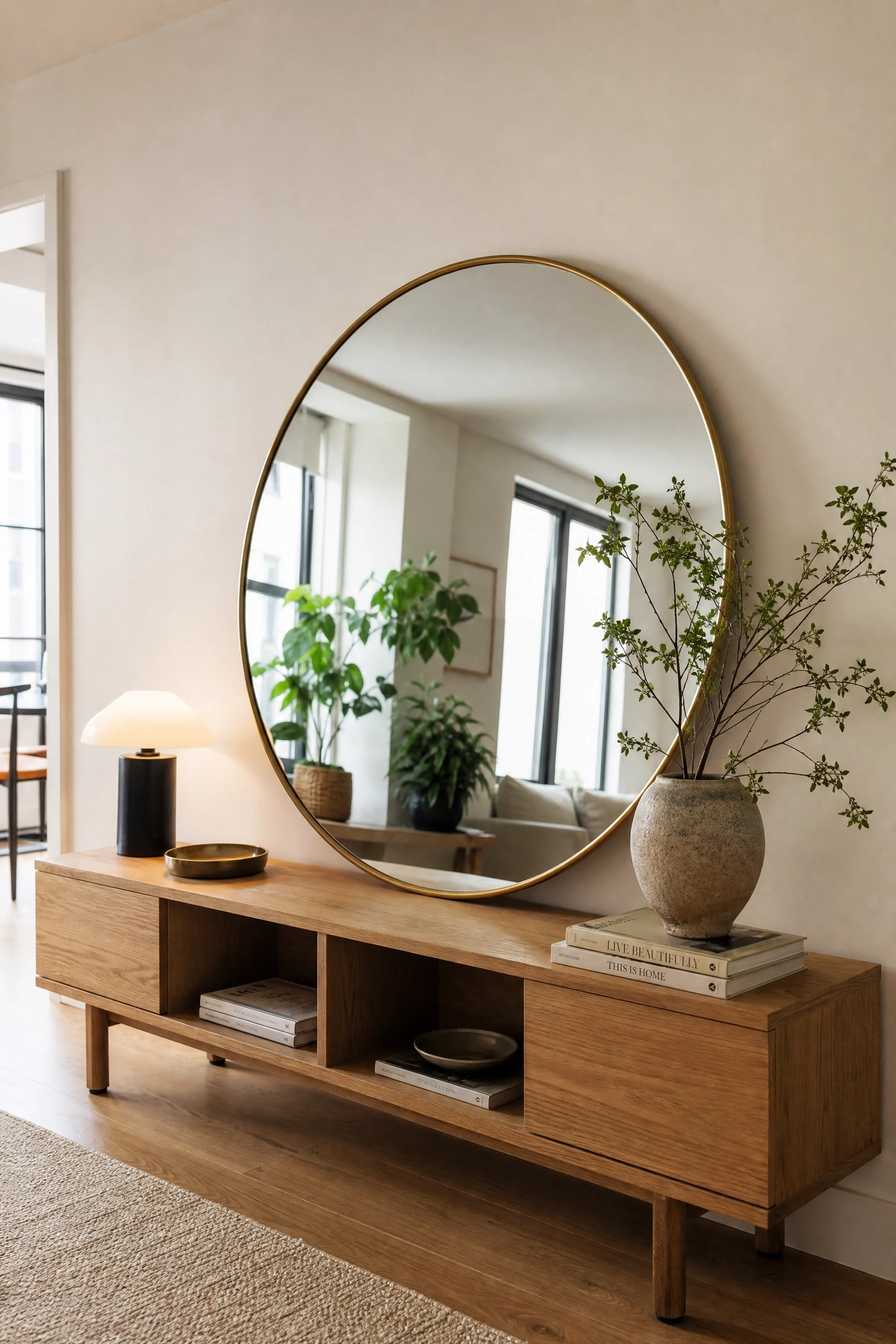
You have a smaller living room and the proportions feel tight no matter what you rearrange. A large decorative mirror, floor-leaning or wall-mounted, is the most reliable visual tool for making a room feel more open because it reflects light back across the space and gives the eye a second “view.” In practice, position the mirror to reflect something worth reflecting: a window, a plant cluster, a well-lit corner. A leaning mirror at about sixty-five to seventy-two inches tall works particularly well in apartments because it requires no wall anchoring. Round mirrors in a warm brass frame suit Japandi and transitional rooms; arched mirrors in black metal read more contemporary; ornate gilt frames work with maximalist or Art Deco-leaning spaces. Investment-level mirrors from McGee and Co or Anthropologie range from two to five hundred dollars; Amazon and TJ Maxx carry solid alternatives under one hundred.
Heads Up: ** Avoid placing a mirror directly across from the sofa where it reflects the back of the television; it creates visual clutter rather than spaciousness.
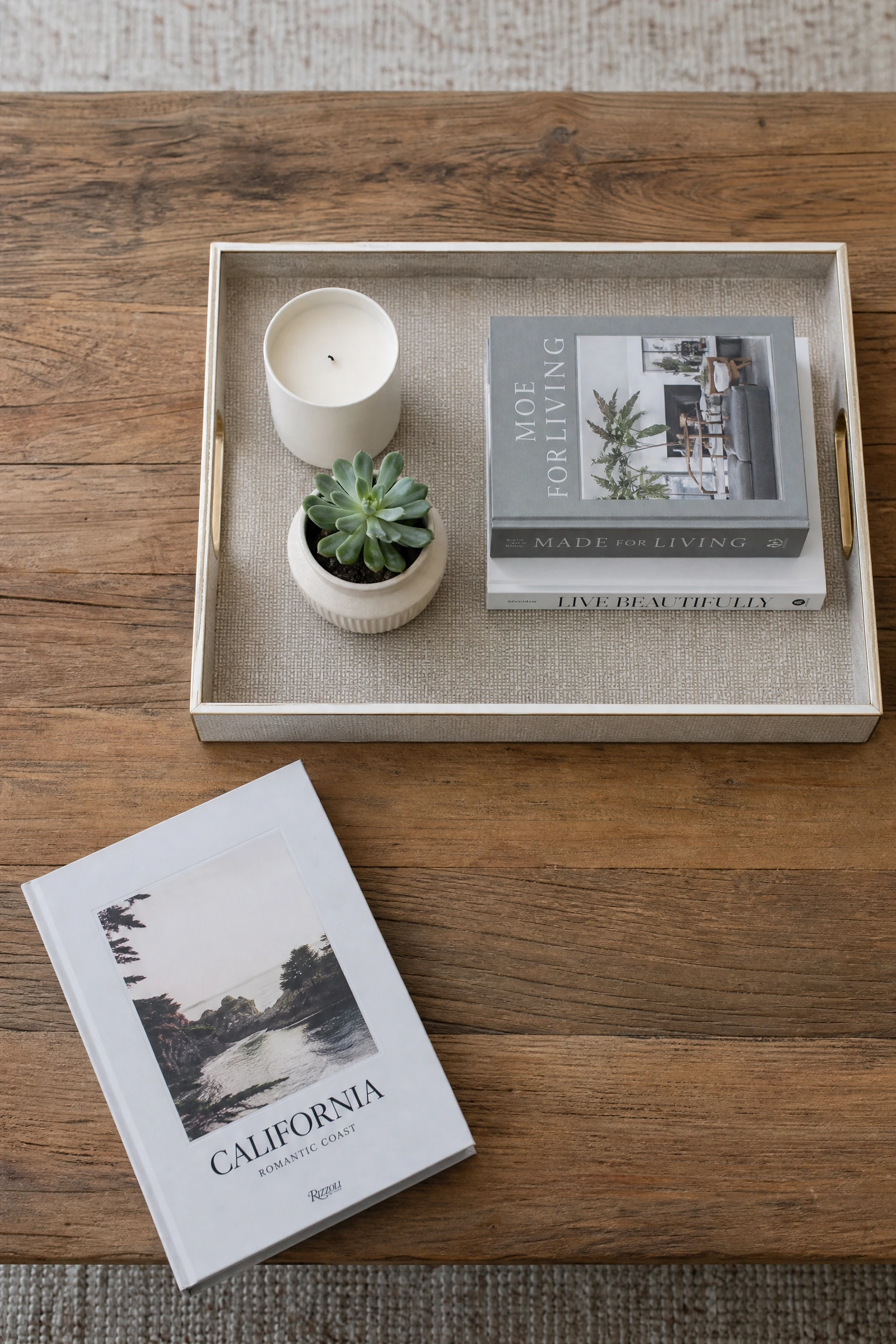
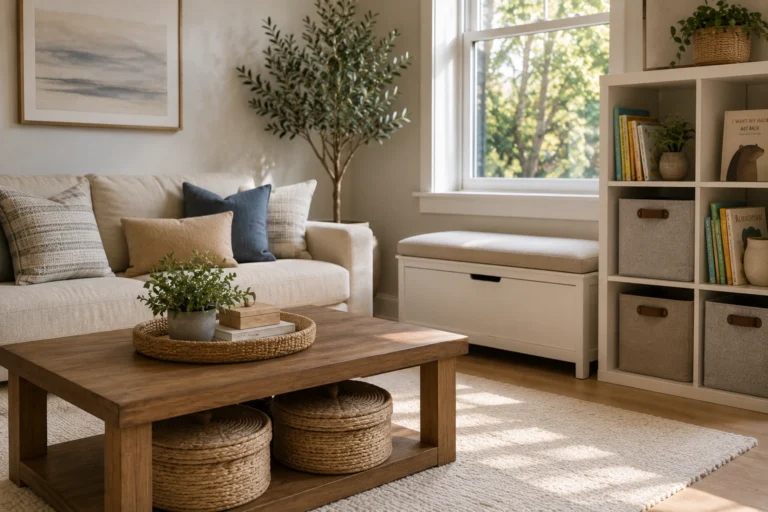
You have a coffee table that collects remote controls, charging cables, and half-read books, and it reads as disorganized even when it is technically clean. Styling the coffee table like a composed tray scene is one of the easiest ways to bring intentionality to the room’s center. Start with a large rectangular or round decorative tray and place it on two-thirds of the table surface. Inside the tray, group objects by height: a short candle or small plant, a medium ceramic object or stack of two books, and one taller item like a sculptural vase. Leave one-third of the table surface free for actual use. Outside the tray, you can place a larger coffee table book flat. This approach costs almost nothing if you use objects you already own, and it signals to anyone entering the room that the space is genuinely cared for.
Pro Move: ** Change out one or two tray objects seasonally to keep the room feeling fresh without redecorating.
Paint or Wrap the Inside of Bookshelves in a Contrasting Color
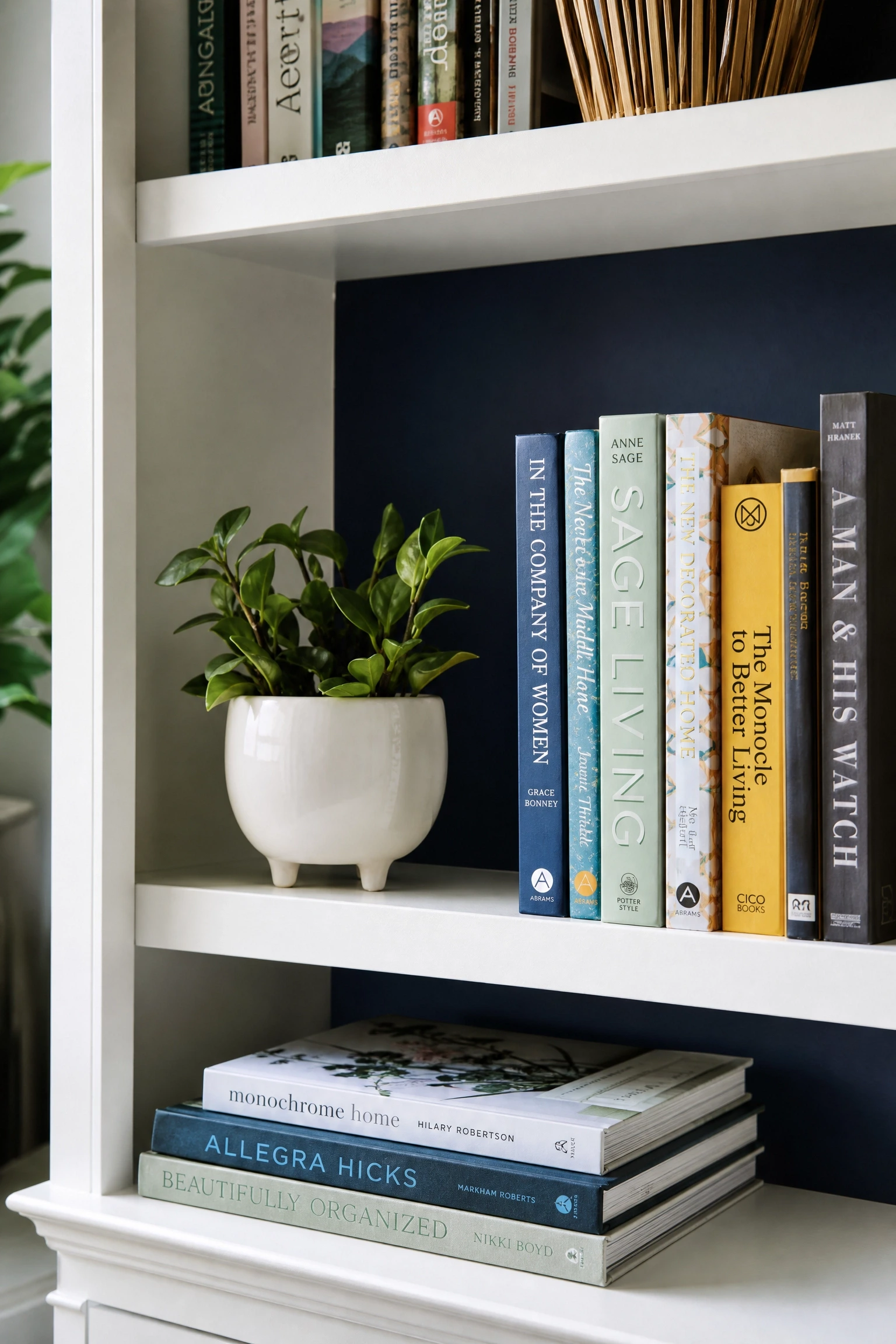
You have a standard white bookcase and it blends into the wall so completely that it disappears. Painting the back panel of a bookcase in a contrasting color, deep navy, warm terracotta, forest green, or even a bold black, makes the shelf unit read as a design feature rather than a storage afterthought. The objects and books displayed in front pop against the darker backdrop because of the increased contrast. You can also use peel-and-stick wallpaper for the same effect without permanently altering the unit, which is important for renters or IKEA furniture owners who may want to reassemble later. In practice, paint the back panel before assembling the unit if possible, or carefully tape off the sides when the unit is already in place. This is an extremely affordable upgrade, typically under twenty dollars in a small paint sample.
Quick Tip: ** Edit your book collection before styling; show only spines of books with colors that complement the back panel for a more polished look.
Install a Modular Sectional in Place of a Sofa and Loveseat
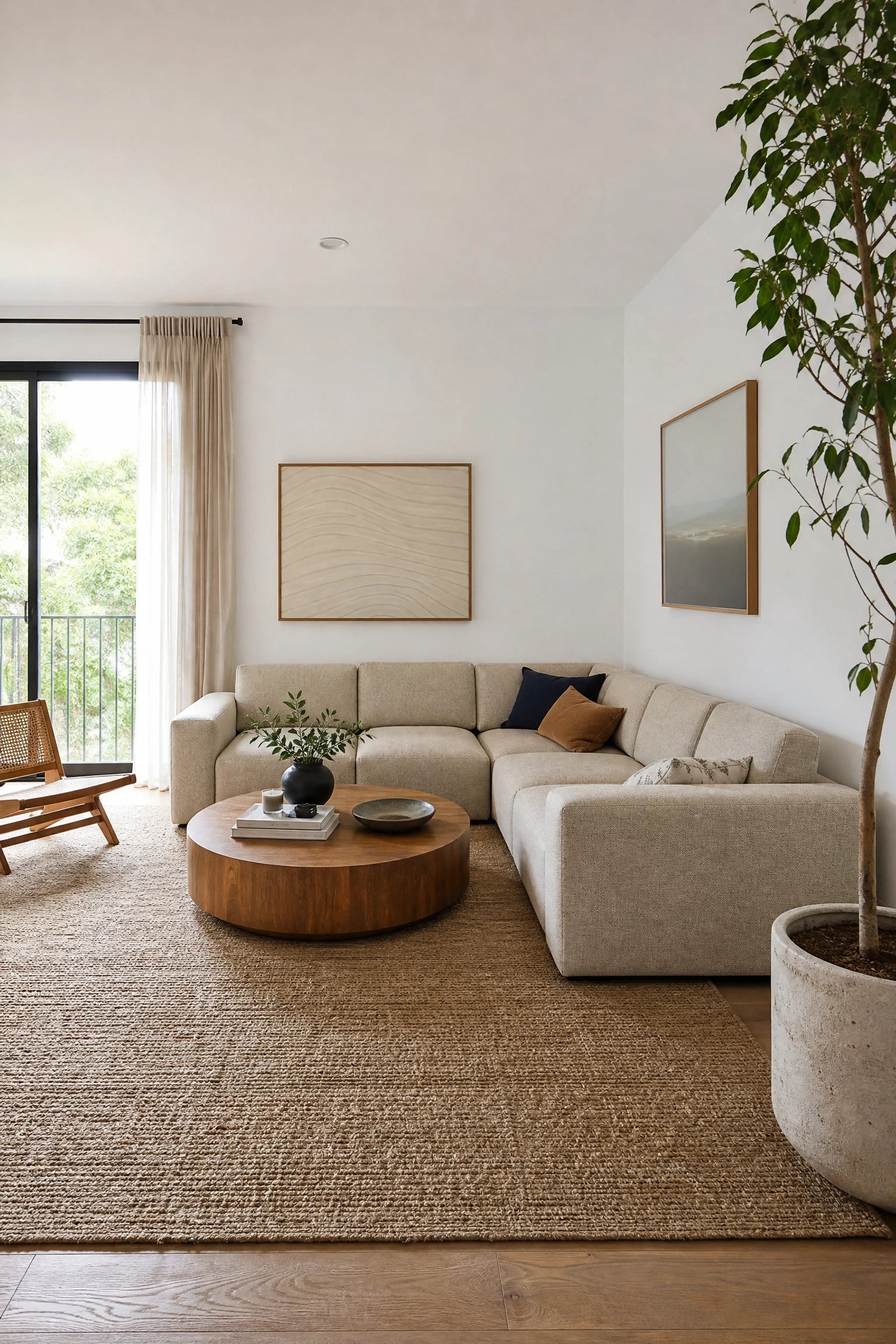
You tried to fit a sofa and a separate loveseat into the room and now it feels like a furniture showroom with no breathing space. A modular sectional, configured specifically for your room’s dimensions, solves the seating problem with a single cohesive piece that takes up less visual real estate than two separate items. Brands like Burrow, Joybird, and Floyd let you configure and reconfigure sections as you move apartments, which adds long-term value. In practice, measure the room carefully before ordering and leave at least thirty-six inches of clearance for foot traffic around the sectional. Performance fabric, particularly in a warm pebble, cloud, or slate tone, holds up well in rented spaces where damage matters. A sectional is an investment purchase, typically one thousand to three thousand dollars, but it is the last sofa decision you will need to make for several years.
Reality Check: ** L-shaped sectionals only work well when the corner of the L faces a corner of the room; floating a sectional in the middle of a small room makes the layout feel awkward.
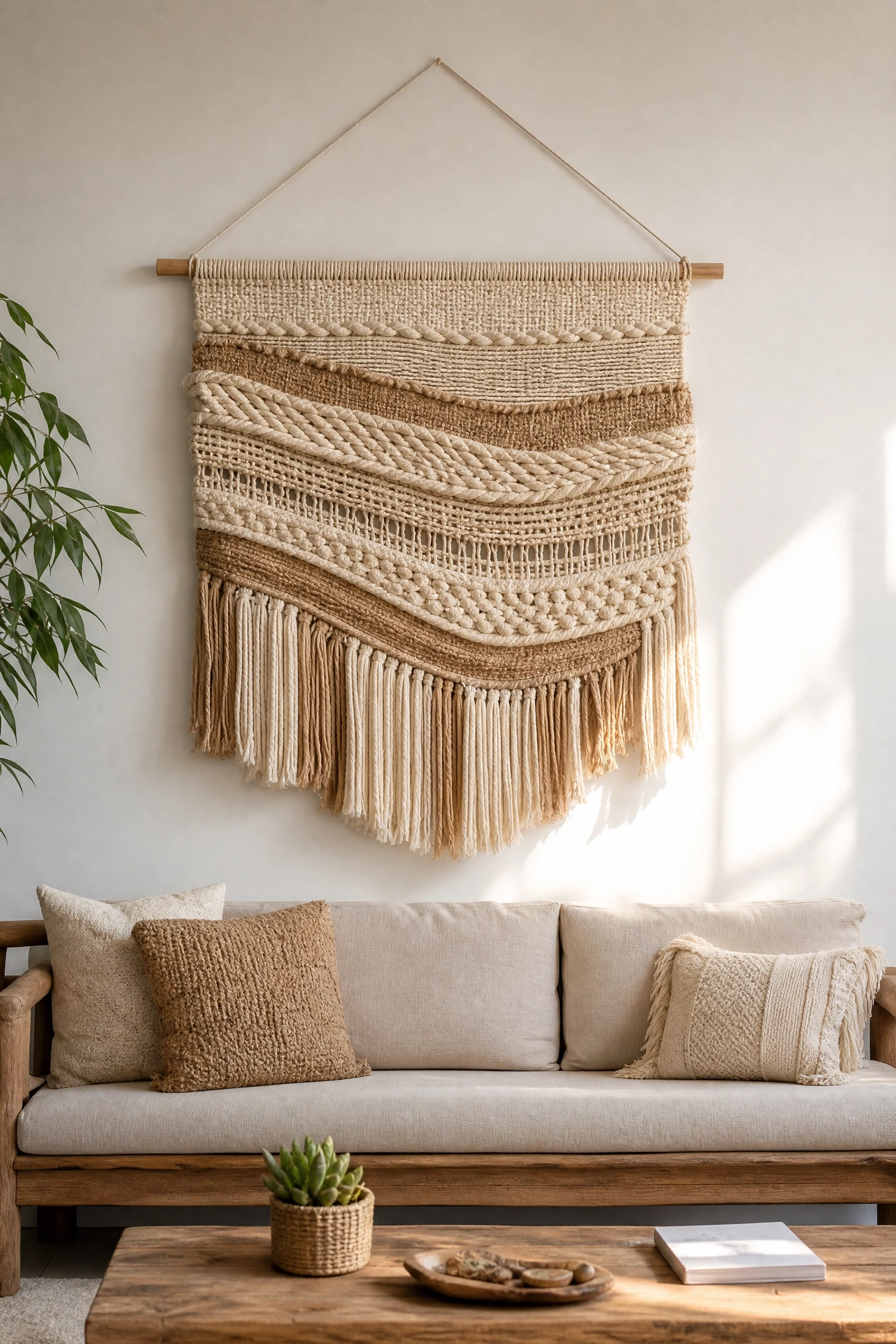
You want something on the walls but every time you look at framed art, nothing feels quite right for the space. A large woven wall hanging made from natural fibers, jute, cotton rope, or undyed wool, brings texture, warmth, and a handmade quality to a wall that framed prints simply cannot replicate. This works particularly well in boho-leaning rooms or in spaces where the furniture is already fairly minimal, because the weaving adds visual complexity without adding physical clutter. Etsy has a strong market of independent weavers selling original pieces in the eighty to three hundred dollar range. Hang the piece using a simple wooden dowel; no frame required. One important note: large weavings work best on walls with good natural light, because their texture needs light to read well. In darker rooms, choose a weaving in a lighter colorway to compensate.
Designer Advice: ** Position the bottom of the weaving no lower than the top of the sofa back so it reads as wall art rather than a throw that slipped upward.
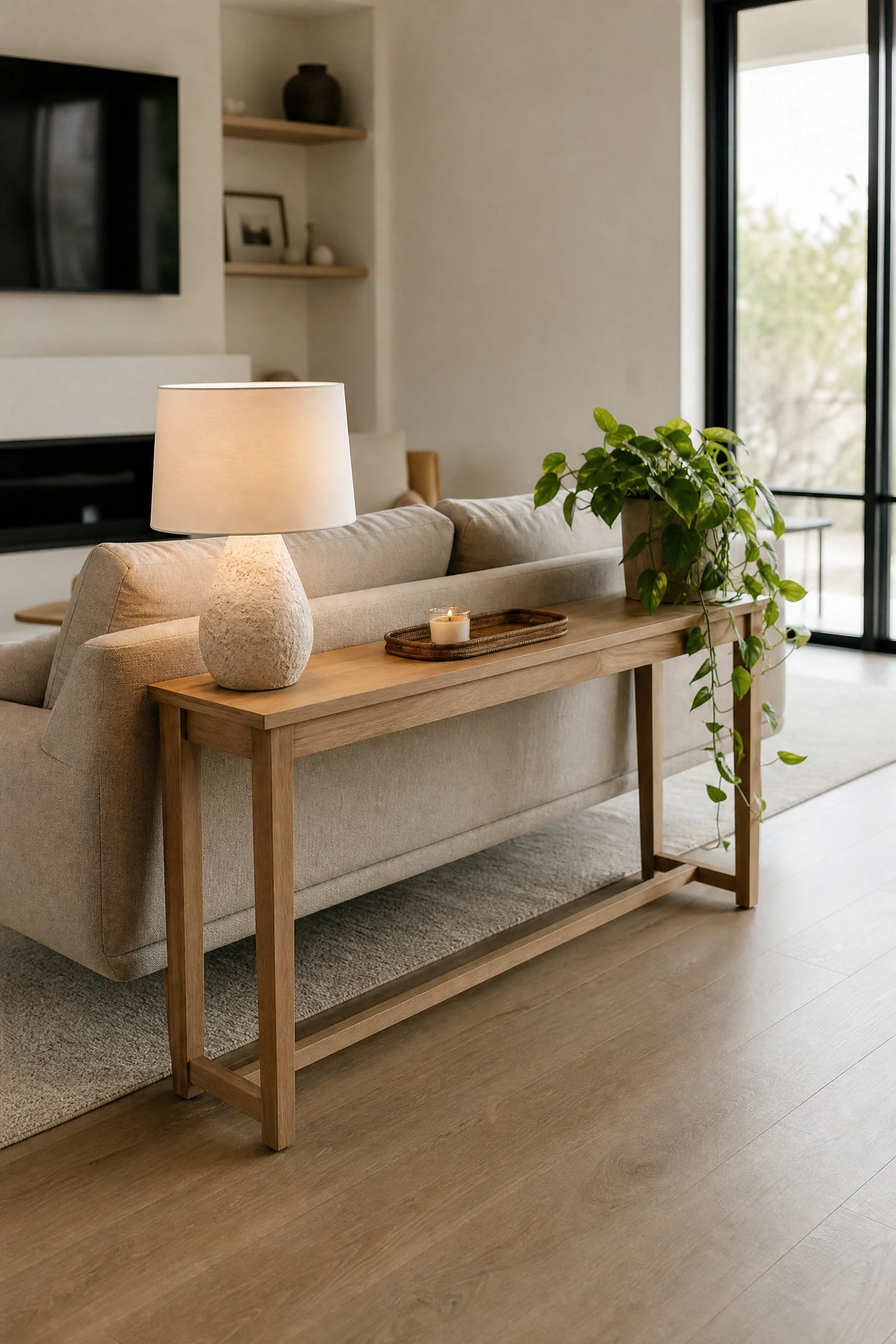
You have a floating sofa that sits away from the wall, and the gap behind it reads as dead space with no purpose. A narrow console table, ideally between twelve and fifteen inches deep, placed directly behind the sofa solves this problem elegantly. It creates a natural surface for lamps, books, and plants that otherwise have no home, and it also visually defines the back edge of the seating area, which matters in open-plan apartments where rooms lack built-in boundaries. Style the console with a table lamp at one end for ambient light, a small tray with a candle in the middle, and a trailing plant or vase at the other end. Natural wood, painted black, or antique brass-legged options all work depending on the room’s palette. Most console tables in this depth range from IKEA, CB2, or West Elm cost between eighty and three hundred dollars.
Heads Up: ** Match the console height as closely as possible to the sofa back height; more than a two-inch difference looks proportionally awkward.
Bring In One Oversized Indoor Plant as a Structural Element
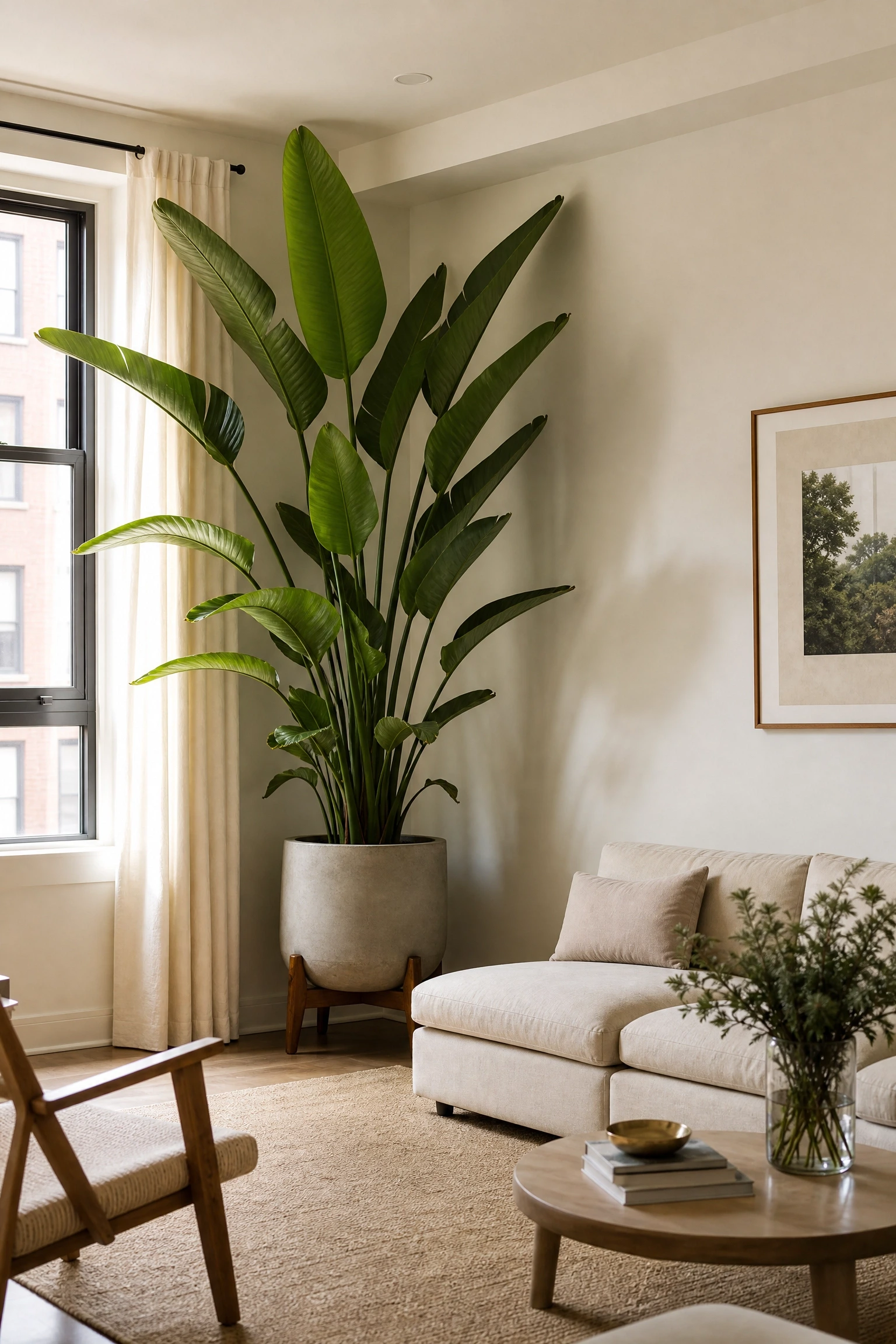
You have small plants scattered on every surface and the room looks like a greenhouse supply store with no design logic. Replacing multiple small plants with one large, structurally significant plant, a fiddle-leaf fig, a large monstera, a Bird of Paradise, or a tall rubber tree, does more for the room than six small ones combined. A large plant anchors a corner in the same way a floor lamp does, and it introduces scale and life simultaneously. In practice, choose the plant based on your light conditions honestly; a fiddle-leaf is beautiful but unforgiving in low light. A Bird of Paradise is more tolerant and grows large quite reliably. Place the plant in a ceramic or concrete pot that complements your palette. One large plant in the right pot can easily be a statement piece on par with furniture, and it costs between fifty and one hundred fifty dollars in most garden centers.
Pro Move: ** improve the pot on a low wooden platform or plant stand to add height and prevent the plant from looking like it is sinking into the floor.
Decorating an apartment living room well comes down to making intentional choices rather than filling space. The rooms that feel genuinely good to be in are almost never the ones with the most furniture or the most decor; they are the ones where every object has a reason for being there and every surface has been considered. Start with the things that have the most impact for their cost: curtain height, lighting quality, and a single large piece of art or a plant. From there, layer in color and texture gradually rather than all at once.
Give yourself permission to do it slowly. One good piece added every few weeks beats a rushed weekend shopping trip that results in a room full of things you will replace in two years. The best apartment living rooms are the ones that look like you live there.
Frequently Asked Questions
How do I make a small apartment living room look bigger?
Hang curtains as high as possible and extend the rod past the window frame. Use a large mirror to reflect light. Choose furniture with exposed legs, which creates visual space under each piece. Keep the floor visible by avoiding bulky rugs and oversized furniture. Stick to a cohesive color palette rather than mixing too many tones.
What is the best sofa color for a rental apartment?
A warm neutral like olive, cognac, terracotta, or dusty blue gives you color without fighting future changes in rugs or wall decor. Avoid grey if you want the room to feel warm. Performance fabric in a mid-tone color hides daily wear well and photographs cleanly.
How do I decorate without damaging the walls?
Command strips and adhesive hooks hold lighter frames and small mirrors without leaving holes. Peel-and-stick wallpaper and removable murals are completely renter-safe. Leaning large mirrors and art against the wall avoids hanging entirely. Freestanding shelves and bookcases provide storage and display space without any wall contact.
What lighting works best in an apartment living room?
Overhead lighting is almost always too harsh on its own. Add at least two floor or table lamps using bulbs at 2700K for a warm residential glow. LED strip lighting behind the TV reduces eye strain during viewing and adds ambient depth. A dimmer switch on any existing overhead fixture is a cheap upgrade that changes the whole feel of the room.
How do I choose a rug size for my living room?
The most common mistake is choosing a rug that is too small. In a living room, the rug should be large enough to fit at least the front legs of all seating on it. For a standard apartment sofa with two chairs, an eight-by-ten or nine-by-twelve rug is usually the right call. When in doubt, go larger.
Can I mix different furniture styles in an apartment living room?
Yes, and it usually looks better than matching everything. The key is finding one element to keep consistent, usually material or color. If the furniture styles vary, keep the wood tones similar. If the materials vary, keep the palette tight. One or two intentional contrasts create character; too many contrasts create visual noise.