There is a specific moment every October when you walk back inside after being in the cold air and realize your living room just does not feel right yet. The summer lightness is still there, the cushions are still bright, and nothing says sit down and stay a while. The good news is that fixing this does not take a renovation or a shopping haul; it takes understanding what actually makes a room feel like fall.
These ideas come from real rooms, real people, and the kind of thinking that goes beyond throwing an orange pillow on a grey sofa and calling it done.
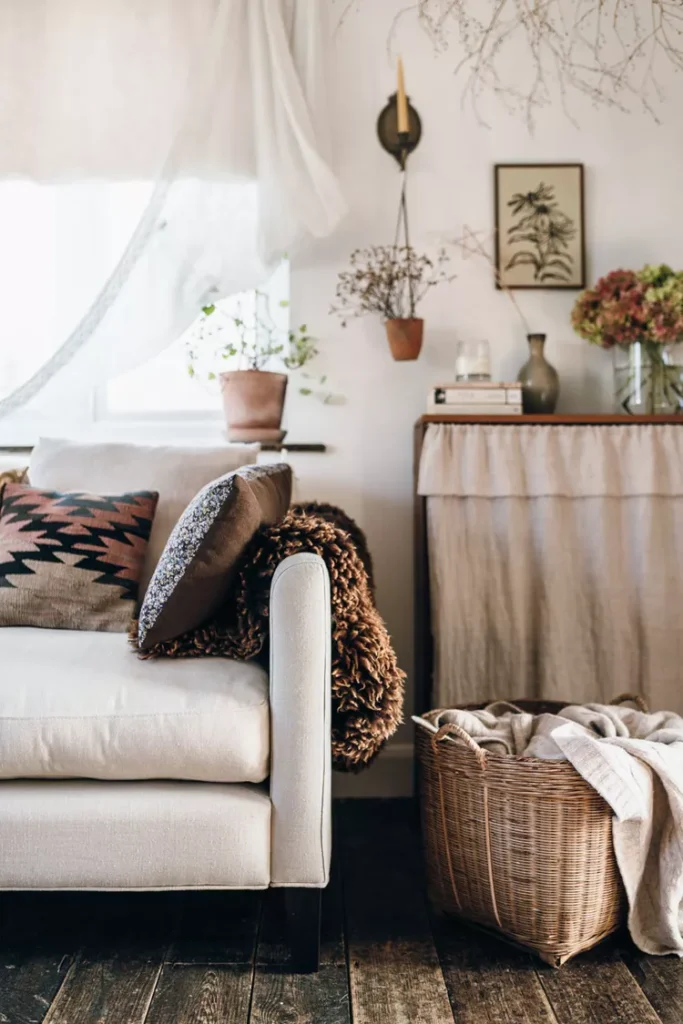
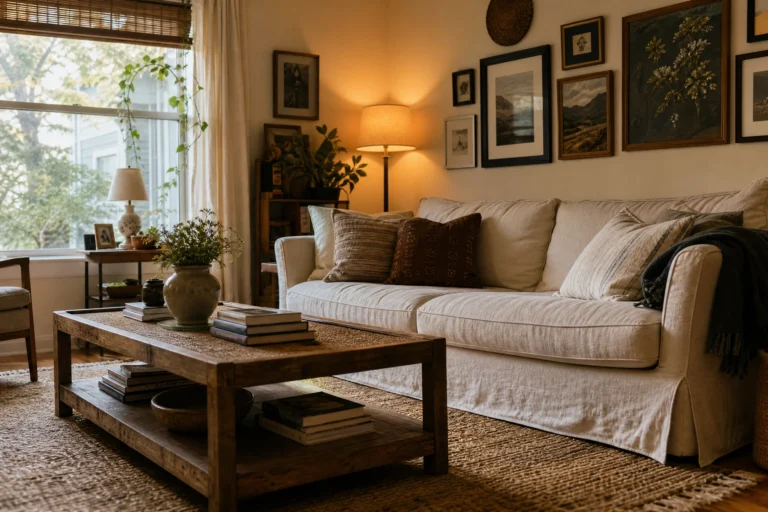
One throw folded neatly on a sofa says display; two throws in different textures draped at slightly different angles say get under me. In practice, a chunky cream knit draped over one arm with a looser waffle-weave blanket across the seat cushion creates the kind of layered warmth that draws people in the moment they enter the room: the key is the imperfect drape, not the perfect fold.
Pair a heavier wool-blend throw with a lighter cotton knit so there is visual weight contrast, and keep both in the same warm palette of rust, oat, or caramel so the layers read as intentional rather than chaotic.
Pro Move: Keep a wicker basket beside the sofa with an extra throw inside: it invites people to help themselves and turns a decorative object into a functional one.
2. Switch Out Every Overhead Light for Lamp Light After 5pm
The single biggest thing that kills the cozy feeling in a fall living room is overhead lighting, and almost no one talks about it. Overhead lights cast shadows downward, flatten texture, and make a room feel like a waiting room rather than a warm retreat. In the evenings, turning them off entirely and switching to table and floor lamps with warm-toned bulbs (2700K or lower) changes the whole atmosphere of a room in about ten seconds.
Wall sconces, clip-on reading lights, and small accent lamps on bookshelves all contribute to what designers call layered lighting: multiple low light sources at different heights that create warmth and visual depth rather than a single flat wash from above.
Quick Tip: Replace any bulbs in your living room lamps with warm white 2700K bulbs; a four-pack costs under ten dollars and is the cheapest upgrade in this entire article.
Here is a quick guide to the lighting types that work best for a cozy fall living room and what each one costs:
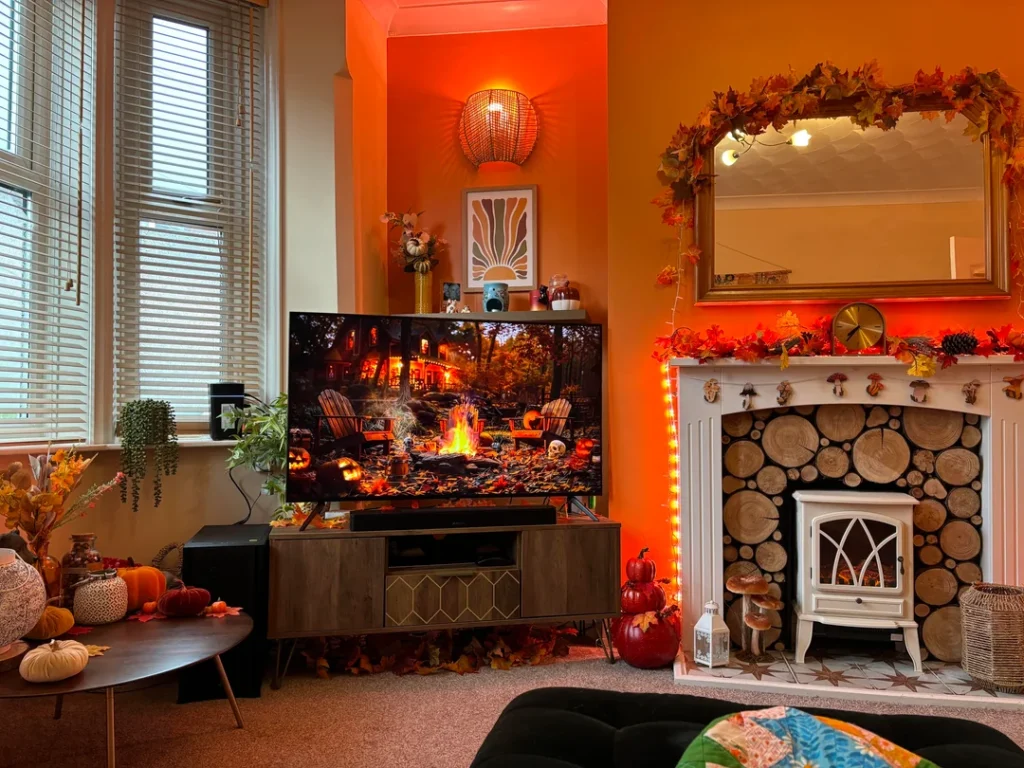
Most people play it safe with neutral walls and add fall color through accessories, which works, but there is something genuinely different about a room where the wall itself is the warmth. A deep burnt orange, terracotta, or rust-red wall envelopes a space in autumn color in a way that pillows simply cannot, and in a rental situation, a removable peel-and-stick wallpaper in a warm botanical print achieves a similar effect without permanent commitment.
If a whole room feels too much, one accent wall behind the sofa or fireplace is enough. The visual weight of a warm-toned statement wall draws the eye toward a focal point and makes the rest of the room read cozier even without any additional decor.
Reality Check: Deep wall colors look significantly darker on your walls than on the paint chip; always test a large swatch in both daylight and evening lamp light before committing.
4. Style the Mantel With Dried Botanicals Instead of Fake Leaves
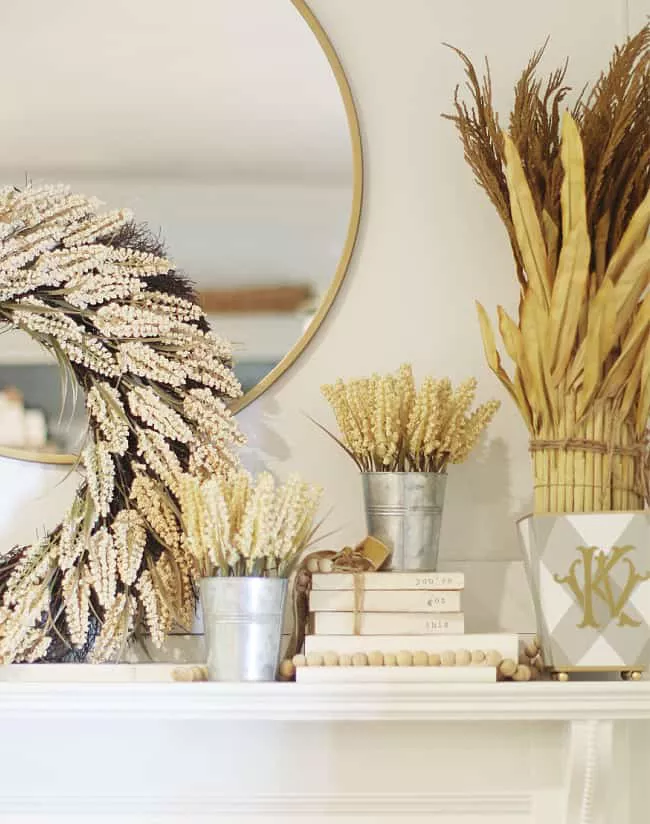
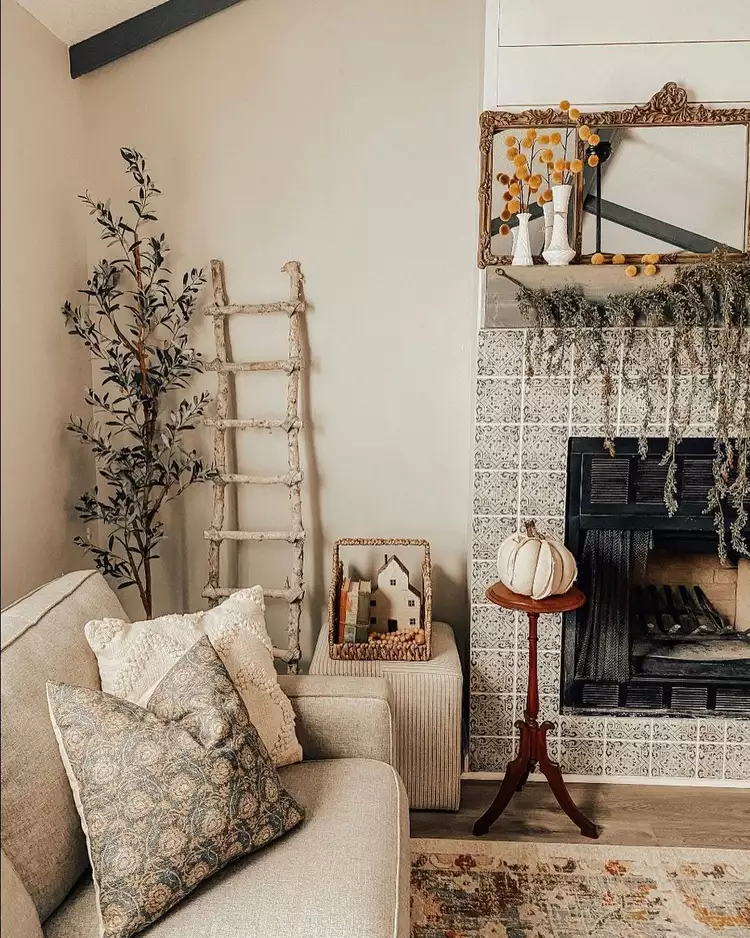
Fake autumn leaves scattered across a mantel are the most overdone fall move in the book, and they almost always look exactly like what they are: plastic leaves from a craft store bag. Dried botanicals are the upgrade that costs roughly the same but reads as genuinely considered: dried wheat, bunny-tail grasses, amaranth, or pampas arranged in stoneware or galvanized metal vessels give height, movement, and texture that lasts the whole season without drooping or losing color.
The arrangement principle that works best here is staggered heights: a tall bundled sheaf in the back, medium dried stems in front, and a few smaller vessels with shorter botanicals to one side, so the eye moves across the display rather than landing flat on a row of matching objects.
Designer Advice: Dried botanicals from a florist or farmer’s market typically cost less than ten dollars per bunch and look far more intentional than anything sold pre-packaged as seasonal decor.
5. Use a Blanket Ladder to Make Warmth Part of the Decor
A wooden or whitewashed blanket ladder leaning against a living room wall is one of those pieces that pulls double duty better than almost anything else in the room. It stores three or four throws in plain sight, keeps them accessible enough that people actually use them, and adds a vertical architectural element that draws the eye upward in a way flat surfaces cannot.
The styling rule here is to vary the texture on each rung: a chunky knit on one, a plaid flannel on the next, a lighter waffle-weave on the third, so the ladder looks curated rather than just functional; it is the difference between a storage solution and a design moment.
Heads Up: A freestanding blanket ladder works best against a wall with some visual weight behind it like shiplap, brick, or a gallery wall; against a plain white wall it can look like it is waiting to be put away.
6. Build a Coffee Table Moment That Earns Its Space
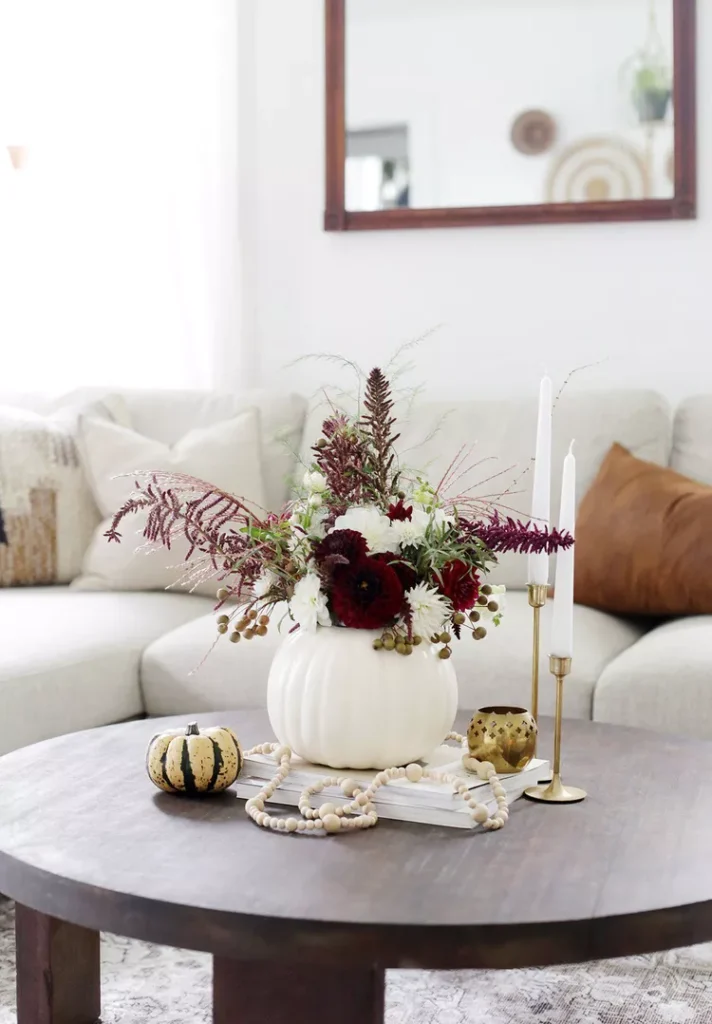
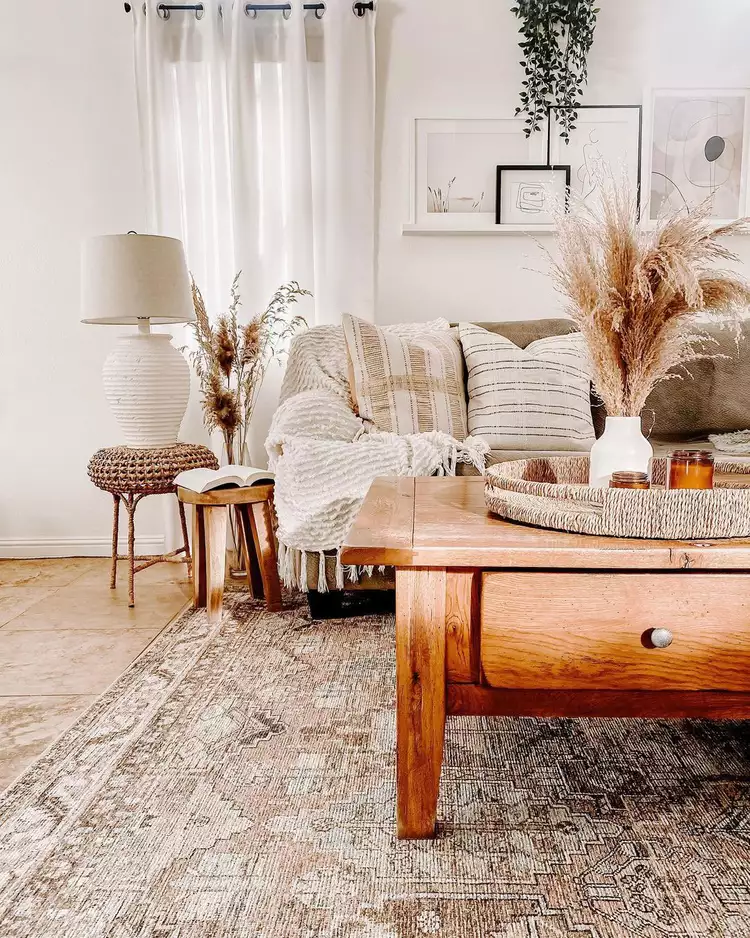
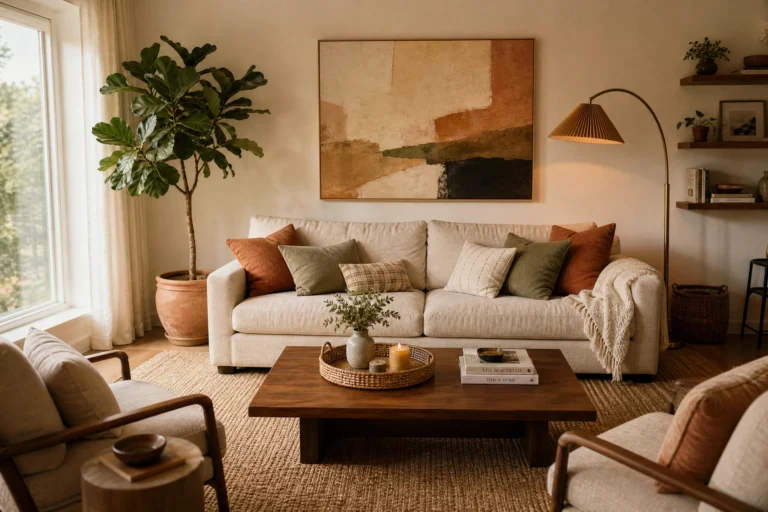
The coffee table is where most fall decorating goes wrong: too many small objects scattered without logic, or a single pumpkin sitting in the middle of an otherwise empty surface. What actually works is treating the coffee table like a still-life: a tray as the anchor, two or three objects at different heights arranged inside it (a candle, a small vessel with dried stems, a decorative pumpkin or gourd), and one or two books stacked flat as a plinth for the tallest element.
A DIY pumpkin vase (a white or cream pumpkin carved out and used to hold a seasonal flower arrangement with dahlias, dried ferns, and burgundy blooms) is one of the most striking coffee table focal points for fall and costs under fifteen dollars to make at home.
Pro Move: Use a tray to contain your coffee table grouping: it pulls objects together into a deliberate composition and makes the surface look styled even when it is not symmetrical.
Buying entirely new cushions every season is both expensive and wasteful, and there is a far smarter approach: invest in quality inner cushion inserts once and rotate seasonal covers around them. For fall, a mix of pampas-toned neutral stripes, warm terracotta velvet, and one botanical-print cover in olive and rust creates a cohesive layered look on a sofa without the cost of full cushion replacements, and the whole swap takes under ten minutes.
The proportions that read best are two larger square covers at each end of the sofa, two medium rectangular lumbar-style covers staggered in front of them, and one odd-shaped or round cushion placed slightly off-center so the arrangement feels real rather than retail-display symmetrical.
Quick Tip: Pillow covers on their own from IKEA, Amazon, or H&M Home run between eight and twenty dollars each; the same seasonal refresh costs a fraction of buying full cushions.
8. Let a Glass Cabinet Do Your Seasonal Styling for You
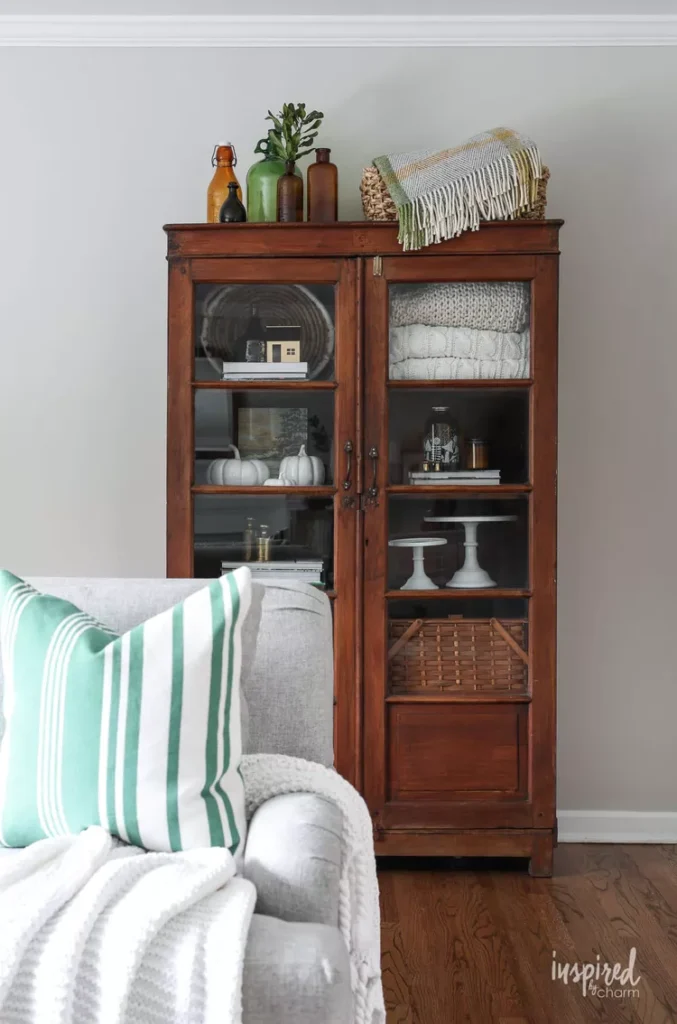
A glass-fronted cabinet or vitrine is one of the most underused pieces of furniture for seasonal decorating: most people treat it as permanent storage and never reconsider what is inside, but it is actually one of the most visible display surfaces in a living room because it is enclosed, which makes anything inside look intentional by default.
For fall, edit the contents down to warm neutrals: stacked cream throws on one shelf, a pair of small white pumpkins, a few warm amber glass bottles, and one or two hardcover books with their spines turned inward for a tonal effect. The monochromatic restraint inside a cabinet reads far more elevated than a busy seasonal arrangement on an open shelf.
Designer Advice: Remove at least a third of what is currently in your cabinet before adding any fall pieces; negative space inside a glass cabinet is what makes the remaining objects look considered rather than crowded.
9. Add Fairy Lights to Your Fireplace Hearth or Window Ledge
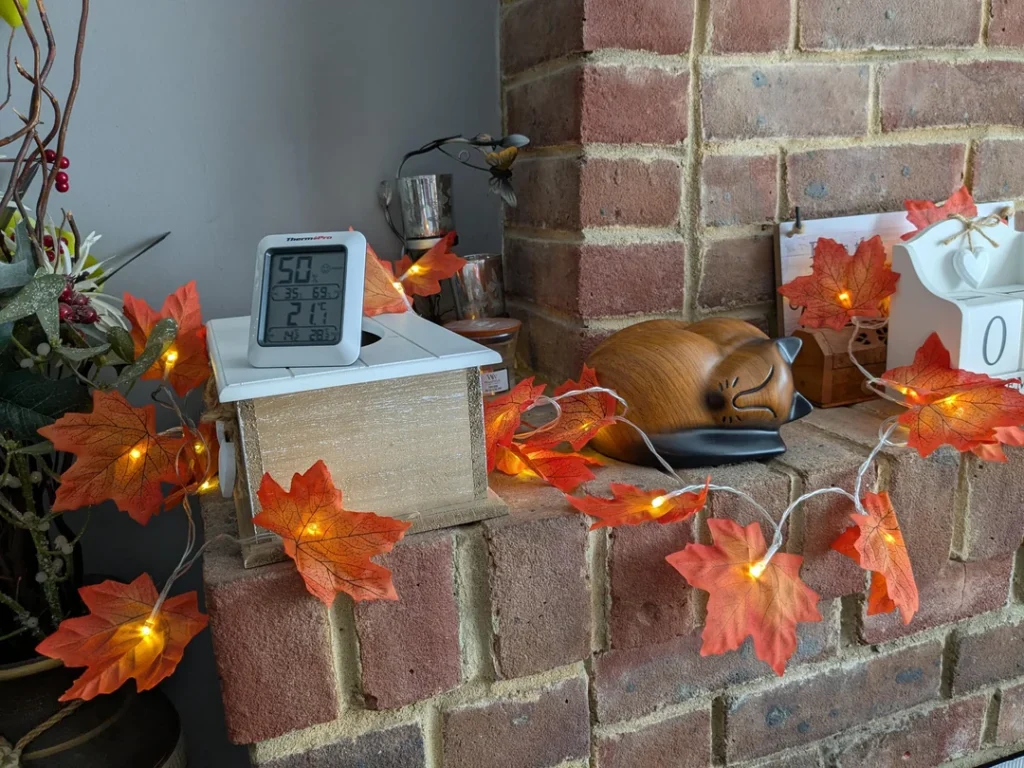
Maple leaf fairy lights or simple warm micro-LED string lights draped along a fireplace hearth, brick mantel ledge, or window sill are one of the fastest ways to add amber warmth to a room without buying anything structural: the orange and red leaves catch the warm LED glow and create the kind of soft, honeyed light that makes an otherwise ordinary corner look like a scene from a film.
The key is to pair the lights with a few small objects that have real texture alongside them: a wooden fox or deer ornament, a mini ceramic pumpkin, a candle in a galvanized tin, so the lights frame a small vignette rather than just running in a lonely line along the edge.
Heads Up: Always choose warm white or orange-toned LED fairy lights for fall; cool white or blue-tinted lights work against every warm color you are trying to create and immediately break the mood.
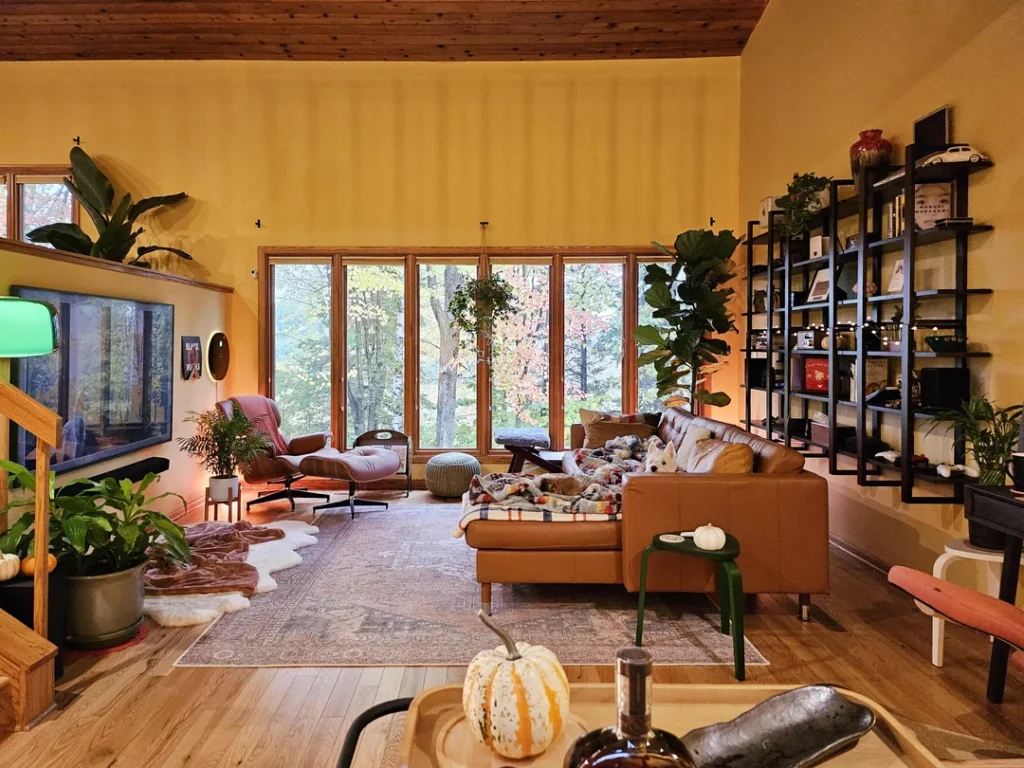
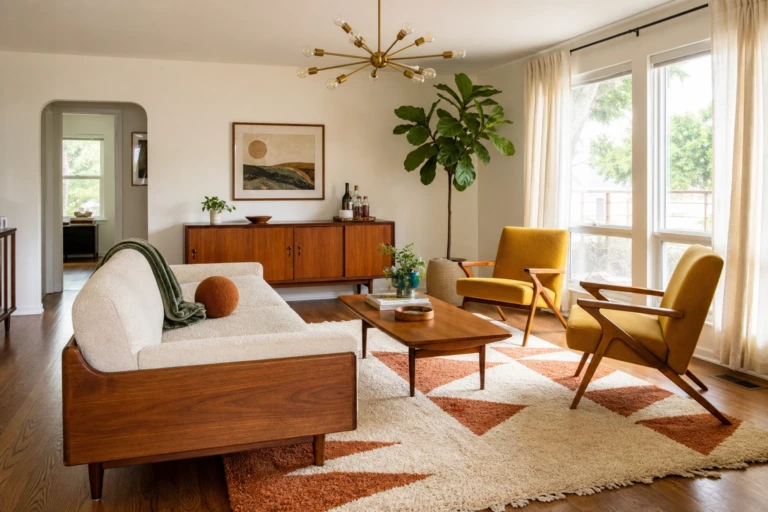
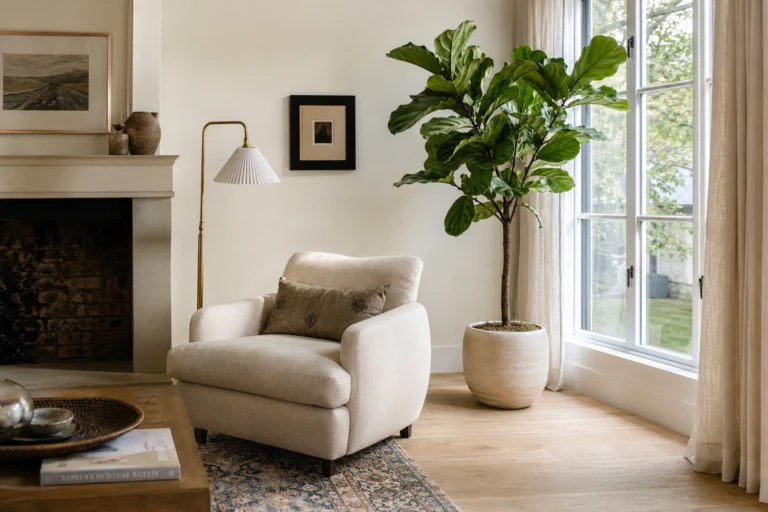
If your living room has a window that looks out onto trees or a garden, the changing foliage outside is free fall decor that most people forget to account for: arranging seating so that at least one chair or a portion of the sofa faces the window means the room naturally includes autumn color through the glass, which connects the interior to the season in a way that no number of decorative pumpkins can replicate.
Warm-toned interior walls, like the golden yellow in a mid-century modern room, amplify the autumn feeling by mirroring the orange and ochre tones of fall foliage outside. The inside and outside of the room start working together as a single visual composition rather than competing palettes.
Reality Check: This idea works best in rooms with larger windows; if your windows are small or face a wall, lean on interior warmth through lighting and textiles instead.
11. Bring in a Stone or Brick Texture to Anchor the Room
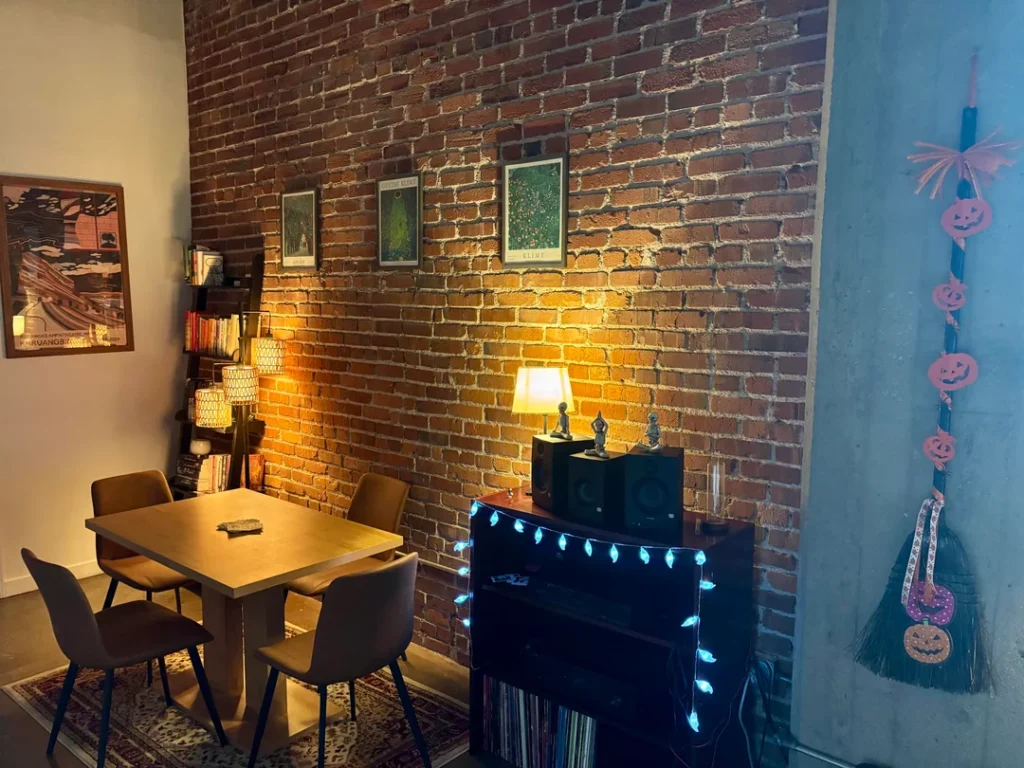
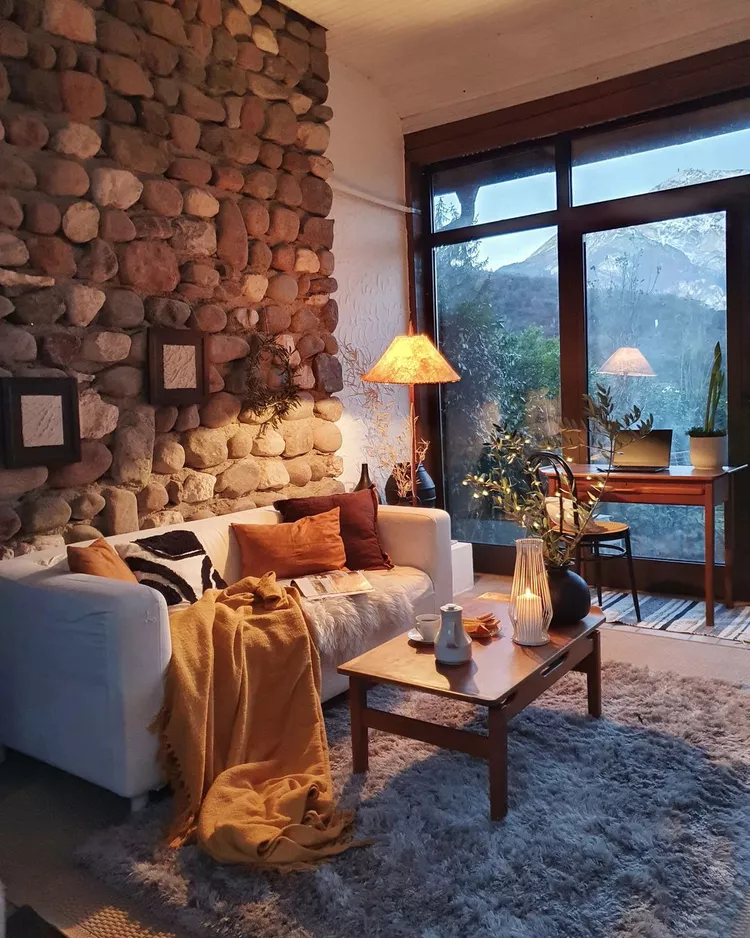
Exposed brick or stone is perhaps the most naturally fall-appropriate surface in any room: the raw, earthy texture absorbs warm lamplight and candlelight in a way that painted walls simply do not, which is why rooms with a stone feature wall or brick fireplace surround always photograph as deeply cozy without much additional effort.
If your living room does not have natural stone or brick, a faux stone panel or large-format textured wallpaper in a warm sand or terracotta tone on a single wall achieves a similar visual weight, and paired with a tall amber-shaded floor lamp angled toward that wall, the texture catches the light and creates depth that reads as architectural warmth.
Pro Move: Position a floor lamp so its light grazes the surface of a textured wall at an angle rather than pointing directly at it; raking light across texture is what makes it look dimensional and warm rather than flat.
12. Go Tonal and Pale for a Sophisticated Take on Fall
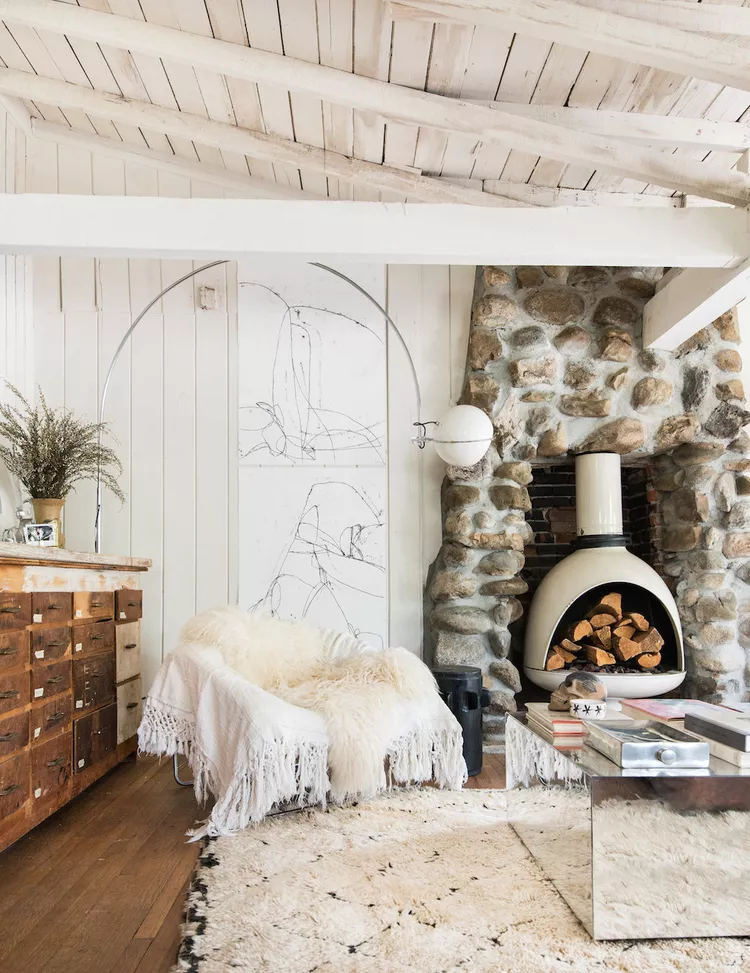
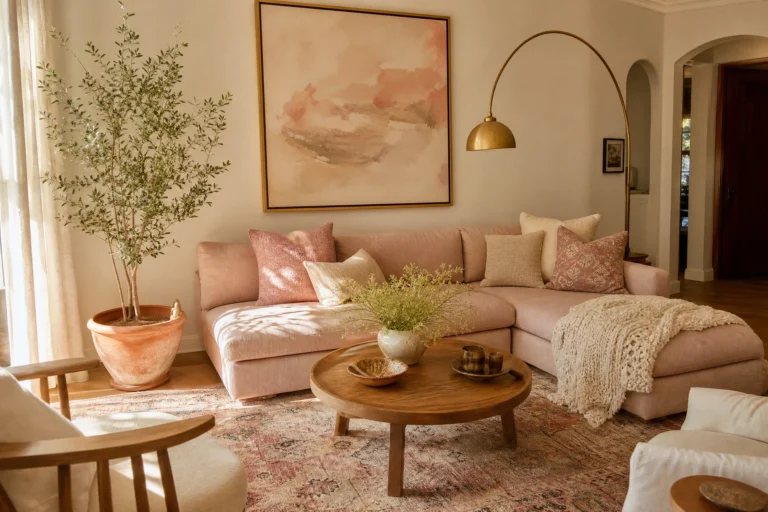
Not everyone wants the full rust-and-orange autumn palette, and the good news is that a monochromatic scheme in warm whites, raw linens, aged wools, and bleached woods is just as seasonal. It draws from the wabi-sabi and Scandi influences that have been gaining ground in interior design, where fall is understood as a quieter, more contemplative season rather than a maximalist one.
A sheepskin throw over a linen chair, a driftwood coffee table, an undyed wool rug, and a few dried botanicals in a cream ceramic vessel is the entire formula. The warmth comes from material and texture rather than color, and it works particularly well in rooms with original wooden floors or exposed beams that already carry their own warmth.
Designer Advice: This tonal approach needs real texture to avoid reading as cold: rough-weave linen, raw wool, aged wood, and natural ceramics are what give the palette its warmth, so avoid anything shiny or synthetic.
13. Dress the Wood Stove or Fireplace Surround Like a Scene
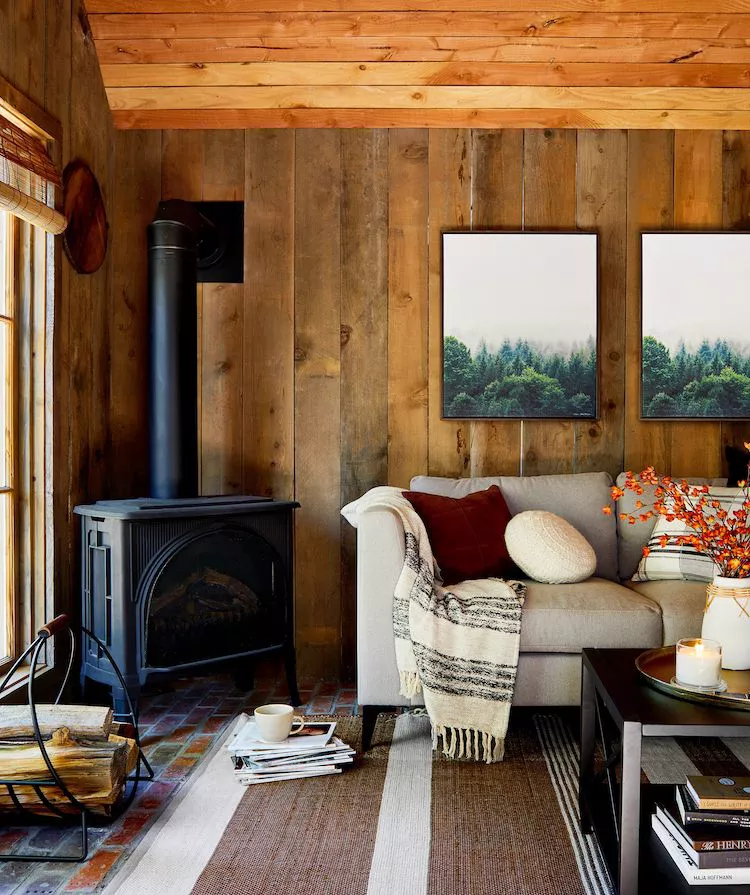
A wood-burning stove or cast-iron fireplace is the most powerful cozy element a living room can have, but most people under-style the area around it. A log rack with real firewood stacked beside the stove, a small stack of magazines and a mug on the nearby surface, and a tray of seasonal objects on the hearth turns the fireplace zone into a full vignette rather than just a heat source.
Deep crimson or burgundy pillows on the adjacent sofa, a black-and-cream striped throw draped casually nearby, and a small arrangement of autumn branches in a mason jar on the mantel complete the scene without requiring anything expensive. The key is treating the fireplace surround as its own room within the room.
Heads Up: Keep the area immediately beside the stove clear of anything flammable: firewood belongs in a metal holder or rack, not stacked directly against the wall, and any fabric throws should be at least a meter from the unit.
Bringing It All Together
A cozy fall living room is not built in one afternoon trip to a seasonal section of a homeware store. It is built by understanding what your room is missing: usually warmth, light, and texture. Adding those things intentionally, one layer at a time. Start with the lighting, because nothing else you do will look right until the lighting is warm. Then add texture through throws and pillows, create a focal point on the mantel or coffee table, and let the rest of the details fill in naturally around those anchors. The rooms that feel genuinely cozy in autumn are the ones that feel lived in all year round, just with the colors and fabrics turned up a notch. That is a standard any living room can meet, in any budget, in any size of space.