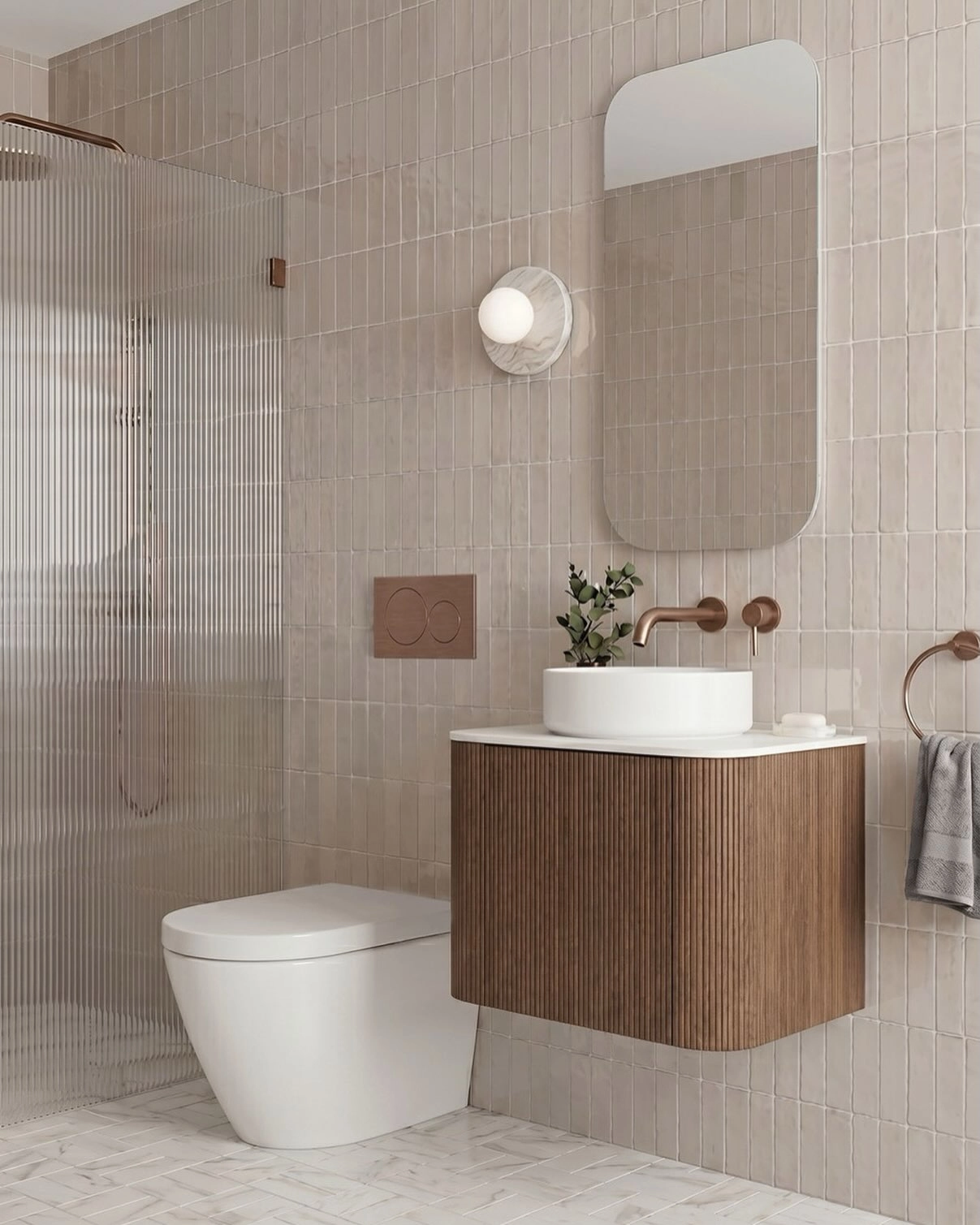
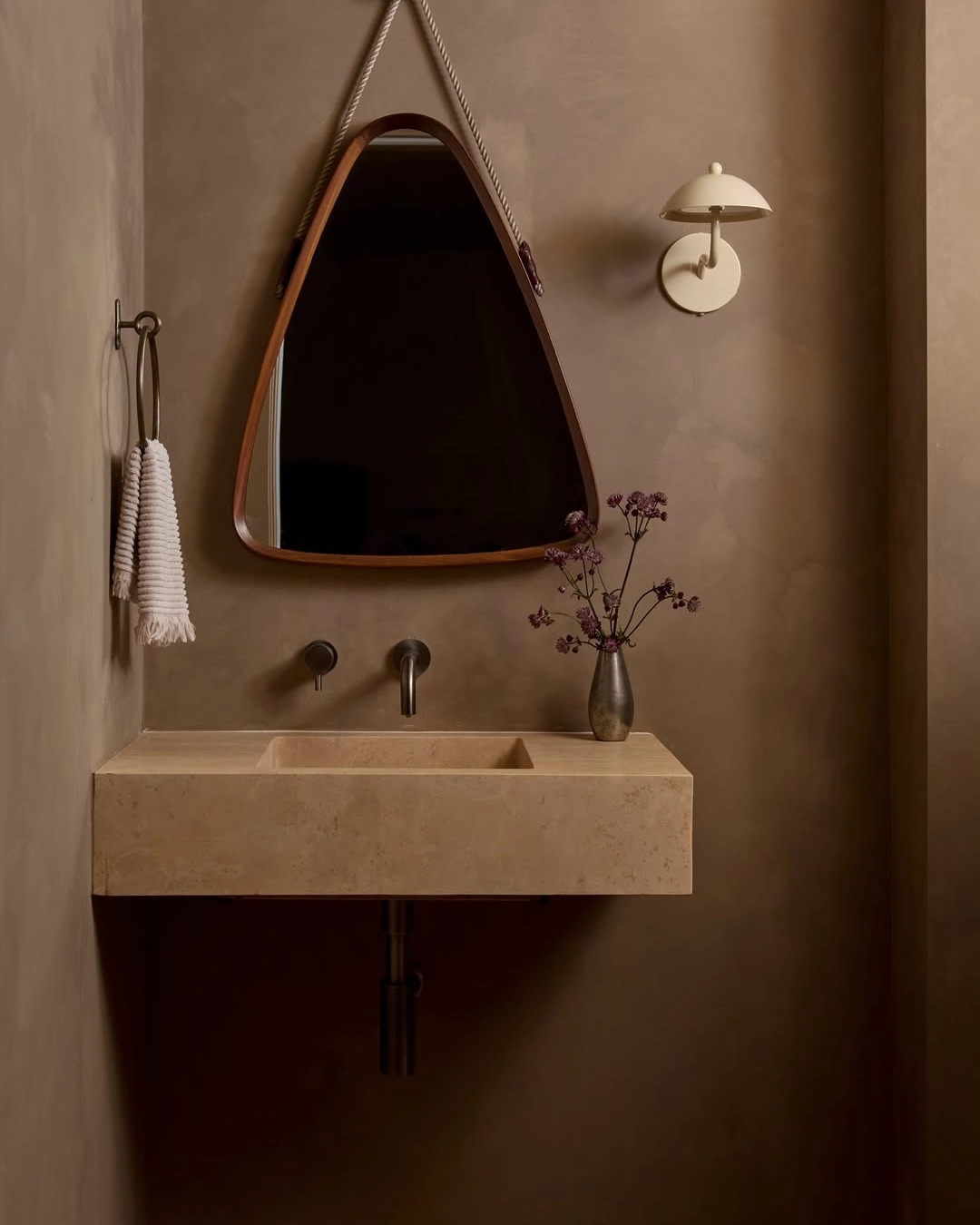
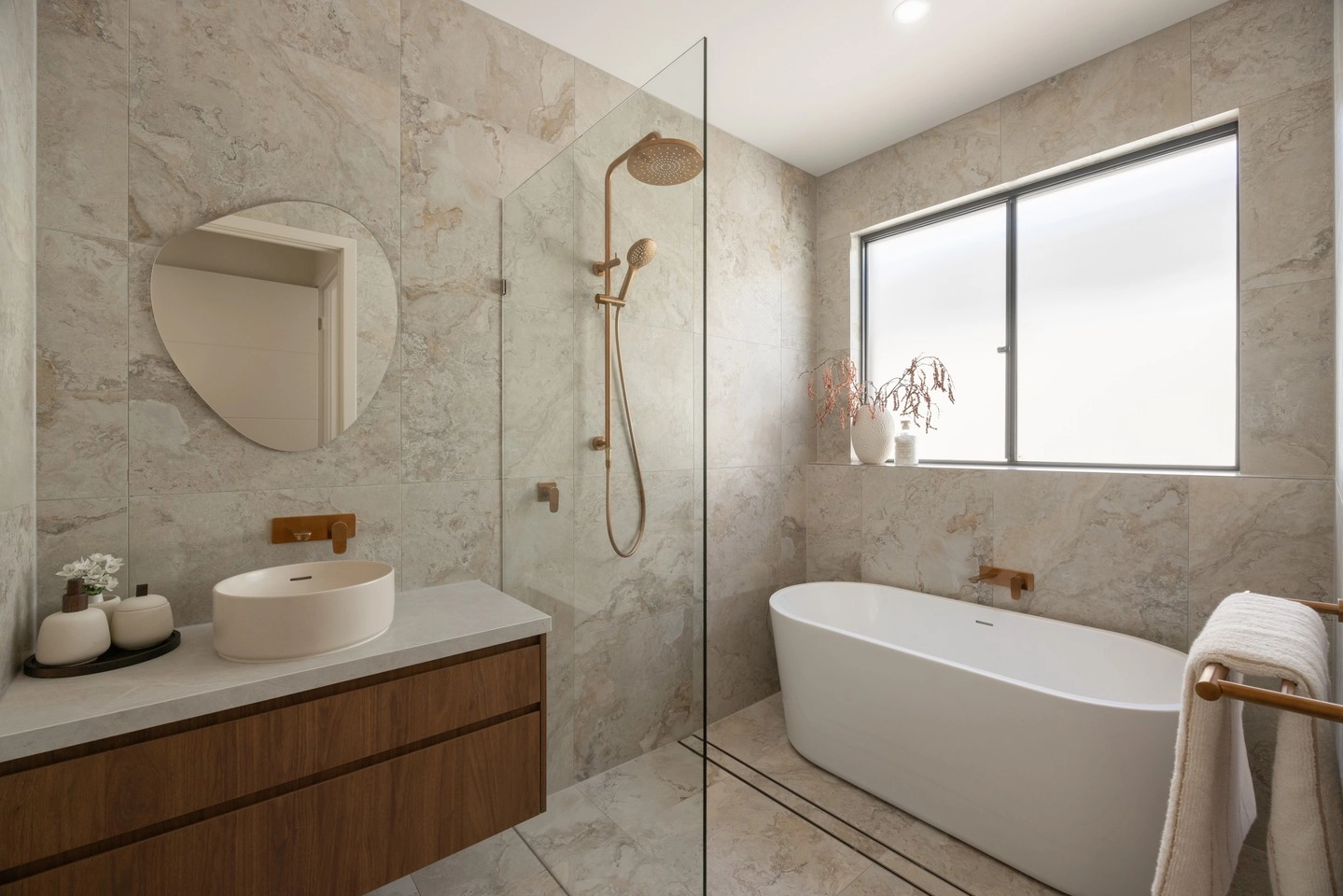
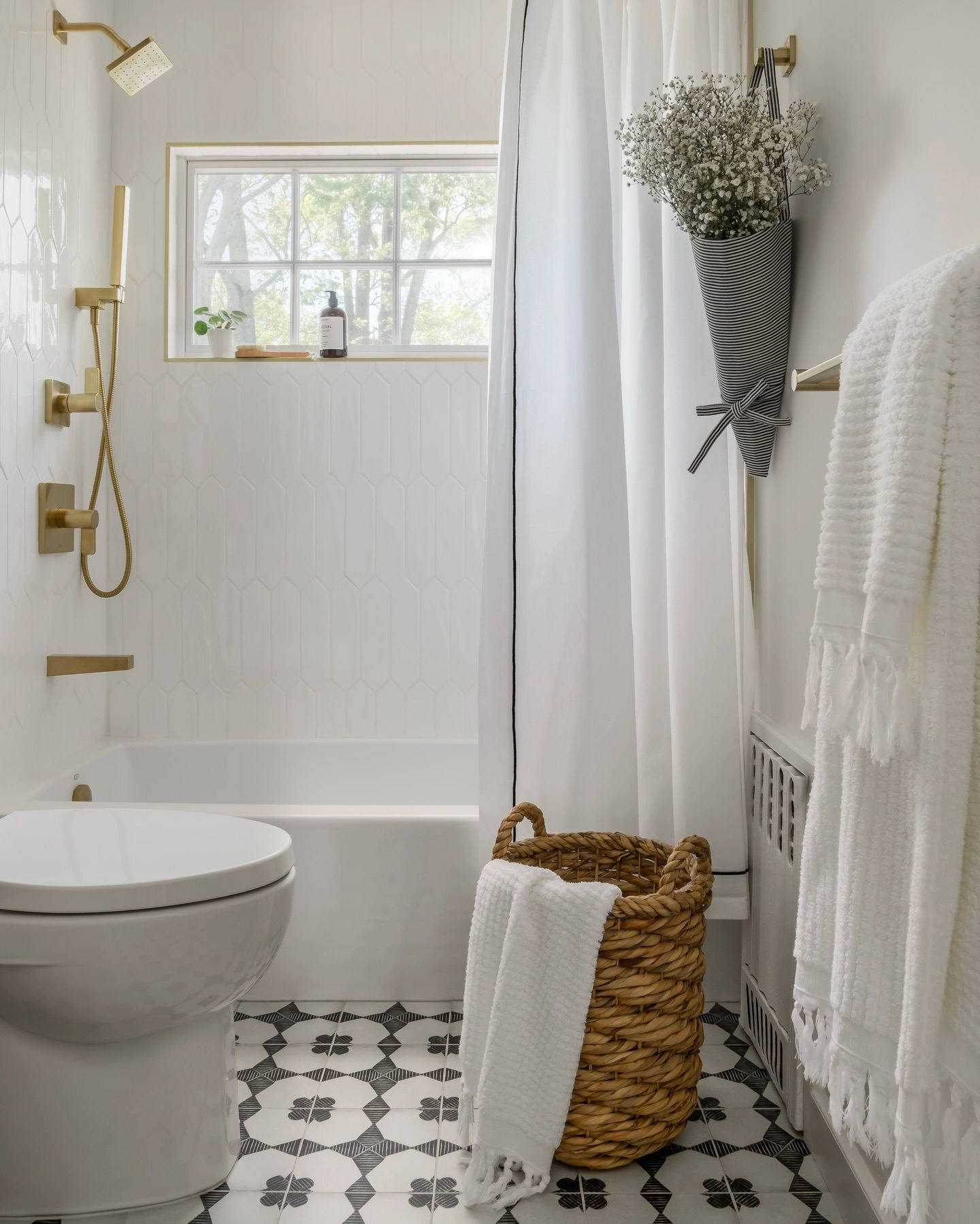
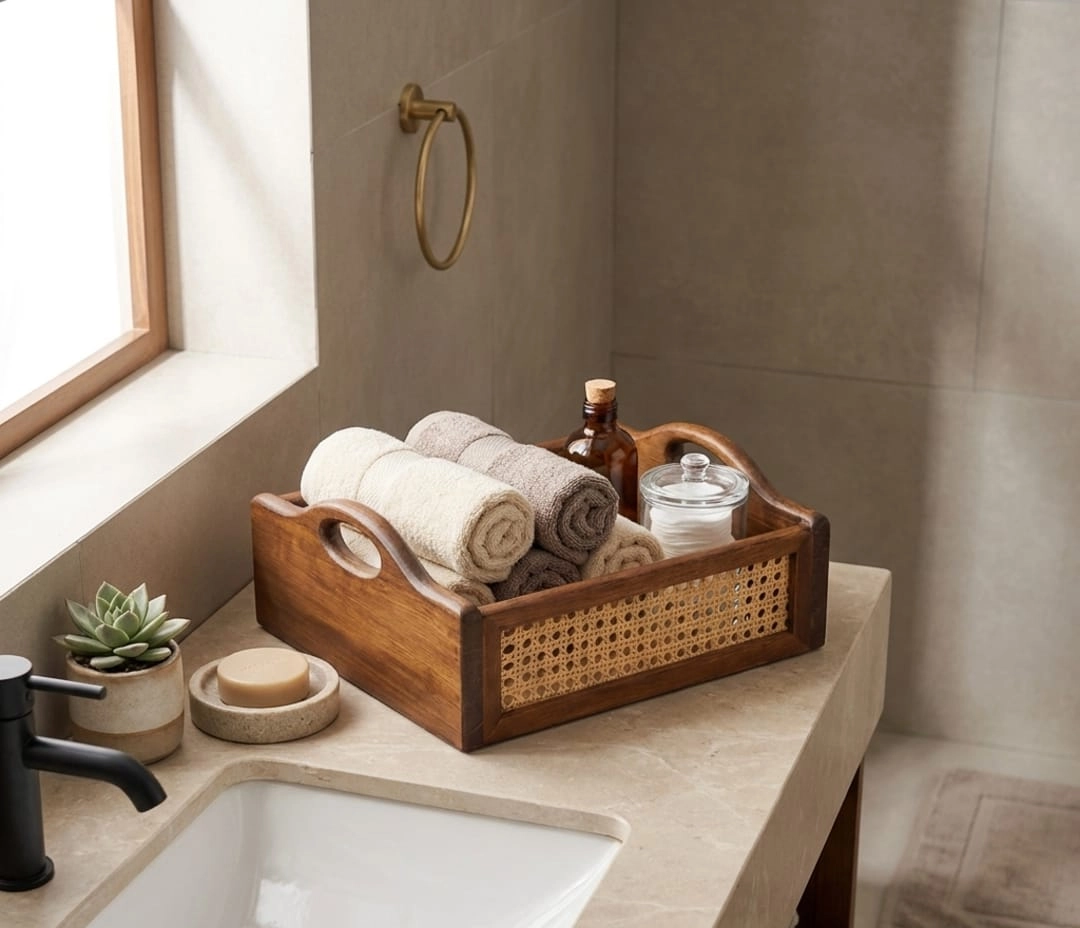
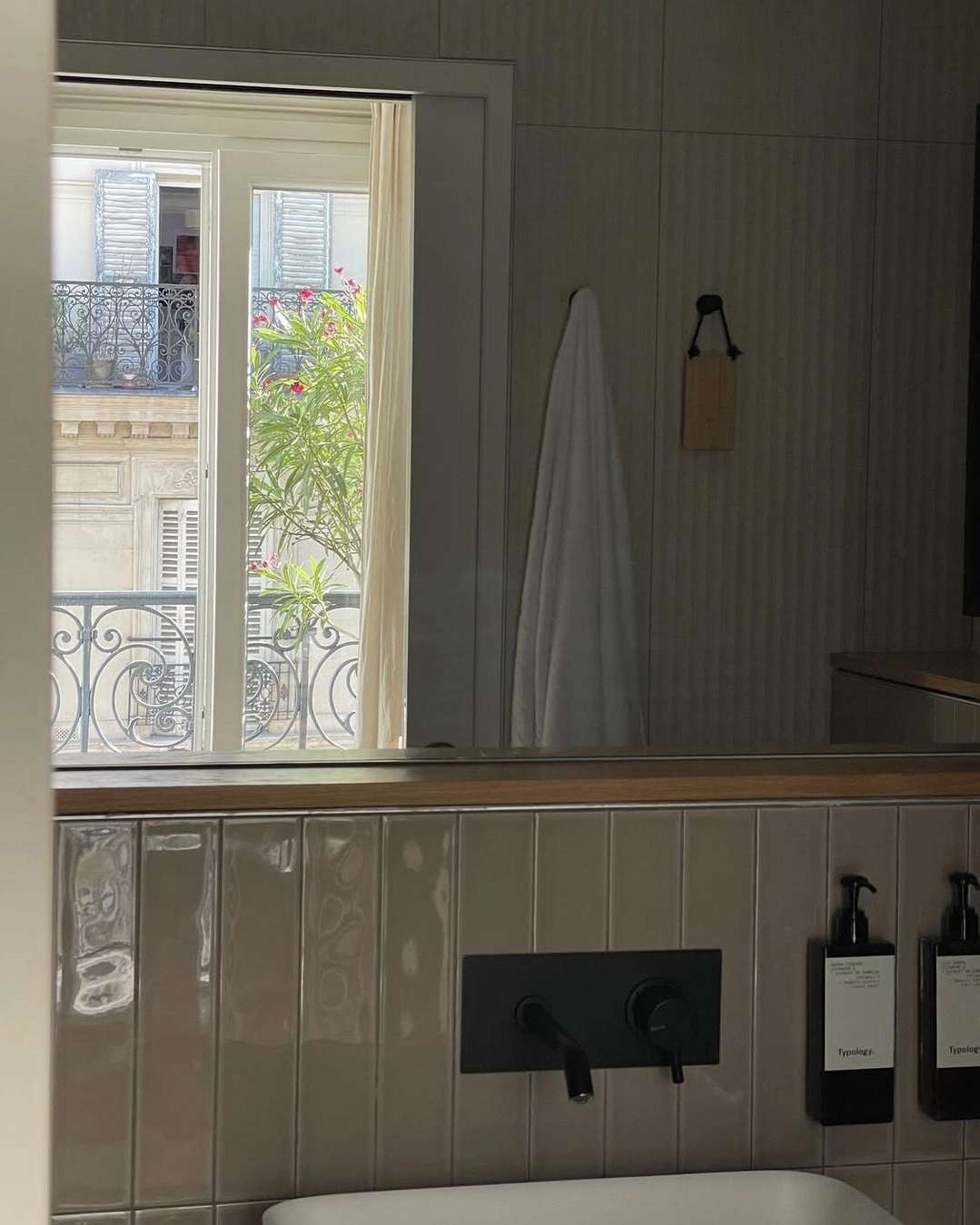
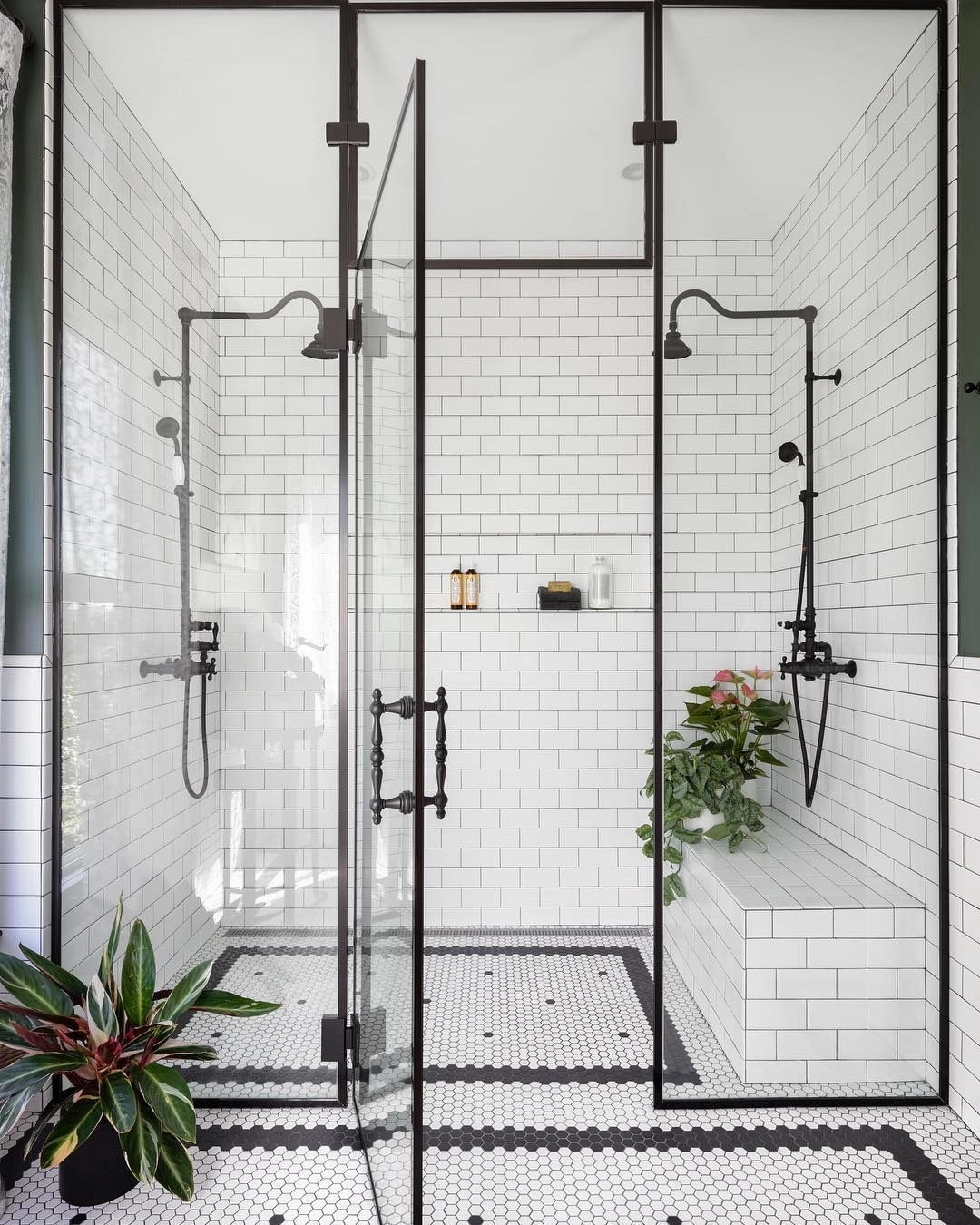
Black and white bathrooms photograph beautifully and feel like a dentist office in real life. Beige is the peacemaker that fixes that, but only if each color gets a clear job. Beige warms, black defines, white lightens. When all three know their role, the room feels calm and sharp at the same time. These 27 ideas hand out those jobs one bathroom at a time, plus a rescue kit for when the trio starts fighting.
Beige Does the Warming
Start here if your bathroom feels cold. Beige leads this first group, and its only job is heat: on walls, in tile, and in the soft stuff you actually touch.
Paint the walls a warm beige and keep the ceiling and trim a clean white, and the room splits the difference between cozy and fresh. The beige does the warming while the white keeps the edges bright, so nothing reads yellow or dingy. Pick a beige with a soft golden base rather than a pink one if your tile is warm. One honest note: beige paint looks two shades darker on the wall than on the swatch, so go one step lighter than your first instinct.
Quick Tip: Test the beige on the wall behind the mirror first, because that is the light you will judge it in every morning.
Flat beige paint can look like a landlord special, but limewash gives the same color a cloudy, brushed depth that changes through the day. The mottled finish hides the small scuffs and steam marks that flat paint shows, which makes it practical as well as pretty. Pair it with white fixtures and one or two black details so the softness has something to push against. Limewash needs a mineral primer on standard drywall, and that extra step is worth budgeting for.
Pro Move: Apply limewash in loose crisscross strokes with a block brush, never a roller, or you lose the movement that makes it work.
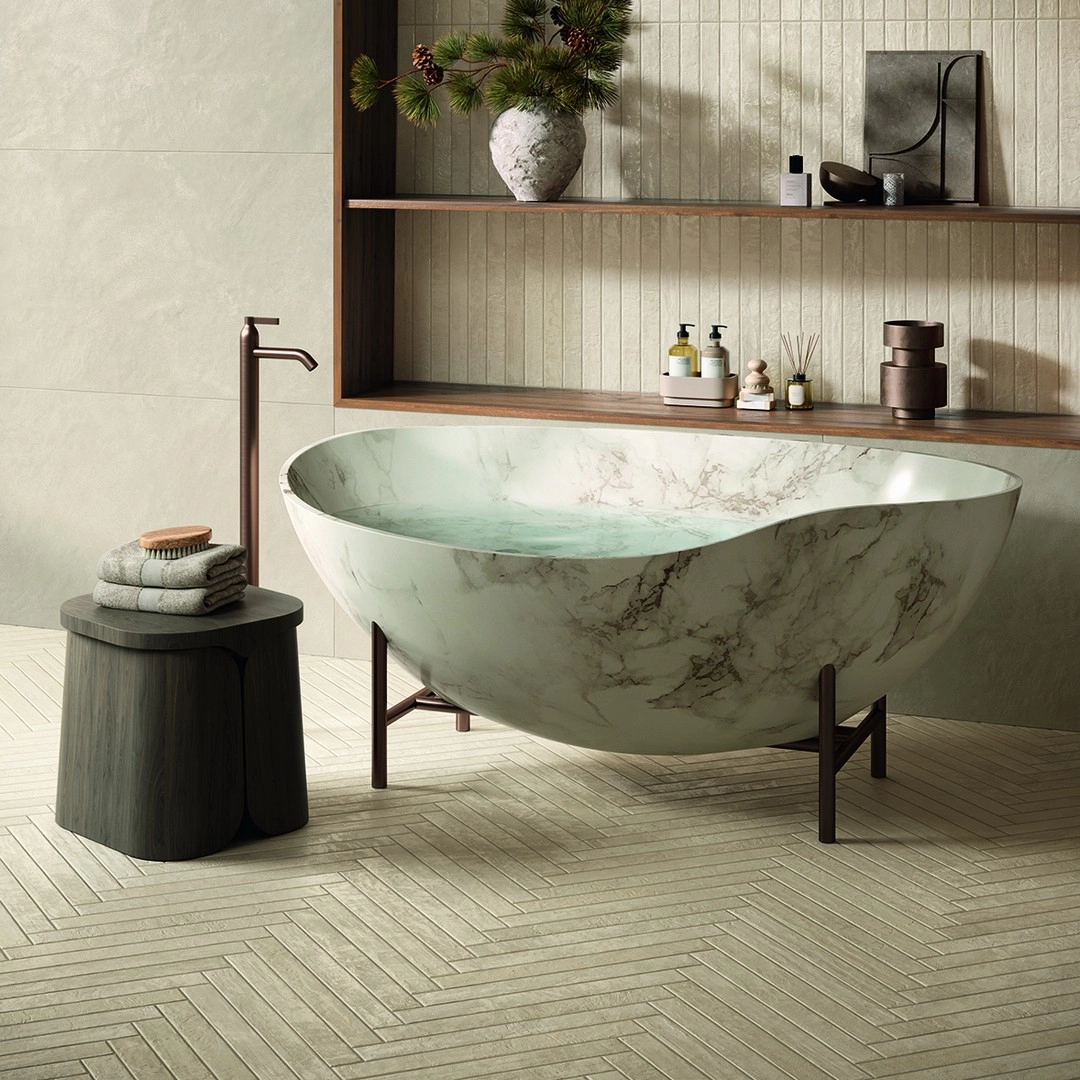
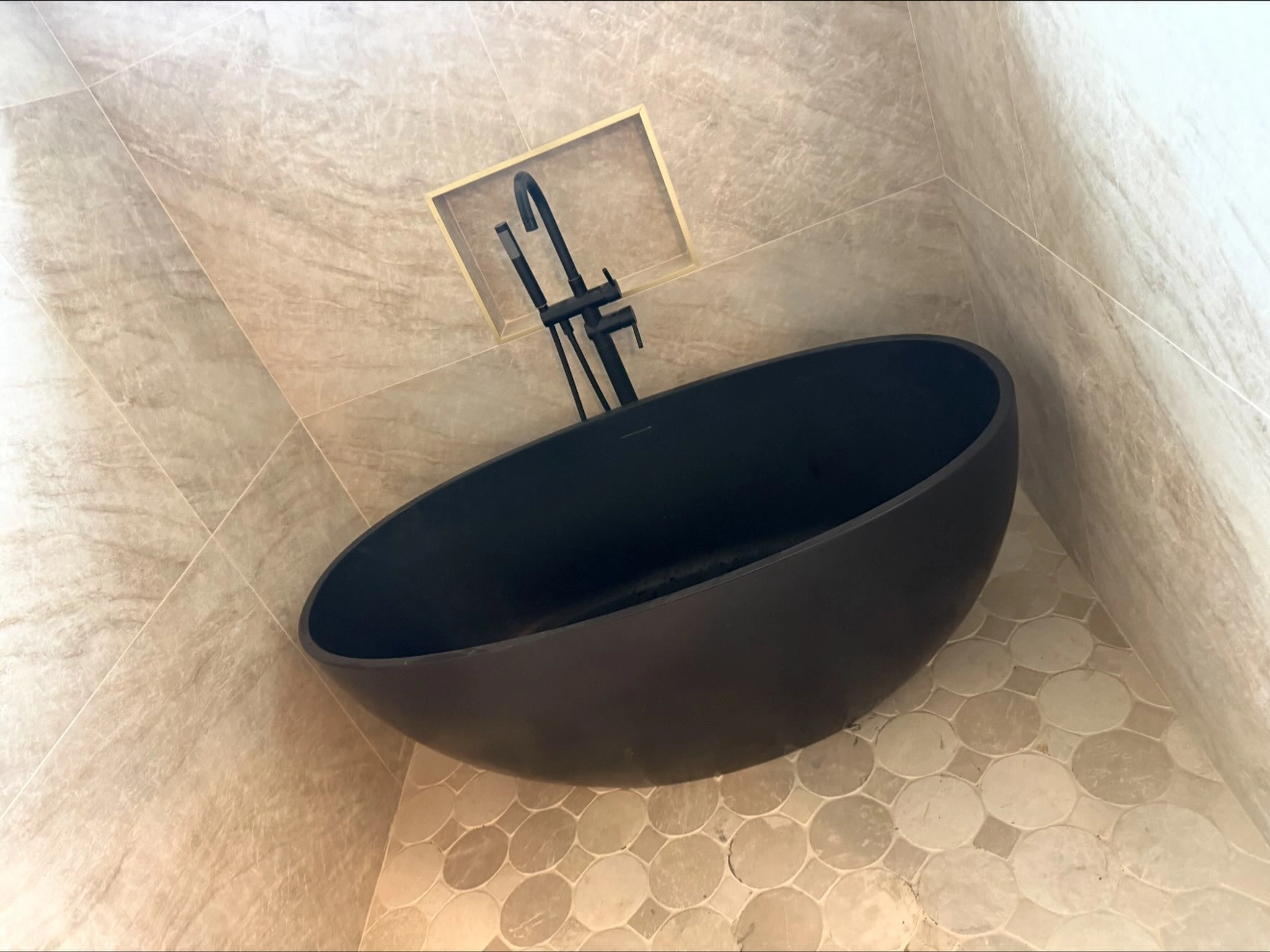
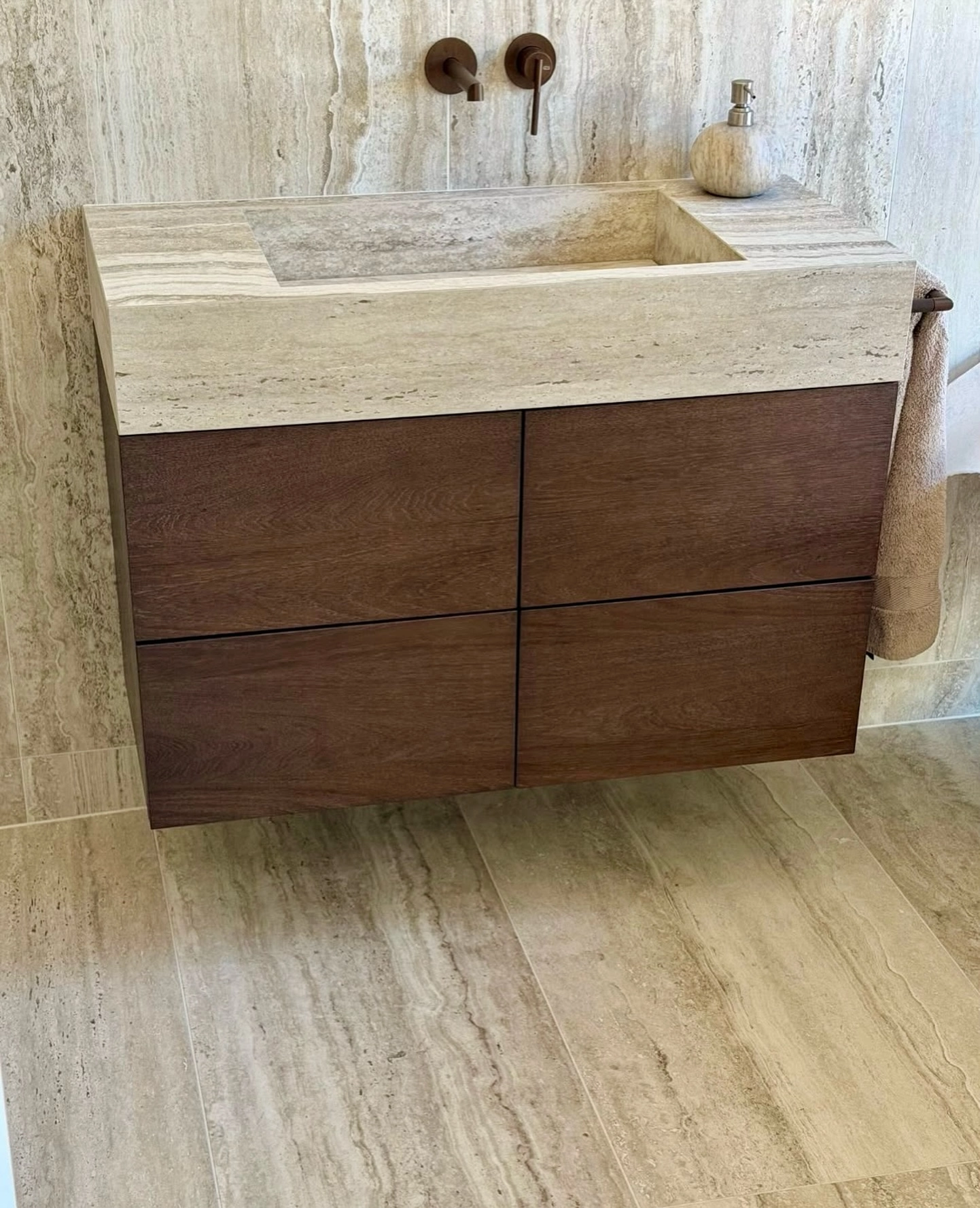
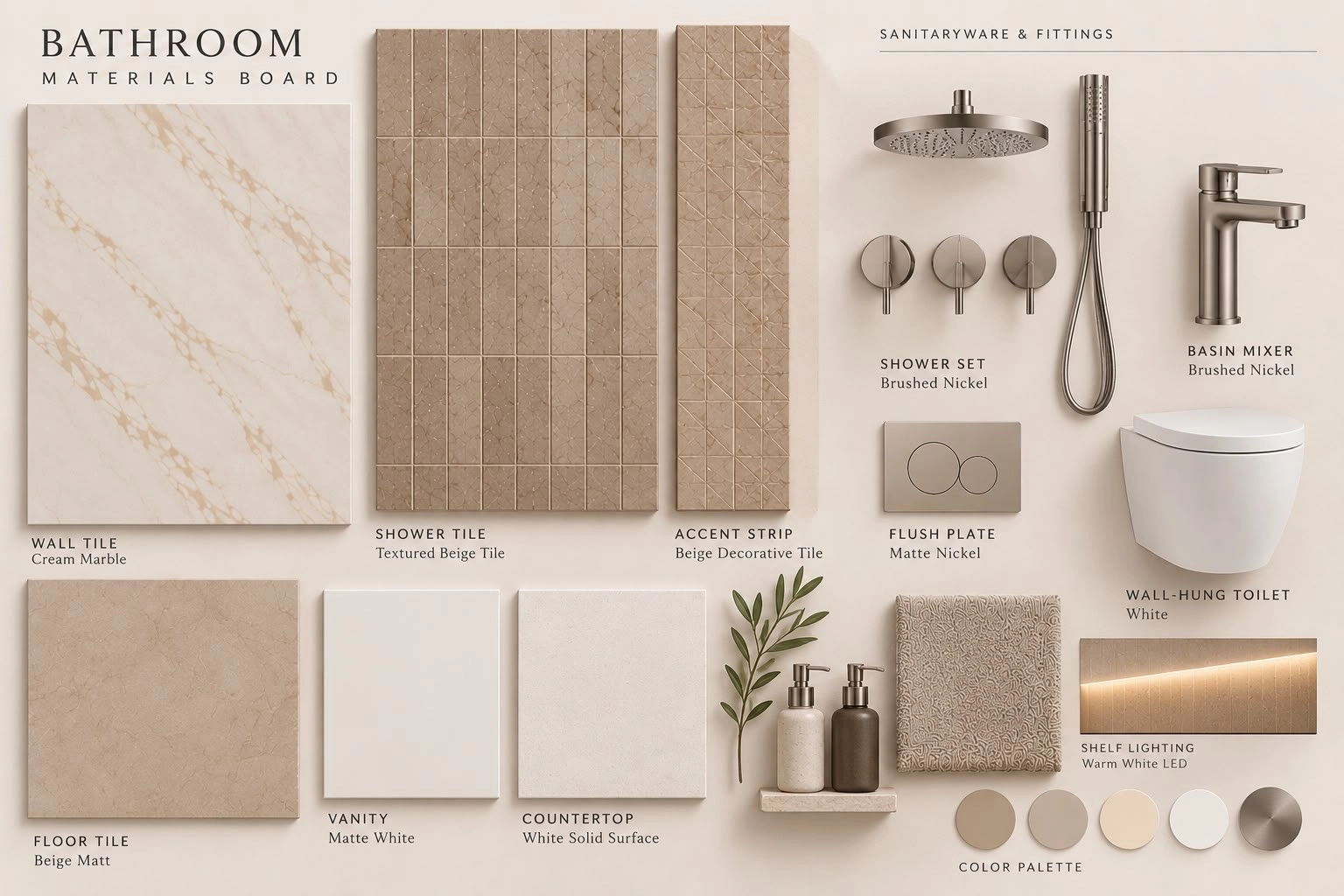
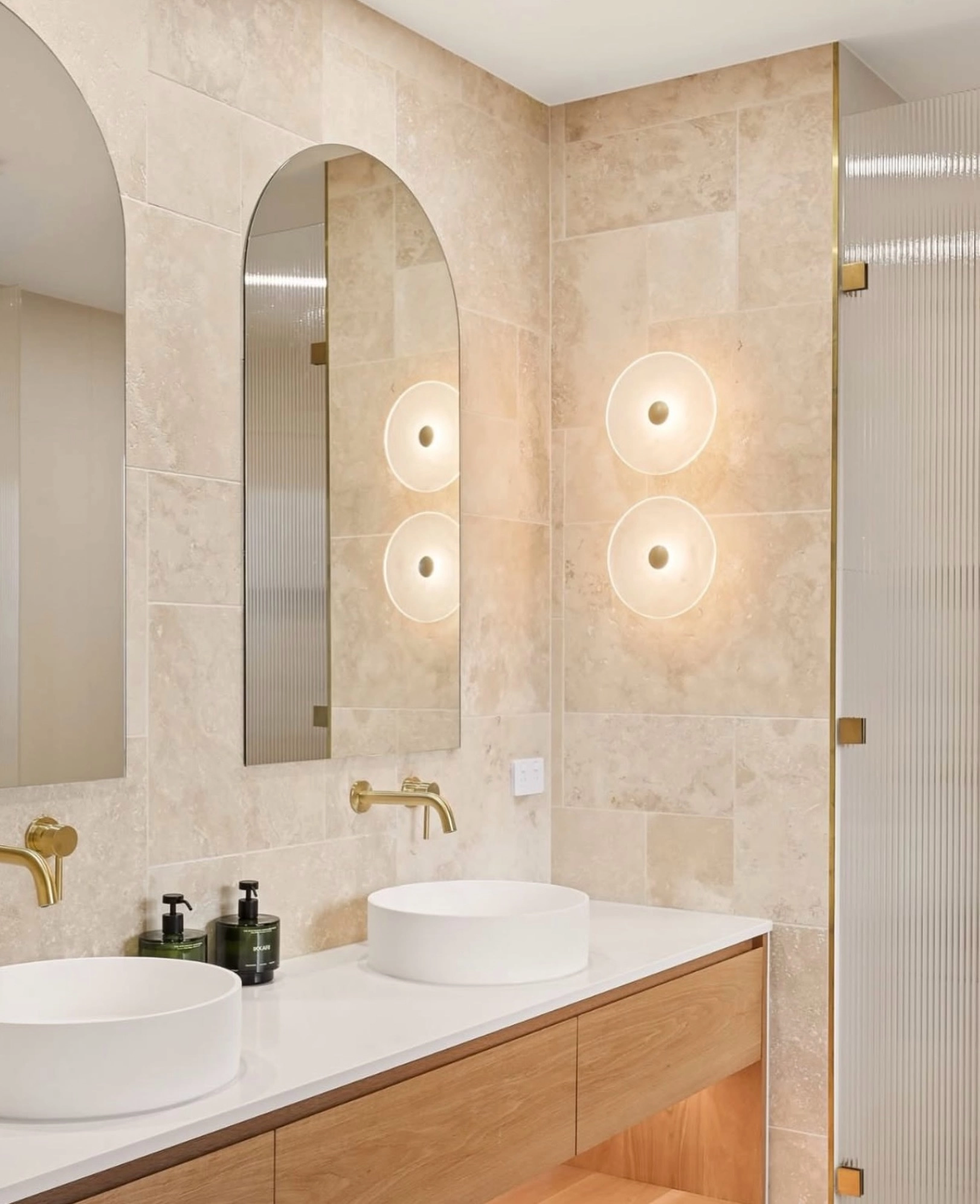
Running one beige stone-look tile across the floor and up the shower walls wraps the room in warmth without a single painted surface. Porcelain versions copy travertine’s pitting and veining so well that guests will knock on it, and they shrug off water in a way real travertine never will. Large format tiles mean fewer grout lines, which keeps the beige looking calm instead of busy. Keep fixtures black for definition and towels white for contrast.
Budget Note: Porcelain travertine-look tile costs a fraction of real stone and skips the yearly sealing real travertine demands.
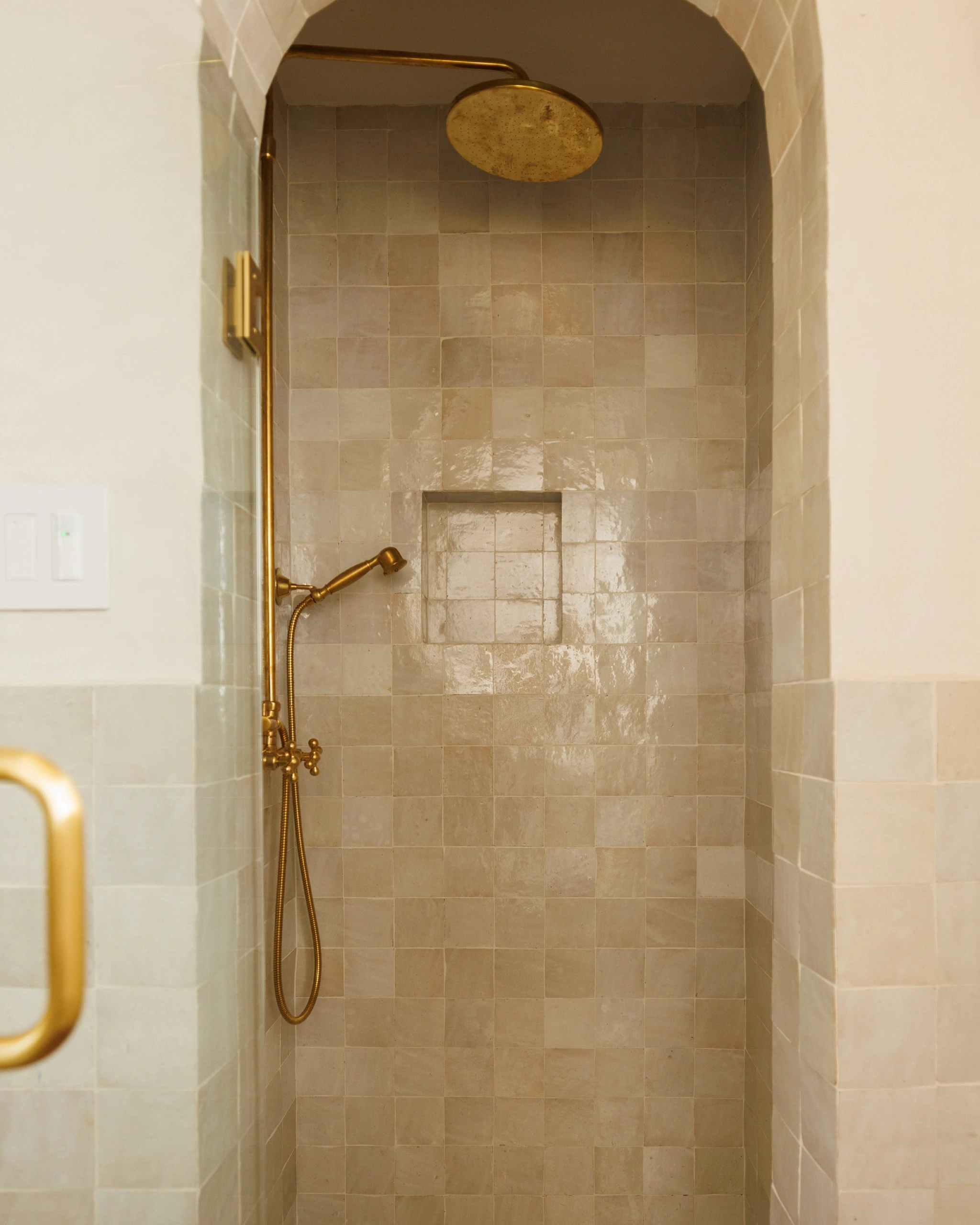
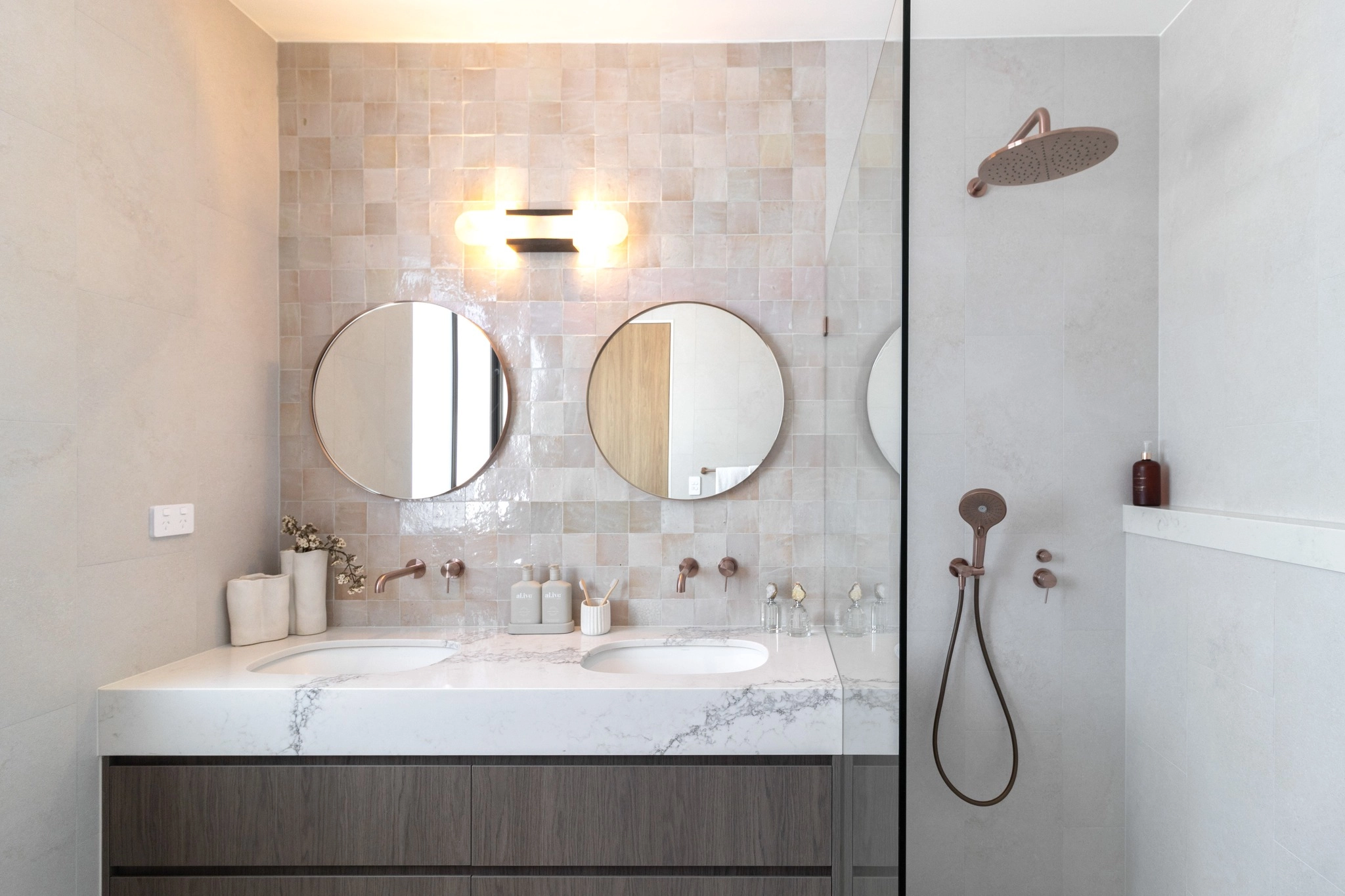
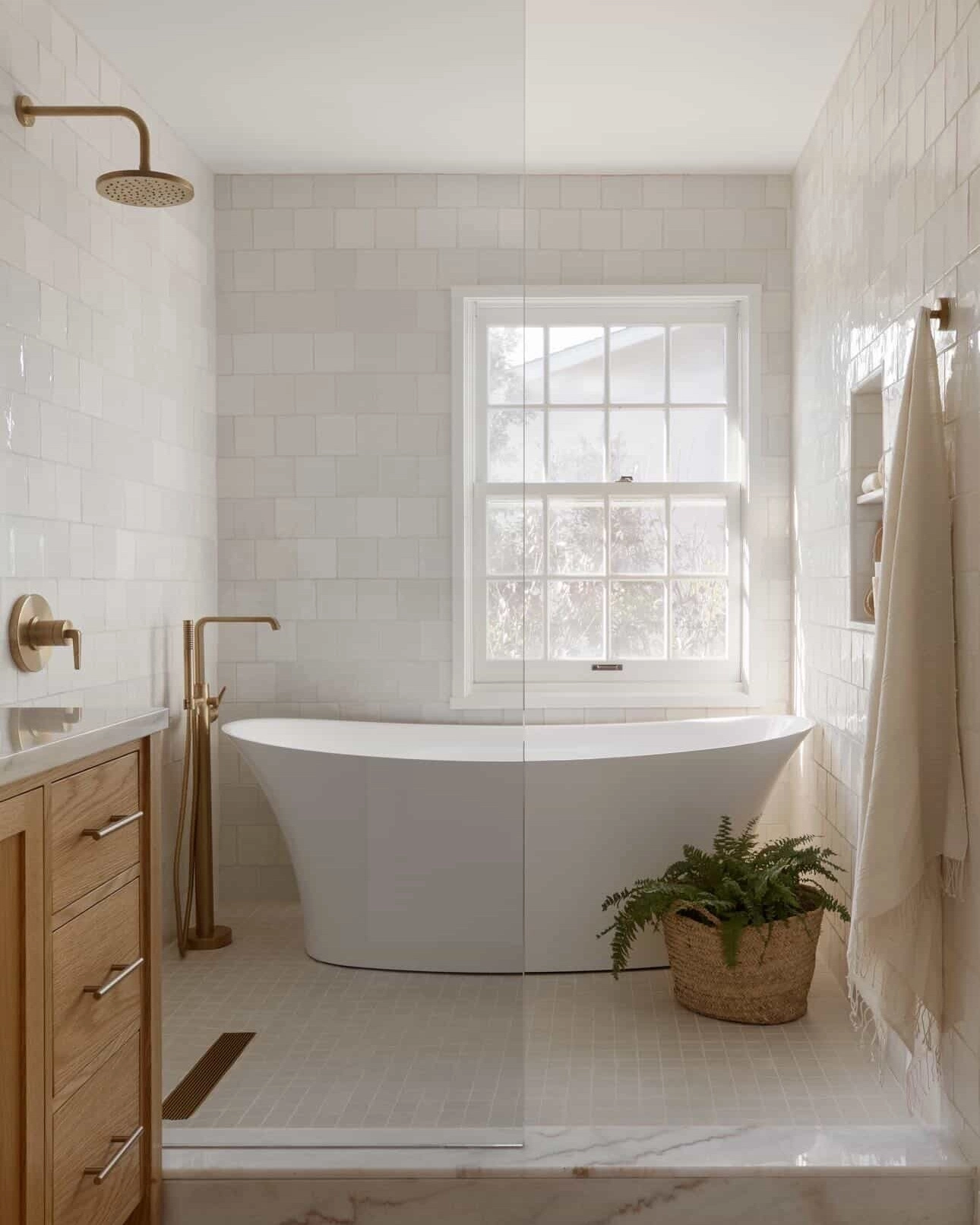
Zellige-style tiles have uneven edges and a glaze that shifts from tile to tile, so a beige shower wall shimmers instead of sitting flat. That handmade wobble is exactly what a beige bathroom needs, because beige on perfectly flat tile can read as one big blank. The light play does the decorating, which means you can keep everything else simple and white. Real zellige is pricey and fussy to install, so the machine-made lookalikes are the sensible buy here.
Designer Advice: Use a grout color one shade darker than the tile to outline each tile’s wobble instead of blending it away.
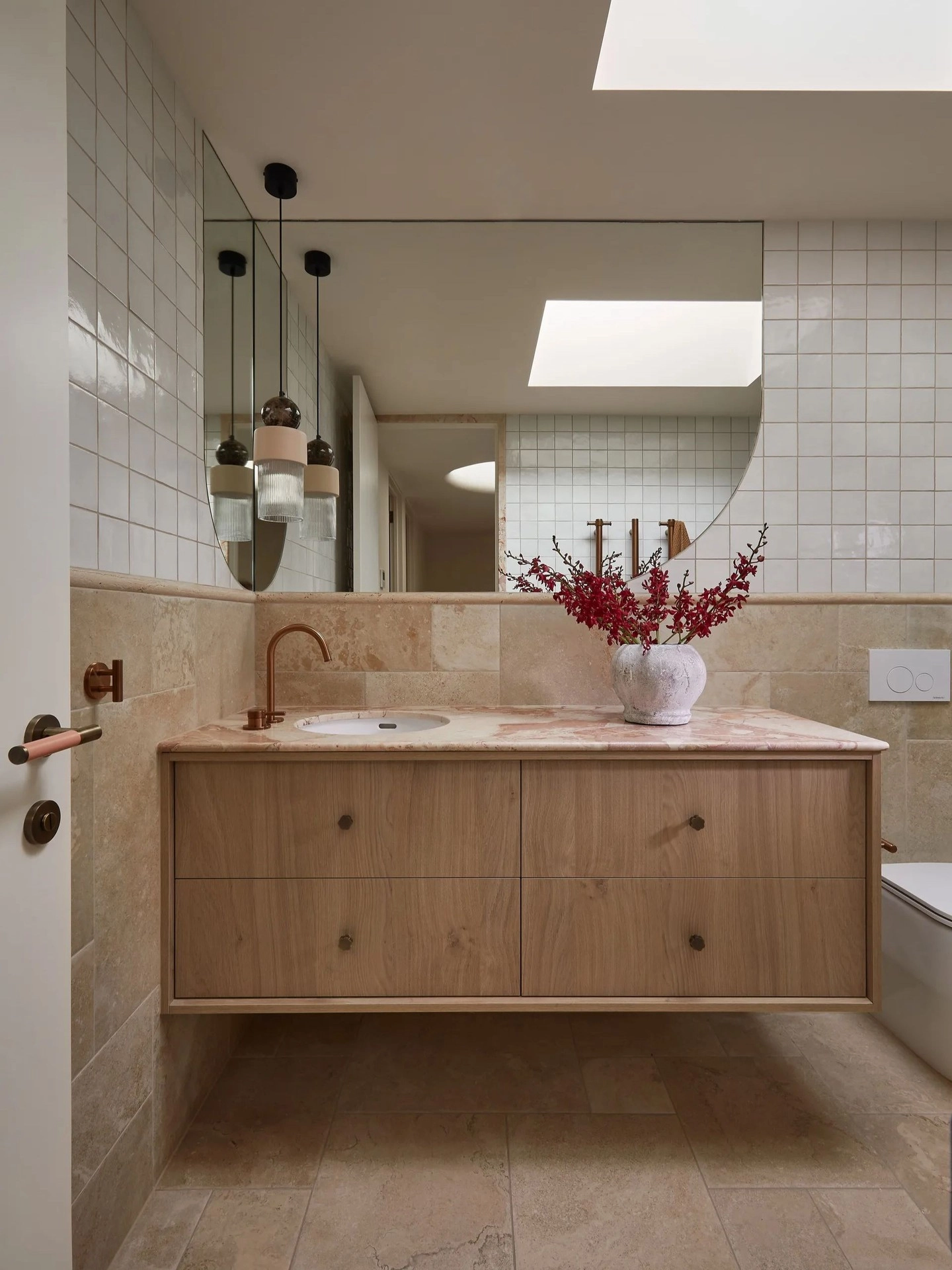
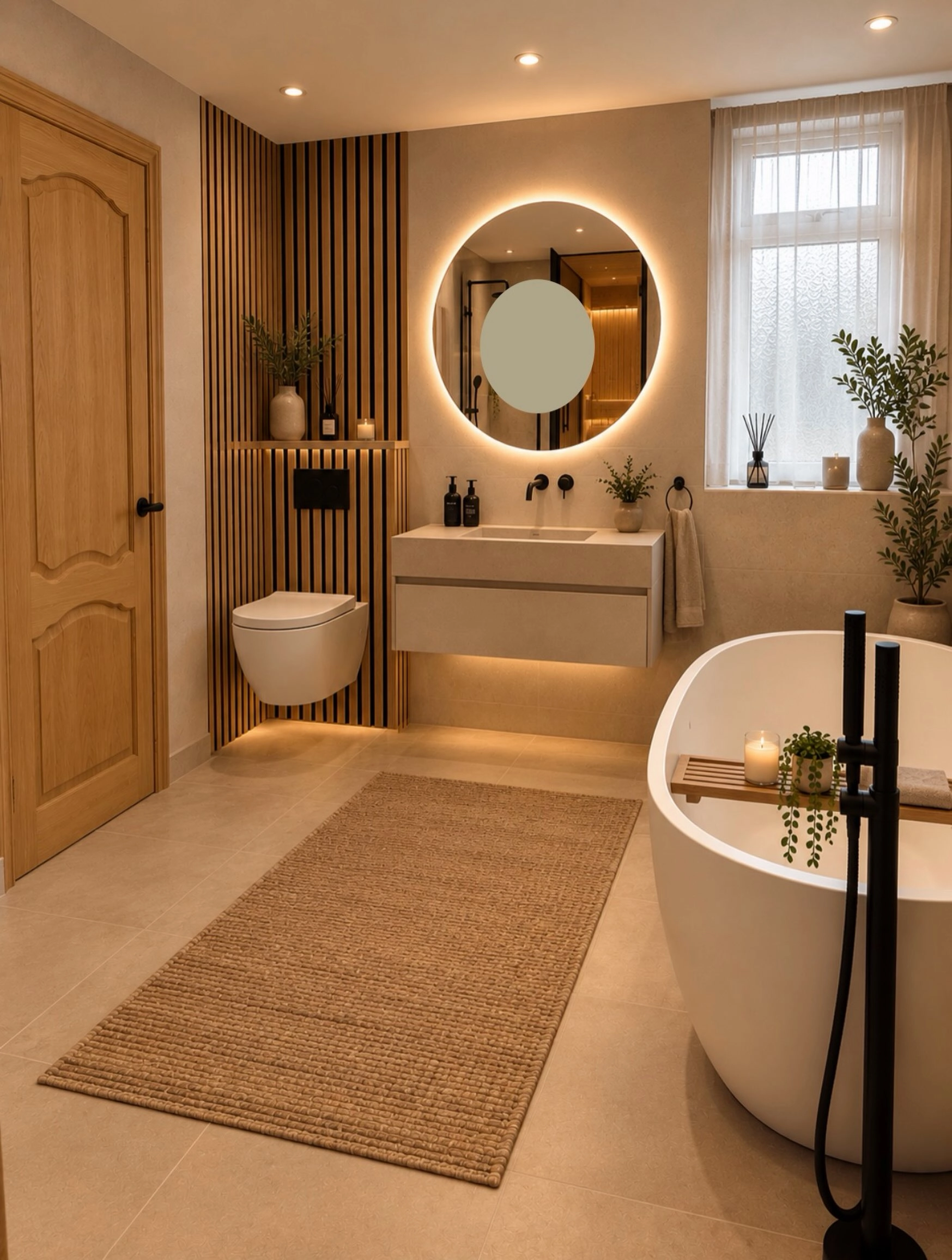
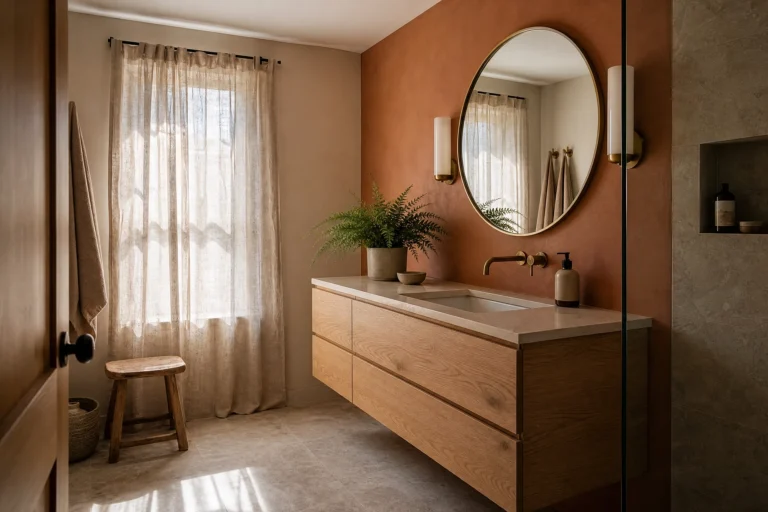
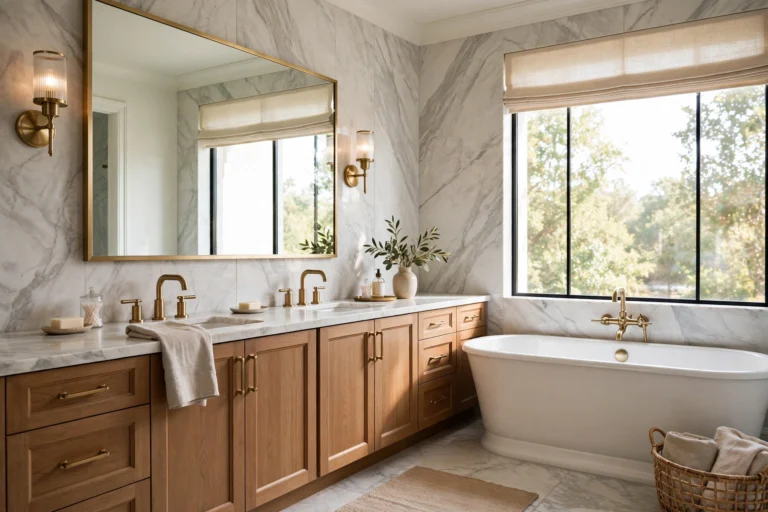
A light oak vanity is beige in wood form, and against white walls and white tile it becomes the warm center of the room. The wood grain adds the texture that flat color cannot, and the pale tone keeps a small bathroom feeling open. Black handles and a black faucet give it edges so it does not drift into bland. If a new vanity is not in the budget, oak-look vinyl wrap on a plain cabinet gets you most of the effect for very little money.
Reality Check: Real oak in a steamy bathroom needs a good sealant coat; unsealed wood will spot and swell within a year.
Microcement coats a shower in one continuous beige skin with no grout lines at all, and the result feels like a calm stone cave in the best way. Without grout, there is nothing to scrub pink, which is a genuine quality of life upgrade. The matte, slightly grainy surface pairs well with a black shower frame and white towels. Be honest with yourself about install, though: microcement is a skilled, multi-day job, and cheap attempts crack.
Heads Up: Get the waterproofing and sealing done by someone who has microcement references, not a general handyman learning on your shower.
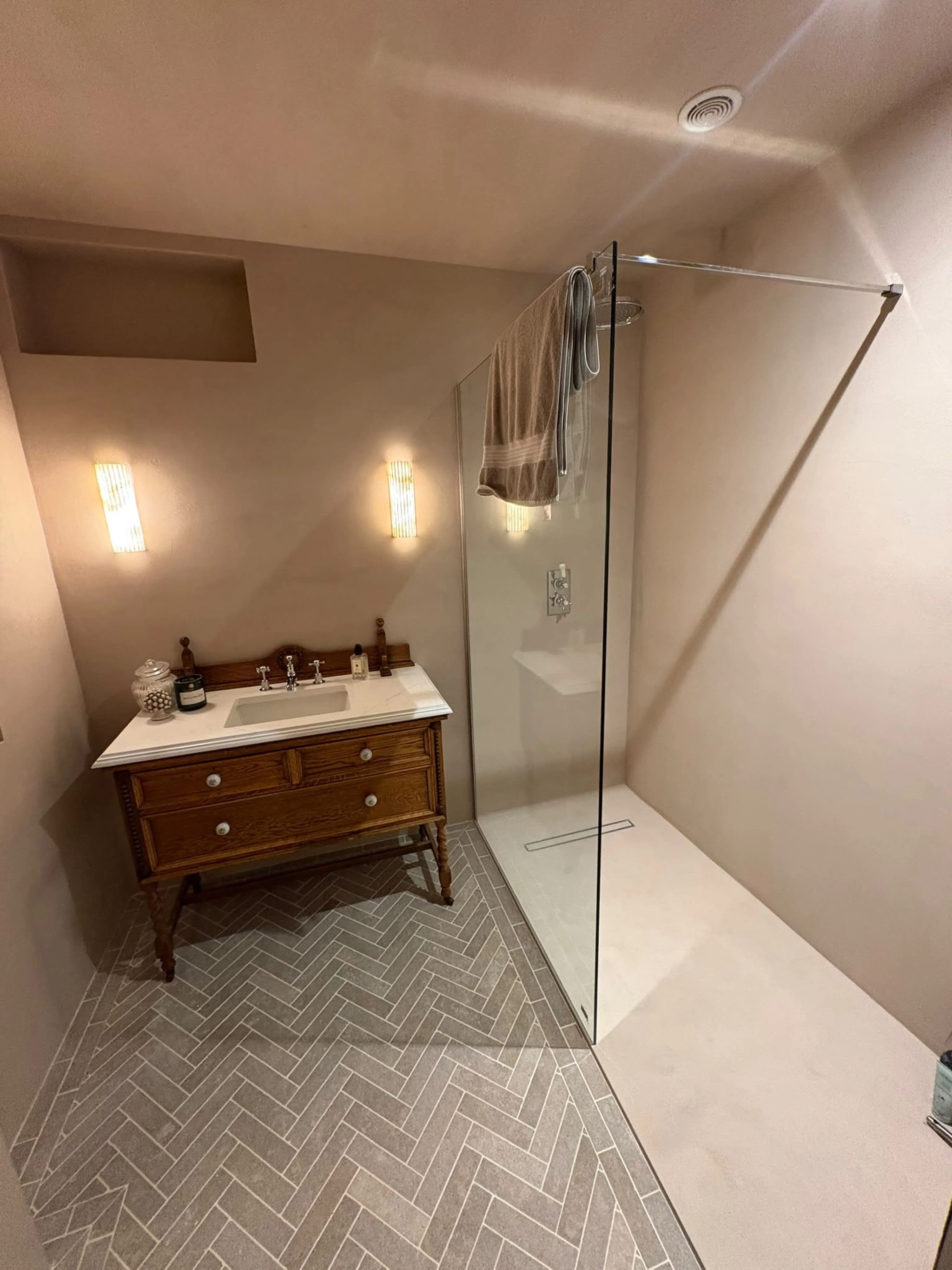
A beige floor with grout matched to the tile reads as one soft, warm surface instead of a grid, and it makes a small bathroom feel bigger than patterned floors do. Beige underfoot also hides the everyday reality of a bathroom floor, water spots, hair, and dust, far better than white ever will. White walls above it keep the room bright, and a black bath mat adds the punctuation mark. Choose a matte or textured finish for the floor, because glossy beige tile is a slip waiting to happen.
Quick Tip: Take the tile and three grout sticks outside into daylight before choosing; store lighting lies about beige more than any other color.
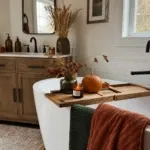
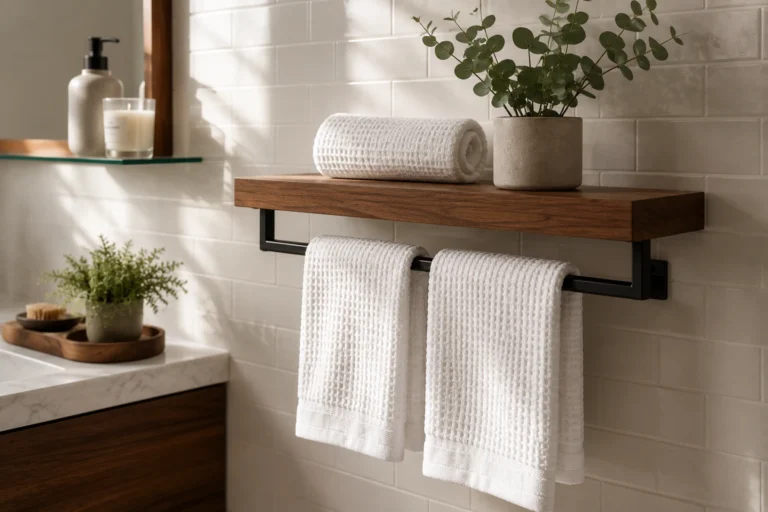
If the tile is staying, textiles are how beige gets its job without a renovation. Thick beige towels, a woven bath mat, and a beige striped shower curtain warm up a black and white room in one shopping trip. Layer two beige tones, a pale one and a deeper one, so it looks chosen rather than matched by accident. This is also the renter friendly route: everything leaves with you, and the deposit never enters the conversation.
Renter Note: Swap the shower curtain first; it is the largest textile in the room and changes the color balance more than towels do.
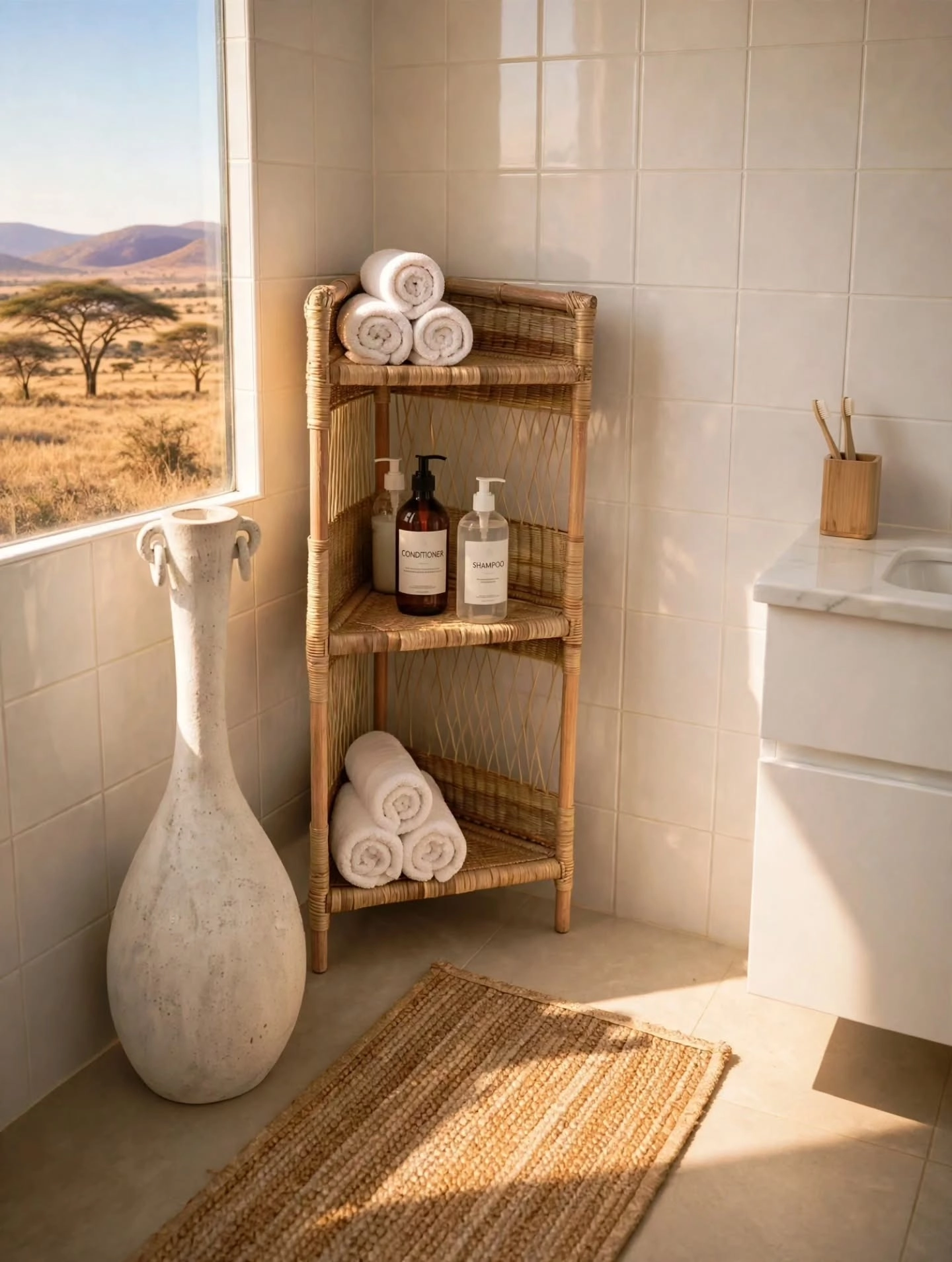
Woven cane and rattan land in the beige family naturally, and their texture does what flat beige surfaces cannot: it casts tiny shadows and catches light. A cane-front cabinet, a rattan stool, or woven storage baskets warm a white and black scheme while adding real storage. Keep the rest of the palette strict, white tile, black fixtures, so the natural fibers read as the warmth layer. One basket too many and the room drifts beachy, so stop at two or three pieces.
Designer Advice: Repeat the woven texture in exactly two places, like a basket and a stool, so it looks like a decision instead of a theme.
Black Does the Defining
Warmth without edges goes mushy. This group hands the pencil to black: fixtures, frames, and floors that draw the lines beige and white are too soft to draw.
Matte black faucets against a beige vanity and creamy tile give you contrast exactly where your eye lands, at the sink you use twenty times a day. The black outlines the fixtures so the beige can stay soft without going vague. Stick to one black finish everywhere, faucet, handles, towel bar, so it reads as a system. Matte black does show soap residue and toothpaste splatter more than chrome, so a weekly wipe with a soft cloth is the real price of admission.
Reality Check: Buy the faucet, shower trim, and accessories from the same brand line; matte black varies a lot between makers.
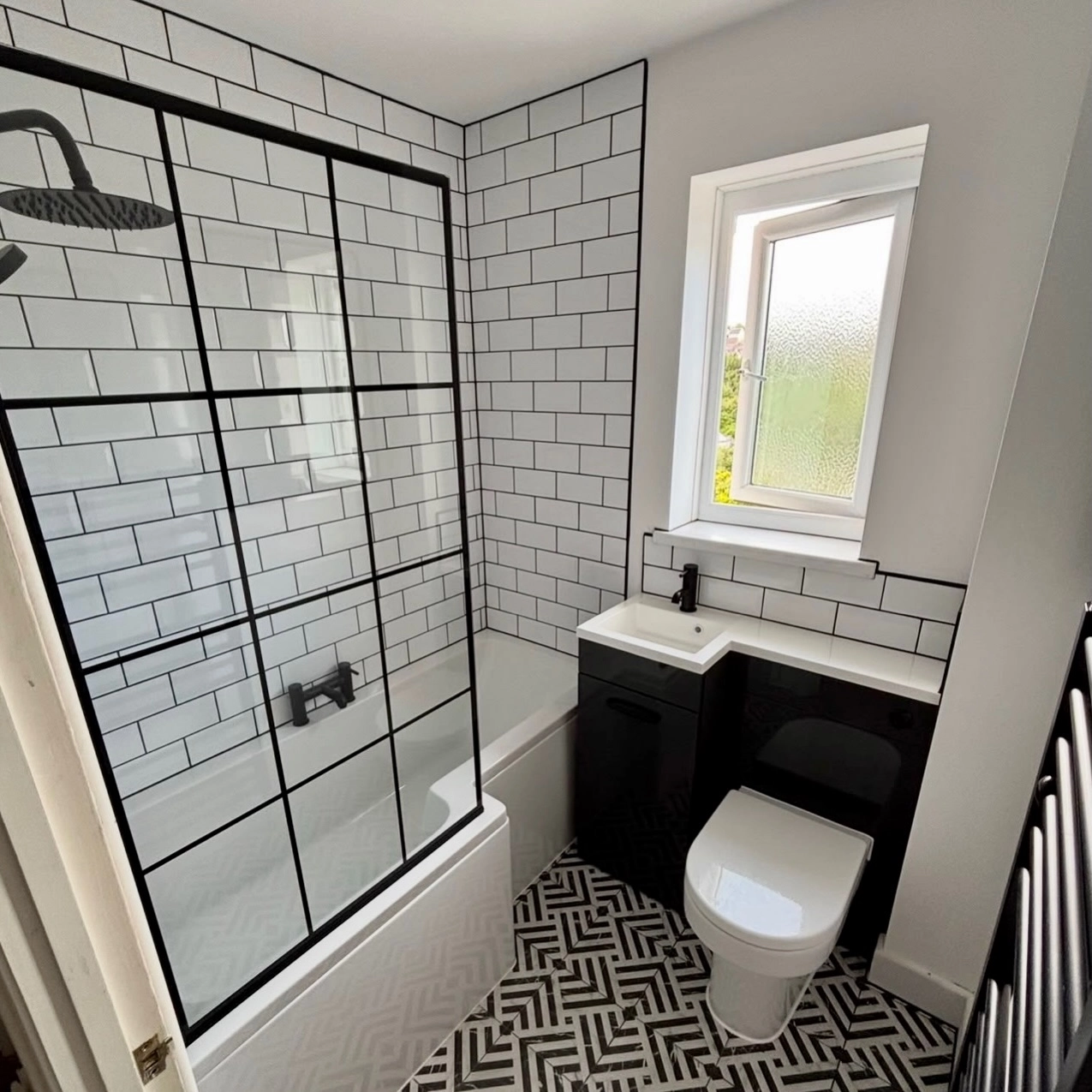
A black frame or grid on the shower glass turns the shower into the room’s architecture instead of a clear box you look through. Against beige tile it reads tailored, almost like a window, and it gives a plain bathroom a strong focal point for free. The grid version suits traditional rooms; a simple perimeter frame suits modern ones. Glass still needs a squeegee habit, frame or no frame, but the black border hides the waterline edge that clear glass shows off.
Pro Move: If a new enclosure is too much, black metal trim kits and even high quality waterproof tape can fake the frame on existing glass.
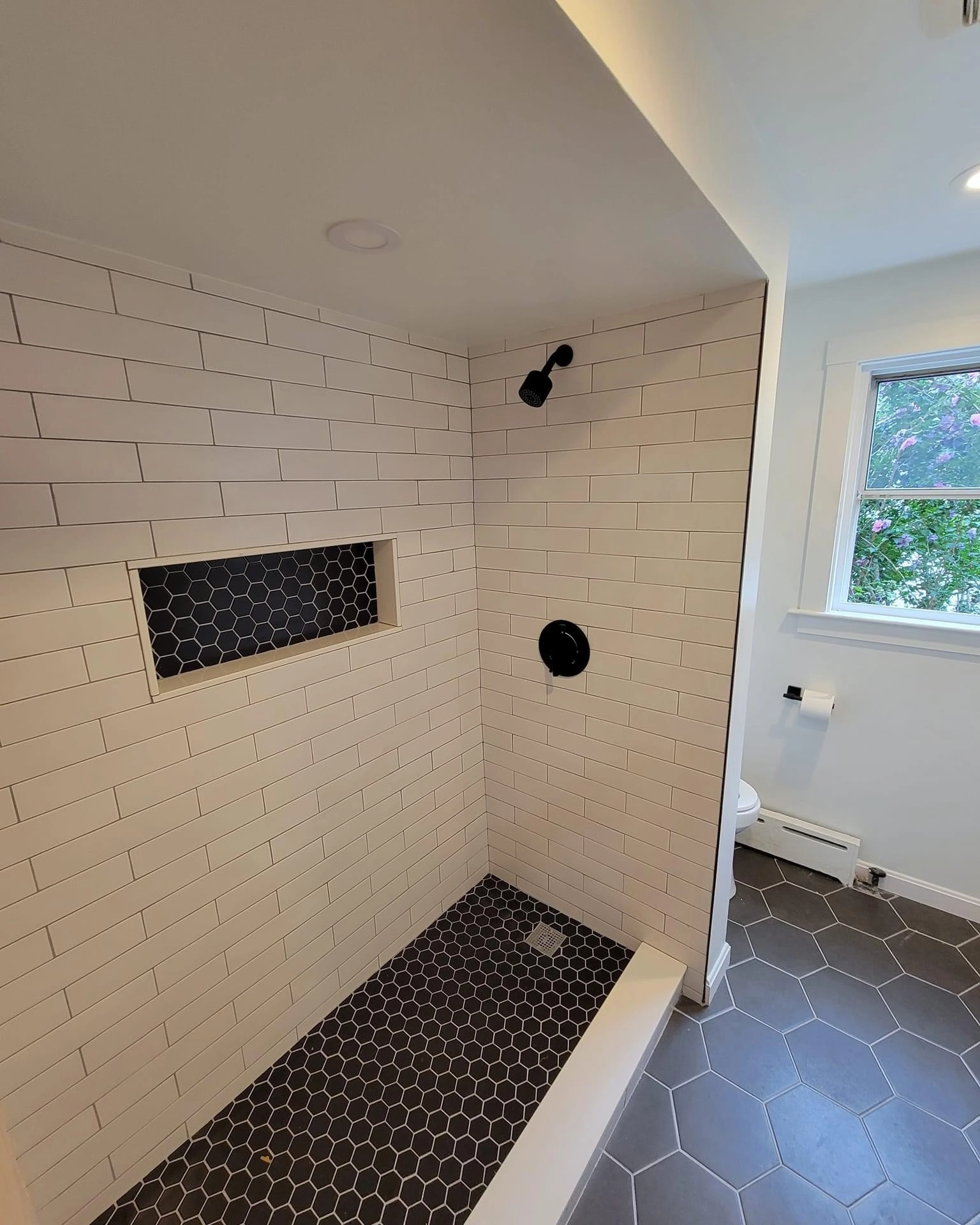
Small black hexagon tiles are a classic floor for a reason: the pattern is busy enough to hide dirt and the scale suits tiny bathrooms. What makes it fresh here is beige on the walls instead of the usual stark white, which takes the vintage edge off and warms the whole room. White fixtures keep it bright, and beige grout on the floor tiles softens the pattern so it does not vibrate. This floor is also forgiving in old houses where nothing is quite level.
Budget Note: Hex mosaic comes on mesh sheets, so it installs fast and a small bathroom floor can be done in a weekend.
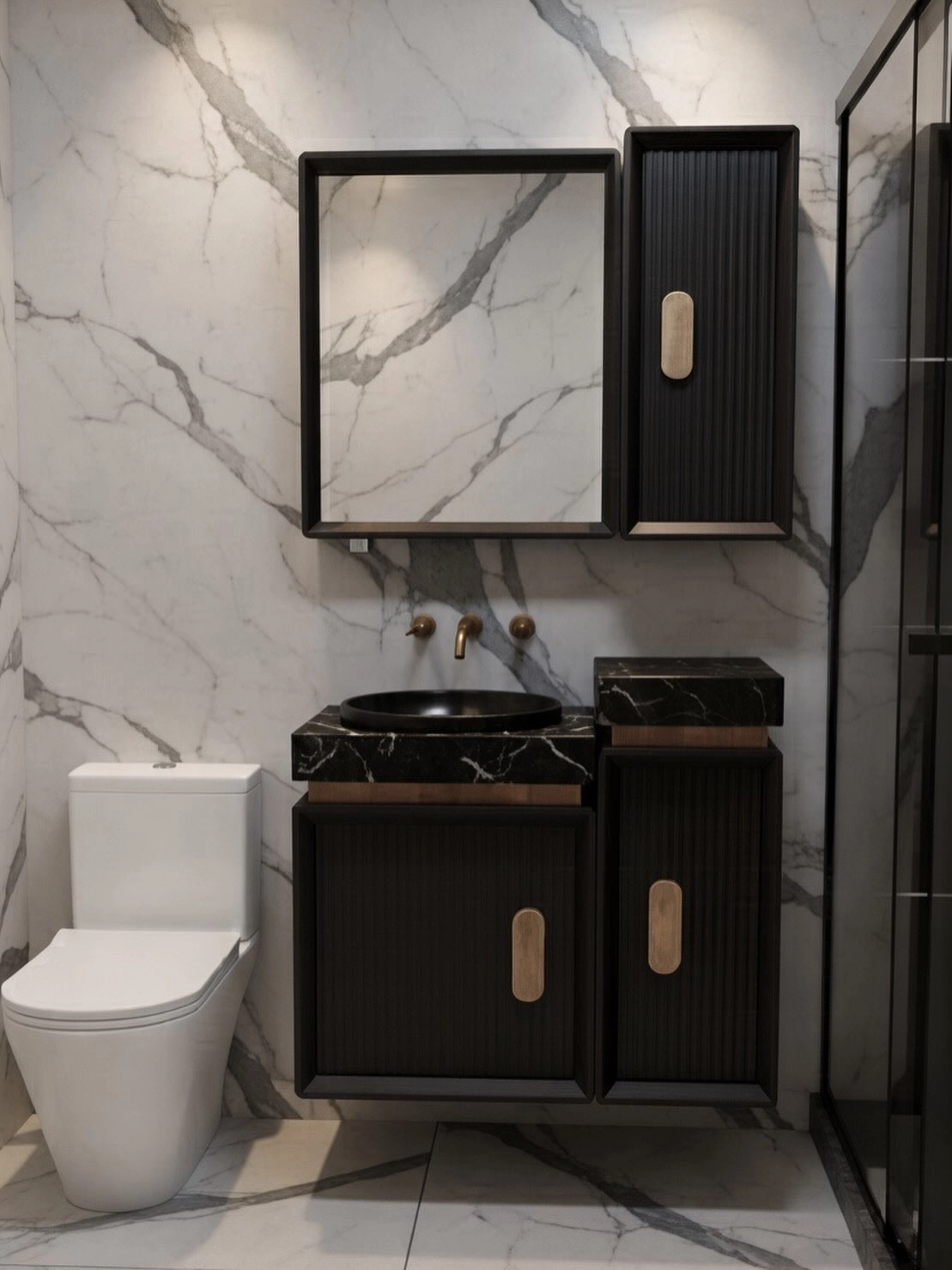
A black vanity works like a piece of furniture planted in the room: it anchors everything and makes beige walls look intentional instead of indecisive. The white countertop keeps the top surface bright where you need light for mirrors and makeup. Brass or black hardware both work, but pick one and repeat it at the faucet. In a small bathroom, choose a vanity with legs rather than a box to the floor, so the room keeps its floor space visible.
Quick Tip: A black vanity shows dust and powder fast; a quick nightly wipe beats a weekly deep clean battle.
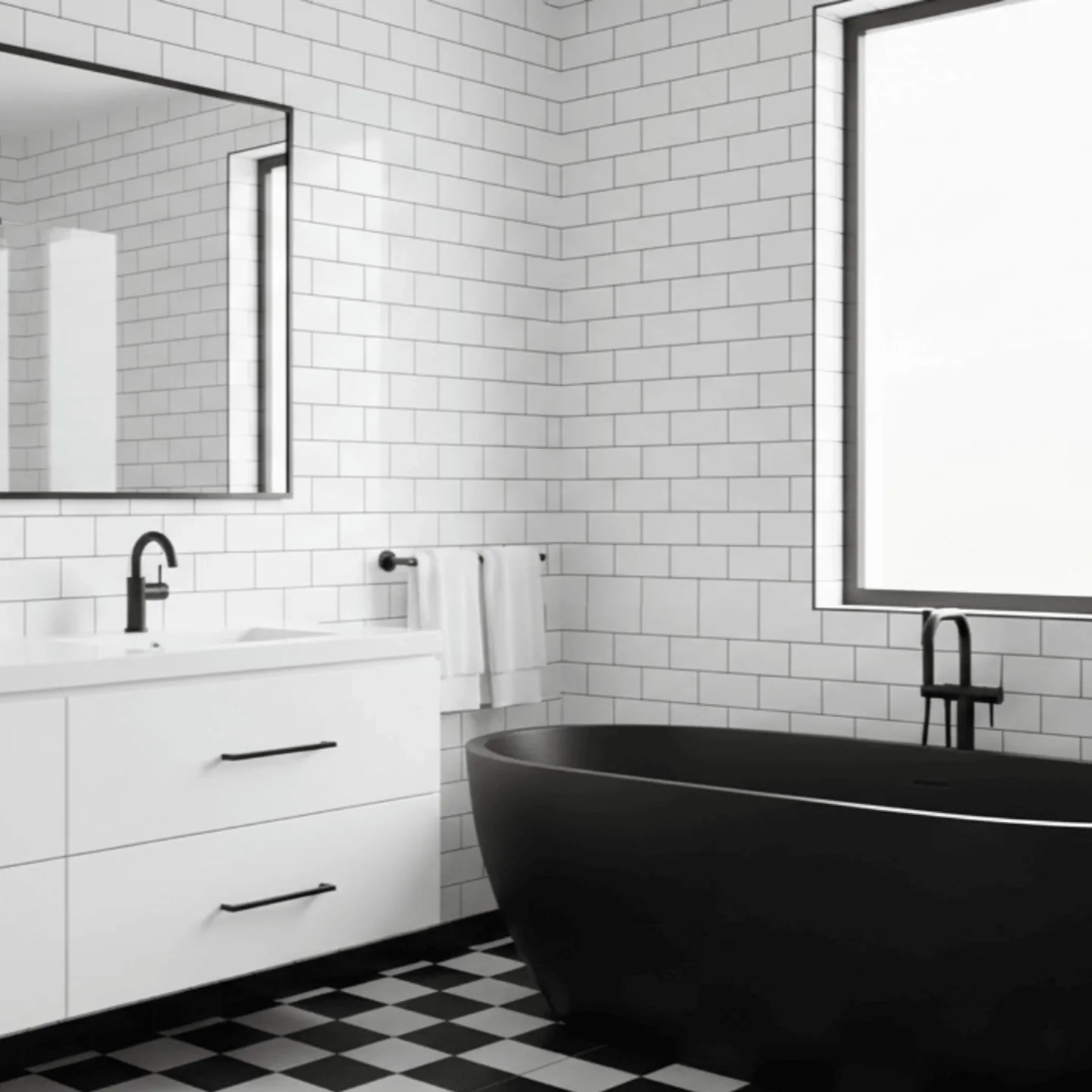
If the budget allows one statement, a black freestanding tub against beige tile and white walls is the whole design in a single object. It gives the eye a destination and lets every other choice stay quiet and cheap. Dark tubs do show water spots and dust more honestly than white ones, and they need a bathroom with enough floor around them to breathe. In a tight room, a black tub skirt on a standard alcove tub borrows the look without the footprint.
Honest Take: Skip the black tub in a kids’ main bathroom; bath crayons, bubbles, and grit will win that fight.
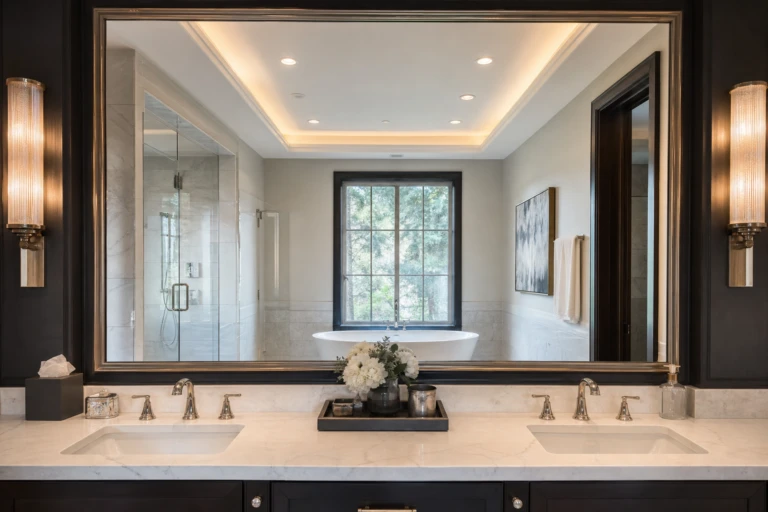
The cheapest definition in this whole list: thin black frames around the mirrors. A slim black border outlines the reflection, ties into black faucets or light fixtures, and makes a plain beige and white room look finished. It works on one big mirror or a pair over double sinks. Frameless mirrors with black edge trim kits cost very little and install in minutes. Keep the frame thin, under an inch, or it starts competing with the fixtures.
Cheaper Route: Black mirror trim kits run about the price of two towels and need no tools beyond scissors and a level.
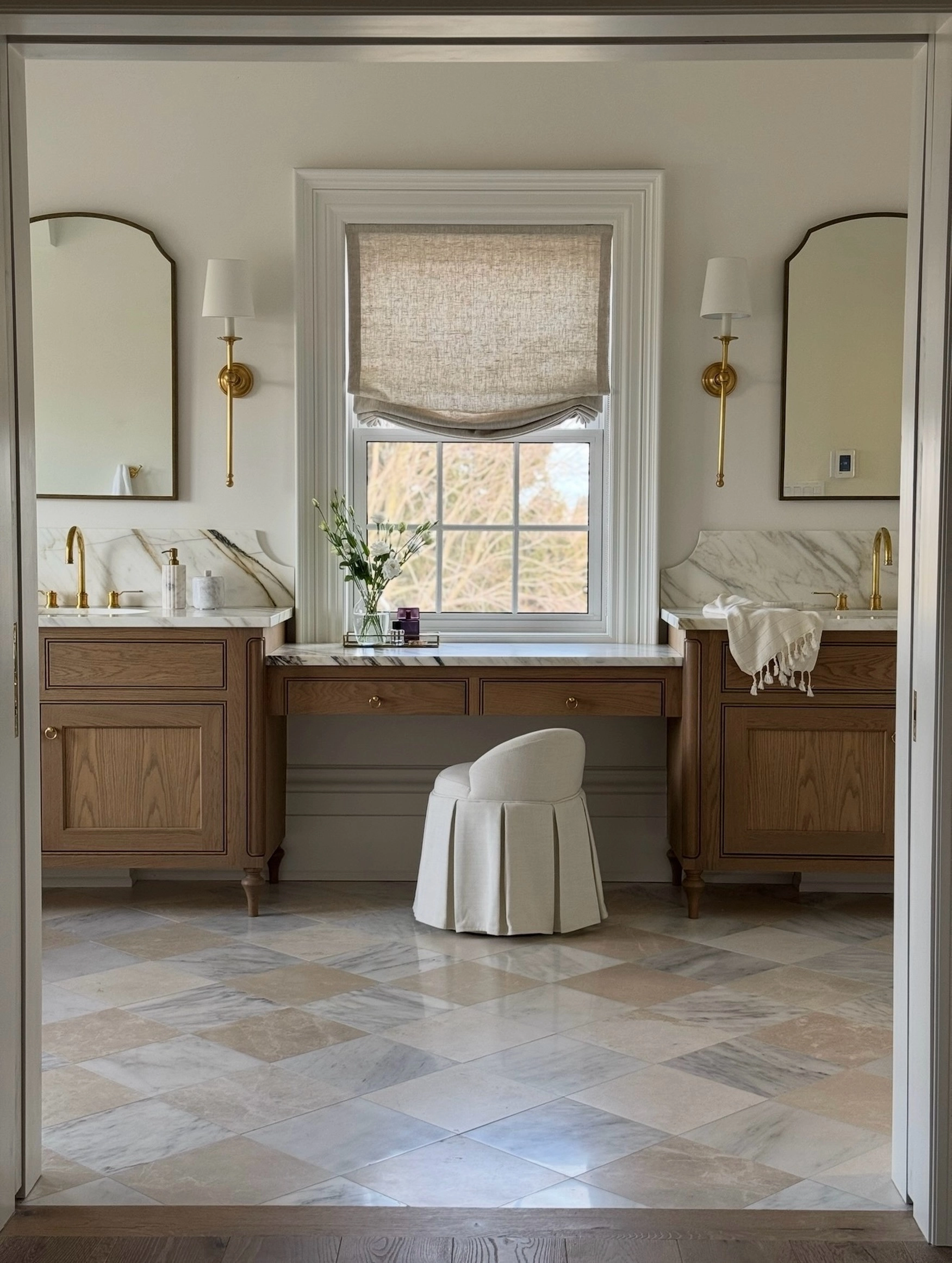
A black and white checkerboard floor is bold, graphic, and a little much, until beige enters and talks it down. Beige walls, beige towels, and a wood stool turn the checkerboard from diner floor into something warm and livable. Keep the checks large in a big room and small in a powder room, because scale is what makes it feel classic instead of chaotic. Porcelain checkerboard tile costs far less than marble and handles water better.
Designer Advice: Lay the checkerboard on the diagonal in a small bathroom; it tricks the eye into seeing more floor.
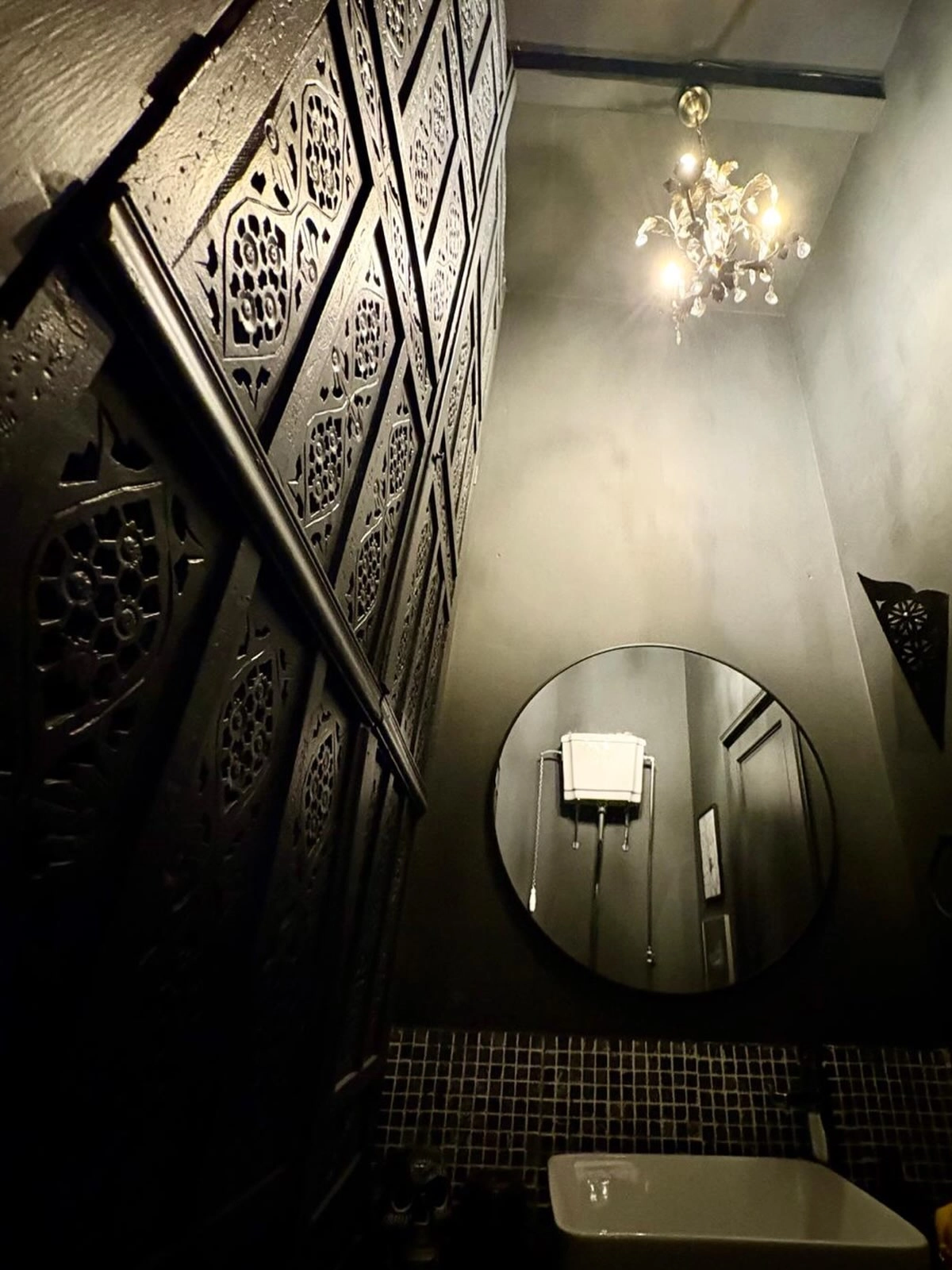
A powder room is the one place a black ceiling pays off: the room is tiny, nobody showers in it, and the dark lid makes beige walls and a white pedestal sink glow by comparison. It feels like a jewel box instead of a closet. Good lighting is non-negotiable here, since a black ceiling eats light; warm sconces at face height do the flattering work. Guests will comment on this room, which is exactly what a powder room is for.
Heads Up: Paint the ceiling matte or flat; any sheen up there will show every roller line under sconce light.
White subway tile with black grout draws the grid right onto the wall, giving a beige-lite bathroom its definition without adding a single black object. The look is graphic and a bit industrial, and it hides the grout discoloration that white grout shows within a year. It pairs well with beige floors and textiles doing the warming from below. Seal the grout well, because dark grout can fade unevenly if it is scrubbed with harsh bleach cleaners.
Reality Check: Black grout is unforgiving during install; sloppy lines show forever, so this is a hire-it-out job for most people.
White Does the Lightening
Two warm or dark colors need a referee. White’s job in this group is air and light: bigger tiles, brighter surfaces, and room to breathe.
The Classic Split: White Walls, Beige Tile, Black Fixtures
When in doubt, assign each color one territory: white owns the walls, beige owns the tile, black owns the fixtures. This split works because nobody competes, and every surface you touch has a clear temperature, bright, warm, or sharp. It suits almost any bathroom size and never dates the way trendier splits do. If your bathroom already has two of the three, this tells you exactly what the third purchase should be.
Pro Move: Keep the white and the beige one step apart in depth so the border between them reads clean, not accidental.
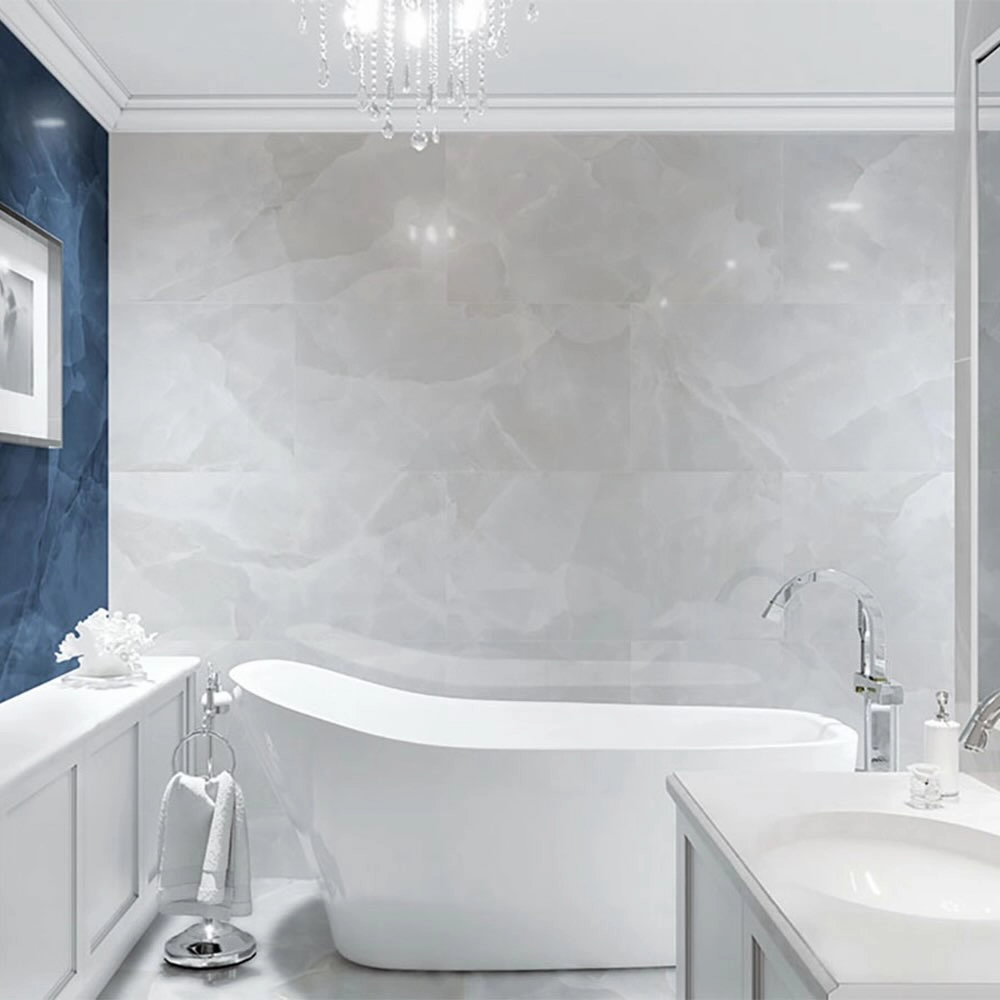
Oversized white tiles on walls make a small bathroom feel calmer and larger because your eye crosses fewer grout lines. With beige on the floor and black at the fixtures, the big white field becomes the light source of the room, bouncing daylight into corners. Rectified tiles with tight joints give the cleanest result. The honest catch: large tiles on an uneven old wall will telegraph every bump, so wall prep matters more than the tile price.
Try This: In a windowless bathroom, pick a satin or polished white tile; matte white can look chalky under cheap LEDs.
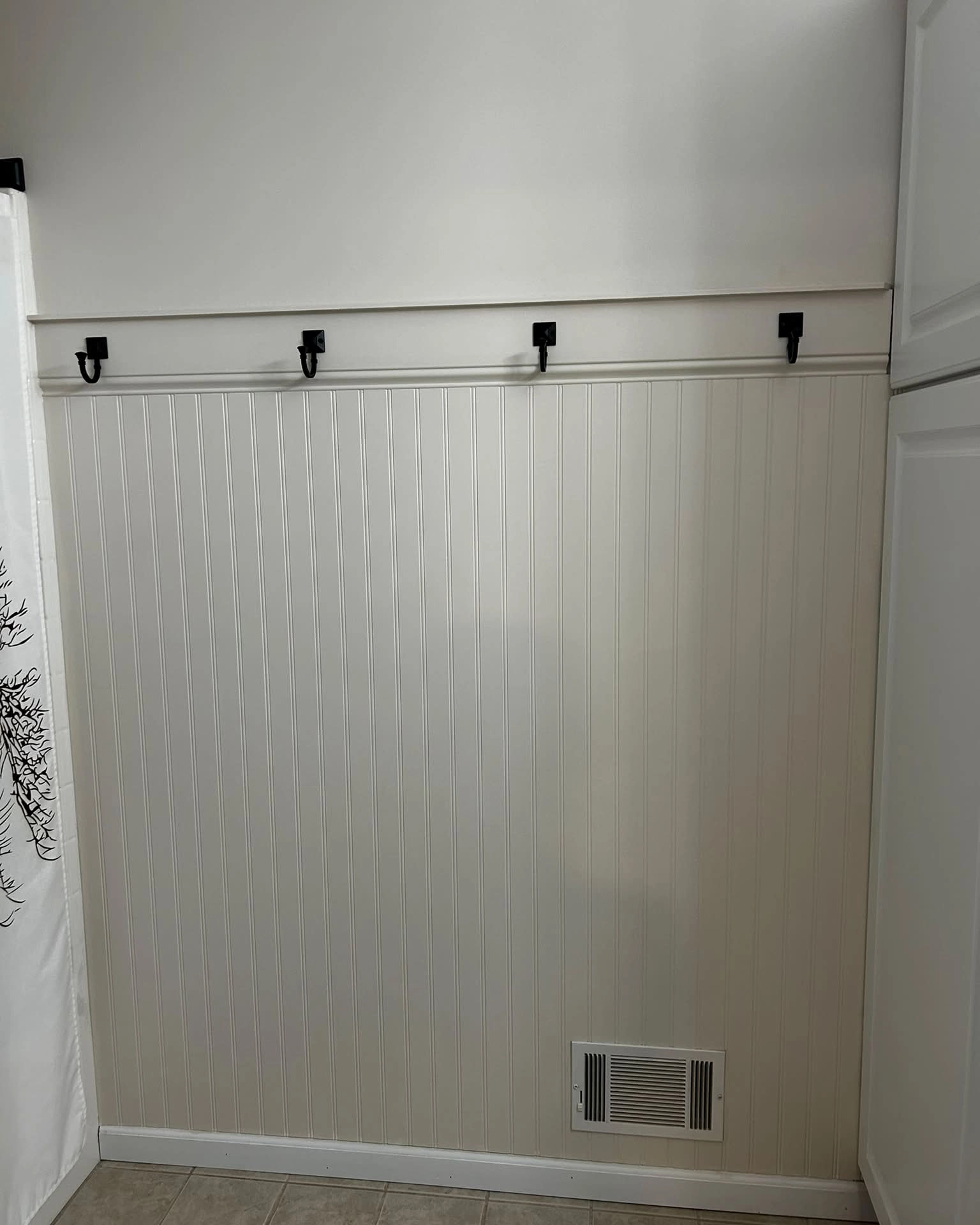
Beadboard on the lower half of the wall adds white texture and protects the wall where splashes and chair bumps actually happen, while beige paint above does the warming. The horizontal line also makes ceilings feel taller in low bathrooms. Modern PVC beadboard handles bathroom moisture far better than old wood panels and paints up crisp. Add a black hook rail or towel bar along the trim line to stitch the three colors together at one height.
Budget Note: Beadboard sheets cover a lot of wall for little money and hide tired drywall and old tile adhesive scars.
In a bathroom with no window, gloss is a tool, not a style choice: glossy white tile throws light from the fixtures into every corner and makes beige read richer beside it. Use it on walls, not floors, where the shine becomes a slipping hazard. Black accents keep the gloss from feeling like a hospital corridor. One trade-off: glossy tile shows water spots and limescale tracks more than matte, so it suits a shower you squeegee, not one you ignore.
Worth Knowing: Pair glossy walls with a matte floor in the same room; the contrast makes both finishes look deliberate.
Flipping the usual combo, a white vanity with a beige stone or stone-look top puts the warmth exactly at counter height, where hands, bottles, and morning light all land. The white cabinet keeps the base of the room feeling clean and bright while the beige top hides toothpaste and water marks better than white stone does. Black hardware ties it to the rest of the black details. Quartz in a warm beige tone is the low maintenance pick; real travertine tops need sealing and patience.
Watch Out: Beige stone tops vary wildly slab to slab; always approve the actual piece, not the showroom sample.
A wall of white built-in or flatpack storage solves the clutter that makes neutral bathrooms look messy, and beige baskets inside it carry the warmth without a single renovation. Open shelves at the top, closed cabinets below: towels and pretty bottles show, cleaning supplies hide. Black labels or black basket handles repeat the accent color. Clutter control is half of why styled bathrooms look calm, and this is the cheapest half to copy.
Try This: Decant products into plain white or amber bottles inside open shelves; branded packaging fights the palette more than any color choice.
The Rescue Kit
Already have the three colors and something still feels off? It is almost never the colors. It is the undertones or the light bulbs. Fix those here.
Beige is not one color: it leans pink, yellow, or orange, and two beiges from different families will fight in the same room while both look innocent on their own. Hold your tile, paint swatch, and towel together in daylight; if one looks rosy and another looks mustard, they cannot share a bathroom. Pick one family and make every warm item obey it, then choose a white with the same lean. This single check prevents most of the “why does it look off” posts in design forums.
Worth Knowing: Photograph your swatches together in the bathroom itself; your phone will exaggerate undertone clashes your eye wants to forgive.
More beige bathrooms are ruined by light bulbs than by paint. Cool daylight bulbs push beige toward gray and make black and white feel clinical, which is why the room looks right at noon and wrong at night. Warm white bulbs in the 2700K to 3000K range flatter beige, warm up black, and are kinder to skin in the mirror. Match every bulb in the room to the same temperature, including the shower light, or the mismatch will read as a color problem.
Watch Out: Check the Kelvin number on the box, not the words “daylight” or “soft white” on the front; brands use those labels loosely.
The Fourth Color: Light is the fourth color in this palette. The same beige tile can read warm gold under 2700K bulbs and cold gray under 5000K bulbs, with no paint changed at all. Fix the light before you repaint anything.
The quiet rule behind every good three-color bathroom: each color shows up at least three times, in different sized doses. One black faucet alone looks like a mistake; a black faucet, black mirror frame, and black towel hooks look like a plan. Same for beige: tile, towels, and a basket. White usually handles itself, but check anyway. Walk the room and count; wherever a color appears only once, either repeat it or remove it.
Cheaper Route: Count from the doorway, not up close; the doorway view is the one you and your guests actually judge.
The Balance Checklist
Beige has the warming job: walls, tile, or textiles, not all three at full strength
Black defines: fixtures, frames, or one bold surface, repeated at least three times
White lightens: the biggest bright surface belongs to white
All beiges share one undertone family
Every bulb sits between 2700K and 3000K
The Takeaway
Beige, black, and white is not a safe palette, it is a balancing act, and that is exactly why it looks so good when it works. Give beige the warming job, black the defining job, and white the lightening job, and the three stop competing. Check your undertones, fix your bulbs, and repeat each color until it looks deliberate. Start with the cheapest lever, textiles and bulbs, before you touch a single tile. Your bathroom does not need more color. It needs clearer assignments.