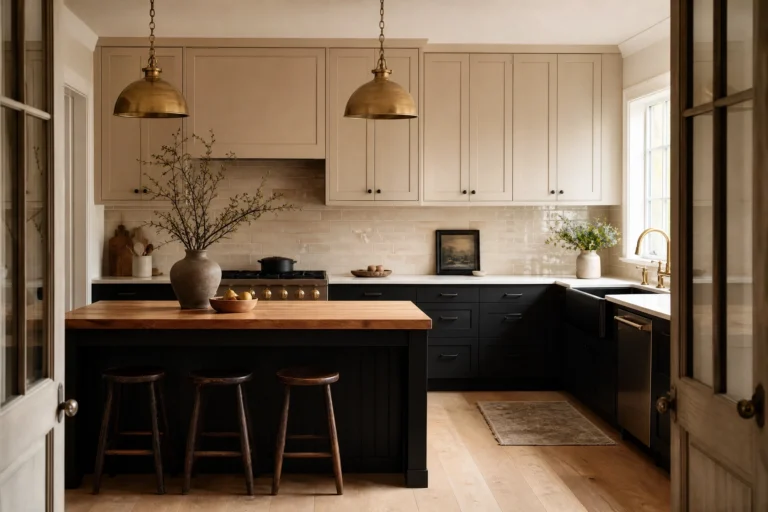
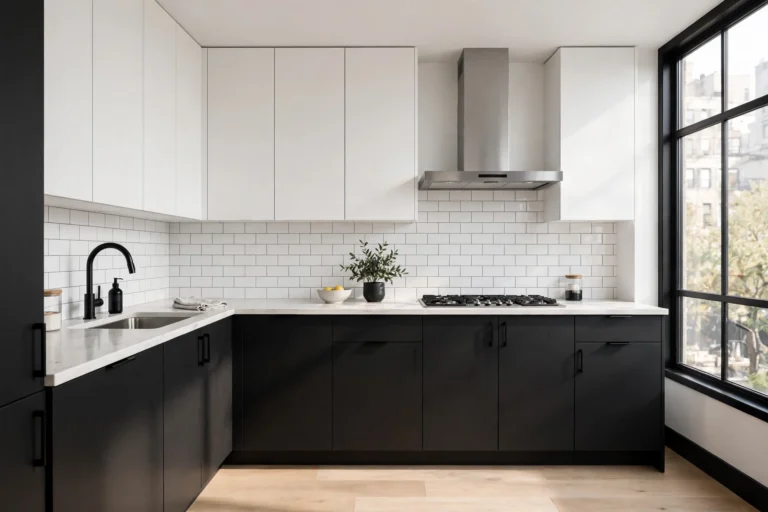
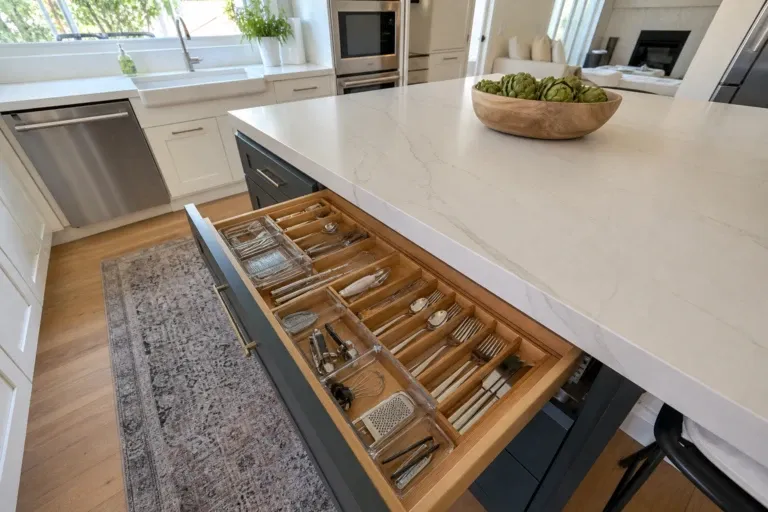
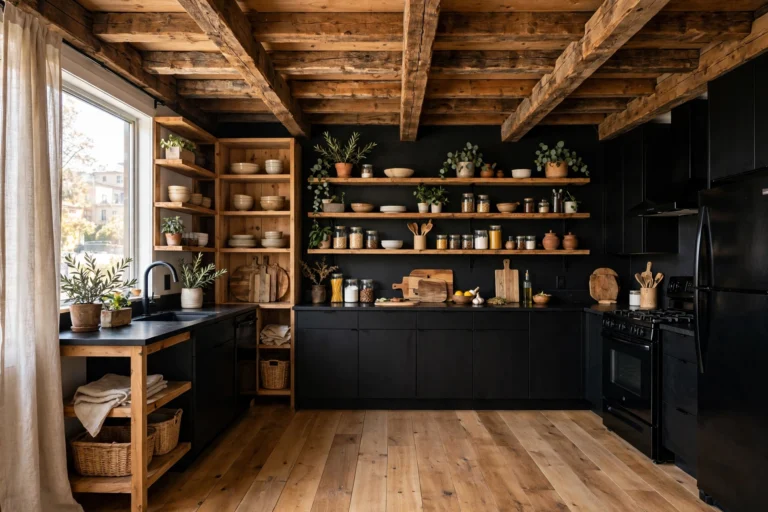
Ask anyone who lives with black countertops what they think, and the answer splits cleanly in two. Half call them the easiest surface they have owned, dark enough to hide every coffee splash and tomato stain. The other half say they wipe theirs three times a day and still see fingerprints. Both groups are telling the truth. The difference is rarely the stone itself. It is the finish that went on it, polished, honed, leathered or soft soapstone matte, and that one choice decides your daily life with the counter more than the color ever will.
These 25 kitchens show what each finish really looks like at home, the pairings that keep black from turning heavy, and the small upkeep habits owners swear by.
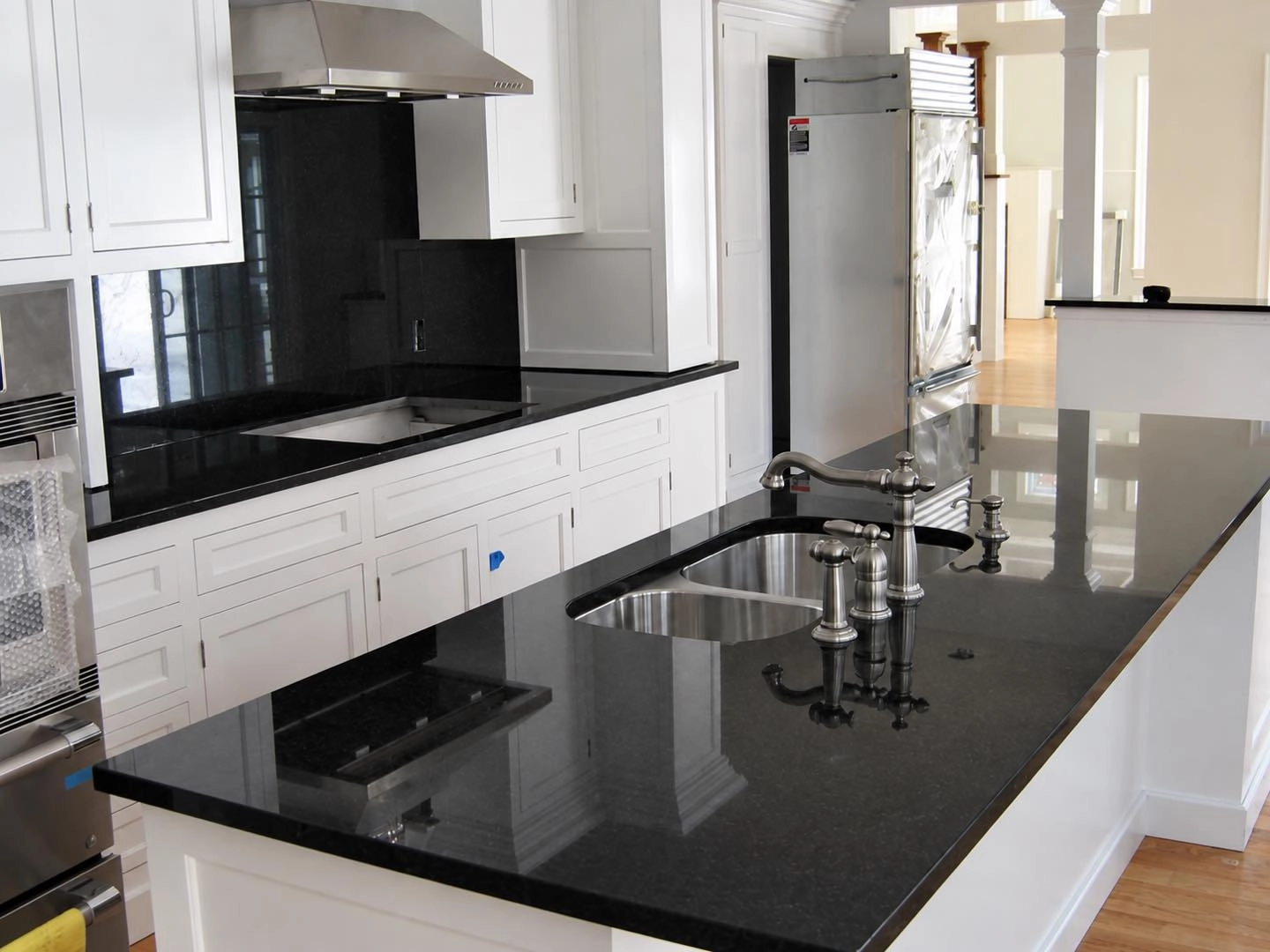
This is the classic black countertop most people picture first, granite polished until it throws back reflections like a dark mirror. In a white kitchen it reads crisp and tailored, and the shine bounces window light around a room that could otherwise feel flat. Dark stone also hides the stains that panic white counter owners, since coffee, wine and turmeric simply disappear against it. The trade is on the surface, not in it. Polished black shows every fingerprint, crumb and ring of dust, so this finish suits people who wipe as they cook rather than in one big weekend clean.
Shine test:Stand a sample under your own kitchen lights before you commit. Polished stone that looks calm in a showroom can glare like a screen under bright downlights.
2. Satin Granite With White Veins and a Full Backsplash
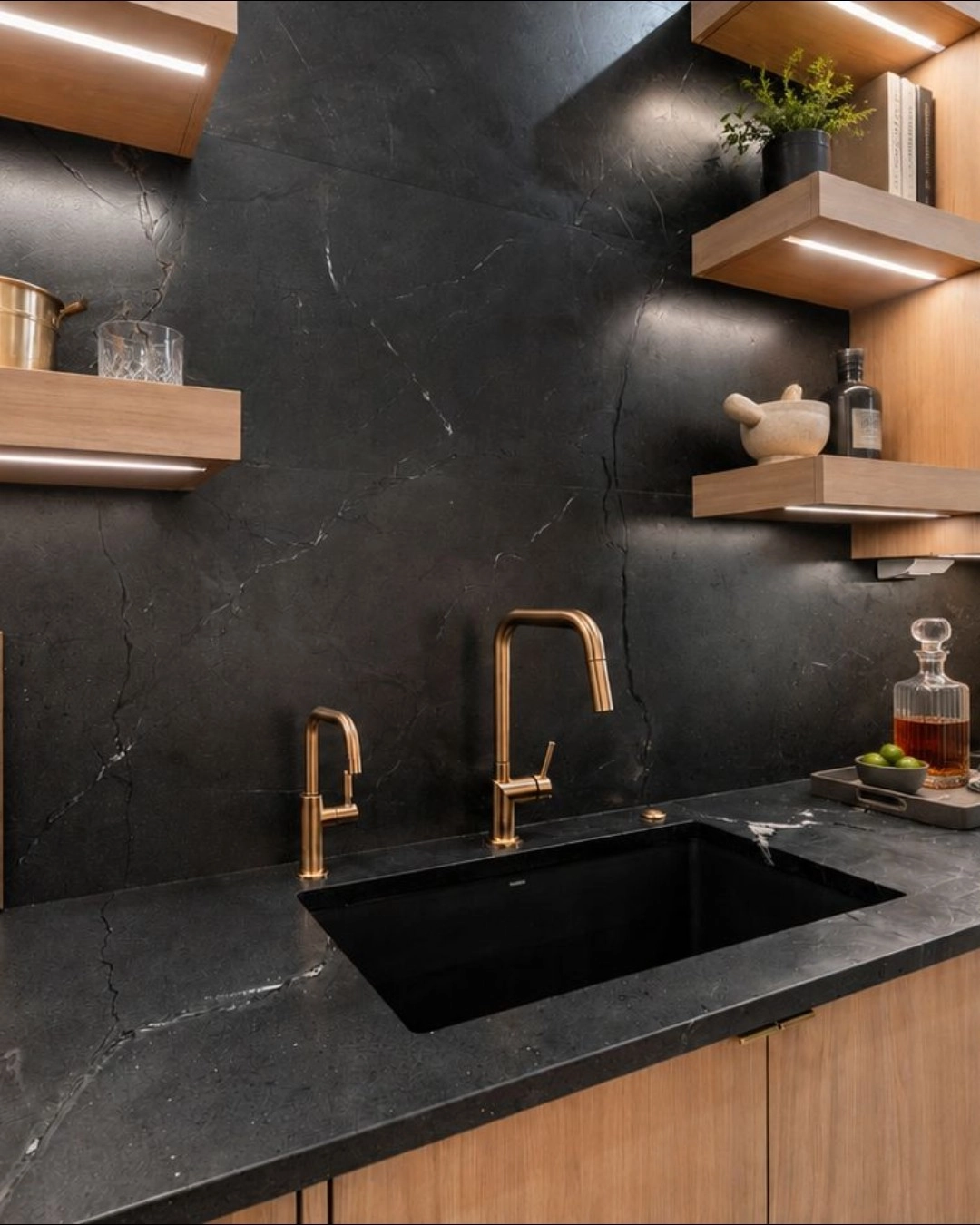
Satin sits one step down from polished, and that small step changes everything about daily life with the stone. This kitchen runs a black satin granite with soft white veining across the counters and straight up the wall as a full backsplash, so the whole cooking zone reads as one piece of stone. The lower sheen softens fingerprints instead of spotlighting them, and the veins give dust and crumbs somewhere to hide. Brass faucets and pale wood shelves keep the black from feeling cold, a pairing worth copying if your kitchen faces north.
Finish note:Satin and honed are close cousins. If a fabricator offers both, take the one with the finer, smoother texture, since rougher honing can hold onto oil marks near the stove.
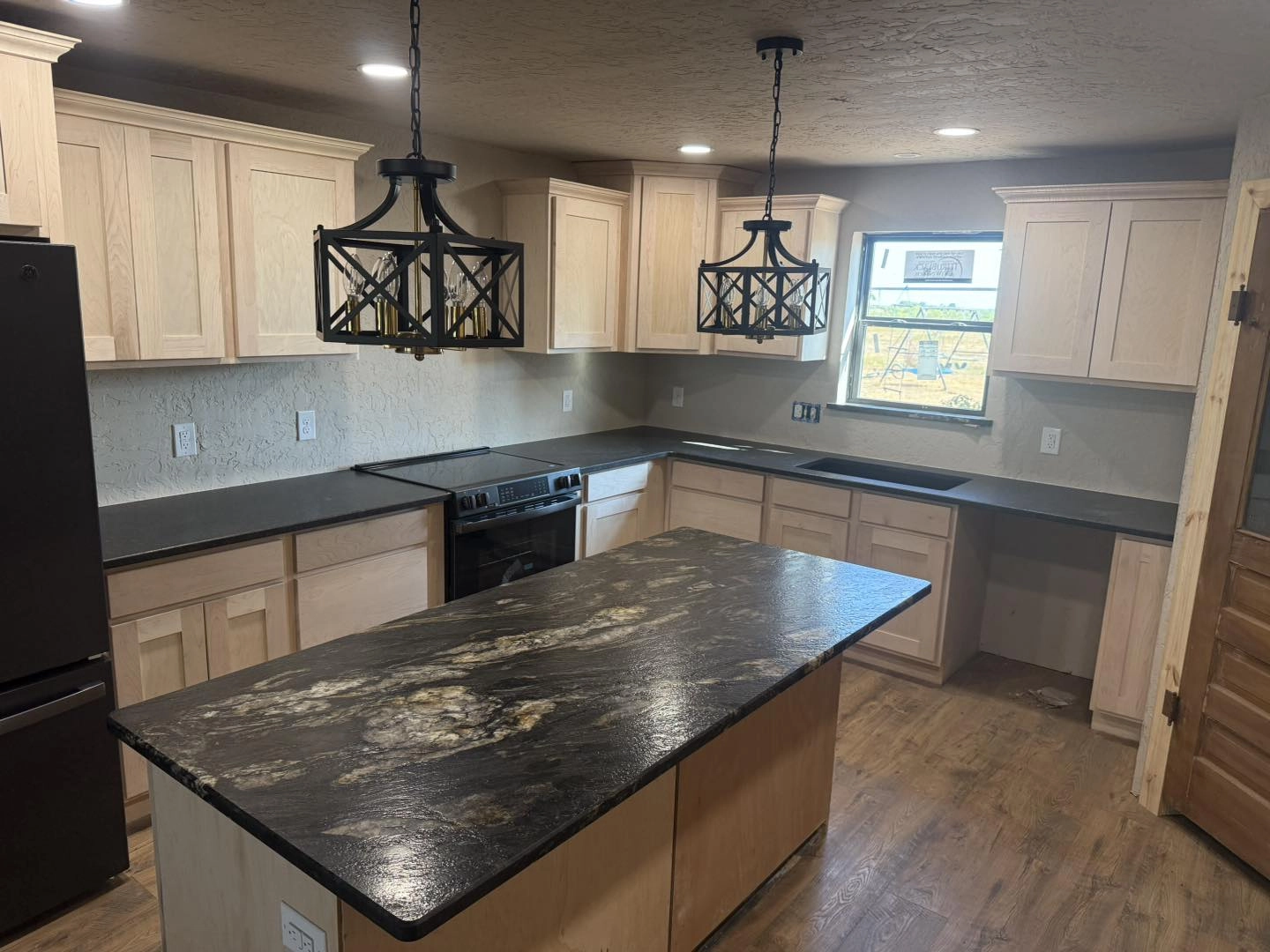
Leathered granite is run under brushes instead of polishing pads, which leaves a soft pebbled texture you can feel with your palm. That texture is the whole trick. It scatters light instead of reflecting it, so smudges, water spots and crumbs lose their hard edges and mostly vanish. This real remodel pairs a leathered black and gold island with plain matte black perimeter counters, and the mix works because the island carries the pattern while the runs stay quiet. Owners in forum threads name leathered finishes again and again as the black counter they never regret.
Touch before you buy:Leathering depth varies a lot between fabricators. Run your hand over the actual sample, since a deep texture feels great but can catch crumbs along the front edge.
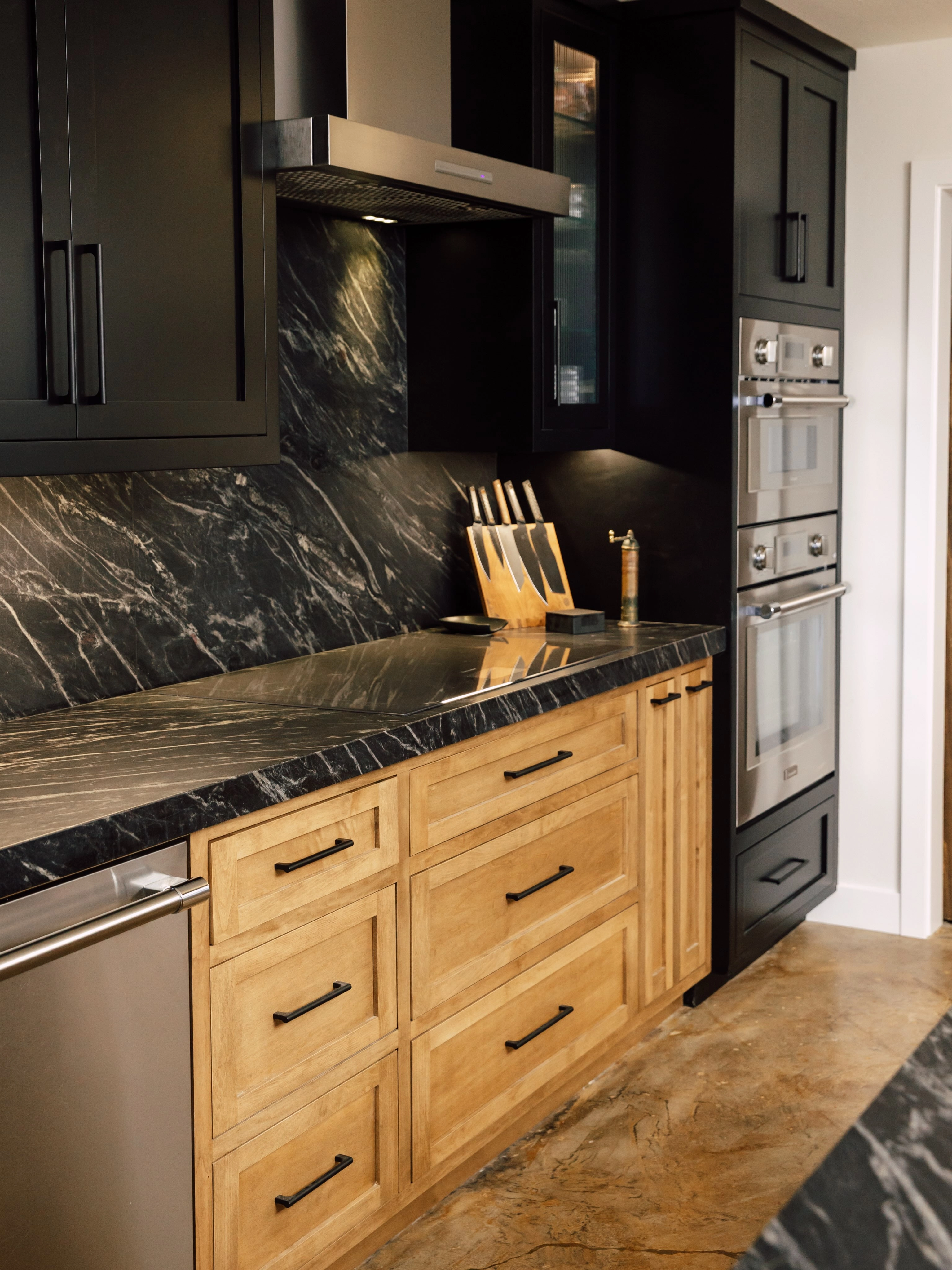
When the same leathered stone climbs the wall as a full backsplash, the kitchen gains something tile never gives it, which is zero grout lines behind the stove. This design pairs black upper cabinets with warm wood drawers below, and the veined stone bridges the two so neither side feels stark. A full-height stone splash also shrugs off the splatter zone better than painted drywall or small tile, since one wipe crosses the whole surface. It costs more in slab material, so many people run it only behind the range and use a short upstand elsewhere.
Budget split:Full stone behind the cooktop, four inch upstand on the quieter runs. You get the drama where eyes land and save a real chunk of slab money.
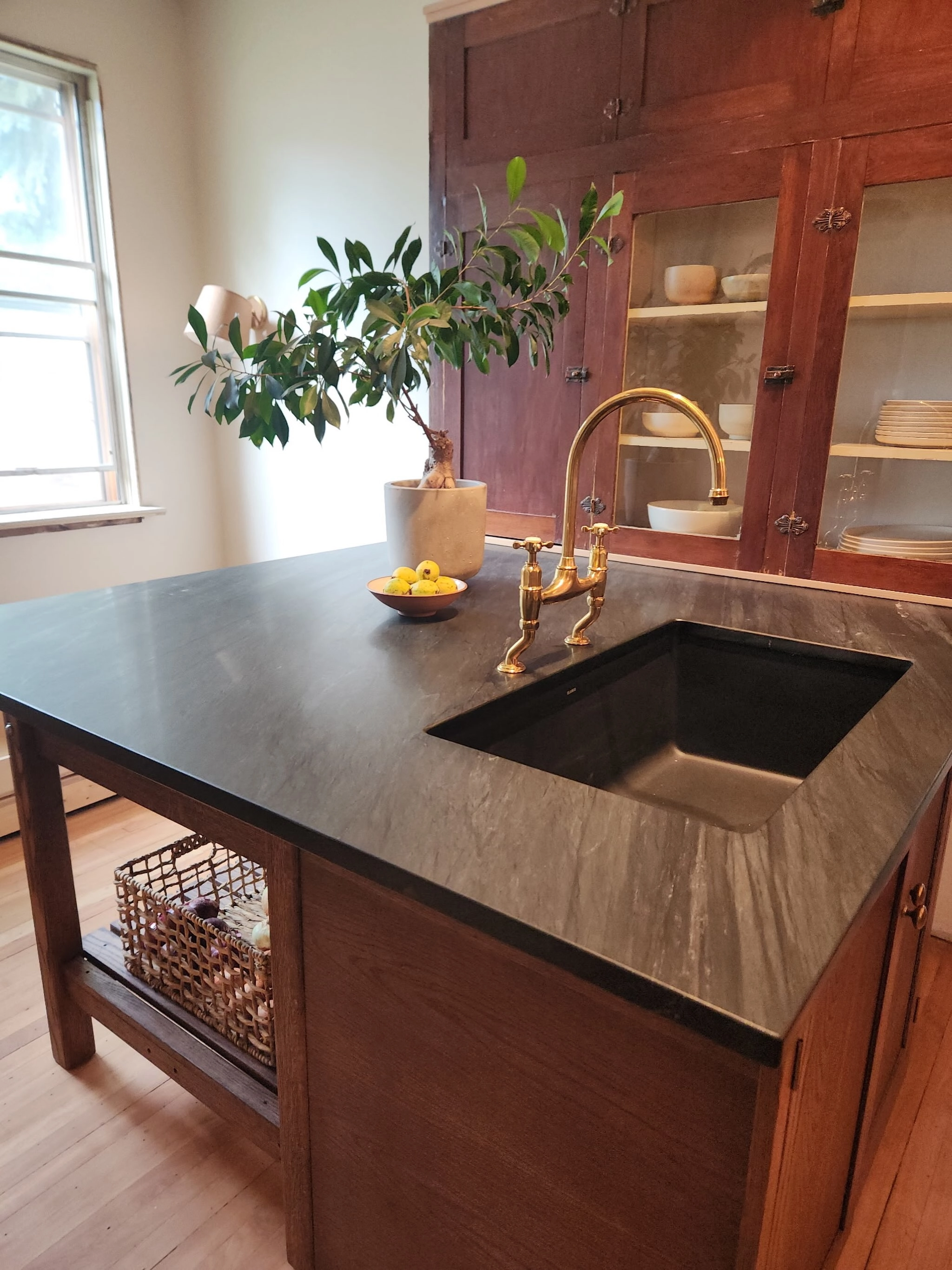
Soapstone is the finish people choose when they want black without any shine at all. It starts out charcoal rather than true black, feels almost silky to the touch, and deepens in color every time you rub in a little mineral oil. This island pairs it with a black undermount sink and a brass bridge faucet, a combination that looks older and calmer than anything polished. Soapstone is soft enough to dent if a cast iron pan lands hard, but small marks sand out at home, and many owners say the lived-in patina is exactly why they picked it.
Oil schedule:A coat of food safe mineral oil every few weeks darkens soapstone evenly. Skip it and the stone simply stays a lighter grey, which some people prefer anyway.
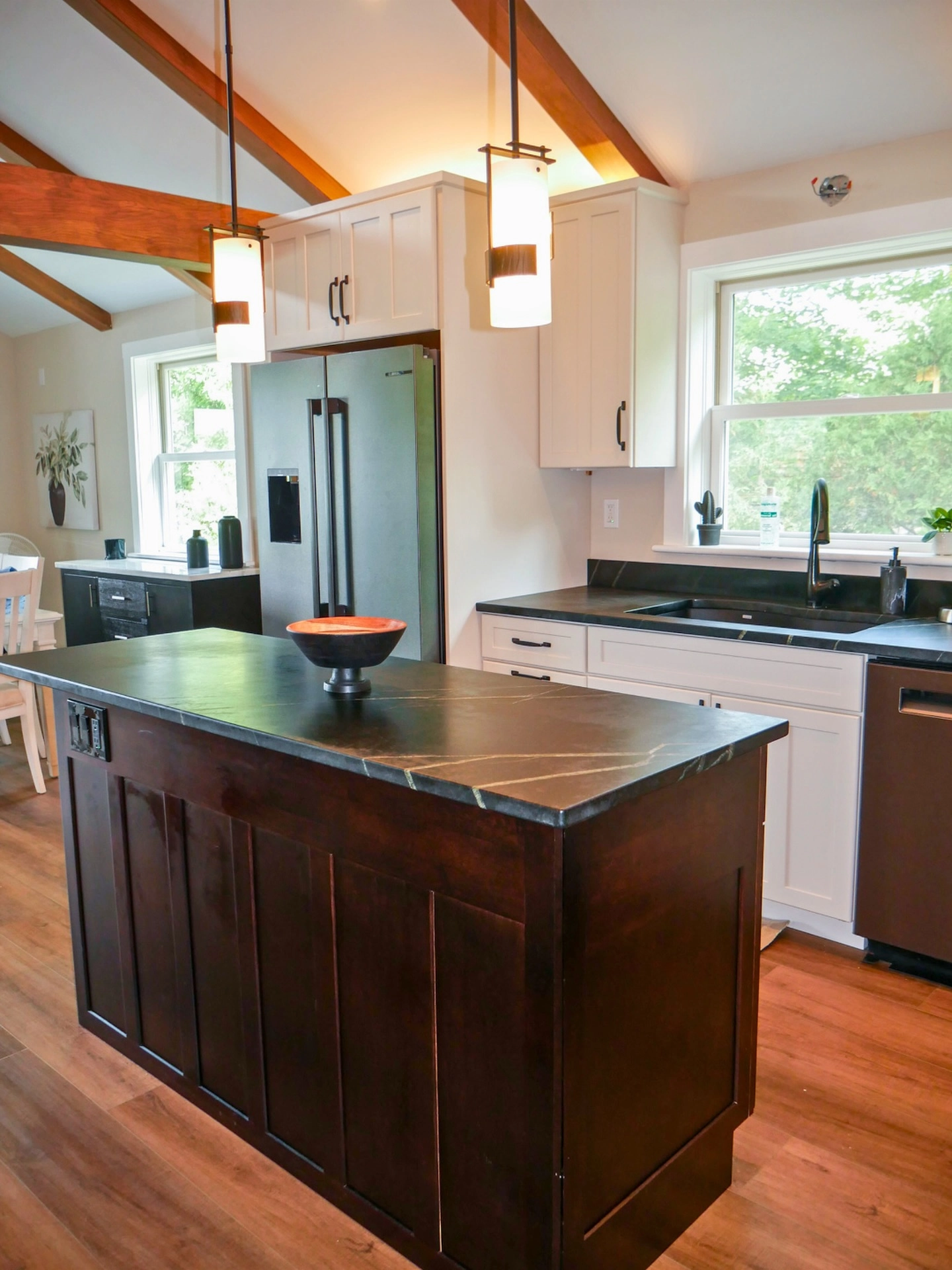
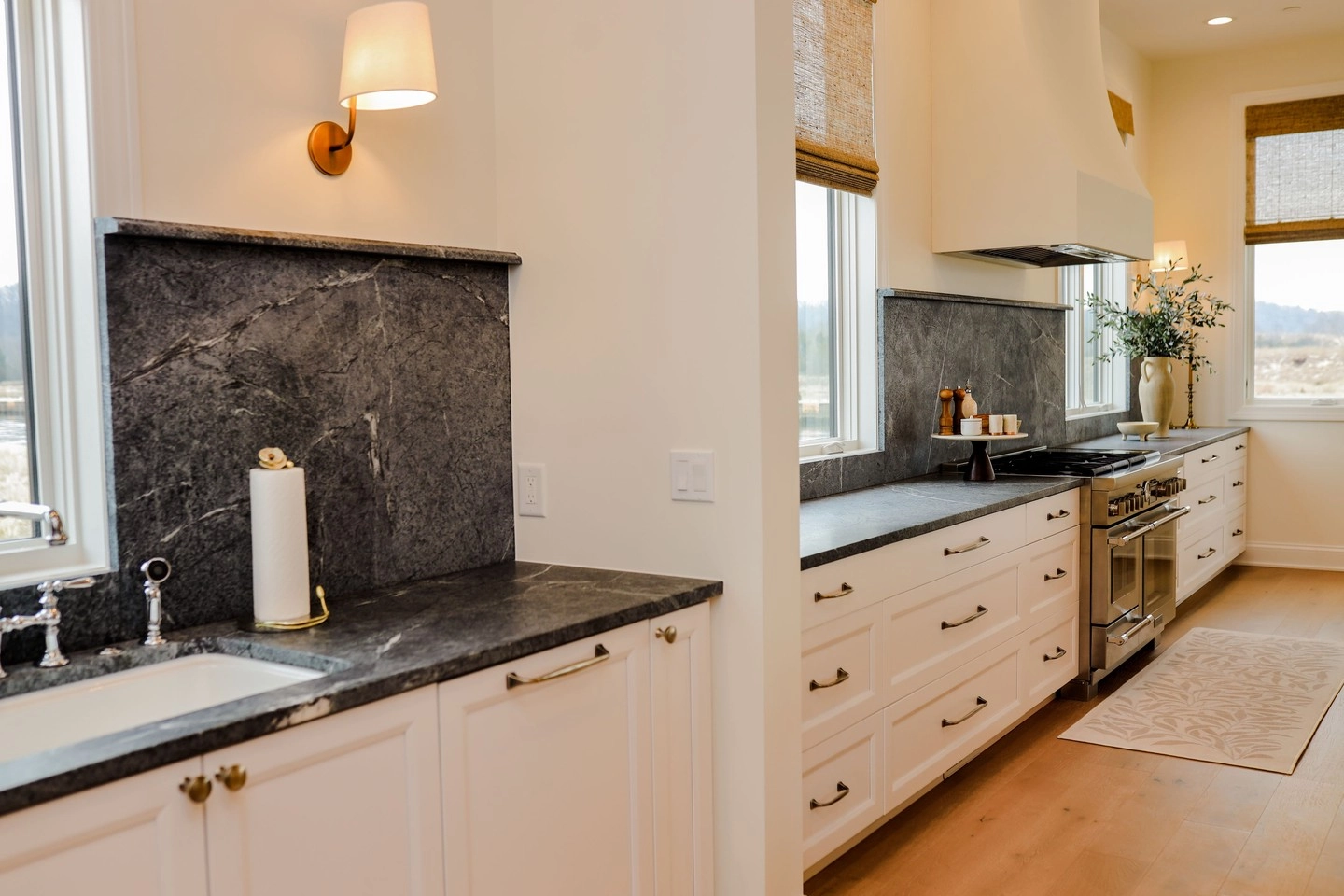
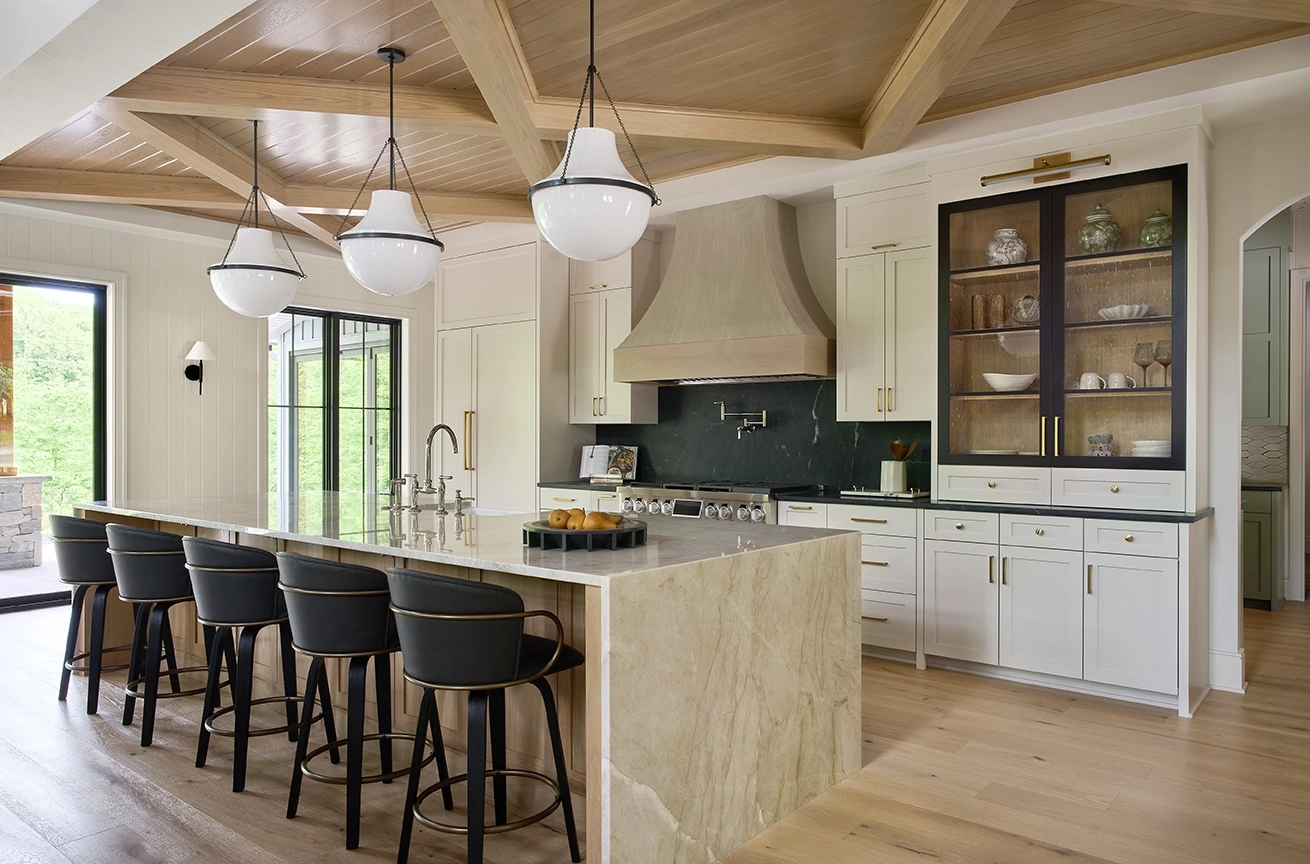
Running soapstone on every surface, not just the island, gives a kitchen a settled, farmhouse calm that polished stone cannot copy. Here a dark wood island anchors the room while white perimeter cabinets carry the same soft black tops, and exposed beams pick up the warmth of the island base. Because soapstone contains no resin and shrugs off heat, hot pans can land on it without a trivet panic. The honest cost is upkeep of a different kind, since the surface scratches more easily than granite and asks you to accept marks as part of its character.
Scratch fix:A fine sanding sponge and a drop of mineral oil erase most soapstone scratches in about two minutes. Keep both in the sink cabinet and it stops feeling like damage.
Black counters do not need white cabinets to work, and this kitchen proves the softer version. Cream cabinetry with brass pulls meets charcoal soapstone counters and one tall stone panel behind the sink, and the whole room feels warm rather than high contrast. The panel is a smart middle move, giving you the full backsplash look at the wettest spot while the rest of the wall stays painted. Notice how the stone reads almost grey next to cream, which is worth knowing if you want true black drama instead of a gentle charcoal mood.
Undertone check:Hold your stone sample against the actual cabinet color, not a white showroom wall. Charcoal stones warm up next to cream and cool down next to bright white.
Up close, soapstone shows its geology, pale veins drifting through the charcoal like chalk lines. Those veins are not decoration printed on top, they run through the stone, so a chip or a sanded scratch never reveals a different color underneath. This close view also shows the finish honestly, a low soft sheen with no mirror reflection at all. If you cook with flour, pastry or powdered sugar often, this is the black surface that forgives you, since pale dust blends into the veining instead of announcing itself across a polished slab.
Flour test:Sprinkle a pinch of flour on any black sample in the showroom and wipe once. Whatever still shows is roughly what you will see after every baking day at home.
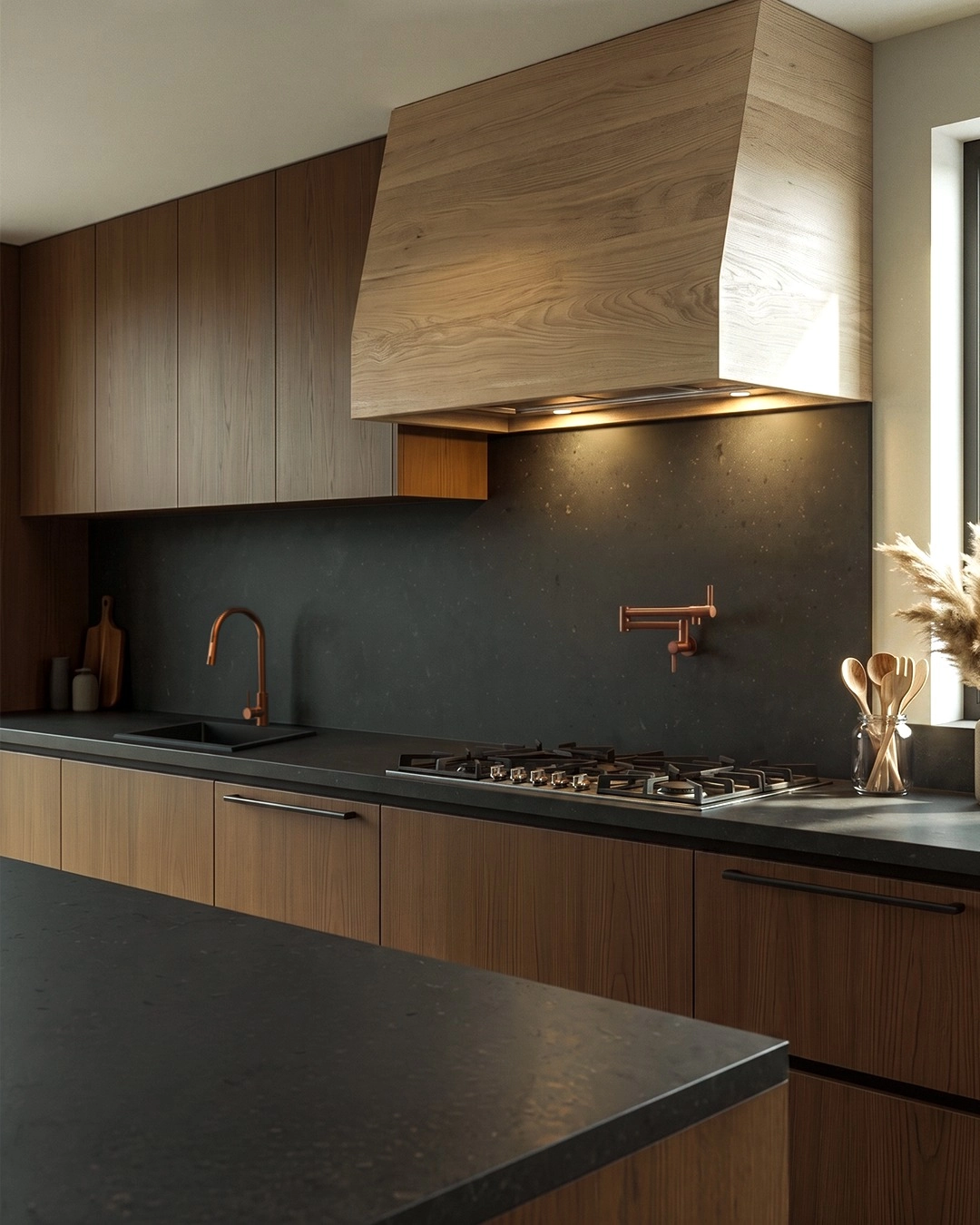
This kitchen wraps the whole cooking wall in one dark tone, matte black counters flowing into a charcoal stone backsplash under a big timber hood. It works because everything around it is warm, the wood cabinets, the copper taps, the grain in the hood all push back against the black. A single-tone run like this also hides the seam where counter meets wall, which makes the kitchen feel calmer and more built-in. Keep the lighting warm here, since cool white bulbs turn charcoal stone a flat, chalky grey.
Bulb rule:Stay at 2700K to 3000K over dark counters. Warmer light keeps black stone looking deep, cooler light makes it look dusty even when it is clean.
[SCROLL-STOPPER: finish comparison table goes after idea 9]
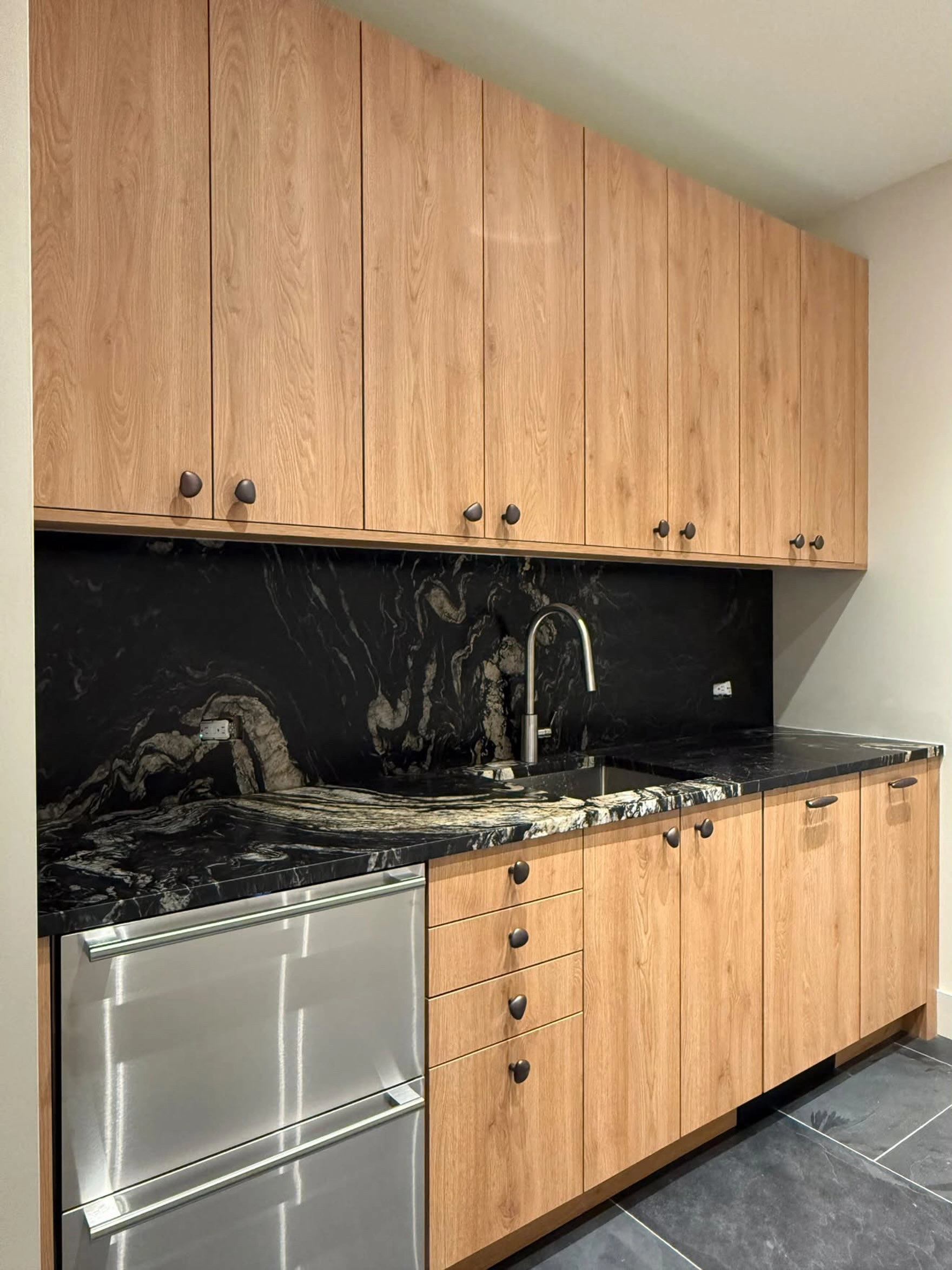
Light wood is black stone’s easiest partner, warm enough to soften it and pale enough to keep the contrast lively. This kitchen runs a marbled black counter and full backsplash against plain light wood fronts with small dark knobs, and the stone’s white veins echo the pale timber so the two feel related. The run is a simple straight line with a drawer dishwasher, proof you do not need an island or a big footprint for this pairing. Dark floor tiles ground the bottom of the room so the pale cabinets do not float.
Vein matching:If your wood is warm and honey toned, pick a black stone with warm or gold veining. Cool white veins can fight warm timber and make both look slightly off.
You do not have to commit every surface to black. This cream kitchen keeps a pale quartzite island for baking and serving, then runs black soapstone along the back wall where the range and sink live. The split is practical as much as pretty, since the dark zone hides splashes and pan marks where cooking actually happens, while the island stays bright for homework, laptops and pastry. It also lets a nervous renovator test black on one run before deciding on more. Many owners end up loving the two-tone split exactly as it is.
Zone logic:Put the forgiving dark surface where the mess happens and the bright surface where people gather. The kitchen reads designed instead of undecided.
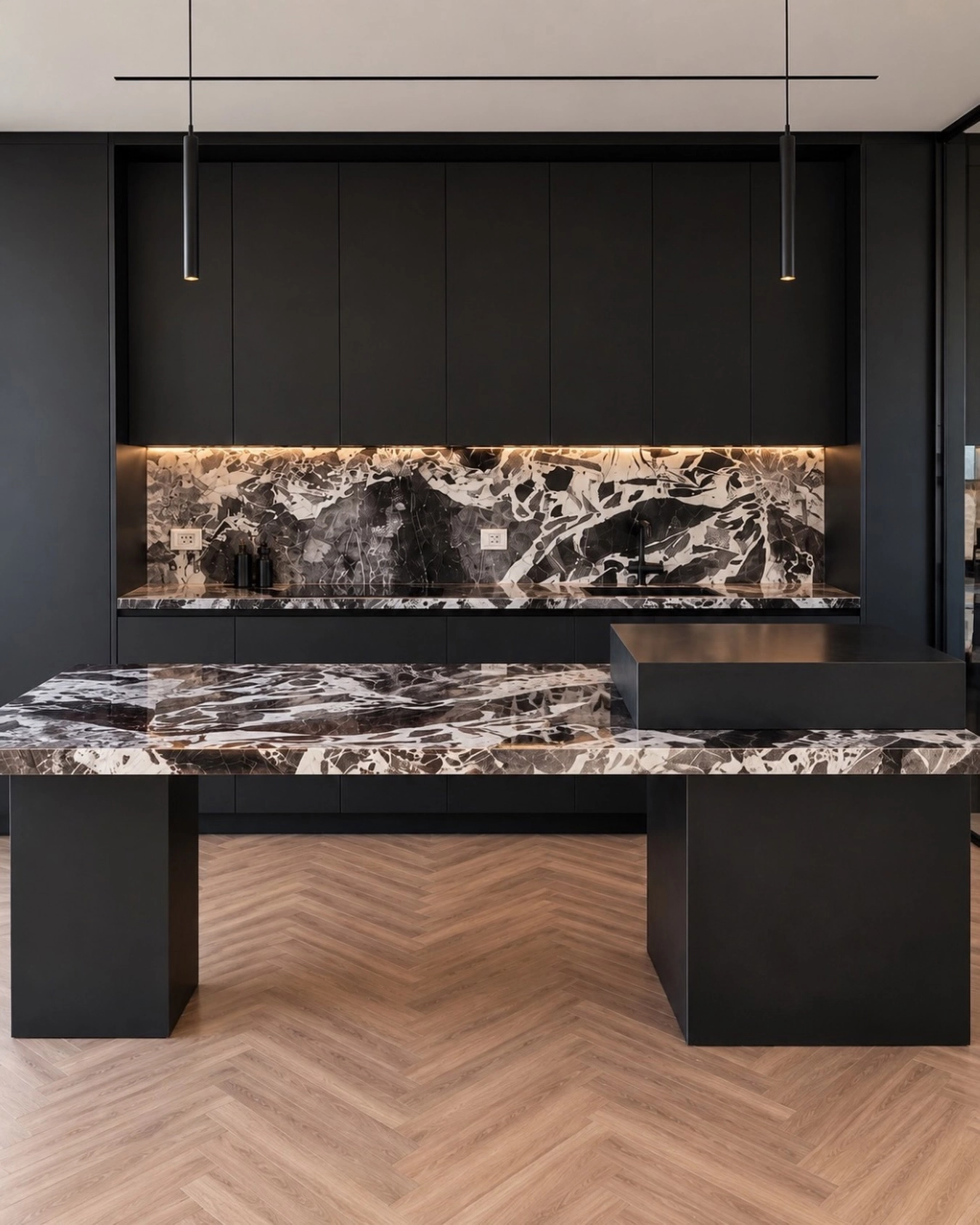
Black cabinets with black counters can collapse into one heavy block, unless pattern does the separating. Here the island and backsplash use a wildly marbled black and white stone, so the eye reads the surfaces as movement rather than mass, and slim pendants plus a pale herringbone floor keep air in the room. A backlit gap under the upper cabinets washes the stone with light, which is the detail that saves the whole scheme after dark. If you go this dark, plan that lighting layer from the start, not as an afterthought.
One pattern only:In an all black kitchen, let the stone be the single loud element. Patterned tile, busy floors and veined stone together will fight each other.
13. A Moody Black Kitchen With a Lit Stone Backsplash
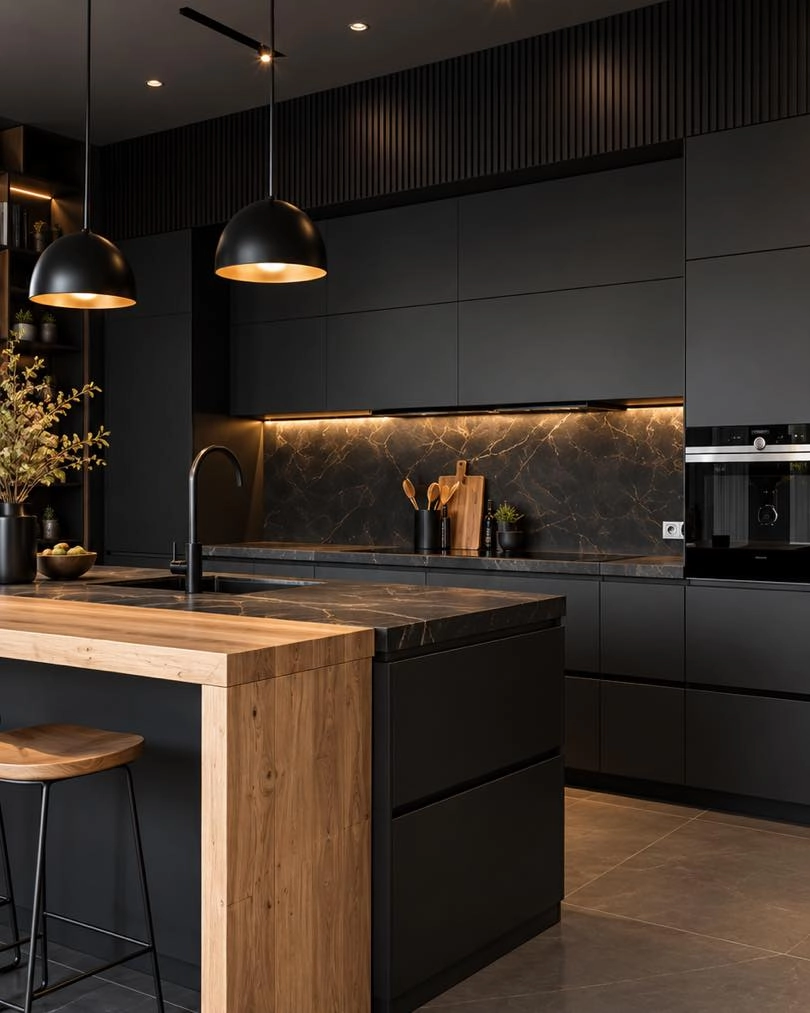
This matte black kitchen leans all the way into mood, dark marbled counters, black fronts and a backsplash lit from behind so the stone glows like embers. The move that keeps it livable is the island end panel in pale wood, a single warm break that gives your eye somewhere to rest. Kitchens like this photograph beautifully at night and can feel dim at noon, so they suit open plans with big windows or cooks who mostly use the room in the evening. Borrow the lit backsplash even if you skip the rest, since it flatters every dark stone.
Try the glow first:A battery light strip taped under your current cabinets for one evening tells you more about dark kitchen lighting than any showroom visit.
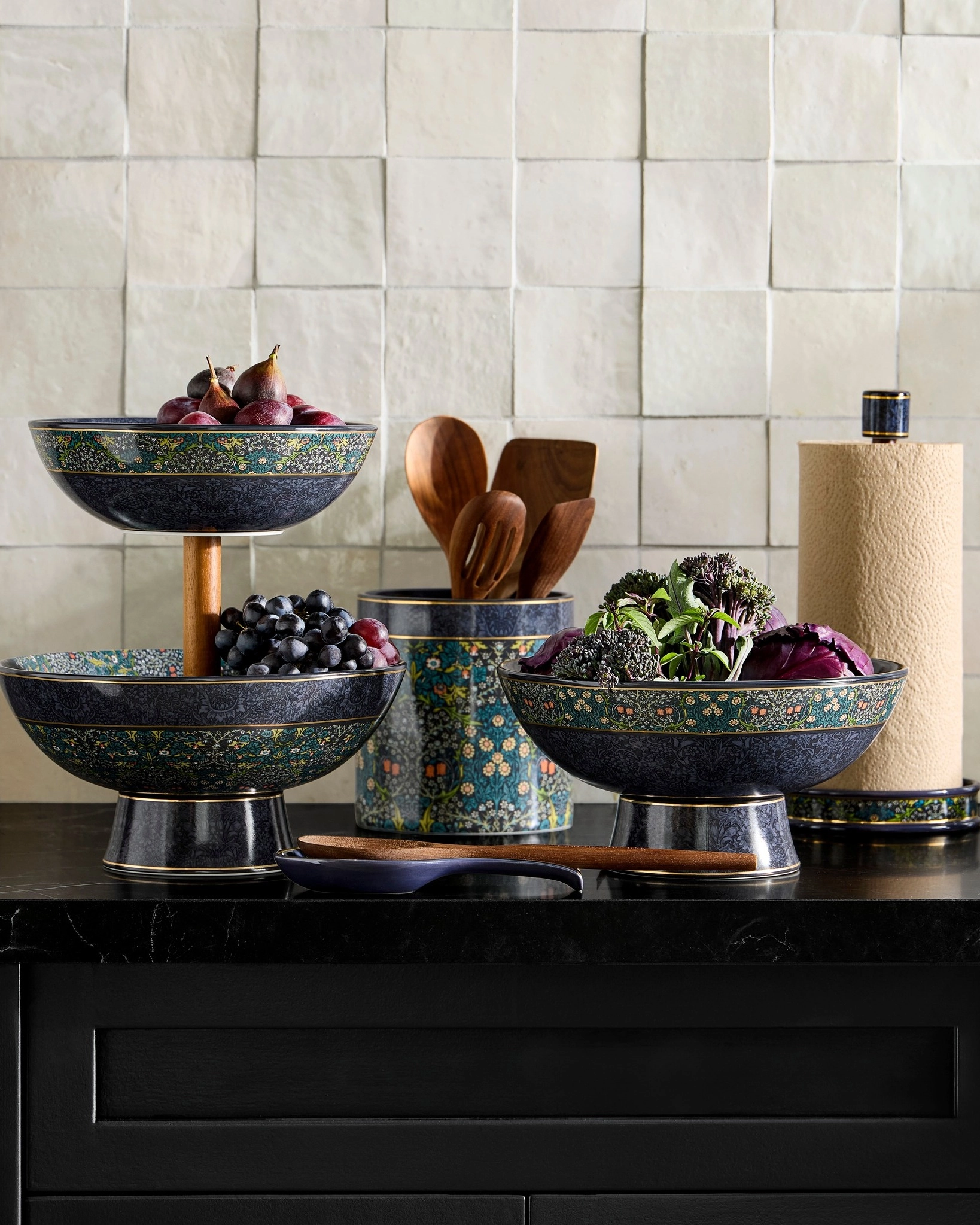
Not every black counter photo needs a full kitchen, because most of your day with it happens at this distance. Patterned bowls of produce, a crock of wooden spoons and rolled linens sit on this black surface against cream zellige style tile, and the counter reads as a backdrop that makes colors look richer. That is black’s quiet talent, it makes food, ceramics and greenery pop the way a dark tablecloth does at a restaurant. Keep a few warm, textured pieces living on the counter and it never reads stark or showroom cold.
Three object rule:One wood piece, one plant or produce bowl, one textile. That trio on a black counter stops it looking bare without sliding into clutter.
15. Glossy Black Counters in a Bright White Kitchen
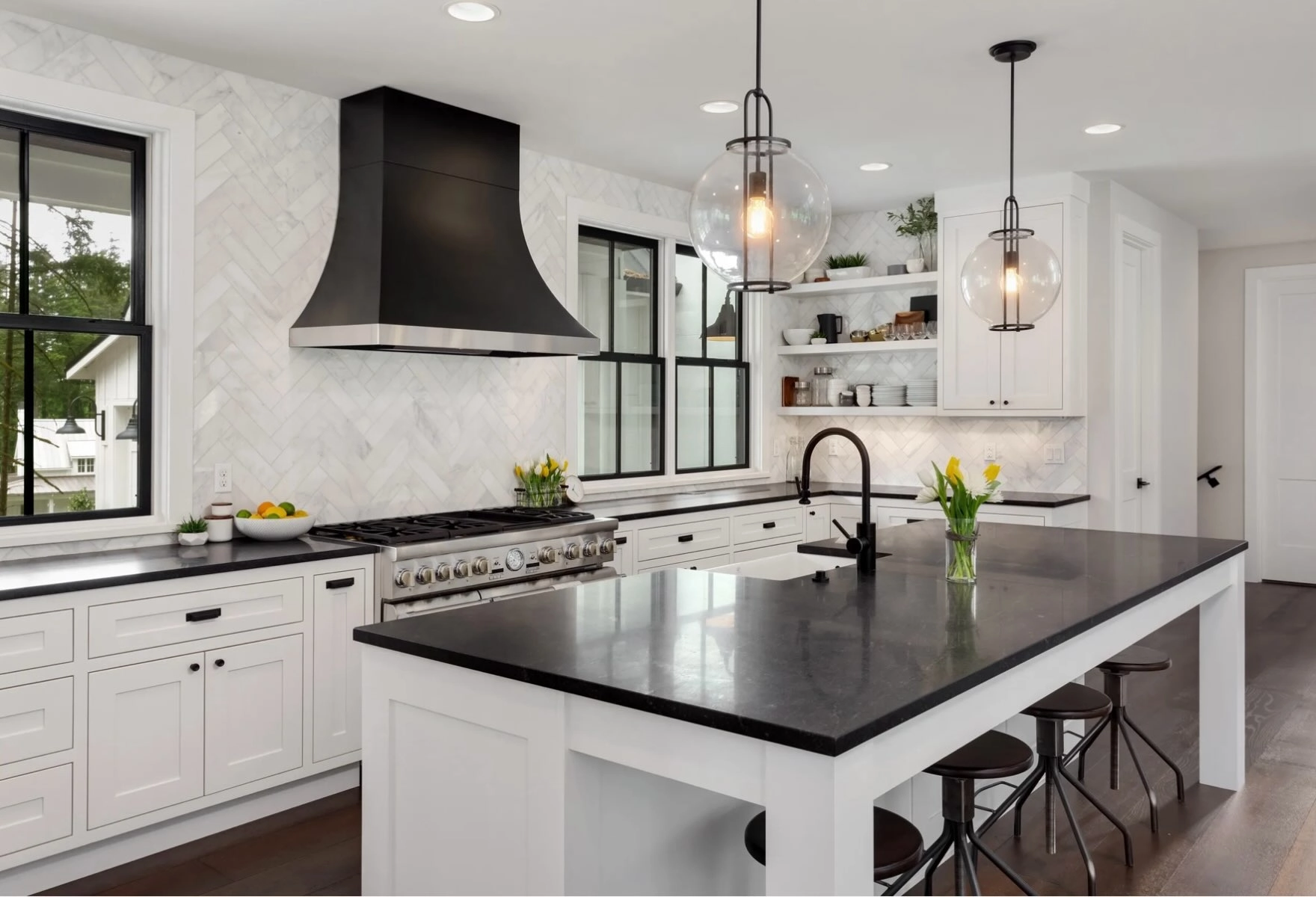
This is the pairing that sells most people on black counters, bright white shaker cabinets, a white marble herringbone backsplash and glossy black tops doing the contrast work. A professional range and black framed windows repeat the dark note so the counters never look like the only black thing in the room. Glossy stone in a sun filled kitchen like this shows dust in raking morning light, which the owners here solve the simple way, with a counter kept mostly clear. If your kitchen has this much daylight, polished black earns its shine instead of fighting it.
Repeat the black:Two or three other black notes, window frames, a hood, stools, stop the counters looking like an accident and make them look like the plan.
16. Deep Green Cabinets With a Veined Black Island
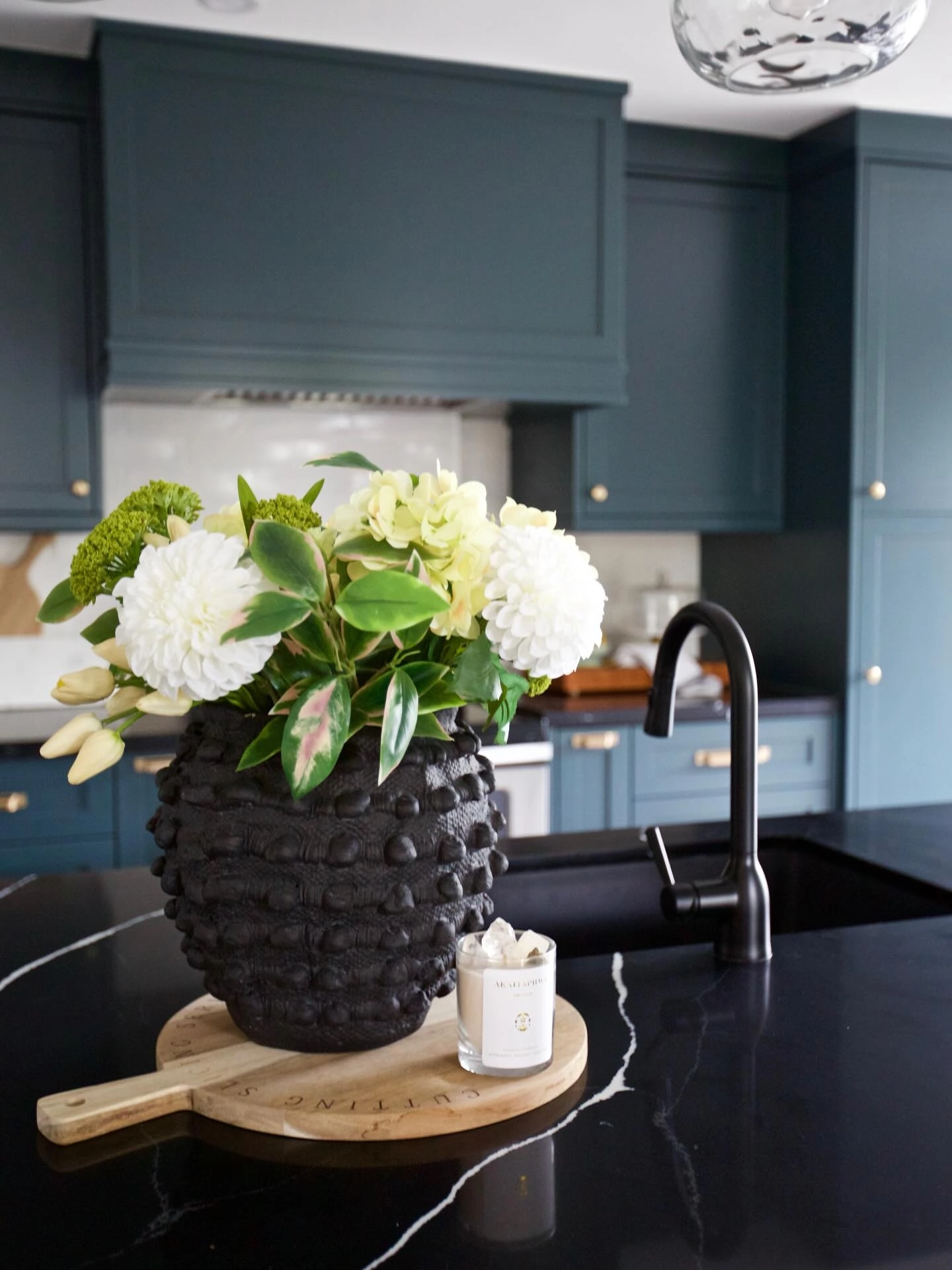
Deep green and black is the moodiest pairing in this list, and it works because both colors sit at the same depth, so neither one shouts over the other. This island runs a black stone with a single wandering white vein, a matte black faucet and a black sink, styled with a heavy textured vase that repeats the island color in the decor. Green cabinets also hide the everyday scuffs that show on white, making this a pairing for busy family kitchens, not just photo shoots. Keep the metals dark here, since bright chrome would break the cocoon effect.
Vein count:One or two strong veins read as art. A busy, spidery pattern across a whole island reads as noise, especially against colored cabinets.
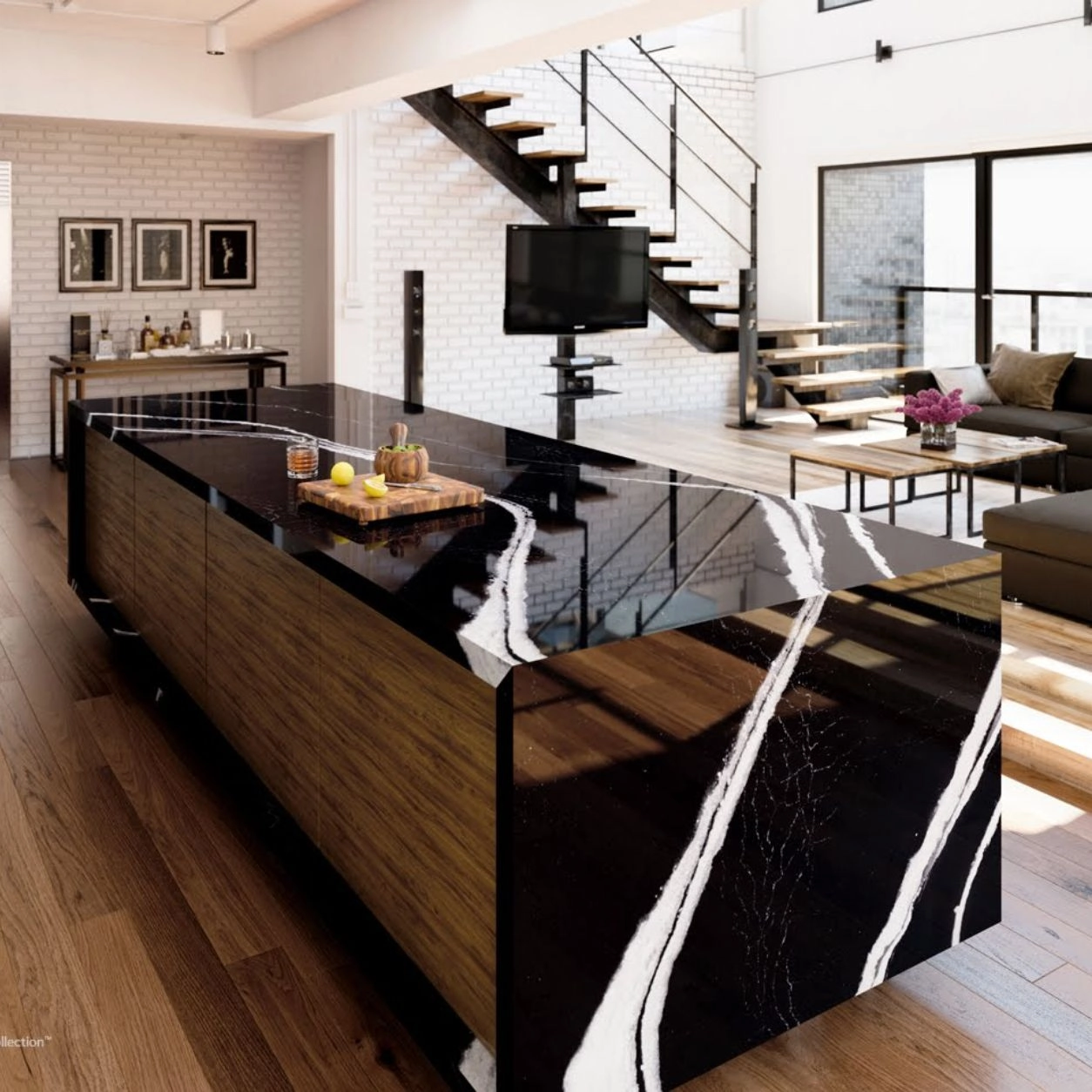
A waterfall edge drops the countertop stone down the side of the island to the floor, and in black quartz with bold white veining it becomes the room’s artwork. This loft kitchen keeps the island base in warm wood slats, so the stone reads like a dark river running over timber. Waterfall sides also protect cabinet ends from kicks, bins and vacuum bumps, a practical bonus nobody mentions. The cost is real, since you are buying stone for a wall you cannot chop on, so most people waterfall one end only, the end the room sees first.
Vein direction:Ask the fabricator to book match the top and the falling side so the veins flow over the edge like water. Unmatched veins stop dead at the corner and spoil the effect.
18. One Black Island in a Kitchen That Stays Light
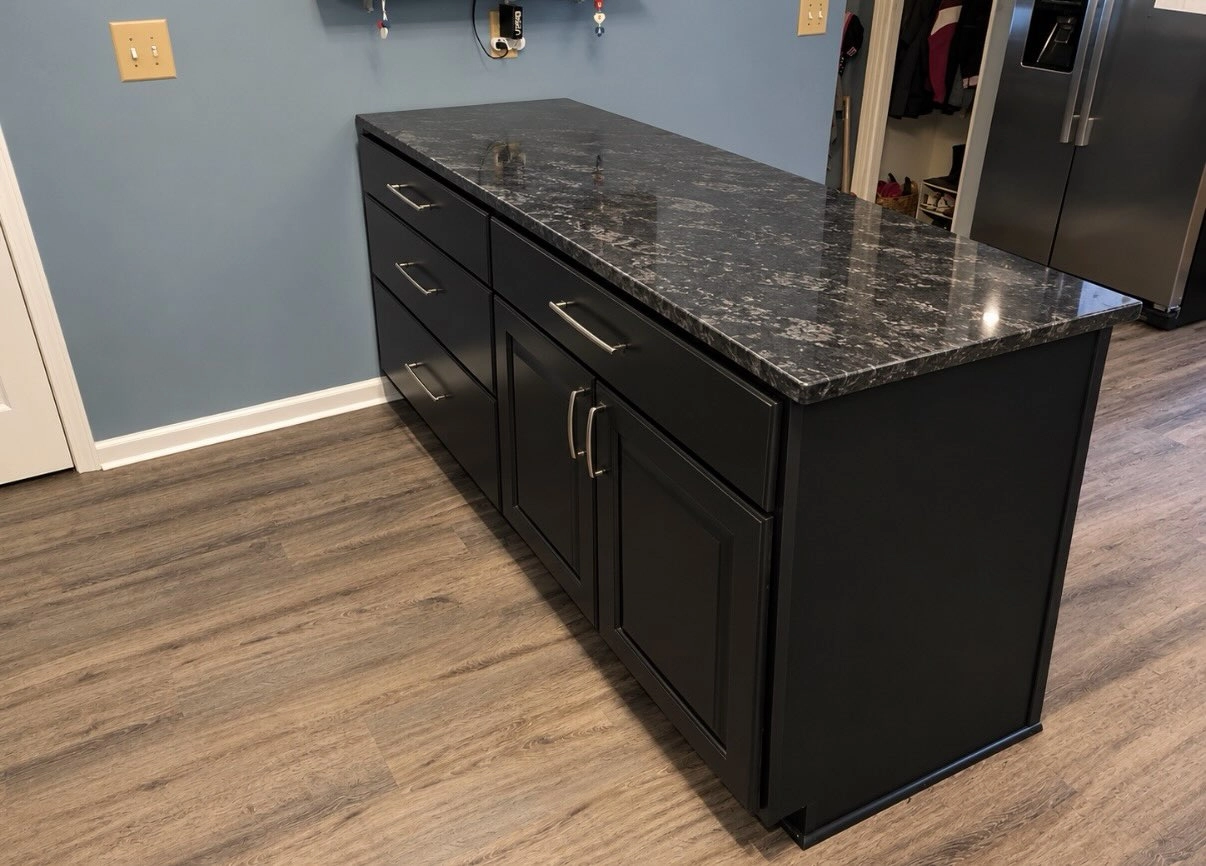
Sometimes the smartest black counter is a single one. This standalone island pairs black shaker cabinets with a mottled grey black granite top, and dropped into a light kitchen it would anchor the room without darkening a single wall run. An island takes the hardest use in most kitchens, homework, hot dishes, grocery bags, craft projects, so giving it the surface that hides stains just makes sense. The speckled pattern helps too, breaking up the black so dust shows less than it would on a solid slab.
Speckle scale:Fine speckle hides crumbs best, large dramatic pattern hides stains best. Pick based on which mess your kitchen actually makes.
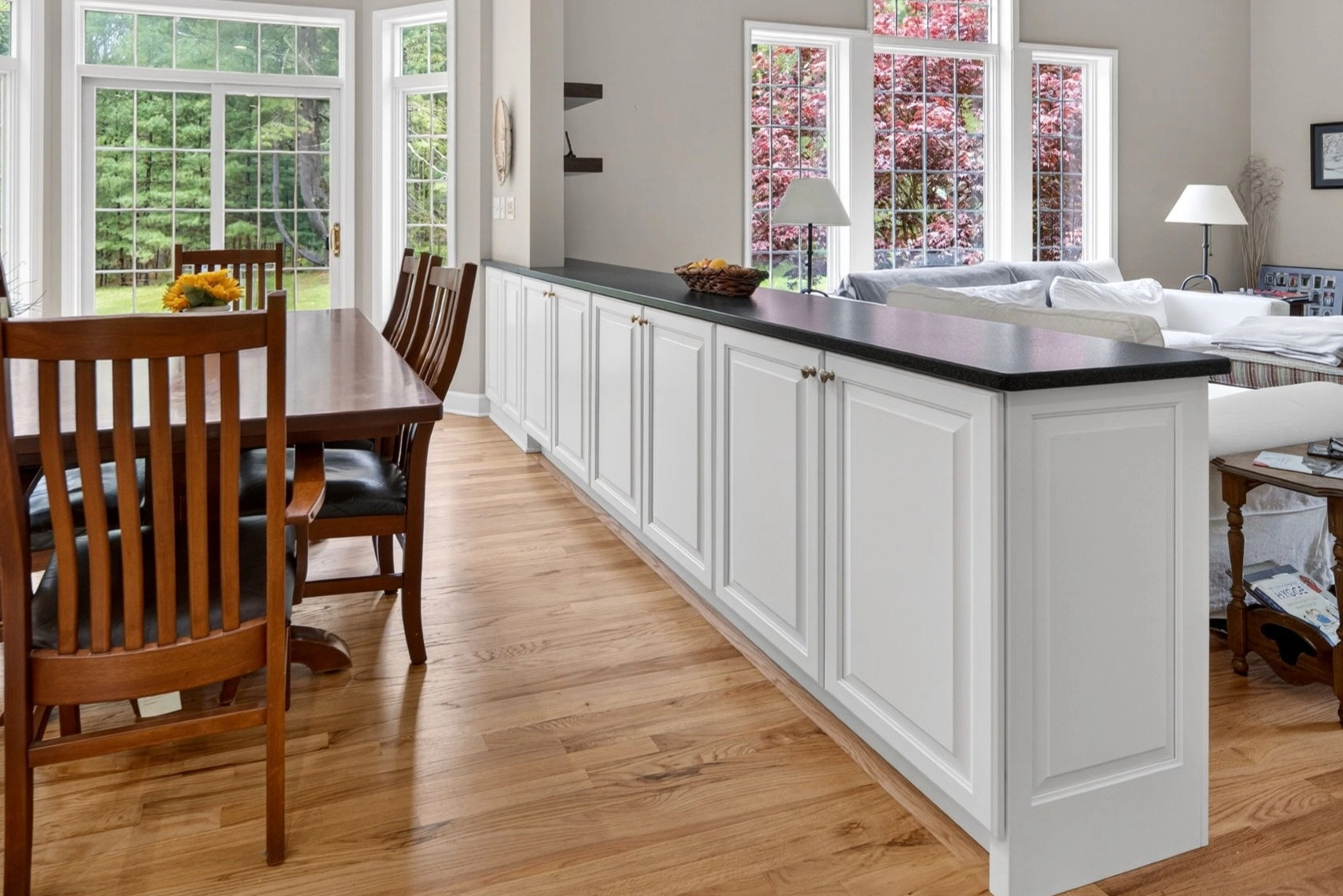
Black countertops earn their keep outside the cooking zone too. This long run of white storage cabinetry divides a dining area from a living room, and its leathered black granite top turns the divider into a serving buffet, a homework desk and a landing strip for everything entering the house. A hard stone top on a half wall like this takes hot serving dishes during gatherings and shrugs off the daily pile of keys, mail and bags. If you have an open plan that needs definition, a dark topped run draws the boundary more firmly than paint ever could.
Landing strip rule:Give the top one tray or basket as the official drop zone. Open stone collects clutter at exactly the speed it is left undefined.
A bar is where black counters stop being a compromise and start being the obvious choice. This one runs matte black granite under lit floating shelves, with decanters catching the light and a wood tone warming the back wall. Drink making is wet, sticky work, and dark stone hides every ring, splash and citrus drip until you choose to wipe, not the moment it happens. The matte finish matters here too, since bottles and glassware slide less and clink softer than they do on a polished mirror surface.
Bar depth:Sixteen to eighteen inches of counter is plenty for a home bar and leaves room for shelving behind. Standard kitchen depth wastes floor space in a bar nook.
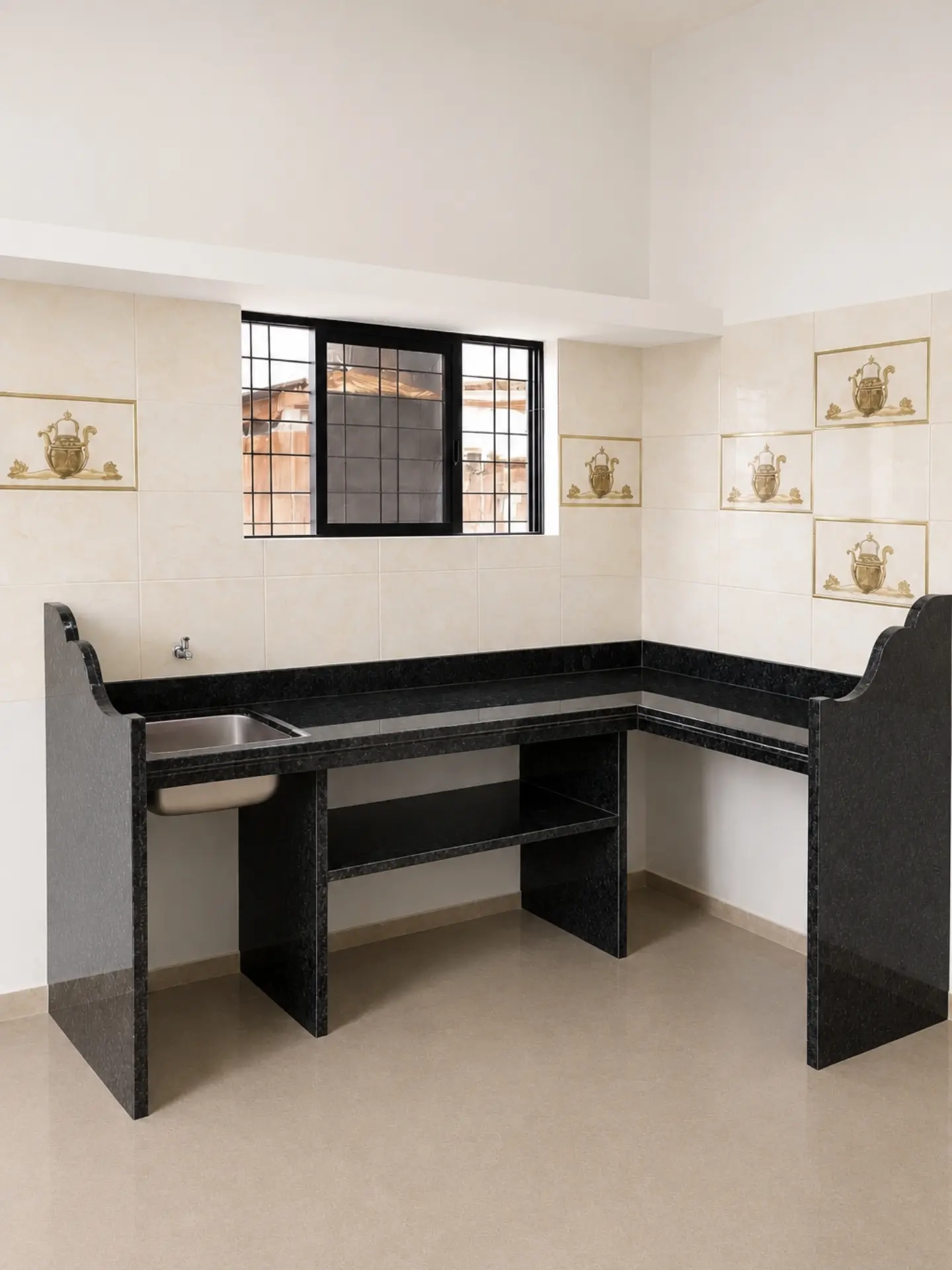
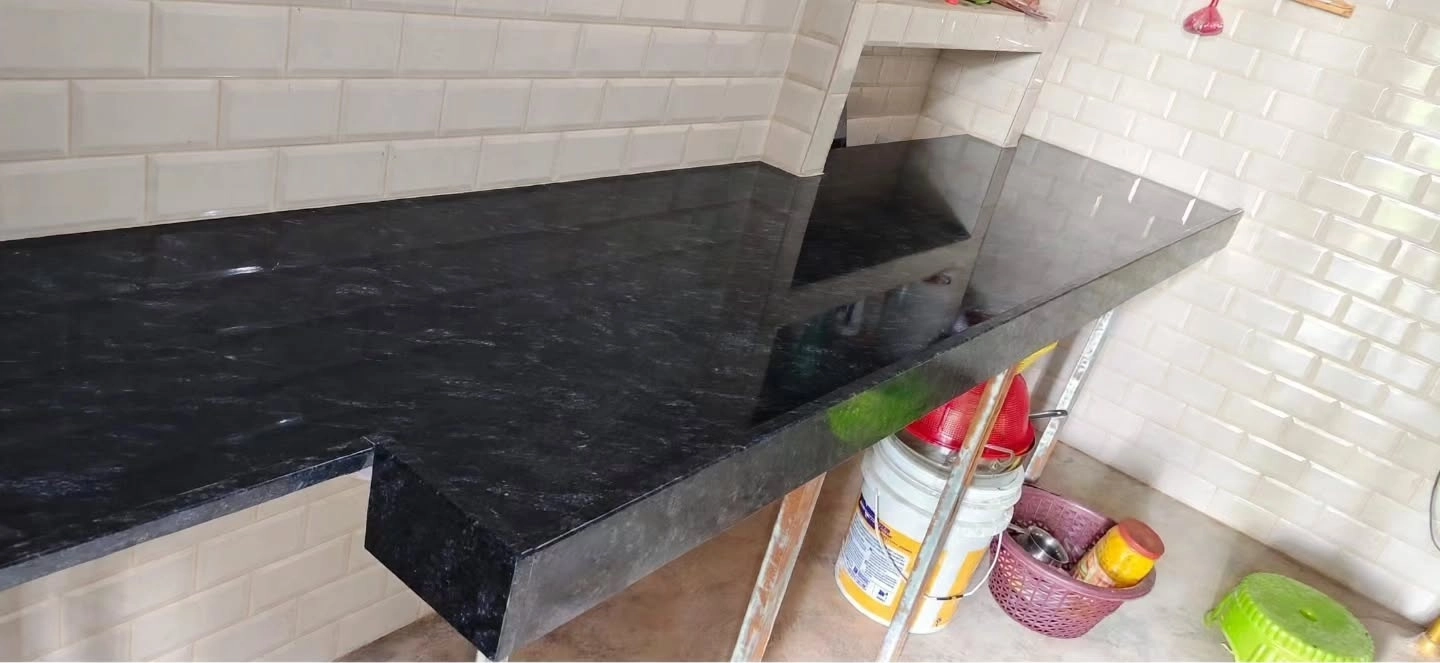
Plenty of black granite kitchens are not designer projects at all, just honest L-shaped runs like this one, a glossy black platform counter with an inset steel sink, cream tiled walls and a window over the workspace. Black granite has been a workhorse surface in homes like this for decades because it is hard, heat tolerant and cheap to source in many regions. The platform style, where the stone forms the counter and a raised back edge in one run, makes cleaning a single sweep with nothing trapped in a joint. Simple does not mean careless, though, since glossy black still asks for the microfiber habit covered below.
Sink choice:An inset steel sink keeps a bright note in a dark run and is far easier to reseat or replace later than an undermount in a platform counter.
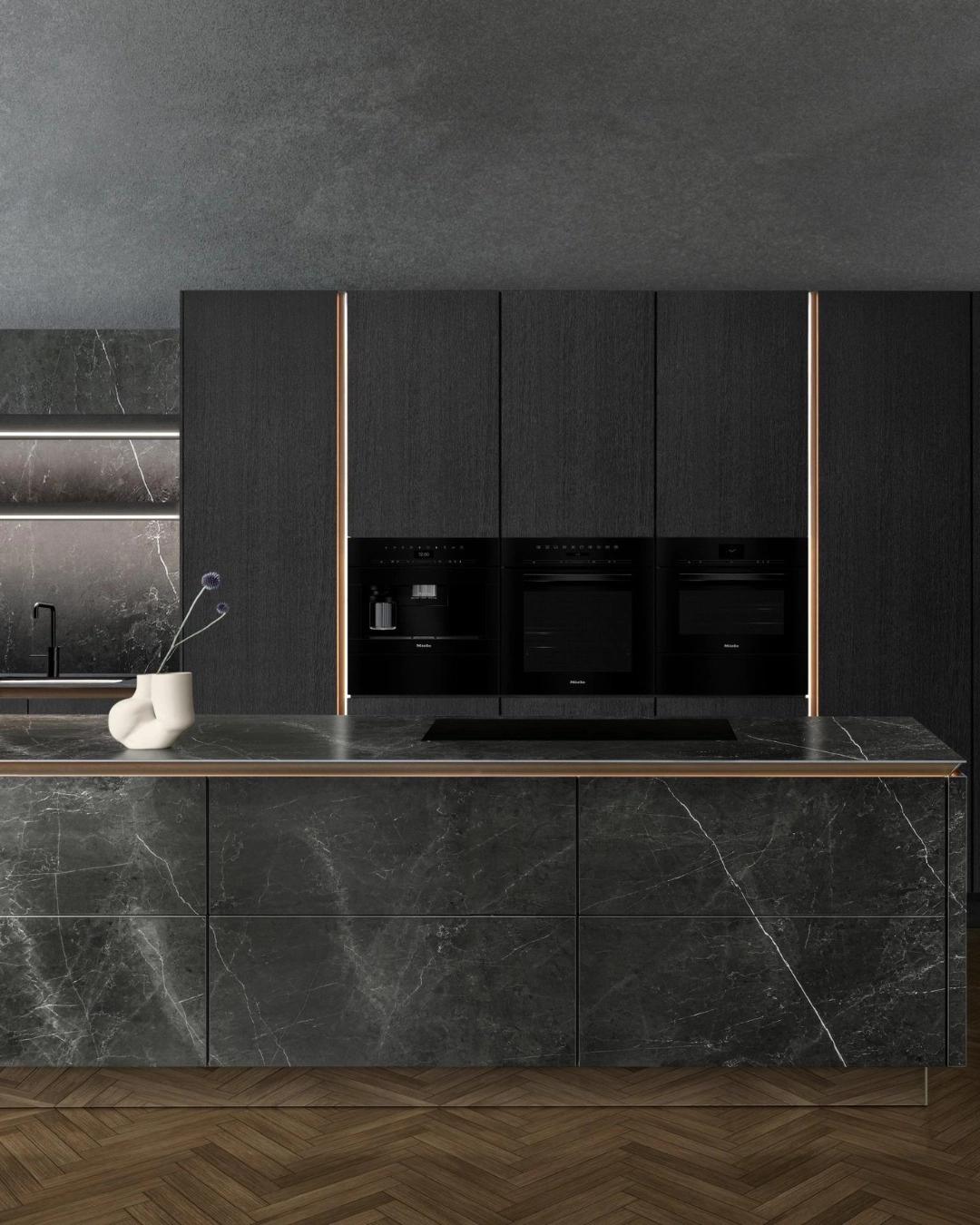
Edge profiles change how a black counter feels more than most people expect. This dark kitchen trims its black marble with a slim copper toned metal band, and that one bright line outlines the island, catches the light and stops the stone reading as a heavy slab. The built in black appliances disappear into the dark wood cabinetry, so the metal edge becomes the room’s only jewelry. A metal trim also protects the most chip prone part of a stone counter, the top edge, which takes the hits from pans, belt buckles and chair backs.
Profile pick:A slim eased edge suits modern kitchens, a chunky profile suits traditional ones. On black stone the edge catches more light than the top does, so choose it in person.
Live With It: Sinks, Light and the Daily Wipe
23. The Sink Zone in Black With a Brass Bridge Faucet
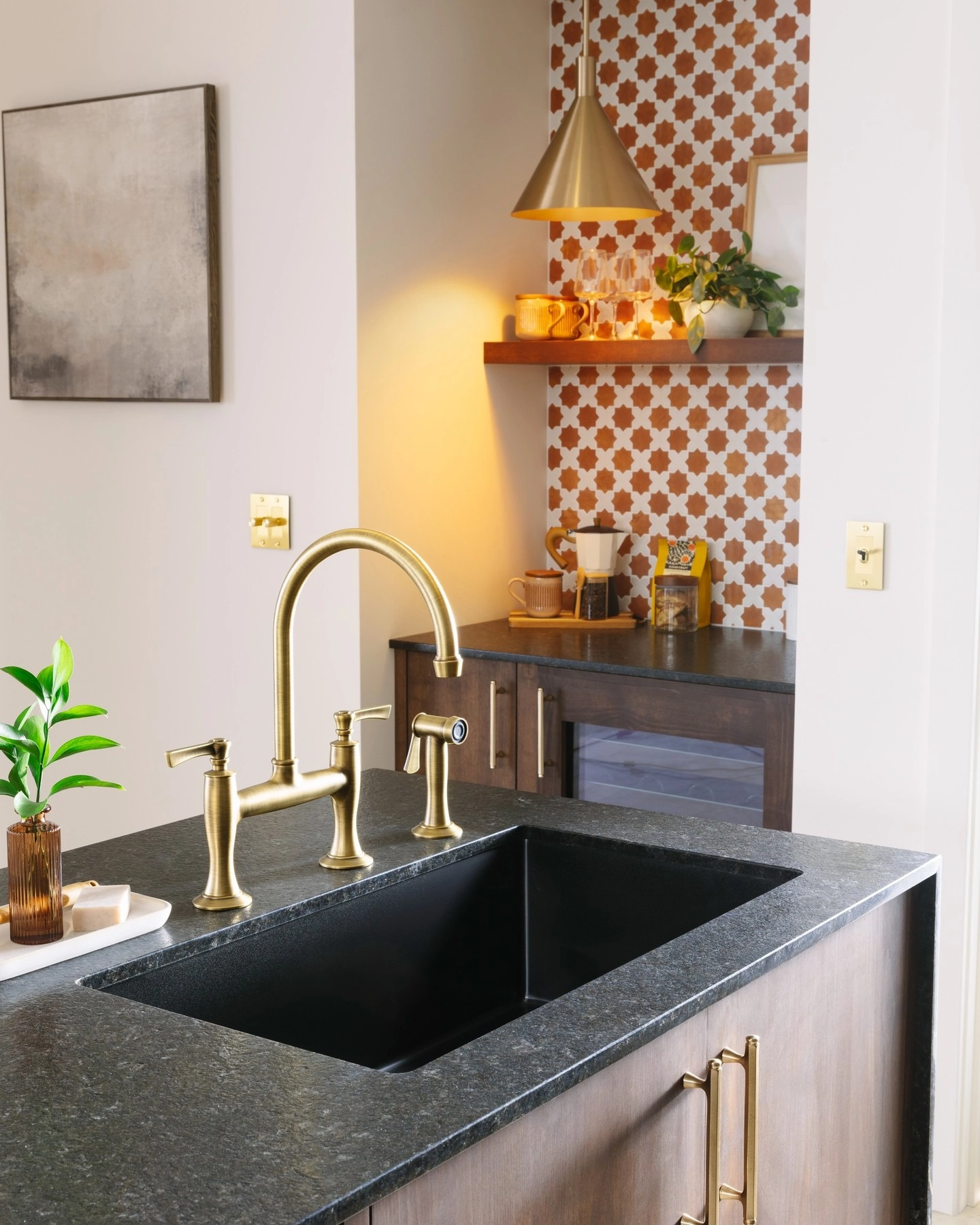
The sink is where black counters face their hardest test, since water spots and soap film show on dark stone faster than anywhere else. This close view pairs a black undermount sink with a speckled dark counter and a brass bridge faucet, and the speckle pattern does quiet work, breaking up the mineral marks that hard water leaves behind. A black sink keeps the whole zone one tone, so the waterline stains that outline a steel sink never appear. If your water is hard, this patterned, one tone setup is the lowest stress version of the look.
Hard water habit:A ten second squeegee or towel swipe around the faucet base after the last wash of the night stops most mineral crust before it starts.
The water drop test: Sprinkle a few drops of water on granite and watch them. If the water still beads after 15 to 20 minutes, the sealer is doing its job. If it soaks in and darkens the stone, the surface is drinking again and it is time to reseal. Run the test near the sink and the stove, since those zones wear the sealer out first.
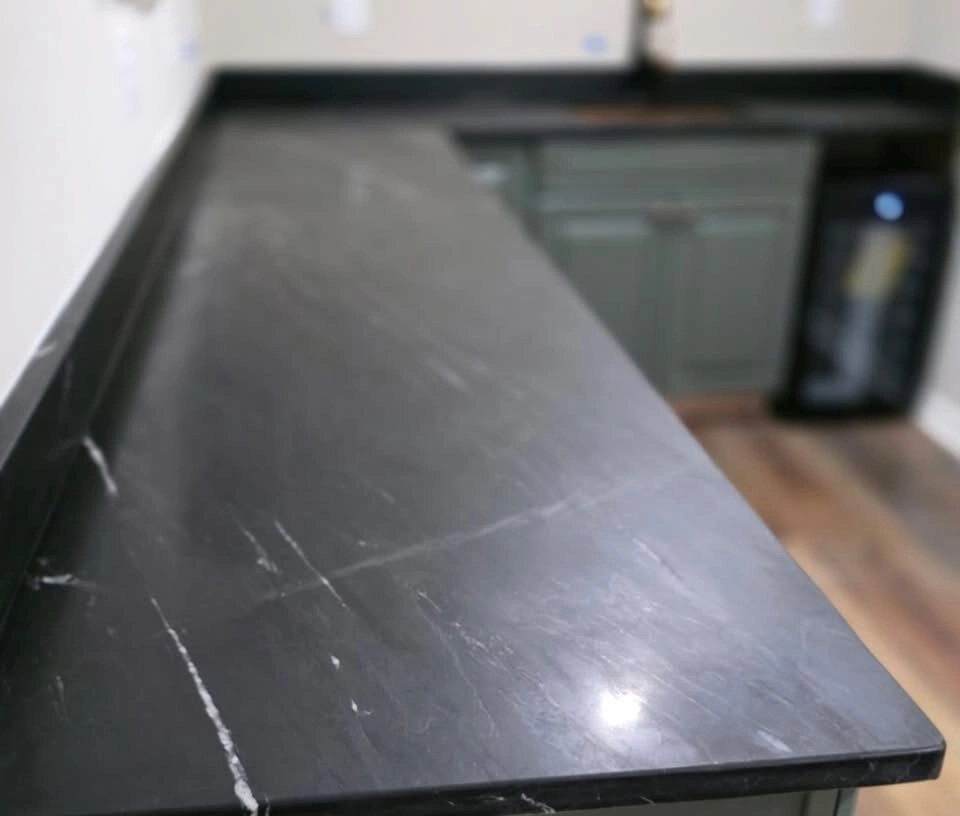
Every glossy black counter starts like this, a thick slab just set on its bases, tile still fresh, tools and paint pots underneath and a layer of job site dust over everything. It is worth seeing the unglamorous stage because two checks happen now or never. Seams should sit tight and level enough that a coin cannot rock across them, and the edge profile should match the sample you approved, since fixes get hard once sinks and stoves land. That dust, by the way, is the same pale film owners later blame on the stone, so remember how much of it a building site produces before judging your own kitchen.
Install day kit:A phone flashlight held low across the surface shows waves, dull patches and seam lips that ceiling light hides. Walk the whole run before the crew leaves.
25. Black in a Small Kitchen, Lit From Inside the Cabinets
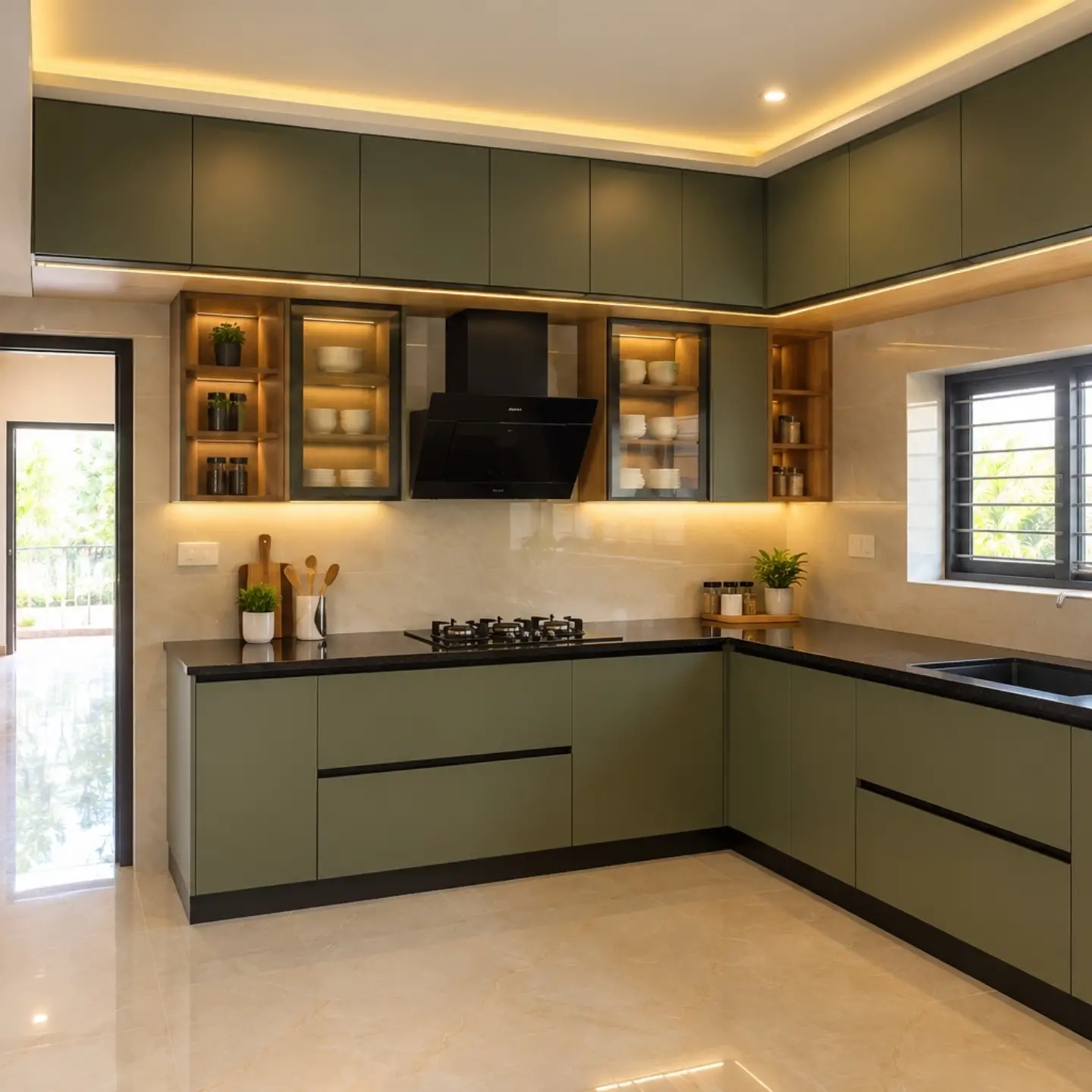
The standard warning says black counters shrink a small kitchen, but this little L-shaped room shows the workaround. Olive green lowers carry a black counter and a flush black glass hob, while glass front uppers glow with warm light from inside, pulling the eye upward and making the dark run feel like a base rather than a lid. The black hood angles away instead of boxing the corner, and a plain warm backsplash keeps the wall quiet. Small kitchens cook fast and close, so the flush hob matters too, since it wipes clean in the same pass as the counter around it.
Small room rule:Dark low, light high. Keep the black at counter height and below, then spend your light budget above it, inside glass cabinets or under shelf strips.
[SCROLL-STOPPER: daily reset checklist near the end]
The 60 second daily reset: this tiny routine is what separates black counter owners who love their counters from the ones who feel owned by them.
Wipe the whole surface with a damp microfiber cloth, plain water is enough most days.
Buff dry with a second dry cloth in small circles, since air drying is what leaves the streaks.
Clear one landing zone back to bare stone so the kitchen starts tomorrow tidy.
Hang the cloths up to dry instead of balling them in the sink, since a sour cloth smears more than it cleans.
Final Thoughts
Black countertops are neither the nightmare the comment sections promise nor the effortless surface the brochures claim. They are a finish decision wearing a color decision’s clothes. Pick polished if you love shine and wipe as you go, leathered or satin if you want the drama with half the visible upkeep, and soapstone if a soft, changing surface sounds like home rather than damage. Pair the stone with wood, cream or one good pattern so it never sits heavy, light it warmly, and keep a microfiber cloth within reach. Do those few things and black stops being a brave choice and becomes simply the hardest working surface in the kitchen.