The entryway rug is the first thing guests step on and the last thing you see before you leave. I replaced mine twice before finding one that held up to muddy boots, daily foot traffic, and still looked good after a year. Here are the entryway rug ideas that work in real homes where people actually come and go through the front door every day.
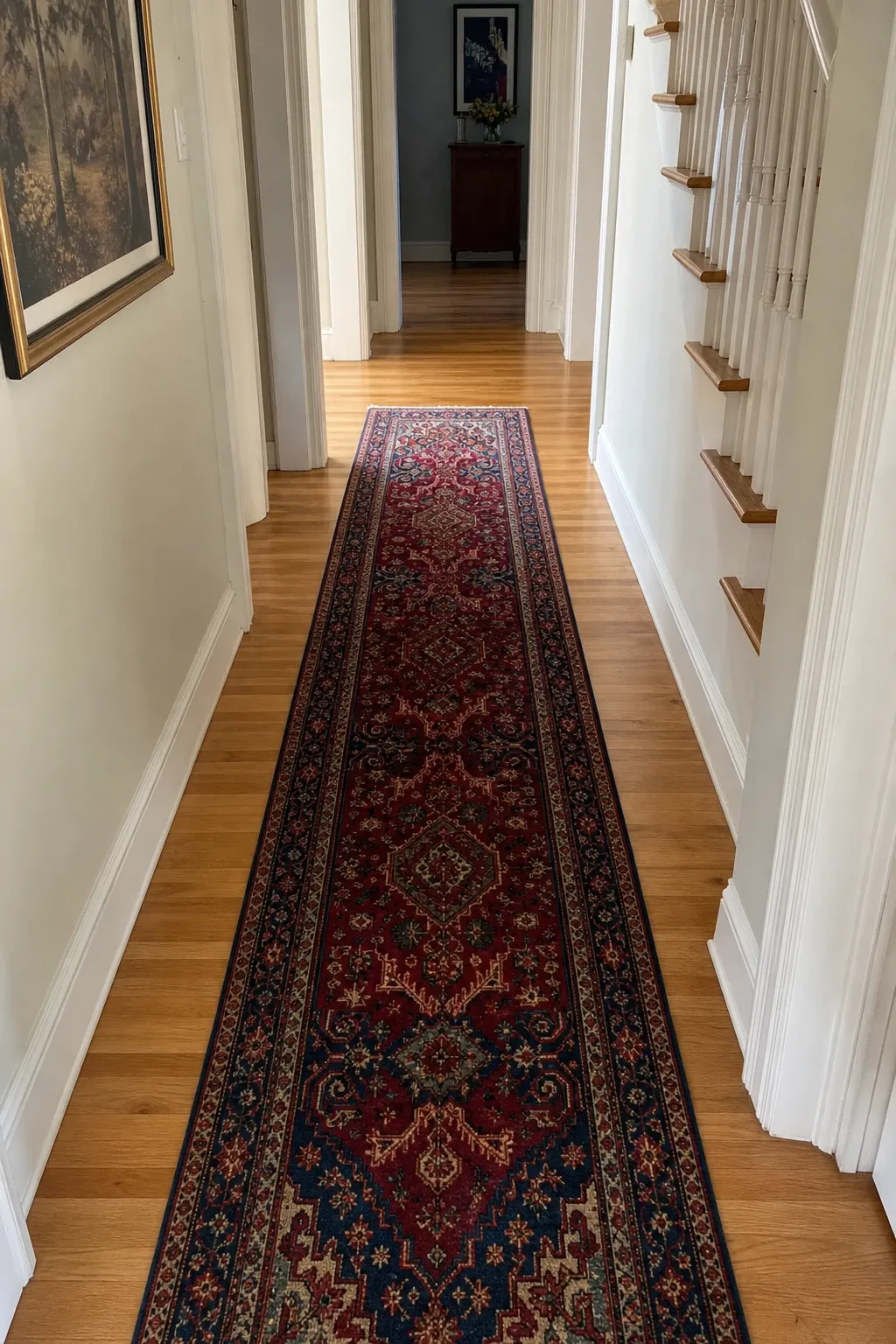
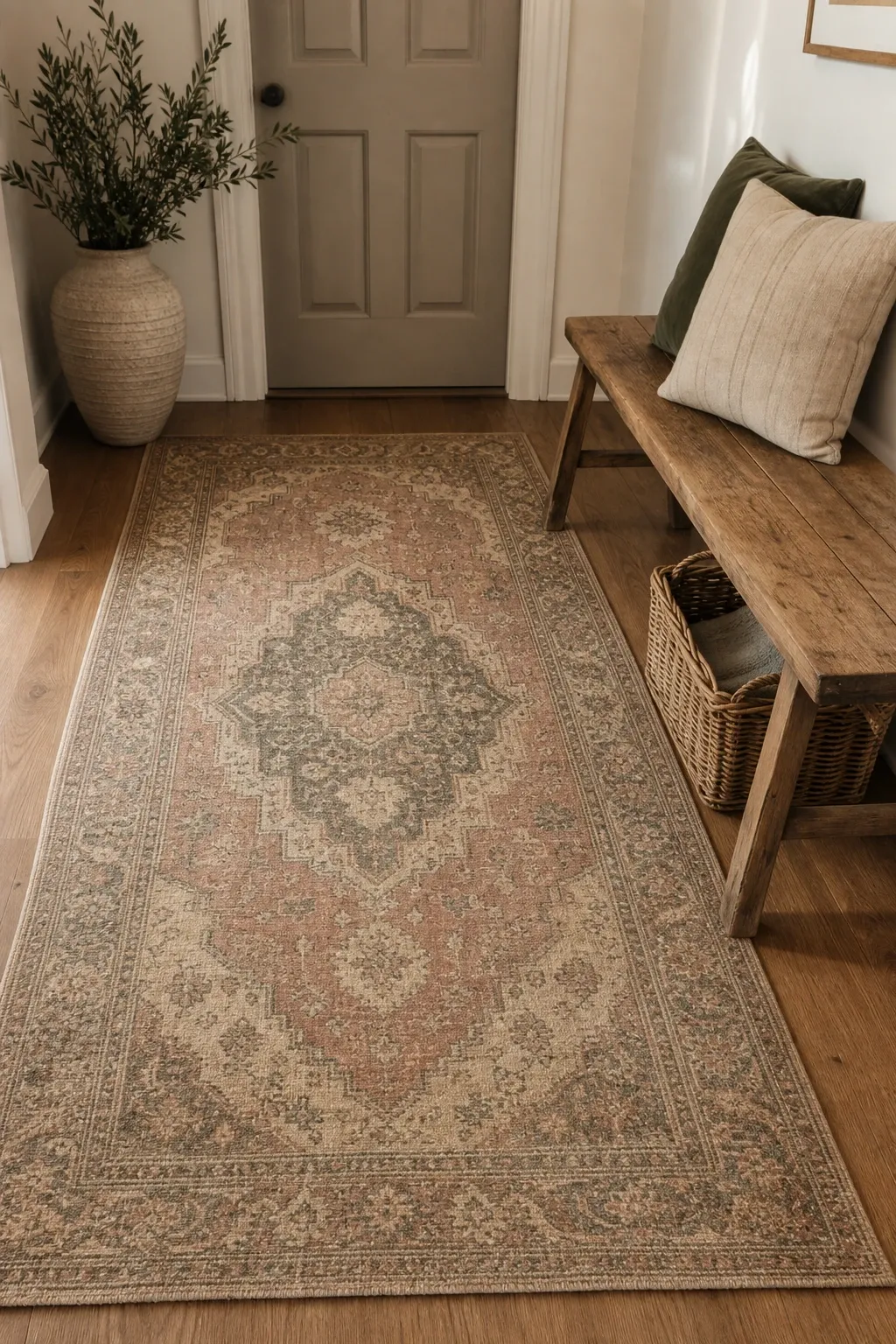
A patterned runner in the entryway directs foot traffic and hides dirt better than a solid color. The long, narrow shape fits hallway-style entryways perfectly and leads the eye into the home. Traditional patterns like Persian or Oriental designs add character, while modern geometric runners keep the space feeling current. Runners with a dark background hide stains and wear marks better than light ones.
Designer Tip: Size the runner so it leaves 4 to 6 inches of floor showing on each side. A runner that touches the walls looks like wall-to-wall carpet that was cut wrong. The exposed floor creates a frame around the rug that looks intentional and clean.
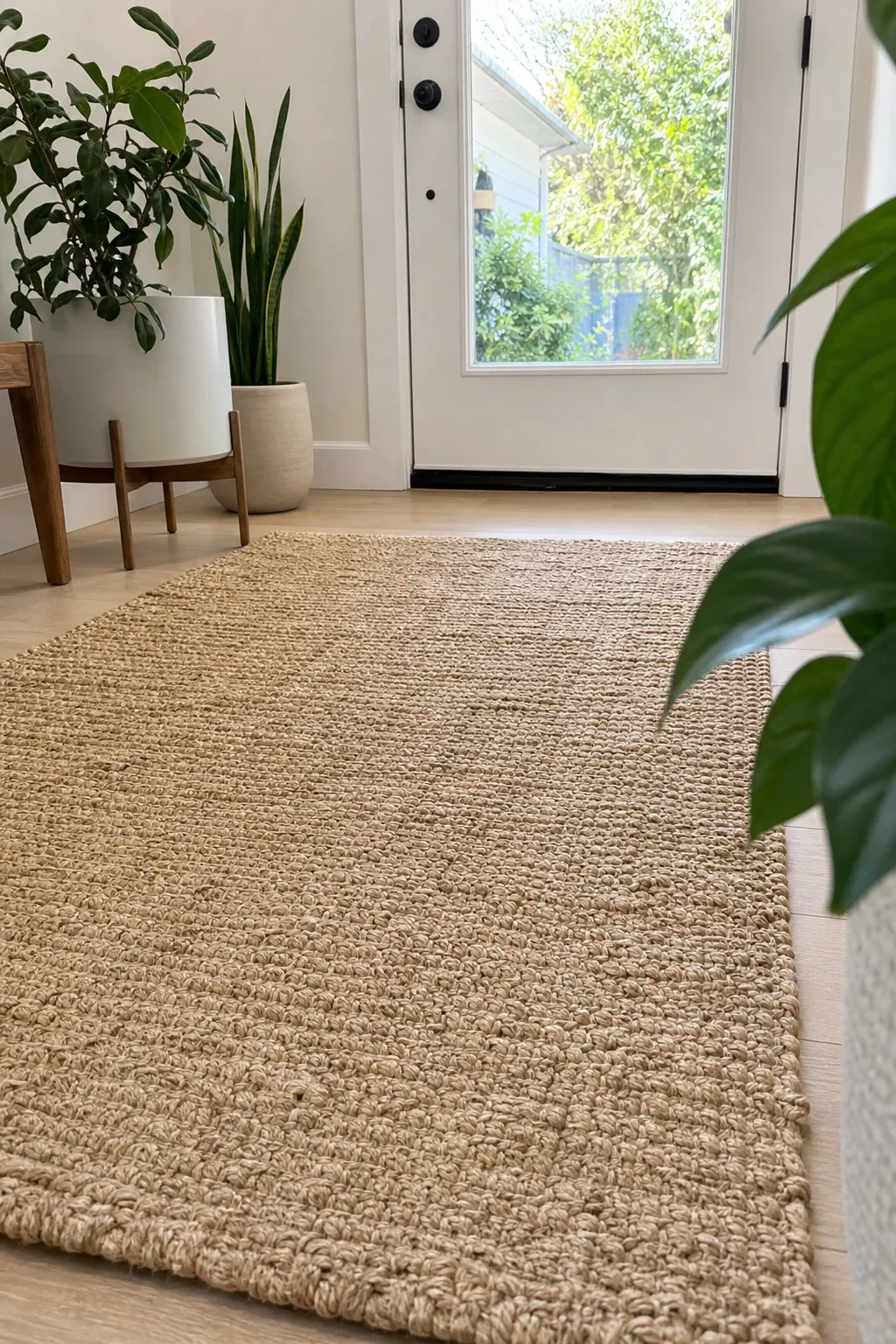
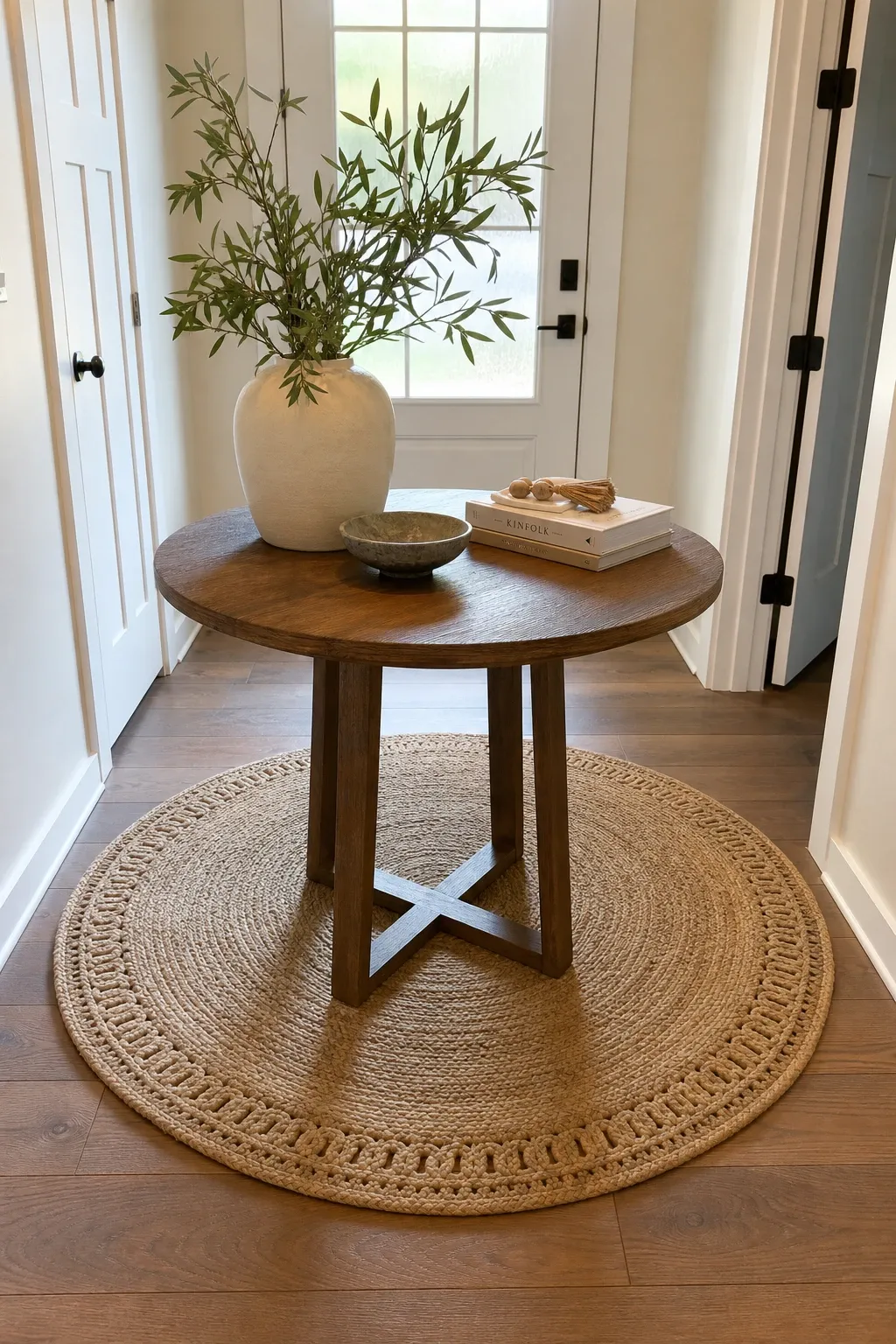
Jute and sisal rugs bring earthy texture to the entryway and hold up well under heavy traffic. The rough natural fiber scrapes dirt off shoes, which is exactly what an entryway rug should do. These rugs look good in farmhouse, coastal, and modern interiors because their neutral color works with any style. They do not show dirt easily, which is a major advantage in a high-traffic area.
Designer Tip: Place a rug pad under jute and sisal rugs to prevent slipping on hard floors. Natural fiber rugs are stiff and do not grip smooth surfaces on their own. A non-slip pad also adds a thin cushion layer that makes the rough fiber more comfortable underfoot.
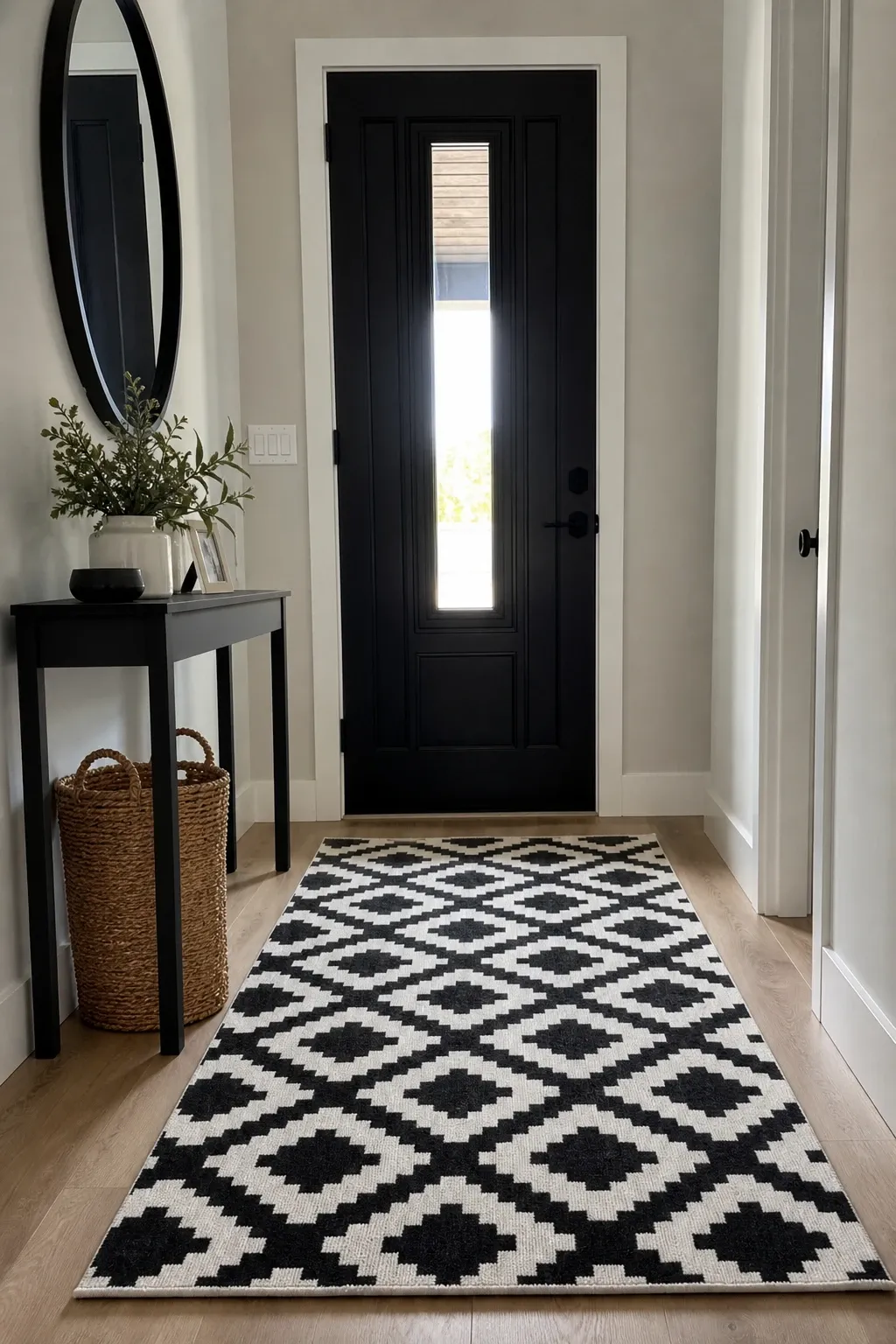
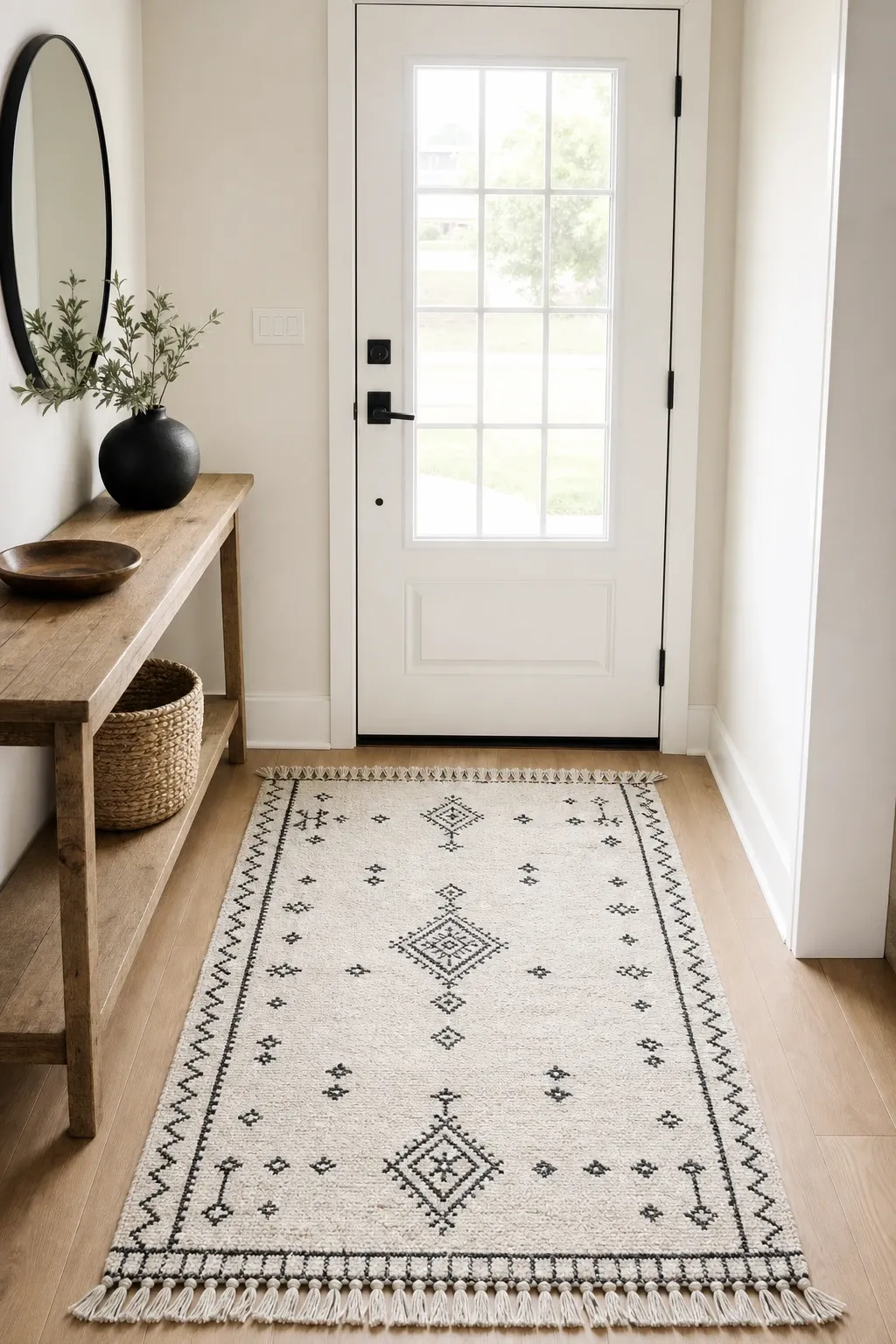
A black and white geometric rug makes a strong visual statement the moment someone walks through the door. The high contrast is eye-catching and modern. Geometric patterns work in contemporary and mid-century homes where clean lines are part of the design language. The two-tone palette ensures the rug matches any wall color and furniture you have in the entry space.
Designer Tip: Position a geometric rug so the pattern runs parallel to the door, not at an angle. Geometric patterns emphasize alignment and a crooked rug is more noticeable with structured lines. Take a step back after placing it and adjust until the lines run straight with the doorframe.
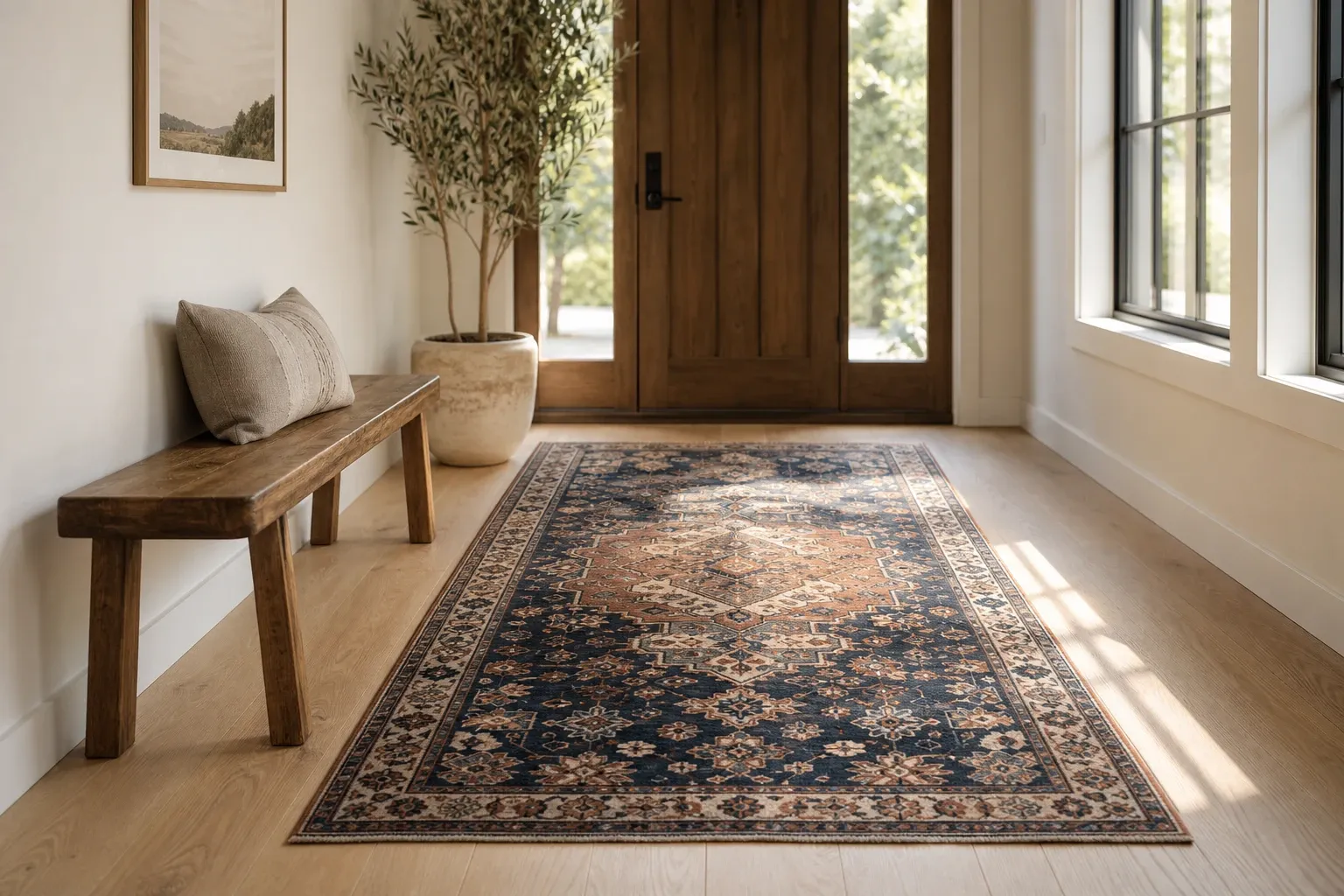
A rug with a deliberately faded or distressed finish looks like it has been in the home for decades, even when it is brand new. The worn look hides actual wear, stains, and high traffic marks beautifully because those imperfections blend into the intentional distressing. Faded rugs in muted blues, terracotta, and gold tones add warmth and character without looking too precious for a working entryway.
Designer Tip: Vintage-style rugs look best on dark or medium-toned floors where the faded colors contrast with the surface below. On very light floors, the washed-out colors can disappear visually and the rug loses its impact.
A flat weave rug in a bold black and white pattern lays thin and smooth, which is important in an entryway where the door needs to swing open without catching on the rug. Flat weaves are also easier to clean than thick pile rugs because dirt sits on top instead of sinking into deep fibers. Shake it outside, vacuum it, or even hose it down. The low profile looks sleek and modern.
Designer Tip: Check that the rug clears your door swing before buying. Measure the gap between the bottom of the door and the floor, then choose a rug thinner than that gap. A rug that jams under the door gets damaged on the edge and makes the door hard to open, which is the first thing guests notice.
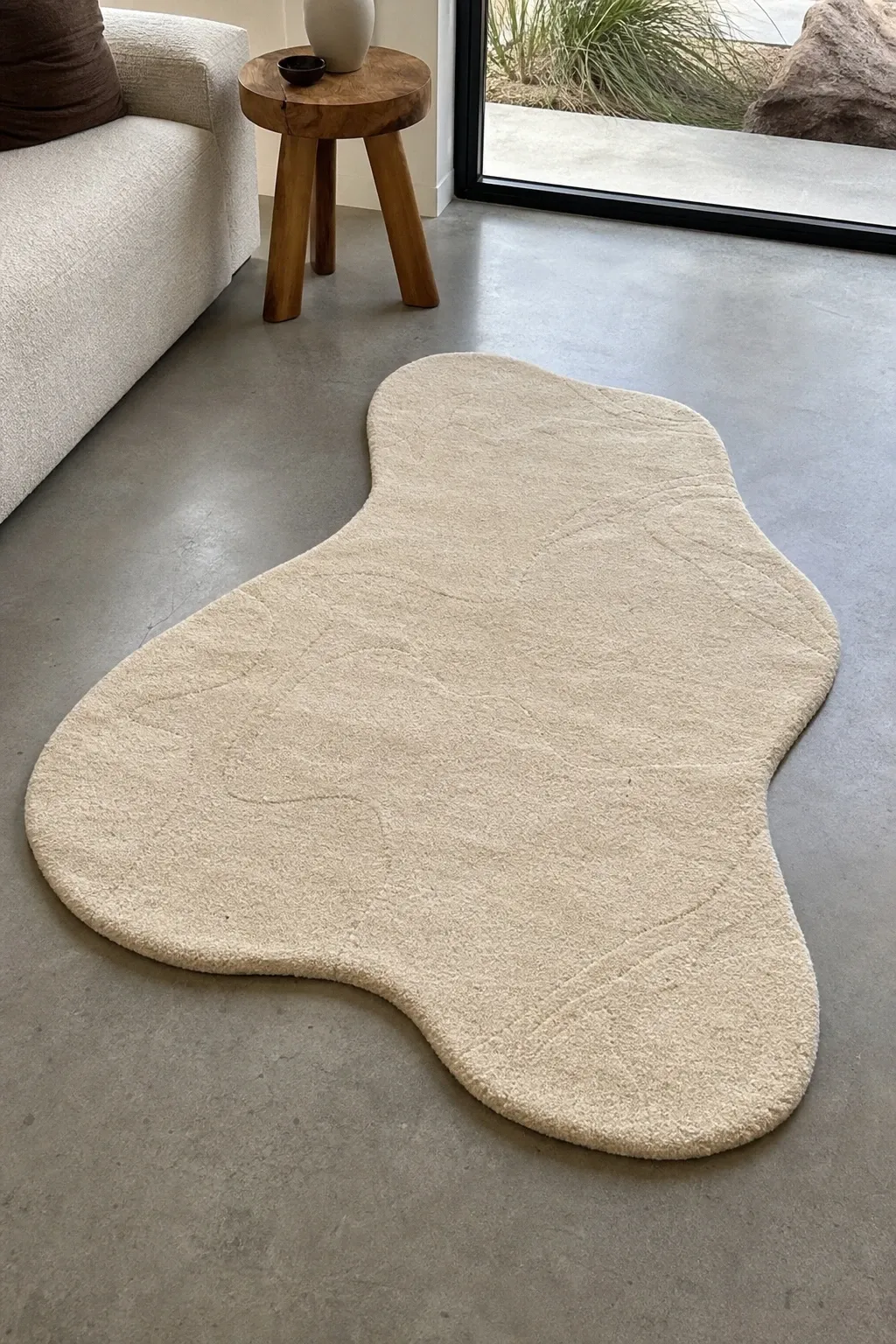
A rug with rounded corners or a scalloped edge softens the straight lines of a hallway or rectangular entryway. The organic shape adds visual interest to a space that is usually full of right angles from the door, walls, and furniture. Round rugs work well in square entryways. Oval and irregular shapes fit narrower spaces where a standard rectangle would look awkward.
Designer Tip: Use a non-slip pad cut to match the shape of the rug. Standard rectangular rug pads stick out from under round or scalloped rugs and look untidy. Most rug pad materials can be trimmed with scissors to match any shape.
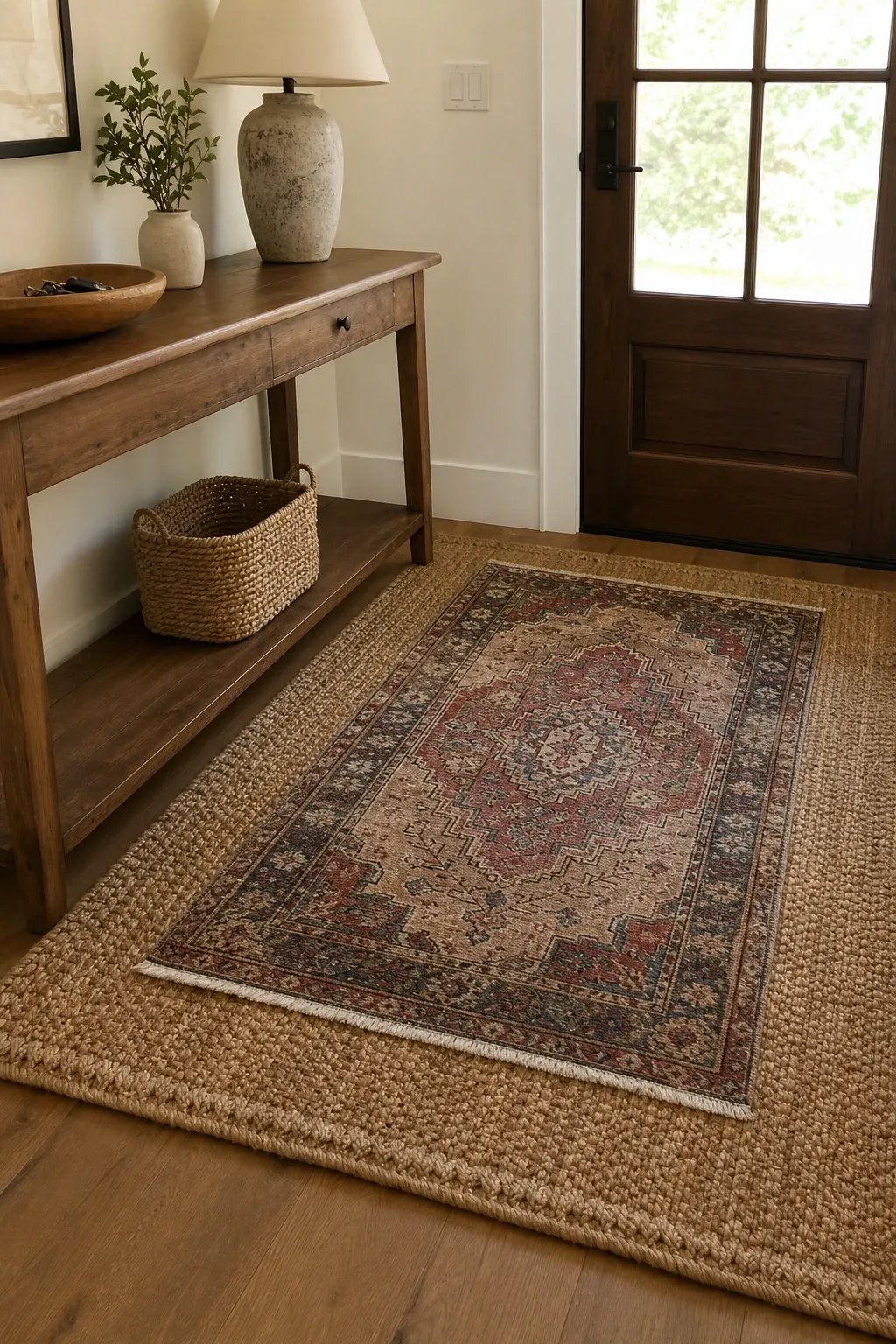
Layering a smaller patterned rug on top of a larger neutral rug adds depth and dimension to the entryway. The bottom rug provides coverage and the top rug provides personality. This approach lets you swap the top rug seasonally without buying a new large rug each time. A small kilim or Turkish rug on top of a large jute rug is a classic layered combination.
Designer Tip: Keep the top rug centered on the bottom rug with equal borders showing on all sides. An off-center top rug looks accidental rather than styled. The visible border of the bottom rug should be the same width all around for a balanced, grounded look.
Rugs made from recycled plastic, reclaimed textiles, or repurposed fibers are durable and easy to clean, which is exactly what an entryway needs. Many recycled rugs are designed for indoor-outdoor use, meaning they handle water, mud, and heavy traffic without deteriorating. The material is often UV-resistant too, so if your entryway gets direct sunlight, the rug will not fade as quickly as natural fiber alternatives.
Designer Tip: Look for recycled rugs that feel soft underfoot despite their durability. Early recycled plastic rugs felt like walking on a tarp. Newer versions are woven to feel like cotton or wool while keeping the durability advantage. Run your hand across the surface before buying to check the feel.
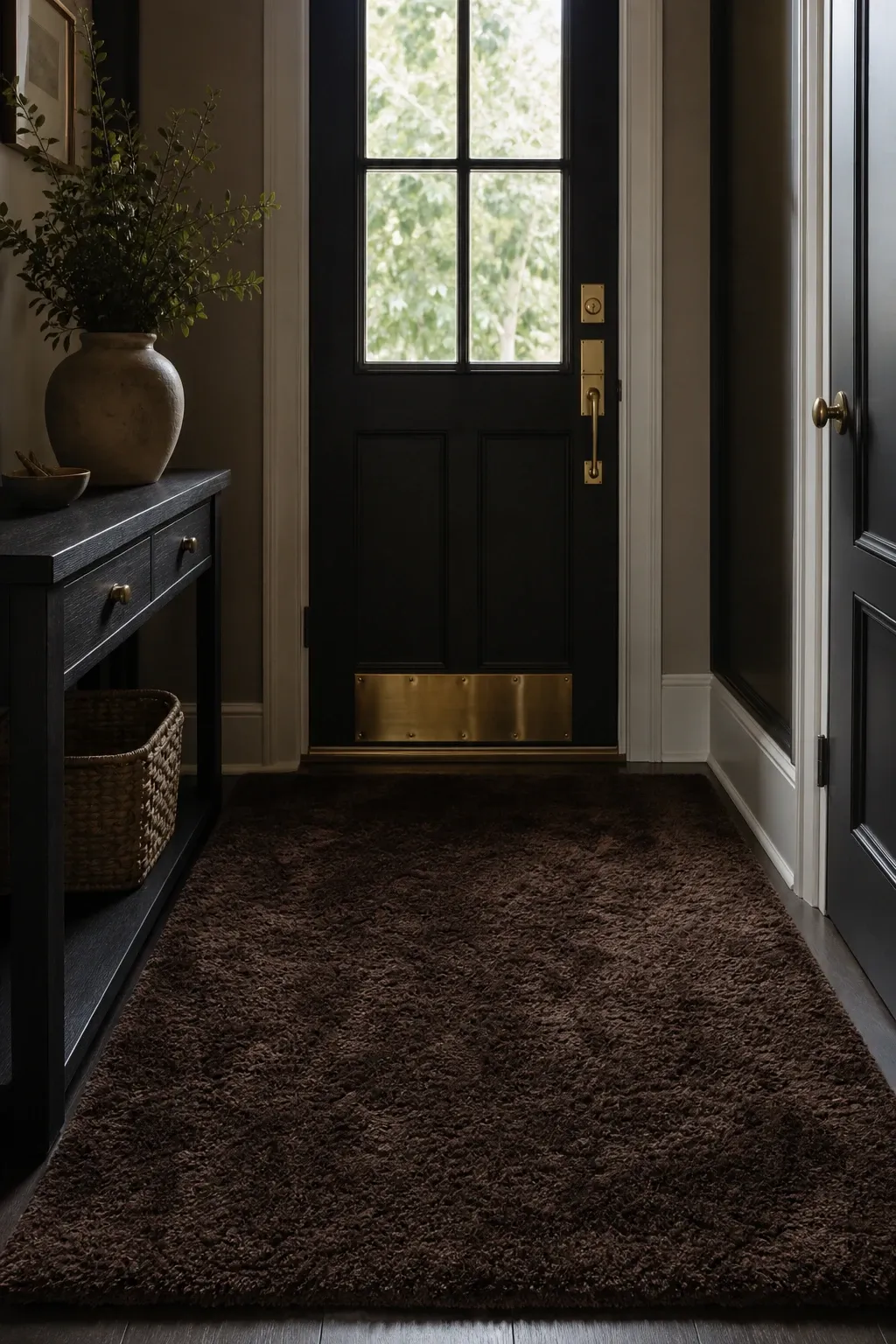
A solid dark rug in charcoal, chocolate brown, or navy is the most practical entryway choice. Dark colors hide everything: dirt, stains, scuffs, and wear marks. If your entryway gets heavy daily traffic and you do not want to worry about maintenance, a dark solid rug is the answer. It provides a clean foundation that lets the rest of the entryway decor stand out against it.
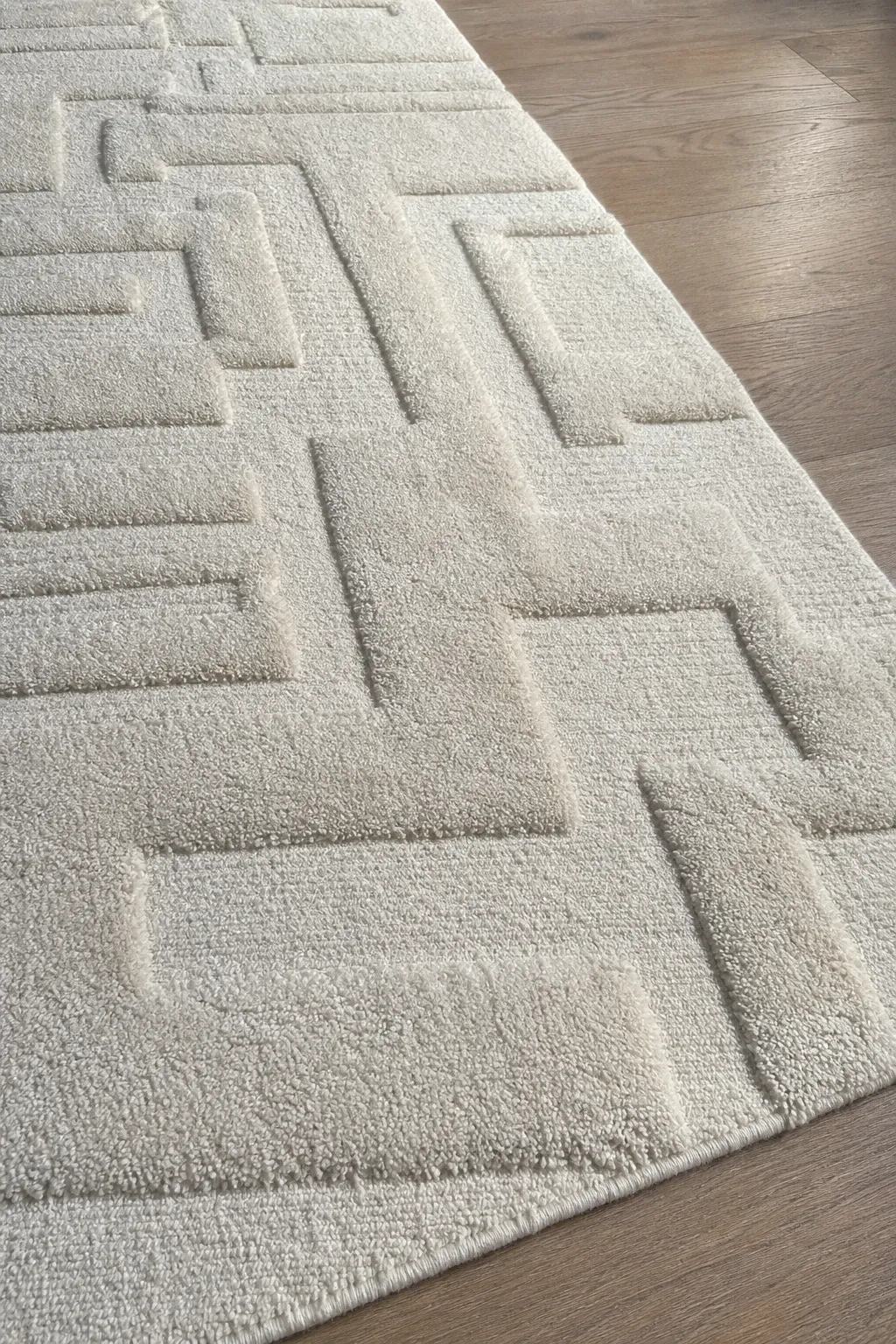
Designer Tip: Add visual interest to a solid rug by choosing one with a textured weave. A dark rug with a braided, looped, or ribbed texture has depth and character that a flat, smooth solid rug lacks. The texture catches light differently across the surface, which keeps a simple rug from looking boring.
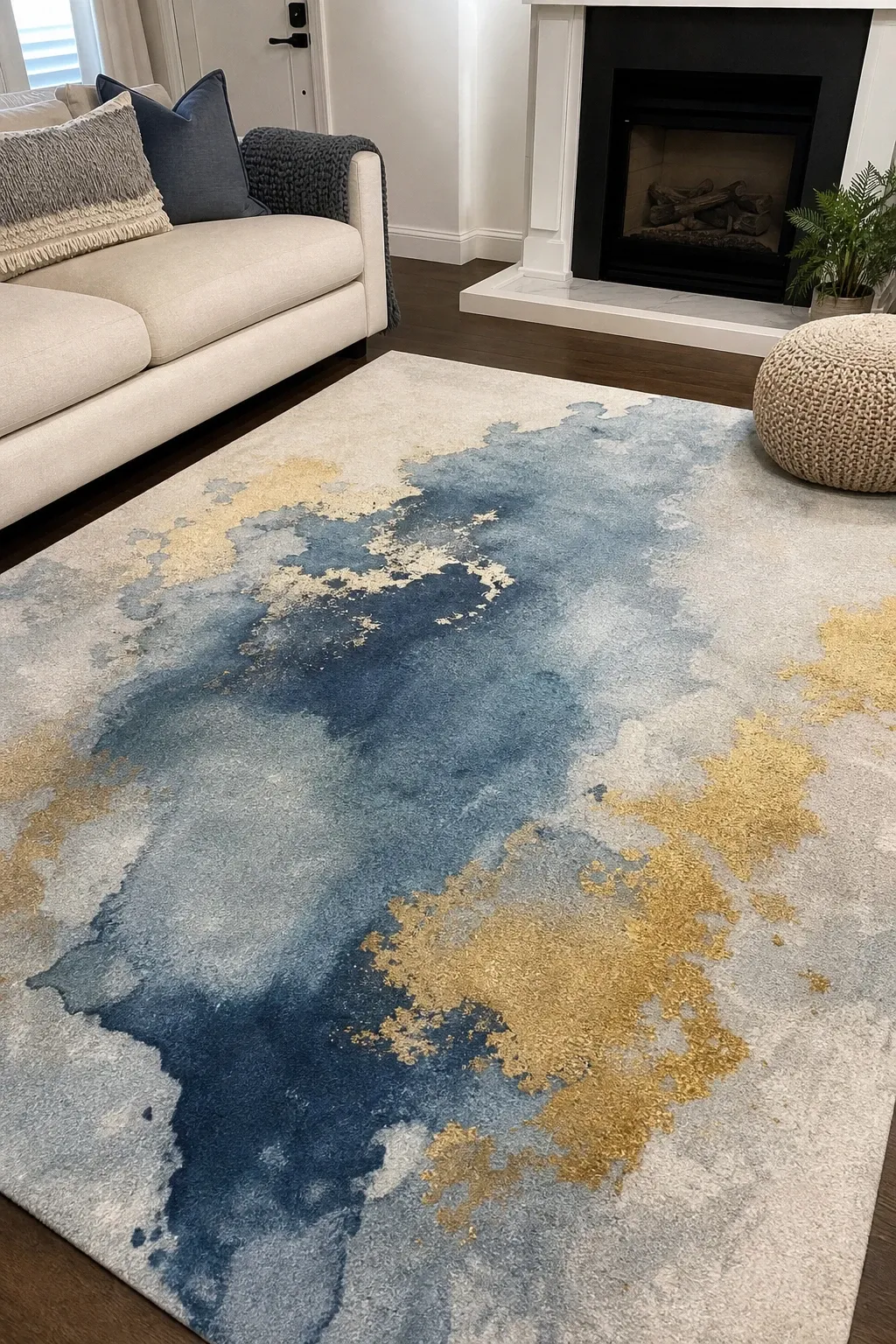
An abstract rug with brushstroke, splatter, or watercolor patterns makes the entryway feel like a gallery. Abstract designs are forgiving because there is no precise pattern to notice when it gets dirty or worn. The irregular design camouflages wear naturally. Blues, greens, and warm neutrals in an abstract pattern work in most home styles and add an artistic touch to an otherwise utilitarian space.
Designer Tip: Let the abstract rug be the statement piece in the entry. Pair it with a simple bench, a single mirror, and minimal accessories. Too many visual elements competing with an abstract rug makes the entry feel chaotic rather than collected.
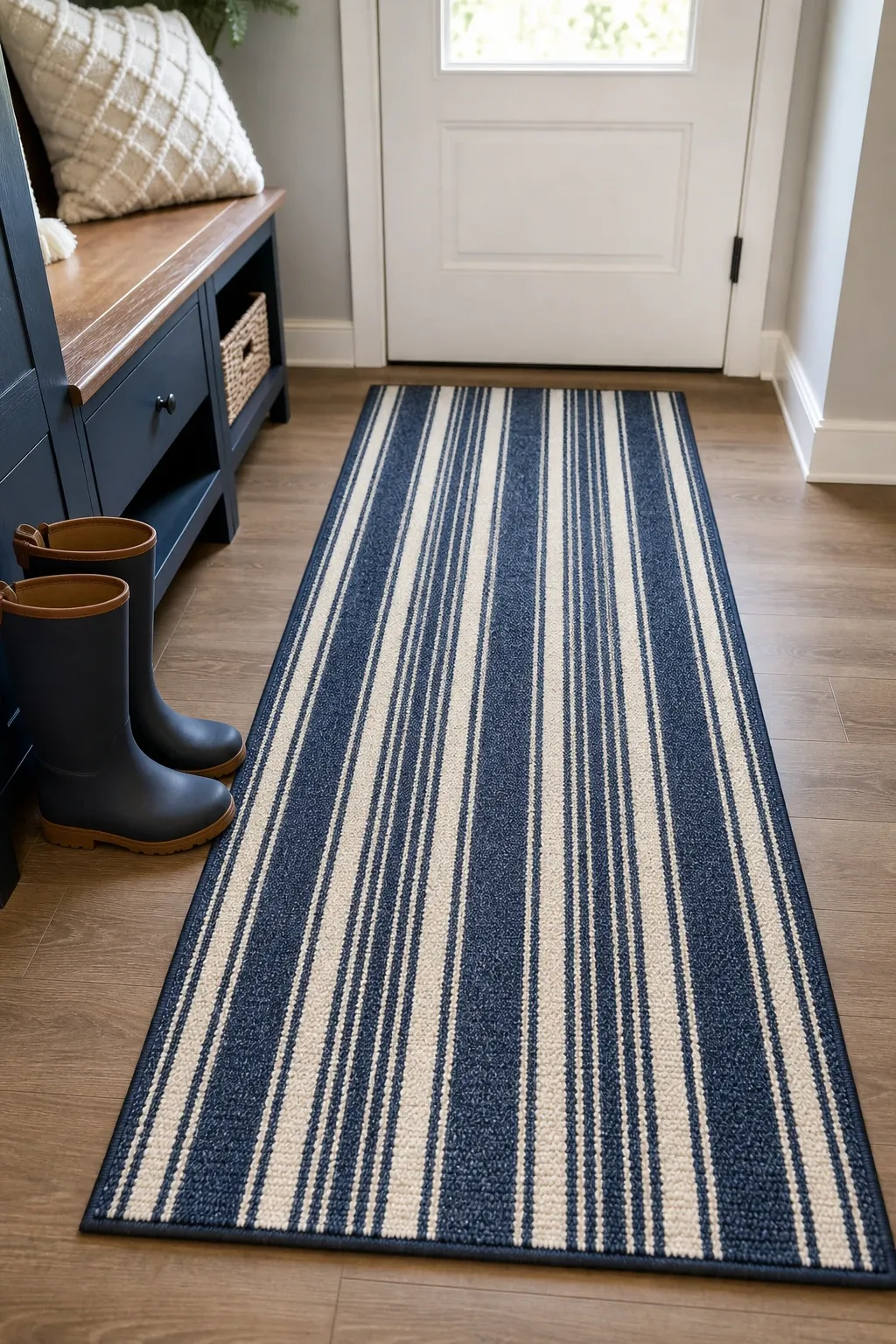
Horizontal stripes make a narrow entryway feel wider. Vertical stripes make a short entry feel longer. Stripes are one of the simplest patterns and they direct the eye in the direction you want. A blue and white striped rug gives a coastal feel. Black and cream stripes feel modern. Multicolor stripes add energy. The direction and colors of the stripes let you control both the mood and the visual proportions of the space.
Designer Tip: Run the stripes perpendicular to the longest wall to make the entry feel wider, or parallel to it to emphasize depth. Think about which direction feels right when you stand at the front door looking in, because that is the angle visitors see first.
A machine-washable rug designed for indoor-outdoor use is the most practical entryway option. Throw it in the washing machine when it gets dirty, dry it, and put it back. These rugs are made from synthetic fibers that resist stains, mildew, and fading. Modern washable rugs come in patterns and colors that look just as good as traditional rugs. The convenience factor alone makes this the top recommendation for busy households.
Designer Tip: Buy two washable rugs in the same style and rotate them. While one is being washed and dried, the other is on the floor. You never have a bare entryway and both rugs last twice as long because they share the wear.
A thick coir doormat inside the front door on top of a larger rug creates a practical layered entry system. The coir catches the heavy dirt and debris from shoes. The rug underneath catches everything else and adds warmth. Coir is rough enough to scrub shoe soles clean with just a couple of steps. Replace the coir mat every six months or so since they wear out faster than regular rugs, and keep the longer-lasting rug beneath as the consistent base.
Designer Tip: Choose a coir mat with a low-profile edge to prevent tripping. Some coir mats are thick enough to create a step-up that catches toes, especially in dim entryways. A mat that tapers at the edges or sits in a tray keeps the entry safe.
The best entryway rug is one that can take a beating and still look good. Focus on durability and cleanability first, then pick a color and pattern that complements your home style. Dark colors and busy patterns hide dirt. Natural fibers scrub shoes clean. Washable rugs make maintenance easy. Start with what the entryway needs practically and the style will follow.
Frequently Asked Questions
What size rug is best for an entryway?
The rug should be wide enough that both feet land on it when you step through the door. For most entryways, a 3-by-5 foot or 4-by-6 foot rug works well. Narrow hallway entries need a runner that is 2 to 3 feet wide and long enough to cover the main walking path.
How do I keep my entryway rug from sliding?
Use a non-slip rug pad cut to size. Gripper pads with a rubber or latex surface work best on hard floors. For rugs on carpet, use a pad designed for carpet-to-carpet grip. Double-sided carpet tape works as a budget alternative for lightweight rugs.
How often should I replace an entryway rug?
A good quality entryway rug lasts two to five years depending on foot traffic and material. Natural fiber rugs like jute wear out faster in wet climates. Synthetic and recycled material rugs typically last longer. Replace the rug when it looks matted, frayed at the edges, or no longer lays flat.
Can I use an outdoor rug inside for the entryway?
Yes, and it is actually a smart move. Outdoor rugs are made to handle moisture, dirt, and heavy traffic, which is exactly what an entryway demands. They are easy to hose off and dry quickly. The only downside is that some outdoor rugs feel rougher underfoot than indoor rugs, so check the texture before buying.