Most farmhouse dining rooms look fine in photos and feel a little flat in real life, because people add all the right individual pieces without understanding how those pieces are supposed to work together. This guide builds the room the way a designer actually does it: foundation first, then mid-layer decisions, then the finishing details that make a space feel lived-in and genuinely yours.
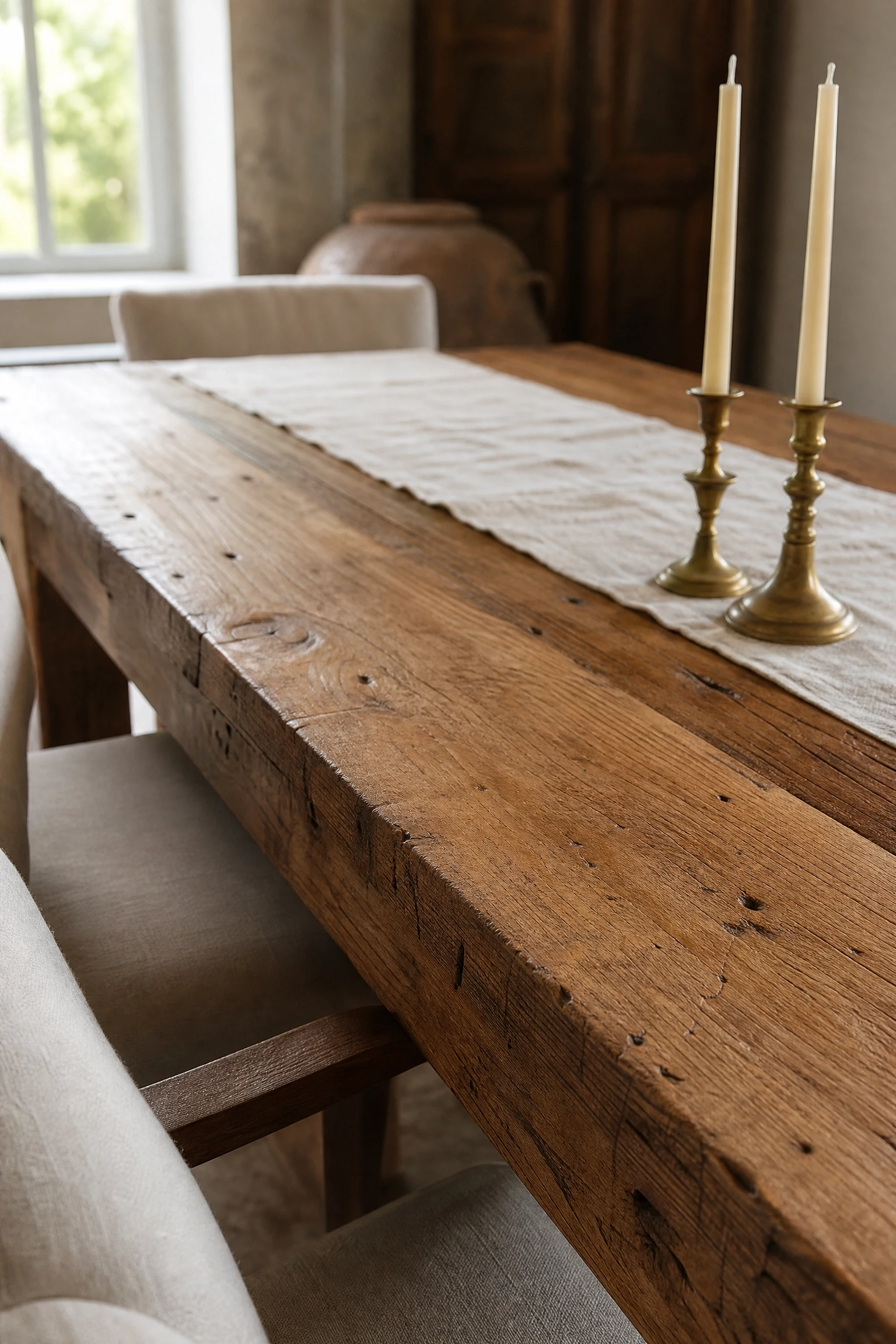
A reclaimed wood farmhouse table with natural imperfections, saw marks, knots, and uneven grain tells a story that a brand-new piece simply cannot, and that sense of history is what separates a genuinely warm farmhouse dining room from one that looks like a catalog page. Look for solid wood construction with mortise-and-tenon joinery rather than veneers, which peel and swell in dining room conditions within a few years.
Designer Advice: Buy the best table you can afford and let everything else serve it. The table is the anchor of the room and the one piece worth investing in at a higher price point.
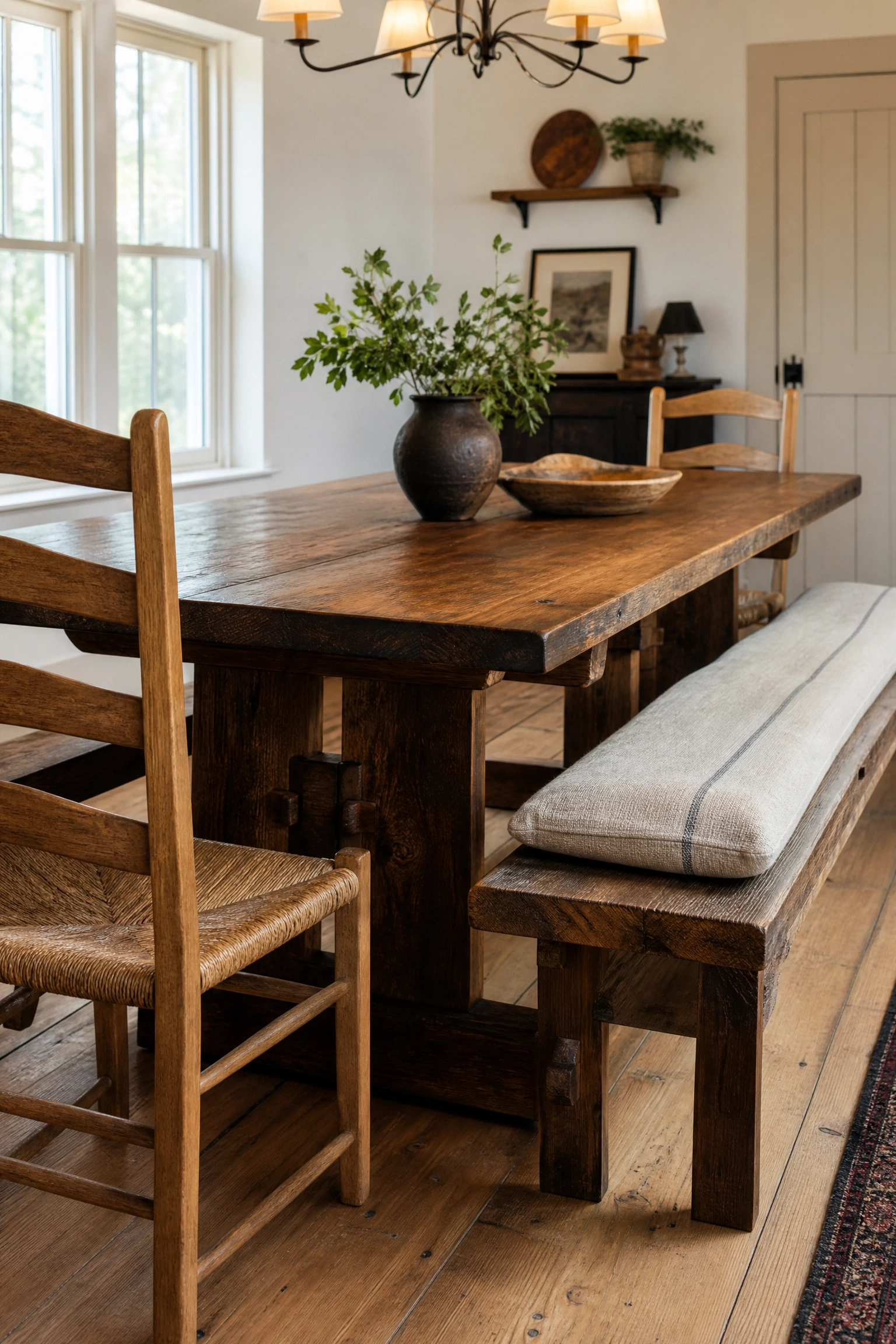
Surrounding a farmhouse table with four or six identical chairs from the same set is the single fastest way to make the room look purchased rather than gathered, which is the opposite of what farmhouse style is supposed to communicate. Mix a wooden bench on one side with upholstered chairs on the other, or combine ladder-back chairs at the ends with linen-covered seats along the sides for a collected, lived-in feel.
Pro Move: Use the same finish or wood tone across mismatched chair styles to tie them together without forcing them to match. Consistency in tone reads as intentional; inconsistency in both style and tone reads as unfinished.
3. Lay Wide-Plank Wood Floors and Resist Urge to Refinish Them
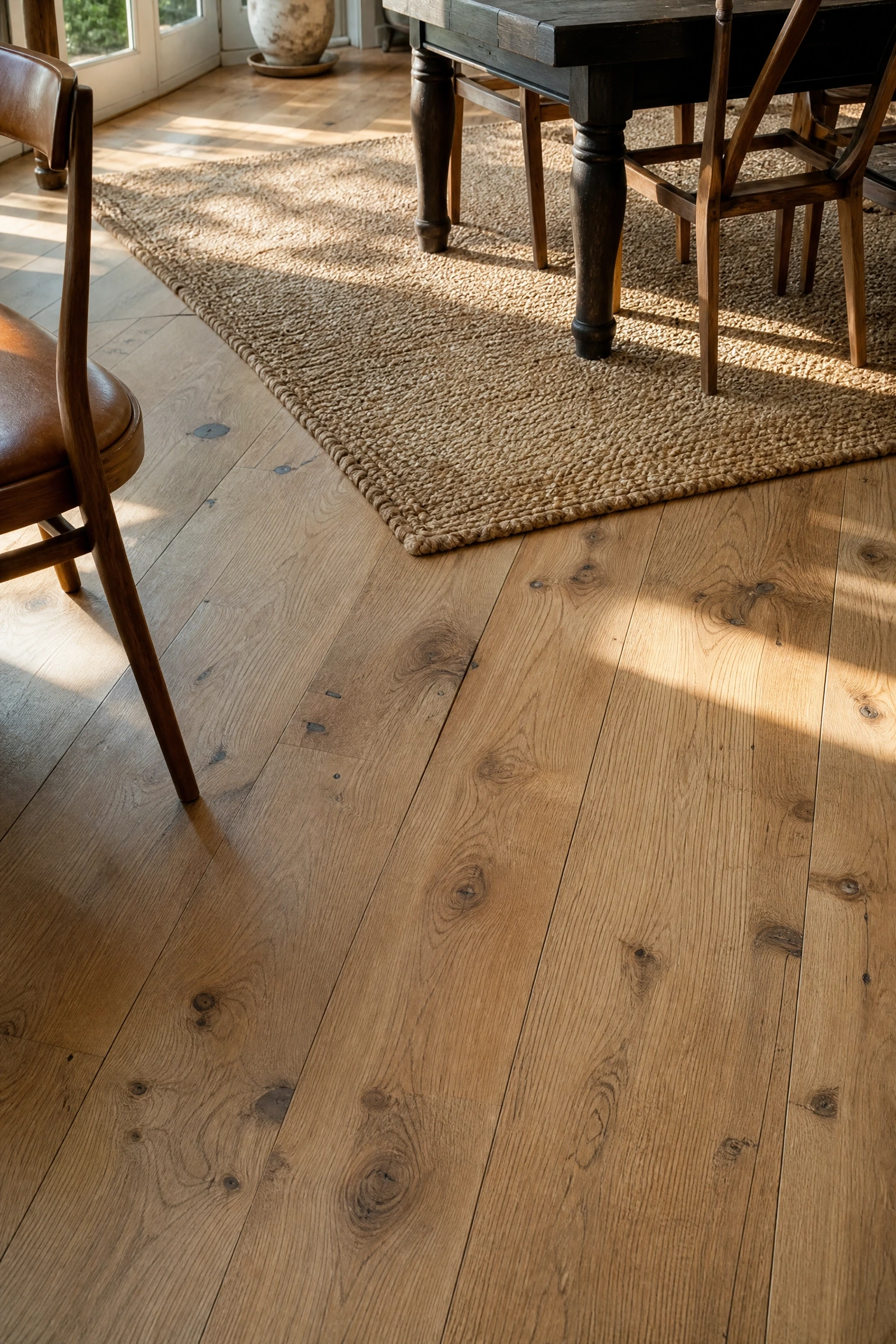
Wide-plank white oak or heart pine floors with a matte or satin finish and visible grain variation ground a farmhouse dining room the way no area rug or painted floor can, because the material itself carries the warmth of the space before a single piece of furniture is placed. In practice, the floors that look most beautiful in farmhouse dining rooms are often the ones that have been left alone, lightly oiled or waxed rather than polyurethaned to a high sheen.
Reality Check: High-gloss polyurethane on wide-plank floors reads as new construction, not farmhouse. A hardwax oil finish shows character, scuffs gracefully, and is easier to spot-repair than a sealed floor.
4. Try Vertical Shiplap Instead of the Standard Horizontal Version
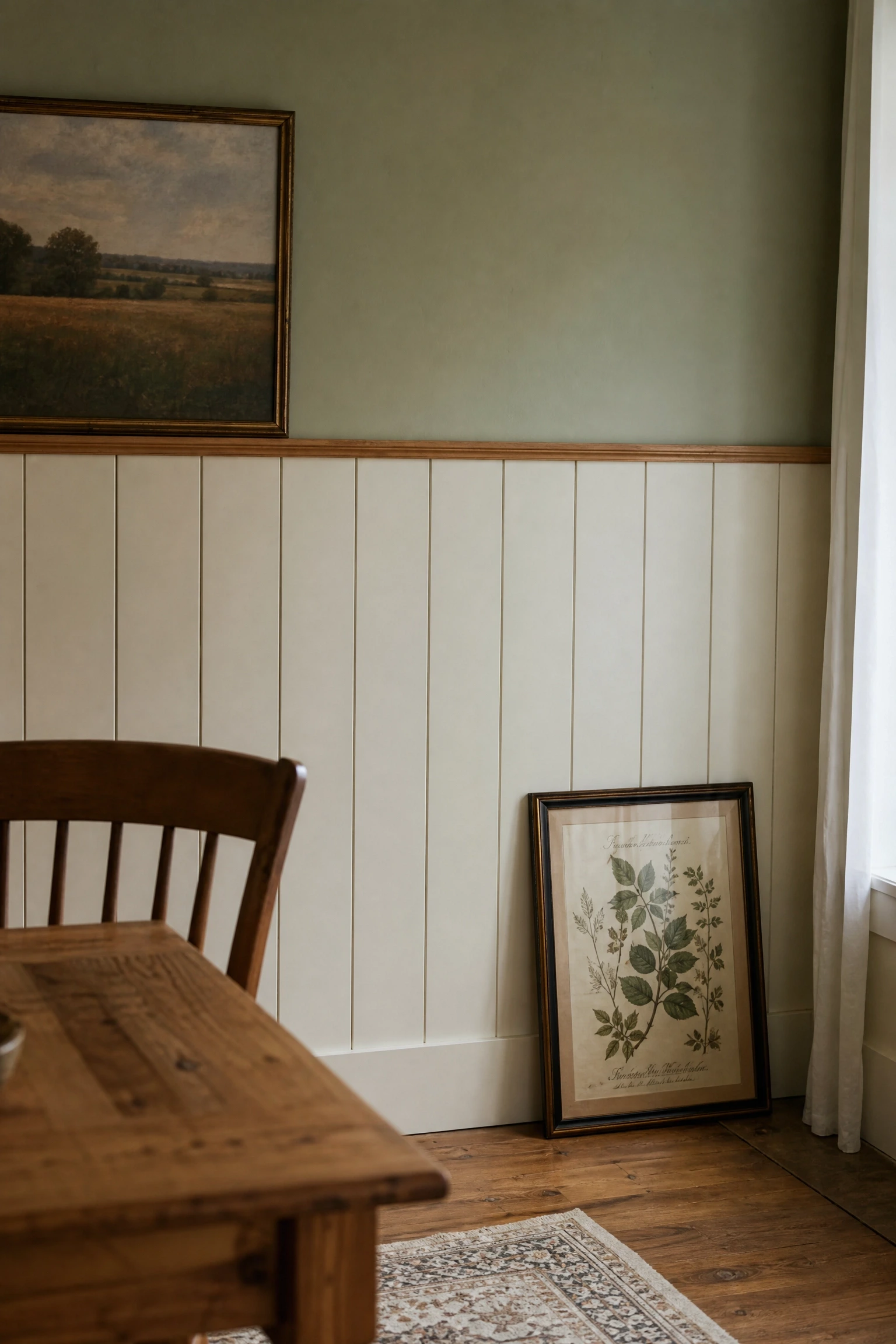
Horizontal shiplap has been so widely used that it now reads as a shortcut rather than a design choice, but vertical shiplap or board-and-batten wainscoting in the same white or off-white palette feels more architectural and less trend-dependent. Running it to chair rail height and pairing it with a warm paint color above gives the dining room a layered wall treatment that reads as craftsmanship rather than Instagram farmhouse.
Designer Advice: Paint the shiplap and the wall above it in the same color family rather than stark white below and a warm tone above. A tonal approach reads as more sophisticated and avoids the two-zone effect that dates a room quickly.
5. Use a Warm Neutral Paint Color Instead of White
Flat white walls are the default farmhouse choice and also the one that makes most dining rooms feel cold and under-decorated rather than cozy, because white reflects harshly under dining room lighting where warmer tones absorb and soften it. Benjamin Moore Pale Oak, Sherwin-Williams Accessible Beige, or a dusty sage green all warm a farmhouse dining room in a way that white walls never quite achieve.
Heads Up: Test paint colors at night under your actual dining room light fixture, not just in daylight. The incandescent or warm LED light that most people use at dinner completely changes how a wall color reads.
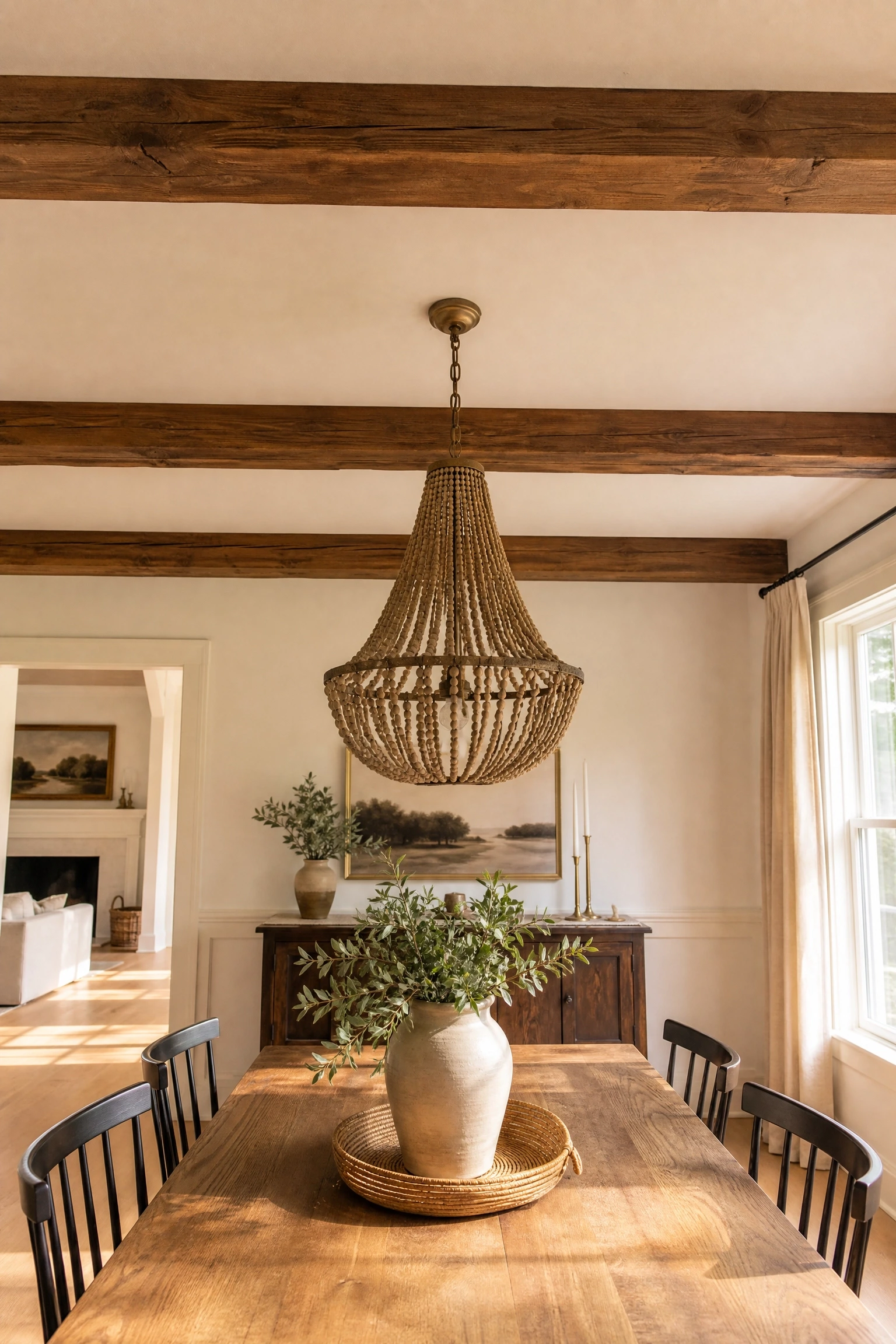
Faux wood beams made from lightweight polyurethane or hollow wood box beams have become genuinely convincing and are installed in a single weekend without structural changes, giving a flat builder-grade ceiling the architectural weight that real old farmhouses had simply because of how they were built. Space them at natural intervals rather than cramming them in, and stain them two to three shades darker than the floor so they read as a distinct element rather than a visual echo.
Pro Move: Run the beams perpendicular to the longest wall in the room so they draw the eye across the ceiling and make the space feel wider rather than just taller.
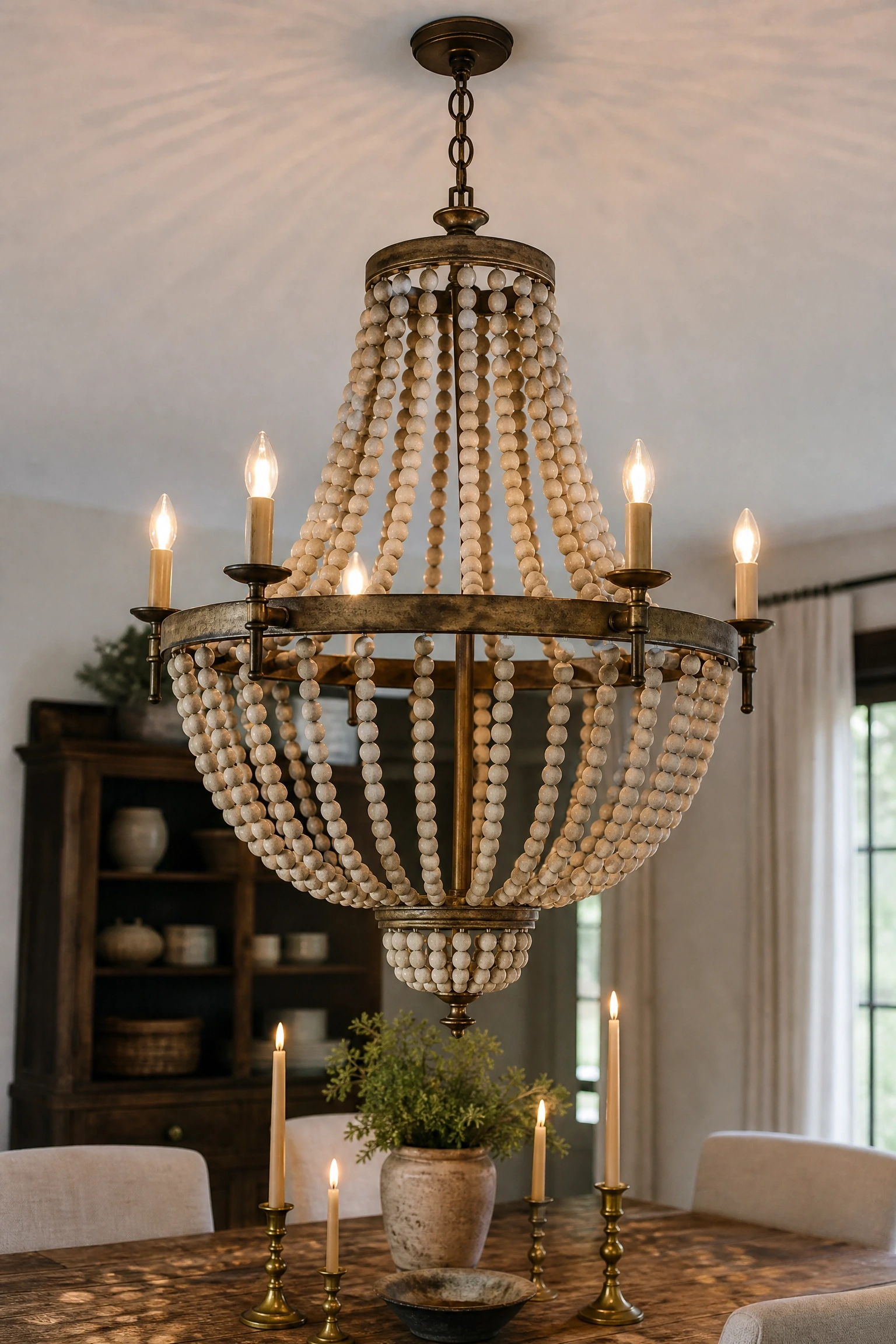
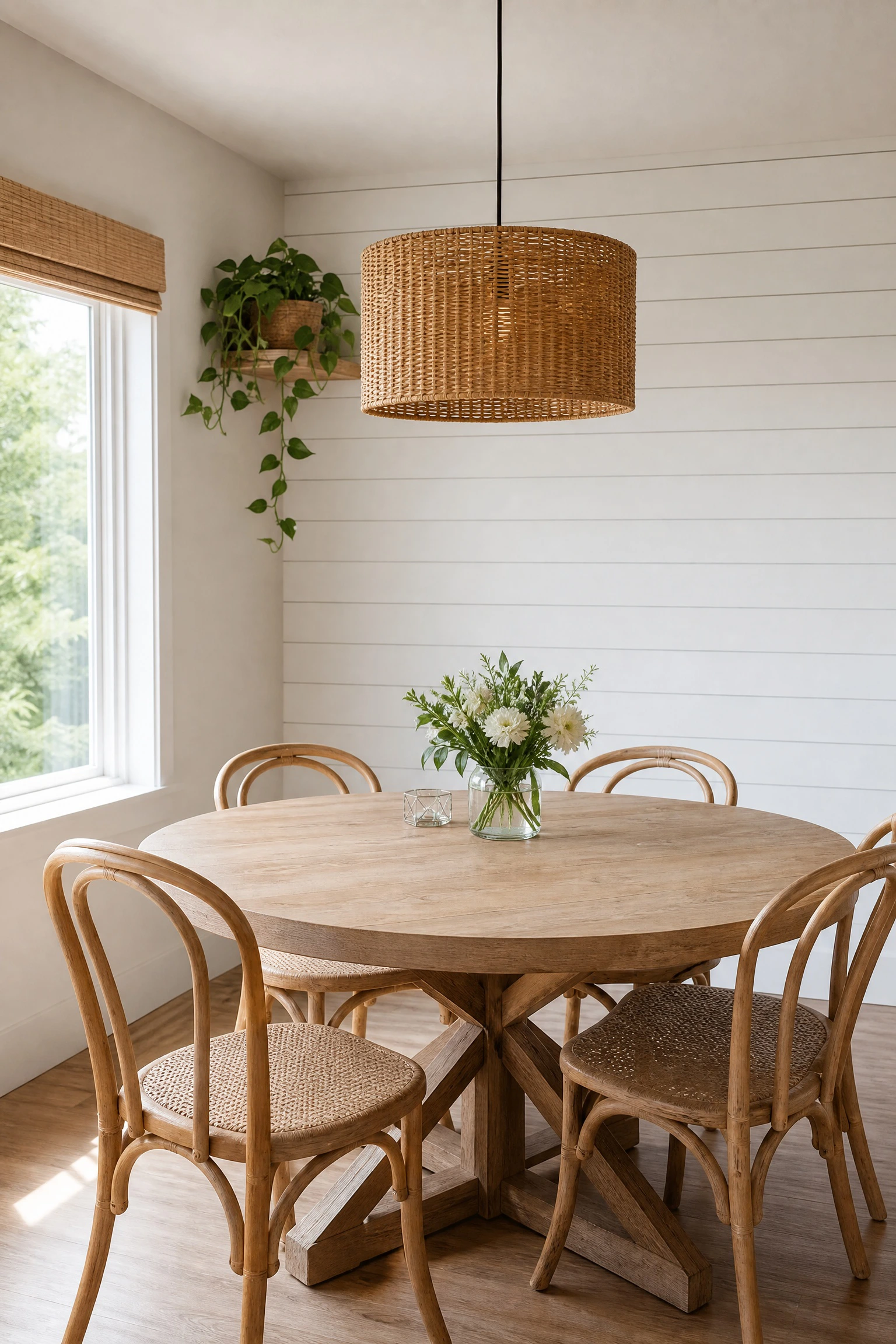
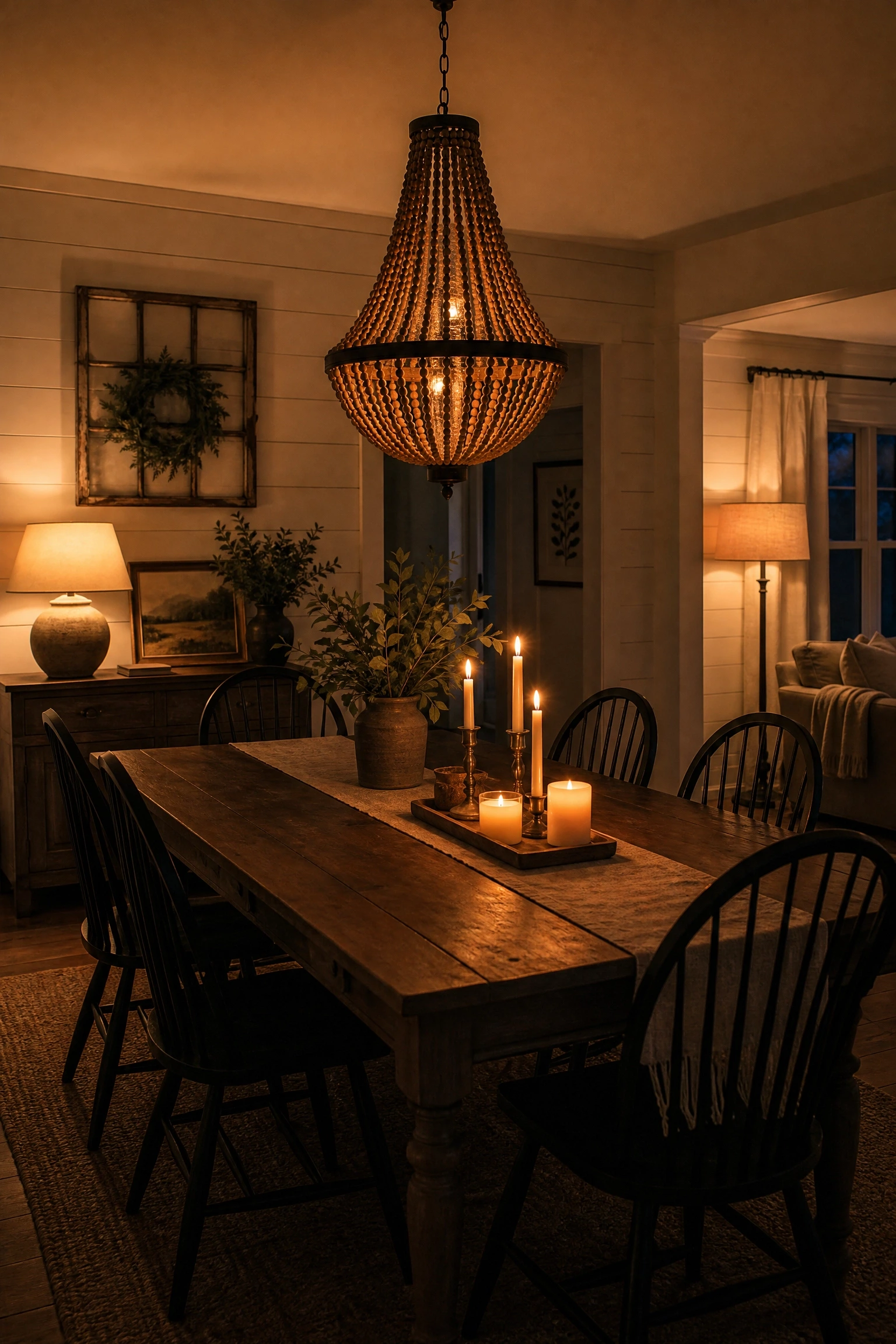
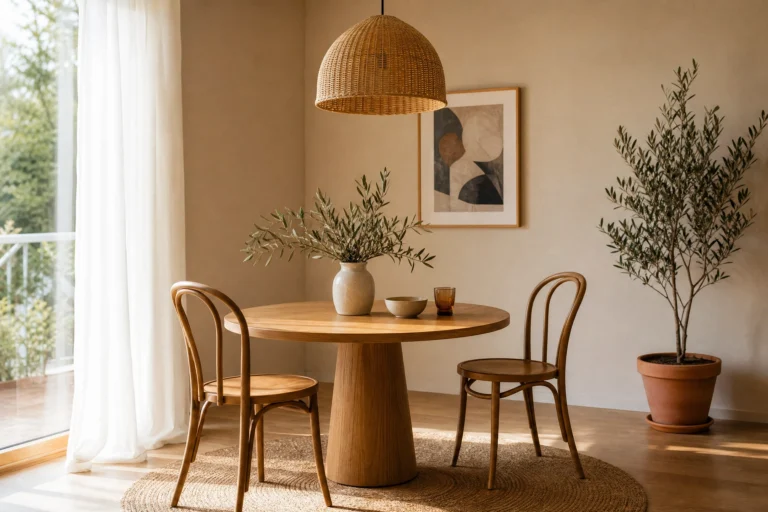
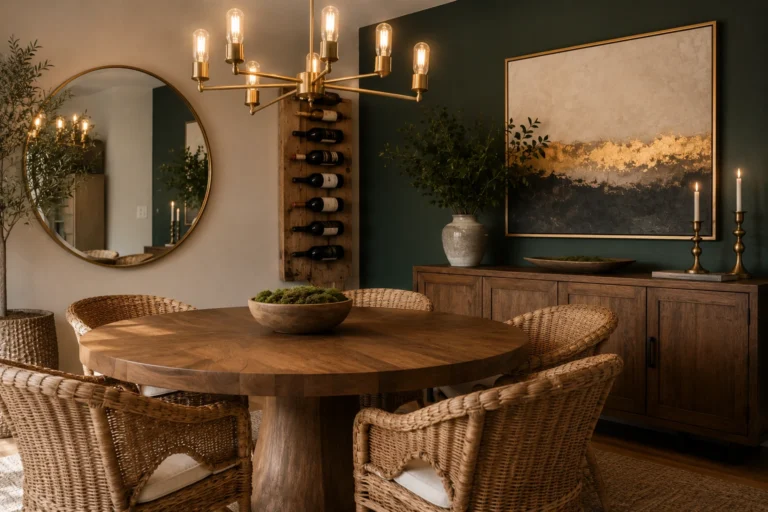
The chandelier in a farmhouse dining room should hang 30 to 34 inches above the tabletop and should be at least half to two-thirds the width of the table itself, because undersized fixtures hung too high are the most common lighting mistake in dining rooms and make the space feel unanchored. A wood-beaded chandelier, a wrought iron candle-style fixture, or a woven rattan pendant all carry farmhouse character without requiring the all-white backdrop that most farmhouse lighting is photographed against.
Reality Check: Order your chandelier before you paint, because the fixture sets the tone and scale for every other decision in the room. Too many people choose paint first and then struggle to find lighting that works with it.
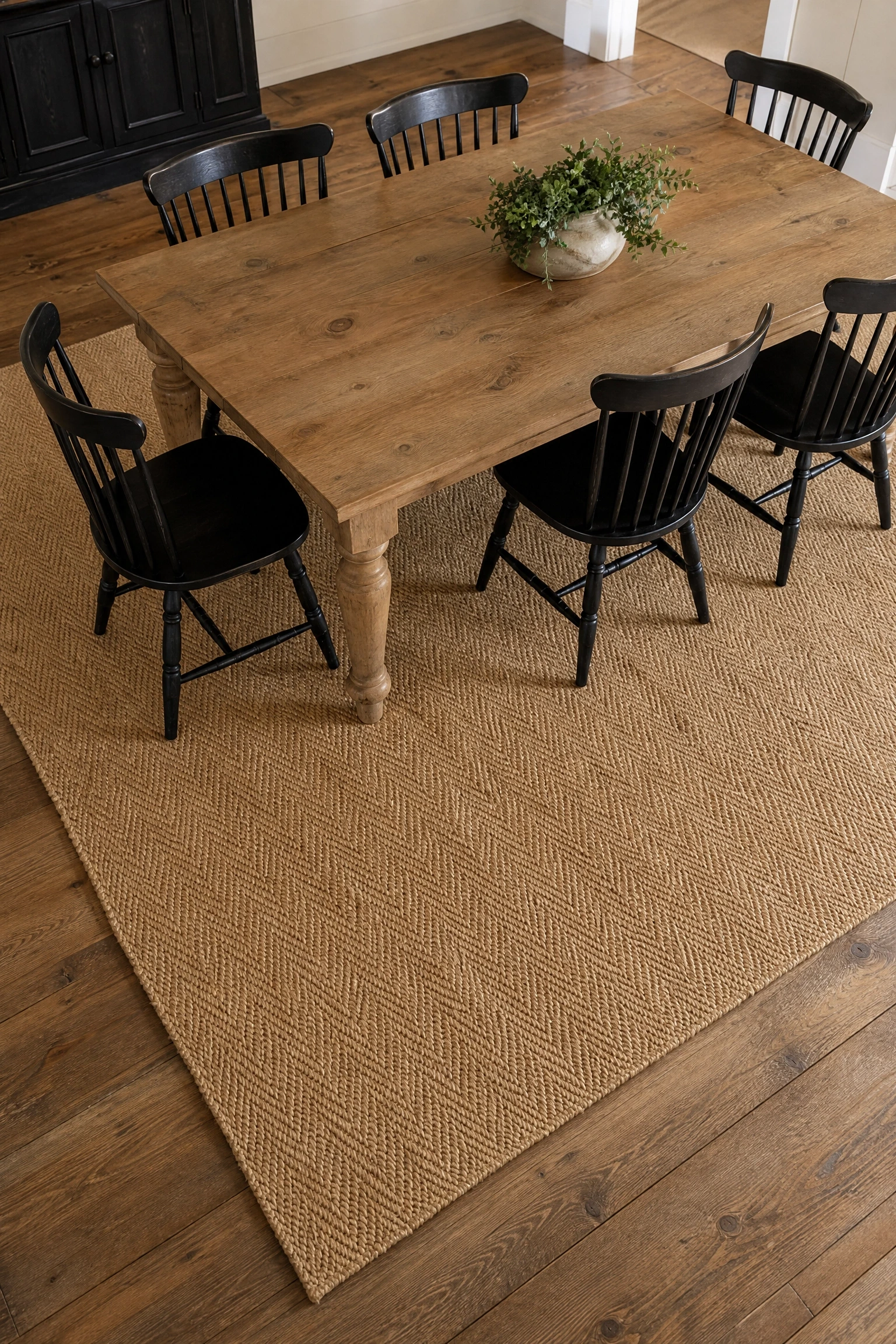
A rug under the dining table defines the gathering zone, softens hard floors acoustically, and gives the room a layer of texture that wall and furniture decisions alone cannot provide, but it needs to be large enough that all chair legs sit on it even when chairs are pulled out, which means most dining rooms need at least an 8×10 or 9×12 rug. A flatweave jute, a washable wool braid, or a low-pile sisal all handle dining room traffic and food spills far better than plush pile rugs that trap crumbs and show every chair drag.
Heads Up: Measure with chairs pulled out before buying. A rug that looks correctly sized in a furniture layout diagram will feel and look too small the moment actual people sit down to eat.
9. Install a Sliding Barn Door to a Pantry or Butler Pantry
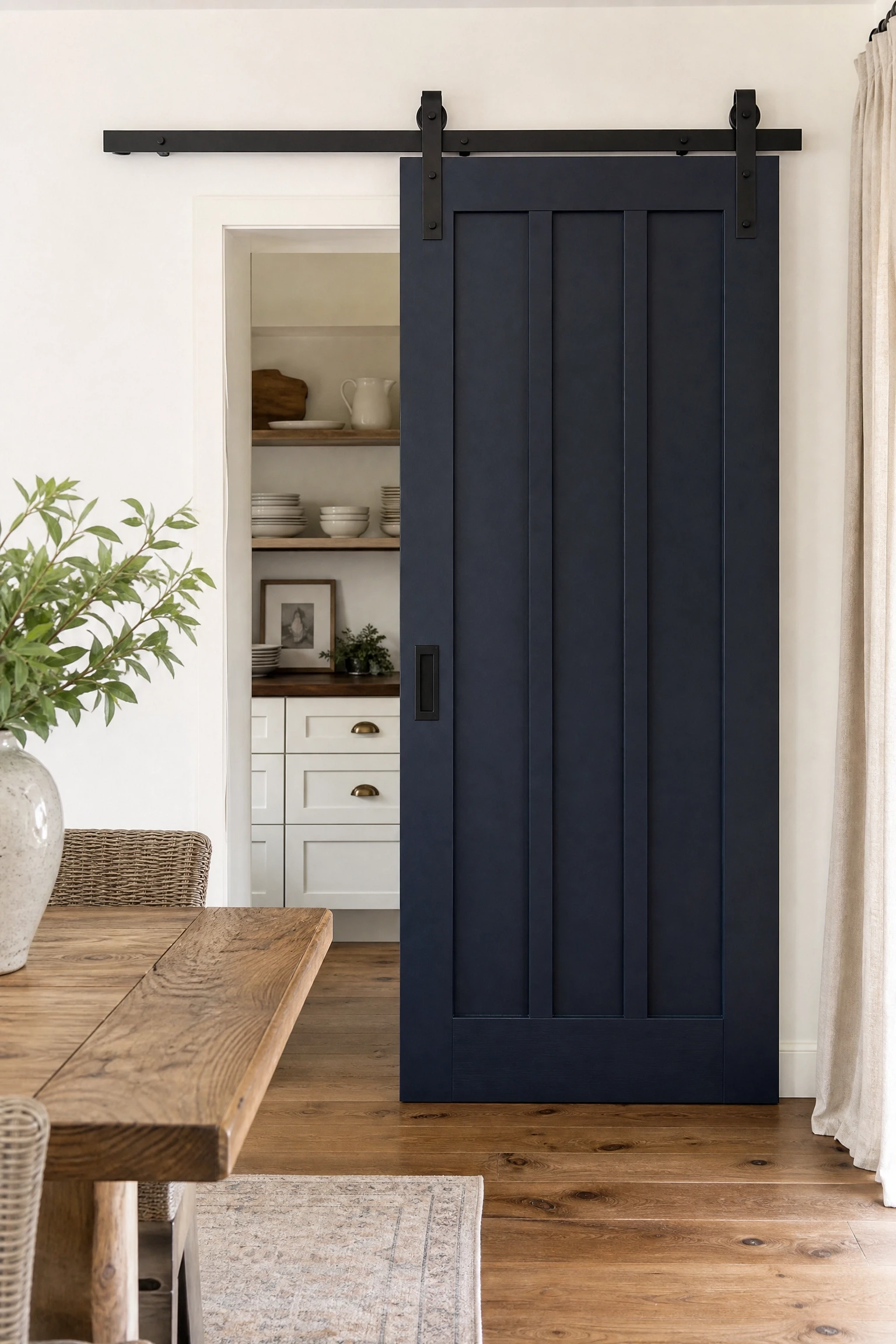
A sliding barn door in weathered or painted wood on black iron hardware is one of the most functional farmhouse details you can add to a dining room because it solves a storage or passthrough problem while adding genuine architectural character rather than just decorative texture. Choose a door style that has some design detail, raised panels, a board-and-batten face, or a simple X-brace, rather than a flat slab, which reads as an afterthought rather than a feature.
Designer Advice: Paint the barn door a different color from the surrounding wall so it reads as a deliberate design element. A dark navy, forest green, or charcoal door against white or cream walls is one of the most effective color moves in a farmhouse dining room.
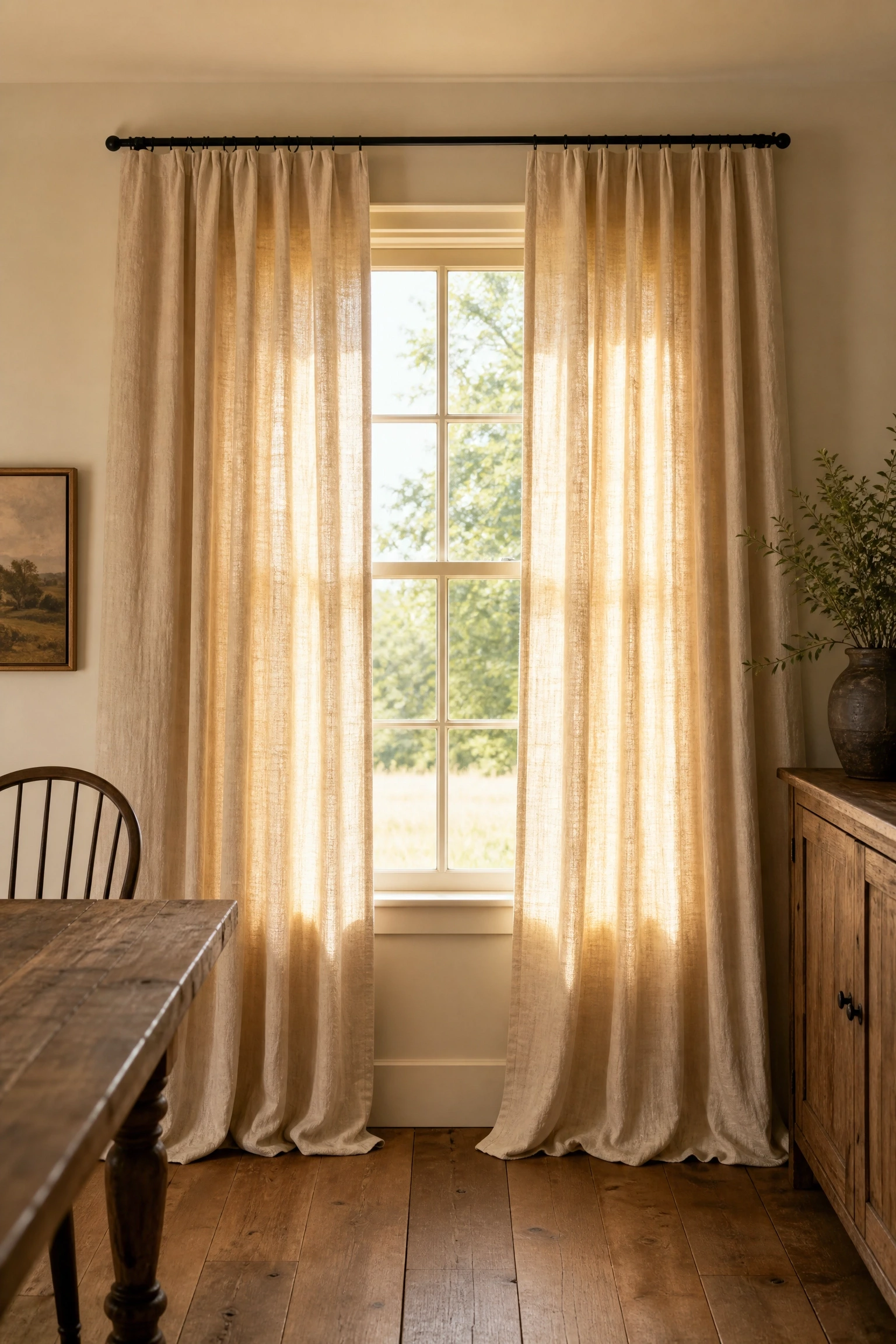
Curtains hung at ceiling height and falling to the floor make a farmhouse dining room feel taller and more finished than any paint color or furniture arrangement, and linen is the fabric that works hardest in this setting because it is slightly wrinkled by nature, has a matte texture that absorbs light beautifully, and reads as genuine and unhurried in a way that polyester sheers simply cannot. Use a simple rod pocket or tab-top style in natural, oatmeal, or warm white linen, and skip the blackout lining so the light filters softly during daytime meals.
Pro Move: Use curtain rods that extend 8 to 12 inches beyond the window frame on each side. This allows the panels to stack outside the window when open, letting in maximum light while making the windows look significantly wider than they actually are.
11. Build or Buy a Farmhouse-Style Hutch or China Cabinet
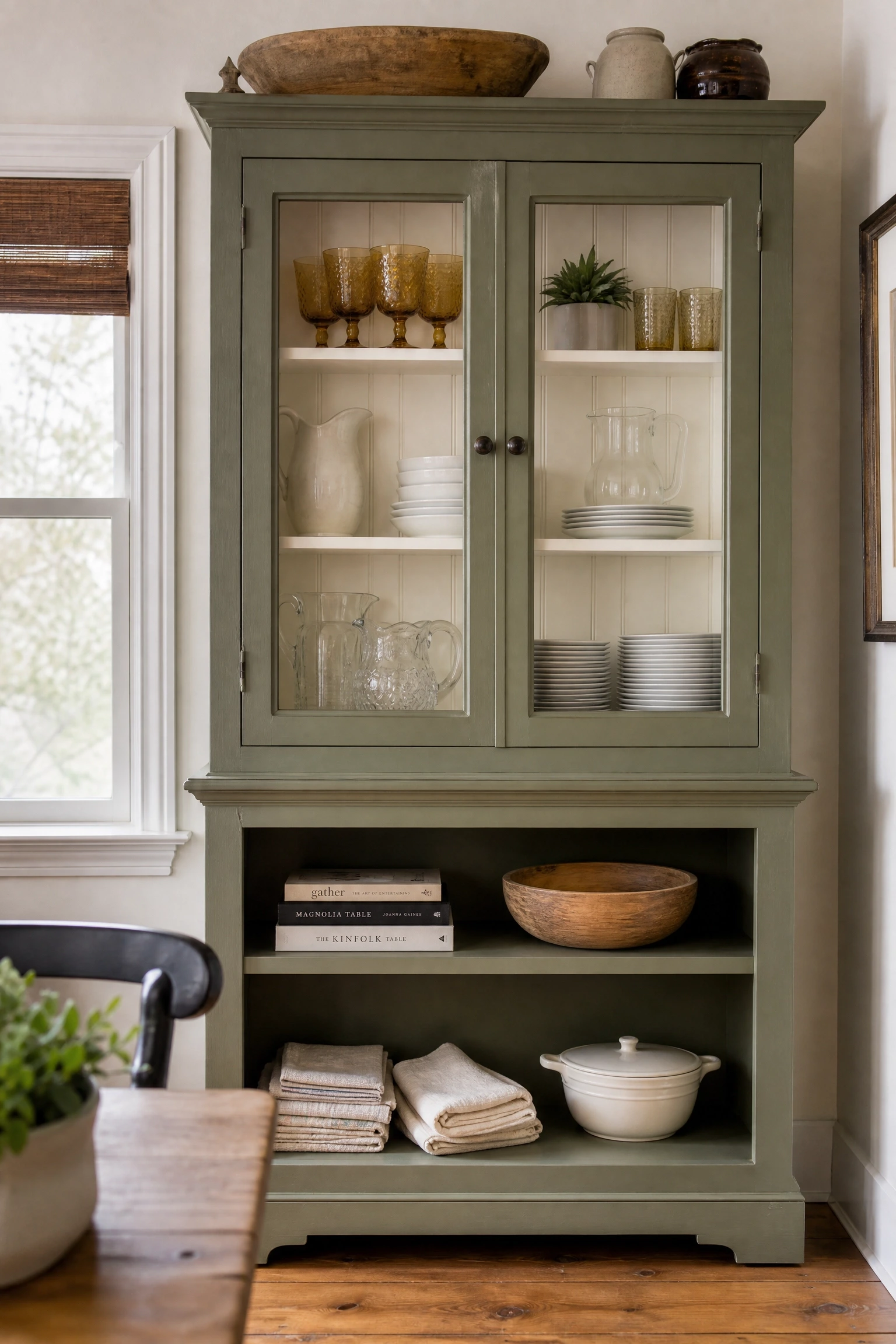
A painted hutch or china cabinet in the dining room serves as both storage and the most impactful decorating surface in the space, because the objects displayed inside it, stacked plates, collected glassware, small plants, and a few books, tell far more about who lives in the house than any gallery wall could. Choose a hutch with glass-front upper doors and open lower shelves so you can layer the display without it looking like a sealed-off showcase.
Designer Advice: Paint the hutch a different color from the walls, a deep sage, warm navy, or dusty blue, and treat the interior back panel in a contrasting wallpaper or a lighter paint shade to give the display inside more depth and intentionality.
12. Add a Linen or Cotton Tablecloth for Everyday Use
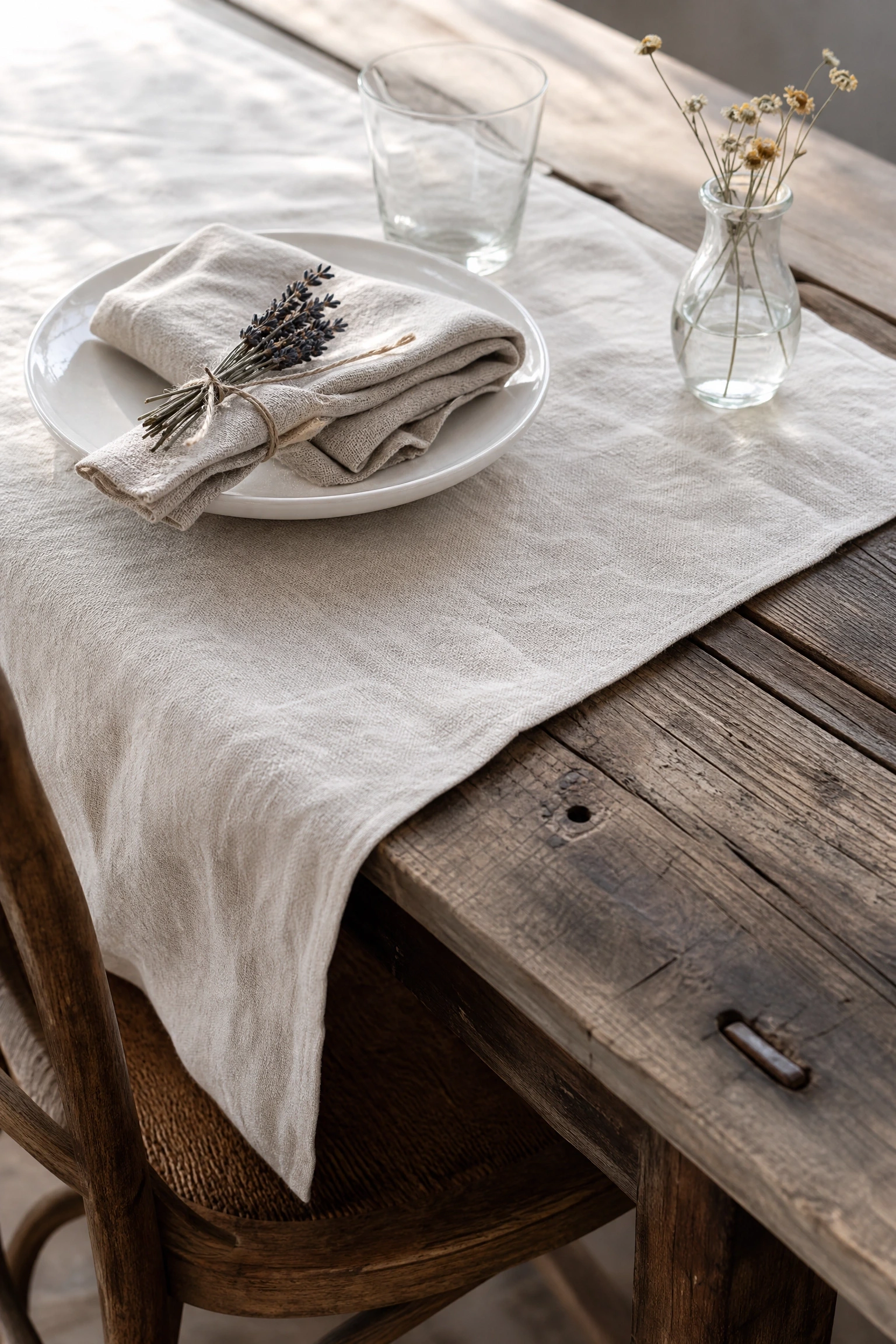
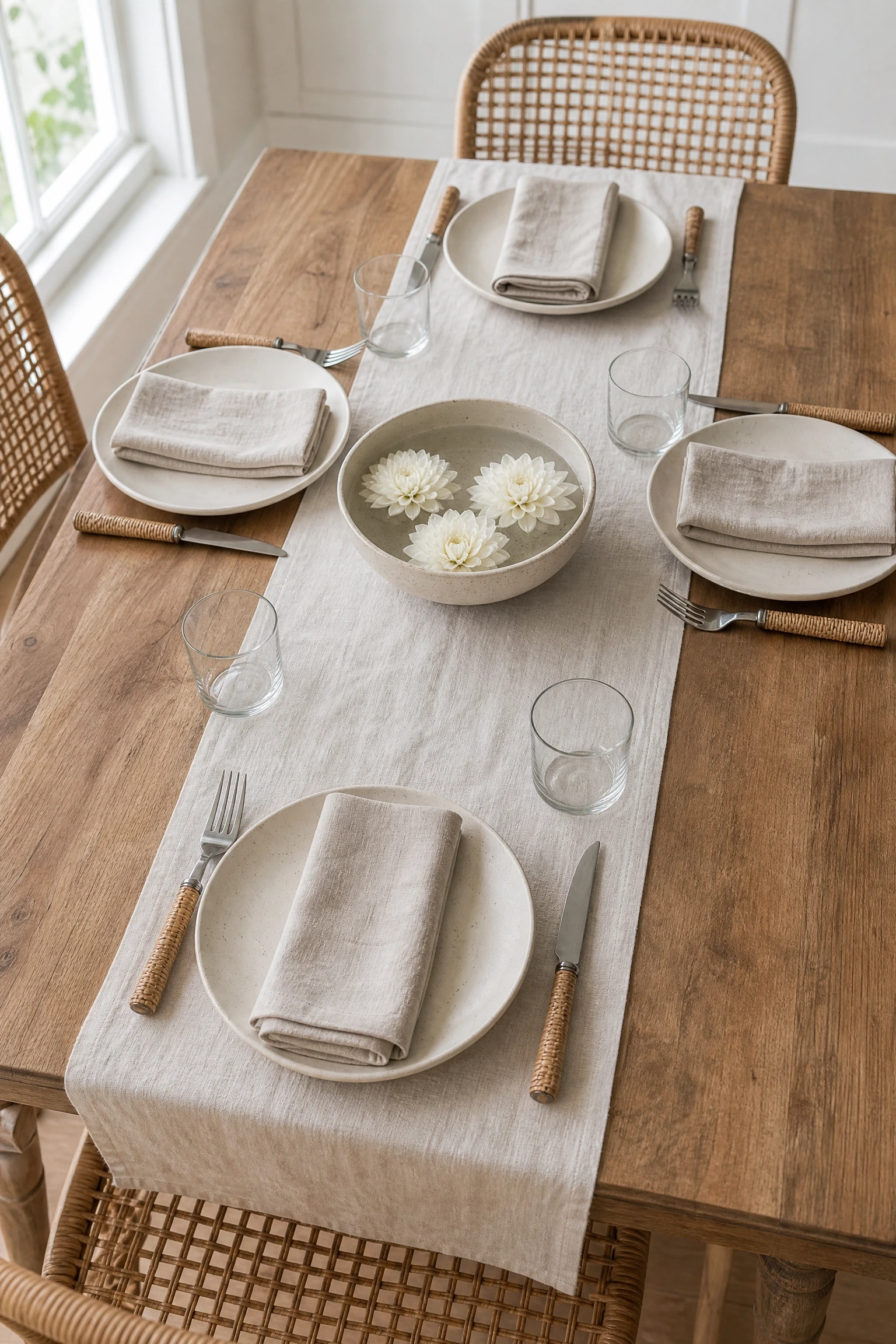
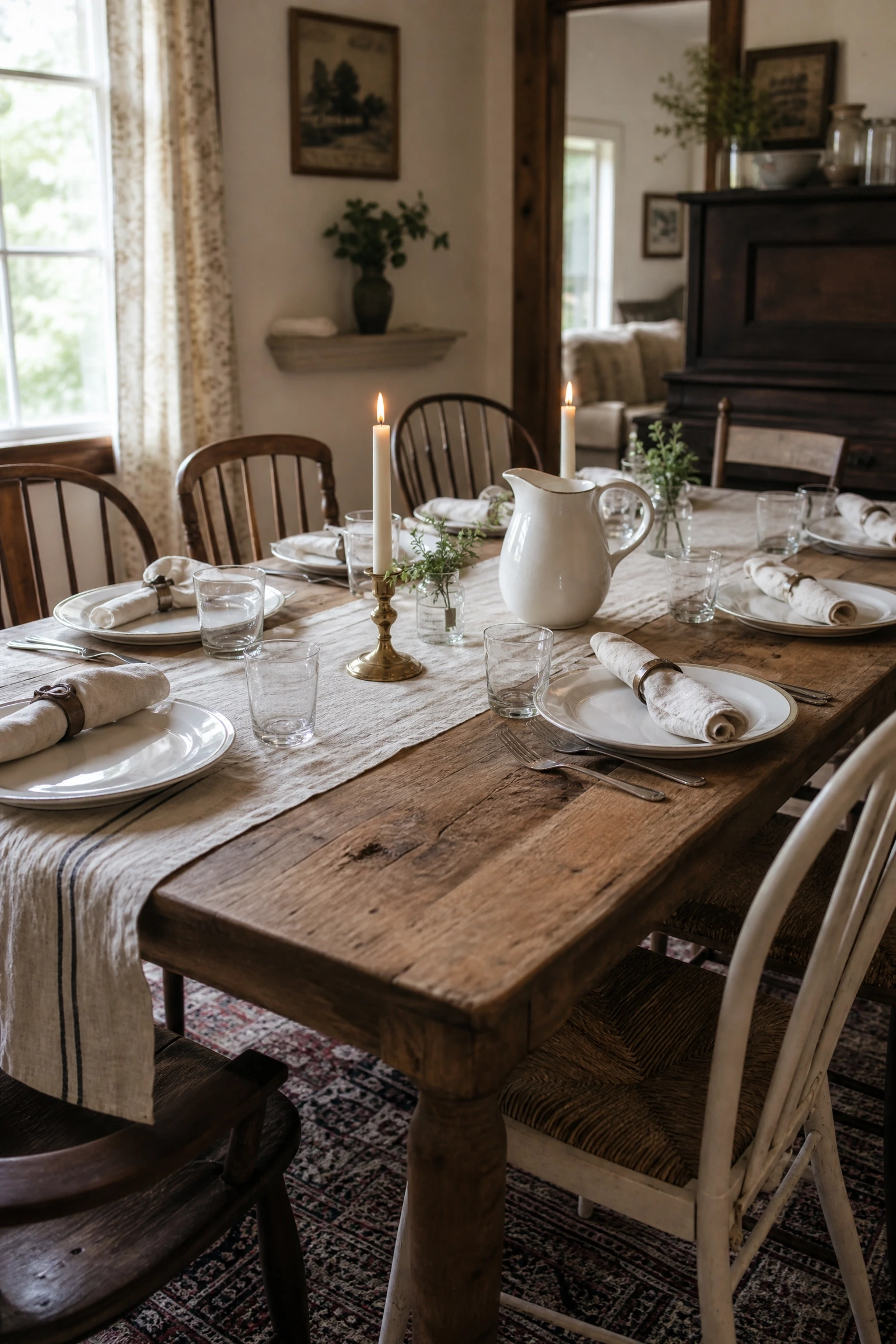
A tablecloth is one of the most underused tools in farmhouse dining room styling because most people treat the table as a display surface rather than a functional eating surface, but a slightly rumpled linen cloth in a warm natural tone instantly makes the room feel like people actually gather and eat there rather than photograph and leave. Keep a second cloth for entertaining so one is always ready even if the other is in the wash.
Heads Up: Iron your tablecloth just enough to remove deep folds from storage but leave some natural softness in the fabric. A perfectly pressed linen cloth looks more formal than farmhouse; a slightly relaxed one looks intentional.
The Finishing Layer: Lighting Accents, Art, and Living Details
13. Style a Long Centerpiece Instead of a Single Object
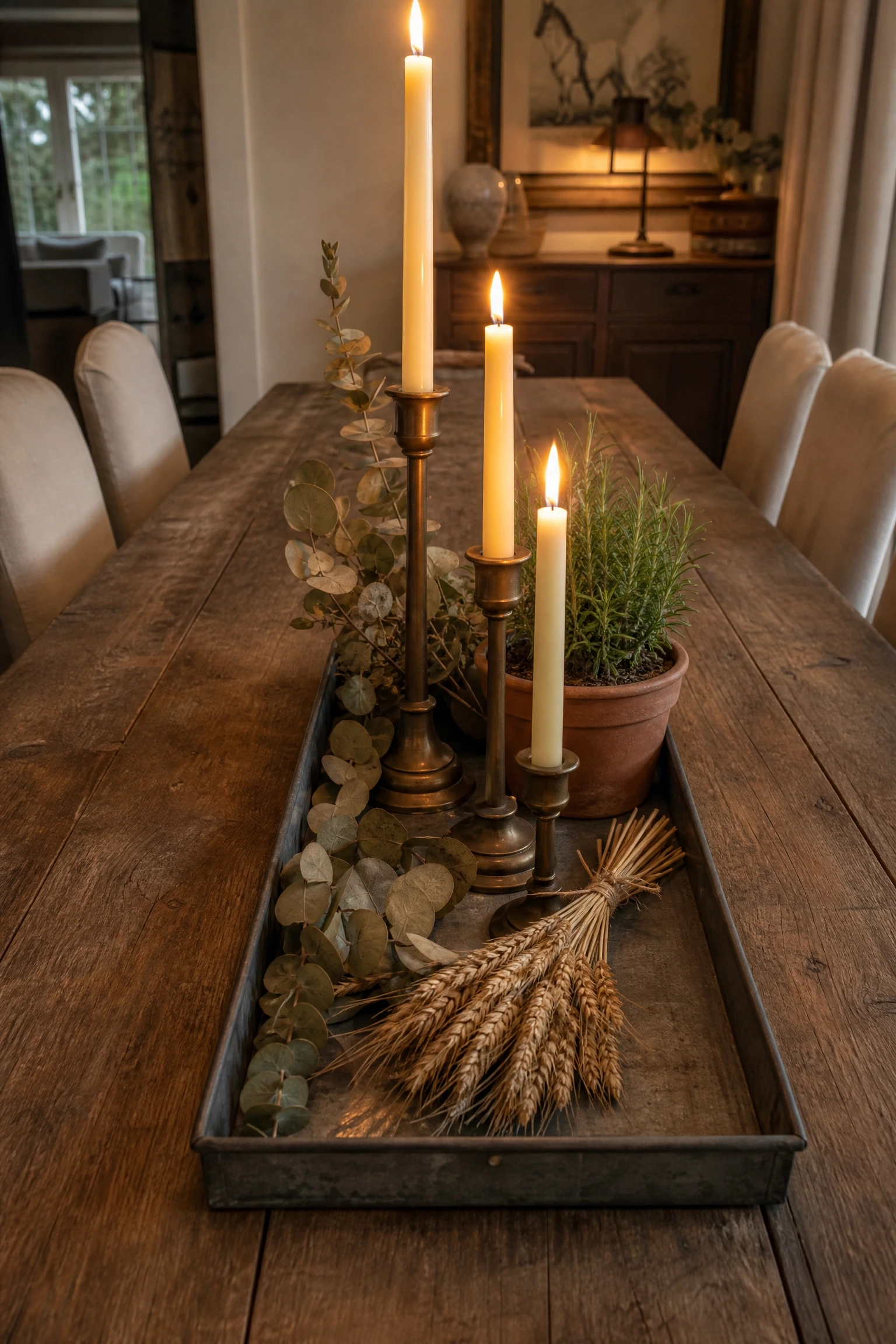
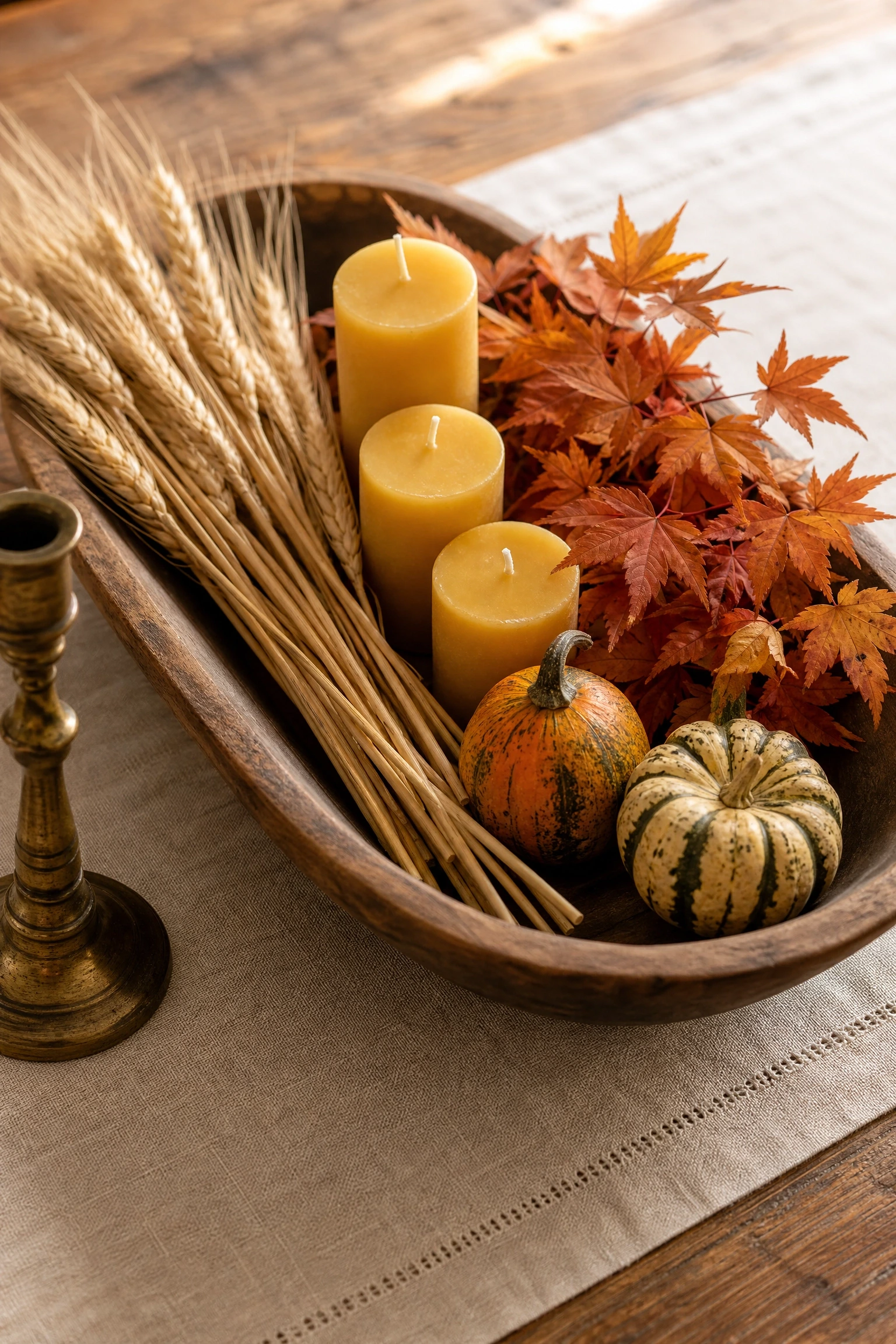
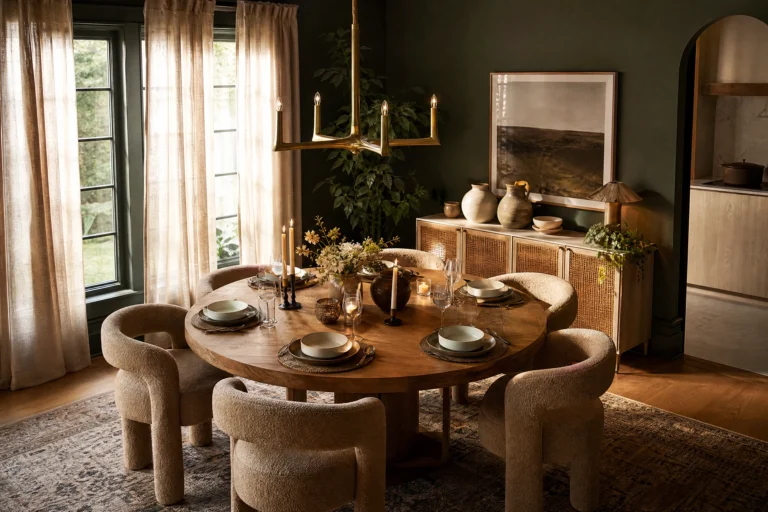
A single vase or candle in the center of a long farmhouse table looks lost and forgotten, while a low arrangement that runs along the length of the table feels gathered, intentional, and like someone actually lives here. Use a combination of a wooden dough bowl or zinc tray as the base, taper candles in varying heights, a small potted herb, and a cutting of dried pampas grass or eucalyptus to build a centerpiece that reads organic rather than styled.
Pro Move: Keep the centerpiece below eye level when seated. Anything taller than 10 to 12 inches blocks sightlines across the table and makes conversation feel divided rather than connected.
14. Use Candlelight as a Design Layer, Not Just Ambience
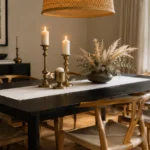
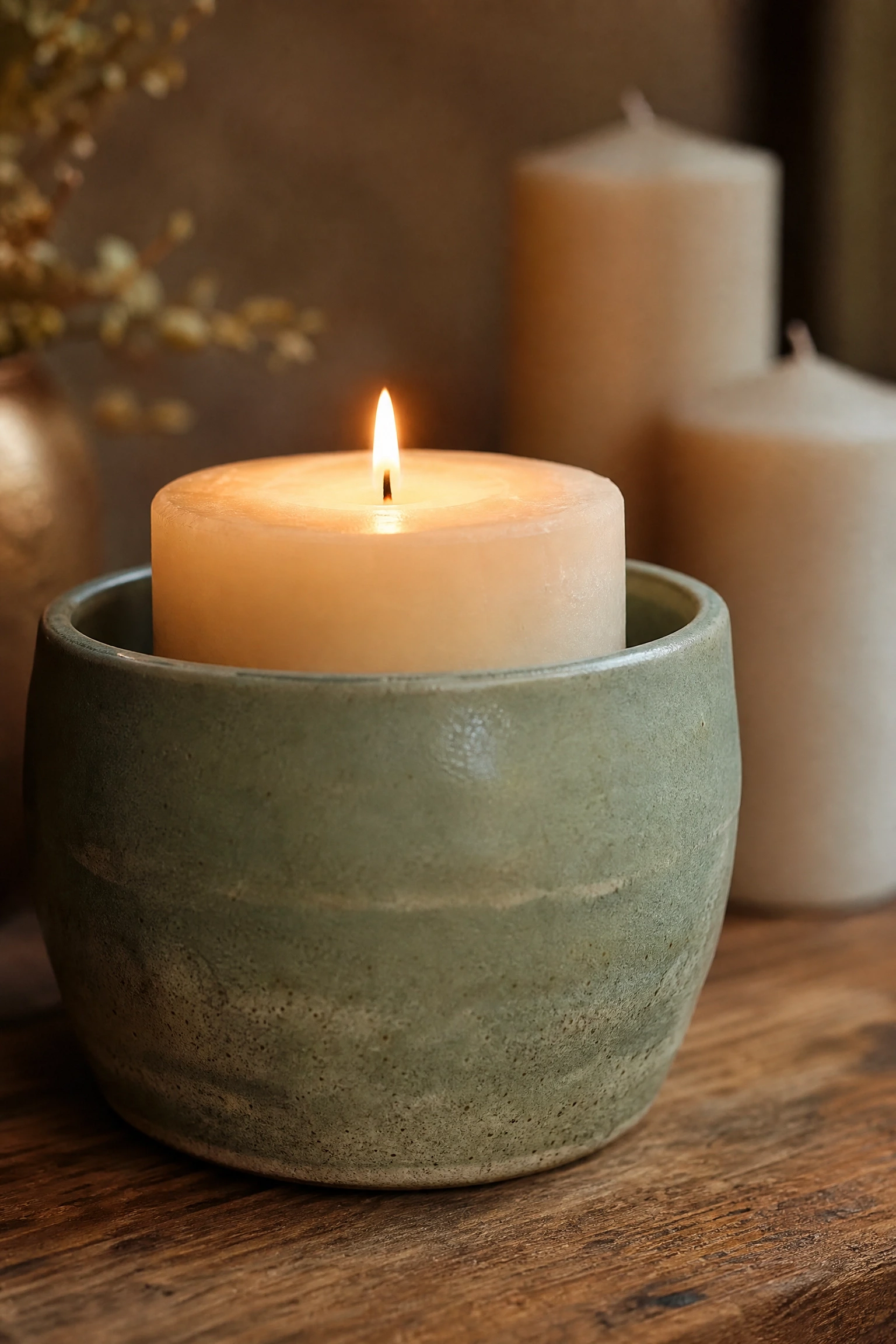
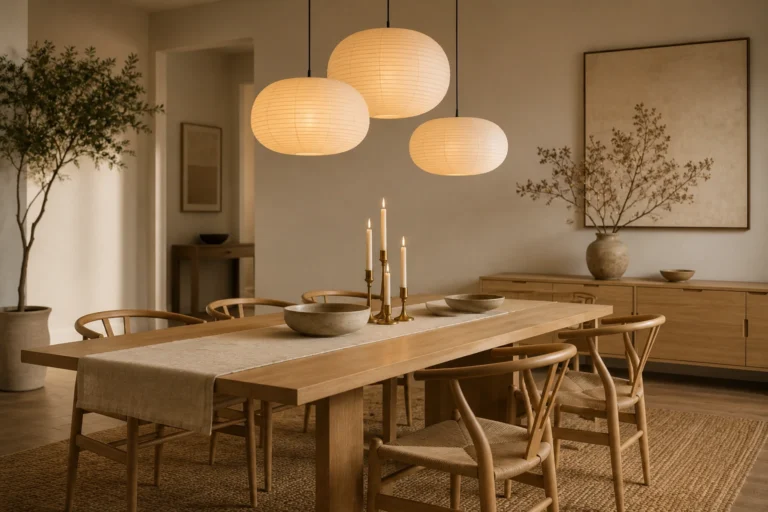
Taper candles in aged brass or iron candlesticks, pillar candles on a wooden board, and a candelabra on a sideboard all add a layer of warm flickering light that no overhead fixture can replicate, and in a farmhouse dining room where the ceiling light is usually the primary source, candles are what transform a family dinner into something that actually feels like an occasion. Battery-operated taper candles with flame-effect LEDs are now convincing enough to use permanently without anyone noticing.
Designer Advice: Mix candlestick heights deliberately: one tall taper at 12 inches, one at 9 inches, and a short pillar at 4 inches read as intentionally layered rather than randomly assembled.
15. Hang Oversized Art or a Large Mirror on the Main Wall
A single large piece of art or an antique mirror hung at eye level on the wall opposite or beside the table anchors the room visually and prevents the common farmhouse trap of a beautiful table floating in a room where the walls feel unaddressed. In a farmhouse dining room, an oil painting landscape, a vintage botanical print in a simple frame, or a large wood-framed mirror with aged patina all carry more visual weight and character than a grid of small frames, which reads as a Pinterest project rather than a considered choice.
Reality Check: Hang art so the center of the piece sits at eye level when standing, which is roughly 57 to 60 inches from the floor. Most people hang art too high, and in a dining room where you spend most time seated, too-high art disconnects from the room entirely.
16. Bring in Ironstone, Vintage Pottery, or Collected Ceramics
White ironstone pitchers, creamware bowls, hand-thrown pottery in warm earth tones, and vintage mixing crocks displayed on open shelves or along the sideboard give a farmhouse dining room the kind of patina and history that no new purchase can manufacture. Collect slowly from estate sales, antique shops, and thrift stores rather than buying a matched set, because the mix of ages and origins is exactly what makes these collections look genuine.
Designer Advice: Group ceramics in odd numbers, threes or fives, and vary height within each group. A tall pitcher, a medium crock, and a small bowl read as a cohesive vignette; two items of similar height read as a pair waiting for a third.
17. Install Wainscoting or Board and Batten to Add Architectural Weight
Board and batten or raised panel wainscoting running to about 42 inches on dining room walls adds the kind of crafted architectural detail that older farmhouses had built-in and that new construction almost never includes, and it makes the room feel finished and considered in a way that a coat of paint and some furniture cannot achieve on its own. Paint it the same color as the upper walls in a matte finish for a tonal, sophisticated look, or go white below and a warm color above for the more classic two-tone effect.
Pro Move: Add a simple picture rail molding at the top of the wainscoting and use it to lean or hang framed prints. This keeps art at the right height and allows you to change it without new nail holes.
18. Decorate with Living Greenery, Not Just Dried Stems
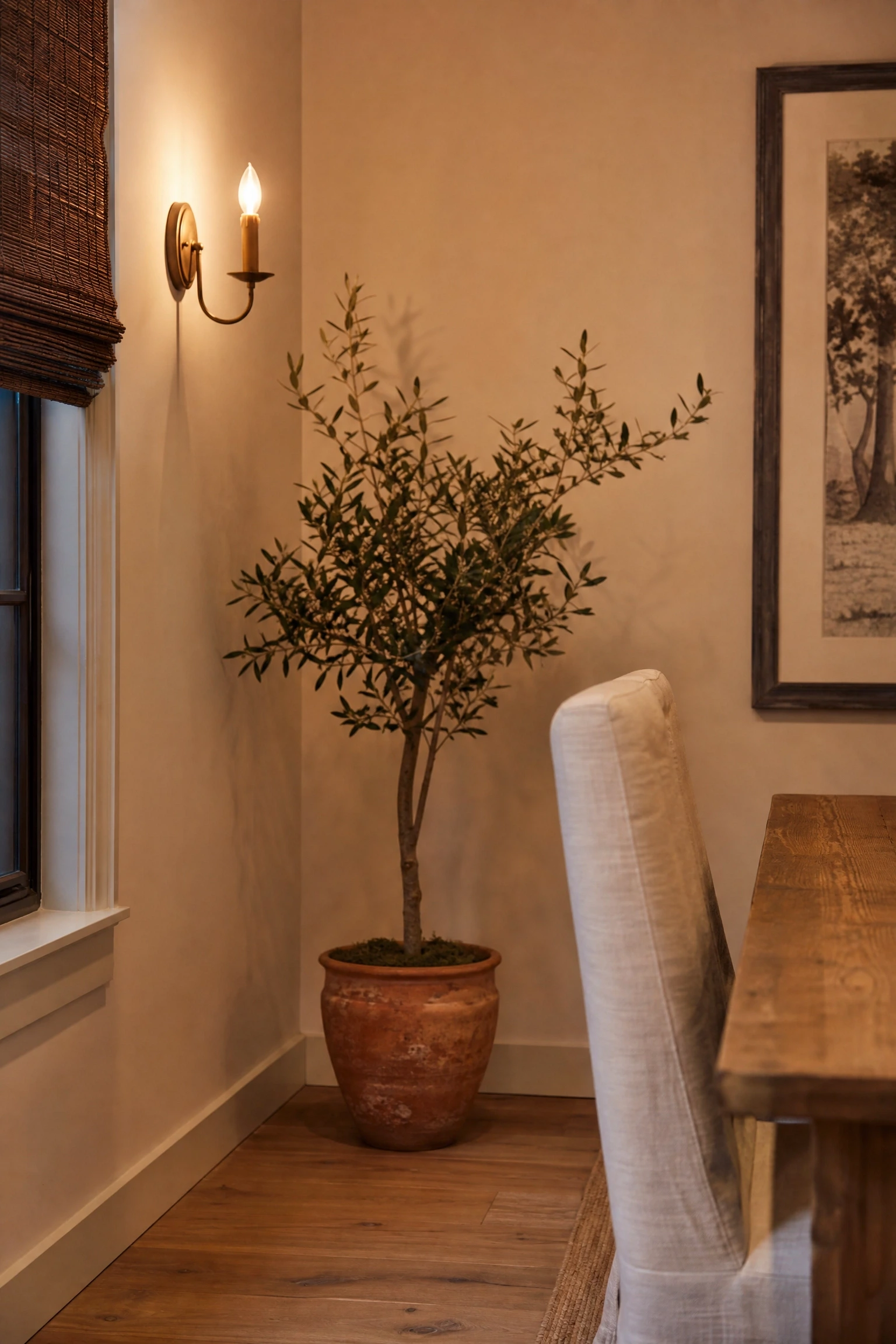
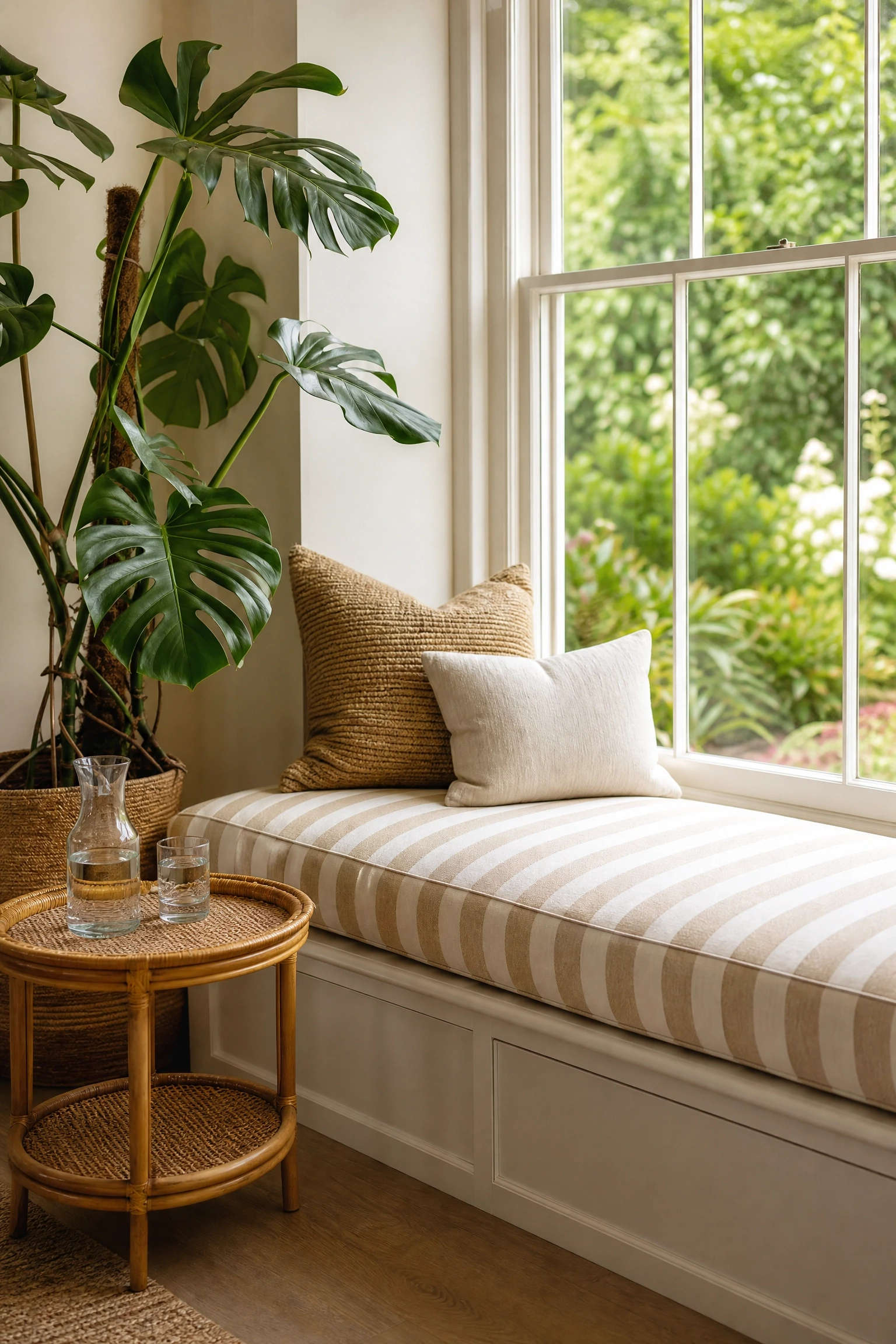
A potted olive tree in a terracotta pot in the corner of the dining room, a trailing pothos on the hutch shelf, or a simple bunch of fresh herb cuttings in a crock on the table all bring the living quality that dried pampas and preserved eucalyptus, however beautiful, simply cannot replicate because real plants respond to light, grow, and change over time. Low-light tolerant plants like the ZZ plant, snake plant, or cast iron plant handle dining room conditions well even in rooms with limited natural light.
Heads Up: Oversize the pot for the corner plant. A large olive tree in a too-small terracotta pot looks unstable and unfinished; one in a generously sized pot with visible soil looks like it belongs to the room.
19. Add Open Shelving on One Wall for Display and Function
A set of two or three floating wood shelves on one dining room wall, styled with a mix of everyday items and decorative objects, books, a potted plant, stacked plates, a few collected bottles, gives the room the layered, inhabited quality that purely decorative shelves in a living room rarely achieve because these objects are actually used. Use reclaimed wood or simple pine boards with visible grain for the shelves themselves, and mount them with black iron brackets for a detail that reads farmhouse without being heavy-handed.
Reality Check: Style open shelves with things you actually reach for, not objects you are afraid to touch. Shelves that are too precious to use become dusty displays rather than living parts of the room.
20. Choose a Sideboard or Buffet That Does Real Work
A farmhouse sideboard in solid wood or painted finish serves as surface display, linen storage, and serving station during meals all at once, and choosing one that is generously sized, at least 60 inches wide, makes the proportions feel right alongside a long dining table rather than like a piece of furniture that wandered in from a different room. Antique and vintage sideboards from estate sales often have better construction, more interesting patina, and lower prices than new farmhouse reproductions.
Designer Advice: Style the top of the sideboard in three zones: a tall element on one side like a lamp or large plant, a grouped collection of objects in the center, and a functional tray on the other side for serving items. This three-zone approach prevents the surface from looking randomly filled.
21. Use Black or Dark Iron Accents as a Grounding Element
Black iron or matte black accents in curtain rods, light fixtures, door hardware, picture frames, and candlesticks give a farmhouse dining room the visual weight and contrast it needs to keep from feeling too soft and saccharine, which is the direction all-white farmhouse styling tends to drift when nothing anchors it. The trick is to repeat the dark finish across at least three or four elements so it reads as a deliberate design thread rather than an accidental inclusion.
Pro Move: Swap the standard brushed nickel or chrome switch plates and outlet covers for matte black versions. It costs almost nothing, takes twenty minutes, and has a surprisingly significant effect on how cohesive the room feels.
22. Hang a Gallery Wall of Botanical or Landscape Prints
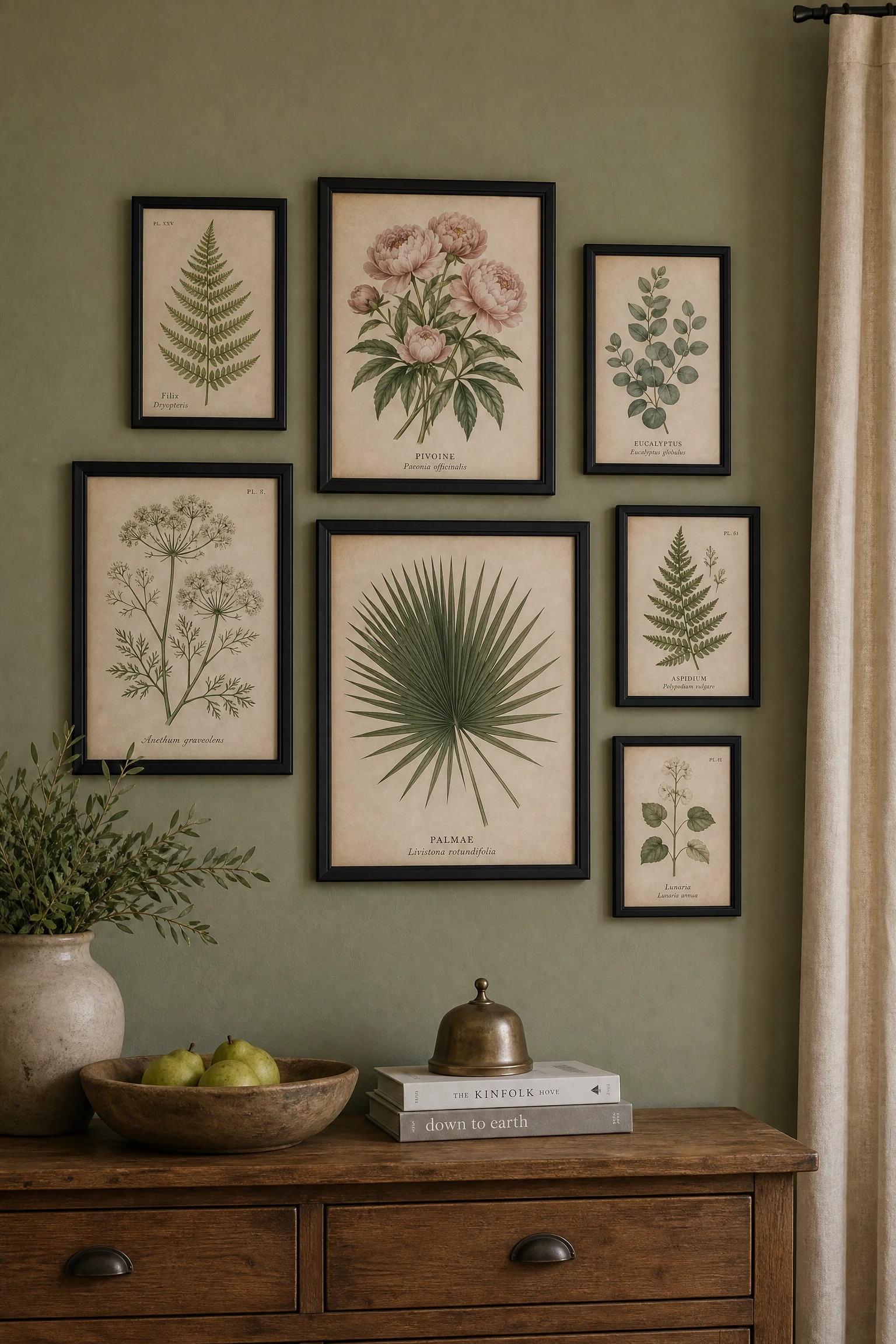
A gallery wall of vintage botanical prints, antique maps, or simple landscape watercolors in a mix of frame sizes all unified by the same frame finish gives a farmhouse dining room a collected, well-traveled quality that a single large piece of art sometimes lacks, and the mismatched frame sizes are what make it feel gathered over time rather than purchased as a set. Source prints from estate sales, vintage poster shops, and public domain print sites where you can print and frame them yourself for very little money.
Designer Advice: Lay the arrangement out on the floor before putting a single nail in the wall. Photograph the arrangement from above and use that photo as your guide when hanging so you do not spend an afternoon filling nail holes.
23. Set the Table Even When No One Is Coming for Dinner
A farmhouse dining room that is always casually set with cloth napkins in napkin rings, a simple pitcher of water, and a low centerpiece looks occupied and warm at all times rather than empty and waiting, which is the difference between a room that feels designed and one that feels lived-in. Keep a basket of cloth napkins, a few mismatched plates from your everyday set, and a simple runner on the table permanently so the setting is always halfway done before anyone arrives.
Pro Move: Use linen napkins in natural or warm white rather than paper napkins for everyday meals. Linen washes and softens with each wash, looks more beautiful the older it gets, and signals to your household that the dining room is for daily life, not just occasions.
24. Layer the Lighting with a Floor Lamp or Wall Sconces
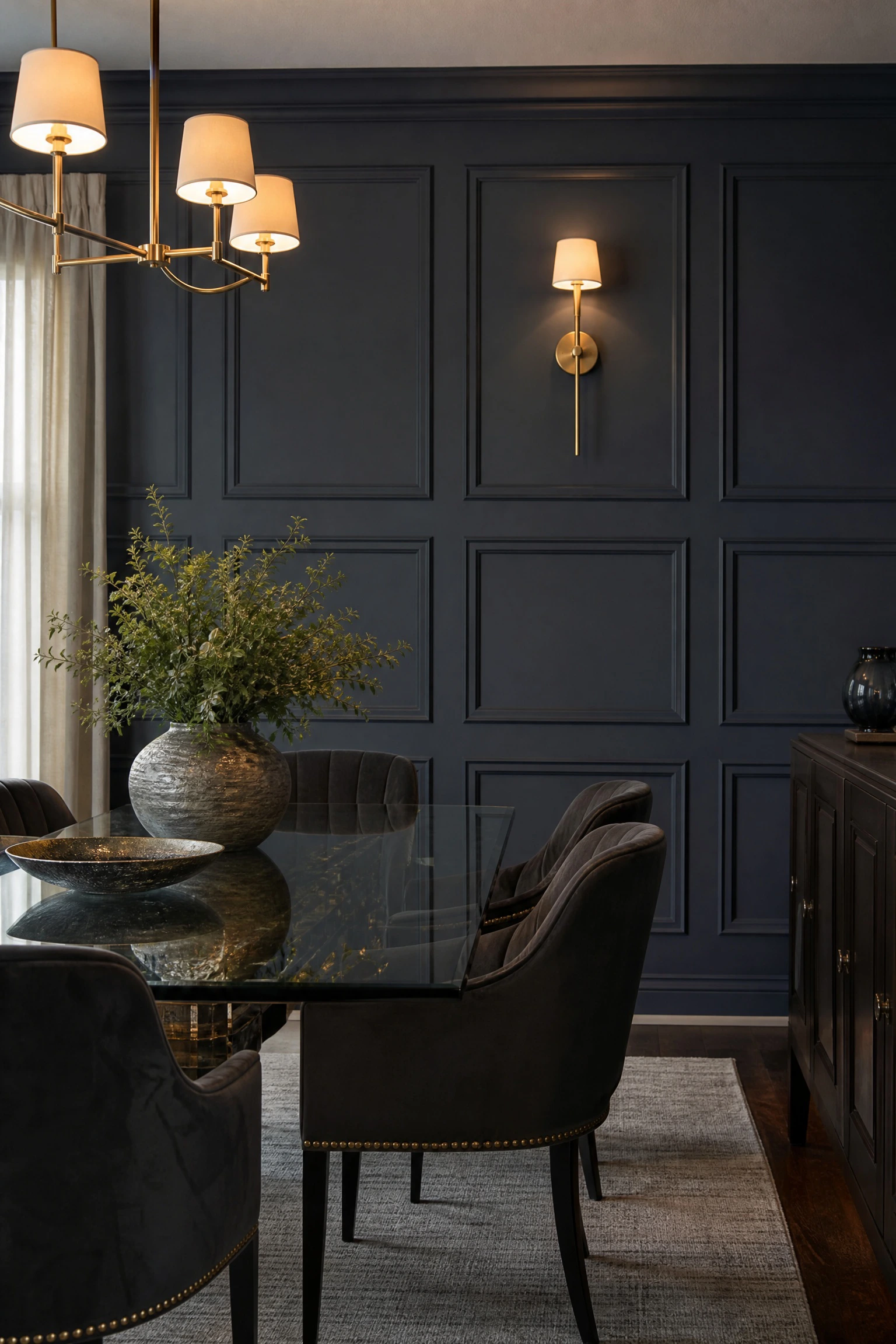
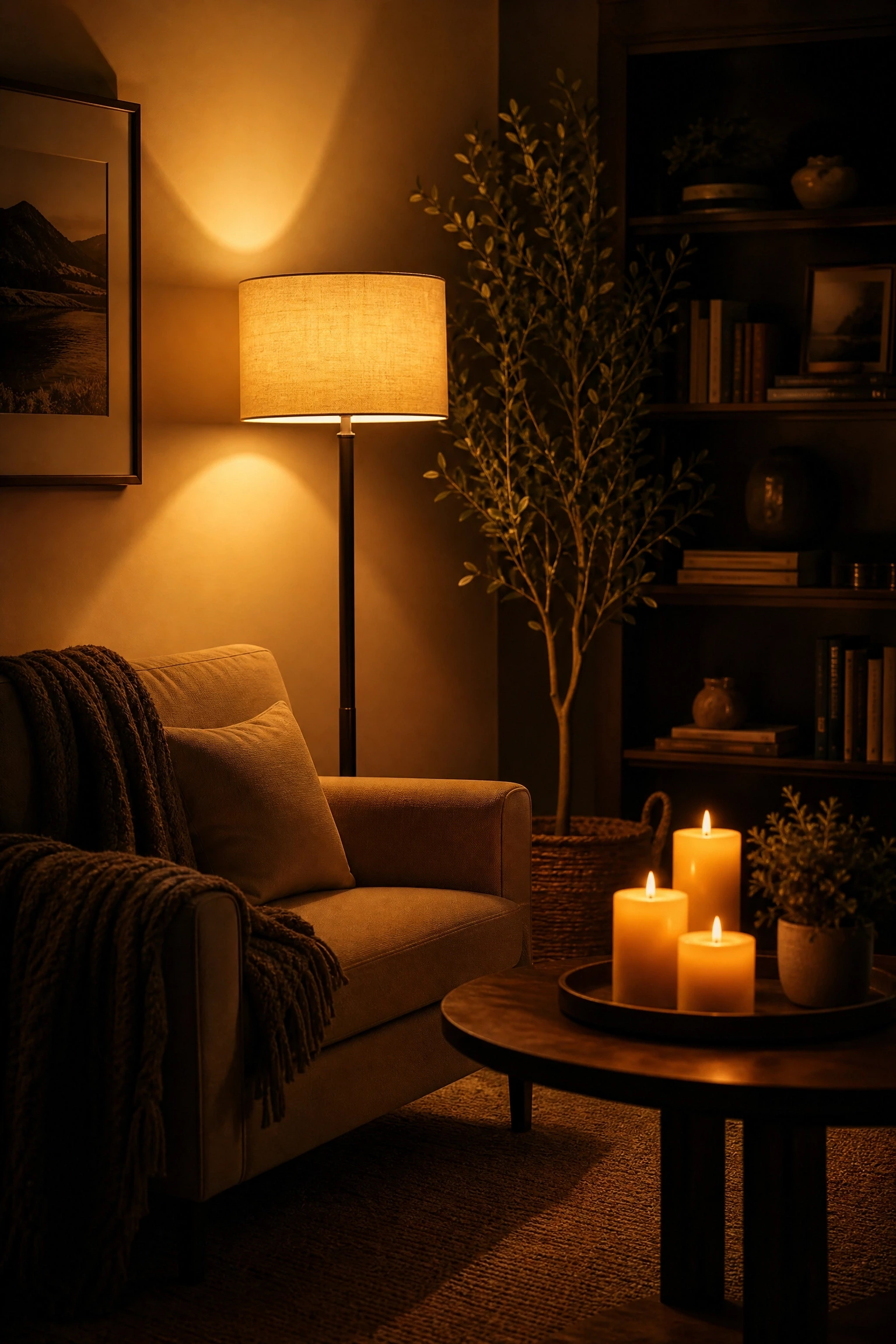
The overhead chandelier alone makes a farmhouse dining room feel flat after dark because a single light source casts even illumination with no shadow or depth, but adding a floor lamp in a corner, wall sconces flanking a mirror or artwork, or a table lamp on the sideboard creates multiple pools of light that make the room feel layered, warm, and genuinely inviting at dinner time. Use all warm bulbs, 2700K to 2900K, across every fixture so the light sources read as a unified warm envelope rather than competing temperatures.
Reality Check: Buy the dimmest bulb you can find for the chandelier and install a dimmer switch. Full-brightness overhead light in a dining room turns every meal into a boardroom meeting.
25. Finish with a Wreath, Seasonal Stems, or a Simple Textile Swap
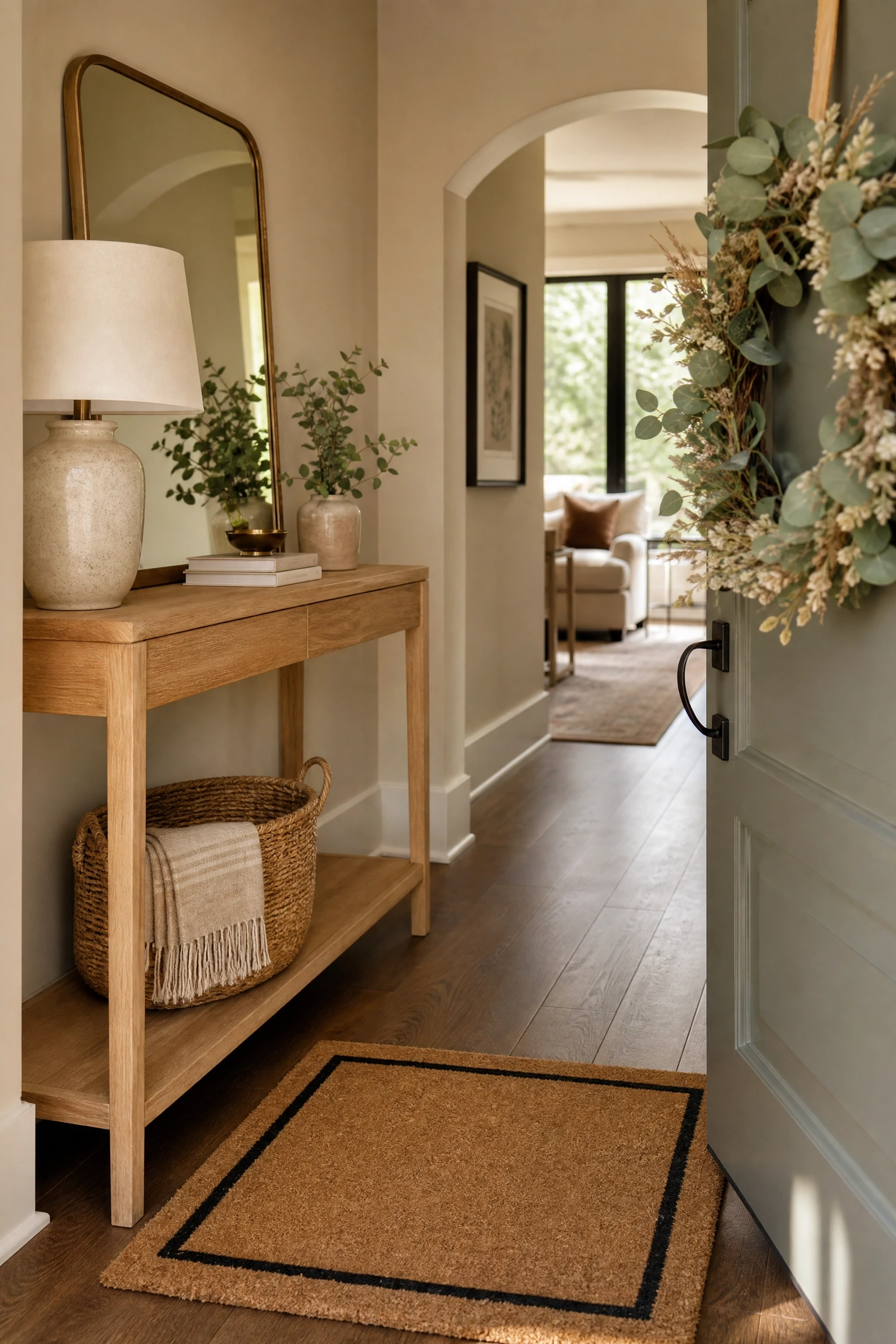
The most lived-in farmhouse dining rooms change with the seasons in small ways: a wreath of dried lavender in summer, a bundle of wheat stalks in autumn, fresh evergreen cuttings in winter, and a vase of garden-cut tulips in spring, and these simple rotating details are what makes a room feel genuinely inhabited rather than frozen in a single styled moment. Keep a basket of seasonal stems, dried botanicals, and a few textiles in a linen closet so you can refresh the table and sideboard in ten minutes rather than treating it as a project.
Designer Advice: Change one thing at a time rather than fully restyling each season. Swapping the centerpiece, then the napkins, then the candle color over a few weeks is how real rooms evolve rather than how showrooms are staged.