Pots and pans are the most awkward things to store in a kitchen. They are bulky, heavy, oddly shaped, and the lids never cooperate. Stacking them inside a cabinet means a noisy avalanche every time you need the one at the bottom. The right storage system keeps every pot accessible without digging, stacking, or swearing. Here are 14 storage ideas that make cooking easier because you can actually find and grab what you need.
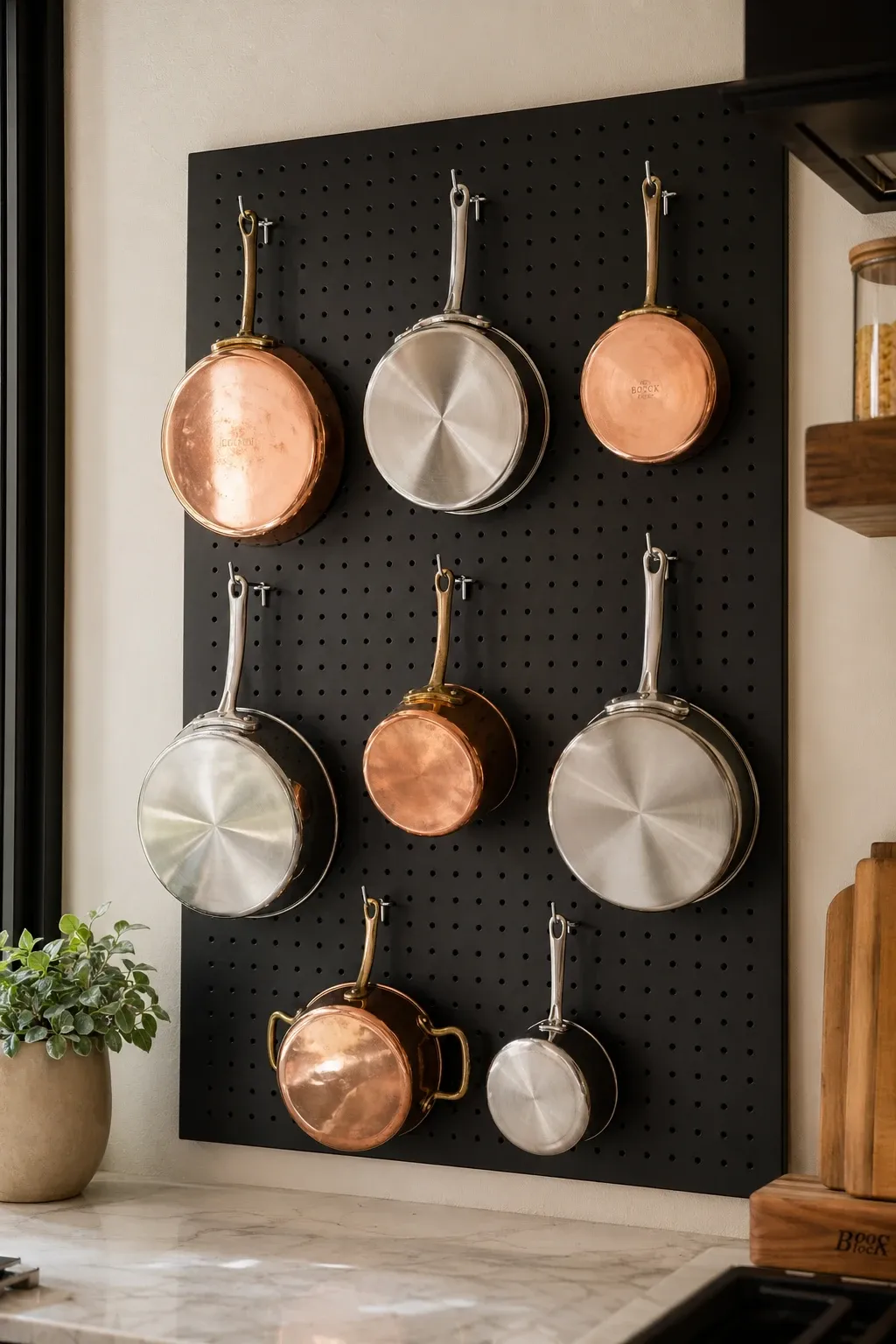
A pegboard on the wall near the stove holds pots, pans, and utensils on hooks where you can see and grab them in one motion. Every piece hangs individually so nothing is stacked or hidden. You can rearrange the hooks whenever your collection changes, which makes the pegboard endlessly flexible. It also turns your cookware into a visual display, which looks great if you have nice pots. Paint the pegboard to match your wall and it looks built-in rather than like a garage workshop.
Designer Tip: Use heavy-duty hooks rated for the weight of cast iron and stainless steel pots. Standard pegboard hooks are designed for lightweight tools and will bend under the weight of a Dutch oven. Upgrade to metal L-hooks that are meant for heavy items.
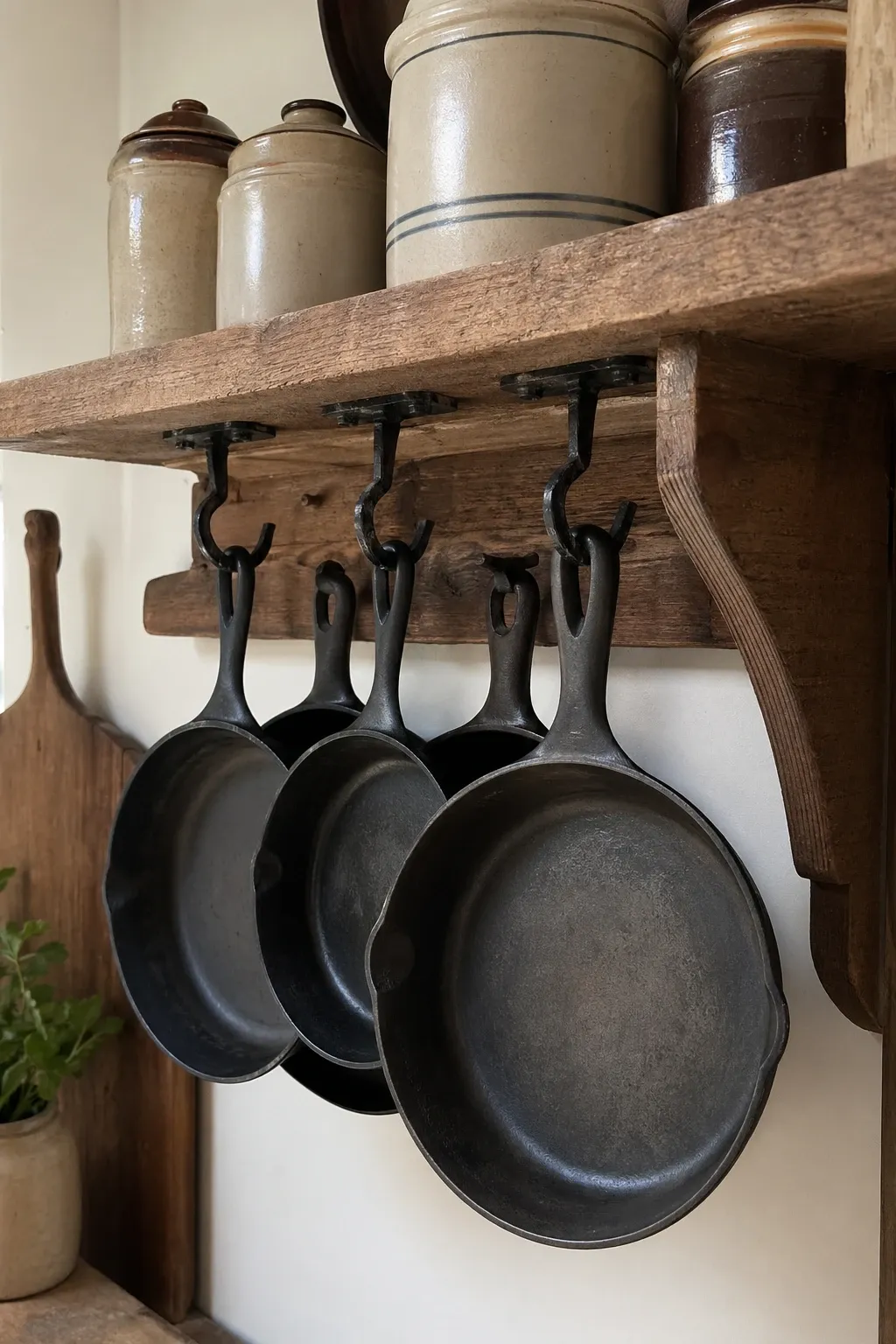
A thick wooden shelf with hooks screwed into the underside gives you storage on two levels: the shelf surface holds items on top and the hooks hang pots and pans below. It combines open shelving with hanging storage in one compact piece. The rustic wood adds warmth to the kitchen and the visible cookware creates a professional, lived-in kitchen feel. This works especially well above a kitchen island or a stretch of counter near the stove.
Designer Tip: Seal the wood shelf with a food-safe finish like mineral oil or butcher block oil. Kitchen shelves near the stove collect grease and steam, and an unsealed wood shelf will stain and warp within months. A good seal makes cleaning easy and protects the wood.
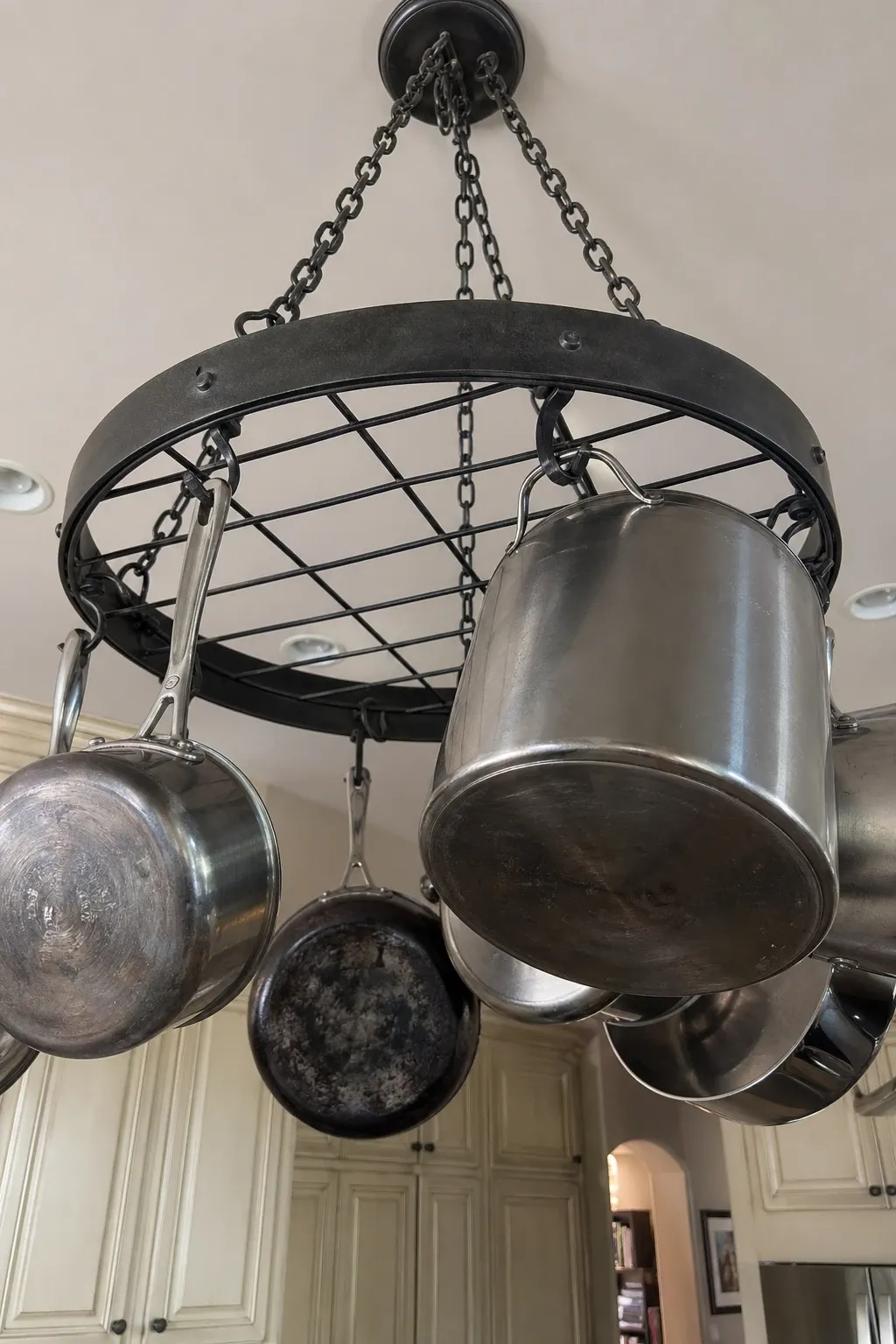
A pot rack hanging from the ceiling above a kitchen island is the classic solution for serious cooks. It puts every pot and pan within arm is reach while keeping cabinets and counters completely free. Oval or rectangular racks in wrought iron, stainless steel, or copper make a visual statement that defines the kitchen. The pots become part of the decor. This works best in kitchens with ceilings at least nine feet high because the rack needs enough clearance to hang without blocking sightlines.
Designer Tip: Anchor the rack into ceiling joists, not just drywall. A loaded pot rack can weigh 50 to 80 pounds and drywall anchors will not hold that over time. Use lag bolts into the joists or a cross-beam support for heavy loads.
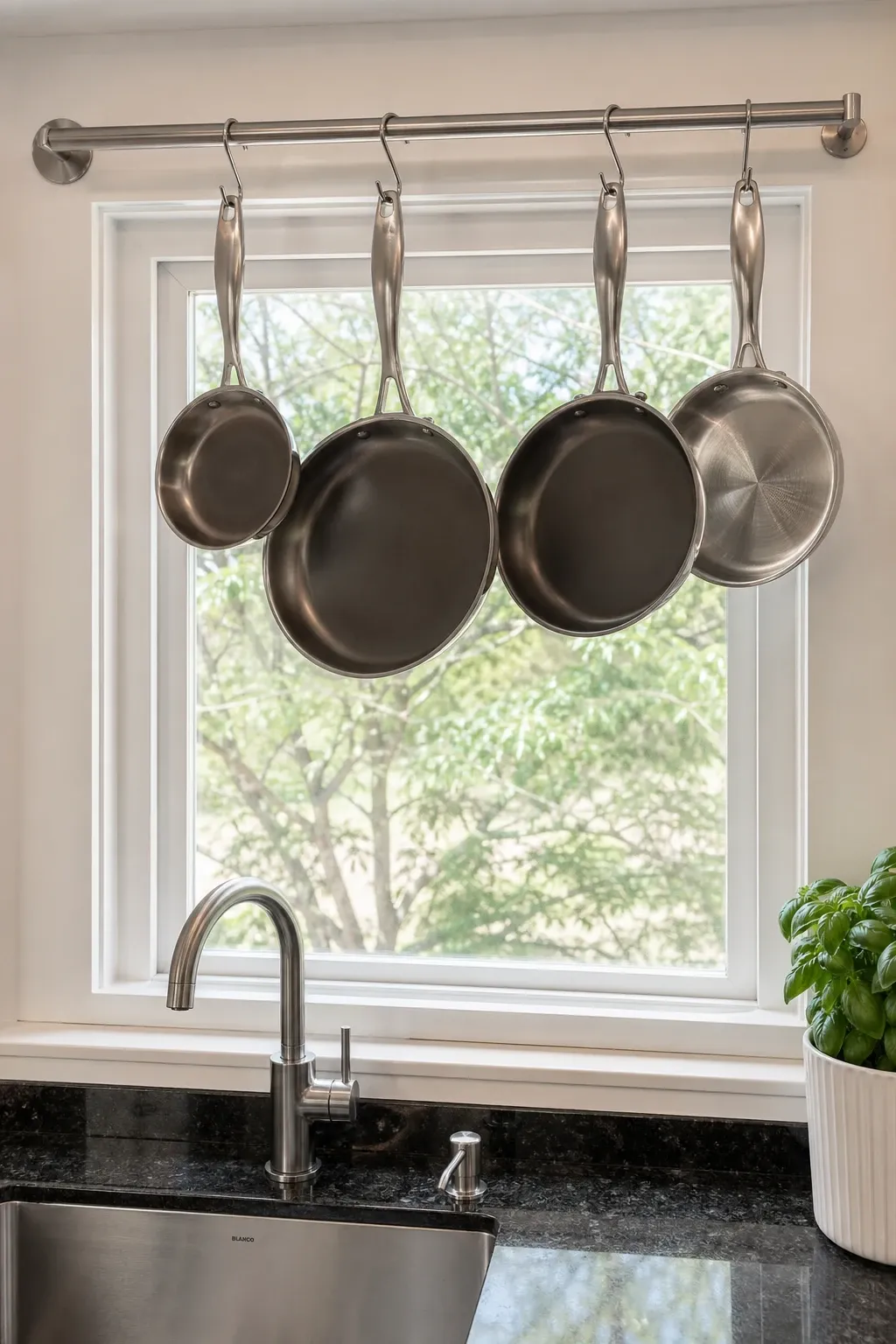
A simple metal bar mounted on the wall with S-hooks is the most affordable and minimalist way to hang pots and pans. It takes up one horizontal strip of wall and lets you hang as many or as few pots as you need. S-hooks are removable and rearrangeable, so the system adapts as your cookware changes. A stainless steel bar with stainless S-hooks on a white wall is clean and modern. A black bar with black hooks is industrial and bold.
Designer Tip: Mount the bar about 18 inches above the counter so the bottoms of the hanging pots do not touch the counter surface but are still easy to grab without reaching too high. Too high and you are standing on tiptoes. Too low and the pots block counter space.
A multi-level rack that sits inside a cabinet holds pots and pans on separate tiers so each one is accessible without unstacking. The tiers step up like stairs, with small pans in front and large ones in back. This is the best option for people who want their cookware hidden inside cabinets but do not want to deal with the stacking problem. Each pot sits alone on its own level and slides out independently.
Designer Tip: Measure the interior height and depth of your cabinet before buying. Multi-level organizers come in many sizes and a unit that is even an inch too tall or deep will not fit. Bring measurements to the store or order from a brand that lists interior cabinet dimensions in the product specs.
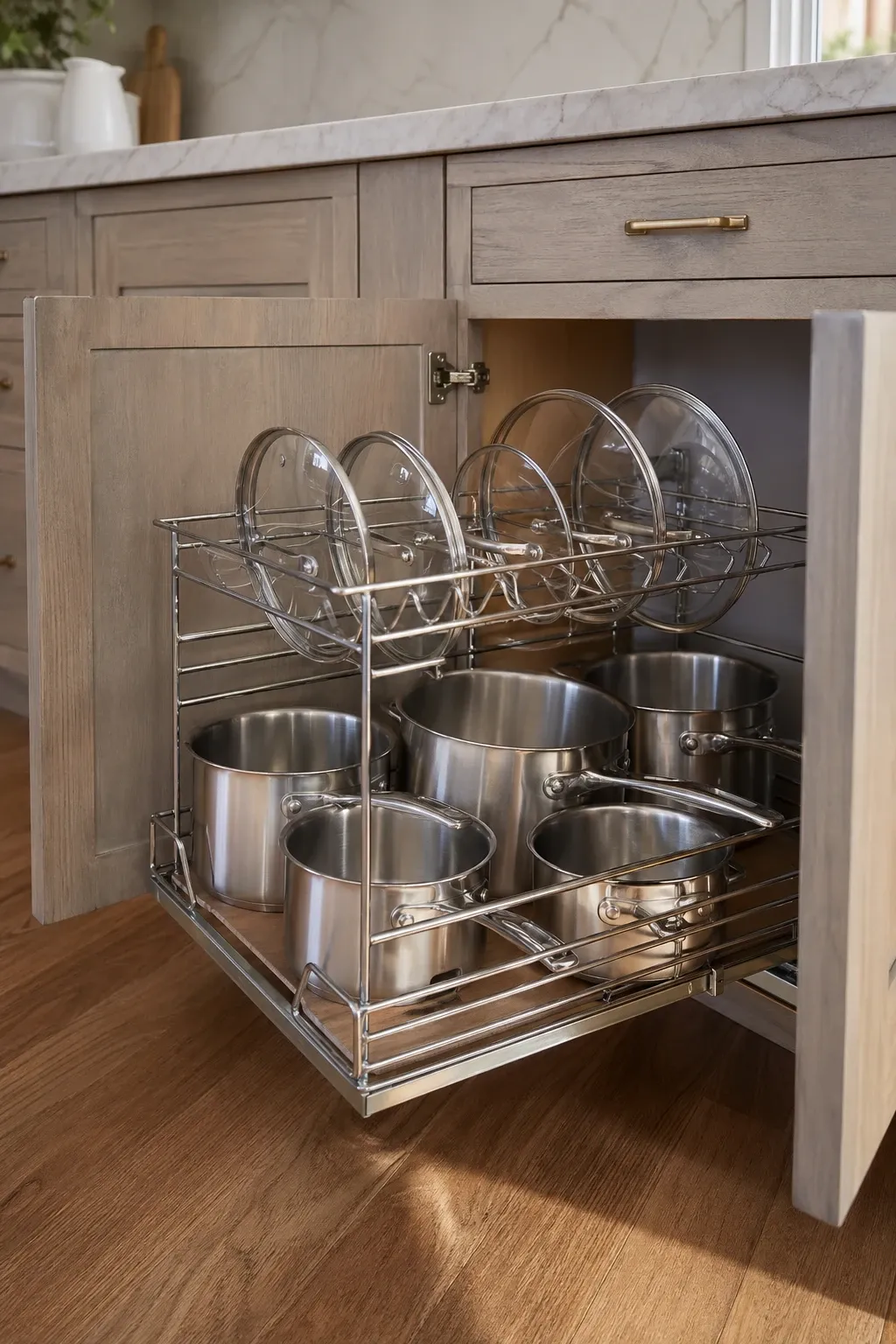
A pull-out rack mounted on drawer slides brings the entire contents of a lower cabinet out to you. Instead of reaching into a dark cabinet and feeling around for the right pan, pull the rack out and everything is visible and accessible. Heavy items like cast iron skillets and Dutch ovens are much easier to lift when they are at counter level rather than buried in the back of a low cabinet. Full-extension slides are essential so the rack comes all the way out.
Designer Tip: Choose slides rated for at least 75 pounds. Cookware is heavy, especially cast iron, and cheap lightweight slides will sag and fail under the weight. Ball-bearing slides are smoother and more durable than roller slides for heavy loads.
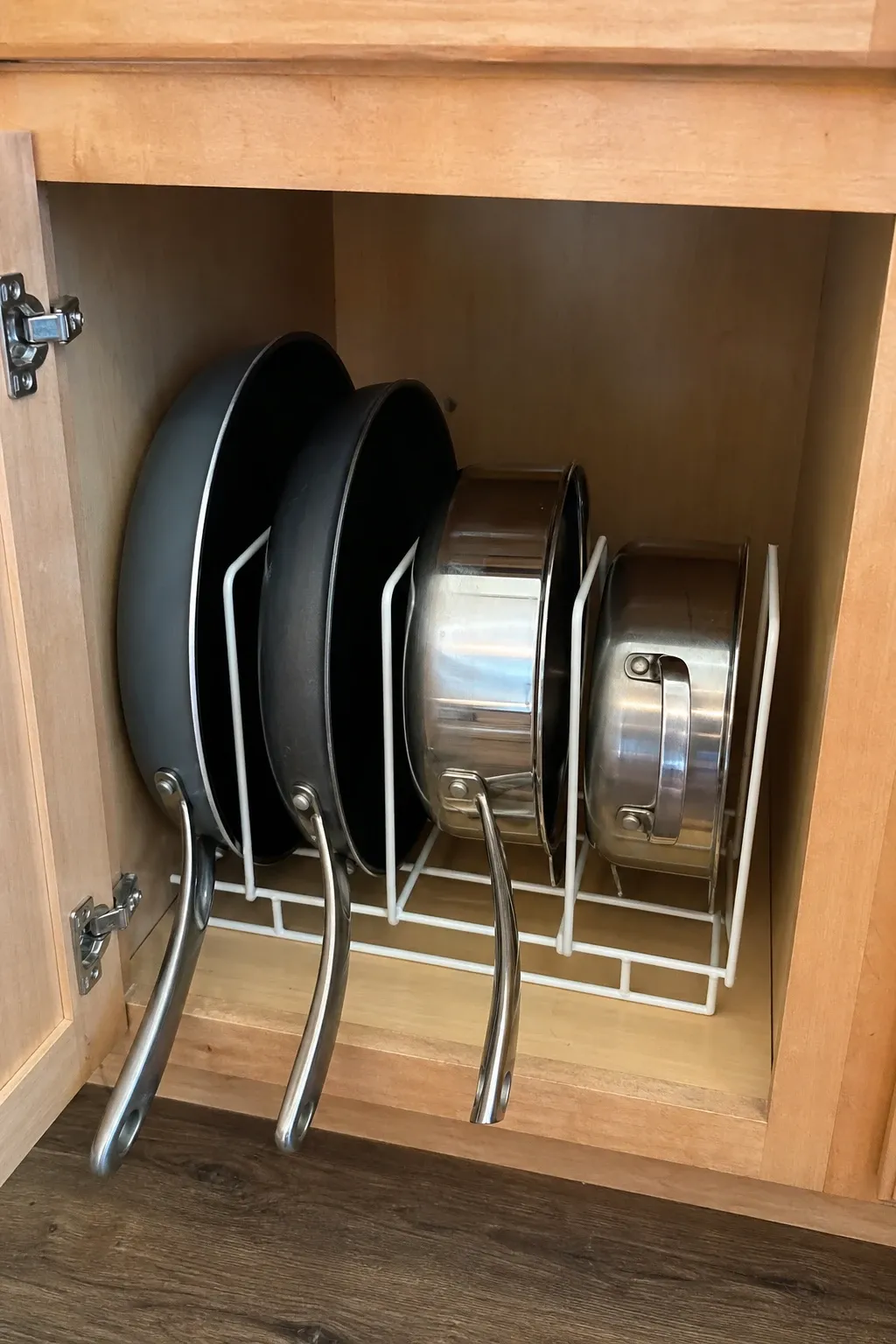
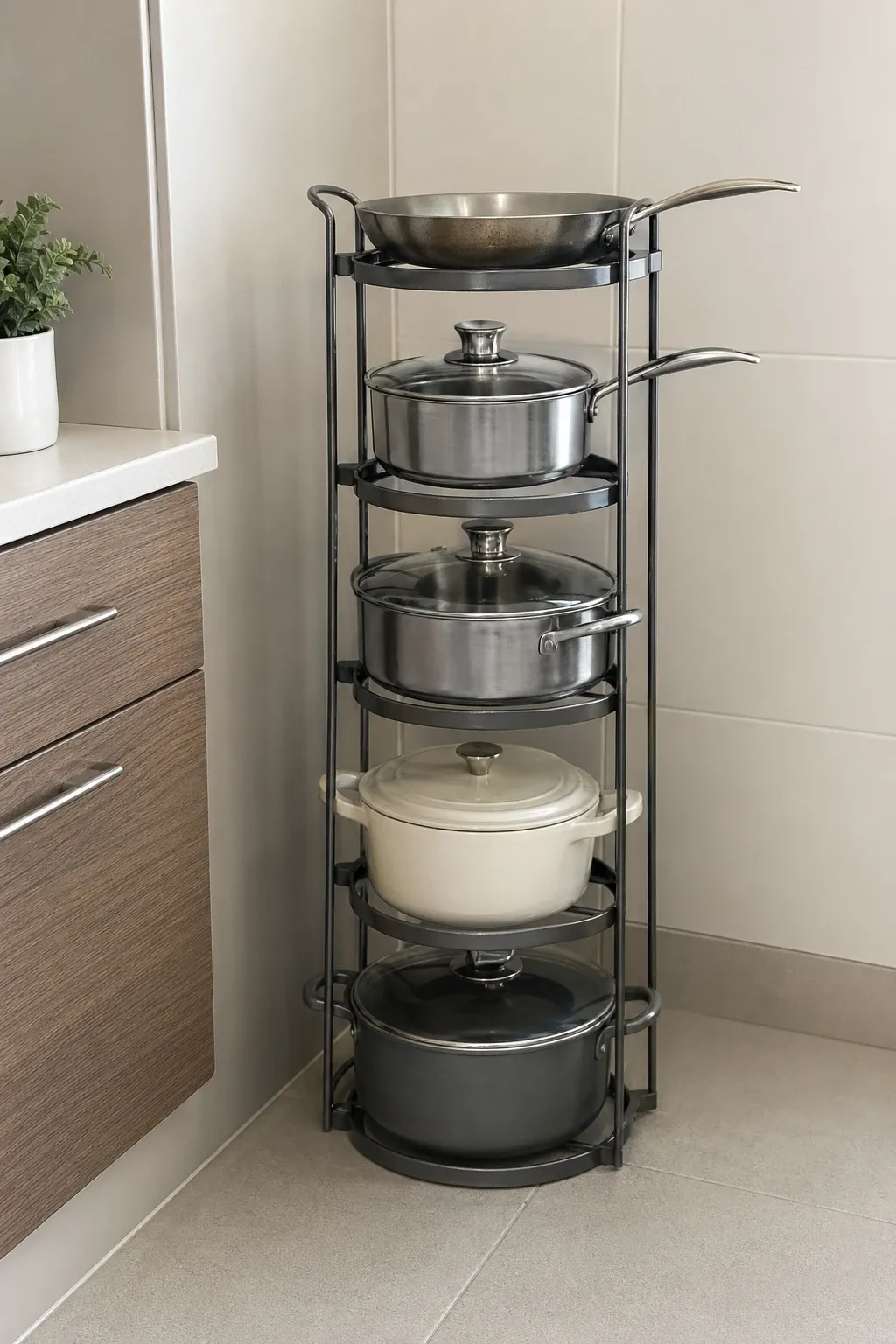
A vertical tower with adjustable dividers stores pots and pans standing upright like books on a shelf. Each piece slides in and out of its own slot without touching the others. A tall, narrow tower fits in a gap between appliances or at the end of a cabinet run where a standard cabinet would be too wide. The vertical orientation uses height rather than depth, which is ideal for kitchens with limited cabinet space but tall ceilings or tall pantry areas.
Designer Tip: Pad the dividers with felt or rubber to prevent scratching on non-stick and enamel cookware. Metal dividers rubbing against coated pans will strip the coating over time. A strip of adhesive felt on each divider protects the finish and quiets the rattling.
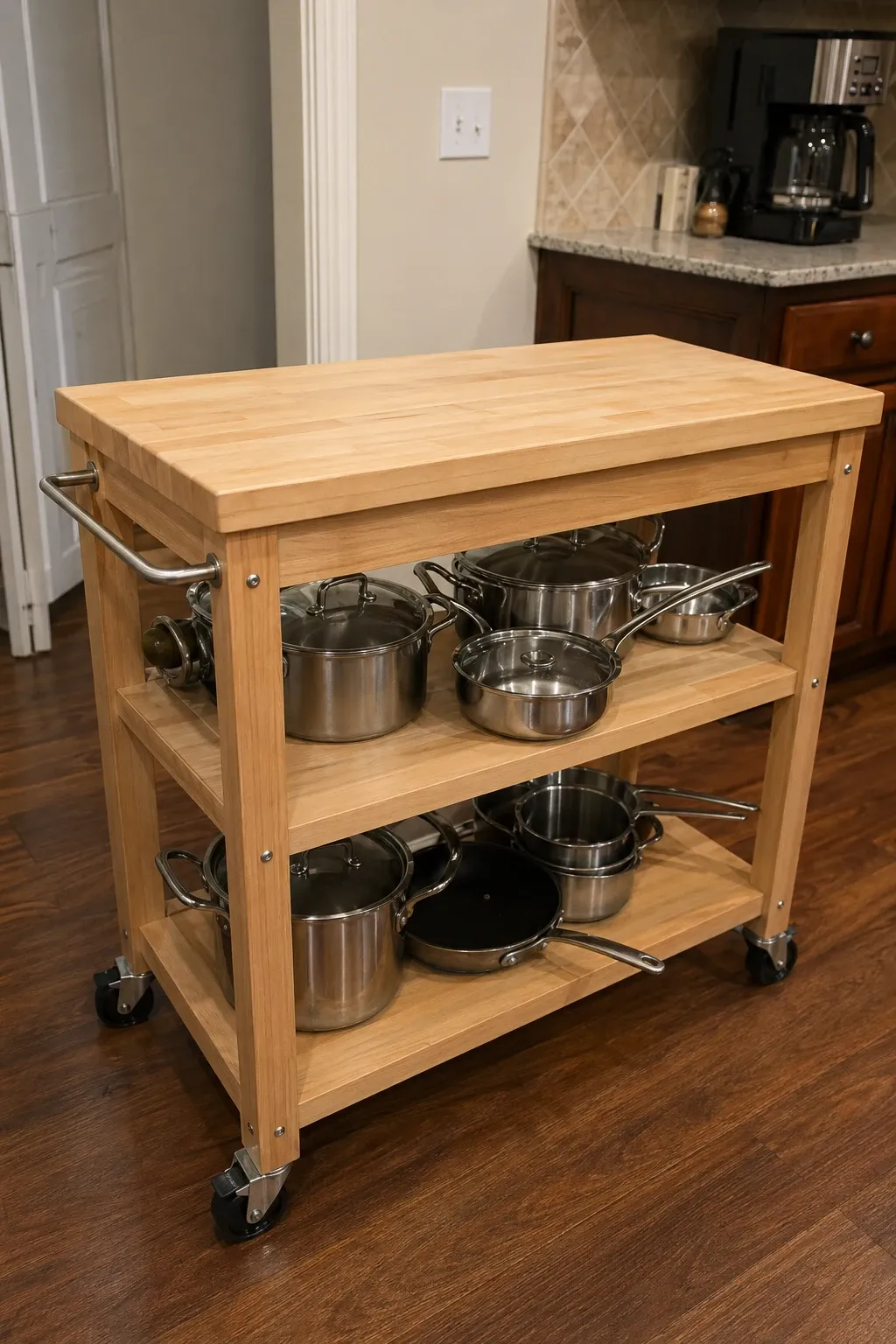
A rolling cart with two or three shelves holds pots and pans on the lower shelves and gives you extra counter space on top. Roll it next to the stove while cooking and push it against the wall when you are done. The mobility is the key advantage because the cookware goes wherever you need it. For small kitchens without enough cabinet space, a rolling cart is an easy way to add storage without any installation or permanent changes.
Designer Tip: Get a cart with locking casters so it stays put while you are cooking. A cart that rolls away when you are trying to lift a hot pot off it is a safety hazard. Lock the wheels when the cart is in its cooking position and unlock them when you need to move it.
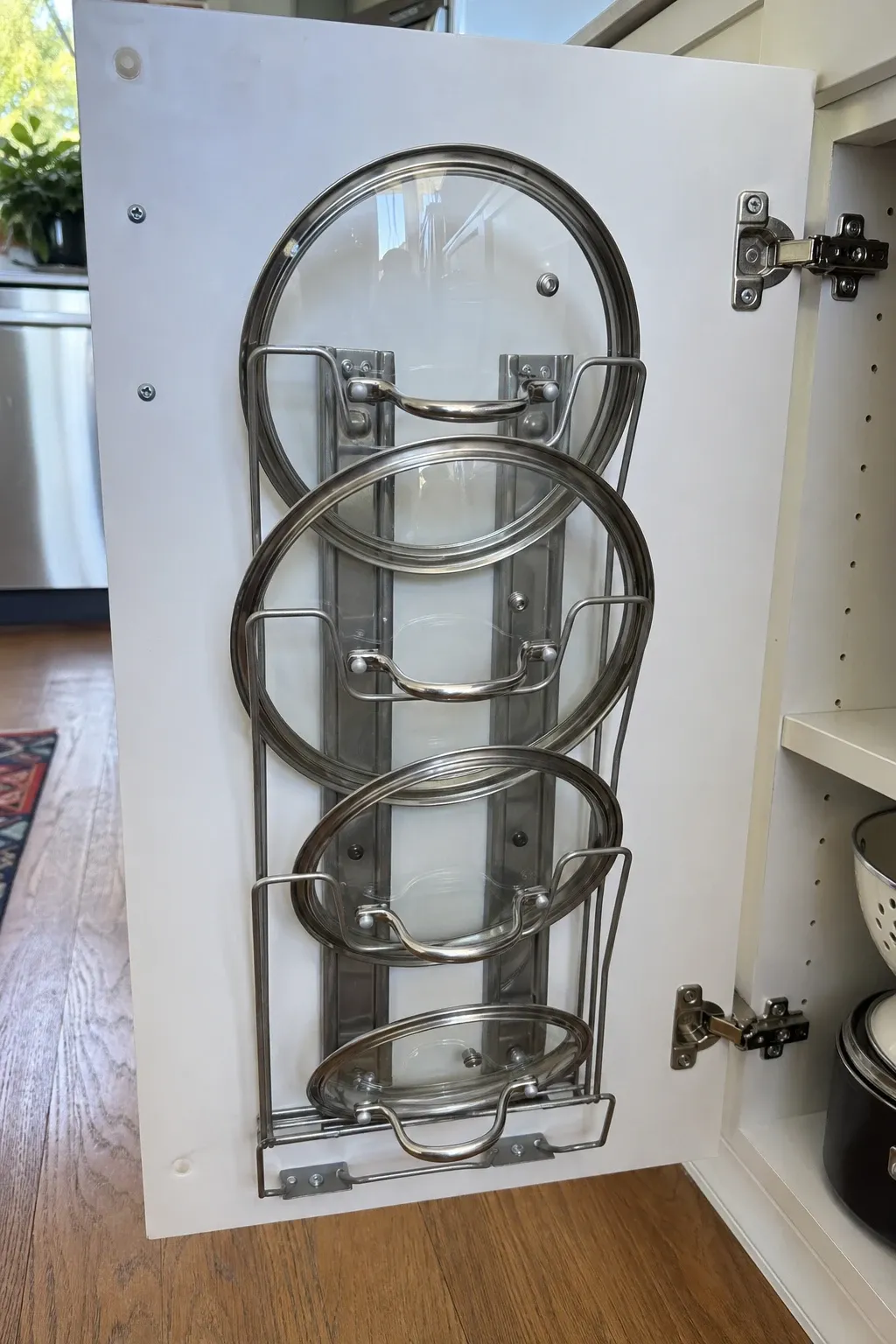
A rack mounted on the inside of a cabinet door holds pot lids vertically in individual slots. Lids are the worst part of pot storage because they do not nest, they slide around, and they crash loudly. A door-mounted rack solves all of that. Each lid sits in its own slot on the door, and the cabinet interior is freed up for the pots themselves. Opening the cabinet shows you all the lids at once, lined up and easy to grab.
Designer Tip: Make sure the lid rack is shallow enough that the cabinet door still closes fully with the lids installed. Measure the depth between the door and the nearest shelf to confirm there is enough clearance. A rack that prevents the door from closing is worse than no rack.
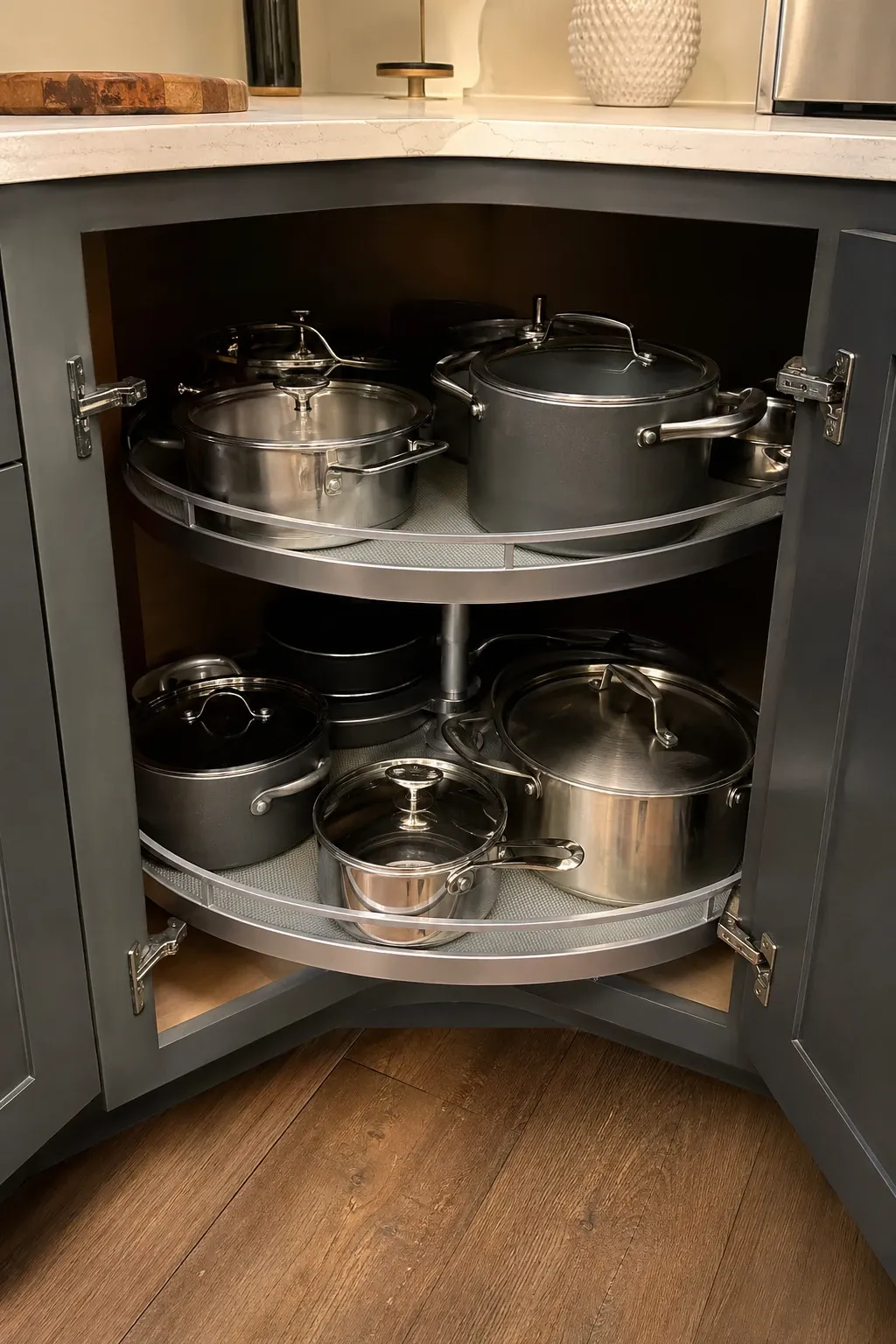
A heavy-duty lazy Susan in a corner cabinet brings pots and pans from the back to the front with a spin. Corner cabinets are the deepest and hardest to access cabinets in most kitchens. A lazy Susan puts everything on a rotating platform so the item you need comes to you. Get one with a high weight capacity because pots and pans are much heavier than the spices and cans that most lazy Susans are designed for.
Designer Tip: Use a two-tier lazy Susan in a corner cabinet to double the storage capacity. The lower tier holds large pots and the upper tier holds smaller saucepans. Make sure the upper tier has enough clearance for the handles on the lower tier to spin freely underneath.
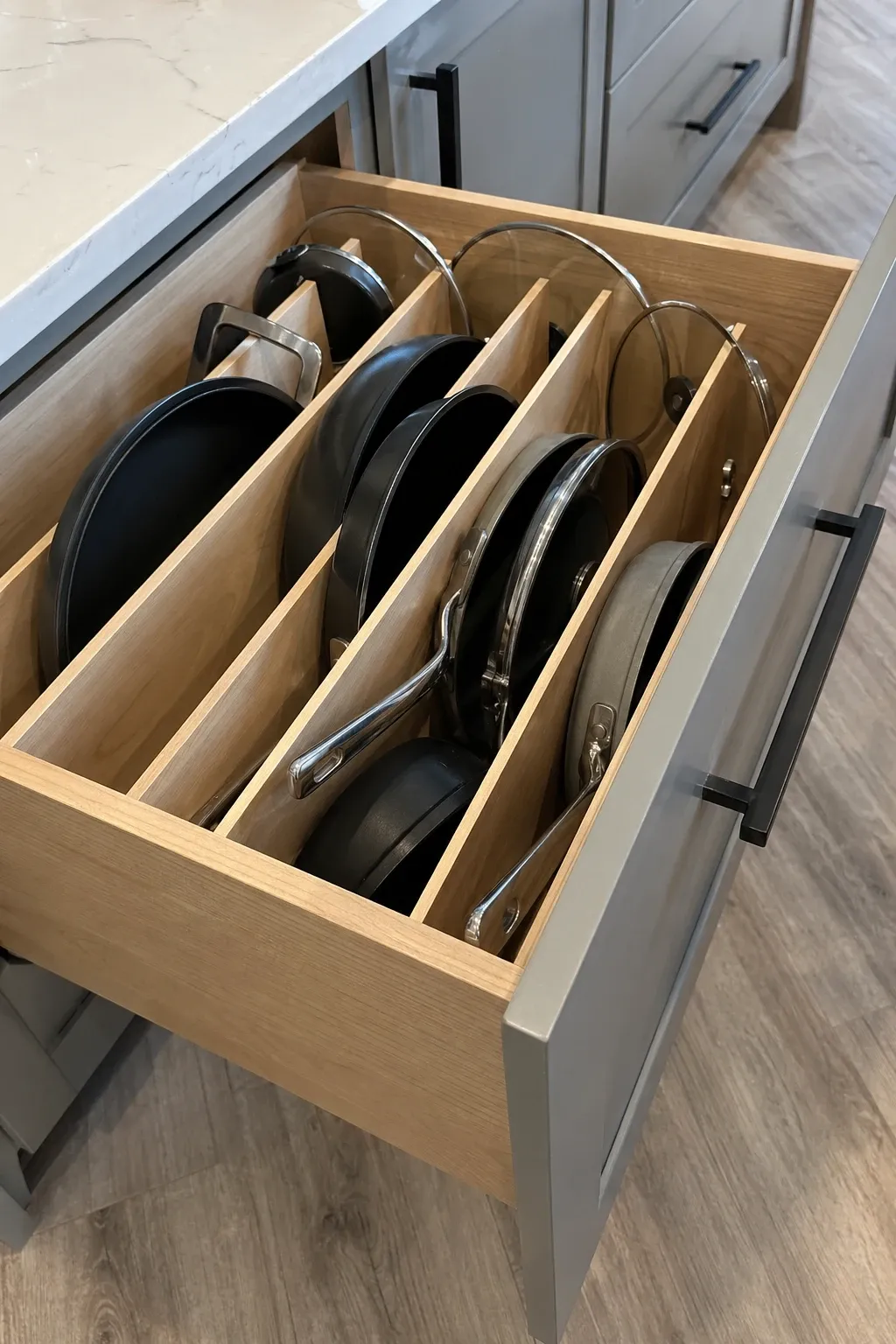
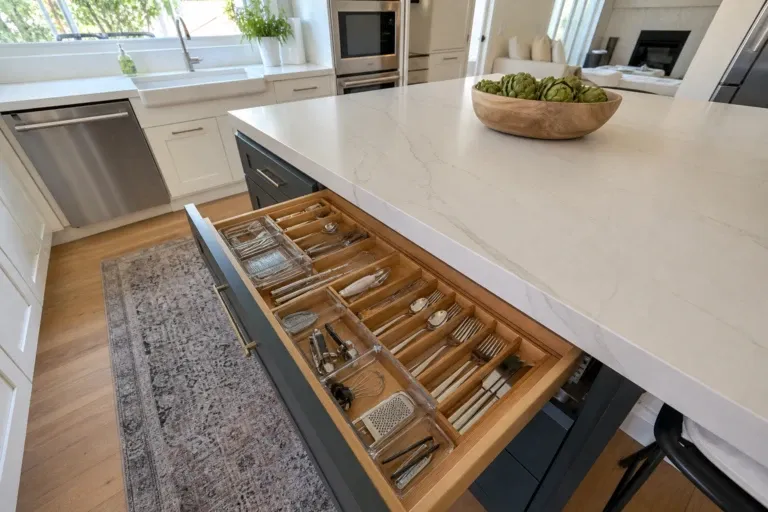
Deep kitchen drawers with adjustable dividers hold pots and pans flat with each piece in its own section. This is how professional kitchens store cookware because drawers pull out to reveal everything at once, and each item lifts straight up rather than being pulled out of a stack. If your kitchen has deep lower drawers, adding dividers is one of the best investments you can make. The drawer approach eliminates bending, reaching, and stacking entirely.
Designer Tip: Store pots and pans without the lids in the drawer and put the lids in a separate door-mounted rack or a lid organizer on a shelf. Trying to store pots with their lids in the same drawer wastes space because the lids create dead air above each pot.
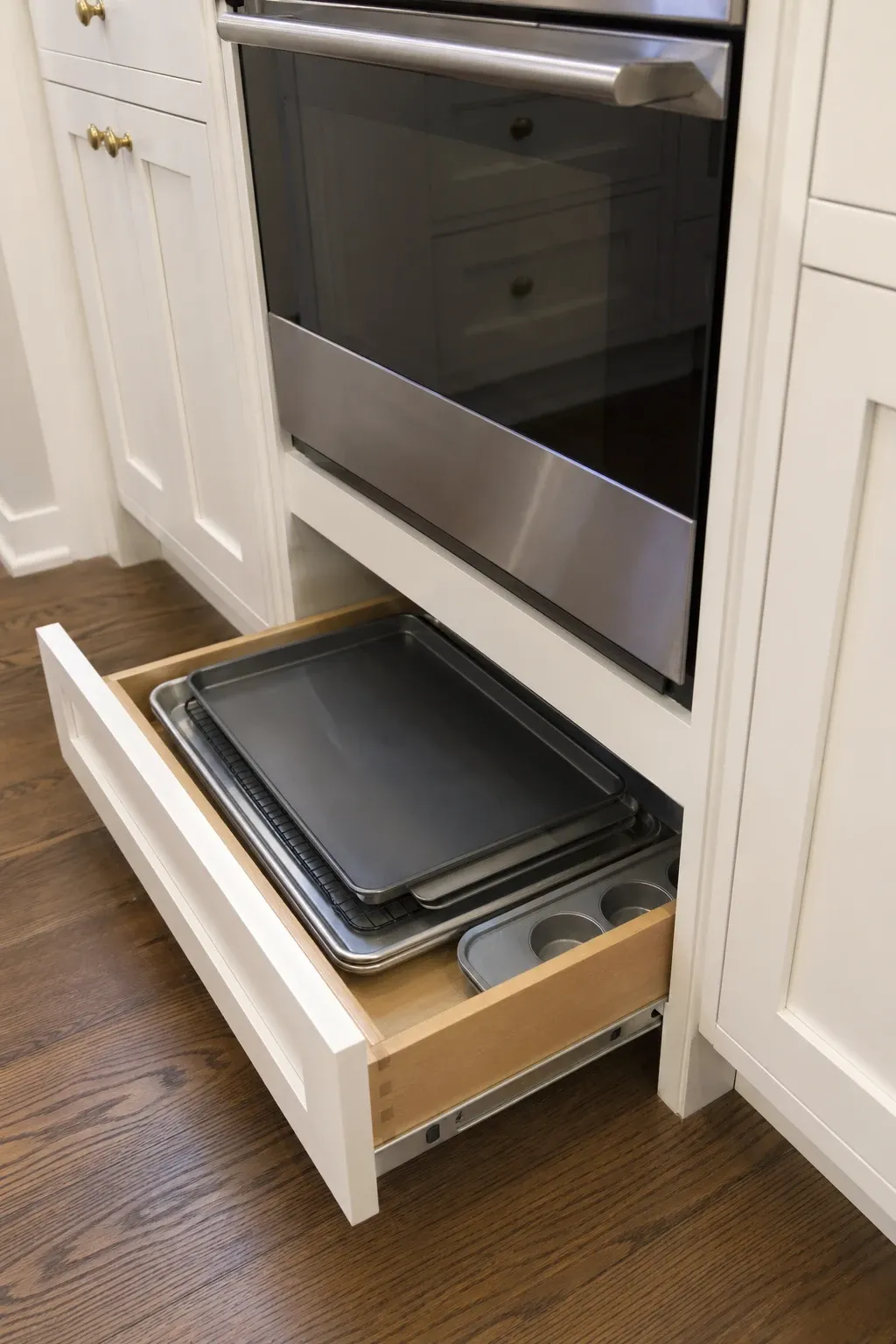
The toe-kick is the recessed area at the bottom of your kitchen cabinets where your feet go when you stand at the counter. Most people do not know this space can be turned into a shallow drawer. A toe-kick drawer is about 4 inches tall and runs the full width of the cabinet, which is perfect for flat items like baking sheets, cutting boards, pizza stones, and cooling racks. It is hidden storage that uses completely wasted space.
Designer Tip: Install a spring-loaded push-to-open mechanism on the toe-kick drawer since there is no room for a handle at floor level. A gentle tap with your foot opens the drawer. This keeps the front face clean and makes the drawer accessible even when your hands are full.
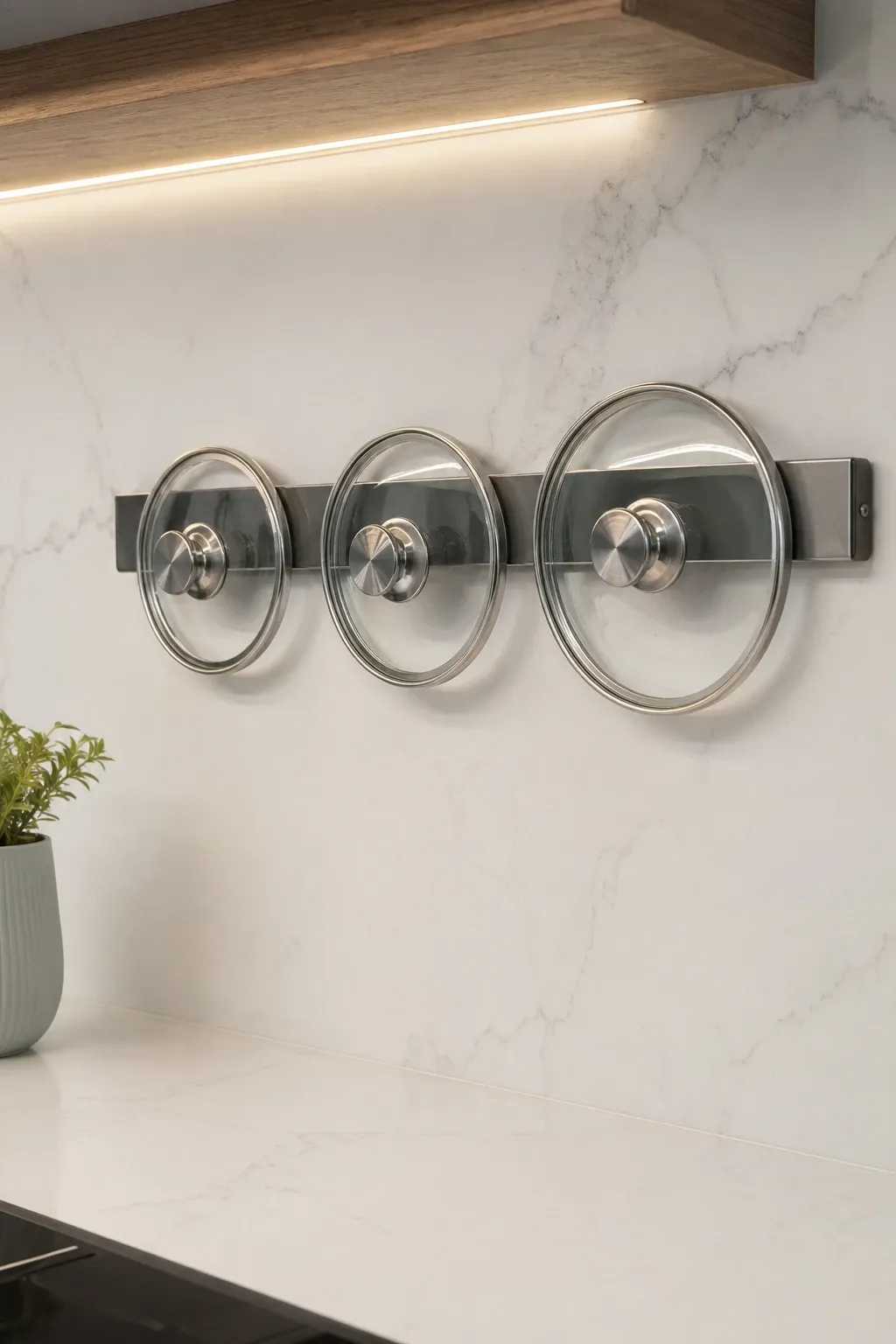
A magnetic strip mounted inside a cabinet holds small metal lids flat against the wall or door. This works for lightweight stainless steel lids on smaller pots and saucepans. The lids stick to the strip and release with a gentle pull. It keeps small lids organized and out of the way without taking any shelf or drawer space. Combine a magnetic strip for small lids with a rack for large lids and your entire lid collection is organized.
Designer Tip: Test your lids on a magnet before installing the strip. Not all stainless steel is magnetic, and aluminum, glass, and some alloy lids will not stick. Make sure your lids actually work with a magnetic strip before drilling holes in your cabinet.
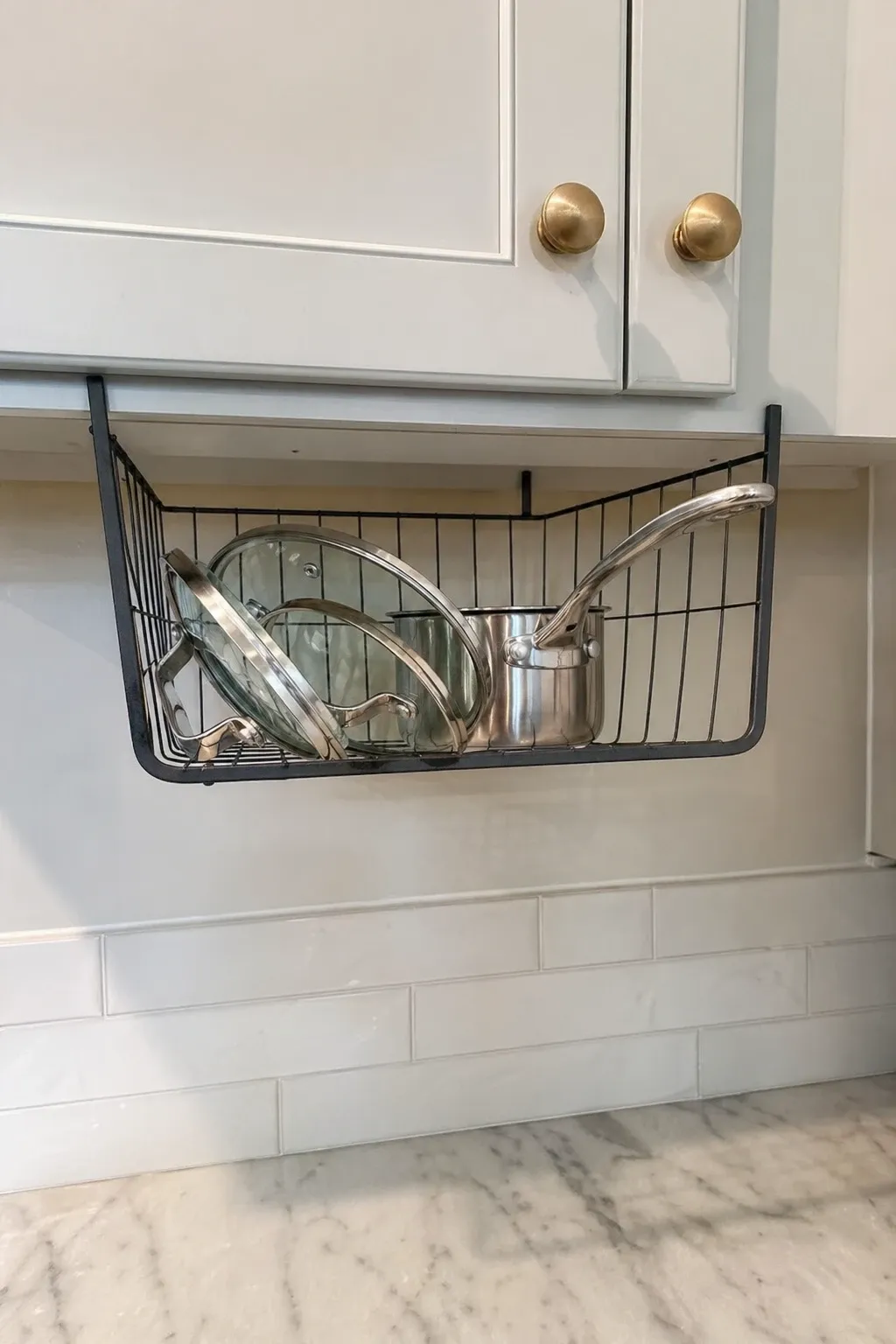
Wire baskets that hook onto the underside of a shelf create a new storage tier for smaller pots, saucepans, or lids. The basket hangs in the dead air between two shelves and holds items that are too short to justify a full shelf but too important to stack on top of something else. It is an inexpensive way to add storage without installing anything permanent. Just hook the basket onto the shelf edge and start using it.
Designer Tip: Make sure the basket does not block access to items on the shelf below. Position it toward the back of the shelf so the front of the lower shelf is still open for frequently used items. The basket should add storage, not create an obstacle.
The best pot and pan storage system is the one that matches your kitchen layout and cooking habits. Hanging storage works if you have wall or ceiling space. Pull-outs and drawer dividers work if you have deep lower cabinets. Pick the solution that fits your space, install it properly, and cooking becomes faster because grabbing the right pan is no longer an archaeological dig through stacked cookware.
Frequently Asked Questions
What is the best way to store pots and pans in a small kitchen?
Wall-mounted options like a hanging bar with S-hooks or a pegboard make the most of limited space because they use wall area instead of cabinet space. A rolling cart is another good option for small kitchens because it provides storage and counter space without being permanent.
How do I store pots and pans without scratching them?
Use felt or cloth dividers between stacked pans, or store them in individual slots on a rack or in a drawer with dividers. Hanging storage prevents scratching entirely because each piece hangs alone. For non-stick and enamel cookware, padding between pieces is essential to protect the coating.
Should I store pots with or without lids?
Store them separately. Lids sitting on pots waste the vertical space above each pot and make stacking awkward. Keep pots in drawers, on racks, or hanging, and store lids in a separate lid organizer on a cabinet door or shelf. This approach uses space much more efficiently.
How many pots and pans do I actually need?
Most home cooks need about 7 to 10 pieces: a large skillet, a small skillet, a large pot, a medium saucepan, a small saucepan, a Dutch oven, and a baking sheet or two. If you have more than that, honestly assess how often you use each piece. Anything untouched for a year can probably go.