Beige and black is one of those kitchen combinations that looks effortless in every photograph you save and considerably more complicated when you are standing in your own kitchen trying to figure out where to start. The contrast between a warm, sandy neutral and a sharp, confident dark reads as both sophisticated and liveable, which is a rare combination in kitchen design. But get the balance wrong and the kitchen either feels flat and bland where the black never fully registers, or heavy and cold where the beige disappears under the weight of too much darkness.
The ideas in this article are organized by how dominant the black element is in the kitchen, starting with ideas where black plays a quiet but precise supporting role, moving through combinations where the two colours share equal weight, and finishing with kitchens where black genuinely leads and beige becomes the warming counterpart. Wherever you are on that scale, there is a combination here that works for your space, your light, and how bold you actually want to be.
Black as an Accent: Beige Does the Heavy Lifting
These ideas use black as a finishing detail rather than a structural colour. The beige does most of the visual work, and the black arrives in hardware, fittings, and small fixed elements to give the kitchen its definition and edge.
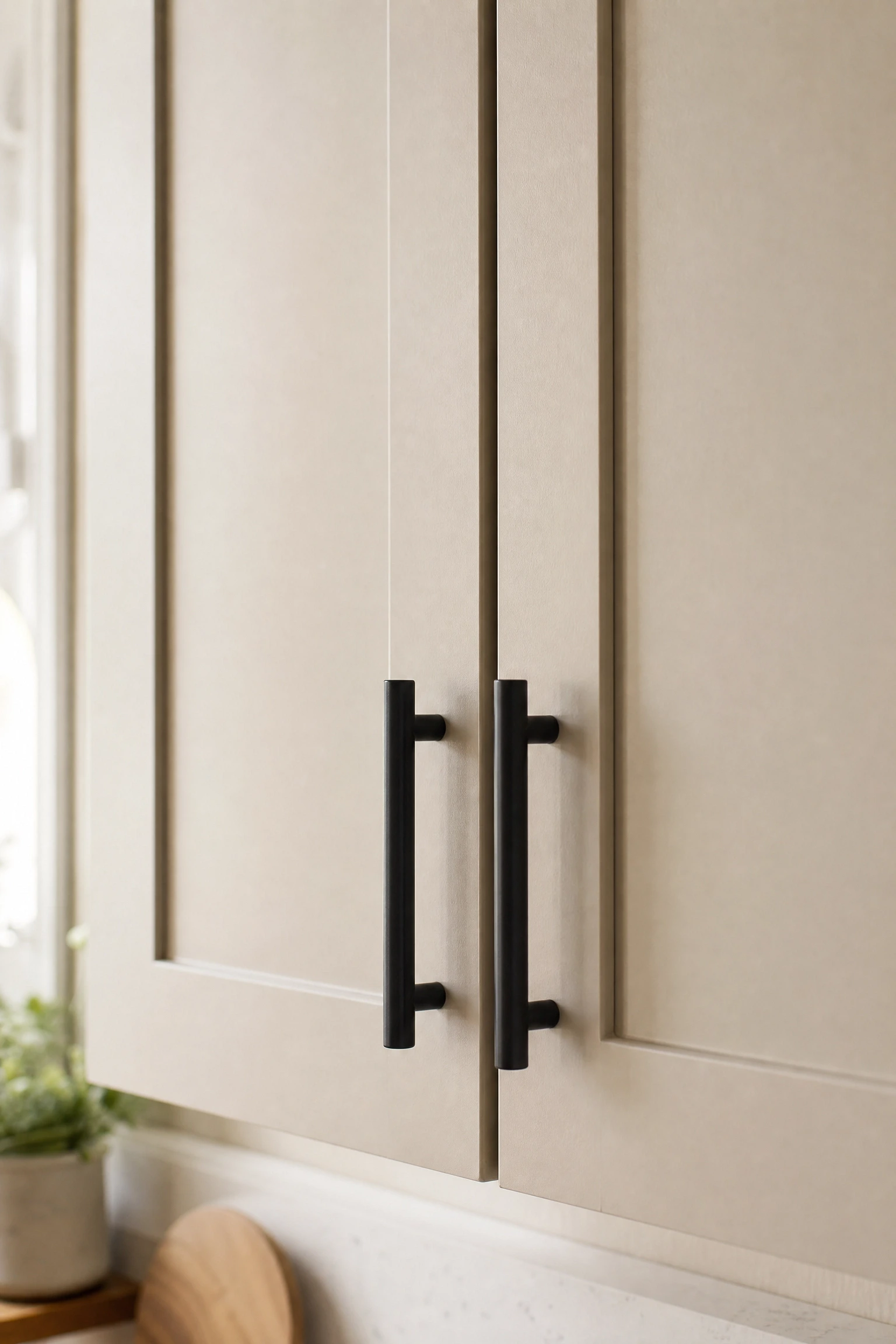
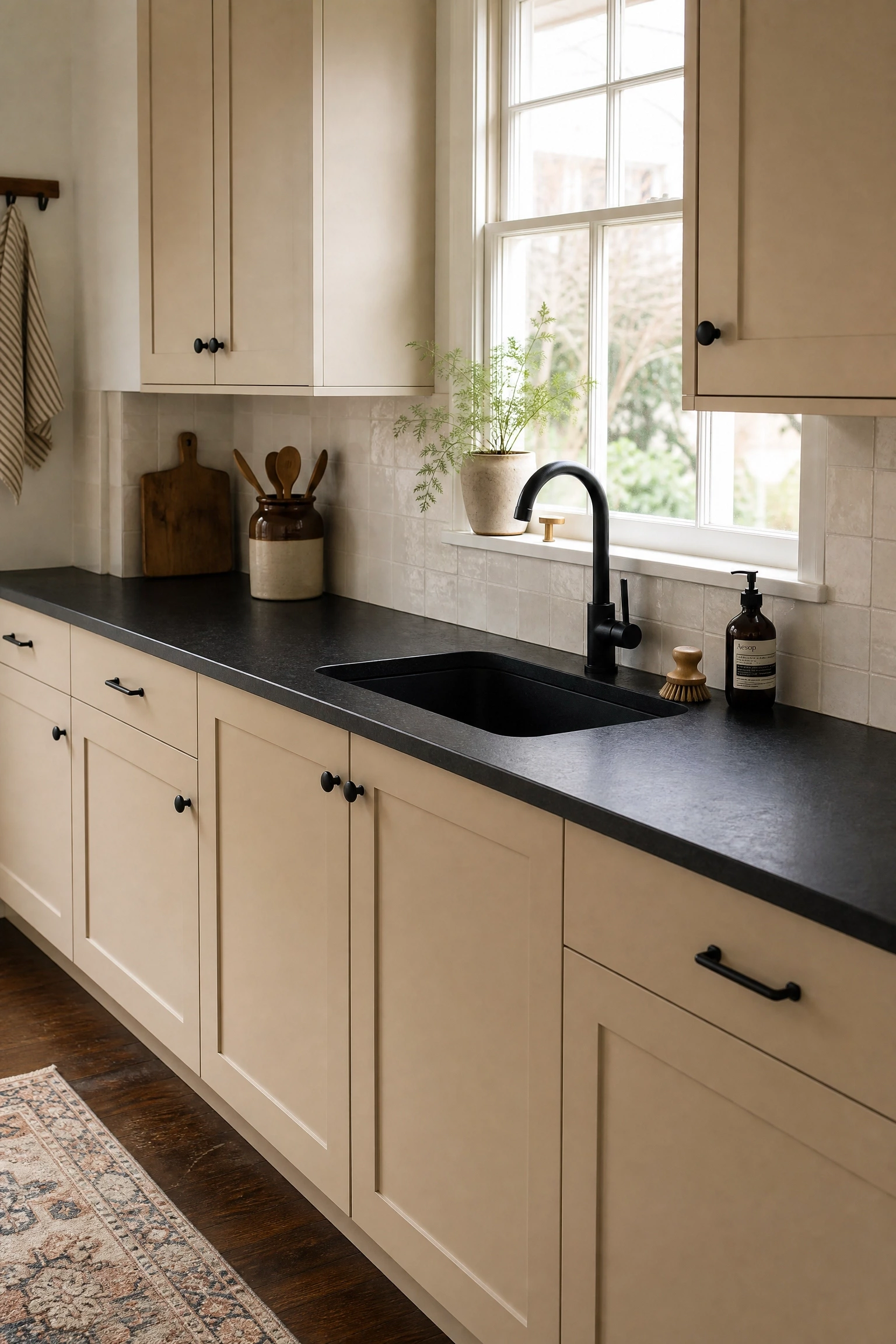
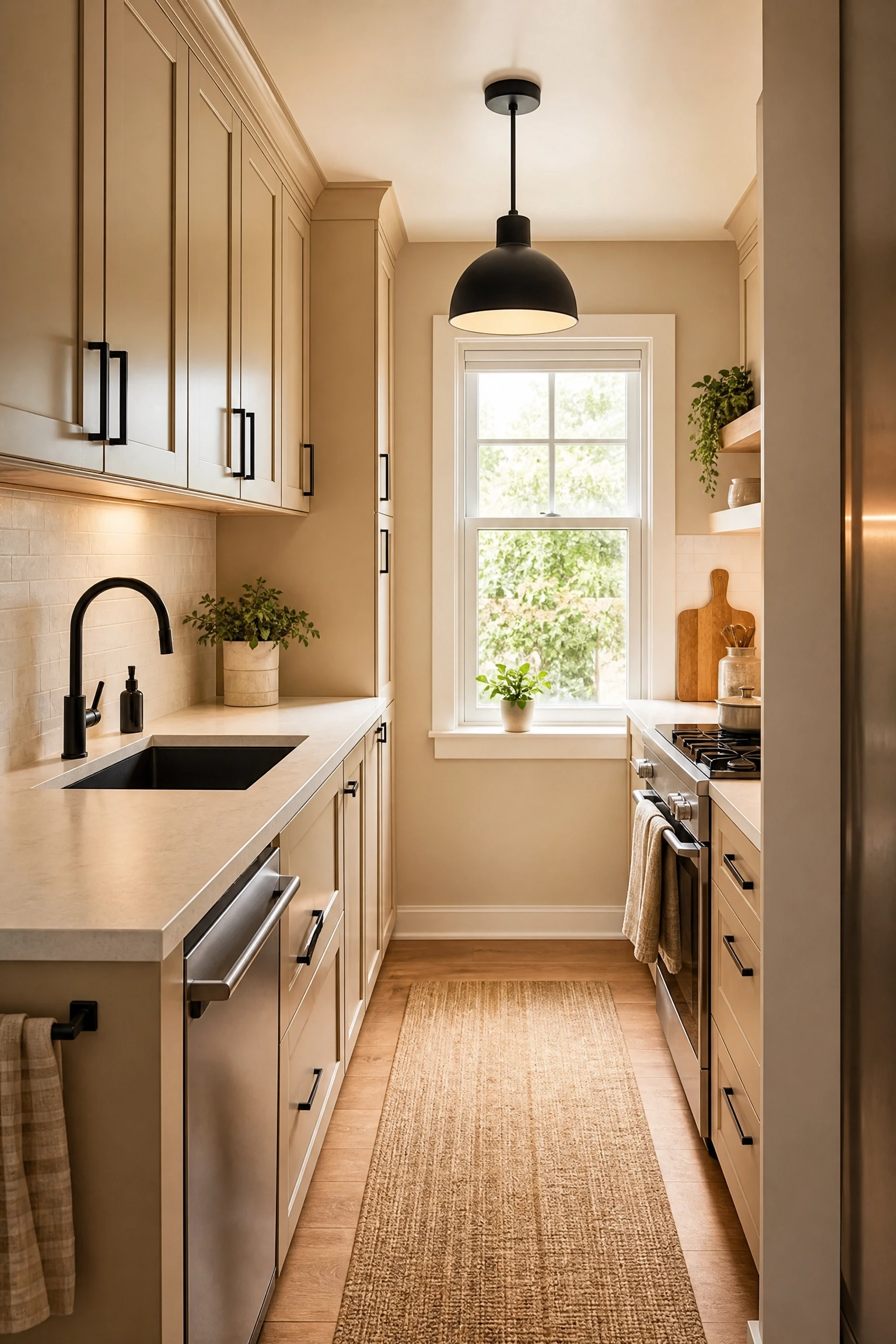
Beige shaker cabinets with matte black hardware is the cleanest, most confident expression of this combination at its most restrained. The warm neutral of the cabinetry does the work of making the kitchen feel welcoming and liveable, and the matte black hardware on bar pulls, cup pulls, or simple knobs provides the sharpness that stops beige from reading as safe or unremarkable. What makes this work so consistently is the contrast in texture as much as the contrast in colour: the slightly chalky, light-absorbing quality of matte black hardware sits in interesting visual tension with the warmer, more reflective surface of painted shaker cabinet doors. This combination works in kitchens of almost any size and suits a wide range of adjacent styles, from modern farmhouse to contemporary Scandinavian to transitional. The practical note is that matte black hardware is prone to showing water marks and fingerprints around the sink area and needs regular wiping down, particularly if the hardware is positioned close to the tap.
Pro Move: Choose bar pulls on drawers and cup pulls on cabinet doors rather than matching the same hardware style throughout. The mix of profiles adds visual interest and makes the kitchen look more considered than a single hardware style repeated uniformly.
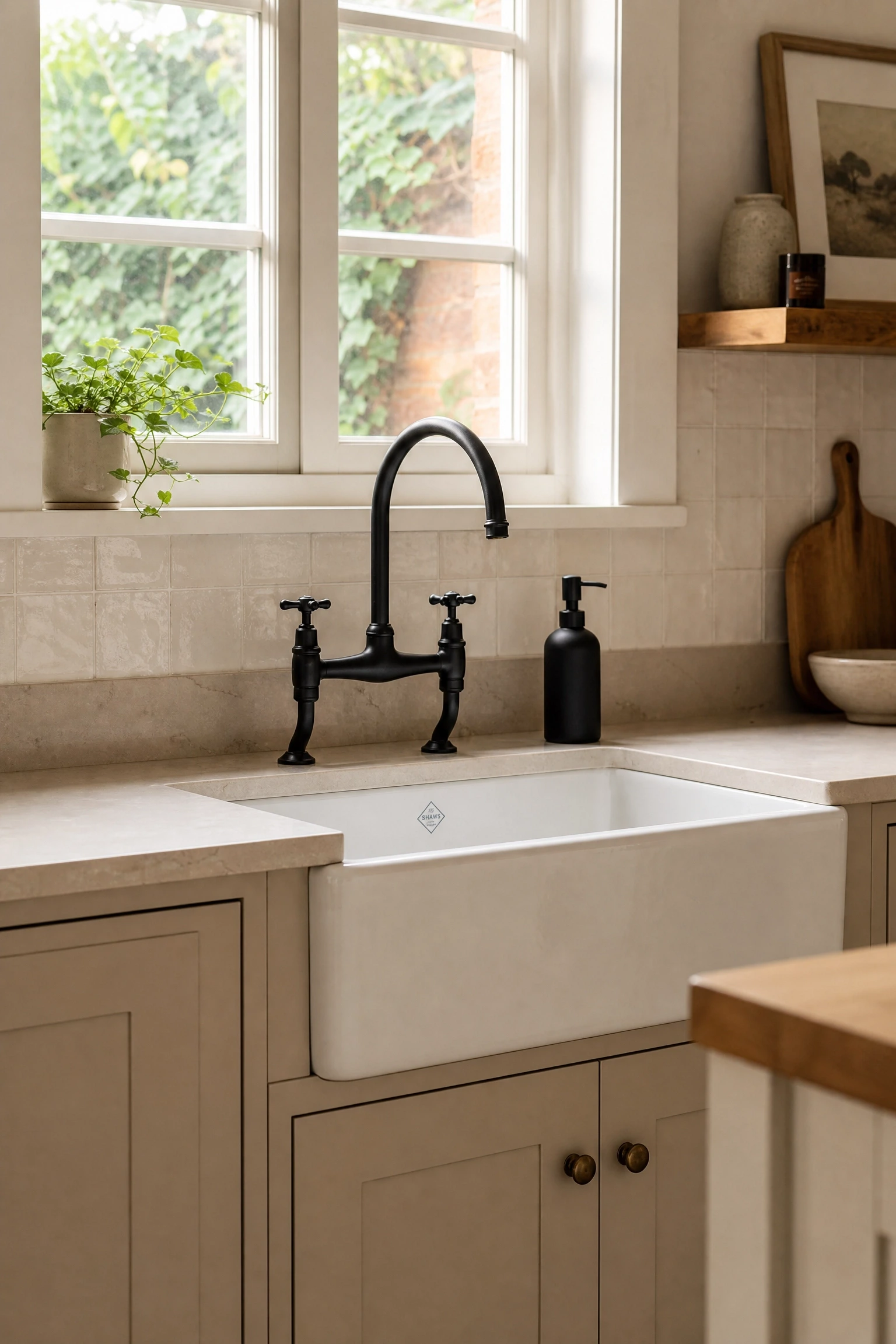
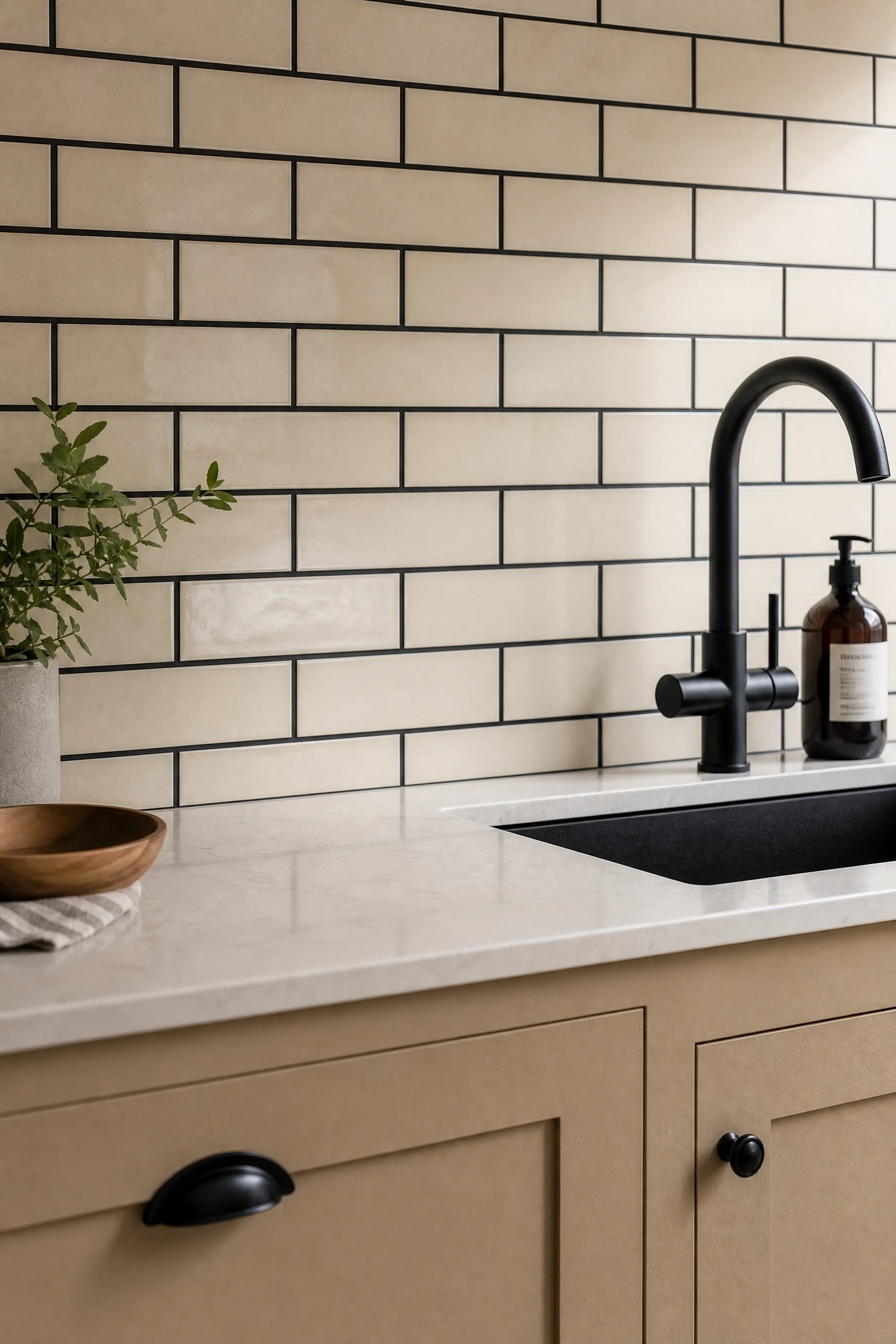
A matte black tap faucet and sink fittings in an otherwise fully beige kitchen is the single smallest change that makes the largest perceptible difference to how the kitchen reads. The tap is a fixed element that sits at eye level above the sink and draws attention every time someone looks toward that part of the kitchen, which means its finish registers more strongly than you might expect from such a compact detail. In a beige kitchen with cream countertops and a light backsplash tile, a matte black bridge tap or simple deck-mounted tap introduces the black element with enough presence to anchor the whole palette without requiring any cabinetry changes. This approach is particularly useful for renters or anyone updating an existing kitchen without a full renovation, because changing the tap is a relatively contained project that can be done independently of everything else.
Designer Advice: Pair a matte black tap with a matte black soap dispenser and, if the sink allows, a matte black sink grid or drain cover. These small coordinated details make the black feel like a considered element rather than a single fixture that arrived without context.
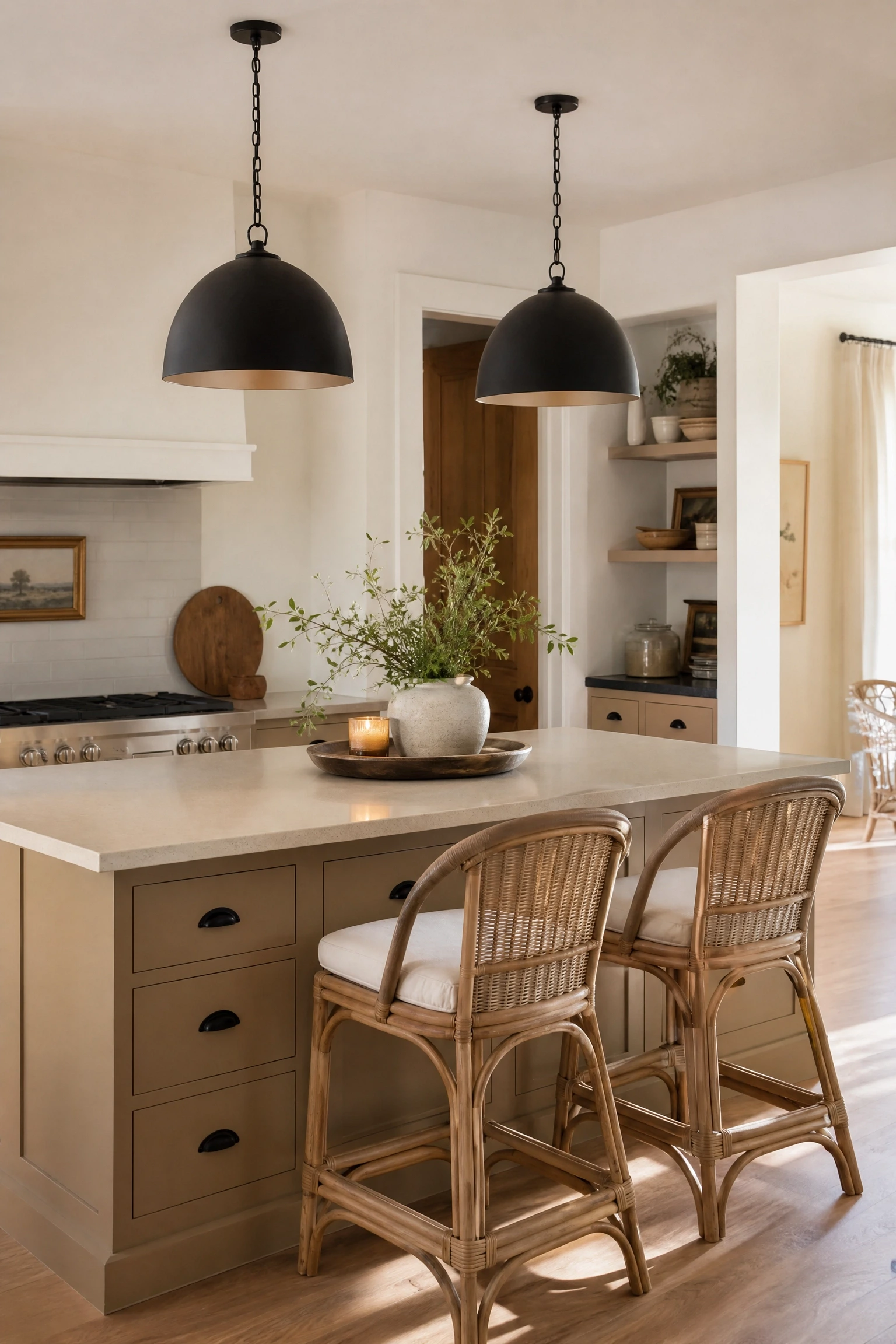
Pendant lights over a kitchen island or dining table are one of the most visible design decisions in a kitchen, and matte black pendant fittings above a beige island are a natural and highly effective pairing. The dark fitting draws the eye downward toward the island surface, reinforcing it as the focal point of the kitchen, and the contrast between the black metal of the fitting and the warm beige of the island cabinetry below it creates a visual relationship that makes the kitchen feel considered and complete. The pendant style matters as much as the finish: simple industrial dome shades in matte black suit contemporary and minimal kitchens. More sculptural or cage-style black pendants work well in kitchens with a more eclectic or transitional aesthetic. Whatever the style, choosing a fitting with a warm-toned bulb rather than a cool white or daylight bulb preserves the warmth of the beige palette below.
Quick Tip: Hang island pendants in a consistent row at the same height rather than at varying heights unless the kitchen design specifically calls for an asymmetric arrangement. Consistent pendant height above a beige island reads as intentional. Random heights can look unresolved.
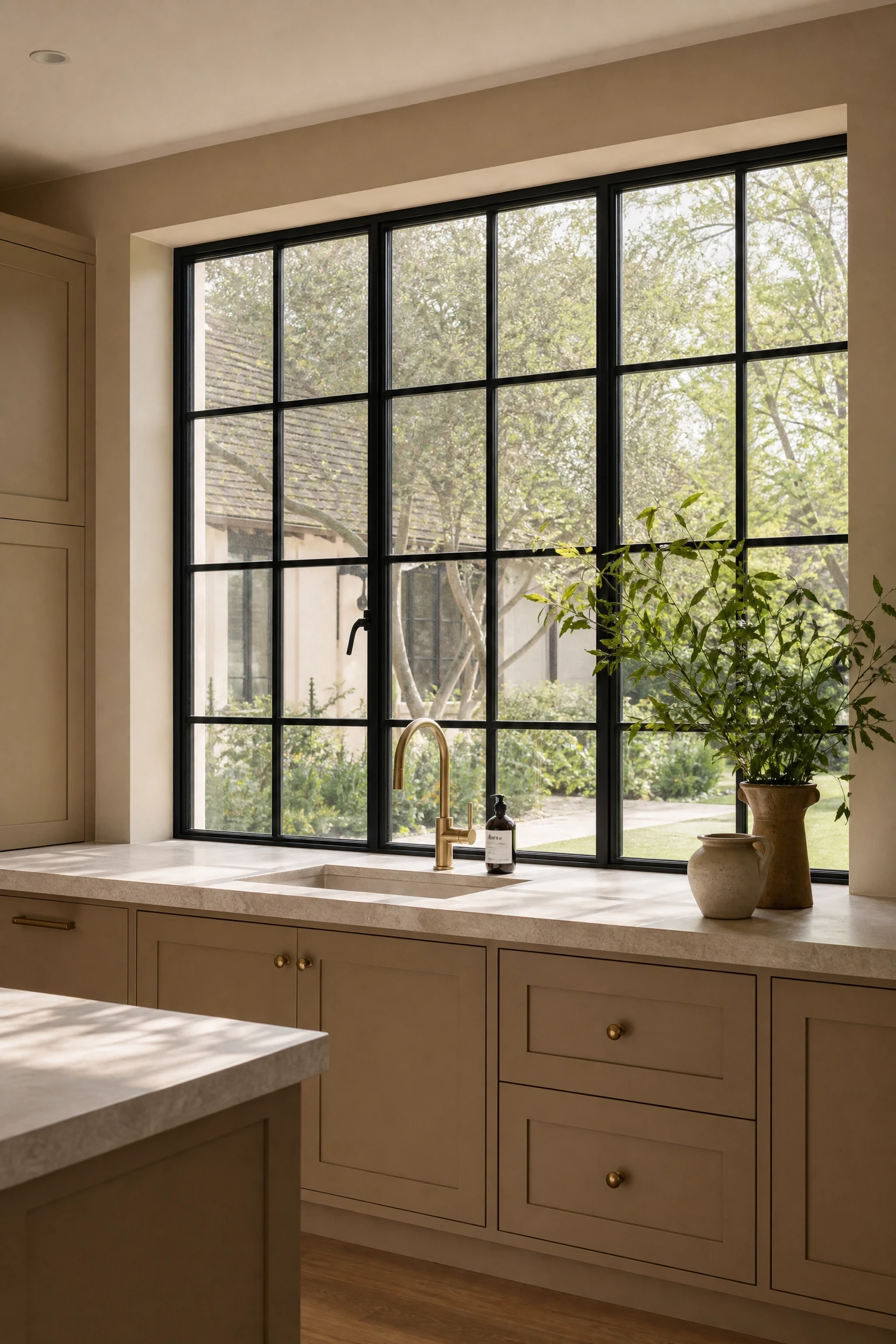
In kitchens where black crittall-style or steel-framed windows open onto a garden or courtyard, the window frames themselves become an architectural black element that grounds the whole palette without requiring any cabinetry changes. Beige kitchen walls and cabinetry alongside black-framed windows creates a combination that is both contemporary and genuinely classic: the black frames have a graphic quality that reads as modern while the beige palette stops the kitchen from feeling cold or industrial. If the existing windows do not have black frames, painting the frames matte black is a relatively low-cost and high-impact update. It also creates an opportunity to echo the black frame element in the hardware and tap fittings, building a consistent accent palette through the kitchen without any one element feeling like the source of a single trend decision.
Heads Up: Black window frames show condensation marks more visibly than white frames in kitchens with high humidity. Ensure the kitchen has adequate ventilation before committing to black frames, particularly if the windows are single-glazed or the kitchen lacks an extractor hood.
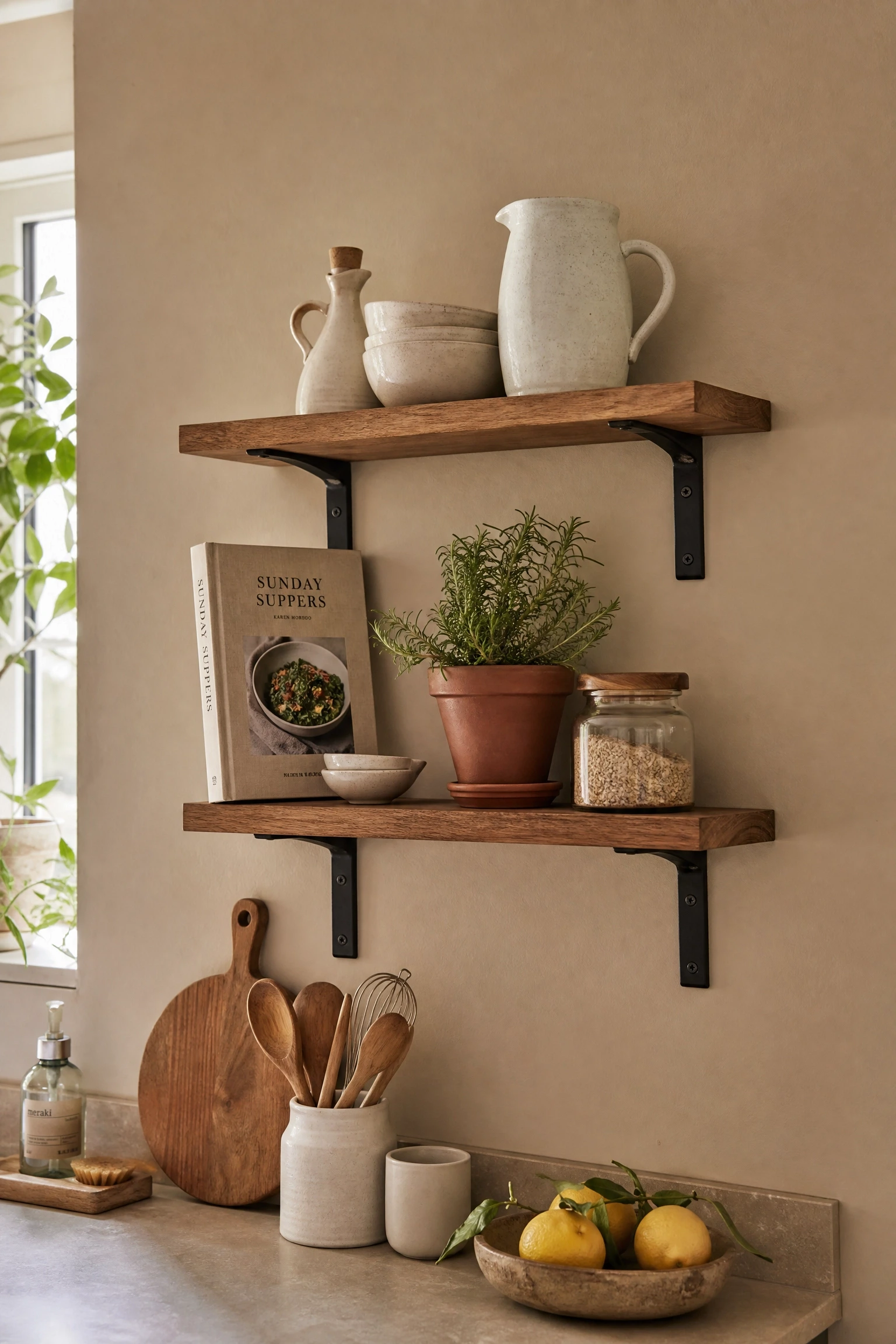
Matte black metal open shelving brackets with timber or painted white shelves mounted against a beige wall introduces a black structural element into the kitchen without requiring any cabinetry work. The brackets create a grid of visible black lines across the beige wall surface, which reads as graphic and deliberate rather than decorative. Styling the shelves with cream and neutral ceramics, cookbooks with warm-toned spines, and a few potted herbs or small plants reinforces the beige palette and prevents the black brackets from creating a visual contrast that is too sharp for the warmth of the overall kitchen. The practical limitation of black metal shelving brackets in a kitchen is that they are fixed structural elements: if the style of the kitchen changes, removing them involves filling and repainting the walls where the bracket holes were located.
Reality Check: Open shelving of any kind requires commitment to keeping it tidy in a kitchen environment. Beige backgrounds behind open shelves make dust, grease residue, and cooking splatter more visible than darker backgrounds. Wipe the wall behind the shelves and the shelf surfaces regularly to keep the combination looking as good in practice as it does in photographs.
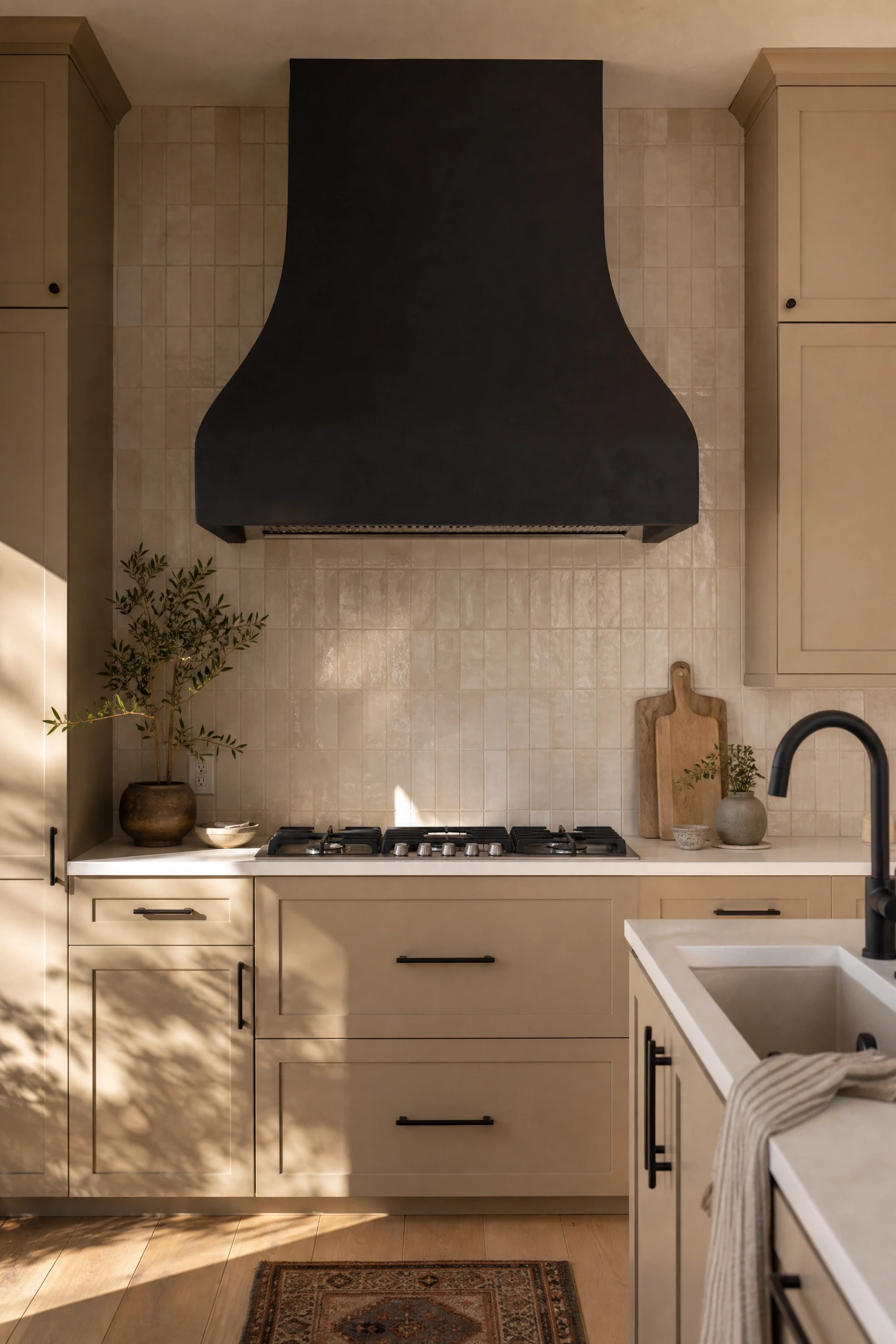
A matte black range hood above the hob in an otherwise beige kitchen is one of the boldest accent applications on this list and one of the most architecturally effective. Because the range hood is a large, visually prominent element positioned at the centre of the cooking wall, painting or choosing it in matte black gives it genuine focal-point status. The surrounding beige cabinetry frames the black hood and makes it read even more dramatically against the warm neutral background. This approach works particularly well with a custom plaster hood painted matte black rather than a standard steel extractor: the sculptural quality of a plaster hood in black sits more organically within a warm beige kitchen than a straight-edged commercial-style steel canopy. Pair it with matching matte black tap fittings and hardware for a kitchen where every black element feels related.
Designer Advice: If the range hood is the most prominent black element in the kitchen, keep the surrounding beige palette as warm and consistent as possible. A cool-toned beige near a black range hood can start to read as grey under certain light conditions, losing the warmth that makes the contrast between the two colours work.
Black and Beige in Balance: Equal Partners
These ideas give black and beige roughly equal visual weight in the kitchen. Neither colour dominates entirely. Each earns its place and the result is a kitchen with more contrast, more drama, and more design confidence than the accent-only approach.
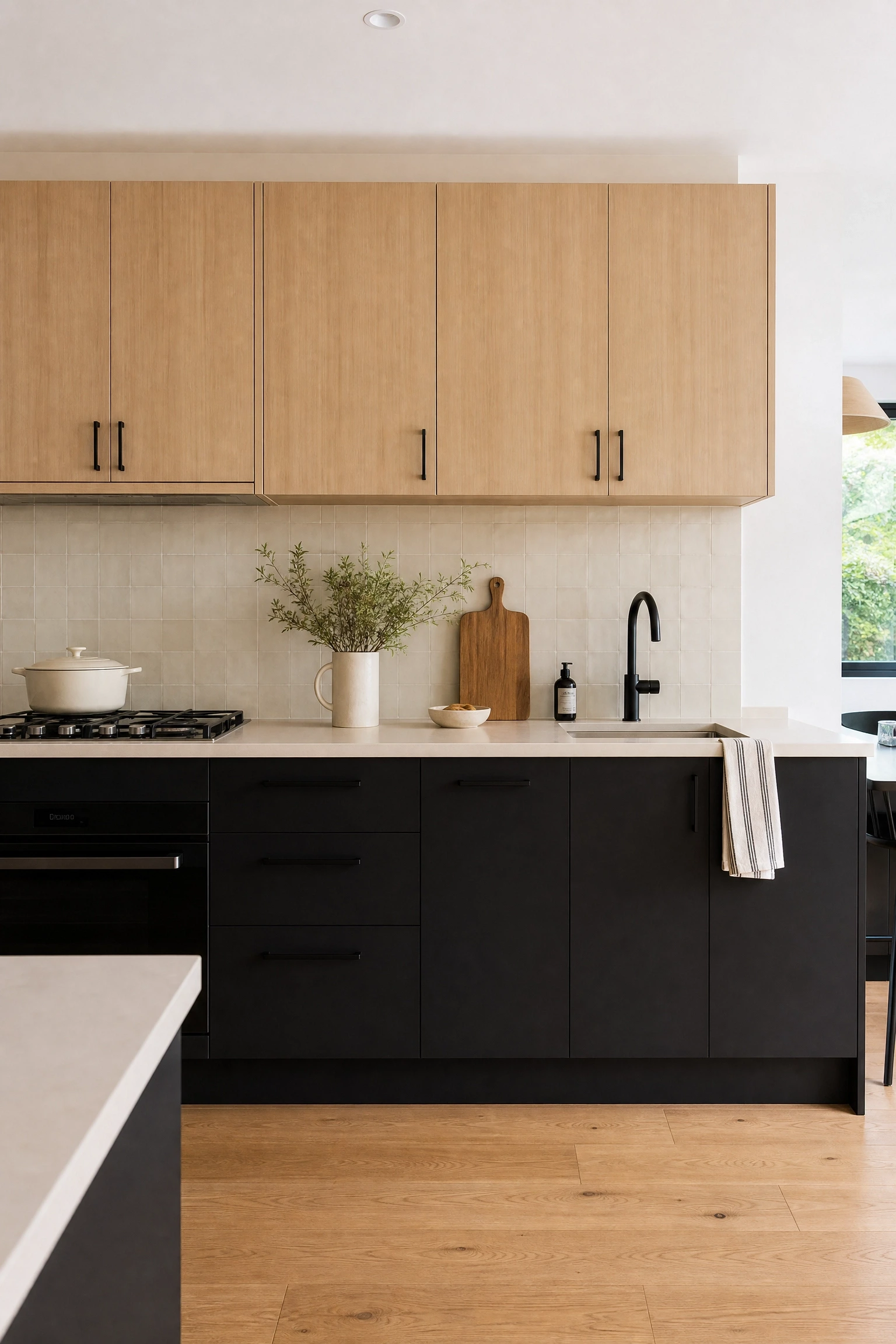
Splitting the kitchen cabinetry into beige uppers and black lowers is the most direct and architecturally grounded way to use both colours at equal weight. The black lower cabinets anchor the base of the kitchen with visual weight and depth, and the beige uppers keep the upper half of the room open and warm. This arrangement works with the natural logic of how we experience a kitchen: the lower half is more tactile and functional, the upper half is more visual and atmospheric, and giving the lower section the bolder colour reinforces that distinction. In practice, this combination needs a countertop that bridges the two colours effectively, and a warm cream or sand-toned quartz or stone is the strongest choice because it sits in the same tonal family as the beige uppers without competing with the black below. A cold white countertop between the two cabinet colours can create a three-colour break that makes the kitchen feel choppy rather than composed.
Pro Move: Paint the interior back wall of the upper beige cabinets in a slightly deeper sand or warm greige tone rather than leaving it the same colour as the cabinet exterior. When the doors are open, the slightly tonal interior adds depth and makes the upper cabinetry feel more intentional.
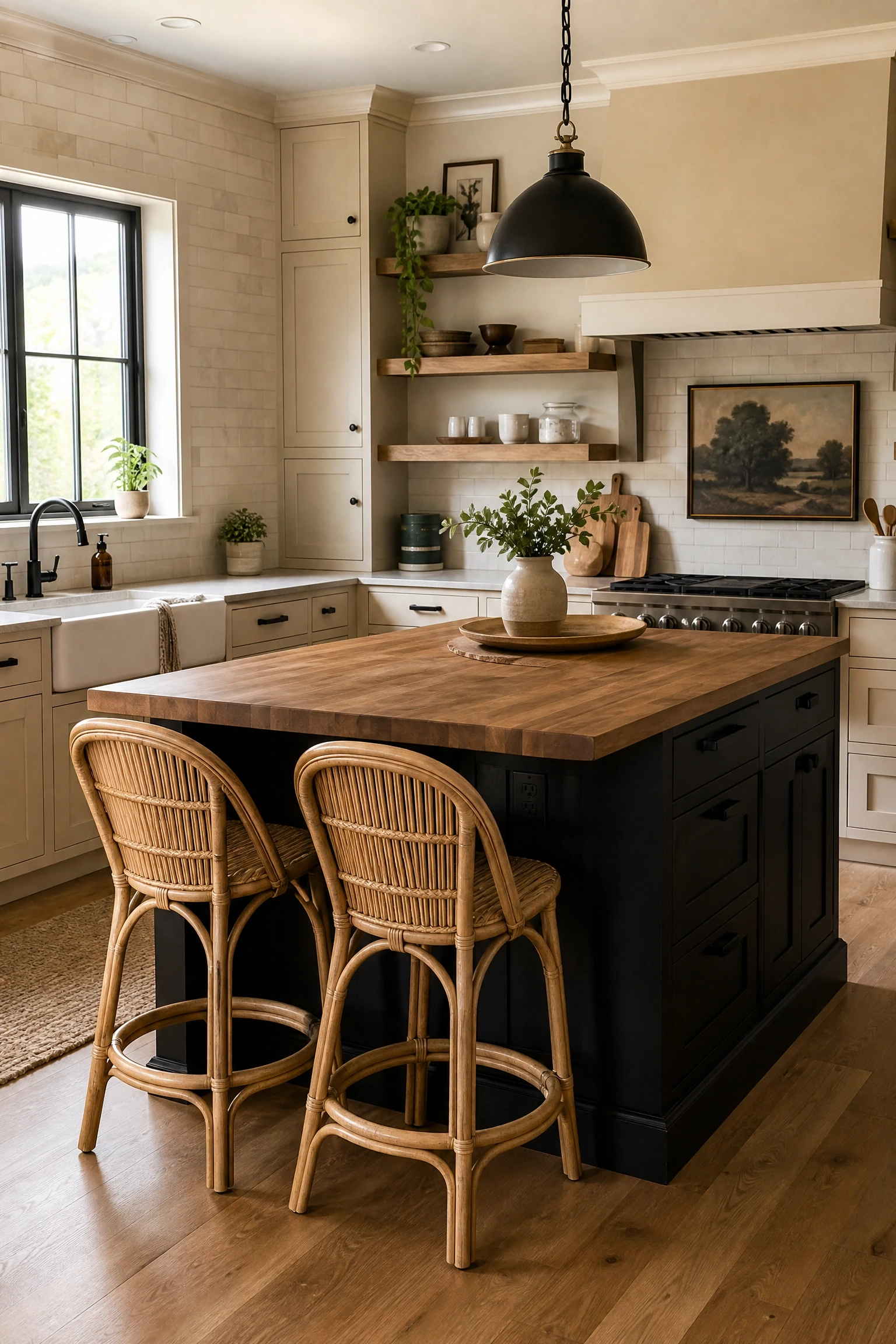
A black island in an otherwise beige kitchen is the most contained and flexible approach to giving black equal weight without committing it to the perimeter cabinetry. The island is a defined object in the kitchen rather than a continuous surface, which means its darker colour reads as a deliberate design choice rather than an oppressive mass. Black islands work best when the countertop is in a contrasting lighter tone: warm white quartz, butcher block, or a light veined marble all provide the visual relief the black island surface needs. The island in a beige kitchen also creates an immediate distinction between the working kitchen zone and the more casual seating or dining area, which is particularly useful in open-plan spaces. The height and bulk of the island means that the black reads from across the adjacent living or dining area and anchors the kitchen zone visually from a distance.
Heads Up: A black island base shows scuffs and marks from feet, bags, and chair legs more readily than the surrounding beige cabinetry. Choose a durable painted or lacquered finish rather than a chalk-paint-style matte on the island specifically, even if the perimeter cabinets use a softer finish.
Beige cabinetry with a black countertop is one of the most consistently effective applications of this colour combination because the horizontal surface of the countertop is where the eye naturally settles when looking across a kitchen, making it the most impactful surface for colour contrast. A matte black granite, honed black marble, or black quartz countertop above warm beige cabinet doors creates a kitchen that feels polished and considered in a way that neither colour achieves on its own. The design decision to pay attention to is the undertone of the black countertop: some black granites and quartz materials have blue or green undertones that can fight the warmth of a beige cabinet colour. Choosing a black countertop with warm brown or charcoal undertones, such as absolute black granite or certain dark soapstone options, maintains the warmth of the palette rather than introducing a cool tone that pulls against it.
Quick Tip: Take a sample of your beige cabinet door to the stone supplier and hold it directly against countertop samples in natural light before making a final selection. Undertone relationships that look neutral on screen can be quite pronounced in person under real light conditions.
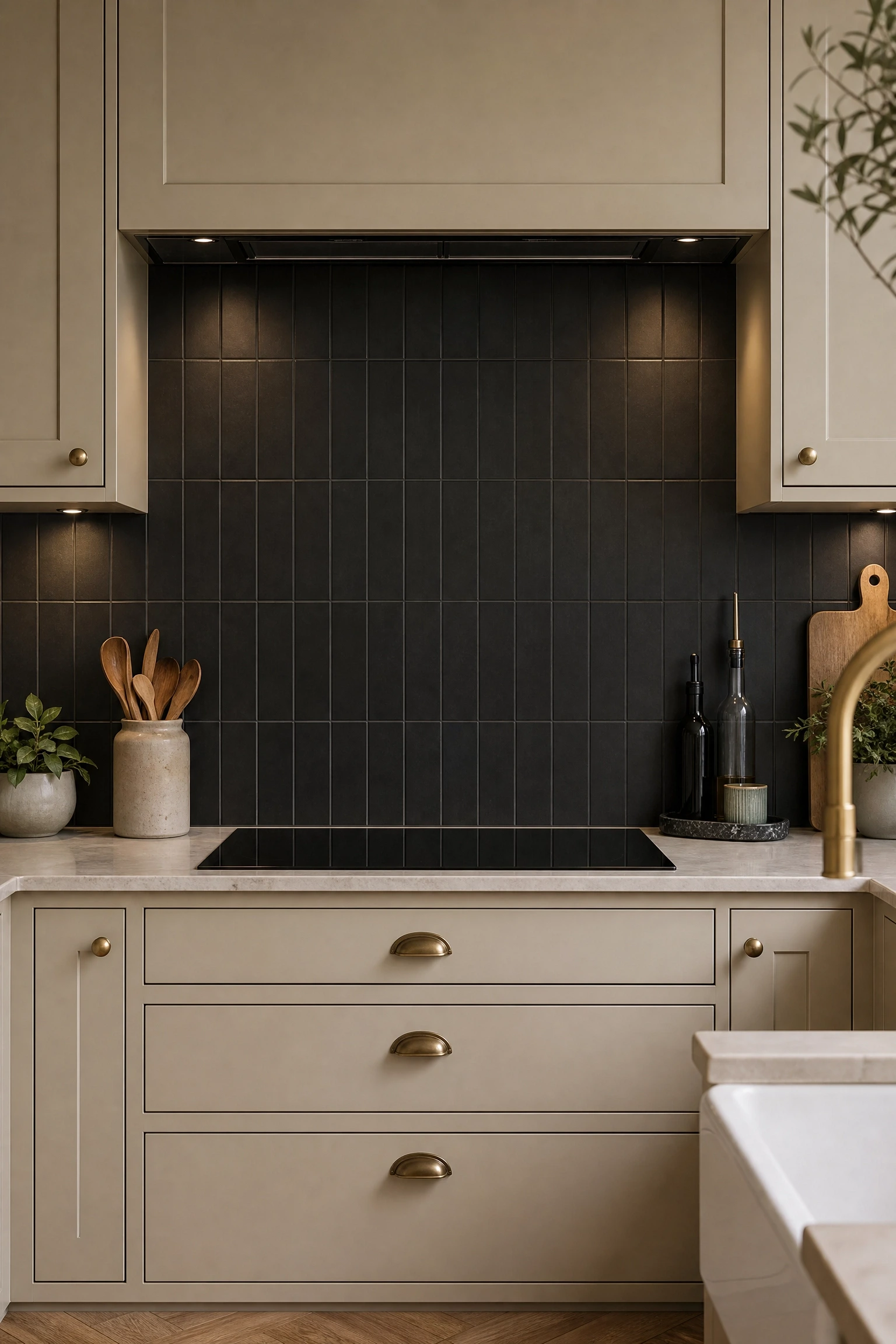
A black backsplash in a beige kitchen is a bold choice that gives the cooking area of the kitchen a dramatic focal point while the surrounding beige cabinetry frames it and prevents the darkness from feeling oppressive. The most successful black backsplash materials in a beige kitchen include honed black slate tiles, matte black zellige, and black grouted cream or neutral tiles where the grout itself does the work of introducing the dark element. A full-height black backsplash from countertop to underside of upper cabinets creates the strongest effect. A more contained black tile section behind the hob only is a less committed approach that still introduces significant contrast. The combination of a warm beige cabinet colour alongside a black backsplash needs good lighting: under-cabinet strip lighting pointed at the backsplash surface makes the contrast crisp and architectural rather than dark and heavy.
Designer Advice: Choose matte or honed black tile over gloss for a backsplash in a beige kitchen. A glossy black surface will reflect the beige cabinetry back at itself and create a muddy visual interference in the reflection. A matte black tile absorbs light and reads as clean and graphic against the warm beige.
“The secret to getting beige and black right is deciding which colour you want to be surprised by. The other one is just doing its job.”
11. Two-Tone Beige and Black Cabinetry on the Same Wall
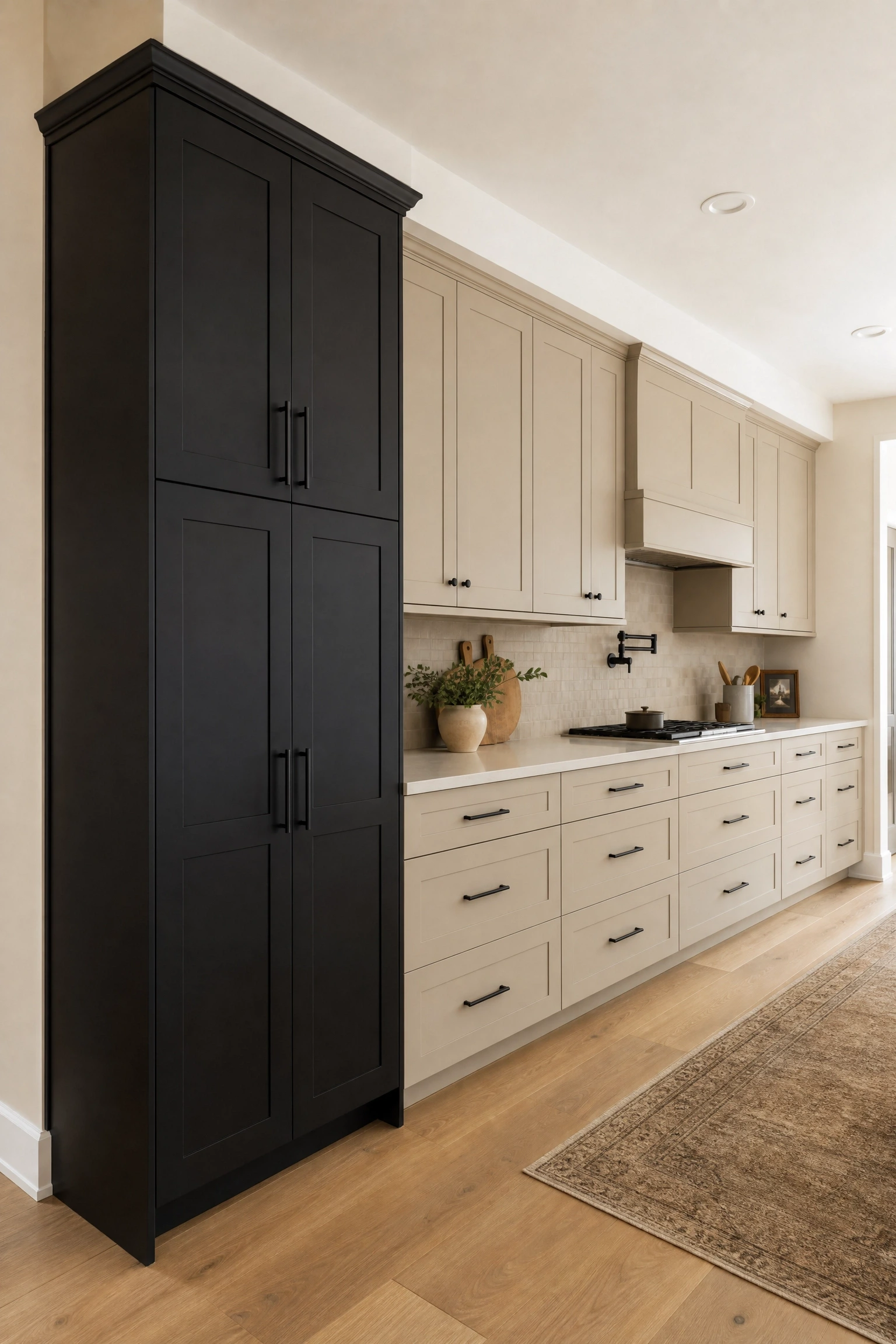
Rather than assigning upper and lower cabinets to each colour, a two-tone arrangement can also be achieved by using beige and black on adjacent cabinet sections within the same continuous run. For example, a tall pantry cabinet or integrated refrigerator column in black at one end of an otherwise beige kitchen creates a strong punctuation mark that gives the kitchen a sense of structure. Alternatively, a black cabinet section used to frame a recessed niche or to flank either side of the range adds architectural definition without requiring a full two-tone split across all cabinetry. This approach is particularly useful in galley kitchens where a floor-to-ceiling two-tone split across both walls would create a visual tunnel effect that feels too enclosed.
Reality Check: When mixing beige and black in cabinetry on the same wall, the dividing point between the two colours should coincide with a clear architectural boundary, such as a column, a change in cabinet depth, or the edge of a niche. An arbitrary colour change midway through a continuous cabinet run can look like a planning error rather than a design decision.
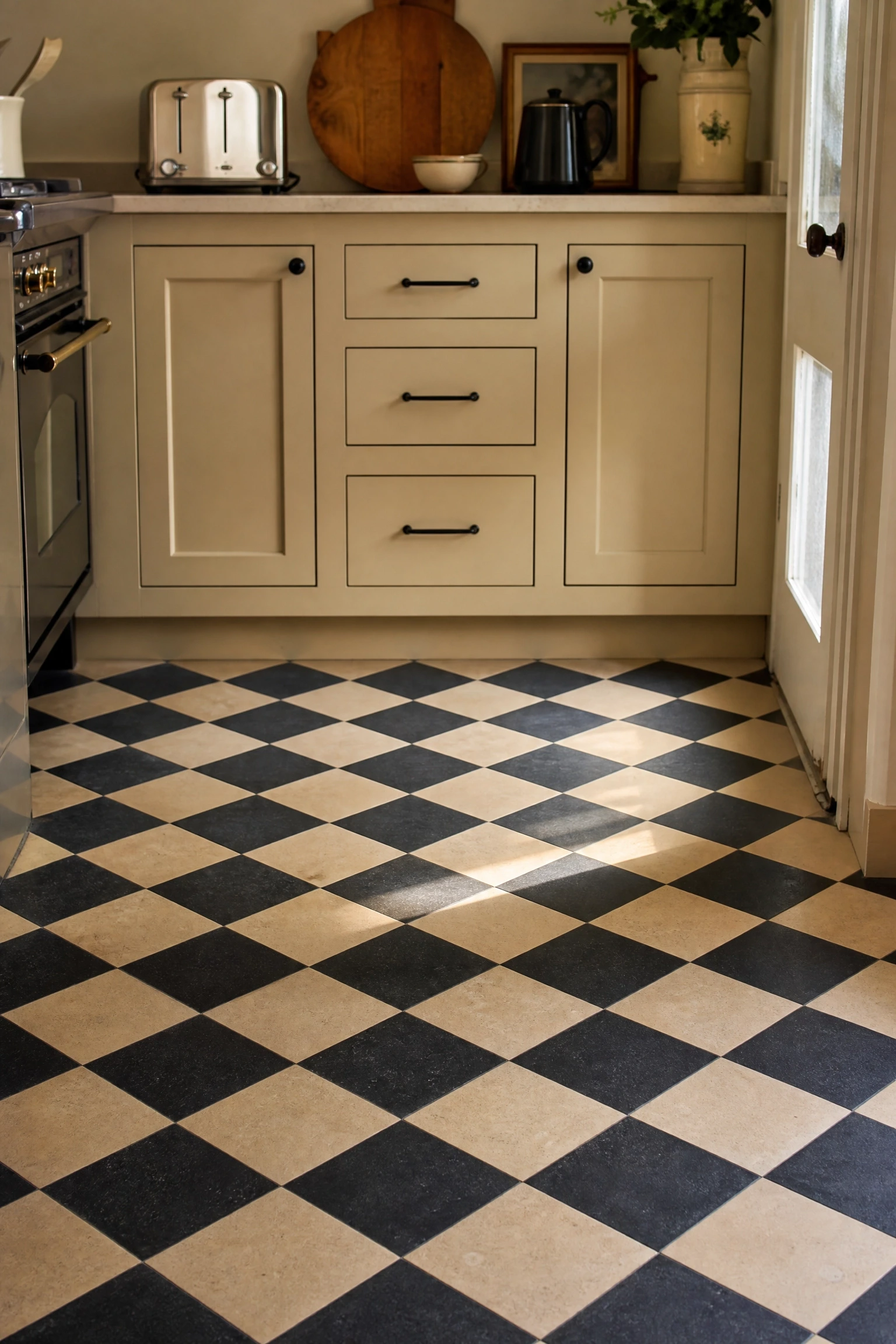
A beige and black checkerboard floor is one of the most graphic and historically grounded ways to use both colours in a kitchen, and it works in a much wider range of kitchen styles than its retro associations might suggest. In a beige kitchen with cream cabinets and matte black hardware, a beige and black checkerboard floor at a smaller tile scale (around 20 by 20 centimetres) reads as crisp and contemporary. At a larger scale (40 by 40 centimetres) the same floor takes on a more classic, Victorian-inspired quality. The honest maintenance note is that both the black tiles and the grout lines between them will show dust and debris more readily than a single-colour floor, and the constant contrast between the two colours makes any dirt visible at all times. This is the floor choice for people who actually enjoy keeping their kitchen clean rather than those who want a low-maintenance solution.
Pro Move: Lay the checkerboard tiles on the diagonal rather than aligned with the walls. A diagonal checkerboard reads as more dynamic and intentional than a straight grid, and it also disguises minor irregularities in the room geometry that a straight-laid pattern would emphasise.
Swapping standard grey or white grout for dark charcoal or true black grout in a beige or cream tile backsplash or floor is one of the most cost-effective ways to introduce black into a beige kitchen without changing any fixed elements. The black grout lines create a graphic grid across the tile surface that makes the individual tiles more visible and gives the backsplash or floor a more deliberate, structured quality. On a cream subway tile backsplash, black grout makes the tile layout feel architectural rather than functional. On a beige large-format floor tile, dark grout defines the tile grid in a way that standard grey grout does not. The practical consideration is that black grout requires sealing to prevent discolouration over time, particularly in wet areas like the splashback behind the sink.
Heads Up: Black grout will lighten somewhat as it cures and dries. The colour on the bag or in the showroom display will look slightly darker than the finished installed result. If achieving a true black grout line rather than a very dark grey is important to the design, discuss this with your tiler and request a sample section before the full installation proceeds.
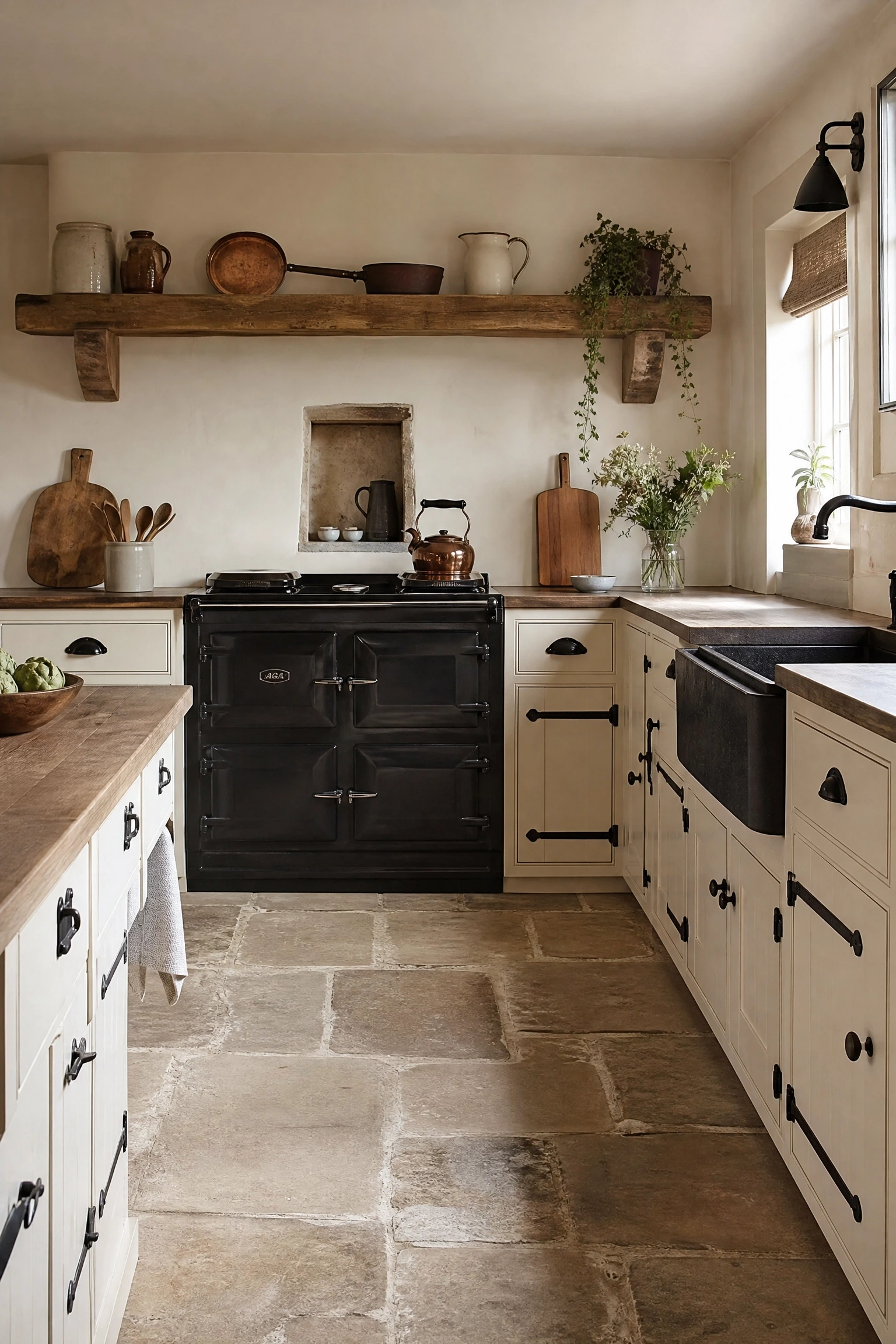
A farmhouse or country kitchen that combines beige shaker cabinetry, a black farmhouse sink, black wrought iron or antique-style hardware, and a black range or Aga creates a kitchen that uses both colours in their most historically grounded and natural pairing. The beige in a farmhouse context reads as cream, linen, or aged white rather than the more precise neutral of a contemporary kitchen, and the black arrives through practical elements (the range, the sink, the ironmongery) rather than as a design statement. This is the version of beige and black that feels most lived-in and unforced, and it suits older properties with original features and lower ceilings where the proportions of a contemporary design approach can feel awkward. The combination of a cream-painted dresser, beige cabinets, a flagstone or quarry tile floor, and black cast iron and wrought iron throughout creates a kitchen with enormous warmth and character that genuinely looks as though it has always been there.
Quick Tip: In a farmhouse beige and black kitchen, introduce warmth through natural materials like wicker, linen, aged timber, and unglazed ceramic rather than through additional colours. The richness of these textures does more for the kitchen atmosphere than any additional colour accent.
15. Beige Cabinets With Black-Framed Glass Inserts
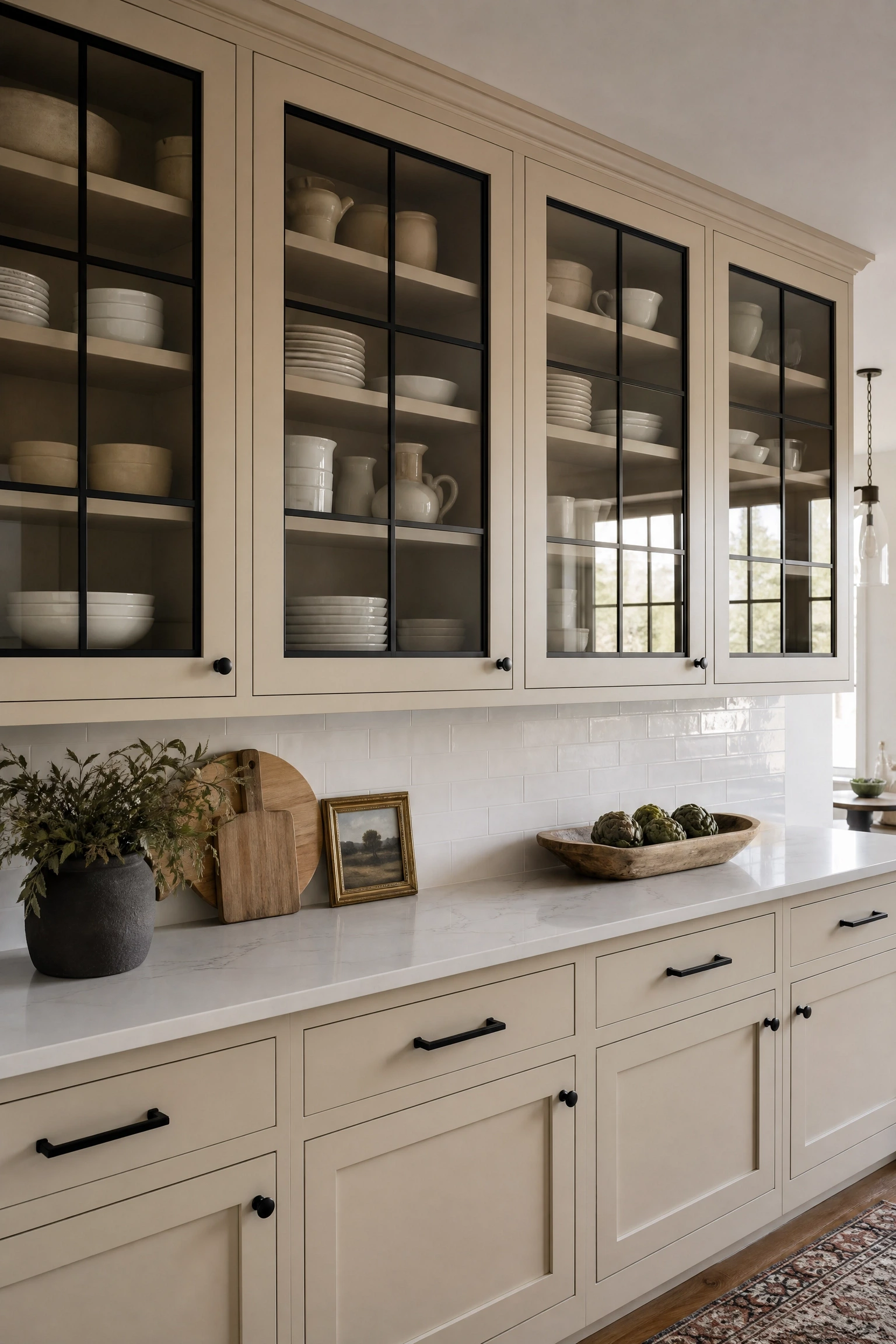
Glass-fronted upper cabinets with black metal frames set into beige painted cabinet doors add a layer of visual complexity that gives a beige kitchen design genuine depth and personality. The black frame profiles on the glass inserts echo hardware details and other black accent elements throughout the kitchen while introducing a transparency that makes the upper cabinetry feel lighter and more interesting than solid door panels. The visual effect is part traditional, part industrial, and entirely contemporary when executed in a beige kitchen with otherwise clean, simple cabinet door profiles. The interior of glass-fronted cabinets needs to be considered as part of the design: cream and natural-toned ceramics, stacked plates, and a few glass bottles look beautiful behind a black-framed glass insert and extend the beige and black palette into the cabinet display.
Designer Advice: Use consistent proportions on the glass panel inserts across all the upper cabinet doors. Glass panels that vary in size and proportion between doors look like they have been added at different times rather than designed as part of a single considered approach.
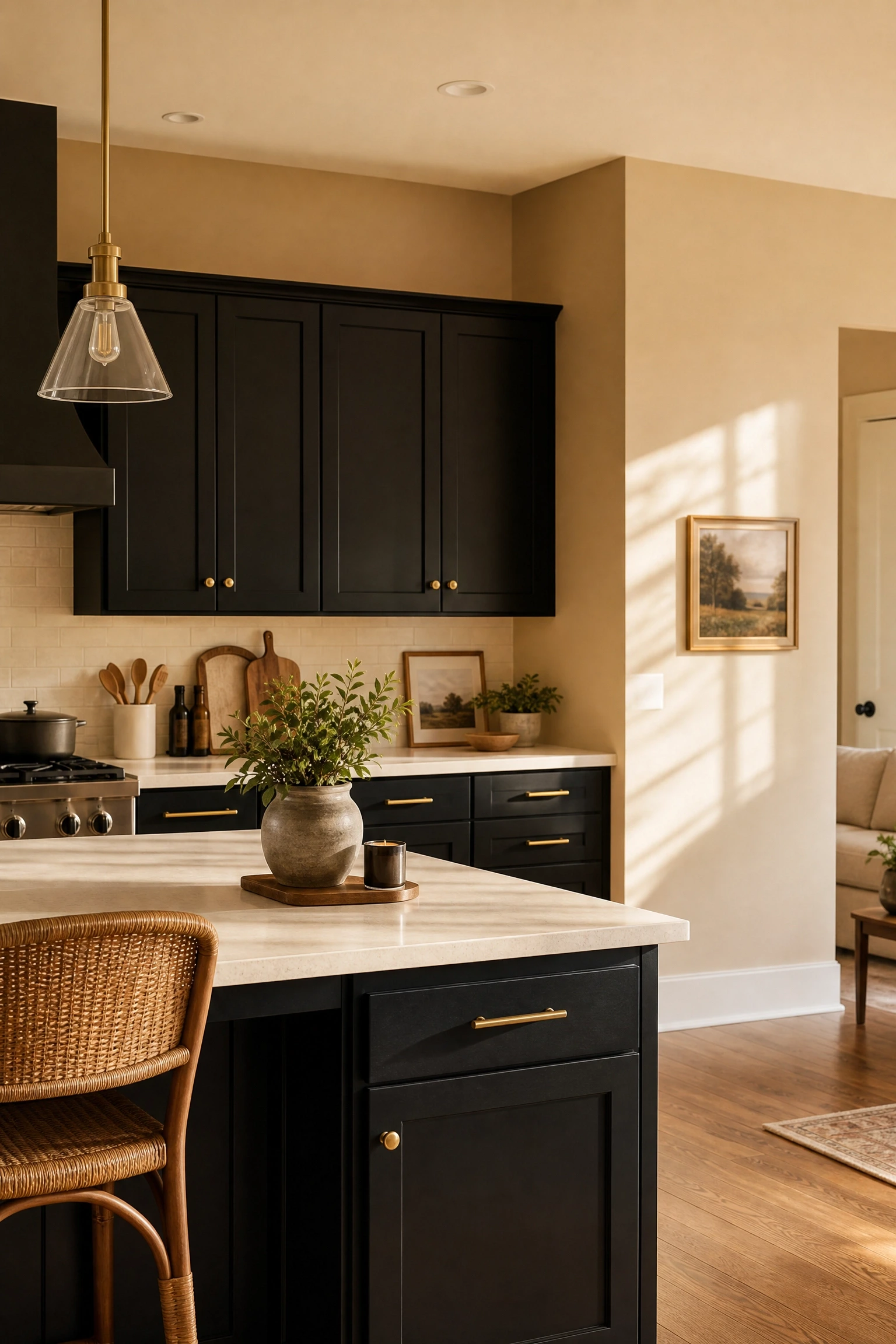
Reversing the typical assumption that cabinetry should be the lighter element, a kitchen with black cabinetry against warm beige painted walls creates a combination where the walls do the warming work and the cabinetry provides the architectural drama. This works particularly well in kitchens where the walls are visible above and beside the cabinetry runs rather than entirely covered by upper cabinets, because the beige wall surface creates a warm surround that prevents the black cabinets from feeling oppressive or enclosed. A beige wall paint with a warm sandy or ochre undertone suits black cabinetry better than a cool grey-beige, which can start to read as a slightly clinical backdrop for the dark cabinets. In an open-plan kitchen where the walls continue into the living or dining area, warm beige throughout creates a cohesive envelope that makes the black kitchen cabinetry feel like a deliberate design zone rather than a dark intrusion into an otherwise light space.
Reality Check: Black cabinetry in a kitchen with limited natural light will make the space feel noticeably smaller and darker than the same cabinetry in a light-filled room. Always assess the natural and artificial light in your specific kitchen before deciding how much black cabinetry to commit to, regardless of how well the combination looks in a photograph of a different kitchen.
Black Takes the Lead: Beige as the Warming Counterpart
These ideas put black firmly in the majority role. Beige arrives as the counterpoint that prevents the kitchen from feeling cold, stark, or austere. The balance here requires careful handling of light, material, and texture to ensure the warmth is genuinely felt.
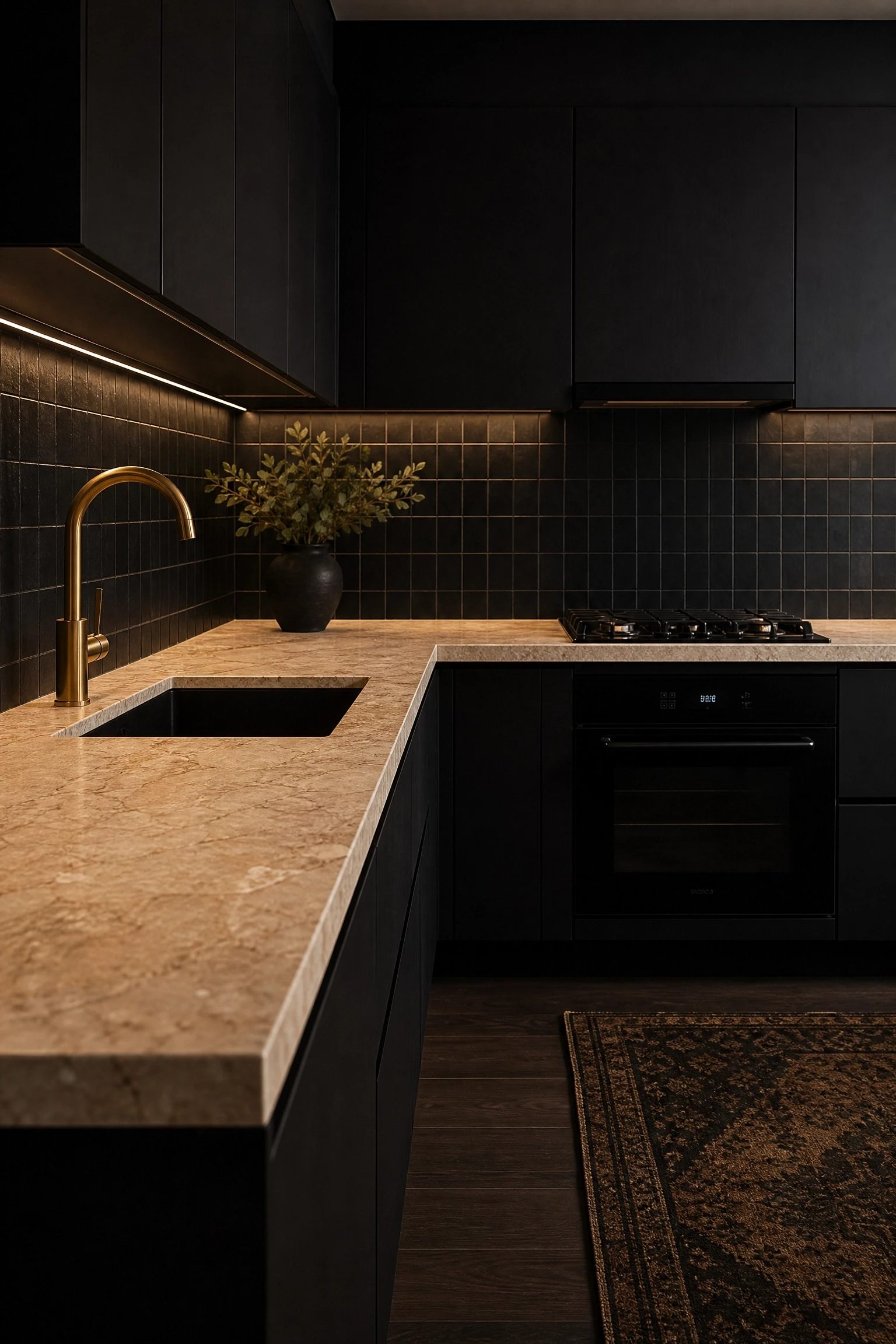
17. Predominantly Black Kitchen With Beige Stone Countertops
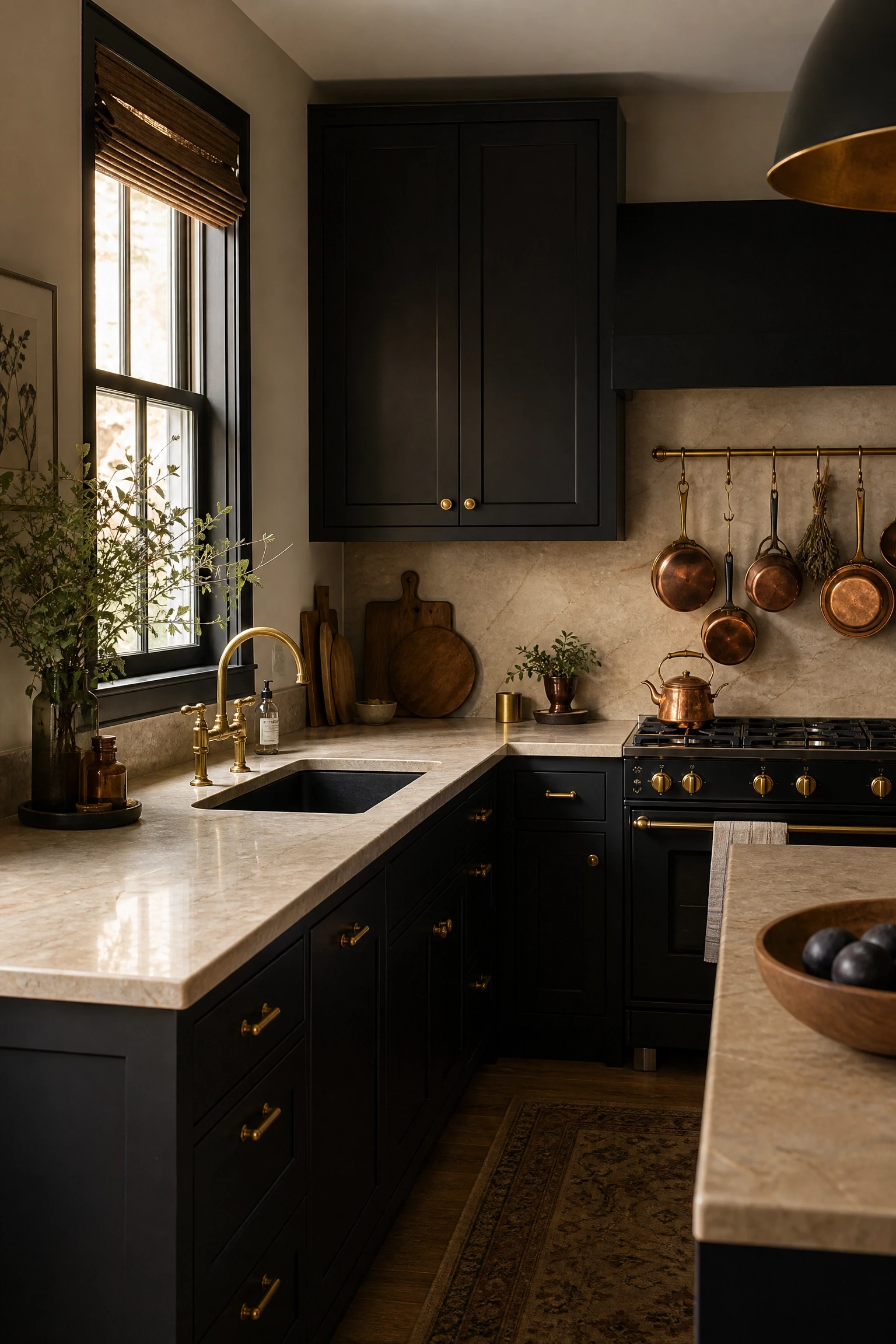
An almost entirely black kitchen, with black cabinetry, black backsplash tiles, and black appliances, can be brought back from the edge of oppressive darkness by choosing countertops in a warm beige or cream stone. The beige horizontal surface of the countertop becomes the single most important warm element in the kitchen, and its warmth registers more powerfully in an otherwise dark space than it would in a kitchen with multiple light elements competing for attention. Warm beige quartzite, cream-toned marble, or a sandy concrete-look quartz countertop in a black kitchen creates a combination that feels luxurious and deliberate rather than monochromatic. The backlighting of countertop surfaces through under-cabinet LED lighting in a warm white colour temperature (around 2700 to 3000K) reinforces the warmth of the beige stone surface and prevents the kitchen from looking uniformly dark and flat.
Pro Move: Choose a beige countertop with visible movement in the stone pattern, veining, or texture, rather than a perfectly uniform surface. In a predominantly black kitchen, a lively stone surface does the work of introducing organic warmth and complexity that flat or solid countertop colours cannot provide.
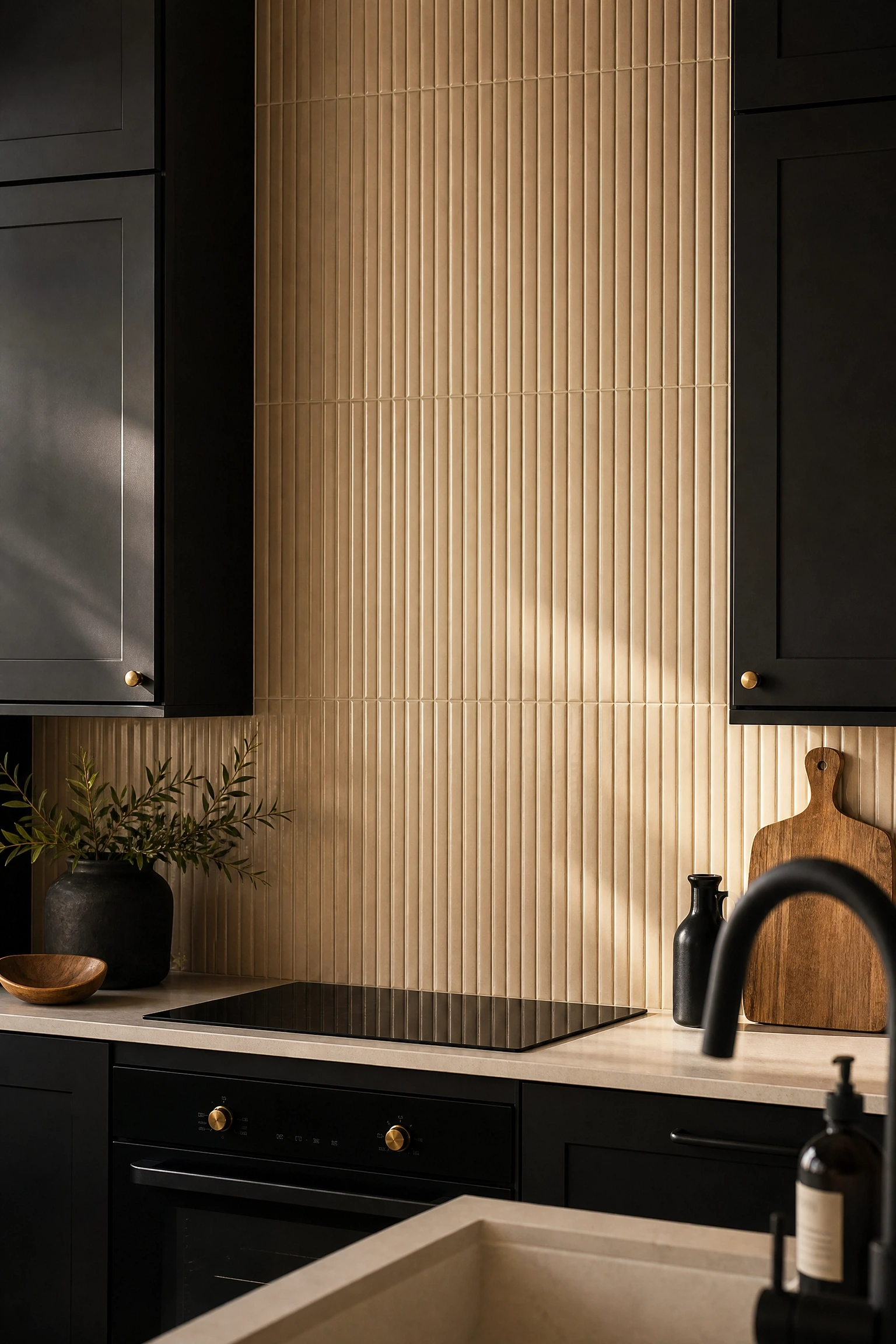
18. Black Cabinets With Beige Fluted or Textured Backsplash Tile
A beige fluted, ribbed, or handmade textured tile used as the backsplash in an otherwise black kitchen introduces warmth and material interest in the single zone where the background of the kitchen is most visible behind the hob and counter. The texture of a fluted tile catches light differently across its surface, which means the beige colour has a liveliness and variation that a flat-painted surface does not. Against black cabinetry on either side, a beige textured backsplash creates a warm, illuminated panel behind the cooking zone that makes the black cabinets feel framed rather than enclosing. This approach is particularly effective when the backsplash tile runs full height from the countertop to the underside of the upper cabinets, maximising the area of warm beige material visible in the kitchen.
Designer Advice: Use a grout colour close to the tile colour rather than a contrasting grout on a textured or fluted beige tile in a black kitchen. The tile texture itself provides all the visual interest needed. A contrasting grout colour on a textured tile can make the surface feel busy and difficult to read from across the room.
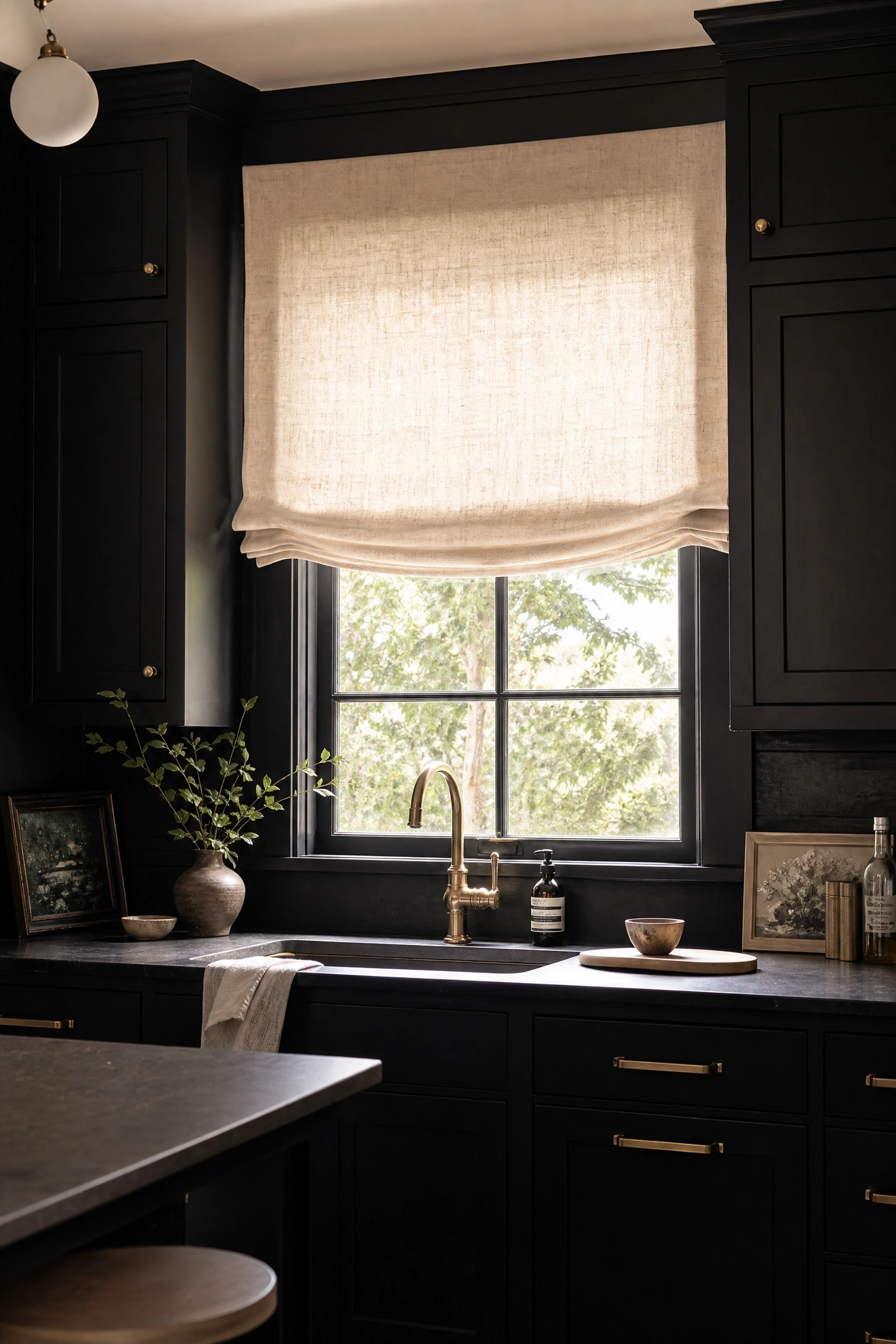
19. Black Kitchen With Beige or Linen Roman Blinds
In a kitchen with predominantly black cabinetry, the treatment of windows has a significant effect on how warm or cold the overall space feels. Beige or linen-coloured Roman blinds or simple fabric panels in a warm neutral introduce a softness and warmth through texture that painted or hard surfaces cannot replicate. The fabric at the window also introduces a domestic, lived-in quality that prevents a predominantly black kitchen from feeling too sleek or corporate. Natural linen or undyed cotton in a warm cream tone suits black kitchens particularly well because the slight irregularity and warmth of natural fabric reads as genuinely organic alongside the precision of matte black cabinetry. This is also one of the most affordable and reversible ways to add warmth to a dark kitchen, since window treatments can be changed without any building or decoration work.
Quick Tip: If the kitchen window looks onto a garden or green outdoor space, keep the window treatment as simple as possible so the view itself contributes warmth and organic connection to the predominantly black interior. An unobstructed view of greenery does more for a dark kitchen than almost any interior styling choice.
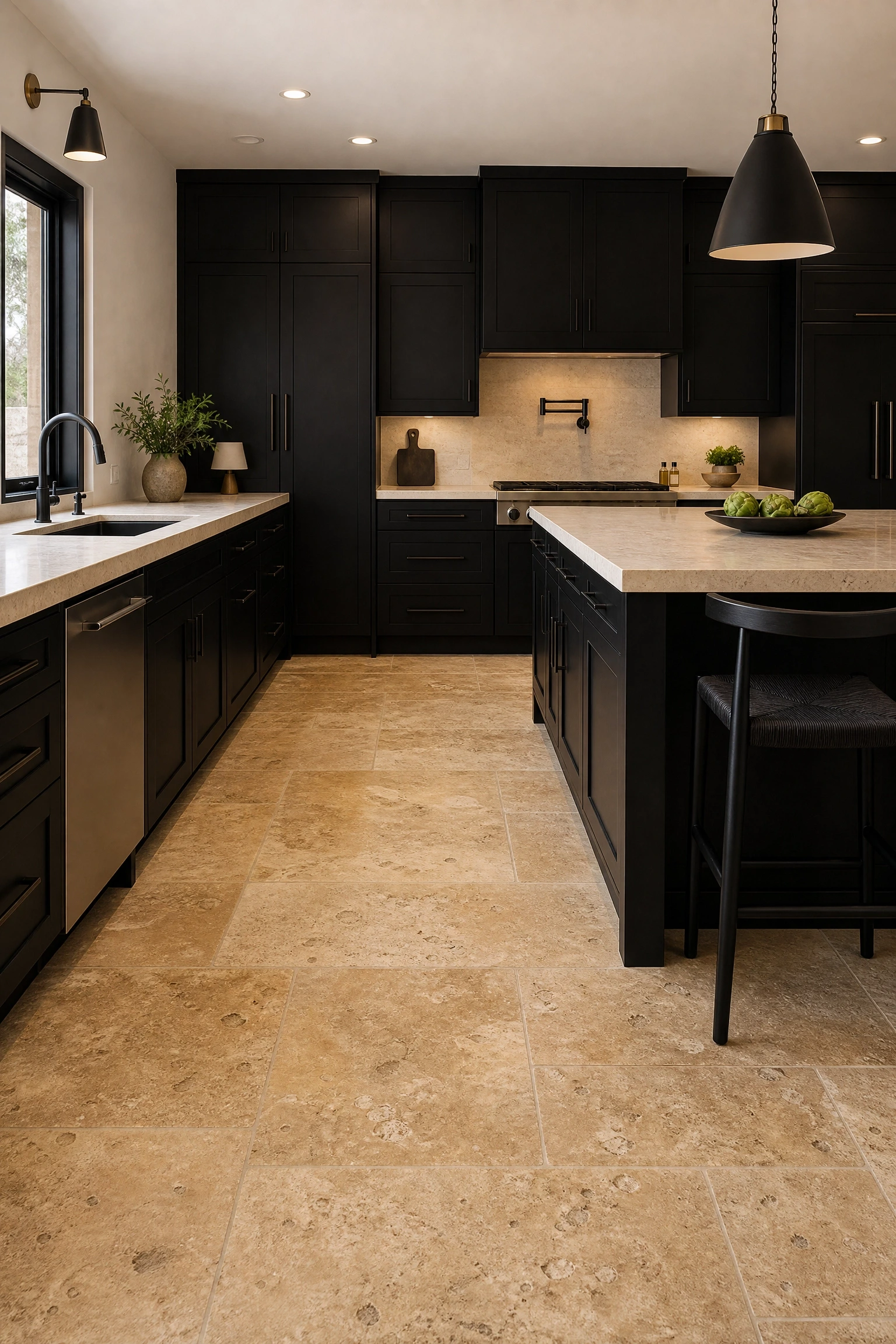
20. Full Black Cabinetry With Warm Beige Concrete or Stone Floors
A kitchen with full black cabinetry and a warm beige or sandy-toned floor material, whether concrete screed, large-format porcelain tiles in a sand tone, or natural stone like travertine or limestone, creates a combination where the warmth rises from below and counteracts the potential heaviness of the dark cabinetry above. The floor is the largest single surface in a kitchen and its colour has a profound effect on the overall feeling of the space: a warm beige floor under black cabinets creates an entirely different atmosphere to the same cabinets above a cool grey or white floor. Travertine in particular is an exceptional pairing for black cabinetry because its slightly porous, natural surface and warm fossil-tone variations give the floor a quality that reads as genuinely ancient and luxurious rather than as a practical neutral.
Heads Up: Natural stone floors including travertine, limestone, and certain sandstones require sealing and more careful maintenance than porcelain or concrete alternatives. In a heavily used family kitchen, consider a large-format porcelain tile in a beige travertine-effect finish, which achieves the warm aesthetic with considerably lower maintenance requirements.
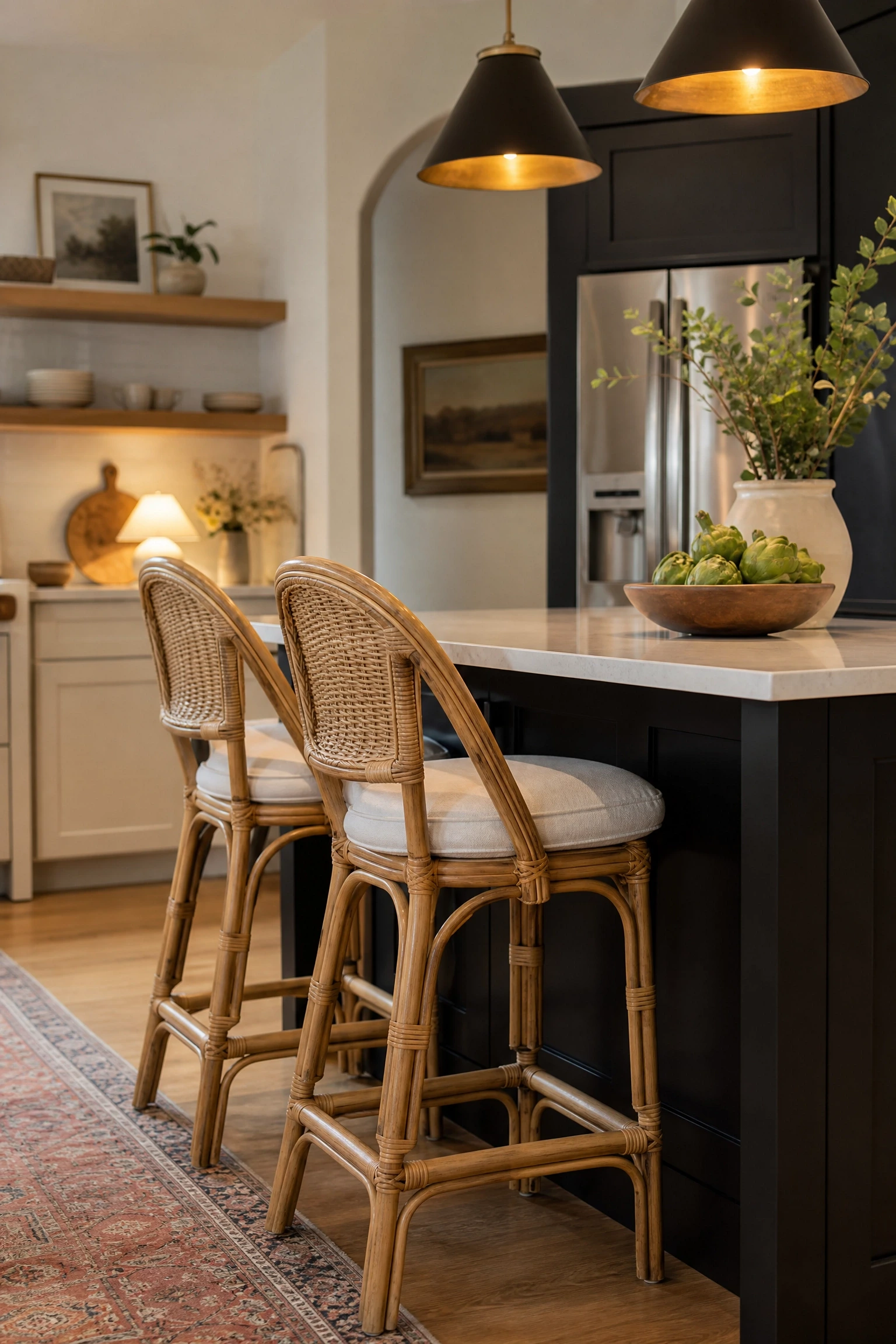
In a kitchen where the island or breakfast bar has a black base, choosing bar stools with woven rattan, linen upholstery, or natural timber in a warm beige tone introduces warmth and material contrast at exactly the height and position where people spend the most time looking: seated at the island. The bar stool in a predominantly black kitchen does a disproportionate amount of the warming work relative to its visual scale, because it introduces a human-scaled, tactile material at sitting height in a space that otherwise risks feeling like a series of hard, dark surfaces. Rattan counter stools with a low back and a cushioned seat in a cream or warm natural fabric are the strongest single choice for warming a black kitchen without introducing an additional colour.
Pro Move: Choose bar stools without arms for an island with limited clearance. Arms on bar stools require at least 7 centimetres of additional clearance on each side between the stool and the edge of the countertop overhang. In a standard kitchen island, armless stools typically provide a more comfortable and practical seating arrangement.
22. Beige Roman Clay or Limewash Walls in a Black Kitchen
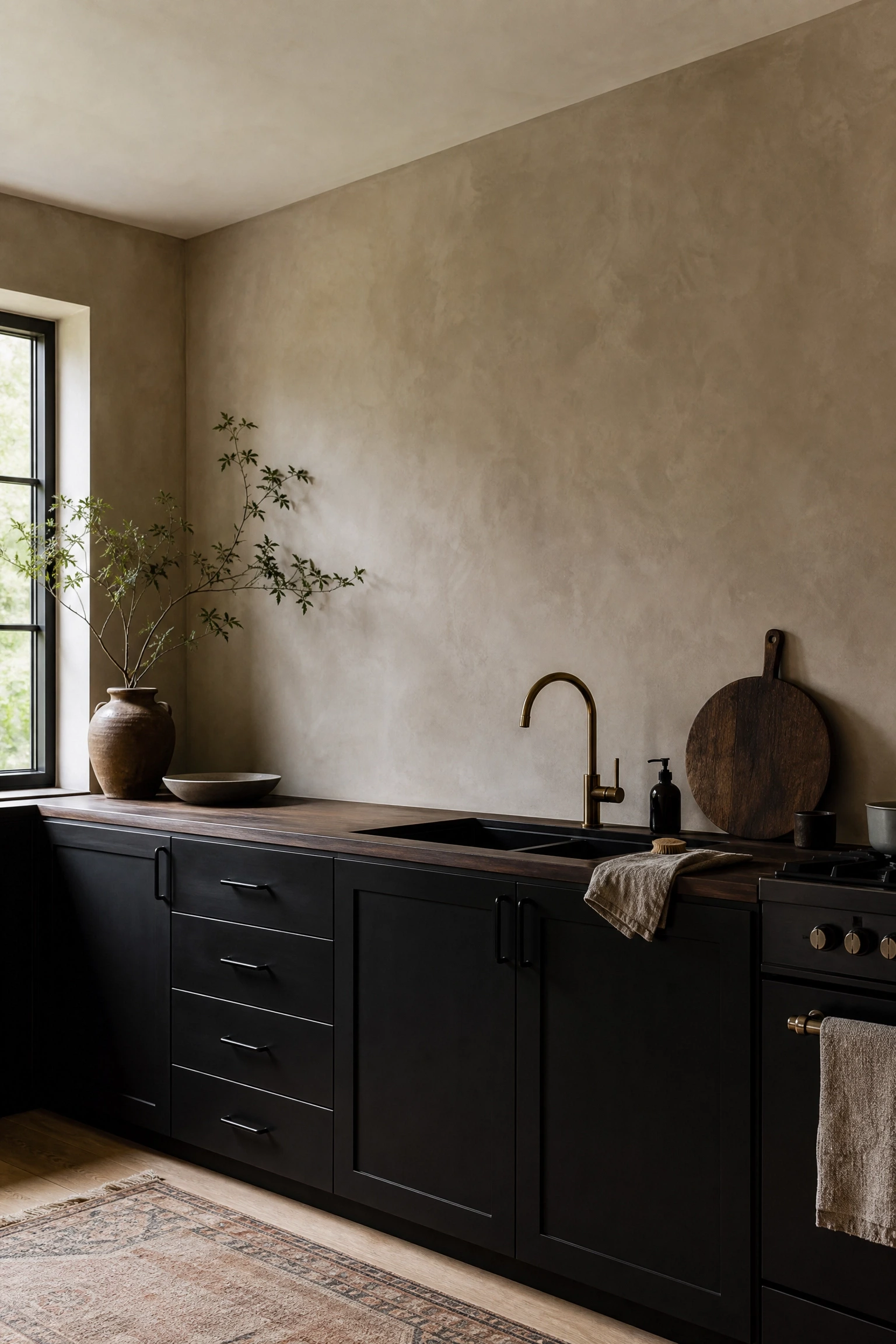
Roman clay or limewash paint on the kitchen walls in a warm beige or sandy tone is one of the most effective ways to introduce warmth into a predominantly black kitchen because the texture of these finishes means the wall colour never reads as flat or static. Limewash in particular creates a surface that changes through the day as the light angle shifts, which gives a dark kitchen an atmospheric quality that standard painted walls cannot provide. The mottled, slightly uneven surface of limewash in a warm beige alongside black cabinetry creates a combination that is simultaneously contemporary and ancient in feeling, with the textures of both the dark cabinets and the organic wall finish contributing to a kitchen that feels deliberately designed rather than simply decorated. As with all limewash applications in a kitchen, the walls around the hob and sink should be protected with a tile or sealed surface in those zones, with the limewash reserved for the wall areas that are not directly exposed to heat, steam, or water splatter.
Designer Advice: Apply limewash to the ceiling of a predominantly black kitchen in the same beige tone as the walls. The enveloping effect of a limewashed ceiling and walls against black cabinetry creates an interior that feels like it exists in its own complete world rather than a kitchen that has been decorated with individual decisions.
23. Black Kitchen With Exposed Timber Ceiling Beams
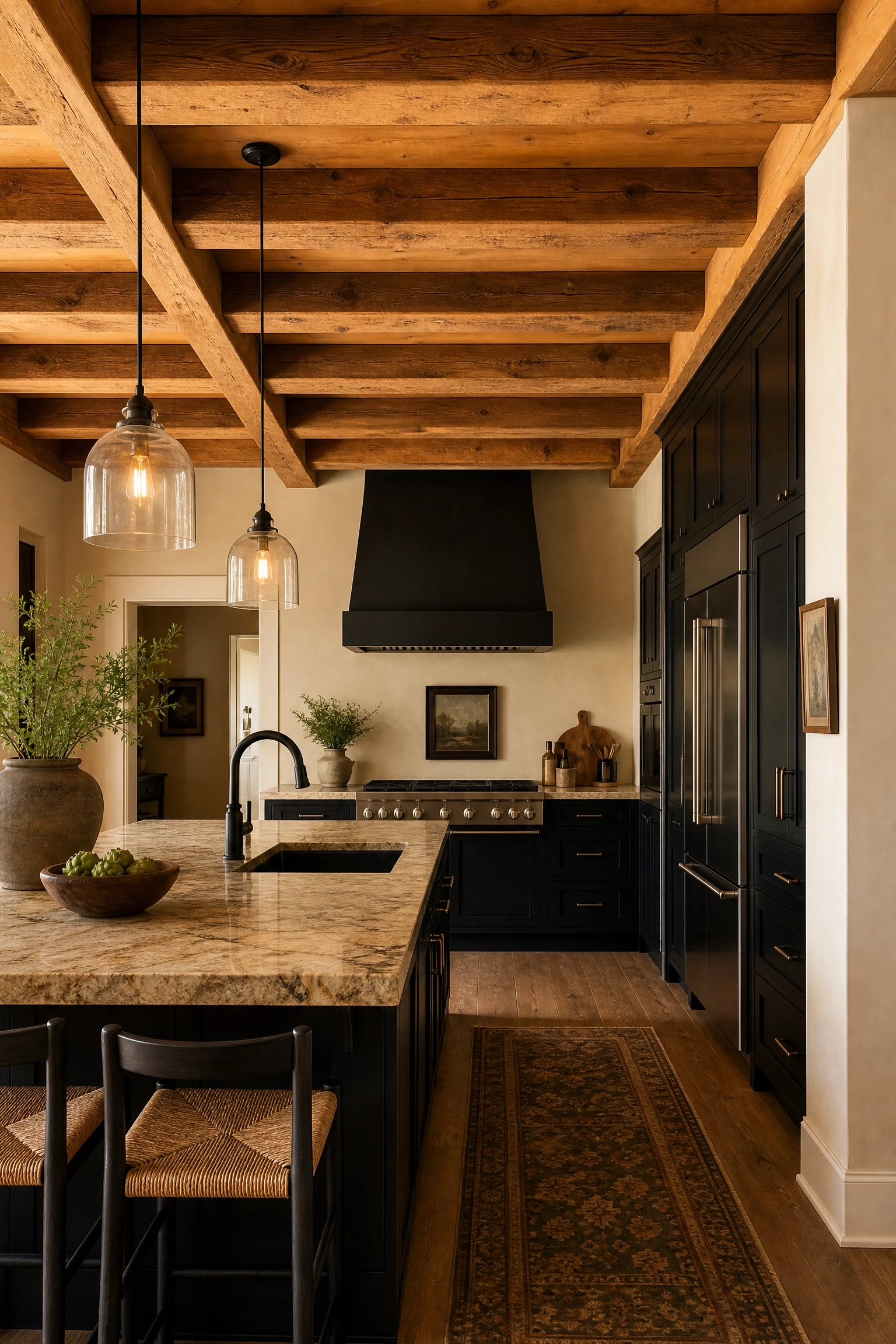
In a kitchen with period features or a kitchen extension with a structural timber roof, exposed ceiling beams in warm natural or lightly whitewashed timber alongside black cabinetry provide the warmth that beige wall and counter elements might otherwise need to supply. The natural honey and amber tones of aged or reclaimed timber sit in the same warm neutral palette as beige and work exceptionally well against the graphic precision of dark cabinetry below. This combination suits converted barn kitchens, Victorian or Edwardian kitchen extensions, and any kitchen space where the ceiling structure is worth exposing rather than concealing behind a flat plasterboard finish. Beige walls and cream or sand-toned countertops alongside the timber beams and black cabinetry create a kitchen with multiple layers of warmth that prevents any single dark element from dominating the overall atmosphere.
Reality Check: Exposed timber beams in a kitchen require annual checking for any signs of moisture penetration or insect activity, particularly in older properties. If the beams are reclaimed or original, have them assessed by a structural engineer before removing any existing ceiling covering to expose them.
24. Matte Black Cabinetry With Beige Shiplap or Panelled Walls
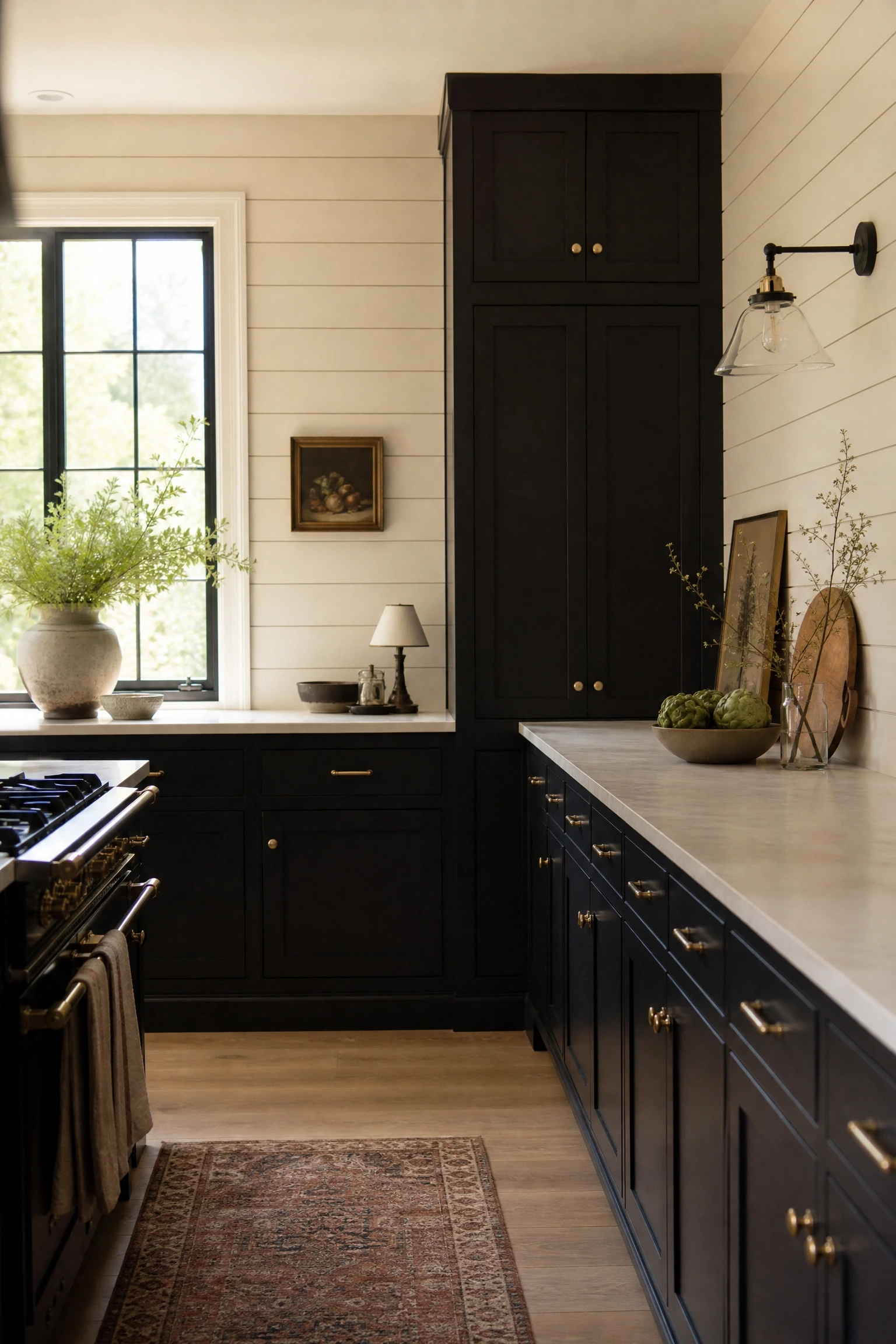
Beige or warm white-painted shiplap or wall panelling on the kitchen walls alongside matte black cabinetry creates a kitchen where two strong design elements, the texture of the panelling and the depth of the dark cabinetry, work together to produce a space with genuine material richness. The horizontal lines of shiplap on a beige background create a warm, rhythmic pattern across the wall surface that contrasts with the clean, flat planes of matte black cabinet doors. This combination suits farmhouse-contemporary and transitional kitchens particularly well and works in both open-plan layouts where the panelled wall extends into an adjacent dining space and in enclosed kitchens where the shiplap runs the full perimeter. The colour relationship between the beige wall panel paint and the black cabinet colour is the critical decision: a warm off-white or soft sand on the shiplap works considerably better alongside black cabinetry than a cool bright white, which creates a harder, more high-contrast effect.
Heads Up: Shiplap and wall panelling in a kitchen need to be sealed or painted in a washable finish to survive the steam and occasional splatter of a working kitchen. A soft sheen eggshell or satin paint on the panelling rather than flat matte is the practical choice for long-term durability.
25. Black Cabinets, Beige Countertop, and Warm Brass Accents
Adding warm brass to a beige and black kitchen is the detail that takes the combination from graphic and high-contrast to warm and genuinely luxurious. Brass hardware on black cabinetry introduces a warmth that neither the black nor the beige surfaces provide on their own, and the combination of matte black, warm beige stone, and aged or brushed brass creates a kitchen palette that is simultaneously bold and inviting. The brass can arrive through cabinet hardware, tap fittings, pendant light shades, a pot rail above the hob, or the legs of the bar stools, and it works best when it is used consistently rather than in a single isolated element. A kitchen where the brass appears in three or more coordinated positions reads as designed. A kitchen where a single brass tap sits in a sea of black and beige reads as a fixture that did not quite match.
Pro Move: Choose unlacquered or living brass rather than a coated brass finish on kitchen hardware if you want the natural patina development that makes aged brass look genuinely considered alongside matte black and warm beige. Coated brass stays uniformly golden but can begin to show chips or wear unevenly over time in a heavily used kitchen.
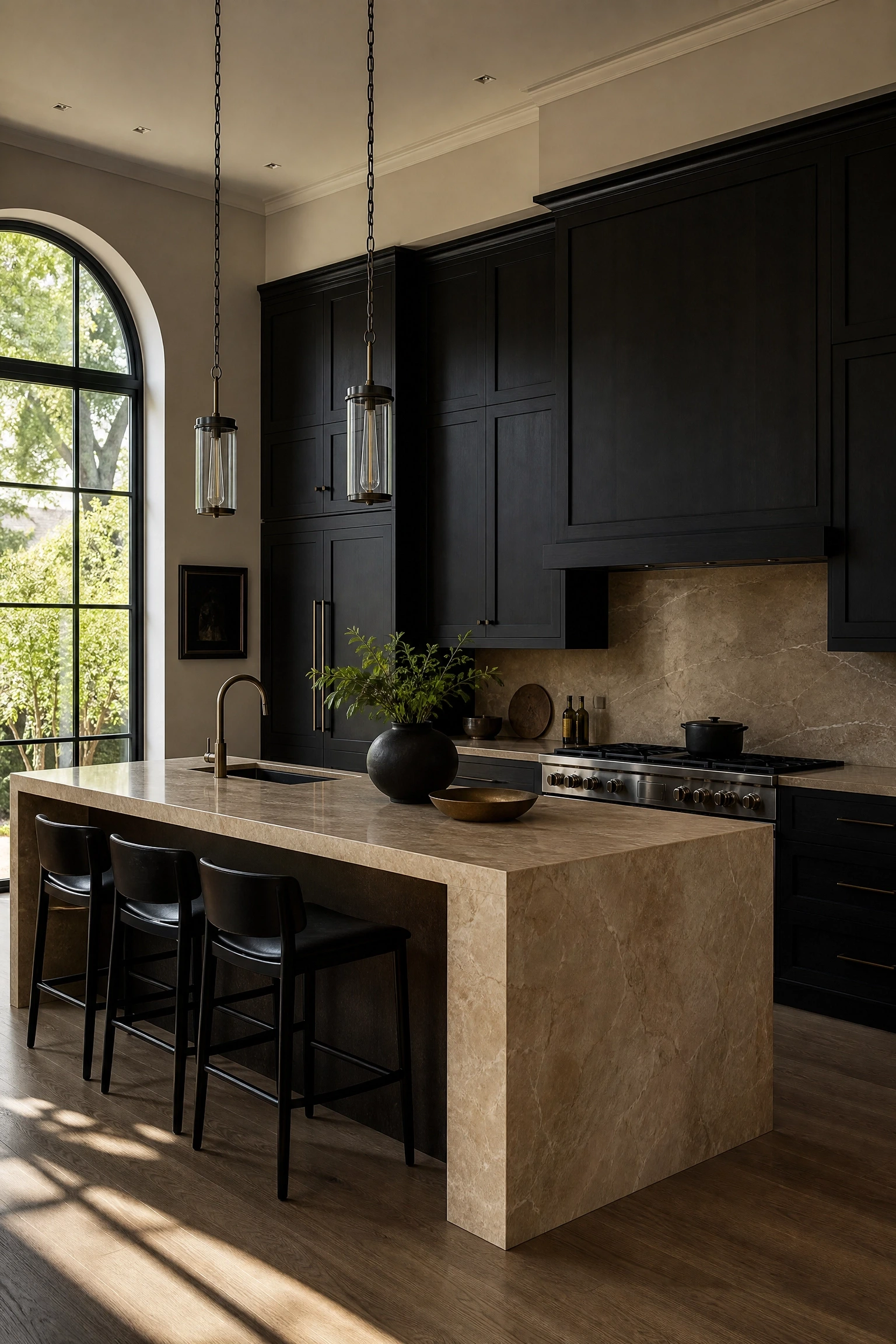
26. All-Black Kitchen With a Beige or Marble Waterfall Island
A dramatic all-black kitchen perimeter with a waterfall island in a warm beige marble or stone creates one of the most striking possible arrangements for this colour combination, because the island becomes a sculptural object in the room rather than simply a functional surface. The waterfall profile, where the countertop material continues vertically down both ends of the island to the floor, gives the stone full visibility from every angle and makes the warmth of the beige material a three-dimensional presence in the kitchen rather than just a horizontal surface. The contrast between the surrounding black cabinetry and the pale warm stone island reads as genuinely luxurious, and the quality of the stone material is what carries the entire design. This approach is most successful in kitchens with generous ceiling heights and good natural light, where the combination of dark perimeter and light island has the space and illumination it needs to breathe.
Designer Advice: A waterfall island in a natural stone with visible veining or movement will have a different appearance on each face of the waterfall. Request that the fabricator book-match the stone panels on the two end faces of the waterfall so the veining mirrors itself and the island reads as a single considered element rather than assembled from separate slabs.
27. Beige and Black in a Small Kitchen: Keep It Strategic
In a small kitchen, the balance between beige and black requires more deliberate management than in a generous space because the proportional relationship between the two colours changes significantly when the walls are close and the ceiling is low. The approach that consistently works best in a compact beige and black kitchen is to keep the major surfaces, cabinetry, walls, and floor, in the beige range, and to use black only in the hardware, tap fittings, pendant lights, and window frames. This keeps the small kitchen feeling as open and airy as possible while still delivering the graphic confidence of the combination. A single black element used at larger scale in a small kitchen, such as a black range hood or black open shelving, works well as a focal point precisely because the compact space means every element registers more strongly. Multiple large black elements in a small kitchen compound too quickly into a space that feels dark and enclosed, regardless of how good it looks in photographs of larger rooms.
Reality Check: The most common mistake in a small beige and black kitchen is borrowing ideas from large, light-filled kitchens without adjusting the balance of the combination to suit the actual scale and light of the specific space. Always filter any inspiration image through the lens of your own kitchen dimensions and natural light levels before committing to a particular arrangement.
Beige and black is one of those kitchen combinations where the result looks completely different depending on which colour you put in charge. The same two colours can produce a soft, warm, understated kitchen that feels like it has always been there or a confident, dramatic kitchen that makes a real statement, and the only thing separating those two outcomes is how you apportion the colour and where you choose to let each one lead. Neither interpretation is wrong. They are simply different kitchens for different people in different spaces.
The ideas in this article give you the full range of that scale, from the smallest black accent that quietly sharpens a beige kitchen through to the predominantly dark kitchen where beige is doing the specific work of keeping the space warm and inviting. Wherever you land on that scale, the two consistent principles hold: the light in your kitchen matters more than any combination of colours, and the quality of the materials you choose to fill those colours matters more than the colours themselves. Get the balance right for your space, choose materials you genuinely love, and the beige and black kitchen will look just as good in ten years as it does in the first photograph you take of it.
“Where do you land on the scale? Is your kitchen going mostly beige with a few black accents, or are you ready to let the black really lead? Drop your plan in the comments below.”
Frequently Asked Questions
Does beige and black work in a small kitchen?
Yes, but the balance needs to shift in a smaller space. Keep the major surfaces, cabinetry, walls, and floor, in the beige range and restrict black to accent elements: hardware, tap fittings, pendant lights, and window frames. Avoid committing large surfaces like full black cabinetry or a black countertop in a compact kitchen unless natural light is very generous. A single bold black focal point, such as a black range hood or black-framed glass cabinet inserts, works well in a small kitchen because the contained scale means each element registers strongly without needing multiple large black surfaces to make the combination feel complete.
What is the best countertop for a beige and black kitchen?
The right countertop depends on which colour leads. In a beige kitchen with black accents, a warm white or cream quartz or stone countertop keeps everything in the warm neutral family and lets the black hardware details register clearly. In a balanced two-tone kitchen with black lower and beige upper cabinets, a cream or sandy stone countertop bridges the two colours and prevents the horizontal surface from creating a third contrasting element. In a predominantly black kitchen, a warm beige stone with visible veining or texture is the single most effective warming element available and carries the whole design on its own. In all cases, avoid cool grey countertops, which fight the warm undertone of the beige palette and make the overall combination feel colder than intended.
What hardware finish works best with beige and black kitchen cabinets?
Matte black hardware is the cleanest and most direct choice when both colours are present in the cabinetry. It maintains consistency with the black elements and does not introduce a third metal tone. Warm brass or brushed gold hardware is the best choice when the aim is to add warmth to the combination, particularly in kitchens where black is the dominant cabinet colour and the palette needs a luxurious, warming detail. Brushed nickel and chrome both work against the warmth of beige and should generally be avoided in a beige and black kitchen unless the overall design direction is deliberately cool and contemporary.
Is black and beige kitchen a classic combination?
The combination of a warm neutral and a strong dark has a long history in interior design and architecture, which suggests it has genuine staying power beyond any specific current trend. Both colours are rooted in natural materials: beige is the colour of stone, sand, and aged linen, while black is found in iron, slate, and charred timber. When the combination is executed through quality materials and honest finishes rather than through trend-driven products, it ages in the same way that any well-designed kitchen does, by becoming more considered-looking as the finishes settle in and the materials develop their natural character.
What flooring works best in a beige and black kitchen?
For a beige and black kitchen where beige leads, warm-toned timber floors in oak or ash, light travertine, or sandy large-format porcelain tiles all work well. For a kitchen where black leads and beige is the counterpoint, a warm beige concrete screed, travertine, or limestone floor does the most to prevent the dark cabinetry from making the space feel oppressive. A beige and black checkerboard floor suits either colour balance but requires the most maintenance because the contrast between the tiles makes any dirt or dust immediately visible on both surfaces.
How do I add warmth to a black and beige kitchen?
Warmth in a black and beige kitchen comes primarily from three sources: natural materials like timber, rattan, and woven fabric; warm-toned lighting using bulbs rated between 2700 and 3000K in pendant fittings and under-cabinet strips; and the texture of wall and surface finishes. A flat matte wall in beige feels considerably cooler than limewash or roman clay in the same colour because the texture creates variation in how the light falls across the surface. Introduce natural materials through open shelving in warm oak, rattan or linen bar stools, ceramic accessories in cream and sand tones, and indoor plants, particularly trailing varieties that introduce living green material into an otherwise hard-surfaced kitchen environment.