Bathroom windows are a design dilemma that nobody warns you about. You want natural light because a bathroom without it feels like a cave. But you also need privacy because nobody wants to give the neighbors a show every morning. The standard solution is to slap up a frosted film and forget about it, but there are better options that let in light, keep things private, and actually look good.
Here are 15 bathroom window privacy ideas that solve the problem without sacrificing style.
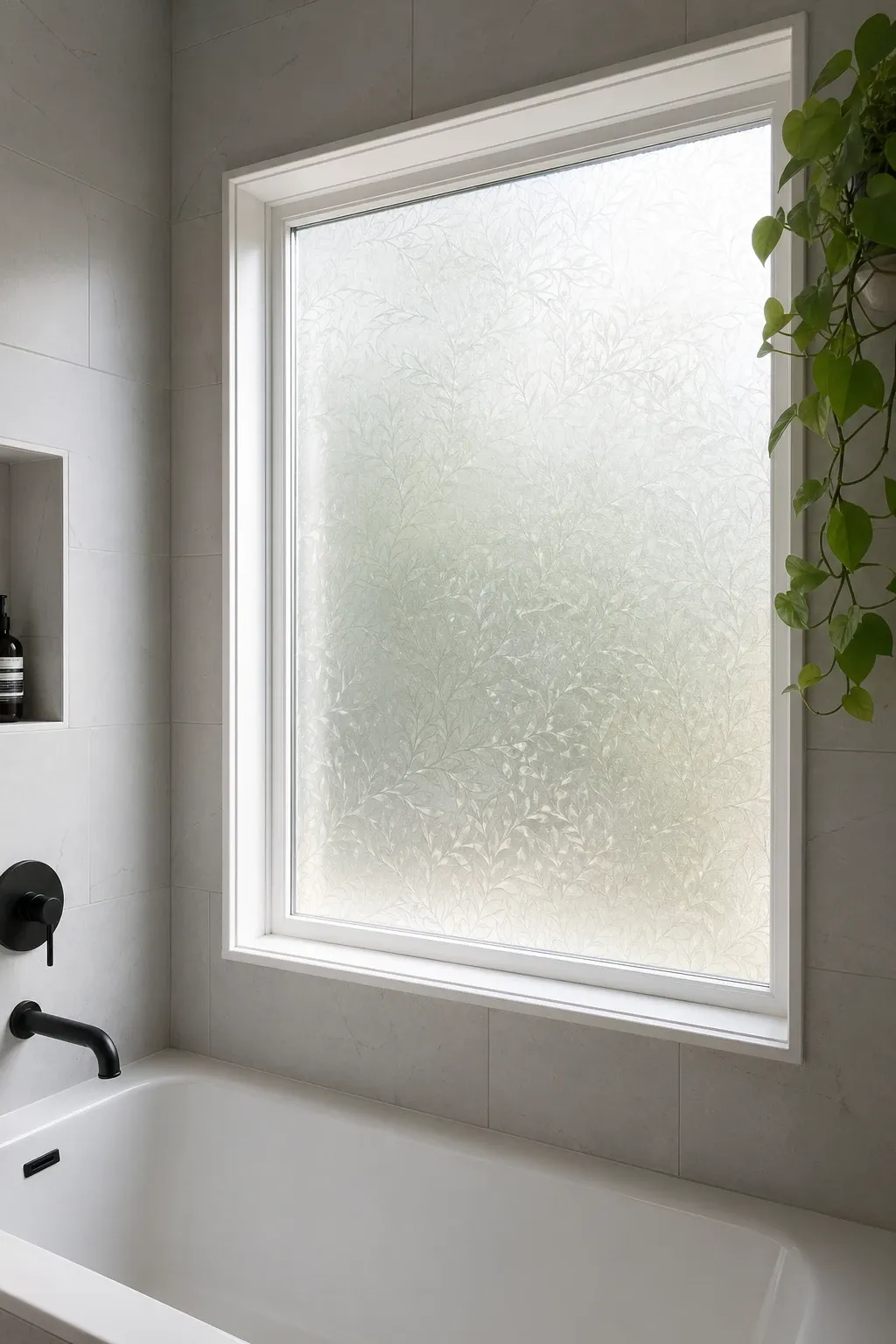
Frosted film is the quickest and cheapest way to make a bathroom window private. You peel it off the backing, wet the glass, and smooth it on. It blocks the view from outside while still letting light through. The effect is clean and modern, and from inside the bathroom, it gives the light a soft, diffused quality that is actually nicer than clear glass. It peels off without damage, so renters can use it too.
Designer Tip: Apply the film to the lower two-thirds of the window and leave the top third clear. You get privacy at eye level while still being able to see the sky and treetops from inside the room.
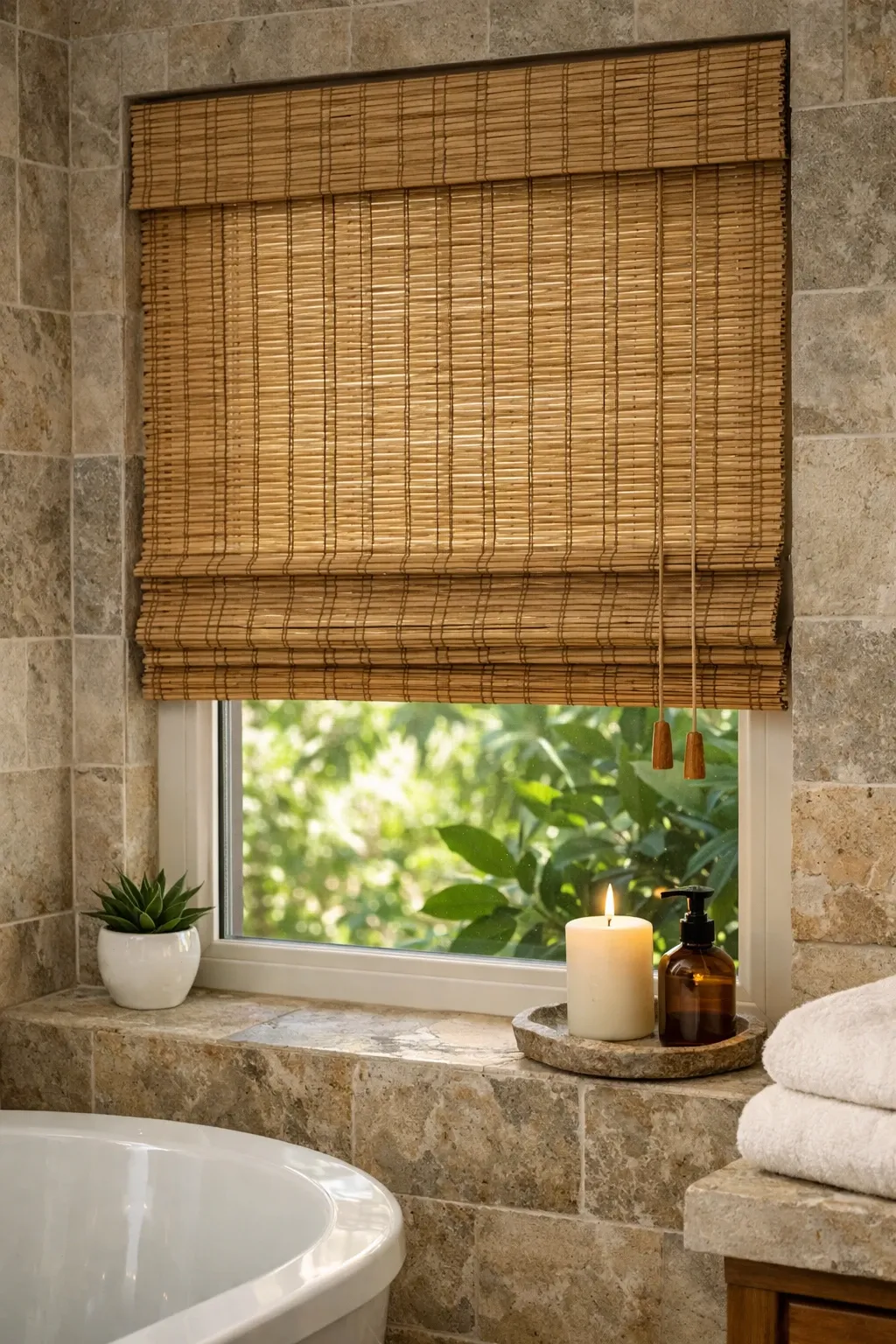
Bamboo shades add a warm, natural texture to the bathroom while providing adjustable privacy. When rolled down, the woven bamboo filters light and blocks the view. When rolled up, you get full light and full window. They work in bathrooms with a coastal, bohemian, or spa-like feel. Just make sure you get ones rated for humid environments because regular bamboo can warp in a steamy bathroom over time.
Designer Tip: Line your bamboo shades with a privacy liner if the weave is too open. Some bamboo shades have gaps between the reeds that let people see through at night when the light is on inside. A liner fixes this while keeping the look.
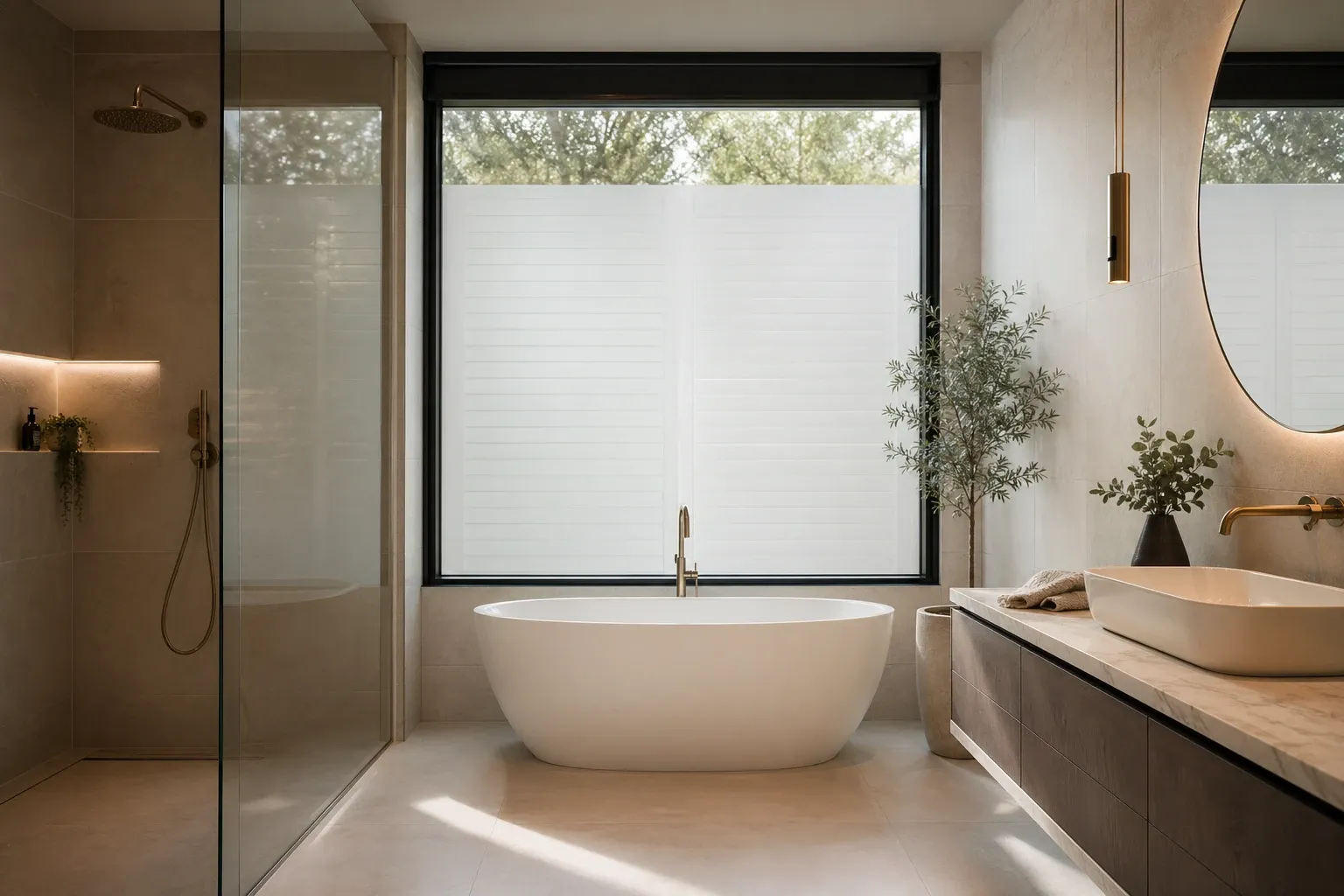
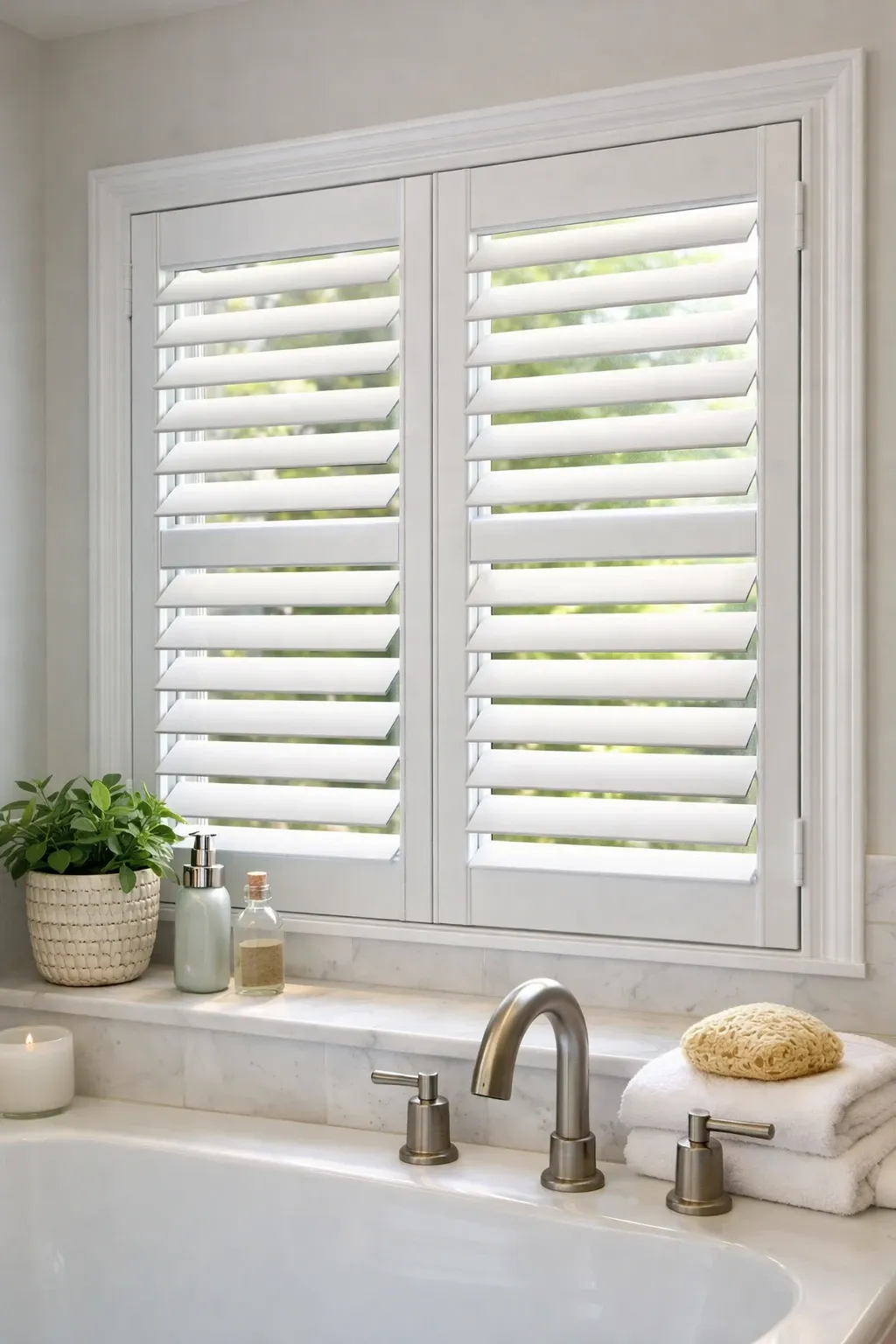
Plantation shutters give you the most control over light and privacy of any window treatment. Tilt the louvers up for light and privacy at the same time, tilt them down to block both, or open them fully for the complete view. They look substantial and architectural, and they handle moisture well, especially composite or vinyl versions. The crisp white louvers look particularly sharp in a white bathroom.
Designer Tip: Choose composite shutters over real wood for bathrooms. Real wood shutters can warp and peel from shower steam. Composite looks identical and will not deteriorate in humidity.
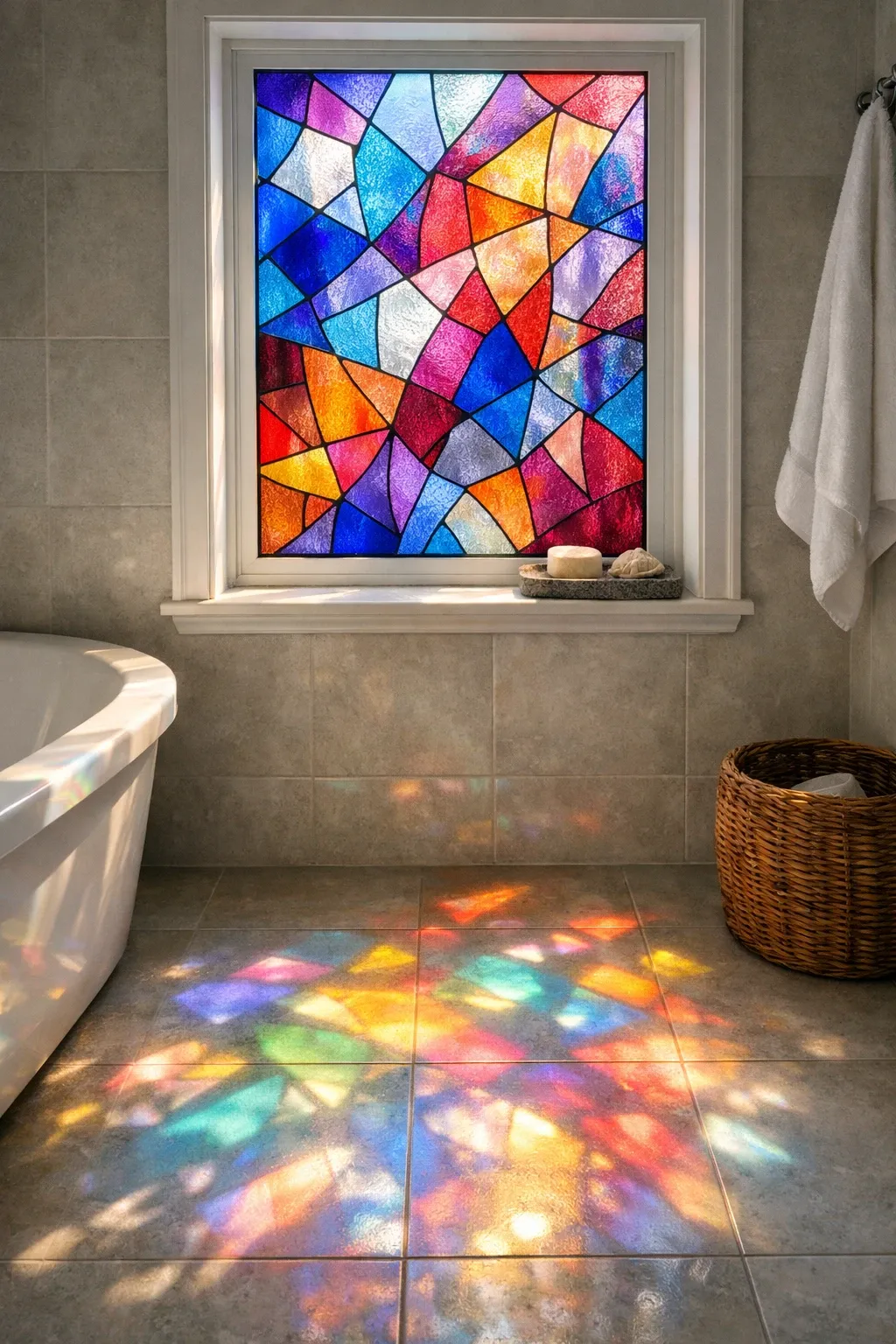
Stained glass window film gives you the look of actual stained glass at a fraction of the cost. The colored patterns are completely opaque from outside while letting tinted light stream through. When the sun hits a stained glass film, it casts colored light across the bathroom walls and floor, which is genuinely beautiful. It is also a smart way to cover an ugly window view while adding something decorative.
Designer Tip: Choose a design with colors that coordinate with your bathroom. A blue and green stained glass pattern in a white and grey bathroom ties in nicely. Random bright colors that do not relate to the room just look like a novelty.
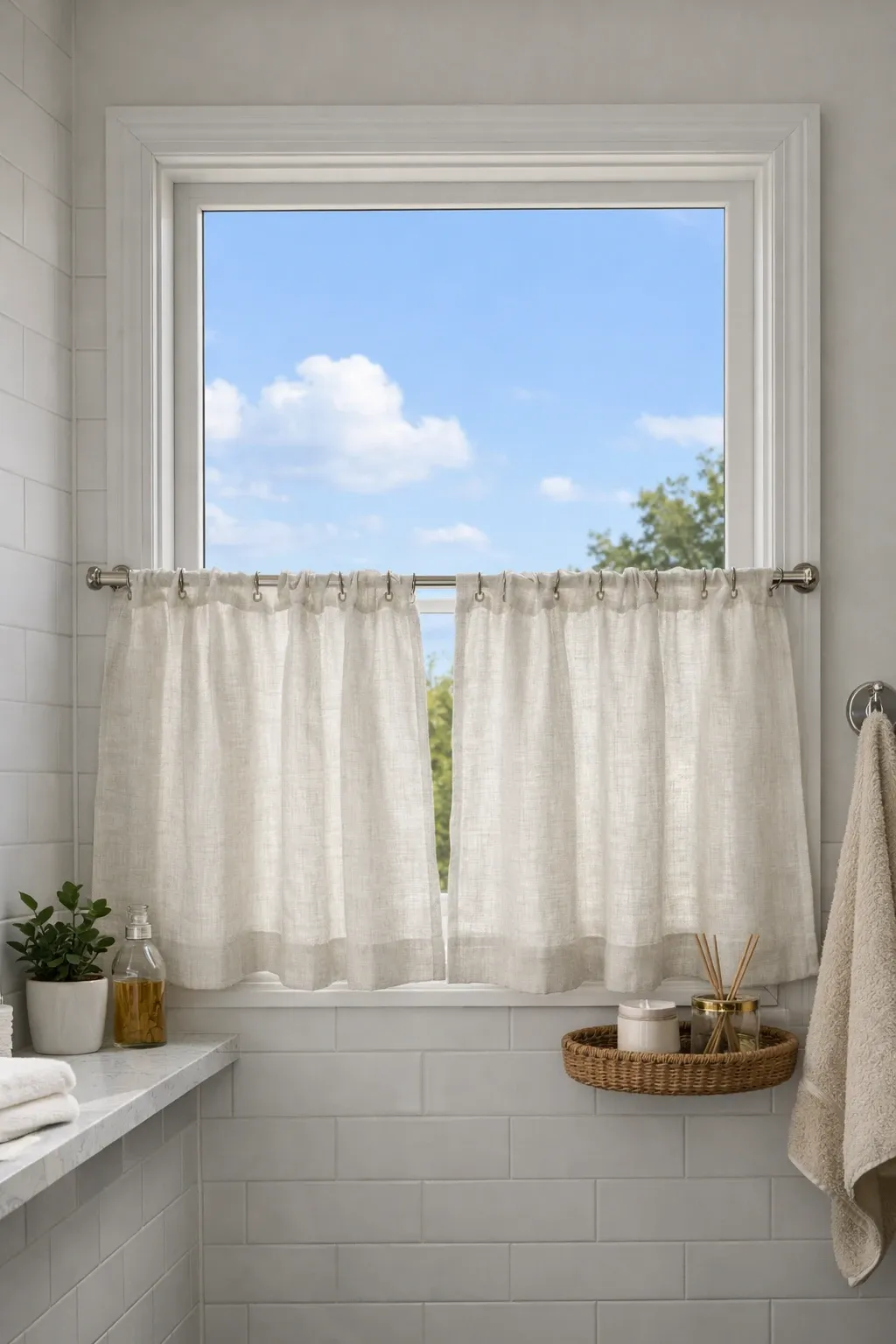
Cafe curtains cover only the bottom half of the window, which gives you privacy where you need it and open glass above for light. A tension rod across the middle of the window frame is all you need. White linen, cotton, or even a pretty patterned fabric works. They are easy to take down and wash, which matters in a bathroom where fabric can get mildewy if you are not careful.
Designer Tip: Choose a fabric that can handle occasional moisture. Synthetic blends or cotton-poly are better than pure cotton or silk. Also consider how the fabric looks when light passes through it. Sheer fabrics glow nicely but provide less privacy. Heavier fabrics block more but can look dark.
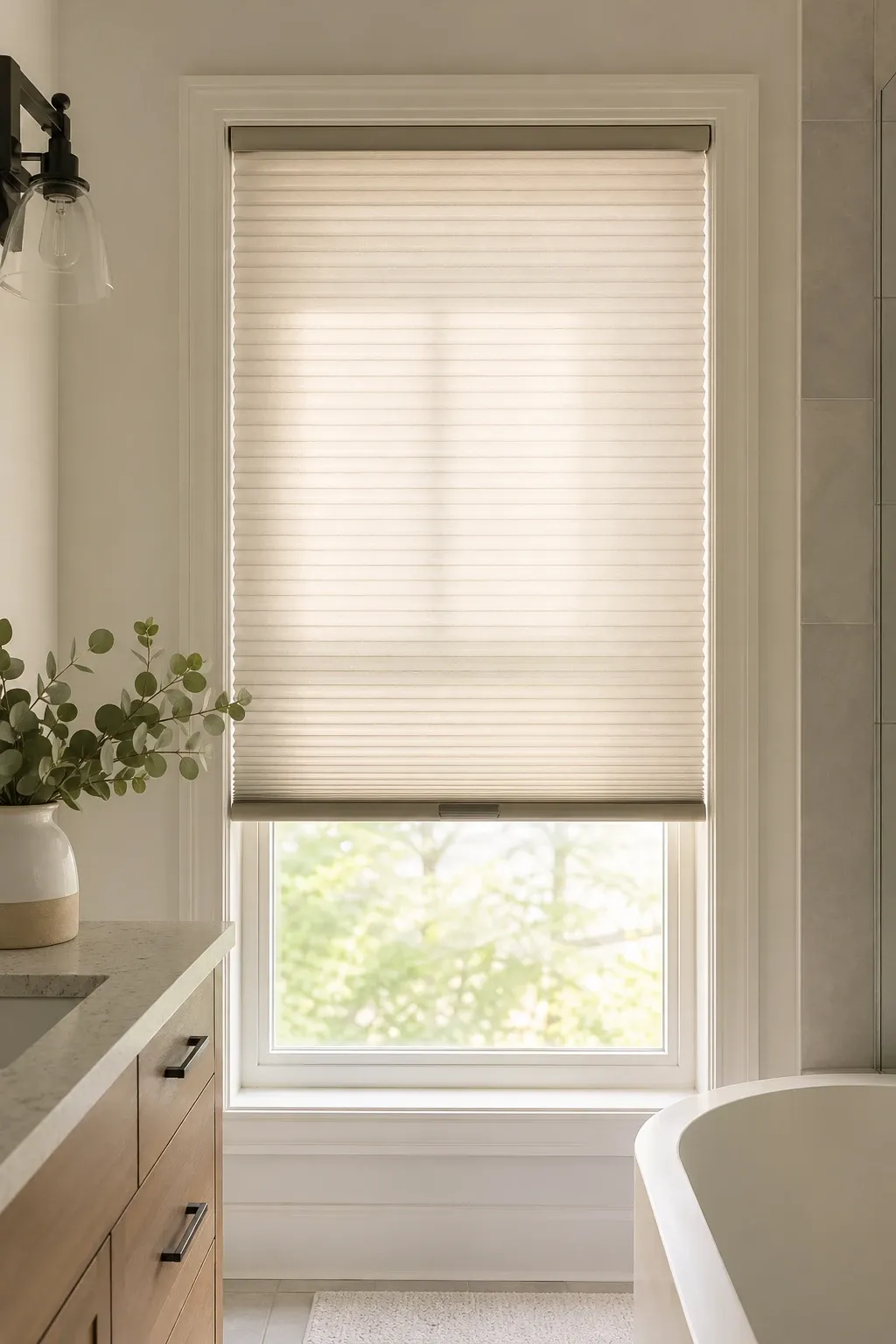
Honeycomb shades are excellent for bathrooms because they insulate the window, filter light evenly, and provide full privacy when closed. The cellular structure traps air, which helps keep the bathroom warm in winter. Top-down, bottom-up models let you lower the shade from the top for light while keeping the bottom raised for privacy, which is the best of both worlds.
Designer Tip: Get the top-down bottom-up version even though it costs a bit more. The ability to adjust from both directions is worth every extra dollar in a bathroom where you need different levels of privacy at different times of day.
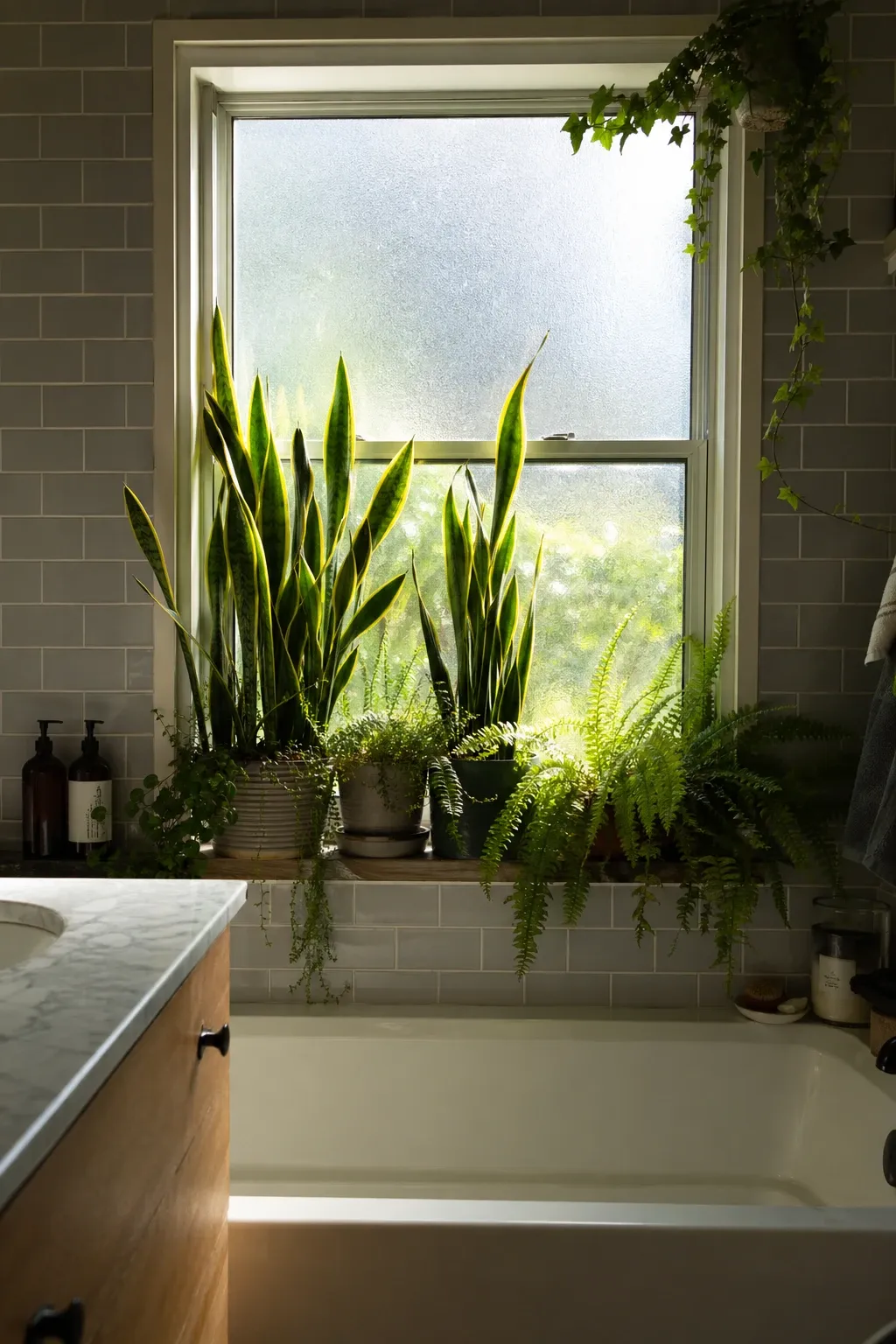
Placing plants on the windowsill or hanging them in front of the window creates a natural privacy screen that also happens to thrive in the humidity of a bathroom. Trailing plants like pothos, string of pearls, or ferns are perfect for this. They filter the view from outside while adding life and color to the room. The combination of green plants and natural light turns the window into a feature rather than a problem.
Designer Tip: Group several plants at different heights rather than relying on one plant to do all the screening. A hanging plant, a tall potted plant, and a few small pots on the sill together provide better coverage and look more lush.
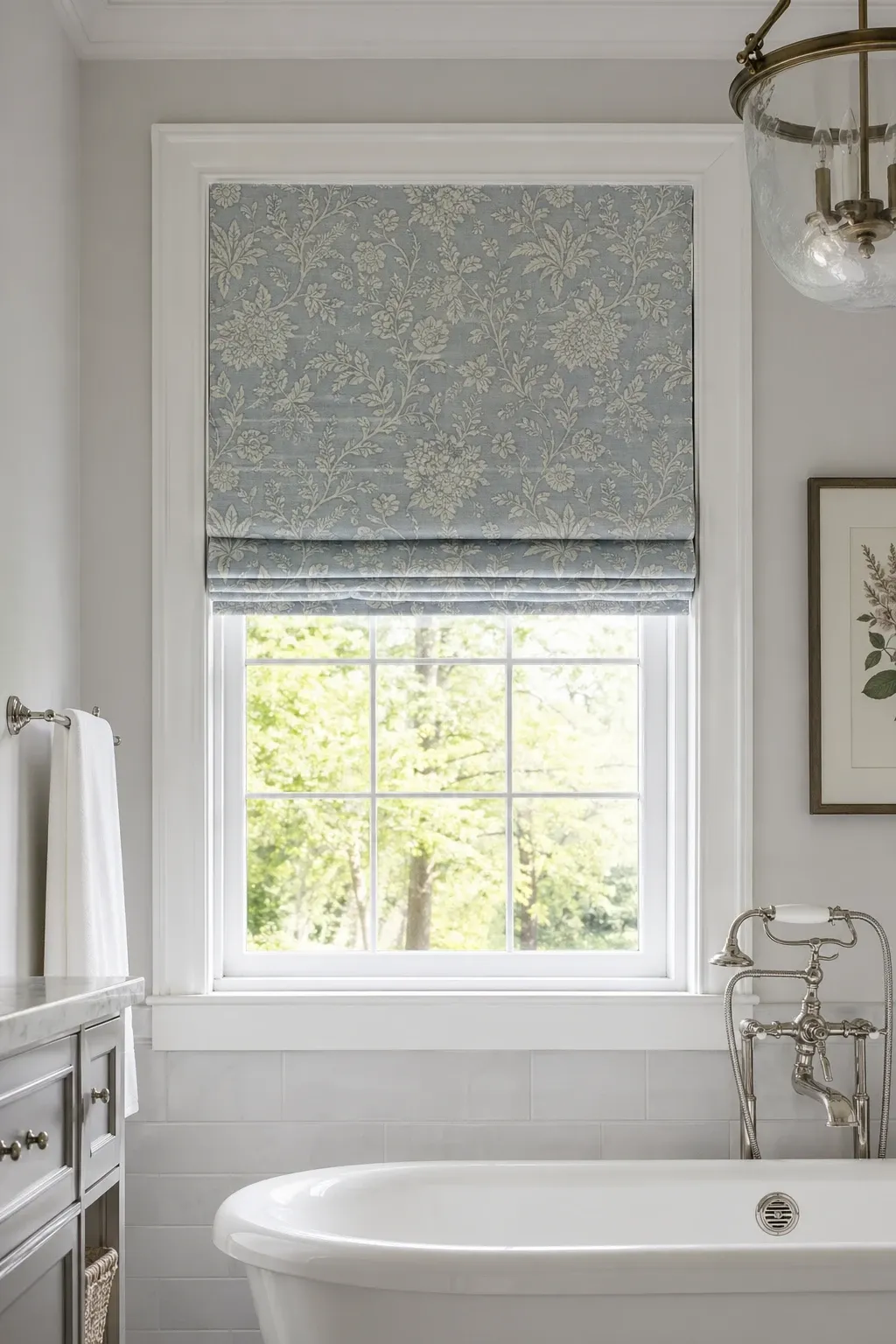
A Roman shade gives the bathroom a more finished, polished look than most window treatments. When raised, the fabric folds up into neat pleats at the top of the window. When lowered, it lays flat and provides full coverage. For a bathroom, choose a fabric that resists moisture, or go with a faux Roman shade that is fixed in position and purely decorative, with a roller shade behind it for actual privacy.
Designer Tip: Flat-fold Roman shades look more modern and take up less space at the top of the window than hobbled or cascading styles. In a small bathroom window, a flat fold keeps the look clean and proportional.
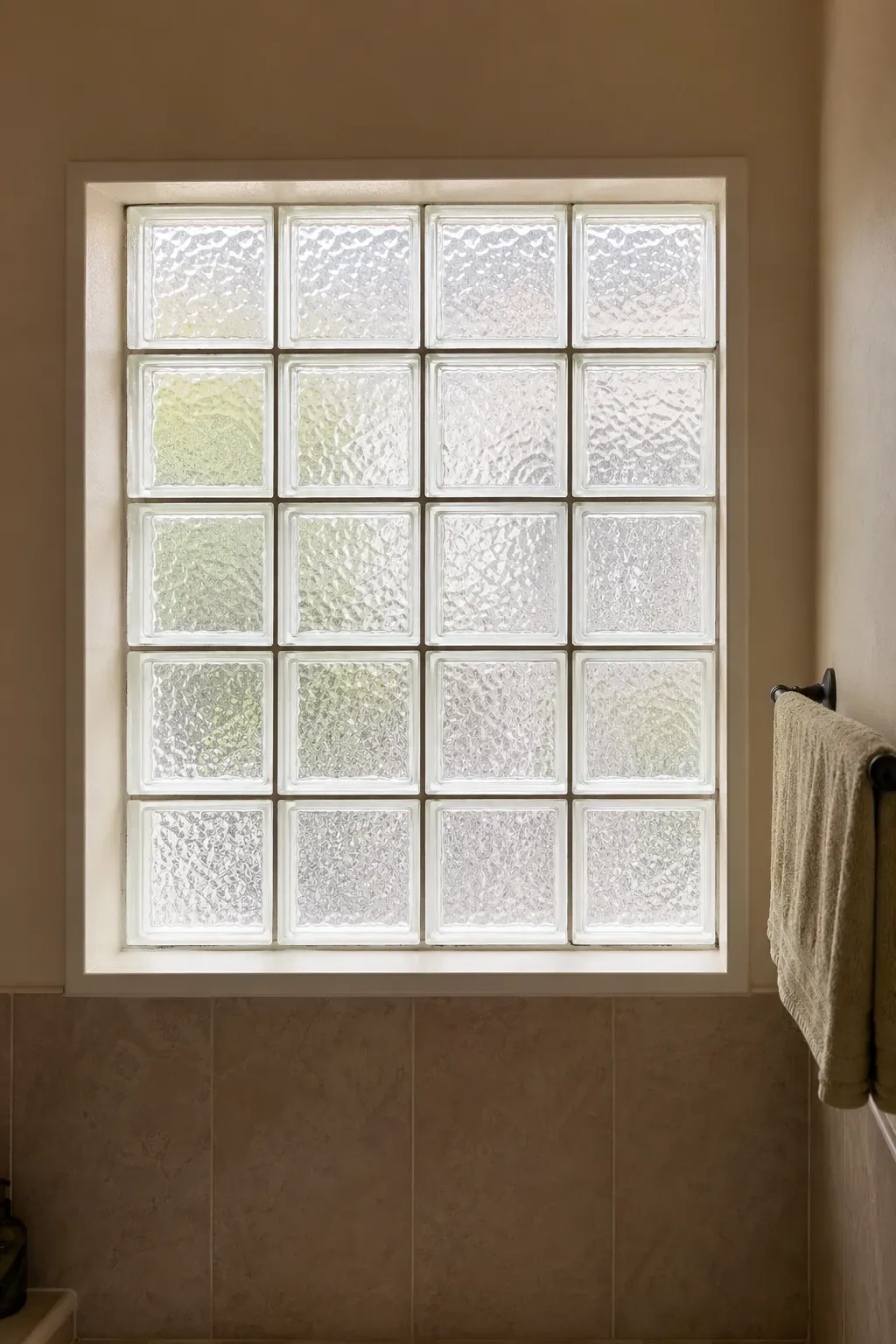
Glass blocks let in plenty of light while completely obscuring the view. They are a permanent architectural solution that works particularly well in shower areas where other window treatments would get soaked. The thick glass distorts shapes and colors enough for total privacy while still flooding the space with natural light. They can look dated if overdone, but a single glass block window in a bathroom still works well.
Designer Tip: Pair glass blocks with modern finishes to keep them from looking like a 1990s throwback. Clean tile, minimalist hardware, and a frameless glass shower door help glass blocks feel current rather than dated.
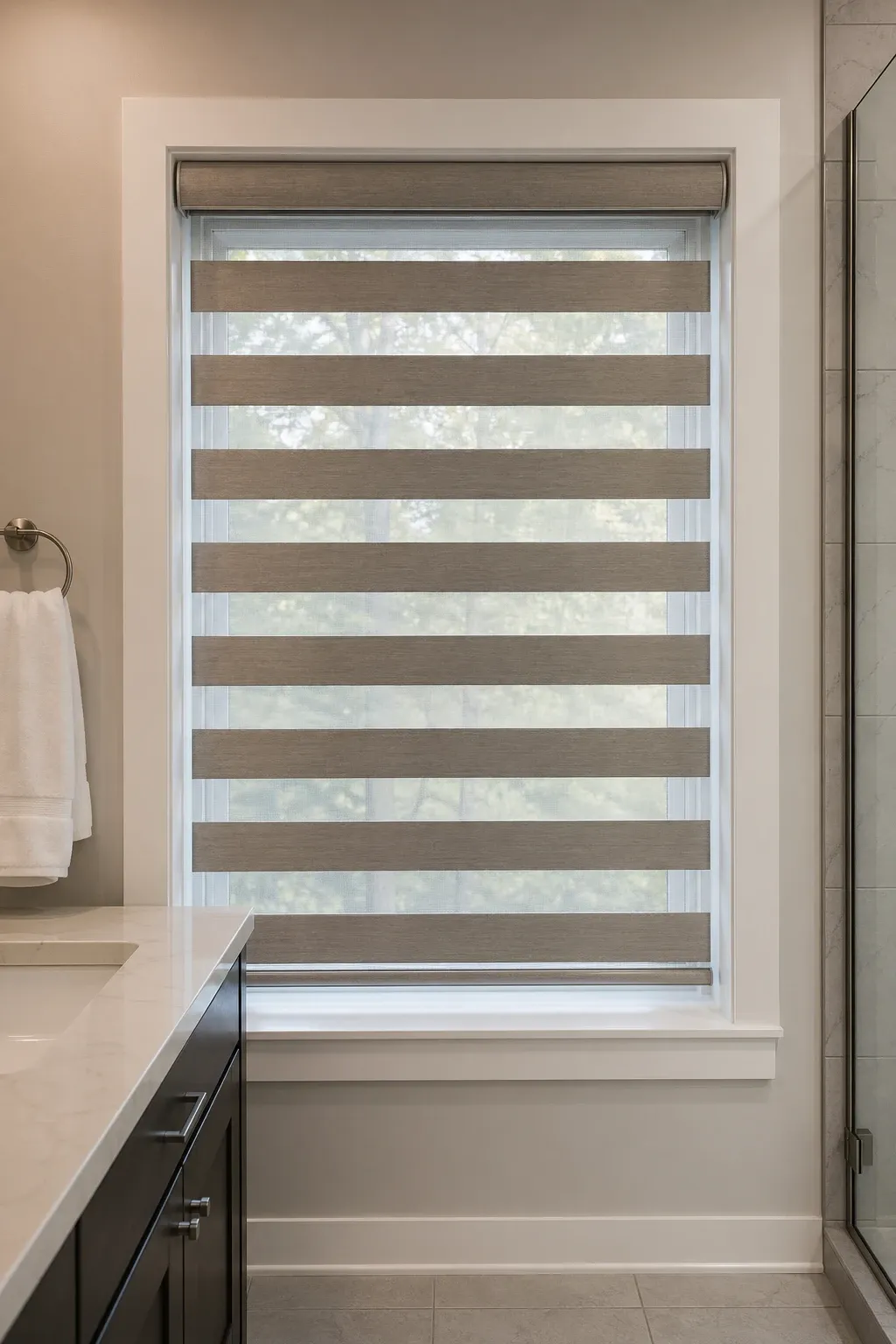
Zebra shades, also called banded or dual shades, have alternating sheer and opaque horizontal stripes that you can align for different levels of privacy. When the opaque bands line up, you get full coverage. When the sheer bands overlap, you get soft filtered light. They look sleek and modern, and the adjustment is smooth and simple. These are a great option for a bathroom that faces a street or a close neighbor.
Designer Tip: White or light grey zebra shades work best in bathrooms because they let the most light through when in the sheer position. Dark-colored zebra shades block more light even in the open position, which can make a small bathroom feel dark.
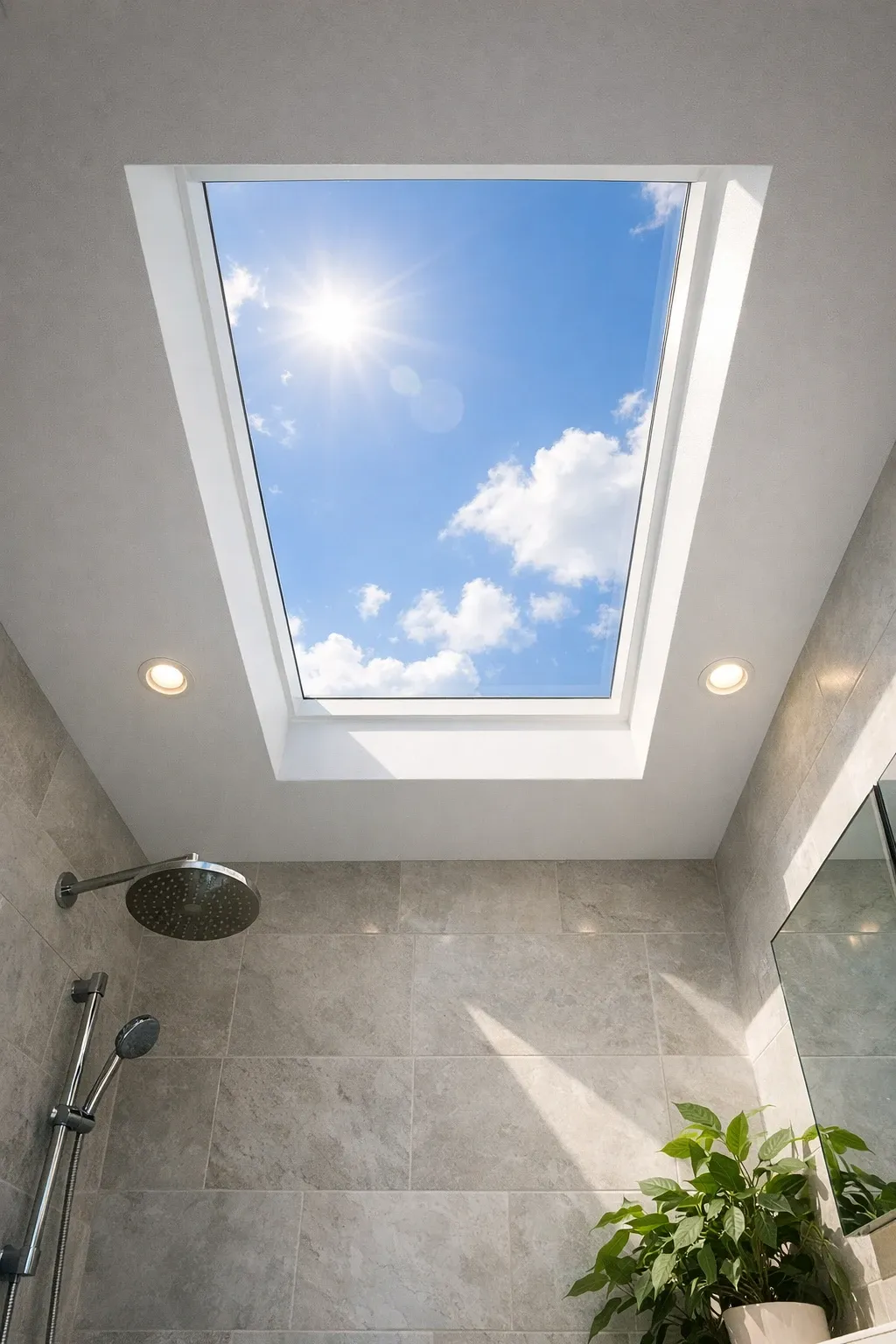
If you are building or renovating, consider putting light in the ceiling instead of the wall. A skylight gives you all the natural light without any privacy concerns. Nobody can see in through a roof window. Vented skylights also help pull shower steam up and out of the room, which reduces moisture problems. The overhead light is also more flattering than side light for most bathroom activities.
Designer Tip: Tubular skylights work in bathrooms where a traditional skylight is not possible, like rooms without direct roof access. They channel light through a reflective tube from the roof to the ceiling, and they are cheaper to install than full skylights.
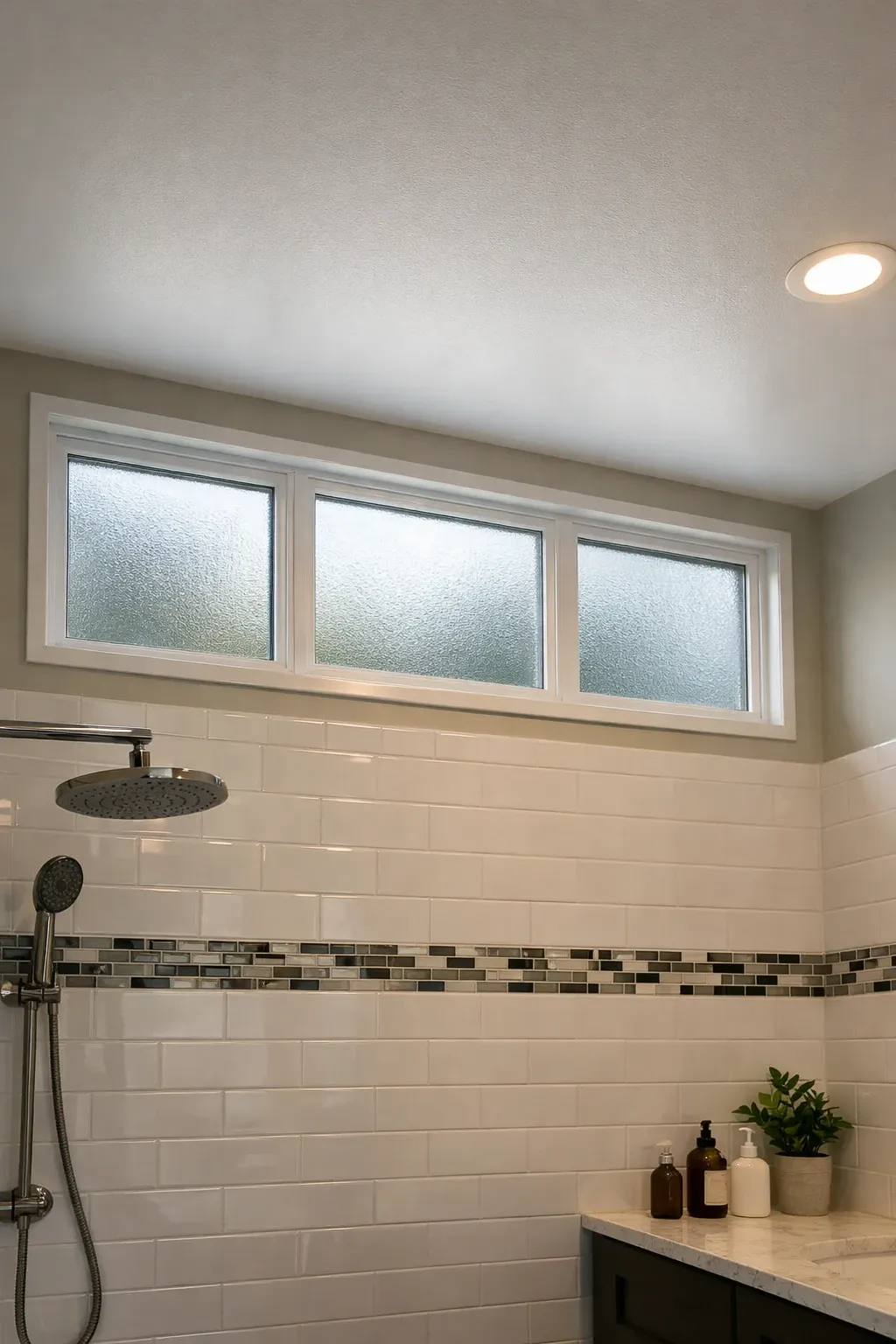
A clerestory window, placed high on the wall near the ceiling, lets in natural light from above eye level so nobody can see in or out. No window treatment needed at all. This is an architectural solution that solves the privacy problem permanently by putting the glass where privacy is not an issue. The light from a high window washes down the wall in a way that is bright and even.
Designer Tip: Clerestory windows work best on walls that face south or west for maximum natural light. A north-facing clerestory will give you soft light but significantly less of it, especially in winter months.
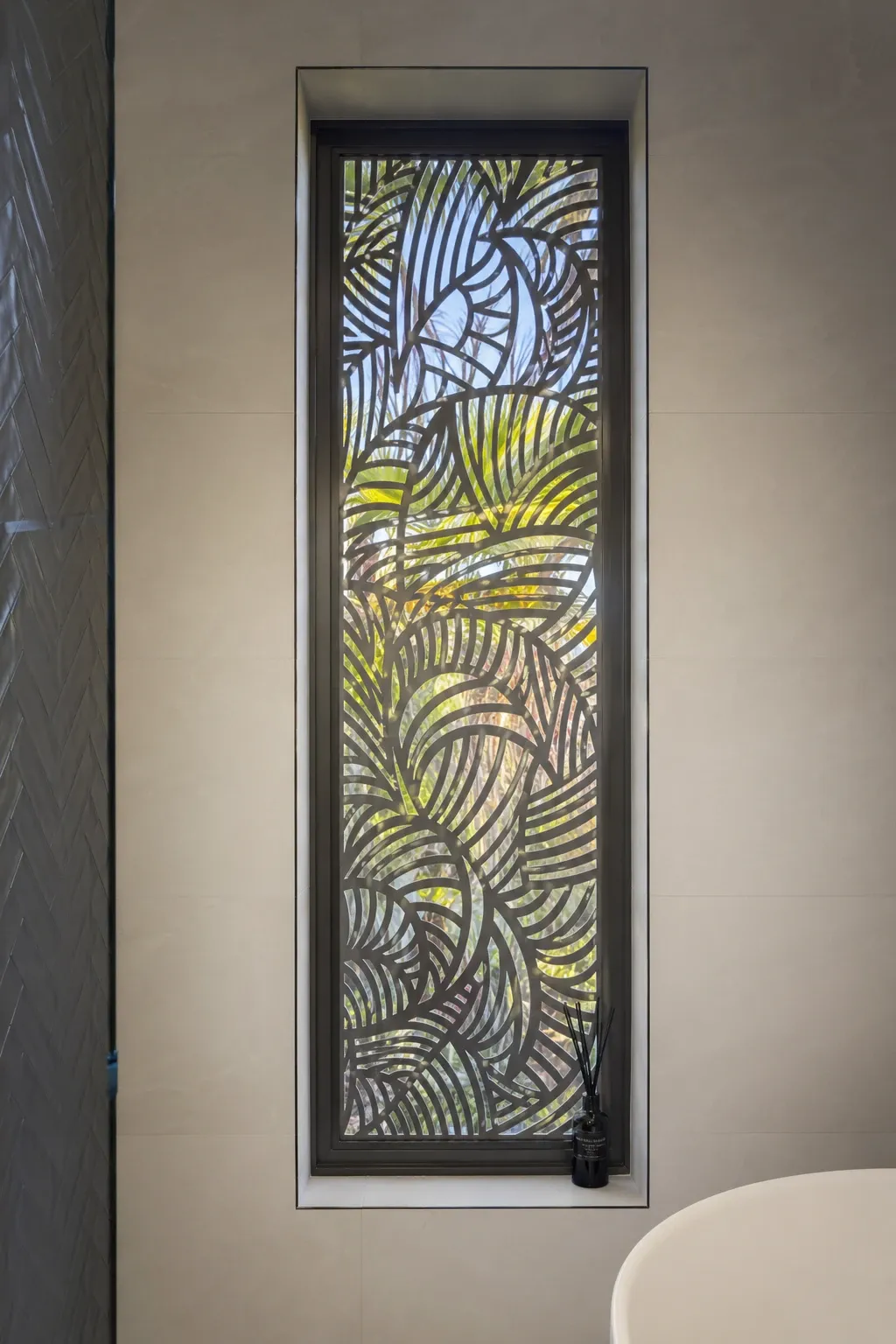
A laser-cut metal or wooden screen mounted over or in front of the window provides privacy through pattern rather than opacity. The cut-out designs break up the view enough that nobody can see details from outside, while light passes through the pattern and casts interesting shadows inside the bathroom. Geometric, floral, and Moroccan patterns are the most common and all look striking.
Designer Tip: Mount the screen on a track so you can slide it to one side when you want full light and pull it across for privacy. A fixed screen works too, but the sliding option gives you flexibility.
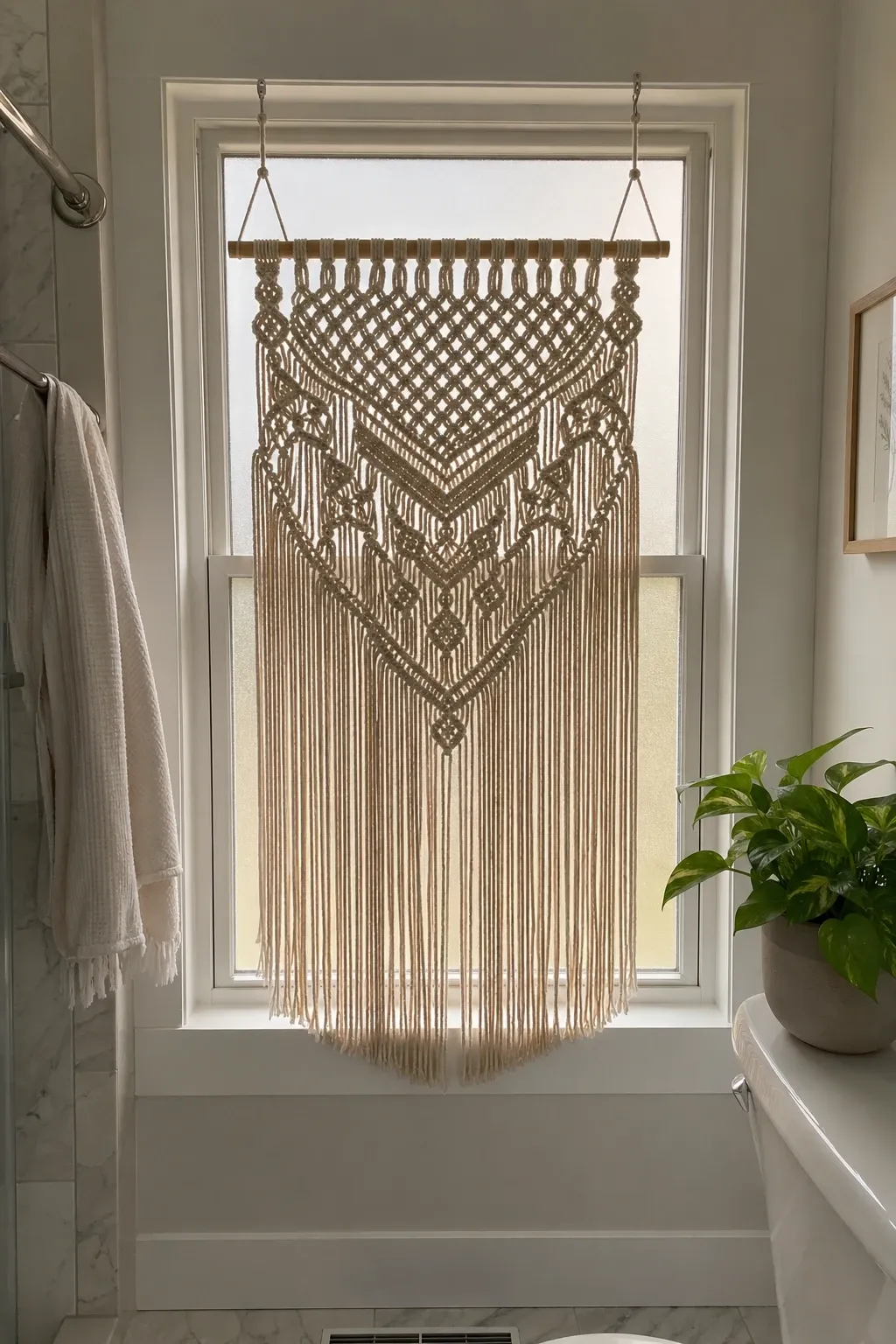
A macrame wall hanging or curtain over the bathroom window adds bohemian texture while partially screening the view. Macrame does not provide complete privacy, but the knotted cotton creates enough visual interference that people cannot see clear details from outside. It works best in bathrooms that do not face a close neighbor and where you want some light filtering and a decorative touch rather than total blackout.
Designer Tip: Pair the macrame with a simple roller shade behind it for times when you need real privacy. The macrame hangs in front as the decorative layer and the shade does the actual work when needed.
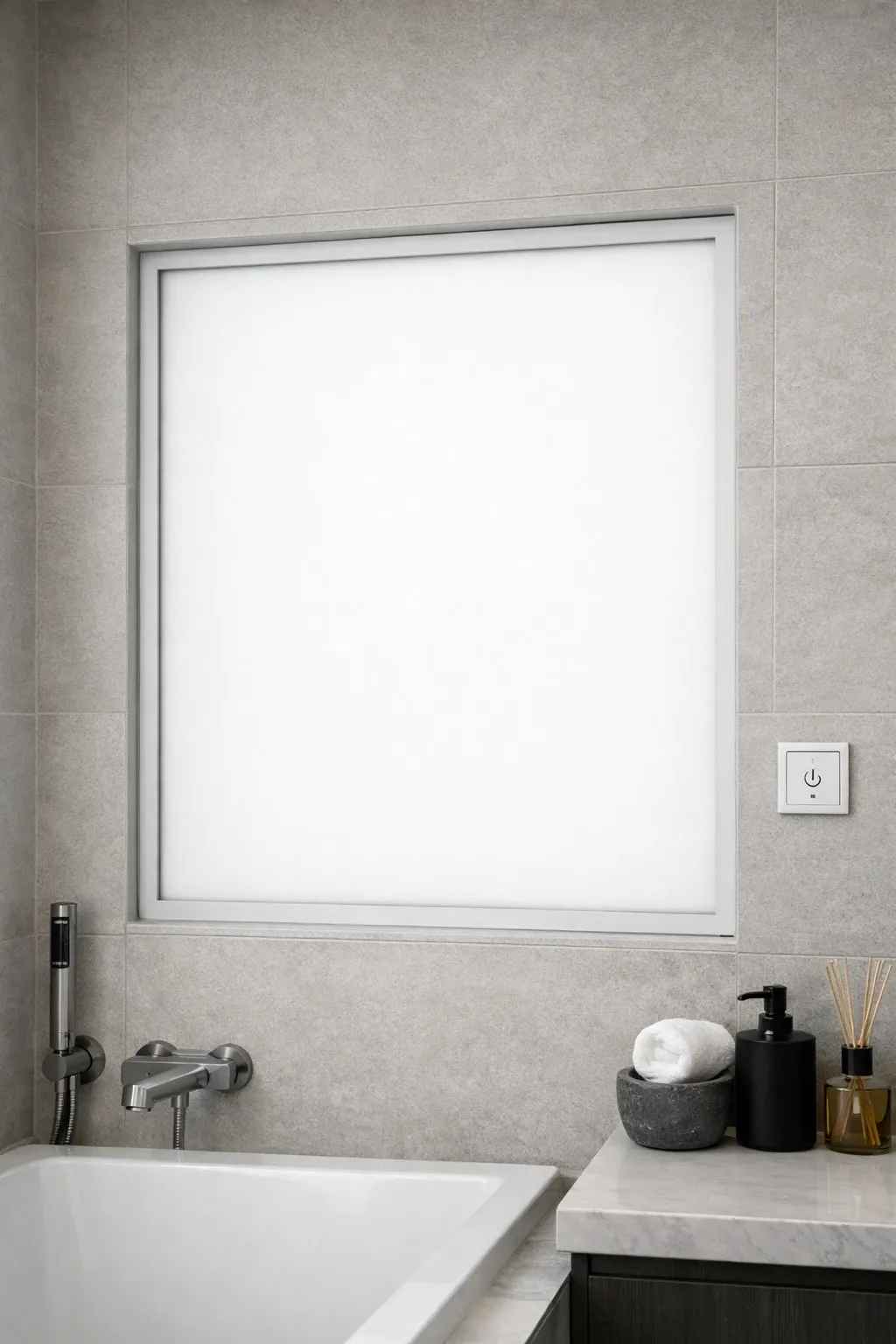
Smart glass switches between transparent and opaque at the touch of a button. An electric current changes the glass from clear to frosted, so you can have a full view when you want it and complete privacy instantly. It is the most high-tech and expensive option on this list, but if budget allows, it is also the most seamless solution. No shades, no curtains, no film, just glass that does what you need it to.
Designer Tip: Smart glass film that adheres to existing windows is a more affordable alternative to replacing the entire window with smart glass. The switchable film goes on like regular window film but gives you the same on-off privacy control.
The right privacy solution depends on your budget, your bathroom style, and how much natural light you are willing to give up. Film and shades are the easiest to install. Shutters and glass blocks are more permanent. And if you are building from scratch, consider skylights or clerestory windows that avoid the problem entirely by putting glass where nobody can see through it.
Frequently Asked Questions
What is the cheapest way to make a bathroom window private?
Frosted window film is the cheapest option, usually costing less than 15 dollars for enough to cover a standard bathroom window. It applies in minutes with just water and a squeegee, requires no tools, and removes cleanly when you move out. Cafe curtains on a tension rod are the second cheapest option.
Can I use regular curtains in a bathroom?
You can, but choose fabrics that handle moisture well. Cotton-poly blends, polyester, and treated linen all hold up in humid bathrooms. Avoid silk, velvet, or untreated cotton, which can mildew or warp from shower steam. Wash or air out your bathroom curtains regularly to prevent musty smells.
Do I need privacy glass if my bathroom faces a backyard?
It depends on how private your backyard is. If you have a tall fence and no neighbors with second-story windows that overlook your bathroom, you may not need much. But bathrooms are usually lit from inside at night, which means you are very visible from outside even if you cannot see out. A simple frosted film or shade for nighttime is still a good idea.